16 Christmas Decor Ideas for Double Front Doors
Double front doors are a design win in every season except one — the month you’re trying to figure out where a single wreath is supposed to go. One wreath in the center looks off-balance. Two wreaths side by side can look like an afterthought if they’re not sized and spaced correctly. And garland that works beautifully across a single door frame can suddenly look thin or awkward stretched across two.
The fix isn’t more decor — it’s decor built around symmetry from the start. Double doors actually give you more visual real estate to work with than a single door does, which means more opportunities for a genuinely striking entrance once you know how to use the extra width and the split in the middle. The 16 ideas below are built specifically around that two-door layout, from matching wreaths and split-wreath tricks to flanking urns and garland placement that keeps both doors looking like part of one cohesive design.
Table of Contents
16 Christmas Decor Ideas for Double Front Doors
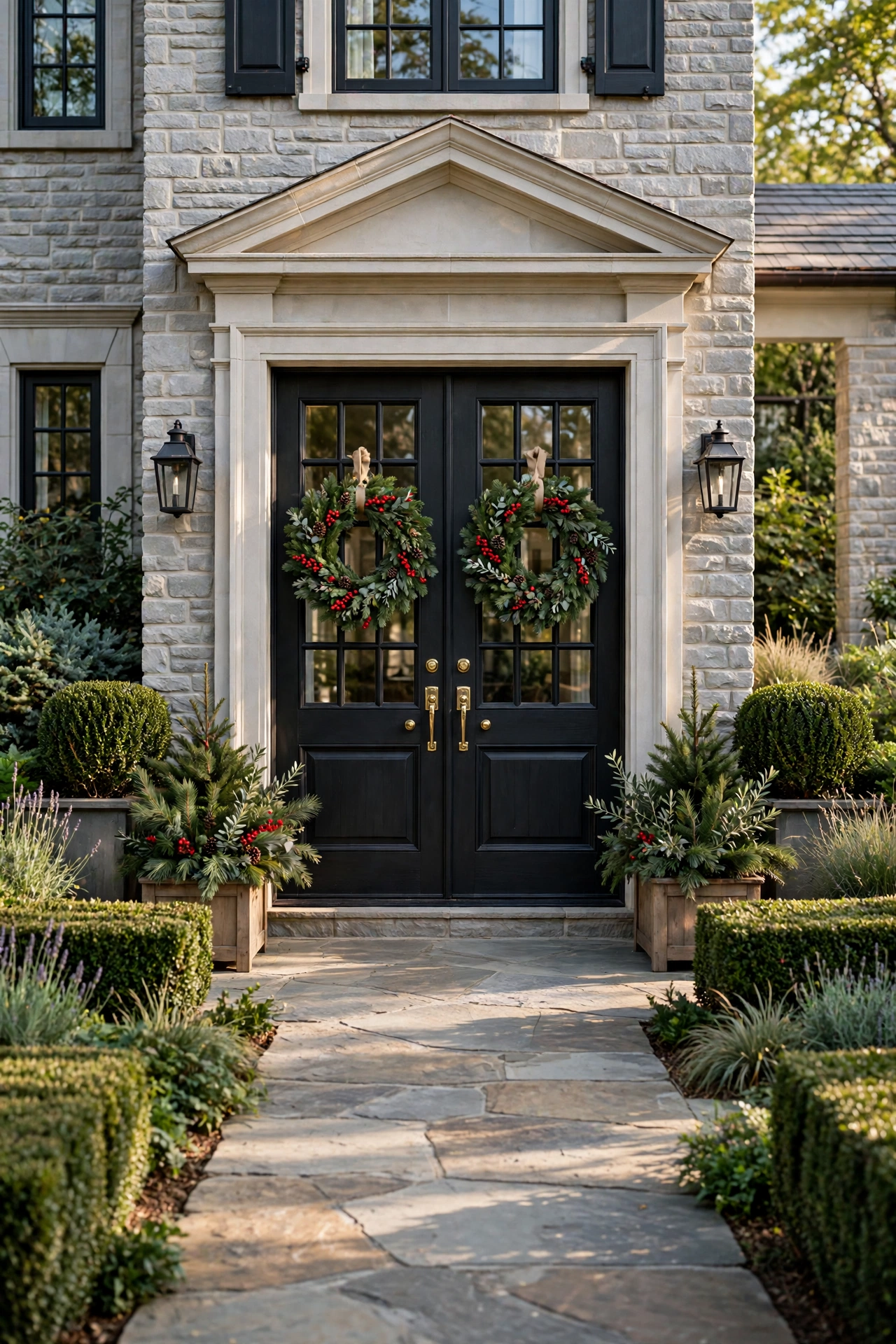
Matching Wreaths, One on Each Door
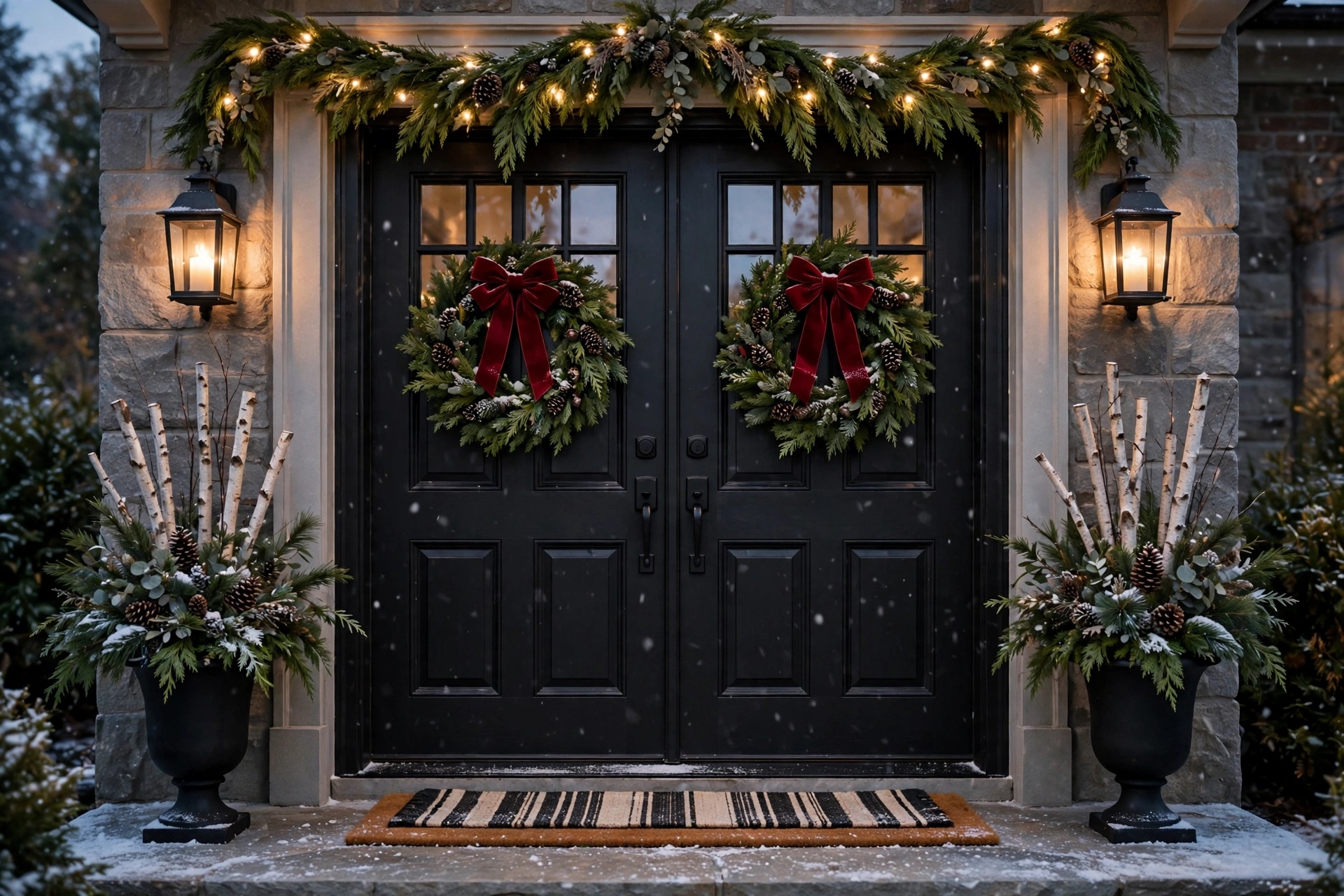
The most reliable way to decorate double front doors for Christmas is also the simplest: hang identical wreaths at the same height on each door. Matching wreaths create instant visual balance, and that symmetry is what makes a double door entrance read as designed rather than decorated in a hurry. Measuring and marking the exact same height on both doors before hanging anything prevents the common mistake of one wreath sitting noticeably higher or lower than the other. Choosing a wreath slightly larger than what you’d use on a single door — 24 to 30 inches works well for most double door widths — keeps the proportions right, since a wreath sized for a single door can look small and lost on a wider double door. This idea works with virtually any style, from traditional evergreen and red berries to a modern eucalyptus-and-white palette, which makes it the easiest starting point on this entire list.
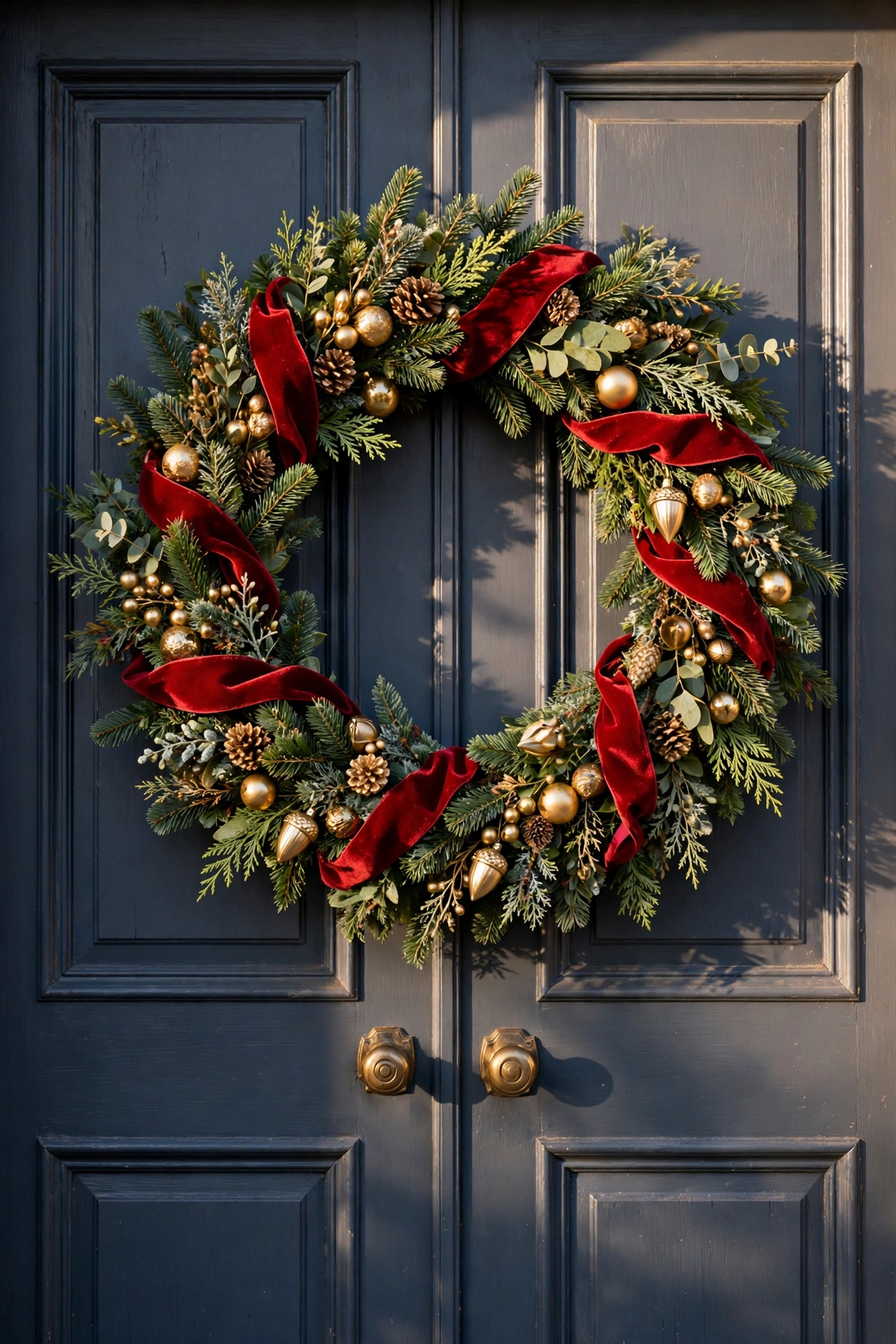
A Split Wreath That Becomes Whole When Doors Close
A split wreath is built as one full wreath, then cut down the center so each half hangs on its own door — when the doors are closed, the two halves line up to look like a single unbroken wreath, and when the doors open, they naturally separate into two matching pieces. This trick gives a double door entrance a more custom, high-end look than two separate off-the-shelf wreaths typically achieve, since the greenery, ornaments, and ribbon all flow as one continuous design. Using a metal wreath hanger on each door, rather than a hook mounted directly to the wood, makes it easy to remove both halves without disturbing the door’s finish. Because the two halves need to line up precisely, it’s worth double-checking hanger height and horizontal position before committing to adhesive hooks or permanent hardware. This idea takes slightly more planning than two matching wreaths, but the payoff is an entrance that looks noticeably more considered than most.
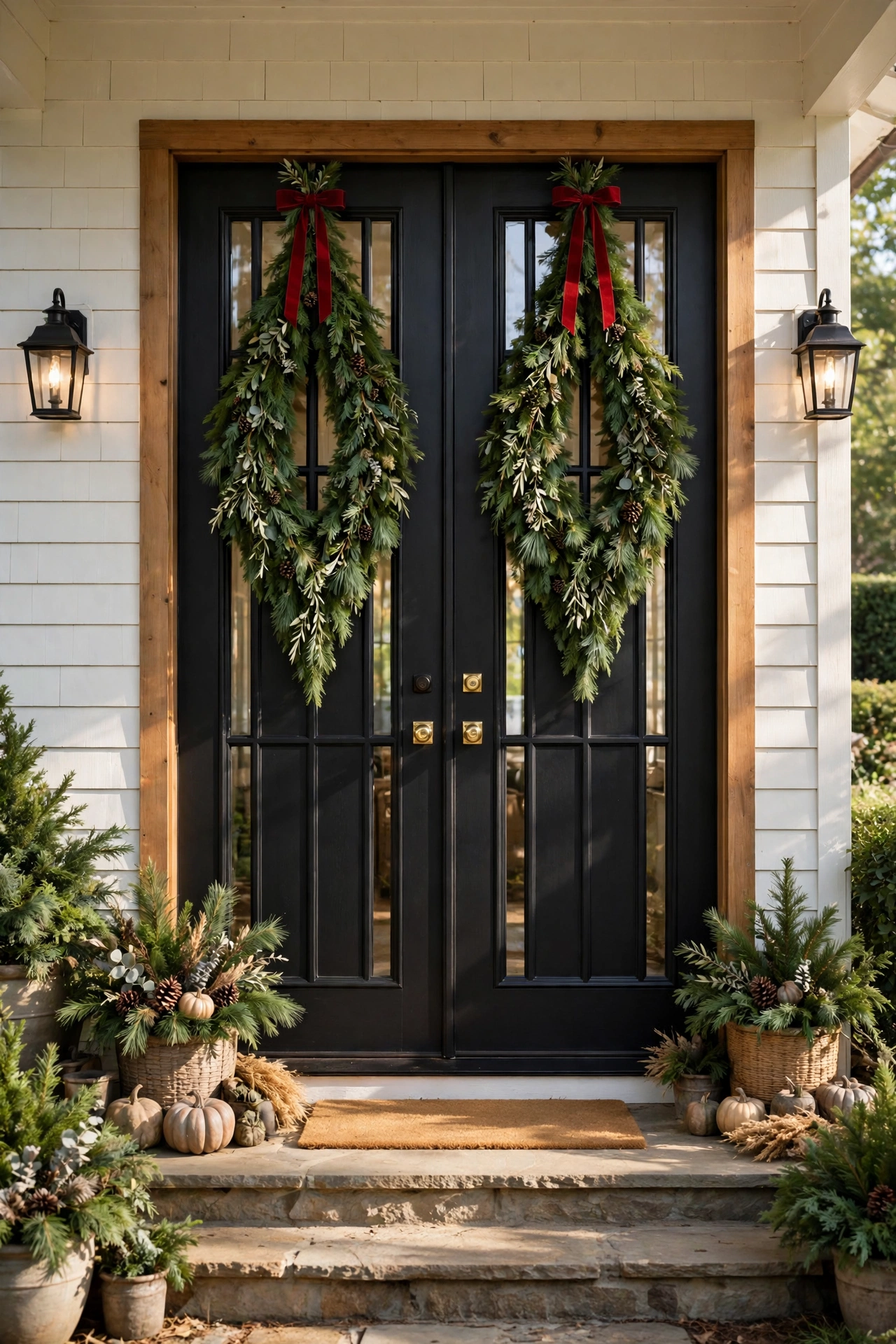
Vertical Teardrop Swags Instead of Round Wreaths
Teardrop-shaped swags solve a specific double door problem: round wreaths can feel bulky or crowd each other when doors sit close together, while the narrower, vertical shape of a swag gives each door its own clean line without visual competition. The elongated silhouette also naturally draws the eye upward, which makes double doors with tall proportions feel even more grand. Hanging two matching swags at identical heights keeps the same symmetry principle from the wreath idea above, just in a slimmer shape that works especially well for doors with narrower panels or decorative glass inserts. Adding a simple ribbon bow at the top of each swag, in a color that matches the rest of the entrance, ties the two pieces together visually even though they hang several feet apart. This idea tends to suit farmhouse and traditional-style entrances particularly well, since the swag shape has a slightly more rustic, hand-gathered look than a perfectly round wreath.
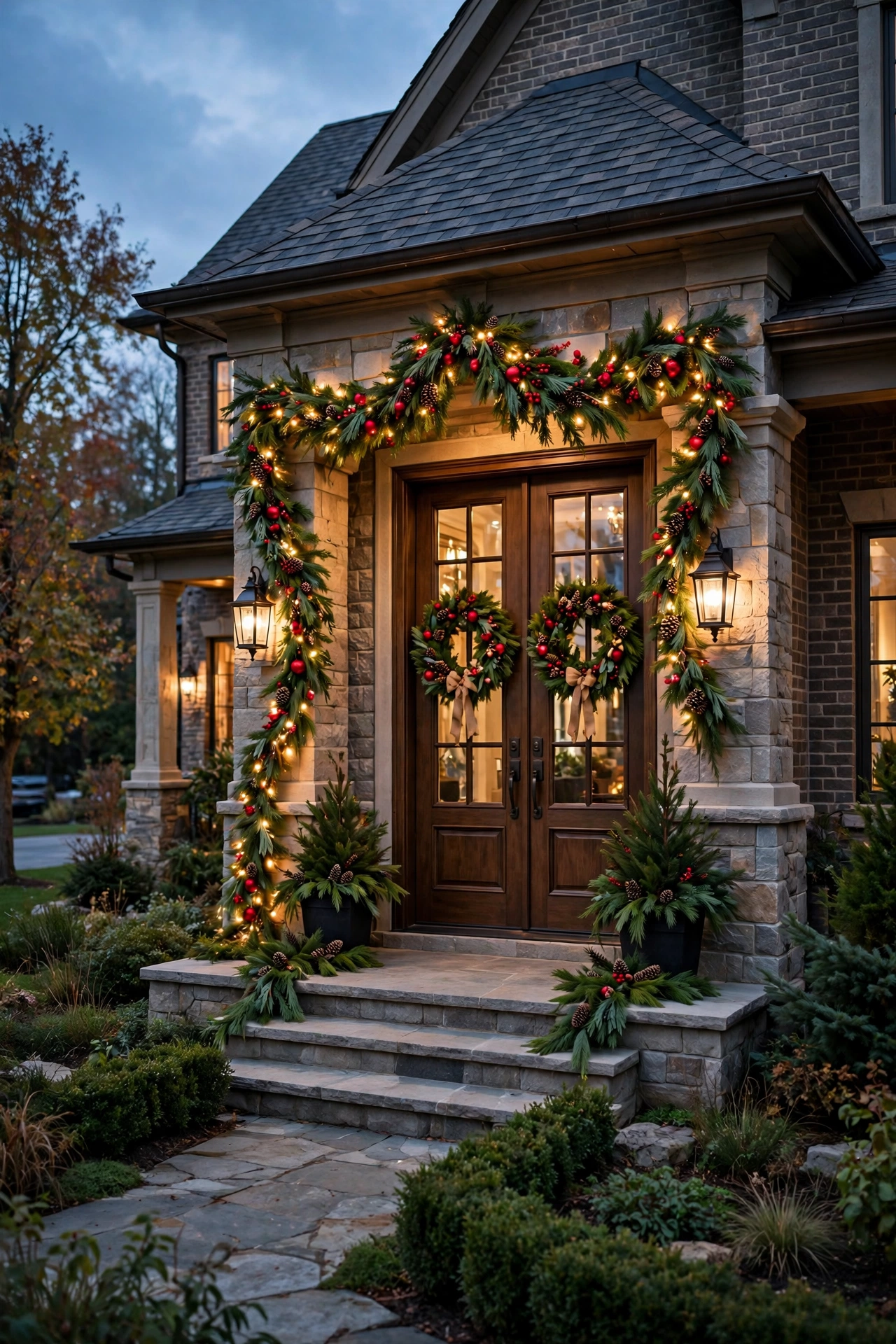
Garland Draped Across the Top Lintel
Draping a full garland across the top of the door frame, spanning both doors as one continuous piece, ties the whole entrance together in a way that two separate wreaths alone can’t achieve. For most double door widths, 12 to 18 feet of garland gives enough length to drape with a soft, natural swag in the middle rather than pulling it tight and flat across the top. Weaving warm white string lights through the garland before hanging it means you only have to handle the lights once, rather than trying to thread them through greenery that’s already mounted overhead. Adding pinecones, berries, or small ornaments in clusters along the garland, spaced every few feet rather than evenly scattered, keeps the eye moving across the full width without looking busy. This idea works particularly well paired with matching wreaths or swags below it, since the garland becomes the unifying line connecting both doors visually.
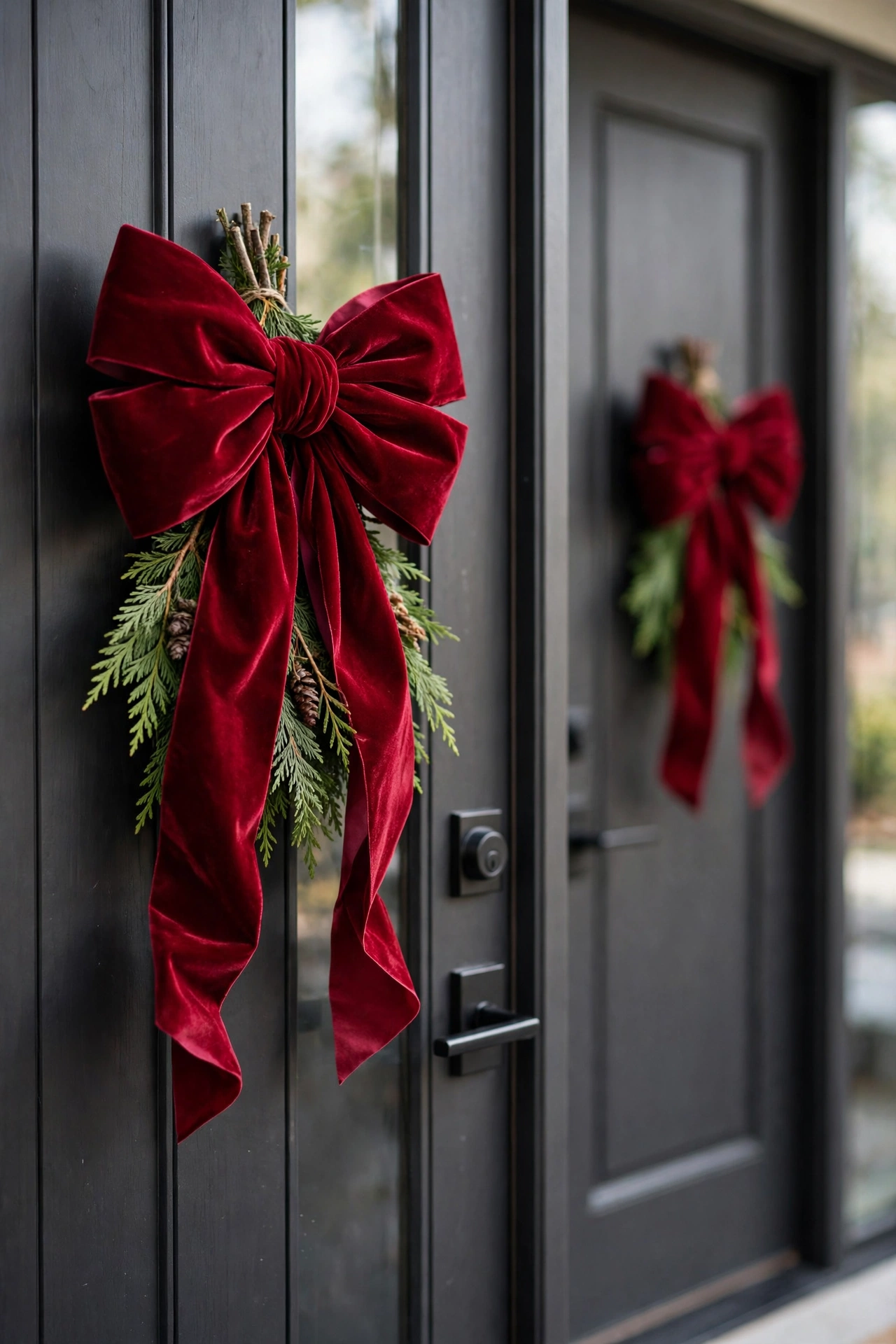
An Oversized Velvet Bow on Each Door
A large velvet bow, roughly 10 to 12 inches wide, tied at the top of a simple greenery base on each door gives a double entrance a bold, statement-making focal point without needing a fully decorated wreath underneath. Deep red, forest green, or burgundy velvet reads as more upscale than a thinner satin or synthetic ribbon, and the fabric’s weight helps the bow hold its shape instead of drooping in cold or windy weather. Keeping the greenery underneath minimal — a small bundle of pine or cedar rather than a full wreath — lets the bow stay the clear focal point on each door. Matching the bow color and size exactly on both doors is what makes this idea read as designed rather than mismatched, so it’s worth tying both bows from the same length and width of ribbon. This is a strong option for anyone who wants a more modern, editorial look than a traditional wreath provides.
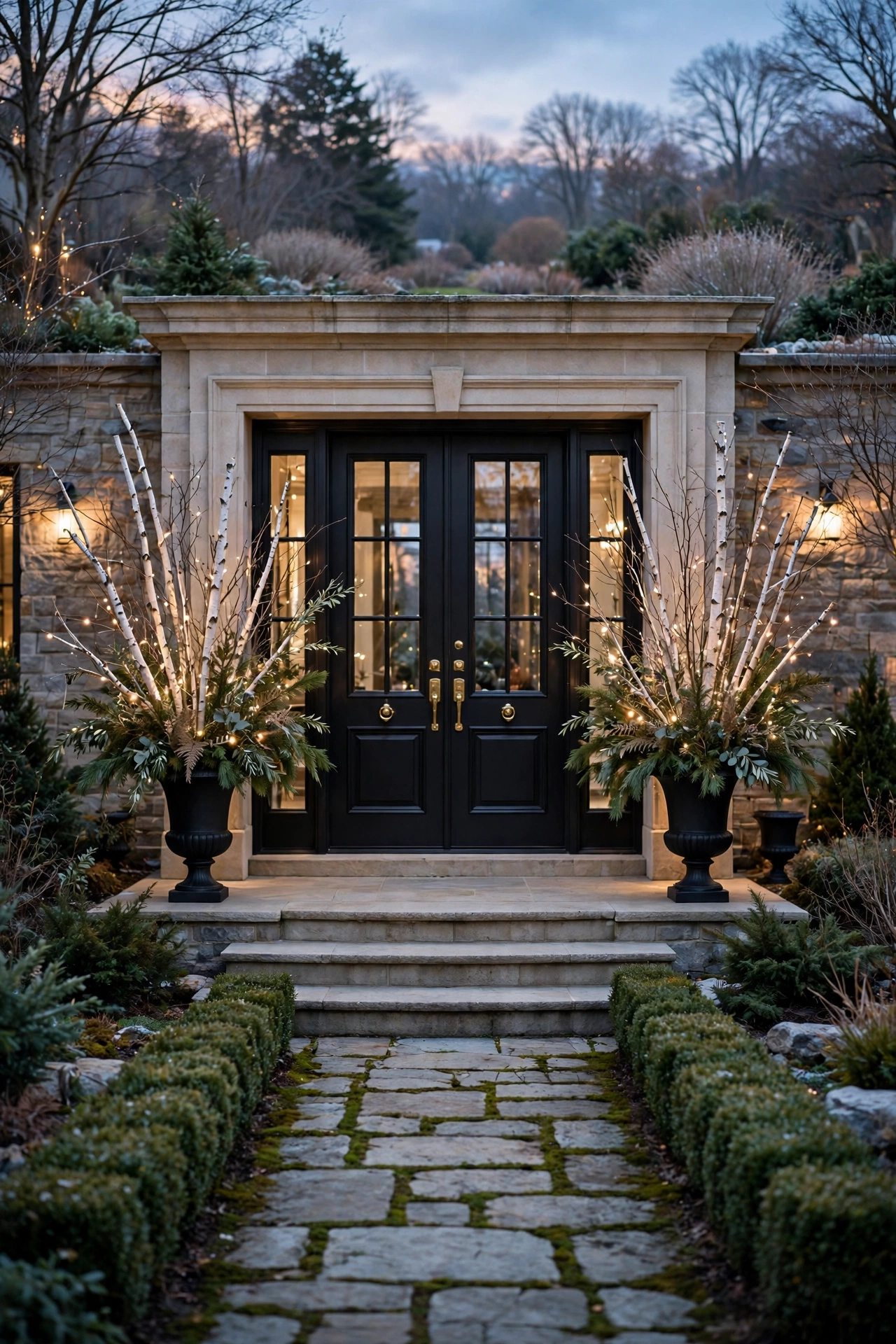
Flanking Urns With Birch Branches & Greenery
Placing a matching pair of tall urns on either side of the double doors, filled with birch branches, greenery, and a few Christmas picks, extends the decorating beyond the doors themselves and gives the whole entrance more visual weight. Birch branches add height and a pale, natural contrast against dark evergreen filler, which keeps the arrangement from looking like a solid green block. Black or dark bronze urns tend to photograph and read as more sophisticated than bright metallic finishes, especially against a lighter-colored door or siding. Tucking in a few warm white lights among the branches means the urns still contribute to the entrance’s glow after dark, not just during the day. This idea works well alongside almost any wreath or garland style above, since the urns sit outside the door frame itself and simply widen the overall composition.
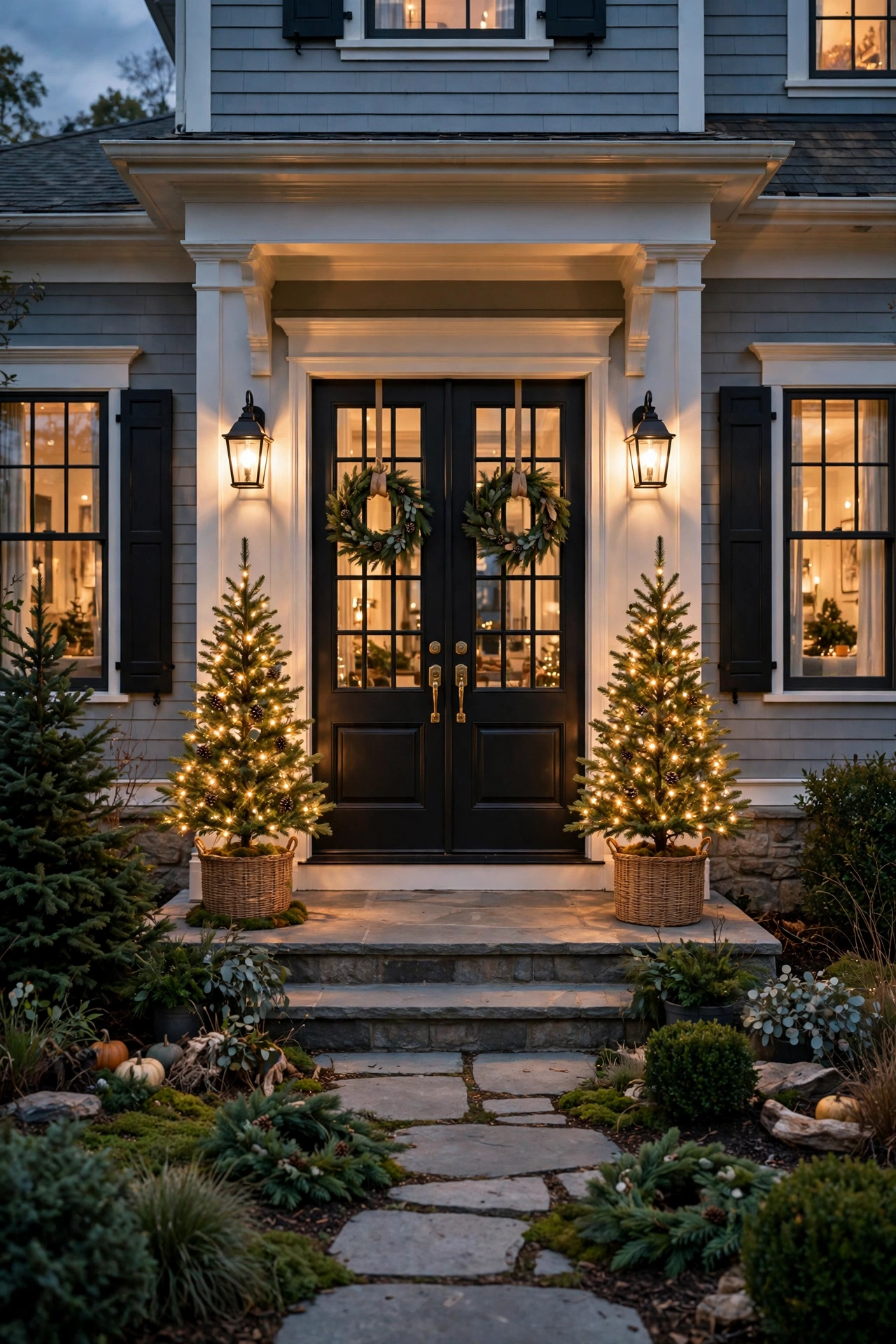
Mini Christmas Trees in Baskets Flanking the Entrance
A pair of small, matching Christmas trees, potted in woven baskets or galvanized buckets, on either side of the double doors brings a full, dimensional look to the entrance without requiring anything mounted on the doors themselves. Choosing trees in the two- to four-foot range keeps the scale appropriate for flanking a doorway rather than overwhelming it, and pre-lit versions save the extra step of wrapping lights on-site. Wrapping the base of each tree in the same basket material and ribbon keeps the pair looking intentional rather than like two separate purchases. This idea is especially useful for entrances with covered porches, since potted trees hold up better under a roofline than in full exposure to wind and precipitation. Pairing the mini trees with a simple wreath or bow on each door, rather than heavily decorated ones, keeps the overall entrance from feeling overcrowded.
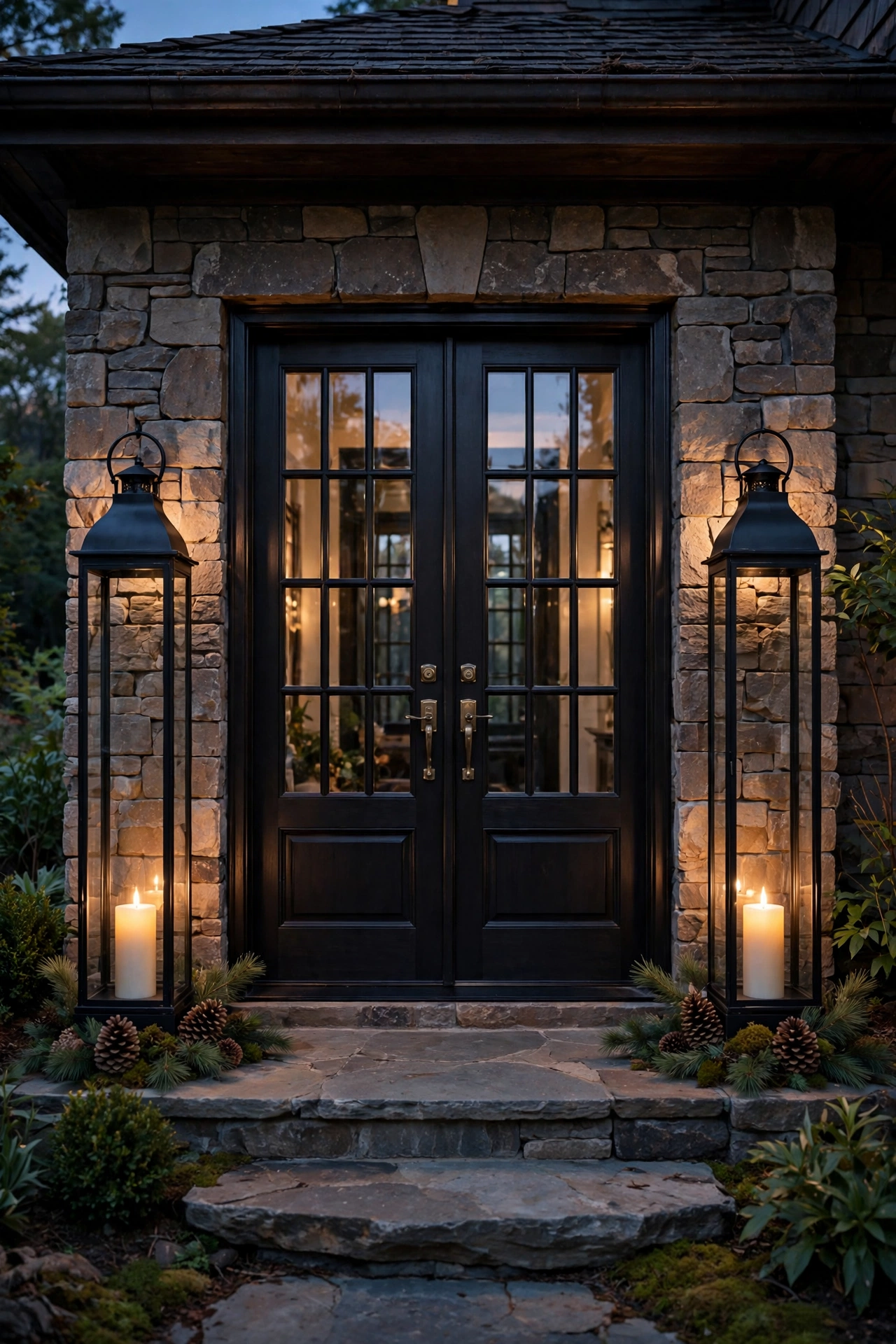
Lanterns With Candlelight on Either Side
A pair of tall lanterns, one on each side of the entrance, filled with flameless candles or warm string lights, adds a soft, flickering glow that plain overhead porch lighting doesn’t provide. Black or aged bronze lantern frames tend to suit most home exteriors, and glass panels let the light spread outward rather than staying contained and dim. Placing the lanterns directly on the ground on either side of the doors, or on a small pedestal if the porch allows for it, keeps them at a consistent, symmetrical height that matches the balance of the rest of the entrance. Filling the base of each lantern with a few pinecones or a small wrap of greenery ties the lighting detail into the same seasonal palette as the wreaths or garland above. This idea makes the biggest difference after dark, when most other decor details are harder to see clearly from the street.
Boxwood or Cedar Topiaries Flanking the Doors
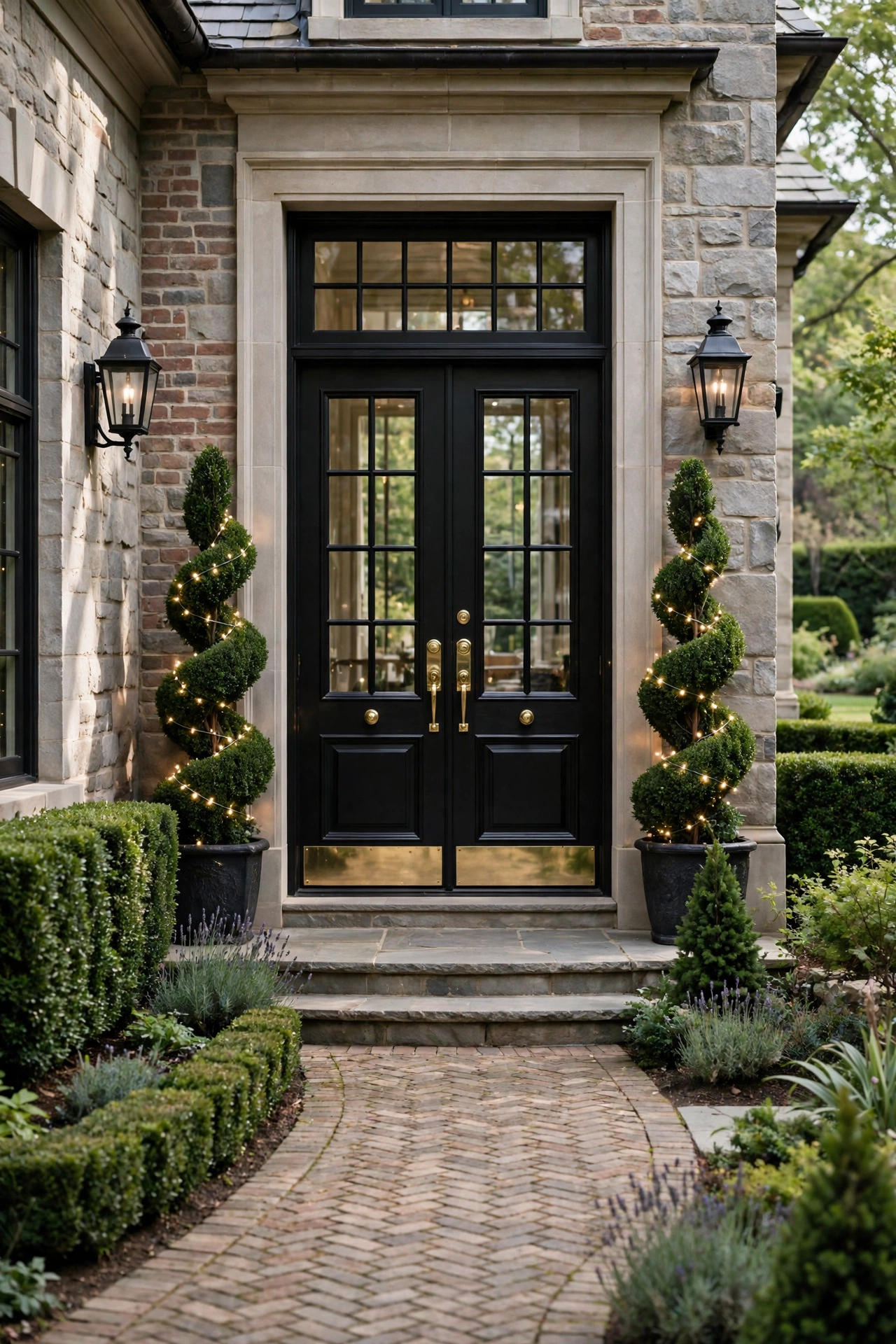
A matching pair of boxwood or cedar topiaries, either spiral-shaped or simple rounded forms, gives a double door entrance a more structured, formal look than loose greenery alone provides. Placing them in matching planters on either side of the doors creates an immediate frame around the entrance, drawing the eye directly to the doors themselves. Wrapping a single strand of warm white lights around each topiary, rather than heavy multicolor strands, keeps the look elegant enough to suit both a traditional and a more modern exterior. Adding a simple ribbon or bow at the base of each planter ties the topiaries into the Christmas color palette without needing any additional ornaments on the plants themselves. This idea tends to work especially well for homes with a more architectural or symmetrical exterior style, since the topiaries reinforce that same sense of order.
A Layered Doormat at the Threshold
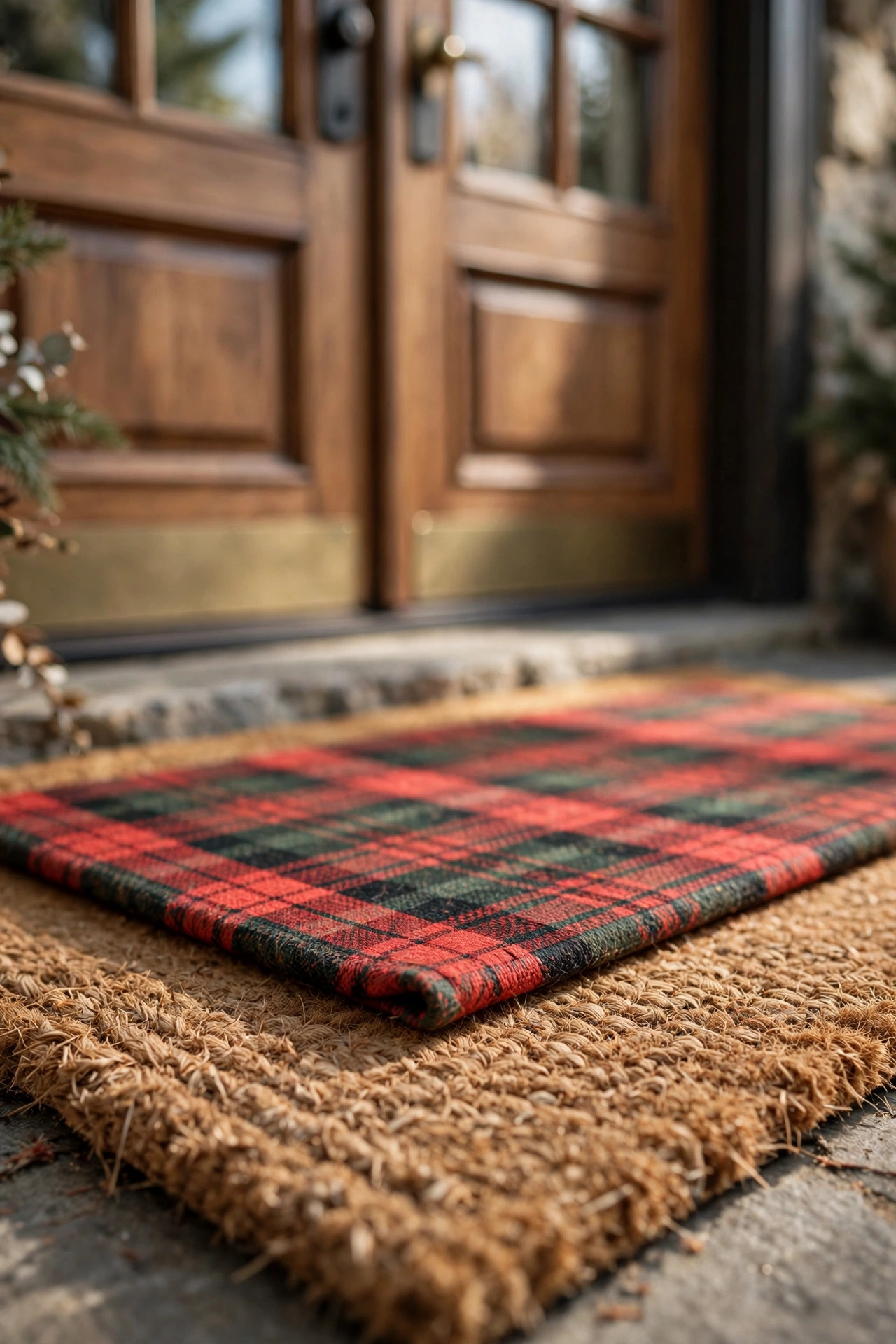
Layering a smaller, decorative doormat on top of a larger plain one at the threshold between double doors adds a finishing detail at ground level that most people overlook when decorating a double door entrance. Choosing a larger neutral mat as the base, then a smaller mat with a holiday greeting or pattern on top, creates the same layered depth that works well in interior styling. Centering the layered mat set directly between both doors, rather than favoring one side, keeps the symmetry consistent with everything happening above it on the doors and frame. A plaid or tartan pattern on the top mat pulls in a classic Christmas texture that pairs naturally with velvet ribbon or bows used elsewhere on the entrance. This is one of the lowest-cost and lowest-effort ideas on the list, but it’s often the detail that finishes the whole look at eye level for anyone approaching the door.
Snow-Flocked Garland & Wreaths
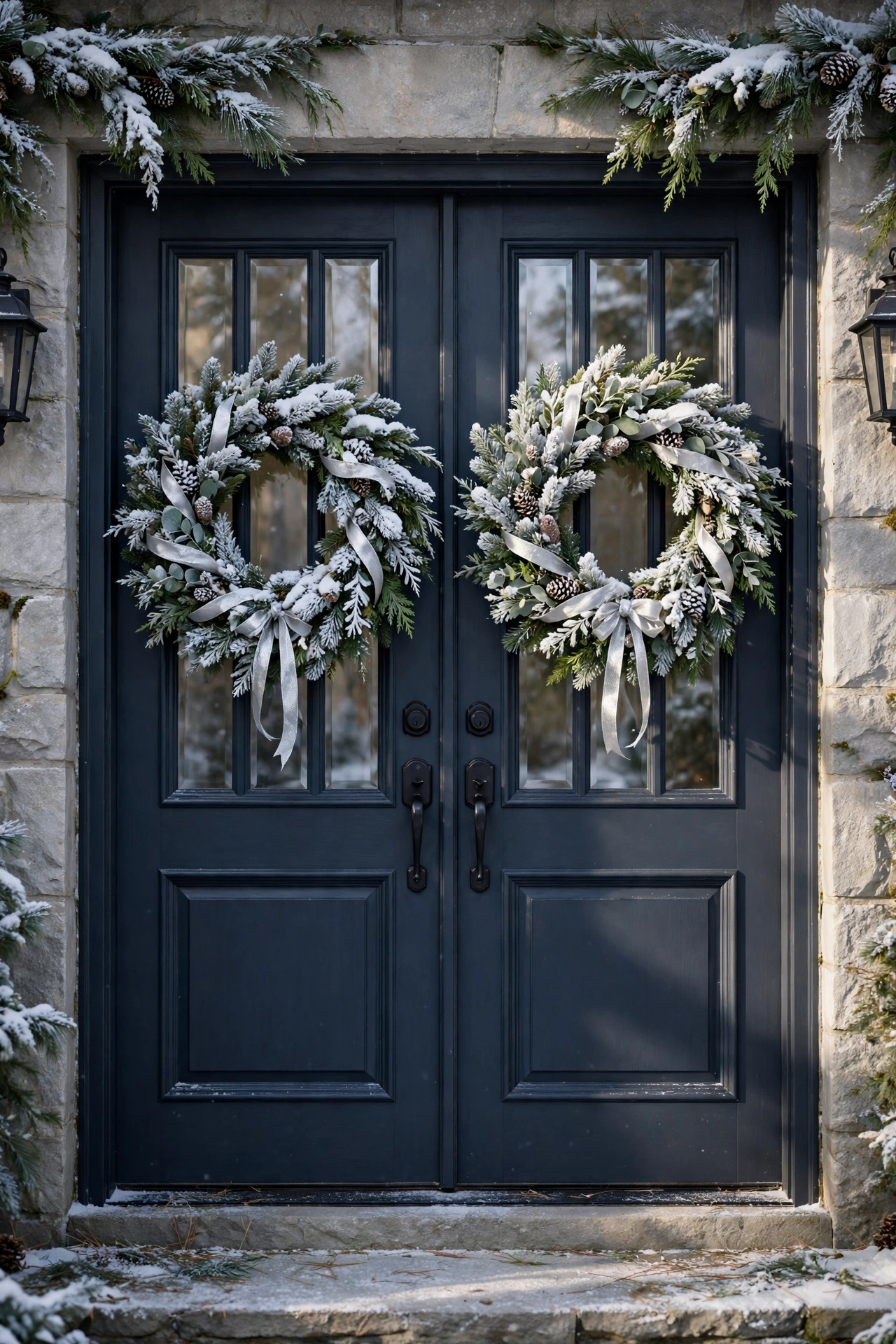
Lightly flocked garland and wreaths, dusted to look like a fresh coating of snow, give a double door entrance a wintry look that holds up visually even in climates that don’t get real snow. The white flocking adds contrast against dark green foliage, which helps the greenery read more clearly from the street or driveway, especially at dusk. Because flocked pieces tend to photograph with a softer, more muted look than bright traditional red-and-green decor, this idea suits homes with a more neutral or Scandinavian-inspired exterior palette. Pairing flocked wreaths with silver or icy blue ribbon, rather than warm red tones, keeps the whole color story consistent with the wintry theme. This idea works well as a seasonal variation on the matching wreath or split wreath ideas above, simply swapping the greenery style rather than changing the overall approach.
Lighted Wreaths for Nighttime Glow
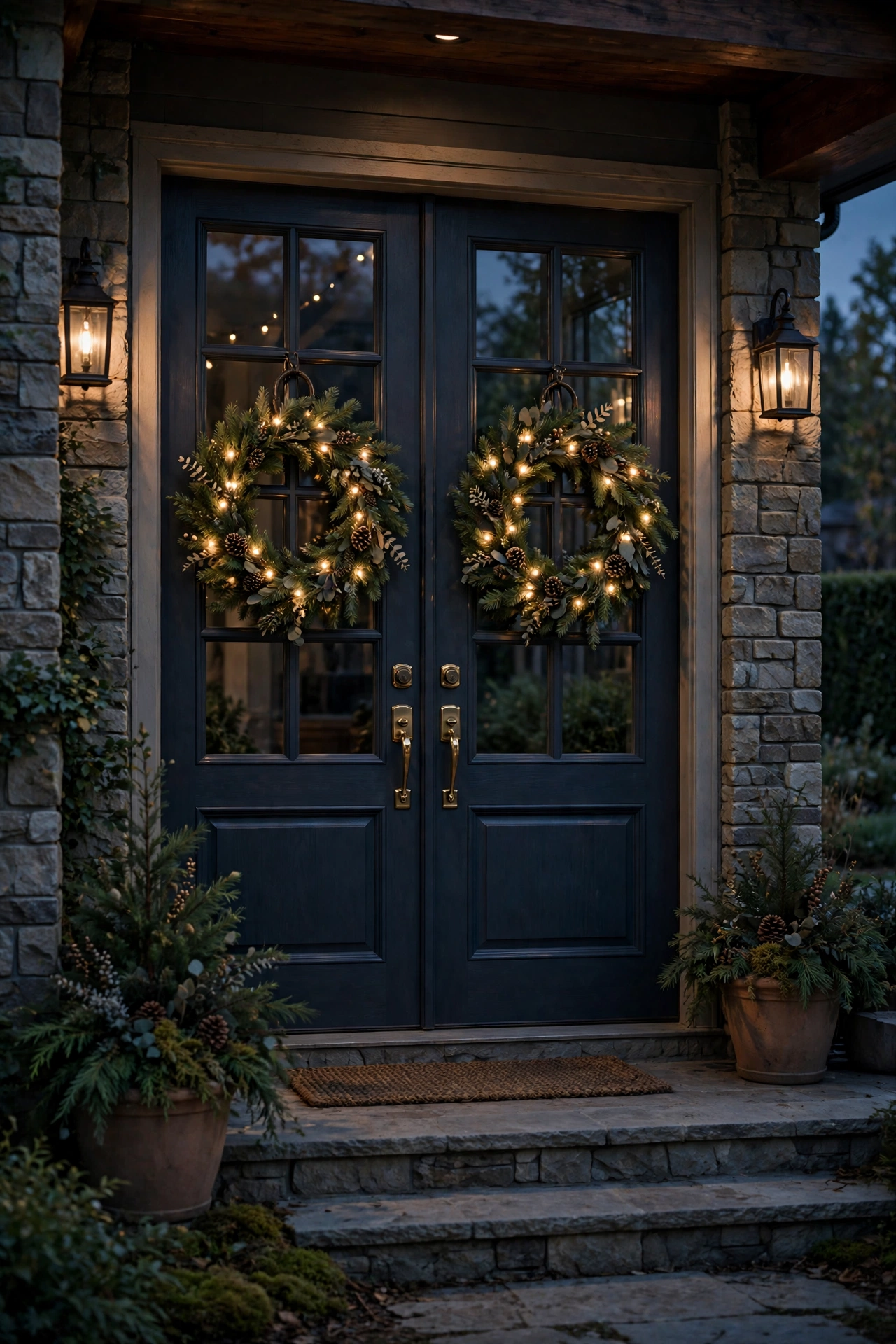
Battery-operated lighted wreaths, with small bulbs woven directly into the greenery, mean the entrance stays festive after dark without needing a separate string of porch lights aimed at the doors. Choosing warm white bulbs over cool white or multicolor keeps the glow consistent with most traditional and farmhouse color palettes used elsewhere on the entrance. Battery packs tucked behind the wreath, rather than a visible cord running down the door, keep the installation looking clean during daylight hours when the lights aren’t in use. Setting both wreaths’ timers to the same on-and-off schedule keeps the symmetry intact even after dark, since one wreath lit and one dark would undercut the balanced look built into the rest of the entrance. This idea is a straightforward upgrade to the classic matching wreath idea, adding function without changing the overall design.
Jingle Bell Garland Along the Door Frame
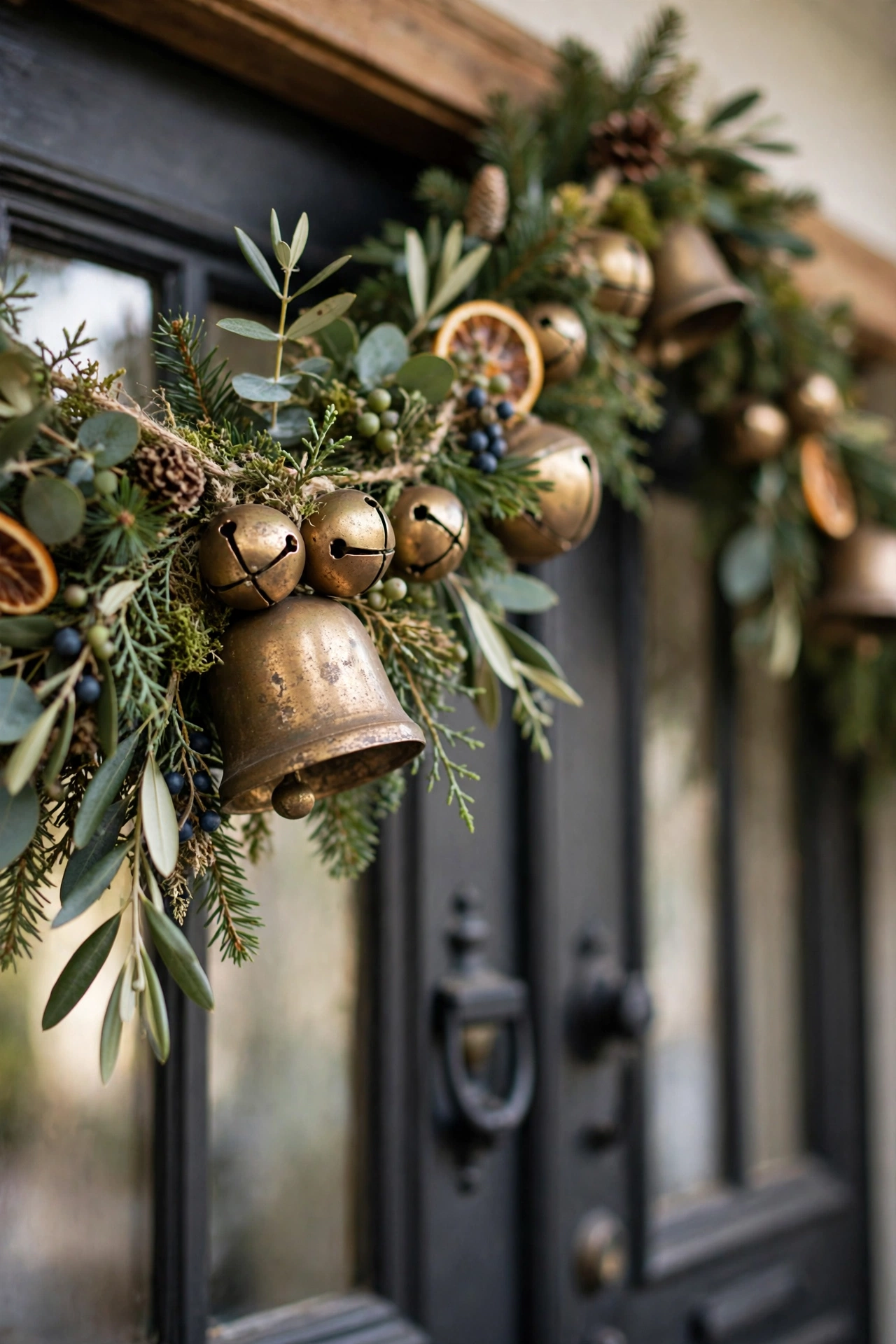
A garland threaded with jingle bells, hung along the outer edge of the door frame or draped just above the doors, adds a playful, textural detail that’s easy to layer on top of an existing wreath or garland setup. Choosing bells in an aged brass or antique gold finish keeps the look more polished than shiny craft-store gold, which can read as less expensive up close. Spacing the bells evenly along the garland, rather than clustering them in one section, keeps the sound and visual rhythm consistent across the full width of both doors. This detail works especially well for households with kids, since the bells give trick-or-treaters and carolers something to notice and interact with at the door. Pairing jingle bell garland with a more classic greenery base keeps the overall look from tipping into novelty territory, since the bells read as an accent rather than the main event.
A Vine Branch Light Frame Around the Doorway
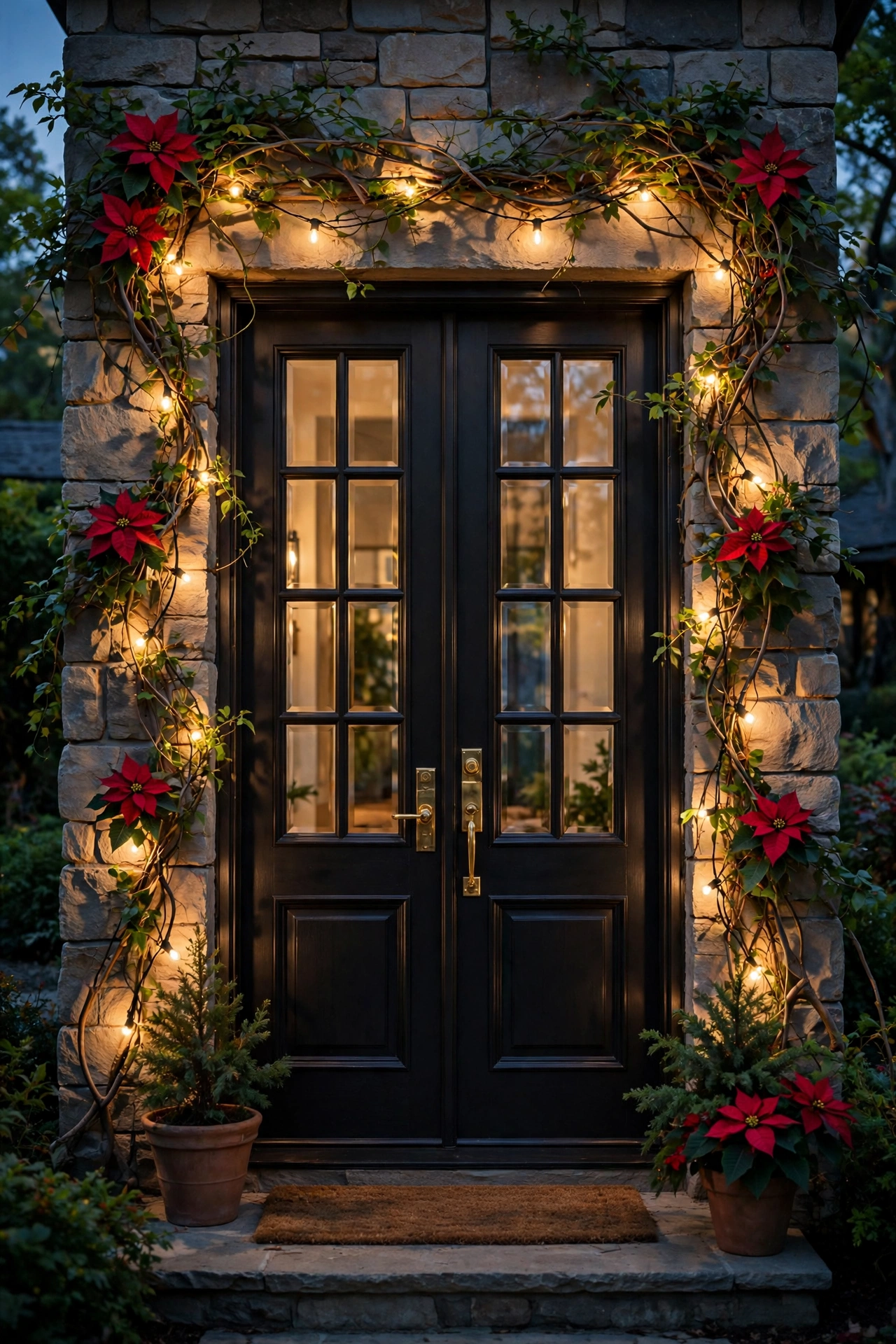
Attaching thin vine branches wrapped in string lights around the outer frame of the double doors creates an organic, glowing outline that reads as more custom than a straight strand of lights taped along the trim. Using outdoor-rated adhesive hooks or cable staples to secure the thicker base of the vine keeps it from sagging or shifting in wind, while smaller branch sections can be held in place with simple floral wire. Layering a few poinsettias or a thin eucalyptus garland along the vine afterward adds color and texture without hiding the light frame’s overall shape. Because the vine and lights stay in place as a semi-permanent frame, only the seasonal accents (poinsettias, ornaments, ribbon) need to be swapped out year to year. This is one of the more hands-on DIY ideas on the list, but it creates a distinctive, glowing frame effect that’s hard to replicate with off-the-shelf garland alone.
A Wood Monogram or Welcome Sign Beside the Door
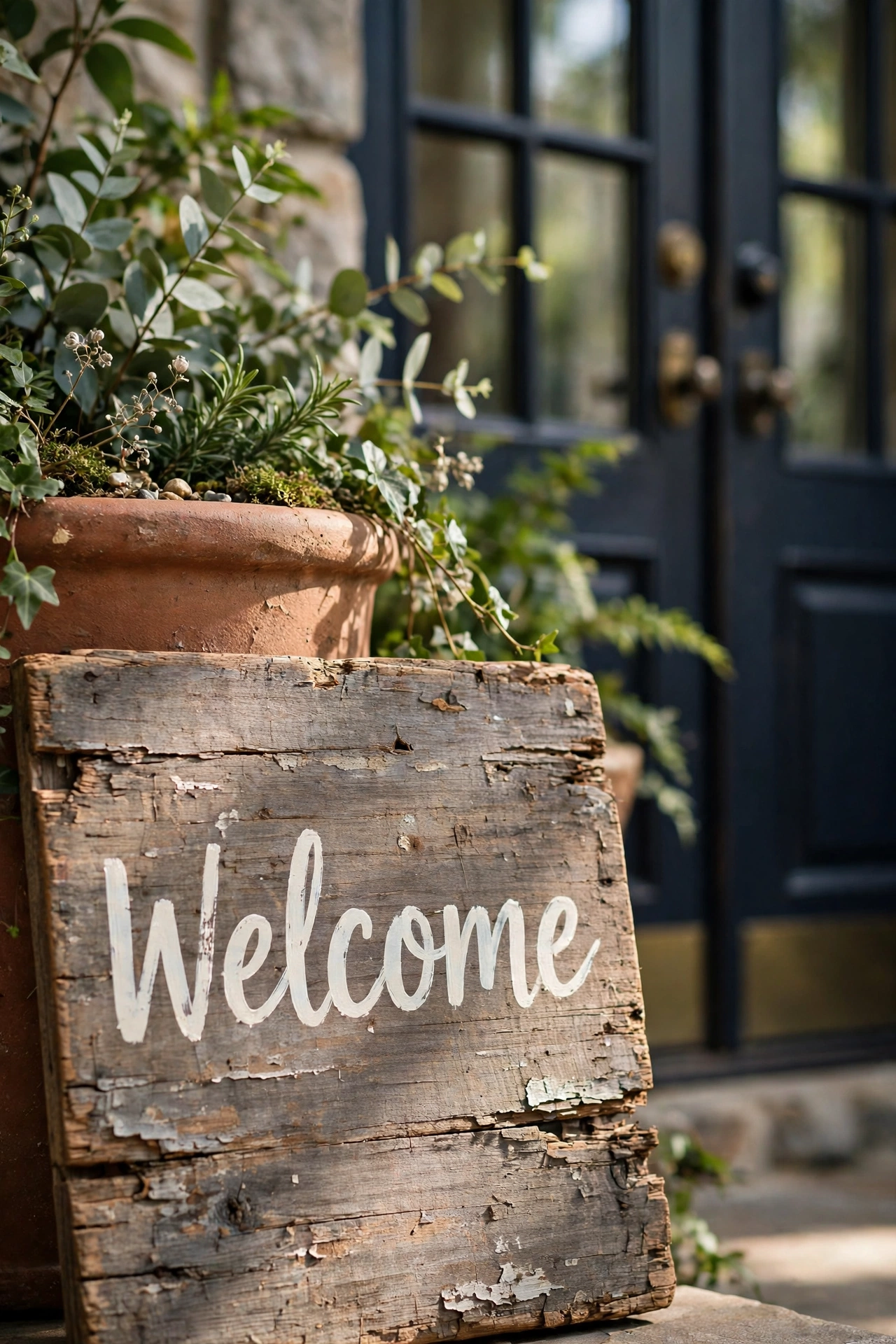
A distressed wood sign, either monogrammed with a family initial or simply reading “Welcome” or “Merry Christmas,” leaned against the wall or a nearby planter beside the double doors adds a personal, less mass-produced touch to the entrance. Choosing a sign with hand-painted or carved lettering, rather than a printed vinyl design, gives it a more custom, higher-end look that holds up under closer inspection. Placing the sign to one side rather than centered between the doors keeps it from competing with the wreaths or garland as the main focal point. Leaning it against a flanking urn, topiary planter, or small stack of firewood ties it into whatever else is already styled at ground level near the entrance. This detail works well as a finishing touch on almost any of the other ideas on this list, since it adds warmth without requiring anything to be mounted on the doors themselves.
Color-Coordinated Ribbon Bows Tying the Whole Look Together
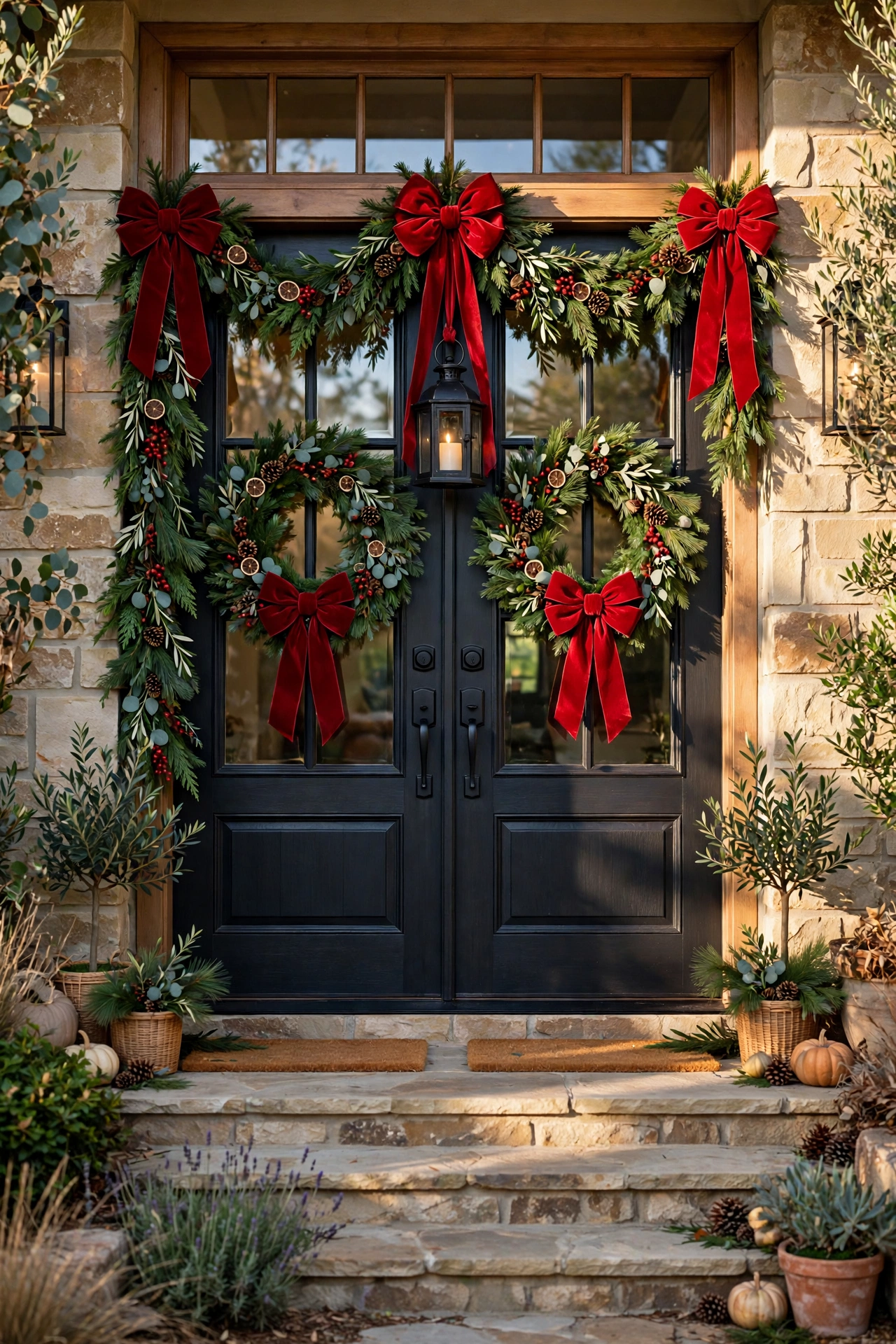
Choosing one ribbon style — velvet, plaid, tartan, or a simple grosgrain — and using it consistently across every element of the entrance (wreath bows, garland accents, lantern ties, even the doormat pattern) is what pulls a double door display together into one cohesive design instead of a collection of separate decorations. Matching the ribbon width and tying style on both doors matters just as much as matching the wreaths or garland themselves, since a slightly different bow on each side is one of the fastest ways to break the symmetry the rest of the entrance is built around. Sticking to one or two colors within that ribbon choice — red and gold, or green and cream — keeps the palette from feeling scattered even if several different decor elements are layered together. This idea isn’t really a standalone decoration so much as a styling rule that ties every other idea on this list into one unified look. Treating ribbon choice as a first decision rather than an afterthought tends to make the biggest visible difference in how “put together” the finished entrance looks.
Styling Tips
- Measure before you hang anything — mark identical heights on both doors so wreaths, swags, or bows line up exactly, since even an inch of difference is noticeable on a double door.
- Choose one dominant material (fresh greenery, faux greenery, or flocked greenery) rather than mixing textures across the two doors, which keeps the pair looking intentional.
- Extend the decorating outward with urns, topiaries, or lanterns rather than piling more decor onto the doors themselves, since a wider composition reads as more designed than a crowded pair of doors.
- Pick one ribbon color and style and repeat it across every element — wreaths, garland, lanterns, even the doormat — so the whole entrance feels like one look rather than several unrelated decorations.
- Light the entrance in layers (wreath lights, garland lights, lantern glow) rather than relying on a single porch light, since layered lighting is what makes an entrance look finished after dark.
Practical Implementation Ideas
- Hang wreaths and swags using over-the-door metal hangers rather than nails or adhesive directly on the door, which protects the door’s finish and makes takedown easier in January.
- Test garland length by loosely draping it across the door frame before cutting or committing to a final hanging point, since it’s easier to trim excess than to add more later.
- Set battery-operated lights on a timer so wreaths, garland, or vine frames turn on and off automatically at the same time every evening.
- Use outdoor-rated adhesive hooks and weatherproof ribbon for anything left up through the full holiday season, especially in climates with wind, rain, or snow.
- Take a photo from the street or end of the driveway once everything is hung, since small asymmetries are often more visible from a distance than they are standing right at the door.
Common Mistakes to Avoid
- Hanging a single oversized wreath centered between two doors, which tends to look unbalanced rather than like an intentional design choice.
- Using two wreaths or swags that are close in style but not identical, since near-matches are often more noticeable than a fully different look on each side.
- Overloading one door with more decor than the other, whether that’s an extra ornament cluster, a bigger bow, or brighter lights.
- Choosing a wreath or swag sized for a single door, which can look small and lost against the wider proportions of double doors.
- Skipping the space beyond the doors entirely — an entrance with only wreaths on the doors and nothing else nearby often looks unfinished compared to one with flanking urns, lanterns, or trees.
Small-Space Alternatives
For a covered porch with limited floor space, skip flanking urns or trees and focus the decorating on the doors and frame instead — matching wreaths, a garland across the top, and a layered doormat can create a full look without needing anything placed on the ground. Wall-mounted string lights or a vine branch frame around the doorway add glow and detail without taking up any porch footprint at all. A single small wreath hook set with a lightweight swag, rather than a heavier full wreath, works well if wind or limited depth on the porch makes bulkier decor impractical.
Budget-Friendly Alternatives
Two inexpensive matching wreaths from a craft or big-box store, dressed up with a higher-quality ribbon bow, often look more expensive than one costly designer wreath used alone. DIY garland made from foraged pine branches, pinecones, and a few strands of lights costs very little beyond time and effort, and it can be sized exactly to fit the width of double doors. Thrift stores and end-of-season sales are good sources for lanterns, urns, or planters that can be reused winter after winter rather than purchased new each year. Repurposing everyday items — mason jars as lanterns, buckets as tree planters — keeps the flanking-accent ideas on this list accessible even on a tighter budget.
Pro Styling Recommendations
Treat the two doors as one composition rather than two separate decorating projects — every measurement, color choice, and material decision should be made once and then mirrored, not chosen twice. Add height and depth by combining at least two elements at different levels: garland at the top, wreaths at eye level, and urns or lanterns at the ground, so the whole entrance has visual layers rather than decor confined to one horizontal band. Keep ornament and accent clusters slightly asymmetrical within each individual wreath or swag, even while the two sides of the doors remain identical to each other, since a little organic variation within each piece keeps the pair from looking machine-made. Finish with one detail that only shows up at night, like lighted wreaths or a lantern glow, so the entrance has a distinct daytime and evening look.
Frequently Asked Questions
Use identical decor on both doors — matching wreaths, swags, or bows — hung at exactly the same height, and extend the look with flanking urns, lanterns, or trees outside the door frame for a wider, more balanced composition.
Two matching wreaths, sized slightly larger than what you’d use on a single door (around 24 to 30 inches), generally look more intentional than a single oversized wreath centered between the doors.
A split wreath is one full wreath cut in half, with each half hung on a separate door. When the doors are closed, the two halves line up to look like one continuous wreath, and they separate naturally when the doors open.
Most double door widths need 12 to 18 feet of garland to drape across the top of the frame with a soft, natural swag rather than pulling it tight and flat.
Two matching wreaths from a craft or big-box store, dressed up with a higher-quality ribbon bow, along with DIY garland made from foraged branches and pinecones, can create a full look for relatively little cost.
Boxwood and cedar topiaries, birch branch arrangements in urns, and mini potted Christmas trees are all popular choices for flanking double doors, since they extend the decorating beyond the doors themselves.
Measure and mark identical placement points on both doors before hanging anything, use the same materials and ribbon on each side, and check the finished look from a distance to catch any small asymmetries.
Layered lighting — a lighted wreath, garland woven with string lights, and lanterns or a vine branch frame around the doorway — creates a more finished look after dark than a single porch light alone.
Conclusion
Double front doors give you more space to work with, not more to worry about — the key is treating both doors as one design instead of two separate ones. Pick a single style, whether that’s classic matching wreaths, a split wreath, or garland-and-urns, and repeat every measurement and material choice exactly on both sides. Once the symmetry is right, the smaller details — a monogram sign, jingle bells, layered doormats — are what turn a balanced entrance into one guests actually stop to admire on their way inside.