23 Driveway Ideas That Level Up Your Landscaping & Curb Appeal Big Time
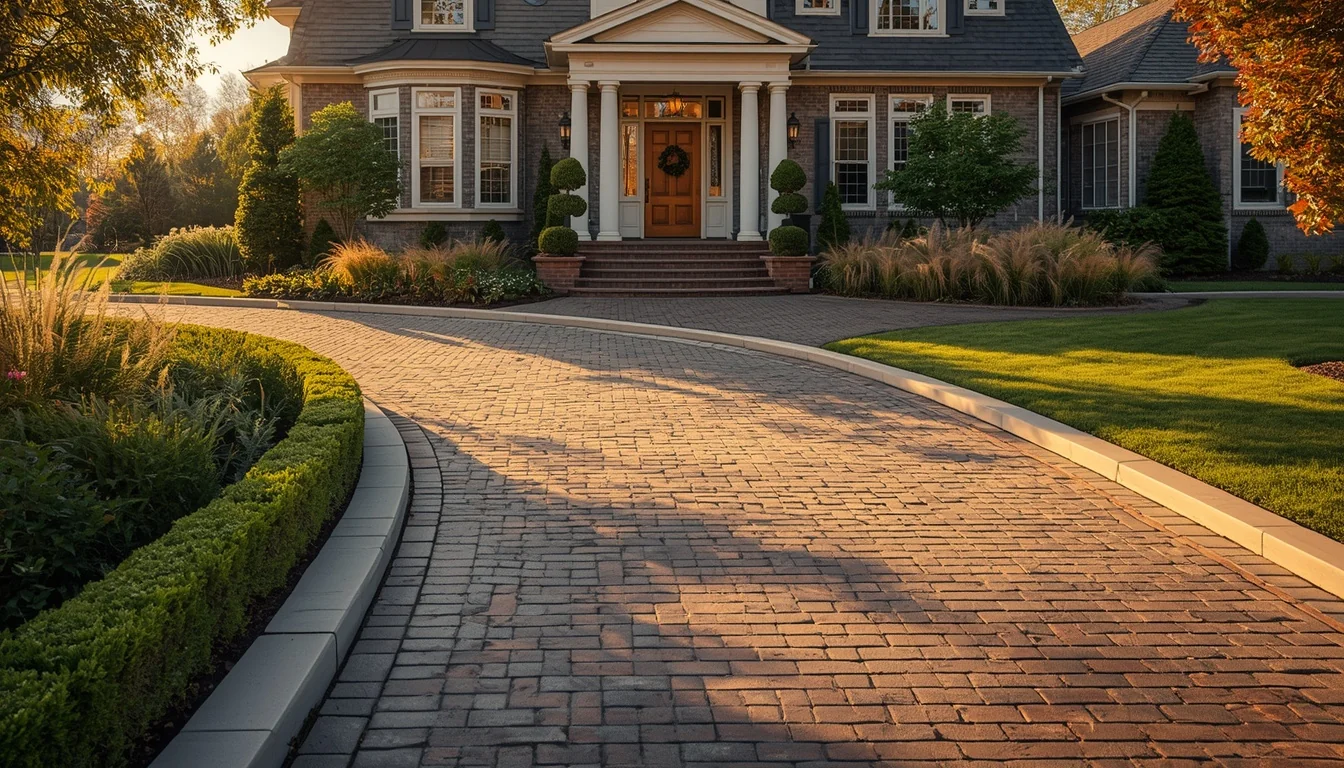
Before anyone reaches your front door, they walk across your driveway. It’s the first surface, the first texture, the first thing feet or tires actually touch.
Most homeowners spend years planning porch colors, planting beds, and mailbox styles, while the driveway sits there as an afterthought of plain gray concrete. Yet it’s often one of the largest hardscaped surfaces on the entire property.
The good news: a driveway refresh doesn’t have to mean tearing everything out and starting from zero. A well-placed border, a pattern change, or a few well-chosen plants along the edges can shift the entire feel of your front yard.
Below are 23 driveway ideas organized by material, layout, and landscaping pairing, so you can find the direction that actually fits your home instead of copying a look that belonged to someone else’s property.
Table of Contents
1. Herringbone Brick Paver Driveway
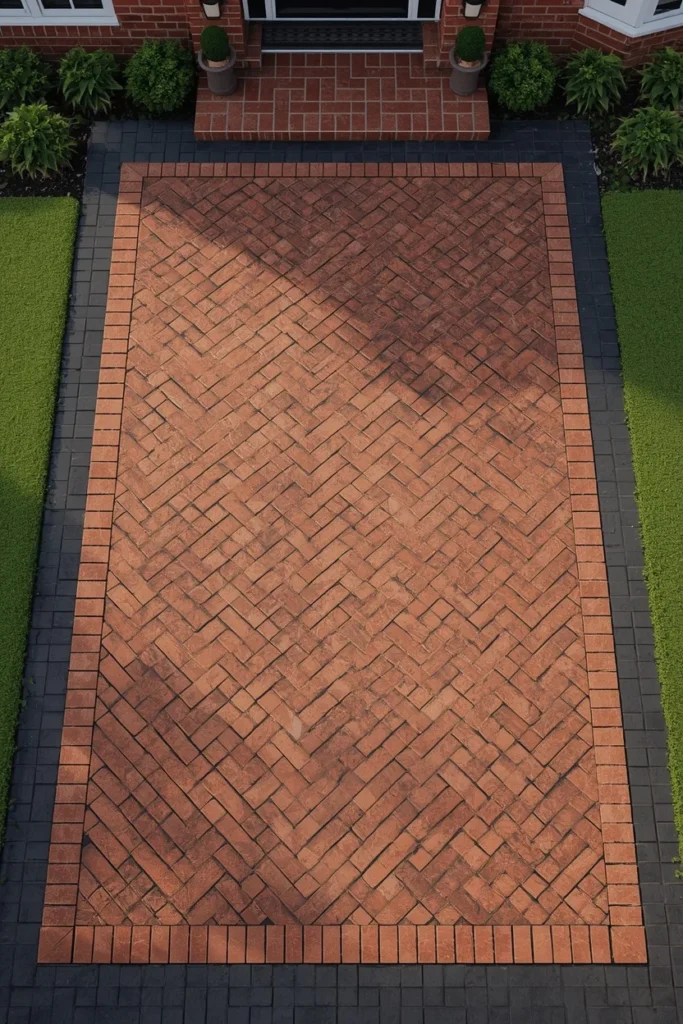
A herringbone pattern arranges rectangular brick or concrete pavers at interlocking 45- or 90-degree angles, which creates a woven texture that reads as considered and custom rather than mass-produced. The angled joints also add mechanical strength, distributing the weight of vehicles more evenly across the surface than a straight running-bond layout can manage. Warm red or clay-toned brick pairs naturally with colonial, traditional, and farmhouse homes, while a gray or charcoal paver in the same pattern reads more transitional or modern. Because individual pavers can be lifted and replaced without disturbing the whole surface, herringbone driveways are also easier to repair than poured concrete if a section settles or cracks. Framing the pattern with a single contrasting soldier course along the edges gives the whole layout a finished, tailored look.
2. Circular Driveway with a Garden Island
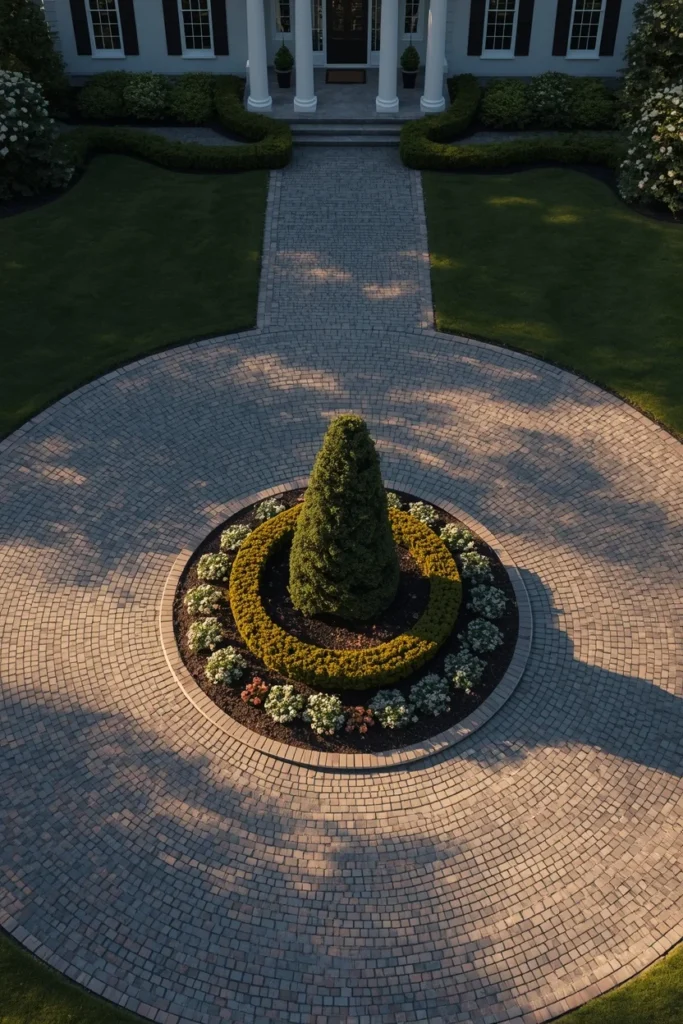
A circular driveway loops around a central planted island instead of running in a straight line to the garage, which gives larger properties a genuine sense of arrival and makes turning a vehicle around effortless. The center island becomes a built-in landscaping opportunity, whether that’s a specimen tree, a layered perennial bed, or a simple lawn panel edged in stone. Keeping the plantings inside the island lower near the road and taller near the center preserves sightlines for drivers while still giving the space visual depth. This layout suits homes set back from the street with enough frontage to support the loop, since a circular driveway squeezed onto a narrow lot tends to feel cramped instead of grand. Lighting the island’s edge with low path lights extends the impact of the design well into the evening.
3. Permeable Grid Pavers with Grass Infill
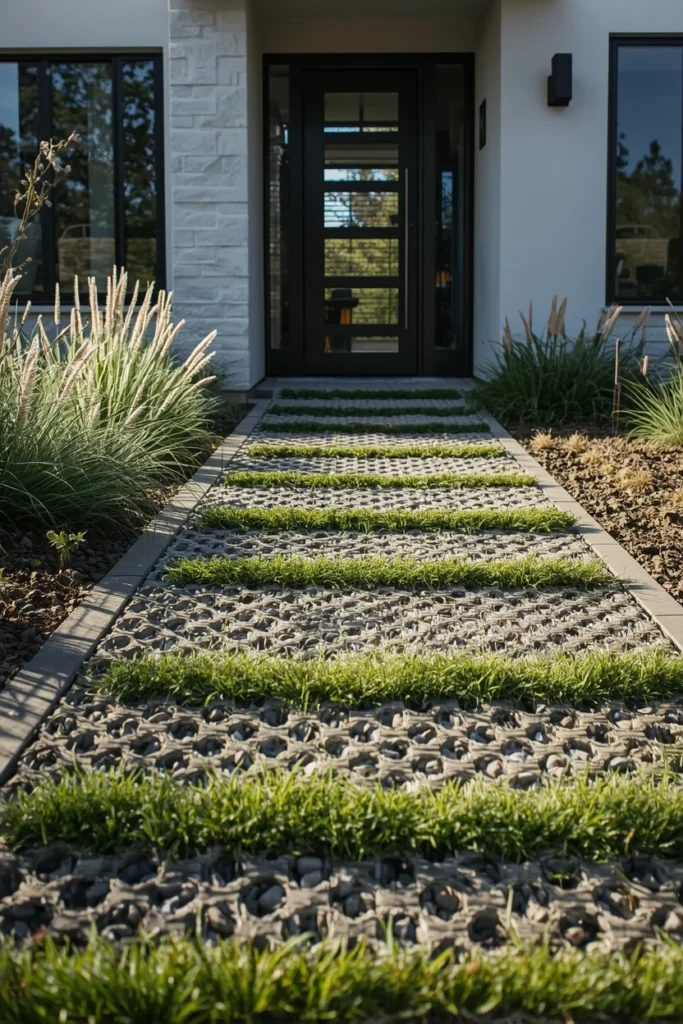
Permeable grid pavers use a honeycomb-style structure filled with soil and grass or gravel, allowing rainwater to soak into the ground instead of running off into the street. This approach softens the visual impact of a driveway considerably, since green grass growing between the grid cells reads more like reinforced lawn than hard pavement from a distance. It works especially well for secondary parking areas, overflow guest parking, or driveways on properties where local codes limit impervious surface coverage. The structural grid underneath still supports the weight of a vehicle, so the look doesn’t come at the cost of durability. This design pairs naturally with eco-conscious landscaping choices like native grasses, rain gardens, and drought-tolerant plantings along the same property.
4. Resin-Bound Gravel Driveway
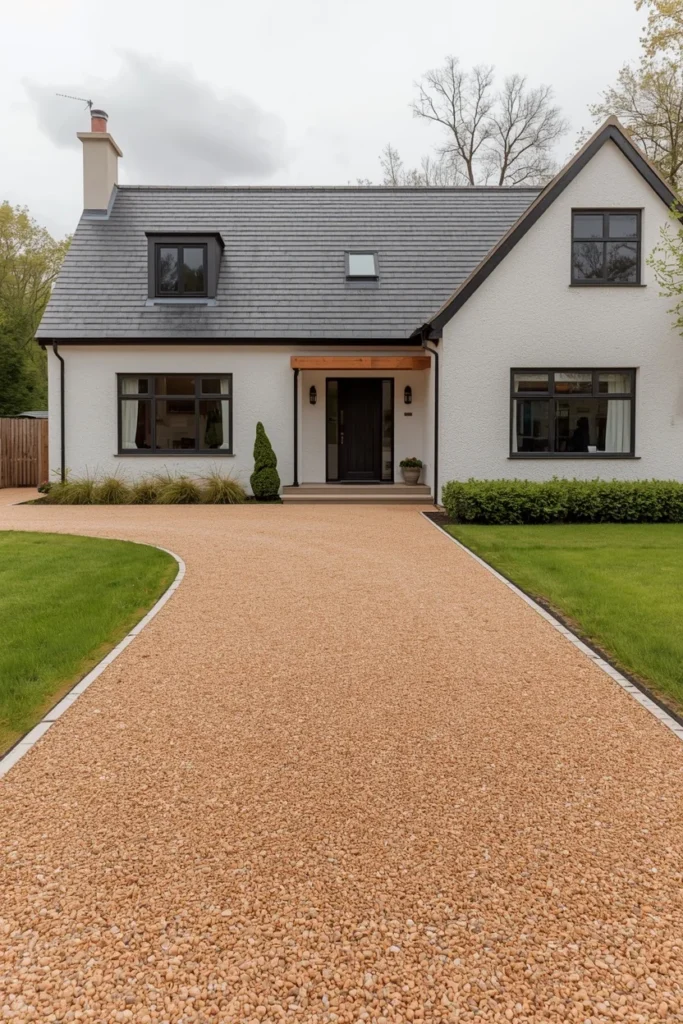
Resin-bound surfacing binds small aggregate stones together into a smooth, seamless finish that looks like loose gravel but doesn’t scatter, shift, or require raking the way traditional loose stone does. The surface stays permeable, so rainwater filters through rather than pooling, which helps with drainage on driveways that slope toward the house. Available in a wide range of stone colors, from soft cream to warm charcoal, resin-bound driveways can be tinted to coordinate with a home’s brick, stucco, or trim color. Because the surface is smooth and even, it’s also more comfortable underfoot than loose gravel, which matters for anyone pushing a stroller, wheeling luggage, or walking in heels. This is a strong middle-ground option for homeowners who love the texture of stone but want to avoid the ongoing maintenance loose gravel demands.
5. Large-Format Bluestone Slab Driveway
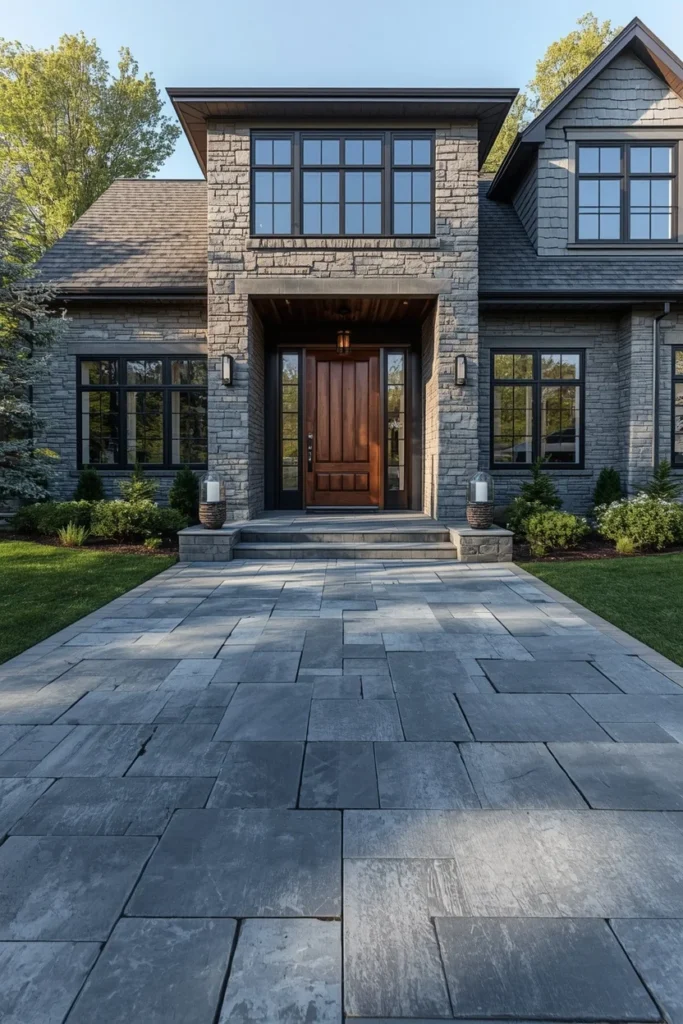
Large-format bluestone slabs trade the busy joint lines of smaller pavers for a handful of oversized, irregular or rectangular stones, creating a driveway that reads as sculptural and architectural rather than purely functional. The natural blue-gray tone of the stone shifts subtly depending on the light, appearing cooler on overcast days and warmer under direct sun, which gives the surface a living quality that manufactured pavers can’t match. Because fewer, larger pieces are used, the joint pattern stays minimal, which suits modern and transitional homes that favor clean lines over ornate detailing. Thermal or flamed finishes add slip resistance without sacrificing the smooth, high-end look of the stone. This is one of the higher-investment materials on this list, but the visual payoff and longevity make it a strong choice for a forever-home driveway.
6. Cobblestone Apron at the Street Entrance
A cobblestone apron treats only the transition zone where the driveway meets the street, framing the entrance with rounded natural stone before the main surface takes over in concrete, asphalt, or pavers. This detail gives even a simple, budget-friendly driveway a genuinely custom first impression, since the apron is the very first thing anyone sees when they turn in. The rounded, irregular shape of true cobblestone also provides excellent traction, which helps in wet or icy conditions right at the point where a car is turning off the road. Choosing a stone tone that complements the home’s foundation or front steps ties the apron back into the rest of the exterior instead of feeling like an isolated accent. This is one of the most cost-effective updates on the list, since it upgrades only a small, high-impact section rather than the entire driveway length.
7. Belgian Block Edging Border
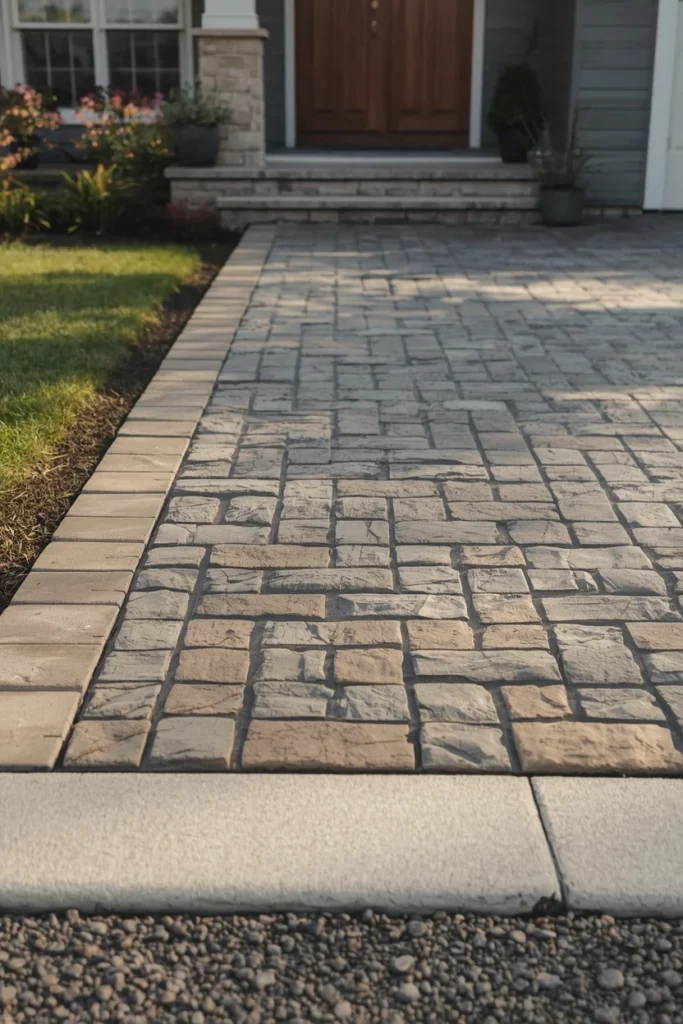
Belgian block edging uses rectangular granite setts laid in a single or double row along the driveway’s edge, creating a crisp, permanent line that separates the driving surface from lawn or planting beds. Set flush for a subtle border or tipped up on a slight angle for more visual weight and shadow, the blocks also protect asphalt and concrete edges from the crumbling that happens when tires repeatedly roll off the pavement onto soft ground. A single flat row against a plain asphalt surface reads as a quiet, tidy upgrade, while a double row or an angled installation makes a stronger design statement on a longer driveway. Because the granite is solid stone rather than a manufactured product, the border can outlast several resurfacing cycles of the driveway itself. This is consistently one of the highest-return, lowest-disruption upgrades available for an existing driveway that isn’t ready for full replacement.
8. Exposed Aggregate Concrete Driveway
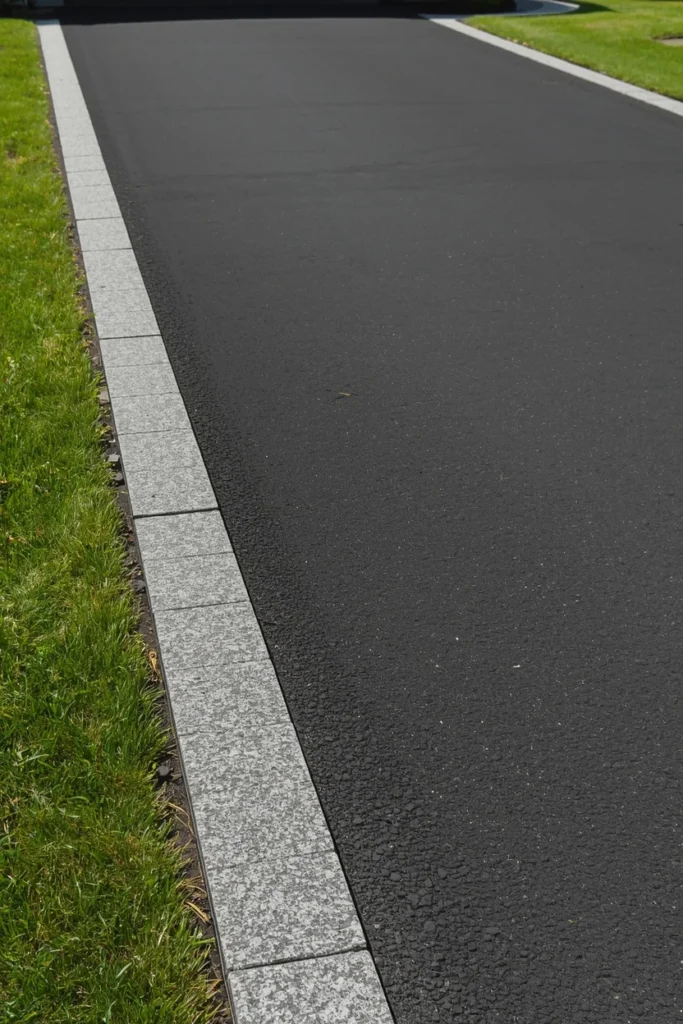
Exposed aggregate concrete reveals the natural stones embedded within the mix by washing away the top layer of cement paste, resulting in a textured, speckled surface that offers far more visual interest than smooth gray concrete. The exposed stones also provide meaningfully better traction than standard concrete, which matters on sloped driveways or in climates with regular rain or snow. Aggregate color can be selected to complement a home’s roofline, brick, or stone accents, ranging from warm river-rock tones to cooler granite blends. Because the finish comes from the concrete itself rather than an applied coating, exposed aggregate holds its texture and color far longer than a stamped or stained surface exposed to UV light and foot traffic. This option gives homeowners who want the practicality of concrete a way to avoid the flat, builder-grade look that plain slabs are known for.
9. Stamped Concrete Driveway Mimicking Stone
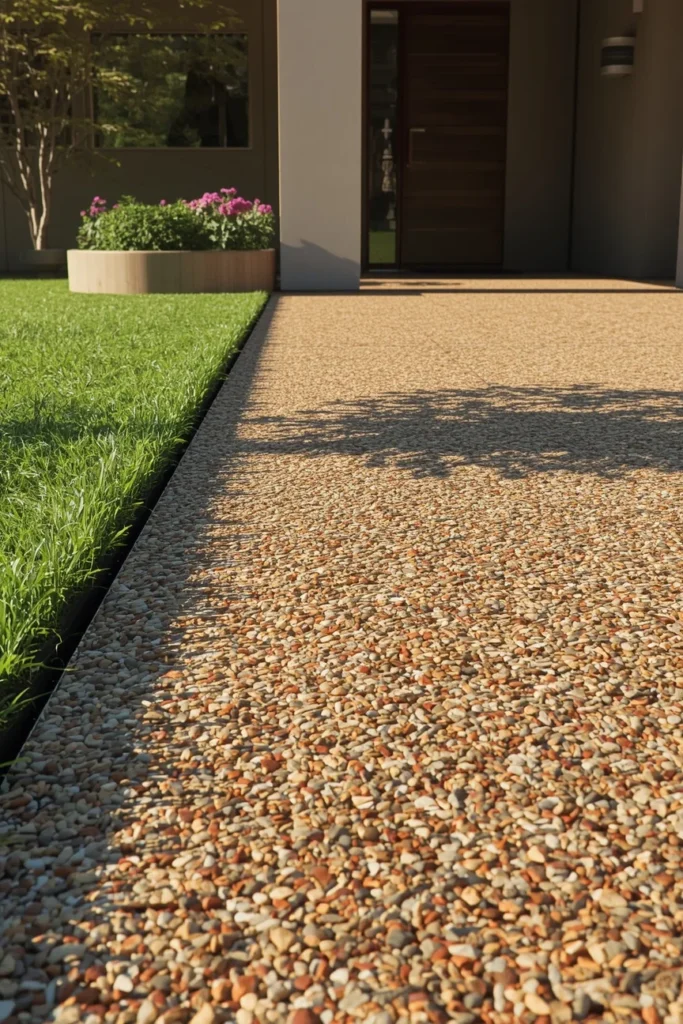
Stamped concrete presses a textured pattern into wet concrete before it cures, replicating the look of cobblestone, flagstone, or brick at a lower material and installation cost than the real thing. Modern stamping techniques and integral coloring have improved enough that a well-executed stamped surface can be difficult to distinguish from natural stone at a normal viewing distance. This option gives homeowners design flexibility, since the pattern, color, and joint spacing can all be customized to match an existing home’s exterior details. Sealing the surface every few years is necessary to maintain both the color and the slip resistance, since an unsealed or poorly maintained stamped driveway can fade and become slick faster than genuine stone. This is a strong choice for homeowners who love the visual richness of stone or brick but need to stay within a tighter renovation budget.
10. Ribbon Driveway with a Grass Center Strip
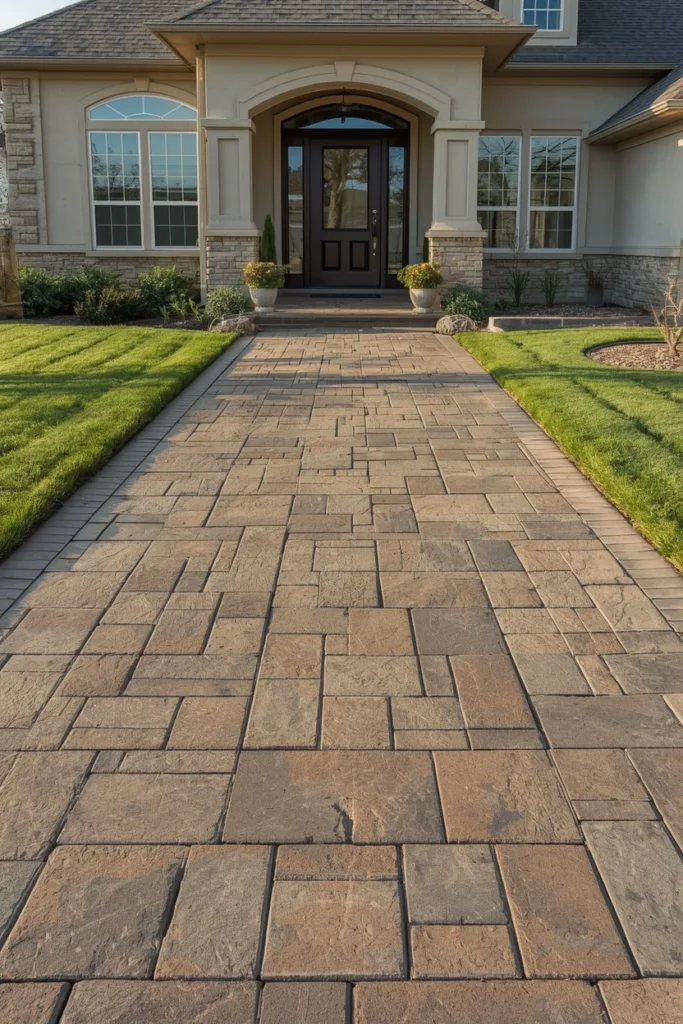
A ribbon driveway uses two narrow paved strips, sized to match a car’s wheelbase, with a planted grass or groundcover strip running down the center instead of one solid paved surface. This layout dramatically reduces the amount of hardscape needed, which lowers both material cost and the heat-island effect that large concrete surfaces create in summer. The green center strip also softens the overall look of the driveway, breaking up what would otherwise be a wide expanse of pavement with a living, textural element. This design works best on straight, low-traffic driveways where a single vehicle parks or passes through regularly, since a wider turning radius or heavy multi-car use can wear down the center planting faster than it can recover. Low, hardy groundcovers like creeping thyme or dwarf mondo grass hold up to occasional foot traffic better than a standard lawn seed mix in this application.
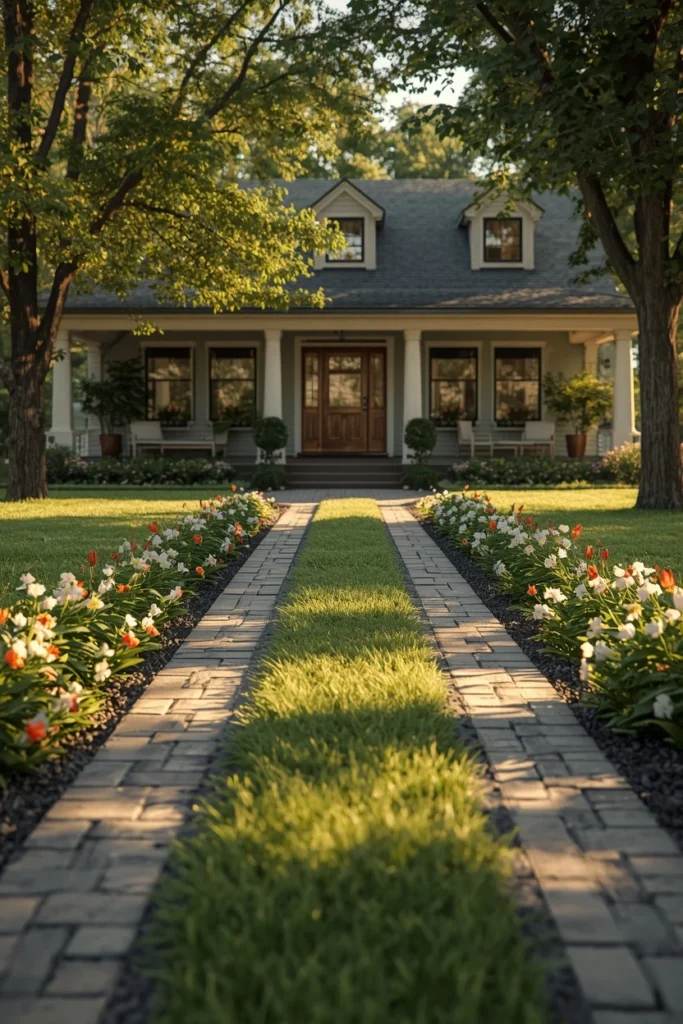
11. Crushed Granite Driveway
Crushed granite offers the warm, natural texture homeowners want from a stone driveway while compacting far better than round pea gravel, which means less migration into the lawn and fewer potholes over time. The angular fragments interlock as they settle, forming a firmer surface that holds up to regular vehicle traffic without needing constant raking or top-ups. Warm gold, tan, and reddish-brown granite blends pair especially well with craftsman, rustic, and Mediterranean-style homes, where a stark gray or black surface would feel out of place. A steel or stone edging is still worth adding along the perimeter to keep the material contained, particularly on sloped sites where rain can wash loose stone toward the street. This option gives homeowners the organic, natural-stone look currently trending in hardscape design without the higher cost of large-format slabs.
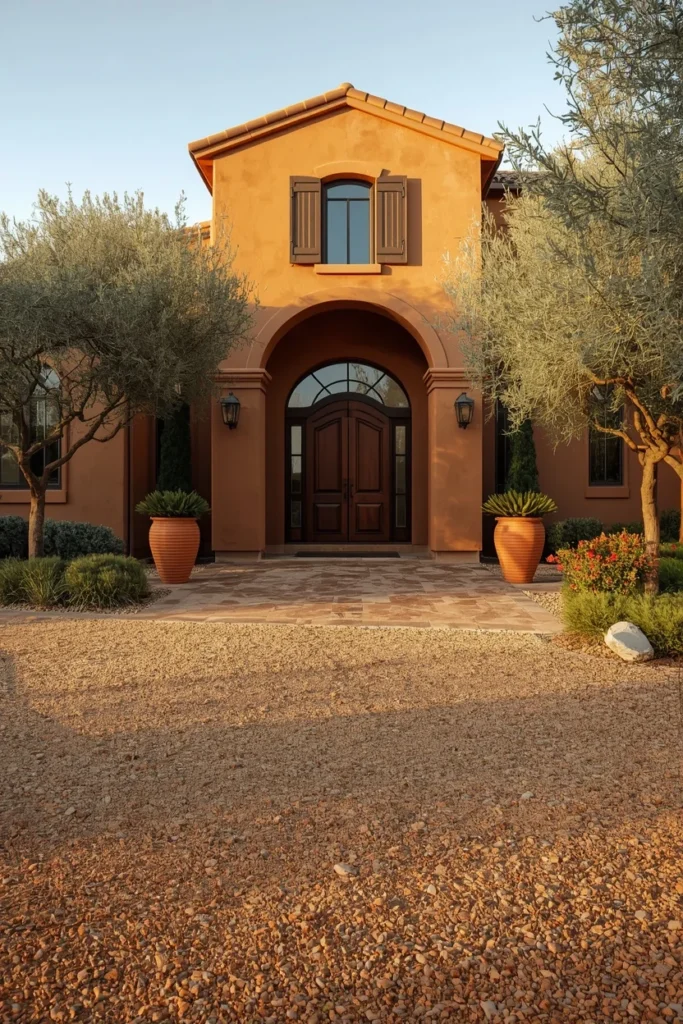
12. Herringbone-Pattern Two-Tone Pavers
Combining two paver colors within a single herringbone layout, most often a dominant neutral tone with a contrasting darker accent woven through in a border or grid pattern, gives a driveway a tailored, almost tile-like quality. The two-tone approach also helps visually break up a long or wide driveway into proportioned sections, which can make an oversized surface feel more intentional rather than overwhelming. This treatment pairs naturally with homes that already use two exterior colors, such as a light body with dark trim, since the driveway echoes the same color logic found on the house itself. Keeping the accent color to no more than twenty percent of the total surface prevents the pattern from feeling busy or competing with the home’s architecture. This is a design detail best planned before installation, since retrofitting a two-tone pattern onto an existing single-color driveway typically requires a full replacement.
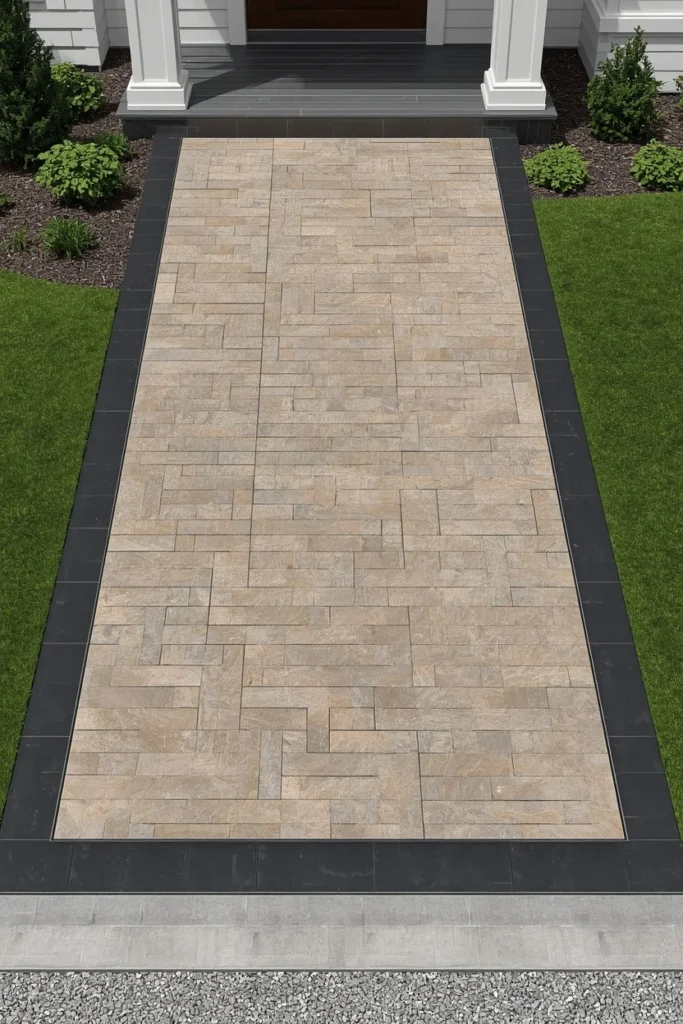
13. Contrasting Paver Border Band
Rather than changing the entire driveway material, a single contrasting paver band running along both edges, or framing the full perimeter, adds structure and a finished, framed look to an otherwise simple paved surface. This treatment works with nearly any base material, including concrete, asphalt, and standard pavers, making it one of the more flexible upgrades on this list. A darker charcoal or black border against a lighter field color creates a graphic, defined edge, while a similar-toned border in a different texture adds subtlety without much visual contrast. The band also gives landscapers a clean, consistent line to plant against, which makes maintaining crisp lawn or mulch edges considerably easier over time. Extending the same border material into the front walkway or porch steps creates a cohesive design thread that ties the whole entry sequence together.
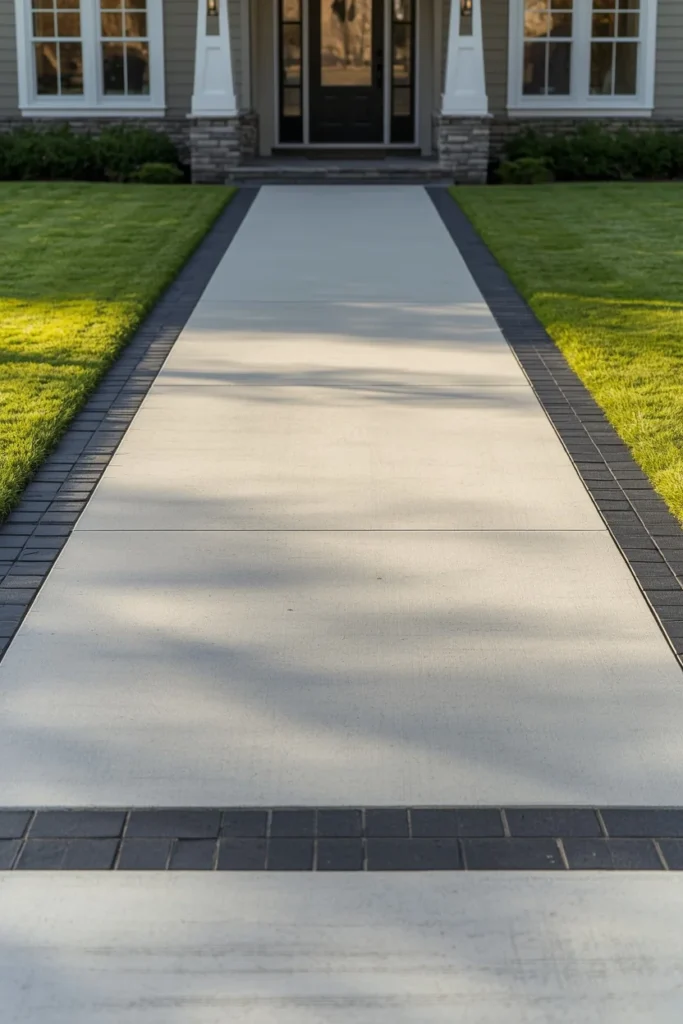
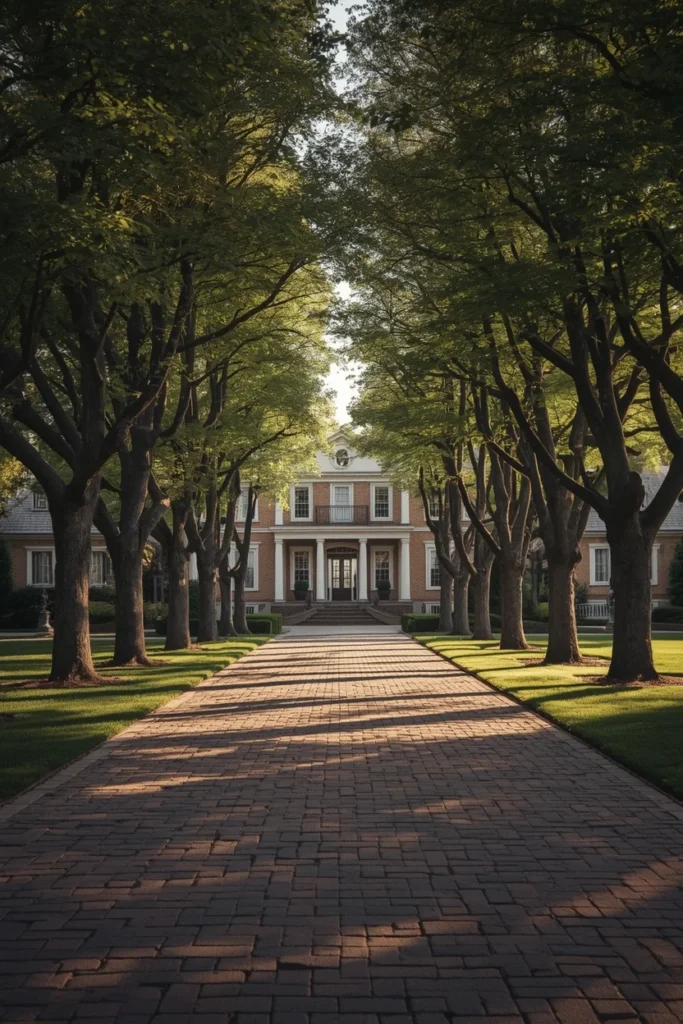
14. Tree-Lined Driveway Allée
Planting a matched pair of ornamental or shade trees along each side of a long driveway, spaced evenly like a formal allée, gives even a modest home a sense of arrival usually associated with much larger estates. Columnar or narrow-canopy varieties like fastigiate oaks, columnar maples, or crape myrtles work especially well, since they add height and rhythm without spreading wide enough to crowd the driving surface as they mature. This treatment reads best on driveways at least seventy-five feet long, where the repetition of trunks has enough distance to establish a visual pattern before reaching the house. Underplanting the base of each tree with a low, uniform groundcover keeps the allée looking maintained rather than patchy between the trunks. Uplighting each trunk after dark extends the drama of the design into the evening, turning a simple driveway into a genuinely memorable approach.
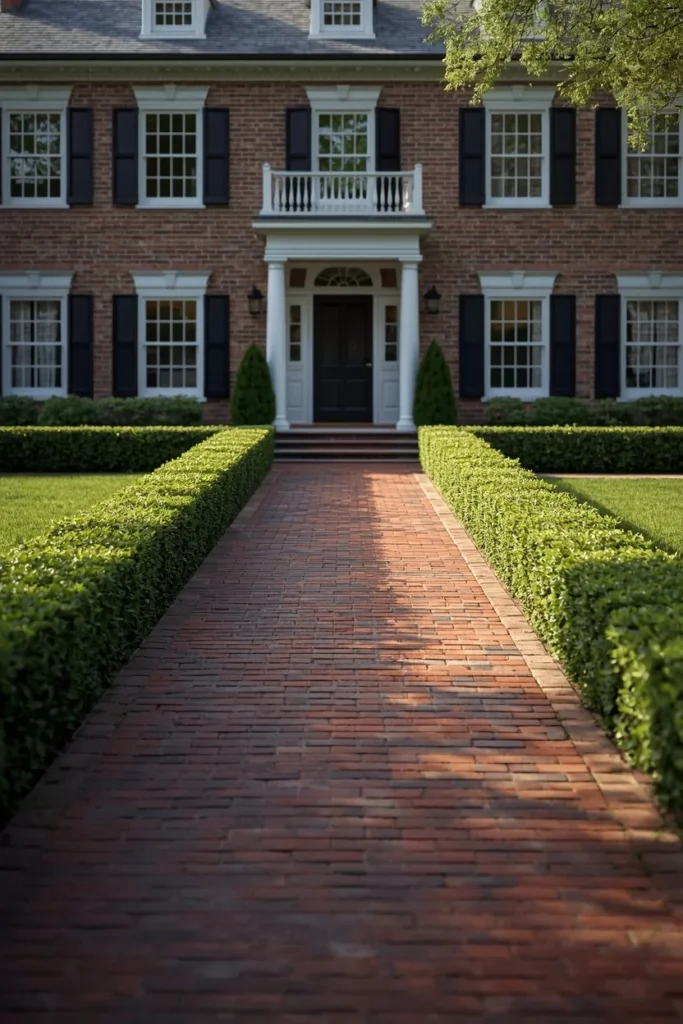
15. Low Boxwood Hedge Border
A continuous low boxwood hedge running along one or both sides of the driveway creates a structured, evergreen border that stays attractive through every season, unlike flowering plants that only perform for a few weeks a year. Kept at twelve to eighteen inches tall, the hedge defines the driveway’s edge clearly without blocking sightlines for backing out of the garage or driveway. This look pairs naturally with formal, traditional, and colonial-style homes, where clipped, geometric greenery echoes the symmetry often found in the architecture itself. Boxwood’s dense, tight growth habit also helps keep mulch, gravel, or loose stone from spilling onto the lawn, doing double duty as both a design element and a functional edge. Pairing the hedge with occasional taller accent shrubs at regular intervals adds rhythm without sacrificing the clean, tailored look of the border.
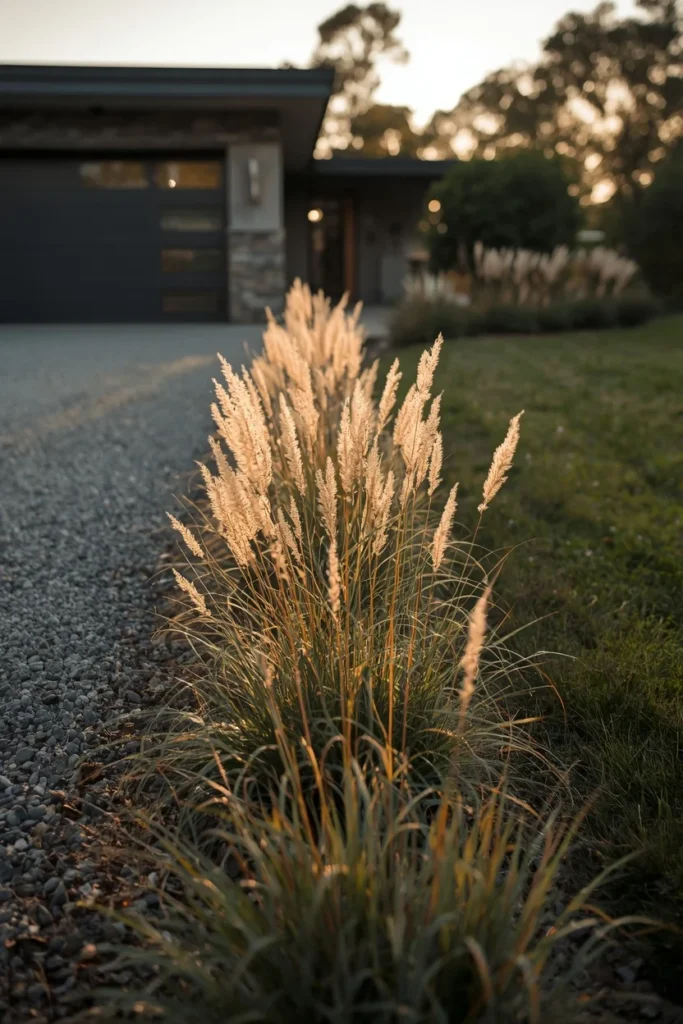
16. Layered Ornamental Grass Planting Beds
Rather than a single row of one plant type, layering ornamental grasses by height, from low blue fescue in front to taller feather reed grass or miscanthus behind, creates depth and movement along the driveway’s edge that a flat hedge can’t provide. Grasses also bring texture and motion that respond to wind, giving the landscaping a living, dynamic quality throughout the growing season. Many ornamental grass varieties are genuinely drought-tolerant once established, which reduces the water and maintenance demands compared to traditional flowering perennial beds in the same space. Leaving the seed heads standing through fall and winter adds seasonal interest and habitat value instead of cutting everything back to bare soil the moment summer ends. This planting style suits modern, prairie-inspired, and naturalistic landscape designs especially well, softening the hard edge of pavement without introducing the formality of clipped hedges.
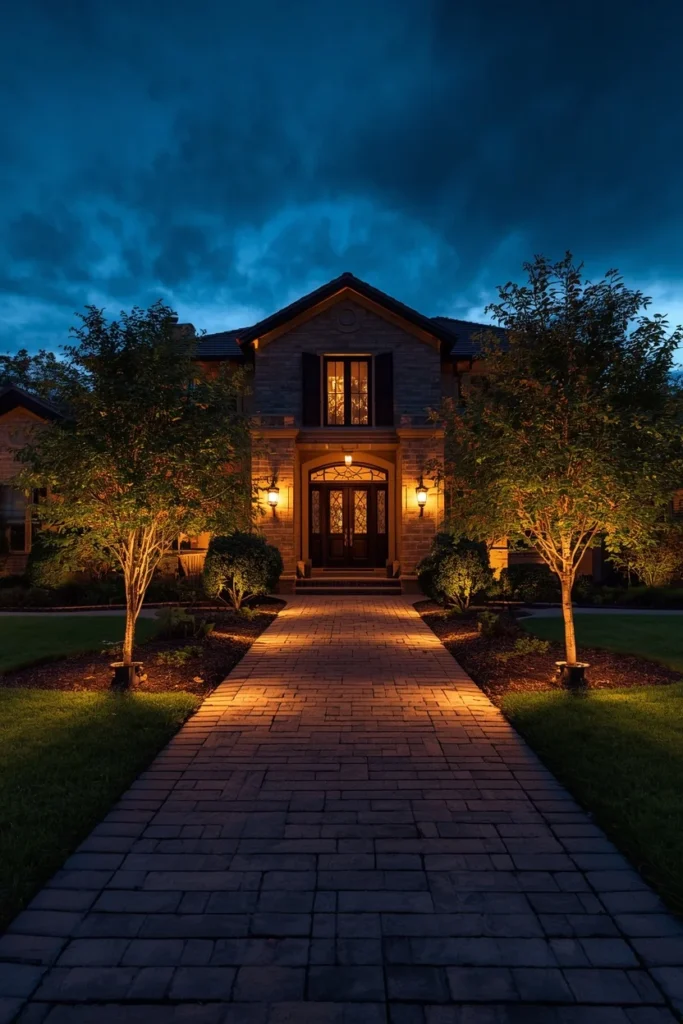
17. In-Ground Uplighting Along the Edges
Small in-ground uplights installed flush along the driveway’s border cast soft pools of light upward onto nearby trees, shrubs, or architectural columns, extending the landscaping’s visual interest well past sunset without the visual clutter of tall lamp posts. Warm-toned LED fixtures, rated for outdoor and drive-over-adjacent use where needed, read as considerably more sophisticated than the harsh blue-white light older halogen fixtures often produced. Spacing the fixtures unevenly, clustering a few near a specimen tree or entry feature rather than lining them up with mechanical regularity, tends to look more natural and less like an airport runway. This treatment pairs especially well with the tree-lined allée and layered grass planting ideas above, since both provide vertical elements worth lighting from below. Smart, app-controlled systems now allow homeowners to adjust brightness and timing seasonally, brightening the display for the darker winter months and dialing it back in summer.
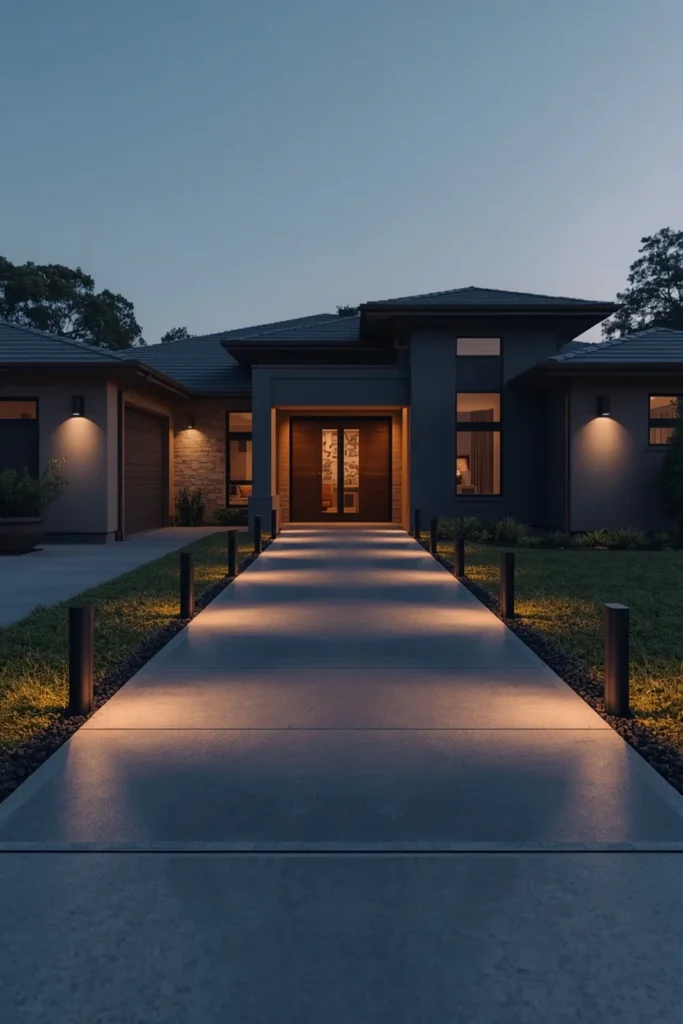
18. Bollard Lighting Path
Low bollard lights spaced evenly along one or both sides of the driveway provide functional, ground-level illumination while adding a clean architectural rhythm to the approach, especially on longer driveways without much ambient street lighting. Matte black or bronze finishes tend to disappear into the landscaping during the day and only become a visual feature once lit, which keeps the daytime look uncluttered. Solar-powered bollards have become a genuinely practical option in recent years, eliminating the need to run wiring the full length of a long driveway. Placing the fixtures just outside the paved edge, rather than directly in planting beds, keeps them from disappearing behind mature shrubs as the landscaping fills in over a few growing seasons. This lighting style pairs particularly well with modern, minimalist driveway designs where fewer, more deliberate design elements do more visual work than a heavily planted border.
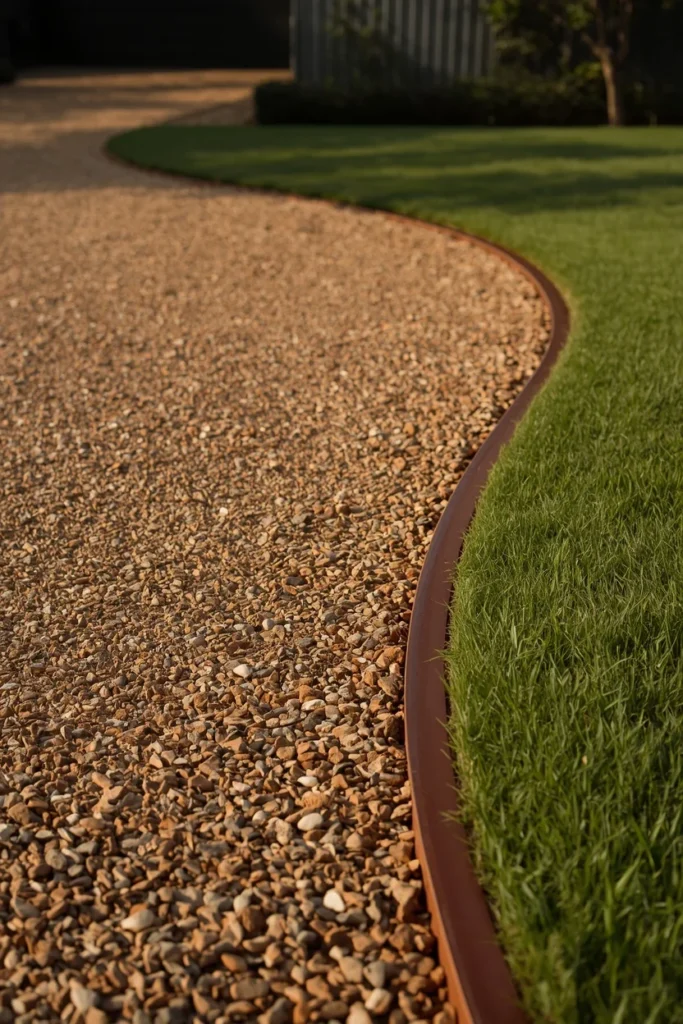
19. Steel-Edged Gravel Driveway
A slim steel edging strip installed flush with the ground contains loose gravel far more effectively than plants or lawn alone, preventing stones from migrating into the yard while staying visually unobtrusive compared to a raised stone or brick border. The thin profile of steel edging also allows for gentle curves that would be difficult to achieve with rigid pavers or blocks, making it a strong choice for driveways with a naturally winding layout. Corten steel, which develops a warm rust-toned patina over time, adds a subtle material contrast against gray or tan gravel that plain galvanized steel doesn’t offer. This combination suits modern farmhouse and contemporary landscape designs that want the organic texture of loose stone without the maintenance headaches that come from an unedged gravel surface. Pairing steel edging with a compactable angular gravel, rather than round pea gravel, further reduces the long-term upkeep this driveway style requires.
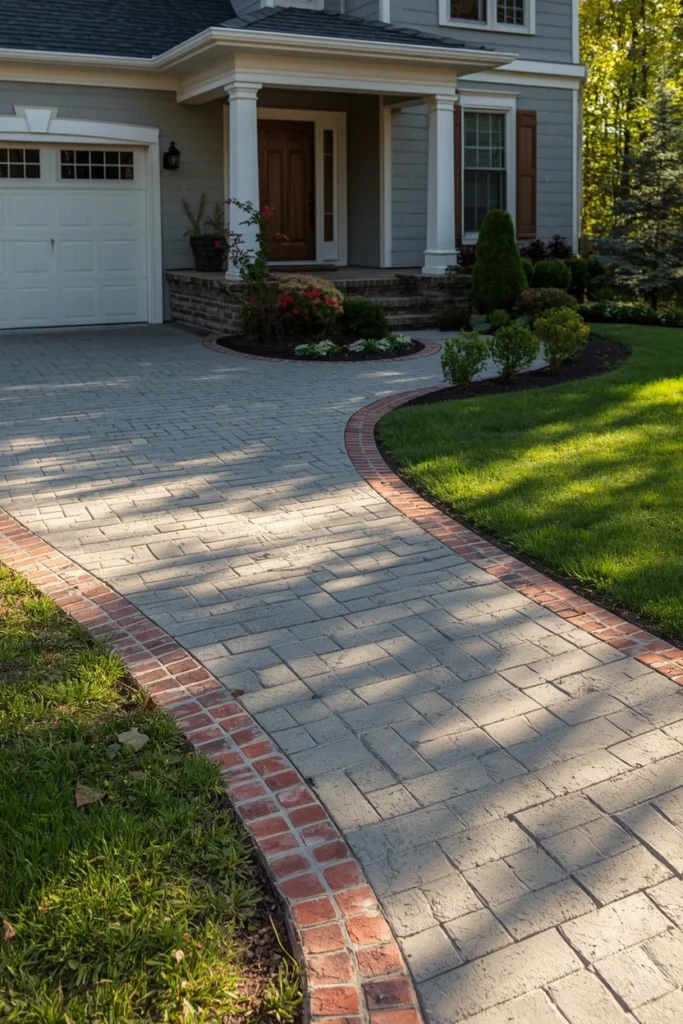
20. Matching Driveway and Walkway Apron
Extending the same paver or stone material from the driveway into the front walkway apron creates a sense of visual continuity that makes the entire entry sequence feel like one cohesive design decision rather than two separate projects done at different times. This approach is especially effective when the walkway and driveway meet at an angle, since a shared material and joint pattern smooths the transition instead of creating a jarring seam between two different surfaces. Matching the two areas doesn’t require using identical pavers throughout; a shared border material or accent band at the connection point can achieve the same unifying effect at a lower cost than replacing both surfaces entirely. This detail also makes the whole front yard feel larger, since a continuous material reads as more expansive than two visually distinct, boxed-off zones. Planning both areas together during a driveway renovation is far more cost-effective than updating the walkway as an afterthought years later.
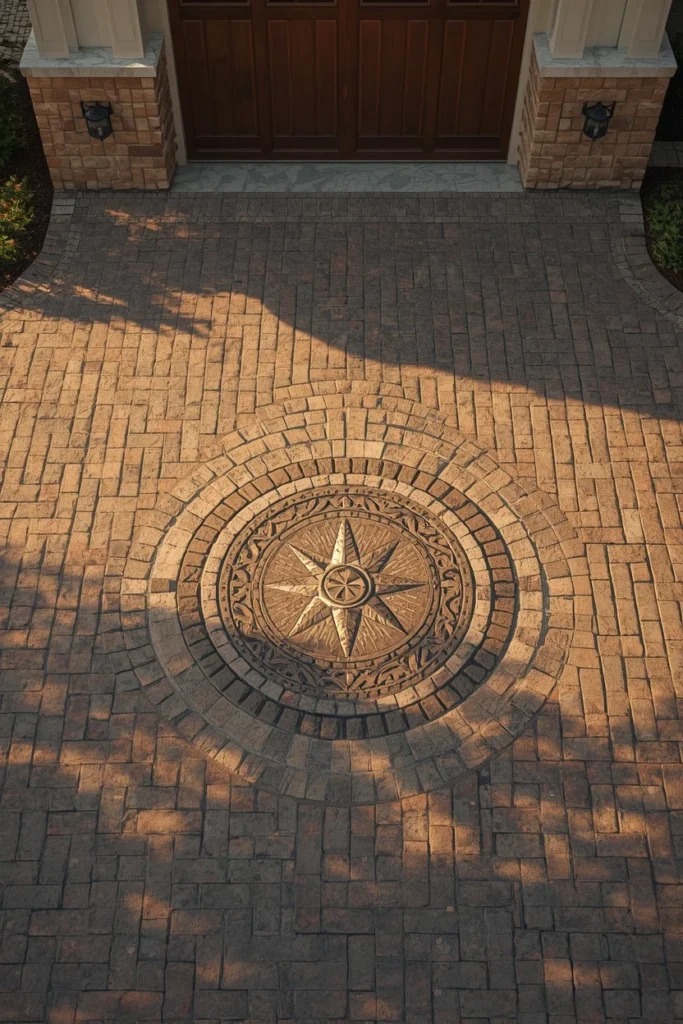
21. Cobblestone Medallion Entry Accent
A circular or fan-shaped cobblestone medallion set into the driveway near the garage or front walkway connection point acts like a piece of functional art, giving an otherwise uniform paved surface a genuine focal point. These medallions typically combine several stone colors in a radial or compass-style pattern, requiring skilled installation but delivering a result that reads as custom-built rather than off-the-shelf. Placing the medallion at a natural pause point, such as where the driveway widens near a turnaround or garage apron, gives it room to be appreciated without interrupting the flow of daily vehicle traffic. This detail works particularly well on estate-style and traditional homes with the driveway length and formality to support such an ornamental feature. A smaller-scale version scaled down to a simple two-tone circle can bring the same idea to more modest properties without overwhelming the space.
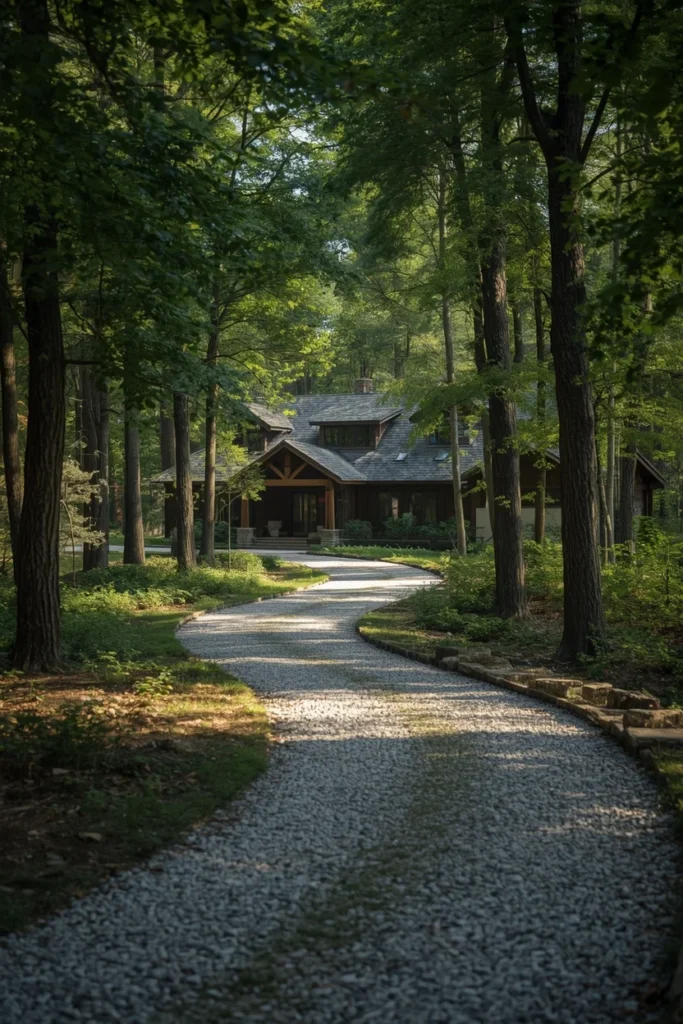
22. Curved, Organic-Shaped Driveway
Moving away from a strict straight-line layout, a gently curved driveway that follows the natural contours of the lot creates a softer, more organic first impression and slows the visual pace of the approach to the home. Curves also offer a practical benefit on sloped or irregular lots, since a winding path can manage elevation changes more gracefully than a straight run that has to fight the grade directly. Landscaping along a curved driveway gets more opportunity to shine, since each bend creates a new framed view of plantings, trees, or architectural features that a straight driveway reveals all at once. This layout pairs beautifully with naturalistic planting styles, informal stone or gravel surfaces, and homes set on wooded or hilly lots where a rigid geometric driveway would feel at odds with the surrounding landscape. Because curves add length to a driveway compared to the shortest straight-line distance, this option does typically increase material and paving costs for a full replacement.
23. Motor Court with a Center Planter or Fountain
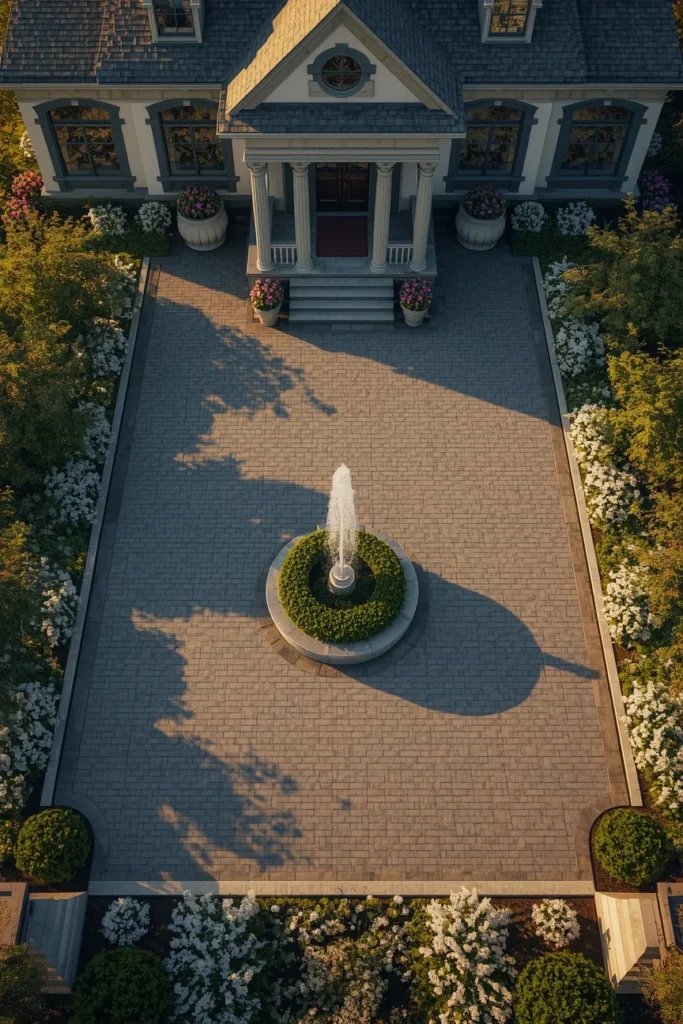
A motor court widens the area directly in front of the garage or entry into a broader paved space, often anchored by a center planter, small fountain, or specimen tree that vehicles simply loop around rather than park over. This layout gives larger homes with multiple garage bays or frequent guest parking a functional turnaround area that also happens to double as a landscaping showcase. A modest bubbling fountain or urn planter at the center adds sound and movement to an otherwise hard-paved space, softening what could feel like an oversized parking lot. Because the center feature sits in the direct line of sight from the street, it becomes one of the strongest focal points on the entire property, so proportion matters more here than almost anywhere else on this list. This design direction works best on properties with the frontage to support a genuinely wide paved area, since a motor court squeezed onto a narrow lot loses the sense of scale that makes the layout work in the first place.
Styling Tips
Match your driveway material’s undertone to your home’s dominant exterior material rather than to your trim color. Warm brick and stucco homes generally pair best with warm-toned pavers, gravel, or stone, while homes with cooler stone or gray siding tend to look more cohesive with bluestone, charcoal pavers, or cool-toned concrete.
Keep border and edging materials consistent with any stonework already present on the home, such as a stone foundation, chimney, or front steps, so the driveway feels connected to the architecture instead of like a separate decision made in isolation.
Consider how the driveway looks from inside the house, not just from the street. Large front windows often face the driveway directly, so a border, planting bed, or lighting scheme that only looks good from the curb misses half of its daily audience.
Practical Implementation Ideas
Start any driveway project with a grading and drainage assessment before choosing a material, since water management issues will undermine even the most beautiful surface if they aren’t addressed first.
If a full replacement isn’t in the budget yet, adding a contrasting border, apron, or lighting scheme to an existing driveway can deliver a meaningful visual upgrade without the cost of repaving the entire surface.
Sequence a driveway renovation alongside walkway, mailbox, and foundation planting updates when possible, so the whole front-of-house transformation feels coordinated rather than pieced together over several separate projects.
Common Mistakes to Avoid
Choosing a driveway material that doesn’t compact or drain properly for your specific climate is one of the most common and costly missteps, since a surface that looks good in a photo can turn into a maintenance headache within a single freeze-thaw season or rainy period.
Skipping a proper edging or border on loose materials like gravel or crushed granite almost always leads to stone migrating into the lawn, creating both a mowing hazard and an ongoing cleanup chore.
Going too narrow on the driveway width to save on materials often backfires, since a driveway that’s too tight to comfortably open car doors or pass another vehicle undercuts the curb appeal gains from every other design choice.
Small-Space Alternatives
Narrow lots and shorter driveways can still borrow nearly every idea on this list at a smaller scale. A single contrasting border band or a compact cobblestone apron often makes more visual impact on a short driveway than an elaborate medallion or full motor court would.
For properties without room for a tree-lined allée, a single specimen tree or a pair of large planters near the garage can deliver a similar sense of framing in a fraction of the space.
Homes without room for a circular driveway or motor court can still achieve a sense of arrival by widening just the section nearest the front door slightly, creating a small landing area without requiring a full loop.
Budget-Friendly Alternatives
Adding a Belgian block, brick, or steel edging border to an existing plain concrete or asphalt driveway delivers much of the visual impact of a full material change at a fraction of the price of replacement.
Resin-bound resurfacing over an existing concrete or asphalt base can refresh the look and improve drainage without the cost and disruption of a full tear-out and repave.
A cobblestone or paver apron installed only at the street entrance gives a driveway a custom first impression while limiting the material and labor cost to a small, high-visibility section rather than the entire length.
Pro Styling Recommendations
Choose a driveway material and color that appears in at least one other spot on the property, whether that’s a stone foundation, a front walkway, or a garden wall, so the whole hardscape palette feels planned rather than like separate decisions.
When in doubt on layout, prioritize a strong, well-executed border over an elaborate pattern in the field of the driveway itself. A crisp edge photographs well and reads as intentional at any time of year, even in seasons when landscaping along the sides isn’t at its peak.
Test lighting placement after dark before finalizing fixture positions, since the way uplights and bollards interact with mature trees and shrubs can look very different once the plants fill in over a few growing seasons.
FAQs
Conclusion
A driveway rarely gets the design attention it deserves, yet it’s one of the first surfaces anyone experiences when they arrive at your home. Whether the right fit turns out to be a herringbone paver pattern with a Belgian block border, a soft ribbon driveway with a grass center strip, or something as simple as a cobblestone apron and a few well-placed uplights, the details that matter most are proportion, drainage, and consistency with the materials already present on your property. Choose the direction that matches your home and your lot, not just the one that photographed best on someone else’s feed, and the first impression handles itself from there.