19 Small Dining Room Ideas That Are Big on Style & Even Bigger on Charm
Small dining rooms get dismissed a lot. They’re the room squeezed between the kitchen and the living room, the awkward corner with barely enough space for a table, the spot that ends up holding mail and a half-used treadmill instead of actual dinners.
But a small dining room has one advantage a big one doesn’t: everything in it is close enough to actually notice. The light fixture, the chair fabric, the table shape — in a tight space, every choice carries more visual weight, which means small, smart changes go further here than almost anywhere else in the house.
This guide walks through 19 ideas built specifically for that reality — layouts, furniture shapes, and styling details that make a compact dining space feel warm, intentional, and worth sitting down in, whether it’s a full room or a five-foot nook off the kitchen.
Table of Contents
1. Choose a Round or Oval Table Over a Rectangular One
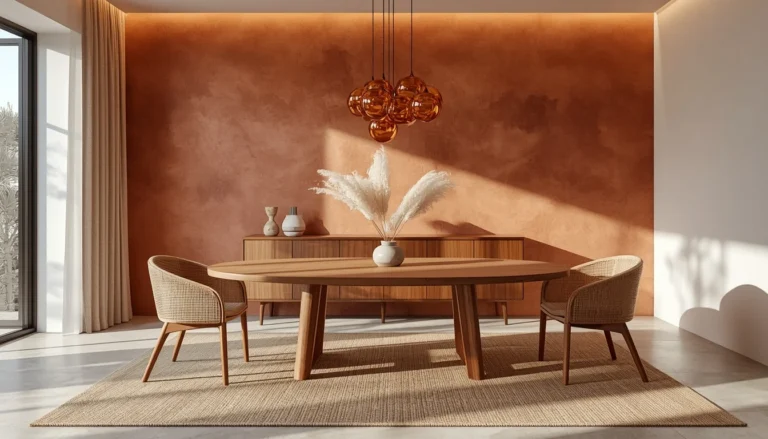
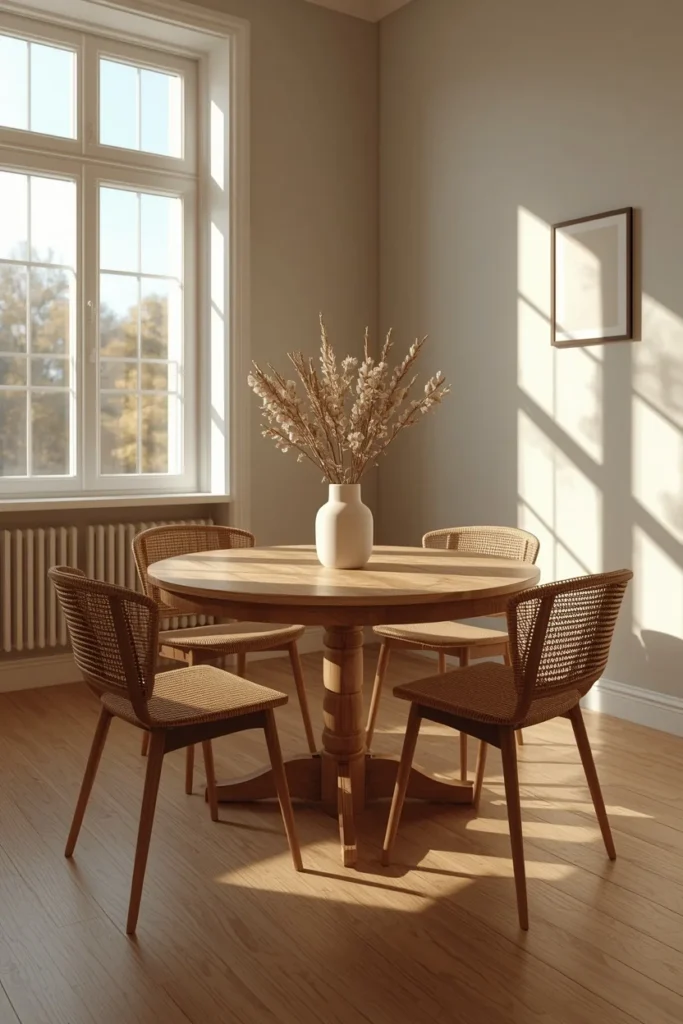
In a small room, corners are the enemy of easy movement, and a round or oval table removes them entirely. Curved table edges let people slide past more easily on their way to the kitchen or a nearby doorway, which matters more in a tight footprint than it ever would in an open dining hall. Round and oval shapes also tend to read as softer and less bulky visually, even when the actual surface area is similar to a rectangular table, because there’s no hard edge jutting toward the walkway. An extendable oval table gives you the best of both worlds: a compact everyday footprint that can grow when guests come over.
2. Mix and Match Your Dining Chairs
A full matching chair set can feel heavy and formal in a small room, while a mix of two or three chair styles reads as collected and easygoing instead. Keeping a consistent color palette, similar seat heights, or a shared wood tone across the different chairs ties the mix together so it looks intentional rather than mismatched. This approach also solves a practical small-space problem: you can use slimmer, armless chairs on the sides where space is tight and save a slightly larger seat for the head of the table. It’s one of the easiest ways to add personality to a small dining space without committing to a full furniture overhaul.
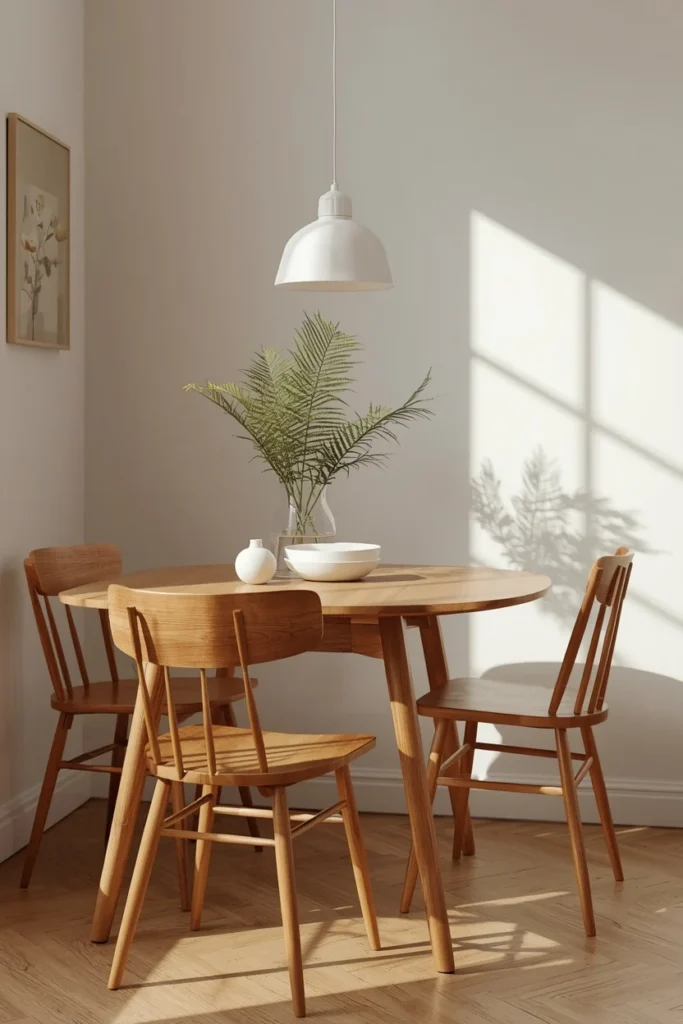
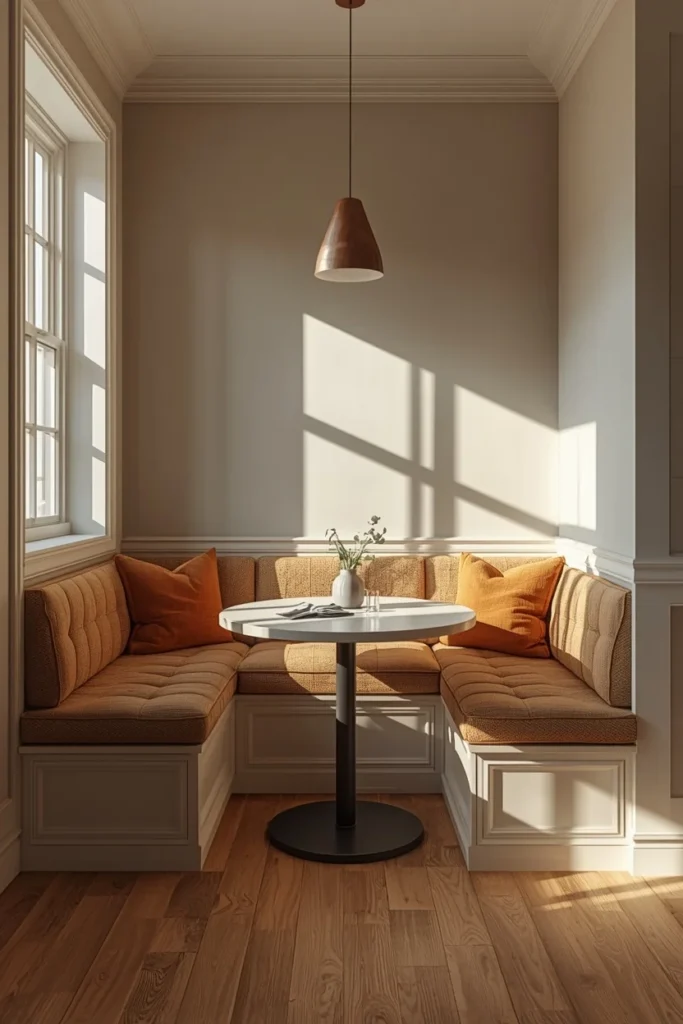
3. Build in a Banquette for Space-Saving Seating
A built-in bench along one wall frees up significantly more floor space than chairs on every side, since it eliminates the need to pull chairs out on that side of the table. Banquette seating also naturally invites people to gather even when the room isn’t set for a full meal, since it functions as a casual perch the rest of the day. Adding a few cushions in a durable, washable fabric keeps the bench comfortable without requiring a full upholstery investment, and a slim table paired with the banquette keeps the whole footprint tight. This layout has been showing up more in small dining spaces because it turns an awkward corner into genuinely usable square footage.
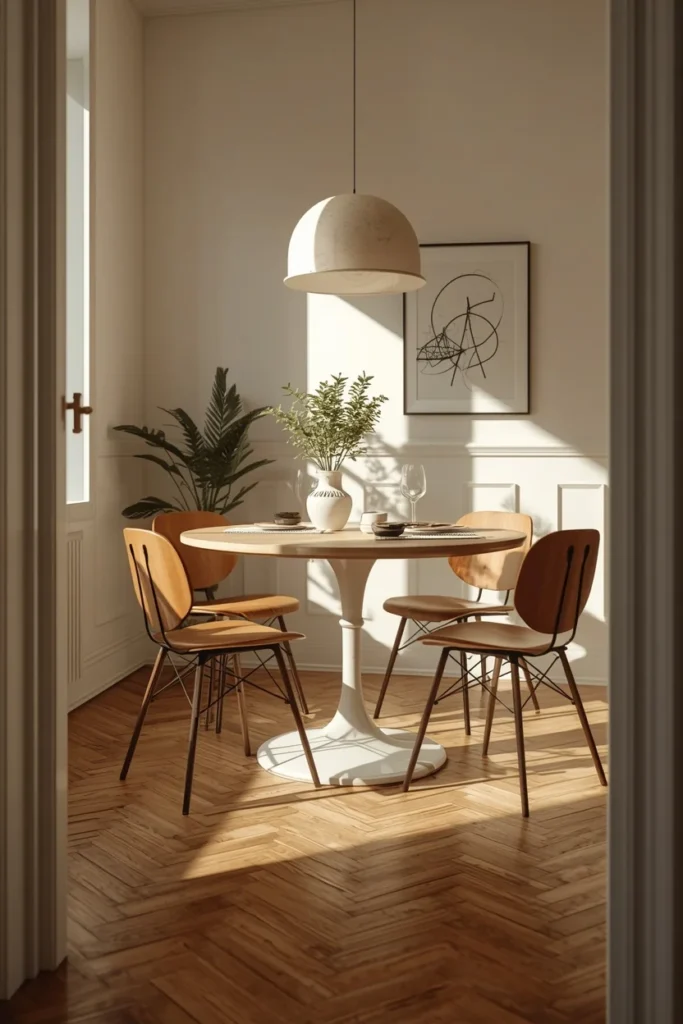
4. Choose a Pedestal Base Instead of Four Legs
A table with a single pedestal base instead of four individual legs gives everyone seated more legroom and makes it easier to squeeze an extra chair in when needed. In a small room, this small structural choice has an outsized impact on how easily people can actually use the space, since four-legged tables often force chairs into awkward, uneven spacing. Pedestal tables also tend to look lighter visually, since there’s less material at floor level competing with chair legs and rug pattern. This is a detail worth prioritizing when shopping for a small-space dining table, even above finish or color.
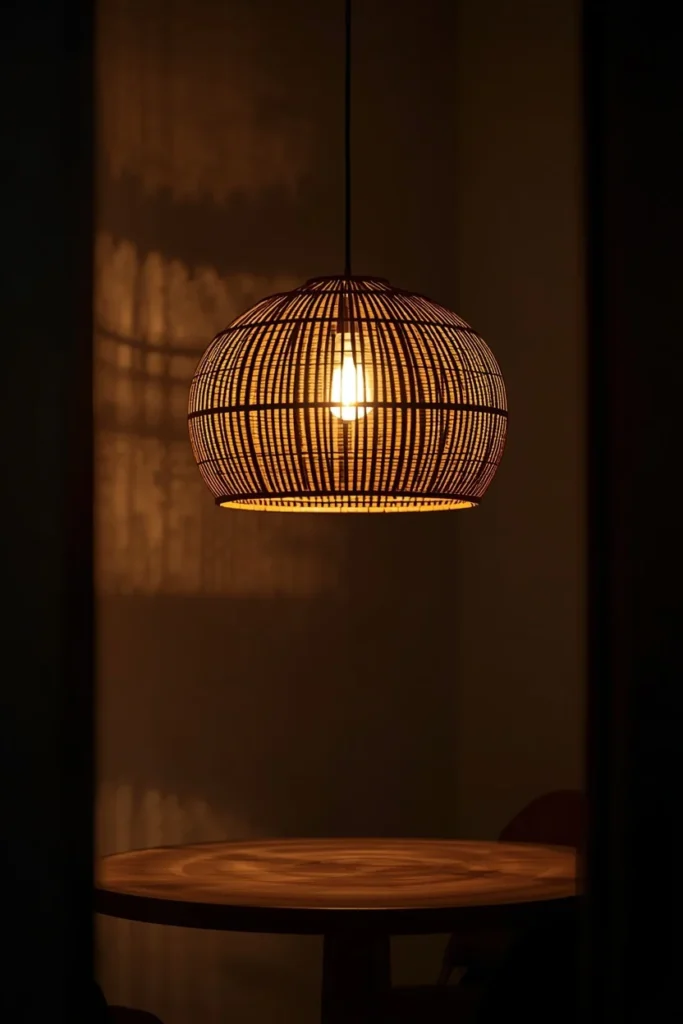
5. Hang a Sculptural Pendant Light, Scaled Down
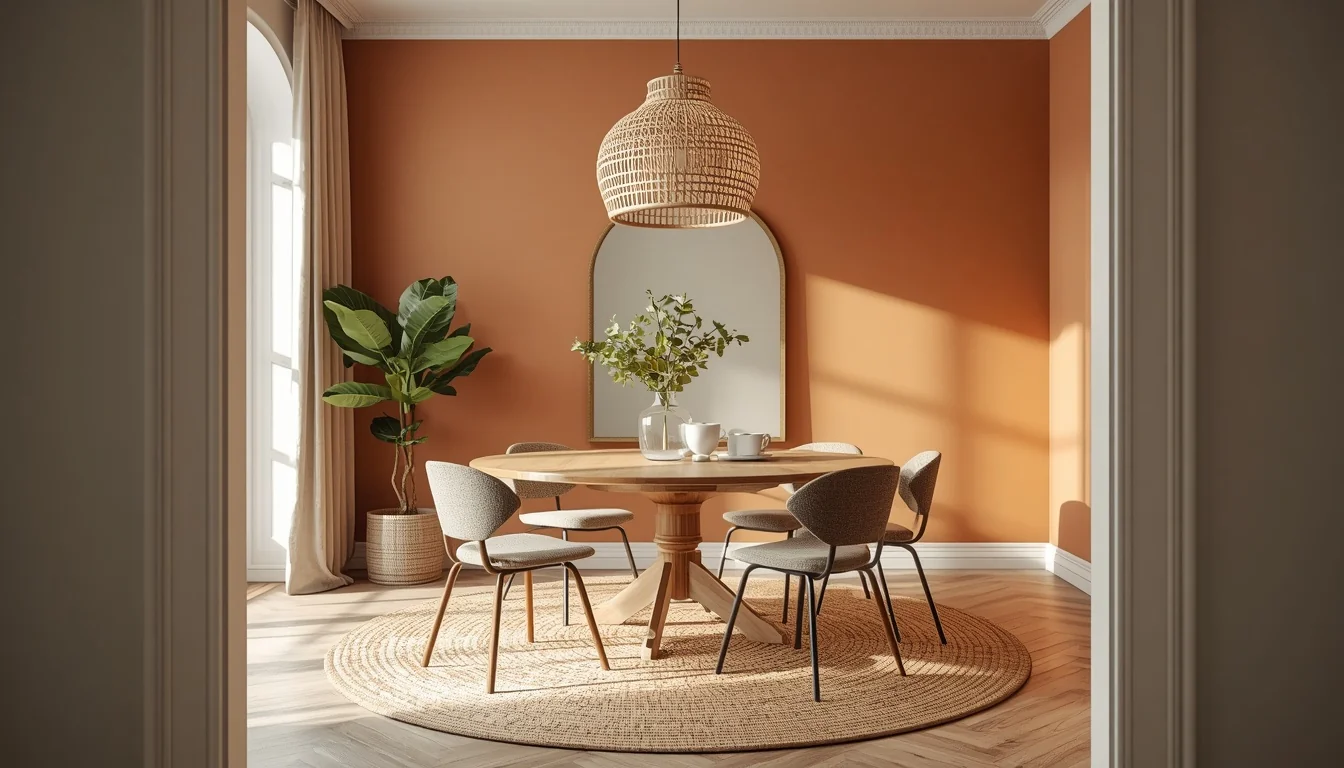
A statement light fixture does a lot of visual work in a small dining room, since it’s often the first thing people notice when they walk in. Choose a sculptural pendant or a smaller-scale chandelier sized appropriately for the table below it, since an oversized fixture can overwhelm a compact room while a well-scaled one adds drama without eating up visual space. Rattan, woven, or mixed-metal pendants add texture and warmth that a plain flush-mount fixture can’t offer, and swapping the light is one of the highest-impact, lowest-effort updates on this entire list.
6. Hang a Large Mirror to Expand the Room Visually
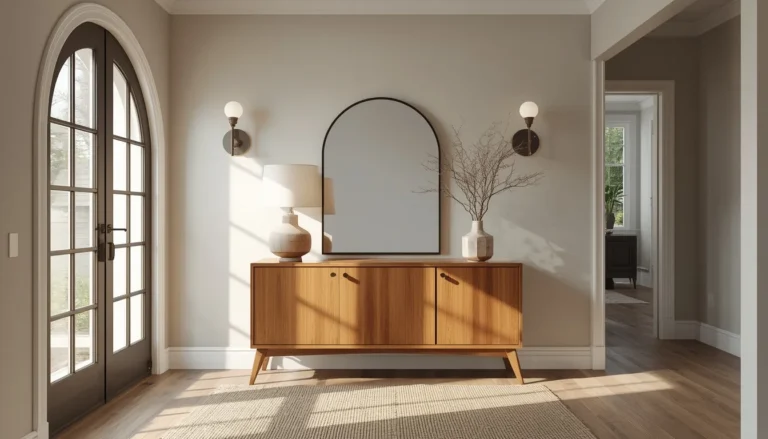
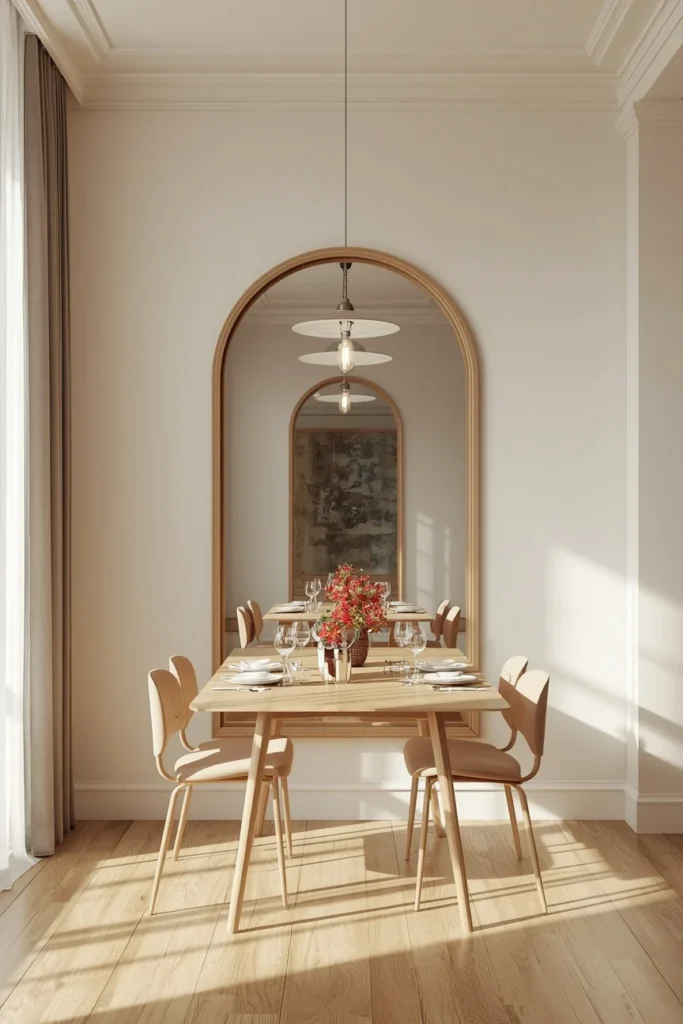
A well-placed mirror is one of the most reliable tricks for making a small dining room feel larger than it is, since it reflects both light and the room’s existing depth. As a general sizing rule, aim for a mirror roughly two-thirds the width of the furniture it hangs above, or at least 40 inches wide if it’s standing alone on a wall. Positioning the mirror to reflect a window or the room’s light source amplifies the effect further, bouncing natural light deeper into the space throughout the day. An arched or curved-frame mirror also softens the room’s lines, which pairs well with the rounded furniture already covered in this list.
7. Ground the Space With a Natural Fiber Rug
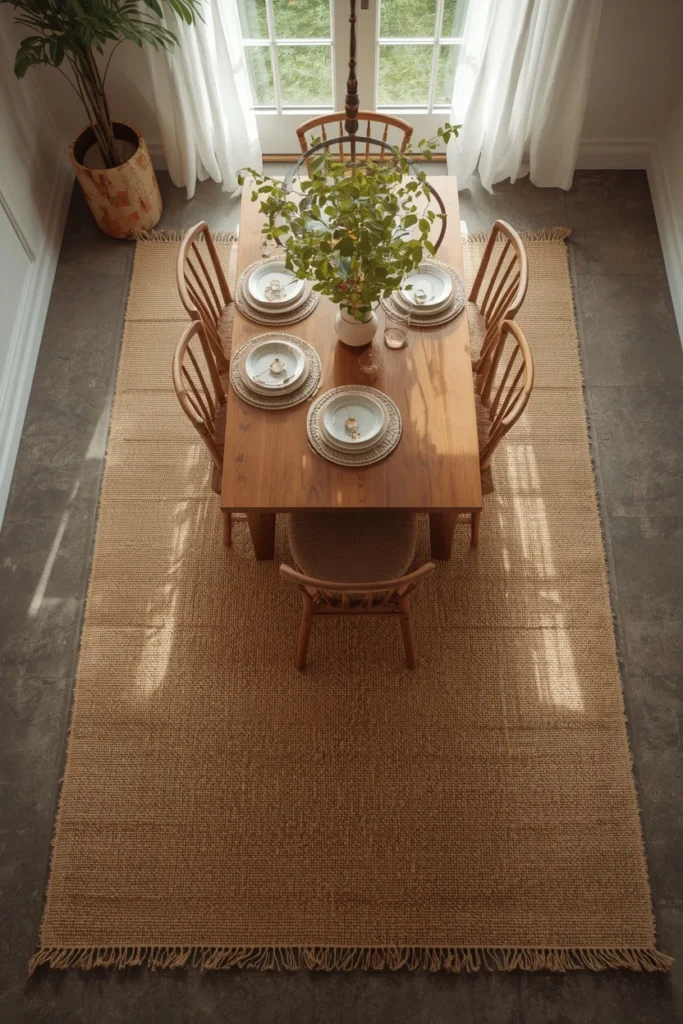
A rug under the dining table adds warmth and texture that a bare floor can’t, and a natural fiber option like jute or sisal keeps the look grounded without adding visual bulk. The rug should extend far enough that chairs stay on it even when pulled out, which usually means sizing up more than feels intuitive in a small room. Choosing a low-pile, durable material also makes practical sense in a dining space, since it holds up better to dropped food and chair legs than a plush rug would. This is a simple layer that makes the whole seating area feel more finished and less like furniture placed directly on bare flooring.
8. Paint One Wall in a Warm, Earthy Tone
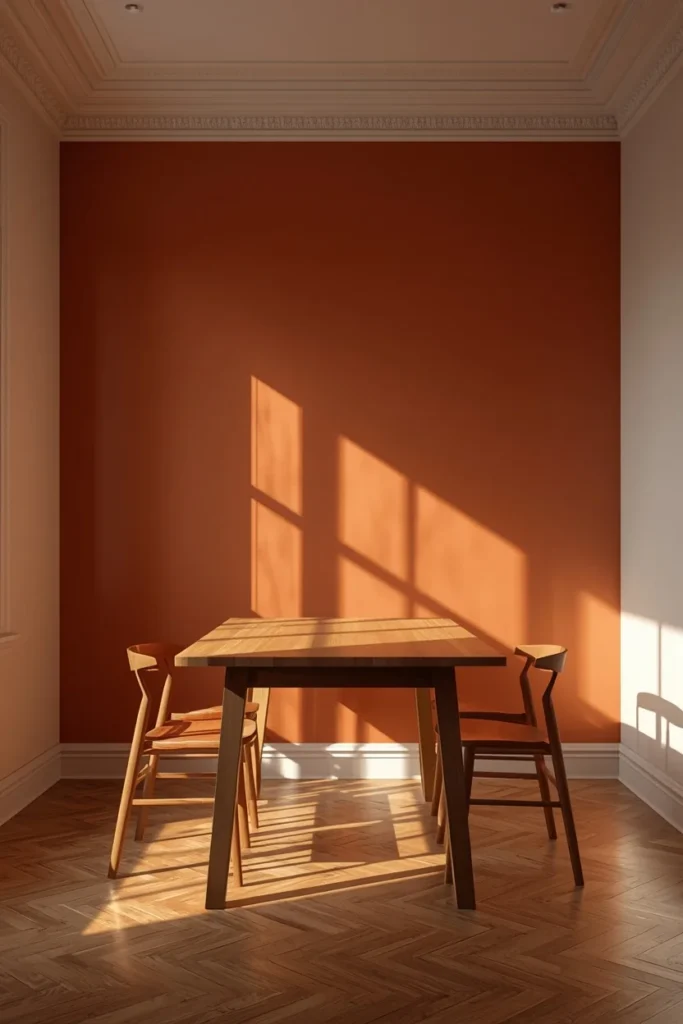
Dining rooms are moving away from cool, sterile minimalism toward warmer, grounding colors this year, and a single accent wall is an easy, low-cost way to bring that shift into a small space. A rich terracotta, warm olive, or deep clay tone behind the table creates an instant focal point and adds depth to a room that might otherwise feel flat under standard white walls. Because it’s only one wall, this update stays budget-friendly and reversible, which makes it a lower-risk way to test a bolder color before committing to the whole room. Pairing the wall color with warm wood furniture reinforces the cohesive, grounded feel designers are leaning into for dining spaces this year.
9. Swap a Bulky Buffet for a Slim Console
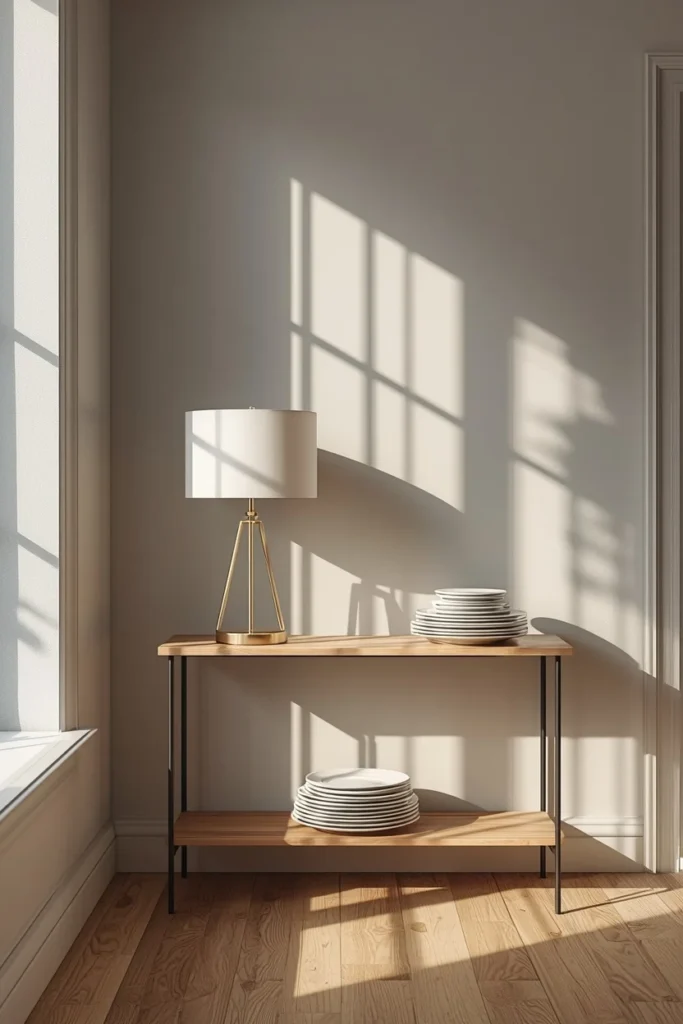
A full-depth sideboard can eat up more floor space than a small dining room can spare, while a slim console table offers similar storage and display space with a much smaller footprint. Choose one with a narrow profile — 14 to 16 inches deep is often enough for table linens, serving pieces, and a few decorative objects. Styling the top with a lamp, a stack of plates, and a small piece of art gives the console a purpose beyond storage, turning it into a secondary focal point in the room. This swap is especially useful in rooms where the dining table is already close to one wall, since a deep buffet in that spot can make the whole path feel cramped.
10. Add Textured Wall Paneling for Depth
Wall paneling — whether classic wainscoting, reeded wood panels, or a more modern grid pattern — gives a small dining room architectural interest that flat drywall can’t offer. Because the panels rely on shadow and texture rather than added furniture, this update adds visual richness without taking up any usable floor space, which makes it especially well suited to compact rooms. Painting the paneling the same tone as the wall keeps the look subtle and current, while a contrasting color makes more of a statement for those who want it. Lightweight, prefabricated panel kits make this a manageable weekend project even for those without extensive DIY experience.
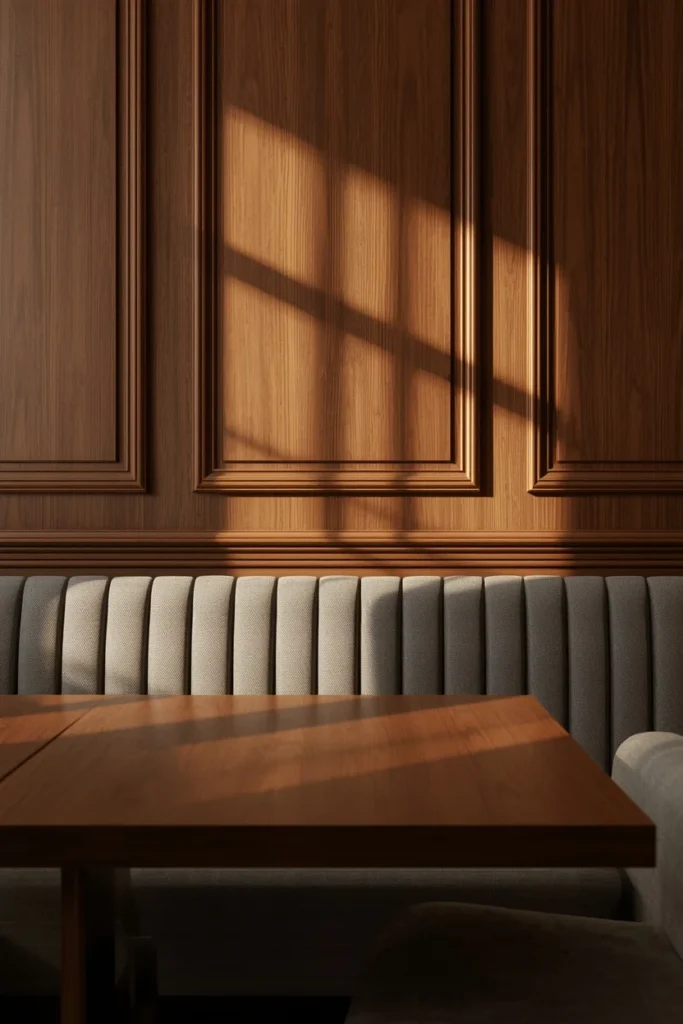
11. Use Vertical Lines to Draw the Eye Upward
In a small room, height often matters more than floor space when it comes to how big a room feels. Vertical striped wallpaper, tall narrow art, or floor-to-ceiling curtains near a dining room window all pull the eye upward, making low ceilings feel taller and the whole room feel less boxed in. This works especially well paired with a lower-profile table and chairs, since the contrast between the compact furniture and the tall vertical lines emphasizes the room’s height even further. It’s a subtle trick, but one that consistently shows up in small-space design because it costs little and changes the room’s proportions without any construction.
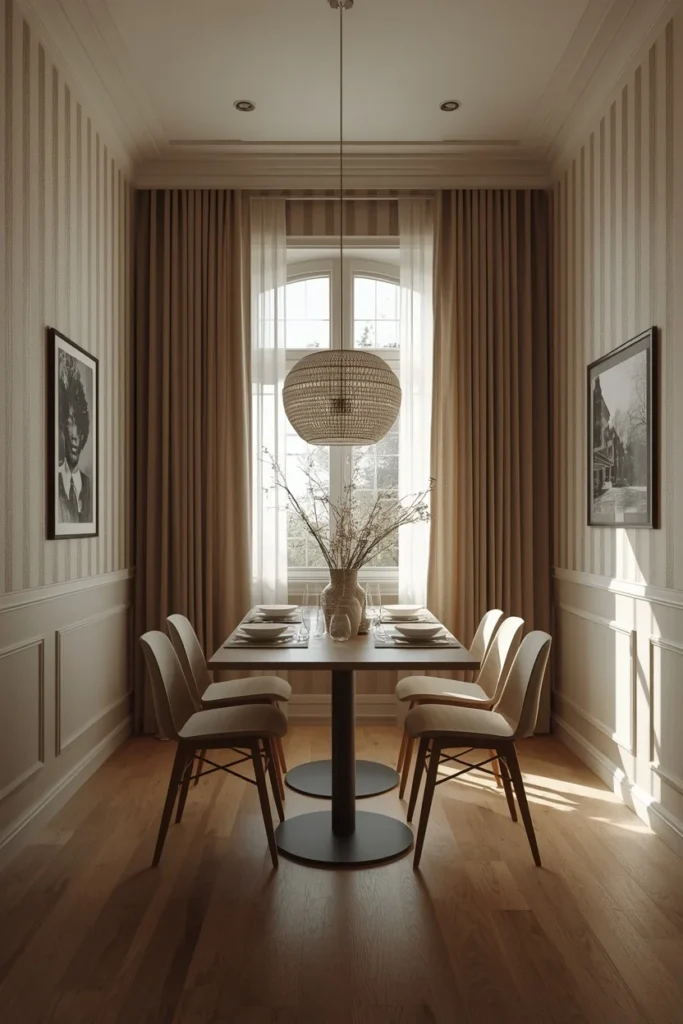
12. Add a Bench on One Side Instead of Chairs
A slim bench along one side of the table seats more people in less space than individual chairs would, since it doesn’t require the same gaps between seats. Benches also tuck fully under the table when not in use, clearing floor space in a way chairs with arms or bulky legs can’t. Pairing a bench with a few chairs on the opposite side keeps the room feeling balanced rather than overly casual, and a bench with hidden storage underneath adds function on top of the space savings. This is one of the most practical swaps on the list for anyone regularly hosting more people than their current chair count comfortably fits.
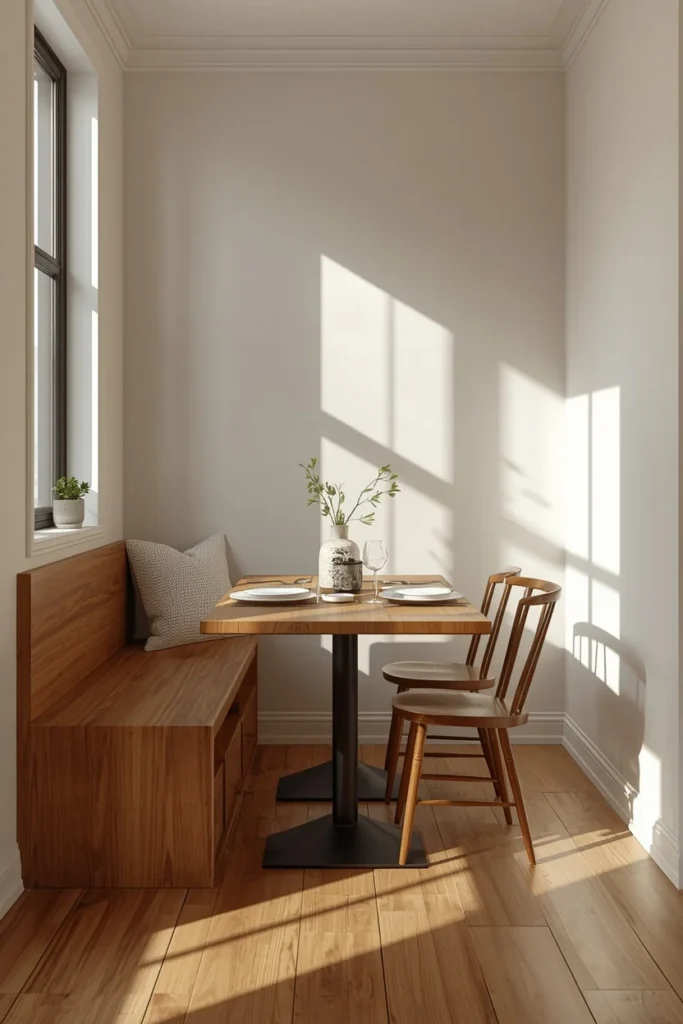
13. Choose a Drop-Leaf or Fold-Down Table for Flexibility
In the smallest dining spaces, a drop-leaf or wall-mounted fold-down table solves the fundamental problem of needing a table that isn’t always in the way. Folded down to its narrowest width for everyday use, the table can expand fully when guests come over, giving the room genuine multi-use flexibility without permanently sacrificing floor space. This kind of table works particularly well in dining nooks that double as a hallway, home office corner, or walkway, since the reduced footprint keeps the path clear most of the time. Choosing a table with a finish that matches nearby furniture keeps it from looking like a purely functional, utilitarian piece.
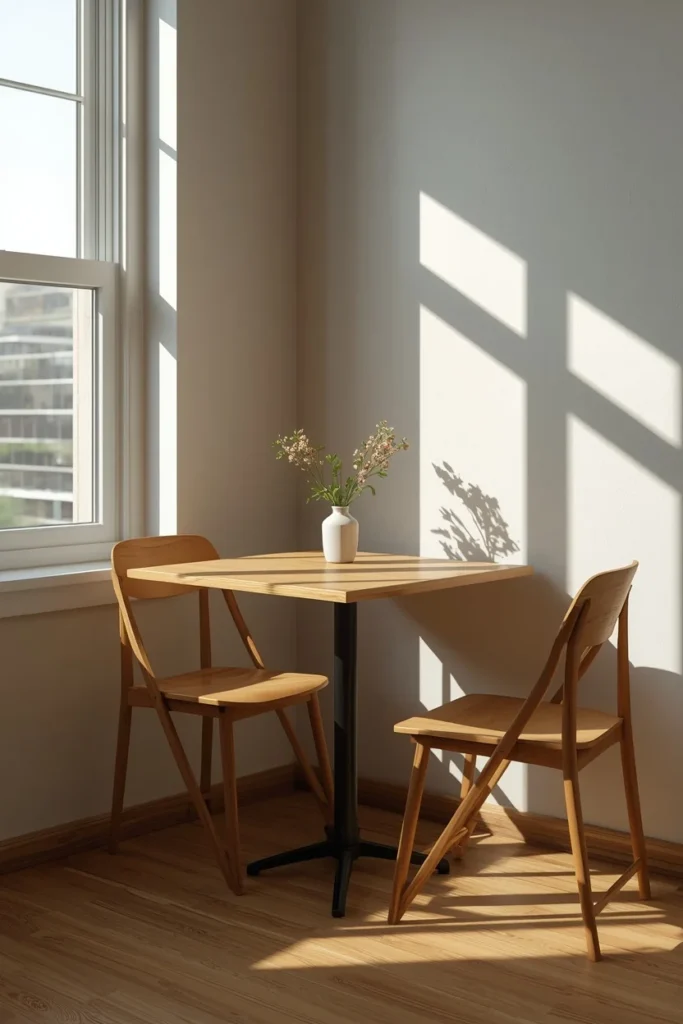
14. Anchor the Room With One Oversized Art Piece
An empty wall in a small dining room can make the space feel unfinished, but filling it with several small frames often makes a tight room feel cluttered instead. One larger piece of art scaled to the wall gives the room a clear focal point without adding visual noise, and it draws attention away from the room’s actual square footage. Choosing artwork in tones that complement the table, chairs, or accent wall ties the whole room together, reinforcing the sense that the space was planned as a whole rather than decorated piece by piece.
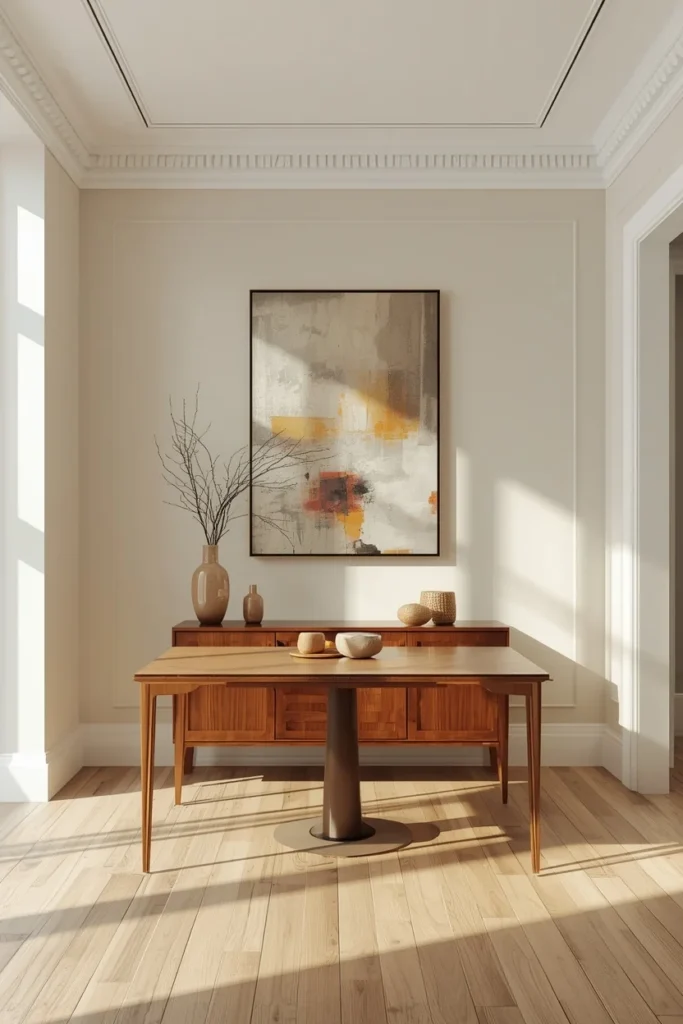
15. Bring in Curved Furniture for Easier Flow
Beyond the table itself, curved furniture throughout a small dining room — a rounded sideboard, an arched mirror, a curved-back chair — makes the whole space easier to move through, since there are fewer sharp corners to navigate around. Curves also read as softer and more welcoming than hard right angles, which suits a room meant for lingering conversation rather than a passing-through hallway. This trend has been picking up specifically in small dining spaces because the practical benefit, easier circulation, lines up so directly with the aesthetic one.
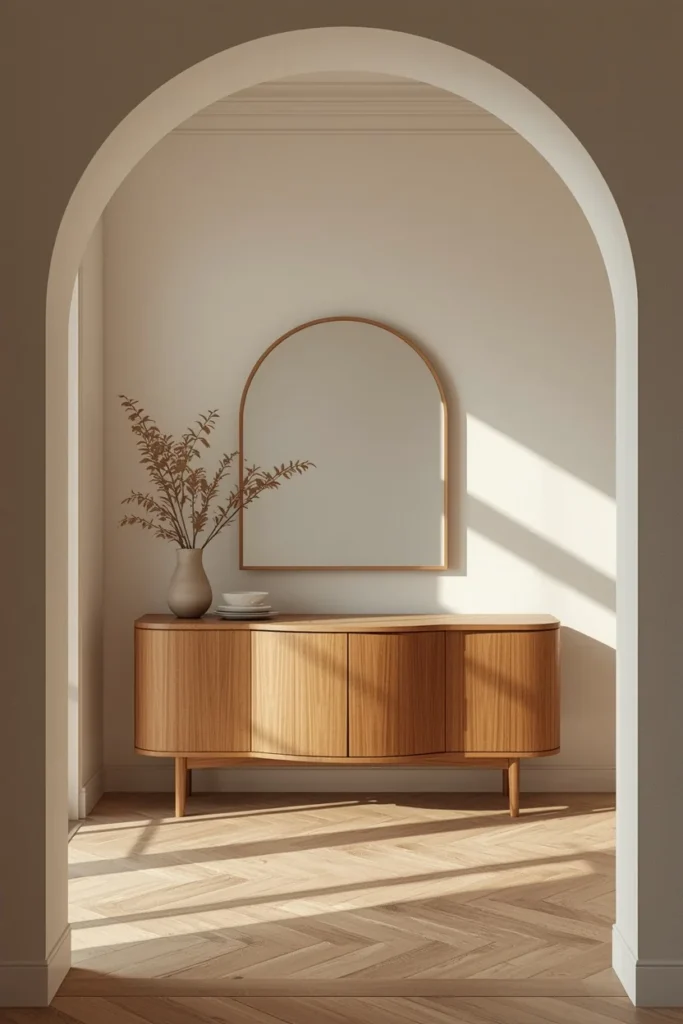
16. Create a Café-Style Bistro Nook
If a full dining set doesn’t fit, a small round bistro table with two slim chairs, tucked into a corner or against a window, creates a genuine dining spot without requiring a dedicated room. This café-style approach has been gaining ground in small apartments and kitchen nooks because it embraces the scale of the space instead of fighting it, and it still delivers a proper place to sit down for a meal. Adding a small pendant light or wall sconce above the bistro table gives it the same sense of intention as a larger dining setup, even at a fraction of the size.
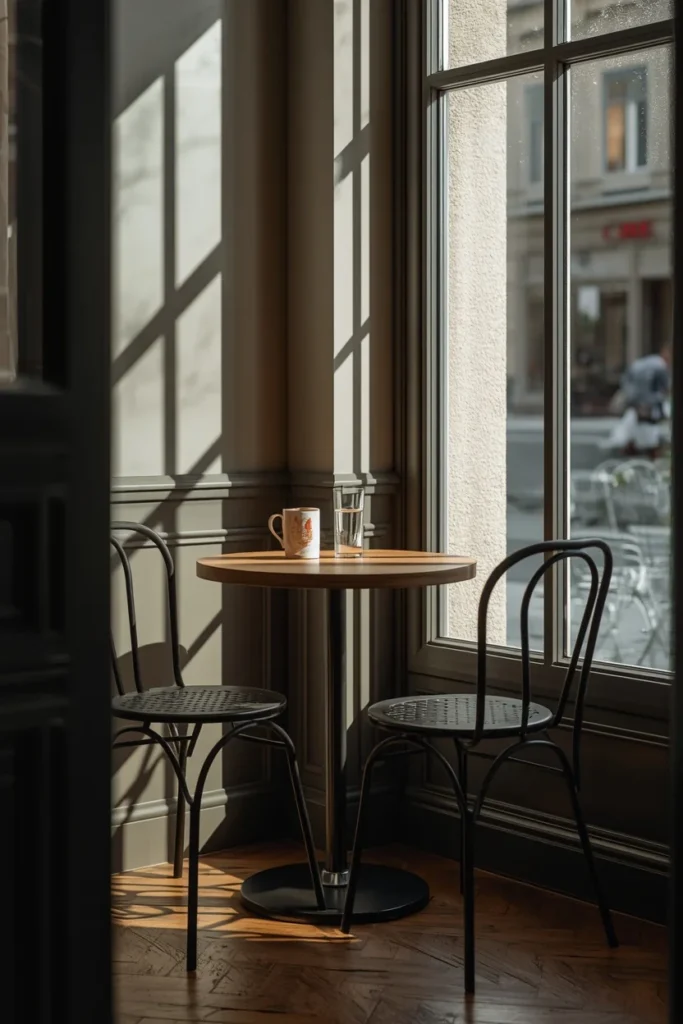
17. Layer in Texture Through Linens and Ceramics
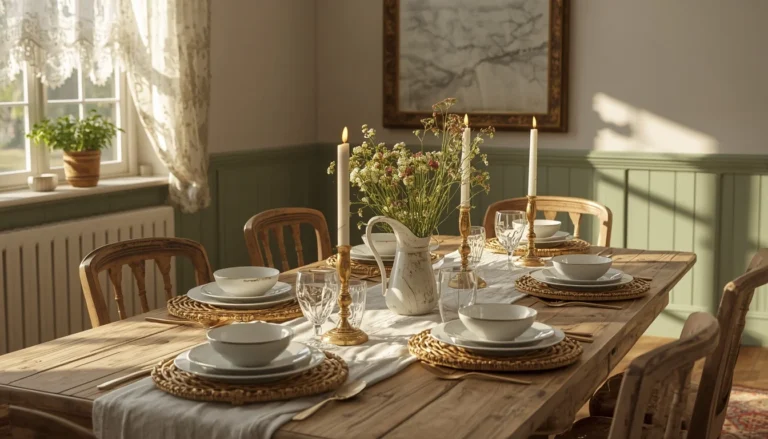
Small dining spaces benefit enormously from layered texture, since there’s less square footage for bold color or pattern to make an impact on its own. A stack of linen napkins, a handmade ceramic bowl as a centerpiece, and a woven table runner add tactile richness to the table itself, working even when the room’s walls and furniture stay simple. This kind of low-cost styling can be swapped seasonally, keeping the room feeling current without touching any of the larger furniture pieces. It also reinforces the warmer, more personal direction dining rooms are trending toward this year.
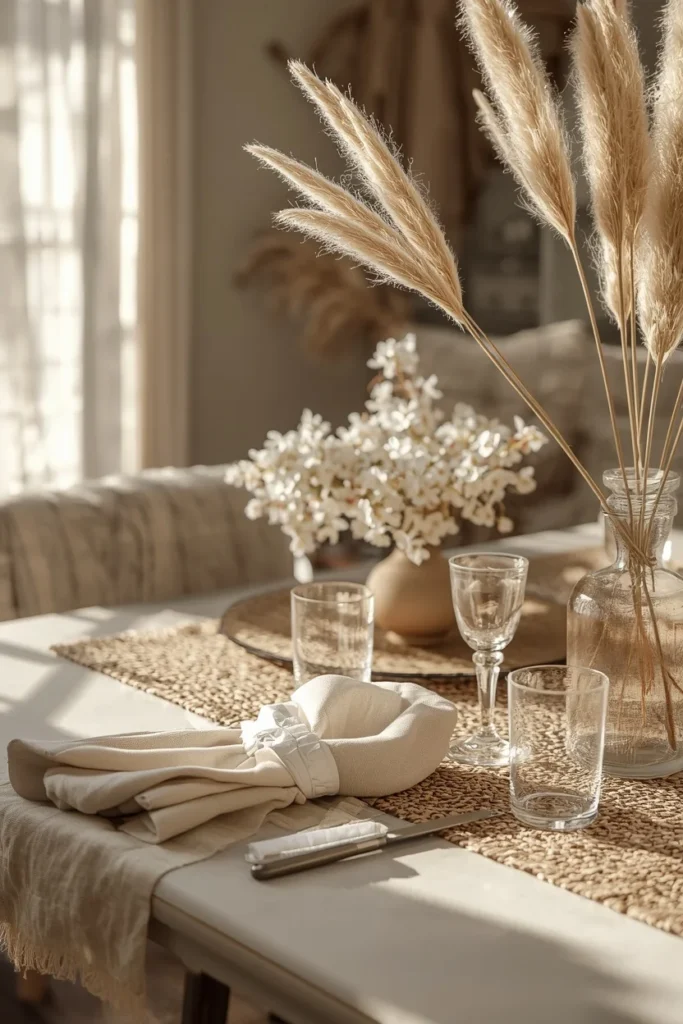
18. Add One Statement Plant Instead of Several Small Ones
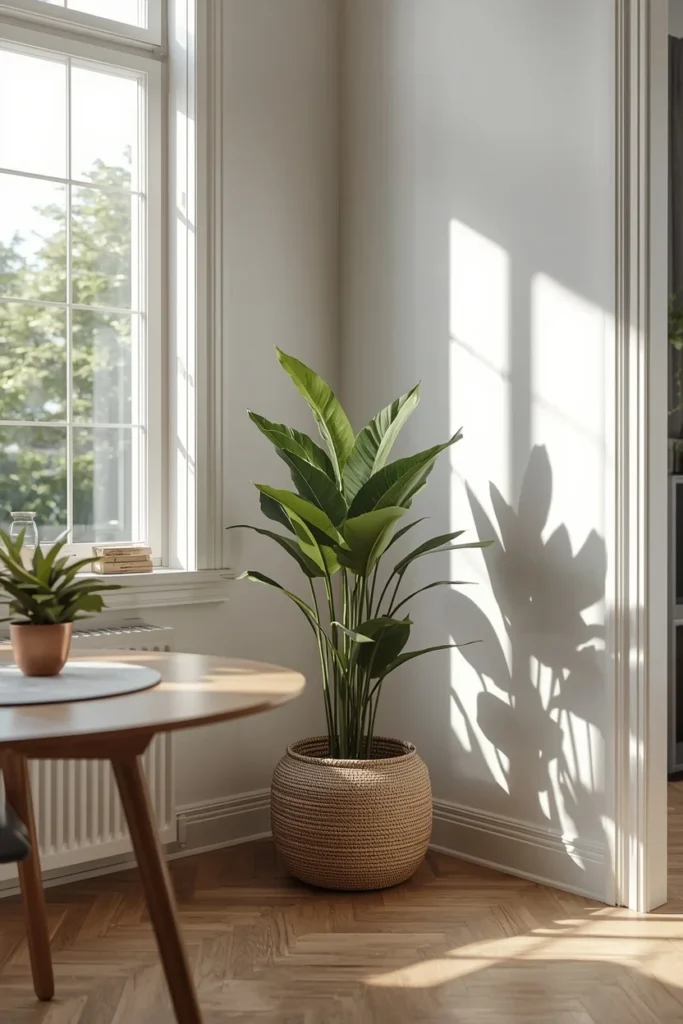
A single larger plant in a corner of a small dining room adds life and softens the room’s hard edges without competing for table space. Choosing one substantial plant, rather than scattering several small pots around, keeps the room feeling intentional and avoids the visual clutter that can quickly overwhelm a tight footprint. A trailing plant on top of the console or sideboard covered earlier is another option if floor space is especially limited, since it adds greenery at eye level instead of taking up walking room.
19. Position a Mirror to Face the Room’s Main Light Source
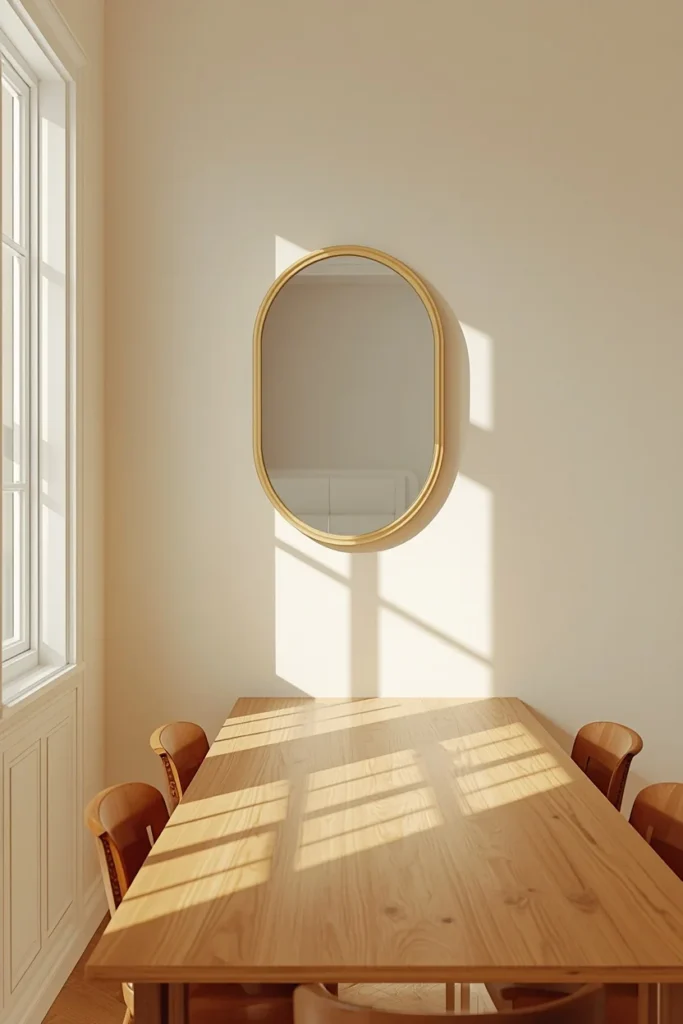
Beyond simply making a room feel bigger, positioning a mirror directly across from a window or the room’s brightest light source maximizes how much natural light bounces around the space throughout the day. This is a more deliberate version of the general mirror advice covered earlier in this list, and it’s worth planning specifically around your room’s light rather than just picking any available wall. In rooms with only one small window, this single placement decision can noticeably change how bright the space feels by midafternoon, which matters more in a small room where every light source works harder.
Styling Tips
- Keep the table and chair scale proportional to the room; oversized furniture is the fastest way to make a small dining room feel cramped.
- Choose one dominant warm color for walls or an accent piece, then repeat smaller doses of it in textiles and ceramics.
- Let the rug extend beyond the chairs even when pulled out, so nothing looks like it’s floating off the edge.
- Use one large-scale item, like art or a mirror, rather than several small decorations competing for wall space.
- Keep floor-level clutter to a minimum; a bench with hidden storage or a slim console does double duty as decor and function.
Practical Implementation Ideas
- Measure clearance around the table first; aim for at least 24 to 36 inches between the table edge and the nearest wall or furniture for comfortable movement.
- Start with the light fixture and rug, since both have an outsized visual impact relative to cost and effort.
- Test paint swatches on the accent wall at different times of day before committing, since small rooms show color shifts more noticeably.
- Add mix-and-match chairs gradually rather than buying a whole new set at once, keeping the palette consistent as you go.
- Reassess the room’s flow after each change; in a small space, even one large addition can affect how easily people move through it.
Common Mistakes to Avoid
- Choosing an oversized rectangular table that leaves no clearance for chairs to be pulled out.
- Skipping the rug because the room feels “too small” for one, when a properly sized rug actually helps ground the space.
- Overcrowding the walls with several small frames instead of one confident, larger piece.
- Using a light fixture that’s either too small to make an impact or too large for the room’s actual scale.
- Pushing every piece of furniture flush against the walls, which can make a small room feel more chopped up rather than more open.
Small-Space Alternatives
- Swap a full dining set for a café-style bistro table and two chairs if a dedicated dining room isn’t an option.
- Use a drop-leaf or fold-down table in rooms that double as a walkway or home office.
- Choose a bench instead of individual chairs on at least one side of the table to save floor space.
- Rely on a single well-placed mirror and one statement light fixture rather than multiple smaller decorative choices.
Budget-Friendly Alternatives
- Refresh dining chairs with new seat cushions or a coat of paint instead of replacing the whole set.
- Choose a natural fiber rug, which is typically less expensive than a plush wool option and holds up better to daily use.
- Swap only the light fixture rather than undertaking a full remodel; it’s one of the highest-impact, lowest-cost updates available.
- Use a large-format print instead of an original art piece to anchor the main wall.
- Paint one accent wall instead of the whole room to test a bolder color at a fraction of the cost.
Pro Styling Recommendations
- Prioritize the pedestal table base and the light fixture first; both affect daily usability more than any decorative choice.
- Choose furniture with visible legs and open silhouettes over bulky, boxy pieces, since airier furniture reads as larger in a small footprint.
- Let one wall carry the room’s boldest choice, whether that’s color, paneling, or art, and keep the remaining walls simpler.
- Reassess seasonally; small dining rooms benefit from swapped linens, centerpieces, and lighting adjustments more than large furniture changes.
FAQs
Conclusion
A small dining room doesn’t need more square footage to feel special. It needs a table shape that respects the space, lighting that pulls focus upward, and a handful of layered details, texture, color, one well-placed mirror, that make the room feel considered rather than squeezed in. Pick a few ideas from this list that match your actual footprint, start with the highest-impact changes, and let the room grow its charm from there.