21 Peel and Stick Backsplash Ideas That Look Expensive and Come Off Easily
There’s a specific kind of kitchen frustration that comes from staring at a plain, builder-grade backsplash you’re not allowed to touch — because you rent, because you’re not ready for a full renovation, or because you just don’t want to deal with grout and a contractor for one wall. Peel and stick backsplash tile exists for exactly that moment, and the have gotten good enough that most people can’t tell the difference from across the room.
The category has moved a long way past flimsy vinyl sheets that looked obviously fake up close. Now there are textured finishes that mimic real grout lines and depth, mother-of-pearl and glass mosaic effects, and full slab-style panels that skip grout lines entirely for a seamless, high-end look. They install without tools, without a professional, and without any drilling into the wall behind your cabinets — which means the whole thing comes off just as easily when you move out or simply change your mind.
Below are 21 real peel and stick backsplash ideas covering the styles actually trending, from budget-friendly starter options to ones convincing enough to fool a dinner party guest. Pin what fits your kitchen and get started this weekend.
- Fish Scale Tile
- Zellige-Look Texture
- Vertical Subway Layout
- Contrasting Grout Line Subway
- Mother-of-Pearl Mosaic
- Full-Height Stone Slab Panels
- Metallic Panels
- 3D Trapezoid Texture
- Chevron Pattern
- Handmade Spanish-Style Tile
- Wave-Pattern Tile
- Sage Green Subway Pairing
- Marble Contact Paper
- Vertical Shiplap
- Hexagon Mosaic
- Terrazzo Pattern
- Bold Geometric Statement Wall
- Countersplash Only
- Brick-Look Panels
- Abstract Artistic Pattern
- Textured Grout-Line Mimic Finish
21 Peel and Stick Backsplash Ideas
1. Fish Scale Tile
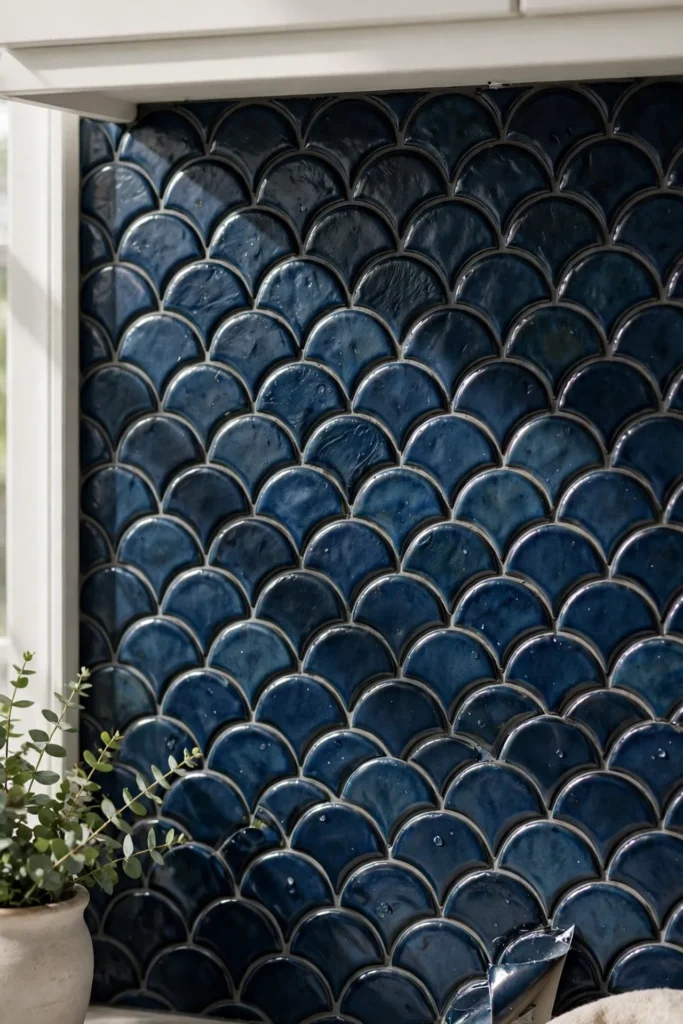
A fish scale peel and stick backsplash brings genuine dimension and movement to a kitchen wall, thanks to its overlapping scalloped shape and a thicker 2mm construction that creates a subtle three-dimensional effect. Deep blue or dark jewel-toned versions read as rich and elegant, while lighter neutral tones keep the same shape more understated. The style works especially well in modern, industrial, coastal, and eclectic kitchens, since the pattern itself carries enough visual interest to complement a range of cabinet colors. Pairing a fish scale backsplash with neutral cabinets and simple countertops lets the texture stand out as the room’s clear focal point. Because the thicker construction holds up better than flatter vinyl sheets, it also tends to photograph and wear more convincingly than older peel and stick styles.
2. Zellige-Look Texture
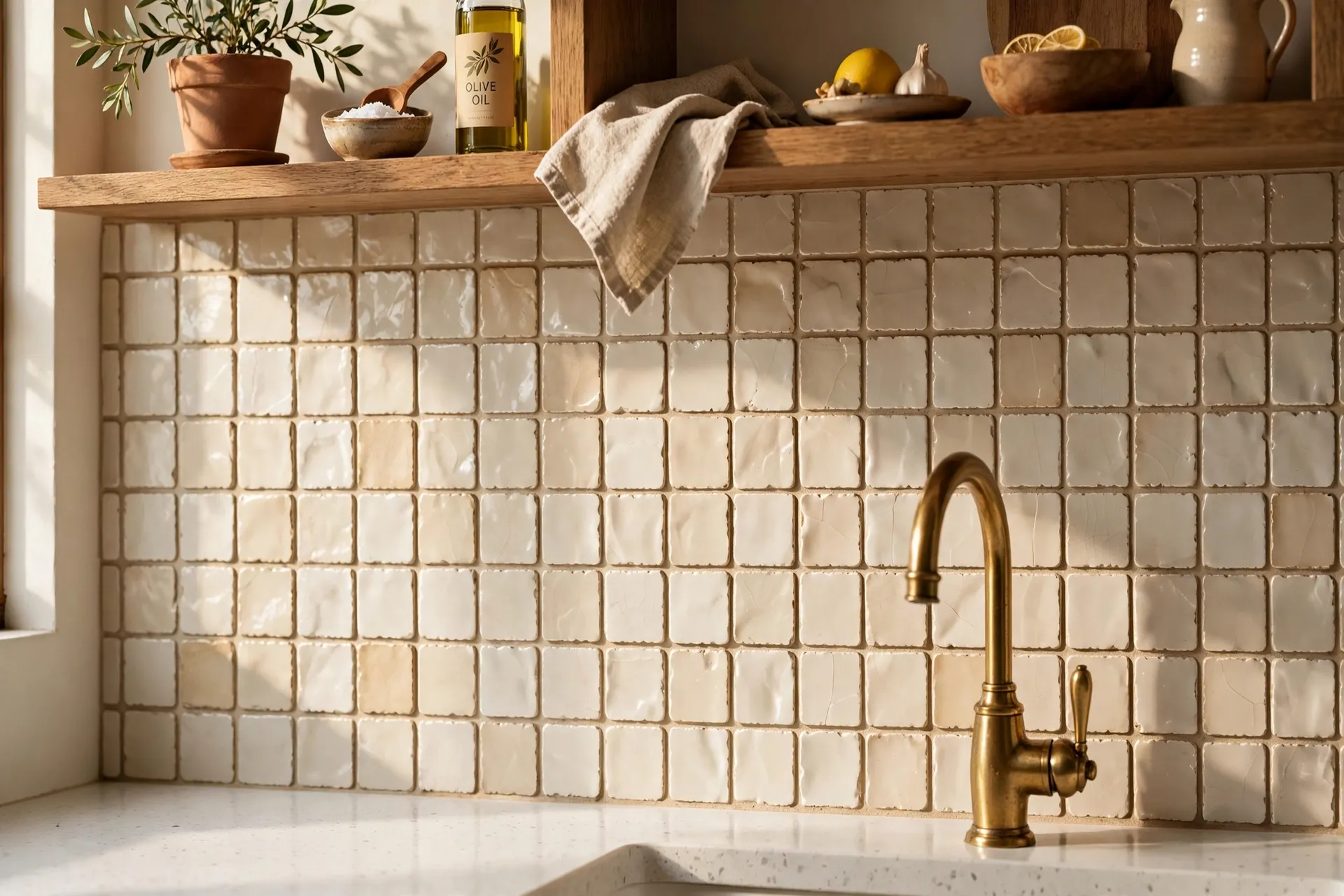
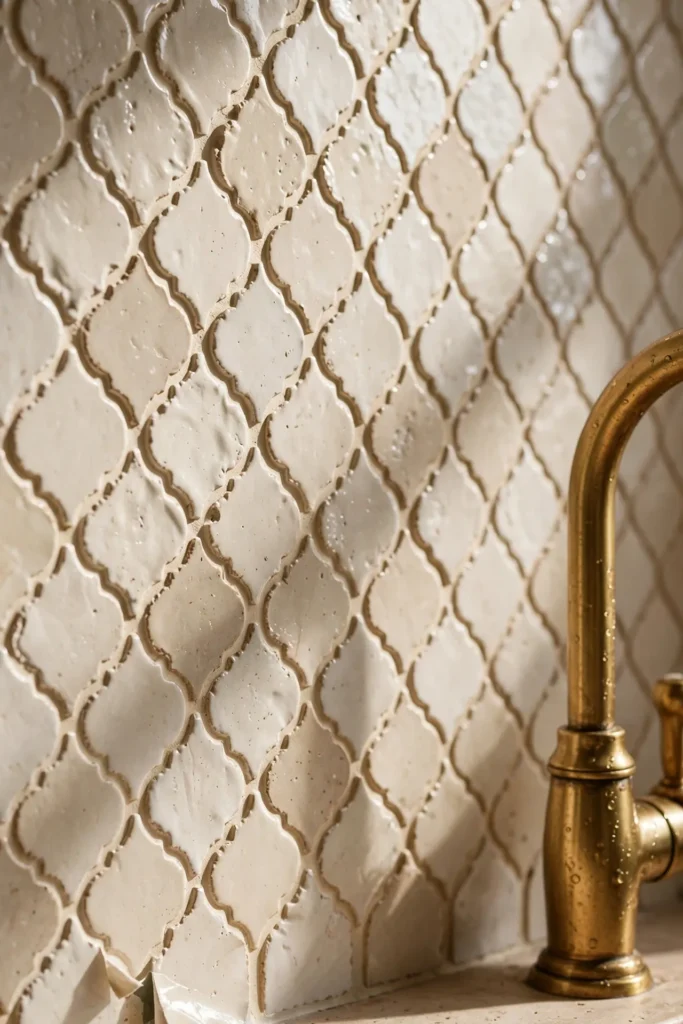
Real hand-glazed zellige tile has become one of the most requested backsplash looks in modern kitchens, and peel and stick manufacturers have responded with textured versions that mimic its irregular surface and subtle color variation. Unlike flat, uniform vinyl, these textured tiles are designed to catch light differently across the wall, echoing the handmade quality that makes zellige so popular in the first place. Soft cream, pale sage, and warm terracotta are the most common zellige-inspired colorways, pairing beautifully with both white and sage green cabinetry. Because the texture does most of the visual work, keeping the surrounding counter and hardware simple lets the backsplash read as a genuine design statement. Up close, a textured zellige-look tile still won’t fool an expert, but from normal kitchen viewing distance, it holds up remarkably well.
3. Vertical Subway Layout
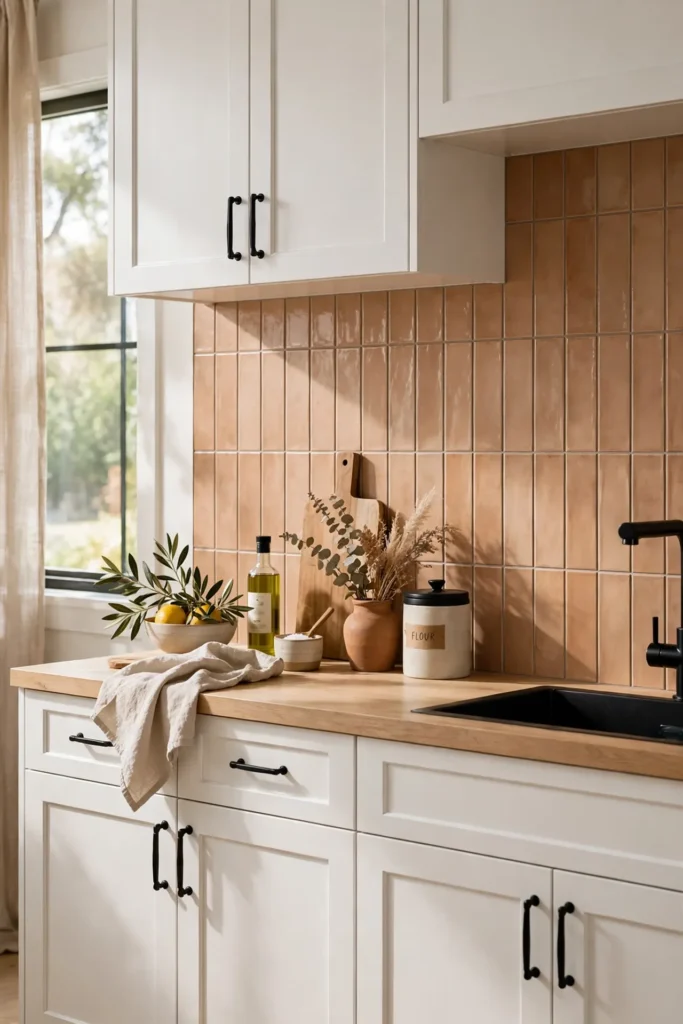
Subway tile remains the most popular backsplash style overall, but a vertical layout gives the classic shape a noticeably fresher, more current look than the traditional horizontal running bond pattern. Stacking peel and stick subway tiles vertically also visually draws the eye upward, which can make a smaller kitchen feel taller and more open. This layout pairs especially well with warm-toned tile colors and slightly textured finishes, both of which are trending alongside the vertical orientation itself. Because subway shapes are one of the most widely available peel and stick styles, this is also one of the easier and more affordable ideas on this list to source. It’s a low-risk way to update a backsplash without straying into a pattern or color that might feel dated in a few years.
4. Contrasting Grout Line Subway
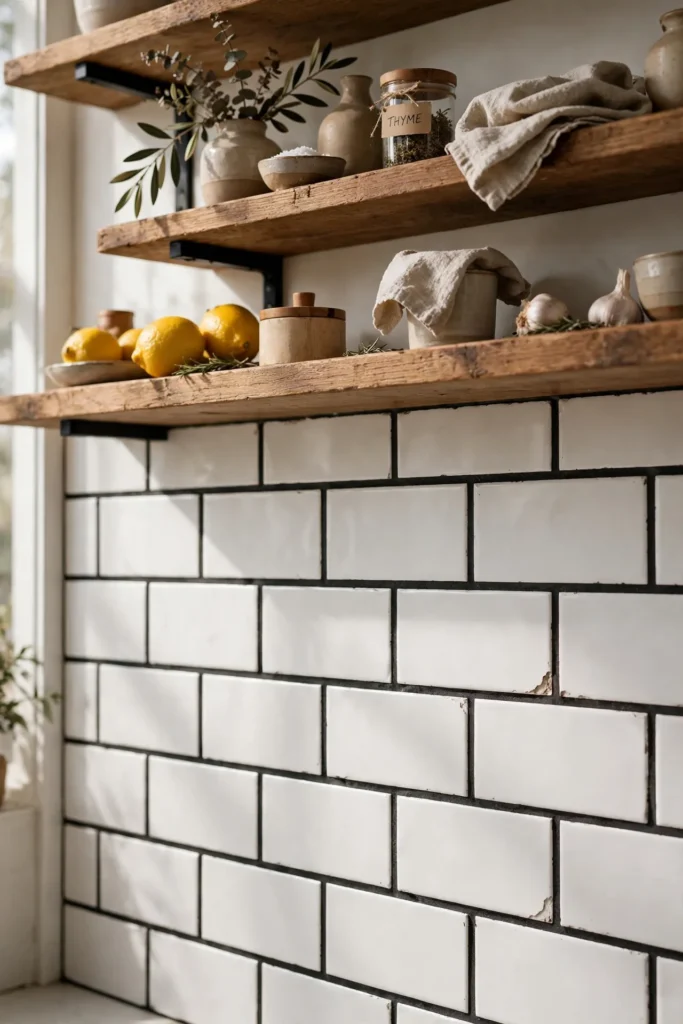
Pairing white subway-style tile with a bold, dark faux grout line is one of the simplest ways to give a peel and stick backsplash real graphic definition without changing the overall tile shape. This approach has been revitalized with more vivid grout colors and more sophisticated tile ratios than the classic black-and-white version. Because the contrast comes from the printed grout line rather than the tile shape itself, it’s an easy way to add personality to an otherwise simple, familiar pattern. This style works particularly well in kitchens that want a slightly graphic, modern edge without committing to a bold tile color. It’s also one of the more forgiving choices for DIY installation, since small alignment imperfections tend to blend into the already-graphic grout pattern.
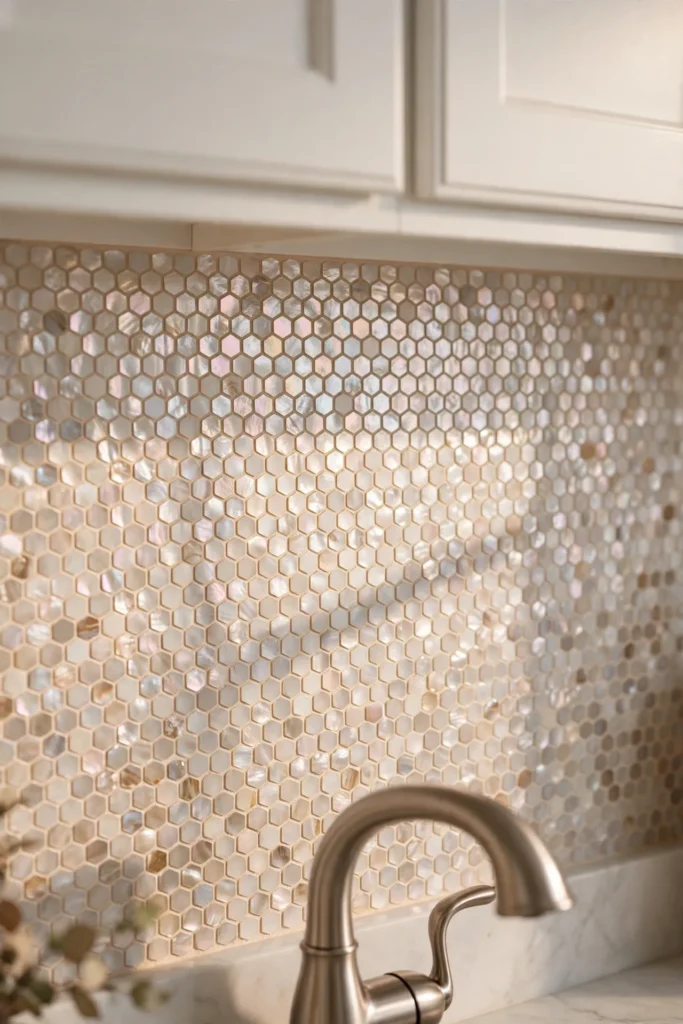
5. Mother-of-Pearl Mosaic
Among the biggest upgrades to peel and stick backsplash technology in recent years is the addition of genuinely convincing mother-of-pearl and glass mosaic finishes, which reflect light with a subtle shimmer that flat printed tile simply can’t replicate. These finishes work beautifully in kitchens that want a touch of glamour or a coastal-leaning aesthetic without committing to real shell tile, which tends to be both expensive and delicate. Because the mosaic pattern is typically small-scale, it adds texture and light play without overwhelming the rest of the room’s color palette. Pairing a mother-of-pearl backsplash with simple white or light wood cabinetry lets the subtle shimmer read clearly rather than competing with other busy finishes. This is one of the more premium-feeling peel and stick options available, ideal for anyone who wants a bit of shine without the cost of real glass or shell tile.
Related: 23 Stylish Small Apartment Christmas Decor Ideas That Save Space That Make Every Inch Count
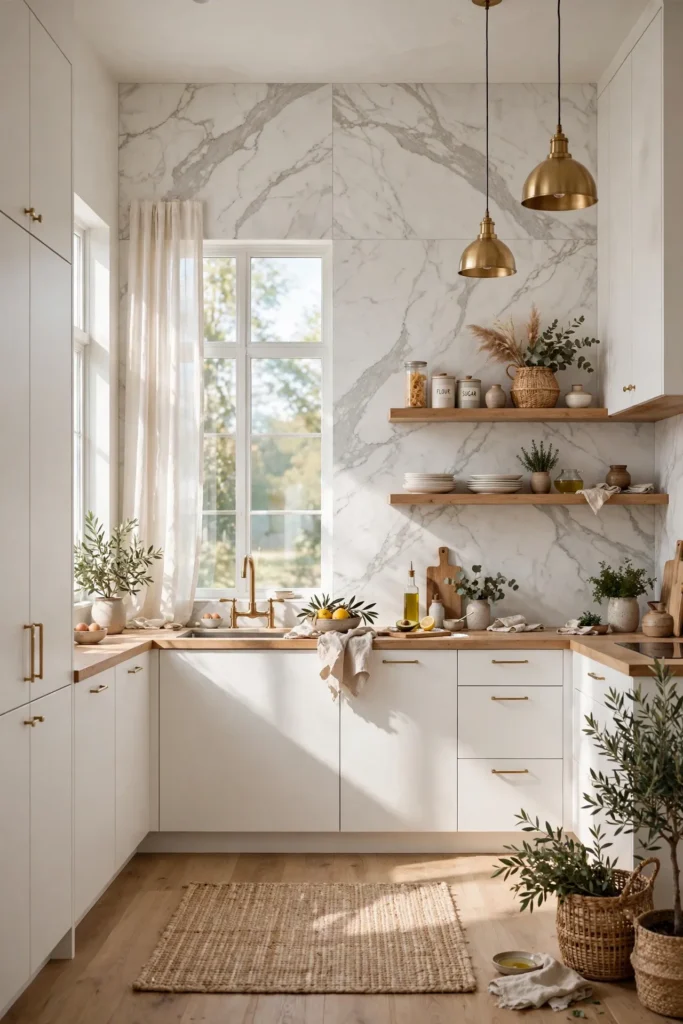
6. Full-Height Stone Slab Panels
Full-height slab backsplashes that eliminate grout lines entirely have become one of the most sought-after high-end looks in modern kitchens, and peel and stick marble and quartzite-look panels bring that same seamless effect at a fraction of the cost. Because there’s no grout pattern to interrupt the surface, these panels create a clean, continuous visual line from counter to upper cabinet that reads as genuinely polished. Choosing a panel with realistic veining and a matte or soft satin finish, rather than an overly glossy one, helps the printed stone pattern hold up to closer inspection. This style pairs particularly well with simple, minimalist cabinetry, since the backsplash itself becomes the room’s main visual statement. It’s a favorite for renters who want that seamless slab look without the cost, weight, or permanence of real stone.
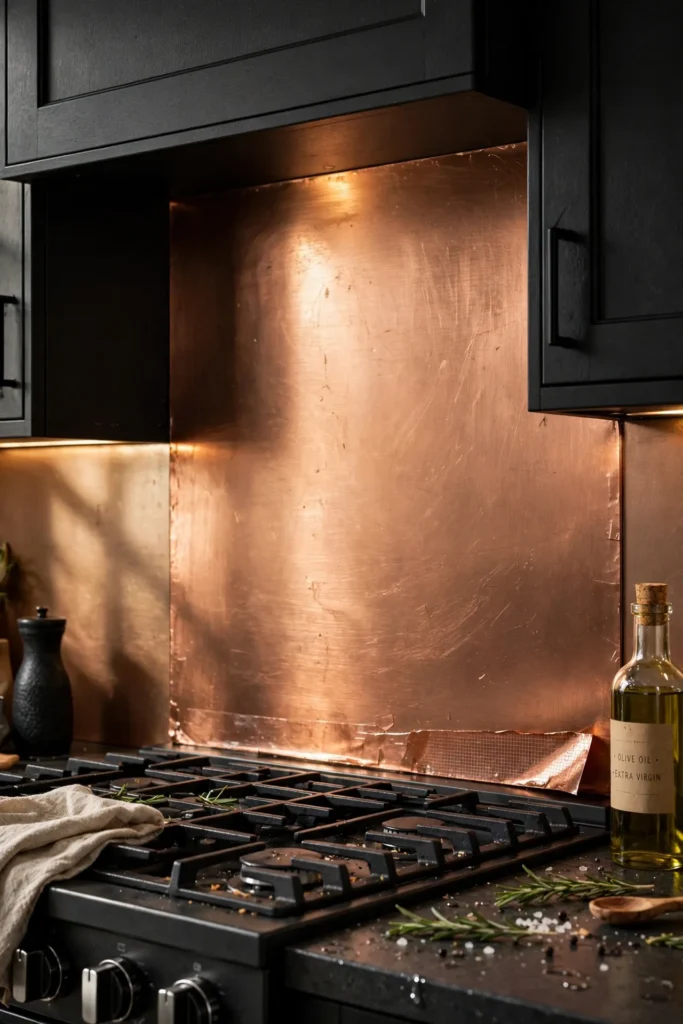
7. Metallic Panels
Metallic backsplash panels, in brushed brass, copper, or bronze finishes, are gaining real traction in contemporary kitchen design, and the peel and stick versions bring that same reflective quality to a temporary, budget-friendly install. Beyond the visual warmth these tones add, metallic panels reflect light effectively, which can make a smaller or darker kitchen feel noticeably more open. Pairing a metallic backsplash with matte black or dark cabinetry creates a striking, high-contrast look, while lighter cabinetry lets the metallic tone read as a softer, warmer accent. Because these finishes are more visually bold than a neutral tile pattern, they work best as a single focal wall rather than extending across an entire kitchen. It’s a distinctive option for anyone who wants their backsplash to double as a genuine design statement rather than a background detail.
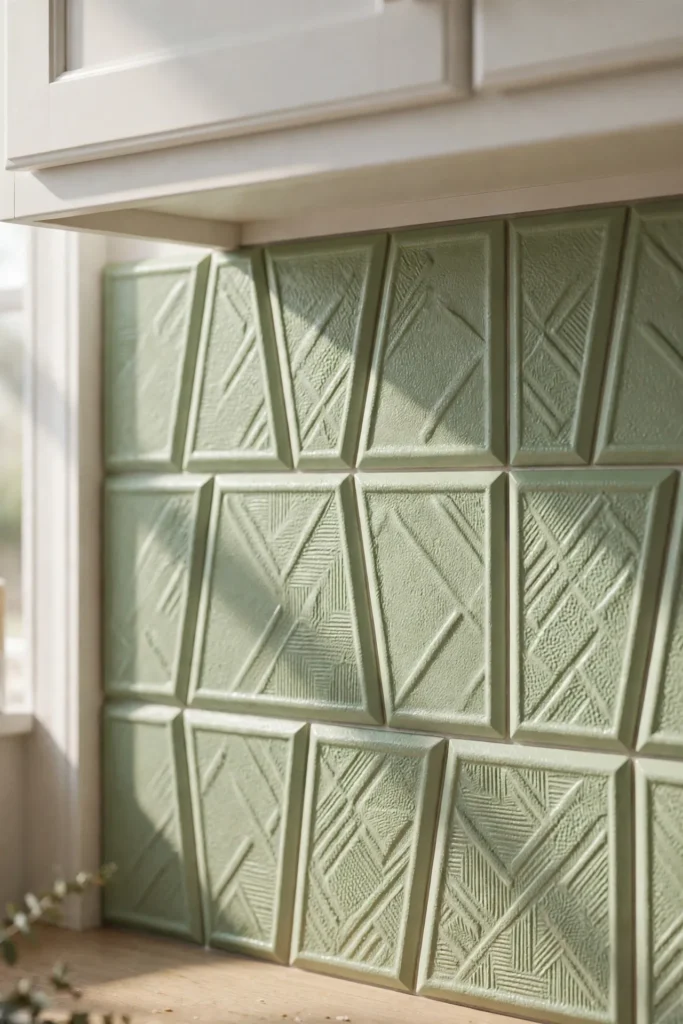
8. 3D Trapezoid Texture
Geometric 3D tile shapes, like trapezoids or raised hexagons, bring genuine dimensional texture to a backsplash wall, catching light and shadow in a way flat tile simply can’t achieve. Lighter colors, like a soft mint or pale green trapezoid pattern, brighten a kitchen while still offering that dimensional visual interest. Because the texture itself is the main design feature, these tiles work particularly well in an otherwise simple, neutral kitchen that could use one area of visual energy. The raised surface also tends to photograph beautifully in natural side light, since the shadows cast by each individual shape shift throughout the day. This style leans slightly more playful and modern than a classic subway or zellige look, making it a good fit for kitchens with a more contemporary overall design direction.
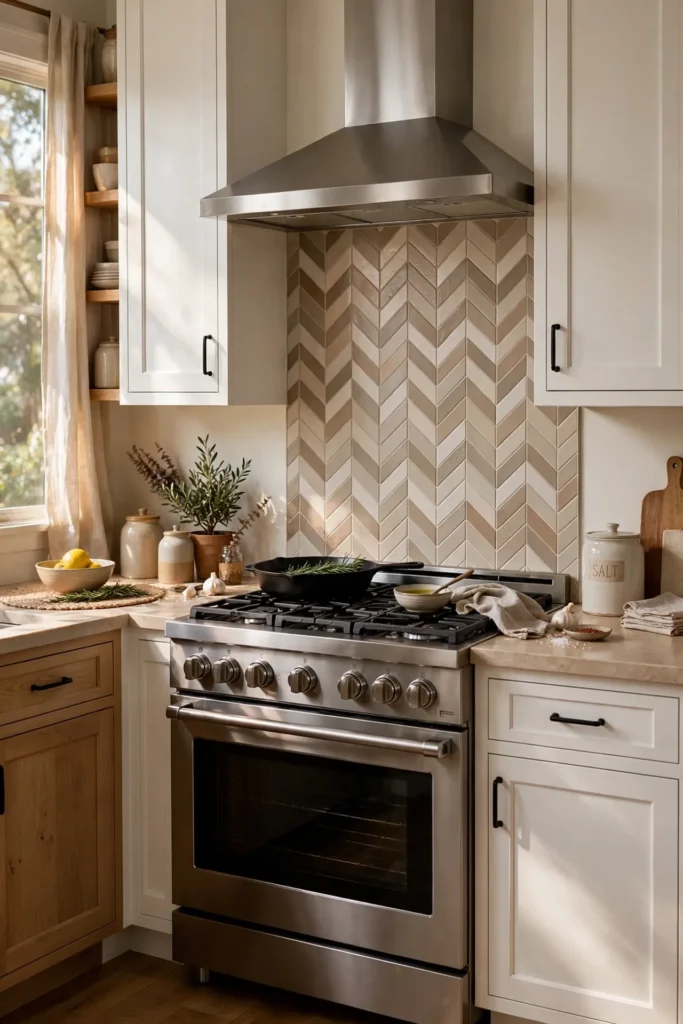
9. Chevron Pattern
A chevron zigzag backsplash brings genuine visual movement and energy to a kitchen, standing out as one of the more dynamic pattern choices trending. The zigzag repetition works particularly well in kitchens looking for understated drama without relying purely on a bold color choice to make a statement. Choosing a chevron pattern in a muted, tonal color keeps the movement feeling sophisticated rather than overwhelming, while a higher-contrast version leans more graphic and bold. This pattern also tends to visually elongate a wall, making it a smart choice behind a stove or range where a narrower vertical space could use some added presence. Because chevron patterns require more careful alignment during installation than a simple grid, taking extra time with initial placement pays off in how seamless the finished zigzag reads.
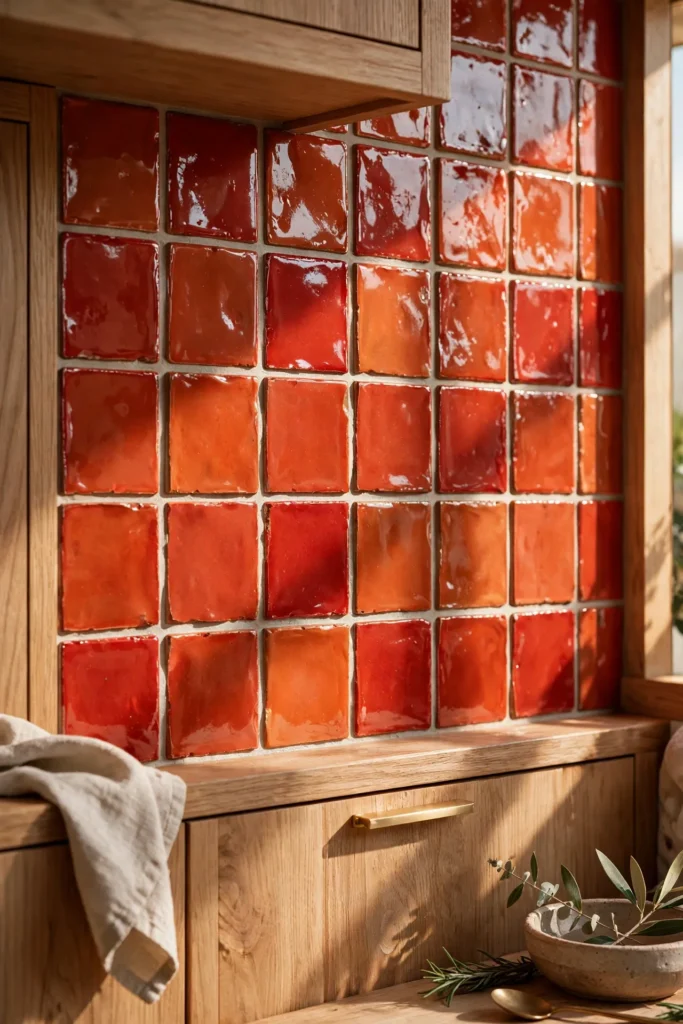
10. Handmade Spanish-Style Tile
Warm terracotta and red-orange tones, styled after traditional Spanish handmade tile, bring rich color and old-world character to a kitchen without the cost or fragility of genuine antique tile. These glossy, richly saturated peel and stick versions work particularly well in kitchens leaning toward a bohemian, Mediterranean, or eclectic aesthetic. Pairing a Spanish-style tile backsplash with simple white or natural wood cabinetry keeps the bold color from feeling overwhelming, letting the tile itself be the room’s clear focal point. Because the color is so saturated, this style tends to work best as a full backsplash wall rather than a small accent area, where the color needs enough surface area to feel intentional. It’s a distinctive, personality-forward choice for anyone who wants their kitchen backsplash to feel collected and story-driven rather than neutral.
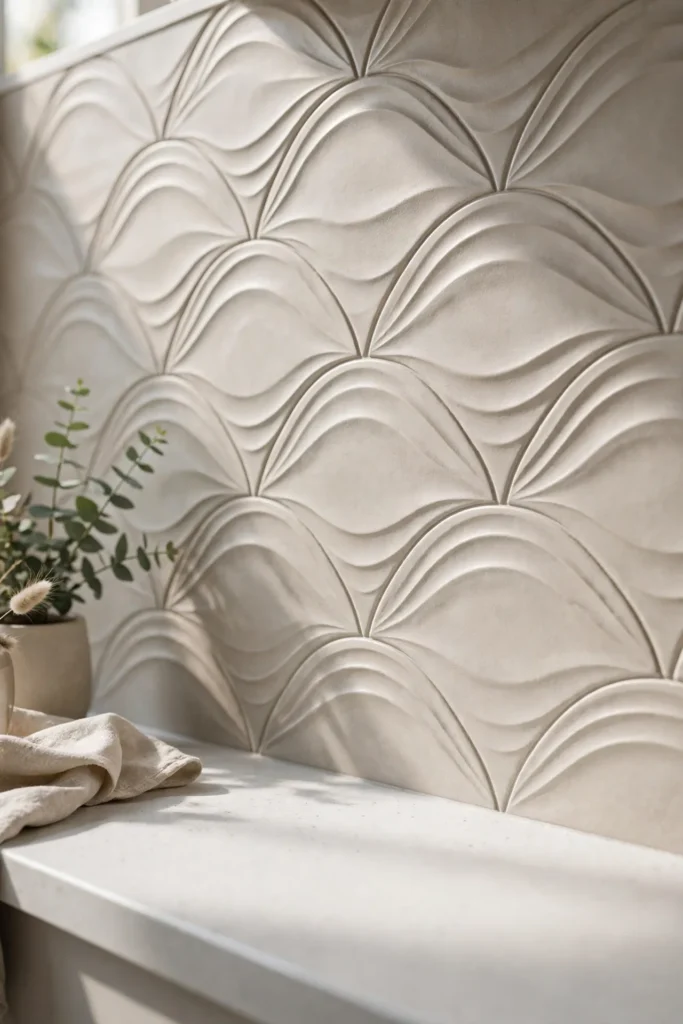
11. Wave-Pattern Tile
Flowing wave-shaped tile is one of the more distinctive backsplash trends emerging, creating a relaxed, rhythmic pattern that feels noticeably calmer than sharper geometric shapes. The soft, curved lines work particularly well in kitchens and laundry spaces aiming for a gentle, spa-like mood rather than a bold graphic statement. Choosing a wave-pattern tile in a soft neutral or muted blue tone reinforces that calming effect, while a higher-contrast color choice gives the same shape a more energetic, modern feel. Because the pattern repeats in a continuous flowing line, it reads especially well across a longer stretch of wall, such as behind a full run of countertop. This style has crossed over from laundry room design into kitchens as homeowners look for backsplash patterns that feel a little different from the more common grid-based tile shapes.
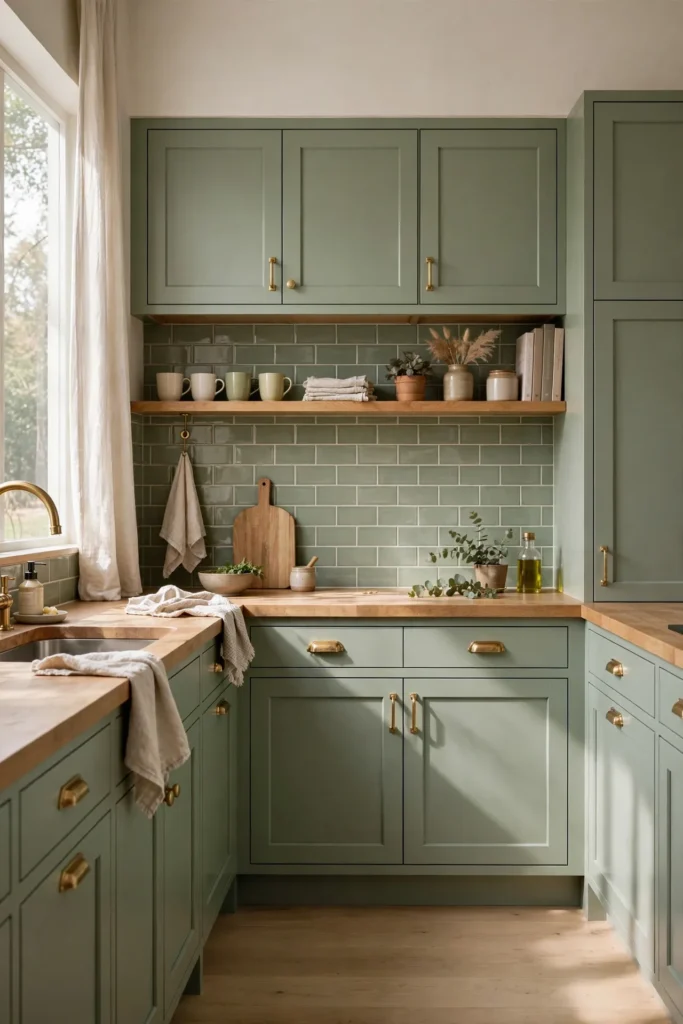
12. Sage Green Subway Pairing
Sage green subway tile has become one of the go-to backsplash pairings for kitchens with sage green or warm wood cabinetry, offering an earthy, tonal contrast that feels both fresh and calming. Because peel and stick sage subway tile comes in the same familiar rectangular shape as classic white subway, it’s an easy swap for anyone wanting to update the color story of an already-planned kitchen without changing the overall layout. Pairing sage tile with brass or warm gold hardware reinforces the earthy, natural mood, while black hardware gives the same palette a slightly more modern edge. This tonal pairing tends to photograph beautifully in natural light, since the closely related green tones create a cohesive, layered look rather than a stark contrast. It’s a particularly good option for anyone who already committed to sage cabinetry and wants the backsplash to feel like an intentional extension of that choice rather than a competing color.
Related: 18 DIY Fresh Christmas Wreath Ideas Worth the Effort
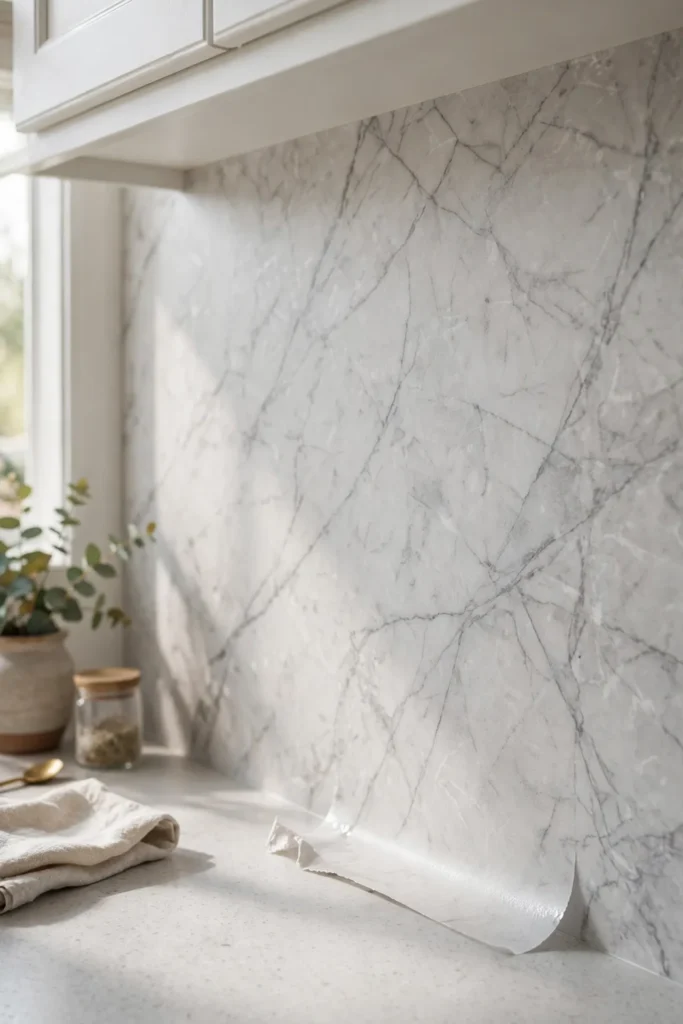
13. Marble Contact Paper
Marble-look contact paper offers one of the most budget-friendly ways to bring a stone-inspired look to a backsplash, and the newer versions have moved well past the flat, obviously-fake marble prints of years past. Choosing a light gray or soft white marble pattern with subtle, realistic veining helps the material read convincingly from a normal viewing distance. This option works especially well for extending the same material visually from a countertop to the backsplash wall, creating the appearance of a continuous stone surface without the cost of matching real slabs. Because contact paper is typically thinner than dedicated peel and stick tile, it’s best suited to lower-moisture areas or paired with a clear protective sealant near the sink and stove. It’s one of the most accessible entry points into the peel and stick category, both in cost and in how easy it is to find at most home improvement stores.
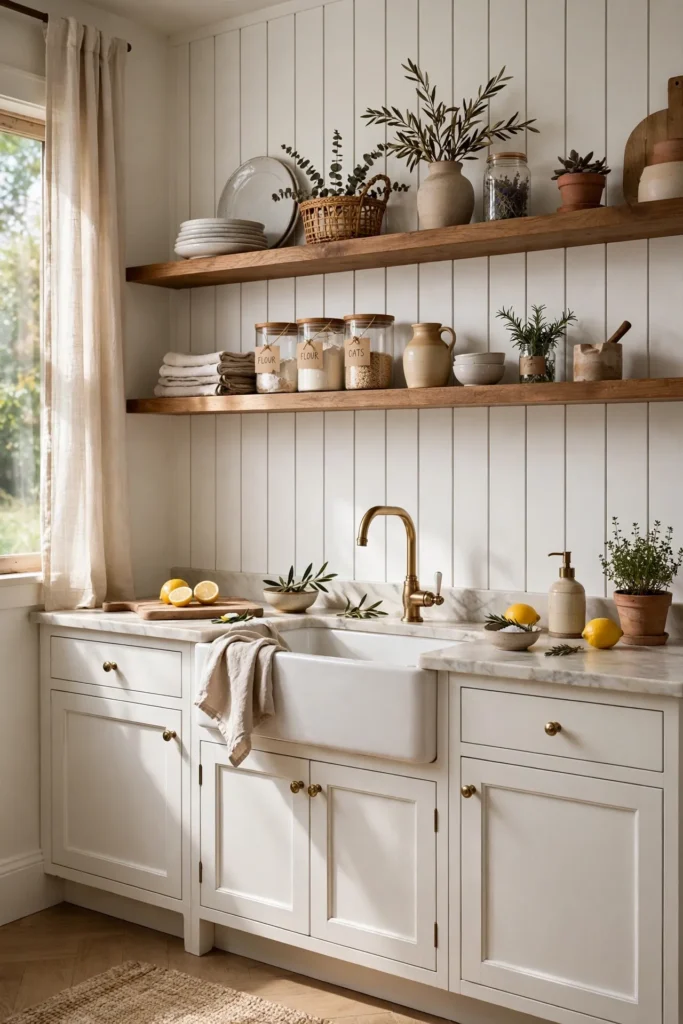
14. Vertical Shiplap
Peel and stick shiplap panels bring a clean, cozy, farmhouse-inspired texture to a backsplash without the drywall work or nailing required for a real plank installation. Installed vertically, shiplap draws the eye upward, which can help open up a smaller kitchen the same way a vertical subway layout does. Painted crisp white or in a warm neutral tone, this style fits naturally behind open shelving or paired with almost any cabinet color, making it one of the more flexible options on this list. Because shiplap reads as more textural than patterned, it works especially well for anyone who wants visual interest without a bold color or busy print. This is also one of the more DIY-friendly and budget-conscious peel and stick styles, since the panels are typically larger and faster to install than smaller individual tiles.
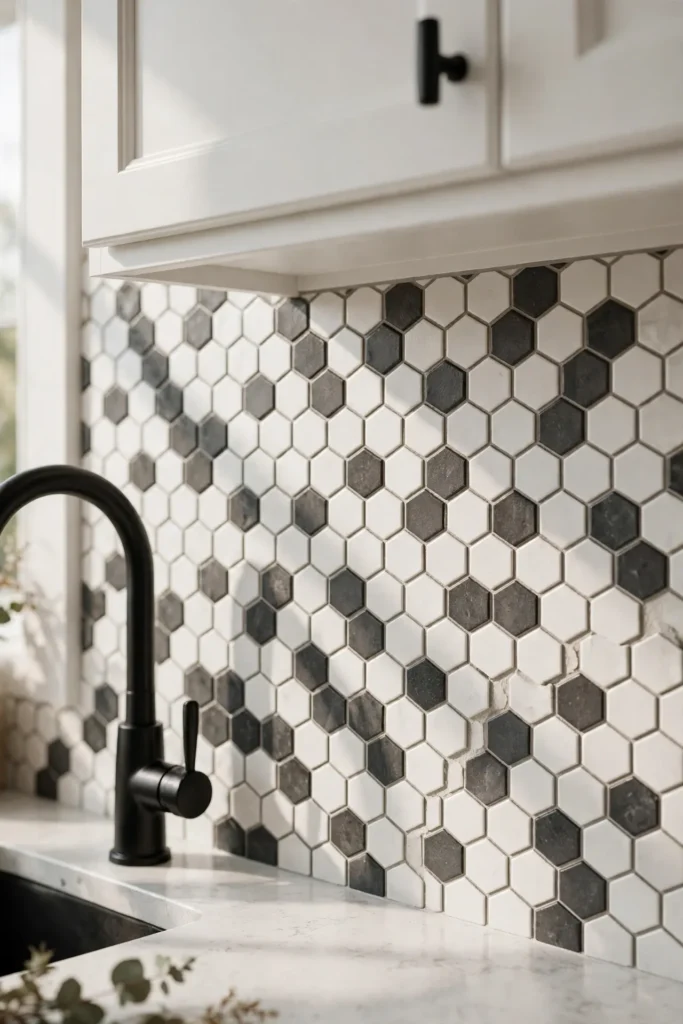
15. Hexagon Mosaic
Hexagon-shaped peel and stick mosaic tile brings a slightly more retro, playful geometry to a backsplash while still feeling at home in a modern kitchen. Smaller hexagon tiles create a more intricate, detailed texture from a distance, while larger hex shapes read as bolder and more graphic. Choosing a two-tone or subtly varied hexagon pattern adds depth without needing a strong color contrast, keeping the overall look sophisticated rather than busy. This shape pairs particularly well with mid-century modern or eclectic kitchen styles, where a bit of geometric personality complements the rest of the room’s design language. Because hexagon sheets typically come pre-mounted in a connected pattern, installation tends to be more forgiving than piecing together individual small tiles by hand.
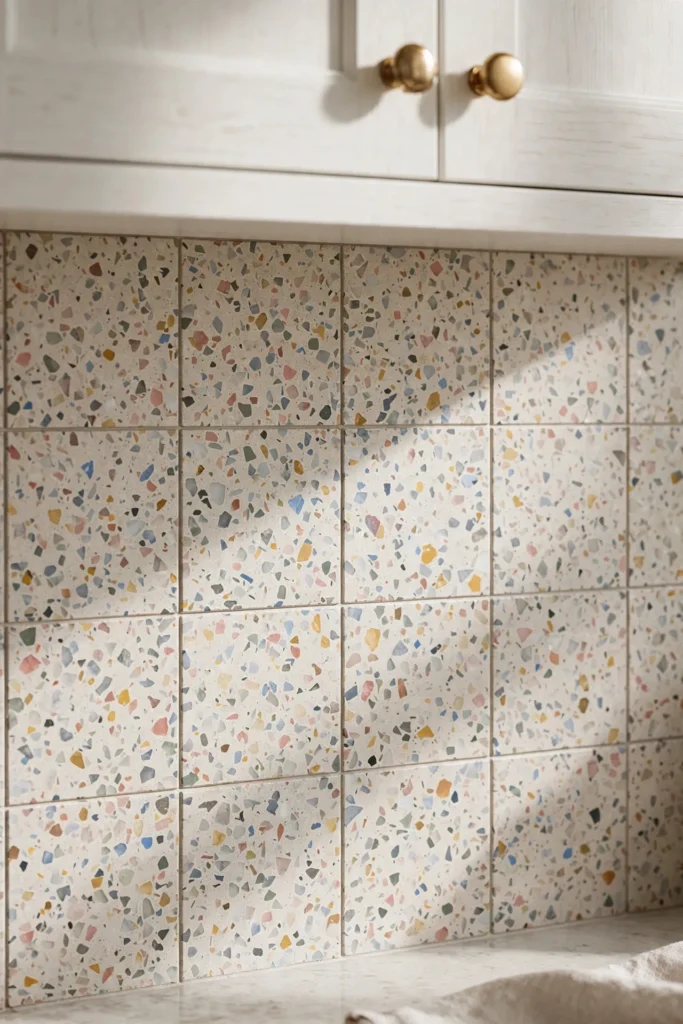
16. Terrazzo Pattern
Terrazzo’s speckled, flecked surface brings a playful yet sophisticated texture to a peel and stick backsplash, echoing a material that’s become popular across flooring, countertops, and now wall tile. Because terrazzo already reads as an intentionally imperfect, varied pattern, small printing inconsistencies in a peel and stick version tend to blend in more naturally than they would with a more uniform tile style. Choosing a terrazzo pattern in a neutral base with colorful flecks adds personality without requiring a bold overall color commitment. This style works particularly well in kitchens leaning toward a modern, slightly retro-inspired aesthetic, especially when paired with brass hardware and simple white cabinetry. It’s a forgiving, visually busy pattern that’s especially well suited to first-time DIY installers, since minor seams are easy to disguise within the tile’s existing texture.
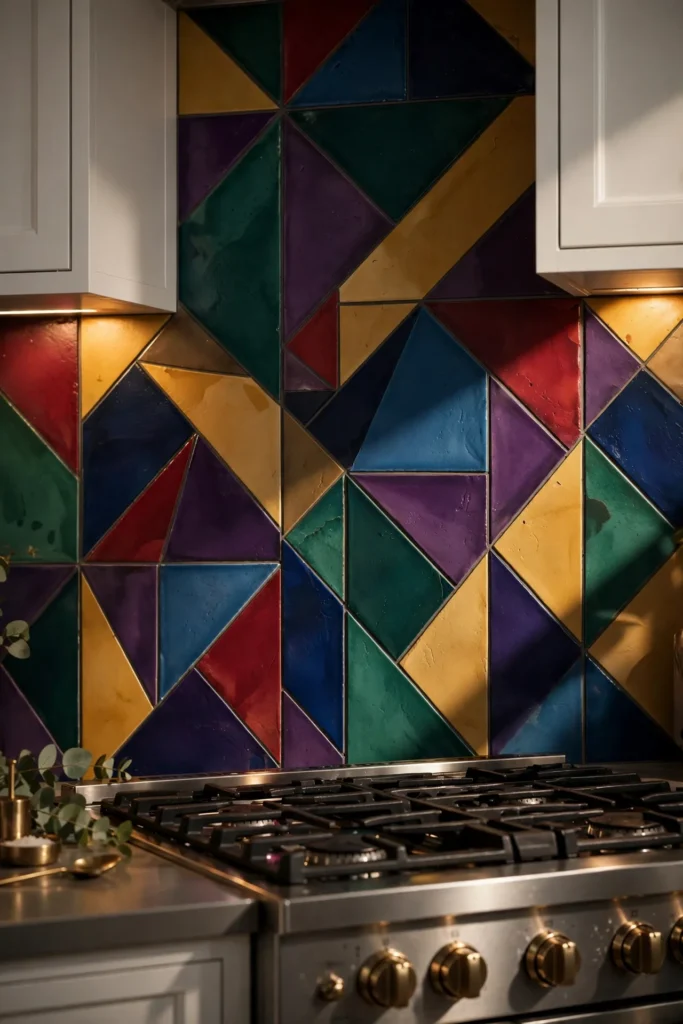
17. Bold Geometric Statement Wall
For kitchens ready to make a genuine design statement, bold abstract or geometric peel and stick patterns bring energy and color that a subtler neutral tile simply can’t provide. These patterns work best when contained to one focal wall, like behind a stove or a run of open shelving, rather than extending across the entire kitchen where the boldness could become overwhelming. Keeping cabinetry, countertops, and hardware simple around a bold statement pattern lets the backsplash carry the room’s visual interest without competing elements. Because these patterns tend to be more trend-driven than a classic subway or zellige look, choosing a peel and stick version specifically makes it easy to update again later without any lasting commitment. It’s the boldest option on this list, best suited to homeowners who genuinely want their kitchen to feel like a design statement rather than a neutral backdrop.
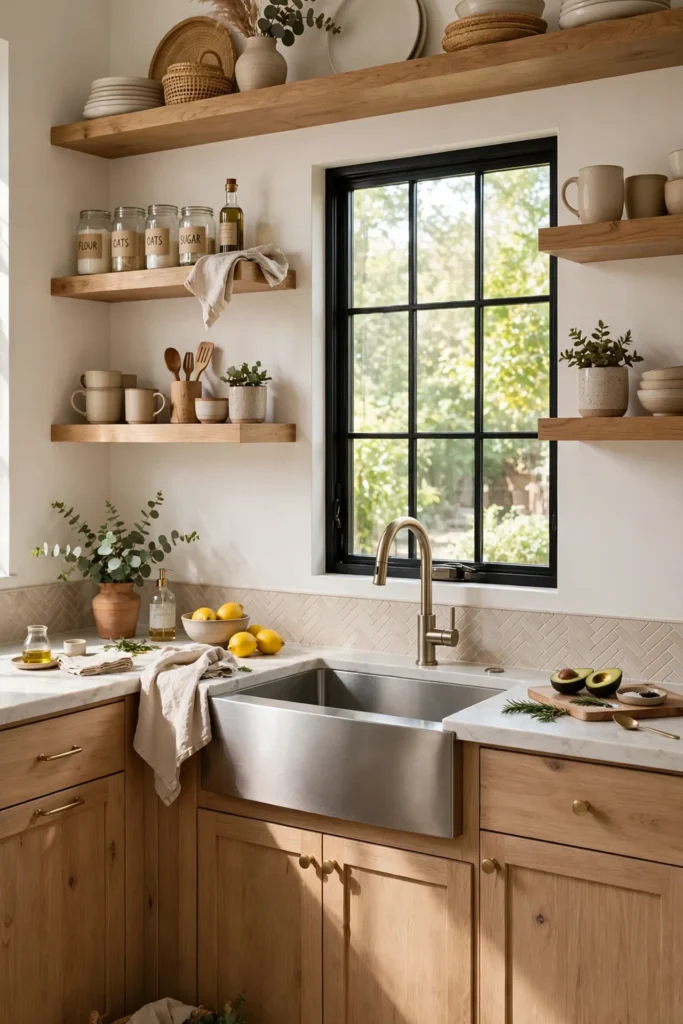
18. Countersplash Only
Rather than covering the full wall from counter to upper cabinet, a shorter “countersplash” stops at a lower height, serving a more protective than decorative function while still adding a clean design detail. This approach works particularly well for kitchens with a lot of open shelving or a window above the sink, where a full-height backsplash isn’t practical anyway. Choosing a slightly bolder tile or color for a shorter countersplash feels more manageable than committing the same choice to a full wall, since the smaller surface area lowers the visual and financial stakes. This idea also uses noticeably less material than a full backsplash, making it one of the more budget-friendly options for anyone wanting a quick update rather than a full kitchen refresh. It’s a detail-oriented choice that’s gaining traction specifically because it treats the backsplash as one design element among several, rather than the wall’s sole focus.
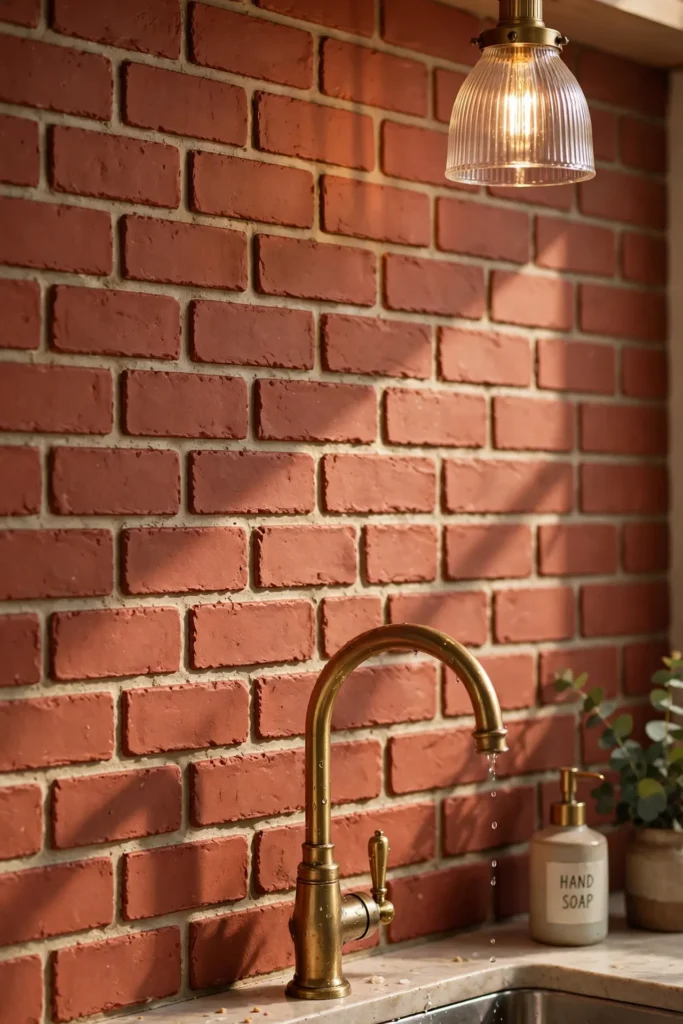
19. Brick-Look Panels
Peel and stick brick-look panels bring warm, textured character to a kitchen without the weight, cost, or structural considerations of real exposed brick. A soft red or muted terracotta brick pattern pairs particularly well with brass fixtures and pendant lighting, creating a warm, inviting atmosphere reminiscent of an industrial loft kitchen. Choosing a panel with subtle texture variation, rather than a flat printed brick pattern, helps the finished look read as more convincingly dimensional from across the room. This style works especially well in kitchens with an industrial, eclectic, or urban-loft design direction, where real brick might already exist elsewhere in the home. Because brick-look panels tend to come in larger sheets, installation is often faster than piecing together smaller individual tiles.
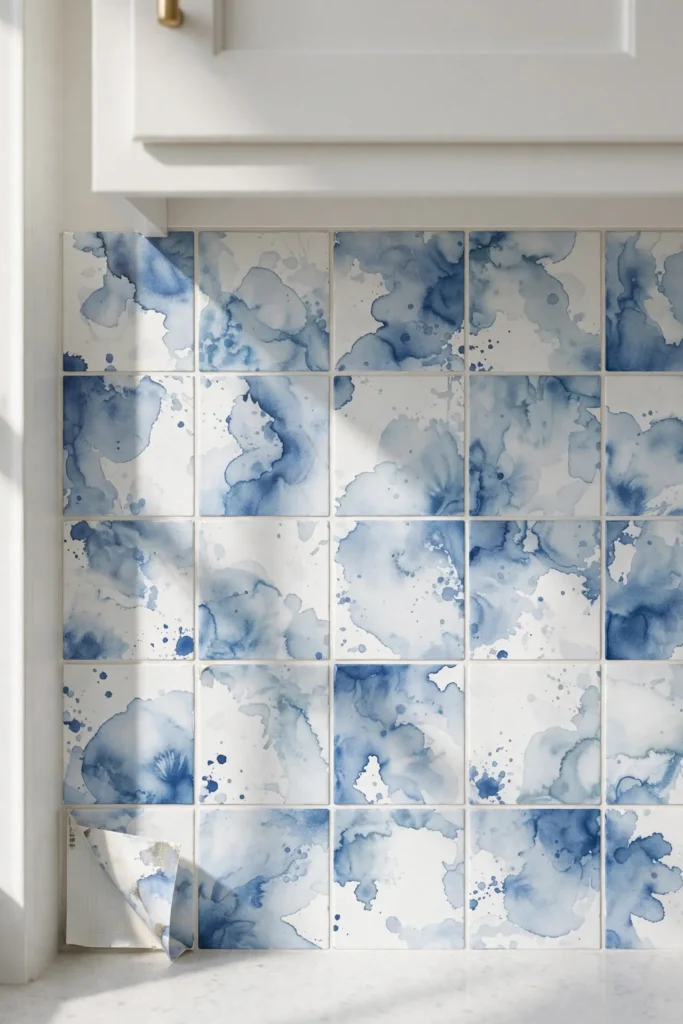
20. Abstract Artistic Pattern
More experimental, artistic backsplash patterns, like abstract watercolor-inspired designs or dramatic swirling prints, represent one of the boldest directions in backsplash trends. These patterns work best for homeowners who see their kitchen backsplash as a genuine piece of design expression, rather than simply a neutral, functional surface. Choosing a pattern with a cohesive, limited color palette helps the artistic print feel intentional rather than chaotic, even with a busier overall design. Because these patterns are highly specific and trend-forward, the removability of peel and stick tile makes them a much lower-risk way to experiment with such a bold choice compared to permanent tile. This idea is best reserved for a single accent wall or a small kitchenette space, where the boldness can shine without overwhelming a larger, more heavily used kitchen.
Related: 25 Small Space Christmas Decor Ideas That Make a Tiny Home Feel Magical
21. Textured Grout-Line Mimic Finish
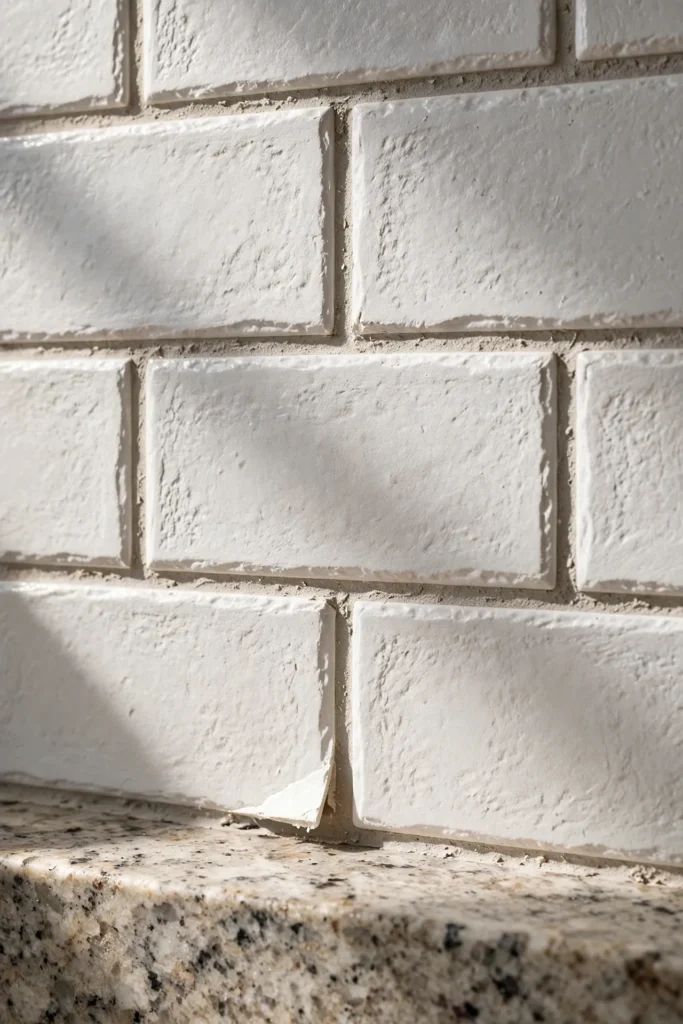
The newest generation of peel and stick backsplash tile has moved well beyond flat, obviously printed vinyl, now featuring genuinely raised, textured surfaces that mimic real grout lines and depth. From a normal viewing distance, these textured finishes can pass convincingly as real tile, a meaningful improvement over the flatter designs that once gave peel and stick a reputation for looking cheap. This texture matters most in classic tile shapes, like subway or square grid patterns, where flat printing tends to look most obviously fake up close. Choosing a textured, grout-line-mimicking finish is generally worth the small price increase over flatter alternatives, since it’s the detail most likely to convince guests the backsplash is real tile. This upgrade represents the clearest sign that peel and stick backsplash has moved from a purely budget compromise toward a genuinely credible design choice.
Styling Tips
- Choose a textured, grout-line-mimicking finish over flat vinyl whenever possible, since texture is what sells the high-end look up close.
- Let one bold pattern or color anchor the kitchen, and keep cabinetry, countertops, and hardware simple around it.
- Match undertones between your backsplash and countertop so the two surfaces feel intentionally paired rather than mismatched.
- Use a countersplash or single accent wall to test a bolder pattern before committing to a full kitchen’s worth of tile.
- Pair warmer tile tones with brass or gold hardware, and cooler tones with black or nickel, to keep metals feeling cohesive.
Practical Implementation Ideas
- Clean and fully dry the wall surface before installation, since adhesive backing needs a smooth, grease-free base to hold properly.
- Measure and dry-fit a full row before peeling any backing, to catch alignment issues before they become permanent.
- Start installation from a corner or the most visible focal point, working outward so any necessary cuts land in less noticeable areas.
- Allow tiles to set for the manufacturer’s recommended time before exposing them to heavy moisture near a sink or stove.
- Seal edges near the stove and sink with a clear caulk for extra moisture protection in high-splash areas.
Common Mistakes to Avoid
- Choosing flat, non-textured tile expecting it to read as convincingly real up close.
- Skipping the dry-fit step, leading to crooked rows that become obvious once tiles are fully adhered.
- Installing over a textured, uneven, or unclean wall surface, which prevents proper adhesion over time.
- Choosing an overly trend-specific bold pattern for a full kitchen wall instead of testing it on a smaller accent area first.
- Ignoring moisture exposure near the stove and sink, where extra sealing may be needed for long-term durability.
Small-Space Alternatives
- Choose a countersplash-height install instead of a full wall to use less material and lower the total cost.
- Use a single accent panel behind the stove instead of covering an entire kitchen’s backsplash.
- Opt for a smaller-scale mosaic or hexagon pattern, which tends to read as more proportional in a compact kitchen.
- Choose lighter, reflective finishes like mother-of-pearl or metallic panels to help a small kitchen feel more open.
- Extend a marble-look contact paper from counter to backsplash for a continuous look that doesn’t require separate materials.
Budget-Friendly Alternatives
- Choose marble-look contact paper over dedicated peel and stick tile for the lowest-cost stone-inspired option.
- Opt for classic subway shapes, which tend to be the most affordable and widely available peel and stick style.
- Buy a small quantity first to test texture and color in your actual kitchen lighting before committing to a full order.
- Choose a countersplash instead of a full-height install to reduce material costs significantly.
- Watch for multi-pack deals on standard tile sheets, which are typically more cost-effective than specialty shaped tiles.
Pro Styling Recommendations
- Treat peel and stick backsplash as a genuine design decision, not just a placeholder, by choosing textured, higher-quality finishes.
- Choose one standout material or pattern, and let everything else in the kitchen stay simple around it.
- Test a small sample section in your actual kitchen lighting before committing to a full wall.
- Pair the backsplash finish with your existing hardware finish for a cohesive, intentional look rather than competing metals.
- Save bolder, more experimental patterns for smaller accent areas, reserving full-wall installs for more timeless choices.
FAQs
Newer textured versions that mimic raised grout lines and depth can look convincingly real from a normal viewing distance, though flatter printed designs are more likely to look fake up close.
Many current peel and stick tiles are waterproof or highly moisture-resistant once fully adhered, though sealing edges near the sink and stove adds extra protection in high-splash areas.
Yes — one of the main advantages of peel and stick backsplash is that it’s designed to remove cleanly without damaging paint or drywall underneath, making it ideal for renters.
Quality peel and stick backsplash can last several years with proper installation and care, though it isn’t as durable long-term as real tile or stone in heavy-use kitchens.
Classic subway tile and terrazzo patterns tend to be the most forgiving for first-time DIY installers, since minor seams and slight misalignment blend in more easily.
Many peel and stick products are heat-resistant enough for typical stove proximity, but it’s worth checking the specific product’s heat rating before installing directly behind a range.
Peel and stick tile typically has more texture and thickness for a more realistic, dimensional look, while contact paper is thinner and better suited to lower-moisture, lower-heat areas.
It’s best suited to budget-conscious updates, rentals, or temporary style changes rather than a permanent, high-end renovation, since it won’t hold up structurally the same way real tile or stone does over time.
Conclusion
A backsplash update doesn’t need a demo crew or a weekend of dust to make a real difference. Sometimes it’s a textured zellige-look panel installed in an afternoon. Sometimes it’s a bold chevron pattern behind the stove that you know you can peel off in a year if your style changes. What all 21 of these ideas share is the same promise peel and stick backsplash was built on: a high-end look, without the high-end commitment. Pick the style that fits your kitchen and your budget, and give the wall behind your counter the upgrade it’s been waiting for.