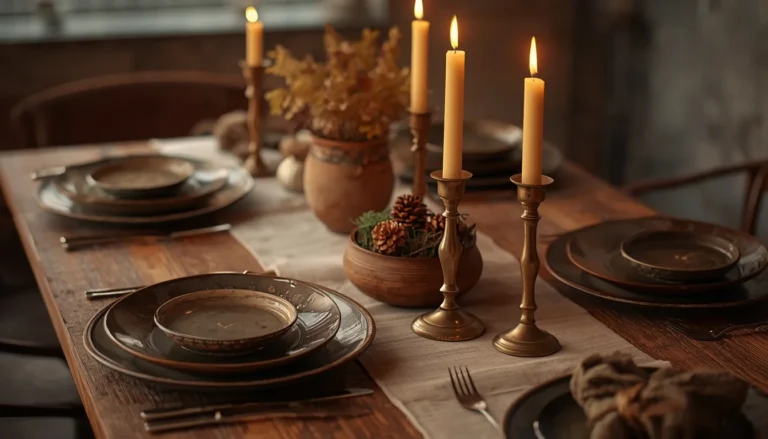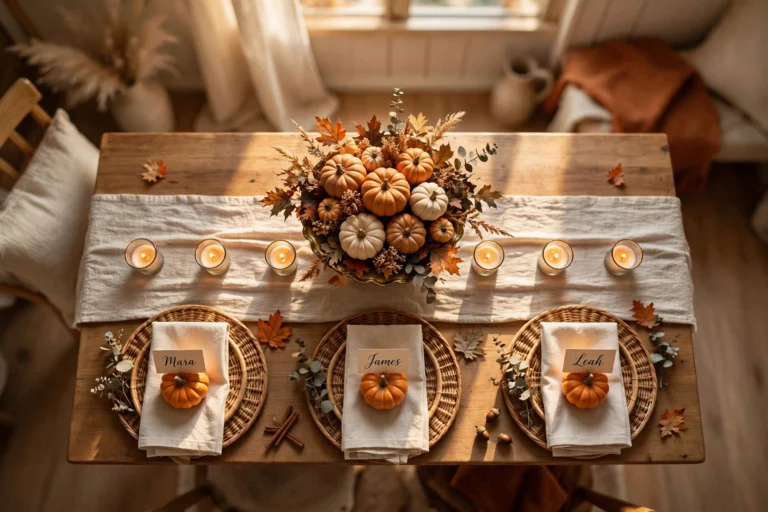
19 Simple Thanksgiving Tablescape Ideas Anyone Can Recreate
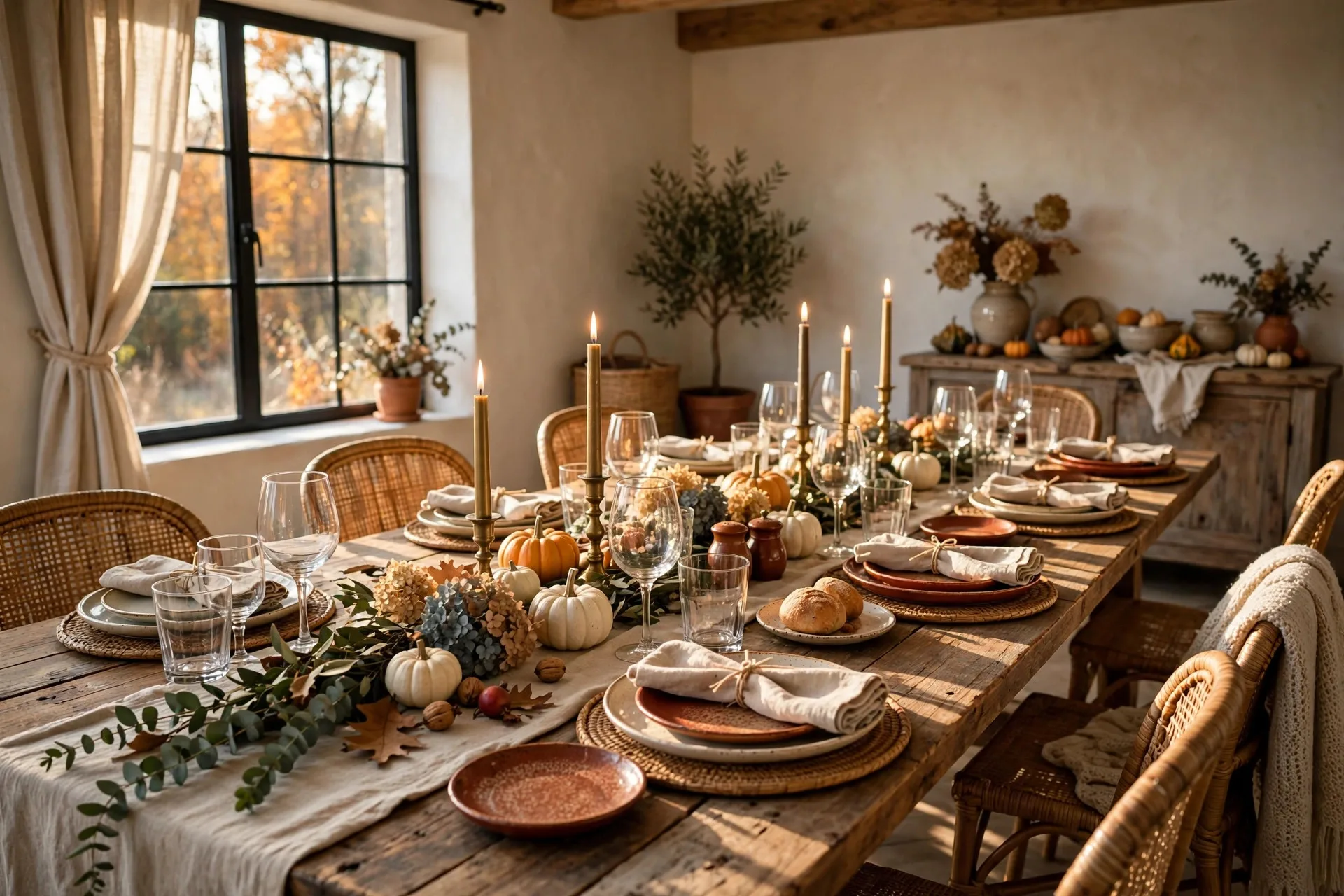
Your Thanksgiving table doesn’t need a florist, a trip to five different stores, or a design degree. It needs a plan.
Most of the tablescapes that stop people mid-scroll on Pinterest are built from the same handful of ingredients: a runner, a low centerpiece, a few candles, and napkins folded with a little intention. That’s it. The rest is just color and texture choices layered on top of a simple structure.
This list breaks down 19 versions of that structure, from quiet neutral settings to warm rustic ones to a little gold-trimmed drama, so you can pick the one that matches your dining room, your guest list, and how much time you actually have on Wednesday night.
Table of Contents
Neutral & Minimalist Tablescape Ideas
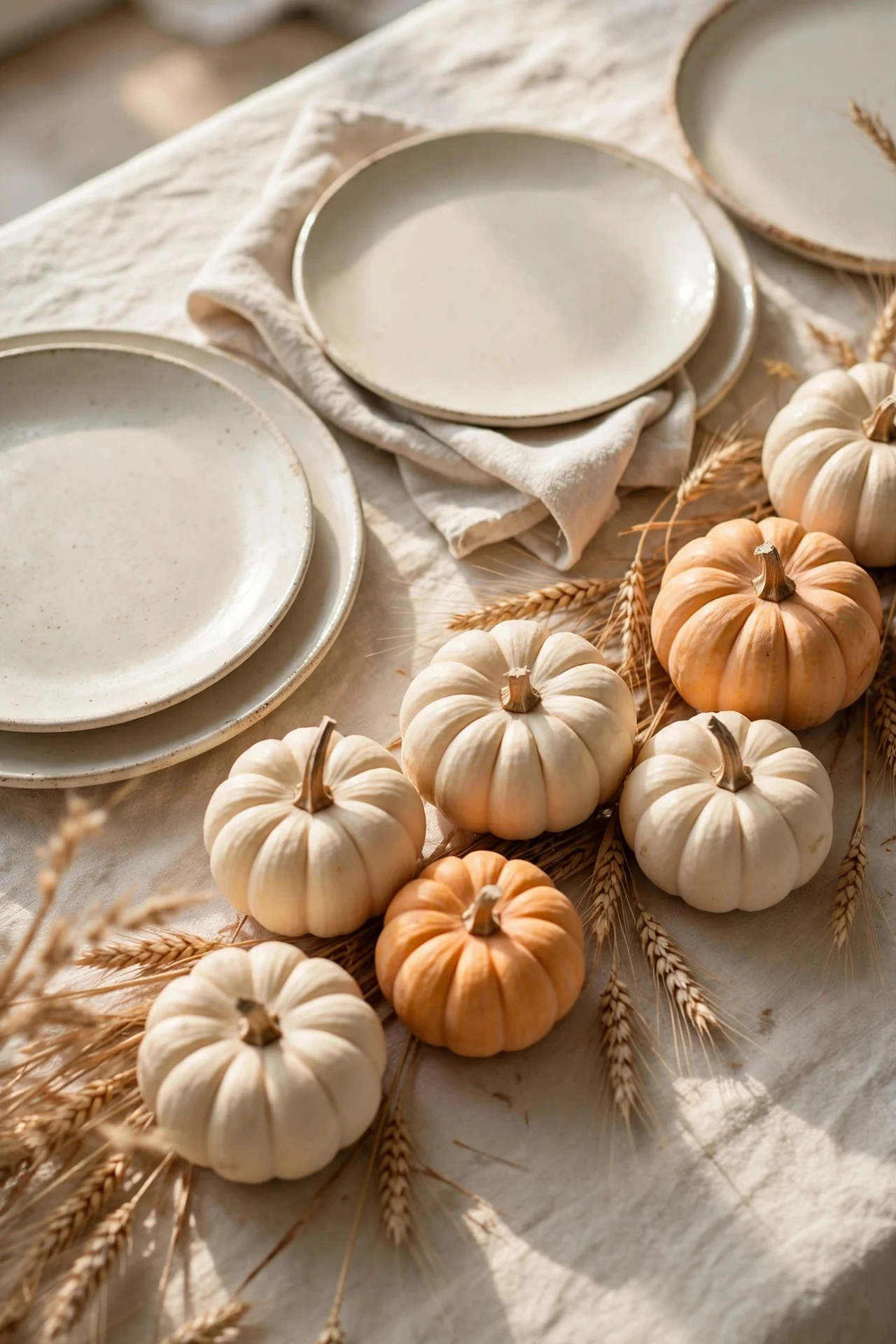
1. Neutral Ceramic Tablescape With Mini Pumpkins
Start with a plain cream or ivory tablecloth and layer your existing ceramic dinnerware on top instead of buying anything new. Group three or four mini pumpkins down the center of the table in a loose, uneven line rather than a straight row, since the slight imperfection reads as gathered rather than staged. Add a plain linen napkin under each plate, folded in a simple rectangle, and skip the napkin ring if your dishes already have texture. This works because neutral tones let the food and the company stay the visual focus, which is exactly what a lot of hosts want for a holiday centered on the meal itself. Finish with a few sprigs of dried wheat or eucalyptus tucked between the pumpkins for height without adding another color to manage.
Related: 17 Simple Christmas Front Door Decorations Anyone Can Do
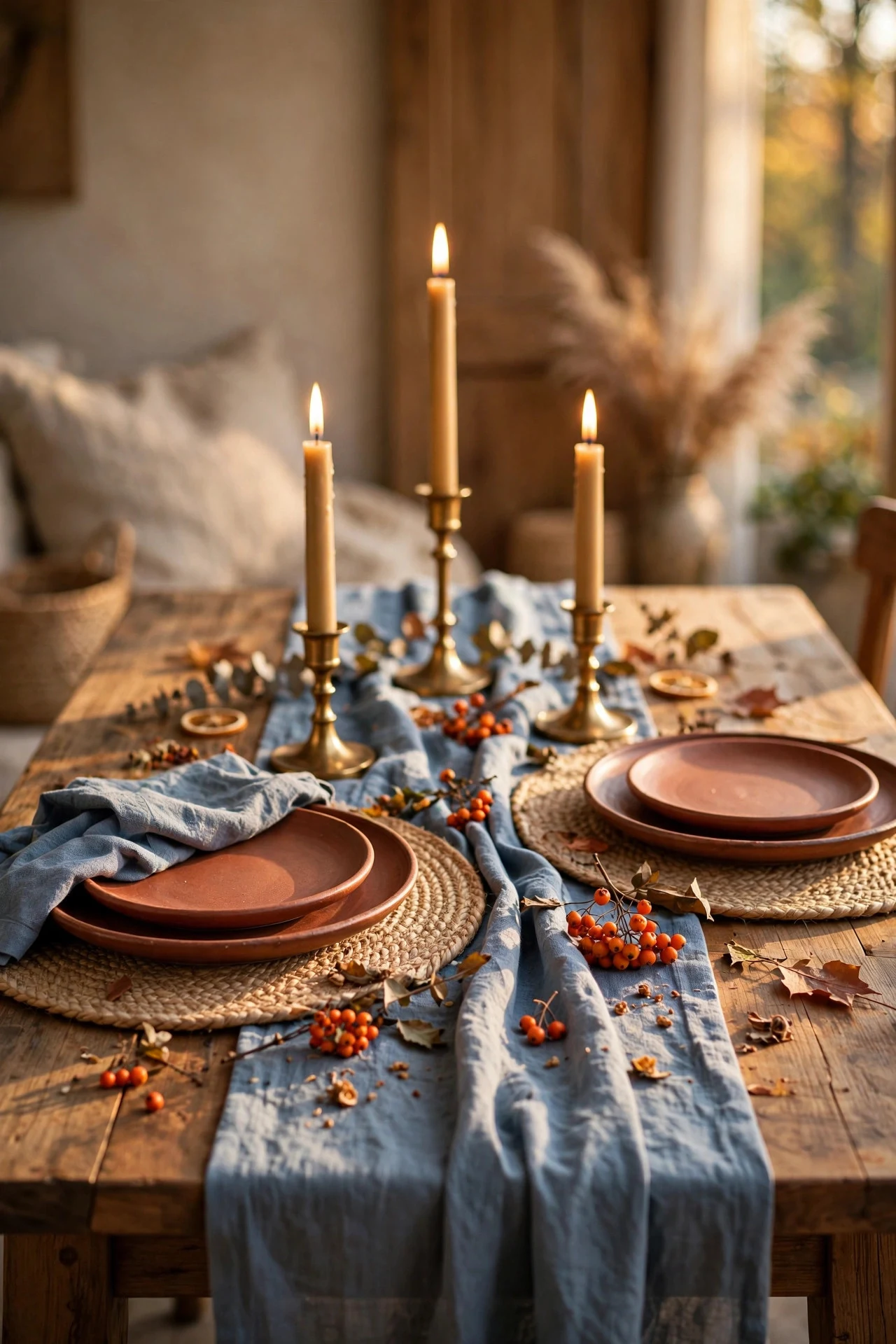
2. Dusty Blue and Warm Rust Blend
Pair a dusty blue table runner with rust, terracotta, and warm brown accents to bridge a coastal color palette into a traditional fall mood. Use blue as the base layer — runner or napkins — and let rust show up in smaller doses through candle wax, ribbon, or a scattering of bittersweet berries. This combination works because blue and rust sit almost opposite each other on the color wheel, so even a small amount of contrast reads as intentional rather than accidental. Add brass or wood candlesticks to warm up the cooler blue tones and keep the palette from feeling too wintery for a November table. A woven placemat under each setting ties the natural textures back together.
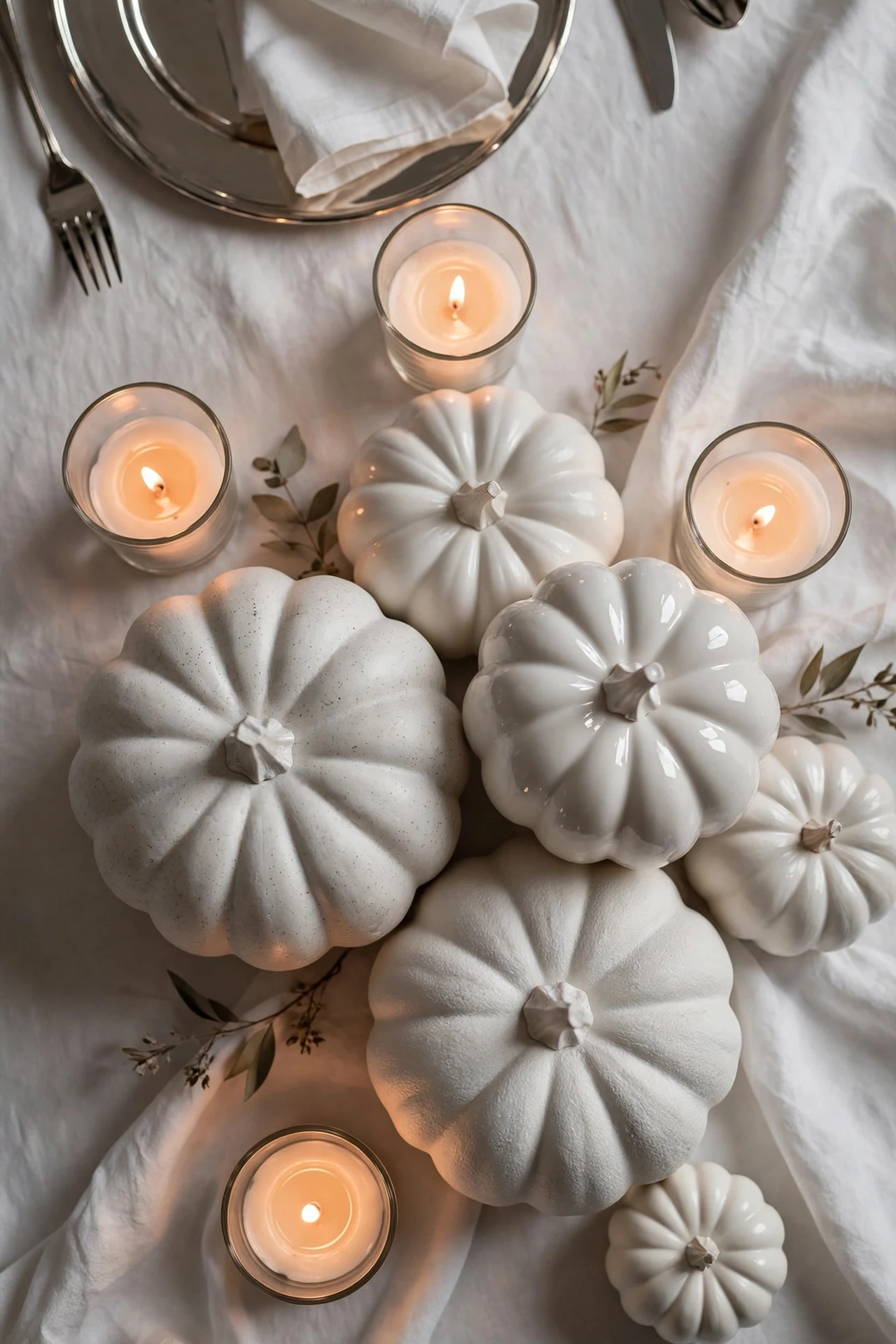
3. Silver and White Elegant Pumpkin Table
Set a white tablecloth with silver flatware and white ceramic or painted pumpkins for a table that feels dressy without needing florals. Silver chargers underneath white dinner plates add shimmer without color, which makes this option especially easy for anyone nervous about mixing palettes. Cluster three or four white pumpkins near the center, mixing matte and slightly glossy finishes so the grouping has depth instead of looking flat. Add votive candles in clear or silver holders down the length of the table for movement once the sun goes down. This tablescape photographs particularly well because the monochrome palette lets shadows and candlelight do most of the visual work.
Warm & Natural Texture Tablescapes
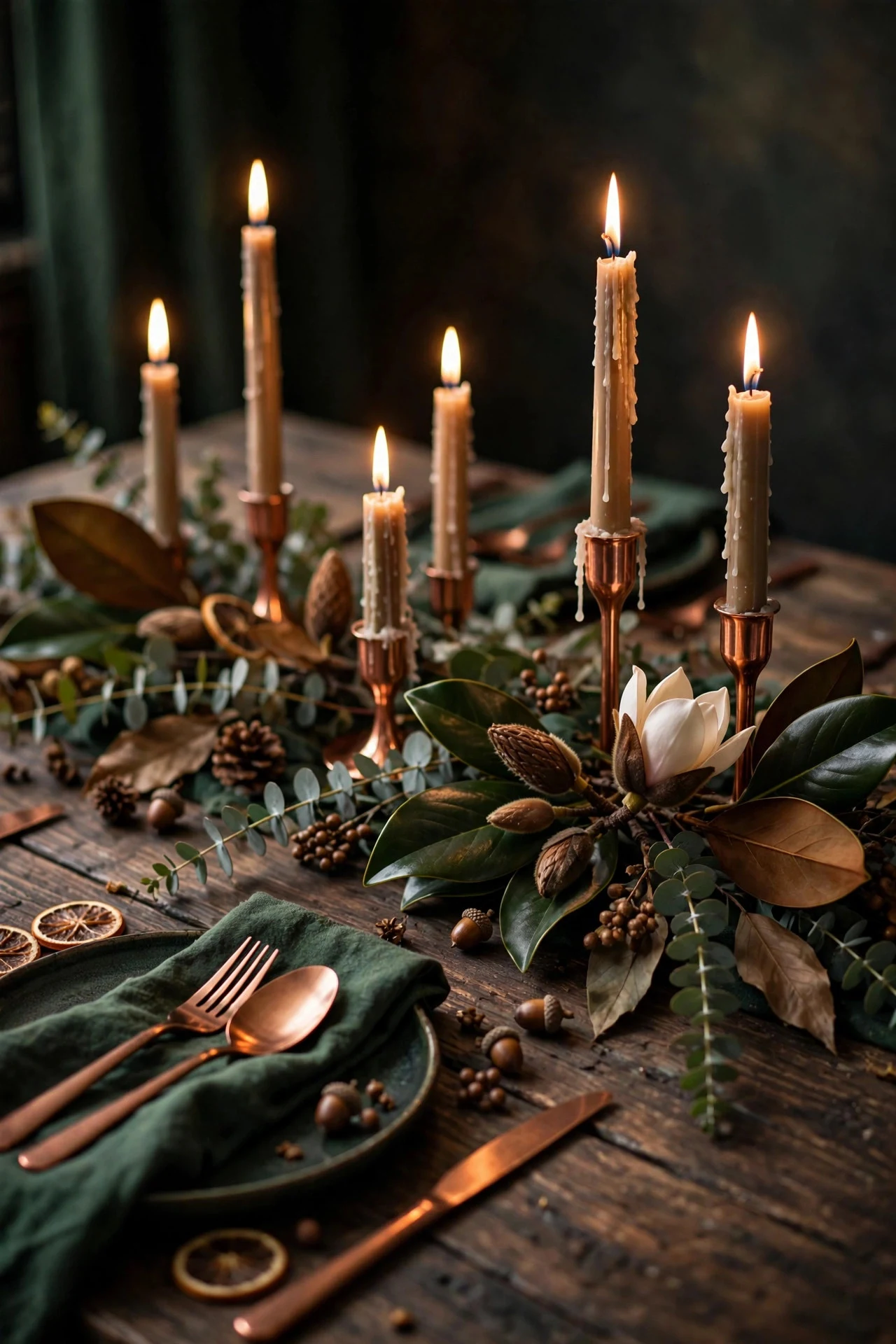
4. Copper and Greenery Harvest Table
Set copper flatware against a dramatic, loosely gathered green centerpiece made from eucalyptus, fern, or magnolia leaves for a table with more visual weight. Copper reflects candlelight in a warmer tone than silver, which pairs naturally with deep greens and gives the whole table a harvest feel without touching orange at all. Run the greenery down the center in a loose line rather than a tight arrangement, tucking in taper candles at varied heights along the same path. This idea works well for hosts who want something that looks arranged by a florist but is really just clippings from the yard or a grocery store bunch split into sections. Add a plate charger in matte copper or bronze to repeat the metal tone at each place setting.
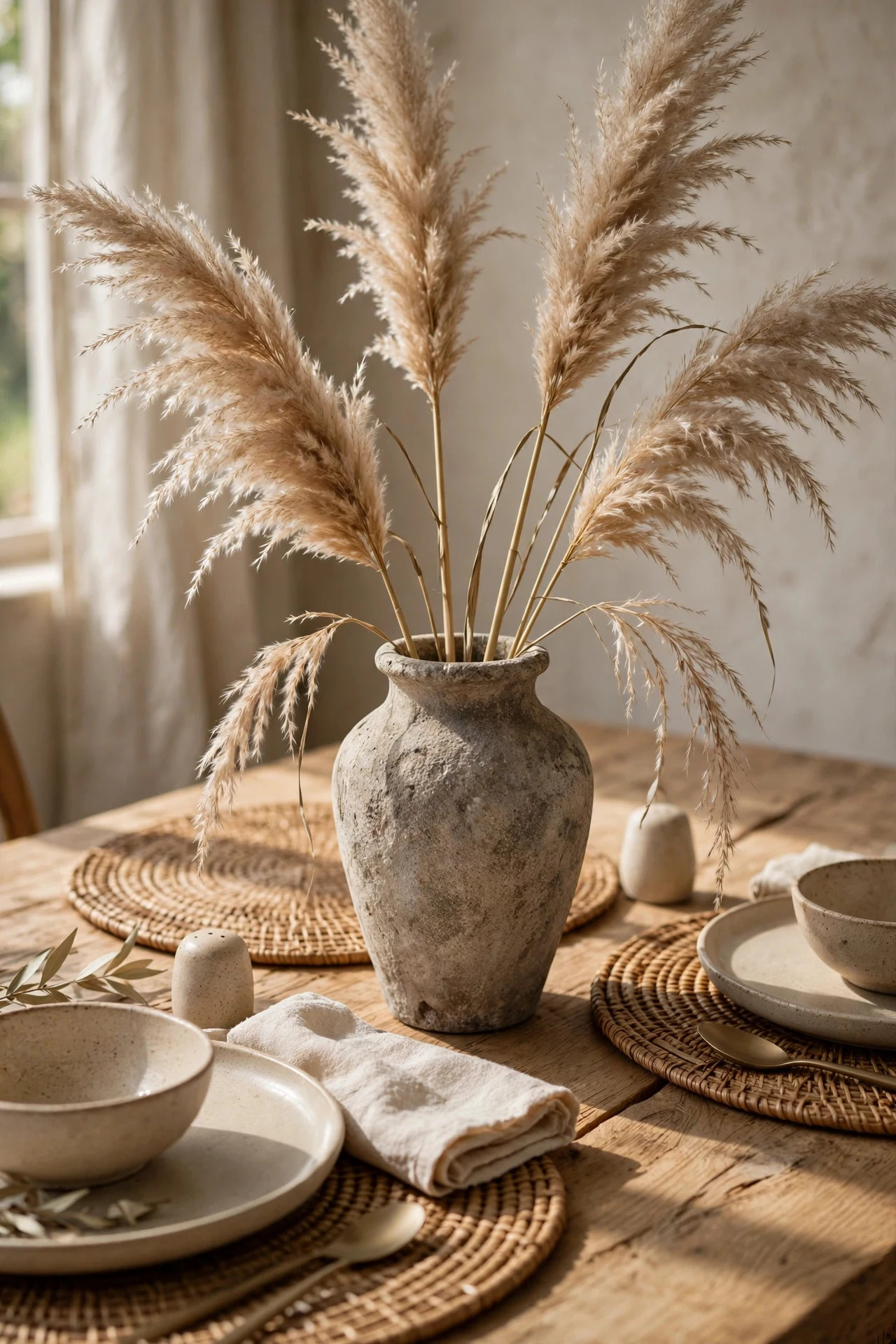
5. Natural Texture Mix With Pampas Grass
Combine pampas grass, woven placemats, and a weathered ceramic or stone vase for a tablescape built entirely around texture instead of color. Keep the palette to two or three neutral tones — cream, tan, and warm gray — so the different materials can stand out without competing. Place one or two stems of pampas grass in a single vase as the only centerpiece element, which keeps sightlines open across the table for conversation. Layer a woven placemat under each plate to repeat the natural fiber texture from the centerpiece down to the place setting. This tablescape works especially well for anyone who wants a table that feels subtle and calm rather than themed or seasonal in an obvious way.
6. Traditional Cornucopia Runner
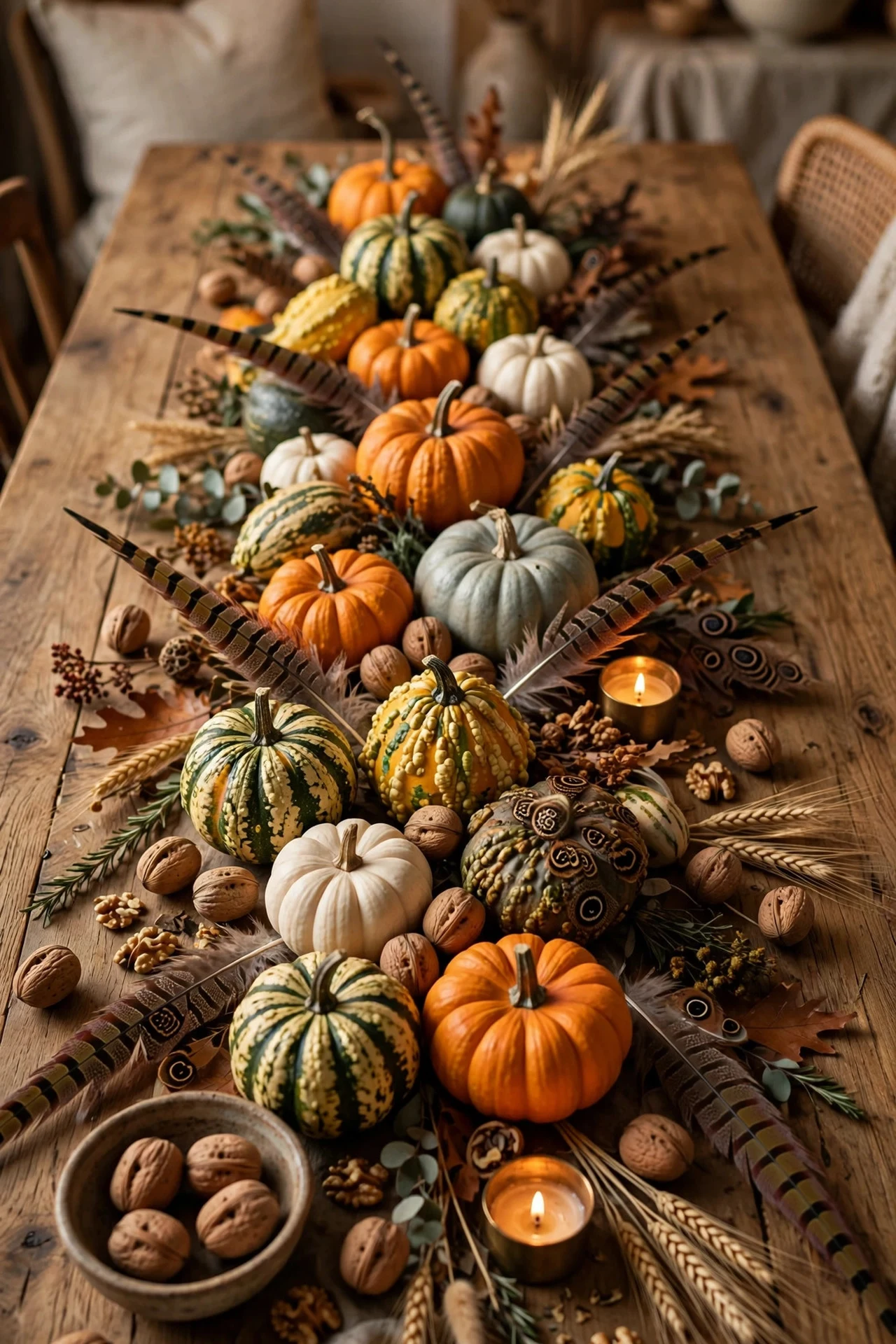
Build a runner-style centerpiece using gourds, small pumpkins, nuts, and a few pheasant feathers laid directly down the center of the table instead of arranged in a formal cornucopia basket. This modern take on the traditional harvest theme keeps the classic Thanksgiving motifs — pumpkins, gourds, autumn produce — while feeling more current than a literal horn-shaped basket. Vary the size and color of the gourds so the eye moves along the runner instead of stopping at one spot. Add a few unshelled walnuts or pecans scattered between the gourds for texture and a nod to harvest abundance. This idea is easy to scale up or down depending on table length, since you can simply add or remove produce.
7. Cozy Kraft Paper Cabin Table
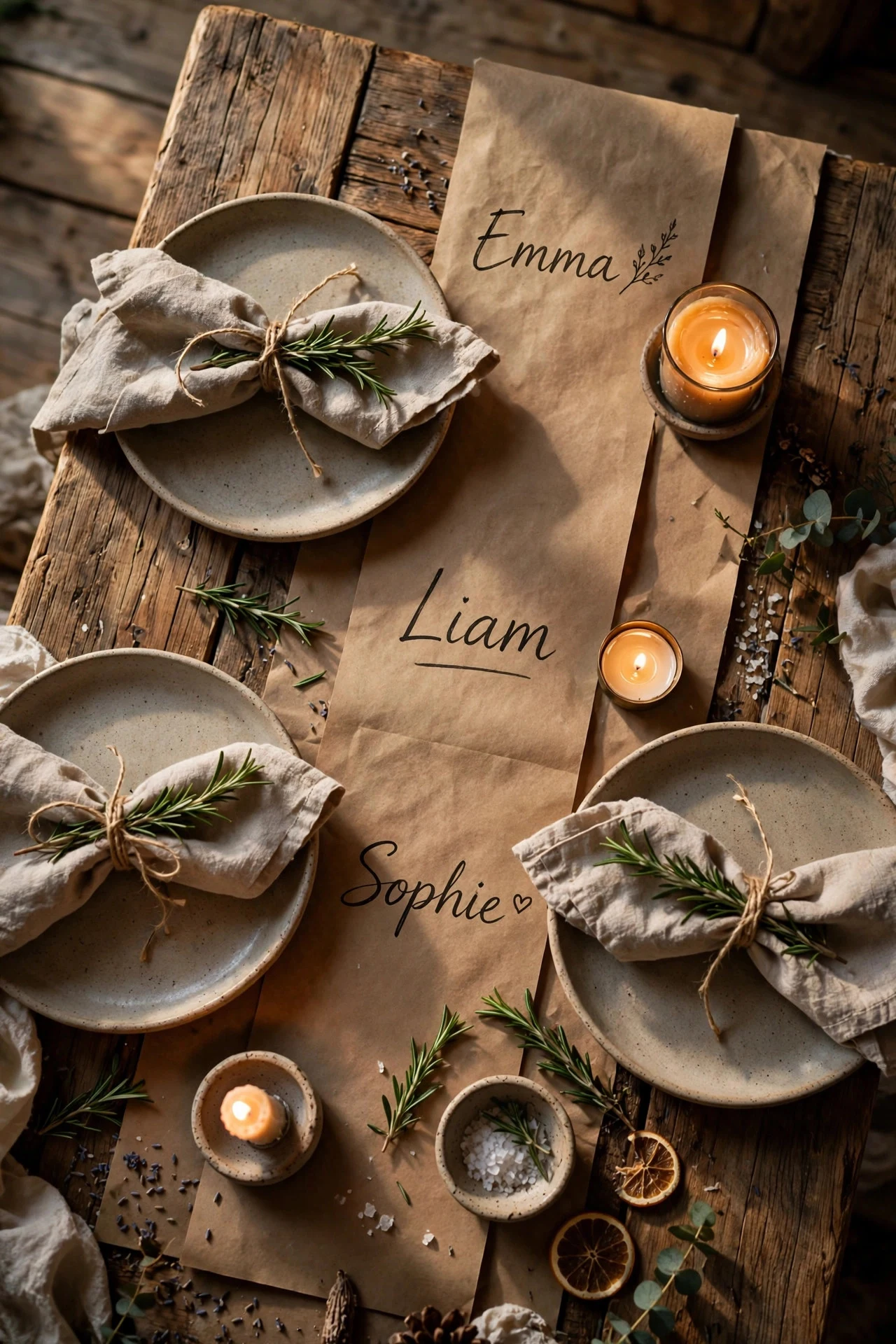
Roll kraft paper down the center of the table in place of a tablecloth or runner for a table that feels relaxed and cabin-inspired. Write each guest’s name directly on the paper at their place setting, or add a short handwritten note about what you’re thankful for. This idea works especially well for smaller, more casual gatherings, since kraft paper feels intentionally low-key rather than underdressed. Tie napkins with plain twine and tuck in a sprig of rosemary or sage for a simple herb accent that also makes the table smell good. Cleanup is easier too, since you can simply roll up the paper afterward instead of laundering a tablecloth.
Rustic & Farmhouse Tablescapes
8. Dollar-Store DIY Rustic Table
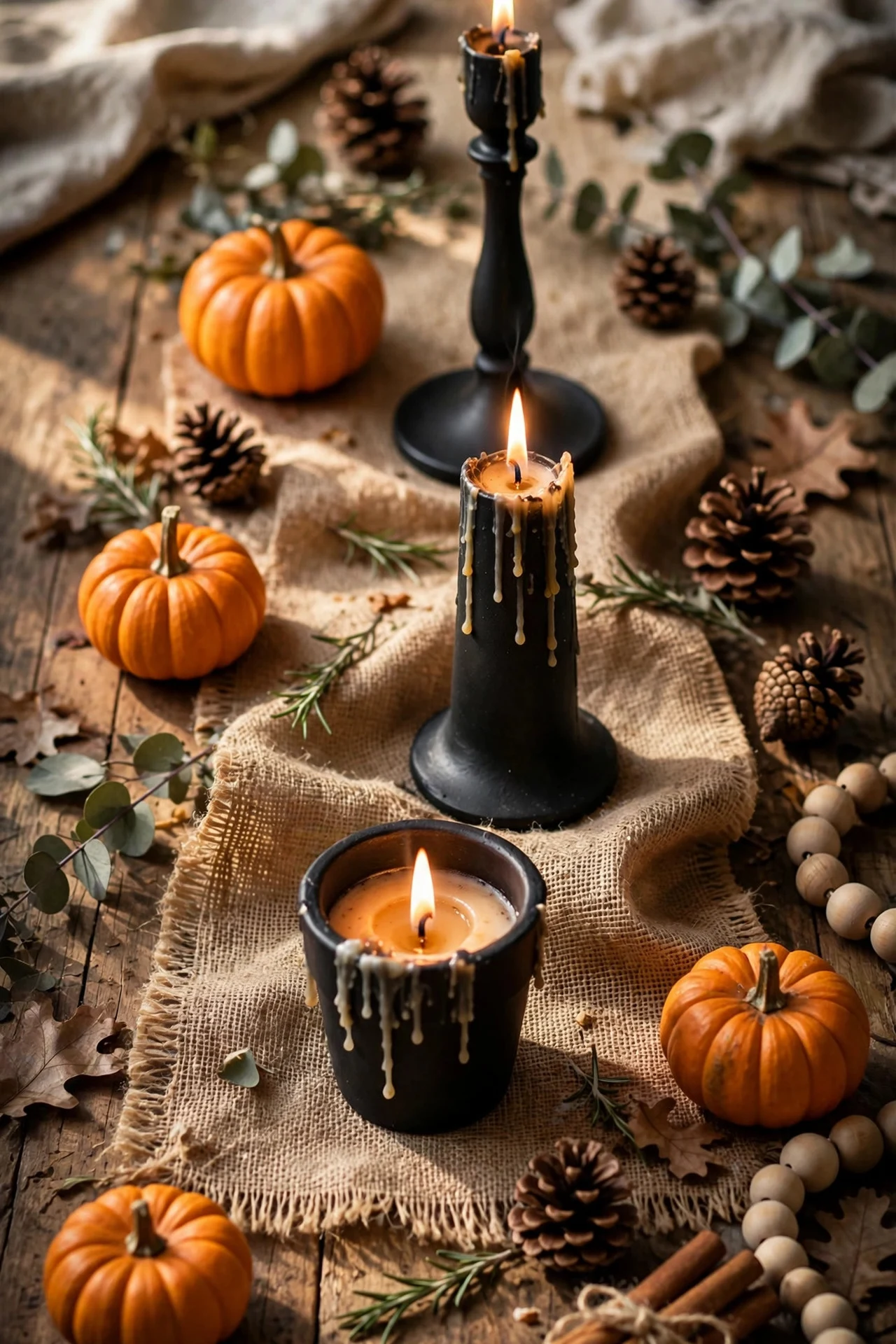
Combine dollar-store candle holders, pinecones, and mini pumpkins for a rustic tablescape built almost entirely from budget finds. Spray-paint the candle holders a matte black or bronze if the original finish feels too plastic, which instantly upgrades how the piece reads on camera. Scatter pinecones and mini pumpkins loosely around the candle holders rather than lining them up, so the arrangement looks gathered instead of purchased as a set. Add a plain burlap or cotton runner underneath to tie the rustic materials together visually. This tablescape proves that a cohesive color palette matters more than the price tag of any individual piece.
9. Buffalo Check and Jewel Tone Table
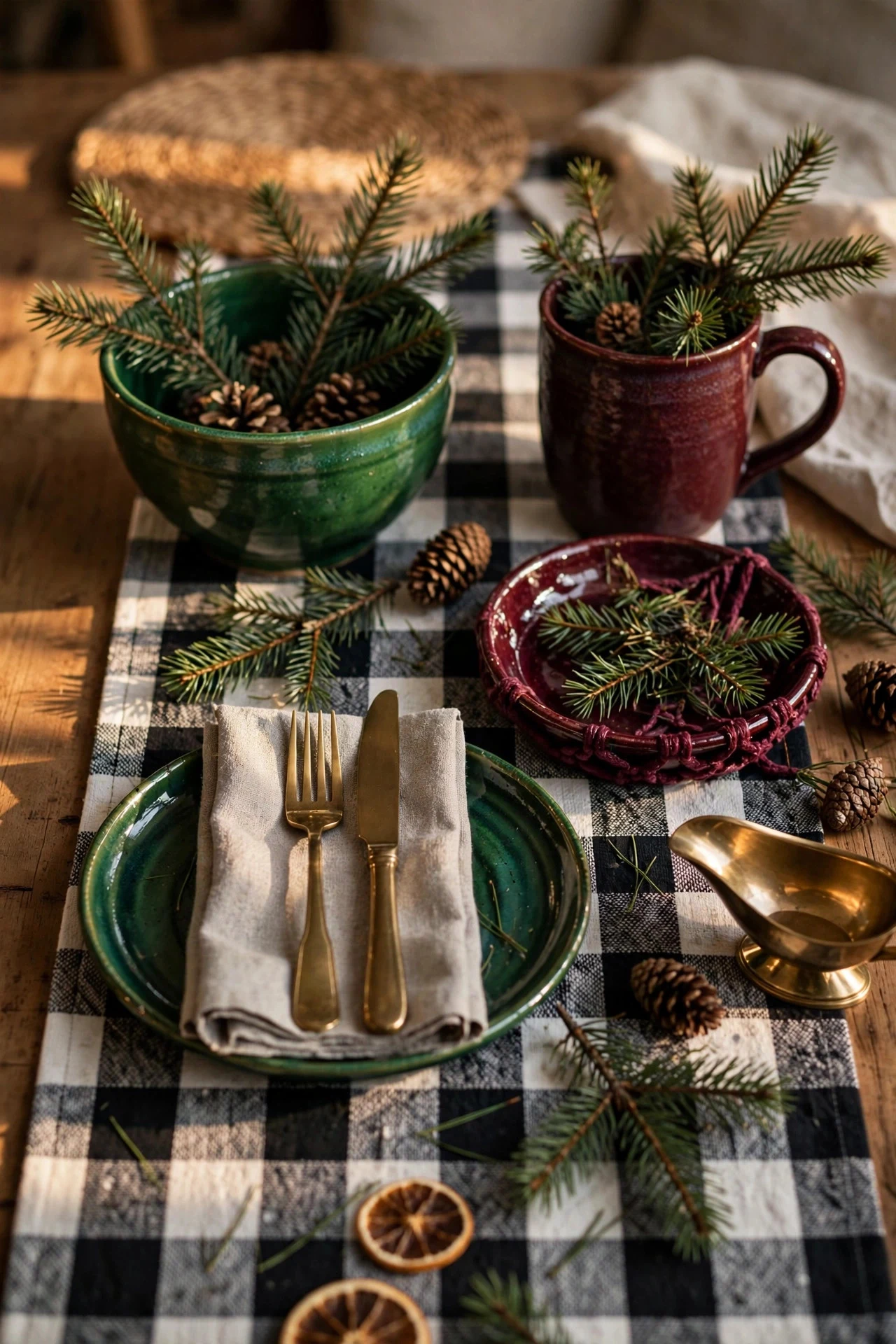
Layer a black-and-white buffalo check runner or napkins with jewel-toned accents like deep emerald or burgundy for a table with graphic pattern and rich color together. Keep the buffalo check to one element, usually the runner or napkins, so the pattern reads as an accent instead of overwhelming the table. Add natural touches like pine cones or small branches to soften the graphic pattern and keep the look from feeling too crisp for a holiday table. This combination works particularly well for hosts who want something a little unexpected, since buffalo check isn’t the most obvious Thanksgiving choice but still fits the season. Gold or brass flatware adds a warm metallic note that bridges the pattern and the jewel tones together.
10. Gold and Black Glam Table
Set black dinner plates against gold flatware, gold-rimmed glassware, and mercury glass votives for a Thanksgiving table with a little more drama and shine. This palette works best for evening dinners or a smaller, more formal gathering, since the darker plates read as dressier than a typical daytime holiday table. Cluster mercury glass candle holders at varied heights down the center instead of using a floral centerpiece, letting light and reflection carry the visual interest. Add a single metallic accent, like a copper name card holder, at each place setting to repeat the gold tone in a smaller dose. Keep linens simple and solid so the metallics and the black plates stay the focus.
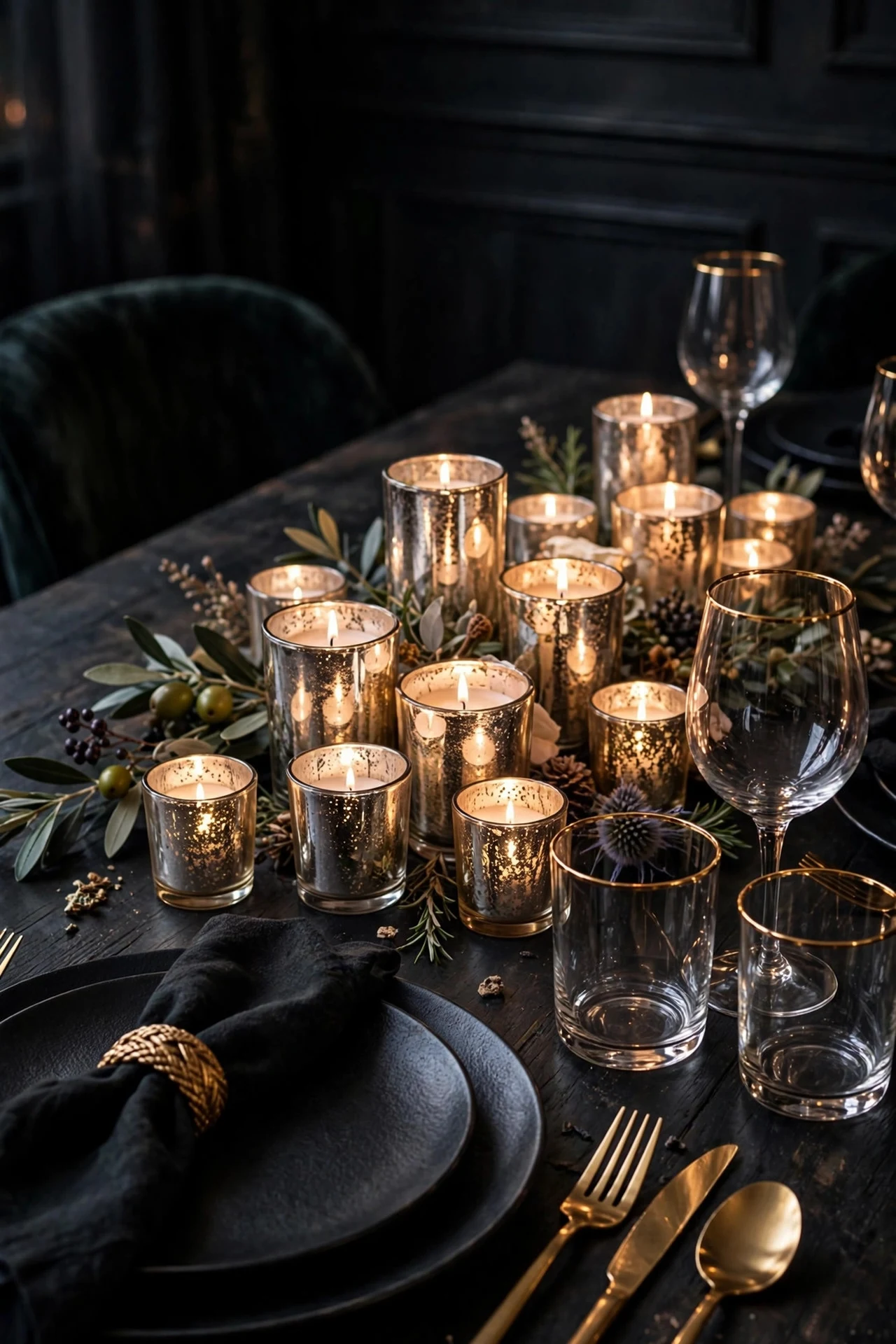
11. Foraged Magnolia Branch Centerpiece
Cut a few magnolia branches, along with any oak leaves or seasonal clippings available in your yard, for a centerpiece that costs nothing beyond scissors and a vase. Lay the branches horizontally down the center of the table rather than standing them upright in a tall vase, which keeps sightlines open and gives the centerpiece a more relaxed, gathered shape. Mix in a few craft-store mini pumpkins if your yard doesn’t have enough greenery on its own, choosing a mix of sizes for visual interest. This idea works especially well in regions with mild fall weather, where broadleaf greenery like magnolia stays glossy and full into November. A neutral runner underneath keeps the focus on the natural branches instead of competing for attention.
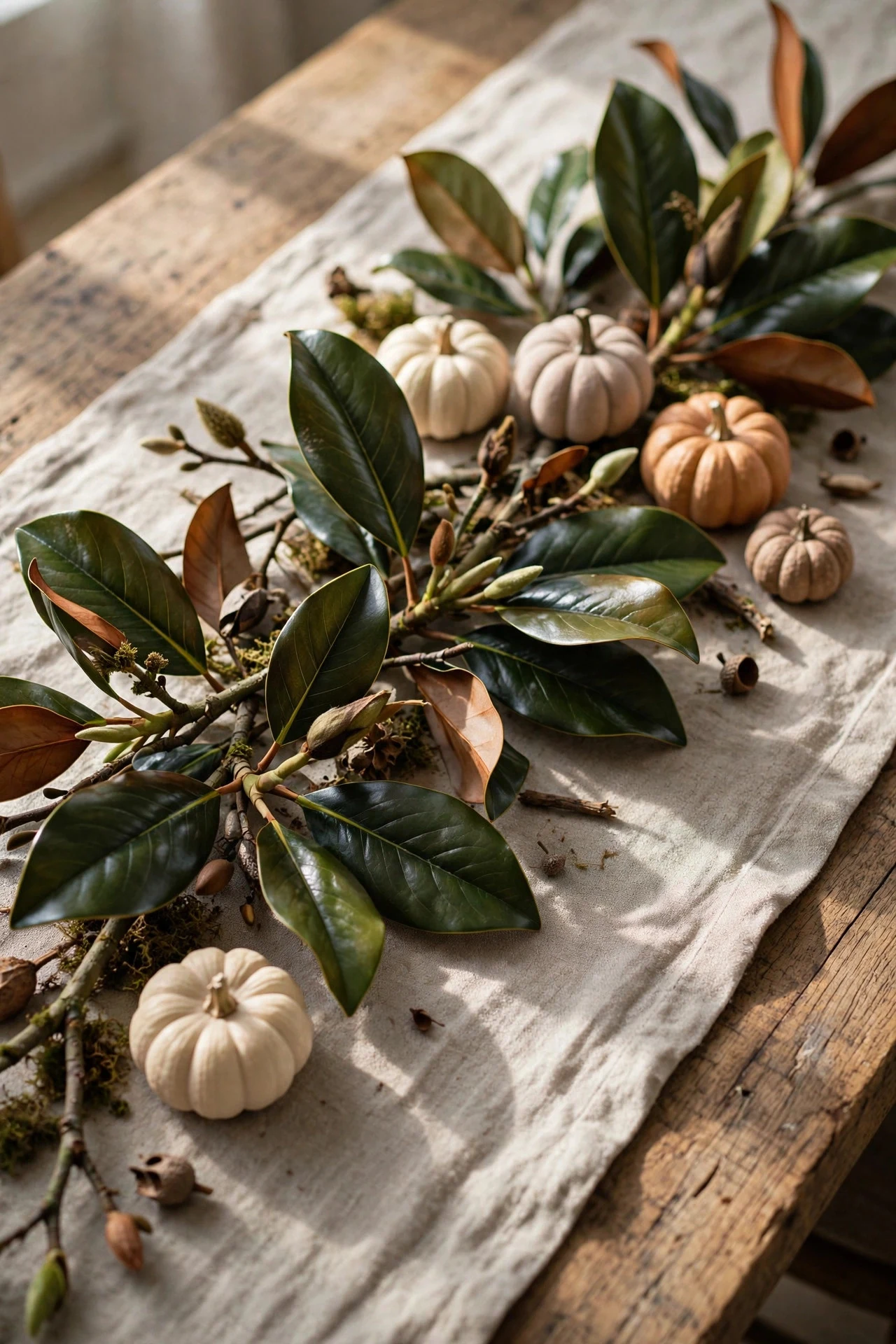
Elegant & Glam Tablescapes
12. Wooden Dough Bowl Centerpiece
Fill a long wooden dough bowl with dried hydrangeas, faux magnolia stems, and a few small pumpkins for a low, easy-to-see-over centerpiece that works at any table length. The dough bowl shape naturally contains the arrangement, which means you can be looser and more casual with how you place the florals inside it without the centerpiece looking messy. Keep the arrangement low, at or below eye level when seated, so guests across the table can still see and talk to each other easily. This idea reuses a piece many hosts already own for serving, which makes it a practical double-duty option beyond just Thanksgiving. Add a few taper candles at either end of the bowl for extra height without blocking sightlines.
Related: 20 Thanksgiving Entertainment Ideas to Keep Everyone Happy
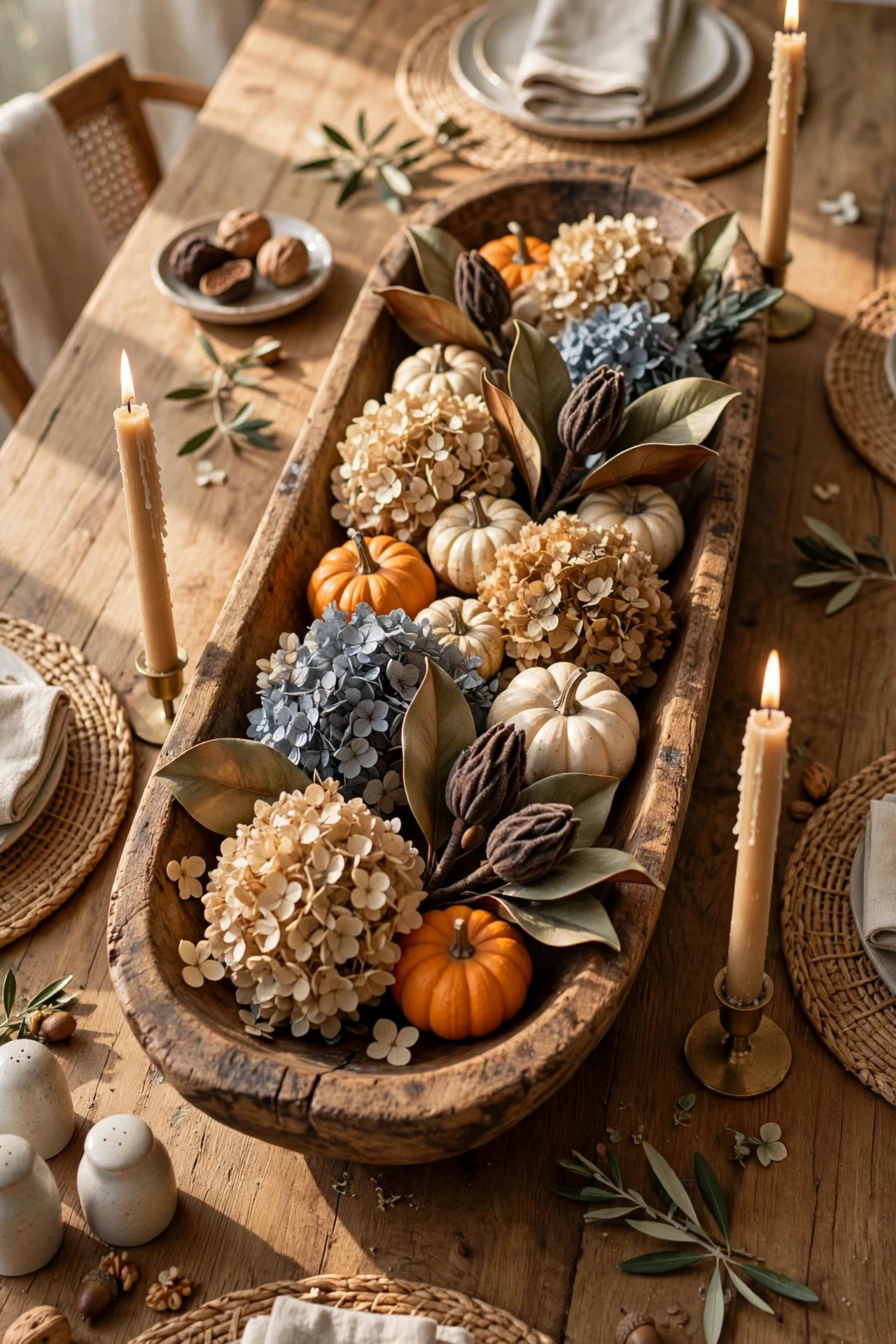
13. Sage and White Coastal-Modern Table
Pair sage green linens with crisp white dinnerware for a Thanksgiving table that leans modern and coastal instead of traditional harvest colors. This palette works well for hosts who want a table that can transition easily from fall into the winter holidays without needing to restyle everything. Keep the centerpiece simple, a single vase of eucalyptus or a few white pumpkins, so the clean color palette stays the main visual statement. White ceramic or glass candle holders continue the light, airy feeling without introducing a third competing color. This is one of the easiest palettes to build from items already found in a coastal or modern-leaning home.
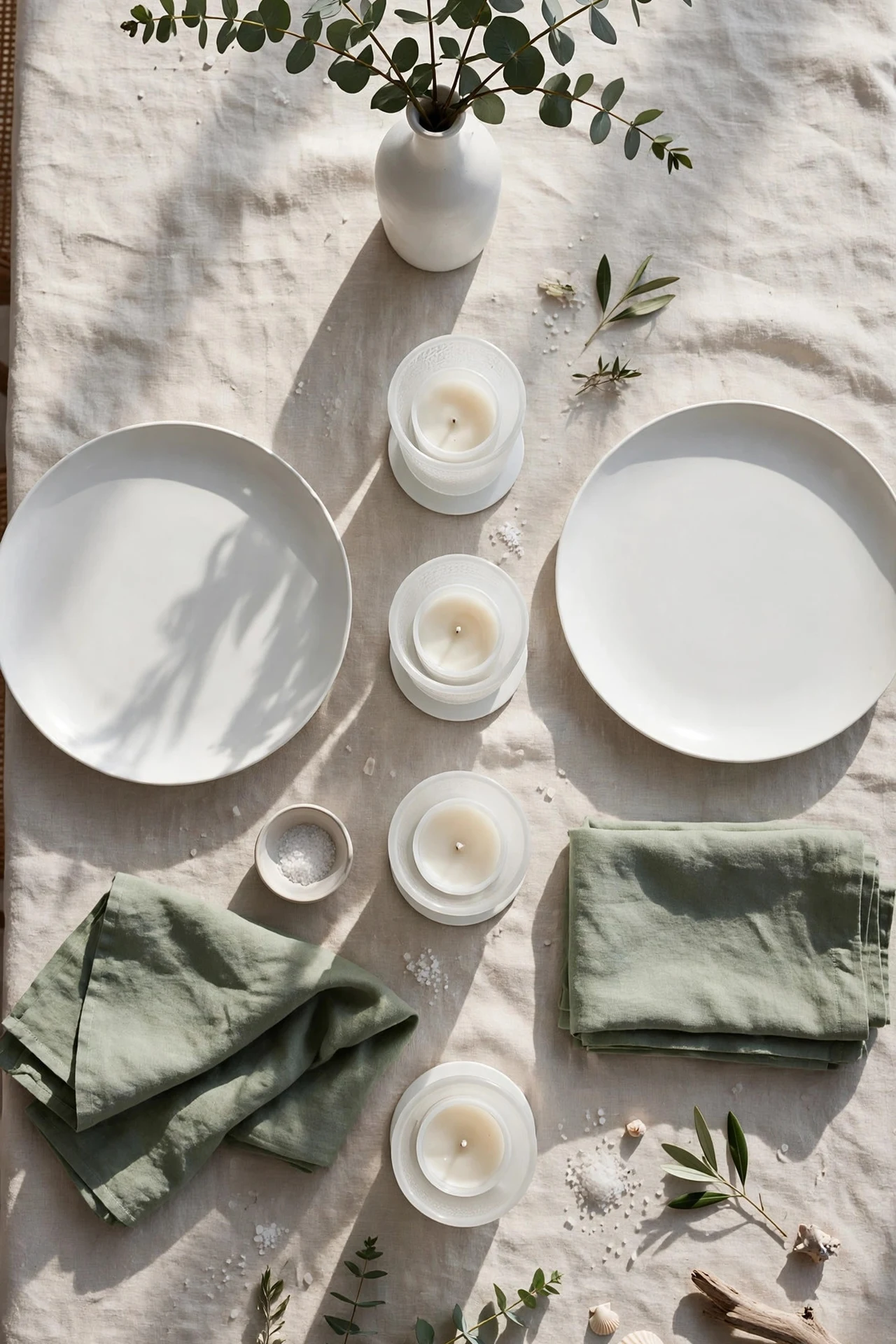
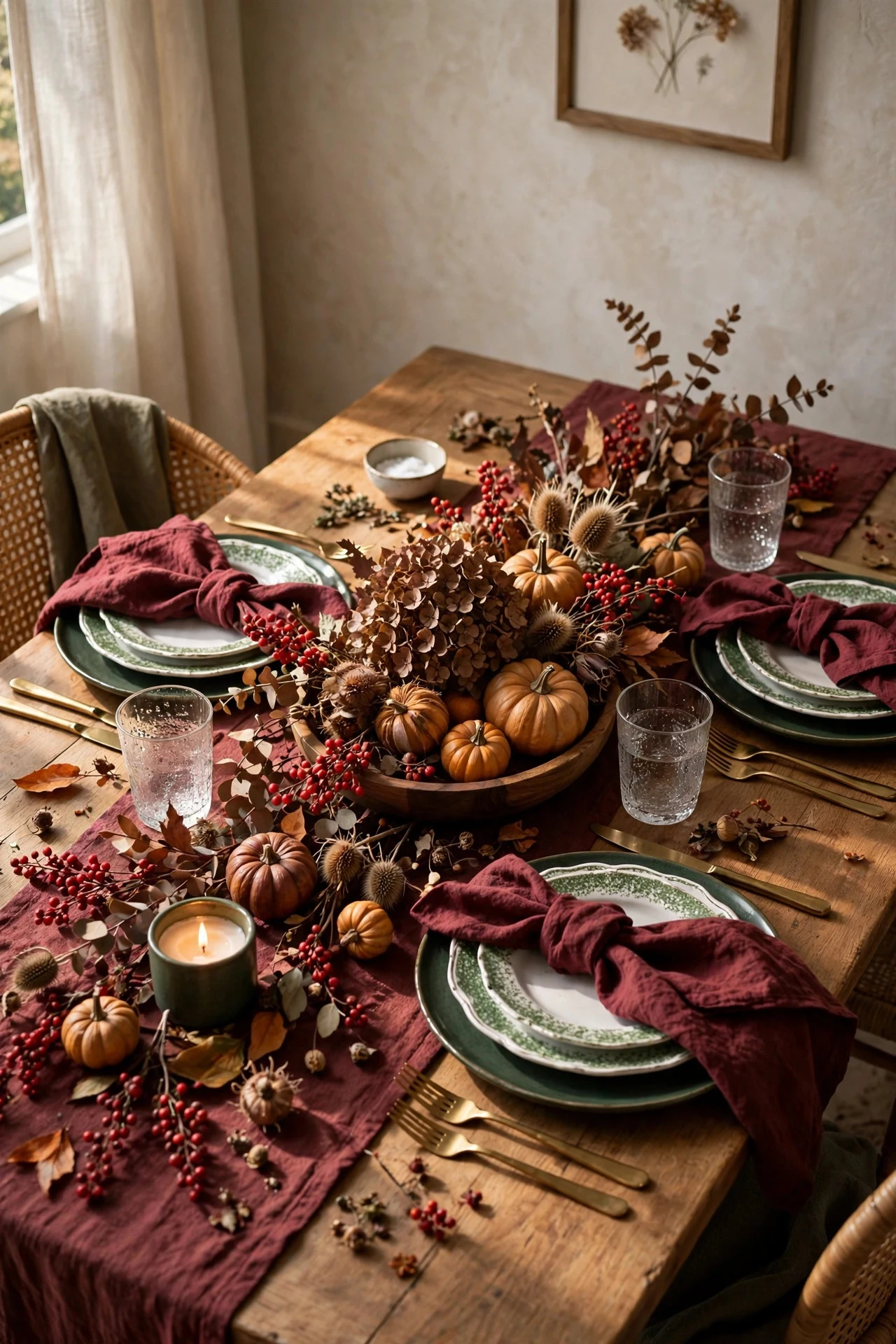
14. Burgundy, Green, and White Nontraditional Palette
Combine burgundy, deep green, and white for a fall palette that still feels seasonal without leaning on orange or yellow at all. A long wooden dough bowl or shallow tray filled with dried magnolia stems, dried hydrangeas, and a few pumpkins keeps the centerpiece low and easy to see over. White dinnerware acts as a neutral base that lets the burgundy napkins and green accents stand out clearly against it. This combination reads as fresh and slightly unexpected while still fitting comfortably within a traditional Thanksgiving color story. Adding a few sprigs of dried berries in deep red repeats the burgundy tone in a smaller, more delicate way.
Modern & Coastal-Inspired Tablescapes
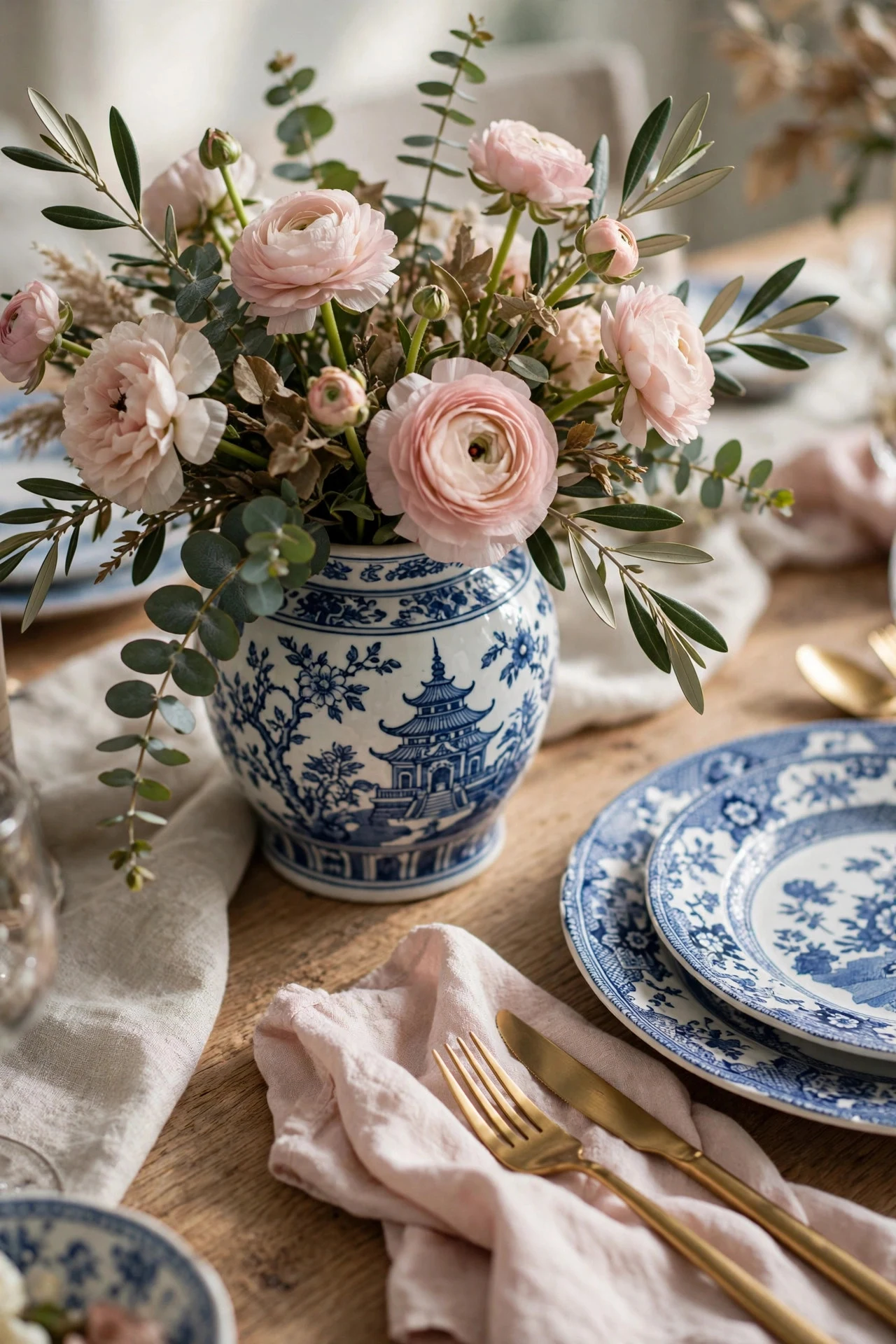
15. Blue and White Chinoiserie Table
Set blue and white chinoiserie vases or dinnerware alongside soft green and blush accents for an elegant Thanksgiving table that breaks from the expected orange-and-brown palette entirely. This look works particularly well for hosts who already collect blue and white china, since the pattern does most of the visual work on its own. Keep the centerpiece simple, a single chinoiserie vase filled with greenery or blush-toned flowers, so the dinnerware pattern stays the focal point rather than competing with a busy arrangement. Blush linen napkins soften the blue and white contrast and tie the palette together at each place setting. This combination photographs beautifully because the pattern and color contrast read clearly even from a distance.
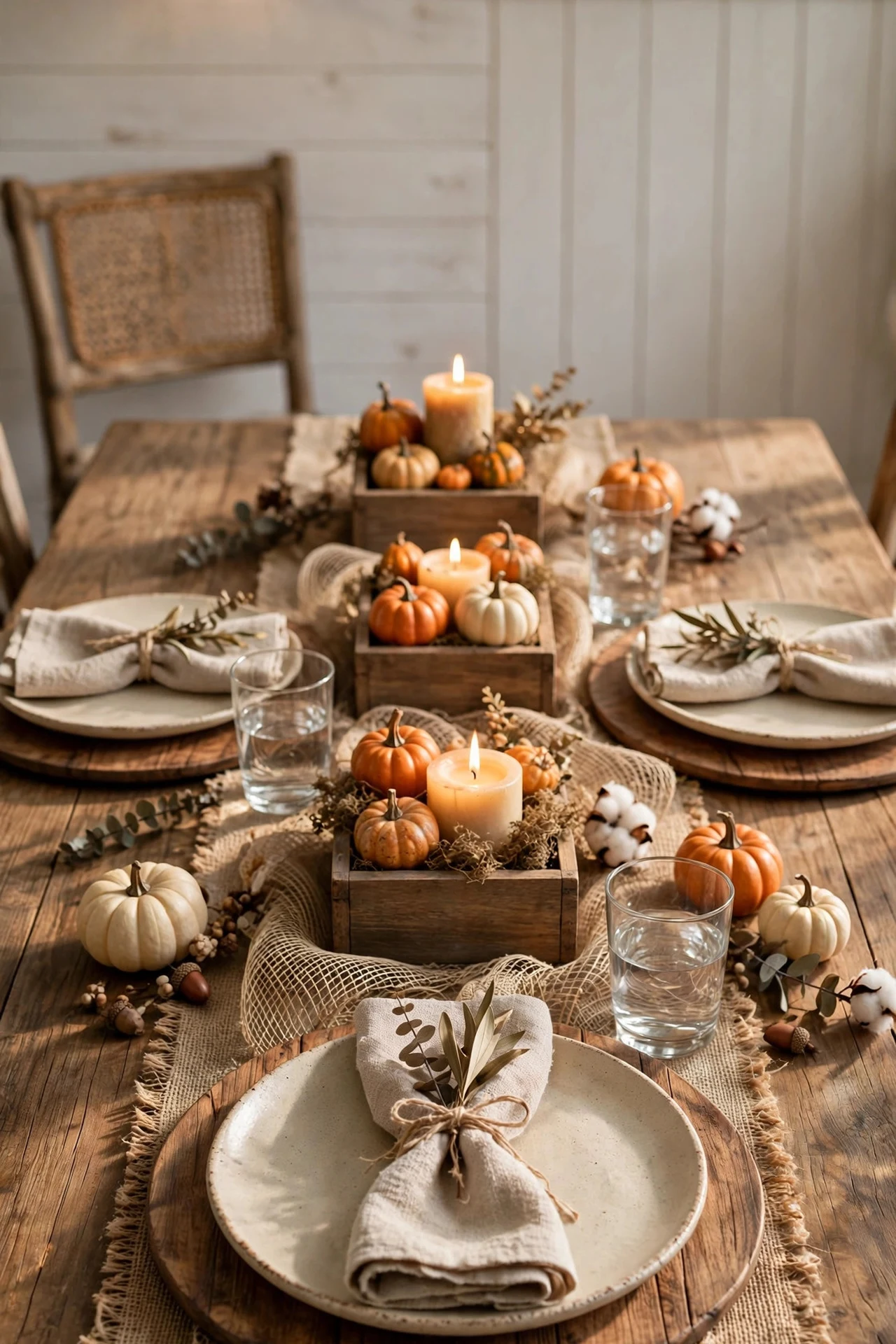
16. Rustic Wood Charger Farmhouse Table
Layer faux or real wood chargers under simple stoneware plates for a farmhouse-style table that feels warm without much added decor. A mesh or burlap ribbon table runner adds texture in the same wood-tone family, keeping the palette cohesive from the chargers up through the linens. Small wooden boxes filled with candles or mini pumpkins make an easy, low centerpiece that fits the farmhouse aesthetic without requiring florals at all. This tablescape works well for hosts furnishing a table on a tighter budget, since wood chargers and simple stoneware are often less expensive than patterned formal dinnerware. Cloth napkins in a solid cream or tan color finish the look without adding another texture to manage.
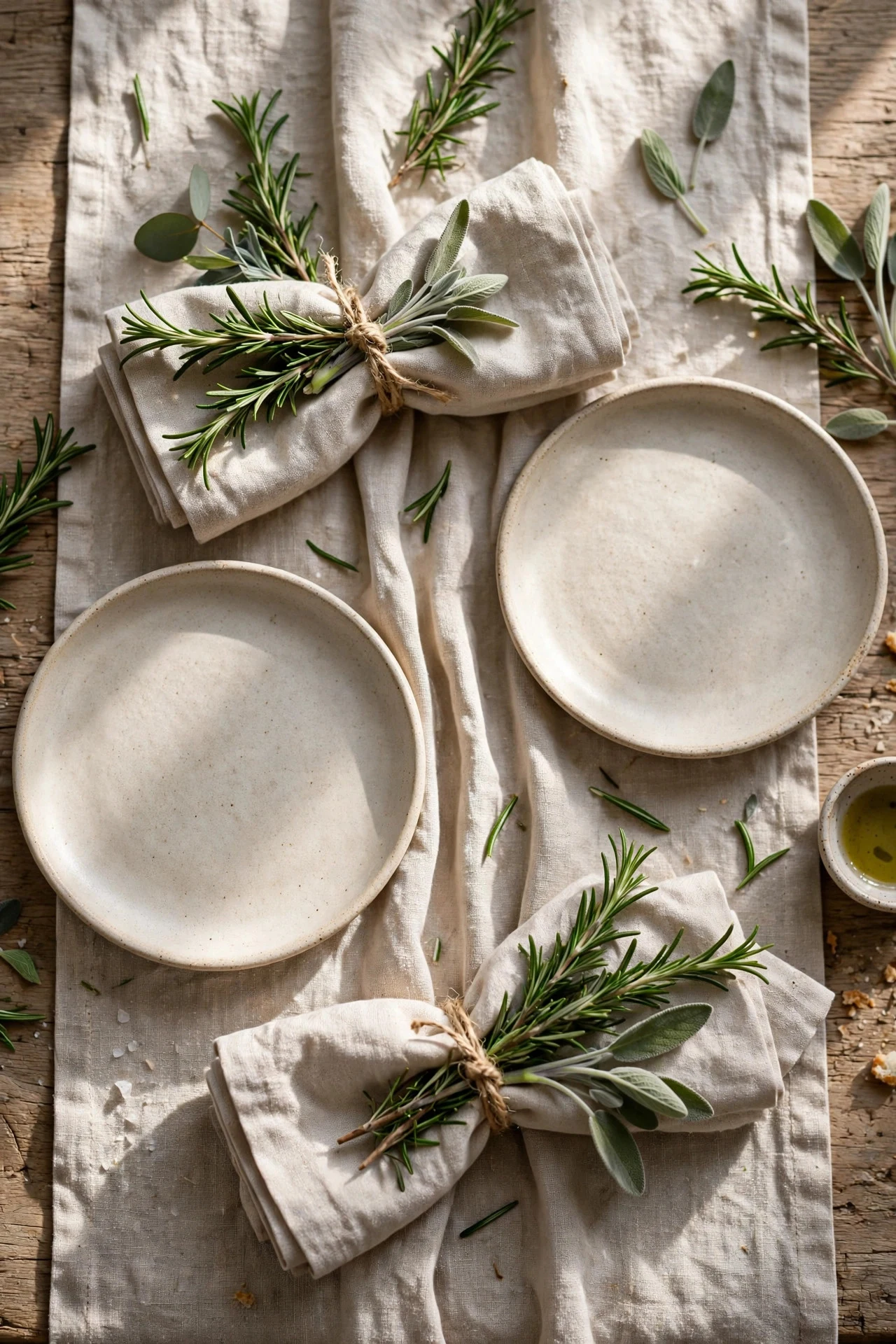
17. Herb-Tied Napkin Place Setting
Build the entire tablescape around one simple detail: a sprig of fresh rosemary, sage, tarragon, or thyme tucked into each folded napkin. Roll or fold the napkin into a simple shape, then tie it with twine or a thin ribbon and slide the herb sprig underneath the tie so it sits visibly on top. This idea works as a stand-alone centerpiece-free tablescape, which makes it one of the fastest options on this list when you’re short on time. The herbs also double as a subtle scent element, since rosemary and sage release fragrance as guests handle their napkins. Pair the herb-tied napkins with plain dinnerware and a simple runner to keep the herbs as the clear focal detail.
Related: 15 Easy Thanksgiving Napkin Folds That Look Fancy
Colorful & Traditional Tablescapes
18. Stacked Patterned Dishes as Decor
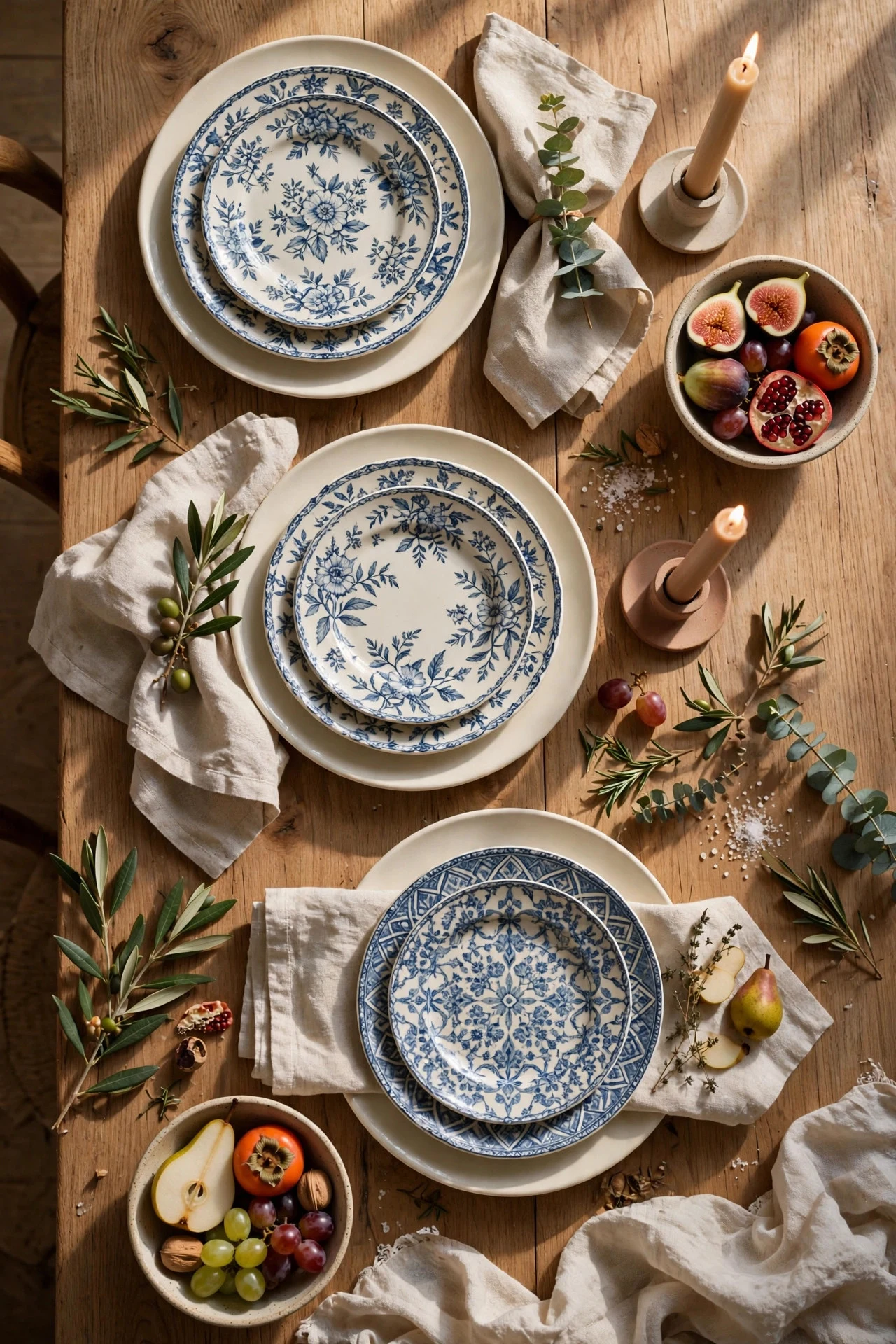
Stack two or three patterned plates at each place setting, layering a patterned salad plate over a solid dinner plate, so the dishes themselves become the main decorative element. This approach works well when you already own mismatched or patterned china and want to use it rather than buying a separate centerpiece. Keep the centerpiece minimal, a few candles or a small bowl of fruit, so the stacked place settings stay the visual highlight moving down the table. Repeating the same stacking pattern at every seat, even with different plate designs, keeps the table feeling intentional instead of mismatched. This is an especially practical idea for smaller tables where a large centerpiece would crowd the space.
19. Amber and Metallic Whimsical Harvest Table
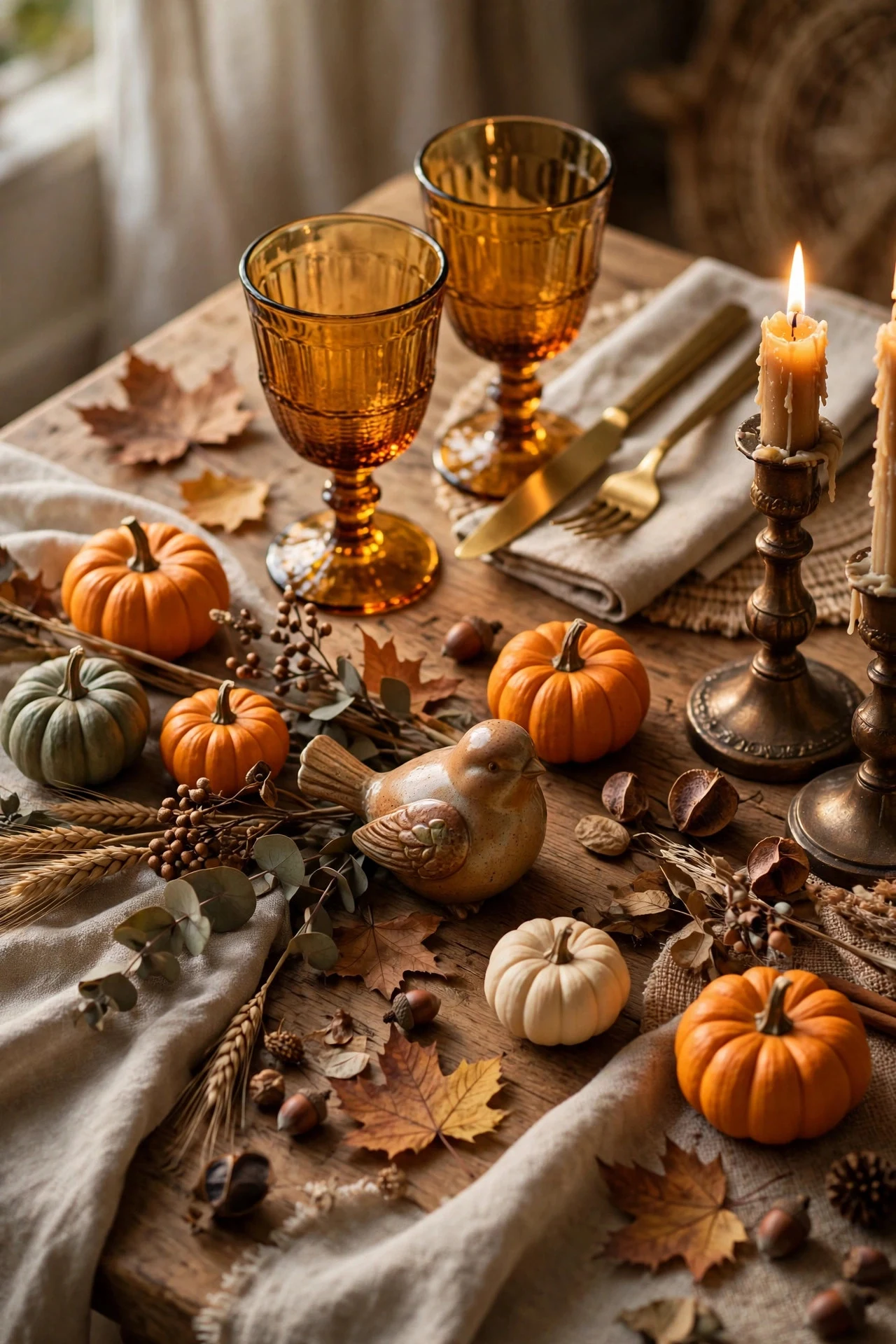
Combine amber-toned glassware, metallic accents, and a few whimsical harvest figures, like a small ceramic bird or woodland animal, for a table that feels a little more elevated without losing its cozy character. Amber glassware catches candlelight in a warm, glowing way that works especially well for evening dinners. Keep the metallics limited to one or two elements, such as gold flatware or bronze candle holders, so the amber tone stays the star of the palette. Add the whimsical figure near the center of the table as a small conversation-starting detail rather than the main centerpiece. Traditional motifs like small pumpkins or autumn leaves tucked around the base keep the look grounded in the season even with the more refined finishes.
Styling Tips
- Pick one dominant neutral (cream, white, or wood tone) and let it carry at least 60% of the table before adding accent colors.
- Keep centerpieces at or below eye level when seated so guests can talk across the table without leaning around florals.
- Vary candle heights instead of using a single row of matching tapers, which adds movement without adding more items.
- Repeat one texture, like linen or woven fiber, at least twice across the table (runner and napkins, for example) to tie the setting together.
- Add height in odd numbers — one tall element, three short ones — since asymmetry tends to photograph better than a perfectly matched set.
Practical Implementation Ideas
- Set the table the night before so you’re not styling under time pressure while also cooking.
- Do a phone-camera check from where your main photo will be taken, since a table can look different through a lens than in person.
- Group centerpiece items in clusters of three rather than spacing them evenly, which reads as more natural.
- Use painter’s tape on the underside of the table as a placement guide if you’re setting more than six places.
- Keep a small folder or note on your phone with this year’s color palette so next year’s table can build on it instead of starting over.
Common Mistakes to Avoid
- Building a centerpiece too tall to see over, which blocks conversation across the table.
- Mixing more than three colors without a clear dominant neutral to anchor them.
- Overcrowding the table with decor items that leave no room for serving dishes.
- Skipping a runner or tablecloth base, which can make even a well-decorated table look unfinished in photos.
- Choosing scented candles for the centerpiece, which can compete with the smell of the meal itself.
Small-Space Alternatives
For a smaller dining table, skip the long runner-style centerpiece and use a single low bowl or dough bowl instead, since it takes up less linear space while still reading as intentional. Stick to one or two candle holders rather than a full row, and choose a slimmer taper over a wide pillar candle so place settings don’t feel cramped. Stacked patterned dishes (Idea 18) or herb-tied napkins (Idea 17) work particularly well in tight spaces, since neither requires a separate centerpiece at all. If seating is close together, keep the centerpiece narrow enough that elbows and serving dishes still have room to move.
Budget-Friendly Alternatives
Foraged branches and yard clippings (Idea 11) cost nothing beyond a pair of scissors, and dollar-store candle holders repainted in a matte finish (Idea 8) can pass for a much pricier set once styled with the rest of the table. Kraft paper (Idea 7) replaces a tablecloth entirely for a few dollars a roll and doubles as place cards. Reusing a dough bowl, dinnerware, or vases already in the house (Idea 12) keeps the centerpiece cost at zero. When a budget is tight, spend on one focal item — candles or a runner — and let everything else come from what’s already on hand.
Pro Styling Recommendations
Choose your color palette before shopping for a single item, and hold every purchase up against it before buying. Layer at least three textures — smooth ceramic, woven fiber, and soft linen, for example — even within a simple, low-cost tablescape, since texture variation is what separates a styled table from a plain one. Light the table with a mix of candle heights and one ambient light source, like a dimmed overhead fixture, rather than relying on overhead lighting alone. Finally, step back and view the table from a seated guest’s height before finalizing anything, since most styling decisions look different from that angle than from standing above the table.
FAQs
Conclusion
Every one of these 19 tablescapes comes back to the same short list of moves: pick a palette, keep the centerpiece low, layer in a little texture, and let candlelight do the rest. The style you choose says less about your budget than it does about what already lives in your cabinets — a stack of stoneware, a wooden bowl, a roll of twine. Set the table the night before, take a step back at guest height, and adjust from there. The table doesn’t need to be finished by any particular standard. It just needs to feel like somewhere people want to sit for a few hours.