17 Blue Thanksgiving Table Decor Ideas for a Fresh Twist
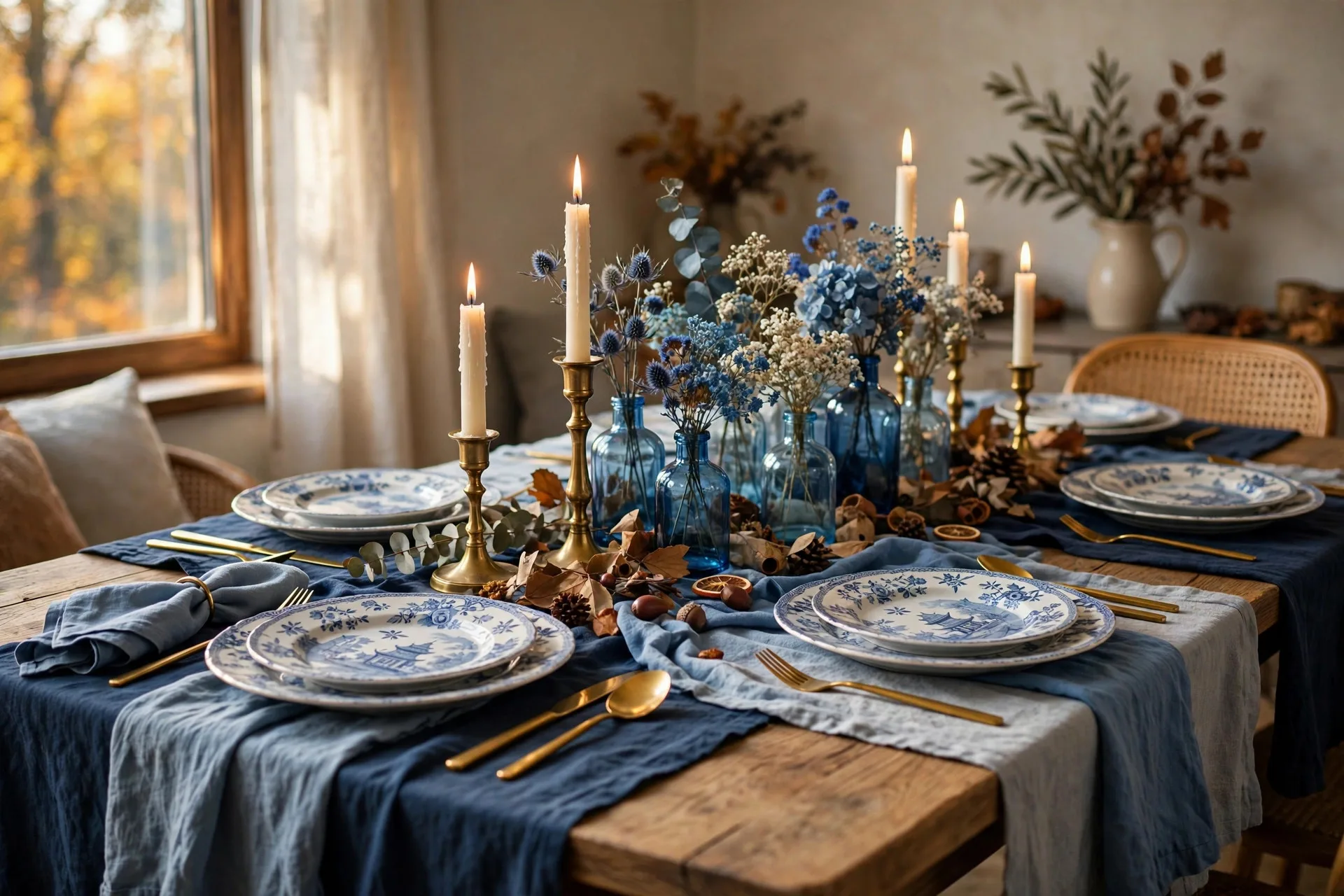
Orange and brown aren’t the only colors that belong on a Thanksgiving table. Blue has quietly become one of the most searched, saved, and recreated twists on the traditional fall palette, and it works for a simple reason: blue pairs with almost everything already sitting in your cabinets, from gold flatware to white chinoiserie to plain wood chargers.
The tables that pull it off well share a pattern. They keep one shade of blue as the anchor, whether that’s dusty, navy, or cobalt, and let a second element, gold, orange, silver, or greenery, do the seasonal work. Nothing about it reads as cold or out of place once candlelight hits the table.
This list runs through 17 blue Thanksgiving table decor ideas, from coastal and jewel-toned to frosty and farmhouse, so you can pick the version that fits your dining room, your existing dishware, and how far you want to stray from the expected fall palette this year.
Table of Contents
Layered Blue Linen Ideas
1. Layered Navy and Dusty Blue Linens
Layer a navy tablecloth as the base, then top it with a lighter dusty blue table runner running down the center, so the two tones build depth instead of sitting flat as a single color. This layering trick works because it mimics the way a neutral table often layers linens, just swapping in two shades of the same color family instead of two neutrals. Add white dinnerware on top to break up the blue and give the eye a resting point at each place setting. Gold or brass flatware warms up the cooler tones and keeps the table from feeling too wintery for a November gathering. This idea works especially well for hosts who already own a navy or dark blue tablecloth and want an easy way to make it feel more layered and intentional.
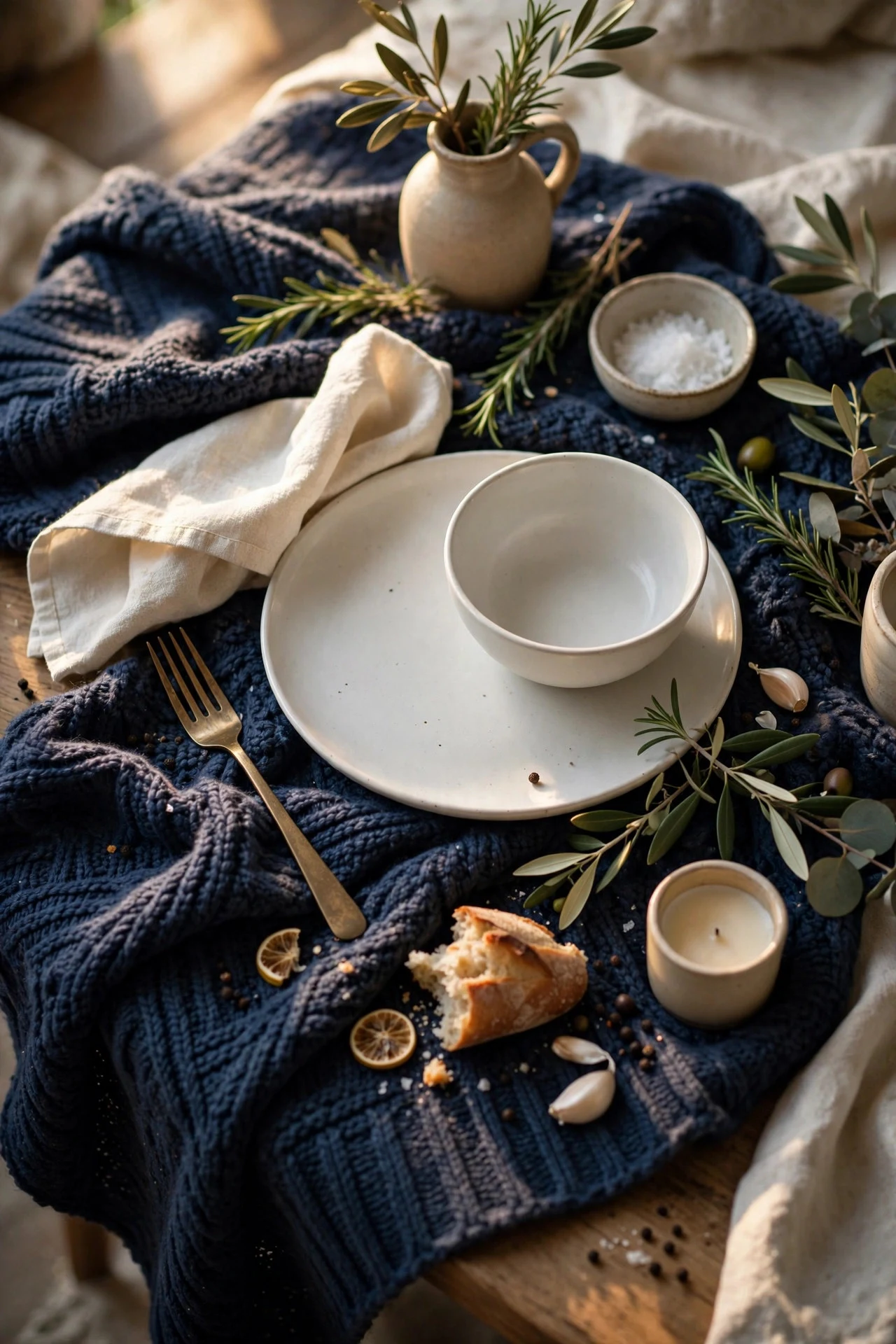
2. Improvised Navy Throw Blanket Base
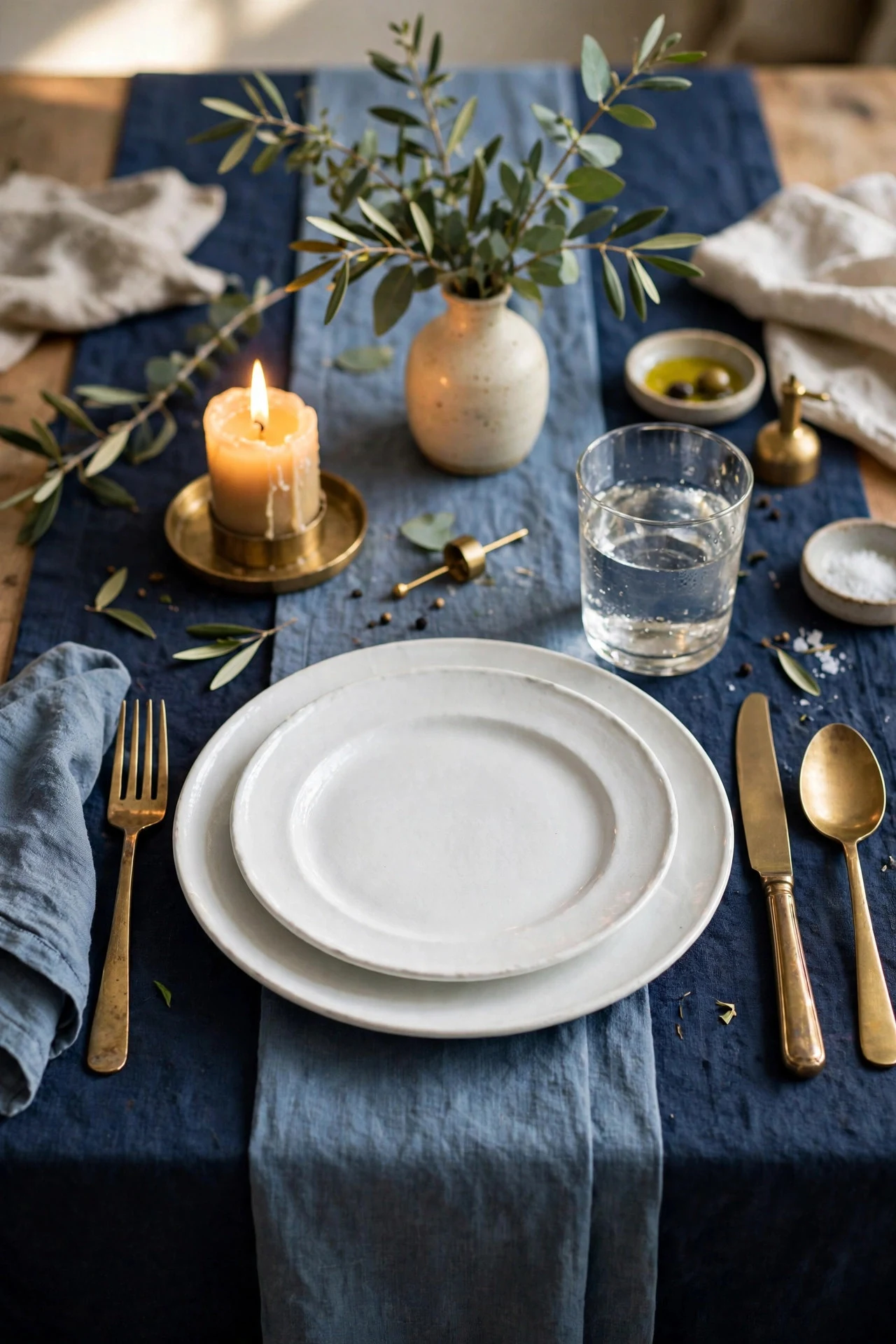
Use a navy throw blanket in place of a tablecloth for a textured, cozy base layer that adds warmth without needing a fabric specifically sized for the table. The slightly heavier weave of a throw blanket compared to a typical tablecloth gives the table a more tactile, gathered feel, especially once plates and glassware are layered on top. This idea works well as a practical solution for hosts who don’t own a blue tablecloth but already have a navy or indigo blanket at home. Fold the edges under neatly so the blanket drapes cleanly rather than bunching at the corners. Pair the improvised base with simple white or cream dinnerware so the texture of the blanket itself stays the main visual interest.
Related: 18 Small Thanksgiving Table Decor Ideas for Cozy Dinners
3. Ombre Blue Place Settings
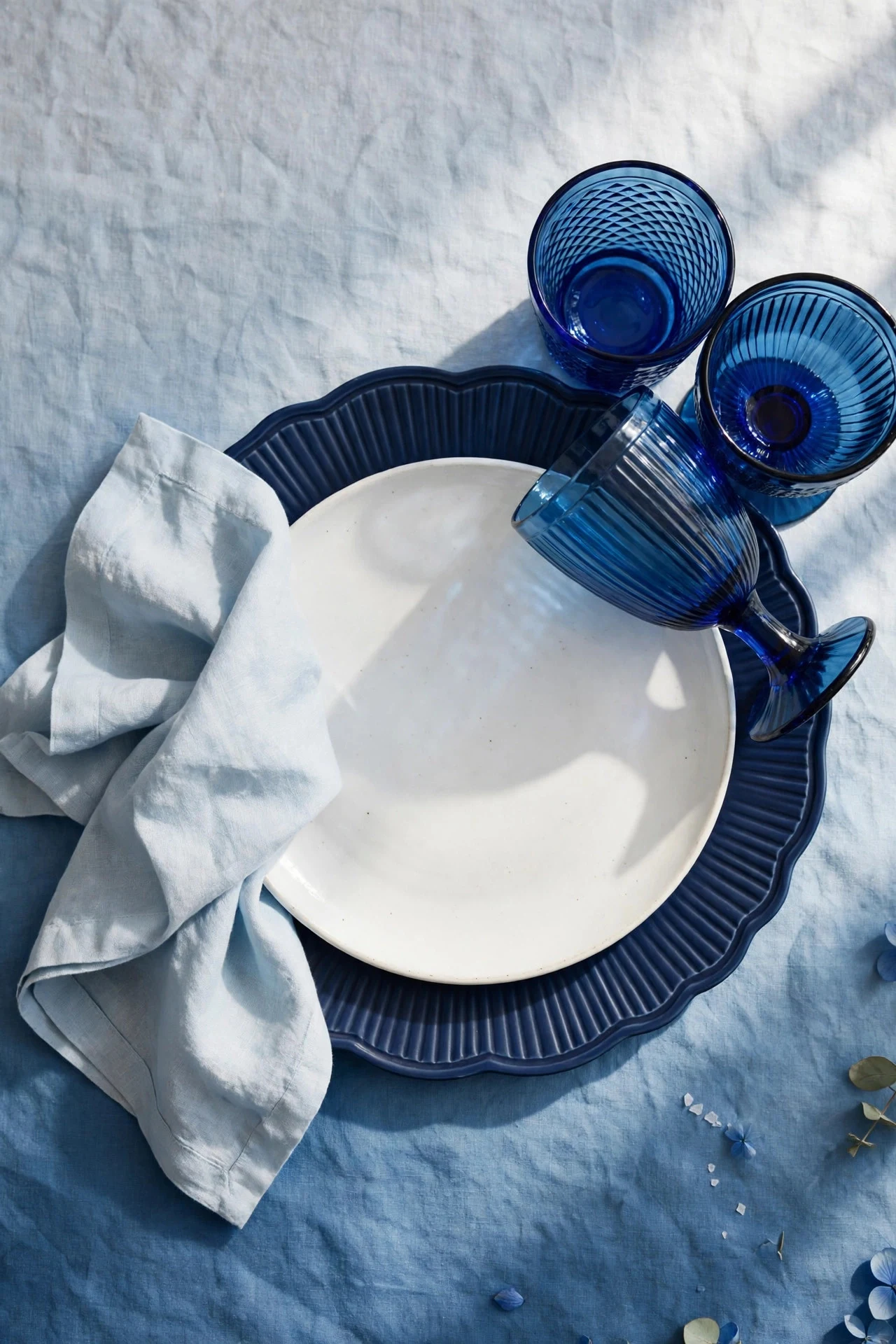
Build each place setting with blue in a gradient of shades, starting with a pale blue napkin, layering a navy charger beneath, and finishing with a cobalt glass at the top of the setting. This idea works because the range of blue tones adds visual movement without introducing a second color at all, which keeps the palette simple to shop for and style. Keep the dinnerware itself white or cream so the gradient effect stays isolated to the linens and glassware rather than getting muddled across every element. This approach photographs particularly well from directly above, since the layered shades of blue read clearly in a flat lay. It also works as an easy way to use several different blue pieces already in your cabinet, even if they weren’t purchased as a matching set.
Blue Paired With Warm Fall Tones
4. Blue and Burnt Orange Contrast Table
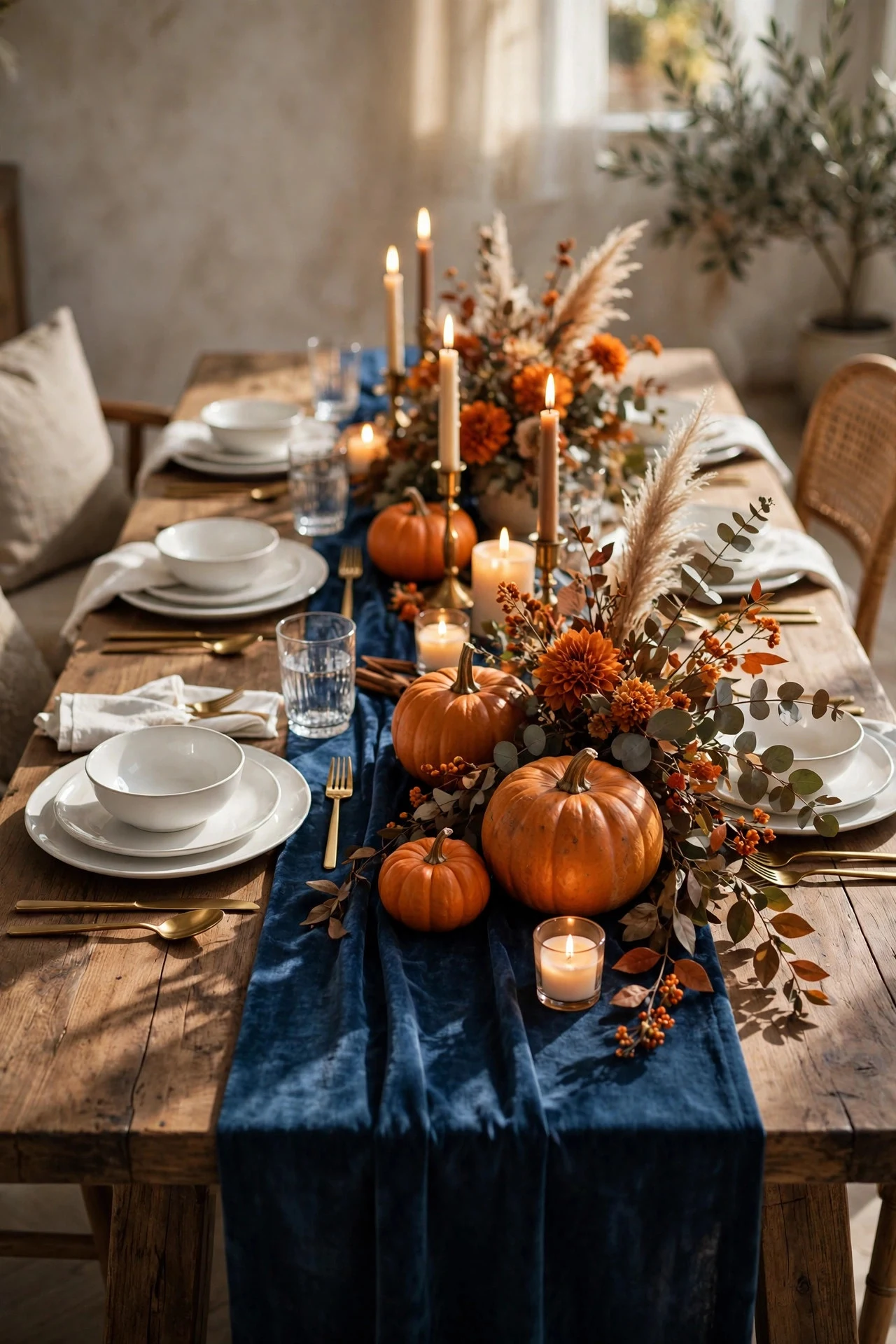
Pair a deep blue runner or napkins with burnt orange florals, pumpkins, or ribbon for a table that keeps one foot in tradition while still feeling fresh. Blue and orange sit almost opposite each other on the color wheel, so even a small amount of orange against a blue base reads as bold and intentional rather than accidental. Keep the orange accents concentrated in the centerpiece, like a cluster of pumpkins or a small floral arrangement, while the blue carries the linens and dinnerware. Add a touch of white to soften the contrast if the combination feels too high-energy for your space. This pairing works particularly well for hosts who want to introduce blue without fully leaving the traditional Thanksgiving color story behind.
5. Blue and Green Chinoiserie Table
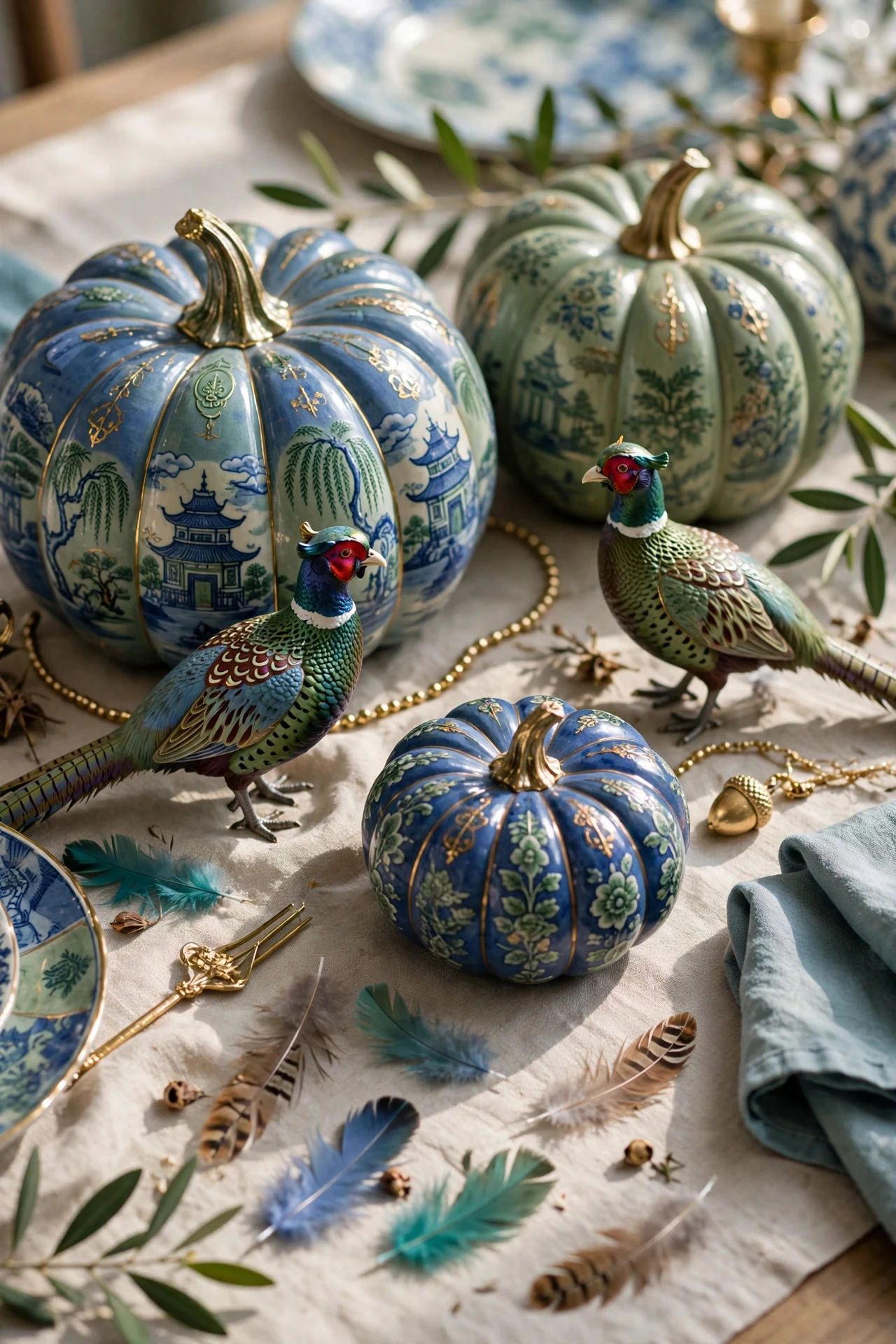
Combine a blue and green palette with chinoiserie pumpkins, a pair of pheasant figures, and a few loose feathers for a table that feels collected, elegant, and distinctly different from the usual fall lineup. Start with a neutral base, like a plain linen runner, so the blue and green color story has room to stand out against it. Mix textures deliberately, pairing soft velvet or greenery with hard materials like glass, metal, or ceramic, to keep the table from feeling one-note even within a narrow palette. Add one or two metallic accents, gold or antique silver, to warm up the cool blues and greens without introducing a third major color. Keep the centerpiece low and runner-style so the pheasants and pumpkins can be seen clearly across the table rather than blocking sightlines.
6. Deep Blue With Yellow and Orange Florals
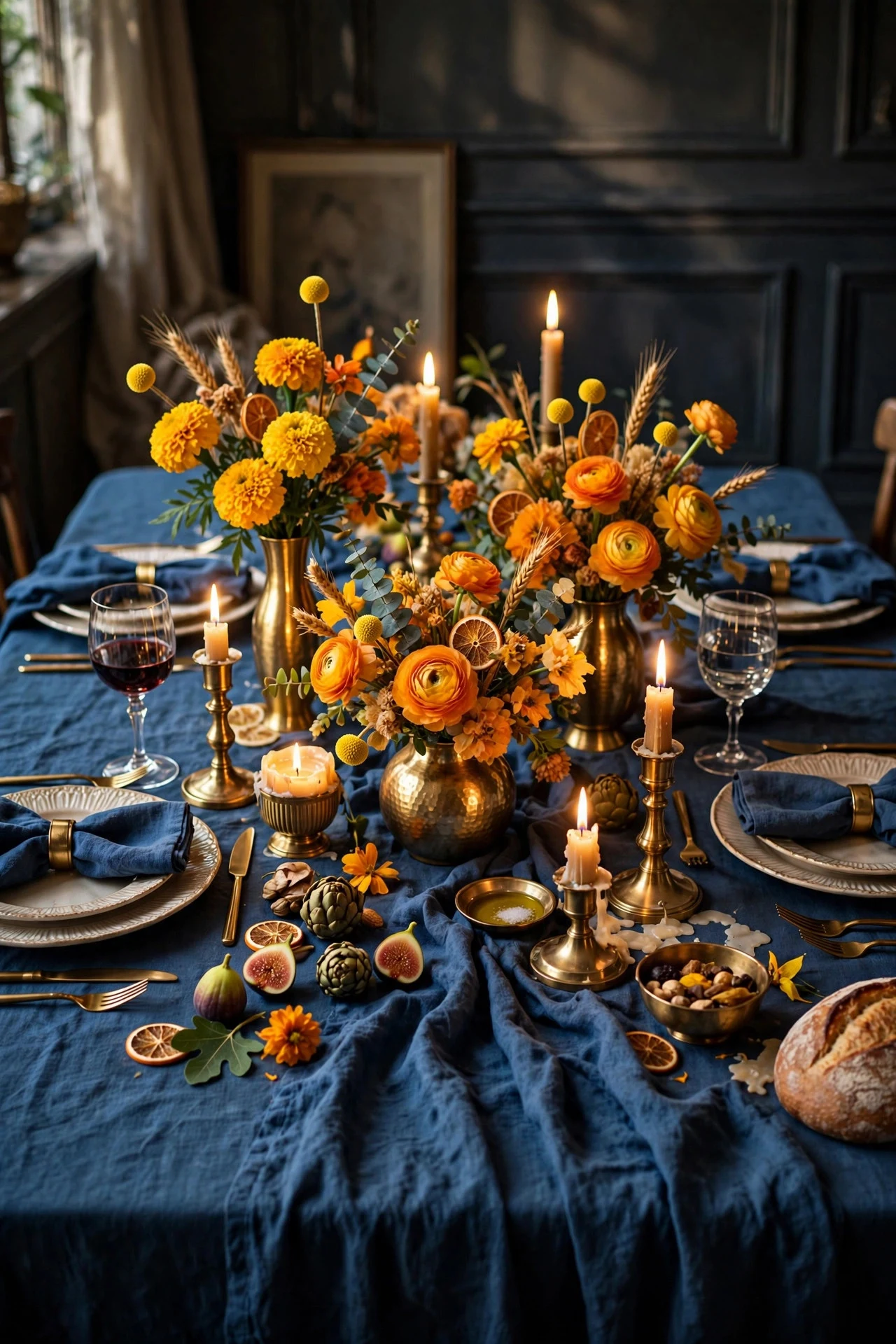
Fill a centerpiece with warm yellow and orange florals against a deep, jewel-toned blue linen base for a table that feels rich and a little dramatic without losing its seasonal warmth. The contrast between the cool blue base and the warm floral tones makes both colors read more vividly than they would against a neutral background. Choose flowers like mums, marigolds, or small dahlias in warm gold and rust tones to keep the arrangement feeling tied to the season. Add a few brass or gold candle holders nearby to echo the warm floral tones elsewhere on the table. This combination works particularly well for a formal or evening Thanksgiving dinner, where the deeper blue reads as elegant rather than casual under candlelight.
Coastal & Farmhouse Blue Ideas
7. Coastal Blue and Sandy Beige Table
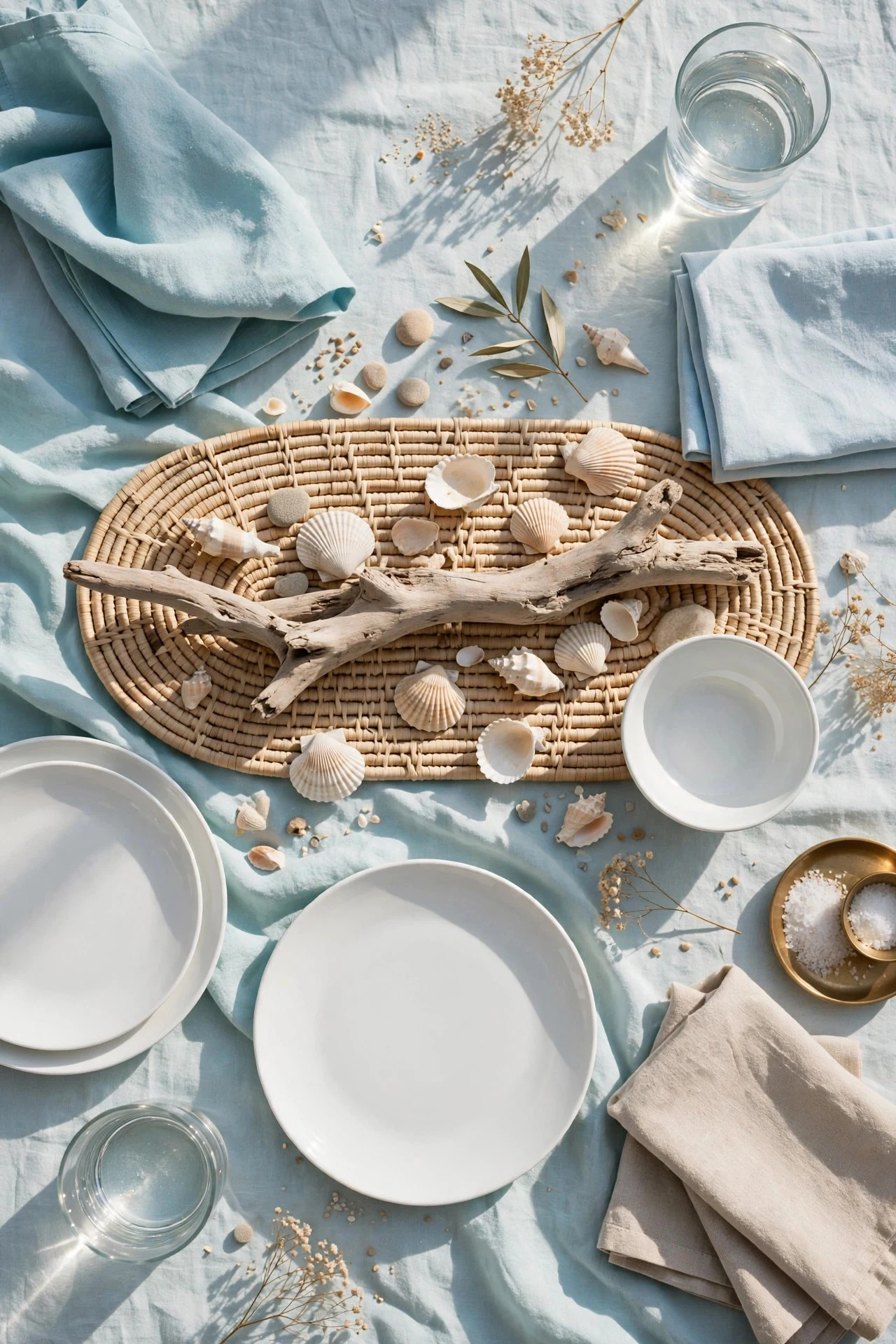
Mix soft aqua and pale blue tones with sandy beige linens and natural elements like shells or driftwood for a Thanksgiving table with a coastal, laid-back feel. This palette works especially well for hosts near the water or anyone who wants their fall table to echo the same calm, breezy mood found in their home the rest of the year. Keep the centerpiece simple, a scattering of shells or a piece of driftwood laid horizontally, so the natural materials stay the focal point rather than competing with a busy arrangement. White dinnerware ties the coastal palette back to a classic Thanksgiving table without introducing a jarring color shift. This idea works particularly well transitioning from a late-summer coastal home into a slightly cooler, but still soft, fall mood.
8. Blue-Tinted Mason Jar Centerpieces
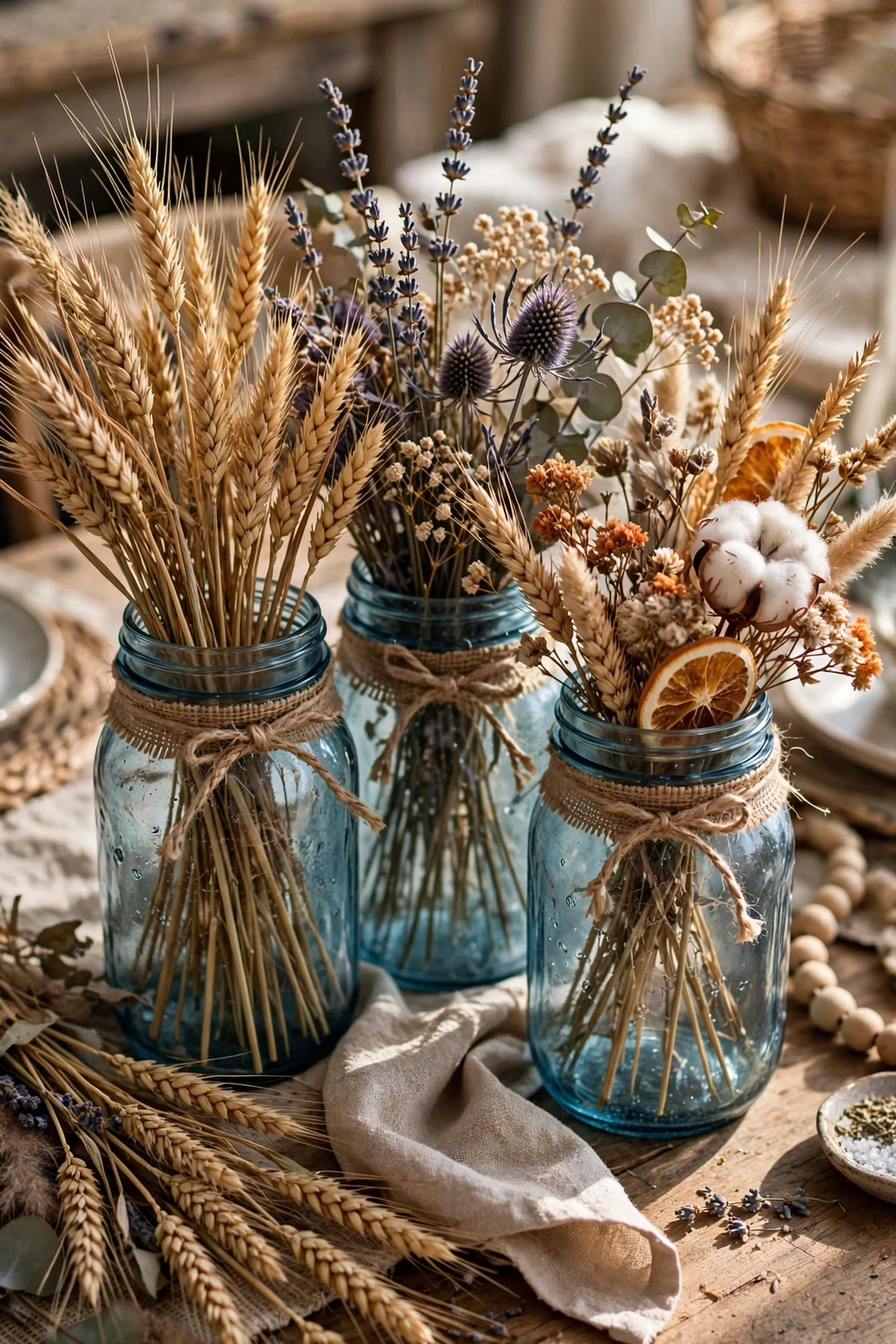
Fill a row of blue-tinted mason jars with seasonal florals or dried wheat for a farmhouse-inspired centerpiece that brings in color without needing new dinnerware or linens. Blue mason jars are widely available and inexpensive, which makes this one of the easiest ways to test a blue palette before committing to a full tablescape overhaul. Vary the jar sizes slightly and cluster them in groups of two or three rather than spacing them evenly, since clusters tend to look more natural than a straight, even row. Add a strip of burlap or twine around each jar to tie the blue glass back into a farmhouse aesthetic if the rest of your table leans rustic. This idea works especially well for a casual, family-style Thanksgiving where a more polished formal centerpiece wouldn’t fit the tone.
9. Blue and White Chinoiserie With a DIY Pumpkin
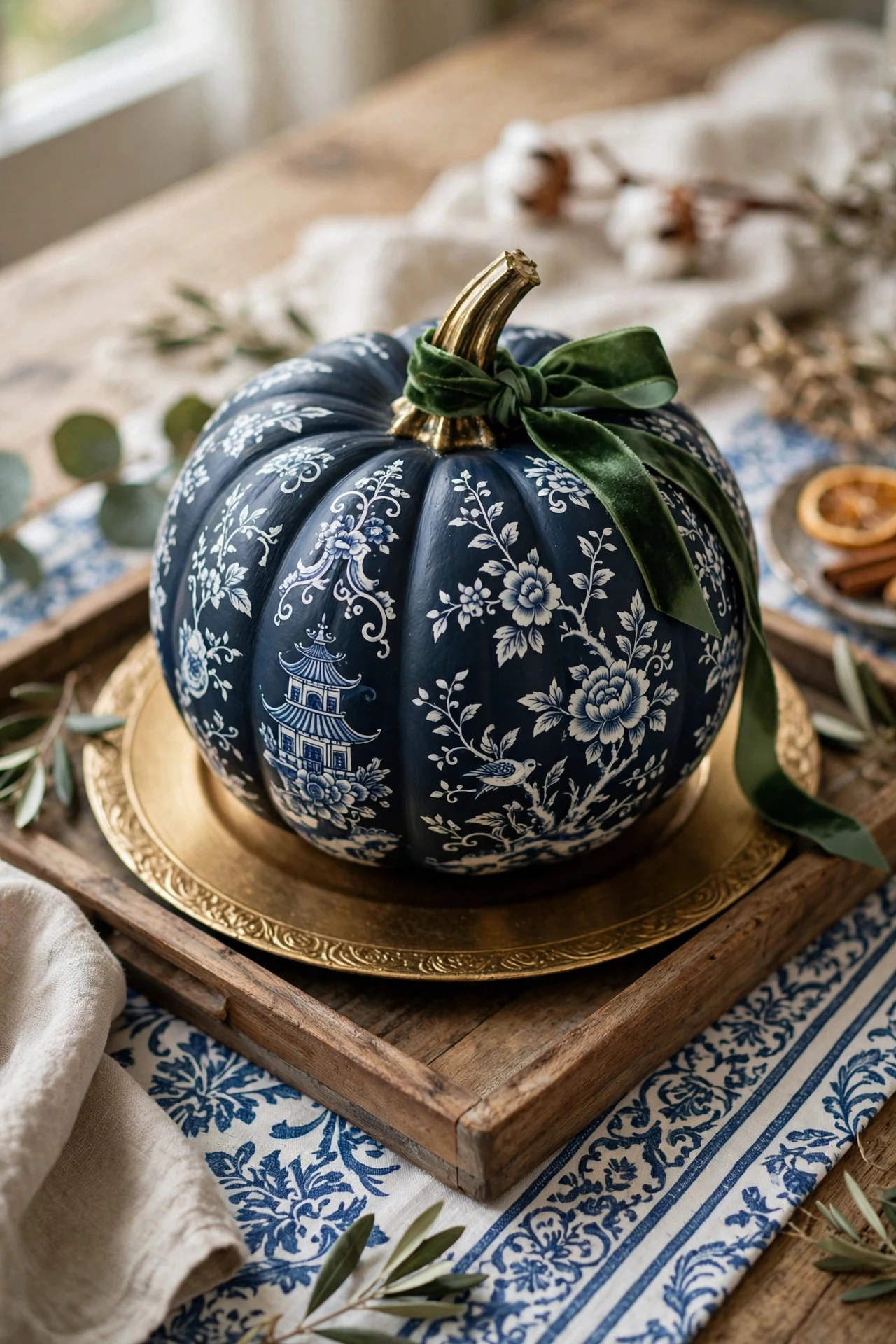
Layer a blue and white table runner as the base, then add a wood tray and charger to raise a DIY chinoiserie-painted pumpkin as the centerpiece, finished with a vintage brass stem and a velvet ribbon. This idea works because the height variation from the tray and charger gives the pumpkin more visual presence than it would have sitting flat on the table. Choose a deep navy blue for the painted pumpkin pattern so it reads clearly against the lighter blue and white runner beneath it. A green velvet ribbon tied around the pumpkin’s stem adds a jewel-toned accent that keeps the look from feeling entirely monochrome. This idea works particularly well for hosts who enjoy a hands-on DIY project, since the painted pumpkin becomes a reusable decor piece for years beyond just one Thanksgiving.
Elegant Blue & Metallic Ideas
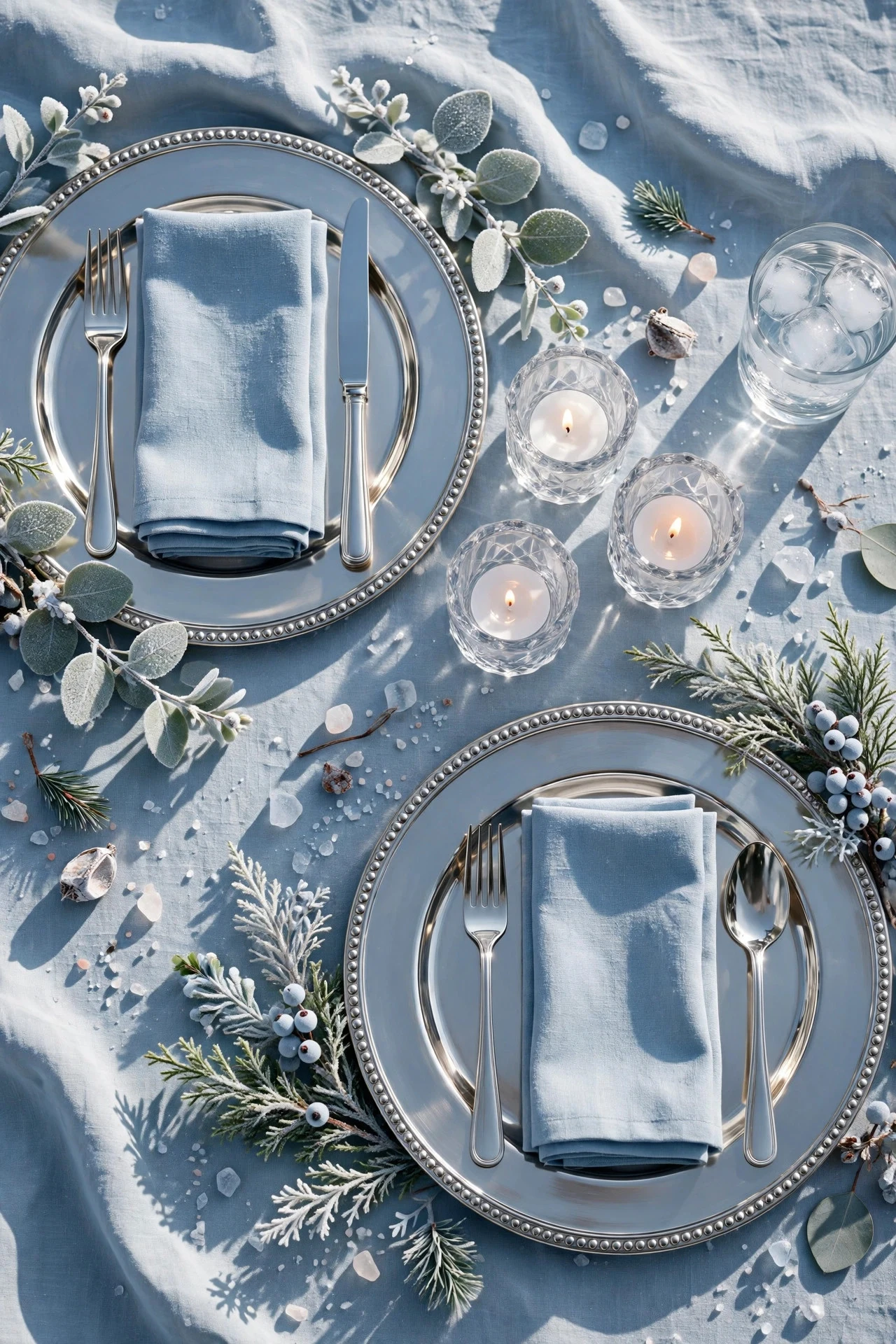
10. Blue and Silver Frosty Table
Pair blue linens and dinnerware with silver flatware, chargers, and candle holders for a cooler, winter-leaning palette that feels a little like the table belongs in a snow-globe scene. This combination works particularly well for hosts who want their Thanksgiving table to feel like a natural bridge into the December holidays, since silver and blue read as seasonally appropriate well past November. Keep the blue in a single consistent tone, like a soft periwinkle or icy blue, so the palette stays cohesive rather than mixing several unrelated shades. Add crystal or glass accents, like votive candle holders, to enhance the frosty, reflective quality of the silver already on the table. This idea works especially well in a dining room with a lot of natural light, since the cool tones catch daylight in a crisp, polished way.
Related: 16 Thanksgiving Table Favor Ideas Guests Will Actually Keep
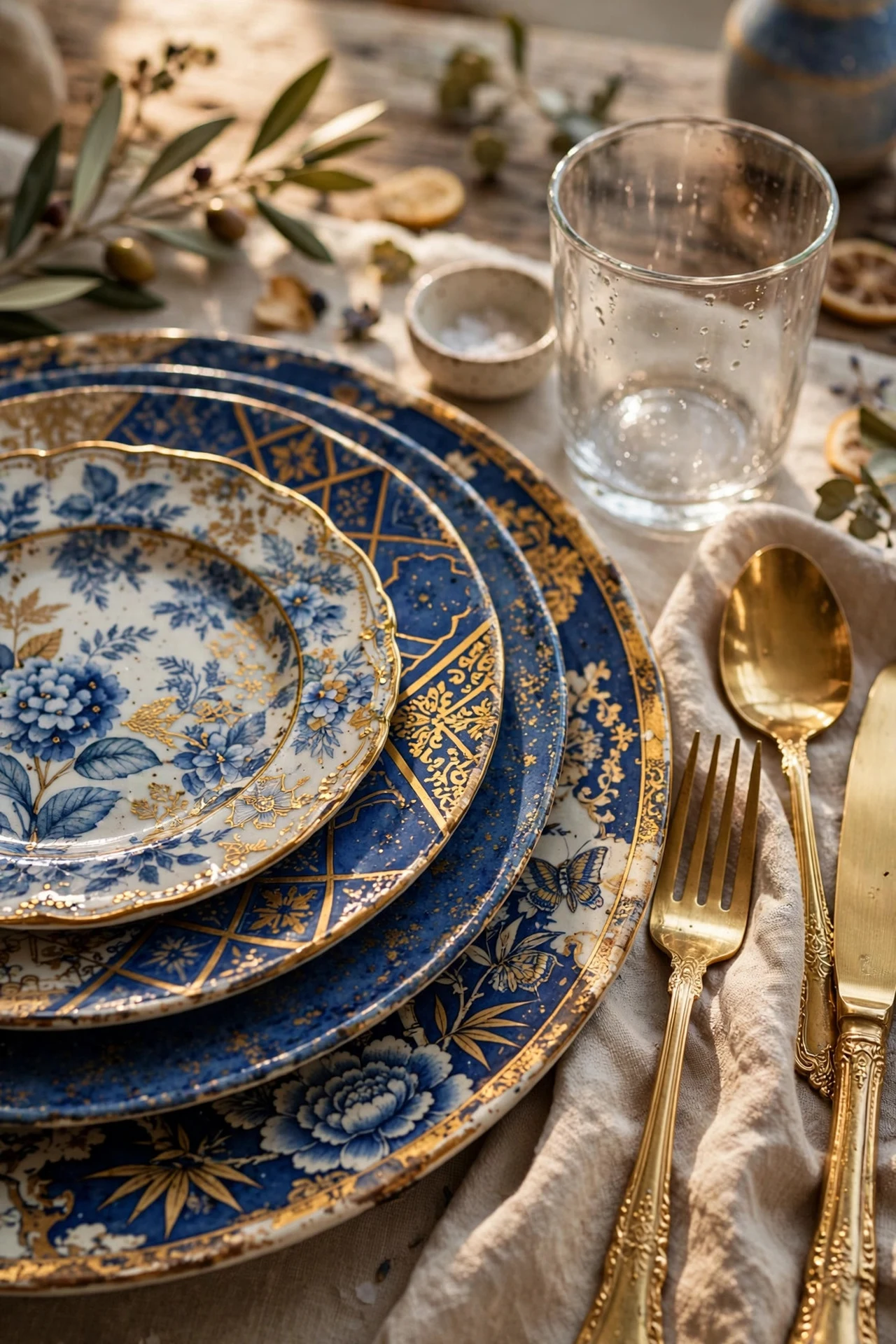
11. Blue and Gold Thrifted China Table
Build the table around a mismatched blue and gold china set, mixing pieces found secondhand rather than a single matched collection, for a look that feels collected and a little unexpected. This idea works particularly well because thrifted blue and gold dinnerware often costs a fraction of a new matching set, while still bringing genuine pattern and color to the table. Layer pieces from different patterns as long as they share the same blue and gold color family, since a shared palette will unify mismatched patterns more than an exact match ever could. Add plain gold flatware and simple glassware so the plates themselves stay the visual centerpiece of each place setting. This idea rewards patience, since the best pieces tend to turn up gradually over multiple thrift store visits rather than in a single trip.
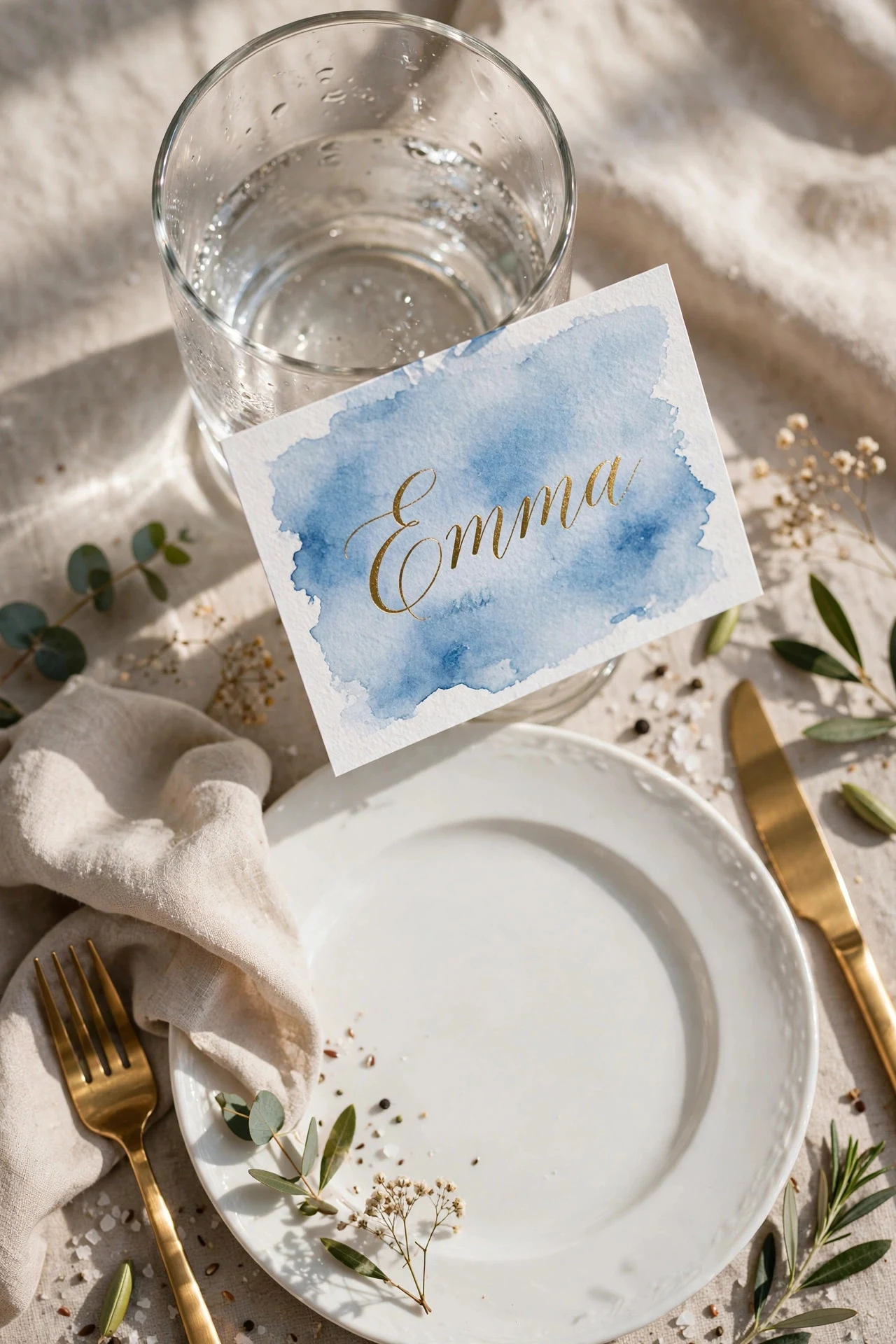
12. Watercolor Blue Place Cards With Gold Calligraphy
Add a small blue watercolor or cardstock place card at each setting, hand-lettered in gold calligraphy, so the place card itself becomes part of the blue color story rather than an afterthought. This detail works well because it extends the palette down to the smallest element on the table, which makes the overall look feel more considered without much added cost. Choose a soft blue wash for the cardstock background so the gold lettering stands out clearly against it. Lean the card against a glass or set it directly on the napkin at each place setting for easy visibility. This idea pairs particularly well with a more formal blue and gold or blue and silver table, since the place cards echo the metallics already used elsewhere.
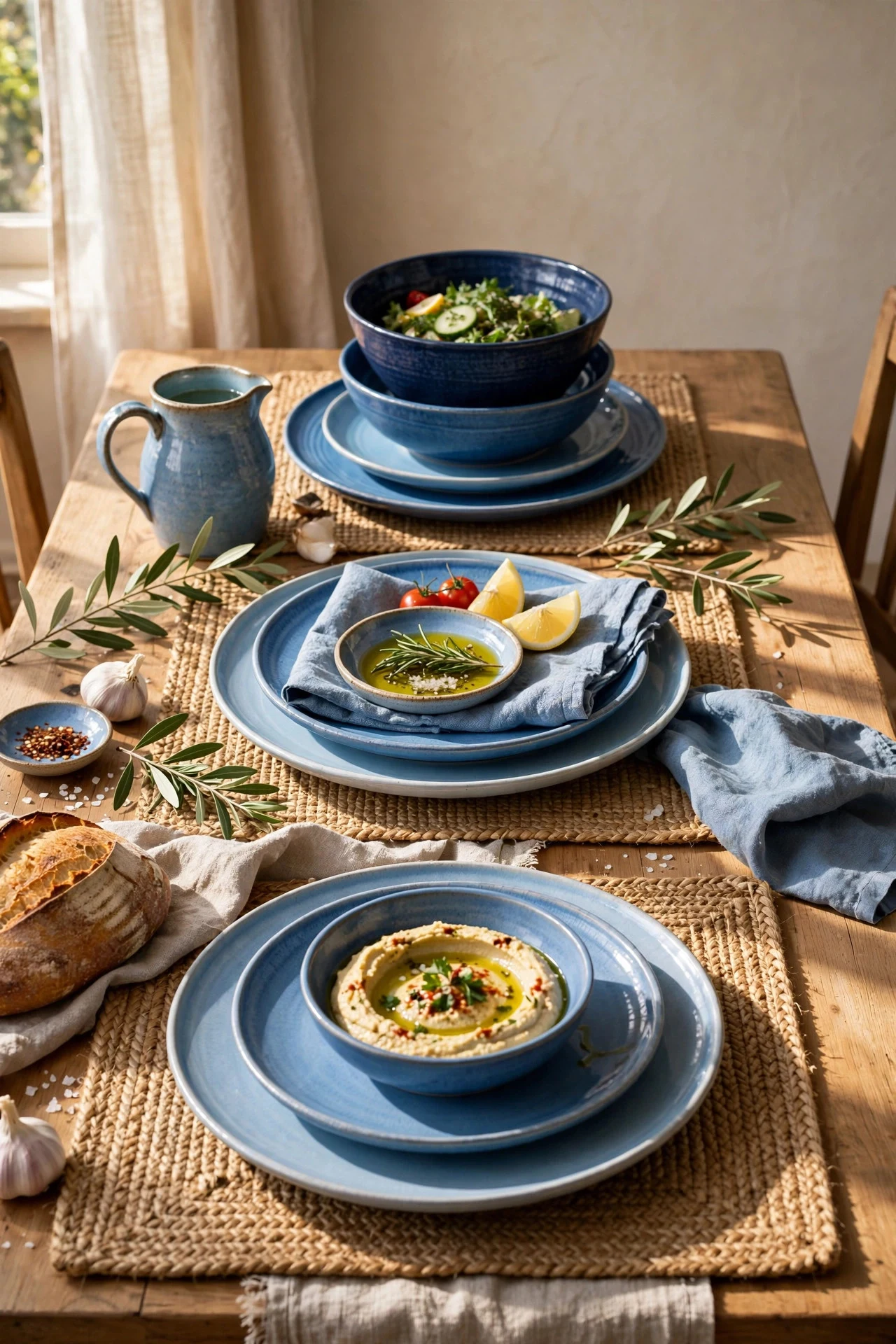
13. Layered Blue Dishware in Multiple Shades
Mix several shades of blue dishware together at each place setting, pairing a deep navy serving bowl with a softer sky blue dinner plate, to add visual depth within a single color family. This layering approach works because varying the shade, rather than sticking to one exact tone, keeps the table from looking flat even though everything technically falls under “blue.” Add woven placemats beneath the dishware to bring in a contrasting texture that softens the smooth ceramic surfaces. Group serving pieces in the deepest blue tones toward the center of the table, with lighter blue place settings radiating outward, for a subtle gradient effect across the whole table. This idea works particularly well for hosts who already own several unrelated blue dish sets and want a way to use them together intentionally.
Bold & Jewel-Toned Blue Ideas
14. Bold Patterned Blue Runner Table
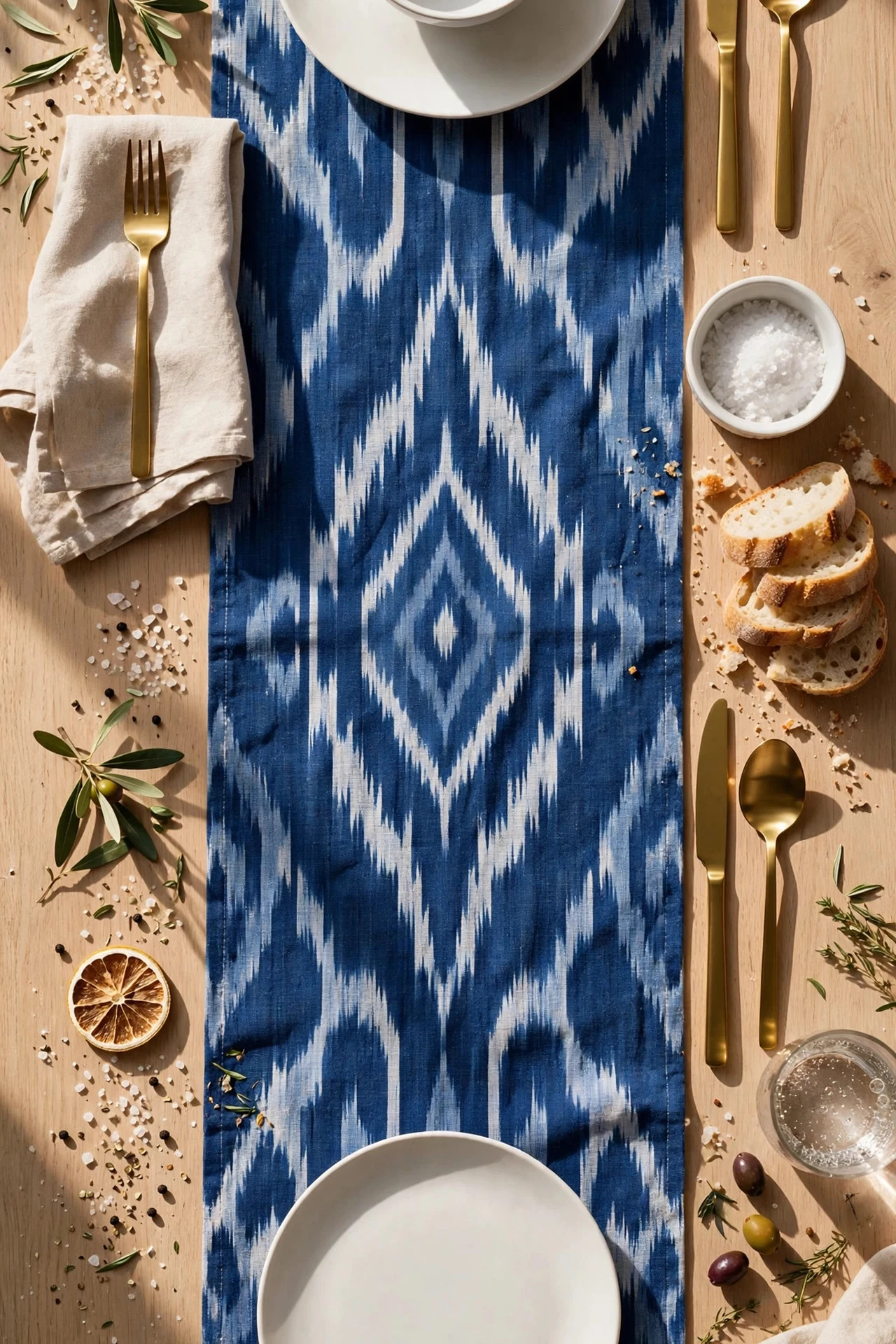
Set a bold patterned blue runner, whether ikat, stripes, or a floral print, down the center of an otherwise plain white table to let the pattern do most of the visual work. This idea works especially well for hosts who want a statement piece without needing to coordinate several different decorative elements, since the runner alone carries the table’s personality. Choose plain white or cream dinnerware so the pattern stays the clear focal point rather than competing with a busy plate design underneath it. Add simple gold or brass flatware to warm up the blue pattern without introducing a second competing color. This idea is also one of the easiest to swap seasonally, since changing the runner alone can shift the whole table’s mood without restyling everything else.
15. Blue-Accented Wreath as a Table Centerpiece
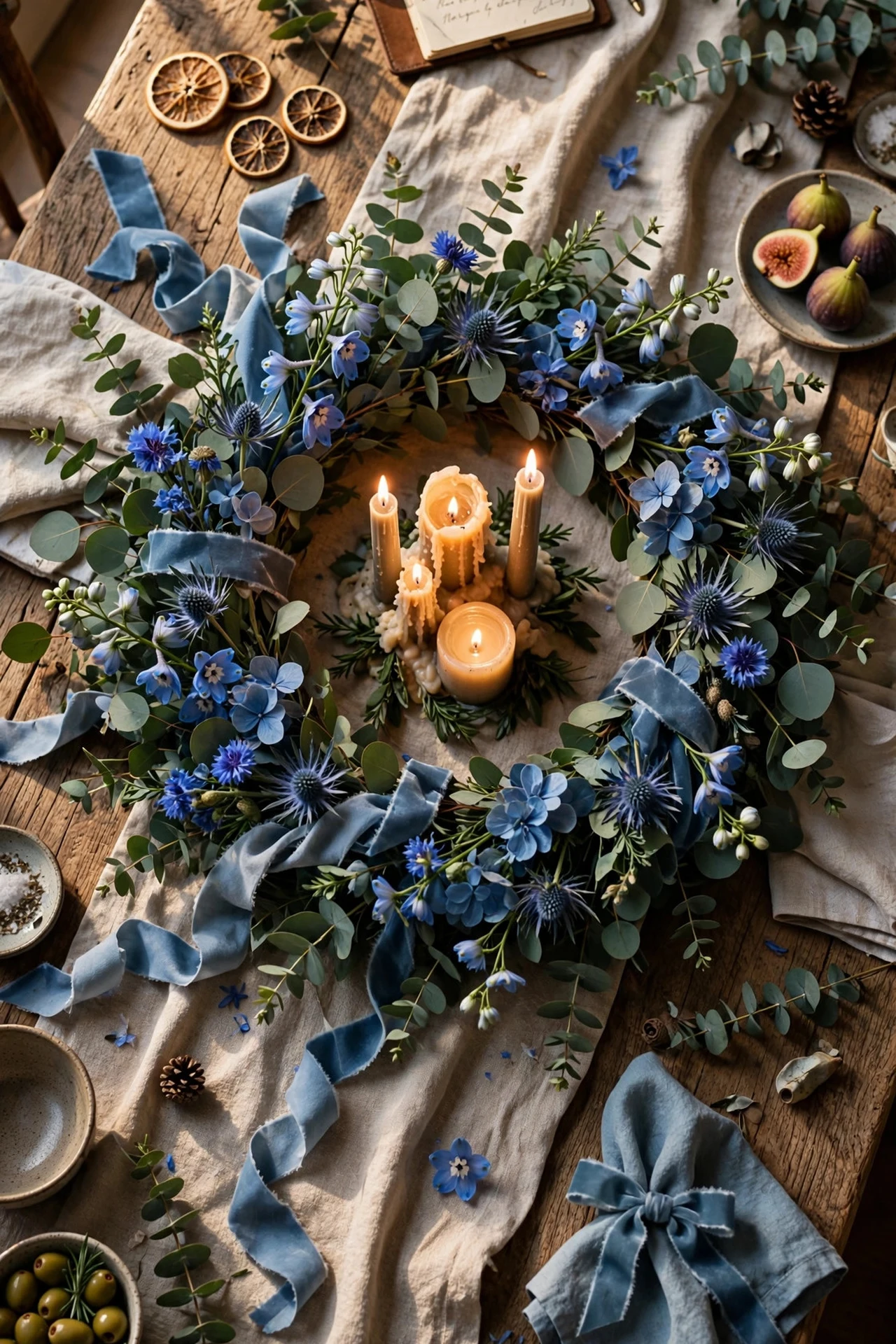
Lay a wreath with blue floral or ribbon accents flat in the center of the table, with a cluster of candles placed in its open middle, for a centerpiece that borrows a traditionally door-only element in an unexpected way. This idea works because the wreath’s circular shape naturally frames the candles, creating a built-in focal point without much additional arranging. Choose a wreath base in a neutral tone, like dried eucalyptus or grapevine, so the blue accents stand out clearly against it rather than blending in. This centerpiece stays low by design, which means it won’t block sightlines even on a fairly long table. It also doubles conveniently as door or wall decor before or after the meal, giving the piece a second use beyond just the one sitting.
16. Dark Blue With Winter Greenery
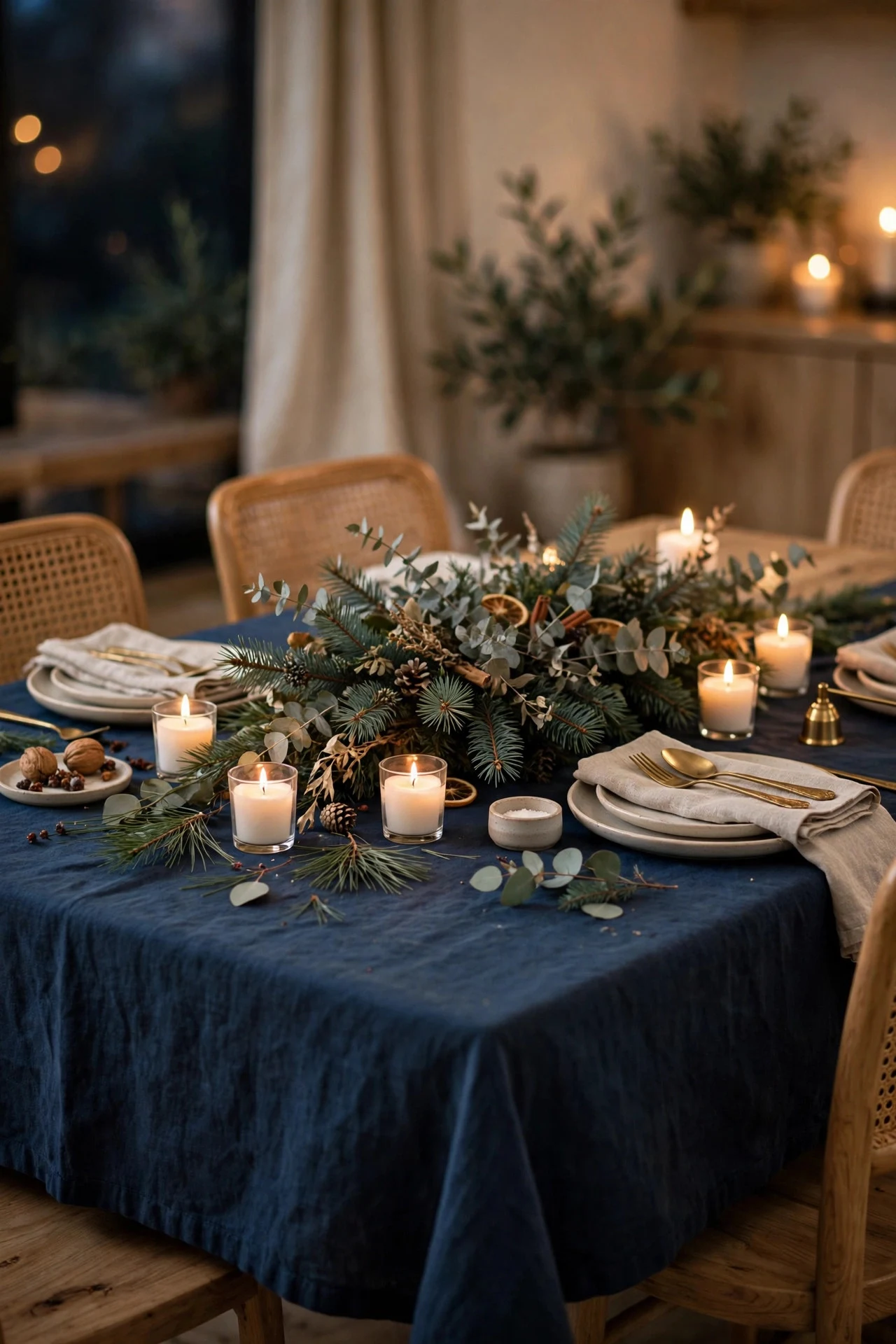
Pair a deep, almost midnight blue linen base with sprigs of winter greenery, like pine or eucalyptus, worked into the centerpiece for a table that feels like it’s bridging Thanksgiving into the following season. This combination works particularly well for hosts who want their Thanksgiving table to transition smoothly into December decor without a full restyle. Keep the greenery loose and slightly wild rather than tightly arranged, echoing the same relaxed style found in most low, runner-style Thanksgiving centerpieces. Add a few white or silver accents, like votive candles or a scattering of small ornaments, to reinforce the seasonal bridge without fully committing to Christmas colors yet. This idea works especially well for a Thanksgiving dinner held later in November, closer to the start of the holiday season.
17. Blue Pumpkins With Gold Plates and Fall Leaves
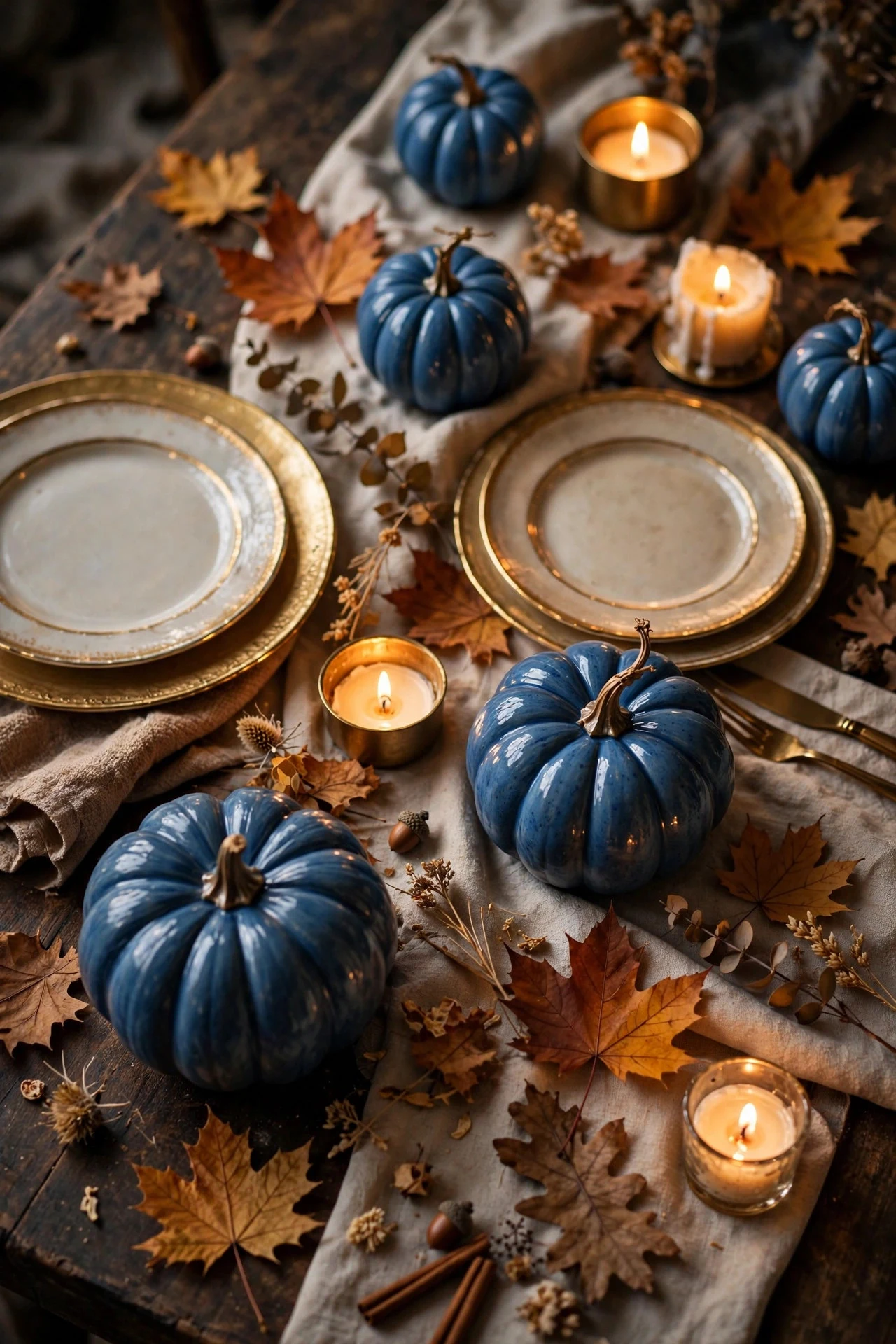
Scatter a few painted or ceramic blue pumpkins across the table alongside gold-rimmed plates and loose fall leaves for a cozy, layered look that still keeps blue as the standout color choice. This combination works because the gold plates and warm-toned leaves keep the table feeling seasonal and inviting, even with a nontraditional pumpkin color in the mix. Vary the size of the blue pumpkins, mixing a few small ones with one or two larger statement pieces, so the grouping has visual weight without needing much else on the table. Let the candles burn low and warm throughout the meal, since this combination tends to feel its coziest once the room dims and the gold catches the light. This idea works particularly well for a longer, slower Thanksgiving dinner where the table is meant to feel like a place people want to linger.
Related: 17 Doable Christmas Table Settings That Feel Elevated
Styling Tips
- Keep one shade of blue as the dominant anchor, then let a second color, gold, orange, silver, or green, do the seasonal work in smaller doses.
- Layer at least two blue tones, like navy and dusty blue or sky blue and cobalt, so the palette has depth instead of reading as one flat color.
- Add a metallic accent, gold, brass, or silver, to warm or cool the blue depending on the mood you want the table to have.
- Keep centerpieces low and runner-style so blue’s cooler tone doesn’t read as visually heavy or overwhelming down the center of the table.
- Mix in at least one warm neutral, like natural wood or cream linen, so the table still feels appropriate for a Thanksgiving gathering rather than a purely wintery table.
Practical Implementation Ideas
- Test your blue palette with a single element first, like mason jars or a runner, before committing to a full tablecloth and dinnerware overhaul.
- Set the table a day ahead so you can judge how the blue tones look under both daylight and evening candlelight before guests arrive.
- Thrift shop early in the season for blue and gold or blue and white china, since the best pieces tend to appear gradually rather than all at once.
- Keep a swatch or photo of your chosen blue shade on hand while shopping for accents, since blue tones vary widely and can clash if mismatched.
- Group any DIY painted pieces, like a chinoiserie pumpkin, a few weeks ahead of the holiday to allow proper drying time.
Common Mistakes to Avoid
- Mixing too many unrelated shades of blue without a clear dominant tone, which can make the table feel scattered rather than intentional.
- Skipping a warm accent entirely, which can leave an all-blue table feeling more wintery than suited to a Thanksgiving gathering.
- Choosing a centerpiece too tall or dense, which can make a cooler color palette feel even heavier and block sightlines across the table.
- Overlooking how blue reads under warm candlelight versus daylight, since some blues can shift more than expected once the sun goes down.
- Forcing every element on the table into blue, rather than letting it anchor two or three key pieces and allowing neutrals to fill in the rest.
Small-Space Alternatives
For a smaller dining table, skip the layered linen base and lean on a single blue runner or a cluster of blue mason jars (Idea 8) instead, since either option adds color without requiring much surface space. Watercolor place cards (Idea 12) or a small wreath centerpiece (Idea 15) both work well for tight tables, since neither competes with limited room for serving dishes. Keep the blue concentrated in one or two elements, rather than spreading it across linens, dinnerware, and centerpiece all at once, so a small table doesn’t feel visually crowded.
Budget-Friendly Alternatives
Blue-tinted mason jars (Idea 8) and an improvised navy throw blanket base (Idea 2) are two of the lowest-cost ways to bring blue into a Thanksgiving table using items already found around the house or at a low price point. Thrifted blue and gold china (Idea 11) often costs less than a new matching set while adding more character and pattern to the table. A single bold patterned runner (Idea 14) can transform a plain white table setup without needing to purchase new dinnerware, glassware, or flatware at all.
Pro Styling Recommendations
Choose your exact shade of blue before shopping for anything else, and hold every additional piece up against that reference tone to keep the palette consistent throughout. Balance blue’s cooler temperature with at least one warm material, wood, brass, or gold, so the table still feels inviting rather than cold under low light. Layer texture deliberately, pairing smooth ceramic or glass with something more tactile like linen or woven placemats, since texture does as much work as color in making a blue table feel elegant rather than flat. Finally, view the finished table under the lighting you’ll actually be using for the meal, since blue tones can shift noticeably between daylight and warm evening candlelight.
FAQs
Conclusion
Blue works on a Thanksgiving table for the same reason any color eventually does: because it’s handled with restraint and paired with something warm to balance it out. One dominant shade, a metallic accent, and a low centerpiece is really all the formula requires, whether you’re leaning coastal, jewel-toned, or frosty elegant. Pick the version of blue that already lives somewhere in your home, whether that’s a stack of thrifted china or a navy throw blanket, and let it anchor the rest of the table from there. It doesn’t need to look like anyone else’s blue table. It just needs to feel like a fresh way into a holiday you already know how to host.