19 Natural Thanksgiving Centerpiece Ideas Using Fall Foliage
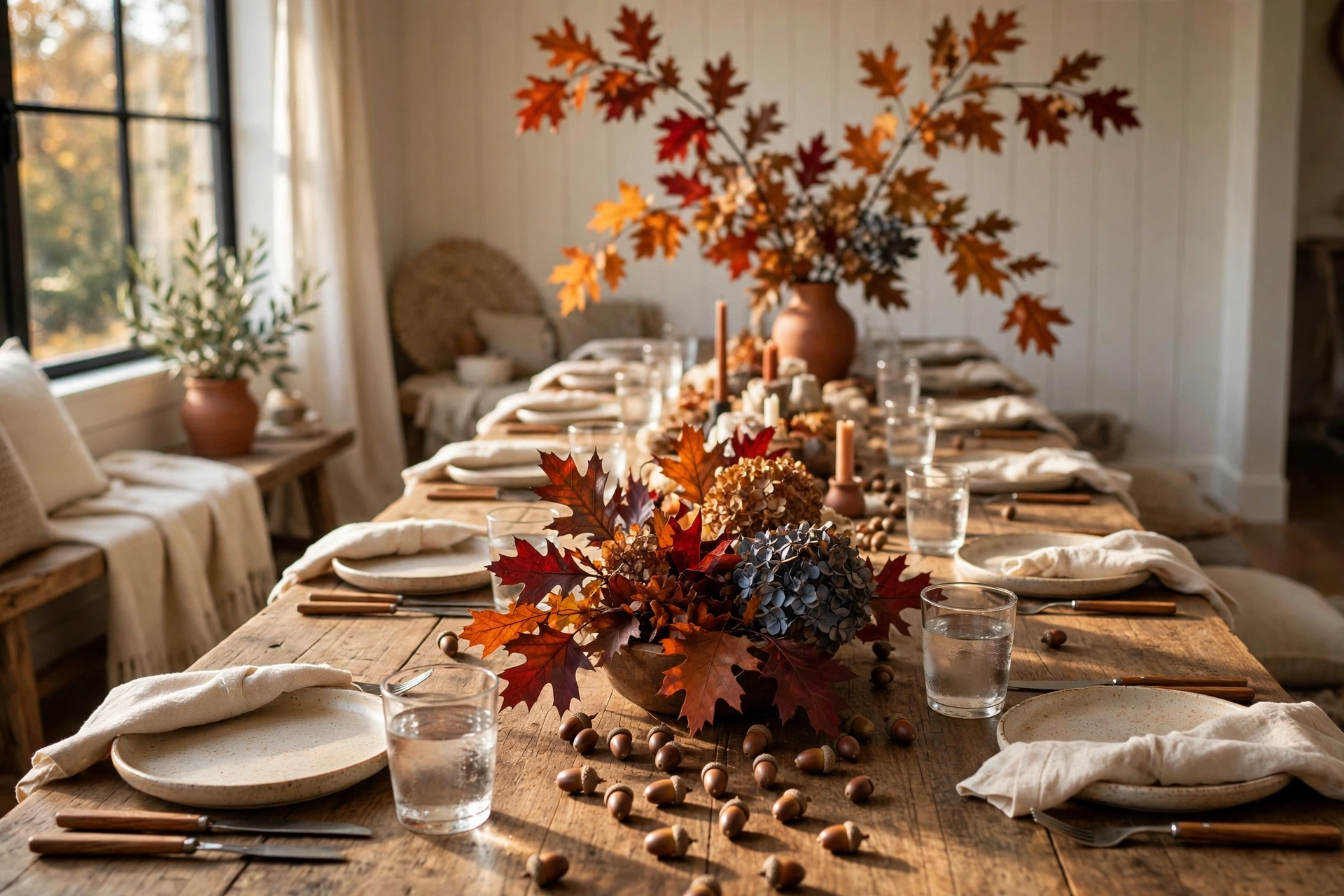
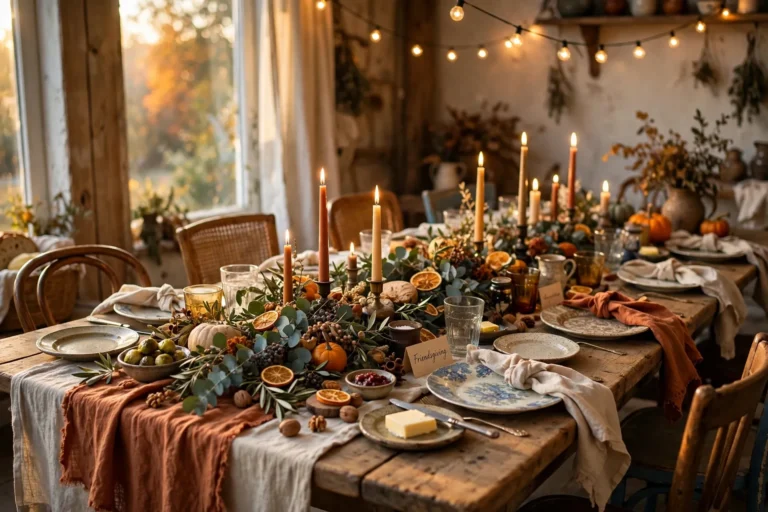
Search for a “natural” fall centerpiece online and you’ll eventually run into a silk maple leaf arrangement or a foam pumpkin wrapped in craft supplies, which isn’t exactly what most people picture when they think about bringing the outdoors onto their Thanksgiving table. Real fall foliage, the kind you can gather from your own yard, a nearby park, or a quick trip to a farm stand, has a texture and color depth that manufactured materials can’t fully copy.
This guide sticks strictly to that idea. Every centerpiece here is built from real branches, leaves, dried flowers, or foraged natural elements, nothing plastic and nothing built on a craft-foam base. You’ll also find a real foraging and sourcing section, since knowing what to gather and where matters just as much as the arranging itself, along with preservation techniques for keeping cut foliage looking good for more than a single dinner.
Whether you’re working with a big harvest table or a small apartment dining spot, these 19 ideas show how far a walk outside and a good pair of clippers can actually go.
Table of Contents
Why Real Fall Foliage Beats Faux Every Time
Real fall foliage carries natural color variation, from a single leaf shifting through three shades of red to branches with slightly imperfect, asymmetrical growth, that manufactured leaves and craft-foam bases can’t replicate convincingly up close. It also tends to be significantly cheaper, since a walk through your own yard or a nearby park often costs nothing beyond a bit of time. Natural and foraged styling has become one of the defining directions in fall decor, with designers favoring genuinely gathered branches, dried hydrangea, and unpolished, slightly wild arrangements over anything that looks mass-produced or overly tidy.
A Quick Guide to Foraging Fall Foliage Responsibly
Before gathering any fall foliage, confirm you have permission to cut from the location, whether that’s your own property, a friend’s yard, or a public park where cutting live branches may not be allowed even if fallen leaves are fine to collect. Take only what you need and avoid stripping an entire branch or shrub bare, since a few thoughtfully chosen stems usually create a fuller-looking arrangement than a large haul does anyway. Avoid unfamiliar berries entirely unless you can positively identify them, since several common fall berries, including certain hollies and nightshades, are toxic if handled carelessly or ingested by children or pets. Favor fallen leaves and already-clipped branches over live-cut material where possible, and always cut stems at an angle with clean garden shears rather than tearing them, which helps the plant recover if it’s a source you plan to return to next year.
The 19 Natural Thanksgiving Centerpiece Ideas
Fill a Low Wooden Bowl With Mixed Foraged Branches
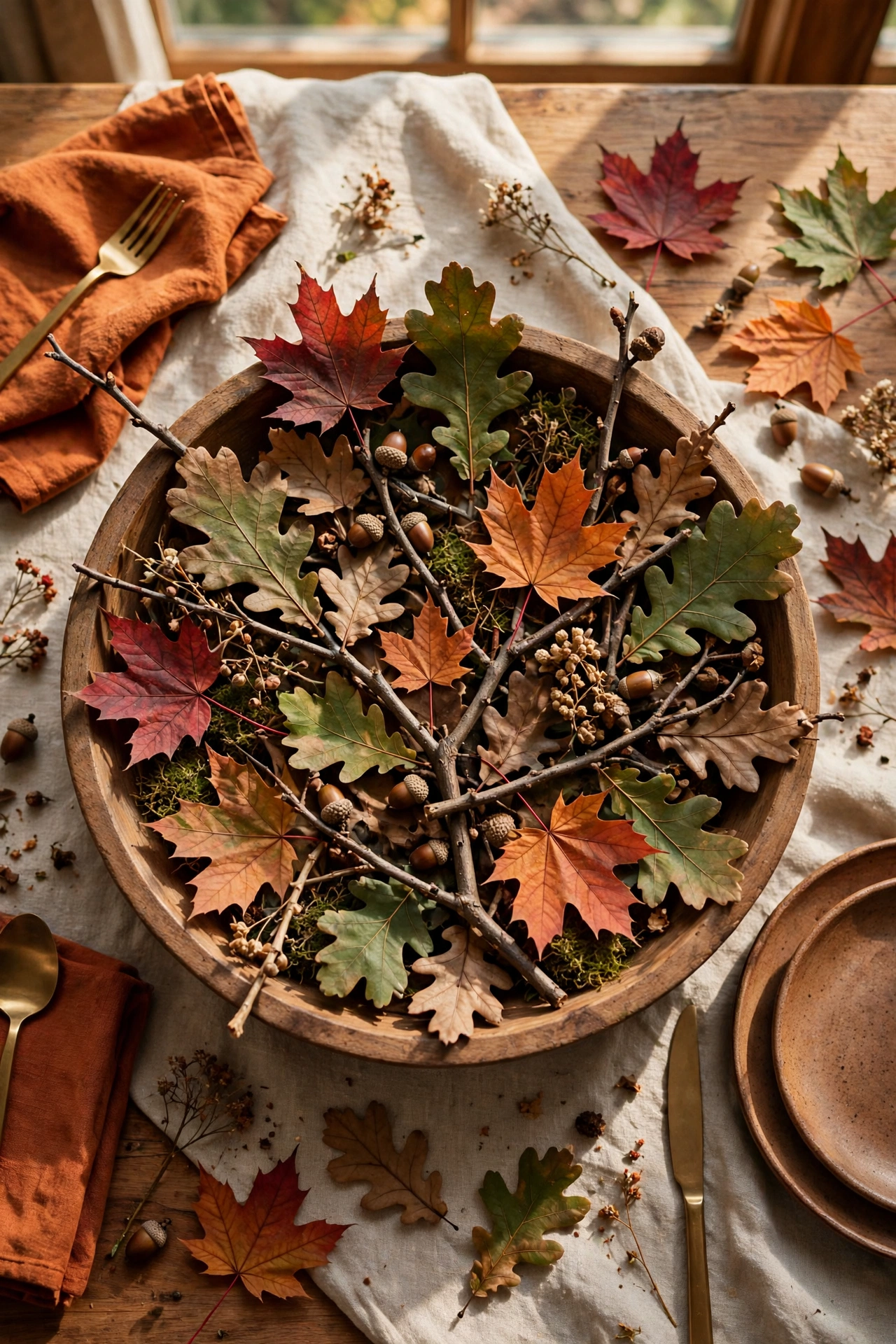
A wide, shallow wooden bowl filled with an assortment of foraged branches, oak, maple, and beech all work well, creates a low, natural centerpiece that doesn’t block sightlines across the table. Mix branches with leaves still attached in varying stages of color, from green-edged to fully turned red or gold, for a more realistic, gathered-from-outside look. Let a few branches extend slightly over the bowl’s edge rather than trimming everything to a uniform length, since a bit of natural sprawl reads as more authentic than a tightly contained shape. This arrangement requires no floral foam or wire, just enough branches layered to hold their position in the bowl. It also works well reused throughout the fall season, not just for a single Thanksgiving dinner, since the branches can be refreshed with new foraged material as needed.
Arrange Tall Arching Branches in a Clear Glass Vase
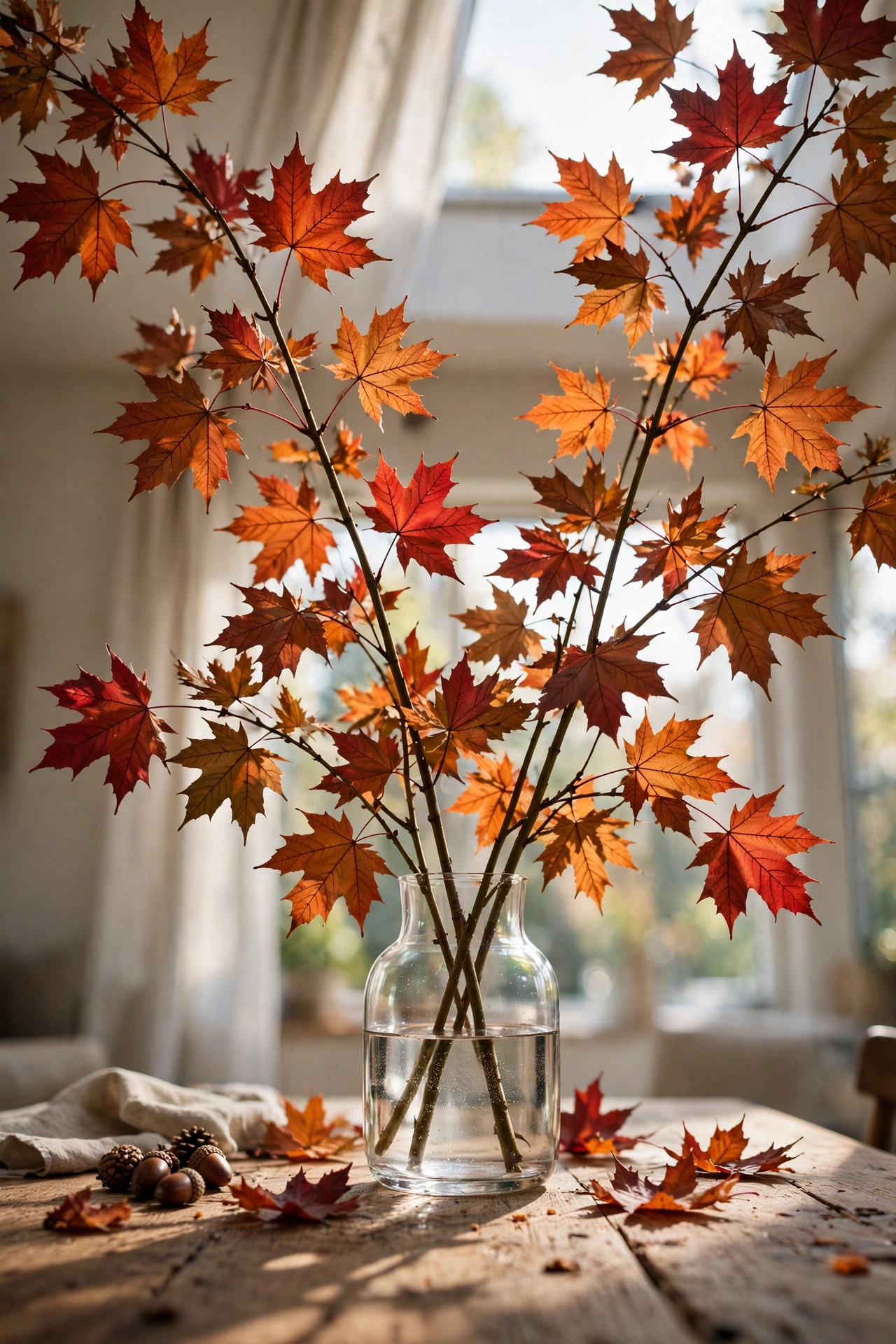
For height and drama without much bulk, place a handful of tall, arching branches, like curly willow, birch, or a leafy maple branch, into a single tall glass vase filled with water. The clear glass keeps the arrangement feeling light and modern, letting the branches themselves be the visual focus rather than a busy container. Let one or two branches lean or arch to one side rather than standing perfectly upright, since asymmetry tends to look more like something found on a walk than something arranged in a shop. This style works particularly well at the center of a long table, since the height doesn’t spread out wide enough to block conversation across the table. Refresh the water every couple of days and re-cut the stems at an angle to help the branches and any attached leaves last as long as possible.
Create a Pressed Leaf Table Runner Under Glass or Wax Paper
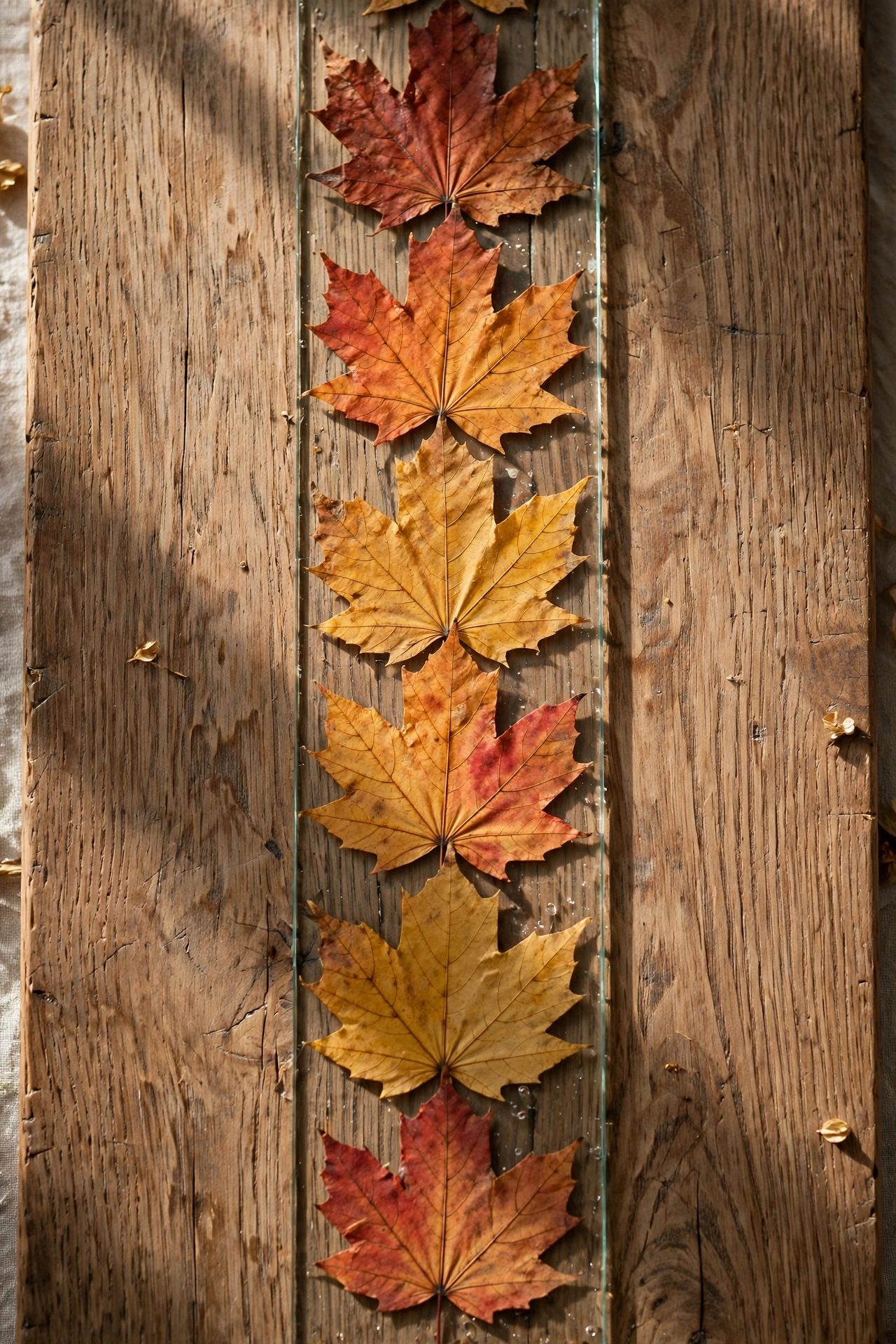
Press a collection of fall leaves flat between the pages of a heavy book for about a week, then arrange them in a loose row down the center of the table, either directly on a runner or sandwiched under a strip of wax paper or a thin glass runner for protection. This technique, which has picked up renewed popularity in fall decor coverage, preserves the leaves’ color and shape for weeks without any wilting, making it one of the longest-lasting ideas on this list. Vary the leaf types and sizes along the row for visual interest, mixing small maple leaves with larger oak or sycamore ones. This idea works especially well for a Thanksgiving table that needs to look finished well before guests arrive, since it can be assembled days in advance. It’s also a nice project to do with kids, since pressing leaves requires no special tools beyond a heavy book.
String a Foraged Leaf Garland Down the Table
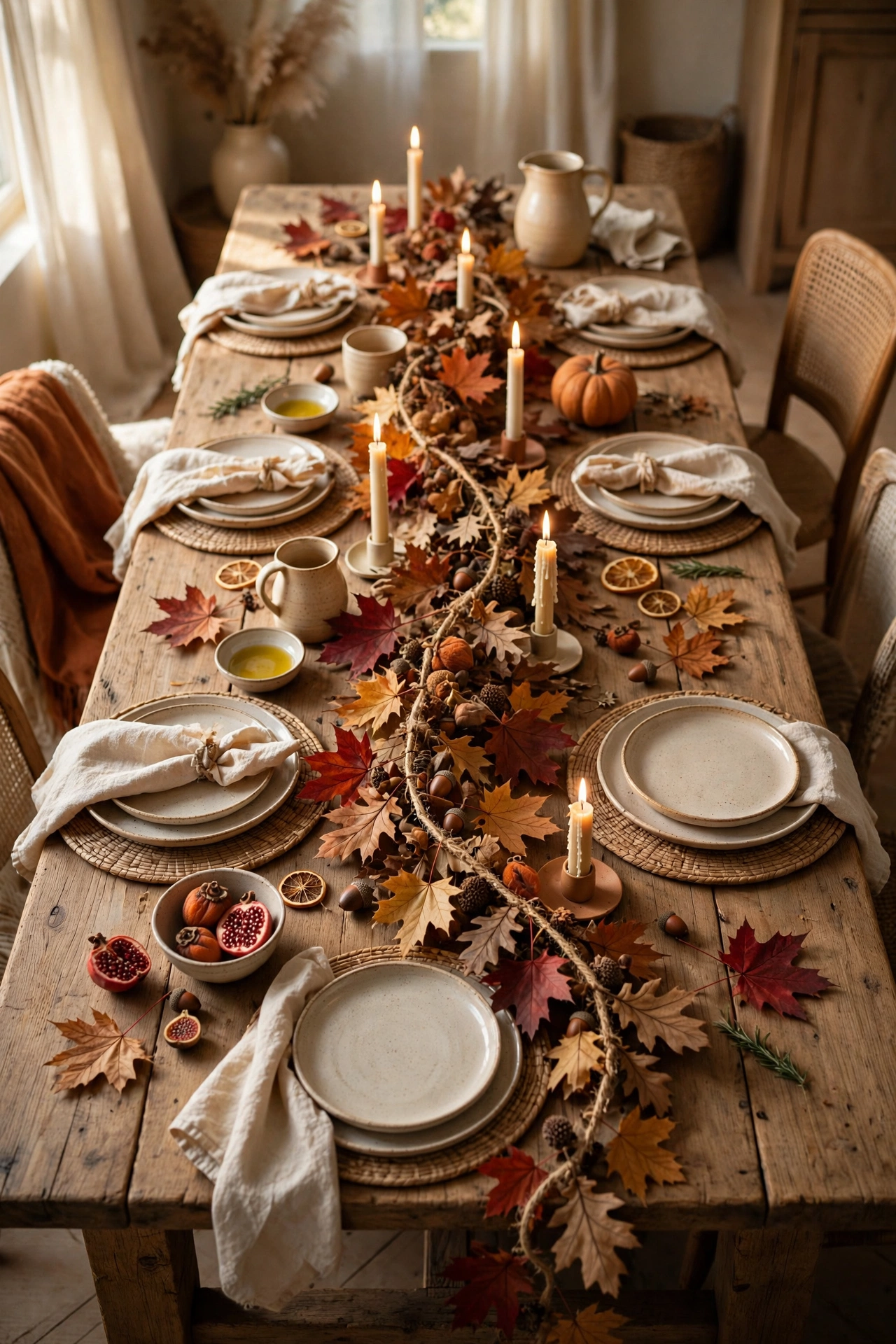
Thread fallen leaves onto a length of twine using a needle, spacing them a few inches apart, to create a natural garland that can run the length of the table as a base layer for other centerpiece elements. Choose sturdier leaves, like oak or maple, which hold up better to threading than more delicate, thinner leaves. Let the garland drape slightly between anchor points rather than pulling it taut, which gives it a more relaxed, natural line down the table. This idea pairs especially well with a few taper candles or small pumpkins placed directly on top of the garland for added dimension. Because the leaves are simply threaded rather than glued or wired, this project takes very little time once you’ve gathered enough material.
Related: 17 Christmas Centerpiece Ideas for Round Dining Tables
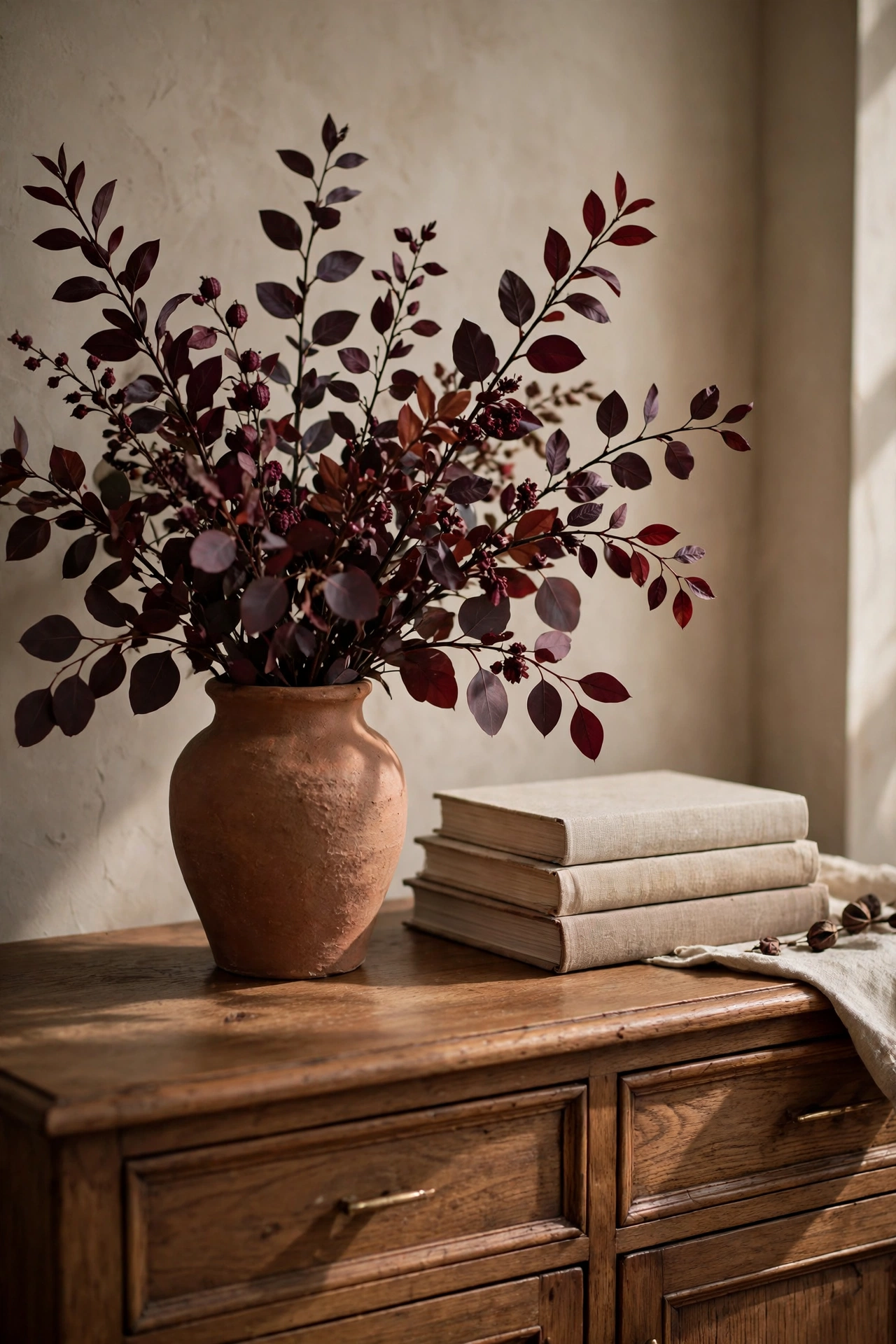
Style Deep Plum Foliage in a Terracotta Vase
Foliage in deeper plum, burgundy, or wine tones, like smoke bush, ninebark, or certain maple varieties, brings a richer, more sophisticated color story to a natural centerpiece when paired with a warm terracotta vase. The contrast between the cool-toned plum foliage and the warm, earthy vase color is a combination that’s shown up repeatedly in current fall design coverage. Keep the arrangement relatively simple, three to five stems is usually enough, so the deep color and vase both have room to stand out rather than getting lost in a busy, overfilled display. This idea works particularly well on a sideboard or buffet table if your main dining table centerpiece is already established elsewhere. Terracotta vases are also widely available secondhand, making this a fairly accessible look to put together.
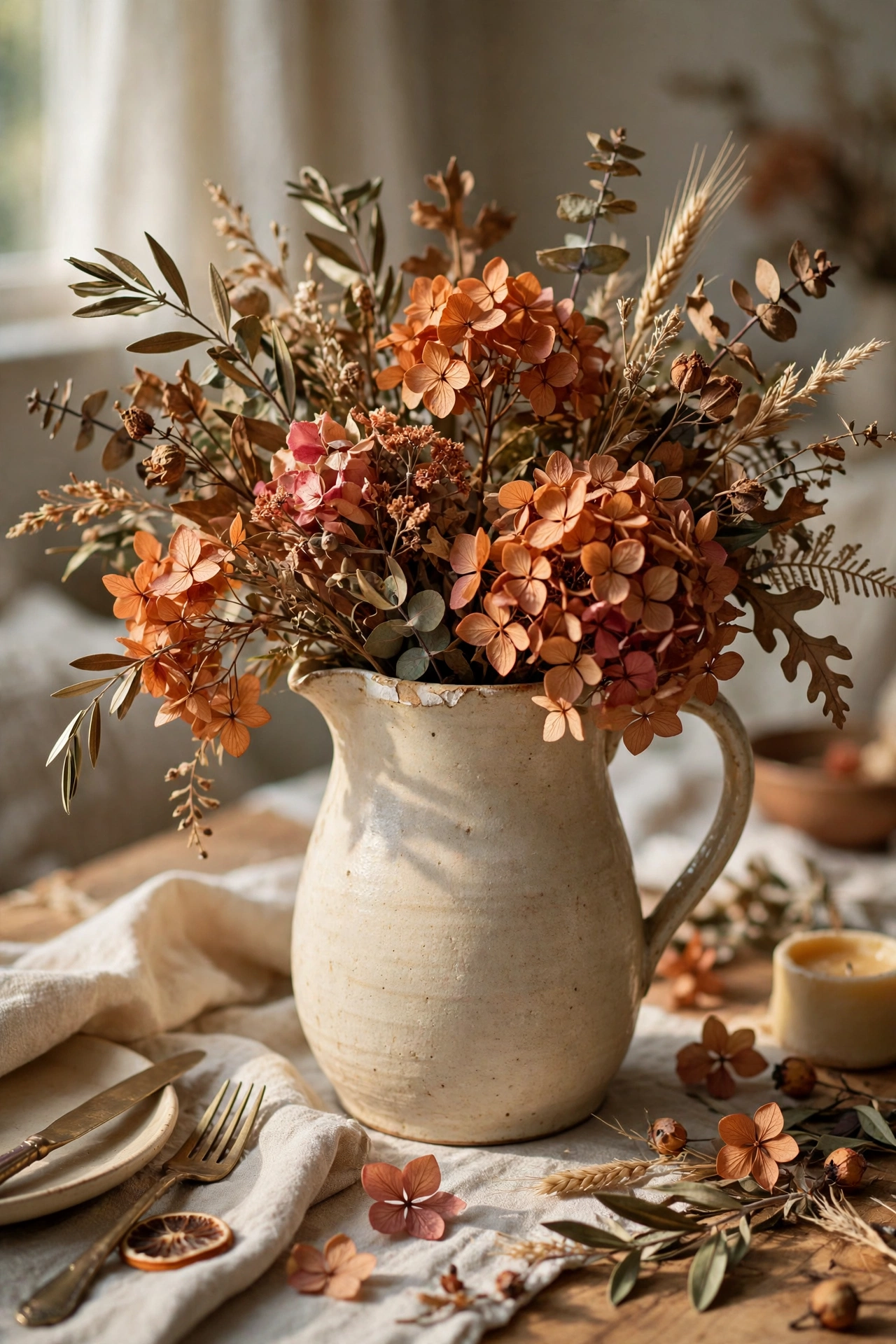
Fill a Ceramic Pitcher With Dried Hydrangea and Foliage
Dried hydrangea blooms, mixed with a few stems of foraged foliage, make a full, textural centerpiece that requires no water and holds up for weeks without wilting. Hydrangea naturally dries to a soft, papery texture in shades of burnt orange, dusty rose, or muted green, depending on the original bloom color, which pairs beautifully with the warmer tones of fall leaves. Arrange the dried blooms first to establish the overall shape, then tuck foliage stems in around the edges to fill any gaps. A ceramic pitcher with some visible age or imperfection in its glaze suits this look better than a perfectly smooth, new vessel. This is one of the most durable ideas on the list, since dried hydrangea can often be reused as decor well past Thanksgiving and into the winter months.
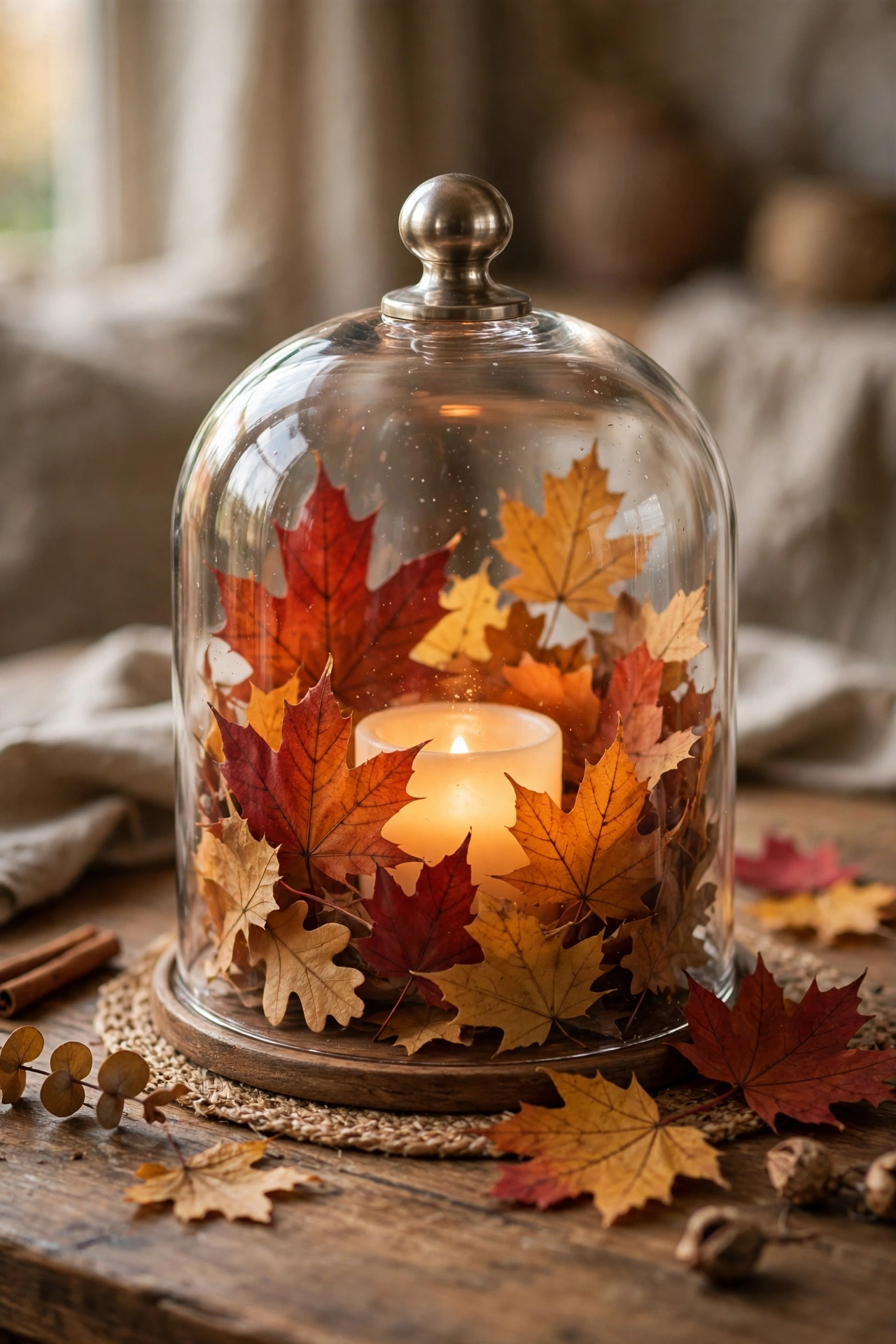
Build a Leaf-Filled Glass Cloche With a Candle
A glass cloche or hurricane, filled partway with loose fall leaves and topped with a flameless candle, creates a self-contained, glowing centerpiece that works well even on a table with limited space. Layer the leaves loosely rather than packing them tightly, so there’s enough visible depth and shadow once the candle is lit inside. This idea has become especially popular in fall decor coverage, since the clear glass showcases the leaves’ texture and veining in a way an open arrangement doesn’t. A cluster of three cloches in varying sizes down the table’s center makes a stronger visual statement than a single one, especially for a longer table. Use a flameless candle specifically for this idea, since a live flame near dry leaves inside an enclosed glass vessel is a genuine fire risk.
Float Leaves and Candles in a Shallow Water Bowl
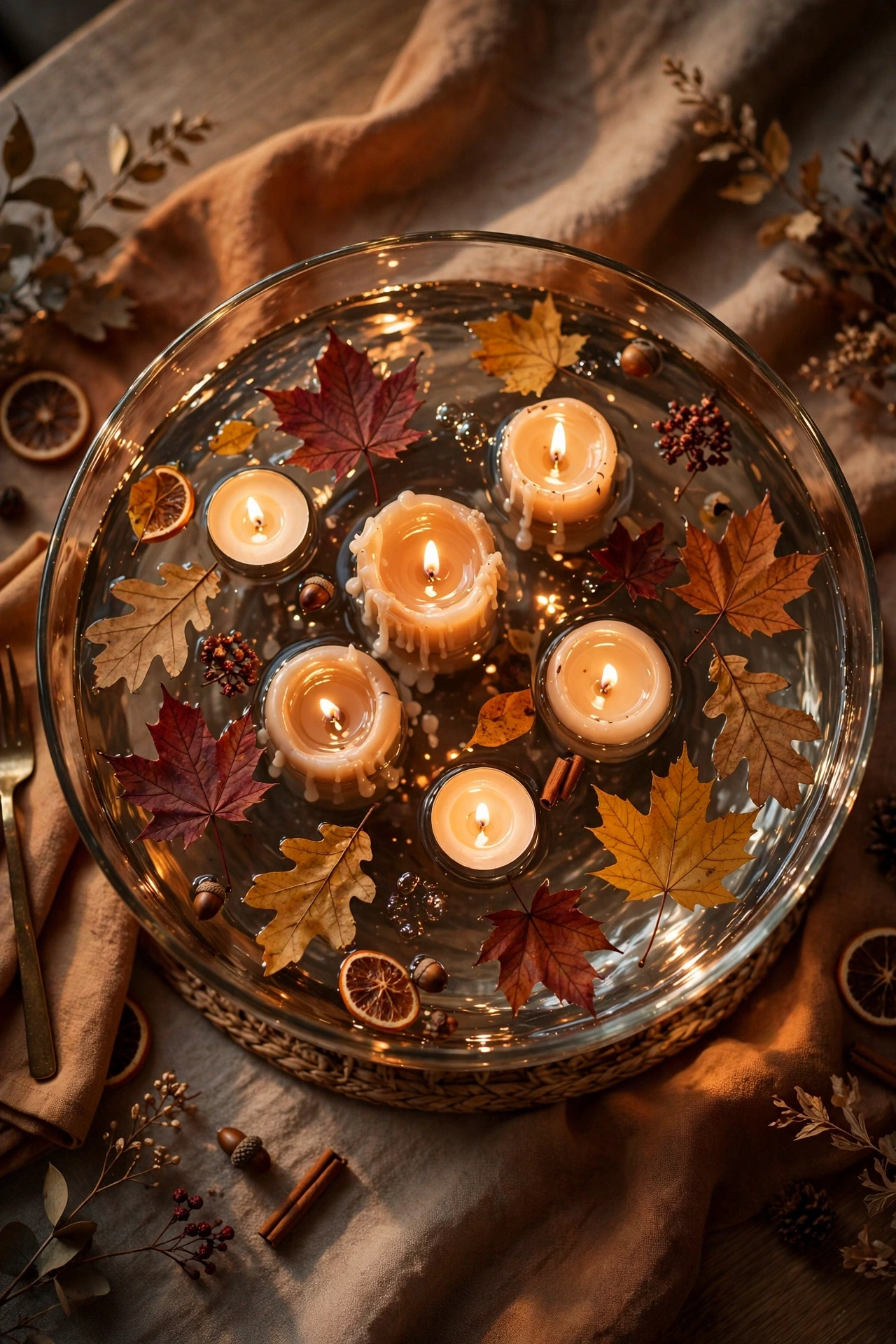
A wide, shallow bowl filled with water, a few floating candles, and a scattering of fresh fall leaves creates a serene, low-profile centerpiece that keeps sightlines completely open across the table. Choose leaves with a bit of natural stiffness, like oak or magnolia, which tend to float longer than thinner, more delicate leaves that can become waterlogged quickly. Arrange the leaves loosely around the candles rather than packing the bowl full, so the reflection of the candlelight on the water remains visible. This idea works especially well for an evening Thanksgiving dinner, since the combination of candlelight and water creates a soft, ambient glow. Because the leaves are floating rather than arranged in a fixed position, this centerpiece can be refreshed with new leaves in under a minute if needed.
Display Bittersweet Branches in a Tall Urn
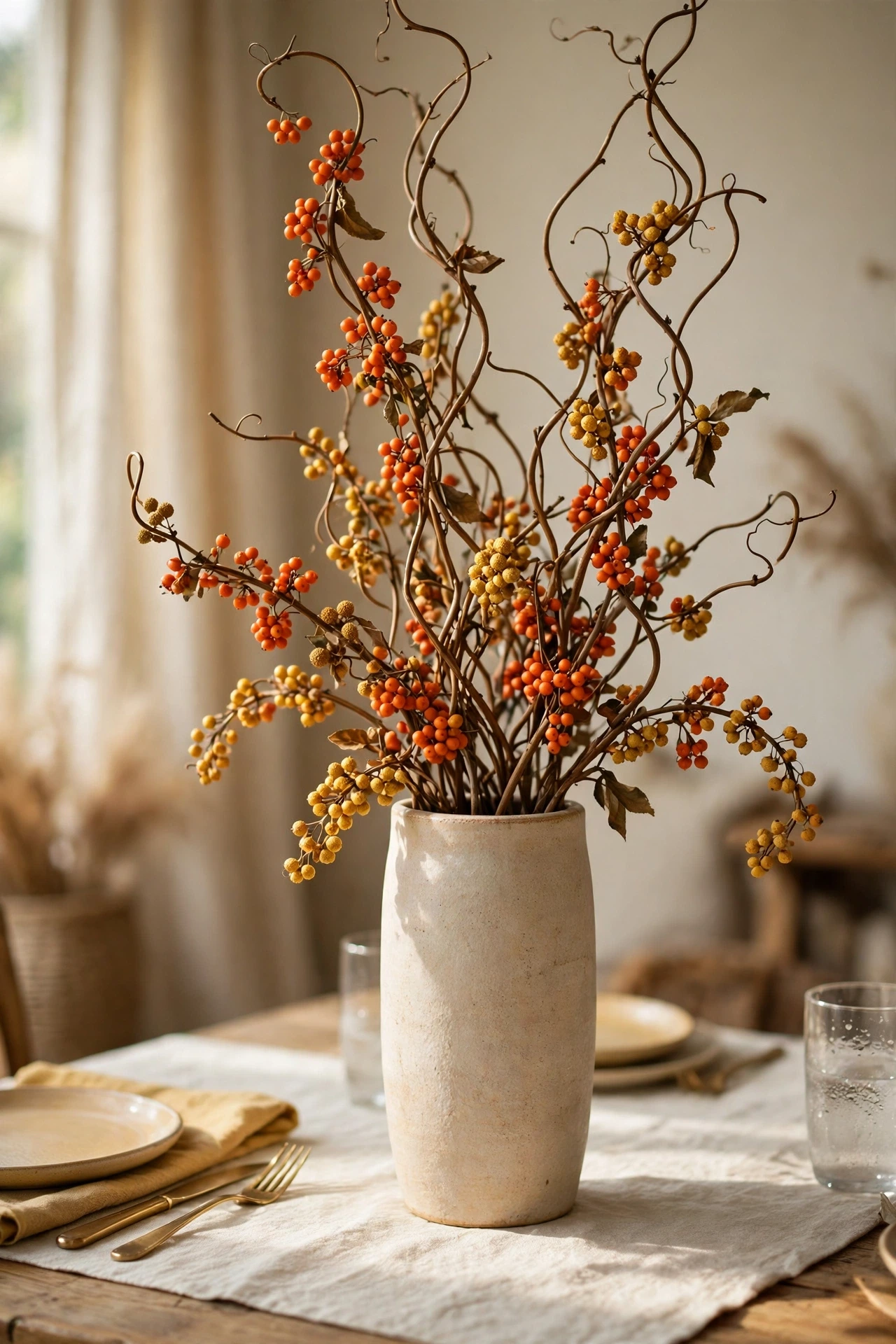
Bittersweet, with its distinctive orange and yellow berry clusters, makes a striking, architectural centerpiece when displayed simply in a tall urn or vase without much additional styling. The vine’s natural twisting growth pattern already provides plenty of visual interest, so resist the urge to add too many other elements alongside it. Because bittersweet dries well on the vine, this arrangement can be made well in advance and will hold its color and shape for weeks. Note that American bittersweet is the native, non-invasive variety in most regions, while Oriental bittersweet is considered invasive in many parts of the country, so it’s worth confirming which variety you’re foraging or purchasing before cutting a large quantity. This idea works particularly well as a tall, narrow centerpiece for a table that needs height without much width.
Combine Foraged Branches With Pyracantha Berries
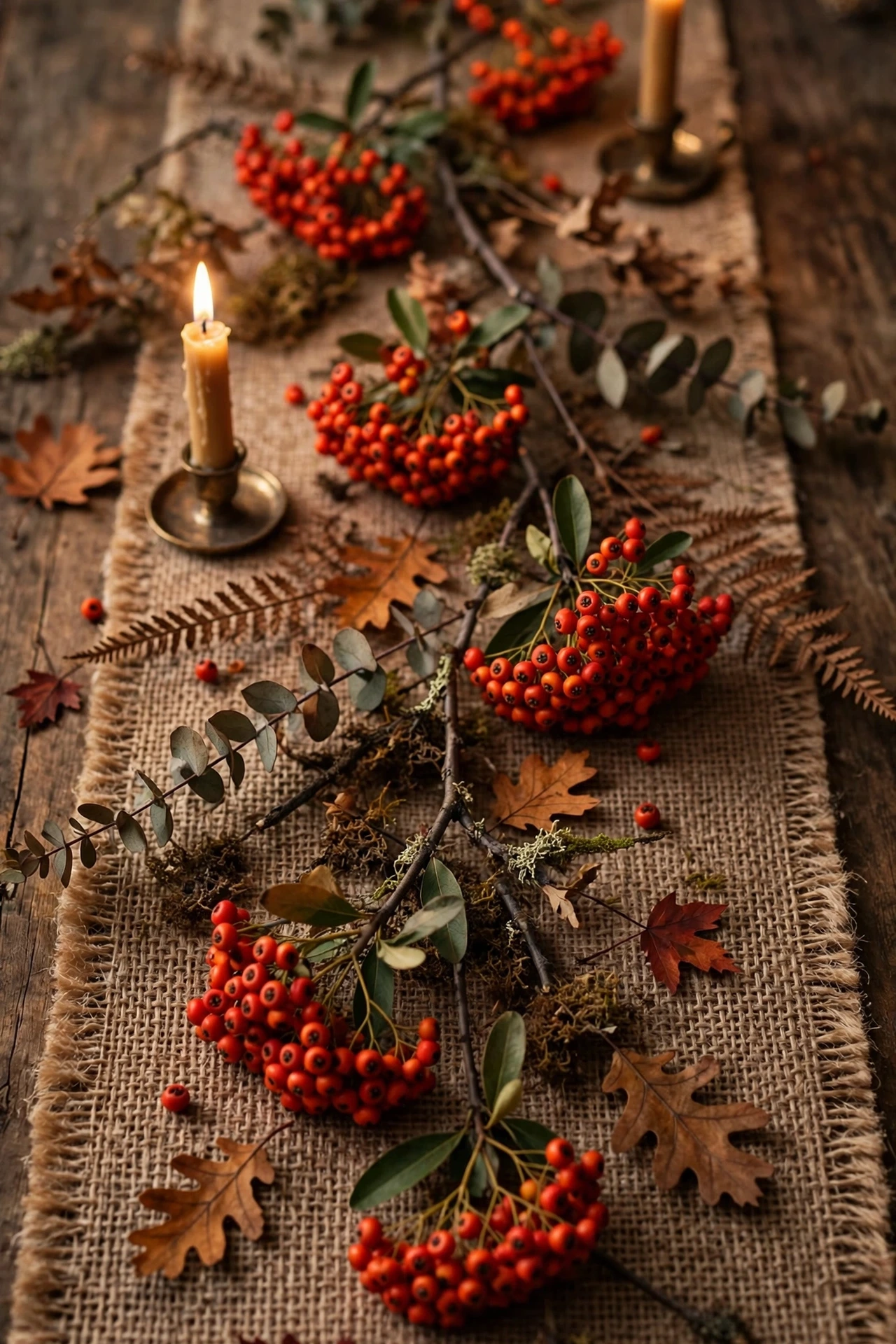
Pyracantha, also called firethorn for its bright red-orange berry clusters, adds a strong pop of color when mixed into a low arrangement of foraged branches and leaves. The berries hold their color well even after the branches are cut, making this a good choice for a centerpiece that needs to look vibrant through an entire evening. Combine pyracantha sparingly with more neutral-toned foliage, since the berries are bright enough to dominate an arrangement if used too heavily. This combination works particularly well scattered loosely down a table runner alongside a few low candles, rather than contained in a single dense arrangement. Handle pyracantha branches carefully, since the plant does have thorns, and keep any trimmed branches away from small children and pets, since the berries can cause stomach upset if ingested.
Related: 15 Christmas Floating Candle Centerpiece Ideas That Glow
Gather Wheat, Grasses, and Goldenrod for a Wild Bouquet
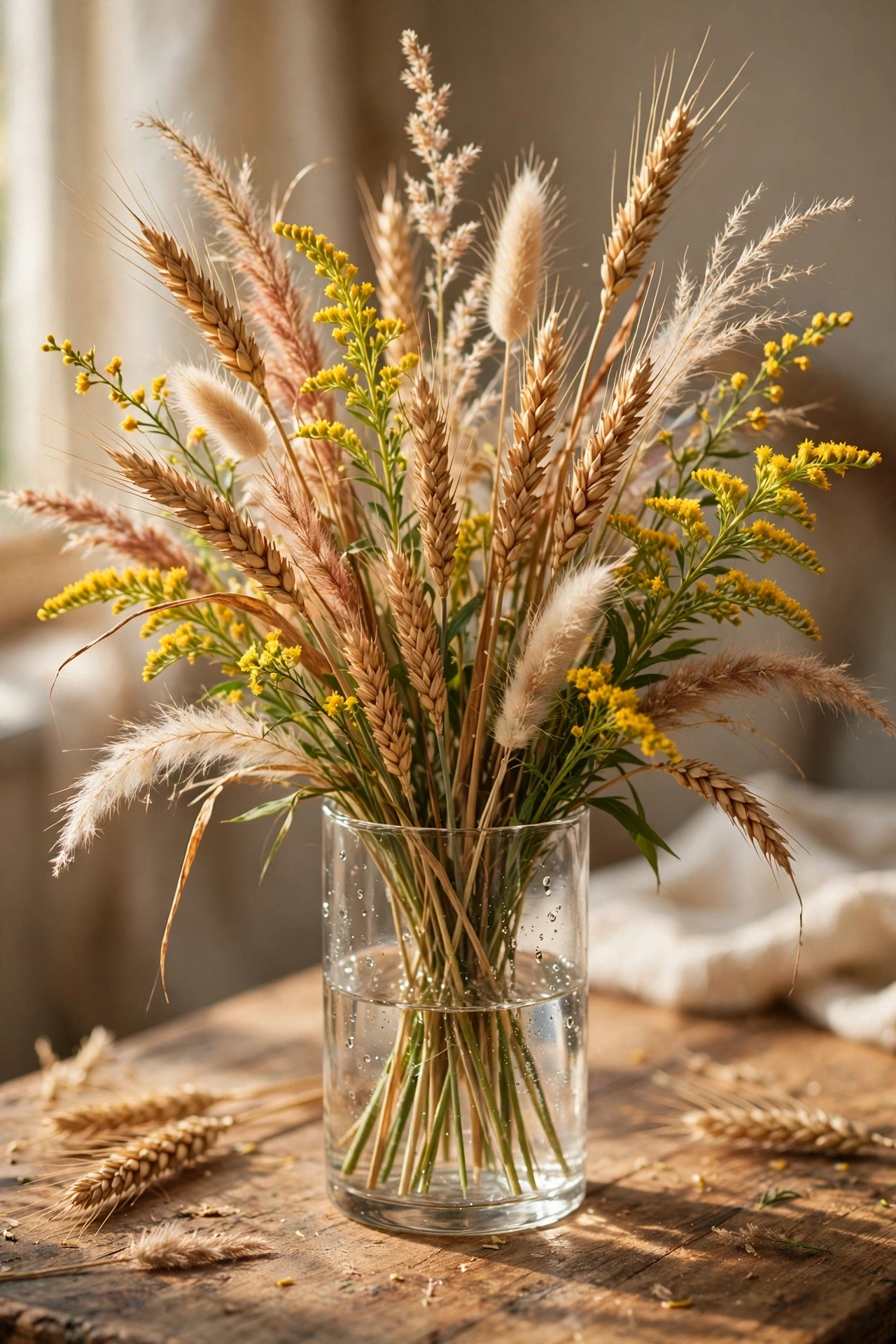
A loose, informal bouquet of wheat stems, ornamental grasses, and goldenrod captures a genuinely wild, meadow-like feeling that more structured floral arrangements don’t achieve. Gather stems of varying heights and let them fall naturally into the vase rather than trimming everything to a uniform length, since the slightly uneven silhouette is part of what makes this style work. Goldenrod in particular adds a bright, warm yellow that pairs beautifully with the golds and ambers already common in fall foliage, and despite common misconceptions, it isn’t typically responsible for fall allergies the way ragweed is. This arrangement dries well over time if left unwatered, meaning it can transition from a fresh centerpiece into a dried one without needing to be replaced. A simple, unfussy vase, like a mason jar or a plain glass cylinder, keeps the focus on the wild, textural quality of the stems themselves.
Scatter Acorns and Loose Leaves Directly on the Table
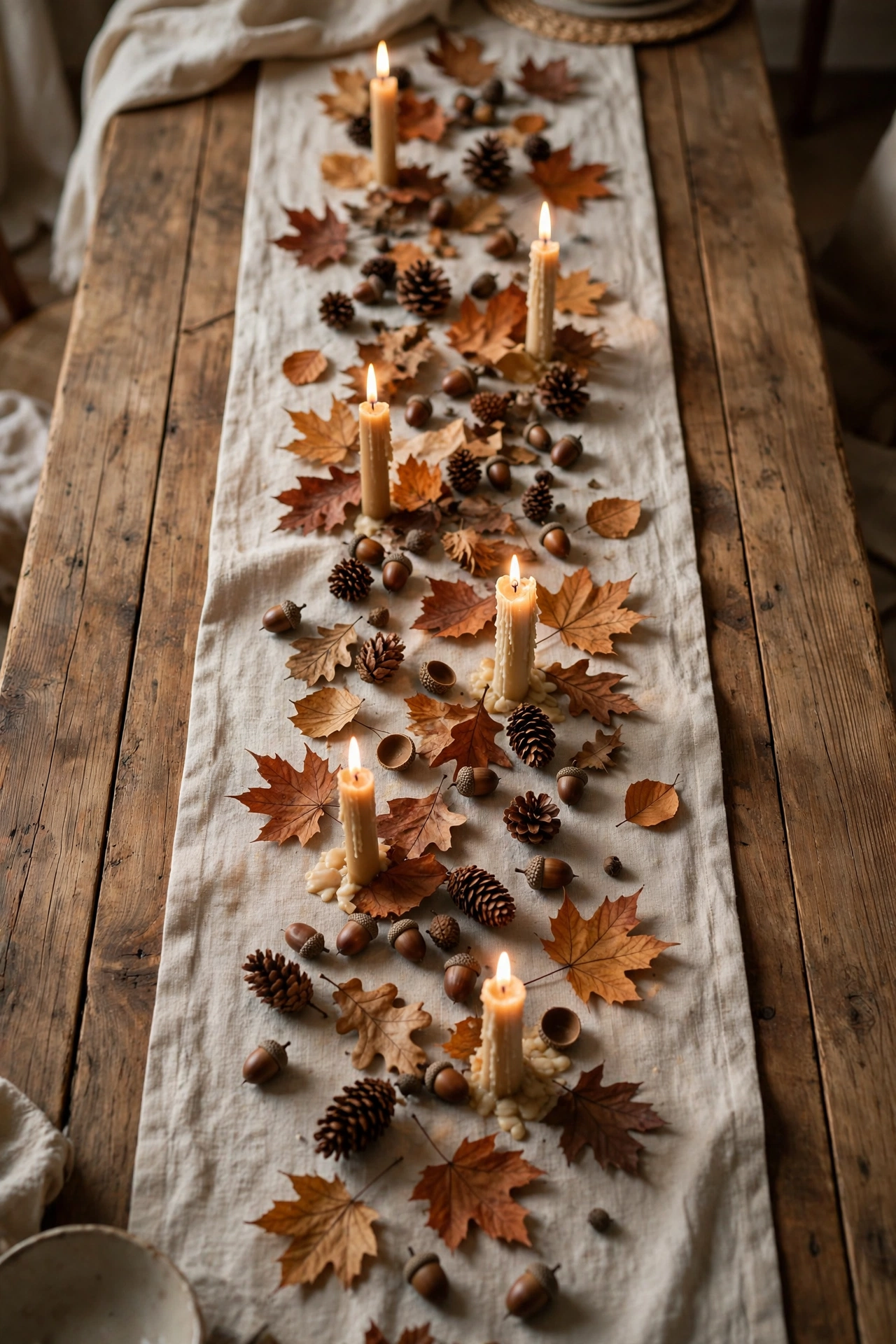
For a completely unstructured, foraged look, skip a vase or bowl entirely and scatter a loose mix of acorns, small pinecones, and fall leaves directly down the center of the table, either on the bare wood or over a plain linen runner. This is one of the fastest ideas on the list, since it requires no arranging beyond a quick gathering and loose distribution by hand. Add a few taper candles directly into the scattered material at varying heights for a bit of structure and evening glow. This style works especially well for a casual Friendsgiving or a table that already has other decor elements, like a floral centerpiece, and just needs a bit of texture filled in around it. Sweep the material into a small bowl for easy cleanup once the table needs to be reset for dinner.
Build an Architectural Arrangement With Milkweed Pods and Dried Grasses
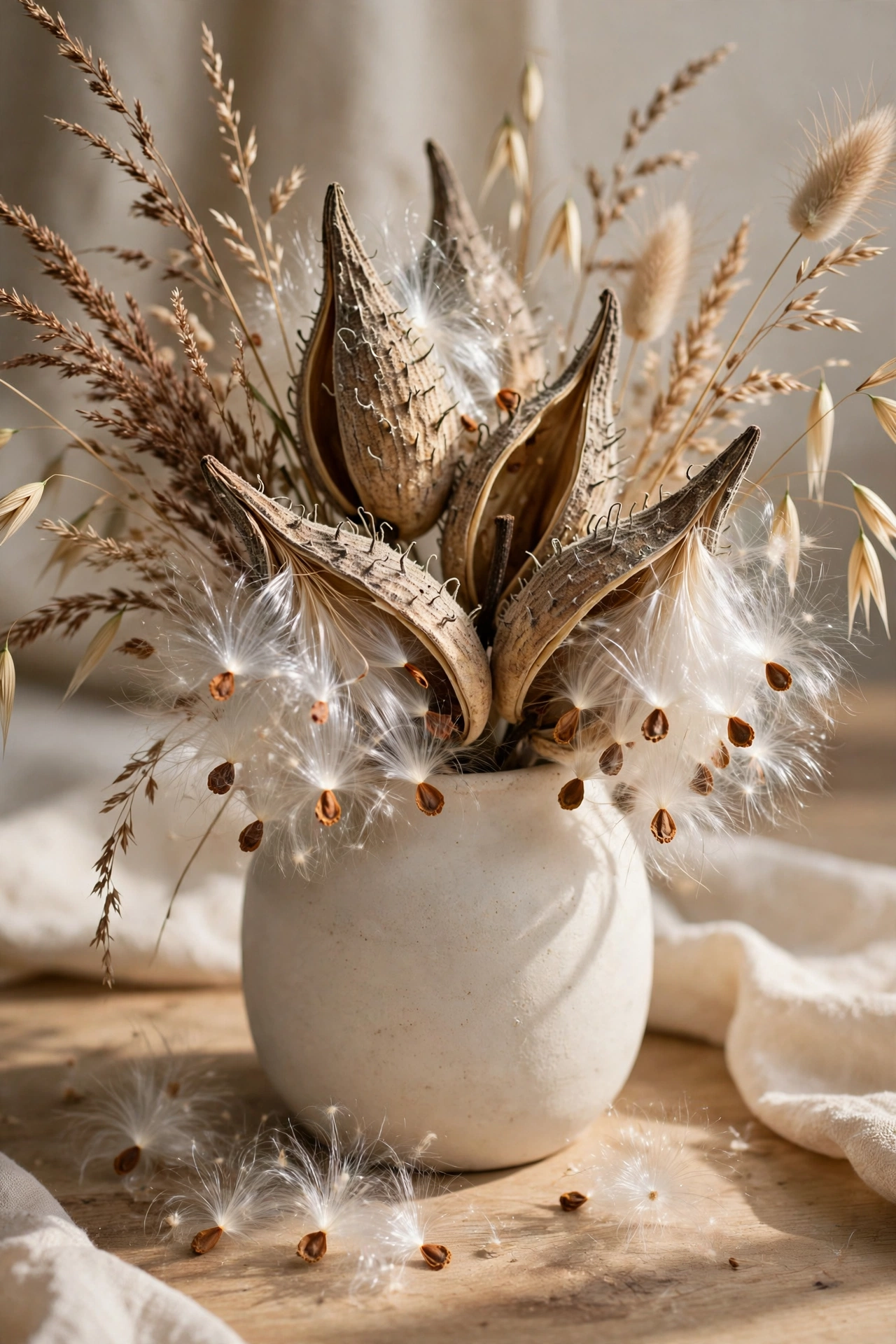
Milkweed pods, once dried and opened, reveal a distinctive silvery-brown texture that adds an unusual, almost sculptural element to a natural centerpiece. Pair a handful of opened pods with dried ornamental grasses in a simple vase for an arrangement that leans more architectural and modern than a typical soft floral display. This combination works particularly well in a minimalist or Scandinavian-inspired dining room, where the natural but slightly graphic texture of the pods fits the room’s existing aesthetic. Because everything in this arrangement is already dried, it requires no water and will last for the entire fall season without any maintenance. Handle milkweed pods gently once opened, since the silky seed fluff inside can scatter easily if the pods are jostled too much during arranging.
Tie Mini Oak Leaf and Berry Bundles at Each Place Setting
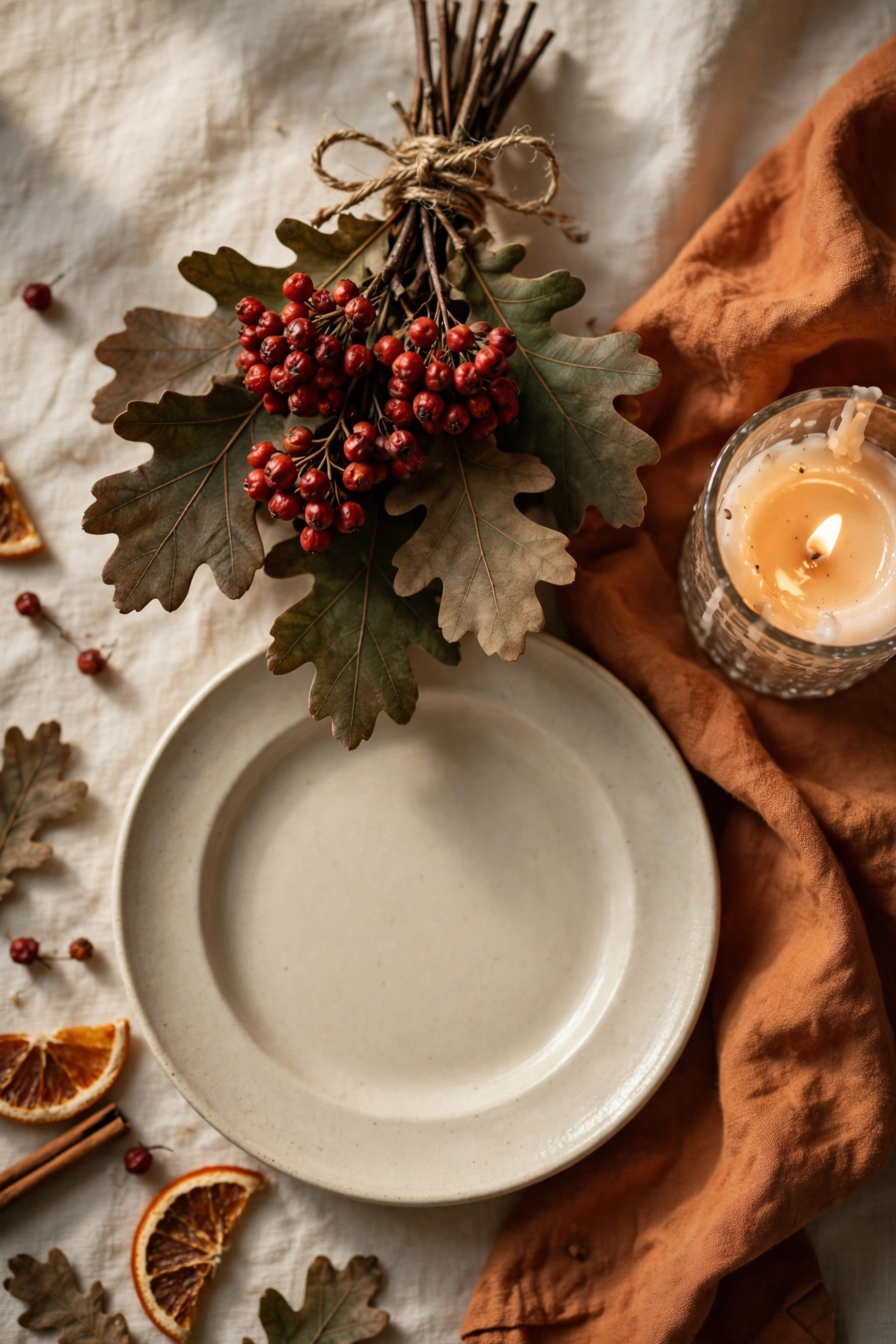
Rather than a single large centerpiece, create small individual bundles of oak leaves and a few red berries, tied together with twine, and place one at each guest’s setting instead of or alongside a shared centerpiece. This gives every seat at the table a personal touch of natural styling without requiring a large, elaborate central arrangement. Keep each bundle small enough to sit comfortably above a plate without crowding the place setting, generally just three or four leaves and a small berry cluster. This idea also doubles as a simple, meaningful take-home favor, since guests can bring their bundle with them at the end of the night. It’s a particularly good option for larger gatherings where a single centerpiece might not be visible or reachable from every seat.
Preserve Leaves in Glycerin for a Longer-Lasting Bowl Display
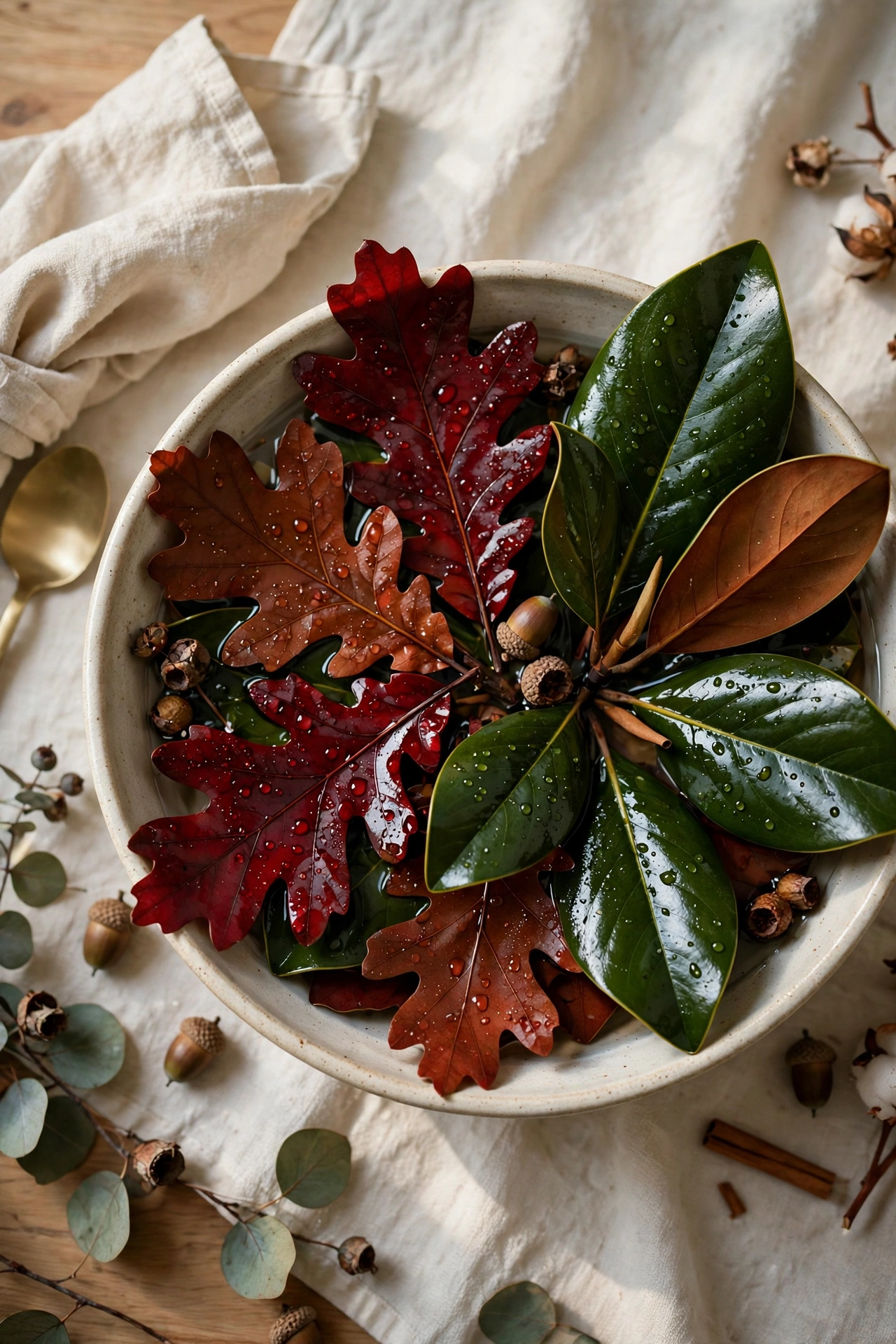
Leaves preserved in a glycerin and water solution stay soft, pliable, and richly colored for months rather than drying out and curling the way untreated leaves do within a week or two. Submerge freshly cut branches, still attached to their stems, in a mixture of one part glycerin to two parts water for several days, allowing the solution to draw up through the stem and into the leaves. Once preserved, arrange the branches or loose leaves in a low bowl for a centerpiece that can be reused season after season without wilting. This technique works especially well with sturdier leaf types, like oak, magnolia, and beech, which hold up better to the preservation process than more delicate, thin-leaved varieties. Because this method takes several days to complete, it’s best started at least a week before Thanksgiving if you want the leaves ready in time.
Arrange Ferns and Seed Heads for a Woodland-Inspired Look
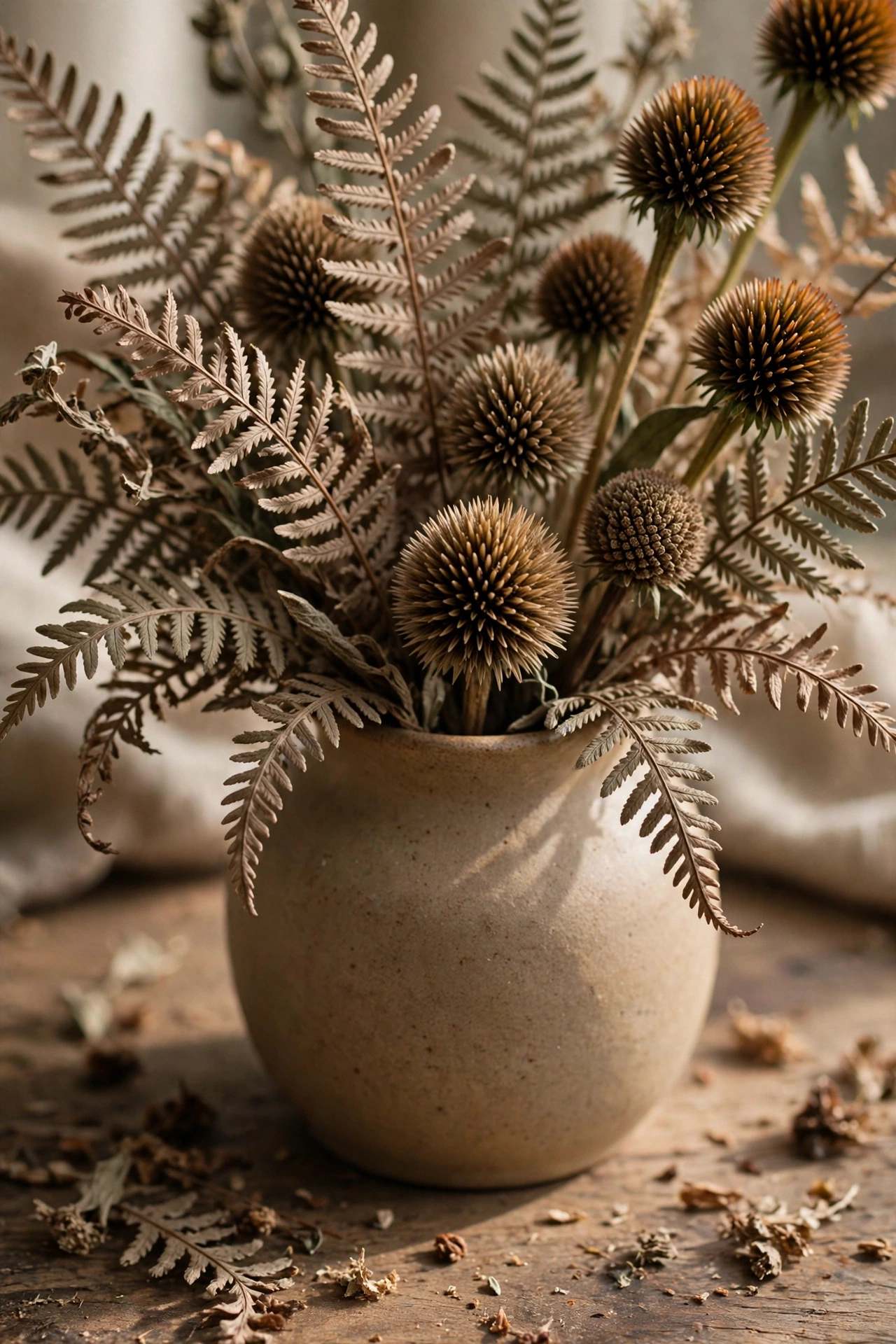
For a softer, more muted take on natural styling, combine dried ferns with seed heads from plants like echinacea or black-eyed Susan for an arrangement that feels more like a walk through the woods than a traditional fall bouquet. This combination leans into browns, tans, and soft greens rather than the brighter oranges and reds typically associated with fall, offering an alternative color story for hosts who want something quieter and more understated. Arrange the ferns loosely as a base layer, then add seed heads at varying heights throughout for texture and visual interest. This style works particularly well in a rustic or farmhouse dining room, where the muted, woodland palette complements natural wood tones already in the room. Both ferns and seed heads dry well in place, meaning this arrangement can be made well ahead of the holiday without any risk of wilting.
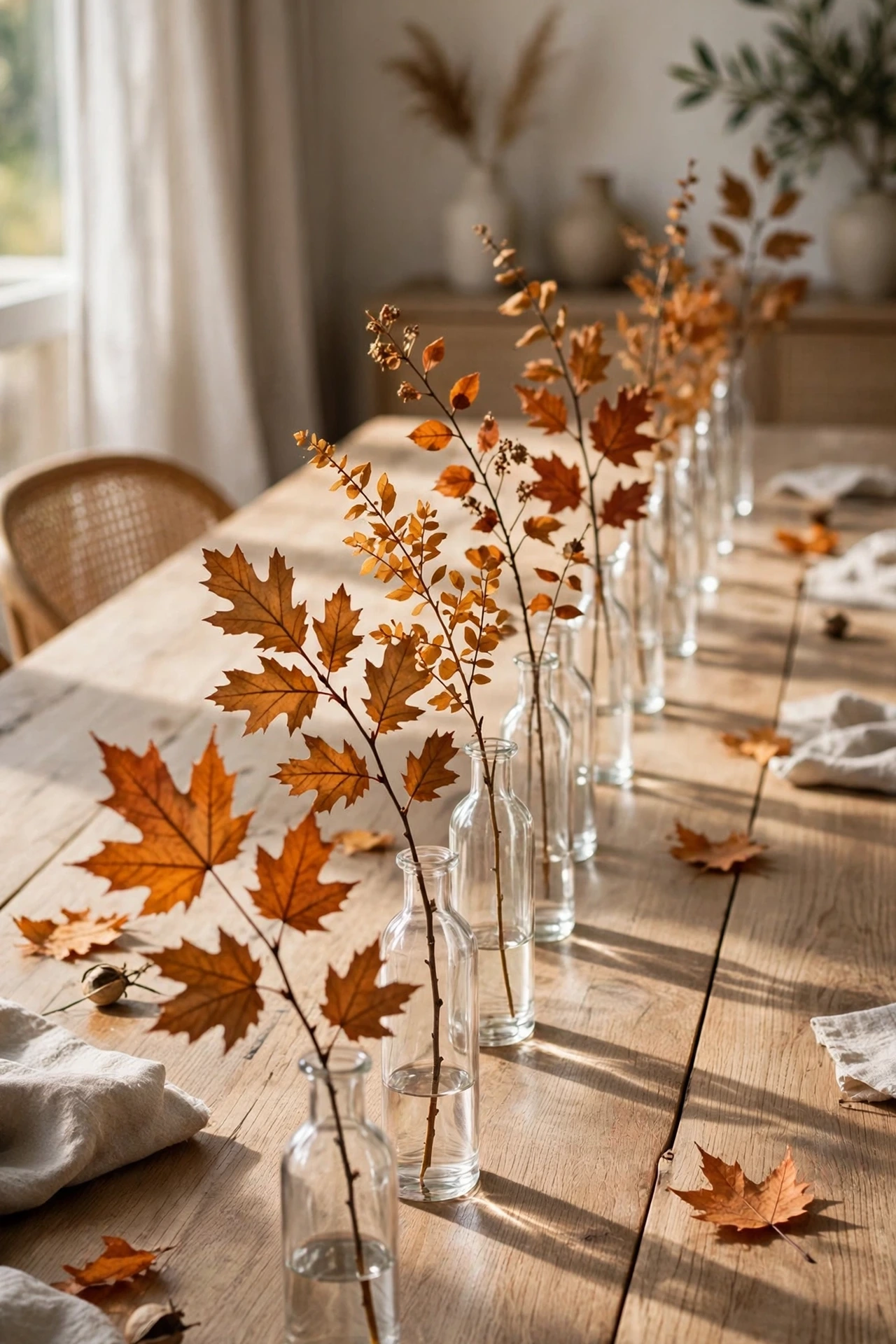
Line the Table With Single-Stem Bud Vases
Rather than one large arrangement, place a row of small bud vases down the table’s center, each holding a single foraged stem, leaf branch, or small flower. This minimalist approach has grown increasingly popular in current fall design coverage, since it keeps sightlines completely open while still bringing natural foliage to the table in a considered, modern way. Vary the vase heights slightly and mix a few different stem types, like one vase with a maple leaf branch and another with a single dried hydrangea bloom, so the row doesn’t feel too repetitive. This idea also uses relatively little material compared to a full centerpiece, making it a good option if your foraging haul is smaller than expected. Clear or amber-tinted glass bud vases keep the focus on the stems themselves rather than an ornate container.
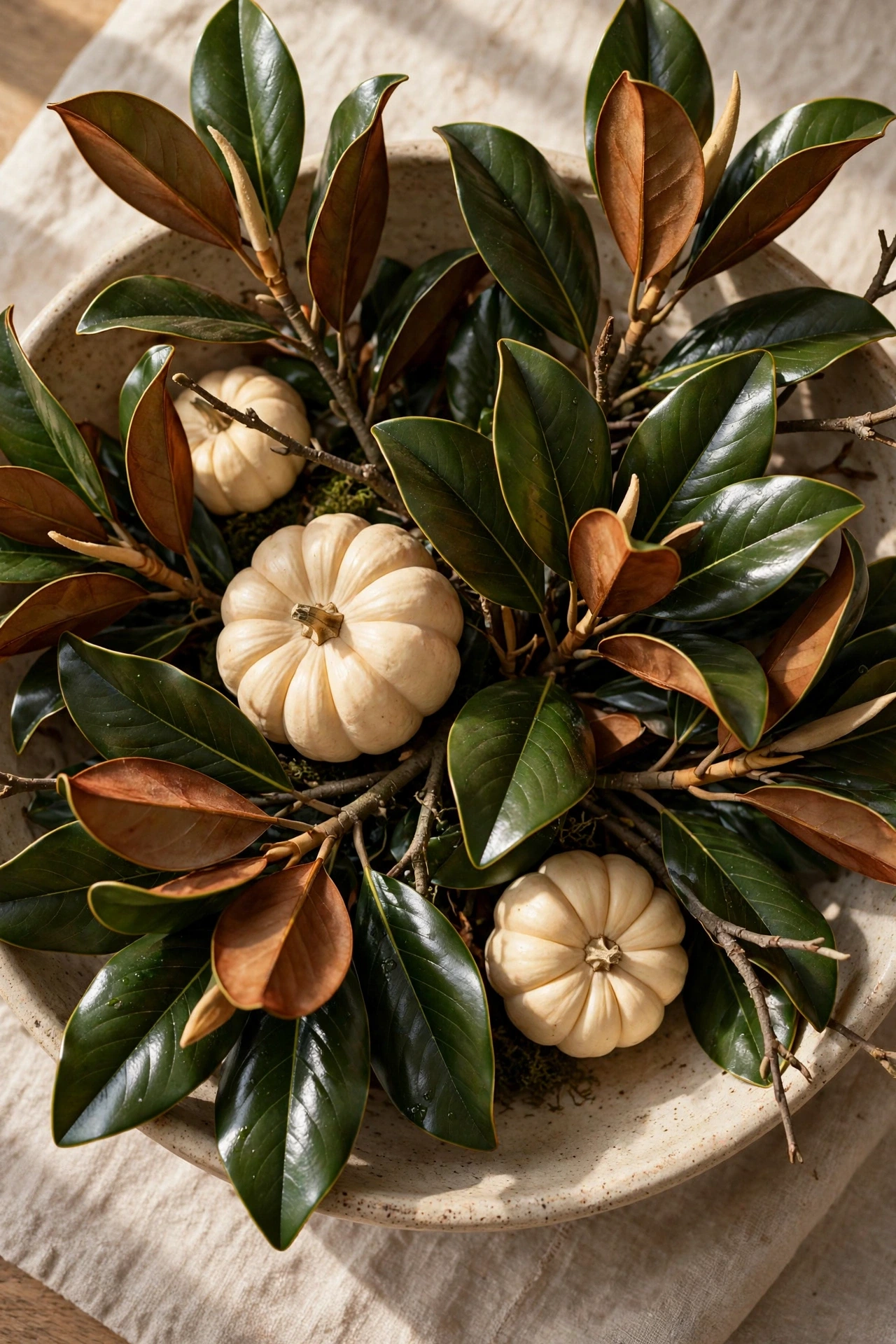
Style Glossy Magnolia Branches in a Low Arrangement
Magnolia branches, with their large, glossy, dark green leaves that often have a soft, brown-toned underside, bring a rich, substantial texture to a centerpiece that lighter fall leaves don’t provide. Arrange several branches low and full in a wide bowl or dish, letting the leaves’ natural curl and two-toned color do most of the visual work without much additional embellishment. Magnolia leaves are naturally sturdy and long-lasting once cut, often holding their shape and color for several weeks even without water, which makes this one of the most durable ideas on the list. This arrangement pairs beautifully with a few cream or white pumpkins nestled among the branches for contrast. Because magnolia branches are substantial and heavy, choose a stable, wide-based container that won’t tip under their weight.
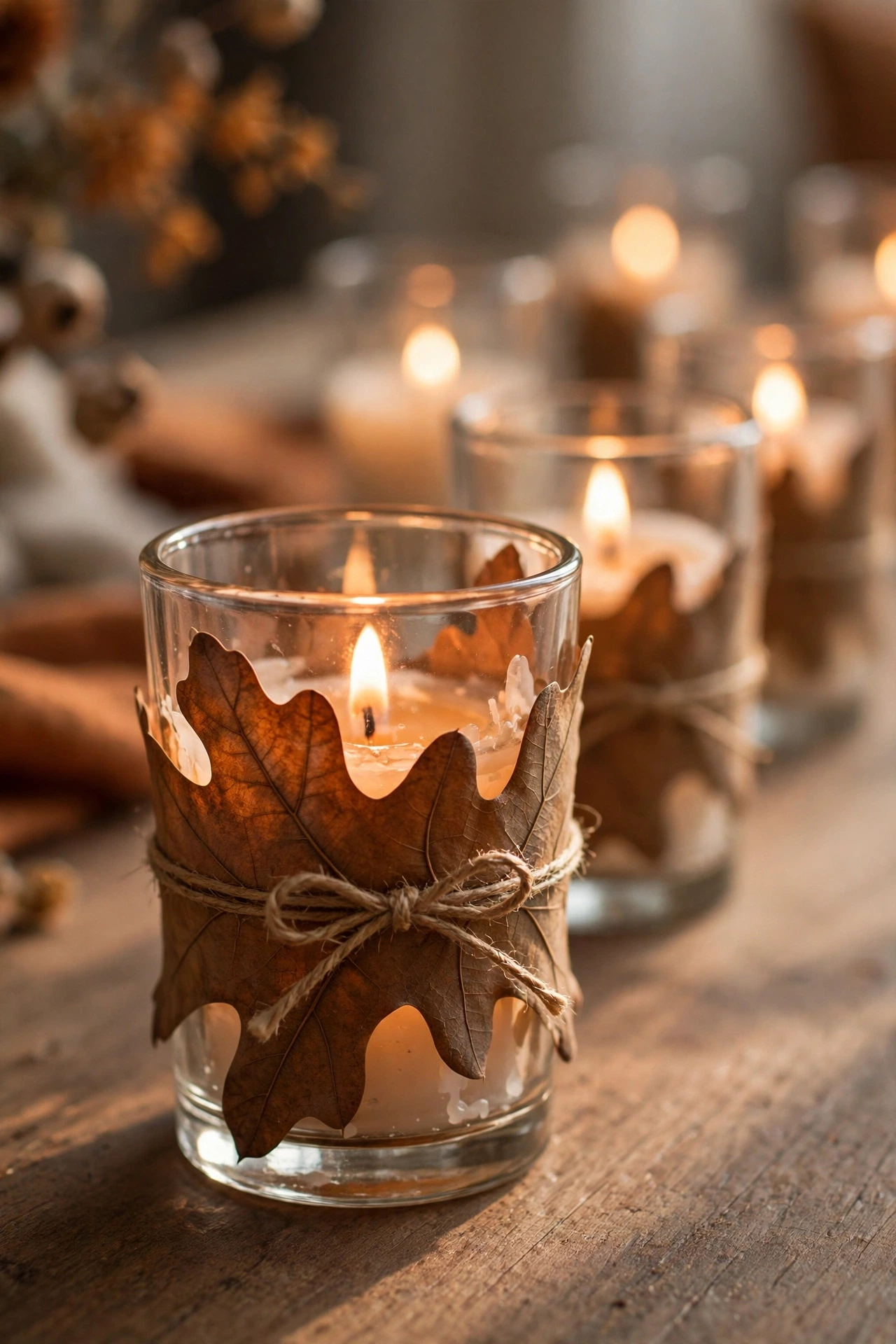
Wrap Fresh Leaves Around Glass Votive Holders
Wrap a single large leaf, or two smaller overlapping ones, around the outside of a clear glass votive holder, securing it in place with a thin piece of twine tied in a small bow. The candlelight from inside illuminates the leaf’s veining and translucent edges once lit, creating a warm, glowing effect that a plain glass votive doesn’t achieve on its own. Line several of these leaf-wrapped votives down the table’s center for a cohesive, repeated detail that ties the whole table together with minimal material. Choose leaves with some natural stiffness, like oak or maple, which hold their wrap shape better than very thin or delicate leaves. Because fresh leaves will dry out and curl within a few days, this idea is best assembled the day of or the day before your Thanksgiving dinner for the best appearance.
How to Preserve Fall Foliage for a Longer-Lasting Centerpiece
Pressing leaves flat between the pages of a heavy book for about a week keeps their shape and much of their color intact, making them ideal for runners or flat decorative accents rather than dimensional arrangements. A glycerin and water solution, at a ratio of roughly one part glycerin to two parts water, preserves branches and leaves in a soft, pliable state that can last for months, which works best for sturdier leaf types like oak, magnolia, and beech. Simply air-drying stems upright in a vase without water, which works well for hydrangea, wheat, grasses, and seed heads, is the lowest-effort preservation method and requires no special materials at all. Choosing naturally long-lasting foliage from the start, like magnolia or oak leaves, over more delicate, thin-leaved varieties will always extend the life of an arrangement more than any preservation technique applied afterward.
Styling Tips for a Cohesive Natural Table
Repeat two or three of the same foliage types across multiple points on the table, like the centerpiece, the place settings, and any candle styling, so the natural elements feel connected rather than randomly assorted. Keep containers simple and slightly imperfect, like unglazed ceramic, aged terracotta, or plain glass, so the foliage itself remains the visual focus rather than competing with an ornate vase. Vary height across the table by combining at least one low arrangement with something taller, like a bud vase row or an arching branch display, so the table doesn’t read as visually flat. Warm candlelight consistently makes fall foliage colors look richer and more saturated than they appear under bright daytime light, so plan at least one lit element if your Thanksgiving dinner happens in the evening.
Common Mistakes to Avoid
Using foliage that’s already past its peak color and starting to brown is one of the most common missteps, so gather material as close to the day of your gathering as reasonably possible for the freshest appearance. Overpacking a container with too much material at once can hide the natural, individual shape of each leaf or branch, so it helps to edit down rather than use everything you gathered in a single arrangement. Forgetting to check for insects or debris hiding in freshly foraged branches before bringing them inside can lead to an unpleasant surprise once the material warms up indoors, so a quick shake and inspection outside is worth the extra minute. Finally, skipping any research on plant identification before foraging unfamiliar berries or seed pods risks bringing something toxic into a home with children or pets present.
Small-Table Alternatives
For a smaller Thanksgiving table, a single row of bud vases or a small cluster of two or three leaf-wrapped votives delivers the same natural aesthetic without requiring a large, space-consuming arrangement. A shallow bowl of scattered acorns and leaves, sized down to just a few handfuls, works well as a compact centerpiece for a table for four to six people. Mini oak leaf and berry bundles at each place setting are especially useful for small tables, since they distribute the natural styling across individual seats rather than relying on one central piece that has to compete with serving dishes for space. Choosing one or two ideas rather than combining several ensures a small table doesn’t feel overcrowded once food and dinnerware are added.
Related: 16 Christmas Dough Bowl Centerpiece Ideas to Try
Budget-Friendly Alternatives
Foraging is inherently the most budget-friendly approach on this entire list, since branches, leaves, acorns, and seed heads gathered from your own yard or a local park cost nothing beyond the time it takes to collect them. Pressing and preserving foliage yourself, rather than buying pre-preserved decorative leaves, requires only a heavy book or a bottle of glycerin, both of which are inexpensive and often already on hand. Simple containers, like mason jars, thrifted ceramic bowls, or a plain glass vase, cost far less than a dedicated decorative centerpiece bowl and work just as well for showcasing natural material. Reusing dried arrangements, like dried hydrangea or preserved leaves, across multiple years reduces the need to gather or buy new material every single season.
Pro Styling Recommendations
Professional florists and stylists typically build a natural arrangement by establishing the tallest or most structural element first, then filling in with supporting foliage and finally the smallest textural details, like berries or seed heads, rather than adding everything at once. Odd numbers of stems, containers, or focal points consistently look more intentional and less rigid than even, perfectly matched groupings. Leaving visible negative space around a natural arrangement, rather than filling every possible gap, tends to look more elevated and considered than an overly full display. Finally, choosing foliage native to your own region rather than exotic or store-bought stems not only supports more sustainable foraging but also tends to result in a centerpiece that looks more authentically connected to the season and place.
FAQs
Conclusion
A truly natural Thanksgiving centerpiece doesn’t come from a craft aisle, it comes from a walk outside, a pair of clippers, and a willingness to let real branches and leaves look the way they actually grow. Start with whatever’s genuinely available near you this season, whether that’s a yard full of maple leaves or a single foraged branch of bittersweet, and build the simplest version of one of these ideas first. The slightly imperfect, unpolished quality that comes from working with real material is exactly what makes this style feel more personal, and more truly seasonal, than anything bought pre-made.