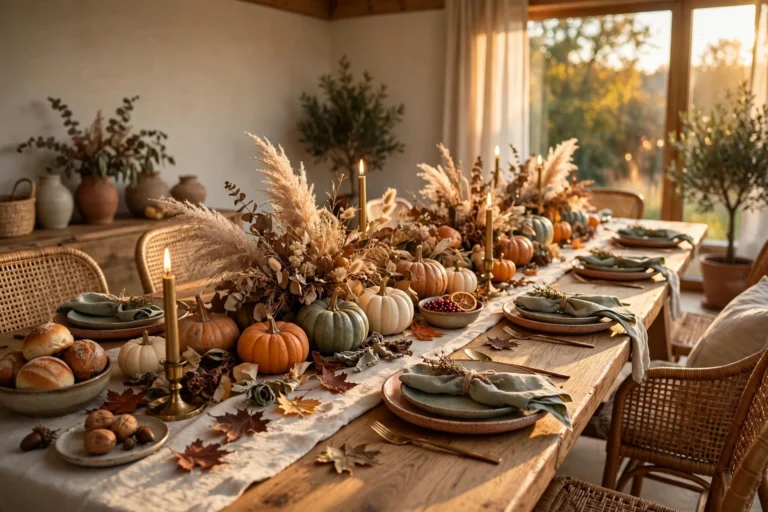
17 Pumpkin Floral Centerpiece Ideas for Thanksgiving
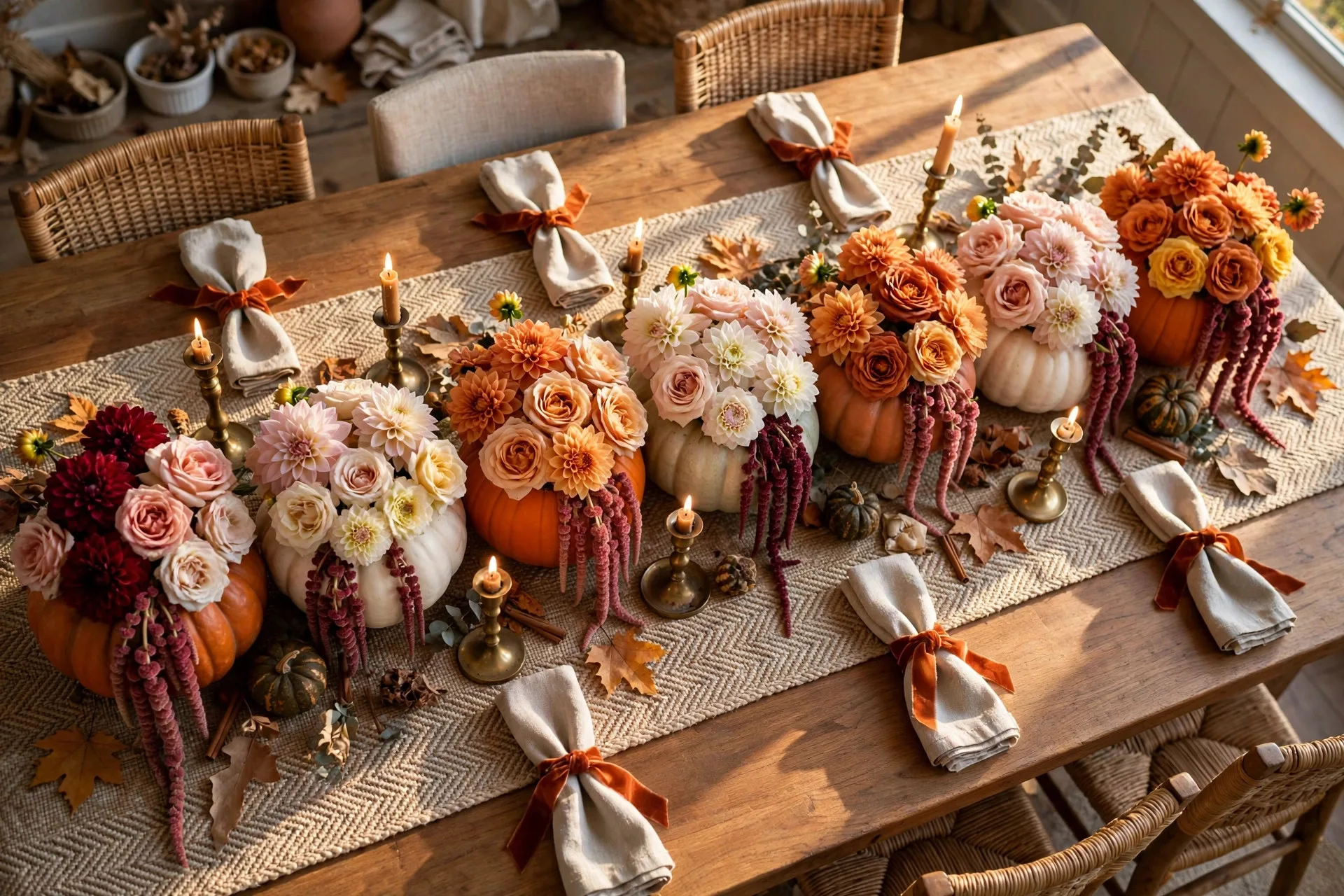
The pumpkin on your porch is doing fine work outside. The one on your Thanksgiving table can do so much more.
A hollowed pumpkin holds water and floral foam just as well as any ceramic vase, and it comes with something a store-bought vase never will: a shape and texture that says “fall” the moment someone walks into the room. That’s part of why pumpkin floral arrangements show up on so many Thanksgiving tablescapes — they’re inexpensive, they photograph beautifully, and they don’t require a single trip to a florist’s cooler section.
This list covers 17 different ways to build one, from a single heirloom pumpkin overflowing with dahlias to a row of mini pumpkins doing double duty as place cards. Some use fresh flowers, some use dried or faux, and several are built for smaller tables or tighter budgets. Pick one, mix two, or use this as a jumping-off point for your own version.
Table of Contents
17 Pumpkin Floral Centerpiece Ideas for Thanksgiving
1. Classic Heirloom Pumpkin Vase with Garden Roses and Dahlias
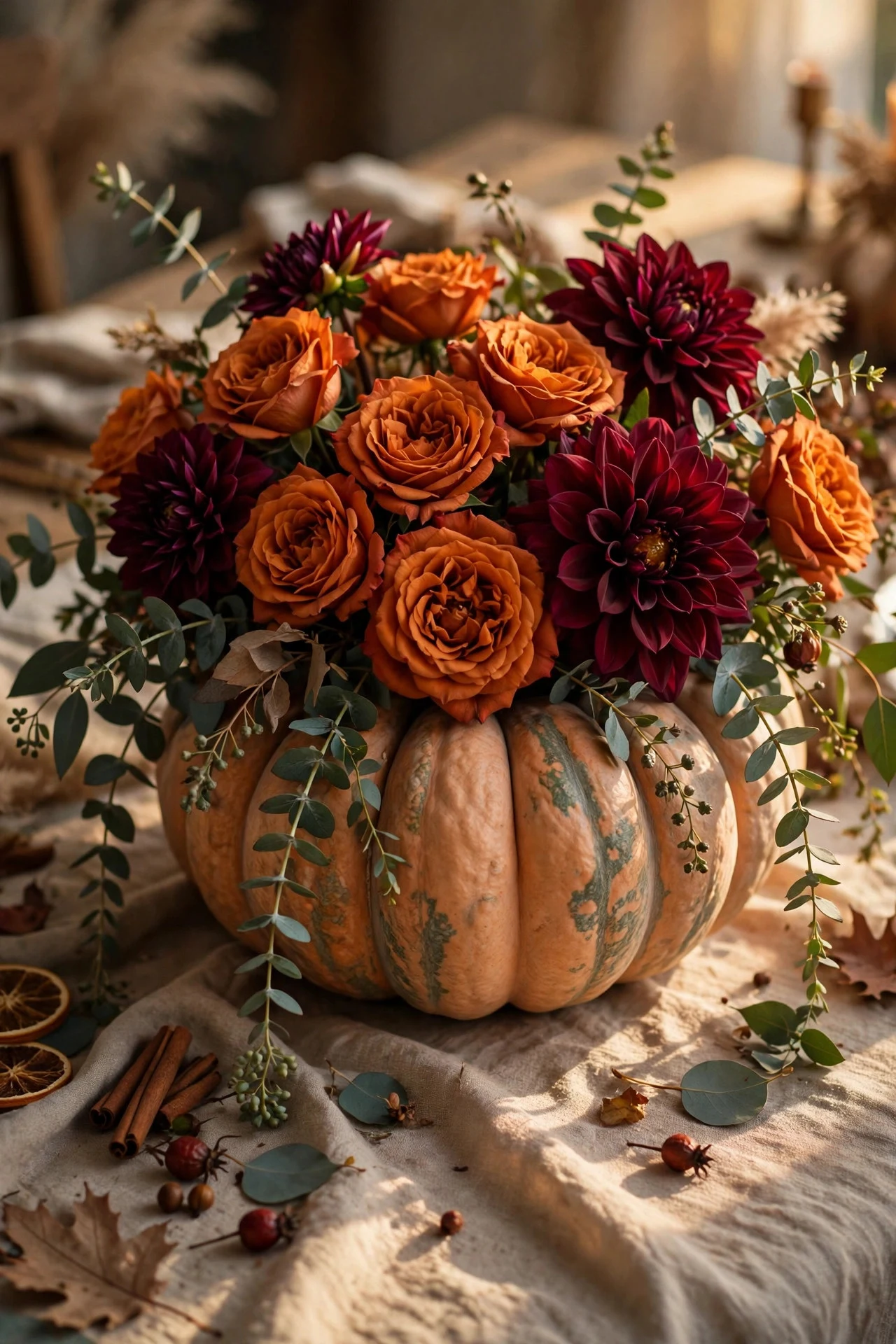
Start with a Cinderella or fairytale pumpkin — the ridged, flattened variety with deep orange-to-terracotta coloring — and hollow it out to hold a small glass bowl or floral foam brick. Garden roses in dusty rose and burnt orange give the arrangement a full, romantic base, while a few dinner-plate dahlias in burgundy add weight and drama without crowding the shape. Tuck in eucalyptus or trailing ivy along the rim so the greenery spills over the pumpkin’s edge rather than sitting stiffly on top. This combination works because the ruffled dahlia petals echo the pumpkin’s own ridges, so the whole piece reads as one cohesive shape instead of two separate objects stacked together. It’s the arrangement to choose when you want a Thanksgiving table that looks like it came from a florist without the florist price tag.
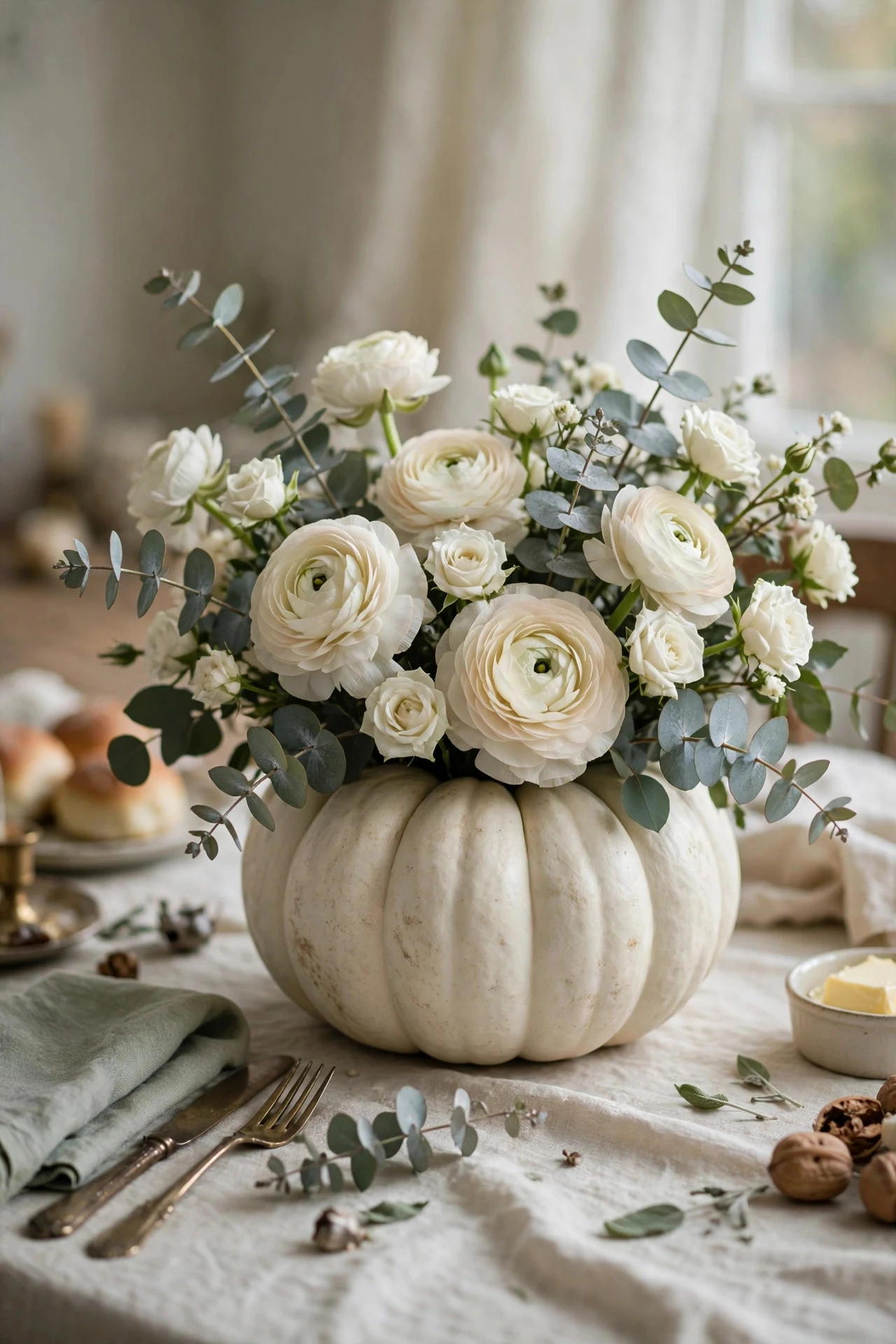
2. White Pumpkin Centerpiece with Ivory Ranunculus and Eucalyptus
A white or pale blue-gray pumpkin softens the traditional orange palette and works especially well for a Thanksgiving table set with neutral linens or metallic accents. Fill it with ivory ranunculus for texture, a few stems of white spray roses for fullness, and silver dollar eucalyptus to keep the greenery cool-toned rather than warm. This pairing looks intentional because every element stays in the same tonal family, which reads as calm and elegant instead of themed or costume-y. It suits hosts who want their table to transition smoothly into December décor, since white and sage tones don’t feel exclusively autumnal. Set two smaller white pumpkins on either side of a taller central one for a graduated, editorial-looking arrangement.
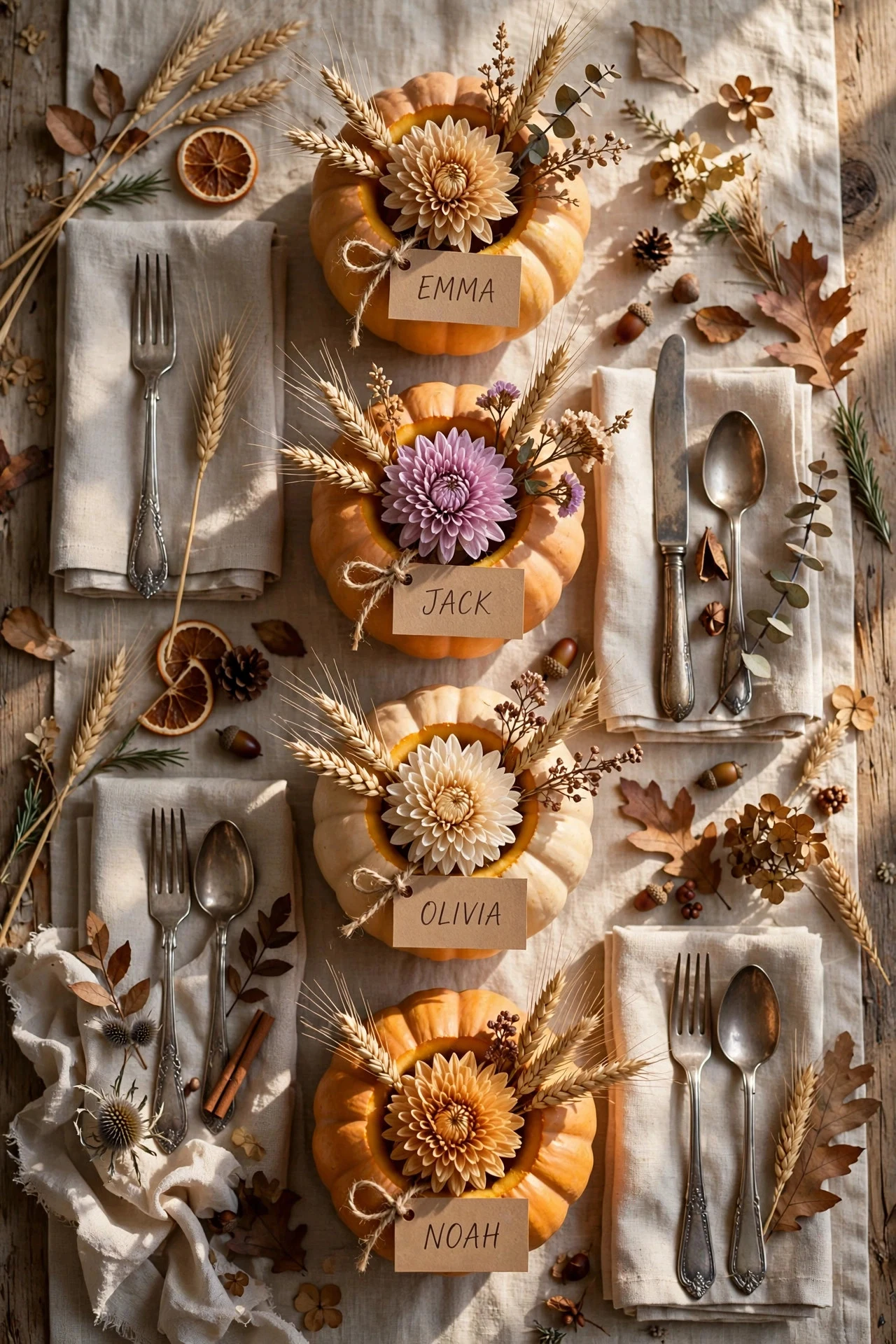
3. Mini Pumpkin Trio with Wildflower Sprigs as Place Settings
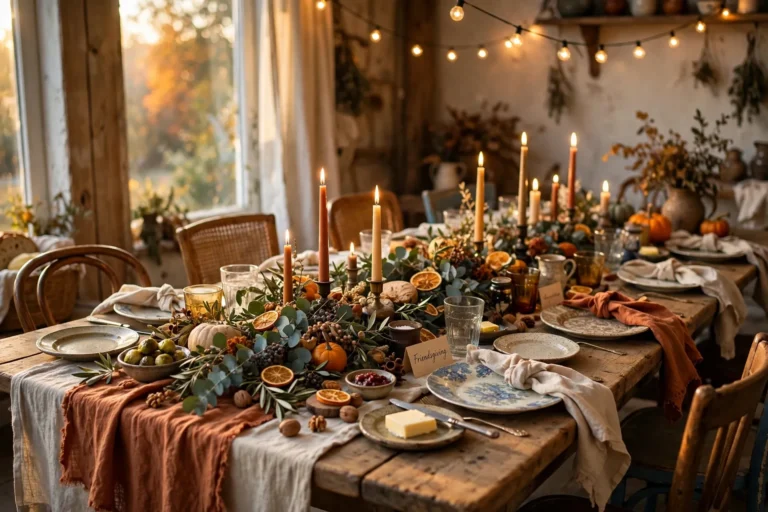
Instead of one large centerpiece, hollow out three or four mini pumpkins, each about the size of a fist, and give each guest their own tiny floral arrangement at their place setting. Fill each mini pumpkin with a single stem of mum, a sprig of statice, and a bit of dried wheat, keeping the scale small enough that it doesn’t block sightlines across the table. This idea works especially well for long farmhouse tables or Friendsgiving setups where guests are seated close together and a tall centerpiece would get in the way of conversation. Tie a small kraft paper name tag to each stem with twine to double the mini pumpkin as a place card. It’s a detail-oriented approach that photographs beautifully from directly above, which is exactly the angle most people use for their own Thanksgiving table photos.
Related: 15 Pumpkin Floral Arrangement Ideas for Fall Tables That Feel Effortlessly Elegant
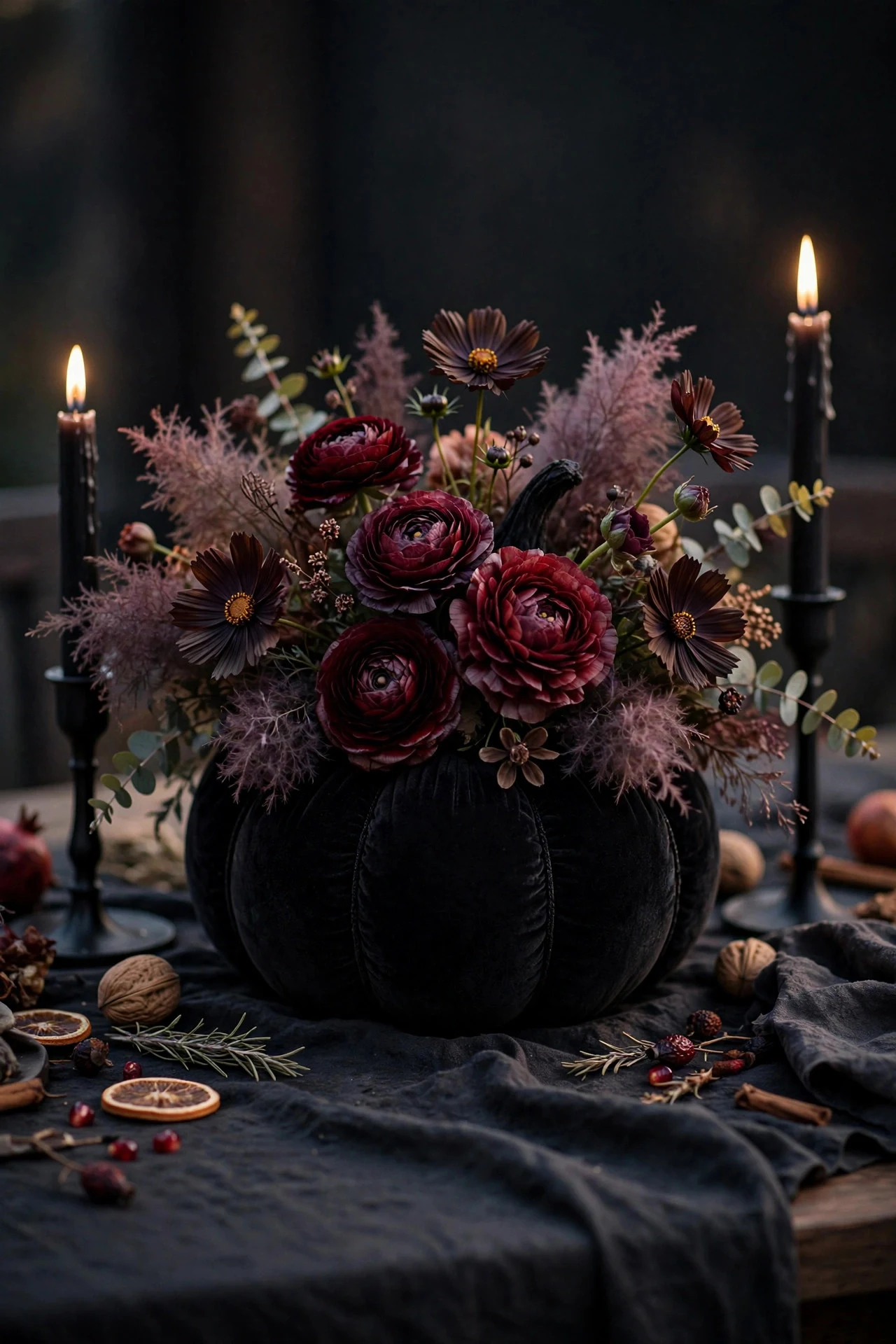
4. Black Velvet Pumpkin with Deep Burgundy Florals
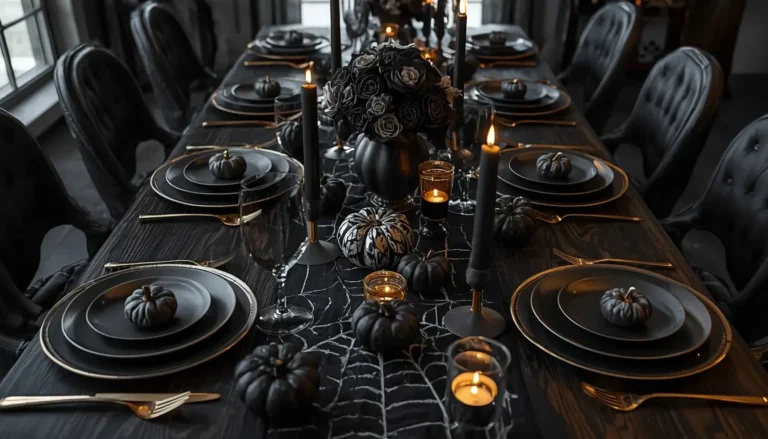
For a modern, moody Thanksgiving table, use a black or charcoal velvet faux pumpkin as the vessel and fill it with deep burgundy ranunculus, chocolate cosmos, and near-black scabiosa pods. The dark palette works because it borrows from gothic-glam styling that has become popular for fall entertaining, giving the table a dramatic, almost jewel-toned quality under candlelight. Add a few stems of smoke bush or copper beech leaves to keep the arrangement from feeling too heavy, since their lighter color breaks up the dark mass of flowers. This style pairs naturally with brass or black candlesticks and a dark linen tablecloth, so the whole table feels curated around one confident color story. It’s a strong choice for an evening Thanksgiving dinner where candlelight will do most of the visual work.
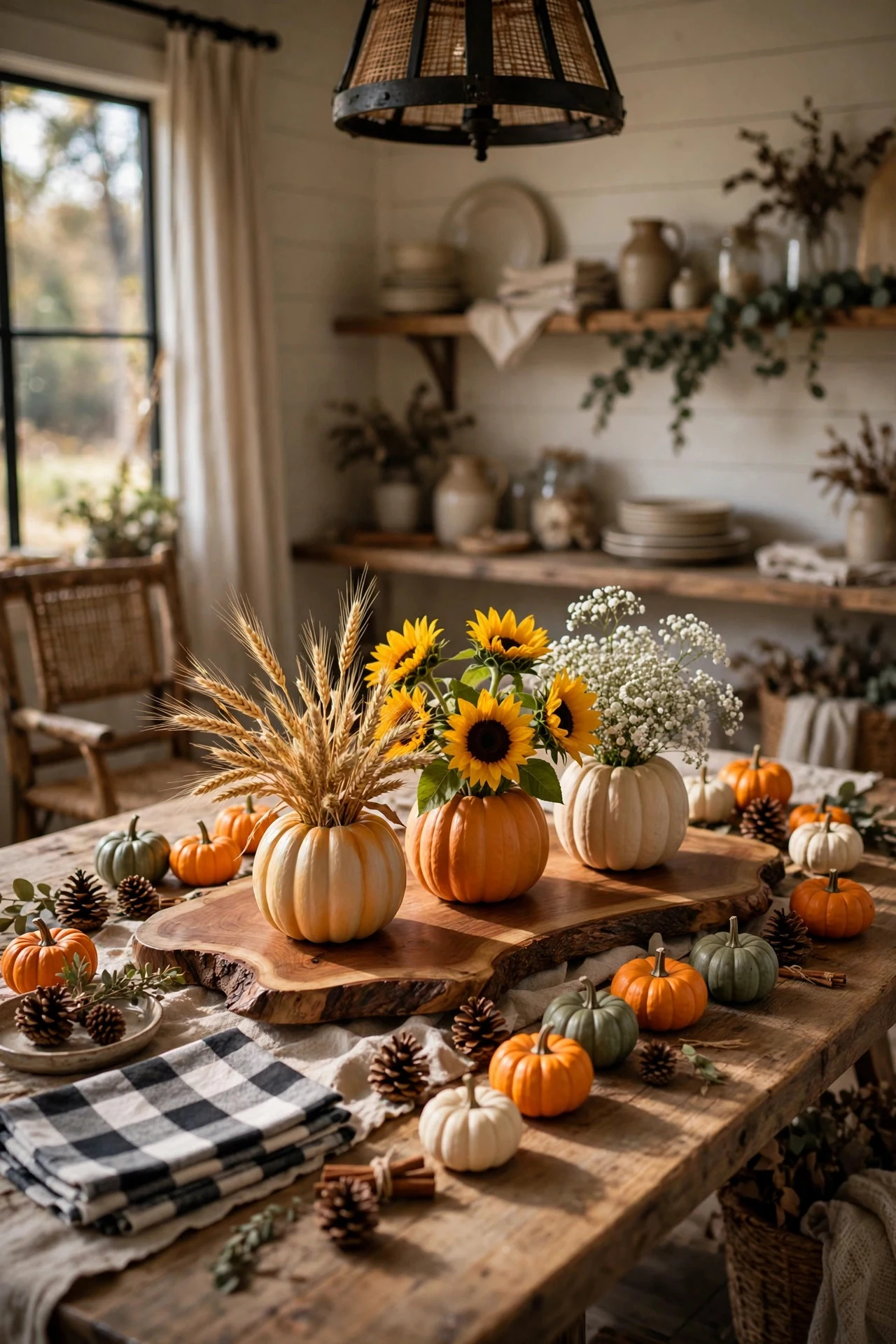
5. Rustic Wooden Tray with Pumpkin Vases and Wheat Stems
Group two or three small pumpkins directly onto a wooden serving tray or slab of live-edge wood, then fill each pumpkin with a mix of wheat stems, dried baby’s breath, and a few sunflowers. The wooden tray acts as a unifying base so the arrangement doesn’t need a runner underneath, and it makes cleanup after the meal much simpler since everything lifts away in one piece. This idea leans into a farmhouse aesthetic, pairing well with buffalo check napkins, mason jar drinkware, and galvanized metal accents already common in that style of home. Nestle a few loose mini pumpkins and pinecones around the base of the vases to fill gaps and add texture without extra cost. Because wheat and sunflowers hold up well without water, this version can be assembled the day before Thanksgiving with no wilting concerns.
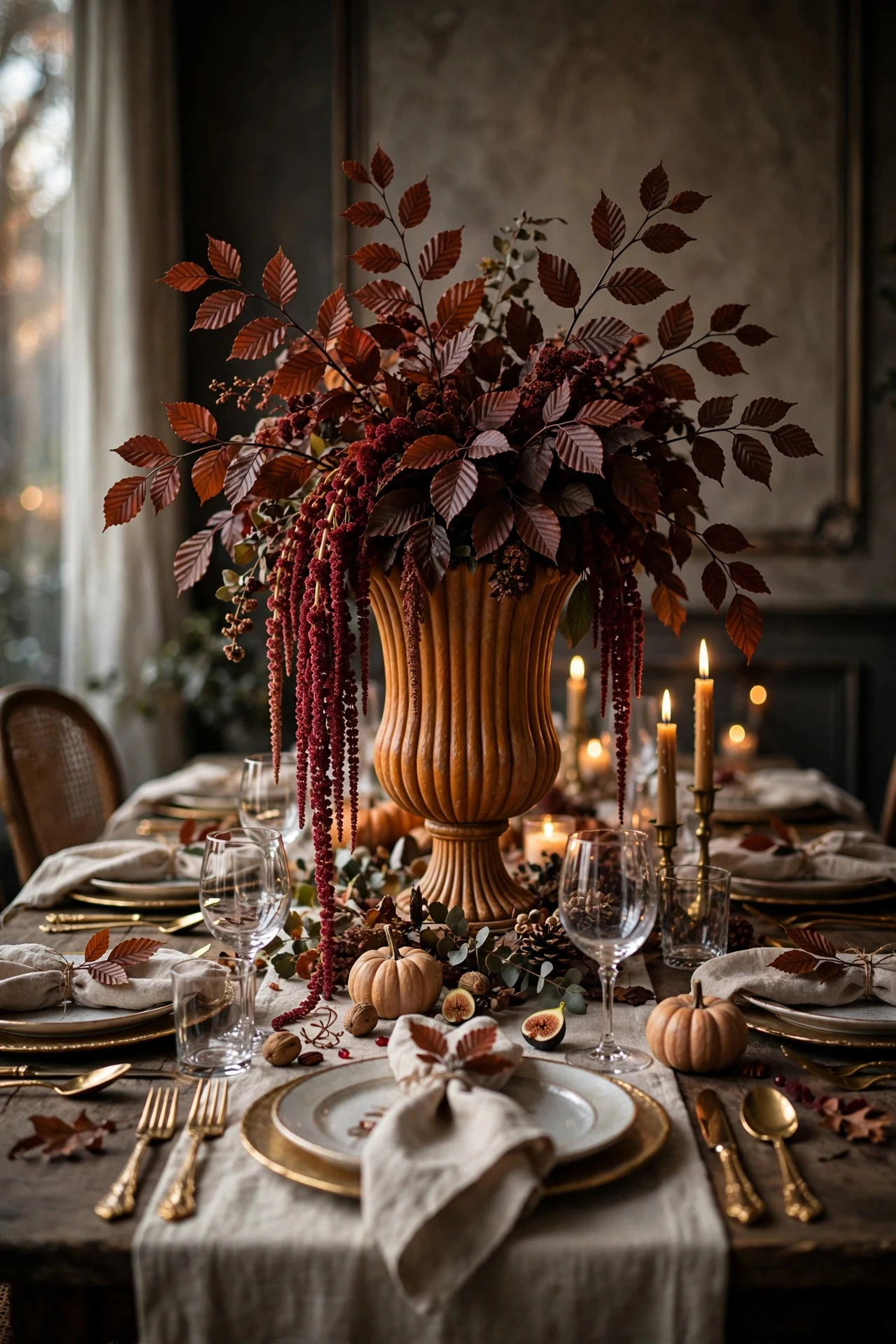
6. Tall Fluted Pumpkin Urn with Cascading Amaranthus
Look for a tall, fluted pumpkin variety, sometimes labeled a “Long Island Cheese” or “fairytale” pumpkin, and stand it upright as the base of a taller arrangement using a floral foam cone secured on top. Build height with branches of copper beech or dried oak leaves, then let strands of hanging amaranthus cascade down over the pumpkin’s ridges for movement. This design works because the vertical structure gives the table a focal point without spreading wide across the surface, which matters if you also need room for serving dishes down the center. Keep the base of the arrangement tight to the pumpkin so the eye reads it as one continuous piece rather than a pumpkin with a separate bouquet balanced on top. This is the centerpiece to choose for a formal Thanksgiving dinner where height and drama matter more than a sprawling, casual look.
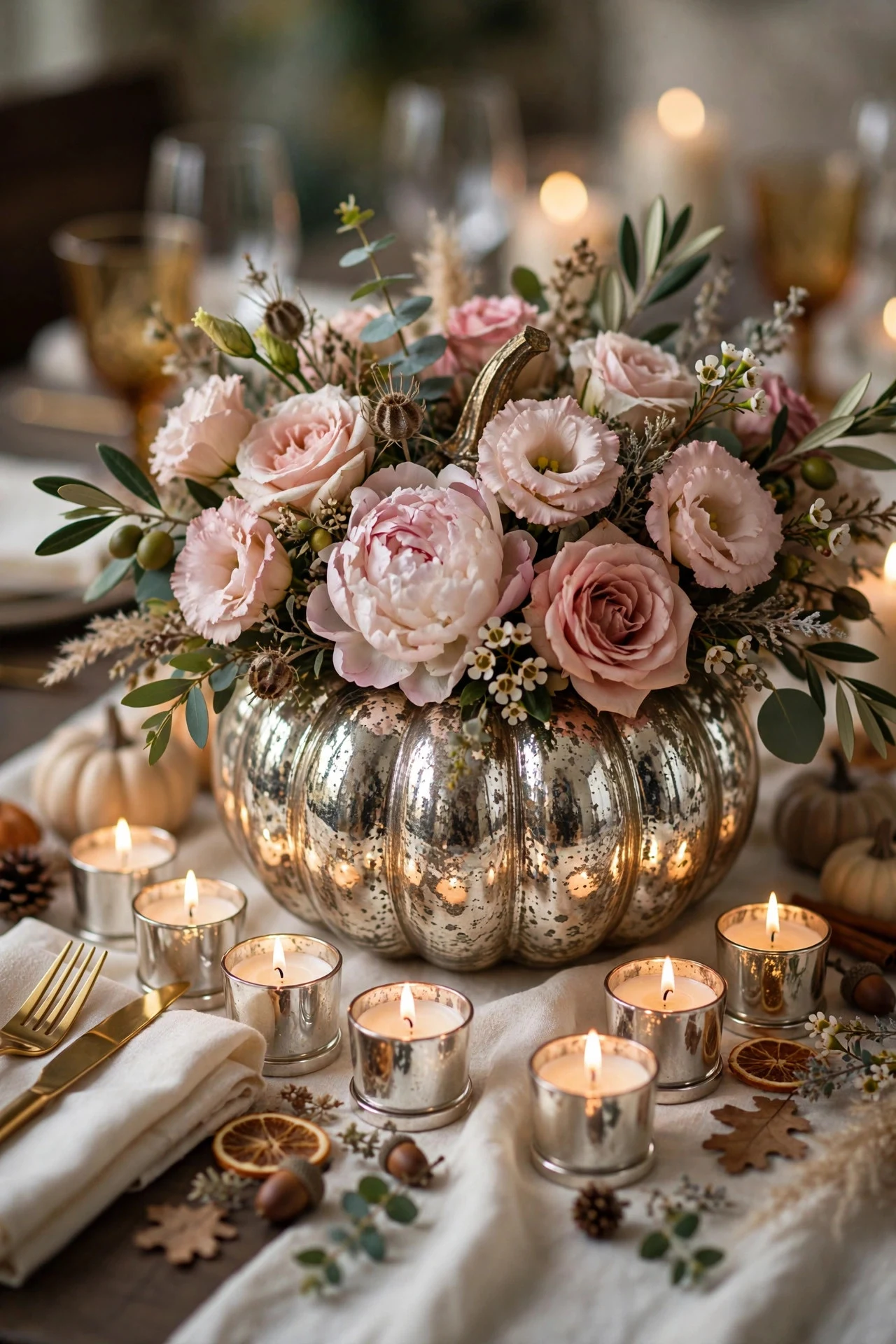
7. Mercury Glass Pumpkin Bowl with Blush Peonies
A mercury glass or silvered pumpkin-shaped bowl skips the real pumpkin altogether but keeps the shape, giving you a reusable vessel that pairs beautifully with soft, romantic flowers like blush peonies, garden roses, and lisianthus. The reflective silver surface catches candlelight in a way a matte orange pumpkin never will, which makes this option especially striking for evening or formal Thanksgiving dinners. Because it’s a permanent vessel rather than a real pumpkin, you can build the arrangement days in advance and simply refresh the water, taking one task off your plate on the holiday itself. This pairing suits a table already leaning toward vintage glam, with crystal glassware, silver flatware, and ivory linens. Set a cluster of smaller mercury glass votives around the base to tie the metallic finish through the rest of the table.
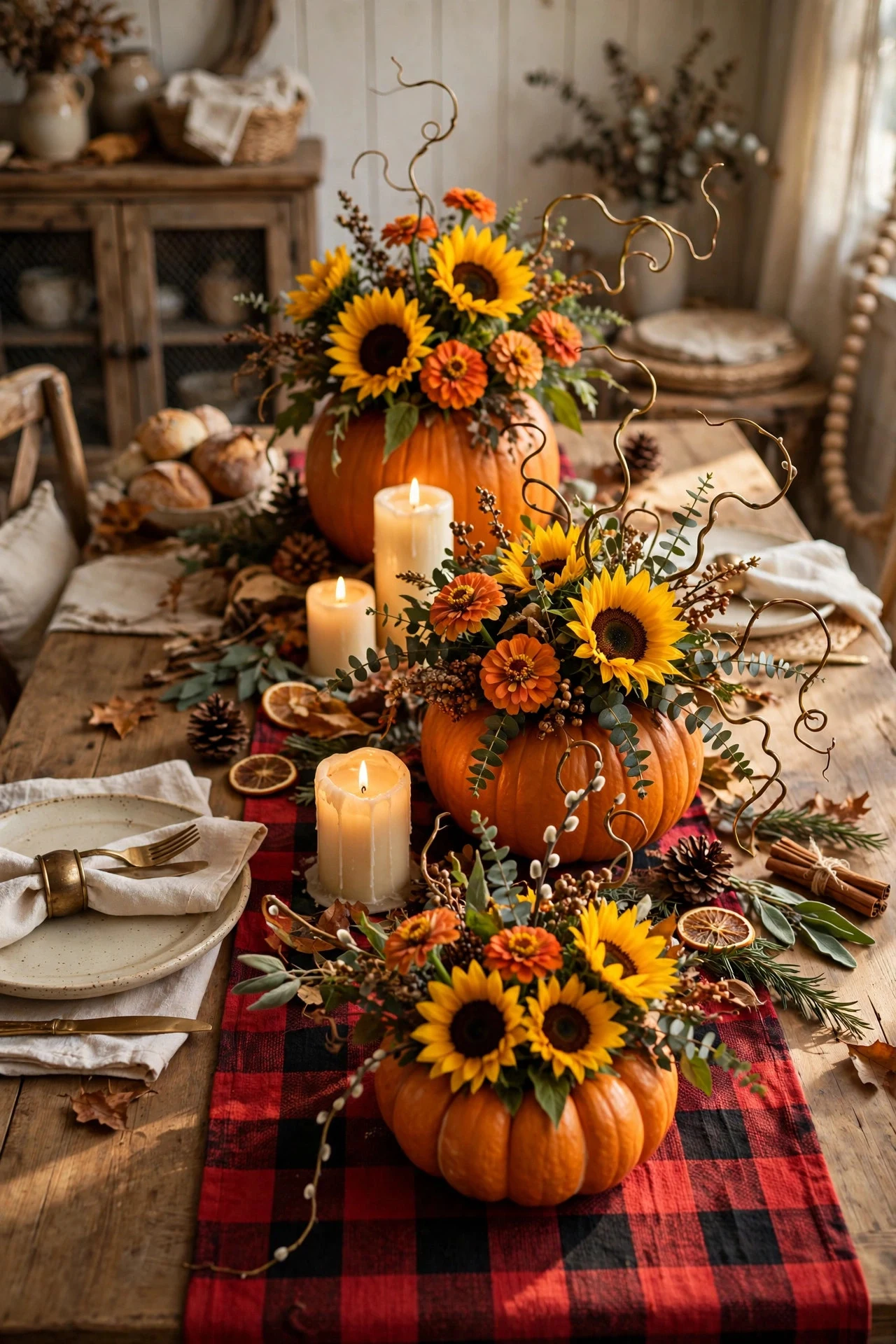
8. Farmhouse Buffalo Check Runner with Pumpkin and Sunflower Cluster
Lay a buffalo check table runner down the center of the table, then cluster three varying-height pumpkins directly on top, each filled with sunflowers, orange zinnias, and a bit of curly willow for texture. The plaid runner grounds the whole look in classic farmhouse styling and gives the eye a clear boundary for where the centerpiece “lives” on the table. Varying the pumpkin heights, rather than lining them up evenly, keeps the display from looking stiff or overly matched. Sunflowers are an easy choice here because they hold up for a week or more without wilting, so this arrangement can go together well ahead of the holiday. Add a few candle pillars in cream or burnt orange between the pumpkins to fill negative space along the runner.
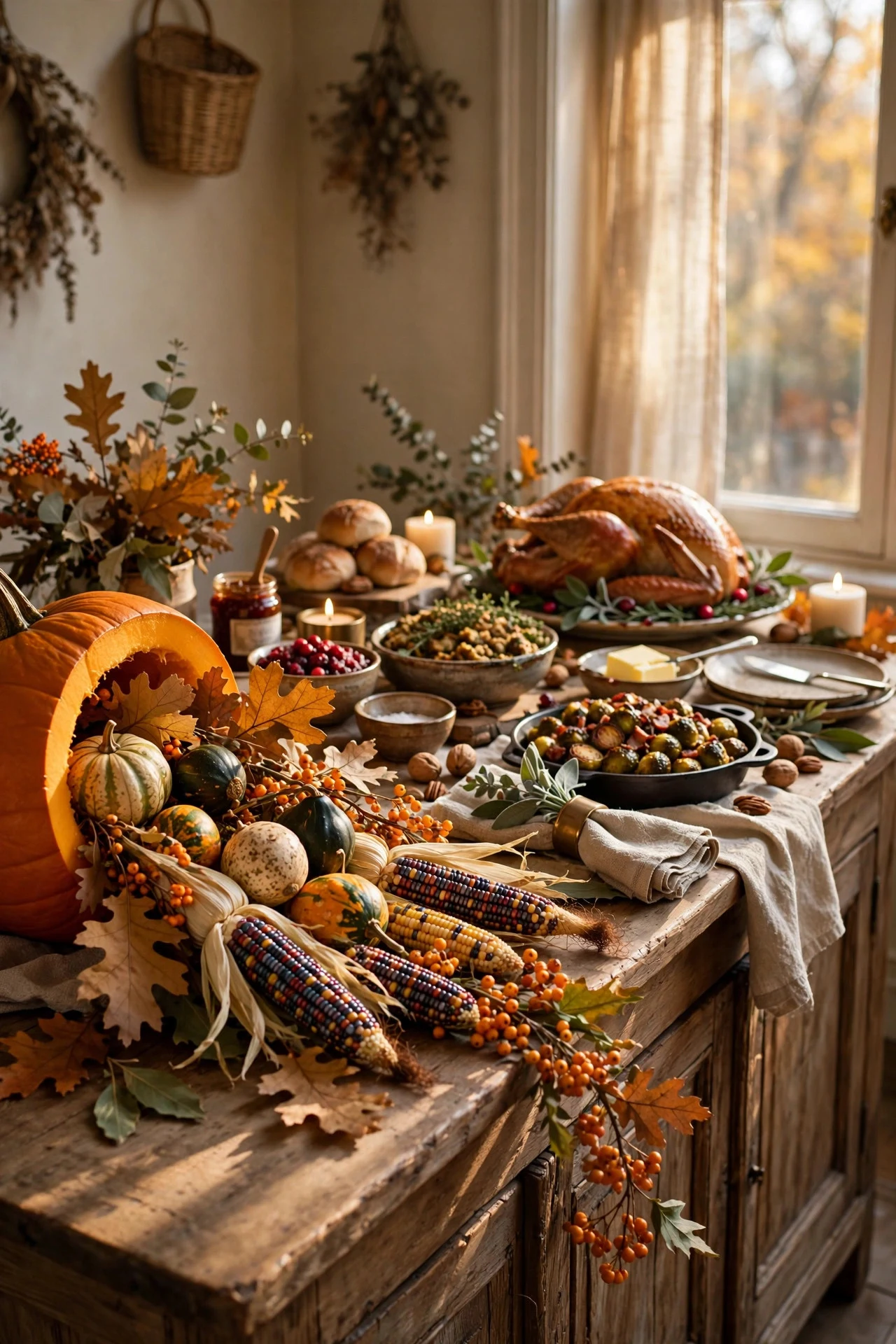
9. Cornucopia-Style Pumpkin Horn with Fall Foliage
Combine two Thanksgiving symbols in one piece by tipping a pumpkin on its side and letting an arrangement of fall foliage, mini gourds, and dried grasses spill out of a carved opening as if the pumpkin itself were a cornucopia. This works best with a squat, rounded pumpkin variety so it sits stably on its side without rolling. Layer in oak leaves, bittersweet vine, and a few ears of ornamental corn for a harvest-abundance look that reads as traditional Thanksgiving styling rather than a generic fall arrangement. Because nothing in this design needs water, it can be assembled well in advance and left out for weeks without wilting or rotting concerns, which makes it one of the lowest-maintenance options on this list. It works particularly well as a sideboard or buffet table piece if your dining table centerpiece is already doing something different.
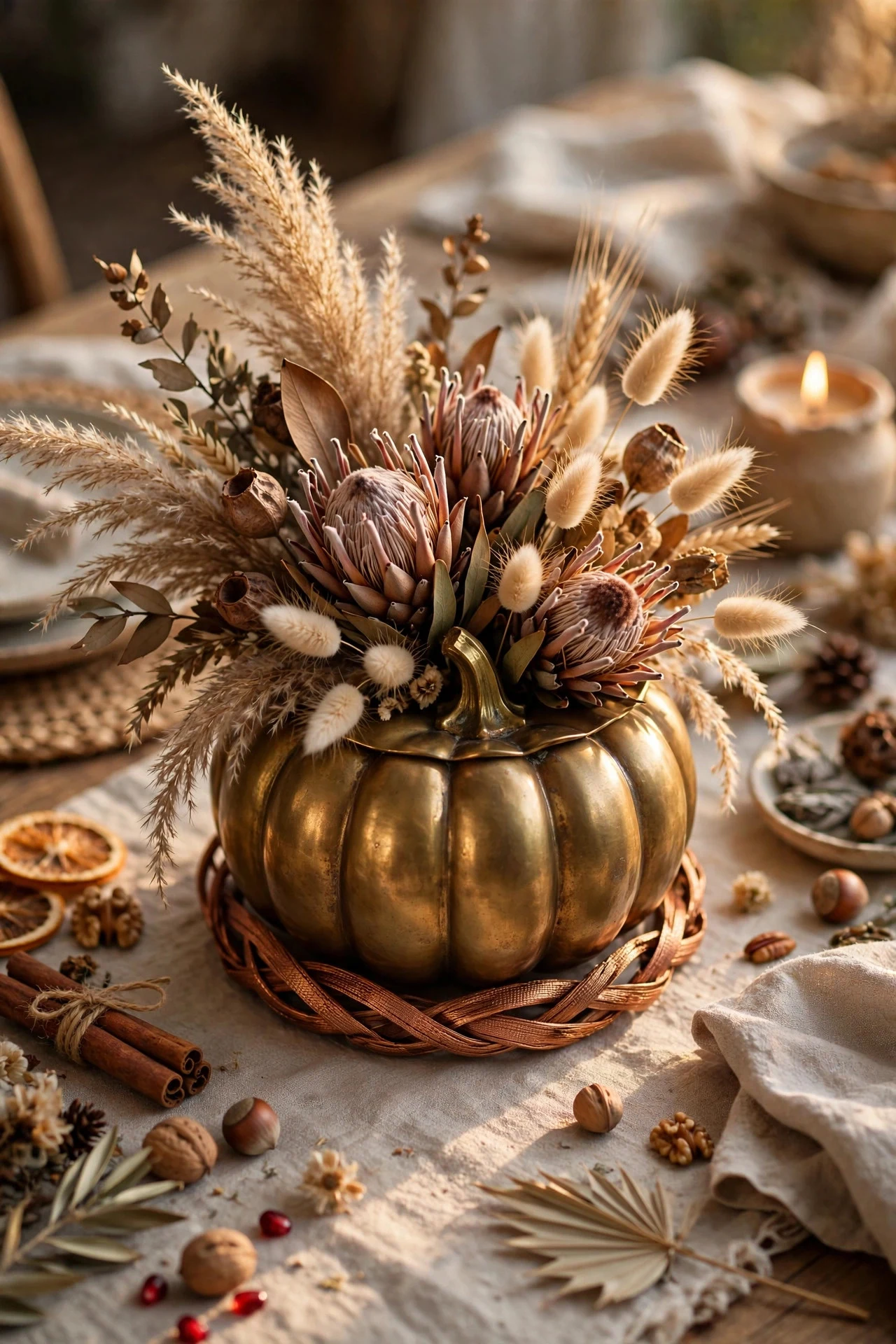
10. Brass Pumpkin Compote with Dried Pampas and Copper Ribbon
A brass or gold pumpkin-shaped compote dish brings warmth and shine to the table without relying on real flowers at all. Fill it with dried pampas grass, bunny tail grass, and a few dried protea for texture, then weave a length of copper wire-edge ribbon through the base for a bit of shine at eye level. This arrangement holds up for the entire holiday season with zero maintenance, since every element is dried and none of it needs water or refreshing. It suits a host who wants their Thanksgiving centerpiece to transition straight into a neutral, boho-leaning winter table without a full teardown. Pair it with brass flatware and taper candles in cream or terracotta to keep the metallics consistent across the setting.
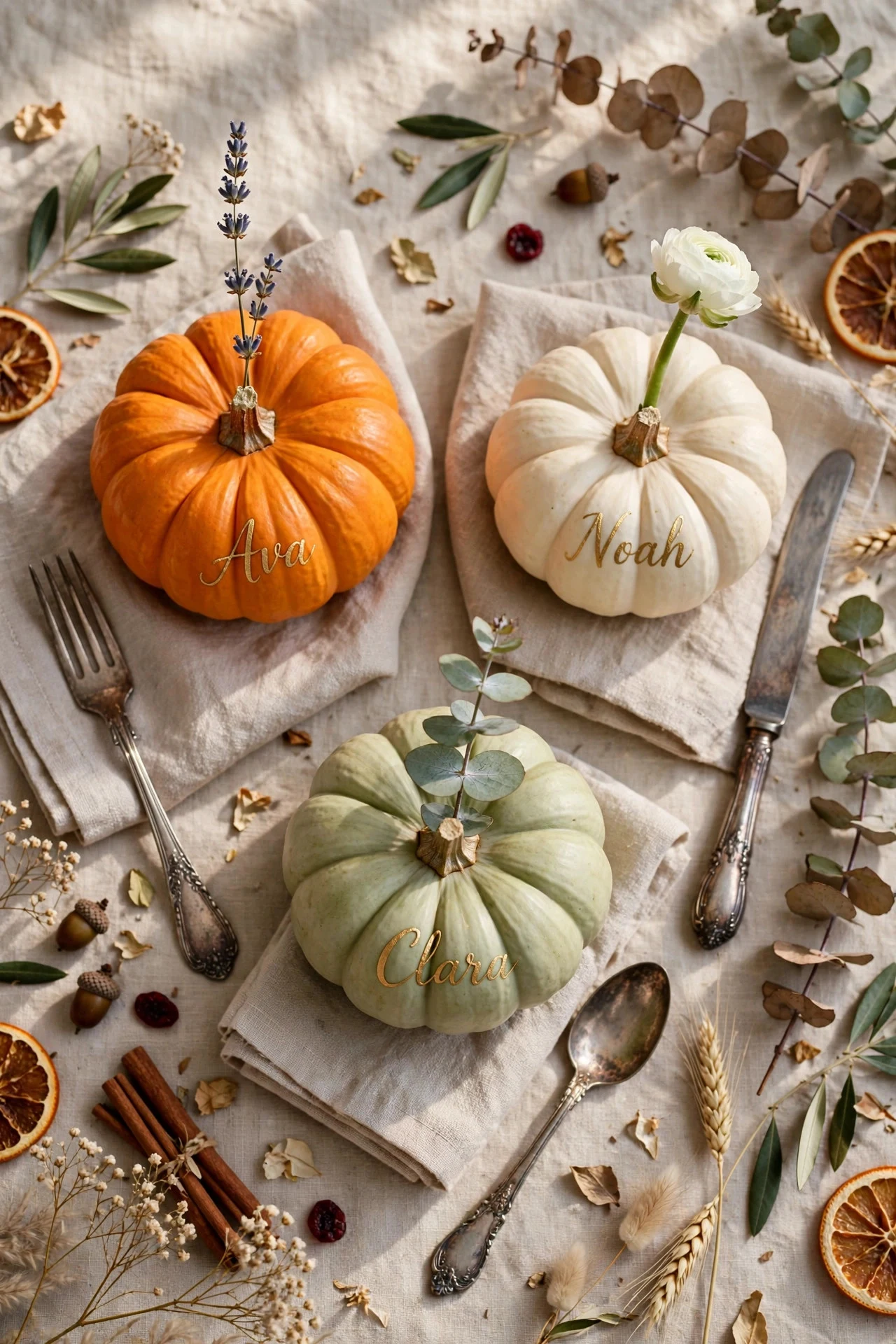
11. Individual Mini Pumpkin Place Card Vases
Give every guest their own tiny pumpkin bud vase by cutting a small hole in the top of a mini pumpkin, just large enough to hold a single test tube or water pick, then adding one flower stem per pumpkin, such as a spray rose or ranunculus. Write each guest’s name directly on the pumpkin with gold paint pen or a thin marker so it doubles as a place card without any extra materials. This idea scales easily for large tables since the cost per setting stays low even with a big guest list, and it gives everyone a small, personal detail instead of one shared centerpiece. Vary the pumpkin colors, orange, white, and pale green, across the table so the place settings don’t look mass-produced. It’s a favorite for hosts who want their table to look styled in photos taken from directly above, since each little vase reads clearly in an overhead shot.
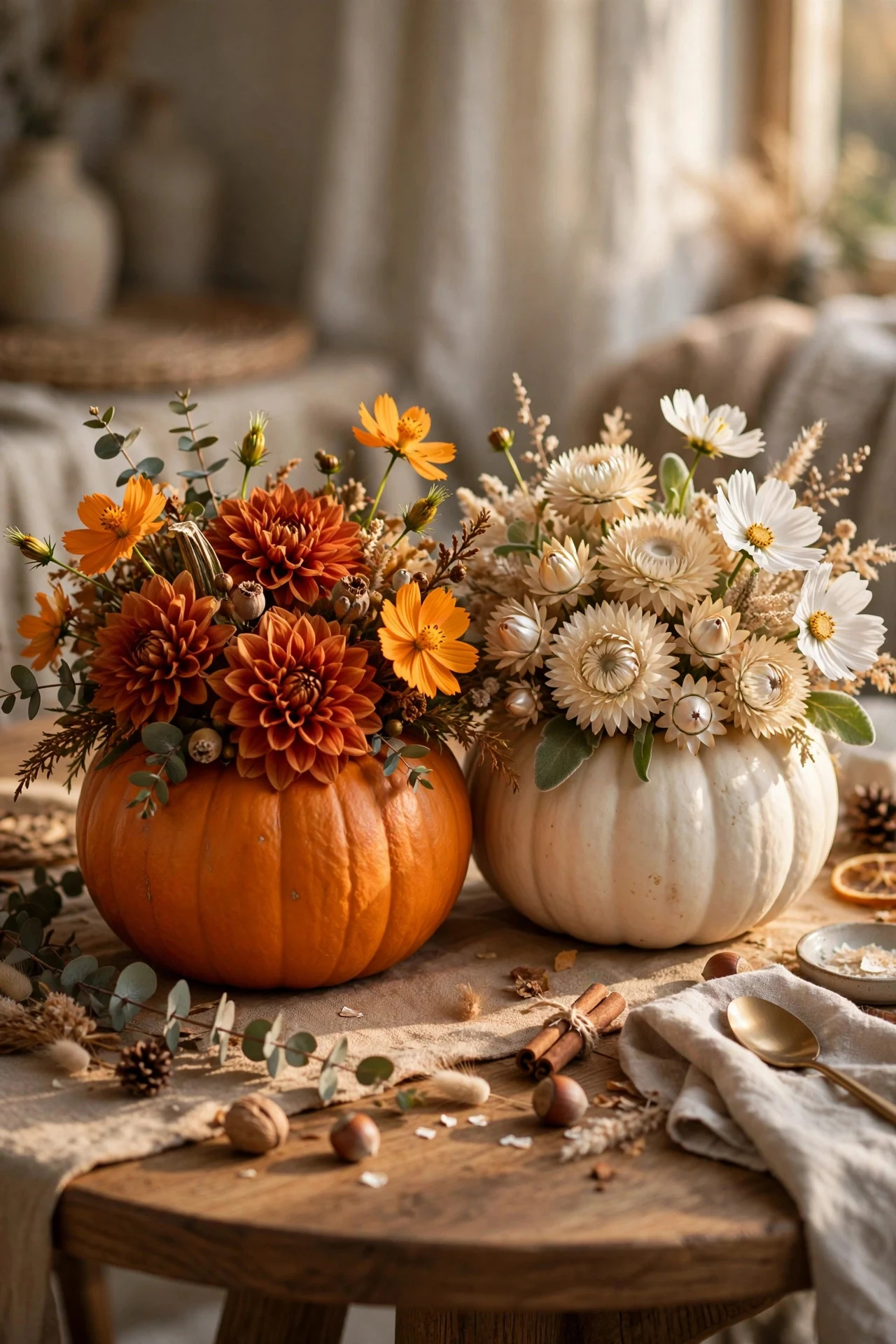
12. Two-Tone Pumpkin Duo with Mixed Wildflowers
Pair one orange pumpkin and one white pumpkin side by side, each filled with a slightly different but coordinating mix of wildflowers, such as orange cosmos and rust-colored dahlias in one, and white cosmos with cream strawflower in the other. Placing the two pumpkins close together rather than at opposite ends of the table creates a single visual anchor point instead of splitting attention across the table’s length. The contrast between the orange and white pumpkin skins does most of the visual work, so the flower choices can stay simple and even slightly wild or unstructured without the arrangement looking messy. This pairing works well on round or square tables where a single long centerpiece wouldn’t fit the shape. It’s an easy way to get a two-tone, layered look without the cost of a large single arrangement.
Related: 17 Christmas Centerpiece Ideas for Round Dining Tables
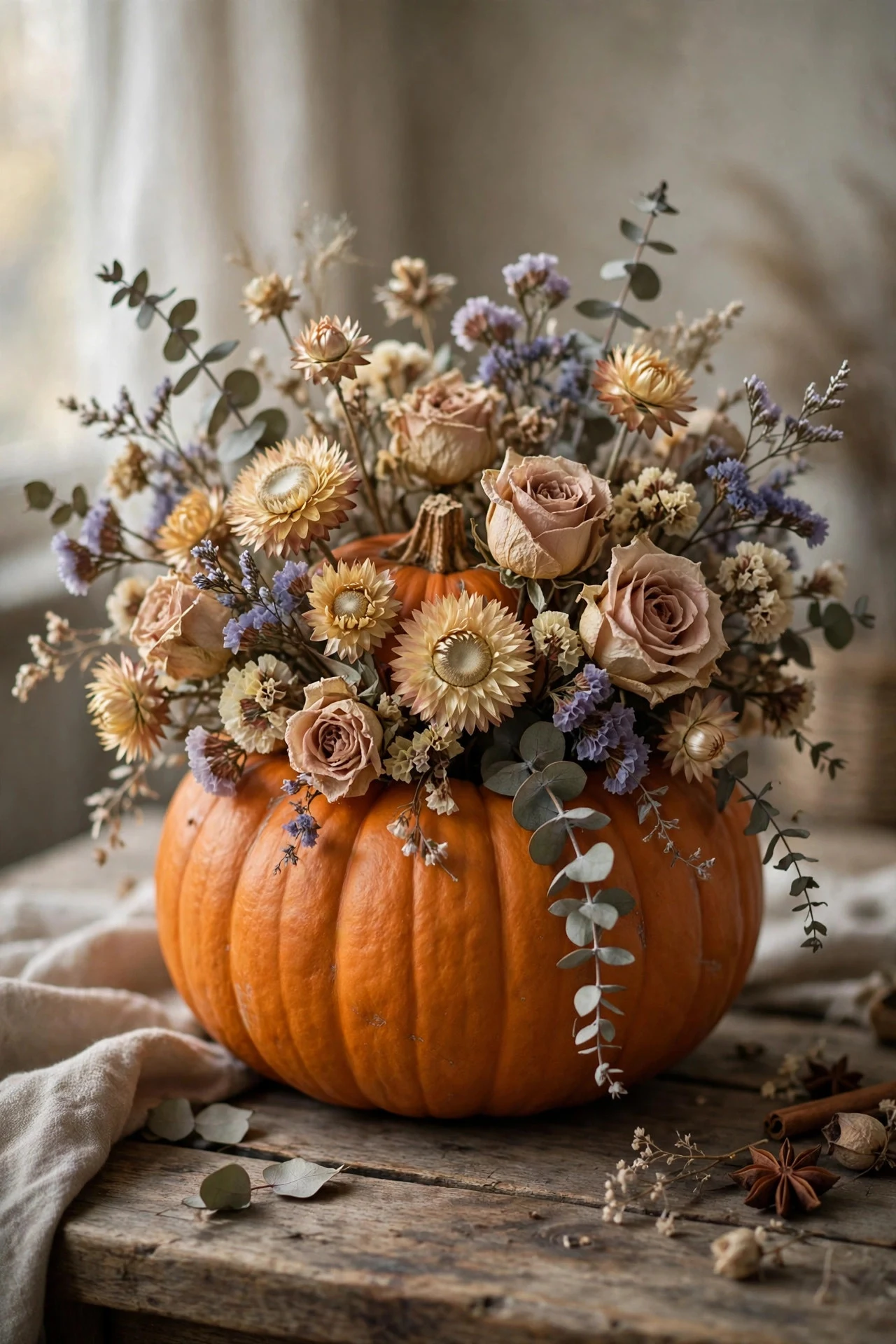
13. Dried Floral Pumpkin Arrangement for a No-Water, No-Wilt Option
Skip fresh flowers entirely and fill a real or faux pumpkin with dried florals such as strawflower, dried roses, statice, and preserved eucalyptus, secured into a block of dry floral foam. Because nothing in this arrangement needs water, it can be built two or three weeks before Thanksgiving and left exactly as-is through the holiday, which removes the timing pressure that comes with fresh flowers. The muted, slightly faded color palette typical of dried flowers actually complements a real pumpkin’s natural coloring better than bright fresh blooms sometimes do. This option also travels well if you’re bringing your centerpiece to a Friendsgiving or a relative’s house, since there’s no water to spill in the car. Spritz the dried flowers lightly with hairspray after arranging to help hold stray petals in place for the full run of the season.
14. Faux Velvet Pumpkin with Silk Magnolia and Berries
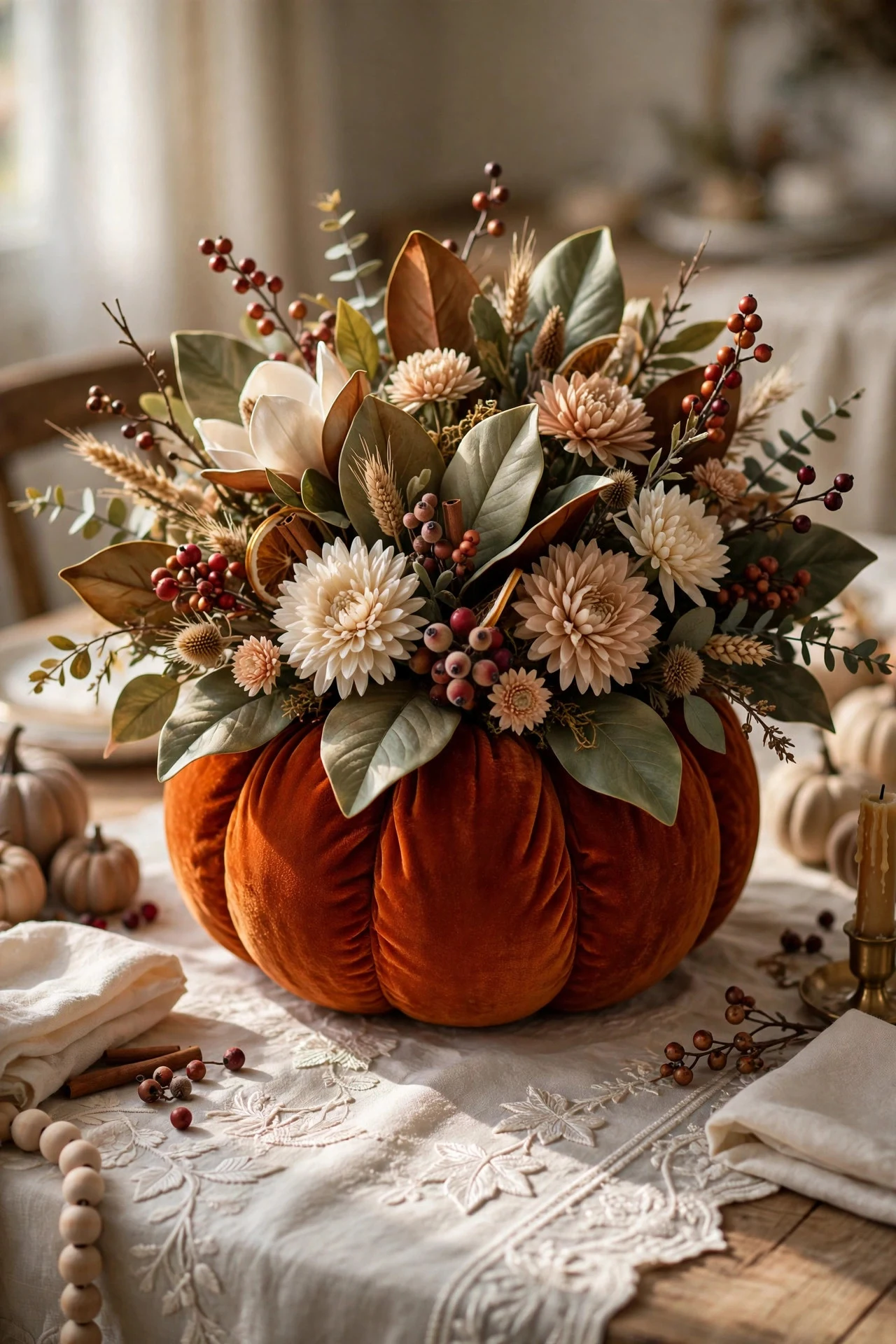
A faux velvet pumpkin in deep orange or rust gives a soft, tactile texture that photographs almost identically to a real one, but it can be stored and reused year after year. Fill it with silk magnolia leaves, faux berry stems, and a few faux mum picks, arranged so the silk stems tuck into the pumpkin’s existing stem well rather than requiring a separate vase insert. This option suits anyone hosting Thanksgiving in a warm climate, where a real pumpkin arrangement might not survive travel from store to table without wilting. It also works well as a centerpiece that goes up right after Halloween and stays fresh-looking through the entire Thanksgiving weekend without any maintenance. Because there’s no water involved, it’s a safe choice for a table with a lace or embroidered linen tablecloth that fresh flower drips could otherwise stain.
15. Low and Wide Pumpkin Bowl Centerpiece with Floating Candles
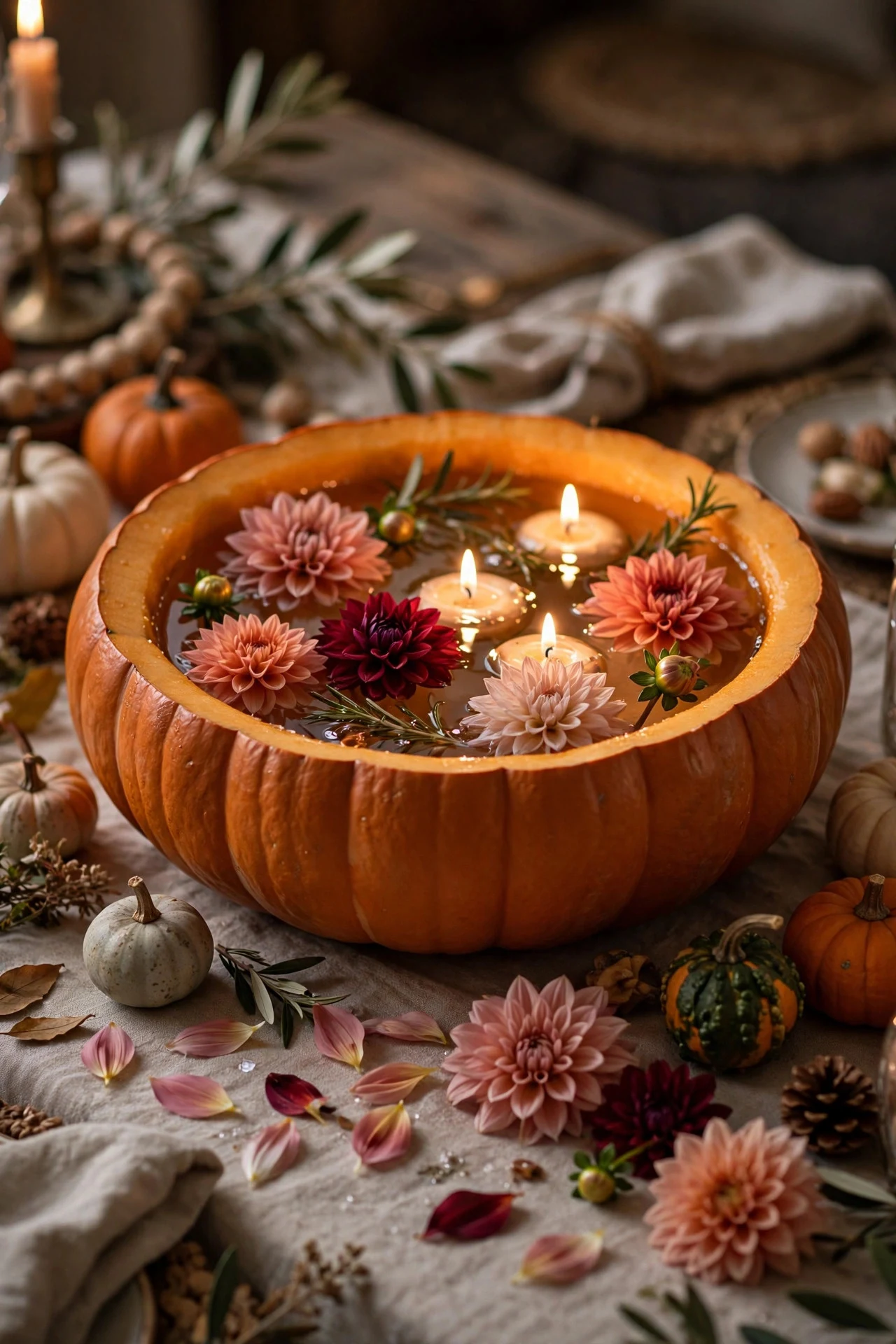
Choose a wide, flat-bottomed pumpkin variety like a Fairytale or Cinderella pumpkin, hollow it generously, and use it as a bowl filled with water, floating candles, and a scattering of loose flower heads like dahlia or mum blooms floating on the surface. Because the arrangement sits low and wide rather than tall, it never blocks sightlines across the table, which makes it a strong choice for smaller dining rooms or intimate Thanksgiving dinners where conversation matters more than height. The floating candles add movement and warmth once the sun goes down, giving the centerpiece a completely different mood at dinner than it had earlier in the day. Scatter a few loose petals and small gourds around the base of the pumpkin on the table itself to extend the arrangement visually without adding more into the bowl. This idea works especially well paired with a low, wide vessel style already common in modern table settings.
16. Boho Pampas and Protea Pumpkin Arrangement
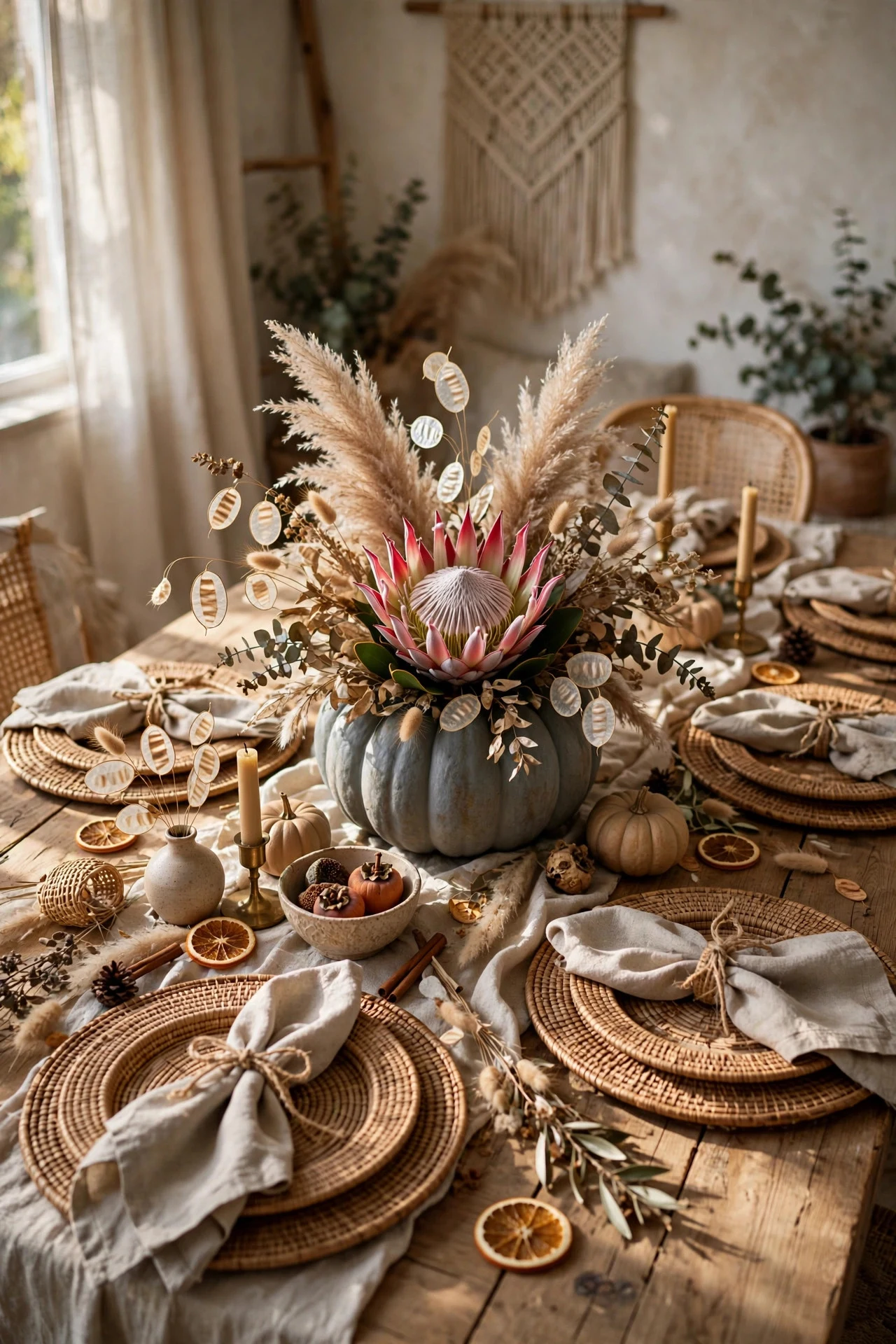
Fill a matte, muted-colored pumpkin, think dusty blue-gray or soft terracotta, with pampas grass, king protea, and a few stems of dried lunaria for a boho-leaning Thanksgiving table that feels more like a desert harvest than a traditional New England one. The oversized texture of pampas and protea gives the arrangement visual weight even with just a few stems, which keeps the cost down compared to a dense, flower-heavy design. This style pairs naturally with rattan chargers, neutral linen napkins, and unglazed ceramic dinnerware already common in boho table settings. Because pampas and protea are both naturally dried or dry beautifully over time, this arrangement only improves with a few days of air exposure before Thanksgiving. It’s a strong option for hosts whose everyday home style already leans more neutral and textural than classic autumn orange and red.
17. Woodland-Style Pumpkin with Moss, Pinecones, and Berries
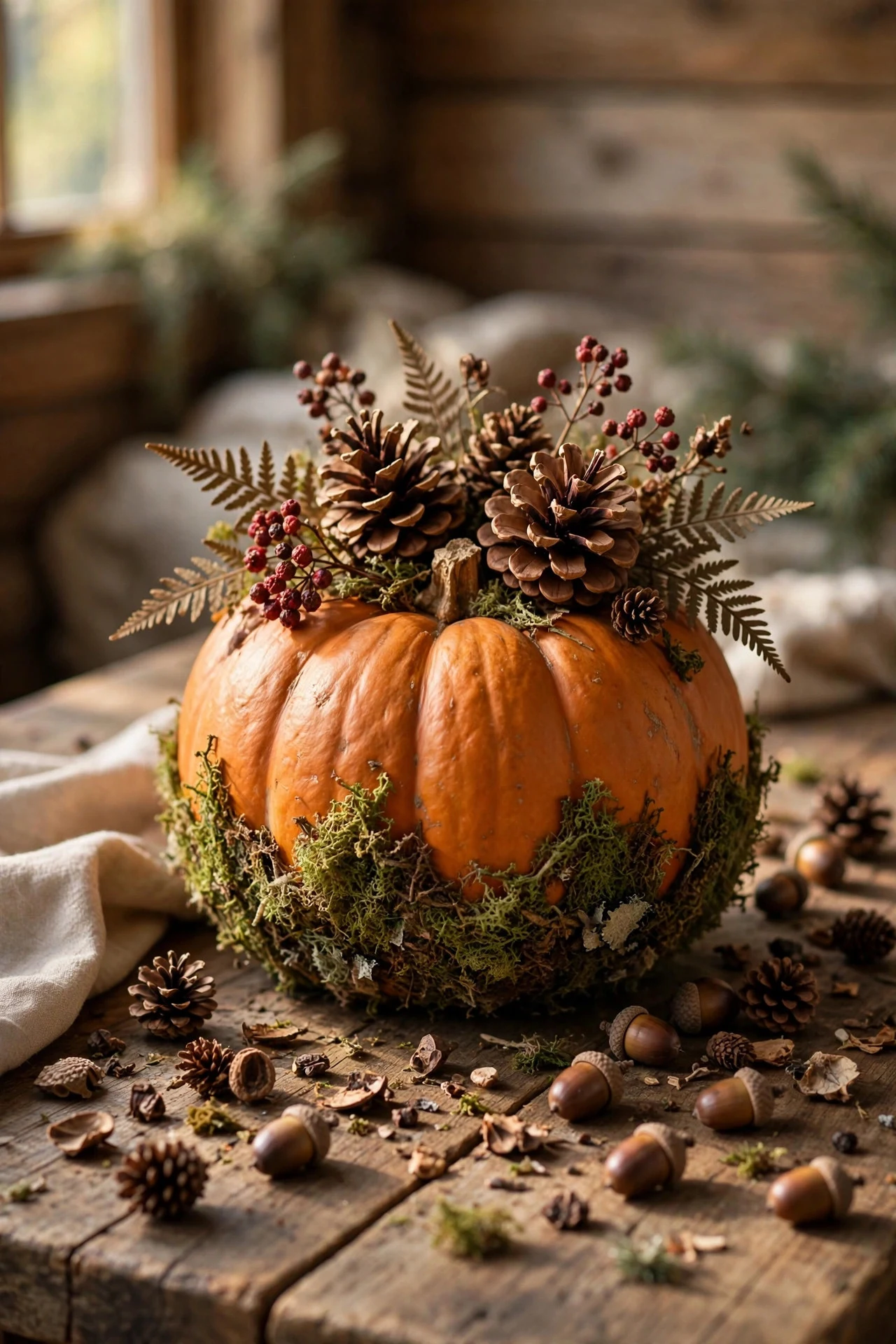
Wrap the base of a real pumpkin in a layer of reindeer moss or sheet moss, securing it with floral pins, then build the arrangement on top using pinecones, dried berry stems, and a few stems of preserved fern for a woodland, foraged look. This idea works well for a Thanksgiving hosted at a cabin, farmhouse, or anywhere leaning into a more rustic, natural aesthetic rather than a polished floral one. The moss layer hides the pumpkin’s stem and any rough hollowed edges, which is useful if the pumpkin itself isn’t perfectly shaped or symmetrical. Because pinecones, dried berries, and moss all hold up indefinitely, this arrangement can be built well ahead of time and even reused as fall decor beyond just the one meal. Cluster a few unwrapped pinecones and acorns around the base on the table to extend the woodland feel past the centerpiece itself.
Styling Tips
Keep centerpiece height in mind before you buy a single flower. Anything taller than 14 inches tends to block eye contact across a standard 30-inch-wide table, so if you want height, build it with airy stems like amaranthus or curly willow rather than dense, solid greenery. Vary the size of your pumpkins rather than using three identical ones, since a graduated height creates a more natural, gathered look than a matched, symmetrical row. Stick to two or three flower colors per arrangement instead of five or six, because a tighter palette reads as intentional even when the stems themselves are inexpensive grocery-store flowers. Finally, always add one unexpected texture, whether that’s curly willow, dried grasses, or moss, since texture is what separates a centerpiece that looks styled from one that just looks like flowers in a pumpkin.
Related: 15 Christmas Floating Candle Centerpiece Ideas That Glow
Practical Implementation Ideas
If you’re working with a real pumpkin, cut the opening on top rather than the side so the arrangement sits upright and the cut edge is hidden by the flowers themselves. Line the inside of a hollowed pumpkin with plastic wrap or a plastic liner before adding water or floral foam, since raw pumpkin flesh breaks down faster once it’s wet and this barrier slows that process significantly. For fresh flower arrangements, soak floral foam fully before cutting it to fit, since foam that’s only partially saturated will cause stems to wilt within a day even if the pumpkin itself is holding up fine. If you want to build your centerpiece more than two days ahead, lean toward the dried, faux, or no-water options on this list rather than fresh flowers, which generally look their best within 24 to 48 hours of arranging.
Common Mistakes to Avoid
The most common mistake is cutting the pumpkin’s opening too small to fit a vase or floral foam brick comfortably, which forces stems in at awkward angles instead of a natural, full shape. A close second is skipping the plastic liner and placing wet floral foam directly against raw pumpkin flesh, which speeds up rot and can leave a noticeable smell by the day of the meal. Overfilling the arrangement with too many flower varieties is another frequent issue, since it tends to hide the pumpkin itself rather than let it function as part of the overall shape. Many hosts also center a tall arrangement directly in the sightline between seats, which makes conversation across the table harder than it needs to be, so always test the height by sitting down at the table before finalizing placement.
Small-Space Alternatives
For a narrow table or apartment dining setup, the mini pumpkin trio, individual place card vases, or the low and wide floating candle bowl all work better than a single large arrangement, since they don’t require deep clearance in front of each seat. A runner-based cluster can also be scaled down to just one pumpkin instead of three, keeping the footprint tight while still using the same buffalo check or wood tray styling. If your table doubles as a workspace or is regularly cleared for other uses, faux or dried pumpkin arrangements are the more practical choice, since they can sit out for the full season without needing water changes or careful handling.
Budget-Friendly Alternatives
Mini pumpkins, wildflowers, and grocery-store mums keep this project affordable no matter which idea you choose, and several of the arrangements above, including the wooden tray cluster and the two-tone pumpkin duo, can be built for well under the cost of a single florist arrangement. Dried and faux options also save money over time since they’re reusable across multiple seasons, unlike fresh flowers that need to be repurchased every year. If you already own vases or bowls from past holidays, a faux pumpkin shell placed inside one, rather than a separate pumpkin-shaped vessel, gets the same visual effect without buying anything new.
Pro Styling Recommendations
Choose flowers that are already in season locally in October and November, since out-of-season stems cost more and tend to have a shorter vase life once cut. Group odd numbers of pumpkins, three rather than two or four, since asymmetry generally reads as more natural and intentional in a tablescape than a perfectly even number. If you’re mixing real and faux elements in the same arrangement, keep the faux pieces limited to foliage and filler rather than the focal flowers, since faux greenery is far harder to distinguish from real than faux flower blooms are.
FAQs
Conclusion
Seventeen ideas is a lot of options, but the decision usually comes down to three questions: how much time you have before Thanksgiving, how much table space you’re working with, and whether you’d rather deal with fresh flowers or skip that step entirely. Once those three answers are clear, half the list falls away on its own, and what’s left are the two or three versions that actually fit your table, your schedule, and the kind of Thanksgiving you’re hosting this year.