22 Beautiful Bedroom Ideas That Turn Your Room Into a Personal Sanctuary
Most bedrooms end up decorated around everything except how they actually feel to be in. The bedding matches. The art is hung. And somehow the room still doesn’t feel like anywhere you’d want to spend an evening.
A real sanctuary bedroom isn’t about more furniture or a bigger budget. It’s usually about softer lighting, warmer color, and a few corners of the room that give you a reason to slow down instead of just pass through. The best bedrooms right now lean into this on purpose, trading sharp minimalism and cool grays for grounded tones, layered textures, and small rituals built right into the layout.
This list covers 22 ideas for turning a bedroom into a true personal sanctuary, grouped by what actually shapes how a room feels: color and materials, the bed itself, lighting, and the small zones and rituals that make a bedroom feel lived in rather than just staged. Pick a few that fit your space, and the room will start doing the quiet work of helping you rest.
Table of Contents
1. Warm, Grounded Neutral Palette
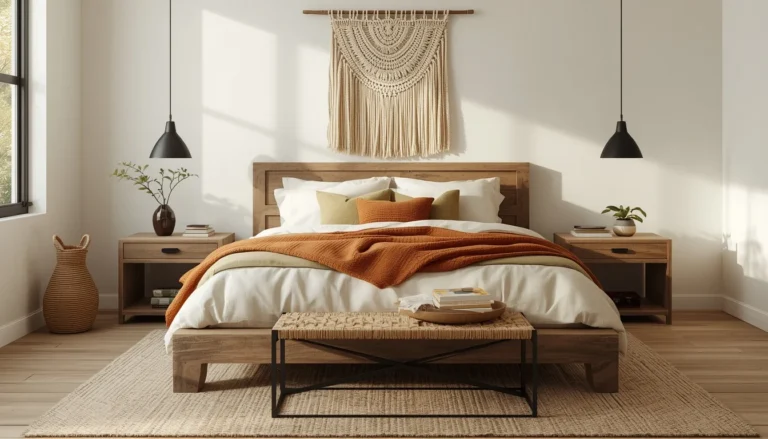
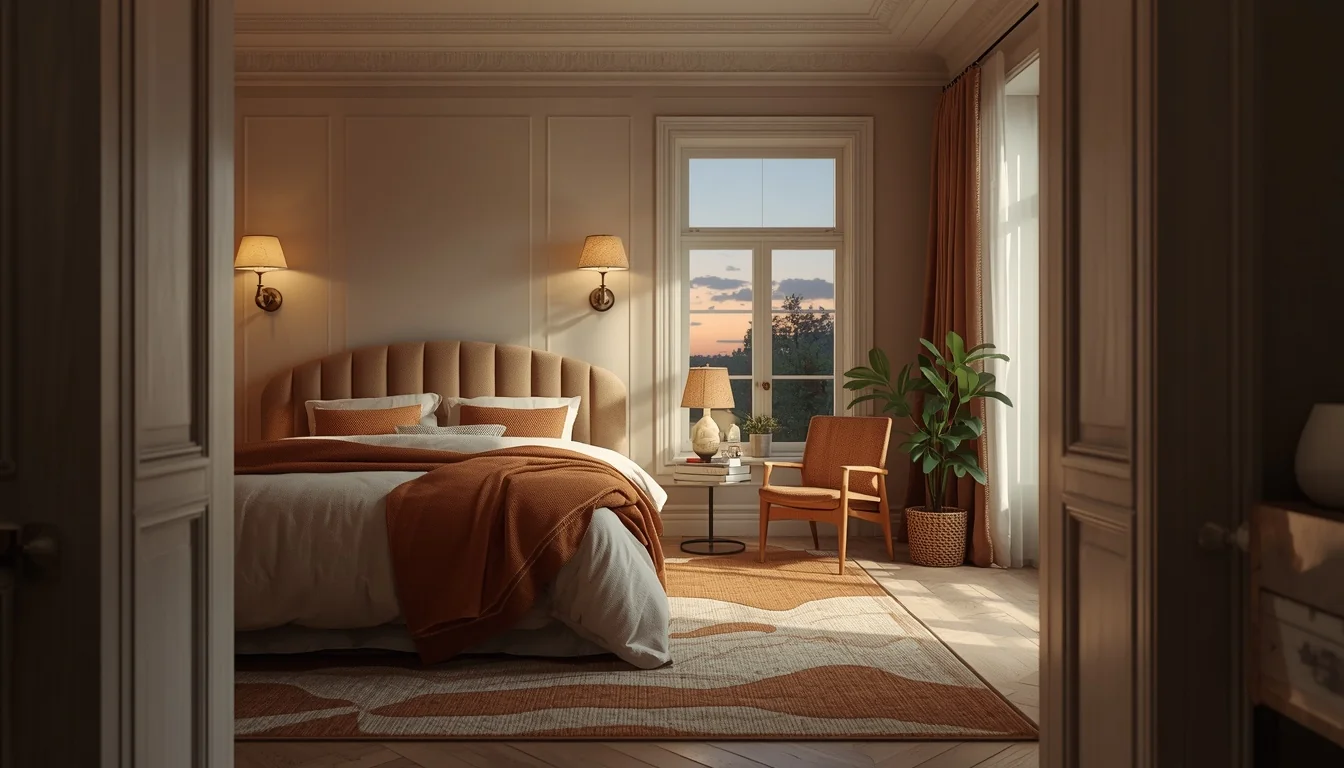
Cool grays and stark whites can make a bedroom feel clean, but they rarely make it feel restful, which is why warmer neutrals like taupe, warm greige, and soft terracotta are replacing them in sanctuary-style bedrooms. These tones read as grounded rather than sterile, and they photograph well in both morning and evening light without ever feeling cold. Layering two or three shades from the same warm family, on the walls, the bedding, and a rug, gives the room depth without introducing any real contrast or visual noise. This palette also happens to be one of the most forgiving choices for a room with mismatched furniture, since warm neutrals tend to blend rather than clash. It’s the quiet foundation almost every other idea on this list is built on top of.
2. Deep, Moody Color-Drenched Accent Wall
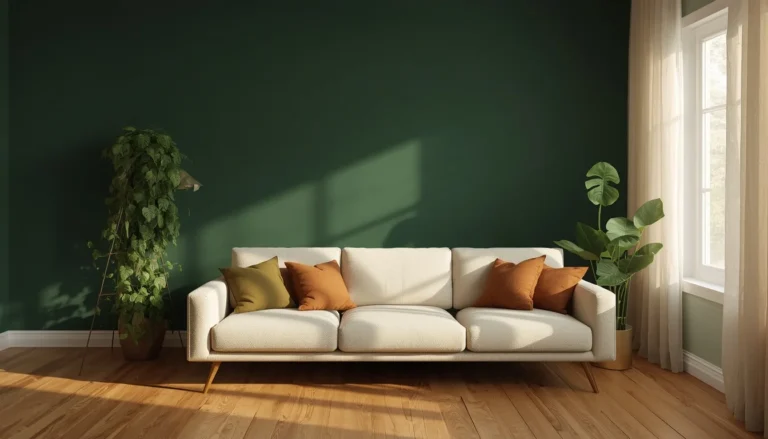
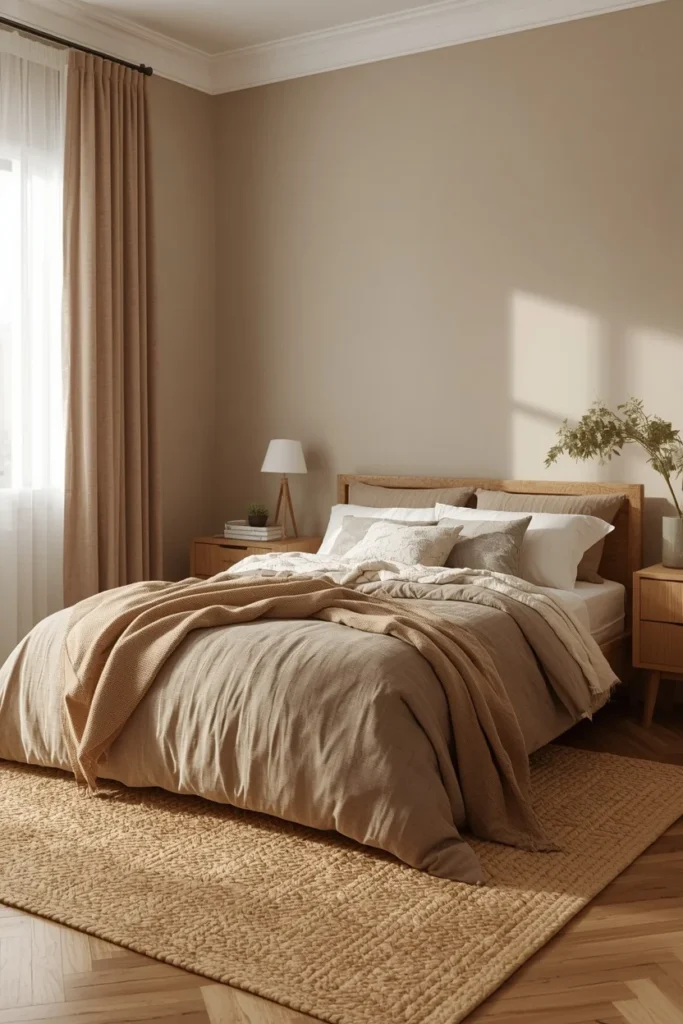
Painting one wall, usually the one behind the headboard, in a deep, saturated color like plum, near-black, or a smoky blue-green gives a bedroom an intimate, cocooned feeling the moment you walk in. This works especially well at night, when the dark wall recedes into the shadows and makes the room feel enclosed and calm rather than exposed. Carrying the same color slightly onto the ceiling or into a built-in nook deepens the effect further, a technique often called color drenching. Balance the drama with soft, warm bedding and natural wood tones so the room still feels comforting rather than heavy. This is one of the highest-impact single changes you can make to an otherwise plain bedroom.
3. Layered Natural-Fiber Bedding
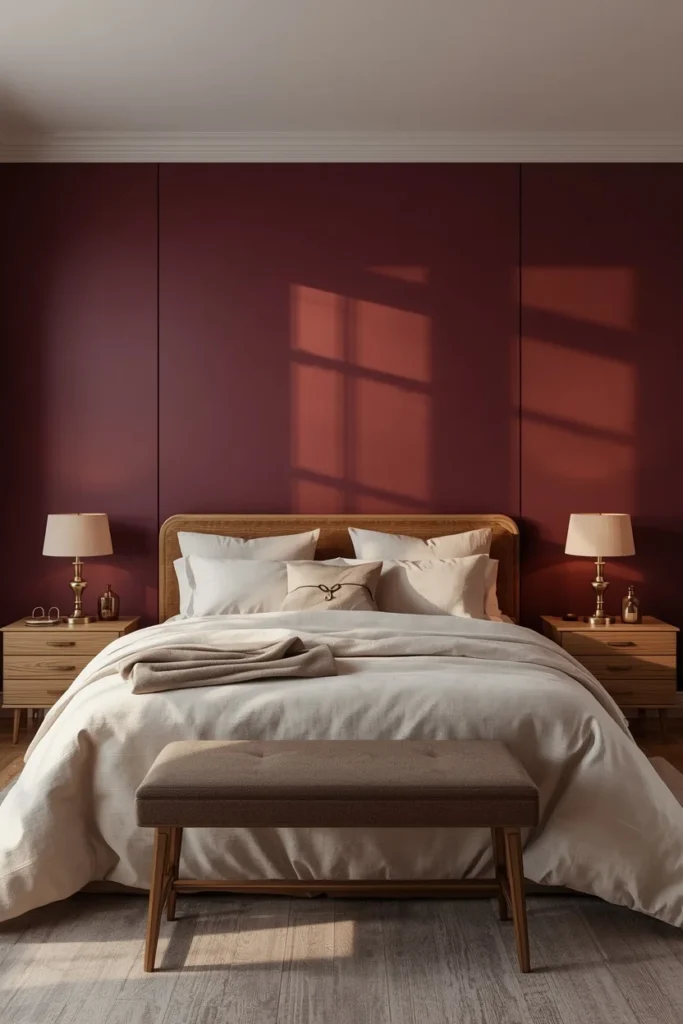
Swapping synthetic bedding for layered linen, cotton, and wool adds a tactile softness that synthetic fabrics can’t quite replicate, and it’s one of the fastest ways to make a bed look and feel more inviting. Layering matters more than any single sheet or duvet choice, since a slightly rumpled top layer over a crisp base gives the bed a lived-in, hotel-suite quality instead of a stiff, just-made look. Mixing two or three tones within the same warm family, like cream, oatmeal, and soft rust, keeps the layering from looking mismatched. A textured throw folded at the foot of the bed adds one more layer without requiring a full bedding overhaul. This is a simple, renter-friendly upgrade that changes how the whole room reads.

4. Textured or Grasscloth Accent Wall
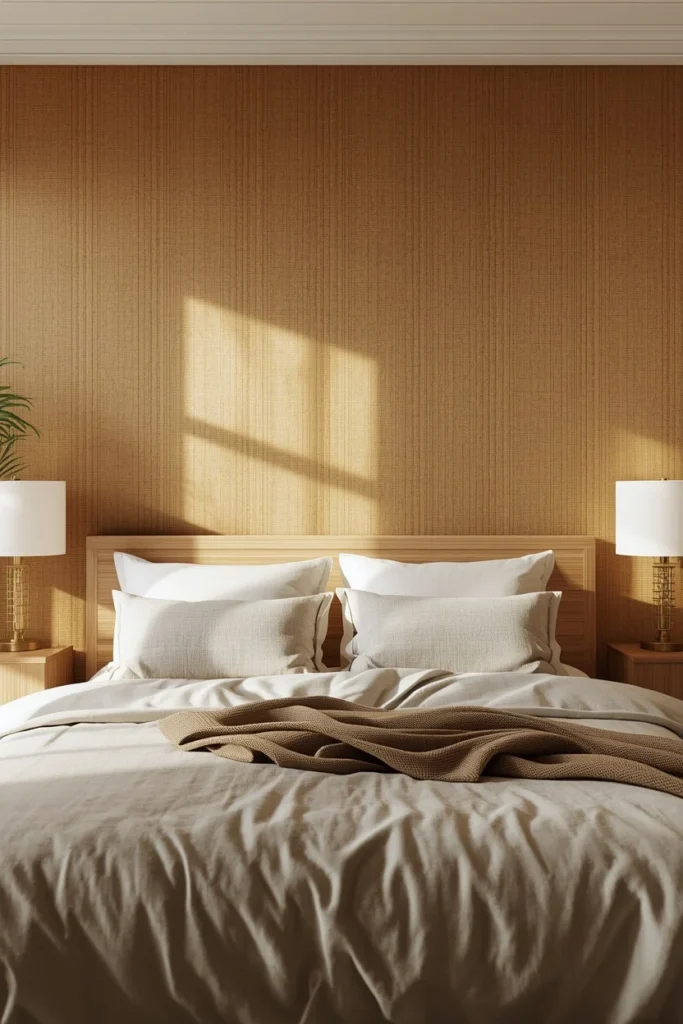
A wallcovering with real texture, like grasscloth, textured plaster, or a subtle woven wallpaper, adds depth to a bedroom without introducing a busy pattern or a loud color. The texture catches light differently throughout the day, which keeps a plain wall from feeling flat no matter the time. This works particularly well behind the headboard, where it acts almost like fabric upholstery for the wall itself. Pairing a textured wallcovering with natural wood furniture and soft brass hardware keeps the whole look cohesive rather than themed. It’s a quieter alternative to a bold accent wall for anyone who wants depth without commitment to a strong color.
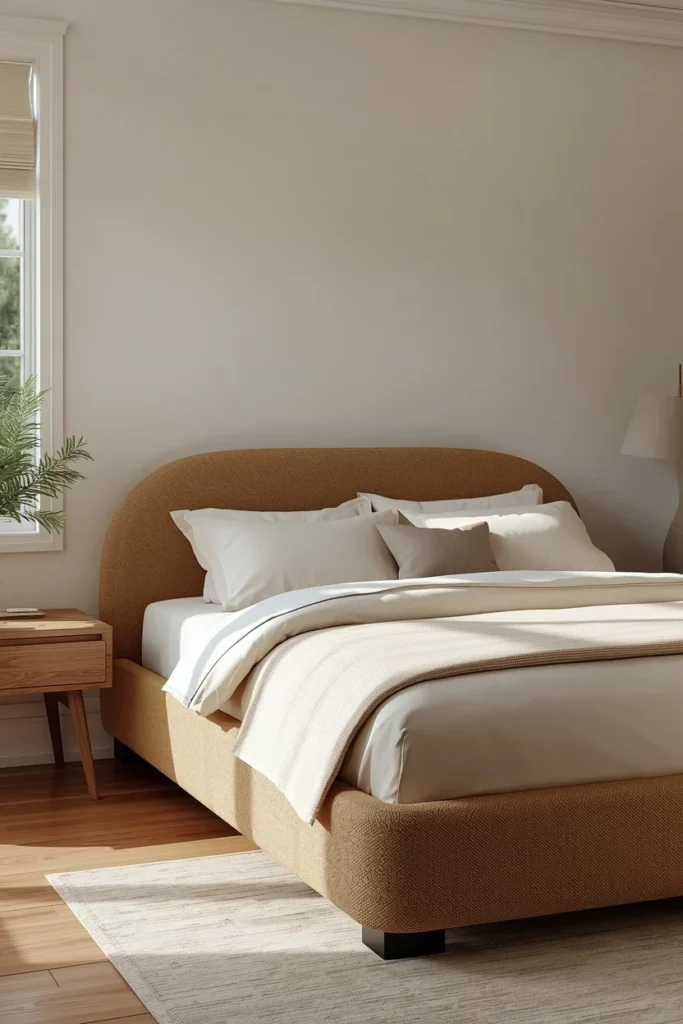
5. Sculptural, Curved Bed Frame
A bed frame with soft, rounded edges instead of sharp corners changes the whole feeling of a room, since curves read as calmer and more organic than straight lines. This shift toward sculptural frames is showing up across bedroom design because it makes the bed feel like a piece of furniture worth noticing, not just a functional base for a mattress. An upholstered curved headboard in a neutral fabric pairs especially well with simple, straight-lined nightstands, so the bed stays the visual anchor of the room. Choosing a slightly lower profile frame also keeps the room feeling grounded rather than towering, especially in a smaller bedroom. This is a bigger investment than most ideas on this list, but it’s one of the few that changes the entire mood of a room on its own.
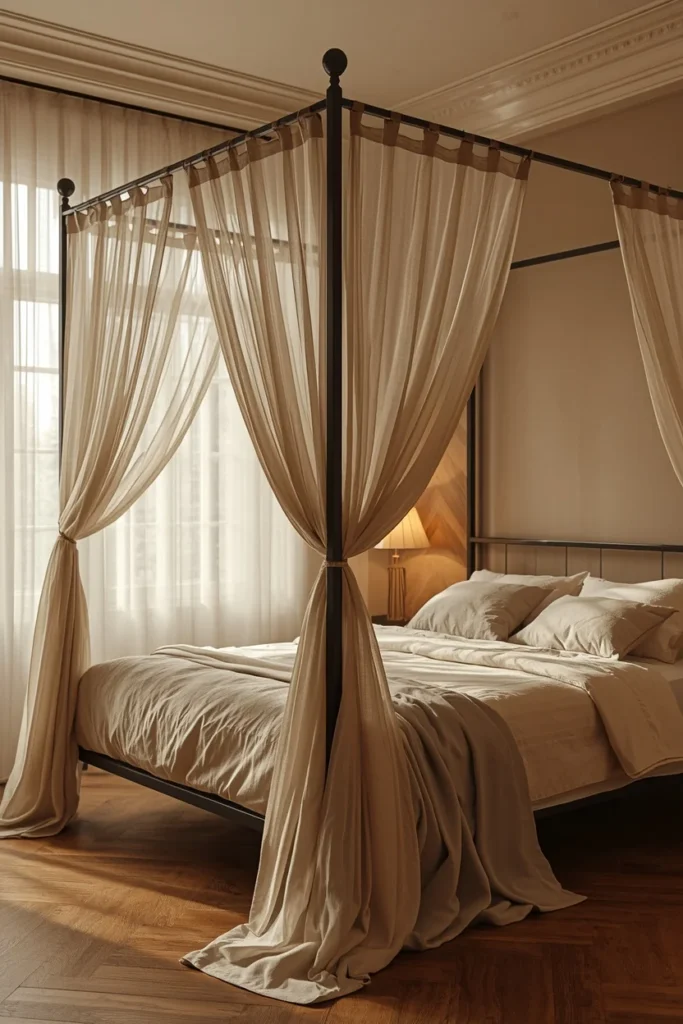
6. Canopy Bed for a Cocooned Feel
A canopy bed, even a simple metal-frame version with sheer curtains rather than a heavy four-poster, gives the bed its own defined space within the room, which reinforces the feeling of a private retreat. Drawing the curtains partway closed at night creates a soft, enclosed feeling that a standard bed frame can’t replicate, almost like a room within a room. Lightweight linen or gauze curtains keep the look airy rather than heavy, which matters in a bedroom that’s otherwise fairly open. This idea works in both traditional and modern spaces, depending on whether the frame is wood or slim black metal. It’s a strong choice for anyone who wants their bed to feel like the clear focal point of the room.
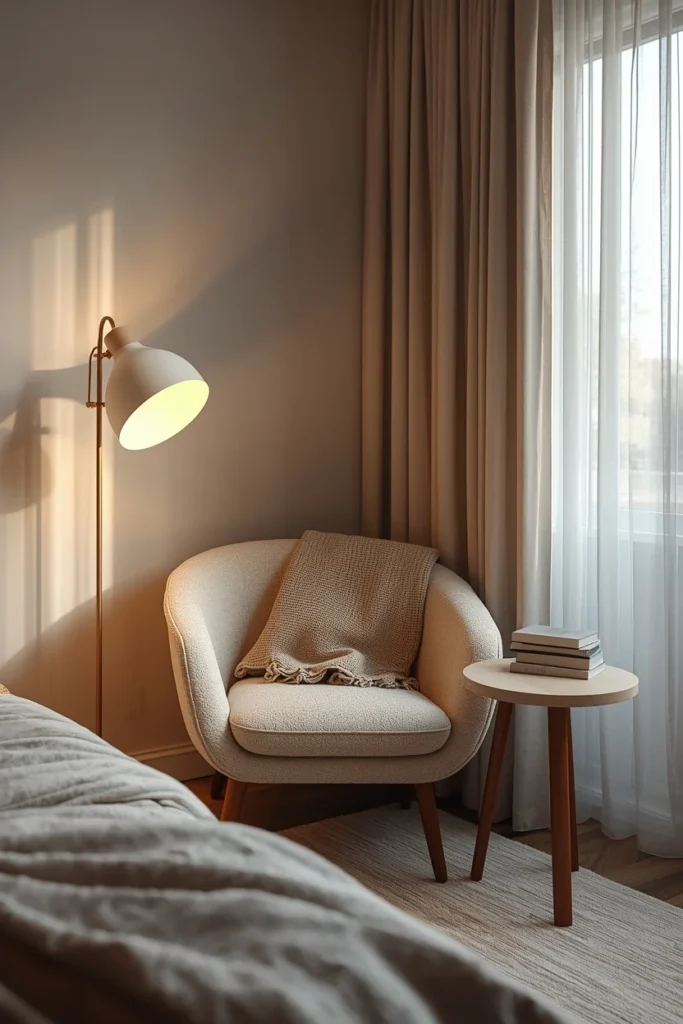
7. Cozy Reading Nook or Seating Corner
Adding a single upholstered chair, or a small chaise if the room allows it, in an underused corner gives the bedroom a second reason to spend time in it beyond sleeping. A deep, curved chair in boucle or velvet paired with a small side table and a floor lamp creates a complete little scene without needing much square footage. Positioning the nook near a window makes it double as a daytime reading spot and an evening wind-down corner once the lamp is on. A soft throw draped over the arm of the chair ties the nook back into the rest of the room’s textures. This is one of the most requested additions in sanctuary-style bedrooms because it gives the room a second identity beyond the bed.
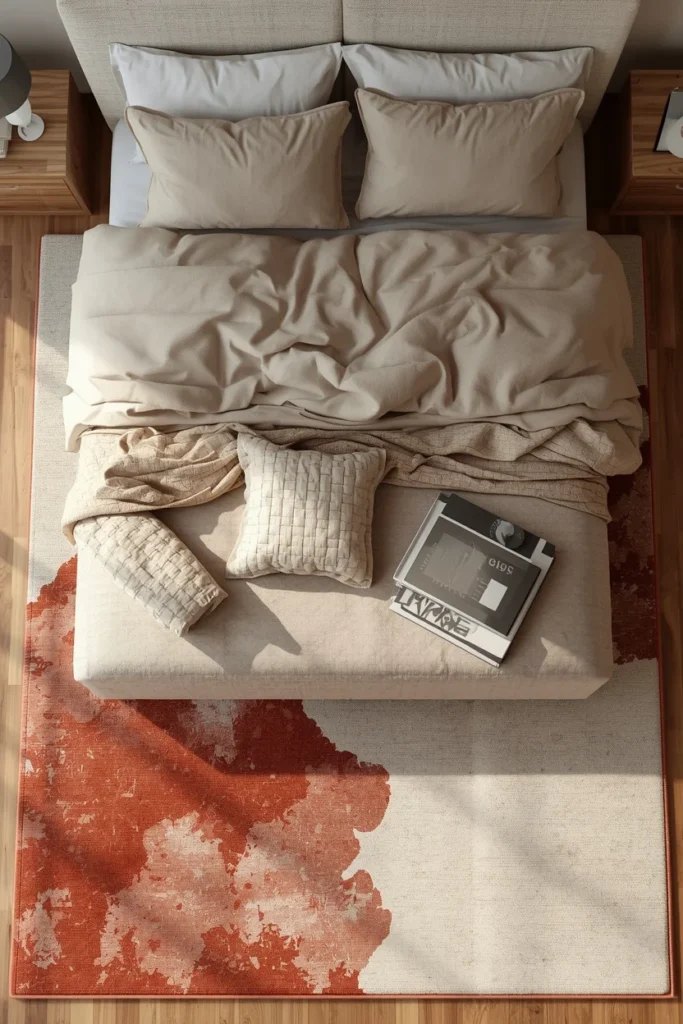
8. Illustrated Statement Area Rug
A bold, artistic area rug, whether it’s an abstract brush-stroke print or a soft line-drawn pattern, gives the floor personality without asking the walls or furniture to do anything different. Placed under and slightly beyond the bed, it anchors the whole layout and adds warmth underfoot, which matters more in a bedroom than almost any other room in the house. This type of rug works especially well in a mostly neutral room, since it becomes the one expressive element rather than competing with a bold wall color. Choosing a rug in muted, warm tones keeps it from feeling like a statement piece dropped into a calm room by mistake. It’s a detail most guests won’t consciously register, but one that quietly shapes how finished the whole room feels.
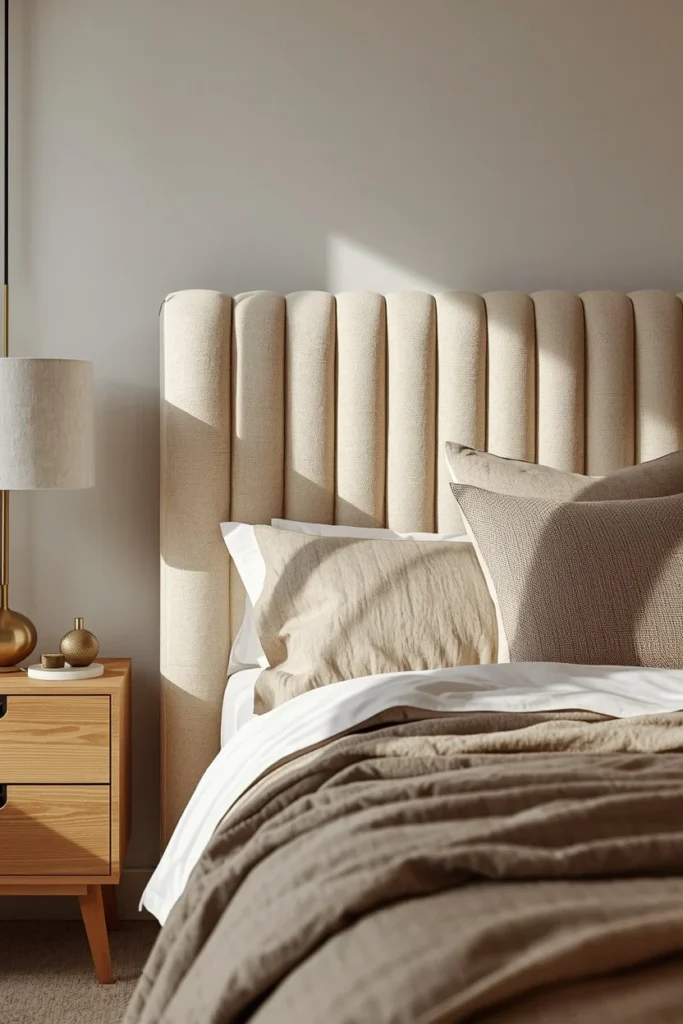
9. Boucle or Velvet Upholstered Headboard
An upholstered headboard in a soft, tactile fabric like boucle or velvet adds comfort you can actually lean back against, which a hard wood or metal headboard never quite offers. The texture also softens the whole sightline of the bed, making it feel more like furniture and less like hardware. Boucle in particular has become a signature texture in sanctuary-style bedrooms because it reads as cozy without being overly plush or dated. Choosing a slightly channel-tufted or curved design adds detail without needing any bold pattern or color. This upgrade alone can make an otherwise simple bed frame feel considerably more finished.
10. Layered Lighting With Dimmers
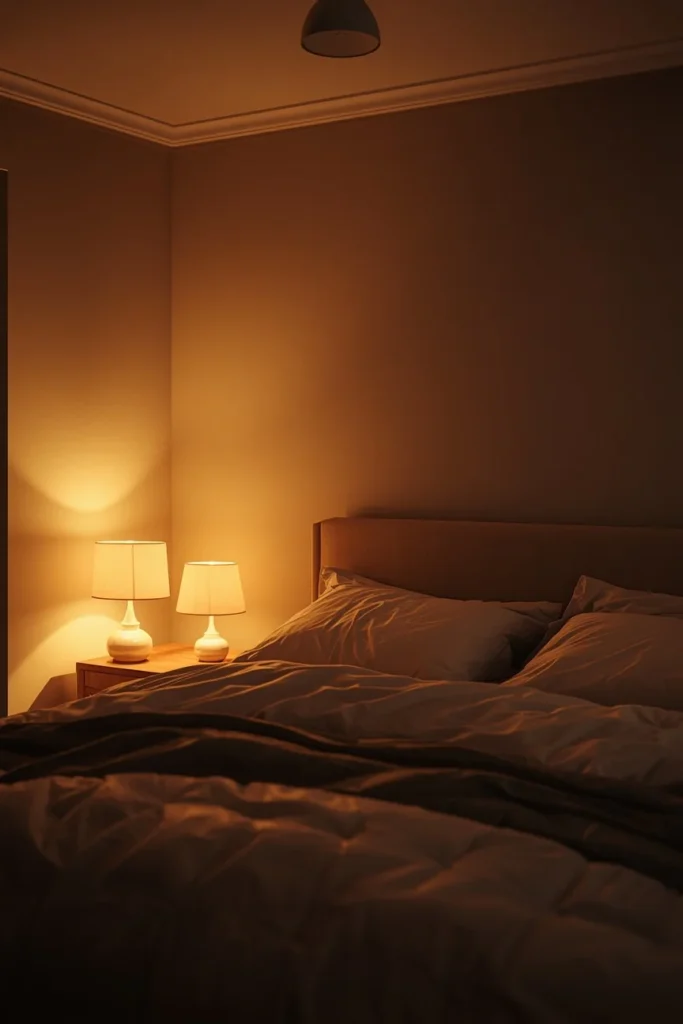
Relying on a single overhead light is one of the biggest reasons a bedroom feels more like a functional room than a restful one, since overhead lighting is bright, flat, and rarely flattering at night. Layering in table lamps, a floor lamp in the reading nook, and dimmable overhead lighting gives you control over the mood at different times of day. Warm bulbs, somewhere around 2700 to 3000 Kelvin, feel noticeably cozier than cool white light, especially in the evening. Placing lamps at slightly different heights around the room, rather than matching pairs at the same level, also adds visual interest without any extra decor. This is one of the most overlooked upgrades for making a bedroom feel like a sanctuary rather than just a place to sleep.
11. Wall Sconces Flanking the Bed
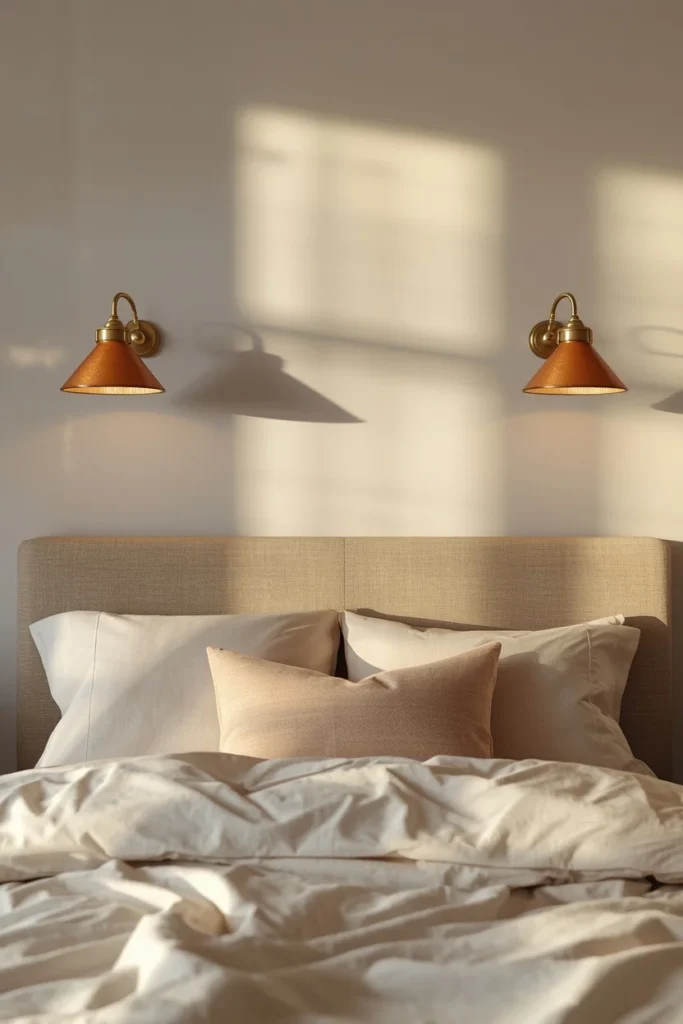
Mounting a sconce on either side of the bed instead of using freestanding lamps frees up nightstand surface space and gives the room a more custom, built-in look. Sconces with an adjustable arm or swivel head let you direct light exactly onto a book without lighting up the whole ceiling, which matters if one partner wants to read while the other sleeps. Warm brass or matte black fixtures with a fabric or glass shade soften the light further, avoiding a stark, clinical glow. This setup also balances the wall visually on either side of the headboard, especially useful when the headboard itself is plain. It’s a small architectural detail that makes a bedroom feel more intentionally designed.
12. Statement Sculptural Pendant or Chandelier
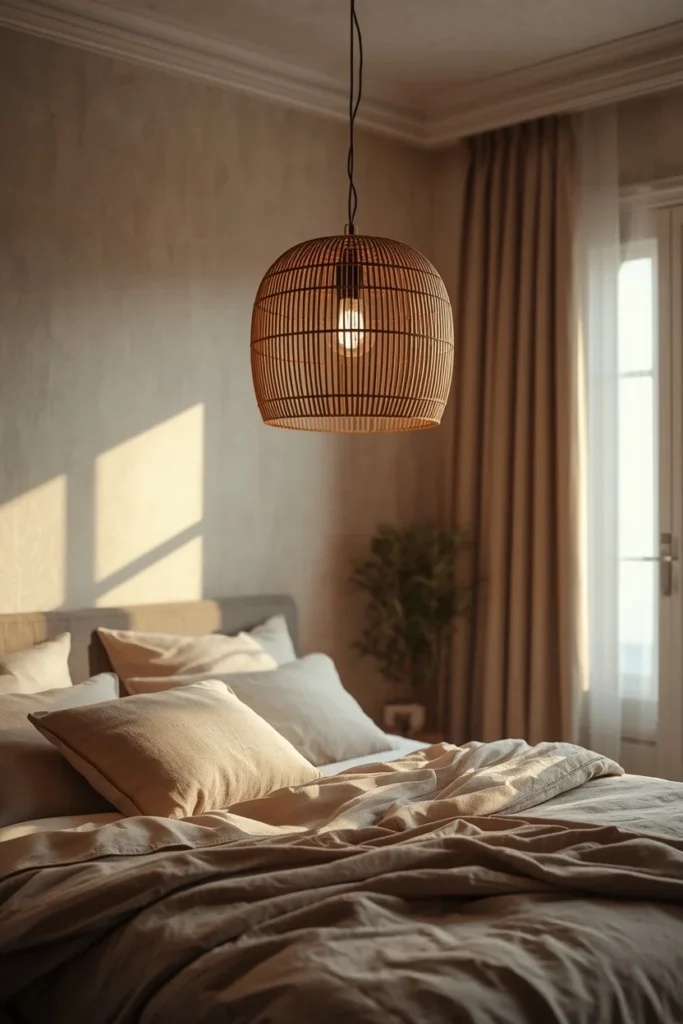
Replacing a standard flush-mount ceiling light with a sculptural pendant or a small chandelier turns the ceiling into part of the room’s design rather than an afterthought. A woven, brass, or soft glass fixture can set the tone for the whole room’s style, whether that leans traditional, organic modern, or softly glamorous. Centering the fixture slightly forward of the bed, rather than in the exact middle of the ceiling, keeps it from feeling like it’s hovering directly overhead. This upgrade works especially well in bedrooms with higher ceilings, where a flush-mount light can feel visually lost. It’s a relatively simple electrical swap with an outsized visual return.
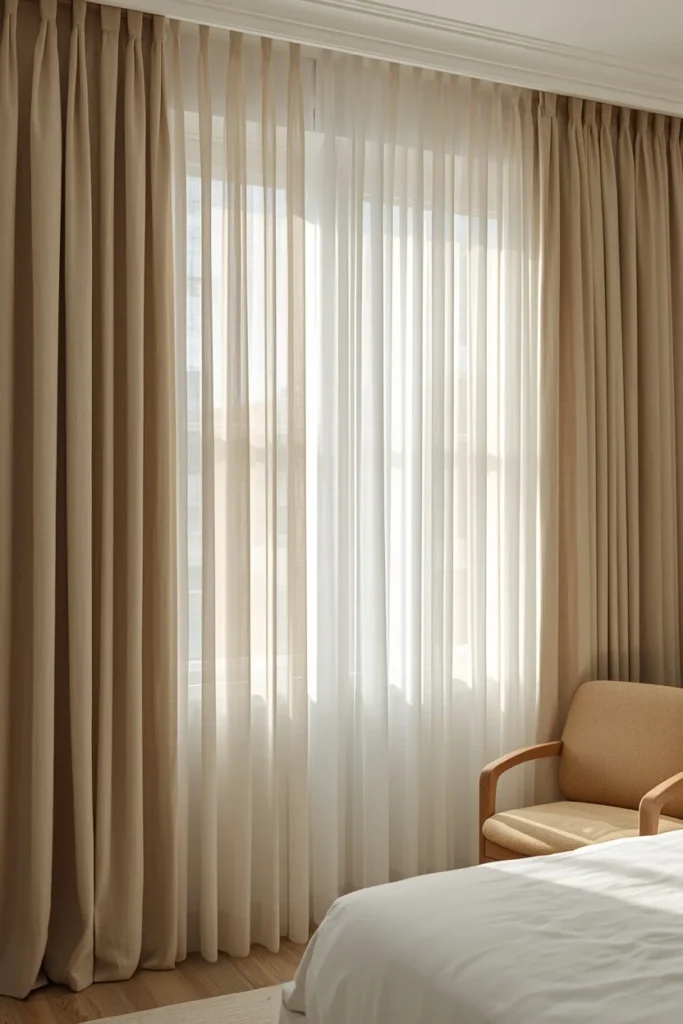
13. Blackout and Sheer Curtain Layering
Pairing a blackout curtain with a sheer layer in front of it gives you full control over the room’s light throughout the day, which matters more for actual rest than almost any decor choice on this list. During the day, the sheer layer alone lets in soft, filtered light that keeps the room feeling airy rather than dim. At night, drawing the blackout layer closed creates the kind of darkness that genuinely supports deeper sleep, especially in a room with streetlights or early morning sun. Choosing curtains in a color that matches the wall keeps the window from becoming a visual break in an otherwise calm palette. This is a practical upgrade that also happens to make the window treatment look more finished and layered.
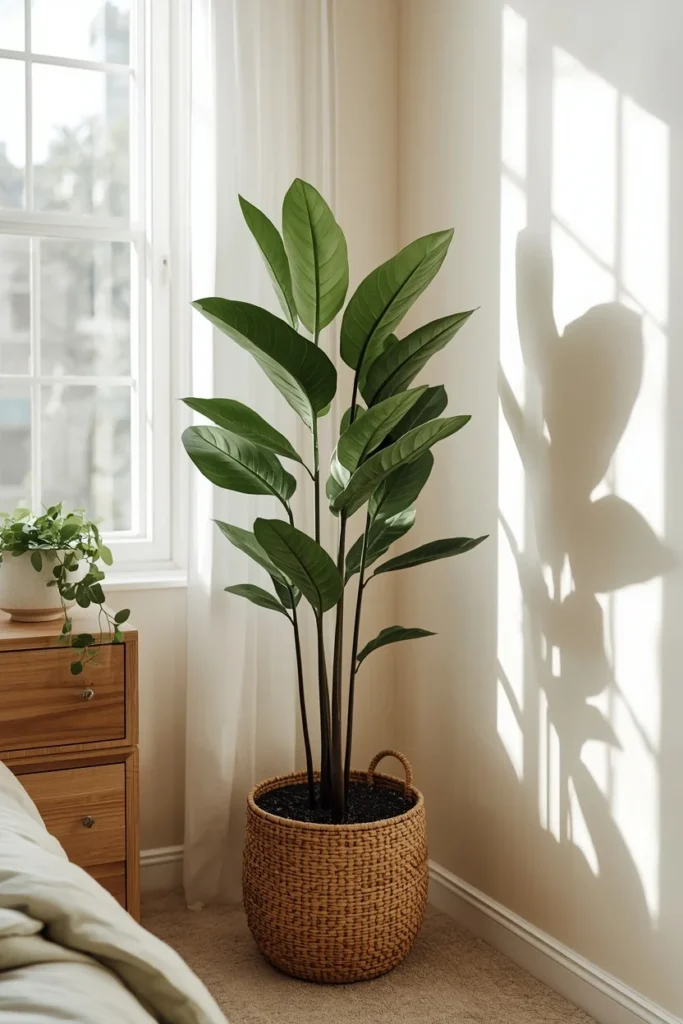
14. Biophilic Touches With Plants
Bringing in one or two real plants, rather than a room full of greenery, adds a living, breathing quality to a bedroom that decor alone can’t replicate. A tall, low-maintenance plant like a fiddle leaf fig or snake plant in a corner fills empty vertical space, while a smaller trailing plant on a dresser softens a hard edge. Keeping the palette around the plants neutral lets the greenery stand out as the room’s one organic, ever-changing element. This idea also supports the broader shift toward biophilic design, where natural elements are used specifically to lower stress and support a sense of calm. Even a single well-placed plant can shift a bedroom from purely decorative to genuinely alive.
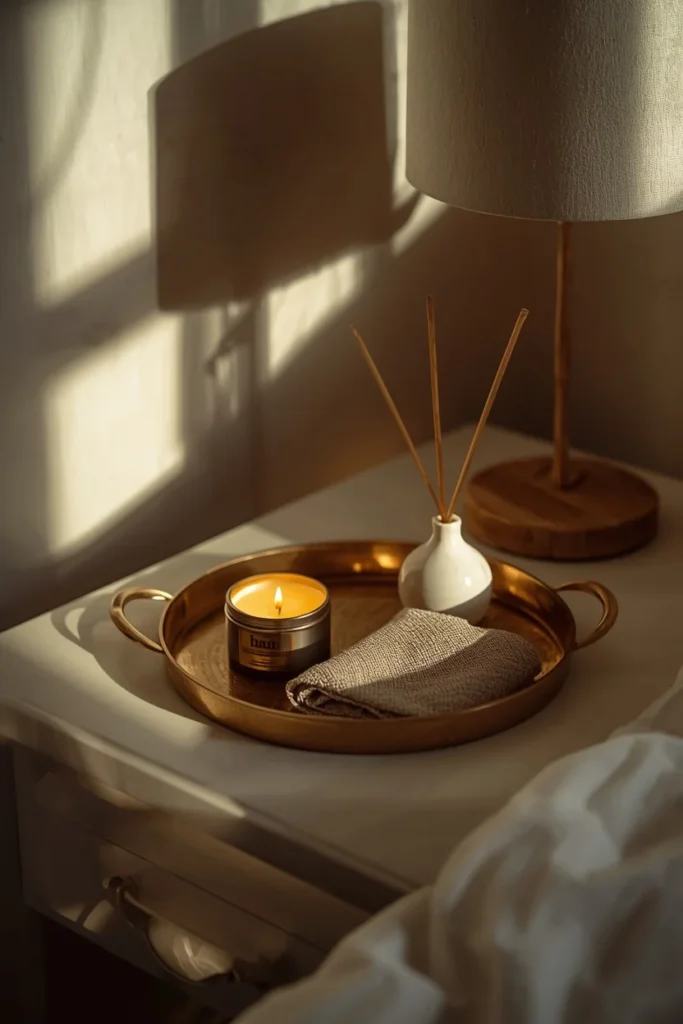
15. Ritual Aromatherapy Corner
A small dedicated spot for a candle, a diffuser, and maybe a few drops of essential oil turns lighting a candle before bed into an actual ritual instead of an afterthought. Placing this little setup on a dresser or nightstand tray keeps the items contained and gives the corner a slightly ceremonial feel rather than a cluttered one. Warm, woodsy or subtly floral scents tend to suit a wind-down routine better than anything too sharp or energizing. This is a low-cost, high-impact addition, since it engages a sense that decor alone never reaches. Over time, the scent itself becomes part of what signals to your body that it’s time to slow down.
16. Weighted Blanket and Tactile Layers
Adding a weighted blanket folded at the foot of the bed brings a tactile, calming element into the room that goes beyond how the bed looks, since the gentle pressure is specifically associated with a more settled, restful feeling. Choosing one in a fabric and tone that matches the rest of the bedding keeps it from looking like a separate accessory rather than part of the room’s design. Pairing it with a chunky knit throw on a nearby chair adds another layer of texture you can actually reach for on a cooler night. This idea leans into comfort as a design choice rather than an afterthought, which is exactly the shift most sanctuary-style bedrooms are built around. It’s a small addition that does double duty as both decor and genuine self-care.

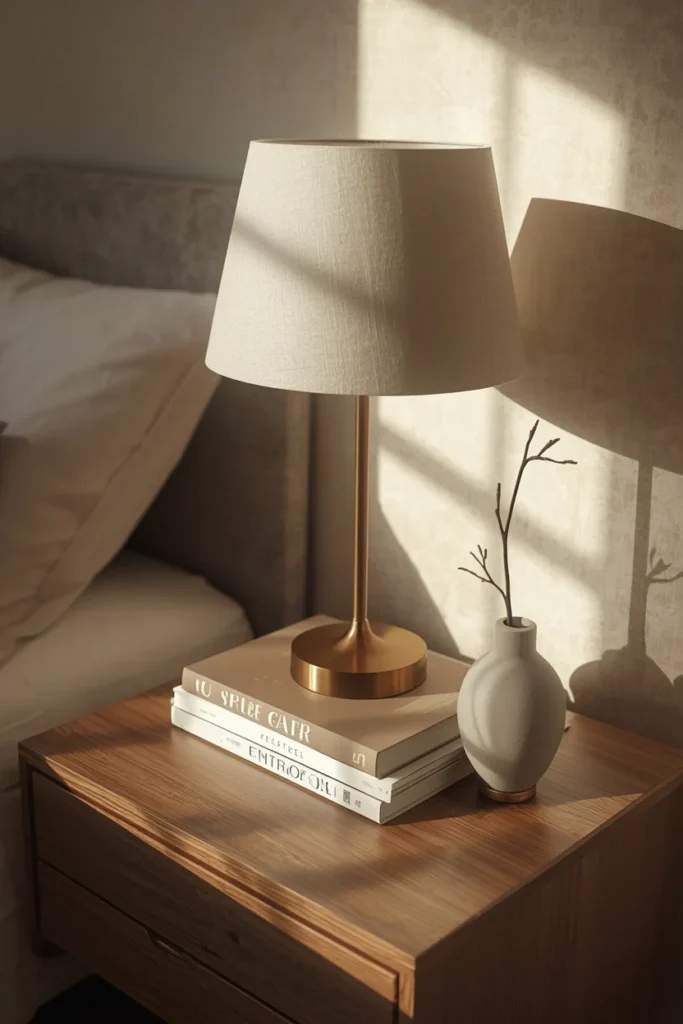
17. Decluttered, Minimalist Nightstands
Keeping each nightstand down to a lamp, a small stack of books, and maybe one personal object removes the visual noise that a nightstand full of chargers, tissues, and loose items tends to create. This isn’t about a stark, empty look, but about choosing a few things worth having in view instead of everything that happens to end up there. A small tray on top of the nightstand keeps even those few items contained and tidy-looking rather than scattered. This kind of restraint matters more in a bedroom than almost any other room, since it’s the last thing you see before sleep and the first thing you see in the morning. It’s one of the simplest, no-cost changes on this entire list.
18. Hidden Tech and Charging Drawer
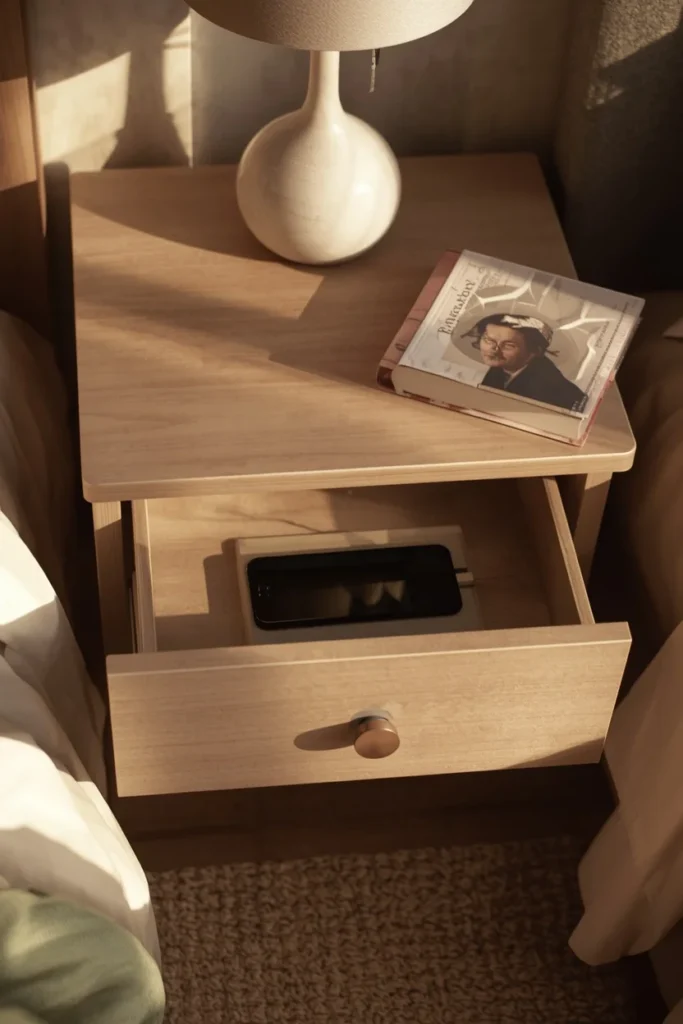
Instead of a phone charger and cable sitting in plain view on the nightstand, a small drawer or a nightstand with a built-in charging compartment keeps devices out of sight while still within reach. This small shift supports the broader idea of a bedroom as a place to disconnect, since a visible, lit-up phone screen is one of the fastest ways to undercut an otherwise calm room. Choosing a nightstand with a single drawer specifically for this purpose means the charging cable never has to sit tangled on top. This is a practical, almost invisible upgrade, but it’s one that directly supports the sense of a bedroom as a genuine retreat rather than an extension of the rest of your day. It costs little more than the nightstand you were already planning to buy.
19. Sound-Dampening Layered Textiles
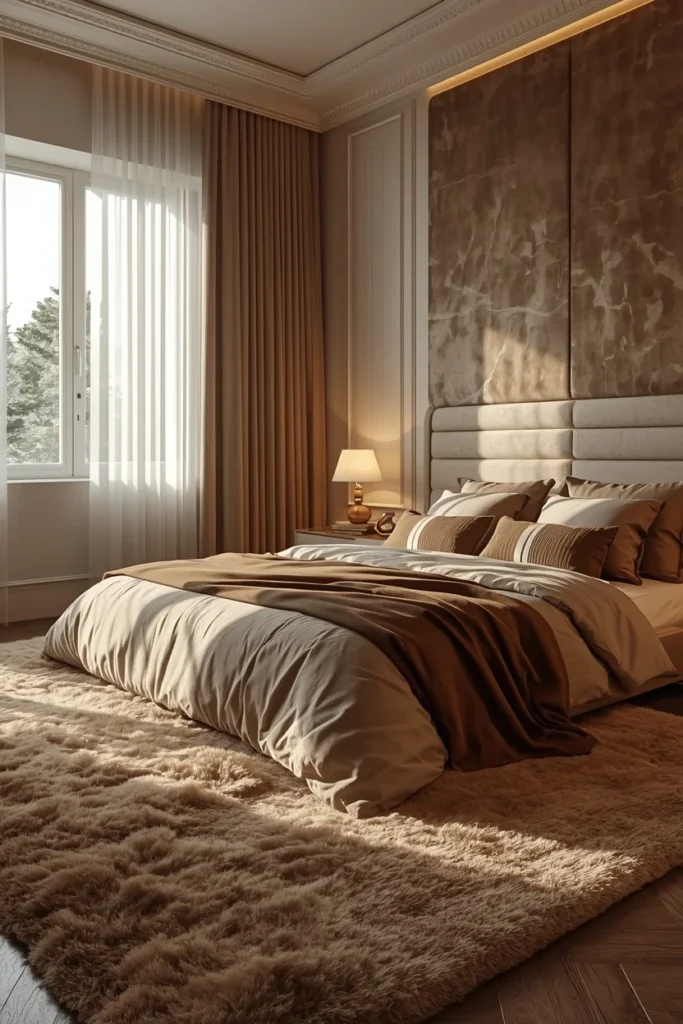
A thick area rug, an upholstered headboard, and heavier curtains all do quiet work absorbing sound, which matters more than most people realize in a bedroom that backs onto a street or a shared wall. Hard floors and bare windows bounce sound around a room, while soft, layered materials settle it, which contributes directly to how calm a bedroom actually feels rather than just looks. This is especially useful in apartments or homes near traffic, where a genuinely quiet bedroom can be hard to come by otherwise. Choosing textiles for this purpose doesn’t require sacrificing style, since a plush rug and upholstered headboard were likely already on your list. It’s a practical reason to lean into the same cozy, layered look the rest of this guide recommends.
20. Personal Vanity or Self-Care Corner
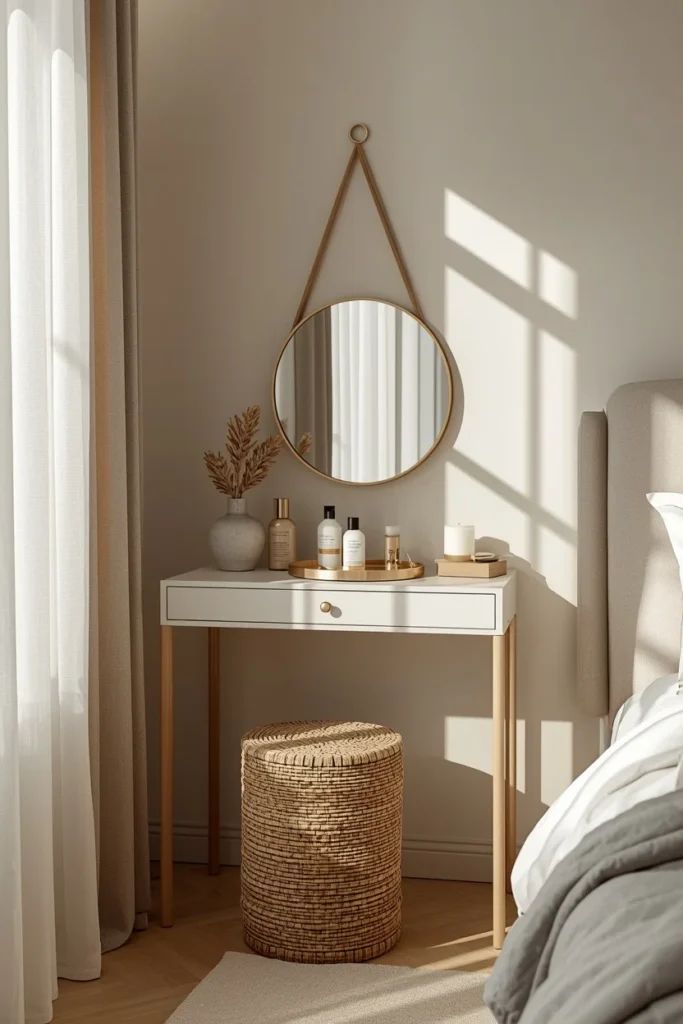
A small vanity or dressing table with a mirror gives the bedroom a dedicated spot for getting ready that isn’t just standing in front of the closet, which turns a daily routine into something closer to a small ritual. Even a narrow console table with a round mirror and a simple stool works in a smaller bedroom, without needing a full built-in setup. Styling the surface with just a few skincare items and a small tray keeps it functional without becoming cluttered. Placing the vanity near natural light, if the room allows it, makes it more pleasant to actually use every day. This corner is one of the easiest ways to make a bedroom feel personal rather than generic.
21. Room Divider for Multi-Functional Zoning
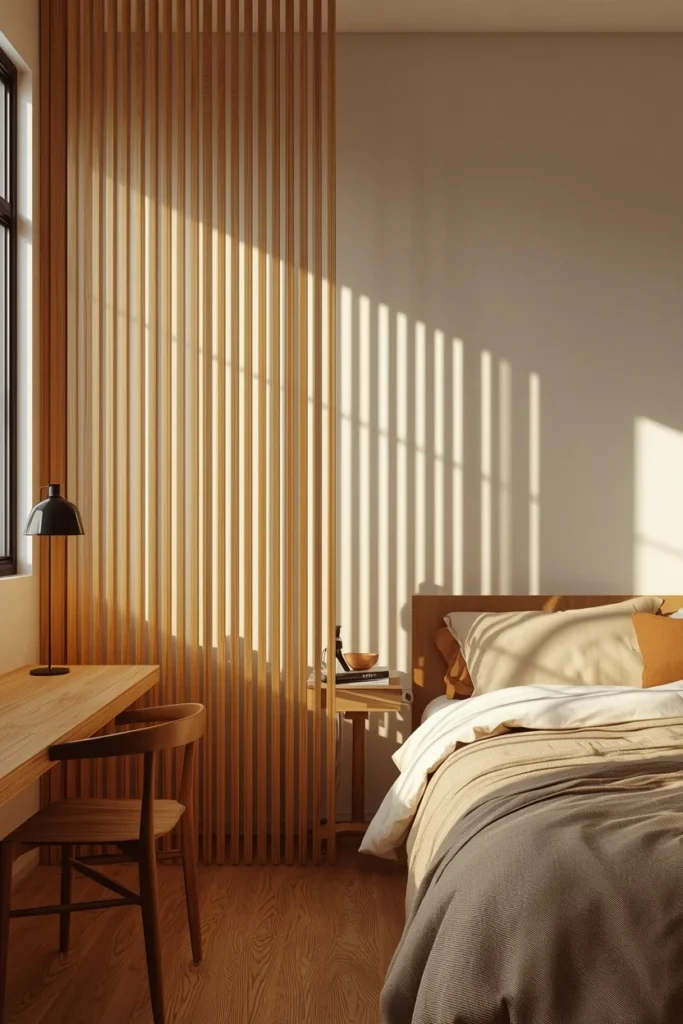
In a bedroom that also has to serve as a workspace or a shared space, a simple room divider or a slim bookshelf can visually separate the sleeping area from everything else without needing a wall. This keeps a desk or exercise equipment from being the first thing you see when you lie down, which matters for how restful the room actually feels at night. A woven or slatted wood divider adds texture rather than feeling like a purely functional barrier. This idea works especially well in studio apartments or smaller homes where the bedroom genuinely has to multitask. Being able to visually close off the sleep zone, even without a real wall, makes a noticeable difference in how calm the space feels.
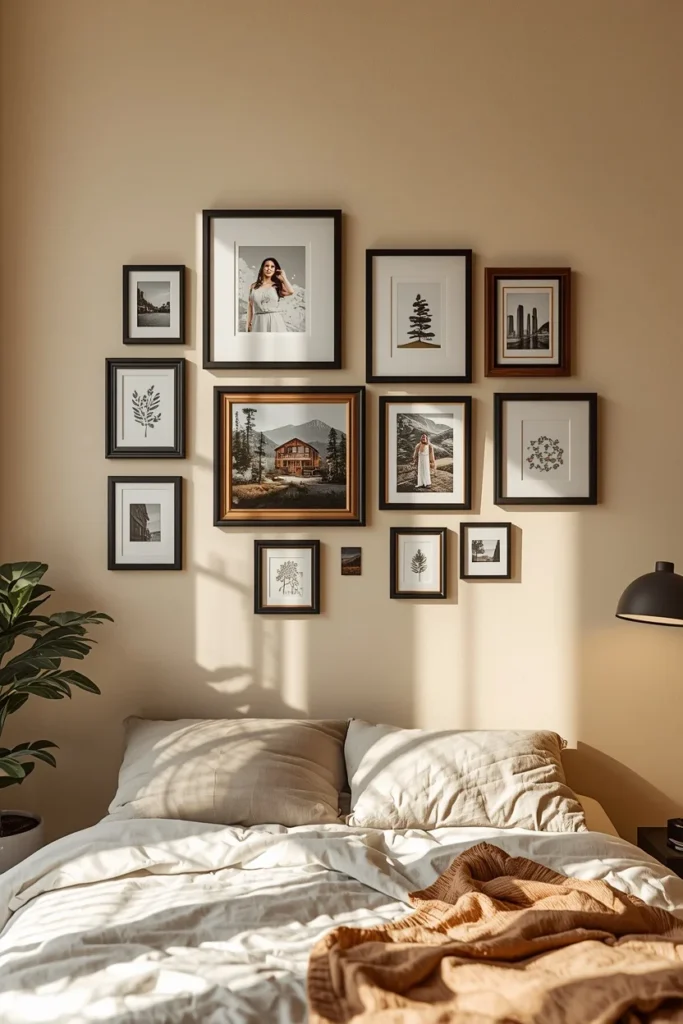
22. Personal Gallery Wall of Meaningful Art
A small cluster of art and photos that actually mean something, rather than generic prints chosen to match the wall color, is what makes a bedroom feel unmistakably yours rather than a hotel room. Mixing a few different frame sizes and a mix of photography, illustration, and one small textile piece keeps the wall from looking like a matched set. Placing the gallery on the wall opposite the bed, rather than directly above the headboard, gives you something to actually look at from where you sleep. Keeping the color palette within the frames consistent, even if the subjects vary, holds the whole wall together visually. This is the one idea on this list that has nothing to do with materials or lighting and everything to do with making the room feel personal.
Styling Tips
- Choose one dominant texture story, like boucle and linen, or velvet and wool, rather than mixing several unrelated textures across the room.
- Keep the color palette within two or three warm tones total, including the walls, so nothing in the room fights for attention.
- Vary lamp and light heights around the room instead of matching pairs at the same level, which adds visual interest without extra objects.
- Let one surface, like the accent wall or the rug, carry all the boldness, and keep everything else quiet around it.
- Treat the nightstand and dresser tops as curated, not just functional, by limiting each to a few objects worth actually looking at.
Practical Implementation Ideas
- Start with lighting and bedding before furniture. Both are lower-cost changes with a bigger effect on how the room actually feels day to day.
- If you’re painting an accent wall, test the color at night under lamp light as well as during the day, since bedrooms are used heavily after dark.
- Add the reading nook or vanity corner only after the bed and lighting are settled, since those anchor decisions affect how much space is left for a second zone.
- If you’re installing wall sconces, plan the electrical work at the same time as any headboard upholstery project, since both usually involve opening the same wall.
- Layer in textiles gradually, starting with the bedding, then a throw, then a rug, rather than buying everything at once, so the palette stays cohesive.
Common Mistakes to Avoid
- Relying on a single overhead light as the room’s only light source, which tends to flatten the mood no matter how good the decor is.
- Choosing an accent color that looks great in a paint swatch but feels too dark once it covers an entire wall with no natural light to soften it.
- Overloading the nightstands with chargers, tissues, and loose items, which undercuts even a beautifully designed bed.
- Adding too many textures at once, like a patterned rug, a patterned headboard, and patterned bedding all in the same room.
- Skipping window treatments entirely, which leaves the room fully exposed to streetlight and early morning sun regardless of how well everything else is designed.
Small-Space Alternatives
- If a full canopy bed frame won’t fit, a simple curtain rod mounted above the headboard with sheer panels gives a similar cocooned effect.
- If there’s no room for a reading chair, a slim floor lamp and a small floating shelf beside the bed can create a mini version of the same nook.
- If a full vanity table isn’t realistic, a narrow wall-mounted shelf with a small mirror above it covers the same daily ritual in a fraction of the space.
- If a room divider feels too bulky, a tall bookshelf positioned perpendicular to the bed can create the same visual separation.
- If an area rug large enough to anchor the whole bed isn’t in the budget, a smaller runner on each side of the bed adds warmth underfoot with less cost.
Budget-Friendly Alternatives
- New bedding in a warmer, more layered palette is one of the least expensive ways to shift the whole room’s mood without touching furniture.
- A can of paint for a single accent wall costs far less than new furniture and delivers a similarly strong visual change.
- Battery-operated wall sconces let you add flanking bedside lighting without any electrical work at all.
- A secondhand chair reupholstered in boucle or velvet often costs less than a new one and adds more character to the room.
- Swapping just the lampshades on existing lamps for a warmer, fabric-lined option changes the whole quality of light in the room for very little money.
Pro Styling Recommendations
- Treat lighting as a design decision, not an afterthought. Warm, layered light does more for a sanctuary feel than almost any single piece of furniture.
- If you can only upgrade one thing this year, prioritize the bedding and the lighting together, since they’re the two elements you interact with every single day.
- Choose textures you actually want to touch, like boucle, linen, and wool, since a sanctuary bedroom is meant to be felt as much as seen.
- Keep at least one wall of the room free of major decor so the eye has somewhere to rest, especially if you’ve added a bold accent wall elsewhere.
- Build in one small daily ritual, whether it’s the candle corner or the vanity nook, so the room supports a routine and not just a look.
FAQs
Conclusion
A bedroom this personal doesn’t need every idea on this list to feel like a sanctuary. Usually one or two changes, done well, like warmer lighting or a single moody accent wall, do more than a full room overhaul ever could. Start with the elements you interact with daily, the bed and the light, and let the smaller rituals and corners follow once those feel right.