21 Stunning Fall-Inspired Kitchen Decor Ideas That Make Cooking So Much Easier
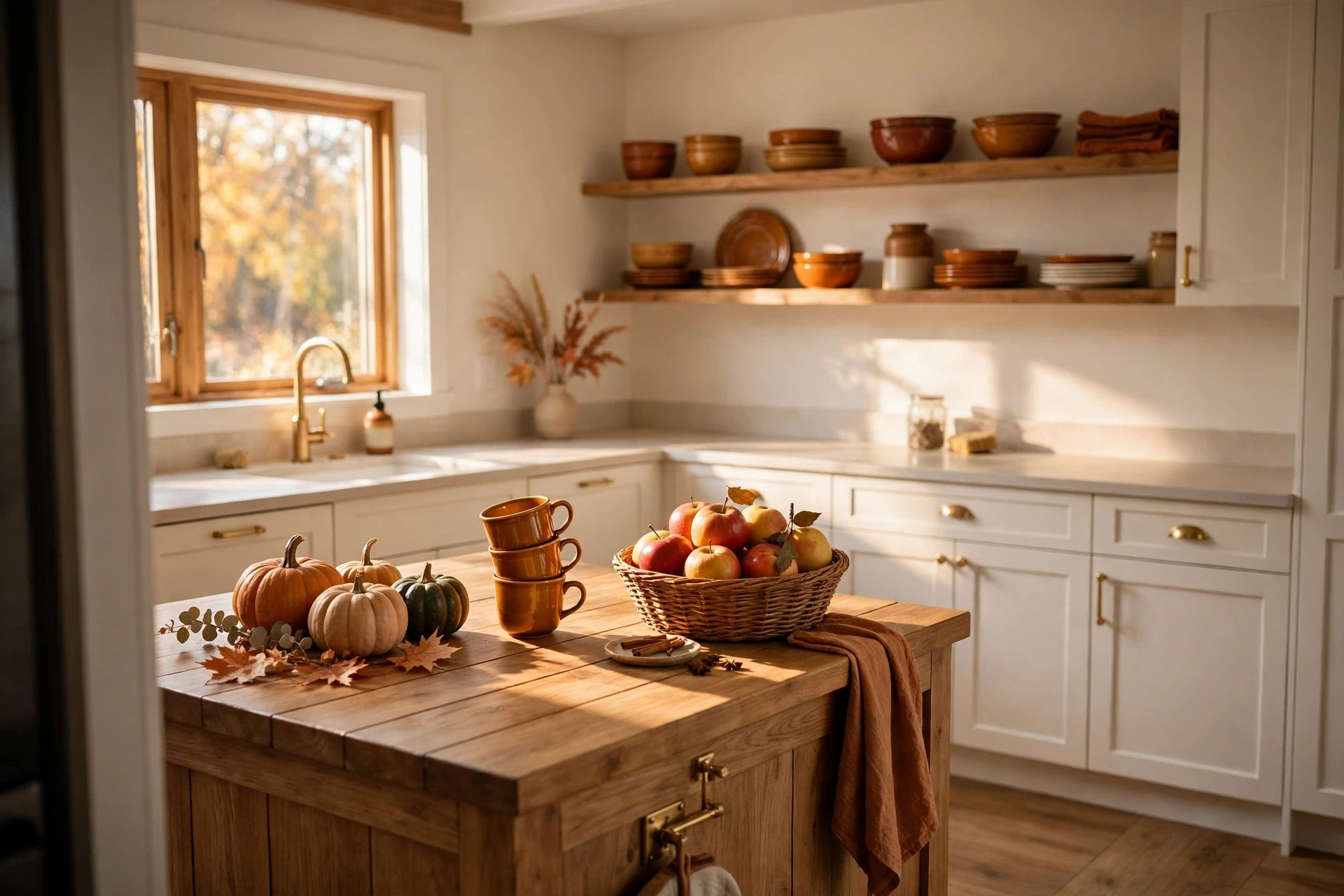
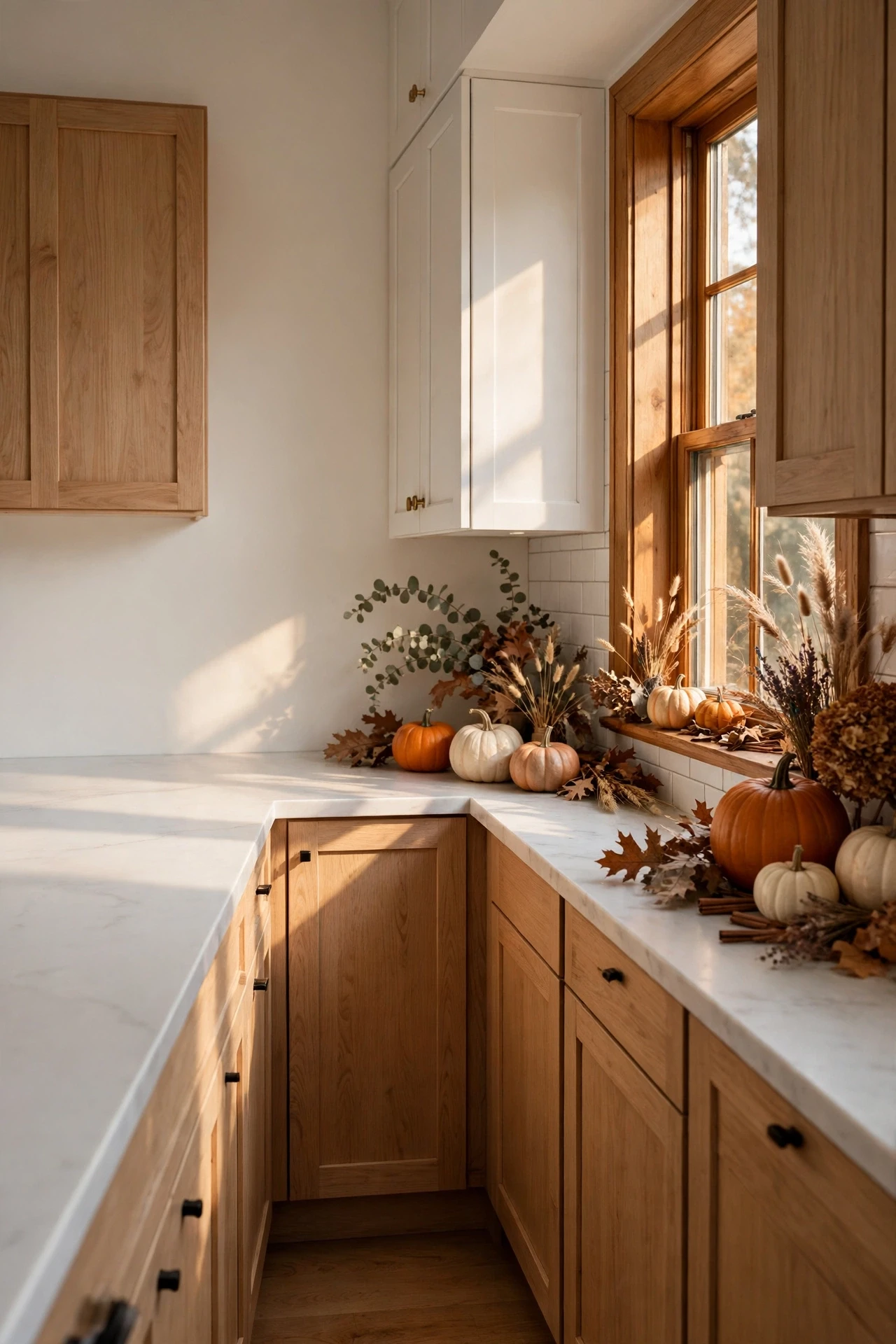
Most fall kitchen decor advice tells you where to put the pumpkins. It rarely tells you what happens the next morning, when you’re trying to make coffee around a display that’s taken over half your counter, or reaching past three decorative gourds to grab the spatula you actually need.
A kitchen is the one room in the house that has to function every single day, seasonal or not. So the best fall decor here isn’t the kind you admire from the doorway — it’s the kind that quietly makes the actual cooking part smoother while it’s busy looking cozy. These 21 ideas are built on that idea from the ground up.
Table of Contents
Zone-Smart Styling
The single biggest shift that separates a cozy-but-usable fall kitchen from a cluttered one is deciding where decor is allowed to live before you buy a single pumpkin. Split your kitchen mentally into a prep zone, a cooking zone, and a cleanup zone, then keep the two zones you touch most during active cooking — prep and cleanup — almost entirely clear. Push seasonal styling to the edges instead: the windowsill, the far end of the island, open shelving, or the space above the cabinets, where it adds warmth without ever being in the way of a cutting board or a dish rack. This single decision prevents almost every other frustration on this list before it starts, because it means every idea below has an obvious, decor-appropriate home. Once the zones are set, decorating for fall becomes a matter of filling in the edges rather than negotiating with your workspace every time you cook.
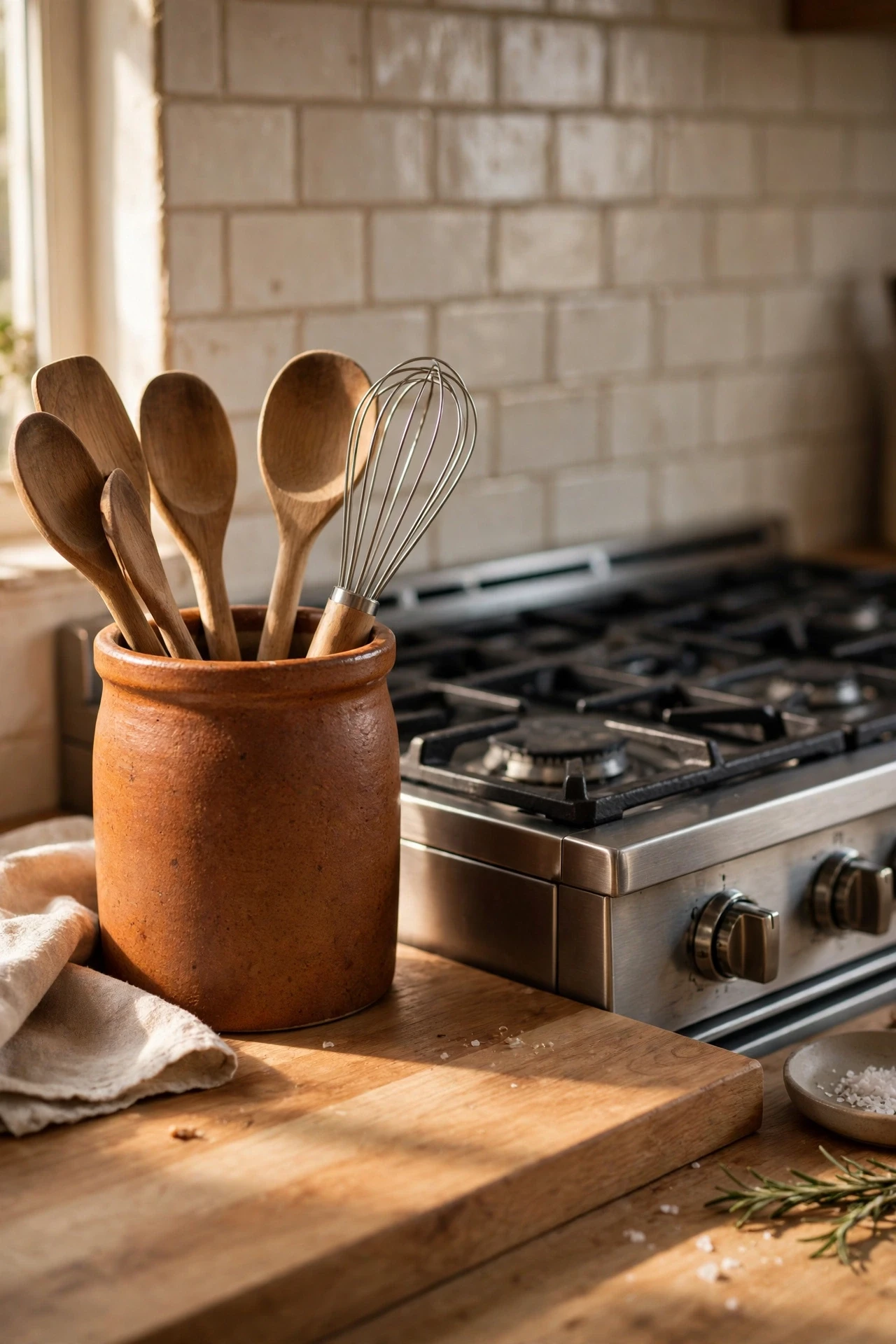
A Stove-Side Utensil Crock Dressed for Fall
A crock of frequently used tools next to the stove is already one of the most efficient setups a kitchen can have, since it removes the extra steps of opening a drawer mid-stir, and swapping in a warm-toned ceramic or stoneware crock for fall keeps that efficiency while updating the look. Choose a crock in a rust, cream, or deep amber glaze that echoes your fall palette, then fill it only with the tools you reach for weekly — a wooden spoon, a spatula, tongs, a whisk — rather than every utensil you own. Overfilling the crock defeats its purpose, since you’ll spend more time digging through it than you would opening a drawer, so edit ruthlessly and store the rest. Placing it within arm’s reach of the stove, not just somewhere nearby, is what actually saves time during a real cooking session, especially one-handed while something’s simmering. This is one of the smallest decor swaps on the list and one of the most-used, which makes it a strong first project if you’re short on time.
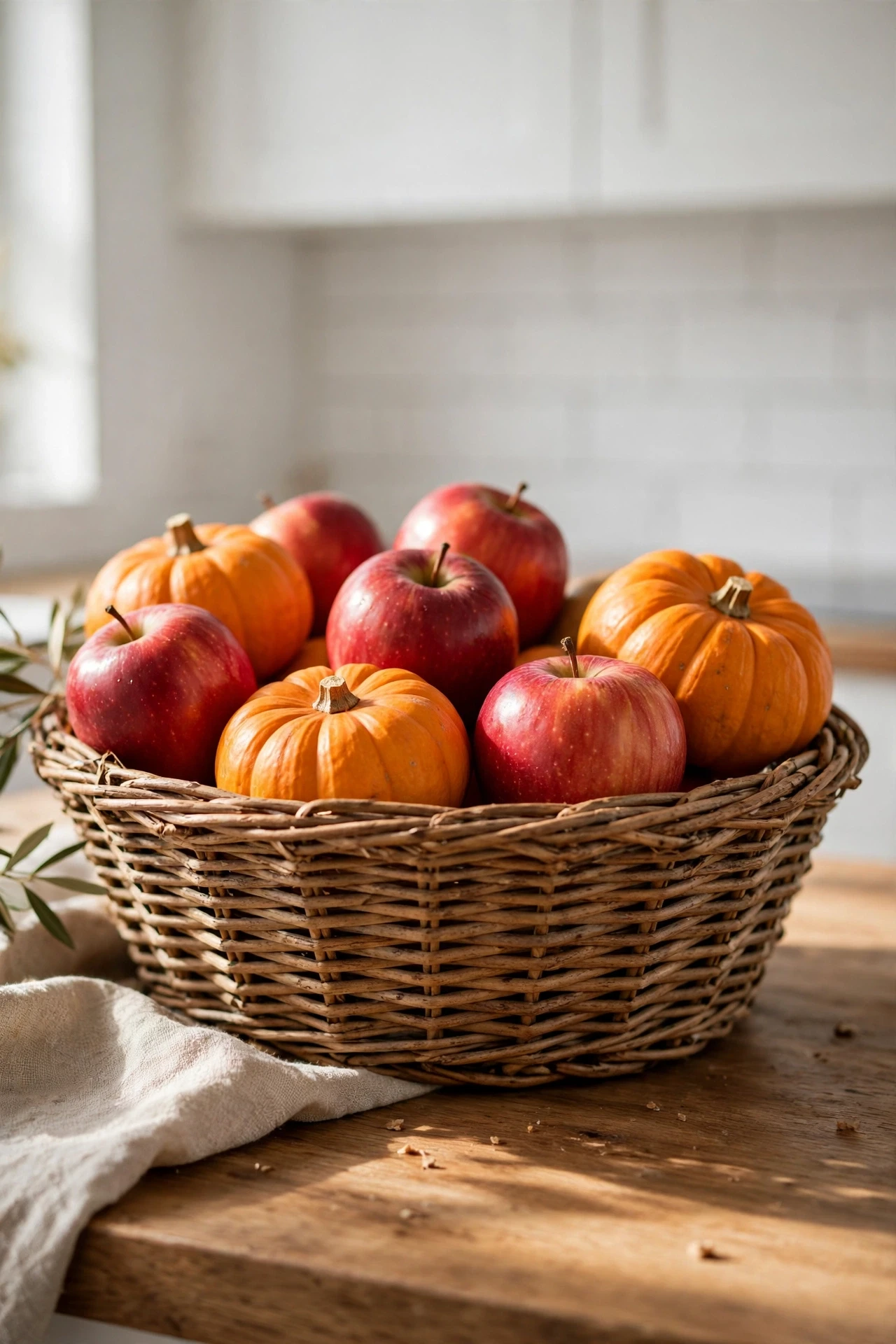
Wicker Harvest Baskets for Grab-and-Go Produce
A wicker basket of apples, pears, or squash does the visual work of a fall centerpiece while solving a genuine kitchen problem: loose produce that rolls around drawers or gets forgotten in the crisper drawer until it spoils. Keep the basket on the counter or island at a height and location you pass daily, so the produce actually gets used in cooking rather than just admired, and rotate it as pieces get eaten so it never looks static or, worse, actually goes bad on display. Line the basket with a plain cloth if you’re storing produce with any moisture, since bare wicker can trap dampness against fruit skins over several days. Two smaller baskets — one for grab-and-eat fruit like apples, another for cooking produce like squash or onions — work better than one large mixed basket, because they sort automatically by how the produce actually gets used. This idea genuinely reduces trips to the pantry or fridge during a normal week of cooking, not just during the fall season.
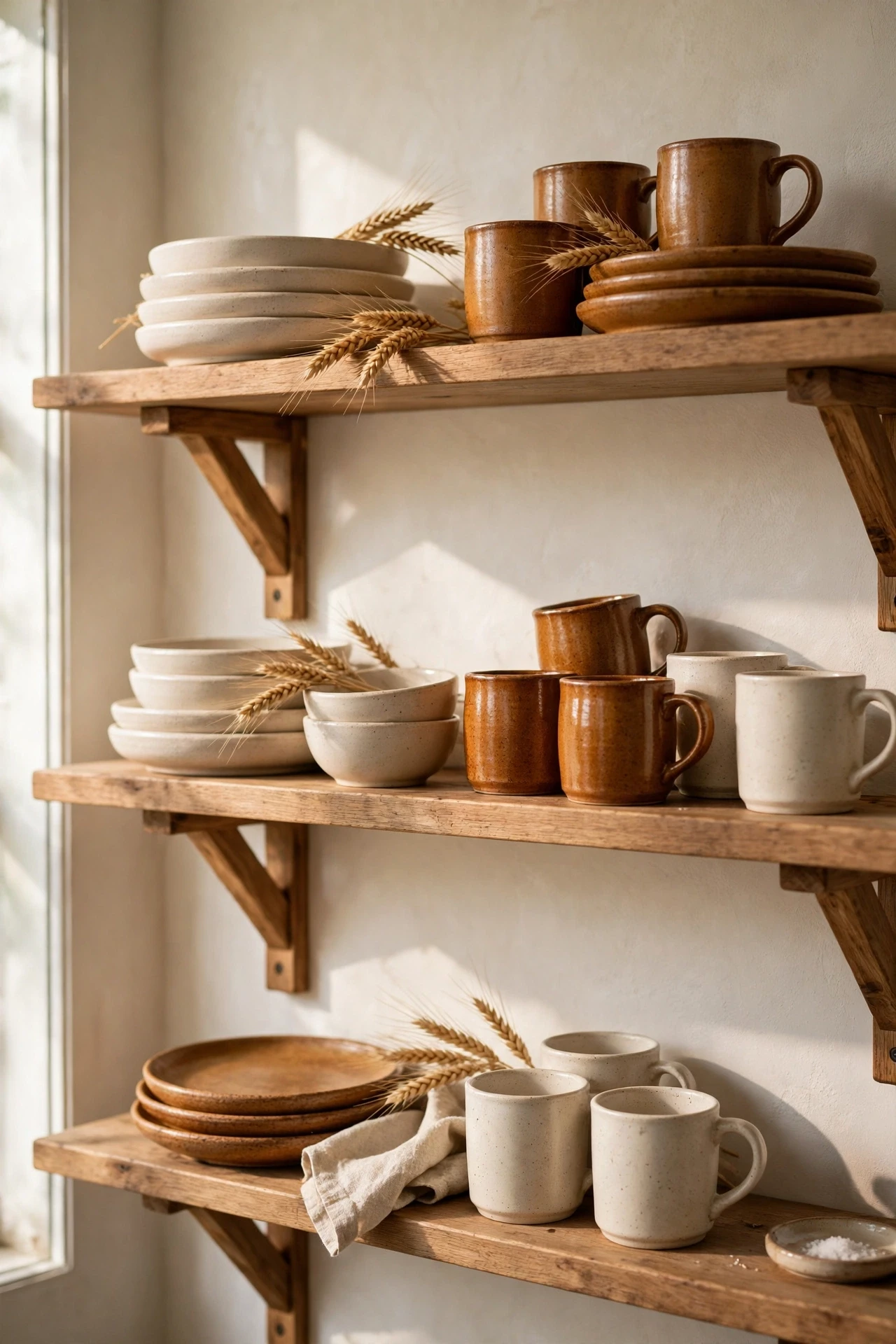
Open Shelves Styled for Looks and Reach
Open shelving gets treated as a purely decorative feature in most fall kitchen roundups, but the real advantage is speed: nothing to open, nothing to dig through, just a direct hand-to-mug or hand-to-bowl motion. Rotate in warm-toned mugs, autumn-glazed plates, or a stack of amber glassware for the season, but keep your actual daily-use dishware on the lowest, most accessible shelf and treat the top shelf as the more purely decorative layer. Group items by how often you reach for them, not just by color, so the fall styling doesn’t accidentally bury your everyday coffee mug behind a decorative pitcher you never use. Leaving small gaps of negative space between groupings, rather than packing the shelf edge to edge, also makes it easier to actually remove one item without knocking over three others. This idea works especially well right above a coffee station or prep counter, where the reach-and-grab motion happens dozens of times a week.
A Magnetic Knife Strip in Warm Metal Tones
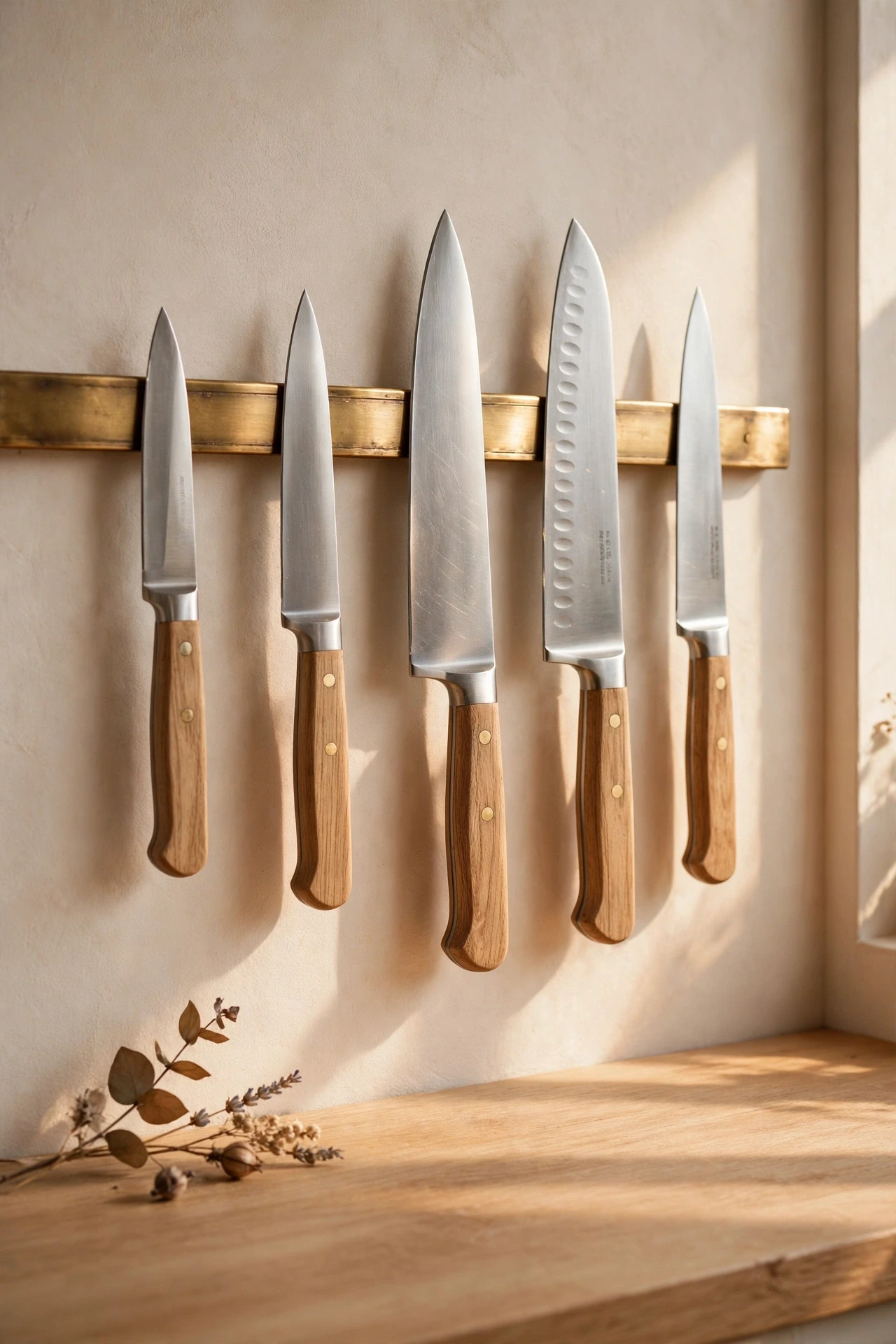
Swapping a bulky knife block for a magnetic strip in a brass, copper, or matte black finish frees up real counter space exactly where a fall centerpiece or vignette usually wants to sit, and it does it without sacrificing knife accessibility. Mount the strip on the wall directly above or beside the main prep area, at a height where you can lift a knife straight up and out rather than reaching around other items. The metal finish itself becomes a small piece of seasonal styling on its own — warm metals read as autumnal even with zero additional decor added — so it’s a rare case where the functional upgrade and the decorative upgrade are the exact same object. This also improves knife safety slightly over a drawer, since blades are visible and separated rather than jumbled together where a hand might land on an edge while searching. It’s a slightly bigger project than most on this list, but one that pays off every single time you cook, not just during fall.
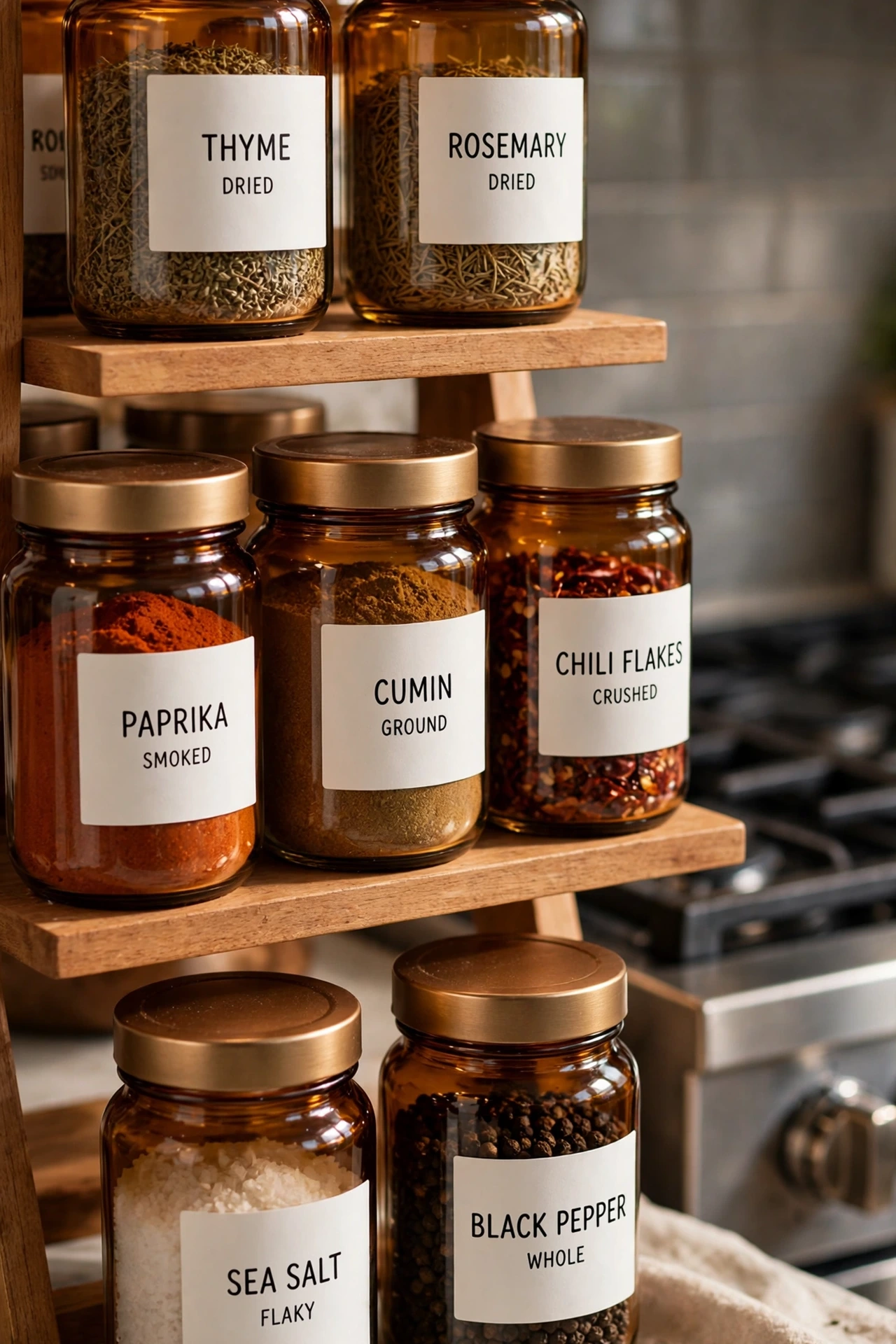
Labeled Fall-Toned Spice Jars
Uniform glass spice jars in warm amber or smoked glass look like a deliberate styling choice, but the real payoff is in the labeling: clear, consistent labels mean you can identify cinnamon versus nutmeg versus cumin at a glance instead of unscrewing three lids mid-recipe. Arrange the jars alphabetically or by cooking frequency on a shelf, drawer insert, or small tiered rack positioned close to the stove, since spices used in a hurry need to be genuinely close, not just visible. Choose a single label style — printed, chalkboard, or hand-lettered — and stick with it across every jar, because a mismatched label system undercuts the clean look this idea is going for. Refilling jars from bulk spice bags rather than buying new spices in their original packaging also keeps this system cheaper to maintain long-term than it looks. This is one of the highest-impact organization projects on the list precisely because spice-hunting is one of the most common small frustrations during actual cooking.
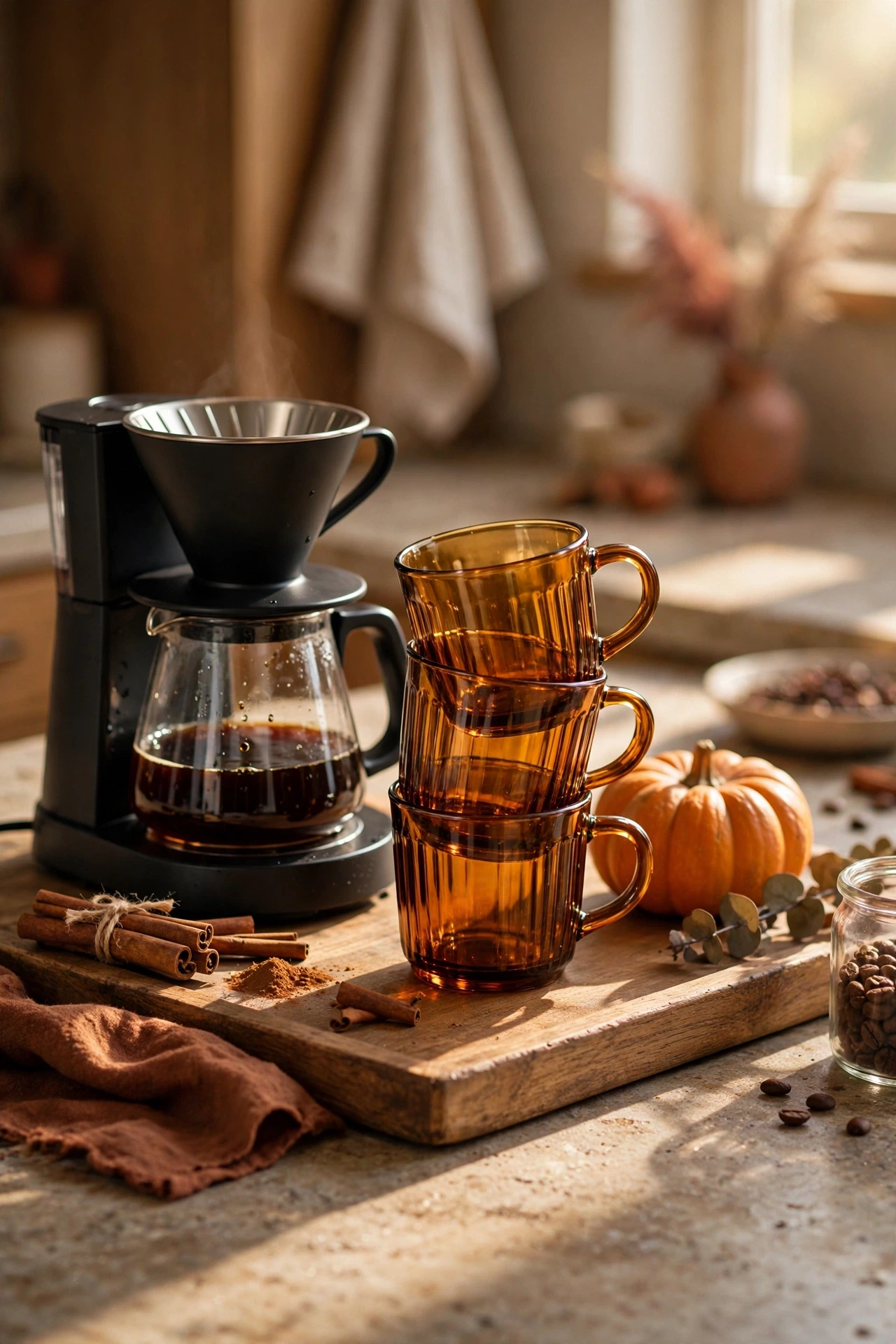
A Refreshed Coffee & Tea Station
A dedicated coffee or tea station gets used at the exact time of day when most people have the least patience for searching through cabinets, which makes it one of the most valuable spots in the kitchen to both style and organize for fall. Group your coffee maker or kettle, mugs, and a small caddy of sweeteners, syrups, or tea bags within one arm’s reach of each other, then layer in fall touches like a small pumpkin, a warm-toned tray, or seasonal syrup bottles that double as both ingredients and decor. Keeping this station on a tray, rather than loose on the counter, means the entire seasonal setup can be lifted and moved in one motion when the counter is needed for something bigger, like holiday baking. Restocking the station weekly, rather than letting it run dry mid-week, is what actually keeps the morning routine fast, since decor means nothing if the station itself isn’t functioning. This is consistently one of the most-repinned kitchen areas on Pinterest because it combines a strong visual with an obviously relatable daily routine.
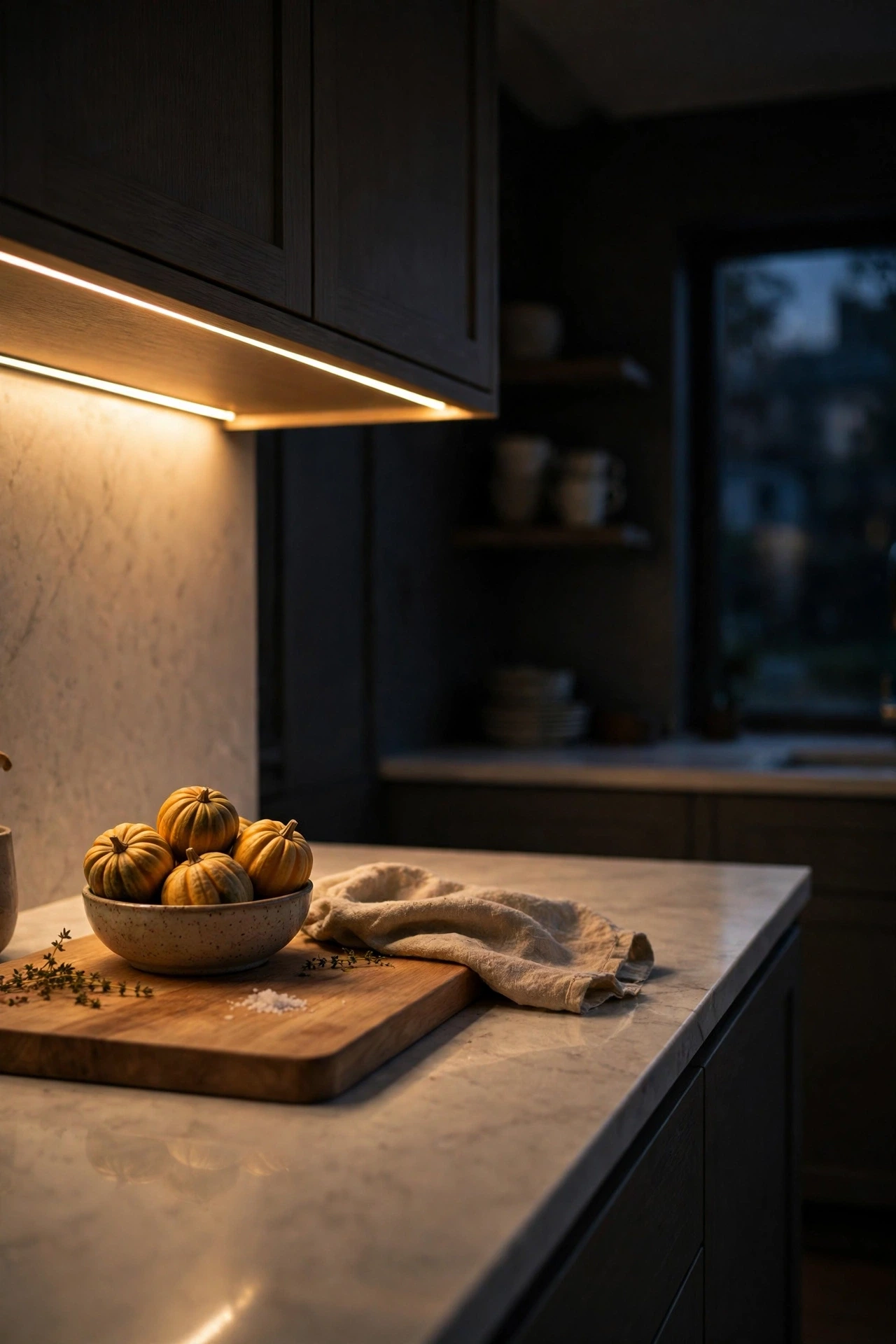
Warm Under-Cabinet Task Lighting
Fall’s shorter days mean more cooking happens in dim, late-afternoon light, and under-cabinet task lighting in a warm color temperature solves that problem while also giving the whole kitchen a cozier glow than a single harsh overhead fixture ever could. Install LED strip lighting along the underside of upper cabinets, angled toward the counter rather than out into the room, so the light actually falls where knives and hot pans are in use. Choose a warm white bulb temperature (around 2700–3000K) instead of a cool white, since warm light both reads as more “fall cozy” and reduces eye strain during evening prep compared to a stark blue-white light. This upgrade genuinely improves knife safety and reduces prep mistakes during the darker months, not just the visual mood of the room. It’s a slightly more technical project than most others here, but it’s also one of the few ideas on this list that meaningfully changes how safe and easy cooking feels after 5 p.m., not just how the kitchen photographs.
A Cutting Board Display Wall
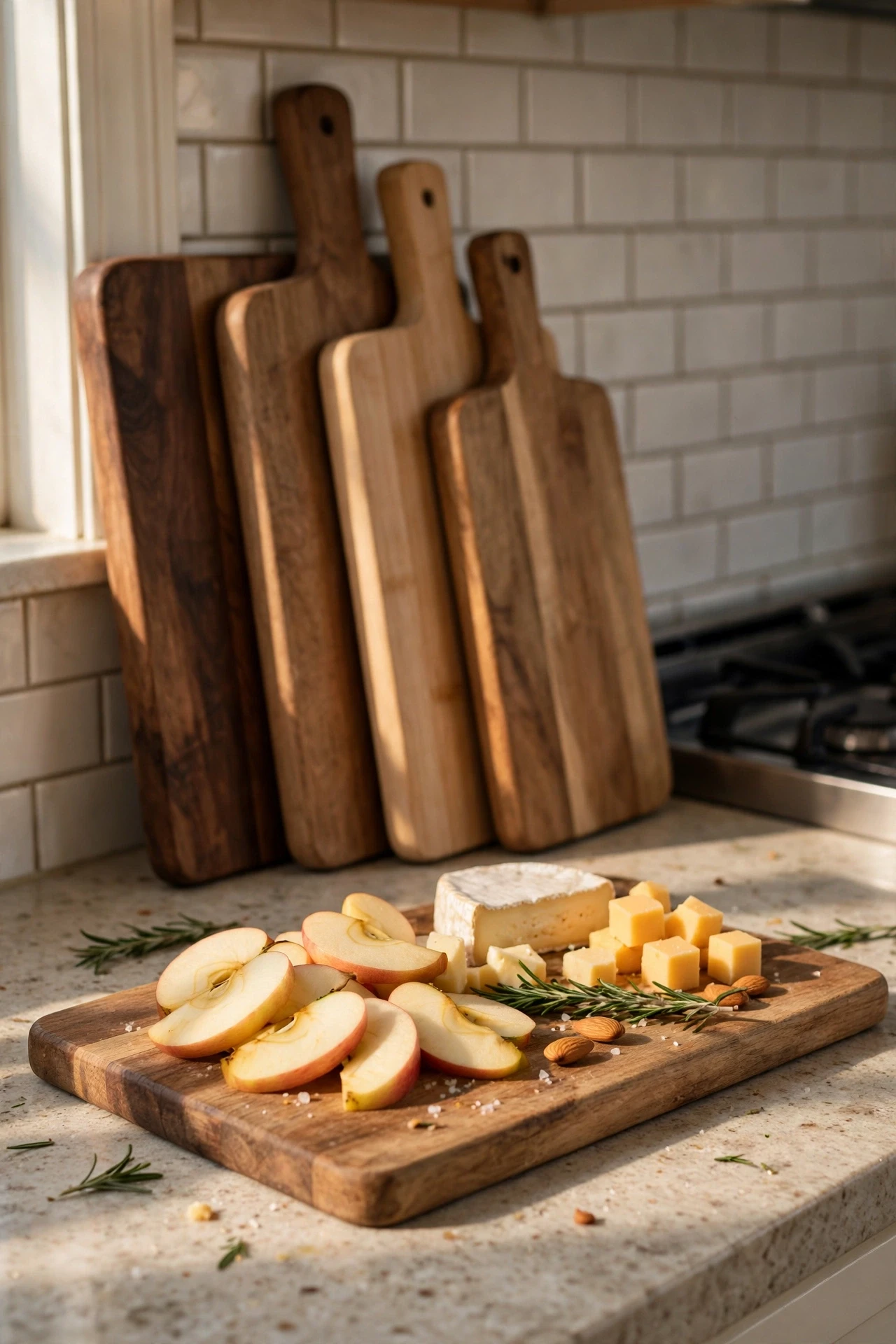
Leaning or stacking a small collection of wooden cutting boards against the backsplash turns a purely functional tool into one of the warmest, most on-trend fall textures in the whole kitchen, and it keeps every board within instant reach instead of stacked inside a deep, hard-to-search cabinet. Vary the board sizes and wood tones slightly — a mix of light maple and darker walnut reads as intentional rather than mismatched — and rotate the largest one to the front when you’re using it as an actual serving or charcuterie surface for fall gatherings. Storing them upright on a small plate rack or in a designated slot, rather than flat and stacked, also lets each board air-dry fully between uses, which matters more for wood boards than most people realize. This idea works as both daily-use storage and instant styling, since the boards themselves are the decor, not a backdrop for something else. It’s one of the few ideas on this list that costs nothing if you already own a few boards; it’s purely a rearrangement.
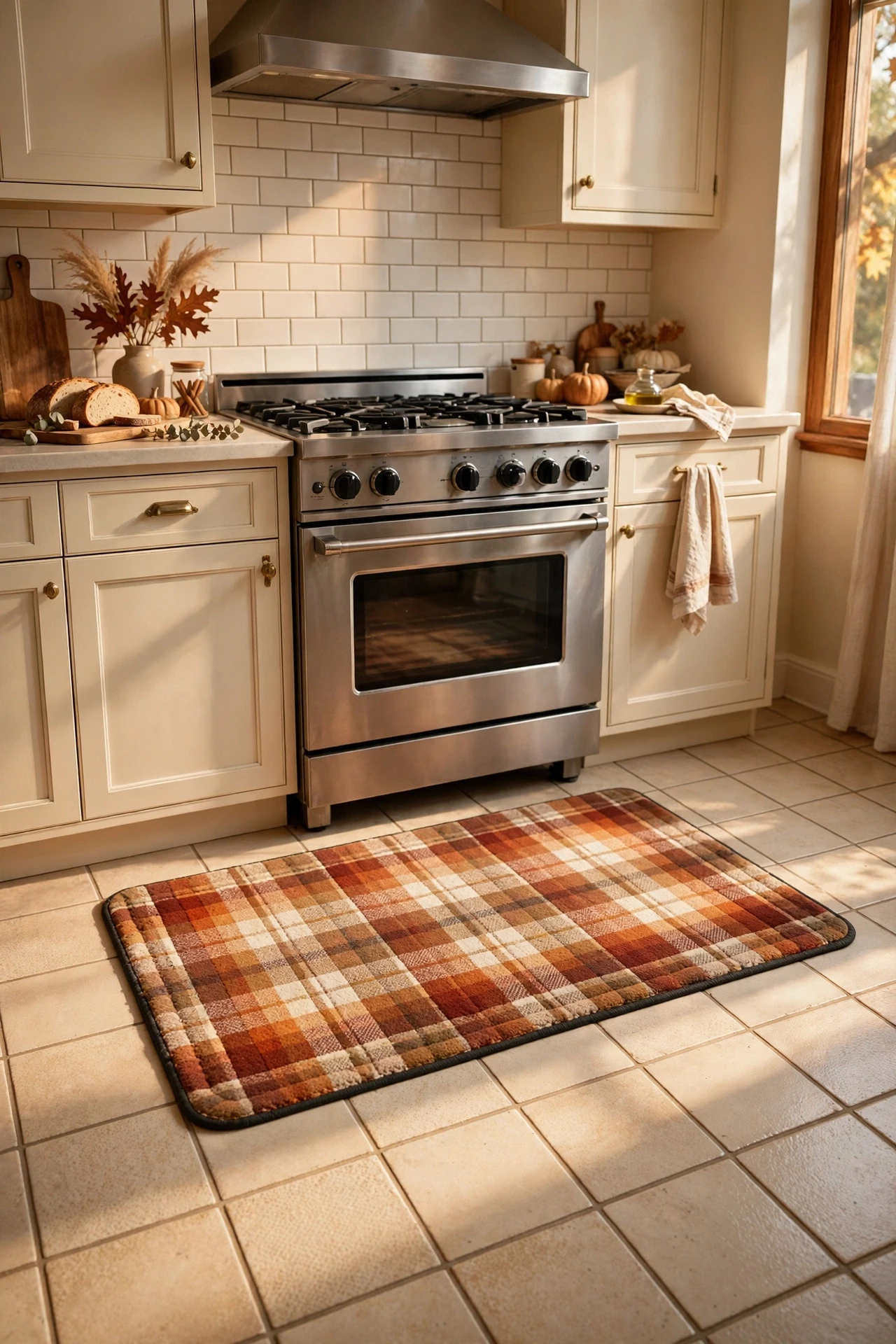
An Anti-Fatigue Rug in Autumn Pattern
Standing at a stove or sink for the length of a real cooking session is genuinely tiring on hard flooring, and an anti-fatigue mat in a plaid, buffalo-check, or autumn botanical print solves the comfort problem while doing real seasonal styling work at the same time. Place it in front of the sink or stove specifically, not in the middle of a walkway, since its whole purpose is cushioning the exact spot where you stand still the longest. Choose a low-pile, easy-wipe mat rather than a plush decorative rug for this specific spot, since spills and splatters are inevitable directly in front of a range. The pattern itself does more visual “fall” work per square foot than almost any other single item on this list, because a patterned rug covers a large, constantly visible floor area. This is a rare case where the most comfortable choice for your feet and the coziest seasonal choice for the room are the exact same product.
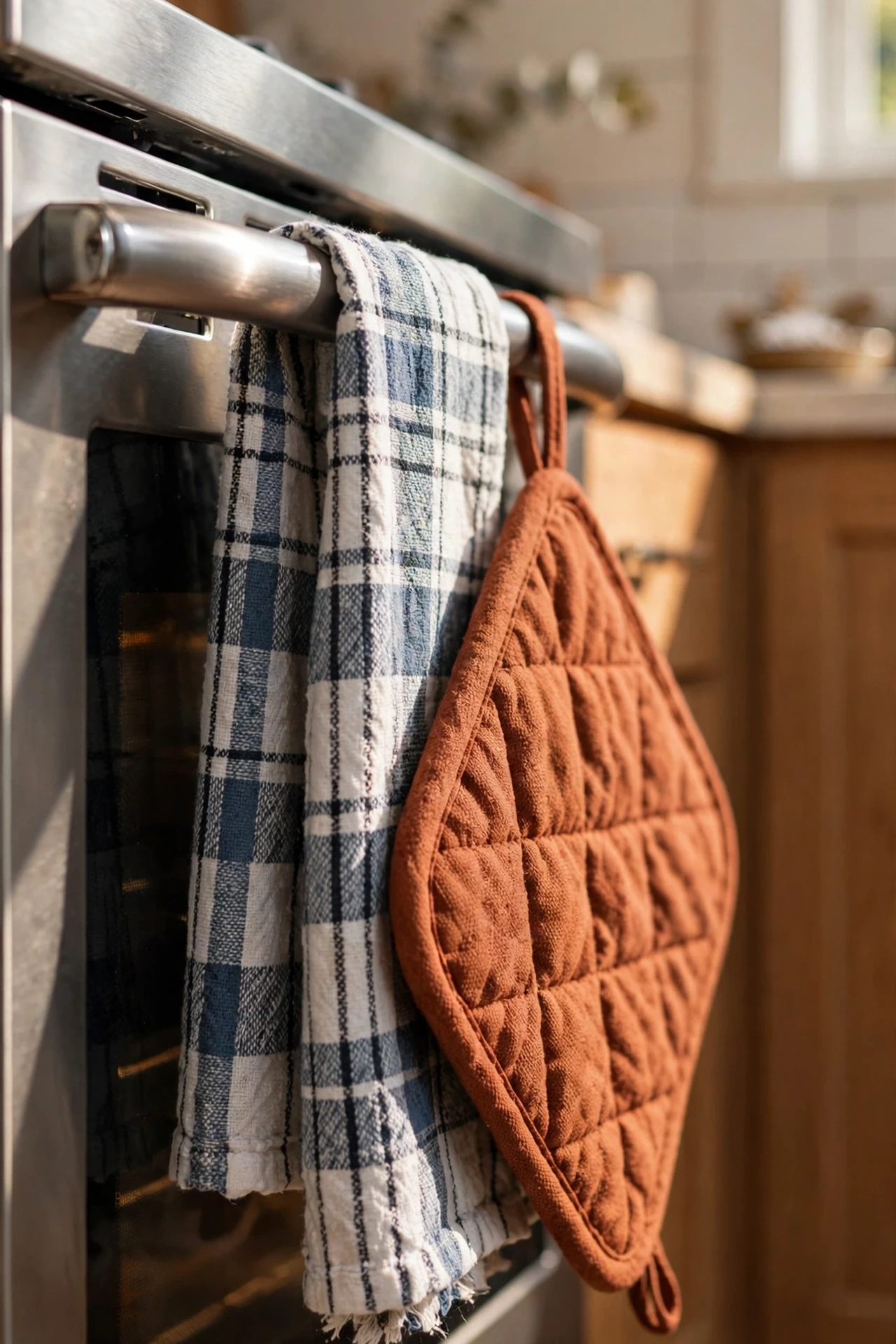
A Stove-Side Towel & Pot Holder Swap
Swapping in fall-patterned dish towels and pot holders is one of the cheapest seasonal updates possible, and hanging them directly on the oven handle or a hook right beside the stove keeps them functionally where you actually need them mid-cook, not folded away in a drawer three steps away. Choose towels in a slightly heavier waffle-weave or linen-blend fabric over thin printed cotton, since these genuinely absorb spills and dry hands better during real use, not just look good draped over a handle. Rotate two or three towels through active use rather than one, so a damp towel isn’t your only option when you need a dry one for a hot pan handle seconds later. Keep at least one plain, undecorated pot holder in the mix specifically for handling anything actually hot, since heavily textured or padded decorative ones sometimes insulate less reliably than a simple quilted holder. This tiny swap shows up in nearly every fall kitchen photo for a reason: it’s fast, cheap, and instantly recognizable as seasonal.
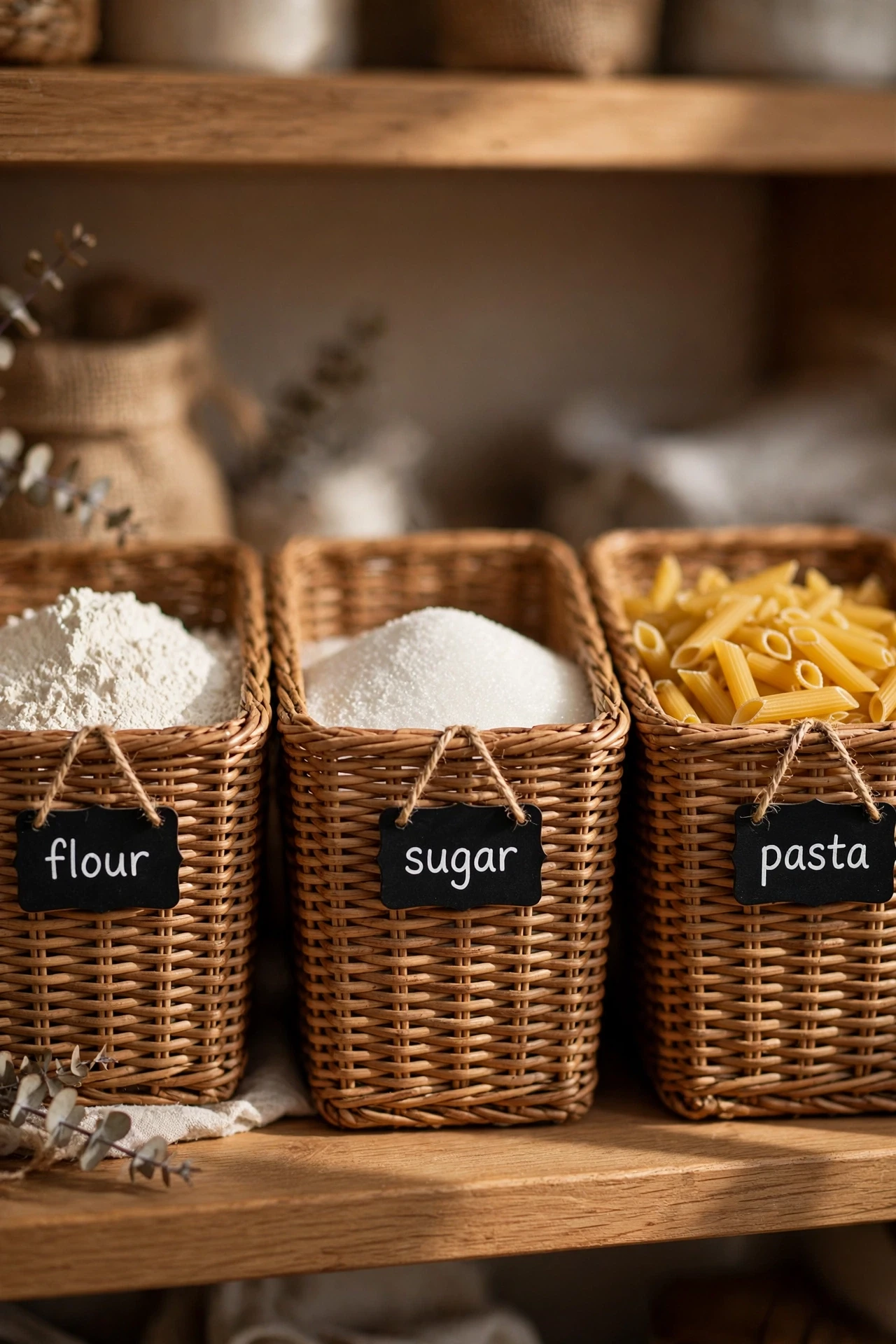
Labeled Pantry Bins With a Chalkboard Tag
Clear or woven bins with small chalkboard labels turn a pantry shelf into both a fall-styled vignette and a system you can actually navigate quickly while cooking, since you can see contents and read labels at a glance instead of opening every container. Group bins by ingredient type — baking staples together, snacks together, canned goods together — rather than by how they look, so the organizational logic holds up even after the fall decor gets swapped out for winter. Chalkboard tags are worth the extra step over printed labels here specifically because pantry contents shift throughout the season; being able to wipe and relabel a bin in ten seconds matters more than a perfectly uniform printed label would. Place the bins you restock most often — flour, sugar, pasta — at eye level or on a lower shelf, and reserve the top shelf for bulkier or less-used seasonal items. This idea has real staying power past fall, since the organizational system itself is permanent even as the seasonal chalkboard messages or bin colors change.
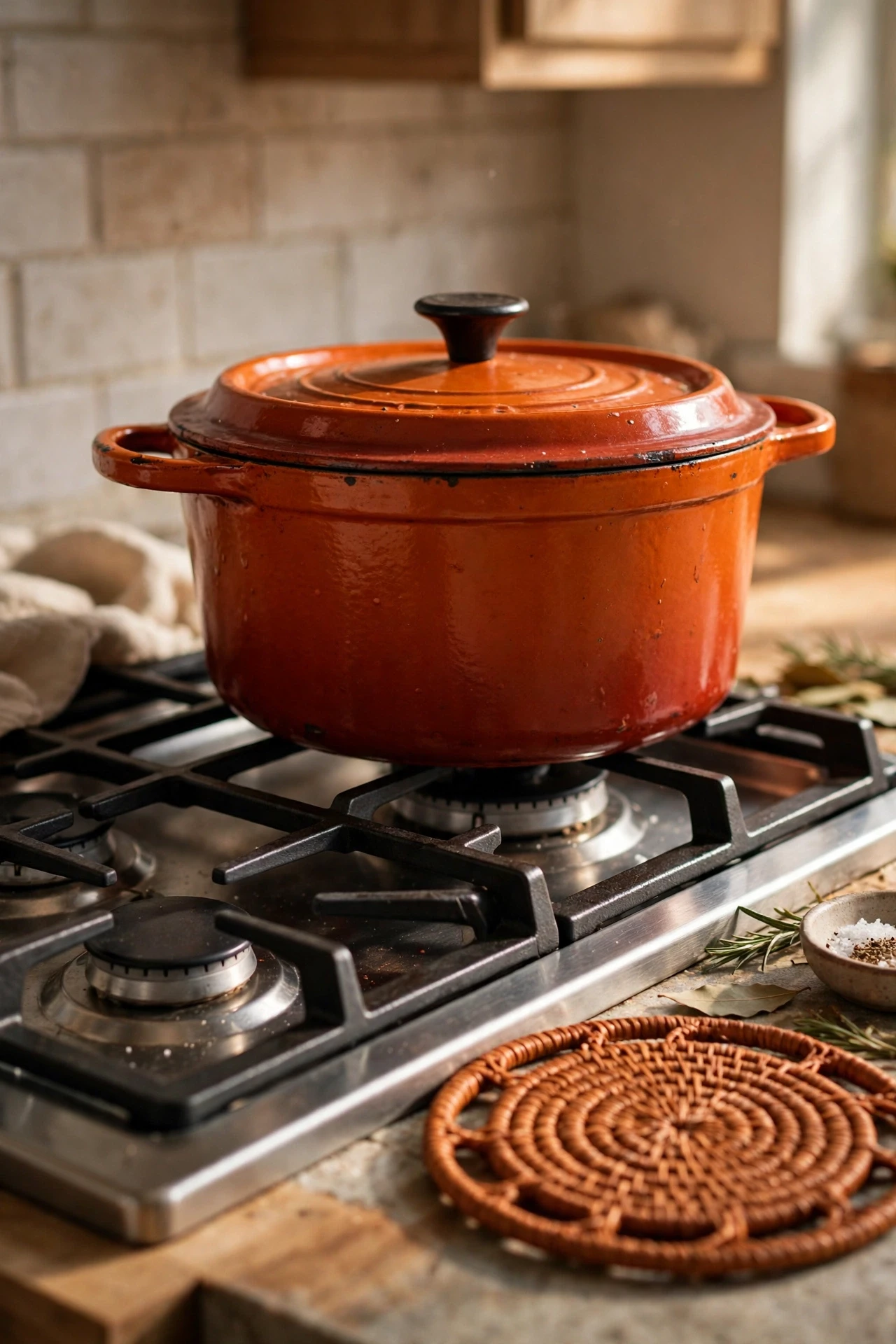
A Color-Matched Dutch Oven Stovetop Vignette
A cast iron Dutch oven in a burnt-orange, rust, or deep pumpkin glaze sitting on a back burner does more seasonal visual work than almost any small accessory, and unlike purely decorative pieces, it’s ready to go the moment you actually need to cook in it. Position it on the back burner specifically, leaving the front burners fully clear for active cooking, so the vignette never has to be moved out of the way mid-recipe. Because Dutch ovens are heavy and genuinely useful for fall staples like soups, stews, and braises, this is one of the only “decor” items on the list that gets real weekly use rather than sitting untouched until the season ends. Pair it with one or two other pieces of matching-toned cookware, like a small saucepan or a ceramic trivet, so the vignette reads as a coordinated set rather than one random pot. This idea works especially well for kitchens with limited counter space, since it uses the stovetop itself as display real estate instead of competing for counter inches.
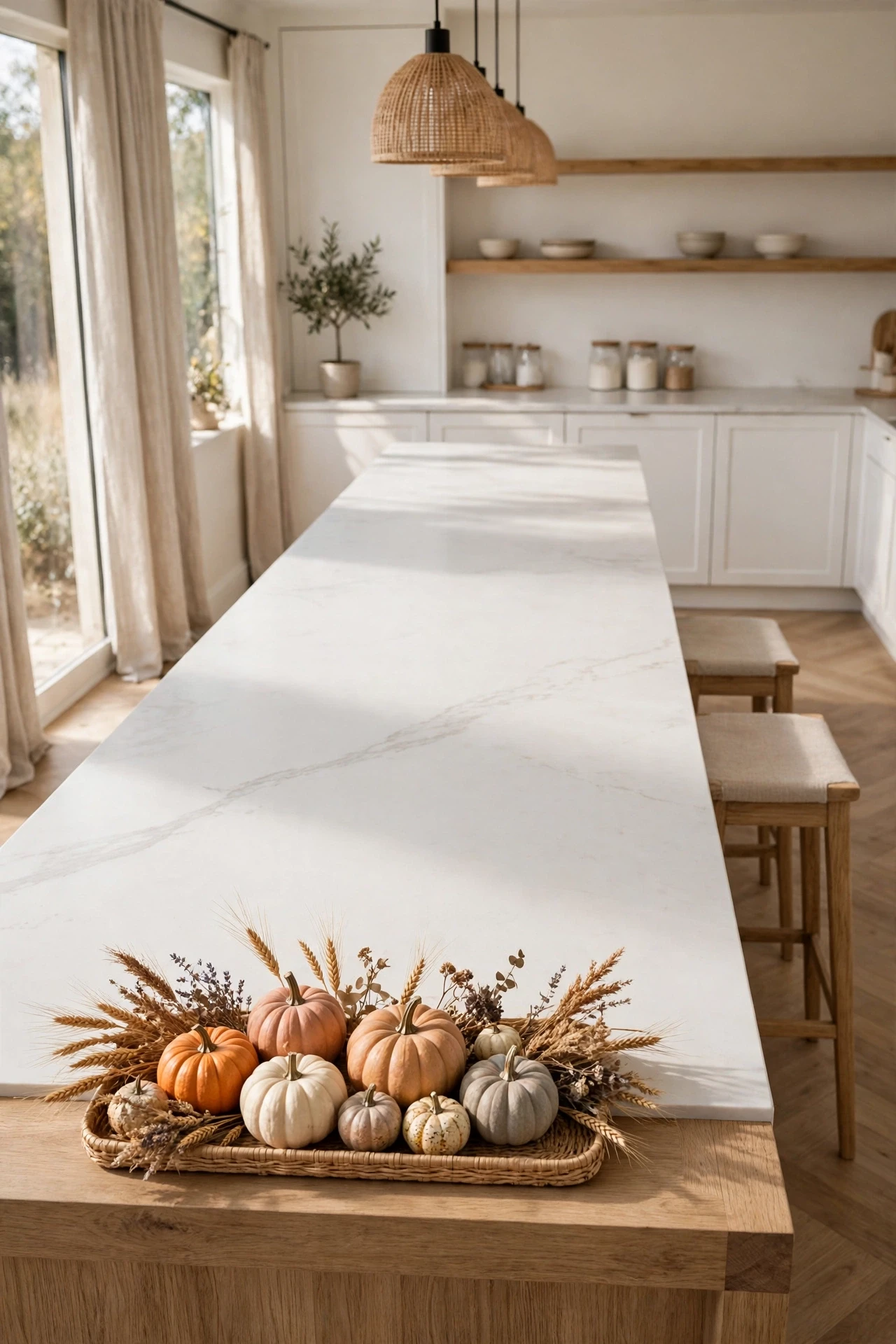
An Island Centerpiece That Doesn’t Block Prep Space
A kitchen island often becomes the default landing spot for every seasonal decoration at once, but the island is also frequently the most-used prep surface in the whole kitchen, so the real skill here is sizing the centerpiece to leave the majority of the surface clear. Keep the arrangement — a bowl of gourds, a low vase of dried foliage, a stack of two or three cookbooks — to roughly one-quarter of the island’s total surface, positioned toward one end rather than dead center, so a full cutting board or mixing bowl still fits comfortably beside it. Choose a low, wide arrangement over a tall one if the island is used for seated dining as well, since a tall centerpiece blocks eye contact across the surface during meals. If the island regularly needs to go from “styled” to “fully clear workspace” in under a minute, choose a single tray as the base for the whole vignette so everything lifts away in one motion. This idea prevents the single most common complaint about fall kitchen decor: that it looks great in photos and gets shoved aside the moment real cooking starts.
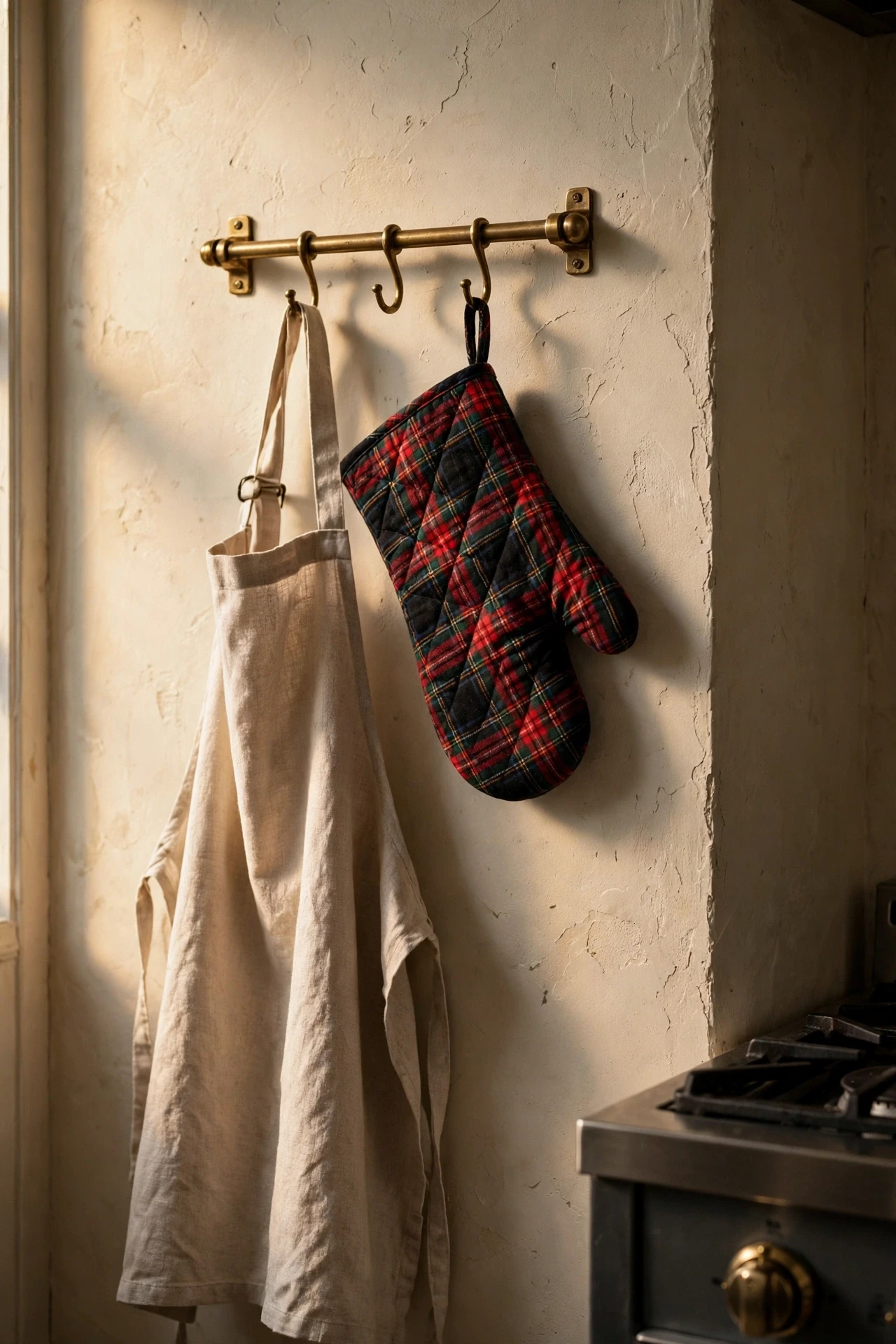
A Hook Rail for Aprons and Oven Mitts
A small hook rail mounted near the stove or pantry door keeps aprons and oven mitts visible, dry, and instantly grabbable, which matters more than it sounds like during an actual cooking session when hands are already full or messy. Choose hooks in a warm brass or matte black finish to tie into a fall metal palette, and hang one utility apron in a plain fabric alongside one or two patterned seasonal options, so there’s always a functional choice even when the “pretty” apron is in the wash. Position the rail at a height that’s easy to reach without bending or stretching, ideally right at or slightly above counter height near the point where you’d actually put an apron on. This tiny addition solves the common problem of oven mitts disappearing into a drawer or ending up shoved in with dish towels, where they’re genuinely harder to find in the exact moment you need them fastest — pulling something hot out of the oven. It’s an inexpensive weekend project that pays off literally every time the oven gets used.
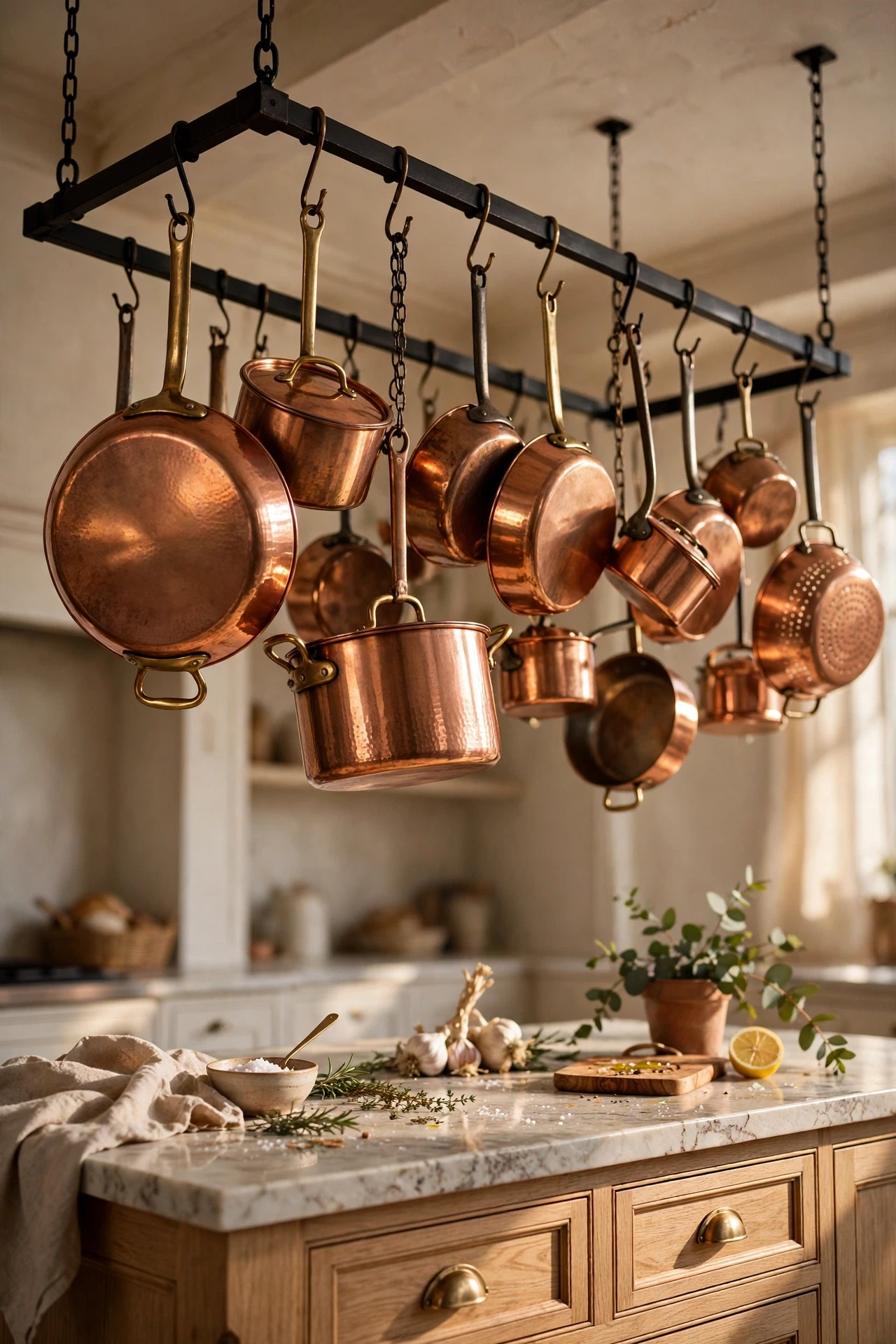
A Copper Cookware Display Within Reach
Hanging a few pieces of copper cookware from a rail or ceiling-mounted rack above the island does exactly what fall styling guides love — it adds warmth and metallic glow — while keeping the actual pans in constant, ready-to-grab rotation instead of stacked in a lower cabinet where the bottom pan is always the hardest to reach. Choose a mix of two or three sizes rather than a uniform full set, since visual variety in pan diameter reads as more curated and collected-over-time than a matching boxed set does. Position the rack low enough to actually lift pans down one-handed, not purely as an out-of-reach visual feature, since a display you can’t use functionally isn’t really solving anything. Copper especially rewards this kind of open display because it develops a warm patina with light and use that only gets richer-looking over time, unlike stainless steel, which shows fingerprints more visibly in the same open setup. This idea suits kitchens with higher ceilings or an island with overhead clearance better than a tight galley kitchen, where a hanging rack could become a hazard.
Seasonal Canisters for Baking Staples
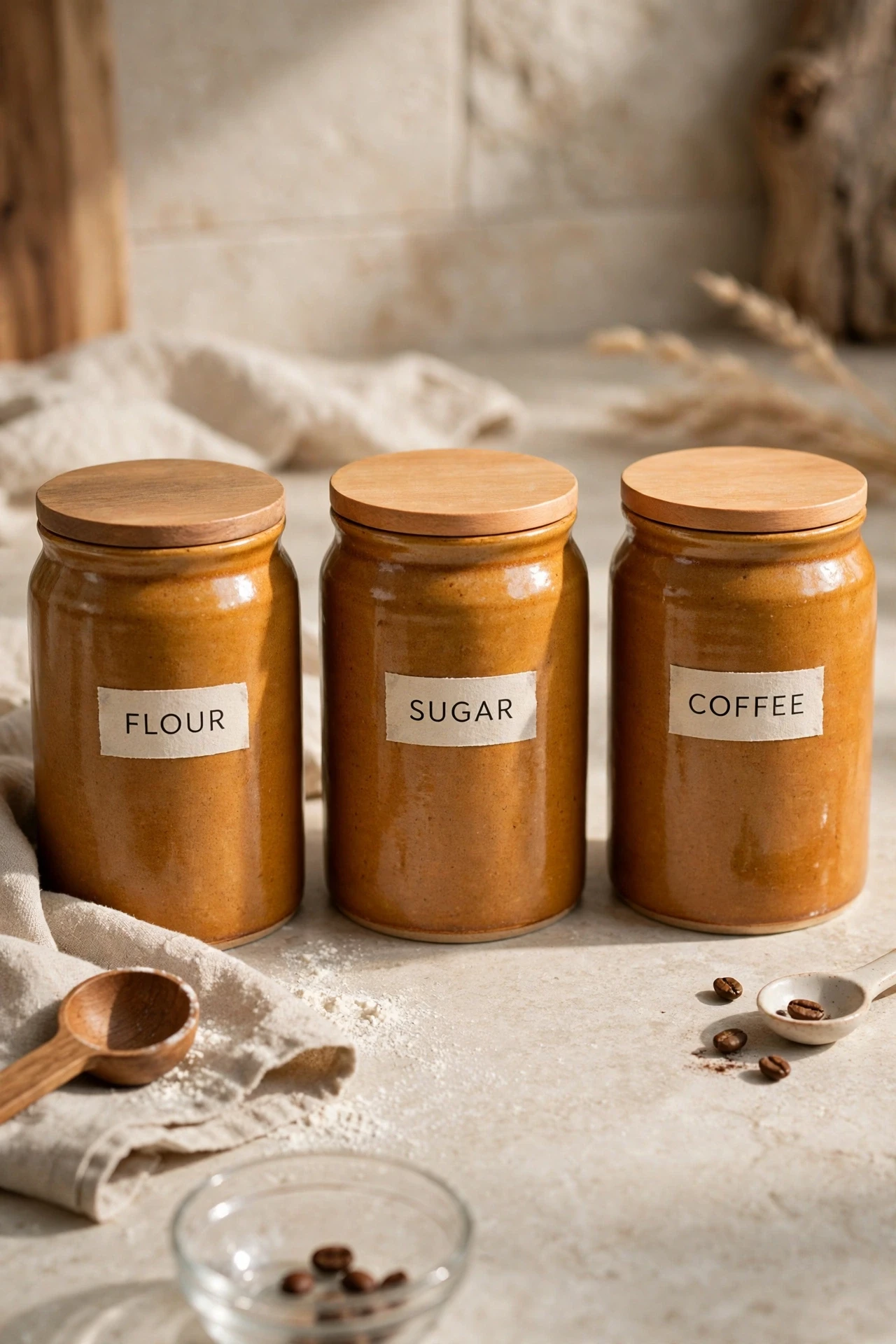
A matched set of canisters for flour, sugar, and coffee in a warm cream, amber, or matte rust finish looks like a styling choice, but the real function is airtight, at-a-glance storage that speeds up baking, which fall naturally brings more of. Keep canisters on the counter closest to where you actually mix and bake, rather than the far side of the kitchen, since baking staples get used in larger quantities and more frequently than most pantry items during the season. Label each canister clearly even when the contents seem obvious, since flour and sugar look nearly identical in a scoop and this single label prevents a genuinely common baking mistake. Choose canisters with a wide-mouth opening over a narrow one, since a wide opening lets you use a full measuring cup directly inside rather than transferring in stages. This is one of the more visually impactful ideas on the list per item, since three or four matching canisters instantly read as a coordinated, styled counter even with zero other seasonal decor added.
A Windowsill Herb Garden at Arm’s Reach
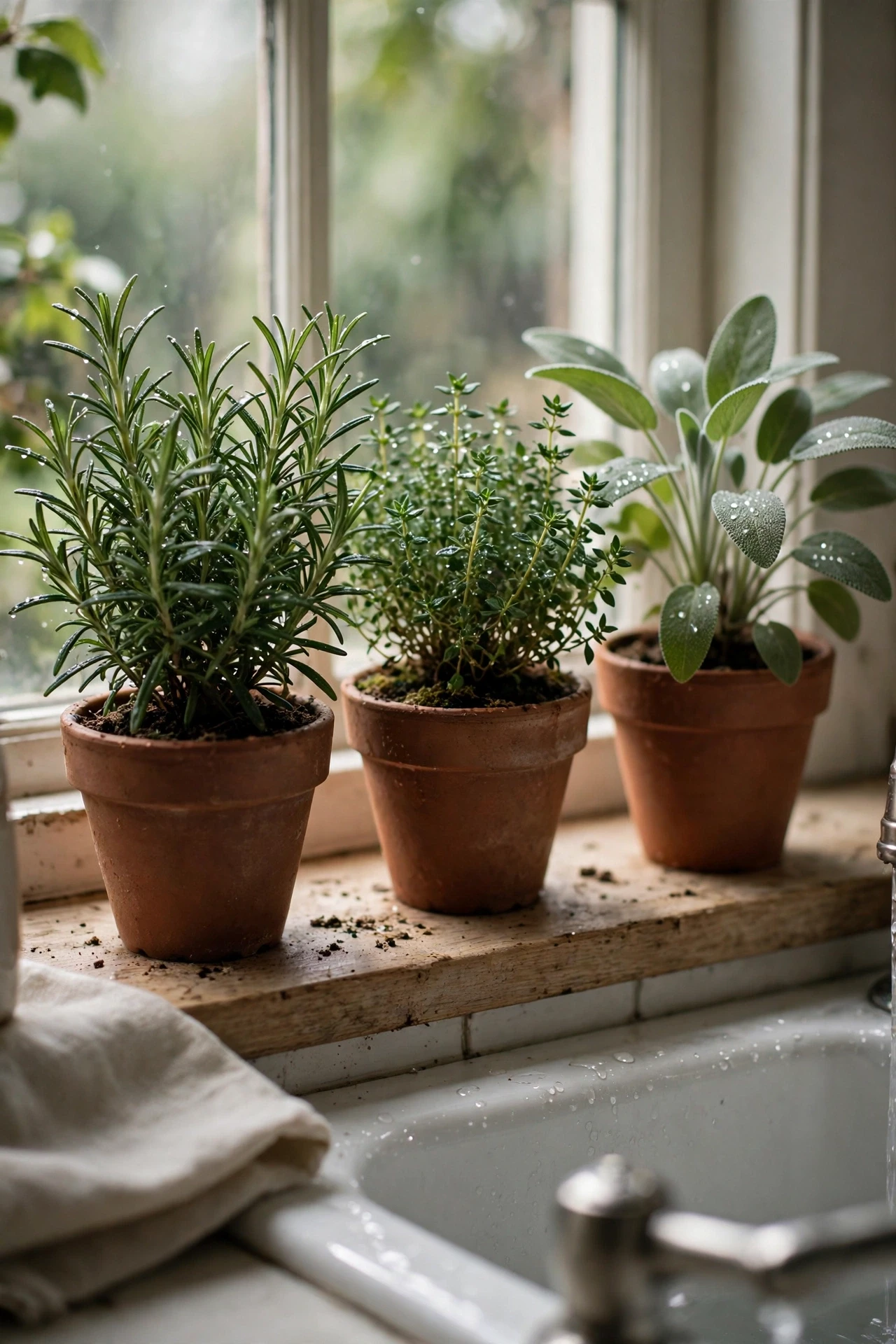
A row of small potted herbs on a kitchen windowsill delivers fresh rosemary, thyme, or sage exactly when fall recipes call for them most, and having them at arm’s length from the stove genuinely changes whether you use fresh herbs at all versus skipping them because the dried version was closer. Choose terracotta or a warm ceramic pot to match the season’s palette, and keep the pots small enough that the sill doesn’t block natural light from reaching the sink or counter below. Position basil and more delicate herbs slightly back from direct glass contact in colder climates, since a cold windowpane in fall and winter can shock tender leaves even with decent sun exposure. Snipping from the same few pots regularly, rather than letting them grow untouched as pure decoration, keeps the plants fuller and bushier than if they’re left purely ornamental. This idea is one of the few on the list that actually improves the flavor of your cooking, not just the kitchen’s appearance or organization.
A Cozy Corner Nook Away From the Workflow
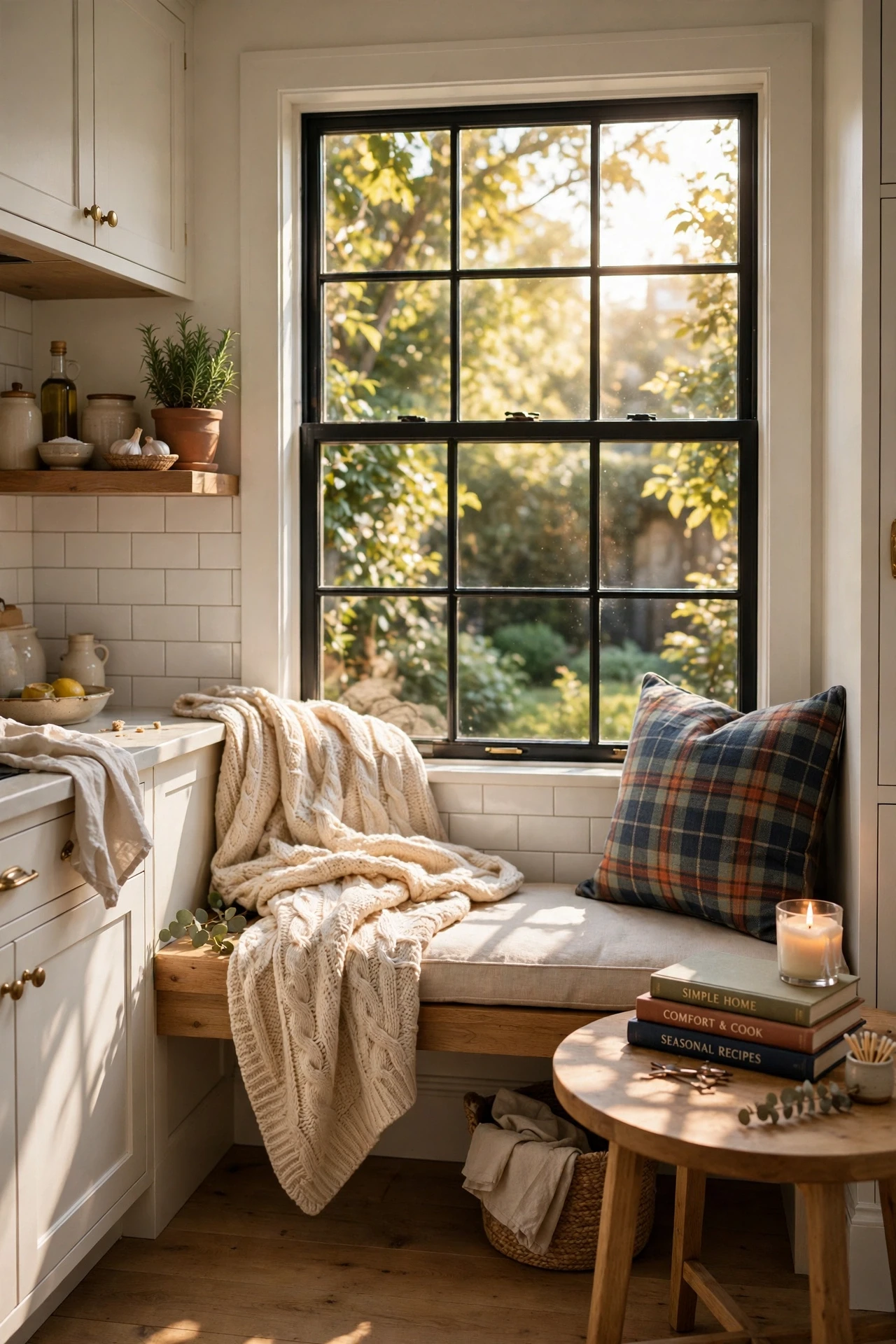
Every kitchen benefits from having one spot that’s allowed to be purely about comfort rather than function — a small bench, a stool by the window, or a banquette corner layered with a chunky knit throw and a seasonal cushion. Keep this nook physically separate from the prep, cooking, and cleanup zones established earlier, so it never tempts anyone to set hot pans or cutting boards down in a spot that’s meant for sitting with coffee instead. A small side table or the end of the island works well here, styled with a candle, a stack of cookbooks, or a small vase, since this is the one area of the kitchen where pure aesthetic decor doesn’t need to justify a functional purpose. This nook also gives kids or guests a place to sit that isn’t directly in the cook’s way during meal prep, which solves a real, common kitchen traffic problem during gatherings. It’s the emotional heart of a cozy fall kitchen precisely because it’s the one place in the room not competing with a task list.
Layered Lighting for Shorter Fall Evenings
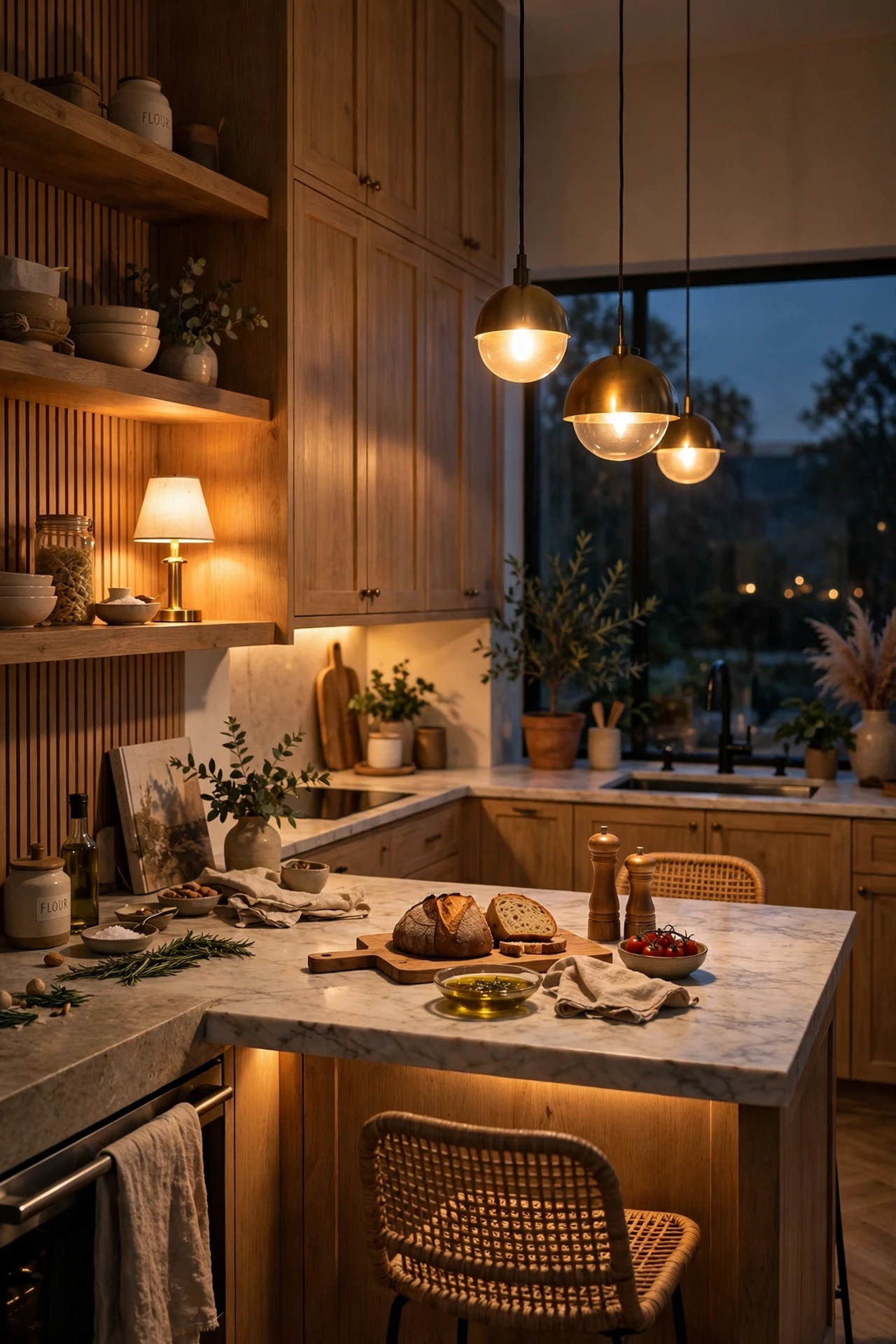
A single overhead fixture leaves most kitchens either too bright and clinical or too dim to cook safely once fall’s shorter days set in, and layering in a small counter lamp or a set of warm pendant lights over the island solves both the mood and the visibility problem at once. Add one small, low-wattage lamp to an open shelf or counter corner specifically for evenings when full overhead light feels harsh, and keep it on a warm bulb temperature that matches any under-cabinet lighting already in place. Pendant lights over an island should hang low enough to focus light directly on the work surface below, not simply centered in the room’s ceiling space, since their real job is task lighting dressed up as ambiance. Turning off the harsh overhead entirely during casual evening cooking, relying instead on the layered warm sources, is what actually creates that “cozy fall kitchen” glow most photos are chasing. This is a lighting decision more than a decor purchase, but it changes the feel of the whole room more than almost any object on this list.
A Contained Candle and Scent Station
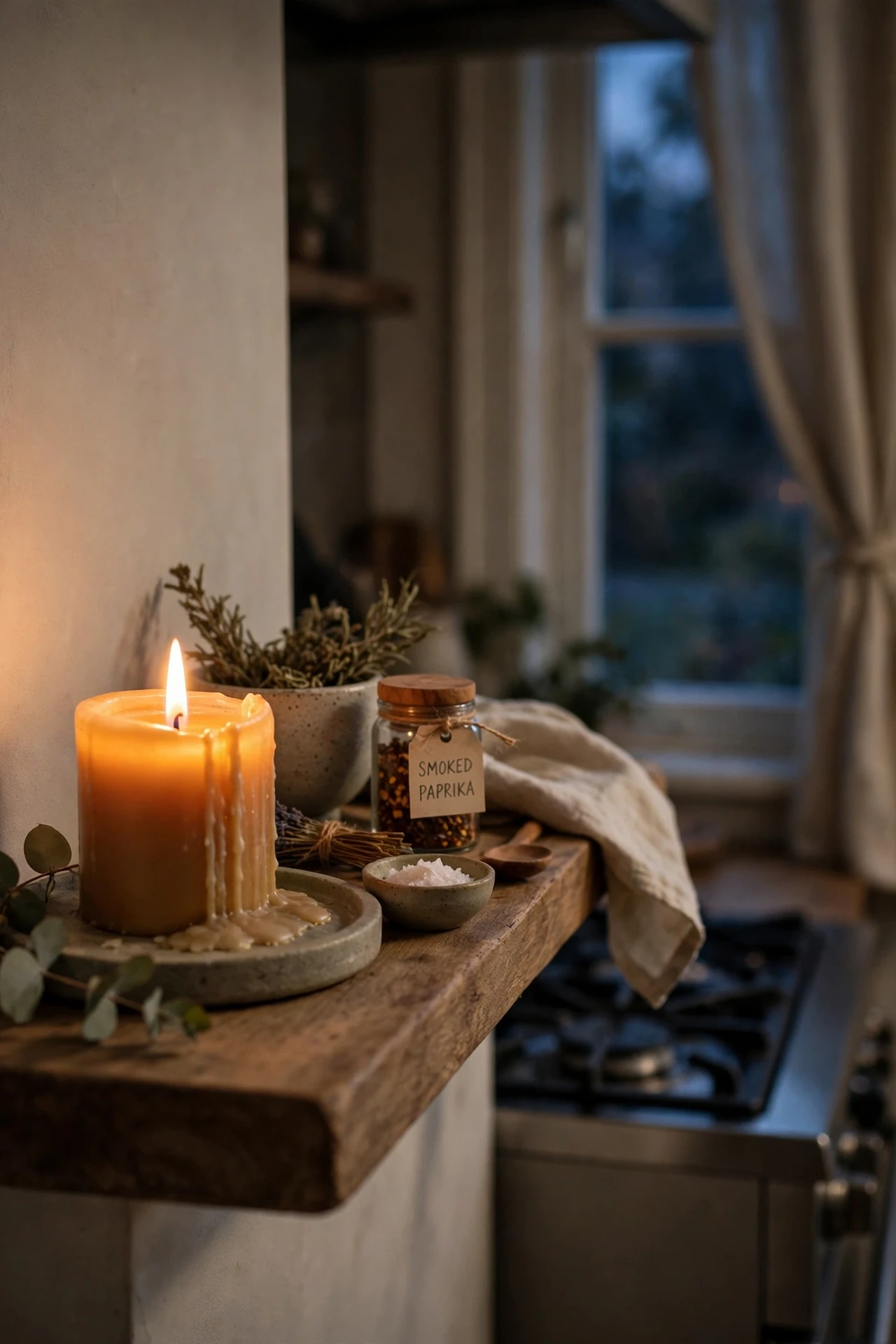
A fall-scented candle instantly signals the season, but placing it directly in an active cooking zone is both a fire hazard near loose sleeves or dish towels and a genuine flavor problem, since strong candle scent can interfere with how food actually tastes and smells while cooking. Keep candles on a dedicated tray in the cozy nook, on a windowsill away from curtains, or on a shelf clearly outside the stove’s heat and splatter radius, so the ambiance doesn’t come with real risk attached. Battery-operated candles are worth considering for any spot near the stove or a high-traffic counter edge, since they deliver the same warm flicker without an open flame to manage around kids, pets, or long sleeves. Rotate two or three different scents through the season rather than burning one constantly, since scent fatigue is real and a single candle burned daily for months stops registering after a while. This last idea ties the whole list together: even the most purely atmospheric piece of fall decor still gets a specific, safe, function-aware home in the kitchen instead of just landing wherever there’s counter space.
Styling Tips
- Repeat one warm accent color (rust, amber, or cinnamon) across at least three different items so the whole kitchen reads as coordinated rather than randomly seasonal.
- Mix matte and metallic textures — matte ceramic against warm brass or copper — for a fall look that feels layered instead of flat.
- Use odd-numbered groupings (three pumpkins, three jars, three mugs) for a more natural, less staged-looking arrangement.
- Let at least one seasonal item double as a genuinely useful tool, the way this whole list is built, rather than decorating with anything purely ornamental.
- Edit as you add: for every new decorative item introduced, ask whether an older one should come down, so the kitchen doesn’t slowly accumulate clutter over the season.
Practical Implementation Ideas
- Walk through your actual cooking motions — reaching for a knife, grabbing a spice, wiping a spill — before placing any decor, and keep those specific paths clear.
- Batch your fall decorating into one weekend project rather than adding pieces piecemeal, so you can see the full effect and adjust proportions before committing.
- Photograph your styled counters from a few angles once finished; photos reveal clutter and blocked pathways that are easy to miss standing in the room itself.
- Keep a small labeled bin in a closet for “off-season” items so swapping decor in and out each year takes minutes instead of a full afternoon of searching.
- Test any new lighting change for a full evening of real cooking before considering it finished, since a warm bulb that looks great in photos can still be too dim for safe knife work.
Common Mistakes to Avoid
- Decorating the prep zone first: starting seasonal styling on your main cutting or mixing surface guarantees you’ll have to move everything constantly; start at the edges instead.
- Overfilling utensil crocks or shelves: cramming every seasonal item into one spot slows down the exact daily task that spot exists to speed up.
- Choosing scent over safety: placing candles or heavily scented items directly near an active stove risks both fire safety and food flavor.
- Skipping labels on lookalike staples: flour, sugar, and salt all look similar in matching canisters without clear labeling, which leads to real cooking mistakes.
- Treating the island as pure display space: a fully covered island looks impressive in photos but becomes unusable the moment real meal prep needs the surface.
Small-Kitchen Alternatives
In a smaller kitchen, choose two or three ideas from this list rather than attempting all 21, and prioritize the ones that also solve a space problem — the magnetic knife strip, the stove-side crock, and the windowsill herbs all add function without needing extra floor or counter footprint. Vertical space becomes especially valuable in a tight kitchen, so lean on wall-mounted hooks, rails, and shelving over freestanding baskets or trays that eat into limited counter inches. A single, well-chosen seasonal object — one good Dutch oven, one wicker basket — reads as more intentional in a small space than several smaller items competing for the same limited surface.
Budget-Friendly Alternatives
Dish towels, pot holders, and a single seasonal candle are the cheapest entry points on this entire list and can be swapped for well under the cost of any single appliance or fixture change. Repurposing cookware or containers you already own in a warmer finish — a thrifted copper pot, a plain glass jar relabeled by hand — delivers the same visual effect as store-bought matching sets for a fraction of the price. Foraged elements like dried leaves, pinecones, or a few cinnamon sticks tied with twine cost nothing beyond a walk outside and still deliver real seasonal warmth. Prioritizing the lighting change over new decorative objects is also a smart budget move, since a warm bulb swap in an existing fixture costs only a few dollars but changes the entire feel of the room more than most purchased decor would.
Pro Styling Recommendations
Designers consistently treat function as the first design decision, not an afterthought layered in at the end, which is why the zone-based approach at the top of this list mirrors how a professional kitchen designer actually thinks. Pros also tend to choose fewer, better-made seasonal pieces — one good ceramic crock, one well-chosen Dutch oven color — over a large volume of inexpensive decorations, since a handful of quality pieces photograph and age better than a counter full of small items. Finally, most designers treat lighting as equal in importance to any physical decor change, which is worth remembering since it’s the one upgrade on this list most homeowners skip in favor of purely visual purchases.
FAQs
Conclusion
The coziest fall kitchens aren’t the ones with the most pumpkins on the counter — they’re the ones where every seasonal touch has a reason to be exactly where it is. Pick the ideas from this list that solve a real friction point in your own cooking routine, whether that’s a cluttered counter, dim evening lighting, or a spice drawer you dread digging through, and let the fall styling follow from there. Decor that earns its place in a working kitchen tends to stay up long after the season changes, because it was never just decoration to begin with.