15 Modern Farmhouse Christmas Tree Decor Ideas
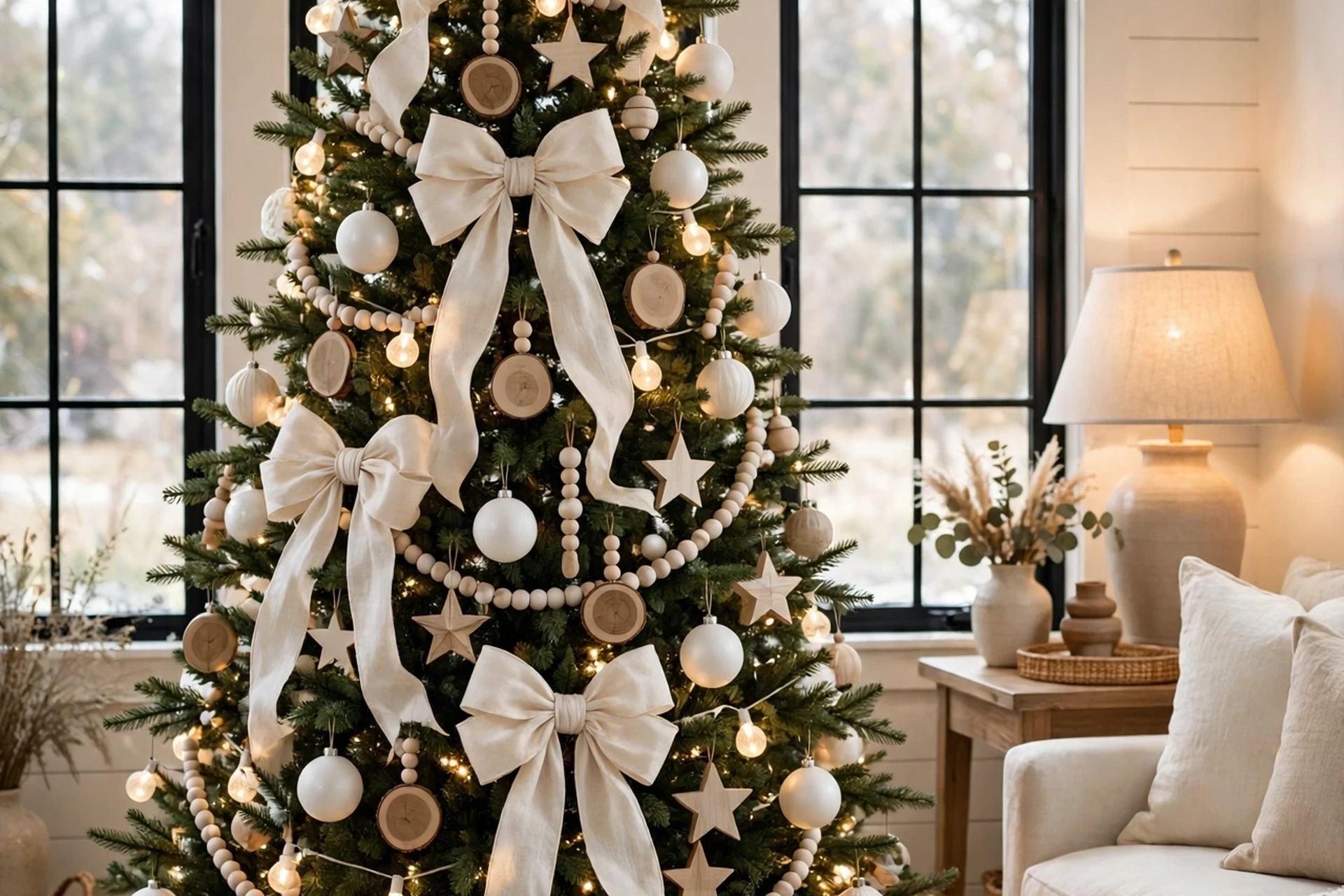
There’s a version of farmhouse decorating that skips the red-and-black plaid entirely and leans into something quieter — soft neutrals, matte finishes, and a tree that looks like it walked straight out of a design magazine.
That’s modern farmhouse. It keeps the cozy, natural textures that made farmhouse style popular in the first place, but trades busy patterns and bright colors for a calmer, more intentional palette.
If your Pinterest boards are full of ivory ribbon, whitewashed wood, and trees dressed in soft black and white, these 15 modern farmhouse Christmas tree decor ideas will help you actually build that look in your own living room, not just save it for later.
Let’s get into the details that make a modern farmhouse tree feel elevated instead of empty.
Table of Contents
Black-and-White Buffalo Check With a Modern Twist
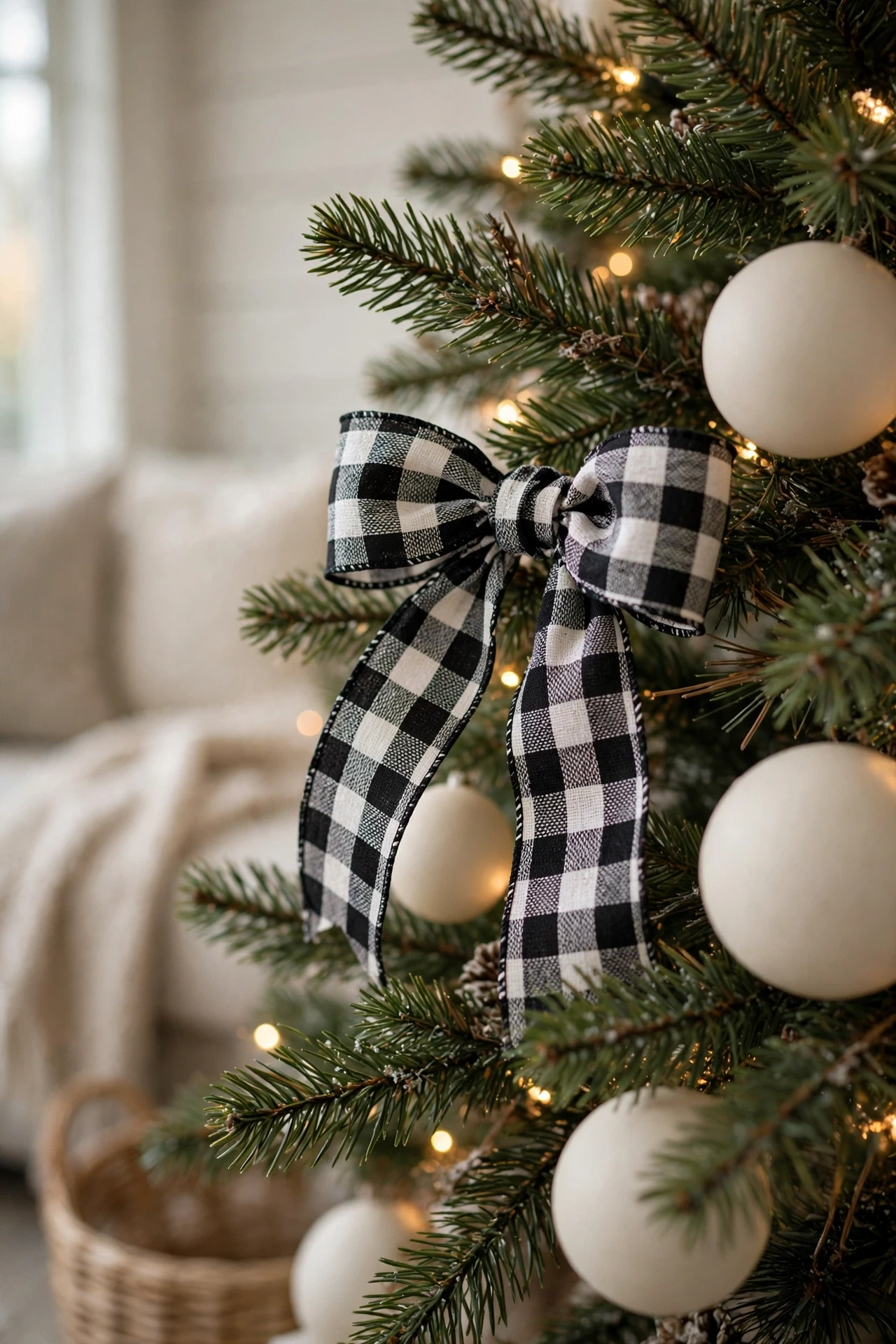
Swap the classic red-and-black buffalo check for a black-and-white version, and the entire tree shifts from traditional country to modern farmhouse in one move. The high-contrast pattern still reads as cozy and familiar, but the absence of red keeps the palette calm enough to sit alongside a neutral living room instead of fighting with it. Use the ribbon sparingly, in just a few loose loops or as a single wide bow near the top, rather than weaving it through every branch the way a traditional country tree would. Pair it with plain cream ornaments and natural wood accents so the pattern stays the star of the tree instead of competing with other bold elements. This one swap is often the easiest entry point for anyone transitioning a tree from classic country to modern farmhouse without starting over completely.
All-White Monochromatic Tree
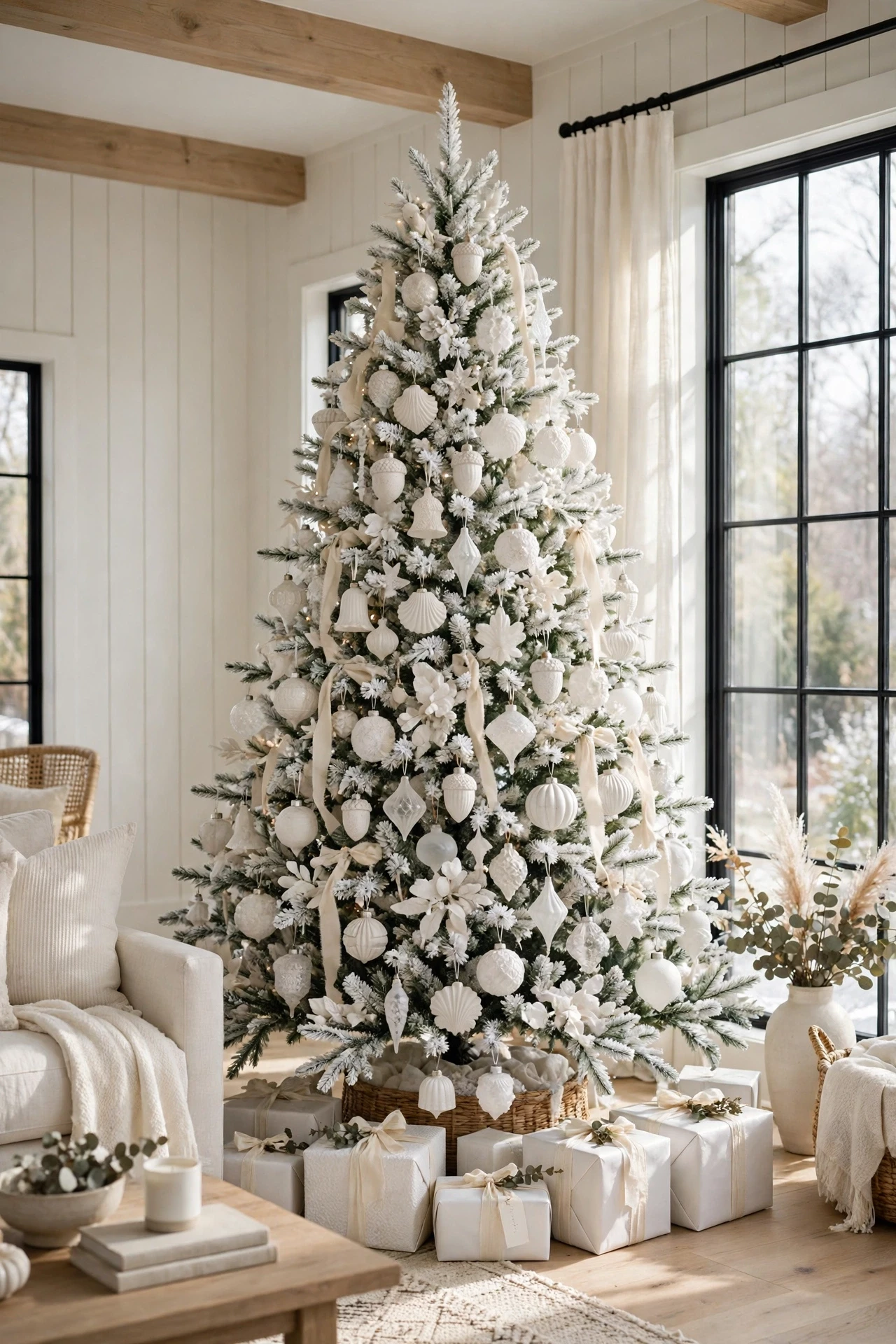
An all-white tree, built from ornaments in varying finishes like matte, ceramic, and lightly frosted glass, creates a clean, gallery-like look that still feels warm thanks to the texture variation. Rather than choosing all-identical white balls, mix in a few different shapes, such as small white bells, tiny stars, and simple spheres, so the eye has enough variety to stay interested despite the single-color palette. Layer in a plain ivory or cream ribbon instead of anything patterned, keeping every element in the same tonal family. This approach works particularly well for a tree placed near large windows or in an open-concept space, since the soft, light palette reflects natural daylight rather than absorbing it the way darker, busier trees do. A monochromatic white tree also tends to photograph beautifully for Pinterest, since the lack of competing colors keeps every detail crisp and clear.
Matte Neutral Oversized Ornaments
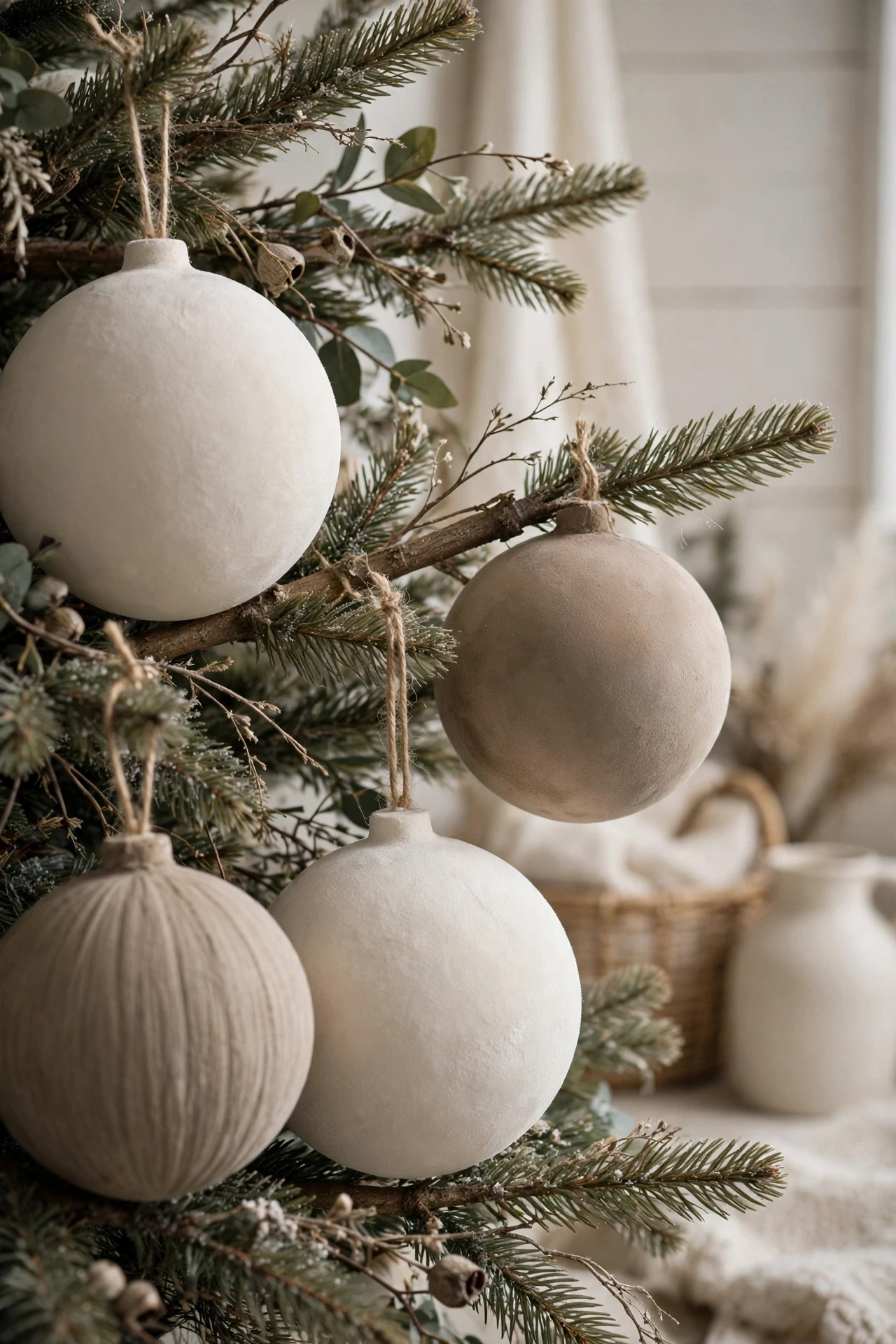
Oversized ornaments in matte cream, taupe, and soft brown make a bigger visual statement with fewer pieces, which fits the modern farmhouse preference for clean, uncluttered styling. Choose ornaments in the six-to-eight-inch range and space them out deliberately, allowing the bare branches between them to become part of the design rather than something to fill in. The matte finish is key here, since it diffuses light softly instead of throwing a sharp reflection the way glossy ornaments do, which keeps the whole tree feeling calm rather than flashy. Group a few oversized pieces near the bottom where the branches are naturally sturdier, since their weight can cause thinner upper branches to droop. This idea is especially effective for anyone who wants a tree that looks finished with noticeably less time spent decorating than a fully-loaded, pattern-heavy tree requires.
Whitewashed Wood Bead Garland
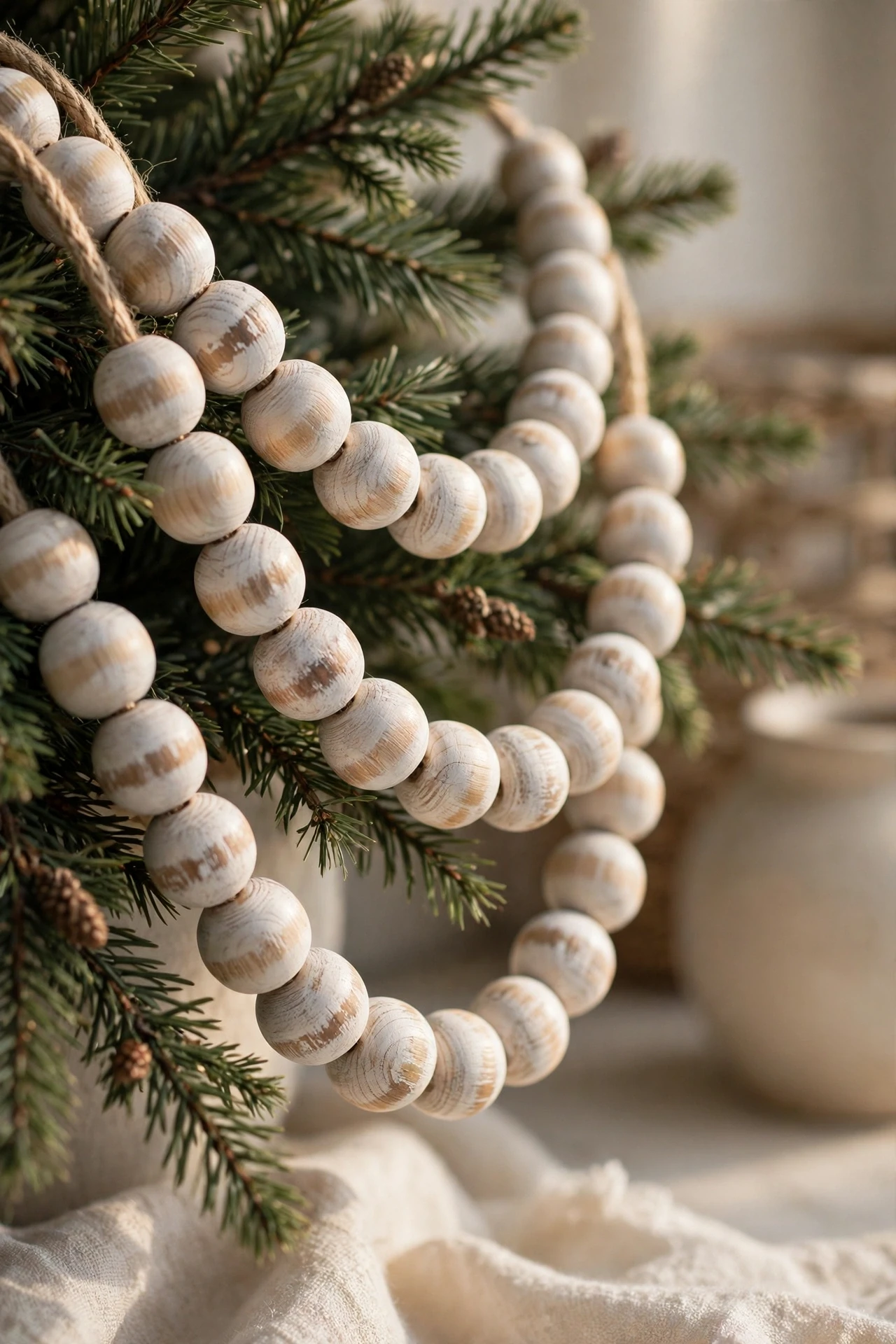
A whitewashed or lightly bleached wood bead garland brings the same handcrafted texture as a traditional wood bead garland, but in a softer, lighter tone that fits a modern farmhouse palette more naturally than raw, dark wood. The subtle white wash still lets the natural wood grain show through, keeping the garland from looking painted or artificial. Drape it in the same loose, deep swags used for a traditional wood garland, letting it rest against matte ornaments and ivory ribbon so the neutral tones blend into a single cohesive palette. This garland also works well layered directly against a faux fur tree skirt or a cream tree collar, since the tones read as part of the same family rather than separate design choices. It’s a small material swap that makes a noticeable difference in how “modern” versus “rustic” the finished tree feels.
Faux Fur Tree Skirt
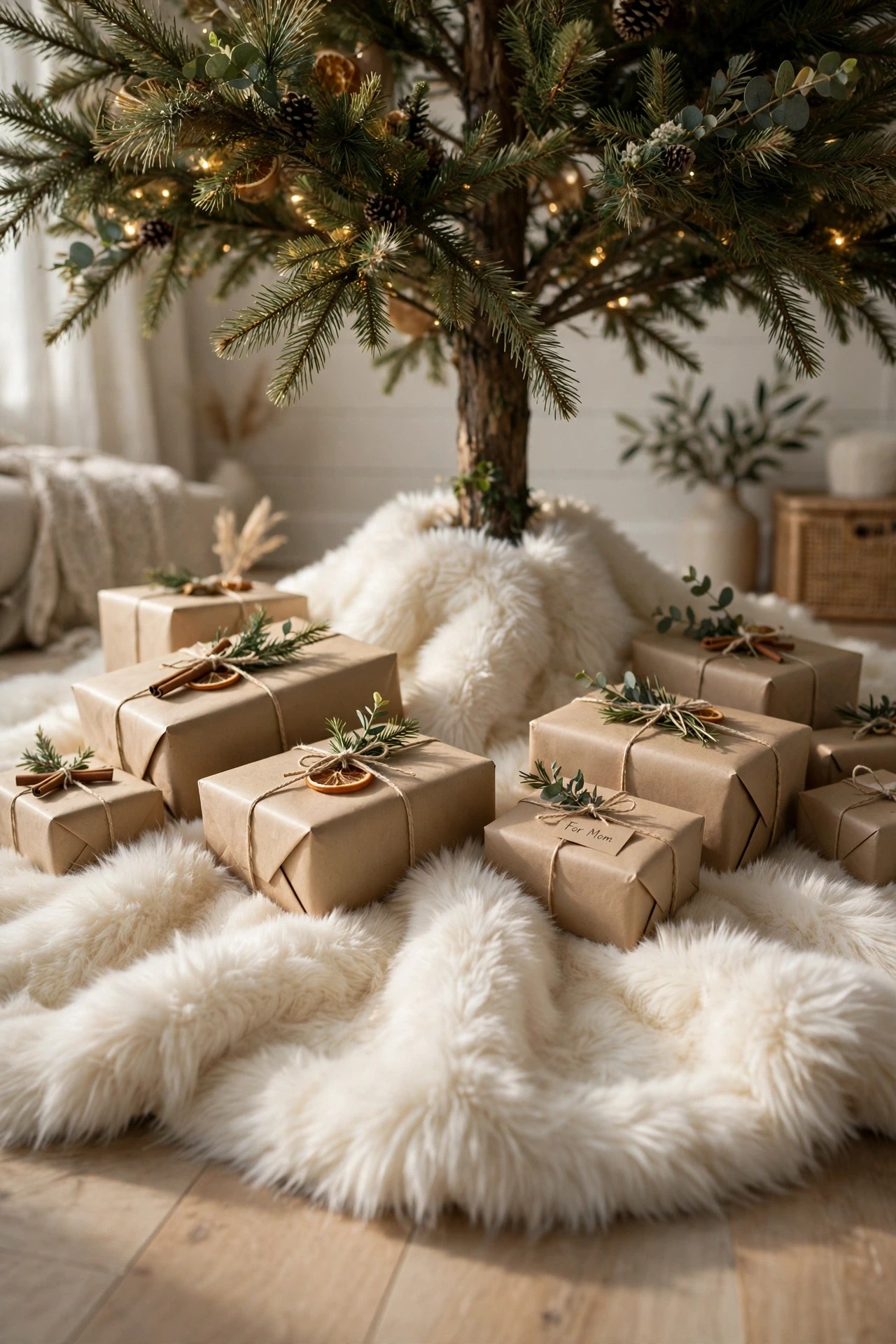
A faux fur tree skirt in cream or ivory instantly upgrades the base of a tree, adding a soft, plush texture that contrasts beautifully with the tree’s stiffer branches and ornaments. Choose a long-pile faux fur in a warm off-white rather than stark white, since the slightly warmer tone blends more naturally with wood floors and neutral rugs. Let the skirt spread out generously around the base rather than tucking it in tightly, since the loose, gathered look adds to the soft, elevated feel this style is going for. A faux fur skirt also does double duty by hiding tree stands and cords more effectively than a thin fabric skirt, while adding genuine visual weight to the bottom of the tree. This is one of the highest-impact, lowest-effort details on this entire list, since it transforms the base of the tree with a single purchase.
Black Velvet Ribbon Accents
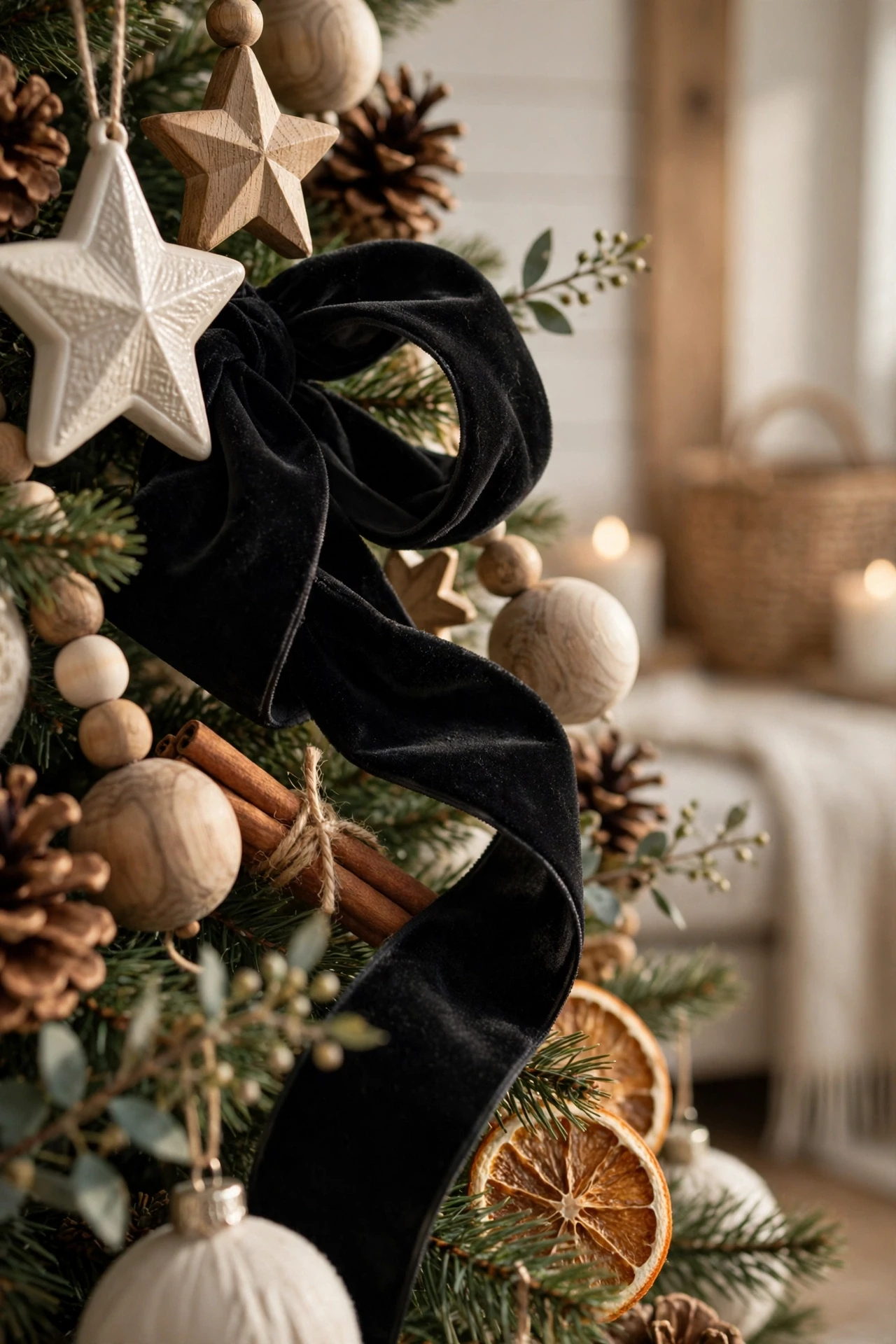
A few loops of black velvet ribbon add depth and a touch of quiet drama to an otherwise neutral, light-toned tree, giving the eye somewhere to rest among all the cream and wood tones. Velvet’s matte, light-absorbing texture keeps the black from feeling harsh, unlike glossy black satin, which can read as more formal than farmhouse. Use the ribbon sparingly, in just three or four well-placed loops rather than throughout the entire tree, treating it as an accent color rather than a base layer. This detail works particularly well on an all-white or all-neutral tree, since the black gives definition and structure to a palette that could otherwise blend together. It also photographs strikingly well, since the contrast reads clearly even in a small thumbnail image on Pinterest.
Looped Ball String Lights
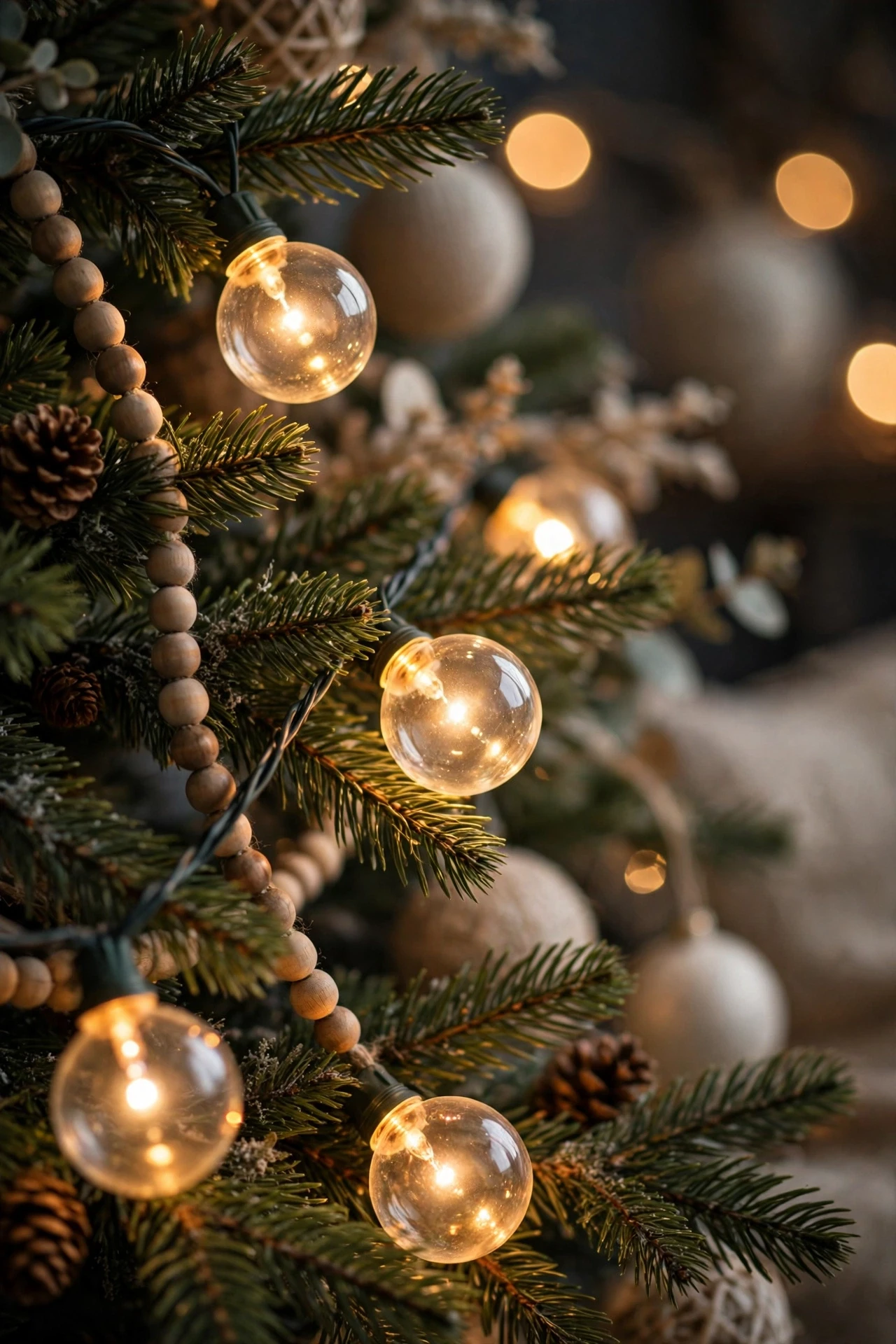
Instead of the traditional straight strand of fairy lights, looped ball string lights, where each bulb sits inside a small round shade, add a soft, orb-like glow that feels more like ambient home lighting than typical holiday lights. Drape the strands in loose loops through the outer branches, letting a few dangle slightly lower than the branch line for a relaxed, layered effect. Choose a warm white or soft amber tone to keep the glow consistent with the rest of the neutral palette, avoiding the cooler blue-white tones. This lighting style has become a signature detail in modern farmhouse and Scandinavian-influenced holiday decorating, since it reads as intentional and design-forward rather than purely functional. It also works beautifully left up as ambient lighting well past the holiday season, since the soft glow doesn’t feel overtly Christmas-specific once the ornaments come down.
Ceramic Bell Ornaments
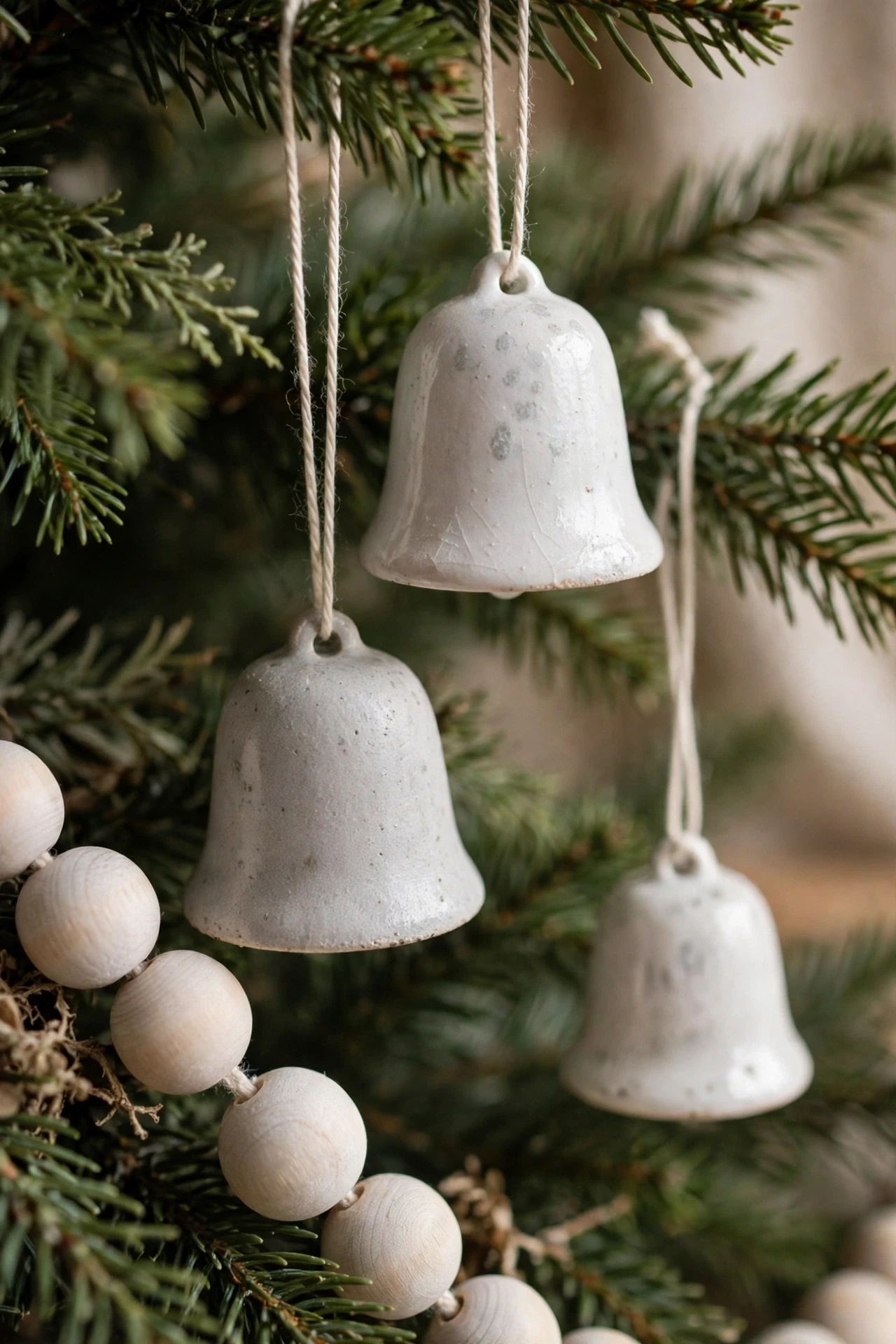
Small ceramic bells in white, cream, or soft gray bring a delicate, handmade quality to the tree, and their slightly imperfect glaze gives them a warmer feel than mass-produced plastic or metal versions. Hang them individually with thin jute or cotton string rather than metal hooks, keeping every material on the tree in the same soft, natural family. Their subtle shape variation, since each ceramic piece is typically a little different from the next, adds visual interest without introducing any new color to the palette. Ceramic bells also work well layered near the whitewashed wood bead garland, since both materials share a similar soft, matte finish. This detail tends to appeal strongly to anyone who wants their tree to feel curated and artisanal rather than assembled entirely from a single big-box ornament set.
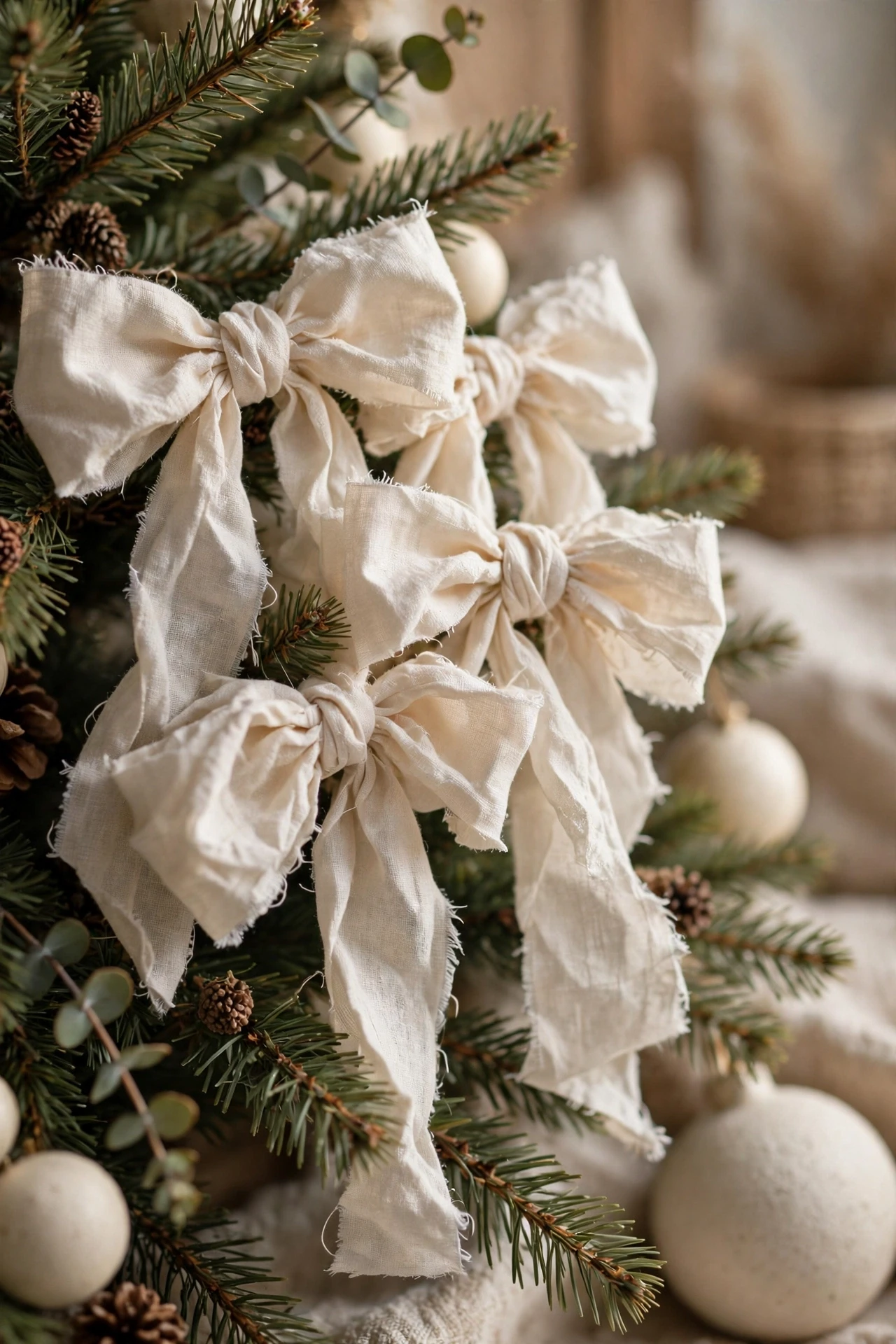
Ivory Linen Bow Clusters
Soft ivory linen ribbon, tied into loose, slightly wrinkled bows, brings a relaxed, textile-driven texture to the tree that feels more organic than a stiff, polished satin ribbon. The natural wrinkles and imperfect folds in linen are part of its charm, so there’s no need to press or perfectly shape each bow before hanging it. Cluster three or four bows together at varying heights rather than spacing them evenly, mimicking the way fabric would naturally bunch if gathered by hand. Linen’s slightly nubby texture also pairs beautifully with faux fur, ceramic, and matte ornaments, since all four materials share the same soft, tactile quality that defines this style. This detail is inexpensive to recreate at home with a few yards of linen fabric, making it one of the more accessible ideas on this list.
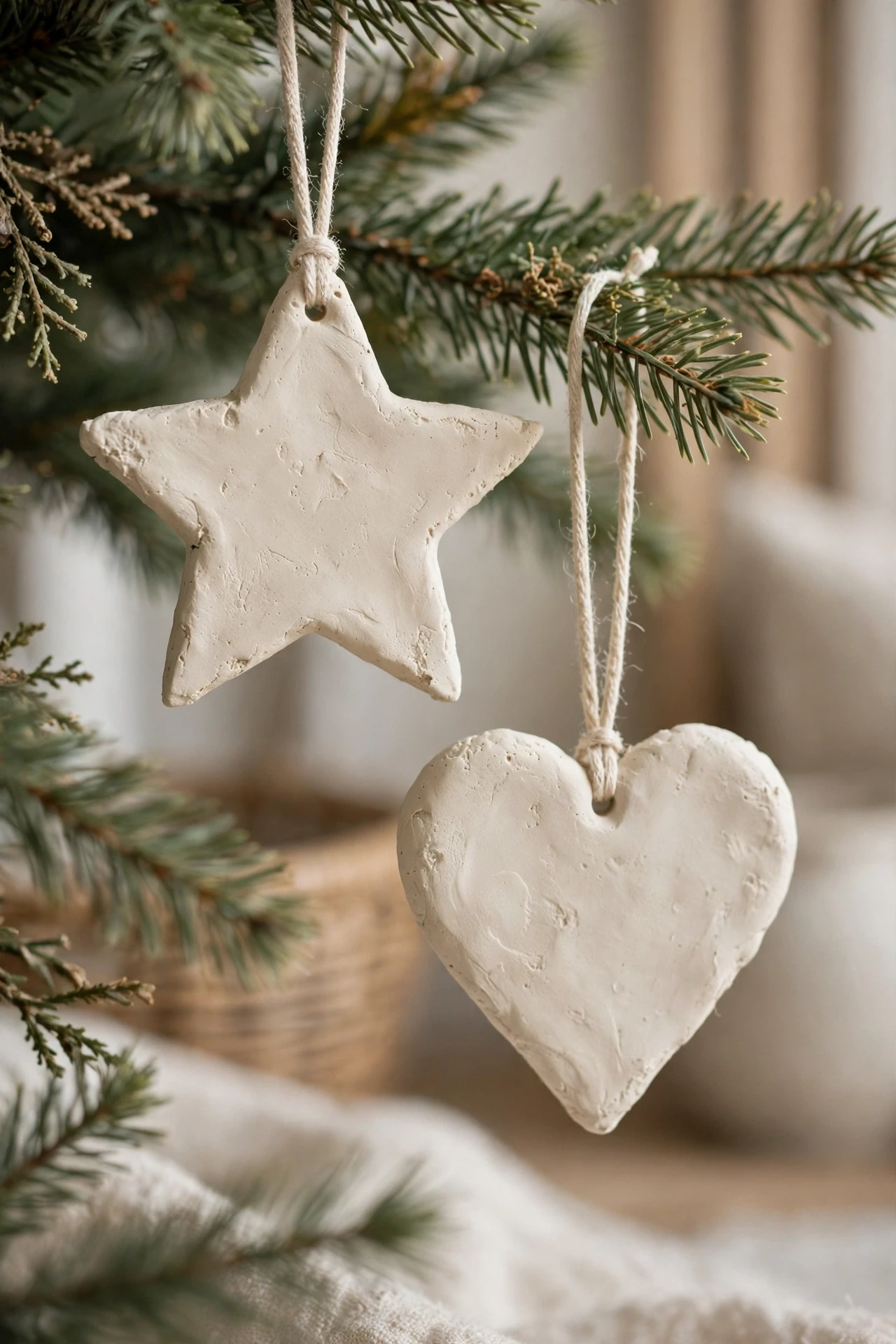
Ceramic Clay Ornaments
Handmade-style clay ornaments, often shaped into simple stars, hearts, or organic freeform shapes, bring an artisanal, one-of-a-kind quality that fits naturally into a modern farmhouse palette built around texture rather than color. Their unglazed or lightly glazed matte surface keeps them from catching too much light, letting them blend quietly into the tree rather than standing out. Because clay ornaments are simple enough to make at home with air-dry clay and basic cutters, they’re a popular weekend project for anyone who wants a genuinely handmade element on their tree without a big time investment. Vary the shapes slightly across the batch rather than aiming for identical pieces, since small irregularities are what make them read as handmade instead of manufactured. Displayed alongside ceramic bells and ivory linen bows, clay ornaments complete a trio of soft, matte textures that anchor the entire modern farmhouse look.
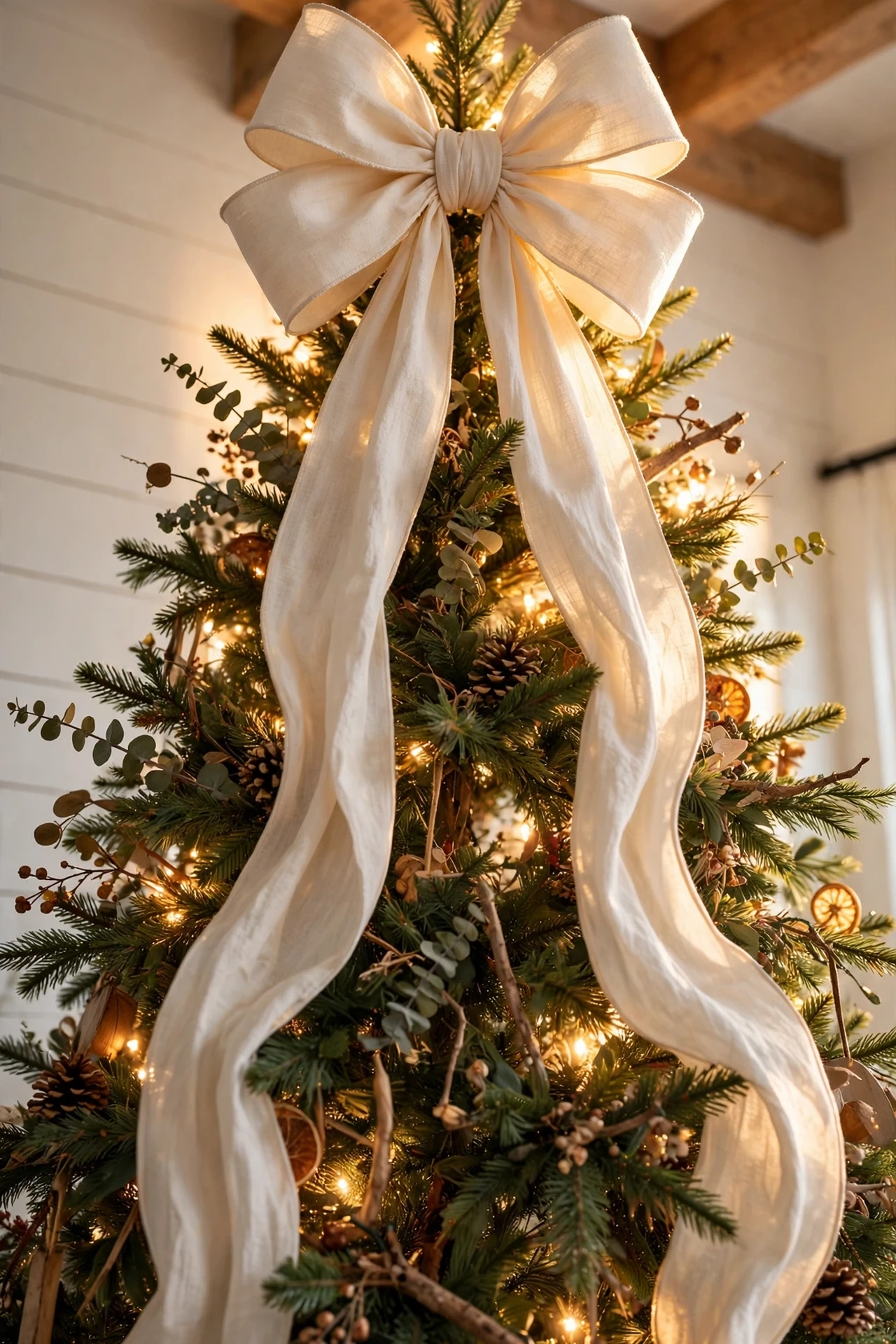
Cascading Statement Ribbon Topper
Rather than a traditional star or angel, a single oversized ribbon bow at the top of the tree, with long cascading tails that flow all the way down through the branches, has become one of the defining details of the modern farmhouse tree look. Use a wide, wired ribbon in ivory, cream, or soft plaid so it holds its shape and drapes smoothly instead of collapsing into a flat, limp bow. Let the tails fall unevenly, crossing over a few branches naturally rather than hanging in one straight line, for a more organic, styled-by-hand appearance. This topper works as the single boldest element on the tree, so everything else, from ornaments to garland, should stay simple enough to let the ribbon lead. It’s also one of the most requested tutorials in farmhouse decorating circles, since the technique for shaping and securing the bow takes a little practice but delivers a dramatically elevated result.
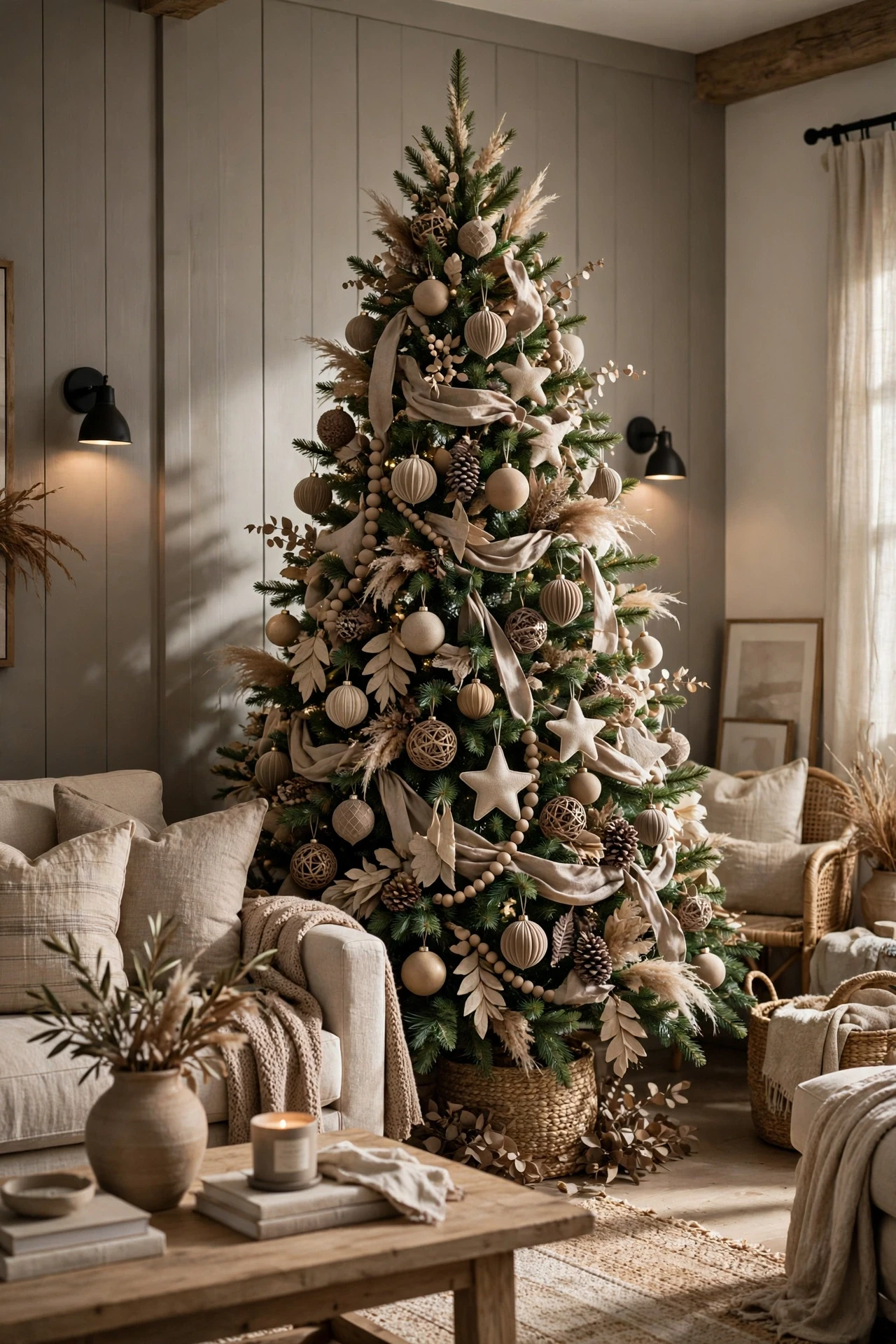
Greige and Taupe Color Palette
Building an entire tree around greige and taupe tones, rather than the more common cream-and-white base, creates a slightly moodier, more grounded version of the modern farmhouse look. Choose ornaments and ribbon in warm gray-brown shades, avoiding anything with cool blue undertones, so the palette still feels cozy rather than cold. This color direction pairs especially well with homes that already lean into greige walls, linen furniture, or warm gray flooring, since the tree becomes an extension of the existing color story instead of a seasonal interruption. Add just one deeper accent, like a bronze or dark walnut brown ornament, to keep the palette from flattening out into a single tone. Because greige sits between warm and cool, it also tends to photograph well under almost any lighting condition, which is a practical advantage for anyone sharing their tree on Pinterest or Instagram.
Sleek Metal Star Topper
A slim, minimalist metal star topper, cut from thin brushed brass or matte black metal, gives the very top of the tree a clean, architectural finish that fits the modern side of modern farmhouse better than a full, glittery topper would. Choose a star with simple, open linework rather than a solid, filled shape, since the negative space lets the tree’s own greenery show through around the edges. A brushed or matte metal finish, rather than polished chrome, keeps the topper from reflecting too much light and pulling focus away from the rest of the tree. This topper pairs especially well with an all-white or greige tree, since the metal introduces a small, controlled contrast without adding a new color to the palette. It’s also one of the more durable choices on this list, since metal toppers hold their shape season after season far better than fabric or ribbon versions.

Slim Profile Pencil Tree
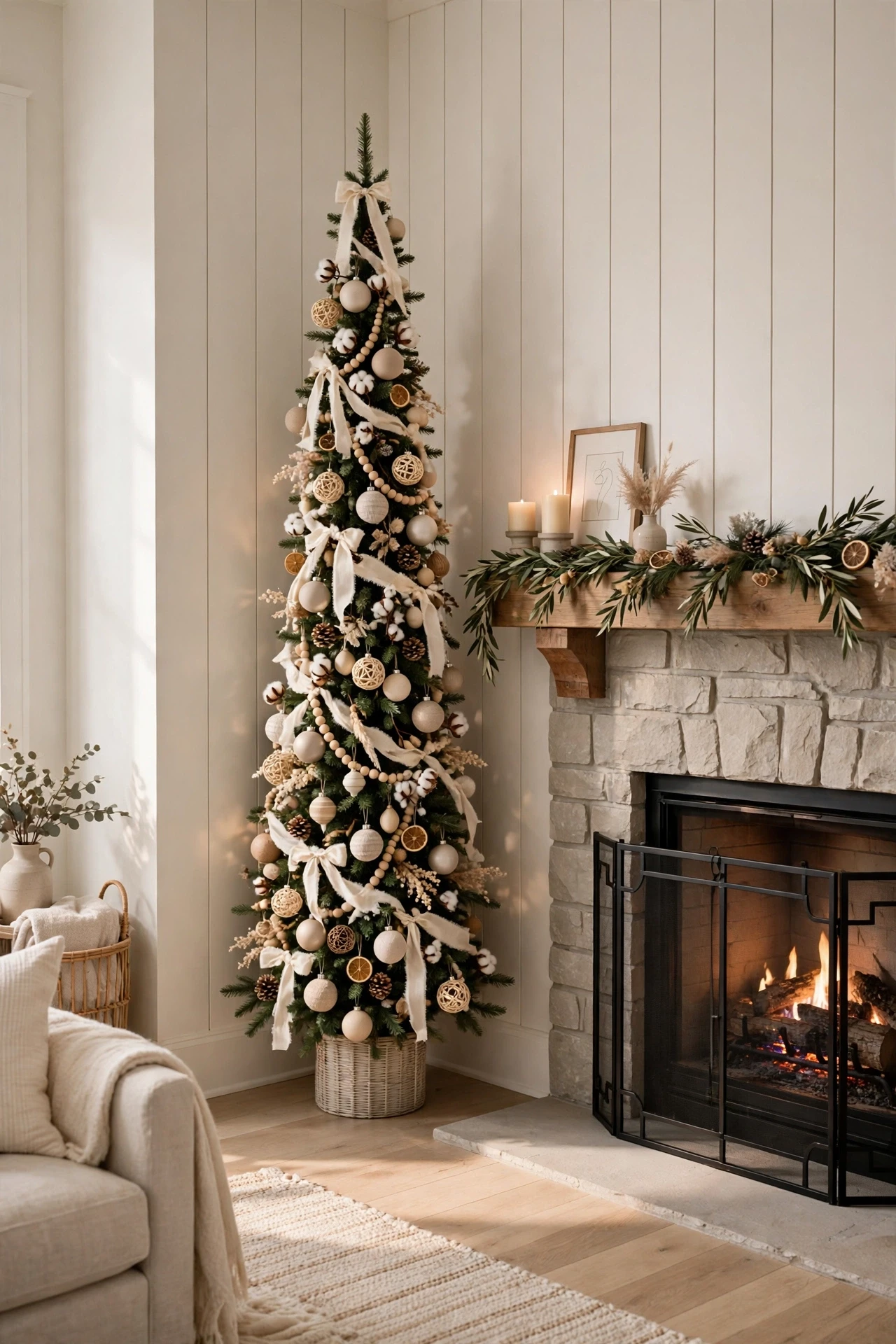
Choosing a slim, pencil-shaped tree instead of a traditional full, wide tree is one of the most overlooked ways to make a tree feel modern before a single ornament goes on. The narrower silhouette fits naturally into tighter corners, hallways, or beside a fireplace, and it reads as more architectural and intentional than a bushy, traditional shape. Decorate it with the same neutral, matte materials used throughout this list, but use slightly fewer, smaller-scale ornaments to match the tree’s narrower branch structure. A slim tree also allows more of the branch itself to show through the decorations, which fits the modern farmhouse preference for visible structure over fully-covered branches. For smaller homes or open floor plans where a wide tree would overwhelm the space, this shape choice can make the difference between a tree that feels crowded and one that feels curated.
Mixed-Metal Matte Ornaments
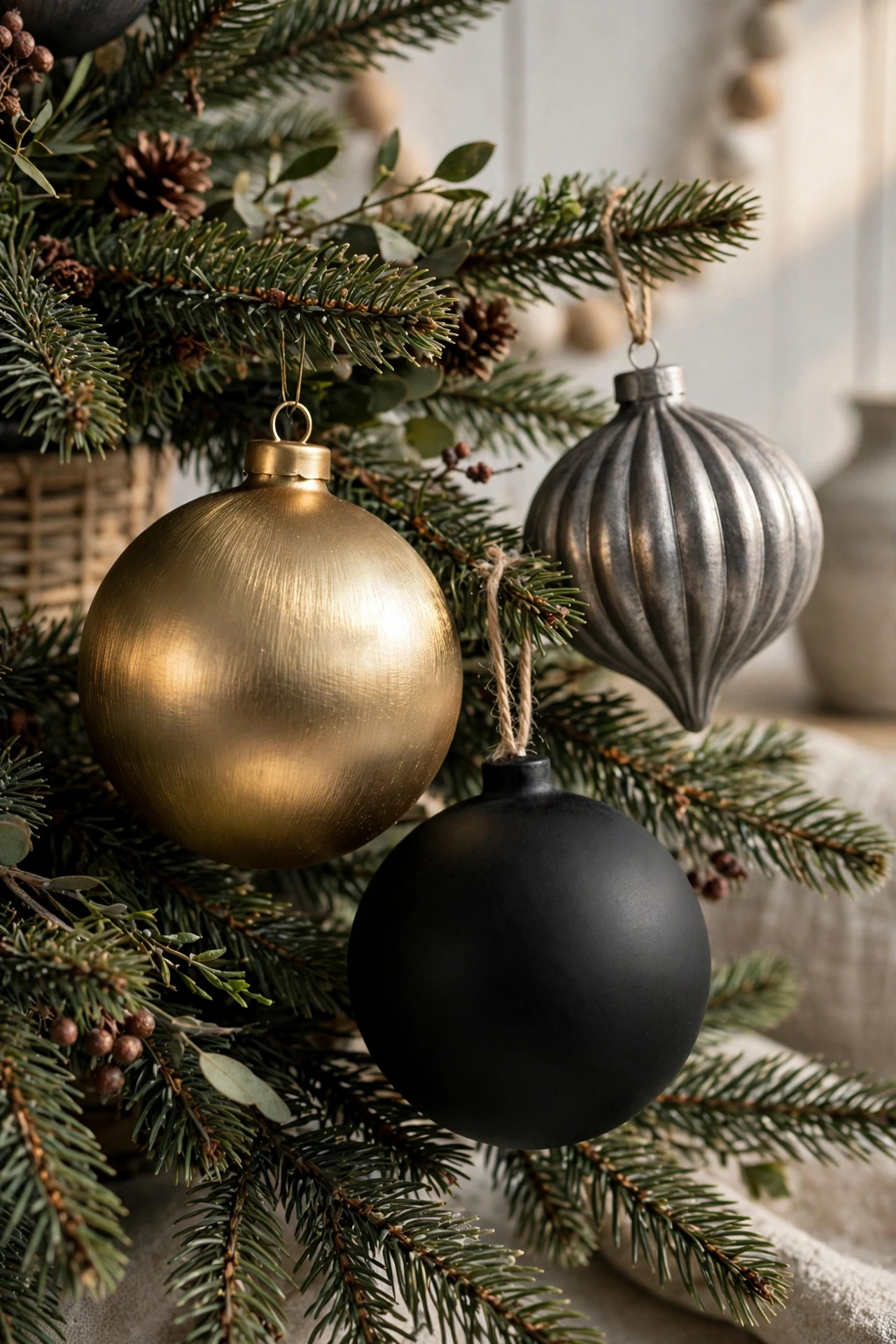
Combining matte brushed gold, matte black, and soft pewter ornaments introduces a little shine to the tree without tipping it into a glossy, traditional holiday look. The key is keeping every metal finish matte or brushed rather than polished, since a soft sheen reads as modern and intentional while a high-gloss finish reads as more classic and formal. Distribute the different metal tones evenly throughout the tree rather than grouping them by color, letting gold, black, and pewter pieces sit near each other so the mix feels deliberate rather than mismatched. This detail works well as the tree’s main source of visual contrast when everything else, from ribbon to garland, stays in soft neutral tones. Mixed matte metals also tend to hold up well across multiple color trends over the years, since the neutral metal tones aren’t tied to any single seasonal palette.
Styling Tips
Choose texture over pattern as your main design tool. Modern farmhouse trees rely on the contrast between matte, glossy, woven, and plush materials far more than they rely on printed patterns like plaid or stripes.
Leave visible negative space. Part of what makes this style feel modern is restraint, so resist the urge to fill every open gap between branches the way a traditional country tree would.
Keep your color palette to two or three tones maximum, such as ivory, wood, and one metal accent, so the tree reads as cohesive even when the materials themselves vary widely.
Practical Implementation Ideas
Start with the tree shape and lighting before adding any decor, since both set the foundation for whether the finished tree reads as modern or traditional.
Test your ornament palette on a small side table before committing it to the whole tree, laying out a handful of pieces together to check that the tones actually complement each other in your home’s lighting.
Build from the base up: tree skirt and garland first, then oversized ornaments, then smaller accent pieces like ceramic bells and ribbon bows.
Common Mistakes to Avoid
Overloading the tree with too many different ornament shapes and sizes, which cancels out the clean, curated look this style depends on.
Choosing bright white or cool-toned lights, which can make an otherwise warm, neutral palette feel sterile instead of cozy.
Mixing high-gloss and matte finishes without intention, which creates visual noise instead of the soft, layered contrast this style is going for.
Small-Space Alternatives
A slim pencil tree, as covered above, is the most direct small-space solution, delivering the full modern farmhouse look in a fraction of the width.
A tabletop version using mini matte ornaments and a small faux fur base skirt works well on an entryway console or kitchen island.
A single oversized ribbon bow and a short garland swag on a bookshelf or mantel can carry the aesthetic into a room without a tree at all.
Budget-Friendly Alternatives
Whitewash existing wood bead garland or ornaments at home using a diluted white paint wash instead of buying new whitewashed pieces.
Use an old faux fur throw blanket as a tree skirt substitute rather than purchasing one designed specifically for that purpose.
Make clay ornaments at home with air-dry clay, which costs a fraction of what a set of artisanal ceramic ornaments typically runs.
Pro Styling Recommendations
Layer at least three textures, such as matte ceramic, faux fur, and linen, since texture layering is what keeps a neutral tree from looking flat or unfinished.
Save the boldest single element, whether that’s the cascading ribbon topper or the black velvet accents, for one focal point rather than repeating it throughout the tree.
Photograph the tree with only warm ambient lighting on, without an overhead light, since overhead lighting tends to wash out the soft matte finishes that define this style.
Frequently Asked Questions
Conclusion
A modern farmhouse Christmas tree isn’t about choosing between cozy and clean. It’s about proving both can exist on the same tree at once, through texture, restraint, and a color palette that feels calm rather than loud.
Start with the shape of the tree and the lighting, then build outward with faux fur, matte ornaments, and a little negative space between the branches. The goal is a tree that looks effortless, even though every detail was chosen on purpose.
Pick a handful of these 15 ideas, keep the palette tight, and let the tree do less shouting and more quiet, elevated charm this season.