17 Rectangle Coffee Table Fall Decor Ideas That Just Work
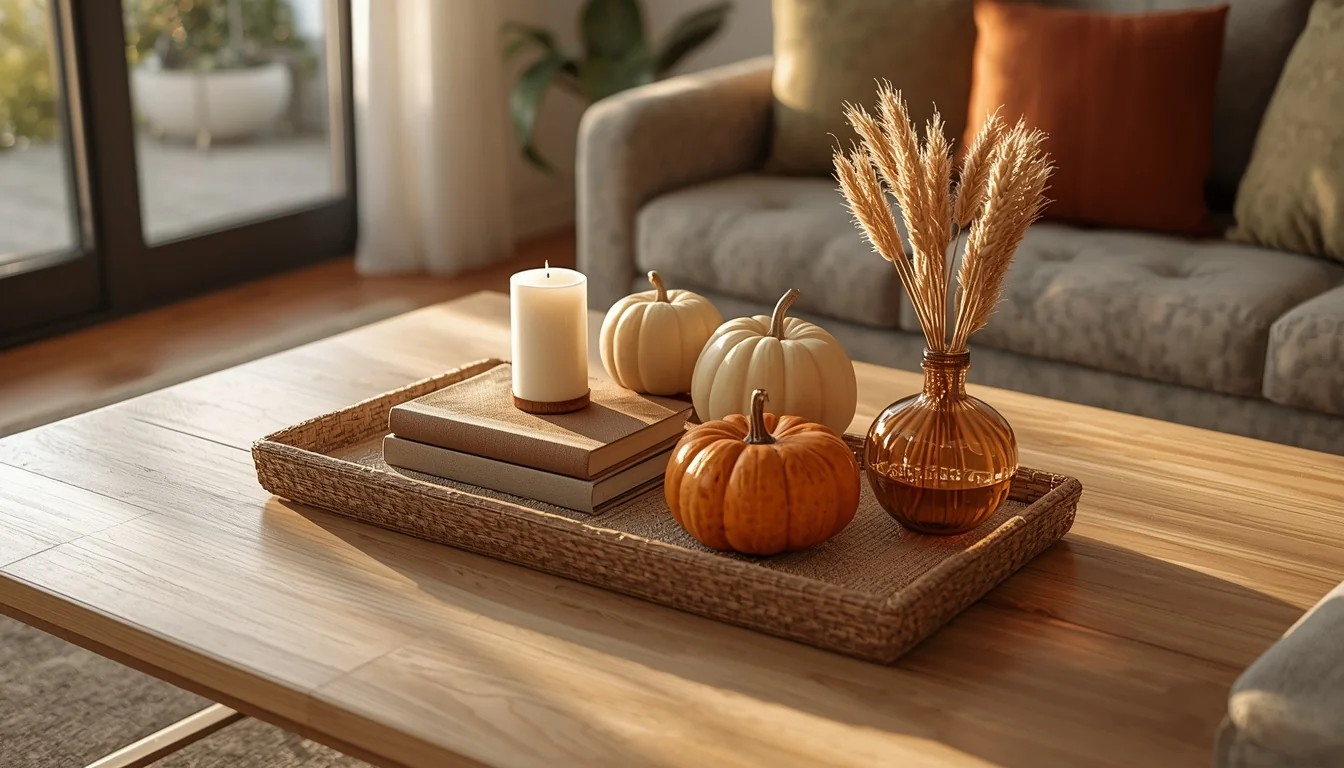
A rectangle coffee table is the workhorse of most living rooms, but it’s also the hardest shape to decorate well. Round centerpieces that look great on a circular table tend to leave awkward empty stretches on either end of a rectangle. Fall makes this trickier, because the season comes with a lot of tempting extras — pumpkins, gourds, candles, plaid, dried stems — and it’s easy to pile them on until the table looks cluttered instead of cozy.
The fix isn’t fewer decorations. It’s grouping them the right way for a long tabletop. Rectangle tables respond best to two or three balanced zones rather than one central pile, and once you see that structure, fall styling gets a lot easier. Below are 17 ideas that respect the shape of your table while still delivering that warm, layered, pumpkin-spice-latte kind of feeling.
Table of Contents
Idea 1: A Woven Rectangular Tray as Your Anchor
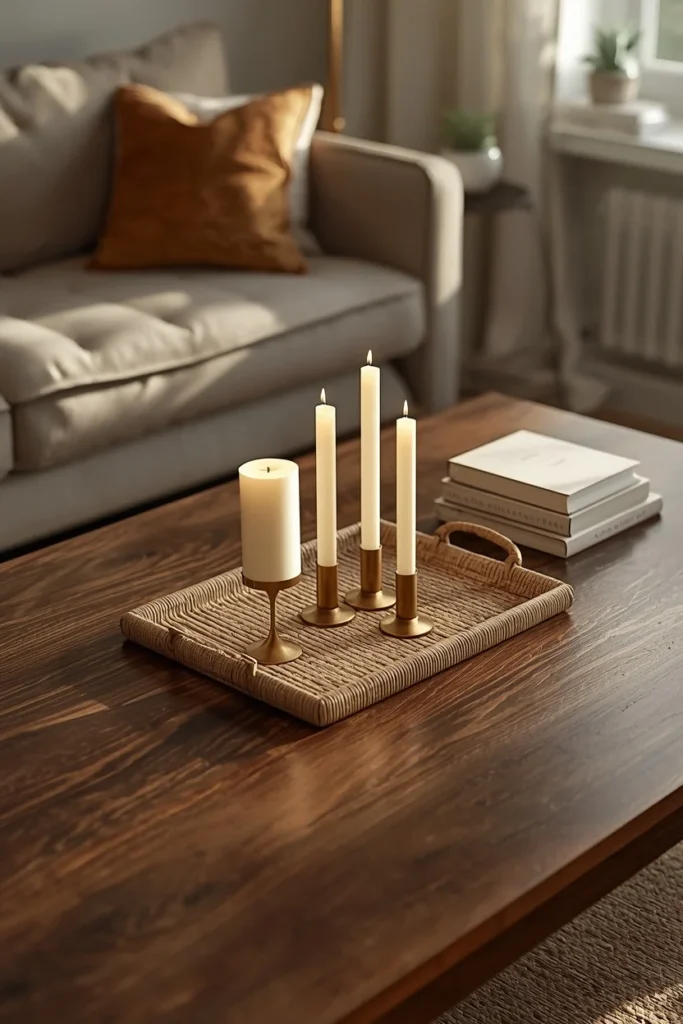
Start with a tray shaped like your table, because a rectangular or oval woven tray gives everything else on top a defined boundary instead of letting items drift toward the edges. Choose a natural rattan or seagrass weave for texture that reads as “fall” without adding any color at all, then build your groupings inside its borders. This keeps the table looking intentional even on days when you only have five minutes to set a candle and a small pumpkin on top. The woven texture also photographs beautifully against a dark wood or black tabletop, since the contrast in tone makes the whole vignette pop. Once the tray is in place, you can swap what’s inside it for every season without re-thinking the whole table.
Idea 2: A Graduated Pumpkin Trio
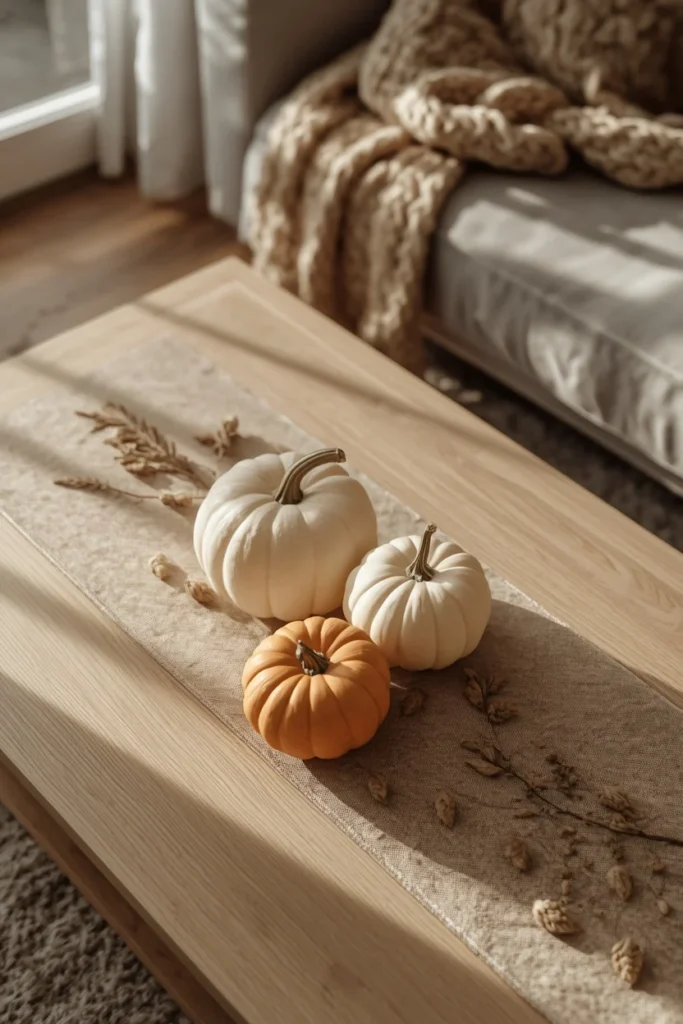
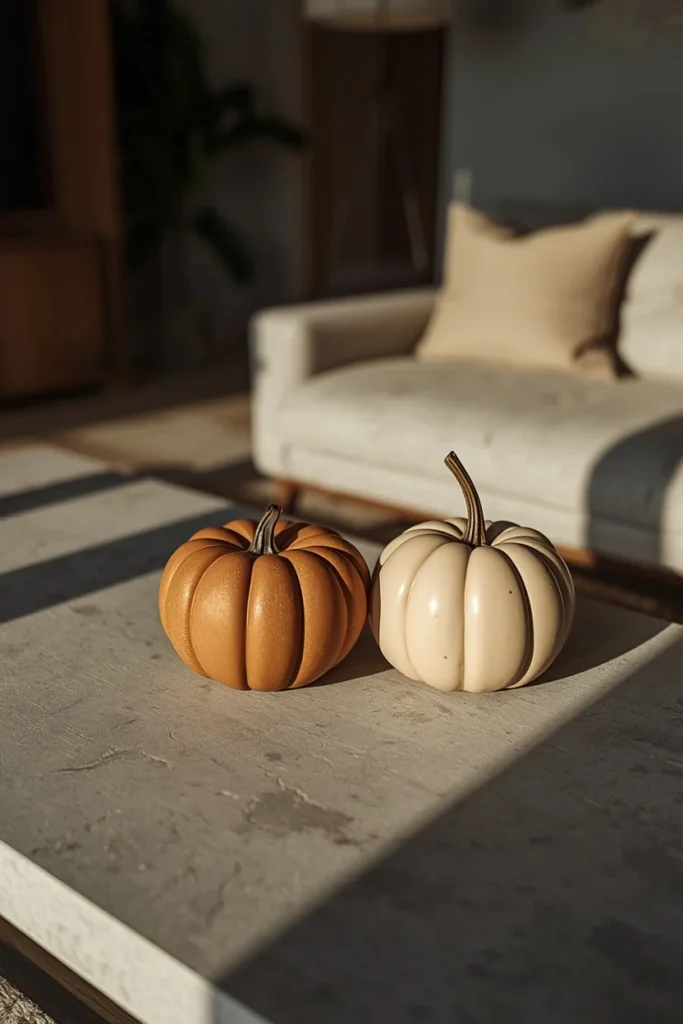
Three pumpkins in slightly different heights and sizes create instant visual rhythm on a long table, especially when you mix one tall heirloom-style pumpkin with two smaller round ones. Stick to two colors max — think warm cream and burnt orange, or all-white for a more modern look — so the grouping reads as curated rather than a produce display. Place the trio toward one end of the table rather than dead center, which balances the rest of the tabletop for other small accents like a candle or a stack of books. Real pumpkins bring in that slightly imperfect, organic shape that faux versions can’t quite match, but a good faux set works just as well if you want the look to last through November. This is one of the fastest fall updates you can make, since it takes about two minutes and instantly signals the season.
Idea 3: Stacked Books With a Pumpkin Topper
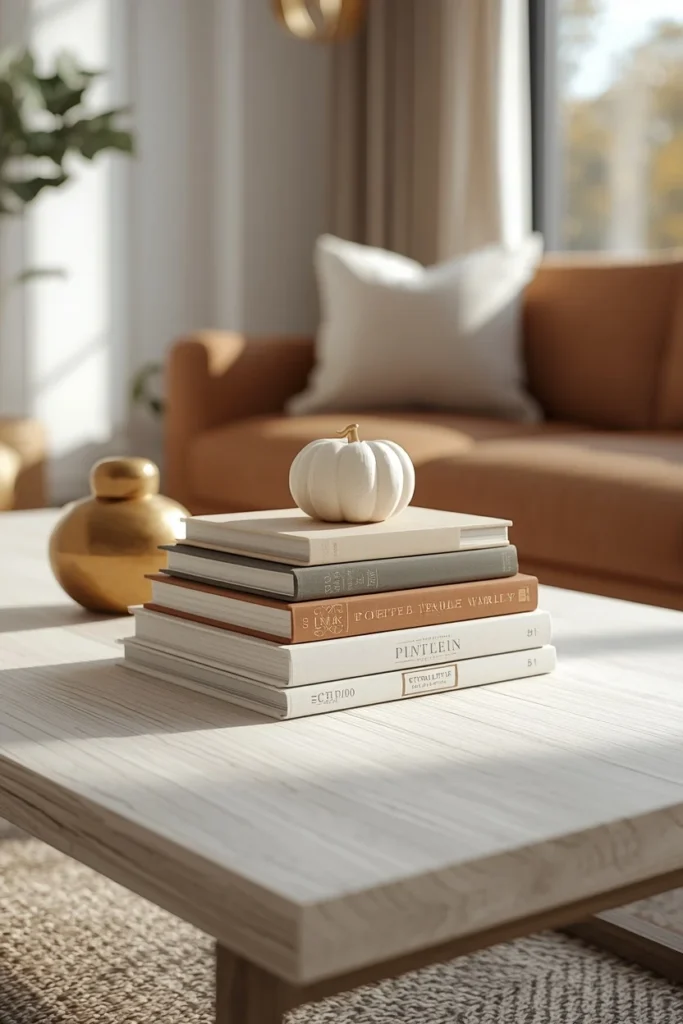
Stacking three or four coffee table books by color — spines facing out in cream, tan, and rust tones — gives you an instant pedestal for a small pumpkin or gourd on top. The height variation this creates is especially useful on a rectangle table, where a completely flat tabletop can look one-dimensional in photos. Choose books with neutral or seasonal-toned covers so the stack blends with your palette instead of competing with it, and place the stack near one corner rather than centered. A single mini pumpkin, ceramic acorn, or small brass object on top finishes the look without adding bulk. This idea works in almost any design style, from modern minimalist to traditional farmhouse, because books are a neutral base that adapts to whatever you set on them.
Idea 4: A Plaid Runner Down the Center
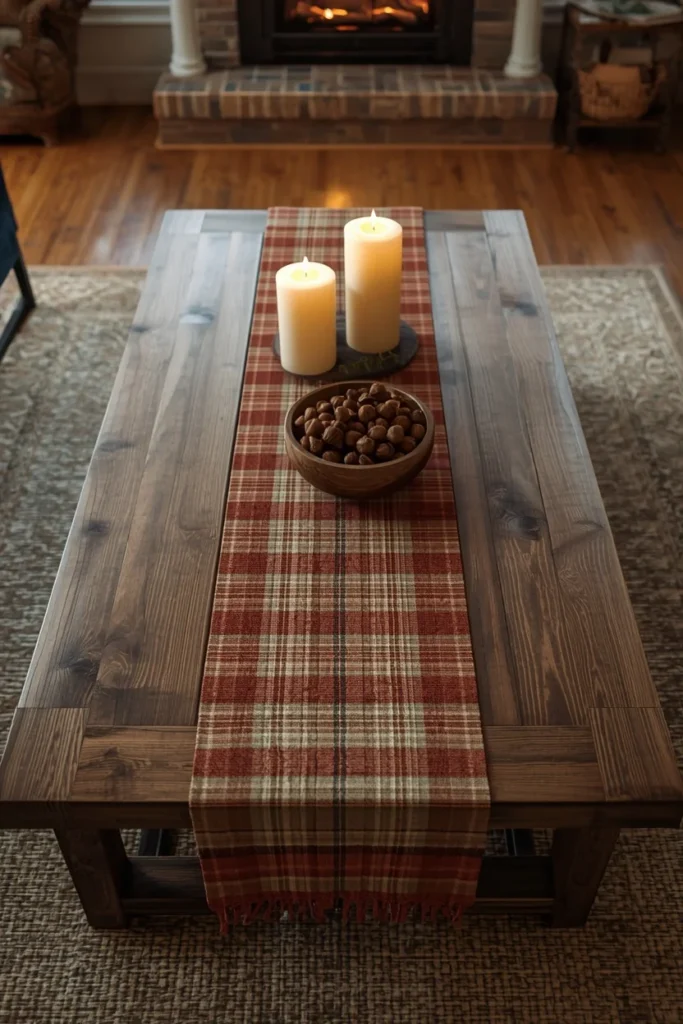
A narrow plaid runner laid lengthwise down the middle of a rectangle table does two things at once: it adds a classic fall pattern, and it visually divides the table into a clear centerline for styling. Choose a muted plaid in rust, olive, and cream rather than a bright red-and-black version, which can feel more like a picnic blanket than home decor. Layer a small candle or two along the runner, letting the fabric peek out on either side rather than covering the whole tabletop. This idea is especially good for family-friendly living rooms because the runner is inexpensive to replace and easy to wash if it sees daily use. It also gives you an easy transition into winter — just swap the plaid for a solid ivory runner and keep the rest of the styling in place.
Idea 5: Amber Glass Bottle Cluster
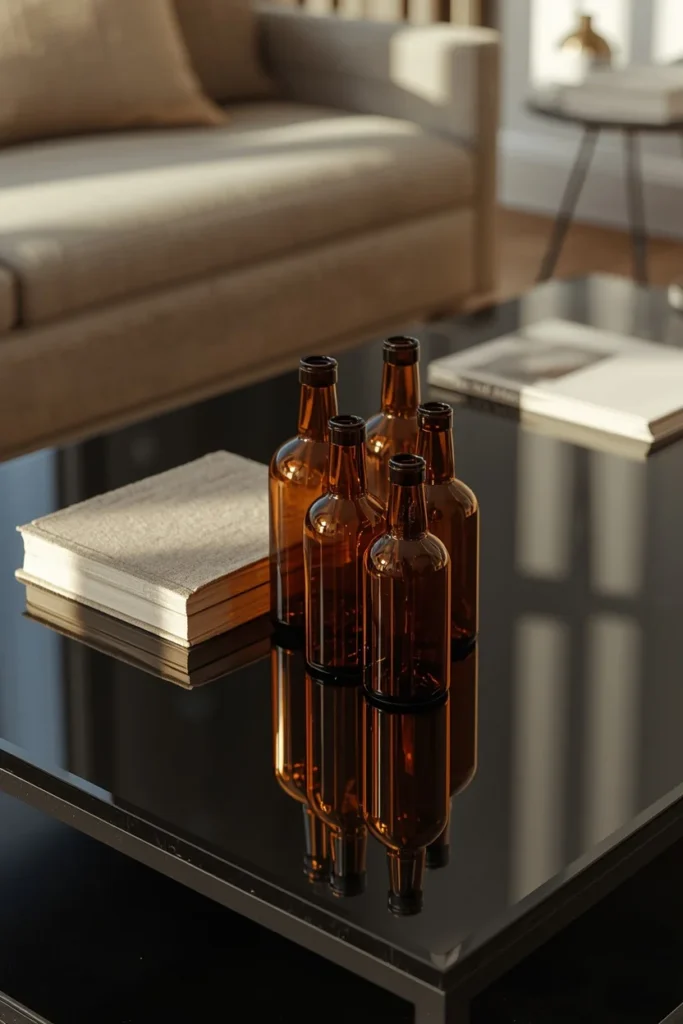
Grouping three or four amber glass bottles of different heights in one corner of your table brings warm color and a bit of shine without needing a single pumpkin. The amber tone reads as fall on its own, echoing the color of dried leaves and cider, and the glass catches light in a way that flat matte decor doesn’t. Cluster the bottles tightly together rather than spreading them out, since a tight grouping reads as one cohesive object instead of scattered clutter on a long table. This idea pairs especially well with a black or dark wood tabletop, where the amber glow really stands out. It’s also a smart pick if you want a fall look that doesn’t scream “pumpkin season” and instead leans into a more understated, moody autumn palette.
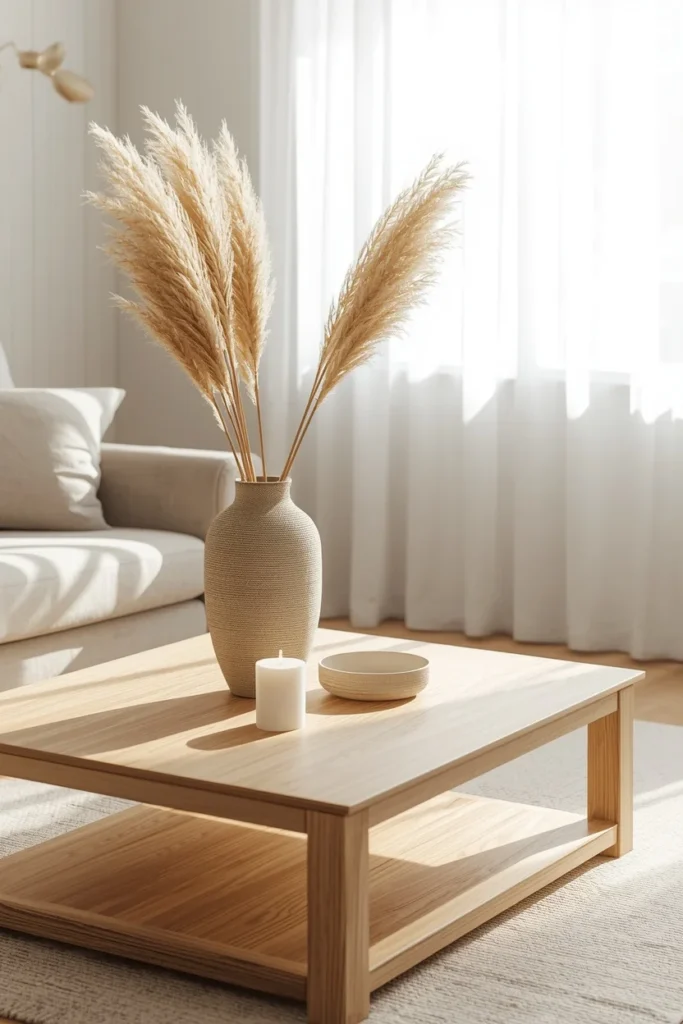
Idea 6: Pampas Grass in a Textured Vase
A tall stem of pampas grass in a chunky ceramic or stoneware vase adds height to a rectangle table without taking up much surface area, which matters when your table is long but not particularly wide. Place the vase toward one end so it doesn’t block sightlines across the room, and let the plumes lean naturally rather than trimming them into a perfectly symmetrical shape. Pampas grass has become one of the most popular fall textures because it works in nearly every design style, from boho to modern farmhouse, and it doesn’t need water or maintenance once it’s arranged. Pair it with one or two low, grounded objects like a candle or small bowl so the eye has somewhere to rest besides the tall stem. This is one of the easiest ways to make a coffee table photograph well, since the height creates depth against a flatter background.
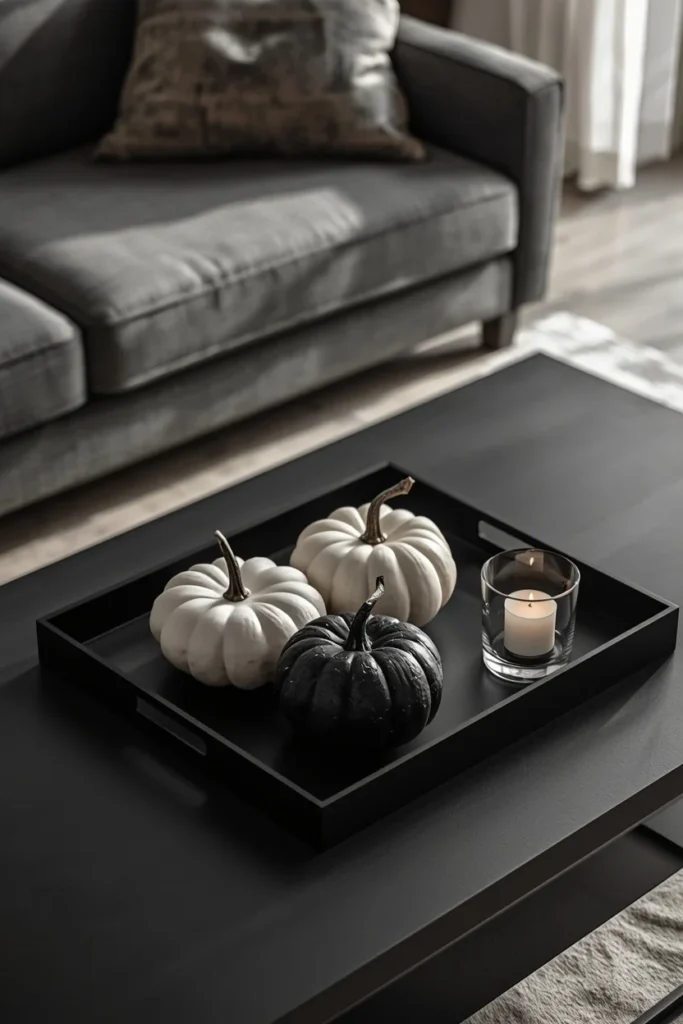
Idea 7: Black and White Pumpkin Minimalism
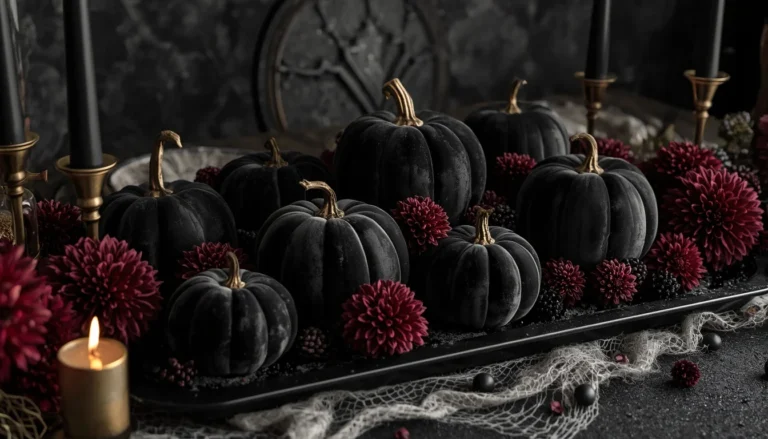
For a more modern take on fall, skip the traditional orange palette entirely and style with black and white pumpkins instead, mixing a couple of matte white pumpkins with one or two charcoal or black ones. This combination feels current and works especially well in monochrome or Scandinavian-leaning living rooms where bright orange would clash with the existing palette. Keep the rest of the table simple — a black tray, one taper candle, maybe a single stem in a clear glass vase — so the pumpkins remain the focal point. The contrast between the light and dark pumpkins does a lot of visual work on its own, which means you genuinely don’t need much else on the table. This is a great option if you want your space to feel seasonal without looking overtly “fall,” since it reads as chic year-round styling with a seasonal twist.
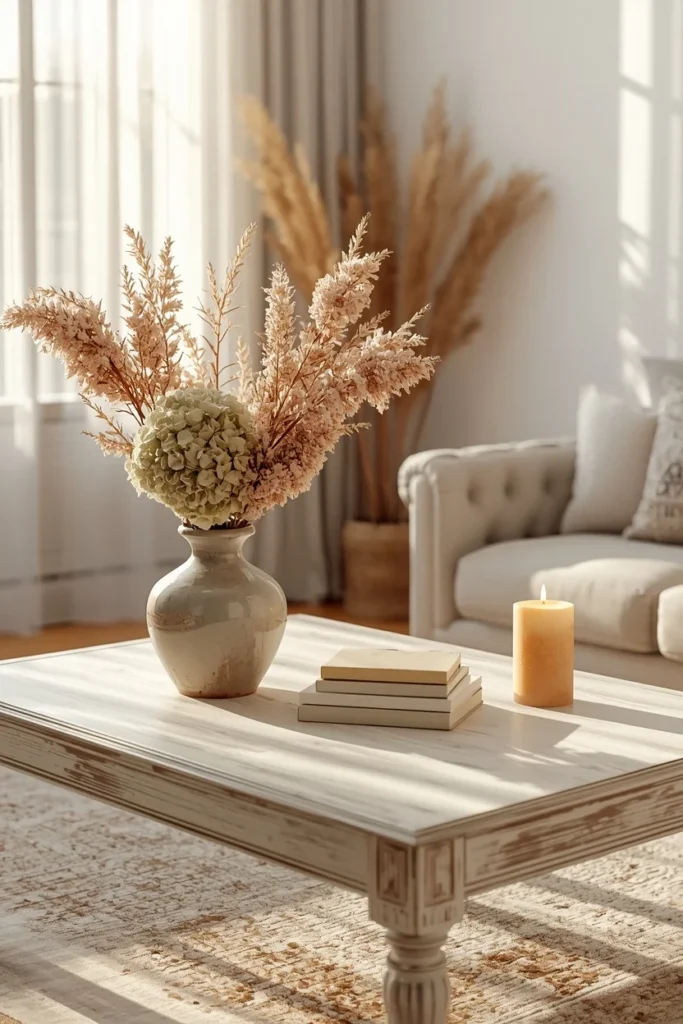
Idea 8: Dried Hydrangeas and Fall Stems
Dried hydrangea blooms in dusty rose, sage, or faded cream tones bring softness to a rectangle table without the maintenance of fresh flowers, and they naturally transition through the entire fall season without wilting. Arrange three or four stems in a medium ceramic vase, letting the blooms fan out slightly rather than standing straight up, which gives the arrangement a relaxed, gathered-from-the-garden feel. Place the vase at one end and balance the other end with something low, like a candle or small stack of books, so the table doesn’t feel top-heavy on one side only. Dried stems are a favorite among home stylists specifically because they photograph beautifully in changing light, picking up warm gold tones in the afternoon and cooler blue tones in the morning. This is also one of the more budget-friendly ideas on this list, since one bunch of dried hydrangeas can be trimmed and divided across multiple small vases.
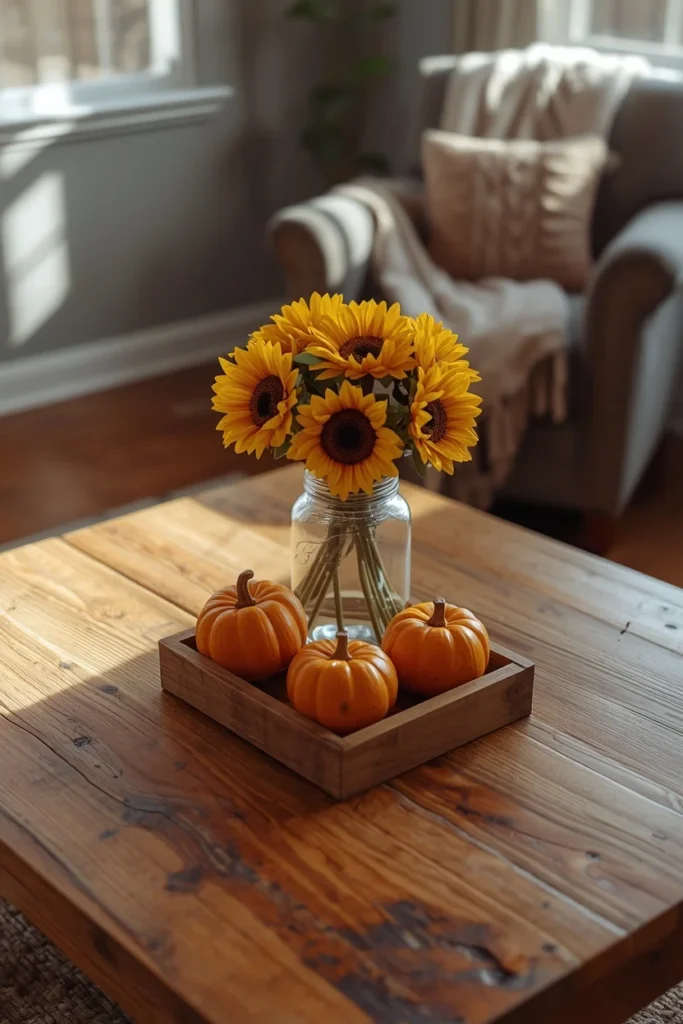
Idea 9: Mason Jar Sunflowers With Mini Pumpkins
A mason jar filled with a few stems of faux or fresh sunflowers brings a farmhouse touch that pairs naturally with two or three mini pumpkins clustered at its base. This combination works particularly well on a rustic or reclaimed wood rectangle table, where the casual, slightly imperfect styling matches the material. Keep the sunflower stems short so they don’t overwhelm the table’s height, and cluster the mini pumpkins close to the jar rather than scattering them across the whole surface. This is an especially good idea for families with young kids or pets, since mason jars are sturdy and mini pumpkins are inexpensive enough to replace if they get knocked around. The bright yellow of the sunflowers also adds a cheerful pop of color that keeps the whole vignette from leaning too heavily into browns and oranges.
Idea 10: A Reclaimed Wood Dough Bowl Centerpiece
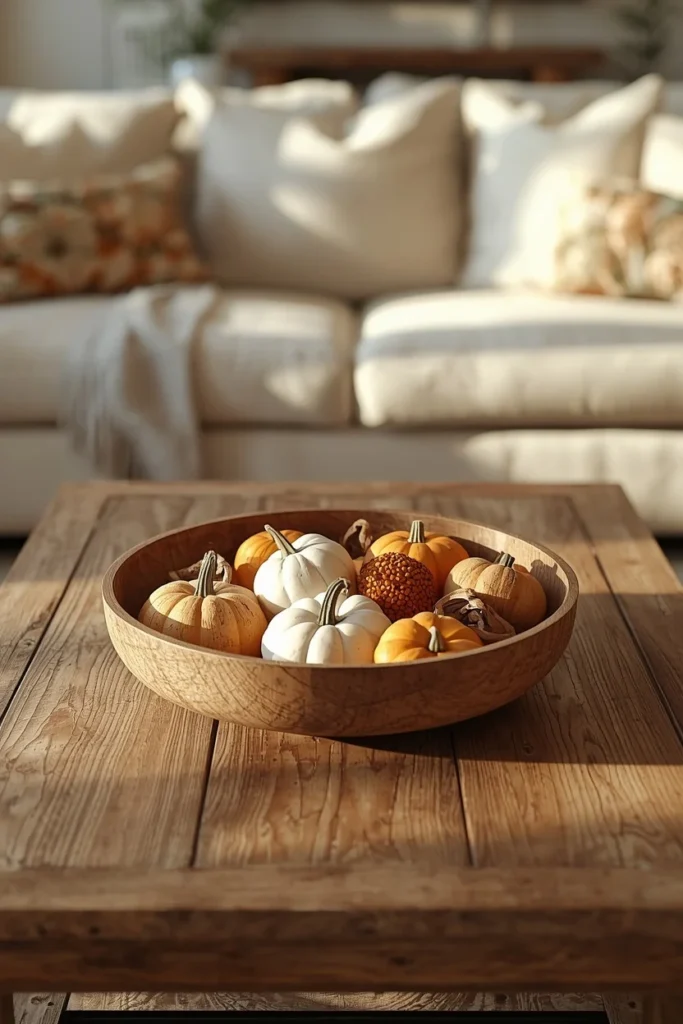
An oval or rectangular dough bowl filled with a mix of mini pumpkins, dried corn, and a few cinnamon sticks makes a single-object centerpiece that spans a good portion of a long table without requiring multiple separate groupings. The rustic, worn texture of a reclaimed wood bowl brings visual weight to the middle of the table, which balances out lighter accents like a candle or vase on either end. This idea works especially well if you like the collected, vintage-farmhouse look that’s been trending for fall, since the bowl itself often has natural imperfections that read as history rather than flaws. Fill the bowl generously but leave a little breathing room between items so each piece is still visible instead of blending into a pile. Because the bowl does most of the visual work on its own, you can keep the rest of the table almost bare and the styling will still feel complete.
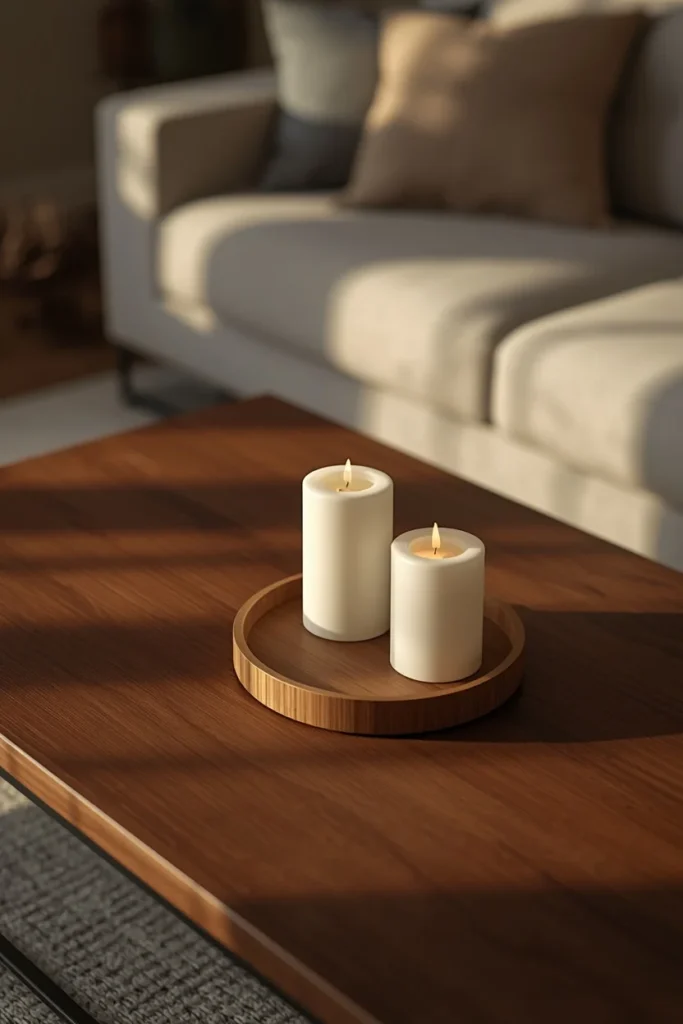
Idea 11: A Trio of Flameless Pillar Candles
Three flameless pillar candles in graduated heights, grouped on a small tray or directly on the tabletop, create a soft glow that reads as cozy without any fire risk around kids or pets. Choose warm ivory or taupe candles rather than stark white, since the slightly off-white tone feels more autumnal and blends with wood and linen textures already in the room. Set them on a small round or square tray to contain the wax drips and give the grouping a defined edge, then place that tray toward one end of the rectangle table. Flameless candles with a built-in flicker setting look convincing in photos and can stay lit for hours during evening gatherings without anyone needing to remember to blow them out. This is one of the simplest ideas on this list to execute, since it requires no seasonal shopping trip if you already own basic candle decor.
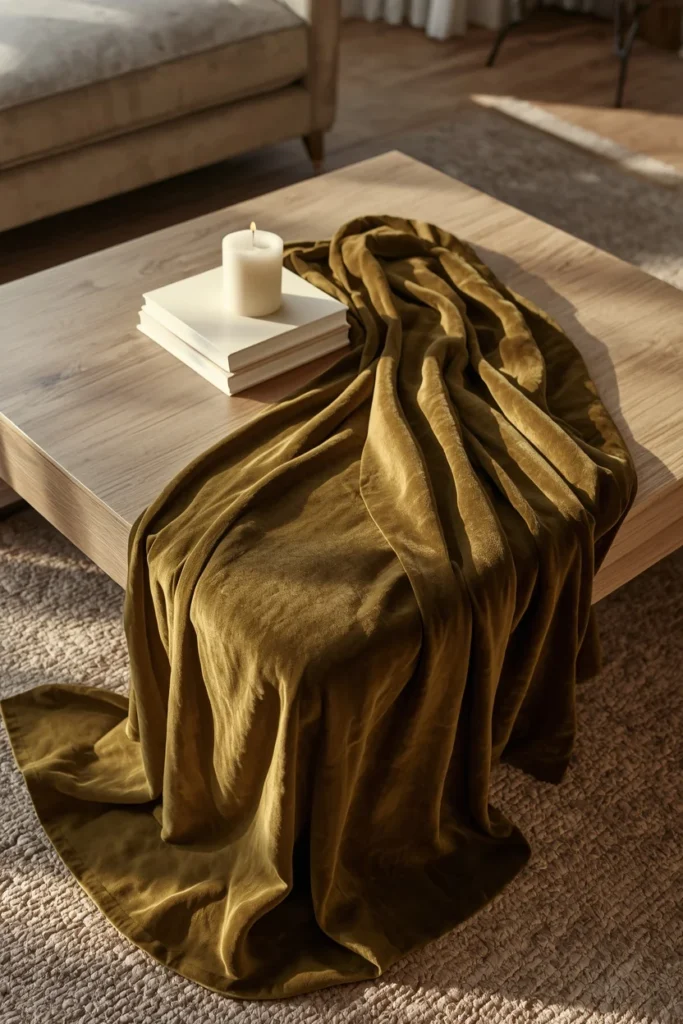
Idea 12: A Draped Velvet Throw Corner
Draping a velvet throw blanket over one corner of the coffee table, rather than folding it neatly on the sofa, brings in fall’s biggest texture trend while also softening the hard edges of a rectangle tabletop. Choose a rich jewel tone like deep olive, burgundy, or burnt umber, since velvet’s sheen shows up best in saturated colors rather than pale neutrals. Let the fabric puddle slightly rather than draping it in a perfectly straight line, which gives the styling a relaxed, lived-in feel instead of looking staged. Add one small object on top of the folded section, like a candle or a stack of two books, to anchor the fabric so it doesn’t shift every time someone walks by. This idea is particularly useful if you want a fall update that doesn’t involve buying anything new, since a throw blanket you already own can double as tabletop styling.
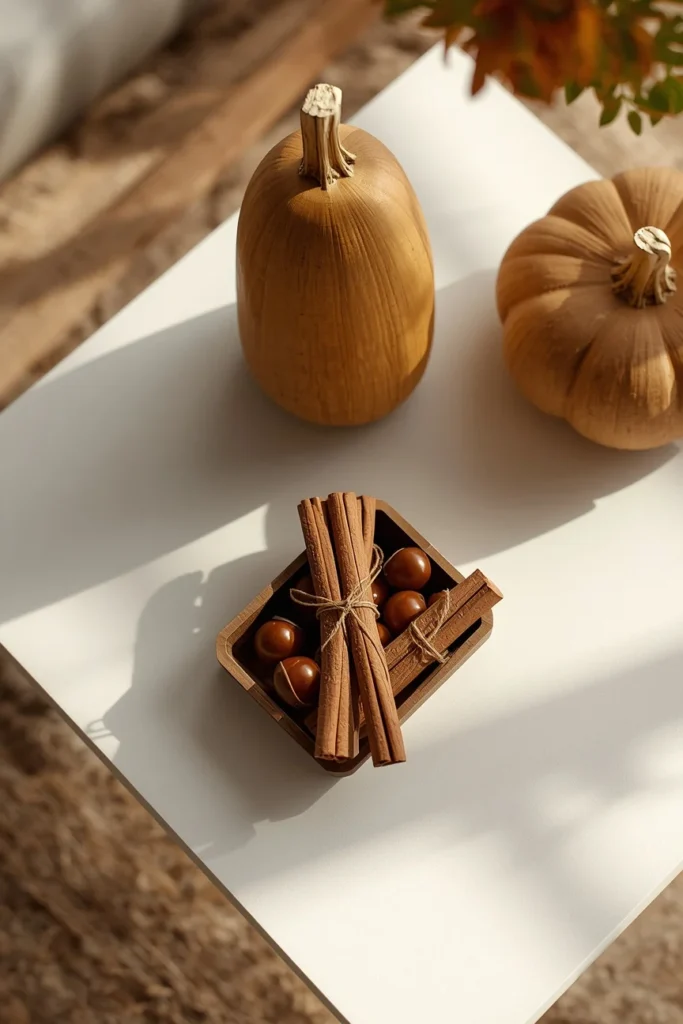
Idea 13: Cinnamon Stick and Acorn Bundles
Small bundles of cinnamon sticks tied with twine, scattered alongside a handful of faux acorns in a shallow dish, bring in fall’s classic scent-adjacent visual cues without needing an actual candle or diffuser. This is a low-cost, low-commitment idea that works beautifully as a filler between larger styling elements, like tucking a bundle next to a taller vase or pumpkin grouping to fill an otherwise empty stretch of table. Use a shallow ceramic or wood dish to contain the acorns so they don’t roll across the table, especially important if you have pets or young children nearby. The warm cinnamon-brown tone of the sticks blends with almost any fall palette, whether you’re leaning traditional orange or a more neutral, modern scheme. Because the pieces are small, this idea works especially well as a finishing touch after your main centerpiece is already in place.
Idea 14: A Sculptural Ceramic Pumpkin Duo
Two oversized ceramic or stoneware pumpkins with a matte, textured glaze can replace an entire grouping of smaller decor pieces, since their scale alone gives the table presence. Choose pumpkins with sculptural stems or ribbed detailing rather than smooth, glossy finishes, which tend to look more like art objects than seasonal decorations. Place them slightly off-center and close together, letting one overlap the other’s shadow rather than lining them up perfectly straight. This idea is ideal for a design-forward or modern living room where you want fall styling that feels more like intentional home decor and less like a Halloween display. Because ceramic pumpkins are reusable year after year, this is also one of the better long-term investments on this list if you decorate for fall every season.
Idea 15: Coastal-Meets-Autumn Driftwood Styling
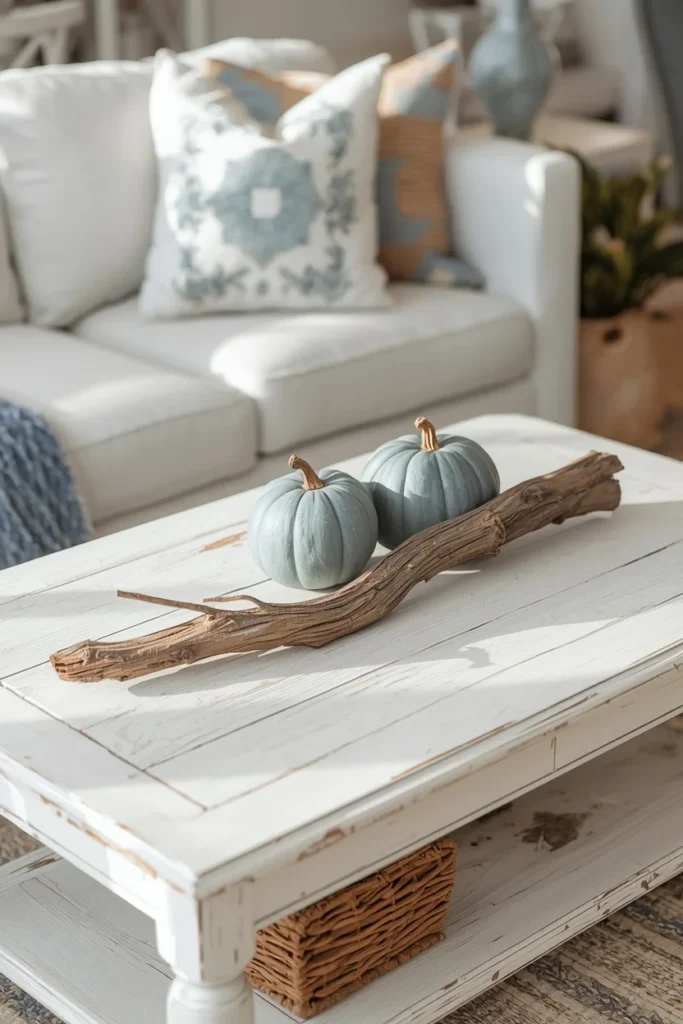
For living rooms that lean coastal year-round, a piece of driftwood laid horizontally across the table can anchor a fall look without abandoning that beachy foundation. Pair it with one or two white or blue-gray pumpkins and a small woven seagrass basket, keeping the palette light and sandy rather than deep orange and burgundy. This blend works because driftwood already has the organic, weathered texture that fall styling leans on, so it doesn’t feel out of place next to seasonal gourds. Place the driftwood along the length of the table rather than across it, since this echoes the table’s own rectangular shape and keeps the arrangement from looking random. This is a smart option if your home decor identity is more “beach house” than “farmhouse” but you still want to acknowledge the season.
Idea 16: A Seasonal Fruit and Gourd Bowl
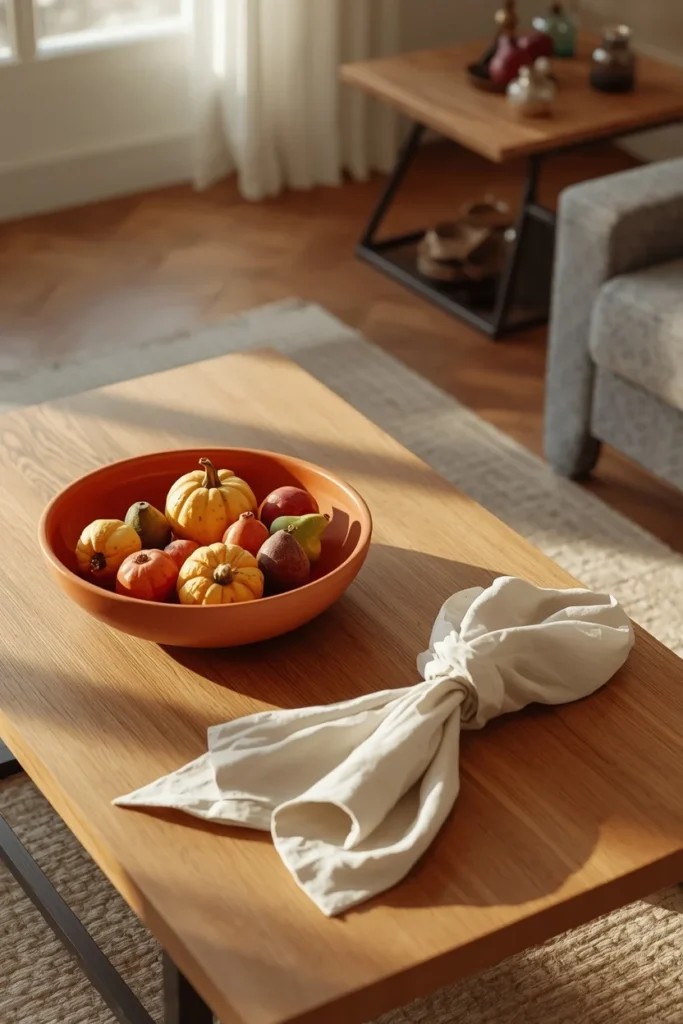
A wide, shallow bowl filled with a mix of small gourds, pomegranates, and a few pears brings in real, edible color that feels fresh rather than purely decorative. This idea doubles as a functional centerpiece, since guests can genuinely help themselves to the fruit during a fall gathering, which adds a layer of hospitality that purely ornamental decor doesn’t. Choose a bowl in a warm material like terracotta, wood, or aged brass so it doesn’t compete with the mixed colors of the fruit and gourds inside it. Place the bowl at one end of the table and keep the other end simpler, maybe just a folded linen napkin or a small candle, so the eye has a clear resting point. This is one of the more budget-conscious ideas here, since you likely already buy fall produce for cooking and can simply set some aside for styling.
Idea 17: A Fall Leaf Garland Runner With Votives
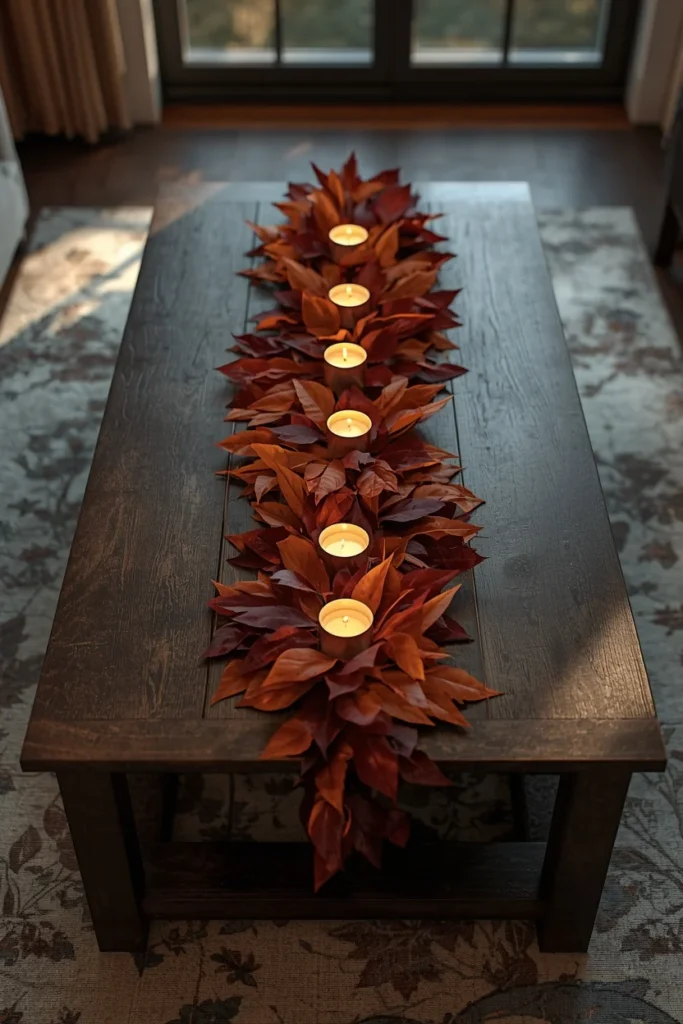
Instead of fabric, lay a faux fall leaf garland down the center of the table as your runner, letting the leaves trail slightly over one edge for a more natural, gathered look. Tuck small votive candles directly into the garland every few inches, which creates a warm, twinkling effect once the sun goes down and works especially well for evening gatherings or a cozy Thanksgiving-adjacent dinner setup. Keep the leaf tones in your existing palette — burgundy and olive for a richer look, or amber and gold for something brighter — so the garland doesn’t clash with your pumpkins or throw pillows elsewhere in the room. This idea is particularly striking in photos because the varied leaf shapes and candle glow add texture and light in a single continuous line down the table. It also tends to be a crowd favorite for hosting, since guests notice the detail immediately when they walk into the room.
Styling Tips
- Work in zones. Because a rectangle table is long, split it into two or three grouped areas instead of one central pile — this is the single biggest difference between rectangle and round table styling.
- Mix heights within each grouping. A tall vase or pumpkin next to a low candle or book stack creates the kind of visual rhythm that keeps a long tabletop from looking flat.
- Anchor loose items. Trays, runners, and dough bowls give scattered pieces like mini pumpkins and acorns a defined boundary, which keeps the table looking tidy even with several small objects on it.
- Let one end breathe. A completely full tabletop reads as cluttered, so leave at least one section — usually the end closest to where people sit — mostly clear.
- Repeat one material or color across zones. If you use amber glass on one end, echo that tone somewhere on the other end so the two groupings feel connected rather than random.
Practical Implementation Ideas
- Start with what you already own. Books, candles, and a throw blanket can carry most of the look before you add a single pumpkin.
- Shop your own house first. A vase from the bedroom or a bowl from the kitchen can become fall decor with the right contents.
- Buy pumpkins in odd numbers. Groupings of three photograph and style better than pairs, which can look accidentally symmetrical in a way that feels stiff.
- Test the layout before committing. Arrange everything on the floor first, since it’s faster to adjust a flat-lay than to keep re-styling directly on the table.
- Refresh in stages. Swap the runner or throw color first, then add pumpkins and candles a week or two later if you want the update to feel gradual rather than all at once.
Common Mistakes to Avoid
- Centering everything in one pile. This is the most common rectangle-table mistake, and it leaves both ends of the table looking bare and unfinished.
- Using round trays on a long table. A round or square tray on a rectangle table often leaves awkward gaps on either side; stick with rectangular or oval shapes when possible.
- Overloading with too many pumpkin sizes and colors. Two colors and two or three sizes is plenty — more than that starts to look like a farm stand instead of a living room.
- Skipping height variation. A table styled entirely with low, flat objects (books, trays, small bowls) looks one-dimensional in person and in photos.
- Forgetting function. If the table is used daily for coffee mugs, remotes, or homework, decor that takes up the whole surface will get moved or knocked over within a day.
Small-Space Alternatives
For a narrower rectangle table, scale everything down rather than skipping decor entirely. Use two mini pumpkins instead of three full-size ones, a bud vase instead of a large arrangement, and a single votive instead of a candle trio. One well-placed grouping toward one end, with the rest of the table left clear for actual use, will look more intentional than a small-scale attempt to recreate a full spread. A slim wooden tray about 12 inches long is usually enough of an anchor even on a compact table.
Budget-Friendly Alternatives
Real produce — small pumpkins, gourds, and pears from a grocery store or farmers market — costs far less than styled faux versions and looks just as good for the six to eight weeks fall decor typically stays out. Dried hydrangeas can often be cut from a garden or bought as a single large bunch and divided across two or three small vases. A plaid scarf or flannel shirt, folded and draped like a runner, works just as well as a purchased table runner. Secondhand stores are also a reliable source for ceramic bowls, brass candlesticks, and books with seasonal-toned spines, often for a fraction of retail price.
Pro Styling Recommendations
Professional stylists tend to build a coffee table the same way they’d build a bookshelf: establish a base layer (tray, runner, or bowl), add a height element (vase, stack of books, or tall pumpkin), then finish with one or two small, low accents (candle, acorns, mini pumpkin). Repeating this three-layer structure in each zone of a rectangle table keeps the whole surface visually consistent even when the individual objects change from one grouping to the next. It’s also worth photographing your table from a few different angles once it’s styled, since a straight-on shot and an overhead shot often reveal different problems — usually either a gap that needs filling or an area that’s slightly too full.
FAQs
Conclusion
A rectangle coffee table doesn’t need less decor than a round one — it just needs decor that respects its shape. Once you start thinking in zones instead of one central pile, fall styling stops feeling like a puzzle and starts feeling like something you can put together in a few minutes with pieces you probably already have. Pick two or three ideas from this list, build them in layers, and leave enough open space for the table to still do its job. That balance is what makes a coffee table feel finished instead of just full.