21 Winter Cabin Exterior Ideas That Look Like a Cozy Dream in the Snow
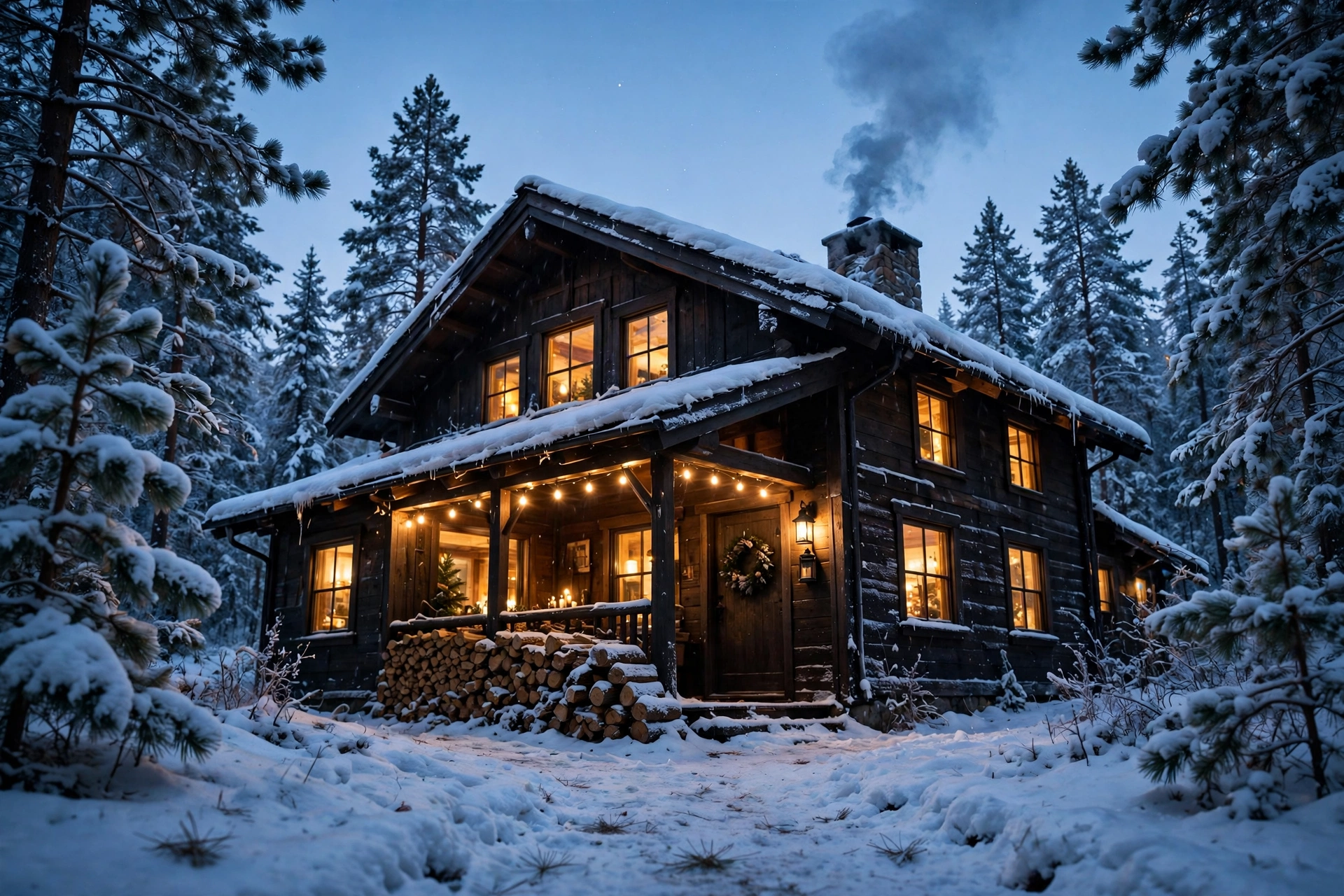
There’s something about a cabin covered in fresh snow that feels almost impossibly cozy, even from the outside looking in. Maybe it’s the warm light glowing through a frosted window, or the smoke curling up from a stone chimney against a gray winter sky. Whatever it is, that snowy cabin look has become one of the most saved aesthetics on Pinterest, and for good reason.
Below are 21 real ways to bring that feeling to life, whether you’re designing a brand-new cabin from scratch, updating an existing one, or just gathering ideas for your dream winter escape. Each idea covers the specific materials, colors, and styling details that make it work, from black-stained timber siding to firewood stacked just so by the front door. Consider this your full blueprint for a cabin exterior that looks like a cozy dream every time the snow starts to fall.
Table of Contents
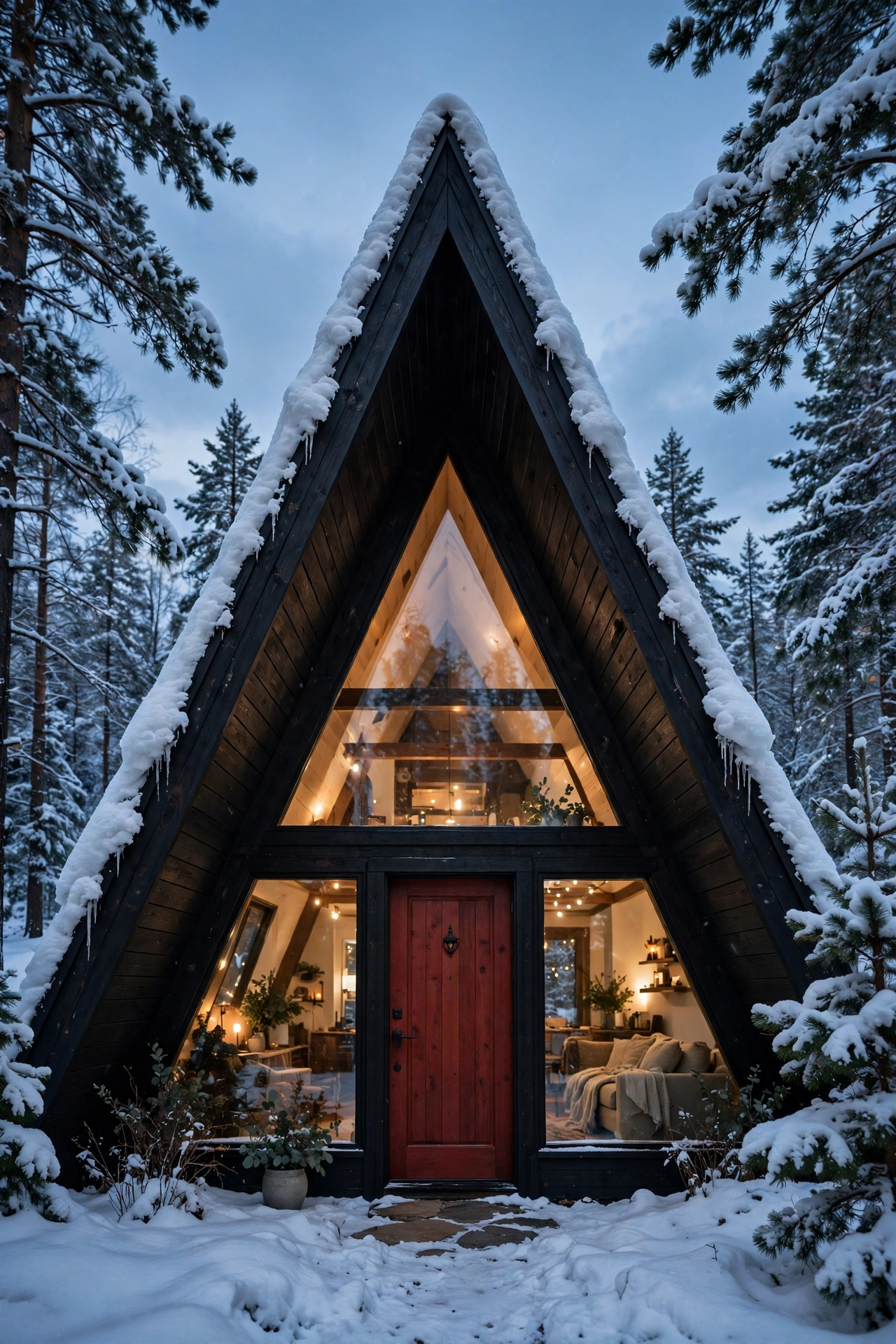
Black-Stained A-Frame Against the Snow
There’s a reason the black-stained A-frame keeps showing up in every winter cabin roundup: the steep, symmetrical roofline naturally sheds snow, and the near-black exterior creates such strong contrast against a white landscape that the whole structure looks like a graphic illustration. A dark iron-oxide or charcoal stain works better than paint here, since it lets the wood grain still show through instead of sitting flat on the surface. Large triangular windows across the front elevation let warm interior light spill out at dusk, which is really what sells the coziness from the outside. A single wood or steel front door in a warm tone, left unstained or in a deep red, keeps the entrance from disappearing into all that dark cladding. This look works best on a simple, uncluttered lot, since the drama comes from the silhouette, not from a lot of extra landscaping.
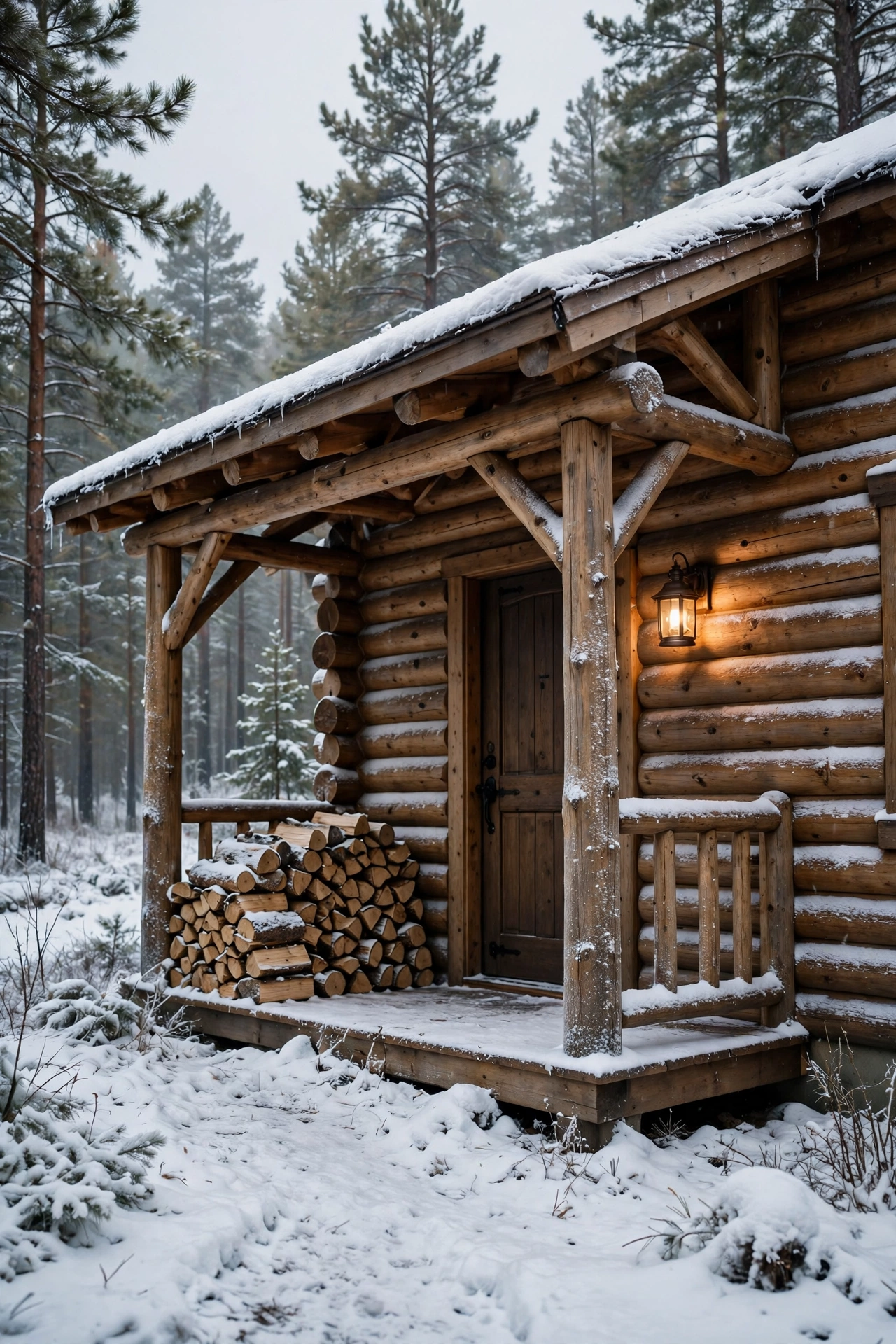
Classic Log Cabin with a Stacked Firewood Entry
Nothing signals “cozy winter retreat” faster than a traditional round-log cabin with a neatly stacked pile of firewood right by the front door. The horizontal log construction itself adds so much texture and shadow detail once snow settles into every groove, which is exactly what makes this style photograph so well. A covered front porch with simple timber posts protects both the entry and the firewood from direct snowfall, keeping the wood dry and usable all season. Hanging a single lantern or an oil-rubbed bronze sconce beside the door adds warmth without looking fussy. This look works on cabins of almost any size, though it reads most authentically on smaller, one-and-a-half story builds that echo the original homestead cabins this style is based on.
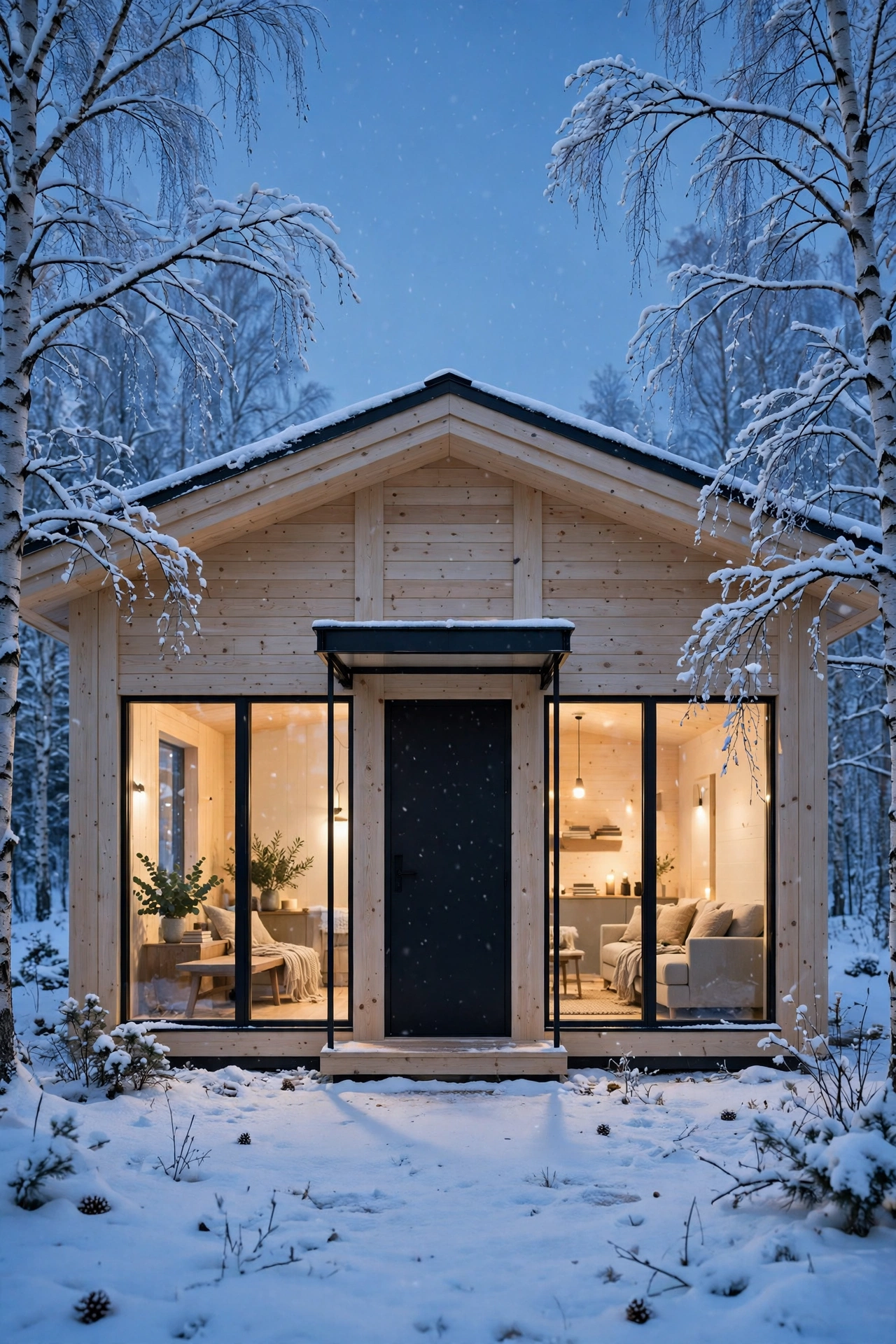
Scandinavian Minimalist Timber Cabin
Scandinavian cabin design strips away almost everything unnecessary, leaving just clean timber cladding, a simple gable roof, and large unadorned windows that frame the snowy landscape like artwork. Wood is usually left in its natural tone or given a very light gray wash rather than a heavy stain, which lets it age gracefully and blend into the surrounding birch and pine trees over time. There’s no applied trim or decorative detail here; the beauty comes entirely from proportion and material honesty. A minimal steel entry canopy or a slim overhang protects the door without breaking the clean lines of the facade. This style suits homeowners who want that cozy cabin feeling without any rustic clutter, since the warmth here comes purely from the wood tone and the glow of the windows at night.
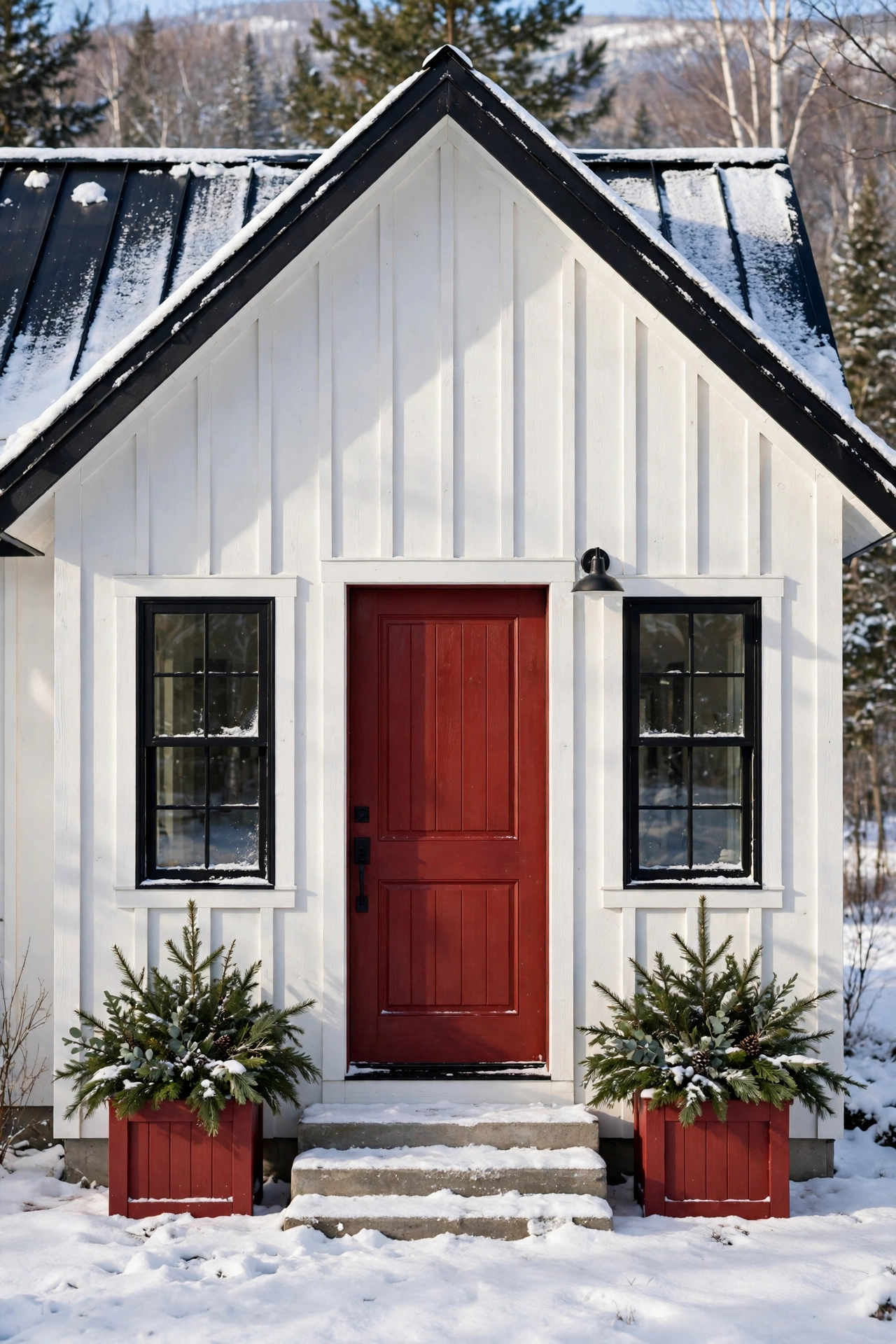
Board-and-Batten Cabin with a Red Front Door
A simple white or cream board-and-batten cabin gets an instant dose of cheer from a single barn-red front door, a combination that feels equal parts classic New England and modern farmhouse. The vertical batten lines create nice shadow detail once snow starts to collect along the roof edge and window sills. Black window frames and a black metal roof keep the palette tight, so the red door remains the one true pop of color on the whole facade. A pair of matching red planters, left empty or filled with dried evergreen branches in winter, echoes the door color and frames the entry symmetrically. This combination works especially well on smaller cabins, since the bright white body keeps the structure from feeling visually heavy against a snowy backdrop.
Cedar Shingle Cabin Under a Snow-Capped Roof
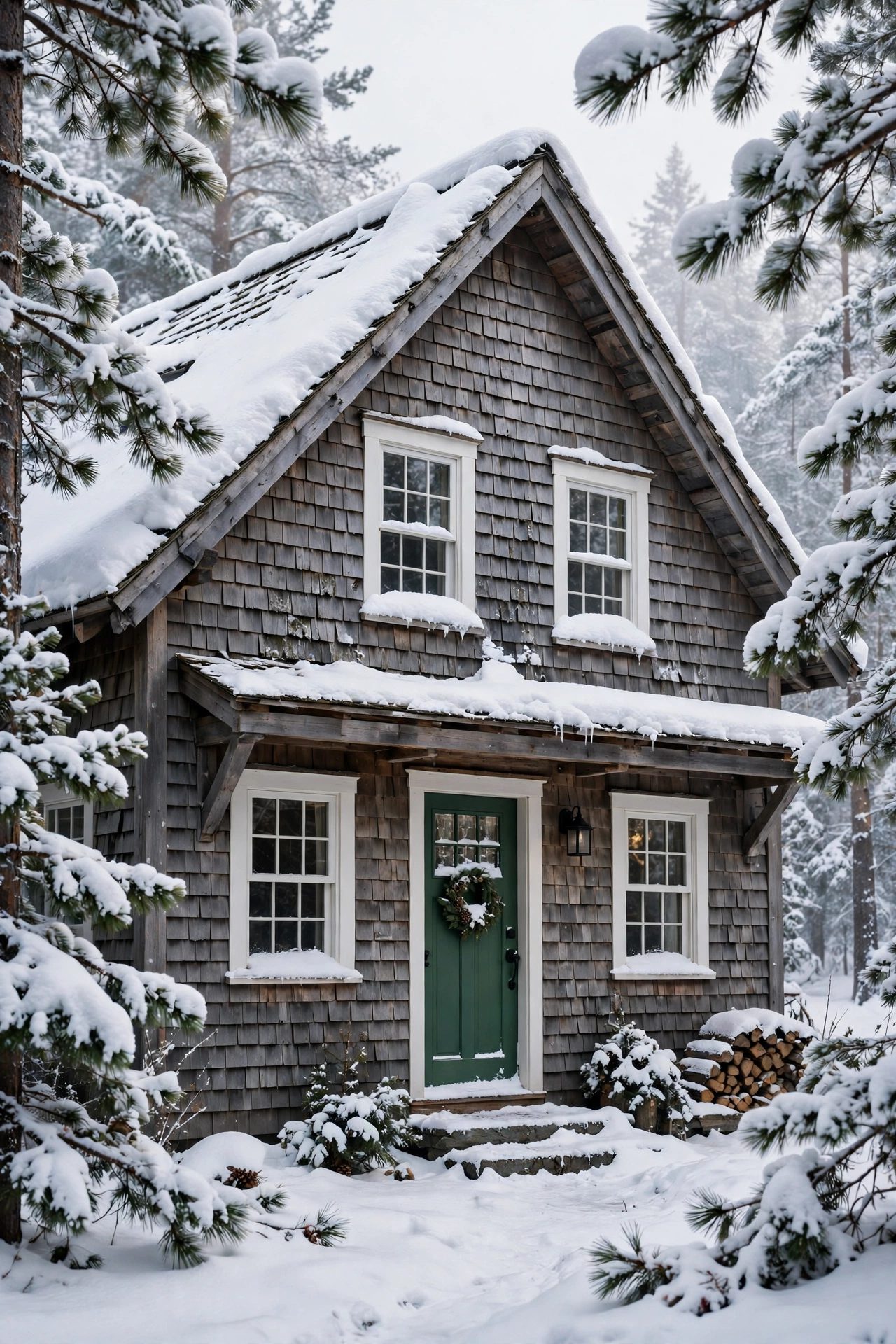
Cedar shingle siding brings a soft, textured warmth to a winter cabin that flat siding just can’t match, especially once the weathered gray shingles are topped with a thick cap of fresh snow along every roofline and window ledge. Left unstained, cedar shingles silver naturally over time, which only adds more character and depth to the exterior with each passing winter. White trim around the windows keeps the architecture readable against the muted shingle tone, while a forest-green front door nods to the surrounding pines without competing with the natural material palette. This style is especially popular on coastal New England and Pacific Northwest cabins, where cedar is both a regional building tradition and a practical choice for standing up to harsh winter weather.
Stone-and-Timber Mountain Chalet
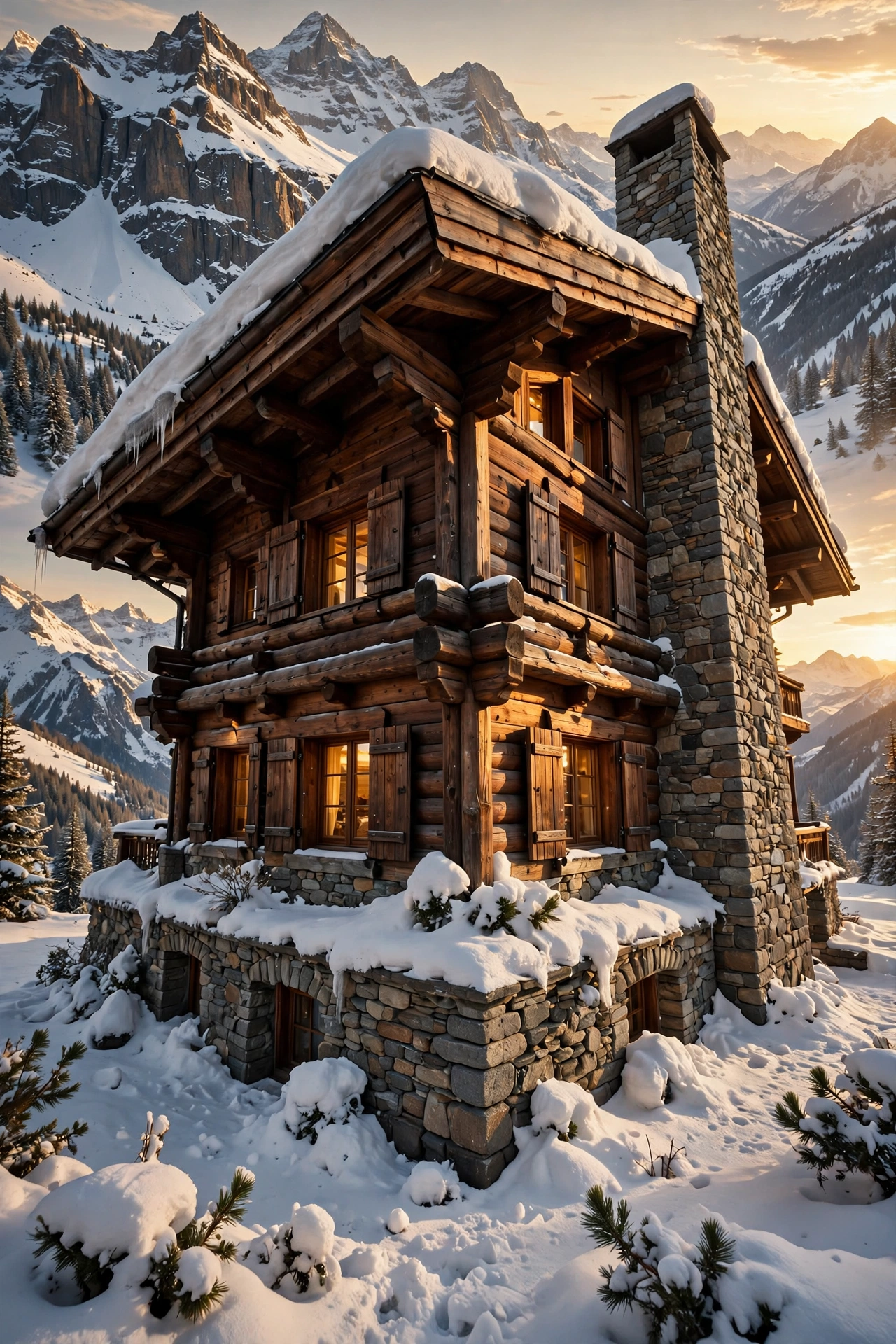
Pairing a solid stone base with timber cladding above creates a grounded, substantial look that feels right at home in a mountain setting, especially once snow settles into the mortar joints and timber grain alike. The stone typically wraps the lower level and any chimney, while heavy timber beams and cladding take over the upper story and roof structure. Deep-set windows with wood shutters add another layer of shadow and texture, echoing traditional alpine chalet architecture. A steeply pitched roof with generous overhangs isn’t just decorative here; it’s functional, helping shed heavy snow loads away from the walls and windows below. This combination works beautifully on larger cabins or full-size mountain homes, where there’s enough architectural scale for both materials to feel intentional rather than competing with each other.
Wraparound Porch Cabin with Rocking Chairs
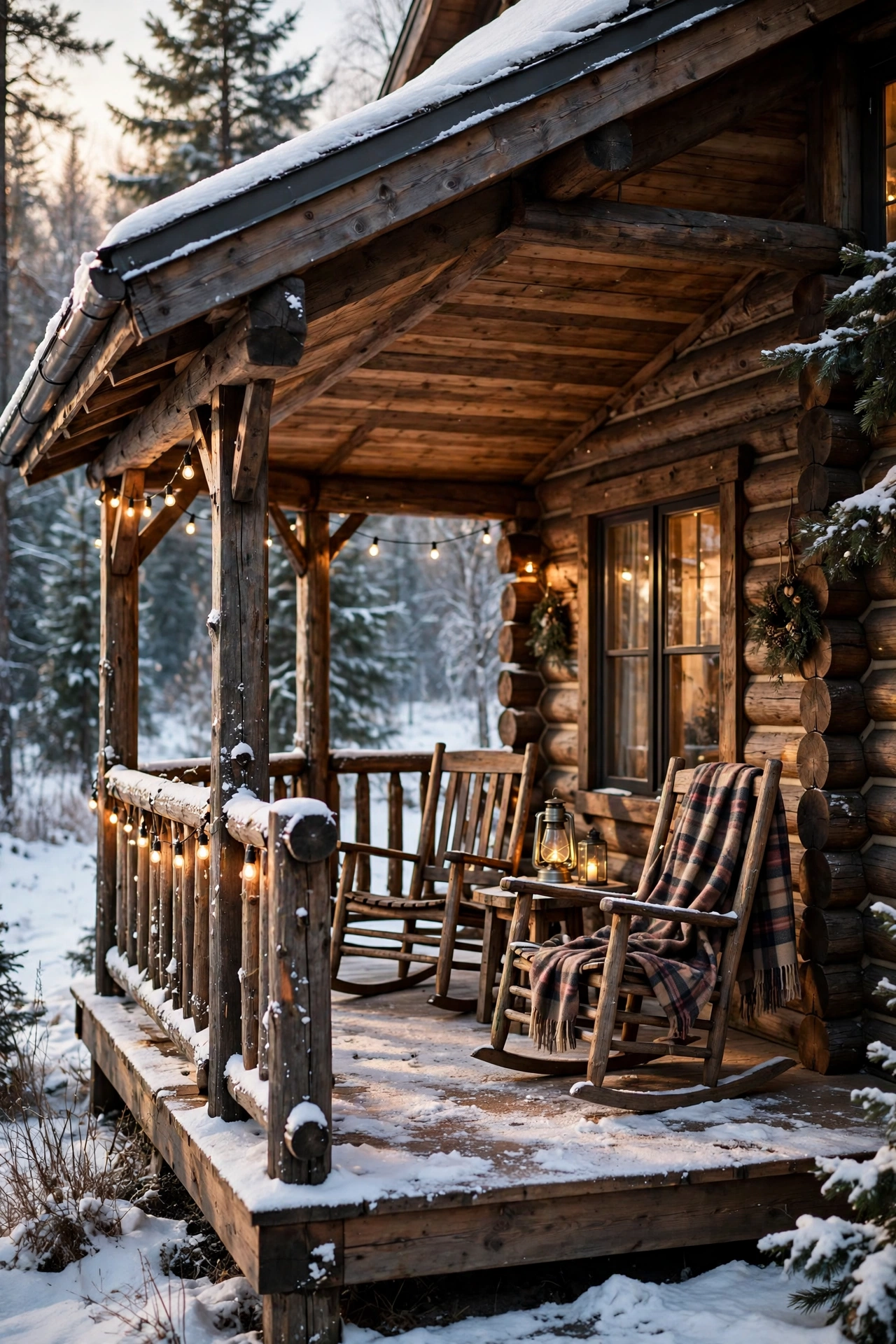
A wraparound porch turns a cabin exterior into an actual living space, even in winter, and styling it with a couple of rocking chairs and a small side table instantly signals that this is a place meant for slowing down. Simple timber porch railings and support posts keep the structure from feeling too refined, while a wood-plank ceiling overhead adds warmth even on the coldest, grayest days. Draping a wool blanket over the arm of one rocking chair suggests someone was just out there enjoying the view, which is exactly the lived-in feeling this look is going for. String lights woven along the porch railing add a soft glow once the sun goes down, turning the whole porch into an extension of the cabin’s warmth rather than just an entry point.
Icicle-Light Draped Eaves Cottage
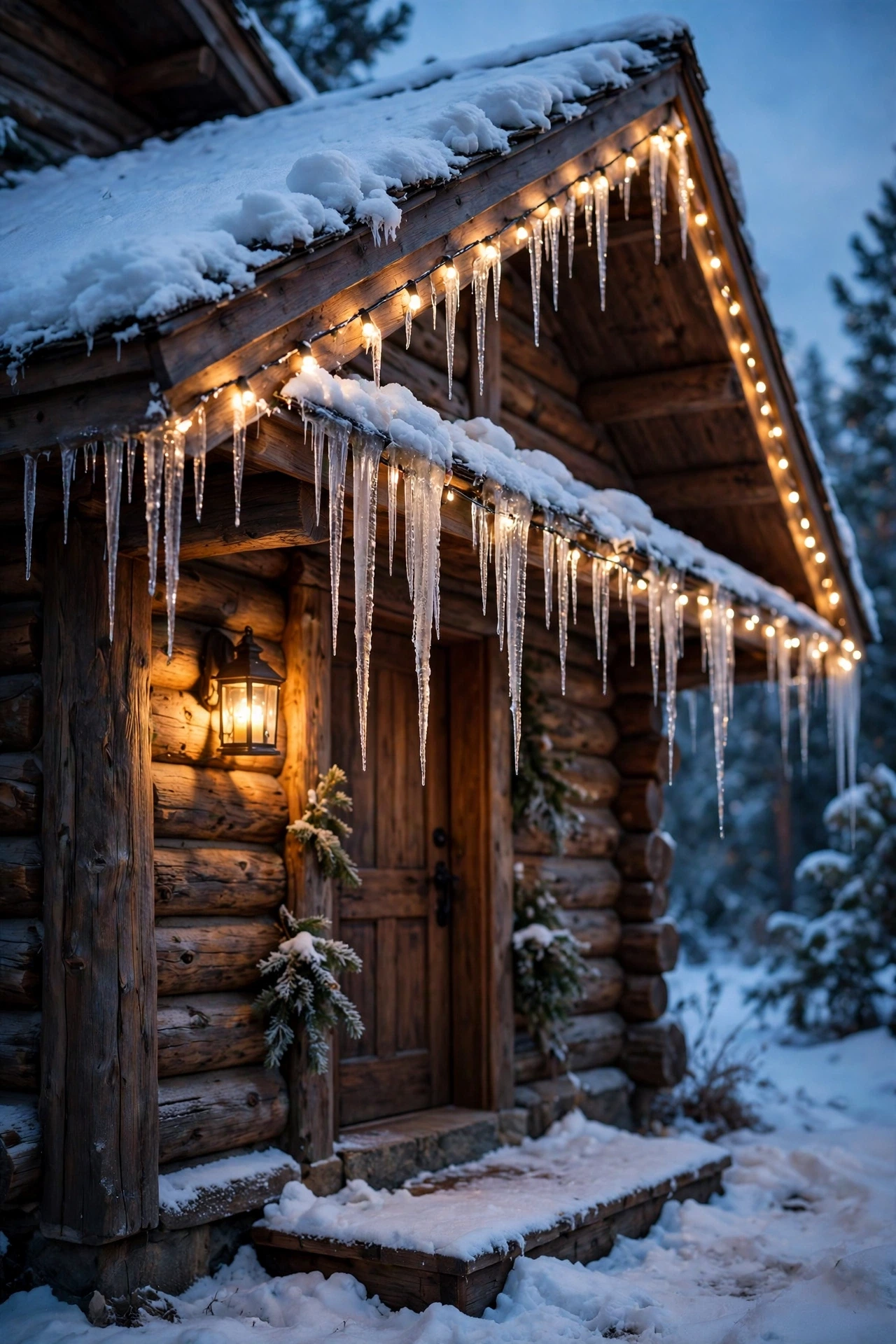
Hanging warm-white icicle lights along the eaves of a cabin creates a soft, glowing edge to the entire roofline once evening falls, and against real icicles or fresh snowfall, the effect looks almost identical to the real thing. Using light clips instead of nails keeps older or more brittle wood eaves from getting damaged during installation. LED strands are worth the extra cost here, since they run cooler and use far less power than older incandescent icicle lights, which matters if you’re planning to leave them on for hours each evening. Pairing the icicle lights with a single warm porch lantern, rather than additional colored lights, keeps the whole look cohesive and elegant instead of overly decorated. This is one of the simplest, most affordable ways to transform any cabin’s winter curb appeal in a single afternoon.
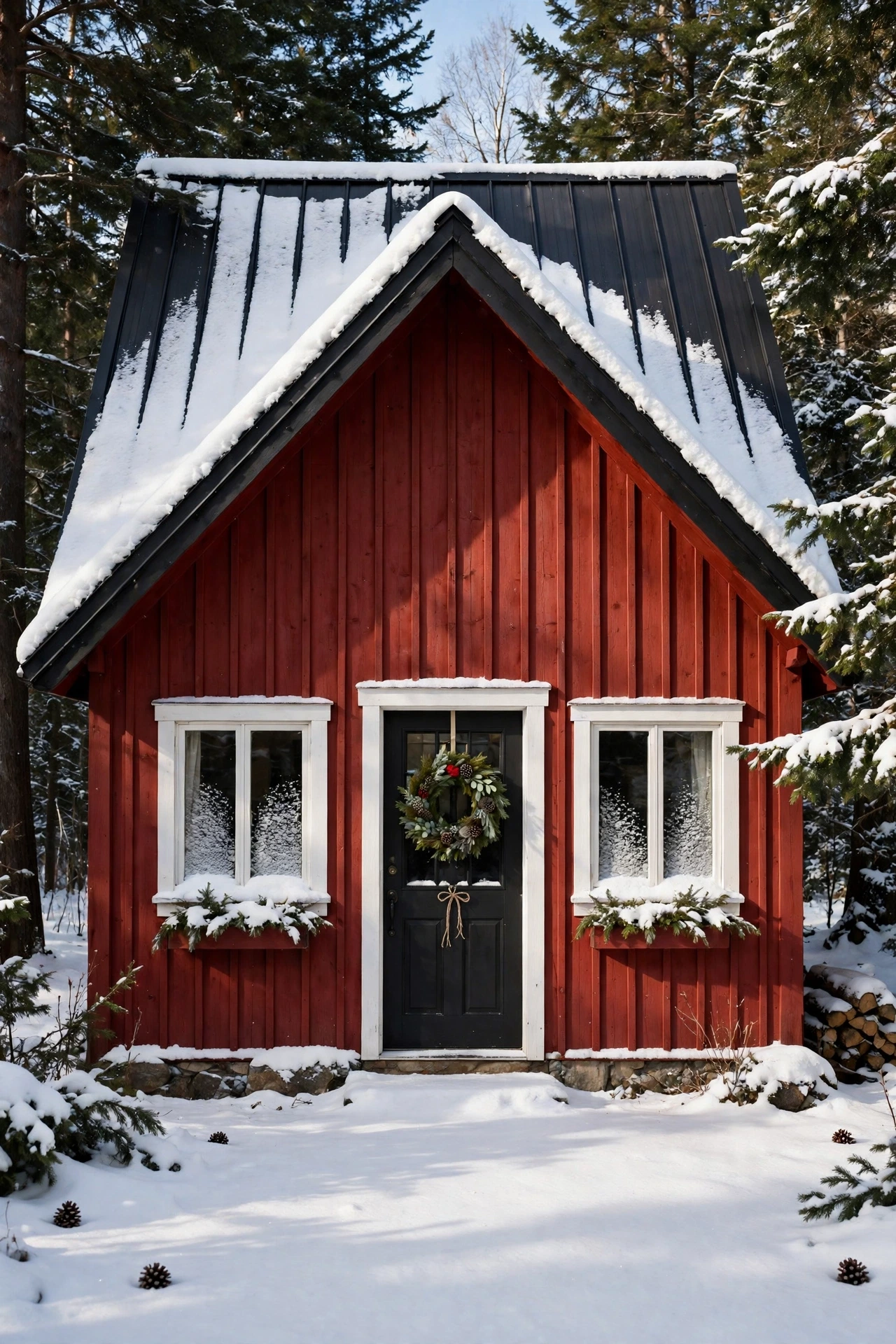
Barn-Red Cabin in the Snow
A deep barn-red exterior brings serious warmth and personality to a snowy scene, standing out against white drifts in a way that feels nostalgic rather than trendy. This color works especially well on simple gable-roofed cabins with a classic silhouette, since the strong color needs clean architectural lines to read as intentional rather than busy. White trim around the windows and doors keeps the red from feeling overwhelming and echoes traditional New England farmhouse and barn styling. A black metal roof completes the look while also helping shed snow more efficiently than asphalt shingles. This combination tends to photograph beautifully in every season, but it’s in winter, framed by white snow and dark evergreens, that the barn-red really earns its keep.
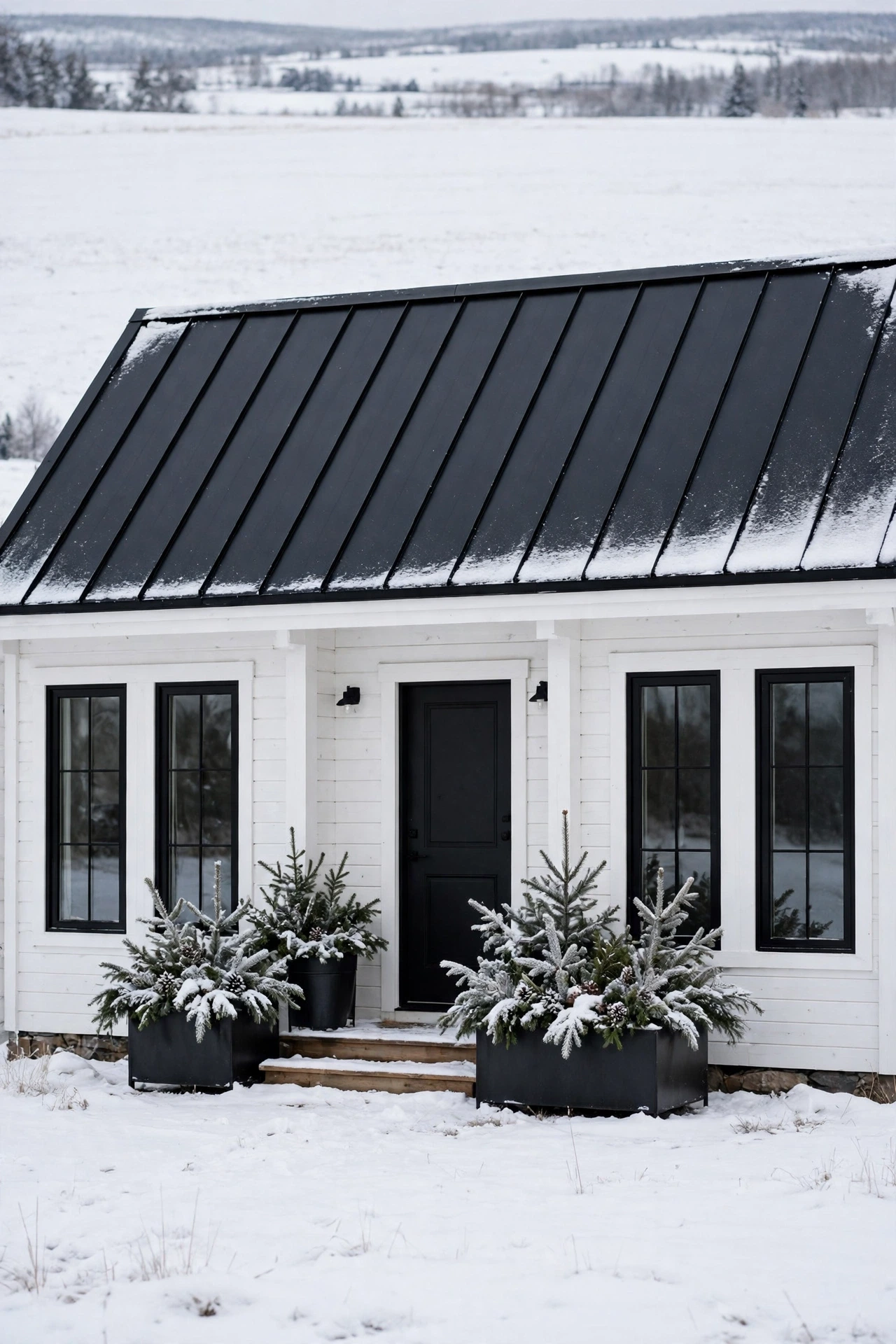
White Scandinavian Cabin with Black Trim
Flipping the usual dark cabin formula, a crisp white-painted timber cabin with black window frames and a black door creates a bright, almost graphic look that practically disappears into a snowy landscape from a distance, then reveals itself in sharp black-and-white detail up close. This palette works particularly well in open, snow-heavy regions where the cabin needs to stand out against an otherwise all-white scene rather than blend into dark forest. A black metal roof and black gutters continue the high-contrast theme without adding a third color into the mix. Keeping landscaping minimal, just a few well-placed evergreens in black metal planters, lets the architecture and the snow itself do most of the visual work. It’s a clean, modern take on the traditional snowy cabin look.
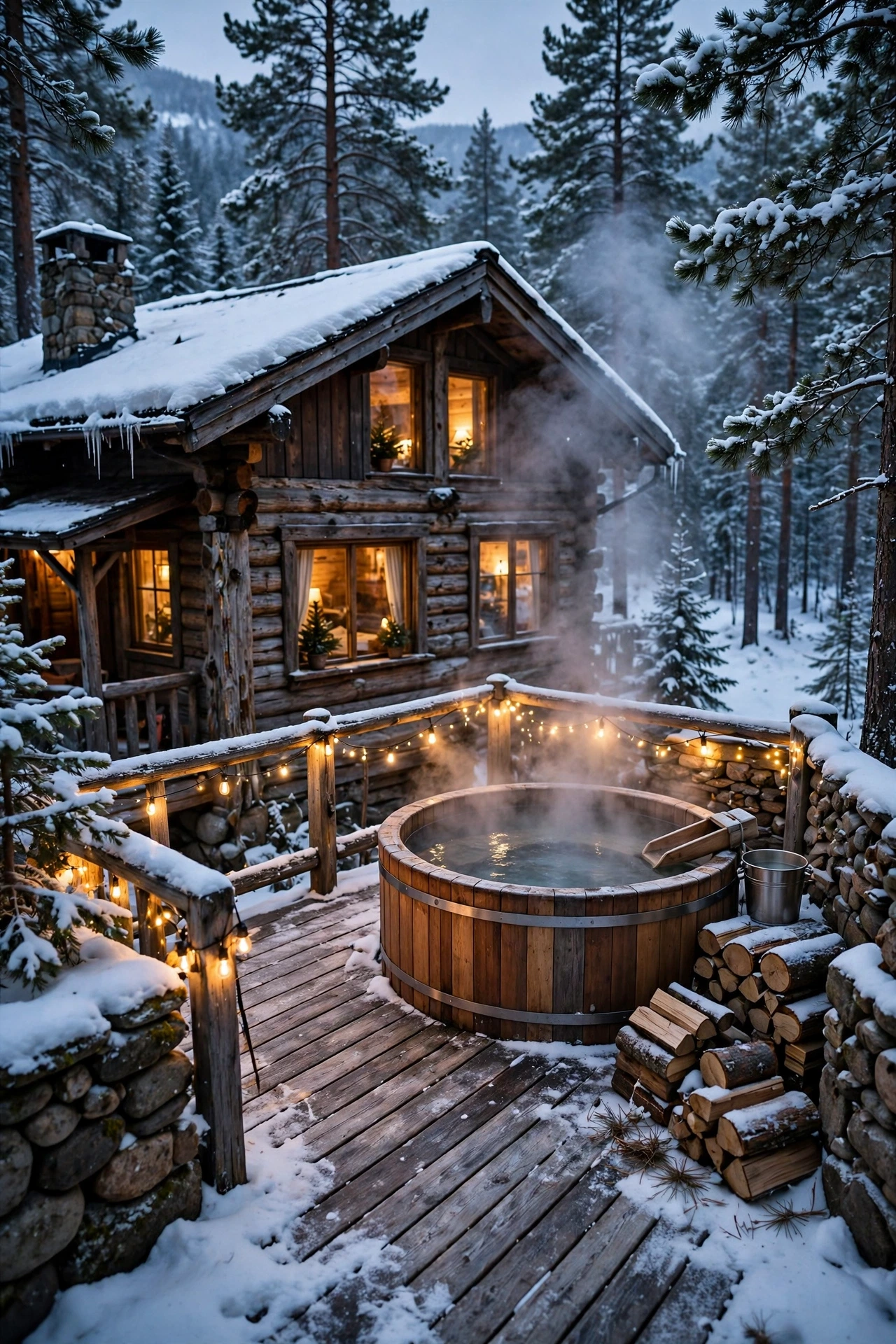
Rustic Cabin with a Wood-Fired Hot Tub Deck
Adding a wood-fired hot tub to a side deck instantly turns a winter cabin exterior into a full sensory experience, with steam rising off the water against the cold air and a small stack of firewood nearby to feed the tub’s fire. The deck itself works best in a simple, weathered wood, left unstained so it can silver naturally alongside the surrounding timber cladding. A low wood or stone privacy wall around part of the tub adds a sense of enclosure without blocking the forest view entirely. String lights or a couple of lanterns nearby extend the space into the evening, since a wood-fired tub is often at its best after dark, with steam catching the light. This feature works particularly well on cabins already leaning into a rustic, off-grid aesthetic, where the hot tub feels like a natural extension of the property rather than an added luxury.
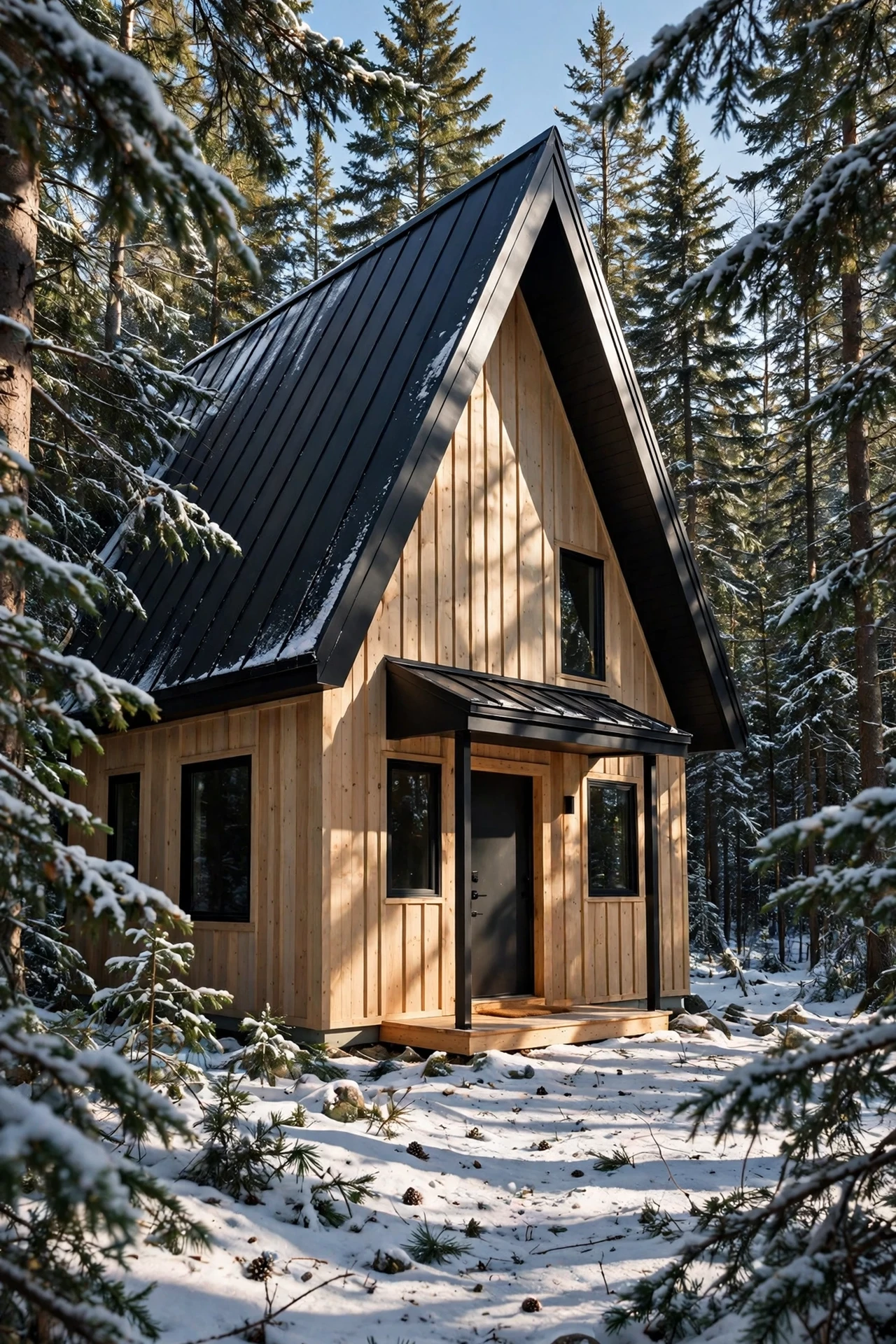
Modern Cabin with a Black Metal Roof
A sharp, modern cabin silhouette with a black standing-seam metal roof reads as both sleek and deeply practical in snow country, since metal roofing sheds snow far more efficiently than asphalt shingles and absorbs enough winter sun to help melt ice buildup along the ridge. Pairing the black roof with light-toned wood or board-and-batten siding creates a strong graphic contrast that photographs beautifully against evergreens. Minimal trim and simple, unadorned window frames keep the whole structure feeling contemporary rather than traditional. This look tends to show up most on newer-build cabins designed for year-round living rather than seasonal use, since the metal roof and clean detailing are built to perform through heavy winters, not just look good for one snowy photo.
Stone Chimney Cabin with Curling Smoke
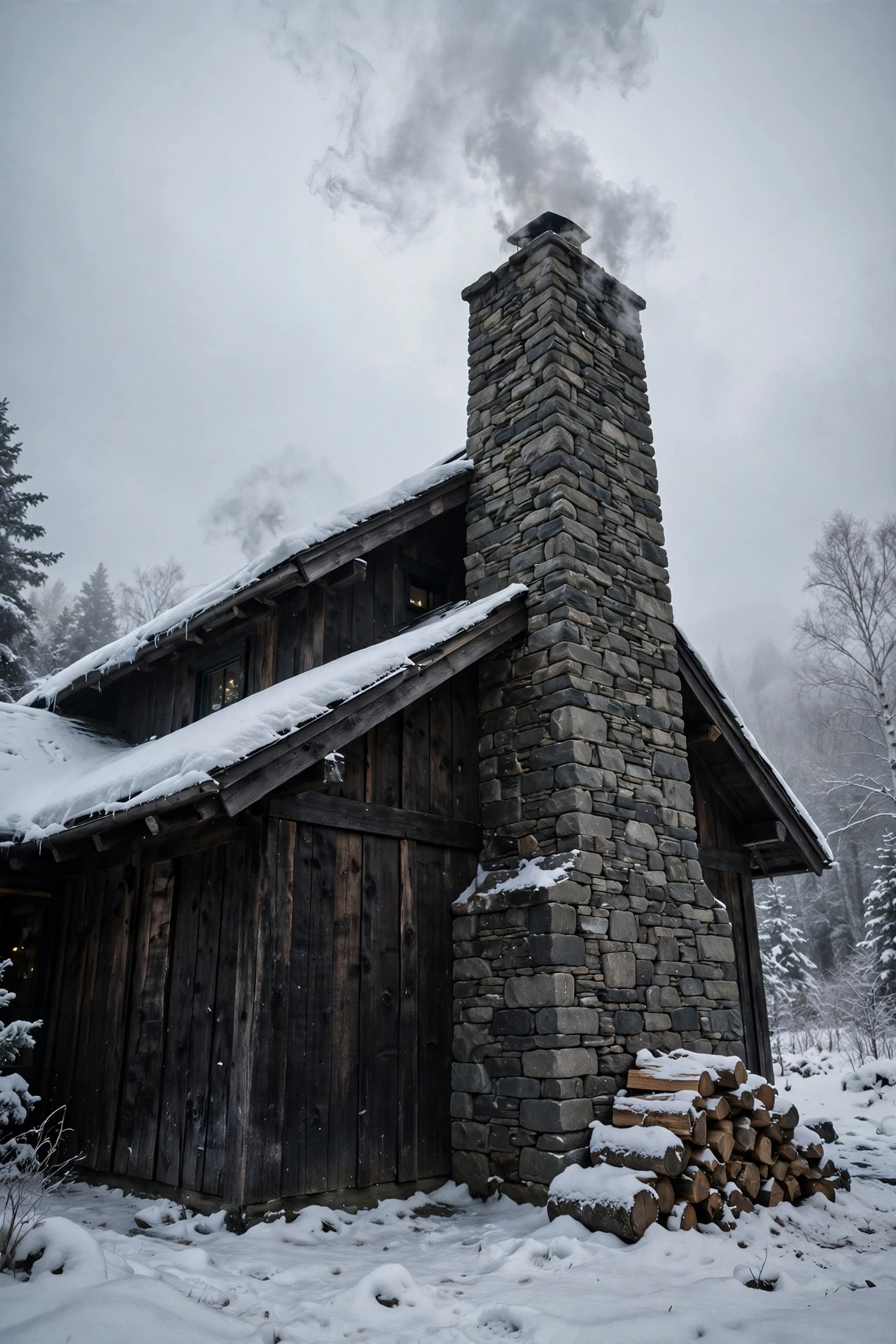
A tall stone chimney with real smoke curling up against a gray winter sky might be the single most recognizable image of a cozy cabin, and it’s worth designing the whole facade around that focal point if you can. The stone should run the full height of the exterior wall, not just poke above the roofline, so it reads as a substantial architectural feature rather than an afterthought. Pairing the stone with dark timber siding on the rest of the cabin lets the lighter stone texture stand out even more. A small stack of chopped wood at the chimney’s base suggests exactly what’s burning inside, tying the whole scene together. This detail alone, even added to an otherwise simple cabin, does more to create that “cozy dream in the snow” feeling than almost any other single design choice.
Gingerbread-Style Chalet with Carved Trim
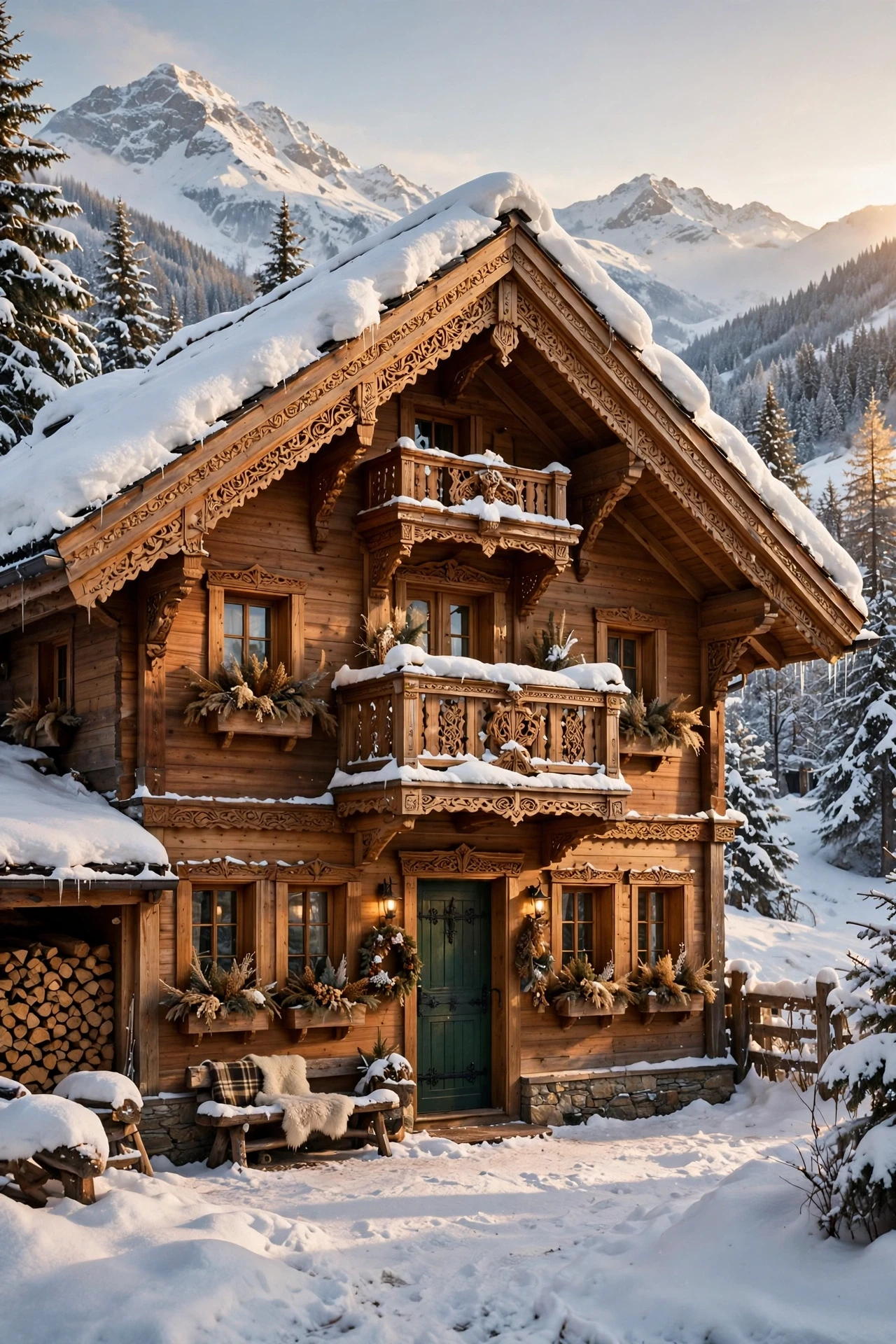
For a cabin that leans fully into old-world charm, carved wood trim along the roofline and window frames gives the whole structure a gingerbread-house quality, especially once snow settles into every decorative cutout. This style, rooted in traditional alpine chalet architecture, uses fretwork bargeboards along the gable ends and often a small carved balcony on the upper level. Warm wood tones throughout, rather than paint, let the craftsmanship of the trim stay the visual focus. Flower boxes under the windows, left empty or filled with dried greenery in winter, continue the tradition into the colder months. This look takes more building investment than a simple gable cabin, but it delivers a level of storybook charm that few other styles can match, especially photographed against a snowy backdrop.
Cabin with Wreath-Adorned Windows
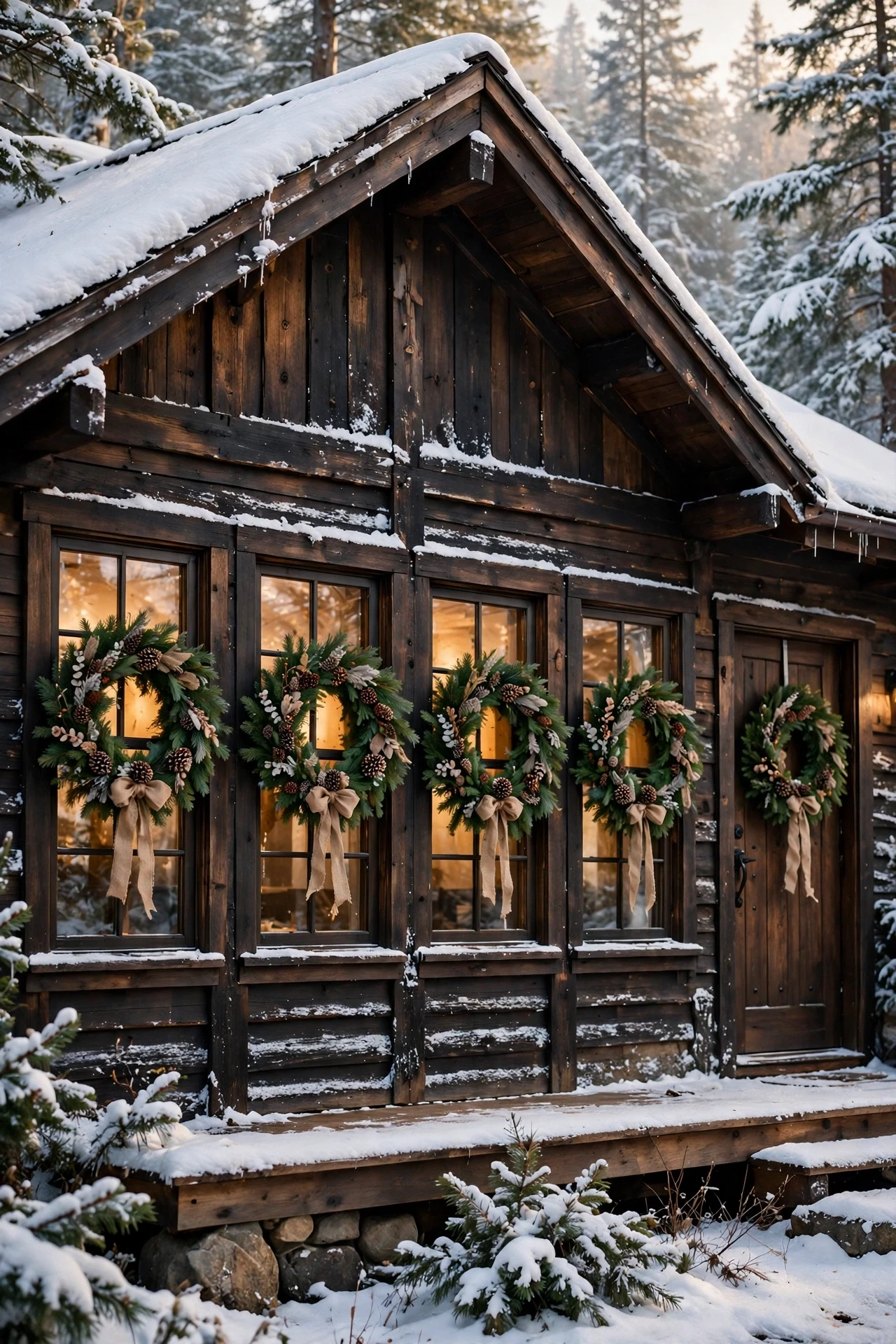
Hanging a simple evergreen wreath on every window, not just the front door, gives a cabin exterior a layered, cared-for feeling without requiring any major styling effort. Mixed greenery wreaths with pinecones and a plain linen or burlap ribbon feel far more natural and cabin-appropriate than anything glittery or overly polished. Keeping the ribbon color consistent across every wreath ties the whole facade together visually, even from a distance. This detail works on almost any cabin style, from a modern black A-frame to a traditional log cabin, since it’s really about repetition and simplicity rather than any specific architectural pairing. It’s also one of the easiest seasonal updates to remove come spring, making it a low-commitment way to test out a cozier winter look.
A-Frame with a Wall of Windows Facing the Forest
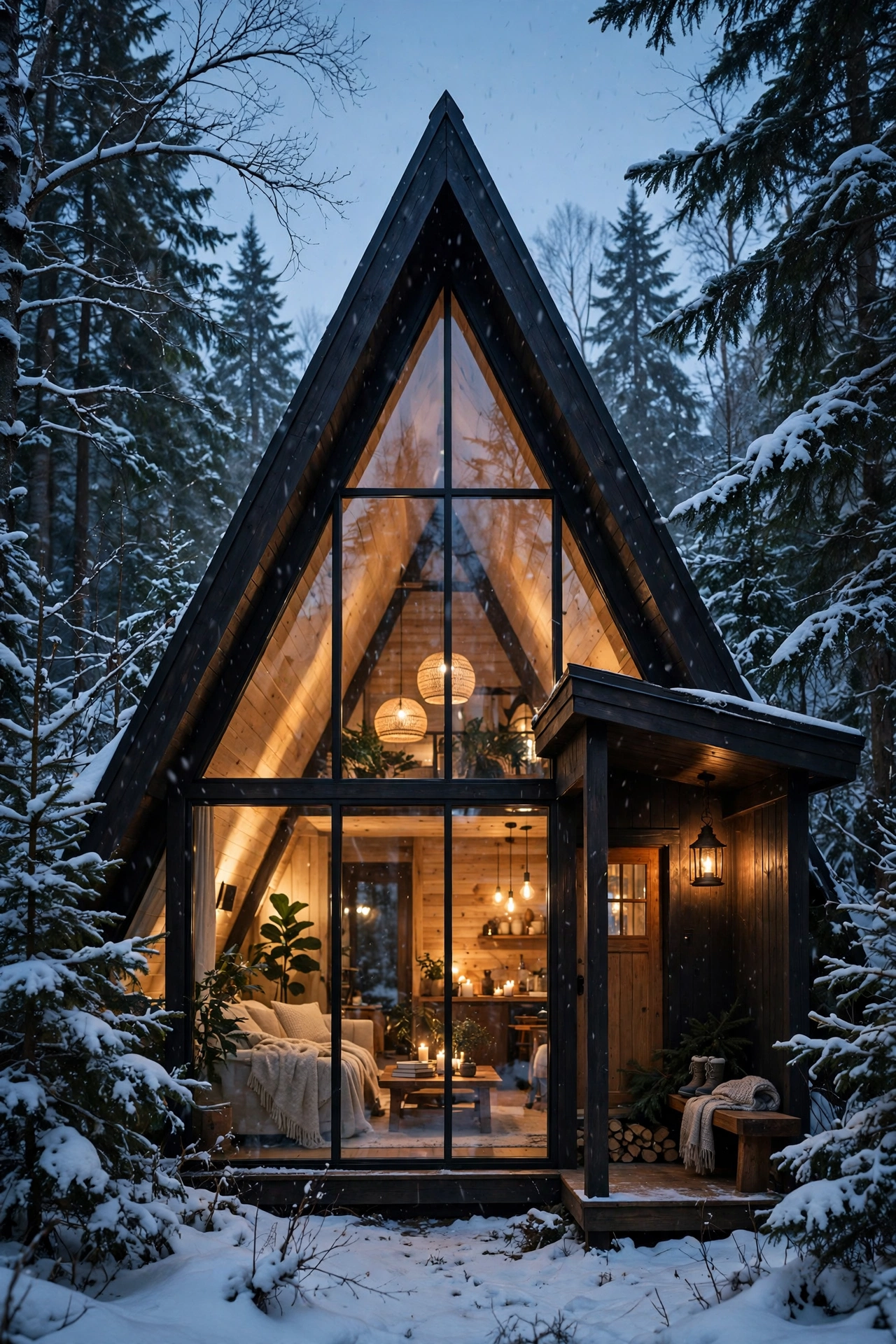
Instead of a solid triangular front, this A-frame variation replaces most of the front elevation with floor-to-ceiling glass, turning the cabin into a kind of lantern once the sun goes down and interior lights click on. Slim black steel window mullions keep the glass wall feeling architectural rather than like a greenhouse. The surrounding forest becomes part of the exterior view year-round, but it’s especially dramatic in winter, when snow-laden branches press right up against the glass. A small covered entry tucked to one side keeps the main glass wall uninterrupted, so nothing distracts from that dramatic window expanse. This look works best on cabins set into dense forest, where the glass wall creates a genuine sense of being surrounded by snow and trees rather than just looking out at them.
Cabin with a Lantern-Lit Snowy Path
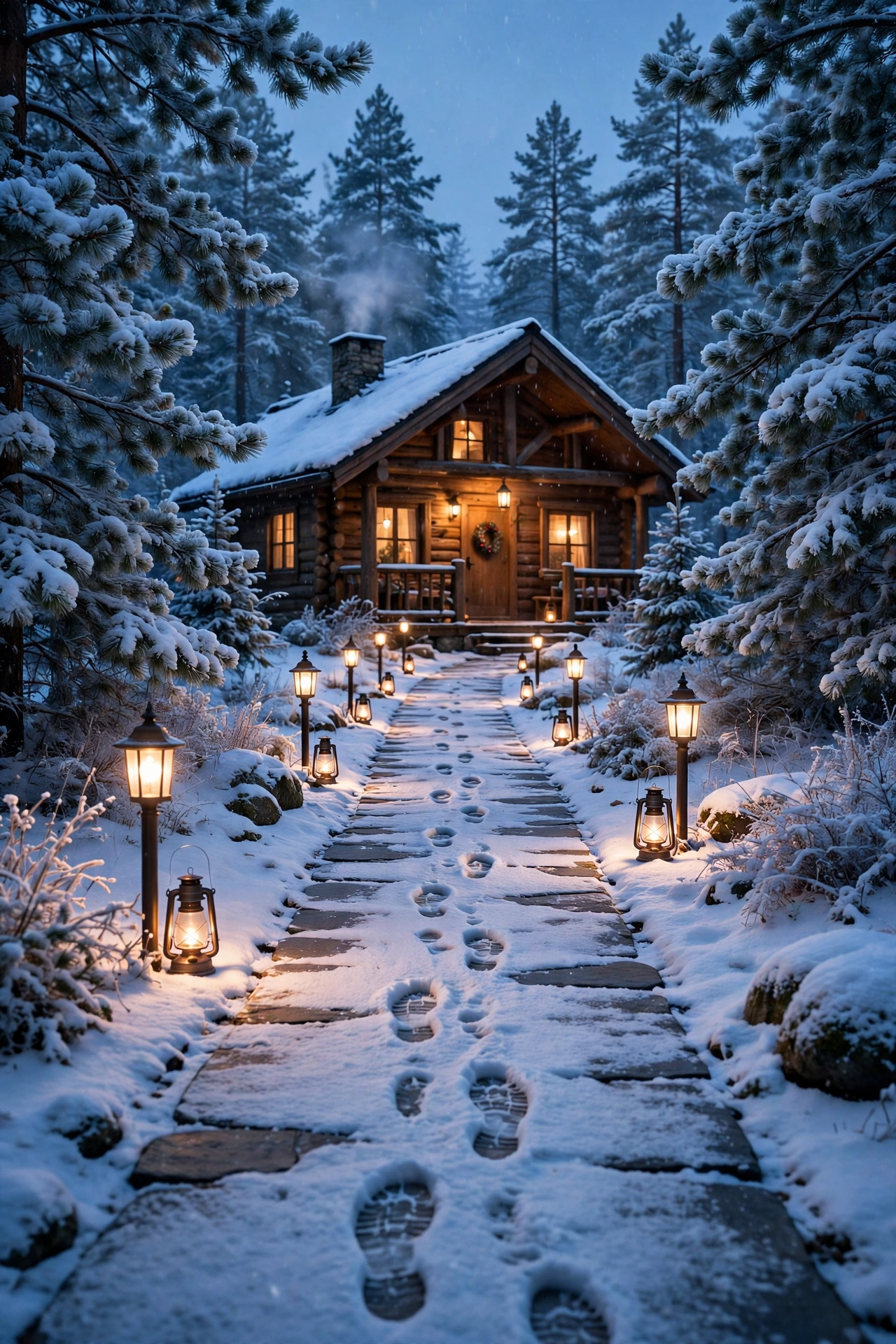
A simple stone or gravel path from the driveway to the front door, lined with low lantern-style lighting on either side, turns even a short walk into part of the cabin’s welcome. Solar or battery LED lanterns in a warm white tone work well here and avoid the hassle of running wiring through frozen ground each winter. Spacing the lanterns evenly, roughly every four to six feet, creates a gentle, guiding glow rather than a runway effect. Footprints in fresh snow along the path only add to the storybook feeling, suggesting someone just arrived home. This detail is especially effective on cabins set back from the road or tucked into trees, where the path lighting becomes the first hint of warmth guests see before they even reach the door.
Cabin with a Sledding Hill and Snowman
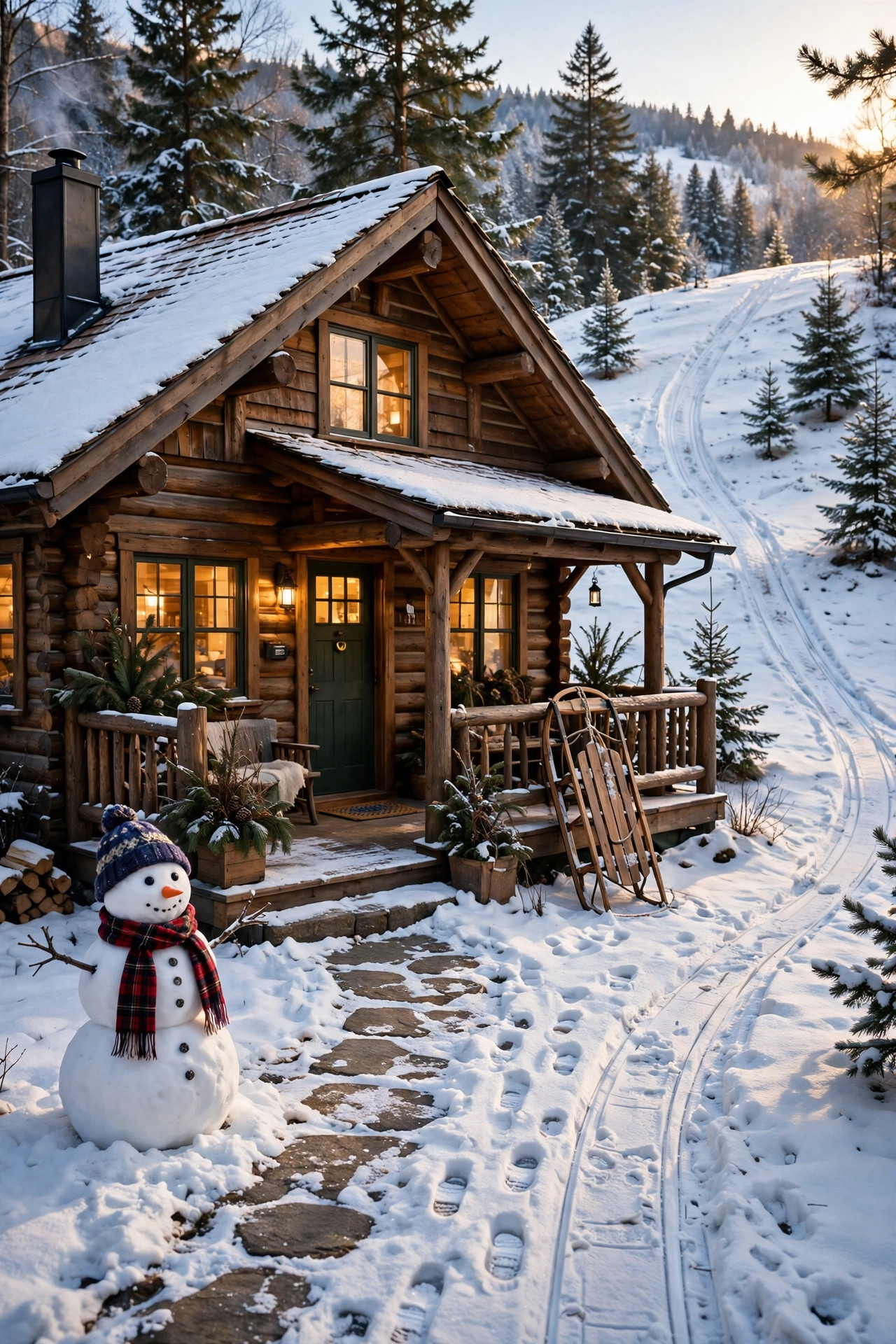
Sometimes the coziest cabin exterior ideas have nothing to do with the building itself and everything to do with what’s happening in the yard. A gentle sledding hill just beyond the porch, complete with a sled leaning against the railing, signals that this is a place built for play as much as for warmth. A simple snowman near the front walk, dressed in a plaid scarf and a well-worn hat, adds a playful, lived-in touch that no amount of styled decor can quite replicate. Footprints and sled tracks in the snow tell a small story of the day, which is exactly what makes this kind of scene feel authentic rather than staged. This idea works on any cabin style, since it’s really about the surrounding landscape and activity rather than the architecture itself.
Ski Chalet with a Timber Frame Entry
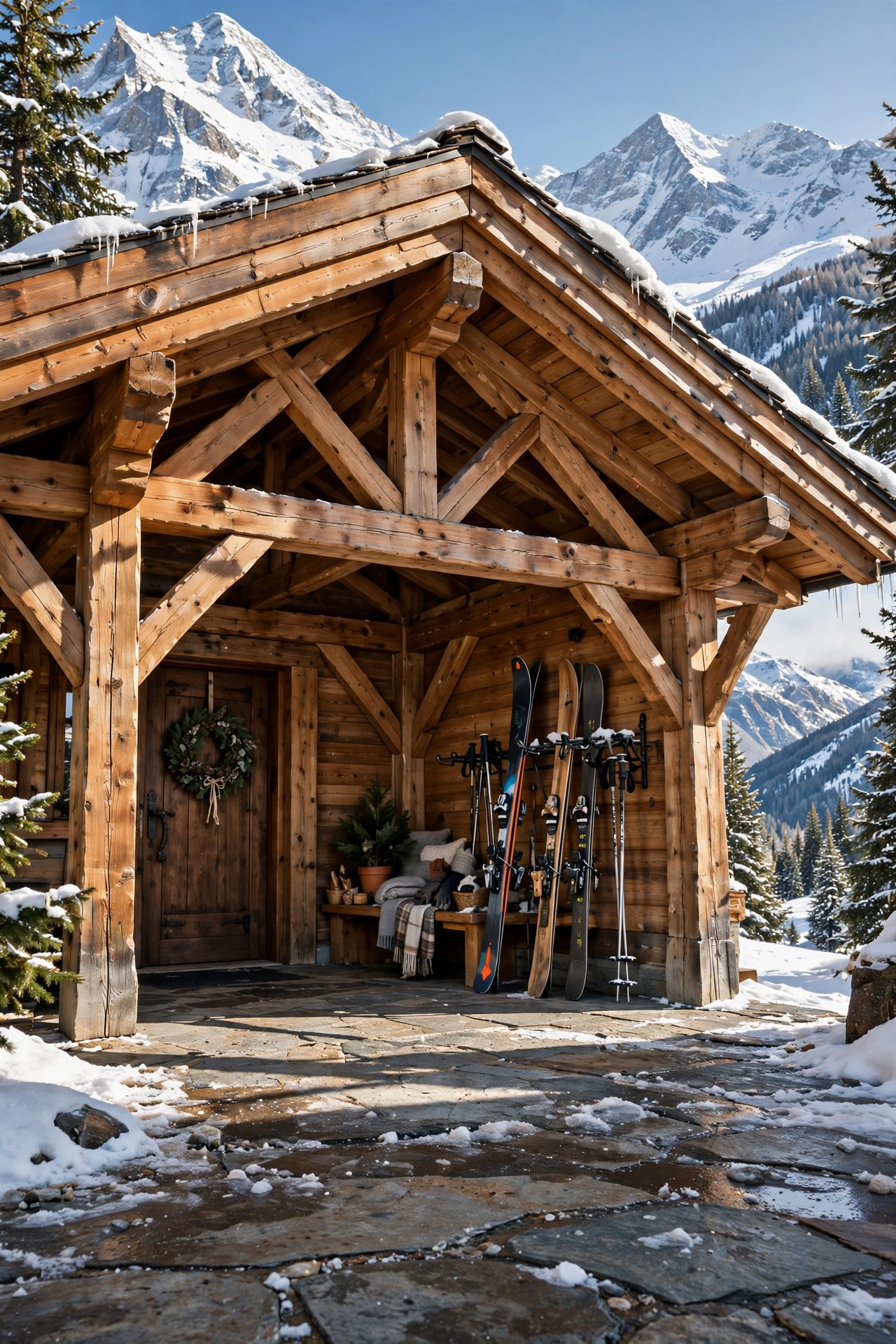
A dramatic exposed timber frame over the front entry, with heavy wood beams and diagonal bracing, gives a cabin the presence of a full ski chalet even on a more modest footprint. This structural feature works best left in its natural wood tone, sealed but unstained, so the timber joinery itself becomes the main visual statement. A pair of ski racks mounted just inside the covered entry, holding actual skis and poles, reinforces the mountain-lodge feeling without requiring any additional decor. Stone paving underfoot, kept partially cleared of snow, adds a practical, high-traffic-ready surface that suits an entry meant for snowy boots and gear. This look is especially popular on cabins near ski resorts or mountain trailheads, where the entry needs to function as a real gear transition space, not just a decorative porch.
Cabin with a Covered Woodshed and Sled Storage
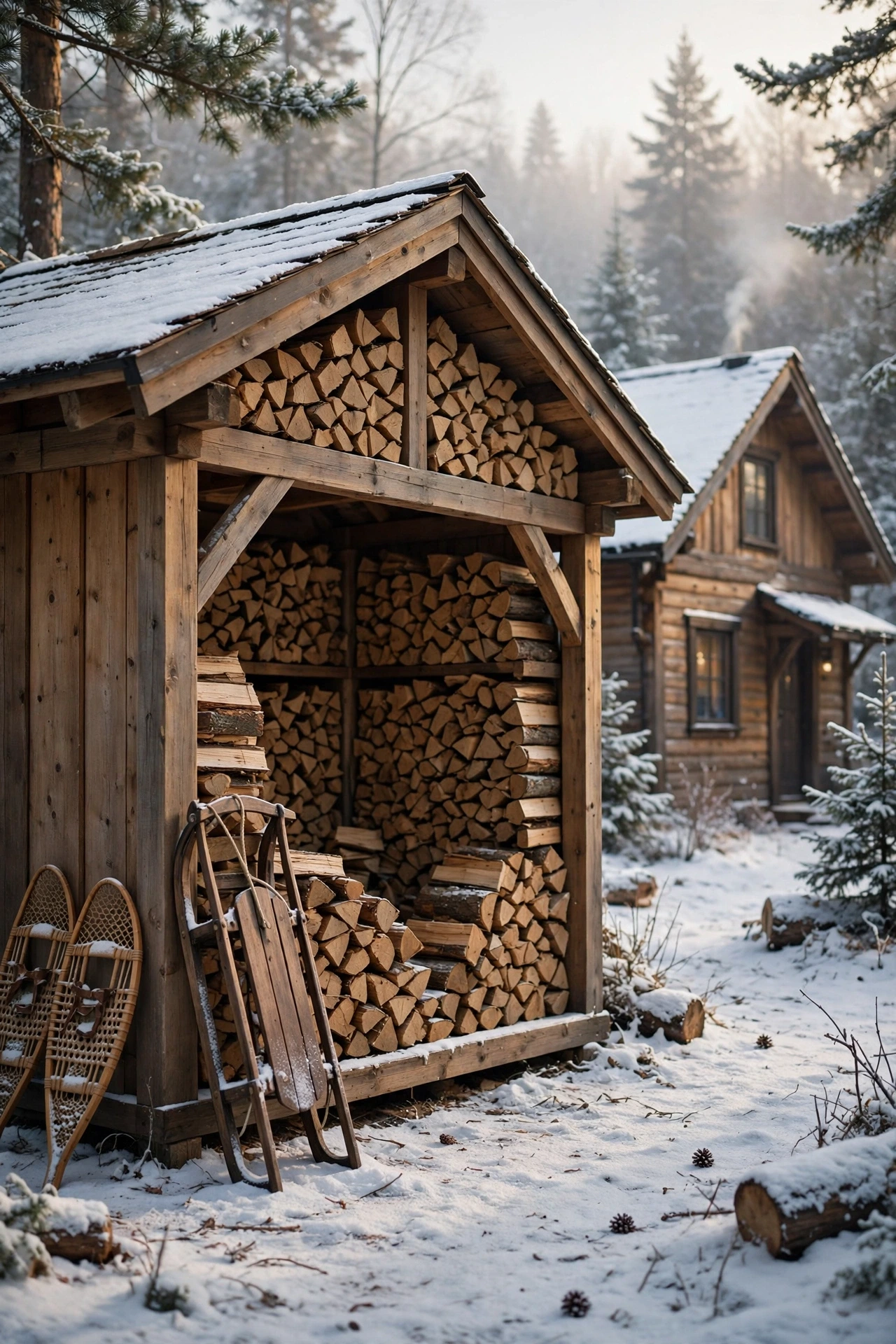
A dedicated covered woodshed just off the main cabin does double duty, keeping firewood dry through the winter while adding another cozy, functional structure to the overall scene. Built in the same timber and roofing materials as the main cabin, the woodshed reads as an intentional part of the property rather than a random outbuilding. Neatly stacked, uniform lengths of split wood look far more visually appealing than a loose pile, and it’s worth taking the extra time to stack it that way for both function and photos. A couple of sleds and a pair of snowshoes leaning against the woodshed wall round out the practical winter storage without looking cluttered. This detail works especially well on larger properties, where the woodshed becomes a secondary focal point along the path between the driveway and the front door.
Cabin Deck with String Lights and a Hot Cocoa Station
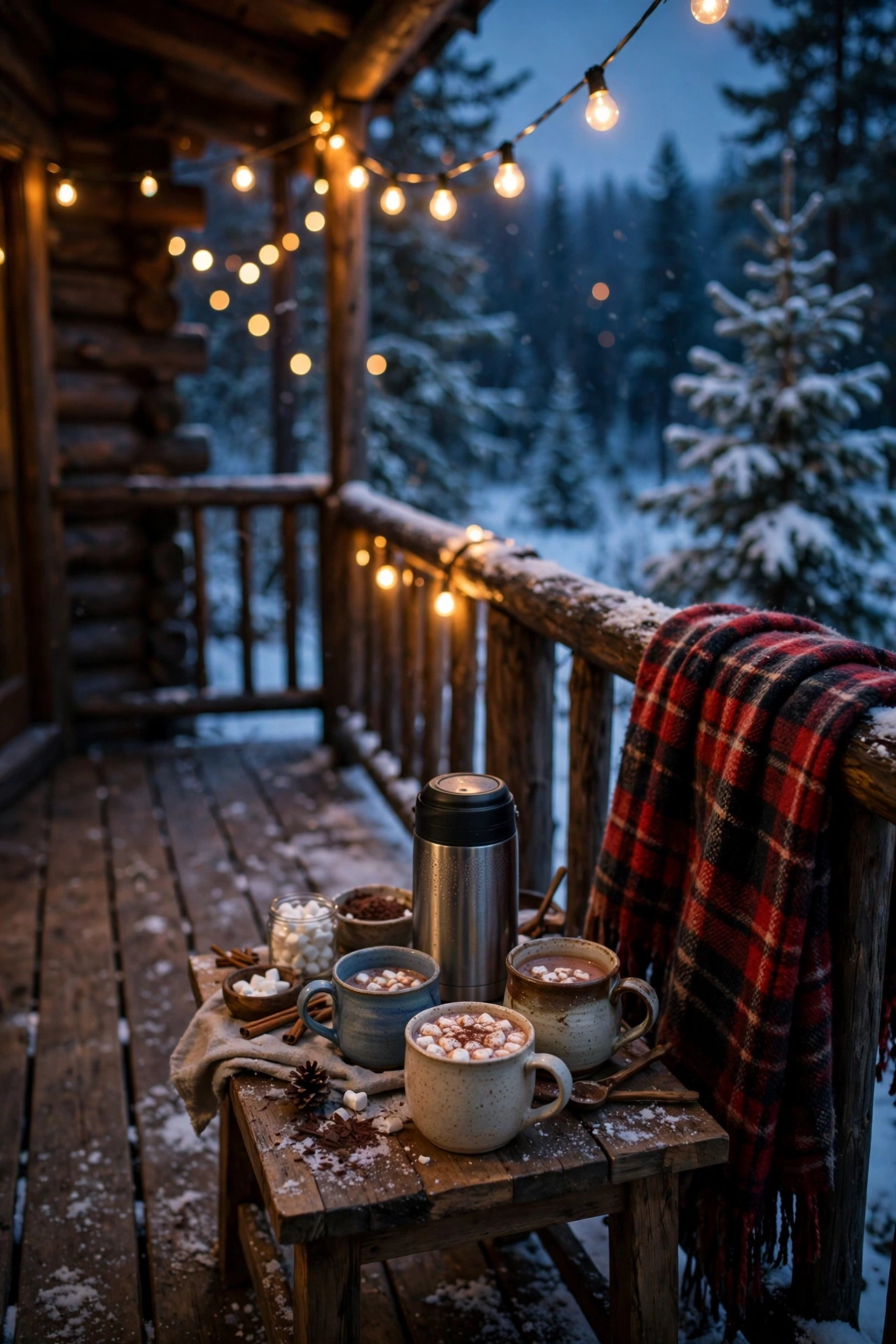
A simple wood deck styled with string lights overhead and a small side table set up as a hot cocoa station turns the exterior of a cabin into an actual gathering spot, not just something to look at from inside. Mismatched ceramic mugs, a thermos, and a small stack of marshmallows on a tray suggest an evening spent outside despite the cold. A wool blanket draped over the deck railing or a nearby bench signals warmth is close at hand for anyone who gets chilly. String lights in a warm white tone, strung loosely overhead rather than pulled taut, create a soft, relaxed glow rather than a formal party look. This idea is a favorite for cabins that host guests regularly, since it gives everyone a reason to bundle up and step outside even after the sun goes down.
Styling Tips
Stick to one dominant material story, whether that’s timber, stone, or a stone-and-timber combination, and let everything else support it rather than compete with it. Warm light is doing most of the emotional work in a winter cabin scene, so prioritize warm-white bulbs over cool white or daylight-toned ones in every fixture, from porch lanterns to string lights. Keep decorative elements, like wreaths or lights, consistent across the whole facade rather than concentrated only at the front door, since repetition is what makes a cabin exterior feel intentionally styled instead of randomly decorated. Let snow do some of the styling for you; a light dusting on railings, wreaths, and rooflines often looks better than anything you could add yourself, so time your photos or your final touches for right after a fresh, light snowfall rather than during or right before a storm.
Practical Implementation Ideas
Start with your roofline and lighting before investing in bigger structural changes, since a metal roof upgrade and a well-planned lighting scheme deliver a huge amount of visual impact relative to their cost. If you’re adding a stone chimney or stone base, work with a mason who has specific experience with your local freeze-thaw cycle, since improperly installed stonework can crack under repeated winter freezing. Plan any wood-fired features, like a hot tub or outdoor fireplace, with enough clearance and ventilation to meet local fire codes, and check whether your specific area has any seasonal burn restrictions. When adding a woodshed or firewood storage, position it close enough to the main entry for easy winter access, but far enough from the structure itself to reduce pest and moisture concerns.
Common Mistakes to Avoid
Overdecorating with too many colors or lighting styles at once is one of the fastest ways to lose that cozy, cohesive cabin feeling, since a cluttered exterior reads as busy rather than warm. Choosing cool-toned white lights instead of warm white is a small decision that has an outsized effect on how inviting the whole scene feels after dark. Skipping proper roof pitch or material planning in true snow country can lead to real maintenance headaches, since a roof that doesn’t shed snow efficiently is a functional problem, not just an aesthetic one. Finally, leaving firewood stacked directly against the cabin’s exterior wall, rather than a few feet away or under separate cover, can invite moisture damage and pests over time, even though it looks charming in photos.
Small-Space Alternatives
On a smaller cabin or cottage, a single well-lit window with a wreath and a warm glow can carry as much cozy visual weight as an entire wraparound porch on a larger structure. Icicle lights along just the front roofline, rather than the entire perimeter, still create that magical glowing effect without the extra cost and labor of wiring a bigger structure. A small bistro-style table with two chairs and a lantern can stand in for a full deck setup, giving a compact cabin its own version of an outdoor gathering spot. Even a single stacked firewood bundle by the door, rather than a full woodshed, delivers the same rustic, lived-in signal on a much smaller scale.
Budget-Friendly Alternatives
LED icicle lights and warm-white string lights are widely available and inexpensive, especially when purchased at end-of-season sales, and they deliver one of the highest visual returns of any winter exterior update. A homemade evergreen wreath, built from foraged pine branches, pinecones, and a simple ribbon, costs next to nothing compared to a store-bought version and often looks more authentic. Painting an existing front door a bold color like barn-red is one of the most affordable ways to add personality to a plain cabin exterior, requiring just a quart of exterior paint and an afternoon. Building a simple firewood rack from scrap lumber, rather than buying a pre-made metal one, keeps the rustic material story intact while saving on cost.
Pro Styling Recommendations
Designers often recommend photographing or evaluating a cabin exterior at both midday and dusk before finalizing any lighting plan, since the same fixtures that look subtle in daylight can completely transform the mood after dark. Choosing a roofing material based on your specific regional snow load, not just aesthetics, prevents costly repairs down the line and is worth a conversation with a local contractor familiar with your climate. When mixing materials like stone and timber, keeping the ratio close to seventy-thirty, with one material clearly dominant, tends to look more intentional than an even split. Finally, investing in one or two well-built, substantial features, like a real stone chimney or a proper covered porch, generally creates more lasting cozy appeal than a long list of smaller decorative touches.
FAQs
Conclusion
A winter cabin exterior earns that cozy, storybook feeling through a combination of the right materials, the right light, and a handful of small, repeated details rather than any single dramatic gesture. Whether it’s a black-stained A-frame cutting a sharp silhouette against fresh snow, or something as simple as a stacked firewood pile and a warm lantern by the door, the most memorable cabin exteriors tend to lean into a clear, consistent story rather than trying to do everything at once. The snow itself does a lot of the heavy lifting, softening rooflines and catching the light in ways no amount of styling can fully replicate. Pick two or three ideas from this list that genuinely fit your cabin’s existing architecture and climate, and build outward from there for a look that feels cozy for the whole season, not just for one perfect photo.