16 Winter Flower Bed Ideas That Still Bring Color
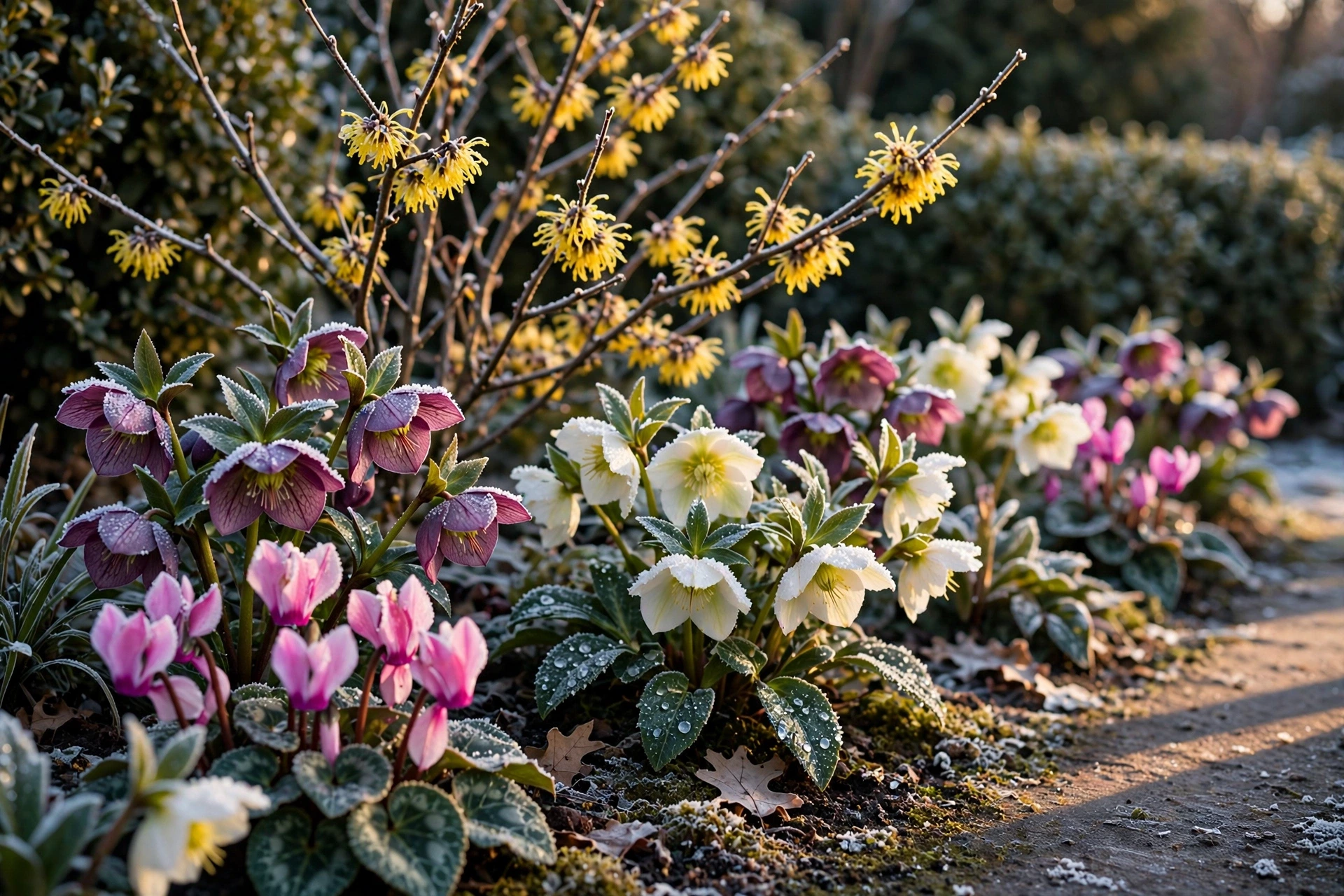
By January, most flower beds look like they gave up. Bare stems, dead mulch, maybe one sad evergreen holding the whole thing together. It doesn’t have to be that way, and it’s not because of some greenhouse trick.
There’s a whole category of plants that treat winter as their moment, not their off-season. Witch hazel blooms with spidery orange flowers in the middle of a snowstorm. Hellebores push blooms up through frozen soil in January. Winter aconite forms golden carpets under bare trees before anything else in the garden has woken up.
This list covers 16 winter flower bed ideas, each with the USDA hardiness zone, bloom time, and light requirements you actually need before you plant — not just a pretty photo and a plant name. Some of these are true winter bloomers. A couple aren’t flowers at all, but they solve the same problem: keeping a flower bed from looking dead for three months straight.
Table of Contents
16 Winter Flower Bed Ideas
Pansy and Viola Color Carpets
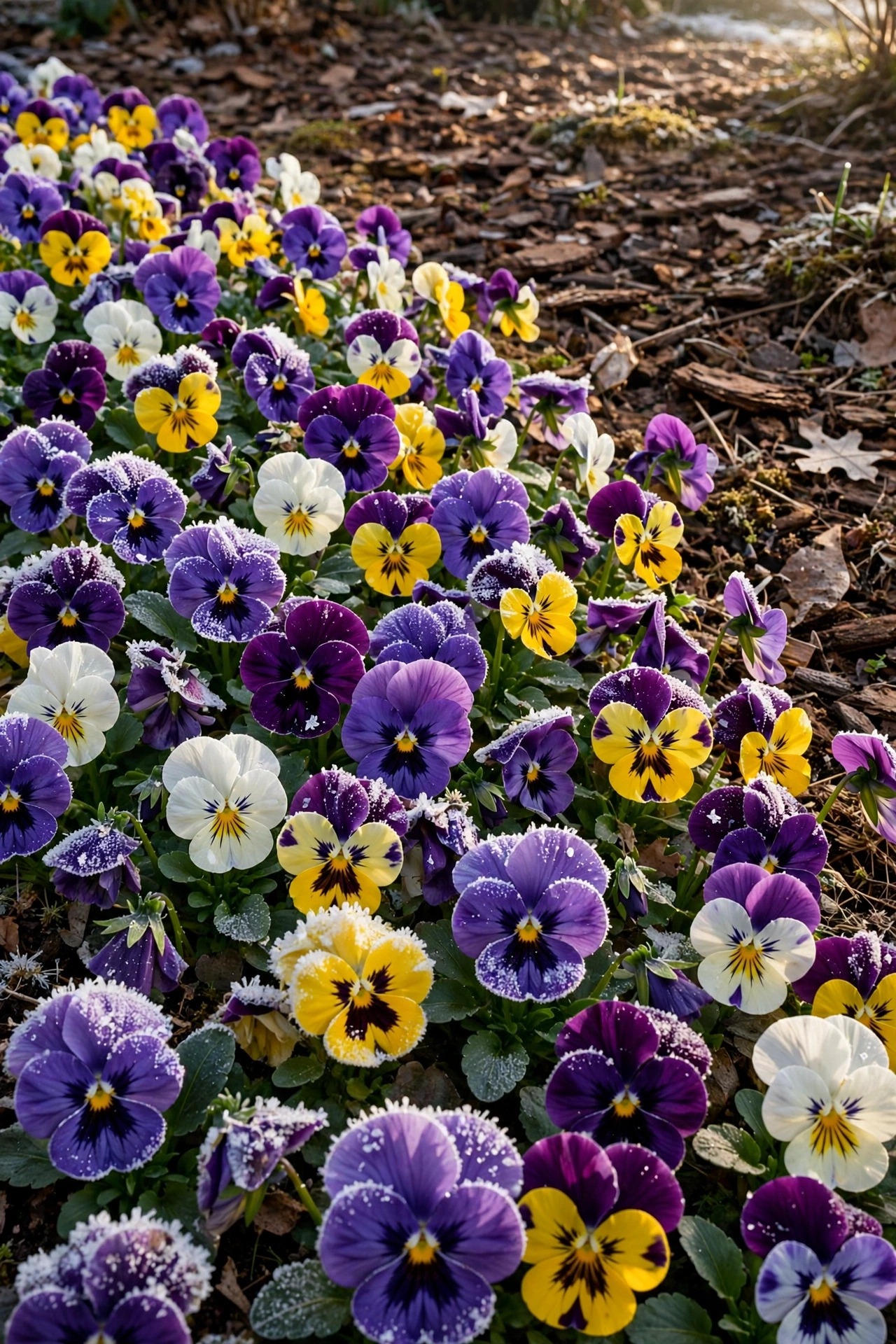
Pansies and violas are the most forgiving winter color you can plant, and they earn that reputation honestly — hardy varieties tolerate temperatures down to about 20°F thanks to natural sugars and proteins in their cells that act like antifreeze. Plant them in fall in USDA zones 4 through 9, spacing them close together so they read as a solid carpet of color rather than scattered dots by the time they mature. They thrive in full sun to light shade and want soil that drains well, since sitting in cold, soggy ground is what actually kills them, not the cold itself. Mix yellow, deep purple, and white varieties along the front edge of a bed for the strongest contrast against bare soil or mulch behind them. Deadhead spent blooms every few weeks to keep the carpet looking fresh through the entire season.
Ornamental Cabbage and Kale Rosettes
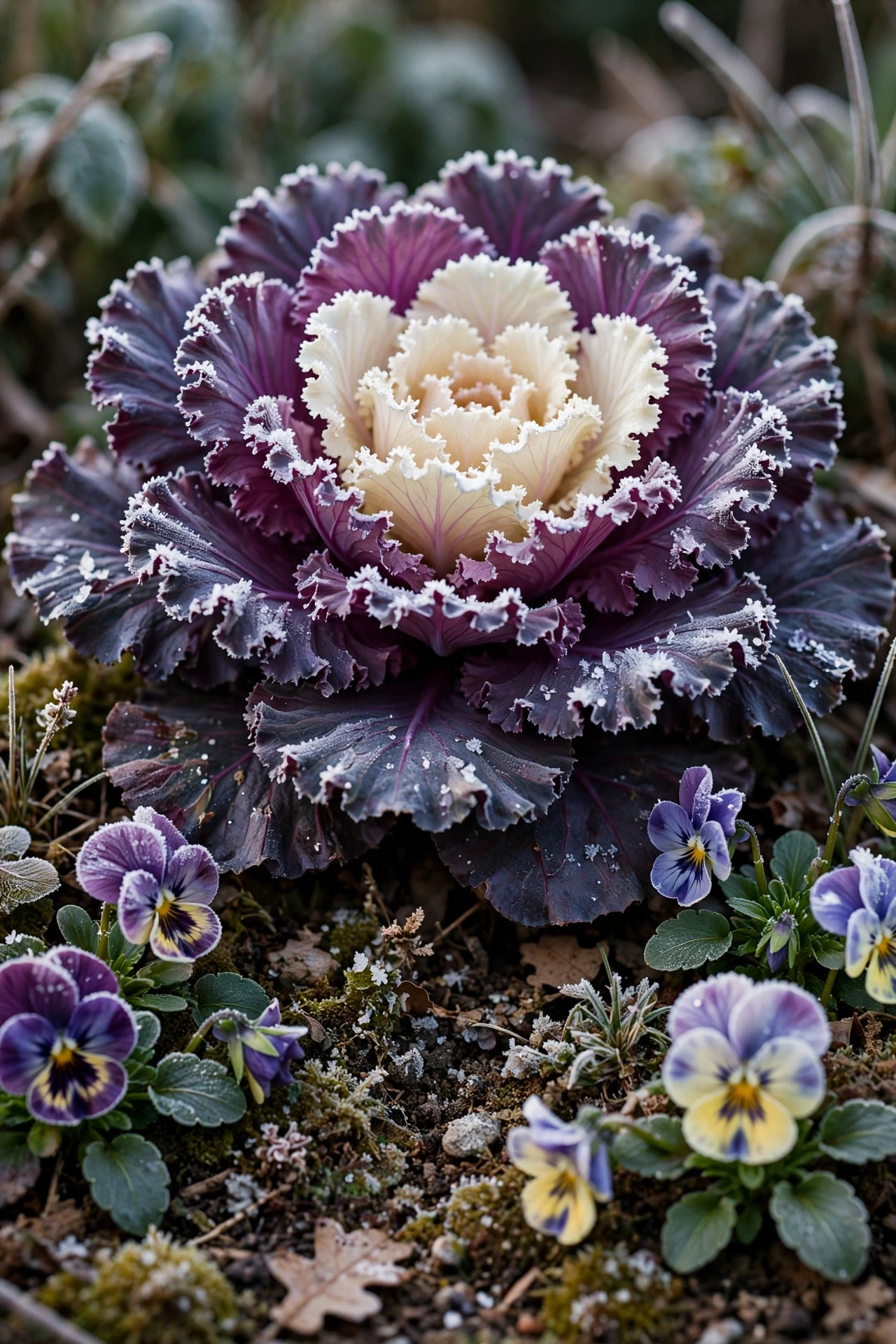
Ornamental cabbage and kale look more like giant frilled flowers than vegetables, and their color actually deepens as temperatures drop, which is the opposite of what most plants do in winter. They’re rated for USDA zones 2 through 11 as cool-season annuals, planted in fall for a display that holds from first frost through the coldest part of winter in most climates. Give them full sun and well-drained soil, since standing water around the base leads to rot fast. Use them as anchor plants in the center or back of a bed, surrounded by lower-growing pansies or violas for a tiered look. Their rosette shape and ruffled edges give a winter bed genuine structure, not just color, which is why designers use them in raised beds and formal planters more than almost any other cold-season plant.
Hellebore Drifts Under Bare Trees
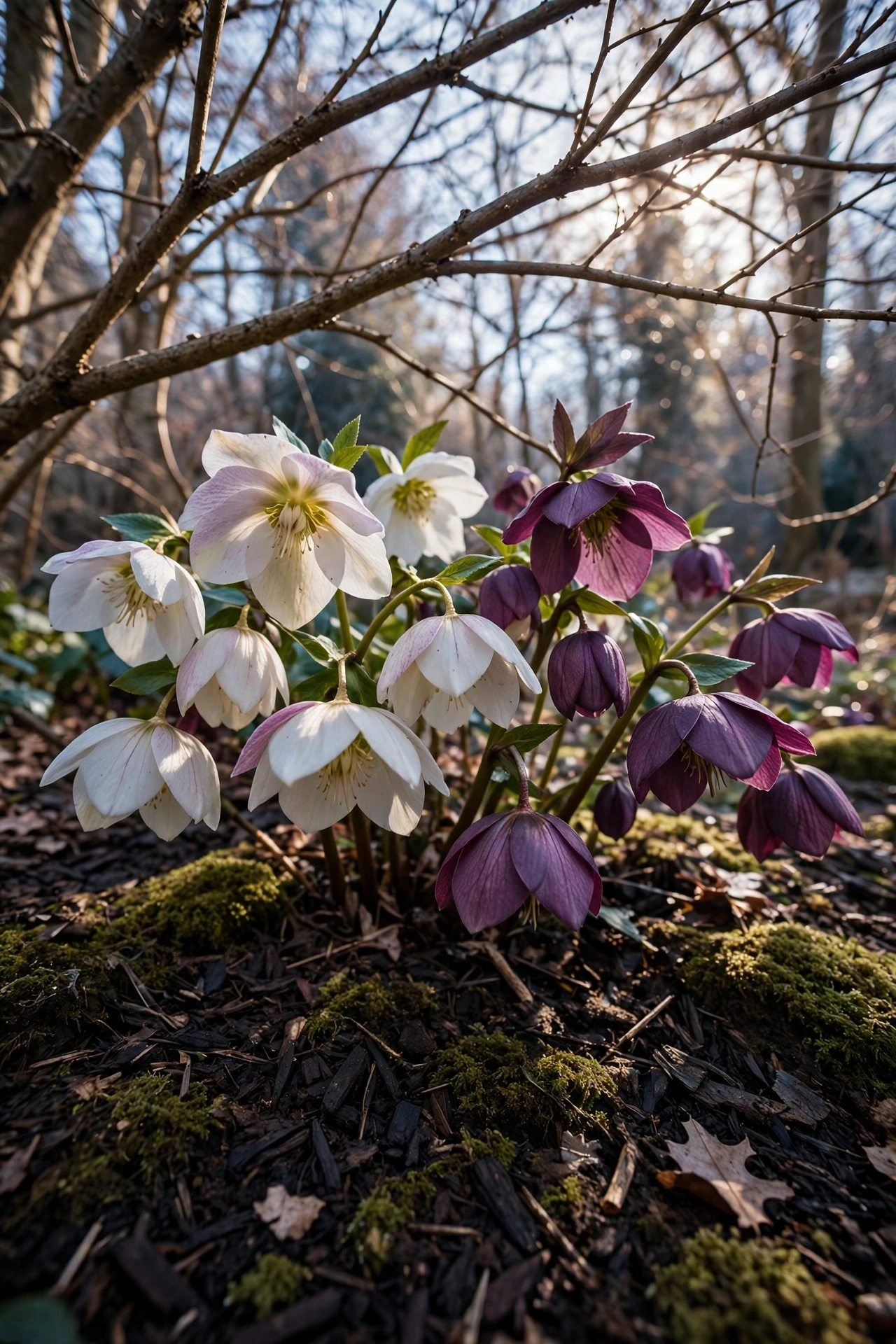
Hellebores, often called Lenten or Christmas roses, bloom from late winter into early spring in creamy whites, deep purples, and soft pinks, often pushing flowers up while snow is still on the ground nearby. They’re hardy in USDA zones 4 through 9 and genuinely prefer partial to full shade, which makes them one of the only reliable winter flower bed ideas for beds under deciduous trees where sun-loving plants struggle all year. Plant them in humus-rich, well-drained soil and expect a slow start — hellebores typically take two full seasons to establish before they bloom heavily. Their flowers hang downward, so plant them on a slight slope or raised bed edge where you can actually look up into the blooms rather than only seeing the tops. Once established, they’re deer-resistant and essentially maintenance-free for years.
Snowdrop Drifts Along Garden Paths
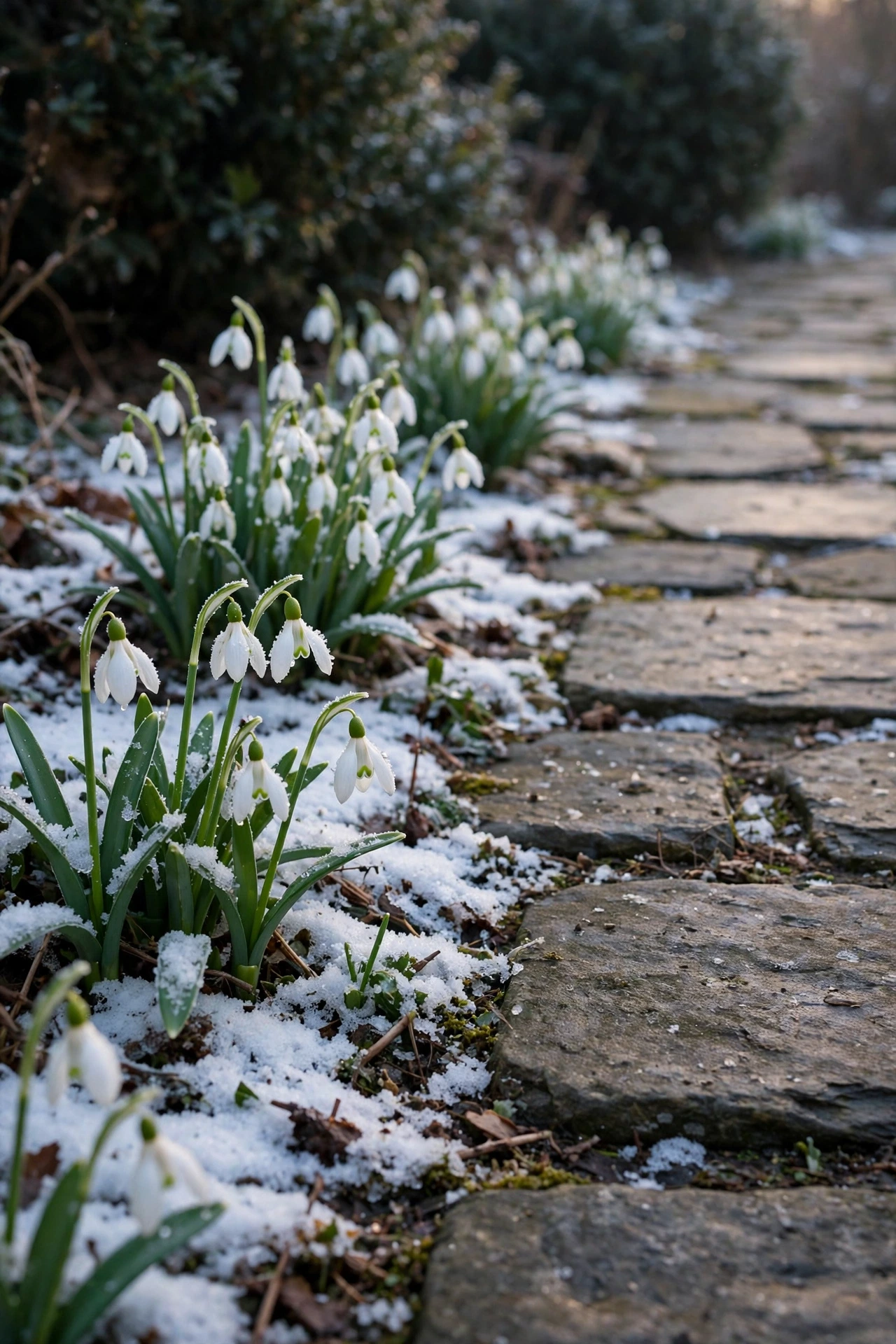
Snowdrops (Galanthus) are often the very first flower to bloom each year, sometimes pushing straight up through a thin layer of snow in USDA zones 3 through 7. Plant the bulbs in fall, about 3 inches deep, in areas with full sun to partial shade and soil that stays consistently moist but never waterlogged. They look best naturalized in loose drifts rather than tidy rows, so scatter a handful of bulbs by hand and plant them wherever they land for the most natural effect. They’re especially effective planted near dark evergreen shrubs or along the edge of a stone path, where their small white blooms stand out sharply against a darker background. Once planted, snowdrops multiply on their own and will return in slightly larger drifts every year without any extra effort.
Winter Aconite Golden Clumps
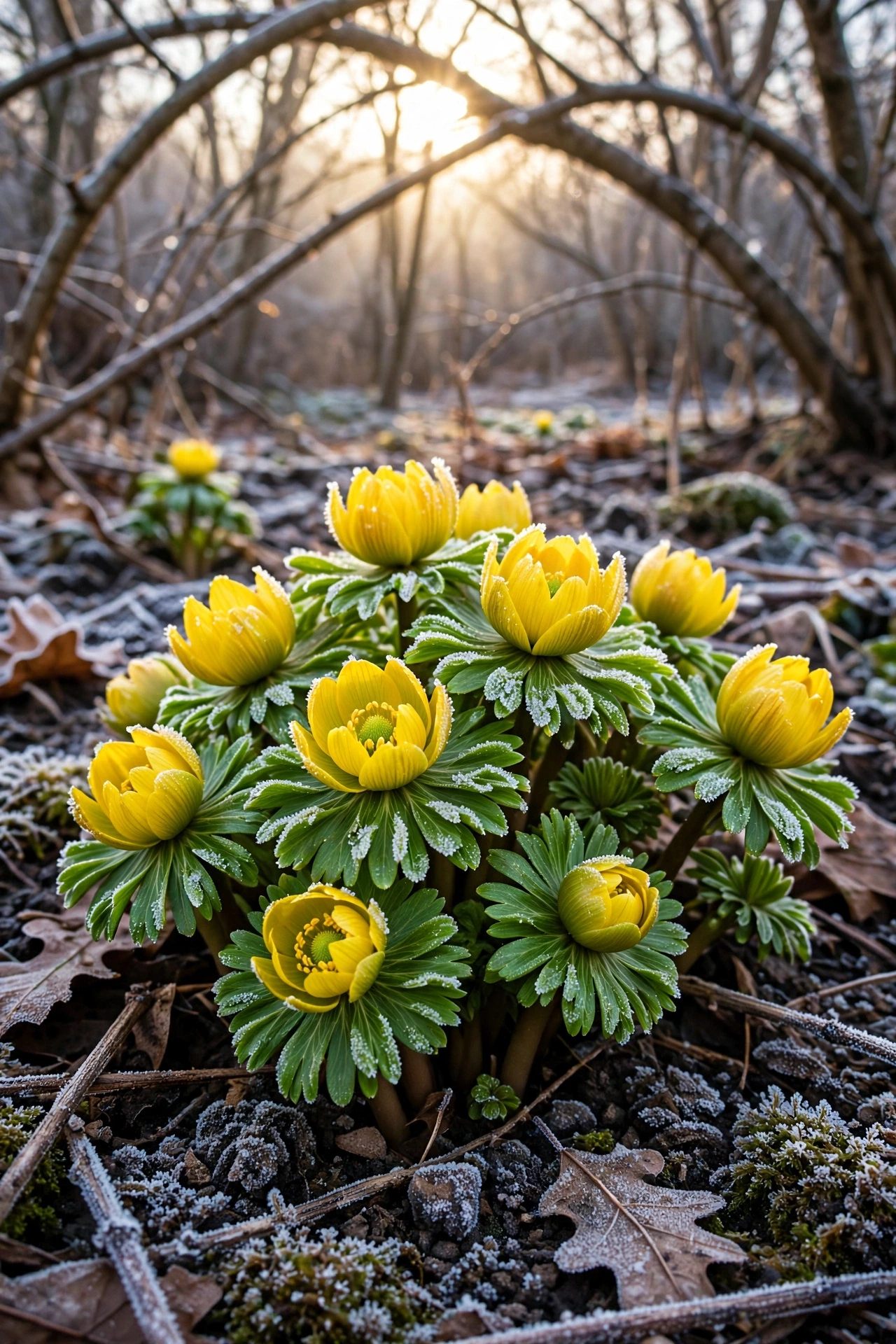
Winter aconite (Eranthis hyemalis) forms cheerful golden-yellow clumps that often bloom even before snowdrops, making it one of the earliest color sources in a USDA zone 3 through 7 winter garden. This low tuberous perennial only reaches 3 to 6 inches tall, so plant it toward the front of a bed or naturalize it under deciduous trees and shrubs where it gets full sun in winter before the canopy fills back in. It prefers humus-rich, consistently moist soil and does best planted in groups rather than as single specimens, since its small size gets lost planted alone. Winter aconite pairs especially well with hellebores and echoes the yellow tones of witch hazel planted nearby, creating a coordinated color story across a bed. Keep in mind the entire plant is toxic if ingested, so plant it away from areas where pets or small children dig.
Heather Mounds for Texture and Color
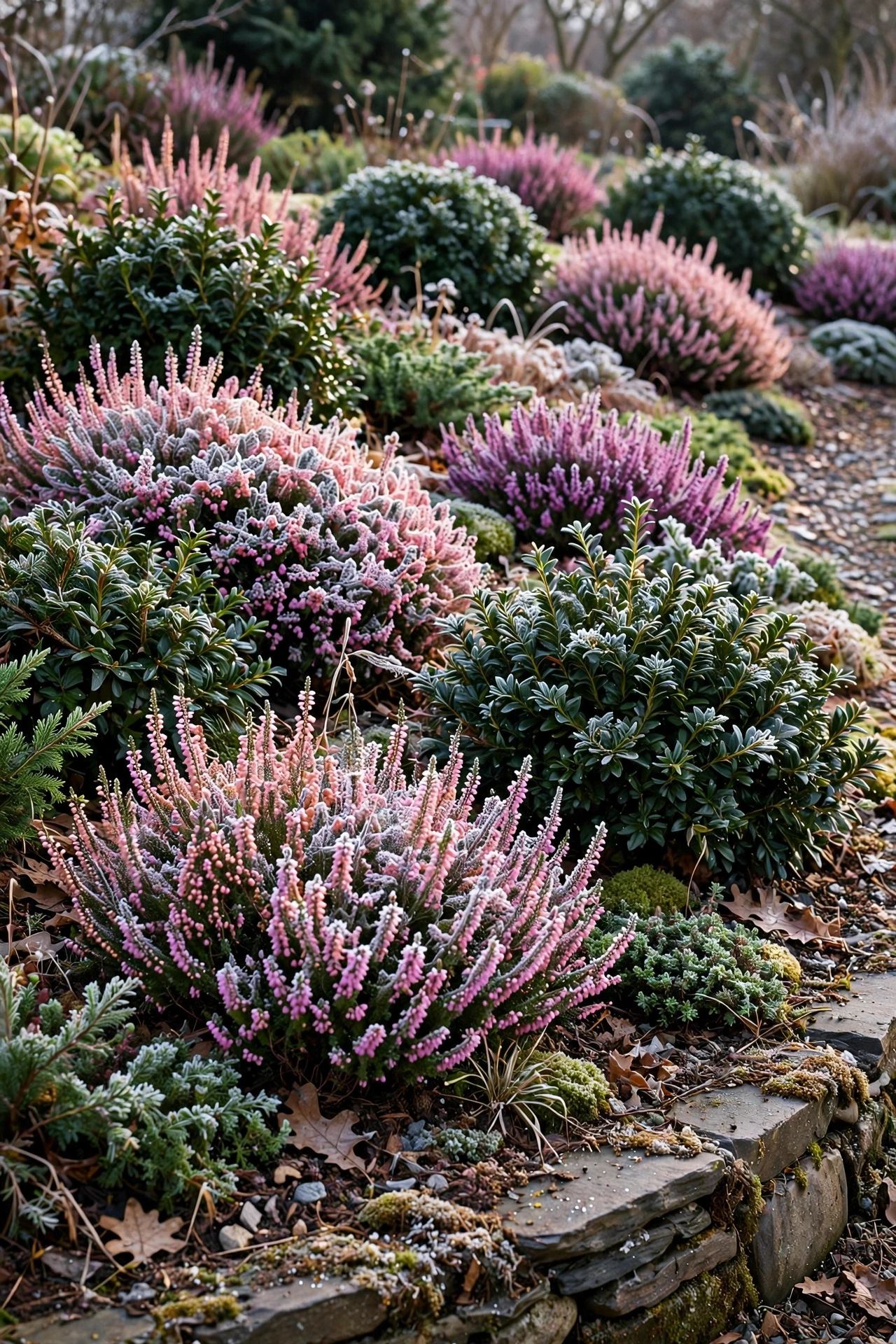
Heather (Calluna and Erica varieties) forms soft, low mounds of purple, pink, and magenta that hold their color for weeks at a time, and true winter-blooming Erica carnea cultivars are hardy in USDA zones 5 through 7. Double-check the variety before buying, since some heather blooms in summer instead — winter-flowering types are usually labeled specifically as such at the nursery. Plant heather in full sun with well-drained, slightly acidic soil, and space plants close enough that their mounded shapes eventually merge into a continuous textured border. It works especially well mixed into beds with evergreens, where the low mounded shape contrasts with taller upright shrubs. Heather also needs very little maintenance once established, making it one of the lowest-effort plants on this entire list.
Camellia Shrubs as Winter Focal Points
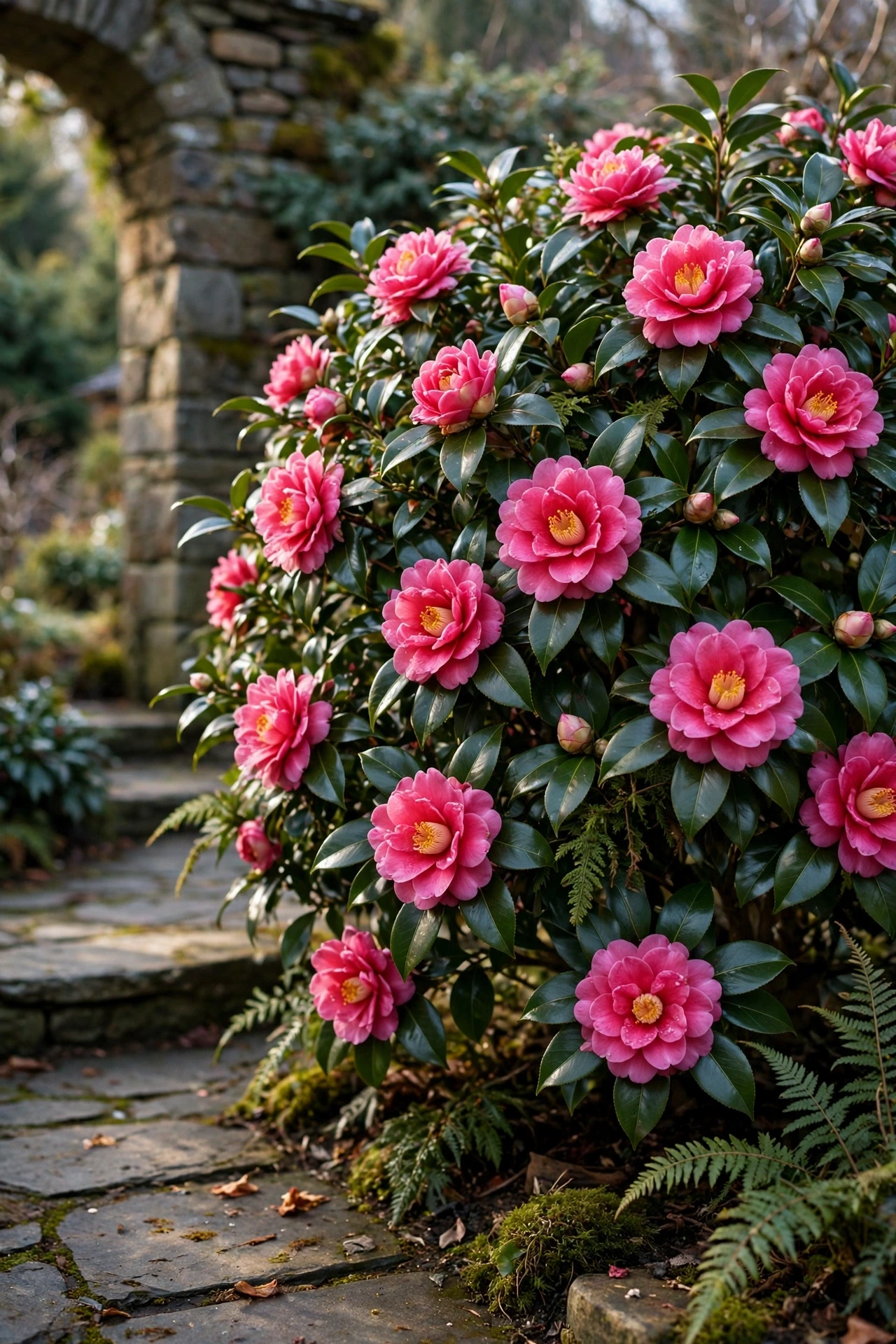
Camellias bring large, romantic, rose-like blooms to a winter garden in shades of red, pink, and white, and newer cold-hardy hybrids now survive down to USDA zone 6, expanding their range well beyond the traditionally mild-climate gardens they’re known for. Plant them in partial shade with rich, well-drained, slightly acidic soil, and give them room to grow — most varieties reach 3 to 5 feet tall and wide, with some growing considerably larger over time. Use camellias as a foundation planting near an entryway or as a standalone focal point in an otherwise quiet winter bed, since their bloom size alone carries visual weight that smaller flowers can’t match. Choose a mix of early, mid, and late-blooming varieties if you want camellia flowers spanning from late fall all the way into early spring. Their glossy evergreen foliage also holds up the display even when the shrub isn’t actively flowering.
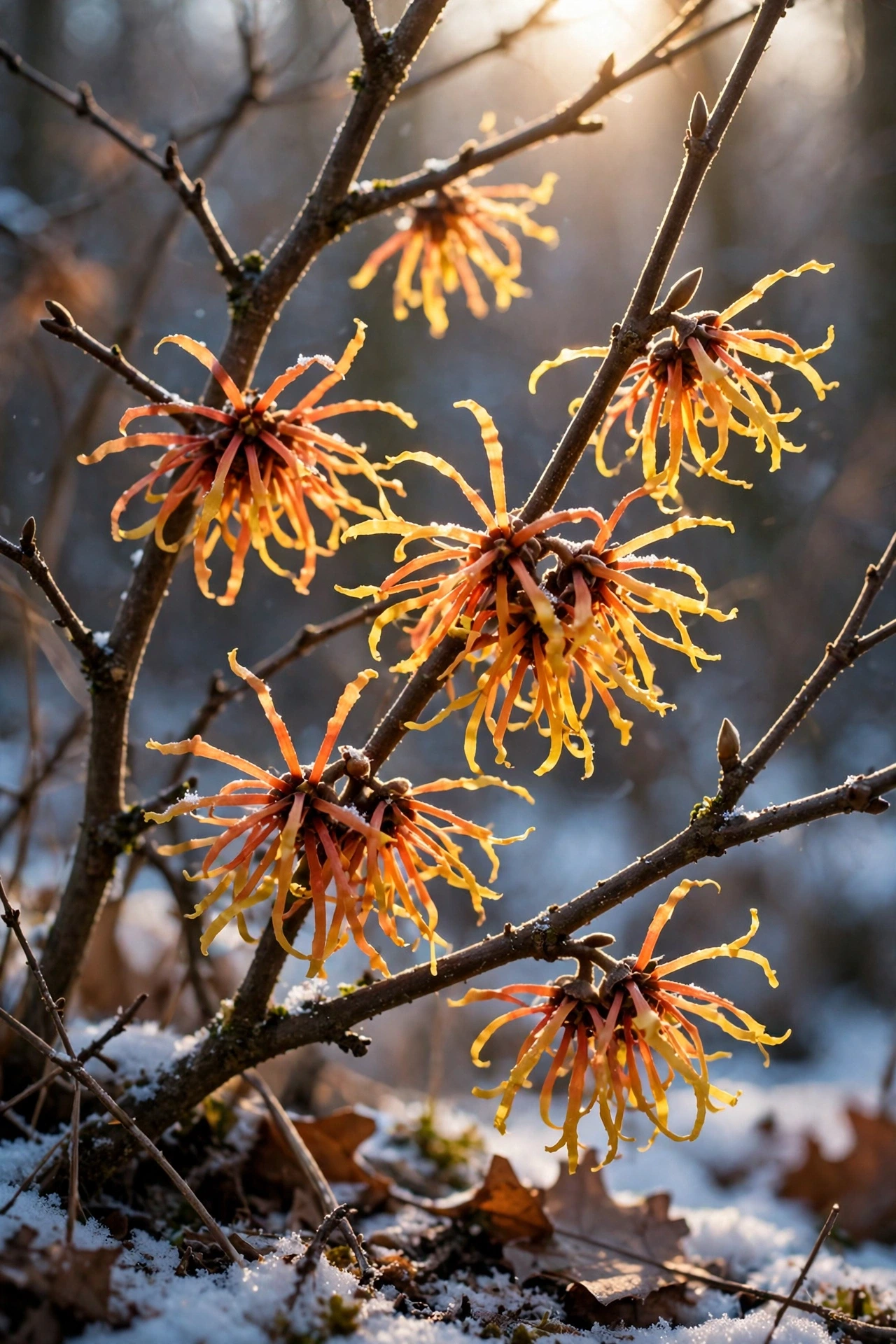
Witch Hazel for Fragrant Midwinter Color
Witch hazel is one of the very few shrubs that blooms in the dead of winter, producing wild, spidery flowers in orange, red, or yellow that appear directly on bare branches before any leaves emerge. Hardy in USDA zones 5 through 9, it tolerates full sun to partial shade and prefers moist, well-drained soil, making it adaptable to most garden conditions. The flowers carry a surprisingly strong, sweet fragrance, so plant it somewhere you’ll actually walk past regularly — near a front door, a mailbox, or a path you use daily — rather than tucked in a back corner. Its architectural, slightly wild branch structure also adds winter interest even before the flowers open, since the bare form itself photographs beautifully against snow. Pair it with winter aconite or snowdrops at its base to echo the yellow and gold tones in a coordinated planting.
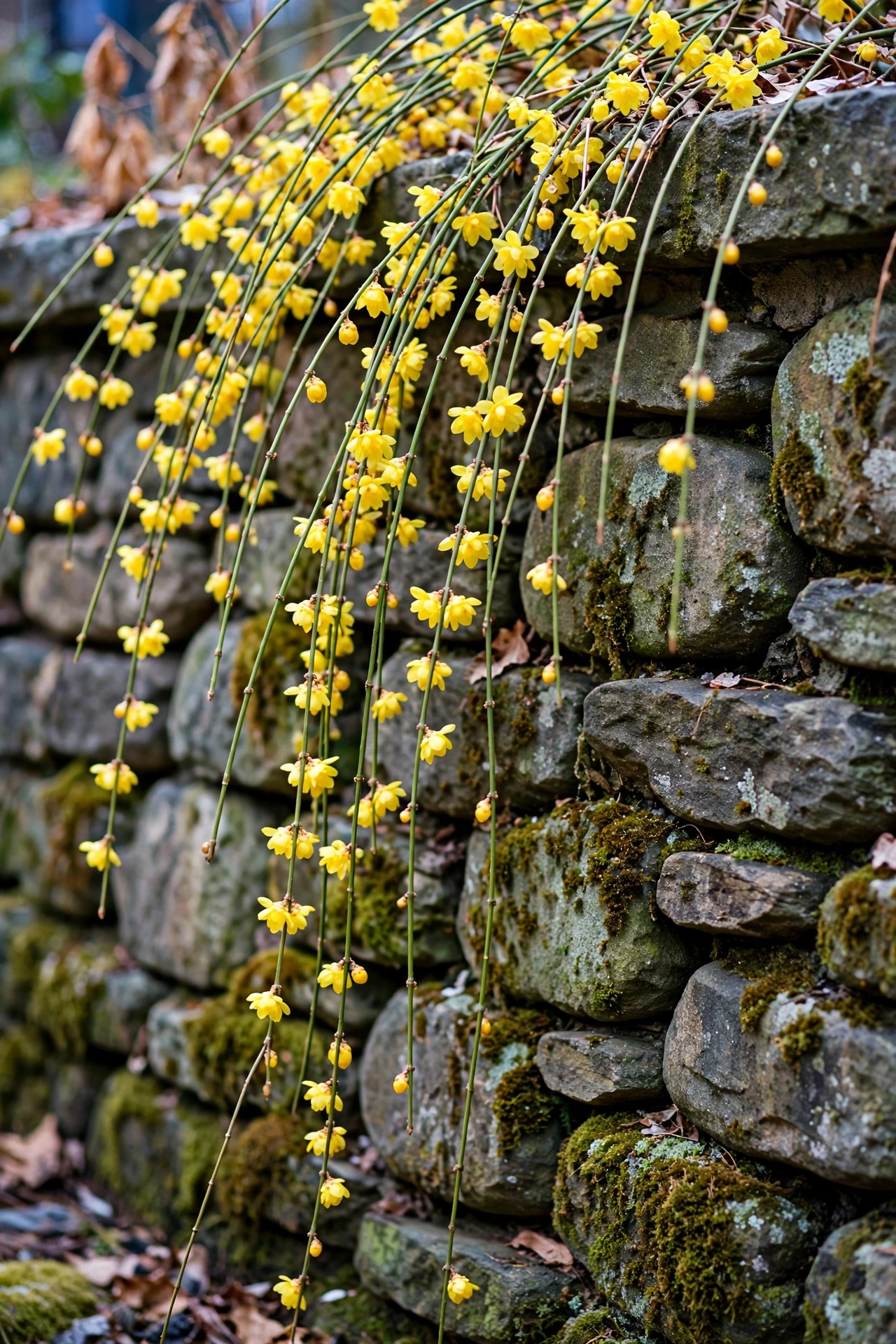
Winter Jasmine Cascading Over Walls
Winter jasmine (Jasminum nudiflorum) produces bright, butter-yellow flowers directly on bare green stems, creating a striking floating effect since the blooms open well before any leaves appear. It’s hardy in USDA zones 6 through 9 and grows more like a sprawling groundcover or climbing vine than a traditional shrub, which makes it ideal for spilling over a stone wall, retaining wall, or trellis where a stiffer plant wouldn’t work. Give it full sun to partial shade and well-drained soil, and don’t be afraid to prune it hard after flowering, since it blooms on old wood and responds well to a post-bloom trim. Train it up a bare fence or let it cascade freely over a slope for a dramatic curtain of yellow in the coldest months. It’s one of the few winter flower bed ideas that adds real vertical or draping movement instead of staying low and mounded.
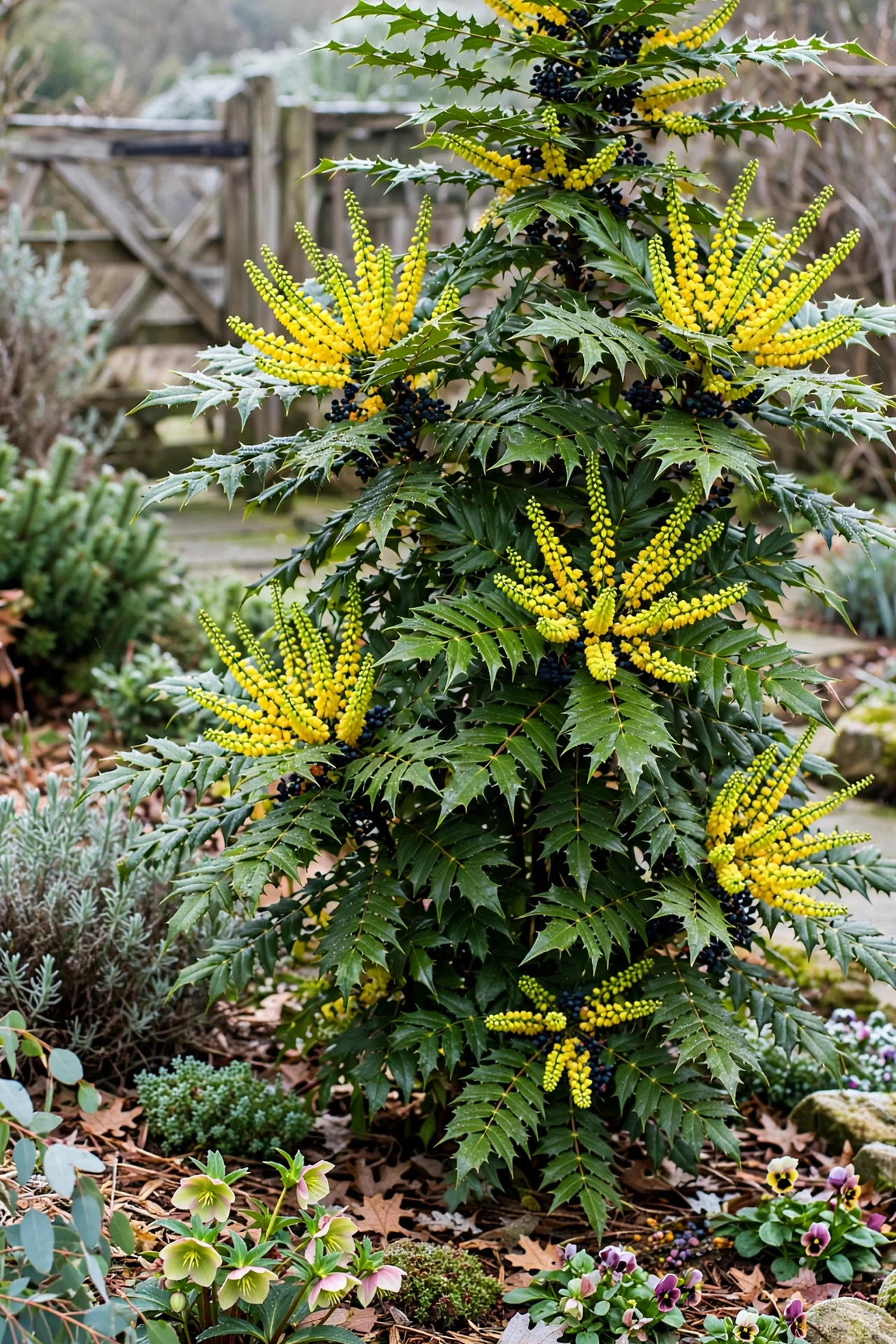
Mahonia for Structure and Winter Blooms
Mahonia, also called Oregon grape, brings bold texture to a winter bed with spiky, holly-like evergreen foliage and clusters of bright yellow flowers that appear from late fall into midwinter, depending on the variety. It’s hardy in USDA zones 5 through 9 and handles full sun to partial shade, growing 6 to 10 feet tall for larger varieties, which makes it useful as a structural anchor at the back of a bed rather than a front-row plant. The lightly fragrant blooms provide nectar for pollinators at a time when almost nothing else is flowering, and they’re followed by blue-black berries that extend the display well past the bloom window. Because the foliage stays evergreen year-round, mahonia gives a winter bed a sense of permanence that purely seasonal bloomers can’t. Plant it where its spiky leaves won’t brush against a walkway, since the texture that looks great from a distance isn’t pleasant to brush past.
Sarcococca for Fragrant Shade Pockets
Sarcococca, commonly called sweet box, is an understated evergreen shrub valued as much for scent as for looks, releasing a surprisingly strong, sweet fragrance from small creamy white flowers in mid to late winter. It’s hardy in USDA zones 5 through 9 and actually prefers partial to full shade, which makes it one of the few genuinely useful winter flower bed ideas for the darker, north-facing corners most other plants avoid. Plant it near a path, doorway, or window that stays open occasionally, since the fragrance is easy to miss from a distance but noticeable up close. It tops out around 3 to 5 feet tall, staying compact enough for foundation plantings or narrow side-yard beds. After the flowers fade, shiny black berries appear and carry the display further into the season, adding another layer of visual interest.
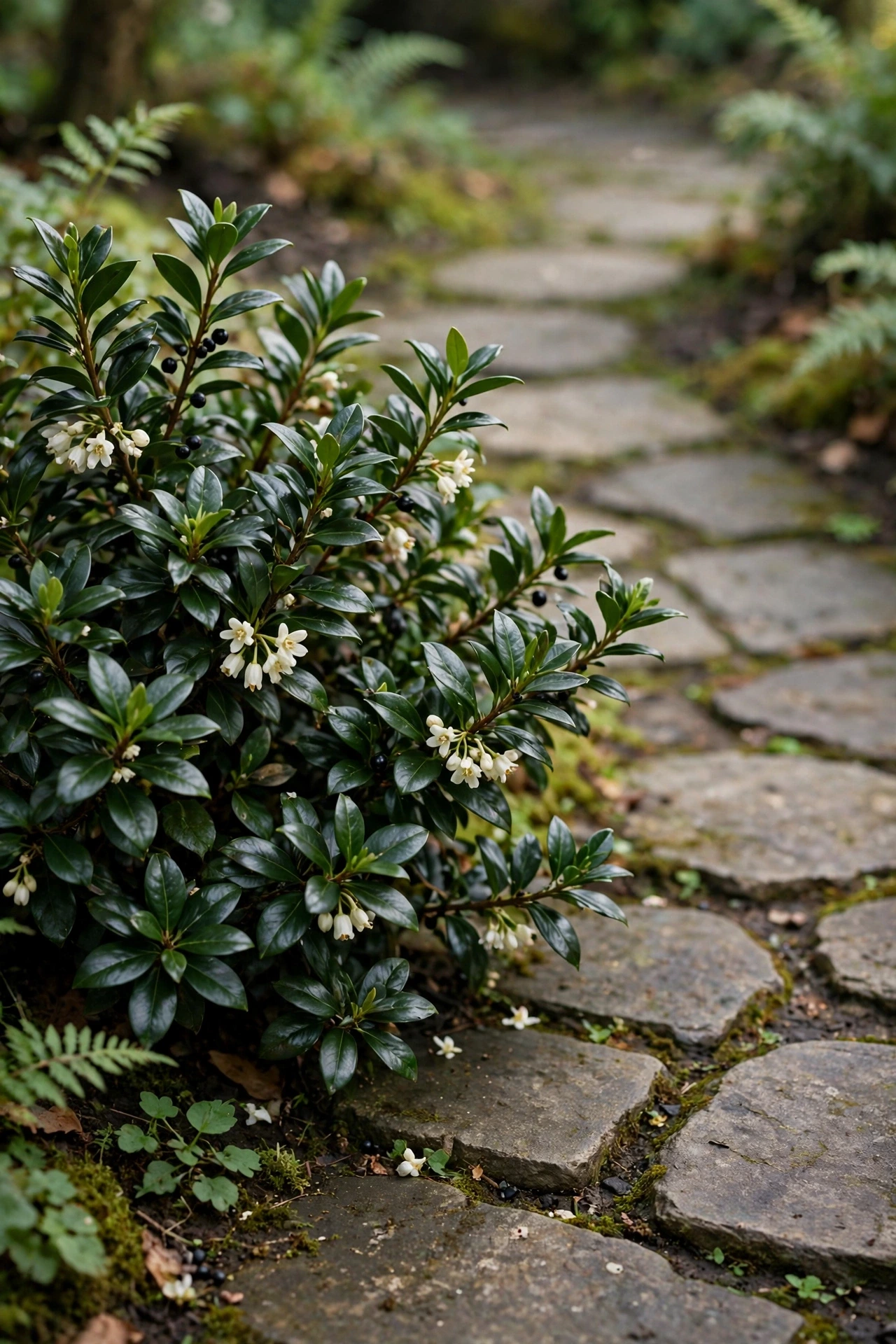
Cyclamen Coum as Low Winter Groundcover
Cyclamen coum is a reliable low-growing bloomer for USDA zone 6 and warmer, flowering from January through March in shades of pink, purple, and white above heart-shaped leaves marked with silvery speckles. Plant the tubers in partial shade with well-drained soil, ideally under deciduous trees or shrubs where they’ll get some winter sun before the canopy leafs out. Their small scale — usually just a few inches tall — makes them best suited to the front edge of a bed or tucked among taller plants like hellebores, rather than used as a standalone feature. They need very little winter care beyond avoiding overwatering, since the tubers are prone to rot in soggy soil. Once established, cyclamen coum will self-seed and slowly spread into a naturalized patch that returns reliably every winter.
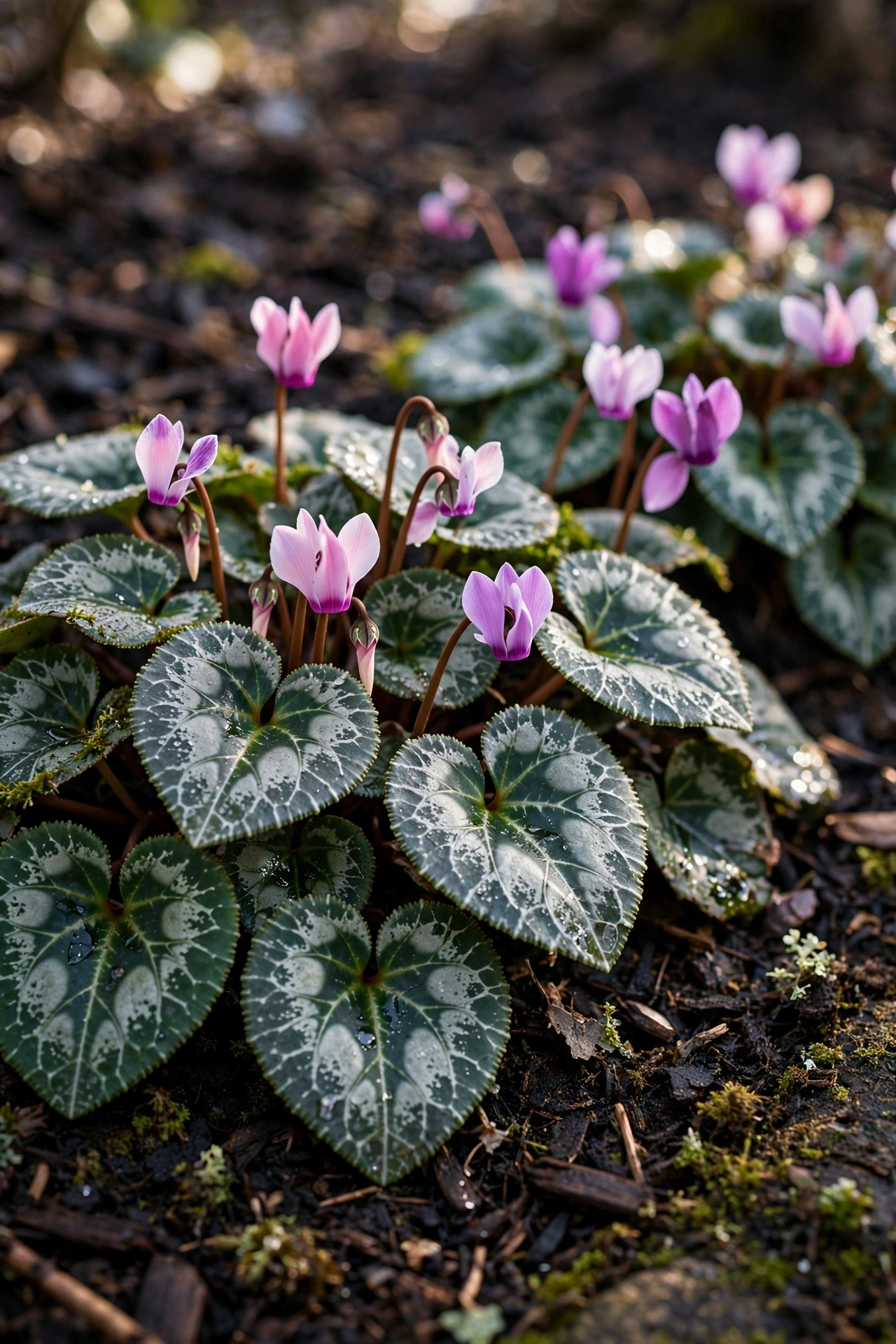
Primrose Pathway Edging
Primroses bring small, cheerful pops of pink, red, and yellow to the front of a winter bed, staying low enough to the ground that they never block the view of taller plants behind them. Most varieties are hardy in USDA zones 4 through 8 and bloom even in chilly conditions, planted in fall for winter and early spring color. They prefer partial shade and consistently moist, well-drained soil, making them a good companion for hellebores and cyclamen in a shaded bed. Cluster them in small groups along a walkway or bed edge rather than spacing them evenly apart, since clustering reads as more natural and gives a stronger hit of color at eye level. Combine them with a low evergreen groundcover nearby for a more polished, finished look through the rest of the season.
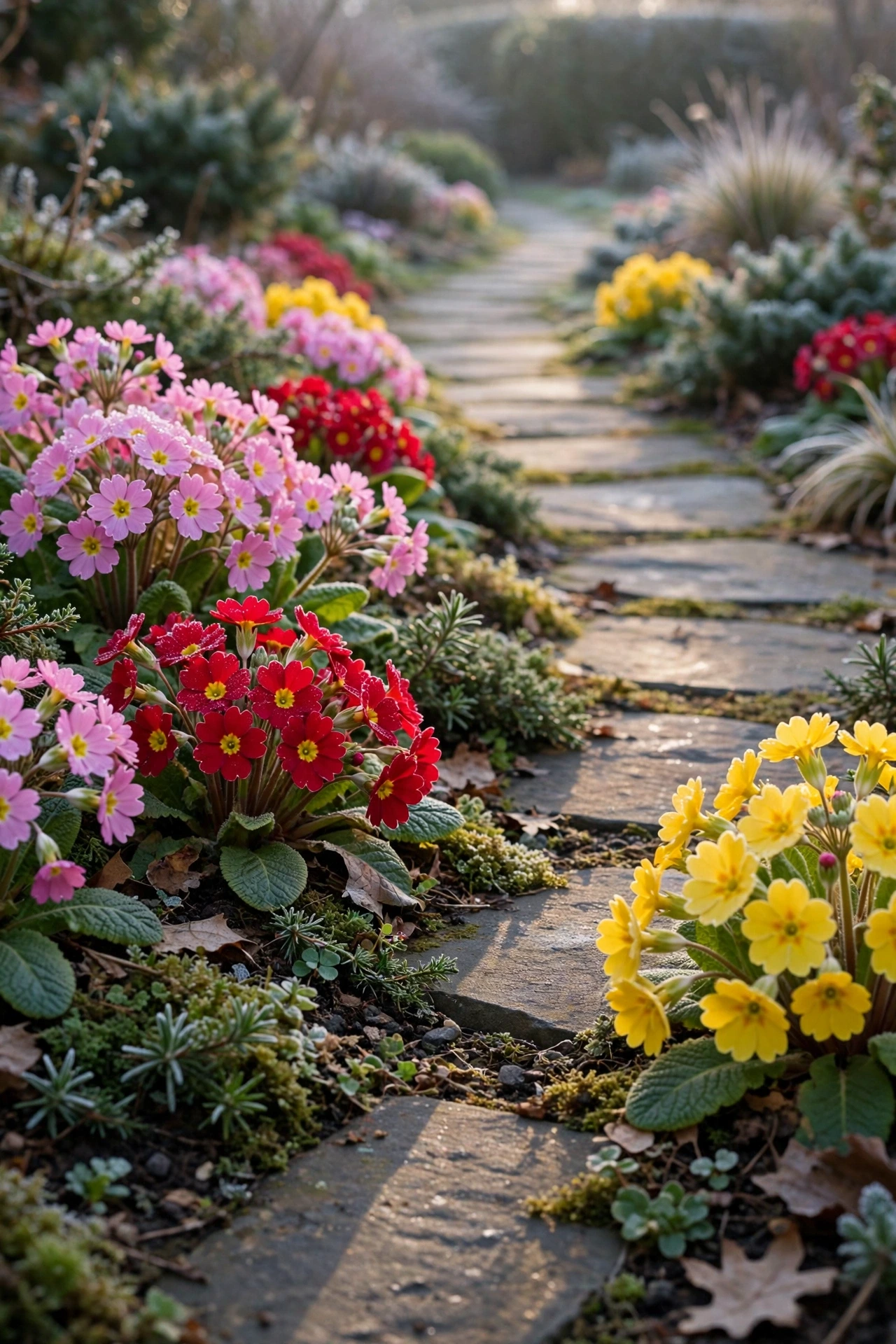
Crocus and Iris Reticulata for the Earliest Bulb Color
Crocus and Iris reticulata are both small bulbs that push up through cold, sometimes still-frozen ground before almost anything else in the garden, making them the earliest true color source in a USDA zone 3 through 8 winter bed. Iris reticulata reaches just 4 to 6 inches tall with striking blue, purple, or yellow flowers, native to mountainous regions and genuinely tough in cold climates. Plant both in fall, in full sun, with well-drained soil, since bulbs sitting in wet ground over winter are prone to rot before they even get the chance to bloom. Their small size means they’re easy to lose in a large bed, so plant them in tight clusters at the front edge, in rock gardens, or in containers near an entry where they won’t get visually crowded out. Both multiply naturally over several seasons, so a modest planting now becomes a fuller drift within a few years.
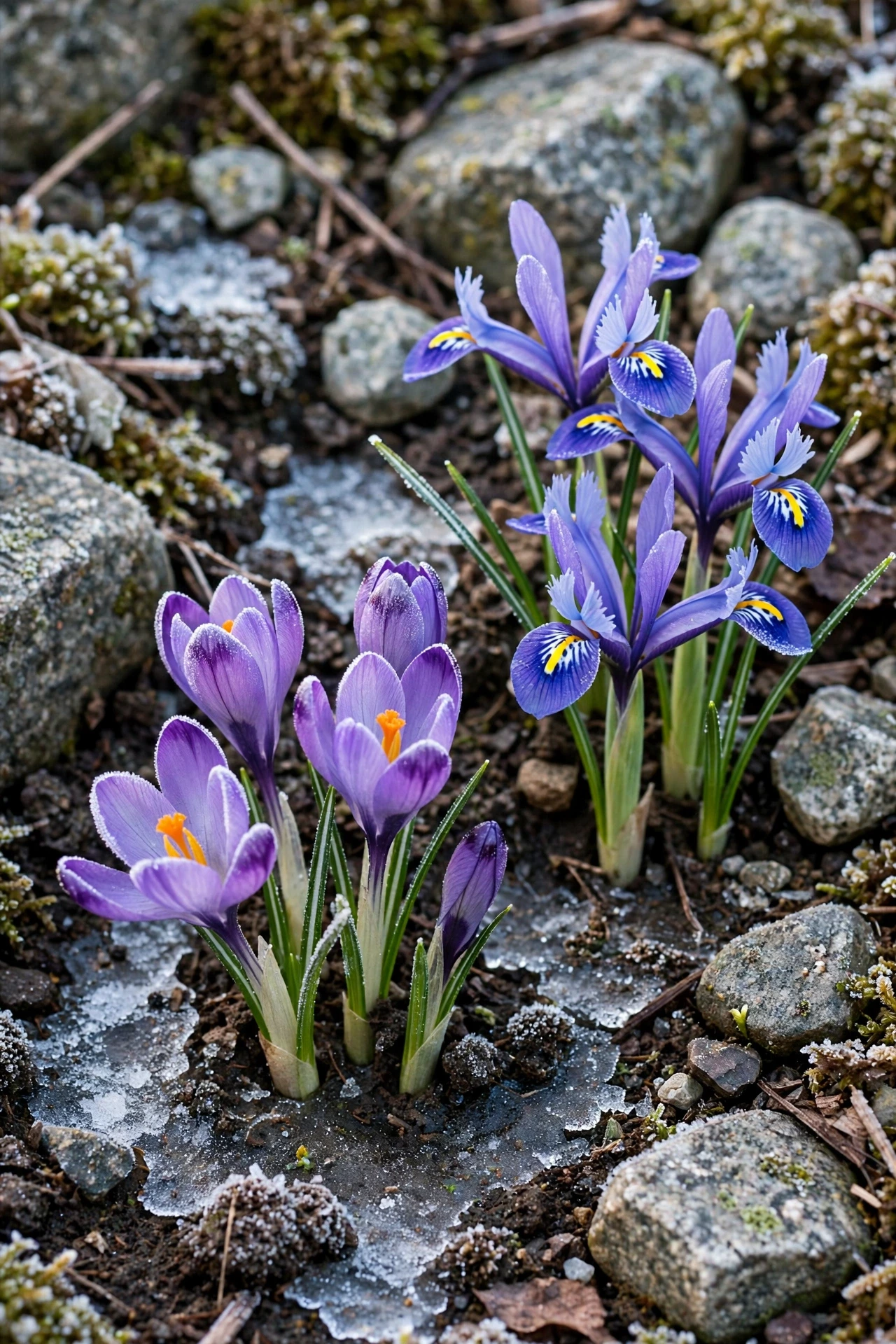
Red-Twig Dogwood for Color Without a Bloom
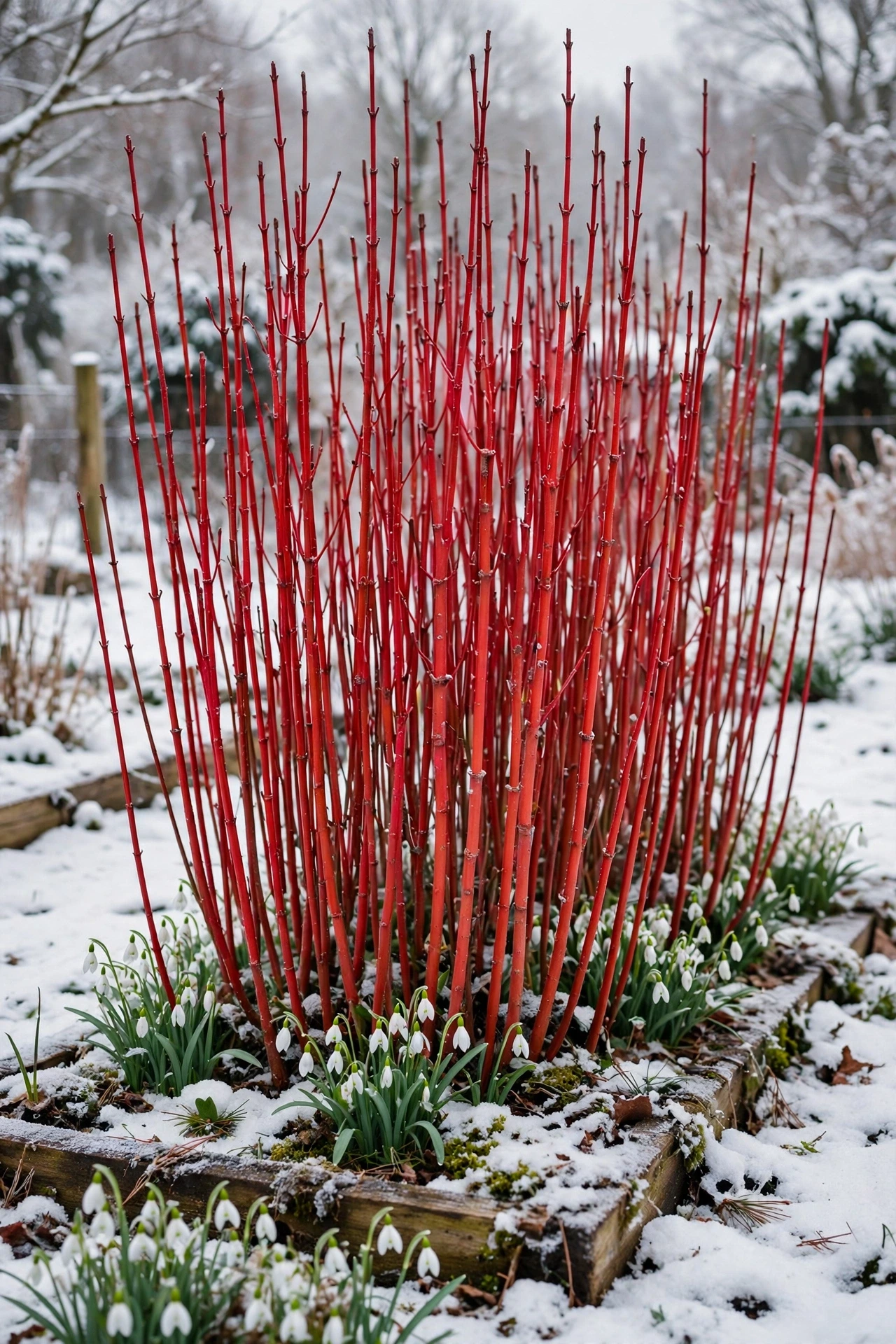
Red-twig dogwood isn’t a flower at all, but its bright red or coral stems do more for winter color than most actual blooms manage, especially once the leaves drop and there’s nothing else competing for attention. It’s hardy in USDA zones 3 through 8, tolerates full sun to partial shade, and adapts to a wide range of soil types, which makes it one of the easiest plants on this entire list to grow successfully. Plant it as a backdrop for smaller winter bloomers like snowdrops or winter aconite, where the contrast between bright red stems and white or gold flowers creates real visual depth. Prune out the oldest, dullest stems each spring, since new growth produces the brightest color and older wood fades toward gray-brown over time. Grouped in a mass planting, red-twig dogwood reads almost like a solid wall of color against snow, which is hard to achieve with flowers alone.
Winterberry Holly for Color Through Berries
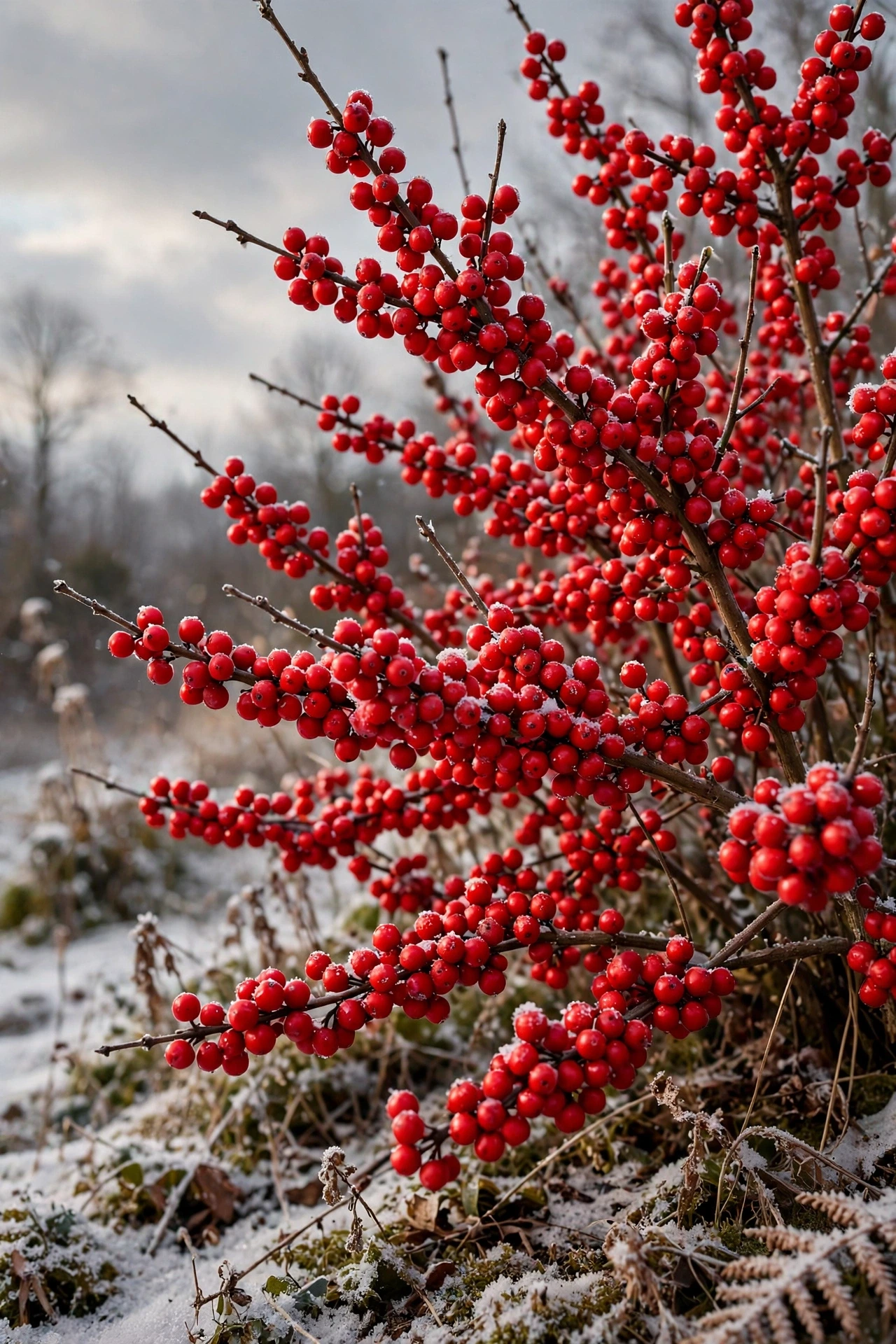
Winterberry holly is another non-flowering color source, producing dense clusters of bright red berries along bare stems once its leaves drop in fall, and the display often lasts well into winter since birds tend to leave the berries alone until food gets scarce. It’s hardy in USDA zones 3 through 9 and needs both a male and female plant nearby to produce berries at all, so check the tag carefully before buying, since this is the single most common mistake gardeners make with this shrub. Plant it in full sun to partial shade with consistently moist soil, since it naturally grows in wetland edges and doesn’t tolerate prolonged drought well. Use it as a backdrop for a bed the same way you’d use red-twig dogwood, letting the berry clusters carry the color while smaller bloomers fill in around the base. A single well-berried branch also works beautifully cut and brought indoors for a winter arrangement, extending its impact past the garden bed itself.
Styling Tips
Layer your winter bed the same way you’d layer a wardrobe for the season — flowers and low bulbs in front, structural shrubs like mahonia or dogwood behind them, and evergreens as the steady backdrop that holds the whole thing together. Repeat one or two colors across several plants instead of scattering every shade you like, since a coordinated gold-and-white or purple-and-white palette reads as designed rather than random. Group small bulbs like snowdrops, crocus, and winter aconite in dense clusters rather than spacing them evenly, since drifts photograph and read better than scattered single plants. Pay attention to bloom timing across the whole bed so something is always flowering from late fall through early spring, instead of one big flush followed by weeks of nothing.
Practical Implementation Ideas
Plant spring and early-winter bulbs in fall, roughly six to eight weeks before your ground typically freezes, so root systems have time to establish before dormancy sets in. Test your bed’s light exposure in winter specifically, not summer, since bare deciduous trees let far more sun through in January than they do in July — a spot that’s shady in summer might be full sun for a winter bloomer. Improve drainage before planting anything, since more winter bloomers die from waterlogged roots than from cold temperatures alone; raised beds or amended soil solve this in heavier clay. Mulch after the ground first freezes, not before, to protect roots through temperature swings without smothering plants that are actively trying to grow. Walk your beds every couple of weeks through winter, since this is the season most gardeners skip checking on their yard, and small problems like standing water or animal damage go unnoticed the longest.
Common Mistakes to Avoid
Planting summer-blooming heather varieties by mistake is one of the most common errors, since Calluna and Erica look nearly identical on a nursery tag but bloom in completely different seasons — always confirm “winter-blooming” or “Erica carnea” specifically. Skipping hardiness zone checks is another frequent miss; a camellia or mahonia that thrives in zone 8 can die outright in a zone 5 winter, so match every plant to your actual zone before buying. Overwatering dormant bulbs is a quiet killer, since most winter bulbs rot in soggy soil far more often than they freeze to death. Forgetting berry-producing shrubs need a pollinator partner, like winterberry holly’s male-and-female requirement, leads to a shrub that never produces the color it was planted for. And clearing every leaf and stem from a bed in late fall removes shelter for beneficial insects overwintering in the soil, so leave some natural debris until early spring cleanup instead.
Small-Space Alternatives for Patios and Containers
Cyclamen, primrose, and pansies all perform well in containers as small as 10 to 12 inches deep, making a patio or balcony a workable option even without a single square foot of ground-level bed space. Group three containers of varying heights near a front door for the same layered effect a full bed would give, using a tall mahonia or dwarf conifer in the back pot and trailing pansies in the front one. A single cyclamen or primrose pot on a windowsill or entry step still delivers real winter color in an apartment or townhome setting with no yard at all. Winter jasmine also adapts well to a large container if trained up a small trellis, giving vertical color to a balcony that a sprawling in-ground planting couldn’t provide in tight quarters.
Budget-Friendly Alternatives
Bulbs are the least expensive way to fill a winter bed with real color — snowdrops, crocus, and winter aconite all cost a fraction of a mature shrub and multiply naturally, so a modest bulb order now becomes a fuller planting in just two or three seasons. Pansies and violas, sold as inexpensive annual six-packs each fall, cover more visual ground per dollar than nearly anything else on this list. Skip the pricier hybrid camellias if budget matters and lean on witch hazel or red-twig dogwood instead, both of which are widely available and considerably less expensive at most nurseries. Buying bare-root shrubs in late fall, rather than potted specimens in spring, is typically the cheapest way to add structural plants like mahonia to a bed.
Pro Styling Recommendations
Plant in odd-numbered groupings — three or five of the same bulb or shrub — since odd numbers read as more natural than even, matching pairs in a garden bed the same way they do in interior styling. Choose one dominant winter color story for the whole yard, not one per bed, so the entire landscape feels intentional when viewed from the street or a window. Prioritize fragrance near paths, doors, and windows specifically, since scent from witch hazel, sarcococca, or daphne gets wasted if planted somewhere you rarely walk past in winter. And always plant your earliest bloomers, like snowdrops and winter aconite, somewhere visible from an indoor window — they’re often blooming during the exact weeks you’re least likely to go outside and look for them.
FAQs
Conclusion
None of these sixteen ideas need a greenhouse, a mild climate, or a full redesign of your yard. Match a handful of these plants to your actual USDA zone and light conditions, plant the bulbs this fall, and by January your flower bed will be doing something most of the neighborhood’s beds aren’t: blooming. Winter was never really the off-season for a garden. It just needed the right plant list.