15 Winter Urn Planter Ideas That Beat the Cold
Most winter urn planters have a shelf life of about three weeks.
They look gorgeous the day they’re arranged, then the first hard freeze hits, the greenery goes brown, the ceramic develops a hairline crack nobody notices until spring, and by January the whole thing looks worse than if it had been left empty.
That’s not bad luck. That’s a plant selection problem, and often a container problem too.
The urns that actually make it to March looking full and intentional aren’t using different tricks, they’re using the right materials in the first place. Genuinely cold-hardy greenery instead of fall leftovers that were never built for a hard freeze. Containers that can handle a freeze-thaw cycle without cracking, or protection that keeps a beautiful ceramic urn from becoming a casualty of the season.
Here are 15 winter urn planter ideas that are built to actually beat the cold, not just survive the first photo.
Table of Contents
Why Most Winter Urns Fail Before February
Winter is genuinely harder on containers than any other season, for two separate reasons that most decorating guides skip entirely. The first is the plant material itself: a lot of what gets used in fall arrangements, like mums or ornamental grasses, was never bred to handle a hard freeze and simply dies at the first real cold snap. The second is the container. Water trapped in soil and in a porous pot wall expands as it freezes, and that expansion is exactly what cracks terracotta, standard ceramic, and even some concrete urns over a winter’s worth of freeze-thaw cycles. A winter urn that beats the cold has to solve both problems, not just the first one.
Dwarf Alberta Spruce as a Living Centerpiece
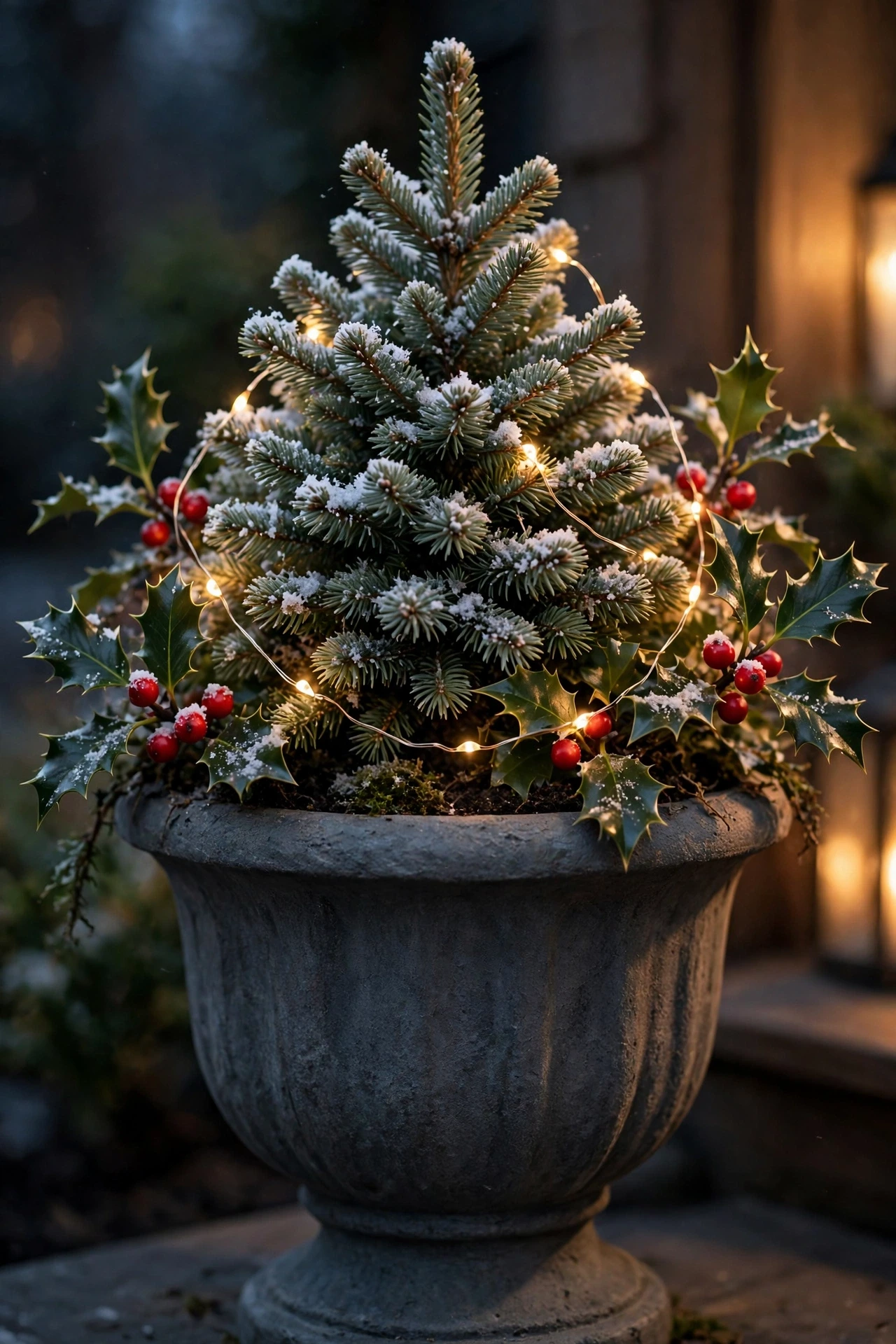
A dwarf Alberta spruce planted directly in the center of the urn functions like a miniature, structured Christmas tree and is genuinely hardy down to USDA zone 2, meaning it can handle far colder temperatures than almost anything else on this list. Because it’s a living, slow-growing evergreen rather than a cut branch, it holds its shape and color for the entire winter without any replacement needed, and it can often be transplanted into the yard in spring to keep growing for years. Surround the base with holly sprigs or red berries for a pop of color against the dense green needles, and tuck in a thin strand of battery-powered fairy lights if evening curb appeal matters. Because it’s a real, rooted plant, it needs regular winter watering whenever the soil isn’t frozen solid, which is a detail most winter urn guides skip entirely.
Layered Cut Evergreen Boughs (No Living Plant Required)
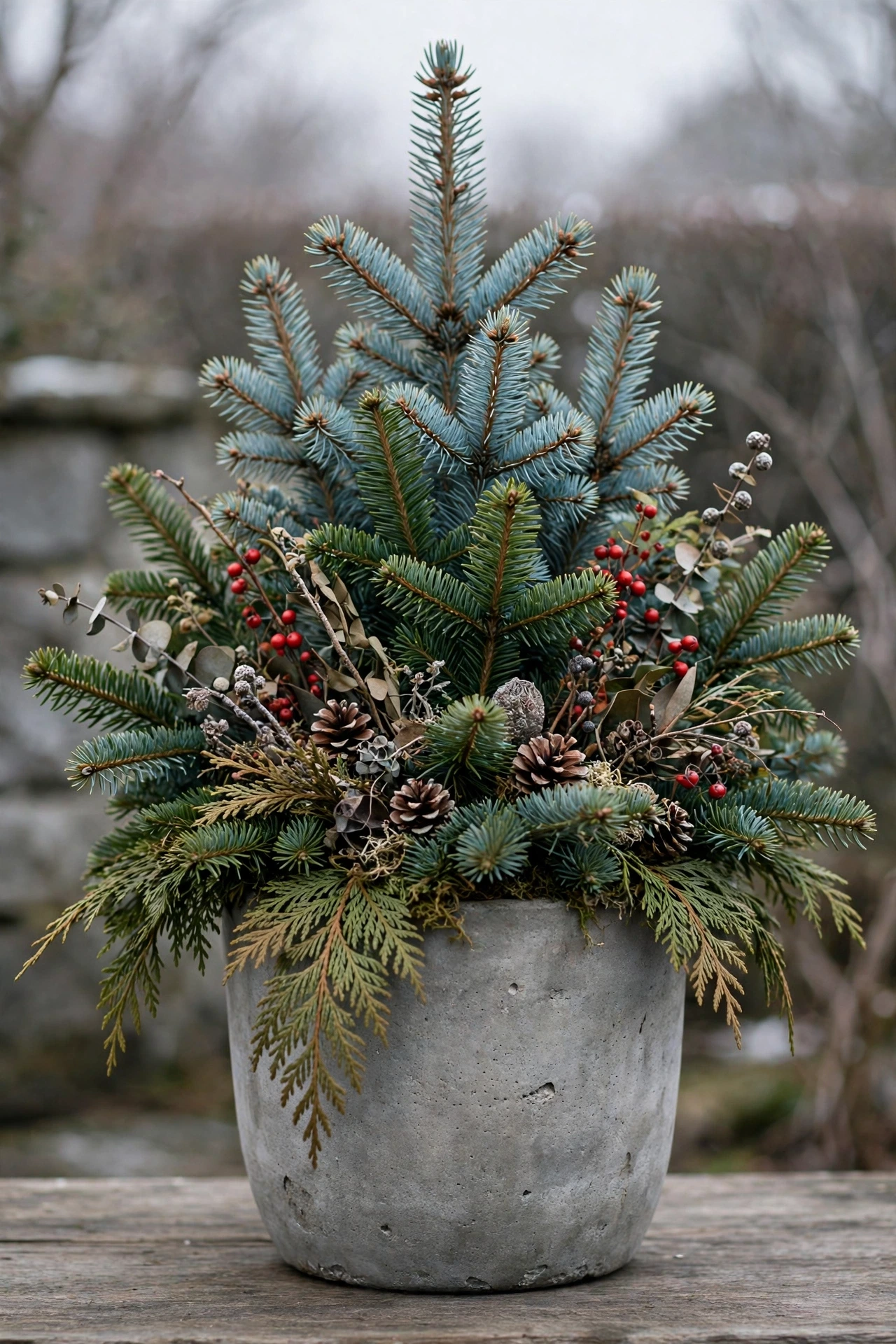
For anyone who doesn’t want to manage a living plant through the coldest months, a layered arrangement of cut evergreen boughs, like cedar, fir, and blue spruce clippings, delivers the same lush winter look with zero watering or root concerns. Building the arrangement in layers, starting with the tallest branches upright in the center of florist foam or gravel for stability, then working outward with shorter, fuller boughs, creates real depth instead of a flat bundle of sticks. Because the branches are already cut, they’ll dry out gradually over the season, so refreshing the arrangement with new clippings every four to six weeks keeps the color from fading to brown. This is the lowest-maintenance option on the entire list, since there’s no plant to keep alive, only greenery to occasionally swap.
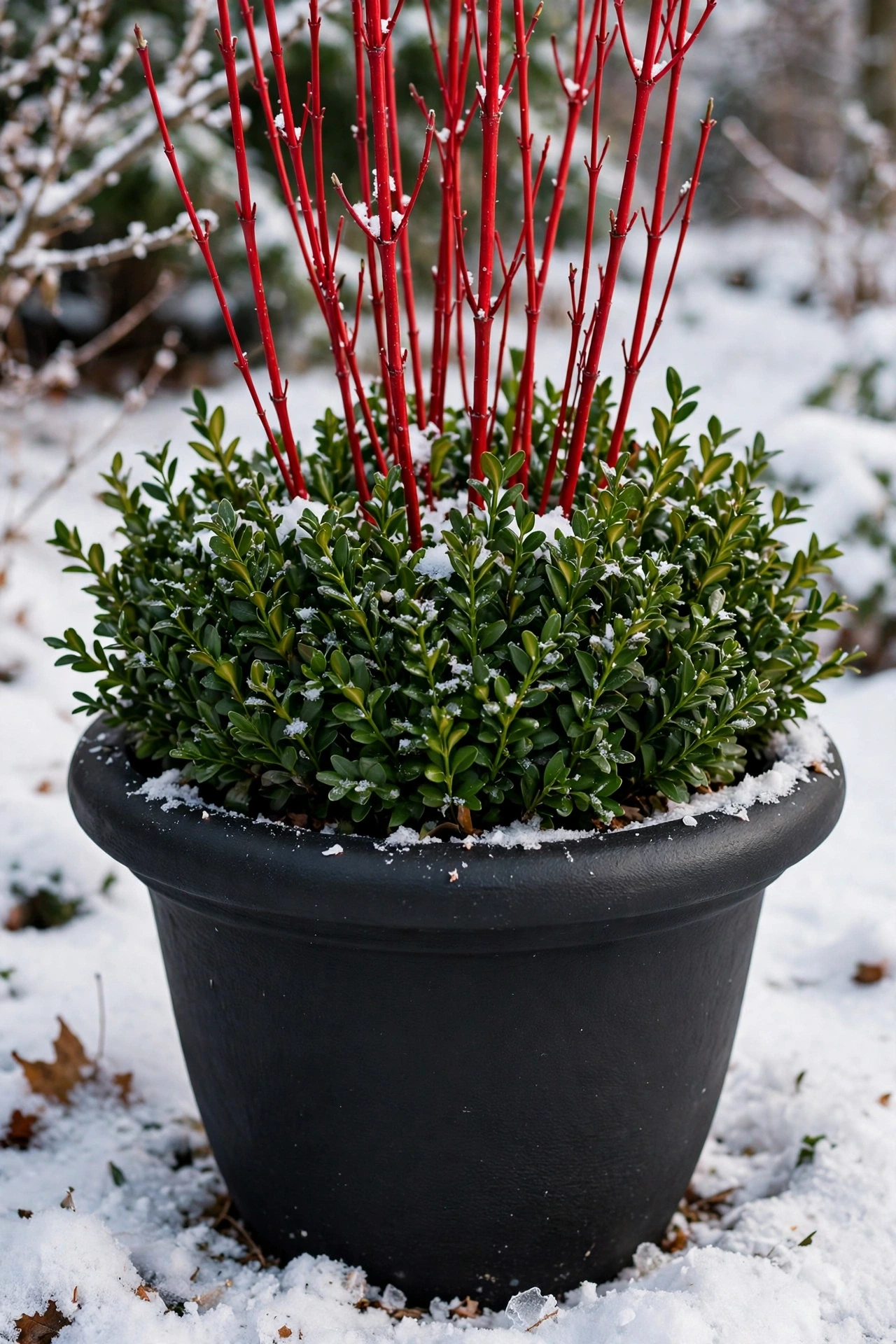
Red Twig Dogwood With a Boxwood Base
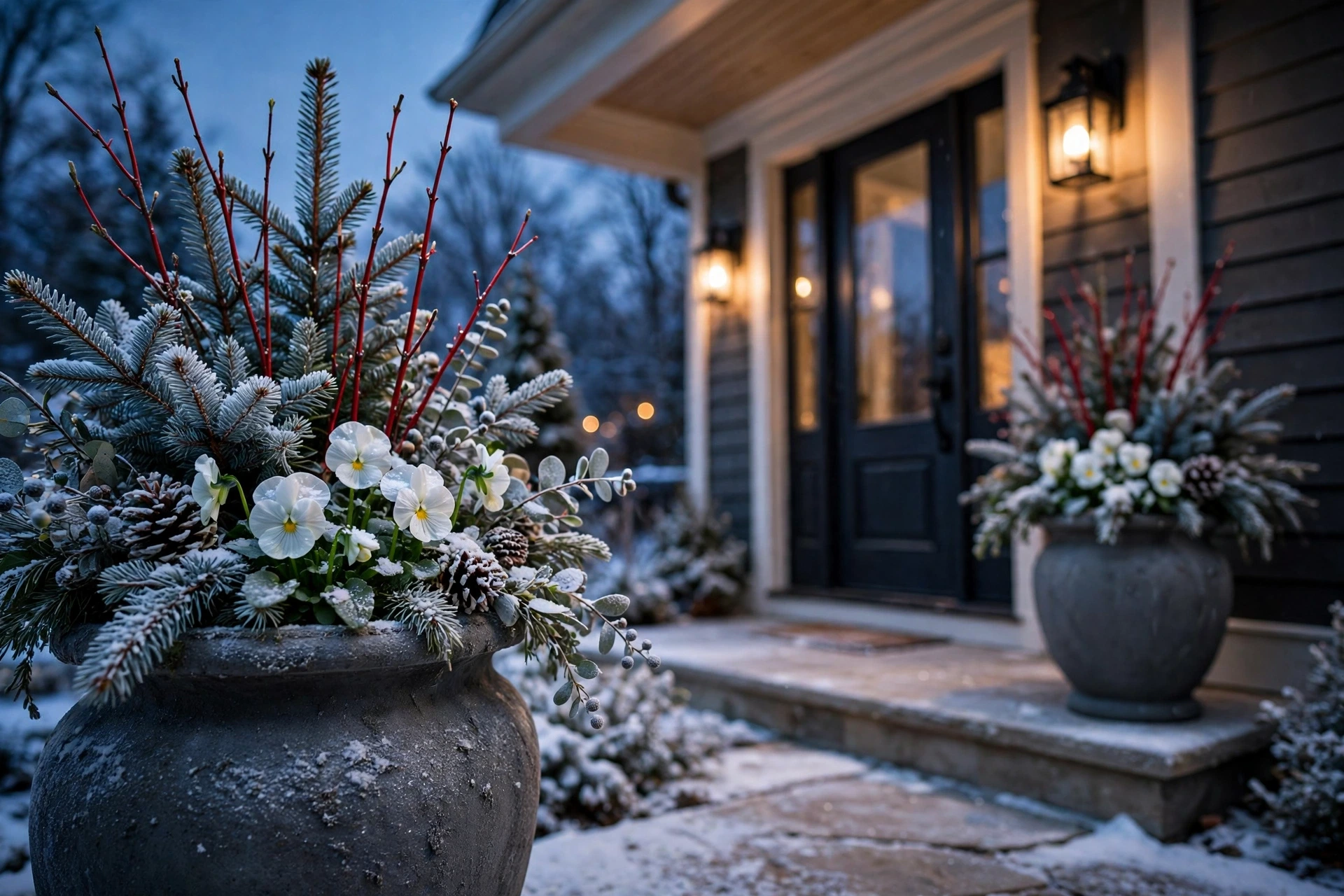
Red twig dogwood is one of the few plants that actually gets more visually interesting in winter, since its bare stems turn a vivid, almost lacquered red once the leaves drop, especially after a hard frost. Standing several stems upright in the center of the urn, then surrounding the base with dense, low boxwood clippings, creates a striking color contrast between the bright red height and the deep green base. Both plants are hardy well into zone 4 and tolerate being cut and displayed without soil for weeks, making this a reliable choice even in genuinely harsh winter climates. The stems can also be pushed into the soil and left to root if the urn stays outdoors year-round, effectively turning a cut arrangement into a living shrub over time.
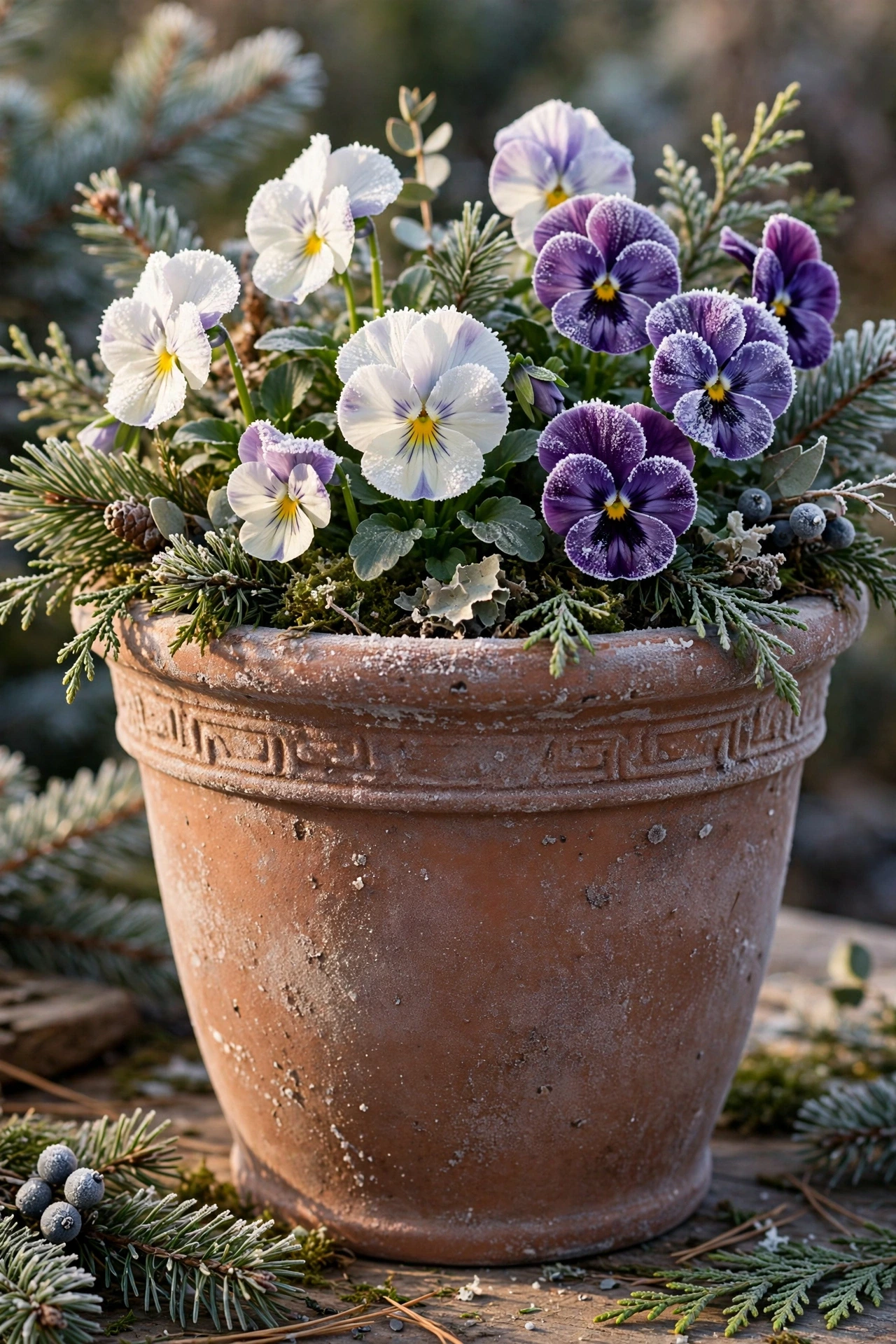
Winter Pansies and Violas for Real Color
Unlike nearly every other flowering plant, winter pansies and violas are genuinely bred to bloom in cold temperatures and will keep flowering through repeated light frosts, going dormant only in the very coldest stretches before reblooming as temperatures rise slightly. Tucking a cluster of white or purple pansies into a bed of pine or fir clippings gives an urn actual living color through winter instead of relying entirely on foliage and berries. These plants perform best in urns that get at least a few hours of direct winter sun and appreciate soil kept on the slightly dry side, since consistently soggy soil in cold weather is more likely to cause rot than the cold itself. This is one of the only ideas on this list that delivers real blooming flowers, not just structural greenery, through the coldest months.
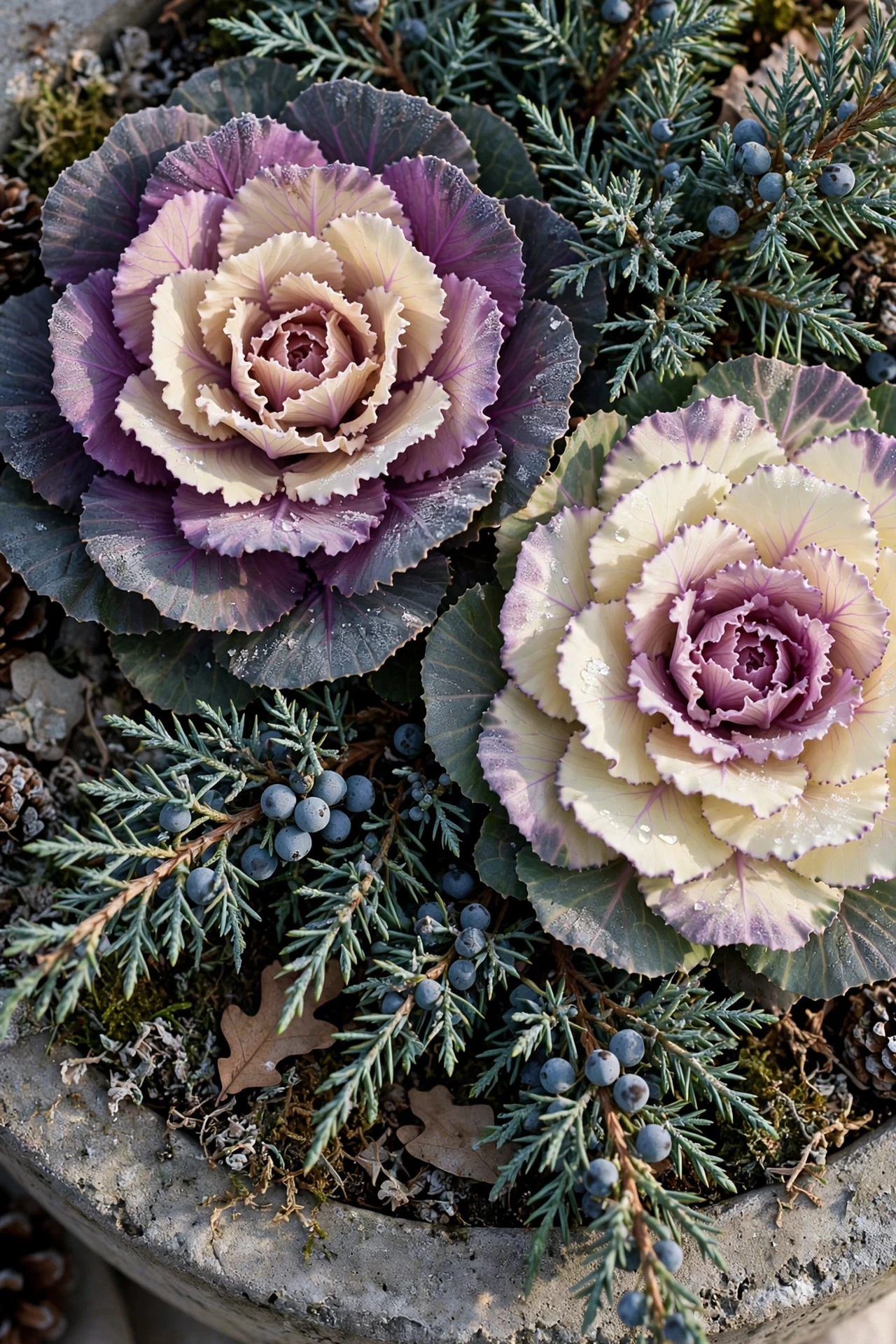
Ornamental Cabbage and Kale Rosettes
Ornamental cabbage and kale actually improve in appearance as temperatures drop, since cold weather intensifies the purple, white, and pink pigments in their rosette-shaped leaves rather than damaging them. Placing one or two large heads at the center or front of the urn, then surrounding them with juniper sprigs for textural contrast, creates a display that looks almost sculptural rather than like a typical vegetable planting. These plants tolerate temperatures down into the low twenties Fahrenheit without protection, though a hard freeze below that point will eventually cause the outer leaves to collapse, at which point they can simply be removed and replaced with fresh greenery. Because they’re inexpensive and widely available at garden centers through early winter, this is one of the more budget-friendly ways to add real color and texture to an urn.
Birch Branch Bundle for Vertical Structure
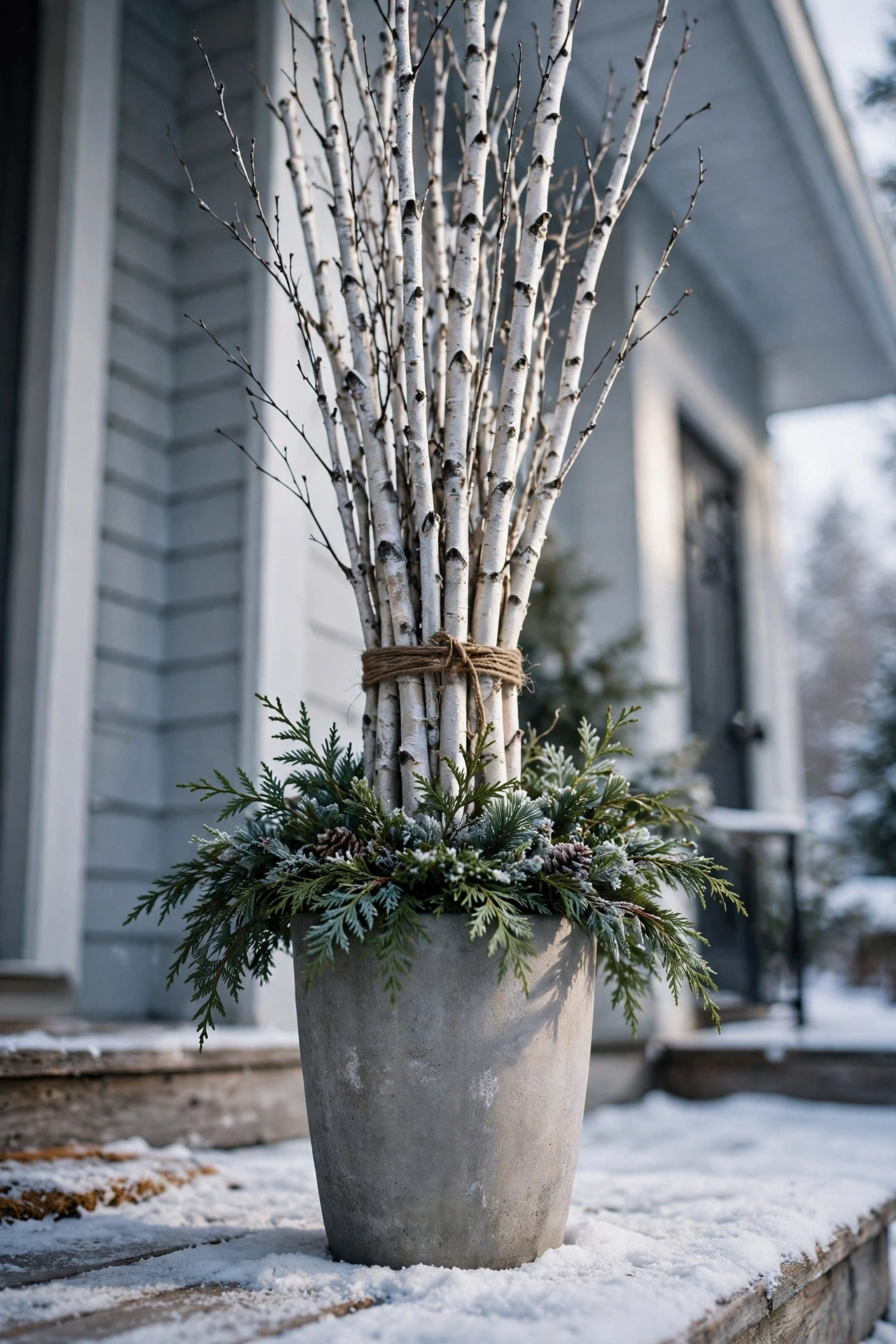
A bundle of white birch branches, stood upright and gathered together with wire or twine near the base, gives an urn strong vertical height and a distinctly rustic, cabin-like character that holds up visually all winter without any maintenance at all. Because birch branches are simply cut wood rather than a living plant with roots, they never wilt, brown, or need water, making this one of the most foolproof options for anyone who travels or can’t check on their porch regularly during winter. Anchoring the branches deeply into moistened floral foam or packed soil keeps them stable in wind, which matters more for this design than almost any other on the list given how top-heavy a tall branch bundle can be. Wrapping a bit of cedar or fir around the base hides the mechanics of the arrangement and adds a layer of green at eye level.
Magnolia Leaves With Purple Winter Heather
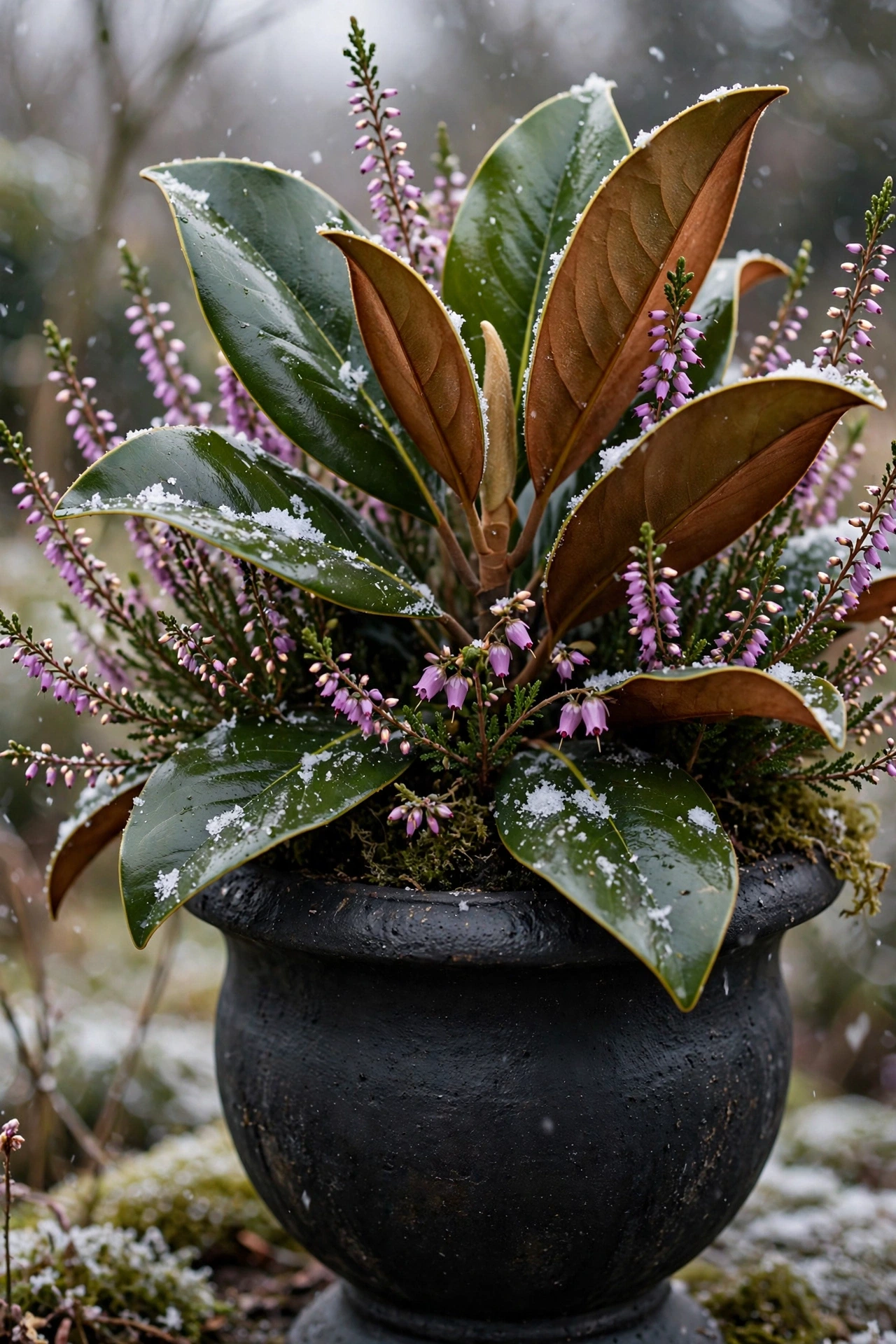
The glossy deep green top and warm brown underside of magnolia leaves give an urn a rich, almost formal texture that pairs beautifully against the soft purple blooms of winter heather, a plant specifically bred to flower through cold temperatures. Magnolia branches hold their leaves for months once cut, since the thick, waxy leaf surface resists the moisture loss that causes most cut foliage to wilt quickly. Heather, meanwhile, is genuinely hardy into zone 5 and continues blooming even after light snow, making it one of the few true winter-flowering plants available at most garden centers. This combination reads as upscale and intentional with very little arranging effort, since the contrast between the glossy leaves and the soft purple blooms does most of the visual work.
Hellebores for True Winter Blooms
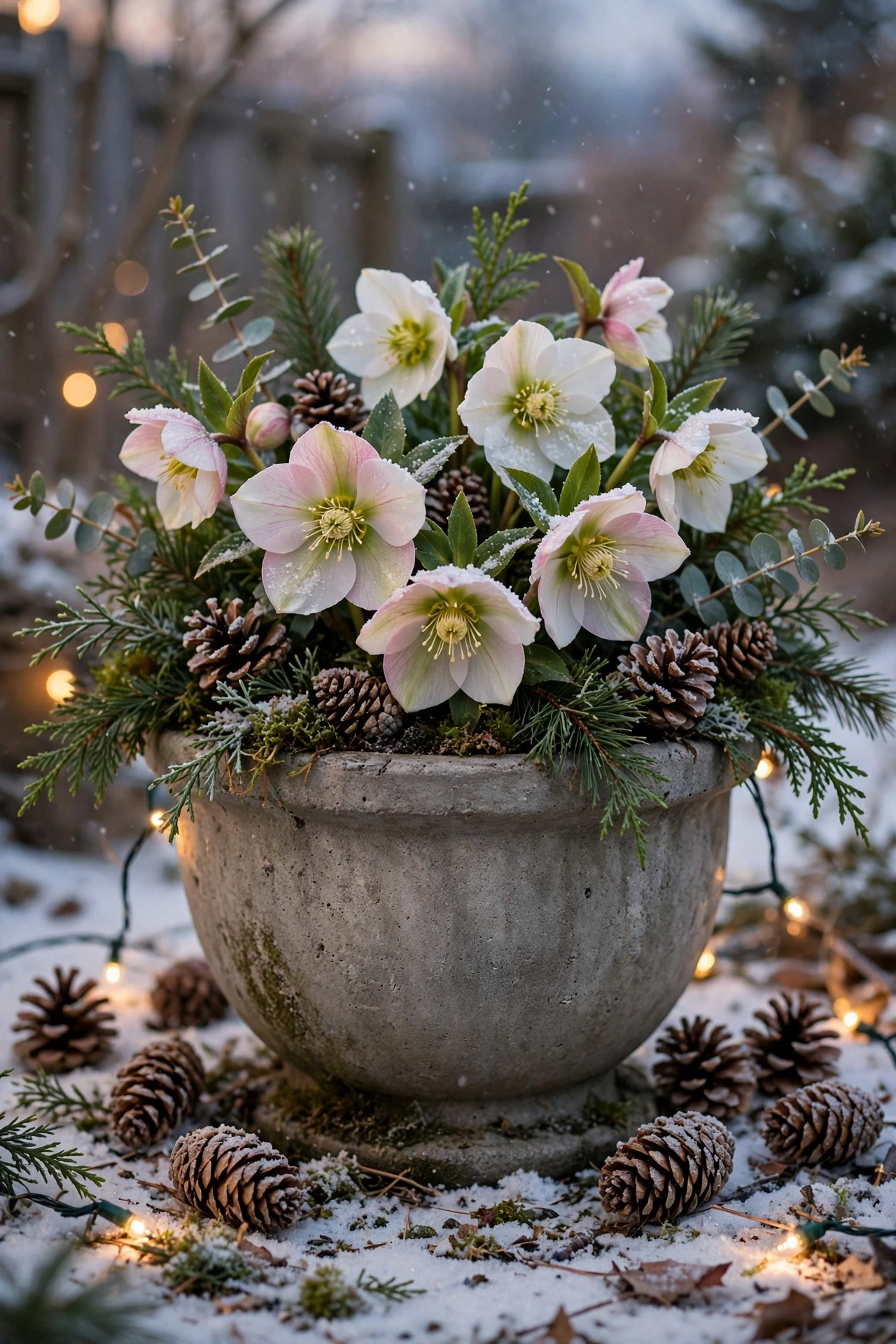
Hellebores, also known as Lenten or Christmas rose, are among the only perennial flowers that genuinely bloom in the dead of winter, often pushing up blooms directly through a light layer of snow in late December through February depending on climate. Planting them at the front of the urn where their downward-facing blooms are visible from a slightly lower angle, then filling in around them with pinecones and greenery, creates a display that keeps evolving as the flowers open through the season rather than staying static. Hellebores are hardy into zone 4 and actually prefer the cooler temperatures and indirect winter light most porches receive, making them better suited to this use than almost any other flowering plant. A short strand of white string lights tucked into the greenery around the base adds a soft glow that highlights the blooms once it’s dark.
Rosemary Topiary With a Cold-Climate Caveat
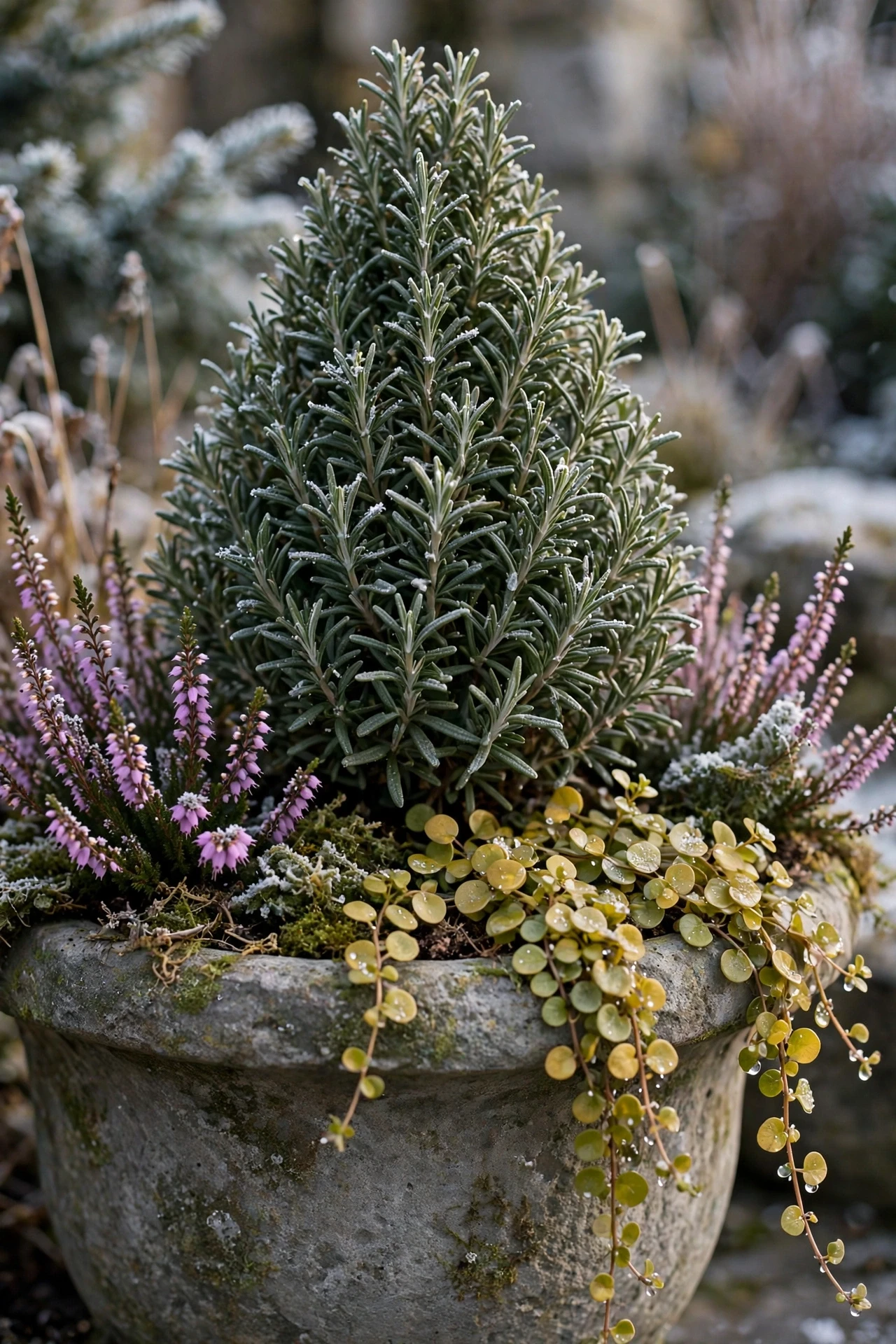
A rosemary shrub trimmed into a cone or ball shape makes a fragrant, structured centerpiece with a scent that releases every time someone brushes past the urn, but it comes with an important limitation most winter urn lists leave out: rosemary is only reliably winter-hardy outdoors in zone 7 and warmer. In colder zones, treat it as a seasonal annual that will likely need replacing after a hard freeze, or plan to bring the urn into an unheated garage or entryway during the coldest stretches to protect it. Surrounding the base with creeping jenny and heather, both of which tolerate cold far better than rosemary, extends the display’s cold tolerance even if the rosemary itself eventually succumbs. For anyone in a genuinely mild winter climate, this is one of the most fragrant and elegant options on the entire list.
Trailing Ivy and Dusty Miller for Silvery Softness
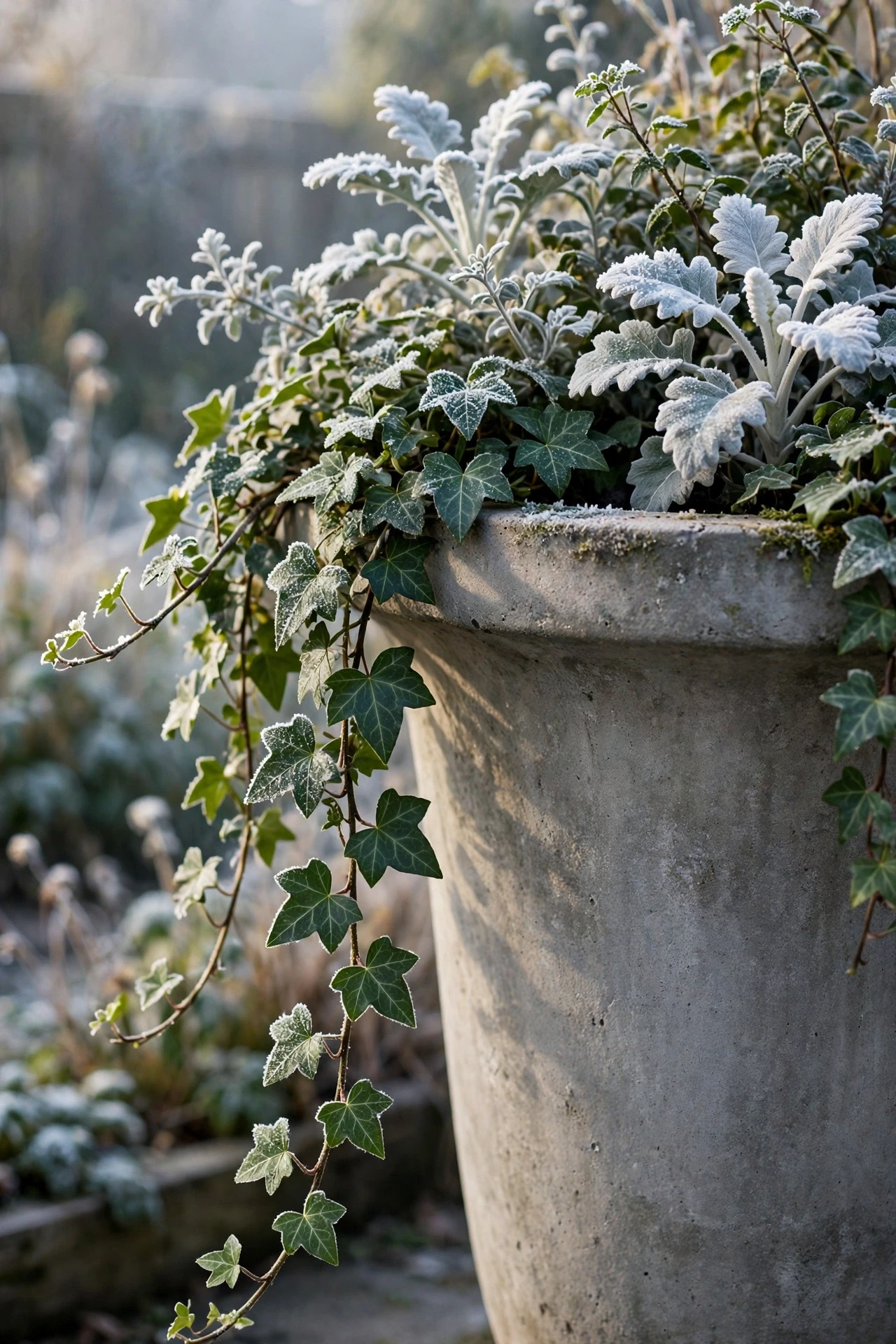
English ivy trailing over the edge of the urn softens the container’s hard lines, and it’s genuinely cold-hardy into zone 4, holding its green color through most winter conditions short of an extreme deep freeze. Paired with dusty miller, whose silvery, felted leaves handle frost noticeably better than most soft-leaved plants because of the fine hairs that trap a layer of insulating air, the combination brings a cool, frosted color palette that actually looks more intentional after a light snow than before it. Keeping the soil on the slightly dry side, rather than consistently moist, helps both plants tolerate cold snaps better, since waterlogged soil freezes solid faster and holds that cold against the roots longer. This pairing works especially well in a lower, wider urn where the trailing ivy has room to drape without overwhelming the container.
Juniper and Nandina Berries for Wildlife-Friendly Color
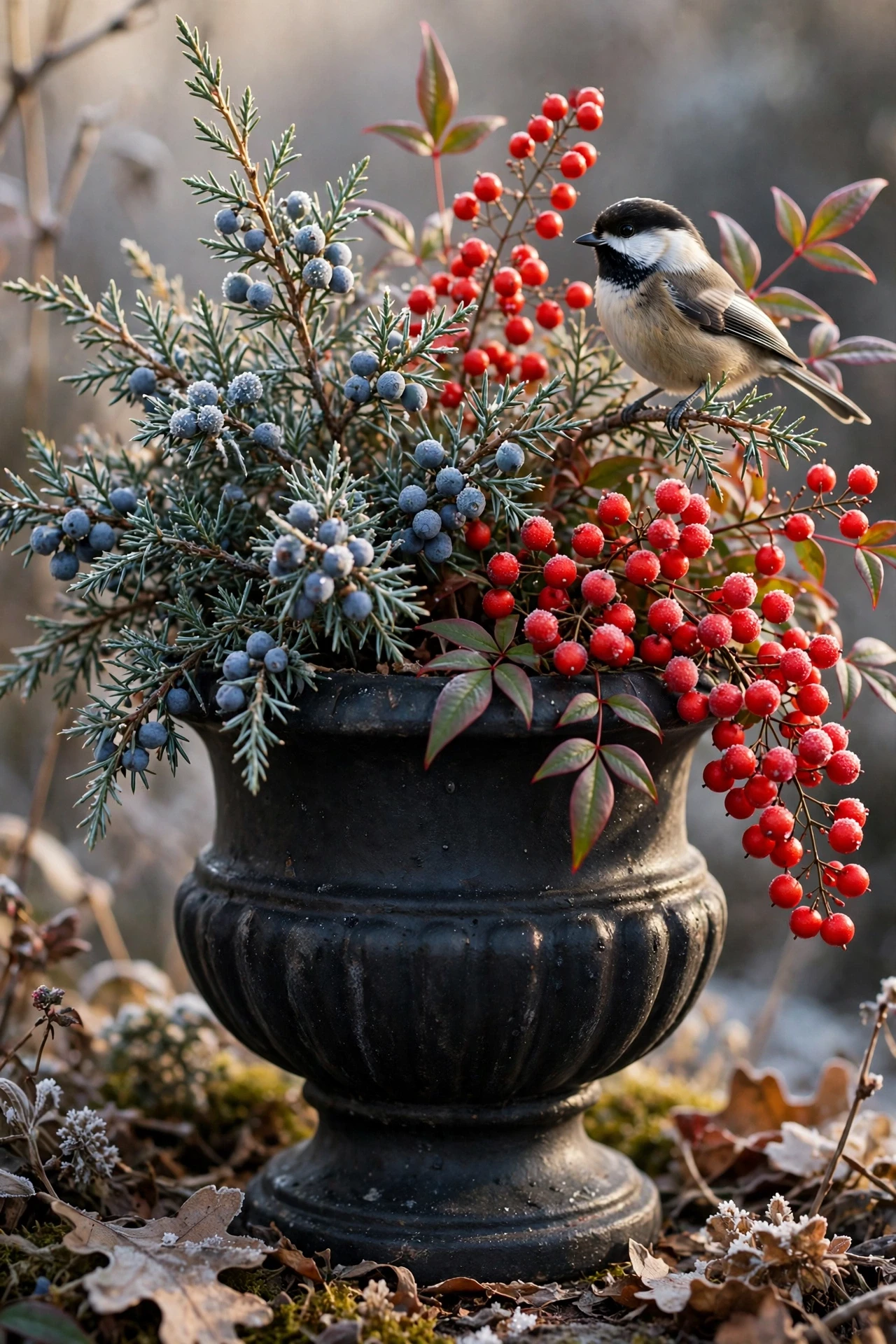
Juniper sprays with their small blue-toned berries, mixed with the bright red clusters of nandina berries, create a natural, woodland-inspired color palette that also happens to attract birds through the winter months, adding movement and life to what would otherwise be a static arrangement. Both plants are genuinely cold-hardy, with juniper tolerating conditions down into zone 3 and nandina performing reliably through zone 6, making this pairing suitable for a wide range of climates. The berries on both plants tend to hold on for weeks even in harsh wind and cold, unlike more delicate cut flowers or foliage that fades quickly once temperatures drop. Positioning the urn near a window means the occasional visiting cardinal or sparrow becomes part of the view, which is a detail purely decorative arrangements can’t offer.
All-Faux Winter Pick Arrangement for Extreme Cold Zones
In genuinely brutal winter climates, zone 3 and colder, where even the hardiest living plants and cut greenery can freeze solid, dry out completely, or blow apart in sustained wind, a well-made faux arrangement of frosted picks, artificial berries, and weatherproof ribbon solves the durability problem entirely by removing anything organic from the equation. High-quality outdoor-rated faux greenery is built to resist UV fading and won’t brown, wilt, or need replacing partway through the season, which makes it the single most reliable option on this list for anyone who wants a finished look without any seasonal maintenance. Mixing in a battery-powered pre-lit faux pick, the kind designed specifically for outdoor planters, adds evening glow without any exposed wiring or outlet dependency. This is the idea to reach for specifically when the goal is beating the cold completely rather than managing around it.
Lit Branch Arrangement for Evening Curb Appeal
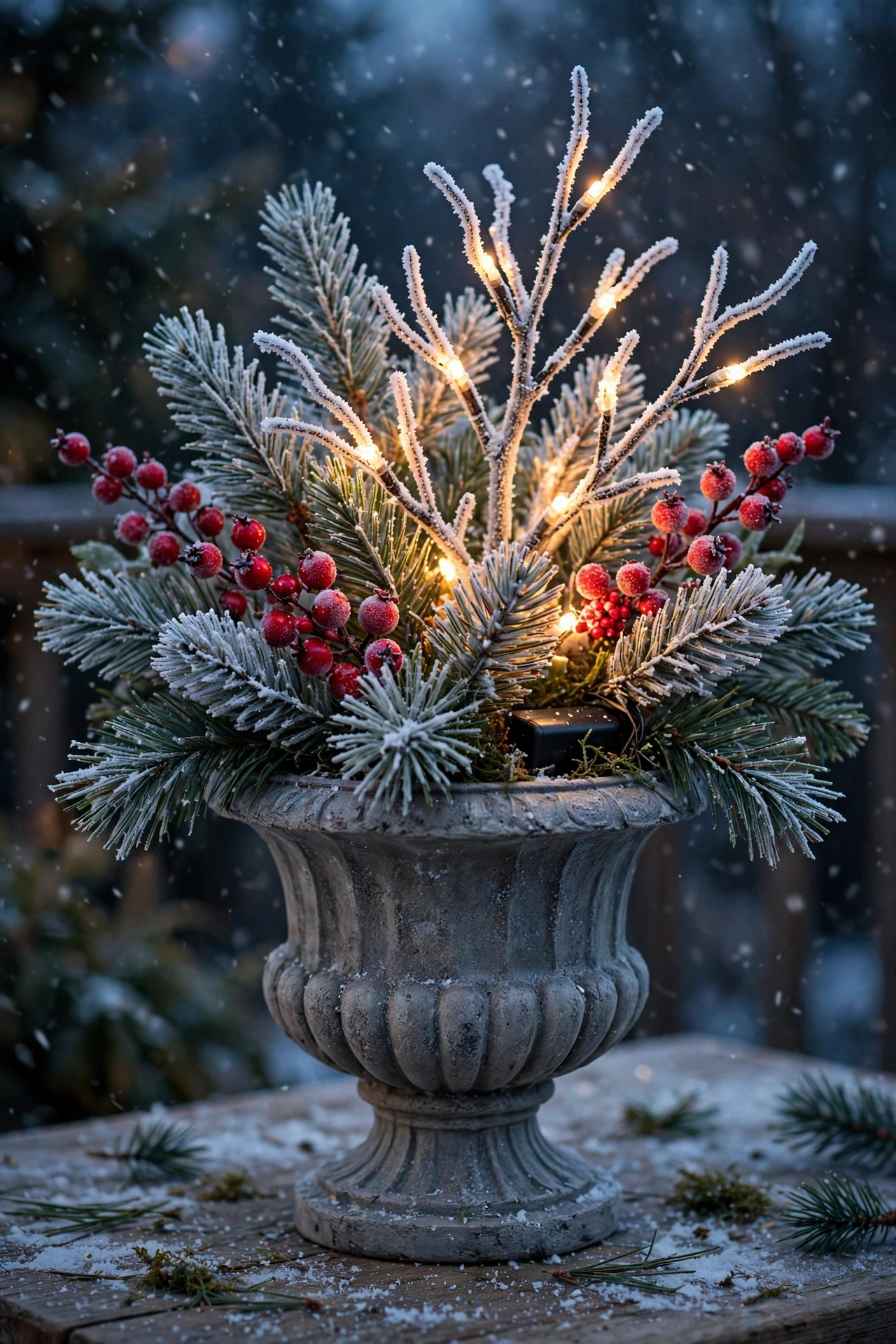
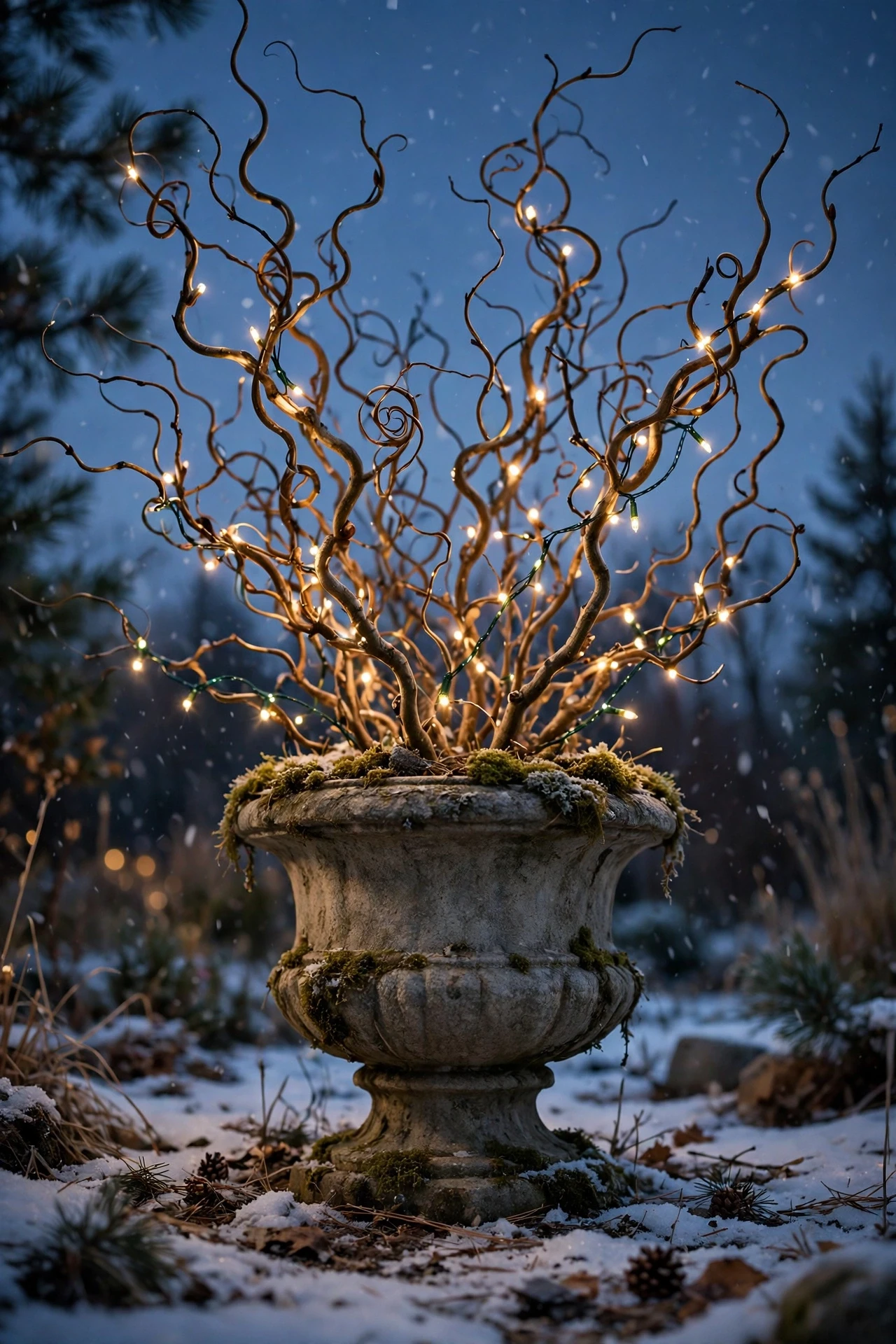
Weaving a strand of warm white battery-operated fairy lights through a bundle of birch or curly willow branches turns a daytime-only arrangement into something that reads beautifully after dark too, which matters more in winter when daylight hours are shortest. Battery-powered strands rated for outdoor use avoid the need for a nearby outlet or exposed extension cord running across a porch, and most last several weeks on a single set of batteries with an automatic timer function. Wrapping the lights in a loose spiral up the branches, rather than bunching them at the base, distributes the glow more evenly across the full height of the arrangement. This idea pairs well with almost any other structural idea on this list, from the birch bundle to the dwarf spruce, as an add-on rather than a standalone design.
Moss Base With a Rustic Lantern Accent
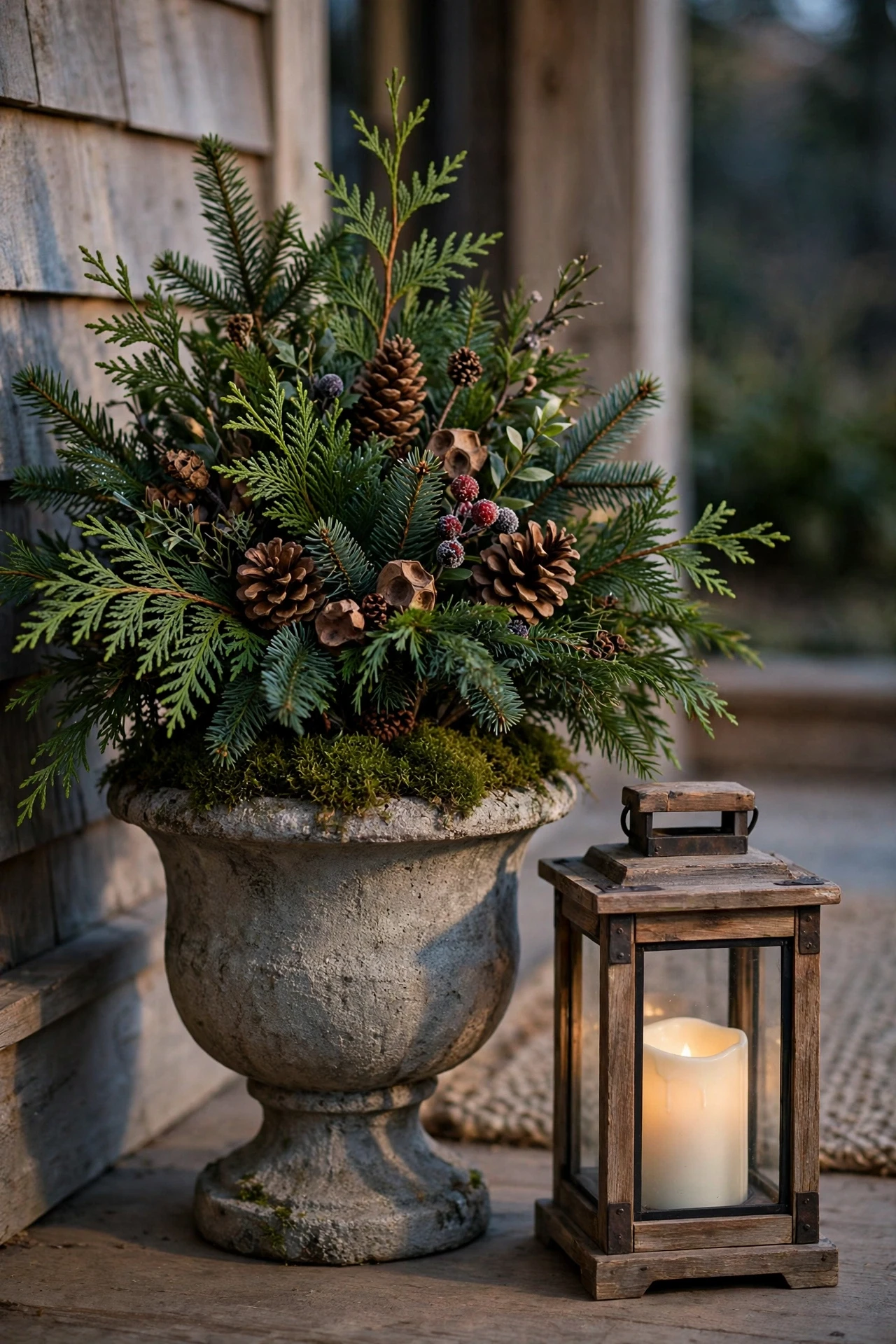
Covering the visible soil surface of the urn with a layer of fresh or preserved green moss instantly makes any arrangement look more finished, hiding the mechanics of floral foam or soil while adding a lush texture that holds its color well even in cold temperatures. Placing a small rustic lantern, ideally with a flameless battery candle rather than an open flame, directly beside the urn rather than inside it adds a warm focal point without competing for space in the container itself. Layering two or three types of conifer greenery, such as cedar, fir, and spruce, into the arrangement above the moss base creates real depth and fullness that a single greenery type can’t achieve on its own. This combination works especially well framing a front door, where the lantern’s glow and the layered greens create a styled moment even before anyone reaches the entrance.
Frost-Proofing the Urn Itself
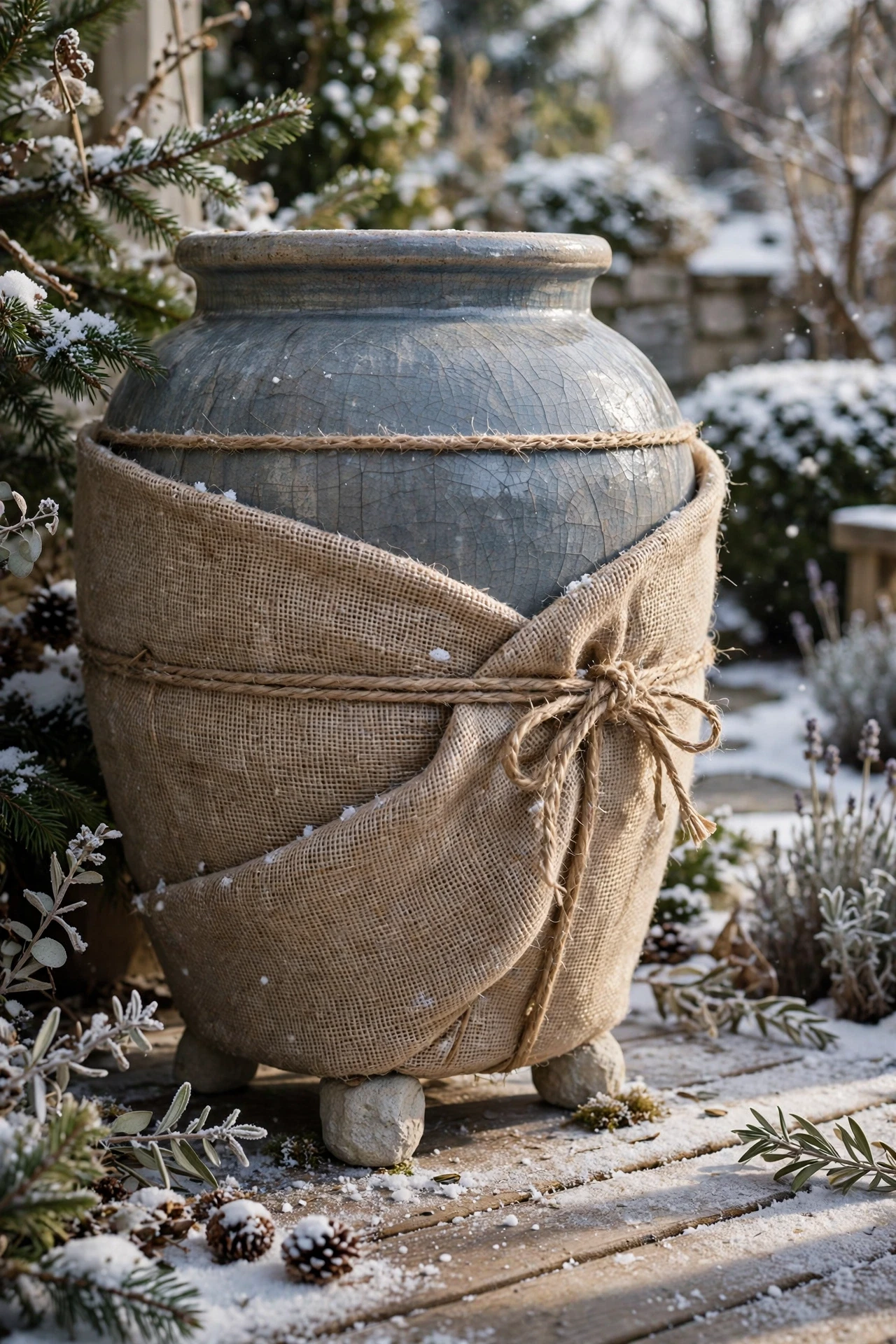
The plants and greenery are only half the equation, since even a perfectly designed arrangement is a loss if the urn underneath cracks from a hard freeze, and this is the piece most winter urn guides skip entirely. Water trapped in soil and in a porous container wall expands as it freezes, which is exactly what causes unglazed terracotta and standard glazed ceramic to crack, chip, or shatter over a winter’s worth of freeze-thaw cycles, while frost-proof glazed ceramic, fiberglass, resin, and concrete tolerate the same conditions far better. For any urn made of a vulnerable material, wrapping the exterior in burlap or bubble wrap, the same trick Martha Stewart has publicized for protecting garden ornaments, adds a meaningful layer of insulation against cracking. Elevating the urn off the ground on pot feet or a small stand improves drainage and reduces the amount of time trapped moisture stays frozen against the container wall, and for any especially valuable or fragile urn in a genuinely harsh climate, moving it into an unheated garage or shed for the coldest weeks remains the most reliable protection available.
Styling Tips
Build with the thriller-filler-spiller structure even in winter. A tall vertical element (birch, dogwood, spruce), a fuller mid-layer (boxwood, cabbage, pansies), and a trailing edge (ivy, dusty miller) creates the same professional depth in a winter urn that it does in a summer one.
Match plant hardiness to your actual zone, not the zone where the photo inspiration was taken. A rosemary topiary that looks stunning in a zone 8 garden blog will die within weeks in a zone 5 winter.
Group odd numbers of accent elements, like three birch branches or three pinecone clusters, rather than even numbers, for a more natural, less staged appearance.
Leave a little negative space. A winter urn packed edge-to-edge with greenery can look crowded once snow settles into it; leaving small visible gaps lets the arrangement carry snow beautifully instead of just going flat.
Practical Implementation Ideas
Check your USDA hardiness zone before choosing any living plant for a winter urn, since a plant’s cold tolerance is the single biggest predictor of whether it survives the season or not.
Water living plants in winter urns whenever the soil isn’t frozen solid; winter dormancy doesn’t mean plants stop needing moisture entirely, it just reduces how often they need it.
Refresh cut greenery arrangements every four to six weeks as the branches dry out and lose color, rather than waiting until the whole arrangement looks brown.
Choose frost-proof glazed ceramic, fiberglass, resin, or concrete urns for anything that will stay outdoors all winter in a genuinely cold climate, and reserve unglazed terracotta for milder zones or indoor use only.
Common Mistakes to Avoid
Using fall leftovers, like mums or ornamental grasses, that were never bred to survive a hard freeze, then being surprised when they die at the first real cold snap.
Ignoring the container material entirely and only planning for the plants, which is how a beautiful ceramic or ornate concrete urn ends up cracked by February.
Overwatering in cold weather, which keeps soil consistently wet and freezes solid faster and for longer than soil kept on the slightly drier side.
Skipping elevation. Leaving a heavy urn flush against a cold concrete porch floor traps moisture and cold against the base, accelerating both plant stress and container damage.
Small-Space Alternatives
A single small urn on an apartment balcony can still use the birch branch bundle or all-faux pick idea, both of which require no soil-based root system and work in a container as small as ten inches across.
Skip the living centerpiece plant in very small containers and rely entirely on cut greenery and berries, which take up less root space and don’t require the same depth of soil a living spruce or rosemary would need.
A window box version of the moss-and-lantern idea can replace a full urn setup where floor space for a large container isn’t available.
Budget-Friendly Alternatives
Forage cut greenery, pinecones, and berries from your own yard or a local park (with permission) instead of purchasing them, which is genuinely how several of the best-looking winter urns are built for free.
Reuse the same faux pick arrangement for multiple winters in a row, since quality outdoor-rated faux greenery is a one-time purchase rather than a seasonal cost.
Skip specialty frost-proof ceramic and wrap a standard terracotta or ceramic urn you already own in burlap instead, which costs only a few dollars in fabric and largely solves the same cracking problem.
Pro Styling Recommendations
Choose one true living statement plant, like a dwarf spruce or hellebore, and let everything else around it be low-maintenance cut greenery or faux material, balancing visual impact against the realistic amount of winter plant care most people actually want to do.
Match your urn color to your front door rather than your siding, since the door is typically the focal point the urns are meant to frame.
Save real flowering color, like pansies or hellebores, for the urns closest to the door where they’ll actually be seen up close, and use structural greenery alone for any urns further down a walkway.
FAQs
Genuinely cold-hardy options include dwarf Alberta spruce, red twig dogwood, winter pansies, ornamental cabbage and kale, hellebores, and juniper, all of which tolerate temperatures well below freezing depending on the specific hardiness zone.
Water trapped in the soil and in a porous container wall expands as it freezes, and that expansion is what cracks unglazed terracotta and standard glazed ceramic over repeated freeze-thaw cycles.
Wrapping the urn in burlap or bubble wrap, elevating it off the ground on pot feet, and choosing frost-proof materials like fiberglass, resin, or true frost-proof glazed ceramic all reduce the risk of cracking.
Yes, whenever the soil isn’t frozen solid, living plants still need moisture, though far less frequently than during the growing season.
Yes, and in extremely cold climates a high-quality outdoor-rated faux arrangement is often the most reliable option, since it eliminates the risk of plants dying or dehydrating in harsh conditions entirely.
Every four to six weeks, since cut branches gradually dry out and fade in color even though they don’t fully die the way a rooted plant would.
Frost-proof glazed ceramic, fiberglass, resin, and concrete all handle freeze-thaw cycles significantly better than unglazed terracotta or standard glazed ceramic.
Only in USDA zone 7 and warmer; in colder climates, rosemary should be treated as a seasonal annual or brought into an unheated, sheltered space during the coldest stretches.
Conclusion
A winter urn that actually beats the cold comes down to two decisions made before a single branch goes in: choosing plants that are genuinely built for freezing temperatures, and choosing or protecting a container that can handle a season of freeze and thaw without cracking. Get those two things right, and everything else, the berries, the lights, the lantern beside the door, is just the fun part. Get them wrong, and no amount of styling saves an arrangement that was never going to make it to March anyway.