15 Winter-to-Spring Planter Ideas for a Smooth Transition
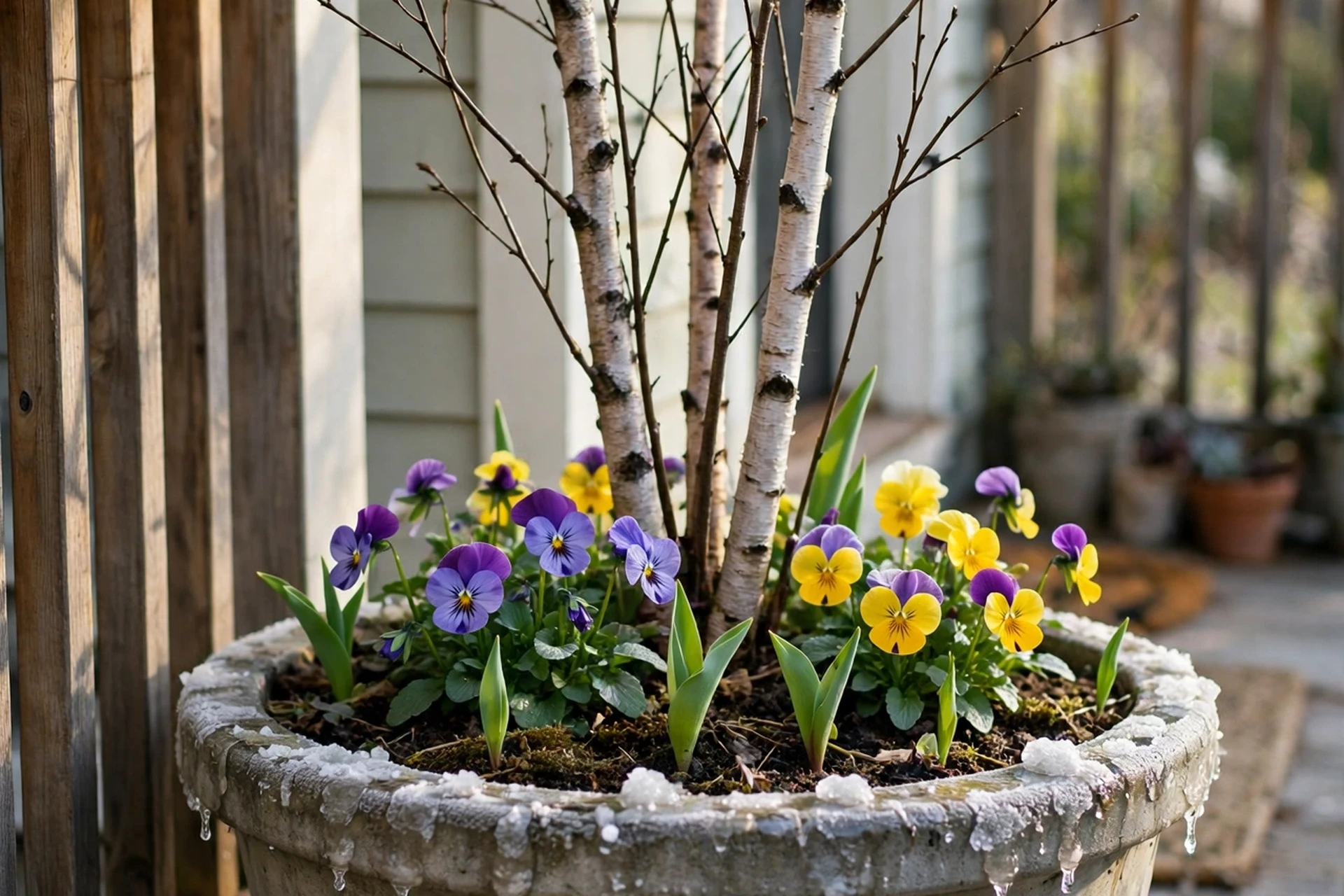
There’s a stretch every year where porch planters look a little sad. The holiday greenery has gone brown and brittle, it’s too early to plant anything tender, and every “spring planter” article assumes you’re starting from a completely empty pot on a warm April afternoon.
Real winter-to-spring transitions don’t work that way, especially anywhere with actual cold winters. You’re managing frost windows, half-dead winter greens still worth keeping, and bulbs that may or may not be up yet, all while wanting the porch to look intentional the whole time, not just at the finish line.
These 15 ideas are built around that in-between stretch specifically. Some are plant choices that shrug off a late frost. A few are actual techniques, like layering bulbs or using a nested pot trick, that make the whole transition less wasteful and less like starting from scratch every single time. Let’s get your planters moving from winter to spring without the bare, sad weeks in the middle.
Table of Contents
Keep the Bones, Swap the Blooms
The single biggest shift in thinking for a smooth transition is realizing you don’t need to empty the whole pot every time the season changes. Keep a structural element, a small evergreen, a birch branch bundle, or an ornamental grass, planted as the permanent “thriller” in the center or back of the container, and treat everything else as changeable filler around it. When winter greenery starts looking tired, pull just the faded filler and spiller plants, refresh the soil around the base of the structural piece, and tuck in pansies or early bulbs in that same freed-up space. This approach cuts your spring planting time down significantly, since you’re not repotting a whole new arrangement, just refreshing the outer ring. It also means your planters never look completely bare, since there’s always at least one anchor piece holding the composition together while everything else transitions around it.
Bulb Lasagna Layering
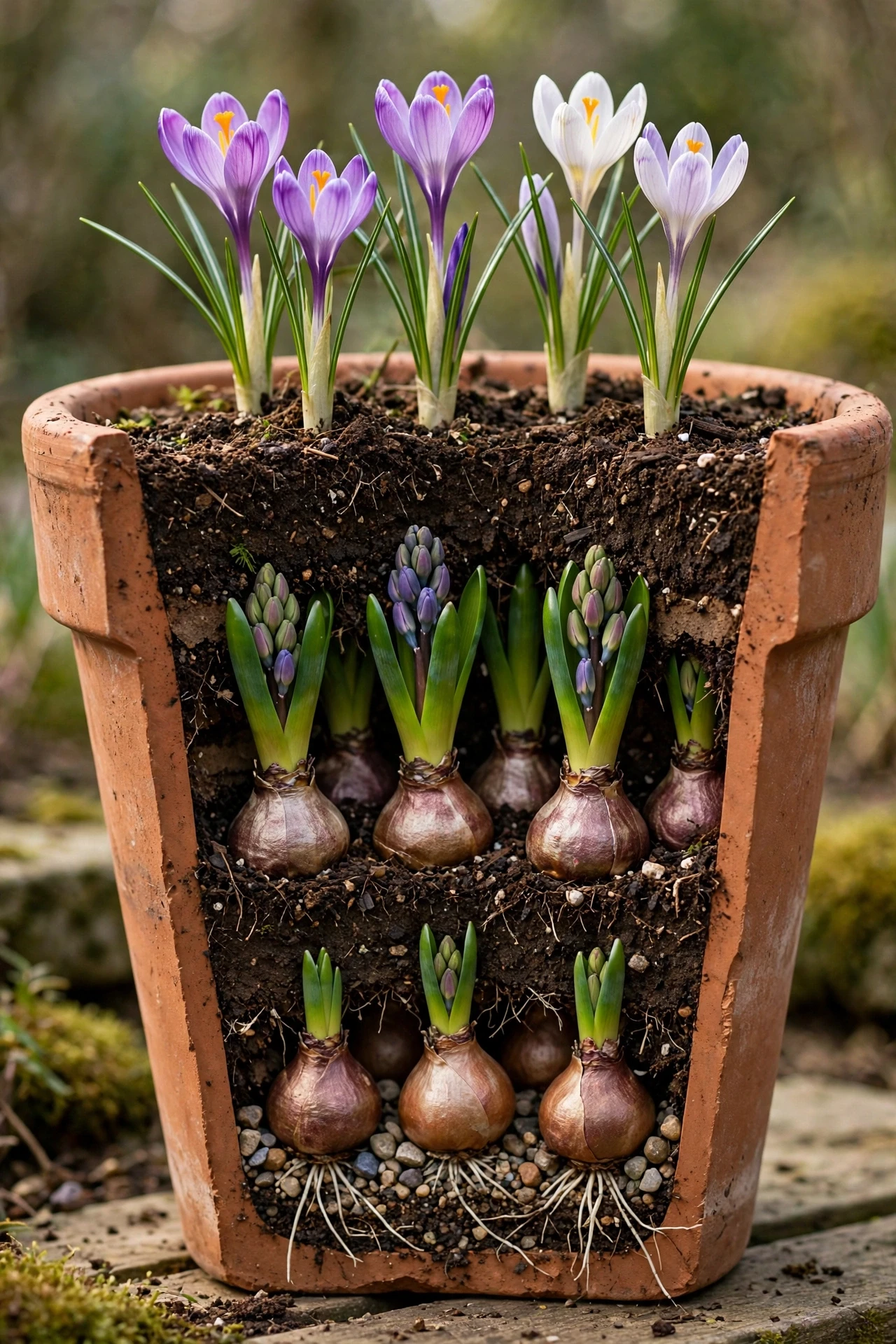
Bulb lasagna is a planting technique where you layer several types of bulbs at different depths in the same container back in fall, so they naturally emerge in succession through late winter and into spring without any replanting at all. Place the latest-blooming, largest bulbs, tulips or daffodils, at the deepest layer, then add a layer of soil, then mid-season bulbs like hyacinth, then a top layer of the earliest bloomers, crocus or snowdrops, just a couple inches under the surface. As the season progresses, each layer takes its turn coming up through the one below it, giving you a continuous, changing display instead of one single bloom period. This is technically a fall planting project for a spring payoff, so if you’re reading this already in late winter, note the timing for next year and look at idea five for an immediate alternative. Once established, a well-planned bulb lasagna pot can provide eight to ten weeks of continuously changing color with zero maintenance beyond watering.
Pansies and Violas as the Bridge Plant
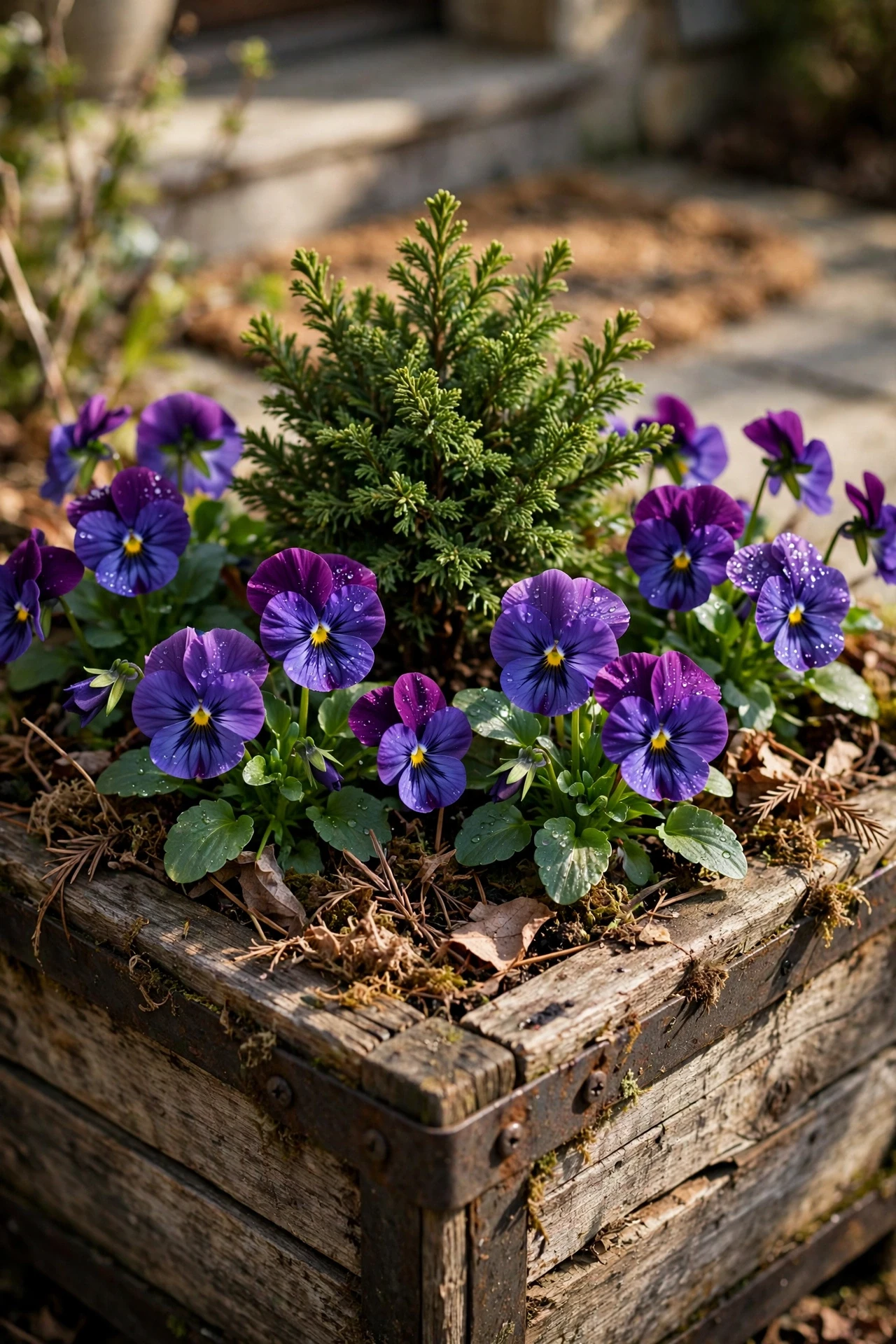
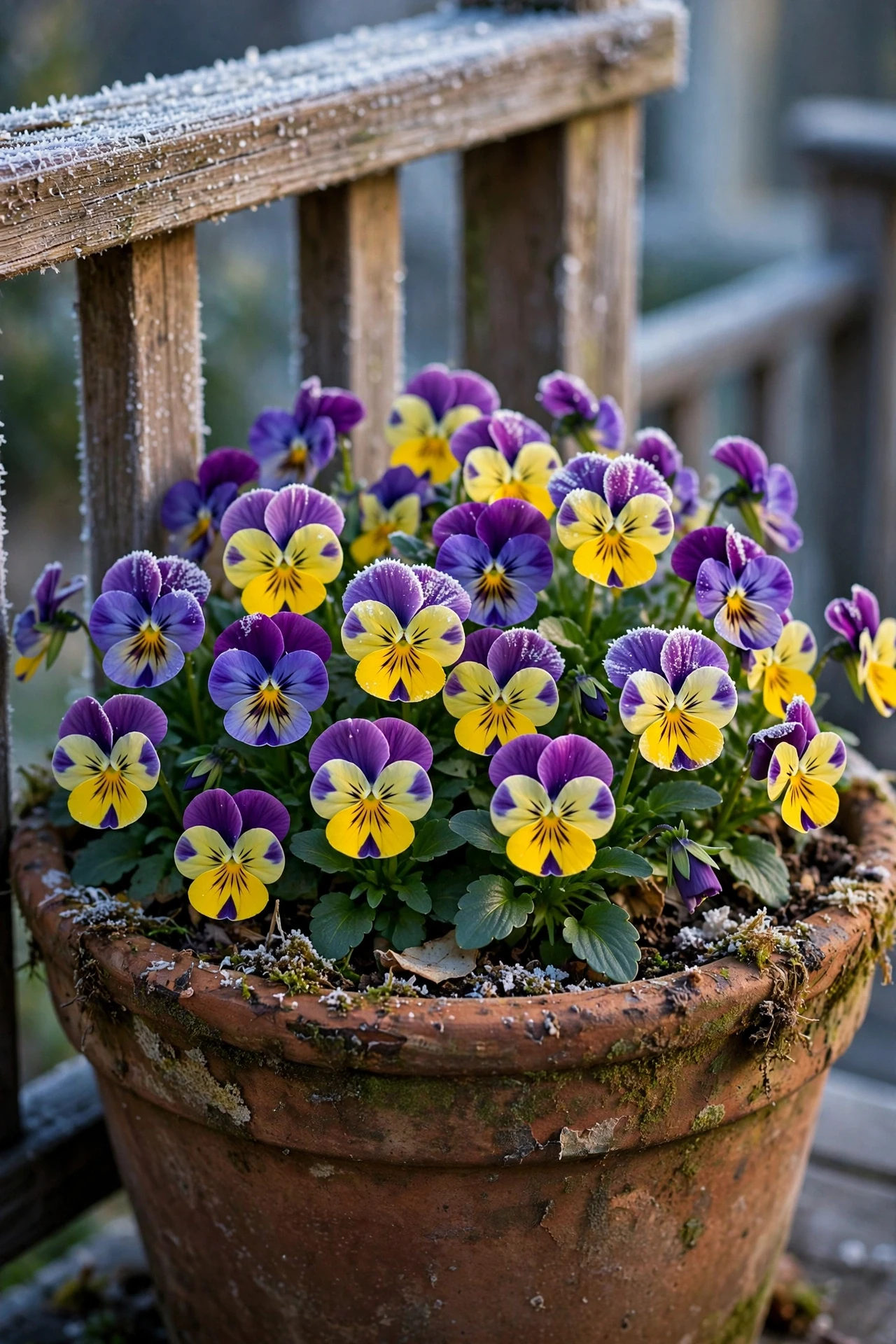
Pansies and their smaller cousin violas are the workhorse of any winter-to-spring transition, since they tolerate hard frost, keep blooming through cold snaps, and are widely available the moment garden centers start stocking spring plants. Plant a full container of mixed or single-color pansies as soon as your winter greenery starts fading, since they can handle temperatures down into the mid-20s without much damage. Choose a cohesive color scheme, all purple and yellow, or all white and blue, rather than a random mix, since a curated palette reads as more intentional on a porch than a rainbow assortment. Because pansies bloom for two to three months before the summer heat eventually pushes them out, they can genuinely carry a planter through the entire transitional stretch on their own if you want a low-effort option. This is also the safest plant on the list to put out early, since even an unexpected late frost is unlikely to seriously damage an established pansy.
Hellebore Anchor Plant
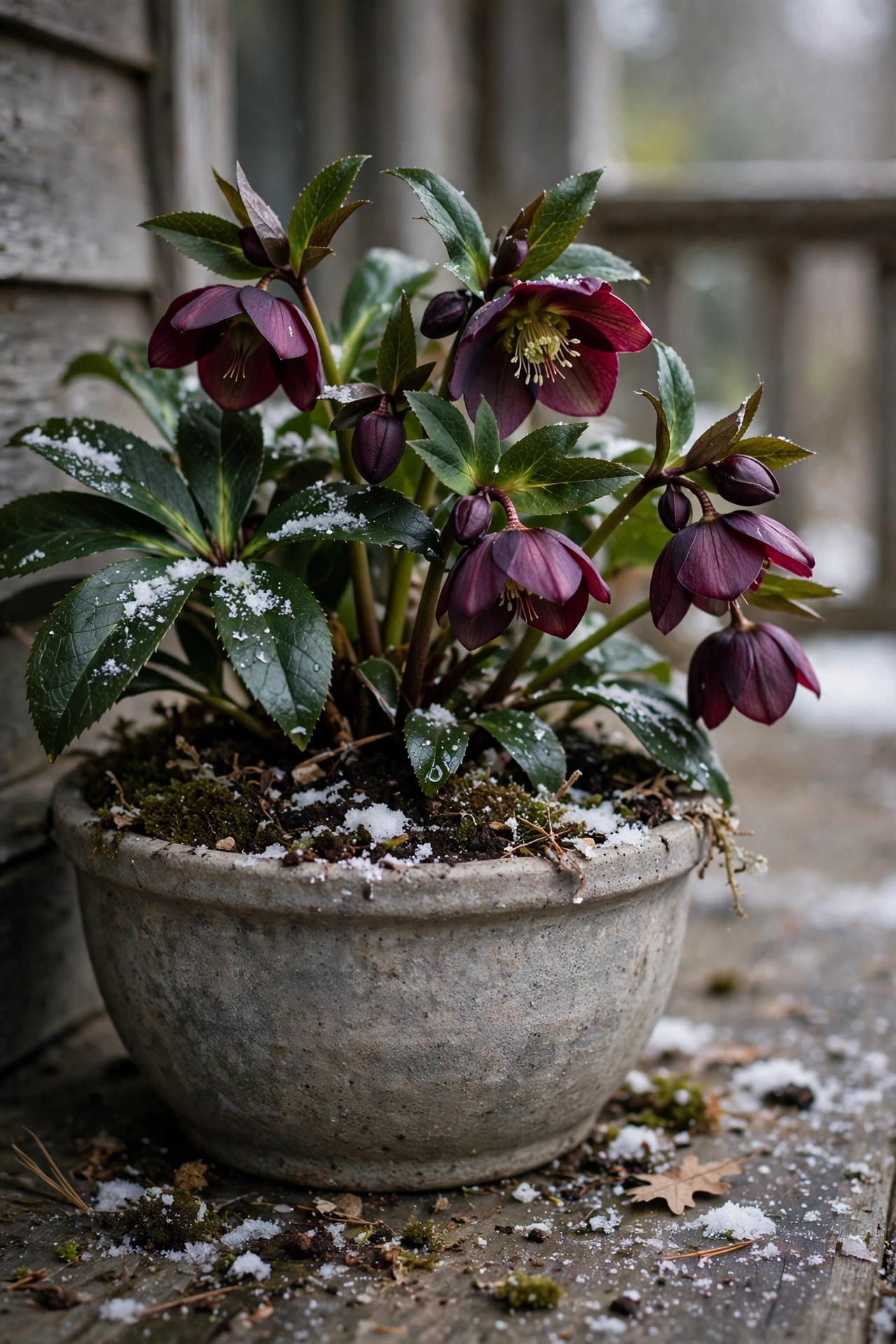
Hellebore, often called the Christmas rose or Lenten rose, is one of the few genuinely showy perennials that blooms while there’s still snow on the ground in many climates, making it a strong anchor plant for the earliest stage of the transition. Its nodding, cup-shaped flowers come in deep burgundy, soft pink, or creamy white, and the thick, leathery evergreen foliage looks good even outside of bloom time. Plant one or two hellebore as the semi-permanent centerpiece of a shaded or partly shaded planter, since they prefer a bit of protection from full winter sun, and build the rest of the transition around them as smaller bulbs and pansies come and go at their base. Because hellebore is a true perennial rather than an annual, it can be moved into the garden bed after a couple of years in a container, or kept as a repeat planter feature for many seasons running. This plant does more than almost anything else on this list to prove a porch is transitioning intentionally rather than just neglected.
Drop-In Nursery Pot Trick
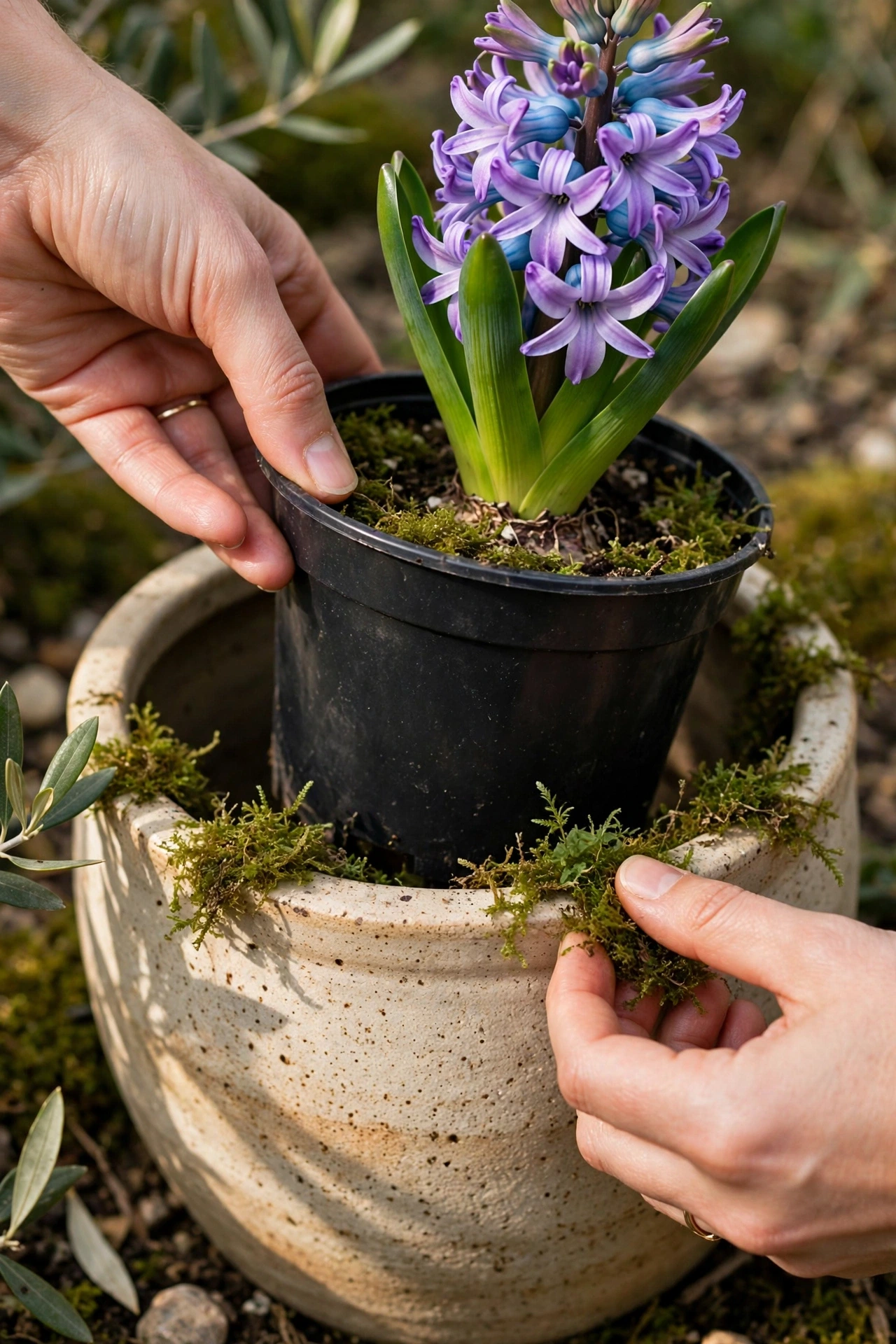
If you didn’t plan ahead with a bulb lasagna, the drop-in nursery pot trick gives you nearly the same effect with none of the fall prep. Buy forced tulips, hyacinth, or daffodils already blooming or budded in their plastic nursery pots from a garden center, then simply nestle the whole nursery pot down into your decorative planter, hiding the plastic rim with a bit of moss or extra soil. When one variety finishes blooming, lift that nursery pot straight out and drop in a fresh one, without disturbing anything else growing around it. This is especially useful for anyone renting or without a garden bed to source bulbs from ahead of time, since it turns bulb color into something you can buy and swap on a weekly basis like cut flowers. It’s a slightly more expensive approach than growing your own layered bulbs, but the flexibility and instant color make it worth it for a porch that needs to look finished on short notice.
Pussy Willow and Curly Willow Branch Accents
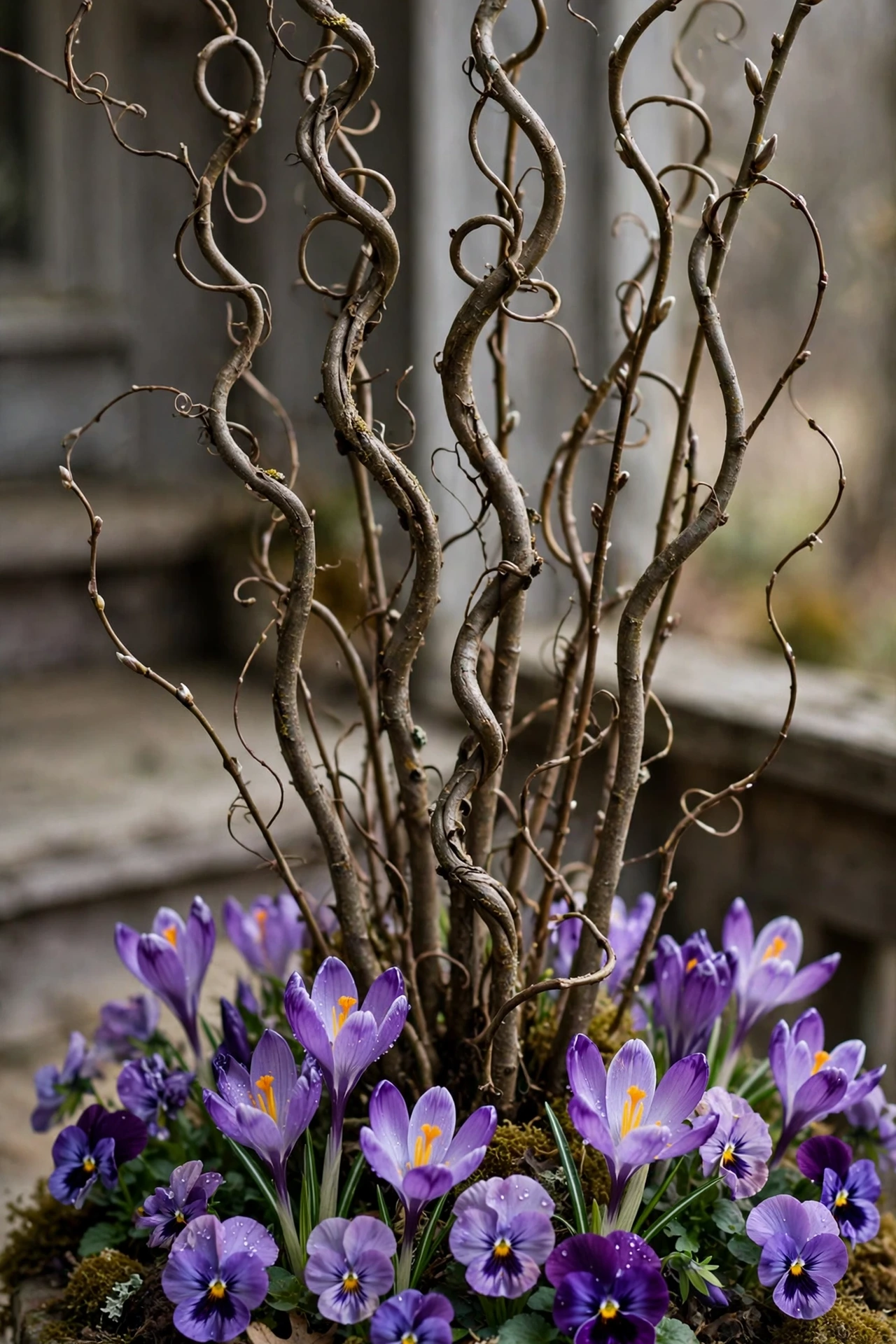
Bare branches carry real visual weight in a winter planter, and rather than pulling them the moment the calendar says spring, they can stay in place well into the transition as a textural backbone while flowers fill in around the base. Pussy willow, with its soft gray catkins, or curly willow, with its twisted, sculptural shape, both hold up outdoors for weeks without needing water, since they’re essentially cut branches rather than living stems that need care. Push several stems deep into the center of the container behind or among your bulbs and pansies, letting the height contrast with the low, colorful plants growing beneath them. As true spring growth fills out the container, the branches can be pulled gradually, one or two at a time, rather than all at once, which keeps the transition feeling gradual instead of like a sudden reset. This idea also happens to be one of the most budget-friendly on the list, since branches can often be foraged from your own yard or a neighbor’s for free.
Boxwood or Rosemary Topiary Base
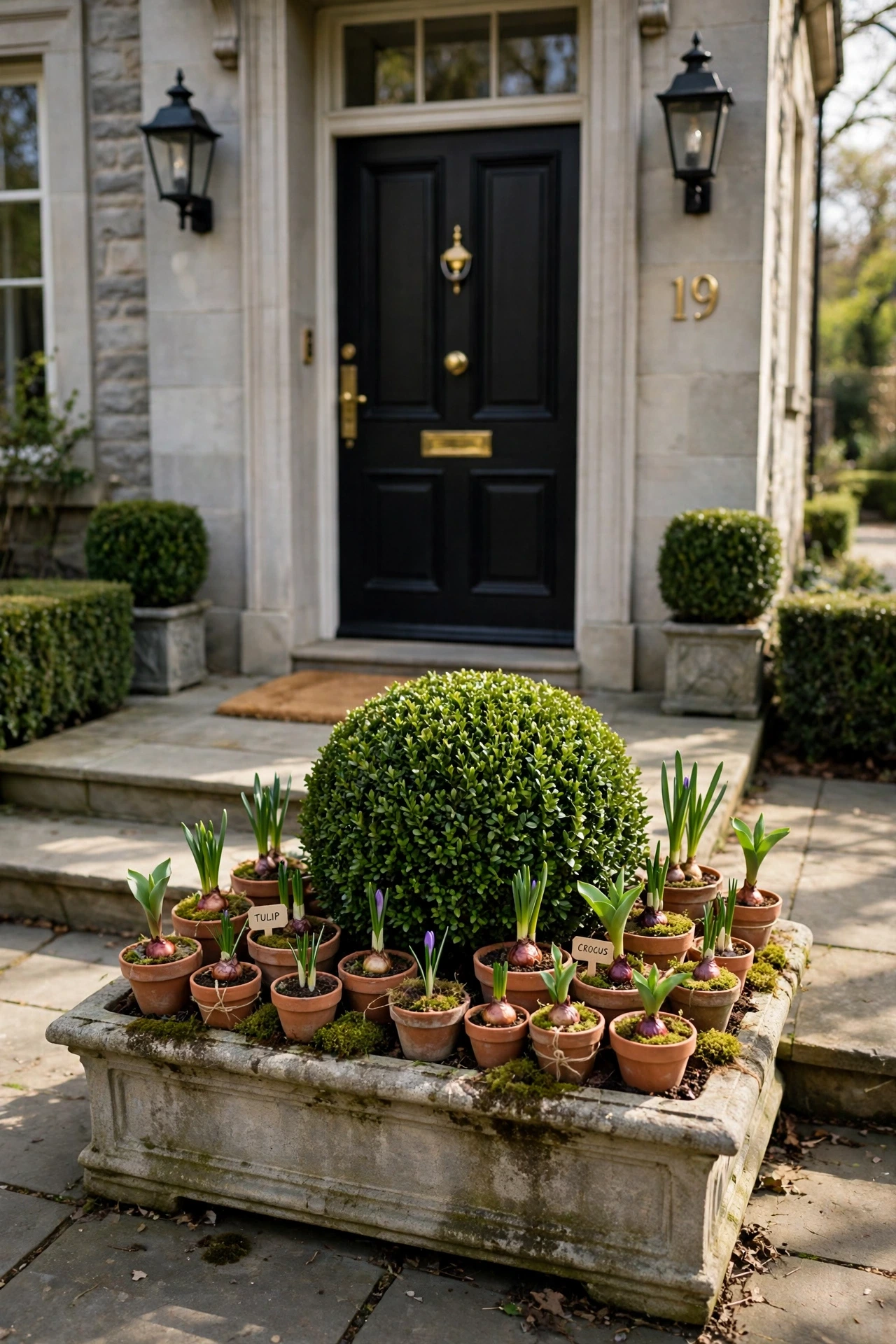
A small potted boxwood or rosemary shaped into a simple ball or cone shape works as a true year-round anchor, staying in the same planter through winter, the full spring transition, and often summer as well. Boxwood offers a clean, structured green that reads as formal and put-together in any season, while rosemary brings the same evergreen structure along with fragrance that becomes noticeable as the weather warms and you brush past it. Plant either one slightly off-center in a medium to large container, leaving room around the base for the seasonal rotation of bulbs, pansies, or later, summer annuals. Because both plants are genuinely perennial in many climates, this is one of the few ideas on the list that isn’t really a “transition” plant at all, it’s the constant the rest of your transition happens around. A well-shaped topiary like this also tends to look intentional even during the awkward weeks when nothing else in the pot is blooming yet.
Primrose and Ranunculus Color Pop
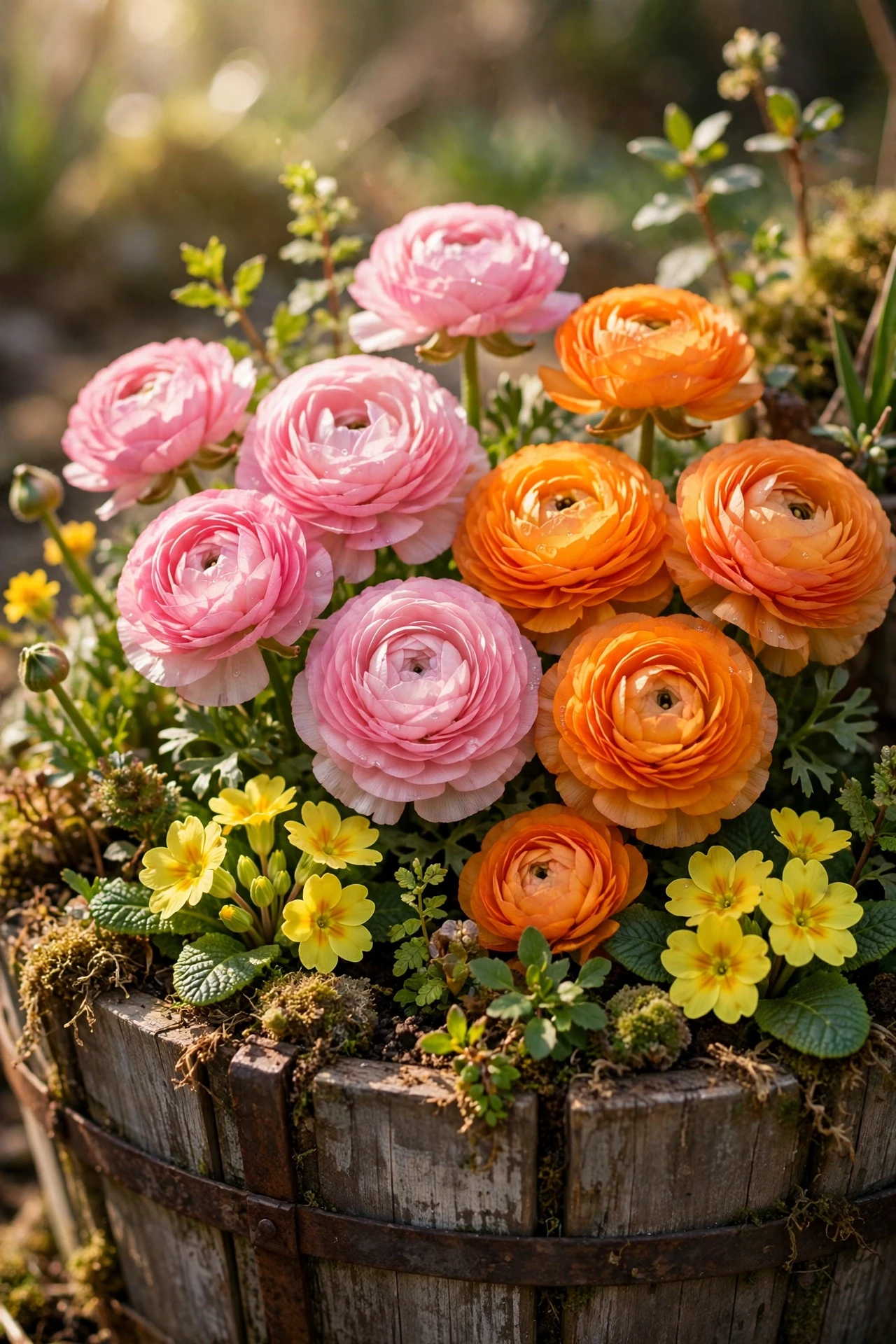
Once the coldest stretch of the transition has passed but full spring warmth hasn’t arrived yet, primrose and ranunculus offer some of the most saturated color available for containers still facing occasional cool nights. Primrose comes in nearly every shade imaginable and tends to bloom in tight rosettes close to the soil, making it a good filler plant around a taller anchor. Ranunculus, with its densely layered, almost rose-like petals, adds more height and a slightly more elegant texture, though it benefits from a sheltered spot if a late frost is still a real possibility in your area. Group three or five of either plant in odd numbers for a fuller look rather than spacing them evenly apart, since clustering reads as more lush in a container this size. Both plants tend to fade once summer heat sets in, which actually works in your favor here, since it means you can plan their color to specifically fill this middle stretch of the transition without wondering what to do with them later.
Frost Cloth and Overnight Protection Routine
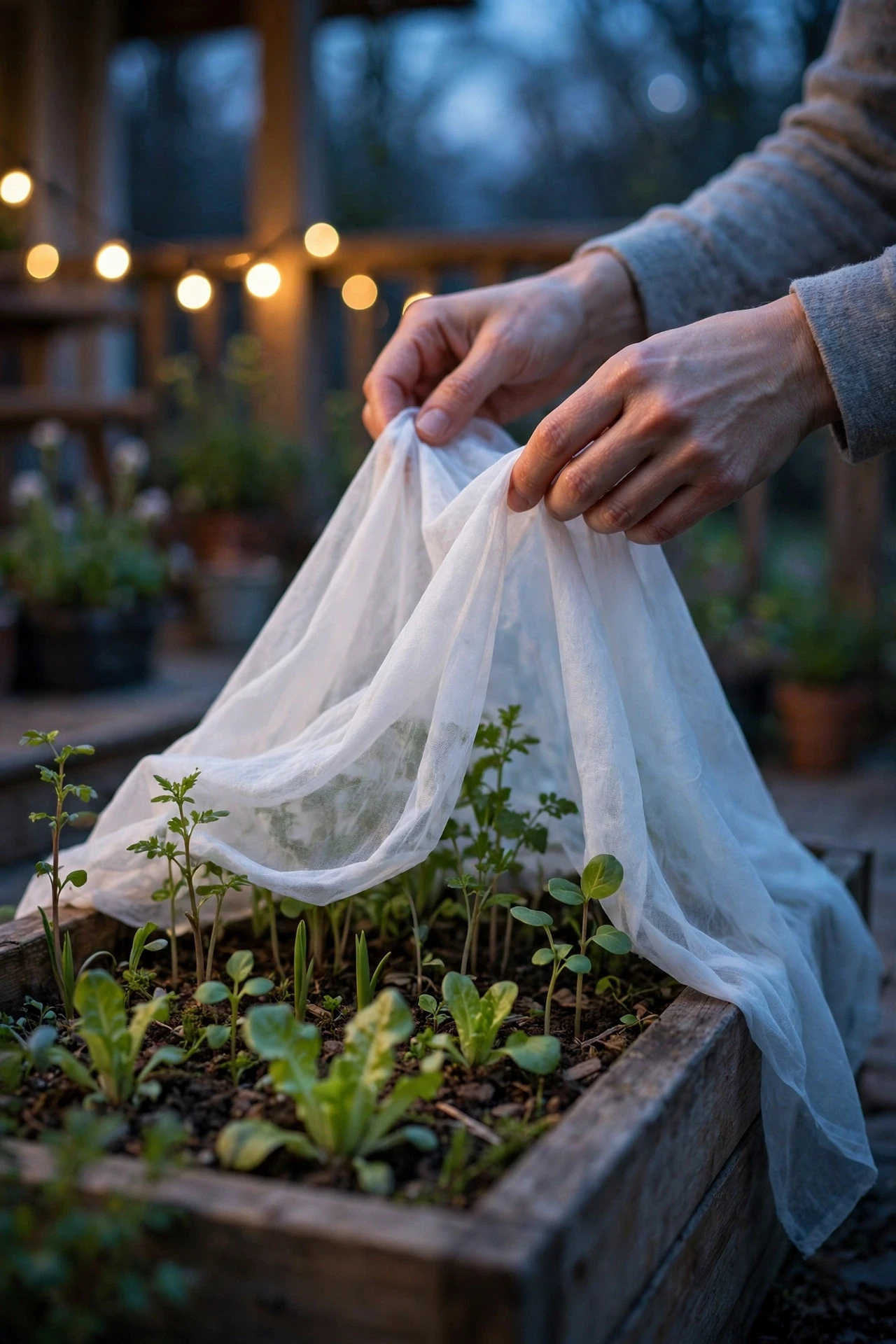
The single most common way a winter-to-spring transition goes wrong is a gardener getting excited on the first genuinely warm day, planting tender material too early, and then losing it all to a late, unexpected frost a week later. Keep a lightweight frost cloth or even an old bedsheet on hand and get in the habit of checking the overnight forecast anytime temperatures are borderline, draping the cloth loosely over any newly planted or tender containers before dark. For smaller pots, an overturned cardboard box or bucket works just as well as a proper frost cloth in a pinch. This single habit, more than any specific plant choice, is what actually determines whether your transition stays smooth or gets set back by two weeks of replanting after a cold snap. Treat this as a standing routine through the entire shoulder season, not a one-time emergency measure, since most regions see at least one or two surprise frosts even after a stretch of warm days.
Wheeled Planters for Sun-Chasing and Cold Protection
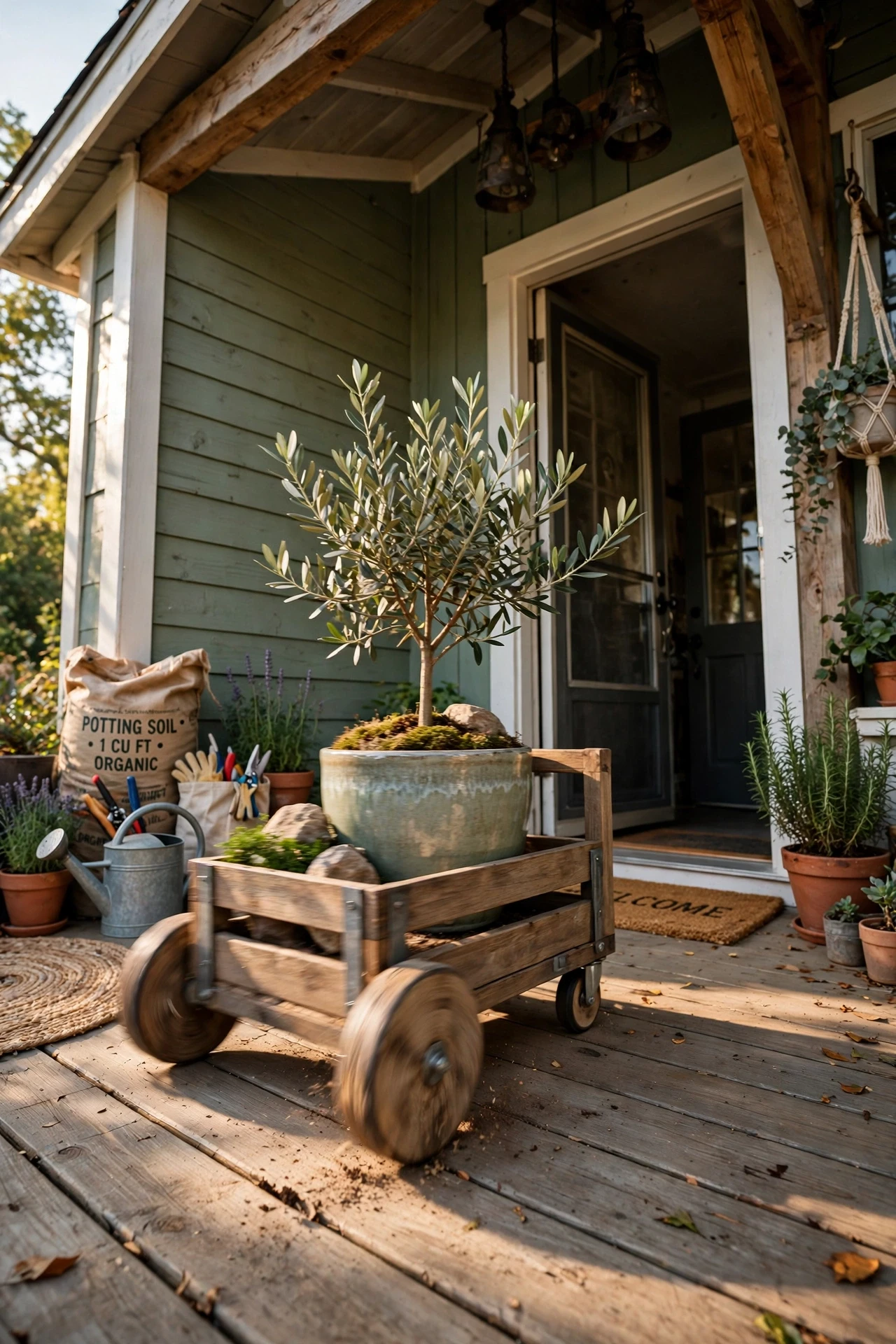
A planter mounted on a small wheeled base or plant caddy gives you the option to physically move a container to a warmer, more sheltered spot during a cold snap, then back to full sun once the weather stabilizes, something a fixed pot simply can’t do. This matters most for heavier containers that would otherwise be a genuine chore to move by hand every time the forecast shifts. Position the wheeled planter near a door or garage where it can be quickly rolled against the house or into an unheated garage overnight if frost threatens. During stable weather, use the mobility to chase the best sun exposure through the day as the sun angle changes through the transitional months. This is a slightly bigger upfront investment than a stationary pot, but for anyone who has lost a full container to a surprise frost before, the wheeled base tends to pay for itself within the first season.
Color-Graduated Palette Strategy
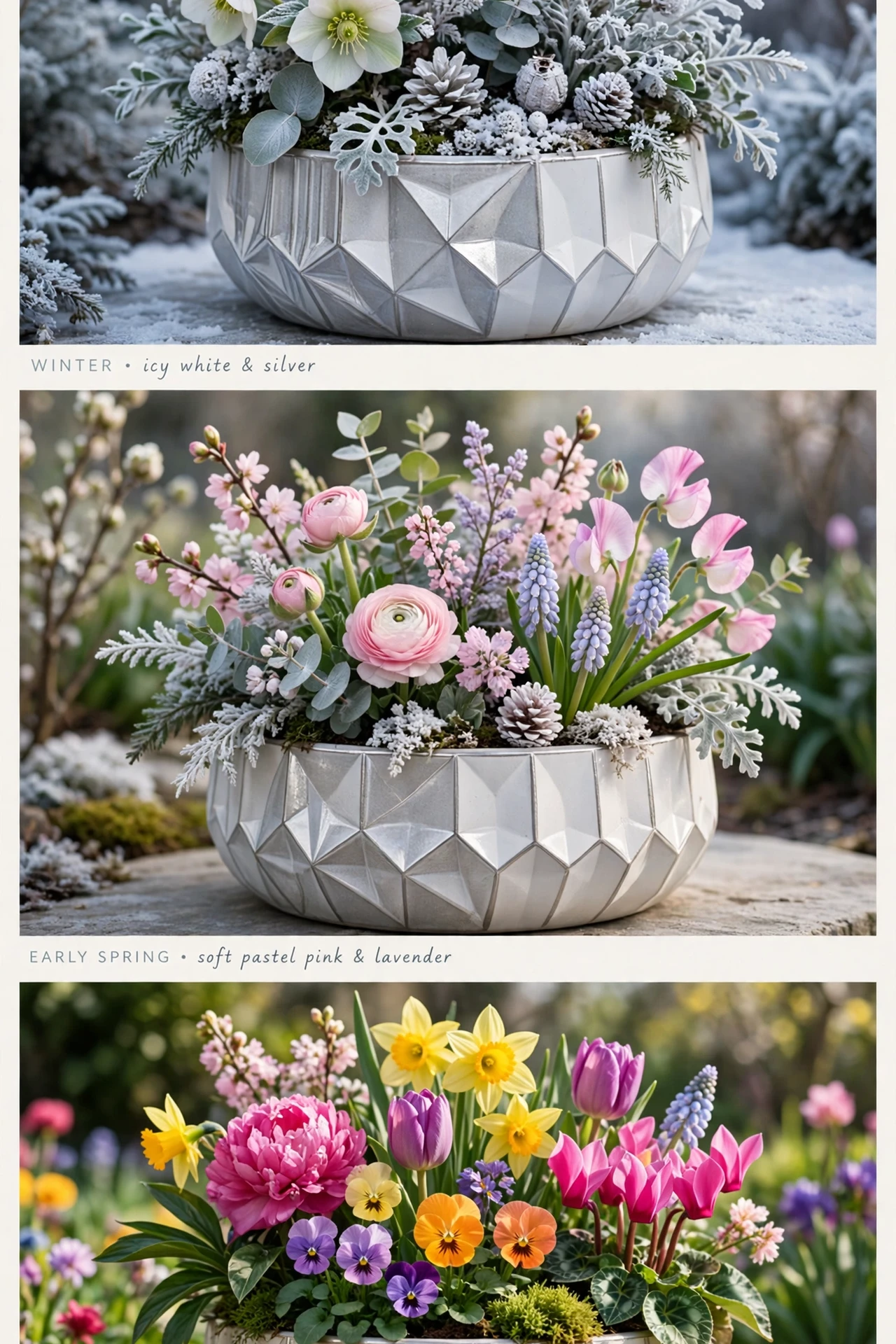
Rather than jumping straight from winter’s deep greens and reds to full pastel spring, a graduated color strategy moves the planter’s palette in stages that mirror the actual shift in light and temperature outside. Start the earliest transition weeks with icy whites, silvers, and pale blues, snowdrops, white pansies, dusty miller foliage, which feel appropriate against still-bare trees and occasional frost. As the weeks progress, shift toward soft pastels, blush pink, lavender, pale yellow, echoing the season’s gradual warming. By the time true spring arrives, move into the saturated, confident colors, hot pink, golden yellow, deep purple, that read as a full, warm-weather statement. This staged approach means the planter never looks like it’s fighting the actual weather outside the window, whether that’s a late snow or the first genuinely warm afternoon. Photographing the planter every couple of weeks through this process also gives you a useful record for planning next year’s transition timeline.
Window Box Bulb Succession
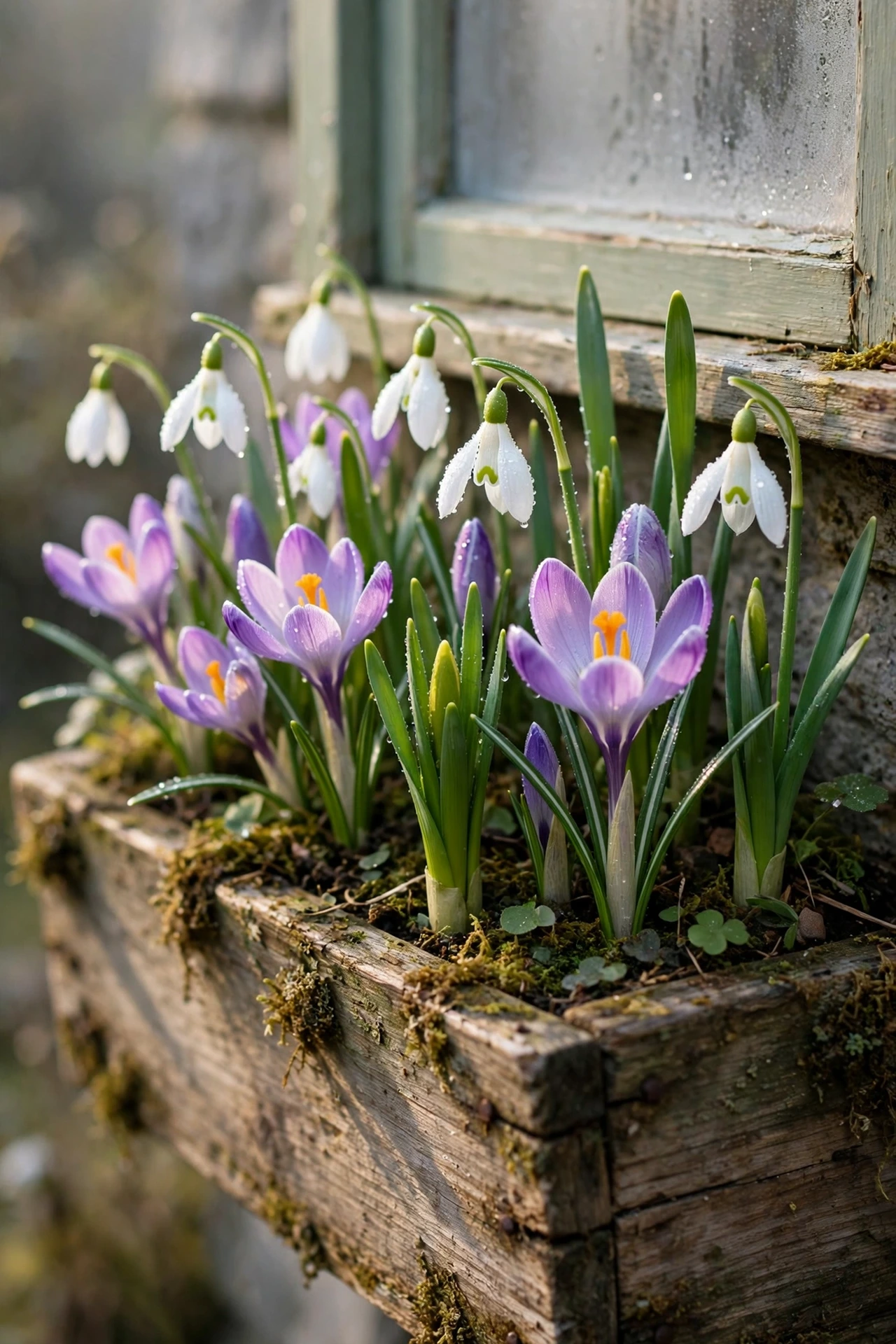
A window box benefits from the same succession logic as a bulb lasagna pot, but its shallower depth calls for a slightly different approach focused on sequential planting rather than deep layering. Start with a row of the earliest, shortest bulbs, crocus and snowdrops, planted close to the surface in fall, then interplant with a slightly later, taller variety like daffodils along the back of the box for a two-tiered bloom sequence as the season progresses. Once the bulbs have finished their run, the same window box transitions easily into pansies or trailing plants like ivy and creeping Jenny for the remainder of the season. Because a window box is viewed up close far more often than a floor planter, this is a good spot to prioritize fragrance, hyacinth in particular carries scent right through an open window during the warmer parts of the transition. Keep window box drainage in mind through this whole process, since the shallower soil depth dries out and gets waterlogged more easily than a deeper floor container.
Repurposed Winter Greens With Early Spring Accents
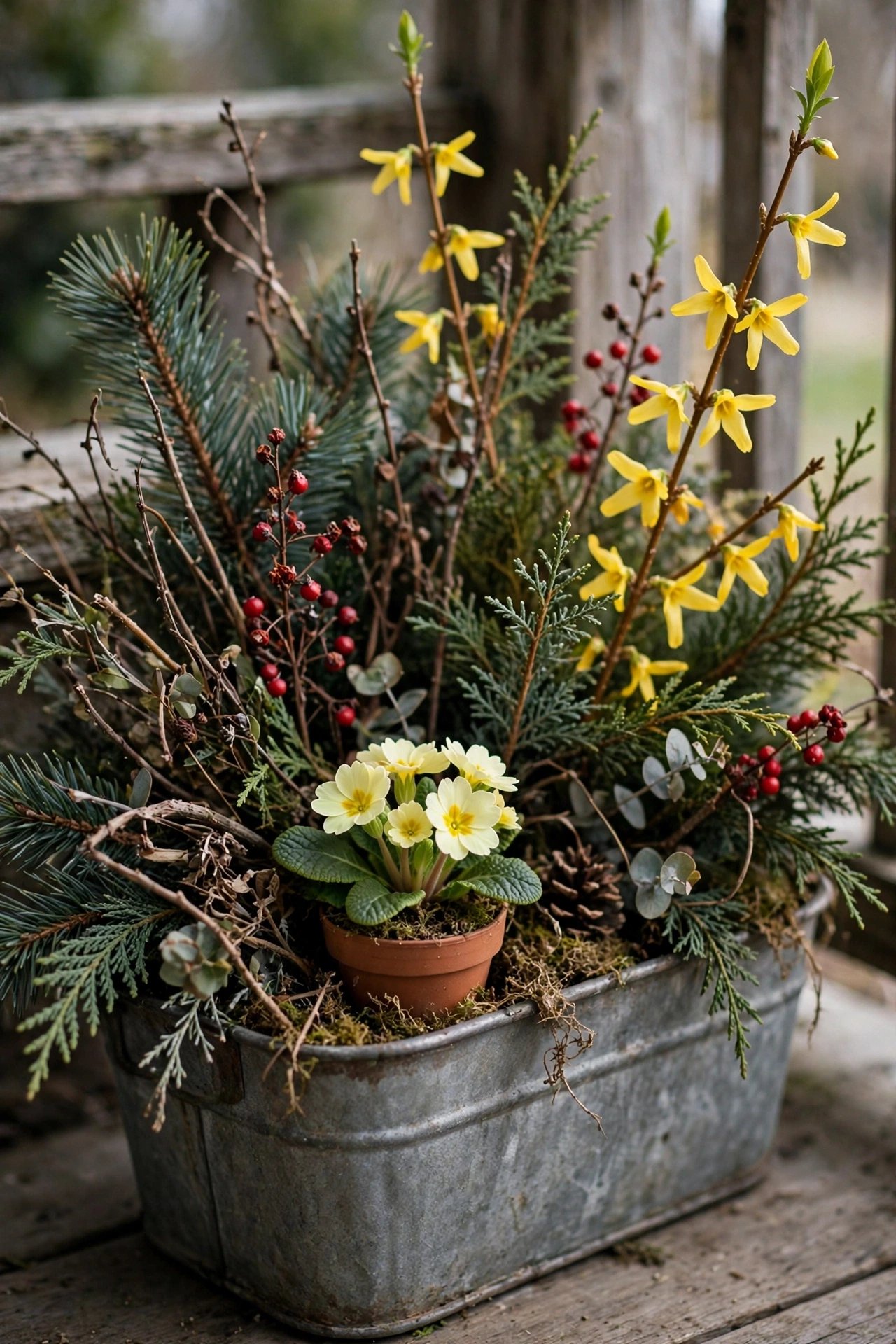
Rather than throwing out a still-decent winter greenery arrangement the moment the calendar turns, repurpose the evergreen boughs and berry stems already in the pot by simply adding a handful of early spring accents directly among them. Tuck a few stems of forced forsythia or pussy willow into an existing winter greenery base, along with a small potted primrose or two nestled at the front, and the whole arrangement reads as an early spring update rather than a leftover holiday display. This is the single fastest and cheapest idea on this entire list, since it uses material you likely already have in place rather than starting fresh. It works best as a short bridge measure for the first couple of weeks after the holidays before committing to a full spring replant, buying you time without an empty-looking porch in the meantime. Once true spring bulbs are ready to go in, the winter greenery can come out entirely and be composted.
Herb-and-Bulb Combination Planter
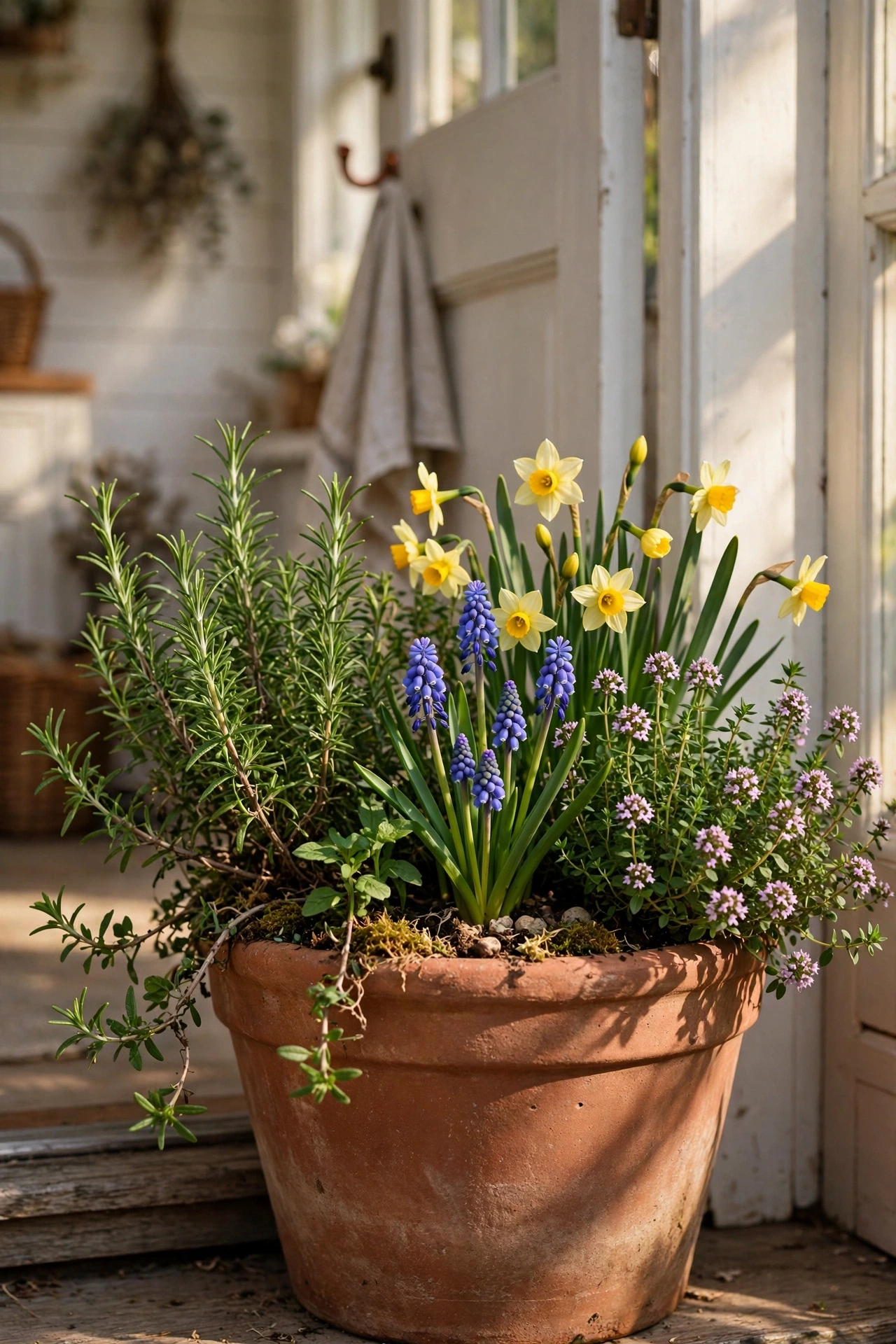
Combining hardy herbs with spring bulbs creates a planter that transitions naturally into a functional summer herb container once the bulbs have finished their bloom cycle, giving the whole arrangement a longer useful life than flowers alone. Plant evergreen herbs like rosemary, sage, or thyme as the semi-permanent structure, then tuck bulbs like grape hyacinth or dwarf daffodils into the remaining soil around their base in fall or very early spring. The bulbs provide the color during the transitional months while the herbs are still small and slow-growing in the cooler weather, then as the bulbs fade and get removed, the herbs fill out and take over the space entirely by early summer. This idea works particularly well near a kitchen door or entrance used often, since it puts something practical within easy reach exactly when you’re likely to want fresh herbs anyway. It also tends to appeal to anyone who wants their container garden to feel a little less purely decorative and a little more useful.
Matched Front Door Pair on a Staged Timeline
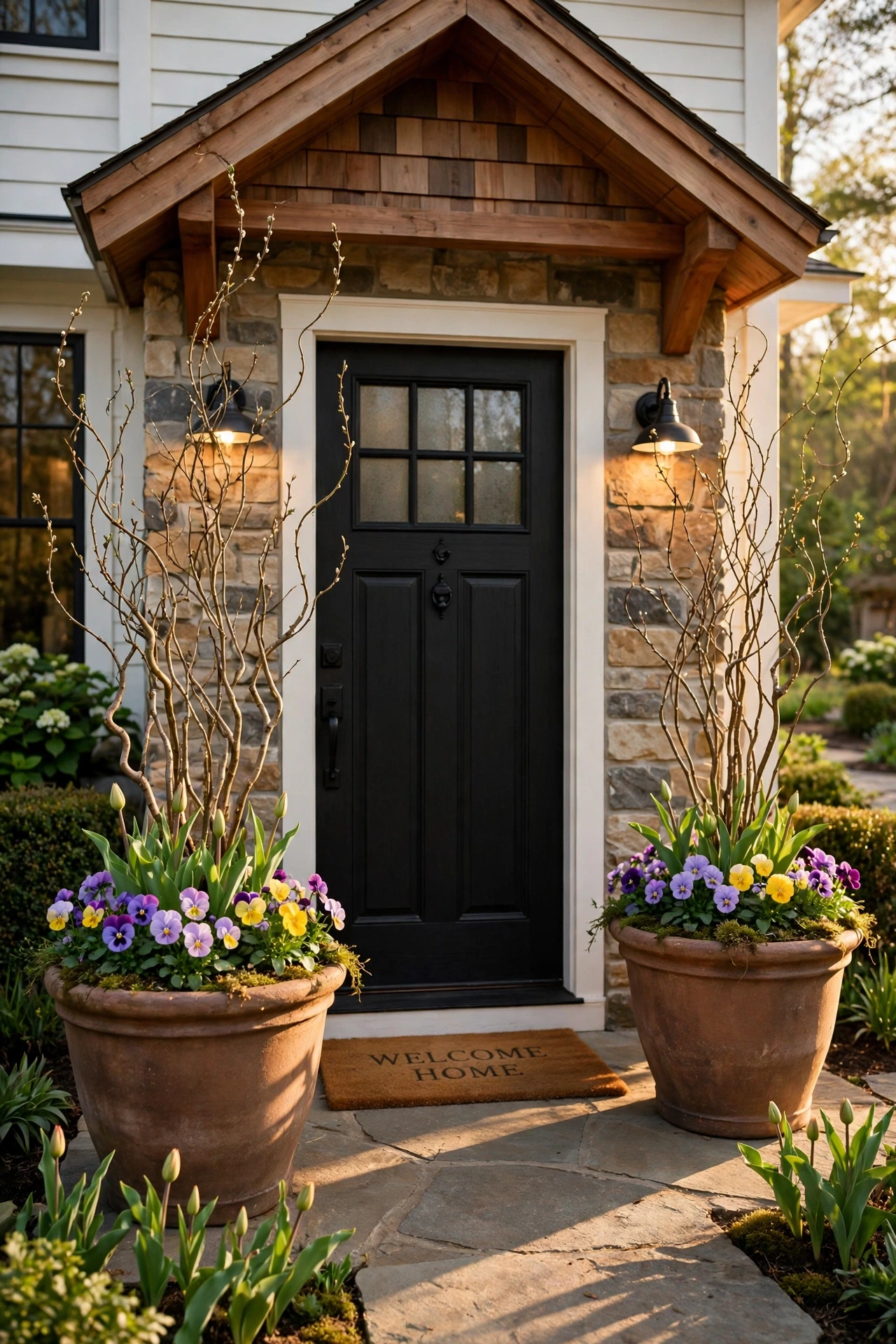
A pair of matching planters flanking the front door gives you the clearest visual proof of a successful transition, since side-by-side symmetry makes any seasonal change immediately noticeable to anyone walking up. Plan out a specific staged timeline for the pair at the start of the season, stage one with structural branches and pansies, stage two adding forced bulbs as they become available, stage three removing the last winter elements for a full spring look, and follow the identical plan in both pots simultaneously. Keeping both planters perfectly synchronized takes a bit more discipline than managing a single container, but the payoff is a front entrance that always looks deliberate rather than in-progress. This is a good project to actually write down at the start of the season, listing rough dates for each stage based on your typical last frost date, so the transition happens on a plan rather than reactively whenever you remember to deal with it. Many people find this matched-pair approach becomes the single most complimented feature of their whole spring exterior, precisely because the symmetry makes the seasonal effort so visible.
Styling Tips
- Keep one structural element, a branch bundle, a small evergreen, or a topiary, in place through the whole transition so the planter never reads as genuinely empty between stages.
- Stick to a maximum of three flower colors at any one stage of the transition, since more than that tends to look chaotic rather than intentionally layered.
- Vary bloom height deliberately, tall bulbs or branches at the back or center, low pansies or primrose at the front edge, so the container reads as designed rather than randomly filled.
- Match container material and finish across multiple planters if you have several around the property, since a consistent pot style makes even mismatched plant stages look coordinated.
- Take a quick photo of each planter weekly through the transition, both for your own planning next year and because the gradual change often looks better in progress than people expect.
Practical Implementation Ideas
- Plant your bulb lasagna layers in fall, roughly six to eight weeks before your ground typically freezes, so the bulbs have time to root before winter dormancy sets in.
- Keep a small stash of extra potting soil on hand through the transition, since topping off settled soil after removing spent bulbs or winter greenery keeps the container looking full.
- Build a rough week-by-week plan based on your last average frost date, working backward to schedule when pansies go in, when forced bulbs get added, and when tender summer annuals are finally safe.
- Group multiple containers of different transition stages together on a porch rather than isolating them, since a cluster reads as an intentional collection even if each pot is at a slightly different point in its cycle.
- Reuse black plastic nursery pots from the drop-in trick as makeshift bulb starters for next year instead of buying new ones each season.
Common Mistakes to Avoid
- Planting tender annuals too early based on one warm week, then losing the whole container to a late frost that arrives a week or two later.
- Emptying the entire planter at once instead of transitioning gradually, which creates several weeks of a genuinely bare, sad-looking pot.
- Overwatering during the transition, since cooler temperatures mean soil dries out much more slowly than it will once summer heat arrives.
- Ignoring drainage in a container that held dense winter greenery, since compacted soil from months of minimal watering can leave new bulbs and roots sitting in water they can’t use.
- Choosing plants for their look in the store without checking their actual cold tolerance, which leads to disappointing losses the first time temperatures dip overnight.
Small-Space Alternatives
- A single well-chosen pot by the front door, using the bulb lasagna or drop-in technique, can carry an entire small entryway through the transition without needing multiple containers.
- Window boxes work especially well for apartments or townhomes without porch space, since the succession bulb planting fits easily into a narrower footprint.
- A tabletop version of the herb-and-bulb combination works on a small balcony, using a single medium pot instead of a full-sized floor planter.
- Skip the wheeled planter for very small or lightweight pots, since they’re already easy to move by hand when frost threatens.
- One matched small planter on a narrow step or stoop can echo the front door pair idea at a smaller scale without needing the full symmetry of two large containers.
Budget-Friendly Alternatives
- Forage pussy willow, curly willow, or dogwood branches from your own yard or a neighbor’s instead of buying them from a florist.
- Save and reuse plastic nursery pots from previous purchases for the drop-in trick rather than buying new containers each time.
- Grow your own bulb lasagna from bagged bulbs bought in bulk during the fall sale season instead of purchasing pre-forced, already-blooming pots each time you want new color.
- Divide an established hellebore or perennial herb from your own garden bed to start a container rather than purchasing a new plant.
- Use an old bedsheet or towel as frost protection instead of purchasing specialty frost cloth, since the function matters more than the material for occasional overnight use.
Pro Styling Recommendations
- Learn your specific last frost date for your exact zip code rather than relying on a general regional guideline, since microclimates around a house can shift the safe planting window by a week or more.
- Keep a simple planting journal noting which bulb varieties and pansy colors performed best each year, since results vary more by supplier and specific cultivar than people expect.
- Invest in one or two higher-quality, larger containers for the most visible spots, like the front door pair, and save budget plants for less prominent locations around the property.
- Consider a soil thermometer for a few dollars if you’re serious about timing transitions precisely, since soil temperature is often a better planting indicator than air temperature alone.
- Keep extra pansies or violas in reserve in a sheltered spot through the transition, so a plant lost to an unexpected frost or animal damage can be replaced immediately rather than leaving a gap.
FAQs
Conclusion
A smooth winter-to-spring transition isn’t really about finding the perfect single planter idea. It’s about accepting that the season changes in stages, not all at once, and building your containers to change along with it instead of against it.
Pick one or two techniques from this list, the bulb lasagna if you’re willing to plan ahead in fall, or the drop-in trick if you’re reading this already mid-winter, and build the rest of your approach around whichever structural anchor plant fits your space. The porch that looks intentional through every single week of the transition, not just the first and last, is the one that actually gets noticed.