21 Backyard Pool Ideas That Turn Your Yard Into a Private Paradise
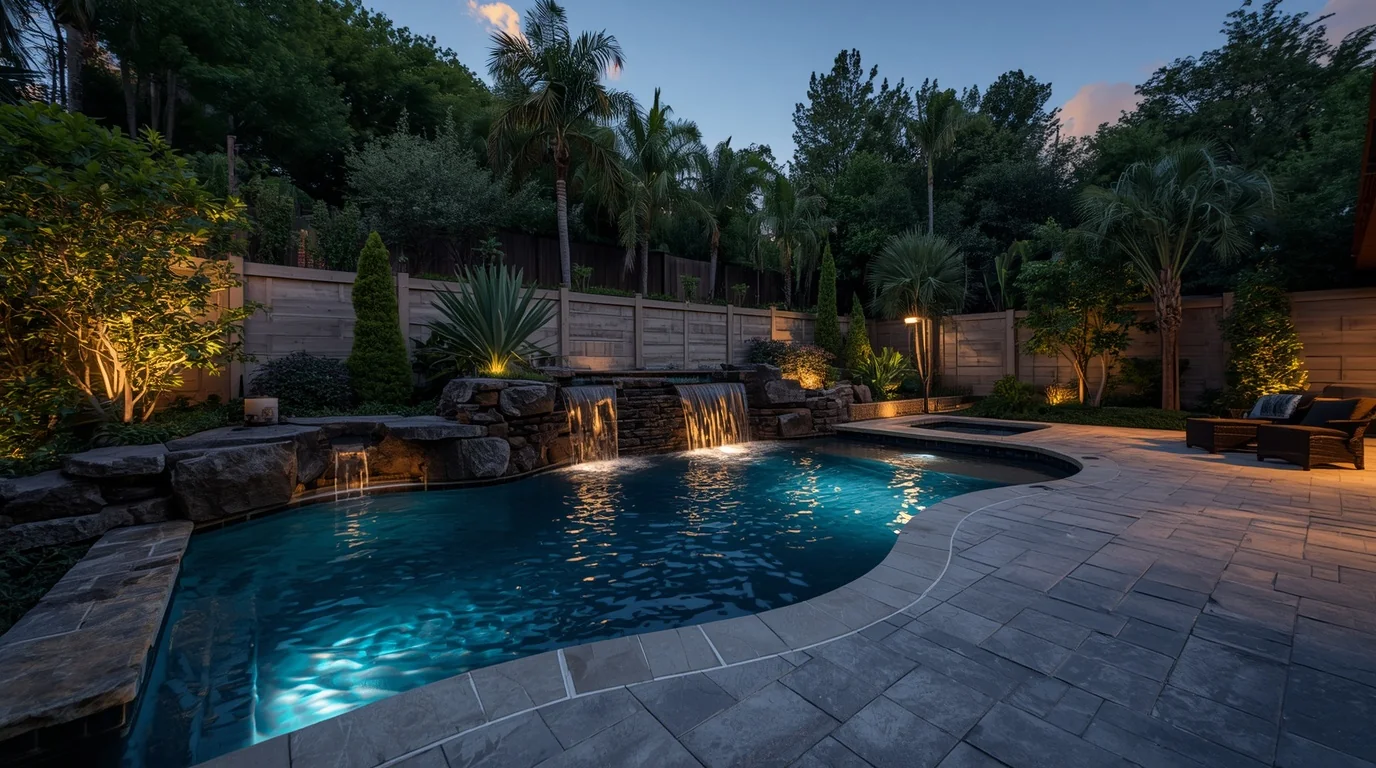
Some backyards feel like an extension of a vacation. Water that catches the light just right. A quiet corner with a fire bowl glowing after sunset. A pool that doesn’t just sit in the yard, but actually shapes how the whole space gets used.
That’s the difference between a pool that’s just there and a pool that turns a yard into a paradise. It usually comes down to a handful of intentional choices, not one massive budget.
These 21 ideas cover the layouts, features, and finishing touches homeowners are using to turn ordinary backyards into private retreats worth stepping outside for every day.
Table of Contents
1. Baja Shelf Tanning Ledge
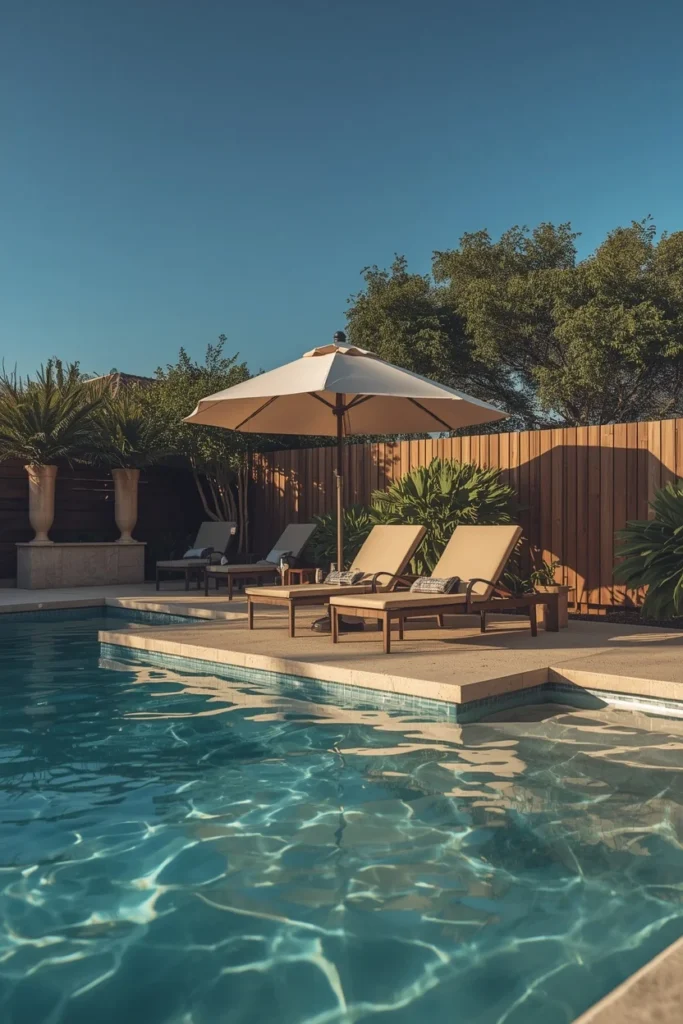
A Baja shelf, sometimes called a tanning ledge or sun shelf, adds a shallow six to twelve inch platform along one edge of the pool that changes how the whole space gets used. It gives kids a safe place to splash without needing to swim, and gives adults a spot to set up a lounge chair right in the water. Adding an umbrella sleeve into the shelf during construction means shade can move with the sun throughout the day. This feature also breaks up a pool’s shape visually, since the shelf reads as a distinct zone rather than one uniform rectangle of water. Placing the shelf on the side of the pool that gets the most afternoon sun makes it the most-used spot in the whole yard.
2. Raised Spillover Spa
A raised spa positioned at one end of the pool, spilling water over its edge into the main basin, adds height, sound, and a clear focal point to an otherwise flat layout. The visual drop of water creates movement even when nobody’s in the pool, which matters for a backyard that needs to look good year-round, not just during a swim. Building the spa from the same stone or tile as the coping ties it into the rest of the design instead of looking like an add-on. Keeping the spa on a separate heating and filtration system lets it run warm for evening soaks without heating the entire pool. The elevation change also adds a sense of layered architecture to a yard that might otherwise read as flat.
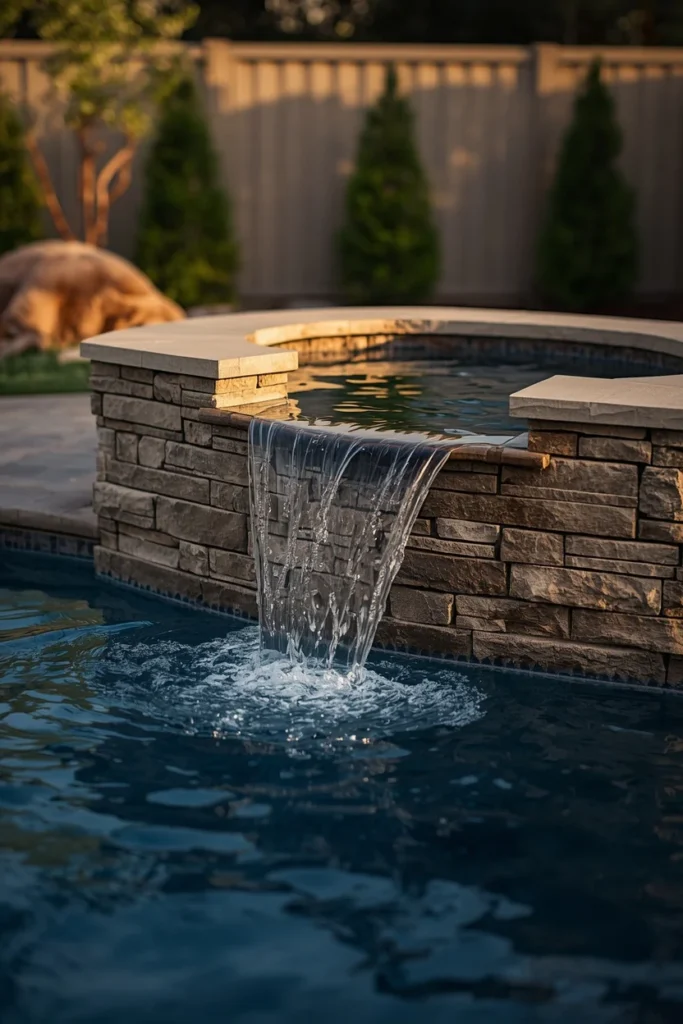
3. Negative-Edge Infinity Pool
A negative edge, where water spills over one side into a hidden catch basin, creates the illusion that the pool blends directly into the horizon. This effect works best on sloped properties or yards with a view worth framing, since the disappearing edge draws the eye straight out past the pool. The engineering behind this detail is precise, often built to within a fraction of an inch, so it’s worth working with a builder experienced in this specific feature. Pairing the negative edge with a simple, minimal deck keeps the focus on the water and the view rather than competing hardscape details. Even without a dramatic view, a negative edge facing a garden or tree line still gives the pool a quiet, high-end feel.
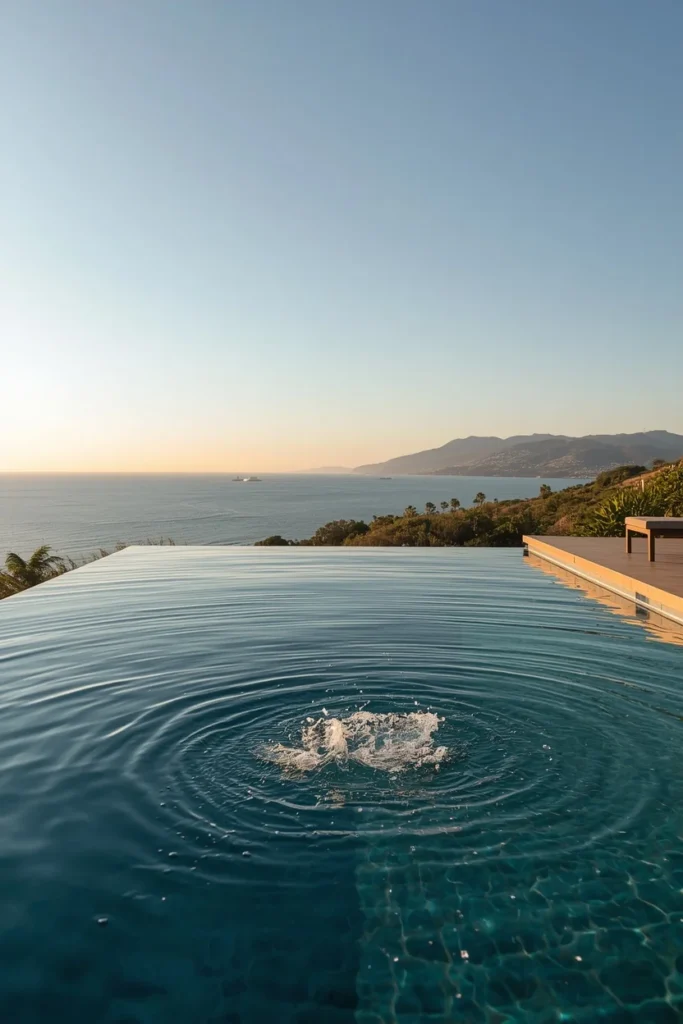
4. Natural Lagoon-Style Pool
A lagoon-style pool trades sharp geometric lines for curved edges and irregular shapes that mimic a natural swimming hole. Surrounding the water with natural rock formations, layered planting, and a pebble-finish interior instead of smooth plaster reinforces that organic feel. This style tends to work best in yards with mature trees or existing landscaping, since the pool is meant to look like it belongs in that setting rather than sitting on top of it. A curved beach entry, gently sloping into the water instead of steps, adds to the natural swimming hole effect and makes entry easier for kids and older adults. Keeping the water tone slightly darker, in blue-green or slate, also strengthens the lagoon illusion compared to a bright, standard pool blue.
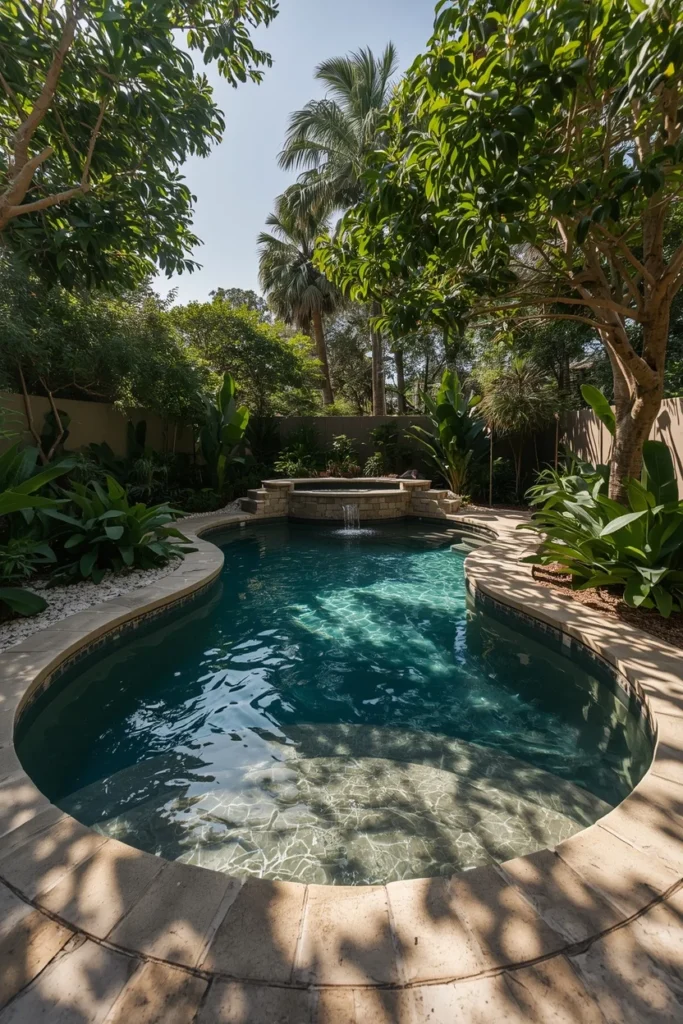
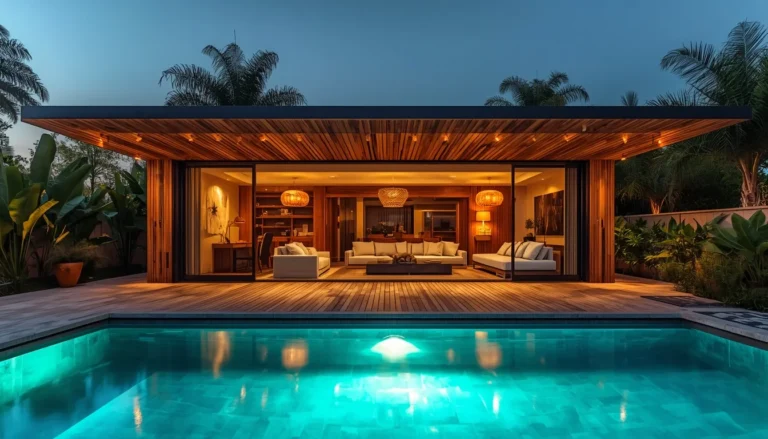
5. Compact Plunge Pool for Small Yards
A plunge or cocktail pool, often under 300 square feet, proves a small yard doesn’t have to skip the pool altogether. These compact pools work well tucked against a patio or courtyard wall, giving a strong visual feature without eating up the entire outdoor footprint. Built-in bench seating around the edge doubles the pool as a cooling-off spot and a place to sit with a drink in hand. A single striking material choice, like a dark tile interior or a stone-clad exterior wall, gives a small pool outsized visual impact. Because the water volume is smaller, plunge pools also tend to heat faster and cost less to run than a full-size pool, which matters for year-round use in cooler climates.
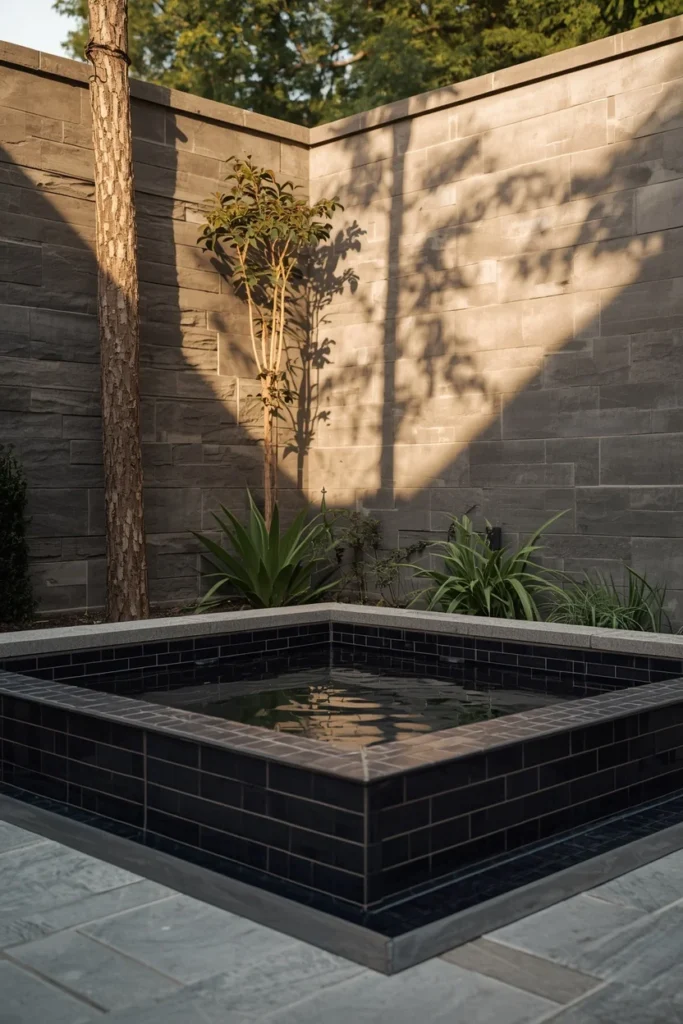
6. Dark Slate or Charcoal Pool Finish
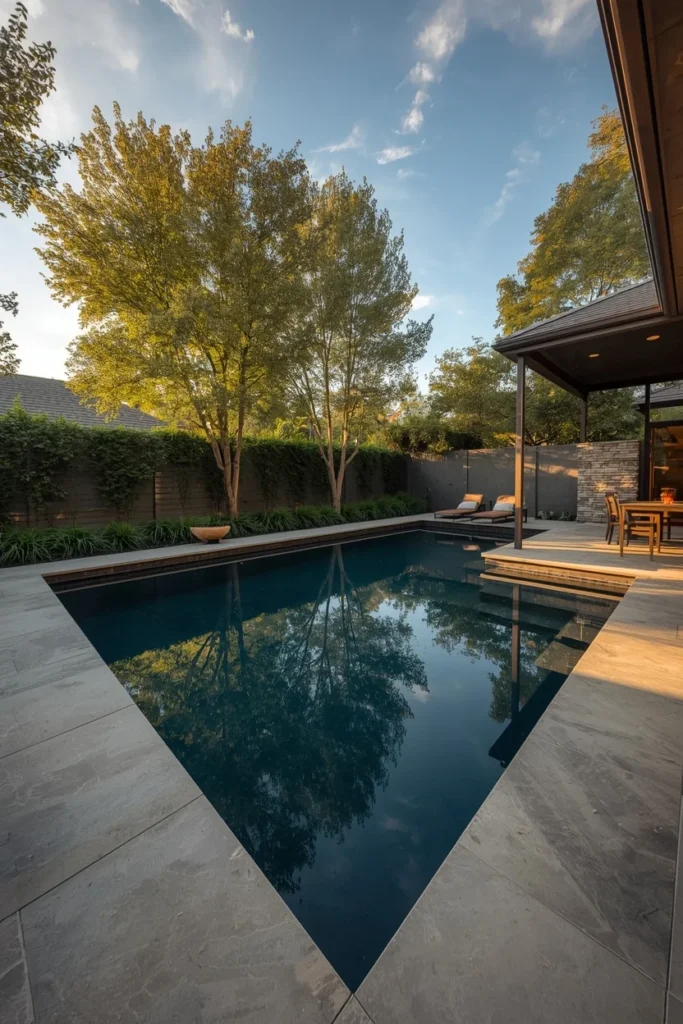
Swapping a traditional light blue pool interior for a charcoal, slate, or deep gray finish completely changes how the water reads. Instead of the classic bright turquoise look, the pool takes on a mirror-like quality, reflecting the sky and surrounding landscaping instead of standing out as a bright blue rectangle. This finish tends to photograph especially well at golden hour and after dark with lighting, since the dark water holds reflections better than pale finishes. Dark interiors also tend to show less algae discoloration over time, which can simplify maintenance. Pairing a dark pool finish with light-toned stone coping keeps the contrast sharp instead of making the whole space feel heavy.
7. Statement Waterline Tile
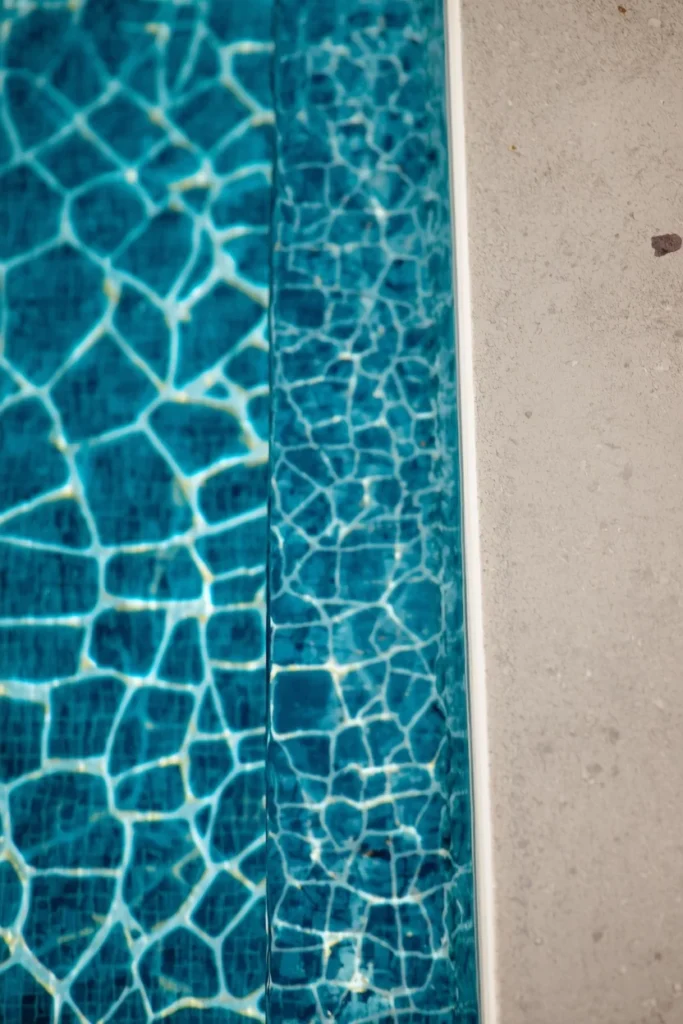
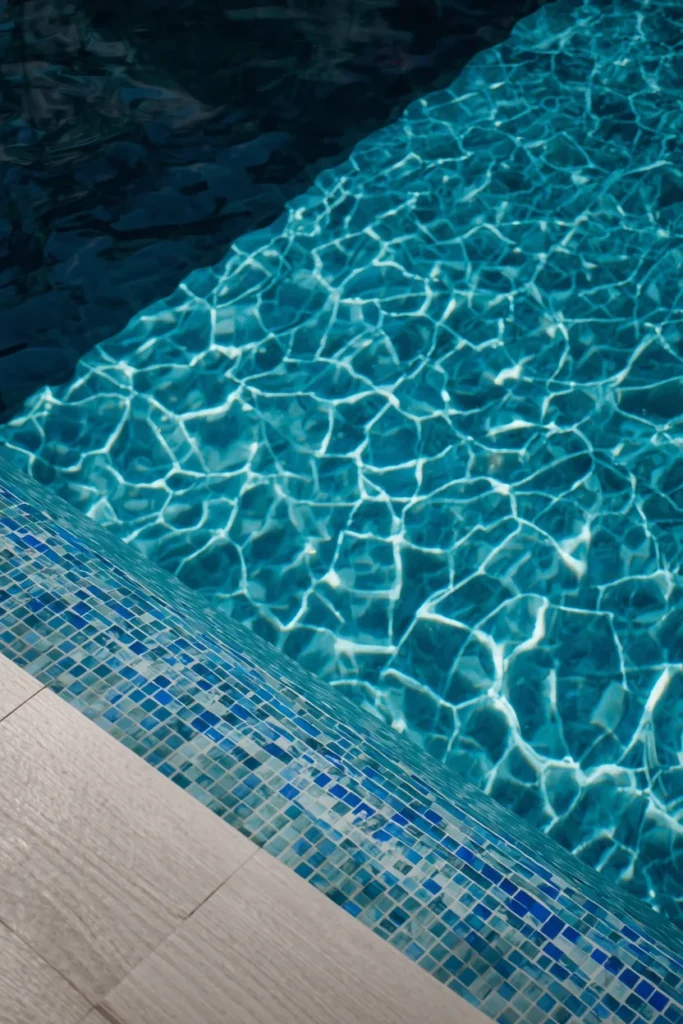
The waterline tile, where the water meets the pool wall, is one of the easiest places to add personality without redesigning the whole pool. A bold pattern, mosaic mix, or unexpected color along this strip catches the eye even from across the yard. Black tile leans modern and sleek, while a Moroccan-inspired geometric pattern adds warmth and texture. Glass tile in particular tends to shimmer under both sunlight and pool lighting, adding a subtle sparkle that plain ceramic doesn’t offer. Since this is a relatively small surface area, it’s also one of the more affordable ways to add a custom, high-end detail to an existing or new pool build.
8. Sheer Descent Waterfall Wall
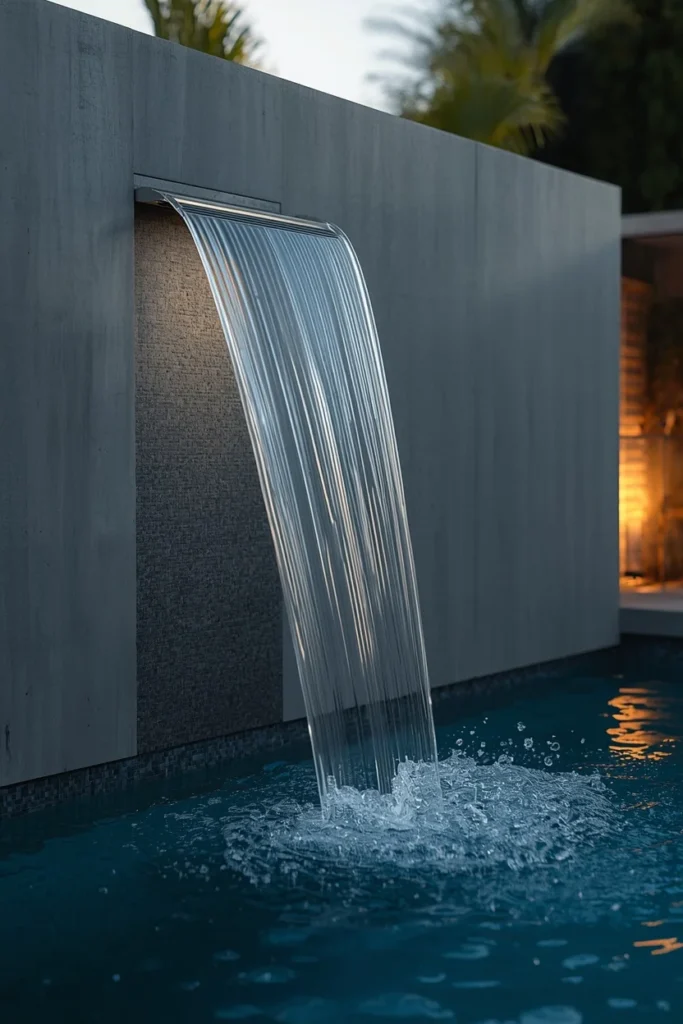
A sheer descent feature sends a thin, even curtain of water down a raised wall into the pool, adding motion and sound without the bulkier look of a rock waterfall. This works especially well mounted into a privacy wall or the side of a raised spa, combining two features into one structure. The clean, architectural line of a sheer descent fits modern pool designs better than natural rock formations, which suit lagoon-style pools instead. Running the feature on the same automation system as the pool lighting lets homeowners schedule it to activate in the evening for entertaining. Even a narrow, three-foot-wide sheer descent adds enough movement and sound to change the entire feel of a poolside seating area nearby.
9. Sunken Fire Lounge Inside the Pool
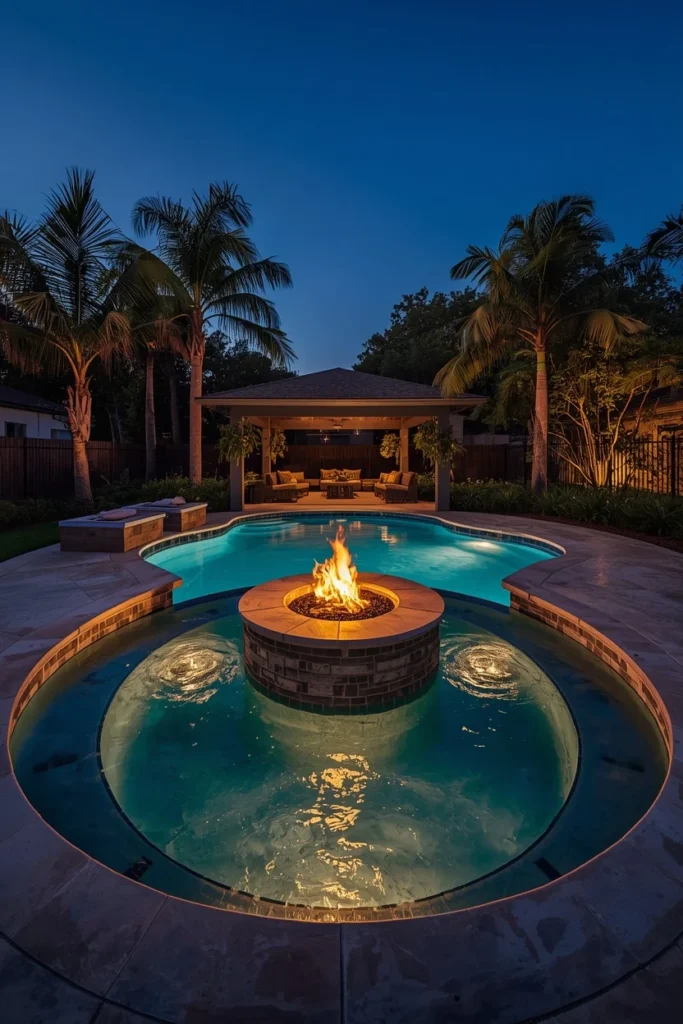
A dry sunken lounge, built into the pool’s perimeter and surrounded by water on most sides, brings the fire pit experience right into the swimming area. This layout works well for pools with an irregular or L-shaped footprint, since the lounge can tuck into a corner without interrupting the main swim zone. A gas fire bowl or built-in fire feature at the center of the lounge keeps the space usable well after the sun goes down and temperatures drop. Cushioned built-in bench seating around the fire feature turns this into the natural gathering spot for evening entertaining. Because guests can access the lounge without fully swimming to it, this feature works for mixed groups where not everyone wants to get in the water.
10. Outdoor Kitchen Poolside
Positioning a full outdoor kitchen within a few steps of the pool turns swimming and entertaining into one connected experience instead of two separate trips indoors. A built-in grill, prep counter, and mini fridge cover the basics, while a pizza oven or beverage station pushes the space further into resort territory. Covering this area with a pergola or roof extension protects the kitchen equipment from weather while giving guests shade during meal prep. Matching the outdoor kitchen’s countertop and cabinetry finish to the pool coping or deck material keeps the whole backyard feeling like one designed space rather than a patchwork of separate additions. This setup also cuts down on wet footprints and chlorine smell making their way into the house during long pool days.
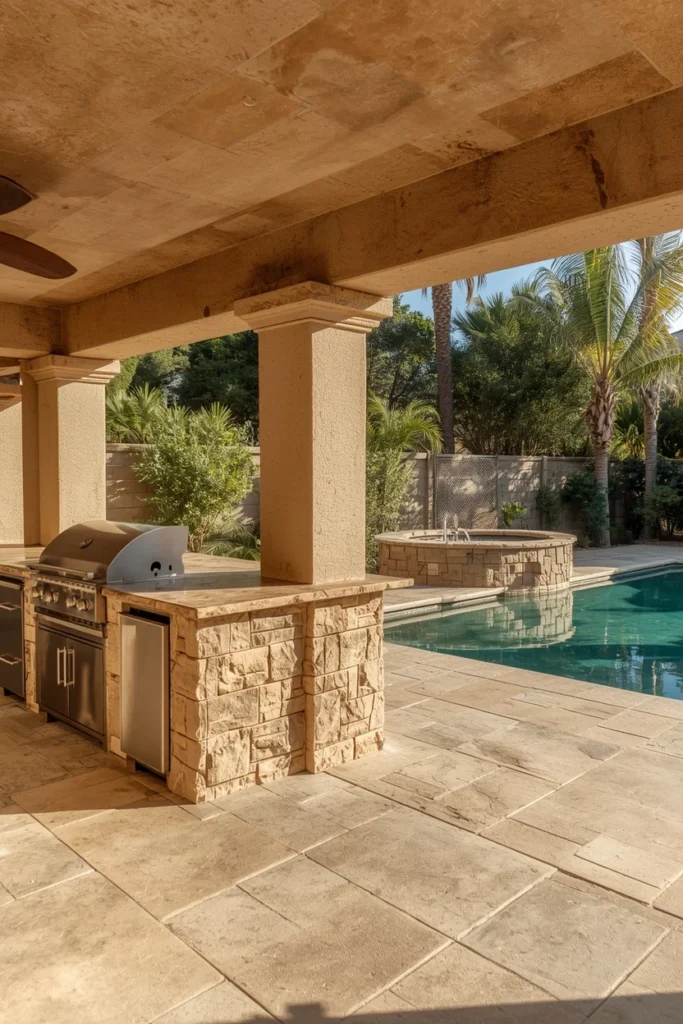
11. Pergola-Covered Lounge Deck
A pergola over part of the pool deck creates a defined lounge zone with built-in shade, which matters for anyone who wants poolside seating without direct sun all afternoon. Wrapping the pergola posts with climbing vines or string lights softens the structure and adds texture overhead. Furnishing the space with deep-seat lounge furniture, rather than standard poolside chairs, signals that this zone is meant for relaxing, not just drying off between swims. Positioning the pergola along the side of the pool that gets the most direct afternoon sun makes it the most functional shade option in the yard. A ceiling fan mounted into the pergola structure adds comfort during peak summer heat without needing a fully enclosed structure.
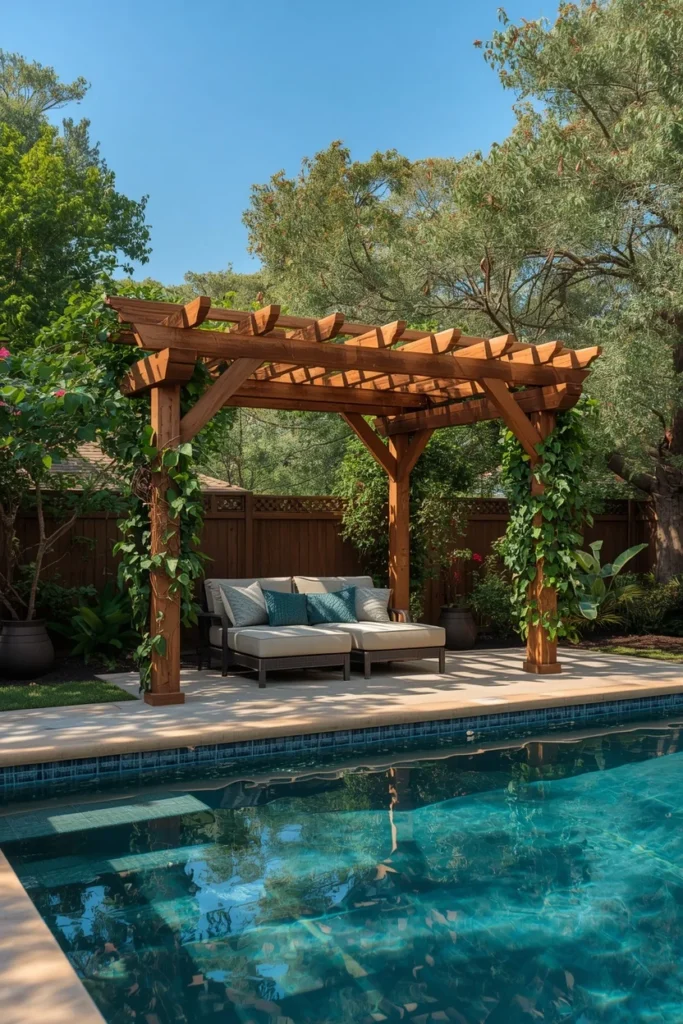
12. Linear Fire Bowls Along the Edge
Linear fire bowls or a continuous fire trough positioned along one edge of the pool add a dramatic, modern focal point that works day or night. Unlike a single fire pit, a linear feature spans a longer visual line, echoing the geometry of a rectangular pool rather than competing with it. Pairing fire directly next to water, either along the coping or built into a low wall, creates the kind of contrast that photographs well and extends usable pool time into cooler evenings. Running these on the same gas line and automation as other features keeps operation simple for the homeowner. Positioning fire bowls where they’re visible from both the pool and an indoor living space stretches their visual impact even when nobody’s outside.
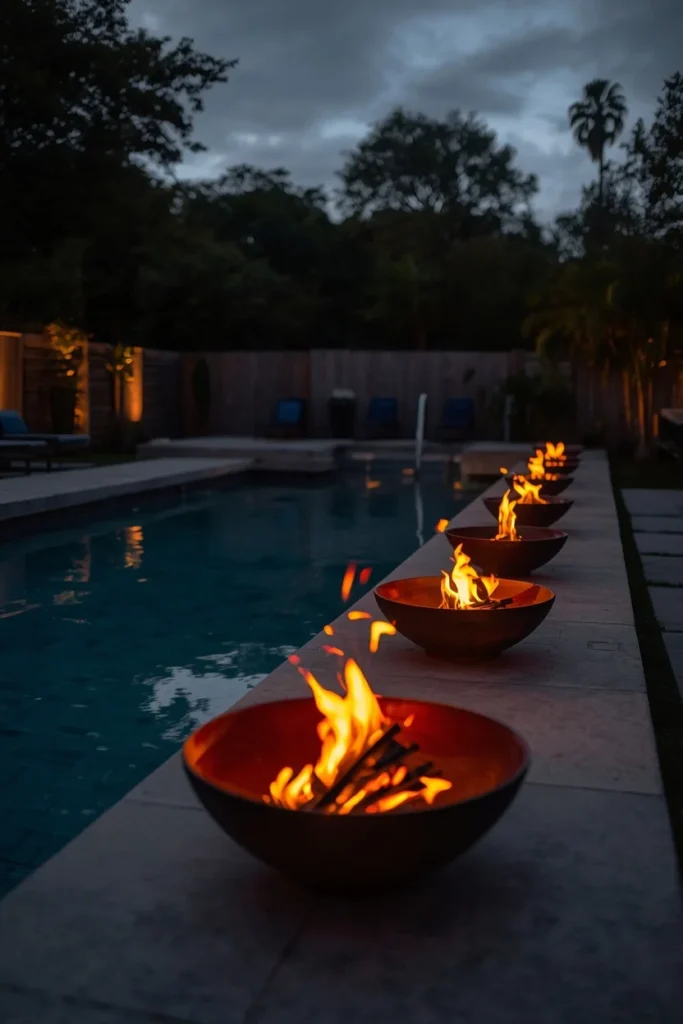
13. Layered LED Pool Lighting
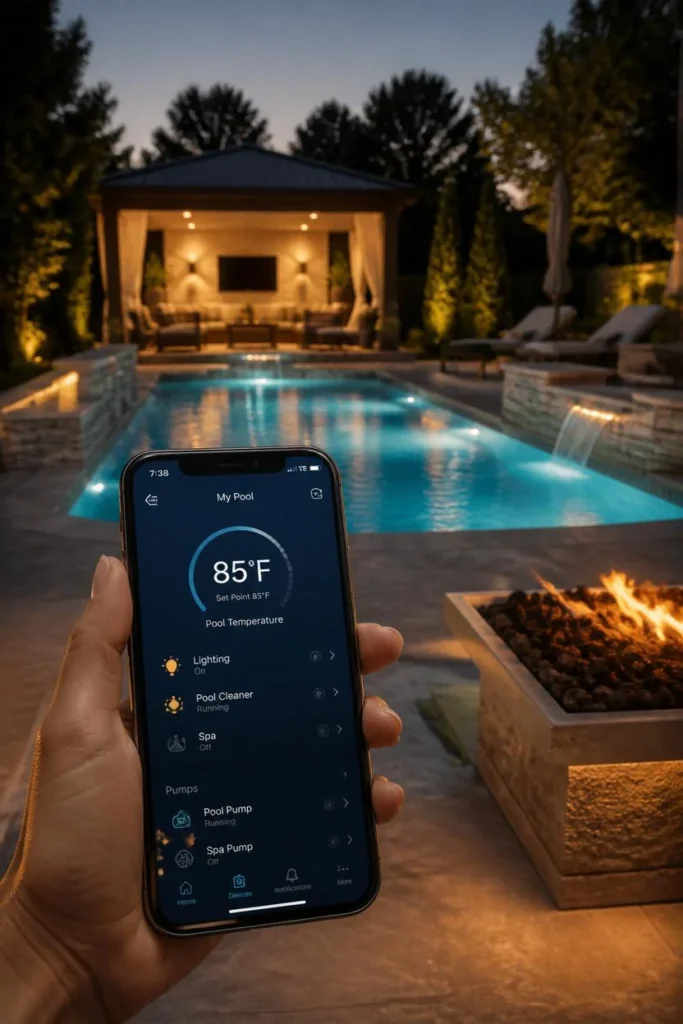
Good pool lighting works in layers: underwater LED fixtures for the water itself, step lighting for safety, and landscape lighting for the planting and hardscape around the pool. Color-changing LEDs let homeowners shift the mood from a bright white for evening swims to a warmer amber or soft blue for entertaining. Placing lights along the deck edge, not just inside the water, keeps the whole backyard usable and safe after dark rather than leaving the surrounding patio dim. App-based control over these lighting zones means the whole look can shift with one tap, without needing to walk around adjusting individual fixtures. This layered approach is often what separates a pool that looks good in daylight from one that also feels like a destination at night.
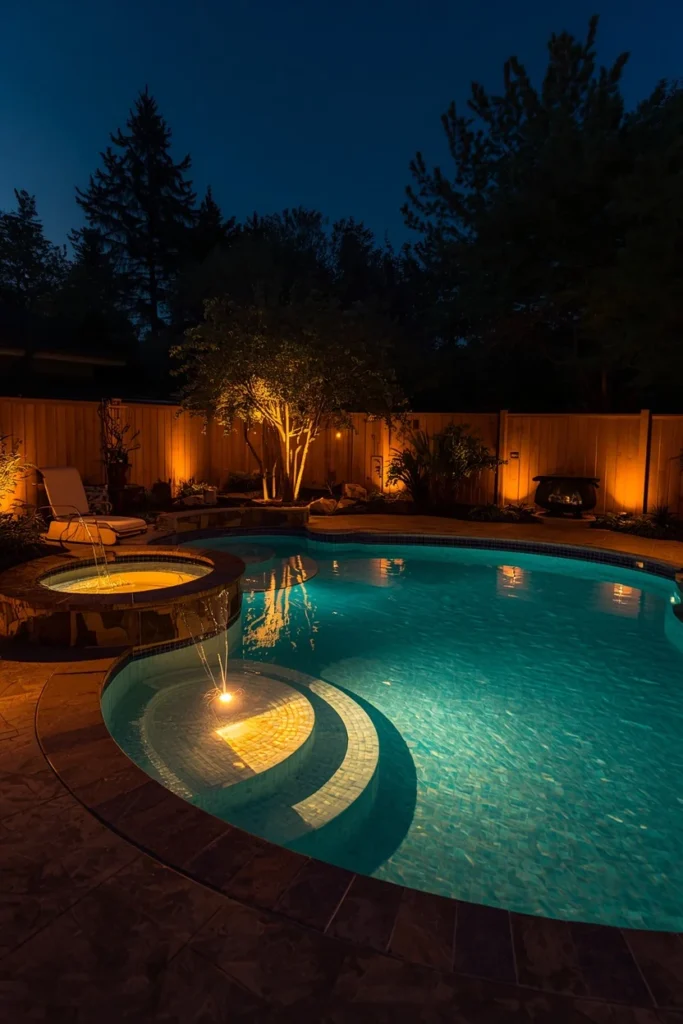
14. Geometric Pool With Rounded Corners
A rectangular pool with softened, rounded corners keeps the clean, architectural lines that suit modern homes while avoiding the stark, cold feel of a perfectly sharp-edged rectangle. This shape also tends to be more budget-friendly to build than a fully custom curved or lagoon-style pool, since the layout stays relatively simple. An L-shaped variation on this idea creates two distinct zones within one pool, useful for separating a lap-swimming section from a lounging area. Rounded corners also reduce the number of hard angles guests bump into while swimming, which matters more than it sounds like for families with young kids. This shape pairs particularly well with a matching rectangular deck and pergola, since the straight lines carry through the whole backyard design.
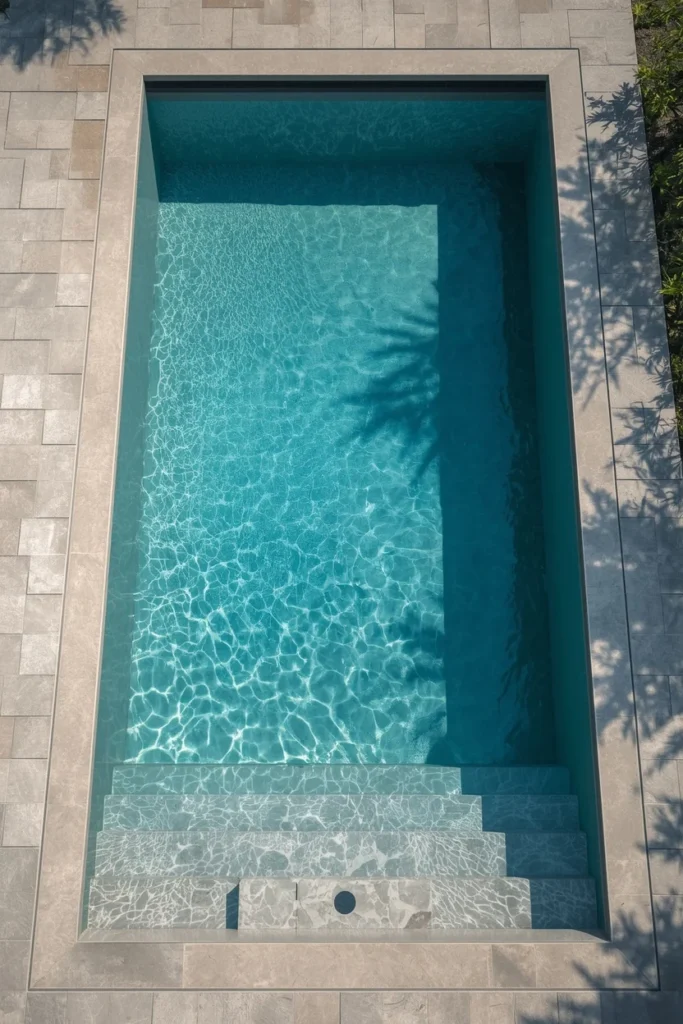
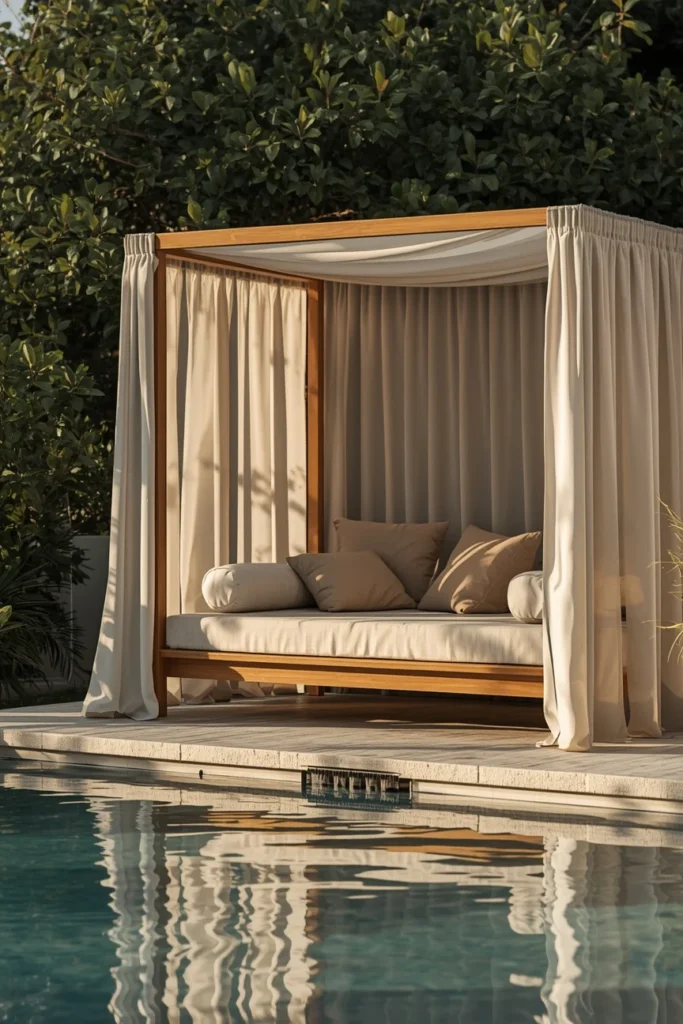
15. Poolside Daybeds and Cabana
A daybed or small cabana structure gives poolside seating a genuine resort feel instead of a row of standard lounge chairs. Positioning it slightly apart from the main deck, angled toward the pool rather than lined up against a wall, gives it its own sense of privacy within the yard. Weatherproof cushions in a neutral or muted tone keep the daybed looking fresh through a full season of sun exposure. A simple fabric canopy over the daybed adds shade without the cost or permanence of a full cabana structure, while a built structure with curtains offers more privacy for those who want it. This feature works especially well as the visual endpoint of a pool, giving the eye somewhere intentional to land at the far end of the space.
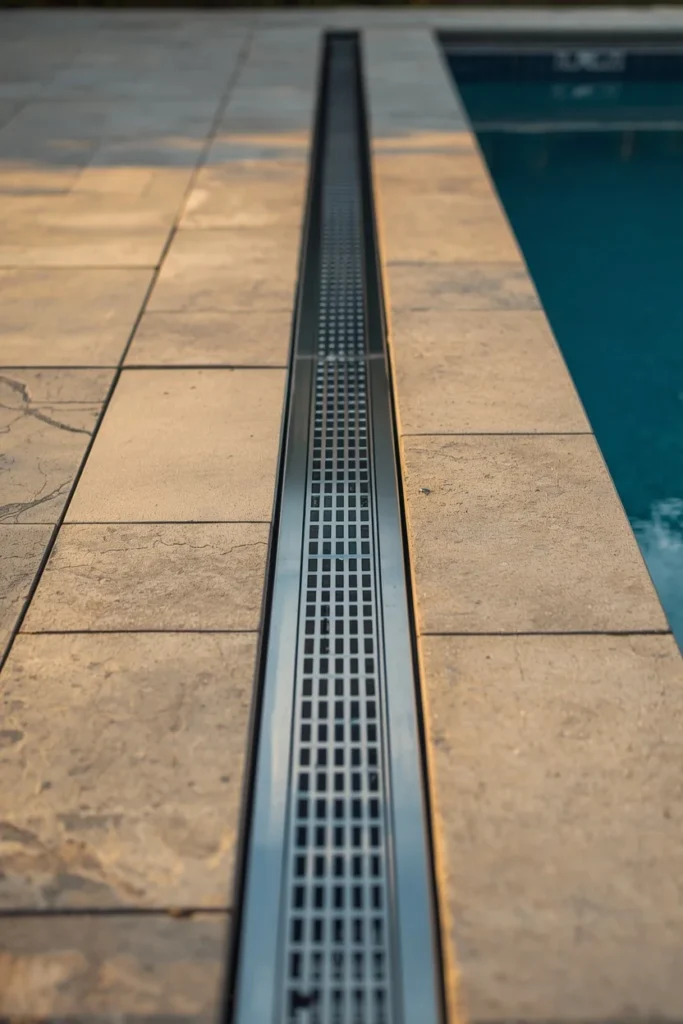
16. Decorative Linear Deck Drains
Swapping bulky plastic deck grates for sleek stainless steel or custom linear drains is a small change with a surprisingly large visual payoff. These drains sit flush with the deck material, whether stone, tile, or concrete, so they read as part of the design rather than an obvious utility feature. Proper drainage also protects the pool deck from water pooling and staining over time, which matters more in regions with heavy seasonal rain. Placing linear drains along the perimeter of the deck, rather than centered in high-traffic walking paths, keeps them both functional and out of the way. This is one of the easiest upgrades to include in a renovation, since it doesn’t require changing the pool shape or size.
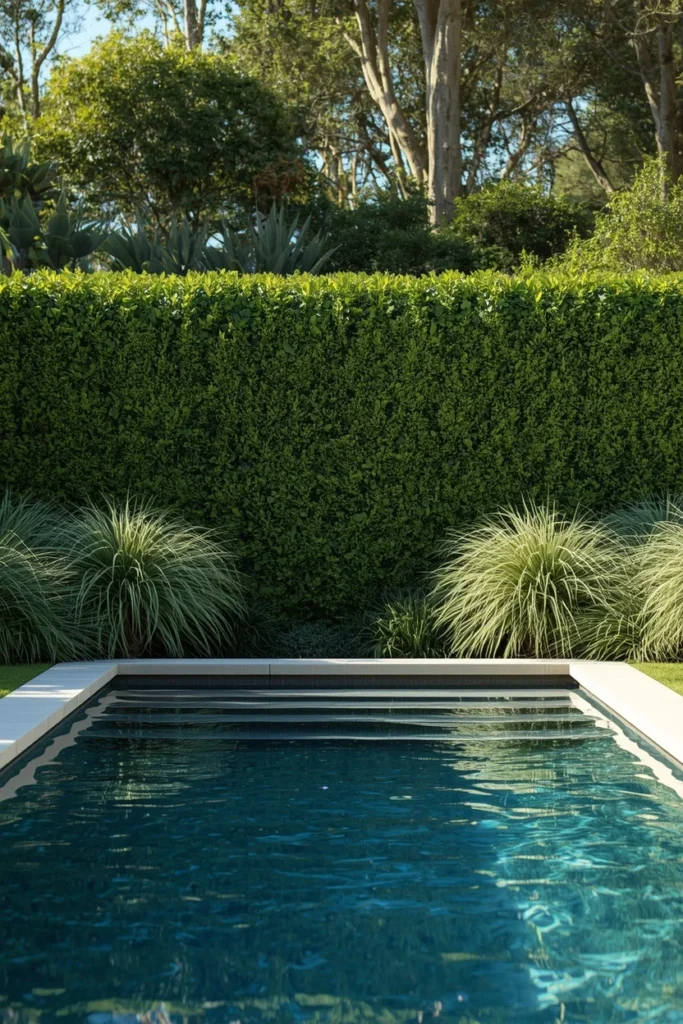
17. Privacy Landscaping and Hedges
Tall hedges, ornamental grasses, or a mix of layered planting around the pool perimeter turn a visible backyard into a genuinely private retreat. Evergreen varieties keep the privacy screen intact year-round, which matters more than a seasonal flowering hedge if privacy is the main goal. Planting in layers, with taller trees at the back and shorter shrubs in front, adds depth and texture instead of one flat wall of green. Leaving a few gaps in the landscaping toward a genuinely nice view, rather than boxing the pool in completely, balances privacy with keeping the space from feeling closed off. This kind of planting also softens hard pool equipment, fences, or neighboring structures that might otherwise interrupt the view.
18. Swim-Up Bar With Submerged Stools
A swim-up bar, with submerged stools built into a shallow ledge along one edge, brings a genuine resort detail into a residential backyard. Positioning the bar under a covered structure protects both guests and any built-in electronics or a small fridge from direct sun and rain. Stone or tile-topped counters that match the pool coping keep the bar feeling integrated rather than like a separate addition. This feature works best in larger pools with enough room for a dedicated bar zone that doesn’t interrupt the main swimming area. Even without full bar service, the submerged stool ledge alone gives guests a comfortable place to sit and chat without leaving the water.
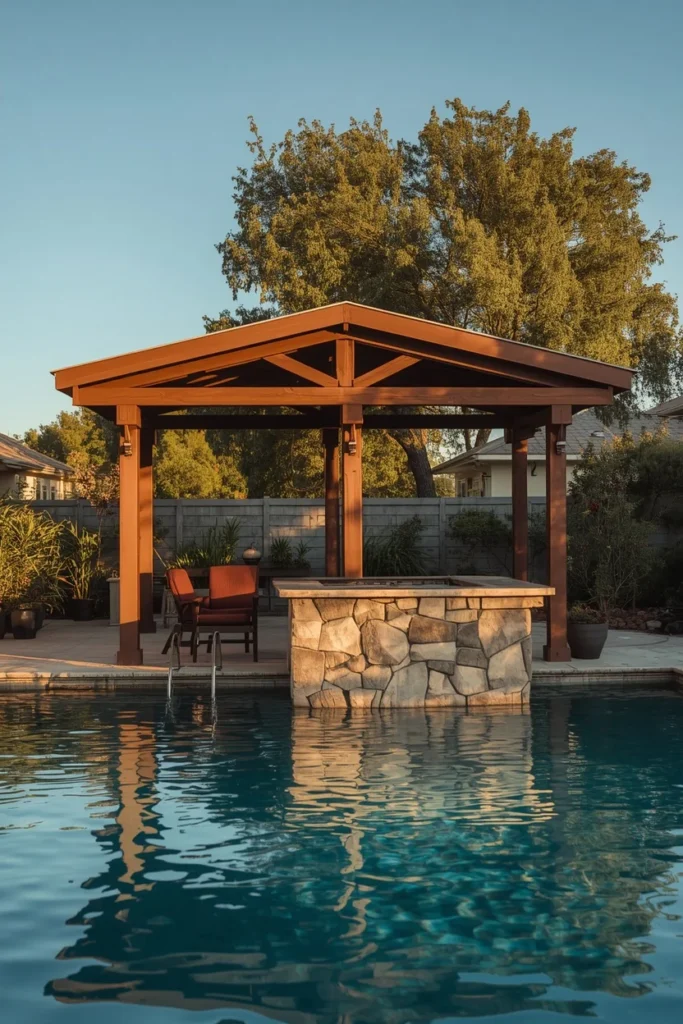
19. Custom Mosaic Mural Tile
A custom mosaic mural, placed on the pool floor or as an accent panel on a wall, turns the pool itself into a piece of art rather than just a functional structure. Simple geometric patterns tend to age better than highly literal images, since bold color trends can start to feel dated faster than abstract designs. Placing a smaller mural at the shallow end or steps, where it’s easily visible from the deck, gets more visual payoff than hiding it in the deep end. Glass tile mosaics catch light differently than ceramic, adding shimmer that moves as the water ripples throughout the day. This is a higher-investment detail, but it’s also one of the most memorable, personal touches a pool can have.
20. Shade Sail Canopy
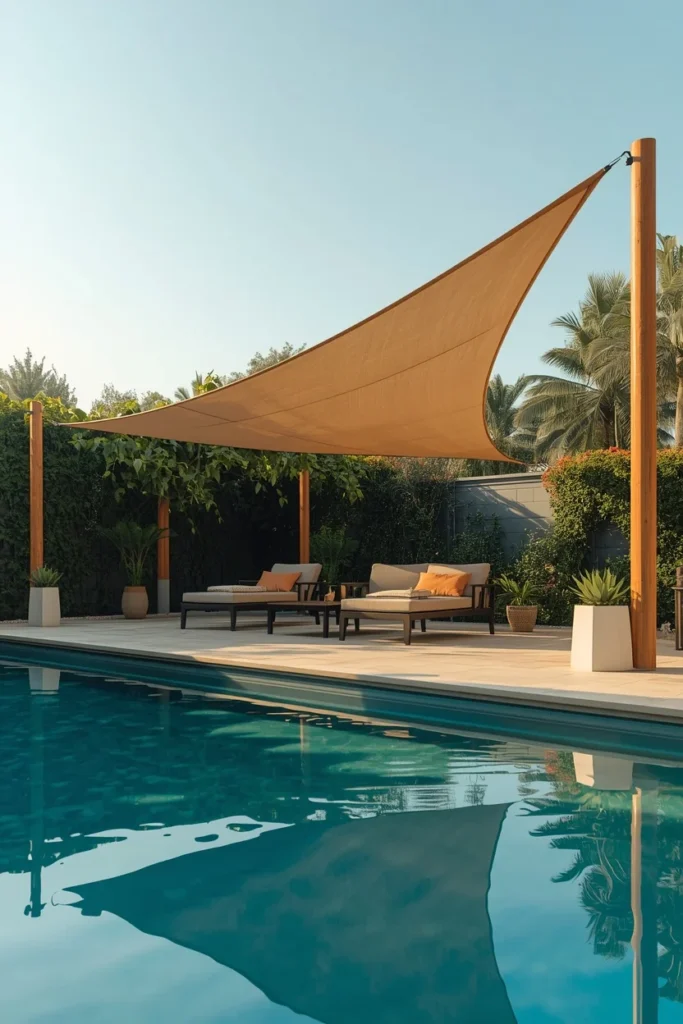
A shade sail, stretched between posts or anchored to the house and a freestanding pole, gives a modern, angular shade option that suits contemporary pool designs better than a traditional umbrella. Choosing a triangular or layered multi-sail configuration adds visual interest overhead instead of one flat canopy. Neutral tones like sand, charcoal, or white tend to fit more backyard styles than bright colors, which can clash with pool tile or landscaping. Because shade sails are removable, they also offer more seasonal flexibility than a permanent pergola, useful for regions with big swings between summer heat and winter storms. Positioning the sail over the lounge area rather than the water itself keeps swimmers in the sun while giving seated guests relief from direct heat.
21. Smart Pool Automation Hub
App-based control over pumps, heating, filtration, and lighting turns pool maintenance from a manual chore into something that runs quietly in the background. Scheduling equipment to run during off-peak electricity hours cuts down on energy costs without any extra effort once it’s set up. Self-monitoring water chemistry systems flag issues like pH imbalance before they become visible problems, which saves both time and repair costs down the line. Voice or app control over lighting and water features also means the whole backyard mood can shift with one command, without walking around checking individual switches. For homeowners balancing a busy schedule, this kind of automation is often what makes a pool feel like a low-maintenance retreat instead of a weekend project.
Styling Tips
- Treat the pool, deck, and landscaping as one connected design instead of separate projects.
- Use lighting in layers — underwater, step, and landscape — rather than one single light source.
- Choose one or two “wow” features (fire, a mural, a swim-up bar) instead of trying to fit everything into one yard.
- Keep hardscape materials consistent between the pool coping, deck, and any outdoor kitchen or bar for a cohesive look.
Practical Implementation Ideas
- Plan layout and zoning before choosing individual features, since flow between the pool, seating, and kitchen matters more than any single detail.
- Add automation and lighting wiring during initial construction, since retrofitting later costs more.
- Choose plant varieties for privacy screening based on your climate’s year-round evergreen options, not just how they look in a garden center.
- Budget for drainage and deck slope early, especially in regions with heavy seasonal rain.
Common Mistakes to Avoid
- Placing a tanning ledge or lounge area somewhere that gets shaded most of the afternoon.
- Overcrowding a small yard with too many features instead of prioritizing one or two standout elements.
- Skipping proper drainage planning, which can lead to pooling water and deck damage later.
- Choosing bright, trend-heavy tile patterns that may look dated within a few years instead of more timeless geometric options.
Small-Space Alternatives
A plunge or cocktail pool (Idea 5) proves a full-size pool isn’t necessary for a resort feel in a small yard. A single sheer descent water feature or a compact fire bowl adds drama without needing the space a full sunken lounge requires. Vertical landscaping, like tall narrow planters, creates privacy in tight side yards where a full hedge row won’t fit.
Budget-Friendly Alternatives
Waterline tile upgrades (Idea 7) cost far less than a full resurfacing project while still adding a custom, high-end detail. A shade sail costs less than a built pergola and can be added without major construction. Simple app-based pump and lighting controls, rather than a full smart-home integration package, still deliver most of the convenience at a lower price point.
Pro Styling Recommendations
Builders working on pool projects increasingly plan the pool, patio, fire features, and lighting together as one engineered layout rather than adding elements one at a time after the pool itself is finished. This integrated approach tends to result in a backyard that flows naturally from swimming to lounging to entertaining, rather than feeling like separate additions bolted onto the yard over time.
FAQs
Conclusion
A backyard pool becomes a paradise through the small decisions layered around it: where the shade falls, how the lighting shifts after dark, whether there’s somewhere to sit with a drink without fully getting wet. Pick two or three ideas from this list that fit how you actually use your yard, and let the rest of the space build out from there.