25 Modern Dining Room Ideas That Are Chic, Sleek & Totally Pin-Worthy
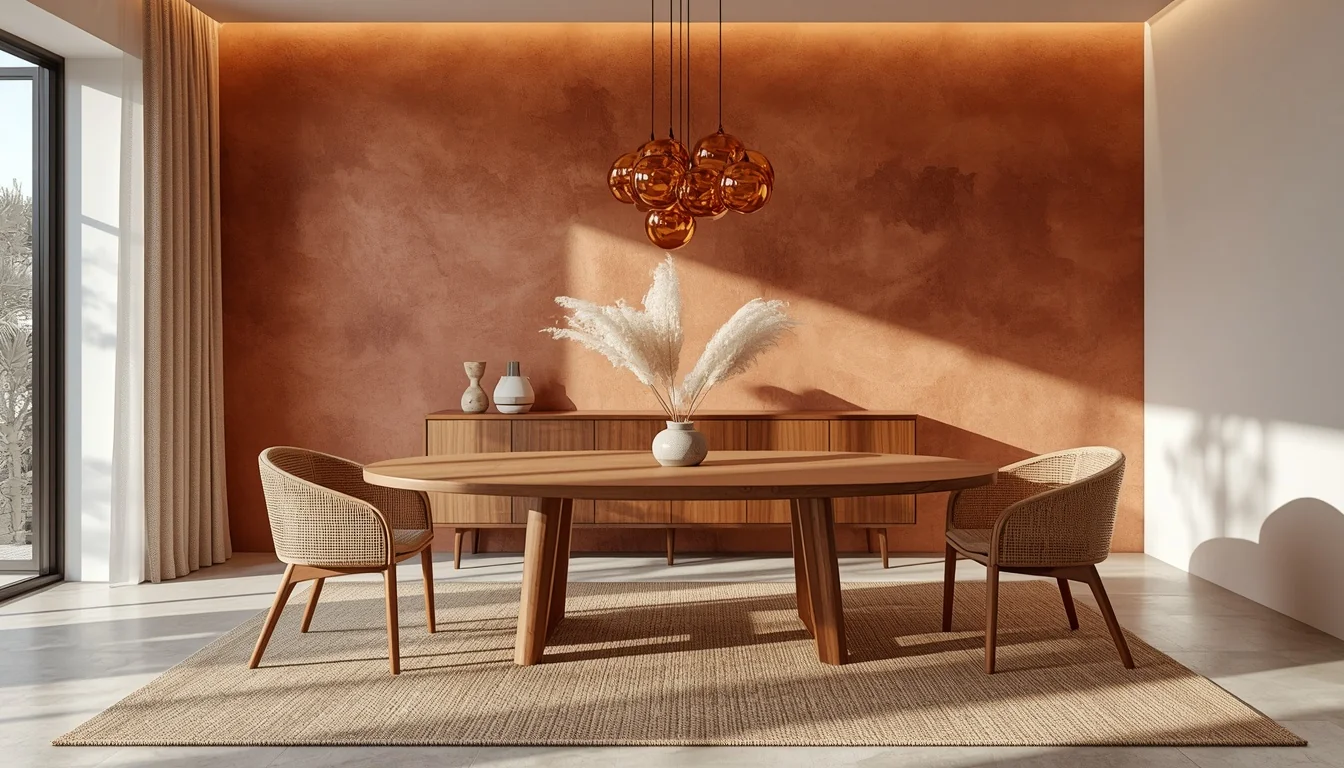
Picture this. The table is set, the light overhead is warm and low, and nobody wants to leave the room after dinner is done. That’s the dining room everyone actually wants, and it has almost nothing to do with matching furniture sets or perfectly staged centerpieces. It has everything to do with a few smart choices in shape, material, and light. If your dining room currently feels like a pass-through space or a spot where mail piles up, these 25 modern ideas will show you exactly how to turn it into the room your whole house gravitates toward.
Table of Contents
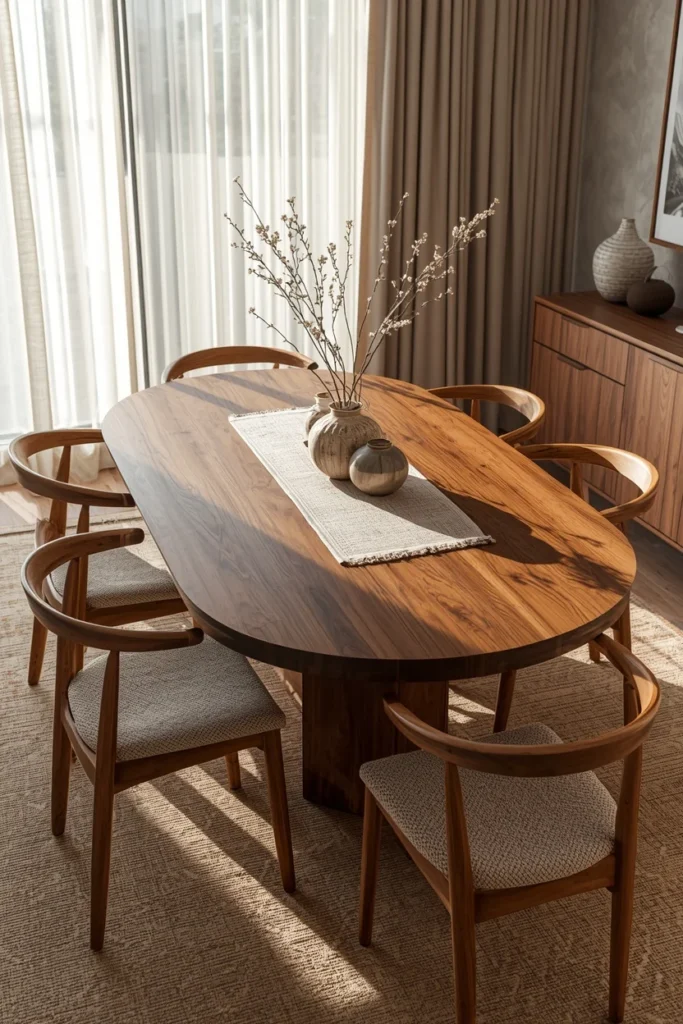
1. Oval Walnut Dining Table
An oval table softens the whole room in a way a rectangle never quite manages. Curved edges remove the awkward corner seat, so conversation flows more naturally around the table instead of splitting into two ends. Walnut works especially well because its warm reddish-brown tone and visible grain add richness without feeling heavy, and it pairs easily with both black metal chairs and soft upholstered ones. This shape also makes tight rooms feel more open, since there are no sharp corners to navigate around. If you’re building a dining room from scratch, the table’s shape is the decision everything else gets built around.
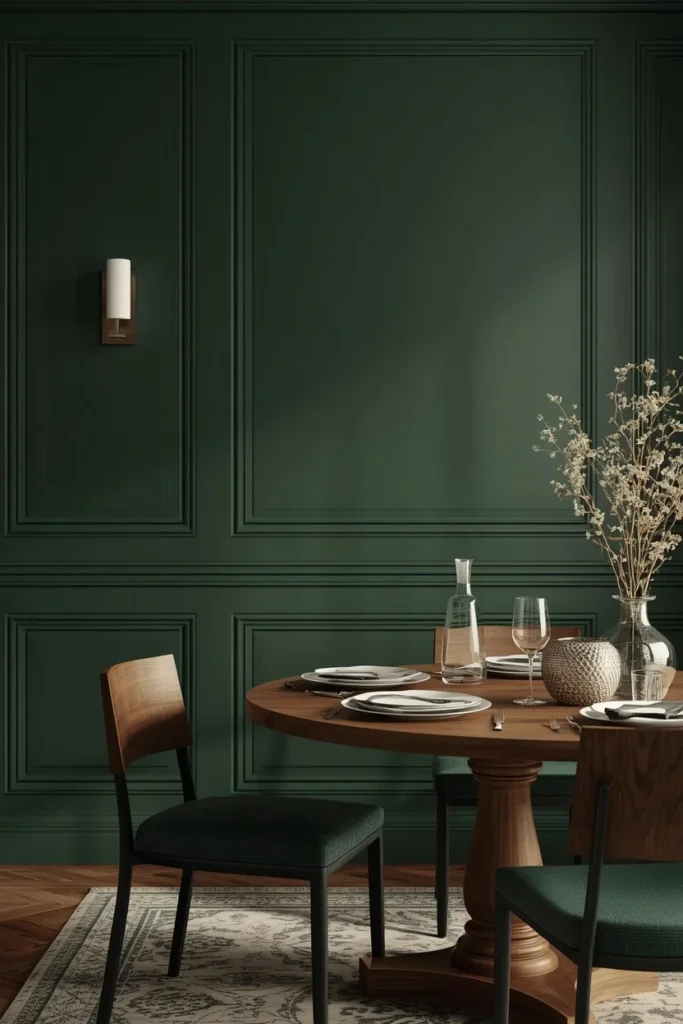
2. Moody Paneled Accent Wall
Paneled walls bring instant architectural depth to a room that would otherwise feel flat. Vertical or square panel molding painted in a deep forest green, navy, or charcoal creates shadow lines that shift throughout the day as natural light moves across the wall. This treatment works in both formal and casual dining rooms, and it pairs beautifully with brass hardware, warm wood furniture, and a single statement light fixture. Because the color sits only on one wall, the rest of the room can stay neutral without feeling unfinished. It’s one of the fastest ways to make a builder-grade dining room feel custom.
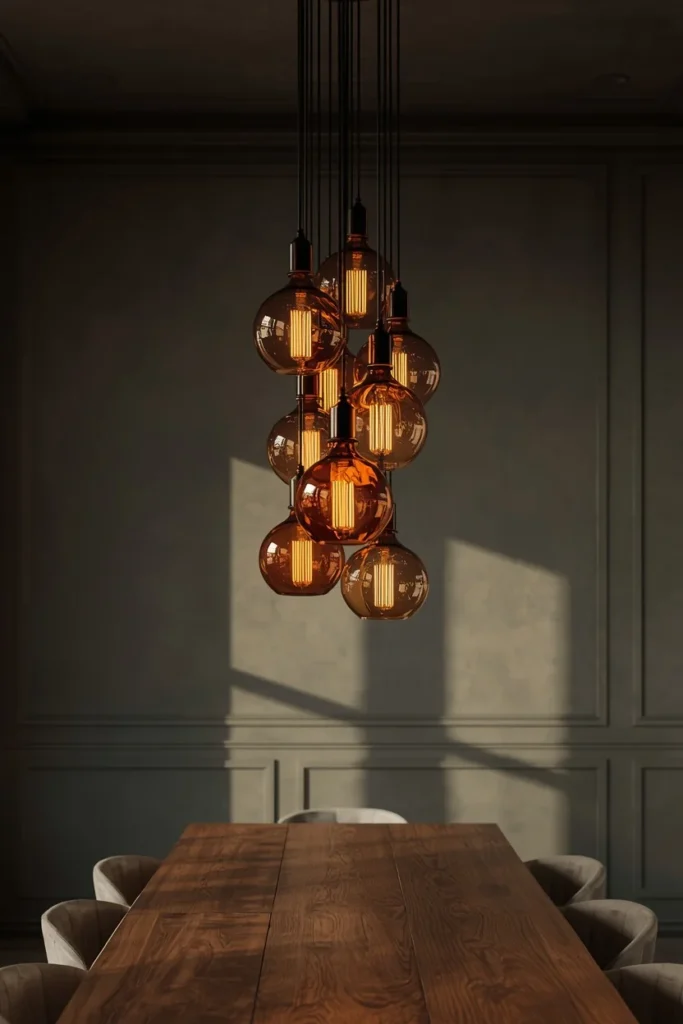
3. Sculptural Glass Pendant Cluster
A cluster of colored glass pendants does double duty as lighting and as art. Amber, cobalt, and smoked glass shades hung at slightly varied heights create visual movement above the table without needing a single oversized chandelier. The trick is scale: pendants should sit low enough to draw the eye down toward the table, roughly 30 to 34 inches above the surface, so the light feels intimate rather than office-bright. This idea works particularly well over long rectangular tables where a single fixture would leave the ends in shadow. Warm bulb temperature ties the whole look together and keeps the glass colors from reading cold.
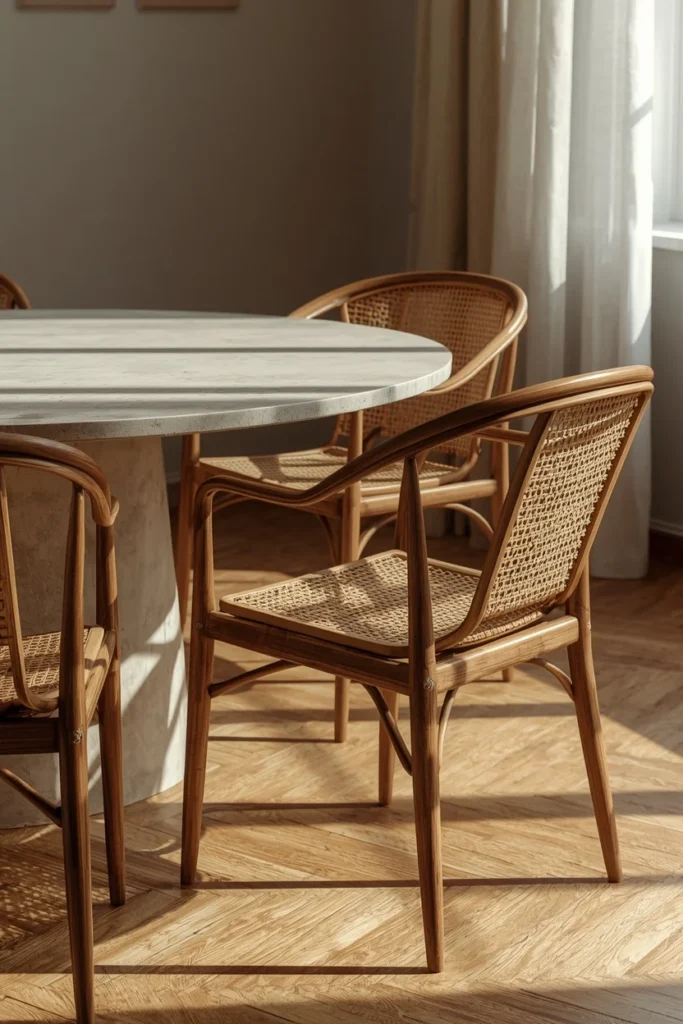
4. Curved Cane Dining Chairs
Cane-back chairs bring texture and lightness to a dining room without adding visual bulk. The woven backs let light pass through them, which keeps a small or dark room from feeling boxed in, while the curved wood frame softens a space full of straight lines and hard surfaces. These chairs mix especially well with a solid stone or wood table, since the pairing balances something heavy with something airy. They also work as accent chairs at the ends of a table set with upholstered dining chairs on the sides. Cane is durable enough for daily use and ages well with a simple wipe-down.
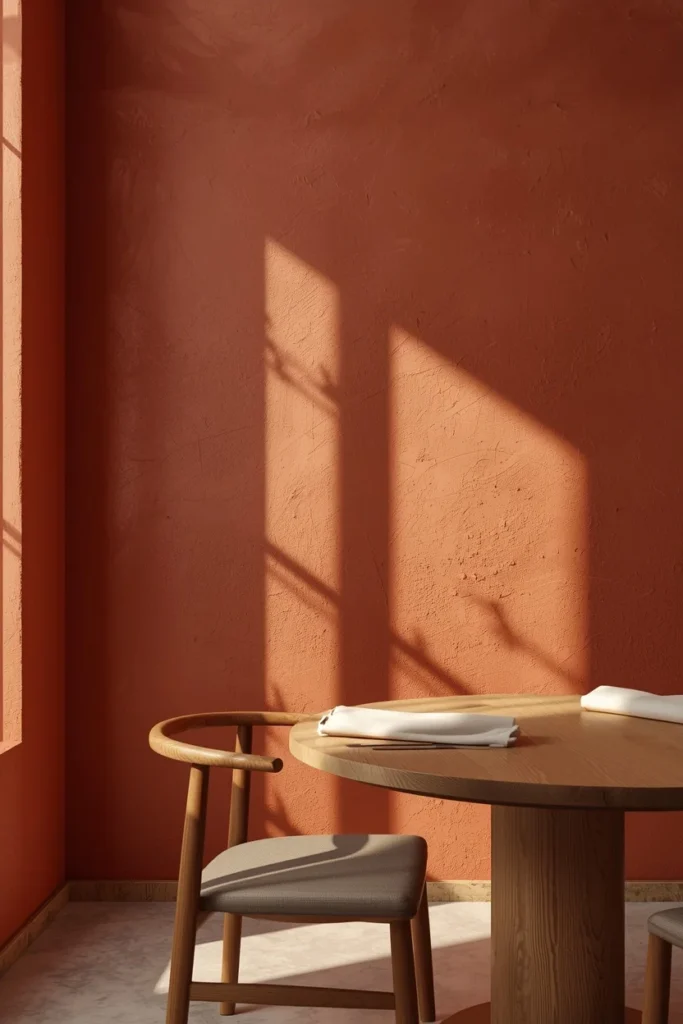
5. Plaster-Finish Walls
Limewash or plaster finishes give walls a soft, hand-troweled texture that catches light differently than flat paint. The subtle variation in tone makes a dining room feel older and more intentional, almost like the walls have a bit of history to them, even in a brand-new build. This finish pairs beautifully with warm wood furniture and linen textiles, since none of the materials compete for attention. Plaster also hides small wall imperfections better than a glossy paint finish would. It’s a higher-effort update, but it changes the entire feel of a room more than almost any other single choice.
6. Mixed Seating with a Bench
Swapping two chairs for a bench on one side of the table instantly makes a dining room feel more relaxed and less matched. Benches are also practical for households with kids, since they allow more people to squeeze in without needing extra chairs. Pairing a wood bench with upholstered captain chairs at each end creates a collected, lived-in look rather than a stiff dining set. This combination works in both small breakfast nooks and larger formal dining rooms. Adding a few throw pillows to the bench softens the look further and makes the seating feel considered rather than accidental.
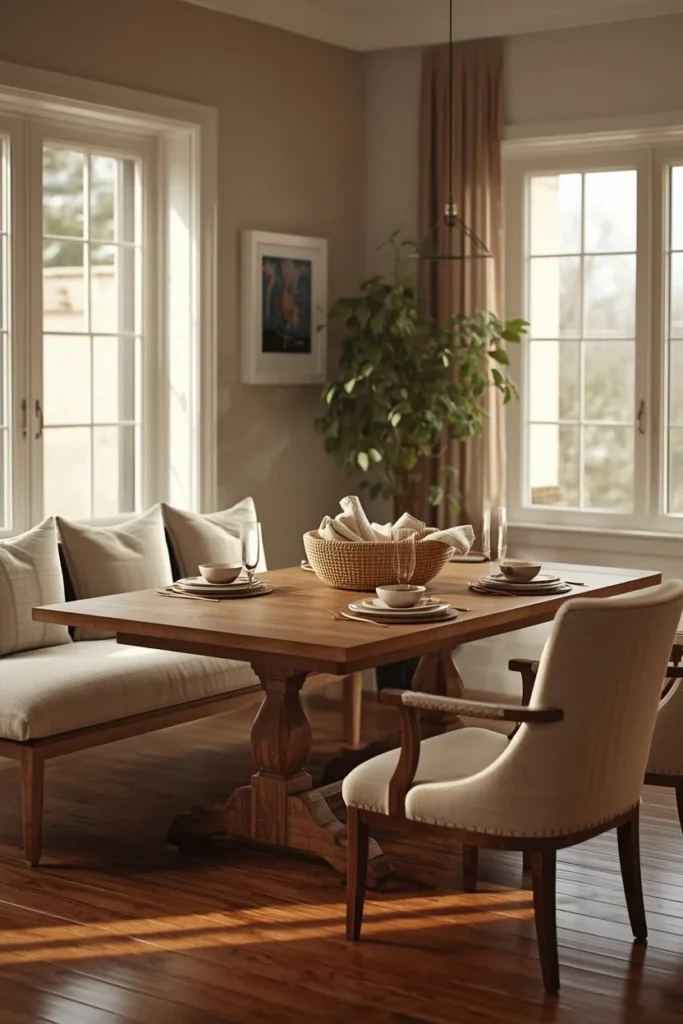
7. Statement Chandelier in Aged Brass
An oversized chandelier in aged brass or alabaster brings a sense of ceremony back to the dining room, even in a casual home. The key is choosing a fixture that’s noticeably larger than instinct suggests, since a small chandelier over a big table reads as an afterthought. Aged or unlacquered brass develops a soft patina over time, which keeps the fixture from looking too shiny or new next to worn wood furniture. Dimmer switches are essential here, letting the same fixture handle bright weeknight dinners and low, warm lighting for guests. This is the single fixture most likely to get a room noticed the moment someone walks in.
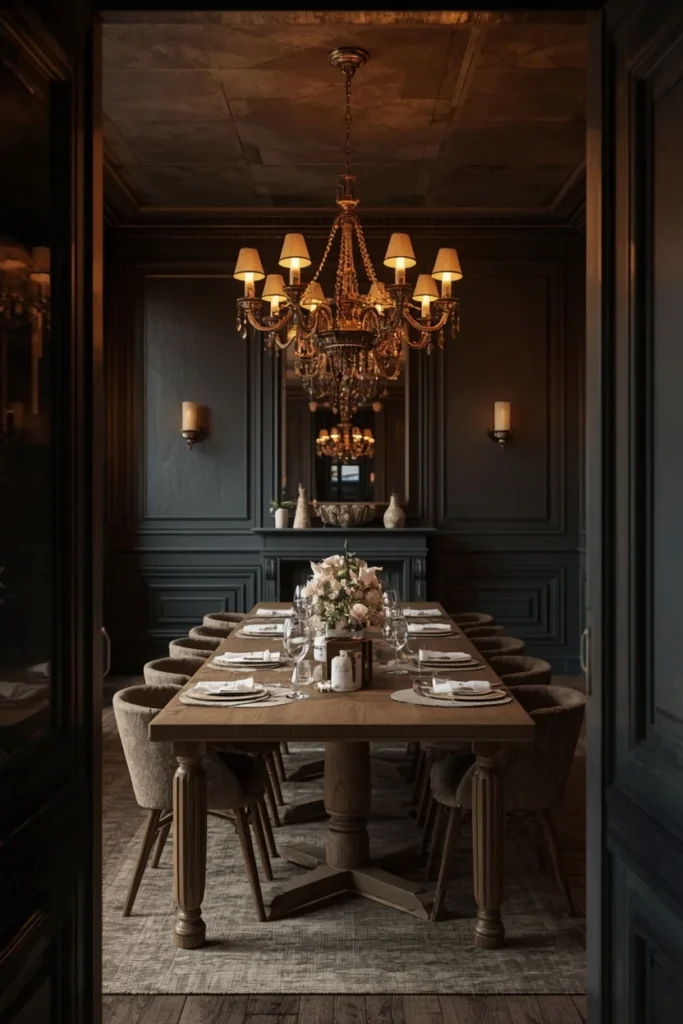
8. Woven Rattan Pendant Light
A woven rattan or wicker pendant brings texture and warmth without the visual weight of a metal fixture. Light filters through the natural fibers and casts soft, dappled shadows on the ceiling and walls, adding movement to the room even when nothing else is happening. This style pairs naturally with coastal, organic modern, or Scandinavian-leaning dining rooms, and it works well above round or oval tables where a softer shape overhead feels more balanced. Rattan pendants are also relatively affordable compared to designer glass or brass fixtures, making them an easy upgrade. Cleaning is simple with a soft brush or vacuum attachment.
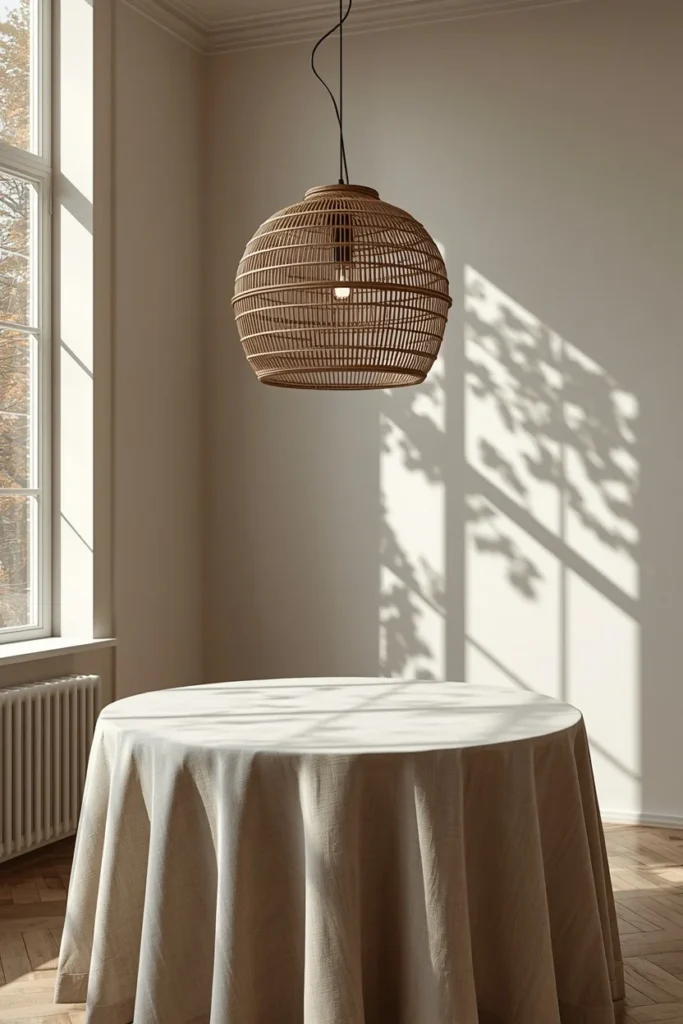
9. Reclaimed Wood Dining Table
A reclaimed wood table brings visible history into the room through knots, saw marks, and uneven grain that a factory-finished table can’t replicate. Each surface tells a slightly different story, which makes the table feel more like a piece of furniture and less like a purchase. This works especially well with simple black metal or wishbone chairs, letting the tabletop stay the visual focus. Reclaimed wood is also a more sustainable choice, since it repurposes timber instead of requiring new material. A few coats of low-VOC finish protect the surface daily use while keeping the texture and character intact.
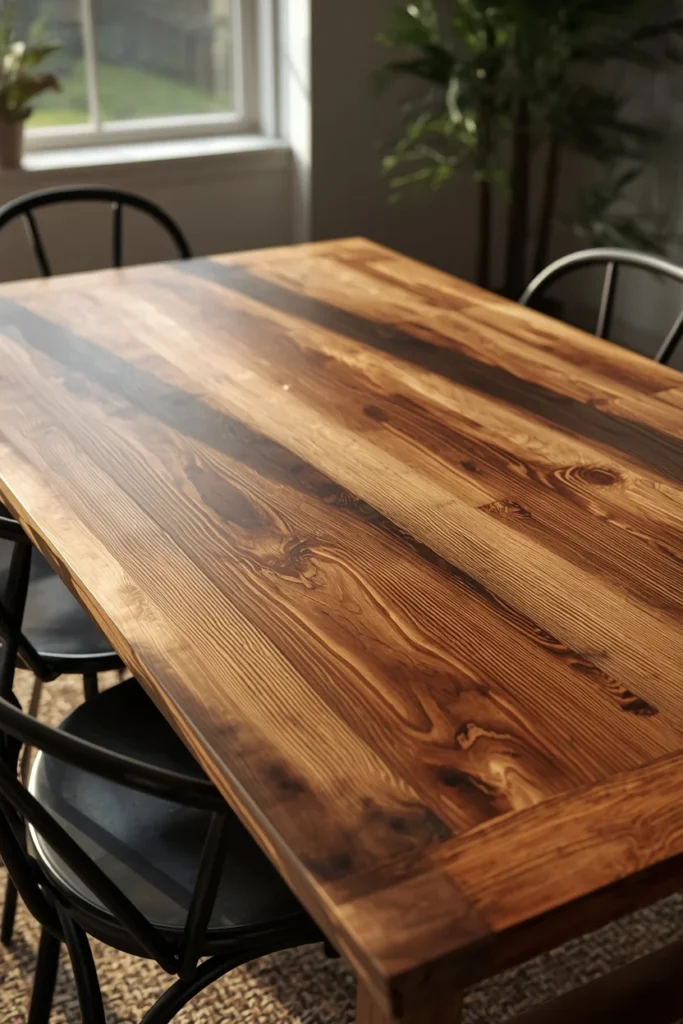
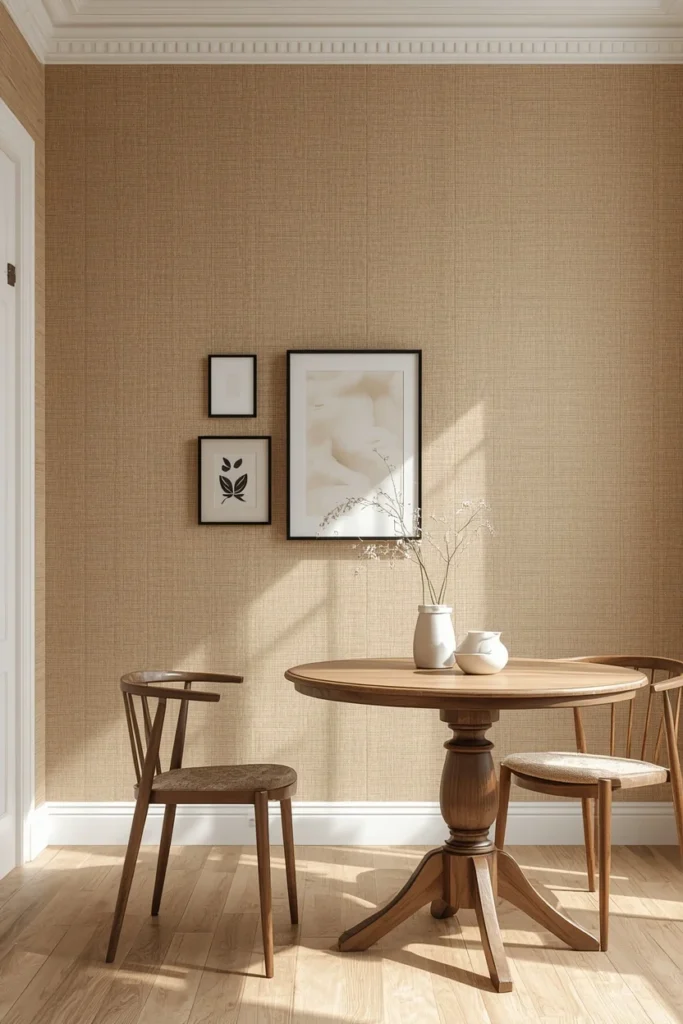
10. Grasscloth Wallcovering
Grasscloth wallpaper adds subtle texture and depth to dining room walls without competing with furniture or art. The woven natural fibers catch light in a way flat paint can’t, giving even a small room a sense of dimension. Warm tones like wheat, sand, or soft green work particularly well in dining rooms, since they read as a backdrop rather than a statement. This treatment pairs nicely with simple black-framed art and a wood table, letting the wall texture do the visual work. Grasscloth is more delicate than vinyl wallpaper, so it’s best kept away from areas with heavy daily contact.
11. Built-In Banquette Seating
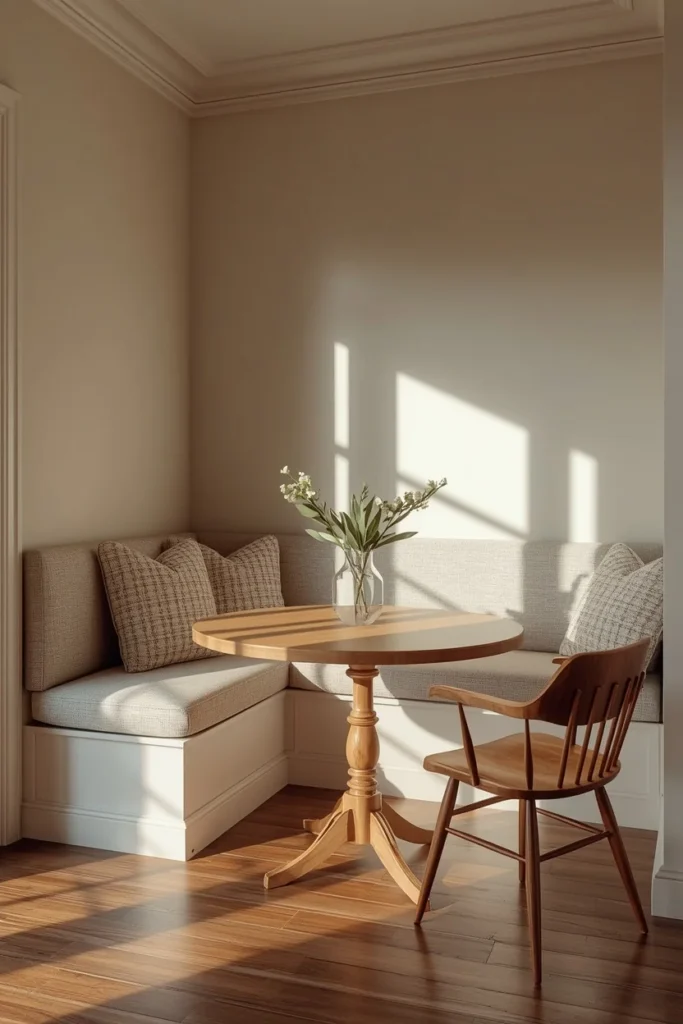
A built-in banquette turns an awkward corner or alcove into one of the coziest spots in the house. Upholstered in a durable performance fabric, the bench seat can tuck against a wall while a few chairs finish out the other side of the table, freeing up floor space compared to chairs on all sides. This setup works especially well in smaller dining nooks attached to a kitchen, since it maximizes seating without crowding the walkway. Adding a row of throw pillows in mixed patterns keeps the built-in from feeling like a restaurant booth. Storage can even be built into the base of the bench for linens or extra seating cushions.
12. Layered Lighting with Wall Sconces
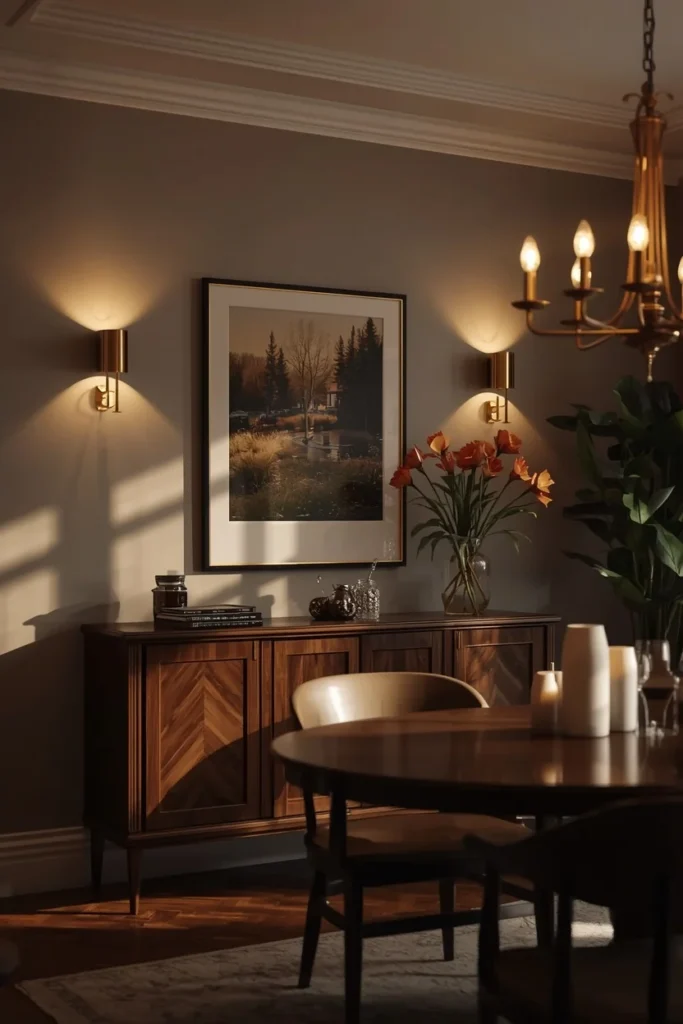
Relying on a single overhead fixture leaves a dining room feeling flat once the sun goes down. Adding wall sconces on either side of a sideboard or artwork creates a second layer of light that fills in shadows and makes the whole room feel warmer in the evening. Picture lights above artwork add a third layer, giving the room a gallery-like glow that highlights details rather than washing the space in flat brightness. This layered approach also means the room can shift moods, bright for daytime tasks, low and warm for dinner parties. Dimmers on each layer make the transition seamless.
13. Veneered Sideboard with Curved Front
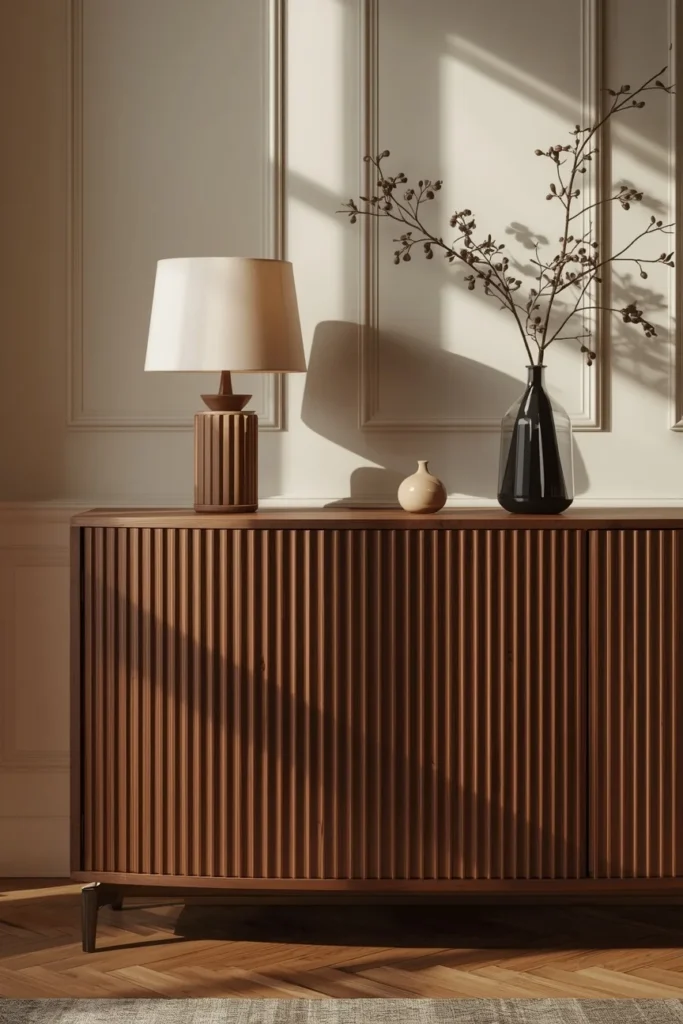
A curved-front sideboard with warm wood veneer adds storage without the boxy look of a standard rectangular cabinet. The rounded edges echo the same softness trending in dining tables and chairs, tying the whole room together visually. Veneer paneling in a herringbone or fluted pattern adds subtle detail that catches light differently than a flat door front. This piece works well for storing linens, extra dinnerware, or serving pieces, keeping the table itself clear for everyday use. Styling the top with a lamp, a stack of books, and a small plant keeps it from feeling like an empty surface.
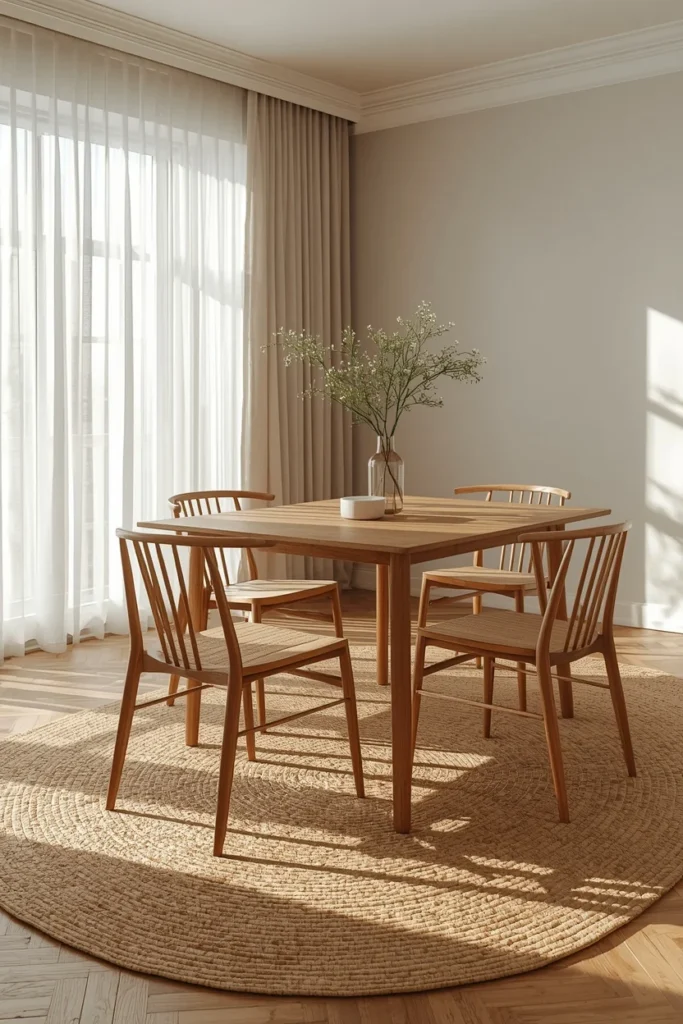
14. Natural Fiber Area Rug
A jute or sisal rug grounds a dining table the way a runner grounds a hallway, giving the whole arrangement a defined edge instead of letting furniture float on bare flooring. Natural fiber rugs also handle crumbs and spills more forgivingly than plush wool, making them a practical choice under a table used daily. The rug should extend at least 24 inches beyond the table edge on all sides, so chairs stay on the rug even when pulled out. A herringbone or chunky weave pattern adds texture underfoot without introducing another competing color. This is one of the simplest swaps that makes a dining room feel finished rather than sparse.
15. Botanical Mural Wall
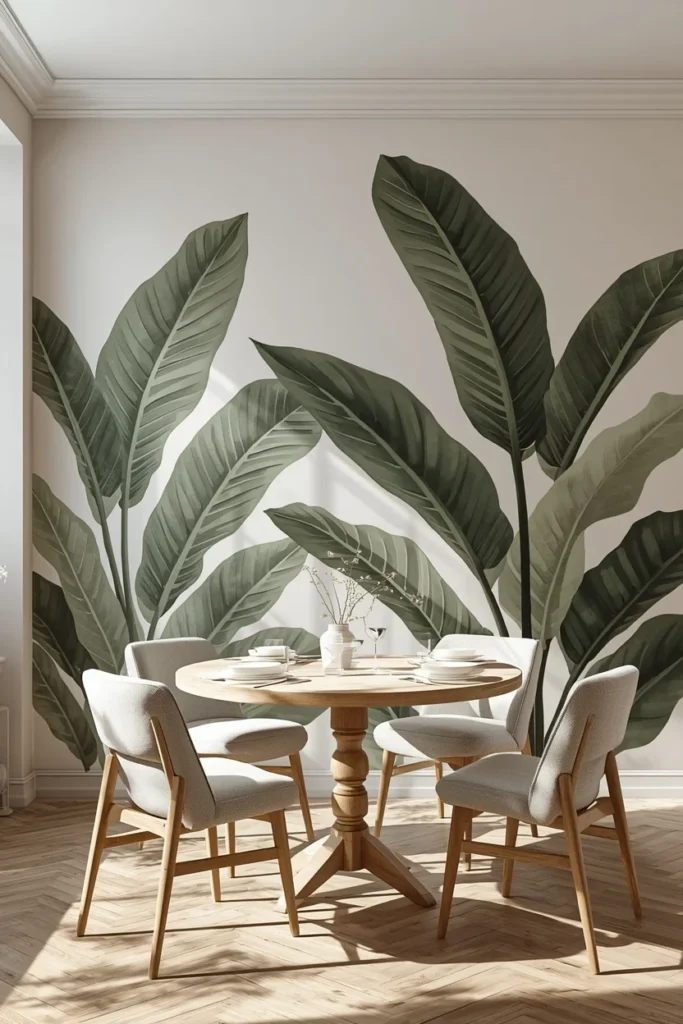
A large-scale botanical mural turns one dining room wall into a piece of art on its own, removing the need for additional framed pieces in the space. Hand-painted or wallpaper murals featuring oversized leaves, branches, or soft landscape scenes bring an outdoor feeling indoors, which pairs especially well with rooms that don’t have direct garden or patio views. Keeping the rest of the room’s palette neutral lets the mural stay the clear focal point instead of competing with patterned textiles or bold furniture. This idea works particularly well in dining rooms attached to a sunroom or breakfast nook, extending the feeling of being surrounded by greenery. A simple wood table and unfussy chairs are usually enough to complete the look.
16. Color-Drenched Ceiling
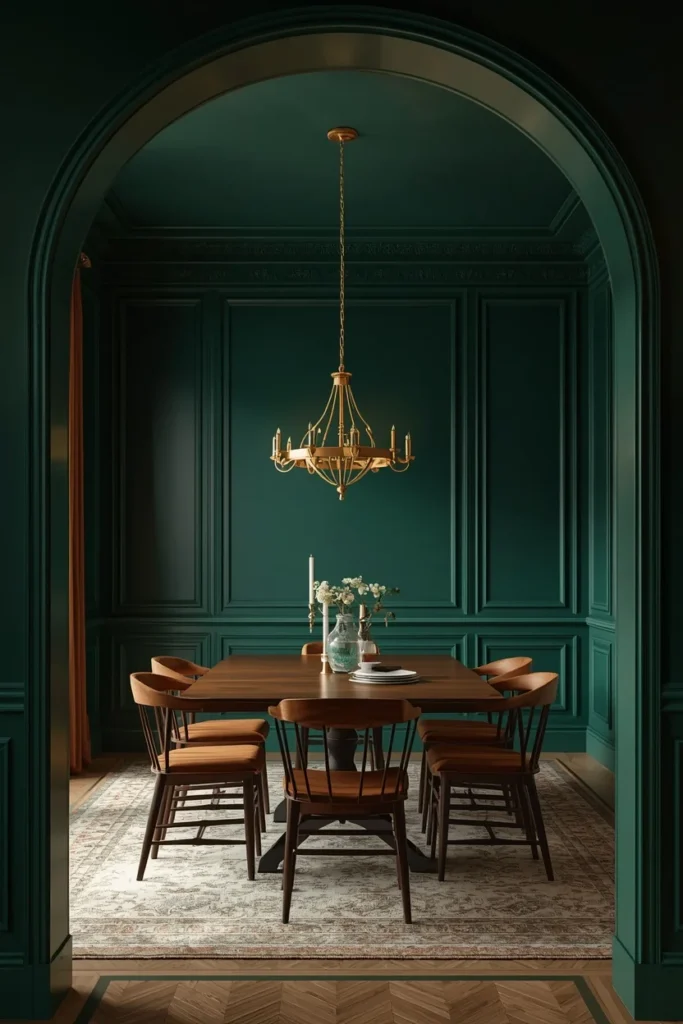
Painting the ceiling the same deep color as the walls, sometimes called color drenching, makes a dining room feel enveloping and intimate rather than tall and empty overhead. Deep terracotta, forest green, or navy work particularly well for this treatment, since they read as cozy rather than cave-like when paired with warm lighting. This approach also draws attention downward toward the table and chandelier instead of up toward a blank ceiling. It’s a bold move, but one that photographs beautifully and gives a dining room a distinct identity compared to the rest of the house. Trim can be left white for contrast or drenched in the same tone for a fully immersive look.
17. Checkerboard Tile Flooring
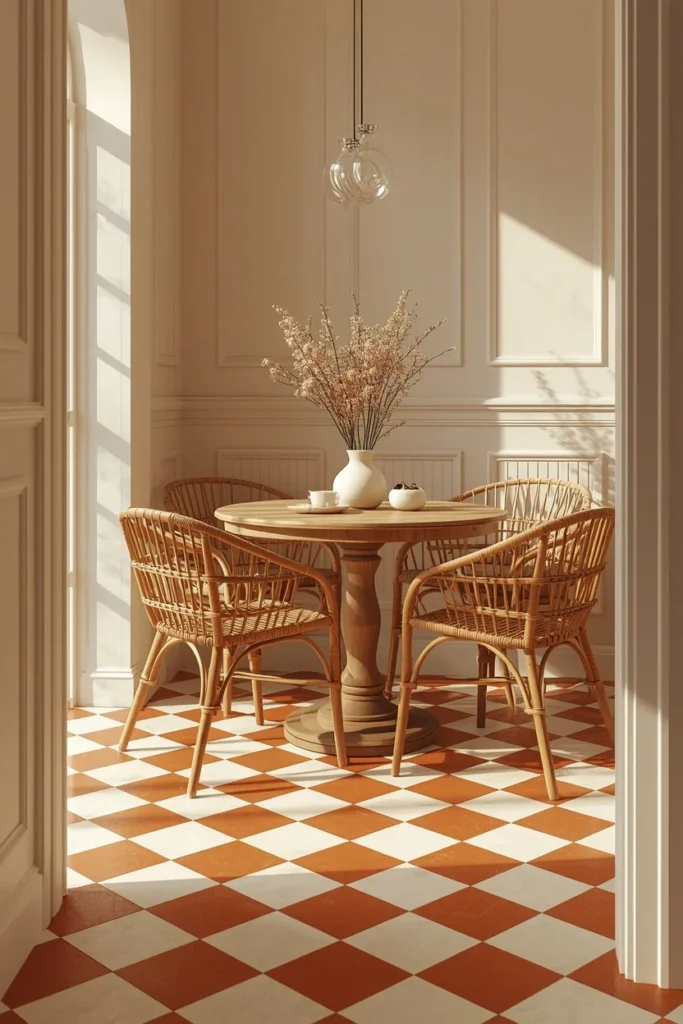
Checkerboard flooring, whether in classic black and white or a softer cream and terracotta combination, gives a dining room graphic personality without needing bold furniture to carry the look. This pattern works especially well in kitchen-adjacent dining nooks, where the floor can visually separate the two zones even in an open layout. Choosing a muted color combination, like warm cream and clay, keeps the pattern from feeling too retro or stark. Pairing checkerboard floors with simple, unfussy furniture keeps the overall look balanced instead of busy. This is a higher-commitment update best suited to a true renovation rather than a quick refresh.
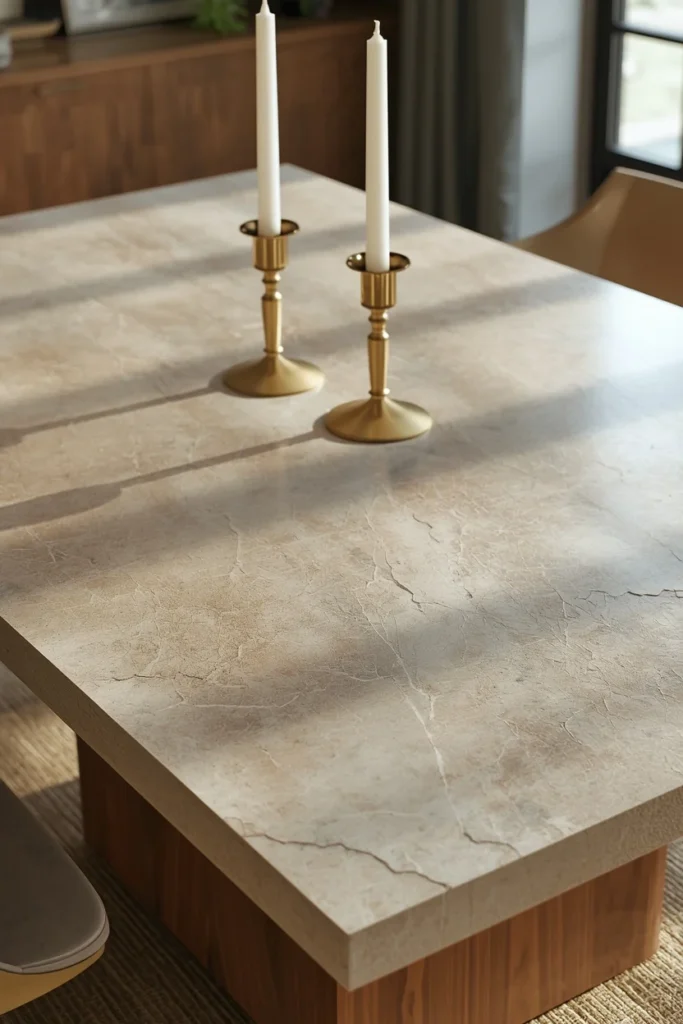
18. Stone or Composite Tabletop
A honed stone or recycled composite tabletop brings a cool, tactile surface into a room otherwise full of warm wood and soft textiles. Stone tops develop subtle character over time, with veining and slight color variation that make each table one of a kind. Pairing a stone top with a warm wood or brass base keeps the material from feeling cold or overly industrial. This option is also highly durable for daily use, resisting scratches and heat better than most finished wood surfaces. Sourcing composite or reclaimed stone locally, when possible, cuts down on transport and ties the piece to its region.
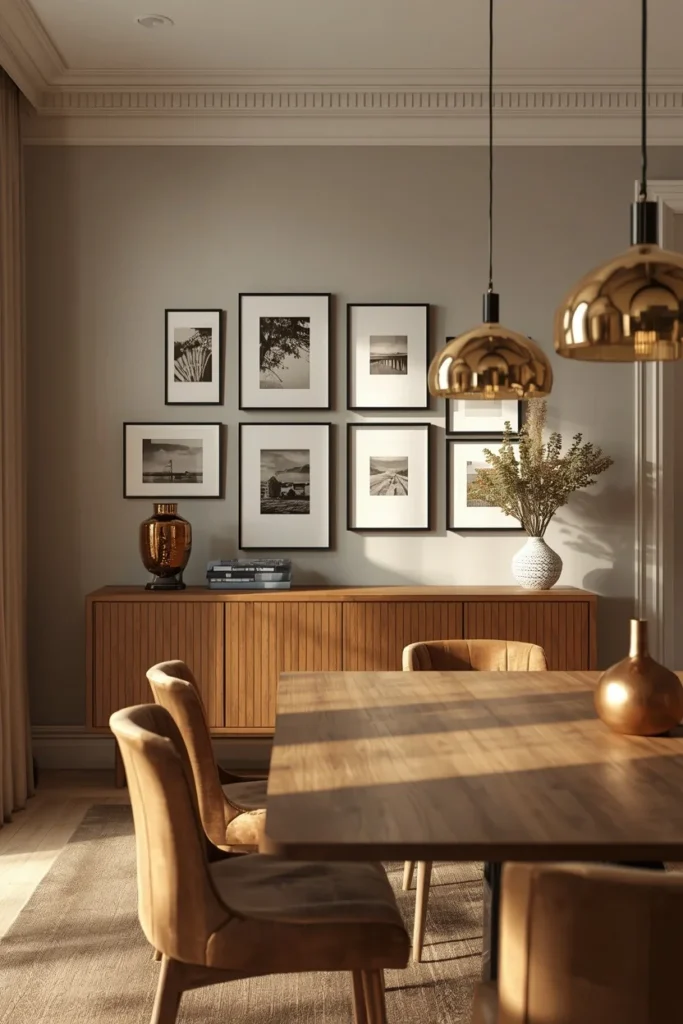
19. Gallery Wall Behind the Table
A curated gallery wall behind the dining table adds personality and visual interest to the one wall most people face during every meal. Mixing frame sizes, finishes, and art styles, from botanical prints to abstract pieces, keeps the wall feeling collected rather than store-bought. Leaving consistent spacing between frames, usually two to three inches, keeps the arrangement looking intentional even with mismatched pieces. This idea works well in both small and large dining rooms, since the wall can be scaled up or down depending on available space. A gallery wall also gives a rental-friendly way to add character without committing to paint or wallpaper.
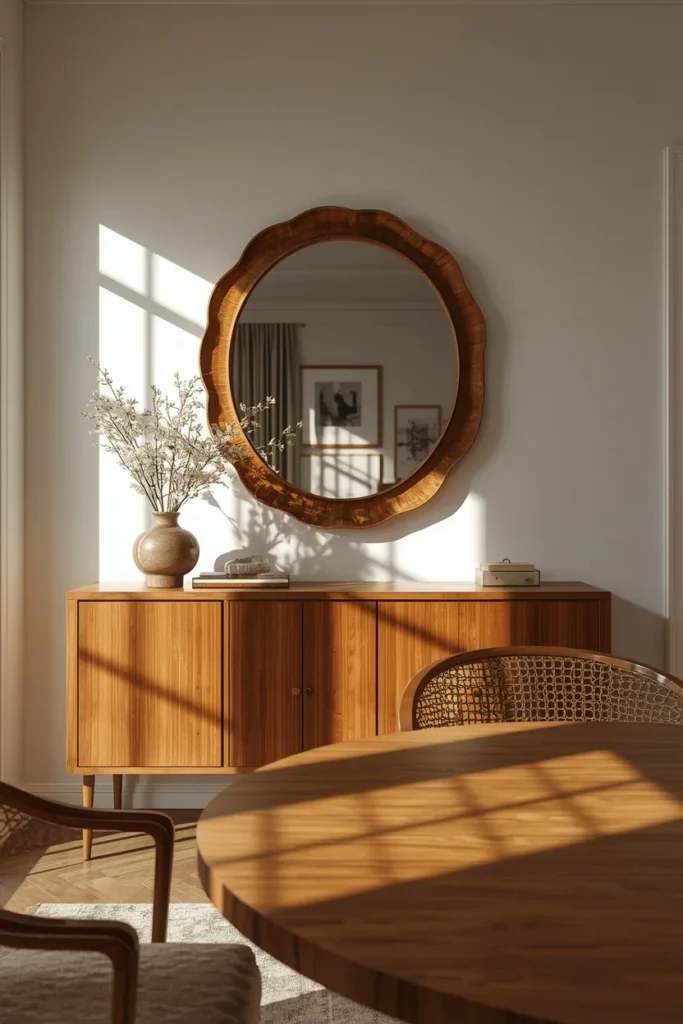
20. Oversized Statement Mirror
A single oversized mirror does more for a dining room than several smaller pieces of decor combined. Placed on a solid wall, ideally sized to about two-thirds the width of the table or sideboard beneath it, a large mirror bounces both natural and lamp light around the room, making it feel brighter and larger than it actually is. Mirrors with a curved or organic-shaped frame soften a room full of straight furniture lines. This idea is especially useful in dining rooms with only one window, where extra reflected light makes a noticeable difference. A mirror also gives guests something interesting to glance at without needing to fill the wall with multiple items.
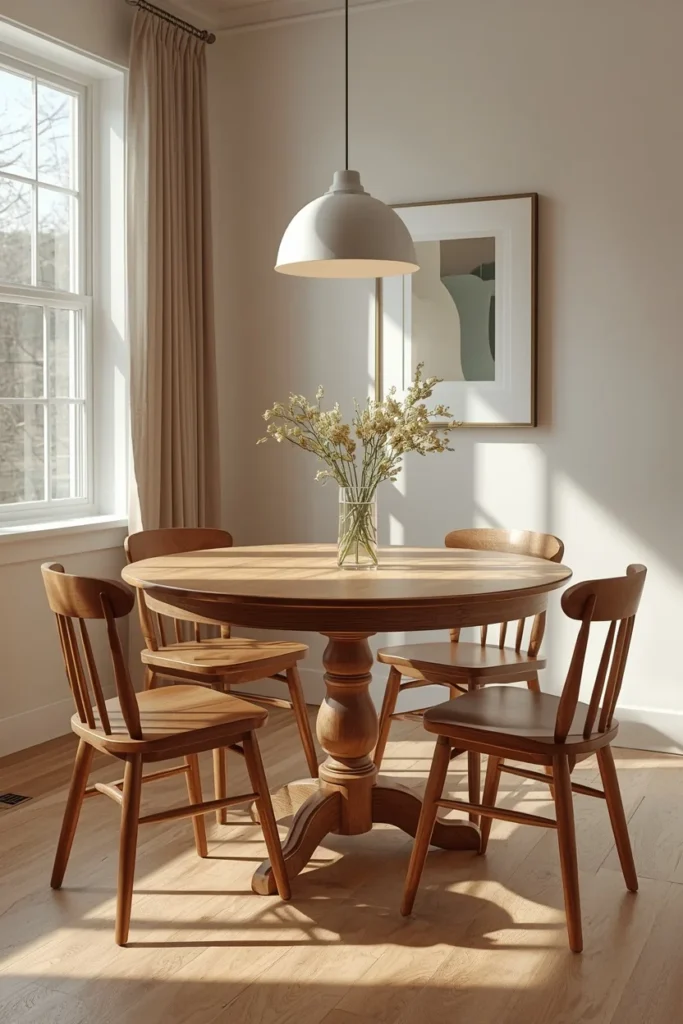
21. Expandable Table for Small Spaces
An expandable table with a leaf extension solves the biggest challenge in small dining rooms, hosting more people than the daily footprint of the room allows. Choosing a table that seats four comfortably day to day but expands to seat eight or ten for holidays means the room never feels oversized during ordinary use. Round or oval expandable tables handle this especially well, since the added leaf keeps the overall shape balanced instead of stretching into an awkward long rectangle. This is a practical upgrade for anyone hosting occasional large gatherings without a dedicated formal dining room. Storing the extra leaf flat under a bed or in a closet keeps it out of the way between uses.
22. Textured Table Linens and Runners
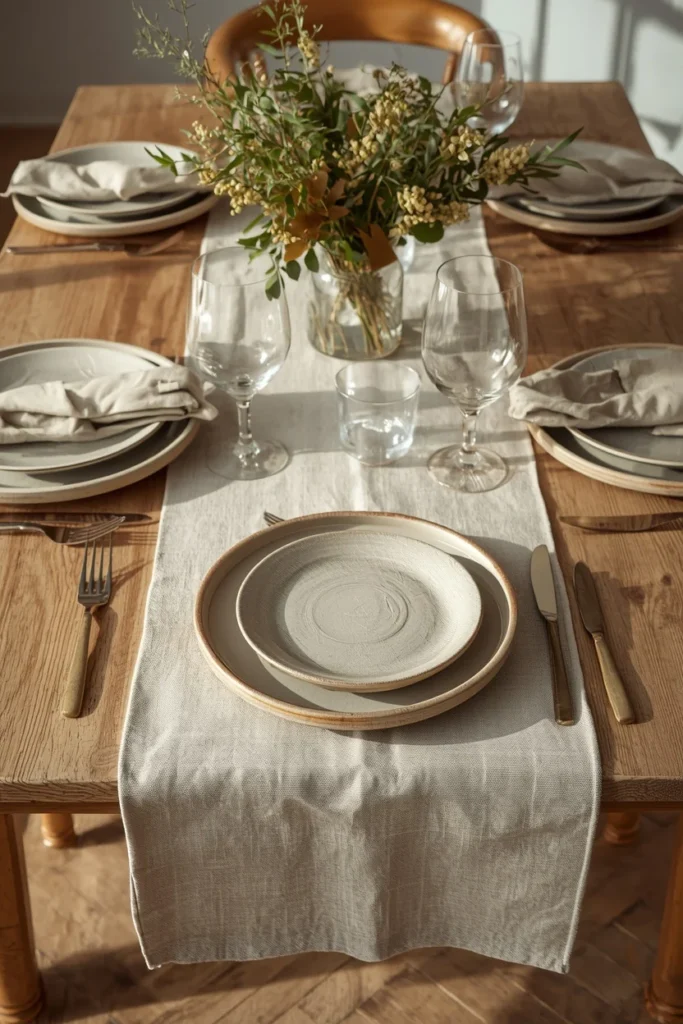
Swapping a plain tablecloth for a textured linen runner and mismatched napkins adds warmth to the table itself, not just the room around it. Slightly wrinkled, stonewashed linen in warm neutrals feels more relaxed and lived-in than crisp, ironed cotton, matching the broader shift toward comfortable, collected dining rooms. Layering a runner over a bare wood table, rather than covering it completely, lets the tabletop’s natural grain show through as part of the overall styling. This is one of the lowest-cost updates on this entire list, since a few yards of linen cost far less than new furniture. Rotating table linens seasonally also keeps the same table feeling fresh throughout the year.
23. Built-In Bar Nook or Cart
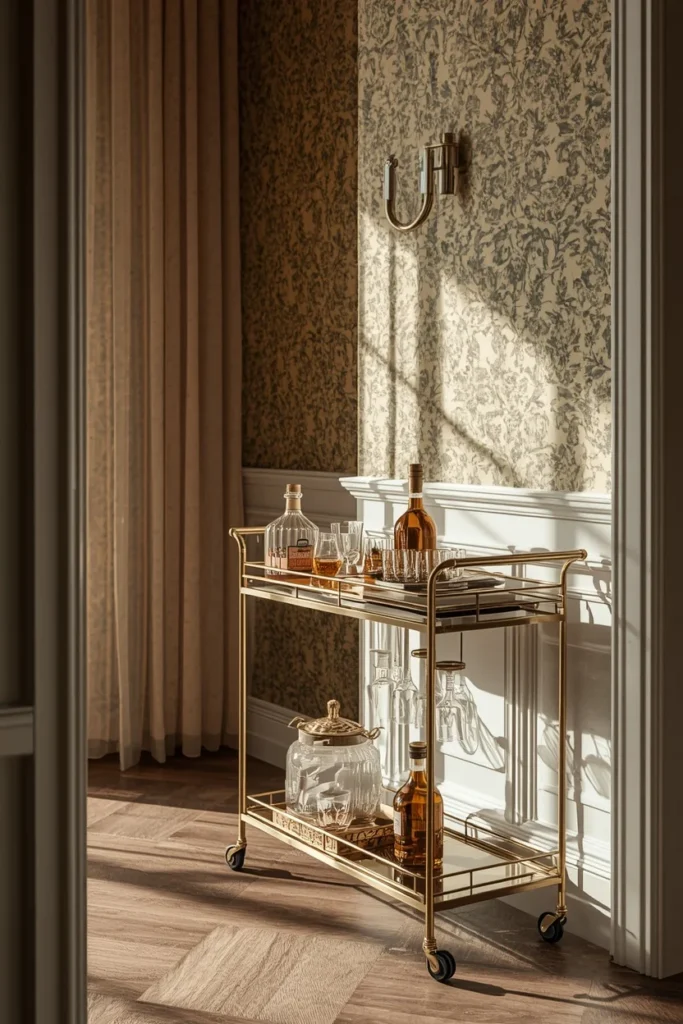
A small bar cart or built-in bar nook near the dining table adds function without taking over the room. A brass or wood cart holding glassware, a few bottles, and a small tray keeps drinks accessible during dinner parties without repeated trips to the kitchen. For a more permanent option, a narrow built-in nook with open shelving and a mirrored or wallpapered back panel turns an unused corner into a styled focal point. This idea works especially well in dining rooms that double as an entertaining space for guests. Keeping the display curated, rather than crowded, is what makes it read as intentional styling instead of clutter.
24. Seasonal Centerpiece Styling
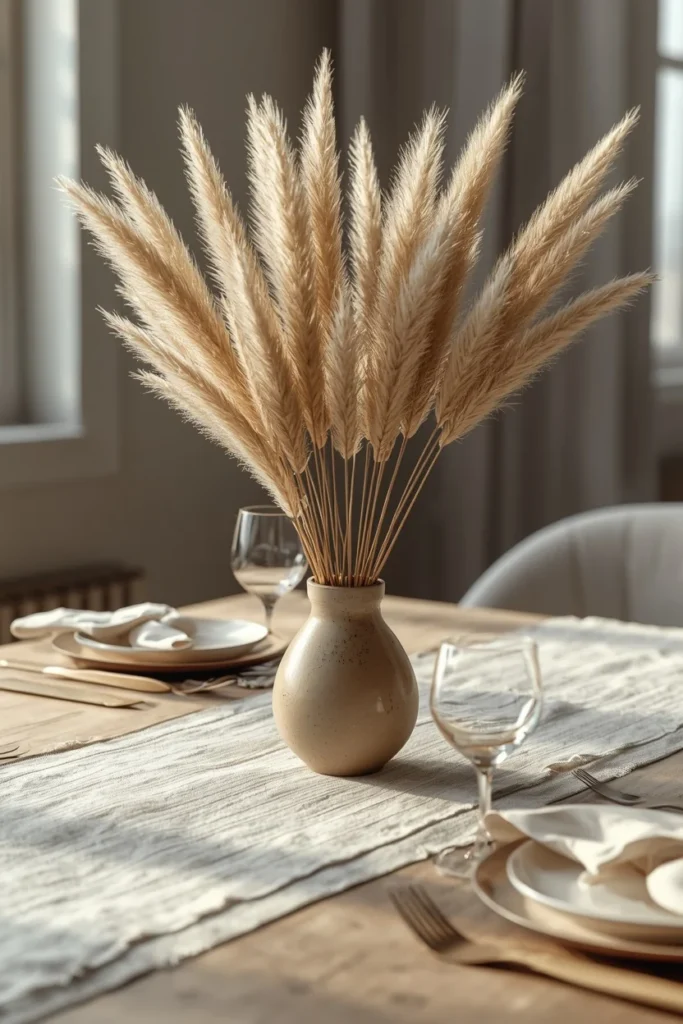
Rotating the table’s centerpiece with the seasons keeps a dining room feeling current without any structural changes at all. Dried pampas grass or eucalyptus in autumn, fresh greenery and citrus in winter, and simple wildflowers in spring and summer all shift the room’s mood using nothing more than a vase and a quick trip to a local market or garden. Keeping the centerpiece low, especially for everyday use, ensures guests can still see each other across the table instead of talking around a tall arrangement. This idea costs very little and can be updated as often as desired. It’s also one of the easiest ways to make a Pinterest-worthy table setting for photos without touching the furniture.
25. Layered Drapery for Softness
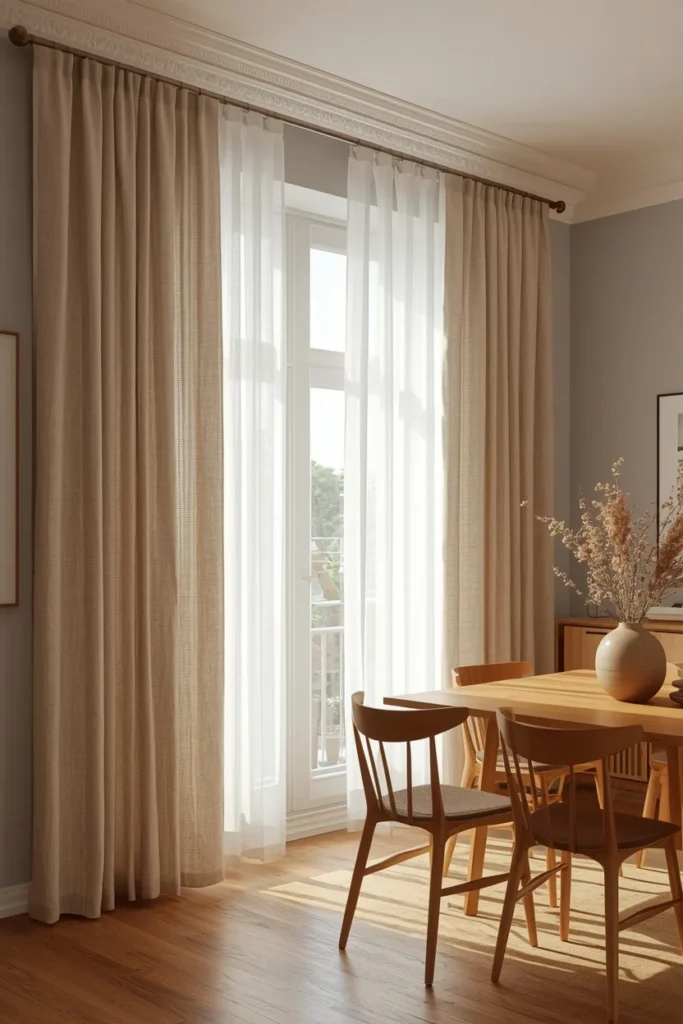
Floor-to-ceiling drapery in a soft linen or textured weave adds height and softness to a dining room, especially one with hard surfaces like a wood table, tile floor, or plaster walls. Hanging curtain rods close to the ceiling, rather than directly above the window frame, makes the room feel taller than it actually is. Drapery also muffles some of the echo that comes with a room full of hard surfaces, making conversation feel warmer and less bouncy. Choosing a color close to the wall tone keeps the drapery from becoming a competing focal point, letting it recede into the background while still adding texture. This is a simple, renter-friendly update that makes a noticeable difference in photos and in person.
Styling Tips
- Keep centerpieces under 12 inches tall for everyday use so sightlines across the table stay open.
- Mix at least two wood tones (table and sideboard, for example) rather than matching everything exactly.
- Layer three light sources, overhead, wall, and lamp, so the room works for both bright mornings and dim evenings.
- Choose one bold material, color, or pattern per room rather than combining several statement elements at once.
Practical Implementation Ideas
- Start with lighting and rug placement before buying new furniture, since these two elements anchor the whole room.
- Test paint or plaster colors on a large board and view it at different times of day before committing to a full wall.
- Buy dimmer switches before the chandelier itself; most fixture returns happen because the light reads too harsh at full brightness.
- Measure the rug size against the table with chairs pulled out before ordering, not just against the table alone.
Common Mistakes to Avoid
- Hanging a chandelier too high, which leaves the table feeling disconnected from its own light source.
- Choosing an area rug that’s too small, so chair legs constantly catch the rug’s edge.
- Matching every piece of furniture from the same collection, which can flatten the room’s personality.
- Skipping dimmers, leaving the room stuck at one harsh brightness level regardless of the occasion.
Small-Space Alternatives
- Swap a full sideboard for a slim console table or floating shelf to keep floor space open.
- Use a round table instead of rectangular, since it allows for tighter clearance around the edges.
- Choose armless chairs to reduce the width each seat requires.
- Add a mirror instead of extra furniture to create the feeling of more space without adding bulk.
Budget-Friendly Alternatives
- Reupholster existing dining chairs in a new fabric instead of replacing the full set.
- Use peel-and-stick grasscloth-style wallpaper instead of a full plaster wall treatment.
- Swap a plain pendant shade for a woven rattan or paper shade rather than buying an entirely new fixture.
- Style a gallery wall using existing frames and thrifted art instead of commissioning a mural.
Pro Styling Recommendations
- Anchor the room around one investment piece, usually the table or the light fixture, and keep everything else more modest.
- Repeat one material (wood, brass, or linen) in at least three spots around the room for visual cohesion.
- Leave negative space on the table and sideboard rather than styling every surface to capacity.
- Choose furniture with curved lines if the rest of the home leans toward straight, boxy shapes, for contrast.
FAQs
Conclusion
A dining room doesn’t need a full renovation to feel modern, chic, and genuinely welcoming. Most of the ideas here start with one change, a curved table, a new light fixture, a wall of texture, and build outward from there. The rooms that photograph the best and get used the most usually aren’t the most expensive ones. They’re the ones built around warmth, texture, and a few intentional choices that make people want to linger after the plates are cleared.