16 Spring Tablescape Ideas That Make Every Meal Feel Like a Garden Party
Spring hosting has a certain smell to it. Cut stems, warm bread, a little citrus in the air. The table is where all of that comes together, and it doesn’t take a florist’s budget to get there.
A garden party table isn’t about matching every plate or following a strict color rule. It’s about bringing the outside in — a loose bunch of tulips, linen that wrinkles a little, candlelight that flickers instead of glows perfectly. These 16 spring tablescape ideas are built around that feeling. Some take ten minutes. Others ask for a little more patience. All of them turn a regular Tuesday dinner, or a full garden party with a guest list, into something people remember.
Table of Contents
1. Floating Flower Bowl Centerpiece
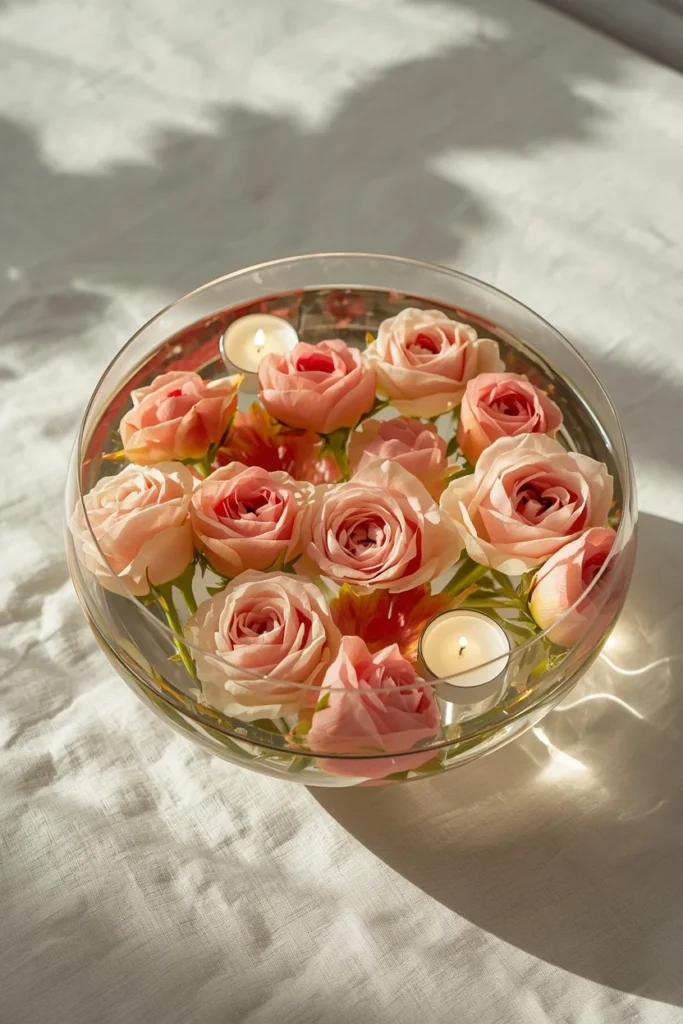
Fill a wide, shallow glass bowl with water and let flower heads rest right on top instead of standing in a vase. Camellias, garden roses, or ranunculus work best because their heavy blooms sit flat without tipping. Add a few floating candles around the edges so the whole bowl glows once the sun starts to set. This centerpiece stays low on purpose, which means guests can see and talk to each other across the table without leaning around tall stems. It’s an easy swap for anyone who loves fresh flowers but doesn’t want to deal with arranging a full bouquet.
2. Moss Table Runner Base
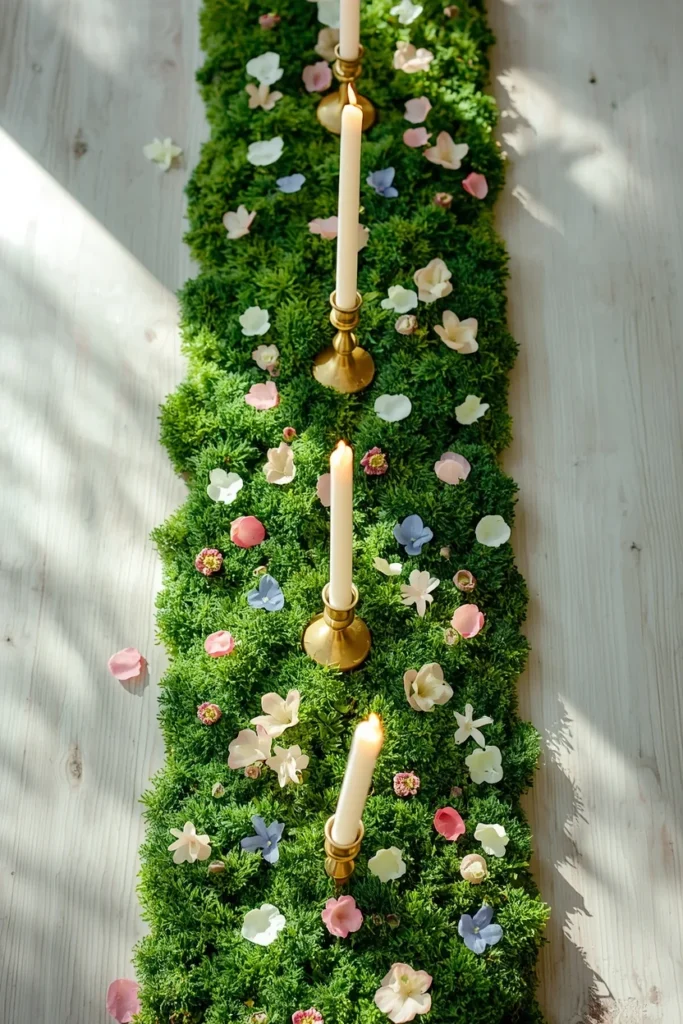
Swap a fabric table runner for a strip of preserved moss down the center of the table. It gives an earthy, just-picked-from-the-garden texture that instant fabric can’t match, and it works as a base layer under candlesticks, small potted bulbs, or scattered petals. Preserved moss holds its color for months and doesn’t need water, so it’s a low-maintenance way to bring texture to the table without wilting flowers. Pair it with pale wood chargers and simple stoneware to let the green tone stand out. This works especially well for a garden party held outdoors, since it echoes the lawn and hedges right on the table itself.
3. Hanging Floral Installation
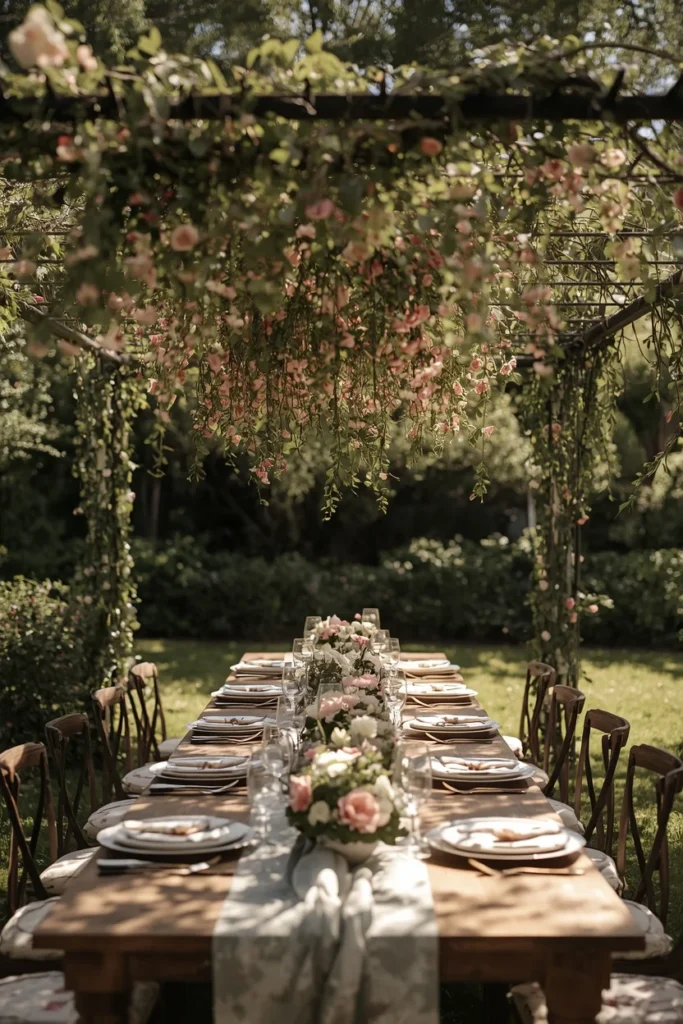
Suspend a simple frame or wire structure above the table and attach loose floral stems so blooms hang down over the place settings. Even a modest cluster of trailing greenery and a few flower heads creates the sense of sitting inside a garden rather than next to one. This works particularly well outdoors, strung between two trees or posts, and it gives photographs a sense of depth that a flat centerpiece can’t achieve. Keep the hanging elements light and airy rather than dense, so guests can still see each other and pass dishes without brushing against stems. It reads as a bigger production than it actually is, since most of the visual impact comes from just a handful of well-placed blooms.
4. Vintage Blue & White China with Wildflowers
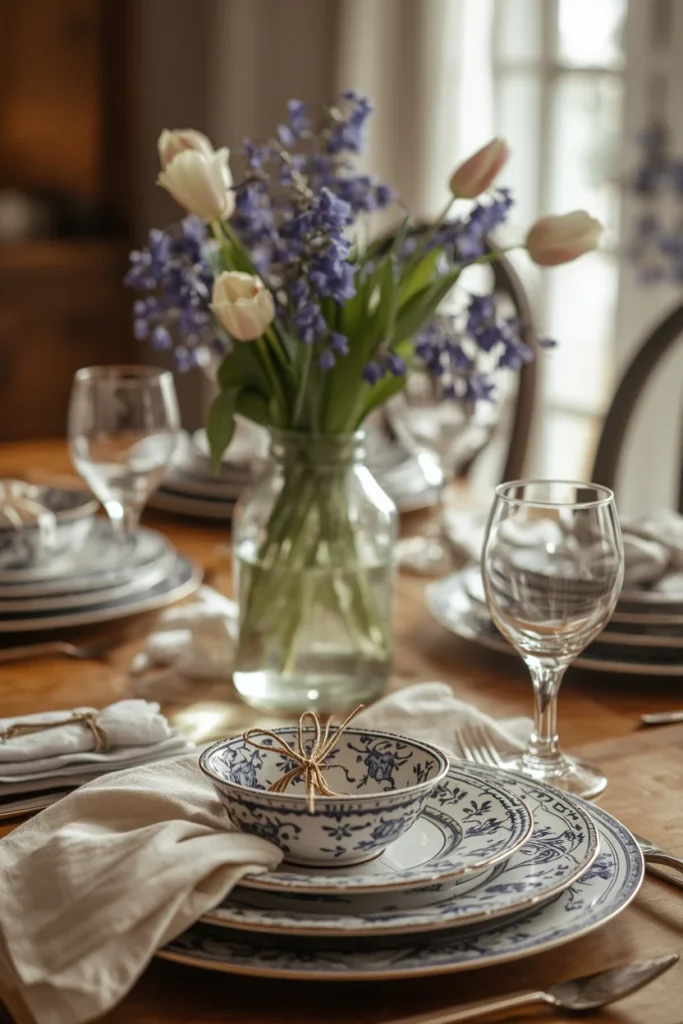
Mixing vintage blue and white plates with a loose gathering of wildflowers gives a table an old-country-house feeling without looking staged. The pattern does most of the visual work, so the flowers can stay simple — tulips, bluebells, or even a jar of garden-cut stems works fine. Crystal or textured glassware adds a bit of sparkle against the matte plates, and mismatched pieces collected over time actually look better here than a matching set. This pairing works for both indoor dinners and outdoor lunches, since the blue tone reads as fresh regardless of setting. It’s also one of the more budget-friendly looks on this list, since secondhand shops and family cabinets are full of blue and white china nobody’s using.
5. Cabbageware Place Settings
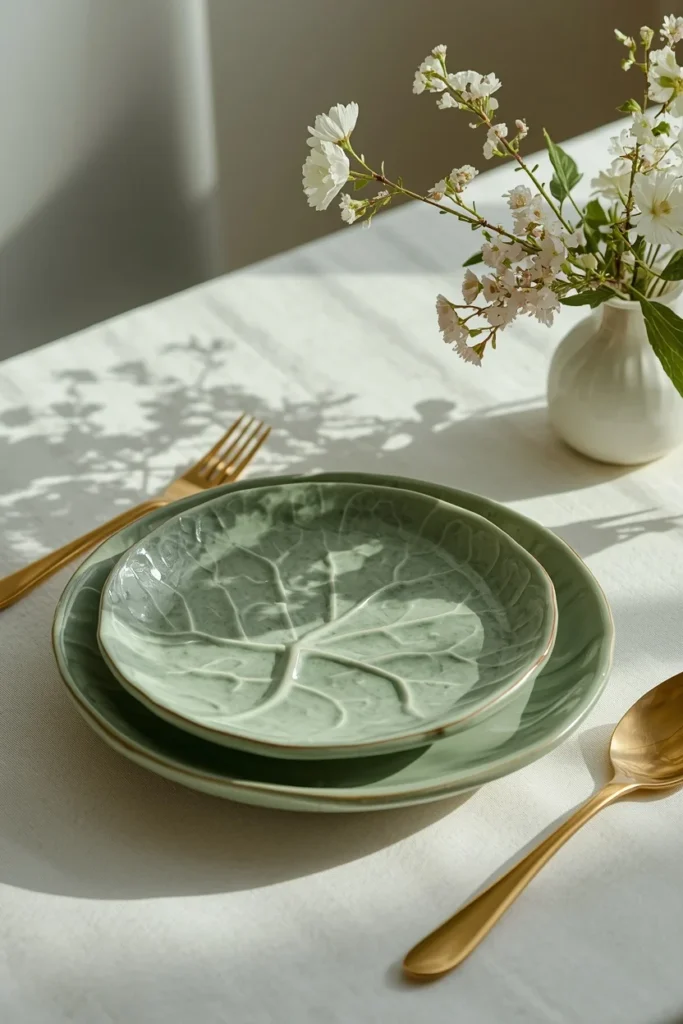
Textured green ceramic plates shaped and glazed to look like real cabbage leaves bring an unexpected, playful detail to a spring table without any extra styling effort. The raised vein pattern and rounded leaf edges catch light in a way flat plates don’t, so they photograph well even on a plain white tablecloth. Mixing cabbageware with regular dinner plates keeps the look from feeling like a costume, and a few pieces — salad plates or a serving bowl — go a long way. This idea leans into the garden theme literally, since the plates themselves look grown rather than manufactured. It’s a strong pick for anyone who wants their table to feel a little more original than the standard floral-and-pastel formula.
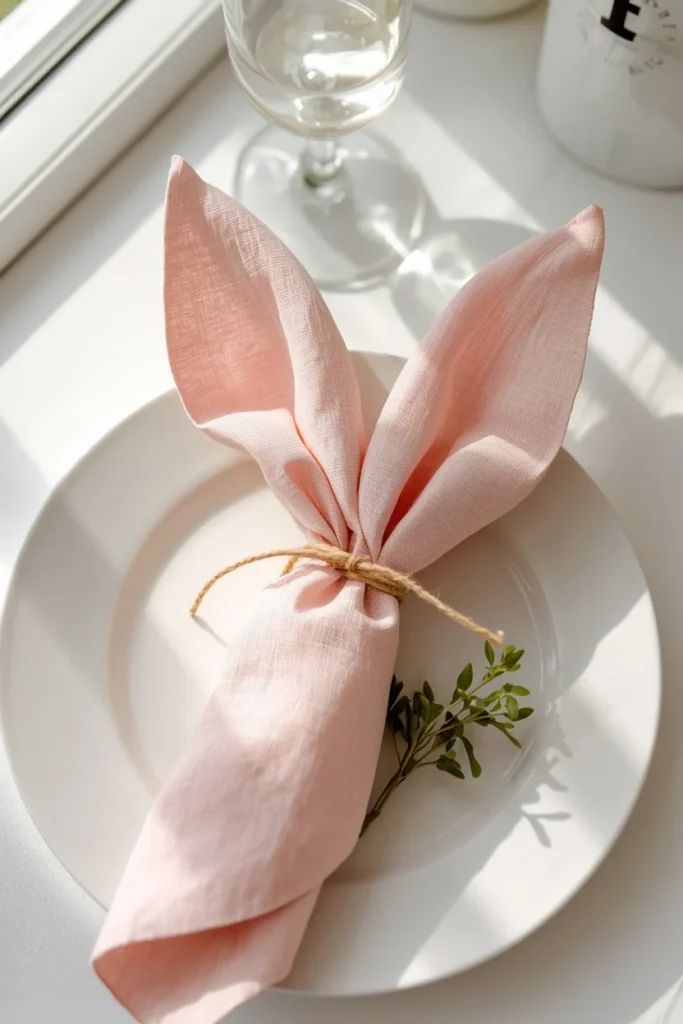
6. Bunny Ear Napkin Folds
Folding stiff linen napkins into upright bunny ears turns a plain place setting into something guests notice the moment they sit down. The fold needs a fairly structured fabric to hold its shape, so linen or a linen blend works better than soft cotton. Pastel shades like blush, pale blue, or cream keep the look seasonal without tipping into a full Easter theme, and a small ribbon or twine tie at the base finishes the ears cleanly. For anyone who doesn’t want to fold napkins by hand, bunny-shaped napkin rings slipped over a plain fold give the same charm in seconds. It’s a small detail, but it’s the kind of thing that makes a table feel considered rather than thrown together.
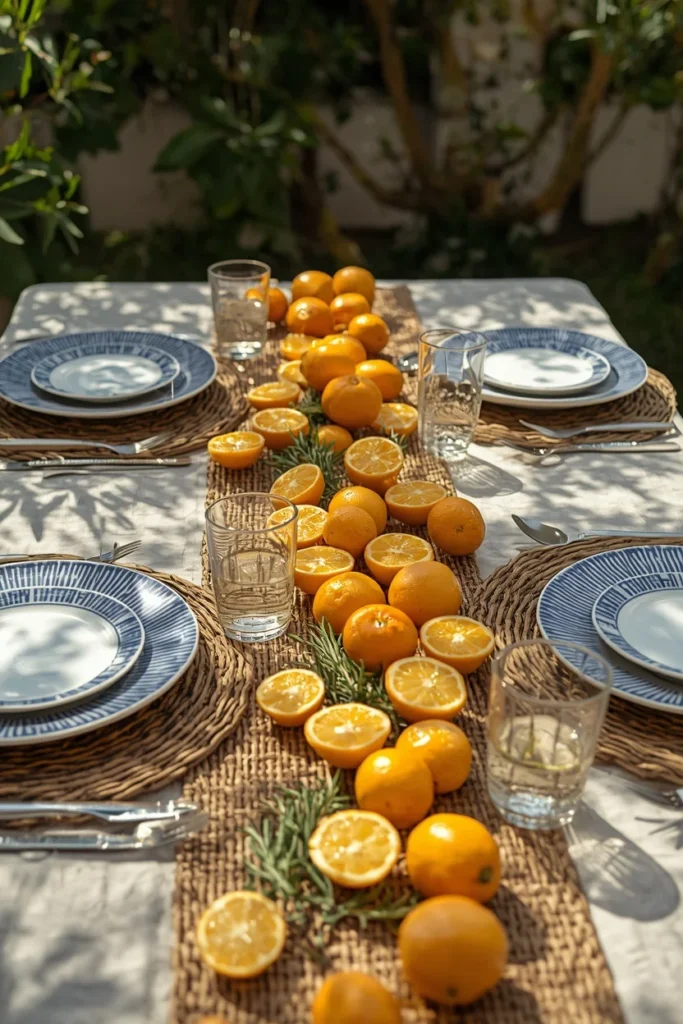
7. Citrus & Herb Mediterranean Table
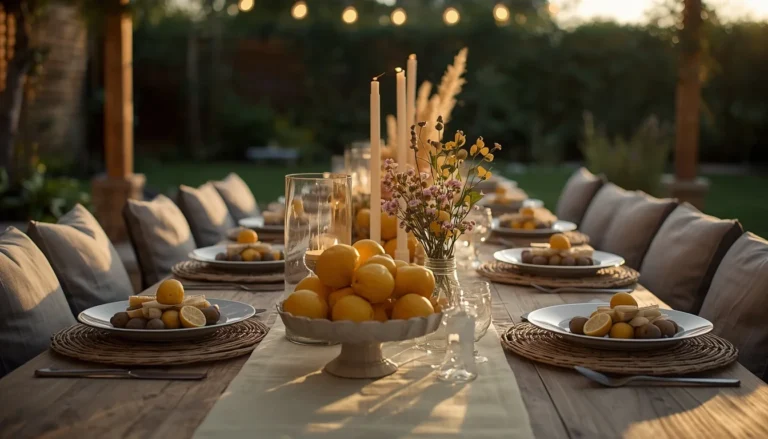
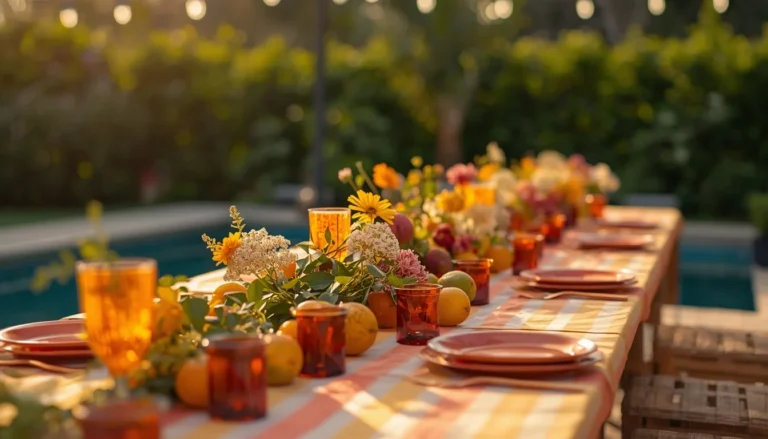
Scatter sliced lemons and oranges across the table alongside sprigs of rosemary or basil, and let the food essentially double as decor. Woven placemats and blue-and-white accents lean into a coastal, Mediterranean feel that works especially well for a daytime brunch or lunch under trees. This setup costs almost nothing beyond what’s already in the kitchen, and the citrus adds both scent and color without needing a single cut flower. Pair it with simple ceramic dishware and clear glassware so the fruit stays the focal point. It’s a fast setup — most people can pull this together in under thirty minutes for a last-minute gathering.
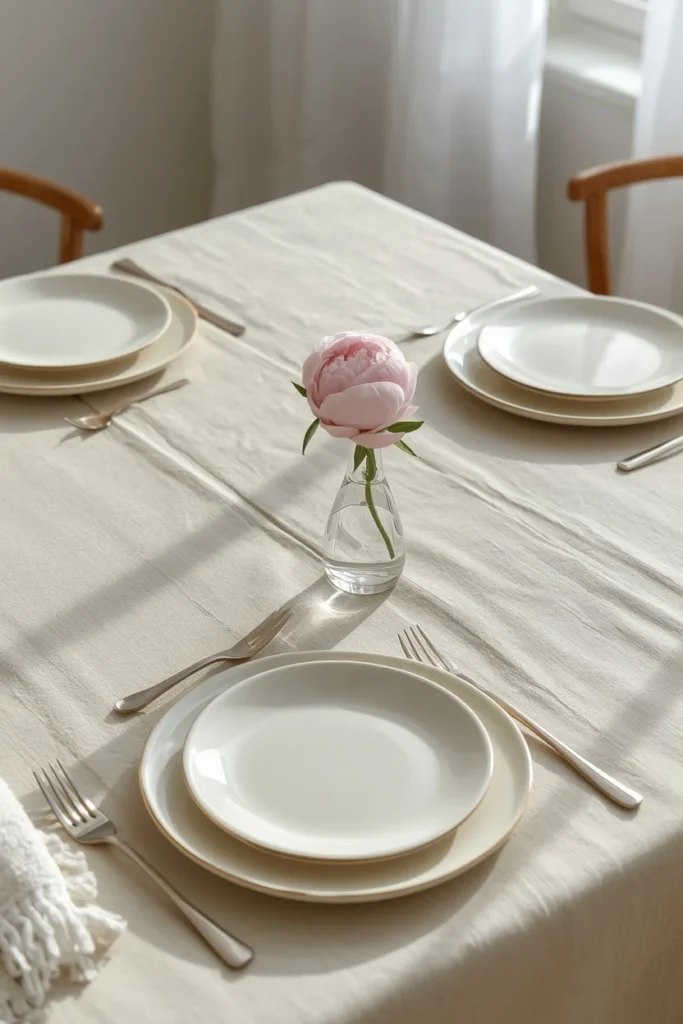
8. Quiet Luxury Linen Layering
Start with a neutral linen tablecloth, layer a plain ceramic dinner plate, and finish with a single-stem vase holding one full, open peony at each place setting. The restraint is the entire point here — no patterns competing for attention, no crowded centerpiece, just good texture and one confident flower. This approach photographs beautifully because the eye has somewhere clear to land, and it works for both formal dinners and everyday meals where you want the table to feel special without extra effort. Thick, slightly wrinkled linen actually looks better than a pressed-flat cloth, since it reads as natural fabric rather than a rental. This is the easiest idea on the list to keep in regular rotation, since the same neutral pieces work through every season with just the flower swapped out.
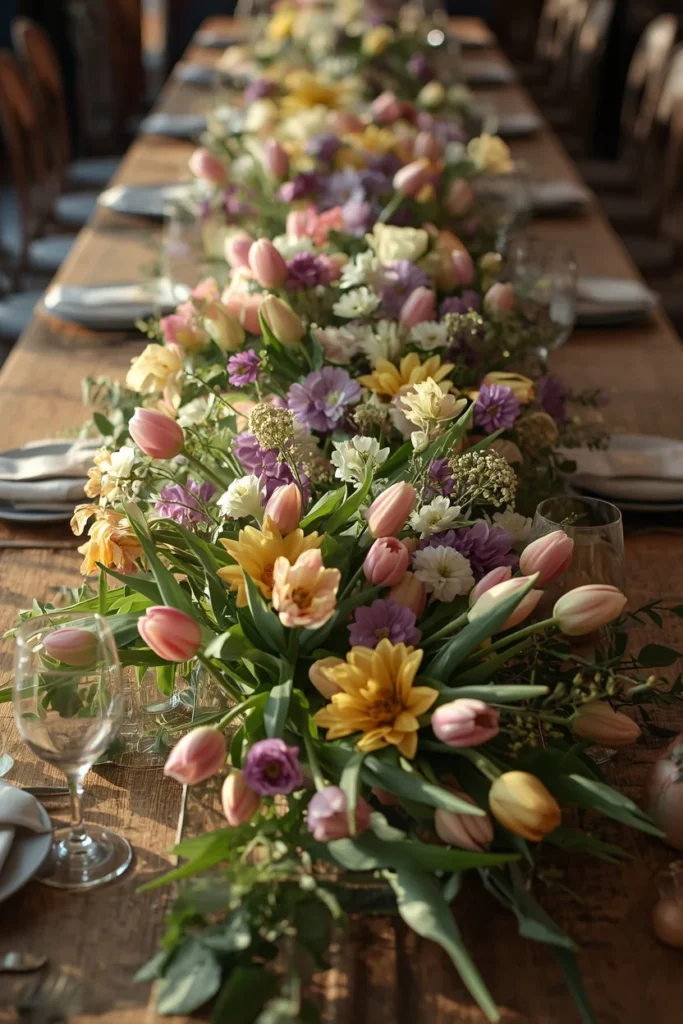
9. Maximalist Garden Wildflower Centerpiece
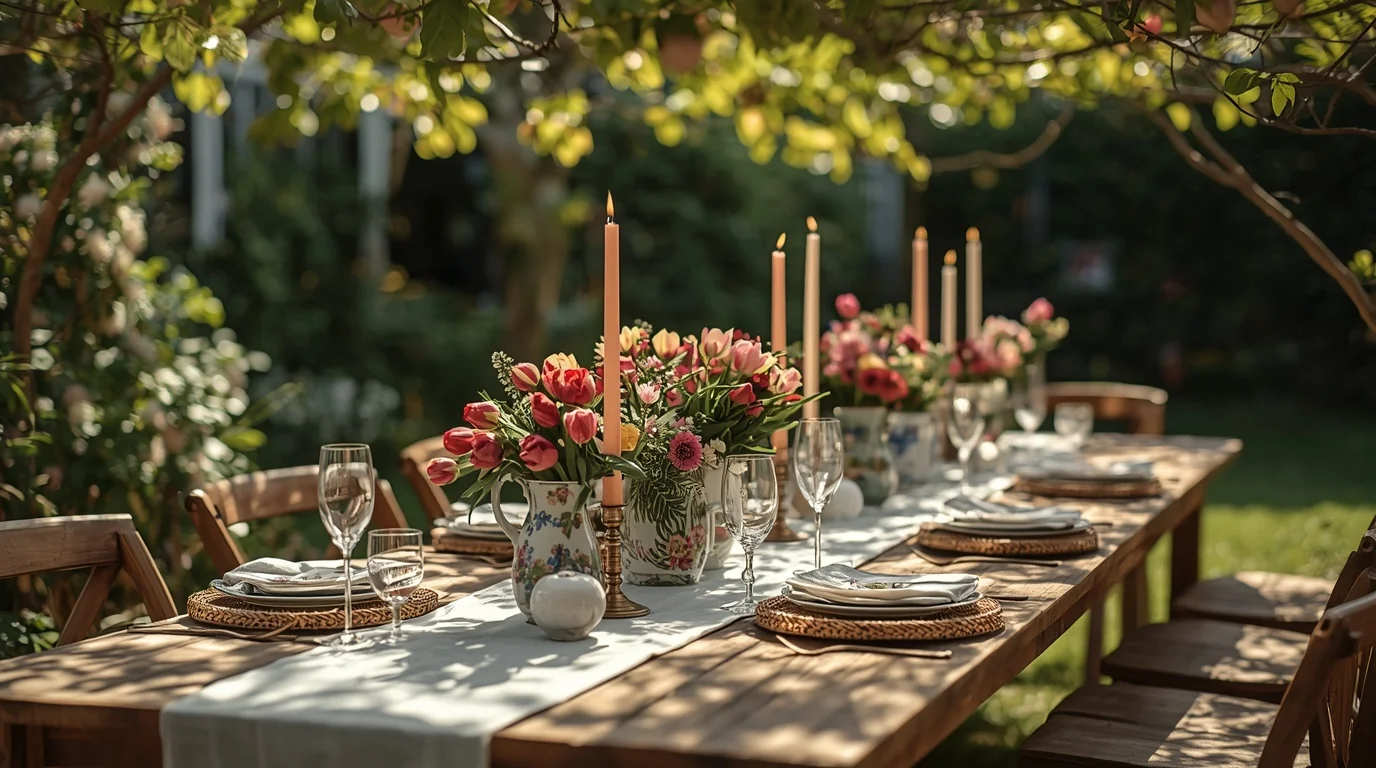
Fill a low, wide vessel with an abundant, slightly unruly mix of tulips, ranunculus, and whatever’s blooming nearby, and let the arrangement spill loosely over the sides rather than sitting upright and tidy. The goal is a centerpiece that looks gathered from the garden that morning rather than professionally arranged, so uneven heights and a few stray stems actually help the effect. This works best on a long table where the flowers can run the full length in a low garland-style arrangement, keeping sightlines clear across the table. Mixing warm and cool tones together — blush next to lavender next to buttery yellow — gives it depth without needing a strict color scheme. It’s the boldest option here, and the one that tends to get the most attention in photos.
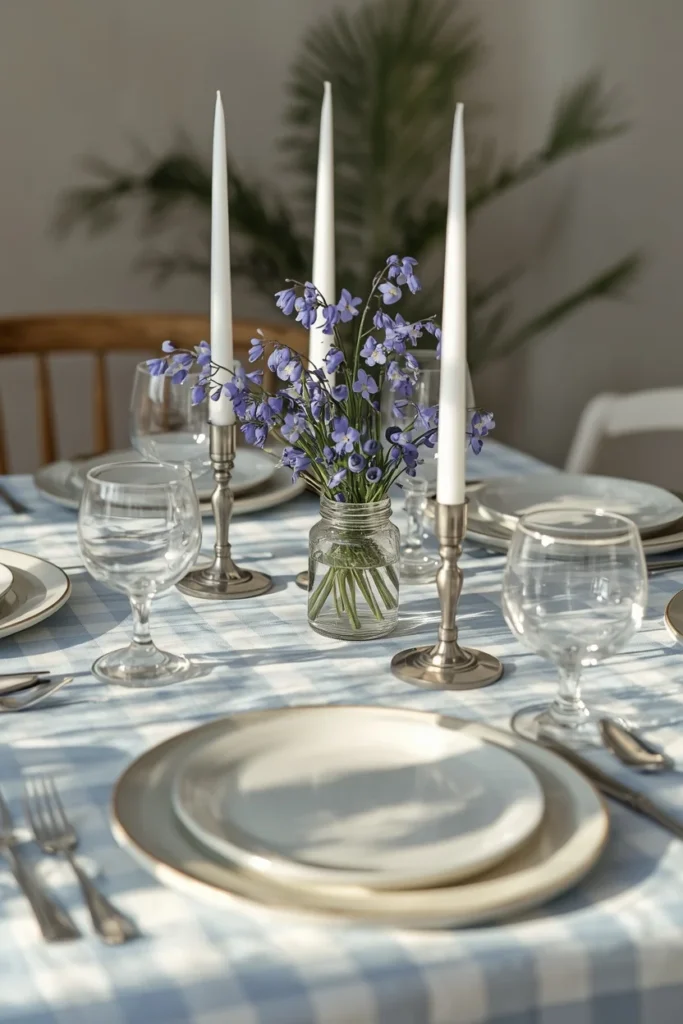
10. Gingham Tablecloth with Bluebells
A classic gingham tablecloth in soft blue or pink sets a relaxed, countryside tone before a single flower goes on the table. Keep the rest of the setting simple — plain white plates, delicate glassware, and a small cluster of bluebells or fresh berries as the only accent. The checked pattern does enough visual work on its own, so resist the urge to add more than one or two extra details. Slender taper candles add height and a bit of warmth without competing with the tablecloth’s print. This look feels equally at home on a porch, a picnic blanket, or an indoor dining table, which makes it one of the more flexible ideas on this list.
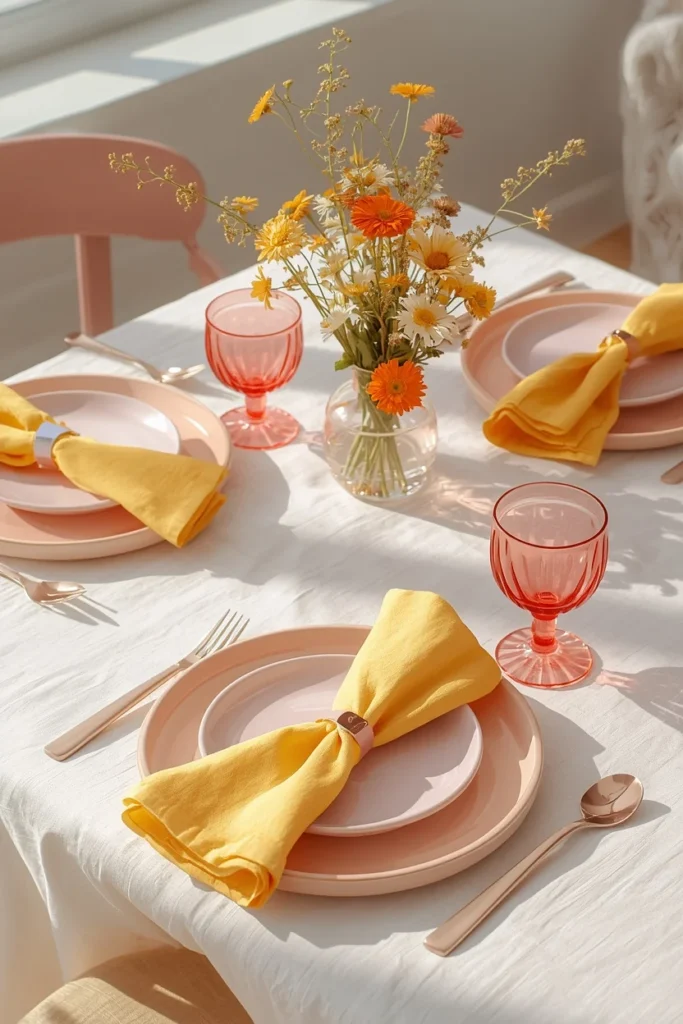
11. Pastel Dopamine Color Blocking
Instead of sticking to one soft palette, pair unexpected bright pastels together on purpose — think buttercup yellow napkins against lilac plates, or coral glassware next to sage green chargers. The trick is committing to two or three strong colors rather than one muted theme, then letting the flowers echo those same tones back. This style feels playful and a little bold, which suits a birthday brunch, a baby shower, or any garden party meant to feel celebratory rather than quiet. Keep the tablecloth itself neutral or white so the colored pieces on top stand out clearly instead of competing with a patterned base. It photographs exceptionally well because the color contrast reads instantly, even in a small thumbnail image.
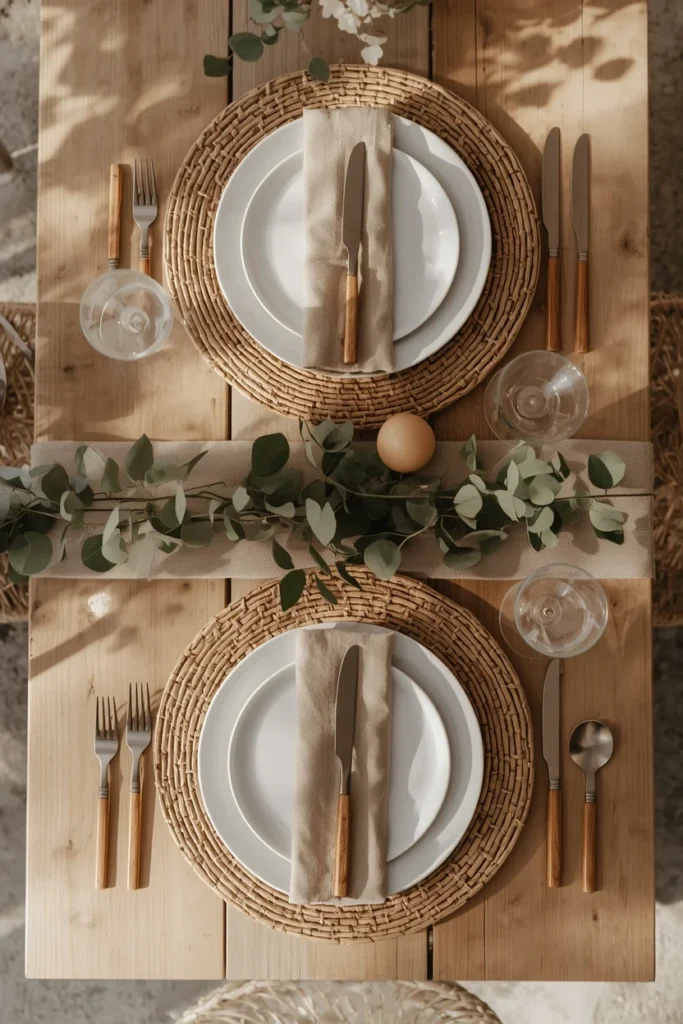
12. Woven Rattan Chargers & Natural Textures
Layer woven rattan or wicker chargers beneath simple white or stoneware plates to bring warmth and texture without adding any extra color. Pair the chargers with linen napkins, wooden-handled flatware, and a low arrangement of greenery to keep the whole table grounded in natural materials rather than polished finishes. This combination leans slightly coastal and works especially well for an outdoor garden party where you want the table to feel connected to its surroundings instead of formal. Raw, organic ceramics with just a little shine hold up well against the woven texture without looking mismatched. It’s a dependable base layer that other ideas on this list — florals, candles, citrus — can be added to without clashing.
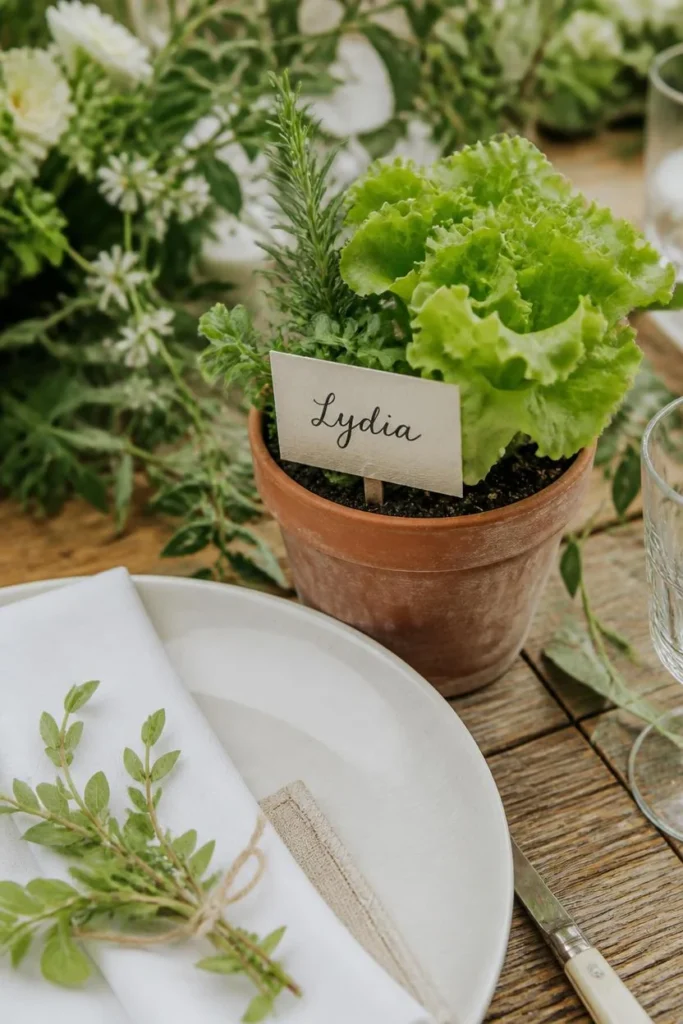
13. Terracotta Pot Place Cards
Small terracotta pots planted with lettuce, herbs, or tiny succulents double as both place cards and take-home favors for each guest. Write names directly on the pot or attach a simple tag, and tuck a seed packet alongside for a personal touch that costs very little. This idea works especially well for a garden-themed brunch or shower, since it ties the tablescape directly to the outdoor setting guests are sitting in. Grouping a few extra planted pots along the center of the table fills space between larger centerpieces without adding cut flowers that will wilt by the end of the meal. It’s a detail people remember and often photograph on their own, since it feels like a small gift rather than pure decoration.
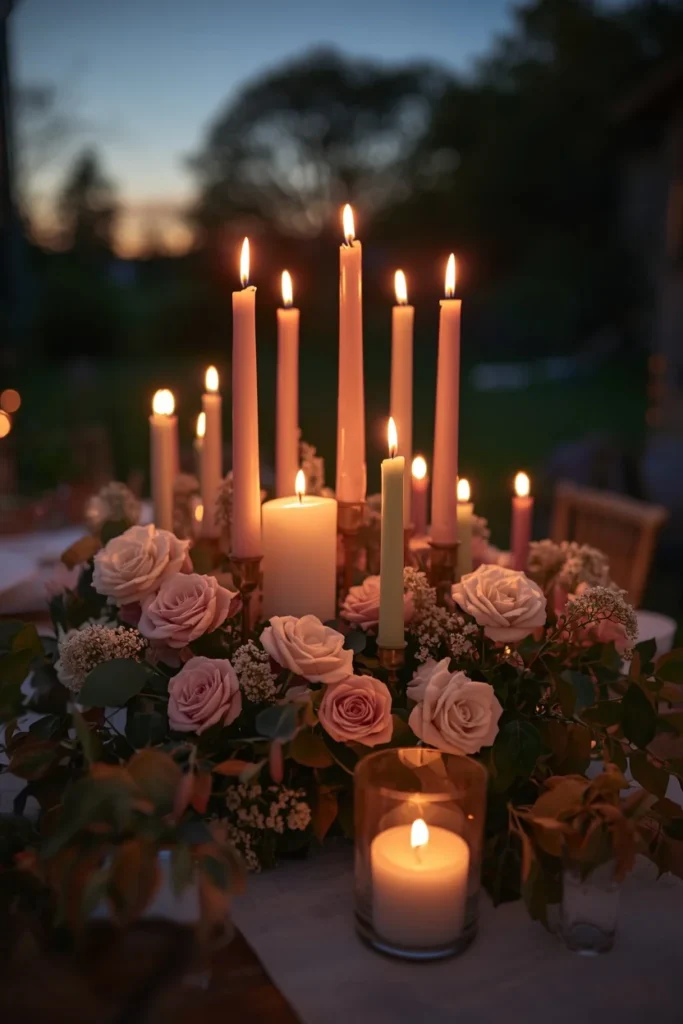
14. Layered Taper Candle Heights
Group taper candles of different heights down the center of the table instead of relying on a single tall candelabra. Mixing pastel colors — soft pink, sage, and cream — adds visual rhythm without overwhelming the florals nearby, and dripless candles keep the table clean through a long dinner. Uneven heights create movement across the table the way a single row of matching candles can’t, so cluster three or four together at intervals rather than spacing them evenly apart. This works well layered directly into a moss runner or scattered among low floral arrangements, since the candlelight softens everything as the evening goes on. It’s a small addition that makes the biggest difference once the sun starts to set and the table shifts from daytime bright to evening warm.
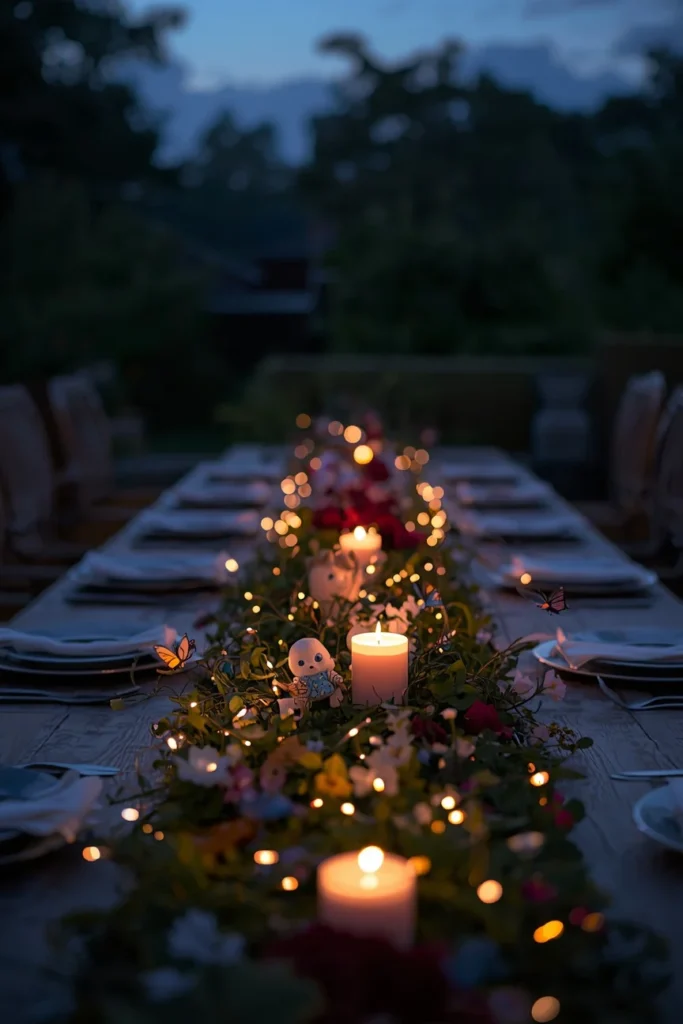
15. Butterfly & Fairy Garden Accents
Scatter small artificial butterflies, miniature woodland figurines, or string lights through greenery along the table to give the whole setting a slightly magical, storybook feel. LED candles work better than open flame here since they can sit safely tucked into foliage without any fire risk. This idea suits an outdoor evening gathering especially well, since the string lights add ambiance as natural light fades and the small details reward guests who take a closer look. Keep the figurines and butterflies subtle rather than covering every inch of the table, so the effect feels like a discovery rather than a costume theme. It’s a favorite for garden parties aimed at kids or anyone who wants their spring table to feel a little whimsical rather than strictly elegant.
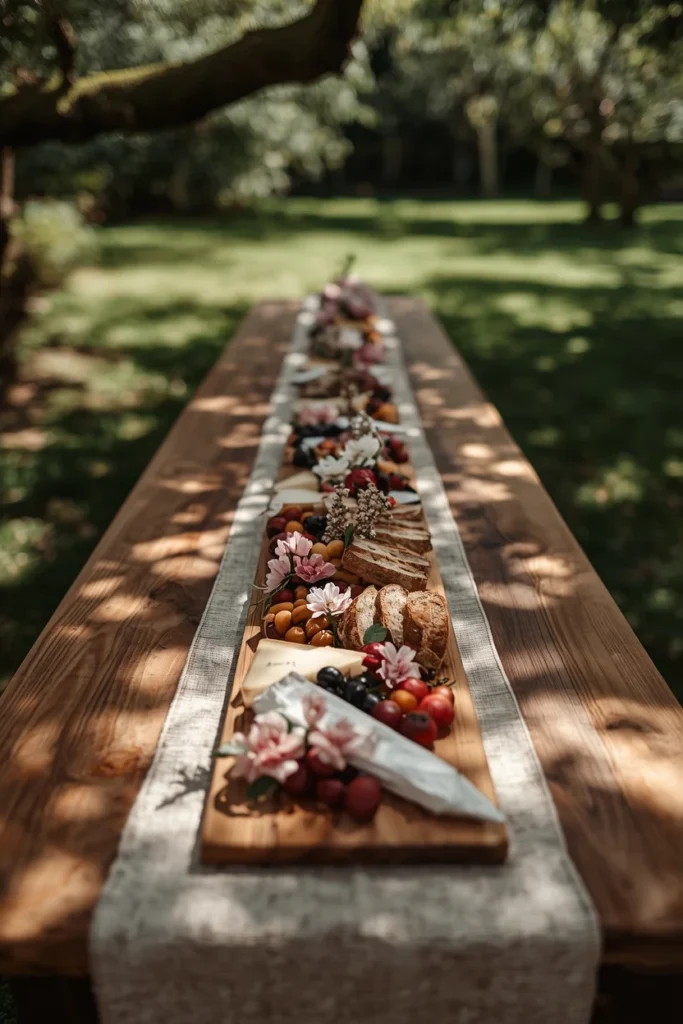
16. Grazing Table Centerpiece
Build the centerpiece out of the food itself by arranging a wooden board down the center of the table with cheese, fresh fruit, olives, and crusty bread nestled among small clusters of flowers. This works particularly well for casual outdoor gatherings where guests serve themselves rather than sitting through a formal plated meal. Wooden serving boards and simple ceramic bowls keep the natural, rustic feel going, and tucking a few flower stems directly into the spread blurs the line between food styling and tablescape. It cuts down on the need for a separate floral centerpiece entirely, since the abundance of fresh produce already fills the visual space. This idea suits relaxed brunches, bridal showers, or any garden party where lingering and grazing matters more than a formal course-by-course dinner.
Styling Tips
Start with the base layer first — tablecloth, runner, or placemats — then build up in stages instead of trying to place everything at once. Mixing textures matters more than matching colors exactly; a woven charger under a smooth ceramic plate creates more visual interest than an all-matching set. Keep centerpieces low enough that seated guests can see across the table and talk without leaning around stems or candles. When in doubt, pick one strong color or texture and let everything else support it rather than compete with it.
Practical Implementation Ideas
Set the table the night before a daytime event so morning hours go toward food instead of styling. Buy flowers two to three days ahead and let them open fully in a cool spot before arranging. Keep a small kit of floral tape, twine, and extra napkin rings on hand so last-minute fixes take minutes rather than a store run. Photograph the finished table in natural daylight near a window or outdoors before guests arrive, since that’s usually the best lighting of the day.
Common Mistakes to Avoid
Overcrowding the center of the table with too many tall elements blocks sightlines and makes conversation harder. Mixing more than three main colors without a neutral base tends to look chaotic rather than layered. Skipping a base layer like a runner or placemats can make even a nice centerpiece look unfinished. Choosing scented candles for a dinner table can clash with food aromas, so unscented tapers are the safer choice for anywhere people are eating.
Small-Space Alternatives
A narrow table can still use the moss runner or citrus scatter ideas, just scaled down to a strip rather than a full centerpiece. Single-stem bud vases at each place setting give the same quiet-luxury effect as a large arrangement without taking up center space. Wall-mounted or hanging greenery above a small table brings in the hanging floral look without needing floor space for a frame. Stackable plates and a slim runner keep a compact table feeling styled rather than crowded.
Budget-Friendly Alternatives
Grocery store citrus, herbs, and seasonal flowers cost far less than florist arrangements and still photograph beautifully. Secondhand shops are reliable sources for vintage blue and white china and mismatched glassware. Preserved moss and dried florals can be reused across multiple gatherings, unlike fresh-cut flowers that last only a few days. Folding napkins into bunny ears or gathering wildflowers from a yard costs nothing beyond what’s already on hand.
Pro Styling Recommendations
Layer at least three textures — linen, ceramic, and something natural like wood, rattan, or moss — for a table that feels intentional rather than flat. Repeat one small detail, like the same napkin fold or candle color, at every place setting to tie a loosely mixed table together. Save the boldest centerpiece idea for the guest of honor’s end of the table, and let the far end stay a little simpler. Take styling photos before food is served, since a fully set table almost always looks better than one already in use.
FAQs
Conclusion
A spring table doesn’t need a big budget or a florist on speed dial to feel like a garden party. Most of these ideas come down to one or two intentional details — a moss runner, a floating bowl of flowers, a bunny-folded napkin — layered onto a simple base. Pick the one or two that match how you actually like to host, and build outward from there. The table will feel finished long before every seat is full.