21 Afrobohemian Living Room Ideas to Mix Pattern, Texture & Heritage
Your living room can hold more than one story at once.
That’s the quiet magic of Afrobohemian style. A mudcloth pillow sits next to a velvet throw. A rattan chair faces a carved wood side table. Terracotta walls hold gallery art with kente-print frames, and somehow none of it fights for attention. It just feels warm, layered, and lived-in.
A lot of people try this look and end up with a room that reads as scattered instead of soulful. The difference usually comes down to a few small decisions: which textile anchors the space, how many patterns you let coexist, and where you draw the line between “collected” and “cluttered.”
This guide walks through 21 specific ways to bring pattern, texture, and heritage into your living room, one idea at a time. Grab a cup of tea and start pinning the ones that pull at you.
Table of Contents
1. Anchor the Room With a Statement Mudcloth Textile
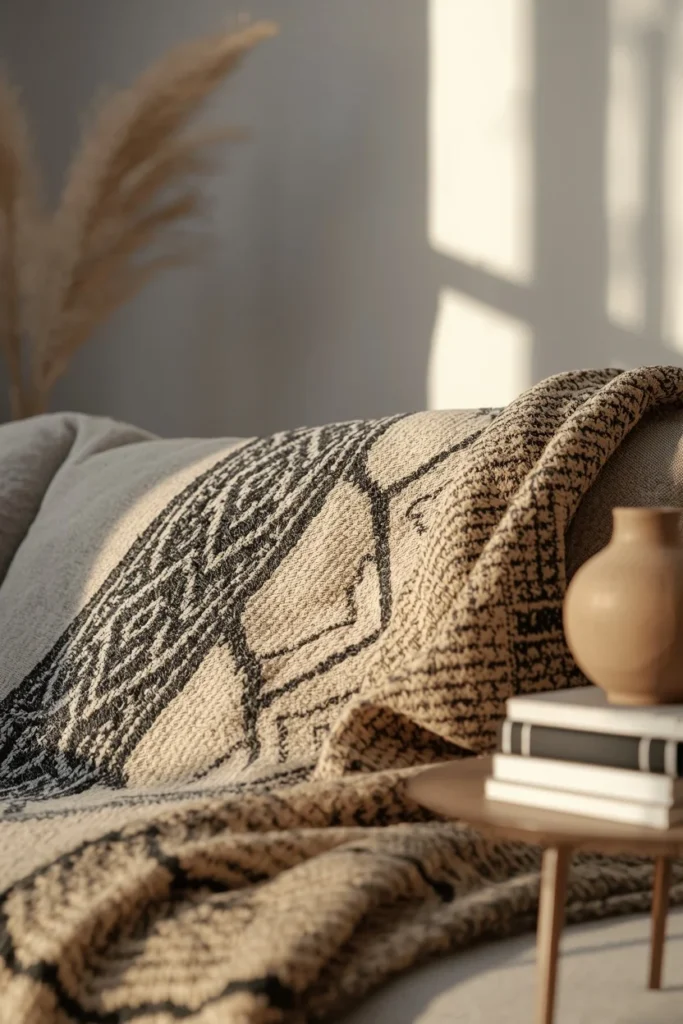
Every Afrobohemian living room needs one piece that sets the tone before anything else gets added. A large mudcloth throw draped over the back of a sofa, or a mudcloth panel stretched and framed above a console, works as that anchor. Its raised black-and-cream geometric pattern reads as bold from across the room but stays neutral enough in color to let other textiles join in later. Once that anchor piece is in place, every other pattern you choose gets pulled from the same tonal family, which is what keeps a busy room from feeling messy. Start here before buying anything else, because this single decision shapes every color and pattern choice that follows.
2. Layer Kente-Inspired Pattern Into Throw Pillows
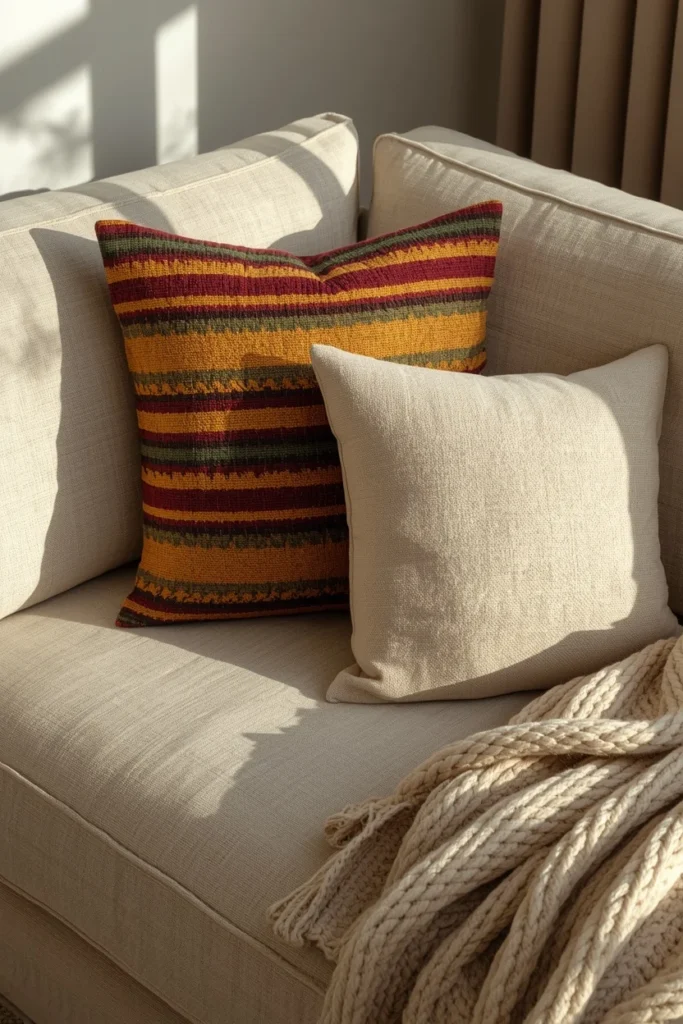
Kente cloth carries centuries of Ghanaian weaving tradition, and even a small dose of its bold stripes and color blocking changes the energy of a room. Choose two or three kente-print pillows in gold, forest green, and deep red, then scatter them across a solid-colored sofa instead of clustering them all in one spot. The high contrast pattern works best when it has visual breathing room, so pair it with plain linen or boucle pillows rather than surrounding it with more busy prints. This approach lets you bring in an authentic cultural textile without committing to a full upholstery reupholstering project. It’s one of the easiest, lowest-cost ways to shift a plain living room toward Afrohemian territory in a single afternoon.
3. Mix Ikat Wallpaper With Solid Velvet Upholstery
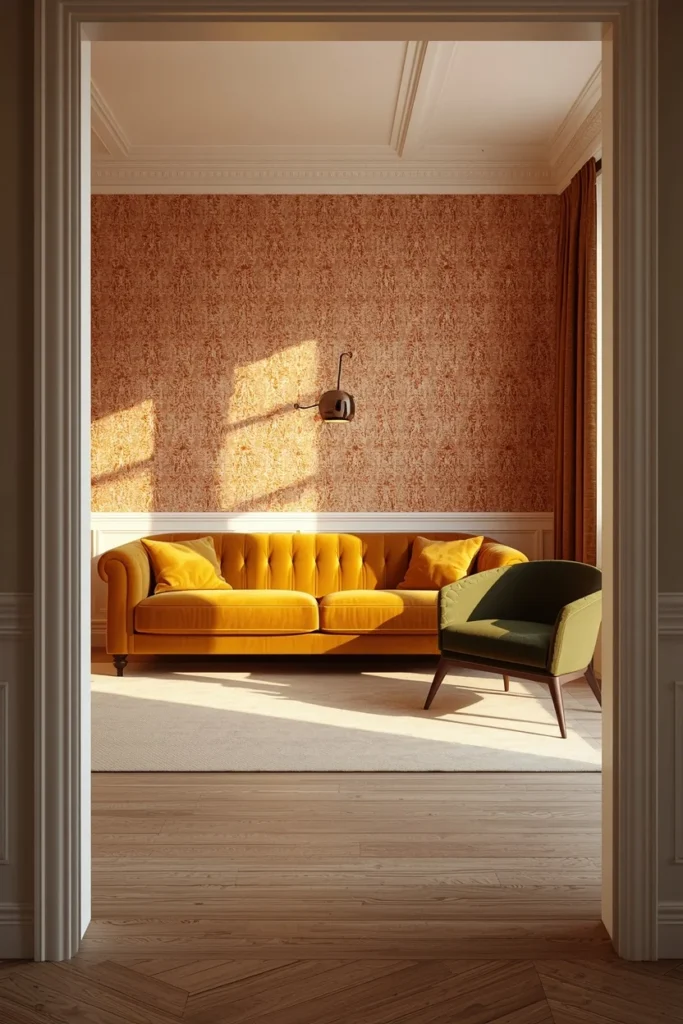
If you want pattern on the walls rather than just the textiles, ikat wallpaper in warm rust and cream gives the room a painterly, hand-blurred print that feels organic rather than sharp. Because ikat patterns already have soft, irregular edges, they pair surprisingly well with solid velvet furniture in mustard or deep olive, since the smooth fabric gives the eye somewhere calm to land. Keep trim, molding, and ceiling color neutral so the wallpaper stays the star rather than competing with painted details. This combination works especially well in a smaller living room, where a single patterned accent wall does more visual work than scattered small patterns across multiple surfaces. The velvet also adds a tactile, almost luxurious texture that balances the flatter surface of the wallpaper.
4. Ground the Space With a Handwoven Jute Rug
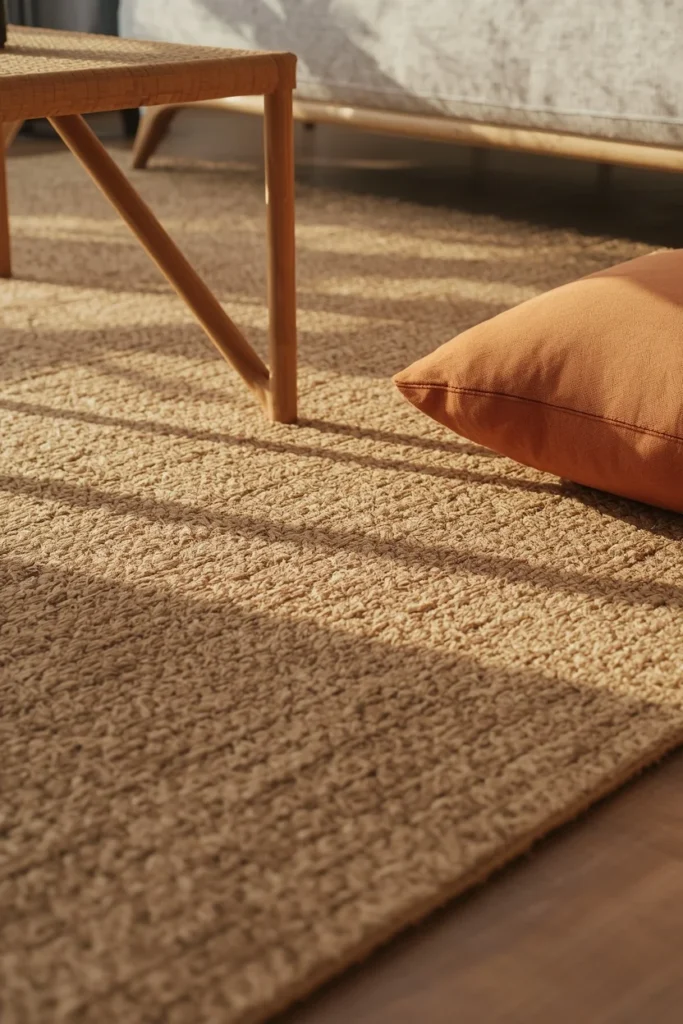
A natural jute rug is one of the most functional foundations in Afrohemian design because its neutral tan color and rough woven texture work underneath almost any pattern combination you layer on top later. Jute also brings genuine organic material into the room, which grounds bolder colors and prints so the space doesn’t feel like it’s trying too hard. Choose a rug large enough that at least the front legs of your main seating pieces sit on it, since an undersized rug is one of the fastest ways to make a room feel disconnected. The slightly rough texture underfoot also contrasts nicely with soft velvet or boucle seating, adding the kind of tactile variety that makes a room feel intentionally layered rather than randomly assembled. Think of this rug as your neutral canvas, not your statement piece.
5. Build a Gallery Wall of African-Inspired Art
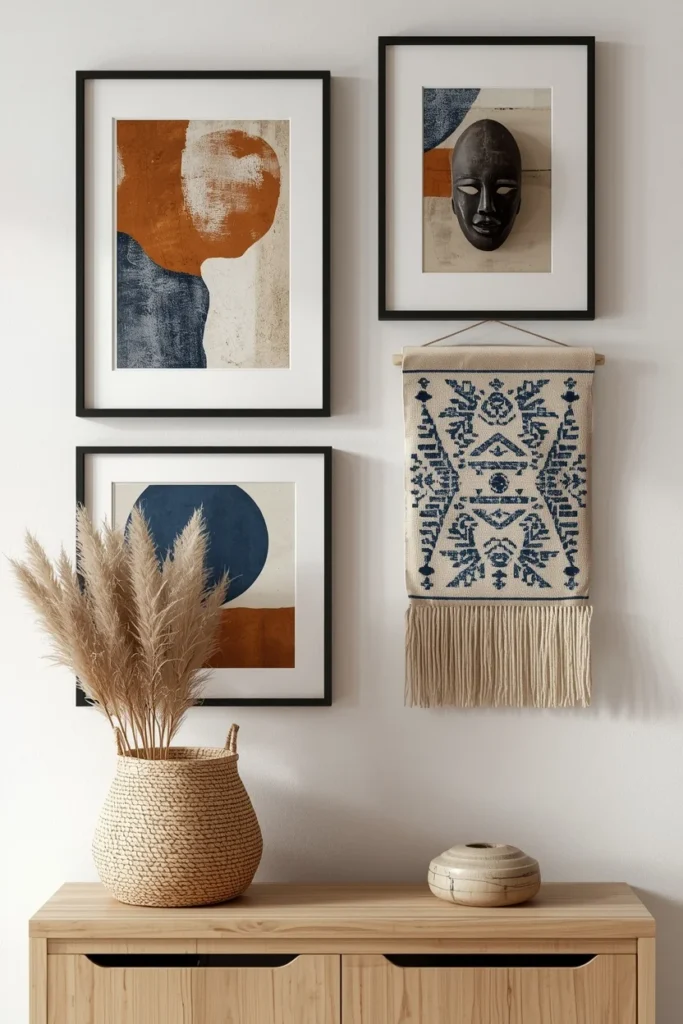
A gallery wall gives you a place to display African-inspired prints, portrait art, and abstract pieces without adding more pattern to your furniture or floors. Mix framed textile art, a hand-carved wooden mask, and one or two abstract paintings in warm ochre and indigo tones, keeping frame finishes consistent in either black or natural wood so the collection reads as curated. Arrange pieces at slightly varied heights rather than in a strict grid, since Afrohemian style leans into organic, collected-over-time energy rather than symmetry. This wall becomes the storytelling core of the room, the spot where cultural heritage shows up visually rather than just through textiles. It’s also one of the few elements you can keep growing over time as you find new pieces that speak to you.
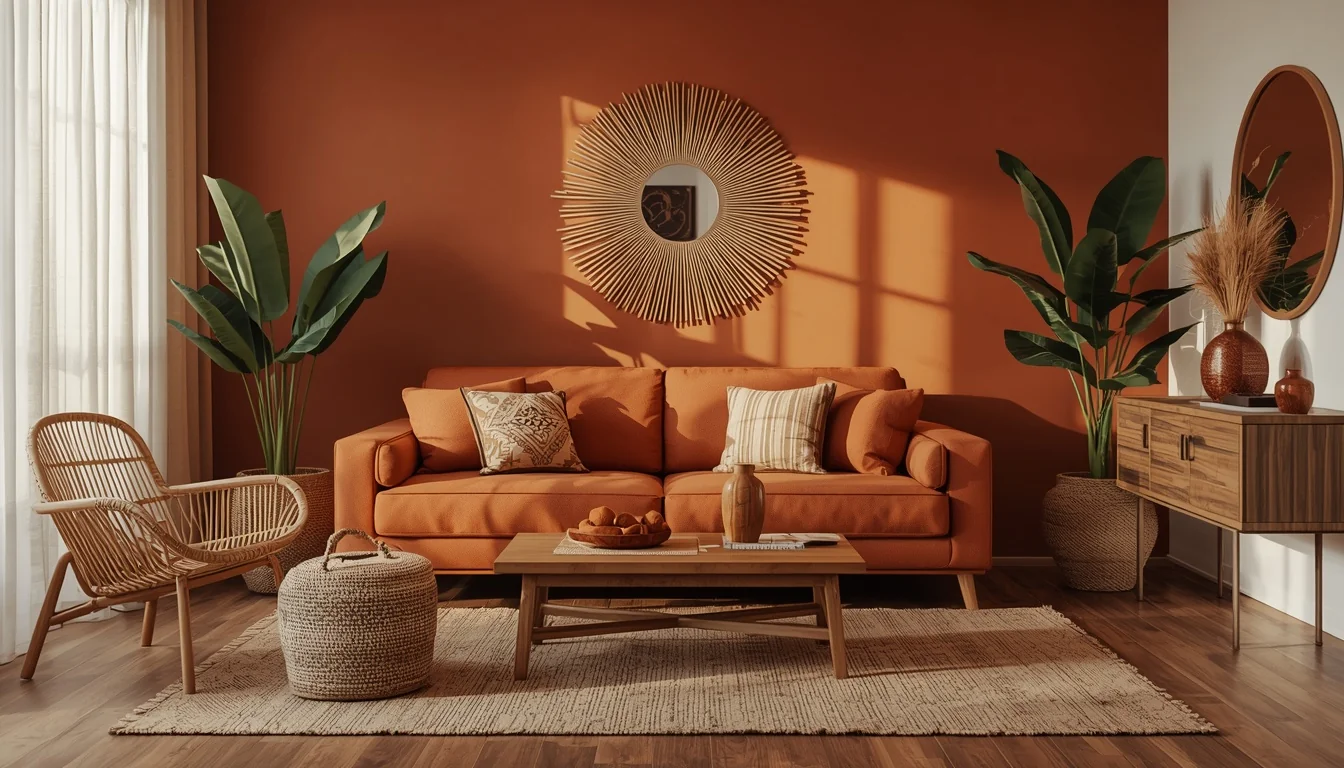
6. Add a Raffia Statement Mirror
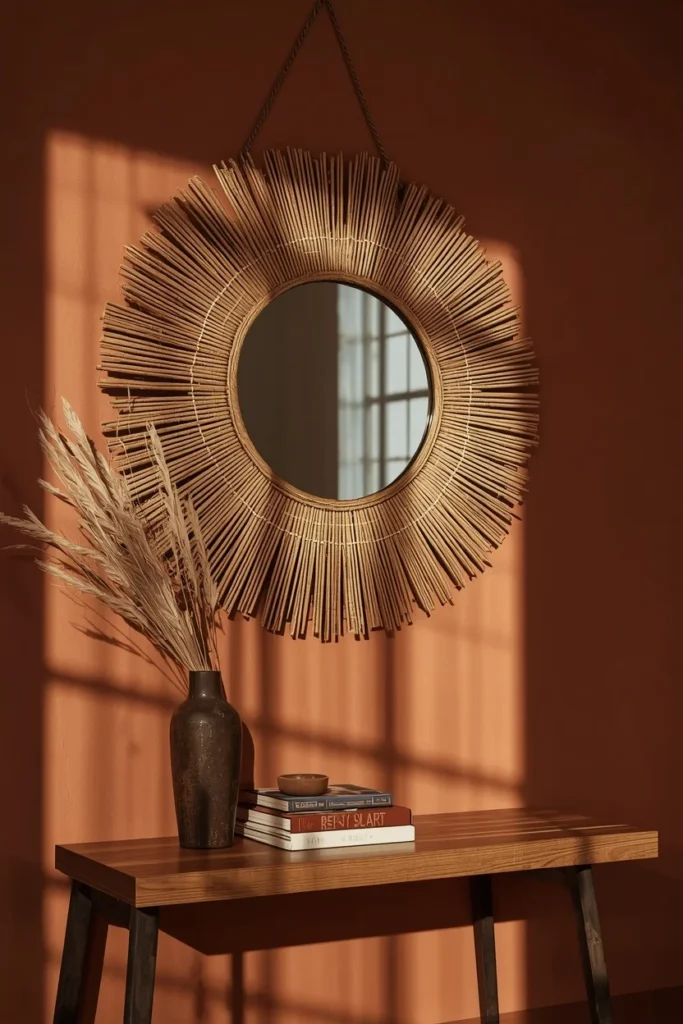
A round raffia mirror brings texture to a wall without adding another printed pattern to a room that may already be busy with textiles. The natural fiber weaving catches light in a way that flat decor simply can’t, and its circular shape softens a room full of straight-lined furniture and geometric patterns. Hang it above a console table or sofa at eye level so it reflects light back into the room, which matters in living rooms with limited natural light. Because raffia is a neutral tan tone, this piece works as a bridge between bold prints and calmer, more solid-colored furniture nearby. It’s a small investment that photographs beautifully and does a lot of visual work for its size.
7. Bring In Carved Wood Furniture Pieces
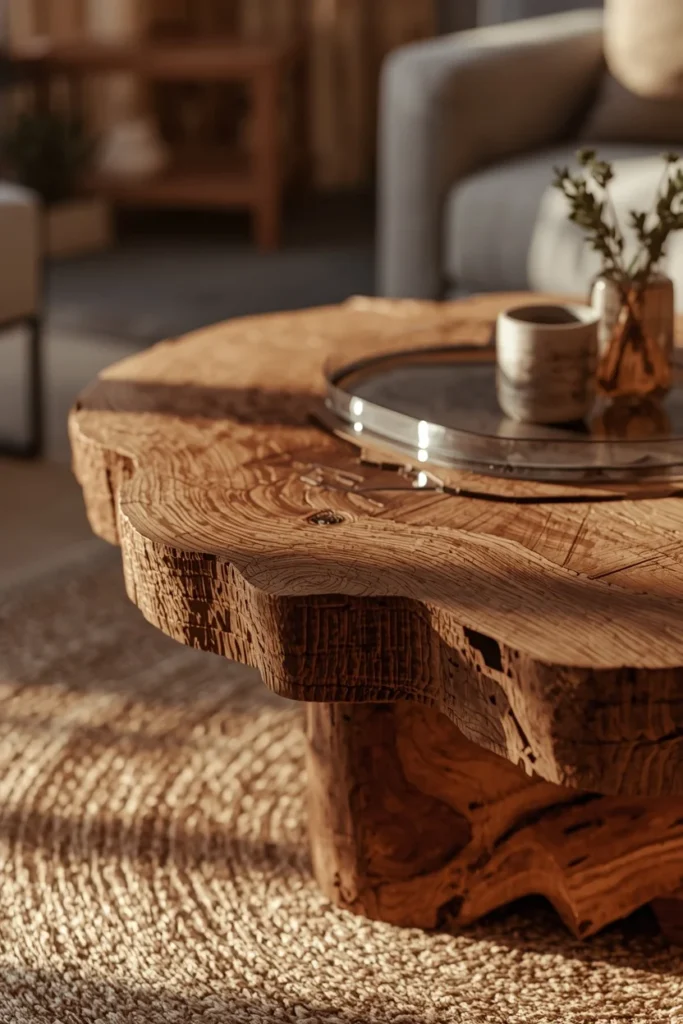
A hand-carved wood coffee table or side table adds a sculptural, artisanal quality that manufactured furniture can’t replicate. Look for pieces with visible tool marks, organic edges, or traditional carved motifs, since these details communicate craftsmanship rather than mass production. Pair carved wood with smoother materials nearby, like a glass tray or ceramic bowl, so the texture of the carving has contrast rather than competing with other rough surfaces. This furniture category also tends to be more budget-friendly than upholstered pieces, making it an accessible entry point if you’re building the look gradually. Even one well-chosen carved wood piece can shift an entire room from generic boho toward something with real cultural weight.
8. Layer a Second Patterned Rug Over Jute
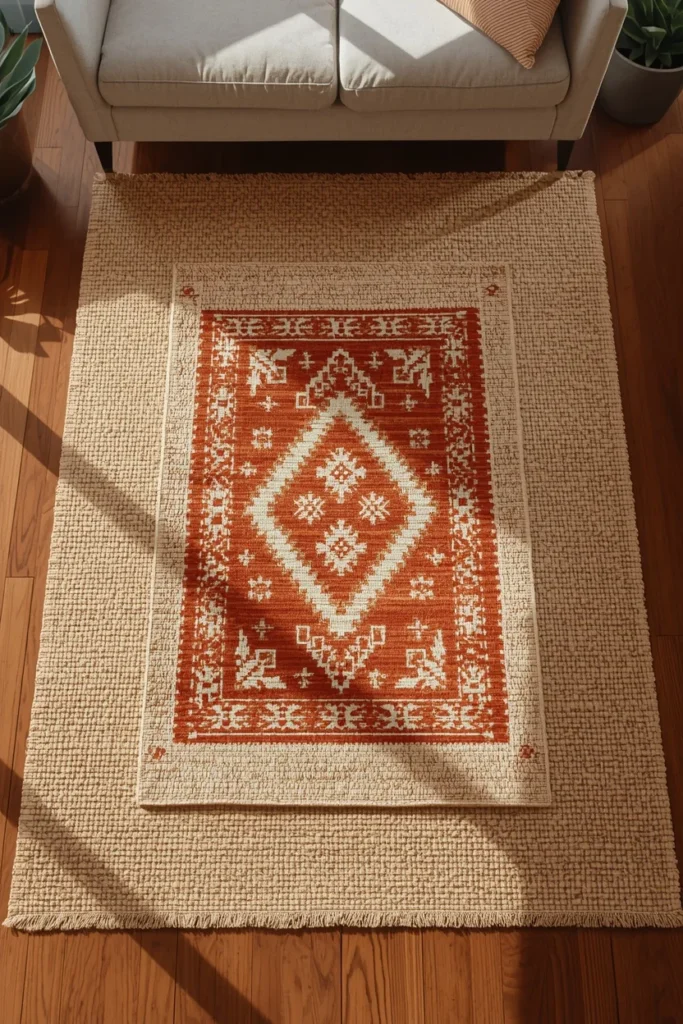
Once your neutral jute base rug is down, a smaller patterned rug layered on top adds an extra dimension of pattern at floor level, which is a technique interior stylists use constantly but rarely explain. Choose a rug with a tribal-inspired geometric print in terracotta and cream, sized to sit centered under a coffee table, with the jute rug extending beyond its edges on all sides. This layering trick adds visual interest low in the room, balancing out patterns on pillows or walls that sit higher up. It also solves a practical problem, since layered rugs help define a seating area in an open-concept space without needing to add furniture. Keep the top rug’s color palette tied to your other textiles so the layering feels connected rather than random.
9. Style a Rattan Reading Nook
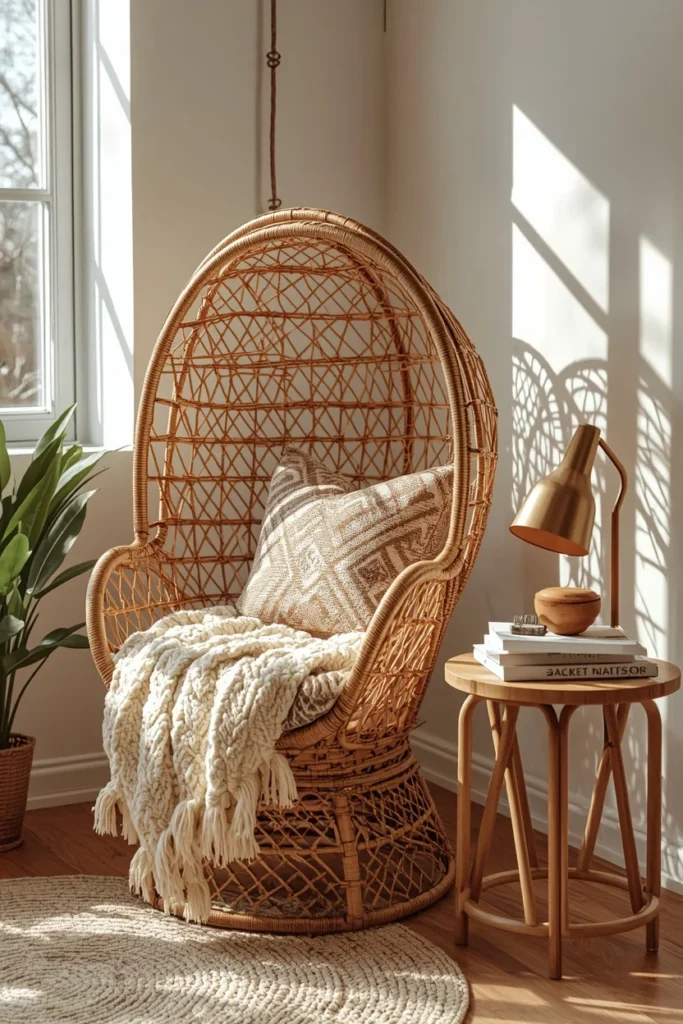
A single rattan peacock or papasan-style chair tucked into a corner creates a dedicated reading nook that adds both shape and texture without taking up much floor space. Layer the chair with a mudcloth-print cushion and a chunky knit throw, then place a small round side table nearby to hold a lamp and a stack of books. The open weave of rattan lets light pass through it, which keeps the corner from feeling heavy even though it’s visually rich. This nook also gives your Afrobohemian living room a functional purpose beyond general seating, which matters for real daily use rather than just photos. It’s a favorite feature in small apartments because it delivers a strong visual statement in a footprint smaller than a full accent chair.
10. Use Ankara Print Accent Chairs
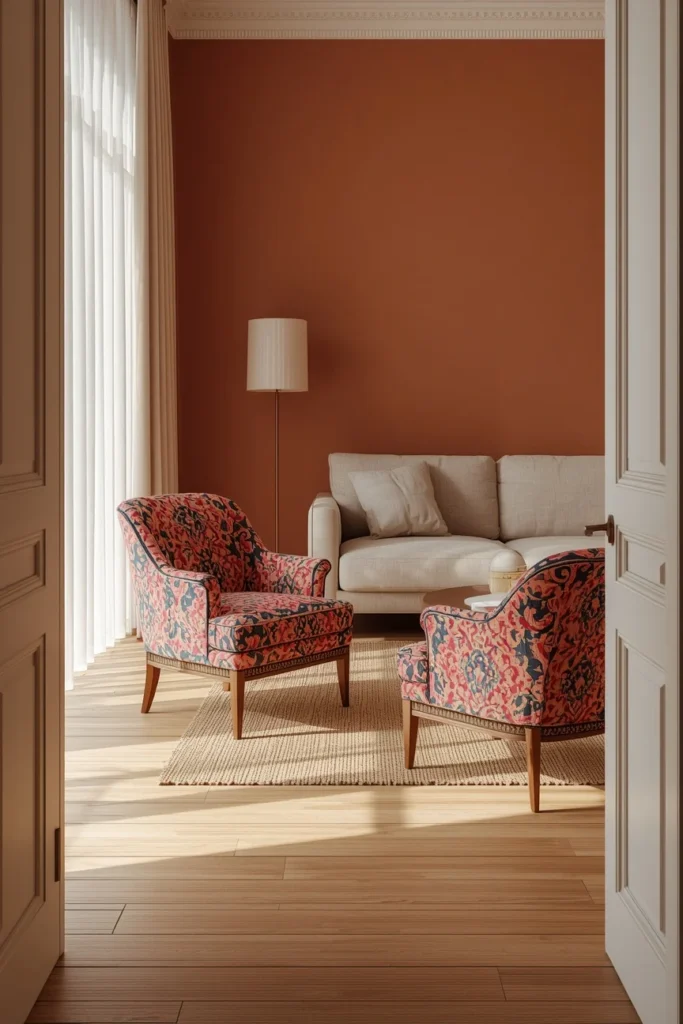
Ankara fabric brings some of the boldest, most saturated color combinations available in African textile design, often mixing hot pink, cobalt, and gold in a single print. Because the pattern is so vibrant, it works best contained to one or two accent chairs rather than a full sofa, letting the rest of the room stay in calmer earth tones. Position the chairs facing each other or angled toward a neutral sofa so they read as intentional focal points instead of stray colorful furniture. This idea is especially good for renters, since reupholstering or slipcovering just a chair is far less commitment than a full sofa. The high contrast pattern also photographs exceptionally well, which matters if you’re building this room with Pinterest and social sharing in mind.
11. Hang a Macrame Wall Hanging
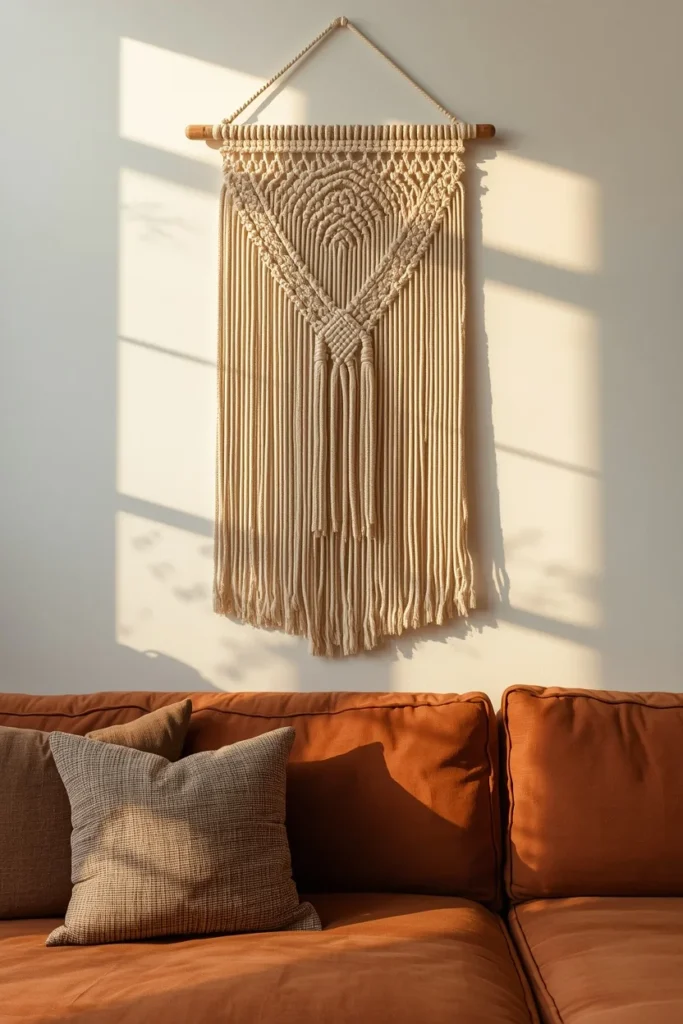
A large macrame wall hanging above the sofa adds height, texture, and a handmade quality that fills empty wall space without introducing more printed pattern. Choose one in natural cream cotton rope so it stays tonally neutral, letting it pair easily with mudcloth, kente, or Ankara textiles already in the room. The knotted, fringed texture also softens a room that might otherwise feel dominated by hard-edged furniture and geometric prints. Hang it slightly above standard eye level and let the fringe extend down toward the sofa back for a layered, cascading effect. This piece works particularly well in rental apartments since it requires only a single hook and adds significant visual impact for its size.
12. Paint One Wall in Terracotta or Rust
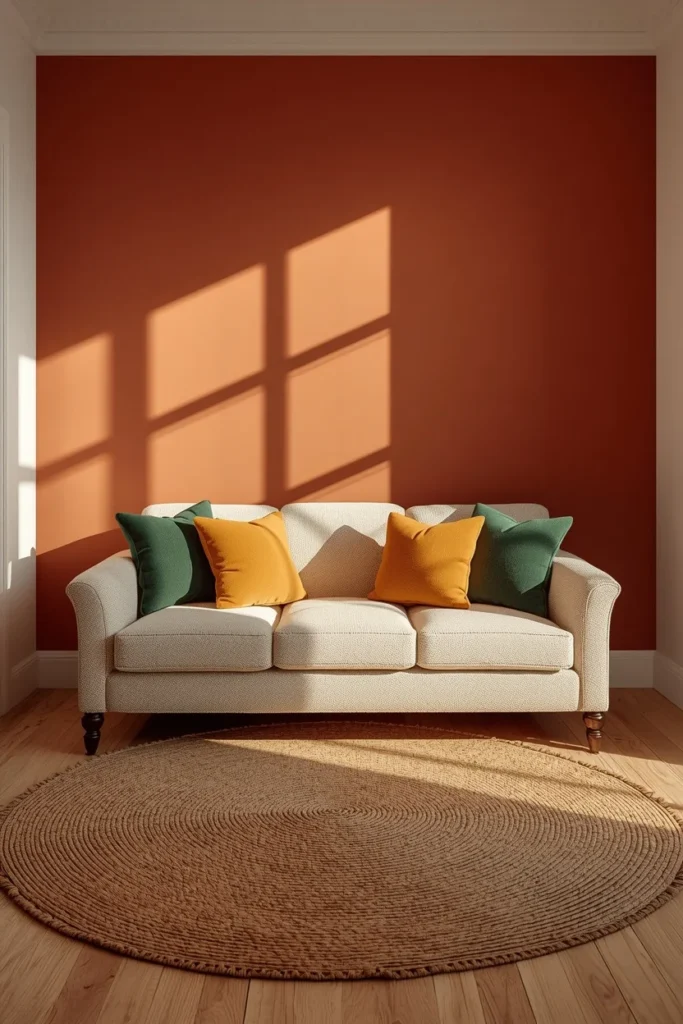
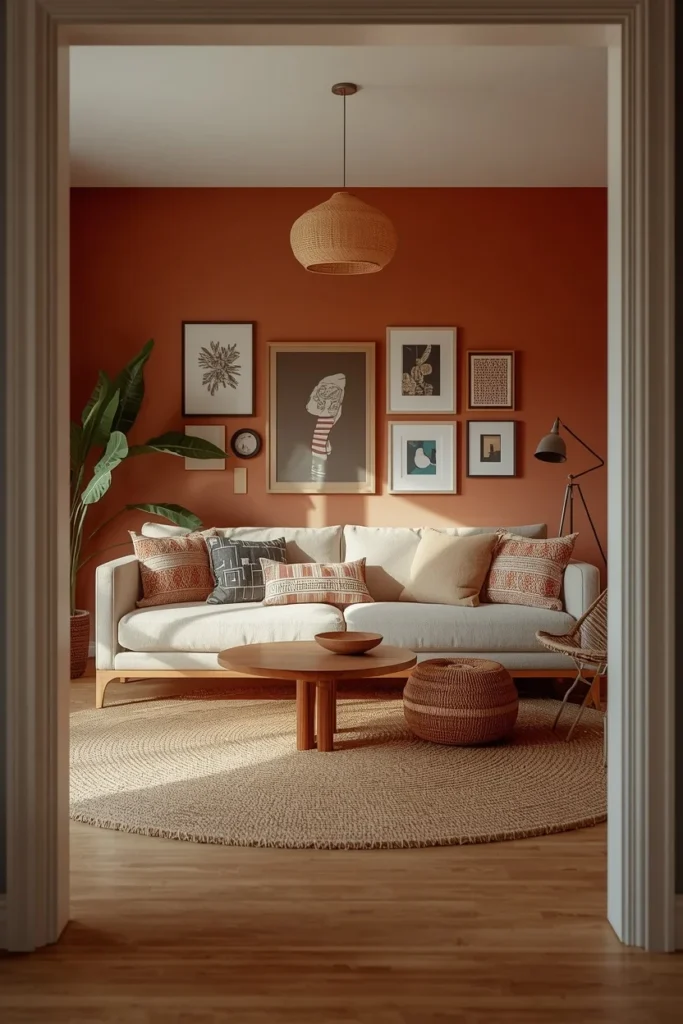
A single terracotta or rust-painted accent wall gives the entire room a warm color foundation that makes every other pattern and texture feel intentional rather than random. This earthy tone reads as sophisticated rather than trendy because it echoes natural clay and pigment colors found across African art and craft traditions. Keep the remaining walls in a warm white or soft cream so the terracotta wall stays the visual anchor rather than overwhelming the room. Furniture and textiles in gold, forest green, and cream all sit beautifully against this backdrop, since terracotta acts almost like a neutral within the Afrohemian palette rather than a bold statement color. This is also one of the most budget-friendly changes on this list, since a gallon of paint can transform the entire mood of a room in a weekend.
13. Display Handwoven Storage Baskets
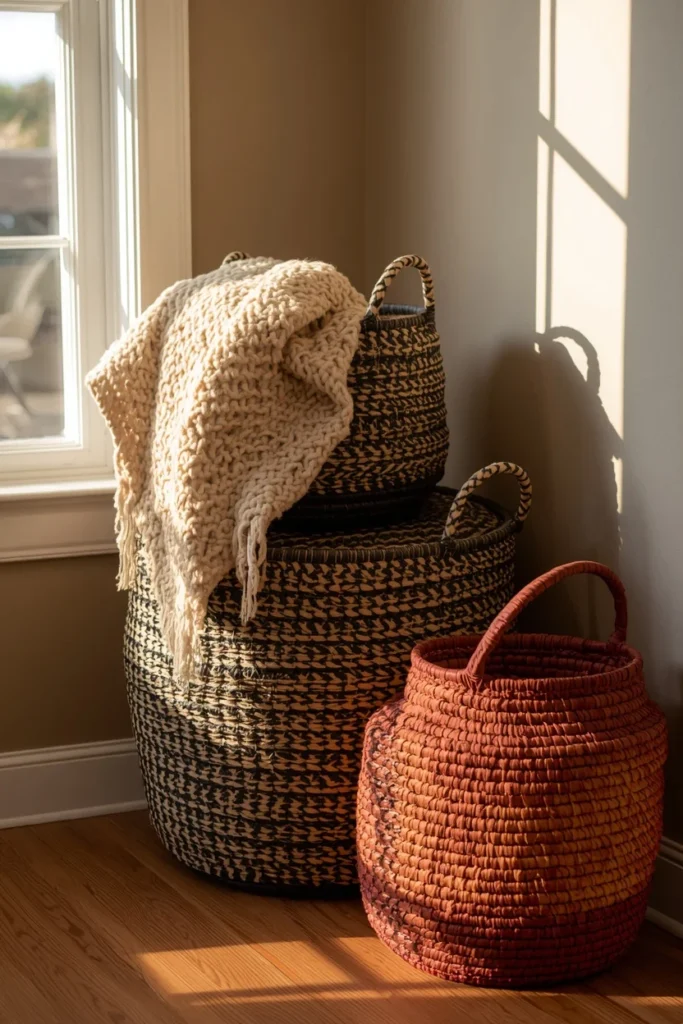
Handwoven baskets, especially those made using traditional Ghanaian or Rwandan weaving techniques, work as both storage and sculpture in an Afrobohemian living room. Stack two or three baskets of varying sizes in an empty floor corner to hold throw blankets, magazines, or firewood, turning a practical storage need into a styling feature. Choose baskets with contrasting weave patterns and natural dye colors like black, tan, and rust so the grouping has visual variety even though the material stays consistent. This idea solves a real organizational problem while reinforcing the handmade, artisanal feeling that defines the entire aesthetic. Baskets hung flat on the wall in a cluster also work well if floor space is limited, giving you the same textural payoff vertically instead.
14. Add Beaded Textile Cushions
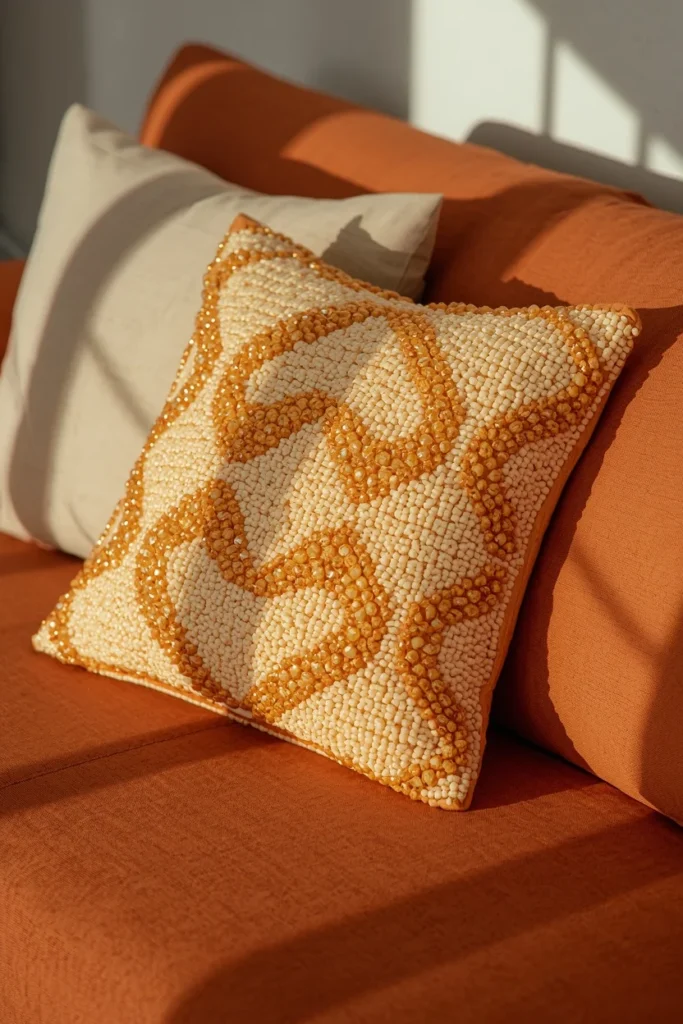
Beaded cushion covers, often featuring geometric patterns worked in colorful glass or wooden beads, add a dimensional texture that flat printed fabric simply can’t achieve. Use one or two beaded cushions as focal accents on a solid sofa rather than mixing them with several other heavily patterned pillows, since the beadwork itself already provides enough visual complexity. The slight weight and rigidity of beaded textiles also creates a nice contrast against soft velvet or linen cushions nearby. These pieces tend to be more of an investment than printed cotton pillows, so treat them as the statement pieces in your pillow arrangement rather than filler. Rotating them seasonally also keeps the room feeling fresh without requiring a full redecorating effort.
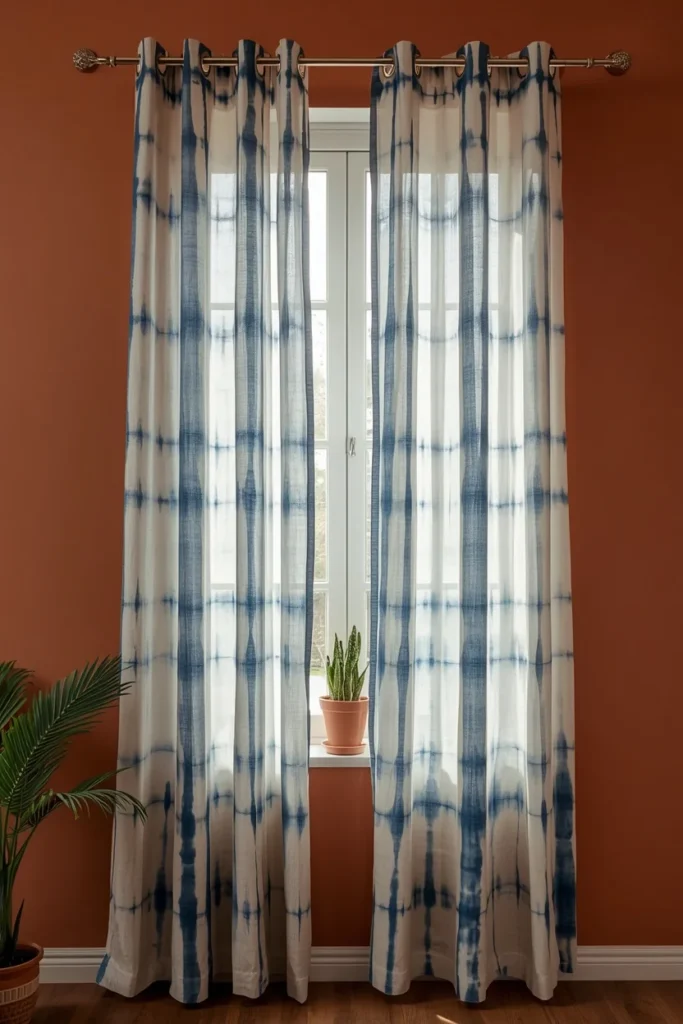
15. Introduce Indigo Tie-Dye Curtains
Indigo tie-dye textiles carry deep roots in West African dyeing traditions, and using them as curtains lets that pattern exist at a large scale without covering furniture or floors. The deep blue tones also add a cooling contrast to a room otherwise built around warm terracotta, rust, and gold, keeping the overall palette from feeling one-note. Choose a lightweight cotton so the fabric drapes softly and filters natural light with a slightly diffused, dappled quality. Pair indigo curtains with brass curtain rods for a warm metal accent that ties back into the room’s other gold and brass details. This idea works especially well in a living room with large windows, since the curtains become a moving, light-catching feature throughout the day.
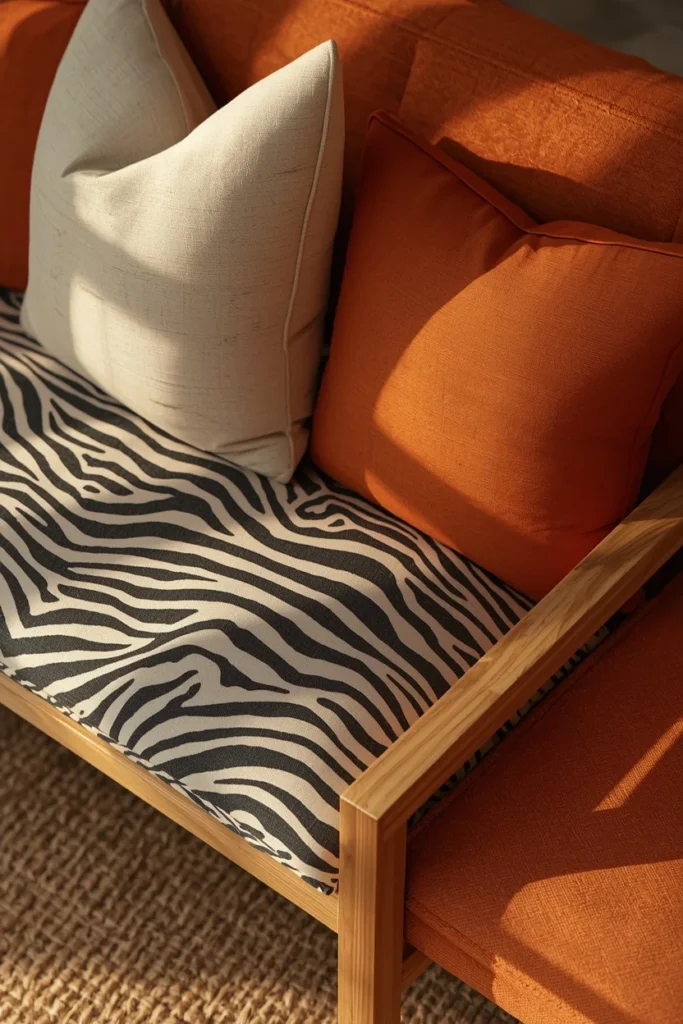
16. Layer Animal-Print Accents Sparingly
A small dose of animal print, like a zebra-print bench cushion or a leopard-print lumbar pillow, adds a graphic pattern that reads as bold without clashing with the room’s other African-inspired textiles. The key word here is sparingly, since animal print carries a strong visual presence and can quickly overwhelm a room if used on more than one or two pieces. Keep animal print pieces smaller in scale, like a bench cushion or single accent pillow, rather than a full sofa or large rug. Ground the print with plenty of solid earth-tone fabric nearby so it reads as one intentional accent rather than the room’s dominant pattern. Used this way, animal print adds a worldly, collected edge that feels curated rather than themed.
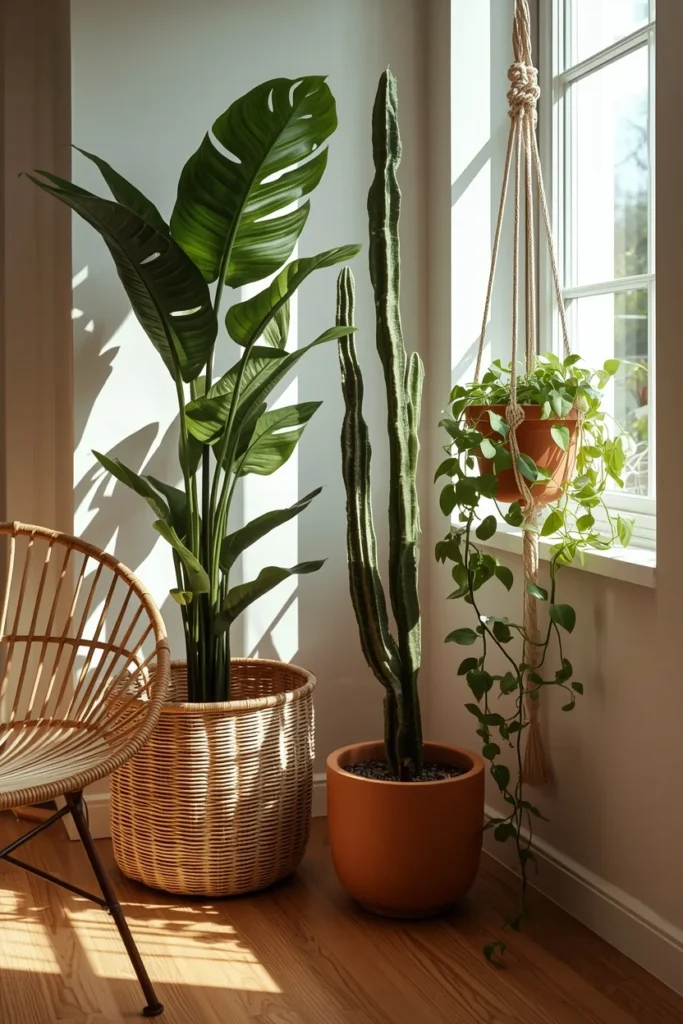
17. Style an Indoor Jungle With Layered Plants
Plants are structural in Afrohemian design rather than optional decoration, since their natural green tones and organic shapes soften all the geometric pattern and warm color surrounding them. Group at least three plants of different heights, like a tall fiddle leaf fig, a mid-height snake plant, and a trailing pothos in a hanging planter, so the greenery reads as layered rather than scattered. Use woven or terracotta planters instead of plastic or ceramic in cool tones, keeping every material choice consistent with the room’s natural, handmade feeling. This living greenery also brings a sense of freshness and movement to a room built mostly from static textiles and furniture. A living room without at least a few plants tends to feel like it’s missing a key ingredient in this particular style.
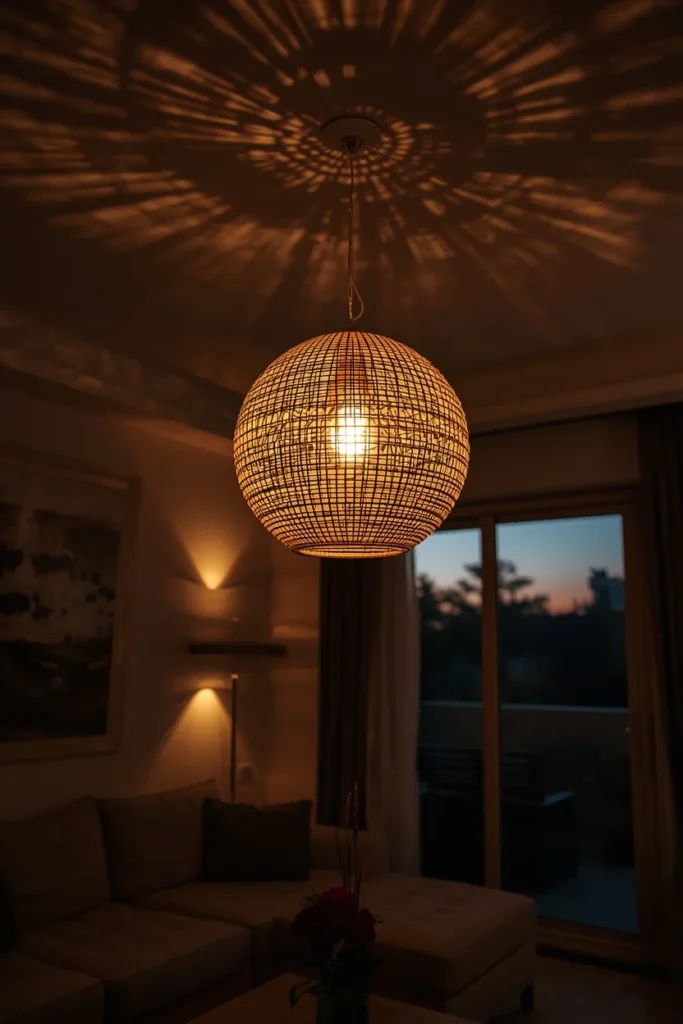
18. Add a Woven Pendant Light Fixture
A woven rattan or seagrass pendant light replaces a plain overhead fixture with one that casts warm, dappled shadow patterns across the ceiling and walls once lit. This lighting choice does double duty, functioning as both illumination and a textural sculpture during the day when the light is off. Hang it at a height that clears eye level but still feels present in the room, typically around seven feet from the floor in a standard living room. The organic shape also softens a ceiling that might otherwise feel like an afterthought in the overall styling. In the evening, the shadow pattern it throws across the room becomes one of the most photogenic features of the entire space.
19. Mix Brass and Wood Metal Accents
Warm metal finishes like brass or aged gold add a subtle shine that keeps an otherwise matte, textile-heavy room from feeling flat. Use brass in small doses, like candle holders, a picture frame, or drawer pulls on a wood console, rather than large furniture pieces, since a little goes a long way against so much natural material. Pair brass consistently throughout the room rather than mixing it with silver or chrome, since consistent metal tone is one of the easiest ways to make a collected room feel cohesive. The warmth of brass also echoes the golden tones already present in kente cloth, mustard velvet, and terracotta walls, tying the whole palette together. This detail is small, but its absence is often what makes an otherwise well-styled room feel slightly unfinished.
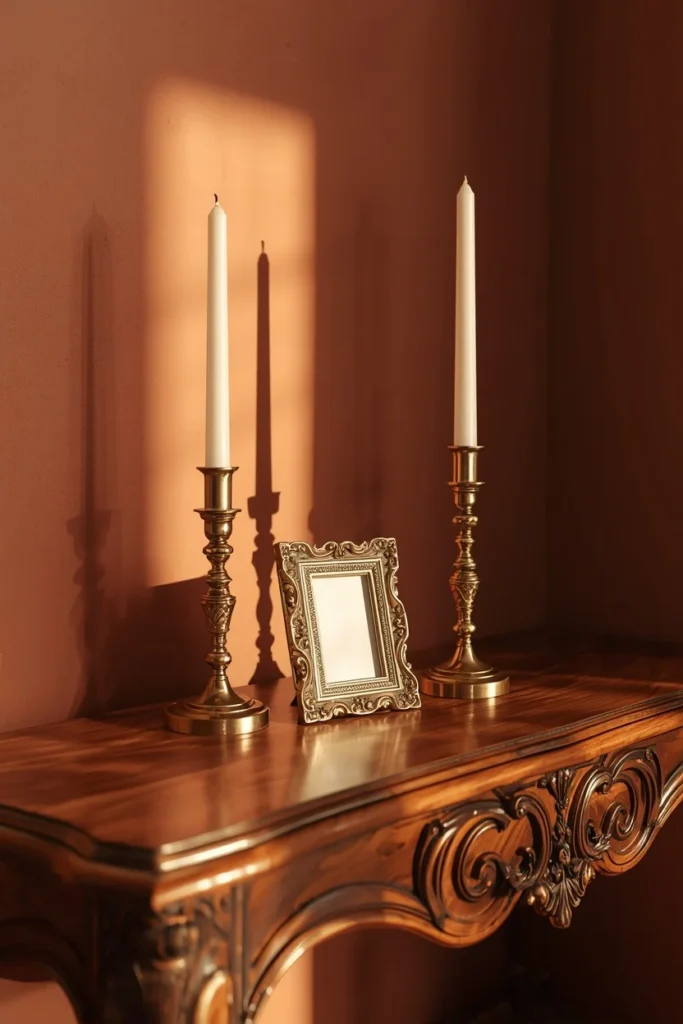
20. Create a Vintage Travel Find Vignette
A small tabletop vignette built from vintage or travel-sourced pieces, like a carved wooden bowl, an antique brass candlestick, and a small textile-wrapped box, adds personal story to the room in a way that new furniture can’t replicate. Cluster these items in odd numbers, typically three or five, on a console table or shelf, varying their heights so the eye moves naturally across the grouping. This idea works especially well for pieces collected over time or passed down within a family, since Afrohemian style specifically celebrates authenticity and heritage over uniform, matched decor sets. Even if you’re starting from scratch, thrifted and vintage market finds achieve this same collected-over-years feeling far more convincingly than anything bought as a matched set. This vignette becomes a natural conversation piece and one of the most personal corners of the entire room.
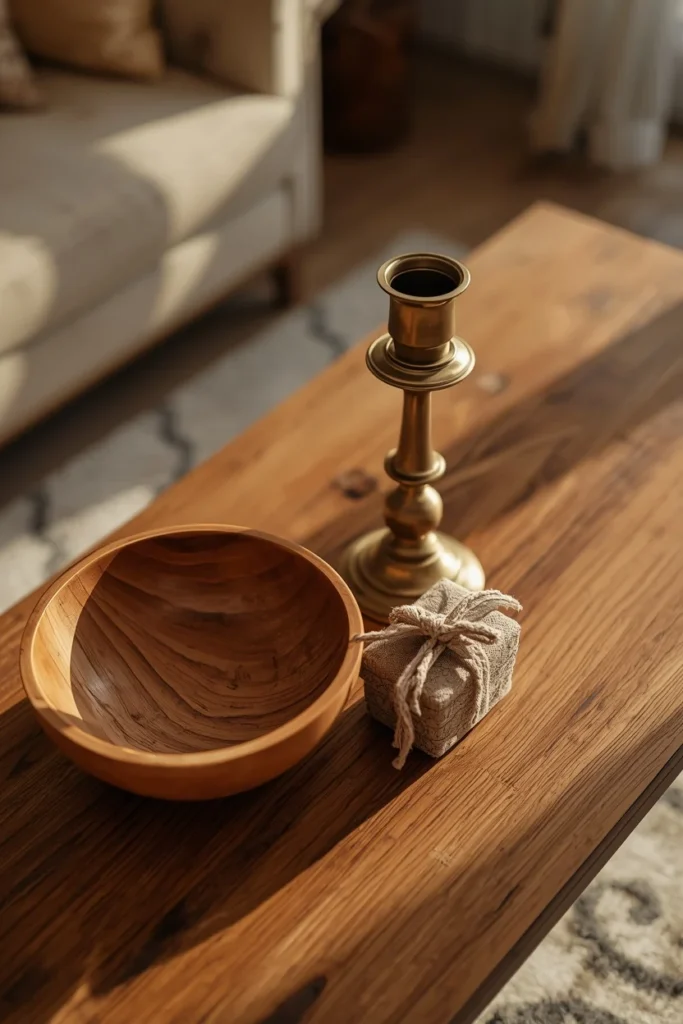
21. Balance Bold Pattern With Neutral Linen Sofa
With so much pattern and texture happening across pillows, rugs, walls, and art, the sofa itself often works best as the calm anchor rather than another patterned surface. A neutral linen or boucle sofa in cream, oatmeal, or warm gray gives every other bold choice in the room somewhere quiet to rest visually. This isn’t a compromise on style, it’s actually the technique that makes everything else in the room readable instead of overwhelming. Think of the sofa as the sentence’s punctuation rather than its subject, letting the mudcloth pillows, kente accents, and terracotta walls carry the visual weight instead. This single decision is often the difference between an Afrobohemian living room that feels curated and one that feels like too much is happening at once.
Styling Tips for Mixing Pattern and Texture
Pick one anchor pattern first. Choose a single bold textile, like mudcloth or kente, before buying anything else. Every other pattern and color decision should relate back to it.
Vary the scale of your patterns. Mix a large-scale print, like a wallpaper or rug, with smaller-scale prints on pillows. Patterns of the same size competing against each other is what usually reads as chaotic.
Let texture do the work color can’t. When you want visual interest without adding more pattern, reach for texture instead, like raffia, rattan, or macrame. This keeps a room feeling rich without becoming busy.
Repeat your color palette across materials. If terracotta shows up on your wall, echo it in a pillow, a ceramic vase, or a throw blanket elsewhere in the room. Repetition is what makes an eclectic room feel intentional.
Practical Implementation Ideas
Start with the largest, most permanent element first, typically wall color or a rug, since everything else gets chosen around it. Build the room in this order: wall color, rug, sofa, then layer in pattern through pillows and textiles last. This sequencing prevents the common mistake of buying pillows first and then struggling to find furniture that matches them. Photograph your room in progress after each addition and compare it to your inspiration pins, since it’s easier to spot when a room needs one more neutral piece or one more pop of color from a photo than in person.
Common Mistakes to Avoid
Using too many high-contrast patterns at once. Stick to one dominant pattern and let smaller patterns support it, rather than treating them as equals.
Skipping the neutral base entirely. A room needs somewhere for the eye to rest. Without a jute rug, linen sofa, or plain wall, even beautiful patterns start to feel exhausting.
Buying decor without a shared color thread. Random African-inspired pieces without a connecting palette read as mismatched rather than curated.
Forgetting plants and organic material. A room full of pattern but no greenery or natural texture can feel flat and one-dimensional no matter how good the textiles are.
Small-Space Alternatives
In a compact living room, choose one statement wall instead of an accent wall plus wallpaper plus a gallery wall, since layering too many focal points in a small footprint competes for attention. A rattan chair or ottoman takes up far less visual and physical space than a full accent chair while still delivering texture. Wall-mounted baskets and a macrame hanging add pattern vertically, which is especially useful when floor space for a layered rug setup isn’t available. Multi-purpose furniture, like a storage ottoman doubling as a coffee table, keeps the room functional without sacrificing the layered look.
Budget-Friendly Alternatives
Paint is the single most affordable way to bring a terracotta or rust accent wall into the room, and it can be done in a weekend. Thrifted textiles, like a vintage kilim rug or a secondhand carved wood table, often carry more authentic character than new mass-produced pieces at a fraction of the cost. A single new pillow cover in mudcloth or Ankara print costs far less than reupholstering a chair, while still delivering a strong dose of pattern. Look for handwoven baskets and raffia decor at local markets or fair-trade shops, since these pieces tend to be reasonably priced compared to imported furniture.
Pro Styling Recommendations
Work in odd numbers when grouping decor objects, since clusters of three or five read as more natural and intentional than pairs or even numbers. Keep at least one surface in the room, like a coffee table or shelf, mostly empty so the eye has a place to pause between busier zones. When in doubt about whether a new piece fits, hold it up against your anchor textile rather than against the whole room, since matching to one reference point is far easier than trying to balance everything at once. Rotate smaller decor pieces seasonally rather than buying entirely new sets, which keeps the room feeling fresh while preserving the investment you’ve already made in larger furniture.
FAQs
Conclusion
None of these 21 ideas require doing everything at once. Pick your anchor textile, choose your wall color, and add the rest slowly as pieces find their way to you, whether that’s a market find, a thrifted rug, or a pillow cover you finally track down online. The rooms that feel most genuinely Afrobohemian aren’t the ones assembled overnight. They’re the ones built one intentional piece at a time, where every pattern and texture has a reason for being there.