18 Fall Tree Ideas to Decorate Your Home Like a Magazine
Every fall, the same three houseplants get shoved aside for a plastic pumpkin and a strand of orange lights, and somehow the room still looks unfinished. A styled fall tree fixes that in one move.
It’s the piece design accounts keep leaning on: one tall, glowing, textured tree in a corner, on a mantel, or beside a front door, doing more visual work than a dozen small accents combined. It photographs well because it has height, warmth, and a single clear focal point — the exact thing a cluttered pumpkin display usually lacks.
This list breaks down 18 real ways to build one, at any budget and in any room size, so your fall corner looks like it belongs in a shelter magazine spread instead of a seasonal clearance aisle.
Table of Contents
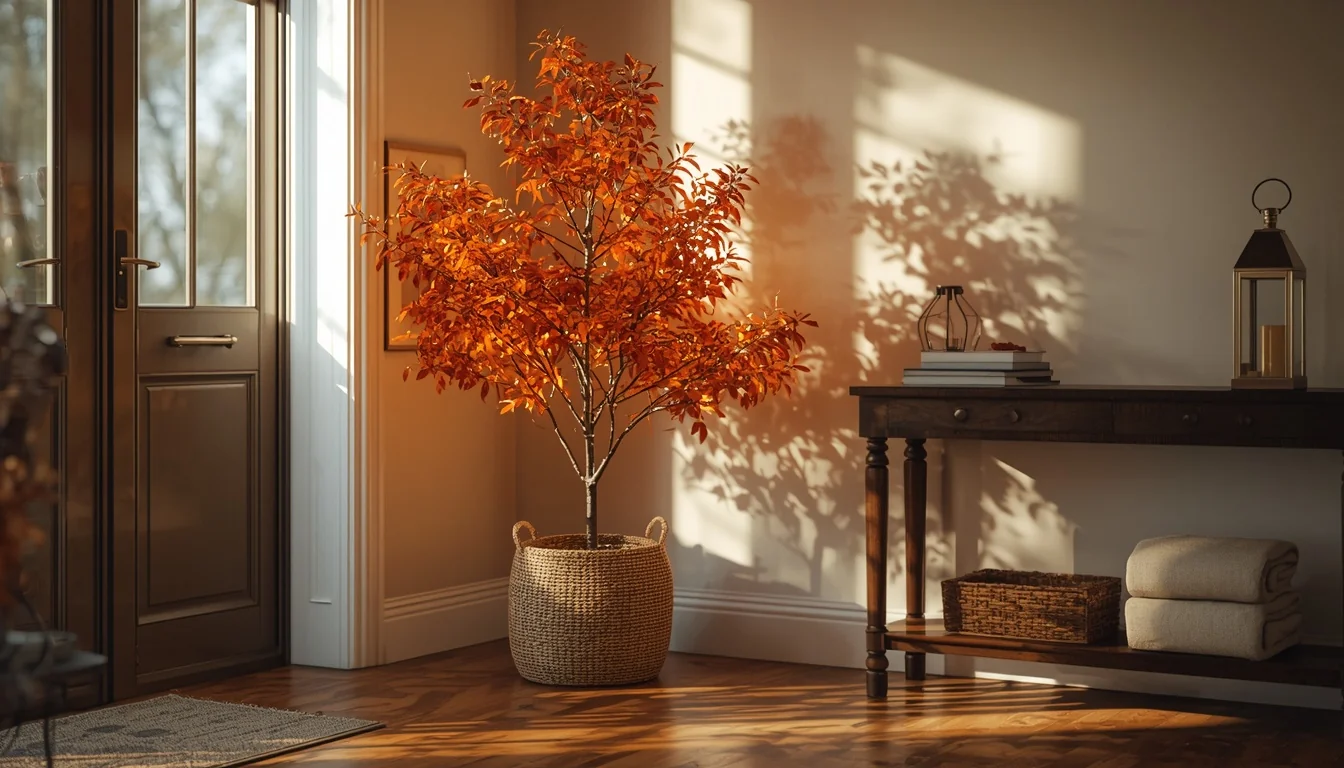
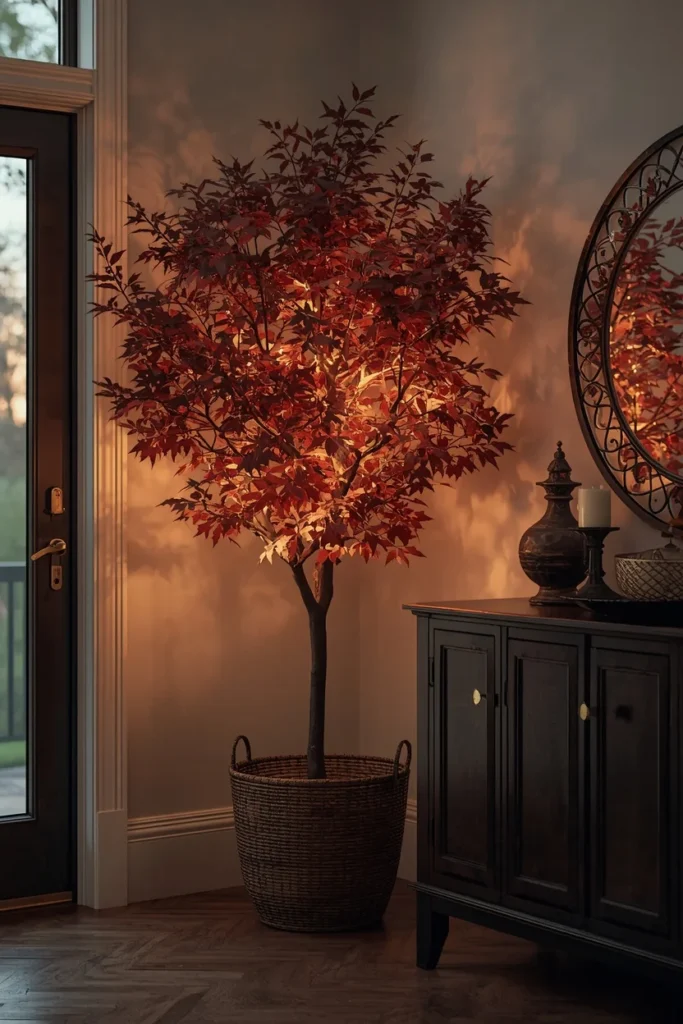
1. Lighted Faux Maple Tree for the Entryway
A pre-lit maple tree with warm white micro-lights tucked among rust and burgundy leaves gives an entryway an instant focal point the moment someone walks in. Set it in a woven basket or a wide ceramic urn so the base looks grounded rather than propped against the wall. Keep the lights on a warm white setting instead of cool white — cool tones fight the orange foliage and flatten the whole display. Bare the branches slightly on one side so light can spill through instead of hiding behind dense leaves. This works especially well near a door with limited natural light, since the tree becomes its own light source in the late afternoon.
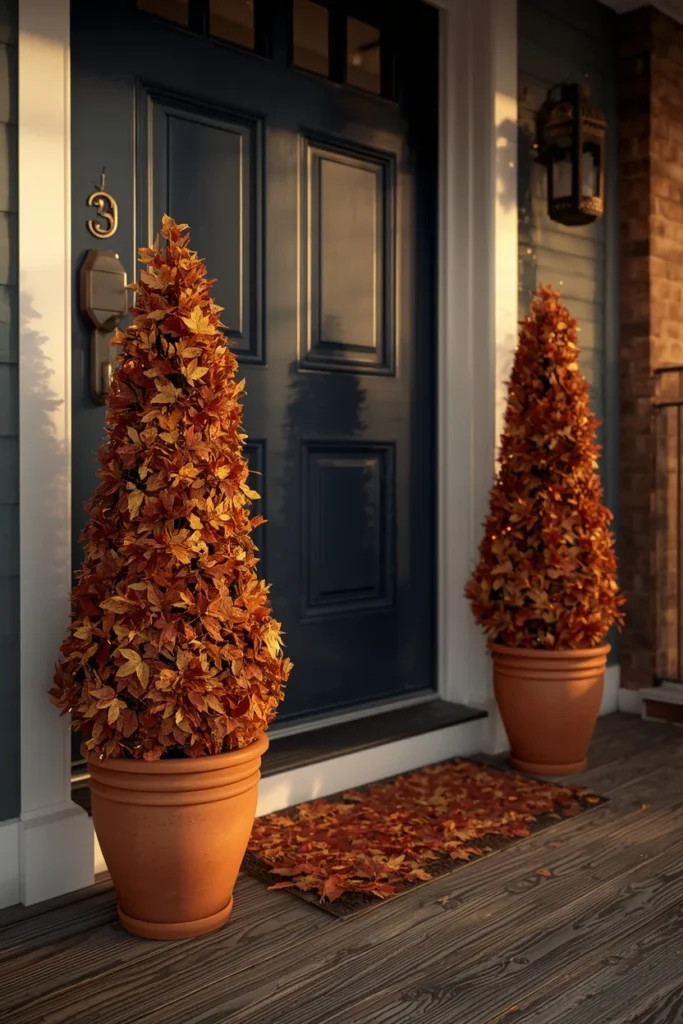
2. Tomato Cage Topiary Tree
An upside-down tomato cage wrapped in dried fall leaves and a few tucked-in lights turns into a surprisingly polished cone-shaped topiary for under the cost of most store-bought decor. Wrap floral wire around the cage first to hold the leaves in place, then layer leaves from the base upward so each row overlaps the one below like shingles. Add a few dried hydrangea stems or wheat sprigs near the top for a less uniform, more foraged look. This idea suits a porch step, a stair landing, or flanking a front door in a matching pair. Spray the leaves with a matte sealant if it’ll sit outdoors so wind and light rain don’t strip the color by October.
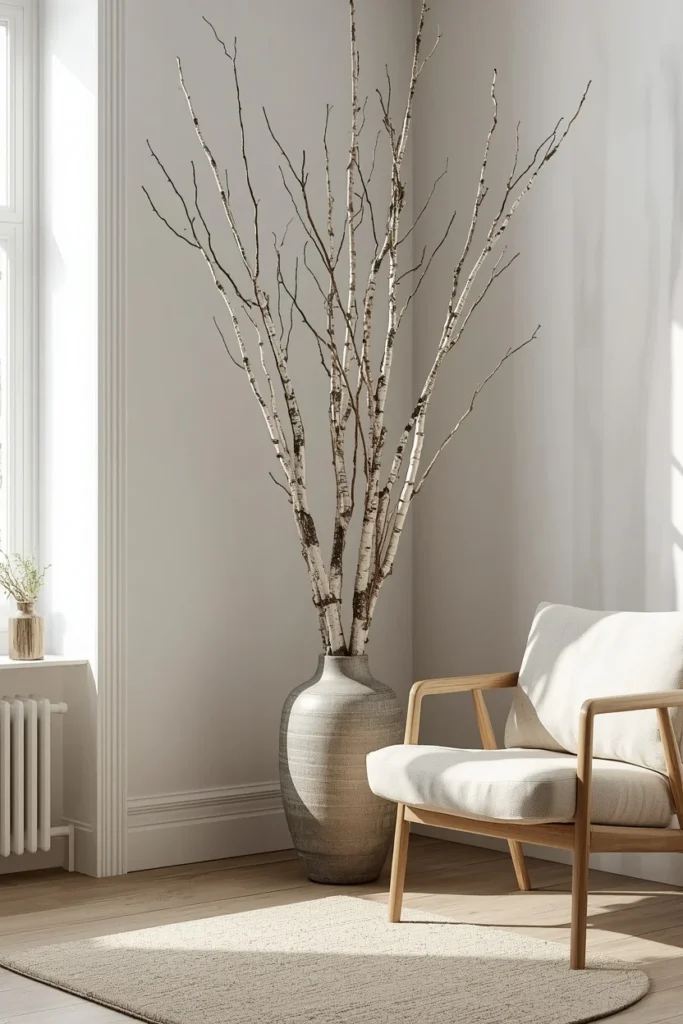
3. Tall Vase Birch Branch Arrangement
A cluster of bare or lightly leafed birch branches in a tall floor vase reads as sculptural rather than seasonal, which is exactly why it works in modern and Scandinavian-leaning homes. Choose branches with visible white bark and irregular angles instead of perfectly straight stems, since the imperfection is the whole appeal. Vary the height by trimming a few branches shorter so the arrangement doesn’t look like a bundle of matching sticks. A heavy glass or stoneware vase keeps the top-heavy branches from tipping, especially if you’re working with taller stems. This idea carries a room through fall and into winter without needing a single pumpkin.
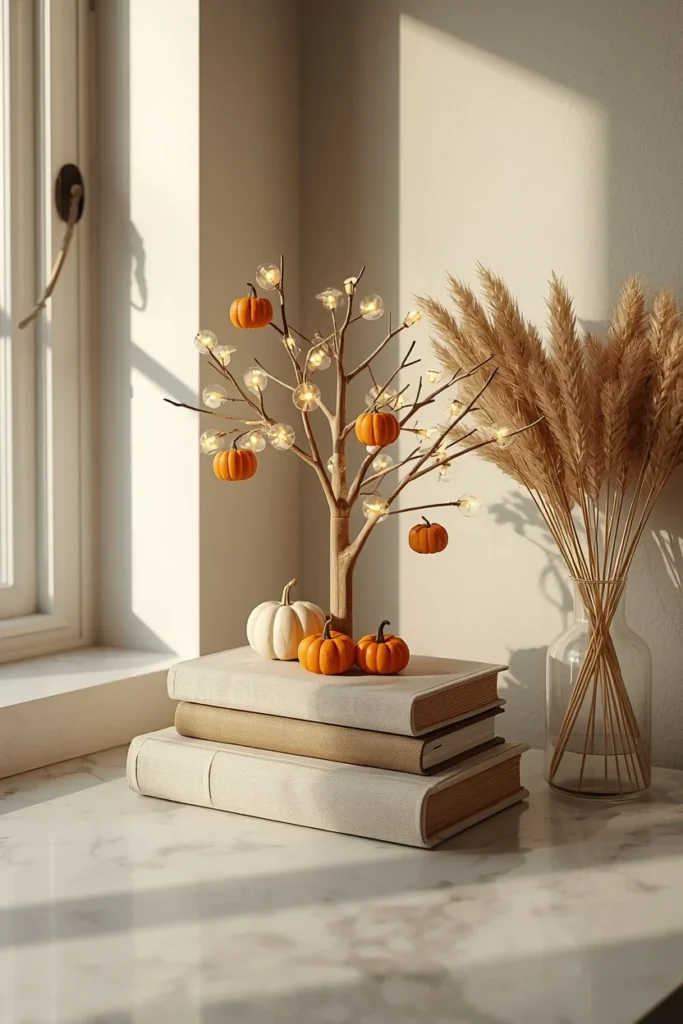
4. Mini Tabletop Harvest Tree
A small pre-lit tree sized for a console table or shelf carries the same visual impact as a full-size version in rooms that don’t have floor space to spare. Dress it with mini pumpkins, a few dried berry picks, and a strand of amber fairy lights instead of loading it with ornaments meant for a larger tree. Set it on a stack of books or a wood riser so it has some height relative to whatever sits beside it. This size works especially well on kitchen counters, bathroom vanities, or a bookshelf where a full tree would crowd the space. Rotate it seasonally into a mini Christmas tree once the leaves come off, which makes the initial purchase worth repeating each year.
5. Corn Husk Doll Statement Tree
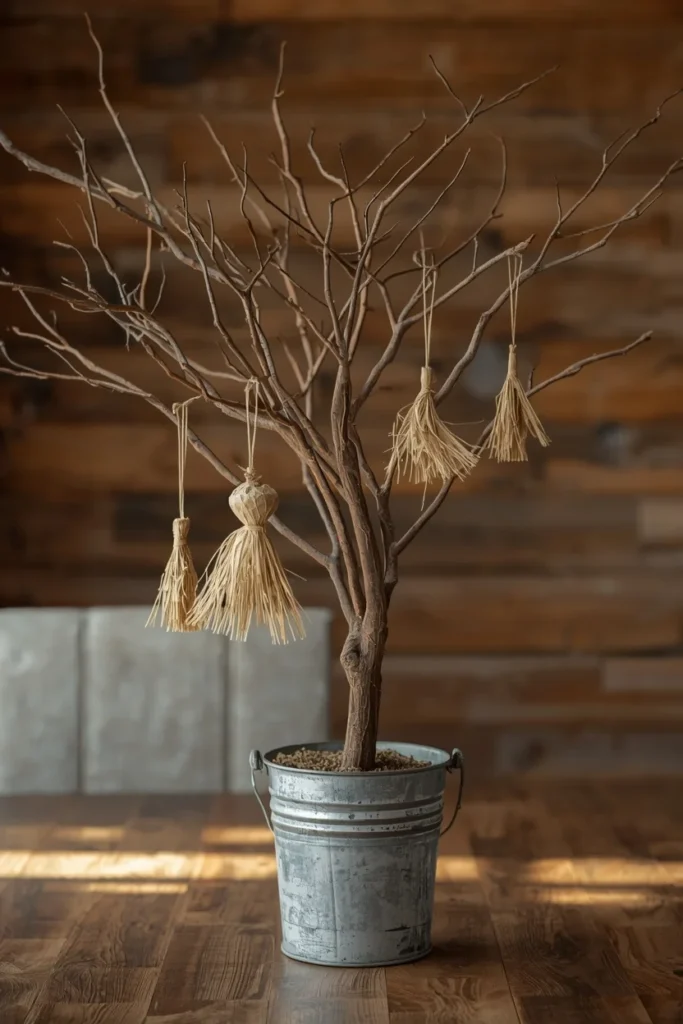
Hanging handmade or vintage-style corn husk dolls from a bare branch tree brings genuine harvest character instead of the generic plastic-leaf look most fall trees default to. Space the dolls unevenly across the branches rather than symmetrically, the way a real orchard tree would hold its fruit. Pair the dolls with a few small woven wheat bundles for texture variation. This idea leans heavily into a farmhouse or Americana aesthetic and reads as more handmade and collected than most fall tree setups. It also works as a conversation piece for guests since corn husk dolls carry real folk-craft history behind them.
6. Copper Pinecone & Acorn Garland Tree
Spray-painting pinecones and acorns in copper and antique gold before wiring them onto a branch tree gives an otherwise plain arrangement a metallic edge that photographs beautifully under warm lighting. Let the paint dry fully and shake off any excess before wiring pieces to the branches, or the paint will transfer onto leaves. Group three to five pieces together at a time rather than spacing single pinecones evenly, which keeps the eye moving in clusters instead of scanning a grid. This works well layered onto an existing bare branch or birch arrangement rather than as a standalone tree. A thin gold ribbon woven between clusters ties the metallic tones together without adding visual clutter.

7. Leaf Garland & Fairy Light Wrapped Tree
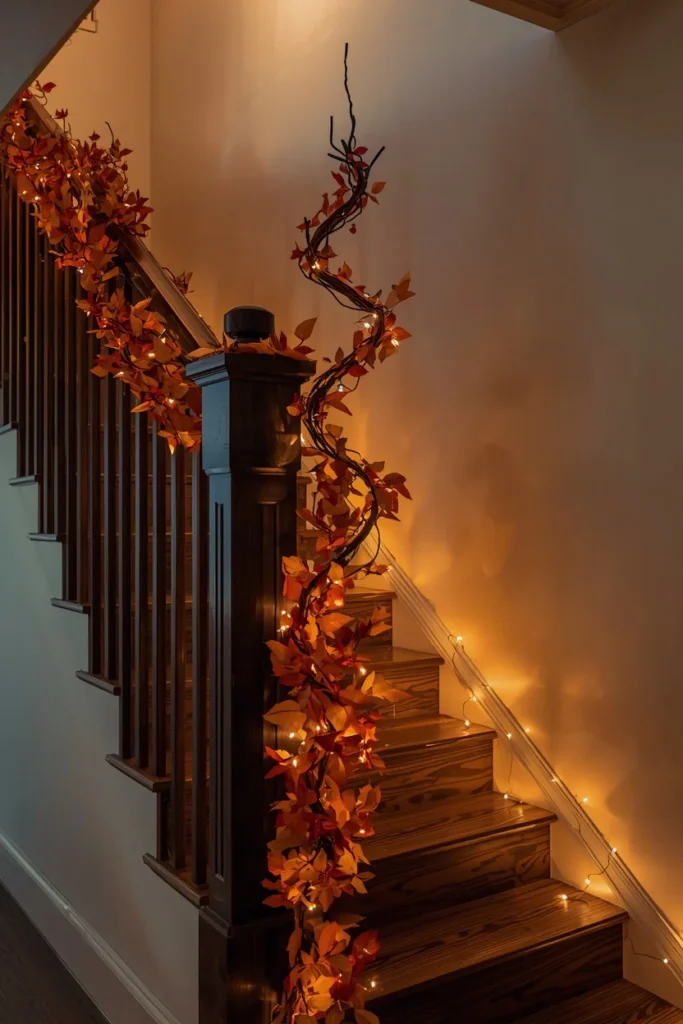
Wrapping a slim faux tree in a leaf garland and a single strand of warm fairy lights, rather than covering every branch in ornaments, keeps the shape visible instead of turning it into a blob of decoration. Wind the garland loosely in a spiral from the top down, leaving gaps so individual branch tips still show through. Tuck the light strand just underneath the garland so the glow reads as ambient rather than as a visible string. This idea suits a slim corner tree or a stair railing wrap equally well. It’s one of the lowest-effort options on this list and still reads as fully finished once the lights are on.
8. Weatherproof Lighted Porch Tree
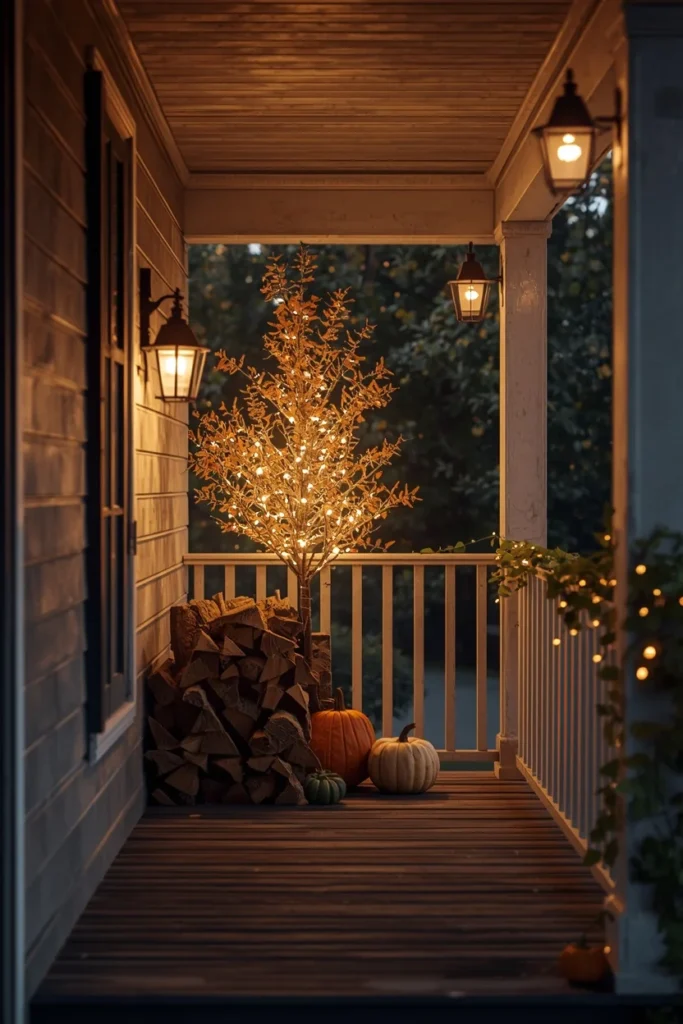
An IP-rated, waterproof pre-lit tree built for covered outdoor use turns a bare porch corner into a genuine curb-appeal moment without the maintenance of live branches. Keep it under roof coverage even with a weatherproof rating, since most units aren’t built for direct rain or snow exposure. Pair it with a stack of firewood or a pumpkin cluster at the base rather than leaving the trunk exposed. Battery or plug-in timer options mean it turns on automatically at dusk without anyone remembering a switch. This idea works especially well flanking a front door in a matching pair, mirroring the topiary idea above but with a fuller, more tree-like silhouette.
9. Fireplace Dough Bowl Branch Display
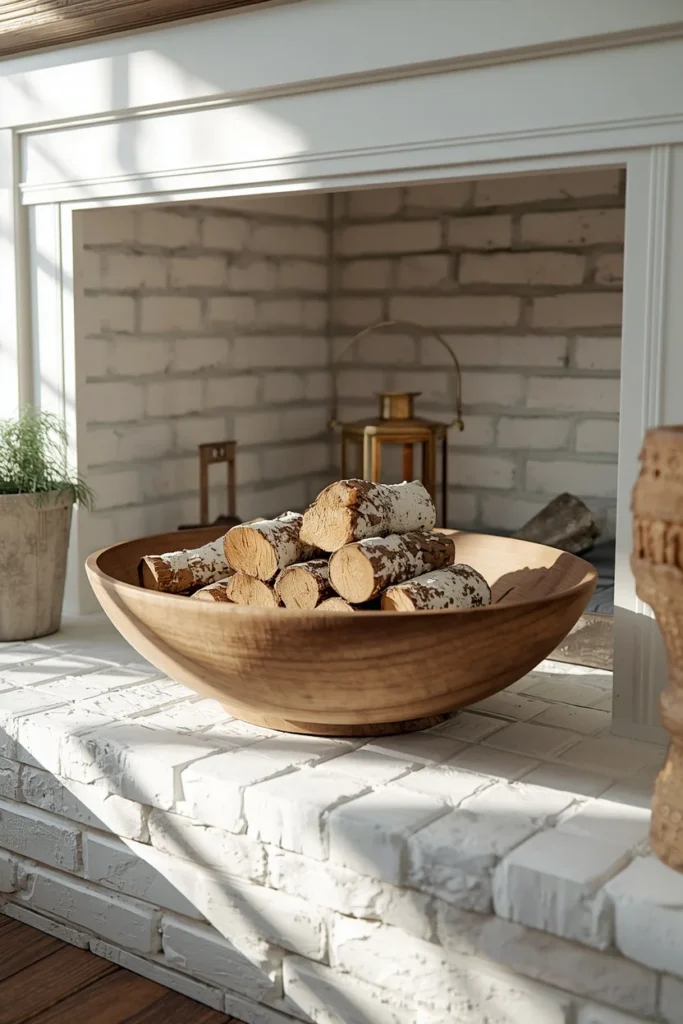
Laying birch logs or short branch cuttings inside a wide wooden dough bowl on a mantel or hearth brings rustic texture into a space without any lights or leaves at all. Vary the log lengths and stack them slightly askew instead of parallel, which keeps the display from looking like stacked firewood. Tuck a few dried hydrangea heads or a small lantern into the gaps for softness. This idea works particularly well in homes already leaning farmhouse or modern rustic, since the raw wood tone does most of the styling work on its own. It also transitions cleanly into winter without needing to be swapped out.
10. Decorative Ladder “Tree”
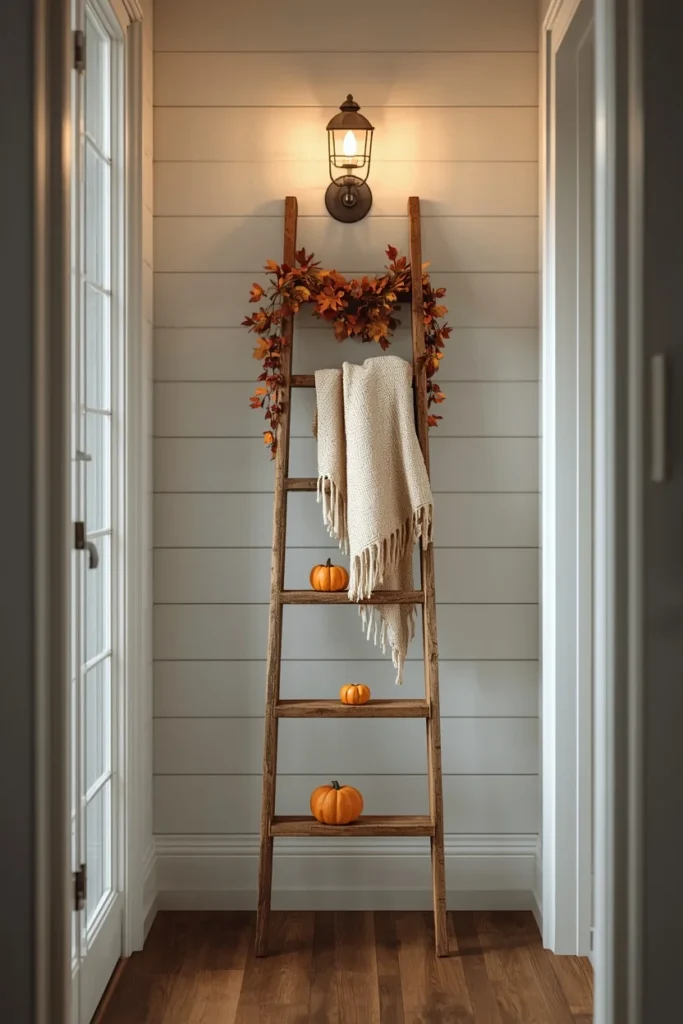
A vintage wooden ladder leaned against a wall and hung with fall leaves, mini pumpkins, and a garland can stand in for a tree shape in rooms too narrow for an actual freestanding piece. Hang items from each rung at slightly different depths so the display has dimension when viewed from an angle, not just straight on. A wool throw draped over the top rung adds texture and softens the hard lines of the wood. This idea is especially useful in a mudroom, narrow hallway, or against a stairwell wall where floor space is limited. It also doubles easily into a Christmas display later in the season by swapping the leaves for greenery.
11. Neutral Eucalyptus Lighted Tree
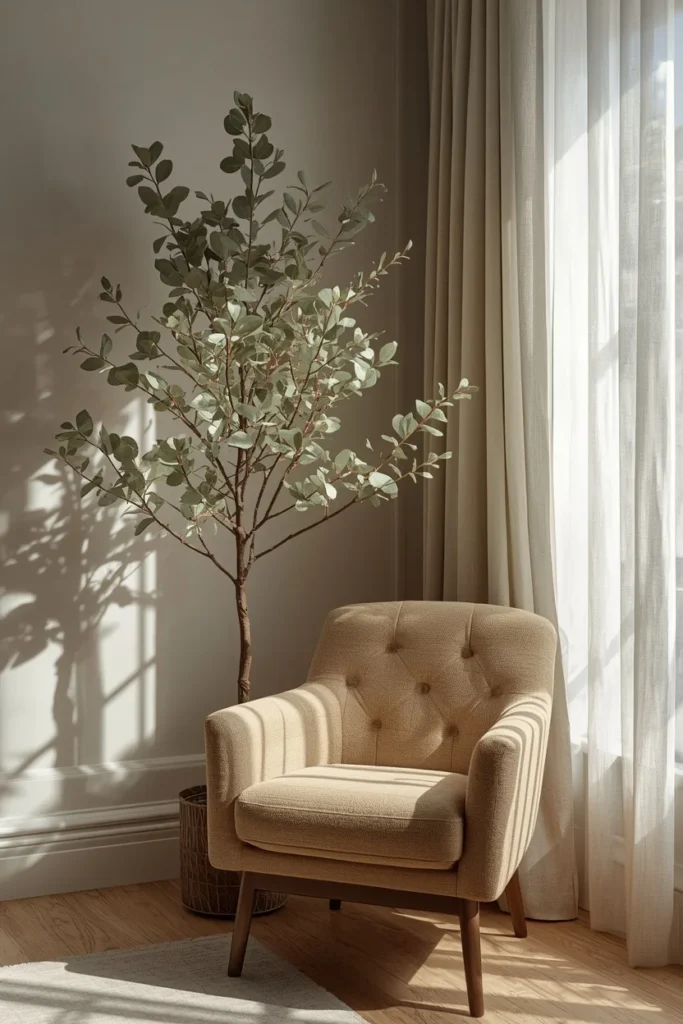
A lighted tree built from silvery-green eucalyptus stems instead of traditional orange maple leaves fits homes leaning into the earthy, muted fall palette rather than classic pumpkin-spice tones. The cooler green tone pairs naturally with cream, oatmeal, and terracotta textiles already in a Scandinavian or modern farmhouse room. Keep the surrounding decor neutral so the tree’s texture, not its color, carries the seasonal statement. This works well in a bedroom or reading nook where a traditional bright-orange tree would feel out of place against softer furnishings. A warm light strand still reads as autumnal even without a single orange leaf in sight.
12. Rustic Twig Tree with Layered Baskets
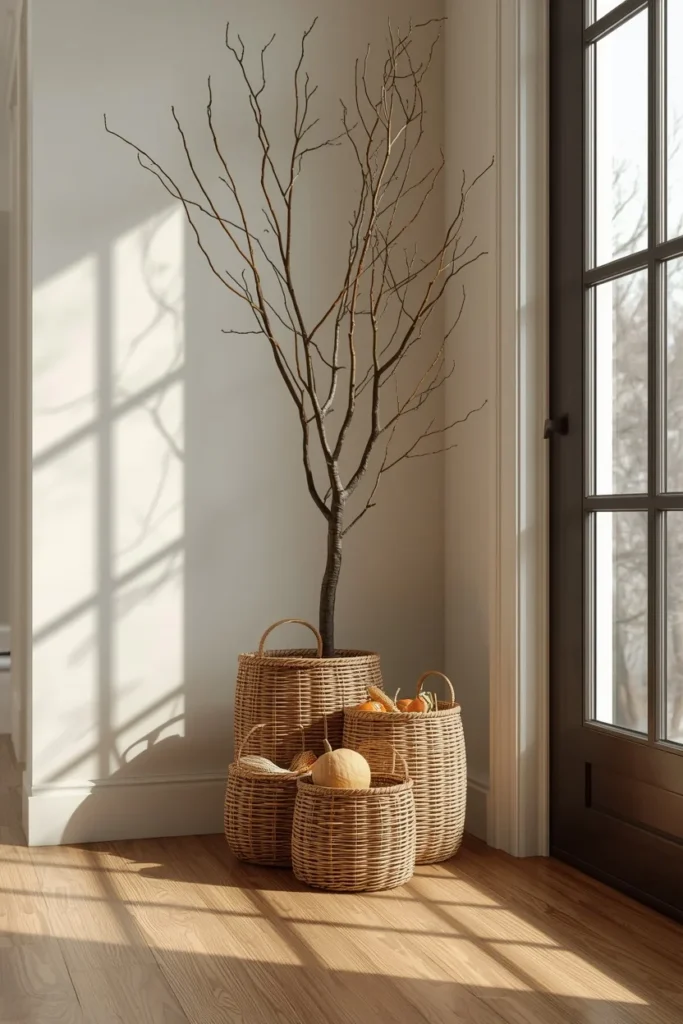
Building a display around layered woven baskets stacked at the base of a bare twig tree adds visual weight low to the ground, balancing out a tall, thin silhouette above. Use three basket sizes rather than two, nesting them slightly offset instead of perfectly centered. Fill the largest basket with faux gourds or dried corn, saving the smaller ones for a scattering of acorns or a folded plaid throw. This idea solves the common problem of a fall tree looking top-heavy or unstable, since the baskets visually and physically anchor it. It suits an entryway or a wide staircase landing especially well.
13. Wall-Mounted Branch Art Tree
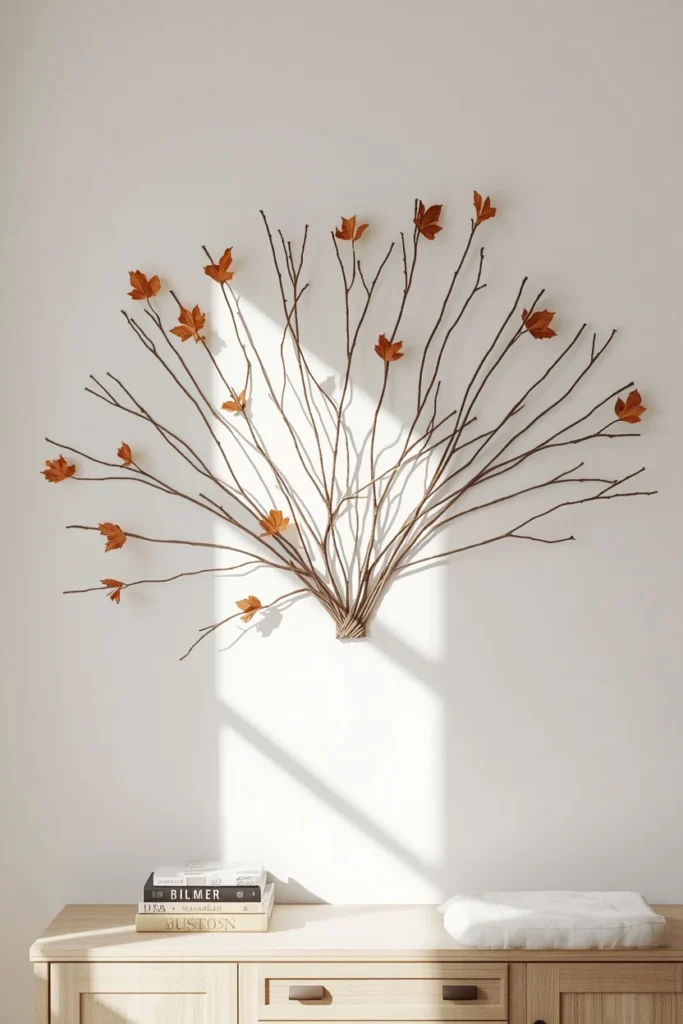
For homes with no floor space at all, a flat branch arrangement mounted directly on the wall in a tree-like fan shape delivers the same seasonal impact without taking up a single square foot. Secure branches with small wall hooks or picture wire, fanning them outward from a central point low on the wall like a sunrise. Add a scattering of pressed or silk leaves along the branch tips for color without adding weight. This idea suits small apartments, rental homes that can’t hold floor decor, or a stairwell wall that needs a focal point. It also reads as more art installation than seasonal decor, which extends its usefulness well past a single season.
14. Kids’ Paper Leaf Craft Tree
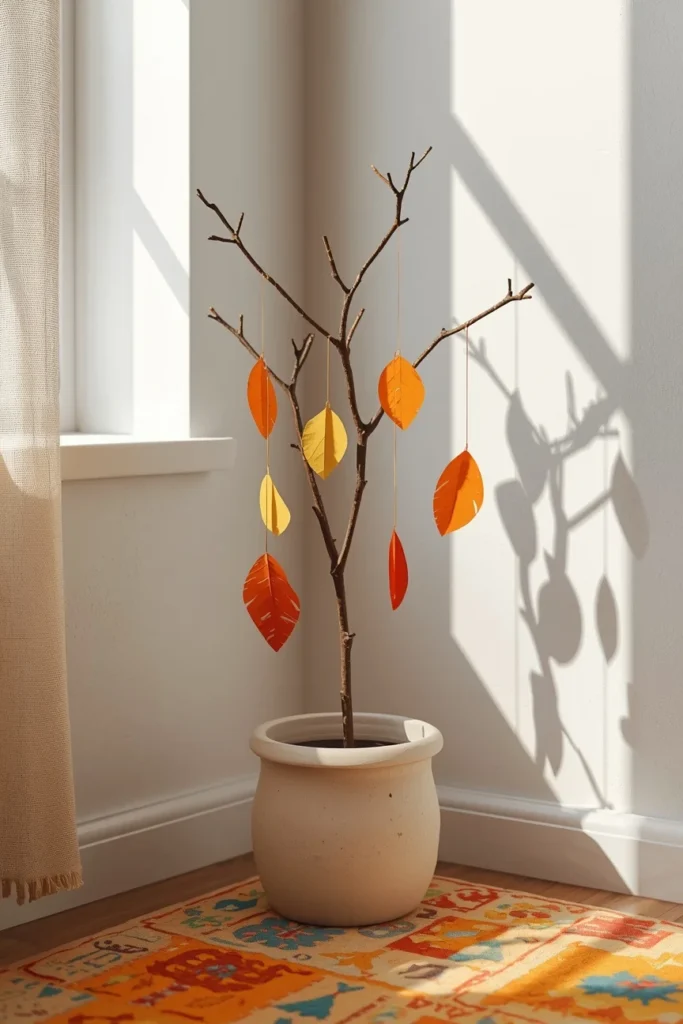
A bare branch tree decorated with paper leaves cut and colored by kids turns a design idea into a family activity without losing the finished look, as long as the branch shape itself stays clean and simple. Stick to two or three leaf colors instead of every crayon in the box, which keeps the homemade pieces looking intentional rather than scattered. Hang the leaves with small clear thread loops so they appear to float rather than hang stiffly from visible string. This idea works well in a playroom, kitchen nook, or family room where a more formal styled tree wouldn’t fit the room’s daily use. It also gives kids ownership over a piece of the home’s seasonal decor.
15. Thanksgiving Tablescape Centerpiece Tree
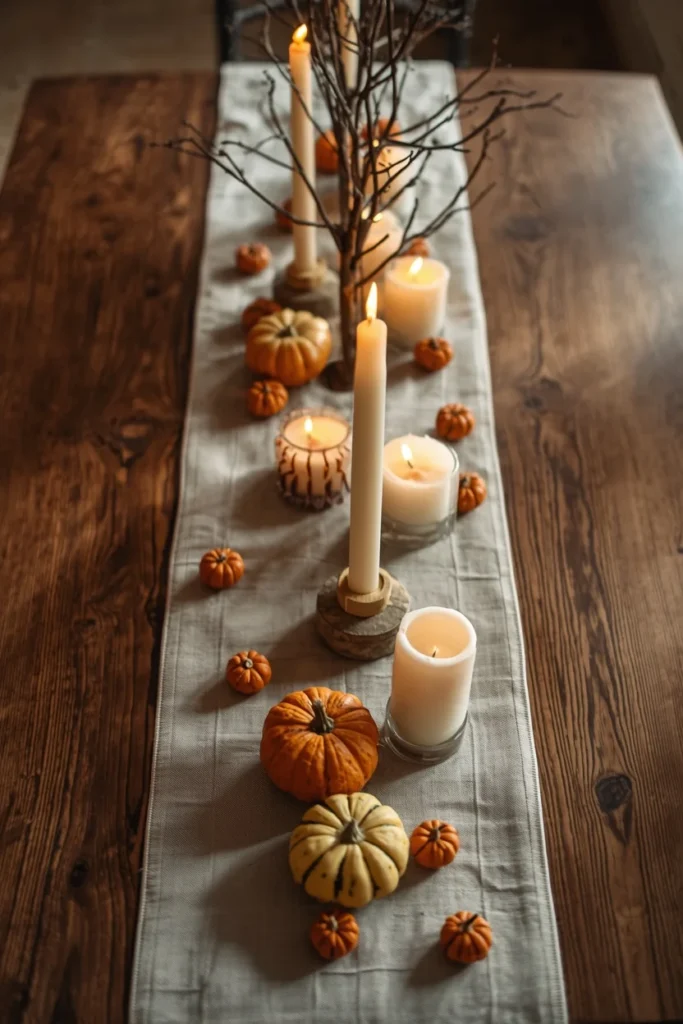
A miniature branch tree used as a dining table centerpiece, flanked by taper candles and a scattering of mini gourds, gives a Thanksgiving table a height element that a flat floral arrangement can’t provide. Keep the tree short enough that guests can still see each other across the table, ideally under a foot and a half tall. Use dripless taper candles at a slightly taller height than the tree so the eye moves naturally between the two. Add a linen table runner underneath in a warm neutral tone to ground the display against the wood or glass tabletop. This idea works especially well as a reusable base that gets restyled for both Thanksgiving and a more neutral winter table afterward.
16. Bedroom Nightstand Mini Lighted Tree
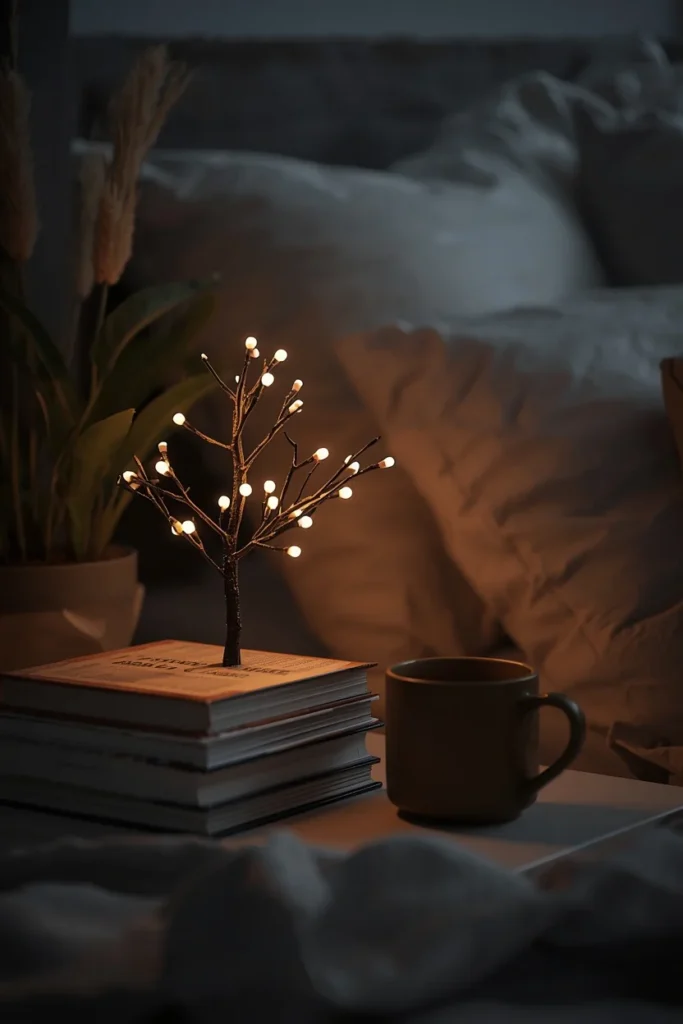
A small lighted tree on a nightstand replaces a table lamp’s harsh glow with something softer and more seasonal, especially when set to a warm, low-brightness setting. Choose a tree under 18 inches so it doesn’t compete with a reading lamp or alarm clock already on the surface. Skip pumpkins and ornaments entirely here, letting the lit branches be the only decoration for a calmer bedroom feel. This idea suits primary bedrooms and guest rooms alike, and it doubles as ambient lighting for reading before bed. Battery-operated versions are worth prioritizing in a bedroom setting since they avoid a visible cord near the bed.
17. Foraged Branch Tree (Dual-Season)
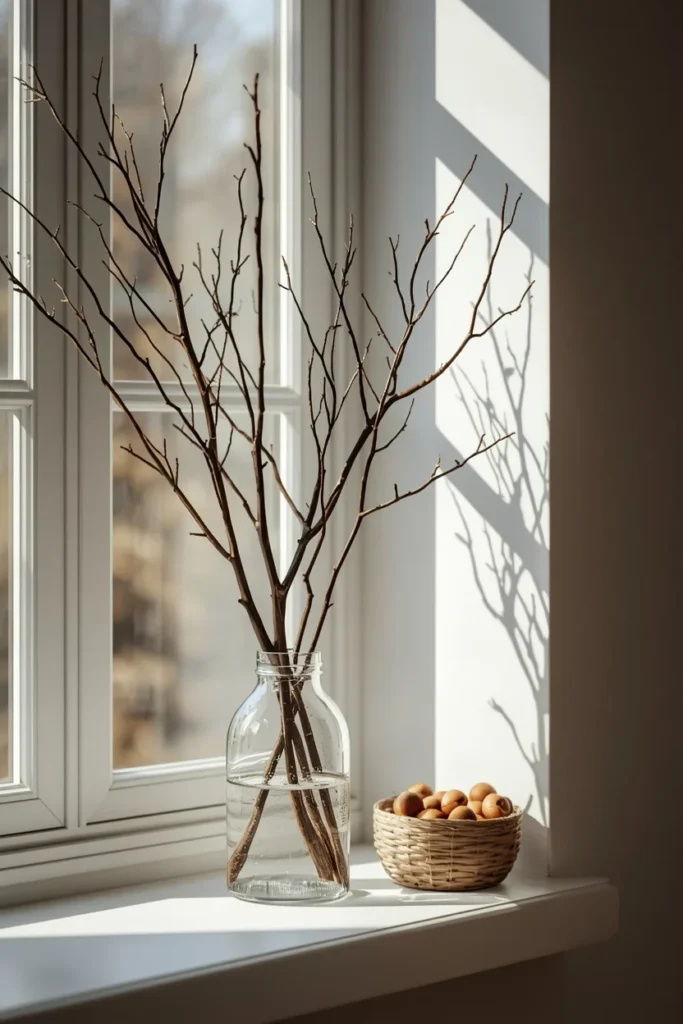
Building a tree from branches gathered on an actual fall walk, rather than a purchased faux version, gives a completely unique, zero-cost centerpiece that can be restyled through several seasons with different hanging pieces. Let the branches dry for a few days indoors before decorating so leaves don’t drop mid-season. Rinse off any dirt or insects and let them air dry fully before bringing them inside. This same base branch structure can carry small eggs and pastel ribbon for an Easter tree, or ornaments for a Christmas tree, making the initial foraging trip worth repeating in the closet each year. It’s the most budget-conscious option on this entire list.
18. Grand Foyer Statement Tree with Ribbon Layers
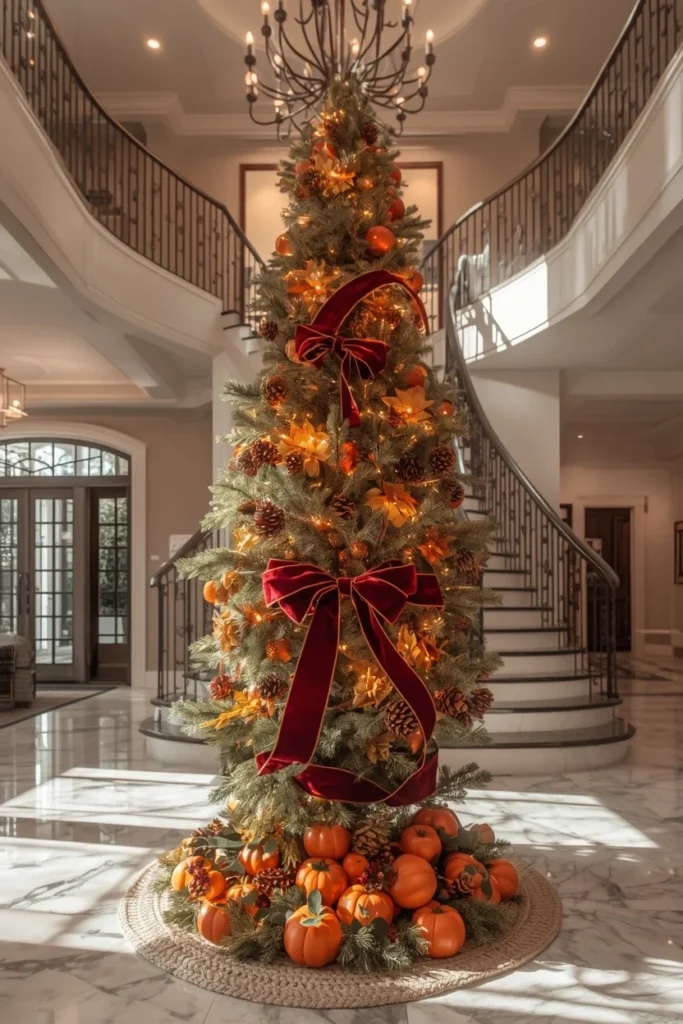
For homes with real ceiling height to work with, a floor-to-near-ceiling lighted tree layered with wide velvet ribbon, oversized pinecones, and a scattering of faux persimmons creates the kind of grand entrance moment usually reserved for the December holidays. Wire the ribbon in loose loops rather than tight bows, letting it drape rather than sit stiffly against the branches. Vary ornament sizes deliberately, placing the largest pieces low and tapering to smaller accents near the top so the scale reads correctly from a distance. This idea suits two-story foyers, staircase landings, or a wide window bay where a smaller tree would look lost. It’s the most involved idea on this list, but it delivers the strongest single “wow” moment of the group.
Styling Tips
Stick to one dominant tree style per room instead of mixing a lighted maple tree with a bare birch arrangement in the same sightline, since competing textures read as cluttered rather than layered. Keep light temperature consistent across a room too — warm white lights on the tree paired with cool white bulbs elsewhere will fight each other under photography and in person. Ground every tree with something at its base, whether that’s a basket, a bowl, or a scattering of gourds, so it doesn’t look like it’s floating in the middle of a bare floor. Height variation matters more than object count: a single tall tree next to a low bowl of pinecones reads better than five same-height objects lined up in a row.
Practical Implementation Ideas
Start with the base and lighting before adding any decorative pieces, since a tree that isn’t stable or well-lit won’t look finished no matter what hangs on it. Test the light placement in the evening before committing to final ornament positions, since daylight hides gaps that become obvious once it’s dark. Buy decorative elements in odd-numbered clusters — three pinecones, five leaves — rather than pairs, which tends to look more natural on branch structures. If working with a real branch, let it dry indoors for at least 48 hours before adding lights or paper decorations, since fresh-cut wood can still shed bark or sap.
Common Mistakes to Avoid
Overloading every branch with ornaments is the most common misstep, since it hides the tree’s natural shape entirely and starts to look like a cluttered craft project instead of a styled piece. Using only cool-toned white lights is another frequent issue — they clash with warm autumn leaf tones and make the whole display look slightly clinical. Skipping a base element like a basket or vase riser leaves the tree looking unfinished at the bottom, even when the top is styled well. Finally, placing a tree in a spot with heavy foot traffic often ends with knocked-over branches and scattered leaves within a week, so corners and console tables tend to work better than open walkways.
Small-Space Alternatives
Apartment dwellers and small-home owners don’t need to skip this trend — the tabletop harvest tree, the wall-mounted branch art piece, and the nightstand mini tree from this list were built specifically with limited square footage in mind. A single branch in a bud vase on a kitchen windowsill can deliver the same seasonal signal as a five-foot floor tree, just at a smaller scale. For rental homes, look toward the wall-mounted fan arrangement, since it uses removable hooks instead of anything that damages walls or floors.
Budget-Friendly Alternatives
The foraged branch tree costs close to nothing beyond a vase and an afternoon walk, and it remains the most budget-conscious option on this entire list. Dollar-store pinecones and acorns take on a completely different look once spray-painted in copper or gold, so the metallic garland idea doesn’t require premium materials to look polished. A tomato cage from a garden center, wrapped in leaves gathered outside, replaces a $150 pre-lit topiary for a fraction of the price. Even the lighted tree ideas become more affordable by shopping end-of-season clearance the year before, since fall decor typically drops in price once Halloween passes.
Pro Styling Recommendations
Layer two light sources whenever possible — the tree itself plus one ambient lamp or candle nearby — so the display doesn’t look like the only lit object in an otherwise dark corner. Choose one accent color to repeat near the tree, whether that’s a throw pillow, a vase, or a candle, so the eye reads the vignette as one cohesive moment rather than an isolated object. When photographing a styled tree for Pinterest, shoot during golden hour or with warm artificial light on, since the amber glow does most of the visual work in making a display feel inviting rather than staged.
FAQs
Conclusion
A single well-styled fall tree does more for a room than a full box of scattered pumpkins ever will, mostly because it gives the eye one clear place to land. Whether that’s a five-foot lighted maple in a foyer, a foraged branch in a kitchen window, or a tomato cage wrapped in leaves on a porch step, the ideas that photograph best all share the same foundation: a stable base, warm lighting, and restraint on the ornaments. Pick the version that fits your space and your weekend, and let it carry the rest of the fall styling from there.