19 Fall Planter Ideas That Bring Instant Curb Appeal
Long before a guest reaches your front door, they’ve already formed an opinion about your home from the sidewalk. Nothing signals that fall has arrived quite like a well-styled planter, and nothing dates a porch faster than the last of summer’s droopy petunias still sitting there in October.
The good news is that fall planters are one of the fastest, highest-impact seasonal updates you can make. A single pot of mums with a few pumpkins tucked around the base can transform an entryway in twenty minutes. Below are 19 fall planter ideas that layer color, texture, and height into displays that give real curb appeal, whether you’ve got a wide farmhouse porch or a small city stoop.
Table of Contents
1. Classic Mums in a Modern Black Container
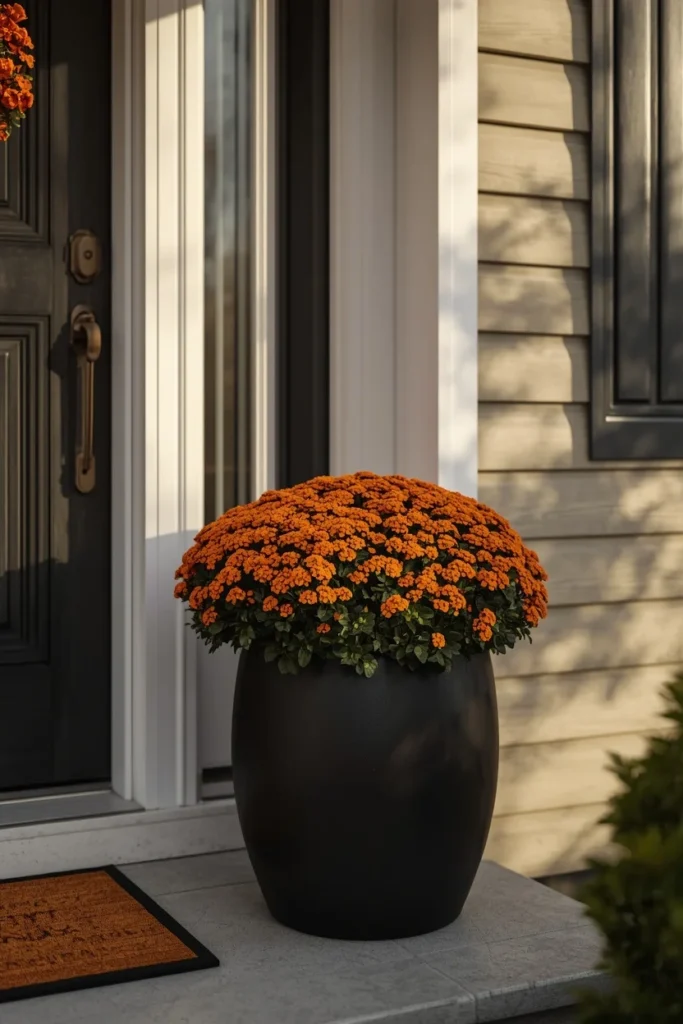
Pair bright orange or rust-toned mums with a matte black planter for a look that feels current rather than dated, especially on homes with a more contemporary exterior. The dark container acts as a grounding neutral, letting the mums’ color read as bold and intentional instead of competing with a patterned or lighter-colored pot. Choose a container with clean, simple lines rather than an ornate finish, since the goal is contrast between the plant and the pot, not two competing focal points. Group two or three mums of slightly different heights within the same container for a fuller look than a single plant alone. This combination works especially well flanking a front door in a matched pair, giving the entrance a polished, symmetrical anchor.
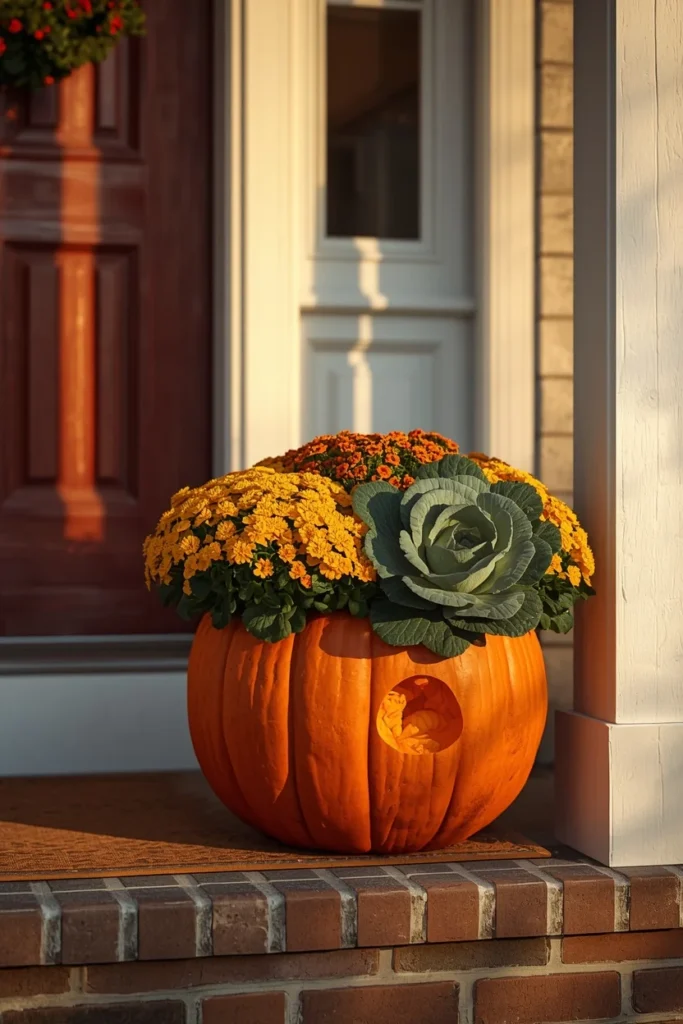
2. Living Pumpkin Planter
Hollow out a large pumpkin and use it as the container itself, filling it with colorful mums and ornamental cabbage for a display that feels playful and unmistakably fall. The pumpkin’s natural curved shape and orange tone become part of the arrangement rather than just a base, giving the whole planter a cohesive, harvest-inspired look. Choose a pumpkin with a flat, stable bottom so it sits securely on the porch step or ledge without tipping, and line the inside with a plastic liner before adding soil to help it last longer. Combine bright mums with textured cabbage leaves so the display has more than one type of shape and color inside the pumpkin’s opening. This idea works best as a temporary display, since a real pumpkin will eventually soften, making it ideal for the weeks leading up to Halloween rather than the entire fall season.
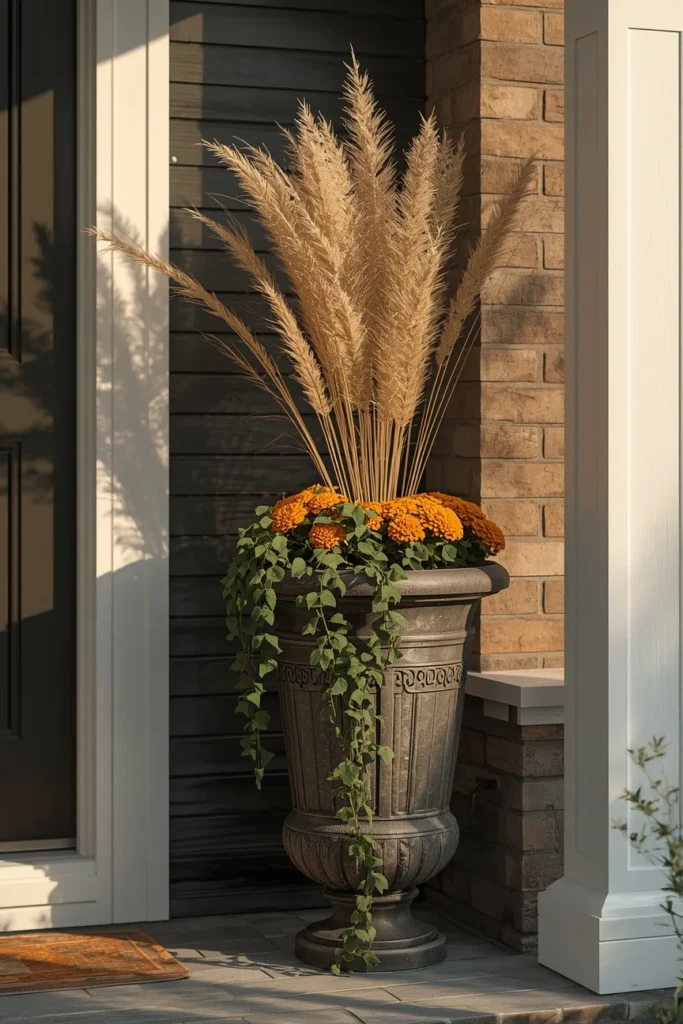
3. Layered Tall Planter with Grasses and Ivy
Build a tall, layered planter using the classic thriller-filler-spiller method: ornamental grasses for height in the back, mums for color in the middle, and cascading ivy trailing over the front edge. This layered structure gives the eye multiple points of interest within a single container, making it feel fuller and more professionally styled than a planter with just one type of plant. Choose grasses with warm, feathery plumes, like fountain grass, so the height doesn’t feel stiff or overly architectural next to the softer mums. Let the ivy trail generously over the pot’s edge, sometimes reaching halfway down the container’s side, for a lush, established look. This idea works especially well in a large planter positioned as a single statement piece beside the front steps rather than in a matched pair.
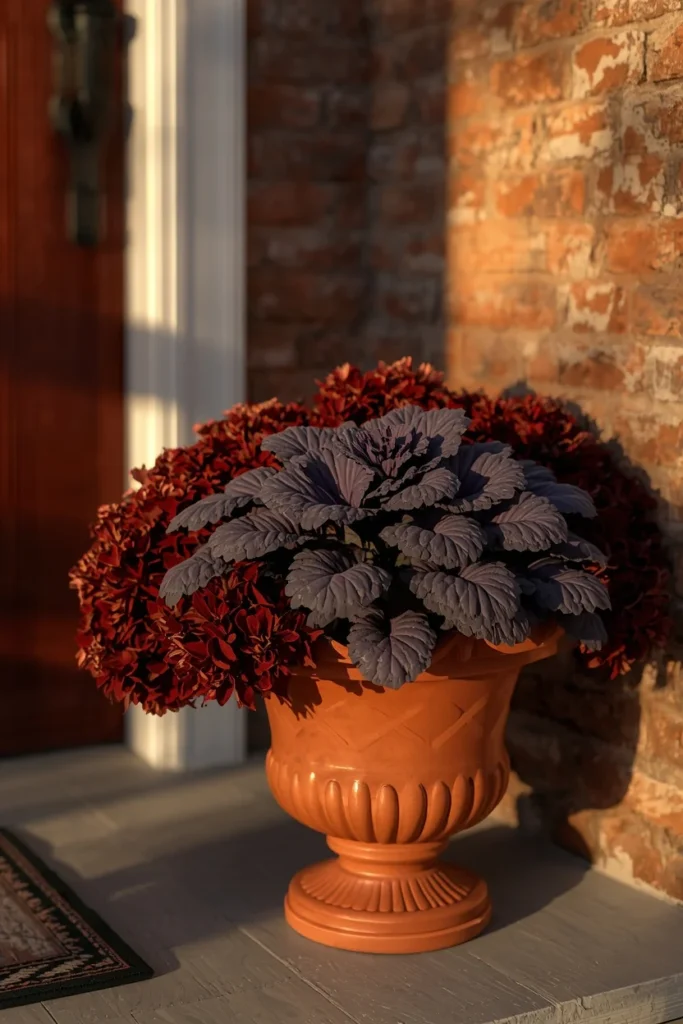
4. Jewel-Tone Kale and Burgundy Mums
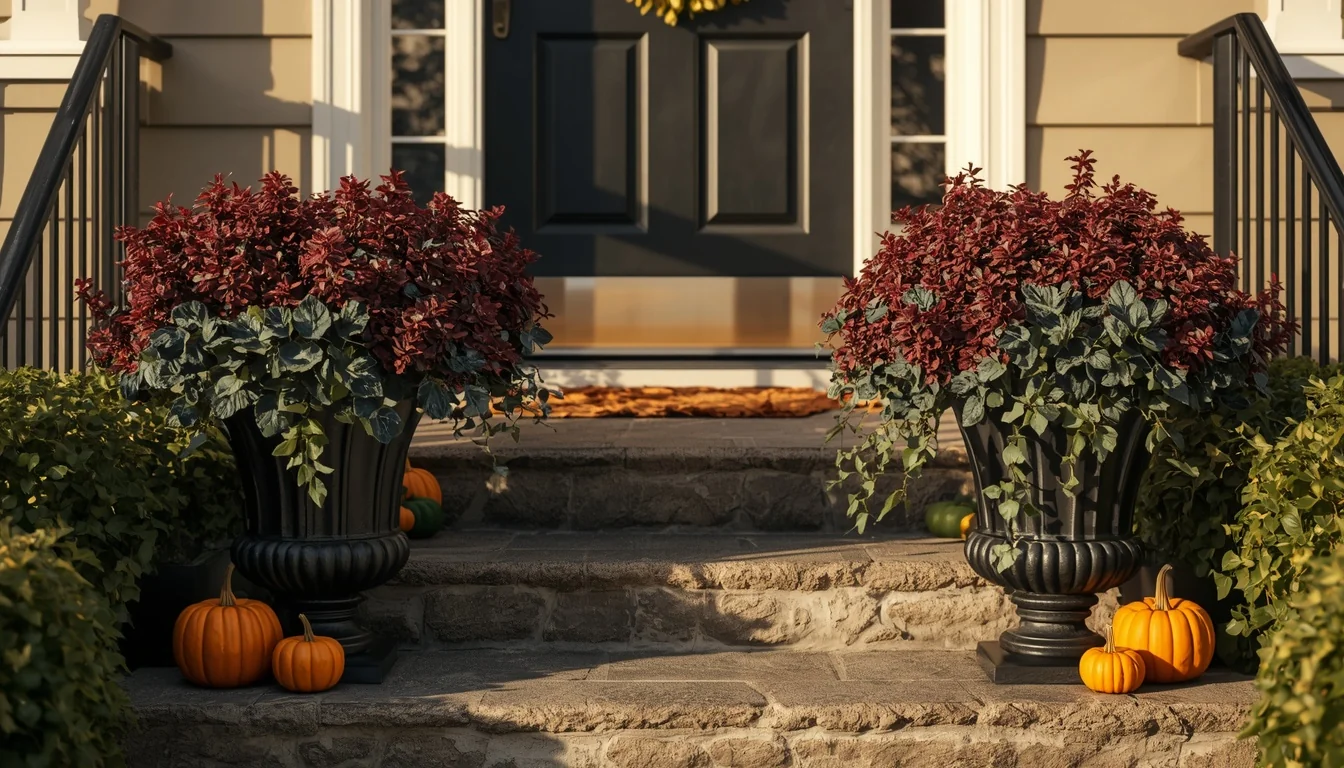
Skip the traditional orange and yellow palette in favor of deep jewel tones, pairing dark purple ornamental kale with burgundy mums for a richer, more sophisticated look. This combination has become a favorite among stylists this year for homes wanting a more elevated take on fall color rather than the classic pumpkin-patch palette. The kale’s ruffled, cabbage-like texture contrasts beautifully against the mum’s dense, rounded blooms, giving the planter visual interest even without variation in color. Choose a simple terracotta or dark stone container so the jewel tones remain the star of the display rather than competing with a busy pot. This idea works particularly well for homes with dark trim, black shutters, or a deep-colored front door, since the planter’s palette echoes the architecture instead of standing apart from it.
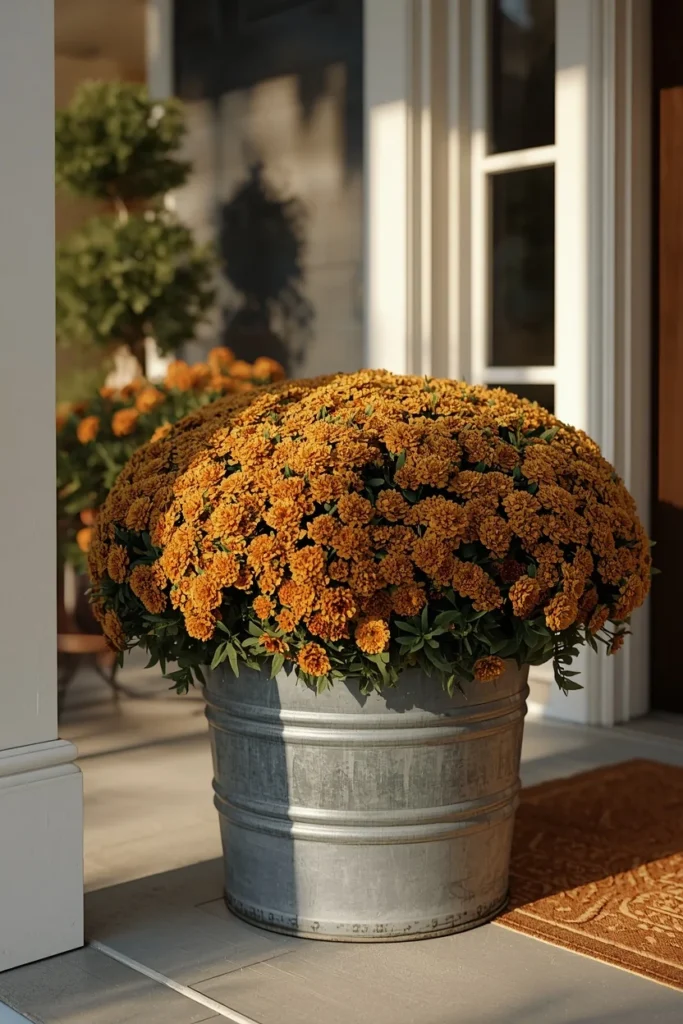
5. Galvanized Tub Planter
Use a galvanized metal tub or bucket as the planter itself for a farmhouse-inspired look that pairs beautifully with autumn’s warm color palette. The silvery, slightly weathered metal finish gives the display a vintage, collected feel, especially when paired with mums in classic orange, rust, or gold tones. Drill a few small drainage holes in the bottom before planting to prevent water from pooling, since galvanized tubs aren’t designed with drainage in mind the way traditional planters are. Group two or three tubs of different sizes together near the entrance rather than using just one, echoing the layered, gathered look often used in farmhouse styling. This idea is especially popular for porches that already have other galvanized or metal accents, like a house numbers plaque or mailbox, since it ties the whole exterior together.
6. Wooden Crate Planter
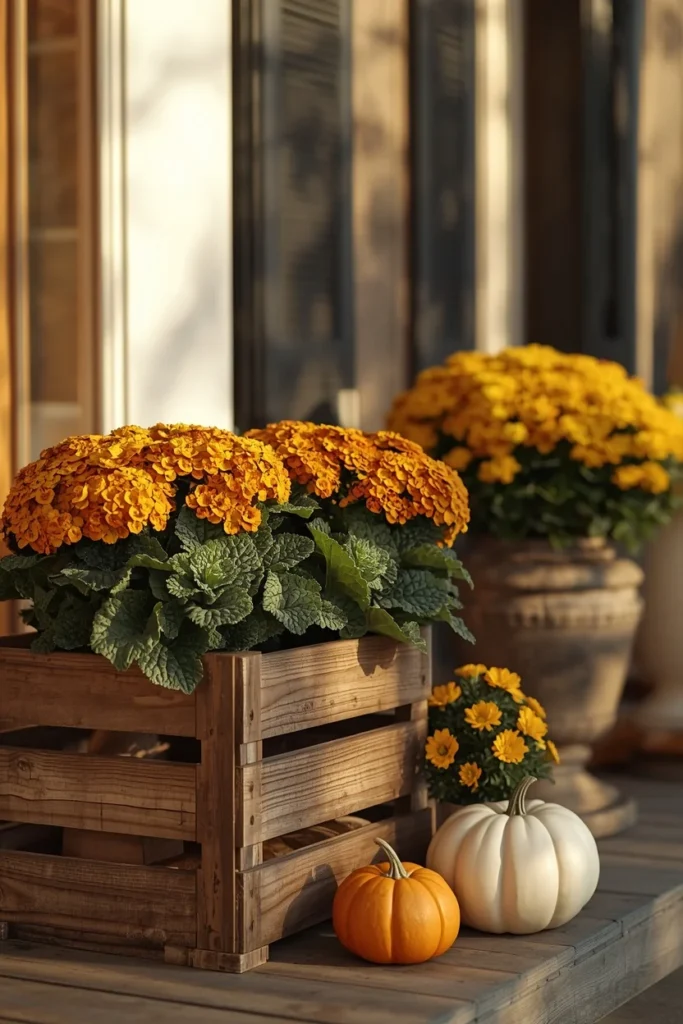
Fill a rustic wooden crate with mums, ornamental kale, and a few mini pumpkins tucked into the gaps for a display with real farmhouse charm. The natural wood grain and slightly imperfect construction of a crate give the planter a handcrafted feel that a standard plastic or ceramic pot doesn’t offer. Line the inside of the crate with a plastic liner or smaller pot before adding soil, since untreated wood will break down faster with direct soil and water contact. Let a few stems or kale leaves spill slightly over the crate’s edges rather than trimming everything flush, keeping the display looking full and a little wild rather than manicured. This idea works especially well stacked in two different sizes, one larger crate on the ground and a smaller one set on top of a stool or step for added height.
7. Ornamental Grasses for Movement
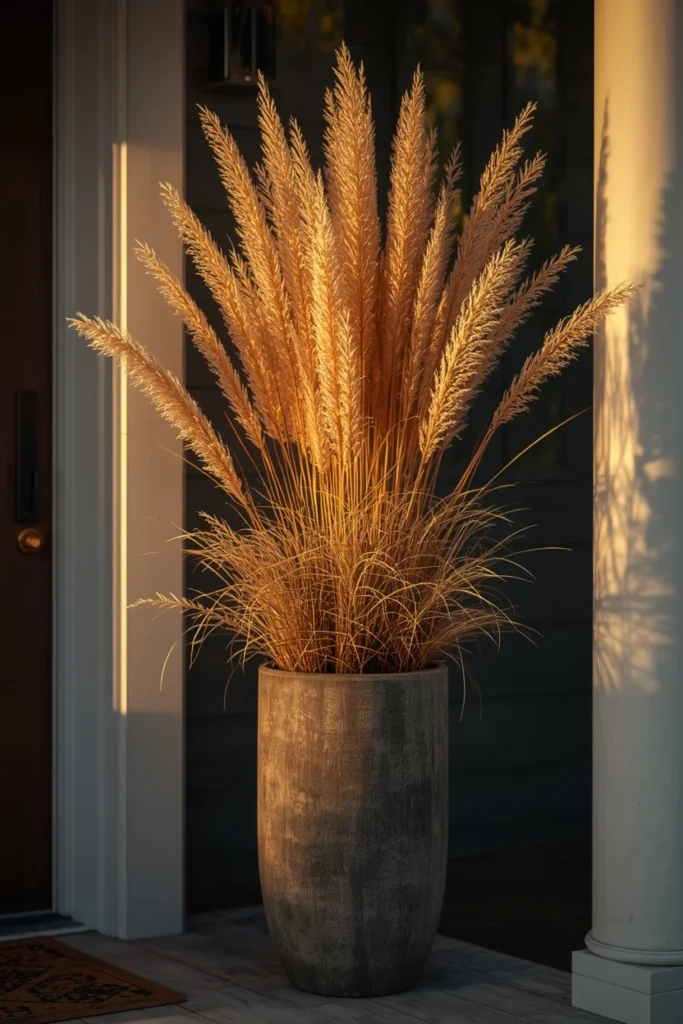
Add a planter filled primarily with ornamental grasses, like fountain grass or feather reed grass, to introduce gentle motion and height to a porch that might otherwise feel static. The subtle sway of grass in an autumn breeze gives the display a sense of life that flowers and pumpkins alone can’t provide. Choose grass varieties with warm seasonal tones, like copper or golden plumes, rather than plain green for a look that ties more directly into the fall color palette. Pair the grasses with a simple, narrow container so their natural movement remains the visual focus rather than getting boxed in by a wide, heavy pot. This idea works particularly well positioned at the edge of a porch or beside a railing, where the grass’s movement is most visible from the street.
8. Copper Planter with Mums and Ivy
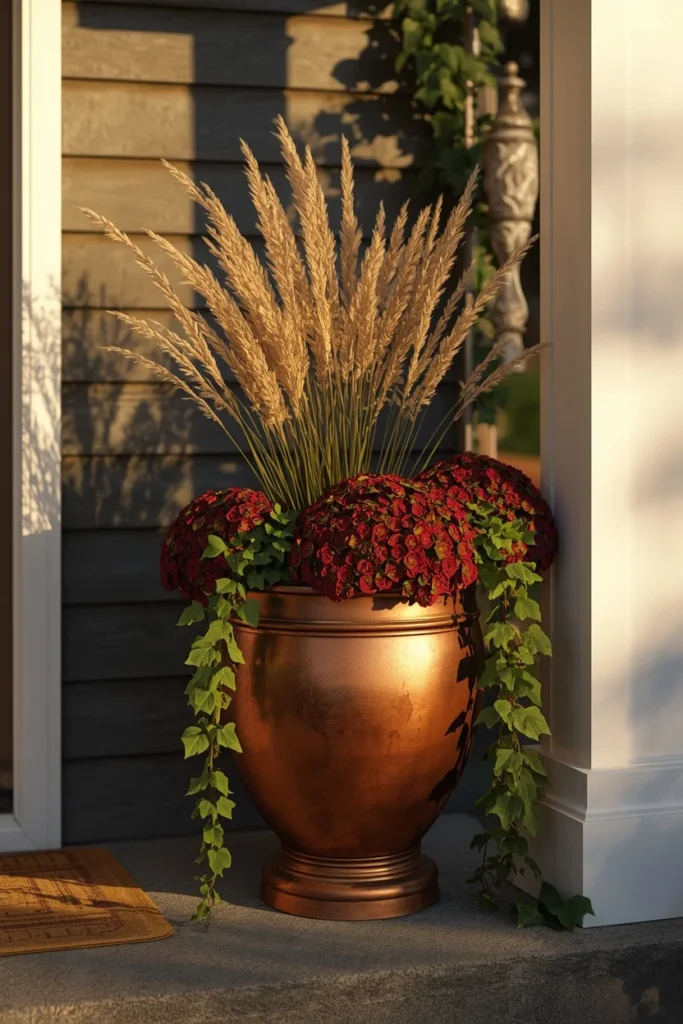
Use a copper or copper-finish planter as the base for a rich, warm-toned display combining mums, ornamental grasses, and trailing ivy. Copper’s warm metallic sheen pairs naturally with autumn’s rust and gold color palette, giving the whole arrangement a slightly more polished, elevated look than a plain terracotta or plastic pot. Choose mums in a deep red or burgundy tone to echo the copper’s warmth rather than a bright orange that might clash with the metallic finish. Let the ivy cascade over one side of the planter rather than evenly around the whole edge, giving the display a more natural, asymmetrical movement. This idea works especially well as a single statement planter positioned centrally on a porch, rather than in a matched pair, since the copper finish alone provides plenty of visual interest.
9. Woven Basket of Asters
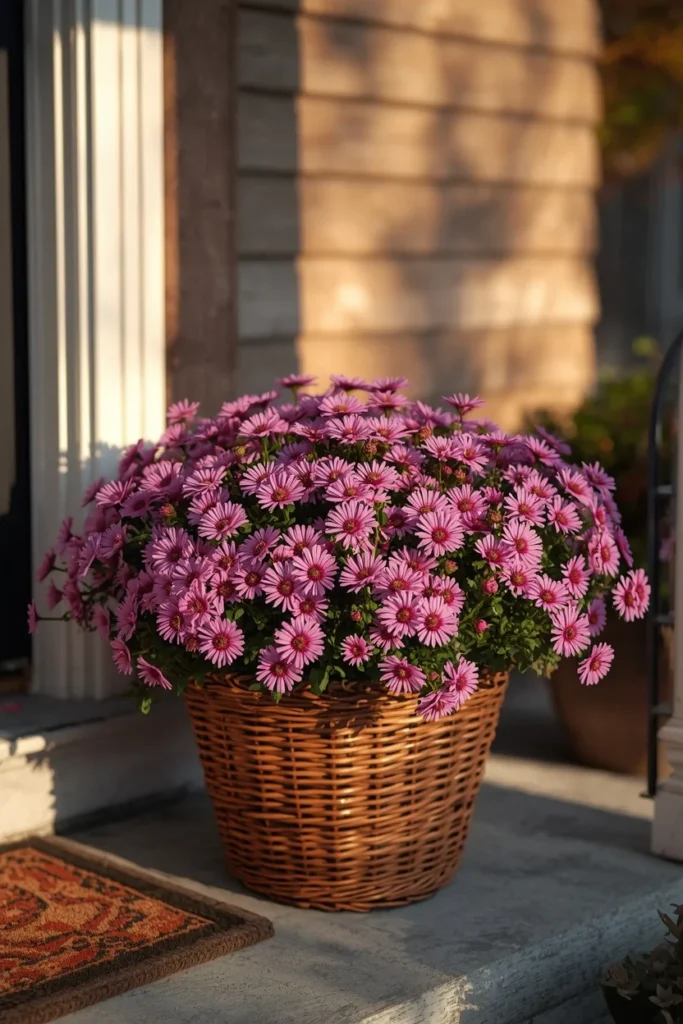
Fill a woven basket with vivid asters for a cheerful, colorful display that holds up especially well through the cooler weeks of fall since asters are known to bloom late into the season. The basket’s natural texture softens the bright purple and pink tones of the asters, keeping the display from feeling too saturated or artificial. Line the basket with a plastic liner or nestle a plastic pot inside before adding soil, since woven material isn’t naturally waterproof and will break down with direct exposure. Group a few asters of slightly different heights within the basket for a fuller, more layered look than a single uniform planting. This idea brings a different color story than the typical orange-and-red fall palette, making it a great choice for anyone who wants a fall look with a bit more pink and purple.
10. Hanging Rake Planter
Turn an old garden rake into a creative vertical planter by hanging small pots filled with mums or trailing ivy from its prongs, then leaning the rake against the porch wall or railing. This idea brings a whimsical, upcycled charm to a porch and works especially well for gardeners who already have an old rake sitting unused in the shed. Choose small, lightweight pots for each prong so the rake can support the weight without tipping over, and secure each pot with wire or twine if needed for extra stability. Add a few mini pumpkins or a scattering of autumn leaves at the rake’s base to tie the display together with the rest of the porch’s seasonal decor. This is one of the more unique fall planter ideas on the list and tends to become a real conversation piece for visitors.
11. Pansies for Extended Color
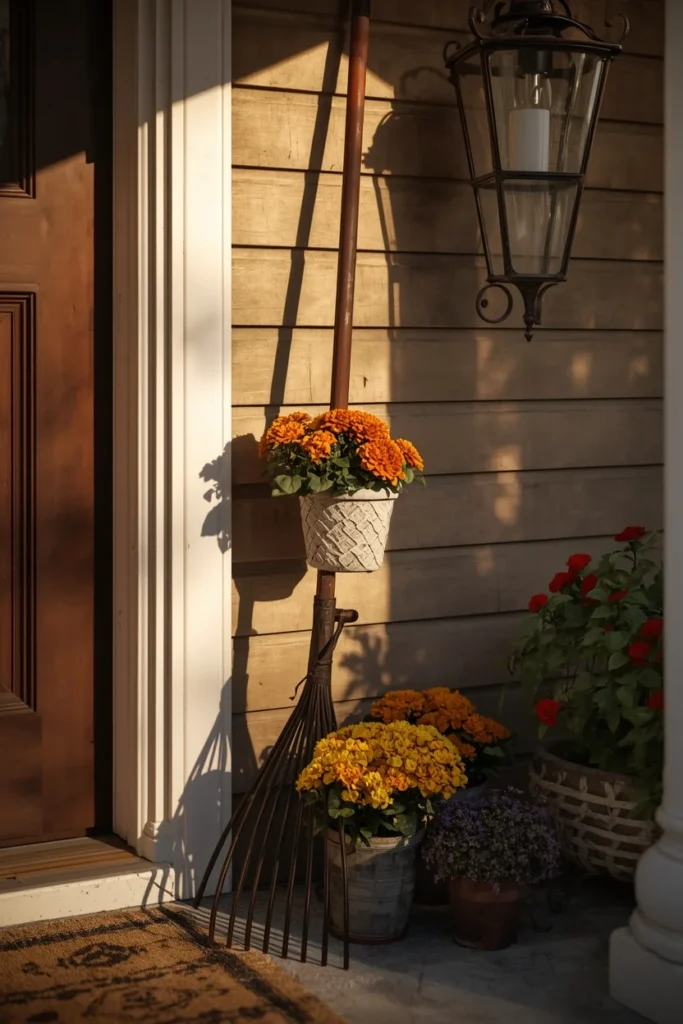
Plant pansies alongside or instead of mums for a display that keeps its cheerful color going well past the point when mums typically start to fade. Pansies tolerate cooler temperatures better than many other fall flowers, making them a smart choice for planters that need to look good from September through the first frost. Choose a mix of two or three pansy colors, like deep purple, golden yellow, and burgundy, within the same container for a lively, layered look. Combine pansies with a bit of trailing ivy or a small ornamental grass for added texture, since pansies alone can look a little flat without a taller or spilling element nearby. This idea works especially well for climates with milder falls, where pansies can realistically bloom for several months without needing to be swapped out.
12. Mini Pumpkin and Pinecone Accents
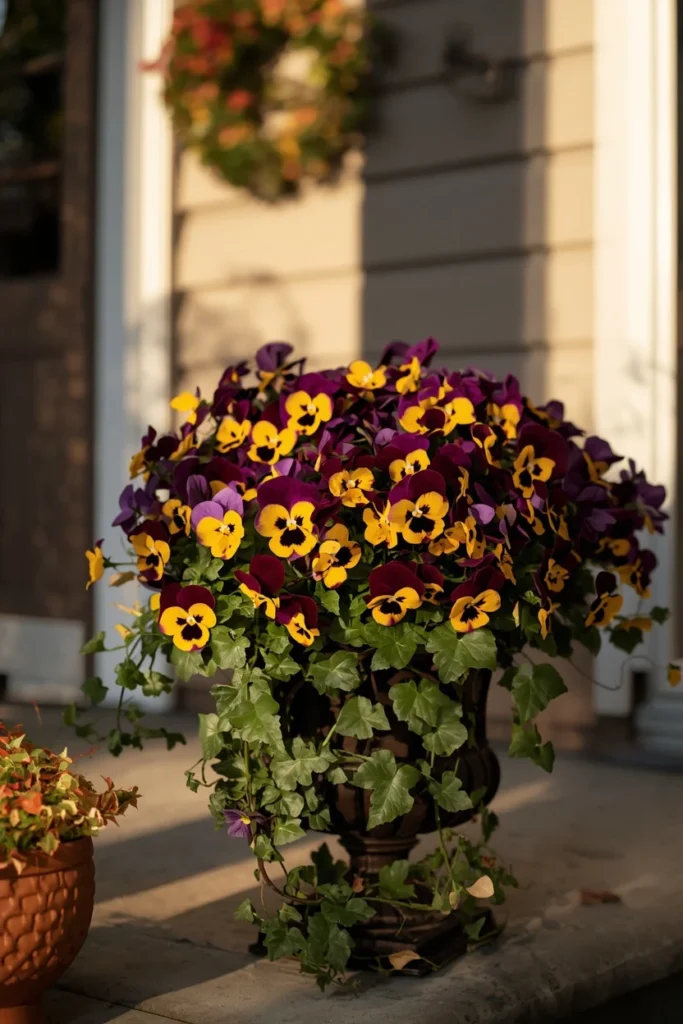
Tuck mini decorative pumpkins and small pinecone bundles into the soil around the base of an existing mum or grass planting for texture and seasonal charm without needing a whole new arrangement. This idea is one of the easiest fall planter updates since it simply adds to a planter that’s already in place rather than requiring a full replant. Choose mini pumpkins in a mix of colors, some orange, some white, some deep green, for more visual variety than a single uniform color. Scatter a few pinecones unevenly around the pumpkins rather than lining them up in a row, which keeps the display looking natural and gathered rather than staged. This idea also works well repeated across several planters along a porch or walkway, tying the whole display together with a consistent seasonal accent.
13. Matching Mums Flanking the Doorway
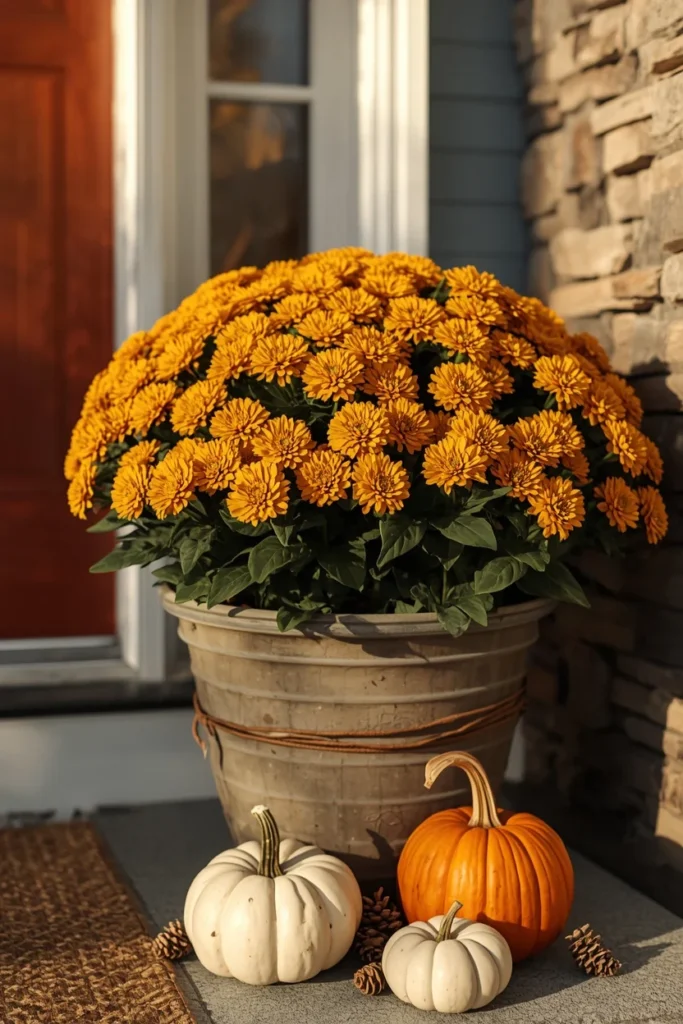
Place one generous pot of mums on either side of the front door, then group a few pumpkins around the base of each container for a classic, enduring fall porch look. This symmetrical setup is one of the most reliable ways to create instant curb appeal, since matched pairs naturally draw the eye toward the entrance the way formal landscaping does. Choose a single mum color for both planters rather than mixing different shades, which keeps the pairing feeling intentional and put-together from the street. Vary the sizes of the pumpkins grouped at the base, one larger and one or two smaller ones, so the grouping doesn’t look like a uniform row. This idea works for almost any home style, from traditional to farmhouse to modern, since the classic mum-and-pumpkin combination is timeless rather than trend-specific.
14. Rustic Olive Bucket Planter
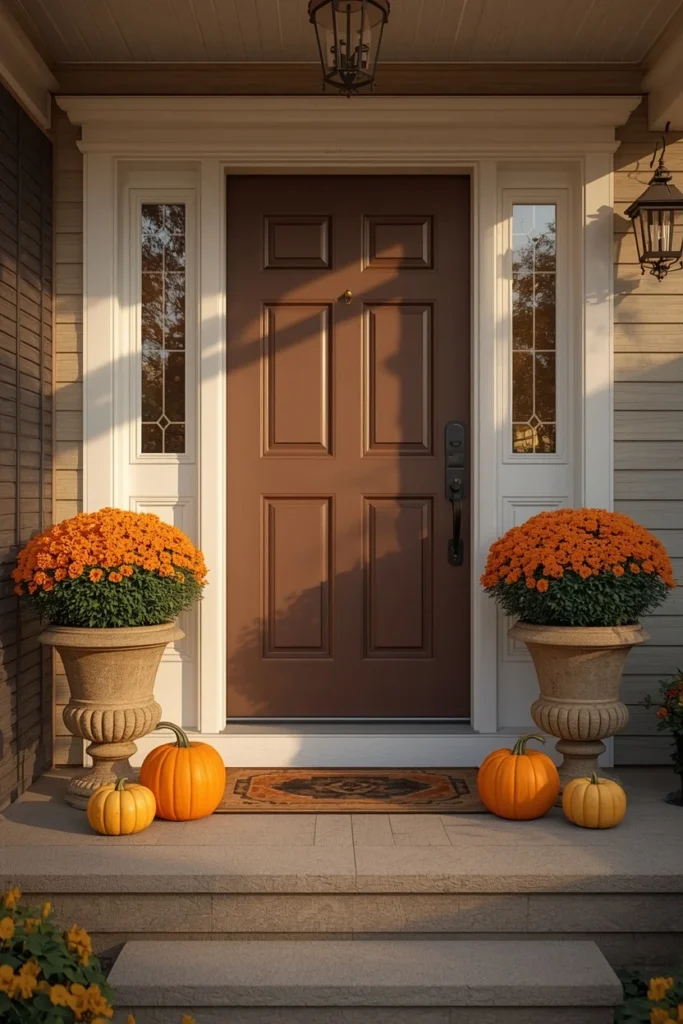
Use a vintage-style olive bucket, the kind traditionally used for harvesting olives, as a planter for a look that feels European countryside and effortlessly rustic. The bucket’s aged, slightly weathered metal or wood-slat construction gives the planting an instant sense of history, even if the container itself is brand new. Fill it with a simple combination, like a single variety of mum or ornamental grass, so the container’s unique shape and texture remain the visual focus rather than getting lost behind a busy planting. Position the bucket slightly off to one side of the porch rather than centered, letting it act as an accent piece alongside other, more traditional planters. This idea suits homes with a European farmhouse, French country, or vintage-eclectic style particularly well.
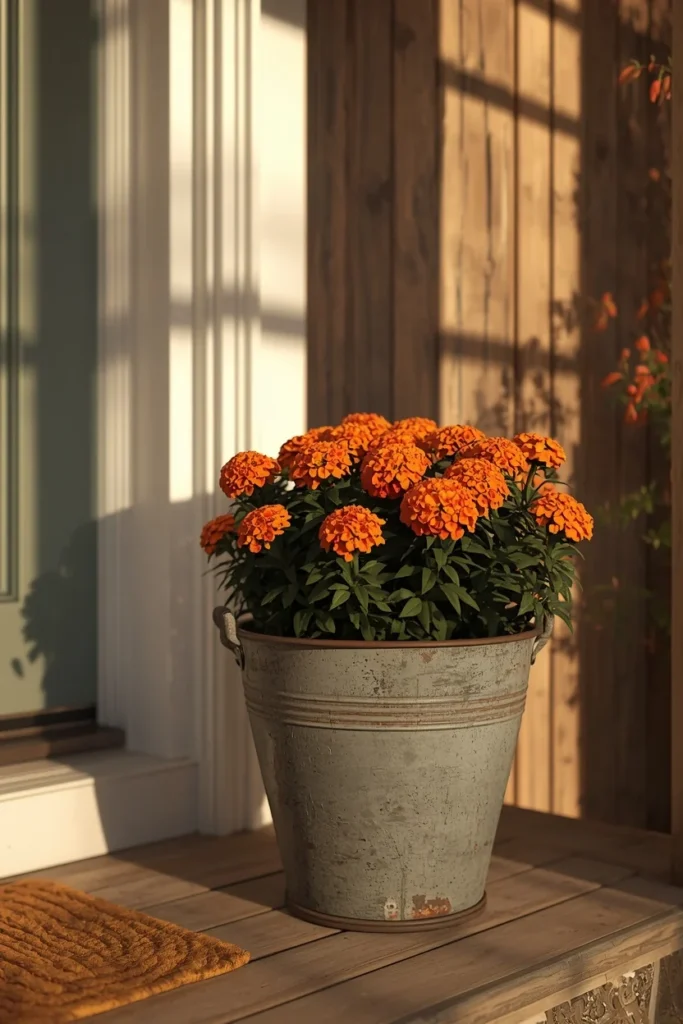
15. Cascading Ivy Over the Edge
Add trailing ivy to any existing fall planter, letting it spill generously over the container’s edge and down the side rather than staying contained within the pot’s rim. This spilling effect, often called the “spiller” in classic container design, softens the hard line where the planter meets the porch floor and gives the whole arrangement a more established, lush look. Choose a variegated ivy with cream or silver edges for extra visual interest against the darker greens and warm autumn tones of the rest of the planting. Let the ivy trail unevenly, longer on one side than the other, rather than trimming it into a perfectly symmetrical drape. This idea works as an addition to almost any planter on this list, since trailing ivy pairs well with mums, grasses, pumpkins, or kale alike.
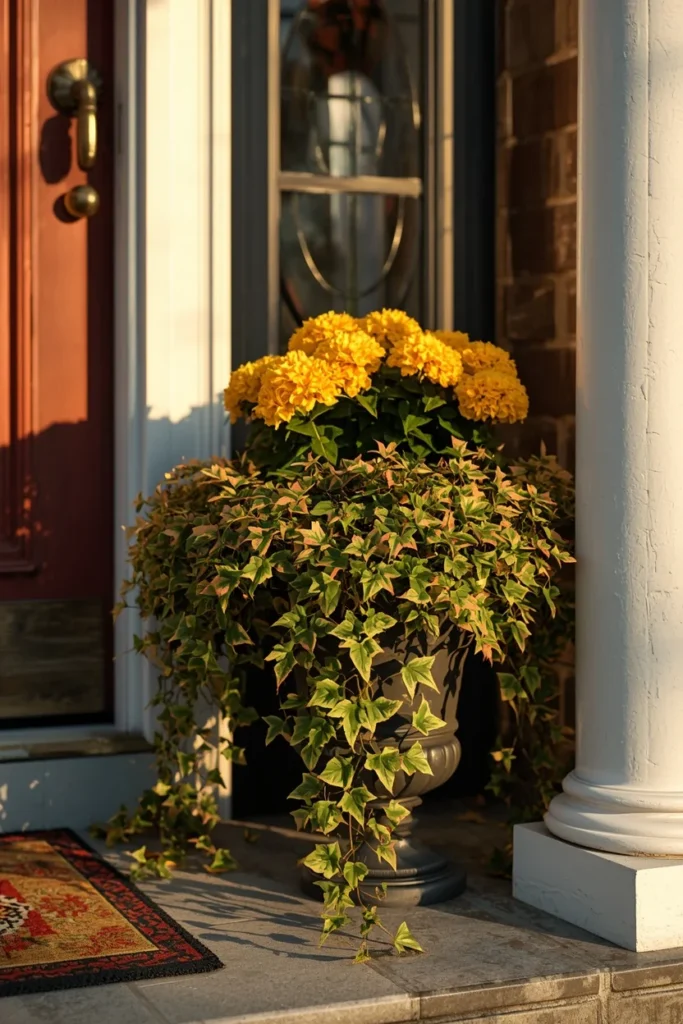
16. Grapevine-Wrapped Planter
Wrap a plain terracotta or plastic planter in natural grapevine, securing it with floral wire, to add rustic texture to the container itself rather than only the plants inside it. This technique is a budget-friendly way to upgrade a basic pot without buying a new one, since grapevine wreaths or loose grapevine bundles are inexpensive and widely available each fall. Wrap the vine loosely and at slightly uneven intervals around the pot rather than perfectly tight, which keeps the texture looking natural rather than manufactured. Tuck a few faux autumn leaves or a small bow into the grapevine wrap for an extra layer of seasonal detail. This idea pairs especially well with simple plantings, like a single variety of mum, since the wrapped container itself becomes part of the display’s visual interest.
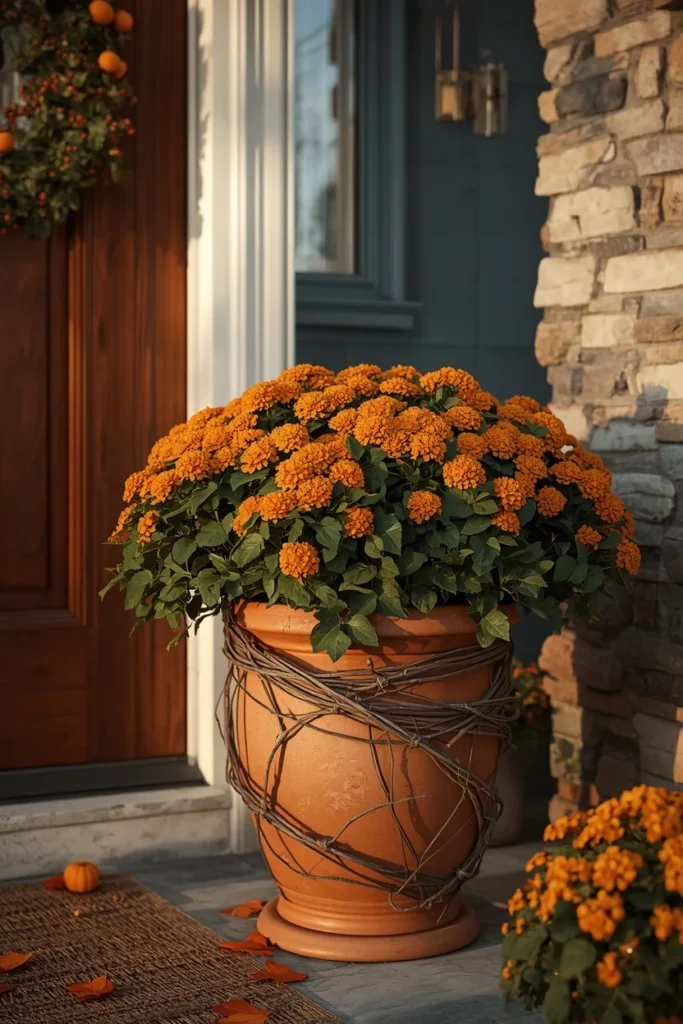
17. Ornamental Cabbage Focal Planter
Make ornamental cabbage the star of a planter rather than a supporting texture, filling a shallow, wide container with several heads at different sizes for a bold, sculptural look. The ruffled, rose-like shape of ornamental cabbage reads as almost floral from a distance, giving the planter visual interest even without any traditional blooms included. Choose cabbage in shades of soft lavender, cream, and deep green for a cooler, more muted palette that stands apart from the typical bright orange fall display. Space the heads close enough together that their leaves slightly overlap, which creates a fuller, more finished look than cabbage planted with gaps between each head. This idea works especially well for modern or minimalist homes wanting a fall look that feels more sculptural than traditional.
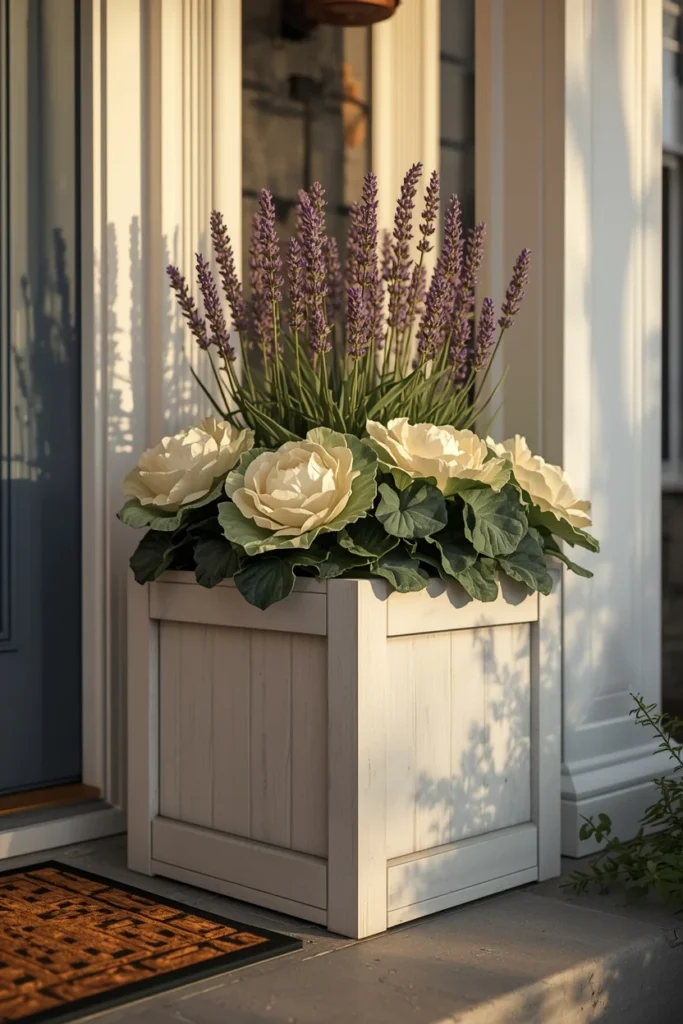
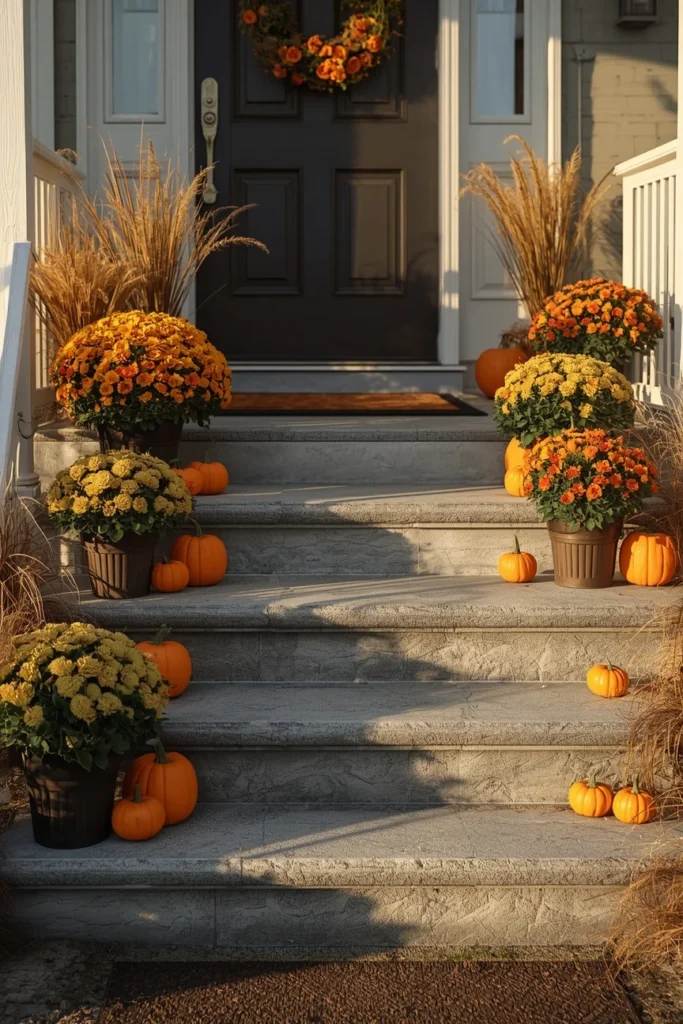
18. Tiered Planter Display on the Steps
Arrange several planters of graduating sizes along the porch steps, largest at the bottom step and smallest near the top, to create a tiered, cascading display that guides the eye upward toward the front door. This layout works particularly well for homes with a few steps leading up to the entrance, turning what might otherwise be an unused space into part of the seasonal display. Keep the color palette consistent across all the planters, even if the plant varieties differ slightly, so the tiered arrangement reads as one cohesive display rather than several unrelated pots. Vary the plant types slightly at each level, mums at the bottom, ornamental grass in the middle, and mini pumpkins alone near the top, to add rhythm without needing identical planters at every step. This idea creates a strong, layered first impression, especially when photographed from the sidewalk looking up toward the door.
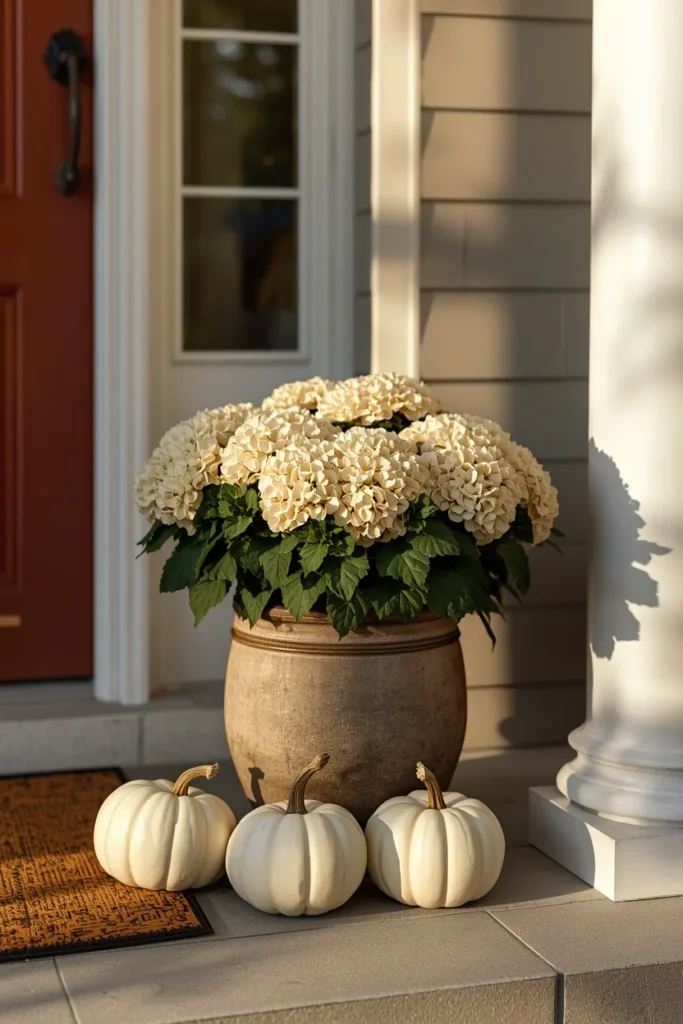
19. Neutral White Pumpkin and Cream Mum Planter
Skip the traditional orange palette entirely and style a planter with white pumpkins and cream or pale yellow mums for a soft, neutral take on fall that suits modern and minimalist homes. This muted color story photographs beautifully against nearly any exterior paint color, since it doesn’t compete with brick, siding, or trim the way bright orange sometimes can. Choose mums with a slightly ruffled or textured bloom rather than a completely flat variety, so the neutral tones still have visual interest without relying on bold color. Nestle two or three white pumpkins directly into the soil around the mums rather than placing them separately, letting the planter feel like one integrated display. This idea has become increasingly popular for homes that decorate for fall year after year but want a look that feels fresh and less like a repeat of the same orange display.
Styling Tips
- Follow the thriller-filler-spiller formula: something tall for height, something full for color, something trailing over the edge.
- Stick to one or two main colors per planter so it reads as curated rather than a mix of every fall hue available.
- Repeat the same container style or color across multiple planters for a cohesive look along steps or a porch railing.
- Group pumpkins, gourds, and pinecones at the base of taller plantings to add texture without needing extra pots.
- Water fall plantings less frequently than summer ones, since cooler temperatures mean the soil dries out more slowly.
Practical Implementation Ideas
Start with the container and plant choice first, matching the container’s finish to your home’s existing hardware or trim color before adding seasonal accents like pumpkins or pinecones. Build height with a single taller element, then fill in around it, finishing with a trailing plant at the edges last. Refresh accents like mini pumpkins or leaves every few weeks if they start to fade, while leaving the main plantings in place for the full season.
Common Mistakes to Avoid
Choosing a container that’s too small for the plants inside is one of the most common mistakes, since a cramped planter tends to look sparse rather than full within just a few weeks. Mixing too many colors within a single pot, orange, purple, yellow, and red all at once, can also make the display feel chaotic instead of intentional. Skipping drainage holes, especially in repurposed containers like buckets or crates, is a third mistake that can lead to waterlogged roots and a planting that fades fast.
Small-Space Alternatives
For a narrow stoop or small patio, choose one well-styled planter instead of several, focusing on a mix of height, color, and texture within that single container. A window box filled with mums and trailing ivy can also achieve the same seasonal impact as a full-size floor planter without needing extra ground space.
Budget-Friendly Alternatives
Use a single variety of mum in bulk rather than buying several different expensive plant types, and repurpose containers you already own, like old buckets or crates, instead of purchasing new pots. Mini pumpkins and pinecones are typically inexpensive and can refresh a simple planter without requiring an entirely new arrangement.
Pro Styling Recommendations
Choose perennial ornamental grasses or shrubs as the “thriller” element in a planter so they can be reused and simply replanted each fall rather than bought new every year. Keep one or two statement containers, like a great copper or galvanized pot, and rotate the plantings inside them seasonally instead of replacing the containers themselves.
FAQs
Conclusion
A fall planter doesn’t need to be complicated to make an impact. A good container, one or two plant varieties, and a handful of seasonal accents like pumpkins or grasses are usually enough to turn a plain porch into one that feels genuinely welcoming. Pick a couple of ideas from this list that match your home’s style, start with the entrance, and let the rest of the porch come together from there.