24 Fall Wreath Ideas to Welcome the Season in Style
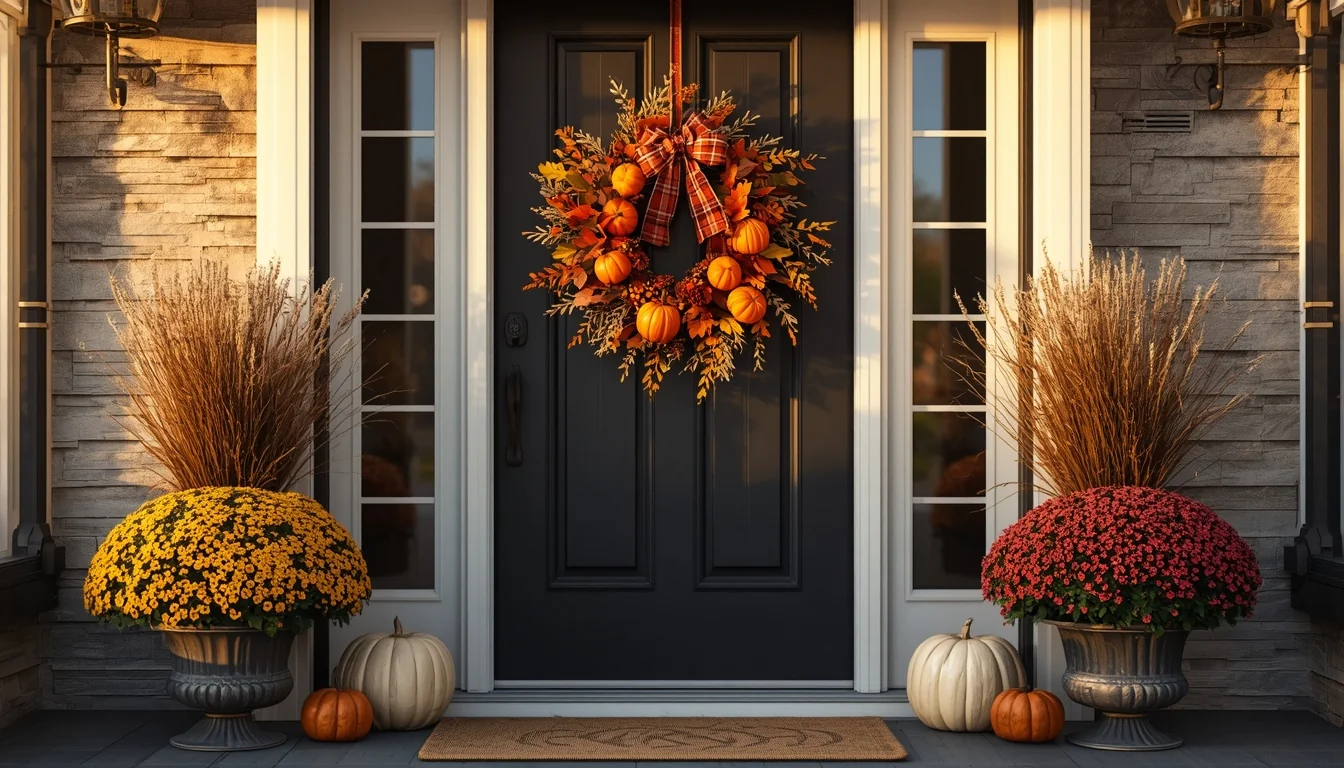
The first thing anyone notices about your front door in October is the wreath. Before they see the pumpkins on the steps or the mums by the mailbox, their eye lands there first. That’s a lot of pressure for one circle of leaves and berries, but it’s also an opportunity, since a well-styled wreath can set the tone for your whole entryway in seconds.
Fall wreaths have moved past the same orange silk leaves everyone’s had since 2015. Now it’s dried orange slices, sage lamb’s ear, velvet pumpkins, moody florals, and color combinations you wouldn’t expect. These 24 fall wreath ideas cover every style, from cozy farmhouse to elegant and moody, so you can find the one that actually fits your door, not just the one everyone else is pinning.
Table of Contents
What Makes a Fall Wreath Feel Cohesive?
A wreath reads as professionally styled, not cluttered, when its elements are grouped into deliberate clusters instead of scattered evenly around the ring. Building in layers — tall, dimensional elements toward the back, mid-height blooms or pumpkins in the middle, and low, grounding pieces like berries or leaves near the front — creates depth the same way a floral arrangement does. Color repetition also matters more than most people realize: echoing the wreath’s dominant tone in a nearby doormat, potted mum, or ribbon color makes the whole entryway feel like one connected scene instead of separate decorations placed near each other.
1. Classic Grapevine Wreath with Rust and Amber Leaves
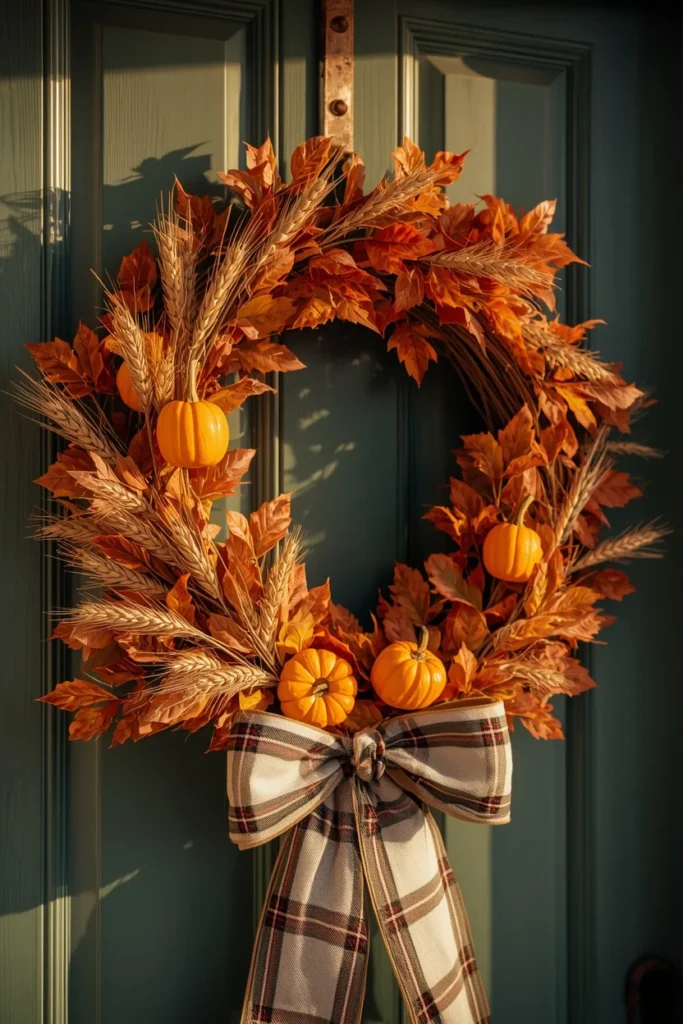
A grapevine base layered with rust and amber faux leaves is the wreath most people picture the second someone says “autumn,” and it earns that reputation because the warm, layered leaf tones work with almost any door color. Wiring in a few mini pumpkins and dried wheat stalks among the leaves adds texture and a harvest feel without overcomplicating the design. Finishing the bottom with a generously sized plaid bow in the same rust and cream tones pulls the whole look together and gives the eye a clear anchor point. This style holds up well outdoors for the full season, since the grapevine base is sturdy and the faux leaves won’t fade quickly in direct sun. It’s also one of the easiest wreaths to source pre-made if DIY isn’t your priority this year.
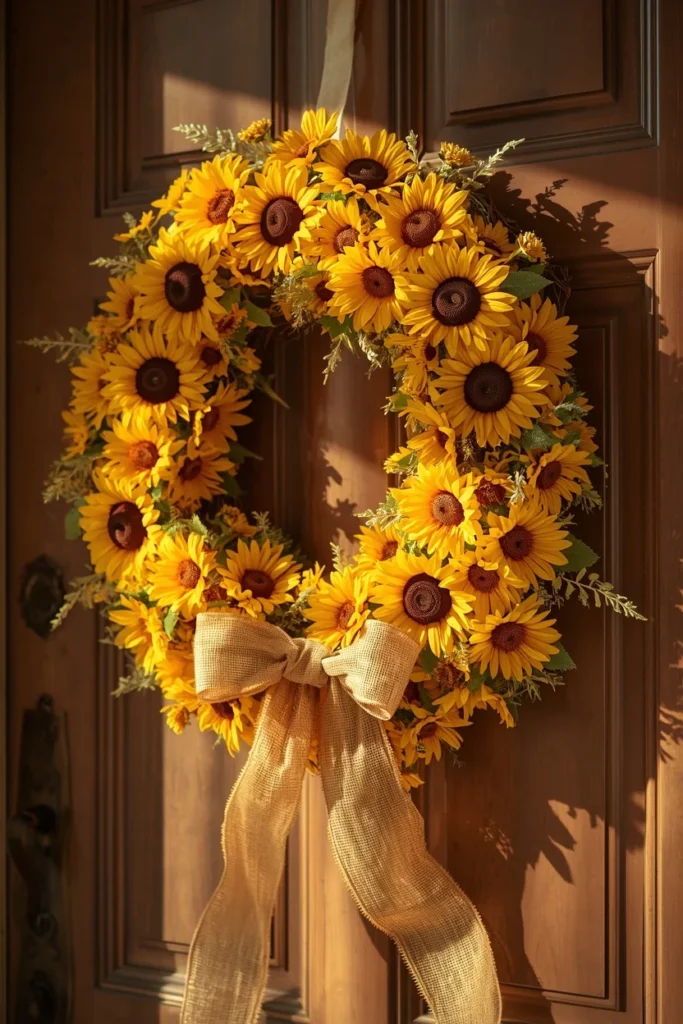
2. Farmhouse Sunflower Wreath
A grapevine base generously covered in artificial sunflowers brings cheerful, bright energy to a porch and works especially well on darker doors or shaded entryways where the yellow tones stand out. Wiring the sunflowers on in slightly overlapping clusters, rather than spacing them evenly, gives the wreath a fuller, more natural look instead of a stiff, uniform one. A burlap ribbon bow at the bottom reinforces the farmhouse feel, while a few small pinecones tucked between the blooms add texture without competing with the sunflowers’ color. This style tends to photograph beautifully in direct sunlight, since the yellow petals catch and reflect light in a way darker fall palettes don’t. It’s also a strong choice for early fall, since sunflowers read as seasonal from late August straight through Thanksgiving.
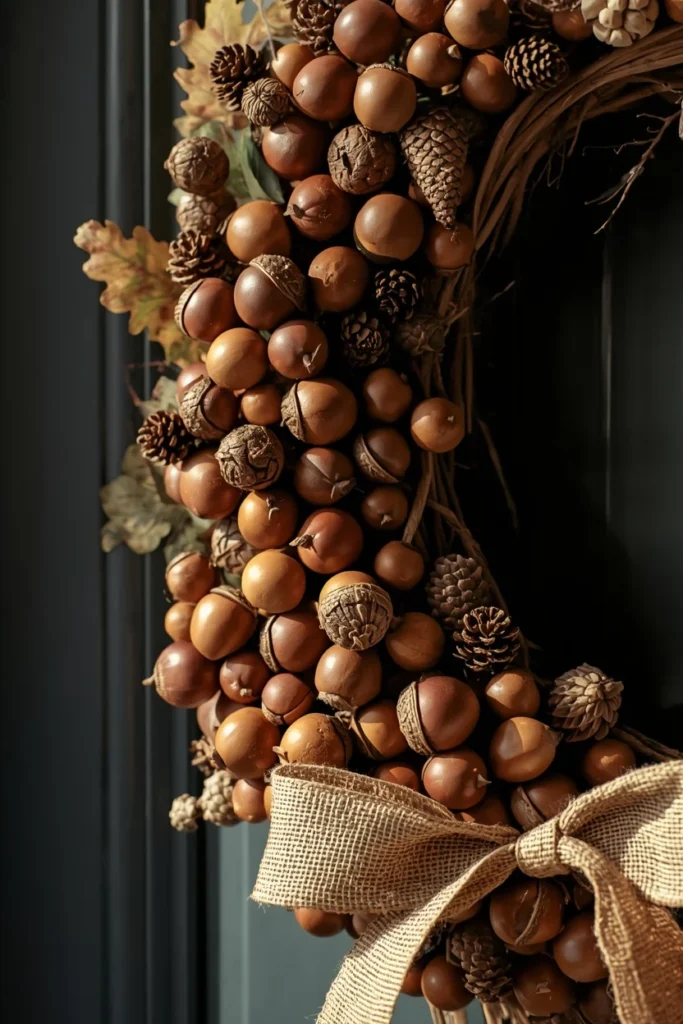
3. Acorn and Oak Leaf Woodland Wreath
An acorn wreath built by hot-gluing acorns of varying sizes onto a grapevine or foam base in loose clusters creates a rustic, woodland-inspired look that feels more textural than color-driven. Mixing in a handful of dried oak leaves and small pinecones between the acorn clusters adds warmth and breaks up the repetition of a single material. Wrapping the wreath in a plain burlap ribbon rather than a patterned one keeps the focus on the acorns’ natural texture instead of competing with a busy print. This style works particularly well for anyone who wants a fall wreath without leaning on bright orange or red tones, since acorns and oak leaves stay in a muted, earthy palette naturally. It also tends to hold up outdoors for months, since dried acorns and leaves are more weather-resistant than fresh florals.
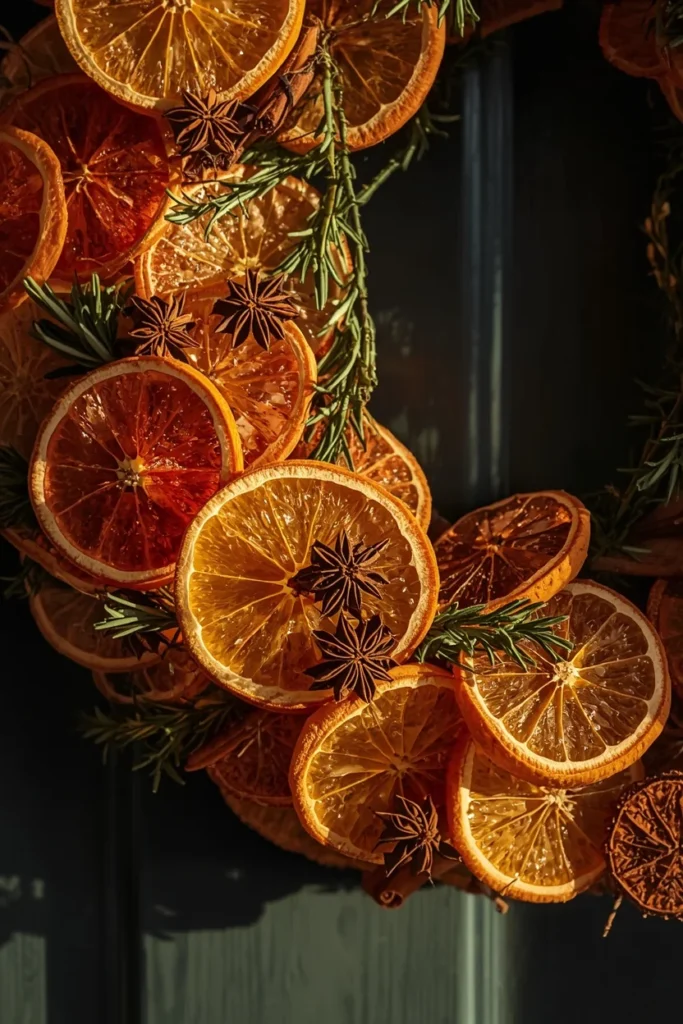
4. Dried Orange Slice and Cinnamon Stick Citrus Wreath
Wiring dried orange, lemon, and grapefruit slices onto a wreath base alongside bundled cinnamon sticks and sprigs of fresh rosemary creates a wreath that works on two senses at once, since the citrus and spice combination actually scents the entryway. Drying the citrus slices yourself in a low oven, rather than buying artificial ones, gives the wreath a more authentic, slightly translucent look that catches light beautifully. Tucking in a few star anise pods and bay leaves between the citrus slices adds another layer of texture and reinforces the natural, foraged feeling of the design. Because this wreath uses dried, not fresh, materials, it holds its color and shape for several weeks before needing a refresh, making it a good mid-fall project. Hanging it somewhere protected from heavy rain, like a covered porch, helps the dried citrus keep its color longer.
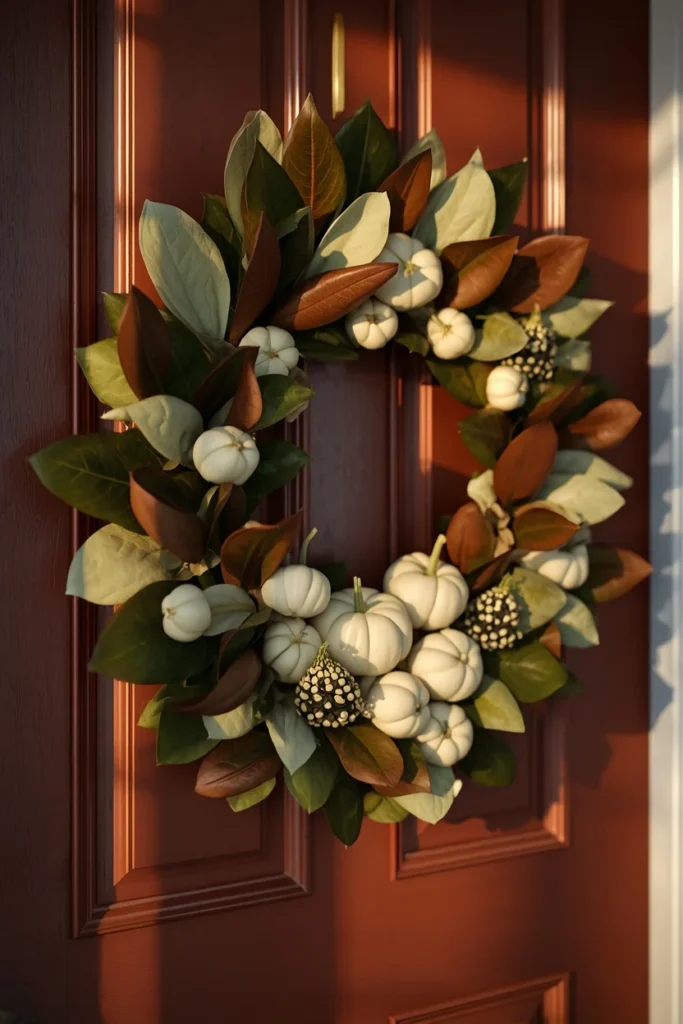
5. White Pumpkin and Magnolia Leaf Wreath
Built on a dimensional base of twigs and magnolia leaves, this wreath alternates the leaves’ glossy green front and autumnal brown reverse to create natural color variation without adding a single additional material. A line of preserved lotus seed pods along the inner edge creates a deep brown backdrop that makes the wreath’s real stars — a cluster of crisp white pumpkins — stand out even more. Adding a few creamy craspedia billy buttons and burgundy maple leaves among the pumpkins introduces just enough color to keep the palette from feeling monochrome without breaking its elegant, neutral mood. This style suits homes that want a fall look without leaning into bright orange, since the white pumpkins and green-and-brown magnolia leaves read as sophisticated rather than cartoonish. It also transitions easily into Thanksgiving decor without needing to be swapped out.
6. Sage Lamb’s Ear and White Pumpkin Moody Wreath
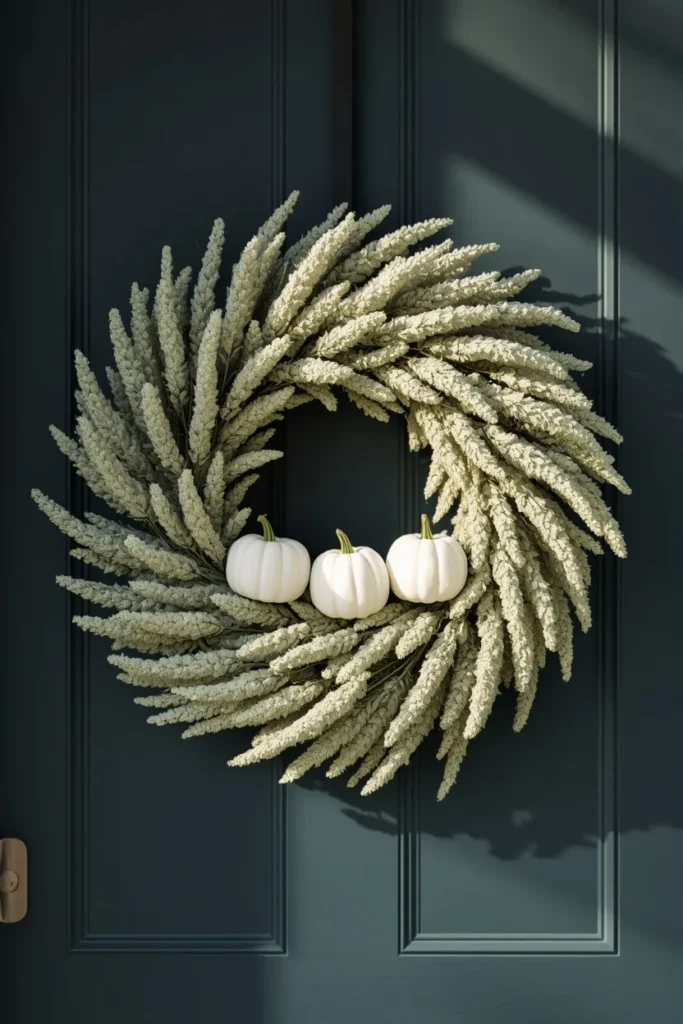
This wreath represents the shift toward more sophisticated, muted fall palettes, using soft sage-green lamb’s ear and elegant white pumpkins against a base instead of the bright, saturated orange traditionally associated with fall. Grouping the white pumpkins into a visual triangle, rather than spacing them evenly around the ring, creates the deliberate clustering that makes a multi-element wreath feel intentional instead of scattered. The lamb’s ear’s soft, fuzzy texture concentrated in a few key areas adds a tactile softness that contrasts nicely with the pumpkins’ smooth surface. This combination looks especially striking against a moody dark teal, navy, or black front door, since the muted greens and whites stand out clearly against a deep backdrop. It’s a strong pick for anyone who wants their fall decor to blend more seamlessly into a year-round neutral or modern color scheme.
7. Dusty Blue Pumpkin and Complementary Color Wreath
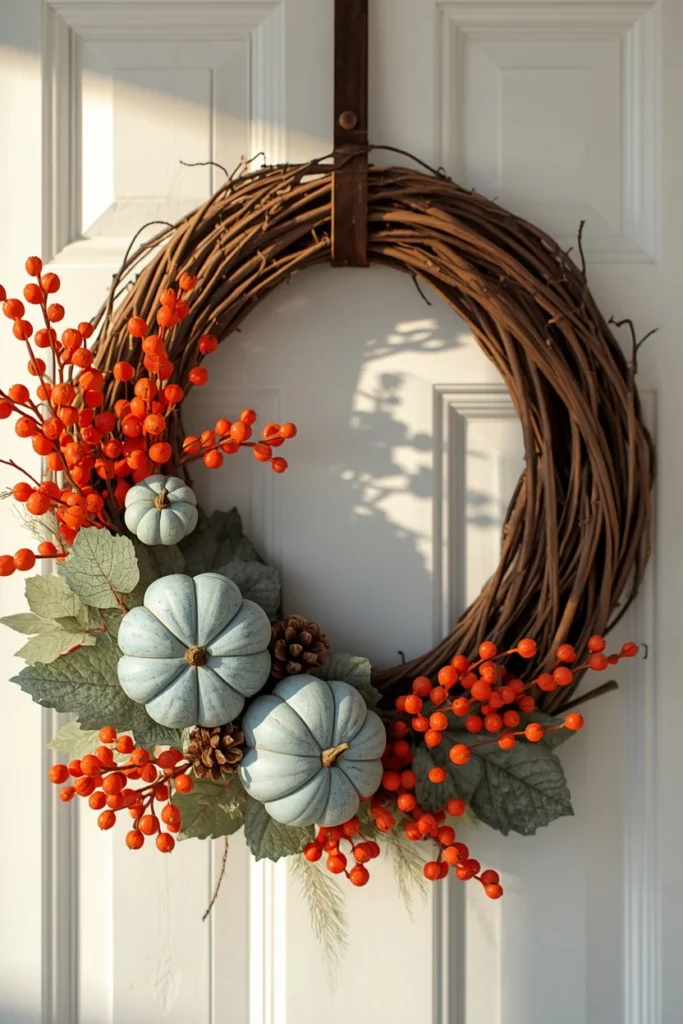
Building a wreath around an unexpected color pairing, like dusty blue pumpkins against fiery orange branches and berry sprays, uses basic color-wheel logic to create a design that feels more intentional than a single-palette wreath. Layering in pinecones between the orange and blue elements gives the eye a neutral resting point so the complementary colors don’t compete too aggressively for attention. Because blue and orange sit opposite each other on the color wheel, the contrast reads as vibrant and considered rather than clashing, especially when the proportions favor one color as dominant and the other as accent. This style works particularly well on white or cream front doors, where both the warm and cool tones have room to stand out clearly. It’s also one of the more memorable, scroll-stopping wreath styles if you’re building a display specifically to photograph for Pinterest.
8. Silvery Eucalyptus and Dried Orange Wreath
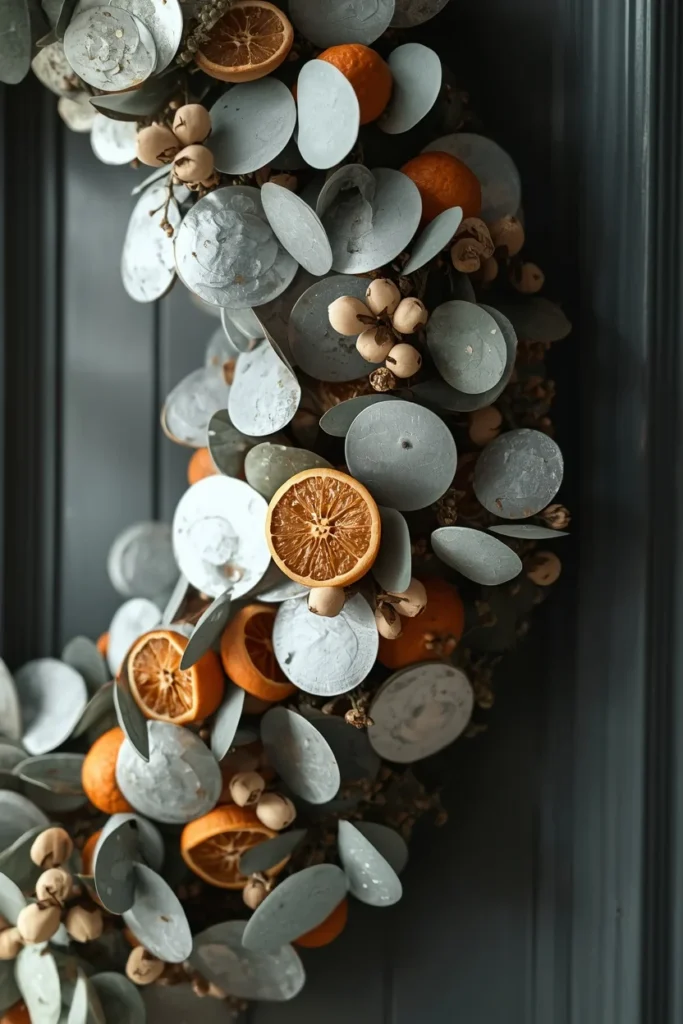
Mixing silvery eucalyptus with dried orange slices creates a wreath that feels slightly unexpected for fall, since the cool, silvery-green tone of the eucalyptus contrasts against the warm citrus in a way that still reads as autumnal. Combining silver dollar eucalyptus with seeded eucalyptus varieties adds texture variety within the greenery itself, so the wreath doesn’t rely on the orange slices alone to carry visual interest. This pairing suits homes with cooler-toned exteriors or modern architecture, where a traditional orange-and-brown wreath might feel out of place. Building the eucalyptus in first as a full base, then adding the dried orange slices in small clusters rather than evenly spacing them, keeps the citrus feeling like an intentional accent instead of the main event. As the eucalyptus dries further over the season, it develops an even more muted, silvery patina that only improves the look.
9. Minimalist Plaid Ribbon Hoop Wreath
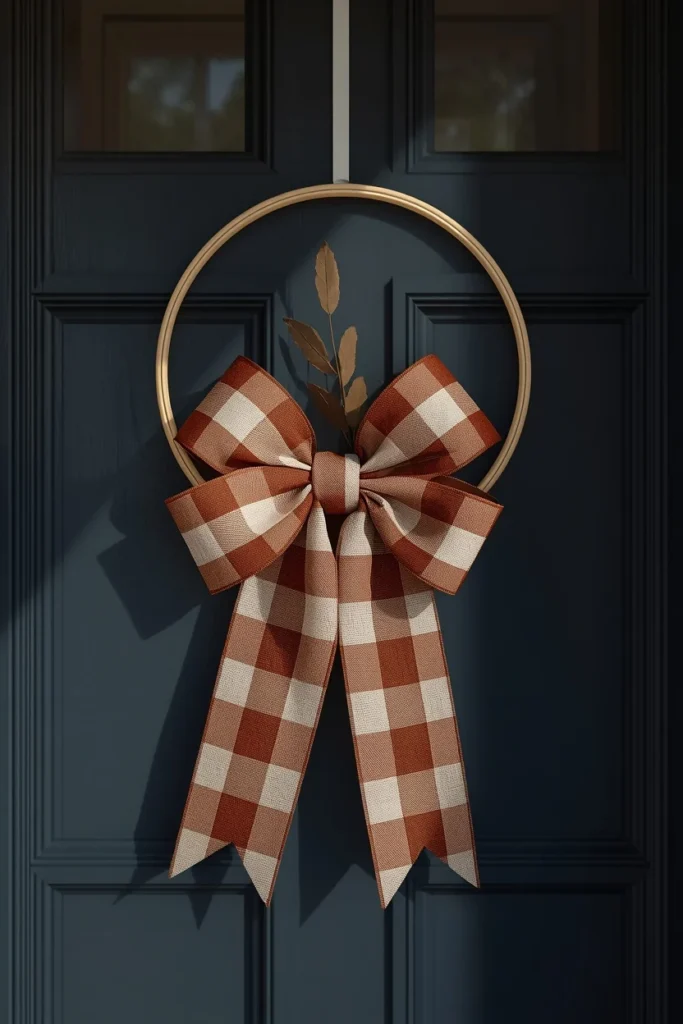
For anyone short on time or new to wreath-making, a simple metal or wooden hoop wrapped in a wide plaid ribbon delivers a polished, cozy look with almost no assembly required. A single, generous bow at the top or bottom becomes the entire focal point, so choosing a high-quality ribbon in rust, cream, or burgundy plaid matters more here than in a busier design. Adding just a few felt leaves or one small cluster of mini pinecones keeps the design from feeling too bare without overcomplicating the minimalist concept. This style photographs exceptionally well against a solid-colored door, since there’s no visual competition to distract from the ribbon’s pattern and color. It’s also one of the most beginner-friendly projects on this list, typically taking under fifteen minutes from start to finish.
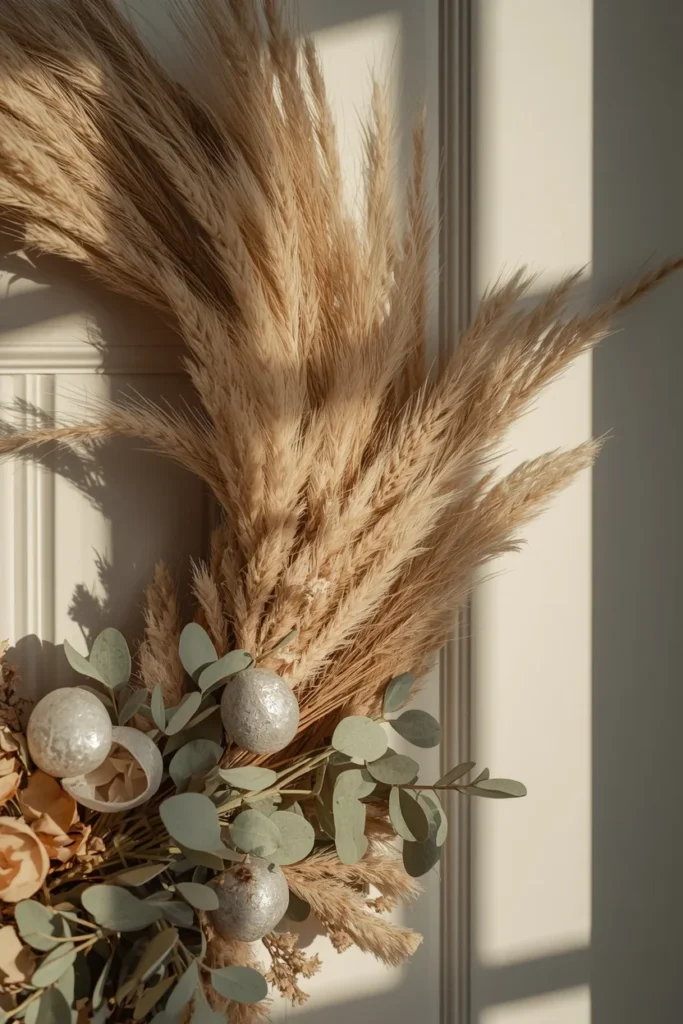
10. Natural Pampas Grass and Lunaria Pod Wreath
Combining dried pampas grass, silvery lunaria pods, and preserved eucalyptus creates an elevated, entirely natural wreath with zero faux or plastic elements, which gives it a softer, more organic movement than most fall designs. The pampas grass’s feathery texture provides volume and softness, while the papery, translucent lunaria pods add a delicate, almost jewelry-like detail that catches light beautifully. Because every material in this wreath is naturally dried rather than silk or plastic, it tends to last through the entire fall season and often into early winter without losing its shape or color. This style suits a more neutral, editorial-style porch aesthetic, especially paired with cream or white pumpkins and simple stone planters rather than bright, traditional fall colors. It’s a strong option for anyone who wants their wreath to look elevated rather than crafty.
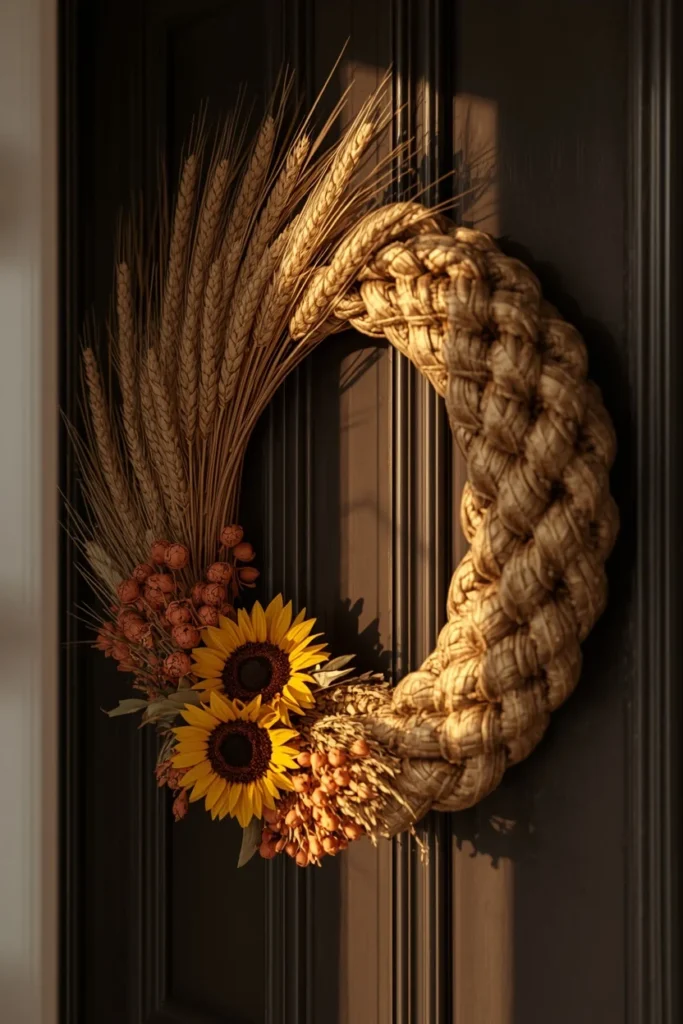
11. Braided Wheat Stalk Harvest Wreath
Braiding dried wheat stalks directly into a hoop shape, rather than wiring pre-made elements onto a foam base, creates one of the most authentic harvest-style wreaths possible, since the golden wheat itself forms the entire structure. This technique requires slightly more patience than hot-gluing a base, but the result has a woven, tactile texture that store-bought wreaths rarely replicate. Adding a small cluster of dried sunflowers or a few orange berries at the base gives the eye one point of color against the wheat’s uniform gold tone. Because wheat is lightweight and naturally weather-resistant once fully dried, this wreath holds up well on covered porches through the entire harvest season. It pairs especially well with other braided or woven fall elements, like a matching corn husk display flanking the door.
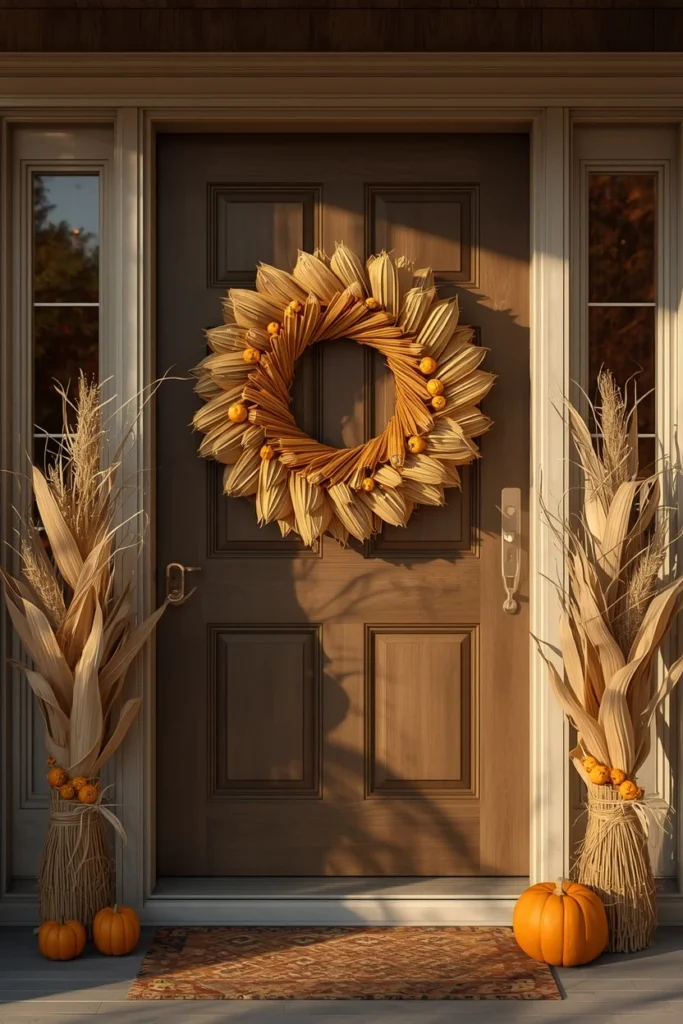
12. Corn Husk Wreath
Arranging dried corn husks in overlapping layers around a circular base creates a wreath with a rustic, textured surface unlike any other material on this list, and it’s a technique that dates back to traditional harvest decorating. Accenting the husks with fake pumpkins tucked into the folds, along with a scattering of raffia, reinforces the earthy, autumnal feel while adding just enough color variation. This wreath works particularly well flanked by matching corn stalks propped on either side of the door, creating a cohesive harvest display rather than a single isolated element. Corn husks hold their shape and color well once fully dried, making this a durable option for an entryway exposed to sun. The natural, slightly imperfect texture of the husks gives the wreath an earthy, grounded look that feels distinct from the more polished silk-leaf styles.
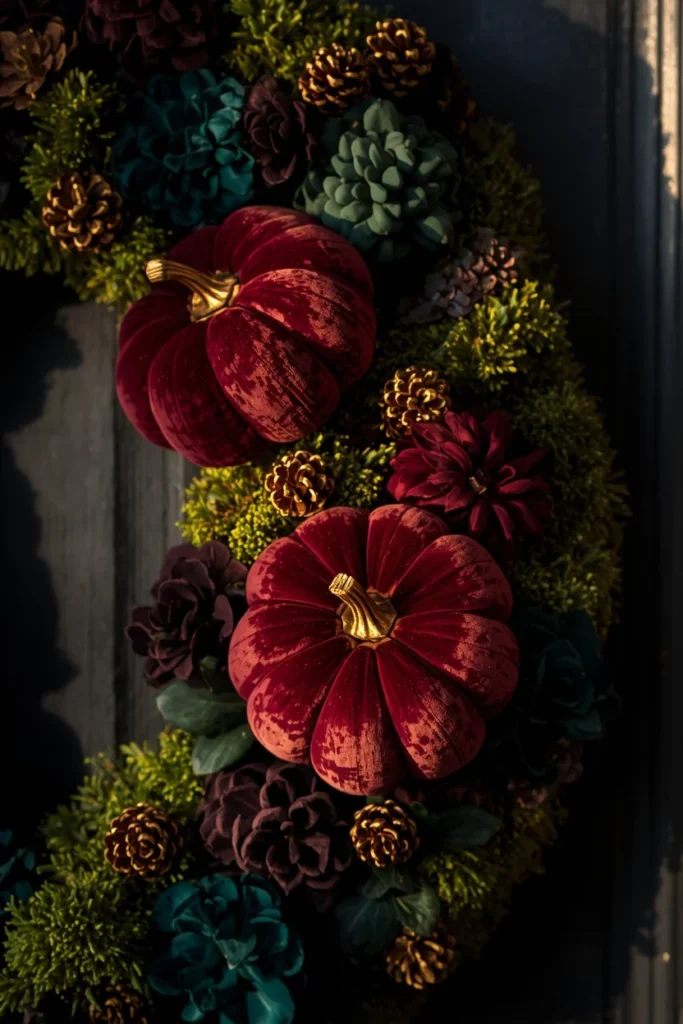
13. Velvet Pumpkin and Jewel-Tone Wreath
Building a wreath around velvet pumpkins in deep jewel tones like burgundy, emerald, and plum creates a luxurious, textural focal point that reads as elevated rather than crafty. Grouping the velvet pumpkins in a cluster toward the bottom of the wreath, rather than spacing them evenly, mimics the same clustering technique used in high-end floral arrangements and keeps the design from feeling scattered. Adding gilded pinecones and cushions of preserved green moss between the pumpkins introduces texture and a subtle metallic shimmer without adding another dominant color. This style pairs beautifully with a wooden tray display of matching velvet pumpkins and pillar candles nearby, extending the same jewel-toned palette from the door into the porch’s tablescape. It suits homes going for a moody, sophisticated fall look rather than a bright, traditional harvest palette.
14. Gothic Fall-to-Halloween Mashup Wreath
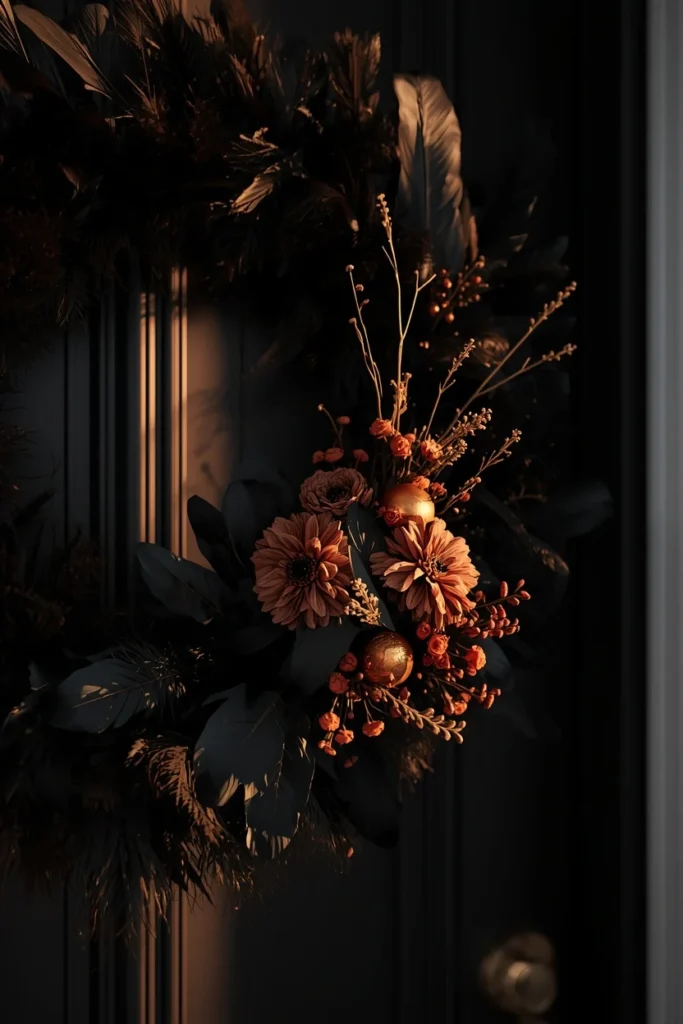
Combining metallic, black, and burnt-orange florals with a touch of glitter creates a dramatic wreath that bridges the gap between traditional fall decor and Halloween styling, ideal for anyone who wants their entryway to transition smoothly between the two without a full swap. Layering black feathers and dark foliage as the base, then adding burnt-orange blooms in smaller clusters, keeps the overall look from tipping fully into Halloween territory while still carrying an edgier mood than a standard harvest wreath. A few gold or bronze accents catch the light and add just enough shimmer to keep the dark palette from feeling flat. This style works especially well on black or deep-colored front doors, where the wreath’s darker tones blend intentionally rather than disappearing. It also suits homes that decorate for both fall and Halloween simultaneously, since the design already carries seasonal versatility built in.
15. Goldenrod and Eucalyptus Sunny Wreath
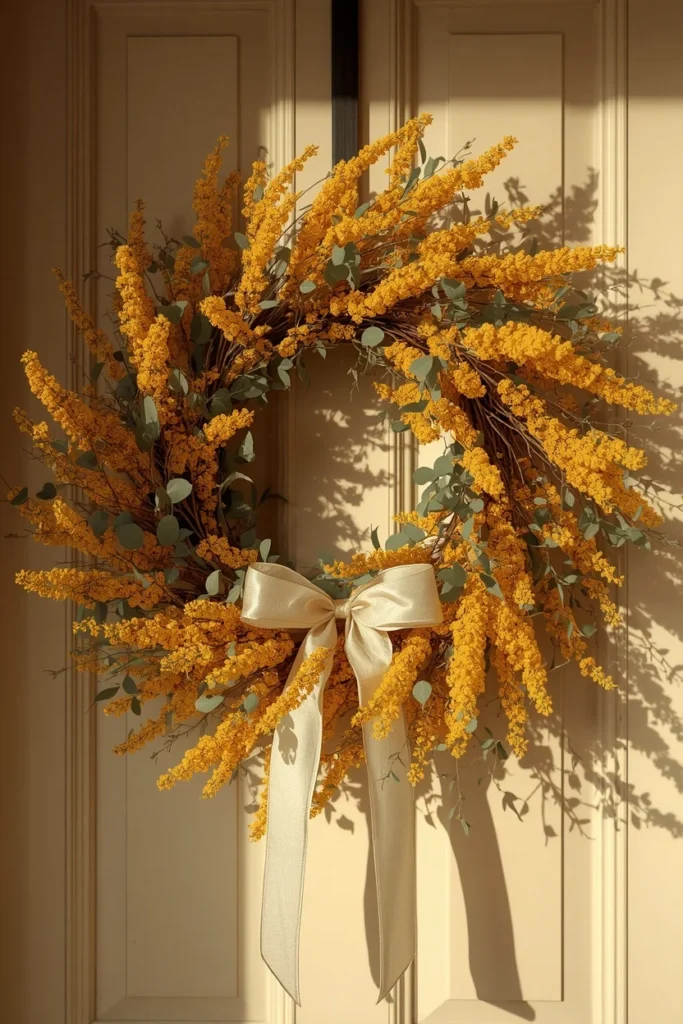
Pairing bright goldenrod flowers with fresh eucalyptus sprigs and a simple cream ribbon creates a cheerful, uplifting wreath that feels different from the deeper, moodier tones many fall designs lean into. The goldenrod’s small, cheerful blooms cover the base generously, giving the wreath a fuller, sunnier look, while the eucalyptus adds a cooling, textural contrast that keeps the yellow from feeling one-note. A cream ribbon bow, rather than a bold plaid or dark tone, keeps the overall palette light and bright, which suits homes that get strong afternoon sun on their porch. This wreath works especially well for early autumn, when the transition from summer still calls for a brighter, more energetic palette than the deep russets of late October. It’s also a good choice for anyone who finds traditional dark fall wreaths too heavy for their home’s exterior color.
16. Herb and Botanical Kitchen Door Wreath
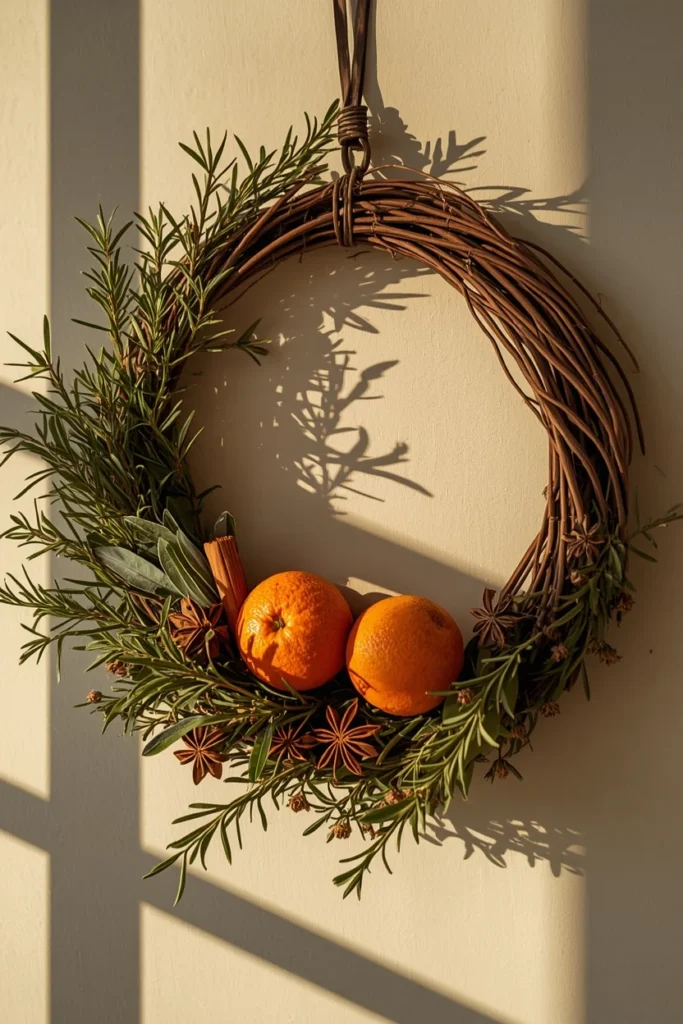
Building a wreath from rosemary, thyme, sage, cinnamon sticks, and star anise wired onto a grapevine base creates a fragrant, kitchen-inspired design perfect for a back door, mudroom entry, or kitchen wall rather than the main front entrance. Mixing in dried orange slices among the herbs adds color and reinforces the warm, spiced scent that develops as the herbs dry further over time. Because this wreath leans on herbs rather than traditional fall foliage, it reads as more subtle and sophisticated, fitting naturally into a farmhouse kitchen’s existing decor rather than looking like a seasonal add-on. Hanging it indoors, away from direct weather exposure, helps preserve both the herbs’ color and their scent for longer than an outdoor wreath would last. This is also one of the more functional wreath ideas, since dried herbs can be snipped for cooking in a pinch.
17. Craspedia and Lotus Seed Pod Textural Wreath
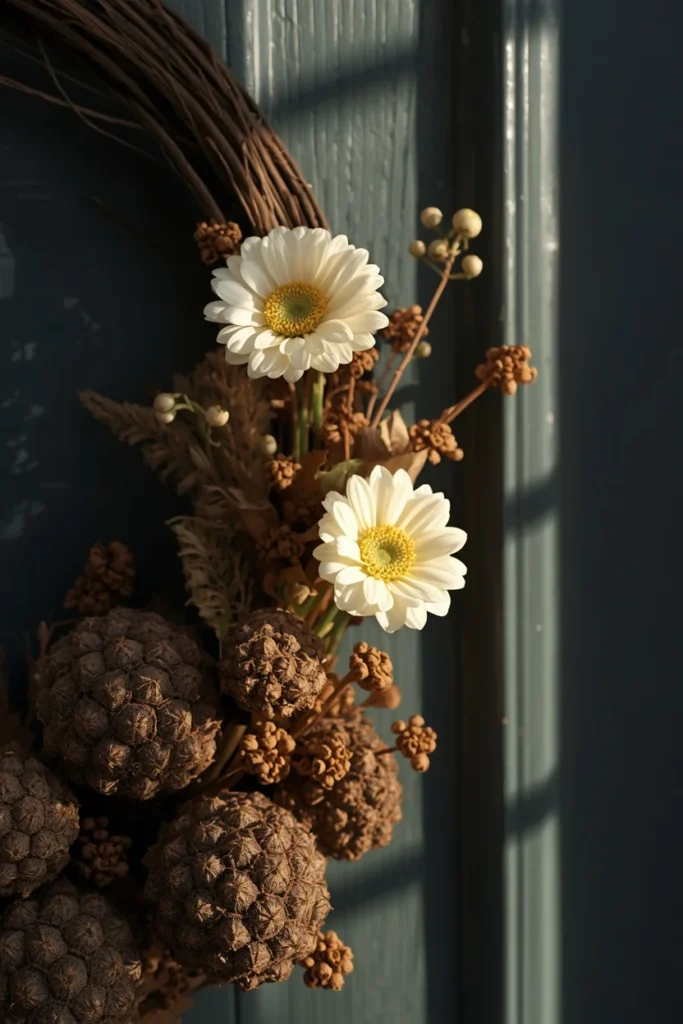
Pairing creamy craspedia billy buttons with deep-brown lotus seed pods creates a wreath built almost entirely on texture and shape rather than a wide color palette, giving it a more editorial, botanical-shop feel than a typical fall design. The lotus pods’ pitted, honeycomb-like surface provides visual depth and a natural talking point, while the craspedia’s small round blooms add softness and a pop of warm cream against the darker pods. Keeping the surrounding base minimal, with just a few sprigs of dried foliage, lets these two unusual textures stand out rather than getting lost in a busier composition. This style suits a modern or minimalist entryway that still wants a seasonal touch without a traditional orange-and-brown palette. It also holds up exceptionally well over time, since both craspedia and lotus pods are naturally dried and don’t fade or wilt the way fresh florals would.
18. Modern Embroidery Hoop Wreath
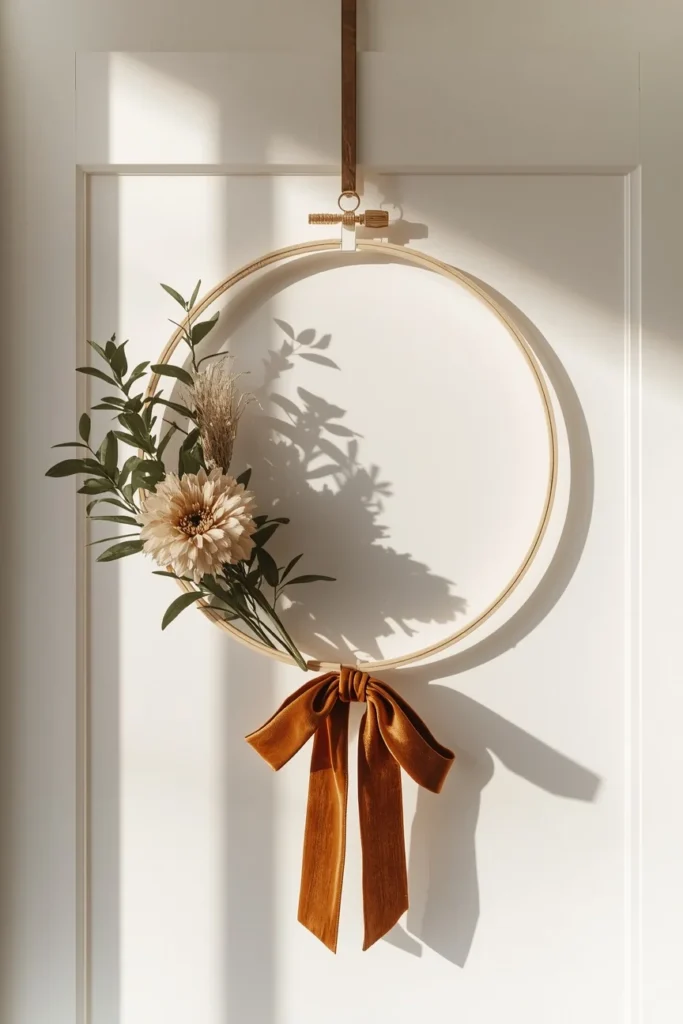
Swapping a traditional wreath form for a simple wooden or metal embroidery hoop instantly gives the design a more minimalist, modern feel, especially when paired with just a few faux florals and a velvet ribbon instead of a fully covered base. Attaching one statement dried bloom and a couple of eucalyptus sprigs to one section of the hoop, rather than covering the entire ring, lets the negative space become part of the design instead of something to fill in. A simple linen or velvet ribbon tied at the bottom finishes the look without adding visual weight. This style works particularly well on modern or minimalist home exteriors, where an oversized, densely layered wreath might feel out of place against clean architectural lines. It’s also one of the most affordable and quickest wreaths to make on this entire list.
19. Leather, Feather, and Walnut Bohemian Wreath
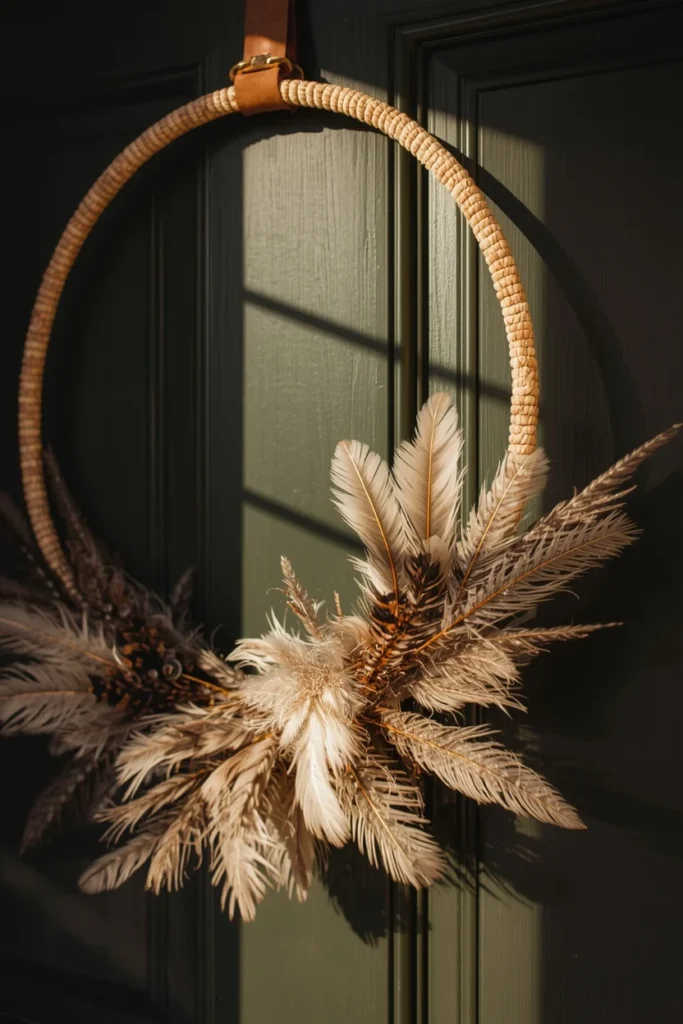
Transforming a store-bought beaded hoop into a moody leather, feather, and walnut-stained wreath brings a bohemian, southwestern-inspired edge to fall decor that stands apart from the usual florals and foliage. Stitching or wiring faux ostrich and pheasant feathers around the hoop in a loose, asymmetrical pattern gives the wreath movement, especially outdoors where a breeze catches the feathers. Staining the wooden or leather elements in a rich walnut tone ties the whole piece into the same earthy, warm palette found throughout fall decor, without relying on a single traditional leaf or pumpkin. This style suits a front door with a more eclectic or global-inspired exterior, like exposed wood, adobe, or a desert-adjacent home. It’s also a striking option for anyone who wants their wreath to double as year-round wall art once the season ends.
20. Plum and Blackberry Romantic Velvet Wreath
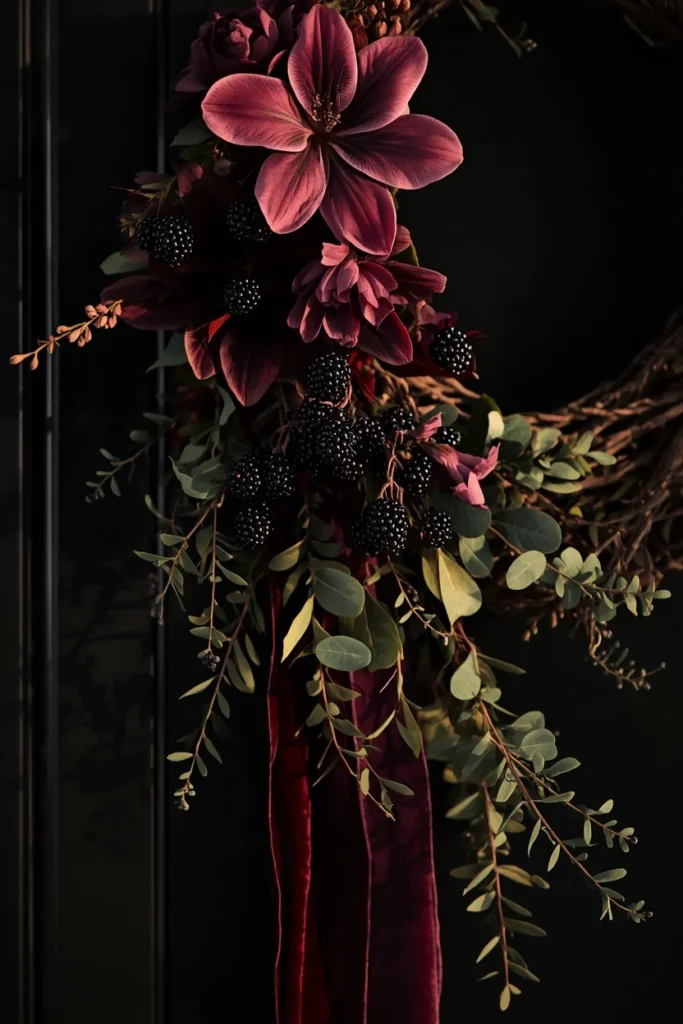
Mixing deep plum florals with dark blackberry clusters and forest-green eucalyptus creates a rich, romantic wreath that feels dramatic without leaning on traditional orange or rust tones at all. Tying the whole design off with a rich jewel-toned velvet ribbon reinforces the moody, luxurious feel and gives the wreath one clear focal point at the base. This color palette pops especially well against a dark navy or black door, where the deep plum and blackberry tones read clearly instead of blending into a similarly dark background. Keeping the greenery slightly loose and trailing, rather than tightly clustered, adds a soft, romantic movement that suits this palette better than a rigid, formal shape. This style works well for anyone drawn to fall’s moodier side, especially in climates where the classic orange-and-gold palette doesn’t quite match the surrounding landscape.
21. Copper Hoop Modern Wreath
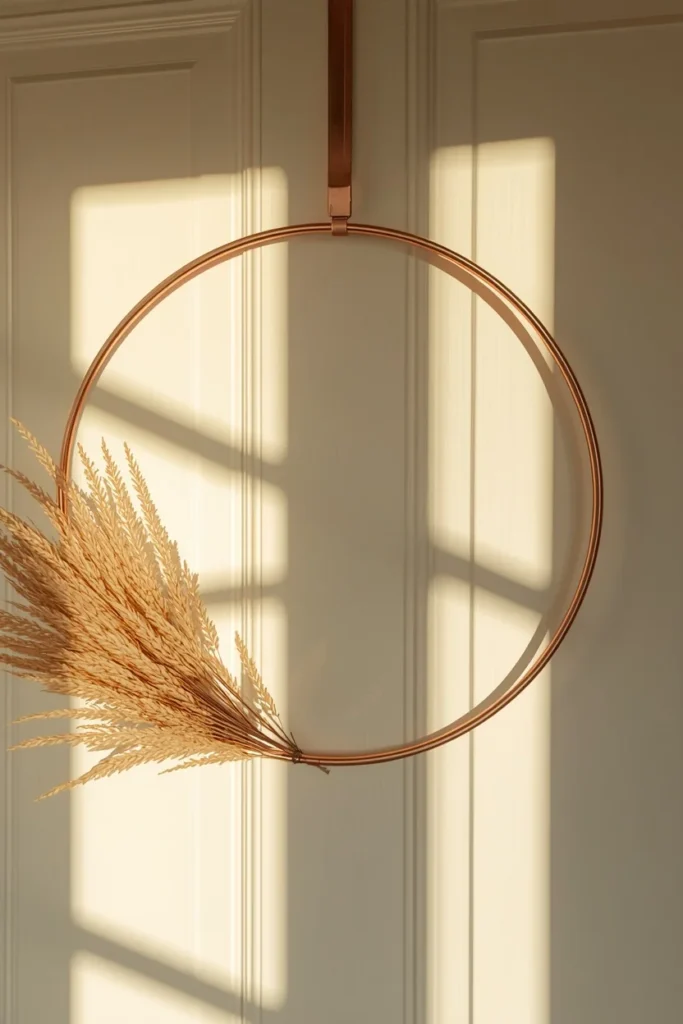
A sleek copper hoop, left mostly bare with just a few carefully placed dried elements, creates one of the most contemporary takes on a fall wreath, letting the metal itself do most of the visual work. Attaching one cluster of dried grasses or a single dried bloom to the lower third of the hoop, rather than distributing elements evenly, keeps the composition feeling intentional and architectural. The copper finish adds a warm metallic glow that works particularly well against light-colored doors, where it stands out clearly without needing bold color from the florals. This style suits homes with a modern or Scandinavian-leaning exterior, where a traditional, densely packed wreath might feel visually heavy against clean, minimal lines. It’s also a wreath that can realistically stay up well past fall, since its restrained design doesn’t scream “seasonal” the way a leaf-covered wreath does.
22. Hydrangea Cluster Wreath
Building a full, fluffy wreath around autumn-toned hydrangea clusters in orange, brown, burgundy, and olive creates a lush, romantic design that feels closer to a floral arrangement than a typical foliage wreath. Because hydrangea blooms are naturally large and dimensional, a relatively small number of stems can fill out the entire wreath form, making this a surprisingly efficient project despite its full appearance. Layering the different hydrangea tones so they blend gradually around the ring, rather than grouping each color into its own separate section, gives the wreath a soft, ombré-like effect. This style suits a front door, foyer mirror, or fireplace mantel equally well, since the fullness reads as elegant in multiple settings beyond just an entryway. It also pairs naturally with a simple velvet or satin ribbon in one of the hydrangea’s deeper tones to finish the look.
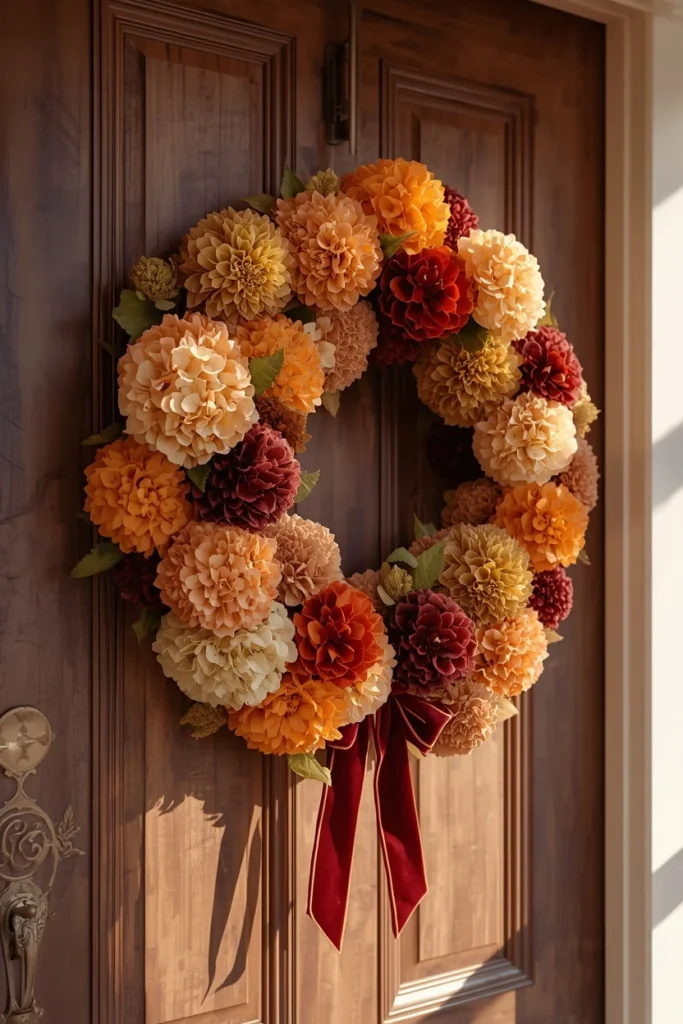
23. Dollar Store Budget Wreath
Building a fall wreath almost entirely from dollar-store supplies proves that a boutique-quality look doesn’t require a boutique budget, especially when the focus stays on layering texture rather than buying expensive individual pieces. Starting with an inexpensive foam or wire base, then layering in budget faux leaves, small pumpkins, and a basic ribbon, still allows for the same clustering and layering techniques used in higher-end designs. Spending slightly more on just one or two focal elements, like a nicer faux pumpkin or a higher-quality ribbon, while keeping everything else budget-friendly, is what keeps this style from looking cheap despite its low cost. This approach is especially useful for anyone decorating a rental, a seasonal vacation home, or a porch that sees heavy weather exposure and might need yearly replacement anyway. The technique also works well for anyone wanting to make multiple wreaths at once, like matching pairs for a double front door.
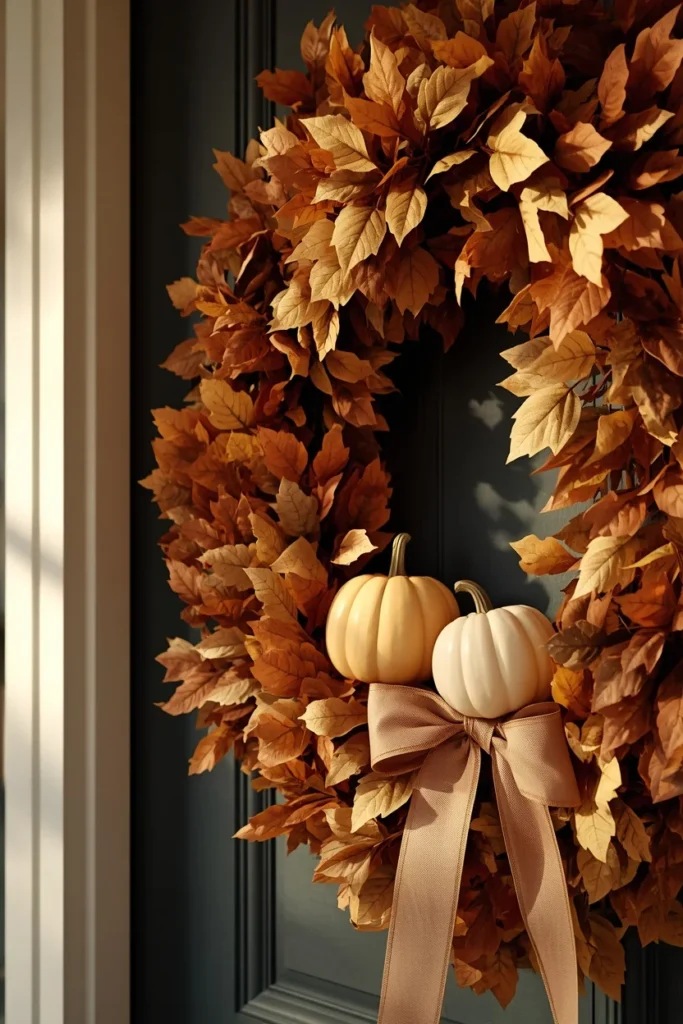
24. Day of the Dead Fall Wreath
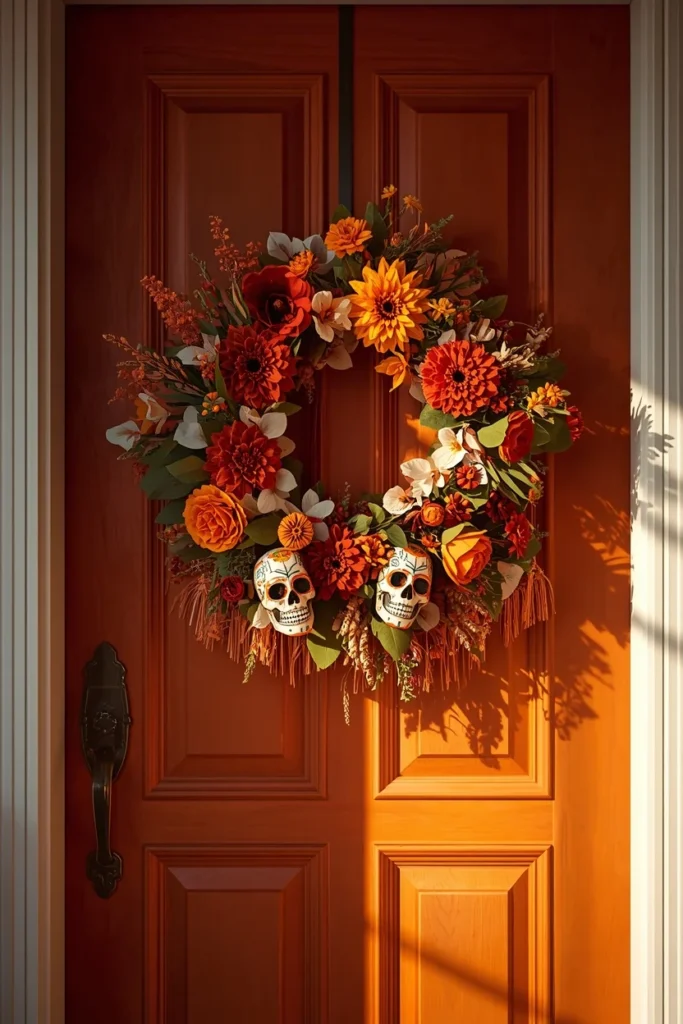
Blending traditional fall materials with Day of the Dead-inspired elements — smiling sugar skulls, marigolds, and festive paper fringe — creates a wreath that honors the holiday’s colorful, celebratory spirit while still fitting naturally into an autumn entryway. Building the base with warm marigold and rust-toned blooms keeps the design connected to the broader fall palette, while the skull and fringe details add the holiday’s specific symbolism and color. Balancing the bright, saturated colors typically associated with this celebration against a few muted, earthy elements, like dried leaves or burlap, keeps the wreath from feeling disconnected from the rest of a fall porch display. This style suits households that celebrate Día de los Muertos and want their front door to reflect that tradition alongside the broader autumn season. It works especially well displayed alongside marigold-filled planters, continuing the same color story from the wreath down to the porch steps.
Styling Tips
- Group elements into deliberate clusters rather than spacing them evenly around the ring, which reads as more intentional and professionally styled.
- Build in layers: taller or more dimensional elements toward the back, mid-height focal pieces in the middle, and grounding details like berries or leaves near the front.
- Repeat the wreath’s dominant color somewhere else on the porch, like a doormat or potted mum, to tie the whole entryway together.
- Choose a ribbon width and color intentionally, since an oversized bow in the right tone can carry an entire minimalist design on its own.
- Match your wreath’s mood to your door color; muted, moody palettes stand out on dark doors, while bright or pastel palettes read best on white or cream doors.
Practical Implementation Ideas
- Start with a grapevine, foam, or wire base depending on your design; grapevine suits rustic and woodland styles, while wire or hoop bases suit minimalist and modern looks.
- Use hot glue for lightweight elements like leaves and berries, and floral wire for heavier pieces like pumpkins or dried citrus slices.
- Dry your own orange, lemon, or grapefruit slices in a low oven if you want a more authentic, translucent look than artificial versions provide.
- Hang wreaths using a sturdy over-the-door hook or a small nail with a ribbon loop, checking that the hanging point can support the wreath’s full weight, especially for velvet pumpkin or heavily layered designs.
- Store dried and faux wreaths in a garment bag or large box after the season to protect the shape and prevent flattening for next year.
Common Mistakes to Avoid
- Spacing every element evenly around the ring instead of clustering, which makes even a well-chosen material selection look scattered.
- Choosing a wreath palette that clashes with the door color instead of considering how the two will read together.
- Overloading a small hoop or minimalist base with too many elements, which erases the negative space that made the design feel modern in the first place.
- Using fresh, unpreserved florals outdoors without any weather protection, which causes rapid wilting and color loss within days.
- Picking every material at the same visual weight, which leaves the wreath without a clear focal point for the eye to land on.
Small-Space Alternatives
- Choose a smaller hoop or embroidery-hoop-based design instead of a full, dense grapevine wreath, which can overwhelm a narrow doorway.
- Stick to one or two materials, like eucalyptus and a single dried bloom, rather than a heavily layered design that needs more visual room to read clearly.
- Hang the wreath slightly higher or lower than eye level if the door itself is narrow, drawing attention along the door’s length rather than its width.
- Use lightweight, minimal ribbon rather than an oversized bow, which can visually shrink a small entryway further.
- Consider a vertical swag instead of a traditional round wreath, which fits naturally into narrow doors or the side panels of a doorway.
Budget-Friendly Alternatives
- Build your base from dollar-store foam or wire forms, then invest slightly more in just one or two standout elements to elevate the overall look.
- Air-dry your own orange slices, leaves, or herbs instead of purchasing pre-dried or artificial versions.
- Reuse last year’s wreath base and simply refresh the ribbon, a few faux leaves, or a couple of pumpkins for a quick, low-cost seasonal update.
- Shop end-of-season clearance the previous fall for faux florals and ribbon, since prices typically drop significantly in November.
- Skip a pre-made wreath entirely and forage seasonal materials like pinecones, acorns, and fallen leaves from your own yard.
Pro Styling Recommendations
- Choose one dominant material or color to lead the design, and let every other element support it rather than compete with it.
- Vary the scale of your elements — some small, some large — since uniform sizing throughout a wreath tends to look flatter than a mix of scales.
- Consider your door’s weather exposure before choosing materials; fresh or dried florals suit covered, protected porches better than faux or preserved options suit fully exposed ones.
- Photograph or step back from your wreath at a distance before finalizing placement, since details that look great up close can disappear or blur together from the street.
- Extend your wreath’s color palette into at least one other porch element, whether that’s a mum, a lantern ribbon, or a doormat, to make the whole entryway feel considered rather than piecemeal.
FAQs
Conclusion
A fall wreath doesn’t have to look like everyone else’s. Once you start thinking in terms of layering, clustering, and color repetition instead of just picking a pre-made design off a shelf, the whole exercise becomes less about following a trend and more about building something that actually matches your door, your porch, and your version of the season. Pick one idea from this list, gather a few real materials, and let your entryway do the welcoming this year.