17 Green Kitchen Designs That Feel Bold, Fresh & Totally Unexpected
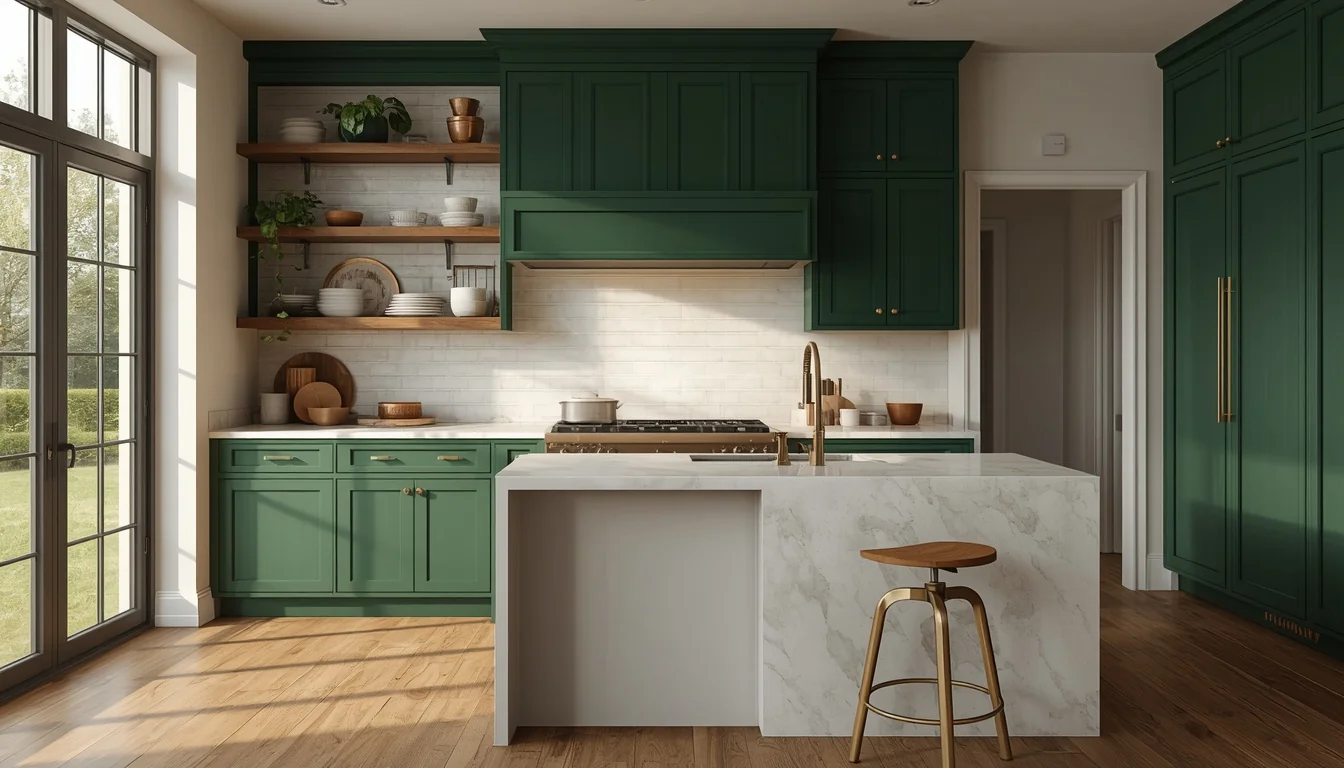
Picture this: you walk into a kitchen and your eyes go straight to the cabinets — not because they’re perfect, but because they have personality. That’s what a green kitchen does. It’s warm without trying too hard. It’s bold without feeling cold. And right now, it’s quietly replacing the all-white kitchen as the look designers reach for again and again.
If you’ve been stuck between “safe and boring” and “too risky to commit to,” this list is your answer. These 17 green kitchen designs range from soft, livable sage to deep, jewel-toned emerald that reads almost black in low light. Some use green everywhere. Others use it in just one smart spot — an island, a backsplash, a ceiling — for a punch of color without a full renovation. Grab a coffee. Your dream kitchen is somewhere in this list.
Table of Contents
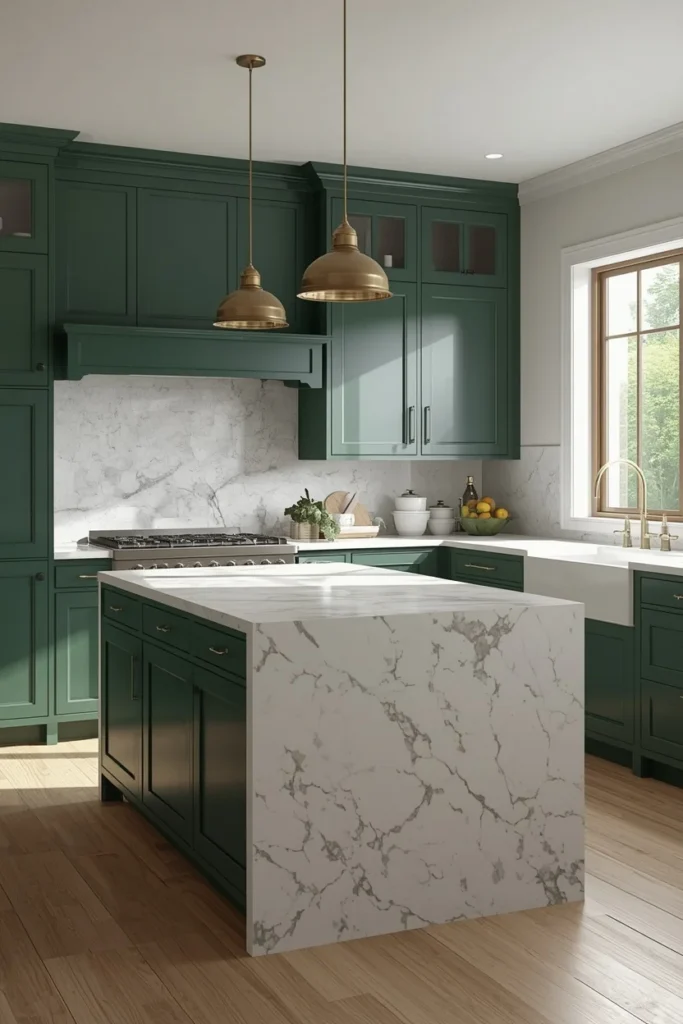
1. Deep Emerald Cabinets with a Marble Waterfall Island
Deep emerald is the shade to reach for if you want a kitchen that reads as luxurious the second someone walks in. Painted or lacquered emerald cabinets ground the room, while a white marble waterfall island with soft gray or gold veining keeps the whole space from feeling heavy. The trick is balance: let the marble do the talking on the horizontal surfaces while the green handles the vertical ones. Brass or unlacquered brass hardware adds a warm glint that keeps the pairing from feeling cold, and a farmhouse sink underneath ties it back to something classic. This combo photographs beautifully because the contrast between the stone and the cabinet color is so clean.
2. Two-Tone Forest Green Lowers with Warm White Uppers
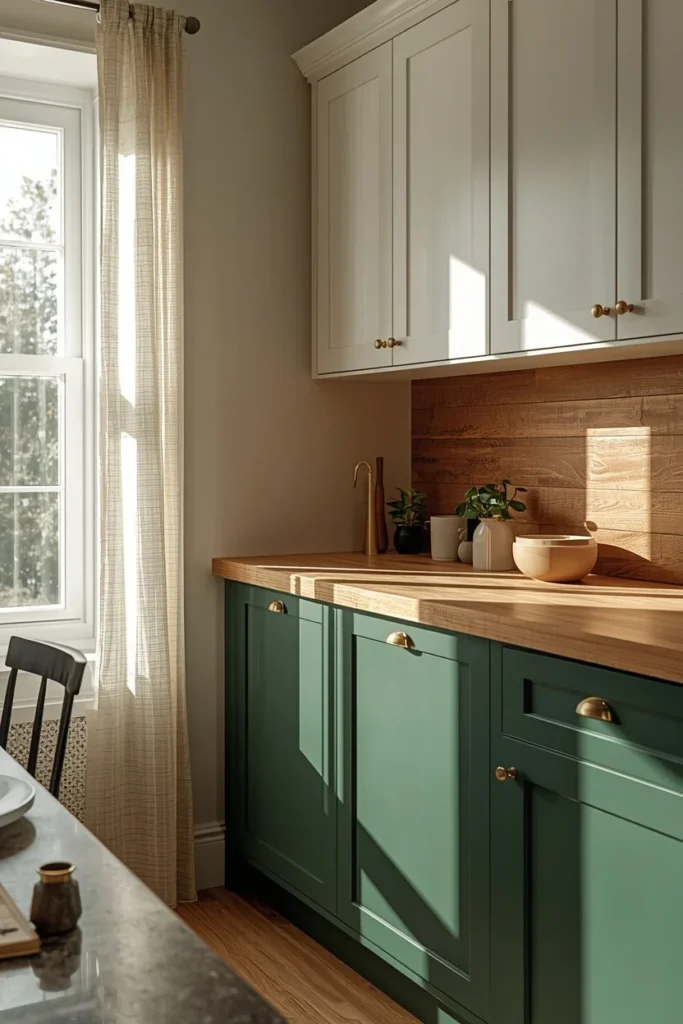
This is the entry point for anyone nervous about committing to color. Forest green lower cabinets carry the visual weight near the floor, while warm white or creamy upper cabinets keep sightlines open and the room feeling airy. It works especially well in kitchens with limited natural light, since the lighter uppers bounce brightness around instead of trapping it. Pair the green with a warm wood countertop or butcher block on a section of counter to soften the contrast, and use simple round or bar-style pulls in brushed nickel or brass depending on whether you want a cooler or warmer finish. It’s a two-tone approach that feels intentional rather than indecisive.
3. Olive Green Cabinets with Matte Black Hardware
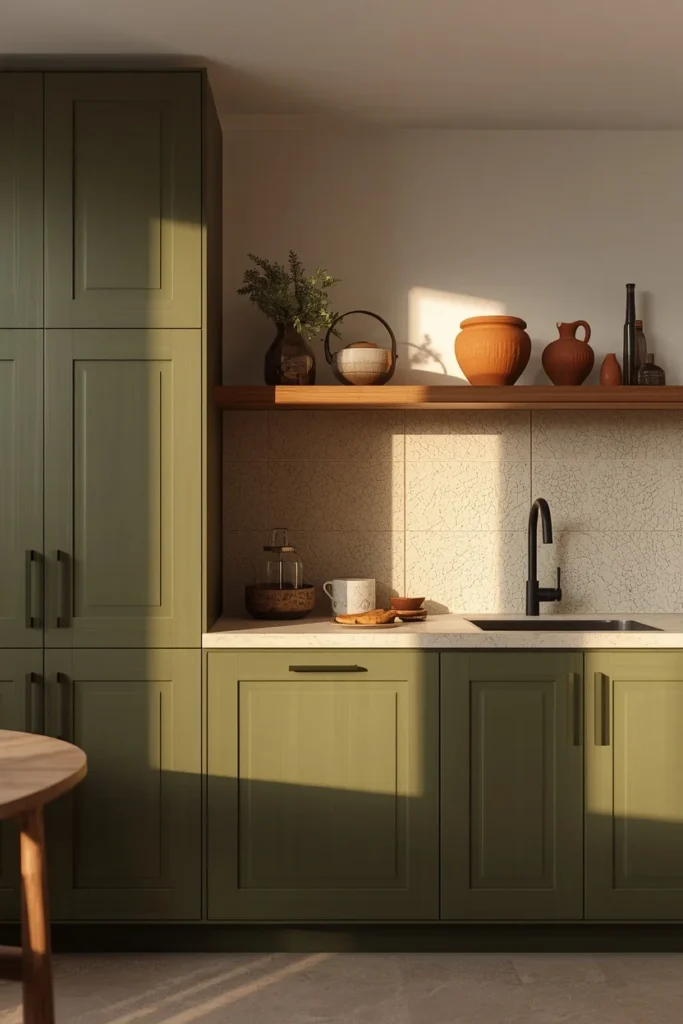
Olive brings an earthy, almost military-inspired warmth that reads more grounded than a true green. It leans slightly yellow, which makes it pair naturally with warm woods, terracotta accents, and unglazed ceramics. Matte black hardware and matte black faucet fixtures sharpen the look and stop it from feeling too soft or vintage. This combination suits kitchens going for a modern-rustic or Mediterranean feel, especially when paired with a textured tile backsplash in cream or sand. Keep the countertop simple — a honed quartz or soapstone in a neutral tone lets the olive cabinetry stay the clear focal point.
4. Sage Green Cabinetry with Brass Hardware and Open Shelving
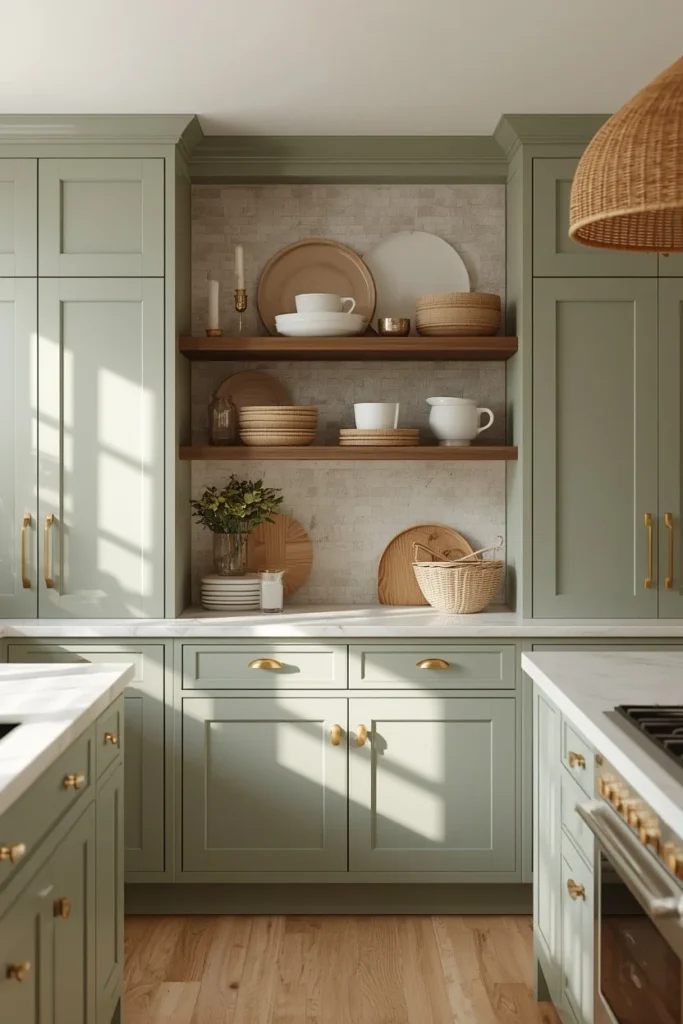
Sage is the softest, most livable shade of green, and it’s the one most likely to feel timeless five years from now. Because it reads almost neutral in the right light, sage cabinetry pairs effortlessly with wood floors, natural stone, and warm metals without any risk of clashing. Open wood shelving in place of upper cabinets adds a lived-in, collected feel and gives you a spot to display everyday dishware instead of hiding it away. Brass hardware warms up the cool undertone that sage can sometimes carry, and a woven runner or rattan pendant light finishes the look. This is the shade to choose if you want green without anyone accusing you of chasing a trend.
5. Black-Forest Green Cabinets for Maximum Drama
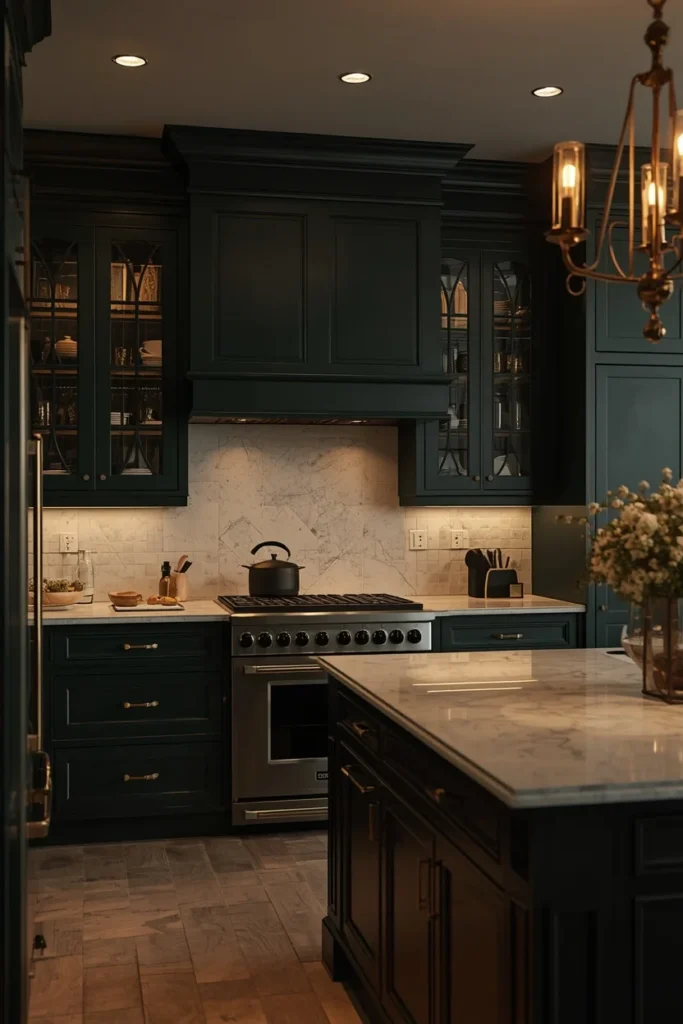
Some greens sit so close to black that they only reveal their true color in direct light — and that’s exactly the appeal. Black-forest cabinetry gives a kitchen serious visual weight and works especially well in dining-adjacent kitchens where a moodier, evening-friendly atmosphere is the goal. Because the color absorbs so much light, layered lighting matters more here than almost any other style: under-cabinet LEDs, warm pendants, and even a statement chandelier keep the space from reading as a dark void. Brass or aged gold hardware provides just enough sparkle against the near-black base, and a lighter stone counter, like a pale quartzite, keeps the whole room from tipping into gloom.
6. A Single Green Island Against Neutral Perimeter Cabinets
If a full green kitchen still feels like too big a leap, start with the island. Painting just the island in a rich green — emerald, forest, or hunter — creates an instant focal point while everything else stays neutral and easy to live with. This approach also has a practical upside: an island gets repainted far more easily than a full wall of cabinetry if you ever want to switch things up. White or off-white perimeter cabinets keep the room feeling bright, and the green island naturally becomes the gathering spot where people lean in for conversation. Add stools in a complementary neutral fabric so the eye still lands on the color, not the seating.
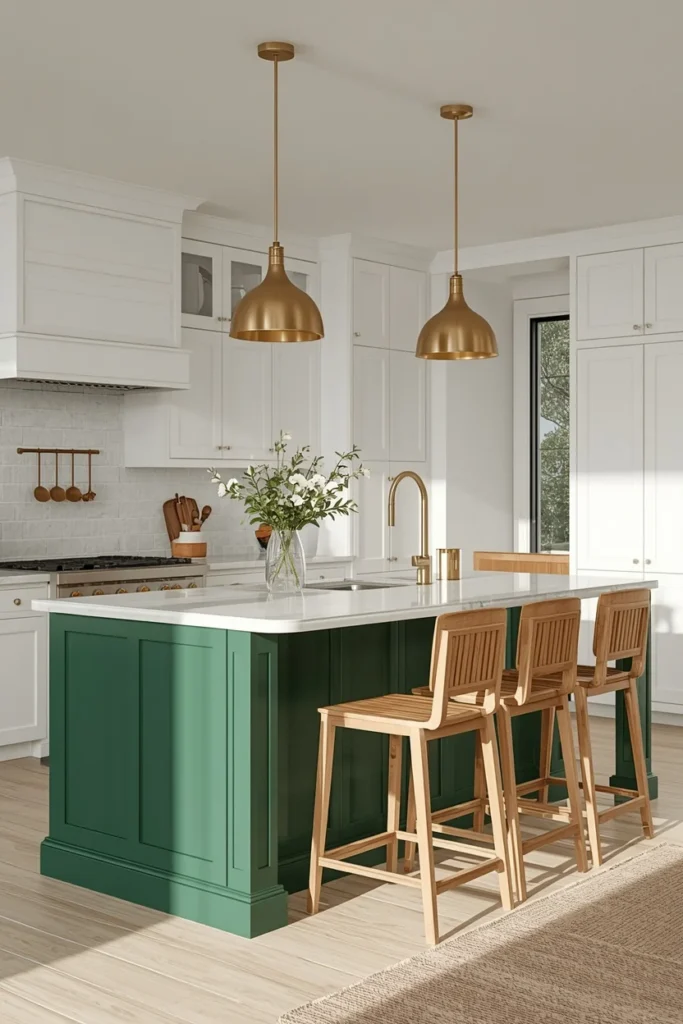
7. Emerald Green Tile Backsplash with Neutral Cabinets
For anyone who wants green but doesn’t want to touch their cabinets at all, the backsplash is the lowest-commitment way in. A subway or hexagon tile in glossy emerald adds shine and texture against white or wood cabinetry, and it reads as a deliberate design choice rather than a half-measure. Glossy tile also bounces light around a room, which helps in kitchens that don’t get much sun. Pair it with white grout for a crisp, graphic look, or a matching green grout for a more monolithic, almost wallpaper-like effect. This is one of the easiest updates on this list to actually pull off in a weekend.
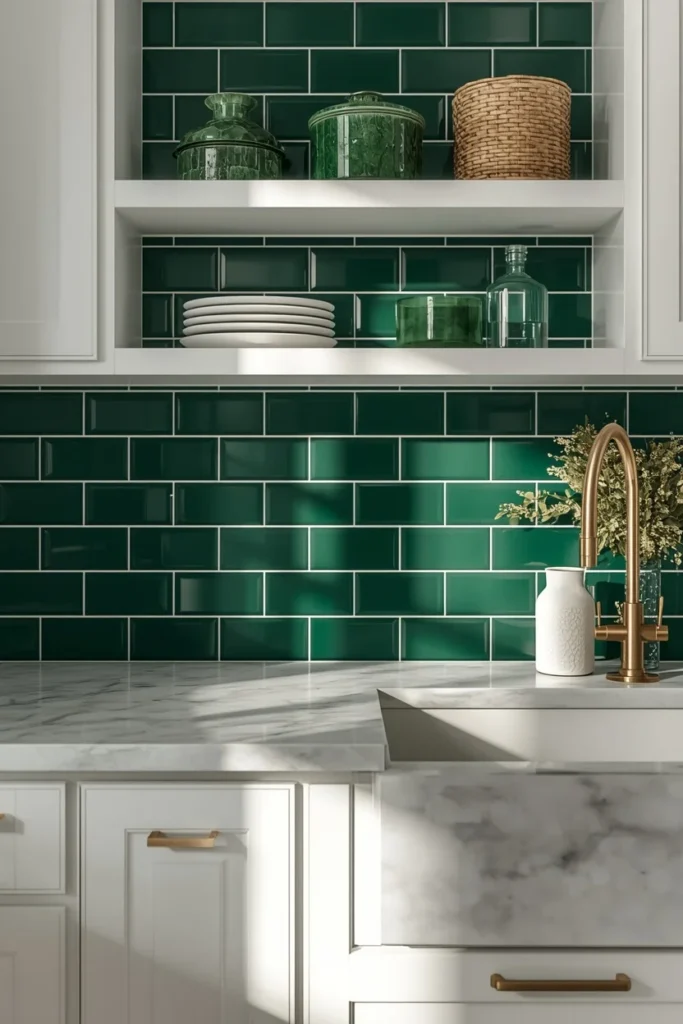
8. Green Stone Countertops as the Star of the Room
Let natural stone carry the green instead of paint. Slabs like green quartzite, verde marble, or amazonite granite bring organic movement and veining that no painted surface can replicate, and pairing them with darker or neutral cabinetry lets the stone stay the visual centerpiece. This works particularly well for full slab backsplashes, where the same stone runs up the wall for an unbroken, almost sculptural look. Because these stones can vary dramatically slab to slab, seeing the actual piece in person before ordering matters more here than with almost any other material choice on this list. Pair it with simple, quiet cabinetry so nothing competes with the natural pattern.
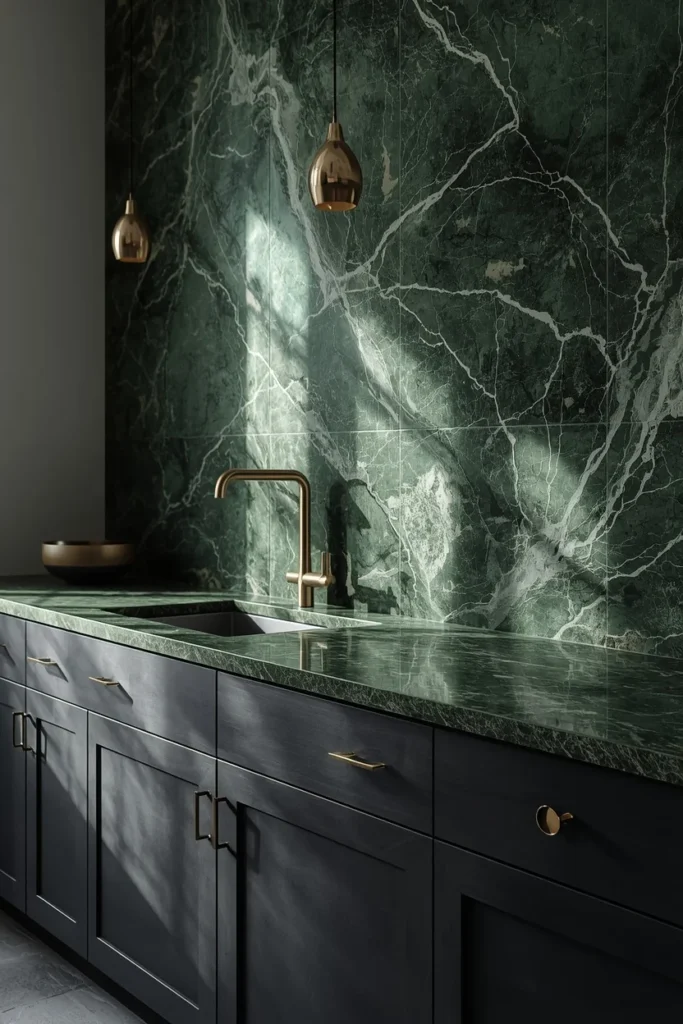
9. Peacock Green Cabinets and Walls, Fully Immersive
Peacock green sits right between blue and green, and using it on both the cabinets and the walls creates a fully immersive, almost jewel-box feeling in the kitchen. This is a bold move that works best in kitchens with strong natural light or generous overhead lighting, since a monochromatic dark color scheme needs help to avoid feeling like a cave. White trim around windows and doorways breaks up the intensity and gives the eye somewhere to rest. Brass fixtures play beautifully against peacock’s cooler undertone, adding warmth exactly where the color needs it. This look suits people who want their kitchen to feel like a room, not just a workspace.
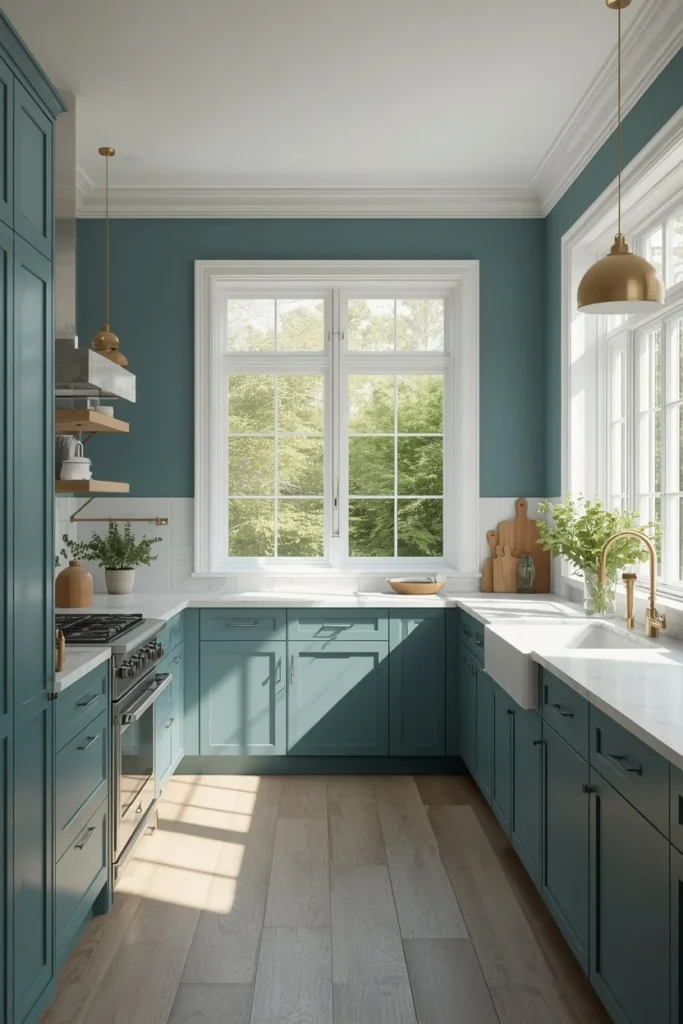
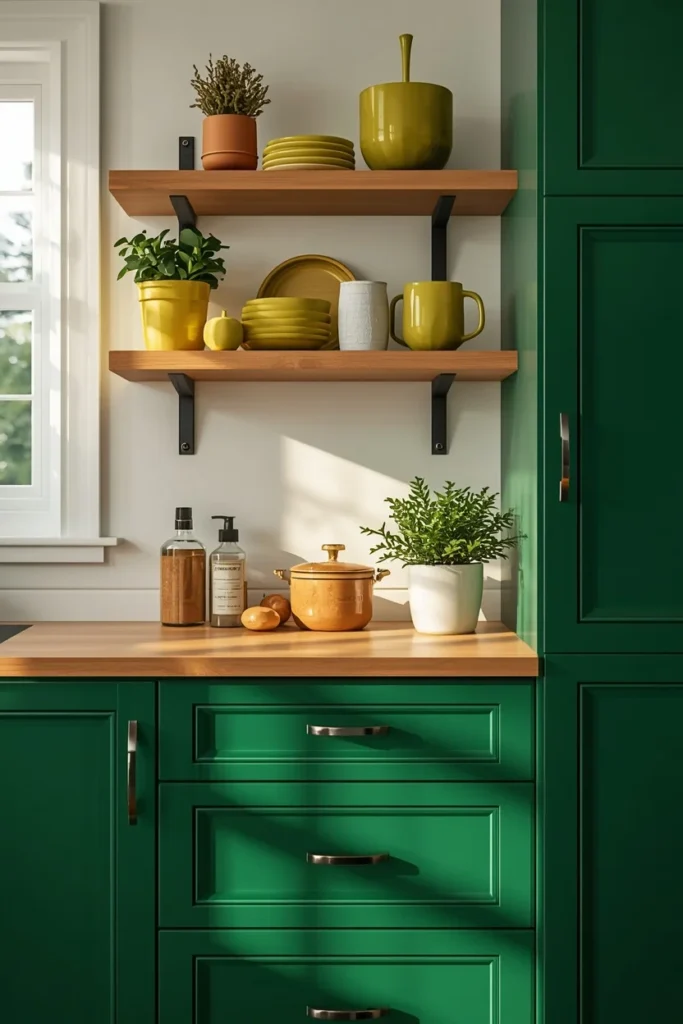
10. Emerald Cabinets with Unexpected Chartreuse Accents
This is the pairing for anyone who wants their kitchen to feel a little playful rather than purely elegant. Deep emerald cabinets set a rich, grounded base, while chartreuse accents — a vase, a stool cushion, a cluster of potted plants in bright pots — inject sudden, unexpected brightness. The contrast works because both colors sit on the green family wheel, just at opposite ends, so nothing clashes even though the combination feels surprising. Real plants do double duty here, adding color variation while reinforcing the garden-inspired mood the whole space is going for. Keep the rest of the palette quiet — white walls, natural wood — so the chartreuse pops stay the fun surprise instead of visual noise.
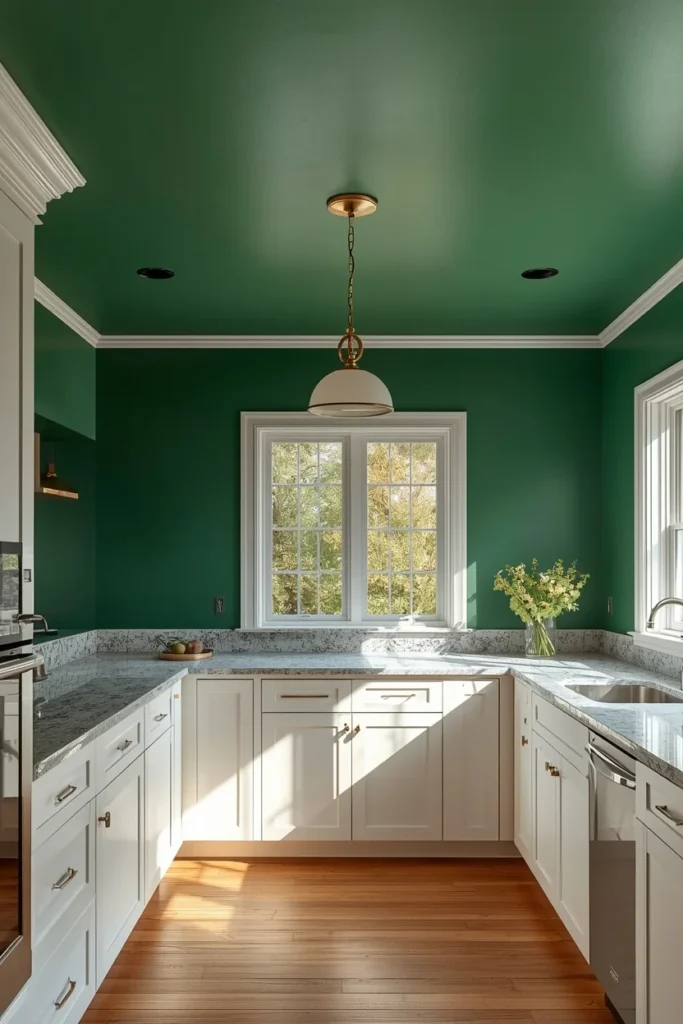
11. A Bold Green Ceiling Above Neutral Cabinetry
The fifth wall is the most underused surface in most kitchens, and painting it a bold green is one of the most unexpected ways to bring color into the room without touching a single cabinet. This works especially well in kitchens with higher ceilings, where the color adds architectural drama instead of feeling low or heavy. Keep the cabinets and walls in white or a warm neutral so the ceiling reads as an intentional design statement rather than an accident. A statement light fixture hanging against the green backdrop becomes an instant conversation piece. It’s a bold move that costs a fraction of a full renovation.
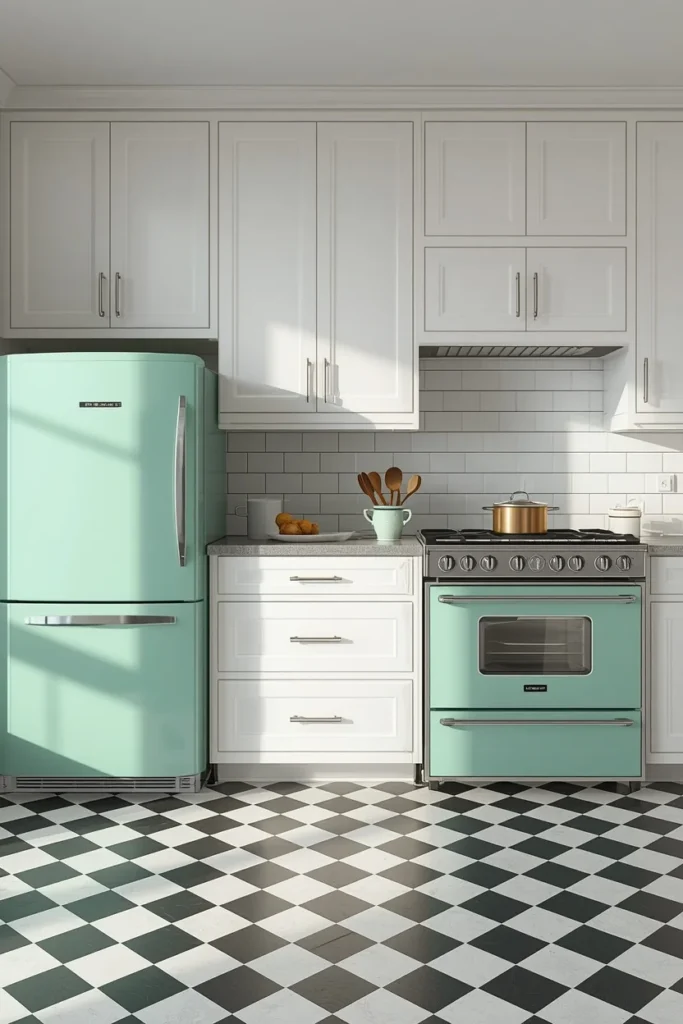
12. Retro Green Appliances with Classic White Cabinets
For a kitchen with personality and a little nostalgia, retro-style green appliances — a mint or emerald fridge, a matching range — bring color in a way that’s fun rather than formal. White cabinetry and classic subway tile keep the backdrop simple so the appliances get to be the statement piece. This approach suits anyone who loves the idea of a bold kitchen but isn’t ready to commit to painted cabinetry, since appliances can eventually be swapped without touching the rest of the room. Chrome or brass hardware on the cabinets should echo the finish on the appliances for a cohesive, considered look. It’s playful, it’s practical, and it photographs like something out of a vintage diner.
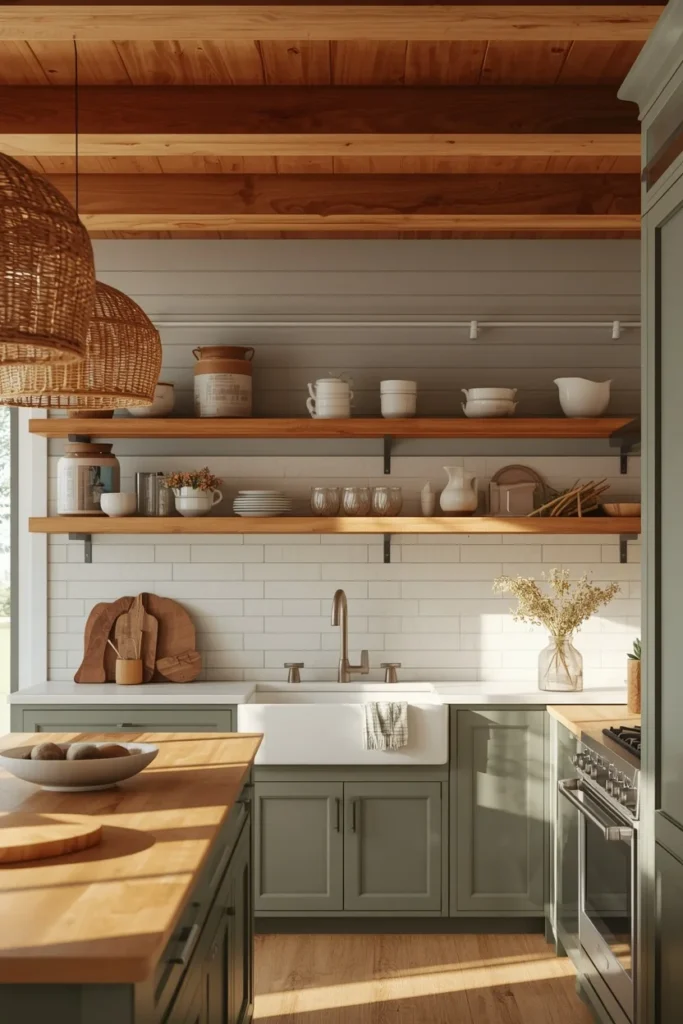
13. Moss Green Farmhouse Kitchen with Rattan Pendants
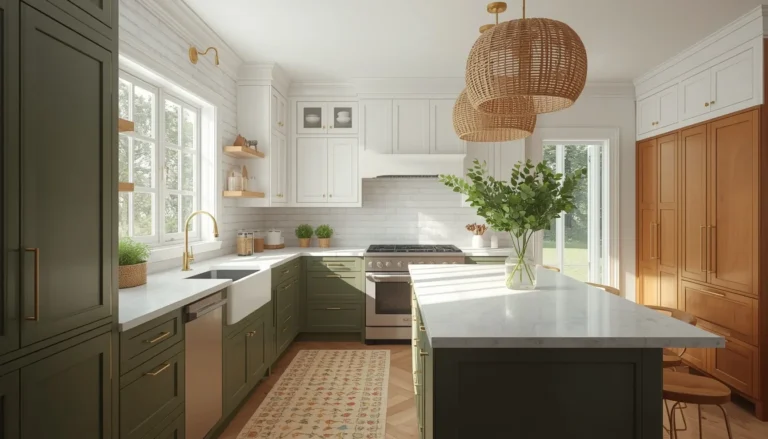
Farmhouse style doesn’t have to mean all-white shiplap anymore. Moss green cabinetry brings warmth and depth to the classic farmhouse silhouette — shaker doors, apron sink, exposed wood beams — without losing any of the coziness the style is known for. Rattan or woven pendant lights add natural texture that plays beautifully against the painted cabinetry, and open shelving stacked with stoneware keeps the room feeling collected rather than showroom-perfect. A butcher block counter section or a reclaimed wood island top ties the whole look back to something warm and lived-in. This pairing feels especially at home in kitchens with exposed beams or original architectural details.
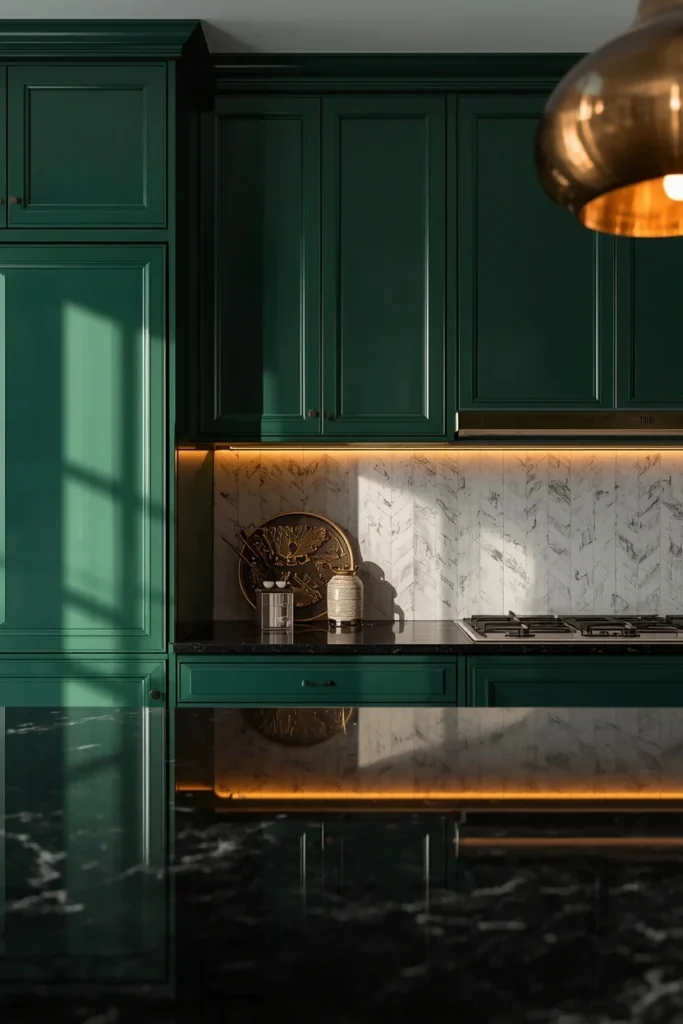
14. High-Gloss Emerald Lacquer Cabinets
If matte feels too quiet, a high-gloss lacquer finish turns emerald cabinetry into something closer to jewelry. The reflective surface bounces light around the room and adds a sense of polish that reads as modern and a little glamorous. This finish pairs especially well with sharp geometric backsplash tile and brass pendant lighting shaped like jewelry drops, since the whole look is leaning into shine rather than away from it. A dark countertop with subtle marble veining grounds the sparkle so the kitchen still feels sophisticated rather than flashy. High-gloss finishes do show fingerprints more than matte ones, so this look suits kitchens where a quick wipe-down is part of the daily routine anyway.
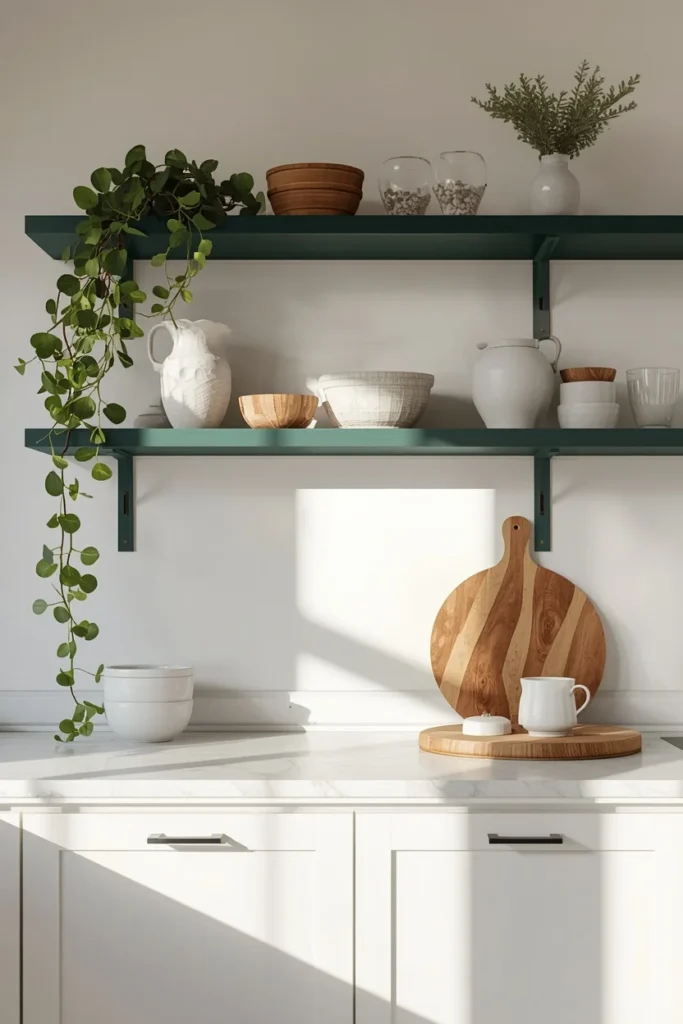
15. Green Painted Open Shelving on White Walls
Instead of committing to full cabinetry, paint just the open shelving a rich green and leave the walls behind them white. This creates floating planes of color that make your dishware, glassware, and cookbooks the real display piece, since everything sitting on the shelf pops against the painted backdrop. It’s one of the lowest-cost, lowest-risk ways to work green into a kitchen that’s otherwise fully neutral, and it’s easy to repaint if your taste changes. This look works especially well in small kitchens or rental-friendly spaces where painting full cabinetry isn’t an option. Style the shelves with a mix of ceramics, a small plant, and a stack of cookbooks for a collected, personal feel.
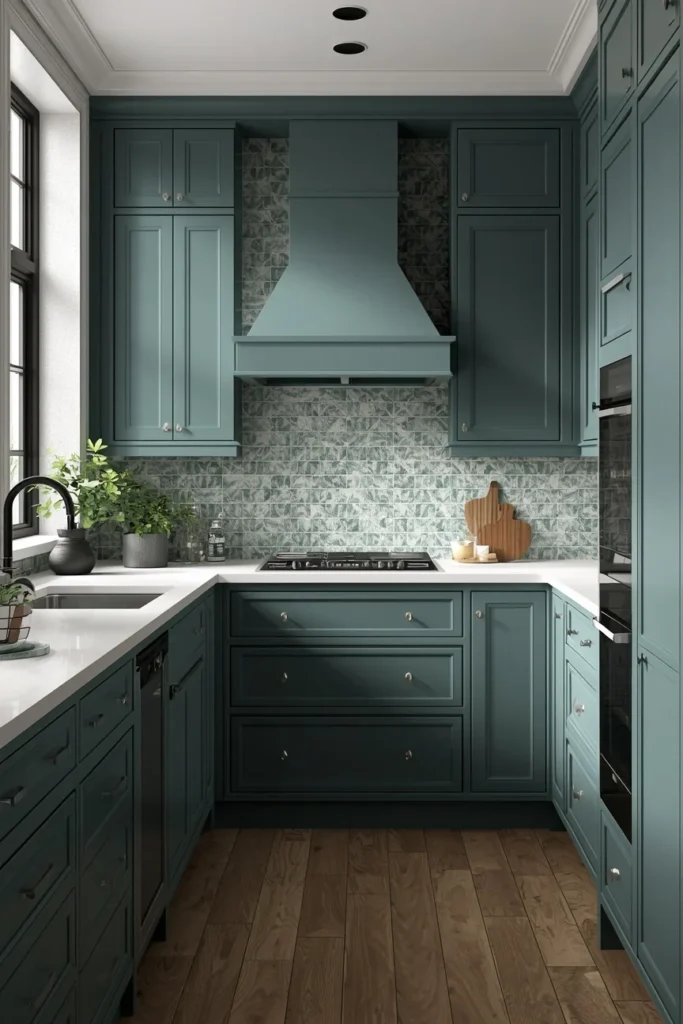
16. Layered, Monochromatic Shades of Green
The most advanced way to use green is to use several shades of it at once, as long as they share the same undertone. Blue-green cabinetry, a blue-green tile backsplash, and a subtle green-on-black wallpaper pattern can all sit in the same room without clashing, because they’re all pulled from the same side of the color wheel. The key rule is restraint elsewhere: keep accent colors to neutrals like black, white, and natural wood so the different greens get to be the real variety in the room. This layered approach feels sophisticated and collected rather than themed, almost like the palette evolved naturally over time. It takes a bit more planning than a single green cabinet color, but the payoff is a kitchen that feels genuinely one-of-a-kind.
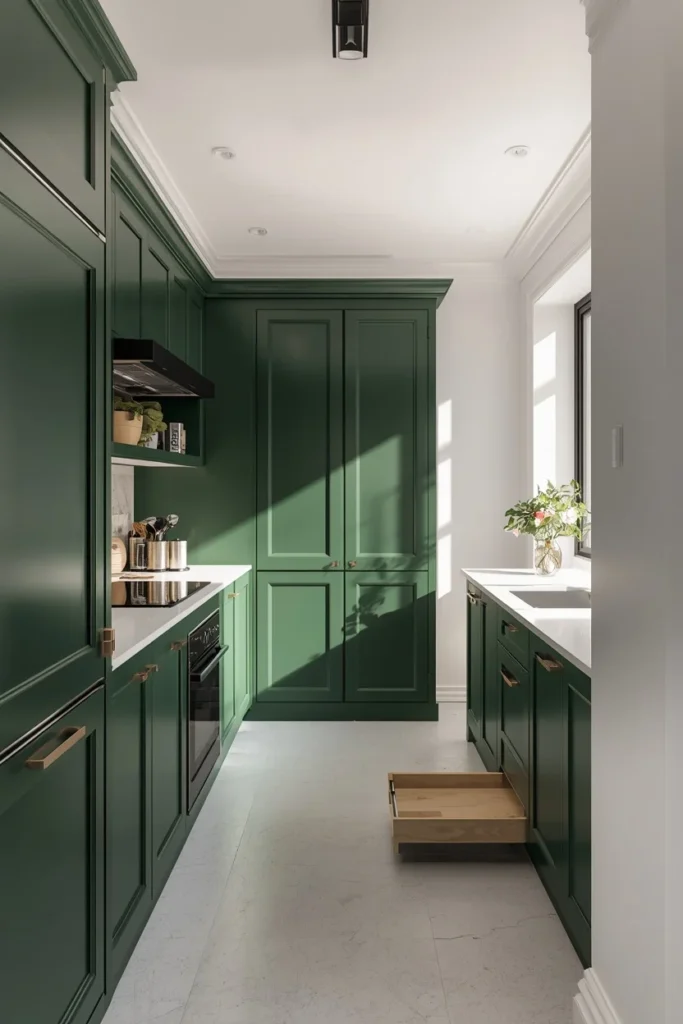
17. Small-Space Green Kitchen with White Accents
Bold color and small square footage aren’t opposites. In a compact kitchen, deep or bright green cabinetry actually makes the space feel more intentional and designed rather than smaller, especially when paired with white countertops, white walls, and plenty of light. Integrated appliance panels in the same green keep sightlines clean and prevent a small room from feeling chopped up by mismatched finishes. Pull-out pantry storage and vertical shelving make the most of limited space while letting the color do the visual heavy lifting. The lesson here is that a small kitchen with a strong point of view almost always reads as more stylish than a small kitchen trying to disappear.
Styling Tips
Keep hardware finish consistent throughout the kitchen — mixing brass, nickel, and black in the same room usually reads as unplanned rather than eclectic. Let the depth of your green guide your wall color: darker greens need lighter walls to breathe, while soft sage or olive can often handle a slightly darker wall without feeling closed in. Bring in one or two plants regardless of which green you choose, since real greenery always makes painted green read more natural and less like a design decision made in isolation.
Practical Implementation Ideas
Start with a sample board painted directly on your cabinets, not just a paint chip, since green shifts dramatically under different lighting throughout the day. If you’re not ready to commit to full cabinetry, test the color on an island, a pantry door, or open shelving first. Order actual stone slab samples before committing to a countertop pairing, since screen colors and in-person stone can look surprisingly different.
Common Mistakes to Avoid
Choosing a green cabinet color under store lighting and skipping the at-home test is the most common regret people mention after painting. Going too dark in a kitchen with limited natural light without adding compensating fixtures can leave a room feeling more cave-like than cozy. Pairing a cool-toned green with warm yellow-toned wood without a transition element, like a neutral countertop, can also make the two finishes fight instead of complement each other.
Small-Space Alternatives
In tighter kitchens, lean on a single green element — an island, a backsplash, or open shelving — rather than full cabinetry, so the color adds personality without visually shrinking the room. Glossy finishes bounce more light around a small space than matte ones, which helps a bold color feel expansive instead of heavy. Keep countertops and walls light to balance out a deeper green cabinet choice.
Budget-Friendly Alternatives
Painting existing cabinets in a quality cabinet-grade paint costs a fraction of full replacement and can completely change the mood of a kitchen. Peel-and-stick green tile is available for backsplash areas and can be installed in an afternoon without any demolition. Swapping just the hardware to brass or matte black after painting a green accent piece is a small, inexpensive detail that makes the whole update look finished.
Pro Styling Recommendations
Layer at least two light sources — overhead and under-cabinet — in any kitchen using a deep or dark green, since a single ceiling fixture rarely does the color justice. Choose one metal finish and repeat it in at least three places (hardware, faucet, lighting) so the room feels tied together. When in doubt about committing to a full cabinet color, start with the island; it’s the easiest surface to repaint if your taste evolves.
FAQs
Conclusion
A green kitchen isn’t one look — it’s dozens of them, and that’s exactly what makes this color so easy to make your own. Whether you’re drawn to a moody, near-black emerald or a soft sage that barely reads as color at all, there’s a version of this trend that fits your home, your light, and your budget. Save the ideas that caught your eye, pull your own paint samples, and let the space tell you which shade actually belongs in it.