19 Modern Farmhouse Kitchens That Nail Cozy Meets Contemporary
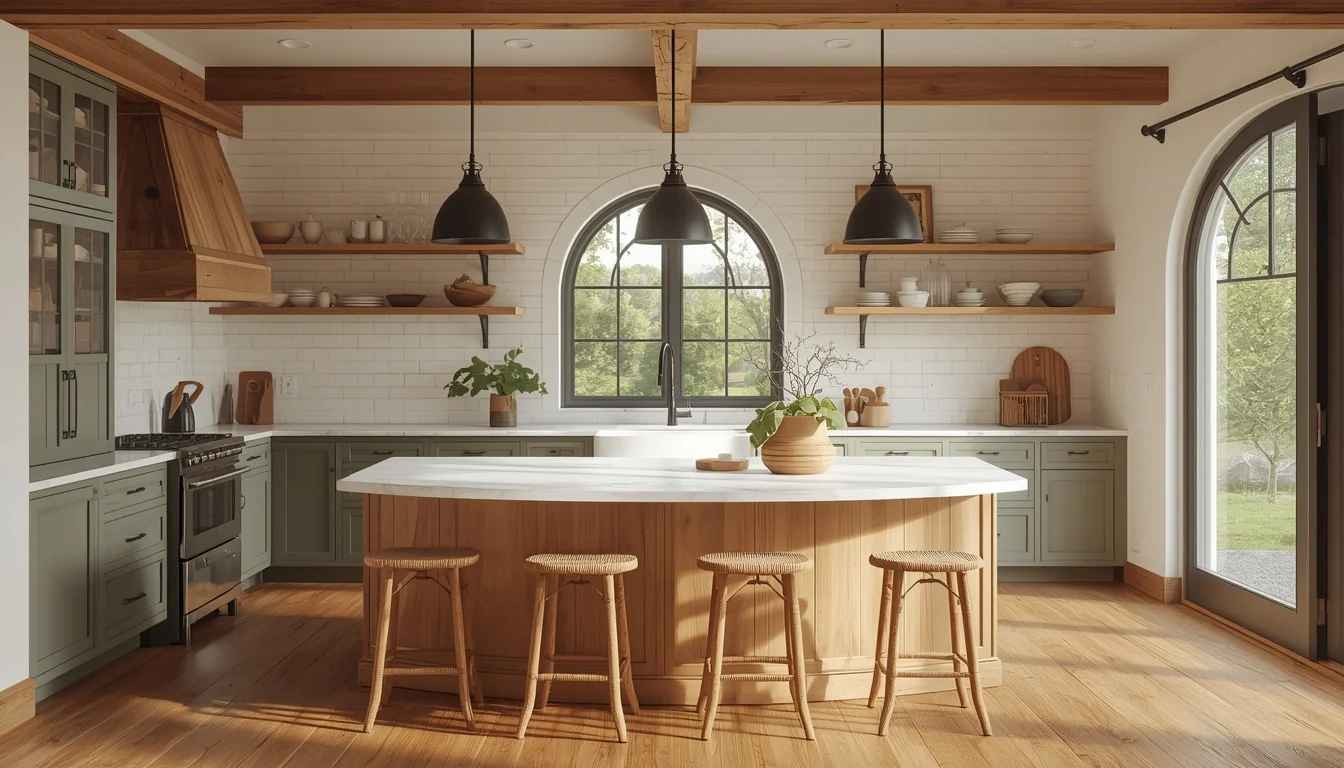
You know that feeling when a kitchen looks warm and lived-in, but somehow still looks put together? That’s the modern farmhouse look done right.
Not shiplap walls and mason jar lights everywhere. Not a cold, all-white box either. Something in between — worn-in wood next to clean cabinet lines, a soft sage or navy island next to warm brass hardware, a big farmhouse sink under a window that actually gets used.
That balance is harder to get right than it looks. Go too rustic and the space feels heavy or outdated. Go too modern and you lose the warmth that made farmhouse style popular in the first place.
So here are 19 real kitchen ideas that get the mix right. Each one leans on a different color, material, or layout choice, so you can pull pieces from a few and build something that fits your own space and budget.
Table of Contents
1. Sage Green Two-Tone Cabinets
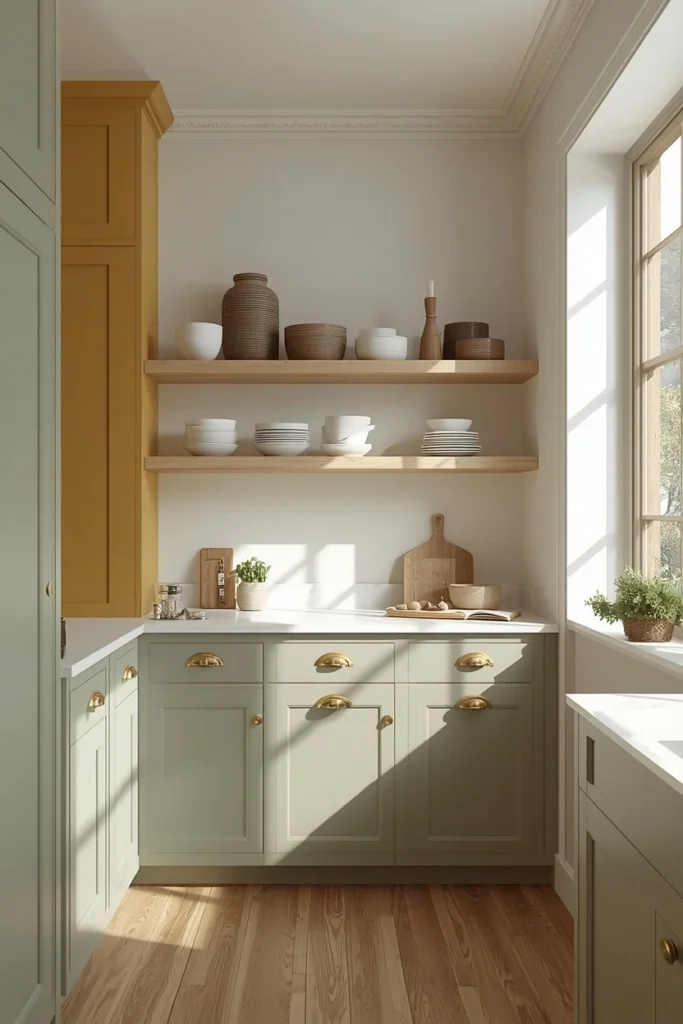
Sage green on the lower cabinets with white on top is the defining farmhouse combination right now, and it works because sage sits right between a color and a neutral. It reads as calm and earthy in daylight but never competes with the rest of the room. Pair it with unlacquered brass hardware, which will develop a soft patina over time and only look better for it. Warm wood open shelving on one wall breaks up the green without adding another loud color. This palette works in kitchens of almost any size, since the white uppers keep the ceiling line feeling tall and open.
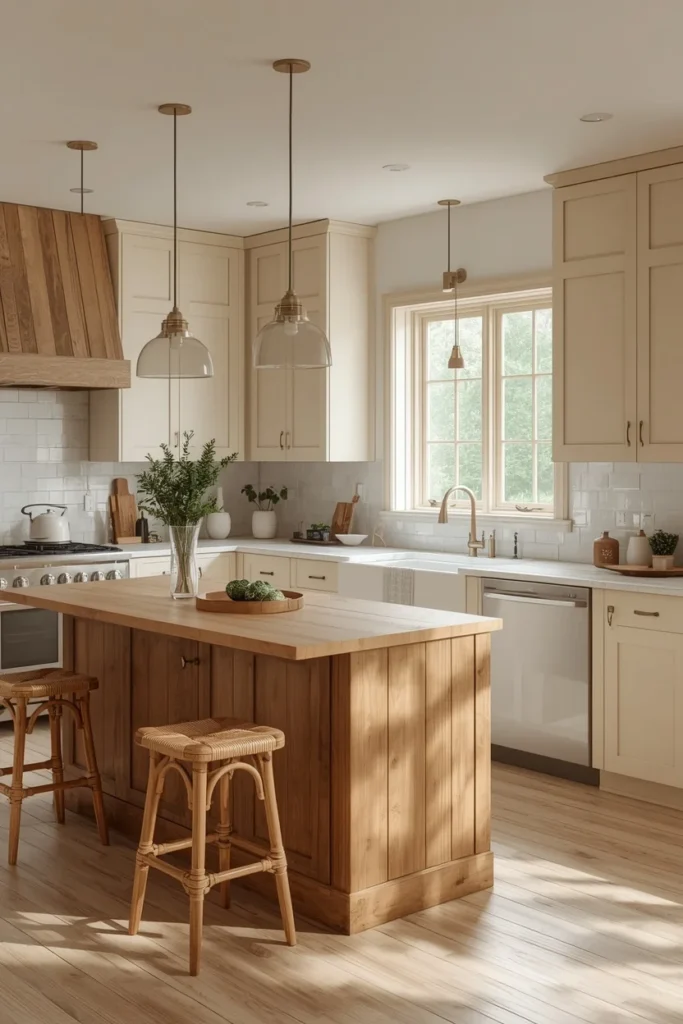
2. Warm Cream Cabinets With an Oak Island
Cream with a hint of yellow undertone photographs so much warmer than pure white, especially in a room that gets afternoon sun. This kitchen pairs cream perimeter cabinets with a large oak island, so the wood grain becomes the main texture story in the room. A farmhouse sink sits under a big window, keeping the sink area bright even without extra pendant lighting. Cane or rattan counter stools soften the straight lines of the island edge. This combination suits a farmhouse kitchen that needs to feel bright year-round, not just in summer.
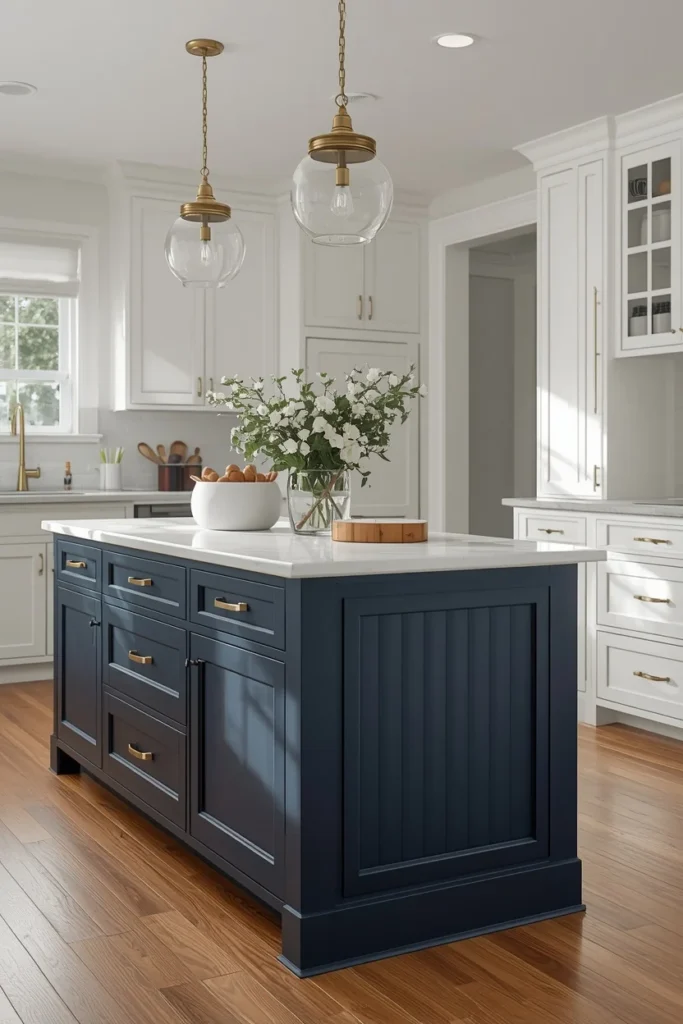
3. Navy Blue Island, White Perimeter
A navy island against white cabinetry gives the room a quiet focal point without painting every wall a bold color. Navy holds its own next to brass or matte black hardware, both of which read as slightly nautical and slightly countryside at the same time. Clear glass pendant lights above the island keep the eye moving upward instead of stopping at the color block below. Warm wood flooring keeps the whole space from feeling cold, since navy paired with cool gray floors can tip into a more corporate look. This is a strong option for anyone who wants one statement color without a full repaint.
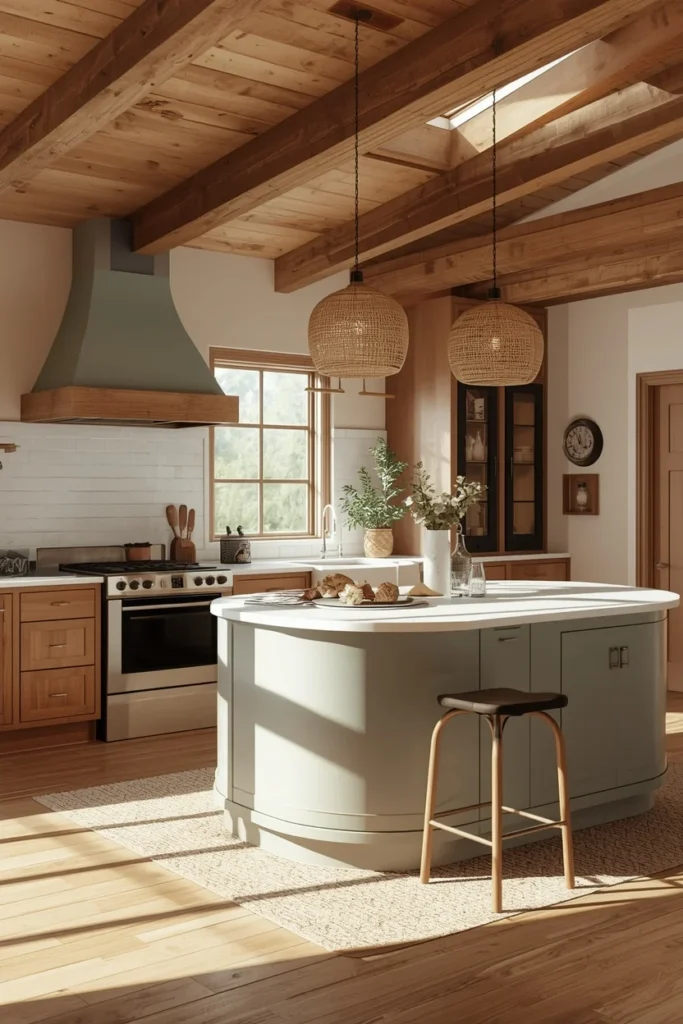
4. Curved Island in Soft Gray-Green
Curved islands are showing up in more farmhouse kitchens because a rounded edge softens what is usually the boxiest object in the room. A soft gray-green finish keeps the curve from feeling too sculptural or modern on its own. Warm wood cabinetry on the perimeter grounds the space, while a beamed ceiling overhead adds a second layer of texture without competing for attention. Rounded pendant lights or a woven chandelier continue the curved shape upward. This layout works especially well in open-plan kitchens where the island gets walked around from multiple directions.
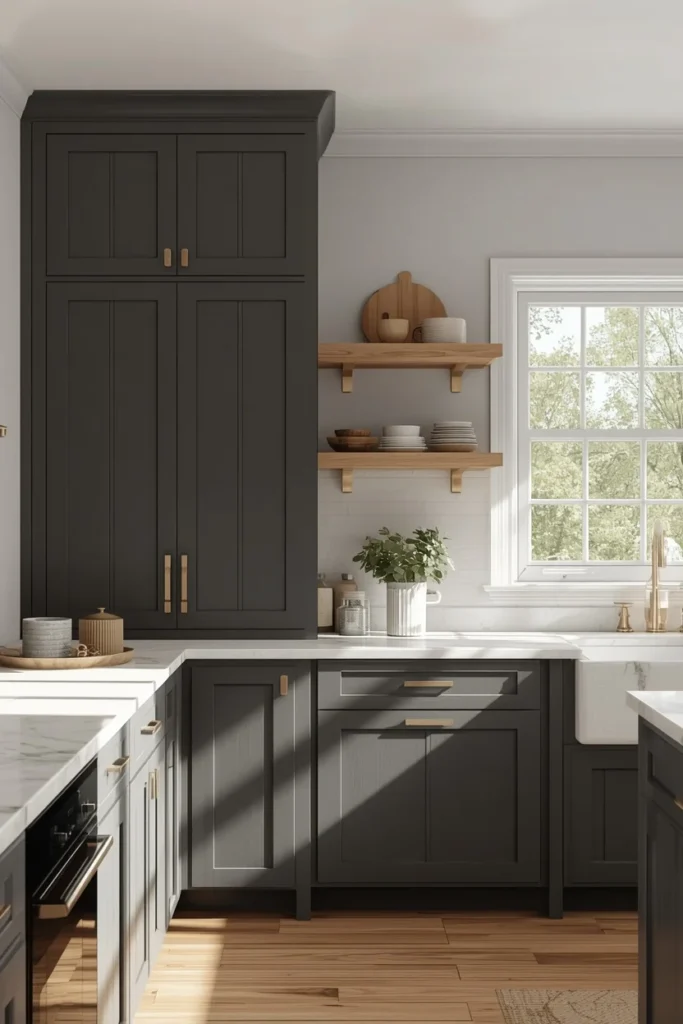
5. Charcoal Cabinets With Brass Hardware
Charcoal cabinetry is one of the boldest farmhouse choices, and it works because the dark tone reads as sophisticated rather than heavy when it’s matte, not glossy. Warm brass hardware against charcoal creates real contrast, so the hardware becomes jewelry for the cabinets instead of an afterthought. A white or light marble countertop keeps the room from feeling like a cave, bouncing light back up onto the ceiling. Open shelving in warm wood on one wall gives the eye a place to land besides the dark cabinets. This palette suits a kitchen with strong natural light, since charcoal in a dim room can feel closed in.
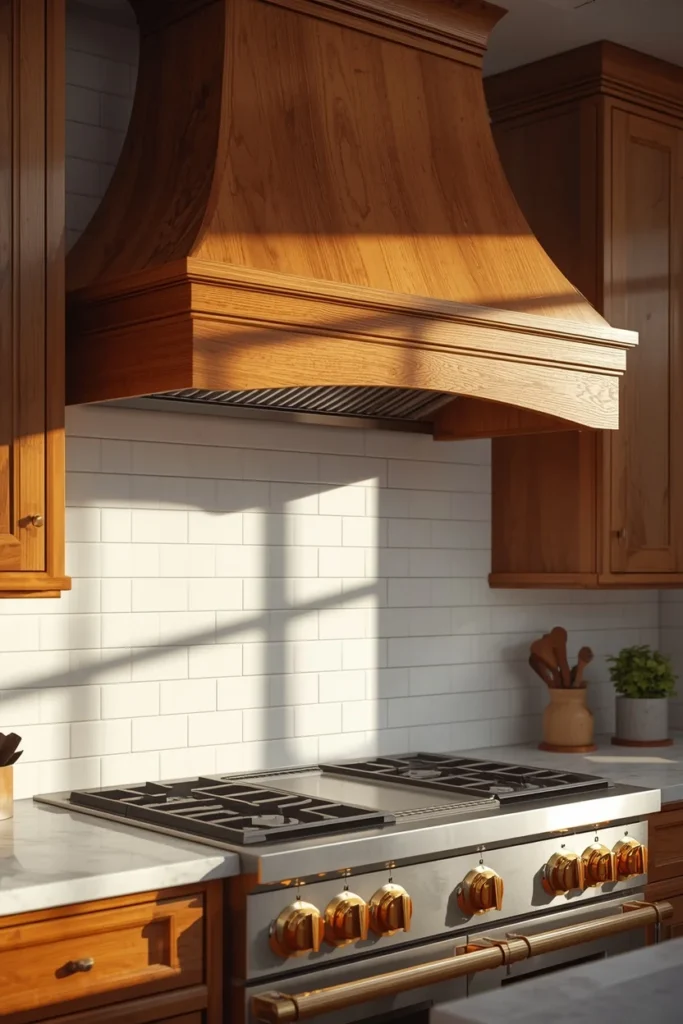
6. Curved Wood-Clad Range Hood
Range hoods have stopped hiding inside the cabinetry and started acting as the main event. A curved, wood-clad hood built out from the wall gives the cooking zone its own architectural moment, the way a fireplace anchors a living room. Pair it with simple white or cream tile behind the stove so the hood shape stays the star. A brass or black pot filler mounted to the wall adds a small, useful detail that photographs well too. This idea works best when the rest of the kitchen stays fairly simple, letting the hood carry the visual weight.
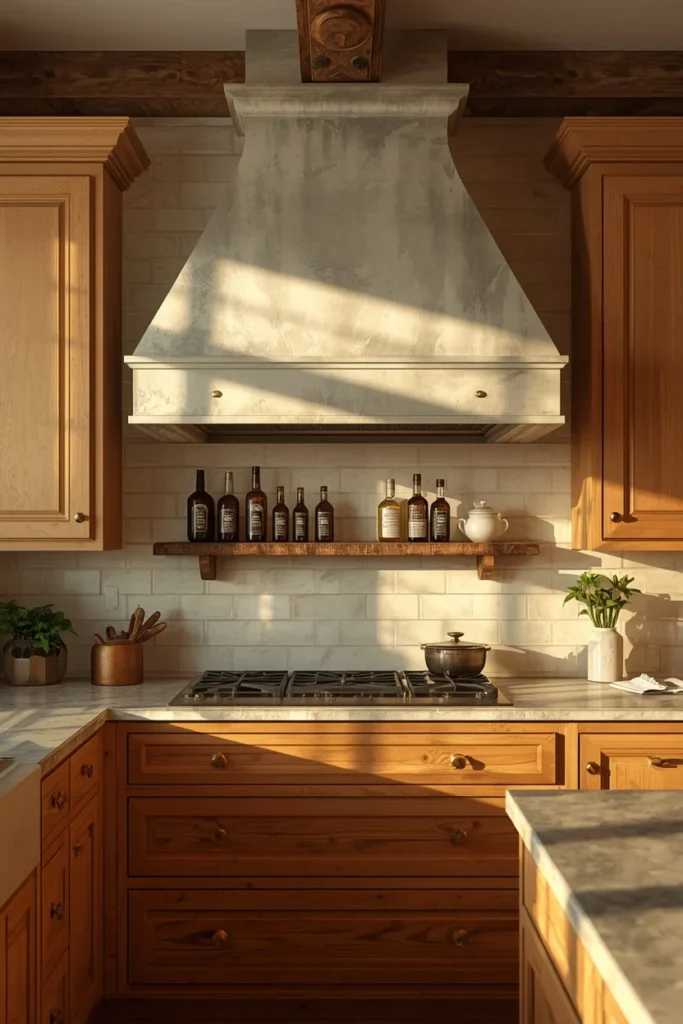
7. Plaster-Finished Range Hood
A plaster hood has a soft, hand-troweled texture that no paint finish can fully copy, and that texture is exactly what makes it feel farmhouse rather than sterile. The rounded, slightly imperfect edges pair naturally with warm wood cabinetry and stone counters. Because plaster reads as neutral, it works with almost any cabinet color, from cream to charcoal. A simple wood shelf mounted just below the hood gives space for everyday jars and cooking oils without cluttering the counter. This is a good pick for a kitchen aiming for a European farmhouse feel rather than a strictly American one.
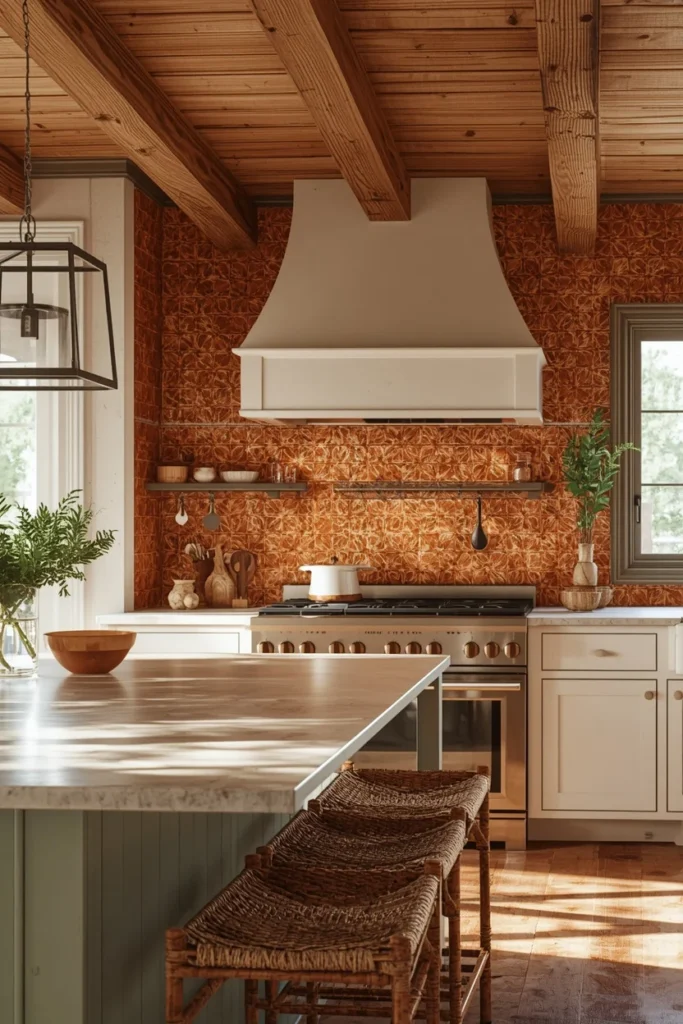
8. Zellige Tile Backsplash With Wood Beams
Zellige tile has a handmade, slightly uneven surface that catches light differently across every single tile, which is exactly why it never looks flat in photos. Running it up the full backsplash wall behind the range turns a functional area into the most textured spot in the kitchen. A beamed ceiling above continues that handmade feeling into the architecture itself. Woven counter stools at the island tie the natural materials together from top to bottom. This combination works especially well in a kitchen with warm wood tones already present, since zellige comes in earthy, slightly variegated colors.
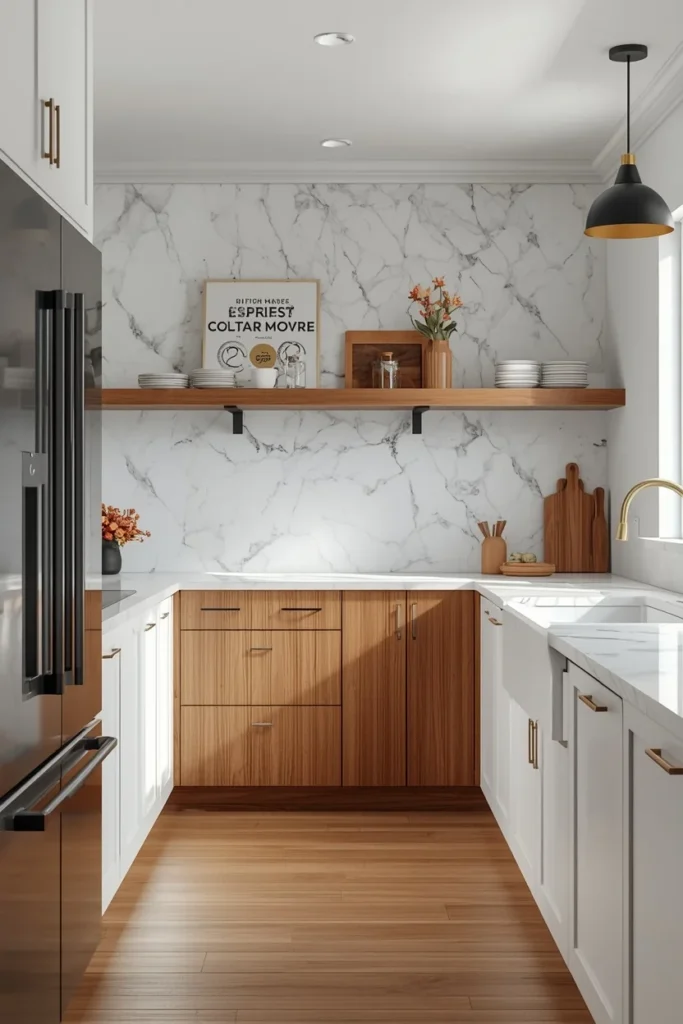
9. Marble Slab Backsplash With a Marble Shelf
A full marble slab running from countertop to a shelf near the ceiling turns the whole cooking wall into one continuous, quietly luxurious surface. Warm white cabinetry with a touch of oak keeps the room from feeling formal or cold despite the marble. The floating marble shelf gives a spot for a few everyday items, like olive oil or a small plant, without needing more cabinets. Mixed metal fixtures, one brass, one black, keep the wall from feeling too matched or showroom-perfect. This idea suits kitchens where the range wall faces the main sightline from the living space.
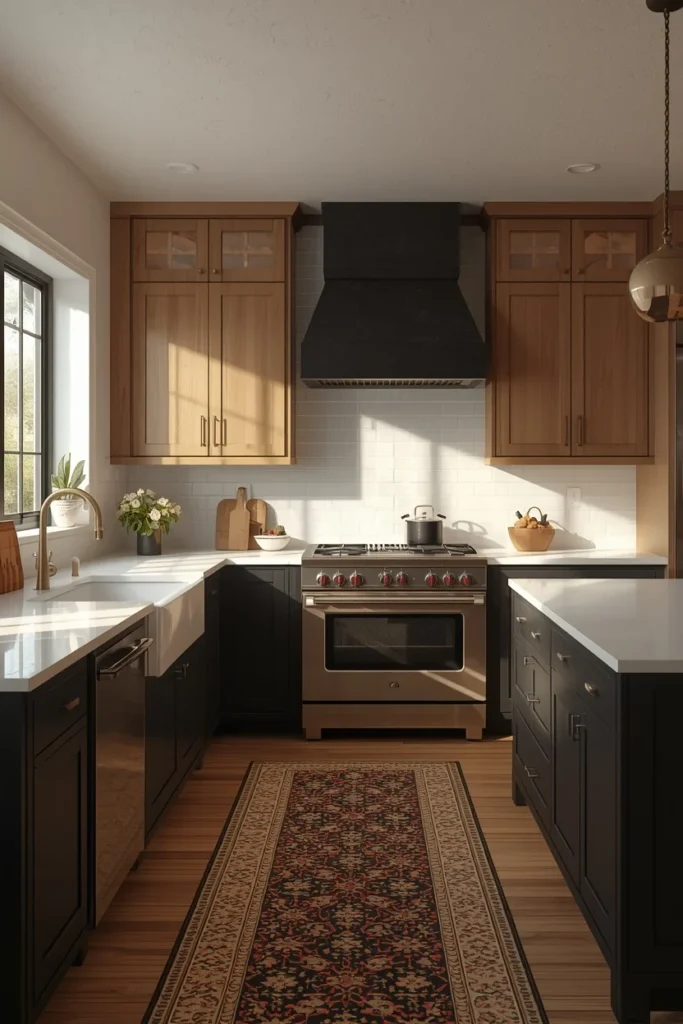
10. Black Lower Cabinets, Oak Uppers, Brass Pot Filler
This two-tone pairing puts matte black on the lower cabinets and natural wood on the uppers, so the darker color grounds the room while the wood keeps it warm near eye level. A black range hood repeats the lower cabinet color higher up the wall, tying the two halves of the kitchen together. A brass pot filler above the stove adds a small dramatic detail that also happens to be genuinely useful for filling large pots without carrying them across the room. White countertops keep the palette from reading as too dark overall. A patterned runner rug in front of the sink adds warmth and softens the hard lines underfoot.
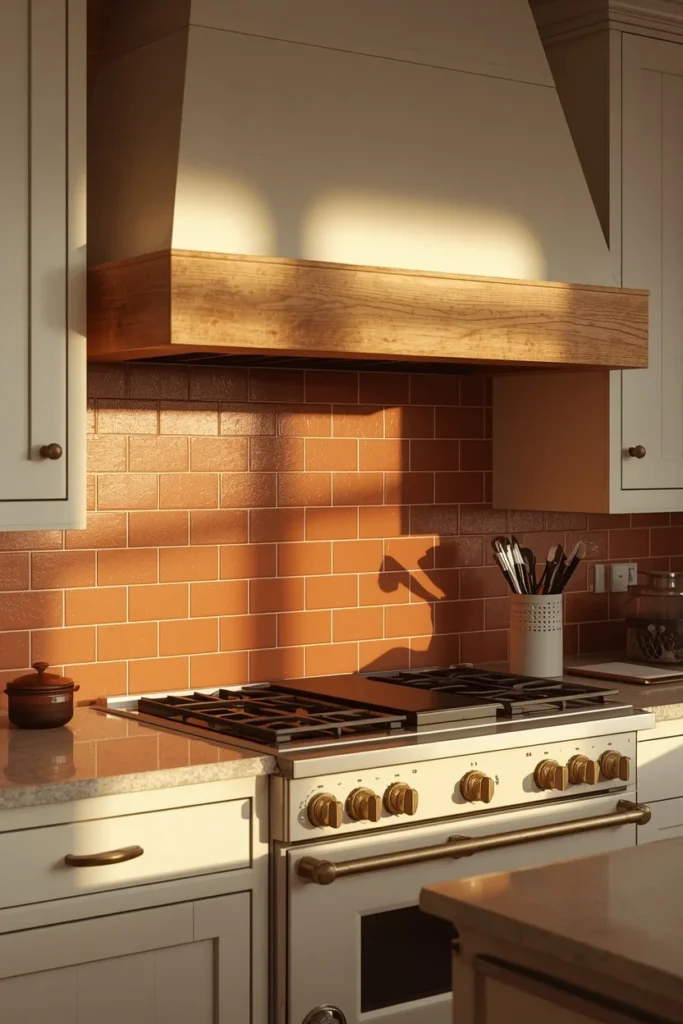
11. Terracotta Accent on the Range Wall
A terracotta accent on the range wall or hood grounds the whole kitchen in earthy warmth without committing every cabinet to a dark color. It works especially well against cream or warm white cabinetry, where the contrast feels intentional rather than random. A wood range hood on top of the terracotta tile keeps the wall from feeling too busy with only one added material. Brass hardware throughout the room continues the warm, sun-baked color story. This idea gives a kitchen a slightly Mediterranean, countryside feel without a full redesign.
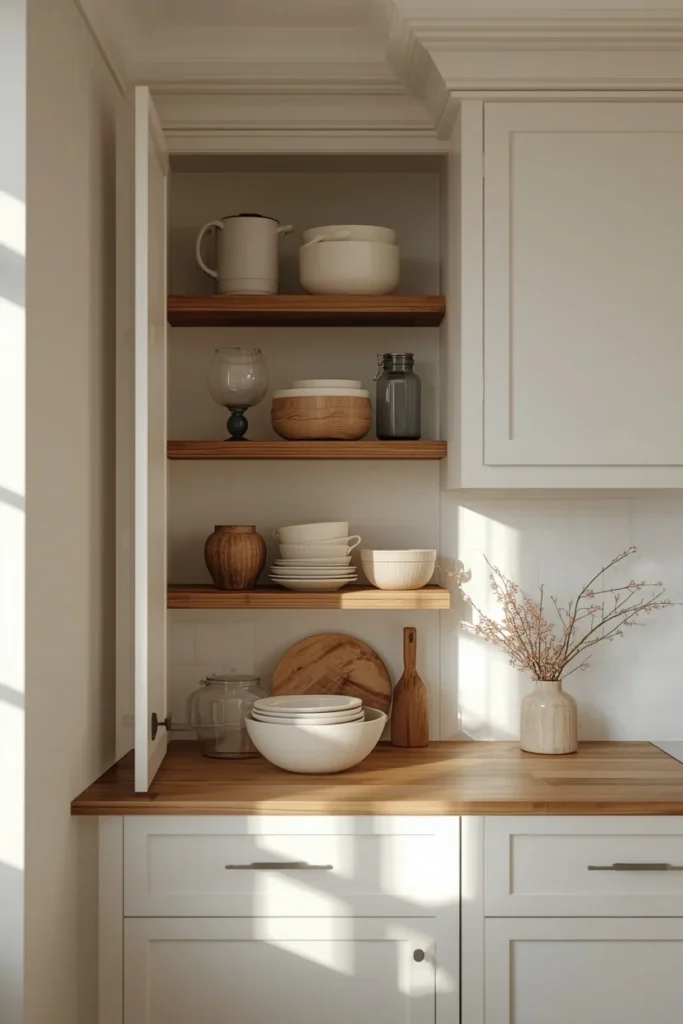
12. Restrained Open Shelving
Open shelving works best now when it covers a small section of wall instead of an entire kitchen, holding only what actually gets used every day. A few handmade ceramic bowls, a stack of cookbooks, and simple glassware read as personal rather than staged. Wood shelves with visible grain soften the visual weight of the cabinetry around them. Keeping the rest of storage closed behind cabinet doors means the open section never looks cluttered or overwhelming. This approach suits kitchens where the homeowner wants personality without daily upkeep.
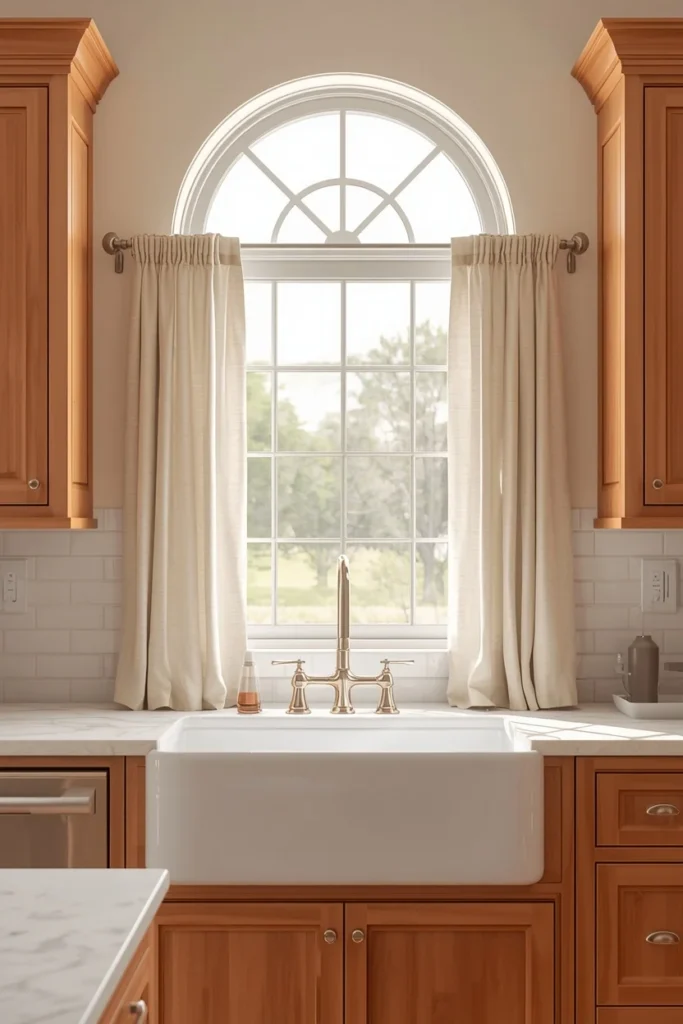
13. Apron Sink Under an Arched Window
A deep apron-front sink handles oversized pots, sheet pans, and cutting boards that a standard sink simply can’t fit, which is the practical reason this style has stuck around. Placing it beneath a tall arched window brings in natural light exactly where task lighting matters most. Countertops need to sit slightly higher around an apron sink, since the basin itself sits a bit lower than a standard undermount. Simple gathered curtains or none at all keep the window feeling airy rather than fussy. This pairing turns the sink area into a genuine focal point instead of a purely functional corner.
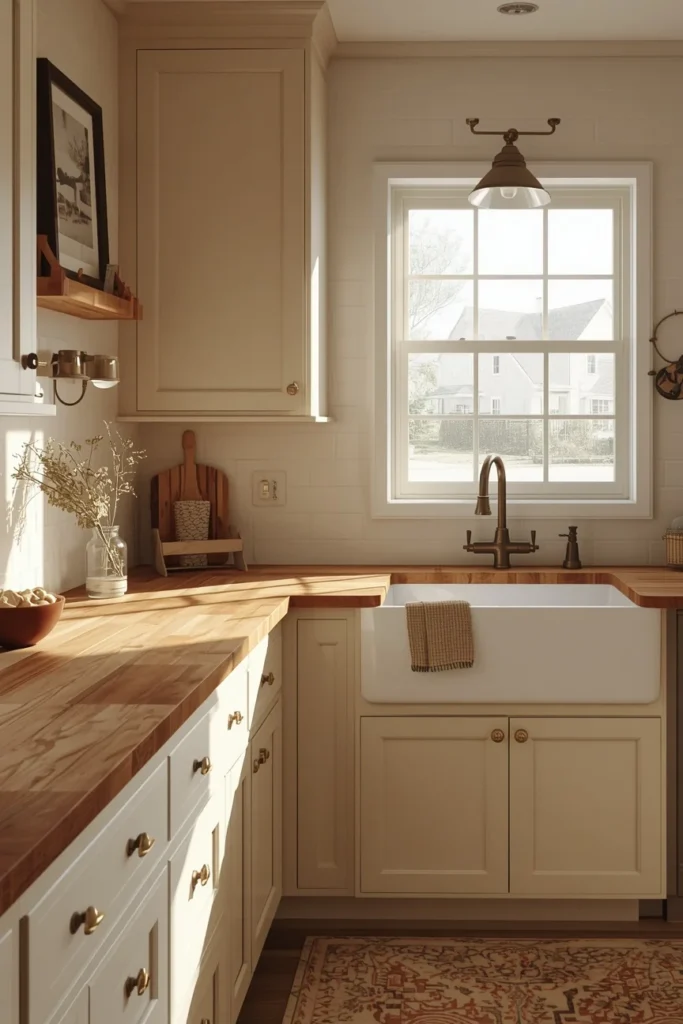
14. Butcher Block Counters With Cream Cabinets
Butcher block brings warmth and a genuinely useful cutting surface right into the counter itself, which is why so many working kitchens keep coming back to it. Paired with cream cabinetry, the wood tone becomes the main contrast in the room instead of competing with a busy stone pattern. Classic cup pulls in an aged brass or black finish keep the hardware feeling collected rather than brand new. A window over the sink lets morning light hit the wood grain directly. This combination is a strong, lower-maintenance alternative to marble for anyone who actually cooks daily.
15. Beamed Ceiling With Woven Pendant Lights
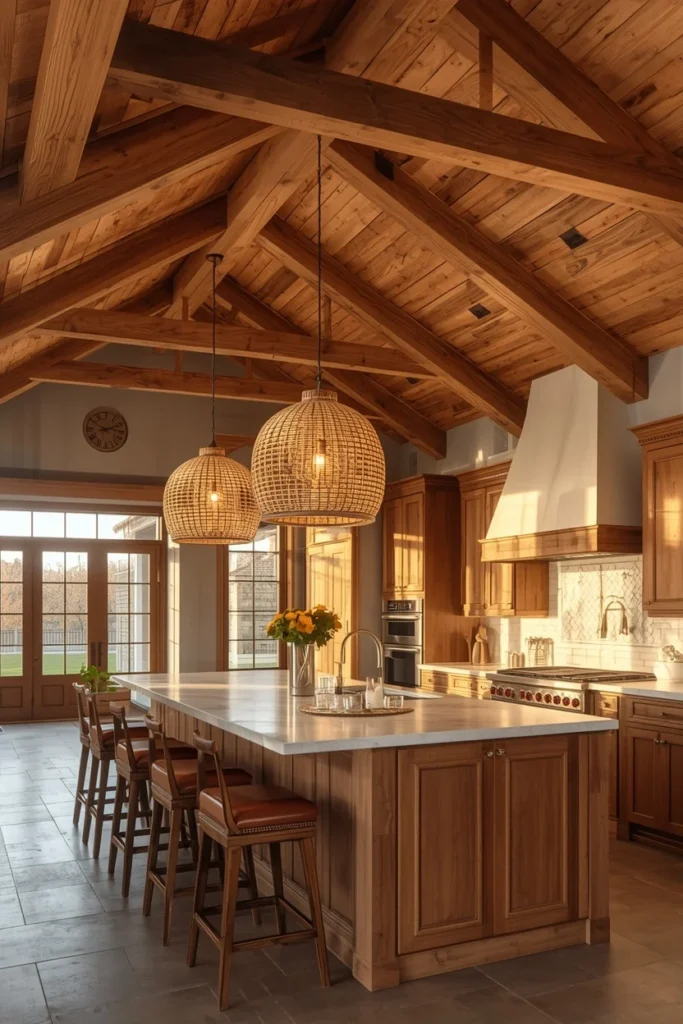
Exposed wood beams give a flat ceiling real texture and a sense of history, even in a newly built home. Oversized woven pendant lights hanging below the beams repeat that natural material story at eye level, right where guests actually notice it. This combination works especially well over a long island meant for gathering, since the woven texture softens what would otherwise be a very sleek countertop. Leather or rattan counter stools continue the natural material palette down to seating. This pairing turns a plain ceiling into one of the most photographed parts of the whole kitchen.
16. Mixed Metal Hardware
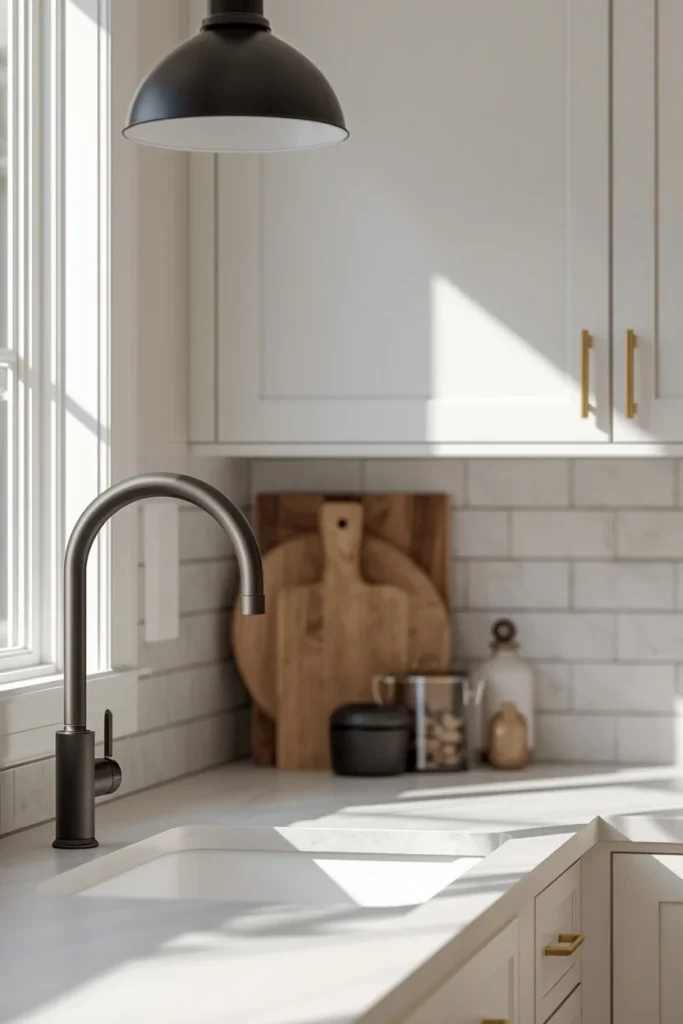
Mixing brass and matte black hardware in the same kitchen sounds risky on paper, but it actually reads as collected and personal rather than mismatched. The key is intention: brass on cabinet pulls, black on faucets and pendant fixtures, so the split follows a clear pattern instead of feeling random. This trick works in almost any color kitchen, from bright white to deep charcoal, because both metals are neutral enough to sit next to any cabinet tone. A single warm wood element, like a cutting board leaning against the backsplash, ties the two metals together visually. This is one of the easiest, lowest-cost ways to make a builder-grade kitchen feel more designed.
17. Board and Batten Island
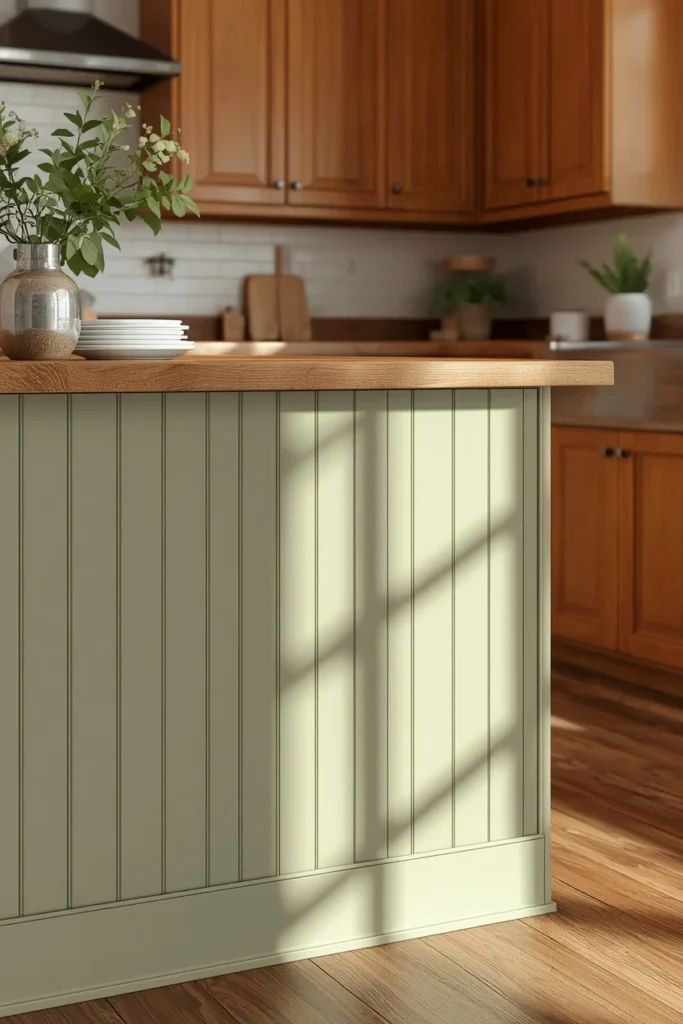
Adding vertical board and batten paneling to an island base turns a plain box into something with real architectural detail, similar to what you’d see on a farmhouse porch or mudroom wall. Painted in a soft sage, cream, or warm white, the paneling catches shadow lines that change throughout the day as light moves across the room. A wood countertop on top of the paneled base keeps the whole piece from feeling too crisp or new-build. This detail costs far less than replacing full cabinetry, making it one of the more approachable upgrades on this list. It works particularly well as the one standout piece in an otherwise simple kitchen.
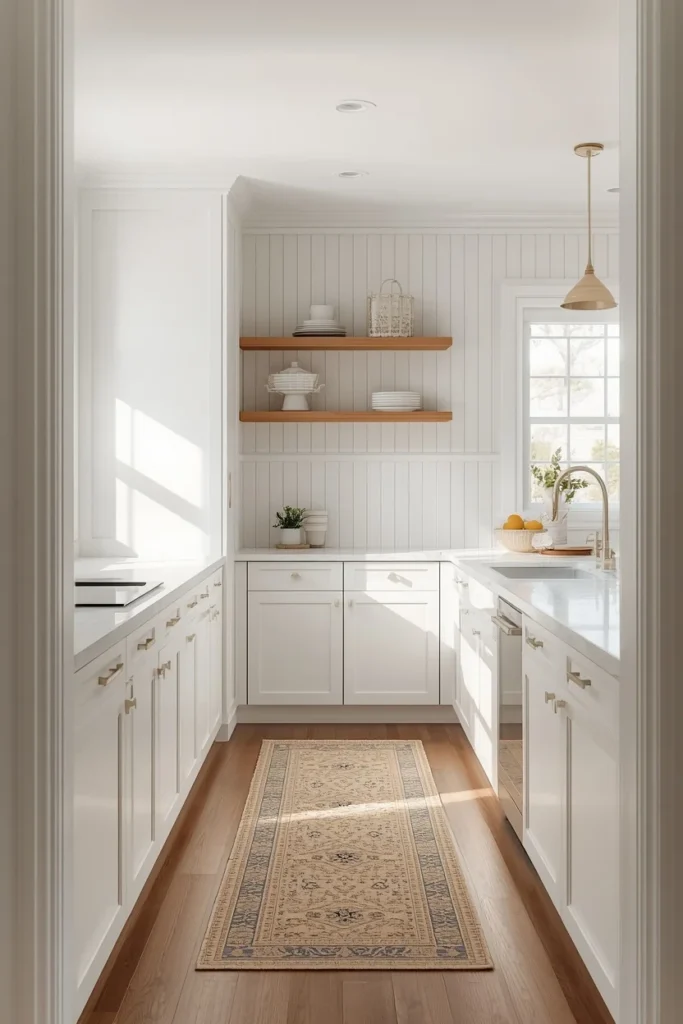
18. Small Galley Modern Farmhouse Kitchen
A narrow galley layout can still carry full modern farmhouse character without needing an island at all. Light cabinetry on both walls keeps the tight footprint from feeling closed in, while a single warm wood open shelf adds personality without eating into counter space. A runner rug down the center adds softness underfoot in a room made up mostly of hard surfaces. Vertical shiplap or beadboard on one end wall draws the eye up rather than emphasizing the narrow width. This layout proves that farmhouse warmth isn’t dependent on square footage.
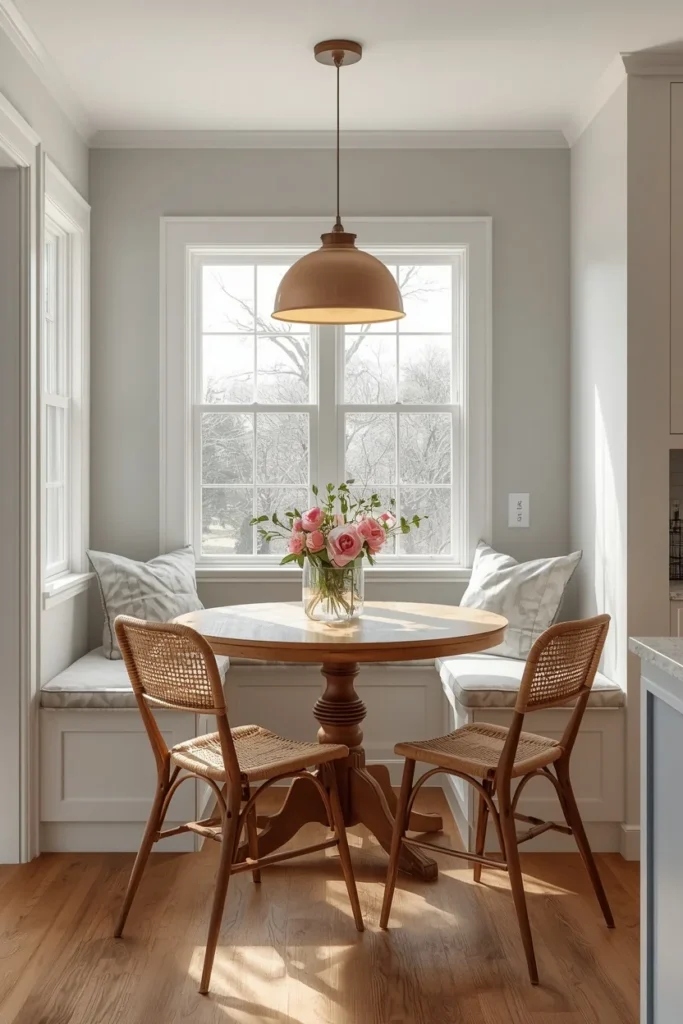
19. Farmhouse Breakfast Nook Attached to the Kitchen
A small breakfast nook right off the kitchen extends the farmhouse feeling into an actual sit-down spot, rather than stopping at the island. A round or oval wood table with mismatched or woven chairs feels more collected than a matching dining set. Placing the nook near a window brings in the same natural light that makes the rest of the kitchen feel bright. Simple pendant lighting overhead, rather than a large chandelier, keeps the scale appropriate for a smaller space. This addition turns a kitchen from a purely functional room into the actual heart of the house.
Styling Tips
Keep your color palette to two main tones plus one metal finish, and let texture do the rest of the work. A kitchen with sage cabinets, warm wood, and brass hardware already has enough visual interest without adding a third bold color.
Style counters the way you’d actually use them. One cutting board leaning against the backsplash, a small plant, maybe a bowl of lemons — not a row of matching canisters that never get touched.
Layer at least two textures beyond the cabinetry itself, like a woven pendant light plus a linen runner, or a plaster hood plus a butcher block counter. Texture is what makes a farmhouse kitchen feel warm instead of just painted a warm color.
Practical Implementation Ideas
Start with hardware and lighting if a full renovation isn’t in the budget right now. Swapping cabinet pulls and pendant lights changes the whole feel of a kitchen for a fraction of the cost of new cabinets.
If you’re keeping your current cabinet boxes, consider painting just the island a bold color like sage or navy while leaving the perimeter white. This gives you the two-tone look without repainting the entire kitchen.
Add a wood range hood cover over an existing vent hood as a weekend project. It’s one of the highest-impact, lower-cost changes on this whole list.
Common Mistakes to Avoid
Going too matched is the biggest one. A kitchen where every metal, wood tone, and texture is identical ends up feeling like a showroom instead of a home.
Overcrowding open shelves is a close second. Shelves packed with decorative objects that never get used start to look cluttered within a few months, not styled.
Choosing a trendy dark color without enough natural light in the room is another common misstep. Charcoal or black cabinetry needs bright windows or strong task lighting to avoid feeling like a cave.
Small-Space Alternatives
In a small kitchen, skip the island and lean on a single striking element instead, like a patterned backsplash or a bold-colored range wall. One focal point reads as intentional in a tight space, while too many competing details make it feel busy.
Choose lighter cabinet tones on at least one wall to keep the room feeling open. A small kitchen with all charcoal cabinets can start to feel closed in, even with good lighting.
A narrow open shelf instead of upper cabinets on one wall adds farmhouse character without needing extra floor space.
Budget-Friendly Alternatives
Peel-and-stick zellige-look tile or paintable backsplash panels can mimic the handmade tile look for a fraction of the cost of real zellige.
Unlacquered brass hardware and cup pulls are one of the cheapest upgrades that make the biggest visual difference, often under a hundred dollars for an entire kitchen.
A butcher block counter from a big box store, sealed properly, gives you the warm wood look of a custom counter without a custom price tag.
Pro Styling Recommendations
Choose your hardware finish before your cabinet color, not after. Hardware is easier to plan around a color than the reverse, and it’s usually the more expensive piece to change later.
Test paint colors on the actual cabinets or a large board in the room, under both morning and evening light, before committing. Sage green in particular can shift from earthy to almost gray depending on the light in your specific kitchen.
Save one wall for something unexpected, whether that’s a patterned tile, a bold pendant, or a plaster hood. A kitchen where every element matches perfectly often reads as less interesting than one with a single surprising detail.
FAQs
Conclusion
The kitchens that work best here aren’t the ones chasing every trend at once. They pick one or two ideas — a color, a texture, a lighting choice — and let those carry the whole room.
That’s really the throughline across all 19 of these: warmth from materials, structure from clean lines, and enough restraint that nothing fights for attention. Pull the pieces that fit your space and your budget, and build from there.