17 Afrobohemian Living Room Ideas That Feel Like a Global Getaway
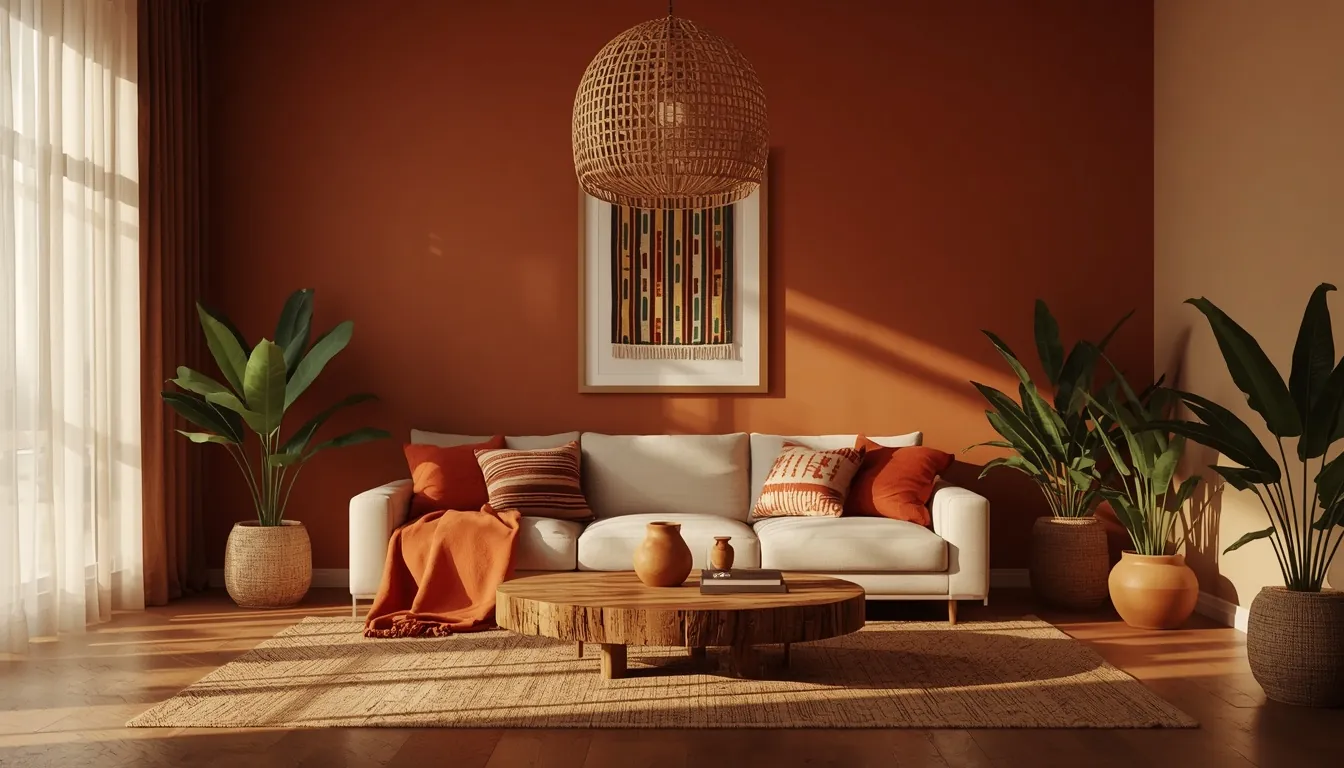
There’s a specific kind of living room that makes you want to kick off your shoes, sink into the sofa, and stay for hours. Not because it’s the most expensive room you’ve ever seen, but because it feels like it’s been collected, not purchased. A hand-carved stool that’s older than the house it’s sitting in. A mudcloth throw with the slightly irregular hand-painted pattern that only comes from real fermented-mud dye, not a printer. Rattan pendant light throwing warm, dappled shadows across a terracotta wall at golden hour.
That’s Afrobohemian style, sometimes called afrohemian, a design language that centers the textile traditions, architectural forms, and material culture of the African continent and its global diaspora within the broader bohemian love of natural materials and layered texture. It isn’t a costume version of “tribal print.” It’s mudcloth from Mali, kente from Ghana, kuba cloth from the Congo basin, adire indigo from Nigeria, each with its own specific history, alongside rattan, brass, and warm earth tones that ground the whole room.
This list covers 17 Afrobohemian living room ideas, built room by room and detail by detail, so there’s a version here whether the goal is one meaningful textile added to an existing sofa or a full terracotta-walled transformation.
Table of Contents
What Is Afrobohemian Style, Really?
Afrobohemian, or afrohemian, describes an interior style that centers African and African diaspora textile traditions, architectural forms, and material culture within the broader bohemian philosophy of natural materials, layered textiles, and artisan craftsmanship. Where standard boho style tends to draw mostly from South Asian and North African references, Afrobohemian widens that lens specifically to West African mudcloth, Ghanaian kente cloth, Congolese kuba cloth, Nigerian adire indigo, Ashanti carved wood, and the courtyard architecture found across West Africa and the Maghreb. It isn’t a fleeting trend so much as a design movement that brings genuine cultural depth and craft history into everyday living spaces, and treating it with real specificity, knowing which textile is which and where it comes from, is what separates an authentic Afrobohemian room from a vague “global” look built on generic prints.
The Afrobohemian Color Palette and Key Textiles to Know
The Afrobohemian palette tends to stay within a warm, earthy family as its foundation, terracotta, raw sienna, warm cream, chocolate brown, and limewash white, with saturated color used deliberately as an accent rather than spread across the whole room. Accent tones include deep indigo, forest green, sunset orange, and warm ochre, while metals stay warm throughout: burnished brass, aged gold, and hammered copper rather than cool chrome or silver. A few key textiles are worth knowing by name before shopping: mudcloth (also called bogolan) is hand-painted with fermented mud on hand-woven cotton from Mali, producing irregular geometric patterns in black, white, and ochre; kente is a woven strip textile from the Ashanti and Ewe peoples of Ghana with vivid, symbolic geometric color patterns; kuba cloth comes from the Kuba Kingdom in the Democratic Republic of Congo and uses raffia palm fiber in bold black-and-cream cut-pile embroidery; and adire is a Yoruba resist-dyed indigo fabric from Nigeria, hand-tied or folded before dyeing to create one-of-a-kind organic patterns.
1. Terracotta-Painted Walls as the Room’s Foundation
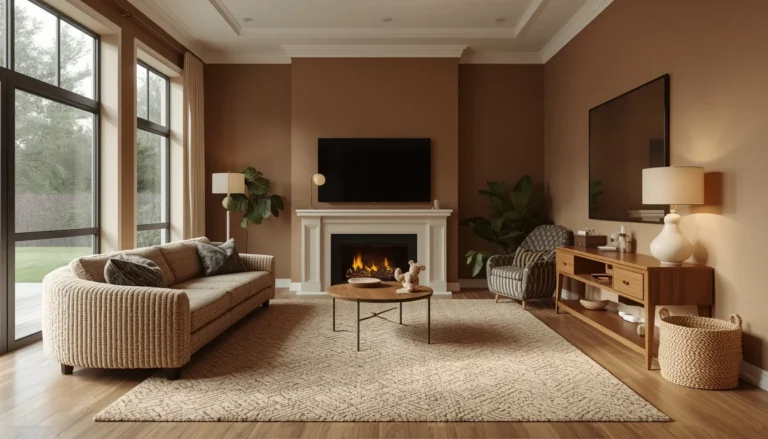
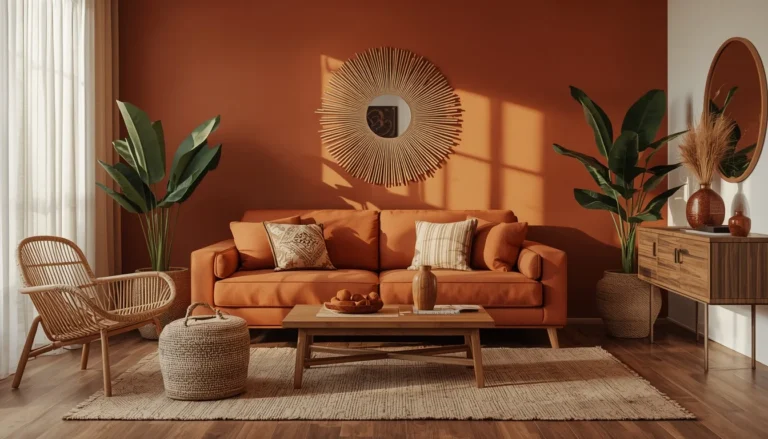
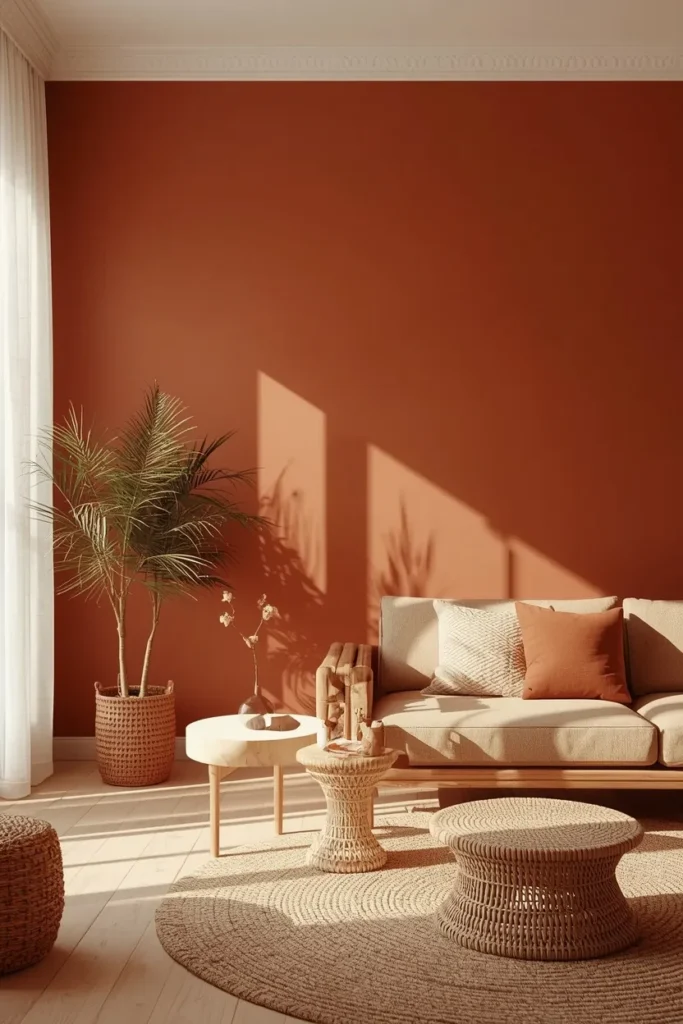
Painting the living room’s walls in a warm terracotta, rather than treating color as an afterthought added through decor alone, does more to establish genuine Afrobohemian character than any single furniture piece could. This foundational color choice comes directly from the red clay of Saharan and Sahelian earth, giving the room a sense of place before a single textile or plant gets added. Terracotta also has the practical benefit of making warm metals, natural wood, and earthy textiles all read as richer and more cohesive once they’re layered against it. Starting with this wall color first, before shopping for furniture or accessories, keeps everything added afterward feeling intentional rather than randomly assembled.
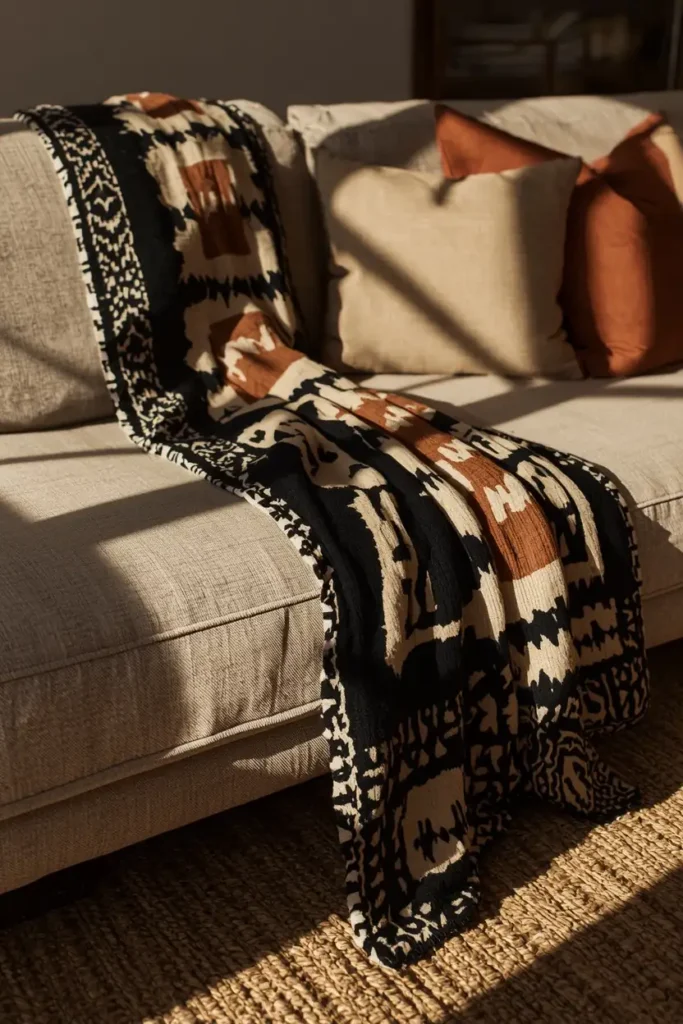
2. Authentic Mudcloth Throw Over a Low Linen Sofa
Draping a genuine hand-painted mudcloth throw, its irregular geometric pattern created through Mali’s traditional fermented-mud dyeing process, over a low-profile natural linen sofa brings real cultural depth into the room’s most-used piece of furniture. The slight imperfections in spacing and dye saturation are part of what makes authentic mudcloth beautiful, and a machine-printed imitation loses both the texture and the story behind it. Pairing the throw with oversized cushions in rust, ochre, and cream keeps the surrounding textiles within the same warm family rather than competing with the mudcloth’s pattern. This idea works as one of the most meaningful entry points into the style, since a single authentic textile can anchor an entire room’s palette and direction.
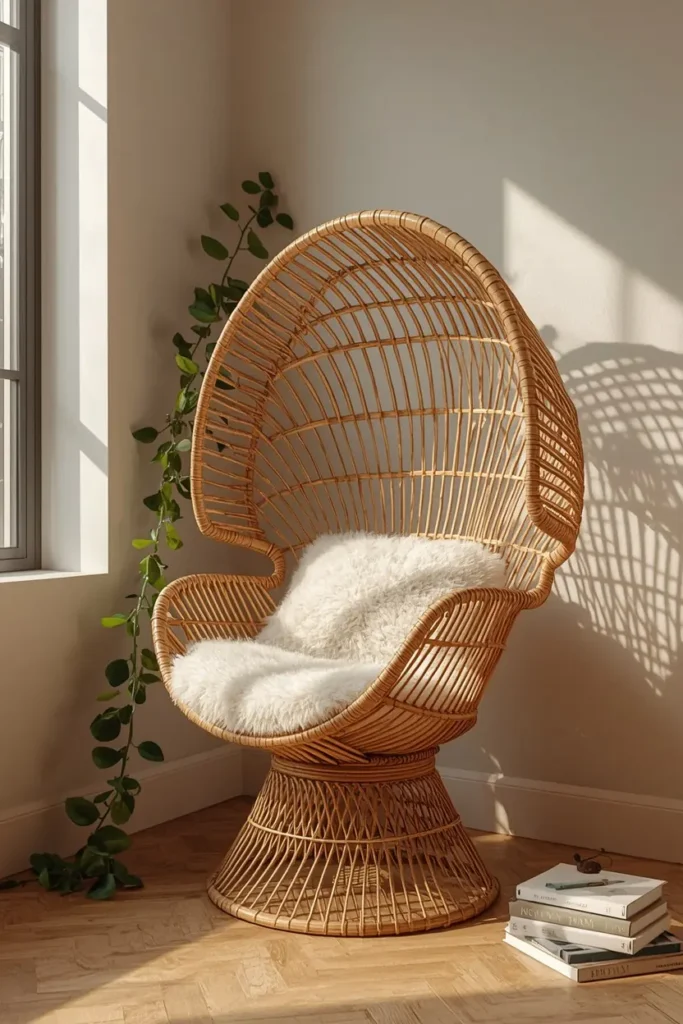
3. Rattan Peacock Chair as a Sculptural Corner Anchor
A large rattan peacock chair, with its dramatic fan-shaped arching back, is one of the most recognizable pieces of furniture associated with this style, and positioning it at a slight angle in a corner rather than flush against the wall gives it room to function as a genuine sculptural focal point. Softening the chair with a sheepskin cushion and letting a trailing plant lean in naturally from one side keeps the vignette feeling organic rather than staged. Stacking a couple of art books on the floor beside the chair adds a lived-in, intellectual layer to the corner. This idea works particularly well as a reading nook, since the chair’s dramatic shape gives even a small unused corner real presence.
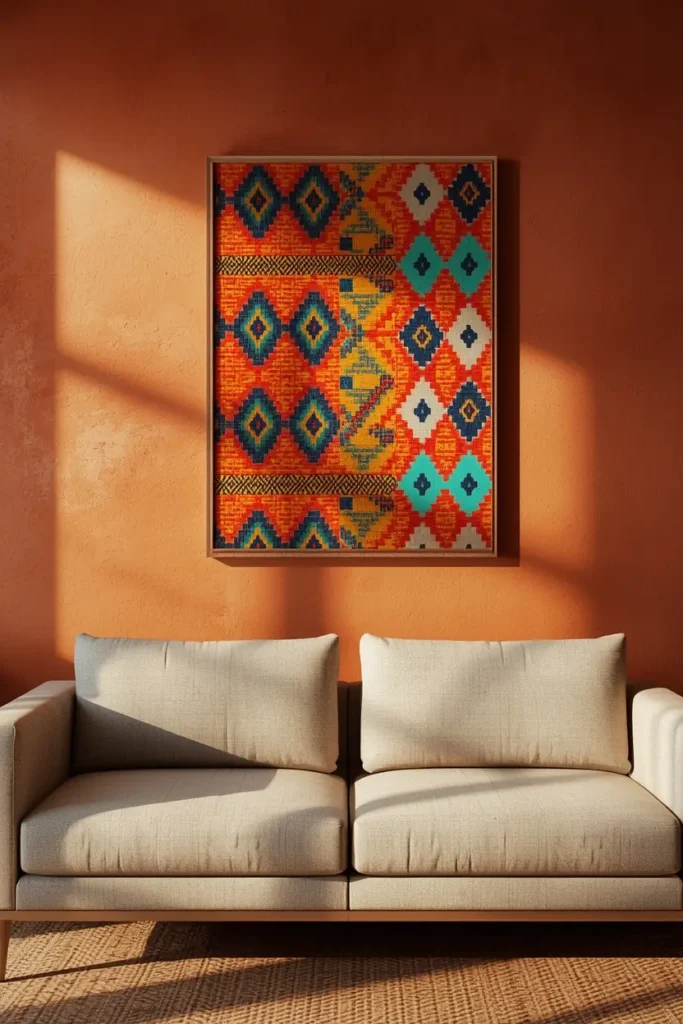
4. Framed Kente Cloth as Statement Wall Art
Framing an authentic kente cloth panel, the vibrant interwoven strip textile from Ghana’s Ashanti and Ewe peoples, and hanging it above the sofa turns a wall from decorative background into a genuine cultural centerpiece. Kente’s horizontal strip structure and specific symbolic color meanings read best when hung slightly higher than instinct suggests, letting the eye travel upward across the piece. A wide, thin frame lets the textile’s woven texture stay visible rather than flattening it under heavy matting or glass. Against terracotta or sienna walls, the kente’s saturated color palette provides one of the most striking contrasts available in the entire style.
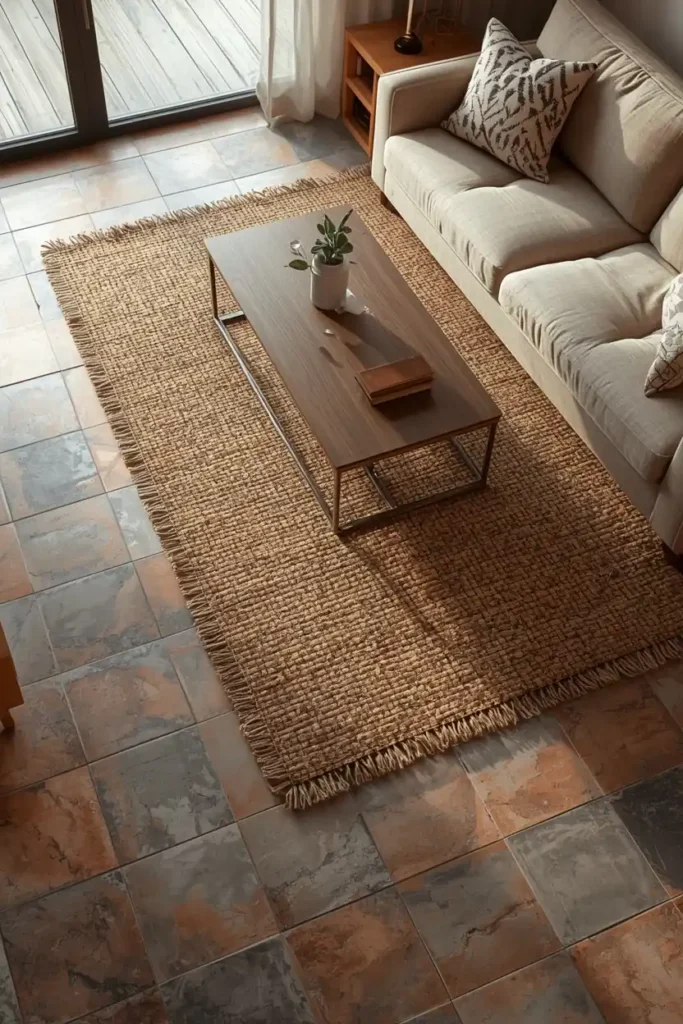
5. Layered Jute Rug Over Patterned Tile
Layering a chunky natural jute rug over geometric patterned tile, whether real or a peel-and-stick vinyl alternative, brings the textural conversation between rough organic weave and cool architectural precision down to floor level. This layering technique anchors the room the way a good piece of art anchors a wall, giving every other material choice in the space something grounded to relate back to. Choosing a rug large enough that all major furniture legs sit on top of it, rather than a smaller rug floating in the middle of the room, keeps the whole seating area feeling connected instead of disjointed. This idea works particularly well in a room that already has interesting flooring worth showing off rather than covering entirely.
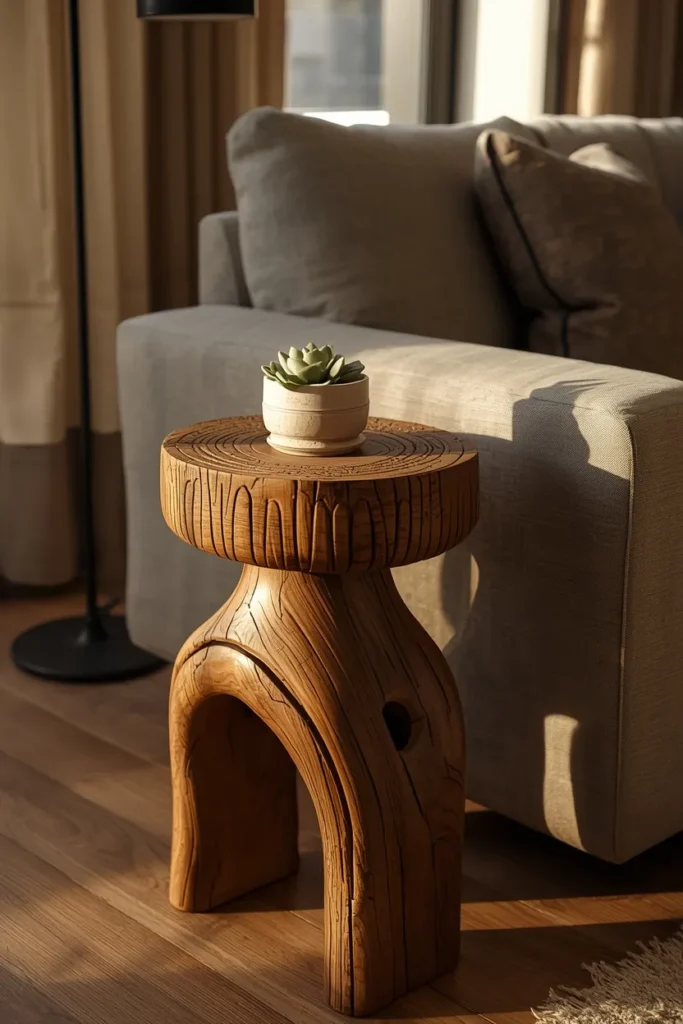
6. Hand-Carved Ashanti Stool as a Functional Side Table
Using an authentic Ashanti stool, hand-carved from a single piece of wood with its distinctive curved seat and waisted central column, as a side table beside the sofa bridges interior design and living cultural history in a way no manufactured furniture piece can replicate. Placing a ceramic mug or a small succulent on top gives the stool genuine daily function rather than treating it as a museum object kept out of use. Sourcing from fair-trade African artisan retailers, rather than a mass-produced reproduction, is worth the extra research and cost, since the carving quality and wood grain of an authentic piece are immediately apparent. This idea works as a smaller, more accessible way to bring real craft history into the room without committing to a large furniture purchase.
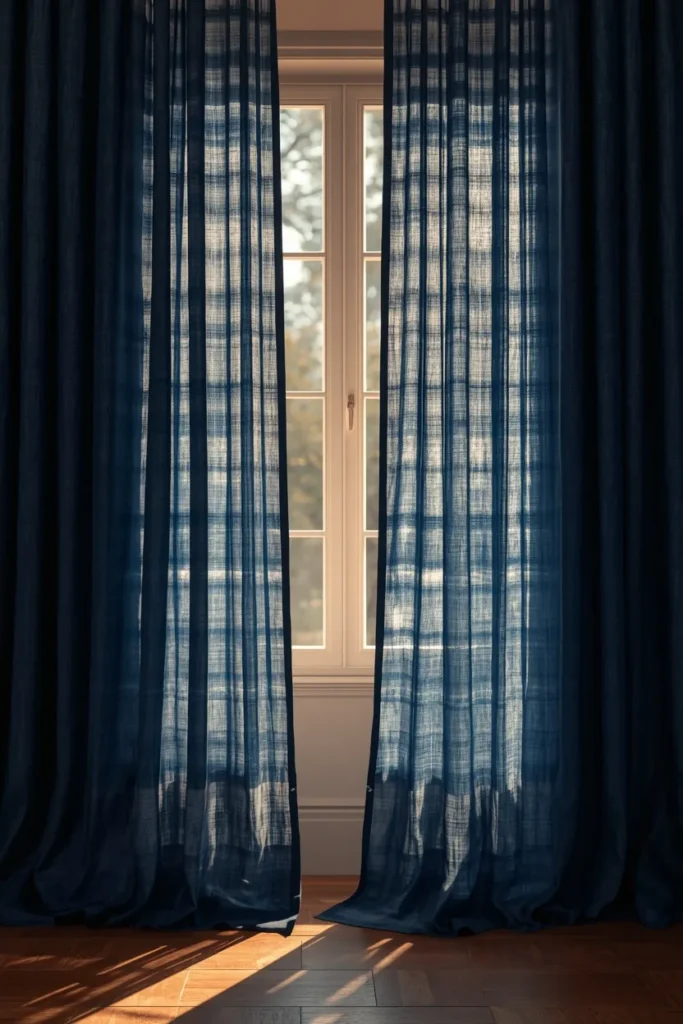
7. Adire Indigo Curtains Pooling on the Floor
Floor-to-ceiling curtains in deep indigo adire fabric, the Yoruba resist-dyed textile from Nigeria produced through hand-tying or folding before dyeing, bring both cultural specificity and extraordinary visual depth to a window that might otherwise stay an afterthought. Because each adire panel is hand-dyed, no two curtains share exactly the same pattern, which gives the window treatment a one-of-a-kind quality mass-produced fabric can’t match. Letting the fabric pool slightly on the floor rather than hanging it at a precise break adds a relaxed, luxurious weight to the whole composition. This idea works especially well in a room that gets strong afternoon light, since the sun filtering through hand-dyed indigo produces a soft, glowing quality unlike anything a solid-color curtain achieves.
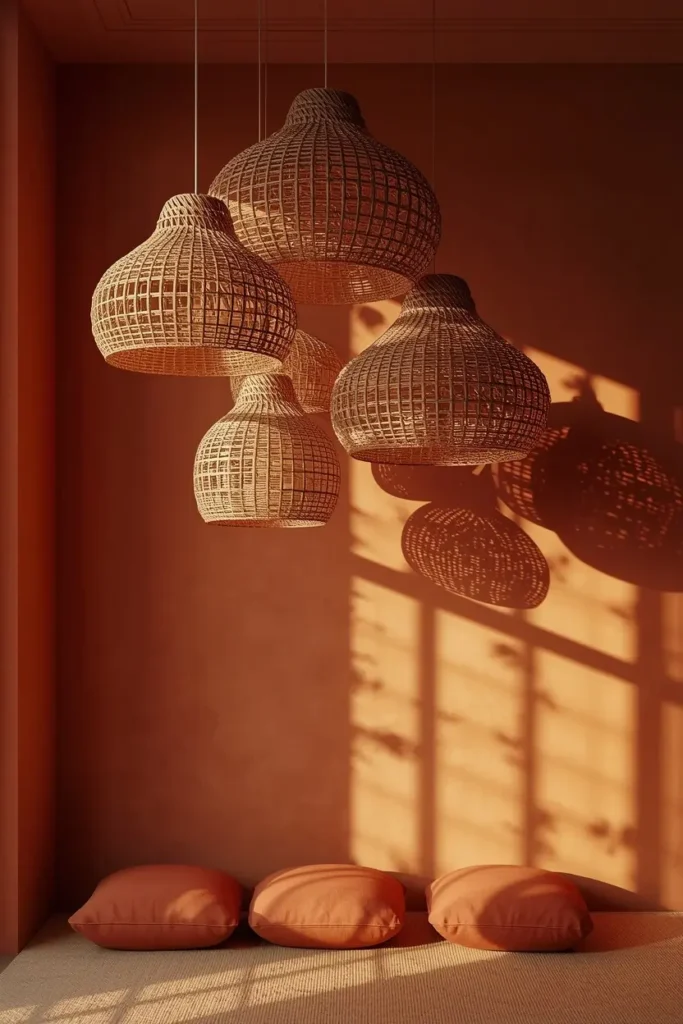
8. Ceiling-Hung Rattan Pendant Cluster at Varying Heights
A cluster of oversized rattan pendant lights, hung at deliberately varied heights rather than uniformly, casts warm dappled shadow patterns across the room that no other lighting fixture can replicate, especially against a terracotta or sienna wall at golden hour. Varying the drop height of each pendant by at least six inches between fixtures keeps the cluster feeling organic and intentional rather than institutional and evenly spaced. Positioning the lowest pendant at roughly seated eye level, if there’s floor cushion seating nearby, makes the warm light feel close and enveloping rather than distant. Lighting is one of the most underrated elements in this style, since the quality and warmth of the light does as much to set the room’s mood as any single piece of furniture.
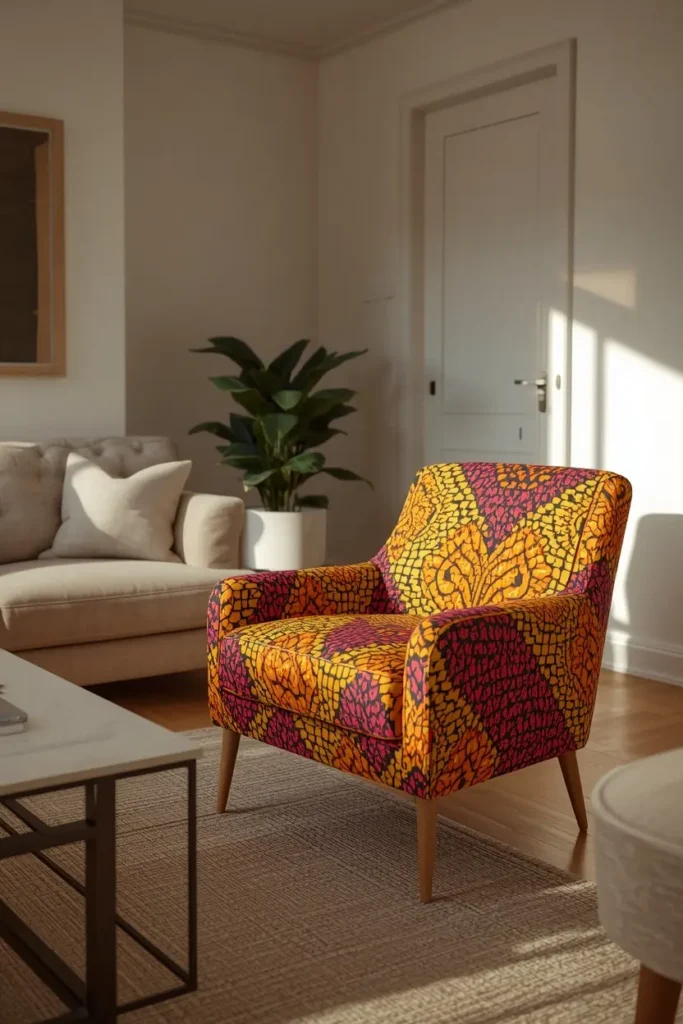
9. Ankara Wax-Print Upholstery on an Accent Chair
Reupholstering a single accent chair in vibrant Ankara wax-print fabric, the bold, colorful cotton textile widely associated with West African fashion and increasingly used in interior upholstery, brings a genuinely graphic, joyful pattern into the room without requiring a full-room commitment. Choosing one chair rather than multiple pieces in the same print keeps the pattern functioning as a statement rather than overwhelming the space. Because Ankara patterns tend to be bold and saturated, pairing the chair with simpler, more neutral surrounding furniture lets it stay the room’s clear point of color and pattern. This idea works particularly well for anyone wanting a bold, contemporary Afrobohemian moment that feels distinct from the more muted, earthy textiles used elsewhere in the style.
10. Curated Coffee Table Vignette With the Rule of Three
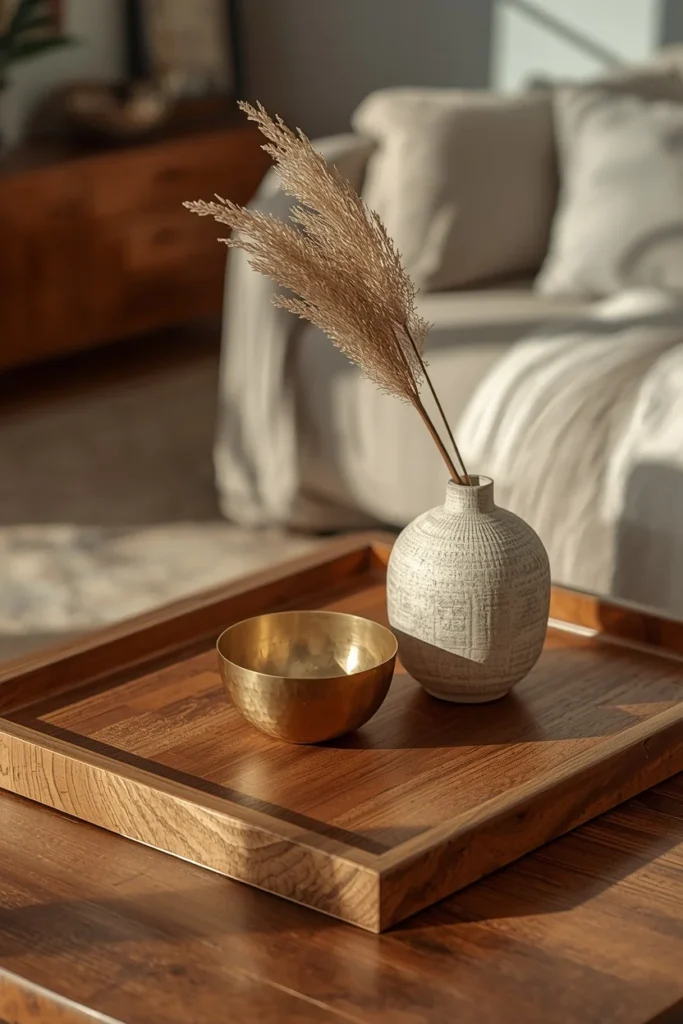
The coffee table is one of the smallest but most revealing surfaces in the room, and building a vignette around one tall object, one medium object, and one low object, a hand-carved wood tray, a hammered brass bowl, and a dried botanical stem in a textured ceramic vase, gives even a compact table real visual richness. Varying the material across the three tiers, wood, metal, organic, adds more interest than three objects of similar height and material ever could. Choosing pieces with genuine meaning or craft story behind them, rather than purely decorative filler, keeps the vignette feeling personal rather than staged for a photo. This idea rewards patience and collecting over time far more than a single shopping trip, which is very much in keeping with the spirit of the whole style.
11. Woven Pouf Cluster for Low, Communal Seating
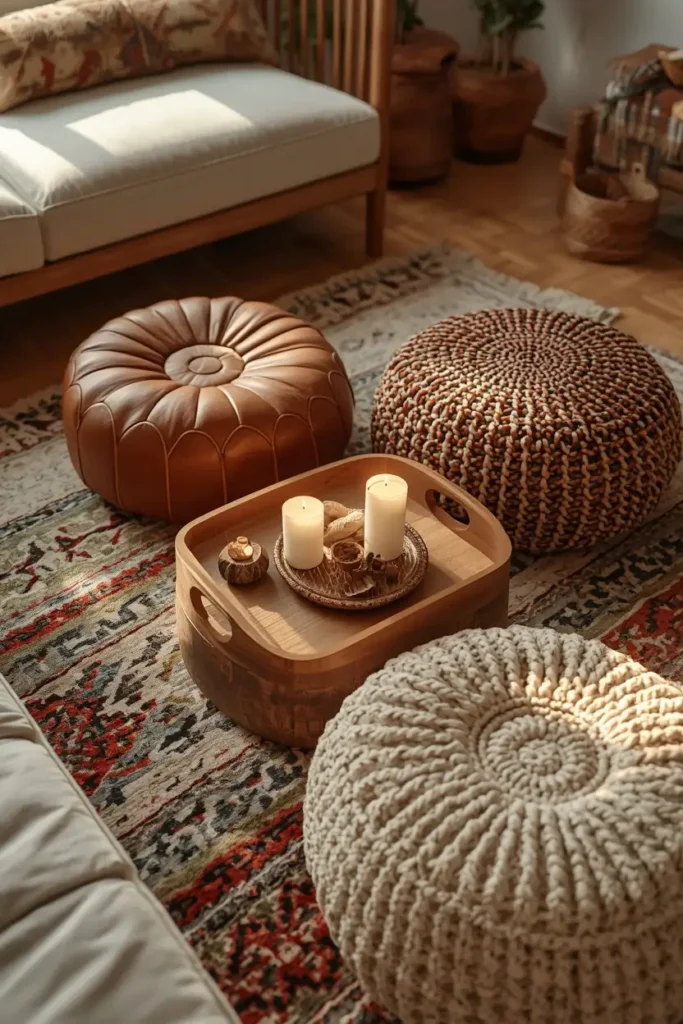
Grouping three woven poufs, mixing materials deliberately, one smooth leather, one kilim-woven, one boucle or textured fabric, around a low carved wood tray table recreates the low, floor-level, communal gathering traditions found across North and West Africa. This seating arrangement encourages close, relaxed conversation in a way that a standard sofa-and-armchair layout doesn’t always achieve. Adding candles and a few small ceramics to the central tray table gives the cluster a functional gathering point at the center. This idea works especially well as a secondary seating area within a larger living room, giving the space a more casual, floor-level zone distinct from the main sofa seating.
12. Oversized Arched Floor Mirror Reflecting the Plant Corner
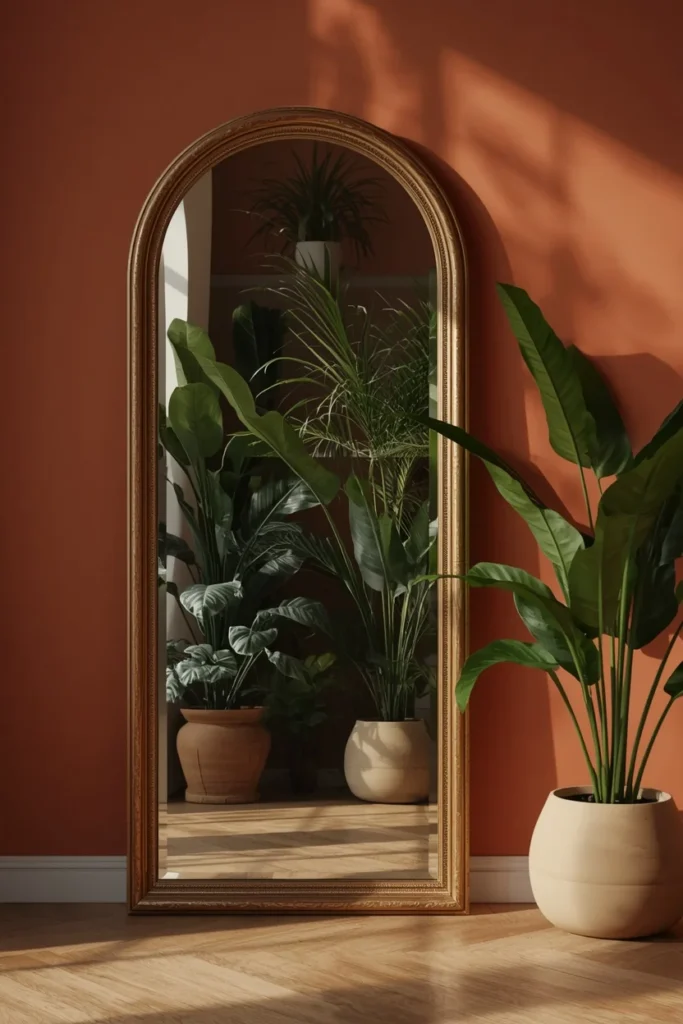
A large arched vintage floor mirror, leaned against a terracotta wall rather than mounted, adds depth and light to the room without any structural changes, and positioning it to reflect the room’s plant corner rather than a blank wall doubles the sense of lush, layered greenery. The mirror’s rounded arch shape echoes the organic curves found throughout African architectural traditions, tying its silhouette back into the room’s broader design language. This idea is one of the most effective small-footprint ways to add both light and visual depth to a living room, since the mirror itself takes up almost no floor space while doing significant visual work. Choosing what the mirror reflects matters as much as the mirror itself; a mirror facing a blank wall is a missed opportunity compared to one that doubles the room’s best feature.
13. Beaded Doorway Curtain for a Sensory Transition
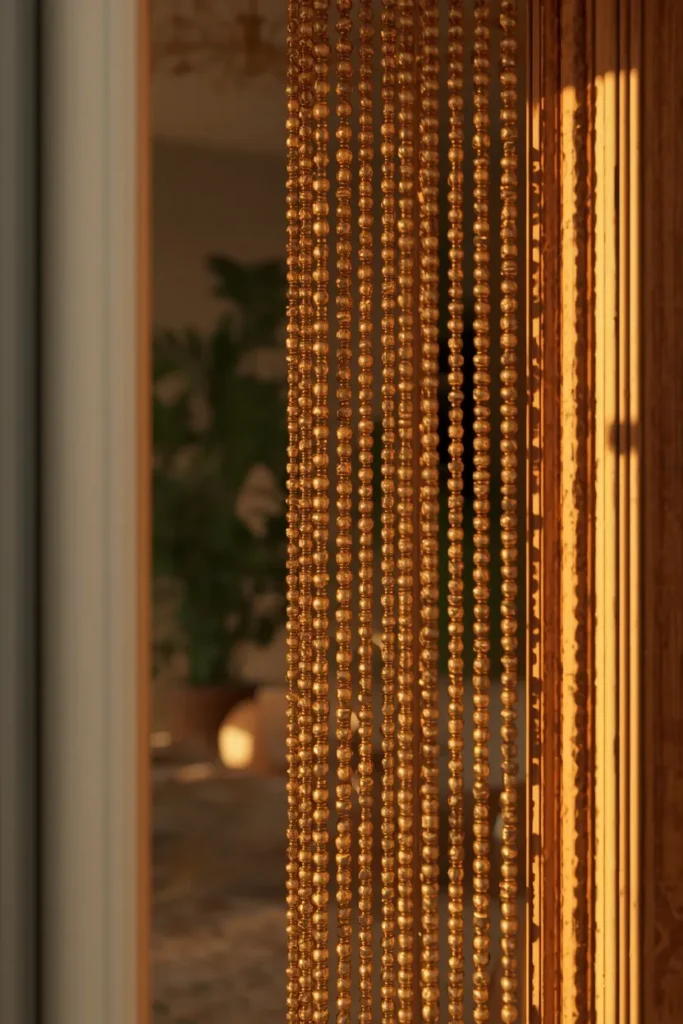
A cascading curtain of wooden and brass beads hung in a doorway arch transforms a plain transition space into a genuinely sensory Afrobohemian detail, one felt as much as seen. The gentle sound of beads shifting as someone walks through, combined with warm light catching the brass beading, gives even a purely functional passageway real character. Hanging the beads from a tension rod or ceiling-mounted hooks, in clusters of three strands rather than individually spaced, reads as more intentional and catches light more effectively. This idea works well between a living room and an adjoining hallway or kitchen, softening what would otherwise be a plain doorway opening.
14. Raw-Edge Wood Shelving Styled With Ceramics and Trailing Plants
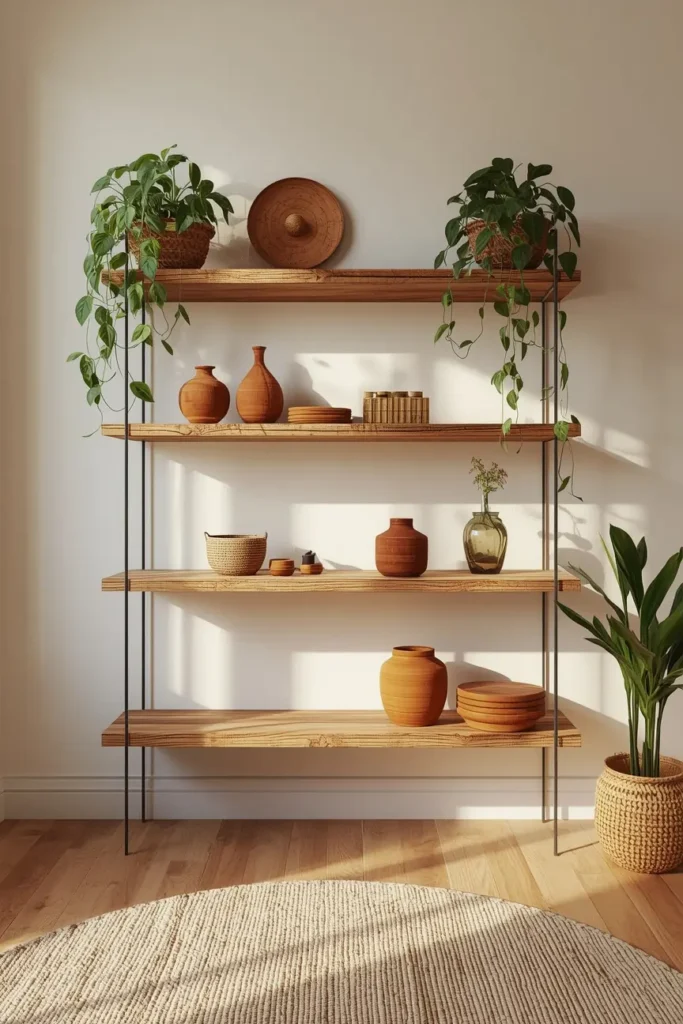
Open shelving built from raw-edge wood slabs, with the natural, unfinished edge of the wood left visible rather than trimmed square, celebrates the material honesty central to Afrobohemian design philosophy. Styling the shelves with African ceramic pieces, small hand-woven baskets, and trailing pothos plants at varying heights turns the shelving into an ongoing visual narrative rather than pure storage. Applying the same rule of three used elsewhere in the style, grouping objects in sets of three at different heights, and leaving roughly a fifth of each shelf empty keeps the display from feeling overcrowded. This idea works particularly well against a lighter limewash wall, since the pale background lets the wood grain and the warm ceramic tones stand out clearly.
15. Gallery Wall Featuring Diaspora Artists and Personal Photography
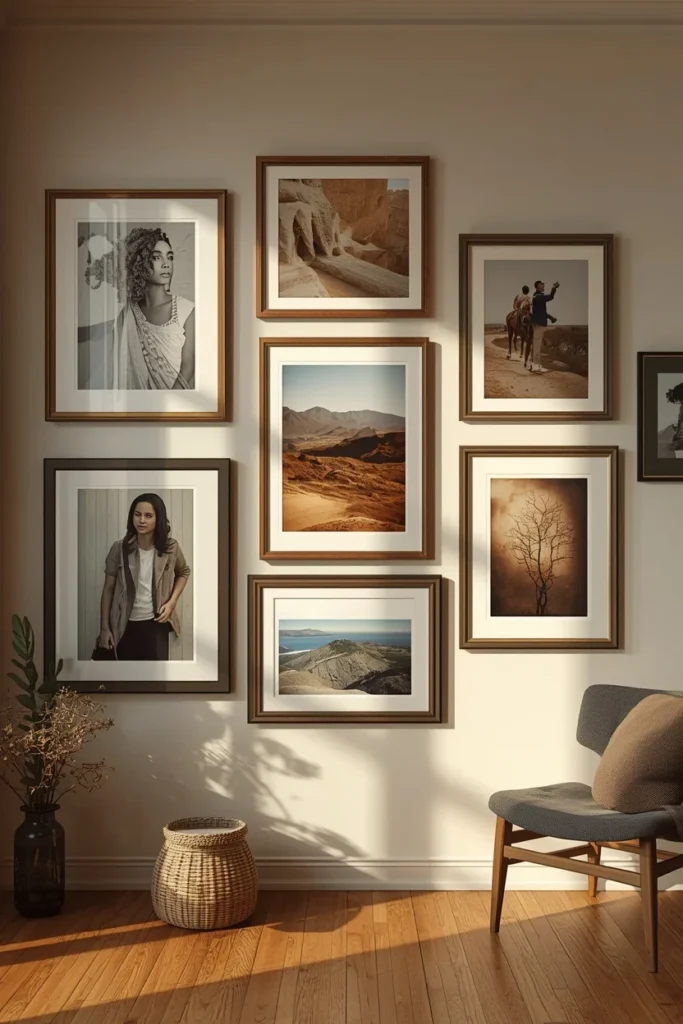
Building a gallery wall specifically around framed prints from Black and African diaspora artists, mixed with personal travel photography and one or two family photos, gives the room’s art a genuine point of view rather than decorative filler chosen for color matching alone. Mixing frame sizes and finishes, one larger anchor piece with several smaller supporting pieces, keeps the wall from feeling like a rigid, pre-planned grid. Leaving space between the art pieces and the wall’s edges, rather than filling every available inch, lets the collection breathe and read as curated rather than crowded. This idea gives a living room’s art the same intentionality the style already applies to textiles and furniture, turning the wall into as much of a personal statement as anything else in the room.
16. Indoor Courtyard-Inspired Living Room With Whitewashed Walls
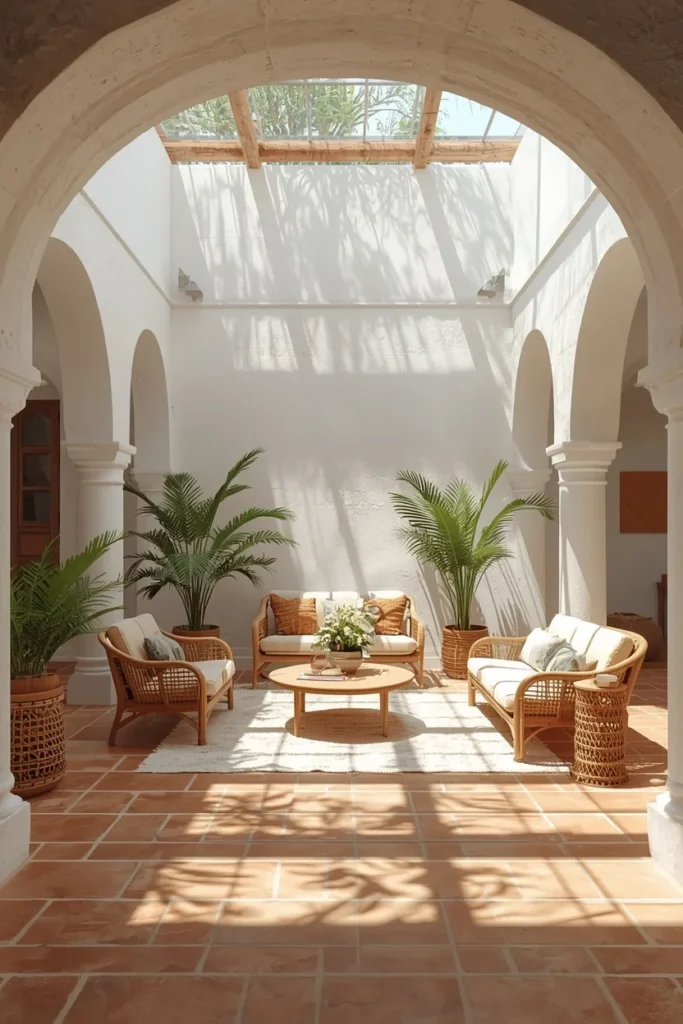
For anyone renovating or working with an open-plan layout, styling the room to evoke an indoor courtyard, whitewashed walls, terracotta tile flooring, potted palms, and a large skylight or high window letting in dappled natural light, draws directly from the riads of Morocco and the courtyard homes found throughout West Africa. Rattan furniture and simple ceramic pots complete a space that reads as sun-washed and open rather than heavily decorated. For a room without an actual skylight, climbing plants trained up a simple trellis against the wall and warm, diffused lighting can approximate the same open, airy feeling. This idea works as the most architecturally ambitious option on the list, best suited to a renovation or a room with unusually good natural light already.
17. Golden Hour Ambient Lighting as the Room’s Finishing Layer
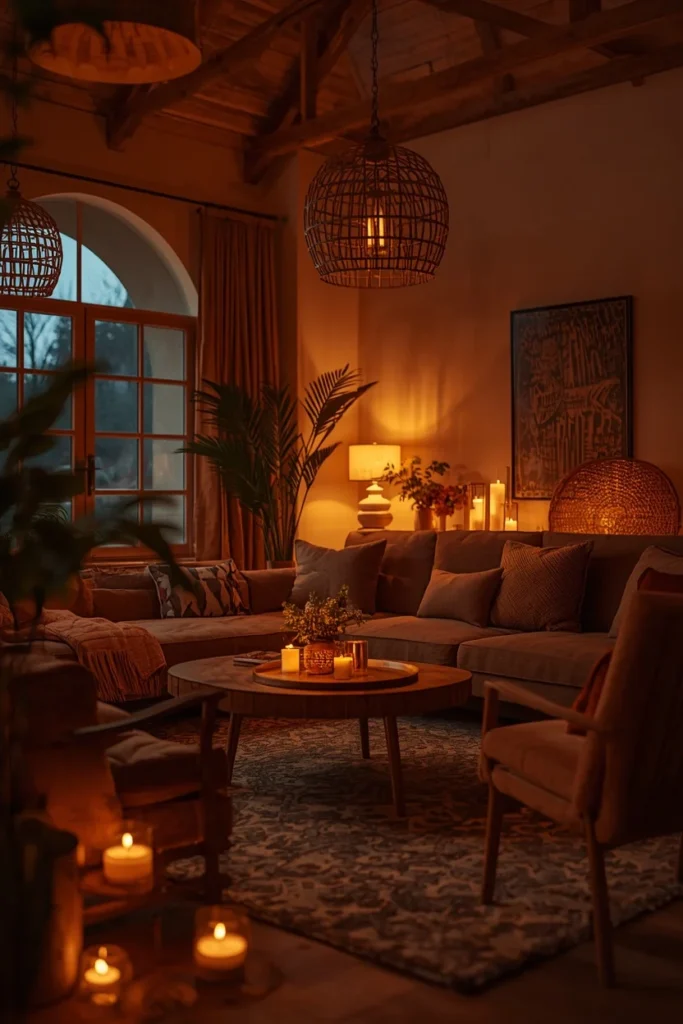
Beyond any single fixture, layering warm-toned bulbs around 2700 Kelvin across pendant lights, floor lamps, and a lit candle or two recreates the golden-hour glow that defines the most photographed Afrobohemian rooms, regardless of the actual time of day outside. Blocking any cool, blue-toned daylight with a simple blackout blind or sheer curtain, if the natural light happens to run cool, ensures the warm artificial lighting doesn’t have to compete with mismatched daylight. This finishing layer is what ties together every other idea on this list, the terracotta walls, the mudcloth, the rattan, the carved wood, since warm ambient light is what makes all of those materials read as rich rather than flat. This idea is a genuine reminder that lighting deserves the same intentional attention as furniture and textiles in a room built around warmth and atmosphere.
Styling Tips for an Authentic Afrobohemian Room
- Start with the wall color, terracotta, warm white, or chocolate brown, before buying any furniture, since this single choice does more to unify the room than any individual piece.
- Choose one authentic statement textile, a mudcloth throw, a kente panel, or adire curtains, and let it guide the rest of the room’s color and pattern decisions.
- Layer at least five or six different natural materials, rattan, carved wood, jute, ceramic, brass, rather than relying on just one or two, since the richness of the style comes from that material conversation.
- Group plants and objects in odd numbers, typically three, at deliberately varied heights, rather than matched pairs at the same level.
Practical Implementation Ideas
- Establish the foundation first: paint the walls in the chosen earthy tone before layering in any textiles or furniture, so everything added afterward has a cohesive backdrop to relate to.
- Anchor the room with one authentic statement textile before shopping for anything else, letting that single piece drive the remaining color and pattern choices.
- Add natural materials gradually across several visits or purchases rather than in one trip, since the collected-over-time quality is part of what makes the style feel genuine rather than assembled overnight.
- Bring in living plants last, once the furniture and textiles are in place, choosing at least three different species at varying heights to complete the layered, verdant feeling.
Common Mistakes to Avoid
- Reaching for generic “tribal print” fabric instead of textiles with real cultural specificity, mudcloth, kente, kuba cloth, adire, since vague pattern substitutes lose both the visual authenticity and the story behind the style.
- Trying to add every element at once rather than letting the room build in layers over time, which often results in a space that feels assembled rather than genuinely collected.
- Filling every surface completely with no negative space left, since Afrobohemian is rich but not meant to read as cluttered.
- Using only cool-toned metals like chrome or silver, which clash with the warm brass and copper accents central to the style’s material palette.
Small-Space Alternatives
In a small living room, focusing on one wall for a bold gesture, a terracotta paint color or a framed kente panel, delivers real impact without requiring a full room to commit to the same intensity. A single authentic textile, like a mudcloth throw on an existing sofa, brings genuine cultural depth into a small space without needing new furniture at all. An arched floor mirror is especially valuable in a compact room, since it adds visual depth and reflects existing plants or light without taking up any real floor space. Choosing one or two natural-material pieces, a carved stool as a side table or a single rattan pendant, rather than several, keeps a small room feeling curated rather than crowded.
Budget-Friendly Alternatives
Terracotta paint and a jute rug are two of the lowest-cost, highest-impact foundational choices in the entire style, both achievable well within a modest budget. A collection of handmade ceramic pots for plants, sourced from a local pottery studio or secondhand shop, brings authentic texture without the cost of imported furniture. Dried botanicals gathered or purchased locally stand in for fresh florals at a fraction of the ongoing cost and last for months. Starting with a single authentic textile piece, rather than a full furniture overhaul, lets the style build gradually as budget allows, which is very much in keeping with how the look is meant to develop over time regardless of spending level.
Pro Styling Recommendations
Designers working in this space consistently recommend sourcing from African artisans, fair-trade retailers, or Black-owned makers whenever possible, since authenticity in sourcing supports the communities whose traditions inspire the style and results in genuinely higher-quality, more meaningful pieces than mass-produced imitations. Establishing the color palette and one anchor textile before adding any other furniture keeps the whole room’s direction cohesive from the very first decision onward. Editing matters just as much as collecting: once the room’s elements are in place, stepping back and removing anything that doesn’t contribute aesthetically or personally keeps the space feeling like abundance with intention rather than accumulation without a plan.
FAQs
Final Thoughts
The living rooms that actually feel like a getaway, the ones people don’t want to leave, aren’t the ones with the most expensive furniture. They’re the ones built with real materials that carry real stories: a stool carved by hand, a cloth dyed by a specific tradition with a specific name, warm light that makes every texture in the room glow a little. Afrobohemian style rewards patience and genuine sourcing over speed, which is exactly why it feels so lived-in once it comes together. Pick one authentic piece from this list to start with, build the rest of the room around it slowly, and let the space keep collecting meaning the way it’s meant to.