17 Tiny Bedroom Design Ideas for Couples (That Still Feel Romantic)
Sharing a small bedroom with someone else comes with its own particular math. Two wardrobes’ worth of clothes, two people’s nightstand clutter, two different ideas about lighting, all crammed into a room that might not even fit a king bed comfortably. It’s easy for a tiny shared bedroom to end up feeling more like storage overflow than an actual retreat.
The fix isn’t a bigger room. It’s smarter choices about what goes where, and a little intention about the details that make a space feel calm and romantic instead of chaotic. These 17 ideas cover layout, storage, and styling specifically through the lens of two people sharing one room, so nothing here assumes you’ve got the luxury of extra square footage to work with.
Table of Contents
1. Go Bigger on the Bed, Smaller on Everything Else
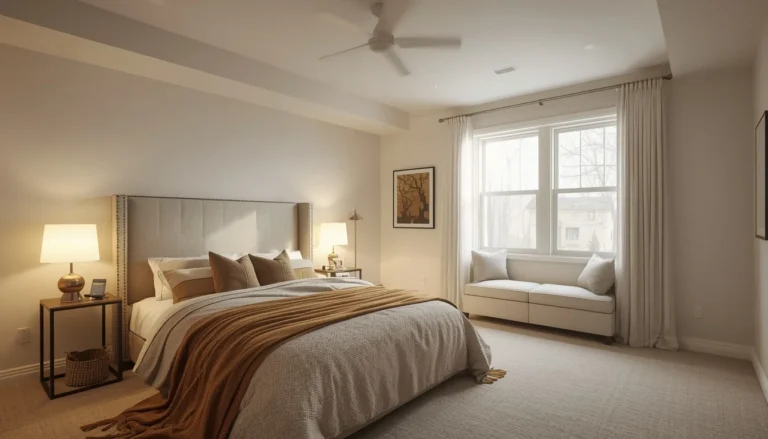
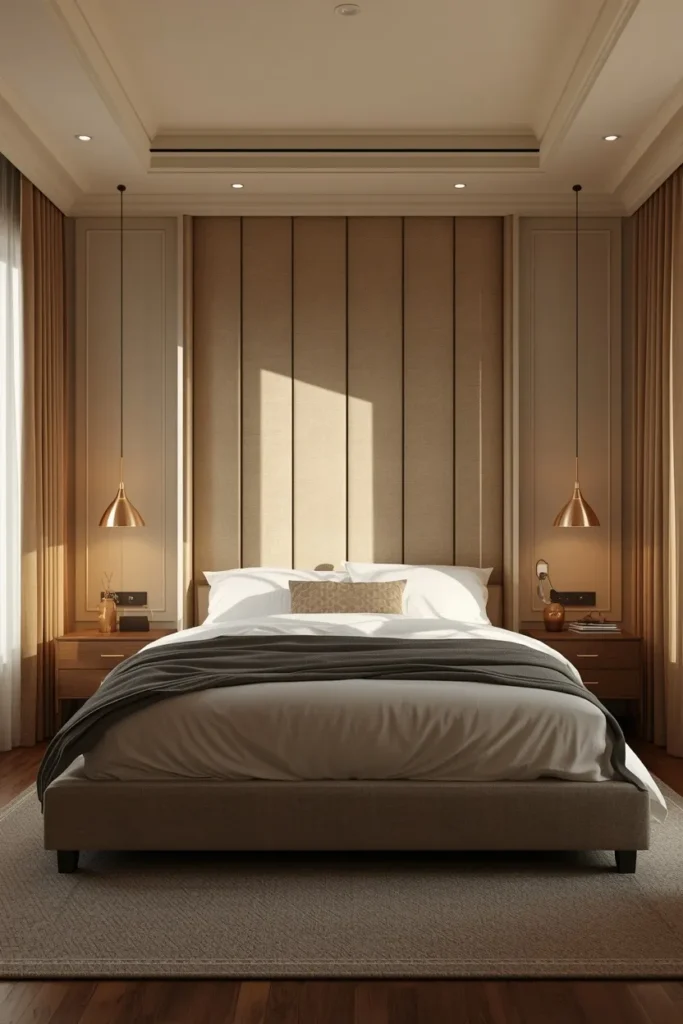
It’s tempting to shrink the bed to free up floor space, but for two people sharing a room, the bed is the one piece of furniture that directly affects how well you both sleep every night. Choosing the largest bed the room can reasonably fit, even if it means sacrificing a nightstand or two, tends to make the room feel more generous rather than less, since a properly sized bed reads as intentional instead of like a compromise. Balance the larger bed footprint by scaling down everything else: slimmer dressers, wall-mounted lighting instead of lamps, and narrow side tables. A well-chosen statement headboard also adds visual presence without taking up any actual floor space, which helps the room feel finished rather than sparse. This approach prioritizes comfort where it matters most and trims everywhere else.
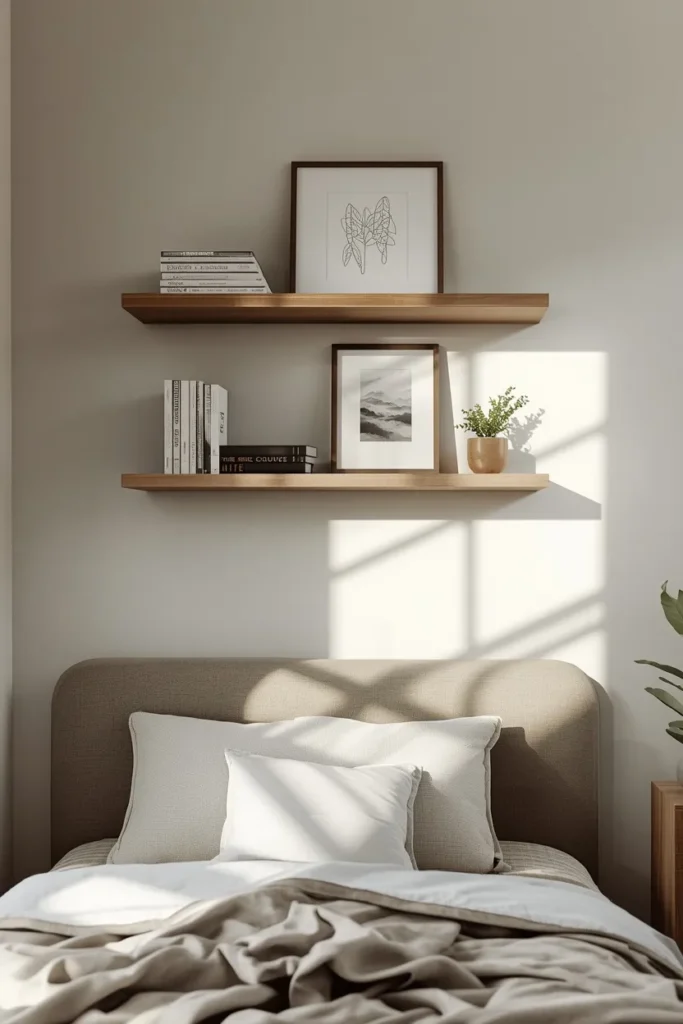
2. Install Floating Shelves Above the Bed
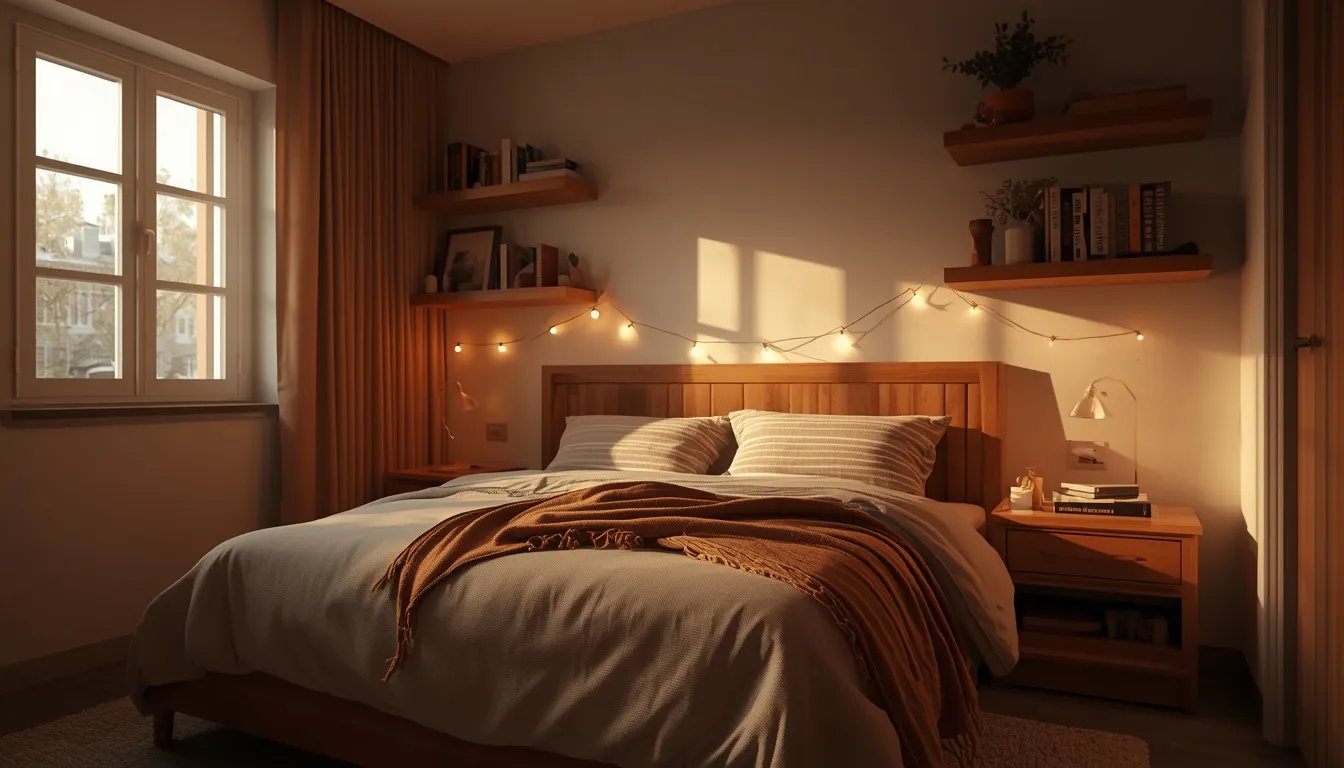
Wall space above the headboard is one of the most underused areas in a small shared bedroom, and floating shelves installed there add real storage and display space without taking up an inch of floor. Use the shelves for a mix of function and decor, a few books, a small plant, a framed photo, so the display feels personal rather than purely utilitarian. Keeping the shelf styling relatively sparse, rather than crowding every inch, helps the space above the bed feel calm rather than like an overflow shelf. This is a particularly good solution for couples who’ve had to give up nightstand space to fit a larger bed, since the shelves can hold a lamp, glasses, or a phone charger within reach. Choosing shelves in a finish that matches the headboard or wall color helps them blend in rather than visually compete with the room.
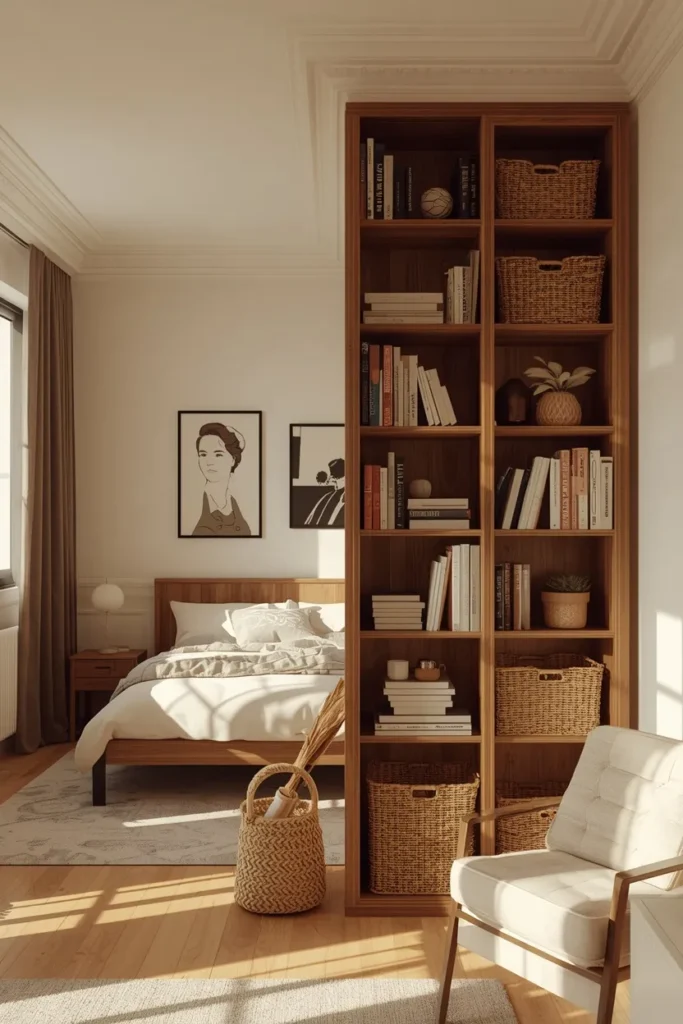
3. Use a Tall Bookshelf as a Soft Room Divider
In a studio or open-plan layout, a tall, narrow bookshelf placed perpendicular to the wall can visually separate the sleeping area from the rest of the room without the cost or permanence of an actual wall. This creates a sense of enclosure and privacy for the bed itself, which matters more in shared spaces where the bedroom might double as a living or work area during the day. Styling the shelf with a mix of books, baskets, and a few personal objects keeps it functional on both sides, since it’s visible from both the sleeping zone and the rest of the room. Choosing an open-back shelving unit rather than a solid one allows some light to pass through, keeping the divided space from feeling boxed in. This idea works especially well for couples who don’t have a separate bedroom at all and need to define a sleeping zone within a larger room.
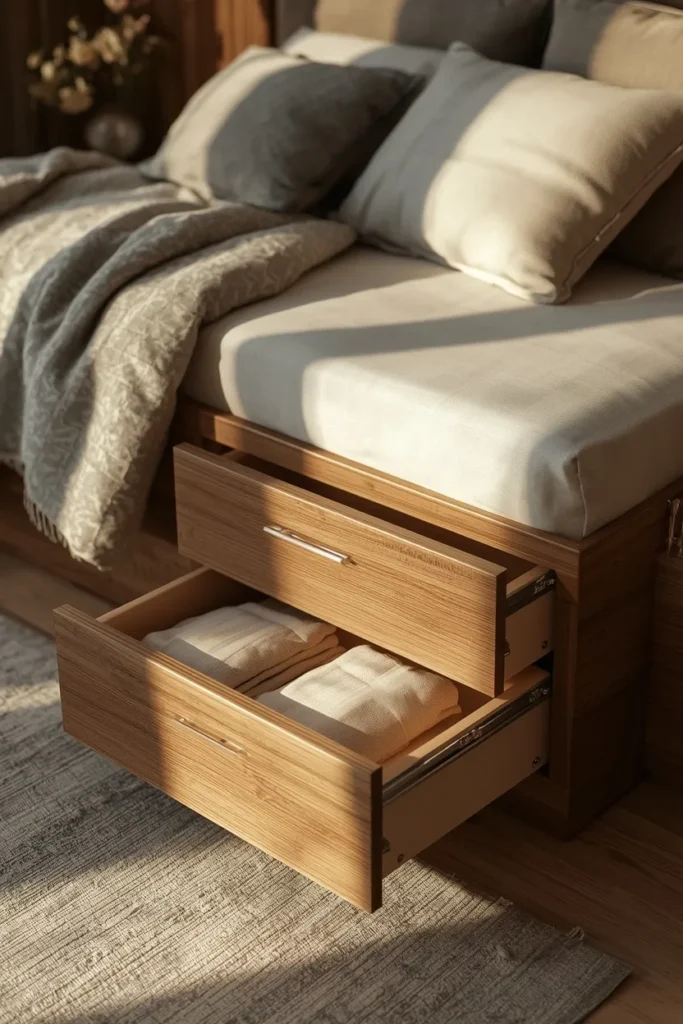
4. Choose a Storage Bed Frame
A bed frame with built-in drawers underneath solves one of the biggest challenges of a shared tiny bedroom: where to put two people’s off-season clothes, extra bedding, or shoes without a dedicated closet or dresser to hold it all. Drawer-style storage beds keep this extra capacity completely hidden, so the room doesn’t visually read as more cluttered even though it’s holding significantly more. This is a particularly smart trade-off if the room can’t fit a full dresser for both partners, since the bed itself absorbs some of that storage need. Choosing a frame with drawers on both sides, rather than just one, keeps the storage question fair for both partners rather than favoring whoever claims the accessible side. This upgrade costs more upfront than a basic frame but often eliminates the need for an additional storage piece entirely.
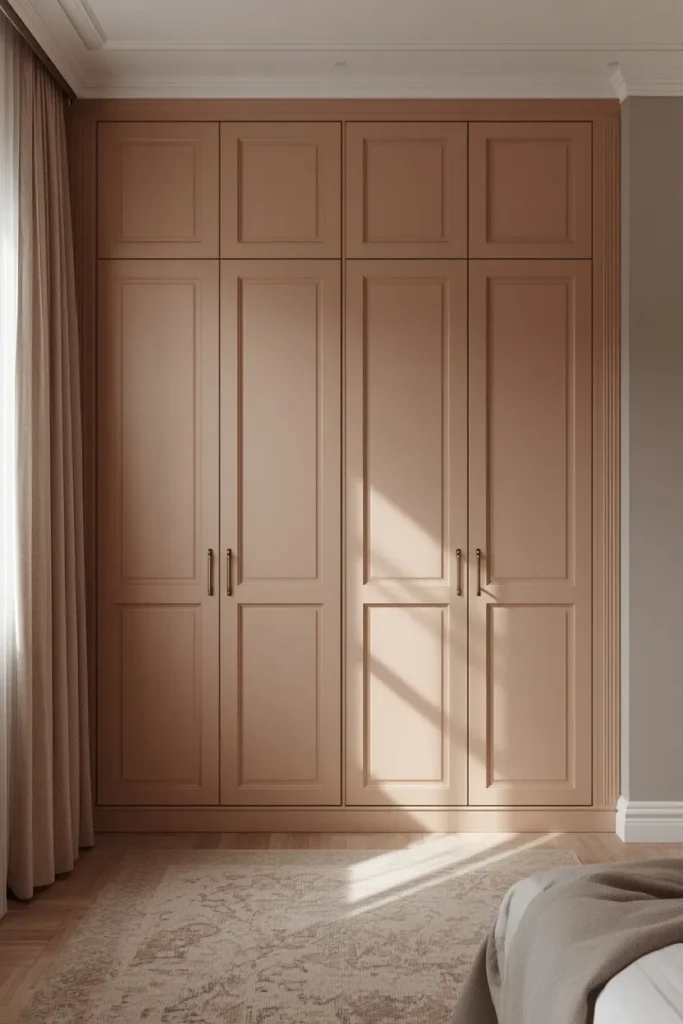
5. Add a Built-In Wardrobe Instead of a Freestanding Closet
A custom-fitted built-in wardrobe uses every inch of an awkward wall or corner far more efficiently than a bulky freestanding armoire, and it can be split down the middle to give each partner their own clearly defined section. Because it’s built to the exact dimensions of the space, a built-in avoids the wasted gaps that standard-sized furniture often leaves along walls or in corners. Choosing a finish that matches the wall color helps a large built-in piece recede visually rather than dominate the room, which matters most in a tiny space where every large surface adds visual weight. Adding interior organizers, like double hanging rods or drawer inserts, further increases the effective storage without any additional footprint. This is a bigger investment than most ideas on this list, but it’s often the single most impactful change for genuinely tight closet situations.
6. Use the Four Corners for Extra Storage or Charm
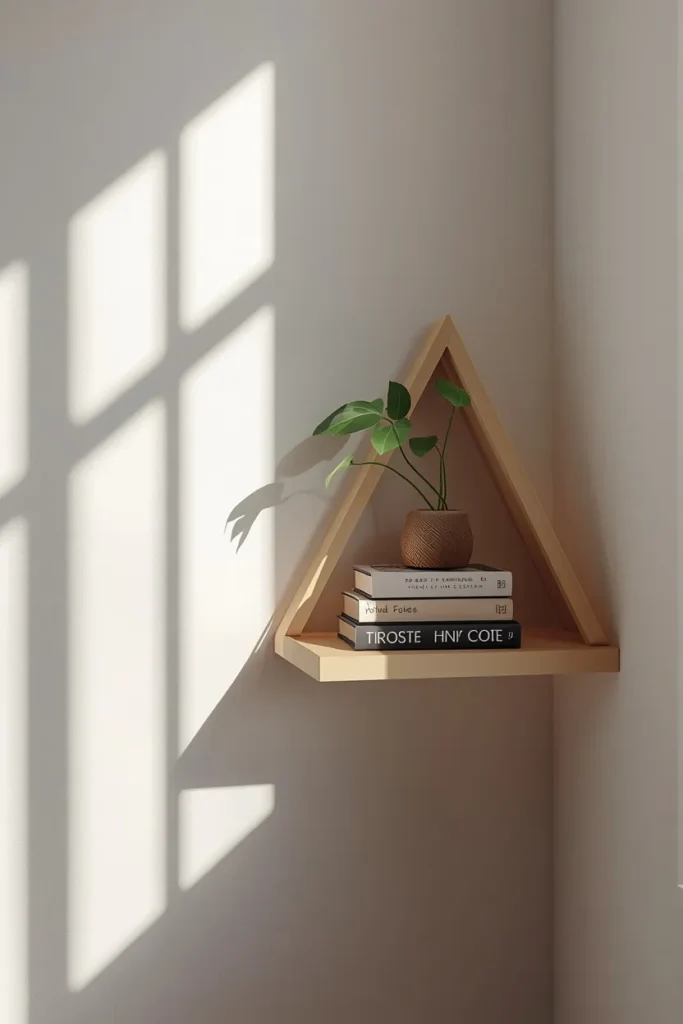
The corners of a small bedroom are almost always wasted space, yet they’re some of the easiest spots to add function without disrupting the room’s main layout. A small corner desk, a triangular floating shelf, or even just a reading lamp and a plant tucked into an unused corner adds either storage or personality without eating into usable floor area near the bed. Floating corner shelving units in particular add a contemporary touch while keeping the corner feeling open rather than boxed in with a bulky piece of furniture. This idea works well because it treats every part of the room as usable real estate, which matters significantly more in a tiny shared bedroom than a larger one. Choosing one corner for function, like a desk, and another for charm, like a plant or art, balances practicality with personality.
7. Layer Soft Textiles for Warmth and Romance
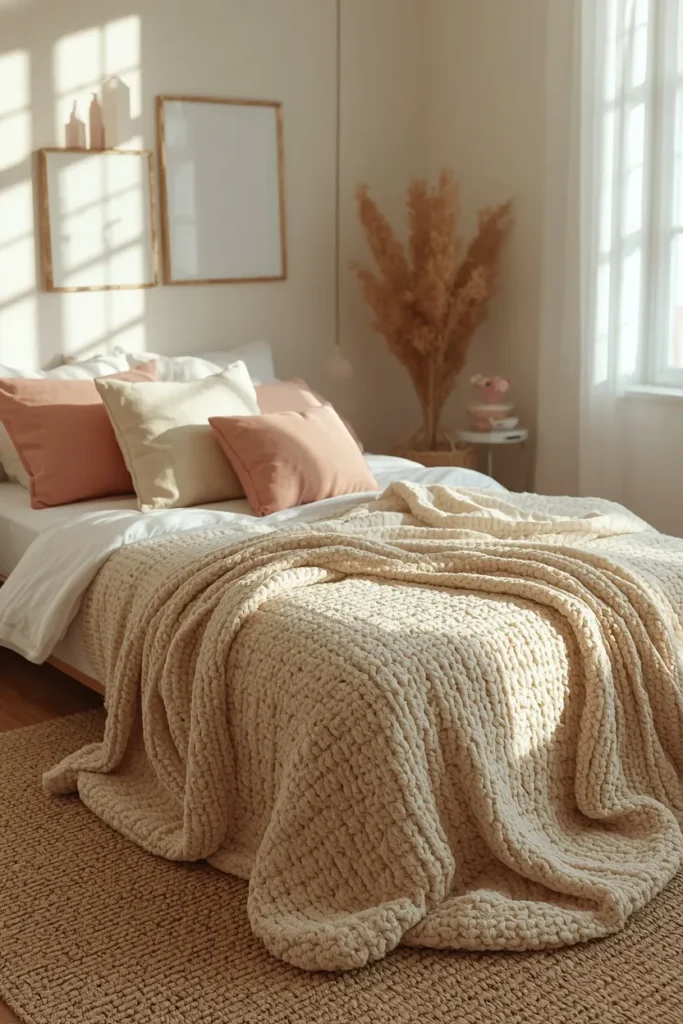
A plush area rug, a couple of throw blankets, and a stack of soft pillows do more for a tiny bedroom’s romantic mood than almost any single piece of furniture, since texture reads as comfort even in a visually small footprint. Choosing textiles in a shared neutral palette, like soft browns, creams, or muted blush tones, keeps the layered look cohesive rather than mismatched between two people’s individual tastes. A rug specifically helps ground a small room and can make the space feel larger by defining the floor area clearly, especially if the flooring itself is a hard, cold material. Layering in at least two different textures, like a knit throw over a smooth duvet, adds visual and tactile depth without adding any actual clutter. This is one of the lowest-cost, highest-impact ideas for making a shared tiny bedroom feel genuinely intimate.
8. Add Warm, Layered Lighting Instead of One Overhead Fixture
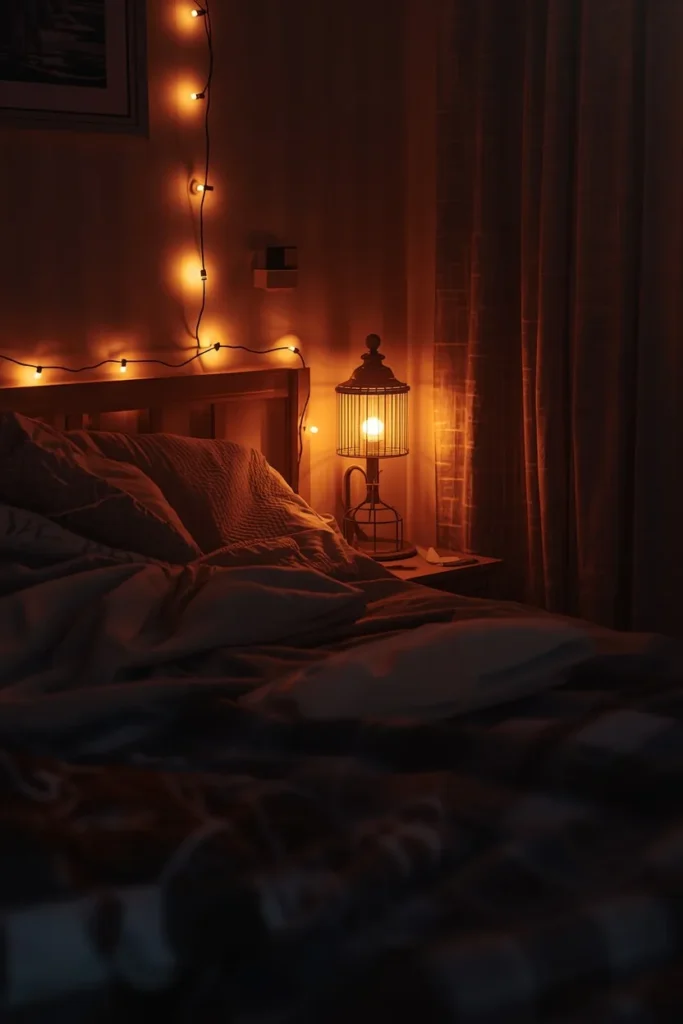
Relying on a single overhead light makes almost any bedroom feel more like a utility space than a retreat, while a mix of soft lighting sources, a small lamp, wall sconces, or a string of warm fairy lights, creates the kind of layered glow that reads as genuinely romantic. Wall-mounted sconces are especially useful in a tiny shared bedroom since they free up nightstand space that might otherwise be needed for other essentials. Fairy lights draped along a headboard or shelf add a soft, ambient touch without requiring any additional floor or surface space at all. Choosing warm white bulbs over cool white makes a noticeable difference in how cozy the room feels once the sun goes down. This is an easy, renter-friendly upgrade that transforms the mood of a small room more than almost any other single change.
9. Choose a Soft, Neutral Base Palette You Both Agree On
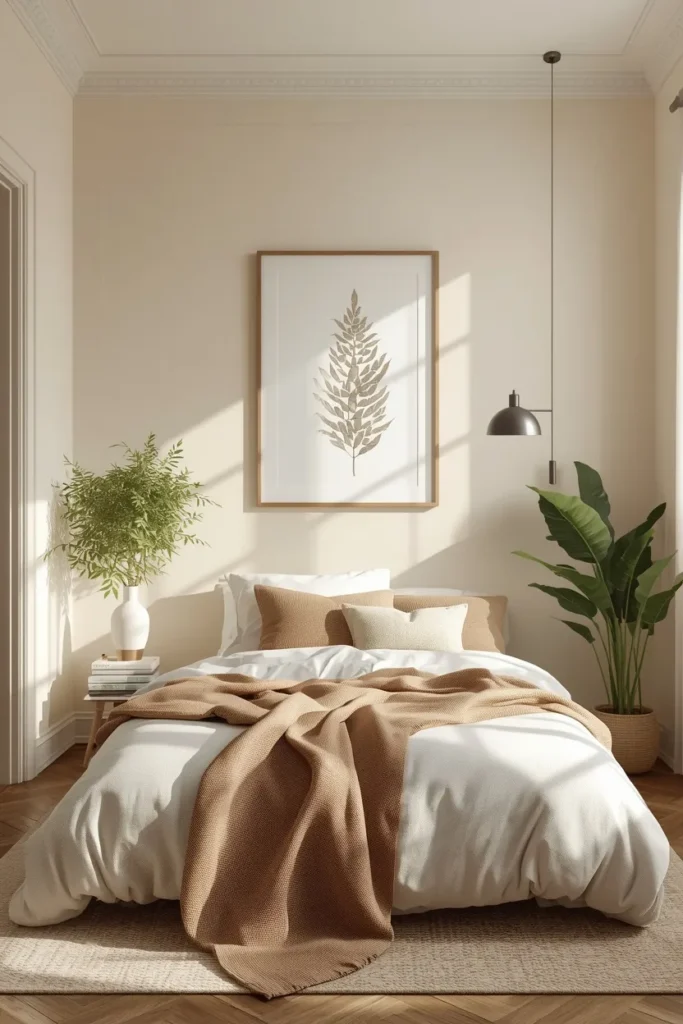
Two people often walk into decorating a shared bedroom with completely different color instincts, and the easiest way through that is agreeing on a neutral foundation, soft browns, creams, warm grays, and then layering in each partner’s personality through smaller accessories rather than big-ticket items like walls or bedding. This approach avoids the common trap of a room feeling like it belongs to only one partner, which can happen quickly if one person’s bold color preference wins out on the largest surfaces. Natural green accents, like a plant or botanical art, work well as a neutral-adjacent compromise that adds life to the room without leaning too far toward anyone’s individual taste. This foundation also makes the room feel calmer overall, which matters more in a small space where every color choice has outsized visual impact. Save bolder personal touches for pillows, art, or a single accent wall that’s easy to change later.
10. Carve Out a Tiny Work-From-Home Corner
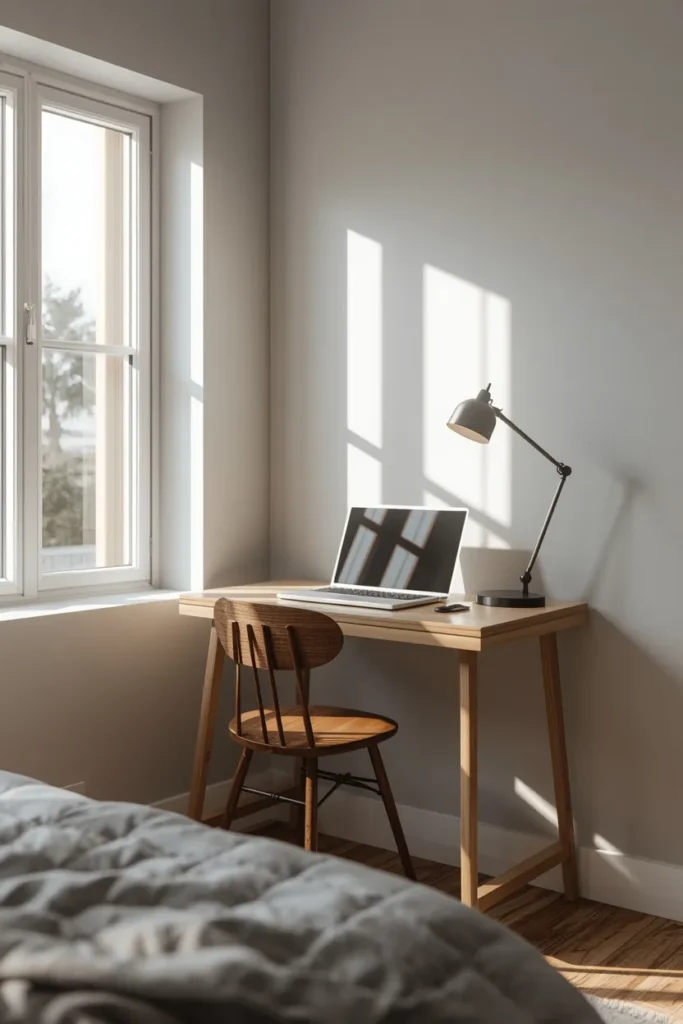
If one or both partners work from home and there’s no spare room available, a small corner desk near a window keeps the workspace visually and functionally separate from the sleeping area, even within the same room. Positioning the desk to face the window rather than the bed helps mentally separate work mode from rest mode, and it gives the person working natural light and fewer visual distractions from the rest of the room. A slim desk with a single drawer keeps the footprint small while still providing enough surface for a laptop and a lamp. Choosing a desk chair that can tuck fully underneath when not in use helps the corner disappear back into the room outside of work hours. This setup works particularly well for couples with staggered schedules, where one person might be working while the other rests nearby.
11. Use Multifunctional Furniture Wherever Possible
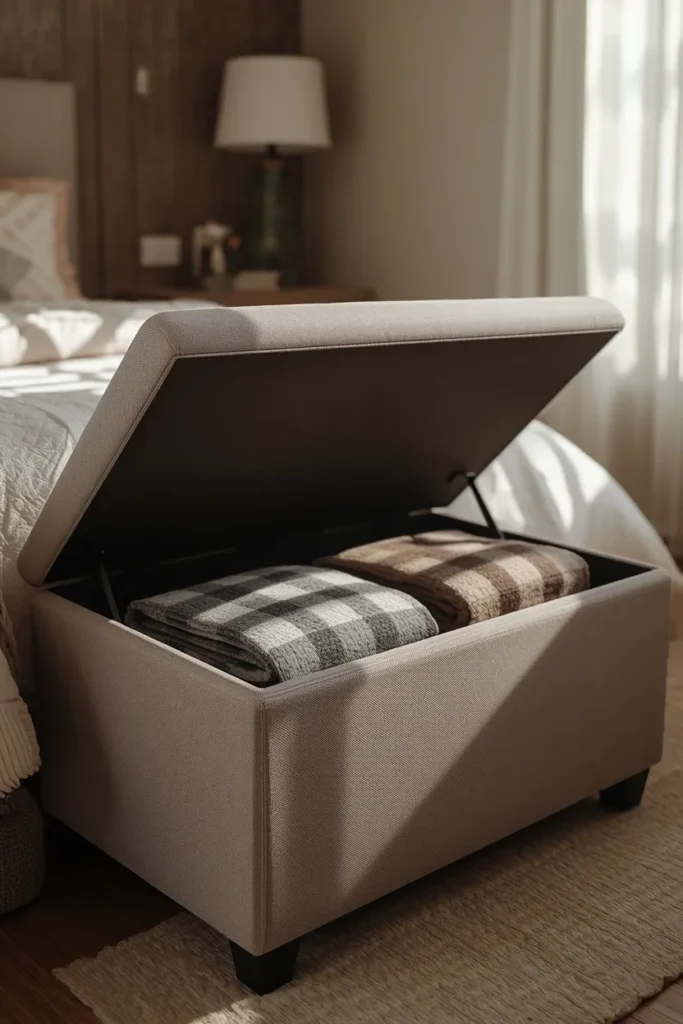
A storage ottoman that doubles as a bench, a bedside table with a hidden drawer, or a bench at the foot of the bed with lift-up storage all let a tiny bedroom do more work with fewer individual pieces of furniture. This matters especially for couples, since doubling up on function reduces the total number of items competing for limited floor space. A storage ottoman placed at the foot of the bed, for example, provides a spot to sit while getting dressed and a place to stash extra bedding or off-season clothes at the same time. Choosing pieces upholstered in a fabric that matches the room’s textile palette keeps them from reading as purely functional add-ons. This approach requires a bit more research when furniture shopping, but it consistently outperforms single-purpose pieces in a tight footprint.
12. Add a Small Seating Nook for Two
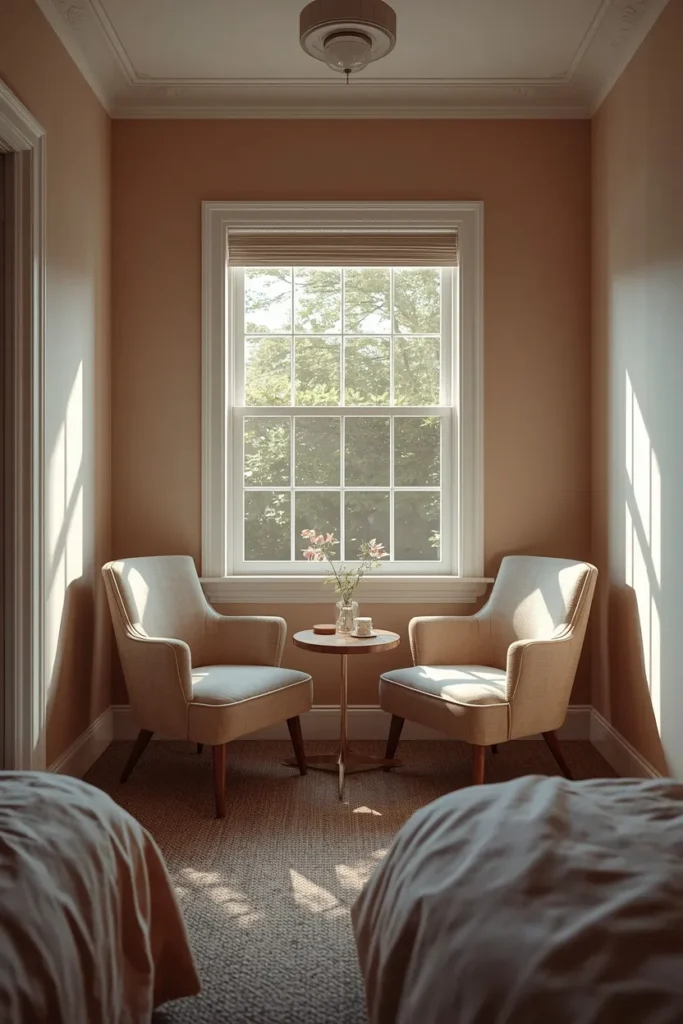
Even in a genuinely tiny bedroom, tucking in two small chairs, or a compact loveseat, near a window creates a spot for connection that isn’t the bed itself, which matters for couples who want their shared room to feel like more than just a place to sleep. This doesn’t need to be a full separate sitting area; even two slim accent chairs angled toward each other with a small side table between them accomplishes the goal. Choosing chairs with a slim profile, rather than deep armchairs, keeps the nook from eating too heavily into the room’s overall square footage. This spot becomes a natural place for morning coffee, evening conversation, or reading before bed, which adds genuine daily value beyond just aesthetics. It’s a strong idea for couples who specifically want their room to feel more like a retreat than a purely functional sleeping space.
13. Hang Oversized Art or a Large Mirror
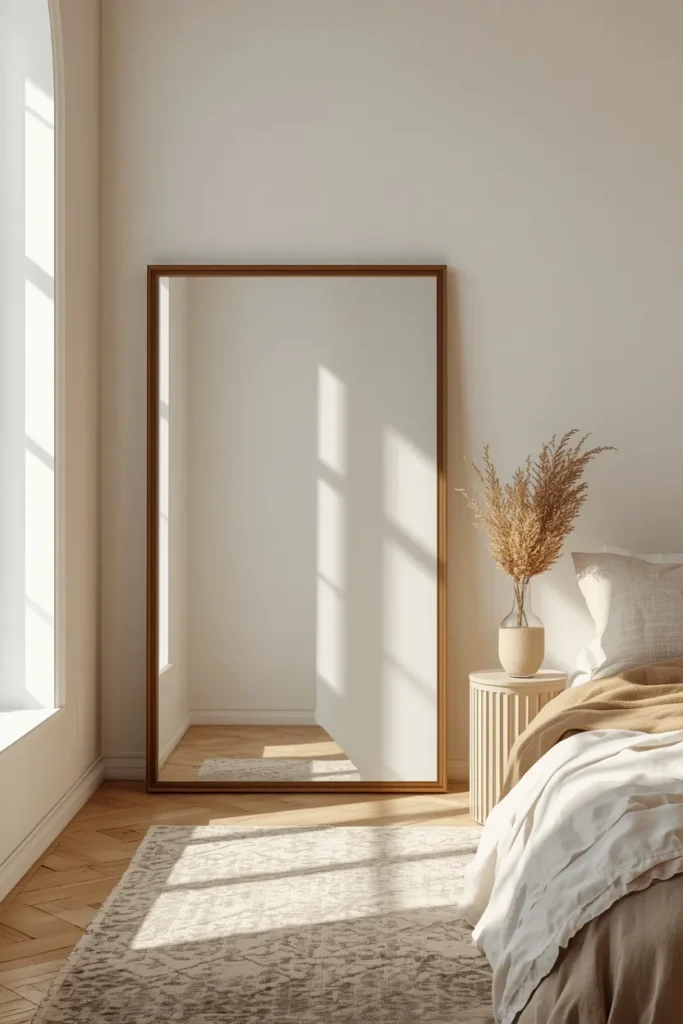
Furniture in a tiny bedroom has to stay modest in scale, but art and mirrors don’t take up any usable floor space, which makes them the perfect place to go bigger for visual impact. A single large piece of art above the bed or a full-length mirror leaned against an empty wall adds the sense of scale and presence that small furniture alone can’t achieve. A mirror in particular helps a small room feel larger by reflecting light and doubling the visual depth of the space, especially when placed to reflect a window. Choosing one substantial piece, rather than several smaller ones scattered around the room, keeps the wall styling from feeling busy or competing with the room’s limited furniture. This is one of the easiest ways to make a small shared bedroom feel intentional and finished rather than under-decorated.
14. Choose Matching Nightstands, Even If They’re Small
Symmetry matters more in a small shared bedroom than people expect, since two matching, even if modest, nightstands on either side of the bed create a sense of visual balance and fairness that mismatched pieces can’t achieve. This doesn’t require identical furniture if space or budget doesn’t allow it; even two small floating shelves at the same height on either side of the bed accomplish the same visual effect. Choosing nightstands with at least one small drawer each helps corral each partner’s nightly essentials, phone chargers, glasses, lip balm, without those items ending up scattered across the whole room. This idea directly addresses one of the more common friction points for couples sharing a small space: an obvious asymmetry in whose side of the room gets more storage or surface area. Even a minor visual imbalance can read as unequal in a room this size, so small, matching pieces solve more than just a styling problem.
15. Add a Statement Headboard for Instant Presence
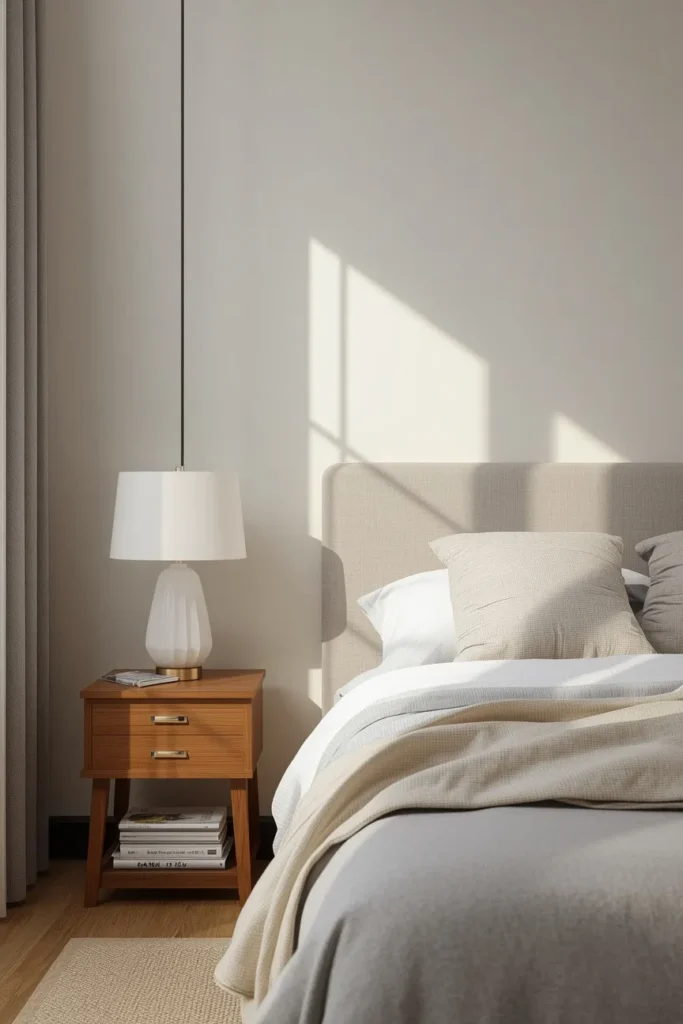
A bold, upholstered, or four-poster headboard adds a genuine sense of scale and drama to a room without requiring any additional floor space, since it’s mounted directly to the existing bed frame. This works especially well in small bedrooms because it draws the eye upward and outward, making the ceiling feel higher and the room feel more substantial than its actual square footage. A four-poster frame, in particular, only needs enough ceiling clearance to fit above the bed and can make even a modest room feel like a genuine retreat. Choosing a headboard in a textured fabric, like a channel-tufted velvet or a woven boucle, adds tactile richness that a plain wall behind the bed wouldn’t provide. This is one of the highest-impact single purchases for a tiny shared bedroom, since it does the visual work of several smaller decorative pieces combined.
16. Use a Sofa Bed for Genuinely Dual-Purpose Rooms
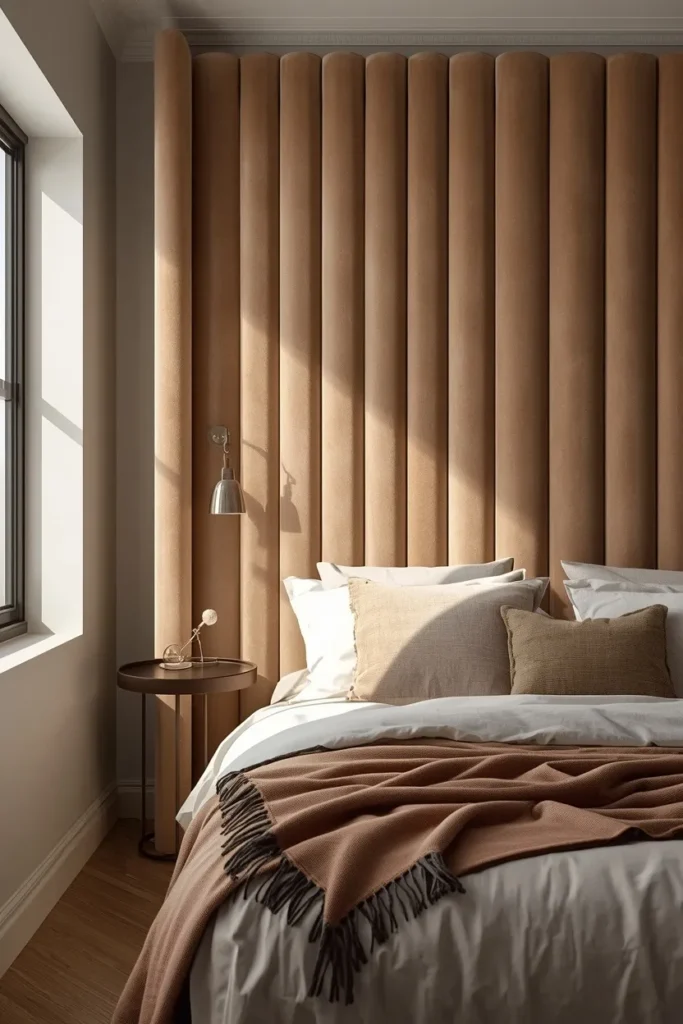
For couples living in a studio or a room that needs to function as both a bedroom and a living space during the day, a sofa bed eliminates the need for a permanently made-up bed to dominate the room around the clock. Folding the bed away each morning frees the space for a sitting area, a workspace, or simply a less bedroom-centric room during daylight hours. Choosing a sofa bed with a design detail, like a striped duvet or a distinctive lamp nearby, keeps the piece from reading as purely utilitarian once it’s folded out at night. This idea requires the most daily effort of anything on this list, since the transformation has to actually happen each day to be worth it, but it solves genuine dual-purpose space constraints better than almost any other option. It’s an especially strong fit for studio apartments where a separate bedroom simply isn’t part of the floor plan.
17. Add a Calming Sensory Layer
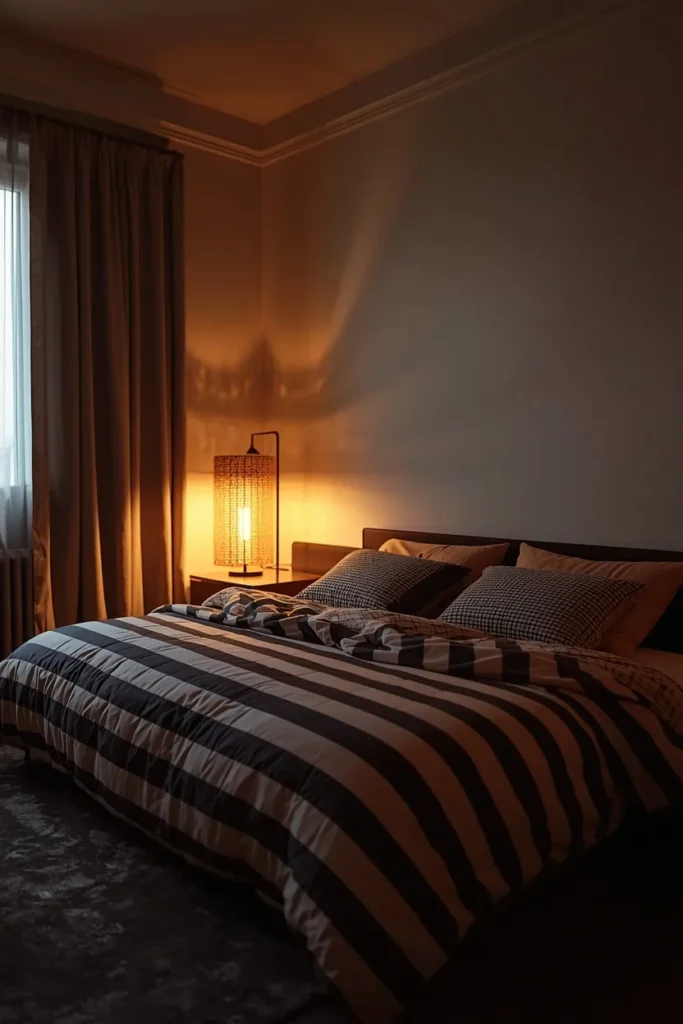
A white noise machine, a diffuser with a calming scent, and a plush area rug underfoot add a sensory layer to a tiny shared bedroom that goes beyond what visual styling alone can achieve, which matters especially when two people with different sleep habits or schedules are sharing the same small space. A white noise machine in particular can help resolve a common tension point for couples with mismatched sleep schedules or sensitivities to sound. Choosing a calming, non-overpowering scent, like lavender or cedar, adds to the room’s overall sense of retreat without competing with the visual styling already in place. A soft rug underfoot also has a practical benefit in colder months, making the transition out of a warm bed onto the floor less jarring. This idea rounds out the physical styling of the room with something that genuinely improves the daily experience of sharing it.
Styling Tips
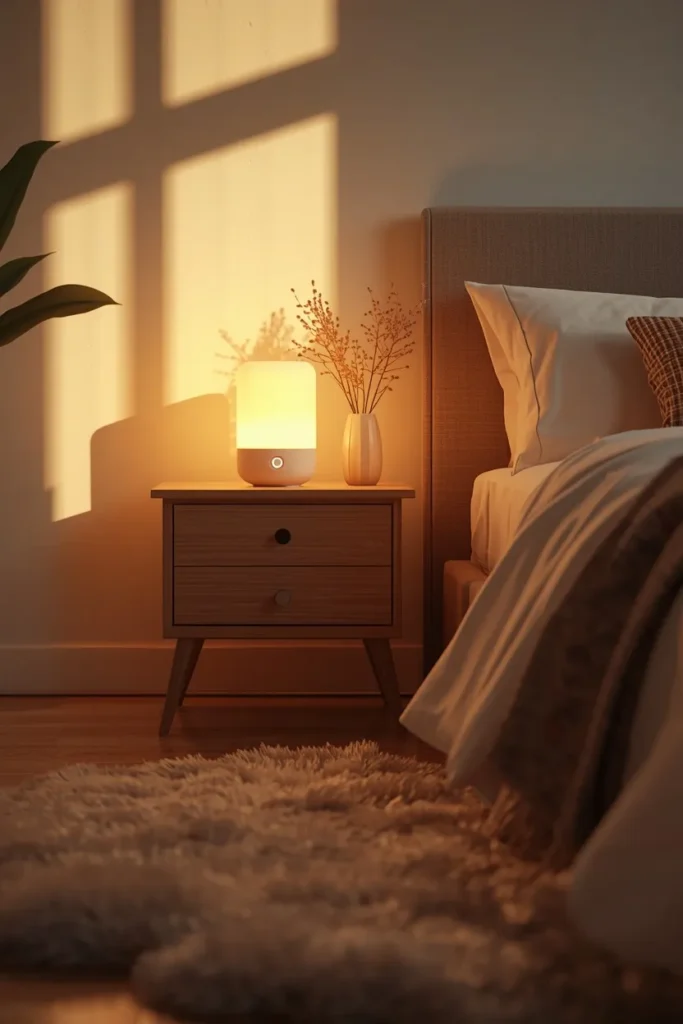
- Agree on a shared neutral base palette first, then let each partner’s personality show through smaller, easily changeable accessories.
- Prioritize vertical storage, shelves, hooks, and wall-mounted pieces, since floor space is almost always the scarcest resource in a shared tiny bedroom.
- Keep symmetry where you can, especially with nightstands and lighting, since visual balance reduces the sense of one side “winning” more space than the other.
- Layer at least three textures, like a knit throw, a smooth duvet, and a plush rug, to build warmth without adding clutter.
- Reserve one or two spots in the room, a shelf, a gallery wall corner, for rotating personal items so the space still feels like both of you.
Practical Implementation Ideas
- Measure the room and the largest furniture pieces before shopping, since a tiny bedroom leaves very little margin for error on scale.
- Start with the bed and storage solutions first, since these solve the biggest daily friction points before any decorative styling begins.
- Have an honest conversation about storage division early, ideally splitting closet, drawer, and shelf space as evenly as possible from the start.
- Test furniture placement with painter’s tape on the floor before committing to a layout, especially for anything that needs walking space around it.
- Add lighting layers last, once furniture placement is finalized, so cords and fixture positions can be planned around the final layout.
Common Mistakes to Avoid
- Choosing a bed too small for genuine comfort just to save floor space, which affects daily quality of life more than almost any other decision.
- Letting one partner’s color or style preference dominate every major surface, which can make the room feel unbalanced over time.
- Overcrowding the room with too much furniture instead of choosing fewer, multifunctional pieces.
- Ignoring vertical and corner space, which are often the most underused areas in a small shared bedroom.
- Skipping a real conversation about storage division, which tends to cause more day-to-day friction than any single design choice.
Small-Space Alternatives
For rooms too small even for the ideas above at full scale, focus entirely on the bed, lighting, and one storage solution, and accept that some ideas, like a seating nook or a work desk, may need to live outside the bedroom entirely. A tall, narrow wardrobe against one wall can often replace both a dresser and a closet in genuinely tiny footprints. Wall-mounted reading lights and floating shelves become even more essential in these cases, since floor space for traditional nightstands may not exist at all. In the smallest rooms, a platform bed with built-in storage combined with one large mirror is often enough to make the space feel complete without requiring additional furniture.
Budget-Friendly Alternatives
String lights, a new duvet cover, and a couple of throw pillows can transform the mood of a small shared bedroom for relatively little money compared to new furniture. Thrifted or secondhand nightstands, painted to match, achieve the same visual symmetry as a matching new set at a fraction of the cost. A large mirror is often one of the more affordable ways to add visual scale to a small room compared to investing in bigger furniture. Repurposing a bookshelf you already own as a room divider or storage piece avoids a new furniture purchase entirely while still solving a real spatial problem.
Pro Styling Recommendations
Treat every piece of furniture in a tiny shared bedroom as though it needs to justify its footprint through function, storage, seating, or genuine daily use, not decoration alone. Build the room in layers: bed and storage first, then lighting, then textiles, then final personal touches, so the biggest spatial decisions get made before anything decorative complicates the plan. Use scale strategically, going bigger on the bed and wall art while staying smaller and slimmer everywhere else, so the room feels intentional rather than simply small. And always design with both partners’ daily routines in mind, not just the finished look, since a tiny bedroom that functions well for two people day to day will always feel more successful than one that only photographs well.
FAQs
Conclusion
A tiny bedroom doesn’t have to feel like a compromise. The rooms that work best for couples aren’t necessarily the biggest ones, they’re the ones where every piece of furniture earns its spot and both partners’ daily needs were actually considered in the plan. Start with the bed and storage, layer in warmth through lighting and textiles, and let a few bigger, well-chosen pieces do more visual work than a room full of small ones ever could. However much square footage you’re working with, it can still feel like a real retreat for two.