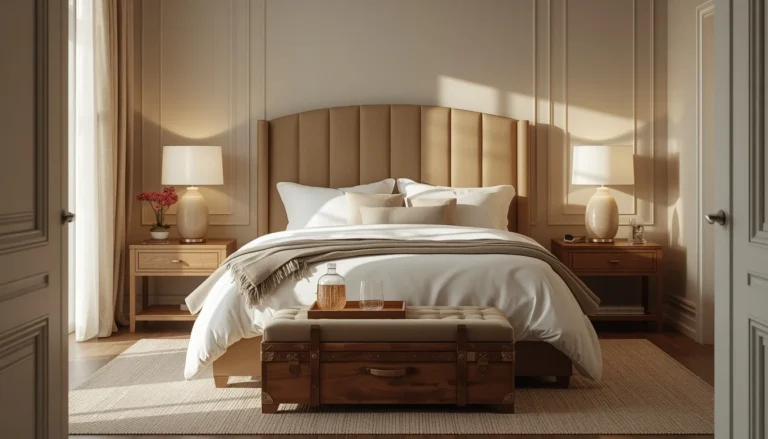
22 Elements for a Dark Cottagecore Bedroom in Deep Green
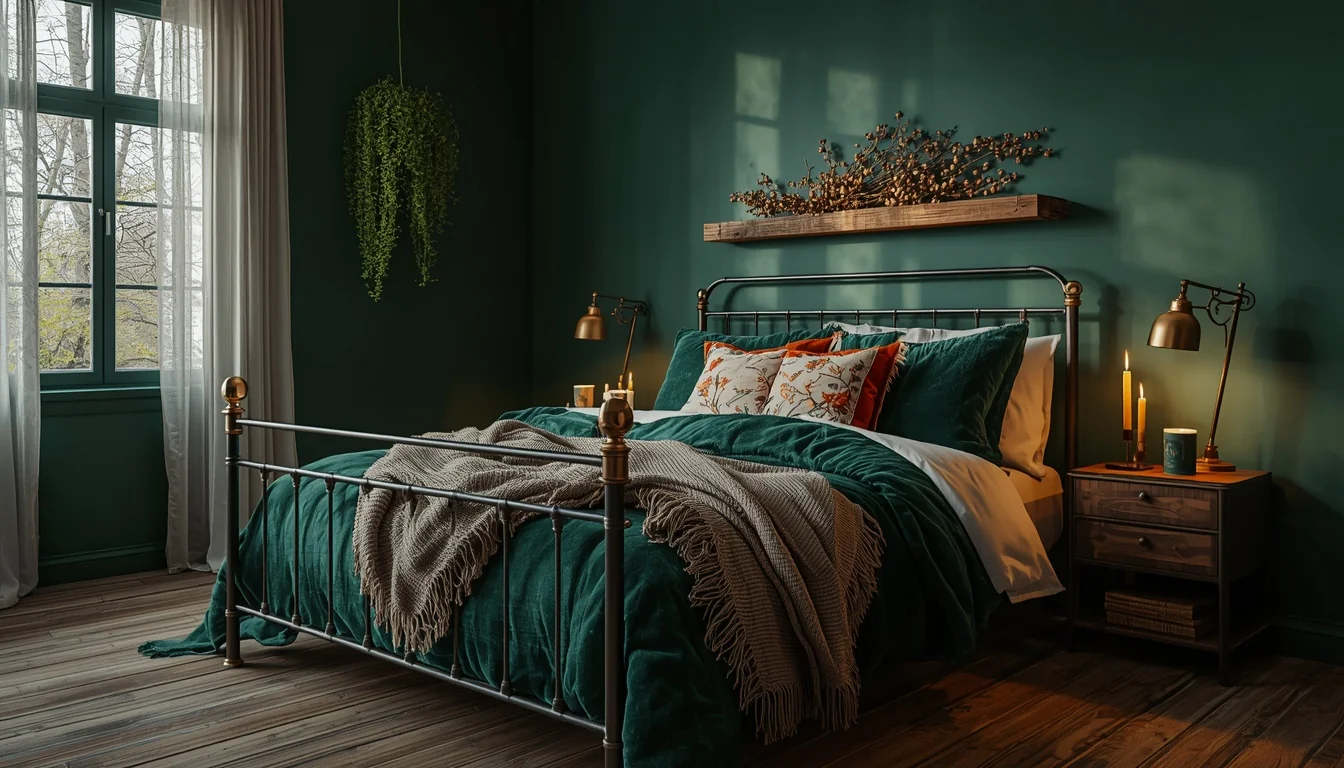
Some bedrooms look pretty in photos and feel like nothing in person. A dark cottagecore bedroom in deep green isn’t one of them.
Picture walking in after a long day. The light is low and gold. The walls hold that deep, quiet green of a forest floor. Your bed is piled with velvet and wool, and somewhere on the nightstand, a candle is doing its slow, flickering thing. Nothing in the room is trying too hard. It just feels like somewhere you’ve always belonged.
That’s the pull of dark cottagecore. It takes the softness of cottage style — the quilts, the dried flowers, the vintage furniture — and pairs it with a moodier, richer color story. Deep green does most of the emotional work here. It’s grounding without being heavy, romantic without being fussy, and it photographs beautifully whether you’re going for a full renovation or a few rental-friendly swaps.
Below are 22 specific elements that build this look, piece by piece, along with styling logic for why each one earns its place in the room.
Table of Contents
1. Deep Forest Green Accent Wall
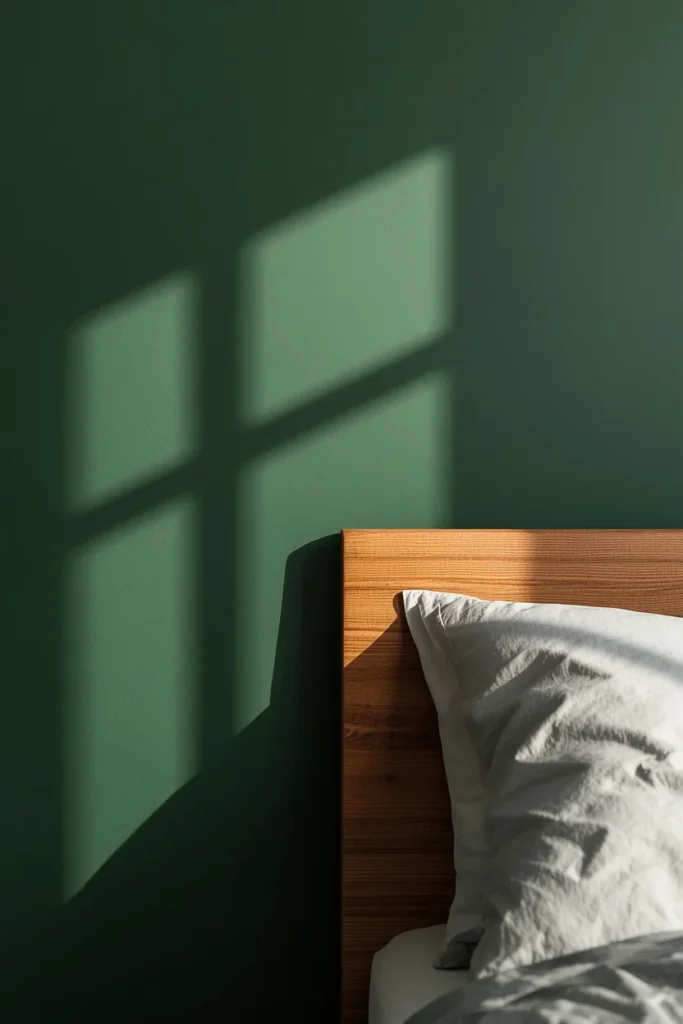
A single wall painted in a saturated forest or hunter green sets the emotional tone for the entire room before you’ve added a single piece of furniture. Choose a paint with a slight depth to it — something closer to pine needles than mint — so it reads as moody rather than pastel. Painting just one wall, ideally the one behind the headboard, keeps the room from feeling like a cave while still giving you that enveloping, wooded backdrop. Pair it with a matte or eggshell finish so light softens across the surface instead of bouncing off it. This wall becomes the anchor every other element in the room gets layered against.
2. Antique Wrought Iron Bed Frame
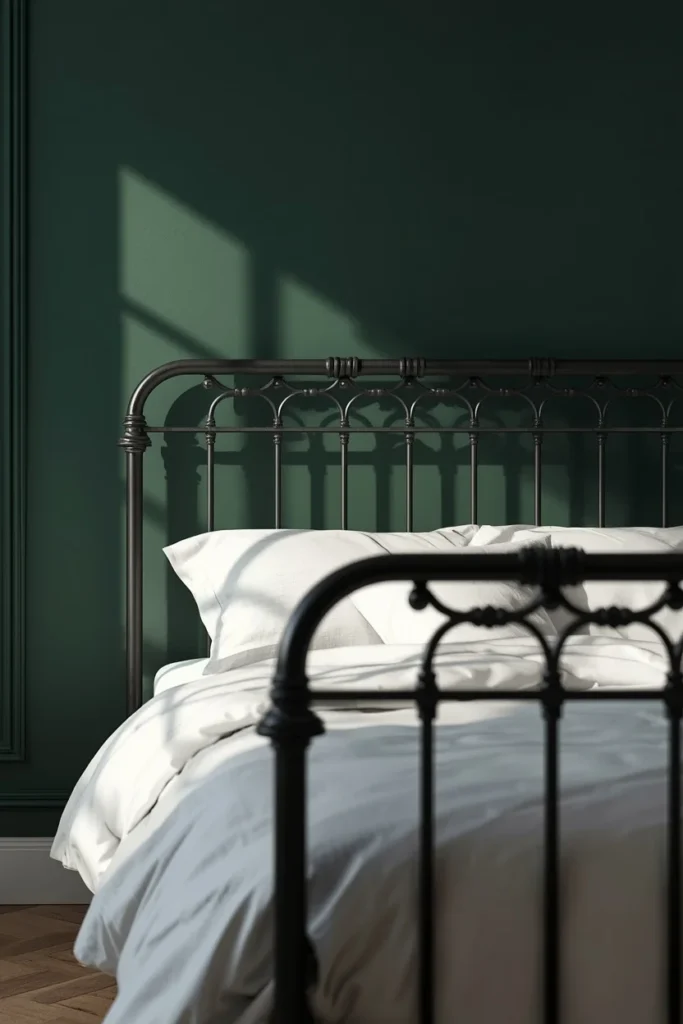
An iron bed frame with curved or spindled details gives the room its architectural backbone. The dark metal contrasts against soft bedding in a way wood furniture can’t quite match, adding a slightly gothic, romantic edge that fits the dark cottagecore mood. Look for frames with visible scrollwork or turned finials, since flat modern iron frames read more industrial than cottage. A matte black or aged bronze finish holds up better against green walls than a shiny chrome one. This piece works as the room’s centerpiece, so it’s worth prioritizing over smaller decor items if you’re building the look gradually.
3. Velvet Bedding in Forest or Emerald Tones
Velvet is the single fastest way to make a bed feel dark cottagecore rather than plain rustic. A velvet duvet cover, coverlet, or set of euro shams in deep emerald or forest green catches light differently than cotton, giving the whole bed a slightly glowing quality under lamp light. It also adds a layer of visual richness that pairs well with matte painted walls, since the fabric provides the shine the paint doesn’t. Stick to one or two velvet pieces rather than covering the entire bed, so the texture reads as intentional rather than overwhelming. Layer it over plain linen sheets so the velvet stays the focal texture.
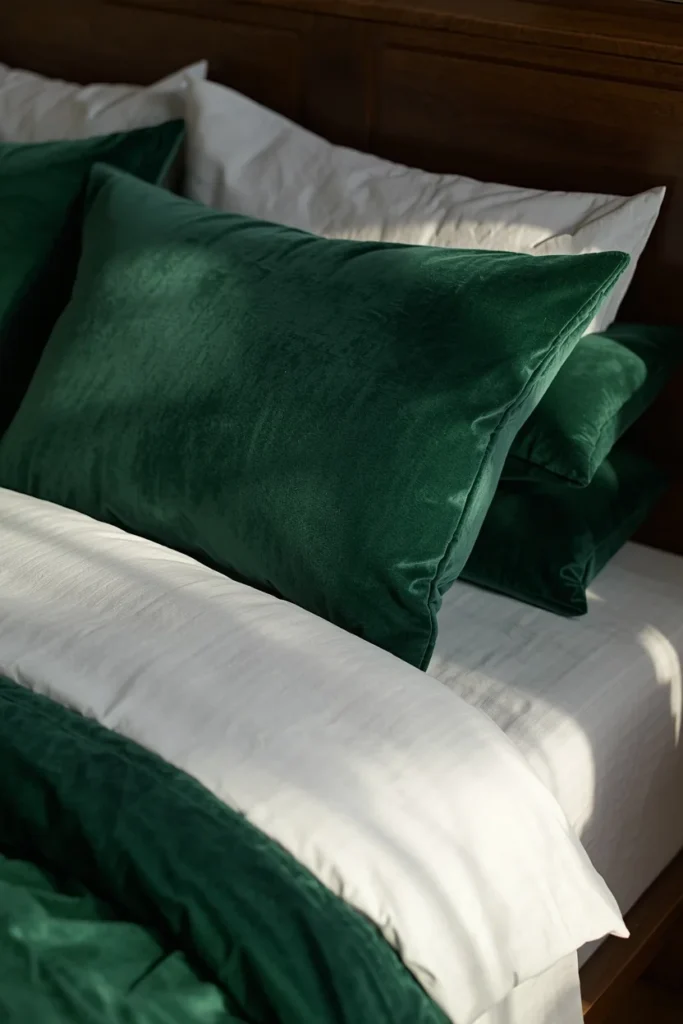
4. Dark Stained Wood Furniture
Walnut or mahogany-toned furniture — dressers, nightstands, a desk — grounds the room and keeps deep green walls from feeling untethered. Dark wood shares undertones with forest green, so the two work together rather than competing, unlike lighter oak or pine which can read too casual for this aesthetic. Choose pieces with some age or character to them, like slightly worn edges or brass hardware, rather than perfectly new furniture with sharp, clean lines. Mixing a couple of different wood pieces, rather than a matching bedroom set, actually supports the collected-over-time feeling this style depends on.
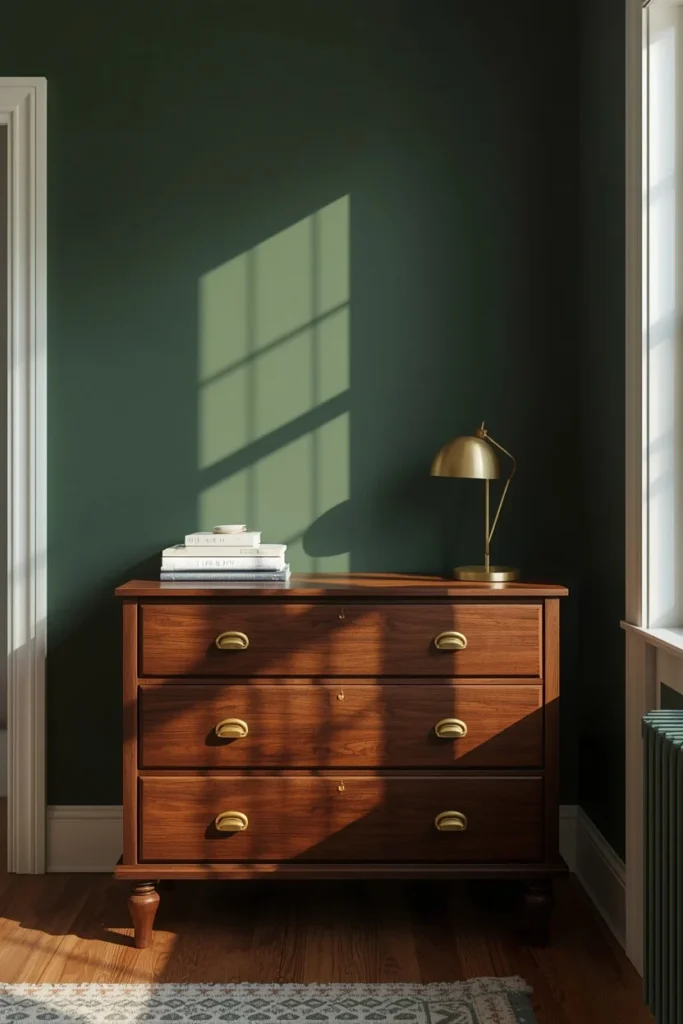
5. Botanical Print Wallpaper Strip
If a full accent wall in paint feels too permanent, a strip of botanical wallpaper on a smaller wall or alcove brings in pattern without overwhelming the room. Look for prints with dark backgrounds and detailed leaf or floral illustrations in muted greens, so the paper reads as part of the wall rather than a loud pattern moment. This works especially well behind a reading nook or on the wall opposite the bed, where you’ll actually see it while lying down. Removable, peel-and-stick versions make this an easy swap for renters who still want the layered, botanical depth this style calls for.
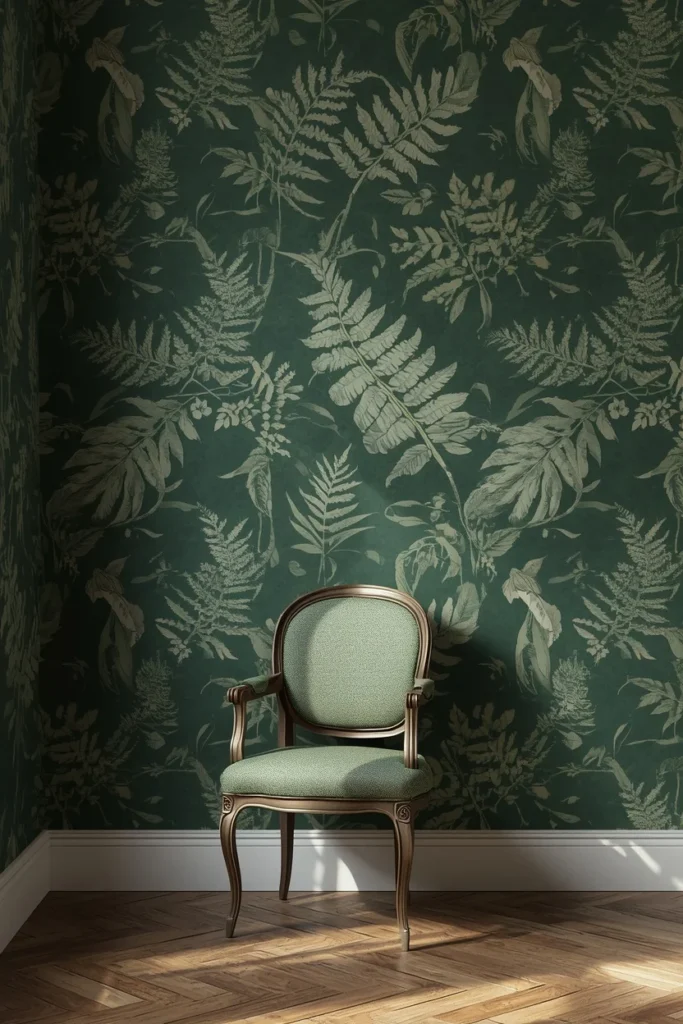
6. Layered Vintage Quilts
A handmade or handmade-style quilt folded at the foot of the bed adds instant history to the room, even if it was purchased last week. Choose one with a busy, traditional pattern in colors that echo the green walls — rust, cream, faded burgundy — so it ties the palette together rather than introducing a new one. Layering two quilts of slightly different scale, one folded flat and one draped more loosely, creates the slightly imperfect, gathered-over-years look that defines cottagecore. This is also one of the cheapest ways to add texture, since secondhand and estate-sale quilts are widely available and often better quality than new reproductions.
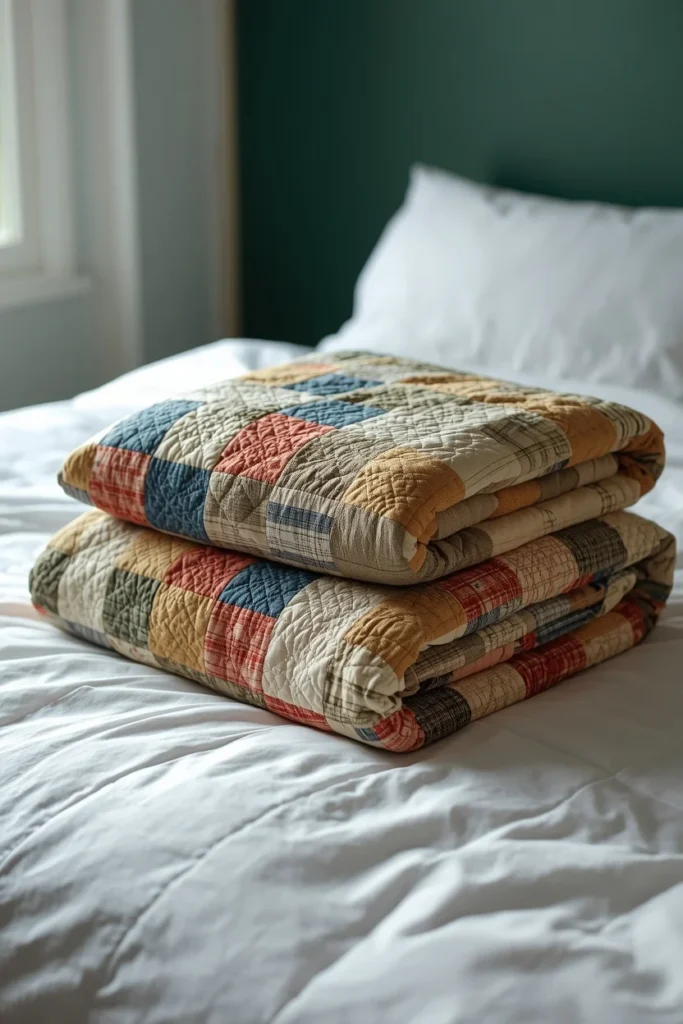
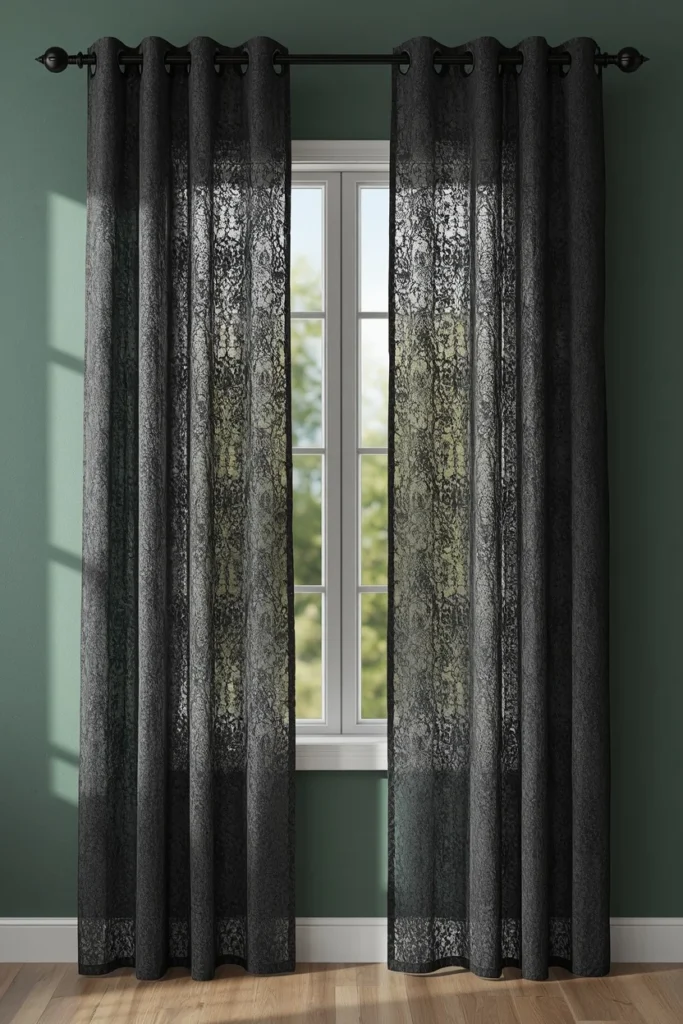
7. Lace Curtain Panels in a Deep Hue
Sheer lace curtains in charcoal, deep green, or aged cream soften window light while still letting the room feel enclosed and private, which matches the slightly hidden-away mood of dark cottagecore. Vintage lace has a slightly irregular pattern that reads as more romantic than modern sheer panels, so secondhand shops are worth checking before buying new. Hanging the curtains from a simple black iron rod, rather than a modern track system, keeps the hardware in line with the rest of the room’s materials. Layer the lace behind a heavier blackout panel if you also need the room to get properly dark at night.
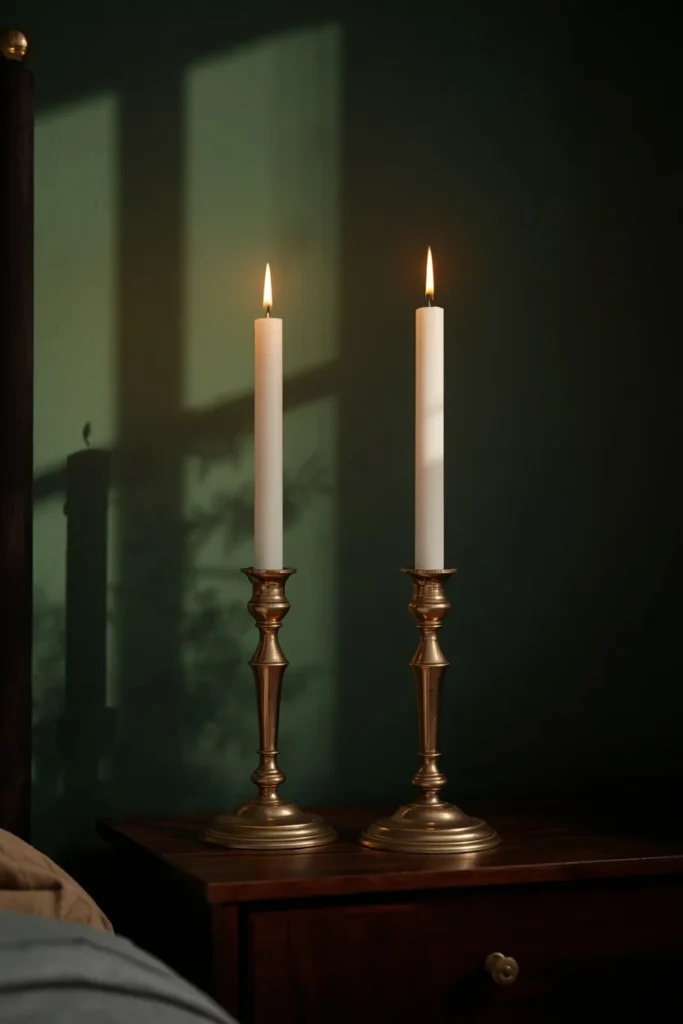
8. Brass Candlestick Holders
A pair of brass or aged-bronze candlestick holders on the nightstand or dresser brings warm, flickering light into the room without relying only on overhead fixtures. Choose taller taper candles over short pillar candles, since the height adds a bit of drama that fits the aesthetic. Mismatched heights and finishes across a small cluster of holders look more collected and less like a matching set from a big-box store. If open flame isn’t practical in your space, flameless taper candles in the same brass holders still deliver the warm glow this style depends on.
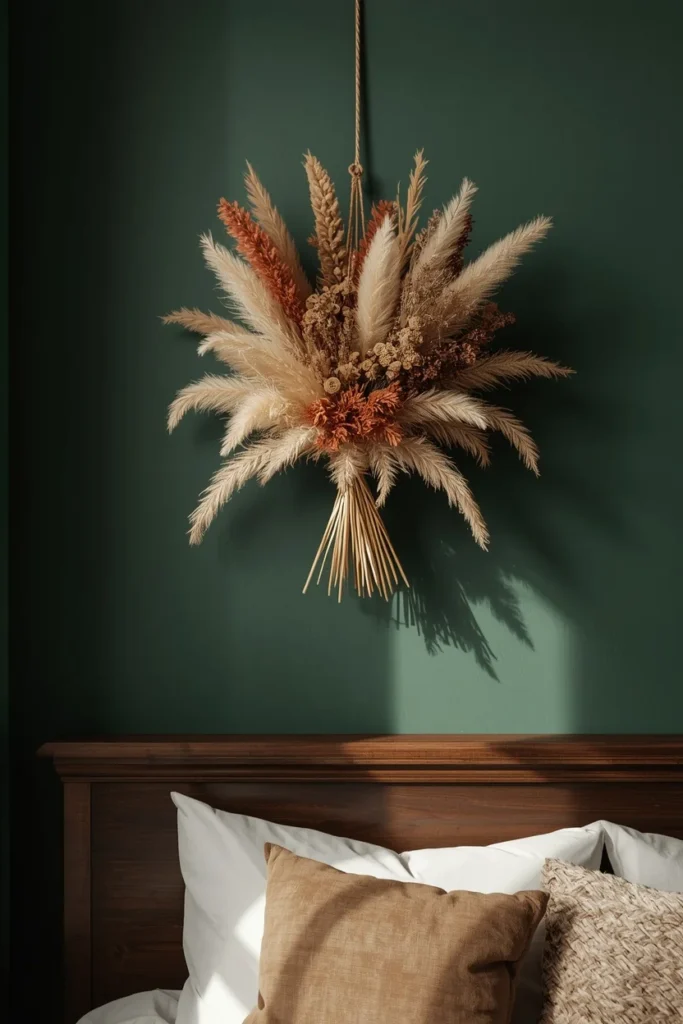
9. Dried Flower Wall Arrangement
A cluster of dried flowers, grasses, or eucalyptus hung upside down or arranged in a vintage vase brings the natural, foraged feeling that separates cottagecore from generic dark academia. Choose muted, faded tones — dusty pink, cream, soft rust — rather than bright dried flowers, since the faded color palette reads as more authentically aged. Hanging a small bundle above the headboard or on either side of a mirror adds height and softness to an otherwise heavy, dark wall. Because dried arrangements last for months without care, this is one of the lowest-maintenance ways to bring in the natural element this aesthetic relies on.
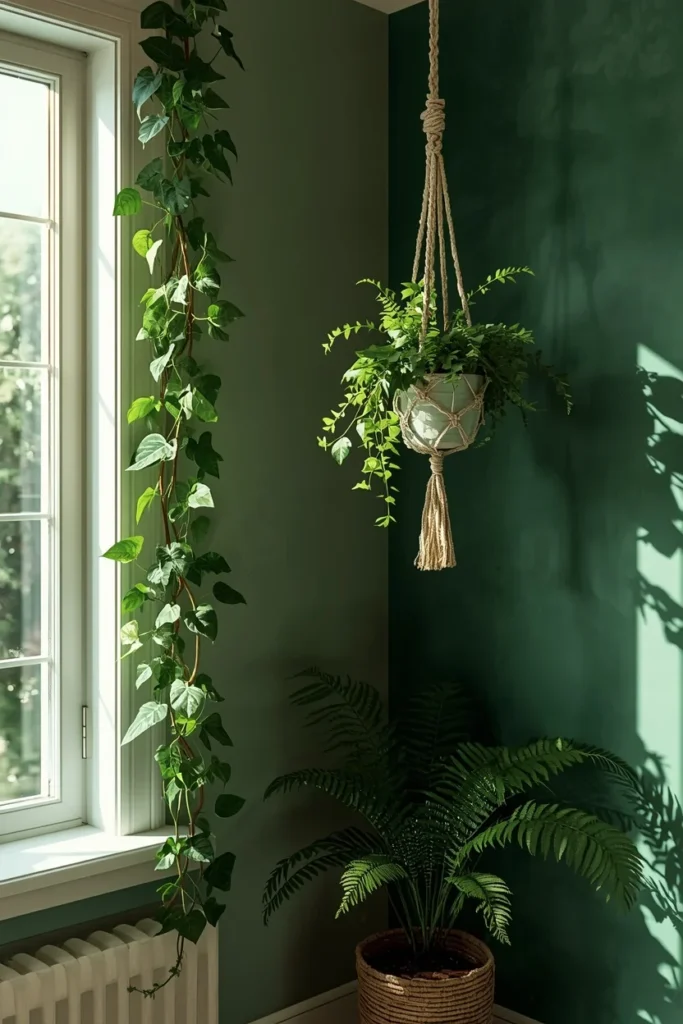
10. Hanging Ivy and Ferns
Live or high-quality faux ferns and trailing ivy add movement and a genuinely woodland feeling that dried florals alone can’t provide. Hang them near a window in macrame or woven hangers so the plants get enough light while staying above furniture and traffic areas. Trailing varieties like pothos or ivy work especially well because their vines can drape down a shelf or dresser edge over time, softening hard furniture lines. If natural light is limited, choose low-light varieties like ferns or ZZ plants rather than forcing a sun-loving plant into a dim corner where it will visibly struggle.
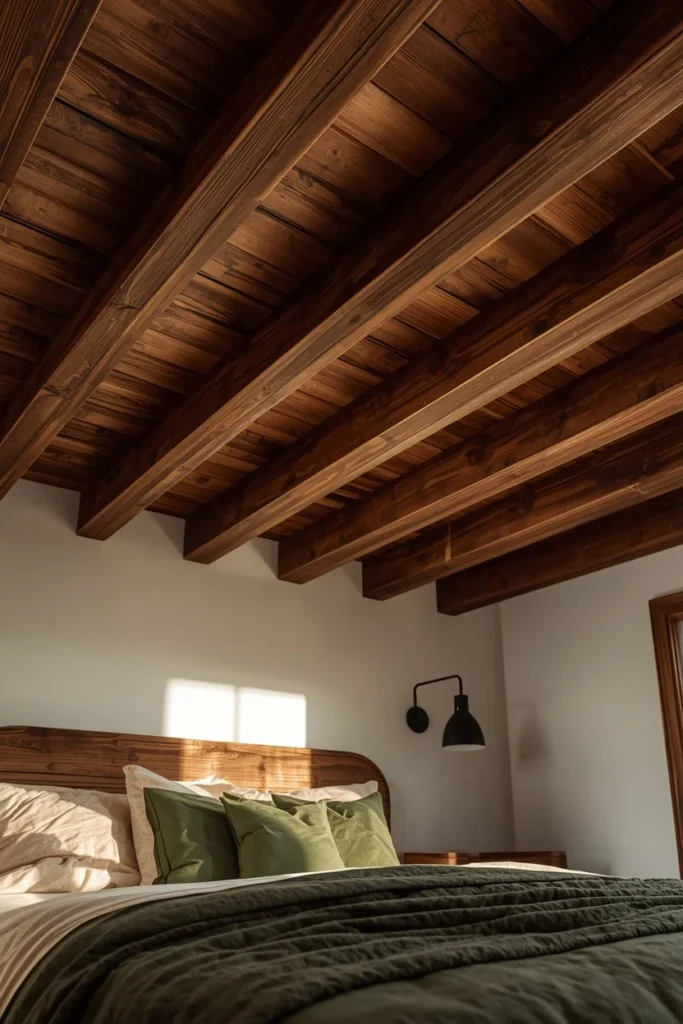
11. Wooden Ceiling Beams
Exposed or added wooden beams pull the eye upward and make the room feel more like a cottage tucked into a forest than a standard bedroom. If your ceiling doesn’t have real structural beams, lightweight faux beam panels can achieve a similar look without major renovation. Staining them a dark walnut or espresso tone keeps them in line with the room’s wood furniture, rather than a lighter tone that would read more farmhouse than cottagecore. Even a single beam running the length of the ceiling above the bed adds architectural interest that flat drywall can’t.
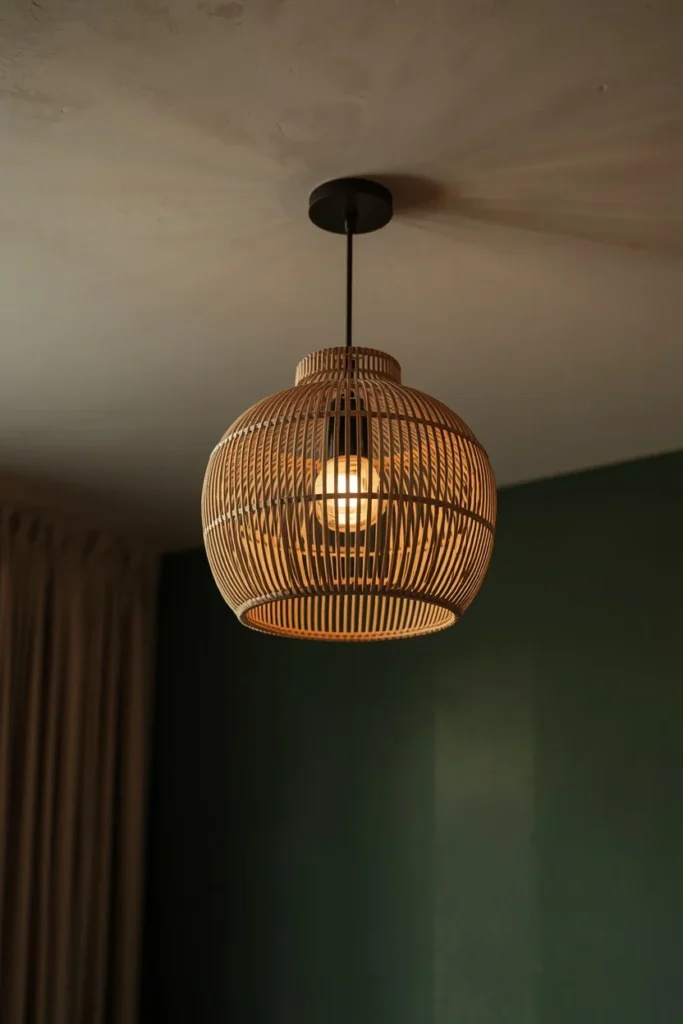
12. Moody Rattan or Iron Pendant Light
Overhead lighting sets the tone before anyone even notices the walls, so swapping a builder-grade fixture for a rattan, iron, or aged-brass pendant does a lot of work for very little cost. A fixture with some texture — woven rattan, curved iron arms, or antique glass — casts more interesting shadows than a flat modern flush mount. Choosing a warm white or amber bulb, rather than a cool daylight one, keeps the light consistent with the candlelit, golden mood the rest of the room is going for. Dimmable options let you shift the room from bright and functional during the day to soft and moody at night.
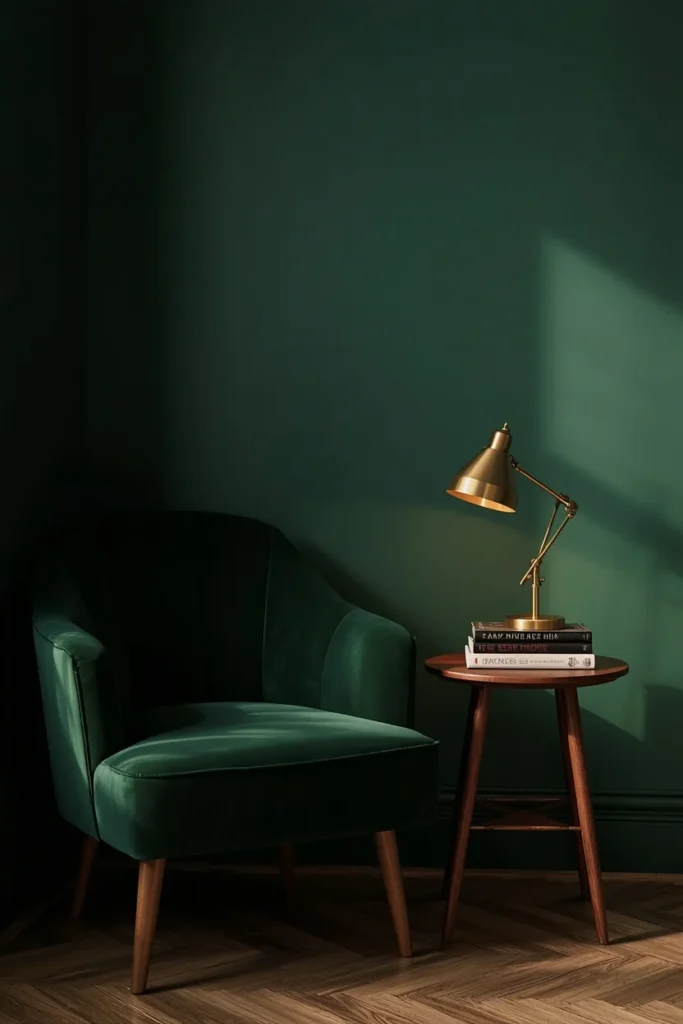
13. Reading Nook With a Dark Velvet Chair
A small chair tucked into a corner, paired with a side table and good lamp, gives the room a second purpose beyond sleeping and makes the whole space feel more lived-in. A dark velvet or wingback chair in a deep green, burgundy, or charcoal tone fits the palette while adding a different texture than the bed’s linens. Keep the nook small and specific — one chair, one table, one lamp — rather than trying to fill the whole corner, so it stays functional in a smaller bedroom. A folded throw blanket over the arm and a small stack of books on the table finish the look without extra effort.
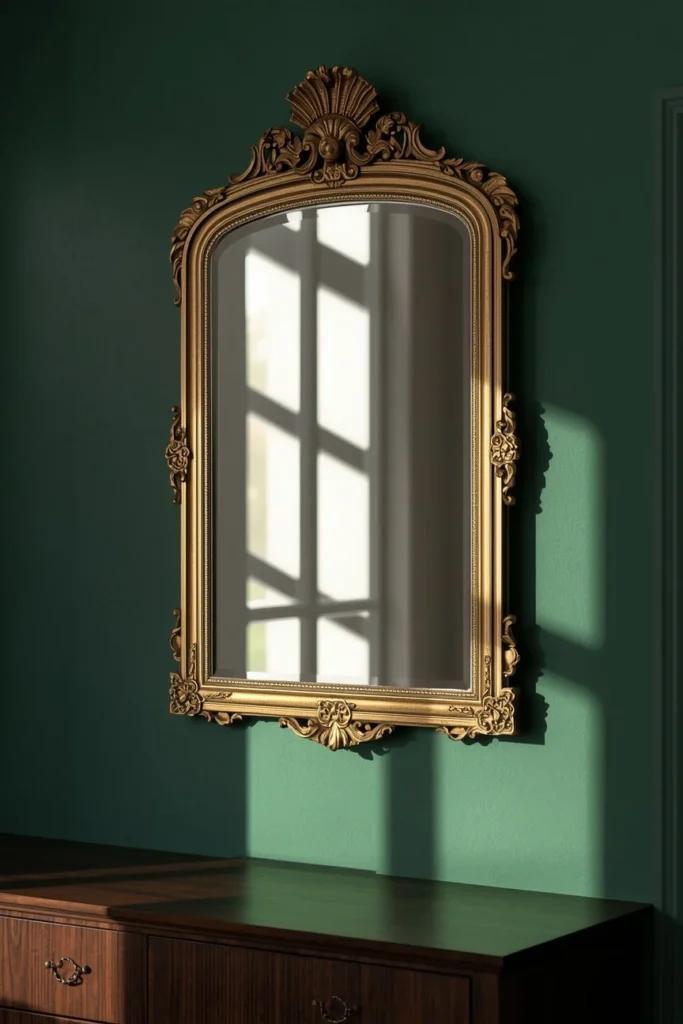
14. Antique Gold-Framed Mirror
An ornate mirror with an aged gold or brass frame adds light-bouncing function along with old-world character that a plain modern mirror can’t match. Hanging it slightly off-center, rather than perfectly centered above furniture, gives the room a more collected, less staged feeling. Because mirrors reflect whatever is across from them, position it to catch either the green accent wall or a window, so it visually doubles the richest part of the room. Secondhand and antique stores are the best source for this piece, since new ornate mirrors in the right finish tend to cost significantly more.
15. Gallery Wall of Vintage Botanical Prints
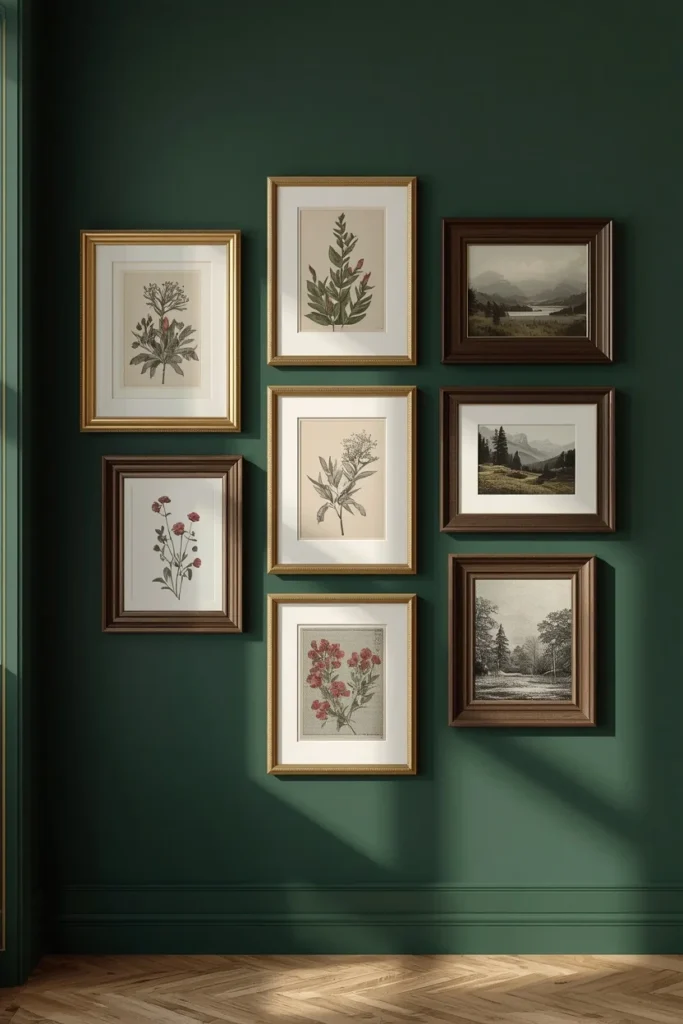
A cluster of small framed botanical illustrations, moody landscape paintings, or antique portraits arranged asymmetrically tells a more personal story than a single large art piece. Mixing frame finishes — a few gold, a few dark wood, maybe one black — keeps the wall from feeling too matched while staying cohesive in subject matter. Start with a loose grid on the floor before hanging anything, so you can adjust spacing and balance before committing to nail holes. This is one of the more time-intensive elements on the list, but it’s also one of the most effective at making a room feel curated over years rather than decorated in a weekend.
16. Woven Storage Baskets
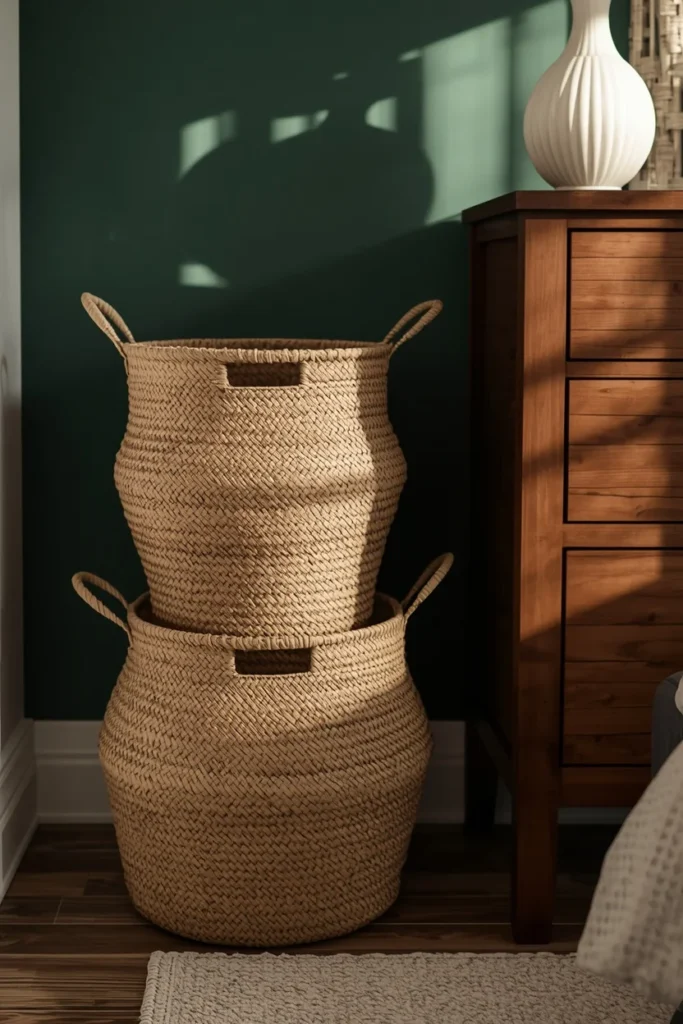
Baskets in seagrass, rattan, or dark-stained wicker handle practical storage — extra blankets, books, laundry — while keeping the room’s natural material palette consistent. Tucking one or two under a window or beside the bed keeps clutter contained without needing closed cabinet storage, which can feel too modern for this aesthetic. Varying the basket sizes and stacking them slightly off-center avoids the too-perfect, showroom look this style tends to avoid. This is also one of the most functional elements on the list, since it solves a real storage problem while still contributing to the overall mood.
17. Hand-Knit Wool Throw Blankets
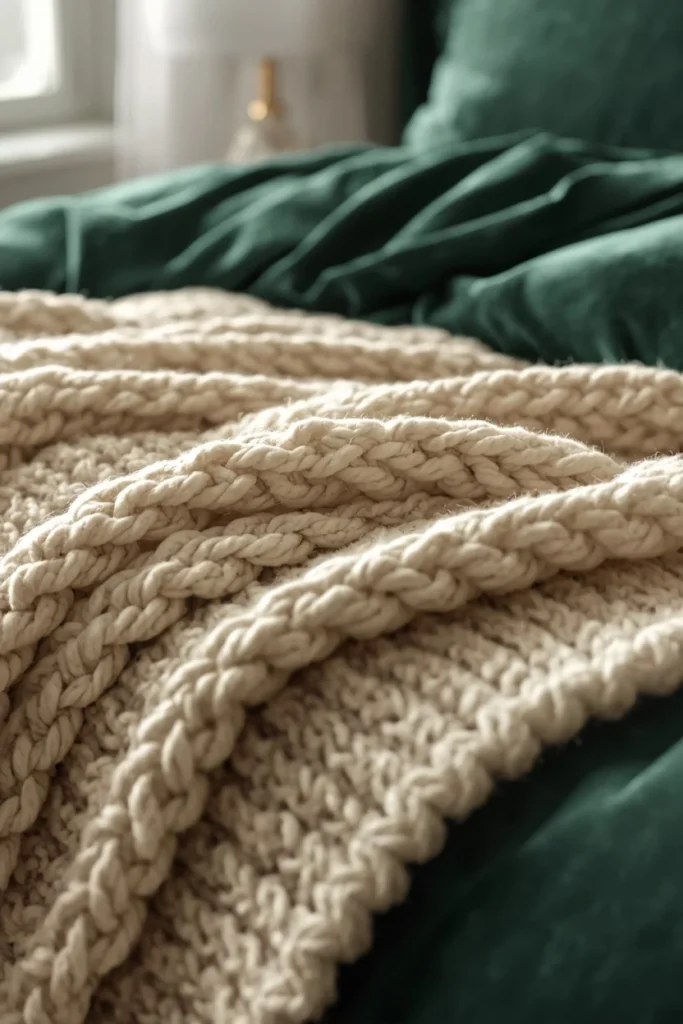
A chunky, hand-knit or hand-knit-style throw draped over the foot of the bed or the arm of a chair adds an immediate layer of texture and warmth. Cream, oatmeal, or muted rust tones contrast nicely against deep green bedding, keeping the color palette from feeling one-note. Draping the throw loosely, rather than folding it into a tight rectangle, keeps the styling relaxed instead of overly staged. This is a small, inexpensive addition that punches above its cost, since the texture alone photographs well and adds real tactile comfort to the room.
18. Brass Table Lamp With a Fabric Shade
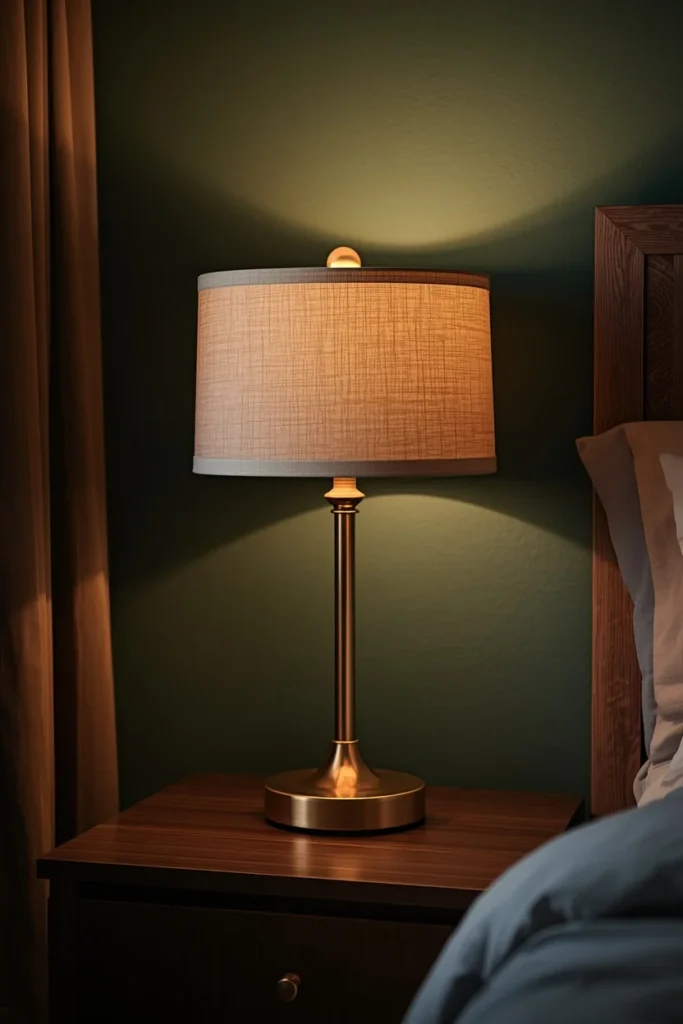
A single well-placed lamp does more for a room’s mood than any overhead fixture, especially one with a brass base and a warm, slightly textured fabric shade. Placing it on the nightstand at roughly eye level when seated in bed makes reading before sleep more comfortable and adds a warm pool of light to that side of the room. A cream, rust, or dark green shade keeps the lamp in line with the palette, rather than a stark white shade that can feel too clinical. This lamp, paired with the candlesticks, gives the room two distinct, layered light sources instead of relying on one flat overhead glow.
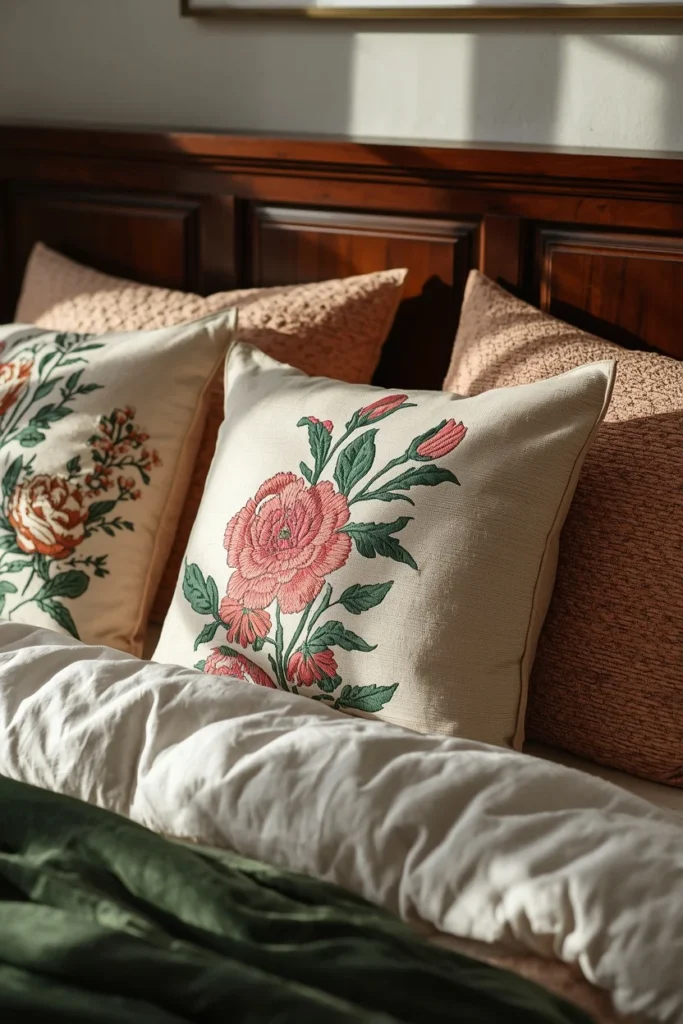
19. Patchwork or Embroidered Pillows
A mix of two or three decorative pillows in patchwork, embroidered florals, or velvet with contrast piping adds detail at eye level without requiring a full bedding change. Choosing pillows in slightly different but complementary patterns, rather than a matching pair, supports the collected-over-time feeling central to this style. Keep the base pillows solid — cream or deep green — and use the patterned ones as accents so the bed doesn’t feel visually busy. This is one of the easiest elements to rotate seasonally, since pillow covers are inexpensive to swap out as your palette or mood shifts.
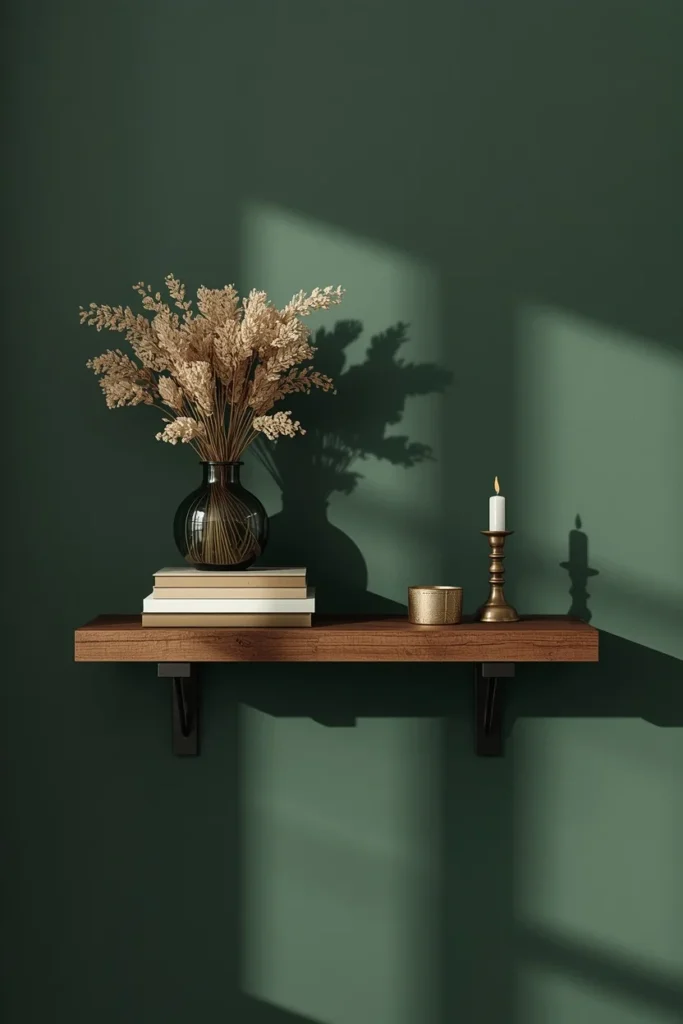
20. Rustic Wood Floating Shelves
Simple wood shelves near the bed or above a desk give you a place to display small collected objects — books, dried botanicals, a small vase — without needing a full bookcase. Choosing raw or dark-stained wood with visible grain keeps the shelves in line with the room’s other wood tones. Styling them with an intentional mix of heights, rather than lining objects up evenly, creates the slightly irregular look this aesthetic favors. Leaving some negative space on each shelf, rather than filling every inch, keeps the display from reading as cluttered.
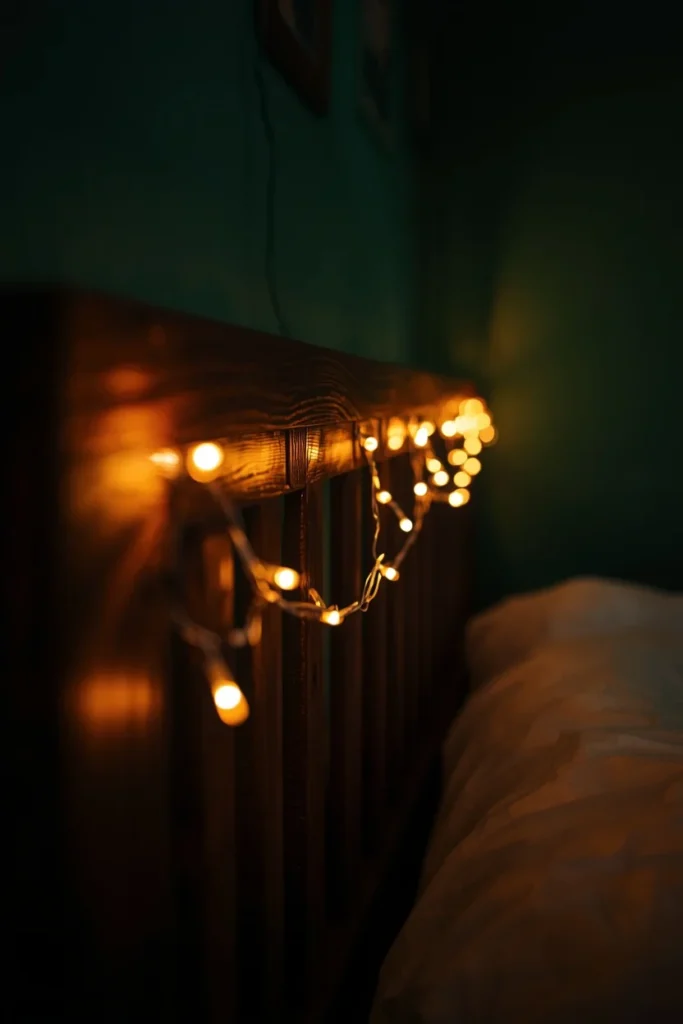
21. String Lights Along the Beams or Headboard
Warm white string lights woven along a ceiling beam, headboard, or window frame add a soft, ambient glow that works especially well at night when brighter lamps feel like too much. Choosing lights with a warm, slightly amber tone rather than cool white keeps them consistent with the candlelight and lamp glow elsewhere in the room. Tucking the wire along a beam or behind a curtain rod, rather than leaving it fully exposed, keeps the effect looking intentional rather than like leftover holiday decor. This is one of the most affordable elements on the list and one of the easiest to install without any tools.
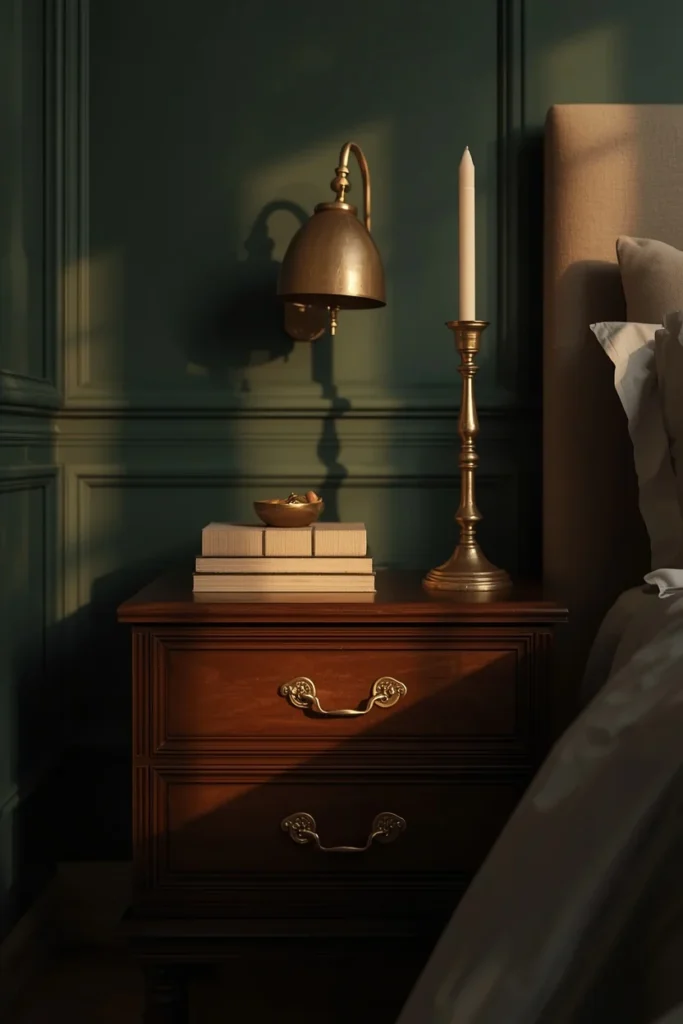
22. Vintage Wooden Nightstand With Brass Pulls
A small nightstand with some age to it — a slightly worn finish, brass or iron pulls, maybe a curved leg — finishes the bedside area with the same collected character as the rest of the room. Look for pieces with a single drawer and open shelf below, which gives you both hidden and visible storage for books, candles, or a small plant. Pairing a slightly mismatched nightstand on each side of the bed, rather than an identical matching pair, adds to the room’s lived-in, non-showroom feeling. This is often the last detail people add, but it’s also one of the most photographed corners of the entire room.
Styling Tips
Work from the bed outward. Get the bedding, frame, and wall color settled first, then layer in lighting, textiles, and small objects — trying to place every decor piece at once usually leads to a cluttered result. Stick to two or three main wood tones throughout the room instead of mixing five different finishes, so the furniture feels chosen rather than accumulated at random. Let your light sources do more work than your paint color; a room with three warm, layered light sources will feel cozier than a room with perfect green walls and one harsh overhead bulb.
Practical Implementation Ideas
Start with the accent wall and bedding, since those two changes shift the whole room’s mood immediately and cost less than a full furniture swap. Add lighting next — a pendant swap, a lamp, and string lights or candles — before moving on to smaller decor like art and dried flowers. Save gallery walls and shelf styling for last, once you can see how much wall space is actually left after furniture and larger decor pieces are placed.
Common Mistakes to Avoid
Painting all four walls the same deep green often makes a small bedroom feel smaller and darker than intended, rather than cozy. Relying only on overhead lighting flattens the mood this style depends on; without lamps or candlelight, even a well-decorated room can feel sterile. Buying an entire matching bedroom set undercuts the collected-over-time feeling that makes dark cottagecore work, so mix pieces from different sources instead.
Small-Space Alternatives
In a smaller bedroom, paint just the headboard wall instead of the whole room, and use a botanical wallpaper strip on one accent nook rather than full coverage. Choose a slim daybed or a bed frame without a footboard to keep sightlines open, and hang shelves instead of adding a full bookcase. A single well-placed mirror can also make a compact green room feel noticeably larger by reflecting window light back into the space.
Budget-Friendly Alternatives
Secondhand and estate sales are the fastest way to find quilts, mirrors, and nightstands with the right amount of age already built in. Peel-and-stick wallpaper and paint samples let you test the deep green palette before committing to a full gallon of paint. Faux dried florals and battery-powered string lights or candles deliver most of the visual effect of their real or open-flame counterparts at a fraction of the cost and upkeep.
Pro Styling Recommendations
Layer at least three distinct light sources — overhead, lamp, and candle or string light — so the room shifts naturally from bright and functional to soft and moody depending on the time of day. Choose one “hero” piece, usually the bed frame or the accent wall, and let everything else support it rather than competing with it. Leave a little visual breathing room on shelves and walls; a slightly under-decorated dark cottagecore room reads as more intentional than one crammed with objects.
FAQs
Conclusion
A dark cottagecore bedroom in deep green isn’t built in a single trip to one store. It comes together in layers — a wall color here, a velvet throw there, a candlestick picked up secondhand on a random Tuesday. That’s part of what makes it feel so personal once it’s finished. Pick two or three elements from this list to start with, live with them for a while, and let the rest of the room fill in slowly. The goal was never a showroom. It was always a place that feels like your own quiet corner of the woods.