16 Fall Flower Arrangement Ideas to Instantly Warm Up Your Home
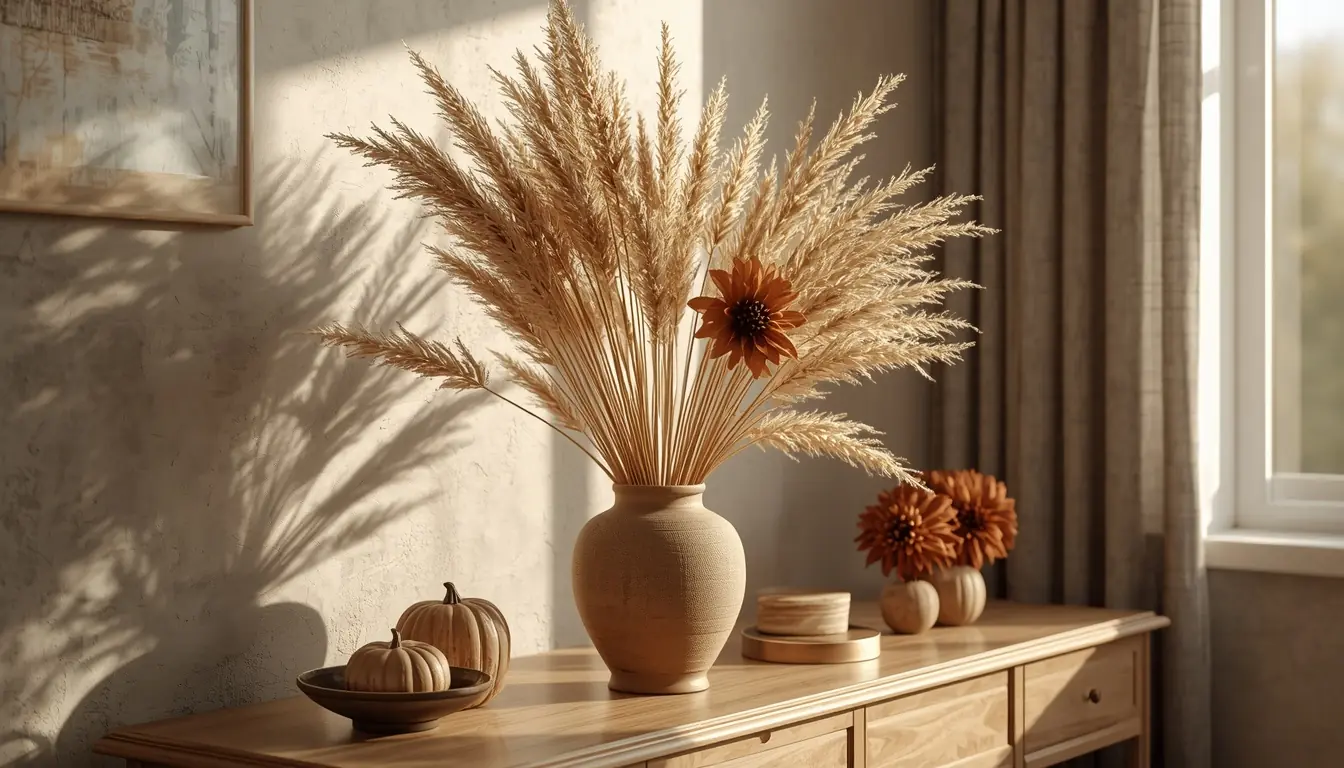
A home can have all the right pumpkins, candles, and cozy throws in place and still feel a little flat without something living, or at least something that looks like it, somewhere in the room. Flowers do that work faster than almost any other decor decision, and fall is the one season where you genuinely don’t need a florist’s touch to make an arrangement feel intentional.
The trick is understanding that fall flower arranging isn’t really about flowers at all. It’s about texture, warm color families, and choosing the right vessel. A handful of dried wheat in a stoneware crock, a cluster of grocery store dahlias in an antique pitcher, a single stem of pampas grass leaned into a corner, all of it counts. These 16 ideas cover fresh, dried, and foraged options for every room in the house, so wherever your home needs a little more warmth, there’s an arrangement here for it.
Table of Contents
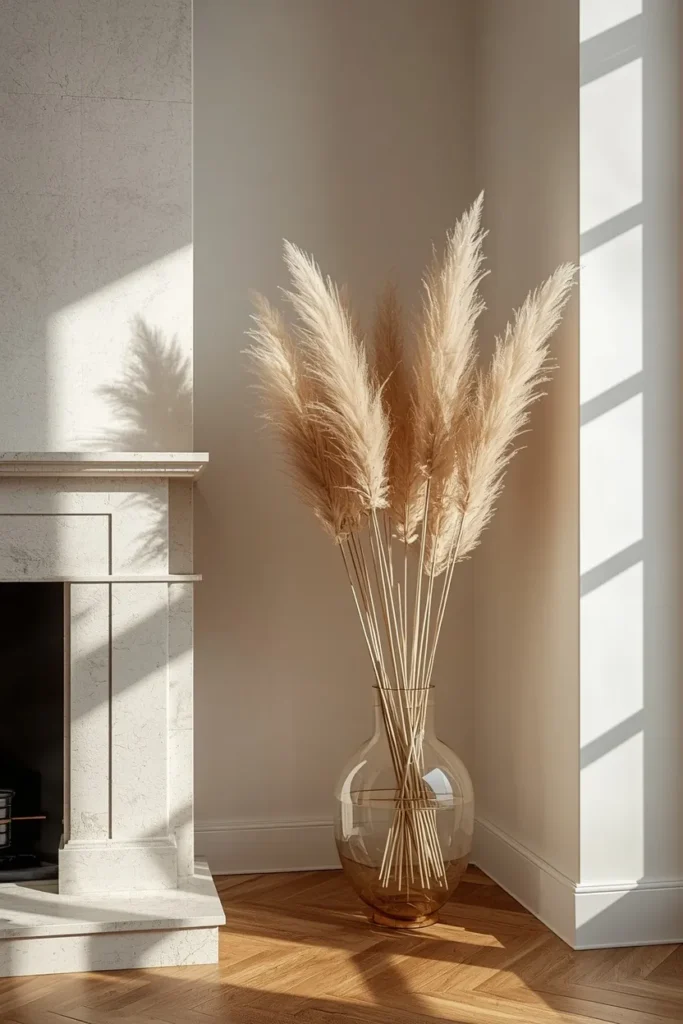
1. A Pampas Grass Statement Vase
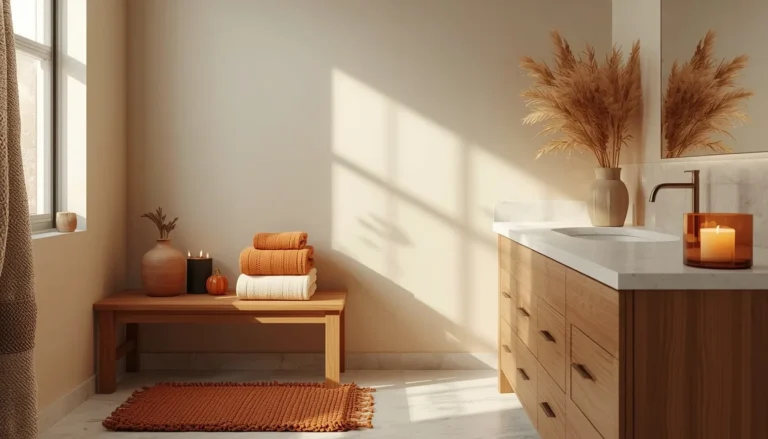
Tall, feathery pampas grass plumes in a simple ceramic or glass floor vase bring instant height and texture to an empty living room corner or the side of a fireplace, and because it’s dried, there’s no watering or wilting to worry about. Start with a few sturdy branches at the base of the vase to anchor the taller plumes, then build outward with fuller stems in front and thinner ones toward the back for depth. If the plumes arrive looking flat from shipping or storage, setting them in a warm, dry spot for a day helps them relax and fluff back out before styling. A light mist of hairspray from a distance afterward keeps stray strands from shedding onto the floor. Because pampas grass reads as neutral rather than distinctly “fall,” this arrangement can realistically stay up from September through the end of the year.
2. A Simple Dried Wheat Bundle in a Stoneware Crock
A bundle of dried wheat stems gathered into a stoneware crock or pitcher is one of the fastest, most low-maintenance fall arrangements to put together, since it requires nothing more than trimming the stems to the right height and setting them in place. The golden tone of the wheat pairs naturally with warm wood counters and neutral cabinetry, which makes this a strong choice for a kitchen island or open shelf where more delicate flowers might get knocked over. Because dried wheat holds its shape indefinitely, this arrangement can be reused for years with zero upkeep beyond an occasional dusting. Leaning the bundle slightly to one side rather than centering it perfectly straight gives the display a more natural, just-gathered-from-the-field look. This is one of the best entry points on the whole list for anyone new to flower arranging.
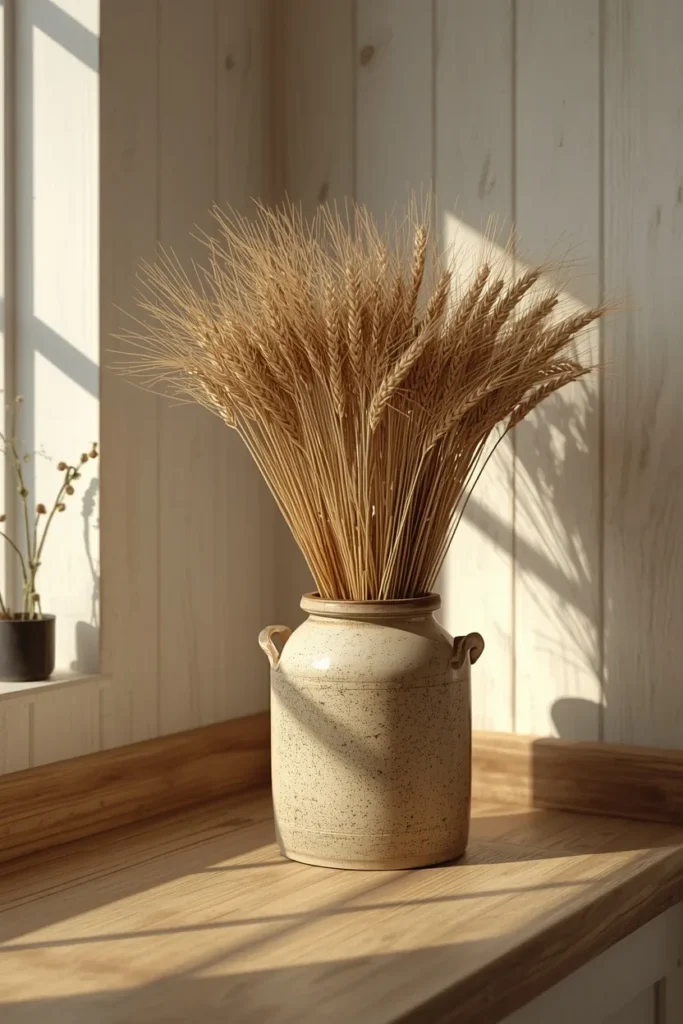
3. A Mixed Dahlia and Mum Arrangement in Warm Tones
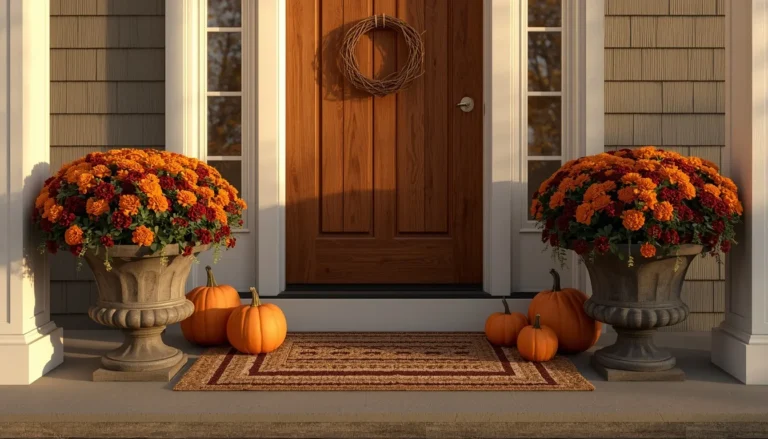
Fresh dahlias and mums in shades of burnt orange, deep burgundy, and golden yellow, grouped together in a simple round vase, create a rich, layered look that reads as classic fall without relying on pumpkins or leaves at all. Choosing three or four color-coordinated varieties rather than a single flower type adds visual interest through shape and texture while still keeping the palette cohesive. Cutting the stems at a sharp angle and changing the water every two to three days extends the life of the arrangement noticeably, and a homemade preservative of a teaspoon of sugar, a teaspoon of bleach, two teaspoons of lemon juice, and a quart of lukewarm water helps even further. This arrangement makes an excellent dining table centerpiece since the low, rounded shape doesn’t block sightlines across the table. Mums in particular tend to be some of the most affordable and longest-lasting fresh fall blooms available.
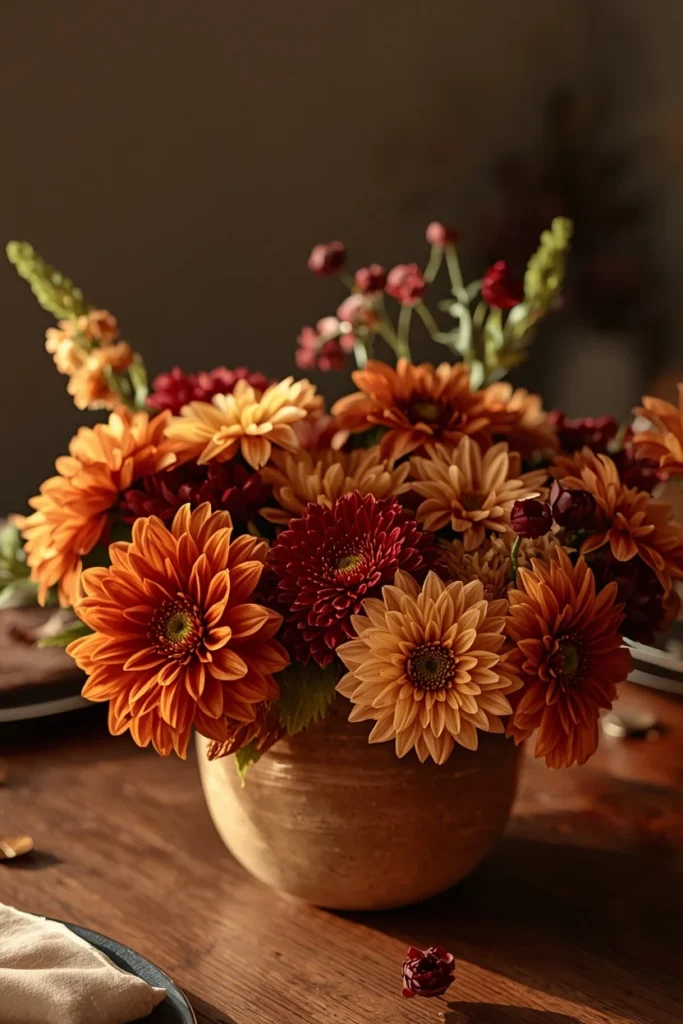
4. A Monochrome Color-Family Grouping
Choosing every stem in a single color family, all orange, all deep red, or all soft blush, and grouping them together creates a surprisingly sophisticated, editorial-looking arrangement despite requiring almost no technical skill. This works because the eye reads a tonal grouping as intentional even when the stems are mismatched in type, since the unified color does the visual organizing for you. Tangerine ranunculus mixed with tea roses in a similar orange tone is a particularly striking combination that reads as elevated rather than themed. This approach is also one of the most forgiving for beginners, since there’s no need to balance multiple competing colors or worry about clashing. A monochrome grouping works equally well with fresh, dried, or faux stems, making it one of the more flexible ideas on this entire list.
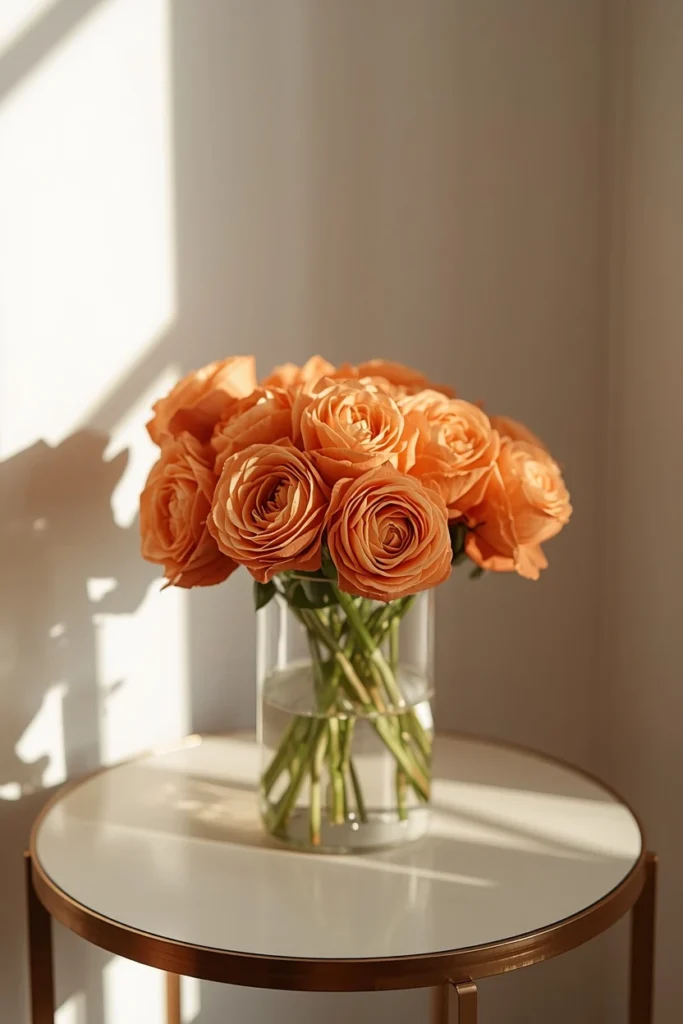
5. An Upgraded Grocery Store Bouquet
A basic grocery store bouquet gets an instant elevation when it’s transferred out of its plastic sleeve and into an antique or vintage vessel, then paired with a couple of small fall fruits like pears or persimmons tucked at the base. This trick works because the vessel and styling do most of the visual heavy lifting, meaning even a mixed, imperfect bouquet ends up looking curated rather than store-bought. Trimming the stems shorter than they came and removing any filler greenery that feels generic often improves the shape of the arrangement more than adding anything new would. This is one of the most budget-conscious ideas on the list, since a basic bouquet typically costs far less than a florist-designed one, and the upgrade itself costs nothing beyond what’s likely already in your cabinets. It’s also the fastest option here for anyone decorating the same day guests are arriving.
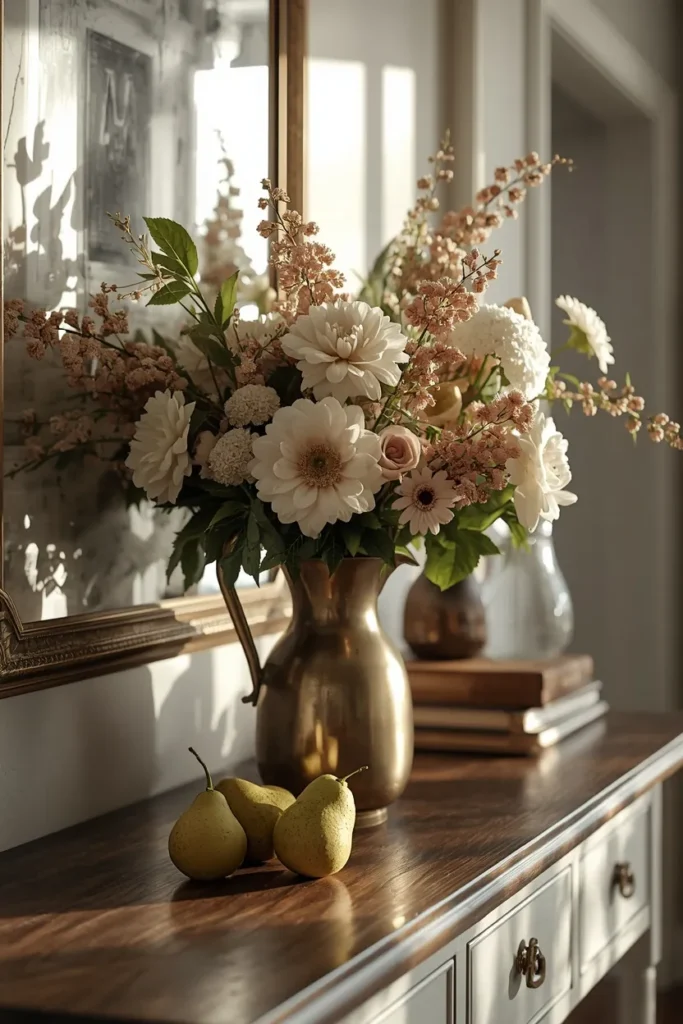
6. A Dough Bowl Centerpiece With Squash and Berries
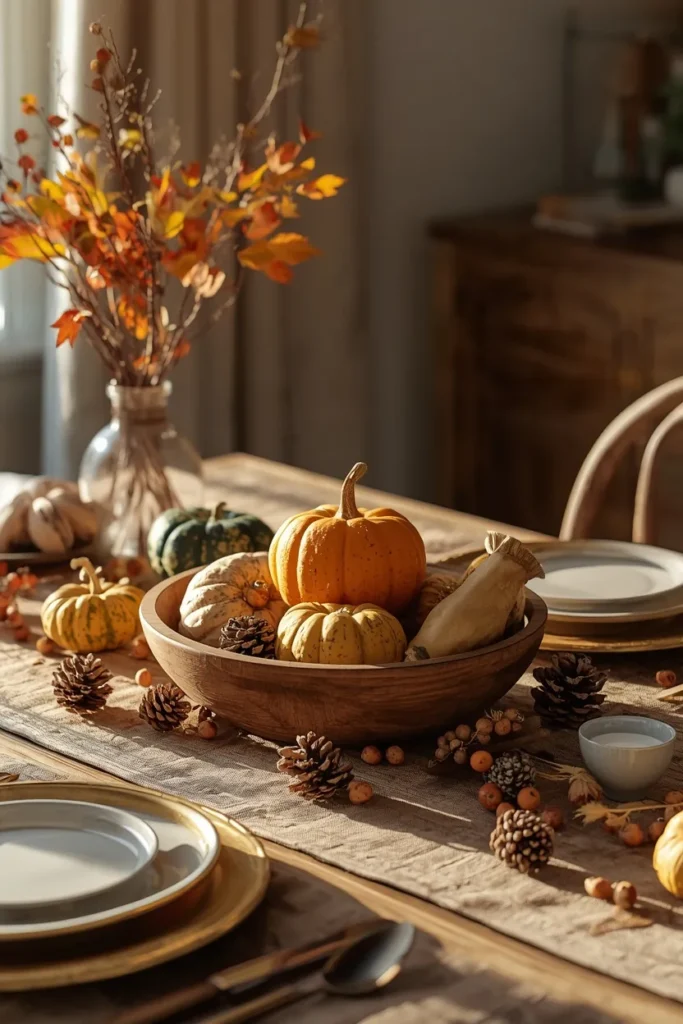
For anyone who finds fresh floral arranging intimidating, filling a large wooden dough bowl with a mix of small squash, pinecones, dried berries, and a few short branches sidesteps the need for a vase entirely while still delivering a full, seasonal centerpiece. The low, horizontal shape of a dough bowl makes it especially well suited to a dining table, since it never blocks conversation across the table the way a tall arrangement can. Layering the materials by size, larger squash toward the back, smaller berries and pinecones filling the gaps in front, gives the display a sense of abundance without needing precise floral technique. Because none of the materials require water, this arrangement can sit out for the entire season without any maintenance at all. This idea is a favorite among people who want a fall centerpiece but don’t consider themselves flower people.
7. A Tall Sunflower Statement Arrangement
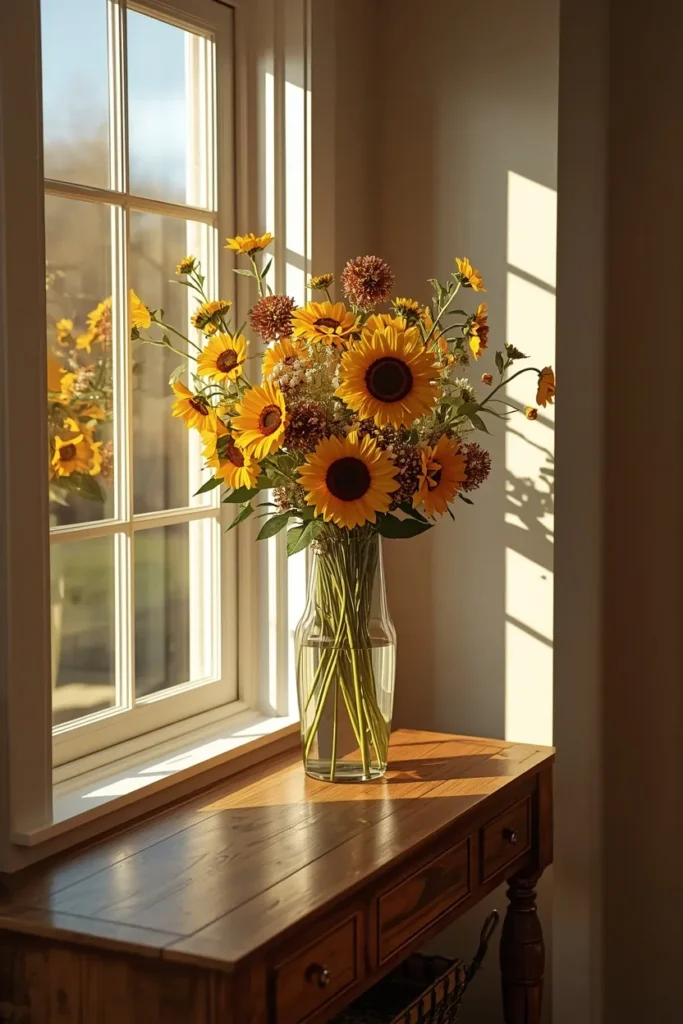
A cluster of sunflowers on long stems in a tall, simple vase brings an immediate sense of cheerful warmth to an entryway or living room corner, and their scale alone makes them one of the most impactful single-flower choices on this list. Mixing in a couple of different sunflower varieties, some with darker centers, some fully golden, adds subtle variation without needing to introduce any other flower type. Because sunflowers have thick, sturdy stems, this is also one of the easier fresh arrangements to keep upright without floral foam or extensive stem support. Trimming the stems at a diagonal and refreshing the water every few days keeps sunflowers looking bright for well over a week. This arrangement works particularly well in a room that gets good natural light, since sunflowers read as sunniest when they’re actually catching some sun.
8. A Bittersweet and Bare Branch Arrangement
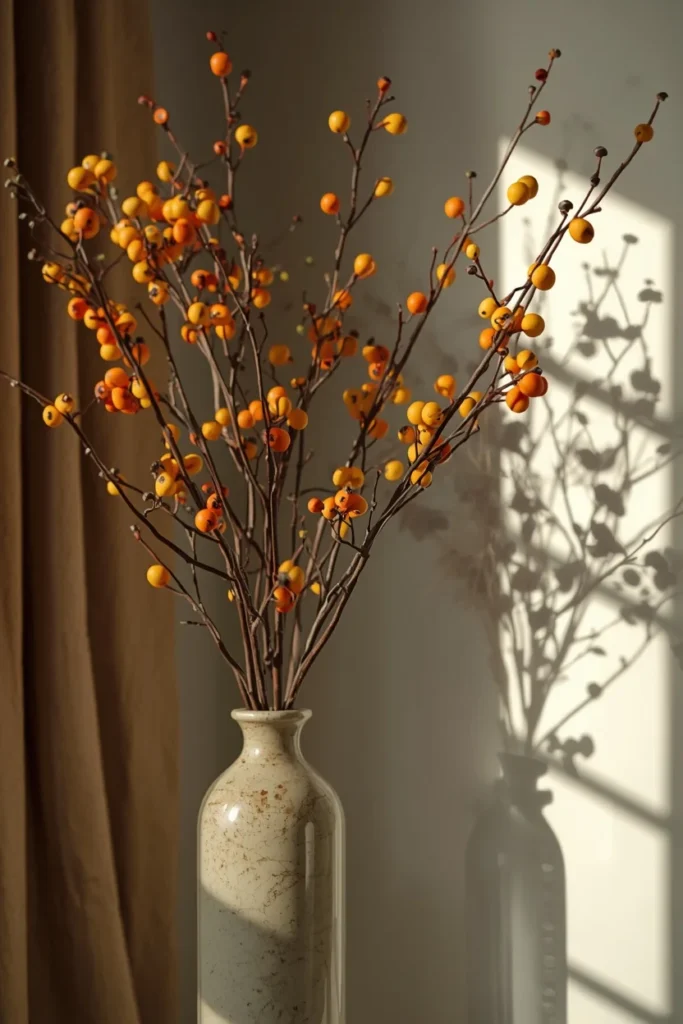
Bittersweet branches, with their small clusters of orange and yellow berries, arranged alone or mixed with a few plain bare branches in a tall floor vase, bring a wilder, more foraged look to a room than a typical floral arrangement. This idea works especially well for anyone with access to a yard or nearby wooded area, since bittersweet and bare branches can often be gathered for free rather than purchased. The irregular, twisting shape of the branches adds a sculptural quality that reads as more architectural than a typical soft floral display. Because the berries dry naturally on the branch over time, this arrangement actually improves with age rather than needing to be refreshed. This is a strong choice for anyone who wants fall decor that leans rustic and slightly untamed rather than polished.
9. A Seeded Eucalyptus Greenery-Only Arrangement
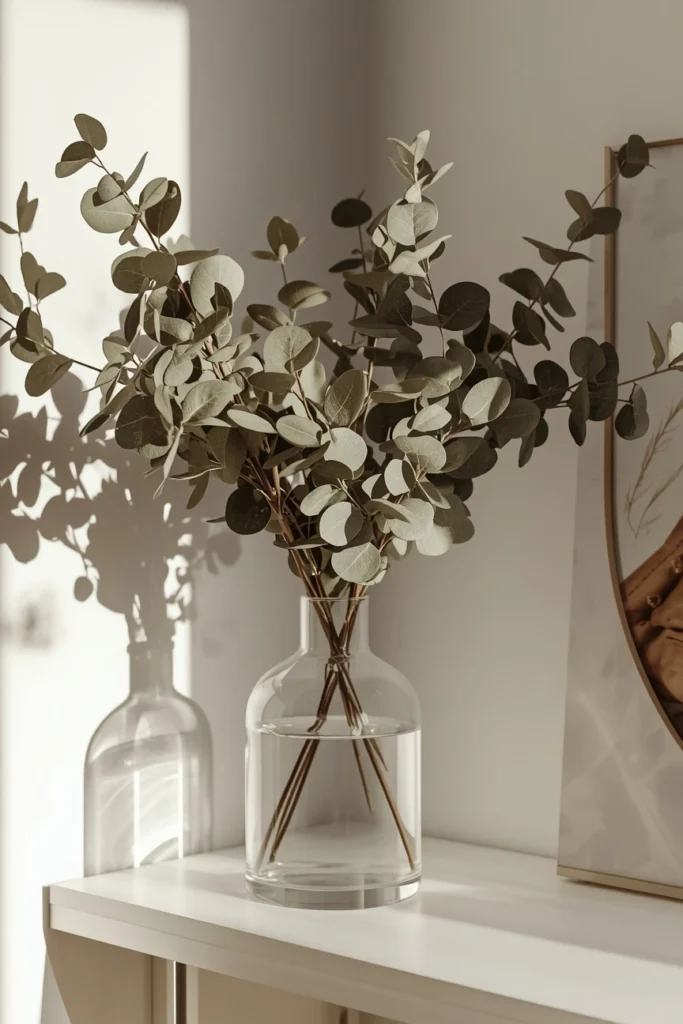
Skip flowers entirely and fill a vase with silver dollar or seeded eucalyptus, frosted explosion grass, and a bit of grevillea foliage for a soft, muted green arrangement that leans more sophisticated than seasonal. This approach is especially well suited to modern or minimalist homes where a bright orange or red floral display might feel out of place against the existing decor. Because eucalyptus dries beautifully in place, there’s no need to remove the arrangement once the fresh stems start to fade; simply let the water evaporate and the greenery will continue looking full and textural as it dries. Mixing in varying eucalyptus types adds subtle tonal variation within the green palette without introducing any other color. This is one of the more versatile ideas on the list, since a greenery-only arrangement transitions seamlessly from fall into winter without needing to be swapped out.
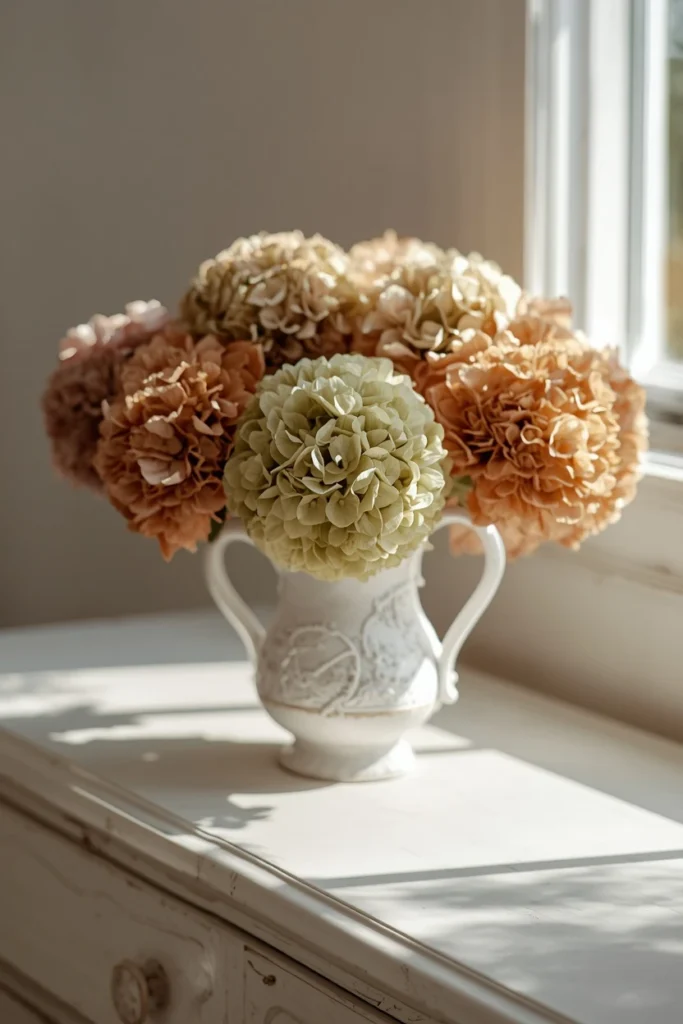
10. Dried Hydrangeas in an Ironstone Pitcher
Dried hydrangea blooms, with their faded shades of green, blush, and soft brown, arranged in a classic white ironstone pitcher create one of the most quietly romantic fall arrangements on this entire list. The slightly curled petals and natural color variation that come with drying should be embraced rather than avoided, since those imperfections are exactly what give dried hydrangeas their character compared to a stiff faux version. This arrangement works beautifully on a bathroom vanity, a bedroom dresser, or a small entry table, anywhere that benefits from a touch of softness without needing a bold color statement. Because dried hydrangeas are so lightweight, even a full, generous bunch stays easy to manage in a mid-sized pitcher without tipping. This is a particularly good choice for anyone who wants their fall decor to feel gentle and understated rather than bold.
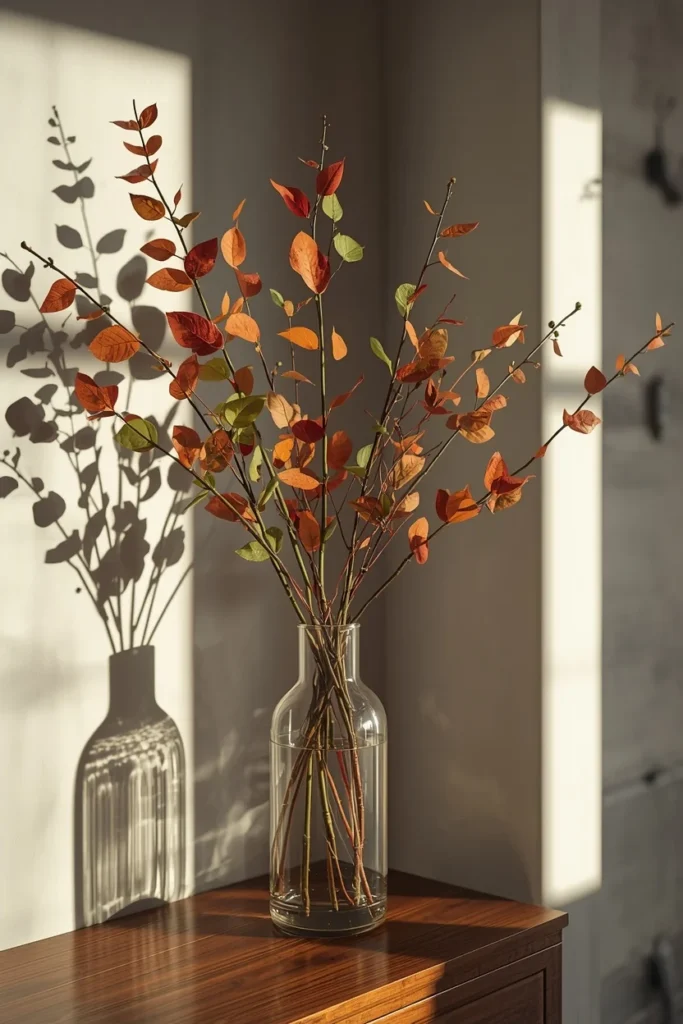
11. A Foraged Leaf Branch Arrangement
Gathering a handful of branches with their fall leaves still attached, whether from your own yard or a nearby park, and arranging them in a simple tall vase brings genuine seasonal color into a room at zero cost. Choosing branches with leaves in varying stages of turning, some fully red or orange, others still edged in green, adds natural gradient and depth that store-bought stems rarely replicate. Because fresh-cut branches will eventually dry and drop their leaves over one to two weeks, this is a shorter-lived arrangement than most others on the list, but the payoff during that window is hard to match for the effort involved. Refreshing the water and re-cutting the stem ends every few days can extend how long the leaves stay vibrant before drying out. This idea is best suited to early-to-mid fall, when leaves are actively changing color rather than already fully dried on the tree.
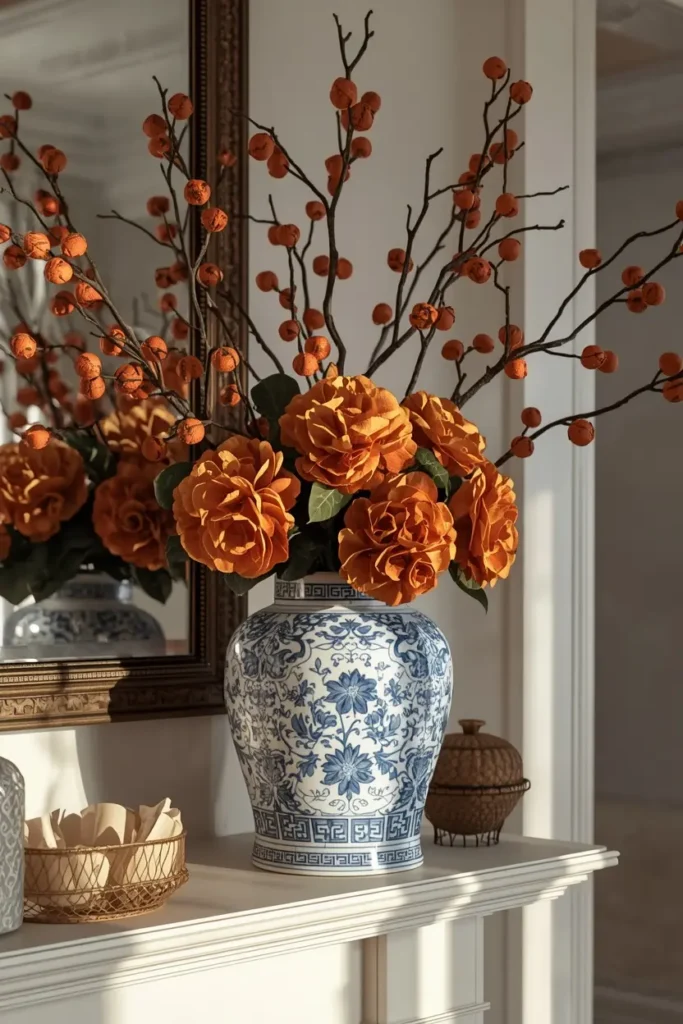
12. A Ginger Jar With Silk Hydrangeas and Berry Branches
A teal or blue-and-white ginger jar filled with rusty orange silk hydrangeas and a few faux berry branches brings an unexpected, slightly more formal color combination to fall decorating that stands apart from the usual all-orange approach. This pairing works because the cooler jar tone provides genuine contrast against the warm florals, keeping the whole arrangement from reading as one-note. Because the materials are faux, this is one of the most durable, no-maintenance ideas on the list and can be reassembled in different variations each year using the same base jar. This arrangement suits a more traditional or transitional living room, especially one that already features blue and white elements elsewhere in the decor. Swapping the berry branches or hydrangea color slightly each season is an easy way to keep the same vessel feeling fresh year after year.
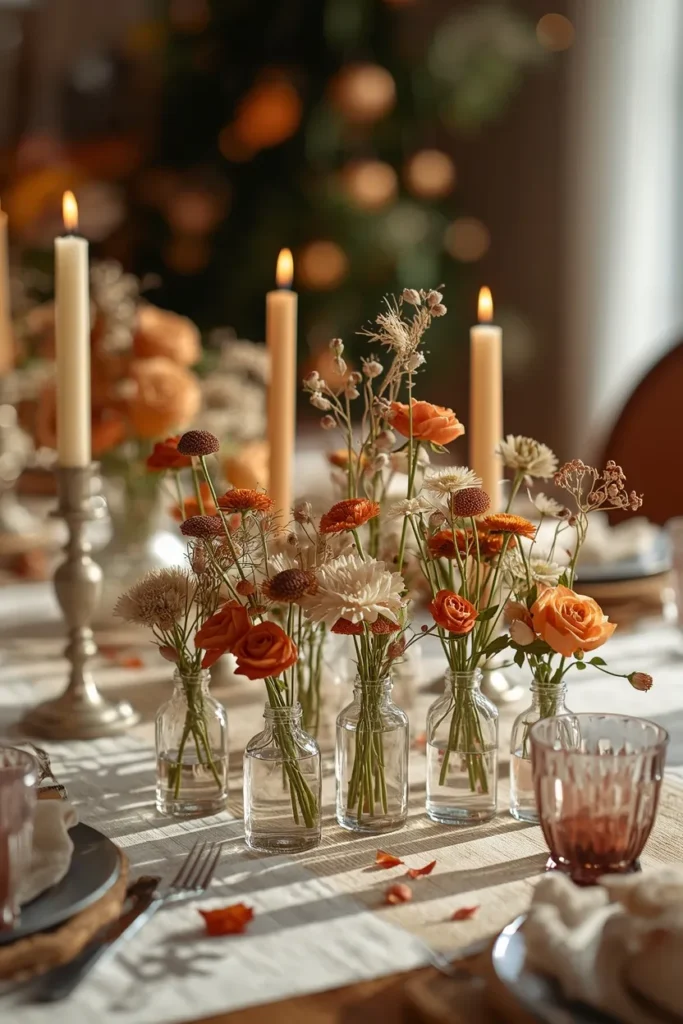
13. A Cluster of Small Bud Vases Along a Table
Instead of one large centerpiece, group ten to fifteen small glass bud vases along the length of a table, each holding just three to five short stems, like strawflowers, statice, or mini roses, trimmed to six or eight inches. This approach creates a full, festive table without a single tall arrangement blocking sightlines or conversation across the table. Grouping the vases loosely by color family, rather than lining them up in a perfectly even row, gives the display a relaxed, gathered look rather than a stiff formal one. Because each vase holds so few stems, this is also one of the more affordable ways to use a variety of premium or specialty flowers without needing to buy full bunches of each. This idea works particularly well for a fall dinner party or holiday table where guests are seated on both sides.
14. A Faux Pumpkin Used as a Vase
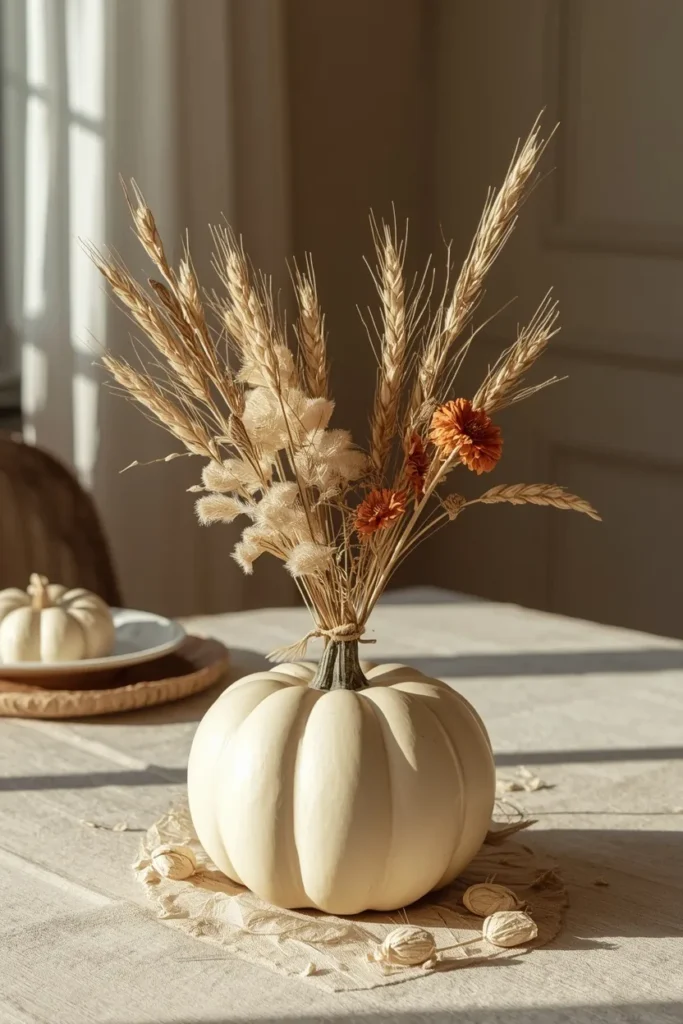
Hollowing out a faux pumpkin, or using one specifically designed with a removable top, and inserting a small water pick or floral foam inside turns the pumpkin itself into a low, wide vessel for a compact dried or fresh arrangement. This idea works especially well for a low centerpiece, since the natural pumpkin shape keeps the overall height short enough not to block a table’s sightlines. Choosing a pumpkin in cream or muted sage rather than bright orange lets the flowers themselves provide the seasonal color while the pumpkin quietly plays a supporting role. This is a particularly fun, low-maintenance project for anyone hosting a fall dinner or gathering, since it doubles as a conversation piece and a floral arrangement in one object. It also stores flat and reusable for next year once the flowers are removed.
15. A Farmhouse Enamel Jug or Galvanized Bucket Mix
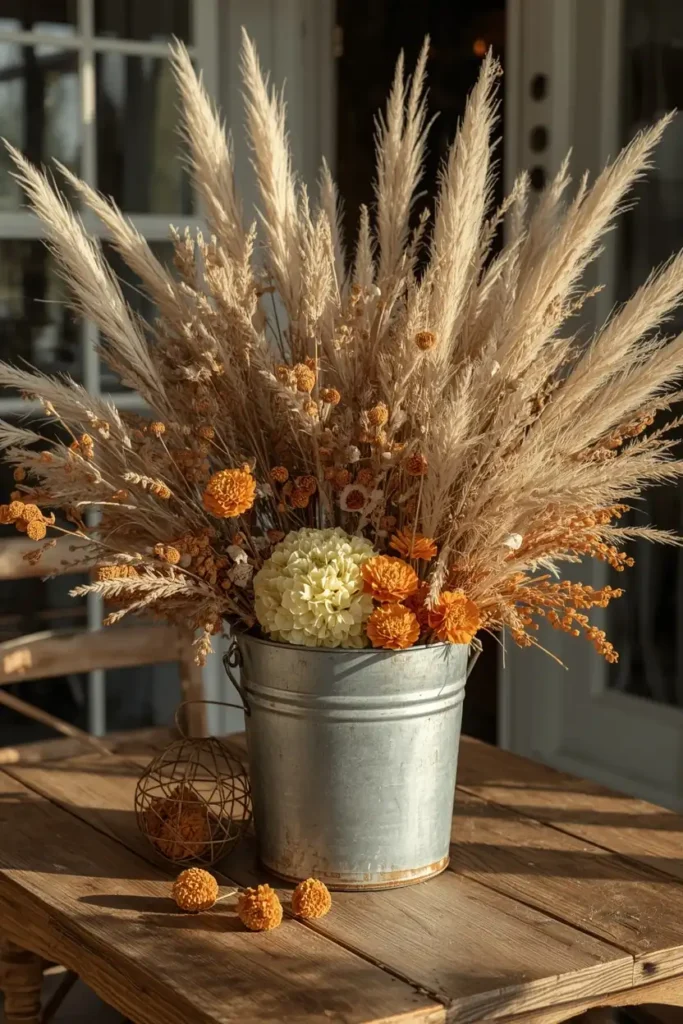
An enamel jug or a small galvanized metal bucket filled with a loose, abundant mix of pampas grass, dried hydrangea, orange strawflowers, and wispy ornamental grasses creates the relaxed, overflowing look most associated with farmhouse fall styling. Letting a few stems spill loosely over the rim rather than trimming everything to a uniform height gives the arrangement its characteristic relaxed, just-gathered feel. Because enamel and galvanized vessels are inexpensive and widely available secondhand, this is one of the more budget-friendly vessel choices on the whole list. This arrangement looks especially at home on a back porch, a farmhouse table, or a mudroom shelf, anywhere that benefits from a slightly less formal, lived-in touch. Mixing dried and faux materials together here also means the arrangement requires essentially no ongoing maintenance.
16. A Fridge-to-Table Emergency Arrangement
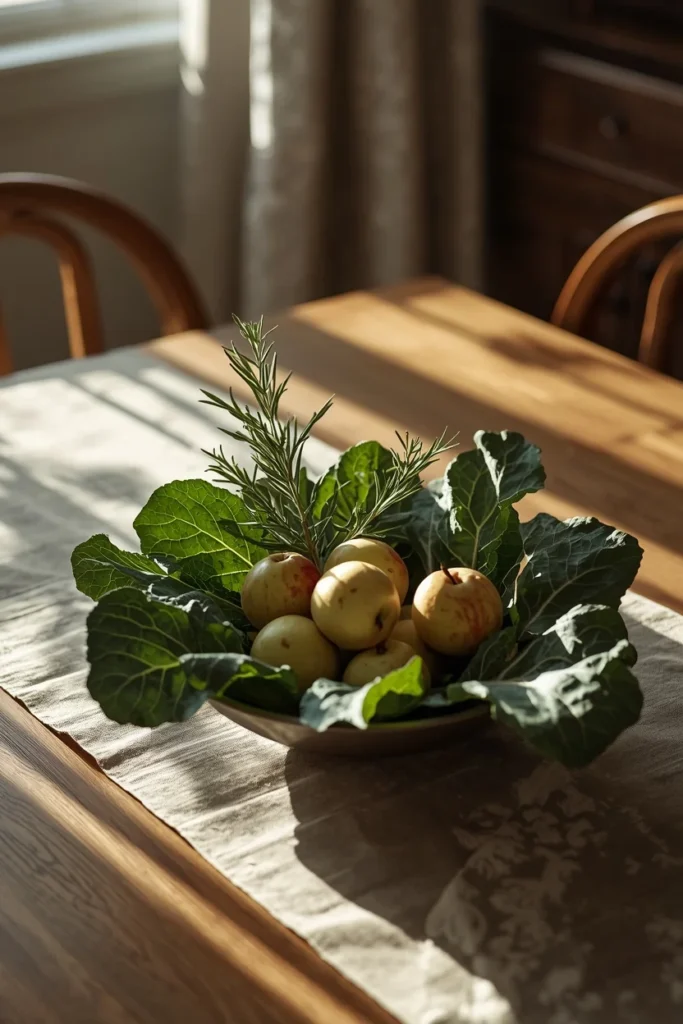
When there’s no time to shop and guests are arriving soon, raid the produce and herb drawers for anything colorful, kale leaves, rosemary sprigs, small apples or citrus, and combine them with whatever greenery is available in the yard for a genuinely last-minute but surprisingly polished centerpiece. This approach leans on the same principle as floral design generally: varied shape, color, and texture matter more than whether the materials technically came from a florist. A few stems of rosemary or thyme tucked into a short arrangement also add a pleasant, unexpected fragrance to the table. This idea works best as a low, compact centerpiece rather than a tall dramatic one, since the goal is texture and color rather than height. It’s proof that a genuinely last-minute fall arrangement doesn’t have to look like an afterthought.
Styling Tips
- Choose a color family or a single unifying tone before selecting individual stems, since a cohesive palette matters more than the specific flowers used.
- Mix at least two textures, like a soft bloom and a wispy grass or branch, so the arrangement reads as layered rather than flat.
- Vary stem height and let a few pieces spill loosely over the vase’s edge rather than trimming everything to a perfectly even line.
- Choose your vessel first when possible, since a distinctive pitcher, jug, or bowl often does more visual work than the flowers themselves.
- Group odd numbers of stems or vases together for a more natural, curated look than perfectly even, symmetrical groupings.
Practical Implementation Ideas
- Start with a base layer of branches or filler greenery in the vase to help hold taller or top-heavy stems in place before adding focal flowers.
- Cut fresh stems at a sharp diagonal angle and remove any leaves that would sit below the waterline to extend the arrangement’s life.
- Refresh the water and re-cut stems every two to three days for fresh arrangements, and use a homemade preservative of sugar, bleach, lemon juice, and water for extra longevity.
- Let dried materials like pampas grass or eucalyptus finish drying naturally in the vase rather than removing them once fresh stems begin to fade.
- Photograph your finished arrangement in the room’s natural lighting to check that the colors and scale actually work in the space before finalizing placement.
Common Mistakes to Avoid
- Overfilling a vase with too many stem types at once, which can make even a well-intentioned arrangement look busy rather than abundant.
- Choosing a vase or vessel that’s too small relative to the fullness of the stems, causing the arrangement to look top-heavy or unstable.
- Leaving fresh arrangements in stagnant, unchanged water for too long, which shortens their lifespan significantly.
- Ignoring scale relative to the room, since a small arrangement can get visually lost on a large table or console.
- Sticking to only bright orange for every single arrangement in the house, which can start to feel repetitive rather than seasonal.
Small-Space Alternatives
Apartments and smaller homes don’t need large statement arrangements to feel seasonally warm. A single small bud vase with three or four stems on a nightstand or bathroom shelf delivers plenty of impact in a fraction of the space a floor vase would need. Wall-mounted single-stem vases are another strong small-space option, adding a floral touch without taking up any surface area at all. For a shared studio or small living room, one well-placed arrangement on a central table often does more for the whole space than scattering several small ones across different surfaces.
Budget-Friendly Alternatives
Grocery store bouquets, upgraded with a better vessel and a few trimmed stems, cost significantly less than a florist-designed arrangement while achieving a similar visual result. Branches, leaves, pinecones, and even bittersweet can often be foraged for free from your own yard or a nearby park. Dried materials like pampas grass and wheat are reusable for multiple seasons, making them a stronger long-term value than fresh flowers purchased new each year. Thrifted vessels, an old pitcher, an enamel jug, a secondhand vase, typically cost far less than new ones and often bring more character to the finished arrangement.
Pro Styling Recommendations
Treat the vessel as half of the design decision, not just a container, since a distinctive pitcher, jar, or bowl shapes the entire mood of the arrangement before a single stem goes in. Build arrangements in layers: structural greenery or branches first, then larger focal blooms, then smaller filler stems tucked into the gaps last. Let a few stems break the vase’s silhouette intentionally, either trailing over the edge or reaching higher than the rest, since a perfectly contained shape tends to look stiffer than a naturally gathered one. And always consider how the arrangement will age over the week, since fresh flowers, dried materials, and foraged branches all evolve differently once they’re in place.
FAQs
How do I arrange fall flowers if I’m not experienced with flower arranging? Start with a low, wide vessel like a dough bowl or bucket, choose a single color family, and layer in stems by size, larger pieces first, smaller ones tucked into the gaps, rather than aiming for a complex design.
Can I mix fresh and dried flowers in the same arrangement? Yes, mixing fresh and dried materials adds contrast in texture and color, and it’s a common technique for extending the seasonal life of an arrangement as the fresh stems fade.
Where should I place fall flower arrangements in my home? Common spots include the dining table, entryway console, kitchen island, mantel, and bathroom vanity, though even a single small arrangement on a nightstand or shelf adds noticeable warmth to a room.
Conclusion
Fall flowers do a job no pumpkin or candle quite can: they make a home feel alive, even when the arrangement itself is made from dried grass or foraged branches instead of anything actually blooming. Whether you’ve got an afternoon to build a full dough bowl centerpiece or five minutes to upgrade a grocery store bouquet, there’s an arrangement on this list that fits. Start with one vessel and one room, let the color and texture do the rest, and your home will feel warmer before the candles are even lit.