21 Green Bathroom Ideas That Bring Nature’s Calm Into Your Home
Some bathrooms feel like a hospital hallway. Others feel like a quiet corner of a garden. The difference usually comes down to one thing: color.
Green has quietly become the shade designers reach for when a bathroom needs to feel calmer, warmer, and less clinical. It sits between blue and yellow on the color wheel, which is part of why it works so well here — cool enough to feel clean, warm enough to feel cozy.
This list walks through 21 ways to bring green into a bathroom, from a full sage green paint job to something as small as a shelf of trailing plants. Some ideas cost almost nothing. Others are worth planning into a full remodel. All of them are built around the same idea: a bathroom should feel like a place to slow down, not just a place to get ready.
Table of Contents
1. Sage Green Color-Drenched Walls and Trim
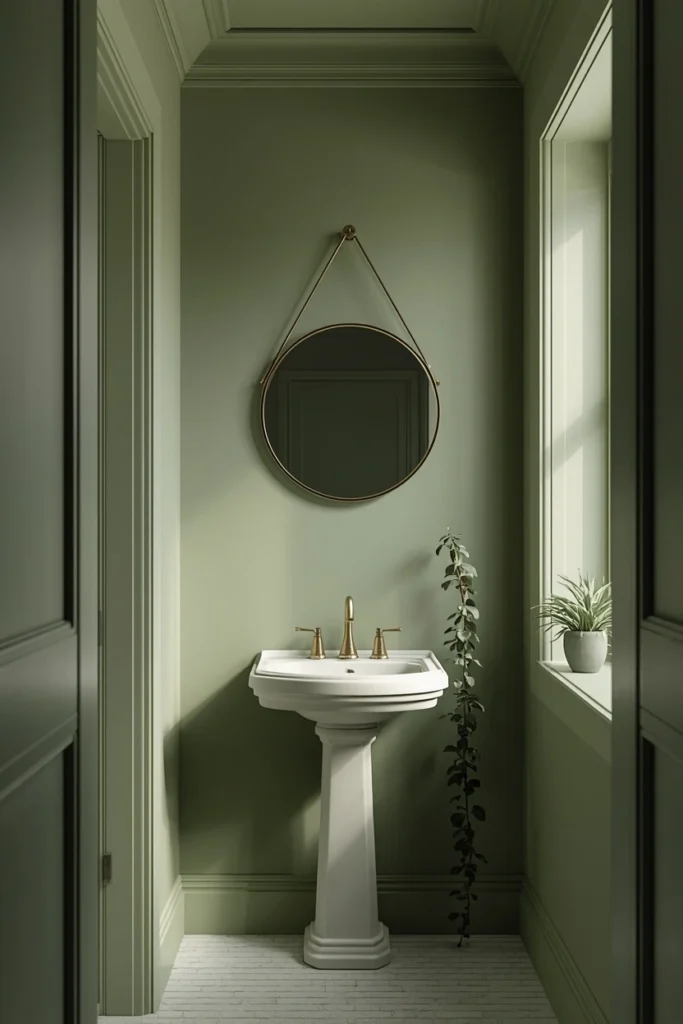
Color drenching means painting the walls, trim, door, and sometimes even the ceiling in the same shade, so the whole room reads as one soft block of color instead of a wall with white trim breaking it up. In a bathroom, sage green works especially well for this because it’s muted enough to still feel calm even when it covers every surface. A slightly deeper tone on the door and window frame keeps the room from feeling flat. This look works in a small powder room just as well as a full primary bathroom, since removing the contrast between wall and trim actually makes tight spaces feel a little larger. Pair it with a plain white sink and natural wood accessories so the green stays the star of the room.
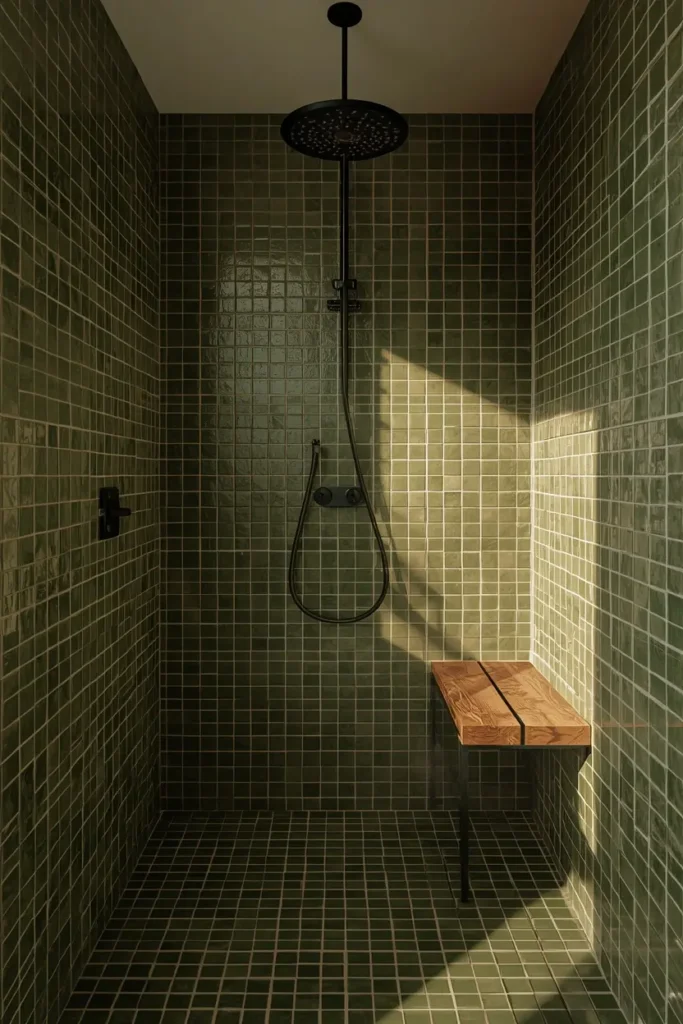
2. Olive Green Zellige Tile Shower
Zellige tile is handmade, so no two pieces are perfectly flat or uniform in color, which gives a shower wall a lived-in, artisanal look rather than a flat, printed one. In olive green, this texture becomes even more noticeable, since light catches each tile slightly differently as it moves across the wall. Running the tile floor to ceiling in the shower, rather than stopping halfway, makes a small stall feel taller and more intentional. Grout in a matching olive or warm gray tone keeps the wall reading as one continuous surface instead of a grid. This is a higher-cost idea, but it’s one that photographs beautifully and tends to hold its value at resale because it feels custom rather than trendy.
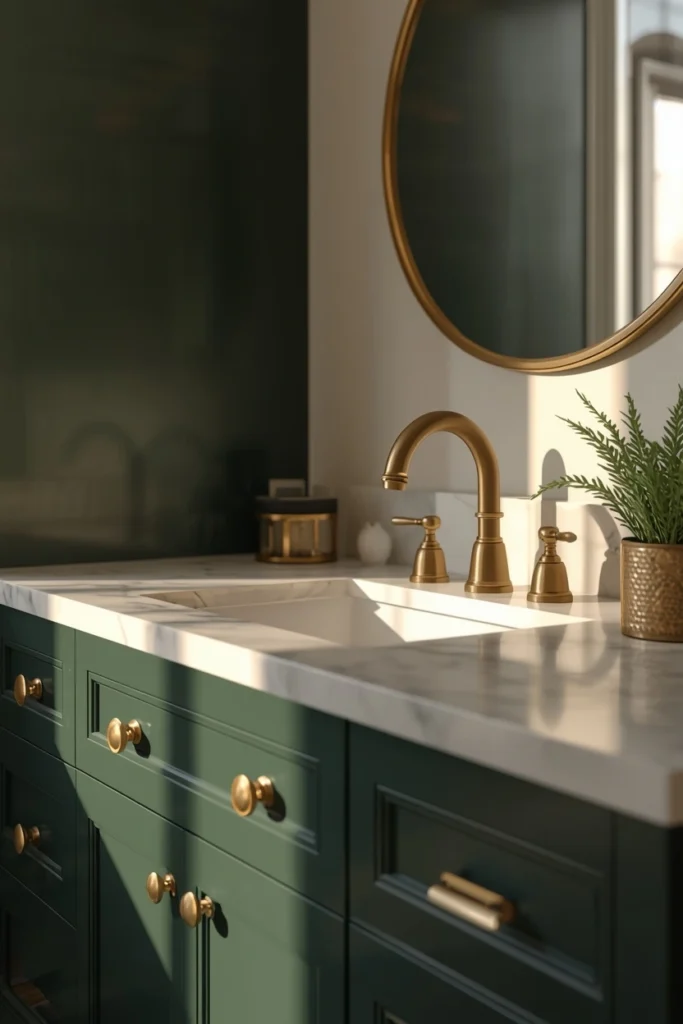
3. Deep Forest Green Vanity With Brass Hardware
A vanity is one of the fastest ways to add color to a bathroom without touching the walls or floor, which makes it a good option for anyone who isn’t ready to commit to a full repaint. Forest green cabinetry paired with aged brass or unlacquered brass hardware creates a look that feels closer to furniture than to a builder-grade bathroom fixture. A white or light stone countertop on top keeps the cabinet from feeling too heavy, especially in a smaller room. This idea works well as a weekend project too, since an existing wood or laminate vanity can be sanded and repainted in a cabinet-grade paint rather than replaced entirely. The contrast between the dark green base and a pale top is what makes the piece feel designed rather than default.
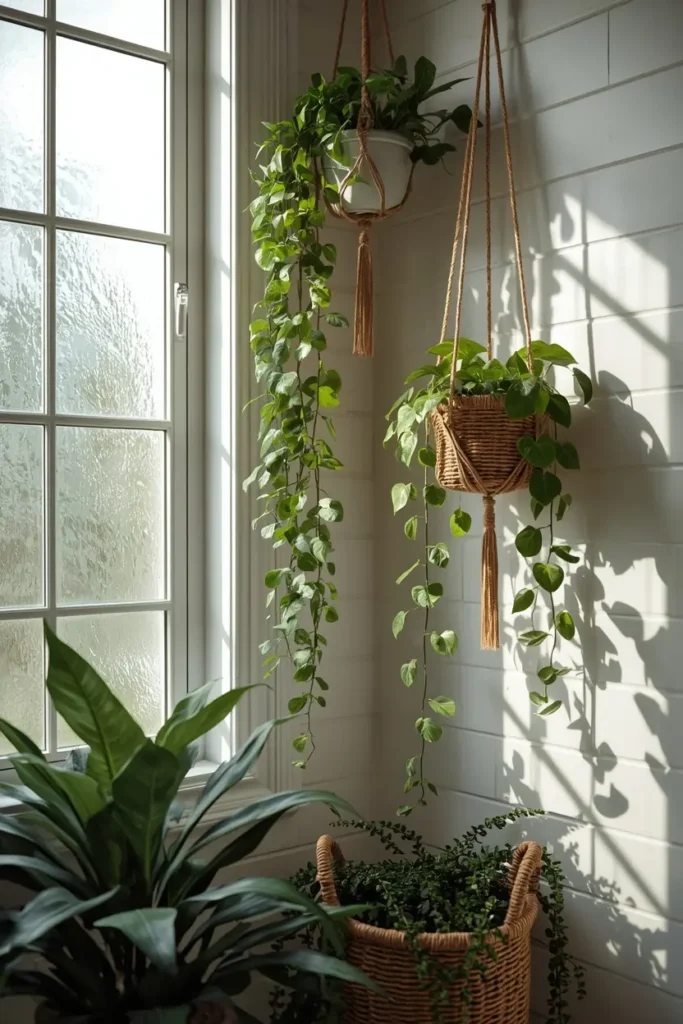
4. Living Wall of Ferns and Trailing Pothos
Real plants do something paint can’t: they add movement, shadow, and a slightly different shade of green depending on the light at any given hour. Ferns and pothos are both suited to bathrooms because they tolerate the humidity from showers better than most houseplants, and pothos in particular will keep growing even with indirect light from a small window. Grouping several plants at different heights, using a wall shelf, a hanging planter, and a floor plant, creates the layered look of a living wall without needing a full vertical garden system. This is one of the lowest-cost ideas on the list and one of the easiest to undo, which makes it a good starting point for anyone testing whether they like a green, plant-filled bathroom before committing to paint or tile.
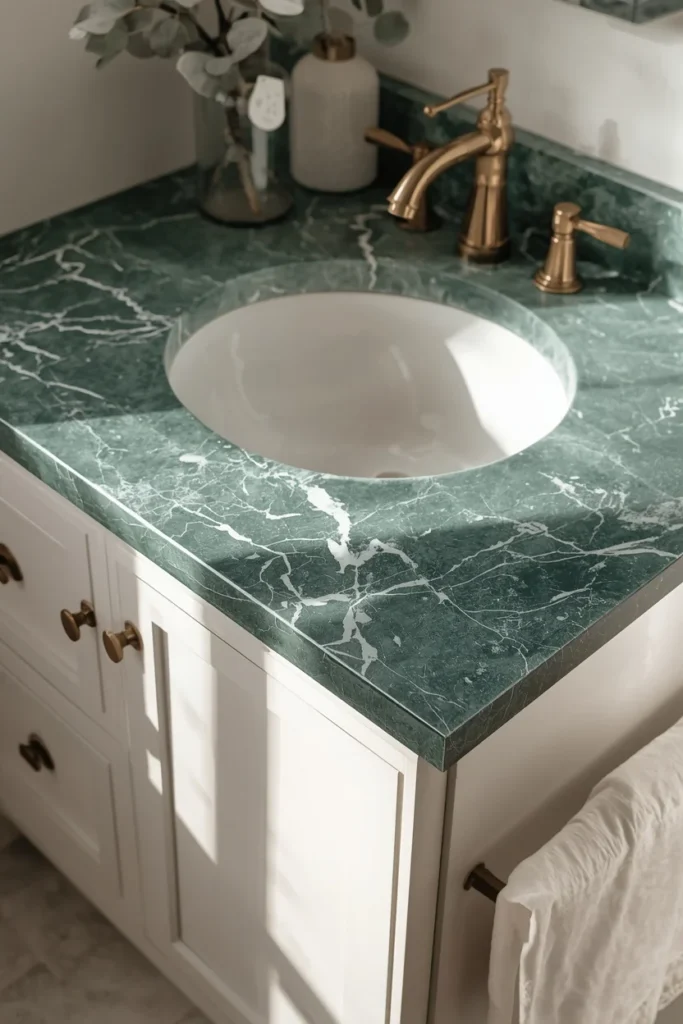
5. Jade Green Stone-Look Countertop
A jade or malachite-inspired countertop brings in a richer, more saturated green than paint typically allows, since the veining and depth of the stone pattern does most of the visual work. Engineered stone or quartz in a jade pattern gives this look without the higher maintenance of natural stone, which matters in a room that deals with water and toiletries daily. Keeping the cabinetry and walls neutral, in white, cream, or light wood, lets the countertop function as the focal point rather than competing with other colors in the room. This idea suits anyone who wants a bold, editorial-looking bathroom without painting an entire wall a strong color, since a countertop is easier to reserve judgment on before committing further.
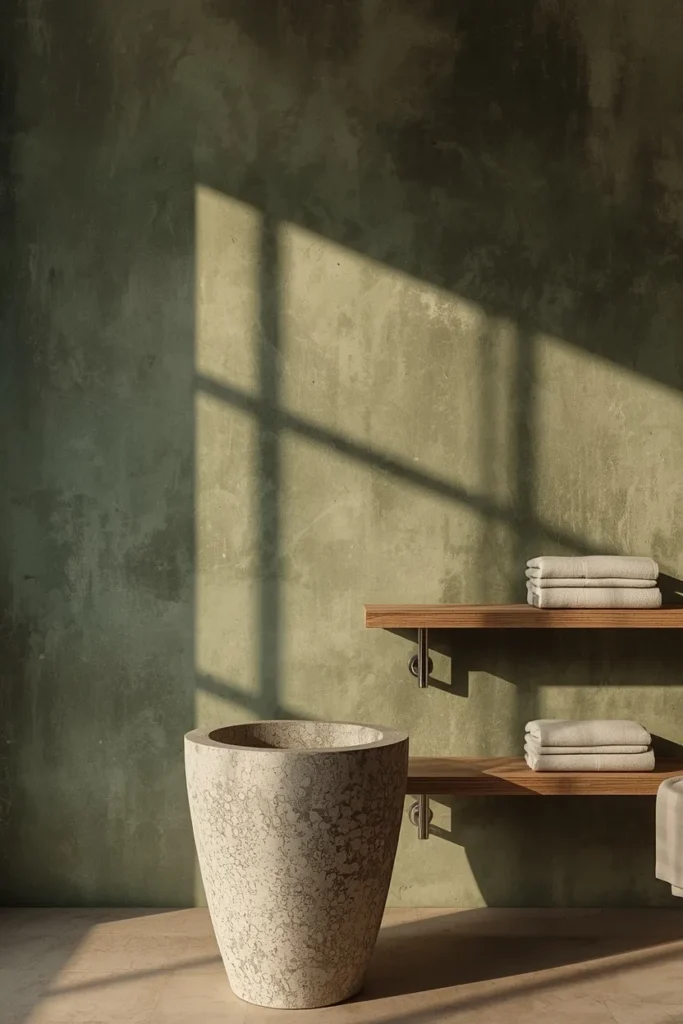
6. Moss Green Limewash Walls
Limewash is a mineral-based paint that dries with soft, cloudy variation across the wall instead of a flat, uniform finish, which gives a bathroom a slightly aged, plaster-like texture. In a moss green shade, this variation reads almost like the surface of stone or bark, reinforcing the nature-inspired feel without adding a single plant or piece of tile. Because standard limewash isn’t fully moisture-sealed, choosing a moisture-resistant, pre-mixed version matters in a room with daily steam and splashing. This finish pairs particularly well with the eco-brutalist look that’s been gaining traction, where an unfinished, textured wall sits next to natural wood or stone rather than glossy tile.
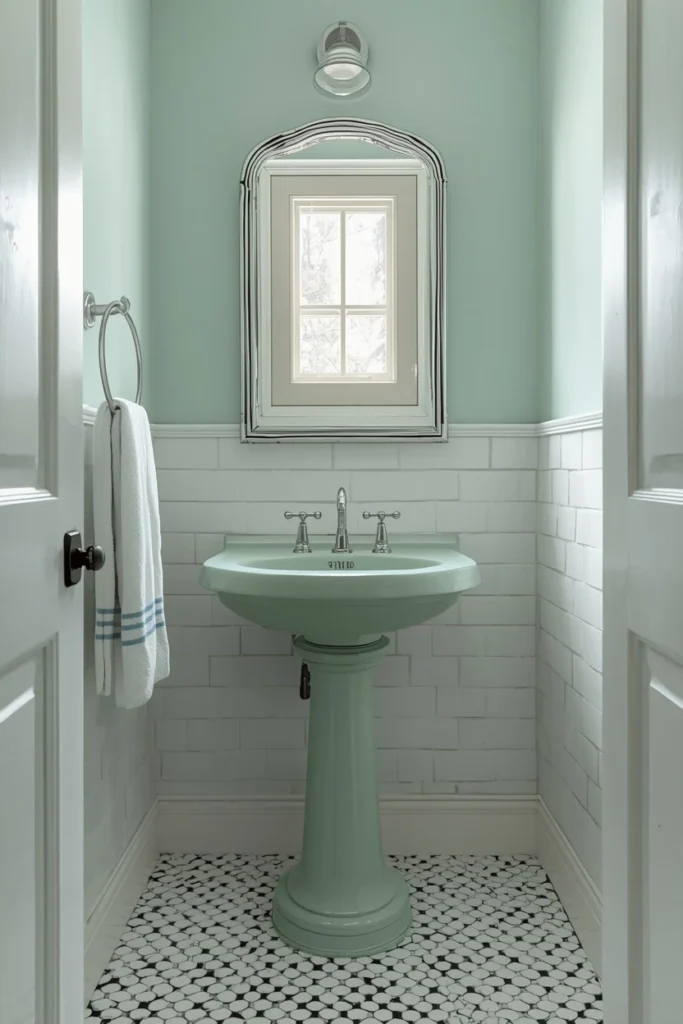
7. Mint Green Retro-Inspired Powder Room
Retro colored fixtures, the kind of sink and tub found in mid-century homes, are being brought back intentionally rather than treated as something to rip out. A mint green sink or toilet paired with black-and-white hexagon floor tile leans into that era honestly instead of trying to hide it. This look works especially well in a powder room, where a bold or nostalgic choice feels playful rather than overwhelming, since the room is used briefly rather than lived in daily. Chrome fixtures, rather than matte black or brass, keep the look period-accurate and prevent it from reading as an accidental mismatch.
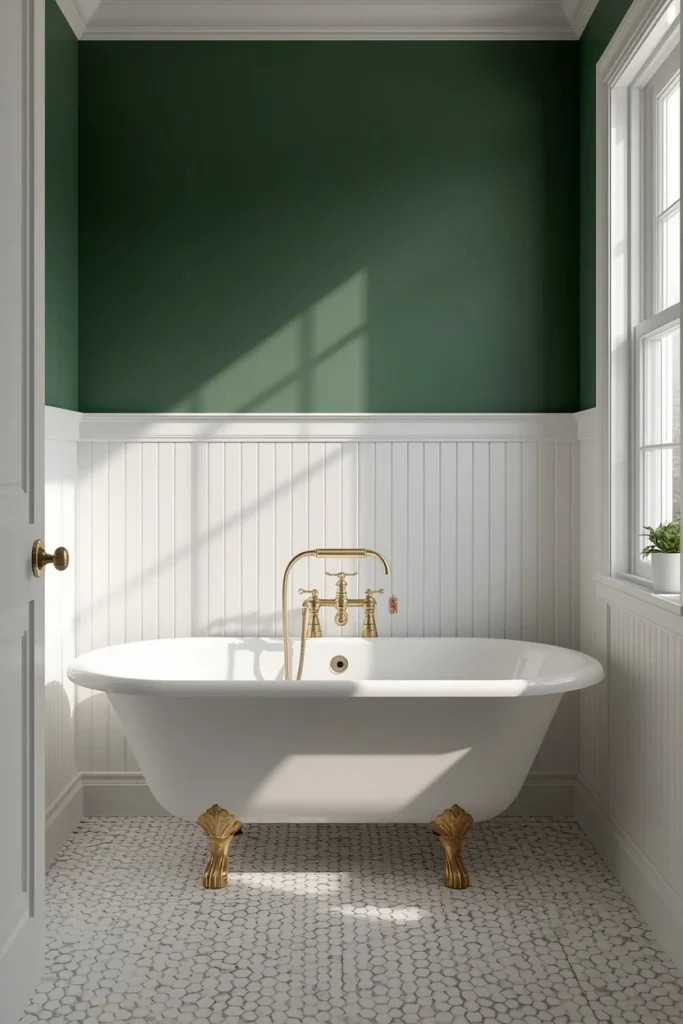
8. Hunter Green Wainscoting With White Beadboard
Wainscoting splits a wall into two sections, and pairing a dark hunter green upper wall with white beadboard on the lower half gives a bathroom architectural detail without needing custom millwork. The white beadboard also protects the lower wall from water splashing near the sink or tub, which is a practical reason this combination has stuck around in bathroom design for decades rather than being purely decorative. A cap rail in white between the two sections gives the eye a place to land and keeps the transition from looking accidental. This is a strong option for anyone who wants a green bathroom but isn’t ready to commit to color on every surface.
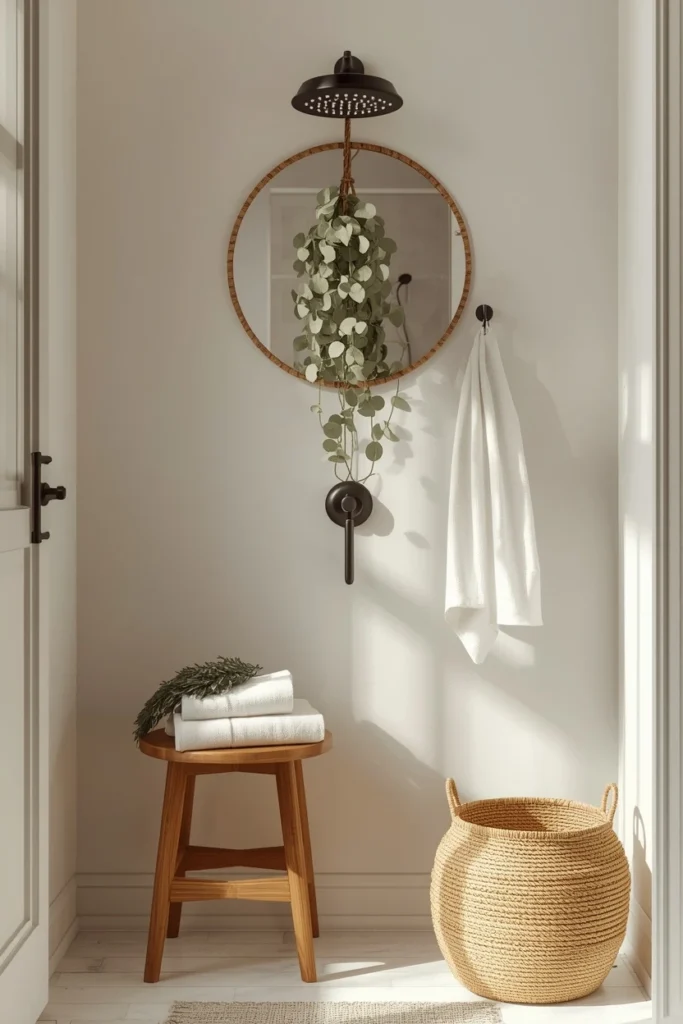
9. Eucalyptus Styling With Wood and Rattan
This idea isn’t about paint or tile at all, it’s about layering natural materials and greenery on top of an existing neutral bathroom. A bundle of fresh or dried eucalyptus hung from the shower head releases a faint scent as it warms up, while a rattan mirror frame, a wood stool, and a woven laundry basket bring in texture that reads as green-adjacent even without a drop of paint. This is the fastest and cheapest idea on the list, since most of it can be done in an afternoon with items from a home goods store. It works especially well for renters who can’t paint or tile but still want the room to feel calmer and more grounded.
10. Sage Green Freestanding Soaking Tub
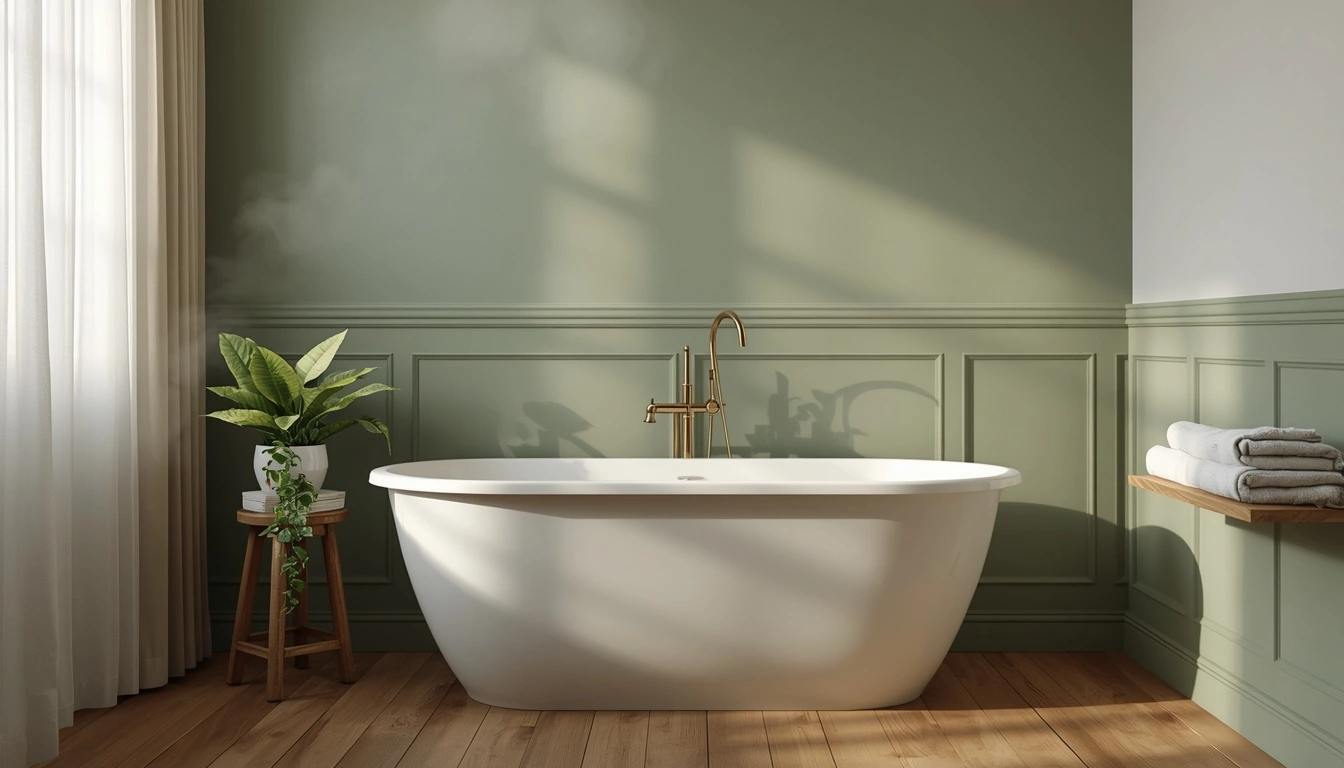
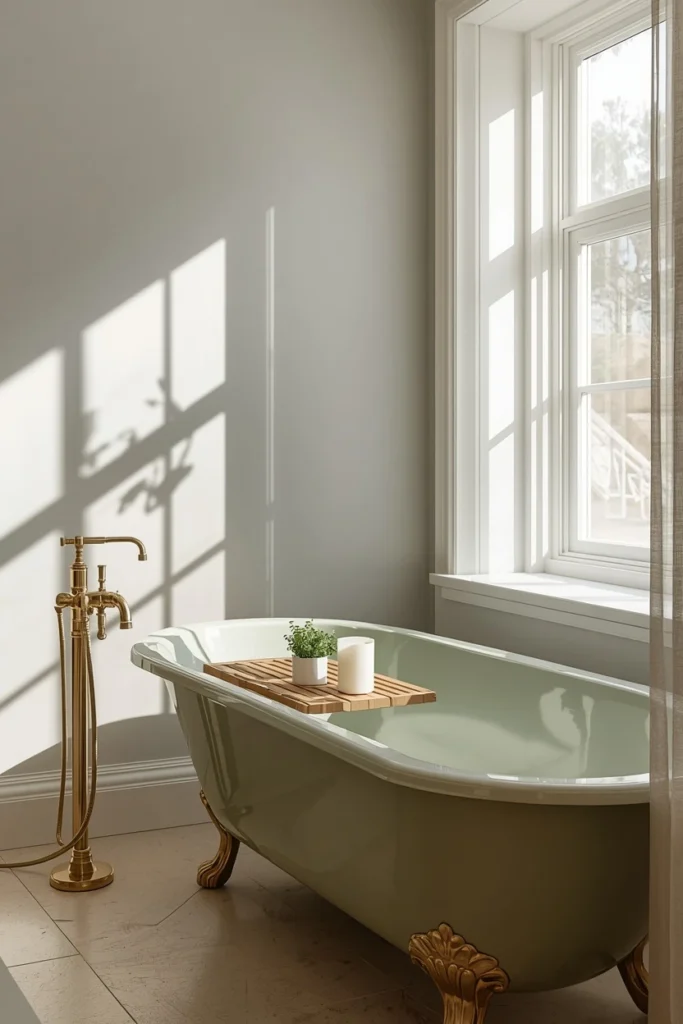
A colored tub changes the entire feel of a bathroom because it becomes the largest object in the room, larger than a vanity or shower wall in most layouts. A sage green freestanding tub against otherwise white or cream walls creates focus without needing color anywhere else, which suits anyone who wants one clear statement piece rather than color throughout. Placing the tub near a window, if the layout allows it, lets natural light hit the curved surface and creates the kind of soft highlight and shadow that photographs well for Pinterest. A wood tub tray across the rim, holding a candle or a small plant, finishes the look without adding visual clutter.
11. Botanical Wallpaper Accent Wall
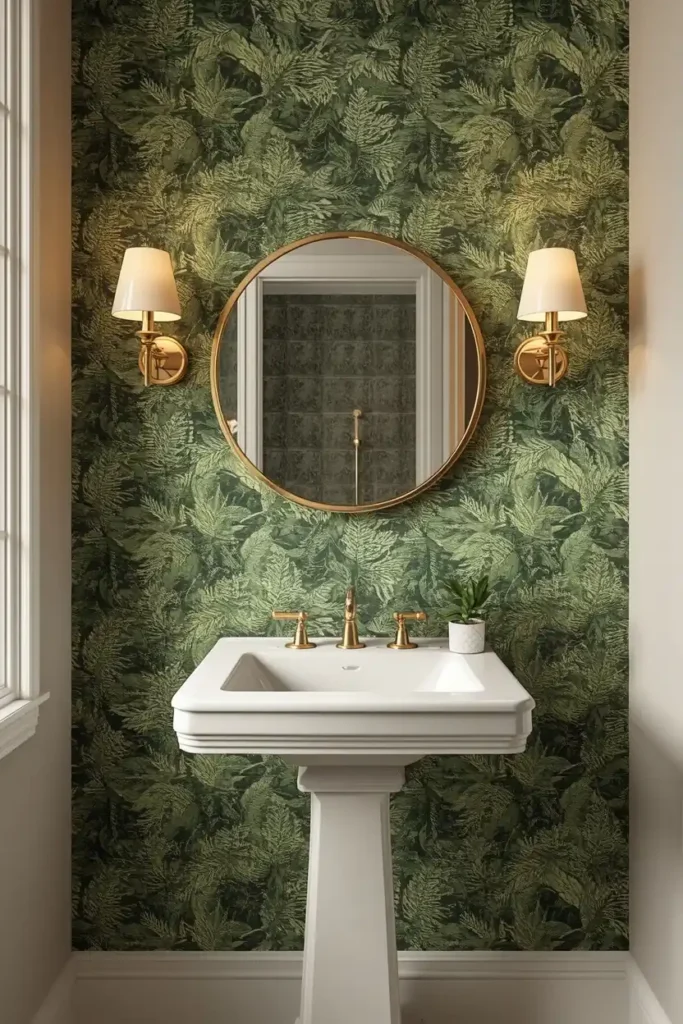
Wallpaper with a botanical print, ferns, palm leaves, or trailing vines, brings pattern and green into a bathroom without needing real plants to survive the humidity. Using it on a single accent wall, rather than all four walls, keeps the pattern from feeling overwhelming in a small space and gives the eye a clear focal point when entering the room. Vinyl or moisture-resistant wallpaper is worth the extra cost in a bathroom specifically, since standard wallpaper can peel or warp near a shower or tub. This idea suits a powder room or a bathroom with good ventilation particularly well, since pattern-heavy walls read best in a room that isn’t constantly steamy.
12. Avocado Green Vintage-Inspired Fixtures
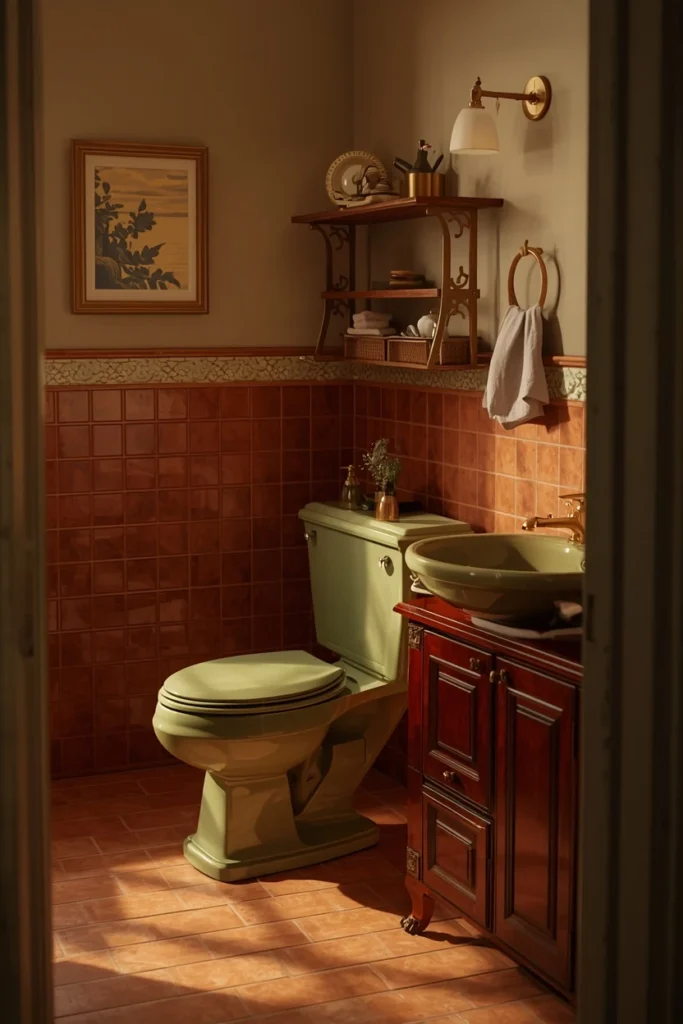
Avocado green was a defining bathroom color decades ago, and its return leans into nostalgia on purpose rather than apologizing for it. Choosing a single avocado green fixture, most often a sink or toilet, and keeping everything else in the room simple and modern prevents the space from feeling like a full period recreation. This works best when paired with warm materials like wood or terracotta rather than cool chrome and glass, which grounds the retro color in a more current, earthy palette. It’s a distinctive choice, and one that tends to divide opinion, which is part of why it performs well on Pinterest as a save-worthy, talked-about idea.
13. Green Terrazzo Flooring
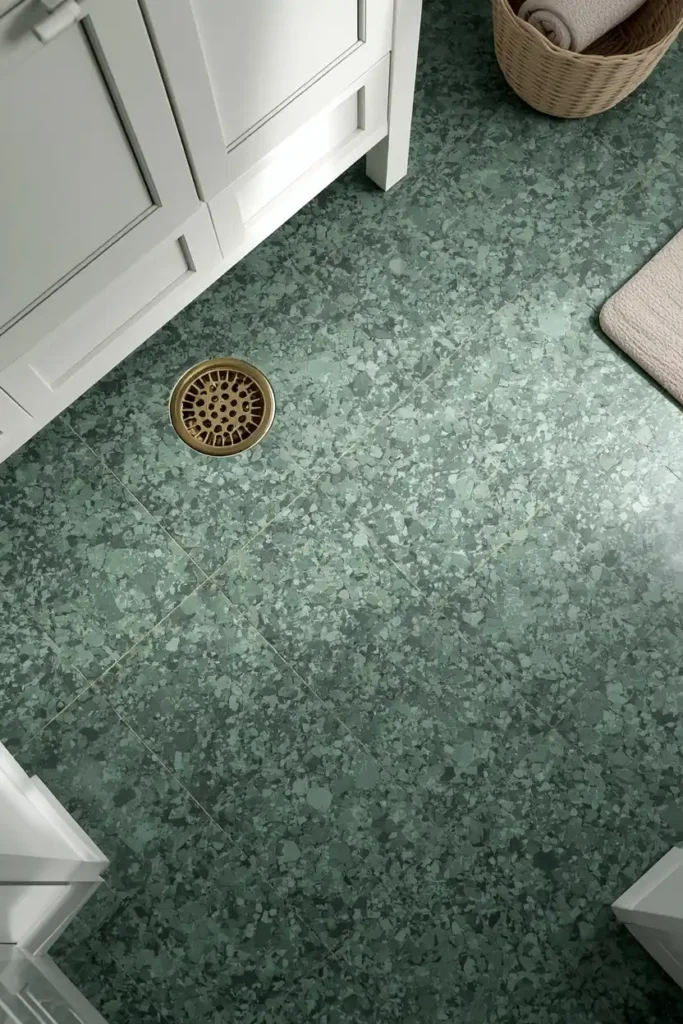
Terrazzo is made of chips of stone or glass set into a base material, and in a green colorway it scatters small flecks of color across the floor instead of applying green as one flat surface. This makes it a good option for anyone who wants green in the room but is nervous about committing to a full green wall, since the floor carries the color in a more subtle, textured way. Terrazzo tile is also highly durable and slip-resistant when finished correctly, which matters in a room that’s frequently wet. Keeping the walls white or a soft cream lets the terrazzo floor read clearly instead of competing with color above it.
14. Pistachio Green Floating Vanity
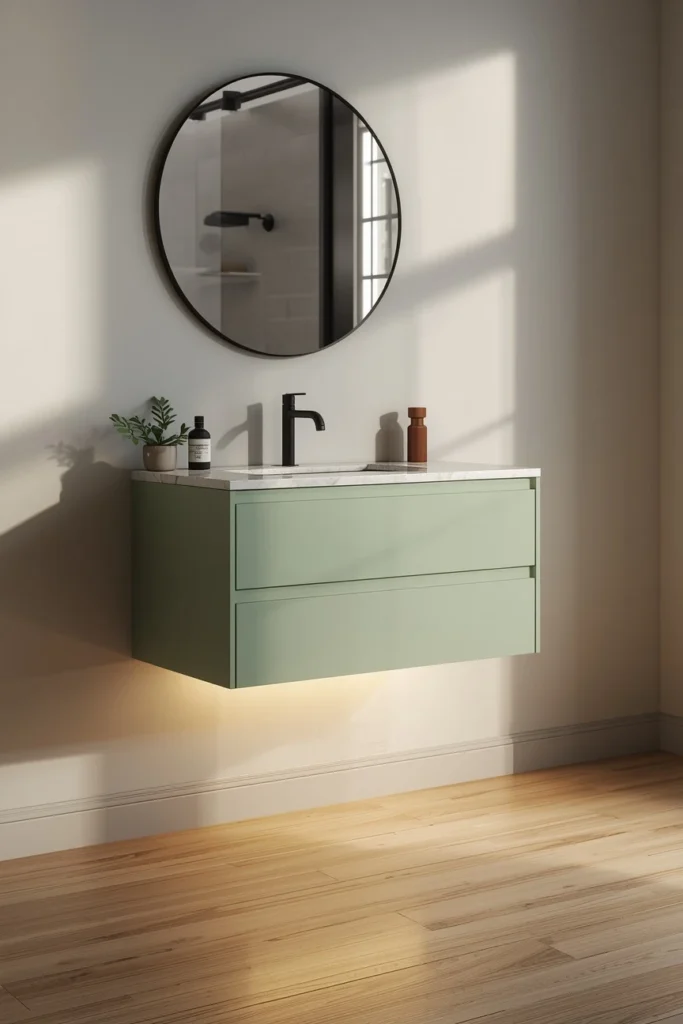
A floating vanity, mounted to the wall rather than sitting on the floor, exposes more of the floor tile and makes a small bathroom feel less boxed in. In a soft pistachio green, this style feels light and airy rather than heavy, which matters since floating cabinetry works best when it doesn’t visually weigh down the wall it’s attached to. Under-cabinet lighting adds a soft glow at night and reinforces the floating, almost weightless look this style is meant to achieve. This idea works particularly well in small or awkwardly shaped bathrooms, since exposing floor space is one of the few design choices that reliably makes a room feel larger.
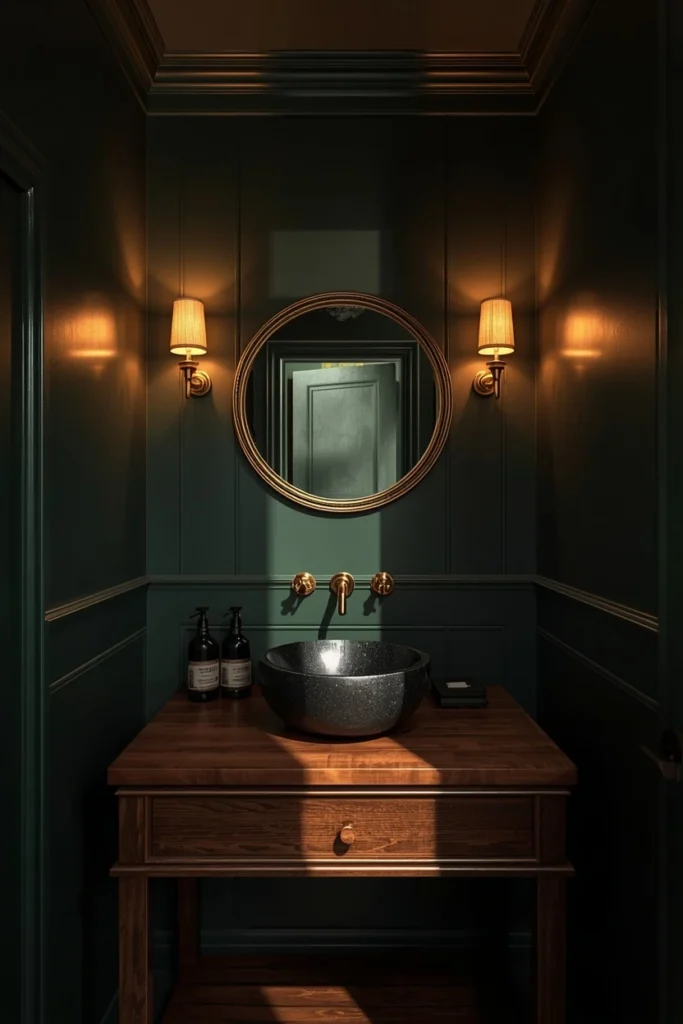
15. Dark, Moody Green Powder Room
A powder room is one of the few rooms in a home where a dark, saturated color works without making the space feel smaller, largely because these rooms are small already and used briefly rather than daily. A near-black hunter or bottle green, applied to walls and ceiling both, creates a cocoon-like feel that photographs beautifully under warm, low lighting. Brass or unlacquered brass fixtures against this dark backdrop catch light and stand out far more than they would against a white wall. This is a strong idea for anyone who wants a dramatic, editorial-feeling bathroom without touching the main bathrooms in the home, since a powder room is lower-stakes to experiment in.
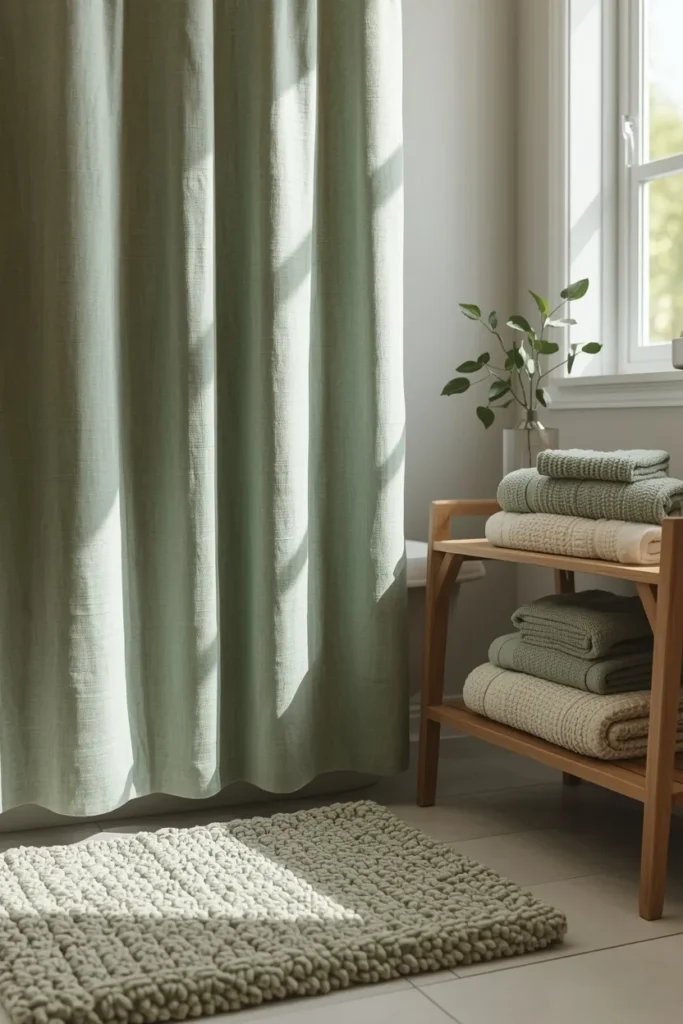
16. Sage Green Textiles: Curtain, Mat, Towels
Not every green bathroom idea requires paint, tile, or new fixtures. Swapping a shower curtain, bath mat, and towels for a coordinated sage green palette is one of the fastest ways to shift the mood of an existing bathroom, and everything on this list can be done in one shopping trip. A linen or waffle-weave shower curtain adds texture, while a chunky wool or cotton bath mat grounds the floor in a way that a thin, flat mat doesn’t. This idea is worth mentioning specifically for renters, since textiles require no permission from a landlord and can be swapped out entirely when moving.
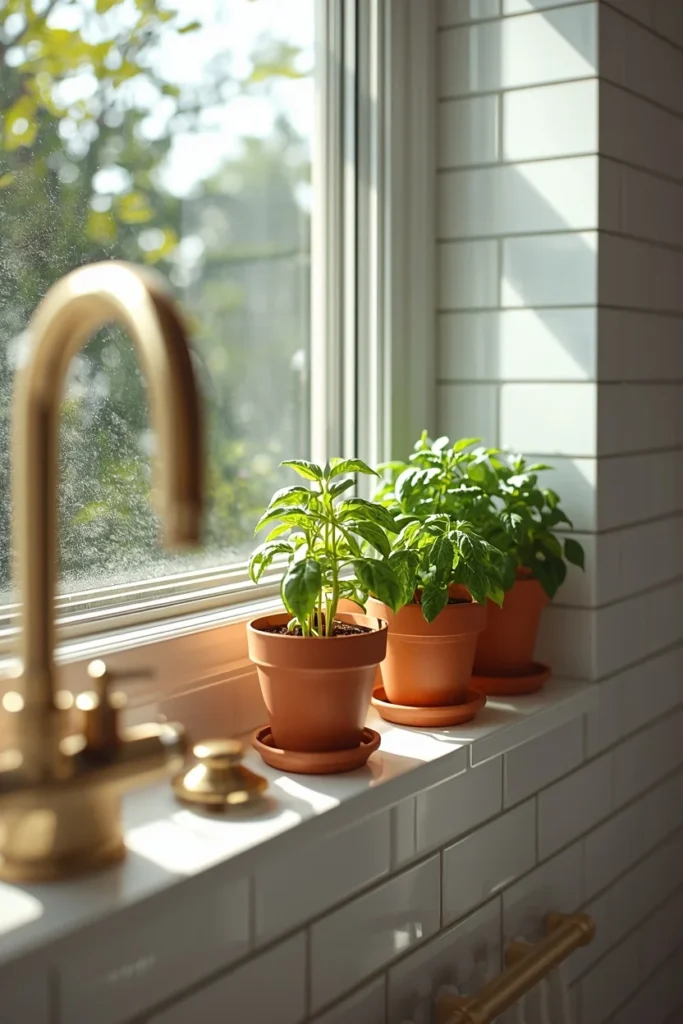
17. Herb Garden Windowsill
A small windowsill herb garden, basil, mint, or thyme in simple terracotta pots, brings both color and scent into a bathroom that gets natural light. This works particularly well in bathrooms with a window near the sink or tub, since herbs need more direct light than shade-tolerant plants like pothos or ferns. Beyond the visual appeal, the scent released by these plants when the room warms up from a shower adds a sensory layer that plain greenery doesn’t provide. This is a low-cost, high-impact idea for anyone with even a small window ledge to work with.
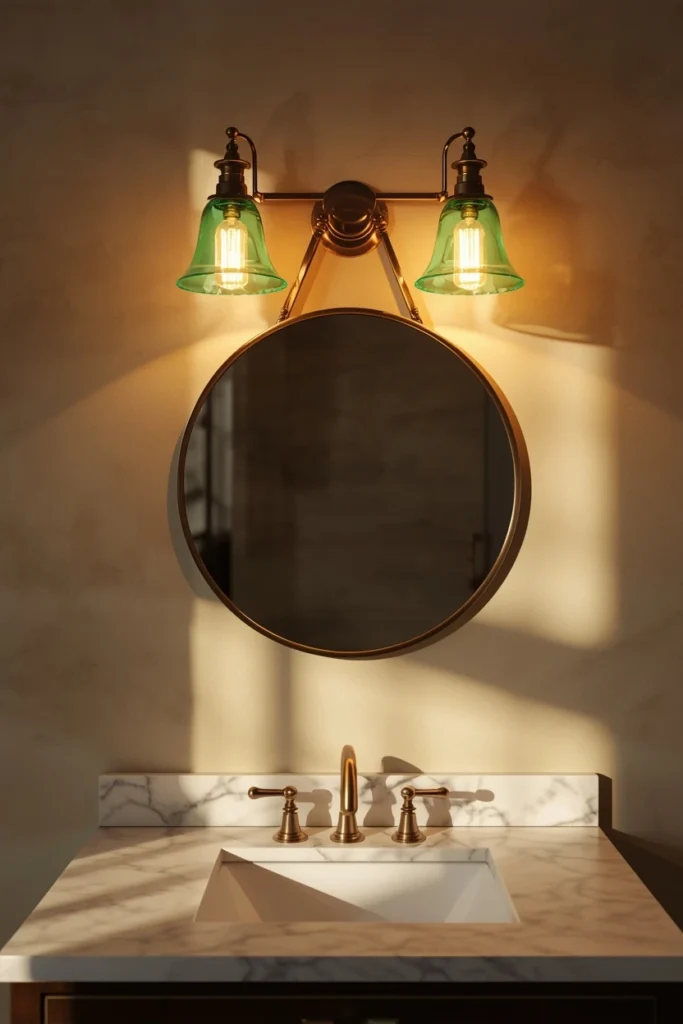
18. Green Glass Pendant Lighting
A colored glass pendant or sconce adds green to a bathroom through light rather than surface, which means the color shifts slightly depending on whether the fixture is on or off. Amber or sage-tinted glass fixtures, hung above a vanity or beside a mirror, cast a warm, slightly green-tinted glow at night that feels closer to candlelight than a standard bathroom fixture. This idea works well layered on top of an otherwise neutral bathroom, since lighting alone can shift the mood of a room without requiring paint or tile changes. It’s also one of the easier updates to make in a rented space, since most pendant fixtures can be swapped without major electrical work.
19. Seafoam Subway Tile
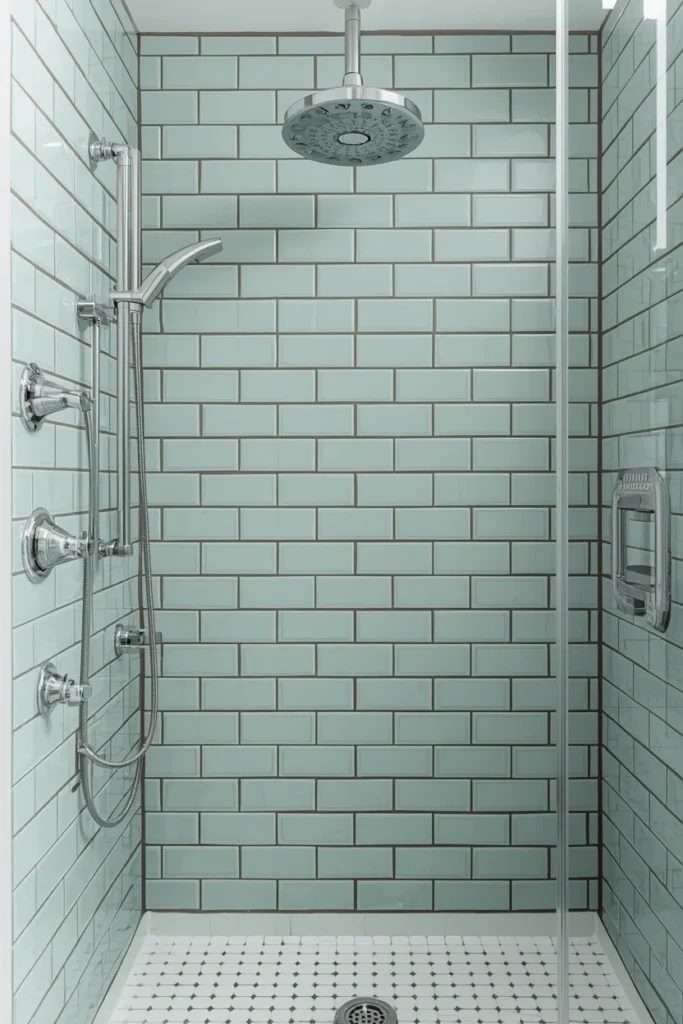
Seafoam sits between green and blue, which makes it one of the more versatile green-adjacent tile colors since it pairs easily with both warm brass and cool chrome fixtures. Using it in a classic subway pattern, rather than a more textured or handmade tile, keeps the look clean and works well in a smaller bathroom where a busier pattern might feel overwhelming. A dark grout line, rather than white, adds definition to each tile and keeps the wall from reading as a flat block of color. This is a practical, mid-cost idea that suits anyone who wants a green bathroom with a more classic, less trend-driven feel.
20. Olive Green Towels and Woven Baskets
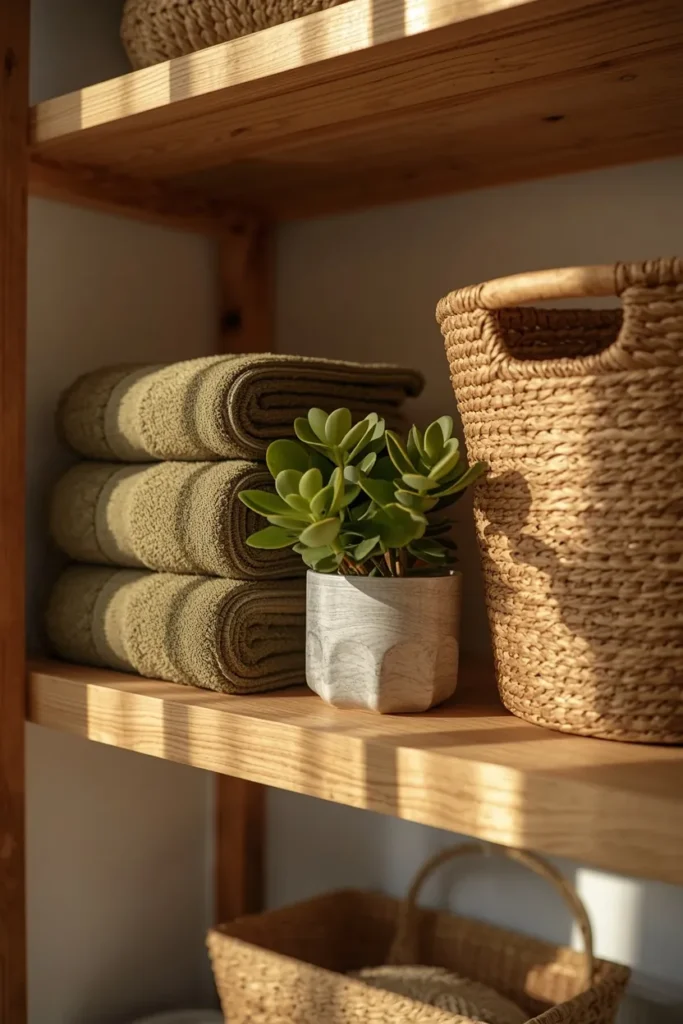
Similar to the sage textile idea, this focuses specifically on olive green as a deeper, earthier alternative for anyone who wants more warmth than sage or mint provide. Stacking olive towels on an open shelf next to a few woven storage baskets in a similar tone creates a coordinated look that still feels casual rather than staged. This pairing works especially well in a bathroom with wood cabinetry or flooring, since olive green sits closer to the warm end of the green spectrum and blends naturally with wood tones. It’s an easy, low-commitment way to test whether a deeper green palette suits the room before considering paint or tile.
21. Green and Terracotta Mediterranean Bathroom
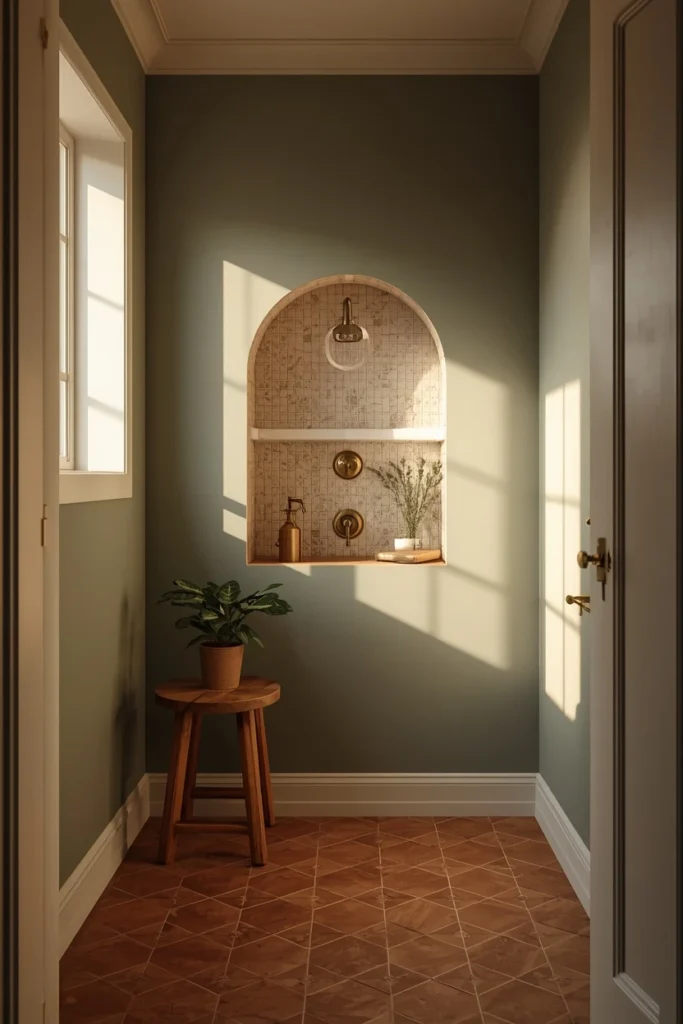
Pairing olive or sage green with terracotta tile draws on Mediterranean design, where warm clay tones sit naturally next to cooler greens found in olive groves and coastal plants. A terracotta floor grounds the room in warmth, while green paint, tile, or textiles on the walls keeps the palette from leaning too orange or too cool on its own. Arched niches, if the layout allows for them, reinforce this style further, since rounded architectural details are a hallmark of Mediterranean interiors. This combination suits a full remodel more than a quick update, but it’s one of the more distinctive, cohesive looks on this list for anyone planning a larger bathroom project.
Styling Tips
- Anchor the room with one dominant green (sage, olive, or jade) and treat any second green as an accent only, so the palette doesn’t compete with itself.
- Pair cool greens like mint and seafoam with chrome or matte black fixtures, and pair warm greens like olive and moss with brass or wood.
- Keep at least one large surface neutral (the floor, the ceiling, or the main wall) so the green has somewhere to breathe.
- Real plants read as more calming than printed or painted greenery, so mix in at least one live plant even in a fully tiled or painted green room.
- Matte finishes on tile and fixtures reinforce the natural, grounded feel that makes green bathrooms photograph so well; high-gloss surfaces tend to push the look back toward a more clinical feel.
Practical Implementation Ideas
- Start with a sample pot of paint on a poster board, not directly on the wall, and move it around the room across a full day to see how the green shifts under different light.
- If tiling a full shower feels like too large a step, tile just the shower niche or a single accent wall behind the vanity first.
- For rented spaces, prioritize textiles, plants, and lighting over paint or tile, since all three can move with you.
- When repainting an existing vanity, use a cabinet-grade or enamel paint rather than standard wall paint, since bathroom cabinets need to hold up to daily moisture and handling.
- Test plant placement before committing to hardware like hanging planters or wall-mounted shelves, since bathroom humidity and light levels vary more than in other rooms of the home.
Common Mistakes to Avoid
- Choosing a green that leans too yellow under warm bulbs, which can read as dated rather than fresh; test the paint color under the bathroom’s actual lighting, not daylight from another room.
- Using too many different greens at once, which can make a small bathroom feel busy instead of calm.
- Skipping ventilation upgrades when adding real plants or limewash finishes, both of which need consistent airflow to avoid mold or peeling.
- Matching every metal finish in the room instead of allowing one accent metal, like brass hardware against a chrome faucet, which tends to look more intentional than a uniform matched set.
- Forgetting that dark greens absorb light, so a small, windowless bathroom may need brighter or additional lighting fixtures to avoid feeling too dim.
Small-Space Alternatives
- Color-drench the walls, trim, and ceiling in the same pale sage tone rather than using a darker green, since removing contrast helps a small room feel larger.
- Use a floating vanity to expose floor space instead of a floor-standing cabinet.
- Add green through a single accent wall of tile or wallpaper rather than tiling or painting every wall.
- Rely on plants and textiles instead of a full renovation, since a hanging planter and a green bath mat take up no floor space at all.
- Choose a lighter, cooler green like mint or seafoam over a dark, saturated green if the room has limited natural light.
Budget-Friendly Alternatives
- Swap a shower curtain, bath mat, and towel set for a coordinated green palette instead of retiling.
- Use peel-and-stick wallpaper on a single accent wall rather than committing to paint or permanent wallpaper.
- Repaint an existing vanity instead of replacing it, using a cabinet-grade enamel paint in the desired green.
- Add live plants in inexpensive terracotta pots rather than installing a built-in living wall system.
- Update just the hardware, faucet, and light fixtures around an existing green tile or paint job instead of a full remodel.
Pro Styling Recommendations
- Choose paint and tile samples in-person under the bathroom’s own lighting rather than relying on a photo or a swatch viewed elsewhere in the home.
- Layer at least two shades of green in different materials (paint, tile, and textile) rather than relying on a single source of color for the whole room.
- Keep hardware finishes limited to two metals maximum across the whole room to avoid a busy, mismatched feel.
- Use a single, larger plant as a visual anchor rather than several small plants scattered without a clear grouping.
- When in doubt on color intensity, go one shade lighter than planned; green tends to look more saturated once it covers an entire wall or room compared to a small paint swatch.
FAQs
Conclusion
Green earns its place in a bathroom because it does something most bathroom colors can’t: it feels calm and alive at the same time. A sage green wall or a shelf of trailing plants doesn’t just look good in a photo, it changes how the room feels to stand in at the end of a long day.
Not every idea on this list needs a full renovation. Some just need a trip to a home goods store and an open windowsill. Pick the one shade of green and the one material, paint, tile, or textile, that fits the space and budget in front of you right now, and build outward from there.