20 Space-Saving Thanksgiving Tablescape Ideas

A small dining table doesn’t mean a small Thanksgiving. It just means every inch on that table has to earn its place.
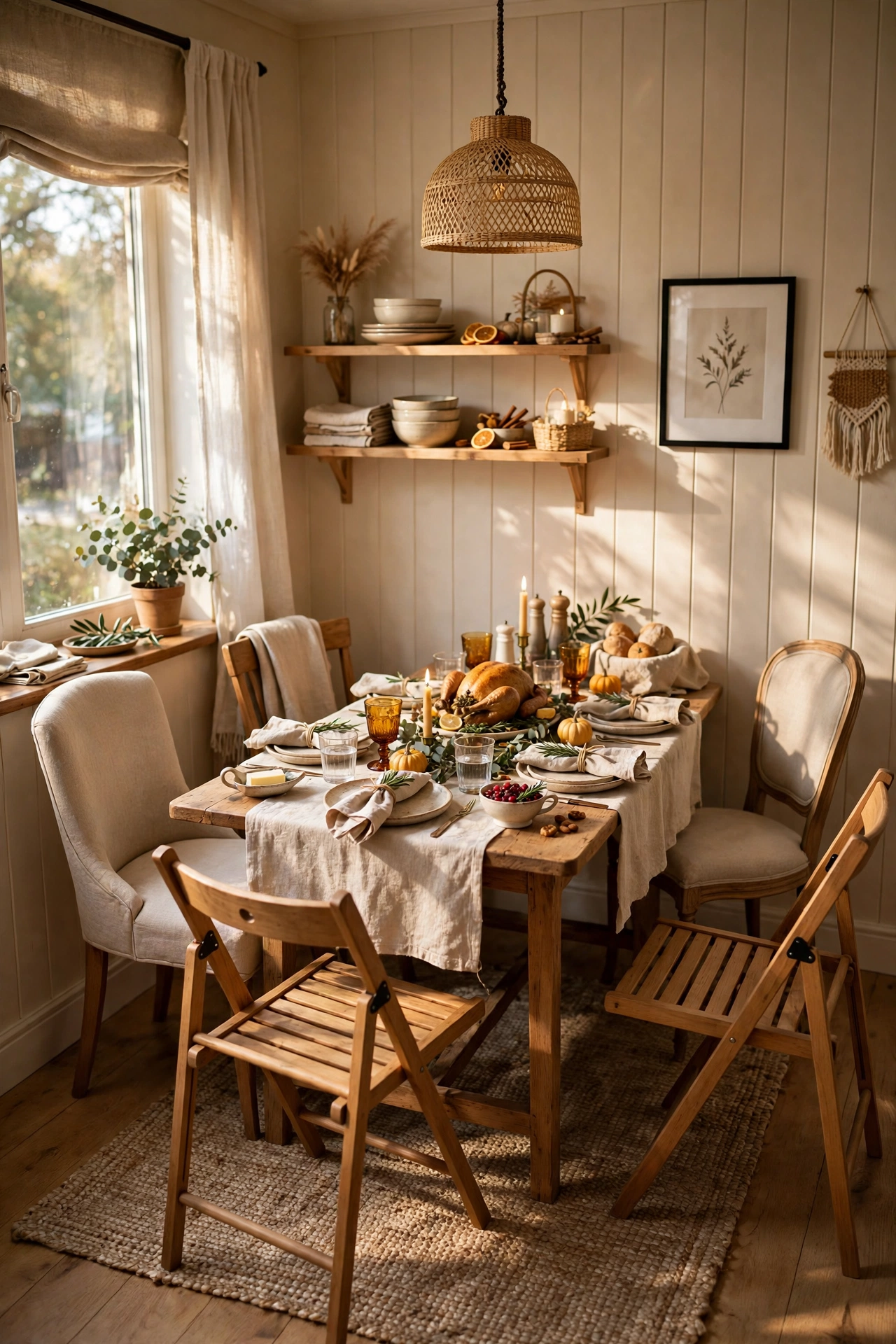
If you’ve been scrolling Pinterest wondering how anyone fits a centerpiece, place settings, and serving dishes onto a table that seats six comfortably or less, this guide is built for you. Below are 20 space-saving Thanksgiving tablescape ideas, pulling from the actual techniques designers use to make a small table feel intentional instead of cramped — low centerpieces under 12 inches, buffet-style serving that clears the table entirely, and runner placement tricks most guides never explain. Every idea includes the reasoning behind it and a matching image so you can see exactly how it comes together, even if your dining room is really just a corner of your kitchen.
Table of Contents
1. Low, Wide Centerpiece Under 12 Inches
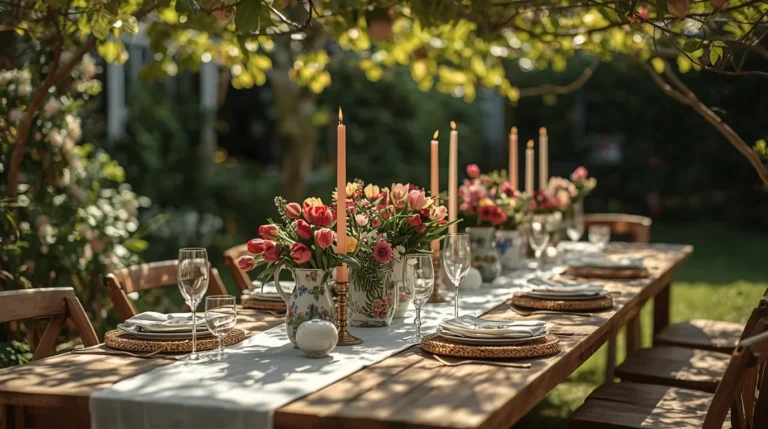
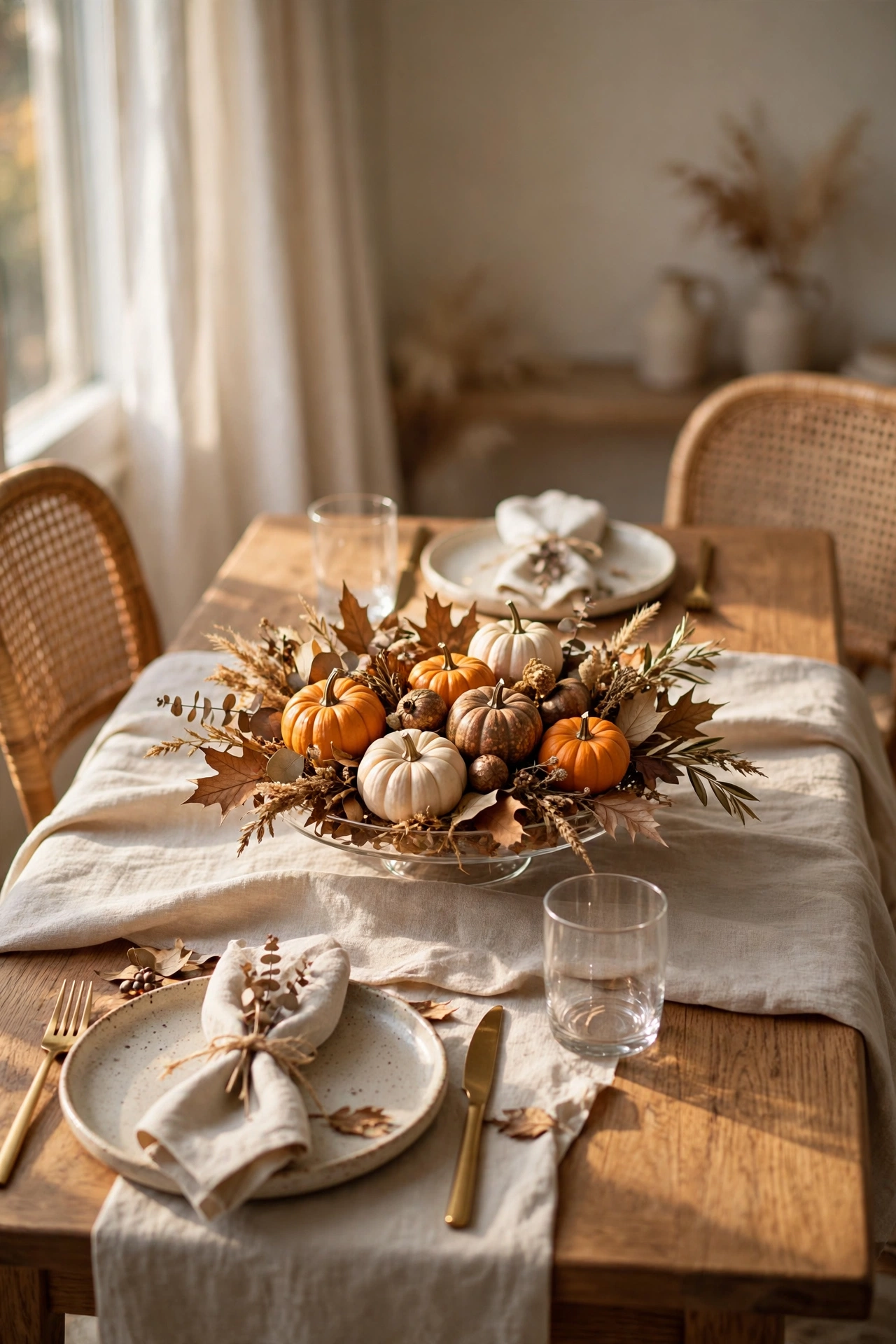
Keep your centerpiece under about 12 inches tall, choosing a low bowl, compote, or shallow tray arrangement instead of a tall floral display, so guests can see and talk across the table without leaning around anything. Sightlines matter more on a small table than a large one, since there’s less physical distance for a tall centerpiece to visually “disappear” into, and a blocked view feels far more cramped in a tight dining room. Fill the low vessel with seasonal elements like mini pumpkins, dried leaves, or a few short candles rather than upright stems, keeping the whole arrangement wider than it is tall. This single guideline is the most consistently repeated advice among professional tablescape designers, specifically because it solves the conversation problem before it starts. Getting the centerpiece height right is the single biggest factor in whether a small table feels intimate or simply overcrowded.
2. Buffet-Style Serving to Free the Table
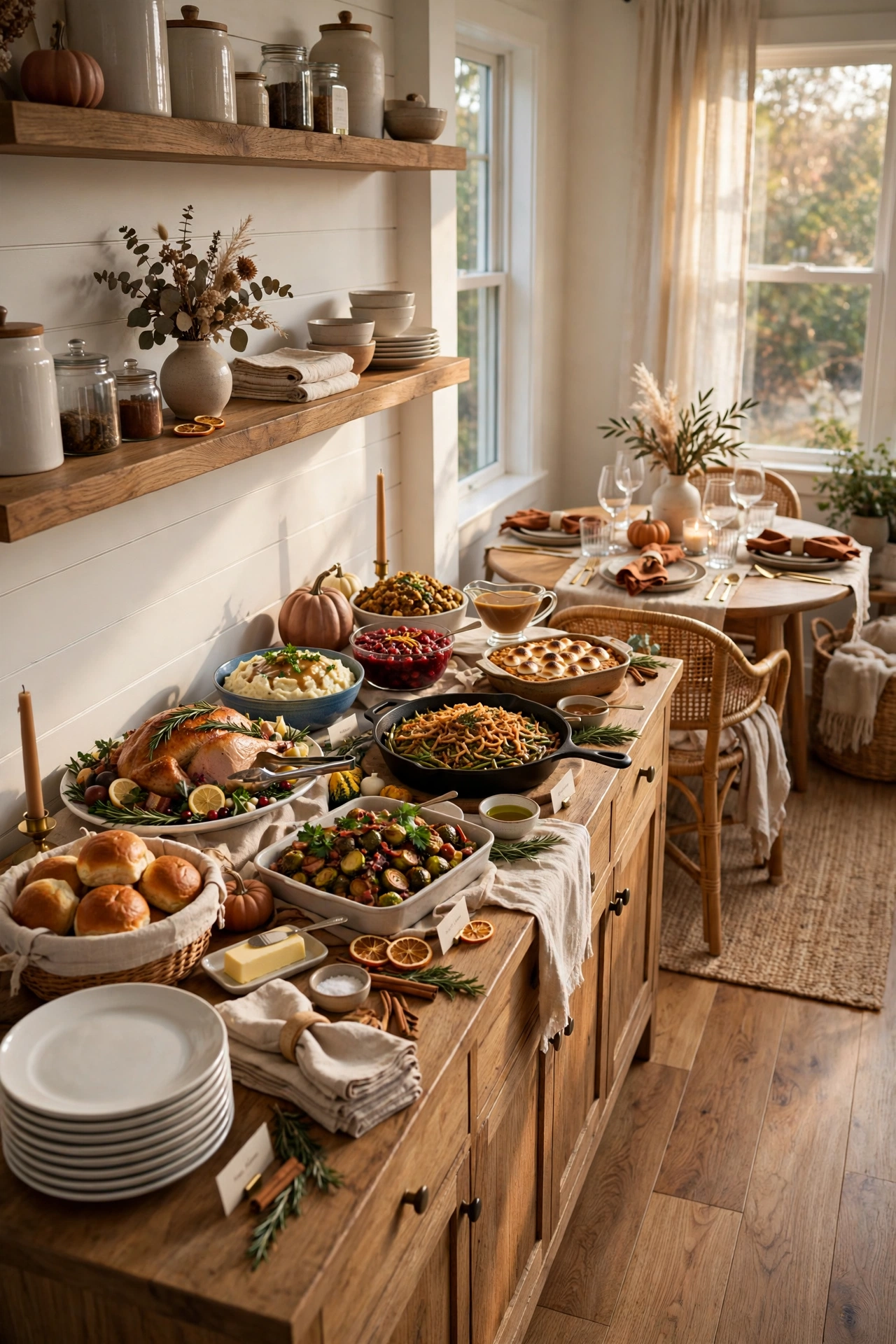
Set up your side dishes, gravy, and serving platters on a kitchen counter, sideboard, or rolling cart instead of the dining table itself, so the table only needs to hold place settings and a single centerpiece. This single decision solves the most common small-table problem, since a full Thanksgiving spread of serving dishes can easily take up more surface area than the actual table provides. Arrange the buffet station in the order guests will move through it — plates first, then mains, then sides, then sauces — so the line moves smoothly even in a tight kitchen. Keep a small stack of extra napkins and serving utensils at the buffet table itself, since guests won’t have easy table access to grab a dropped spoon mid-serving. This approach also means the table can be reset quickly for dessert, since it was never holding the bulk of the meal’s serving dishes in the first place.
3. Removable Centerpiece You Pull Before Plating
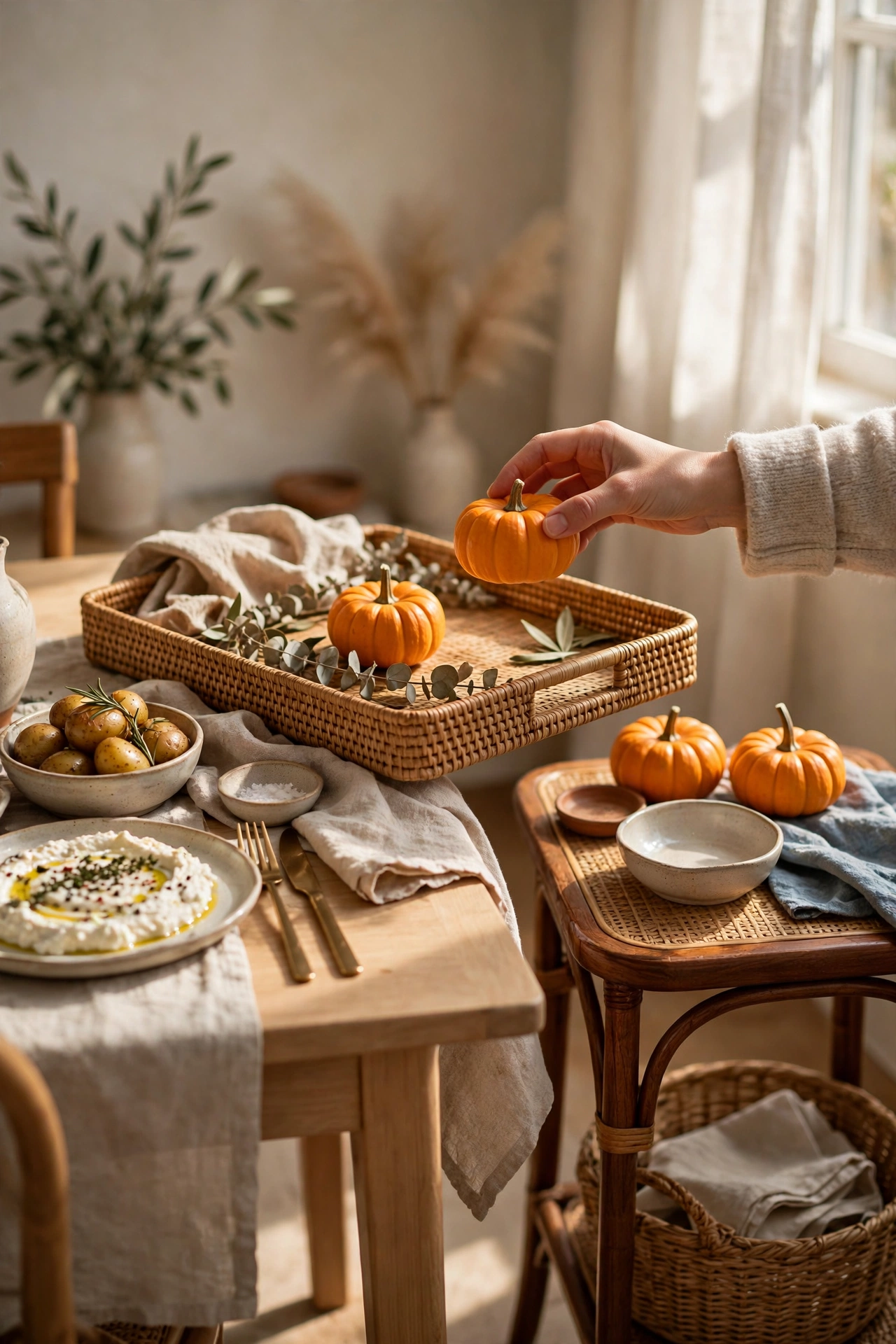
Choose a centerpiece that’s genuinely easy to lift and set aside once the meal is actually being served, rather than one that’s fixed or awkward to relocate, so the table can open up further the moment food starts coming out. A tray-based arrangement or a single potted plant works well here, since either can be picked up in one motion and moved to a side surface without disturbing the rest of the setting. Plan for this from the very beginning of your styling process by choosing a centerpiece vessel with a flat, stable base and no loose or spilling elements that would make relocating it mid-meal messy. This idea directly acknowledges something most tablescape guides skip: a beautiful centerpiece before the meal and a genuinely functional table during the meal are sometimes two different needs, especially in a small space. Removing the centerpiece for the meal itself, then returning it for dessert or coffee, gives you the best of both without permanently sacrificing either.
4. Narrow Runner Placed Widthwise, Not Lengthwise
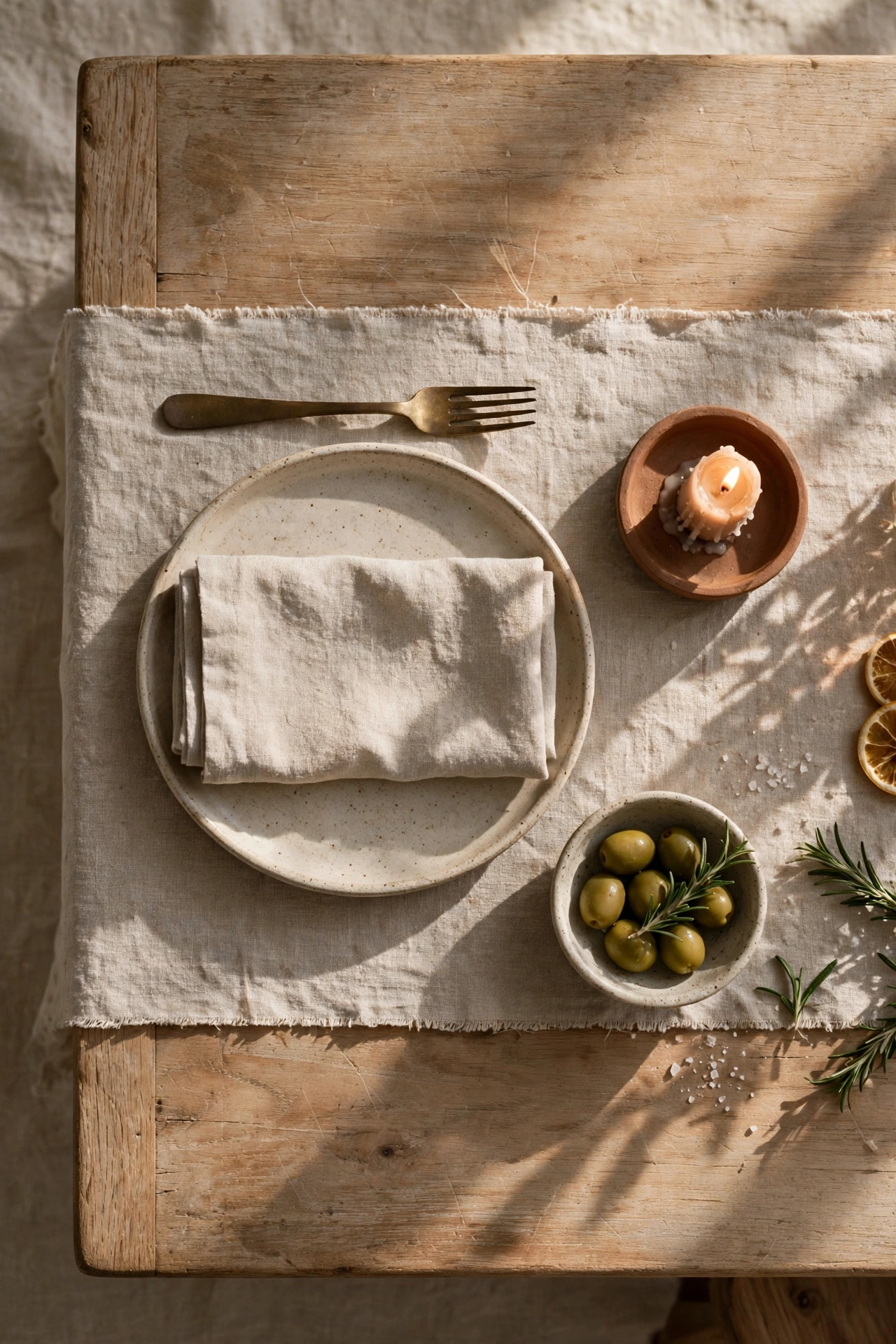
Lay a narrow table runner across the width of the table instead of down its length, which anchors each place setting individually without stretching a long strip of fabric down the table’s full center, where it competes with everything else for surface space. This placement works especially well for a small round or square table, where a traditional lengthwise runner can look stretched and awkward relative to the table’s proportions. A widthwise runner uses leftover fabric scraps efficiently too, since it only needs to span the table’s shorter dimension rather than its longer one. Keep the runner slim — a few inches narrower than the width of your place settings — so it defines the space without eating into the room needed for plates and glassware on either side. This is a simple styling switch most Thanksgiving guides never mention, but it solves a real proportion problem specific to smaller tables.
5. Single-Stem Bud Vases Instead of Large Arrangements
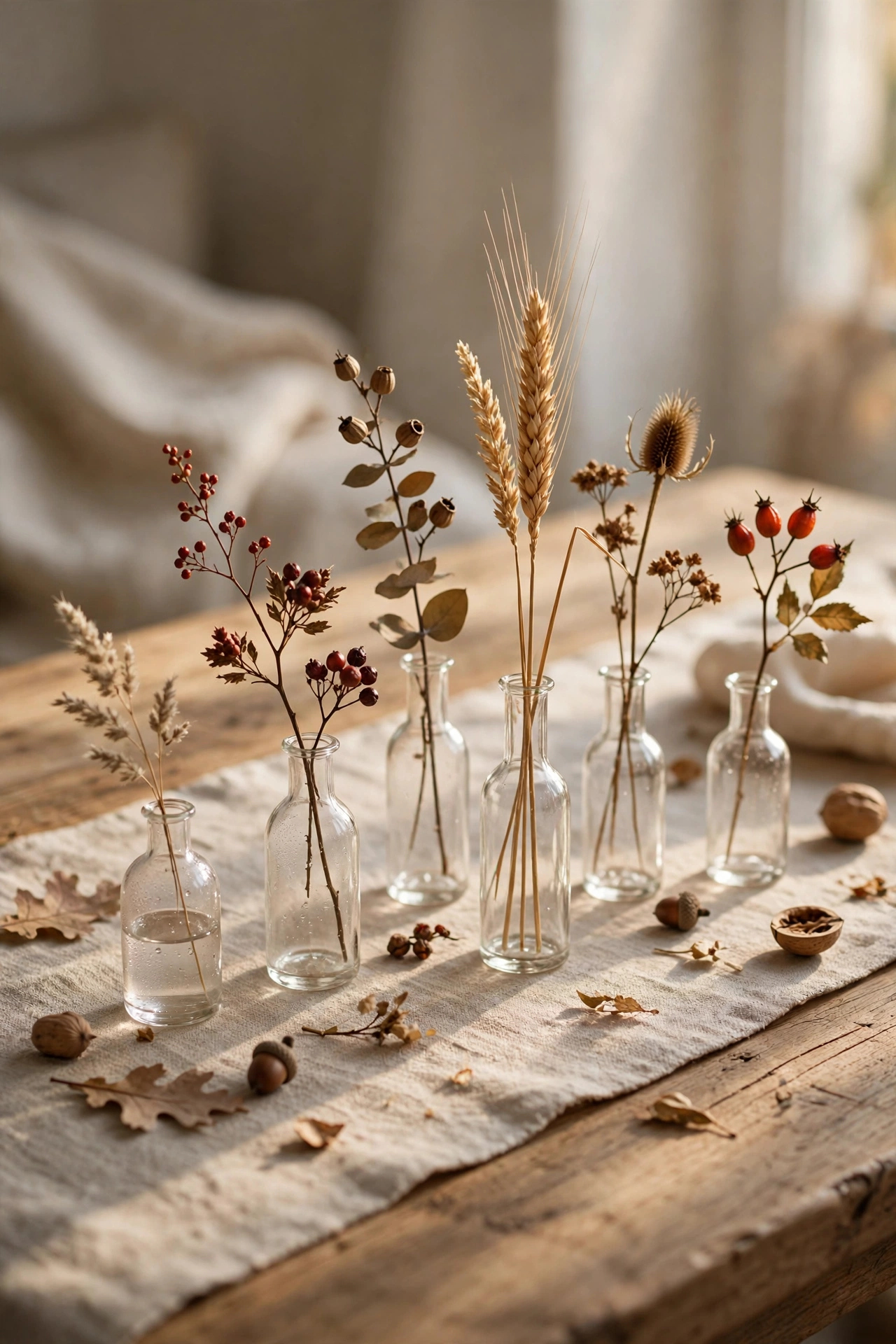
Scatter several small bud vases, each holding just one or two stems, along the table instead of a single large floral arrangement, spreading the visual impact out horizontally rather than concentrating it in one bulky centerpiece. Bud vases take up almost no table surface individually, and grouping three or four of them at varying heights creates the same sense of abundance a large arrangement would, without the footprint. Choose stems that are seasonal and easy to source, like a single dried branch, a small sprig of berries, or one late-season bloom, since the vase’s simplicity means the stem itself needs to carry real visual interest. Space the bud vases unevenly along the runner or table’s centerline rather than lining them up perfectly, so the arrangement feels organic rather than mechanical. This technique consistently reads as more thoughtfully designed than a single large centerpiece, and it solves the small-table footprint problem at the same time.
Related: 25 Small Space Christmas Decor Ideas That Make a Tiny Home Feel Magical
6. A Row of Votive Candles Instead of Tall Candlesticks
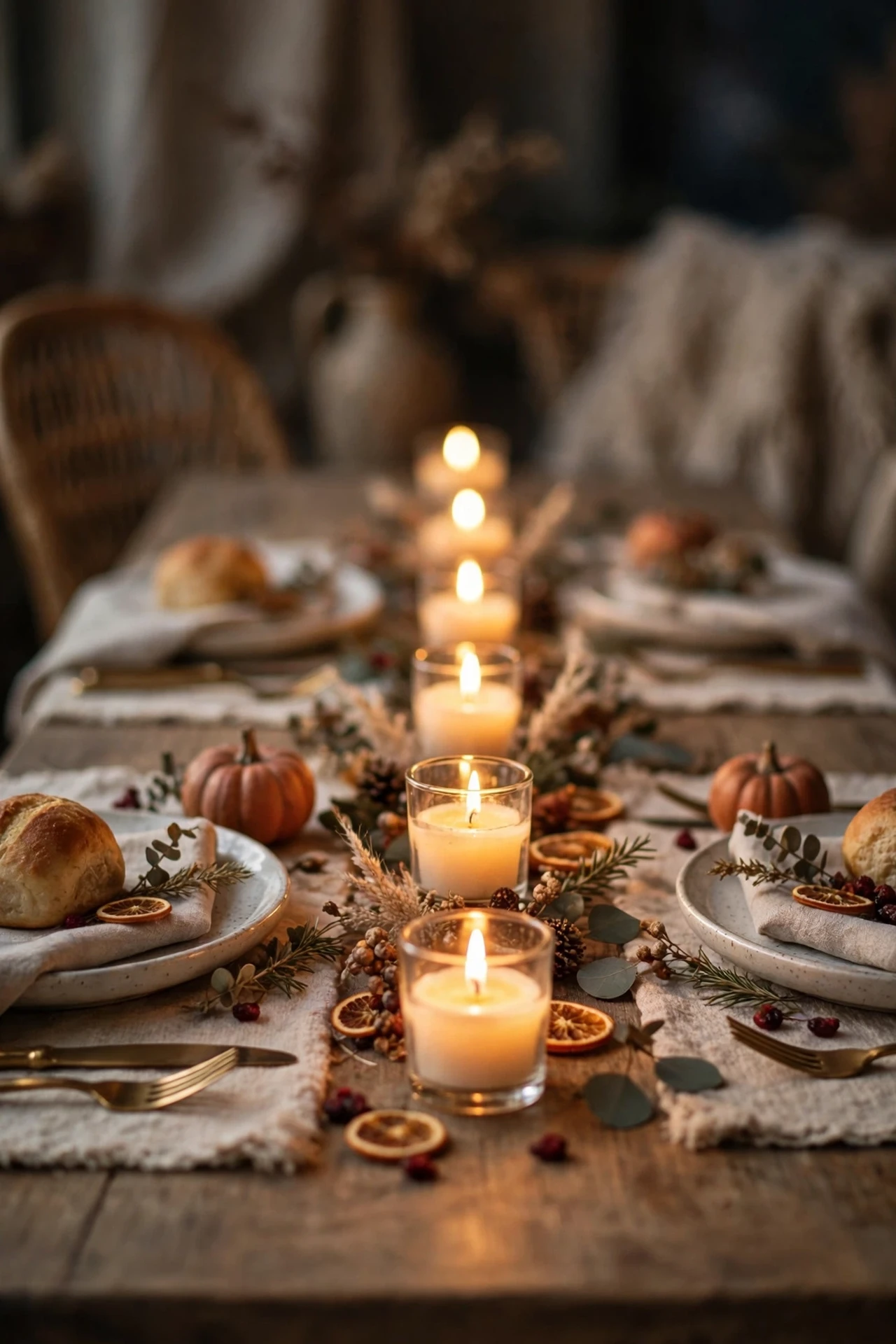
Line up a row of small votive candles down the center of the table instead of tall taper candlesticks, adding warm ambient light and visual rhythm without the height that tall candlesticks introduce. Votives sit low enough that they never interfere with sightlines across the table, and a row of several small flames actually creates more consistent, evenly distributed light than one or two taller candles concentrated in a single spot. Space the votives evenly along the table’s centerline, alternating with any bud vases or low centerpiece elements you’re using, so the whole line reads as one cohesive design rather than a random scatter. Choose votive holders in a simple, consistent material — clear glass, matte ceramic, or a soft metallic — so the repeated shape reinforces the line rather than introducing visual clutter. This is one of the easiest and most affordable upgrades on this entire list, since votive candles are inexpensive and widely available in bulk.
7. Charger Plate Only, Skip the Layered Stack
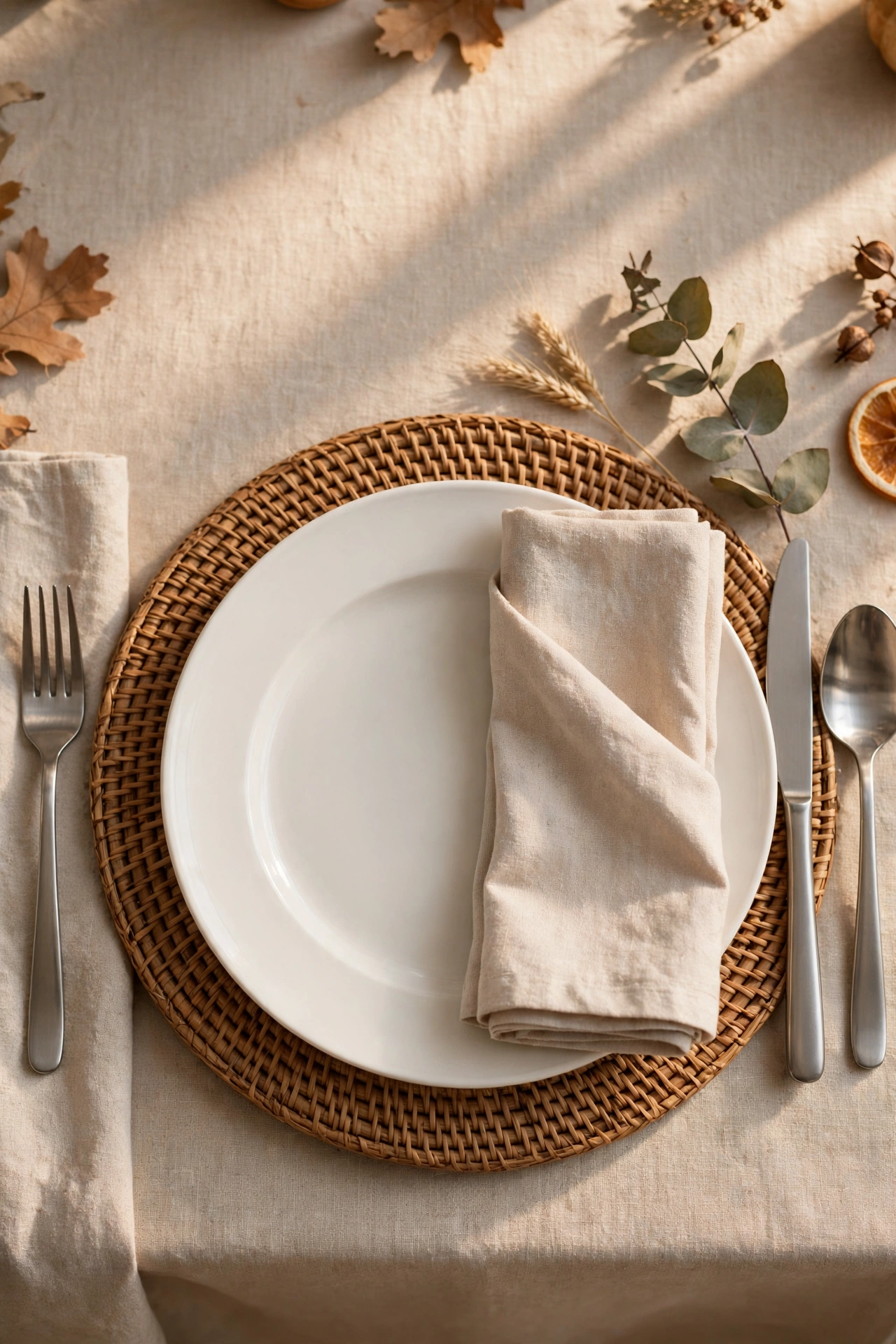
Set each place with a single charger plate topped by the dinner plate, rather than stacking a charger, dinner plate, and salad plate all at once, freeing up meaningful surface area at every single seat. A fully layered place setting can take up several extra inches of surface depth per guest once you account for a charger, two plates, and a napkin, which adds up quickly across a table that’s already tight. Bring out the salad or appetizer course on its own plate when it’s actually being served, then clear it before the main course arrives, rather than pre-stacking everything at the start of the meal. This approach also makes each place setting feel less visually busy, which tends to suit a smaller, more intimate table better than an elaborate multi-plate stack designed for a grander dining room. It’s a small adjustment, but multiplied across six or eight place settings, the space savings are significant.
8. Nesting and Stackable Place Settings
Choose dishware, glasses, and serving pieces designed to nest or stack compactly when not in use, so your storage between uses stays minimal and setup on the day itself goes faster with less counter space needed for staging. This matters more than it initially seems for small-space hosting, since a cramped kitchen with no extra counter space to lay out dishware before the table is set can become its own bottleneck on the day of. Look specifically for stemless wine glasses, which nest more compactly than traditional stemware, and shallow bowls or plates with a consistent lip design that stack cleanly. Store your full Thanksgiving dishware set pre-stacked in the order you’ll use it, so pulling everything out for the table happens in one trip rather than several. This idea is less about the finished table’s visual look and more about the practical logistics that make small-space hosting actually manageable.
9. Twig or Vegetable Table Runner
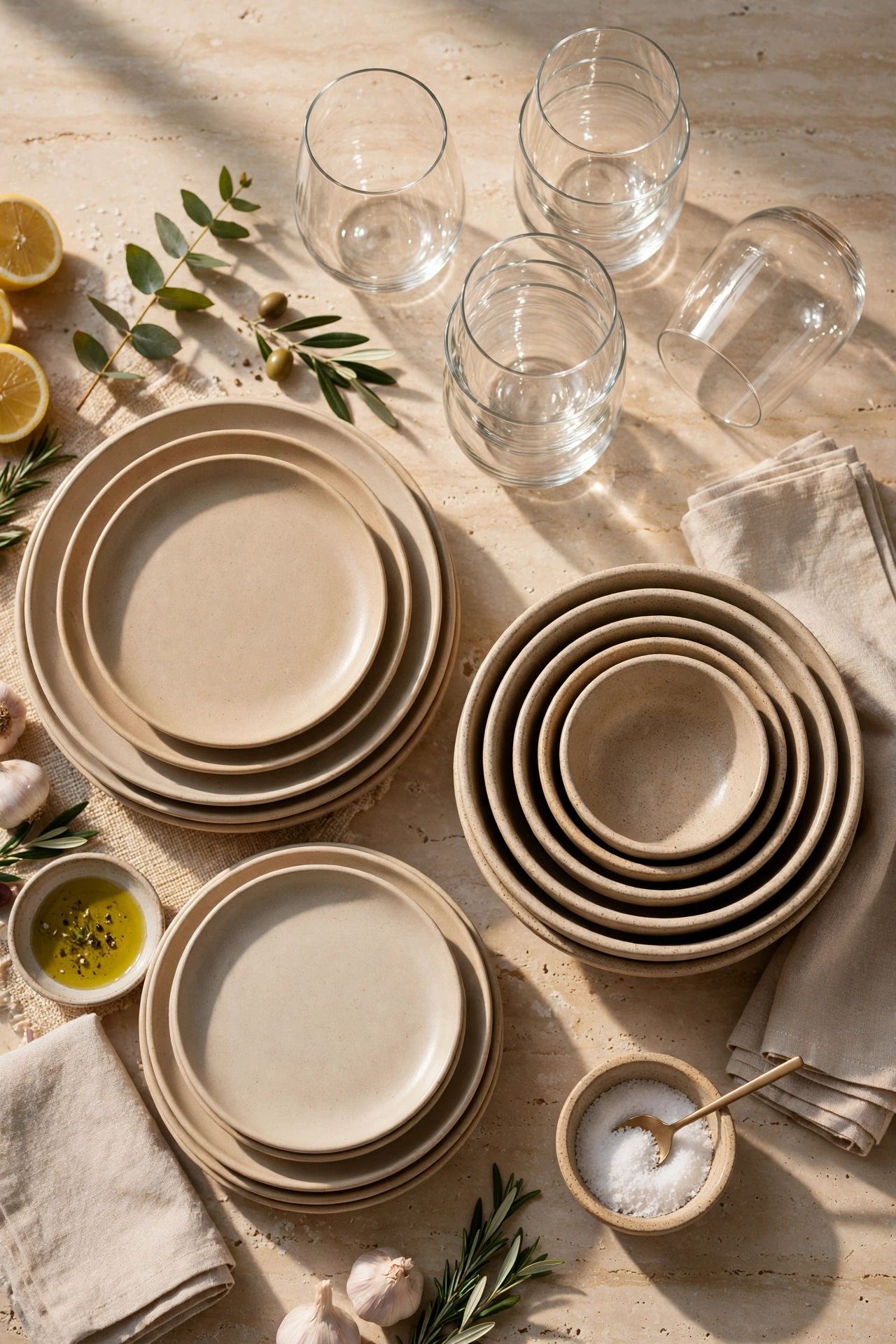
Build a table runner entirely out of natural, foraged materials — a line of twigs, or an arrangement of small vegetables like mini gourds and Brussels sprout stalks — laid directly down the table’s centerline instead of a fabric runner underneath a separate centerpiece. This combines the runner and centerpiece into a single flat element, saving the visual and physical space that two separate layers would otherwise require. A twig runner is genuinely simple enough for kids to help gather and assemble, while a vegetable runner brings color and texture without needing a vase or container at all. Keep the runner narrow and low-profile, following the same height principle as the centerpiece guidance above, so it doesn’t block sightlines even though it runs the length of the table. This idea works especially well on a small table because it eliminates an entire separate decor layer while still delivering strong visual impact.
10. Mini Pumpkin Place Cards
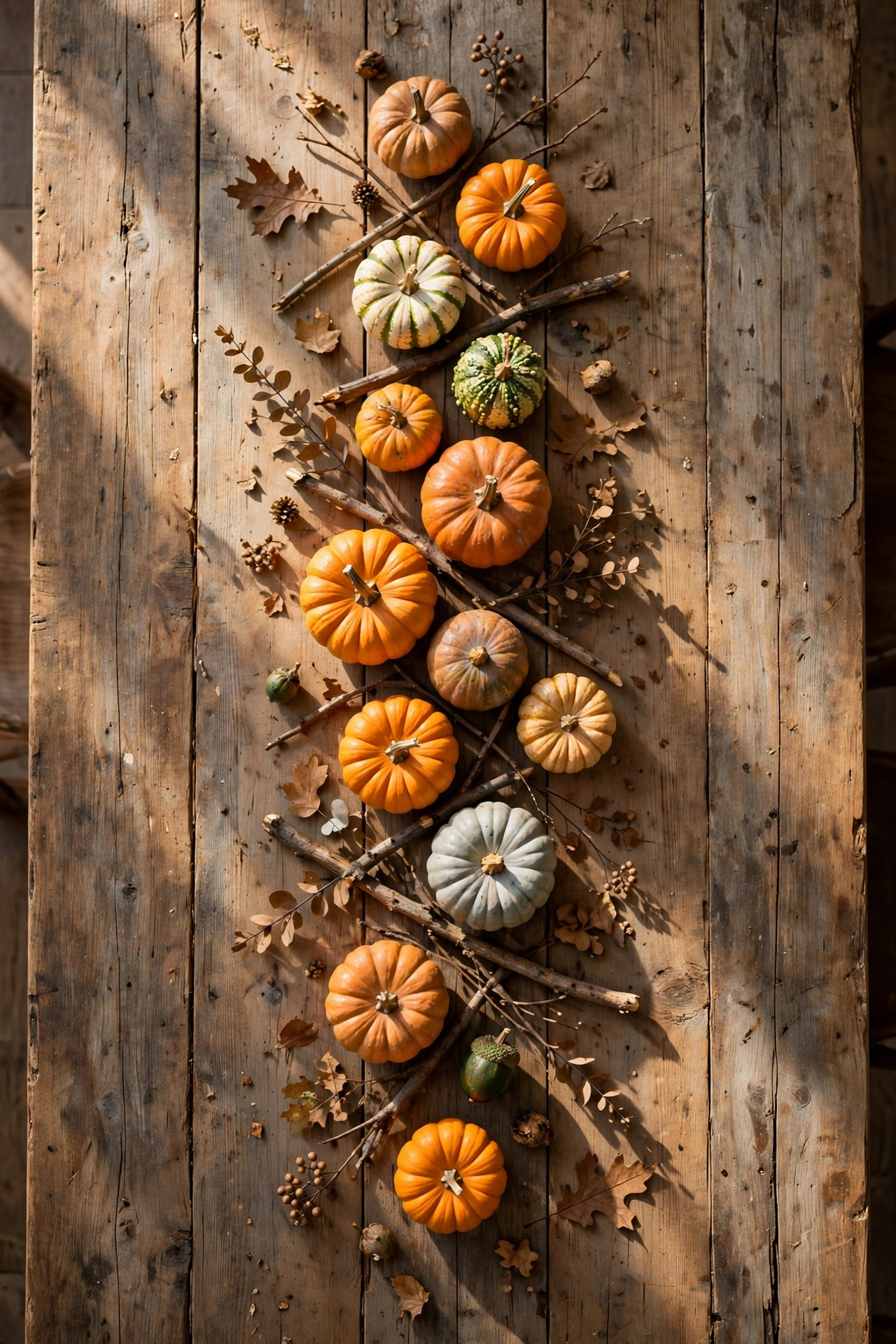
Write each guest’s name directly on a small mini pumpkin using a paint pen, then set one at each place setting to double as both a place card and a small decorative accent, eliminating the need for a separate card holder or stand. This dual-purpose approach is a favorite trick among professional tablescape designers specifically because it lets a single small object do two jobs at once, which matters more on a table with limited surface area. Choose mini pumpkins small enough to sit comfortably above the plate or just beside it without crowding the rest of the place setting. Keep the lettering simple and legible — a plain first name in a clean font reads best by candlelight and doesn’t require much surface space to write clearly. This idea also gives guests a small keepsake to take home if you want, which adds a thoughtful touch without adding any extra tabletop clutter during the meal itself.
11. One Hero Item Instead of Many Small Ones
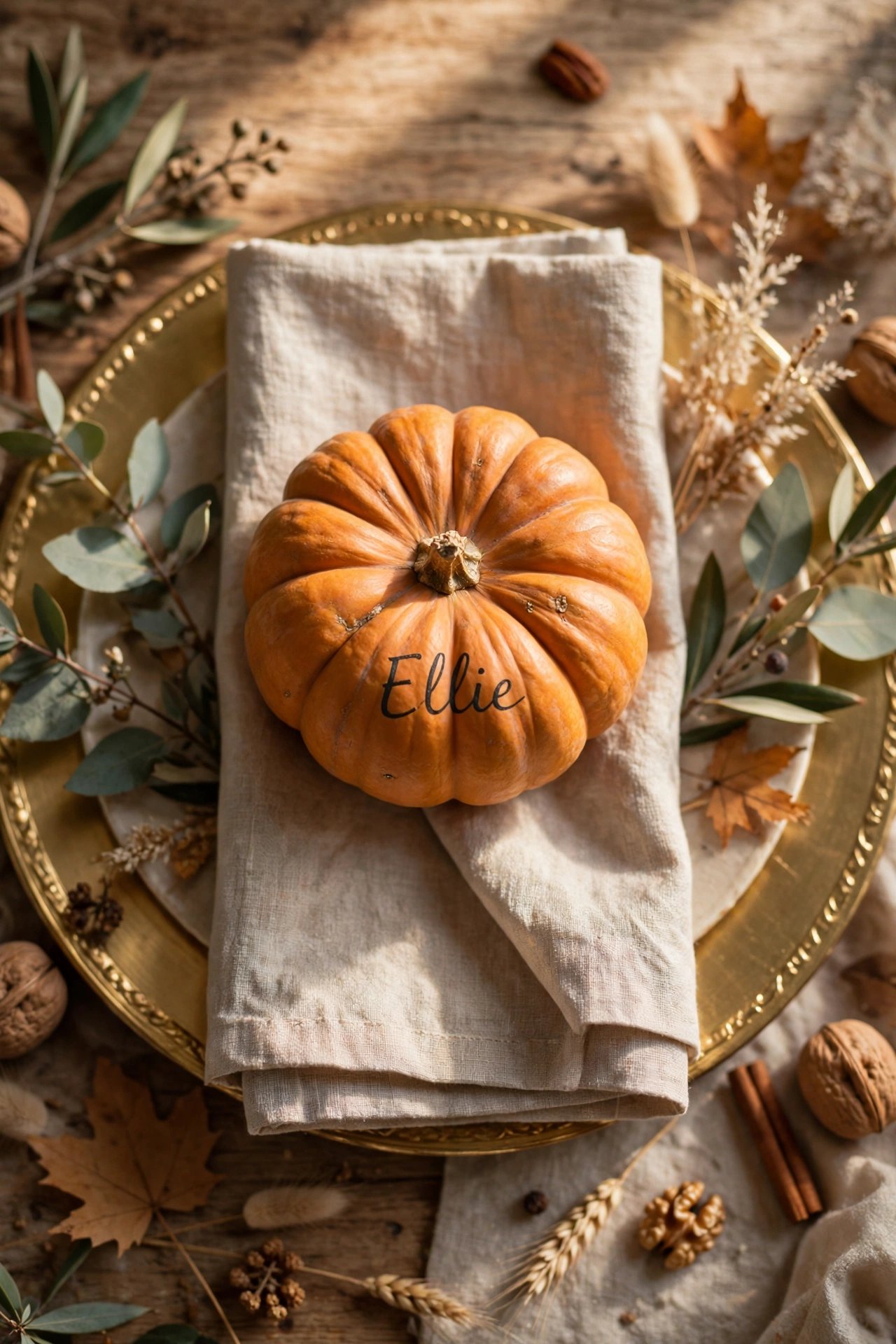
Choose a single standout piece — a runner in a bold color, a set of gold-rimmed dishware, or a distinctive flatware pattern — to be the visual anchor of the whole table, then keep every other element deliberately simple and neutral so nothing competes with it. This “hero item” approach, borrowed directly from small-space stylists, works because a table with limited surface area can only support so much visual complexity before it starts to feel cluttered rather than curated. Once you’ve identified your hero piece, build the rest of the table around supporting it: if your hero is a patterned runner, keep the dishware plain; if your hero is your dishware, keep the runner neutral. This single decision simplifies your whole shopping and planning process, since you’re no longer trying to make five or six different statement pieces work together on a table that doesn’t have room for all of them. It’s a genuinely efficient way to make a small table look intentional rather than sparse.

12. High-Low Pairing Technique
Mix one or two higher-end pieces, like a set of vintage brass candlesticks or inherited china, with more affordable everyday items, like plain glassware or thrifted plates, so the table feels layered and considered without requiring a full matching set of expensive dishware. This high-low pairing is a favorite move among professional tablescape designers because it lets a smaller collection of nicer pieces stretch across a whole table setting, which is especially useful if you don’t own (or don’t have room to store) a complete formal dishware set. Choose your “high” pieces first, then select simpler, more neutral items to fill in around them, rather than trying to find an exact matching set for every single element. This approach also naturally limits how much you need to buy or store for a once-a-year meal, since you’re supplementing existing pieces rather than acquiring an entirely new set. The contrast between polished and simple elements photographs beautifully and reads as intentional rather than mismatched.

13. Mixed Metal Flatware and Napkin Rings
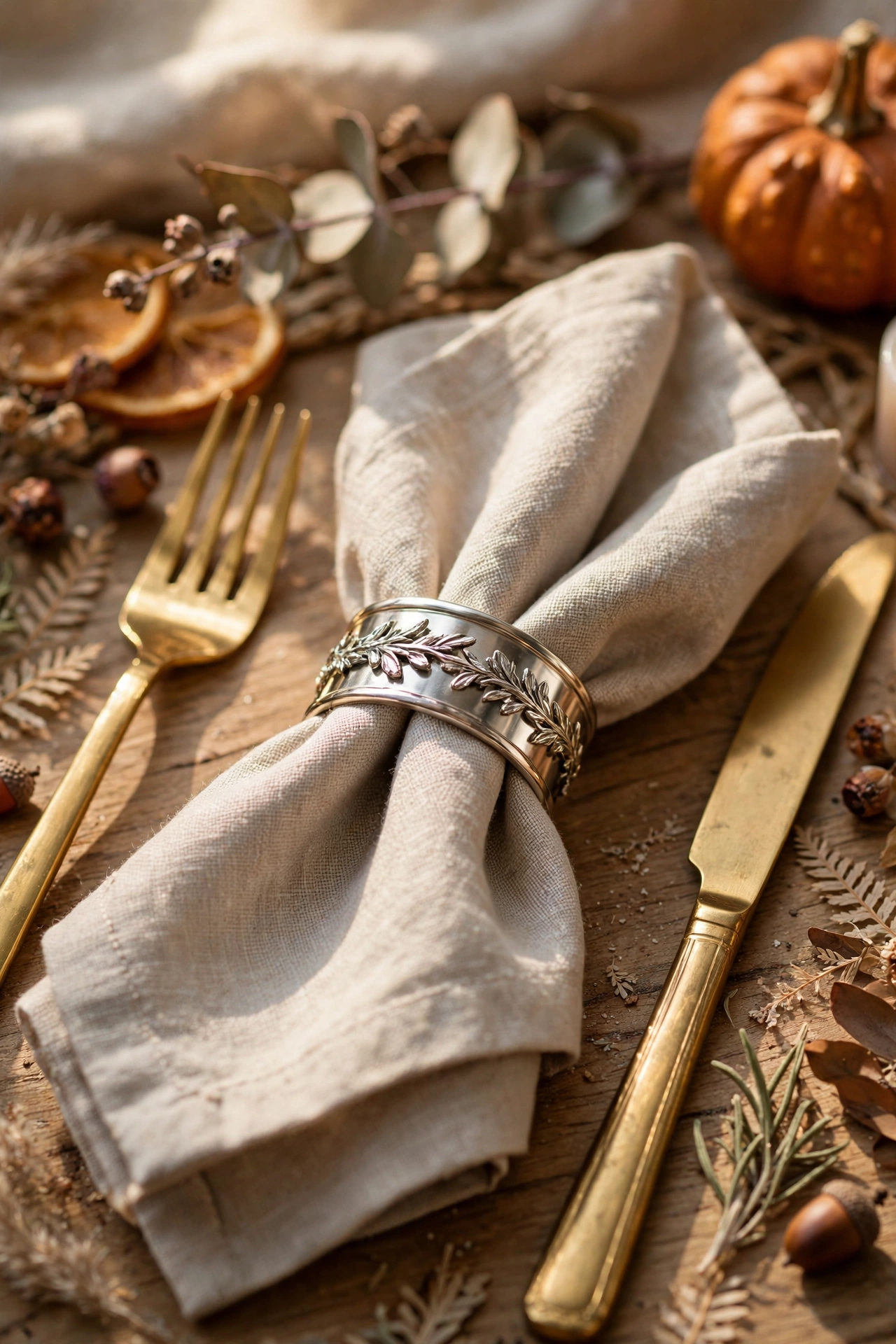
Combine two different metal tones, like gold flatware with silver napkin rings, or brass candlesticks with matte black accents, to add visual interest through material contrast rather than through additional decorative objects taking up table space. Mixing metals is a low-footprint way to add richness and depth to a table setting, since it works entirely through the finish of pieces you already need anyway, like flatware and napkin rings, rather than requiring anything extra. Keep the mix intentional rather than random — choosing exactly two metal tones and repeating each consistently across the table reads as designed, while three or more competing metals can start to look accidental. This technique pairs particularly well with a neutral color palette elsewhere on the table, since the metal contrast becomes the main source of visual interest without needing bold colors or patterns to compete with it. It’s an easy way to make simple, everyday dishware feel more special for the holiday without buying an entirely new set.
Related: 16 Blue and White Farmhouse Thanksgiving Table Ideas
14. A Napkin Fold Instead of a Bulky Napkin Ring
Use a simple decorative napkin fold — a knot, a tuck, or a fan shape — instead of a physical napkin ring, adding visual interest and height at each place setting without introducing an additional small object onto an already tight table surface. A well-chosen fold can achieve the same “finished” look a napkin ring provides, but it eliminates the need to store, wash, and set out a separate item for every single place setting. Practice your chosen fold once or twice before the day itself, since a clean, consistent fold across all place settings reads as more polished than one that varies noticeably from seat to seat. Tuck a small sprig of rosemary or a single dried leaf into the fold if you want a bit of extra seasonal detail, since this adds decoration without adding bulk. This is one of the simplest space-saving swaps on the entire list, and it works with napkins you likely already own.

15. Compote or Shallow Bowl Centerpiece
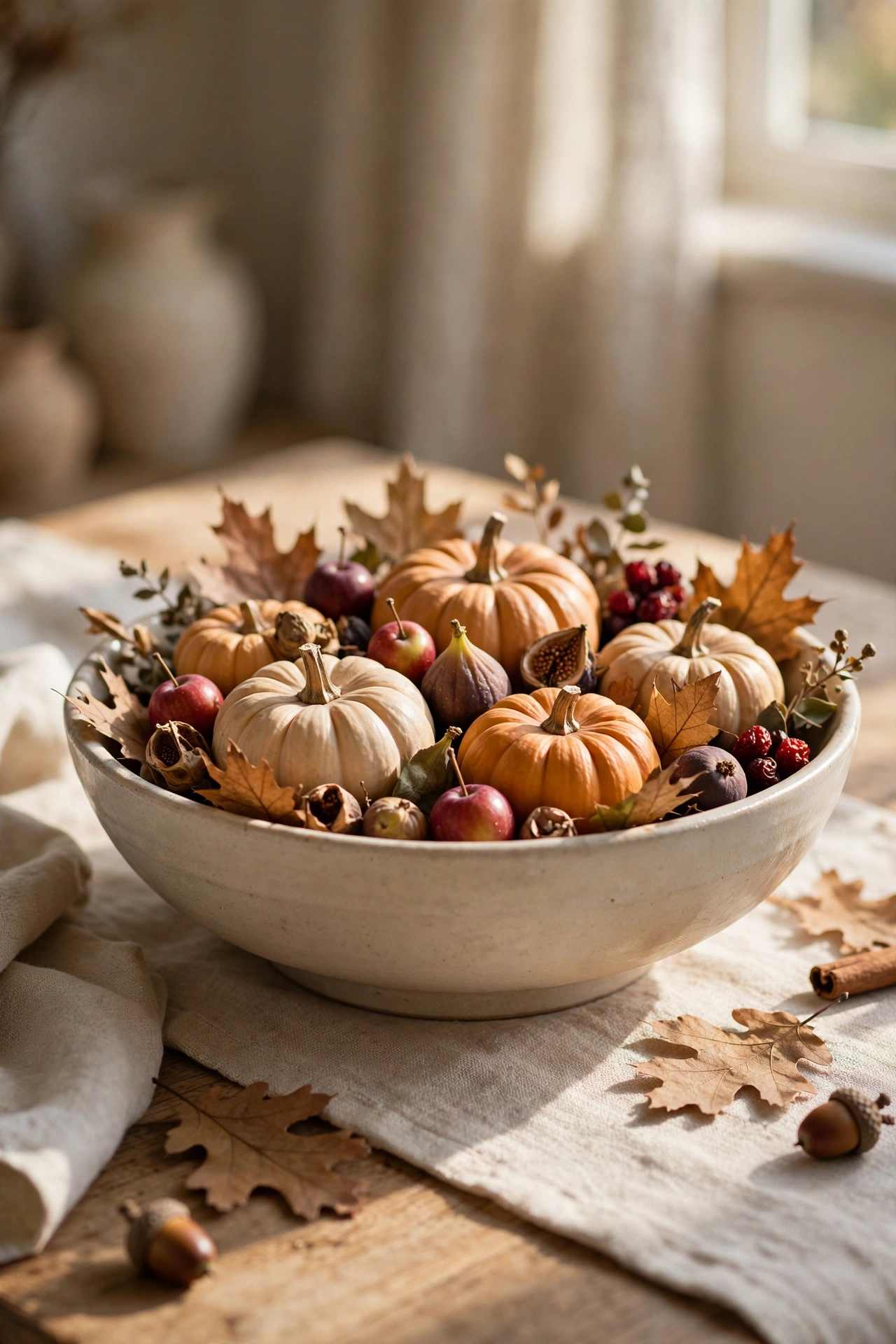
Use a compote dish or a shallow, wide bowl as your centerpiece vessel instead of a tall vase, filling it with mini pumpkins, dried leaves, and a few pieces of fruit for an arrangement that stays low and contained within a defined footprint. A compote’s raised but shallow shape gives a centerpiece a small amount of visual height and presence without the bulk or blocked sightlines a tall arrangement introduces, striking a middle ground between a completely flat runner and a full floral display. Fill the bowl generously enough that it doesn’t look sparse, but keep everything inside contained within the vessel’s edges rather than spilling outward and reclaiming table space you need for place settings. Choose a bowl material — ceramic, wood, or glass — that echoes another material already used elsewhere on the table, like your dishware or serving pieces, so the centerpiece feels connected to the rest of the setting rather than separate from it. This is one of the most versatile centerpiece formats for a small table, since it works equally well styled formally or kept casual.
16. Bare Wood Tabletop Styling
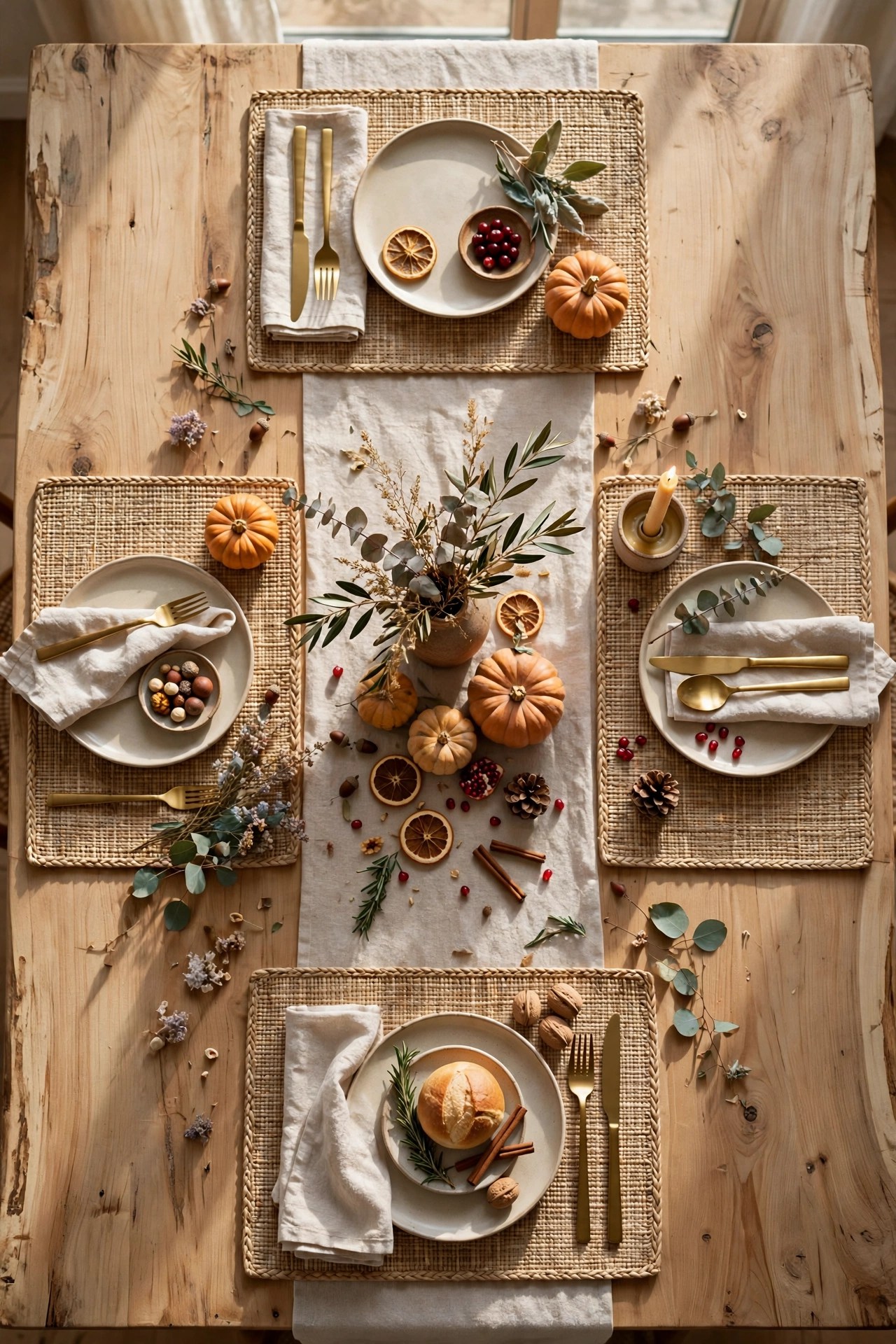
Skip the tablecloth entirely and let a wood table’s natural grain serve as the base layer, adding only a runner, placemats, or a scattering of natural elements directly on the exposed wood surface. A bare wood tabletop actually reads as more visually spacious than a full tablecloth, since the eye registers continuous open surface rather than a solid block of fabric color covering the entire table. This works particularly well with a rustic, farmhouse, or Scandinavian-inspired table setting, where the wood grain itself becomes part of the intentional design rather than something to be covered up. If your table has any surface damage or wear you’d rather not show, a table topper or a set of individual placemats can substitute for a tablecloth while still leaving more visible wood than a full cloth would. This approach also means less fabric to store, wash, and iron between uses, which matters for anyone hosting in a smaller home with limited linen storage.
17. Sideboard or Console Display for Overflow Decor
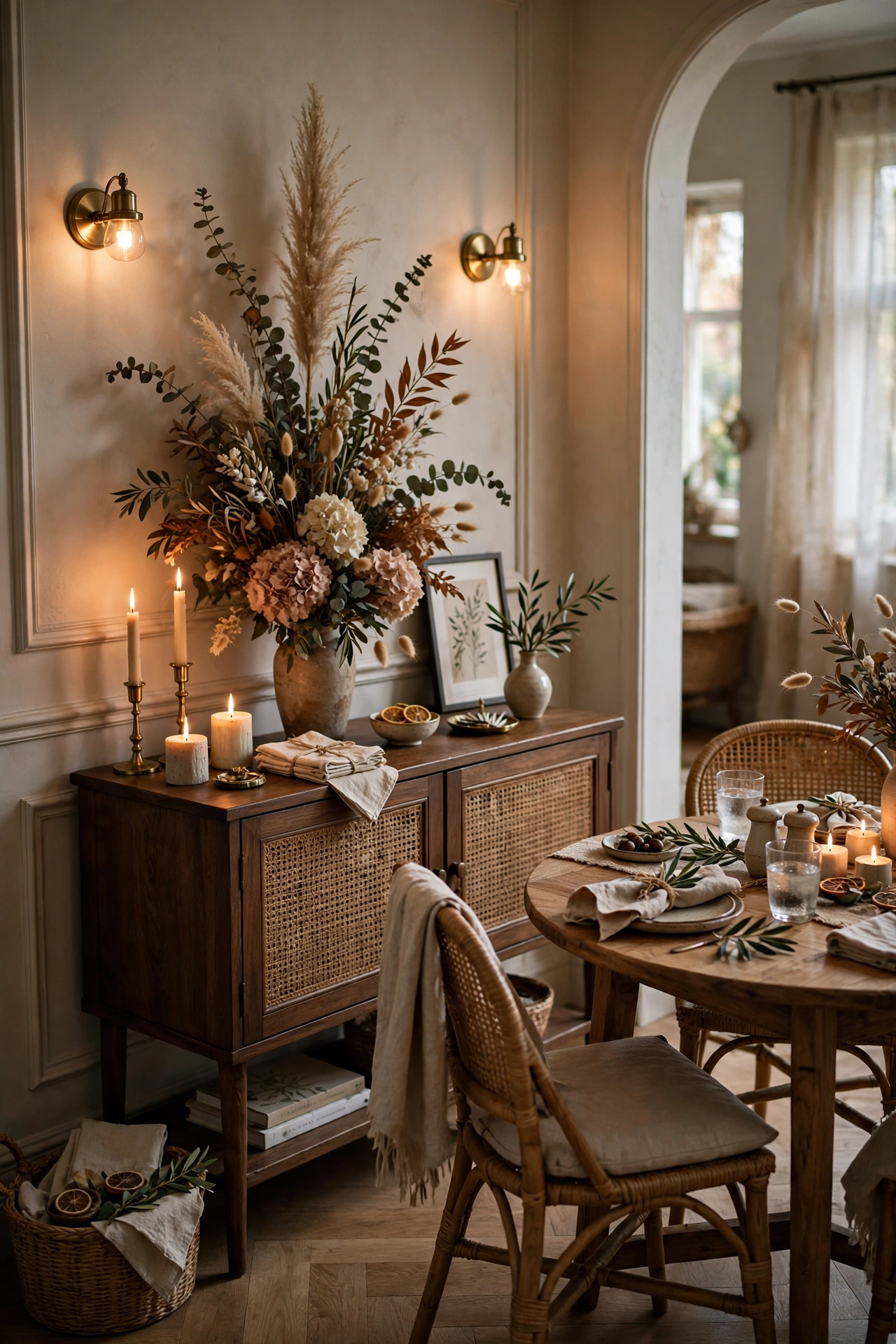
Move any decorative elements that don’t strictly need to be on the dining table itself — a larger floral arrangement, extra candles, a stack of cloth napkins — onto a nearby sideboard, console, or even a windowsill, so the table stays reserved for what guests actually need within arm’s reach. This lets you still enjoy a fuller, more layered decorating scheme for the room as a whole without forcing every single decorative element onto the dining table’s limited surface. Treat the sideboard display as a secondary, taller-allowed zone, since it doesn’t need to follow the same low-centerpiece sightline rule that applies to the actual dining surface. This approach effectively doubles your available styling space without touching the table itself, which is especially useful in a small dining room where every other surface in the room becomes fair game for decor. It also gives guests something to look at and admire as they walk in, spreading the visual impact of your Thanksgiving styling across the whole room instead of concentrating all of it onto one crowded table.
18. Stacked Trays for Vertical Serving
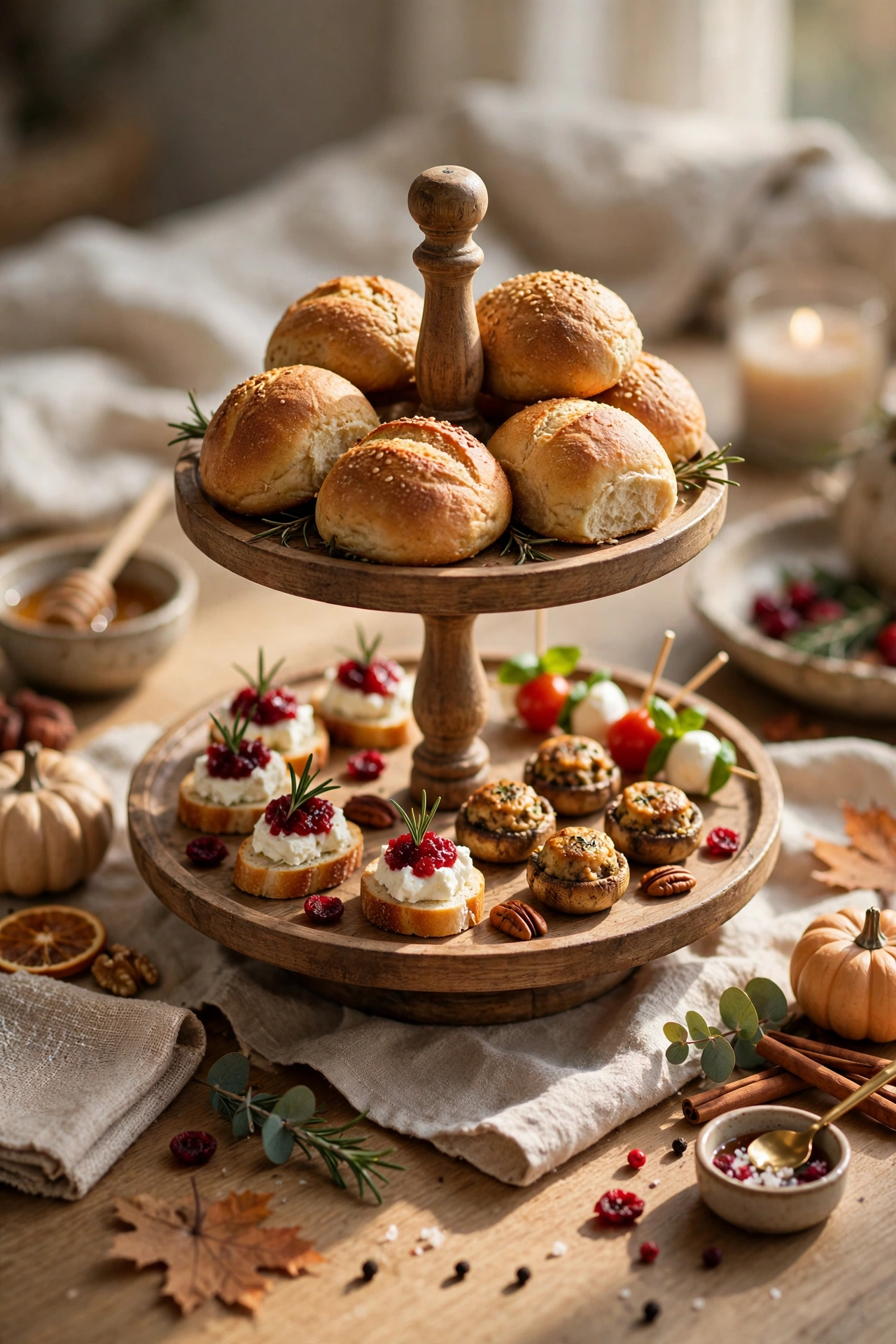
Use a two- or three-tier serving stand for bread, small appetizers, or desserts, taking advantage of vertical space rather than spreading multiple separate plates across the table’s limited surface area. A tiered stand consolidates what would otherwise be two or three separate serving dishes into a single footprint, which matters significantly on a table that’s already tight with place settings and a centerpiece. Choose a stand with a stable, weighted base, since a top-heavy tiered display can be more easily bumped on a crowded small table than individual flat dishes would be. This works particularly well for a bread basket and butter combination, or for a small selection of appetizers served before the main meal, freeing up that surface space once the tiered stand is cleared away for the main course. It’s a genuinely practical space-saving trick that also happens to look elevated and intentional, which is a rare combination.
19. Foldable or Nesting Chairs for Extra Seating
Keep a set of simple foldable or nesting chairs stored nearby to bring out only when guest count requires it, rather than permanently fitting extra seating around a table that doesn’t comfortably need it the rest of the year. This solves a common small-space hosting problem directly: needing more seats for one day a year without permanently sacrificing floor space for chairs that sit unused for the other 364 days. Choose foldable chairs in a material and finish that reasonably matches your existing dining chairs, even if they’re not an exact set, so the mismatch reads as intentional rather than obviously improvised. Store the extra chairs somewhere genuinely accessible, like a closet or under a bed, so setting up additional seating on the day itself takes minutes rather than becoming its own logistical project. This is more a hosting-logistics idea than a purely visual one, but it directly addresses the reality that a small dining space often needs to flex for a bigger-than-usual Thanksgiving guest list.
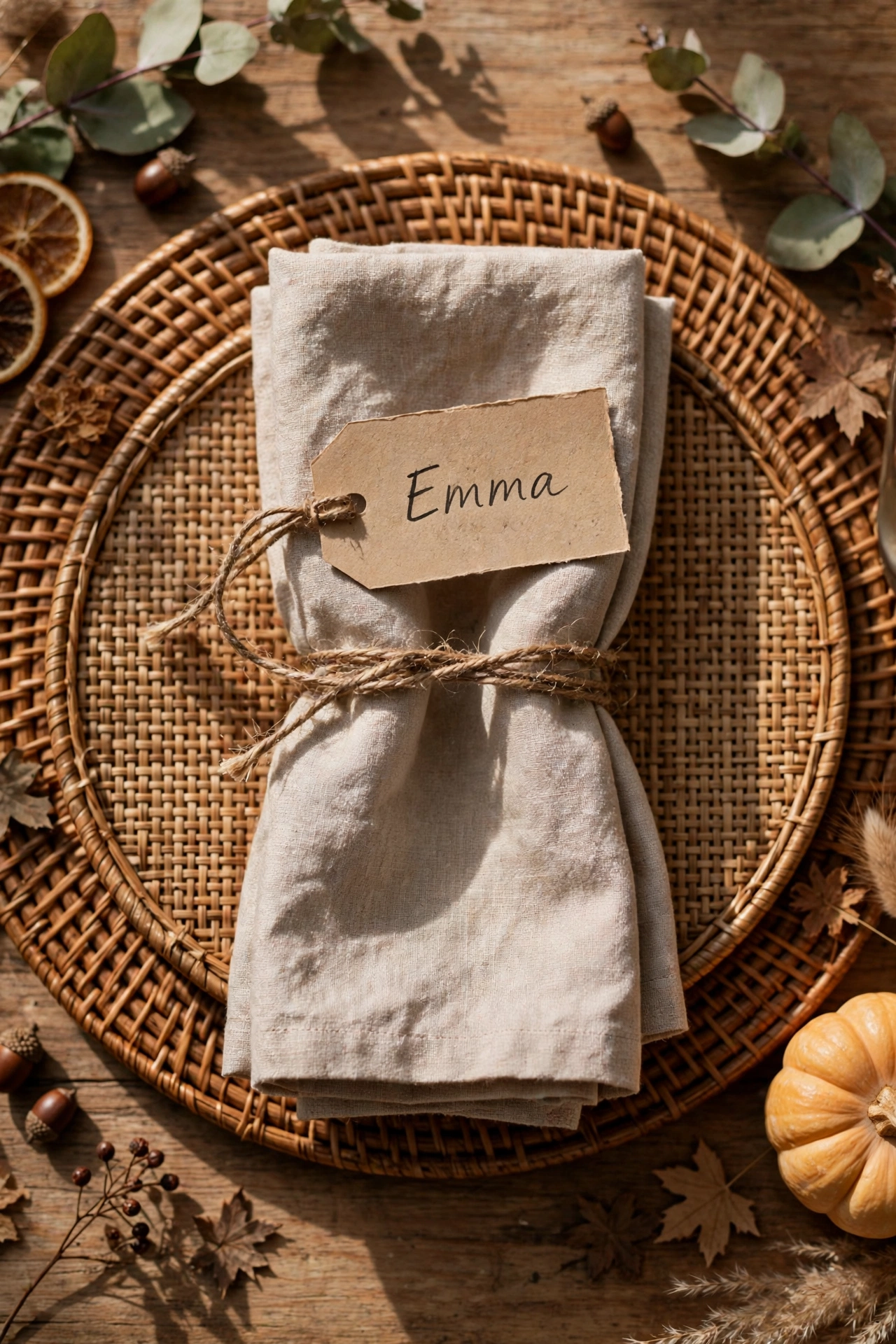
20. Small Tag Place Cards Instead of Bulky Menu Cards
Use small, simple paper tags or leaf-shaped cutouts for place cards instead of larger printed menu cards or place card stands, keeping each guest’s marker flat and unobtrusive rather than adding another upright object to an already full place setting. A small handwritten tag tied to a napkin or tucked beside a plate takes up essentially no additional surface area, while a larger printed menu card or a bulky card holder can meaningfully crowd a tightly set table. Tie the tag directly to the napkin with a bit of twine, or lay it flat against the charger plate, rather than using a freestanding holder that requires its own small footprint on the table. This approach still gives guests the thoughtful, personal touch that place cards provide, without adding bulk to a table where every inch of surface area is already accounted for. It’s a small detail, but across an entire table’s worth of place settings, the space it saves is genuinely meaningful.
Styling Tips
Keep your color palette to two tones plus one metal, repeating that same combination consistently across the runner, dishware, and any accents, since a tight palette reads as intentional even on a very small table. Build the table in layers from the bottom up — bare wood or tablecloth first, then runner, then place settings, then centerpiece — checking sightlines and elbow room after each layer rather than adding everything at once and adjusting afterward. Measure your actual table width before buying anything; a runner or centerpiece that looks reasonably sized in a photo can easily overwhelm a table that’s narrower than the one it was originally styled on.
Practical Implementation Ideas
Do a full trial run of your place settings a few days before Thanksgiving, laying out exactly what you plan to use so you can catch space problems while there’s still time to adjust. Warm your plates for a few minutes in a low oven or wrap them in a clean towel from the dryer right before serving, so hot food stays hot without needing extra warming dishes taking up additional table space. Keep a small rolling cart or extra tray nearby during the meal itself, so anything that needs to move on or off the table — water refills, extra napkins, dessert plates — has a staging spot that isn’t the dining table.
Related: 20 Thanksgiving Entertainment Ideas to Keep Everyone Happy
Common Mistakes to Avoid
Choosing a centerpiece that looked appropriately sized in a photo without checking it against your actual table’s dimensions is one of the most common small-space styling mistakes, since online inspiration photos are rarely taken on a genuinely small table. Layering too many decorative elements at once — a full tablecloth, a runner, a tall centerpiece, individual place card holders, and multiple candle types — quickly overwhelms a table that doesn’t have the surface area to support all of it simultaneously. Forgetting to account for serving dishes when planning table space is another frequent issue; always leave a clear, deliberate section of the table (or move service entirely to a buffet) rather than assuming space will simply appear once the food arrives.
Small-Space Alternatives
For an especially tiny table, skip the centerpiece altogether for the meal itself and rely entirely on a runner, place settings, and votive candles for visual interest, reintroducing a small floral moment only for dessert or coffee once main dishes have been cleared. A single small potted plant or a single stem in a bud vase can replace an entire centerpiece arrangement if surface area is extremely limited, still adding a seasonal touch without any real footprint. Consider whether your gathering could work as a lap-plate, more casual buffet-style meal entirely, skipping a fully formal table setting in favor of comfortable seating around the room if your dining space genuinely can’t accommodate everyone at a table at once.
Budget-Friendly Alternatives
A twig or vegetable runner costs next to nothing if you’re able to forage or shop your own grocery store’s produce section, and it doubles as both runner and centerpiece in one low-cost layer. Mini pumpkin place cards use inexpensive dollar-store pumpkins and a basic paint pen, giving you a functional and decorative element for just a few dollars total. Borrowing or thrifting one or two “hero” pieces, like a set of candlesticks or a patterned runner, and pairing them with plain dishware you already own achieves the high-low pairing look without a large new purchase.
Pro Styling Recommendations
Treat every single item that goes onto a small table as needing to justify its presence — if a piece isn’t adding function or a clear visual purpose, it’s a candidate to move to the sideboard instead. Prioritize height control above almost everything else, since a centerpiece and candle height that respect sightlines will make a table feel more spacious than any amount of decluttering elsewhere. Plan the table’s “meal state” and “before/after state” separately from the start, deciding in advance what stays on the table throughout dinner and what gets cleared or relocated once serving begins.
FAQs
Conclusion
A small Thanksgiving table isn’t a limitation to work around apologetically — it’s a genuine styling challenge with its own set of smart, specific solutions. Keep the centerpiece low, move what you can off the table entirely, and choose one or two pieces to do the visual heavy lifting instead of trying to fit everything you love onto a surface that was never meant to hold it all. That’s how a small table ends up looking more considered, not less, than a much larger one.