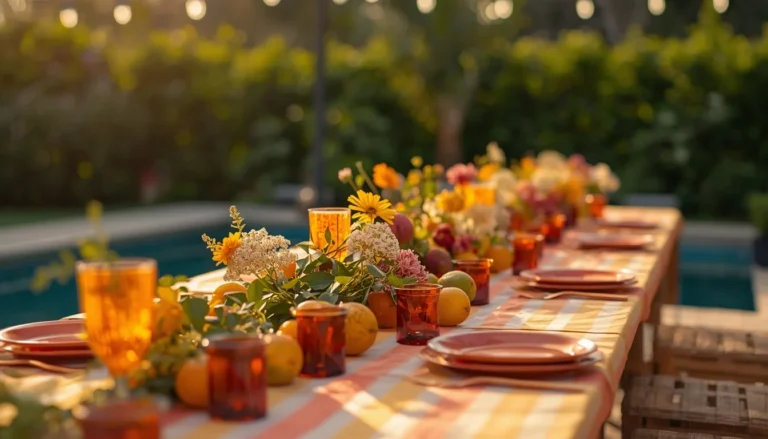
17 Understated Fall Decor Ideas for a Minimal, Modern Home
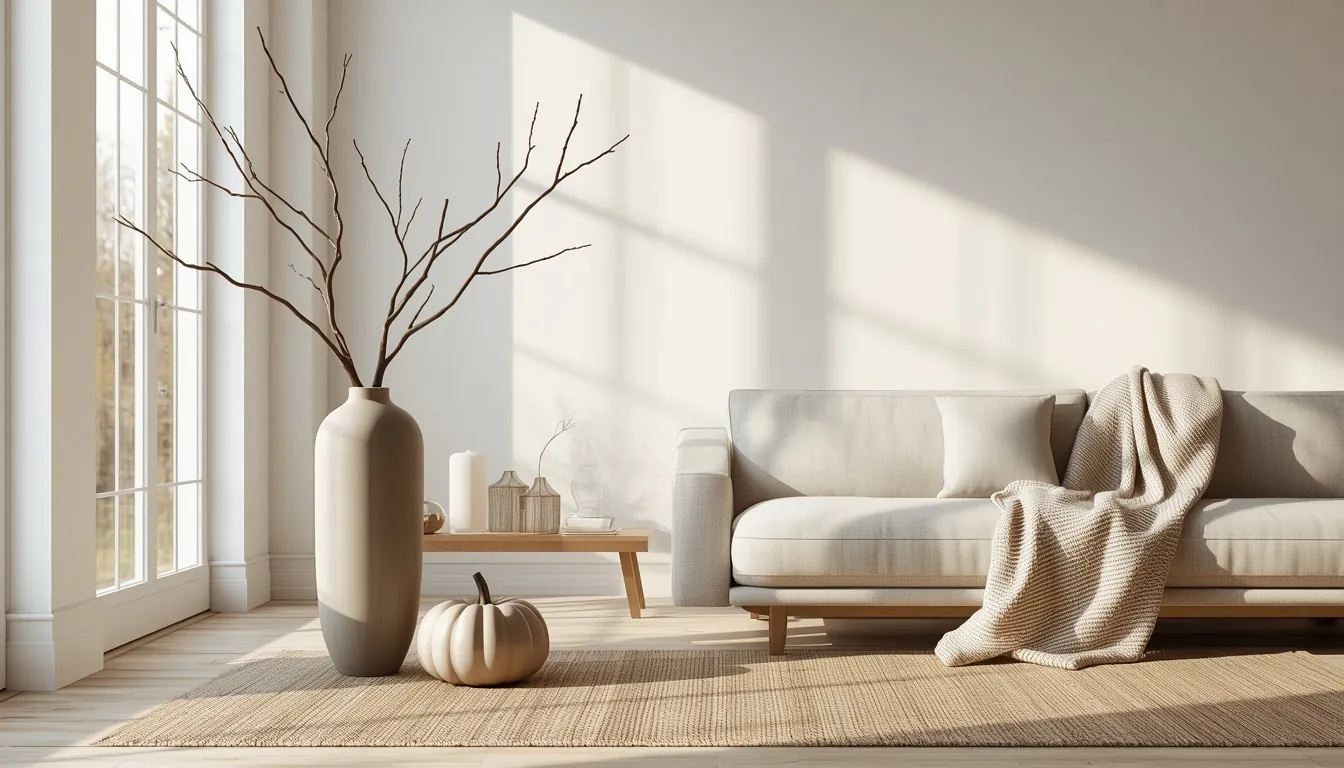
Fall decor has a volume problem. Scroll for five minutes and it’s the same formula everywhere, pumpkins stacked on the porch, pumpkins on the mantel, a garland, a wreath, a runner, a sign, until the whole house looks like a seasonal pop-up shop rather than somewhere you actually live.
If your home leans minimal or modern, none of that really fits. And that’s fine, because the coziest, most convincing fall decorating was never really about how much you add. It’s about texture, restrained color, and a few objects chosen with real intention, a single branch, a bowl of pears, one good throw blanket, rather than a bin’s worth of seasonal inventory.
This is decorating by subtraction as much as addition. A muted palette instead of orange everywhere. Negative space instead of a crowded mantel. One object doing real visual work instead of ten doing very little. Done well, it doesn’t scream fall. It just quietly feels like it.
This guide walks through 17 specific ways to bring that understated, modern approach into your home. Save the ones that fit your space.
Table of Contents
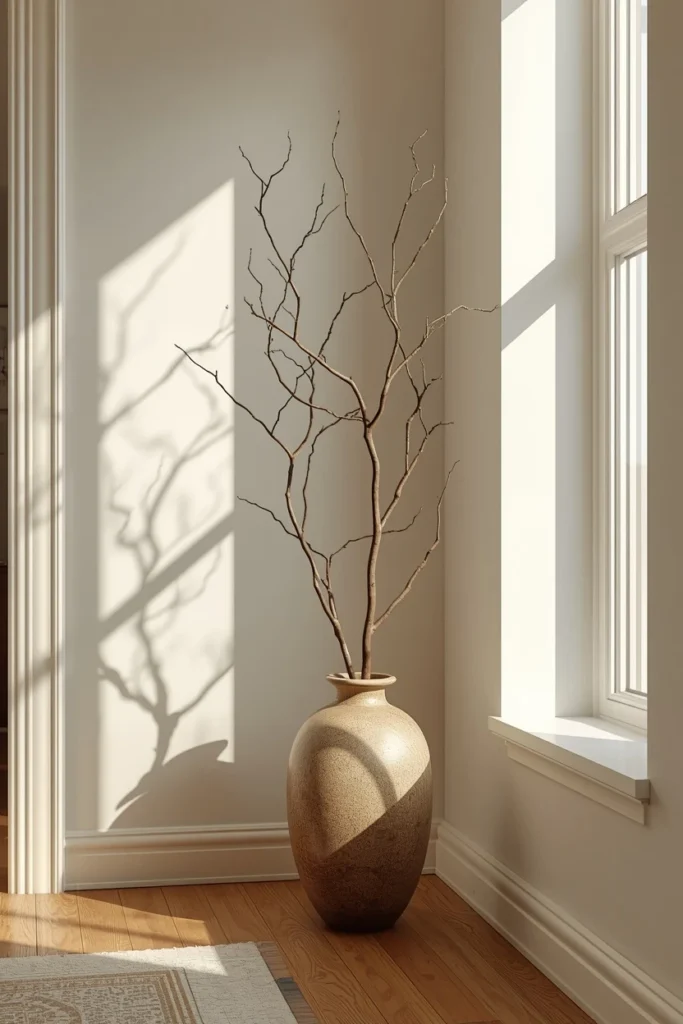
1. Place a Single Sculptural Branch in a Tall Vase
One dramatic, bare or lightly leafed branch in a tall ceramic or glass vase delivers more genuine seasonal impact than an entire bouquet of artificial fall florals, since its irregular, natural shape reads as sculptural rather than decorative in the traditional sense. Choose a branch with real visual interest, some curve, some texture, from magnolia, dogwood, or a simple bare tree branch collected on a walk, rather than anything symmetrical or overly full. Position the vase somewhere it has room to be appreciated on its own, like an empty corner or a console table, rather than crowding it with additional seasonal objects nearby. This idea costs little to nothing if you’re able to forage the branch yourself, and it delivers a level of height and drama that flat, tabletop decor simply can’t achieve. A single well-chosen branch is one of the most consistently recommended entry points into minimalist fall styling for exactly this reason, maximum impact from minimum object count.
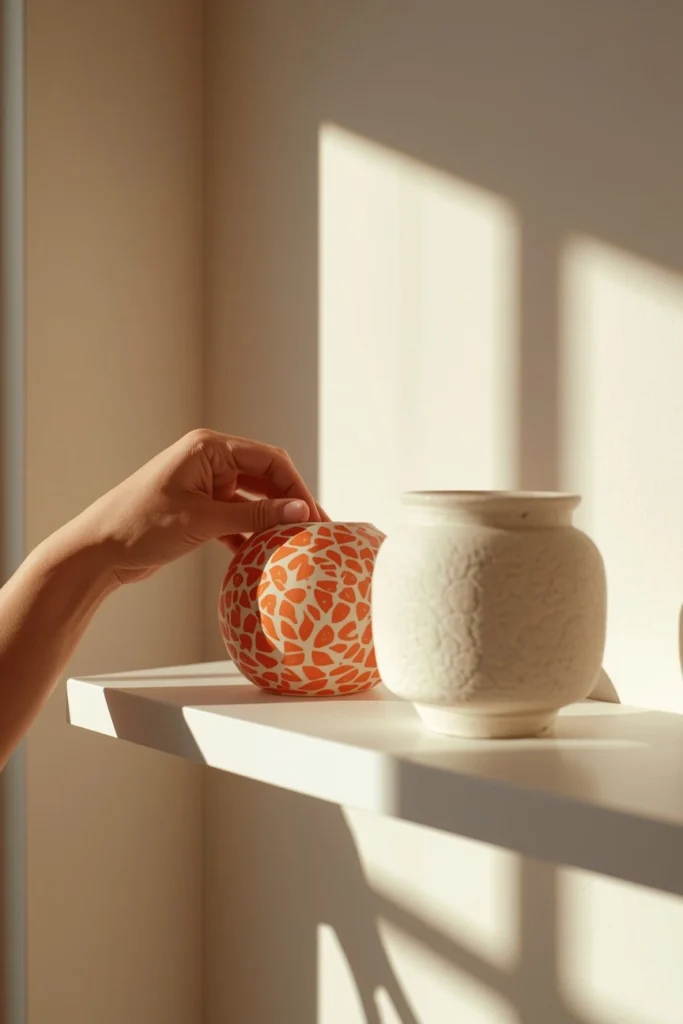
2. Style One Neutral Ceramic Pumpkin Instead of a Pile
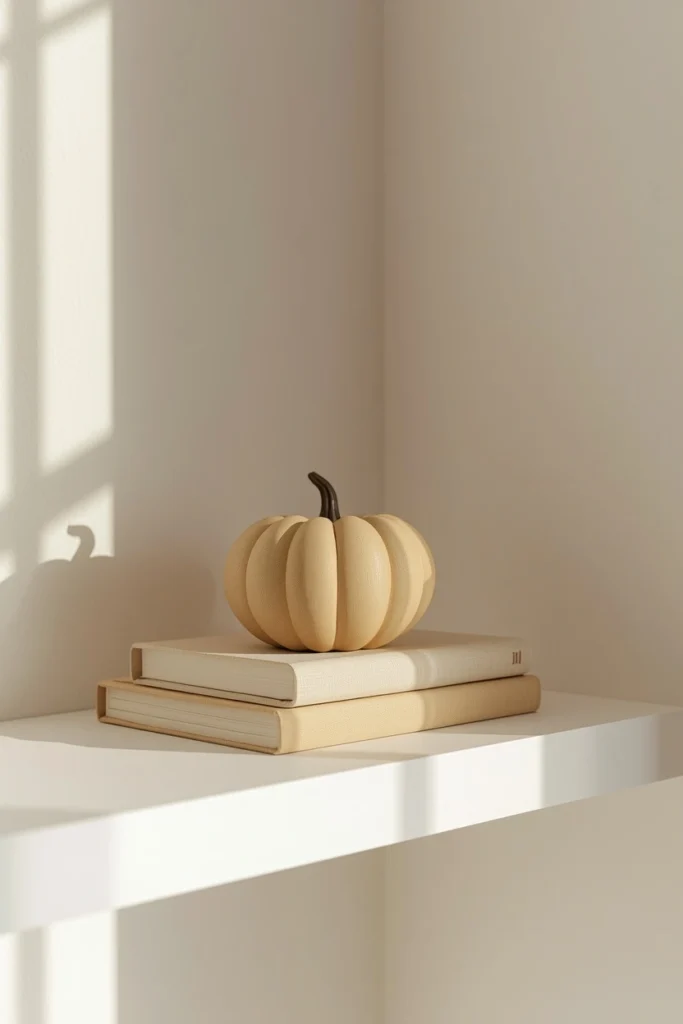
A single ceramic pumpkin in a muted stone, cream, or soft sage glaze delivers the season’s most recognizable symbol without any of the visual noise a full pumpkin display creates. Choose a piece with genuine ceramic weight and a matte, textured finish, since this material quality is what separates an elevated, intentional object from something that reads as a mass-produced seasonal prop. Place it alone on a shelf, a stack of books, or a windowsill, giving it enough surrounding negative space that it functions almost like a small sculpture rather than a seasonal placeholder. This approach directly solves the most common complaint about fall decor in a minimal home, the visual clutter multiple pumpkins in bright orange tend to create. One well-chosen pumpkin, given real space to be seen, consistently reads as more sophisticated and more genuinely fall than a dozen scattered across every surface.
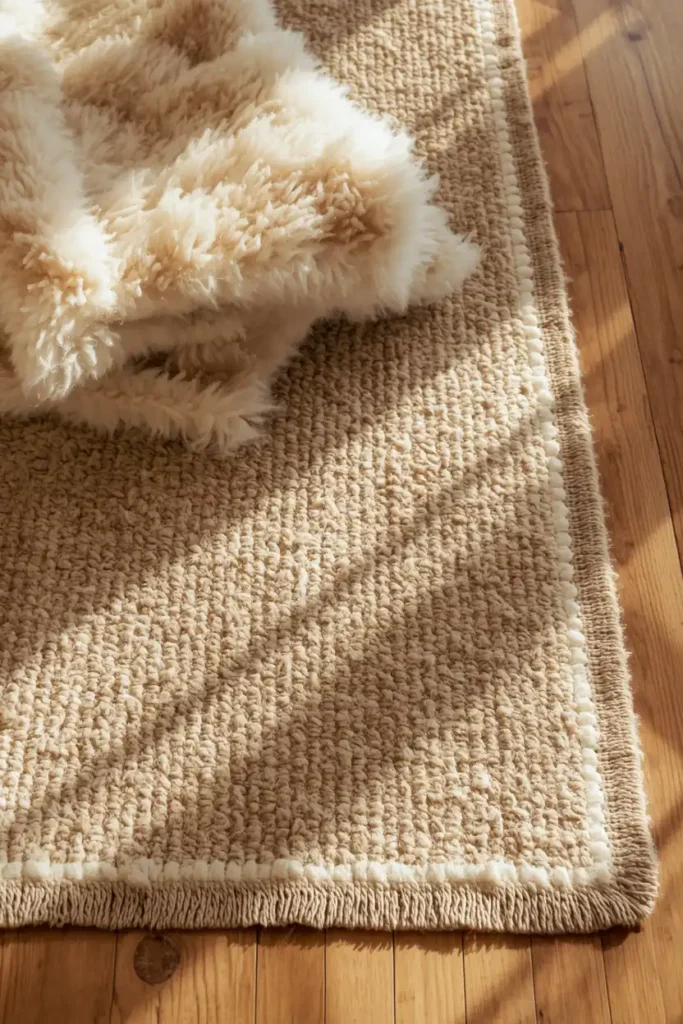
3. Layer a Jute Rug With a Soft Wool Throw for Texture
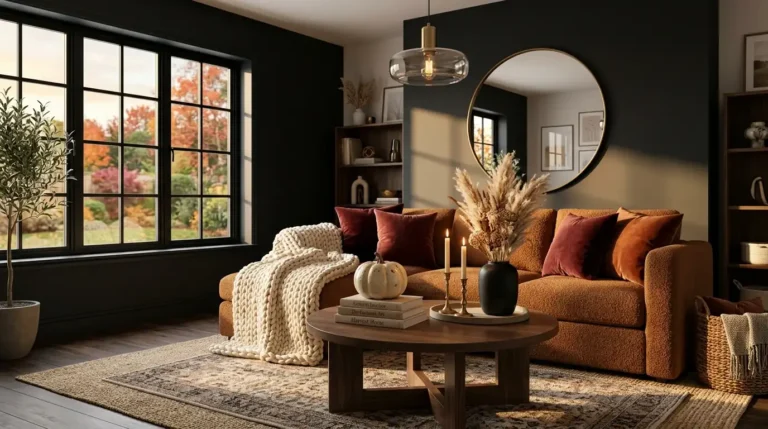
Swapping a flat-weave summer rug for a natural jute base layered with a softer wool throw folded over the sofa arm brings genuine seasonal texture into the room at floor and furniture level, without introducing a single new color or printed pattern. Choose a jute rug in its natural tan tone, since this material’s rough, woven texture already reads as warmer and more autumnal than a smooth cotton or synthetic rug. Layer a smaller wool or sherpa throw either folded at the end of the rug or draped over furniture nearby, adding a second, softer texture that contrasts pleasantly against the jute’s coarser weave. This approach treats texture as the primary seasonal signal rather than color or literal imagery, which fits naturally into a minimal or modern home’s existing material-forward design language. It’s also one of the most functional ideas on this list, since both pieces genuinely improve the room’s comfort regardless of season.
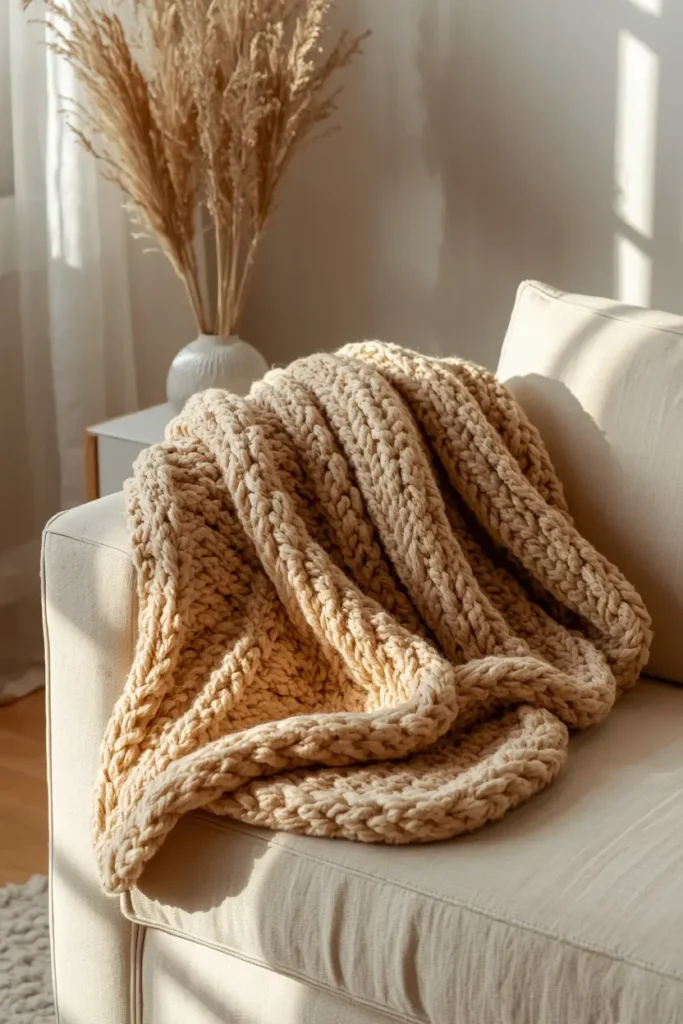
4. Swap in a Chunky Knit Throw on the Sofa
A single chunky knit throw draped over the sofa or an accent chair brings immediate tactile warmth to a room, doing more to signal the change of season than almost any purely visual decor choice could. Choose a throw in a warm, muted neutral, oatmeal, camel, or soft gray, rather than a bright or heavily patterned option, so it blends naturally into a minimal home’s existing palette while still adding genuine seasonal coziness. Drape it loosely rather than folding it too precisely, letting some natural texture and movement show, since an overly styled, stiff fold can read as less inviting than a throw that looks like it’s actually used. This single object solves two goals at once, adding real seasonal atmosphere while also making the room more comfortable for the colder months ahead. It’s one of the lowest-cost, highest-impact items on this entire list, and one most minimal homes can incorporate without disrupting their existing design at all.
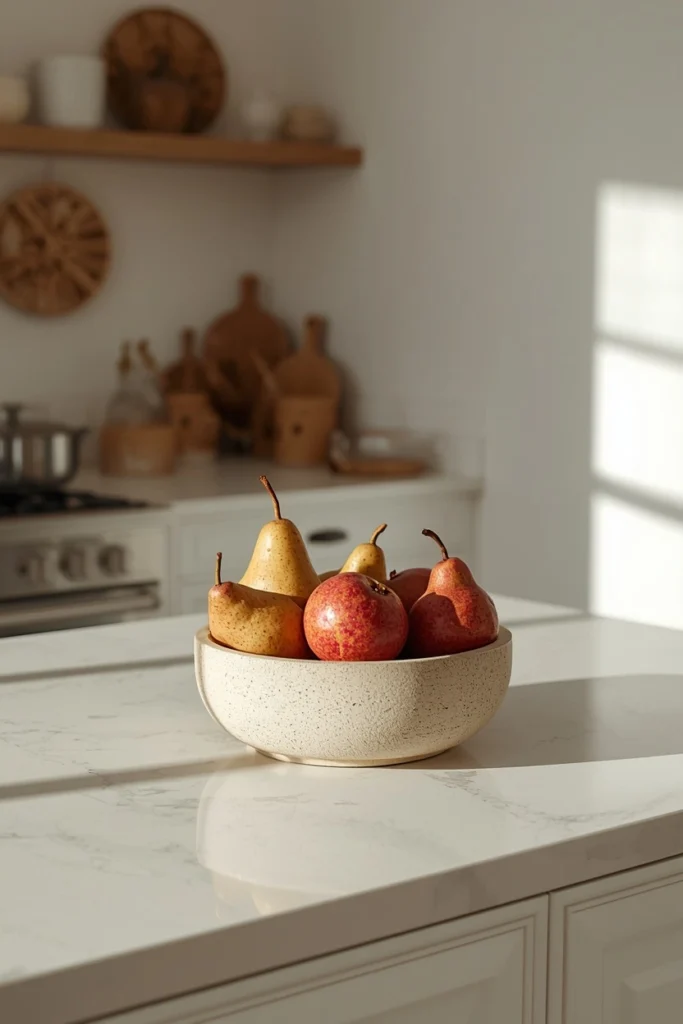
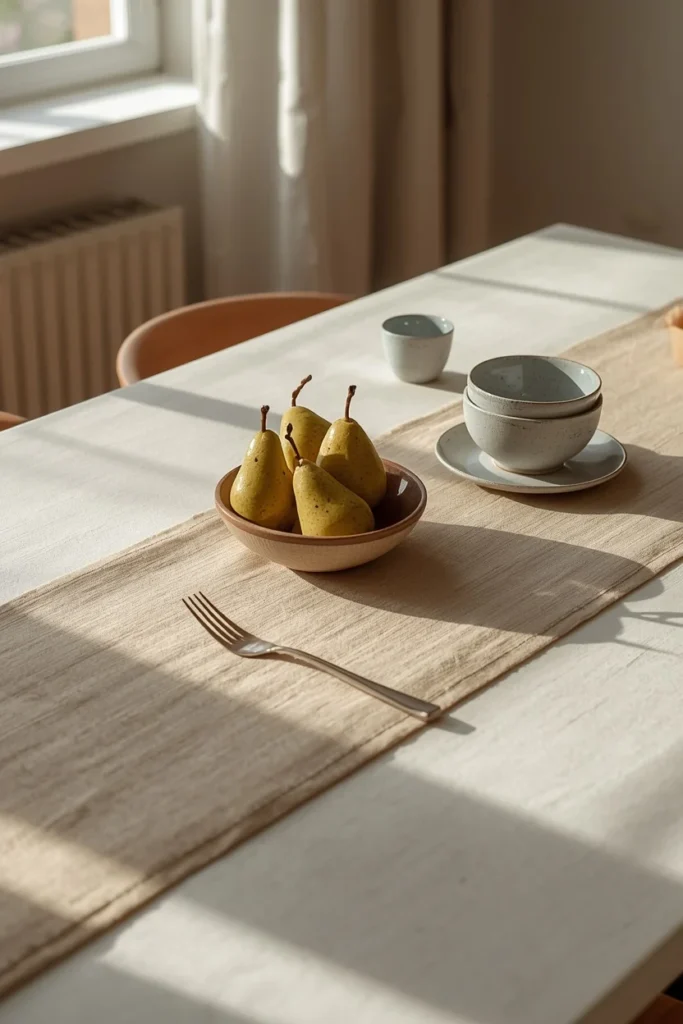
5. Fill a Bowl With Pears or Pomegranates
A simple ceramic or wood bowl filled with real pears, pomegranates, or a small mix of both brings genuine seasonal color and life to a kitchen counter or dining table, doubling as both decor and something you can actually eat. Choose a bowl in a neutral material, unglazed stone, warm wood, or simple white ceramic, letting the fruit’s natural color, deep red, blush green, warm ochre, provide all the seasonal visual interest without any additional styling required. This idea works particularly well on a dining table or kitchen island, where it earns its place through genuine daily use rather than sitting purely as decoration. Because the fruit is real, this display also naturally refreshes itself throughout the season as you eat and replace it, keeping the styling feeling current without any ongoing effort. It’s one of the simplest, most functional, and most literally seasonal ideas on this entire list, using food itself as the primary decorative element.
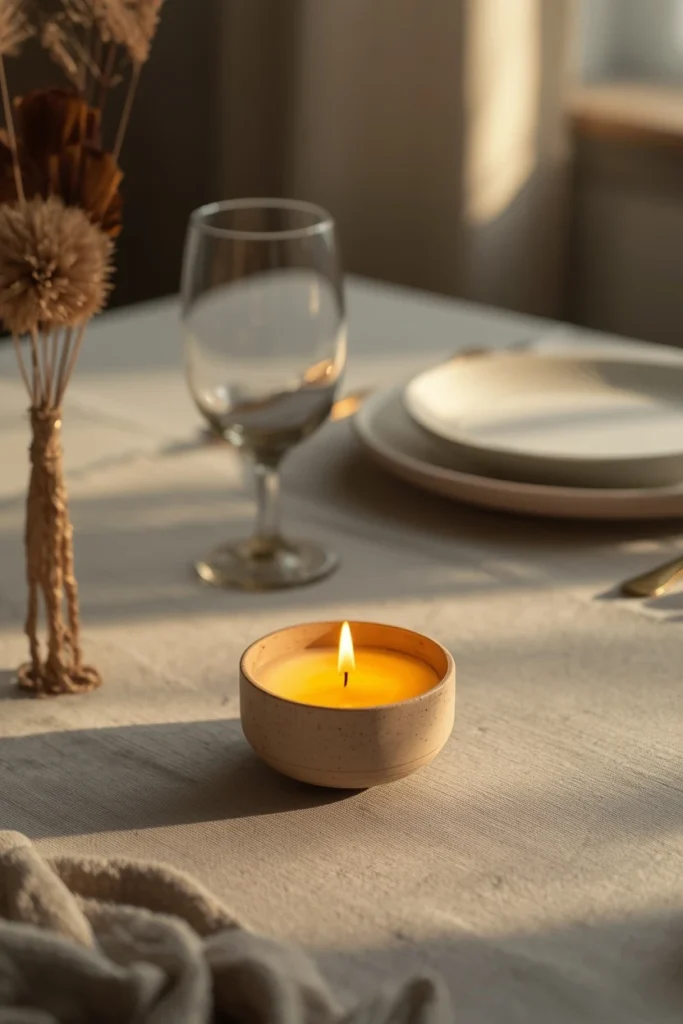
6. Add a Single Beeswax Candle in a Simple Holder
One beeswax candle, in a simple ceramic or brass holder, brings warm scent and soft golden light to a room without requiring any additional visual decor at all. Choose an unscented or subtly scented beeswax candle over a heavily fragranced synthetic option, since beeswax carries a naturally warm, honeyed note that reads as sophisticated rather than overpowering. Position it somewhere it gets lit regularly, a dining table, a coffee table, or a console near where you sit in the evening, so its presence feels earned through actual use rather than purely decorative placement. This idea leans on scent and light as much as visual styling, engaging a different sense than most decor choices on this list and adding real atmosphere once evening falls. A single well-chosen candle, lit consistently through the season, often ends up being one of the most memorable and genuinely felt pieces of fall decor in the entire home.
7. Choose a Muted, Restrained Color Palette
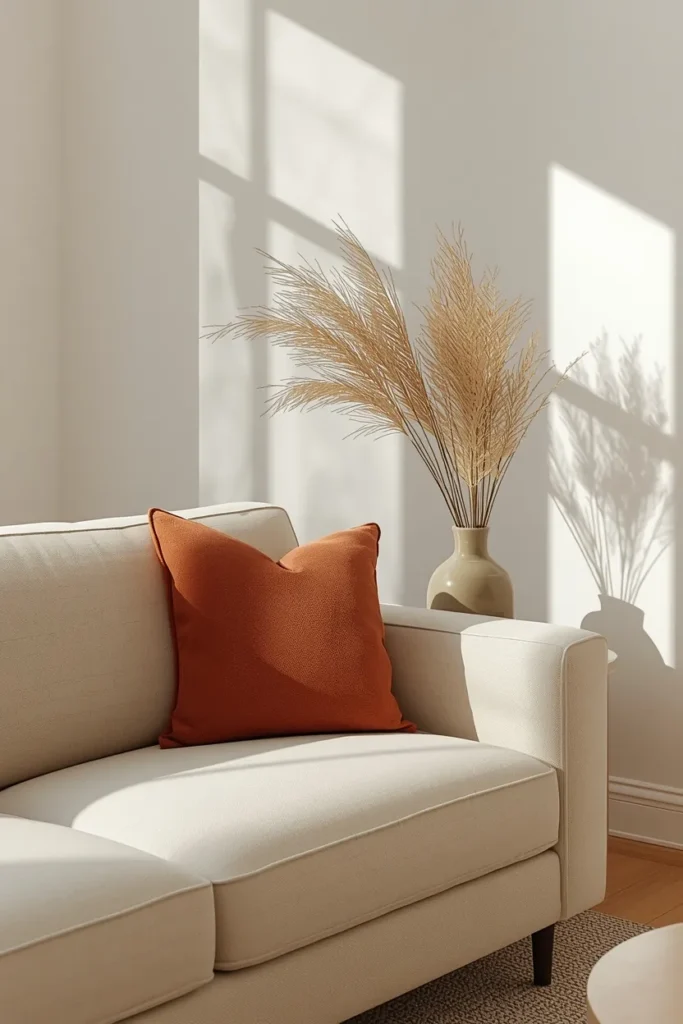
Rather than defaulting to bright orange and red, a fall palette built from muted tones, rust, caramel, olive, and ochre, used sparingly against a neutral white, cream, or gray base, delivers genuine seasonal warmth while staying fully aligned with a minimal or modern home’s existing color language. Introduce these muted tones through just one or two small elements, a throw pillow, a candle, a single ceramic object, rather than repainting walls or replacing major furniture. This approach respects the underlying principle of minimalist design, using color intentionally and sparingly rather than as decoration for its own sake. A restrained palette also tends to have more staying power than a home fully committed to bright, literal autumn color, since muted earth tones read as sophisticated and timeless rather than tied to one specific season seen from across the room. This is less a single decor item and more a governing principle that should guide every other choice on this list.
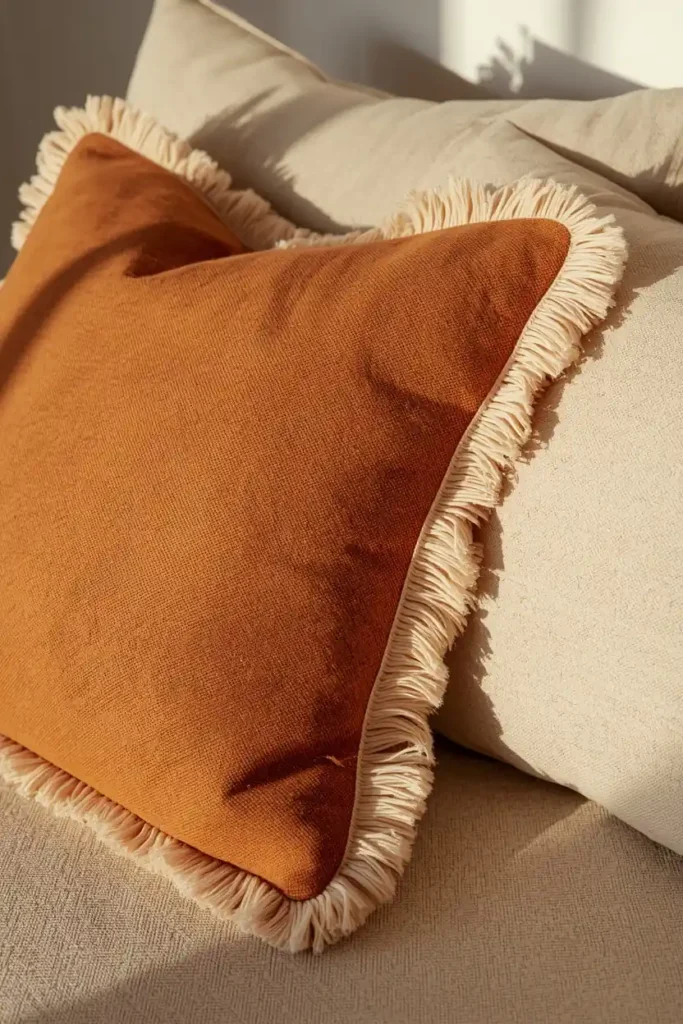
8. Add a Linen Fringe Pillow in a Warm Neutral
A single throw pillow in warm-toned linen, finished with a simple fringe edge, introduces texture and subtle seasonal warmth to a sofa or bed without requiring a full pillow swap or a printed pattern. Choose a fringe detail that’s understated, a clean, even edge rather than anything overly elaborate or bohemian in style, so the detail fits naturally into a more streamlined, modern room. Position it alongside one or two existing solid neutral pillows rather than replacing the entire arrangement, letting this one piece stand out as the intentional seasonal touch rather than blending into a fully restyled set. This idea works because it changes very little about the room’s overall composition while still delivering a genuine, tactile signal of the season through both color and texture. It’s one of the easiest, lowest-risk swaps on this entire list, requiring the replacement of just a single object to notice a real shift in the room’s feel.
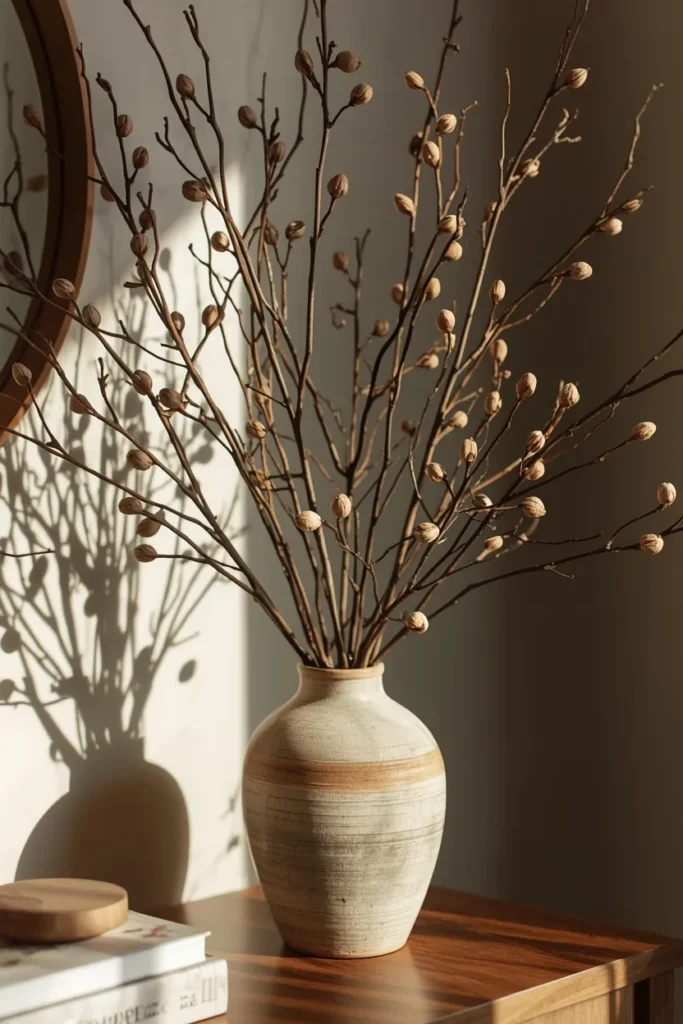
9. Display Foraged Greenery Instead of Florist Bouquets
A small handful of foraged branches, dried grasses, or seed pods, gathered from a walk outside rather than purchased as a styled bouquet, brings genuinely organic, unpolished texture into the home that manufactured seasonal florals rarely achieve. Choose stems with interesting shape or texture, curling vines, dried seed pods, bare branches with subtle color, arranging them loosely in a simple vase without much additional styling. This approach costs nothing beyond the time it takes to gather the material, and it connects the home’s decor directly to the actual outdoor season happening right outside, rather than a purchased approximation of it. Keep the arrangement genuinely loose and asymmetrical, since an overly tidy, symmetrical arrangement loses the organic, foraged quality that makes this idea feel authentic in the first place. This is one of the most quietly sophisticated ideas on this list, favored specifically by designers and stylists who prioritize genuine, unforced seasonal connection over purchased decor.
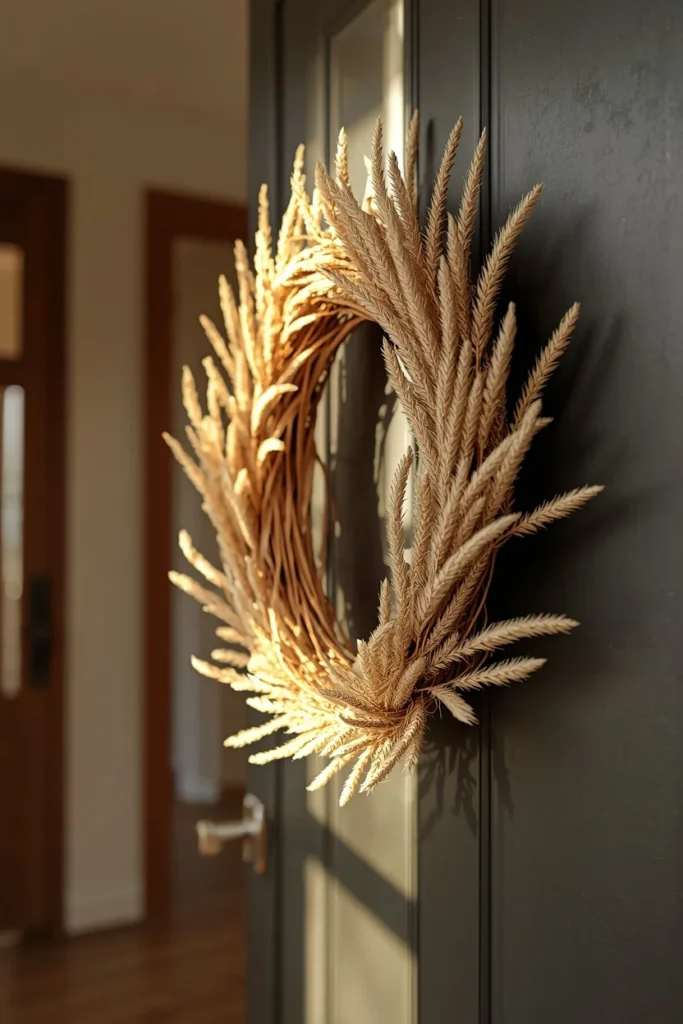
10. Add a Minimal Dried Wreath With Negative Space
A dried wreath built with visible gaps and negative space, rather than a densely packed traditional style, brings the classic fall symbol into a minimal home without the visual density typically associated with the item. Choose a wreath made from just one or two materials, dried wheat and a few seed pods, or a simple ring of bare branches, rather than a mix of many different florals and textures competing for attention. Hang it on a door or above a mantel where its open, airy shape has room to read clearly against a plain background. This approach respects the wreath’s traditional symbolism while updating its execution for a more restrained, architectural sensibility, proving the object itself doesn’t need to be abandoned entirely to fit a minimal aesthetic. A well-edited, sparse wreath often reads as more intentional and higher-end than a fuller, more traditional version, precisely because of the confidence it takes to leave so much visible space within the design.
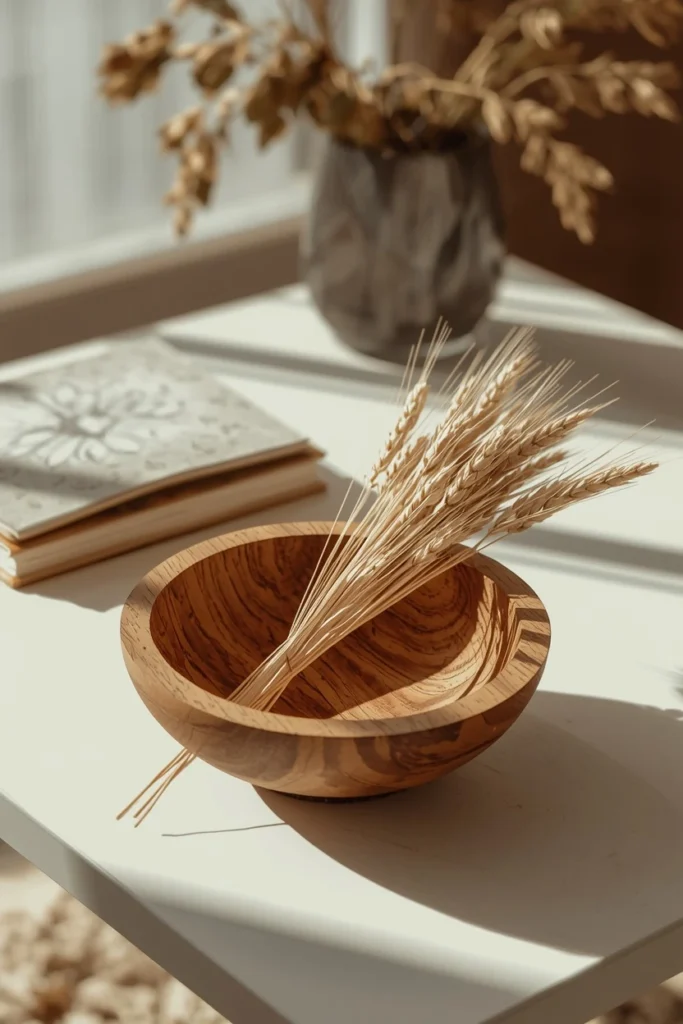
11. Style a Wood Bowl With Wheat Stems
A simple wood bowl, filled with a small bundle of dried wheat stems rather than a mix of pumpkins and gourds, brings genuine harvest symbolism into the home through material and texture rather than color or volume. Choose a bowl with visible natural grain, letting the wood’s own warmth do much of the seasonal visual work alongside the wheat itself. Keep the wheat bundle loose and slightly asymmetrical, tied simply if at all, so the arrangement reads as natural rather than overly crafted or arranged. Position this bowl as a single, contained styling moment on a console or coffee table, resisting the urge to add additional seasonal objects around it. This idea captures the literal, agricultural roots of fall harvest symbolism while remaining entirely aligned with a clean, modern, texture-forward design sensibility.
12. Choose Sculptural Metallic Pumpkin Accents
For a more contemporary, architectural take on the pumpkin motif, a single sculptural pumpkin cast in brushed metal, brass, bronze, or matte silver, replaces the traditional orange or neutral ceramic version with something that reads as genuinely modern and design-forward. Choose a piece with clean, simplified lines rather than heavily ridged, realistic detailing, since the more abstract, sculptural quality is what allows this object to feel at home in a contemporary space rather than tied to traditional harvest imagery. Position it on a floating shelf or a clean console where its metallic finish can catch and reflect available light, adding subtle shine rather than flat color. This idea works particularly well for anyone who wants a genuine nod to the season’s most recognizable symbol without it reading as literal or rustic in any way. A well-chosen metallic pumpkin sculpture consistently becomes a small conversation piece precisely because it reinterprets a familiar object in an entirely unexpected material.

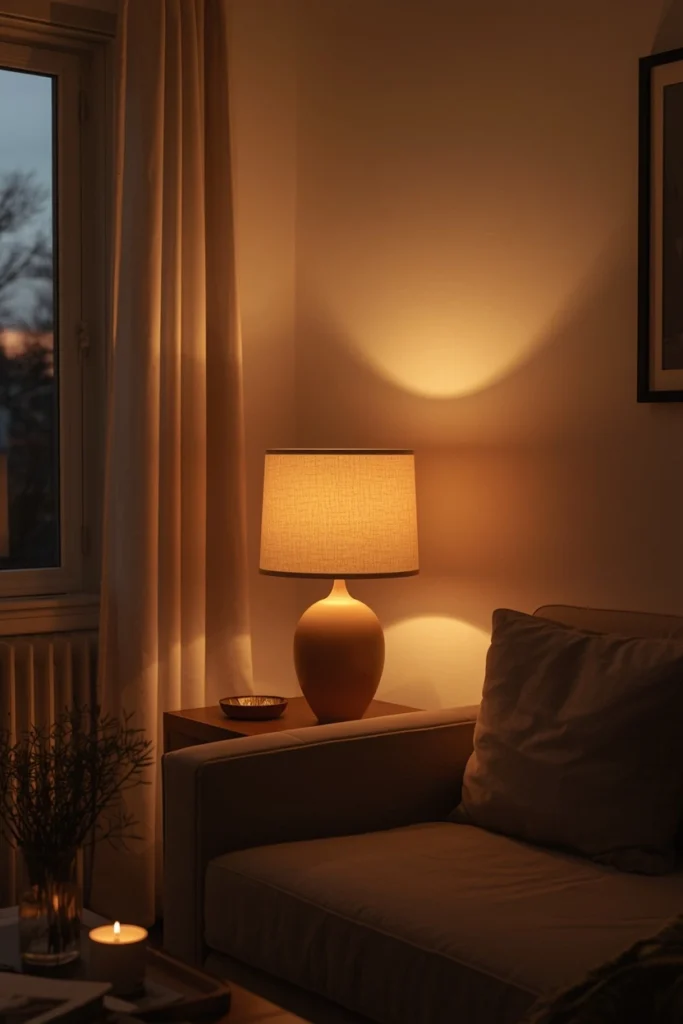
13. Add Warm Ambient Lighting Instead of Overhead Light
Swapping bright overhead lighting for warmer, layered ambient sources, a table lamp, a few strategically placed candles, or a dimmer switch on existing fixtures, does more to create a genuinely cozy fall atmosphere than almost any physical decor object could. Choose bulbs in a warm white temperature rather than a cool or daylight setting, since warm light immediately reads as more inviting and season-appropriate once the evenings start getting darker earlier. This approach costs very little, often nothing beyond a bulb swap, and it affects the entire room’s atmosphere rather than just one styled corner or shelf. Layer at least two light sources in any room used during the evening, a lamp and a candle, or two lamps at different heights, since layered lighting consistently reads as more considered and atmospheric than a single overhead source. This idea proves that some of the most effective fall decorating decisions have nothing to do with visible objects at all.
14. Edit Your Existing Decor Before Adding New Pieces
Before buying anything new for the season, walk through your home and remove any decor that feels visually busy or unrelated to the muted, seasonal palette you’re aiming for, since editing existing pieces often does more for a room’s overall feeling than adding new ones. Take stock of what you already own in warm neutral tones, wood, ceramic, linen, since many of these year-round pieces already fit naturally into an understated fall aesthetic without needing any seasonal label at all. Store away anything with a busy summer print or bright color temporarily, giving the newer, more muted seasonal pieces room to actually be seen and appreciated. This approach treats fall decorating as a genuine styling exercise rather than a shopping trip, which is both more affordable and more aligned with a minimal home’s underlying values. Editing first, before adding anything new, is consistently the step most fall decorating guides skip entirely, despite it being arguably the most important one for anyone working within a minimal design framework.
15. Add One Textural Table Runner for the Dining Table
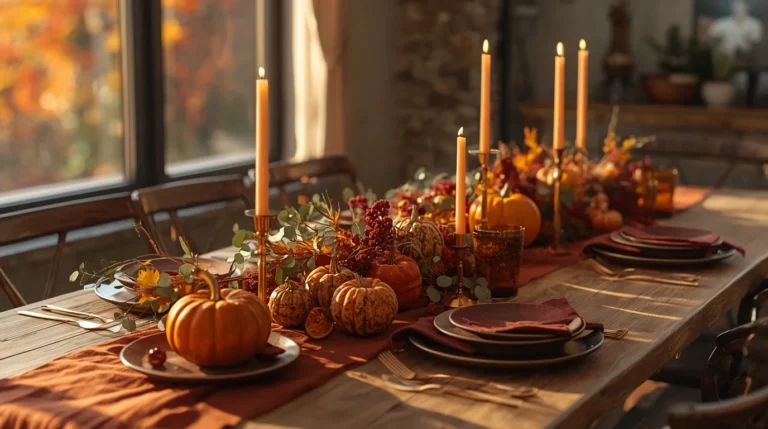
A single linen or waffle-weave table runner in a warm neutral tone brings texture and a subtle sense of occasion to the dining table without requiring a full tablescape of seasonal props. Choose a runner in undyed linen, oatmeal, or soft taupe, letting its natural texture and slight wrinkle provide visual interest rather than any printed pattern or bright color. Pair it with simple ceramic dishware and one small, contained styling element, like a bowl of fruit or a single candle, rather than a fully decorated table setting. This idea works particularly well for anyone who hosts occasional fall gatherings but doesn’t want a table that requires extensive daily upkeep or storage between meals. A well-chosen runner also transitions easily beyond the fall season itself, making it a genuinely practical addition to a minimal home’s existing textile collection rather than a single-season purchase.
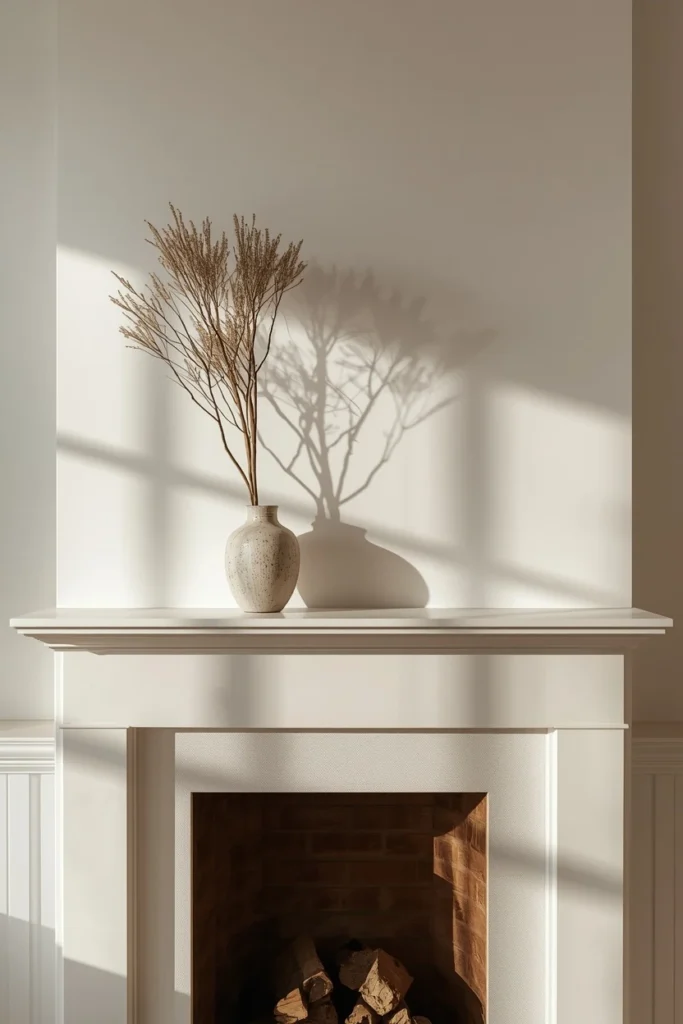
16. Bring in a Single Statement Branch Arrangement for the Mantel
Rather than lining a mantel with garland, candles, and multiple pumpkins, one large, dramatic branch arrangement, leaned or placed in a tall vase at one end of the mantel, delivers a strong seasonal statement while leaving the rest of the surface intentionally open. Choose branches with real height and movement, allowing the arrangement to extend well above the mantel line for genuine visual drama rather than staying contained and low. Leave the remaining length of the mantel empty, or add just one small additional object, like a single candle or a small ceramic piece, resisting the urge to fill the entire surface edge to edge. This approach treats the mantel as an opportunity for one strong composition rather than a display shelf for accumulated seasonal items. A mantel styled this way consistently reads as more architectural and gallery-like, letting the room’s existing structure and proportions carry visual weight alongside the decor rather than being obscured by it.
17. Choose One Room to Fully Style and Leave the Rest Simple
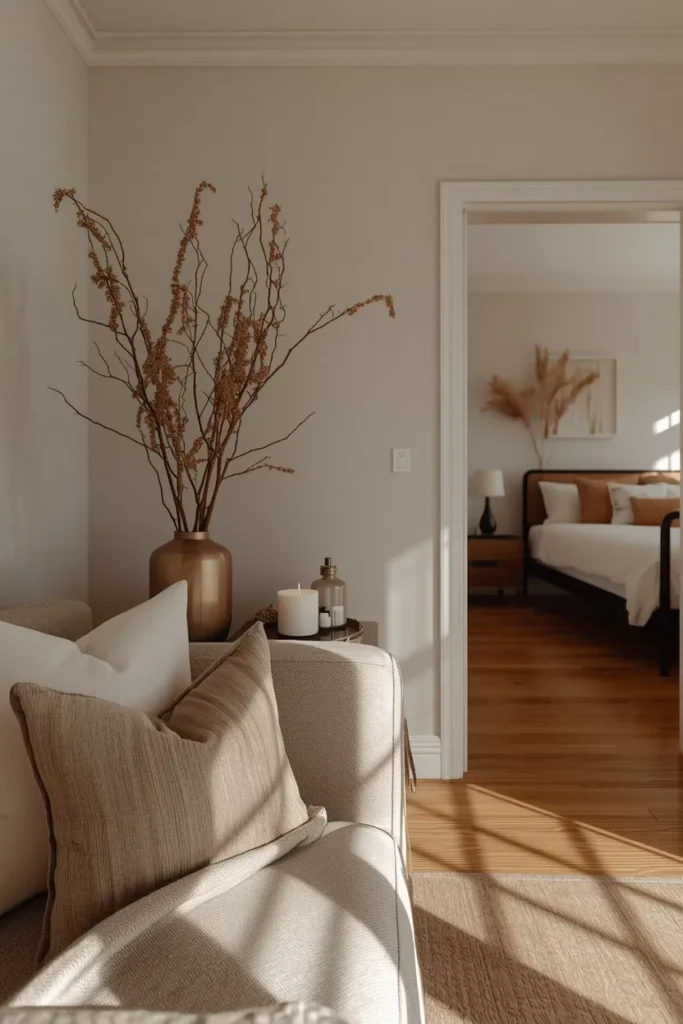
Rather than attempting to bring fall decor into every room of the house at once, concentrate your styling efforts into just one or two key spaces, like the entryway and living room, while leaving bedrooms, bathrooms, and secondary spaces essentially untouched. This approach mirrors exactly how professional stylists and interior designers typically approach seasonal decorating in a minimal home, since spreading limited decor thin across every room usually produces a scattered, half-finished feeling everywhere rather than a genuinely considered result anywhere. Choose the room your household spends the most time in, or the one guests see first, as your primary focus, since this is where seasonal styling will actually be experienced and appreciated most regularly. Within that chosen room, apply the other ideas on this list, one branch, one muted pillow, one candle, rather than trying to layer in everything at once. This principle, concentrated intention over scattered effort, is arguably the single most important idea on this entire list for anyone genuinely committed to a minimal, modern approach to seasonal decorating.
Styling Tips for Minimal, Modern Fall Decorating
Let texture do more work than color. Wool, jute, linen, and wood all communicate warmth and season just as clearly as orange and red, often with more sophistication and longevity.
Choose one object per surface, not several. A single branch, a single pumpkin, a single candle, each given real space, reads as more intentional than any grouping of smaller items.
Edit before you add. Removing busy or unrelated existing decor often does more for a room’s seasonal feel than any new purchase could.
Concentrate effort into fewer rooms. Fully styling one or two key spaces beats spreading thin decor across the entire house.
Practical Implementation Ideas
Walk through your home room by room and identify which spaces genuinely get used and seen daily, then focus your styling efforts there rather than attempting a whole-house refresh. Pull from what you already own first, wood bowls, neutral ceramics, existing throws, before shopping for anything new, since a minimal fall aesthetic depends heavily on restraint rather than acquisition. Introduce one idea at a time and live with it for a few days before adding another, checking that each new element still feels necessary rather than simply additive. Reassess the styling periodically throughout the season, removing anything that starts to feel more like clutter than intentional seasonal warmth.
Common Mistakes to Avoid
Treating every room the same way. Spreading a small amount of decor evenly across the entire house often produces a scattered, unfinished feeling rather than a considered one.
Choosing bright, literal fall color over texture. Orange and red in large doses can clash with a minimal home’s existing neutral palette. Muted tones and texture communicate the season just as effectively.
Skipping negative space. A wreath, a mantel, or a shelf styled edge to edge loses the intentional, breathing quality that defines minimalist design in the first place.
Adding new decor without editing existing pieces first. A busy summer object left in place can undercut even the most carefully chosen new seasonal piece nearby.
Small-Space Alternatives
In a smaller home or apartment, choose just one or two pieces total, a single branch arrangement and one throw blanket, rather than attempting to style multiple surfaces or rooms. A single candle and a small bowl of fruit on a kitchen counter can deliver meaningful seasonal warmth in a space too small for a larger branch arrangement or mantel display. Wall-mounted or shelf-based styling, rather than floor or large furniture-based decor, helps preserve limited floor space while still adding seasonal texture. Prioritize dual-purpose items, like a wool throw that adds both style and genuine warmth, over purely decorative objects that take up valuable space without earning their spot through actual use.
Budget-Friendly Alternatives
Foraged branches, seed pods, and dried grasses cost nothing beyond the time spent collecting them on a walk, making this one of the most budget-friendly ideas on the entire list. A single ceramic pumpkin or ceramic vase, thrifted or purchased once, can be reused every fall season for years, unlike disposable plastic decor that needs regular replacing. Real fruit, like pears or pomegranates, doubles as both decor and food, meaning the cost isn’t wasted even once the seasonal styling period ends. Swapping bulbs for a warmer color temperature costs only the price of the bulb itself while meaningfully changing an entire room’s atmosphere.
Pro Styling Recommendations
Choose a maximum of three to five total decor objects for any single room, forcing genuine selectivity about which pieces actually earn their place. Prioritize items that serve some function beyond pure decoration, a candle that gets lit, a throw that gets used, a bowl of fruit that gets eaten, since function-forward pieces consistently feel less like clutter than purely decorative ones. When in doubt about whether to add one more item to an already-styled space, don’t. The instinct to keep adding is the most common way understated decorating tips into something busier than intended. Finally, trust negative space as a genuine design choice rather than an oversight, since the empty area around a well-chosen object is often what makes it read as intentional in the first place.
FAQs
Conclusion
Understated fall decorating isn’t about doing less for the sake of it. It’s about trusting that one great branch, one good throw blanket, and a little warmer light can genuinely capture the feeling of the season, without needing a house full of orange to prove it. Start with one room, choose a small number of pieces you actually love, and let the empty space around them do just as much work as the objects themselves.