23 Christmas Centerpieces for Every Style of Table For a Home That Feels Festive All Season
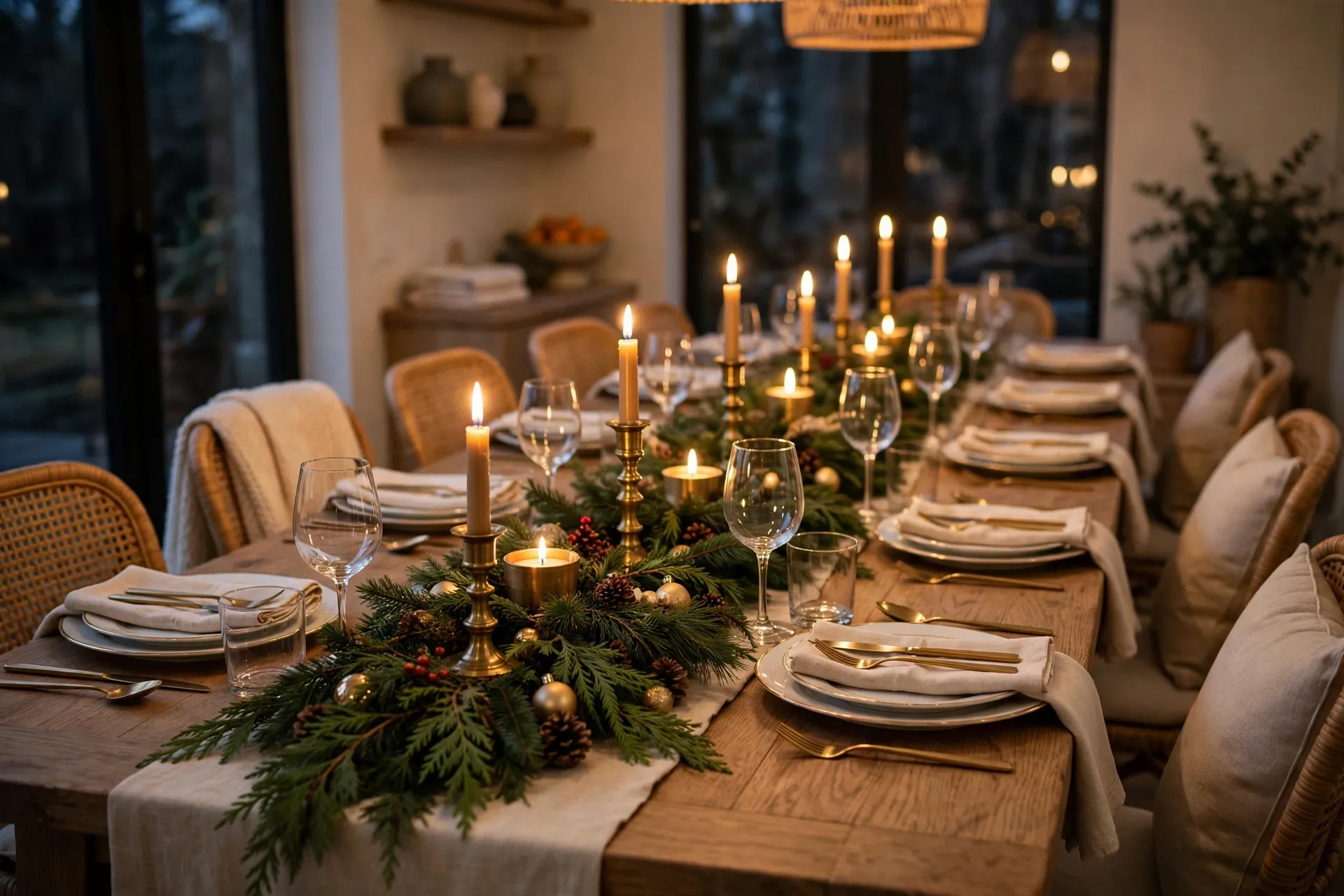
The centerpiece is the one piece of holiday decor guests actually sit in front of for hours. It sets the whole tone for the table, whether that’s cozy and candlelit or polished and glam.
Most Christmas centerpiece guides stop at the pretty photo, though. They don’t mention how far a candle actually needs to sit from fresh greenery, how tall is too tall for people to talk across the table, or how to build one arrangement that survives from the first Thanksgiving leftovers all the way to New Year’s Eve.
Below are 23 Christmas centerpieces built for every style of table, along with the height, safety, and longevity details that make the difference between a centerpiece that looks good in one photo and one that holds up for the whole season.
Table of Contents
23 Christmas Centerpiece Ideas
Formal Gold and Crystal Taper Candle Centerpiece
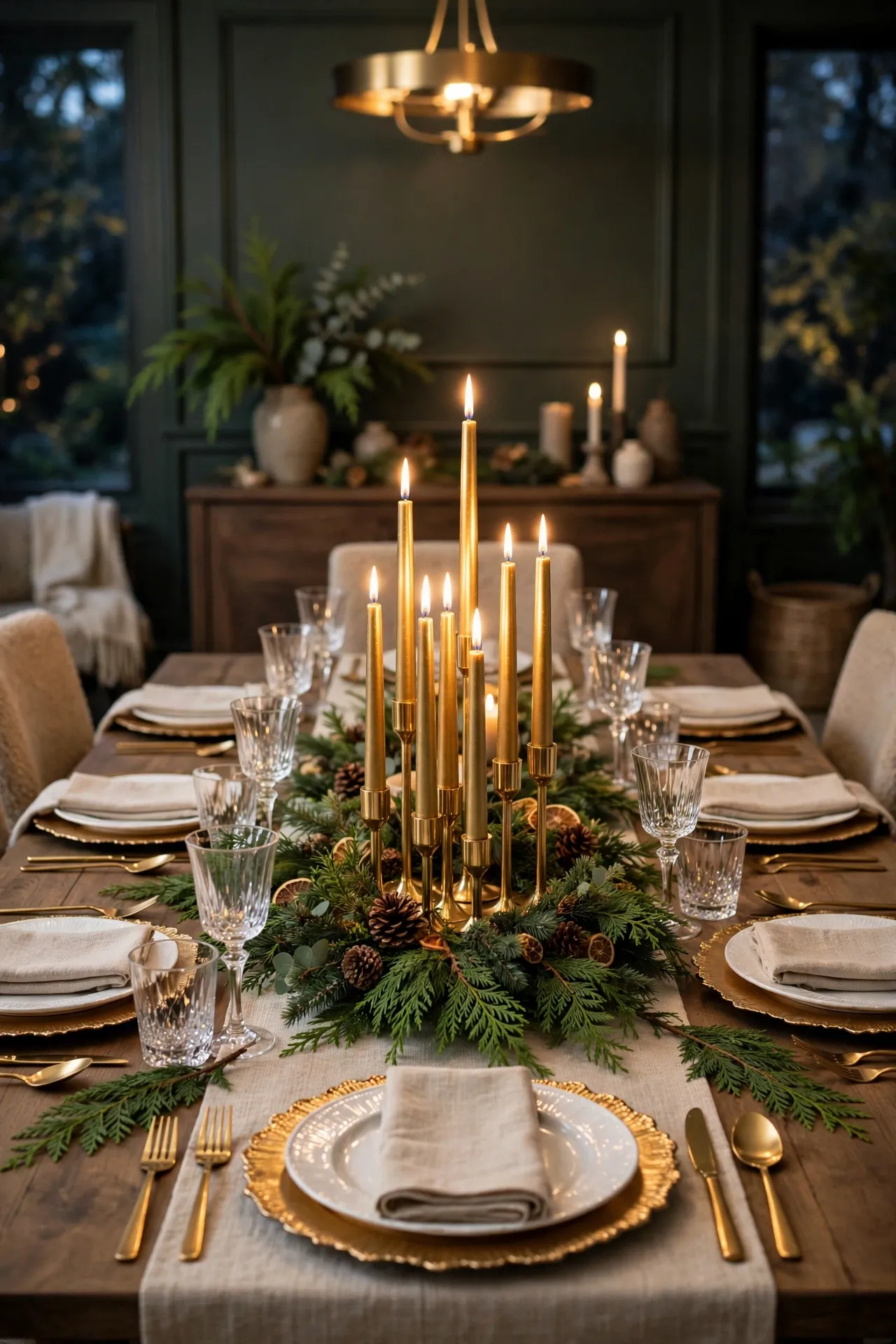
A cluster of gold taper candlesticks at varying heights, paired with crystal accents and a low runner of fresh greenery, brings a polished, formal feel to a holiday dinner table. Keep the candles clustered rather than evenly spaced, since an uneven grouping reads as more intentional and elegant than a straight, evenly spaced row. Gold flatware, chargers, or ribbon threaded through the greenery ties the metal tone together across the whole table setting. This style suits a sit-down dinner where the centerpiece needs to look finished under evening lighting rather than daylight. Use dripless taper candles and keep them lit only while the table is attended, since this is one of the styles most likely to sit close to fresh, flammable greenery.
Farmhouse Wood Slab With Pinecones and Cedar
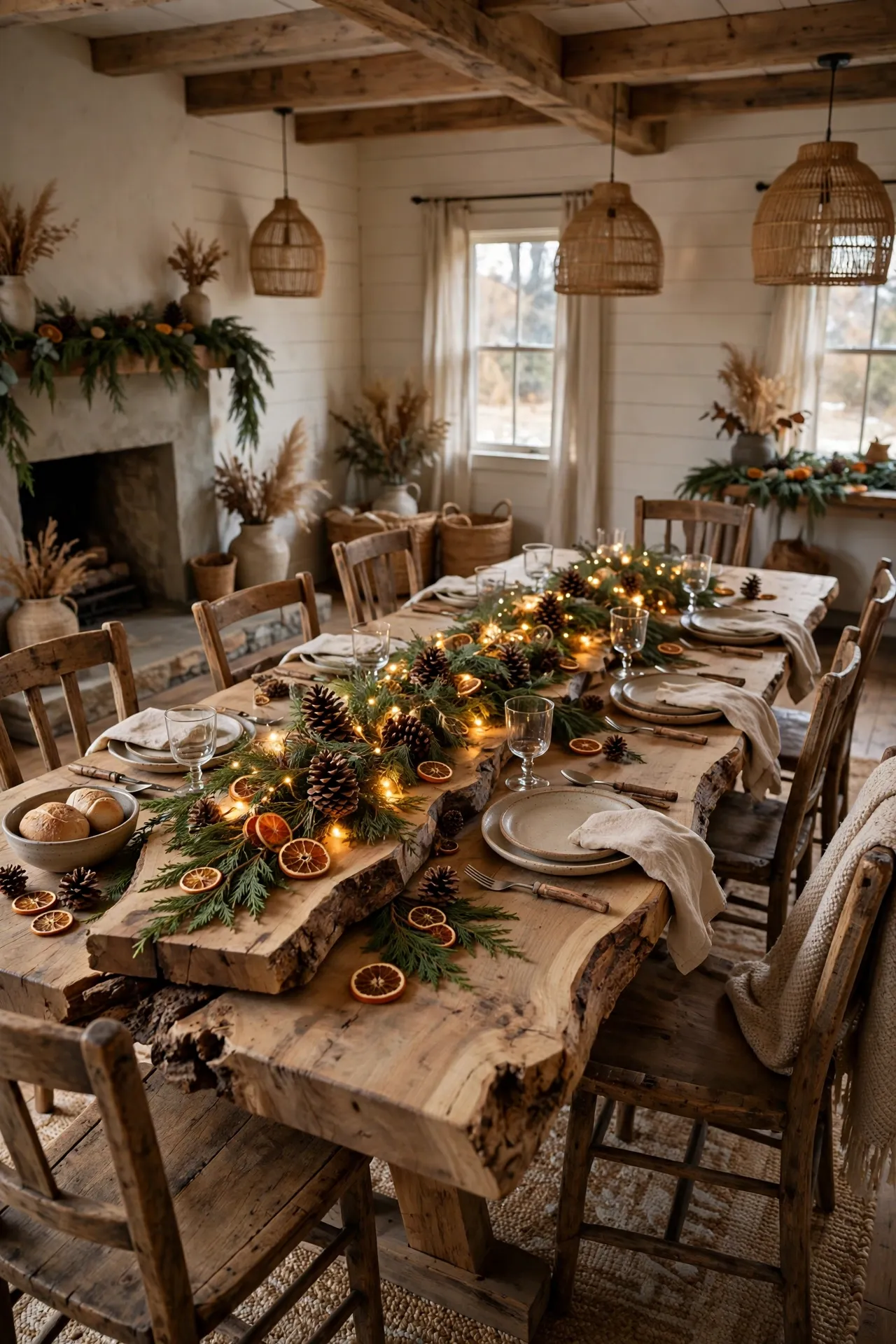
A raw wood slab or cutting board serves as the base for a rustic Christmas centerpiece built from cedar sprigs, natural pinecones, and a few dried orange slices. Keep the arrangement loose and slightly asymmetrical rather than perfectly balanced, since a slightly imperfect, gathered-from-outside look is the whole point of this style. Battery-powered string lights woven through the greenery add a soft glow without introducing an open flame directly on the wood surface. This idea works particularly well on a long farmhouse table, since the wood slab can run most of the table’s length without feeling like a single small object lost in the middle. Add small votive candles in glass holders spaced along the slab if a warmer, flickering light is wanted alongside the string lights.
Traditional Red, Green, and Gold Arrangement
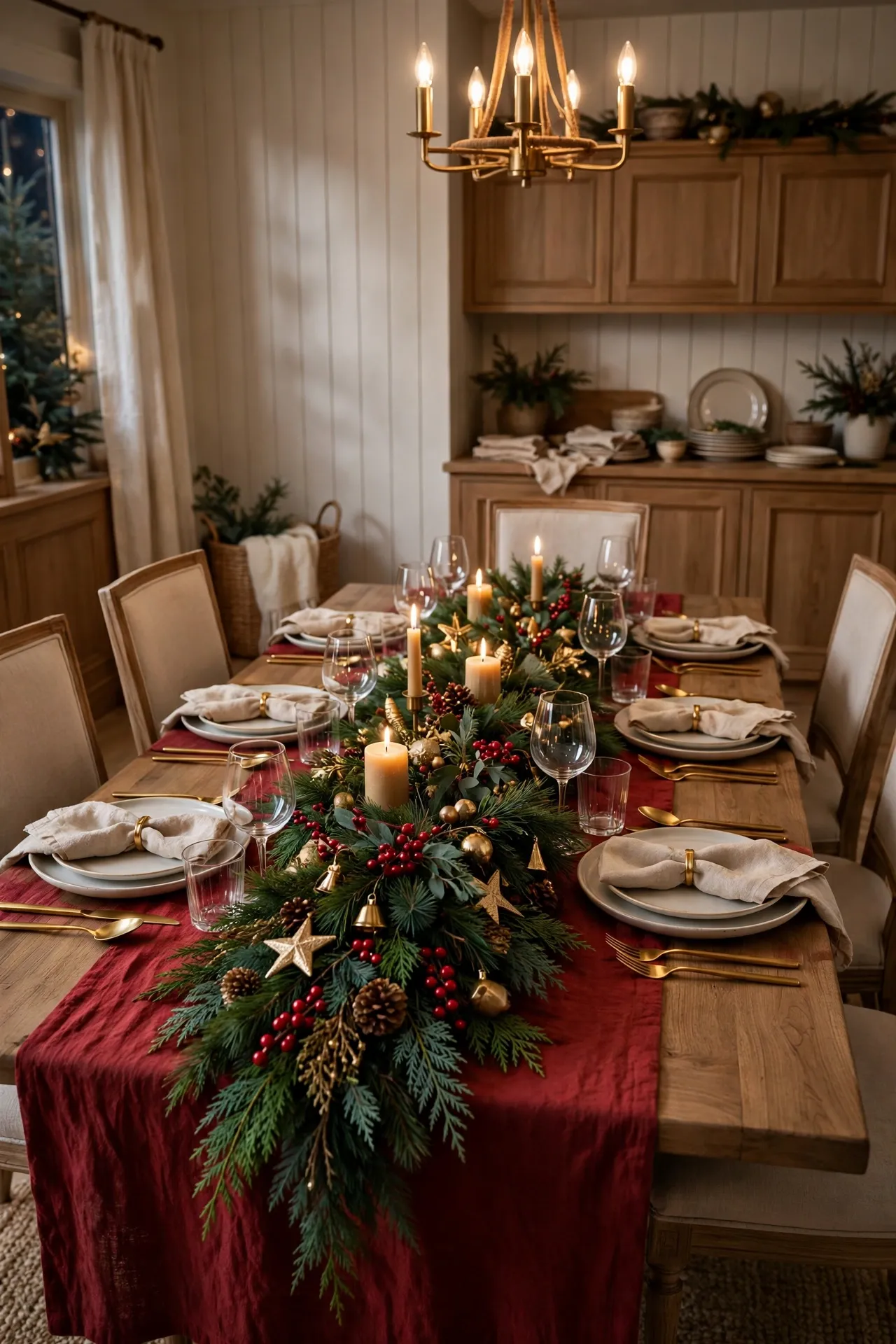
The classic combination of red berries, deep green evergreen, and warm gold accents remains one of the most requested holiday looks because it feels immediately recognizable as Christmas without needing any additional context. Build the base from mixed evergreen, like pine and cedar together for texture, then add red berry picks and small gold ornaments tucked throughout rather than placed only on top. A red tablecloth or runner isn’t required, but it does intensify the traditional feel if the rest of the room’s decor supports it. This style suits a family gathering where the goal is warmth and familiarity rather than a specific design trend. It also tends to photograph well under both daylight and warm evening lighting, unlike some cooler color palettes.
Coastal Blue and White Winter Centerpiece
Swapping the traditional red and green for a navy, silver, and white palette gives a Christmas table a coastal or wintery feel that suits a beach house or a home that leans more blue and white throughout the year. White amaryllis or paperwhite flowers paired with silver-dusted pinecones and blue glass ornaments carry this palette without needing any red at all. Keep greenery to a lighter touch, like eucalyptus or silver-tipped pine, rather than the deeper, darker evergreens used in a traditional arrangement. This idea works especially well for a home that wants a Christmas table without a strong red-and-green statement clashing with existing year-round decor. Add a few faux snow accents or white flocking on the greenery tips for extra wintery texture.

Modern Minimalist Single Sculptural Branch
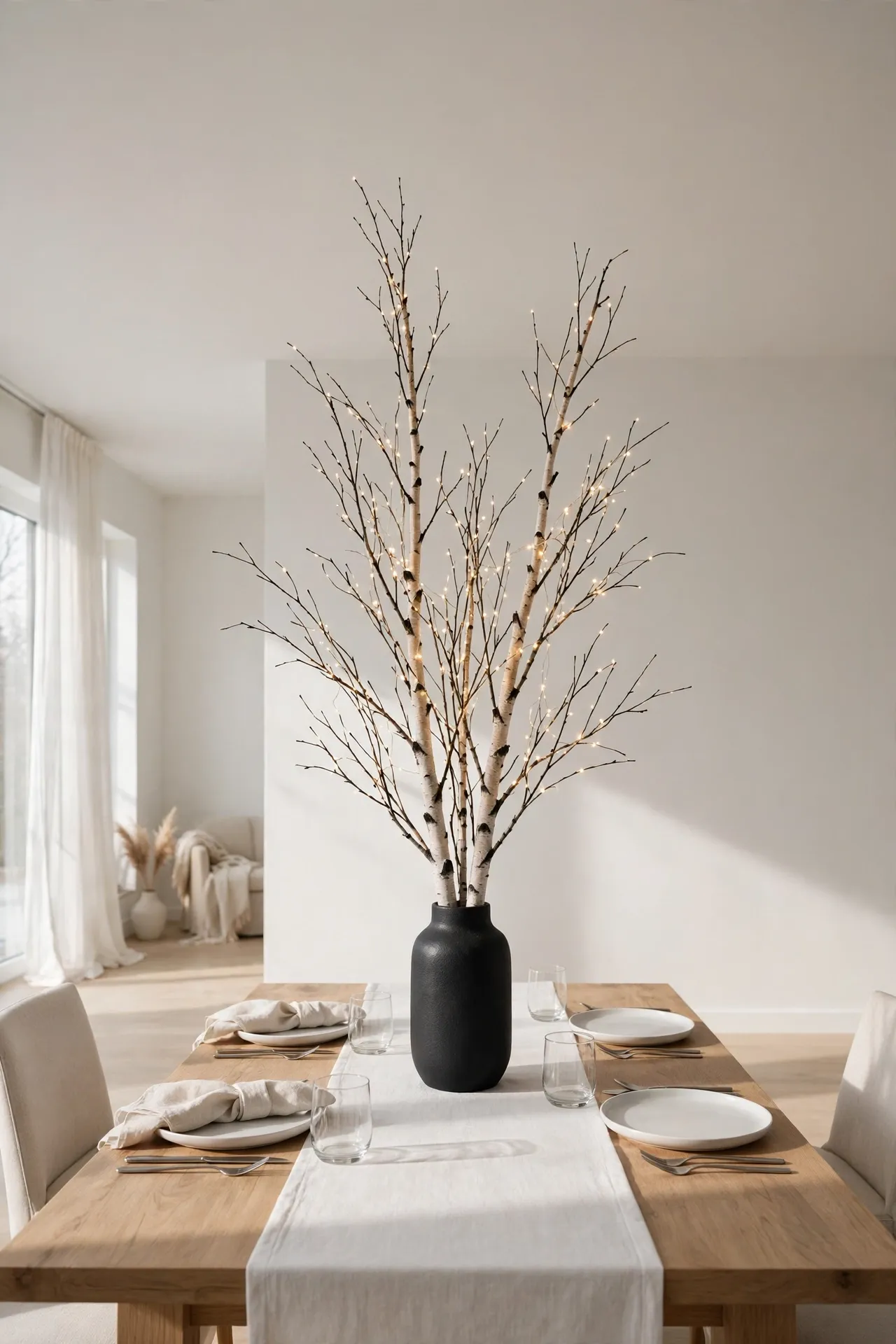
Rather than a full, dense arrangement, a modern minimalist centerpiece uses one or two tall, sculptural branches, like curly willow or a single bare birch stem, in a simple ceramic or glass vessel. This approach relies on negative space and shape rather than volume, which suits a home with clean-lined, contemporary furniture and a generally uncluttered aesthetic. Add just a few small ornaments or a single strand of subtle lights along the branch rather than covering it completely. Keep the vessel simple and matte, in white, black, or a warm neutral, so it doesn’t compete with the branch’s silhouette. This idea is also one of the longest-lasting on the list, since a bare or lightly dressed branch doesn’t dry out or wilt the way fresh greenery does.
Boho Centerpiece With Dried Florals and Pampas Grass
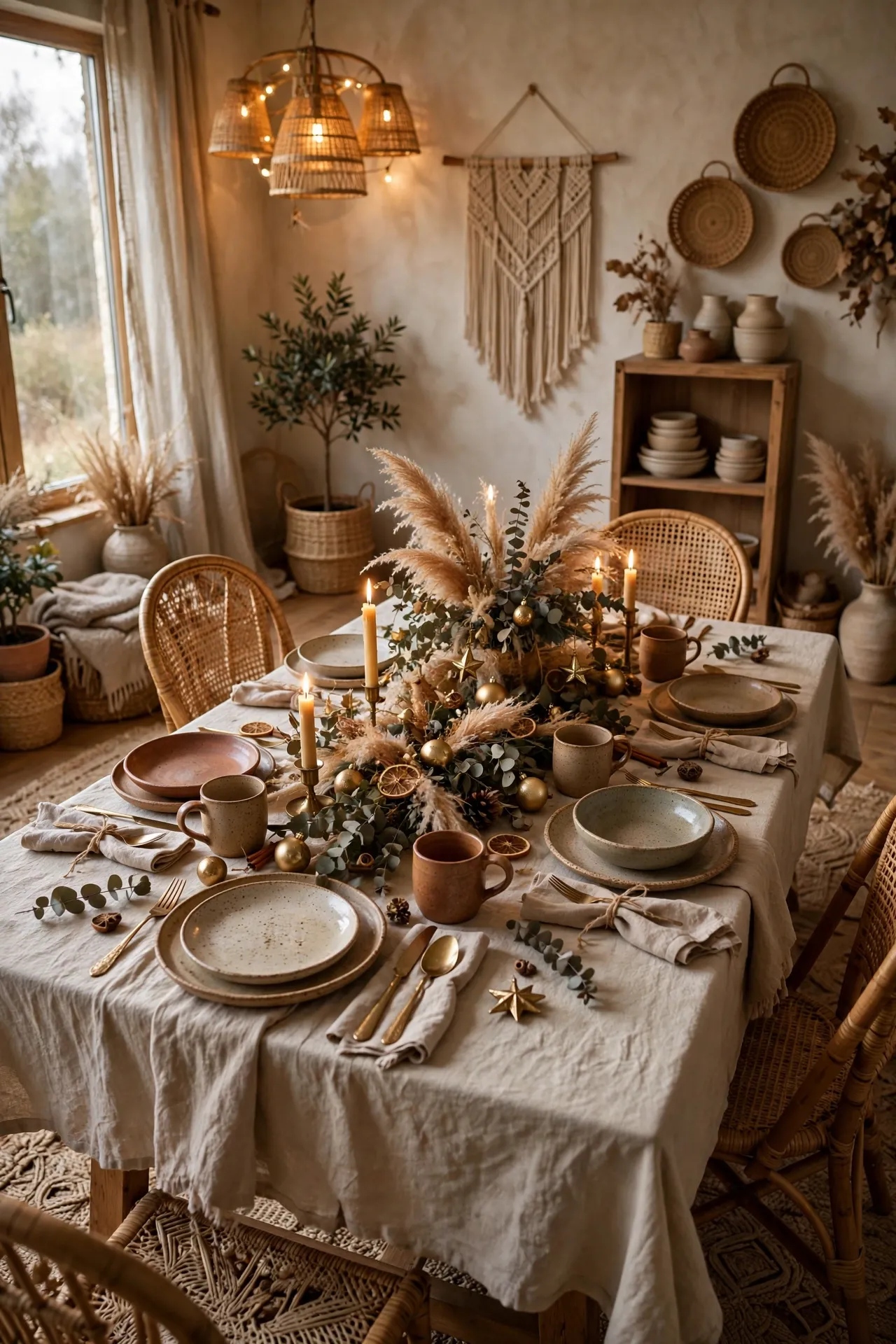
A boho Christmas centerpiece swaps traditional fresh greenery for dried elements like pampas grass, dried eucalyptus, and preserved leaves in warm neutral tones like cream, rust, and sage. Because dried florals don’t wilt, this arrangement can genuinely last from Thanksgiving through the New Year without needing to be refreshed or replaced. Layer in a few small brass ornaments or a strand of warm globe lights to keep a subtle holiday nod without leaning into traditional red and green. This style pairs particularly well with a neutral linen tablecloth and mismatched vintage or ceramic dinnerware. It suits a home that wants a Christmas table that still feels consistent with a boho or warm-neutral decor style used the rest of the year.
Related: 16 Country Style Christmas Tree Ideas With Rustic Charm
Scandinavian Hygge Candles and Natural Wood
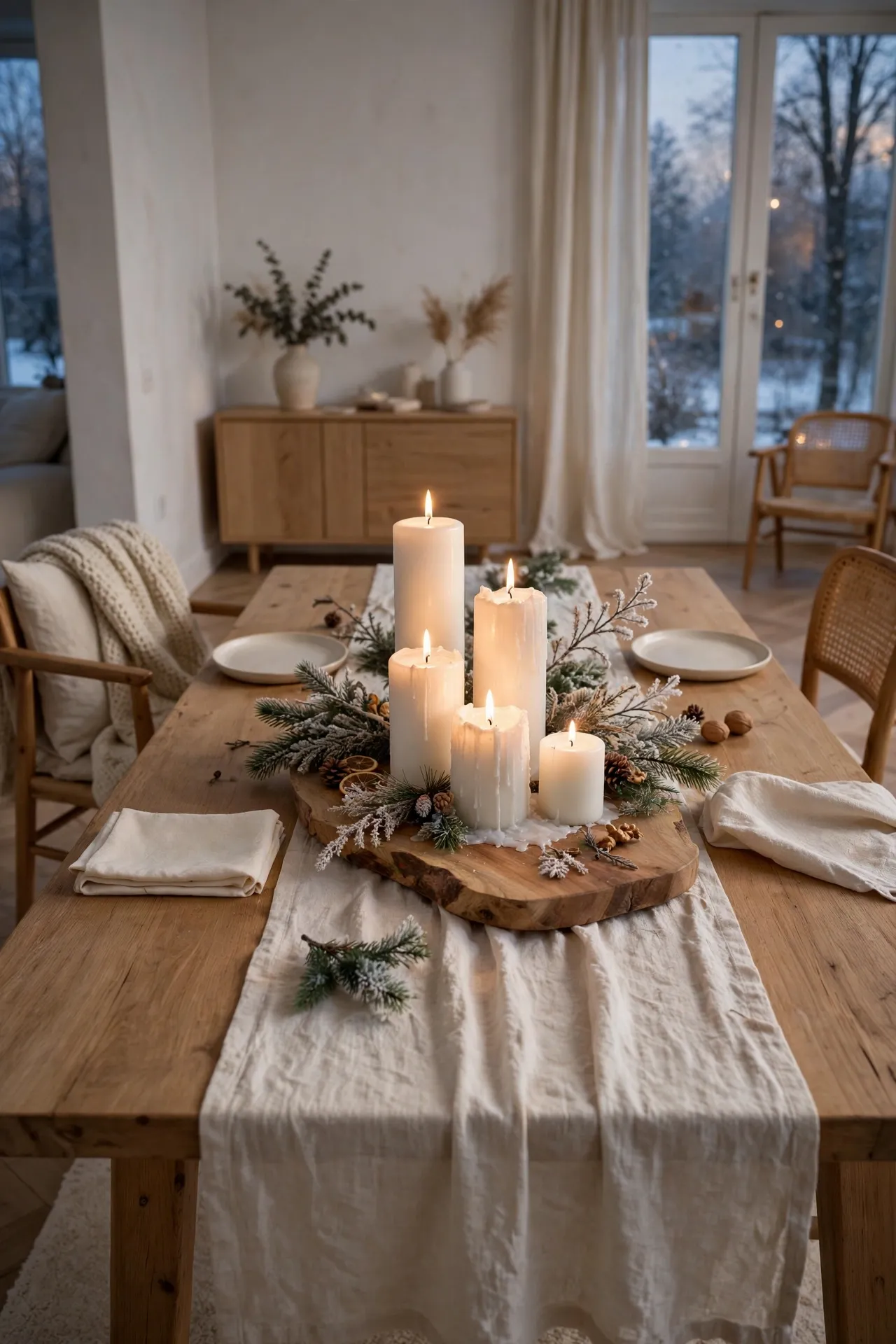
This style keeps the palette almost entirely white, natural wood, and warm candlelight, relying on texture and glow rather than color or ornamentation for its festive feel. A cluster of unscented white pillar candles at varying heights, set on a simple wood tray or slice, forms the base, with a few sprigs of bare or lightly frosted greenery tucked around them. Wool or linen table runners in cream or oatmeal tones complete the cozy, understated look this style is known for. Because the greenery is used sparingly rather than in a dense arrangement, this is also one of the easier styles to keep safely away from the candle flames. This idea suits a home with light wood floors, white walls, or other Scandinavian design elements already in place.
Vintage Retro Ornament Bowl
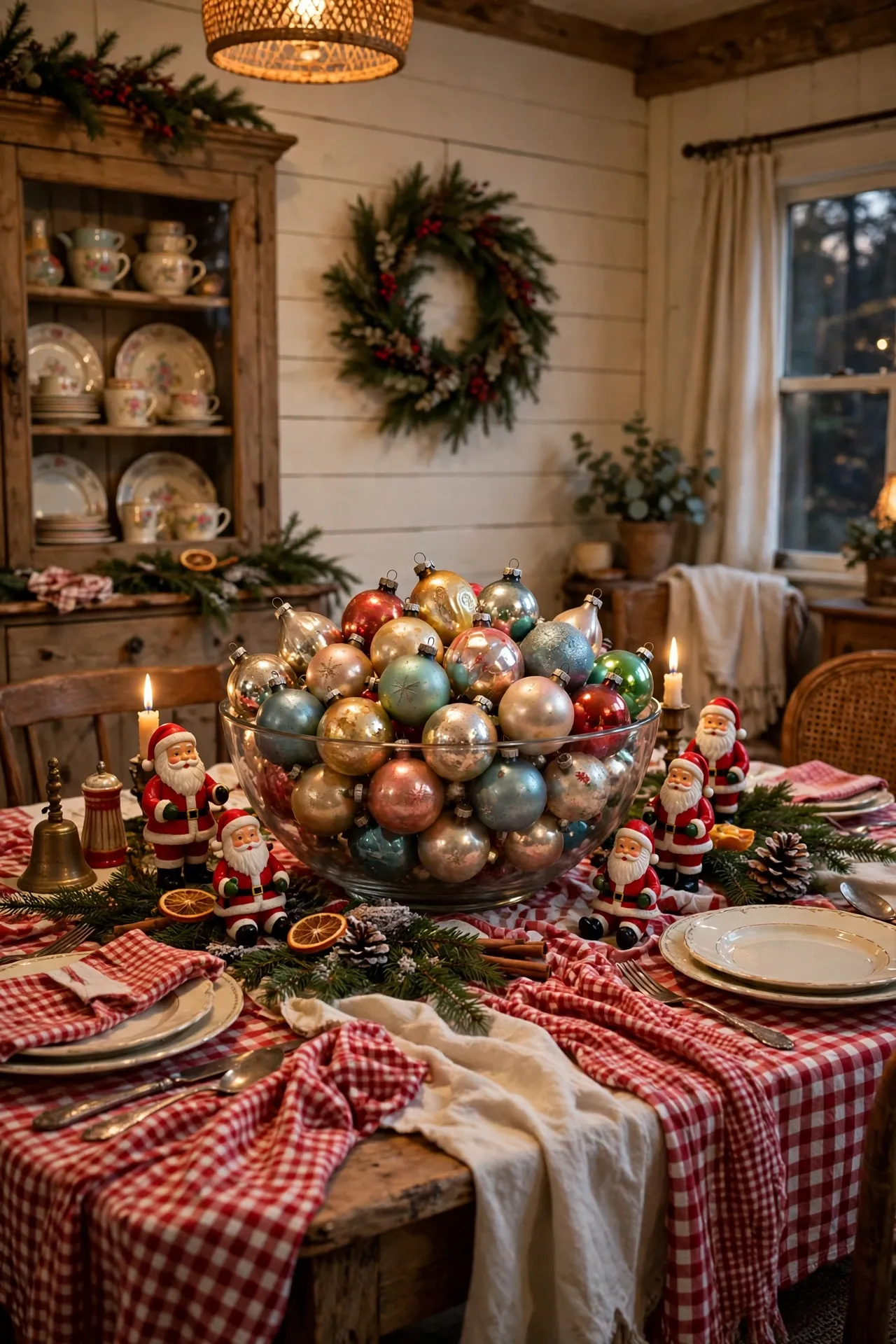
Filling a large glass bowl or vintage punch bowl with colorful mismatched ornaments creates an instant, nostalgic centerpiece that requires almost no floral arranging skill. Mixing ornament sizes and finishes, matte, glossy, and glittered, together adds more visual interest than an entirely uniform set would. Nestle a few faux snow-dusted sprigs or small vintage Santa figurines around the base of the bowl to extend the retro theme across the table. This idea works particularly well as a low centerpiece for a table where guests need clear sightlines across to each other, since a wide, shallow bowl keeps the overall height down. It’s also one of the more affordable ideas on this list if the ornaments are ones already owned rather than purchased specifically for the centerpiece.
Colorful Maximalist Centerpiece
For a home that leans bold and eclectic year-round, a maximalist Christmas centerpiece embraces multiple colors at once, jewel-toned ornaments, patterned ribbon, and a mix of textures rather than a restrained two- or three-color palette. Build height and layers first with greenery and branches, then add color in stages, working from the largest ornaments down to the smallest accents, so the arrangement doesn’t feel randomly thrown together. This style tends to suit a home that already displays bold wallpaper, colorful art, or patterned textiles elsewhere. Because there’s a lot happening visually, keep the table linens simple and solid-colored so the centerpiece itself stays the clear focal point. This is one of the more expressive, personality-driven ideas on the list rather than one built around a single trending palette.

Black and Gold Moody Glam Centerpiece
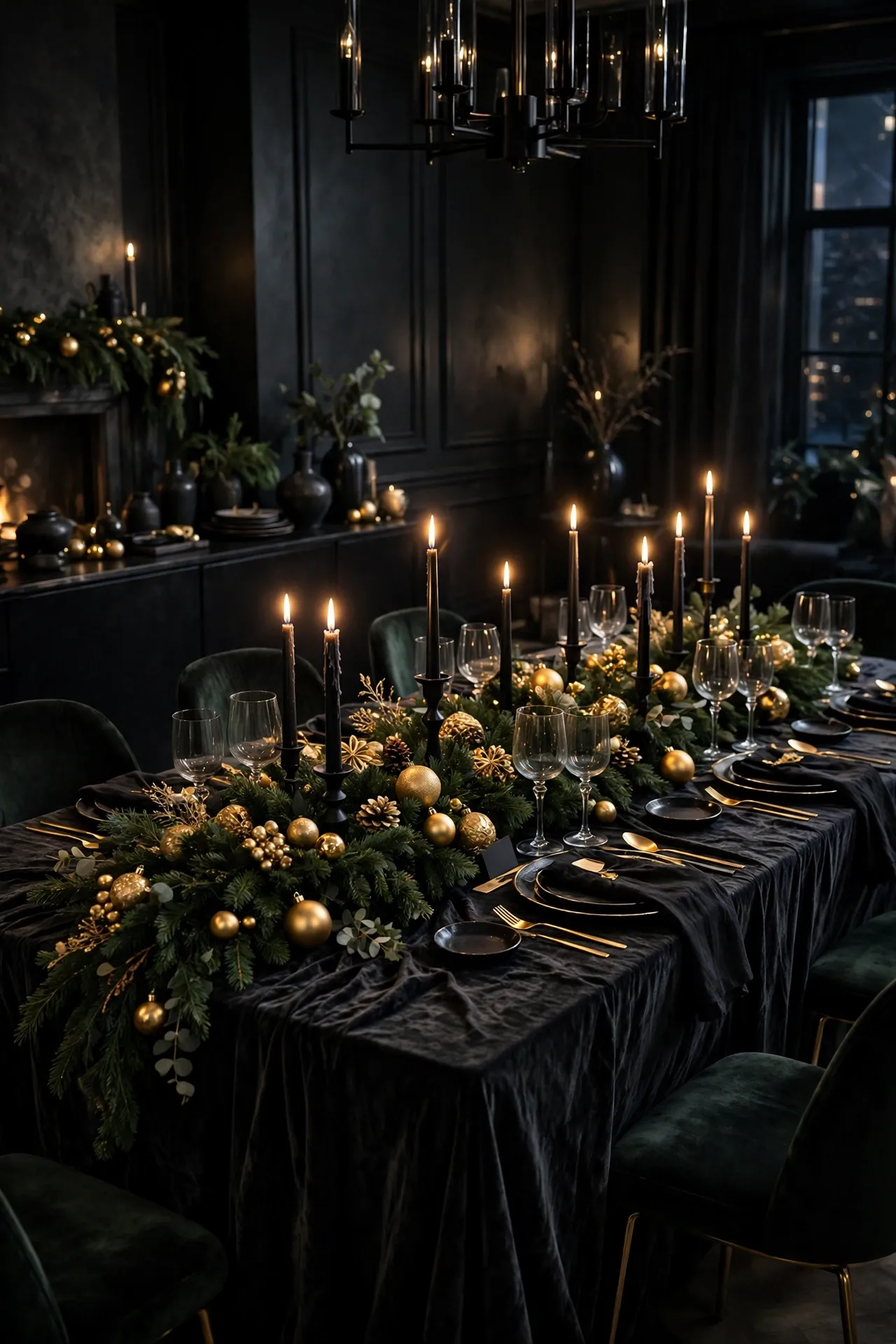
Swapping the traditional white or cream base for black candles, dark greenery, and gold accents creates a dramatic, moody centerpiece suited to an evening dinner party rather than a bright daytime meal. Deep green evergreen paired with black taper candles and gold ornament accents keeps the arrangement from reading as purely Halloween or gothic, staying clearly rooted in a Christmas palette instead. This style photographs particularly well under warm, dim lighting, since the dark tones absorb light in a way that makes the gold accents and candle flames stand out more sharply. It suits a home already decorated in a moody, dramatic style, especially dark walls or matte black fixtures elsewhere in the dining space. Balance the dark palette with plenty of warm light sources around the room, not just the centerpiece, so the overall table doesn’t feel too dim to eat comfortably.
All-White Winter Wonderland Centerpiece
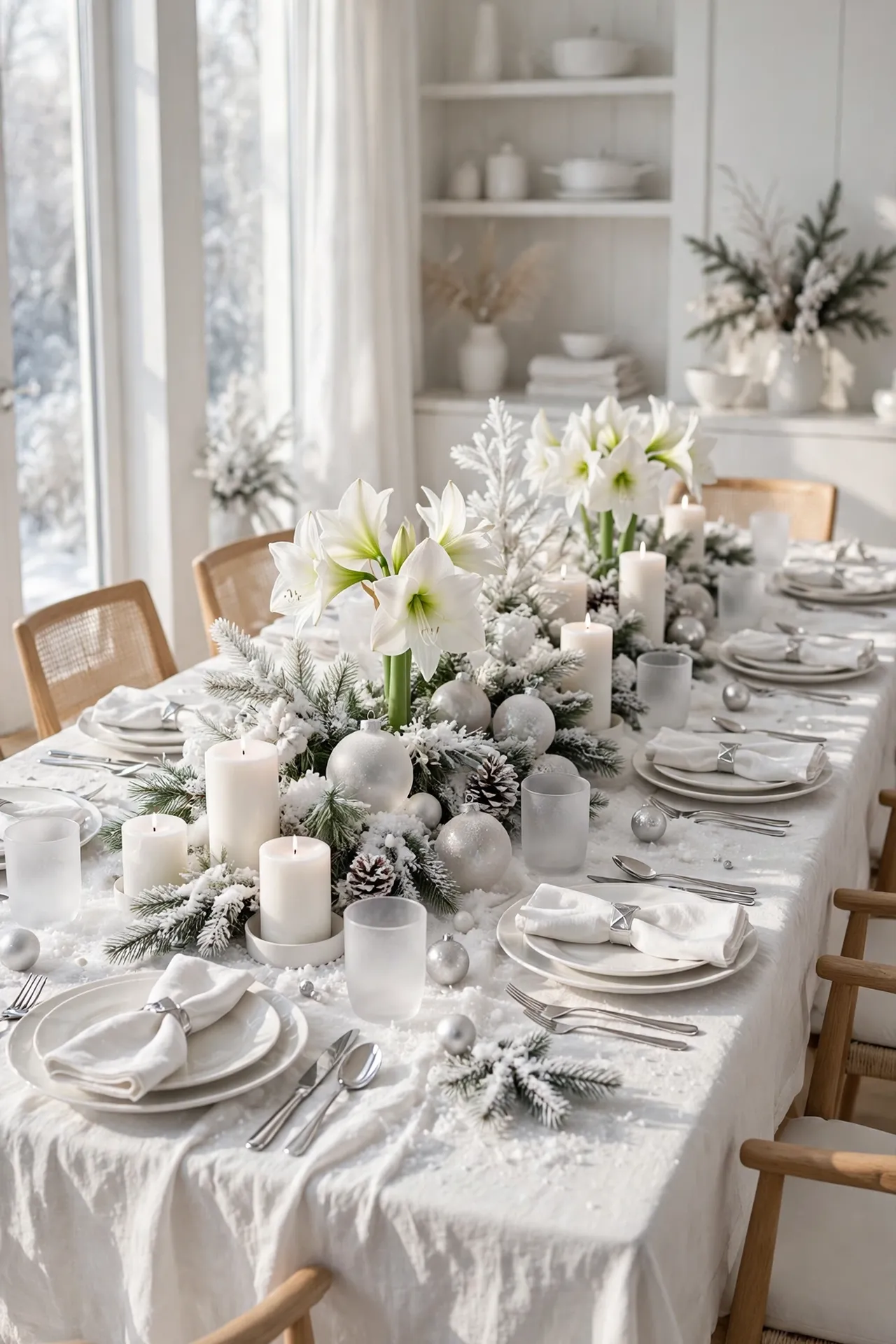
An all-white centerpiece, built from white amaryllis, white pine, faux snow, and clear or frosted glass accents, creates a bright, wintery table that feels distinct from a typical red-and-green holiday look. This style relies almost entirely on texture and shape rather than color contrast, so mixing several different white and cream tones, rather than one flat matching white, keeps the arrangement from looking flat. White flameless candles add a soft glow without introducing risk near the faux snow, which is often flammable synthetic material. This idea suits a home that wants a bright, airy holiday table, especially one with large windows and plenty of natural daylight during a daytime gathering. It also pairs particularly well with silver or crystal accents rather than warm gold tones.
Low-and-Long Fresh Garland Runner
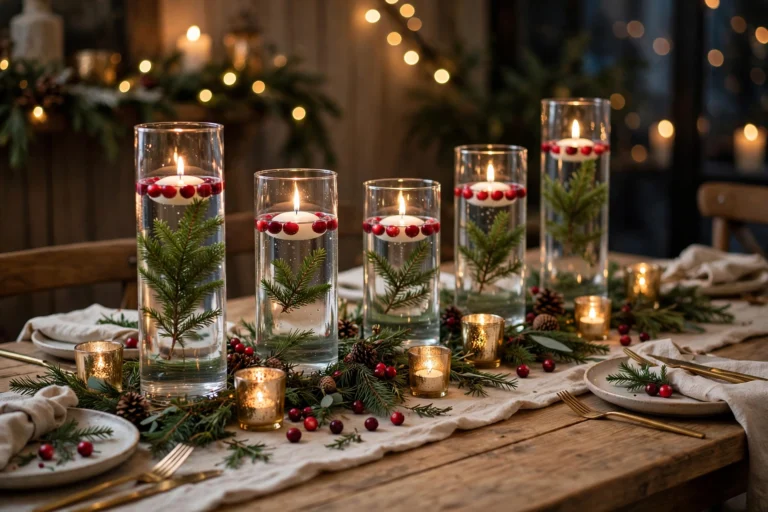
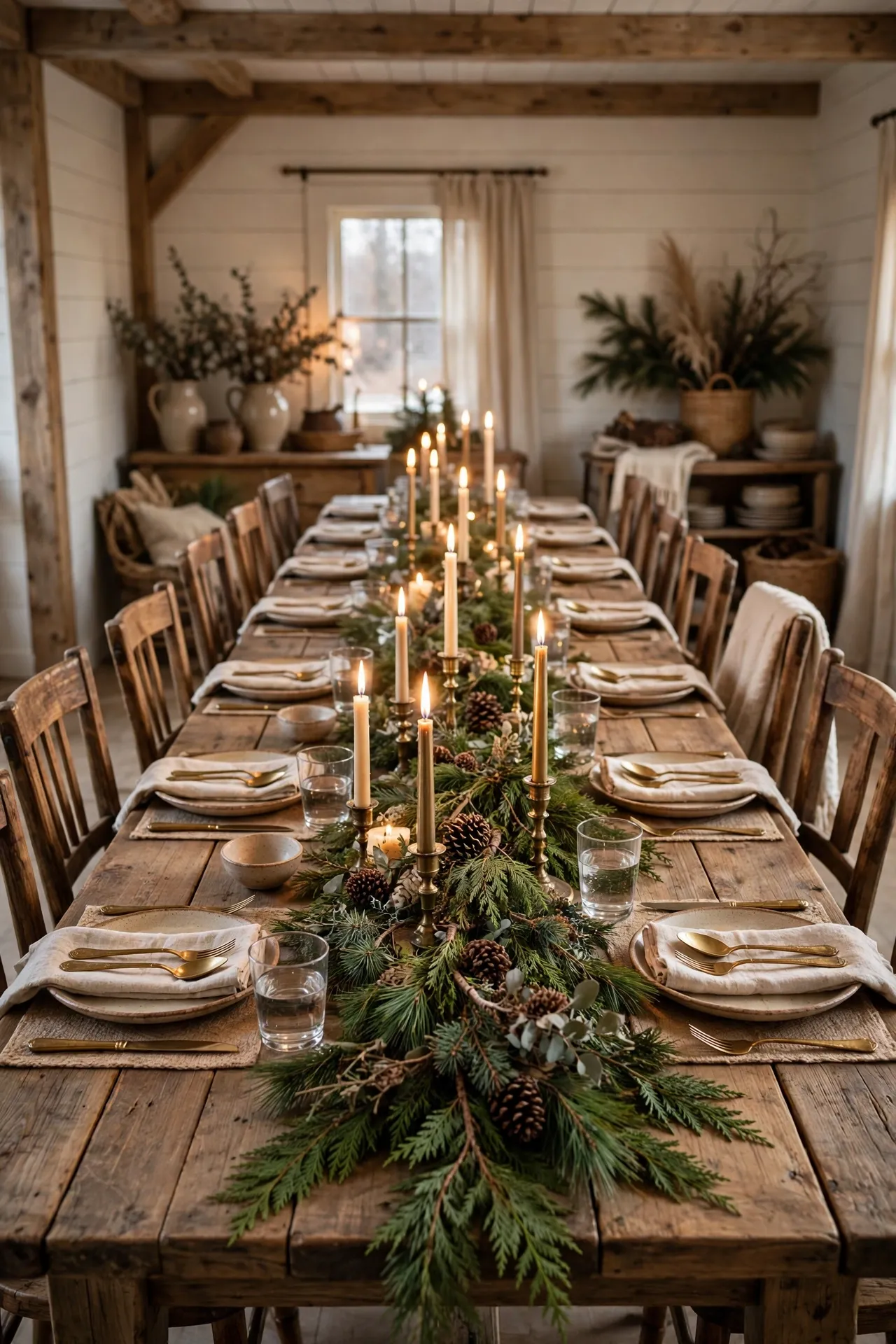
Rather than a single contained centerpiece, this idea runs a loose garland of fresh cedar and pine directly down the center of the table, studded with small candle holders and pinecones along its length. This style suits a long dining or farmhouse table particularly well, since the runner format naturally draws the eye across the table’s full length instead of concentrating attention in one spot. Keep the garland low, generally under six inches tall at its highest point, so it never blocks sightlines between guests seated across from each other. Space taper candles at slightly uneven intervals along the garland for a relaxed, gathered look rather than a stiff, evenly measured one. Mist the greenery daily to extend its fresh look, since a garland spread this thin dries out faster than a denser, contained arrangement.
Tall Pillar Candle Cluster
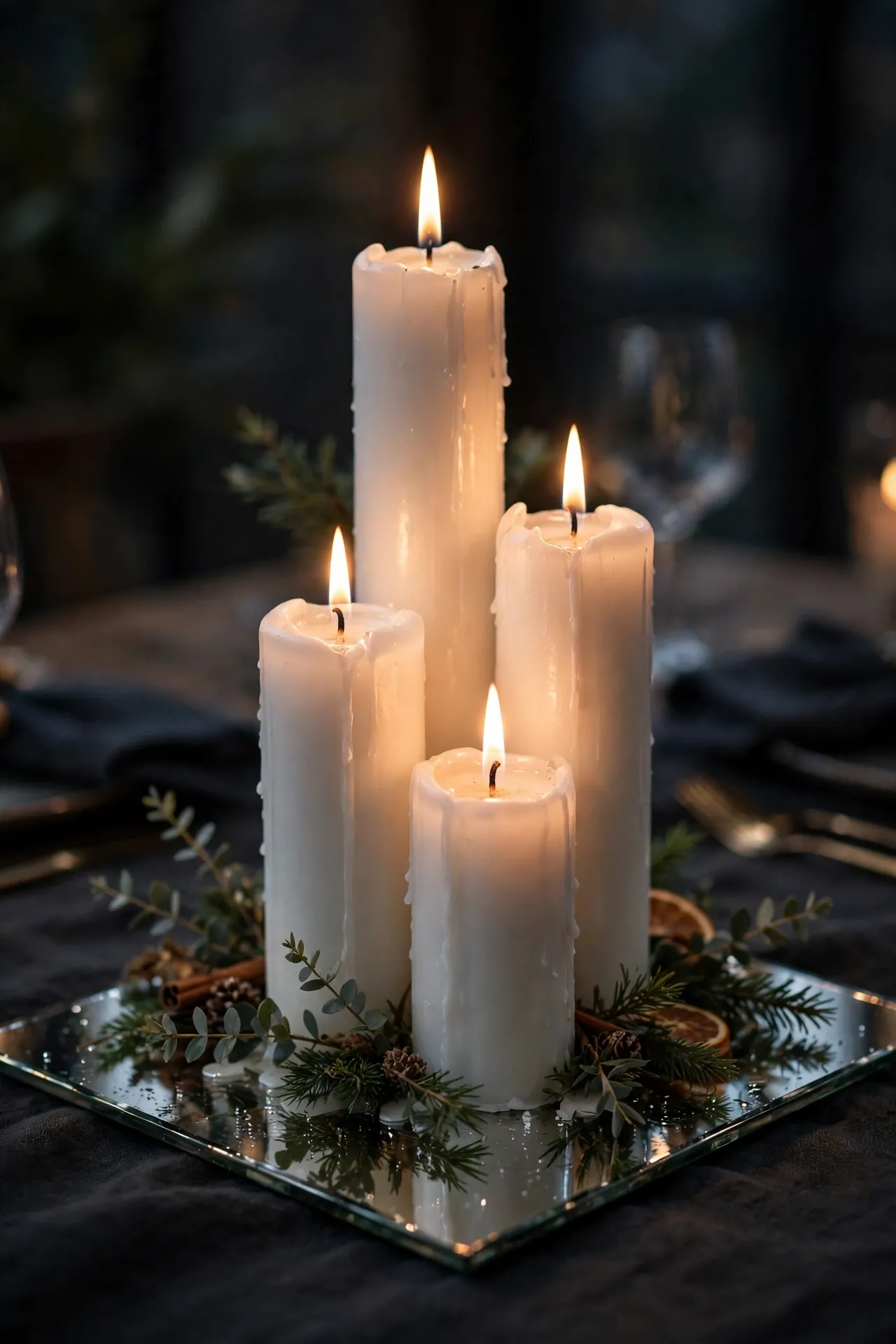
A cluster of pillar candles at three or more different heights, grouped on a mirrored or metal tray, creates a dramatic, glowing focal point that works especially well for an evening dinner party. Keep the cluster narrow rather than wide, since a tall, concentrated grouping is easier for guests to see around than a tall arrangement that also spans wide across the table. Add a small amount of greenery or a few ornaments at the base of the candles rather than around the flames themselves, keeping flammable material at a safe distance. This idea works in almost any style, from farmhouse to modern to traditional, depending on the candle color and tray material chosen. Because the height sits well above eye level when seated, this is one of the centerpiece styles specifically suited to the “tall and narrow” side of the height rule covered later in this guide.
Fruit-Based Pomegranate and Citrus Centerpiece
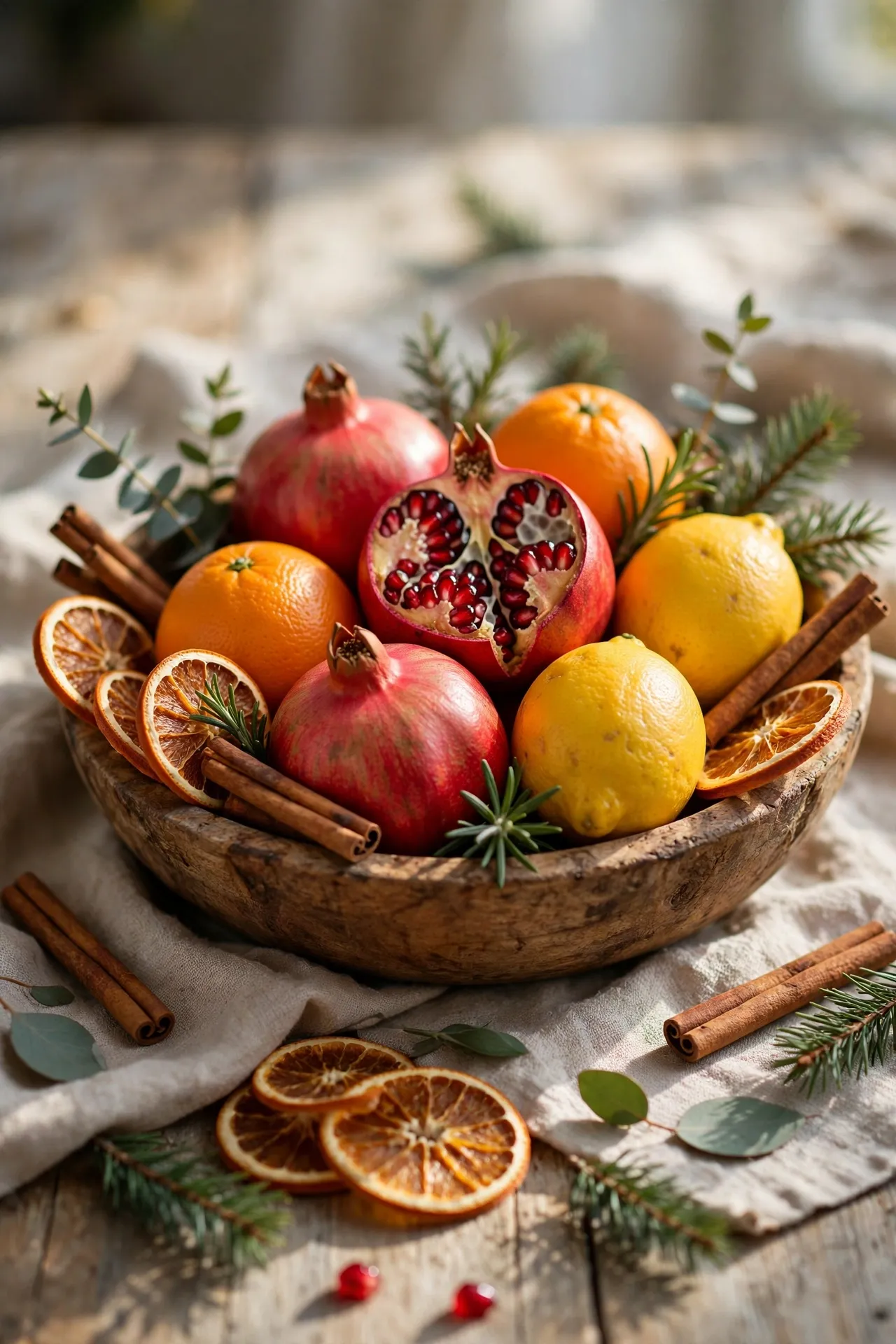
A centerpiece built around fresh pomegranates, oranges, and lemons, tucked among a small amount of greenery, brings natural color and a subtle citrus scent to the table without relying on any purchased decor at all. Stack the fruit in a low wooden bowl or wide dish, mixing whole and halved pomegranates so the deep red interior shows in a few spots for visual contrast. Add a few cinnamon sticks or dried orange slices around the edges for texture and a stronger holiday scent. This idea is one of the most budget-friendly and food-safe options on the list, since it doubles as a display piece guests can also eat from. It works particularly well for a more casual gathering, like a brunch or afternoon get-together, rather than a formal evening dinner.
Foraged Magnolia Leaf and Birch Branch Centerpiece
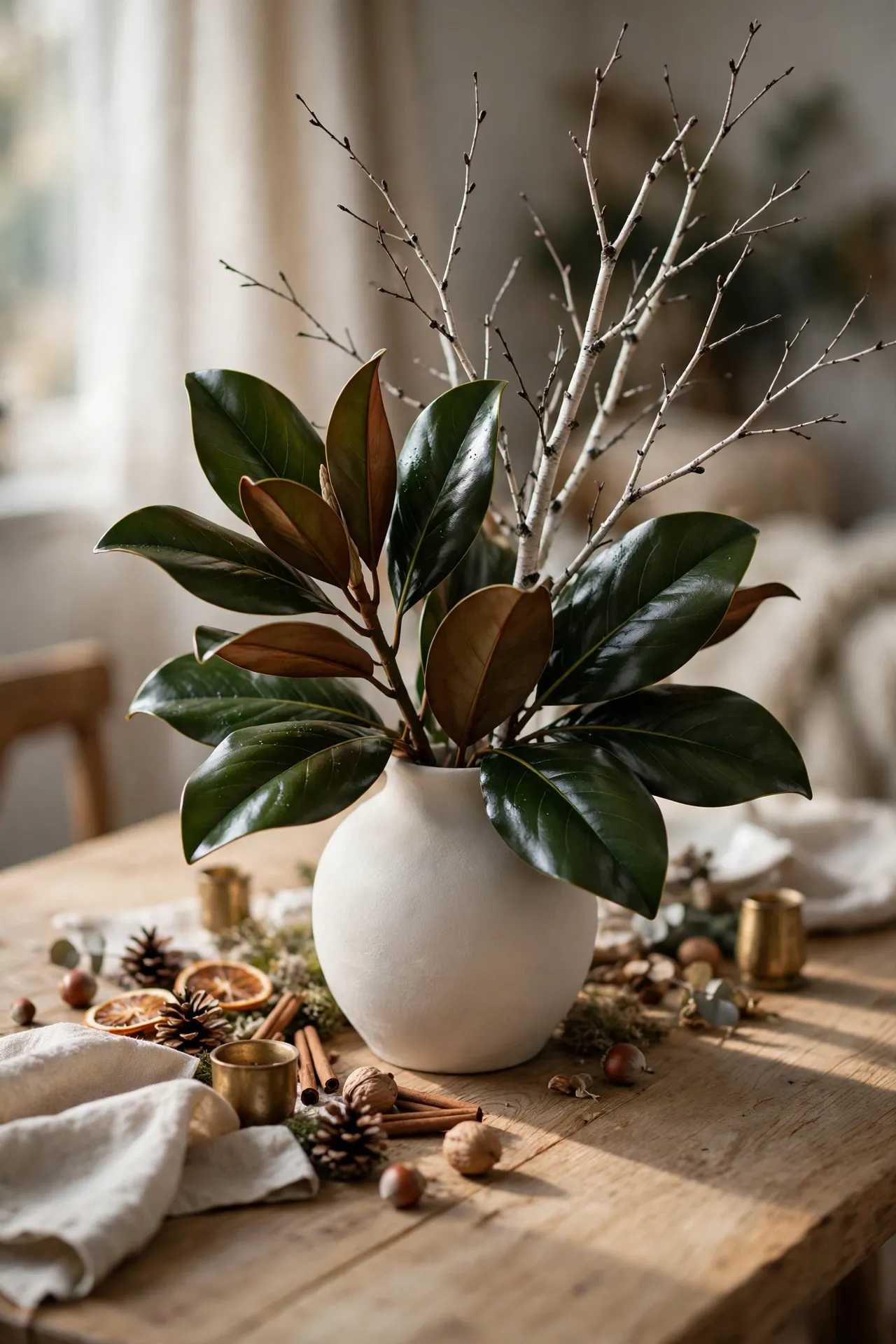
Large glossy magnolia leaves paired with bare white birch branches create a centerpiece built almost entirely from foraged or minimally processed natural material rather than purchased florals. The dark green, waxy magnolia leaves hold up far longer than most fresh greenery, often lasting several weeks without wilting or dropping. Arrange the leaves in a loose cluster at the base of a simple vase, then add the birch branches for height and a pale, textural contrast against the dark leaves. This idea suits a home with a more organic, nature-inspired design style, especially one that already brings in raw wood or stone elements. It also costs very little if magnolia trees or birch branches are locally accessible, making it one of the more budget-friendly options for anyone with the right materials nearby.
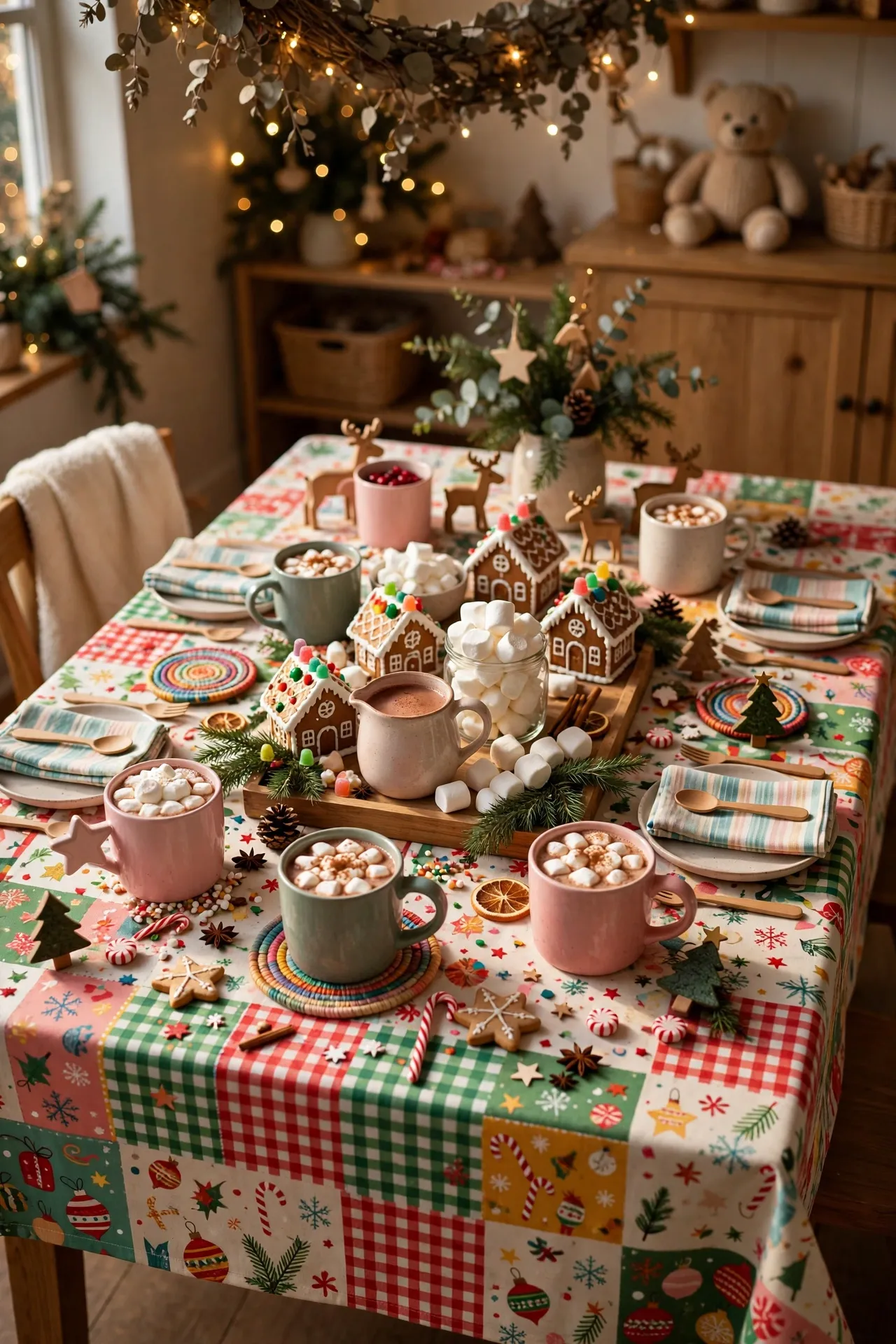
Kids’ Table Hot Cocoa and Gingerbread Centerpiece
For a table where kids are seated, a centerpiece built around a small hot cocoa station or a display of gingerbread cookies does double duty as both decor and entertainment. Arrange mugs, marshmallows, and cocoa mix in a low tray or basket at the center, keeping anything hot or breakable out of easy reach for younger children. Add a few small gingerbread houses or cookies as edible decor around the base, which also gives kids something to do at the table beyond waiting for the meal. Keep this centerpiece low and wide rather than tall, since kids’ tables benefit even more than adult tables from clear sightlines and easy reach across the surface. This idea works particularly well for a casual family gathering or a kids’ holiday party rather than a formal dinner.
Neutral Centerpiece for Mixed-Holiday Households
For households celebrating more than one December holiday, a neutral centerpiece built from natural greenery, warm wood tones, and simple white or gold candles works across Christmas, Hanukkah, and general winter gatherings without needing to be swapped between celebrations. Keep specific religious or seasonal symbols, like a menorah or nativity figures, as separate tabletop pieces placed near, rather than mixed directly into, the shared greenery centerpiece. This approach lets each family member’s traditions stay visible and distinct rather than blended into a single ambiguous arrangement. A base of pine, eucalyptus, and warm citrus tones works as a genuinely versatile foundation that suits nearly every winter holiday aesthetic. This idea is particularly useful for extended families or shared households navigating multiple traditions at one table.

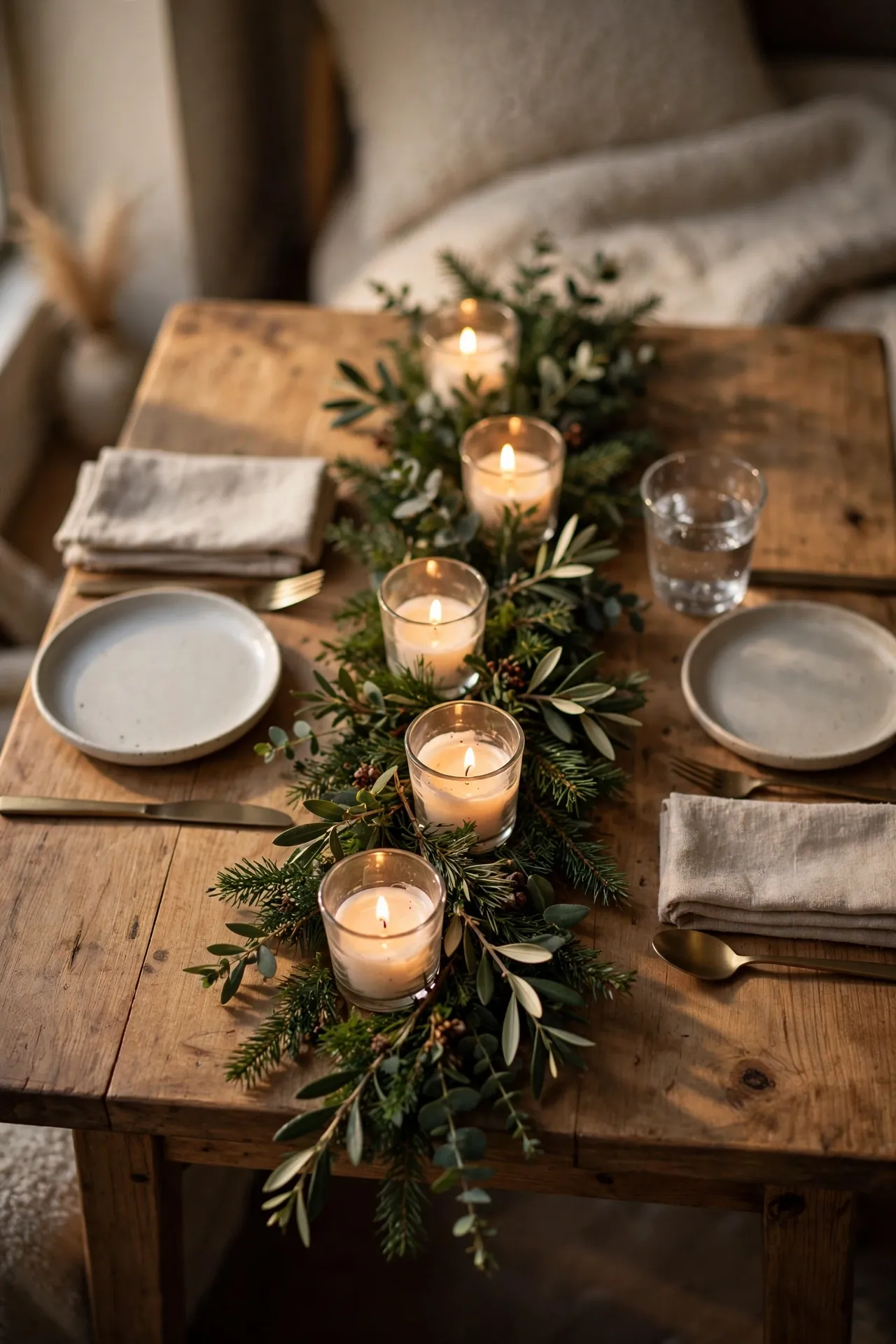
Narrow Runner Centerpiece for a Small Apartment Table
A small apartment dining table often can’t fit a wide, bowl-style centerpiece without losing most of its usable surface for actual plates and serving dishes. A narrow runner of greenery, no more than four or five inches wide, with small votive candles spaced along it, adds a festive touch without eating into limited table space. Keep ornamentation minimal and low-profile, since a compact table needs every added object to earn its space more than a large dining table would. This idea also works well laid directly on a bare table rather than over a full tablecloth, which keeps the overall footprint from feeling any bulkier than necessary. It’s one of the most practical ideas on this list for renters or small-space households hosting a holiday meal.
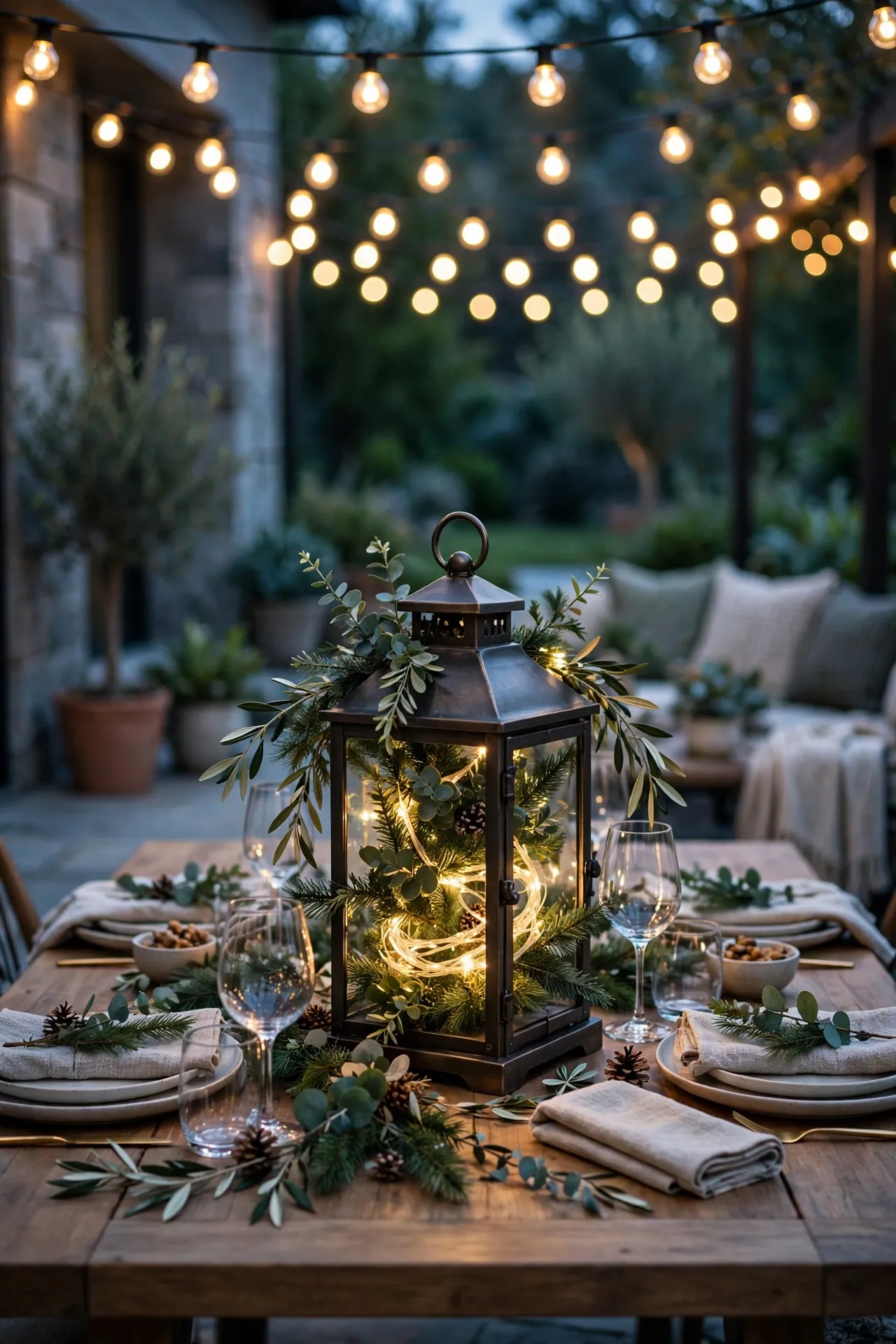
Weatherproof Centerpiece for an Outdoor Patio Table
For a holiday gathering held partly outdoors, a centerpiece built from faux greenery, battery-operated lights, and weather-resistant materials holds up far better than fresh flowers or real candles exposed to wind and cold. Choose a heavier base, like a metal lantern or a weighted ceramic pot, so wind doesn’t tip the arrangement over during an outdoor meal. Battery-powered string lights or lanterns replace open flame entirely here, both for safety and because real candles are difficult to keep lit outdoors. This idea suits homes in milder winter climates hosting an outdoor or patio holiday gathering, or an indoor-outdoor space like a covered porch. Bring the centerpiece inside overnight if temperatures drop significantly, since even weather-resistant faux materials can become brittle in extreme cold over time.
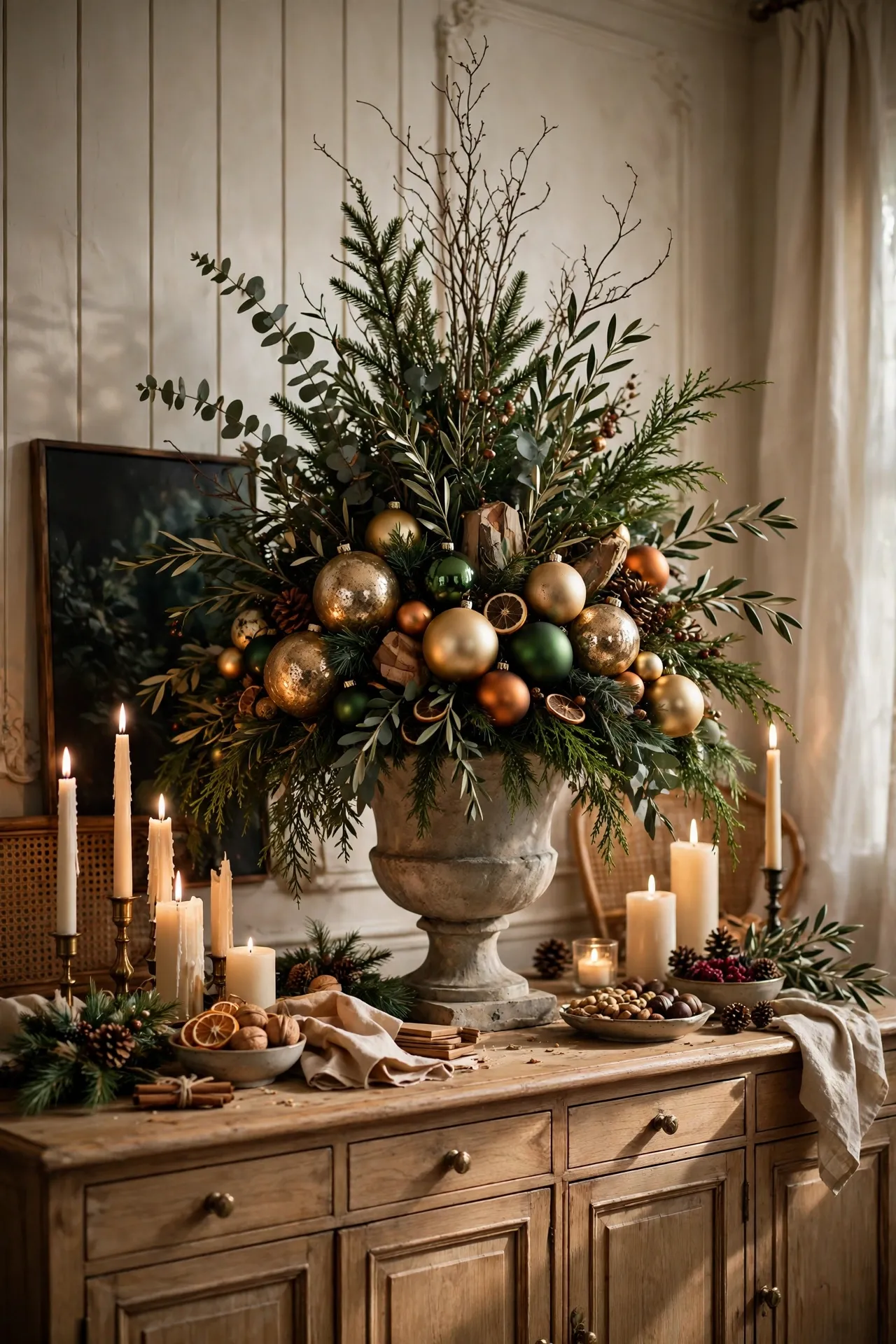
Buffet and Sideboard-Style Centerpiece
Rather than the main dining table, this idea styles a centerpiece specifically for a buffet or sideboard, where the piece can be taller and more dramatic since guests view it from a distance rather than trying to see past it. A tall arrangement of greenery, branches, and ornaments in a large urn or vase works well here, since there’s no seated sightline concern the way there is on a dining table. Layer in varying candle heights and a few larger statement ornaments that would feel oversized on a dining table but read as intentional on a sideboard. This idea gives a home a second styled holiday moment beyond the main table, especially useful for a larger gathering with food service happening away from the seated area. It also tends to be one of the more forgiving spots for a taller, denser arrangement that wouldn’t work anywhere guests are seated.
Budget Dollar-Store DIY Centerpiece
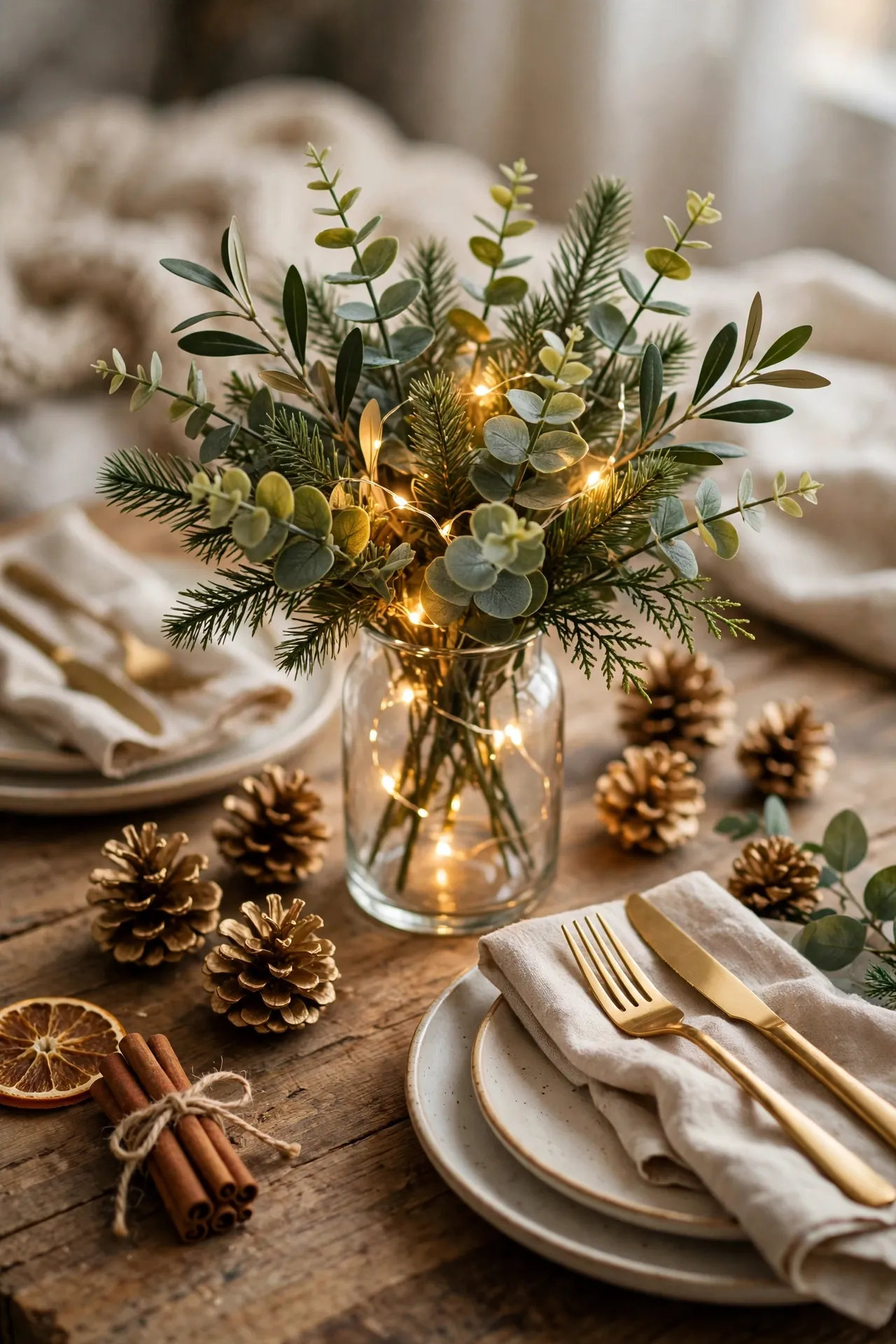
A genuinely low-cost centerpiece can still look intentional by combining a few inexpensive elements, like a basic glass vase, faux greenery picks, and battery-operated fairy lights, all commonly available at a dollar or discount store. Layer the materials the same way a more expensive arrangement would be built, greenery first for a base, then color and light added in stages, rather than placing everything in at once. Spray paint a plain container in gold or matte white to elevate its look for very little additional cost. This idea proves that the styling principles used throughout this list, height variation, layered texture, and a limited color palette, matter more to the final look than the price of the materials. It’s a solid starting point for a first-time host or anyone decorating multiple tables on a tight budget.
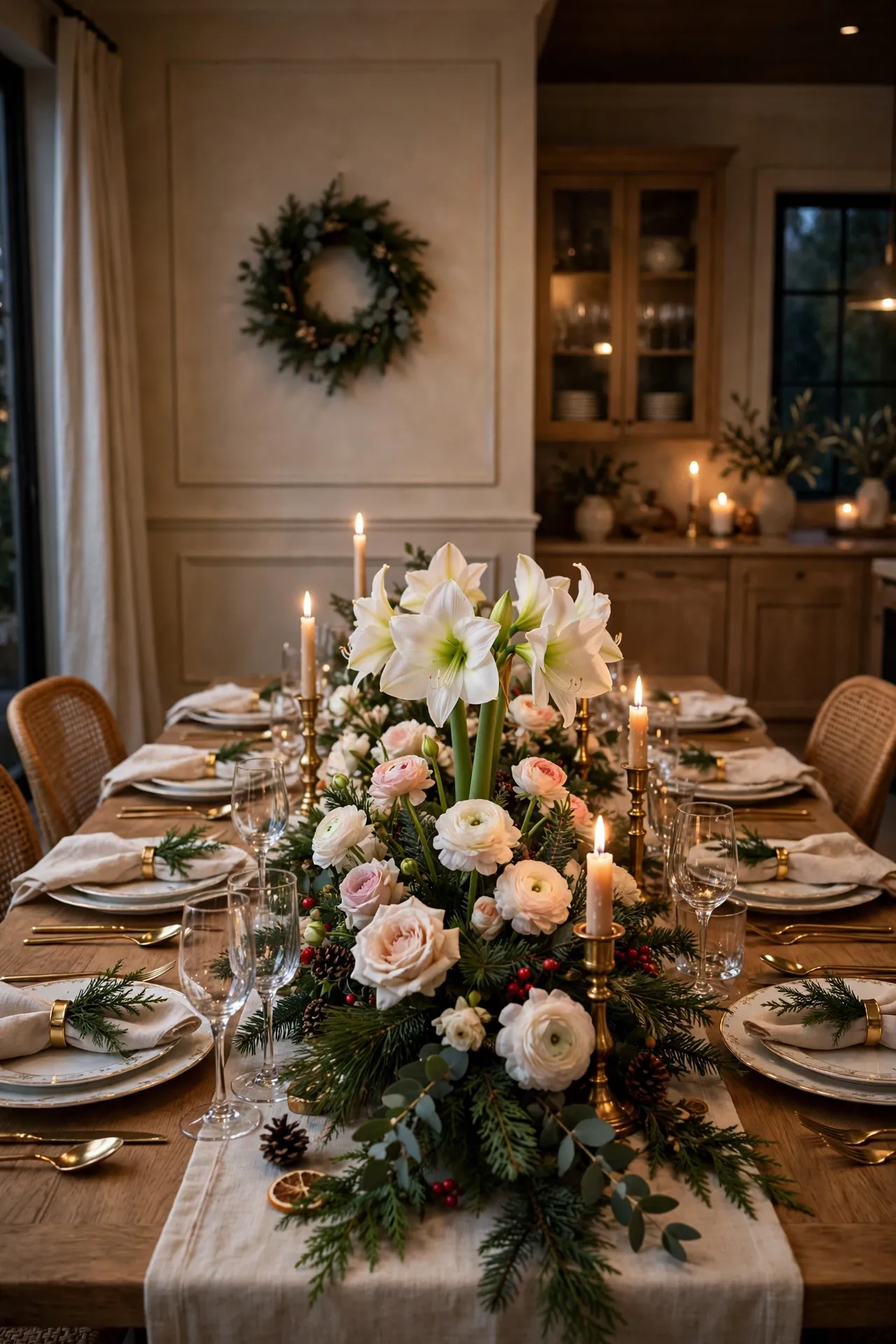
Luxury Fresh Flower Florist-Style Arrangement
For a special occasion or a formal Christmas dinner, a florist-style fresh flower centerpiece built from amaryllis, ranunculus, and white roses, layered with fresh evergreen, brings a genuinely elevated, main-focal-point look to the table. Building this arrangement on a foam-free wire frame or flower frog, rather than floral foam, allows individual blooms to be replaced as they fade while the greenery base stays intact for weeks. Choose carnations or chrysanthemums as filler flowers if budget matters, since both hold up significantly longer than more delicate blooms like roses. This idea suits a holiday dinner party or a special family gathering where the table itself is meant to be a genuine showpiece. Working with a local florist, or at minimum sourcing flowers from a proper flower market rather than a standard grocery store, tends to noticeably improve both the look and the longevity of this style.
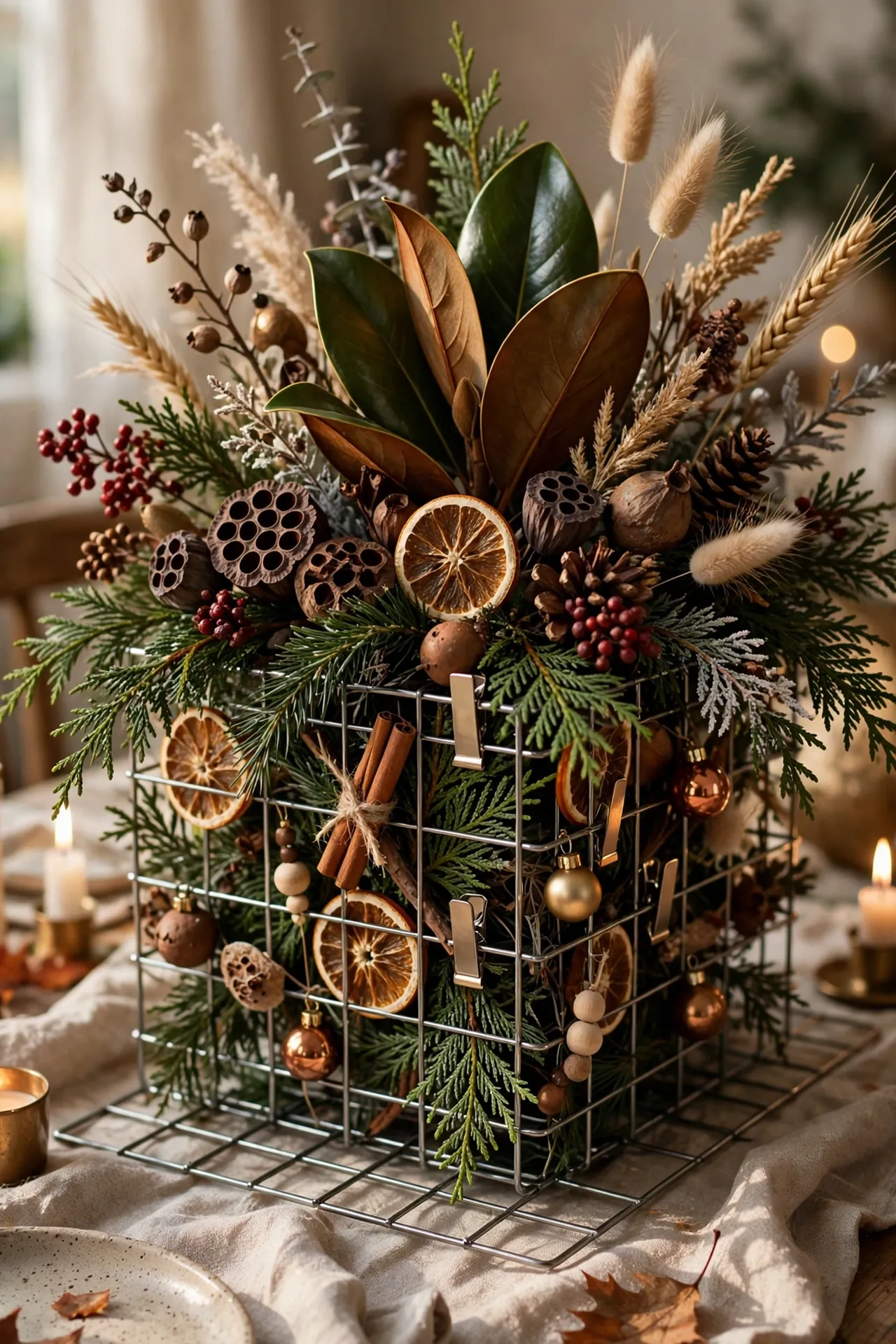
The Swappable All-Season Centerpiece
This idea is built specifically to solve the “feels festive all season” problem: a single base arrangement, built on a foam-free wire grid or flower frog inside a simple neutral vessel, using greenery and a few sturdy elements meant to stay in place from Thanksgiving through New Year’s. Start with a foundation of hardy greenery like cedar, magnolia leaves, or eucalyptus, since all three hold up for weeks without the immediate wilting fresh flowers experience. Add seasonal accents in stages: dried wheat or gourds for a Thanksgiving-adjacent look, then swap in ornaments and berries for Christmas, and finally add a few sprigs of fresh greenery and gold accents for New Year’s Eve. Because the mechanics rely on a reusable frame rather than floral foam, individual stems and accents can be pulled and replaced without rebuilding the entire arrangement each time. This is the single most practical idea on the list for anyone who wants one centerpiece, not three separate ones, to carry an entire holiday season.
The Height and Sightline Rule Nobody Mentions
Most centerpiece guides talk about height in terms of drama and impact, but the practical rule matters just as much: keep a seated dinner table centerpiece either under 12 inches tall, or tall and narrow enough to clear eye level, generally 24 inches and above. Anything in between sits at exactly the height where it blocks sightlines and makes conversation across the table awkward. A low garland runner, a fruit bowl, or a short cluster of candles all satisfy the “under 12 inches” rule, while a tall, narrow branch arrangement or a cluster of tall pillar candles satisfies the “tall and narrow” rule. This distinction matters far more on a table where people are actually seated and talking than it does on a buffet or sideboard, where guests view the arrangement from a distance rather than sitting directly across from it.
Candle Safety Around Fresh Greenery
Because so many Christmas centerpieces combine open flame with fresh, flammable greenery, it’s worth stating the actual safety numbers plainly. Keep any open flame at least six inches away from fresh foliage and flowers, and increase that distance to roughly twelve inches once the greenery is more than five or six days old, since drying greenery becomes noticeably more flammable than freshly cut material. Never leave lit candles unattended, especially near an arrangement that will sit on the table for hours during a meal or party. Battery-operated LED candles are the safer choice for any centerpiece that will be left unattended for long stretches, or for households with young children or pets near the table. This is especially relevant for the denser, more traditional greenery-and-candle combinations covered earlier in this list, since those styles carry the highest real fire risk of any idea here.
Related: 23 Stylish Small Apartment Christmas Decor Ideas That Save Space That Make Every Inch Count
How to Build One Centerpiece That Lasts All Season
The key mechanical decision behind a long-lasting centerpiece is choosing a foam-free structure, typically a flower frog or a wire grid placed inside the vessel, instead of traditional floral foam. Floral foam holds water well initially but breaks down over time and doesn’t support easily swapping individual stems the way a wire grid does. With a foam-free base, the greenery foundation, especially hardy options like cedar, magnolia leaves, or eucalyptus, can stay in place for weeks while flowers, berries, or seasonal accents get swapped in and out as the season progresses. Store the arrangement in a cooler spot, like an unheated porch or a cool room, between uses to extend its life even further. Spritz the greenery with water every two to three days, and trim stems at an angle when refreshing the arrangement, since a fresh angled cut helps any live stems continue absorbing water efficiently.
Styling Tips
Choose one dominant color and let every other element, from ribbon to ornaments, stay within that same family for a cohesive look.
Vary texture as much as color, mixing smooth ornaments with rough pinecones or soft dried florals so the arrangement doesn’t feel flat.
Keep scented candles unlit near the dinner table itself, since a strong scent can compete with the meal; save heavily scented candles for other rooms.
Layer lighting the same way you would in any other room, combining warm candlelight with a subtle strand of string lights for depth.
Step back and view the centerpiece from a seated position before finalizing it, since the view from standing height doesn’t match what guests will actually see at the table.
Practical Implementation Ideas
Measure your table’s width before choosing a centerpiece width, keeping at least a foot of clearance on either side for place settings and serving dishes.
Build directly in the vessel that will sit on the table rather than assembling the arrangement elsewhere and moving it, since greenery can shift and settle during transport.
Keep a small misting bottle nearby specifically for the centerpiece, and set a reminder to spritz fresh greenery every two to three days.
Test candle placement with the flames unlit first, confirming the six-inch minimum distance from any fresh material before ever striking a match.
If hosting multiple events across the season, plan the swappable accents in advance so the transition from one holiday to the next takes minutes, not a full rebuild.
Common Mistakes to Avoid
Choosing a centerpiece height that sits in the awkward middle zone, tall enough to block sightlines but not tall enough to clear them.
Placing lit candles directly against fresh greenery without checking the actual distance, especially once the greenery starts to dry out after several days.
Building an arrangement so wide it crowds place settings and serving dishes, leaving no room for the actual meal.
Using floral foam for an arrangement meant to last multiple weeks, when a foam-free wire grid would allow for individual stem swaps instead.
Forgetting to consider the centerpiece from a seated eye level before finalizing it, only to discover it blocks conversation once guests sit down.
Small-Space Alternatives
A narrow four to five-inch runner instead of a wide bowl or cluster arrangement, for tables with limited surface area.
A single sculptural branch in a small vase instead of a full dense arrangement, which takes up minimal footprint while still adding height.
A low, flat fruit or ornament bowl instead of a tall centerpiece, keeping the table’s usable surface area maximized for serving dishes.
Votive candles instead of tall pillar candles or candlesticks, which take up less vertical and horizontal space on a small table.
Budget-Friendly Alternatives
Use faux greenery and battery-operated lights instead of fresh florals and real candles, cutting both cost and ongoing maintenance.
Repurpose ornaments and decor already owned instead of buying new pieces specifically for the centerpiece.
Choose carnations or chrysanthemums over roses or amaryllis if incorporating any fresh flowers, since both cost less and last considerably longer.
Build the base from foraged materials, like pinecones, branches, or magnolia leaves, if they’re accessible nearby at no cost.
Spray paint plain, inexpensive containers instead of buying a premium vase or tray, for a similar finished look at a fraction of the price.
Pro Styling Recommendations
Build height and structure first with greenery and branches, then add color and shine in layers, rather than placing every element at once.
Choose a foam-free mechanic from the start if there’s any chance the centerpiece needs to last more than a week or two.
Match the centerpiece’s formality to the meal itself: a casual family dinner doesn’t need the same level of polish as a formal holiday dinner party.
Related: 17 Cozy Christmas Tea Party Decor Ideas for a Merry Gathering
Keep one styling element consistent across the whole table, whether that’s a metal tone, a specific greenery type, or a color, so the centerpiece feels connected to the rest of the setting rather than standing apart from it.
FAQs
Keep it under 12 inches, or tall and narrow at roughly 24 inches or above, since anything in between tends to block sightlines between seated guests.
Keep open flame at least six inches from fresh greenery and flowers, and increase that to about twelve inches once the greenery starts to dry out after several days.
Most fresh greenery centerpieces last two to three weeks indoors with regular misting, while hardier materials like magnolia leaves or cedar can last even longer.
Yes, if it’s built on a foam-free wire grid or flower frog rather than floral foam, which allows individual stems and accents to be swapped as the season changes.
Battery-operated LED candles remove the open flame risk entirely and are the safest choice for any table that will be left unattended.
Carnations and chrysanthemums typically outlast more delicate blooms like roses, making them a practical choice for an arrangement meant to last through multiple events.
A simple vase with faux greenery picks and battery-operated string lights, layered the same way a more expensive arrangement would be built, looks intentional for very little cost.
Yes, since guests view a buffet or sideboard from a distance rather than sitting directly across from it, taller and more dramatic arrangements work well there even when they wouldn’t on a seated dinner table.
Conclusion
A Christmas centerpiece does more than fill empty space in the middle of the table. Done well, it sets the tone for the whole meal, gives guests something warm to look at while they talk, and can genuinely carry a home’s festive feeling from the first holiday gathering all the way through New Year’s Eve.
Pick a style that matches how the table actually gets used, respect the height and candle-safety guidelines covered here, and build on a foam-free base if longevity matters more than a single perfect photo. The right centerpiece should feel like it belongs at the table all season, not just for one dinner.