16 Country Style Christmas Tree Ideas With Rustic Charm
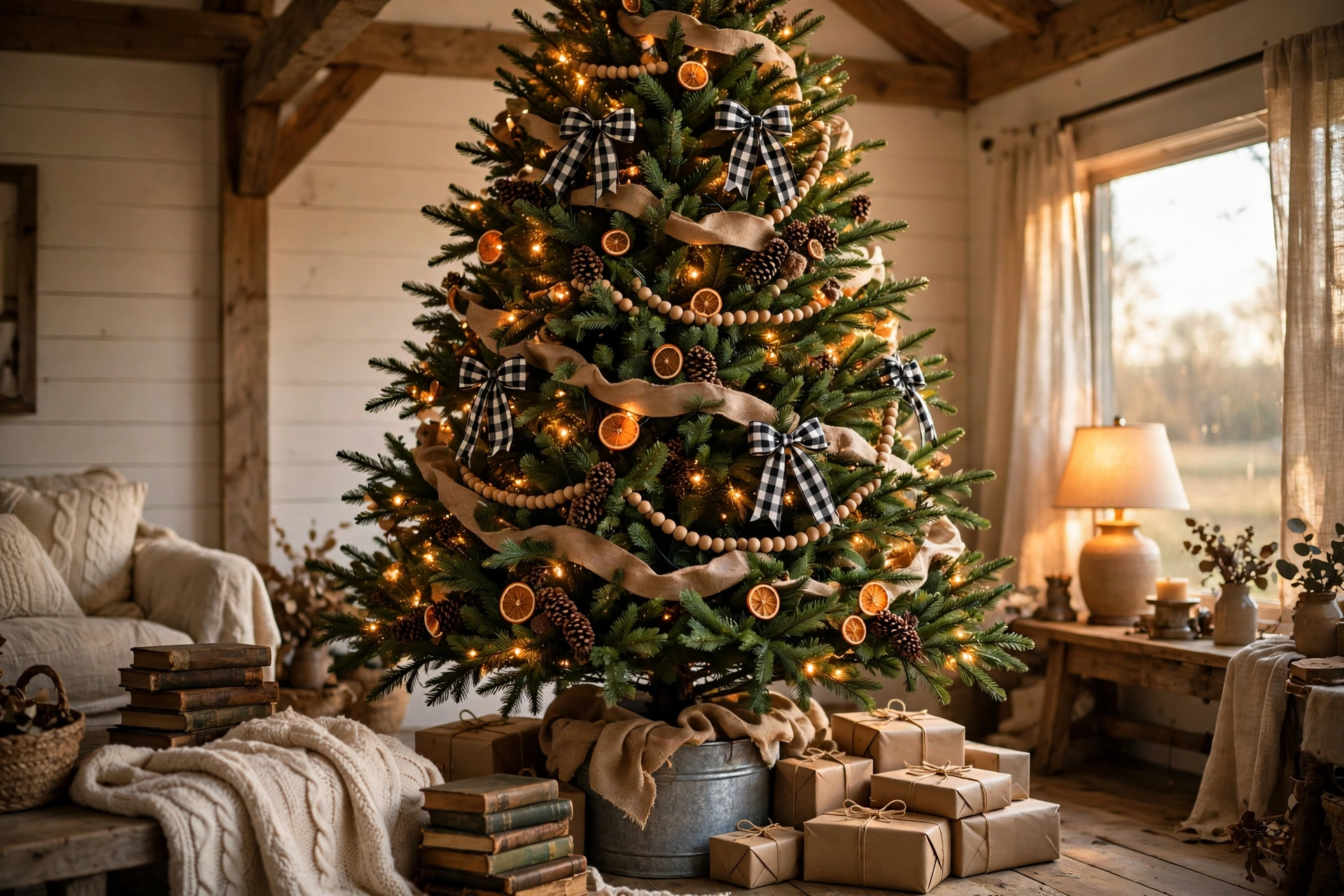
There’s a certain kind of Christmas tree that makes a whole room feel like a farmhouse kitchen smells — warm, a little worn-in, and completely unbothered by perfection.
That’s the country style Christmas tree. It skips the shiny, matchy-matchy look for something softer: burlap instead of satin, pinecones instead of glass, wood instead of plastic.
If you’ve been eyeing that cozy, cabin-in-the-woods aesthetic all over Pinterest and wondering how to actually build it, you’re in the right place. These 16 country style Christmas tree ideas walk through the exact materials, colors, and small details that make a rustic tree feel intentional instead of thrown together.
Grab your hot glue gun and a cup of something warm. Let’s build a tree that feels like home.
Table of Contents
Buffalo Check Ribbon Tree
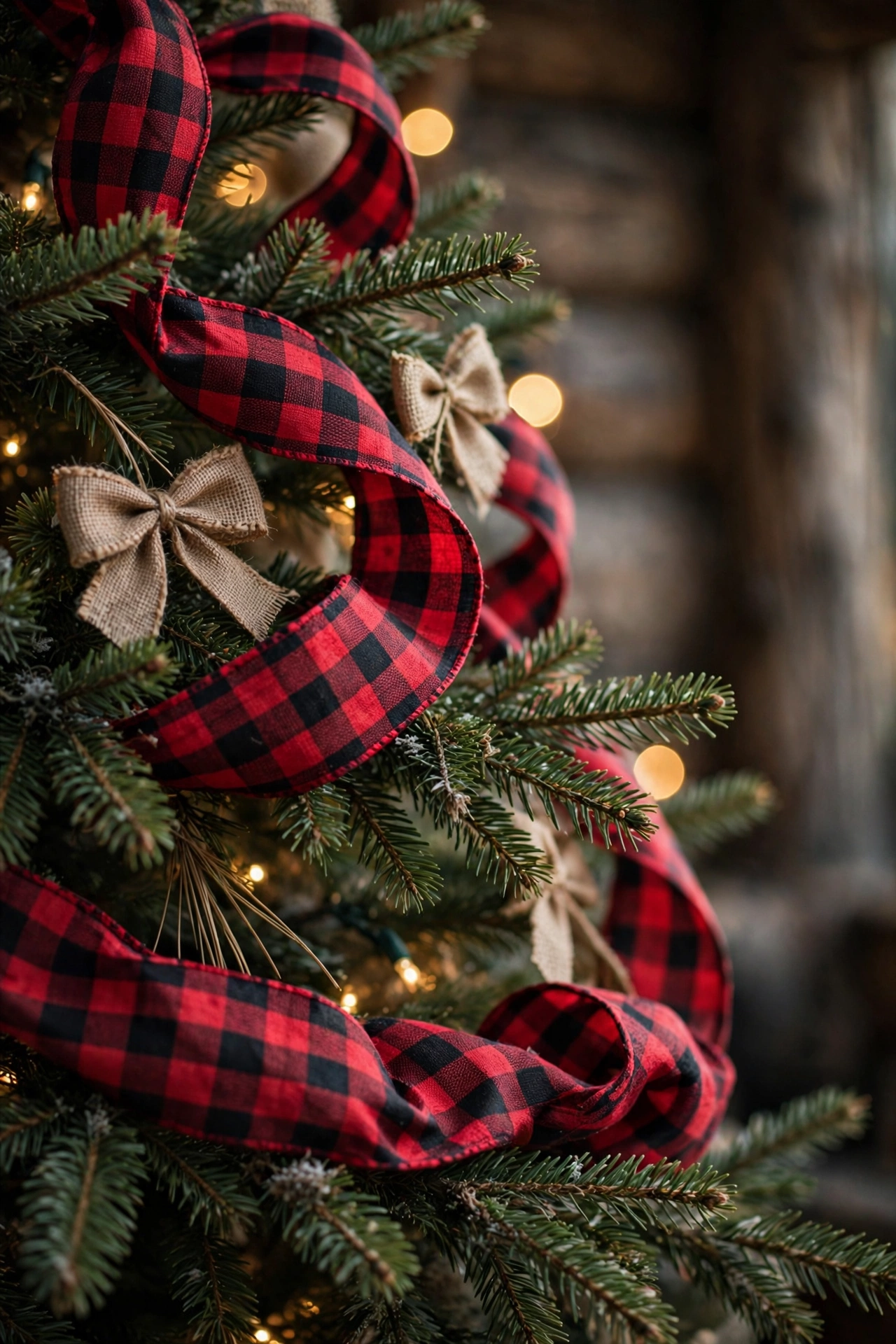
Buffalo check is the fastest way to say “country Christmas” without saying a word. Instead of hanging small bows, weave a wide roll of red and black buffalo check ribbon in loose loops through the branches, letting the tails dangle unevenly for a relaxed, not-too-formal look. Keep the ribbon concentrated in clusters of three or four loops rather than spacing it evenly, since uneven groupings read as more natural and less store-bought. Pair it with warm white lights so the red doesn’t turn orange under a cooler bulb, and balance the boldness of the pattern with plain cream or burlap ornaments nearby. This one material change can shift an entire tree from generic to unmistakably country style.
Burlap and Jute Garland Layers
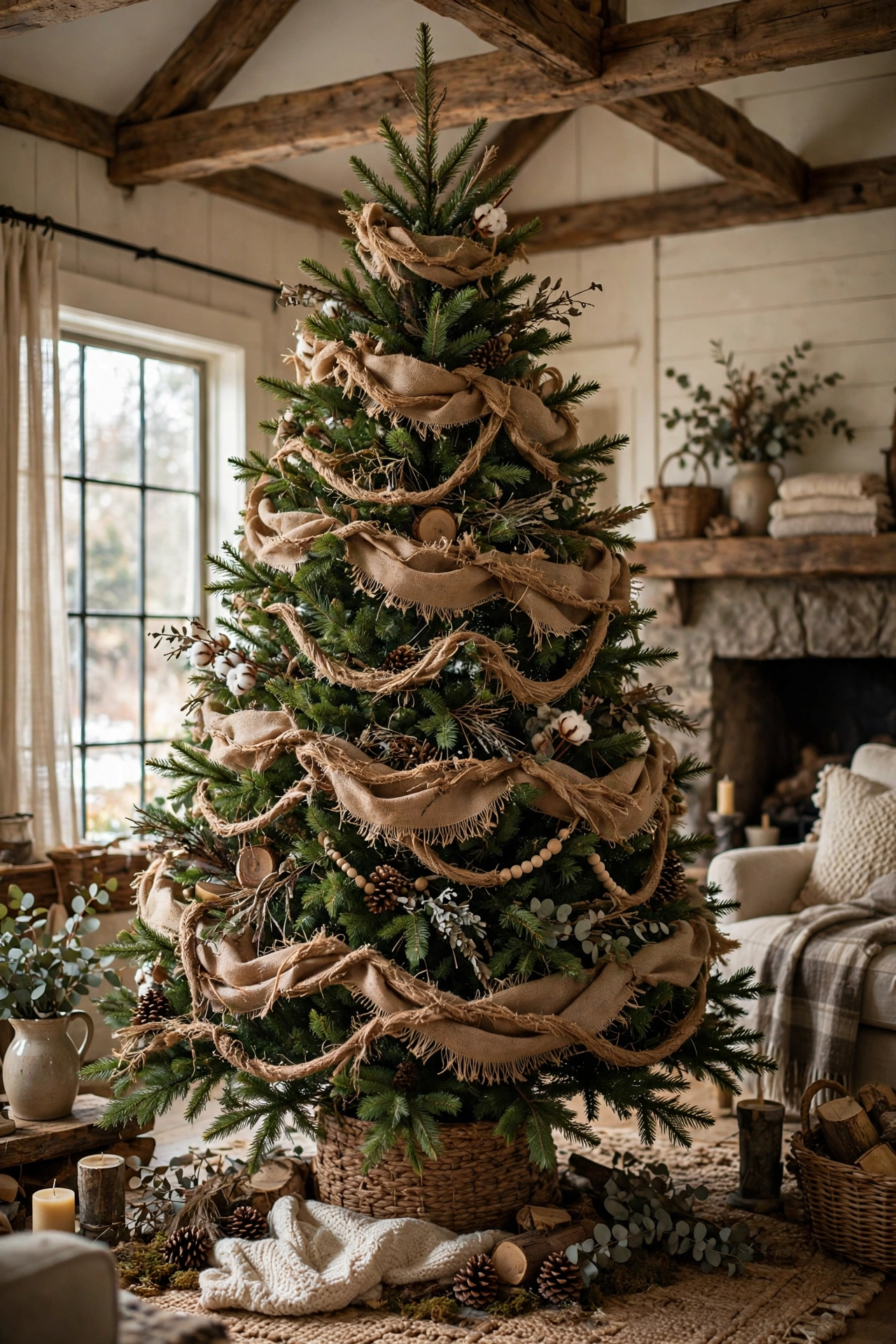
Burlap garland gives a tree the same soft, woven texture as a linen tablecloth or a grain sack, and it works as a neutral base layer under almost any other country decoration. Cut a wide roll of burlap into a garland and drape it in gentle swags rather than a tight spiral, letting the natural fraying edges show for texture. Layer a thinner jute twine garland directly on top, sometimes twisting the two together for a few feet before separating them again. This double-layer trick adds visual depth that a single garland can’t achieve, and it gives ornaments something soft to rest against instead of bare branches. Because burlap and jute are inexpensive by the yard, this is one of the most budget-friendly ways to fill out a sparse tree fast.
Galvanized Bucket Tree Base
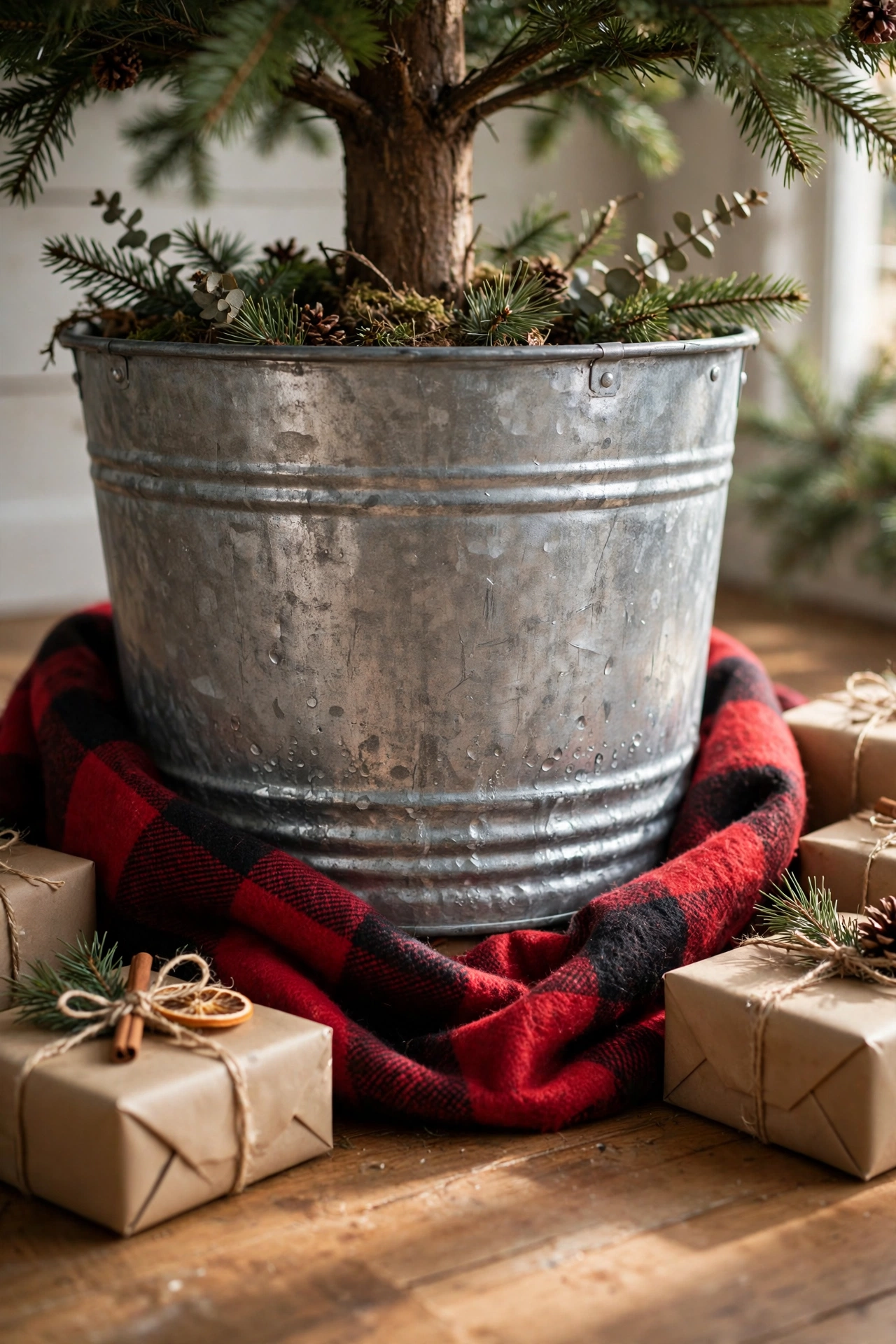
Skip the plastic tree stand skirt entirely and set a real or artificial tree directly inside a large galvanized metal bucket or washtub, using bricks or a smaller stand hidden inside to hold it steady and level. The weathered silver-gray finish of galvanized metal is a signature farmhouse material, and it pairs naturally with wood floors, wool rugs, and the earthy tones of a rustic tree. For an extra styling touch, tuck a folded plaid blanket or a layer of dried moss around the base of the bucket to hide the mechanics and add softness where the metal meets the floor. This swap works especially well for smaller or tabletop trees, where a bucket base can double as a design feature rather than something to disguise. It also holds up season after season far better than a paper tree skirt.
Wood Bead Garland
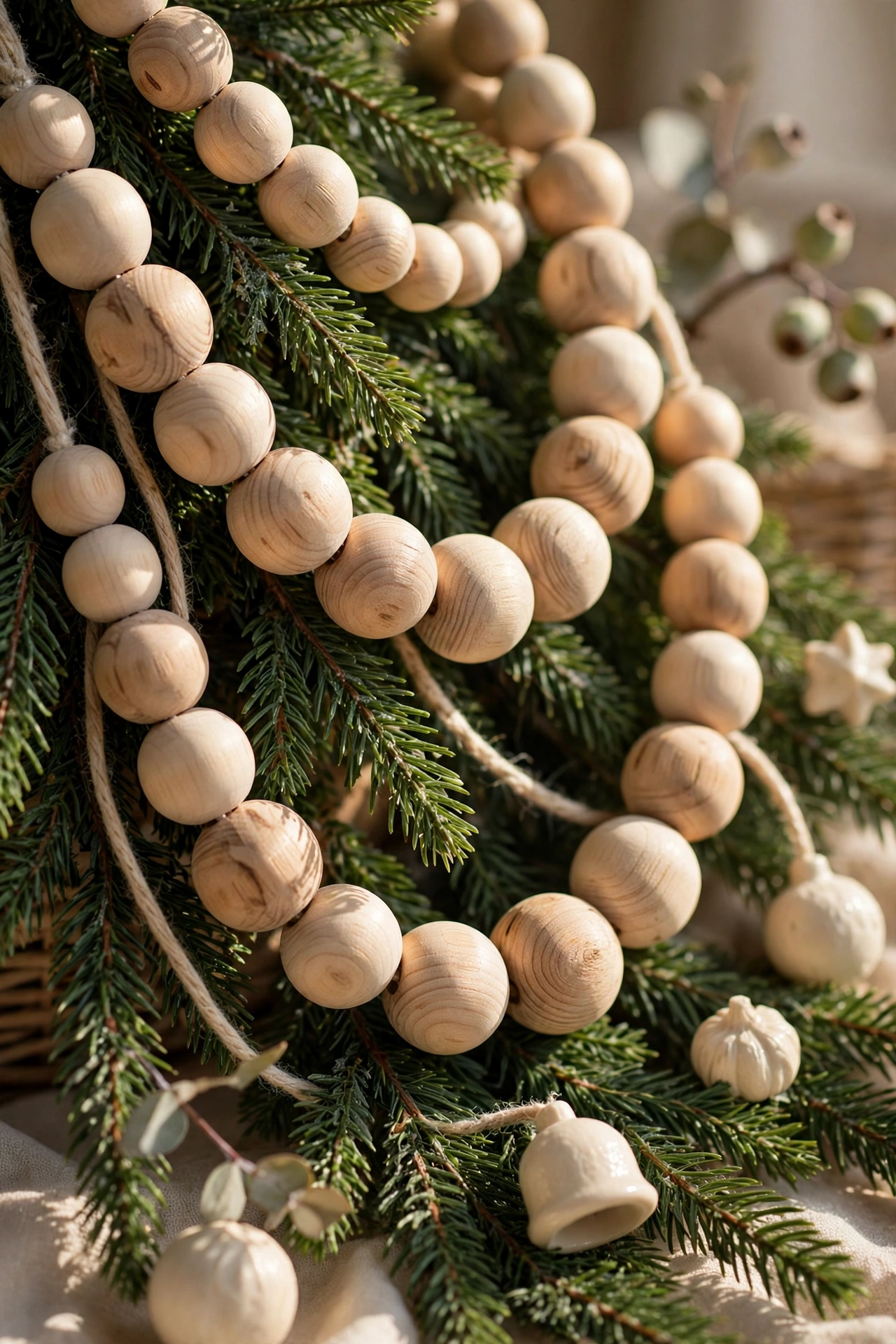
A long strand of natural wood bead garland reads as one of the most iconic country Christmas tree details because it mimics the look of hand-strung popcorn or cranberry garlands from an earlier era, without the mess. Choose beads left in their raw, unfinished wood tone rather than painted ones, since the visible grain and slight color variation between beads is what makes the garland feel handcrafted. Drape it in loose, deep swags rather than pulling it taut, allowing a bit of sag between each branch for a relaxed, lived-in look. Wood bead garland also plays well as a neutral bridge between busier elements like buffalo check ribbon and simpler elements like plain glass ornaments, tying the whole color palette together. It’s lightweight enough to use generously without weighing down thinner branch tips.
Related: 15 DIY Gingerbread Christmas Tree Ideas to Try This Year
Dried Orange Slice and Cinnamon Ornaments
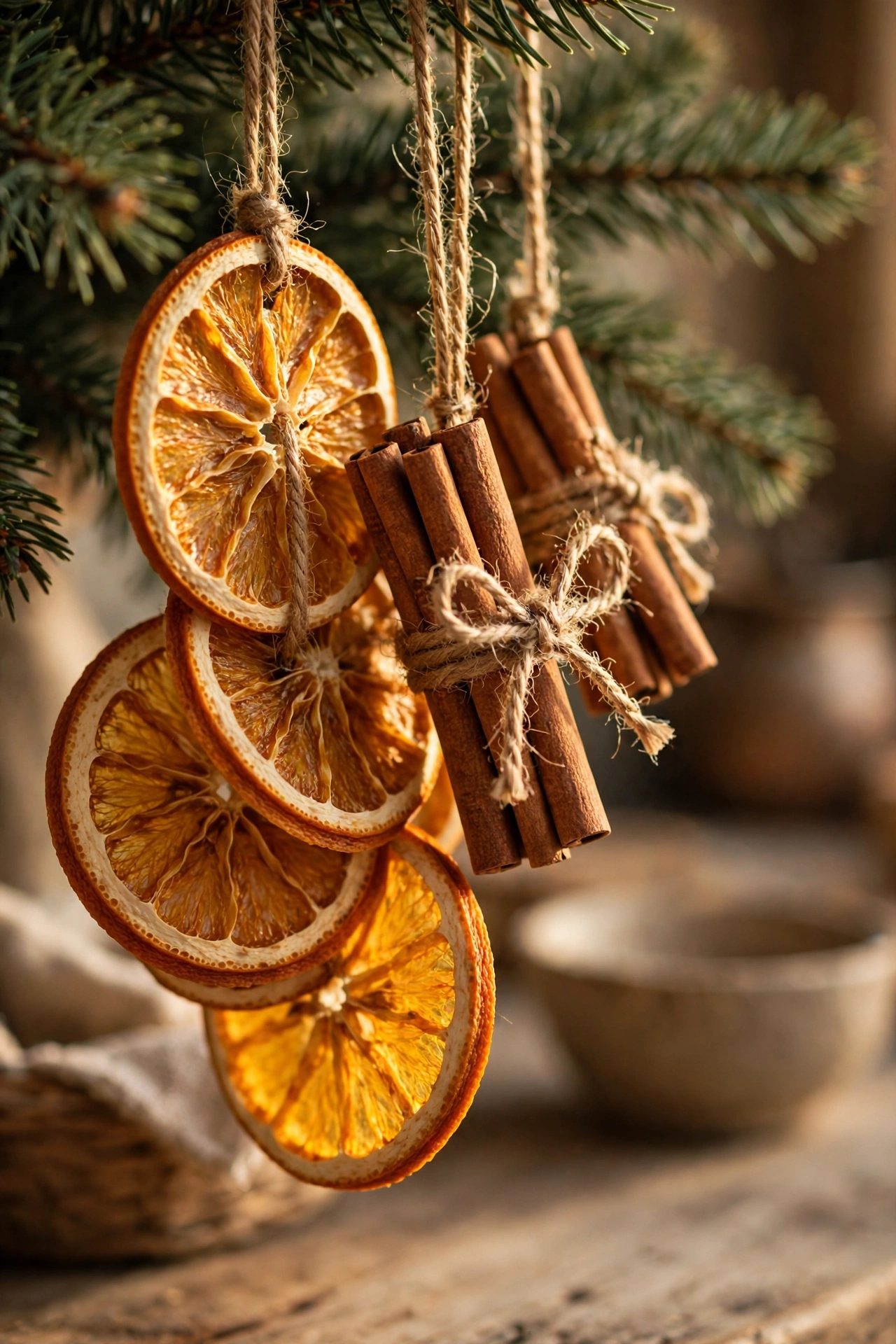
Nothing brings old-world country charm to a tree quite like dried citrus and cinnamon sticks, and the visual appeal comes with a bonus: the tree actually smells like the holidays. Slice oranges thin, dry them low and slow in the oven until the edges curl slightly, then thread jute twine through the top to hang them like little sunbursts among the greenery. Bundle three or four cinnamon sticks together with a scrap of twine to create simple hanging clusters that fill gaps between larger ornaments. These pieces cost almost nothing beyond pantry staples, which makes them ideal for anyone stretching a decorating budget. Because dried citrus fades and darkens slightly over the season, it also gives the tree a naturally aging, farmhouse-authentic look rather than a static, artificial one.
Pinecone and Berry Clusters
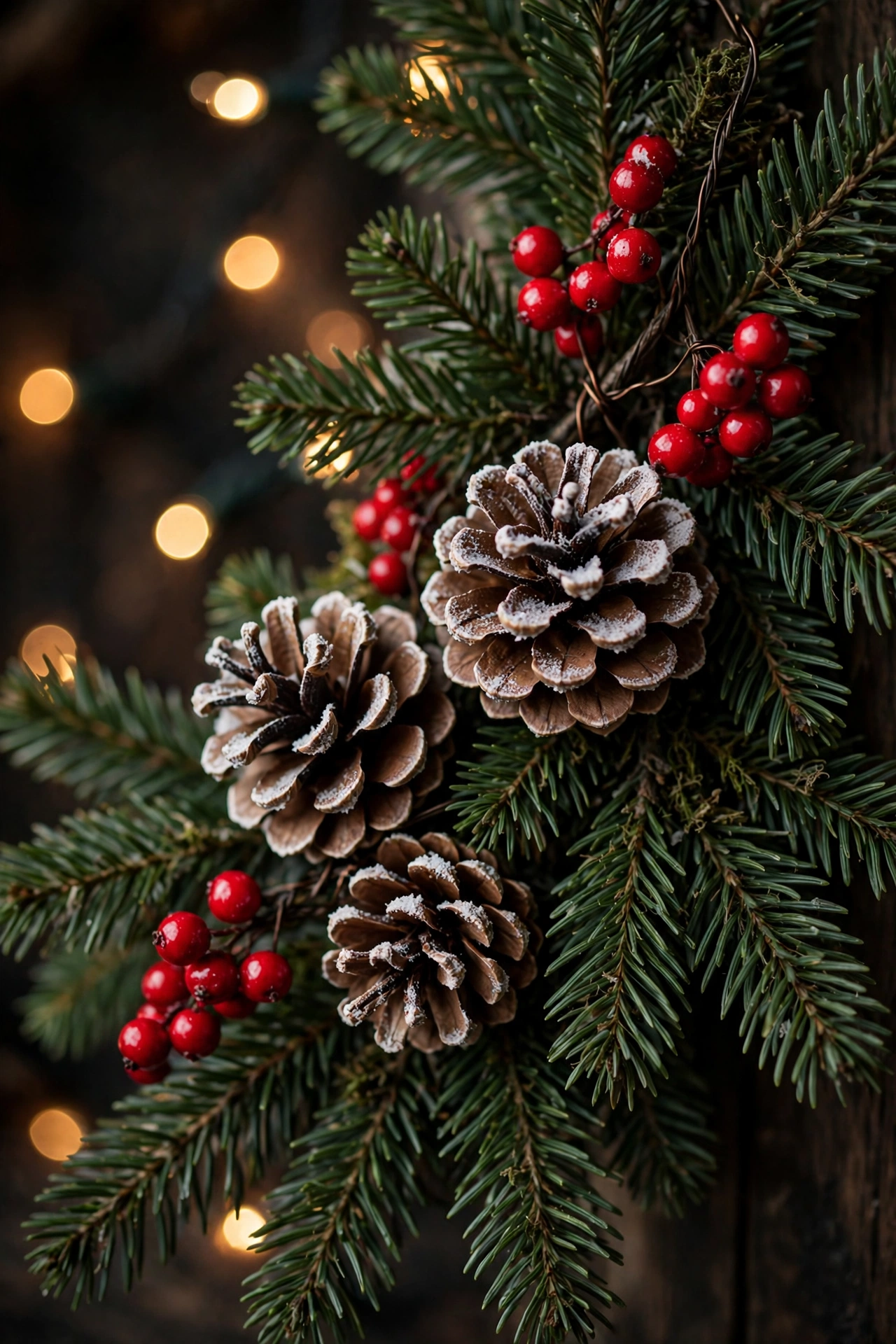
Pinecones are the backbone of almost every country Christmas tree because they add dimension and a genuine outdoor texture that ornaments alone can’t replicate. Wire small clusters of three pinecones together with a few faux red berry picks, then tuck these bundles deep into the tree rather than at the tips of branches, mimicking how they’d naturally settle if the tree had grown that way in a forest. Vary the pinecone sizes across the tree, using larger ones near the bottom and smaller ones toward the top to keep the proportions realistic. A light dusting of white paint or fake snow on some of the pinecones adds a frosted, just-came-in-from-outside feel without looking overly styled. This combination works in every color palette, from deep red and green to all-neutral farmhouse trees.
Vintage Mercury Glass Ornaments
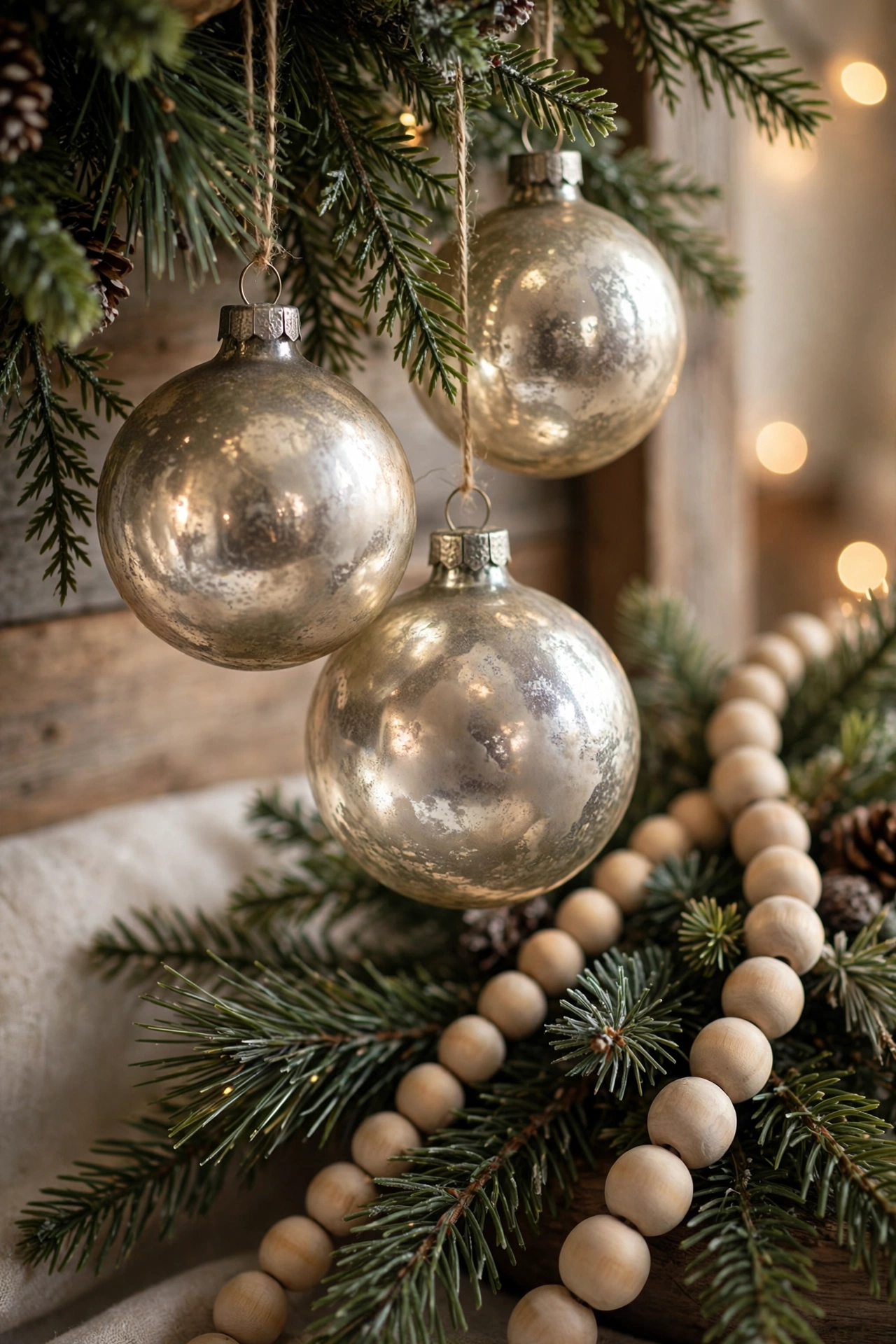
Mercury glass ornaments have a soft, slightly clouded silver or gold finish that looks like it’s been passed down for generations, even when it’s brand new. Their imperfect, antiqued shine is what separates a country style tree from a modern, glossy one, since the light reflects in a muted, warm way instead of a sharp, mirror-like flash. Mix mercury glass balls of different sizes throughout the tree rather than grouping them by size, and let a few nestle close to the wood bead garland so the metallics play off the natural textures nearby. Because mercury glass comes in warm gold, champagne, and soft silver tones, it adds a touch of old-world elegance without pulling the tree away from its rustic roots. This is a detail worth spending a little more on, since the ornaments are reusable for decades.
Farm Animal Ornaments
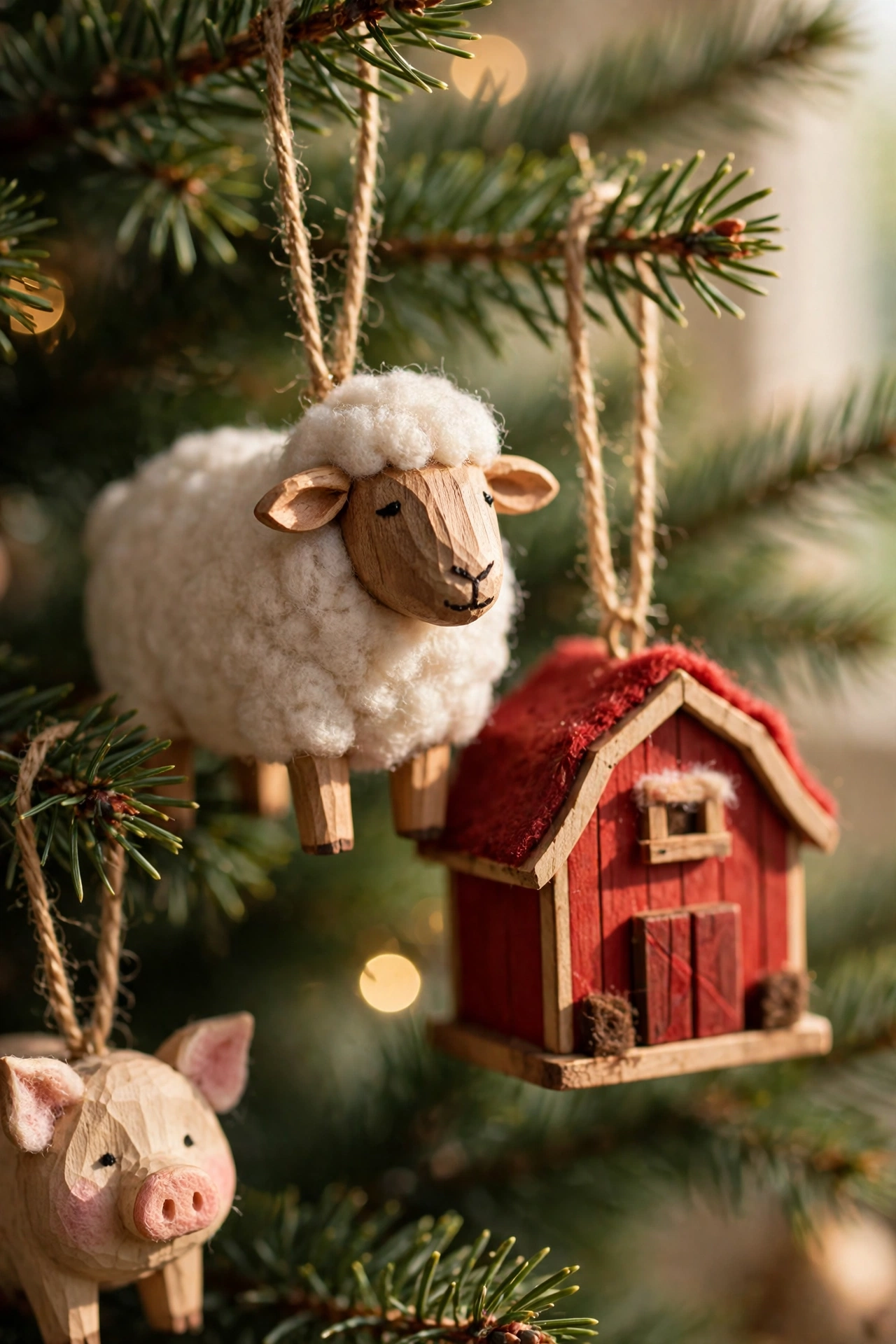
Small ornaments shaped like sheep, roosters, cows, or tiny red barns pull the country theme literally onto the branches, and they’re an easy way to add personality without overwhelming the palette. Choose ornaments made from carved wood, felt, or matte ceramic rather than shiny plastic versions, since the softer finishes match the handmade feel of the rest of the tree. Scatter them individually across the tree instead of clustering all the animals in one spot, so the eye discovers a new detail every time it scans the branches. These ornaments are especially popular with families decorating for kids, since farm animals give little ones something familiar and fun to point out. They also make a tree feel personal and collected over time, rather than bought all at once from a single display.
Wood Slice Message Ornaments
Thin, rustic wood slice ornaments burned or painted with simple holiday words like “Joy,” “Noel,” or a family name bring a personal, handmade layer to the tree that store-bought ornaments rarely achieve. The natural bark edge left on each slice keeps the look organic rather than manufactured, and the raw wood tone blends effortlessly with burlap, jute, and other neutral textures already on the tree. These ornaments are simple enough to make in an afternoon with a wood-burning tool or acrylic paint, which makes them a favorite for family decorating traditions. Hanging a few at varying heights, rather than in a straight line, keeps the tree feeling organically decorated instead of assembled from a kit. Because each one can be customized, wood slice ornaments are also a meaningful way to mark a new home, a new baby, or a family milestone on the tree each year.

Flocked Tree With Natural Tones
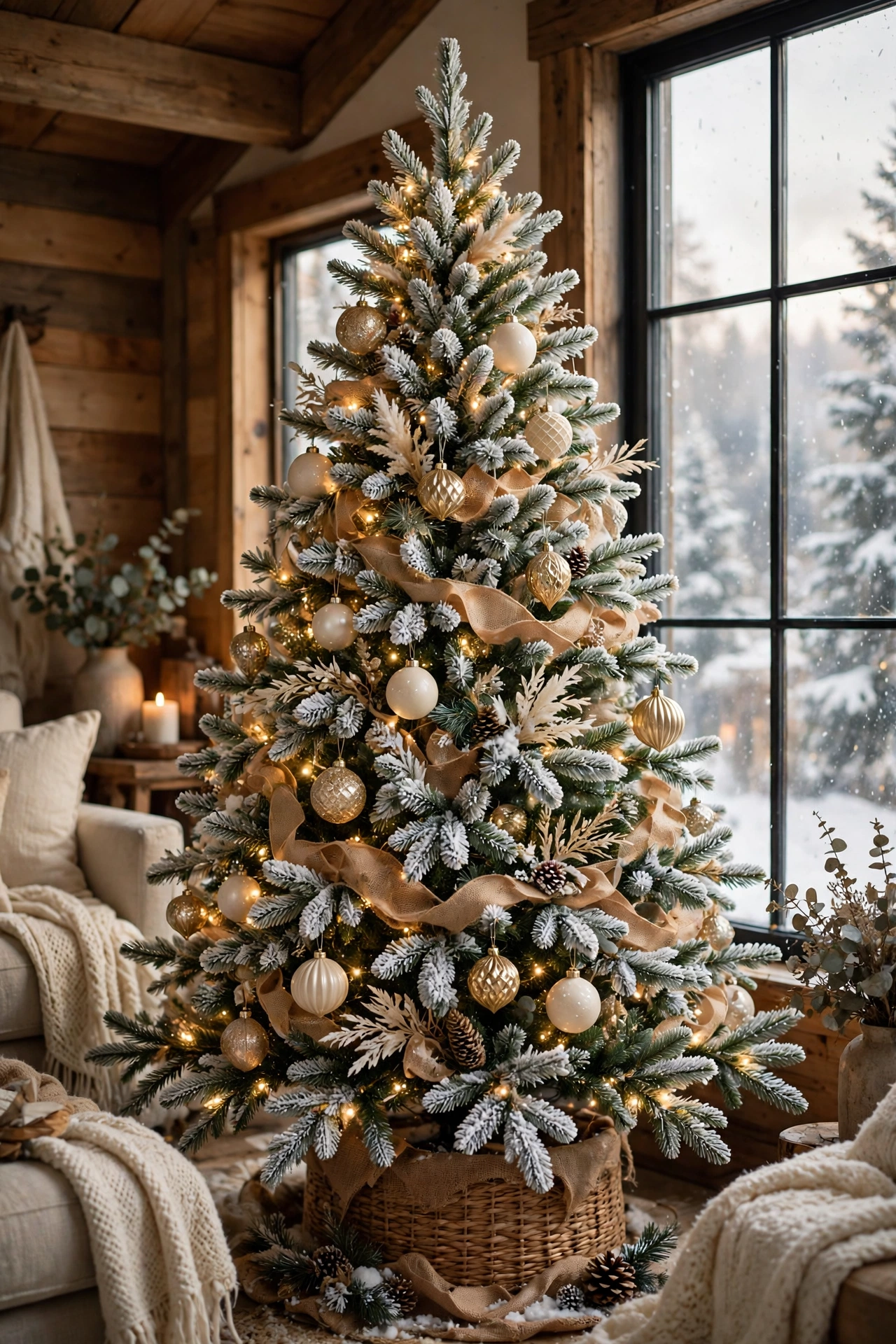
A lightly flocked tree, dusted with faux snow along the tips of the branches, gives a country style tree an instant frosted, just-cut-from-the-woods look. Choose a light to medium flock rather than a heavy, all-white coating, so the green underneath still shows through and reads as natural rather than costume-like. Pair the frosted branches with warm-toned ornaments in cream, brown, and gold rather than cool blues or bright whites, so the overall palette still feels warm despite the snowy texture. Flocking also has a practical benefit: it visually fills in a thinner or older artificial tree, making sparse spots look intentional instead of bare. This is one of the more striking rustic tree ideas for anyone decorating a cabin, ski lodge-style space, or a home with large windows that let in a lot of natural light.
Patchwork Quilt Tree Skirt
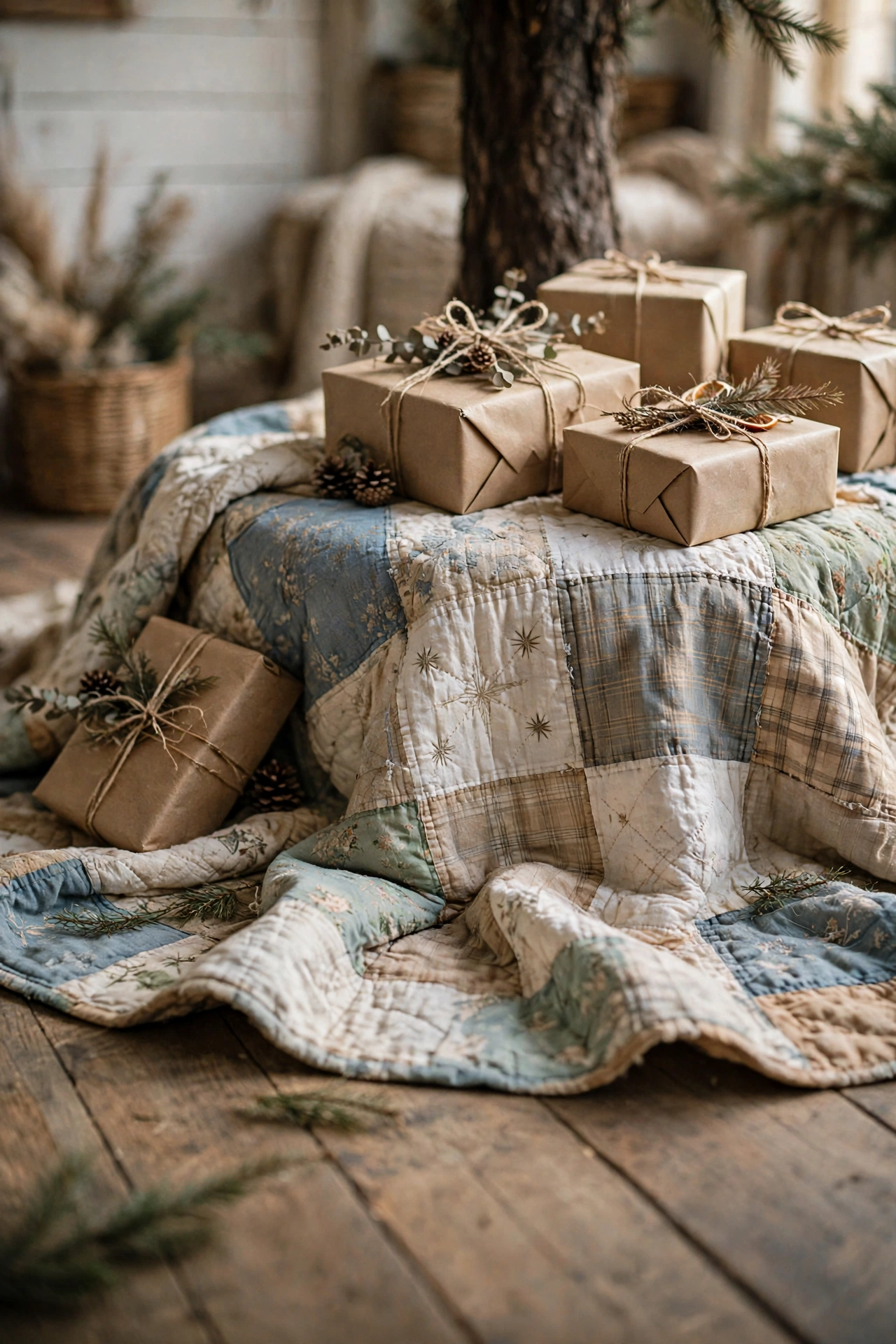
Instead of a manufactured tree skirt, fold an old or vintage-style quilt around the base of the tree, letting the corners pool naturally on the floor rather than lying perfectly flat. Quilts in faded reds, creams, and soft blues bring in the kind of handmade texture that a polyester tree skirt simply can’t replicate, and any small imperfections in the fabric only add to the authentic, well-loved feel. If a family heirloom quilt isn’t available, a thrifted patchwork quilt in a similar palette works just as well and keeps the look budget-friendly. This idea also solves a practical problem, since a large quilt easily hides tree stands, cords, and water reservoirs better than a thin skirt. Layering a small stack of wrapped gifts in kraft paper and twine on top of the quilt completes the cozy, country farmhouse scene at the base of the tree.
Wooden Star or Twig Topper
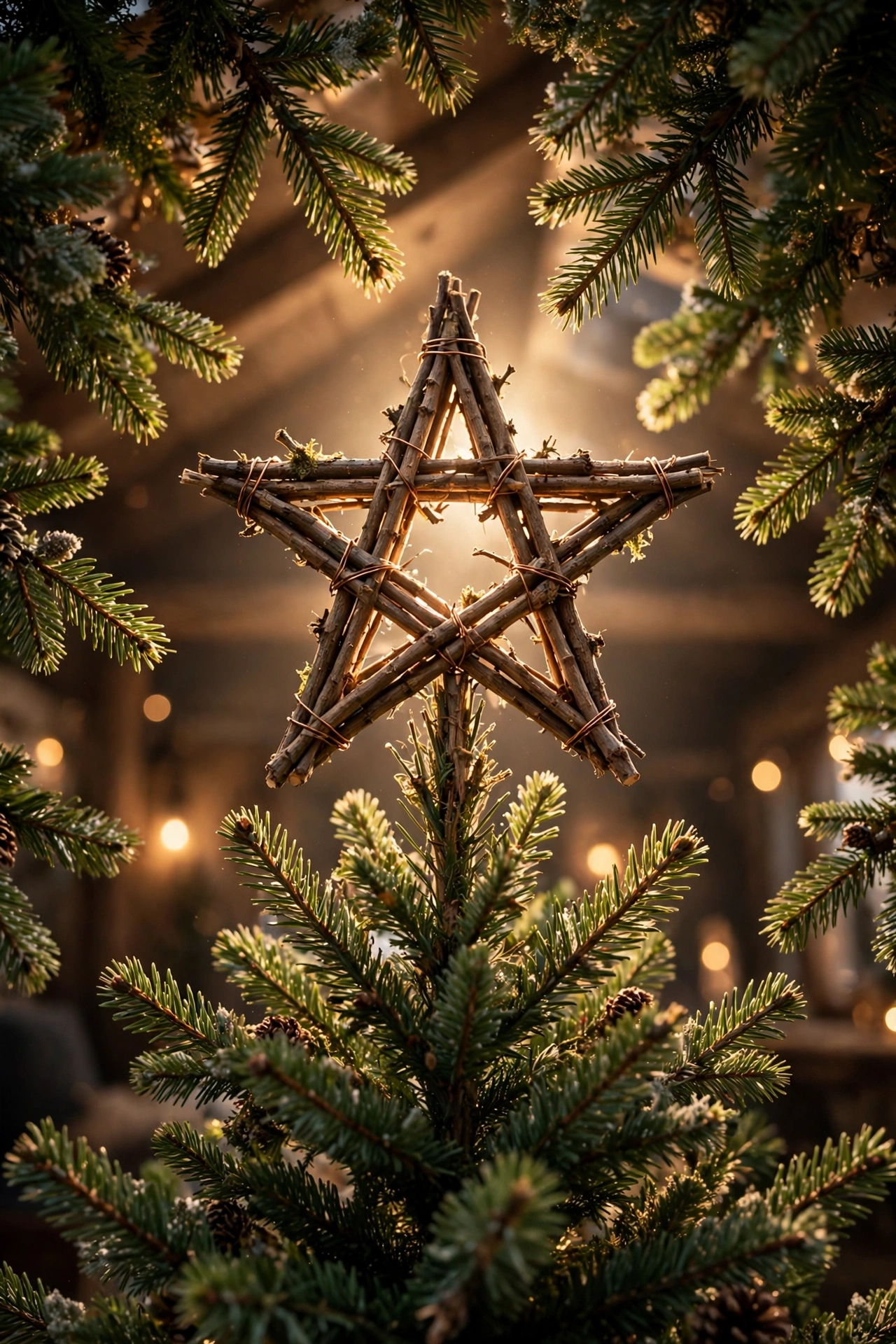
Swap a glittery, oversized tree topper for a simple wooden star or a star shaped from bundled twigs and thin wire. The raw, unpolished material keeps the very top of the tree consistent with the natural textures used everywhere else, rather than introducing a shiny, mismatched focal point. A slightly imperfect, handmade-looking star also tends to photograph better against a plain ceiling or wall, since it doesn’t compete with light the way a glittered topper does. For an even simpler option, a single oversized pinecone wired to the top branch can serve the same purpose with almost no cost. This small detail at the very top of the tree is often the first thing the eye lands on, so keeping it rustic ties the whole design together from top to bottom.
Bird Nest and Feather Accents
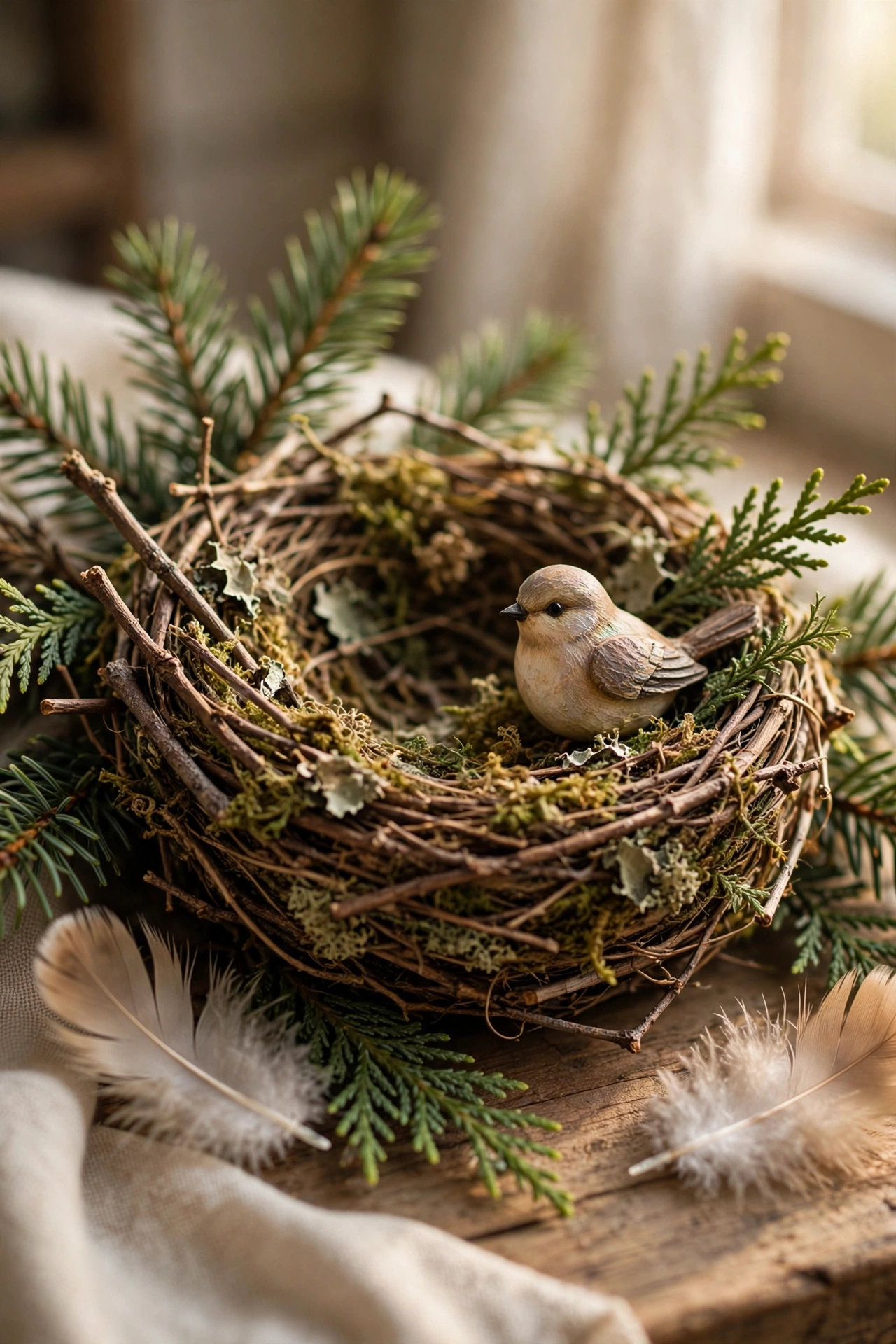
Tucking a few small faux bird nests deep into the branches, sometimes with a tiny bird ornament perched inside, adds an unexpected, storybook layer of country charm that most trees skip entirely. Choose nests made from natural-looking twigs and moss rather than smooth, uniform craft-store versions, and place them at slightly different depths so some are more hidden than others. Pair the nests with a few soft feather picks in cream or brown tones to reinforce the woodland feel without adding any bright color. This detail works especially well on trees that already lean heavily natural, since it rewards a closer look rather than competing for attention from across the room. It’s also a favorite detail for anyone decorating a nature-themed nursery tree or a smaller accent tree near a window.
Copper and Hammered Metal Ornaments
Copper-toned ornaments and hammered metal stars add warmth and a subtle shine to a rustic tree without introducing the cooler brightness of traditional silver or chrome. The slightly uneven, hand-hammered texture on metal ornaments catches light in small, scattered flickers rather than one large reflective flash, which keeps the overall look soft and cozy instead of flashy. Distribute copper pieces evenly through the tree rather than grouping them near the top, since copper reads as a warm neutral that should blend throughout rather than stand out as an accent color. This material pairs particularly well with deep green and burgundy color palettes, adding a touch of richness that keeps an all-natural tree from feeling too plain. Copper ornaments also tend to be very durable, making them a solid one-time purchase for anyone building a country style collection over several seasons.

Woodland Antler Accents
Small faux antler ornaments or a single decorative antler tucked near the base of the tree bring in a cabin-in-the-mountains feel that pairs beautifully with plaid, wood, and warm lighting. Choose resin or wood-toned faux antlers rather than anything painted a bright, artificial white, since a natural bone or driftwood color blends more convincingly with the rest of the tree’s palette. A few antler-shaped ornaments scattered among the branches work well for a subtle nod to this theme, while a single larger antler piece leaned against the tree base makes a bolder statement for anyone fully embracing a lodge-style look. This detail tends to resonate strongly with anyone decorating a cabin, hunting lodge, or mountain home, but it also works in a more traditional farmhouse space as an unexpected textural accent. Balance it with plenty of soft textures nearby, like burlap or wool, so the look stays warm rather than austere.

Tabletop Mini Rustic Tree
For small apartments, dorm rooms, or anyone who wants rustic charm in more than one spot in the house, a mini tabletop tree scaled down to twelve to eighteen inches captures every element of the full-size look in miniature. Use a small styrofoam or wood cone base wrapped in the same buffalo check or burlap ribbon used on a larger tree, then finish with tiny pinecones, mini wood beads, and a small twig star on top. Keeping the ornament scale proportional is the key detail here, since oversized decorations on a small tree will look cluttered rather than charming. A mini tree like this works beautifully on an entryway table, a kitchen counter, or a nightstand, and it lets anyone with limited space still get the full country Christmas experience. It also makes a thoughtful, handmade-style gift for a friend or neighbor during the holidays.
Related: 23 Classic Christmas Tree Ideas That Never Go Out of Style

Styling Tips
Layer your textures before you add color. A country style tree relies on the contrast between rough burlap, smooth wood, and soft fabric more than it relies on bright ornaments, so build that texture foundation first with garland and ribbon, then add ornaments on top.
Work in odd-numbered clusters. Grouping ornaments and pinecones in threes and fives, rather than spacing everything evenly, mimics how natural elements settle and keeps the tree from looking mechanically arranged.
Push decorations deep into the tree, not just on the tips. Country style trees get their fullness from decorations tucked at different depths, which creates shadow and dimension instead of a flat, surface-only look.
Practical Implementation Ideas
Start with a lighting test before adding any ornaments. Warm white lights are non-negotiable for this style, since cool white or multicolor lights fight against every earthy tone on this list.
Shop your own home first. Vintage quilts, old mason jars, wood bowls, and even kitchen twine can usually be repurposed as tree decor before anything new needs to be purchased.
Build the tree in layers over a few days if needed. Garland and ribbon first, then larger ornaments, then small filler pieces like berries and citrus slices, checking the balance at each stage rather than trying to finish in one sitting.
Common Mistakes to Avoid
Using too many shiny or metallic ornaments at once, which pulls the eye away from the natural textures that define the country style in the first place.
Spacing ornaments too evenly, which creates a stiff, almost geometric pattern instead of the relaxed, gathered-over-time look this style depends on.
Choosing cool-toned lights or icy blue and silver accents, which clash with the warm neutrals and earthy reds that anchor a rustic tree.
Small-Space Alternatives
A tabletop mini tree, as covered above, delivers the full look in a fraction of the footprint and works well on a console table or windowsill.
A slim, pencil-style artificial tree wrapped tightly with garland and a single ribbon color keeps the country look intact without needing the width of a traditional tree.
Related: 15 Black and Pink Christmas Tree Ideas for a Bold Look
Wall-mounted branch trees, made from a few bundled birch or pine branches arranged in a triangle shape, offer a rustic silhouette for renters or extremely tight spaces.
Budget-Friendly Alternatives
Dry your own citrus and cinnamon bundles instead of buying decorative versions, since both use ingredients already found in most kitchens.
Thrift a quilt, wool blanket, or vintage linens for a tree skirt rather than purchasing a new one, checking secondhand shops in early fall before holiday pricing kicks in.
Reuse and repaint old ornaments in neutral tones like cream, brown, or matte gold rather than replacing an entire ornament collection each season.
Pro Styling Recommendations
Anchor the palette to three main colors, such as forest green, cream, and one warm accent like copper or burgundy, so the tree feels curated even with a wide mix of textures.
Save a few of the boldest pieces, like a patterned buffalo check bow or a standout wood ornament, for eye level, since that’s the height most people naturally look at first when they walk into a room.
Step back and photograph the tree in progress. A phone photo often reveals gaps or overly bunched areas that are harder to spot while decorating up close.
Frequently Asked Questions
Conclusion
A country style Christmas tree isn’t about following a strict formula. It’s about choosing a handful of natural, textured materials and letting them feel a little imperfect, a little collected, and completely lived-in.
Whether the starting point is a roll of buffalo check ribbon, a jar of dried orange slices, or a quilt pulled from the closet, the goal stays the same: a tree that feels like it belongs in a home with a wood stove crackling nearby, not a showroom.