21 Curved Sofa Layout Ideas That Make Tiny Living Rooms Feel Bigger
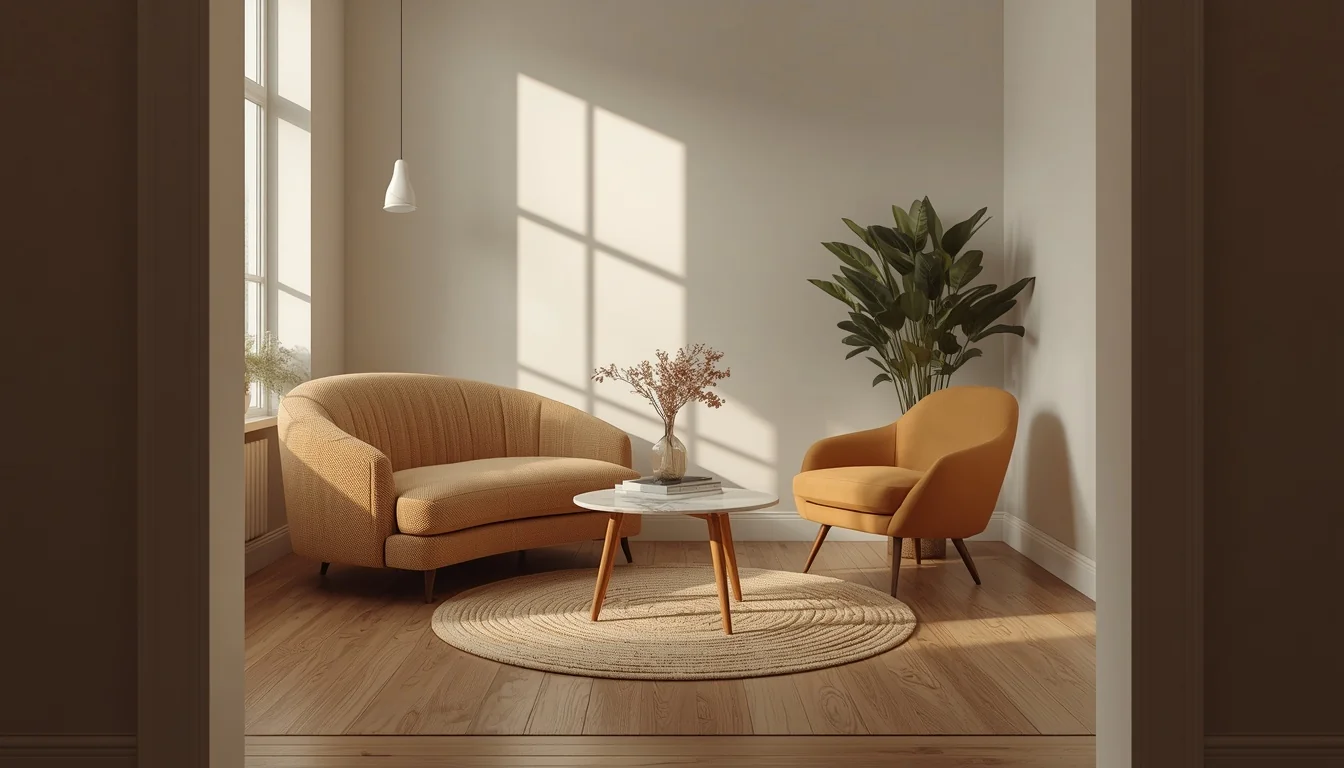
A small living room doesn’t need less furniture. It needs furniture that knows how to get out of its own way.
That’s the real trick behind a curved sofa. Its rounded shape doesn’t carve out the same hard, blocky footprint a standard sectional does, which means your eye and your feet both get more room to move. Corners feel less trapped. Walking paths open up. A room that felt like a maze of sharp angles suddenly has somewhere for the eye to glide instead of stop.
But a curved sofa only works this magic if it’s placed with real intention. Push it against the wrong wall, pair it with an oversized coffee table, or crowd it with too much other furniture, and you lose the exact benefit you bought it for in the first place.
This guide walks through 21 specific layout ideas for making a curved sofa work in a genuinely small living room, not just look good in a spacious showroom photo. Save the ones that match your floor plan.
Table of Contents
1. Angle the Curved Sofa Into a Corner to Open Up Floor Space
Placing a curved sofa diagonally into a corner, rather than pushed flush against two walls, uses the room’s least functional space, the corner itself, while leaving the rest of the floor plan open for movement. The sofa’s rounded front edge naturally follows this diagonal placement better than a straight sectional would, since there’s no hard right angle fighting against the room’s actual corner. This layout also creates a small triangular pocket of space behind the sofa, which can hold a slim console or simply stay open, adding a sense of depth to a room that would otherwise feel boxed in. Because the curve angles inward toward the room’s center, seated guests naturally face the main activity zone, whether that’s a TV, a fireplace, or simply the rest of the room. This is one of the most reliable, space-maximizing layouts for any small living room with at least one usable corner.
2. Float the Curved Sofa Away From the Wall
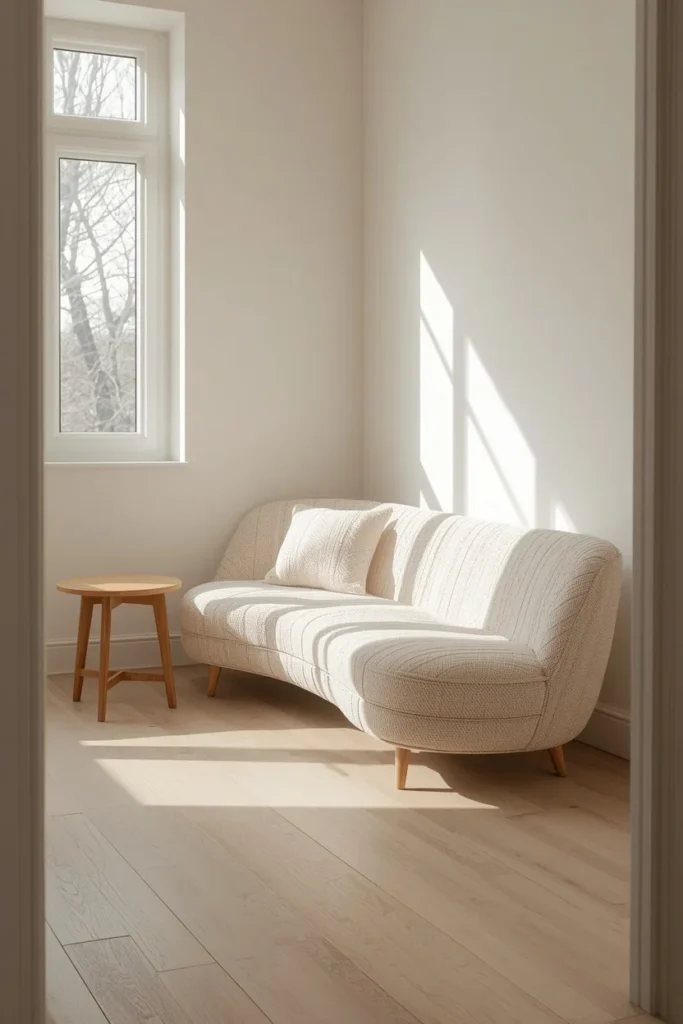
Rather than pushing the sofa against a wall the way most small-space advice suggests, floating a curved sofa several feet out into the room can actually make a tiny living room feel larger by creating usable space on both sides of the piece. The curve’s rounded back means it doesn’t create the same heavy, blocky visual barrier a straight-backed sofa does when viewed from behind, so the room still feels open even with furniture positioned toward its center. This layout works especially well in a studio apartment or open-concept space, where the sofa’s back can help define the living area without needing an actual wall. Add a slim console table behind the curve to anchor the space and provide a spot for a lamp or plant. This approach requires a bit more square footage than a corner placement, but it delivers a genuinely different, more open feeling than furniture lined up along the perimeter.
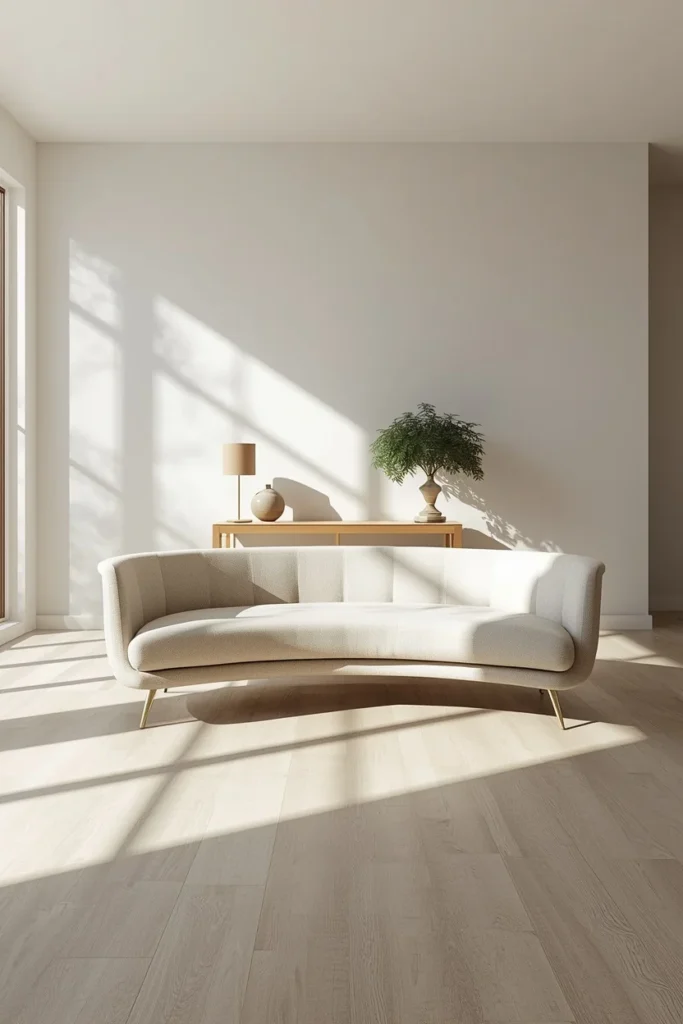
3. Use a Petite Kidney-Shaped Sofa Instead of a Full Sectional
A kidney-shaped sofa, with its gently curved silhouette and typically compact footprint, seats two to three people comfortably without requiring anywhere near the floor space a full sectional demands. This shape works especially well as a room’s sole seating piece in a genuinely tiny living room, since its scale stays proportional to the space rather than overwhelming it. Choose a size specifically labeled as apartment or petite scale, since many curved sofas marketed for general use are still built for larger rooms. Pair it with one or two smaller accent pieces, like a slim side table, rather than a full matching furniture set, keeping the overall footprint light. This is often the single most effective substitution on this entire list for anyone working with a genuinely small square footage.
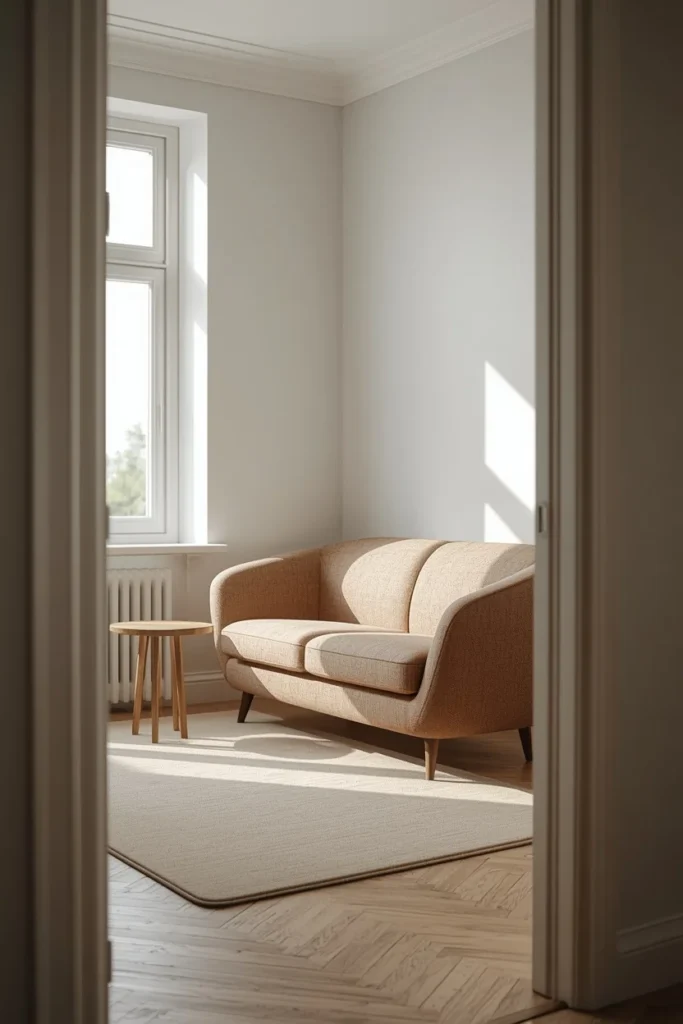
4. Pair the Curve With a Round Coffee Table
A round coffee table continues the sofa’s curved language down at floor level, avoiding the hard corners a rectangular table would introduce into an already tight walking path. This pairing also reduces the number of sharp edges in the room overall, which matters practically in a small space where furniture sits closer together and gets bumped into more often. Choose a table diameter roughly two-thirds the length of the sofa’s curve, keeping proportions balanced without the table overwhelming the seating area. A round table with a slim pedestal base, rather than four separate legs, also keeps more floor visible underneath it, reinforcing the open, airy feeling this entire layout style is built around. This is one of the simplest, most universally applicable pairings for any curved sofa layout.
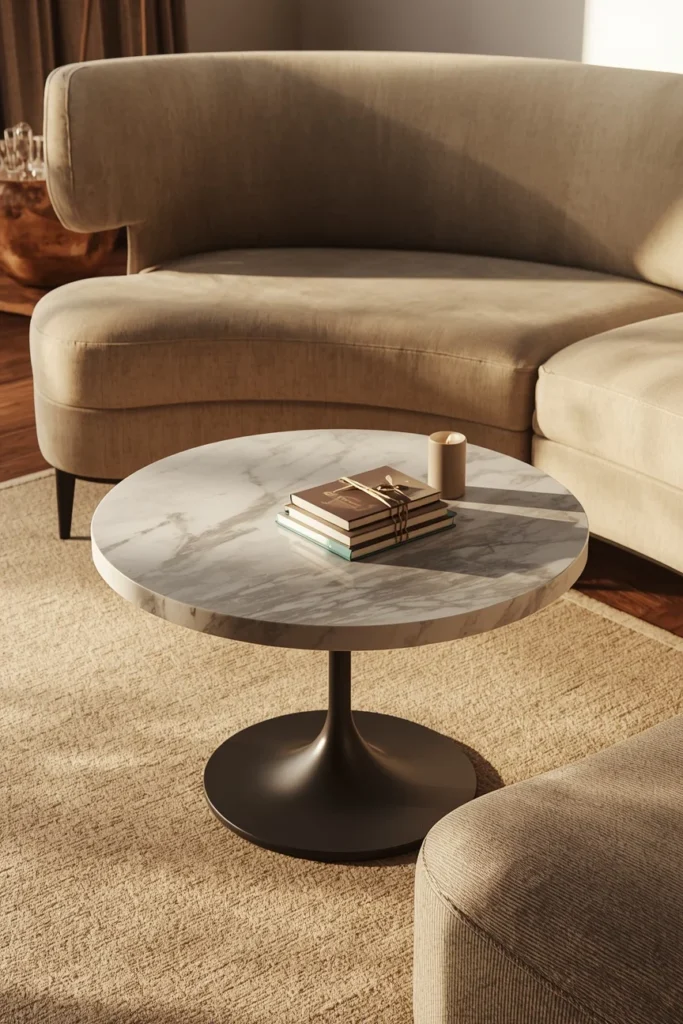
5. Let the Sofa Divide an Open-Concept Space Without Walls
In a studio or open-concept layout, a curved sofa can define the boundary between the living area and an adjacent dining or entry zone without needing an actual partition wall, which would only make the space feel smaller and more chopped up. Position the sofa’s back toward the zone you want to separate, letting its curve gently arc rather than creating a hard, straight dividing line. This approach preserves sightlines and natural light flow across the entire space, both of which matter enormously in small square footage. A curved shape reads as a softer, more organic boundary than a straight sectional back would, which helps the division feel intentional rather than like a barrier. This layout is particularly popular in small apartments where every wall the room doesn’t have is actually an asset worth preserving.
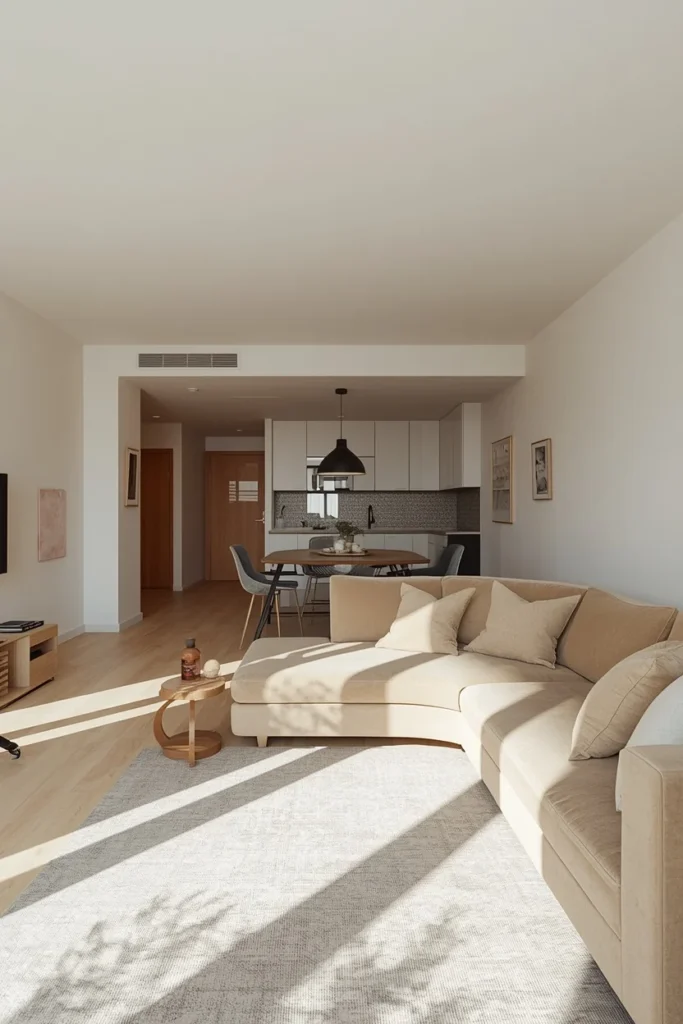
6. Choose a Low-Profile Curved Sofa to Keep Sightlines Open
A sofa with a lower overall back height keeps sightlines open across the room, which matters significantly in a small space where a tall, blocky piece of furniture can visually chop the room in half. Choose a curved frame with a back height under thirty inches, letting the eye travel freely over the top of the sofa toward windows, art, or the far wall. This detail matters especially in a studio apartment or a small room with a single window, where uninterrupted sightlines help daylight reach further into the space. A lower profile also reads as more relaxed and lounge-like, which suits the informal, easy character most curved sofas are designed around in the first place. Pair a low-profile sofa with similarly low side tables and a low coffee table to keep the entire seating area’s visual weight close to the floor.
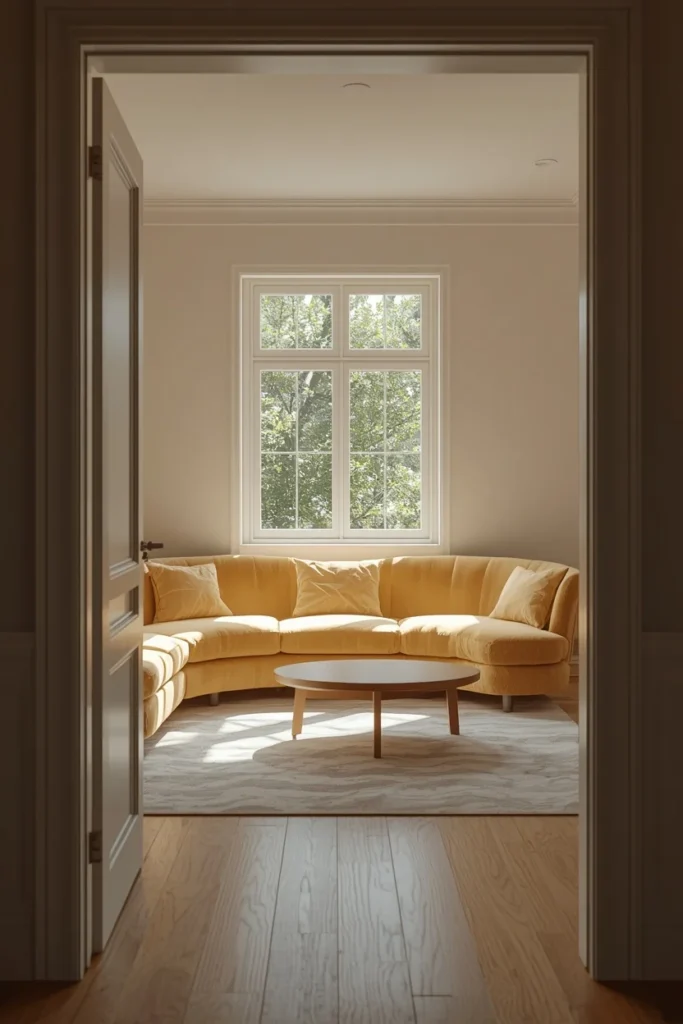
7. Use the Curve to Soften a Room Full of Straight Walls
Most small living rooms are boxy by nature, with four straight walls and right-angle corners that can make the whole space feel rigid and closed in. A curved sofa introduces a genuinely different shape into that geometry, and this contrast alone often makes a room feel more dynamic and less cramped, even without adding any additional square footage. Choose a sofa with a pronounced, visible curve rather than one with only a subtle bow, since a stronger curve creates more noticeable contrast against the room’s straight architectural lines. This effect is particularly powerful in a small room with minimal other furniture, where the sofa’s shape gets to stand out clearly rather than blending into a crowd of similarly curved pieces. It’s a simple visual principle, contrast and variety read as more interesting and spacious than repetition, and it applies directly to furniture shape choices in small rooms.
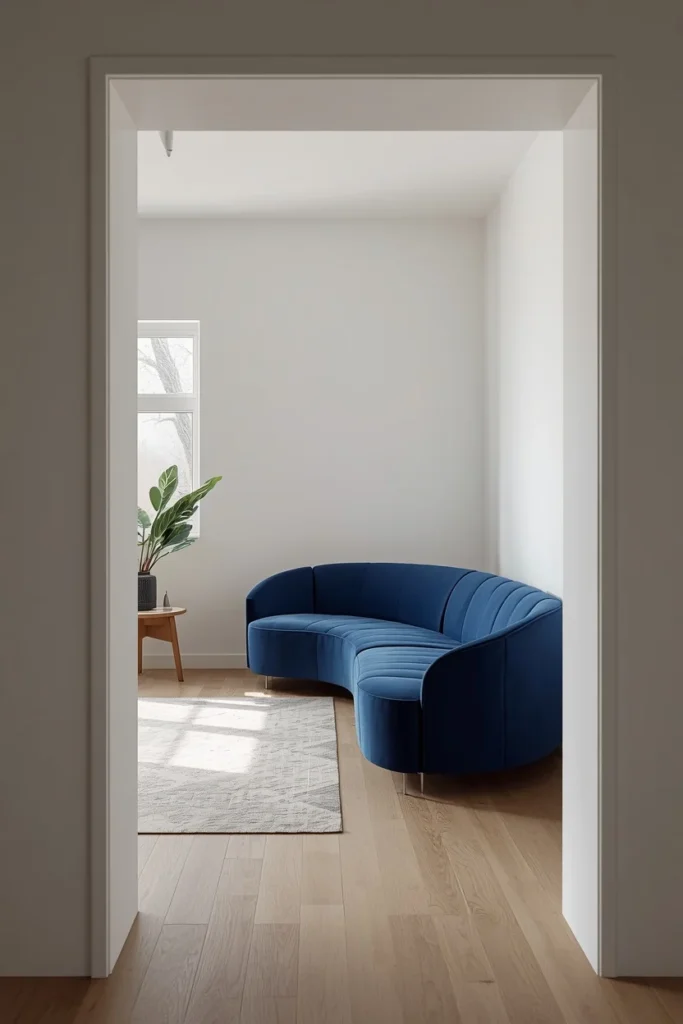
8. Place the Sofa on the Diagonal in a Square Room
In a perfectly square or near-square small living room, placing the curved sofa on a diagonal rather than parallel to any single wall can actually make better use of the room’s total floor area, since it avoids leaving a large, awkward rectangular gap on either side. This layout works particularly well when the room has a single strong focal point, like a fireplace or a large window, positioned in a corner rather than centered on a wall. The diagonal angle also naturally creates a small triangular nook behind the sofa, useful for a narrow console or simply left open as breathing room. This is a less common layout choice, but it solves a specific problem, awkward square proportions, better than most standard furniture arrangements. Measure carefully before committing, since a diagonal placement needs slightly more total floor space than a straight wall placement to avoid feeling cramped.
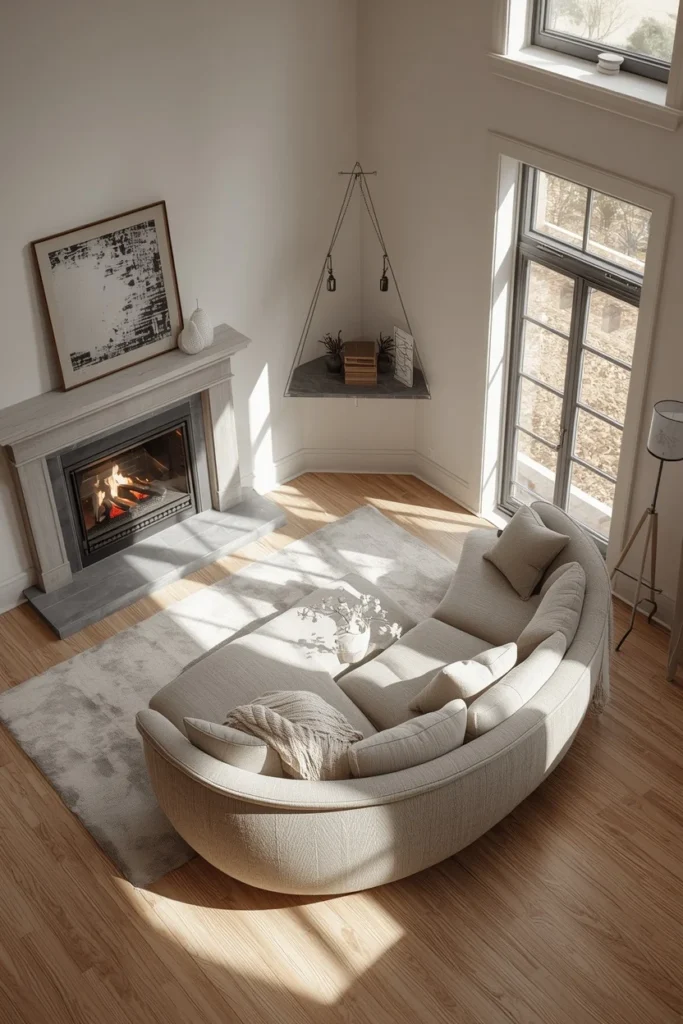
9. Pair a Small Curved Sofa With a Single Swivel Chair
Rather than adding a second sofa or a bulky loveseat for additional seating, a single swivel chair pairs naturally with a curved sofa’s rounded shape while taking up significantly less floor space. The chair’s ability to rotate also adds genuine flexibility in a small room, letting the seat face the sofa for conversation or turn toward a TV or window as needed. Choose a chair with a similarly rounded silhouette, like a barrel or egg shape, so the two pieces feel like part of the same design language rather than mismatched styles. Position the chair at an angle to the sofa’s curve rather than directly facing it head-on, which echoes the room’s overall soft, flowing layout. This combination delivers comfortable seating for three to four people total without ever feeling like the room is packed with furniture.
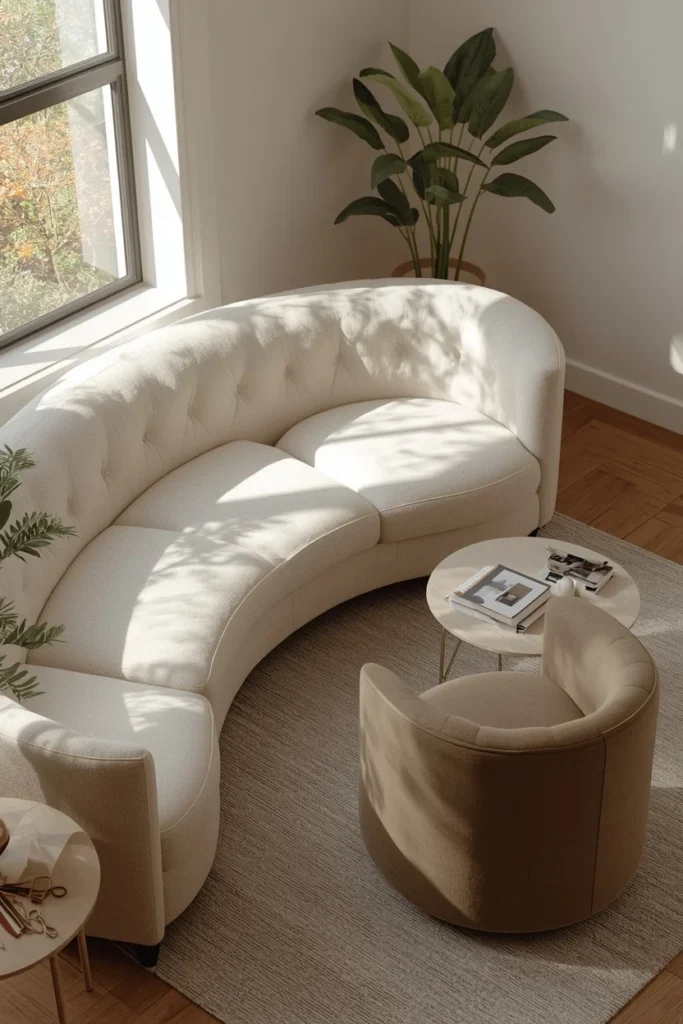
10. Use a Curved Loveseat Instead of a Full-Size Sofa
For living rooms under roughly one hundred fifty square feet, scaling down to a curved loveseat rather than a full three-seat sofa can be the difference between a room that feels comfortably furnished and one that feels genuinely overcrowded. A loveseat still offers the visual softness and flow benefits of a curved shape while occupying meaningfully less floor space than its full-size counterpart. This option works particularly well for individuals or couples who don’t regularly need to seat more than two to three people at once, prioritizing comfortable daily use over accommodating occasional larger gatherings. Pair the loveseat with one additional accent chair if extra seating is needed for guests, rather than defaulting to a larger sofa that sits underused most of the time. Choosing the right scale from the start avoids the common trap of buying a beautiful sofa that simply doesn’t fit the room’s actual proportions.
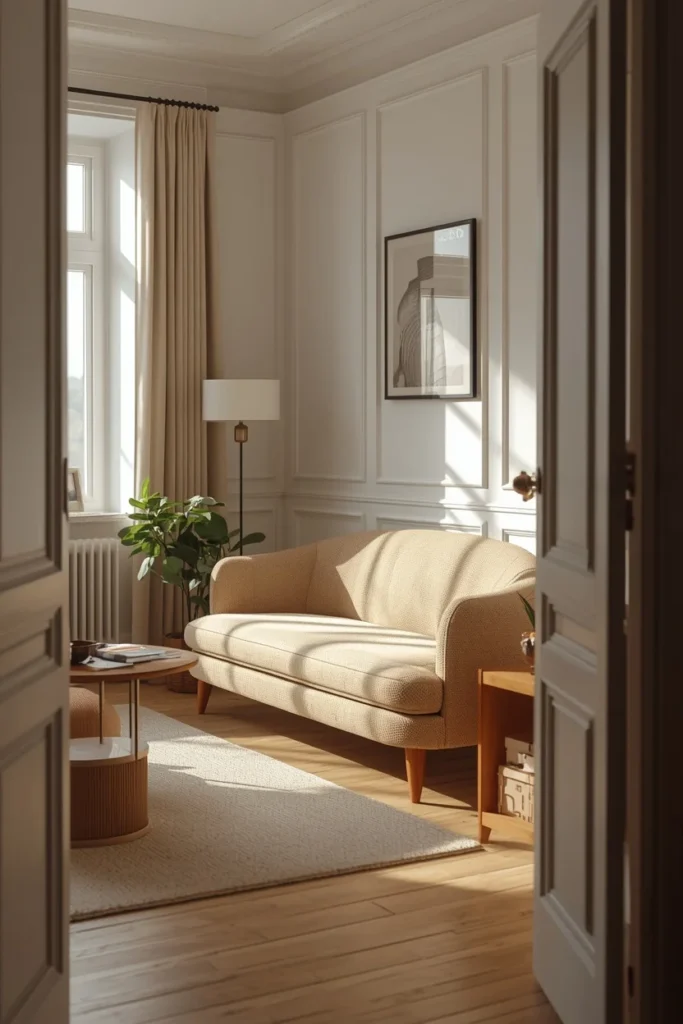
11. Wrap the Curve Around a Fireplace or Focal Point
Positioning a curved sofa so its arc partially wraps around a fireplace, media console, or other fixed focal point draws the eye toward that feature while making efficient use of the room’s available floor space. This layout works especially well in rooms where the focal point sits along one wall, since the sofa’s curve can gently angle inward from either side rather than sitting in a flat, static line across from it. The wrapping effect also creates a cozier, more intimate seating arrangement, since everyone seated ends up naturally angled toward both the focal point and each other. Keep enough clearance between the sofa’s inner curve and the fireplace or console for safe, comfortable foot traffic, typically at least thirty inches. This layout turns a single architectural feature into the organizing principle for the entire room, which tends to produce a more cohesive result than furniture arranged without a clear anchor.
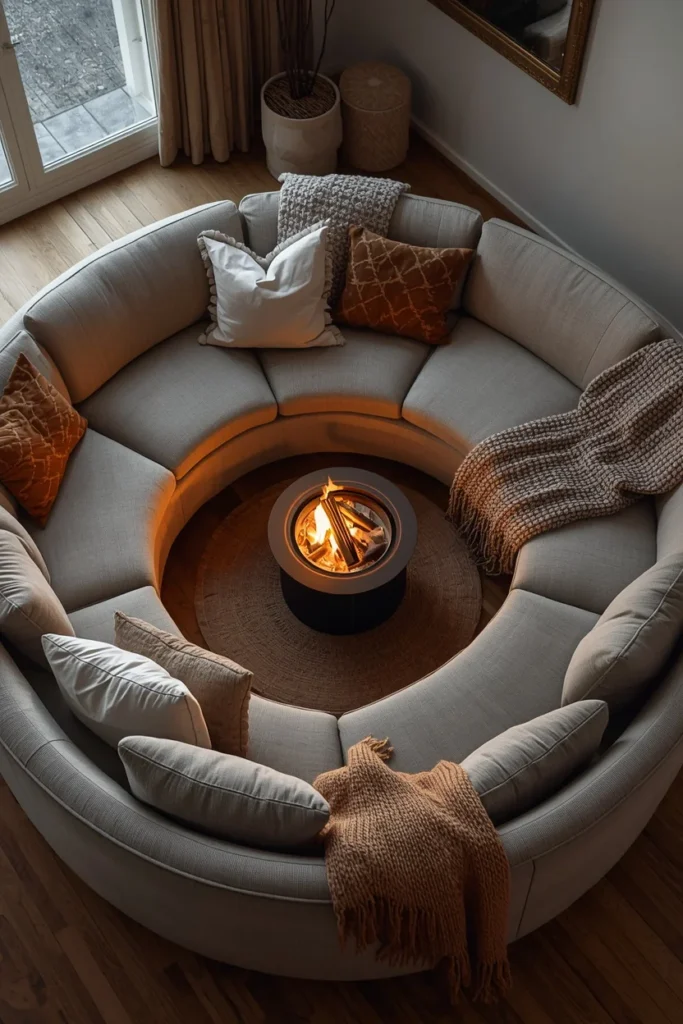
12. Choose a Light, Neutral Fabric to Visually Expand the Room
A curved sofa upholstered in a pale, neutral tone, like cream, oatmeal, or soft gray, reflects more ambient light than a dark or heavily saturated fabric, which genuinely helps a small room feel more open and airy rather than visually heavy. This effect compounds with the sofa’s already soft, rounded shape, since neither the color nor the form creates a strong visual block that the eye has to work around. Choose a fabric with subtle texture, like boucle or a nubby weave, so the light color doesn’t read as flat or sterile, adding tactile interest instead. This approach works especially well in a small room with limited natural light, where every surface that reflects rather than absorbs brightness makes a genuine difference. Pair the light sofa with a few darker accent pieces, like a black side table or a patterned throw pillow, to keep the room from feeling washed out or one-note.
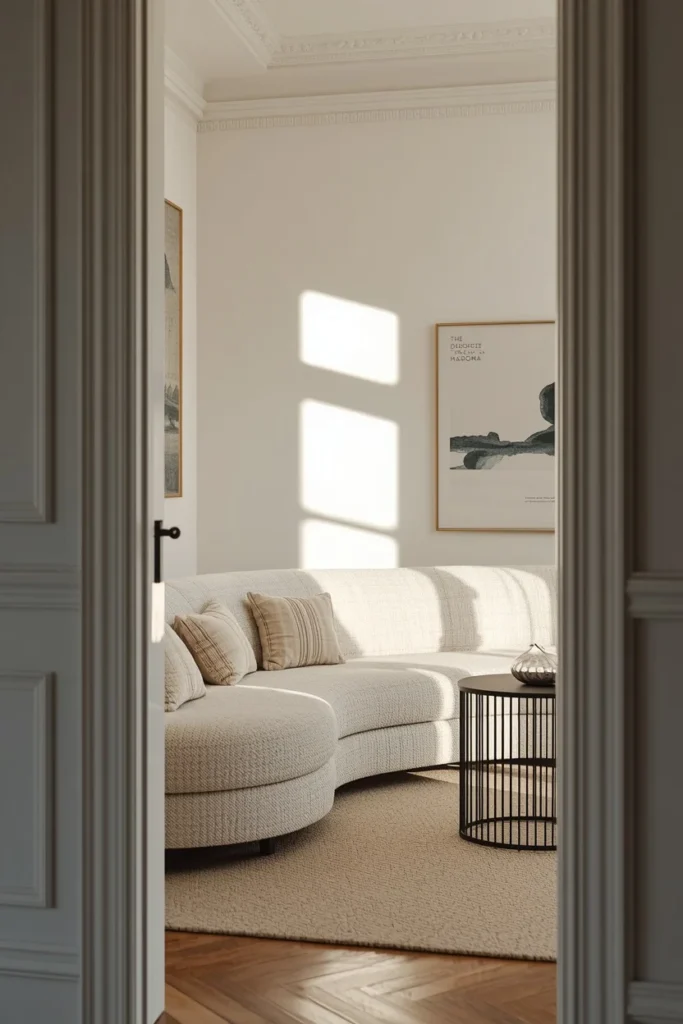
13. Add a Mirror Behind the Curved Sofa to Amplify Space
A large mirror hung on the wall behind or beside a curved sofa doubles the visual depth of the room, reflecting both natural light and the existing furniture back into the space in a way that makes a small room read as noticeably larger in photos and in person. Choose a round or organically shaped mirror to continue the room’s soft, curved visual language rather than a sharp rectangular frame that would contrast awkwardly with the sofa’s shape. Position it to reflect a window or a lamp specifically, rather than a blank wall, since the mirror’s expansive effect depends on actually reflecting a light source or view. This is one of the most effective and affordable small-space tricks available, delivering a genuine perceived size increase for the cost of a single wall-mounted piece. Pair it with the sofa’s curve directly behind it for the strongest combined effect.
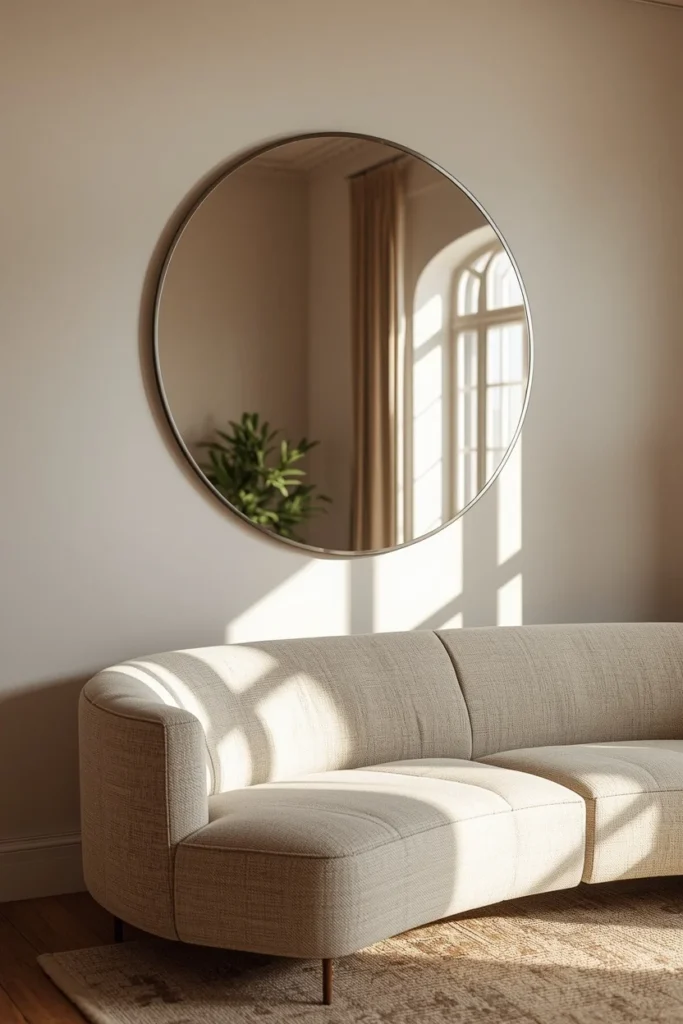
14. Use the Sofa’s Curve to Create a Natural Walking Path
Positioning a curved sofa so its rounded back follows the room’s most natural walking route, rather than blocking it, keeps traffic flowing smoothly through a small space without requiring anyone to squeeze around sharp furniture corners. Study how people actually move through the room, typically from the entry toward a window or hallway, and let the sofa’s curve echo that same path rather than cutting directly across it. This approach treats furniture placement as functional circulation planning first and aesthetic styling second, which matters enormously once a small room is being used daily rather than just photographed. A well-placed curve can make walking through even a very tight room feel effortless, since there’s no hard edge catching a hip or knee along the way. This principle applies to every layout on this list, but it’s worth calling out directly since it’s often the deciding factor in whether a small-room layout actually works long term.
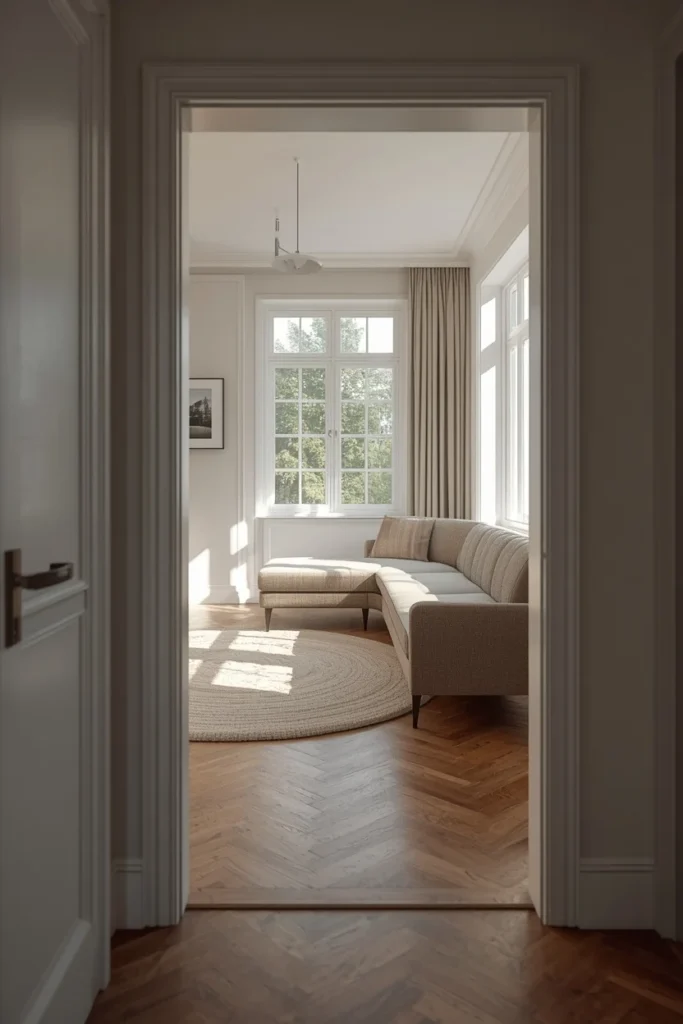
15. Keep the Coffee Table Small and Round to Match the Flow
Beyond simply choosing a round shape, keeping the coffee table’s overall footprint genuinely small, rather than defaulting to a standard-size table meant for larger rooms, preserves more open floor space around the curved sofa. Aim for a table diameter that leaves at least eighteen inches of clearance on all sides for comfortable walking room, which in a small living room often means choosing a table noticeably smaller than what a furniture showroom might display. A nesting table set, where two or three small round tables stack or tuck together, offers even more flexibility, letting you pull out extra surface area only when guests are over. This approach prioritizes genuine daily livability over the more furnished, fully styled look a larger table might create in photos. In a tiny room, the empty floor space this choice preserves does more for the room’s overall feeling than any single piece of furniture could.
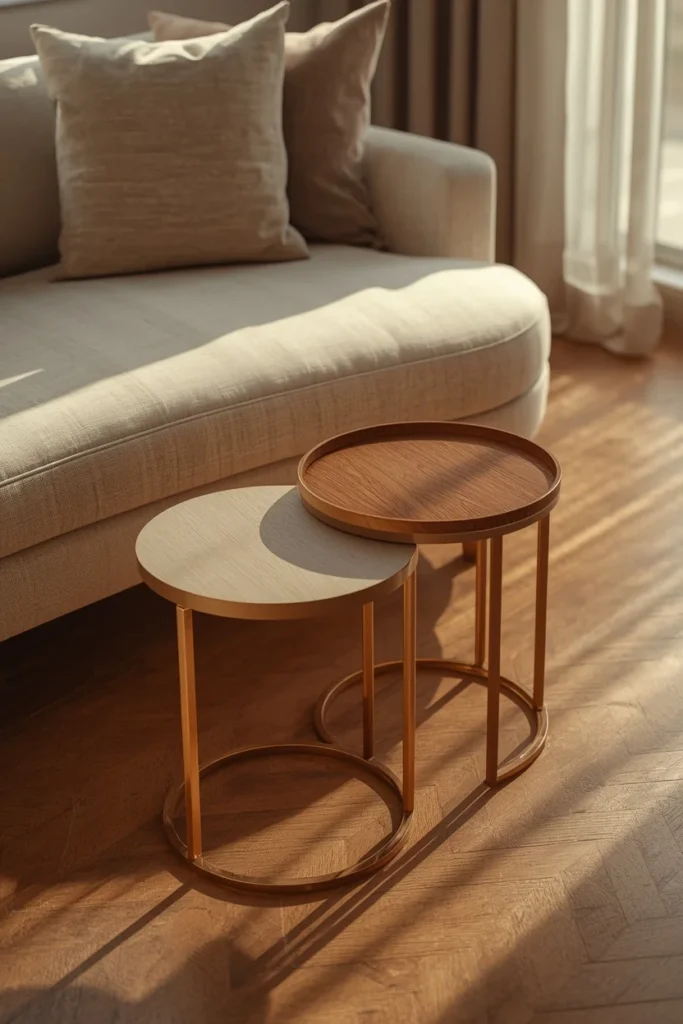
16. Choose Exposed, Slim Legs to Keep the Floor Visible
A curved sofa raised on slim, exposed legs, rather than a fully skirted base that touches the floor along its entire length, lets more of the actual floor remain visible underneath and around the piece. This visual continuity, seeing the floor continue uninterrupted beneath the furniture, is one of the most reliable small-space design tricks, since it prevents any single piece from reading as a solid, heavy block within the room. Choose legs in a light wood tone or slim metal finish that doesn’t visually compete with the floor color, keeping the transition as seamless as possible. This detail matters more than most people expect in a small room, since furniture that appears to float slightly above the floor consistently reads as lighter and less space-consuming than furniture that sits flush against it. Pair exposed sofa legs with similarly leggy side tables and chairs throughout the room for a consistent, airy effect.
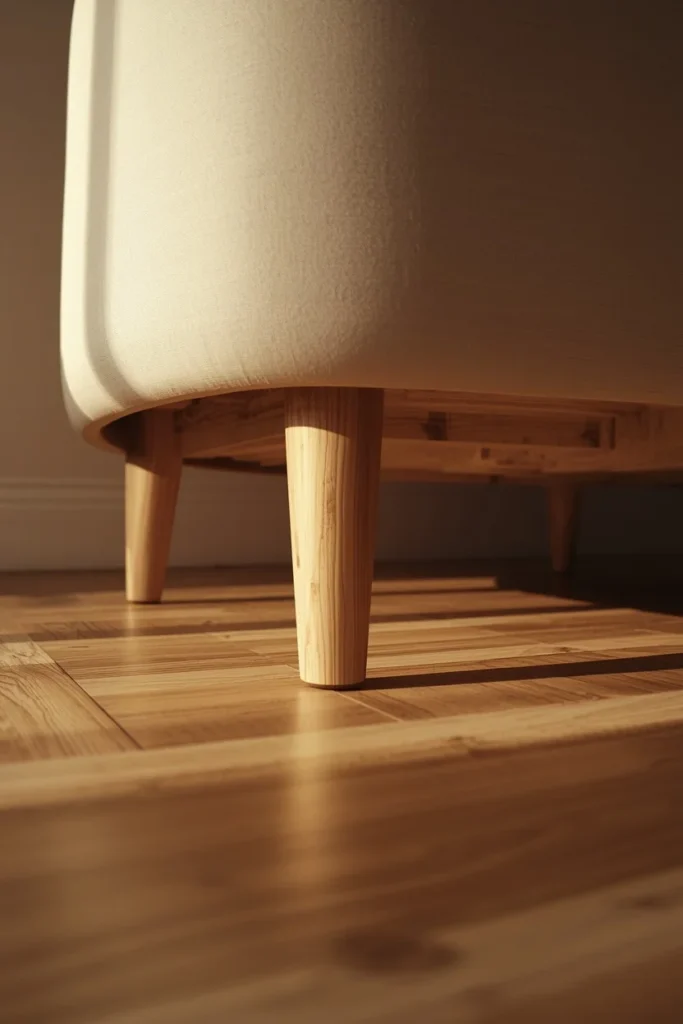
17. Use a Curved Bench Instead of a Sofa for Ultra-Tight Rooms
In an extremely compact living room, a curved upholstered bench can replace a traditional sofa entirely, offering flexible seating without a fixed back or arms that would otherwise eat into limited floor space. This option works particularly well in a studio apartment or a room that also needs to function for other purposes, like a home office or occasional guest sleeping space, since a bench is easier to reposition than a full sofa. Choose a bench with a gentle curve and comfortable cushioning, adding a few floor pillows or a folded throw for additional lounging comfort when needed. This is a more unconventional choice than a full sofa, but it solves a genuine problem for anyone working with square footage too tight for standard furniture. Pair it against a wall with a gallery of art or a large mirror above, since the bench’s low profile leaves plenty of open wall space to work with.
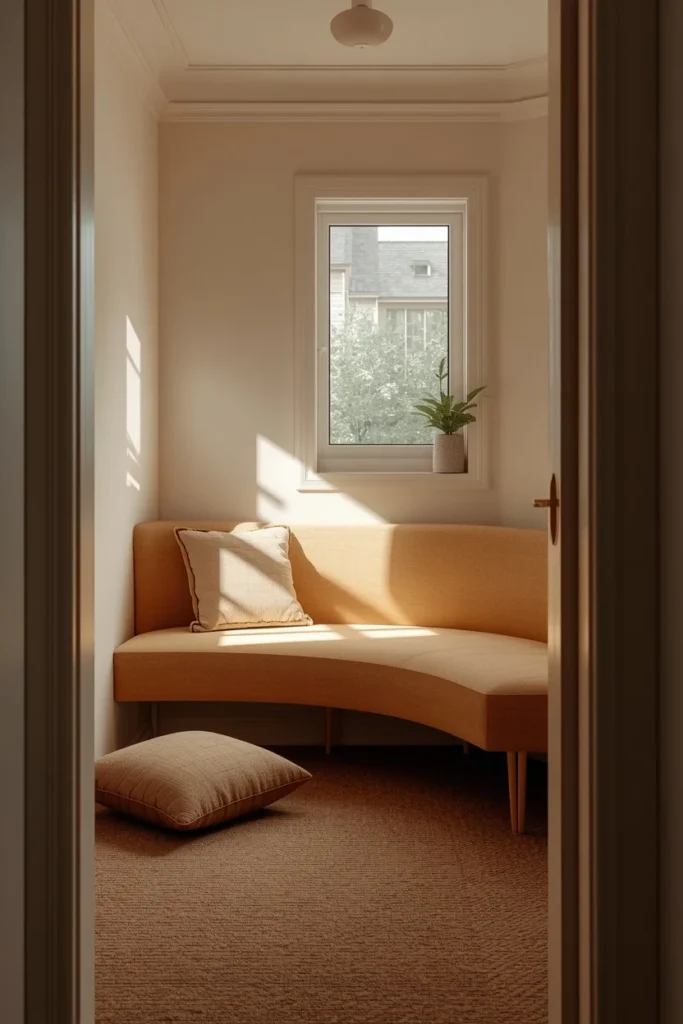
18. Center the Curved Sofa Under a Window for Balanced Light
Positioning a curved sofa directly beneath a window, rather than opposite it, allows daylight to spill evenly across the entire room rather than getting blocked by a tall piece of furniture standing between the window and the rest of the space. This layout works especially well when the window itself isn’t a strong enough focal point to build the whole room around, letting the sofa’s curve become the primary visual anchor instead. Keep the sofa’s back height low enough that it doesn’t obscure much of the window, and choose sheer or minimal window treatments so light continues to filter through even with furniture positioned close by. This placement also creates a naturally bright, pleasant reading or lounging spot, since the window light falls directly onto the seating area throughout the day. It’s a straightforward layout that solves the common small-room problem of furniture blocking a room’s only real light source.
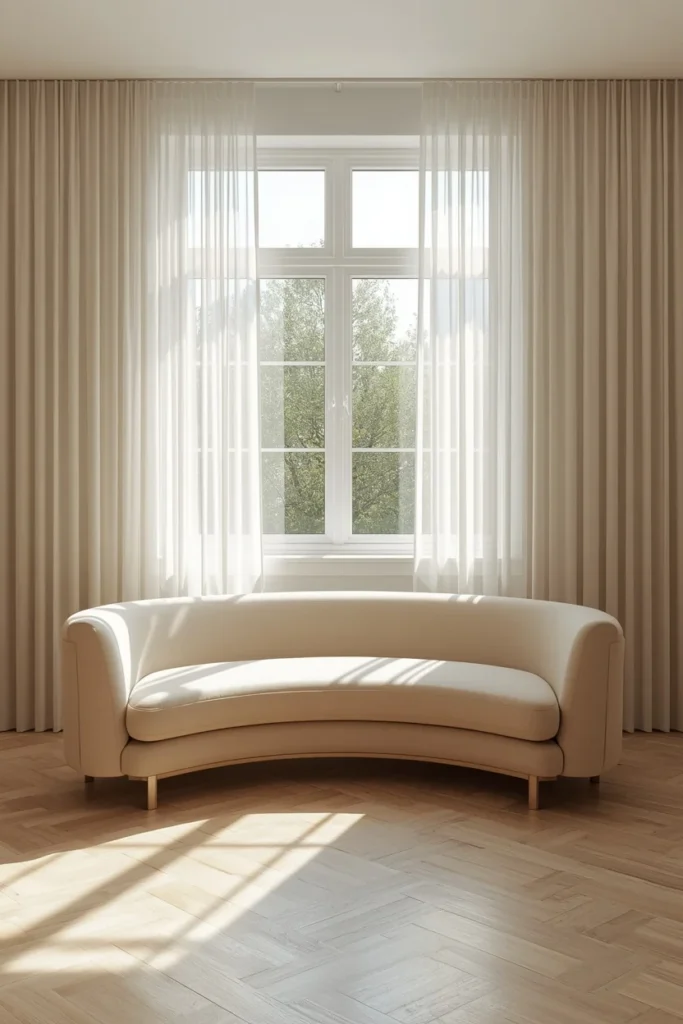
19. Layer a Round Rug Beneath the Curve for Visual Continuity
A round area rug positioned beneath and slightly beyond the curved sofa’s footprint reinforces the room’s rounded visual language at floor level while also helping to define the seating area within an otherwise open small space. Choose a rug diameter large enough that the sofa’s front legs sit on it, with at least a foot of rug extending beyond the furniture on the open side of the room. A low-pile rug in a neutral or subtly textured tone keeps the floor from feeling visually busy, letting the round shape itself provide the interest rather than a bold pattern. This detail is especially useful in an open-concept space, where a defined rug boundary helps signal where the living area begins and ends without any actual wall. The continuity between a curved sofa and a round rug creates one of the most cohesive, intentional-feeling small living room layouts available.
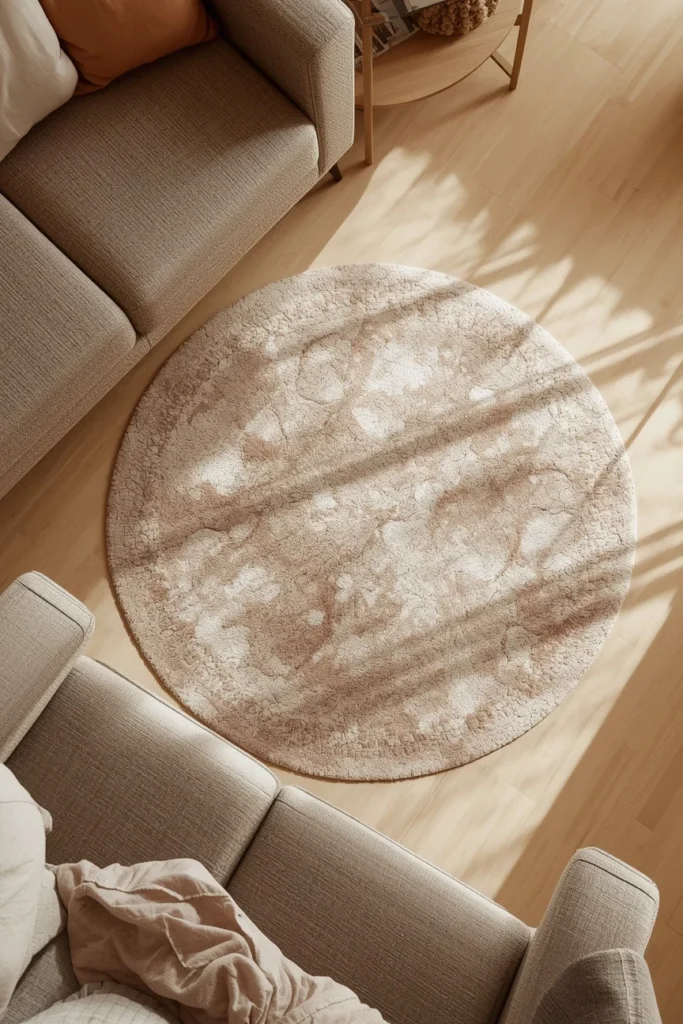
20. Use Vertical Elements to Balance the Sofa’s Horizontal Curve
Because a curved sofa’s silhouette reads as strongly horizontal, balancing it with a few tall, vertical elements elsewhere in the room, like a floor lamp, a tall plant, or a narrow bookshelf, keeps the overall room composition from feeling visually flat or squat. Position one or two of these vertical pieces near the sofa rather than scattering them randomly, so they read as an intentional contrast rather than unrelated additions. A tall, slim floor lamp beside the curve also solves a practical lighting need while doing this visual balancing work at the same time. This principle borrows directly from basic composition, since a room built entirely from low, horizontal shapes can start to feel low-ceilinged and cramped, even when the actual ceiling height hasn’t changed. A few well-placed vertical accents correct this instinctively, making the whole room feel taller and more proportionate.
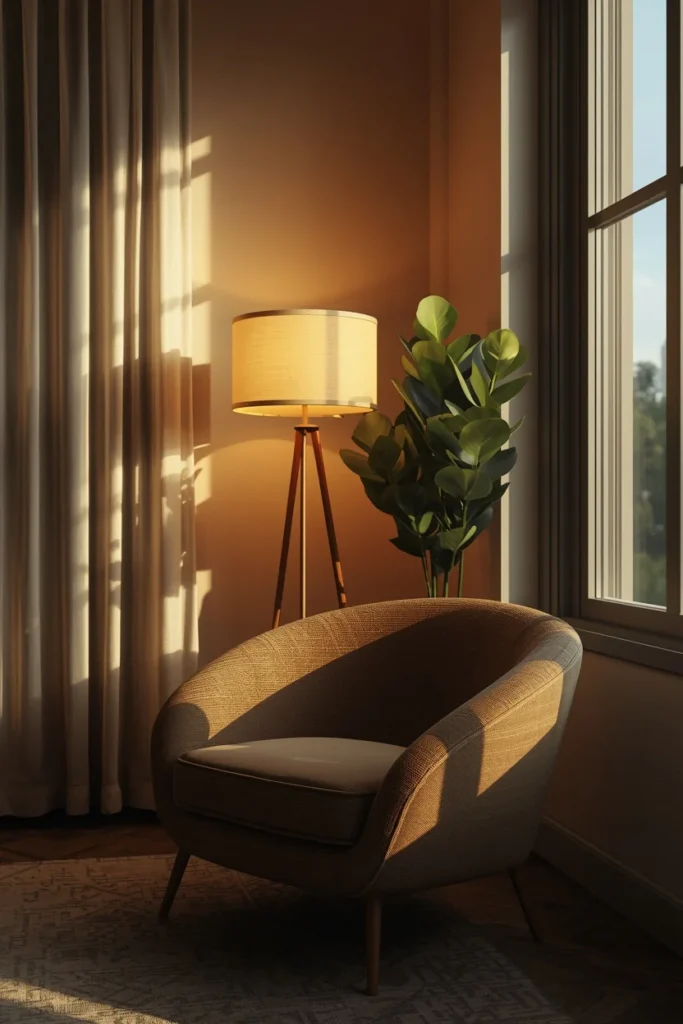
21. Choose a Modular Curved Sofa for Flexible Reconfiguration
A modular curved sofa, built from separate sections that can be rearranged or split apart, offers genuine flexibility for a small living room that might need to serve different functions throughout the week, from movie nights to hosting guests to simply maximizing floor space on an average day. Choose a modular set where individual curved pieces can stand alone as accent chairs or recombine into a fuller seating arrangement when needed, giving the room adaptability that a fixed-shape sofa can’t match. This option costs more upfront than a single fixed sofa, but it solves the real problem of a small room needing to multitask in ways a larger living room never has to. Keep the modular pieces in a single consistent fabric and finish so they read as a cohesive set even when reconfigured into different layouts. This is one of the more advanced solutions on this list, best suited for anyone who genuinely needs their small living room to adapt regularly rather than stay fixed in one arrangement.
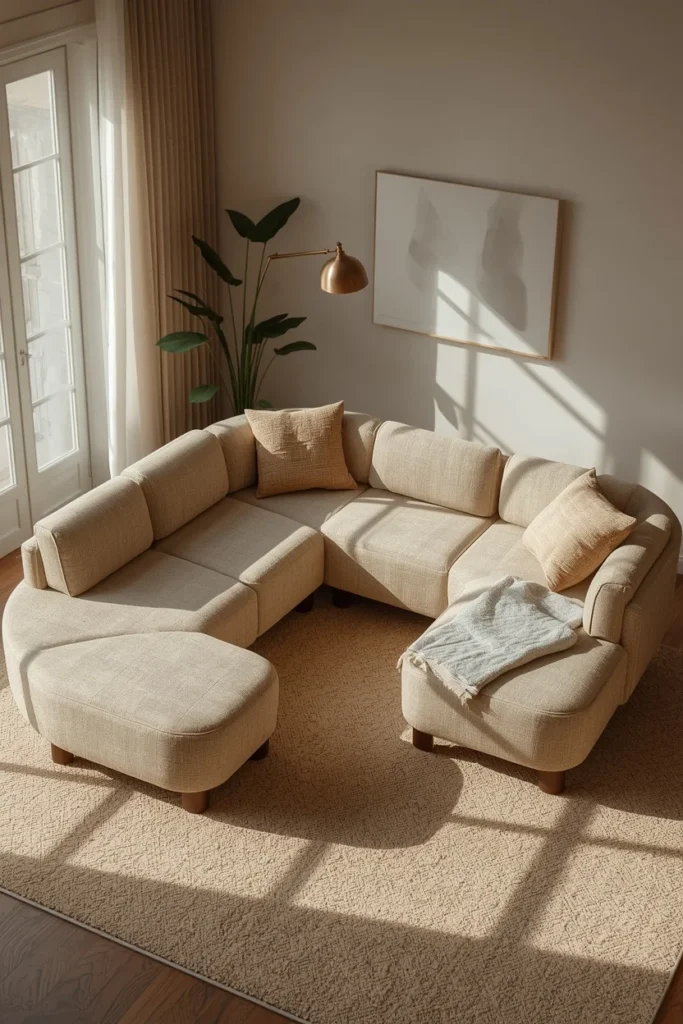
Styling Tips for Curved Sofas in Small Rooms
Study your walking path before choosing a layout. The most beautiful curved sofa placement still fails if it blocks the room’s natural flow of movement.
Match every other furniture piece’s scale to the sofa’s. An oversized coffee table or bulky accent chair undoes the space-saving benefit of a smaller curved sofa.
Let light-reflecting materials do extra work. Pale fabric, mirrors, and slim exposed legs all help a small room feel more open without changing its actual square footage.
Balance the sofa’s horizontal shape with vertical accents. A floor lamp or tall plant keeps the room from feeling squat, especially important in rooms with lower ceilings.
Practical Implementation Ideas
Measure your room’s total walking paths before shopping for a sofa, marking out at least thirty inches of clearance for comfortable circulation around any furniture placement you’re considering. Use painter’s tape or a cardboard cutout in the sofa’s actual curved footprint to test different placements in the room before committing to a purchase, since curved shapes can be harder to visualize from measurements alone. Choose your coffee table and rug sizing based on the confirmed sofa placement, not before, since these secondary pieces need to fit the actual footprint left over rather than being selected independently. Live with a temporary or borrowed arrangement for a week if possible, since daily use often reveals flow problems that aren’t obvious from a single walkthrough.
Common Mistakes to Avoid
Buying a curved sofa sized for a larger room. Many curved sofas marketed broadly are still built for standard living rooms. Confirm actual dimensions against your specific floor plan before purchasing.
Pairing the curve with an oversized or rectangular coffee table. This immediately reintroduces the hard angles and awkward corners the curved sofa was meant to soften.
Ignoring the walking path entirely. A gorgeous layout that blocks the room’s natural traffic flow becomes frustrating within the first week of daily use.
Adding too much additional seating. One curved sofa plus one accent chair is often enough for a small room. Overcrowding with multiple seating pieces cancels out the open, spacious feeling a curved layout is meant to create.
Small-Space Alternatives
For rooms under one hundred square feet, consider a curved loveseat or bench instead of a full sofa, and skip a separate coffee table in favor of a small ottoman that can double as both seating and a surface. A single strategically placed mirror can substitute for some of the openness a larger floor plan would naturally provide. Wall-mounted or floating shelving in place of a traditional side table keeps floor space clearer while still providing storage and display surface. In truly tight rooms, prioritize one strong curved anchor piece over multiple smaller furniture items, since fewer, better-chosen pieces consistently outperform a fully furnished but crowded room.
Budget-Friendly Alternatives
A curved accent chair, rather than a full curved sofa, delivers much of the same visual softening effect at a significantly lower price point and smaller footprint. Secondhand or vintage curved sofas, particularly from the mid-century and postmodern eras, occasionally turn up at estate sales or online marketplaces for considerably less than new pieces. A round rug and a few strategically placed mirrors cost far less than a full furniture replacement while still delivering meaningful visual expansion to a small room. If a full curved sofa isn’t in budget yet, start with a round coffee table and a slim floor lamp, both of which reinforce the same soft, open layout principles this entire guide is built around.
Pro Styling Recommendations
Always test a curved sofa’s actual footprint in your room with tape or a cutout before purchasing, since photos rarely convey how much floor space a curve genuinely occupies. Choose exposed, slim furniture legs consistently across every piece in the room, not just the sofa, for the most cohesive open, airy effect. When in doubt about scale, size down rather than up. A slightly smaller curved sofa that preserves generous walking space will almost always make a tiny living room feel more comfortable than a larger piece that technically fits but leaves no breathing room. Finally, resist the urge to fully furnish the room in one trip. The best small-space layouts are often edited down over time, not built up all at once.
FAQs
Conclusion
Making a small living room feel bigger was never really about adding more furniture, or even about finding the perfect curved sofa on its own. It’s about understanding how people actually move through the space, then choosing a shape and a placement that works with that movement instead of against it. Start with your room’s natural walking path, pick a curve that fits your actual square footage, and let the rest of the layout build outward from there.