21 Kitchen Banquette Seating Ideas That Make Every Meal Feel Special
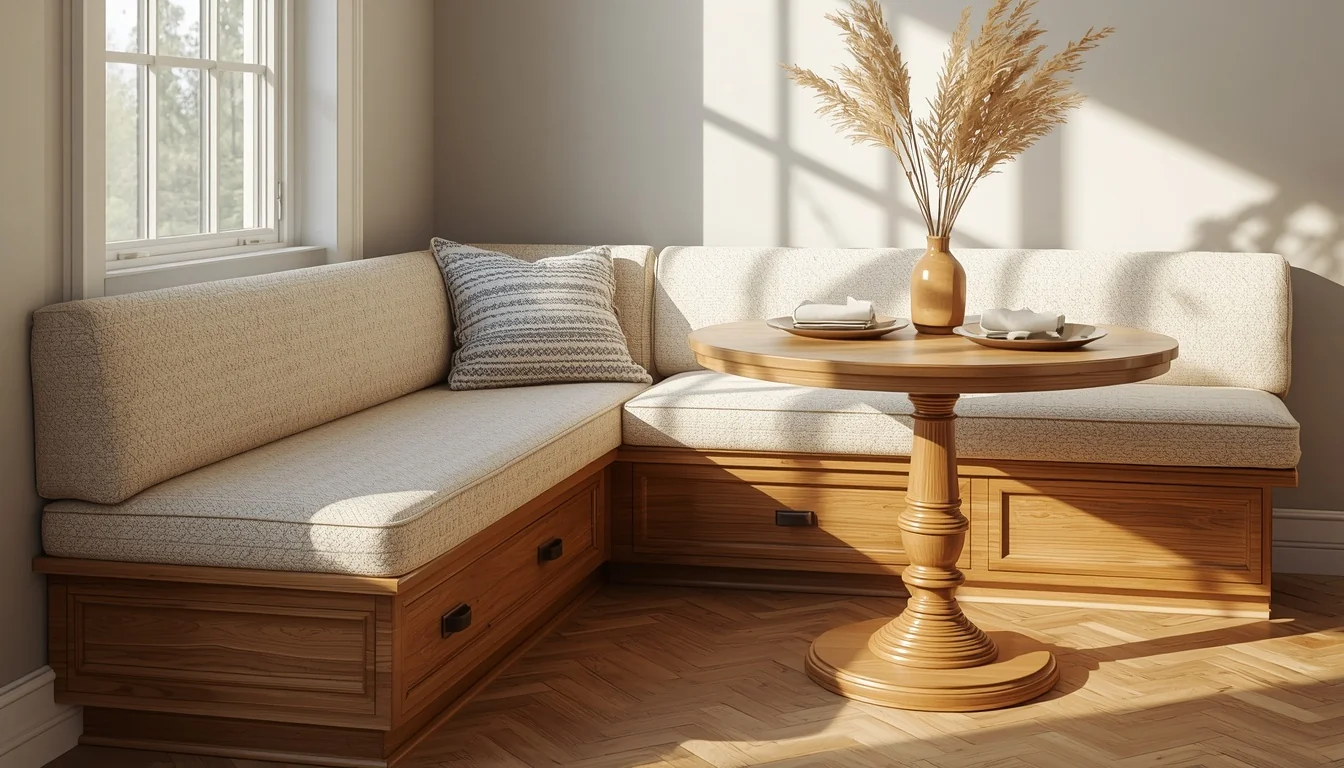
There’s a reason a banquette photo stops the scroll. It isn’t just the cushions or the pretty table setting. It’s the promise of a spot where people actually linger — coffee in hand, elbows on the table, nobody in a hurry to get up.
A banquette does something a regular dining set can’t. It tucks into a corner, a bay window, or a dead zone next to the pantry and turns that leftover square footage into the busiest seat in the house. Kids do homework there. Guests end up parked there during parties, even when there’s a whole living room available. It just pulls people in.
This guide walks through 21 different ways to design one, from classic corner benches to curved bay window seats to slim floating benches for tiny kitchens. Real dimensions, fabric notes, and layout logic are baked into every idea, not just the pretty picture.
Table of Contents
1. Classic L-Shaped Corner Banquette with Hidden Storage
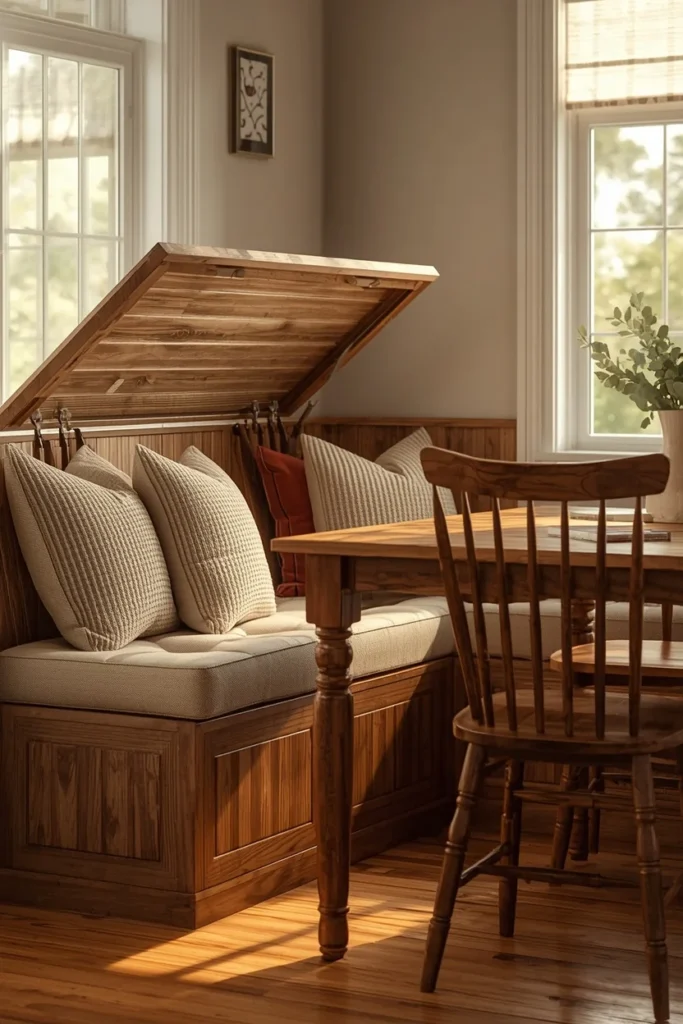
The L-shaped bench is the workhorse of banquette design, and it earns that reputation. Two straight runs meet in a corner, so it fits almost any kitchen without needing custom angles or curved millwork. Building it with a hinged, lift-top seat turns dead corner space into storage for linens, board games, or the seasonal serving dishes that never have a home. Cabinet-grade birch plywood holds up better than MDF under daily sitting and standing, especially in a house with kids climbing on and off the bench. Pair it with a rectangular table set slightly off-center from the wall, and you get a layout that seats five or six people in a footprint that would only fit four dining chairs.
2. U-Shaped Banquette for Family-Style Gathering
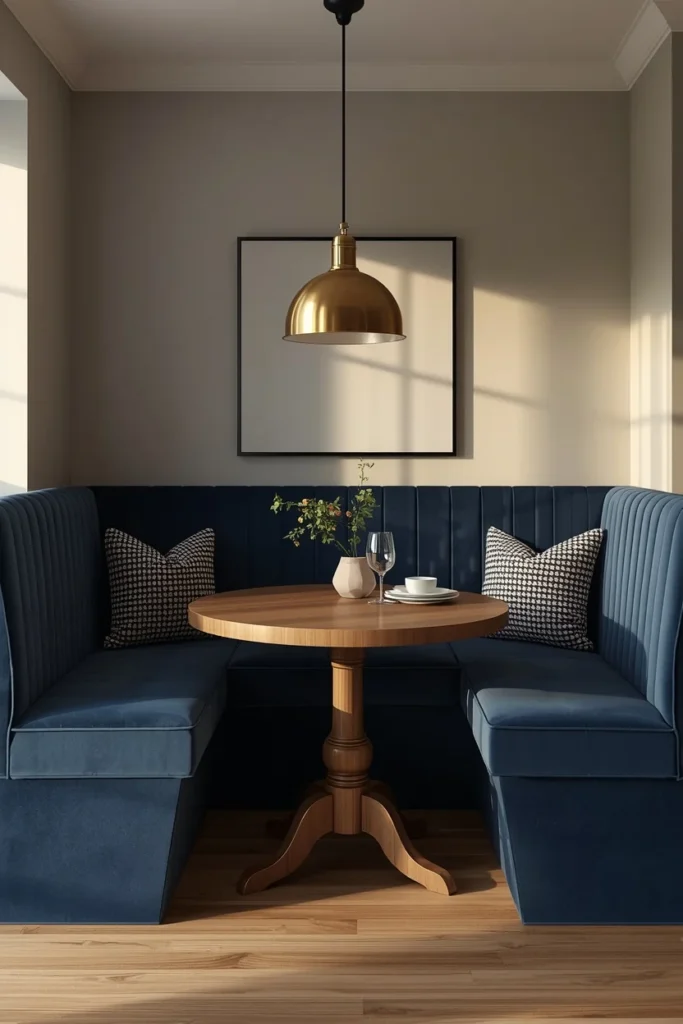
A U-shaped banquette wraps three sides of a table, which is the most seating-dense layout of the bunch. It works best in a dedicated breakfast nook or a squared-off alcove, since it needs enough width on the open end for someone to slide in without climbing over anyone else. Because guests face each other on three sides instead of stretching down a long table, conversation flows more naturally, which is exactly why families with several kids gravitate toward this shape. A trestle or pedestal table in the center keeps legroom open on all sides, avoiding the trapped feeling that a four-legged table can create inside a U. This layout comfortably seats six to eight, making it one of the better options for households that host often.
3. Curved Bay Window Banquette with a Round Pedestal Table
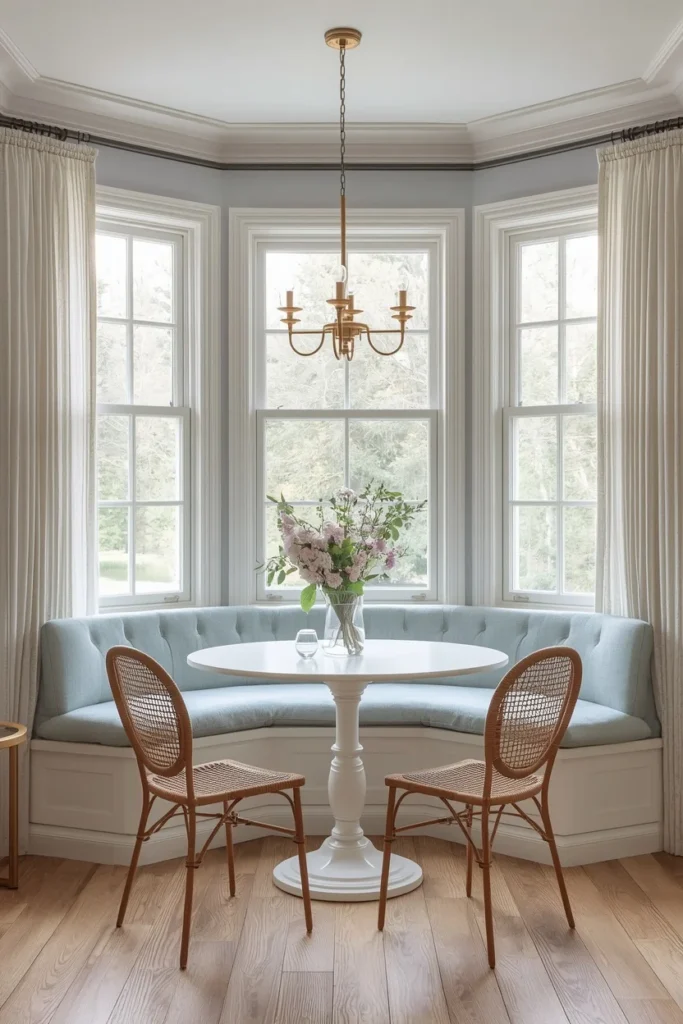
A bay window is a gift for banquette design, and a curved bench that follows the window’s angle makes the whole nook feel intentional instead of squeezed in. The curve softens what would otherwise be a room full of hard corners, and it pairs beautifully with an oval or round pedestal table, since neither shape fights the other for attention. Because a bay window nook is flooded with natural light most of the day, a lighter fabric like a bouclé, linen blend, or pale performance velvet keeps the space from feeling closed in. Keep the backrest low enough that it doesn’t block the window glass when guests are seated, since the view is half the reason people love sitting there in the first place. Café curtains or simple roman shades on the windows finish the look without hiding the light.
4. Farmhouse Shiplap Banquette with Front Drawers
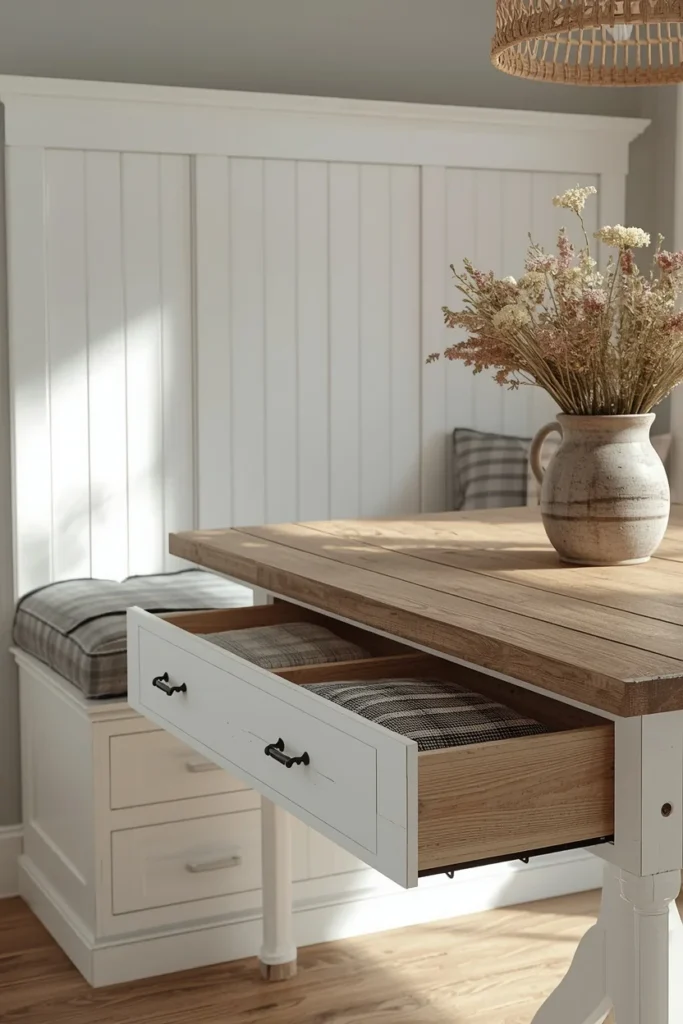
Shiplap paneling on the front face of a banquette gives it that lived-in farmhouse character without requiring a full room renovation. Building actual pull-out drawers into the base — instead of only a lift-top lid — makes daily-use items like napkins, kids’ art supplies, or extra placemats far easier to grab without disturbing anyone seated on the bench. A distressed or matte white paint finish on the shiplap keeps the piece from feeling too heavy in a small kitchen, while a solid pine benchtop adds warmth underneath the cushion. This style pairs naturally with a turned-leg trestle table, woven pendant lighting, and mismatched vintage chairs on the open side of the bench. It’s a strong choice for anyone leaning into a cottage or vintage-inspired kitchen remodel.
5. Modern Minimalist Straight-Line Banquette
Not every banquette needs a corner. A single straight run of bench along one wall, paired with a slim table and a pair of chairs on the opposite side, gives a clean, architectural line that suits a modern kitchen without extra ornamentation. Keeping the bench low-profile with no visible legs, a flush upholstered front, and a single neutral bouclé or wool-blend fabric lets the woodwork and cabinetry do the talking instead. This layout works especially well against a floor-to-ceiling window or a run of cabinetry, since the bench reads as part of the millwork rather than a separate piece of furniture. A slim brass or matte black pendant overhead adds just enough contrast without competing with the simplicity of the seat.
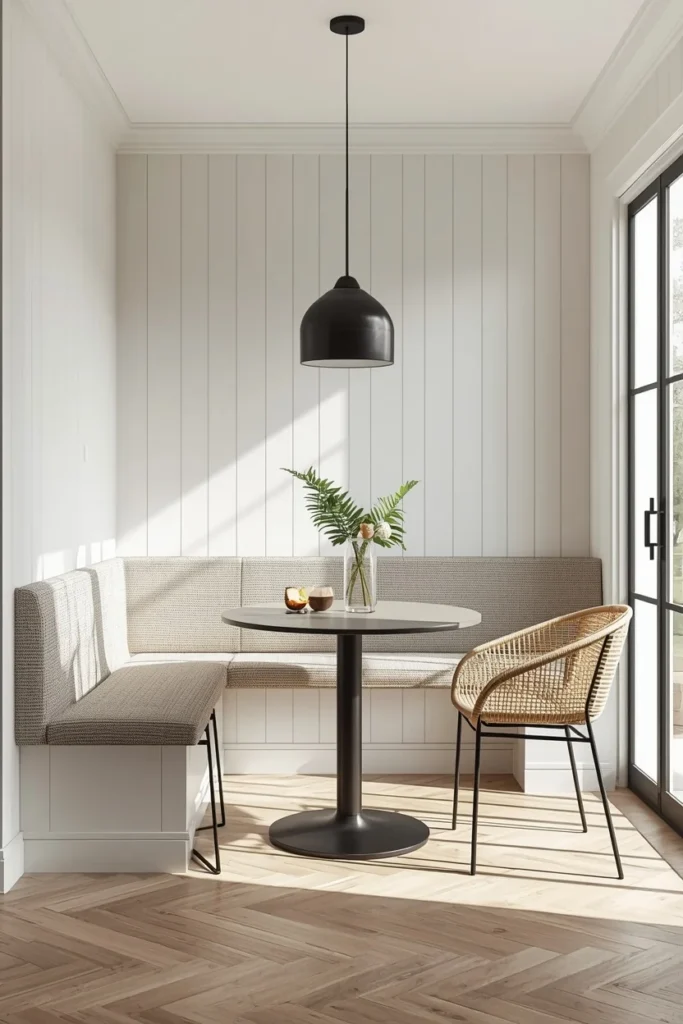
6. Jewel-Tone Velvet Banquette for a Moody Kitchen
A banquette upholstered in a rich jewel tone — emerald, sapphire, or deep burgundy performance velvet — turns a kitchen nook into a genuine focal point instead of a quiet corner. Performance velvet has come a long way, with stain-resistant finishes that can handle spilled juice and sticky fingers while still looking soft to the touch. This look pairs well with dark cabinetry, brass hardware, and a wood or stone tabletop that grounds the richness of the fabric. Because the color carries so much visual weight, keep the surrounding walls and floor relatively simple, letting the bench act as the room’s statement piece. A single patterned throw pillow in a complementary tone is usually enough; more than that starts to compete with the fabric itself.
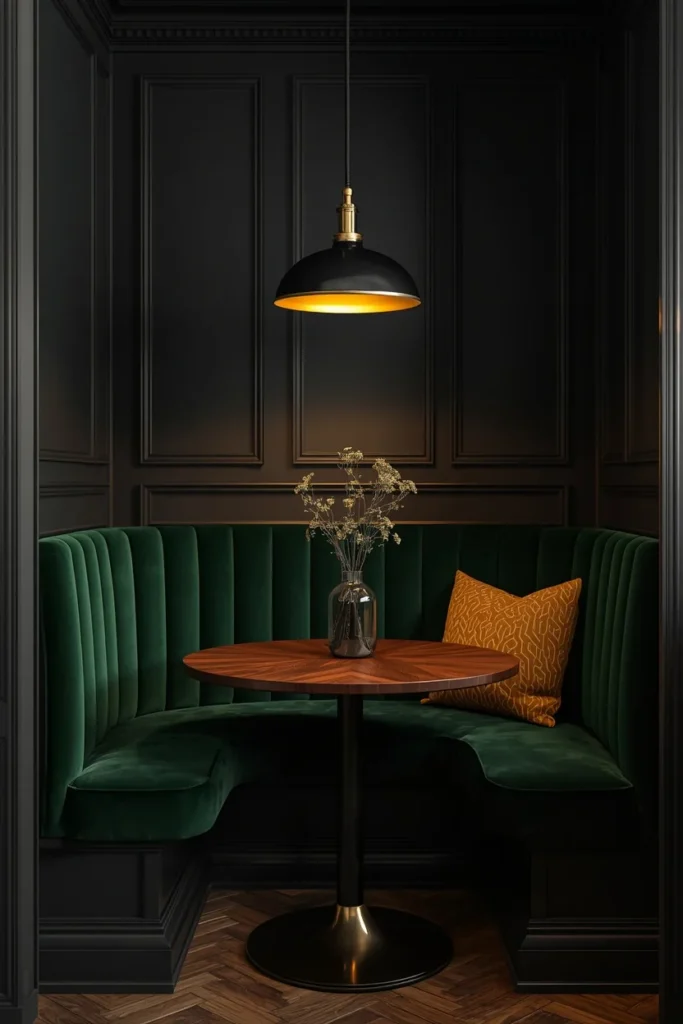
7. Coastal White Banquette with Rattan Accents
A white or off-white banquette paired with rattan or cane furniture pieces creates the airy, relaxed feel associated with coastal and Scandinavian kitchens. Woven rattan pendant lights, a natural wood table, and a couple of cane-back chairs on the open side keep the palette warm instead of sterile, even with so much white in the room. A durable canvas or linen-look performance fabric on the cushion holds up to sun exposure better than delicate natural linen, which matters if the nook sits near a bright window. Adding a jute or woven seagrass rug under the table grounds the space and brings in texture without introducing more color. This combination works particularly well in kitchens near a beach, lake house, or sunroom-adjacent layout.
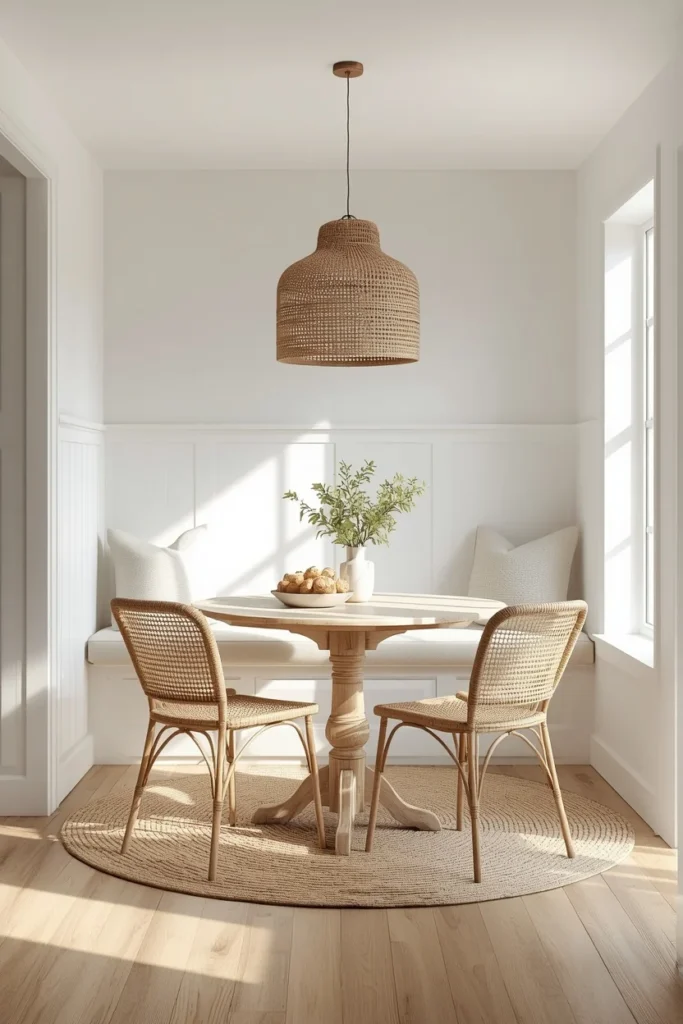
8. Mid-Century Curved Banquette with a Boomerang Table
Leaning into mid-century design, a gently curved banquette paired with an organic-shaped “boomerang” or kidney table brings retro warmth without feeling like a costume-y throwback. Walnut or teak-toned wood on the table and exposed bench legs pairs naturally with a mustard, burnt orange, or olive boucle upholstery, echoing the palette of the era without going full vintage replica. Tapered wood legs on the open-side chairs keep the silhouette light, which matters since mid-century furniture tends to sit lower to the ground than modern pieces. A sculptural pendant light with a globe or drum shade finishes the look and keeps the era-specific styling consistent throughout the nook. This idea suits kitchens that already lean warm and wood-toned rather than stark white.
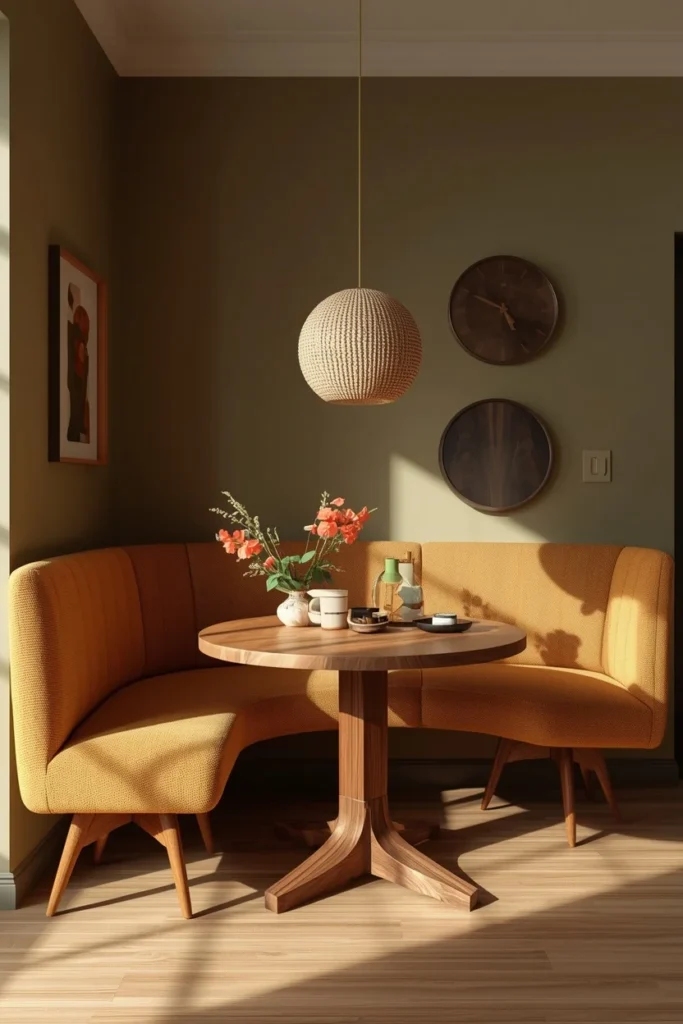
9. Small-Space Single-Bench Nook
A banquette doesn’t need a full corner or a dedicated room to work. A single narrow bench pushed against one wall, paired with a small round or drop-leaf table and one or two chairs, still delivers the cozy built-in look in a kitchen with very little spare footage. Keeping the bench depth close to 18 inches and skipping a tall backrest in favor of a slim cushion against the wall preserves floor space while still giving that banquette feel. A drop-leaf or extendable table means the nook can shrink down for everyday use and expand slightly when guests come over. This is the version worth considering in an apartment kitchen, a galley layout, or any home where square footage is the main constraint.
10. Floating Wall-Mounted Banquette
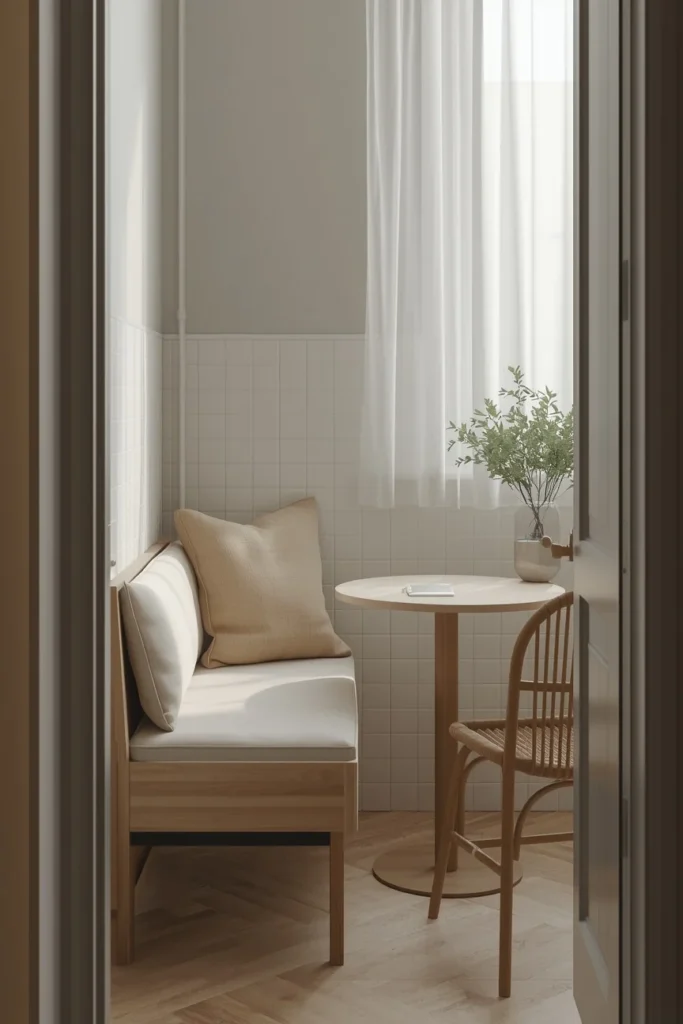
A floating banquette — built with a cushion hung from a wall-mounted rod or bracket instead of resting on visible legs or a solid base — reads as lighter and less bulky than a traditional built-in. This approach works particularly well in small kitchens or rentals, since it takes up less visual space and can sometimes be installed without major structural changes. The cushion typically sits on a plywood platform bolted into wall studs, with the fabric wrapped over foam in a channel or box-tufted pattern for structure. Because there’s no base blocking the floor beneath the bench, the room feels more open and easier to clean underneath, which matters in households with pets or young kids. This style suits modern and minimalist kitchens where visual lightness is the goal.
11. Two-Tone Painted Banquette with a Wood Top
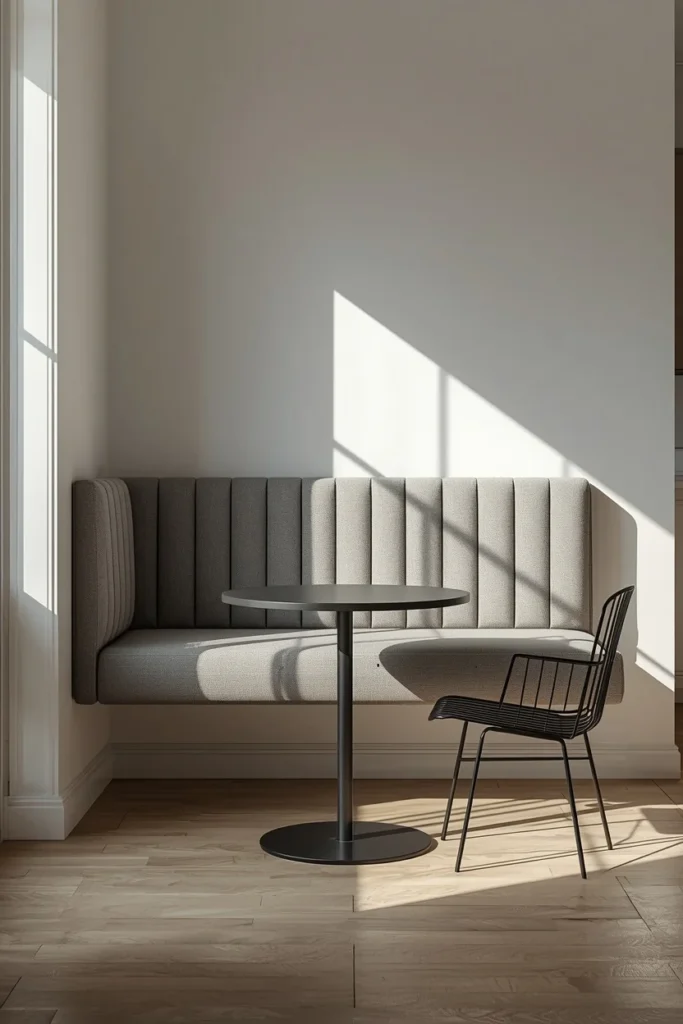
Painting the base and front panel of a banquette in a soft color while leaving the benchtop in natural wood gives the piece two textures instead of just fabric and paint. Sage green, dusty blue, or warm terracotta on the base pairs nicely with a stained oak or maple top, especially when the same wood tone repeats in the table itself. This approach also makes practical sense: the exposed wood top under the cushion takes daily wear better than paint would, since it’s rarely touched directly, while the painted front panel is easy to refresh if it scuffs. A neutral linen-blend cushion on top keeps the two-tone base as the visual anchor rather than competing with a patterned fabric. This is a strong option for anyone who wants color without committing to a fully upholstered piece.
12. Channel-Tufted Banquette for a Boutique Feel
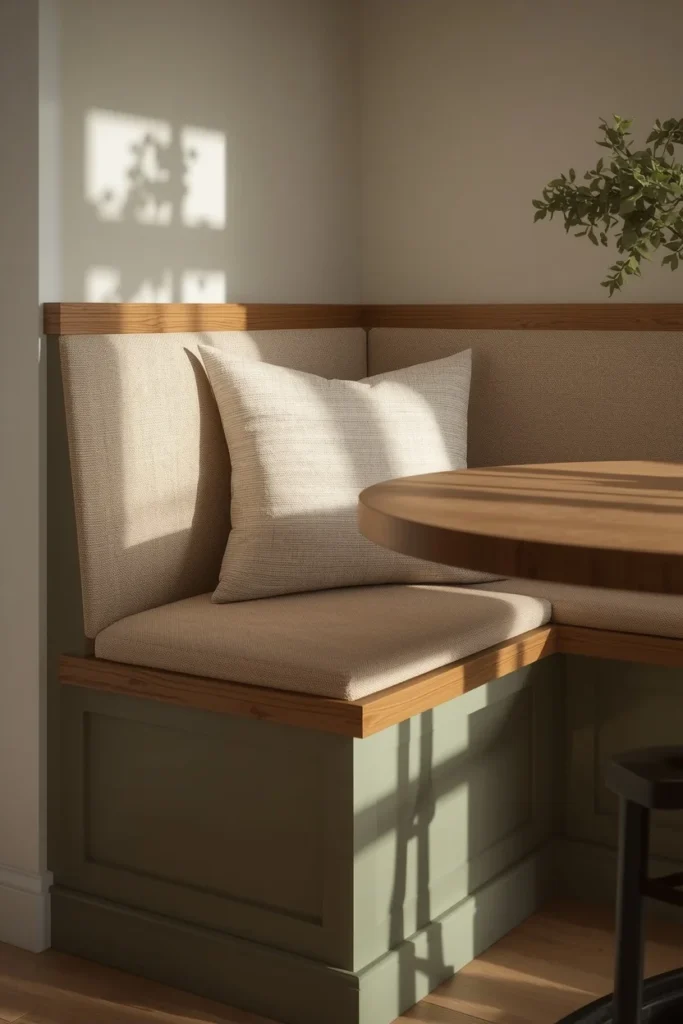
Vertical or horizontal channel tufting on the backrest gives a banquette a polished, boutique-hotel quality that reads as more custom than a plain flat cushion. The ribbed texture also does practical work: it keeps loose cushion filling from shifting into lumps over time, which matters for a piece that gets sat on daily. This detail pairs especially well with leather or performance velvet, since the tufting catches light differently across each channel and adds dimension even in a solid color. Running the channels vertically tends to make a low banquette look taller, while horizontal channels can visually widen a narrow bench. It’s a detail worth specifying with an upholsterer even on a straightforward L-shaped or straight bench, since it upgrades the whole piece without changing its footprint.
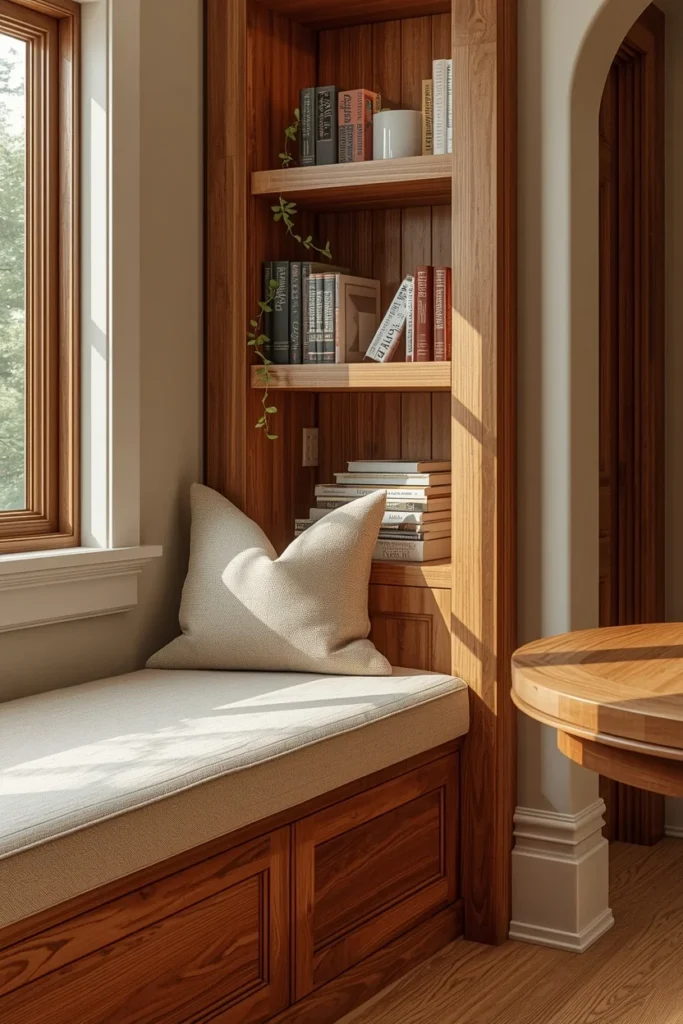
13. Banquette with Built-In Bookshelf End Panels
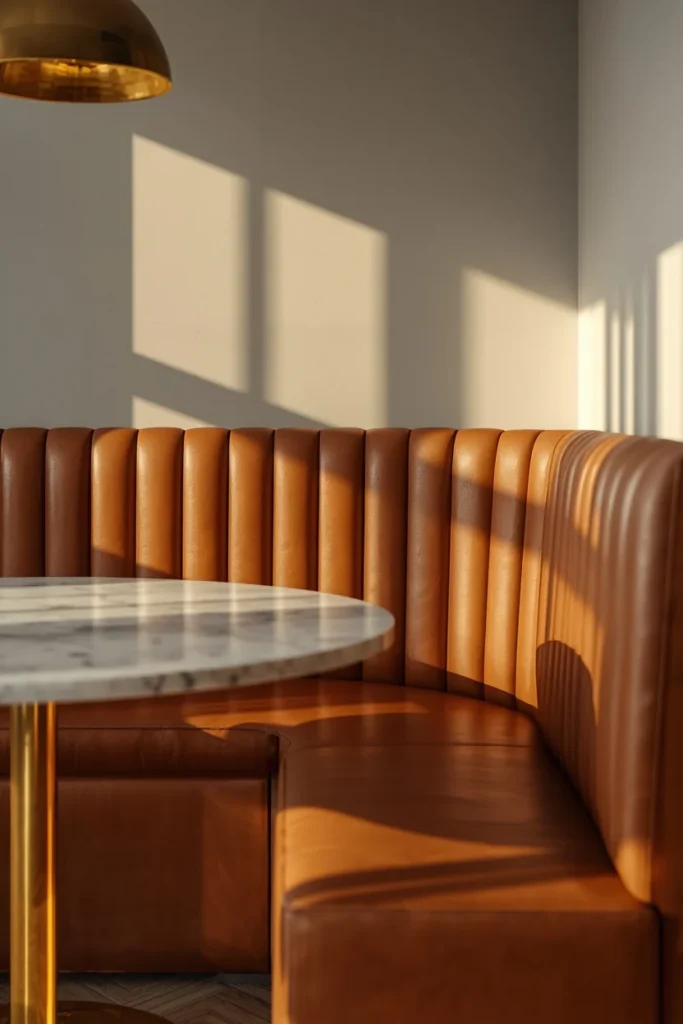
Adding a shallow bookshelf or open cubby to one end of a banquette turns unused vertical space into a spot for cookbooks, a small plant, or a stack of everyday dishware. This works especially well on an L-shaped or U-shaped bench where one end sits against a wall with room to spare above the seat height. Keeping the shelving open rather than behind doors makes the nook feel more like furniture and less like a cabinet, while still adding real function to the piece. Styling the shelf with a mix of stacked cookbooks, a small trailing plant, and one or two ceramic pieces keeps it from looking like an afterthought. This detail is worth planning at the design stage, since retrofitting shelving onto an existing bench is far more difficult than building it in from the start.
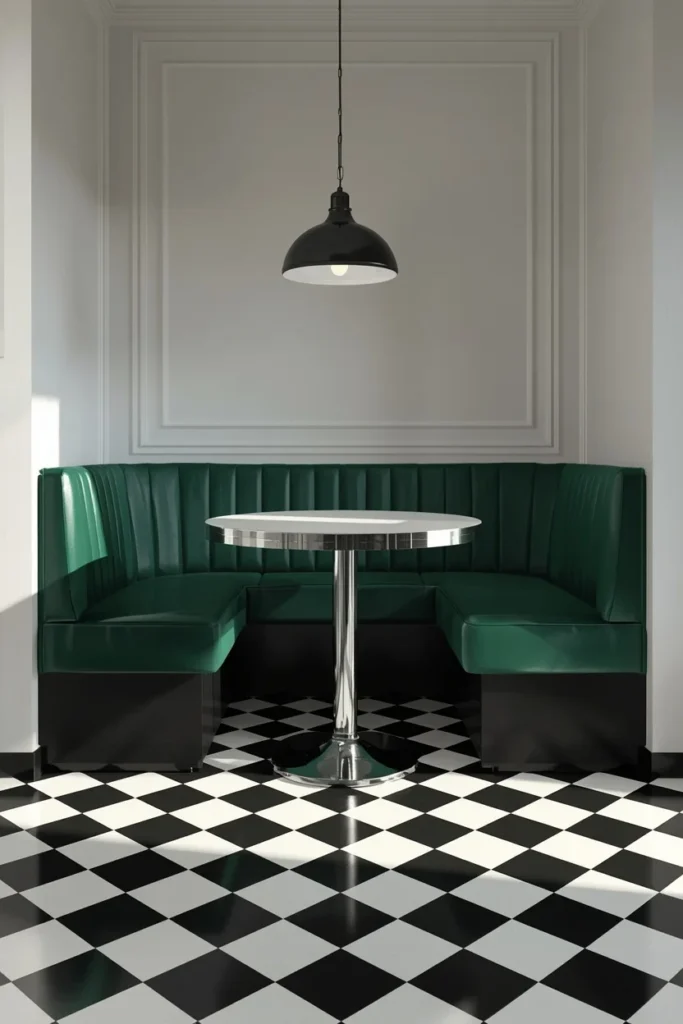
14. Checkerboard Floor Paired with a Bold Banquette Base
A black-and-white or two-tone checkerboard floor gives a banquette nook graphic energy before a single cushion is even added. Pairing that floor with a solid, saturated banquette base — think forest green, black, or deep red — keeps the look grounded instead of overwhelming, since the floor pattern and the bench color take turns being the star. A simple woven or solid cushion on top, rather than another pattern, keeps the whole space from fighting itself visually. This combination suits kitchens with a retro diner or vintage bistro influence, especially when paired with a chrome-legged table and classic pendant lighting. It’s a bold choice, so it works best as a dedicated nook rather than spread across an entire open-plan kitchen floor.
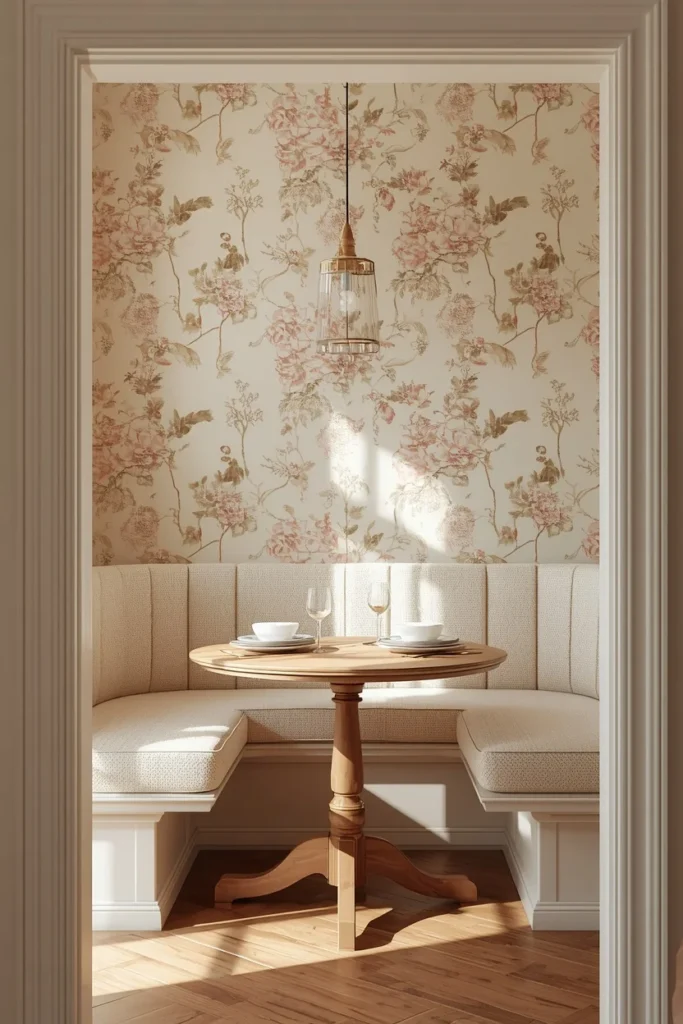
15. Wallpaper-Backed Banquette Nook
Wallpapering just the wall behind a banquette, rather than the whole kitchen, gives the nook its own identity without overwhelming the rest of the room. A botanical print, a subtle stripe, or a scalloped pattern behind the bench adds depth to photos and makes the nook feel like a deliberately designed moment rather than leftover space. Because the wallpaper only covers one wall, it’s a lower-commitment way to bring in pattern, and it’s easier to swap out later than papering an entire kitchen. Keeping the banquette cushion in a solid, quiet color lets the wallpaper carry the personality instead of competing with it. This approach works especially well in a nook tucked into an alcove, where the wallpapered wall becomes the natural backdrop for every photo taken at that table.
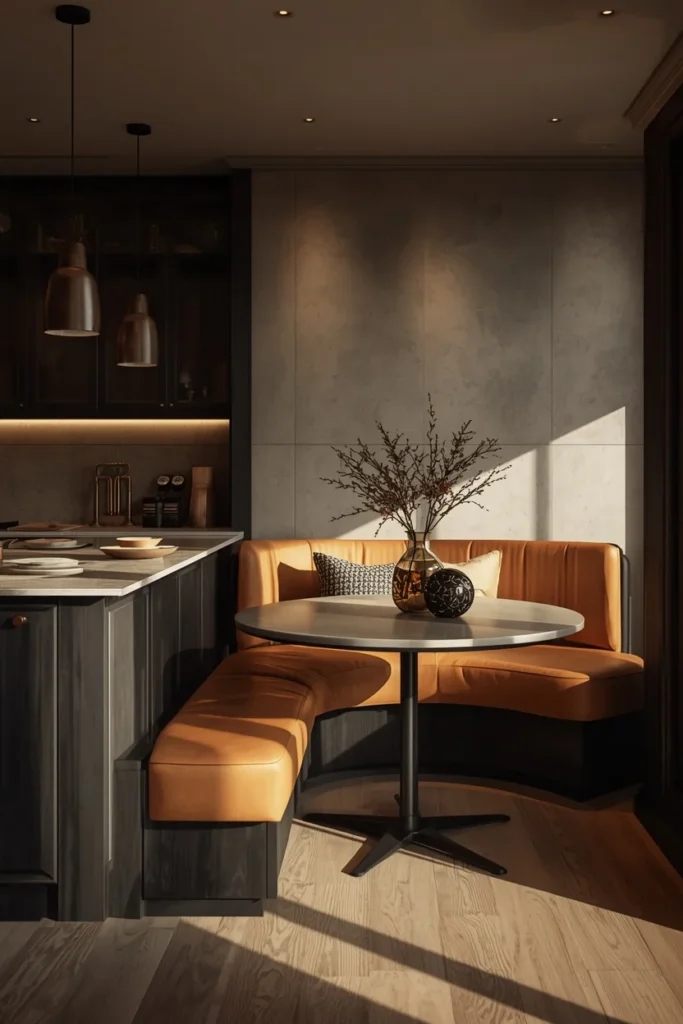
16. Island-Wrapped Banquette Seating
Instead of stools along one side of an island, a curved or angled banquette can wrap around a portion of it, turning a prep surface into an actual dining spot. This works best when the island has enough overhang or an attached table extension, since the banquette needs a clear surface at the right height to sit at, not just a countertop edge. Leather or performance vinyl is a common choice for this style, since it holds up to the higher traffic and occasional counter spills near an active cooking zone. This layout suits open-plan kitchens where the island already functions as the social hub, giving guests somewhere to actually sit down instead of perching on a stool. It’s a bigger structural commitment than a corner nook, so it’s worth planning during a full kitchen renovation rather than as a quick add-on.
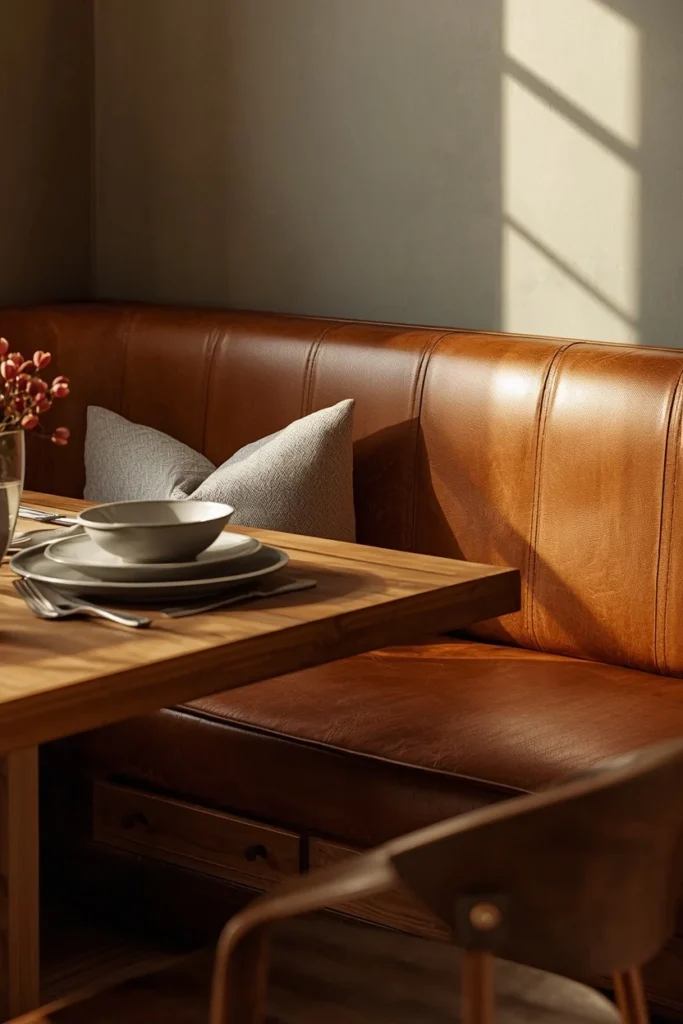
17. Leather Banquette Built for Family Life
Leather or high-quality faux leather is one of the most practical upholstery choices for a household with kids, pets, or frequent guests, since spills wipe away without soaking into the material. A cognac or camel leather tone develops a soft patina over time, which actually adds character rather than looking worn out the way some fabrics do. Pairing it with a wood table and simple cotton or linen napkins keeps the overall palette from feeling too formal or restaurant-like. Because leather can feel cool or slightly sticky in warm climates, adding one or two cotton throw pillows softens the surface without sacrificing the wipeable practicality. This is consistently one of the top choices for busy family kitchens where durability outranks a specific decor trend.
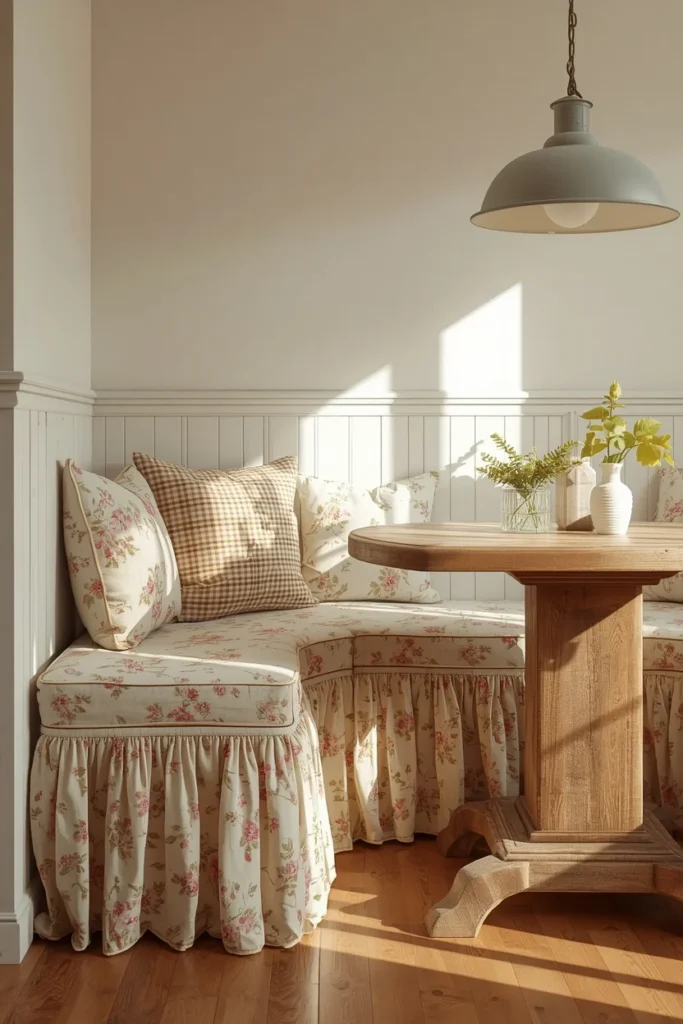
18. Skirted, Slipcovered Banquette for Cottage Softness
A banquette with a fabric skirt running to the floor, instead of exposed wood legs or a hard base, gives the whole piece a softer, more cottage-like silhouette. A gathered or box-pleated skirt in a cotton or linen-blend fabric hides the storage base beneath the seat while adding a layer of texture that a flat upholstered front doesn’t provide. This detail pairs naturally with floral or gingham cushions, a distressed wood table, and vintage-inspired pendant lighting for a full cottage aesthetic. Because a skirt reaches the floor, it also makes cleaning around the base easier to hide, since dust and pet hair collect less visibly than around exposed legs. This style tends to suit kitchens that already lean traditional or romantic rather than sleek and modern.
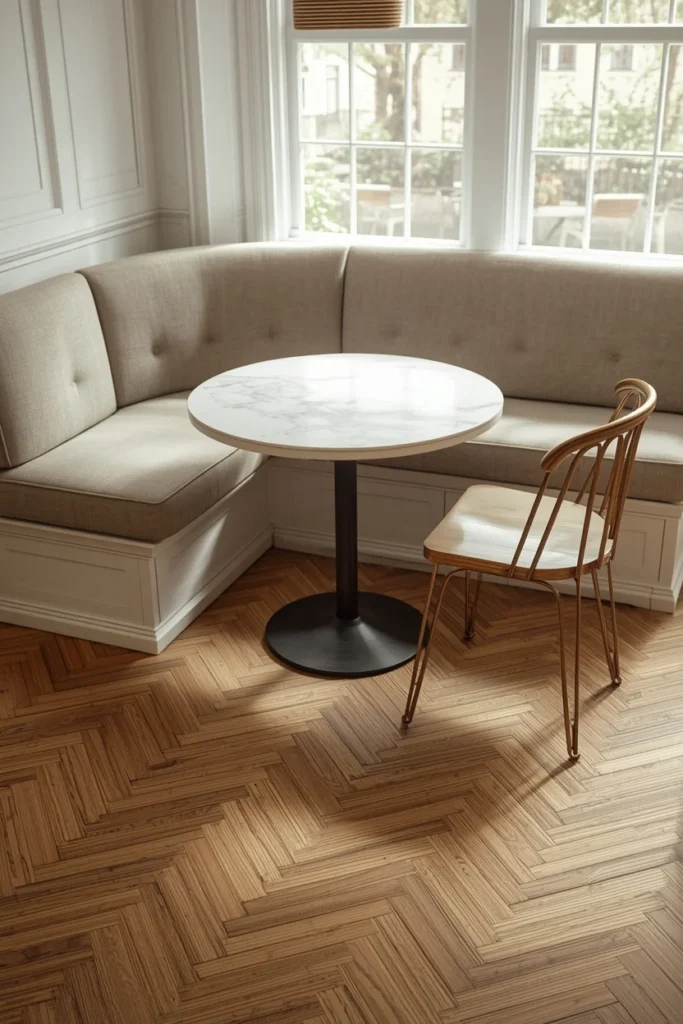
19. Herringbone Floor Banquette Pairing
A herringbone wood or tile floor beneath a banquette nook adds quiet texture without introducing another color into the room. The diagonal pattern draws the eye through the space, which works especially well in a nook that sits at an angle or off to the side of the main kitchen work zone. Pairing a herringbone floor with a simple, solid-colored banquette keeps the pattern from competing with the upholstery, letting the floor do the visual work instead. This combination suits kitchens with a European or traditional French bistro influence, especially alongside brass fixtures and a marble or wood tabletop. It’s a detail best planned during a flooring update rather than retrofitted, since herringbone installation is more labor-intensive than a standard plank layout.
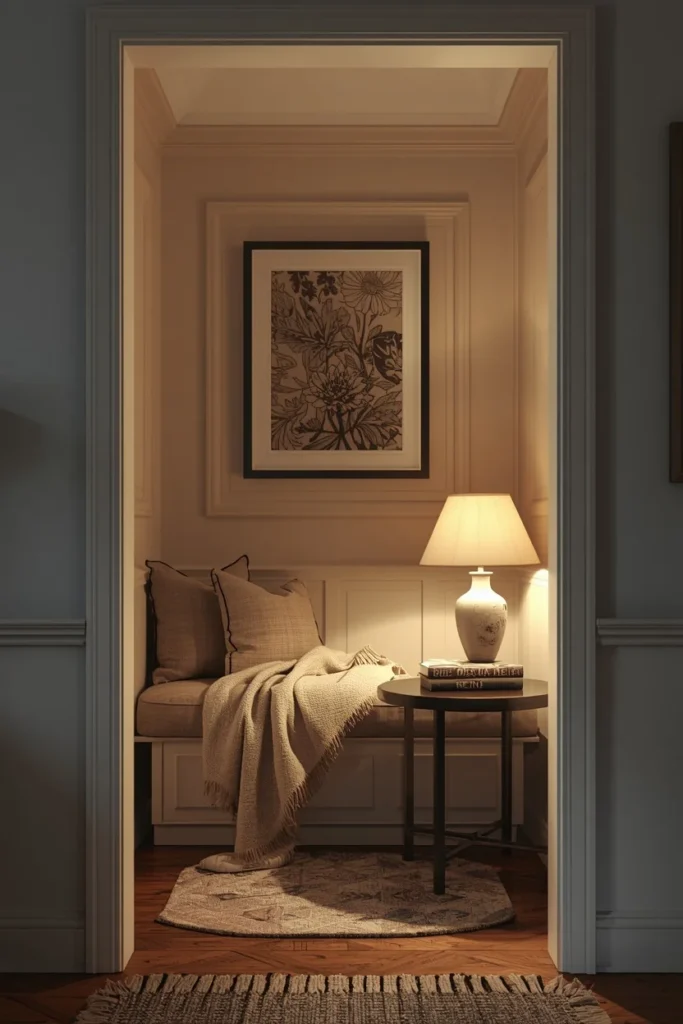
20. Dual-Purpose Reading Nook Banquette
A banquette doesn’t have to live only in the kitchen proper. Building one into an adjacent alcove or the far end of an open-plan kitchen, styled with a small side table, a reading lamp, and a throw blanket, lets it double as a quiet spot outside of mealtimes. By day it can hold a laptop or a cup of coffee and a book; by evening, sliding a folding table or leaf extension into place turns it back into extra dining seating for guests. Layering in a soft area rug, a stack of pillows, and a low side table makes the space feel intentional as a lounge corner rather than an unused dining spot. This approach makes the most sense in larger kitchens or open floor plans where the nook sits slightly apart from the main cooking and prep zones.
21. Brass and Marble Accented Banquette
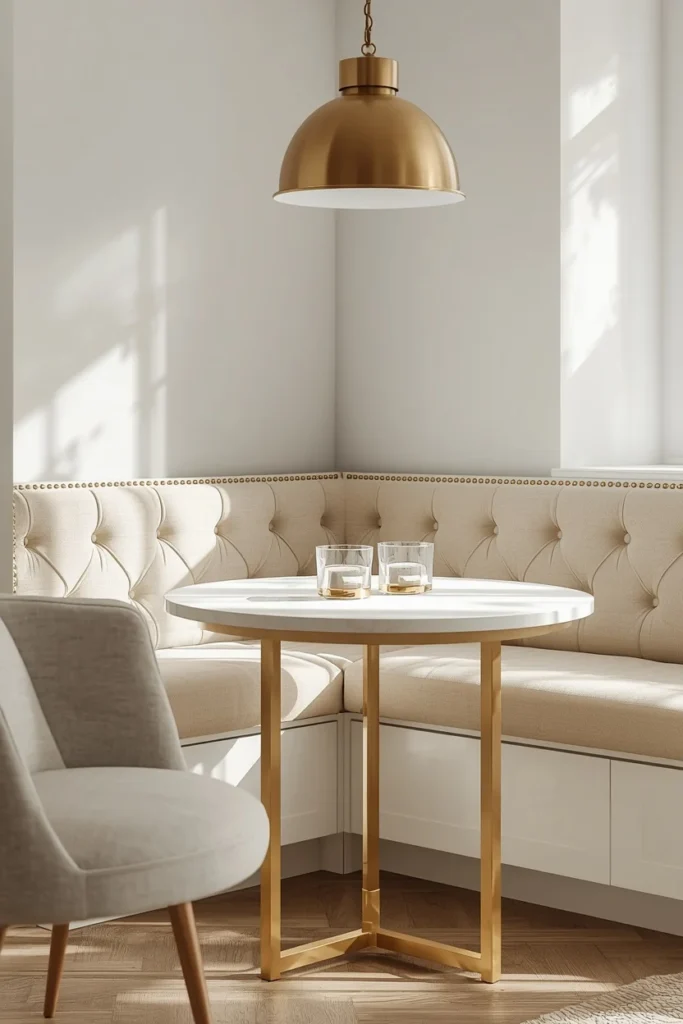
Introducing brass hardware, a marble tabletop, and warm metallic lighting fixtures around a banquette elevates the nook into something that feels closer to a boutique restaurant than a casual breakfast spot. Brass nailhead trim along the edge of the upholstery adds a tailored detail that catches light differently than plain fabric edges. Pairing this with a honed or polished marble table surface, rather than wood, shifts the whole nook toward a more formal, jewel-box feel. This combination works particularly well in kitchens that already use brass fixtures elsewhere, such as on faucets or cabinet hardware, so the metals repeat intentionally rather than appearing as a one-off accent. It’s a higher-investment version of the banquette trend, best suited to kitchens where the rest of the finishes can support that same level of polish.
Styling Tips
- Layer two or three cushion sizes rather than lining up matching pillows — a large square, a smaller lumbar, and one textured accent reads more natural than a uniform row.
- Keep loose back cushions to a minimum if the bench already has a fixed, padded backrest, since too many layers eat into usable seat depth.
- Choose a table that hovers over the bench seat by roughly a third rather than sitting flush against it, so seated guests aren’t crammed against the table edge.
- Add one low-maintenance plant or a small vase near the table to soften the hard lines of a built-in bench without cluttering the eating surface.
- Vary textures rather than colors — a smooth marble top, a woven pendant, and a nubby boucle cushion do more visual work together than three flat colors would.
Practical Implementation Ideas
- Measure the full space first, including any radiators, baseboard heaters, or window trim that could add depth to the finished bench.
- Decide on storage type early: lift-top compartments hold more but require clearing the seat cushion to access, while front-facing drawers are quicker to use but hold less.
- Choose seat height based on the table you already own or plan to buy, aiming for roughly 10 to 12 inches of clearance between seat top and tabletop underside.
- If building custom, use cabinet-grade plywood for the box structure rather than particleboard, since it holds up better against daily moisture and weight.
- Order upholstery fabric with extra yardage for future cushion recovering, since fabric runs can be discontinued within a year or two.
Common Mistakes to Avoid
- Skipping a backrest entirely, which makes the bench feel more like an outdoor bench than a comfortable dining seat.
- Choosing a seat depth that’s too shallow for the intended use, leaving diners feeling like they’re perched at the very edge.
- Picking a delicate, dry-clean-only fabric for a household with young kids or frequent guests.
- Building the bench too tall or too short relative to the table, which throws off the whole eating experience even if everything else about the design looks right.
- Overcrowding the cushion with too many decorative pillows, leaving no actual room to sit down.
Small-Space Alternatives
For kitchens without room for a full corner build, a single freestanding upholstered bench pushed against one wall delivers much of the same look. A round drop-leaf table keeps the footprint flexible, expanding only when guests come over. Wall-mounted floating benches also work well here, since they don’t require floor-level structure and visually take up less space than a boxed base.
Budget-Friendly Alternatives
Skip full custom millwork and start with a pre-made storage bench or ottoman set from a furniture retailer, then dress it up with a fitted cushion and layered pillows. A DIY approach using plywood, foam, and a staple gun can replicate a built-in look for a fraction of custom upholstery pricing. Secondhand dining benches, reupholstered in a new fabric, are another way to get the banquette silhouette without the cost of ground-up construction.
Pro Styling Recommendations
Work backward from the table you love rather than the bench, since the table shape often dictates whether an L-shape, U-shape, or curve makes more sense. Stick to one dominant pattern in the space — either the cushion, the wallpaper, or the floor — and keep everything else in supporting solid tones. When in doubt on fabric, choose a performance-treated option over a delicate natural fiber, since a banquette gets more daily contact than almost any other seat in the house.
FAQs
Conclusion
A banquette works because it solves two problems at once: it makes a kitchen corner functional, and it gives people a reason to stay a little longer at the table. Whether the plan is a full custom build with hidden storage or a simple bench pushed against one wall, the same rules hold up — get the seat height and depth right first, choose a fabric that can handle real life, and let the shape of the space guide the layout rather than forcing a style that doesn’t fit. Save the ideas that match your kitchen’s footprint and start there.