21 Friendsgiving Tablescape Decor Ideas for the Best Feast Yet
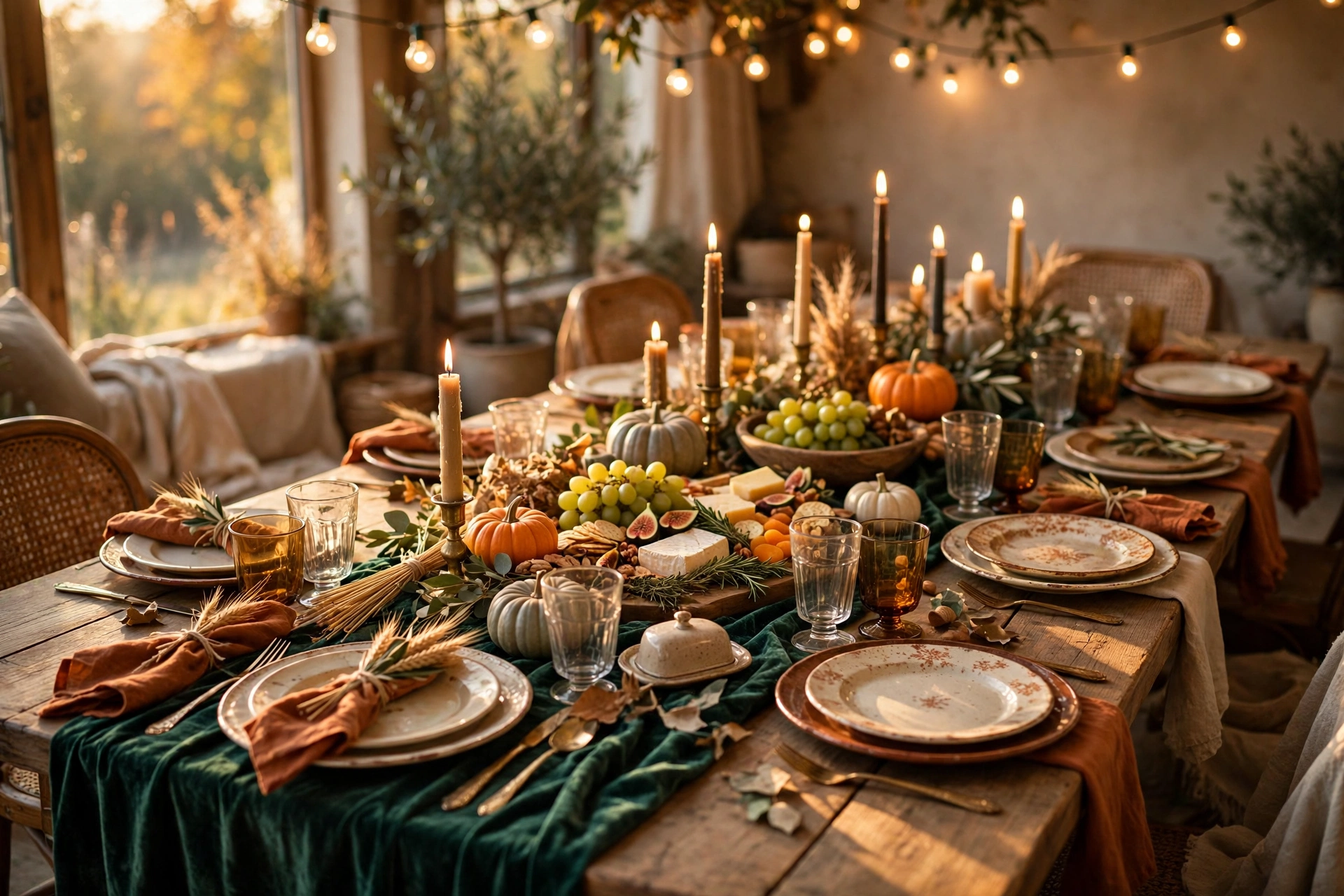
The turkey matters. The people around the table matter more. But let’s be honest — the table itself is what everyone photographs before a single bite gets taken.
Friendsgiving tables don’t need matching china or a florist’s budget to feel special. Some of the best ones are built from a thrifted tablecloth, a bowl of gourds from the grocery store, and a few taper candles you already own. The trick is knowing which small choices — height, texture, warm light, a little bit of personal story — do the most visual work.
These 21 Friendsgiving tablescape decor ideas cover the full range: elegant, rustic, boho floor-seated, and budget-first. Pick the ones that match your space and your people, and layer in as many as you like.
Table of Contents
What Makes a Friendsgiving Tablescape Different From a Formal Thanksgiving Table
A Friendsgiving table is allowed to be looser than a formal holiday table, and that’s exactly what makes it more fun to style. Nobody expects matching china or a hired florist. What actually reads as “styled” at a casual gathering is texture, warm light, and a little bit of personality — a thrifted runner, a candle in a jar, a centerpiece made from what’s already at the farmer’s market. Once you let go of matching everything, the table comes together faster and looks more like it belongs to the people sitting around it.
21 Friendsgiving Tablescape Decor Ideas
A Kraft-Paper Gratitude Runner
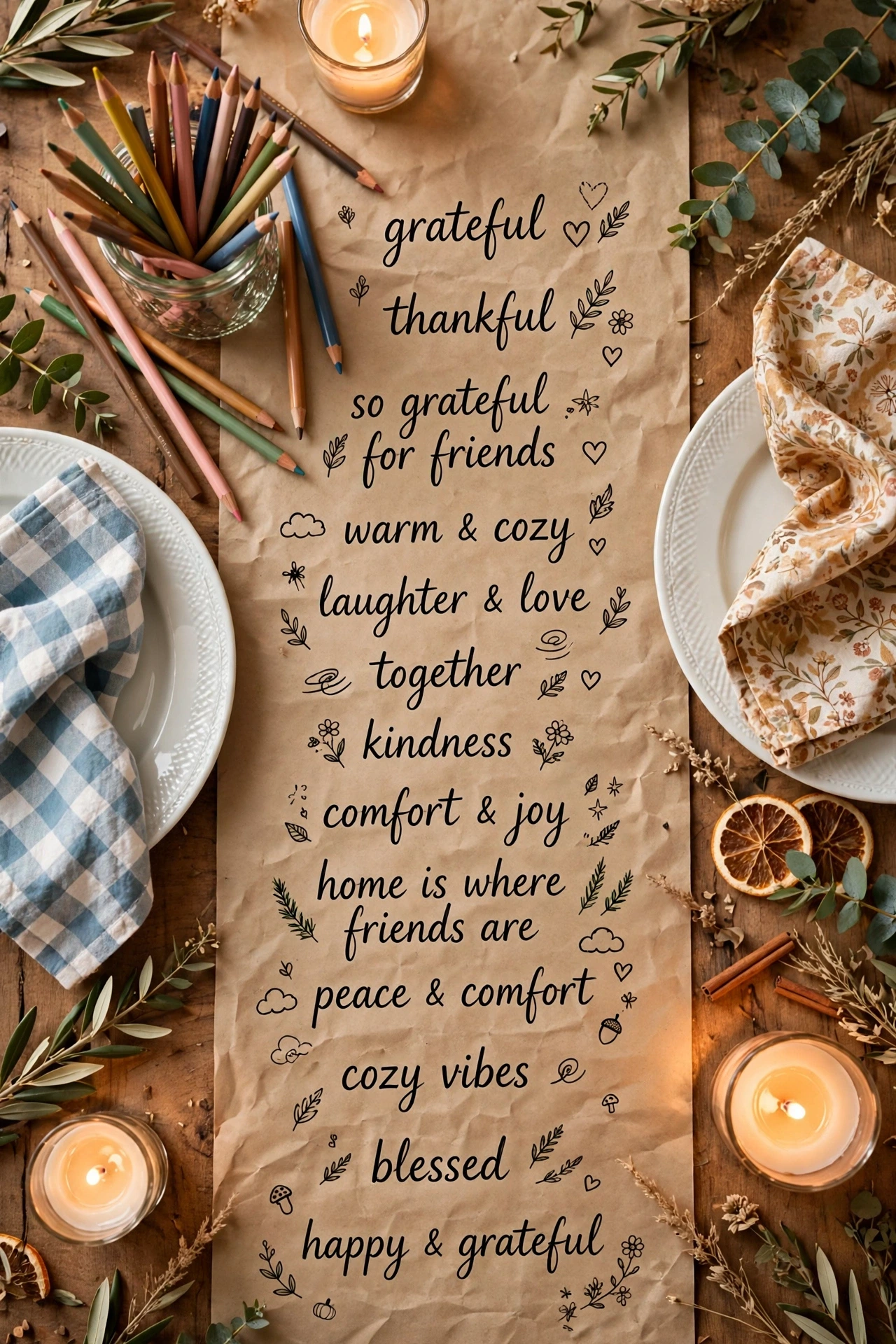
Rolling out a strip of kraft paper down the center of the table instead of a traditional runner turns the tablescape into part of the entertainment. Leave out a cup of colored pencils or fine-tip markers and ask guests to write what they’re thankful for, doodle a turkey, or leave a note for whoever sits there next. The paper naturally catches candlelight and food stains in a way that feels intentional rather than messy, and it doubles as the easiest cleanup of the night — just roll it up and toss it. This idea works especially well for larger, more casual groups where a few spelling jokes and doodles are half the point.
A Thrifted or Borrowed Linen as the Base
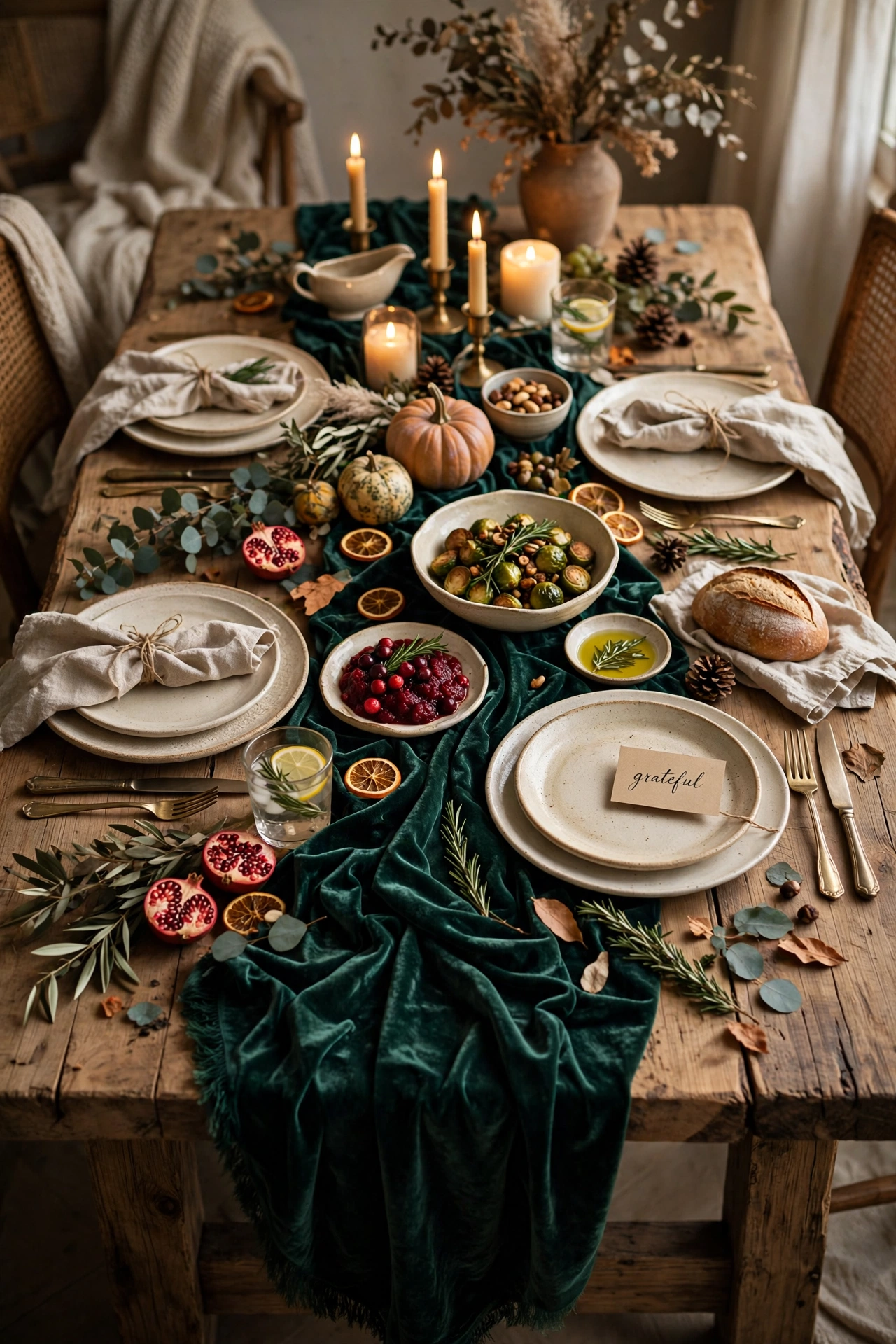
Instead of buying a matching tablecloth set, raid a linen closet, a thrift store, or a friend’s hall closet for a large piece of fabric with real texture — a velvet remnant, an embroidered flat sheet, a flannel blanket folded lengthwise. Because it wasn’t made for a dining table, it tends to have a richer weave and pattern than mass-produced tablecloths, and it costs a fraction of the price. Leaving the edges slightly uneven or draping past the table edge actually reads as more intentional than a perfectly hemmed cloth. This single swap sets the entire color and texture direction for everything layered on top.
Layered Place Settings for Built-In Height
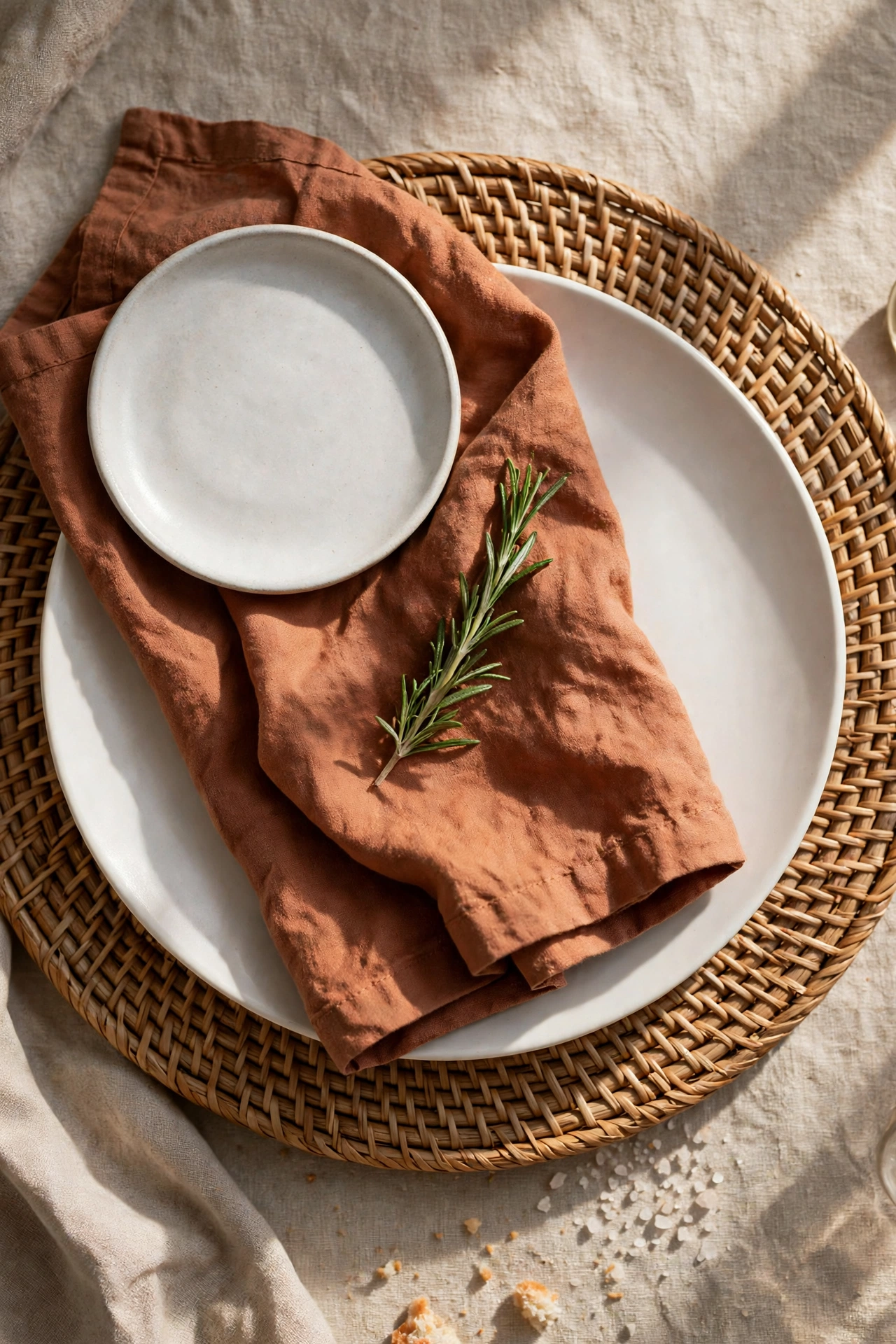
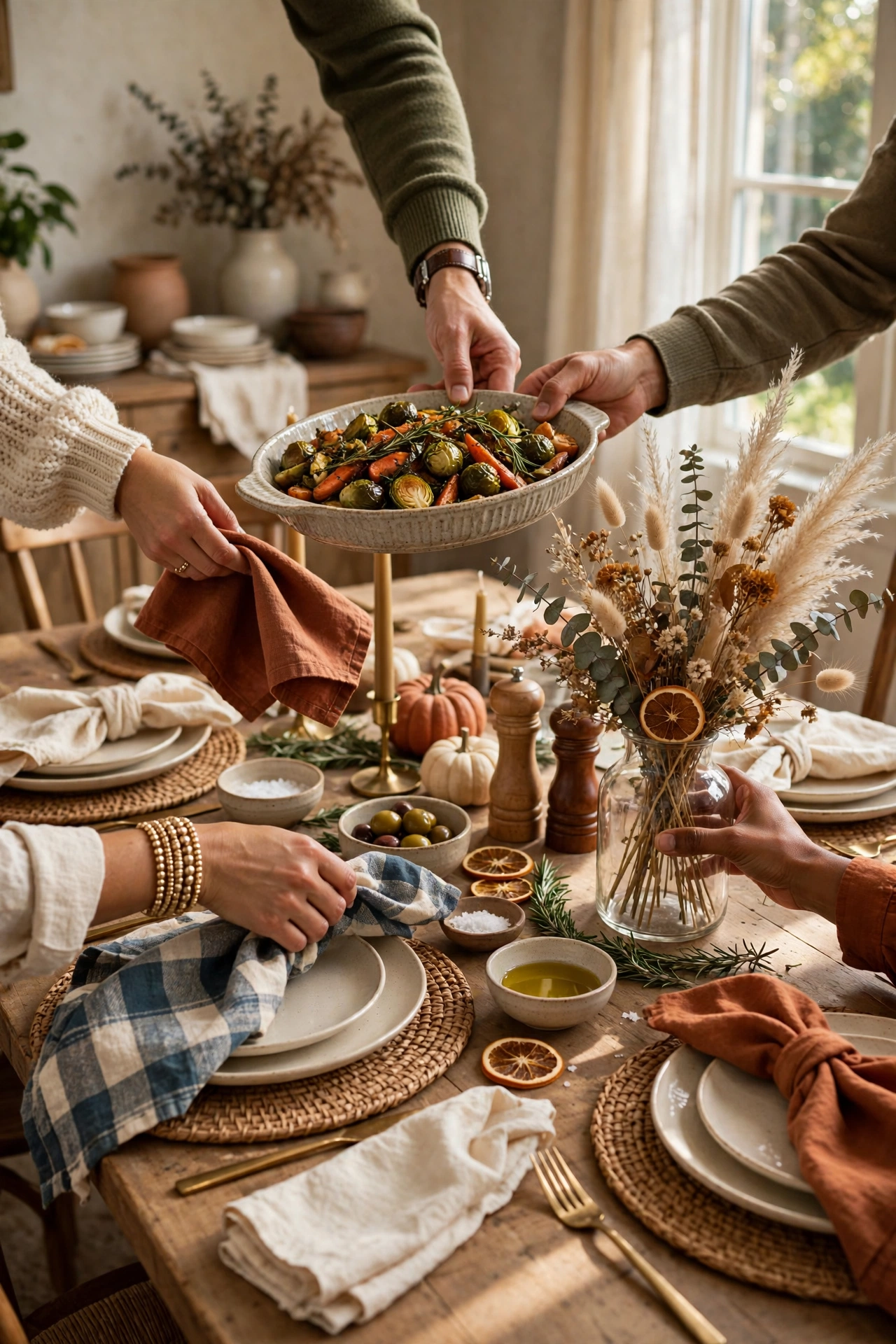
Stacking a woven or wood charger under the dinner plate, then a folded napkin, then a small bread or salad plate on top, gives every single seat its own small moment of texture without adding a single extra decoration. This layering technique is borrowed directly from event styling, where height and repetition at each place setting create rhythm down the length of the table. Finishing the stack with one small seasonal detail — a sprig of rosemary or a single dried leaf — ties every seat back to the same fall theme. It’s a technique that photographs beautifully from directly overhead, which matters if you’re sharing the table on Pinterest or Instagram.
A Grazing Board as the Centerpiece
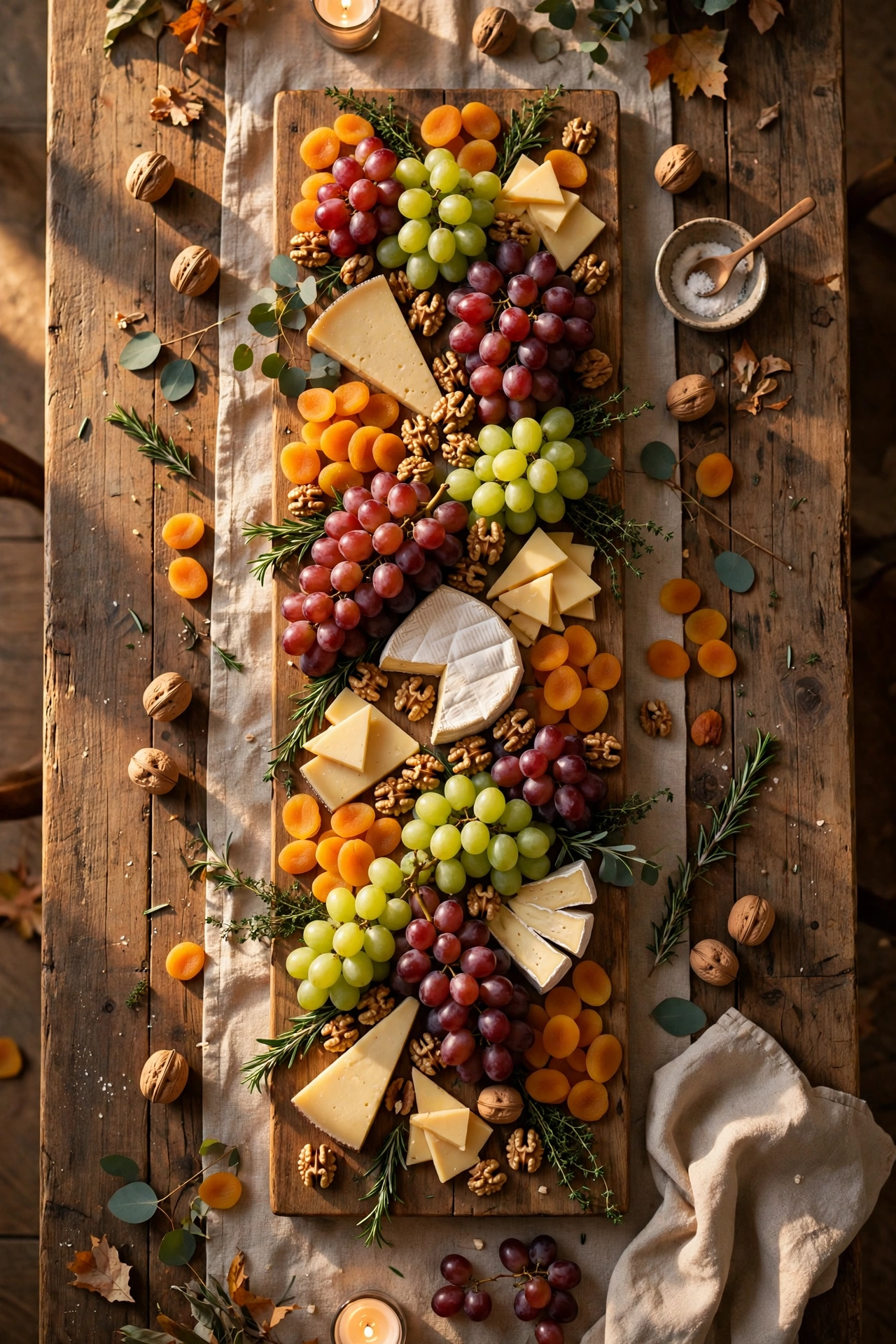
Running a wood board or a few smaller boards down the center of the table, loaded with cheese, grapes, nuts, and dried fruit, does double duty as both decor and food — which matters when you’re feeding a crowd without a huge budget for separate centerpiece pieces. The natural colors of the food (deep purple grapes, golden dried apricots, dark walnuts) already match a fall palette, so there’s very little extra styling needed. Placing the board low and long, rather than tall and narrow, keeps sightlines open so guests can actually talk across the table. It also gives people something to nibble on and gather around before the main meal is served.
Foraged Branches and Leaves for a Free Centerpiece
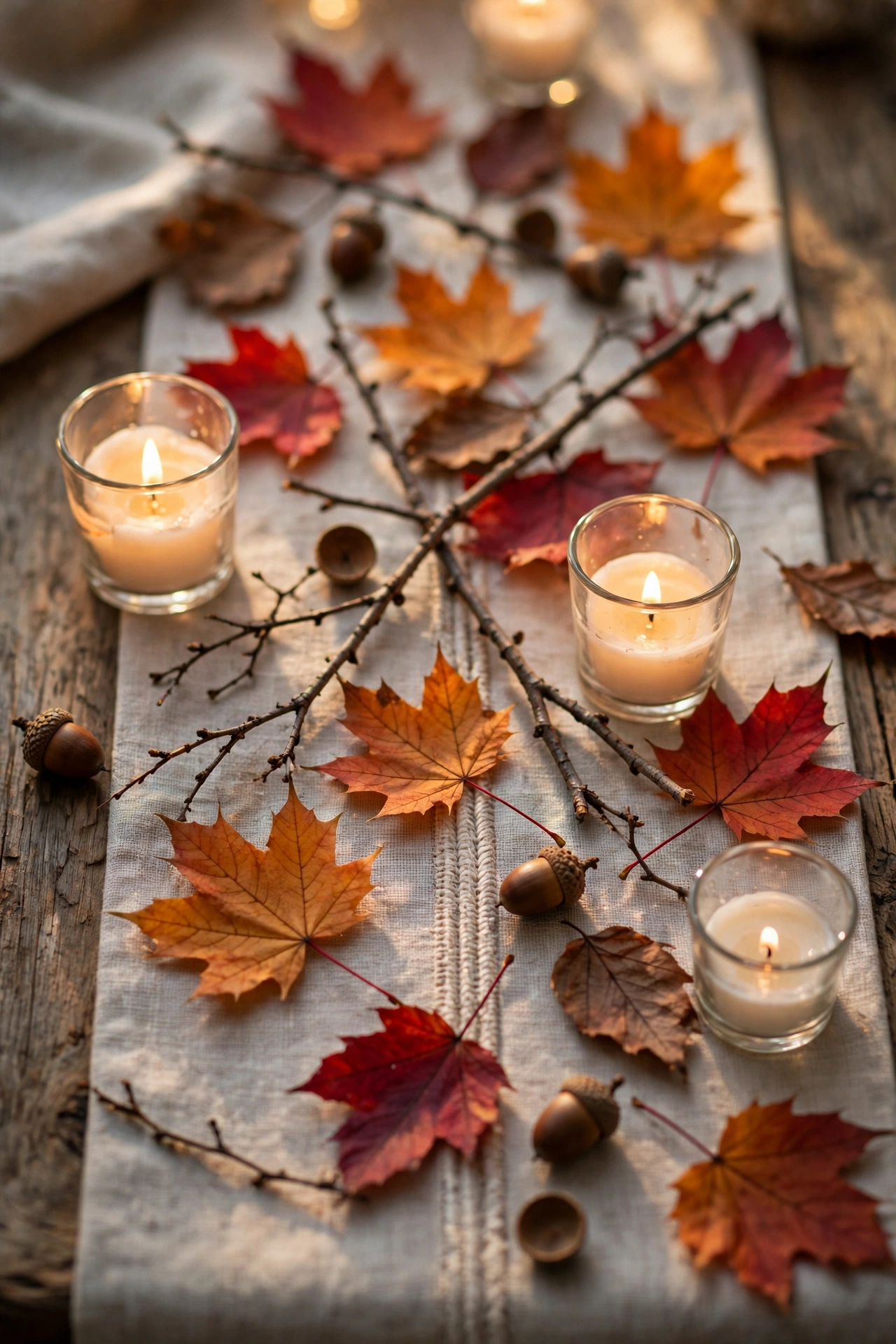
A short walk outside in October usually turns up everything needed for a centerpiece: colorful fallen leaves, small bare branches, acorns, or pinecones. Laying these directly on the table runner instead of arranging them in a vase creates a loose, natural line down the center that costs nothing and never looks overdone. Mixing in a few candles among the foraged pieces adds warmth without covering up the natural texture. This is one of the most budget-friendly Friendsgiving tablescape decor ideas on the list, and it also happens to look the most organic in photos.
Related: 19 Simple Thanksgiving Tablescape Ideas Anyone Can Recreate
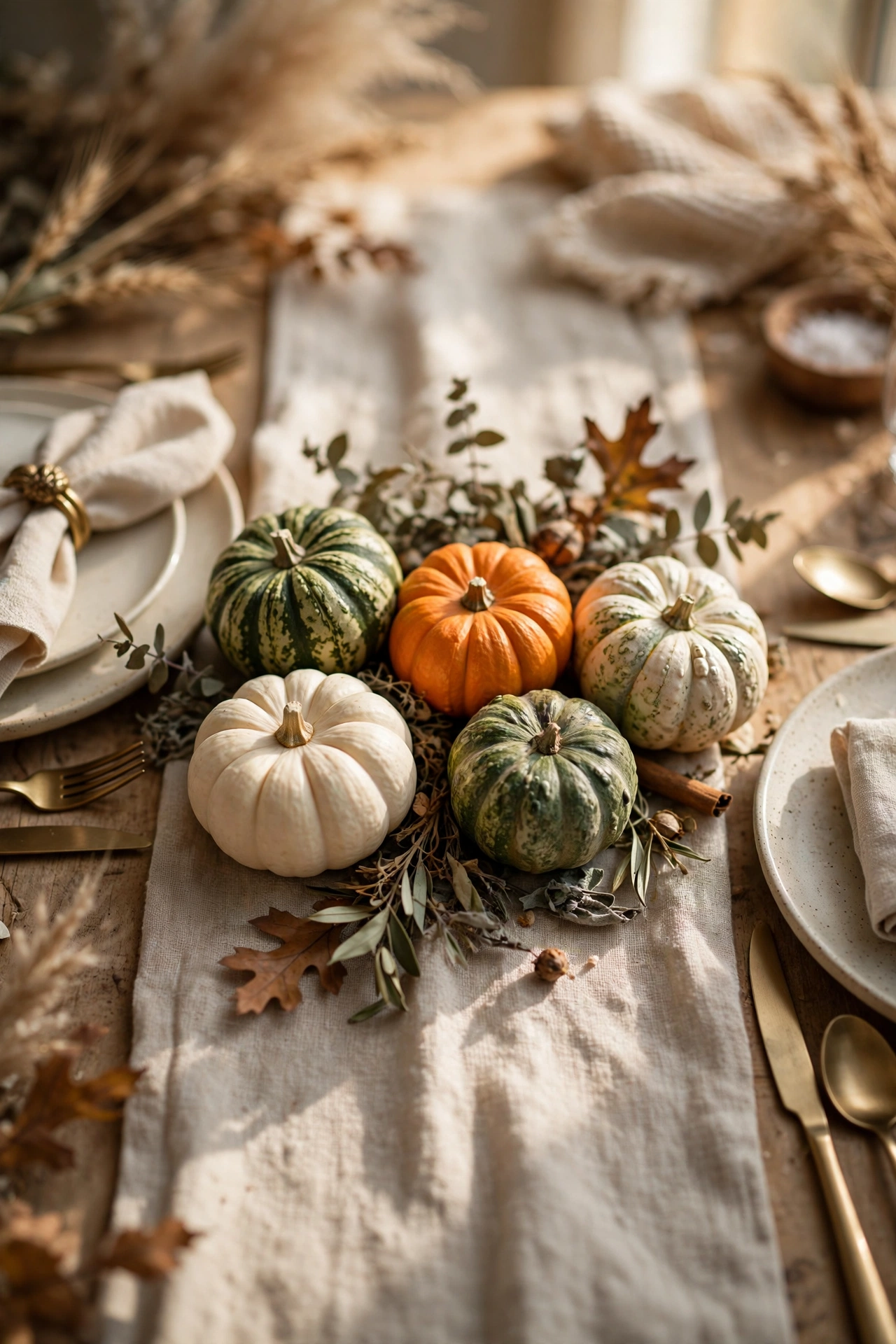
Clustered Mini Pumpkins and Gourds
Small pie pumpkins and mixed gourds, clustered in groups of three or five rather than spread out evenly, create the kind of casual abundance that reads as fall without looking like a craft store display. Mixing in a few different shapes, sizes, and colors — a white pumpkin, an orange one, a warty green gourd — keeps the cluster visually interesting instead of matchy. Placing clusters at intervals down the table rather than one giant pile in the middle keeps the tablescape from feeling like it’s blocking conversation. Because pumpkins and gourds are inexpensive and last for weeks, this idea also works as decor for the rest of the season after Friendsgiving ends.
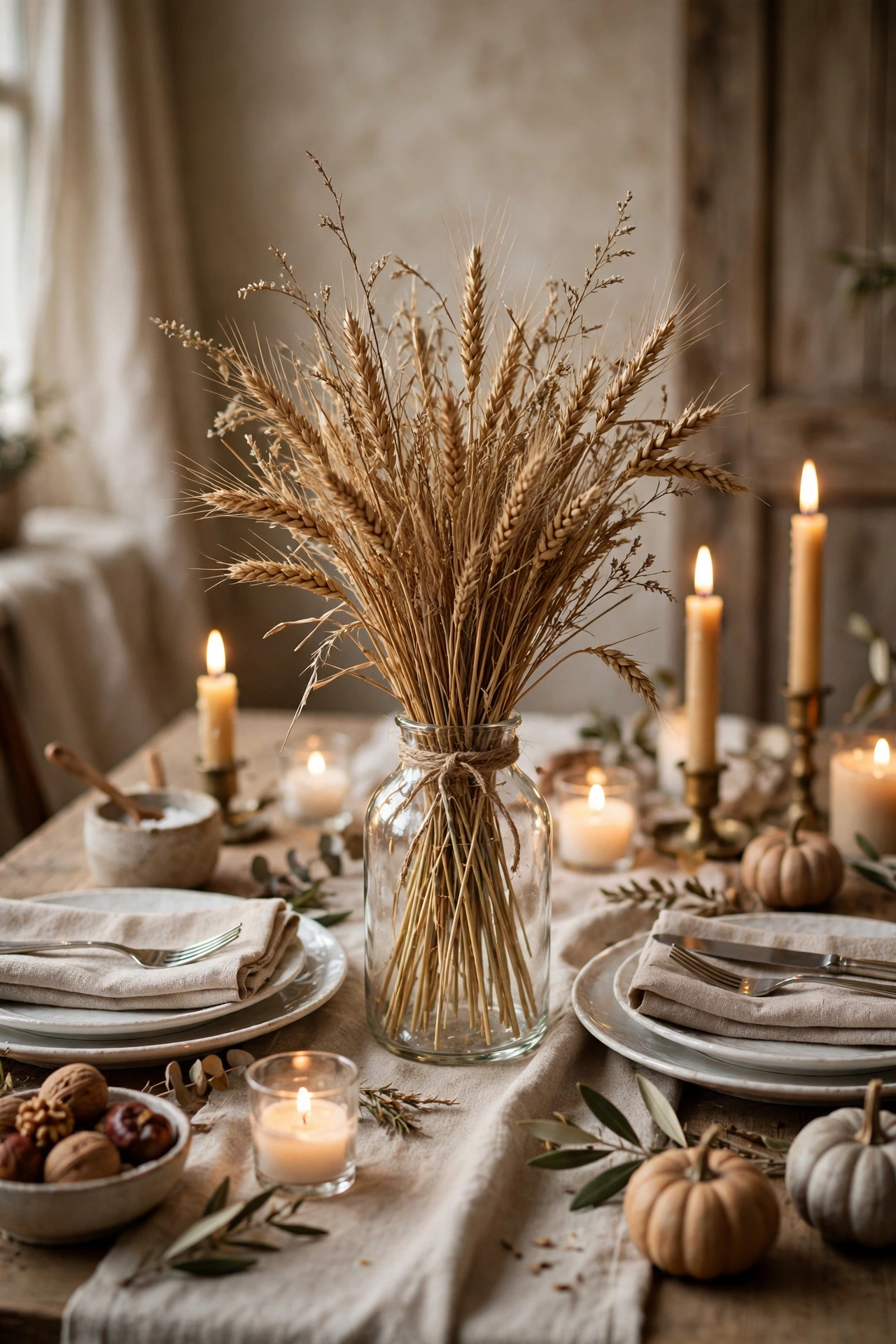
Dried Wheat Bundles in a Simple Vase
A bundle of dried wheat stems tied with twine and placed in a plain glass or ceramic vase brings height and rustic texture to the table without the cost or upkeep of fresh flowers. Because it’s already dried, it holds its shape and color for weeks, which means it can be prepped days in advance instead of the morning of the party. Keeping the vase low and the wheat slightly loose, rather than tightly bundled, gives it a foraged, effortless look rather than a stiff, floral-shop arrangement. This is a strong centerpiece option for hosts who want height without blocking sightlines across a narrow table.
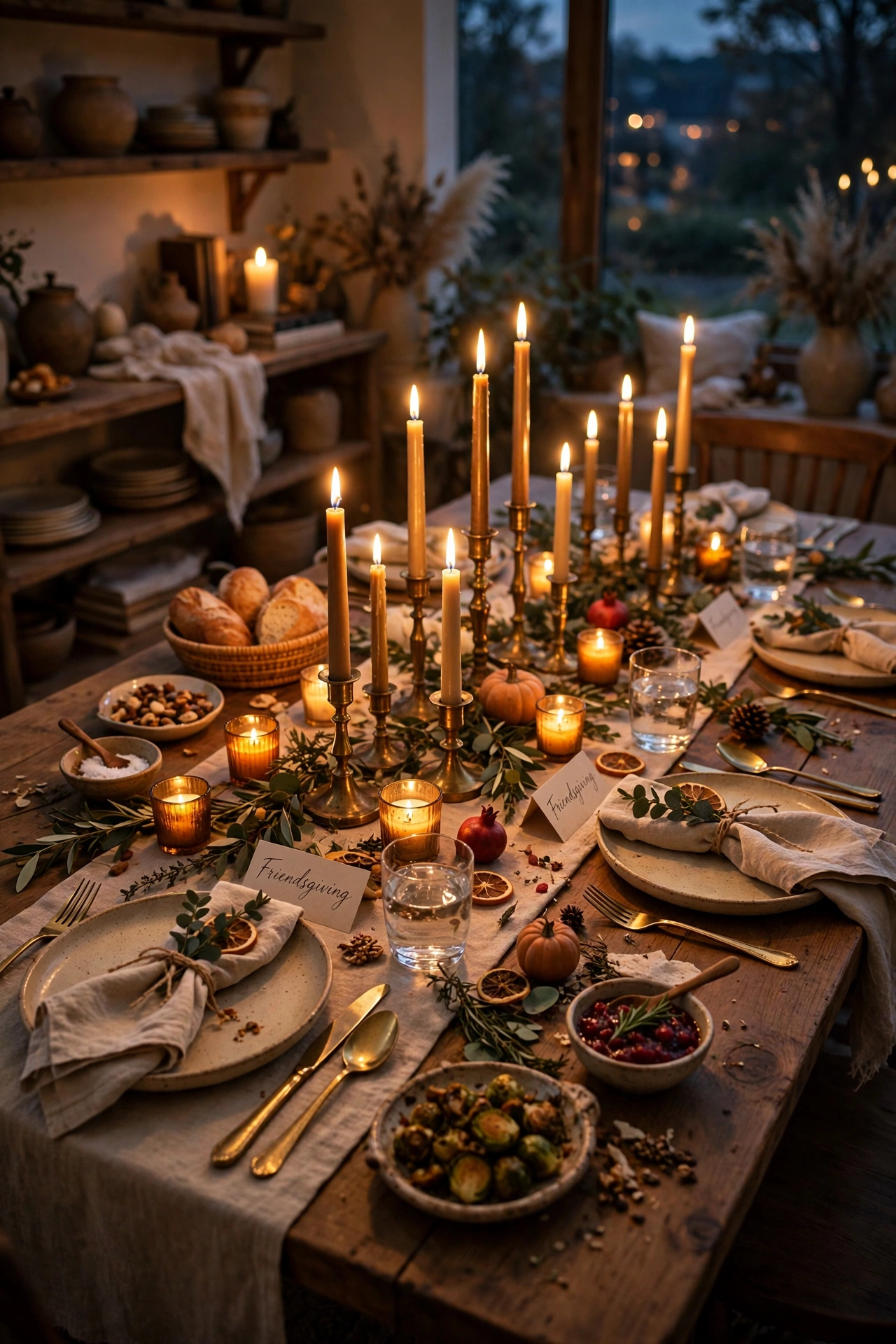
Mixed-Height Taper Candles and Votives
Combining tall taper candles in vintage-style holders with short votives in amber glass or repurposed jars creates the layered, flickering light that makes a table feel like a gathering rather than a meal under overhead lighting. Staggering the heights rather than lining candles up perfectly mimics the natural, slightly imperfect look of a table that’s been lived-in and loved, not staged. For safety and ease with kids or pets nearby, flameless LED tapers now mimic real flicker convincingly enough to use in the same mixed arrangement. Turning off the overhead lights entirely once the candles are lit is what makes this idea actually transform the mood of the whole room.
Warm String Lights Down the Table
Running a strand of warm white string lights directly down the center of the table, tucked between the centerpiece pieces, adds a soft ambient glow that works even in rooms with bright overhead fixtures. Battery-powered strands avoid the hassle of hiding a cord and let you position the lights anywhere on the table, including inside a low glass vase or bowl for a lantern effect. This idea is particularly useful for evening Friendsgivings held in apartments or rental spaces where dimmable lighting isn’t an option. It’s one of the lowest-cost ways on this list to add real atmosphere in under five minutes.
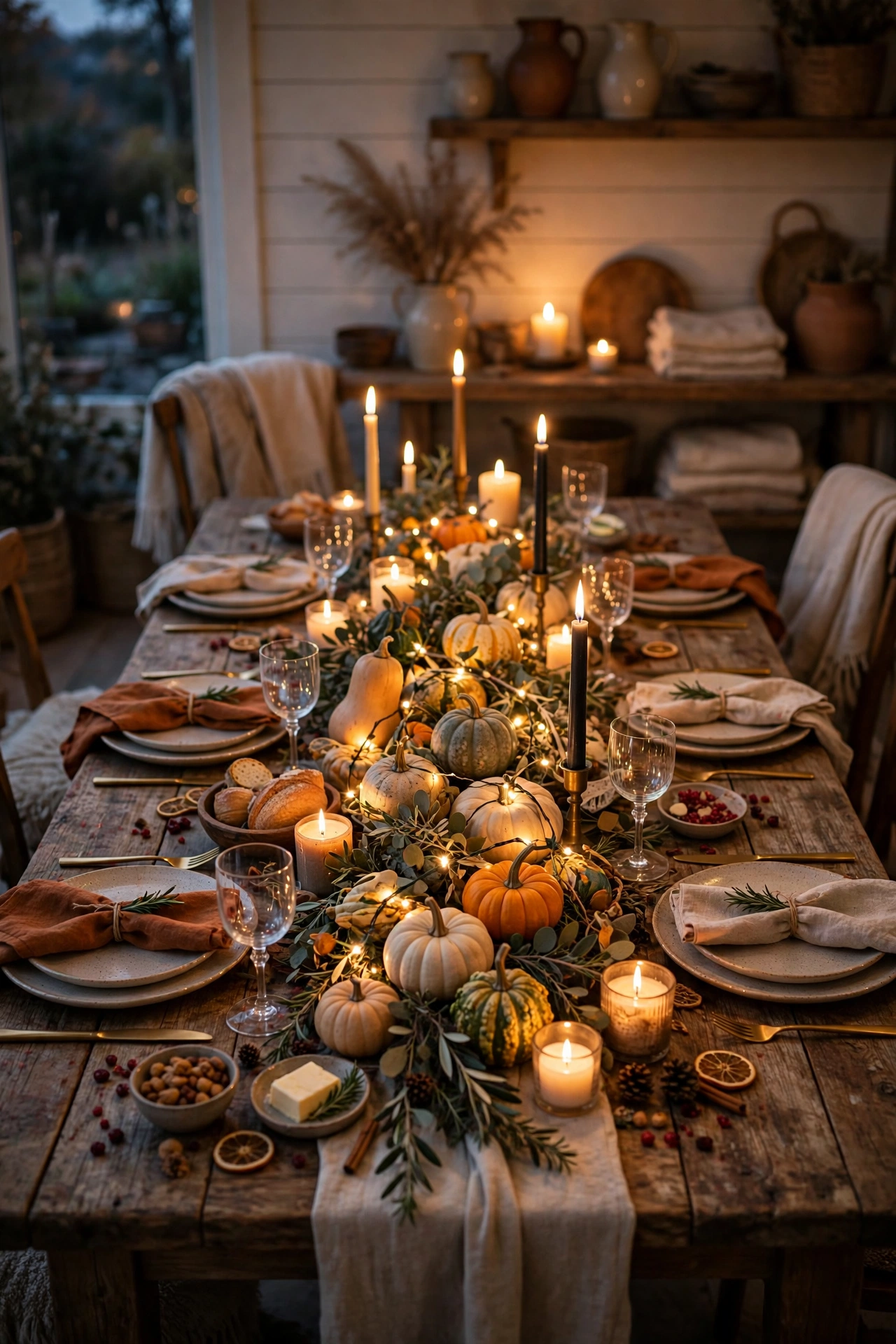
A Floor-Seated Boho Table for Tiny Apartments
When there’s no dining table big enough for the guest list, a low folding table set on a sturdy base — stacked poufs, side tables, or a coffee table — with floor cushions around it turns square footage limitations into an intentional design choice instead of a compromise. This setup actually photographs better in small spaces than a cramped dining table squeezed against a wall, since the low sightline makes the whole room feel more open. Layering a mix of floor cushions, throw pillows, and a soft rug underneath keeps the seating as comfortable as it looks. This is one of the most-searched small-space Friendsgiving tablescape decor ideas, and it works in any studio or one-bedroom apartment.
Related: 25 Thanksgiving Tablescape Ideas That Will Impress Every Guest at Your Table
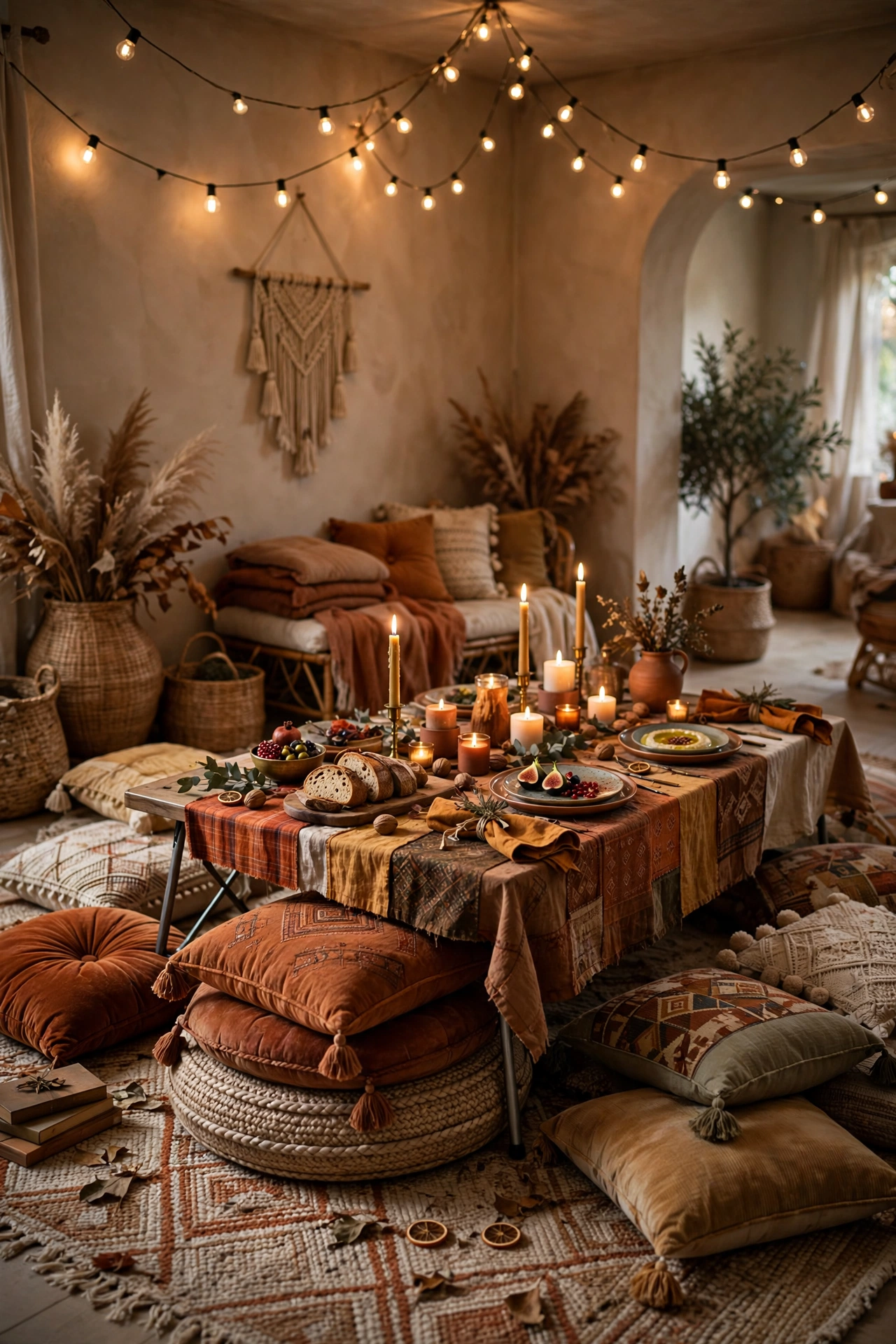
A Self-Serve Bar Cart or Drink Station
Setting up drinks on a separate cart or side table, rather than crowding bottles and glasses onto the main table, frees up space for food and centerpiece styling while giving guests a reason to mingle before sitting down. Grouping a few bottles, a pitcher of a seasonal punch or mocktail, and a stack of glasses on a tray keeps the station from spreading across the whole counter. Adding a small chalkboard or handwritten sign with the drink name is a low-effort detail that makes the setup feel like a real station rather than leftover bottles. This idea also solves a real hosting problem: it keeps the dinner table itself from turning into a drink-refill traffic jam.
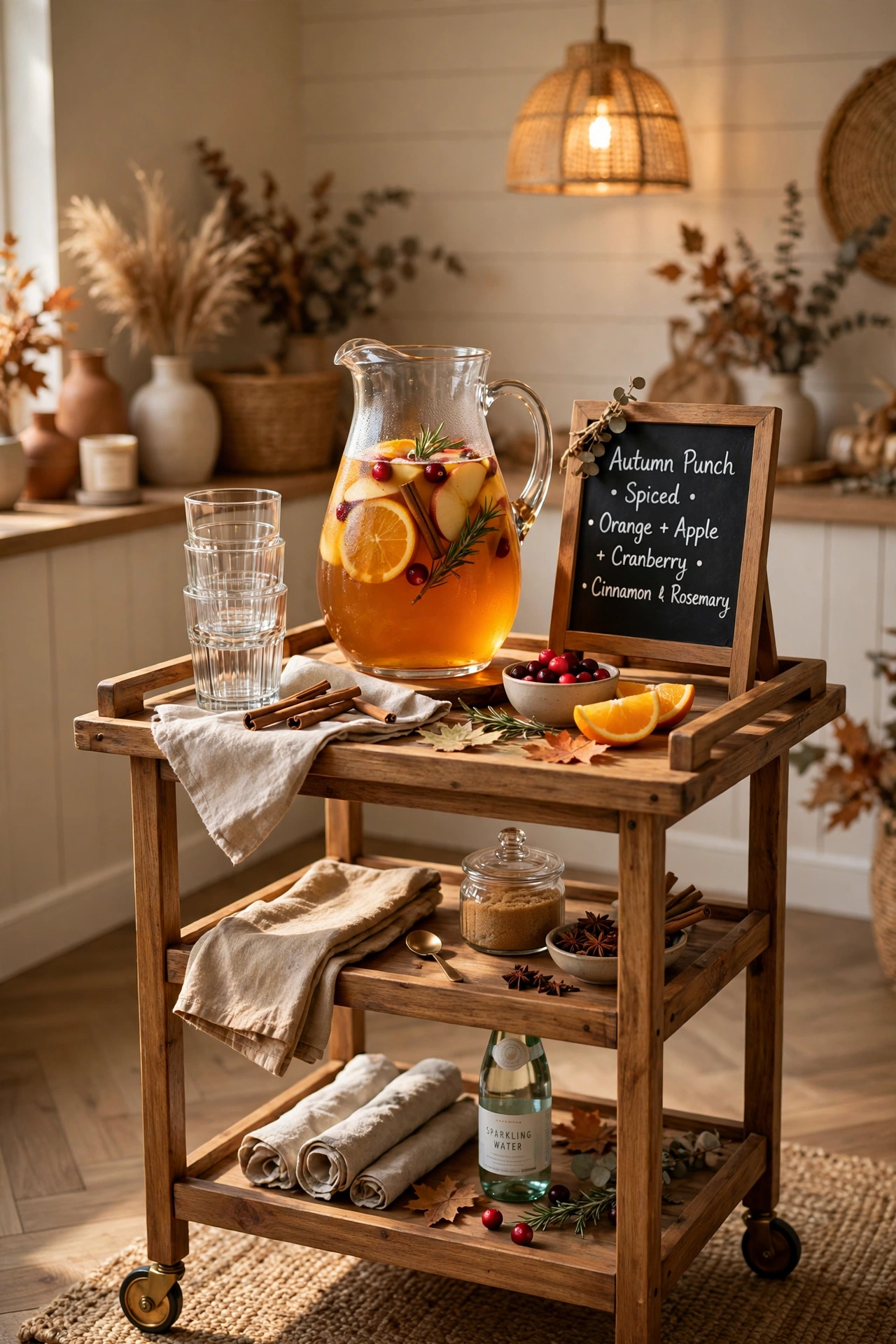
A Guest-Contributed Heirloom Display
Asking each guest to bring one meaningful object — a grandmother’s teacup, a vintage spoon, a small framed photo — and nestling those pieces between the candles and centerpiece turns the table into something genuinely personal rather than purely decorative. This works especially well for close friend groups where the story behind each object becomes part of the dinner conversation. Grouping the objects loosely rather than assigning each one a strict spot keeps the display feeling collected instead of curated to the point of stiffness. It’s a detail no amount of money can buy, which is exactly what makes it stand out in photos and in memory.
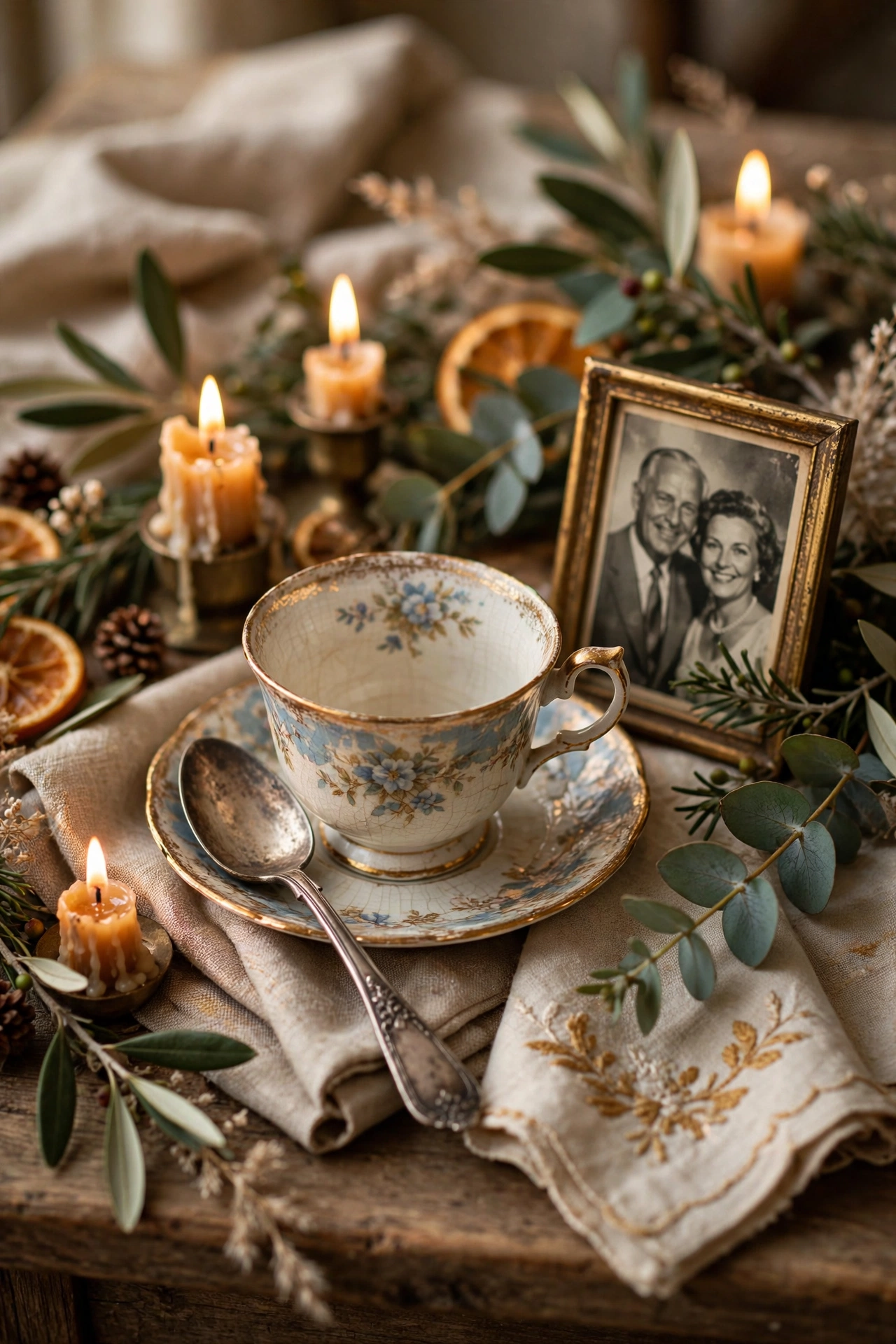
Handwritten Place Cards on Natural Materials
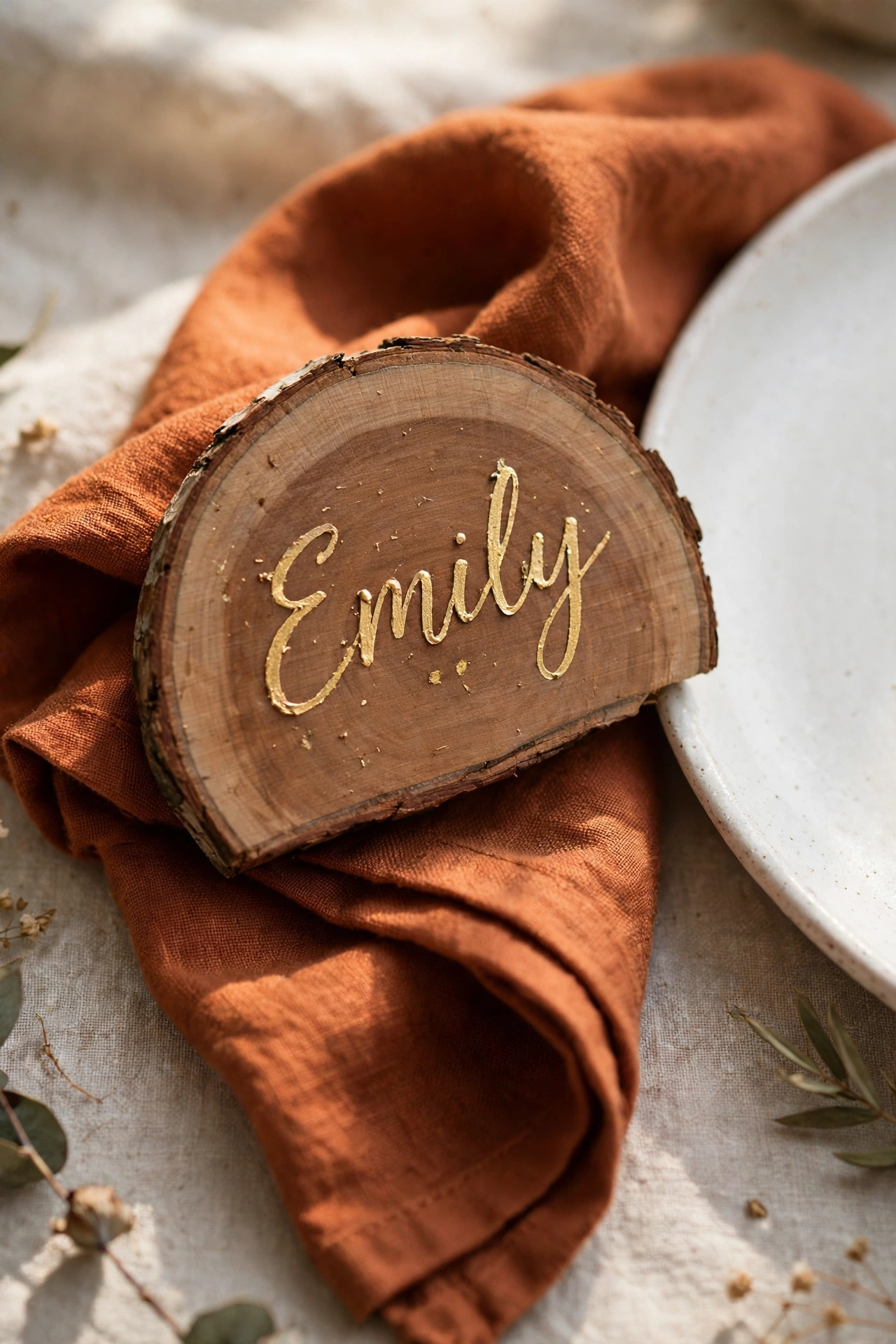
Skipping printed place cards in favor of names written directly on small wood slices, oversized leaves, or mini pumpkins adds a personal, seasonal touch that costs almost nothing. Using a paint pen or metallic marker keeps the handwriting legible against darker natural materials like bark or a deep orange gourd. Propping each card against a folded napkin or small votive at each place setting keeps them from sliding around during the meal. This detail also solves a practical hosting problem for bigger groups, since assigned seating avoids the slightly awkward shuffle of a mismatched table.
DIY Twine-and-Foliage Napkin Rings
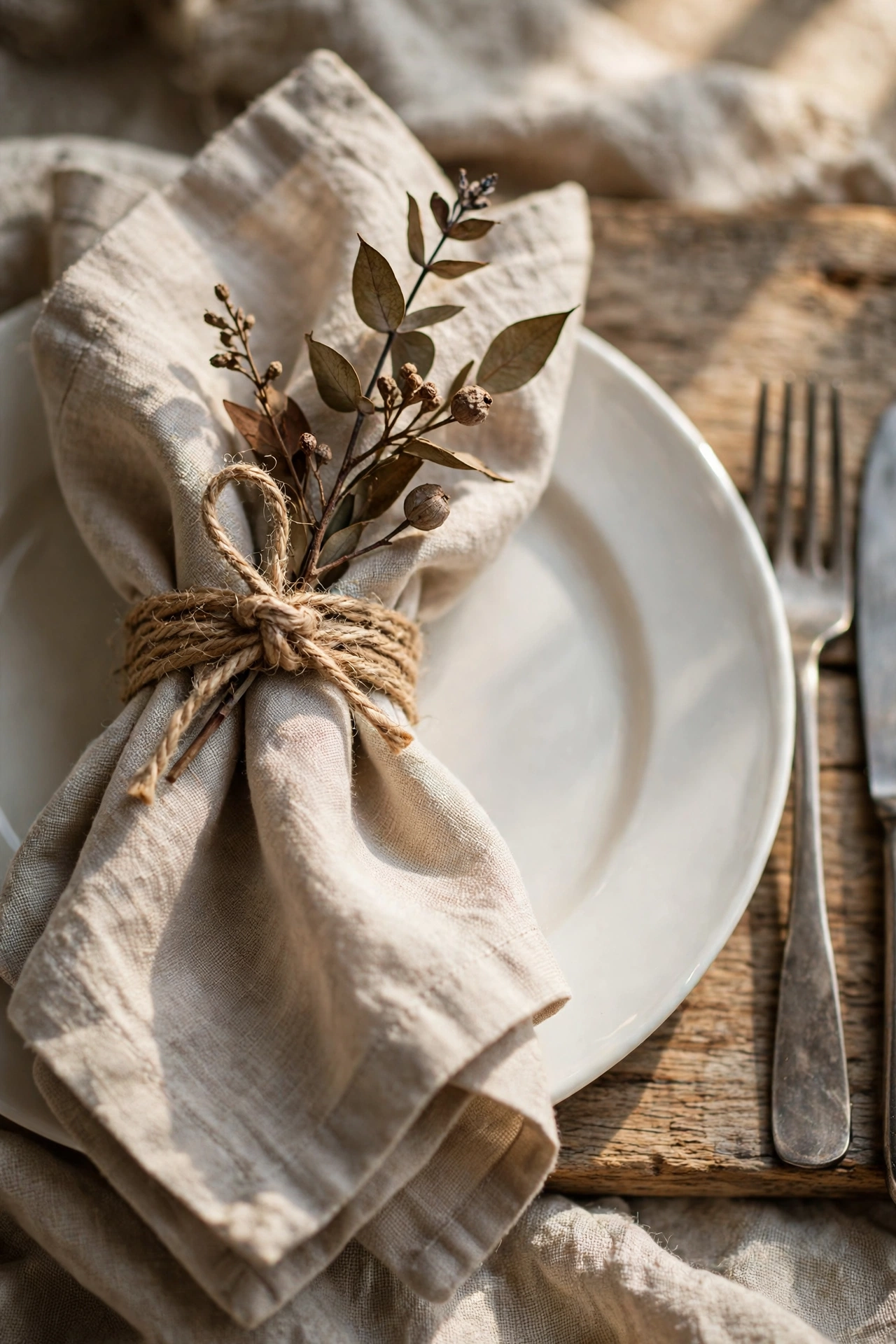
A simple loop of twine wrapped around a folded napkin, tucked with a small sprig of dried foliage or a single leaf, upgrades even plain paper napkins into something that looks styled. This detail takes only a few minutes per setting and uses materials many hosts already have on hand from other fall decor. Varying the foliage slightly from napkin to napkin — a leaf here, a small pinecone there — keeps the look natural rather than assembly-line uniform. It’s a small, low-cost way to repeat the table’s color palette at every single seat.
Mix-and-Match Vintage or Thrifted Plates
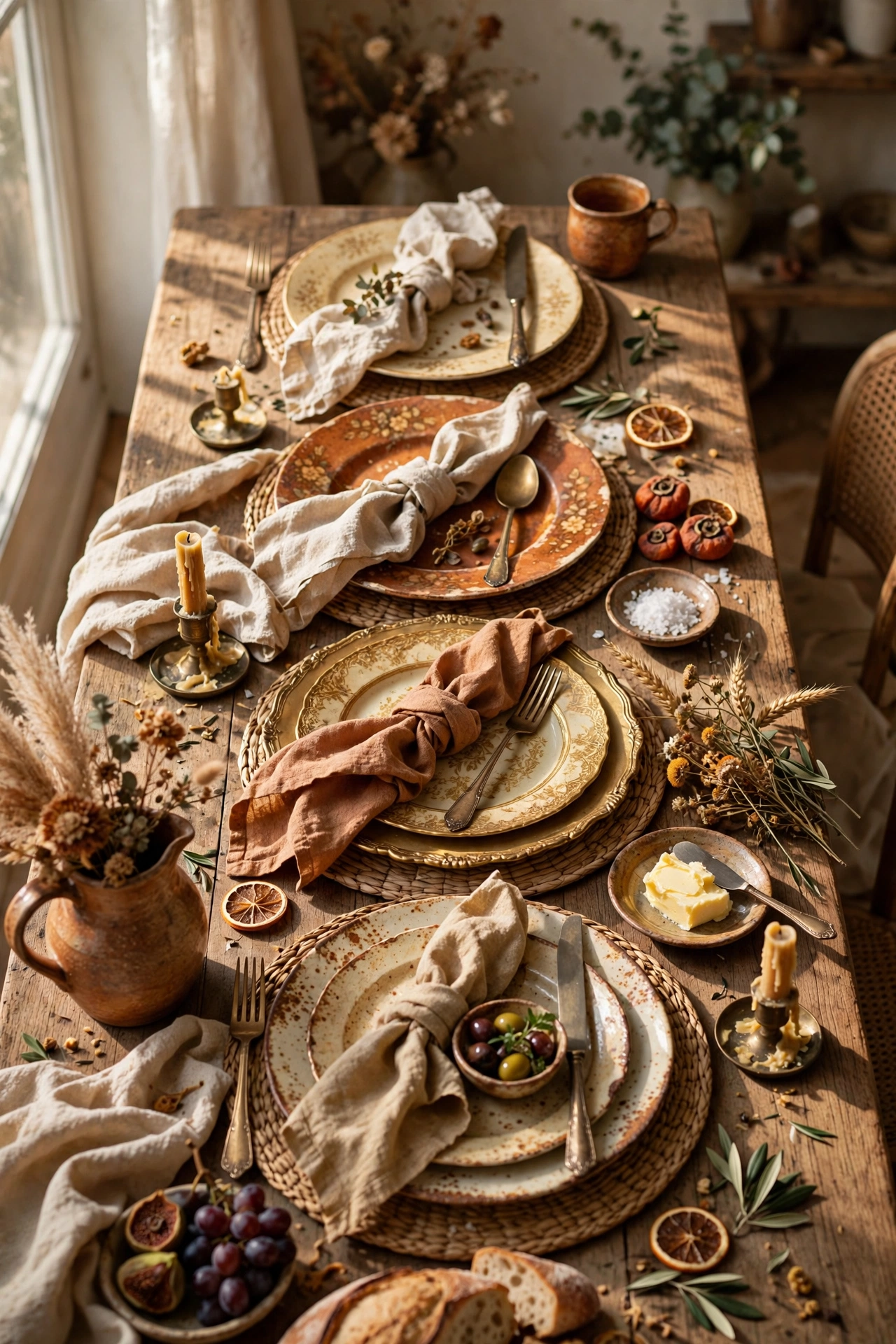
Rather than searching for a full matching dinnerware set, pulling plates from thrift stores, estate sales, or your own mismatched cabinet creates a table that looks collected over time instead of bought all at once for one event. Sticking to a loose color family — creams, warm neutrals, or a shared rust-and-gold palette — keeps the mismatch from feeling chaotic even though no two plates are identical. This approach is also far more budget-friendly than buying a full new set, and it means you’re not stuck storing dishes you’ll only use once a year. Guests tend to notice and comment on mismatched vintage plates more than a matching set, since each one has its own small story.
Vintage Amber Glass Bottles as Bud Vases
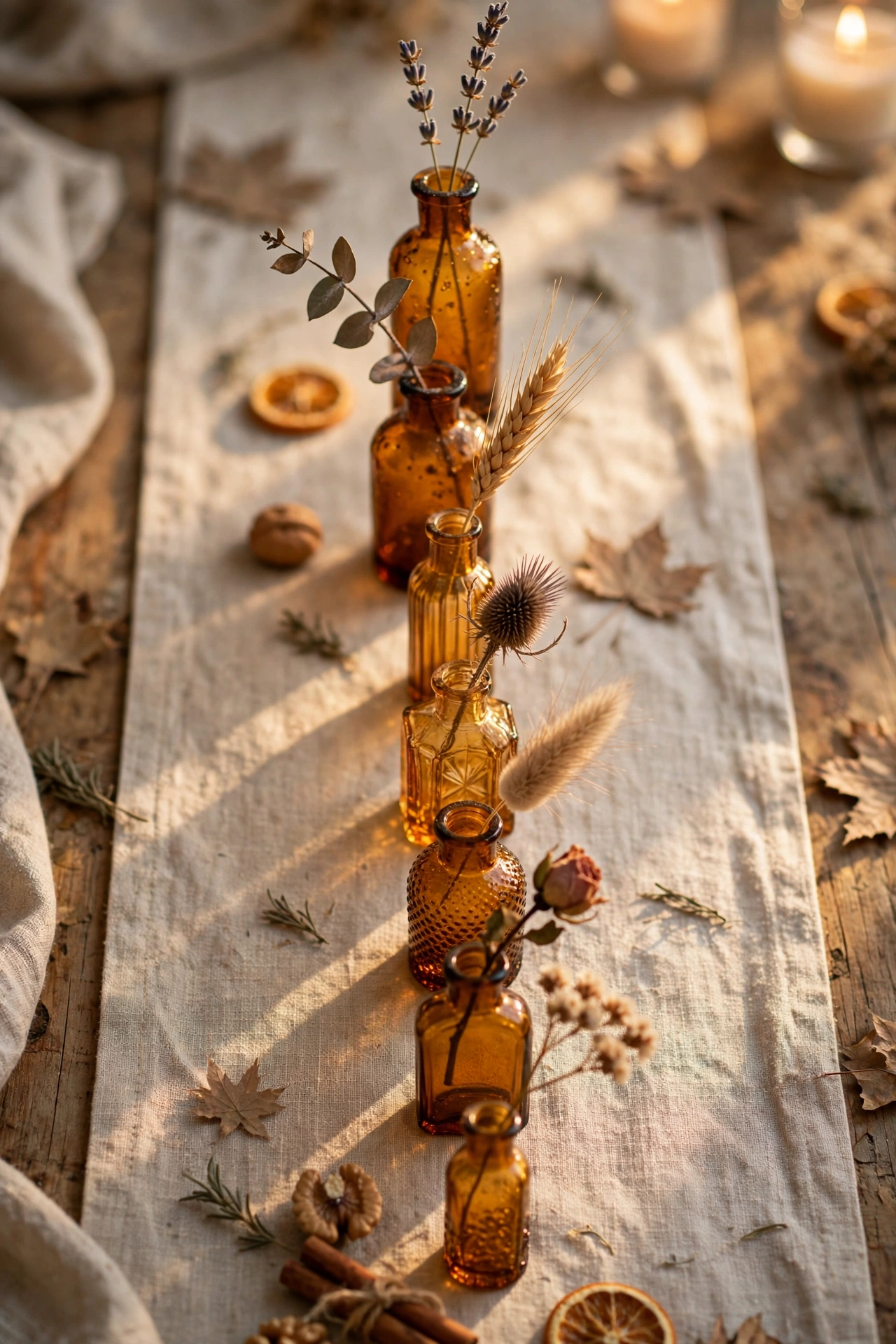
Swapping a single large floral arrangement for several small vintage amber glass bottles, each holding one or two stems, spreads color and height down the length of the table without blocking anyone’s view across it. Thrifted apothecary or medicine bottles in warm amber and brown tones tie naturally into a fall palette, and mismatched bottle shapes actually add more visual interest than a matching set would. Filling each bottle with a single dried flower, a sprig of eucalyptus, or even a small branch keeps the look loose and unfussy. This idea is a strong alternative for hosts who love the look of florals but don’t want to pay for or maintain a large centerpiece.
Tiered Trays and Stacked Boards for Height Variation
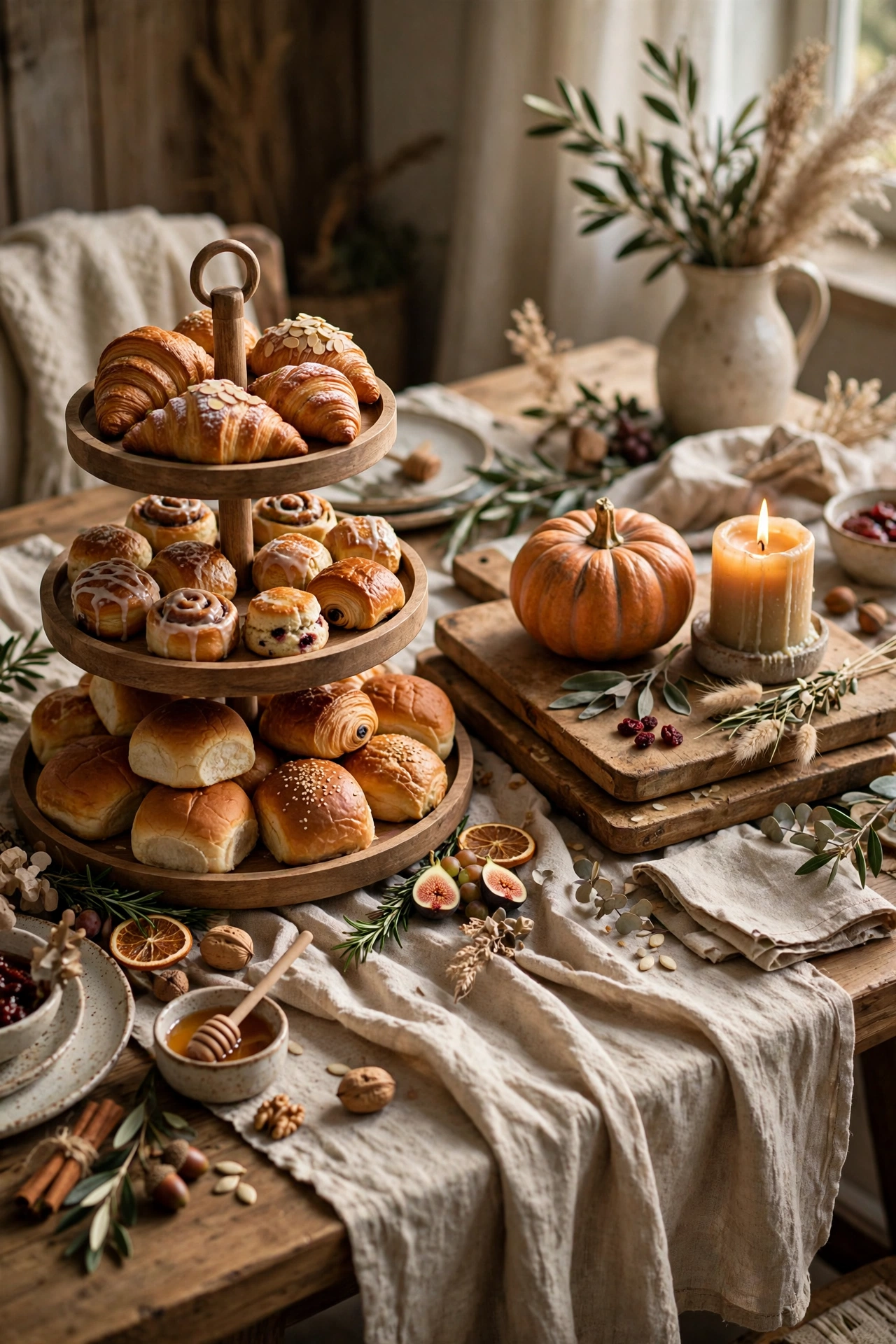
Adding one or two tiered serving trays or a stack of cutting boards at different points along the table creates the kind of height variation that keeps a long, flat table from looking monotonous. A tiered tray works well for small desserts or a bread display, doing double duty as both function and decor. Stacking a large board under a smaller one, then topping it with a small pumpkin or candle, is an easy way to fake height without buying a dedicated riser. This technique is borrowed directly from professional event styling, where varying elevation is one of the fastest ways to make a table look designed.
Gold or Mixed-Metal Flatware
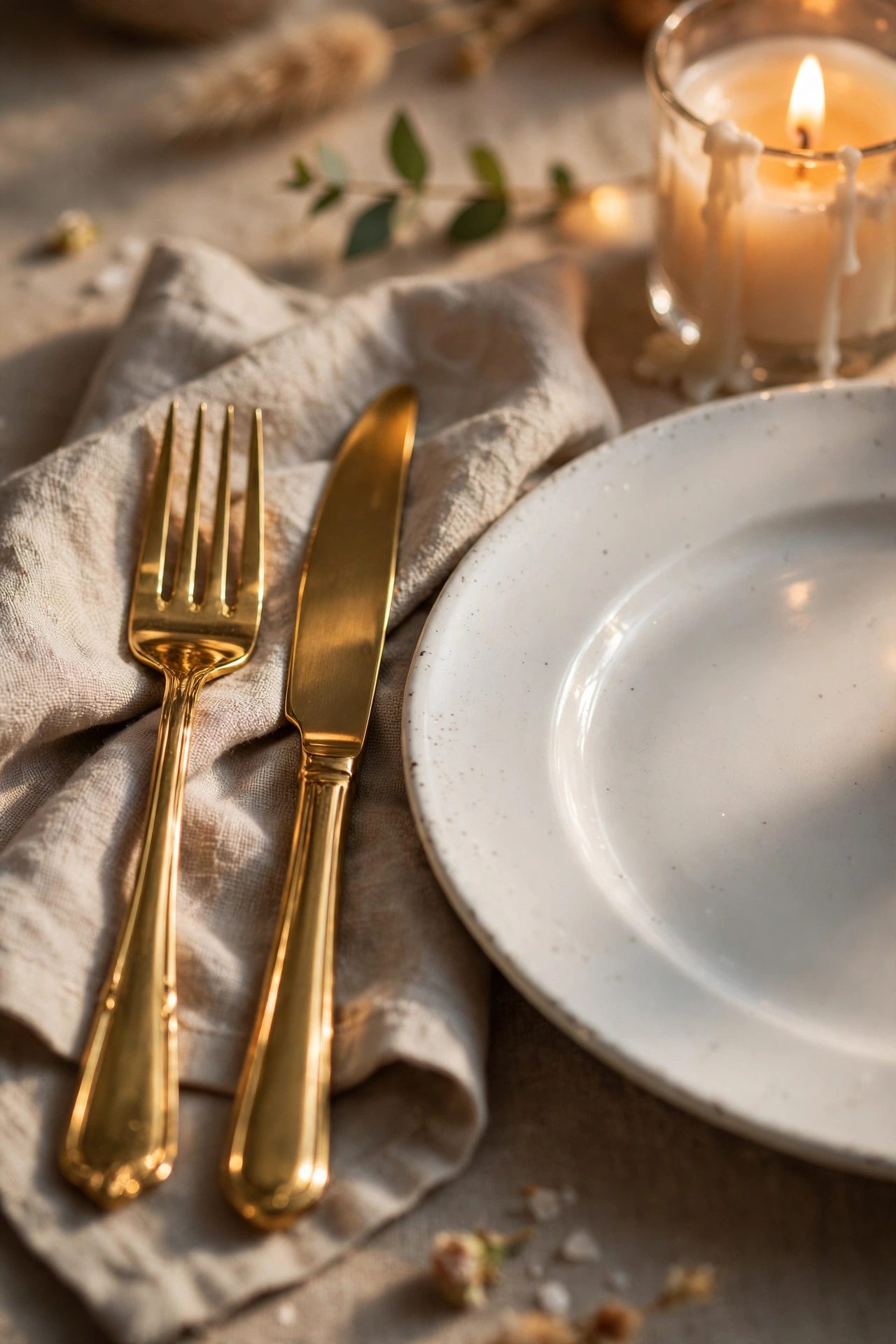
Swapping standard silver flatware for gold, brass, or a mixed-metal finish adds a warm, elevated contrast against both white and mismatched vintage plates. Because flatware sets are relatively inexpensive and reusable for future gatherings, this is a one-time purchase that upgrades every future dinner party, not just Friendsgiving. Mixing gold flatware with a mostly neutral or rustic table keeps the metallic from feeling overly formal or out of place at a casual gathering. This is one of the simplest single swaps on this list, since it requires no DIY and no extra setup time beyond the standard table set.
Layered Blankets and Pillows for Cozy Seating
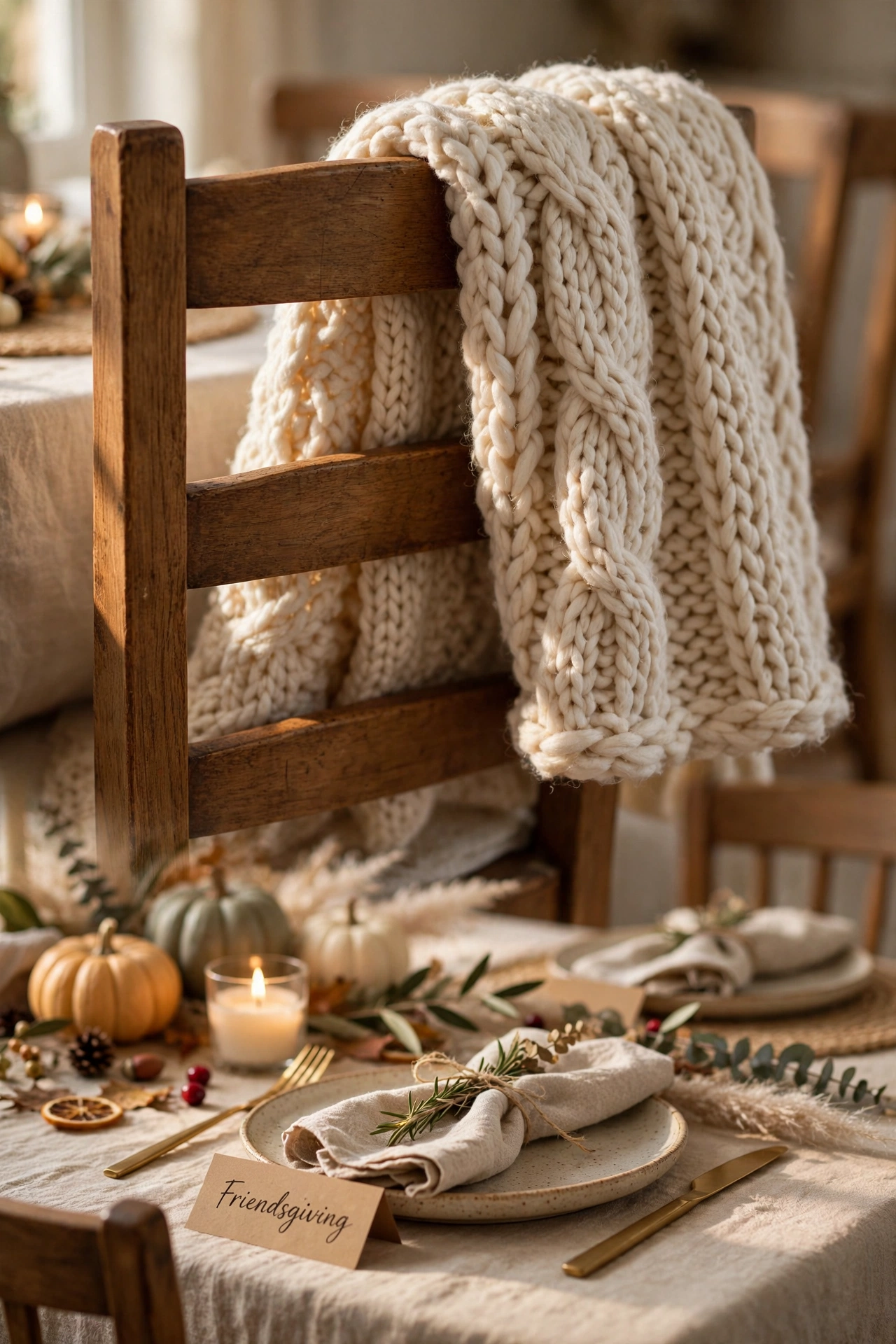
Draping a soft throw blanket over the back of each chair, or layering pillows around floor seating, adds a visual and physical coziness that matters once the meal stretches into hours of conversation. Choosing blankets in a shared color family — cream, rust, deep green — ties the seating back into the same palette as the table itself instead of looking like a separate afterthought. This idea works especially well for cooler evening Friendsgivings held outdoors or in a drafty older apartment, where guests will actually use the blankets, not just look at them. It’s a detail that photographs as warm and inviting even before anyone sits down.
An Outdoor Firepit-Adjacent Tablescape
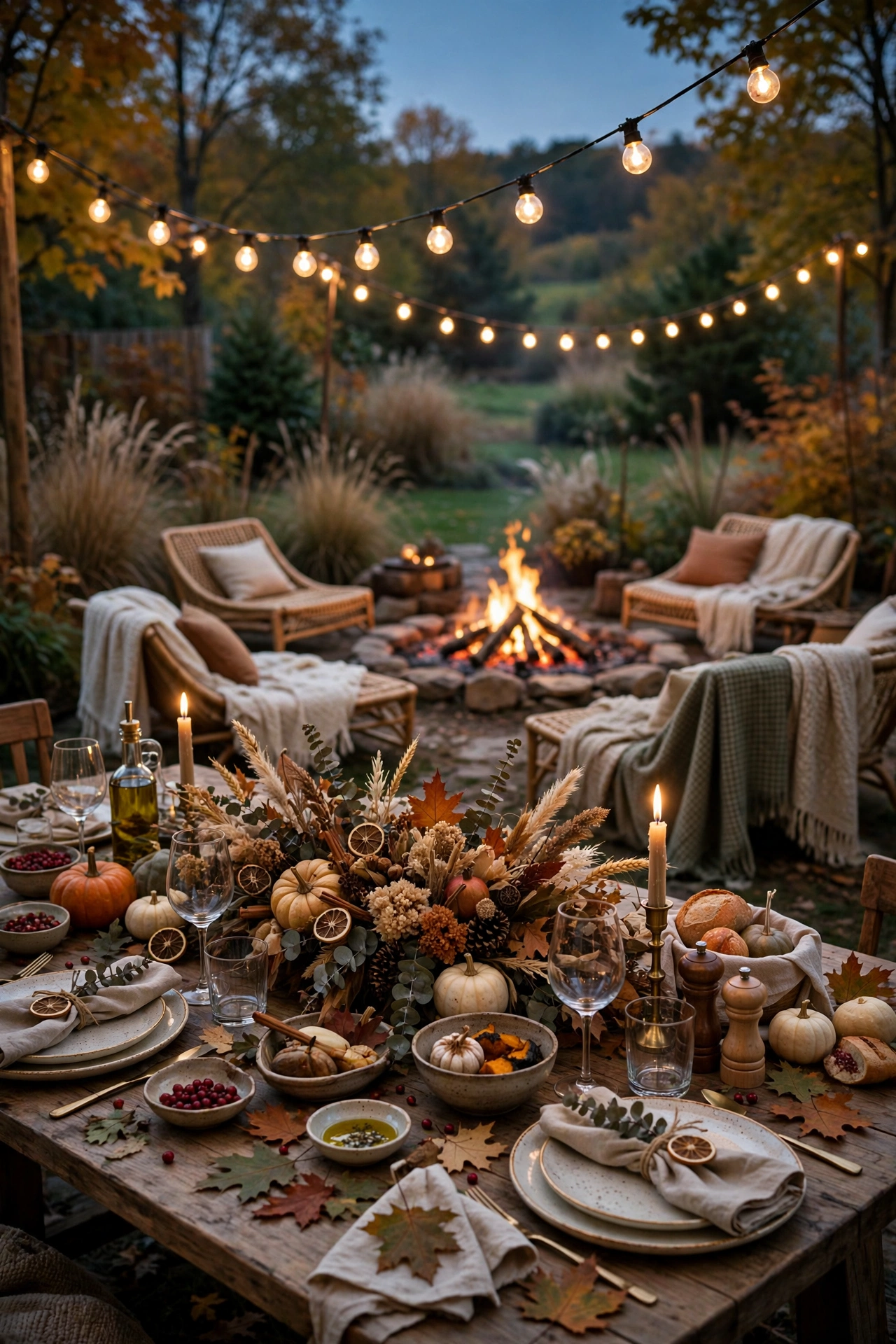
For hosts with a yard, patio, or shared outdoor space, extending the tablescape toward a nearby firepit turns the meal into a two-part evening: dinner at the table, dessert and drinks gathered around the fire. Setting up a small side table near the firepit with extra blankets, mugs, and a thermos of warm cider bridges the two spaces visually and practically. Stringing the same warm lights used on the dinner table out toward the firepit area keeps the whole outdoor space feeling like one cohesive setup rather than two separate events. This idea works well for Friendsgivings that start in daylight and stretch into evening as the temperature drops.
Related: 15 Last-Minute Halloween Tablescape Ideas That Look Planned
A “Bring One Table Element” Collaborative Setup
Instead of one host sourcing every napkin, vase, and candle, assigning each guest to bring a single table element — a set of napkins, a bud vase, a favorite serving dish — spreads the effort and naturally creates the kind of mismatched, collected look this whole list leans into. This approach also solves a real hosting problem, since Friendsgiving groups are often large enough that no single host owns enough matching dishware or seating for everyone. Sending a simple group text with a loose color palette (rust, cream, gold, deep green) keeps the contributions cohesive without requiring an exact matching list. By the time everyone arrives, the table has already become a group project, which tends to make guests feel more invested in the whole evening.
Styling Tips
- Choose one loose color story (rust and cream, or deep green and gold) and let every element — linens, candles, flatware — pull from it instead of matching exactly.
- Vary height across the table using candles, vases, and trays so the eye moves down the length of it instead of stopping flat.
- Let mismatched pieces share one thread, like a similar era, material, or tone, so “mismatched” still reads as intentional.
- Save the tallest elements for the center or ends of the table, keeping mid-table sightlines open for conversation.
- Turn off overhead lighting once candles are lit; warm, low light does more for mood than any single decor piece.
Practical Implementation Ideas
- Prep dried elements — wheat bundles, foraged branches, wood-slice place cards — a few days ahead, since they don’t wilt or need water.
- Set the table the morning of, then only add candles and any food-based centerpiece pieces right before guests arrive.
- If assigning a “bring one element” list, send it at least a week ahead with a simple color palette so contributions feel cohesive.
- Keep a small box of backup napkins, extra candles, and matches near the table in case of last-minute spills or a burned-down candle.
- For floor-seated setups, do a trial sit the day before to confirm the table height and cushion arrangement actually works for adults for a full meal.
Common Mistakes to Avoid
- Building the centerpiece so tall or wide that guests can’t see or talk across the table.
- Matching every single element too closely, which can flatten the collected, personal look this style is going for.
- Forgetting to test flameless candles or string lights before the day of, when there’s no time left to swap batteries.
- Skipping a trial setup for floor seating and discovering the table height or cushion firmness doesn’t work mid-meal.
- Overcrowding the table with decor pieces that leave no room for actual serving dishes.
Small-Space Alternatives
- Use the floor-seated boho setup instead of a full dining table when square footage or table size is limited.
- Choose a narrow grazing board or a few small vases instead of one wide centerpiece to keep a small table from feeling cramped.
- Set up the drink station on a windowsill, dresser, or single shelf instead of a full bar cart in a tight apartment.
- Skip the tiered tray in very small spaces and rely on varying candle heights alone for visual interest.
Budget-Friendly Alternatives
- Forage branches, leaves, and pinecones instead of buying a floral centerpiece.
- Use twine-and-foliage napkin rings and wood-slice place cards instead of purchased versions.
- Ask each guest to bring one table element instead of sourcing linens, vases, and dishware alone.
- Swap tapered candles for flameless LED versions bought once and reused every year.
Pro Styling Recommendations
- Repeat one texture — woven, wood, or linen — at least three times around the table to tie the whole look together.
- Let the food itself (a grazing board, a bowl of fruit) do some of the centerpiece work instead of buying separate decor.
- Keep a single “hero” detail, like the gratitude runner or heirloom display, as the one thing guests talk about most.
- Photograph the table right after candles are lit and before food is served, when the styling is at its most complete.
FAQs
Conclusion
A Friendsgiving table doesn’t need a florist, a matching china set, or a weekend of DIY projects to feel like the best part of the night. The tables people remember are usually the ones with a little texture, some warm candlelight, and one detail — a handwritten note, a borrowed teacup, a napkin tied with twine — that couldn’t have come from a store. Pick a handful of these ideas that fit your space and your people, set the table the morning of, and let the rest of the evening take care of itself.