22 Homeschool Room Ideas That Make Learning Feel Fun
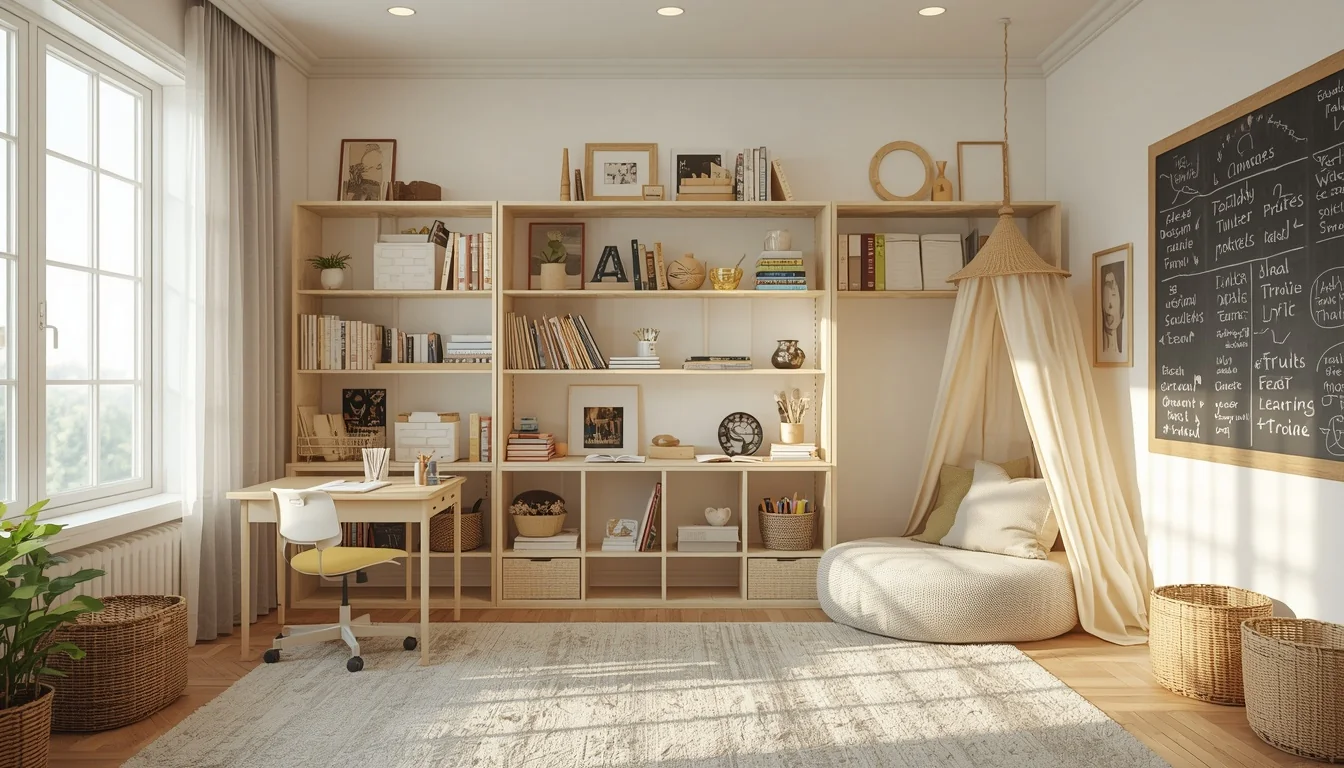
Somewhere between the curriculum binders and the pencil shavings, a homeschool room has to do a lot of jobs at once. It has to hold books and supplies for multiple subjects, give kids a place to focus, and somehow still feel like somewhere they want to be every single morning.
The families who get this right aren’t buying more stuff. They’re making a handful of specific choices, about zones, lighting, storage, and a few genuinely cozy touches, that turn a spare room or a corner of the kitchen into a space kids actually look forward to.
This guide walks through 22 homeschool room ideas covering everything from desk setup to reading nooks, so your space supports real focus and still feels like a fun, warm part of your home instead of a scaled-down classroom.
Table of Contents
What Makes a Homeschool Room Actually Work (Beyond the Decor)?
A homeschool room that holds up past the first few weeks usually comes down to three things: clear zones for different activities, layered lighting that actually supports focus, and furniture sized to the child using it. Trying to fit reading, focused work, and creative play into one undivided space rarely works well, no matter how nice the furniture looks. Families who set up dedicated zones from the start, even in a small room, tend to still be using that same setup years later, while rooms without any real structure often get reworked within the first year. Once those fundamentals are in place, the fun part, the styling and personality, is what makes the room feel like somewhere kids actually want to be.
Idea 1: Divide the Room Into Three Clear Zones
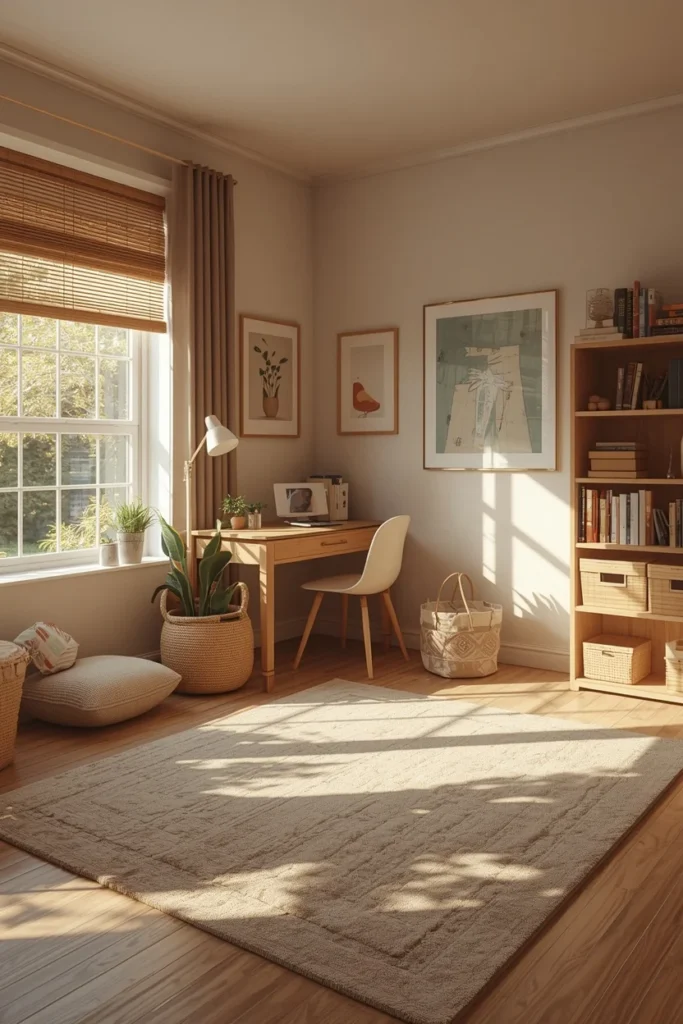
Trying to fit focused work, reading, and creative or movement-based activities into one undivided space rarely works well, no matter how clever the furniture layout is. Families who set up three distinct zones, a desk area for focused work, a soft reading nook, and an open floor space for movement or hands-on projects, find their kids transition between activities more smoothly throughout the day. Even in a small room, this can be as simple as a rug marking the reading corner and a separate desk against the opposite wall. This structure also helps kids mentally shift gears, since the physical space itself signals what kind of activity is expected there. Planning these zones before buying any furniture keeps the room from becoming one crowded, undefined area.
Idea 2: Invest in a Real Ergonomic Chair
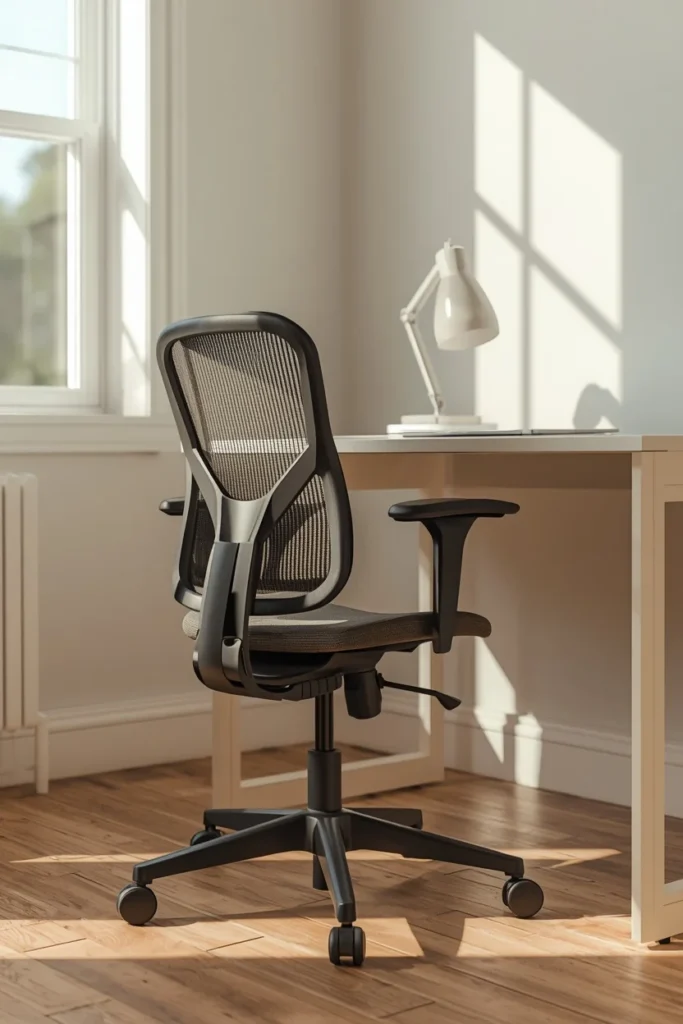
A kitchen chair or a backless stool might work for a quick snack, but kids working at a desk for hours need real lumbar support, or they end up slumping within twenty minutes, no matter how motivated they are to sit still. A proper kid’s ergonomic chair, ideally one that adjusts and grows with the child, makes a bigger difference in daily focus than almost any other single purchase in the room. Exercise balls might feel like a fun alternative, but they tend to work well for short bursts and poorly for long stretches of actual schoolwork. Choosing a chair with adjustable height means it can keep up with a growing child for several years instead of needing to be replaced every school year.
Idea 3: Layer Three Types of Lighting
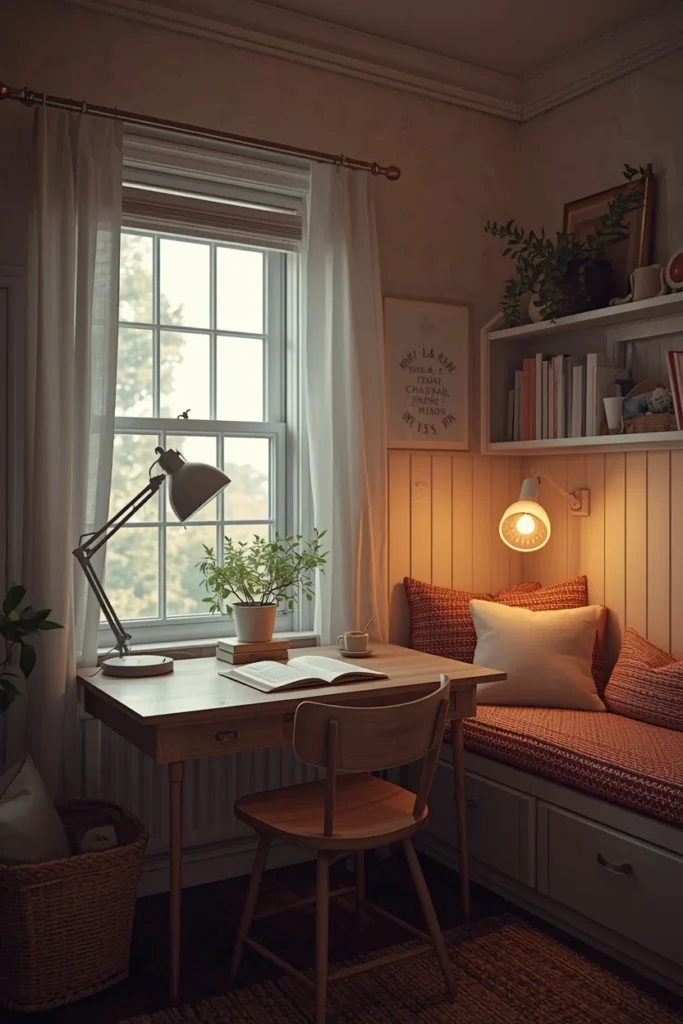
A single overhead fixture rarely provides enough light for the range of activities happening in a homeschool room throughout the day. A working space benefits from ambient light, ideally natural window light or an overhead fixture, task lighting from a desk lamp positioned to throw light across the work surface from the opposite side of the writing hand, and a softer accent light near the reading nook for cozy, non-screen activities. Cooler color temperatures, somewhere around 4000 to 5000K, tend to support focus better in the work zone, while warmer, softer light suits the reading corner. This layered approach mirrors what workplace lighting studies have found about focus and eye strain, and it makes a noticeable difference over a full day of lessons.
Idea 4: Add a Chalkboard or Whiteboard Wall
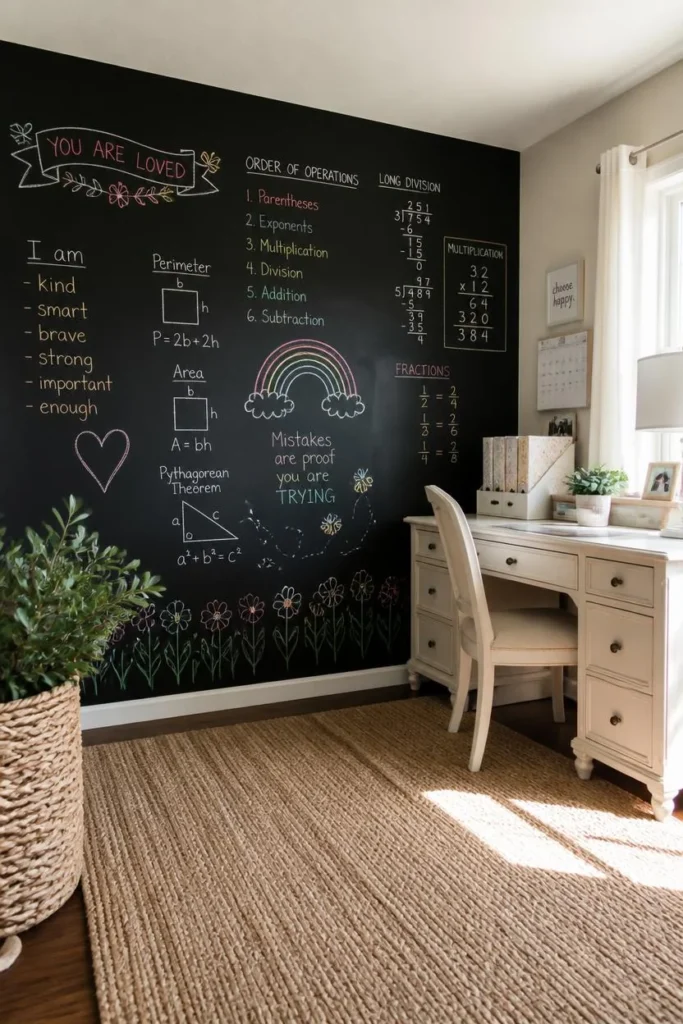
A full wall, or even a large painted panel, finished in chalkboard or whiteboard paint gives kids room to work out math problems, draw, or leave notes without needing a separate easel taking up floor space. This detail also turns wall space that would otherwise sit empty into an interactive, ever-changing part of the room, which keeps the space feeling current without any additional decorating. Choosing a section near the main work desk keeps it within easy reach during lessons, while a section closer to the reading nook can become a spot for creative doodling during breaks. This is one of the most flexible upgrades on this list, since the same wall can support handwriting practice, art projects, and visual brainstorming depending on the day.
Idea 5: Build a Cozy Reading Nook With Floor Cushions
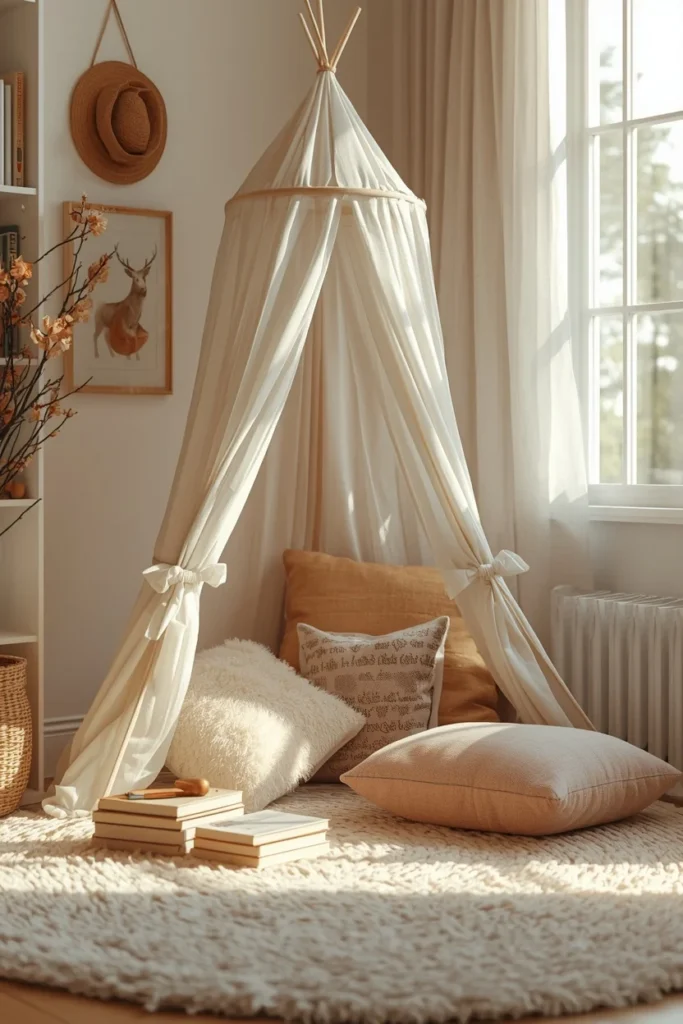
A dedicated reading corner, even a small one, gives kids a physical cue that it’s time to slow down and focus on something quiet. Floor cushions, a soft rug, and a small canopy or tent frame overhead create a cozy, enclosed feeling that a regular chair in the corner of the room doesn’t quite replicate. Positioning the nook near a window brings in natural light for daytime reading, while a small warm lamp extends its use into the evening. This zone works especially well for younger kids who benefit from a change of physical posture between focused desk work and quieter, more relaxed reading time.
Idea 6: Organize a Library Wall With Open Shelving
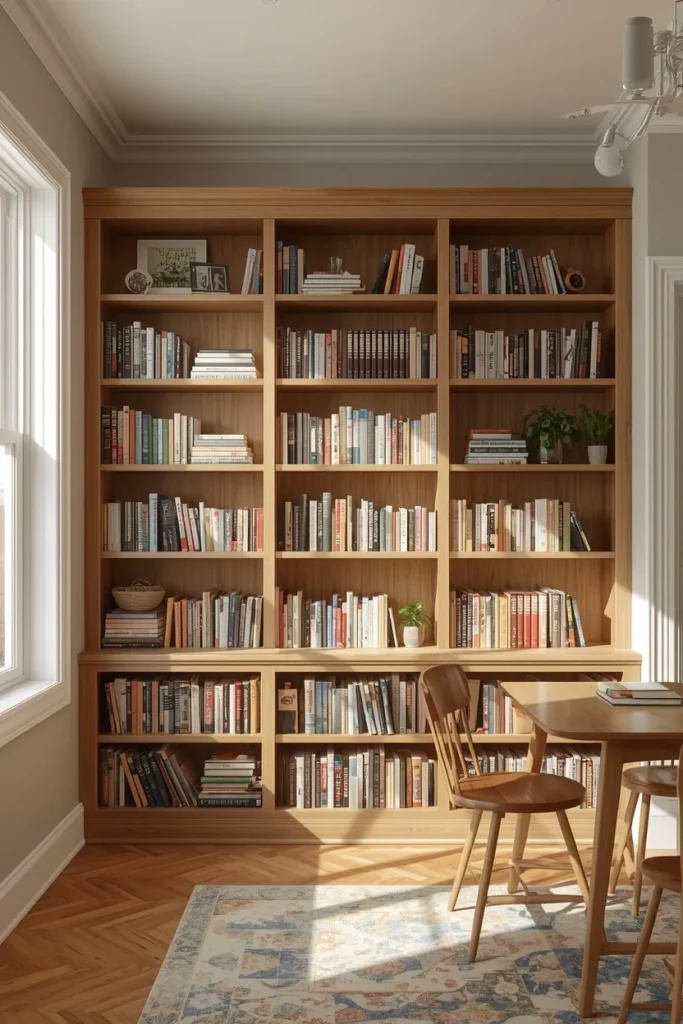
Sturdy open shelving dedicated to books creates an actual library area within the homeschool room, rather than letting books pile up on desks or windowsills throughout the year. Grouping books by subject, or by reading level for younger kids, makes it easier for children to find and return their own materials without constant adult help. Leaving some shelves at a lower height specifically for younger kids encourages independence, since they can browse and select books without needing to ask for a boost. This kind of dedicated library area also gives the room a sense of permanence and importance around reading, rather than treating books as an afterthought to worksheets and screens.
Idea 7: Color-Code Supply Bins by Subject or Day
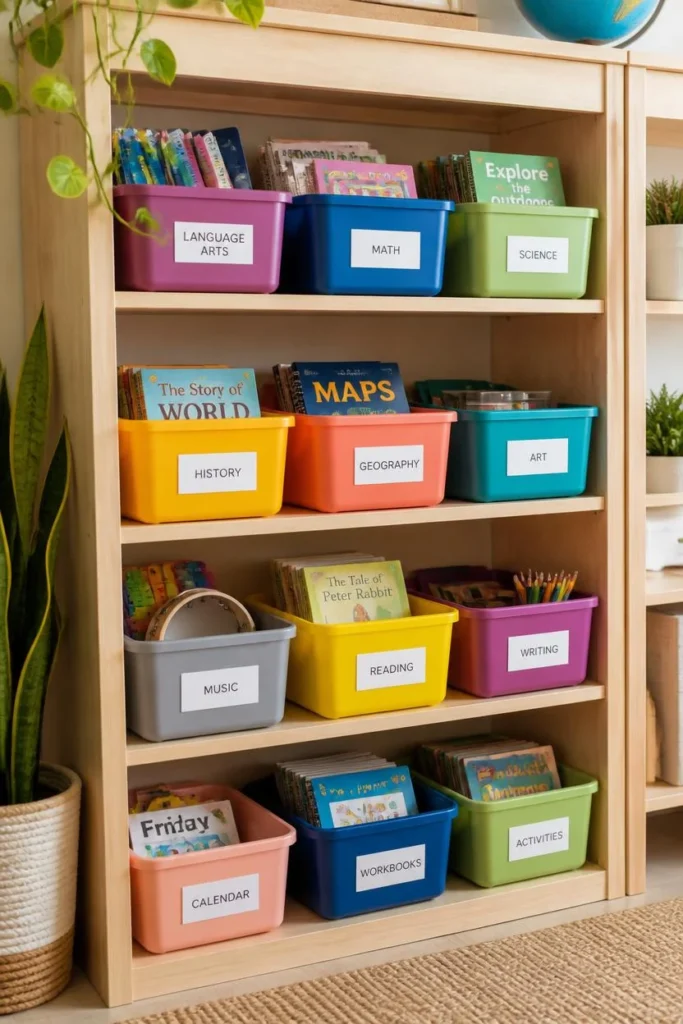
Labeled, color-coded bins for each subject, or each day of the week for families following a set schedule, cut down on the daily scramble to find worksheets, art supplies, or manipulatives before a lesson starts. This system works particularly well for families managing multiple kids or multiple subjects, since everyone can see at a glance where their materials belong. Choosing bins in a consistent color family, rather than a random mismatched set, keeps the storage wall looking organized rather than chaotic even when it’s holding a lot of different materials. Teaching kids to return items to their labeled bin at the end of each lesson also builds a small daily habit that keeps the whole room from sliding into clutter over the school year.
Idea 8: Add a Pegboard or Magnetic Wall for Displaying Work
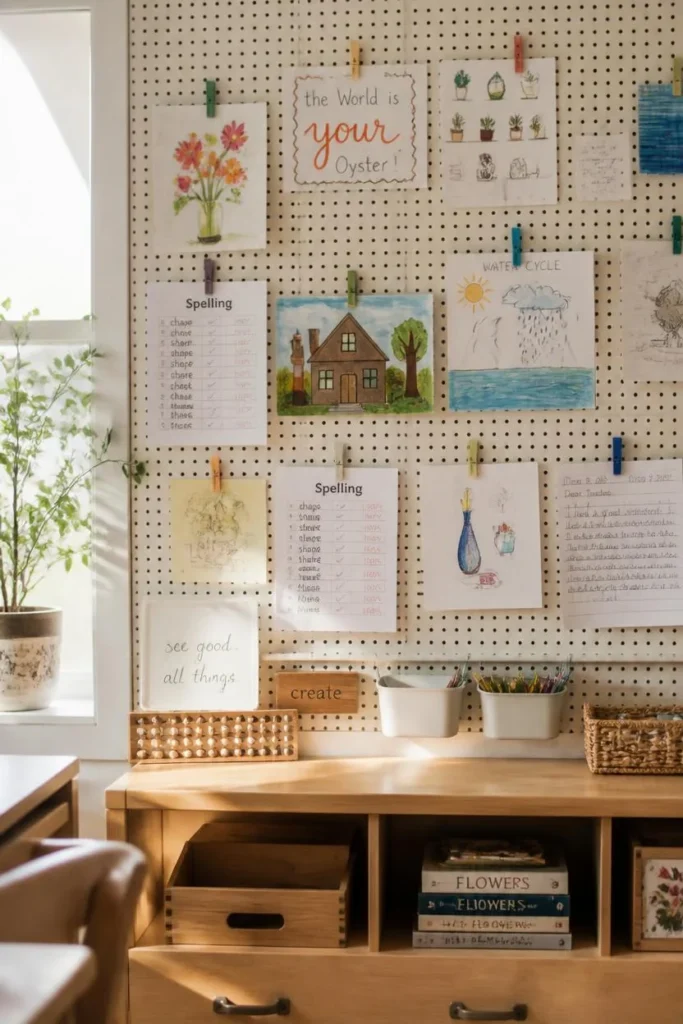
A pegboard, corkboard, or magnetic panel gives kids a rotating spot to display finished projects, spelling tests, or artwork without needing to tape things directly to the wall. This detail does real work for motivation, since seeing their own effort displayed prominently tends to make kids more invested in the work itself. Rotating what’s displayed every week or two keeps the wall feeling current rather than becoming a permanent, cluttered gallery of old assignments. Positioning this display wall near the main desk area, rather than tucked away in a corner, keeps it part of the daily routine instead of an afterthought.
Idea 9: Bring in an Educational Map or Globe as Decor
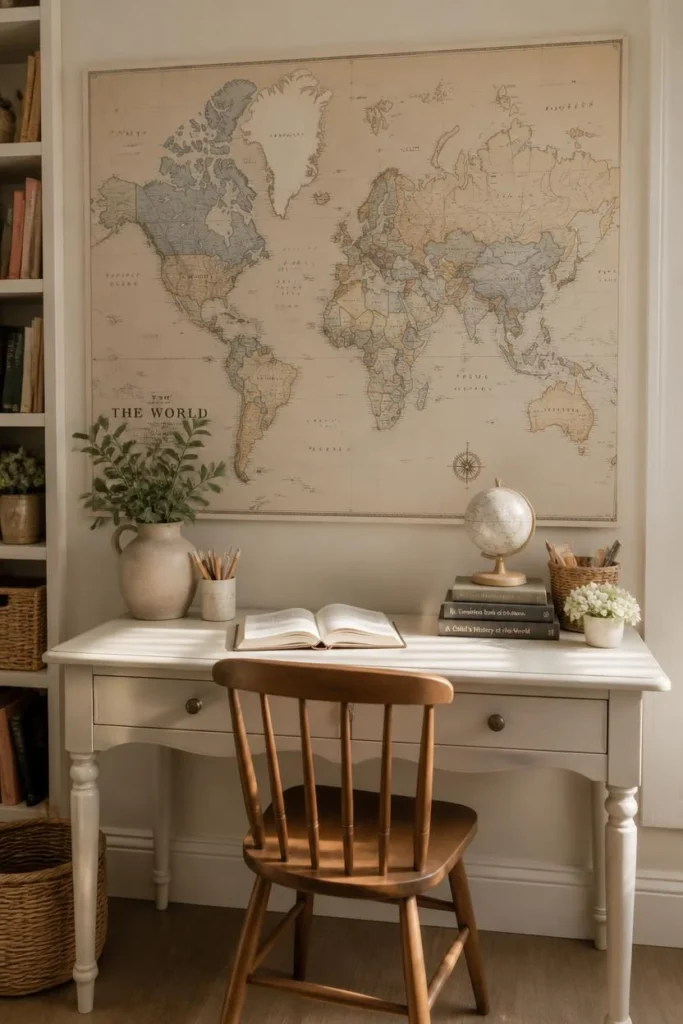
A large wall map, a globe, or a timeline printed as wallpaper does double duty as both a decorative anchor for the room and a genuinely useful reference during geography or history lessons. Choosing a map with a soft, muted color palette rather than bright primary colors keeps it feeling like an intentional design choice instead of classroom decor bought in bulk. Positioning it within eyeglance of the main desk means kids can reference it naturally during lessons, rather than needing to pull out a separate atlas or search online. This is also one of the easiest ways to make a homeschool room feel distinct from a regular home office, since the educational element becomes part of the room’s actual design.
Idea 10: Define Individual Work Zones With Small Rugs
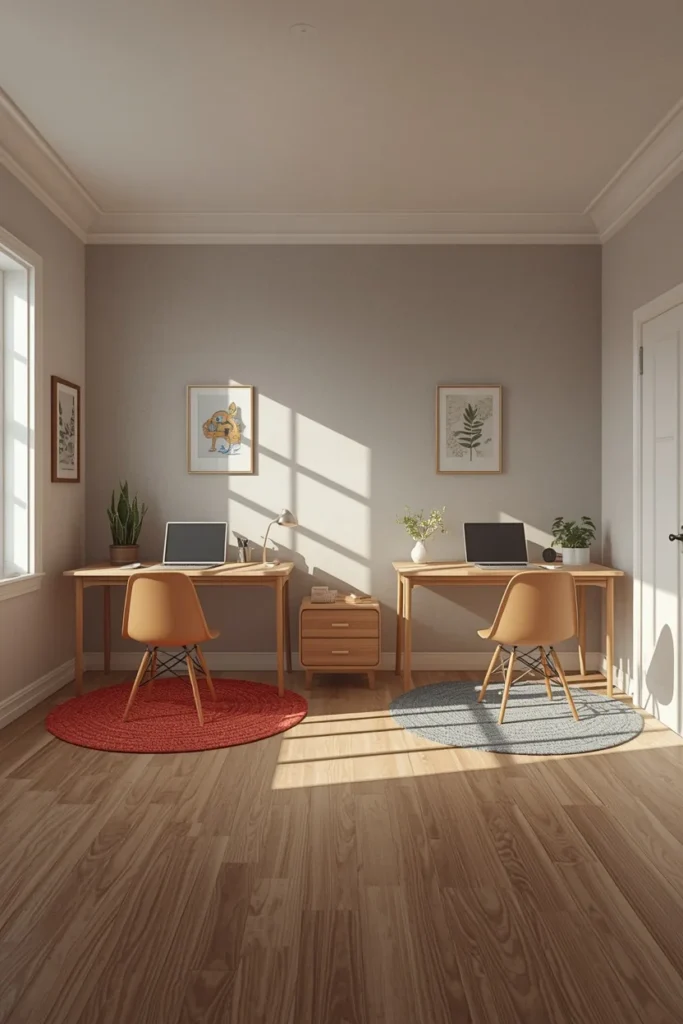
In a shared homeschool room with more than one child, a small rug under each desk or work area visually defines each child’s personal space, even when the room itself is one open area. This small boundary can reduce squabbling over shared territory and gives each child a sense of ownership over their own corner of the room. Choosing a different color or pattern rug for each child’s zone also makes it easy for younger kids to identify their own space without needing to read a label. This idea scales well for families with multiple kids working at different grade levels within the same room.
Idea 11: Set Up a Rotating Nature or Discovery Table
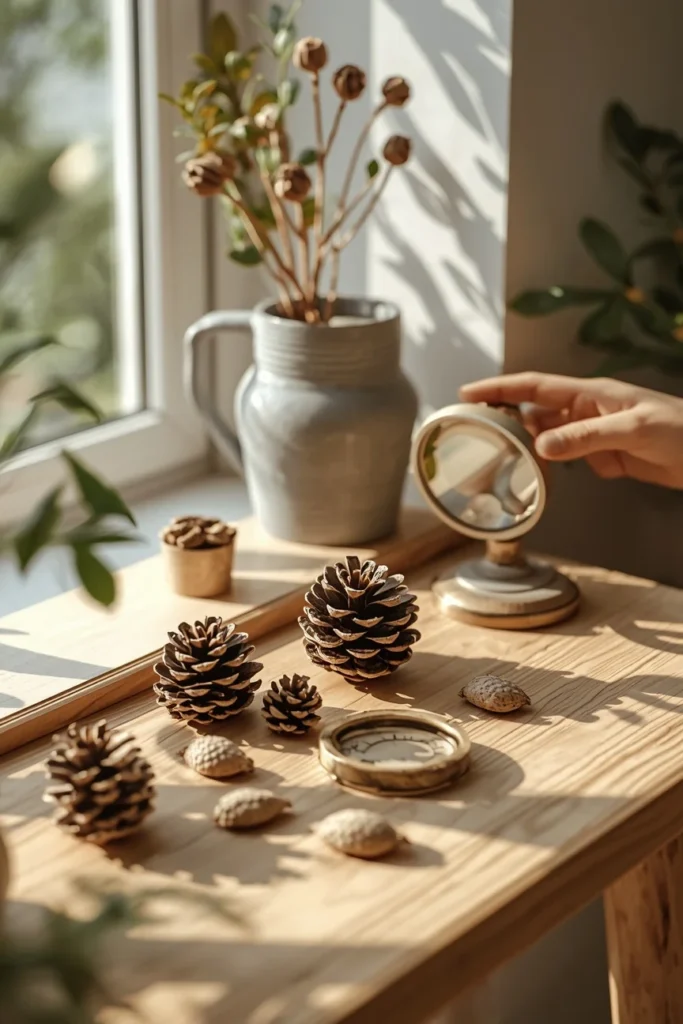
A small table dedicated to seasonal nature finds, pinecones in fall, seed pods in spring, a magnifying glass and a few field guides, gives kids a hands-on, low-pressure corner of the room that changes with the calendar. This kind of discovery space works especially well for younger learners, since it invites open-ended exploration without requiring a structured lesson plan. Rotating the table’s contents every season keeps the room feeling fresh without requiring any new furniture or major restyling. Positioning it near a window with good natural light also makes it a pleasant spot for kids to linger and examine their finds more closely.
Idea 12: Build a Reading Fort or Canopy for Imaginative Play
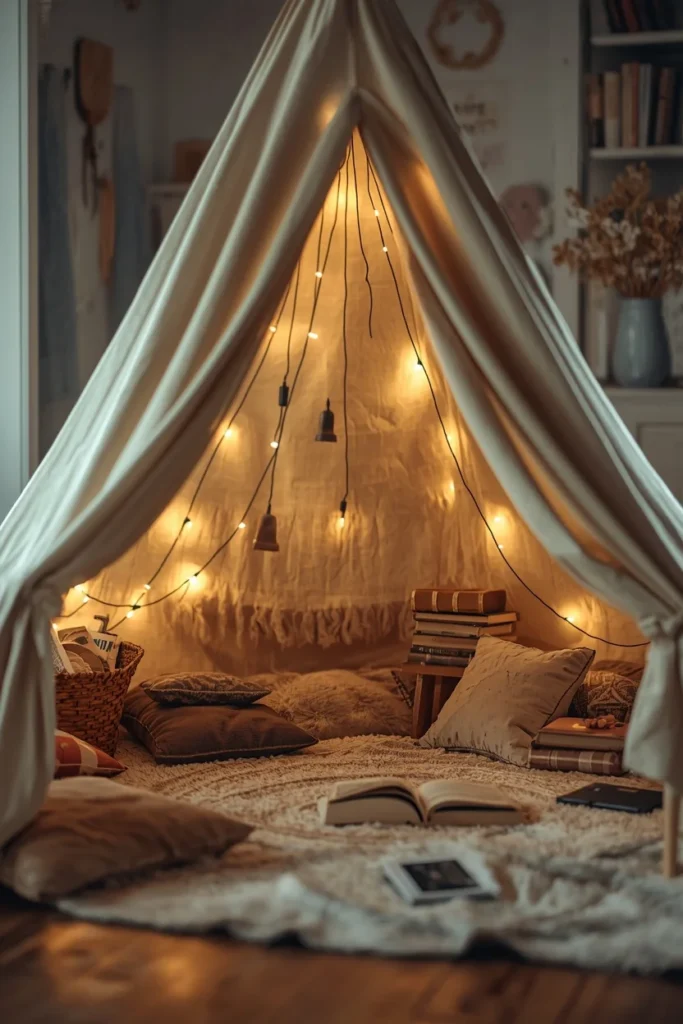
Beyond a simple reading nook, a full fort-style setup, a canopy frame, a small tent, or a curtain-draped corner, gives kids a fully enclosed, imaginative space that makes reading and quiet time feel like an adventure rather than an assignment. This kind of dedicated play-reading hybrid space works particularly well for younger kids who respond to novelty and physical enclosure as a cue to settle down and focus. Adding a small string of warm lights inside the fort extends its coziness into a dim afternoon or a rainy day. This idea also gives siblings a shared, neutral space to read together without needing to compete over a single chair or bean bag.
Idea 13: Choose Height-Adjustable Desks That Grow With the Child
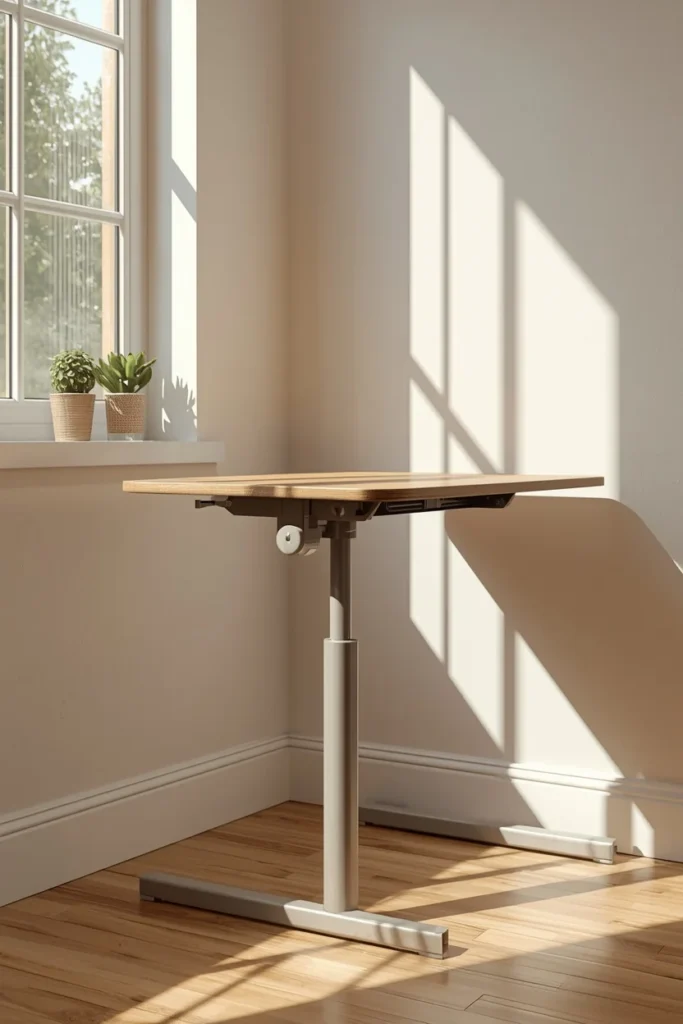
A desk that adjusts in height solves one of the most common and expensive problems in homeschool room design: kids grow quickly, and a fixed-height desk that fits perfectly this year can feel wrong within twelve months. Height-adjustable desks let the same piece of furniture serve a child from early elementary through the teen years, which saves money and avoids the disruption of replacing furniture mid-school-year. Pairing an adjustable desk with an adjustable chair means the whole workstation can be reconfigured in minutes rather than requiring an entirely new setup. This investment tends to pay off most clearly in families with multiple kids who can pass the same desk down as they grow.
Idea 14: Add a Goal or Progress Wall
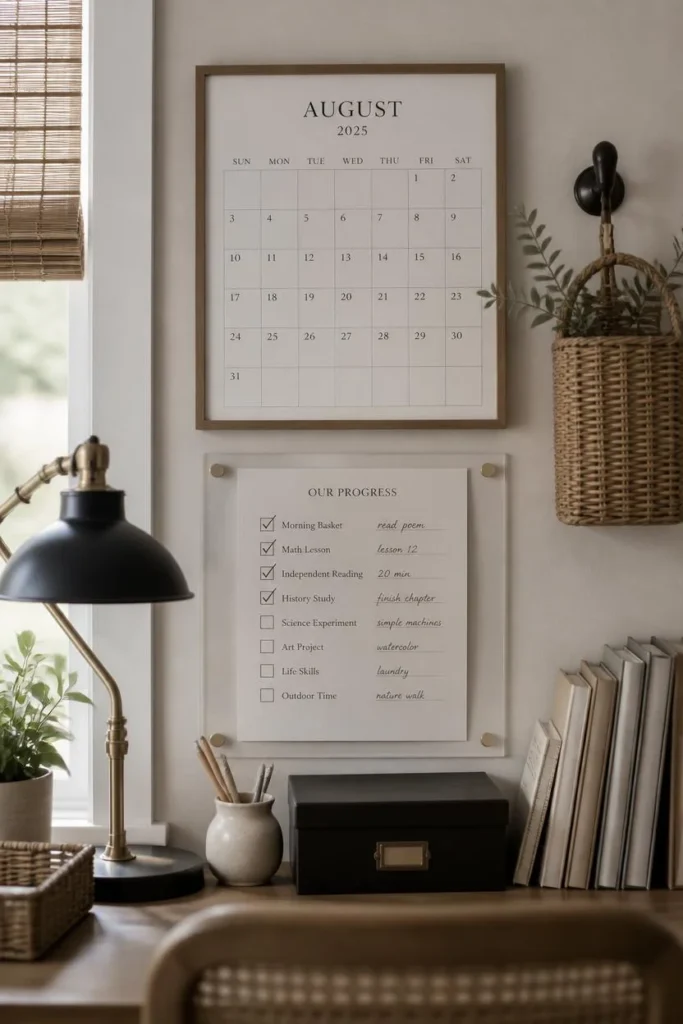
A simple wall calendar, a visual chore or subject checklist, or a small progress chart gives kids a concrete, visible sense of what’s ahead each week and what they’ve already accomplished. This detail works especially well for older kids managing multiple subjects, since it reduces the need for constant verbal reminders about what comes next. Choosing a design that fits the room’s overall color palette, rather than a bright, standard-issue classroom calendar, keeps this functional element from clashing with the rest of the space. Updating the wall together at the start of each week also becomes a small ritual that helps kids feel more ownership over their own schedule.
Idea 15: Keep a Movement or Sensory Bin Near the Desk
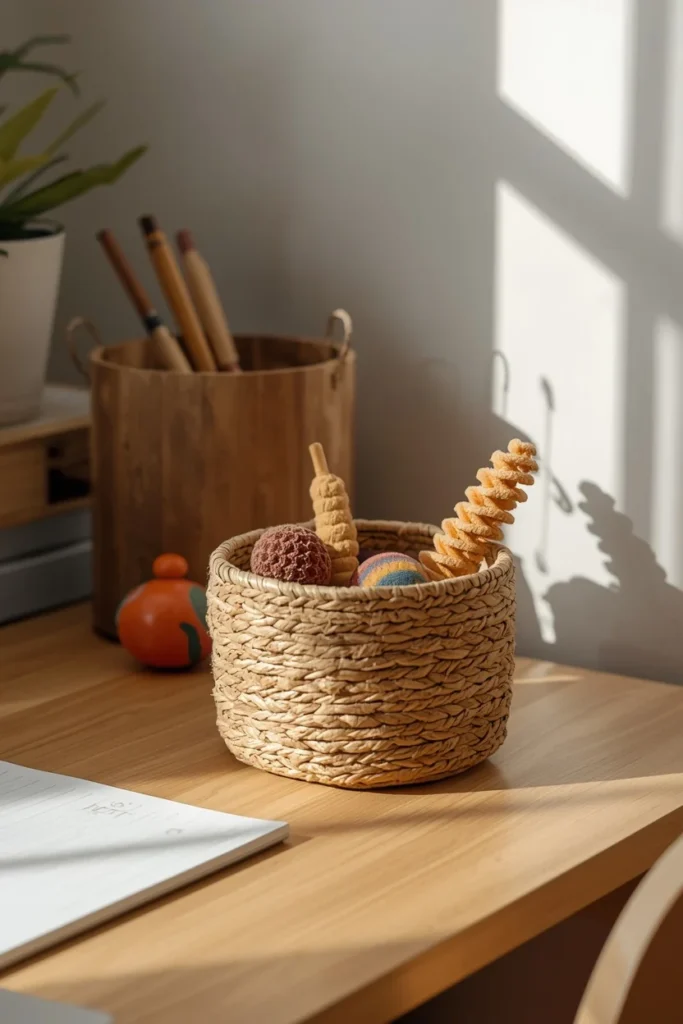
A small bin of fidget tools, stress balls, or textured objects kept within arm’s reach of the main desk gives kids an outlet for restless energy without requiring them to leave their seat or disrupt a lesson in progress. This detail acknowledges something most homeschool parents learn quickly: kids, especially younger ones, often focus better with some small physical outlet available rather than being asked to sit perfectly still for an entire lesson. Rotating the bin’s contents every few weeks keeps the tools feeling novel rather than becoming background clutter. This is a low-cost, high-impact addition that supports focus without needing any structural changes to the room.
Idea 16: Set Up a Rolling Art Supply Cart
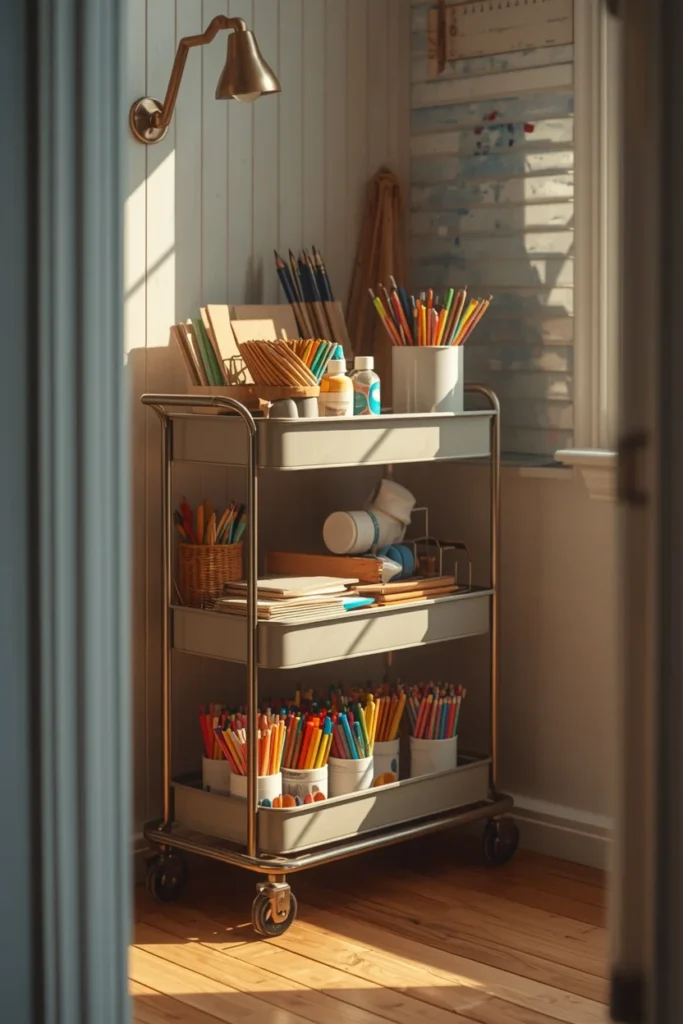
A rolling cart stocked with paint, markers, paper, and glue can move between the main work desk and a dedicated craft table, or even out to the kitchen table, without requiring kids to carry a dozen loose supplies at once. This mobility makes art and hands-on projects easier to start on impulse, since setup takes seconds rather than several minutes of gathering materials from different drawers. Choosing a cart with multiple tiers keeps supplies organized by type, paints on one shelf, paper on another, rather than piled together in a single bin. This idea works particularly well in smaller homeschool spaces, since the cart can tuck into a corner when not in use rather than requiring a dedicated art table.
Idea 17: Display Puzzles and Games on Open Shelves
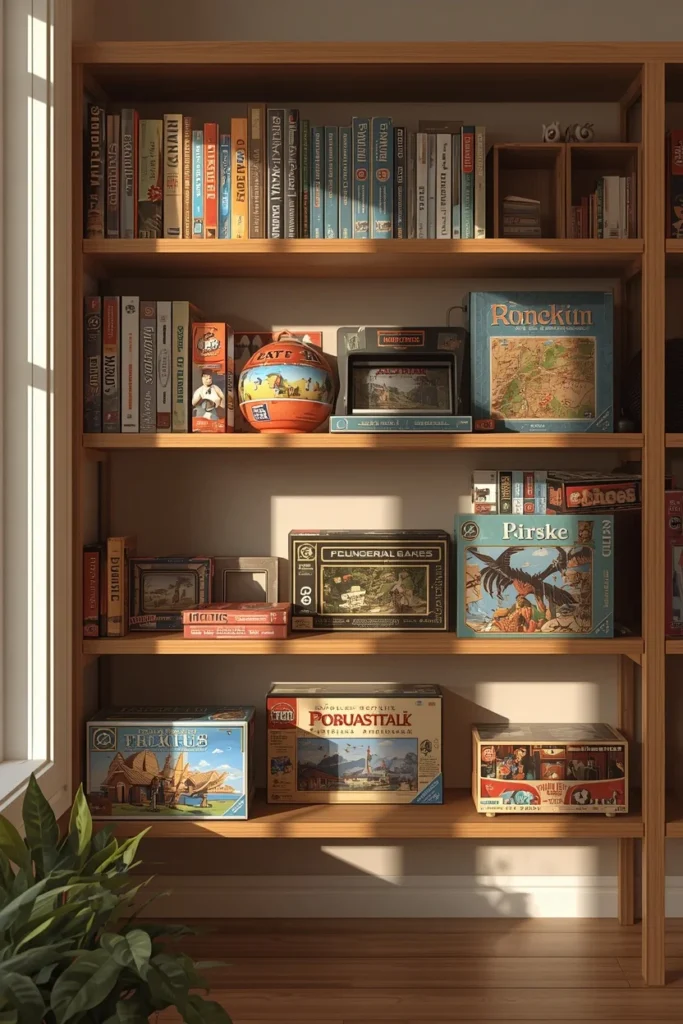
Keeping a small selection of puzzles, board games, and educational games visible on open shelving, rather than stacked in a closed closet, makes it more likely kids will reach for them during breaks or free time instead of defaulting to a screen. Rotating which games are on display every few weeks keeps the shelf feeling fresh and prevents any one game from being overlooked simply because it’s buried behind newer additions. This idea also turns game time into a visible, celebrated part of the homeschool routine rather than something separate from “real” learning, even though many of these games reinforce math, vocabulary, and strategic thinking skills. Grouping games by age level, if multiple kids share the room, helps everyone find something suited to them quickly.
Idea 18: Add a Growth or Milestone Wall
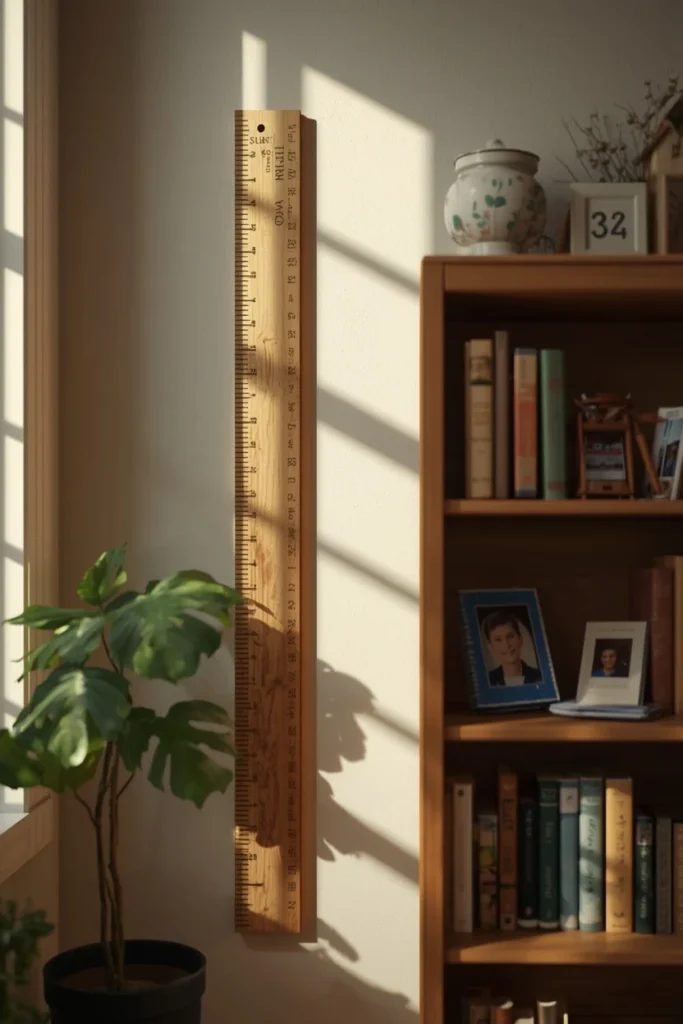
A small dedicated spot to mark reading milestones, completed workbooks, or height measurements over the years gives the homeschool room a sense of history and progress that a purely functional space can lack. This detail works well tucked into a corner near the door or bookshelf, where it becomes a natural point of pride kids notice every time they enter the room. Choosing a simple format, a growth chart ruler, a small shelf of completed journals, or a wall of dated photos, keeps this feature low-maintenance while still adding real emotional weight to the space. Revisiting this wall periodically as a family also gives kids a concrete, visual sense of how far they’ve come over a school year.
Idea 19: Include a Small Snack or Water Station
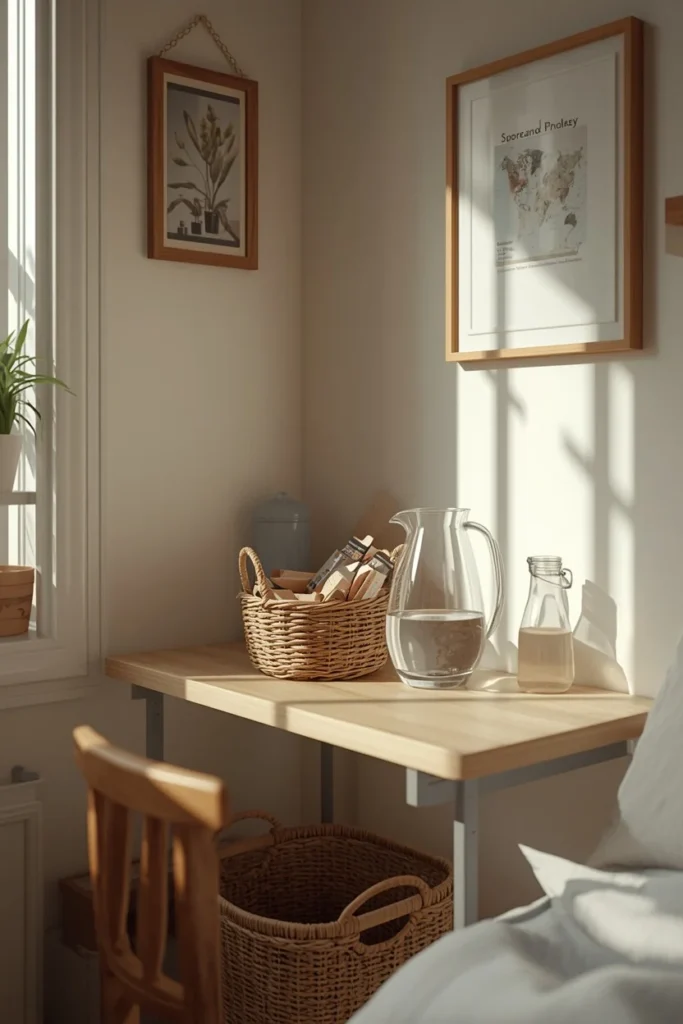
A small shelf or cart with water bottles, simple snacks, and napkins keeps kids from needing to leave the room every time they get hungry or thirsty during a long stretch of lessons, cutting down on the number of interruptions during focused work time. This detail is especially useful for families running multi-hour school days, where a quick break for a snack can reset attention without derailing the whole schedule. Keeping the station simple, a small basket of shelf-stable snacks and a water pitcher, avoids turning the homeschool room into an extension of the kitchen. This idea also teaches younger kids a small measure of independence, since they can serve themselves without needing to interrupt a parent mid-lesson.
Idea 20: Use a Double-Sided Standing Easel
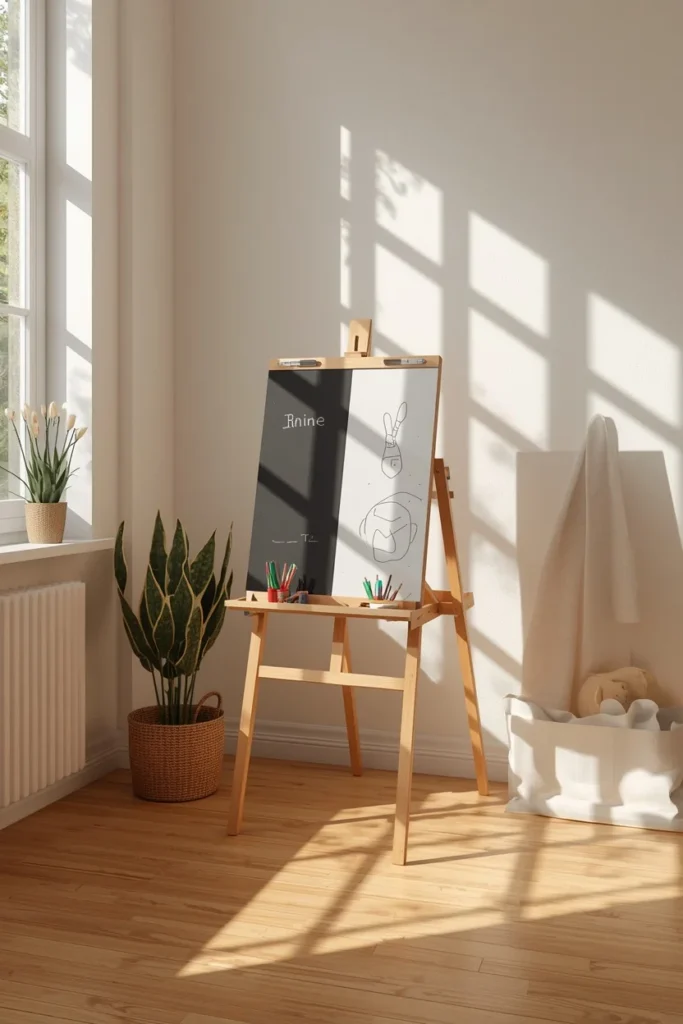
A standing easel with a chalkboard on one side and a whiteboard or magnetic surface on the other gives two kids, or one kid working through two different types of activities, a shared but flexible teaching tool without taking up much floor space. This piece works well as a mobile addition to the room, since it can be wheeled between the main desk zone and the open floor area depending on the lesson. Choosing an easel with a small tray at the base keeps markers and chalk contained rather than scattered across the floor. This is a particularly good fit for families with more than one child at different ages, since one side can host handwriting practice while the other displays a math problem or a drawing prompt.
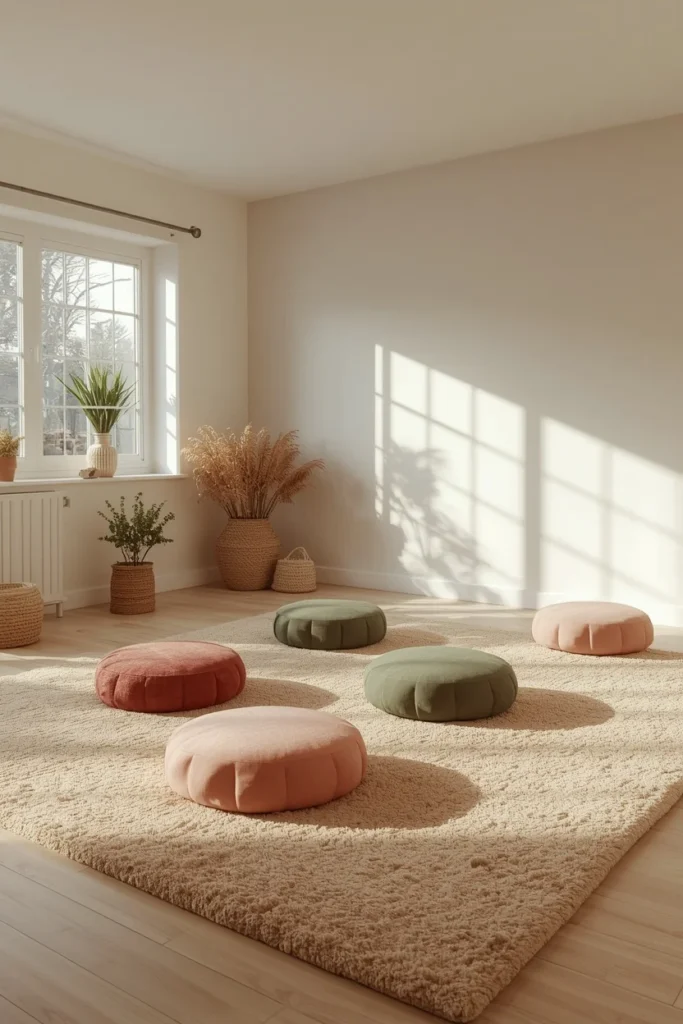
Idea 21: Layer a Soft Rug With Floor Seating for Group Lessons
For lessons that work better sitting on the floor, story time, group discussions, hands-on science activities, a large soft rug paired with a few floor cushions or small bean bag chairs creates a flexible gathering spot that doesn’t require pulling chairs away from individual desks. This layout also signals a shift in the type of activity happening, helping kids mentally separate independent desk work from more collaborative, discussion-based lessons. Choosing a rug in a durable, easy-to-clean material makes sense here, since this zone tends to see the most spills and general wear from sitting, kneeling, and hands-on projects. This flexible floor zone works well in both large dedicated homeschool rooms and smaller shared spaces, since cushions can be tucked away when the area is needed for something else.
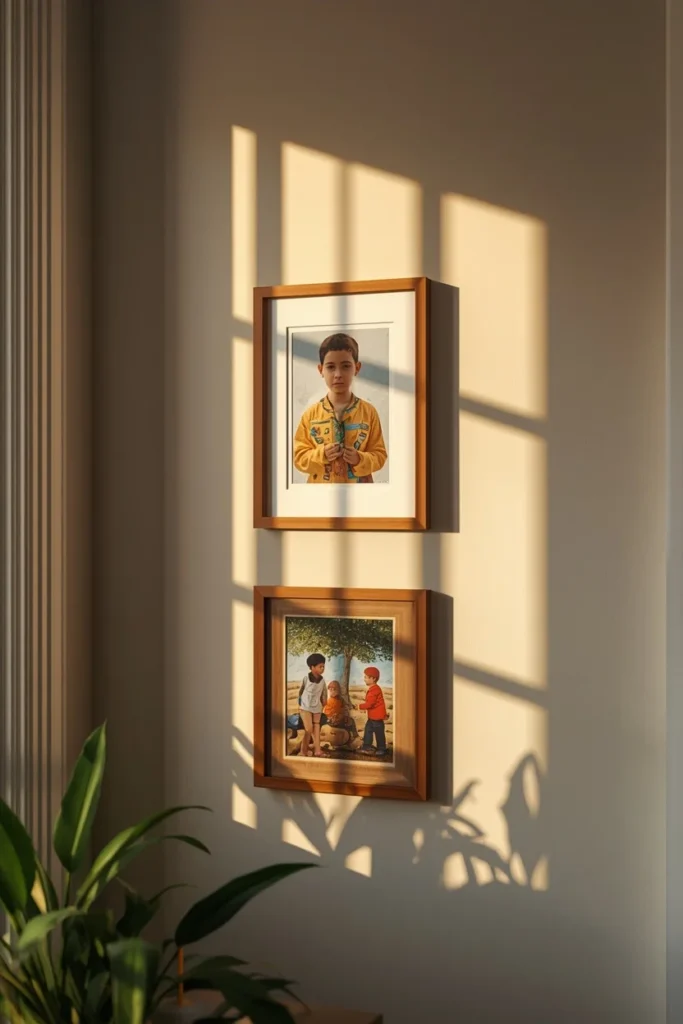
Idea 22: Personalize the Space With a Gallery Wall of Displayed Work
Beyond a rotating pegboard, a more permanent gallery wall featuring framed pieces of standout artwork, a favorite completed project, or a meaningful photo from a field trip gives the homeschool room a sense of identity that’s unique to your own family. This detail helps the space feel less like a generic setup copied from a catalog and more like a room that genuinely belongs to the kids using it. Mixing a few simple frames with different sized artwork, rather than a uniform matching set, keeps the gallery feeling personal and collected rather than overly styled. Updating a few frames each year as kids create new favorite pieces keeps the wall relevant without requiring a full redesign.
Styling Tips
- Plan your three zones (work, reading, movement) before buying any furniture, so the layout supports the room’s actual use.
- Use color-coding consistently across bins, rugs, and labels, so kids can navigate the room independently.
- Keep the color palette calm and muted rather than bright primary colors, which tends to feel less overstimulating over a full school day.
- Rotate displayed work, games, and nature table items every few weeks to keep the room feeling fresh without buying anything new.
- Choose furniture that adjusts or grows with your child, rather than replacing pieces every school year.
Practical Implementation Ideas
- Measure the actual usable floor space in the room before planning zones, since furniture placement decisions depend heavily on real dimensions.
- Install task lighting on the side opposite a child’s writing hand, so shadows don’t fall across their work.
- Set up the labeled bin system before the first day of lessons, so the habit starts from day one rather than being retrofitted later.
- Test the desk and chair height with the actual child using it, rather than relying on standard size charts alone.
- Build in a specific weekly time to update the goal wall and rotate the pegboard display, so it becomes a routine rather than an afterthought.
Common Mistakes to Avoid
- Trying to fit focused work, reading, and movement activities into one undivided space without any zoning.
- Choosing furniture sized for the child’s current age without considering how quickly they’ll outgrow it.
- Relying on a single overhead light for the whole room, which leaves reading and creative zones feeling flat.
- Skipping a real ergonomic chair in favor of a stool or exercise ball, which tends to hurt focus over long stretches.
- Overloading the walls with bright, mismatched educational posters instead of a more intentional, cohesive display.
Small-Space Alternatives
In a shared bedroom or a corner of the kitchen, use a folding or wall-mounted desk that tucks away when not in use, and rely on a single labeled rolling cart instead of a full shelving system for supply storage. A small floor cushion in a designated corner can serve as the reading nook without requiring a full canopy setup. For families without a dedicated room at all, a portable caddy of daily supplies lets kids “set up” a workspace anywhere in the house and pack it away just as easily.
Budget-Friendly Alternatives
Secondhand shelving and desks, repainted in a cohesive color, cost a fraction of new furniture and still deliver the same organizational benefit. A DIY chalkboard panel, made from a sheet of chalkboard paint on plywood, replaces an expensive built-in chalkboard wall for a small fraction of the cost. Repurposing baskets or bins you already own, rather than buying a matching new set, still achieves the same color-coded organization system. A simple string of lights and a few floor cushions can create a cozy reading nook without any specialty canopy or tent purchase.
Pro Styling Recommendations
Designers and experienced homeschool families consistently point to the same foundation: zones, lighting, and furniture that fits the child using it, before any decorative styling decisions are made. Rooms set up with this structure from the start tend to stay in use for years, while rooms without it often get reworked or abandoned within the first school year. A calm, cohesive color palette across storage, rugs, and displayed work tends to support longer stretches of focus better than a bright, highly saturated classroom look.
FAQs
Conclusion
A homeschool room earns its keep when it supports how your family actually learns, not just how it photographs. Start with the zones, the lighting, and furniture that genuinely fits your child, then layer in the cozy, personal details, a reading fort, a gallery wall, a nature table, that make the room feel like it belongs to your kids specifically. The setups that last for years are rarely the most elaborate ones. They’re the ones built around real daily use from the very beginning.