18 Festive Christmas Decor Ideas for Your Classroom Teachers Will Actually Have Time For
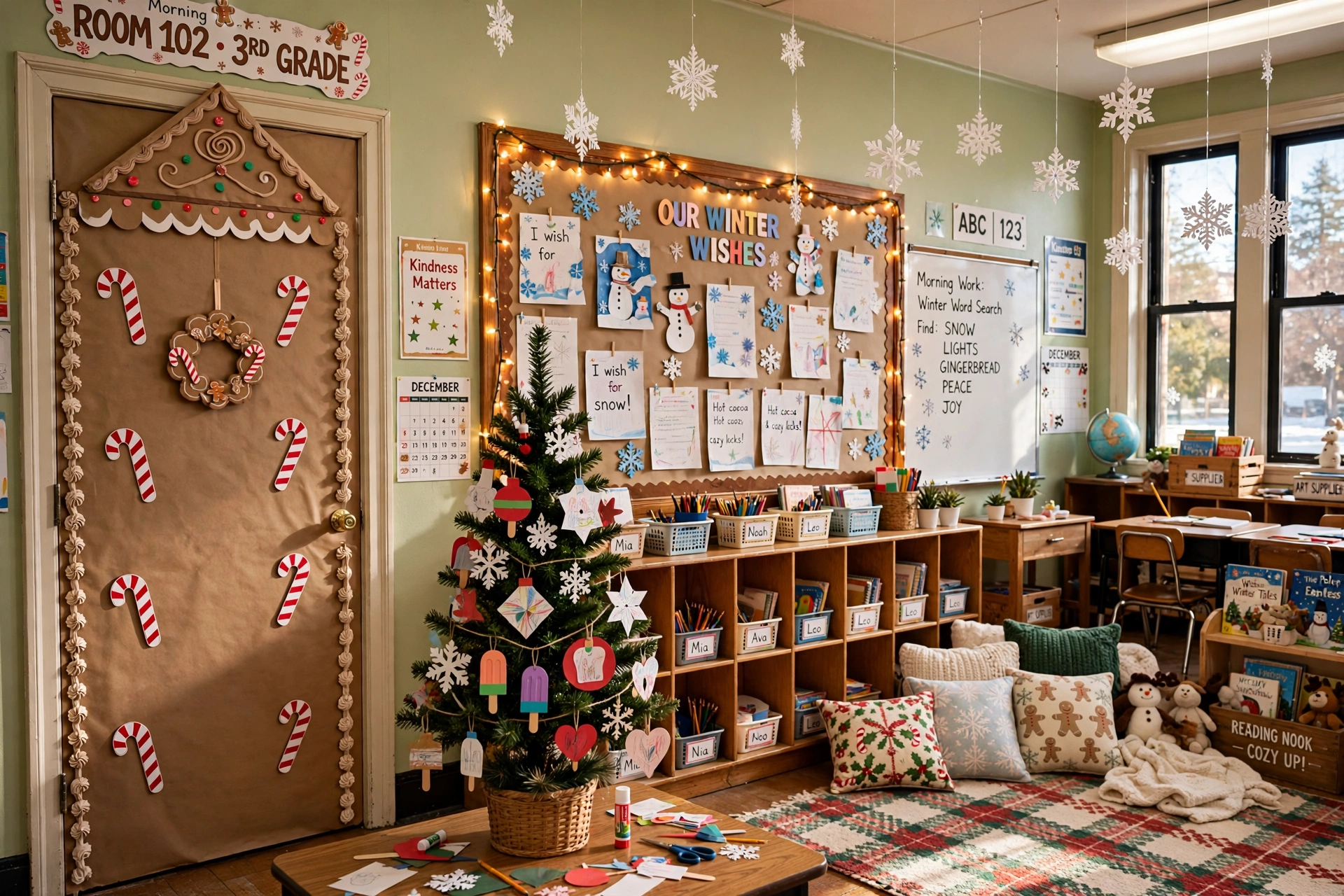
Walking into a classroom that’s been decorated for the season does something to a room full of kids that no lesson plan can quite replicate — it slows them down, makes them smile before they even sit down, and signals that something special is happening this month. But teachers also know the other side of this: limited prep time, a tight supply budget, and a fire marshal who will absolutely check whether that door is covered in flammable crepe paper. The best classroom Christmas decor ideas solve both problems at once — festive enough for kids to love, simple enough to set up during a planning period, and safe enough to survive a surprise inspection. These 18 ideas cover doors, bulletin boards, reading corners, and student-made crafts, along with the fire-safety and inclusivity details most decorating lists skip entirely.
Table of Contents
Why Classroom Decor Matters (and What Makes It Different From Home Decor)
A classroom isn’t a living room, and Christmas decor rules that work at home don’t automatically transfer. Fire marshals inspect schools specifically because a room full of paper, string, and thirty kids is a very different risk profile than a quiet house. Budgets are tighter, most items get shared or reused across grade teams, and decorations often need to double as a learning moment — a bulletin board that teaches a concept while it decorates the wall earns its space twice over. Classrooms also serve kids from different backgrounds, some of whom don’t celebrate Christmas at all, which is why the strongest classroom decor ideas can flex between a full Christmas theme and a more general winter one. Every idea on this list was chosen with those four differences in mind: safety, budget, learning value, and flexibility.
18 Festive Christmas Decor Ideas for Your Classroom
Turn the Door Into a Gingerbread House
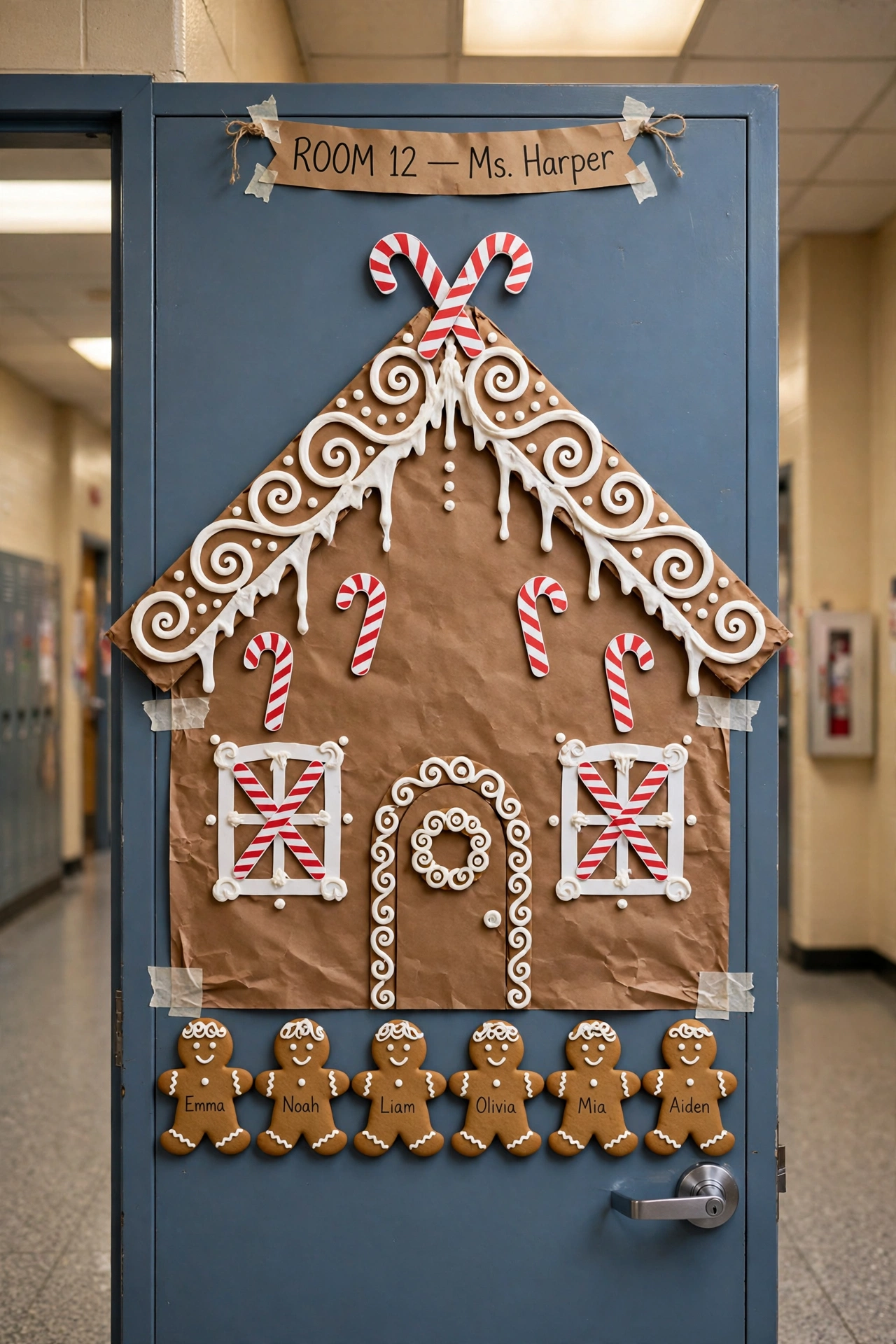
Cover the classroom door in brown butcher paper as the “gingerbread” base, then add construction-paper icing swirls, candy cane cutouts, and gumdrop circles around the frame. Adding each student’s name to a paper gingerbread cookie and lining them along the bottom of the door turns a generic display into one that feels personal to the class. Since butcher paper is thin and lightweight, check with the school’s fire code guidelines on how much of the door surface can be covered before starting, since many schools cap decorative coverage at a percentage of the total door area. This idea takes roughly 30–45 minutes to assemble and costs very little beyond paper and a glue stick. It remains one of the most repinned classroom door styles because it photographs so well against any hallway.
Build a 3D Snowman Door or Wall Display
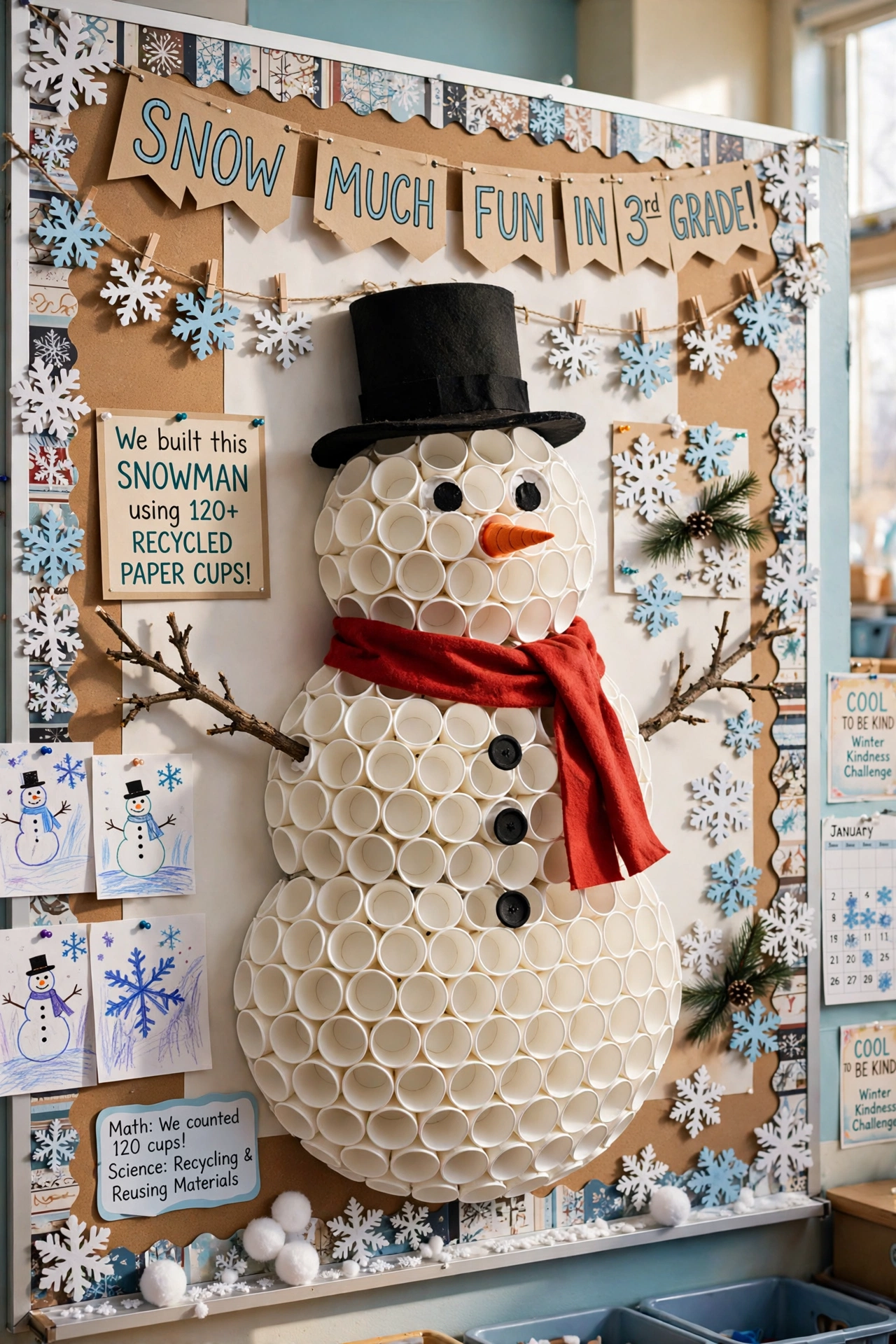
Cut a snowman shape from butcher paper, then fill each body section with white paper cups or cupcake liners glued flat side out for a 3D, textured look. Add a scarf, buttons, and a top hat from felt or construction paper scraps, and use real branches for arms if outdoor access is available. This idea works equally well as a Christmas or general winter decoration, so it can go up in early December and stay through January without needing to be swapped. Because paper cups add bulk, keep the display flat against the door or wall rather than protruding, which helps it clear most fire-code coverage rules. Kids especially enjoy helping fill in the cup texture, which makes this a good option for a class decorating activity rather than a solo teacher project.
Create a Winter Branch Forest Corner
Collect a handful of bare branches, spray them with metallic or white paint, and stand them in buckets or vases filled with fluff balls or shredded paper to look like snow. Arranged together in a reading corner or by a window, the branches create a small “enchanted forest” that adds height and texture without covering wall space that might be subject to fire-code limits. This is one of the more visually striking ideas on the list, and it photographs especially well for a classroom newsletter or social media post home to families. Because the branches are real wood rather than paper or fabric, check local guidance on natural materials, since some districts restrict natural greenery indoors even when it’s just painted branches. Battery-operated fairy lights woven through the branches add a soft glow without any exposed wiring risk.
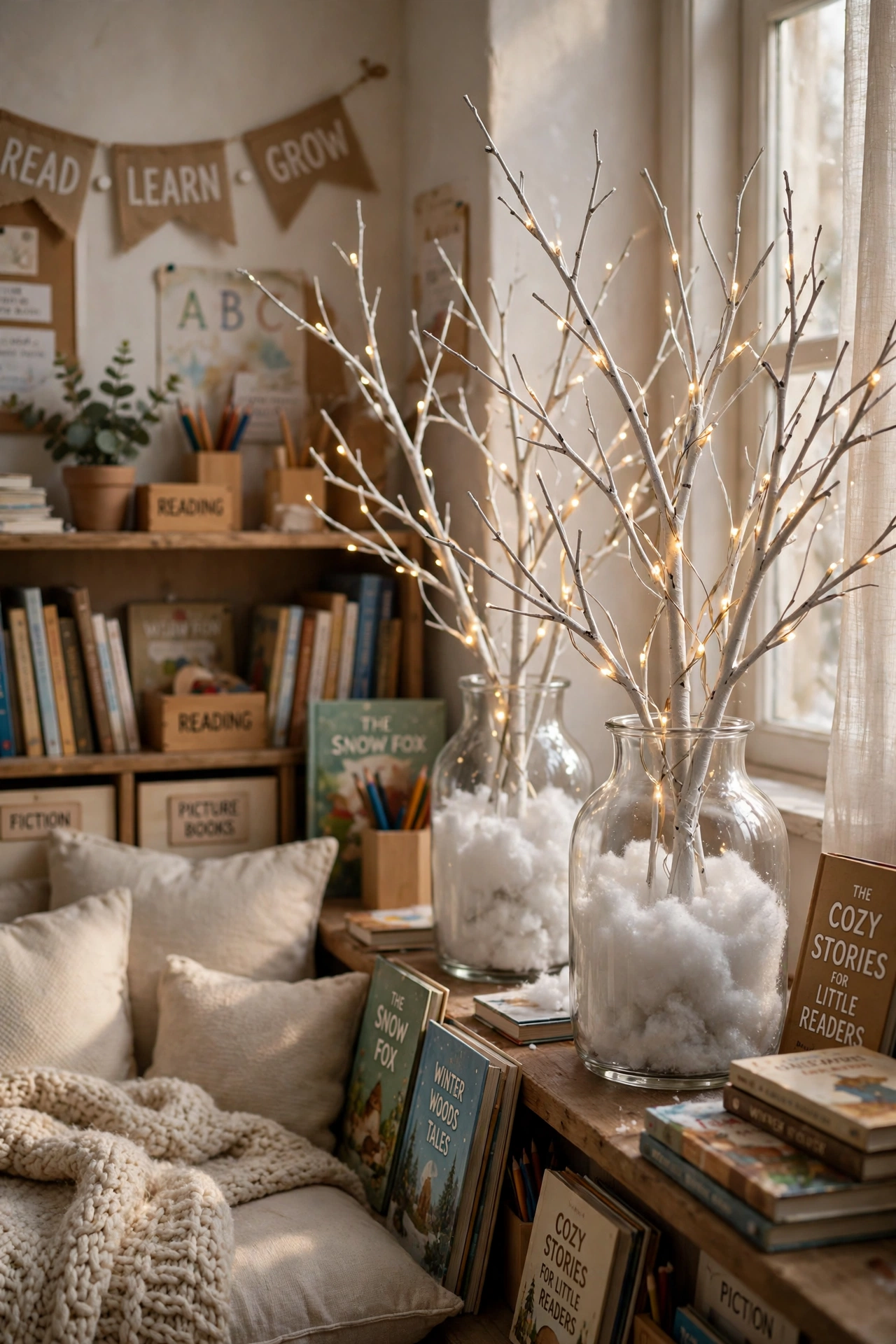
String Battery-Operated LED Lights
Warm white battery-operated or UL-listed LED string lights are one of the few lighting options most fire marshals approve for classroom use, since they avoid the risks tied to older incandescent strands and exposed outlets. Frame a window, a bulletin board edge, or a bookshelf with a single strand rather than overlapping multiple strands, which keeps the look clean and avoids overloading a single outlet or battery pack. Lights on a timer switch off automatically at the end of the school day, which matters in buildings where staff can’t always double-check every classroom before leaving. This idea adds more atmosphere per dollar than almost anything else on the list, and it’s one of the few classroom decorations that genuinely changes how a room feels rather than just how it looks. Confirm your specific building’s policy before purchasing, since some schools ban all string lights regardless of type.
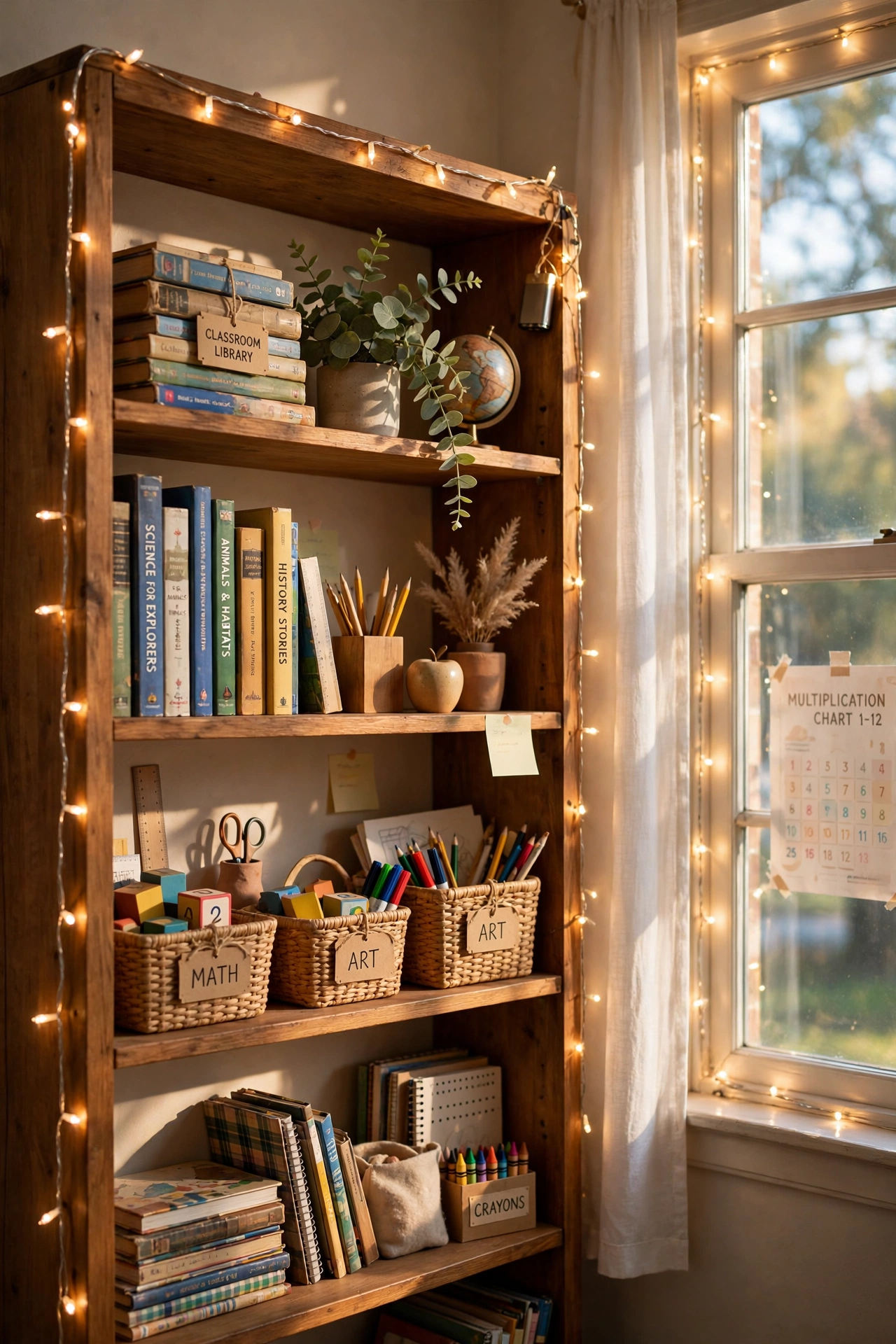
Set Up a Class Tree With Student-Made Ornaments
A small artificial tabletop tree gives every student a chance to contribute an ornament, whether it’s a painted wooden shape, a paper craft, or a decorated photo of themselves. Having each student briefly share why they chose their ornament design turns tree-decorating into a quick community-building activity rather than just a decor task. An artificial tree in a stable base is generally safer and more fire-code compliant than a live one, and it can be reused every year without replacement cost. Placing the tree somewhere visible but out of high-traffic walking paths keeps it from becoming a tripping hazard during class transitions. This idea consistently ranks as one of the most meaningful classroom decorations to students, since it includes something they personally made rather than something bought pre-finished.
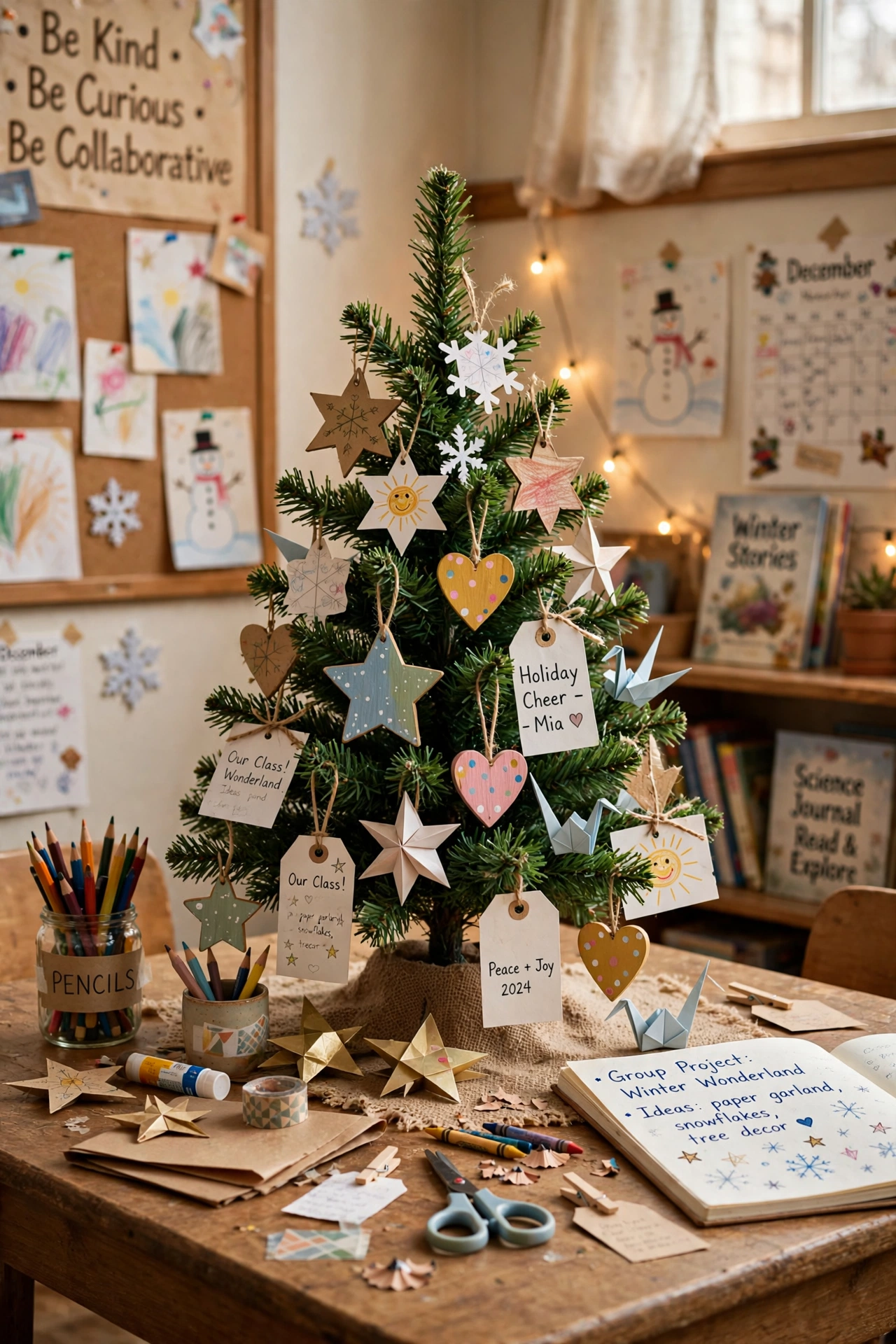
Make a Kindness Paper Chain Countdown
Instead of a plain countdown to break, build a paper chain where each link contains a small kindness challenge — complimenting a classmate, helping tidy a shared space, or writing a thank-you note to another staff member. Removing one link each school day gives students a visual countdown while reinforcing a classroom value at the same time, satisfying the “decor that teaches something” standard many teachers look for. Construction paper strips and a stapler are the entire material list, which makes this one of the least expensive ideas on this list to execute. Hanging the chain along a low shelf or corkboard rather than a doorway keeps it clear of exit paths. This idea also transitions easily into a general “acts of kindness” chain for January, extending its usefulness well past the holiday season.
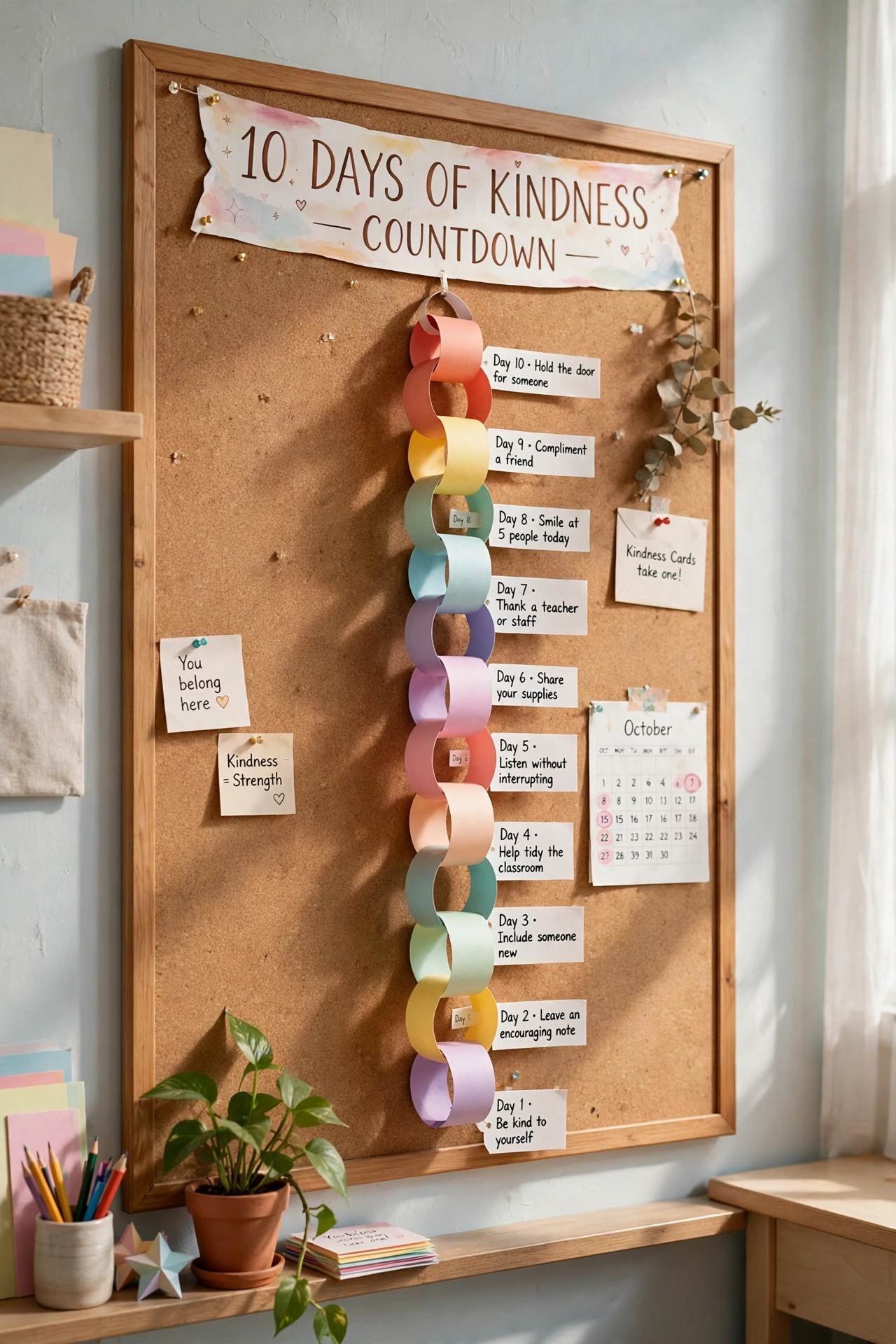
Build a “Holidays Around the World” Bulletin Board
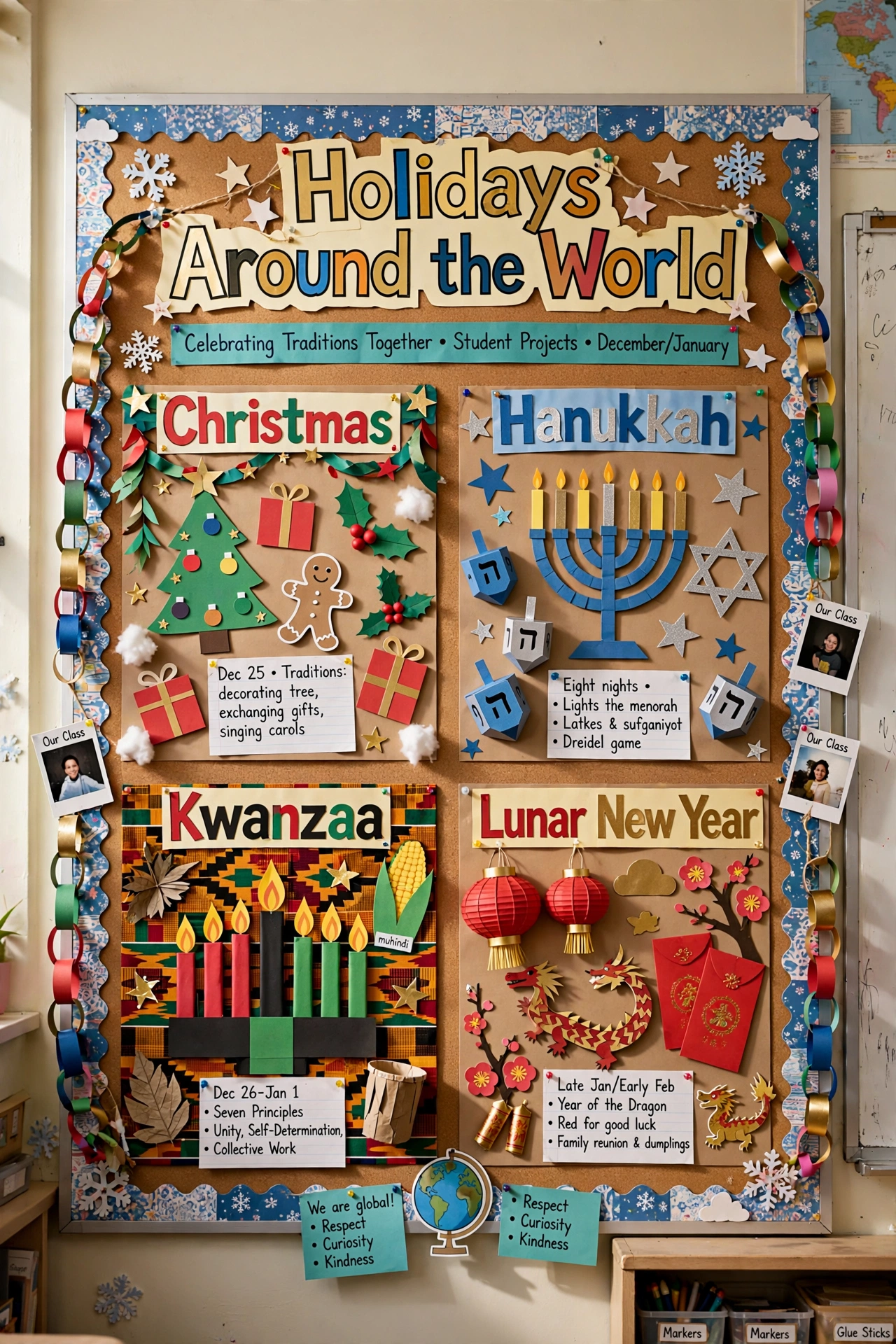
A bulletin board dedicated to how different cultures and countries celebrate the winter season — Christmas, Hanukkah, Kwanzaa, Lunar New Year prep, Diwali if timing allows, and secular winter solstice traditions — turns a decoration into a genuine social studies lesson. Assigning small groups of students to research and contribute a section keeps the board’s content accurate and gives it a rotating, student-driven quality year to year. This idea directly addresses classrooms with mixed religious and cultural backgrounds, giving every student something on the wall that reflects their own family traditions rather than assuming one holiday applies to everyone. Premade bulletin board kits covering this theme are widely available, though a from-scratch version costs less and can be tailored to the specific students in the room. This is one of the strongest options for public school teachers who want festive decor without centering the room entirely on one holiday.
Related: 25 Modern Ways to Decorate a Small Living Room for Christmas
Create a Cozy “Warm Up With a Good Book” Reading Corner
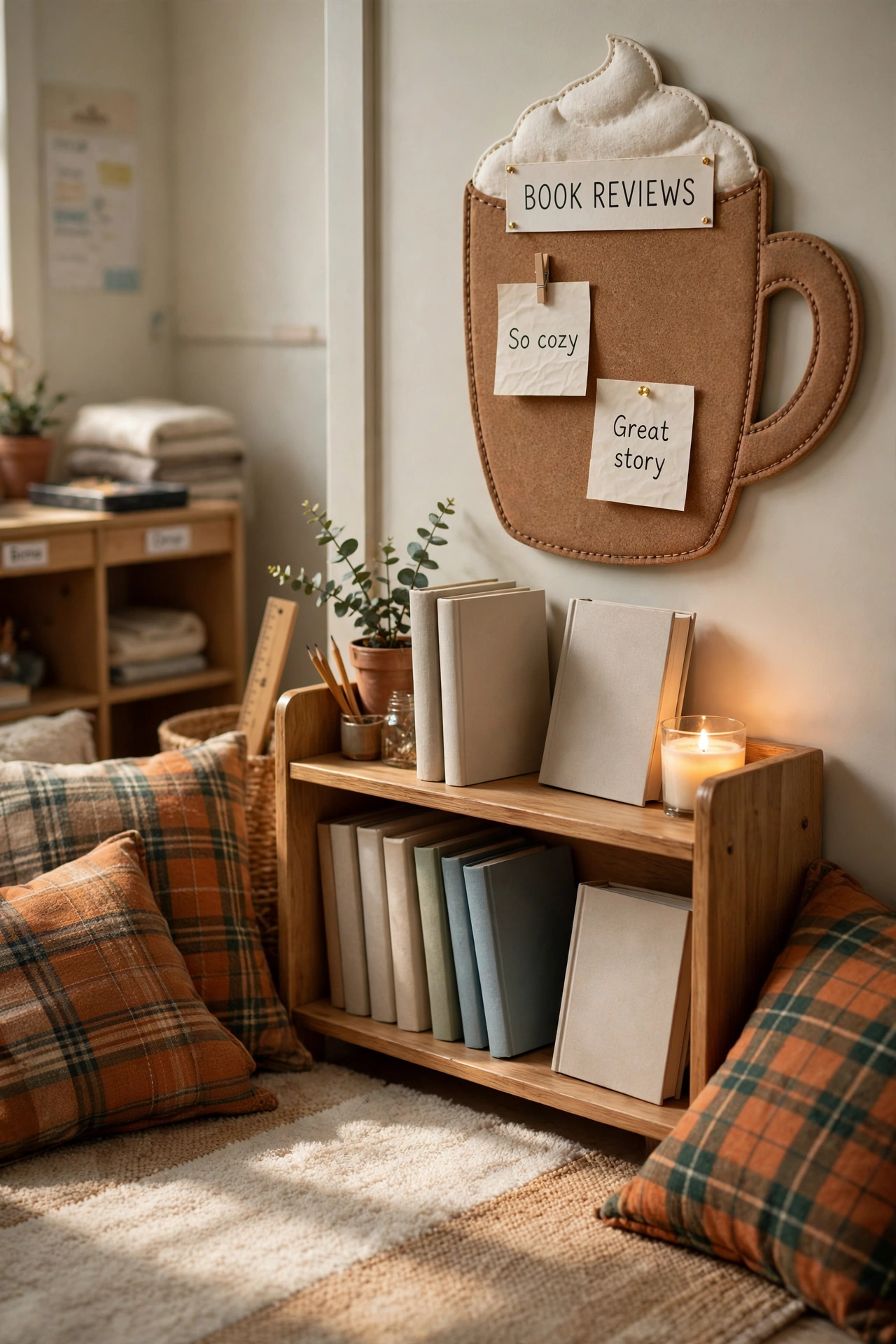
A reading nook styled with a soft rug, a few holiday-print or plaid cushions, and a small side table gives students a dedicated cozy spot during the busiest, most overstimulating month of the school year. Adding a simple cocoa-mug-shaped bulletin board where students record a quick book review keeps the corner tied to literacy goals rather than existing purely for atmosphere. Battery-operated candles or a small strand of warm lights nearby add ambiance without any open flame or exposed wiring. This idea works particularly well because it can stay up through January and February with only the holiday-specific pieces swapped out, saving setup time twice over. It’s also one of the easiest ideas on this list to build entirely from items already in a classroom’s supply closet.
Add Tissue Paper “Stained Glass” Window Clings
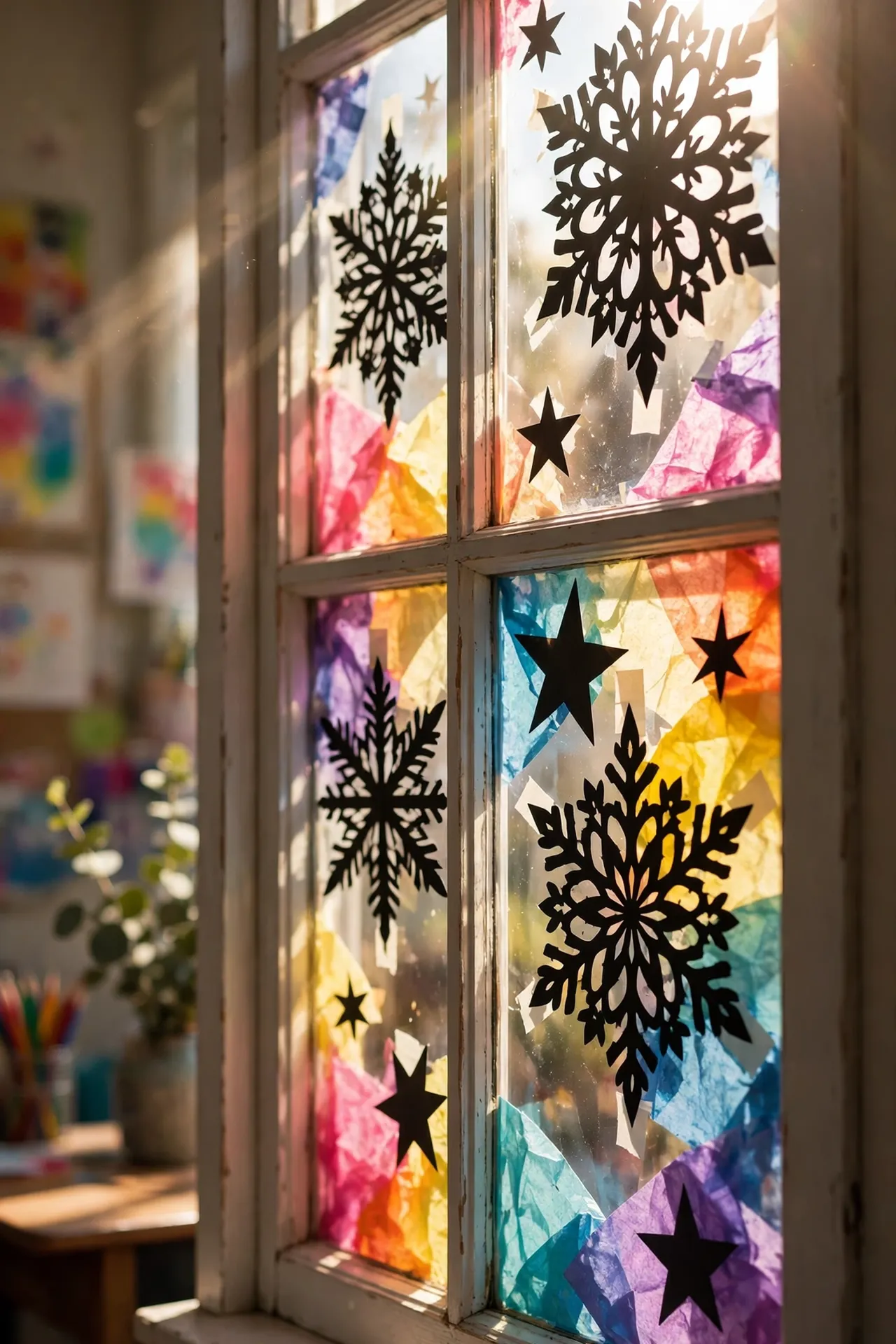
Cut simple shapes — snowflakes, stars, ornaments — from black construction paper, then back them with colorful tissue paper scraps for a stained-glass effect when light shines through the window. These clings add color and texture to a classroom without covering any wall space subject to fire-code limits, since window decorations are typically treated differently than door or corridor coverage. The activity is simple enough for even young elementary students to complete independently, making it a good fit for an early-finisher or indoor-recess project. Because the materials are just paper, there’s no ongoing cost beyond what’s already in a typical classroom supply closet. Removing the clings at the end of the season takes only a few minutes, since tape residue is the only cleanup required.
Display a Class Photo Wreath
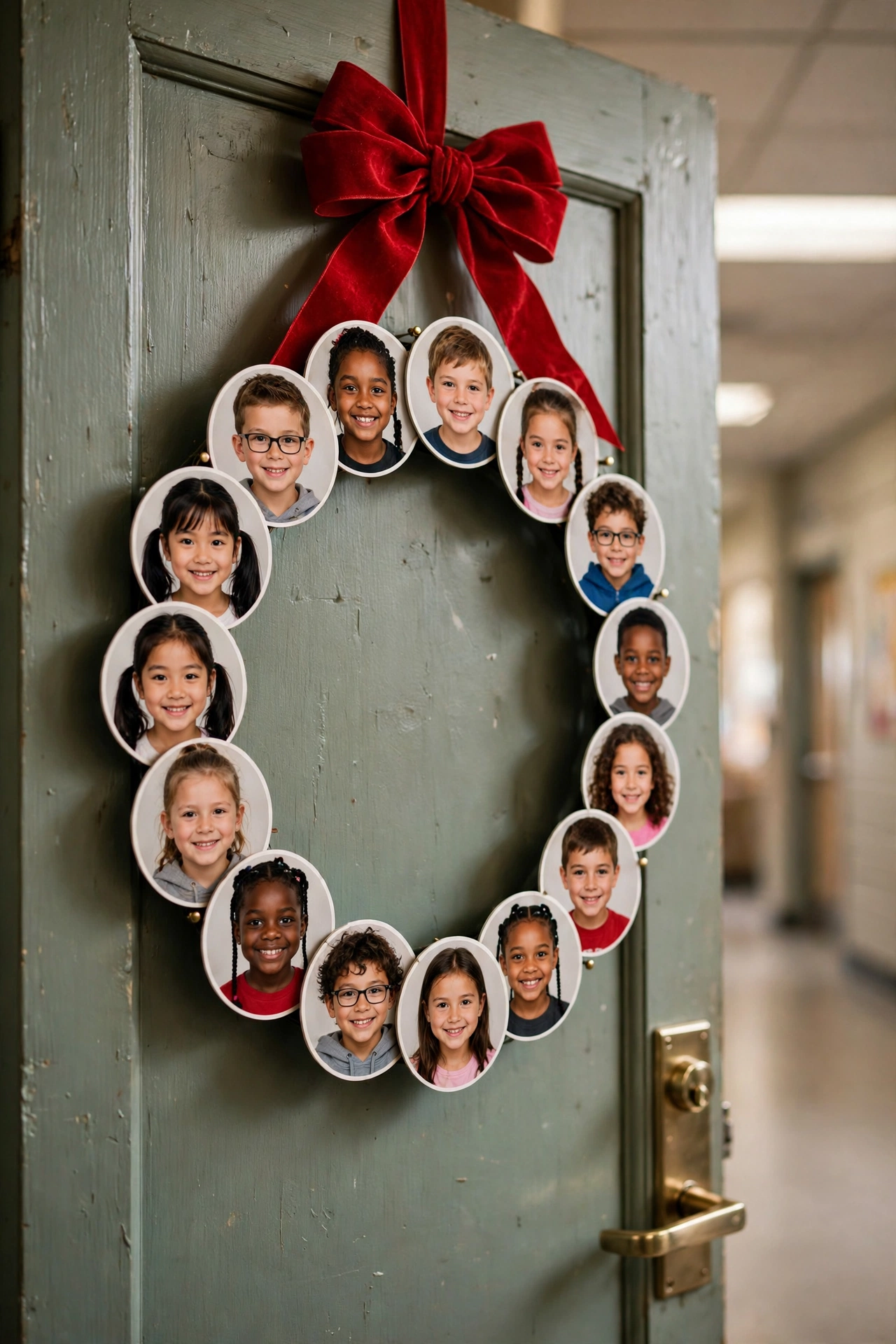
Arrange small circular photos of each student around a wreath-shaped base cut from cardboard or a paper plate, creating a wreath made entirely of classroom faces rather than greenery. This idea works well near the classroom entrance as a personalized alternative to a traditional wreath, and it gives families something to look for and photograph during holiday visits or open houses. Because it’s made from paper and photos rather than fabric or dried greenery, it typically meets stricter fire-code standards than a real evergreen wreath would. Framing the whole thing with a simple ribbon bow at the top finishes the look without adding much bulk. This is also an easy idea to repurpose into a “class family” display outside of the holiday season by simply removing the wreath shape and holiday ribbon.
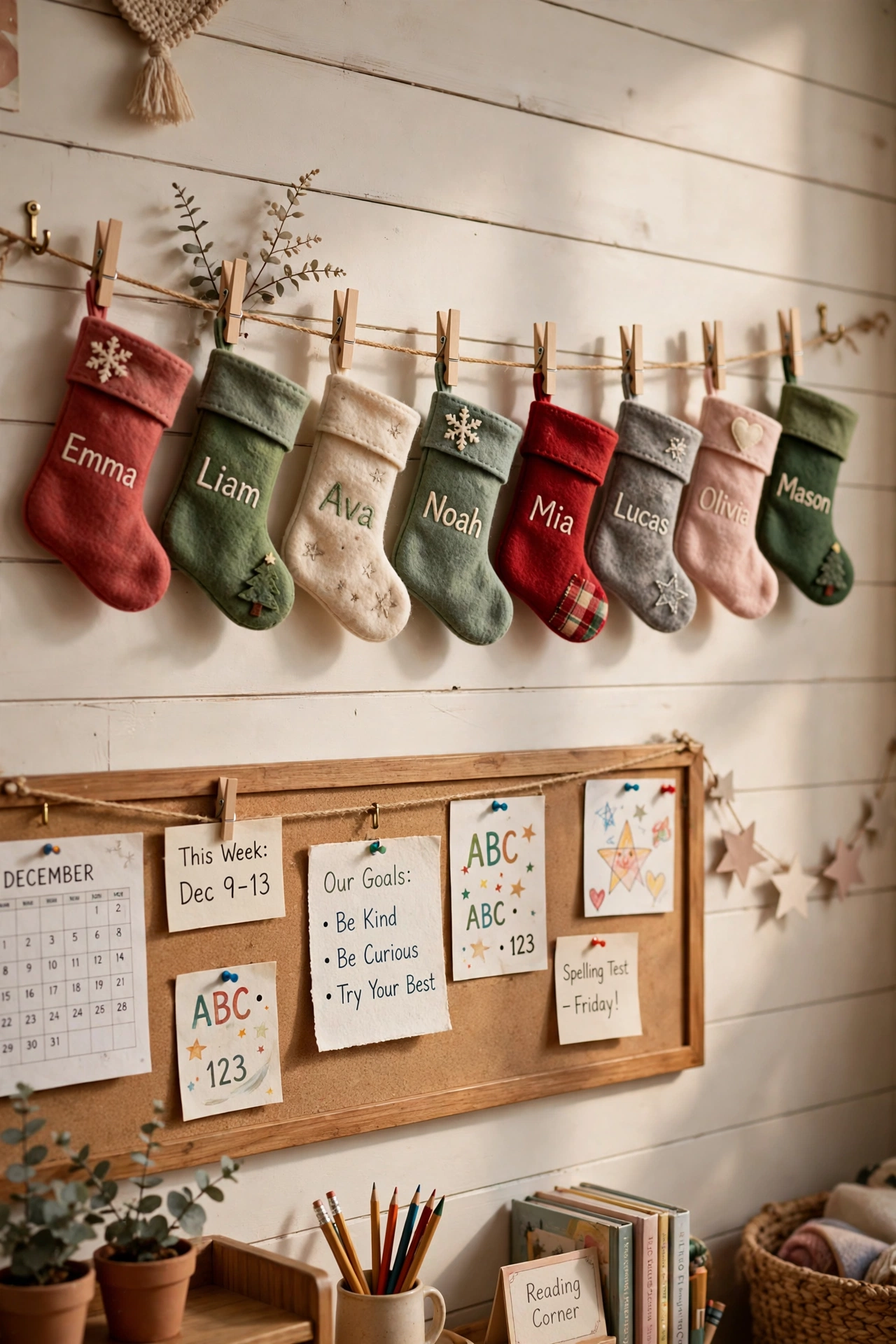
Hang Stockings With Student Names
Inexpensive felt stockings, each labeled with a student’s name, hung along a low wall or bulletin board give every child a small sense of ownership over part of the classroom decor. Students can personalize their own stocking with markers, stickers, or fabric scraps, turning setup into a short class activity rather than a solo teacher task. Filling each stocking with a small note of encouragement partway through December adds a layer of positive reinforcement tied directly to the decoration. Felt is naturally more fire-resistant than many synthetic fabrics, which makes this a comparatively safer textile choice for classroom use. This idea also stores flat and reuses easily year after year, since only the name labels typically need updating.
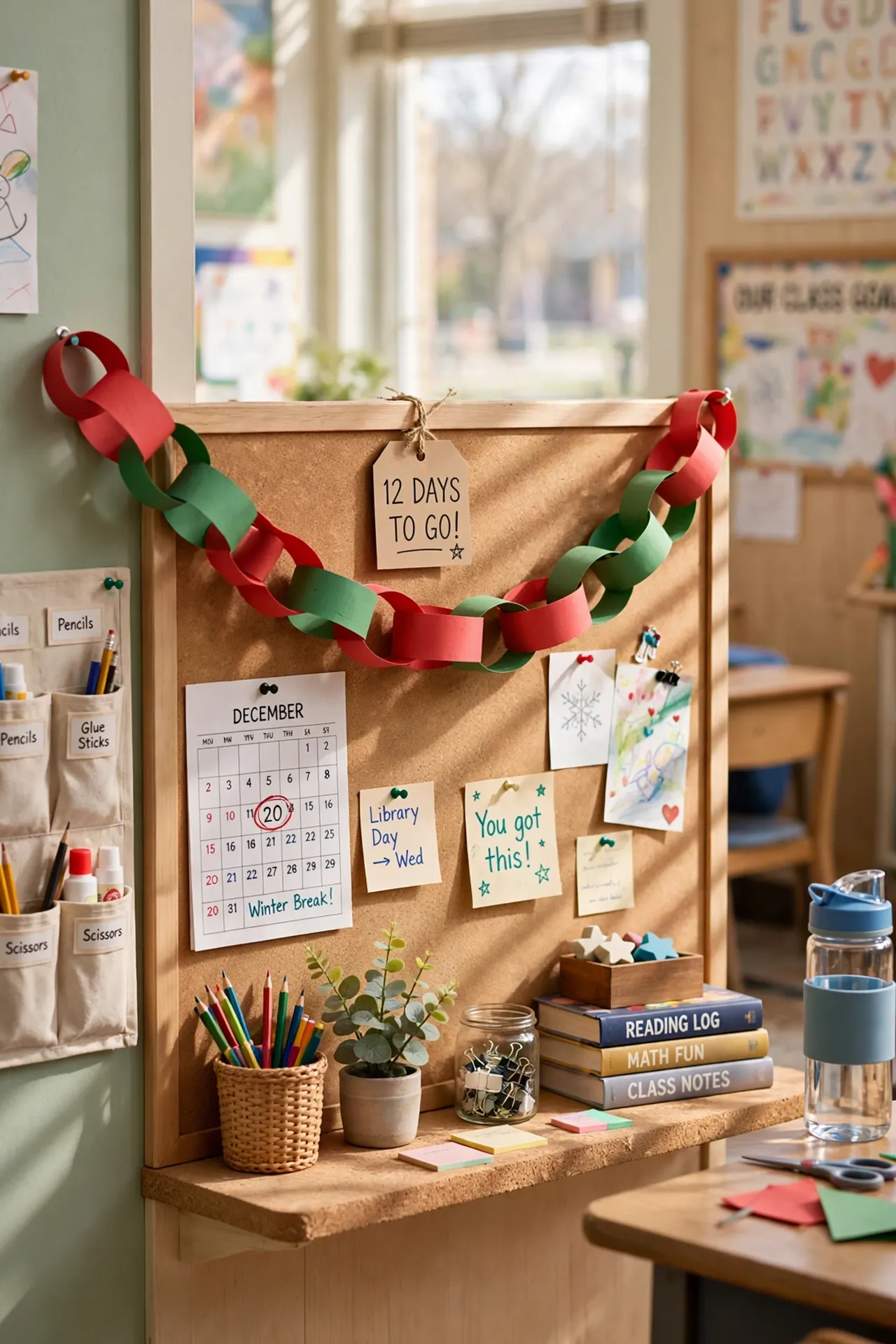
Set Up a Paper Chain Countdown to Winter Break
A simple, classic paper chain counting down the school days left before winter break remains one of the most requested classroom decorations because kids genuinely track it every single day. Using two or three alternating colors keeps the chain visually interesting without needing any special materials beyond construction paper strips and a stapler or tape. Hanging it along a low shelf, corner, or corkboard keeps it out of walking paths and away from any door that needs to stay clear for fire code. Removing one link each morning as a quick class ritual takes less than a minute and gives an easy daily routine anchor during a chaotic month. This idea pairs naturally with the kindness paper chain above if a teacher wants to combine countdown and character-building into a single display.
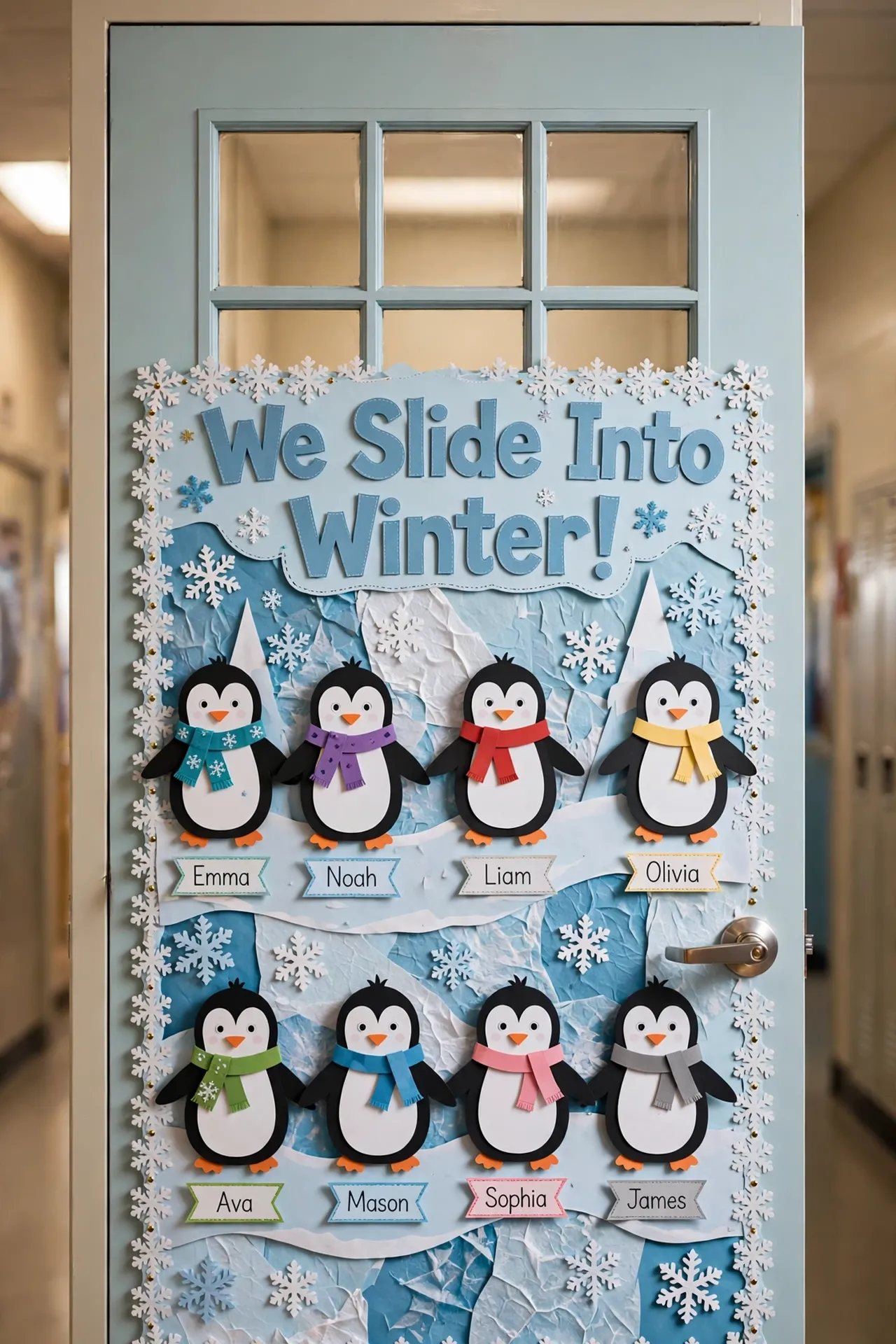
Try a Penguin or Polar Theme for an Inclusive Door
A penguin, polar bear, or general Arctic winter scene gives a classroom door full holiday sparkle without tying the whole display to one specific religious or cultural holiday. Cut penguin shapes from black and white paper, add a student’s photo or name to each one’s belly, and arrange them sliding across a blue-and-white “ice” background. This theme photographs just as well as a traditional Christmas door and tends to be one of the most requested designs in classrooms with religiously diverse student populations. It also transitions seamlessly from December through the rest of winter without needing to be taken down or swapped in January. Many premade door kits already use this theme specifically because of how well it balances festive appeal with inclusivity.
Related: 17 Doable Christmas Table Settings That Feel Elevated
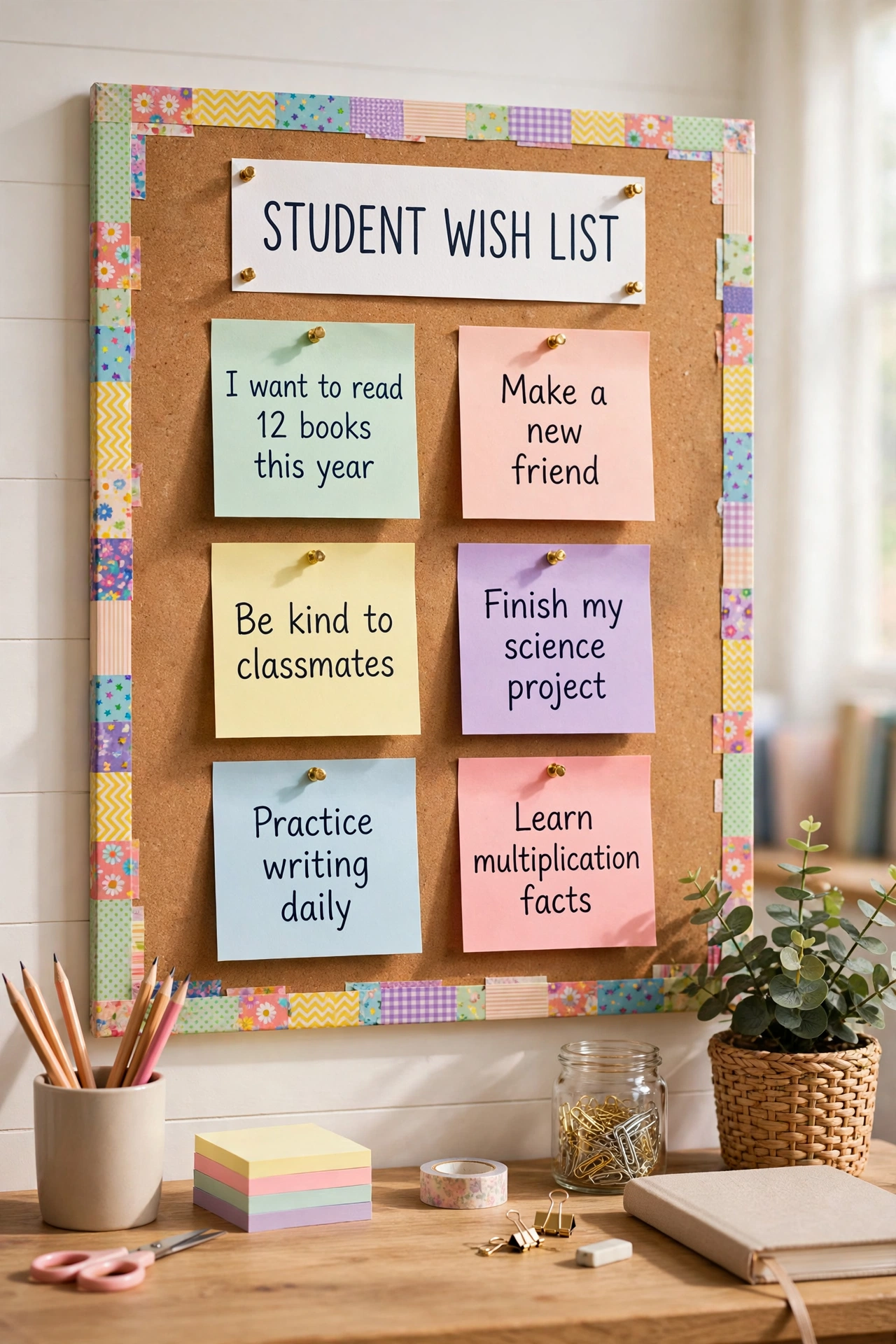
Add a Wish List or Goal-Setting Station
Rather than a Santa-specific letter-writing station, a general “wish list” or “hopes for the new year” corner lets every student participate regardless of which holidays their family celebrates. Provide simple templates where students write or draw something they’re hoping for, looking forward to, or want to improve on in the new year. Displaying the finished notes on a nearby bulletin board turns a quick writing activity into an instant, colorful decoration. This idea also gives teachers a light, low-pressure formative writing sample during a month when academic focus often dips. Framing it as forward-looking rather than gift-focused keeps the activity inclusive and avoids assumptions about what holidays or traditions are present in students’ homes.
Hang Paper Snowflakes From the Ceiling
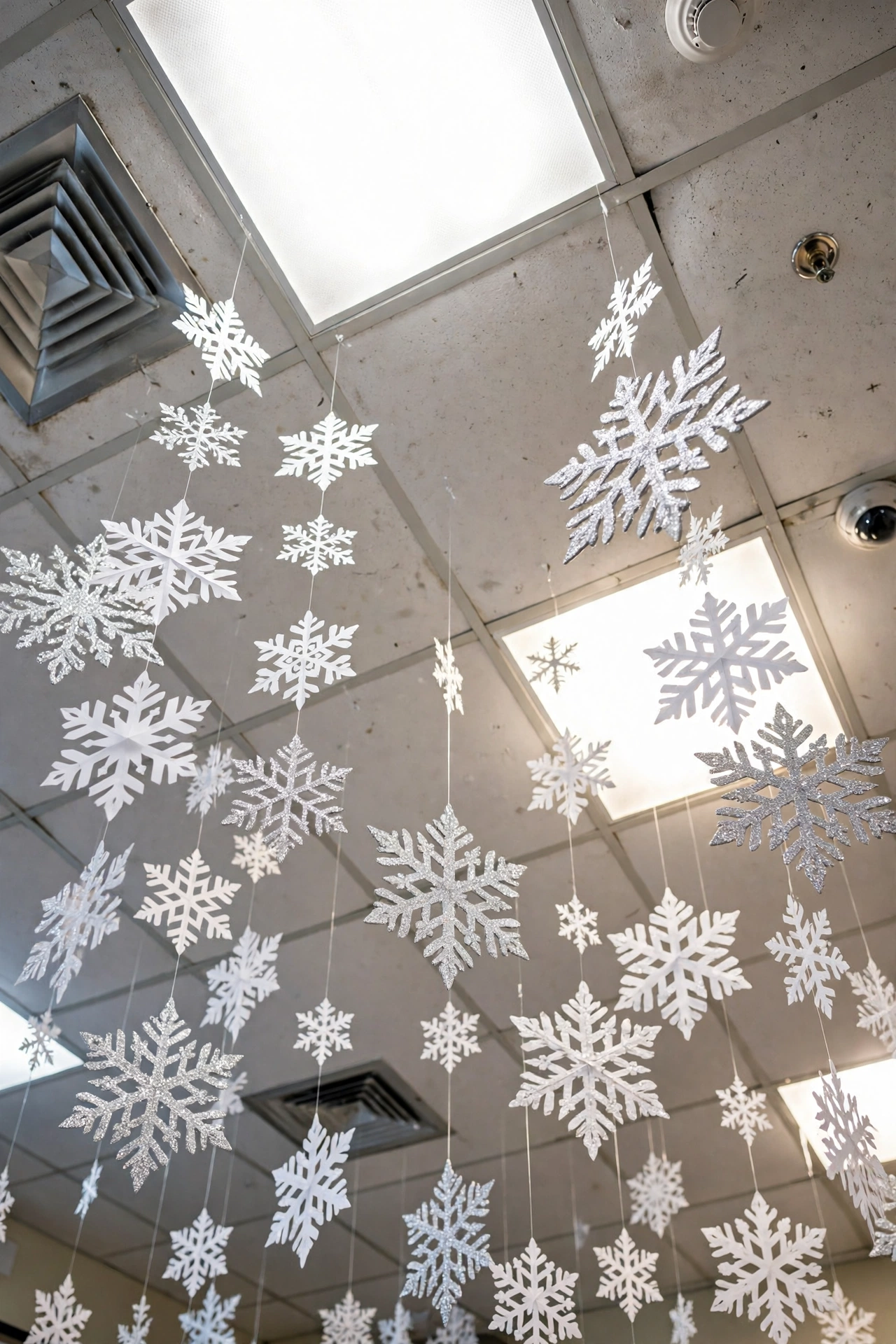
Simple folded-and-cut paper snowflakes, varied in size and hung at different heights from the ceiling with fishing line, add dimension to a classroom without requiring any wall space at all. This is one of the easiest large-group activities on the list, since every student can make at least one snowflake in under ten minutes with just paper and scissors. Because the snowflakes hang rather than attach to walls or doors, they typically fall outside stricter fire-code coverage limits, though checking clearance from light fixtures and sprinkler heads is still worth doing. Varying the paper colors — white, silver, and pale blue — keeps the display from looking flat under fluorescent classroom lighting. This idea also converts instantly into a general winter decoration by simply leaving the snowflakes up after any more Christmas-specific pieces come down.
Build a Paper Fireplace Reading Backdrop
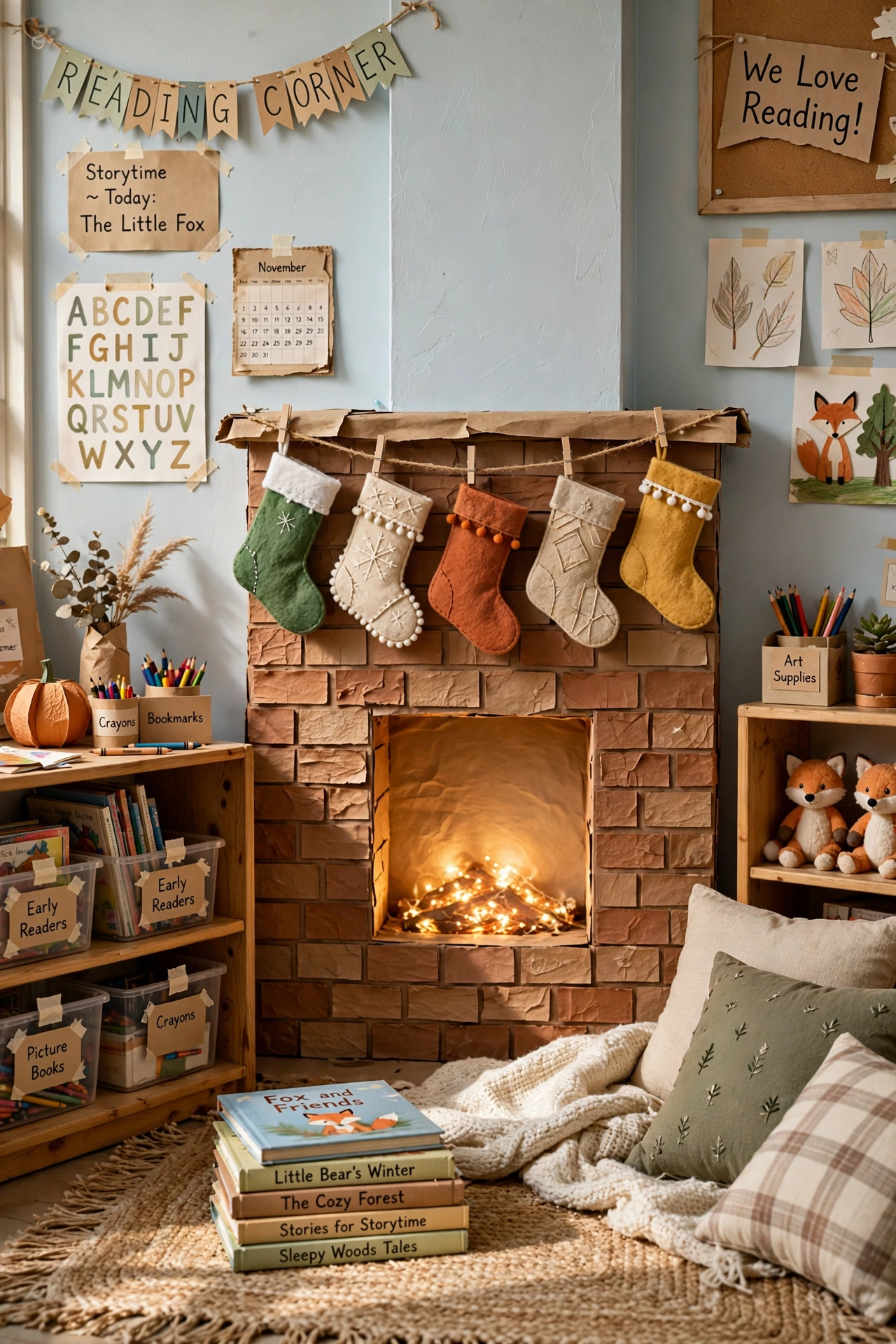
A fireplace shape cut from red brick-patterned bulletin board paper, mounted flat against a wall with a few felt stockings hung along the top, creates a cozy backdrop perfect for a read-aloud corner. Because the whole piece is flat paper rather than a freestanding structure, it avoids the tripping and blocking hazards a bulkier prop might create in a busy classroom. Adding a battery-operated flickering light behind a cutout “fire” opening gives the illusion of a glow without any real heat source or exposed wiring. This idea pairs naturally with the cozy reading corner and student stocking ideas above, letting a teacher combine several list items into one connected classroom zone. It also holds up as general winter decor well into January, since a fireplace backdrop reads as cozy rather than specifically Christmas-themed.
Turn Student Self-Portraits Into Snowmen or Ornaments
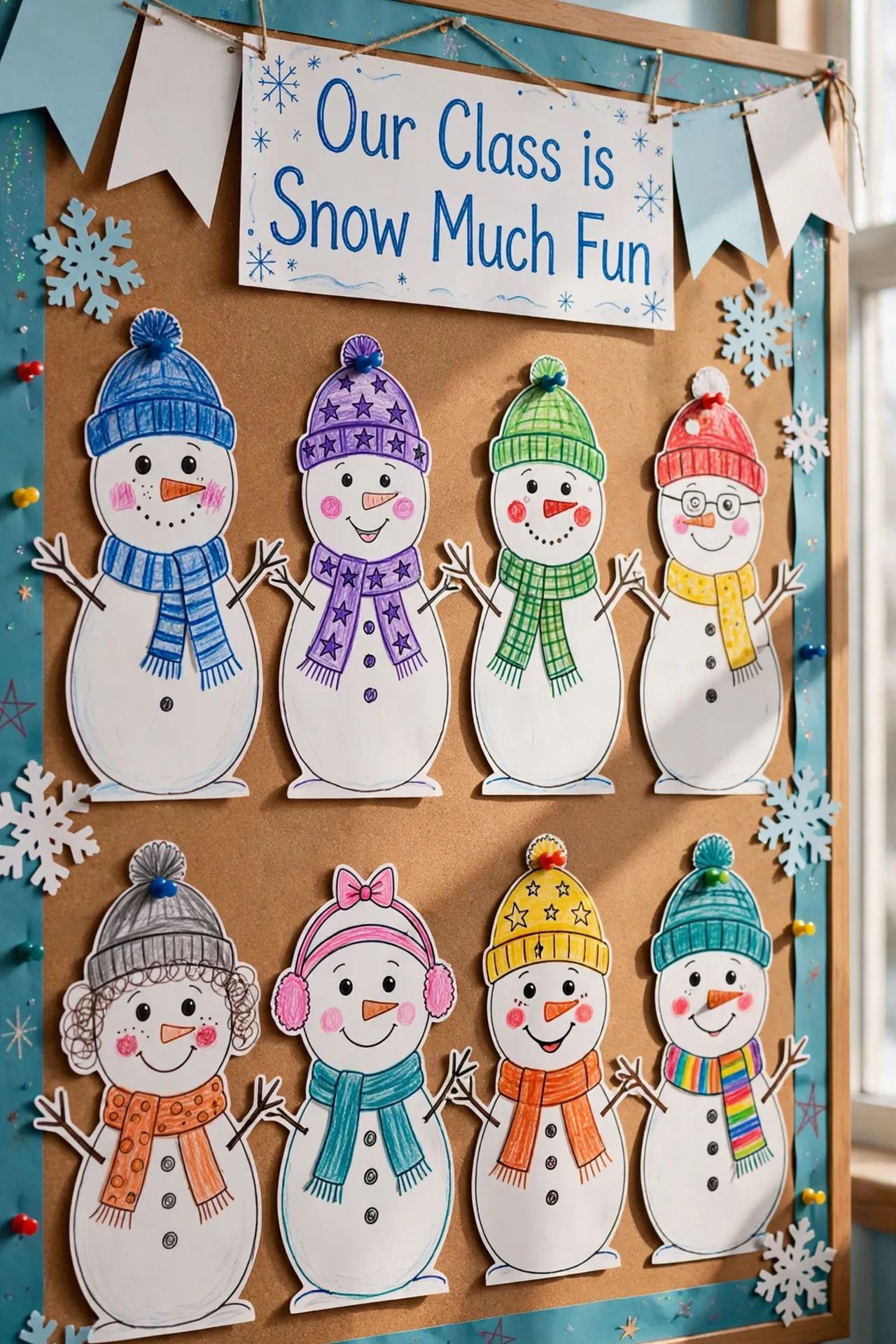
Have students trace and cut a simple circle or snowman shape, then add their own face — drawn or a small printed photo — to personalize the piece before it goes up on a bulletin board or hanging display. This idea works for nearly any winter theme, whether the base shape is a snowman, an ornament, a mitten, or a snowflake, which makes it one of the most flexible crafts on the list. Displaying the finished pieces together under a simple banner like “Our Class is Snow Much Fun” gives the whole board a unifying, high-impact headline. Because the base materials are just paper and glue, this is an inexpensive way to fill a large bulletin board area with genuinely personalized content rather than store-bought cutouts. It also doubles as a quick formative assessment of fine motor or art skills depending on the grade level.
Create a Sensory-Friendly Quiet Corner
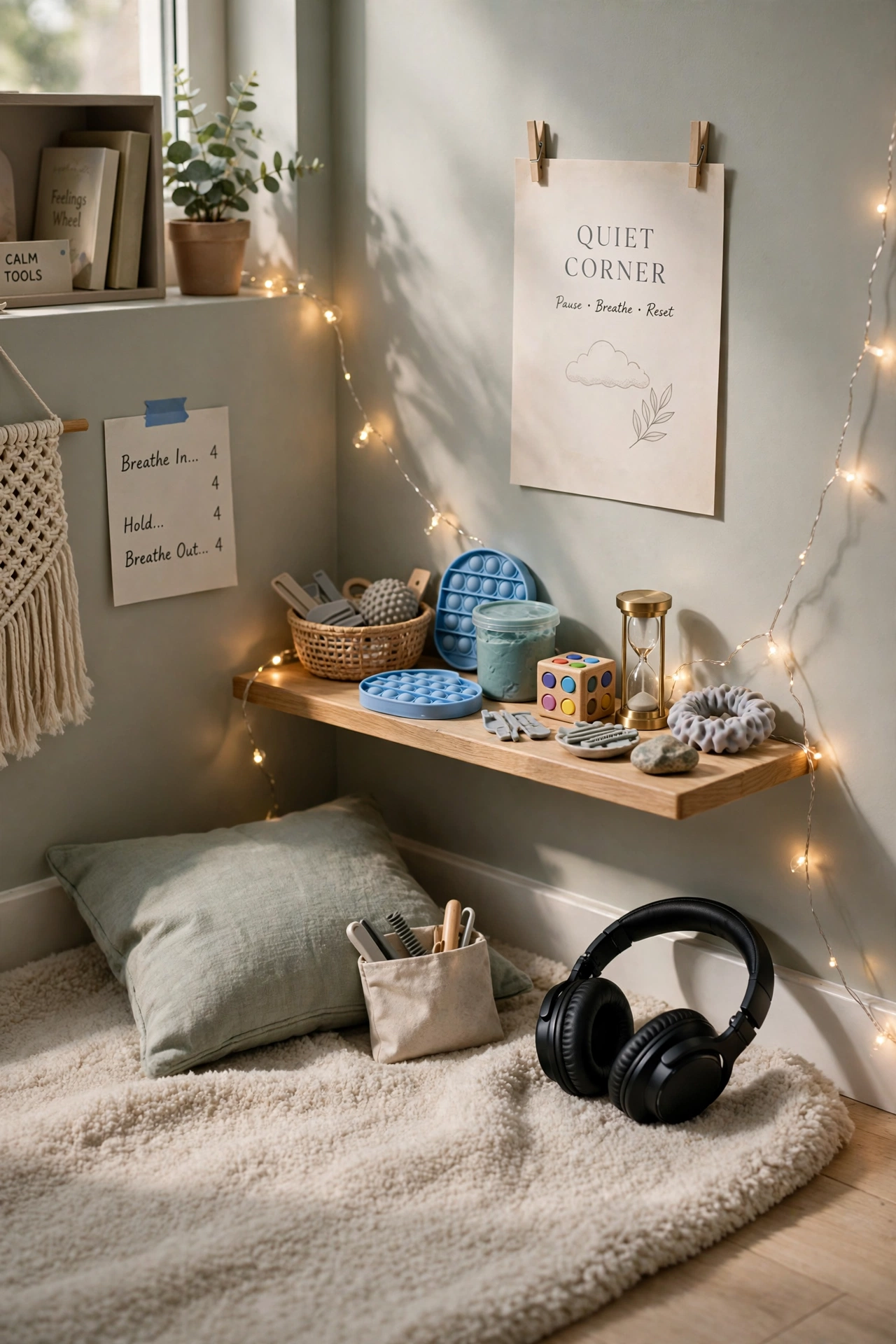
A small designated space with soft, warm-toned battery lights, a plush rug, noise-reducing headphones, and minimal visual clutter gives students who feel overwhelmed by holiday sensory input somewhere to reset. Skipping flashing lights, strong scents, and busy patterns in this specific corner — even while the rest of the room is fully decorated — makes the classroom more accessible without requiring any changes to the overall festive theme. A basket of quiet fidget tools or a simple visual timer nearby supports students who need a brief break during the more overstimulating parts of the school day. This idea rarely appears in general classroom decorating roundups, even though many teachers with neurodivergent or sensory-sensitive students already build something like it informally. Labeling the space clearly and reviewing its purpose with the whole class helps every student understand it’s a shared resource rather than a reward or punishment zone.
Styling Tips for a Cohesive Classroom Look
- Pick two or three colors (red, green, white, or a gold-and-blue winter palette) and repeat them across doors, bulletin boards, and reading corners.
- Combine store-bought bulletin board kits with at least one student-made element so the room feels personal, not just purchased.
- Keep at least one corner — a reading nook or class tree area — as a “calm” zone rather than covering every surface with decor.
- Use vertical hanging displays (paper chains, snowflakes) to add festive detail without competing for the same wall space as bulletin boards.
- Save the boldest, biggest piece (the door theme) as the single strongest visual statement, and keep interior displays a notch quieter.
Practical Implementation Ideas
- Check your school or district’s fire-code and decoration policy before buying materials, since rules vary widely by building and even by classroom location (near an exit vs. an interior room).
- Batch-cut paper shapes (snowflakes, stockings, ornaments) during a single prep period rather than piecing together decor across several days.
- Use a rolling cart or labeled bin to store reusable pieces like felt stockings or a tabletop tree, so setup time drops each following year.
- Assign specific decorating tasks to student helpers or a classroom job chart to spread out the workload.
- Take a few photos of the finished room before dismantling anything, both for your own records and for next year’s setup reference.
Common Mistakes to Avoid
- Covering too much of the door or corridor-facing wall, which is the single most common fire-code violation in classroom decorating.
- Using real candles, exposed heating elements, or non-UL-listed lights, all of which are near-universal fire-code violations in school buildings.
- Assuming every student celebrates Christmas, which can unintentionally leave some students feeling excluded from their own classroom.
- Overloading a single outlet with multiple light strands or decorative electronics.
- Leaving decorations up so long they start looking worn or become a distraction well past their seasonal relevance.
Fire Safety and Code Compliance Guide
Fire marshals check classrooms specifically because paper, fabric, and dense student populations create real risk, and most violations come from just a few repeat issues. Doors are usually the strictest zone, since many codes limit decorative coverage to a set percentage of the door’s surface and require that the door still close, latch, and remain clearly recognizable as an exit. Natural greenery, real candles, and non-flame-retardant fabric are commonly restricted or banned outright, so artificial trees, felt, and treated paper are safer defaults. Any lights used should be UL-listed and ideally battery-operated or on a properly rated outlet, never run through a chain of extension cords. When in doubt, it’s worth asking a school administrator or the local fire marshal’s office directly, since specific rules vary by state, district, and even building age — a quick conversation before December avoids the frustration of decorating twice.
Small Classroom Alternatives
Classrooms with limited wall space can lean on hanging and window-based decor, since paper snowflakes, tissue paper window clings, and a single small bulletin board cover most of the visual impact without needing a full wall. A tabletop tree takes up far less room than a floor model and can sit on a shelf or corner desk without blocking walking paths. Choosing three or four ideas from this list and executing them fully tends to look more finished in a small room than spreading a dozen smaller touches too thin. Vertical elements — hanging chains, ceiling snowflakes, and a decorated door — make the most of limited floor and wall space simultaneously.
Budget-Friendly Alternatives
Paper, tape, and a stapler cover the material cost for at least half the ideas on this list, since chains, snowflakes, and window clings need almost nothing beyond classroom supply closet basics. Reusable pieces — a tabletop tree, felt stockings, or a paper fireplace backdrop — cost more upfront but pay for themselves after just one additional year of use. Grocery stores and party supply shops often clear out leftover decorative tissue paper and honeycomb decorations at a discount right after Thanksgiving, which is worth checking before buying anything at full holiday markup. Asking families to donate small craft supplies, like buttons or fabric scraps, at the start of December can offset costs while also building a sense of shared classroom ownership over the decorations.
Inclusive & Sensory-Friendly Alternatives
Swapping a strictly Christmas theme for a broader winter, penguin, or “holidays around the world” concept lets every student see themselves represented in the room’s decor rather than assuming one tradition applies to the whole class. Asking students directly what winter traditions their own families celebrate, then incorporating a few of those details into a shared bulletin board, turns decorating into a genuine inclusion exercise rather than a guess. For sensory-sensitive students, steady warm lighting instead of flashing bulbs, muted color palettes in at least one corner of the room, and keeping strong-scented items like pine-scented sprays out of the classroom entirely all reduce the chance of overstimulation. A brief heads-up to families about which decorations are going up also gives parents of sensory-sensitive or neurodivergent kids a chance to prepare their child in advance.
Related: 23 Christmas Centerpieces for Every Style of Table For a Home That Feels Festive All Season
Pro Styling Recommendations
Experienced teachers tend to decorate in layers rather than all at once — door and major bulletin board first, then smaller touches like paper chains and window clings added gradually through the first week of December to keep the anticipation building. They also keep at least one storage bin specifically for holiday decor so setup and teardown both take under an hour rather than becoming a full afternoon project each year. Involving students directly in at least two or three of the decorations, rather than presenting a fully finished room on day one, tends to generate more excitement than a display kids had no hand in creating. Finally, seasoned teachers check their specific building’s fire code policy every year rather than assuming last year’s rules still apply, since fire marshal guidance and building policies can change between school years.
Frequently Asked Questions
Many public schools allow general winter or secular seasonal decor, but district policies vary on whether specifically religious symbols are appropriate in a shared classroom space. Checking with a school administrator before decorating, and leaning toward inclusive themes like winter, snow, or “holidays around the world,” is the safest approach for public school classrooms.
Artificial trees, felt fabric, flame-retardant paper, UL-listed battery-operated LED lights, and metal or ceramic decorative items are generally considered safer, more fire-code compliant choices. Real greenery, candles, and non-rated string lights are commonly restricted or banned outright in school buildings.
Many fire codes limit decorative coverage on doors to a set percentage of the total surface area, and the door must still be clearly recognizable as an exit and able to close and latch properly. Specific percentages vary by state and district, so checking local fire marshal guidance before covering a door edge to edge is worth doing.
Winter, snow, penguin, and “holidays around the world” themes give a festive classroom look without centering the room on one specific holiday. These themes also tend to stay relevant longer, since they can remain up through January without needing to be swapped out.
Paper chains, folded snowflakes, and tissue paper window clings need almost nothing beyond basic classroom supplies already on hand. Reusable pieces like a tabletop tree or felt stockings cost more upfront but reduce spending in future years since they store and reuse easily.
Choose steady warm lighting over flashing bulbs, keep at least one corner in a muted color palette, and avoid strongly scented decorations like pine sprays. A brief note home to families about upcoming decor changes also helps parents prepare sensory-sensitive students in advance.
Only if they’re UL-listed and approved under your school’s specific fire code policy, and ideally they should be battery-operated rather than plugged into a shared or overloaded outlet. Many schools restrict all string lights regardless of type, so it’s worth confirming with an administrator before purchasing any.
A paper chain with one link removed per school day is one of the simplest and most requested countdown ideas, and it can double as a kindness or gratitude activity by adding a small challenge inside each link. This type of countdown also uses minimal materials and stores flat for reuse the following year.
Final Thoughts
The classrooms students remember most fondly aren’t necessarily the most elaborately decorated ones — they’re the ones where the decor felt warm, inclusive, and at least a little bit made by the kids themselves. Starting with a door theme, adding one cozy corner, and layering in a few student-made touches covers most of what makes a classroom feel festive without requiring a weekend of unpaid prep work. Checking fire-code guidance early and choosing at least one inclusive or winter-flexible idea protects the display from getting flagged or excluding students in the room. Pick a handful of ideas from this list that fit your building’s rules, your budget, and your available prep time, and the rest of the classroom’s holiday spirit will follow from there.