15 Simple Thanksgiving-to-Christmas Tree Transition Ideas
Putting the Christmas tree up before Thanksgiving used to feel like picking a side. Either the tree stayed in the closet until the turkey was long gone, or it went up early and looked completely out of place next to a table full of pumpkins and dried corn.
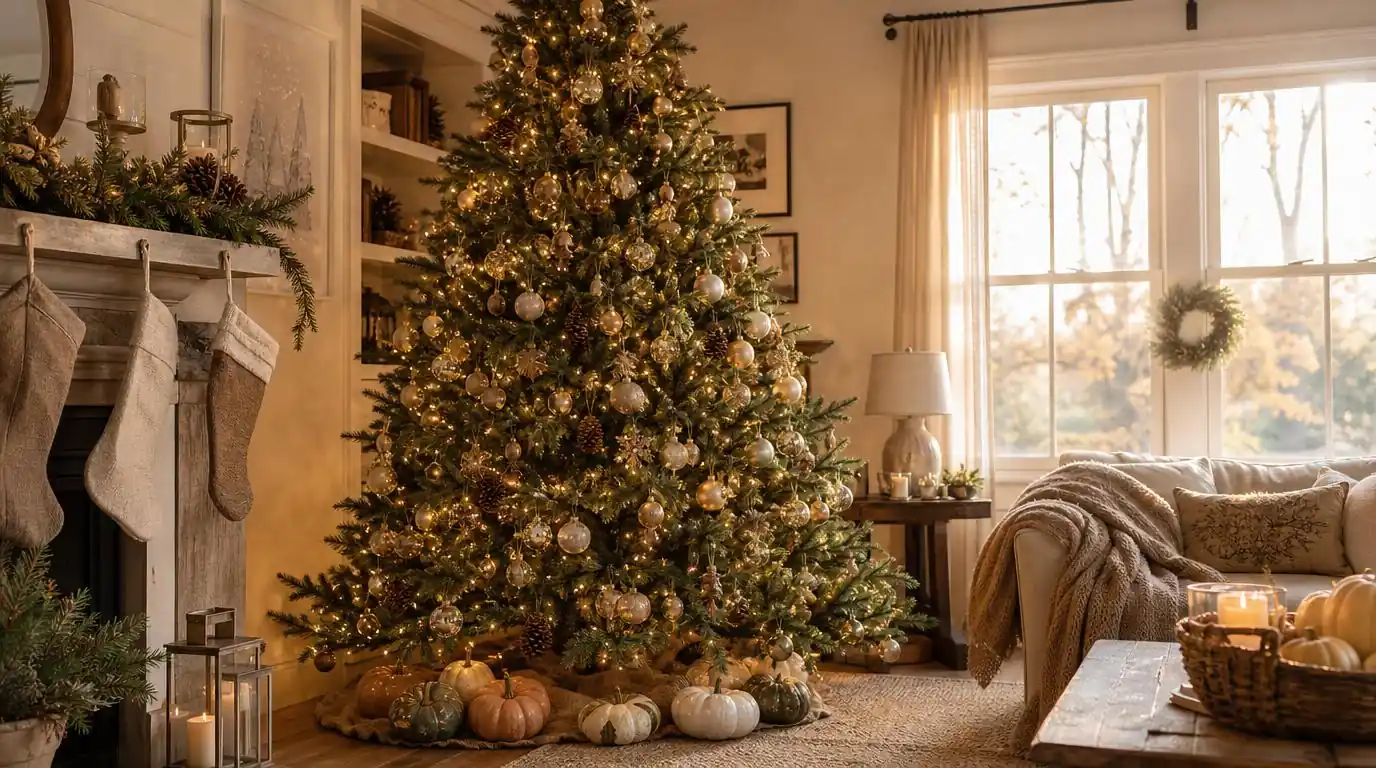
There’s a middle option, and it’s simpler than most people realize: build the tree in two stages. Start with a neutral, natural base, lights, pinecones, gold and champagne tones, that feels right at home during a Thanksgiving gathering, then layer in the classic reds, greens, and sparkle once the holiday has passed. This list covers 15 ways to do exactly that, so the tree goes up once and just keeps evolving instead of getting fully redone twice in six weeks.
Table of Contents
1. Start With Lights Only
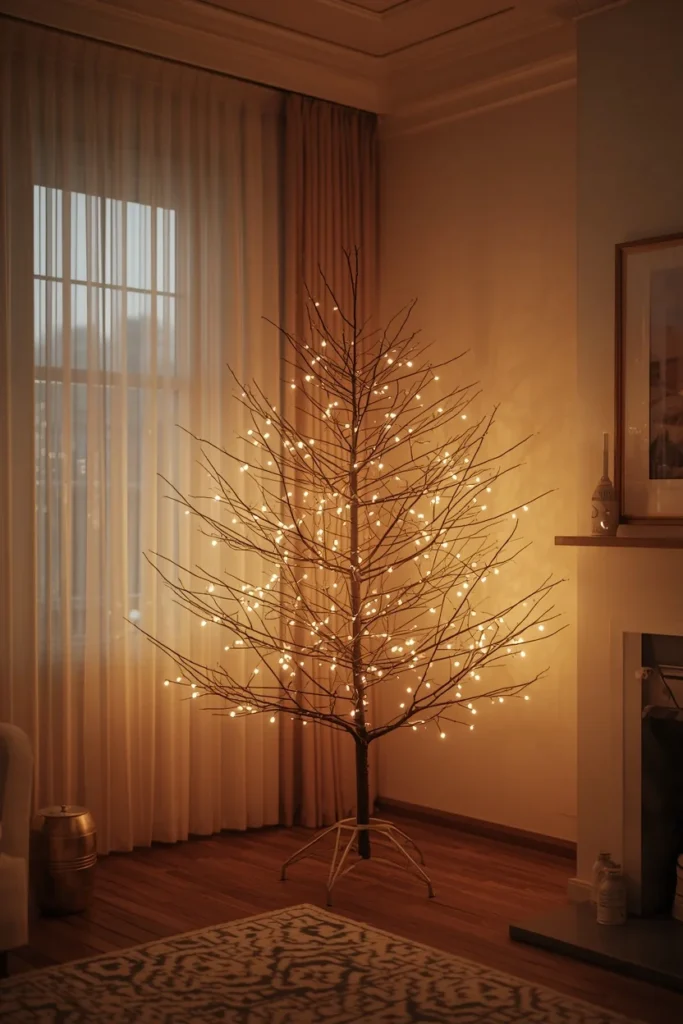
Set the tree up with nothing but warm white string lights for the first stretch, no ornaments, no garland, no topper, so it reads as a soft, glowing presence in the room rather than a fully trimmed Christmas tree. This approach works especially well for hosts who want the coziness of a lit tree during a Thanksgiving gathering without it competing visually with harvest-toned table decor happening nearby. Mixing light sizes, small fairy lights layered with slightly larger bulbs, gives the bare tree more depth and texture than a single uniform strand would. Because there’s nothing to remove later, this stage requires zero teardown, you simply keep adding from here once Thanksgiving has passed. It’s the lowest-effort way to get a tree up early while still leaving all the traditional trimming for closer to December.
2. Build a Woodland Neutral Ornament Base
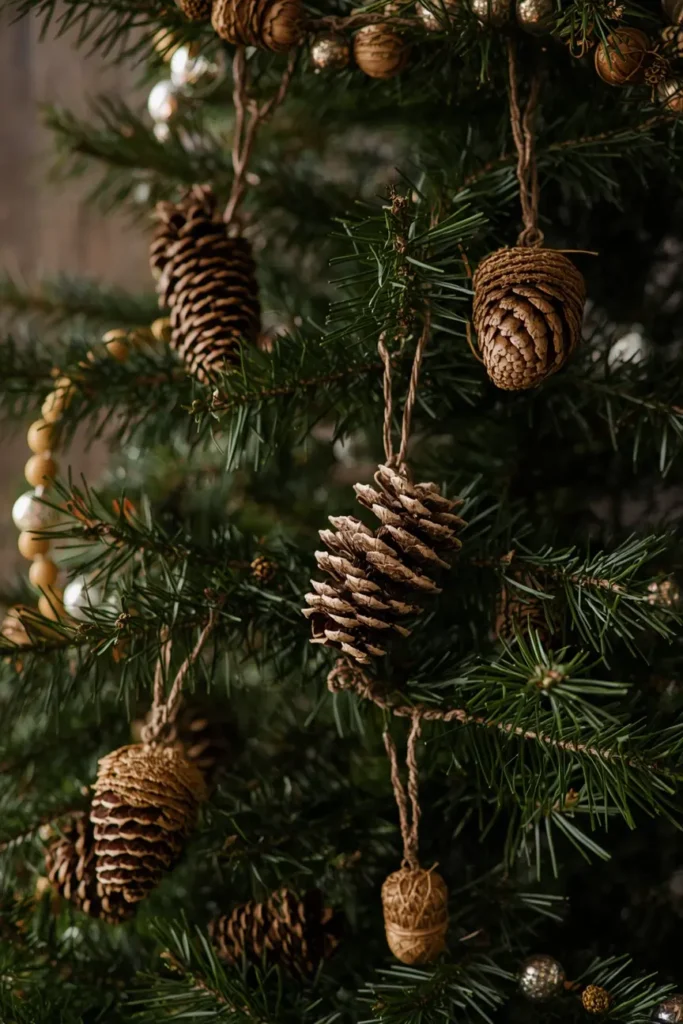
Dress the tree in pinecones, small twig bundles, wooden bead garland, and a handful of acorn or berry picks, an ornament palette pulled entirely from nature rather than traditional glass balls. This woodland base feels equally at home during a Thanksgiving harvest table and a December mantel, since none of the materials read as specifically tied to either holiday. Vary the texture and size of the natural pieces rather than using all one type, mixing smooth wooden beads with rougher pinecones and twigs keeps the tree from looking flat or repetitive. Because none of these pieces need to come down after Thanksgiving, the entire base stays exactly as it is, and December decorating becomes purely additive rather than a swap. This is one of the most versatile starting points on this list, since a woodland palette also pairs easily with almost any additional Christmas color scheme layered on top later.
3. Choose a Gold and Champagne Ornament Palette
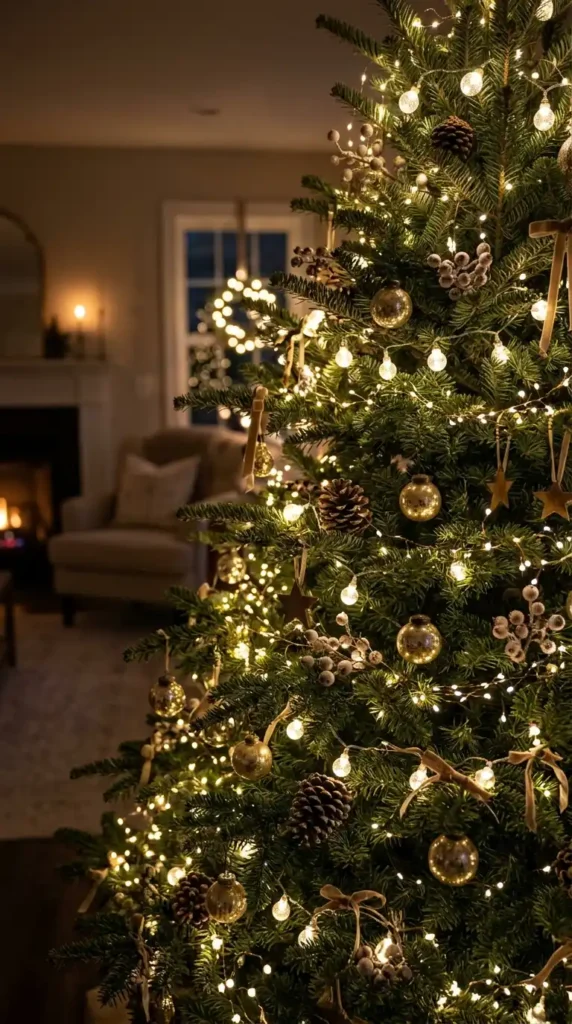
Fill the tree with ornaments in gold, champagne, and soft bronze tones only, skipping red and green entirely for this first stage of decorating. Metallic neutrals like these photograph beautifully under warm tree lights and feel celebratory without leaning specifically toward Christmas, which makes them a natural fit for a Thanksgiving gathering happening in the same room. Mix ornament finishes, matte, glossy, and a few textured or beaded pieces, so the monochromatic palette still reads as layered rather than flat. This palette also holds up well as a permanent base layer, since gold and champagne tones work underneath red and green ornaments just as easily as they work alone, meaning nothing needs to come off the tree once December arrives. It’s an especially strong choice for a more formal or elegant home style that wants the tree to look intentional at every stage rather than obviously “in transition.”

4. Use Plaid Ribbon Instead of Ornaments
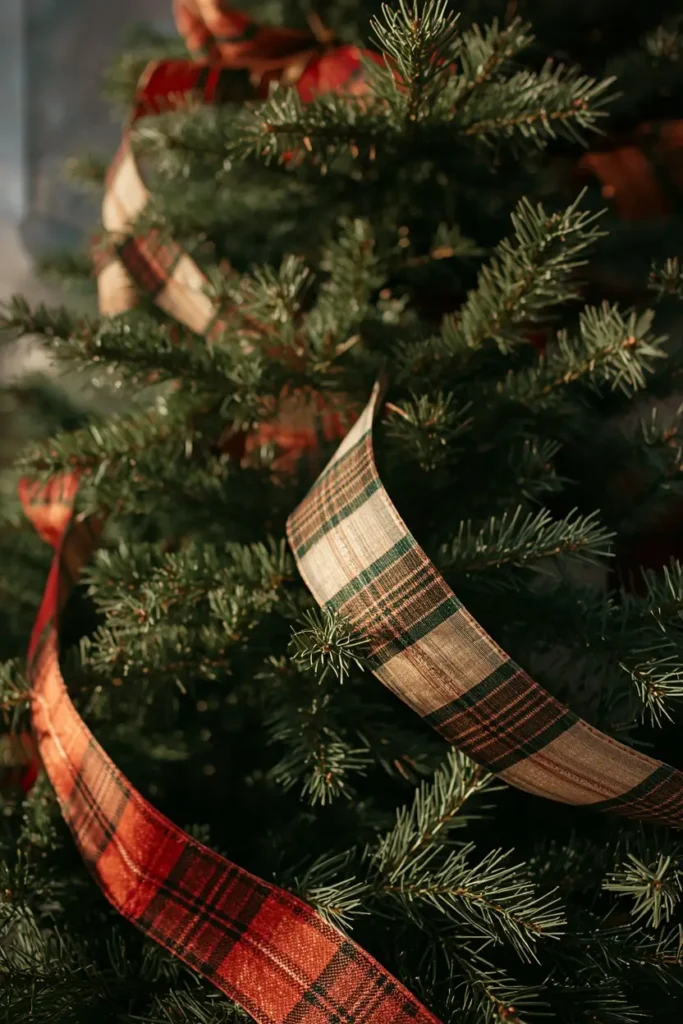
Skip individual ornaments at first and wrap the tree in wide plaid ribbon instead, threading it through the branches in loose loops from top to bottom. Plaid reads as a classic autumn pattern as easily as it reads as a Christmas one, which makes it one of the most genuinely dual-purpose materials for a transitional tree. Because ribbon covers a lot of visual ground quickly, this approach also gives a sparse, freshly-bought tree a finished look without needing a large ornament collection on hand yet. Choose a ribbon in muted rust, cream, and forest green rather than bright red and white, so the palette leans autumnal at first and only needs small additions to feel more like Christmas later. Add a few gold ornaments or a simple star topper once December arrives, and the ribbon base does the rest of the work without needing to be removed.
5. Stack Mini Pumpkins and Gourds at the Base
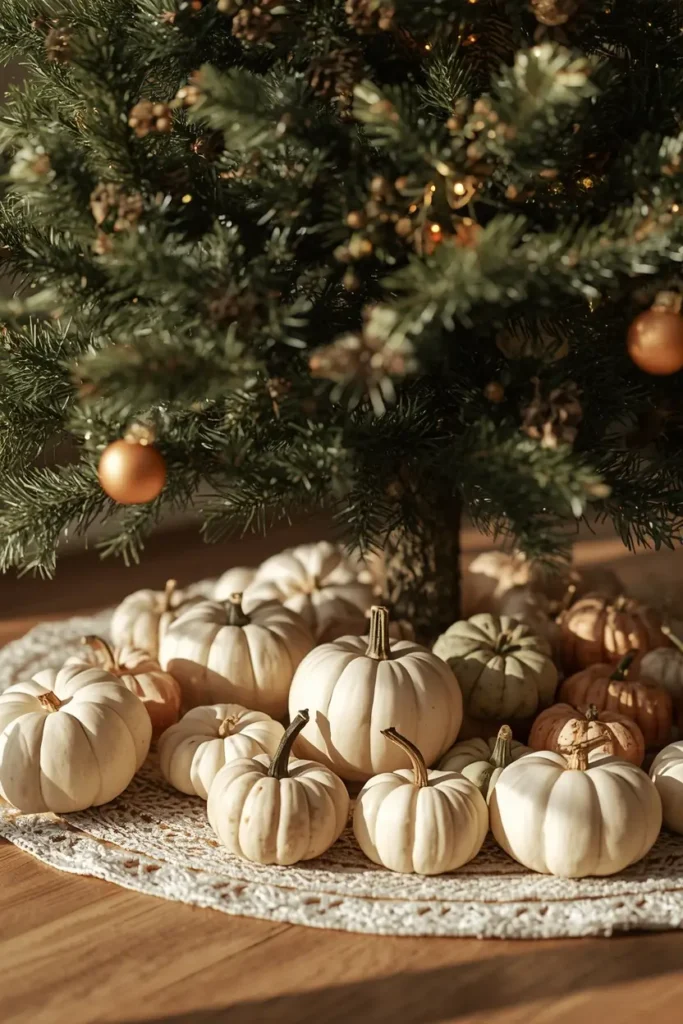
Instead of leaving the space under the tree empty or filling it with gifts too early, stack a cluster of mini pumpkins and gourds in varying sizes and colors around the base. This immediately signals “Thanksgiving-appropriate” to anyone walking into the room, since pumpkins under a tree read as a deliberate seasonal choice rather than an oversight. Choose a mix of real and faux pumpkins in muted tones, white, pale green, and soft orange, rather than the brightest orange varieties, so the grouping feels more neutral and easier to build on later. Once Thanksgiving passes, simply remove the pumpkins and replace them with wrapped gifts or a collection of oversized ornaments for the same visual effect in a different season. This is one of the simplest swaps on the entire list, since it involves no permanent decor at all, just a seasonal rotation of what sits at the tree’s base.
6. Add a Dried Orange and Cinnamon Stick Garland
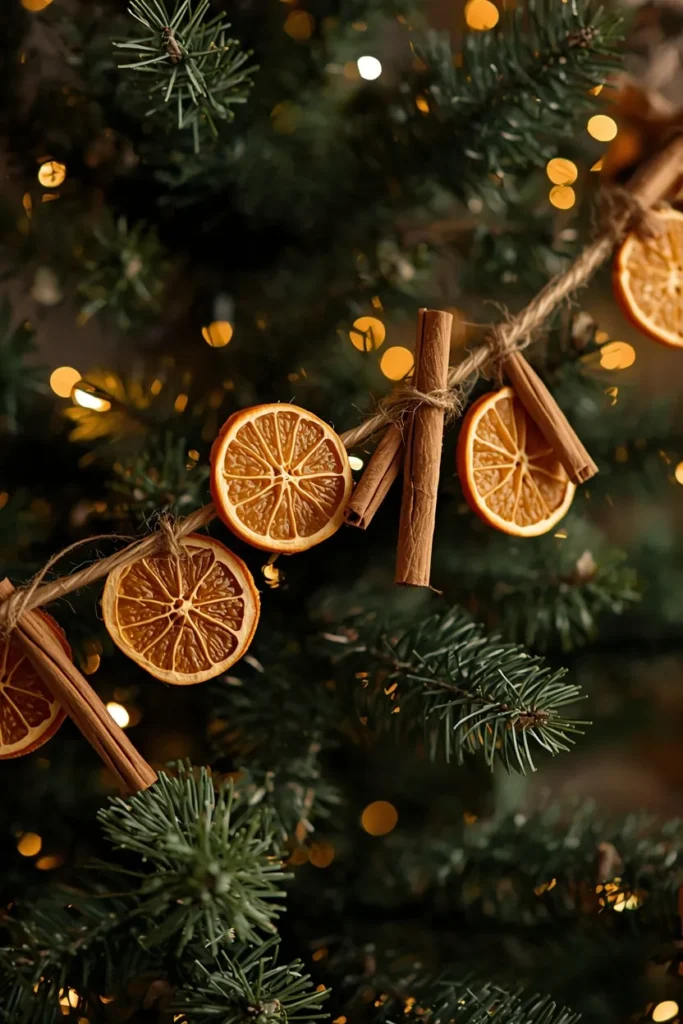
String dried orange slices and cinnamon sticks together on twine to create a rustic, fragrant garland that wraps the tree in warm, spiced color and scent rather than traditional tinsel or beaded garland. This garland works beautifully for both holidays since dried citrus and cinnamon carry a warm, harvest-and-holiday feel simultaneously, without leaning specifically toward one or the other. The natural, slightly imperfect look of hand-strung dried orange slices also suits a more rustic or farmhouse styled home better than a uniform, store-bought garland would. Because the materials are natural and inexpensive, this garland can be made fresh each year in an afternoon, making it a low-cost addition that doesn’t require storage space for the rest of the year. Leave it up straight through December, since the color palette pairs naturally with both gold ornaments and traditional red and green additions layered in later.
7. Hang Gratitude Leaf Tags as Ornaments
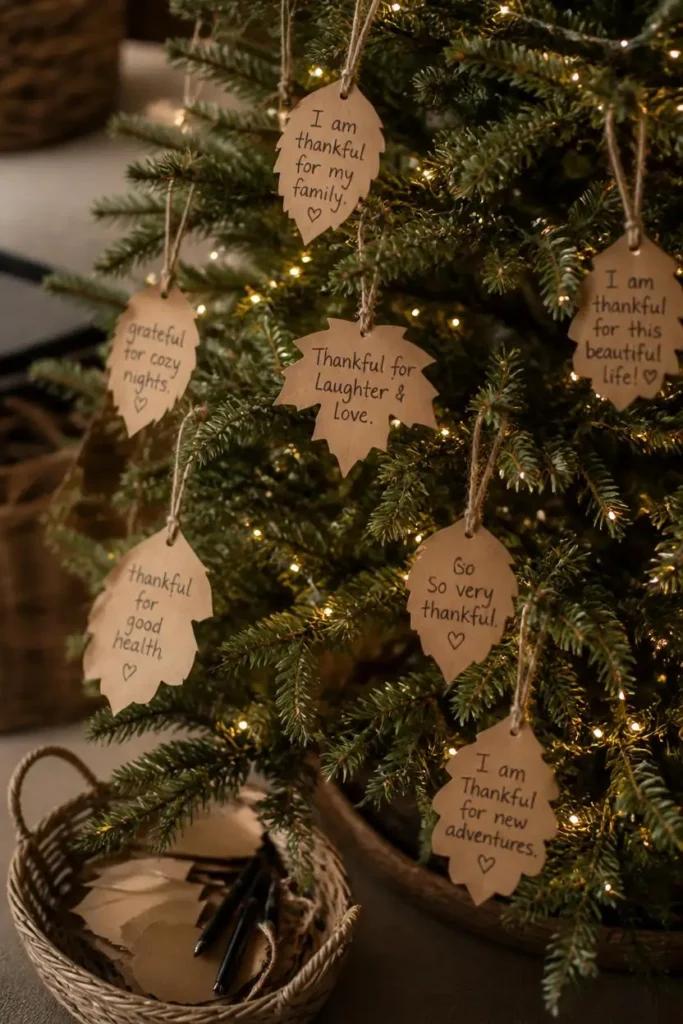
Cut simple leaf shapes from kraft paper or cardstock and have family members write what they’re grateful for on each one before hanging them directly on the tree with twine or small ribbon loops. This turns the tree itself into an interactive Thanksgiving activity, giving guests something meaningful to do and creating decor with real sentimental weight rather than store-bought pieces alone. Because the leaf tags are handmade and paper-based, they’re easy to remove entirely once Thanksgiving passes, making way for a fully Christmas-focused ornament collection without leaving any trace behind. Keep a small basket of blank leaf cutouts and pens near the tree throughout the days leading up to Thanksgiving, so guests can add their own leaf whenever they visit rather than only on the day itself. This idea works particularly well for families who want the tree to hold some emotional significance beyond its role as seasonal decor.
8. Dress the Base With a Burlap Tree Skirt and Collar
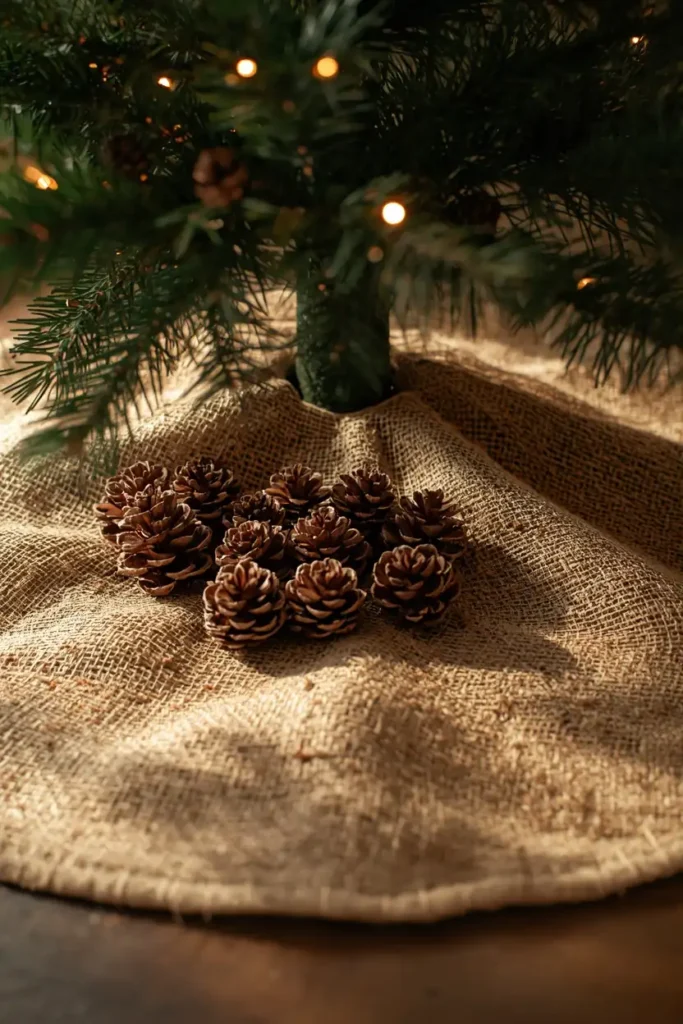
Swap a traditional red or green tree skirt for one made of burlap or a similarly textured neutral fabric, paired with a matching wooden collar if your tree stand needs covering instead of a skirt. Burlap’s rough, natural texture feels immediately at home with a harvest aesthetic, while its neutral tan tone doesn’t compete with or announce a specific holiday the way a printed Christmas skirt would. This base piece is also one of the most permanent choices on this list, since burlap works underneath any ornament palette or color scheme added later without ever needing to be swapped out. Layer a strand of twinkle lights or a scattering of pinecones directly on top of the skirt for a bit of extra texture at the base without adding another full decor element. Because burlap is inexpensive and widely available, this is also one of the easiest upgrades to make if your current tree skirt already reads as too specifically Christmas for a Thanksgiving-adjacent tree.
9. Try a Flocked Tree With Autumn Leaf Accents
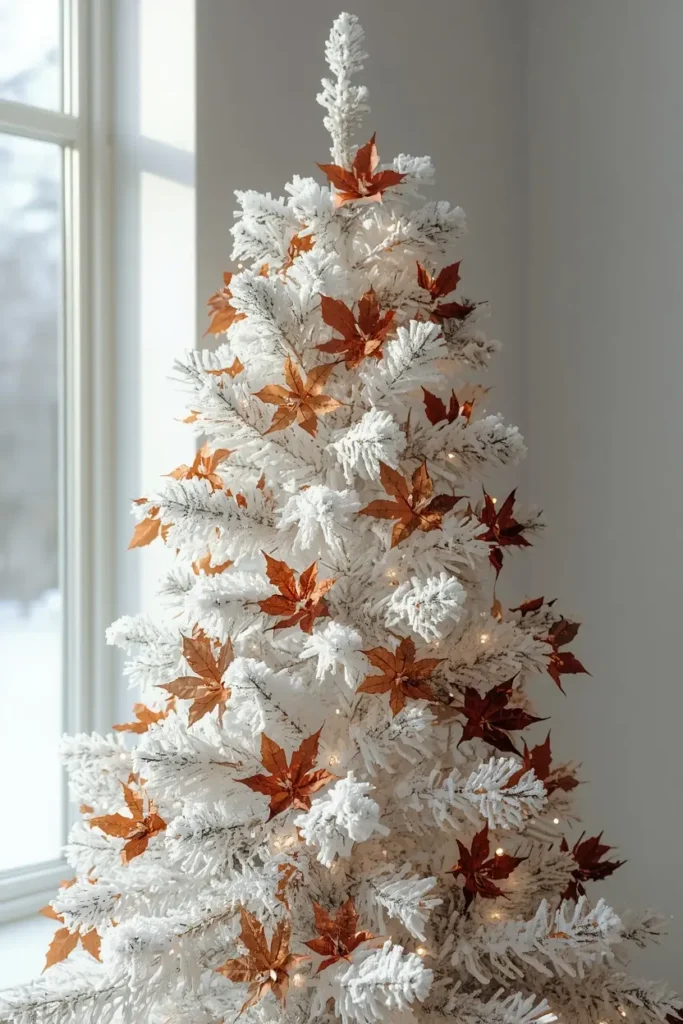
A flocked or snow-dusted artificial tree might seem like an unusual choice for Thanksgiving at first, but the soft white branch tips actually pair surprisingly well with warm autumn leaf accents and rust-toned ribbon tucked throughout. The contrast between the wintry white flocking and the warm fall colors creates a slightly unexpected, editorial look that reads as intentional rather than mismatched. This approach also gives hosts in colder climates a tree that visually acknowledges the season, since snow dusting outside often does start well before Thanksgiving in many regions. Keep the autumn leaf accents removable, faux picks tucked in rather than glued or wired permanently, so they can come out easily once you’re ready to shift toward a fully wintry palette in December. A flocked tree with warm accents is a strong choice for anyone who wants their early tree to feel distinct and a little different from a standard green Christmas tree.
10. Plan a Two-Stage Ornament Swap
Rather than choosing just one neutral palette and sticking with it, plan the tree explicitly in two rounds from the start: a smaller collection of neutral, natural ornaments for the Thanksgiving stage, followed by a second wave of traditional red, green, and colorful ornaments added directly on top once the holiday passes. This approach gives the tree visible growth and change over the season rather than staying static, which many hosts find more satisfying than a single unchanging setup. Keep the second wave of ornaments stored separately and easily accessible, in a labeled bin near the tree rather than in deep storage, so the addition after Thanksgiving takes only a few minutes rather than becoming its own full decorating project. This method also spreads out the cost and effort of tree decorating across a longer window, which can make the whole process feel less rushed than trying to do everything at once in early December. It’s the approach worth choosing if you genuinely want your tree to look different, not just slightly adjusted, between the two holidays.

11. Tuck in Wheat Stems and Neutral Ribbon
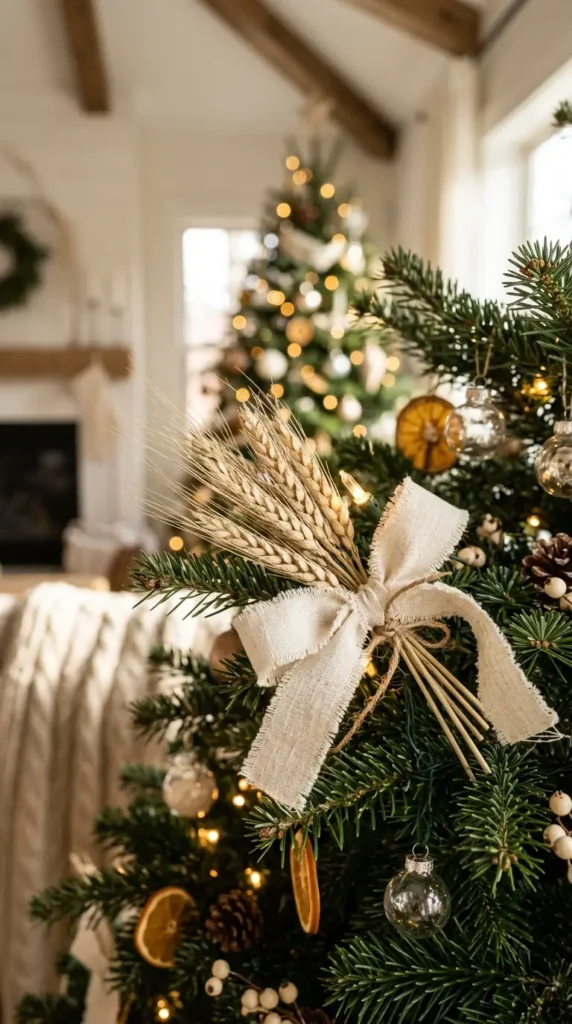
Wire a few dried wheat stems into the tree alongside loops of neutral cream or champagne ribbon for a soft, harvest-inspired texture that reads as understated rather than overtly seasonal. Wheat is an ingredient rarely used on Christmas trees specifically, which is exactly what makes it work so well here, it carries a clear harvest association without tipping into pumpkin-and-turkey territory that would feel out of place by mid-December. Distribute the wheat stems in small clusters rather than evenly throughout the tree, since clustering mimics the way natural elements actually grow and reads as more intentional than a uniform scattering. Because both wheat and neutral ribbon hold up visually against nearly any ornament color added later, this combination works as a permanent base layer for the entire season rather than something removed after Thanksgiving. This idea suits a more textural, natural design style particularly well, especially paired with the woodland ornament base described earlier in this list.
12. Add Berry Picks and Faux Greenery Filler
Tuck faux berry stems, in deep red, burgundy, or a muted burnt orange, into gaps throughout the tree alongside a bit of extra faux greenery like eucalyptus or cedar picks to fill out a sparser artificial tree. Berry picks in these tones read as warm and autumnal at first glance but transition easily into a Christmas palette, since deep red berries are just as at home surrounding classic holiday ornaments later on. This filler technique also solves a common problem with artificial trees that look a bit thin or gappy right out of the box, adding visual fullness before a single ornament goes on. Distribute the picks throughout the tree at varying depths, not just on the outer tips of branches, so they read as growing naturally from within the tree rather than stuck on top. Because these picks are reusable and weather both seasons well, they’re worth treating as a permanent part of your tree’s base structure rather than a Thanksgiving-only addition.

13. Layer Warm White Lights in Different Sizes
Rather than relying on a single string of uniform lights, layer two or three different bulb sizes throughout the tree, larger vintage-style bulbs mixed with smaller fairy lights, to create more visual depth and a softer overall glow. This technique matters most during the earlier, more minimal Thanksgiving stage of decorating, since lighting is doing most of the visual work when ornaments are still sparse. Warm white tones specifically, rather than cool white or multicolor, keep the tree feeling cozy and golden rather than clinical or overtly festive, which suits a Thanksgiving gathering especially well. Because good lighting is foundational to how the tree looks at every later stage too, this is one investment worth making regardless of which other ideas on this list you choose to pair with it. Once ornaments and additional accents go on later in the season, the layered lighting continues doing quiet work in the background, catching on metallic ornaments and glass pieces added during the second decorating stage.
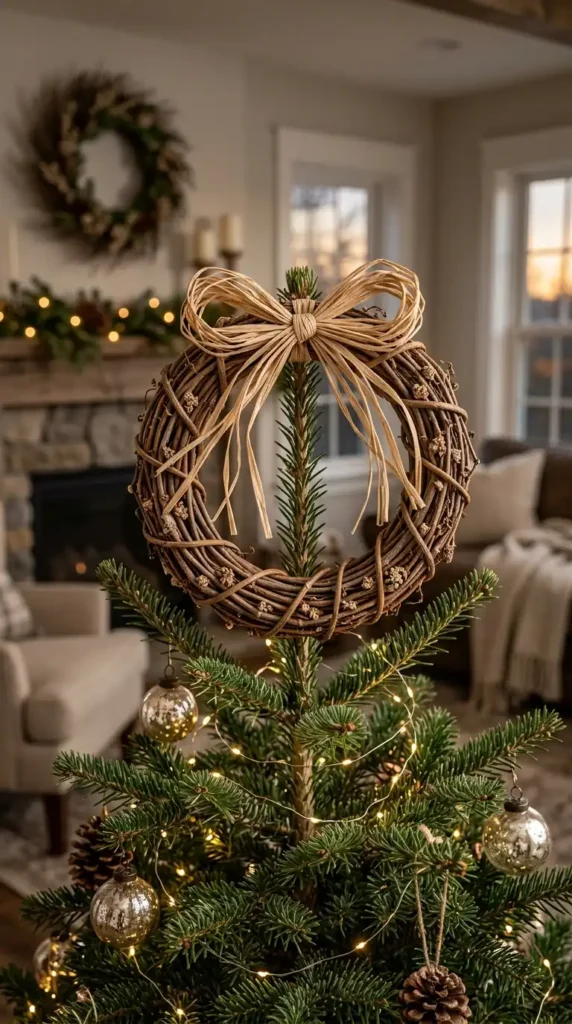
14. Choose a Neutral Star or Wreath Topper
Skip a traditional red bow or brightly colored topper in favor of a natural material option, a woven wreath topper, a raffia bow, or a simple gold or wooden star, that reads as seasonal without being holiday-specific. The topper sits at the most visually prominent point on the tree, so choosing a neutral piece here does a lot of work toward keeping the whole tree feeling transitional rather than fully committed to one holiday. A woven wreath topper in particular echoes autumn harvest wreaths often used on doors and mantels, creating a bit of visual continuity between the tree and the rest of a home’s fall decor. Because a well-made neutral topper works just as well in December as it does in November, this is another piece worth treating as permanent for the season rather than something to swap out later. Keep the topper proportional to the tree’s height, an oversized topper can visually overwhelm a smaller or thinner tree, especially during the earlier, more minimal decorating stage.
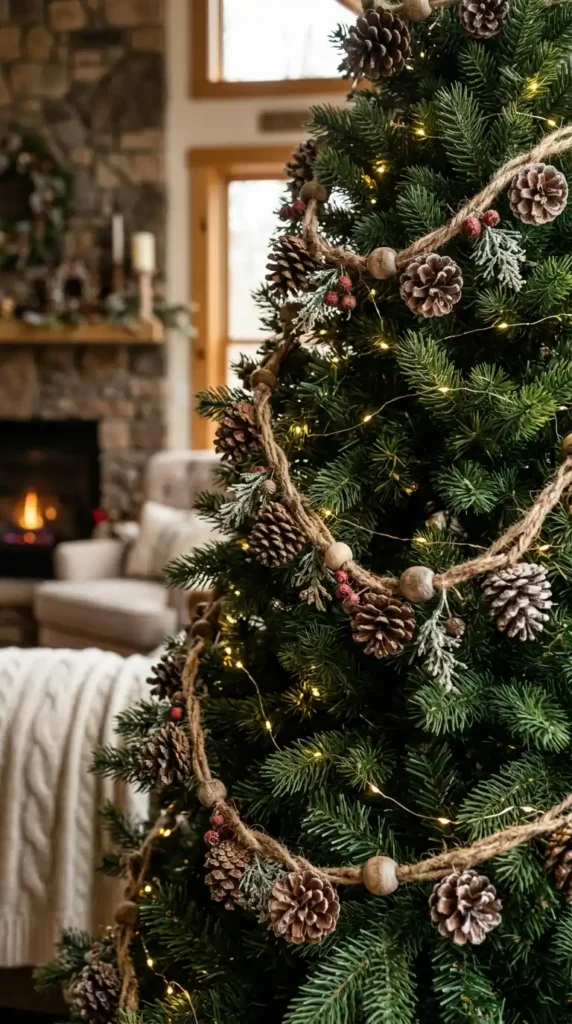
15. String a Pinecone and Twine Garland
Thread pinecones onto a length of jute twine, spacing them evenly, to create a simple, rustic garland that wraps the tree in texture without adding any color at all. This garland pairs with literally any other idea on this list, since its neutral, natural material works underneath gold ornaments, plaid ribbon, or a fully traditional Christmas color scheme layered on afterward. Real pinecones, whether collected outdoors or purchased, hold up well for the entire season without any special care, making this one of the lowest-maintenance additions to a transitional tree. Space the pinecones with slightly irregular gaps rather than perfectly even intervals, since a bit of natural inconsistency reads as more organic than a mechanically uniform garland would. This is a strong finishing touch for a tree that’s otherwise built around lights and a neutral ornament palette, adding one more layer of texture without introducing anything that will feel out of place come December.
Styling Tips
Think of the tree in two clear layers from the very start: a permanent base, lights, natural texture, and neutral tones, and a seasonal top layer that changes once Thanksgiving passes. Keep the base layer genuinely neutral rather than leaning too far toward either holiday, since a base that’s too autumnal will need more removal later, while one that’s too Christmassy won’t feel right for Thanksgiving at all. Vary texture more than color during the early stage specifically, since a monochromatic or neutral tree relies on pinecones, wood, ribbon, and fabric to keep it visually interesting rather than a wide color palette.
Practical Implementation Ideas
Store your second-stage Christmas ornaments in a clearly labeled, easily accessible bin rather than deep in a closet or attic, so the after-Thanksgiving addition takes minutes rather than becoming its own separate project. If you’re using real dried elements like orange slices or wheat stems, make them a few days ahead and let them fully dry before adding them to the tree, since anything with residual moisture can affect nearby ornaments or fabric over several weeks on display. Test your lighting layout before adding any other decor, since lights are the hardest layer to adjust once ornaments and garland are already in place.
Common Mistakes to Avoid
The most common mistake is choosing an ornament palette that’s specifically Thanksgiving-themed, turkeys, cornucopias, orange and brown color schemes exclusively, which then requires a full removal rather than a simple addition once December arrives. Overloading the tree completely during the first Thanksgiving stage is another frequent issue, since a fully decorated tree leaves no visual room to show growth or change once the second stage of ornaments goes on. Many hosts also forget to plan ahead for topper and tree skirt choices, defaulting to whatever’s already on hand, even when it clashes visibly with the neutral base built up around it.
Small-Space Alternatives
For a smaller tree or a tabletop version, focus on just two or three ideas from this list rather than layering in everything, a lights-only base paired with a single natural garland, like pinecone and twine, covers most of the visual ground a smaller tree needs. A collar rather than a full tree skirt works better for a tabletop tree, and a handful of gratitude leaf tags can stand in for a full ornament collection if space is genuinely limited. Smaller trees also transition faster between stages, since there’s simply less surface area to add to once December arrives.
Budget-Friendly Alternatives
Several of the most effective ideas on this list, dried orange garland, pinecone and twine garland, gratitude leaf tags, cost next to nothing and can be made with materials already on hand or gathered outdoors. A burlap tree skirt is one of the more affordable fabric options compared to a formal Christmas skirt, and both wheat stems and berry picks tend to be inexpensive at craft or grocery stores during the fall season. If you’re building a tree collection over multiple years, gold and champagne ornaments are a worthwhile one-time investment, since they work as a base layer season after season rather than needing to be replaced annually.
Pro Styling Recommendations
Build the tree from the inside out rather than only decorating the visible outer branches, since natural elements like pinecones and berry picks read as more organic when they’re tucked at varying depths rather than only placed on top. Choose one or two “hero” pieces, a topper, a specific ornament type, that stay constant across both decorating stages, since a shared element gives the whole season a visual throughline even as everything else around it changes.
FAQs
Conclusion
A tree that works for both Thanksgiving and Christmas isn’t about finding one perfect look that quietly serves two holidays at once. It’s about building in layers on purpose, a neutral, natural base that goes up early and stays exactly as it is, followed by a second wave of color and sparkle added once Thanksgiving has passed. Pick two or three ideas from this list that match your own style, and the tree ends up doing double duty without ever needing a full teardown in between.