15 Black and Pink Christmas Tree Ideas for a Bold Look
Most “black Christmas tree” guides mention pink for one sentence. Most “pink Christmas tree” guides mention black for one sentence. Nobody’s actually building the whole tree around both.
That’s strange, because black and pink together is one of the most striking color pairings a Christmas tree can wear — dramatic without being dark, playful without being pastel, and genuinely unlike anything sitting in a neighbor’s living room. Done right, it reads as high-glam or full Barbiecore or gothic-vamp, depending on how the ratio and textures land.
This guide treats black and pink as the main event, not a footnote. Below are 15 real ways to build the look, with actual guidance on how much of each color to use, which textures to mix, and how to keep a two-color tree from tipping into either “too much candy” or “too much Halloween.”
Table of Contents
The 15 Ideas
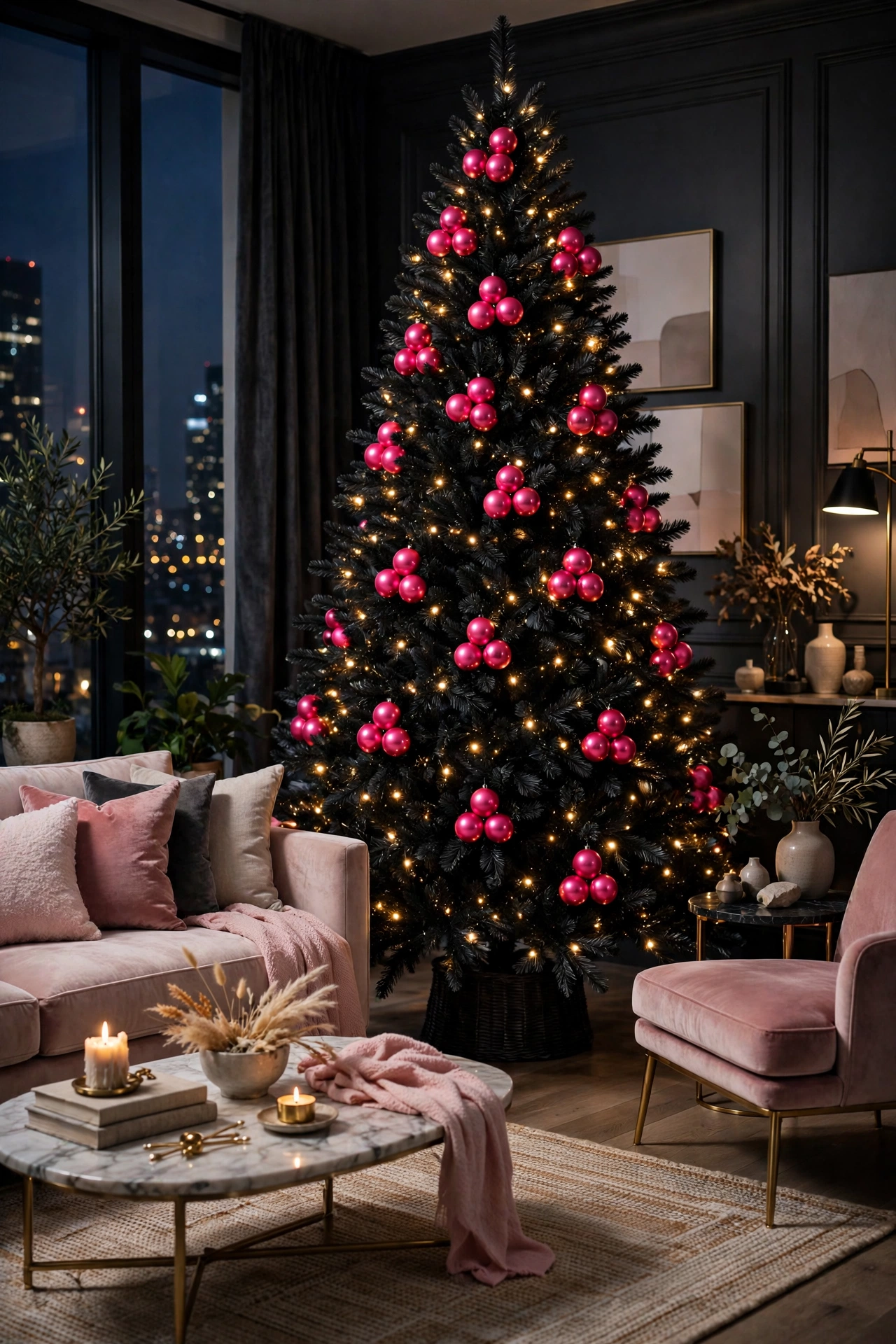
1. Black Tree, Hot Pink Ornament Clusters
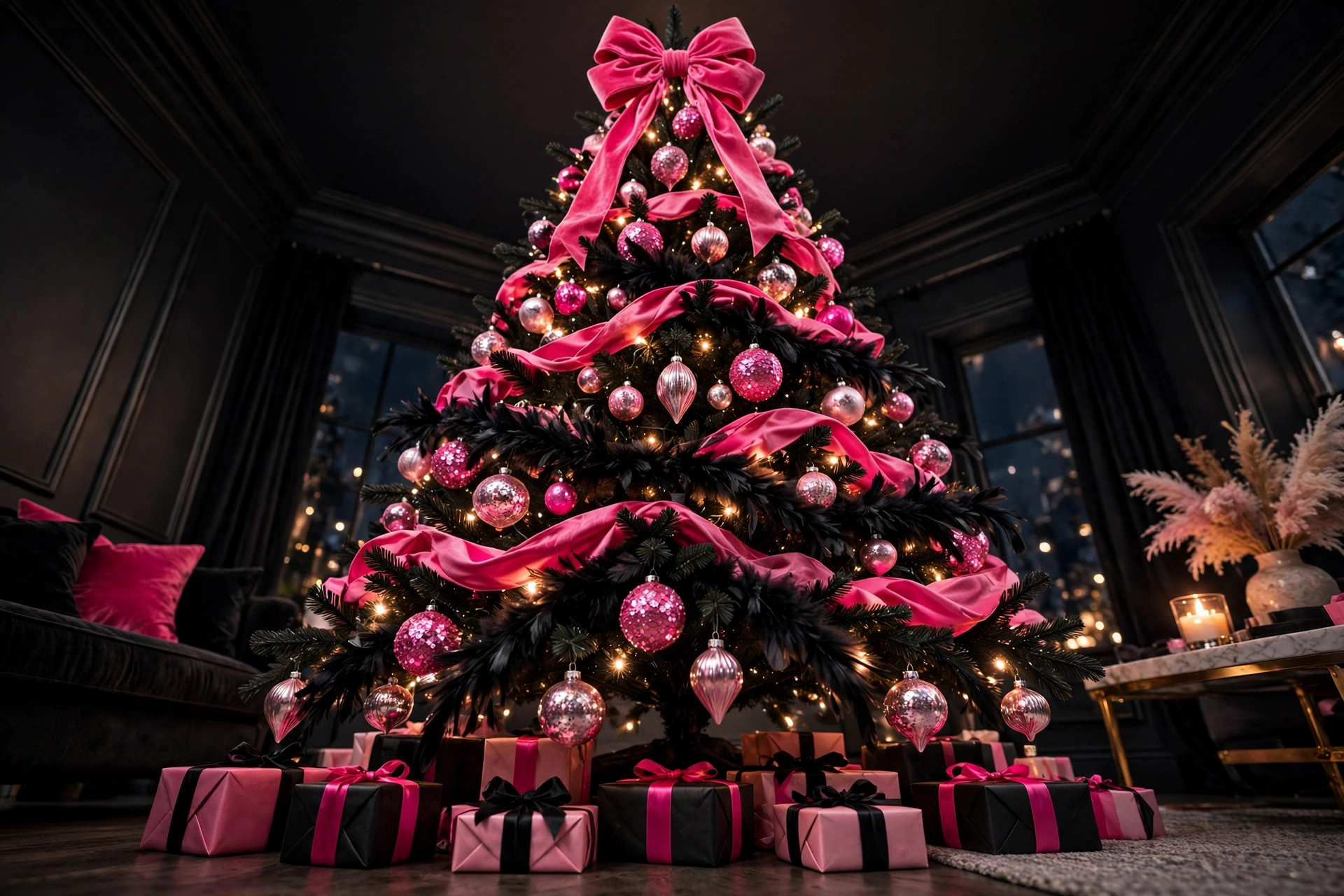
Starting with an all-black artificial tree gives you the boldest possible base to work from, since the dark branches make every pink ornament pop instead of blending in. Cluster hot pink baubles in groups of three to five at varying depths rather than spacing them individually across the whole tree, the same clustering logic professional stylists use with floral picks. Keep roughly 70 to 80 percent of the visible ornament color as pink against the black backdrop, since a black tree with too few pink accents reads as unfinished rather than styled. Warm white string lights, not cool white or colored, keep the black from feeling flat and give the pink ornaments a warm glow instead of a harsh one. This is the most dramatic version on the list and works best as a true statement tree in an open living space.
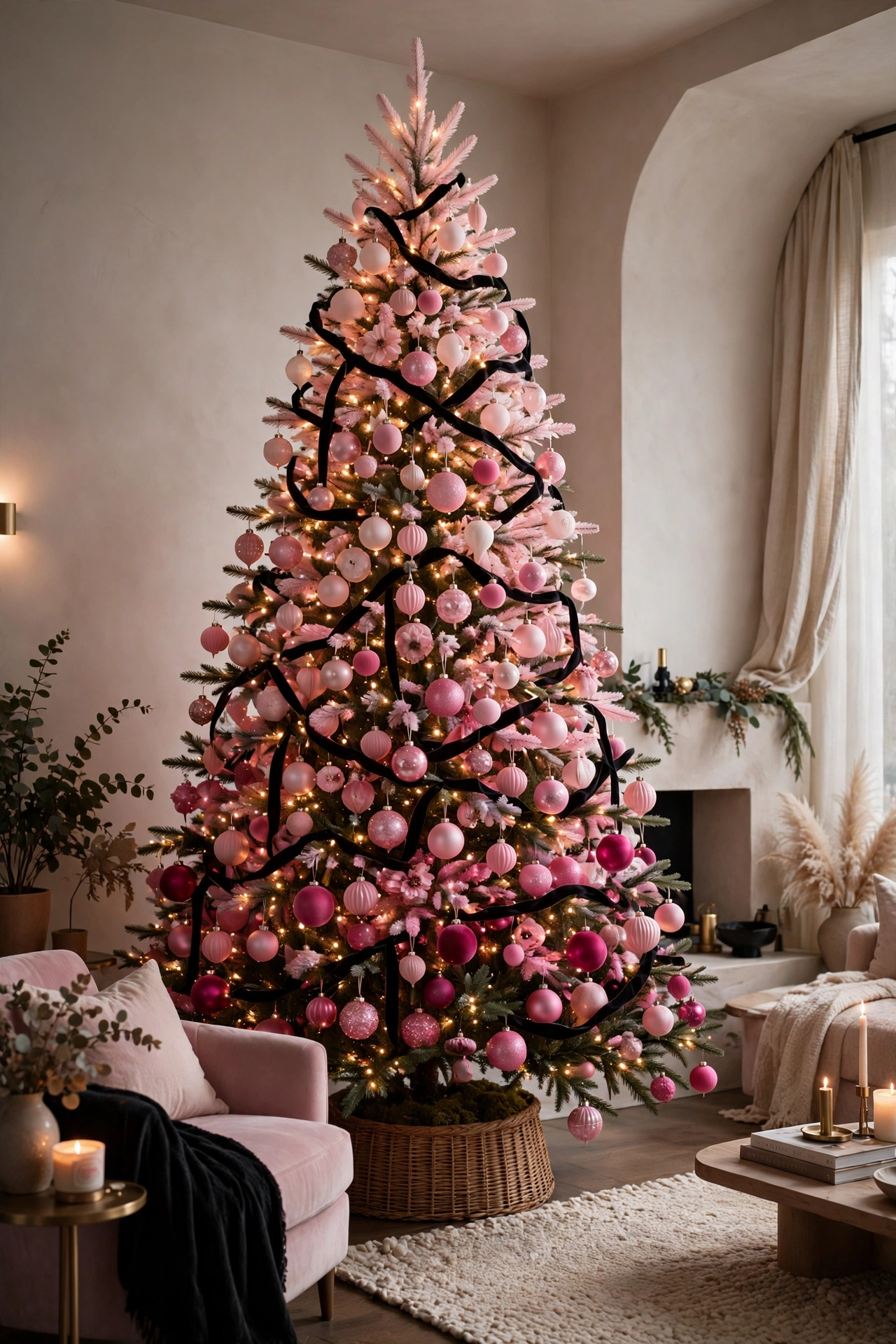
2. Blush-to-Fuchsia Ombré Layering
Rather than one flat shade of pink, layer three or four tones from pale blush at the top of the tree down through rose and finally into deep fuchsia or magenta near the base, with black ribbon woven through at every level to anchor the gradient. This ombré technique reads as far more intentional and expensive-looking than a single-shade pink tree, since the eye reads it as a deliberate gradient rather than mismatched ornaments. Keep the black element consistent throughout, whether that’s ribbon, a garland, or ornament caps, so it functions as the connective thread tying the gradient together top to bottom. Step back periodically while placing ornaments to check that the transition between shades looks smooth rather than blocky. This idea works particularly well on a taller tree, where there’s enough vertical space for the gradient to actually read.
Related: 15 DIY Gingerbread Christmas Tree Ideas to Try This Year
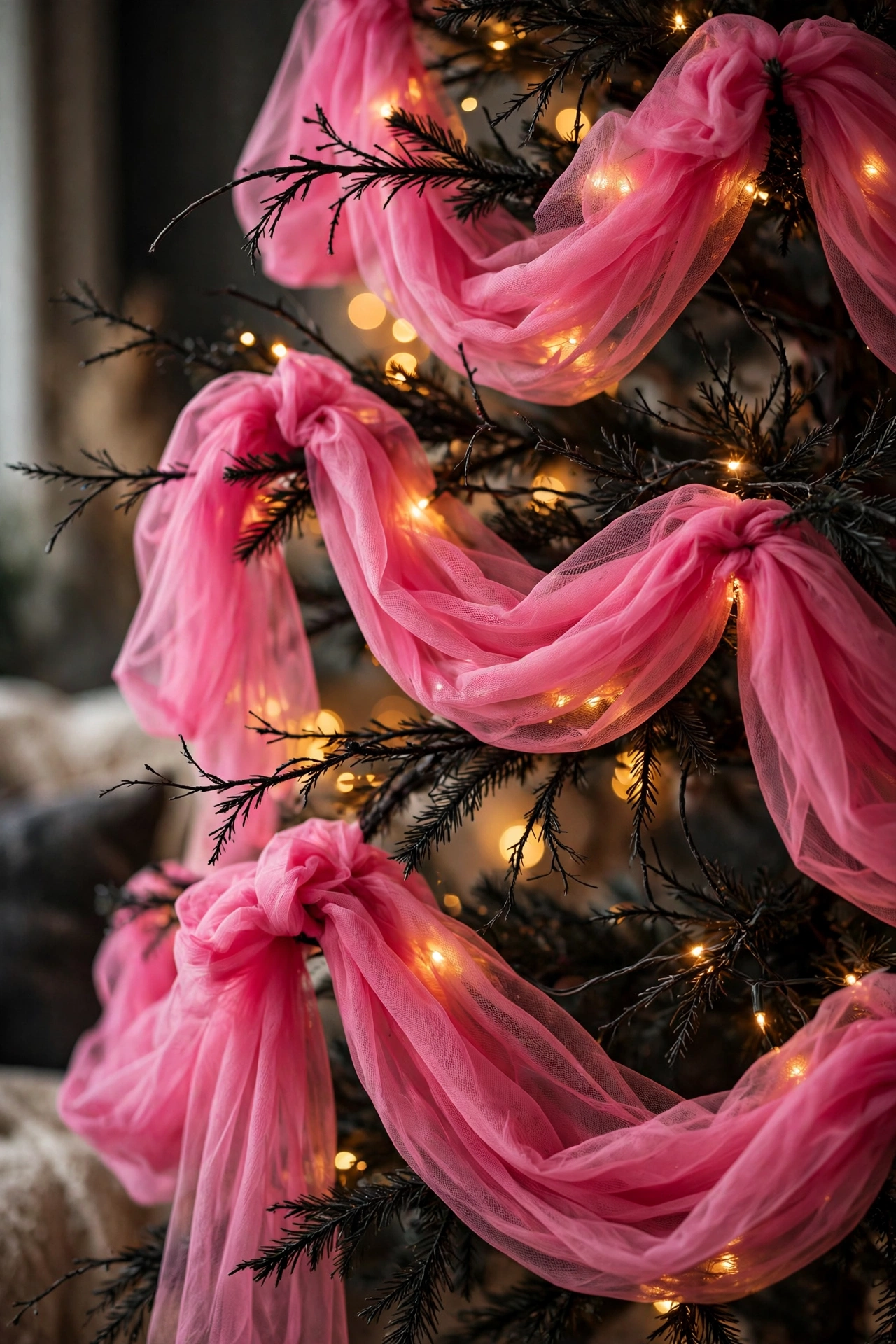
3. Pink Tulle Ribbon on a Black Tree
Tulle ribbon, wound loosely rather than pulled taut, adds volume and a soft, almost cloud-like texture against sharp black branches that regular satin ribbon can’t match. Cut long lengths and drape them in loose swags rather than wrapping tightly spiral-style around the tree, letting the tulle puff out slightly between branches for dimension. Hot pink tulle against black reads as Barbiecore-glam, while a softer blush tulle leans more romantic and coquette. Because tulle is inexpensive and sold by the yard at most craft stores, this is one of the more budget-friendly ways to add serious visual volume to a black tree without buying dozens of additional ornaments. Pair it with just a handful of ornaments rather than a fully loaded tree, since the tulle itself is doing most of the visual work.
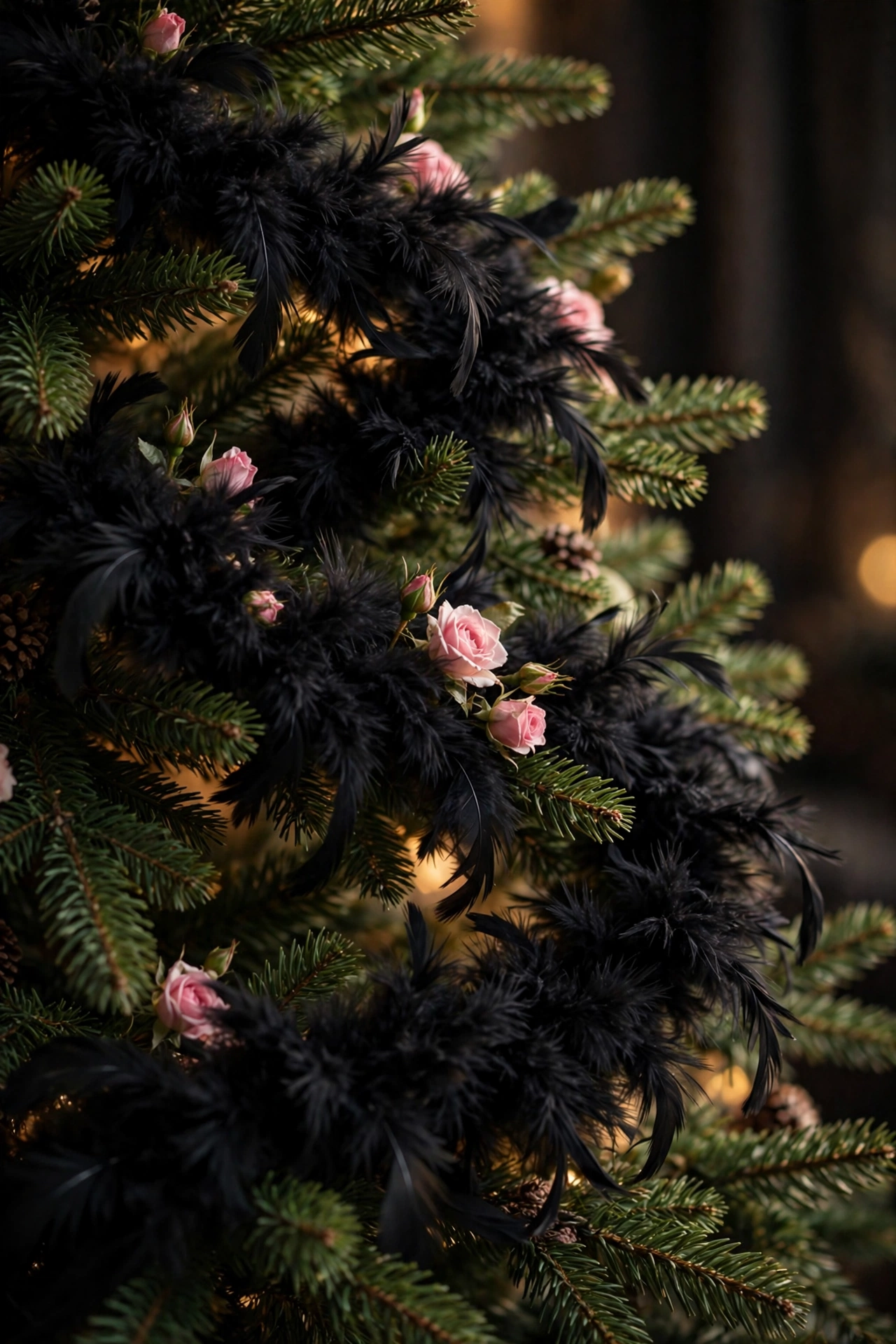
4. Black Feather Garland with Pink Accents
A black feather boa-style garland wrapped through the tree adds real movement and texture that no ribbon or bead garland can replicate, catching light and shifting slightly with air movement in the room. Wind it loosely rather than tightly to preserve the fluffy volume of the feathers, and let a few pink ornaments or a scattering of small pink roses peek out from between the feather sections rather than piling on top of them. This combination leans dramatically luxurious, closer to a fashion runway than a craft store display, and works especially well on a tree meant to be the single focal point of a room. Keep the rest of the ornament count relatively low, since the feather garland already reads as a strong, busy texture on its own. A single strand often runs the full height of a six to seven foot tree, so budget for length rather than buying multiple shorter pieces to splice.
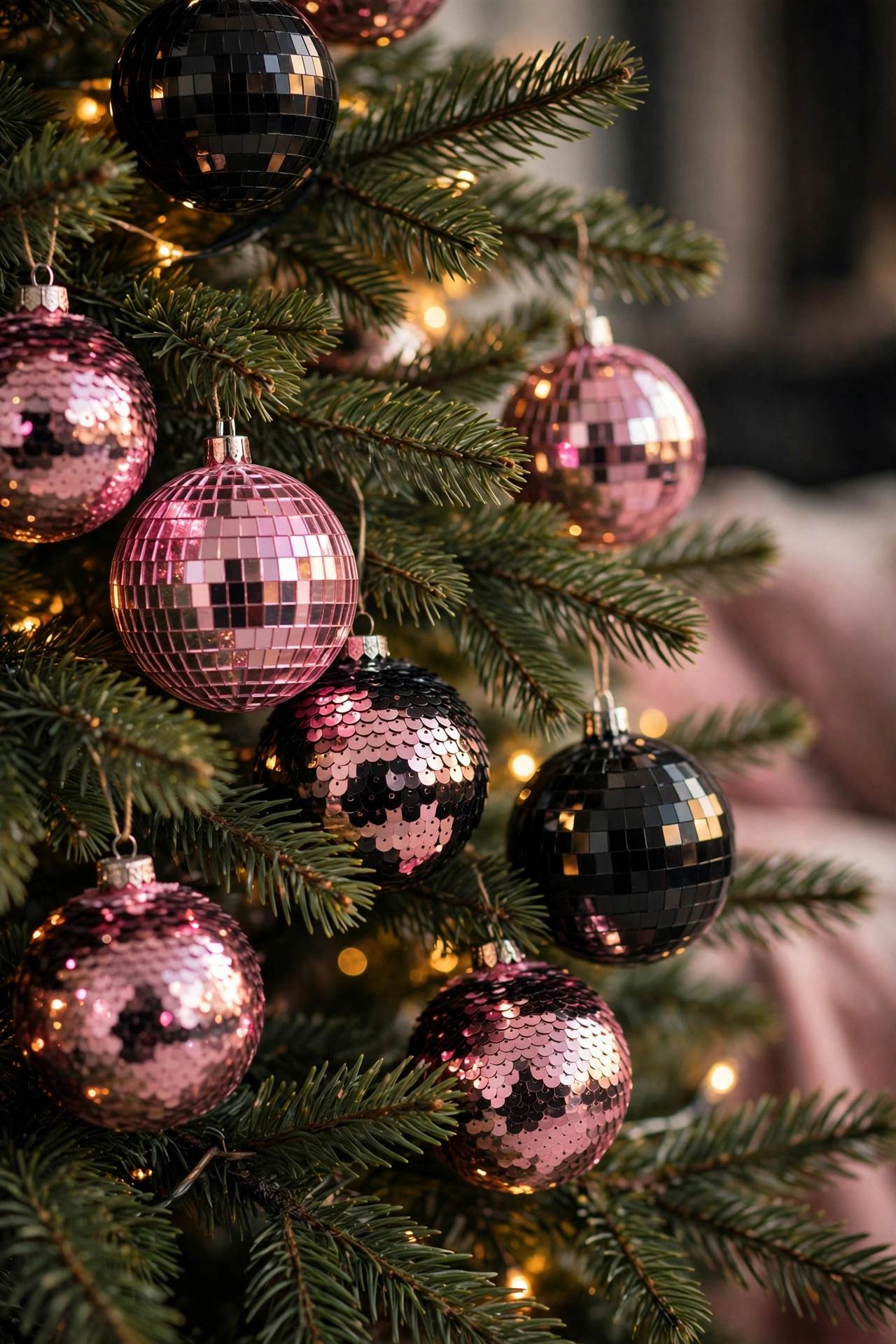
5. Sequin and Disco Ball Mix
Mixing glossy sequin ornaments with mirrored disco ball baubles in pink and black creates a light-catching, party-glam tree that looks completely different depending on the time of day and the angle of the light hitting it. Place the mirrored disco ball pieces at slightly varied heights near eye level, where they’ll catch the most ambient light and reflect the surrounding room, while sequin ornaments fill in gaps at other heights. This combination photographs exceptionally well for both daytime natural-light shots and evening string-light shots, since the reflective surfaces respond differently to each. It’s a strong choice for anyone hosting a New Year’s Eve gathering as well, since the tree transitions from Christmas to a party-ready look with no additional styling needed. Keep the finish consistent between glossy and mirrored rather than mixing in matte pieces, which would dull the overall shine effect.
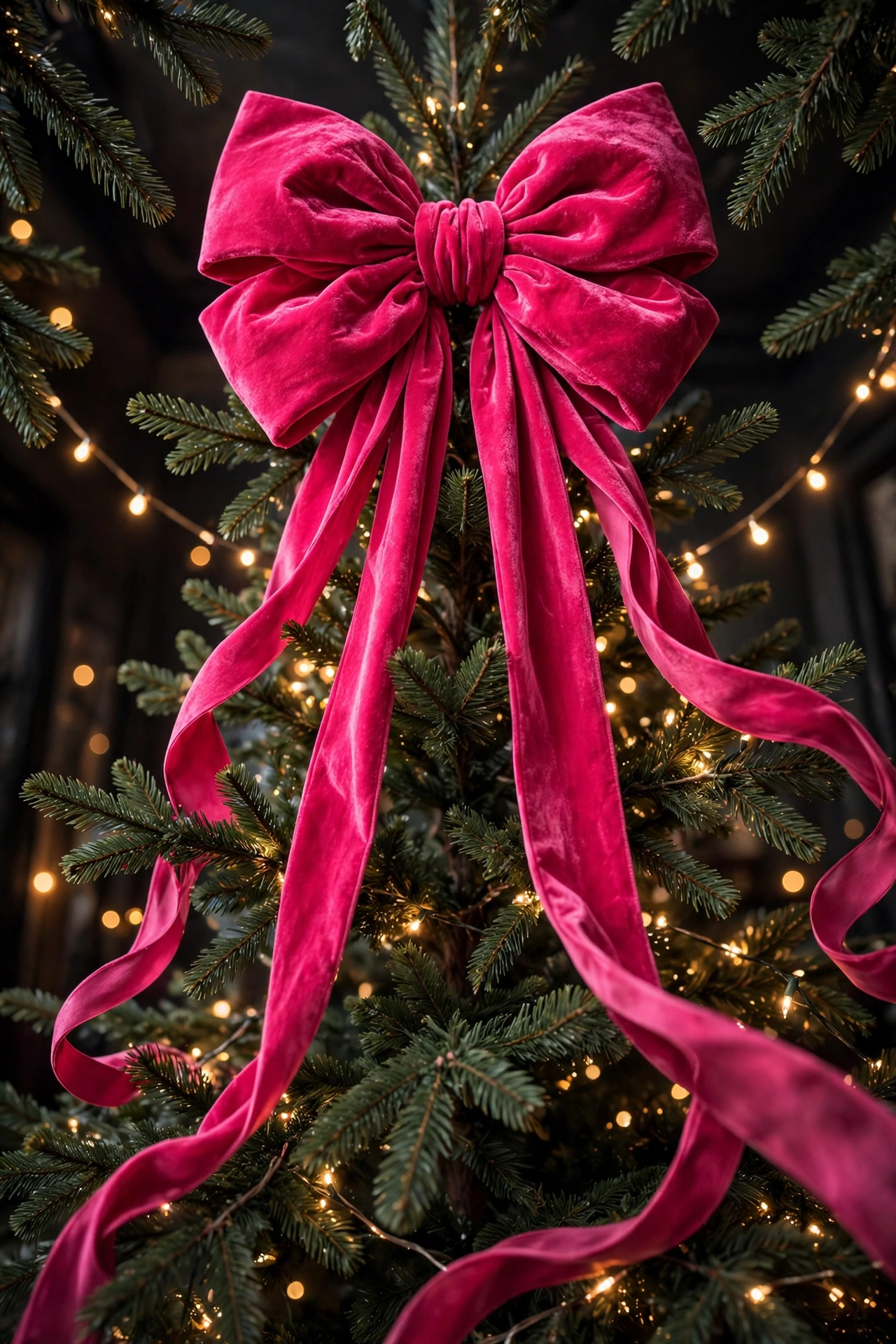
6. Oversized Pink Velvet Bow Topper
Skip the traditional star entirely and top the tree with a single oversized velvet bow in hot pink or deep fuchsia, with long streaming tails that cascade down several feet into the branches below. A wired ribbon holds its shape far better than an unwired one for this purpose, letting you sculpt the loops of the bow into a fuller, more dramatic silhouette rather than a flat, sagging shape. This single swap does more to signal a deliberate, styled look than almost any other single change on this list, since a topper is the first thing the eye lands on. Let the tails of the bow trail down asymmetrically along one side of the tree rather than centering them evenly, which reads as more current and less like a static, symmetrical display. Black wired ribbon in the same bow style works as an alternative for a tree that’s mostly pink, reversing the accent relationship.
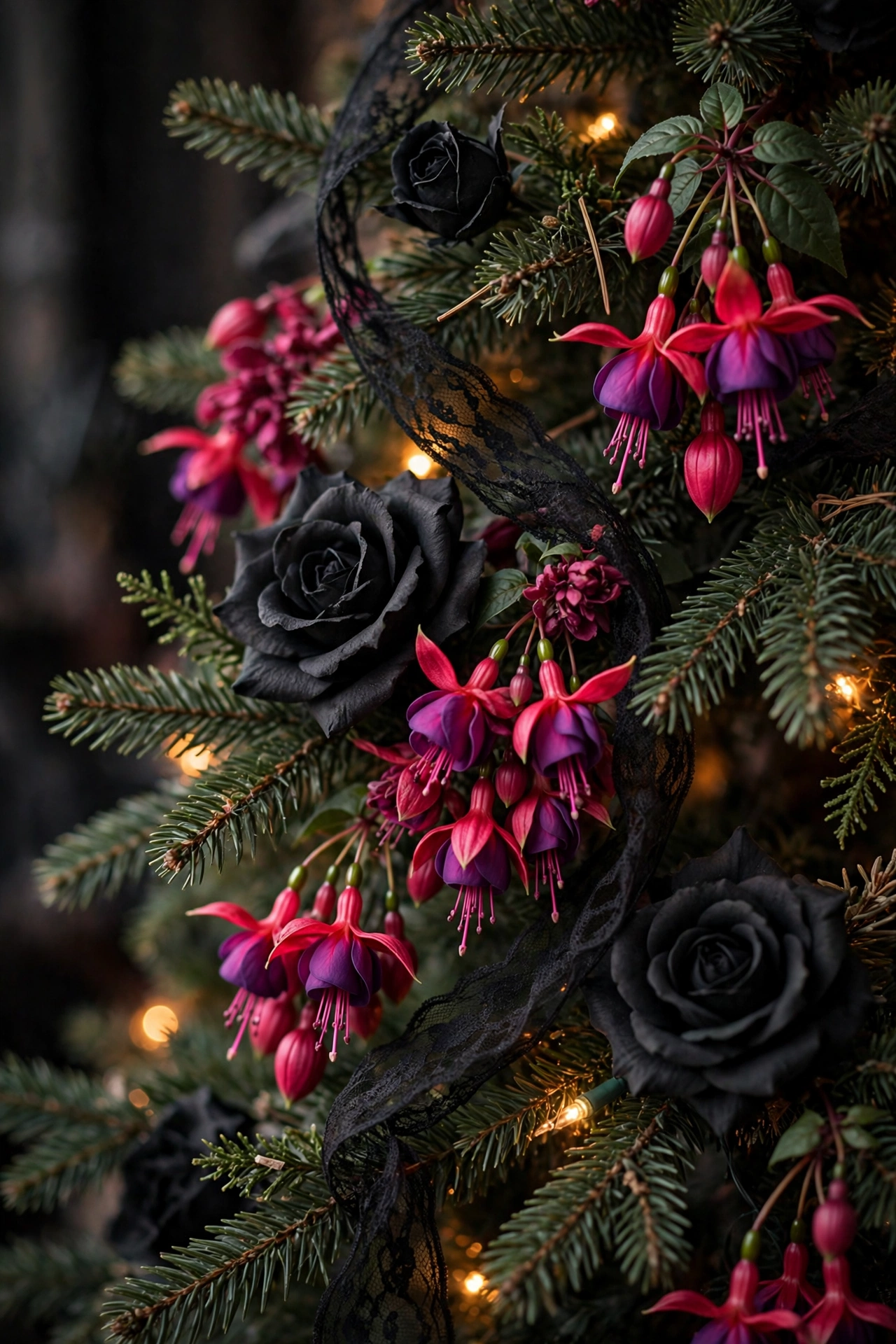
7. Gothic Glam: Black Roses with Fuchsia
For a moodier, more romantic take on the palette, mix matte black faux roses throughout the tree with smaller clusters of deep fuchsia or magenta blooms tucked in between. Use floral wire to attach the stems directly into the branches at an angle, rather than laying them flat against the greenery, so they appear to grow naturally out of the tree the way a florist would build an arrangement. Deep amber or warm white lights, rather than bright white, keep this version feeling rich and romantic instead of stark. A black lace or velvet ribbon woven loosely through the florals ties the whole look together and adds the antique, old-world feeling this particular variation is going for. This idea pairs beautifully with a black tree skirt or a deep burgundy velvet tree collar at the base.
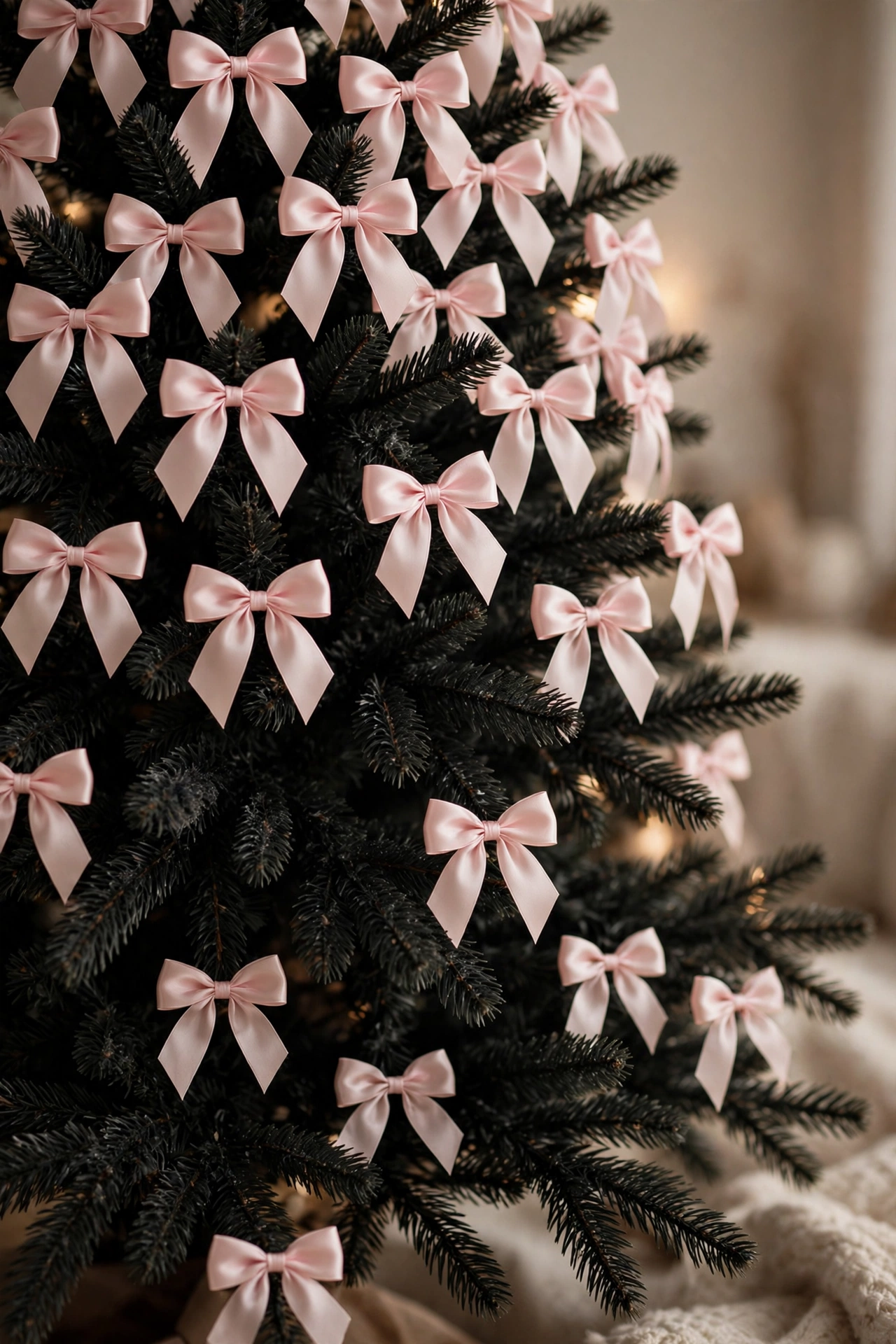
8. Coquette Pink Bows on a Black Tree
Small satin bows in a soft ballet or blush pink, scattered generously across a black tree, bring in the coquette aesthetic that’s been trending across fashion and home decor alike. Tie the bows yourself using wired ribbon so each one holds its shape rather than buying pre-made floppy bows, and vary the bow sizes slightly so the tree doesn’t look like it came from a single uniform set. Space them more densely near the top third of the tree and let them thin out slightly toward the bottom, which draws the eye upward and gives the design a sense of movement. This version feels distinctly softer and more girlish than the hot pink or fuchsia options above, making it a strong choice for a bedroom or a nursery-adjacent space that still wants the black-and-pink drama in a gentler form.
9. White Flocked Base with Pink and Black
A snow-flocked white tree gives pink and black ornaments an entirely different, softer stage to sit against compared to a black or green base, since the white flocking diffuses light and makes both colors look slightly muted and elegant rather than saturated. Use black as the smaller accent color here, in ribbon and a handful of ornaments, while pink carries the majority of the color, since black can visually disappear into a busy flocked tree if used too sparsely elsewhere. The contrast between the soft white texture and the sharp black ribbon edges creates a nice tension that keeps the tree from reading as purely soft or purely dramatic. This combination photographs beautifully in daylight and works well for anyone who wants the black-and-pink concept without a fully black or fully saturated pink tree dominating the room.
Related: 23 Classic Christmas Tree Ideas That Never Go Out of Style
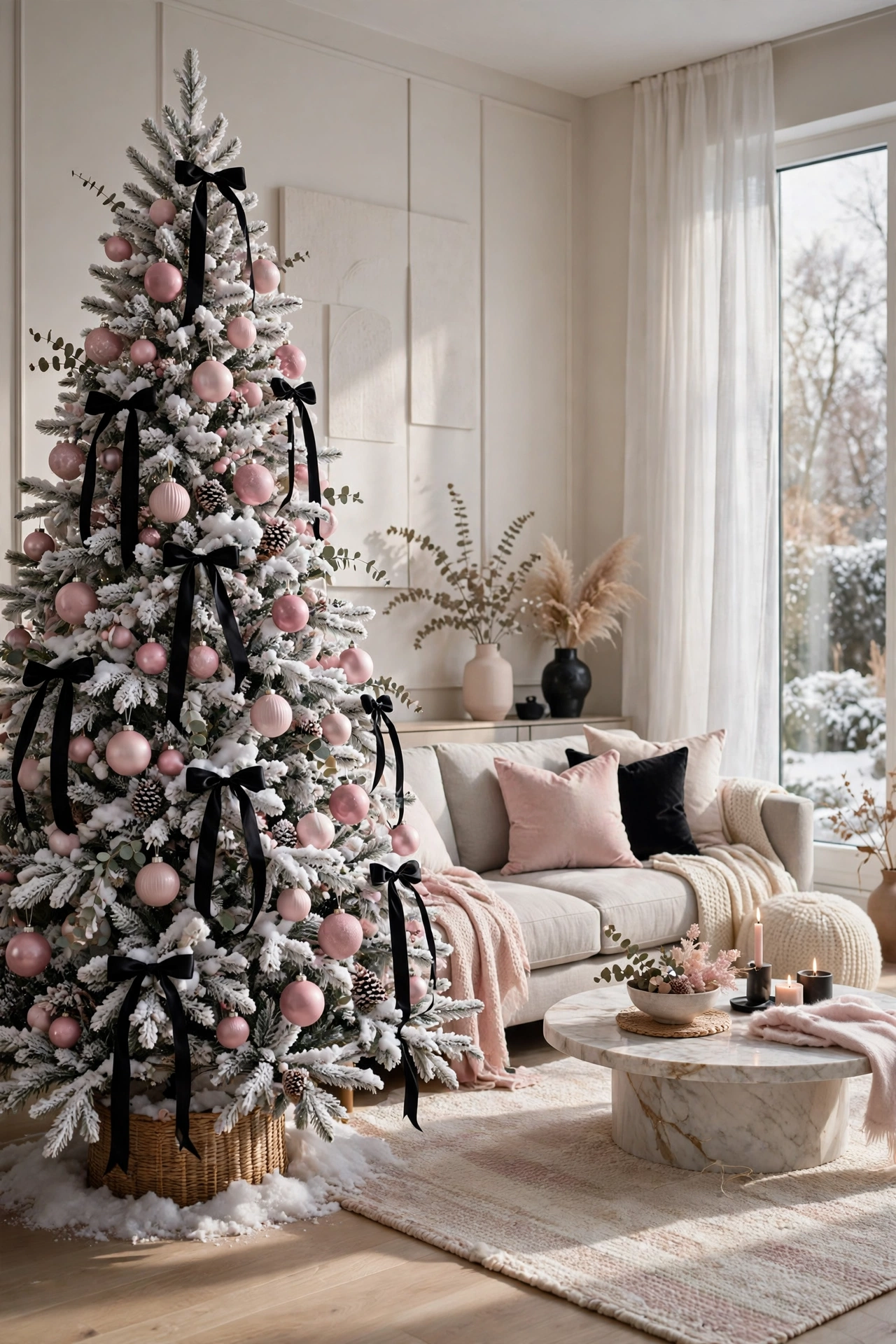
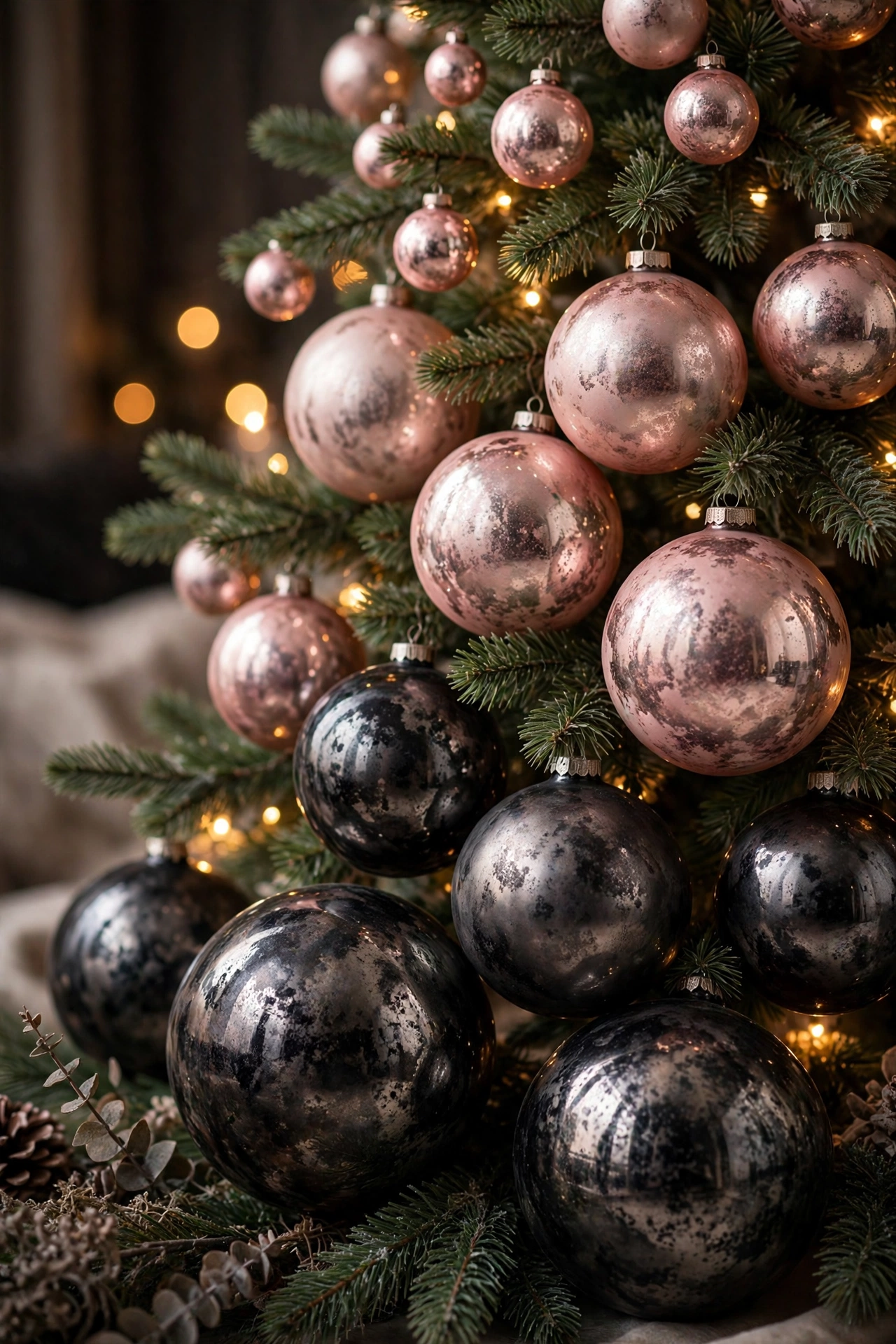
10. Mercury Glass in Pink and Black
Mercury glass ornaments in blush and smoky black tones bring an antiqued, slightly imperfect metallic shine that reads as considerably more expensive than standard glossy plastic baubles. The uneven, mottled silvering on genuine mercury glass catches light in a softer, more textured way than a uniform glossy finish, which adds real visual depth when the two colors are mixed together on the same tree. Group them by size rather than color, working larger ornaments toward the bottom of the tree and smaller ones toward the top, which is a basic proportion rule that keeps any tree looking balanced regardless of palette. This finish pairs especially well with warm gold accent lighting, since the antique glass tone leans warmer than a stark modern silver would. It’s also one of the more heirloom-feeling options on this list, since genuine mercury glass ornaments tend to last for decades.
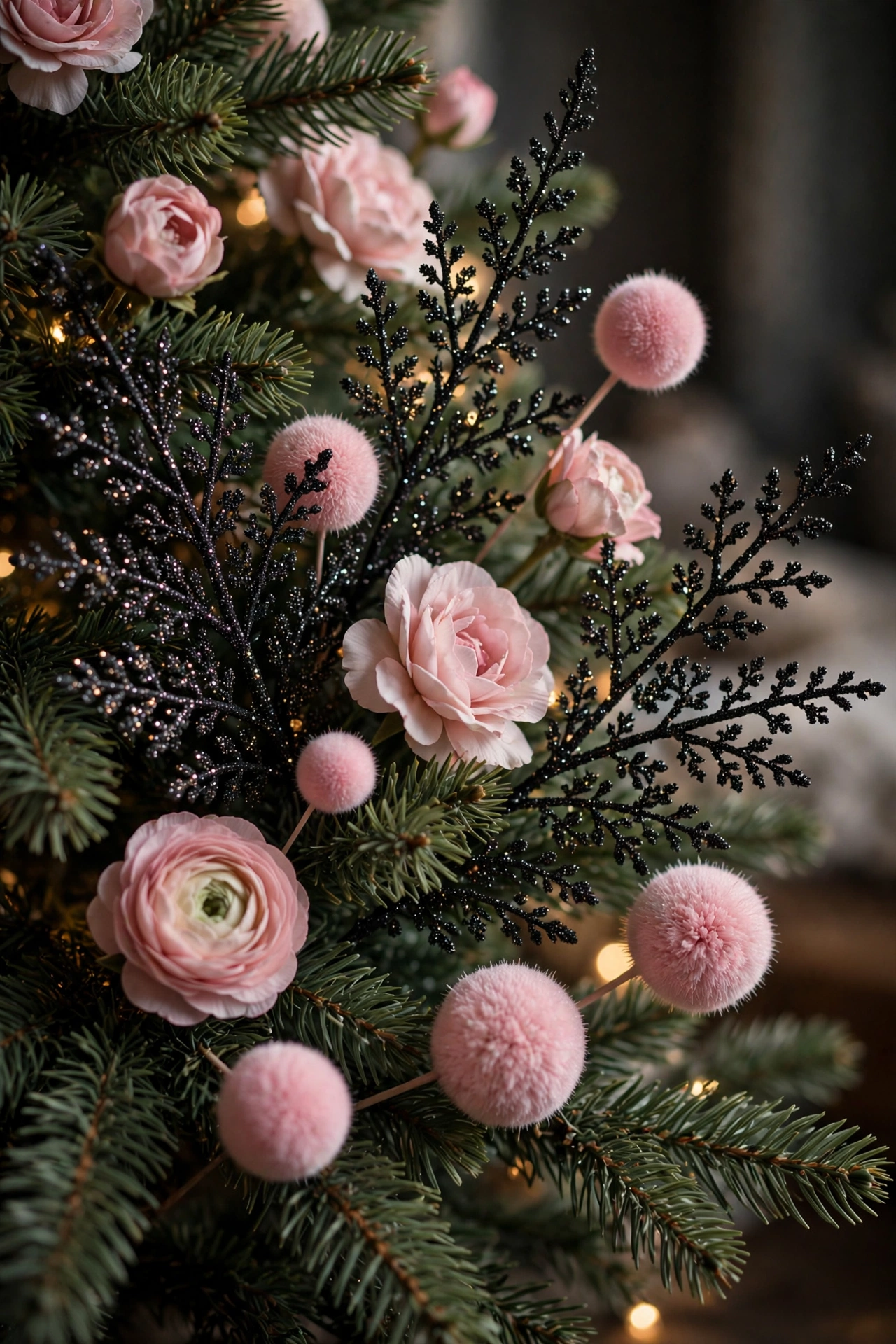
11. Floral Pick Clusters in Pink and Black
Floral sprays, sold in the same craft store aisle as artificial wedding flowers, are one of the fastest ways to add designer-level texture to a tree without hanging a single traditional ornament. Choose two or three varieties, such as a glittered black spray, a soft pink bloom spray, and a fuzzy pink pom-pom pick, then layer them together in clusters rather than spacing single picks evenly around the tree. Push each cluster into the tree at a slight outward angle, pulling the front pick forward and angling the back two pieces slightly to either side, which mimics how a florist builds depth into an arrangement. Space one cluster per foot of tree height as a general rule, so a seven-foot tree gets roughly seven clusters total. This technique alone is often what separates a tree that looks professionally styled from one that looks like ornaments were simply hung on.
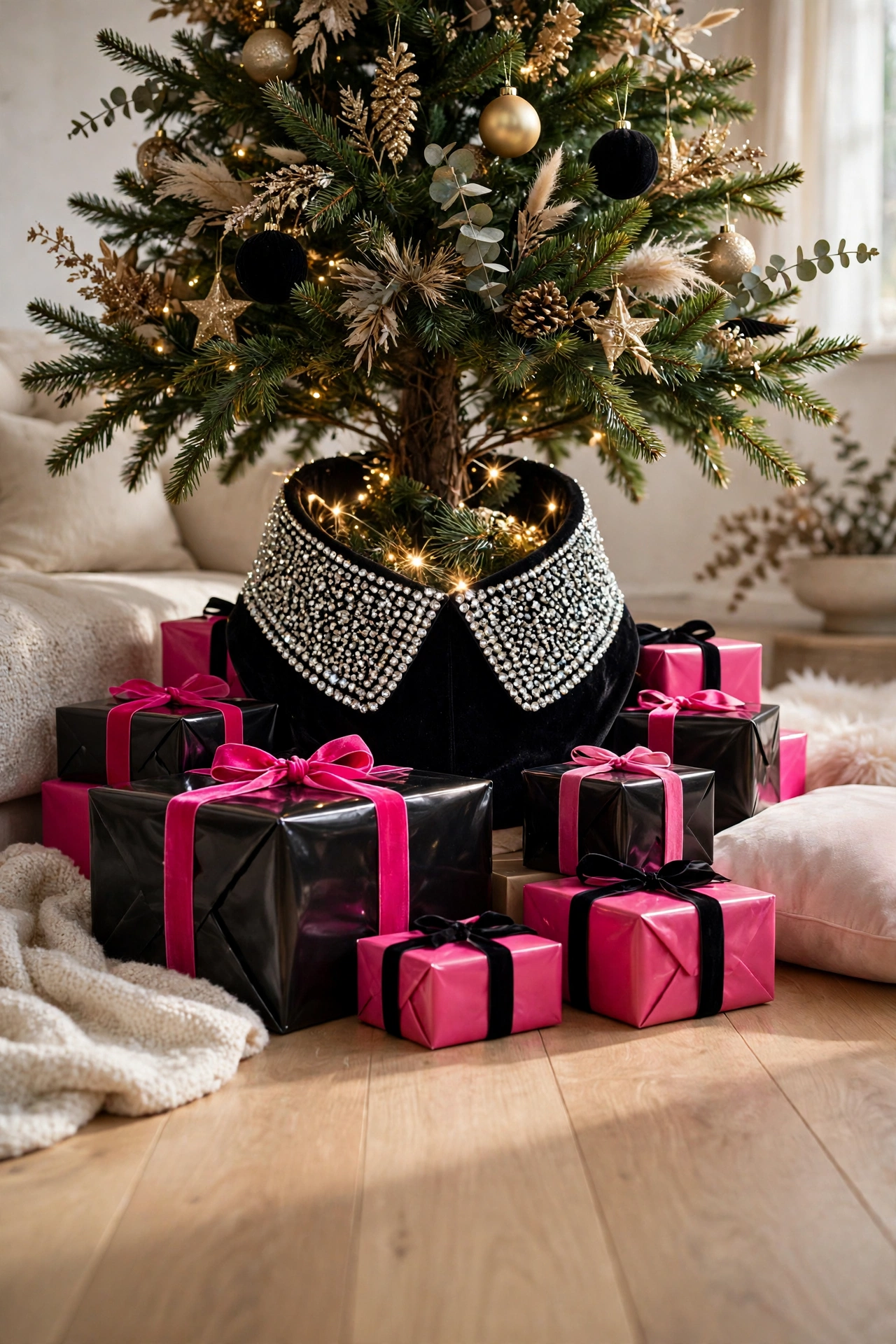
12. Rhinestone Tree Collar
A rhinestone or diamond-style tree collar at the base swaps the traditional fabric tree skirt for something that reads as considerably more glam and finishes off a bold black-and-pink tree the way a great pair of shoes finishes an outfit. Look for a collar in black metal mesh or velvet studded with clear or pink-tinted rhinestones, and size it generously so it extends well beyond the width of the lowest branches rather than looking pinched underneath the tree. Wrapped gifts in glossy black and hot pink paper, stacked at varying heights around the collar, extend the color story down to the floor instead of letting it stop at the lowest branch. A few strands of warm fairy lights tucked into the collar itself add extra sparkle at a sightline most trees completely ignore. This detail is easy to skip but makes a noticeable difference in how finished the overall display feels in photos.
13. Traditional Green Tree, Bold Accents
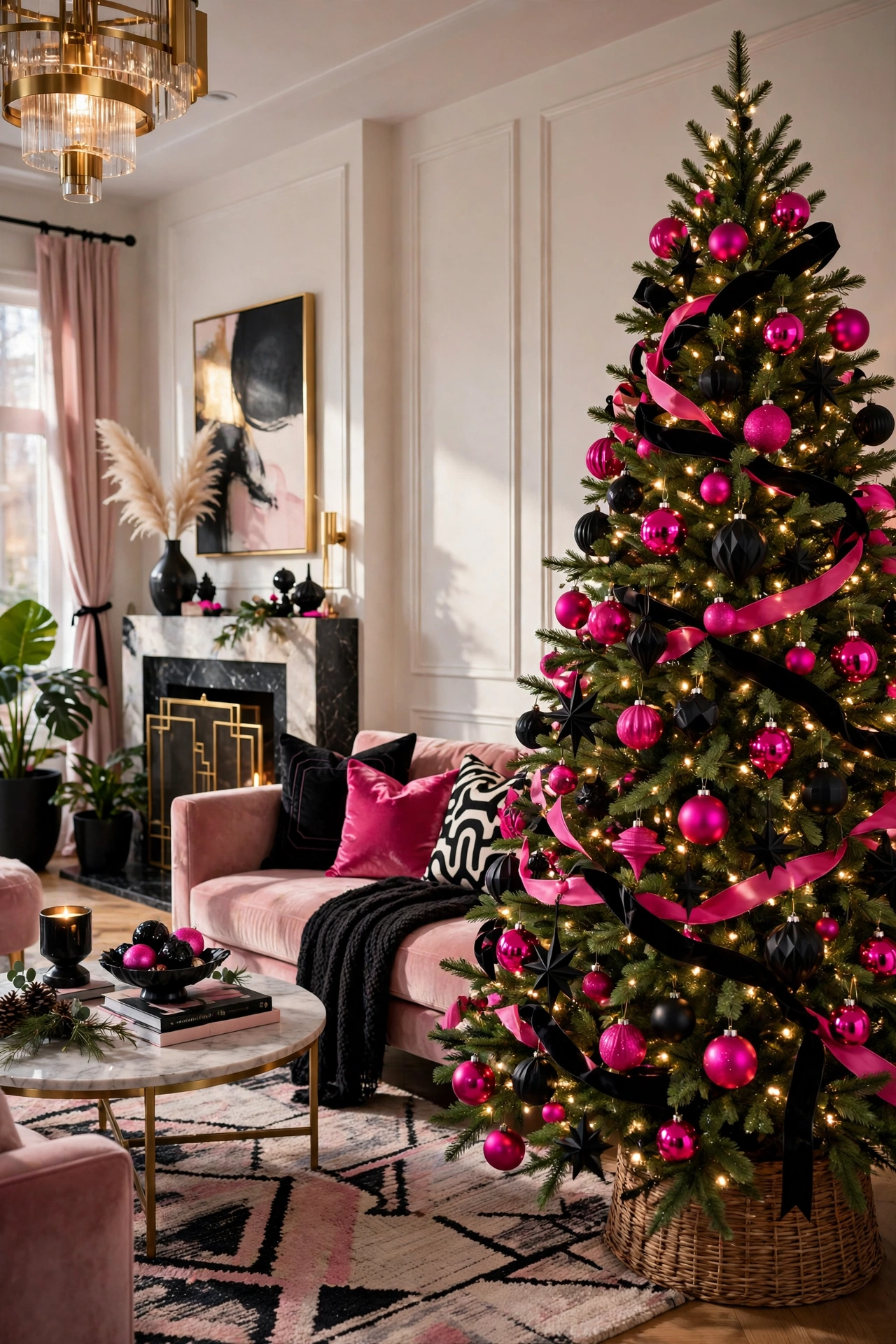
A classic green tree gives black and pink the strongest natural contrast of any base color option, since neither shade competes visually with the deep green needles the way another dark or pastel base color might. Keep the color ratio simple here: roughly two-thirds pink ornaments and ribbon to one-third black, since a fully green tree can start to look busy if the accent colors are split too evenly. Use black primarily in ribbon and a handful of larger statement ornaments rather than scattering it in small pieces throughout, which keeps it reading as an intentional accent instead of visual noise against the green. This is the most versatile option on the list for anyone who wants the bold color statement without fully committing to a non-traditional tree color, and it transitions most easily into a general “modern glam Christmas” look for anyone unsure about full black-and-pink commitment.
14. Pink Tree with Black Ribbon (Reversed Ratio)
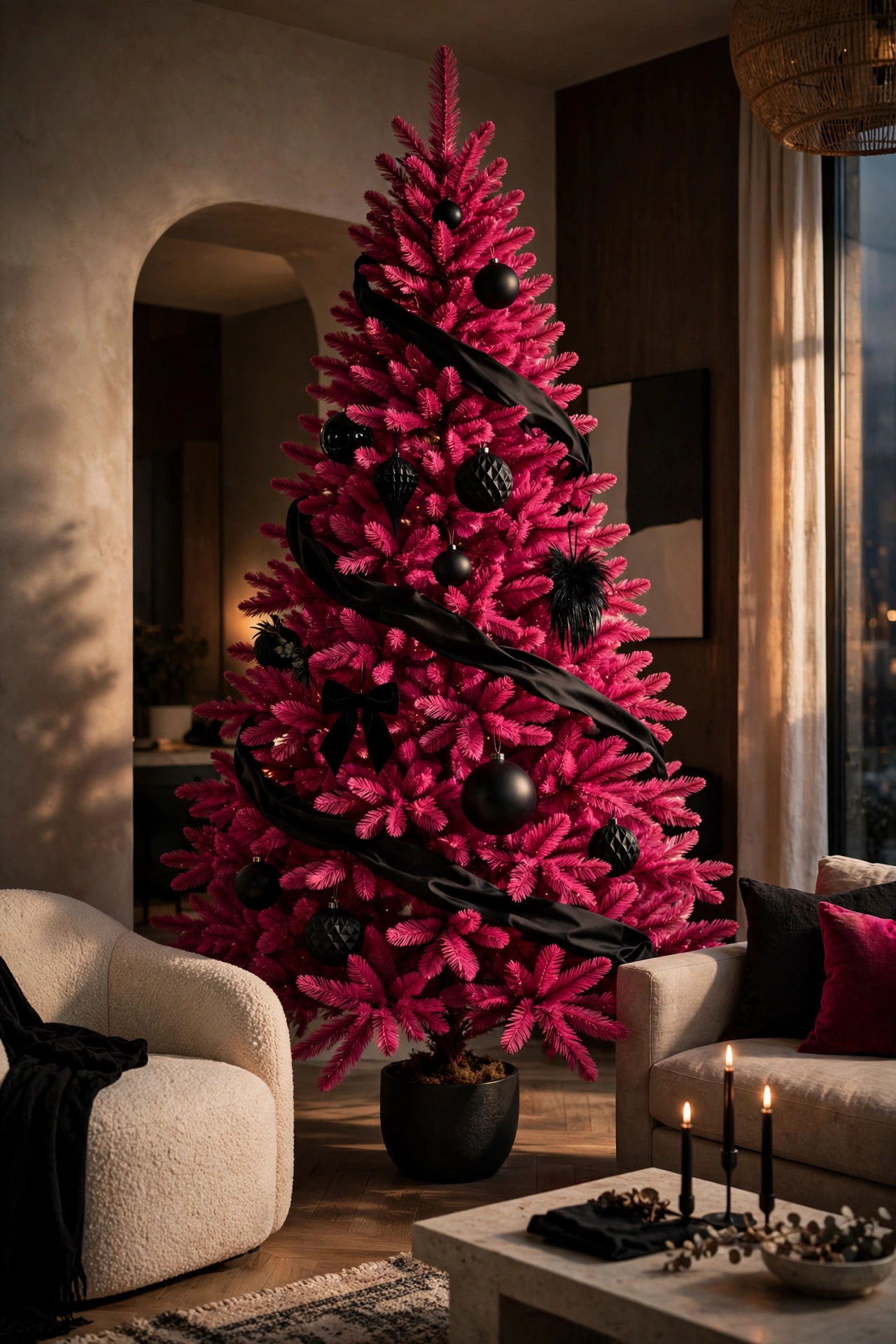
Flipping the base entirely, an actual pink artificial tree with black ribbon and a handful of black statement ornaments creates a completely different mood than a black tree with pink accents, leaning more fashion-editorial than gothic. Choose a deep, saturated pink or fuchsia tree rather than a pale pastel one if you want the black accents to read clearly against the base color, since black can wash out or disappear against very light pink. Wide black grosgrain or satin ribbon, striped through the tree in a diagonal spiral rather than draped loosely, gives the eye a clear structural line to follow from top to bottom. This version tends to photograph as the boldest, most graphic option on the entire list, closer to a fashion runway moment than a cozy living room tree, which makes it a strong choice for anyone decorating a statement space like an entryway or a shop window display.
15. Vampy Magenta and Black Velvet
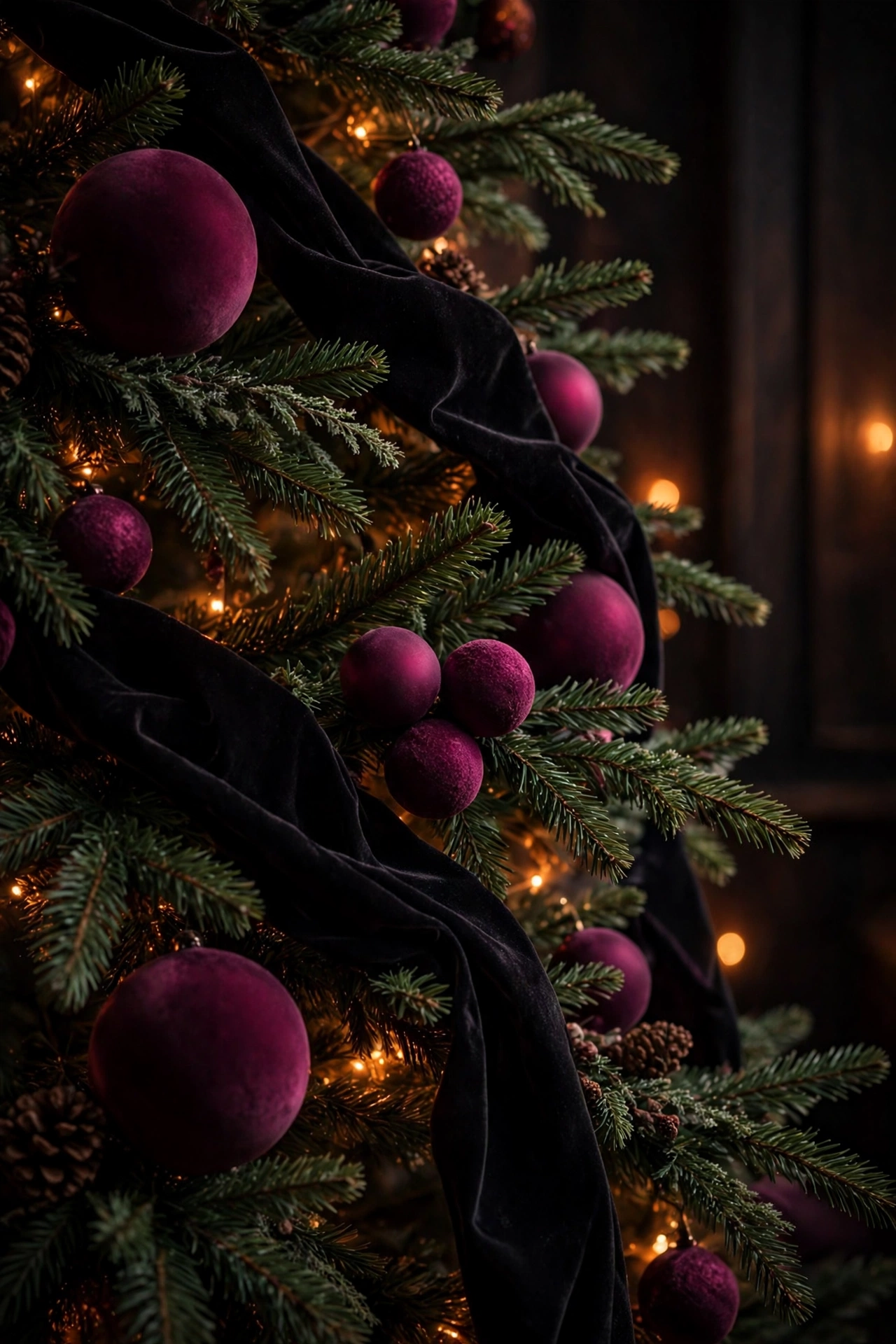
For the most dramatic, adult-leaning version of this palette, combine deep magenta or oxblood-adjacent pink with heavy black velvet ribbon and dark amber lighting instead of bright white lights. Choose ornaments with a matte or slightly distressed finish rather than glossy ones throughout, since shine tends to undercut the moodier, more vampy feeling this variation is going for. Velvet ribbon, cut generously wide, adds visual weight that thinner satin or grosgrain ribbon can’t match, and it drapes with a heavier, richer fold when wound through the branches. This is the version to choose for a formal dining room or a more adult-only holiday space, since it leans sophisticated and moody rather than bright or playful. Pair it with dark red or deep plum accents sparingly if you want a slightly warmer variation without losing the overall dramatic tone.
Styling Tips
- Decide your color ratio before buying anything — roughly 70/30 in favor of whichever color is your base tree color usually looks most balanced.
- Add ribbon, garland, and florals before individual ornaments, since these larger elements establish the palette and make ornament placement much faster.
- Vary finish (matte, glossy, mirrored, velvet) even within a two-color palette, since finish variation is what prevents a limited color scheme from looking flat.
- Cluster statement pieces in groups of three to five rather than spacing everything in even, predictable intervals.
Practical Implementation Ideas
- Test your ribbon or garland color against your actual tree lighting before buying in bulk, since warm versus cool white lights shift how saturated pink reads.
- Work top to bottom in this order: lights, ribbon or garland, largest statement pieces and florals, then smaller ornaments filling gaps.
- Photograph the tree from across the room periodically while decorating, since color balance issues are far easier to spot from a distance than up close.
Common Mistakes to Avoid
- Splitting black and pink exactly 50/50, which tends to look busy rather than intentional; pick a dominant color and let the other function as the accent.
- Using only one finish (all glossy or all matte) across every ornament, which flattens the visual depth of the tree.
- Skipping a topper swap and leaving a plain traditional star on an otherwise bold, styled tree.
- Using bright cool-white lights with deep pink or fuchsia tones, which can wash out the saturation and make the color read flat in photos.
Small-Space Alternatives
Scale any of these ideas down onto a tabletop tree for a bedroom, apartment, or office desk by focusing on just one or two techniques, such as the rhinestone collar or the coquette bow idea, rather than attempting a fully layered look in a small footprint. A slim pencil tree in black takes pink ribbon and ornaments just as well as a full traditional shape and fits into narrow entryways or corners.
Related: 15 Simple Thanksgiving-to-Christmas Tree Transition Ideas
Budget-Friendly Alternatives
Tulle ribbon and floral picks are two of the least expensive ways to add major visual volume, often costing far less than an equivalent number of glass or glossy ornaments. A plain green tree you already own paired with a few strands of new ribbon and a handful of statement ornaments achieves most of this look without replacing the tree itself. Thrifted glass ornaments, spray-painted matte black or dipped in pink glitter, replace pricier mercury glass or sequin pieces at a fraction of the cost.
Pro Styling Recommendations
Treat black and pink the way a stylist treats an outfit: pick the dominant color first, use the second color as the accent that gets all the attention, and vary texture and finish so a two-color palette doesn’t read as flat or matchy. Build the tree in layers, from structural elements like ribbon and garland down to the smallest ornaments, and don’t be afraid to leave visible gaps of the base tree color showing through rather than covering every inch of green or black completely.
FAQs
Conclusion
Black and pink deserves to be more than a footnote in someone else’s black tree or pink tree guide. Whether it’s full Barbiecore glam, coquette-soft bows, or a moody vampy magenta palette, the ratio and texture choices are what actually make this combination look styled instead of thrown together. Pick the version that matches your space, commit to a clear color ratio, and let the contrast do the rest of the work.