22 Winter Wreath Ideas That Keep Your Front Door Looking Stunning All Season
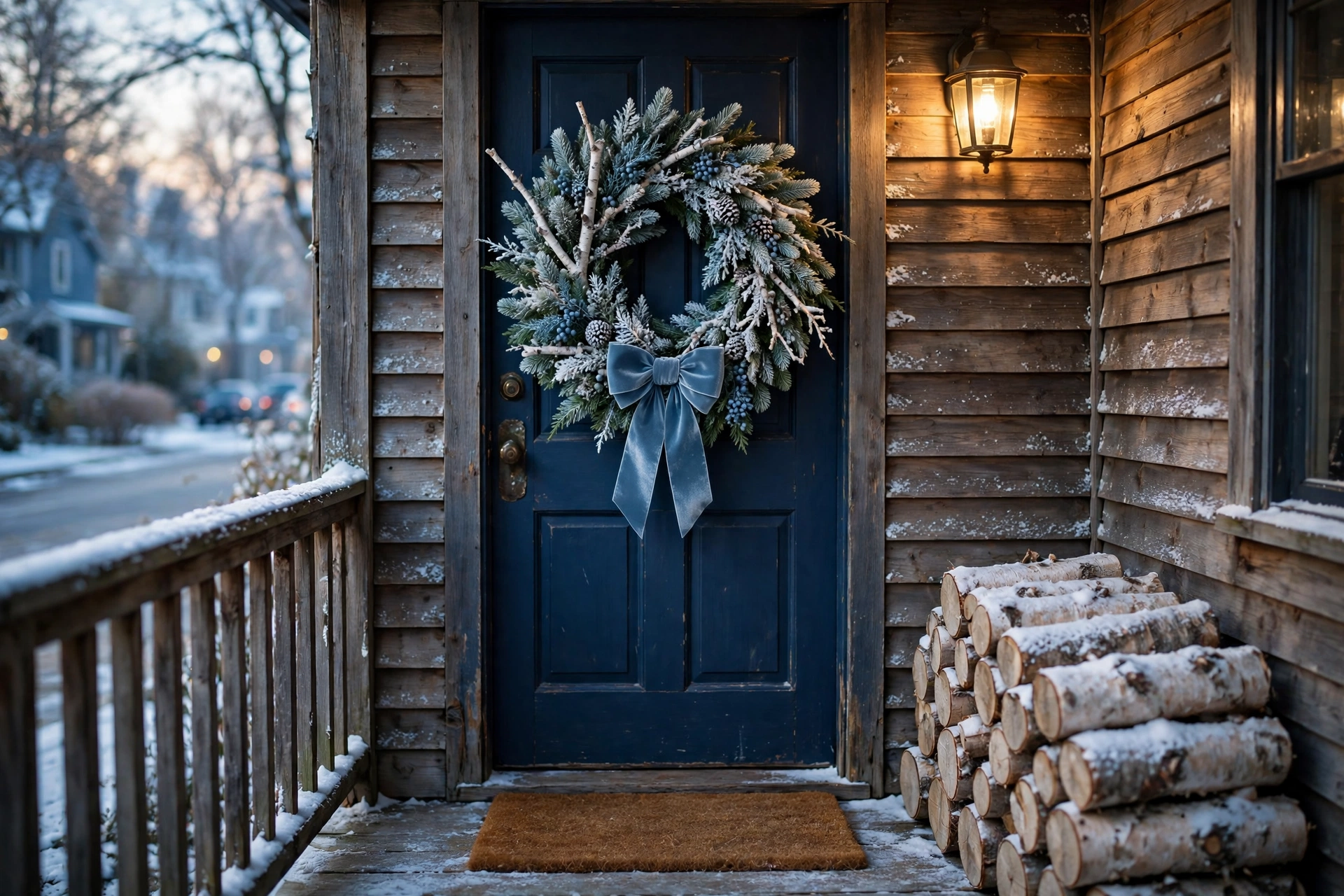
The first thing anyone sees before they even ring your doorbell is your front door. Not your living room. Not your kitchen island. Your door — and whatever’s hanging on it.
A tired, half-deflated holiday wreath left up in late January says one thing. A wreath that was actually chosen for winter, not just Christmas, says something completely different. It says you thought about this. It says your porch is part of your home, not an afterthought.
That’s the gap this list fills. These 22 winter wreath ideas are built for the whole season — the snowy weeks, the gray weeks, the weeks when the lights come down but the cold sticks around. Grab a coffee and start saving the ones that feel like your front door.
Table of Contents
Why Winter Wreaths Matter More Than Holiday Wreaths
A holiday wreath is built for one moment: the few weeks around Christmas. A winter wreath is built for a season — the long, quiet stretch from late December through early spring when your porch still needs to feel cared for, even without a single ornament in sight. The difference shows up in color and material. Winter wreaths lean on greenery, berries, dried botanicals, and neutral ribbon instead of anything overtly festive, which means they can stay up for months without looking out of place. That’s the real value here: one well-chosen wreath instead of three separate seasonal swaps.
22 Winter Wreath Ideas
Classic Evergreen & Velvet Bow Wreath
This is the wreath that never has an off year. A full base of mixed pine and fir needles, left mostly untouched, gets one focal point: a wide velvet bow in deep burgundy or forest green tied slightly off-center at the top. The needles do the visual work through their varied shades of green, while the bow adds just enough polish to keep the design from feeling plain. It reads as put-together on a traditional brick colonial and just as easily on a modern black door. Because nothing about it screams “Christmas,” it can stay up comfortably through February without feeling dated.

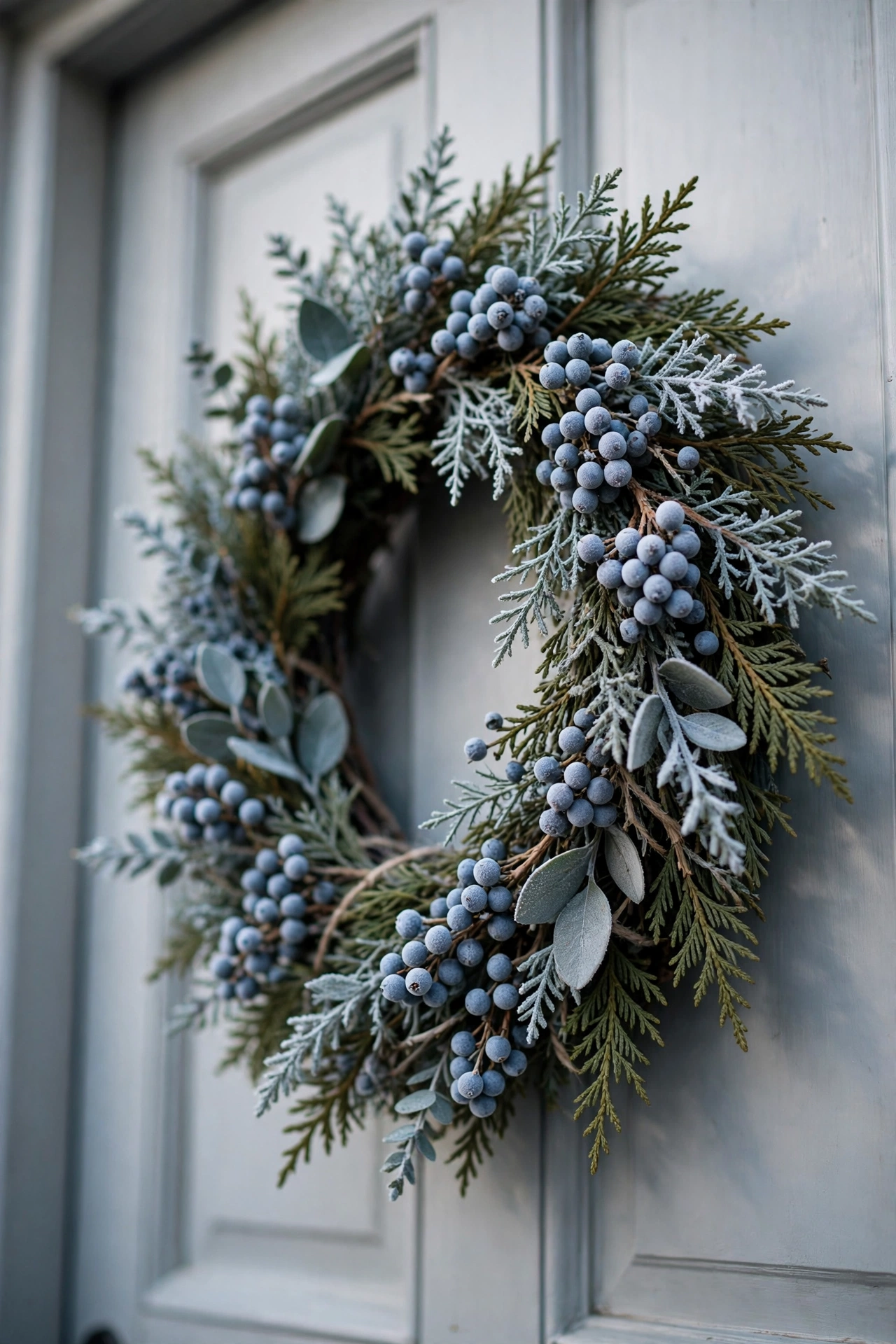
Frosted Juniper & Dusty Blue Wreath
Juniper berries bring a soft, powdery blue-gray that instantly reads as winter rather than Christmas, which is exactly why this wreath works so well past the holidays. Layer juniper sprigs over a cedar base so the blue tones sit against deep green, then tuck in a few frosted eucalyptus stems for texture variation. Skip red accents entirely here — the whole point is a cool, calm palette that feels like the first snow of the season. This one is especially striking against white or pale gray doors, where the blue undertones really stand out.
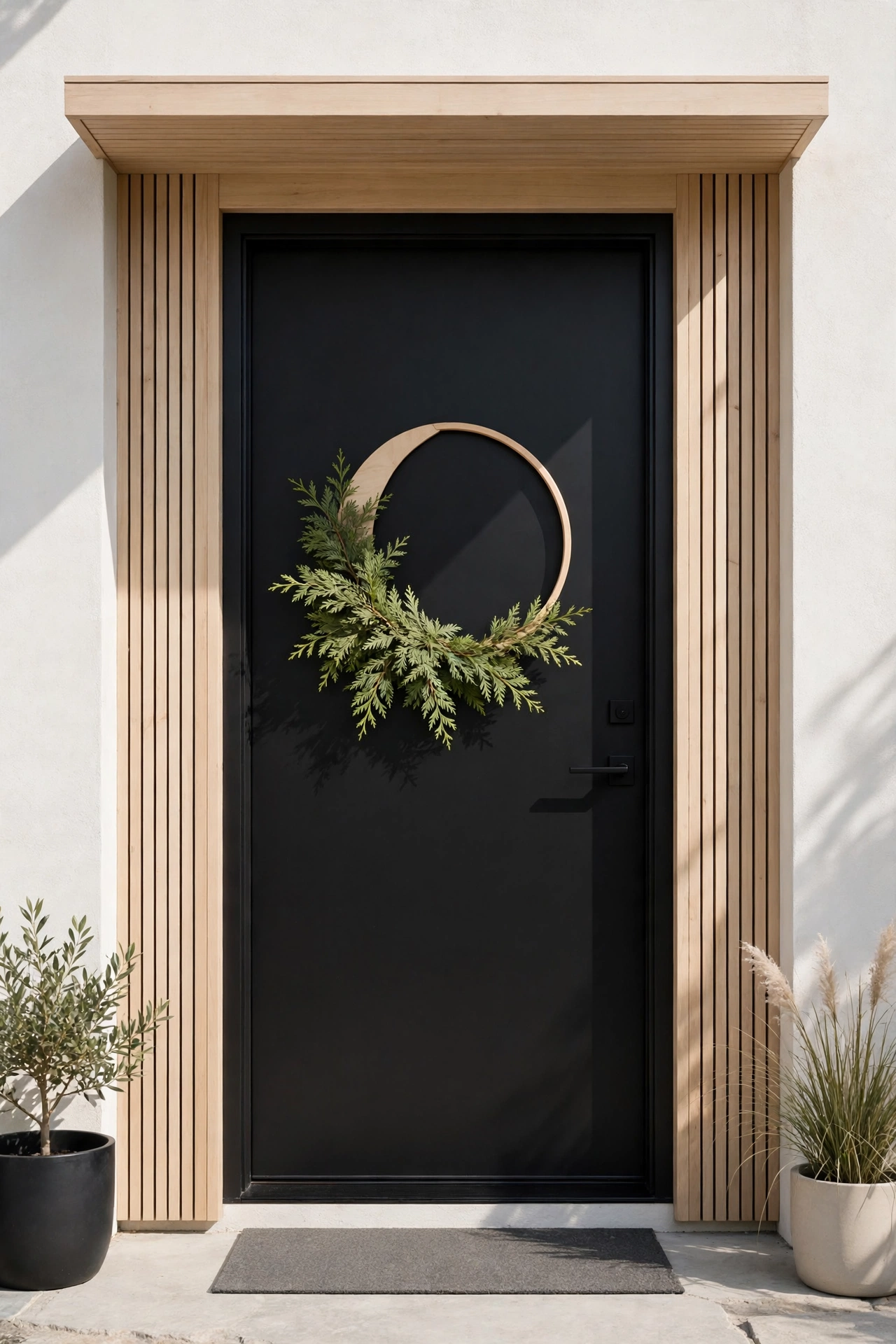
Minimalist Asymmetric Cedar Hoop
For anyone who finds a fully packed wreath too busy, this stripped-back version wraps cedar greenery around only half of a bare wire or wood hoop, leaving the rest of the circle exposed. The empty space is the design — it gives the eye somewhere to rest and makes the greenery that is there feel more intentional. A single thin ribbon in black, cream, or rust ties it off without competing for attention. This style suits modern homes, glass-panel doors, and anyone leaning into a quieter, more Scandinavian-inspired porch aesthetic.
Rustic Foraged Twig Wreath
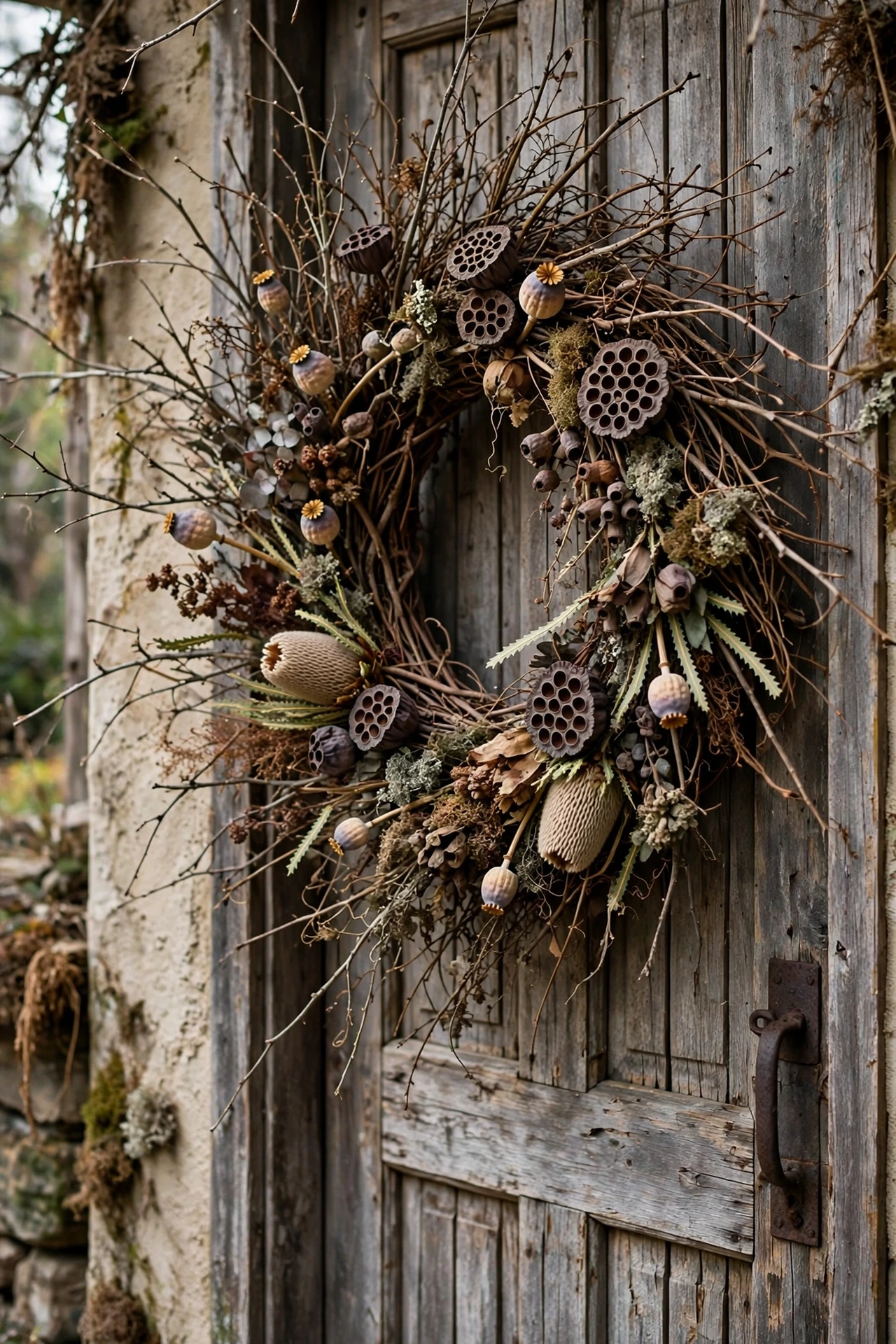
Built from bare branches, curled grapevine, and a handful of dried seed pods, this wreath looks like it was gathered on a winter walk rather than bought off a shelf. The uneven, tangled shape is the point — resist the urge to make it symmetrical. A thin strip of natural leather or jute twine holds everything together without adding shine or color. It’s an especially good option if you already have a wooded backyard or access to fallen branches, since most of the materials cost nothing at all.
Snow-Kissed White Mesh Wreath
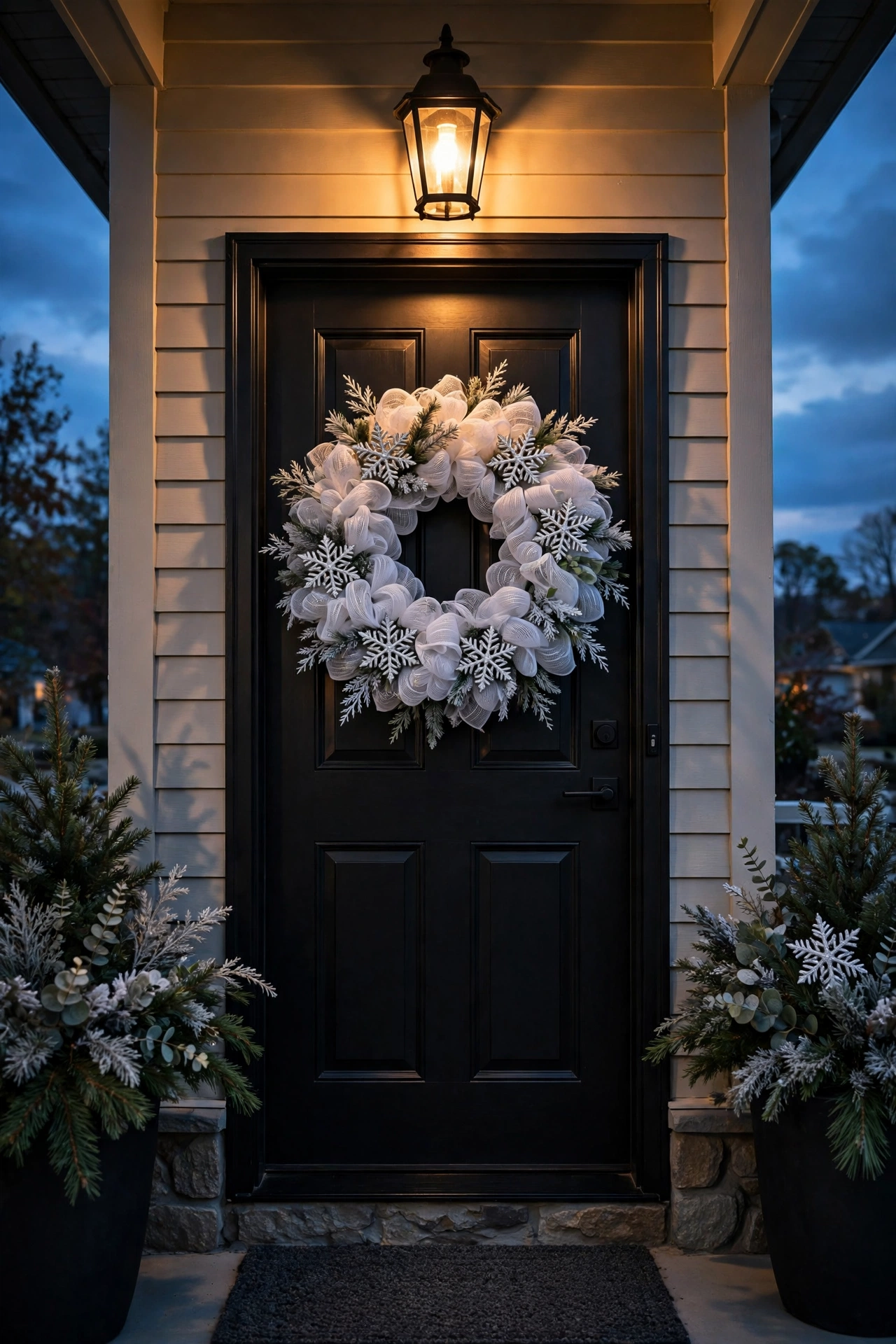
Layers of white deco mesh, ruffled and looped around a wire frame, mimic soft drifts of fresh snow without needing an ounce of real cold weather. Tuck in a few silver or crystal snowflake picks between the mesh loops so light catches them from different angles throughout the day. This design leans decorative rather than natural, which makes it a strong pick for anyone who wants a wreath that photographs beautifully at night under porch lighting. It pairs especially well with black or deep navy doors, where the white creates real contrast.
Bold Blue Mesh Statement Wreath
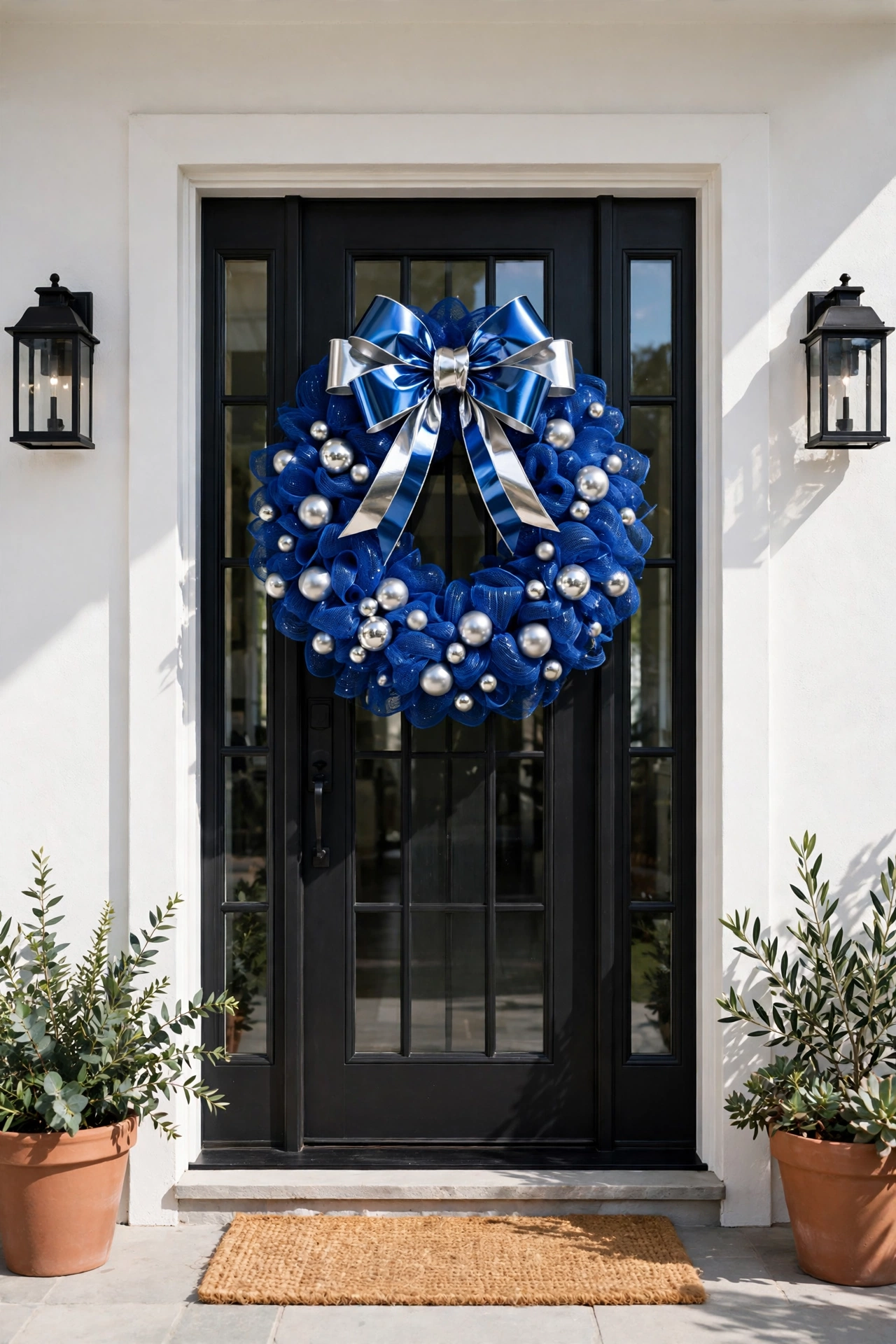
This is the wreath for anyone ready to skip red and green entirely. A base of royal or cobalt blue mesh gets layered with silver ball ornaments and a single oversized metallic bow for real visual weight. The color reads as wintry rather than religious or holiday-specific, so it holds up on the door well past New Year’s. It’s a bold choice, best suited to homes with neutral or white exteriors where the blue has room to be the star of the whole facade.
Farmhouse Burlap & Twine Wreath
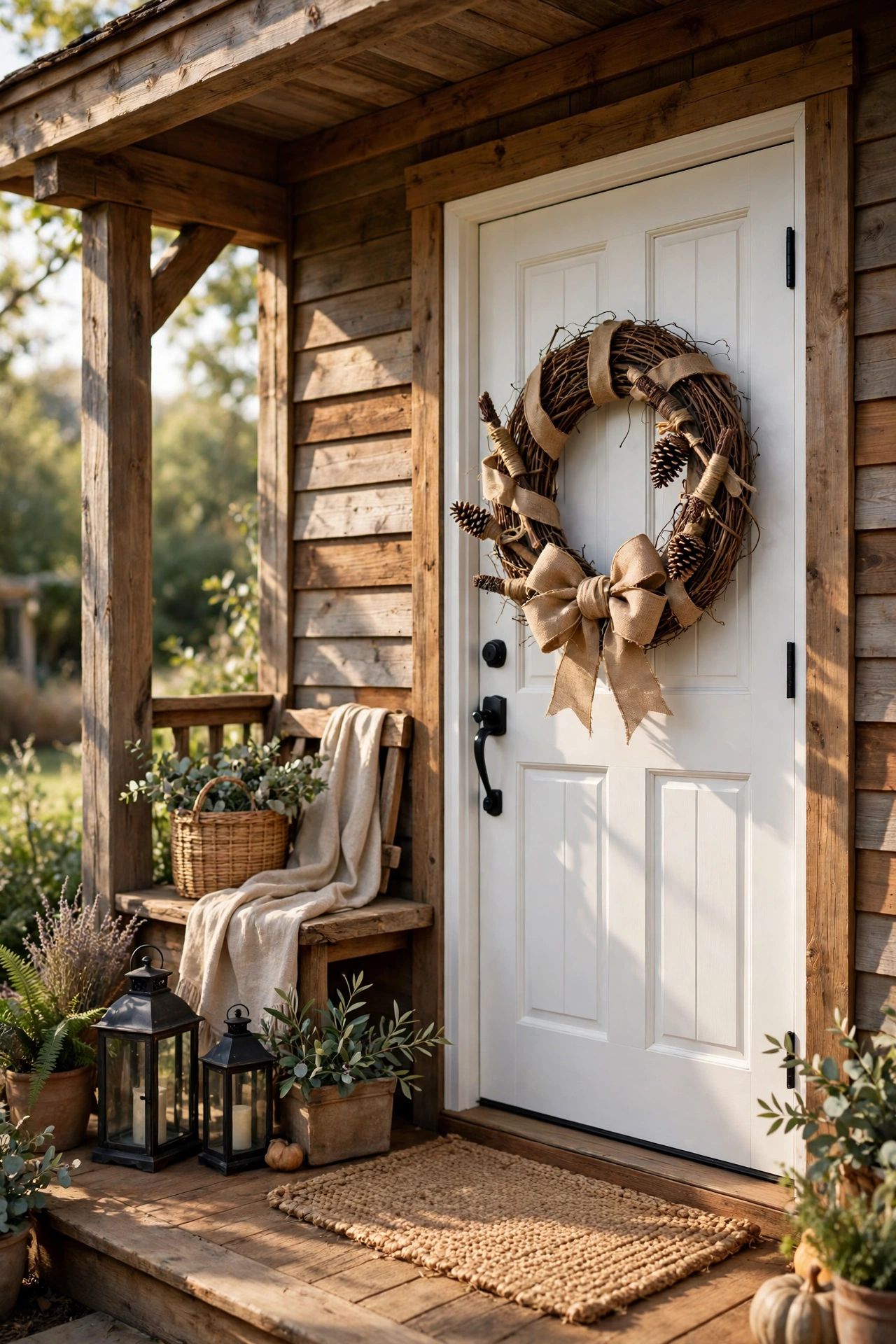
Burlap ribbon woven loosely around a straw or grapevine base sets a warm, textured foundation, then gets finished with a generous burlap bow and a few twine-wrapped mini pinecones. The natural tan and brown tones make this one of the most forgiving color palettes on the list — it works with red brick, white board-and-batten, and everything in between. Because burlap holds up well outdoors and doesn’t fade as quickly as fabric ribbon, this wreath tends to look good for the entire season with almost no upkeep.
Cinnamon Stick & Dried Orange Wreath
Dried orange slices, their edges slightly curled and caramelized, get wired between bundles of whole cinnamon sticks around a simple grapevine base. Beyond how it looks, this wreath actually carries a warm, spiced scent that gets stronger as the weather turns colder, which makes it a favorite for anyone who wants their entryway to feel as good as it looks. A thin gold or rust ribbon ties the citrus and cinnamon tones together without pulling focus. This design fits naturally into a farmhouse or cottagecore aesthetic and photographs beautifully in warm afternoon light.

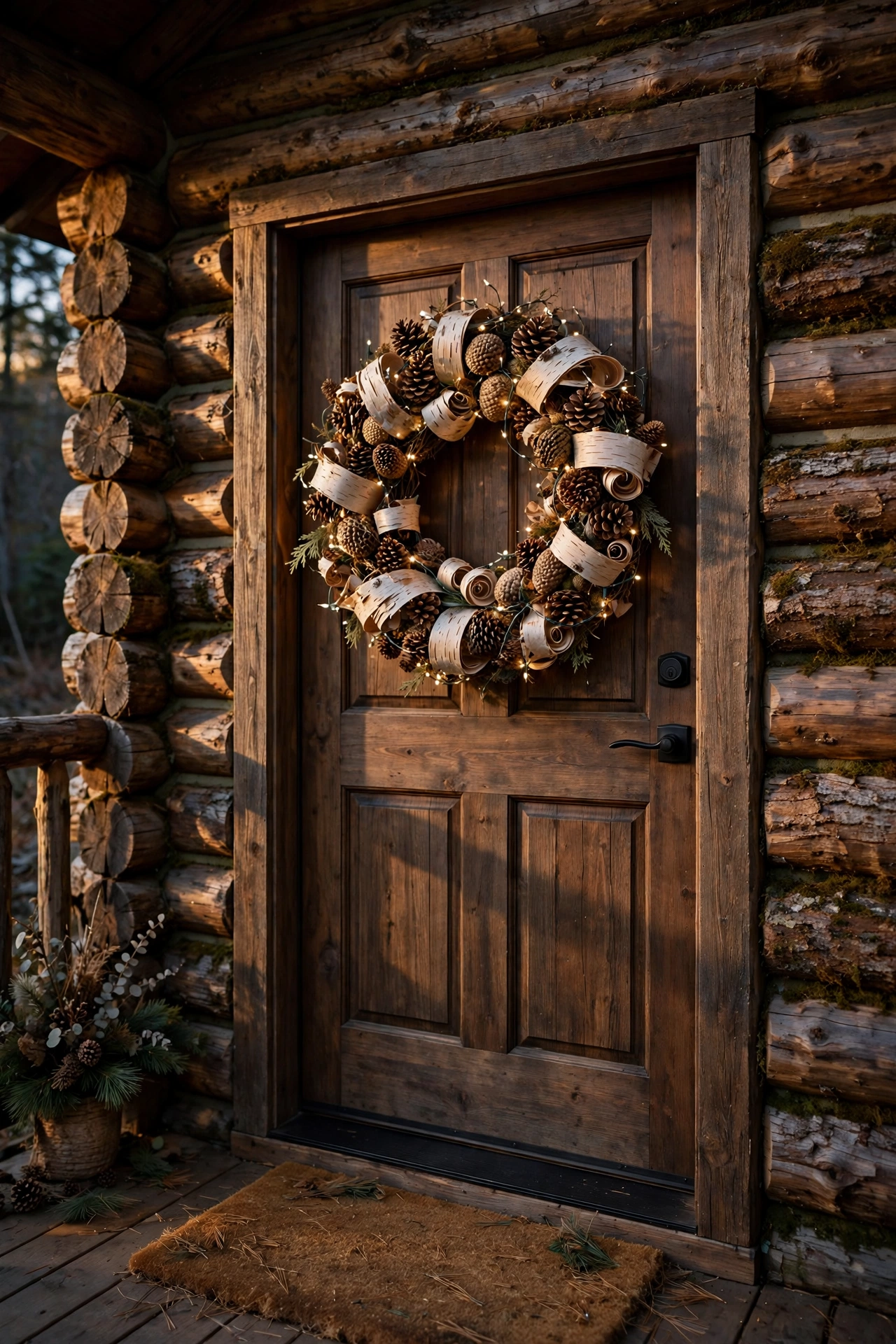
Pinecone & Birch Bark Wreath
Full, textured pinecones in varying sizes get clustered around a base wrapped in curled birch bark strips, creating a wreath that reads as almost sculptural. The contrast between the rough pinecone scales and the smooth, papery birch bark gives this design real depth even without any added color. A single strand of small white lights woven through the pinecones extends its charm into the evening. This style works especially well on cabins, lake houses, or any home leaning into a woodland winter theme.
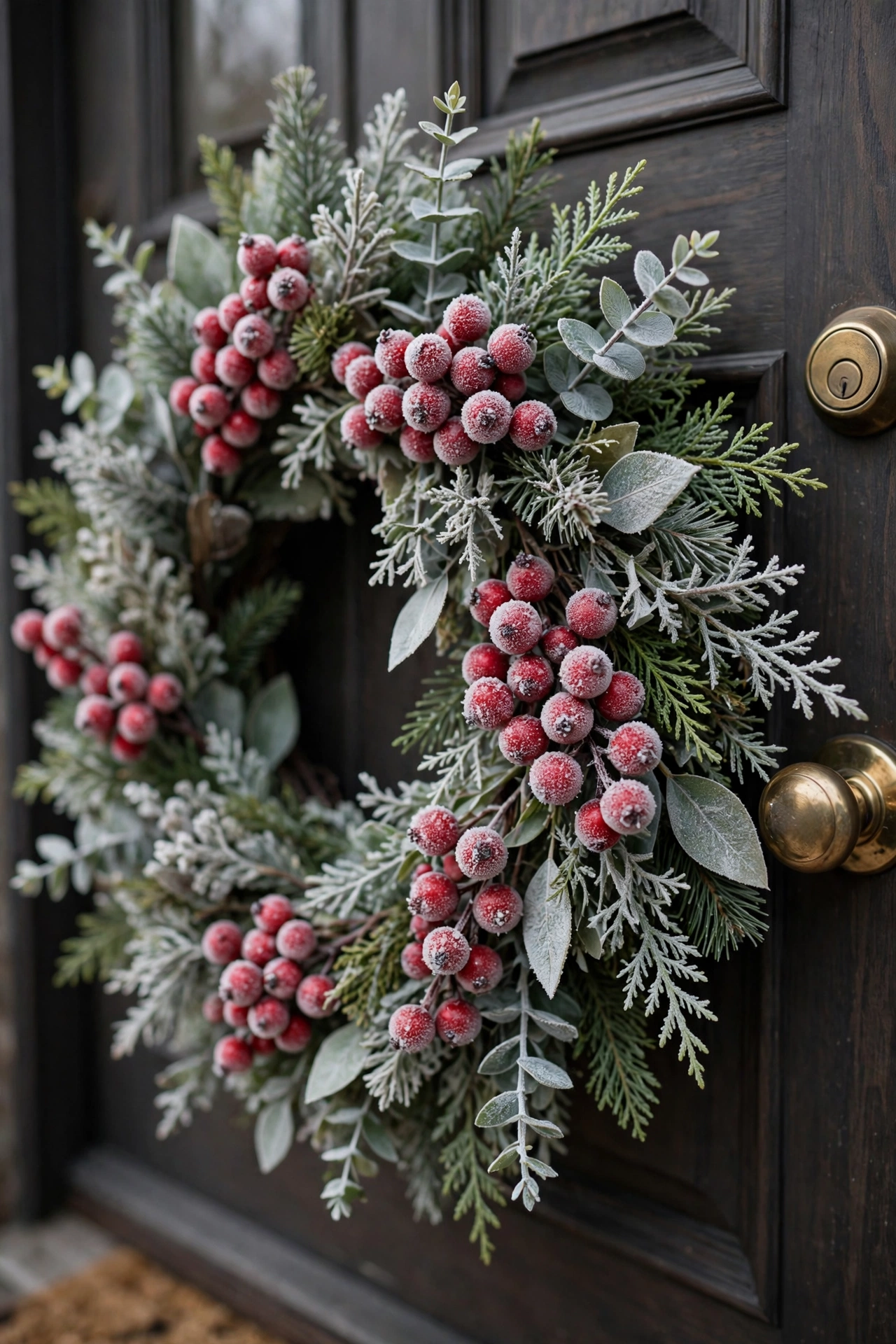
Frosted Berry Wreath
Clusters of bright red faux berries, each one dusted with a fine faux-frost coating, get nestled into a base of frosted greenery for a wreath that reads as both cheerful and distinctly wintry. The contrast between the icy-looking coating and the saturated red underneath is what makes this design pop, especially in overcast light. It’s one of the few red-forward wreaths on this list that still feels appropriate well into January, since the frost effect shifts the mood away from strictly “holiday.” Group the berries in uneven clusters rather than spacing them evenly for a more natural look.
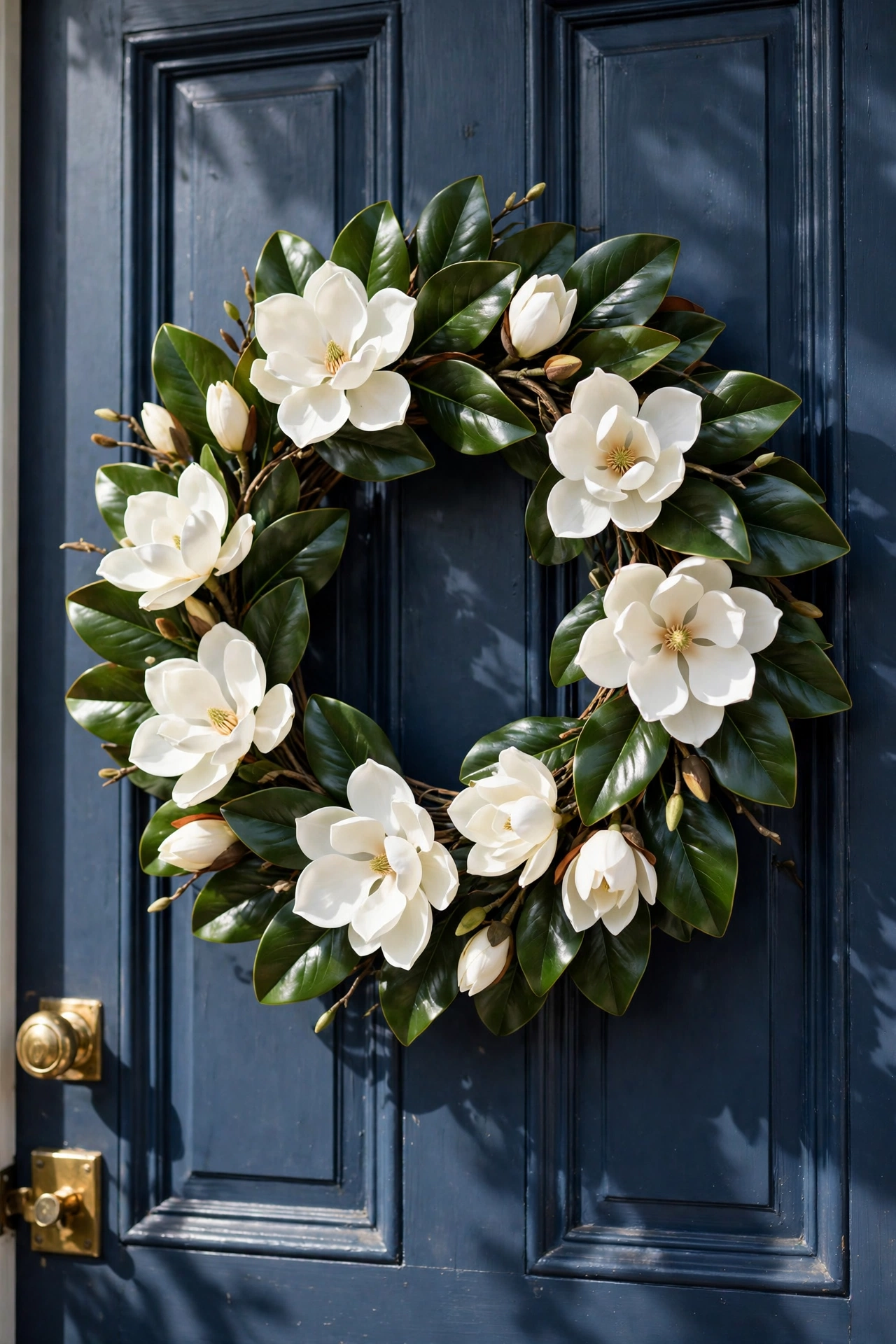
White Magnolia Winter Wreath
Large, glossy white magnolia blooms with dark green waxy leaves create a wreath that feels closer to Southern elegance than typical winter decor, and that’s exactly its appeal. The deep green backing makes the white blossoms pop dramatically, especially against a black or navy door. Because magnolia leaves are naturally leathery and long-lasting looking even in faux form, this wreath tends to photograph as more premium than its price point suggests. It’s an especially strong choice for anyone wanting a wreath that transitions gracefully from December into early spring without a single seasonal swap.
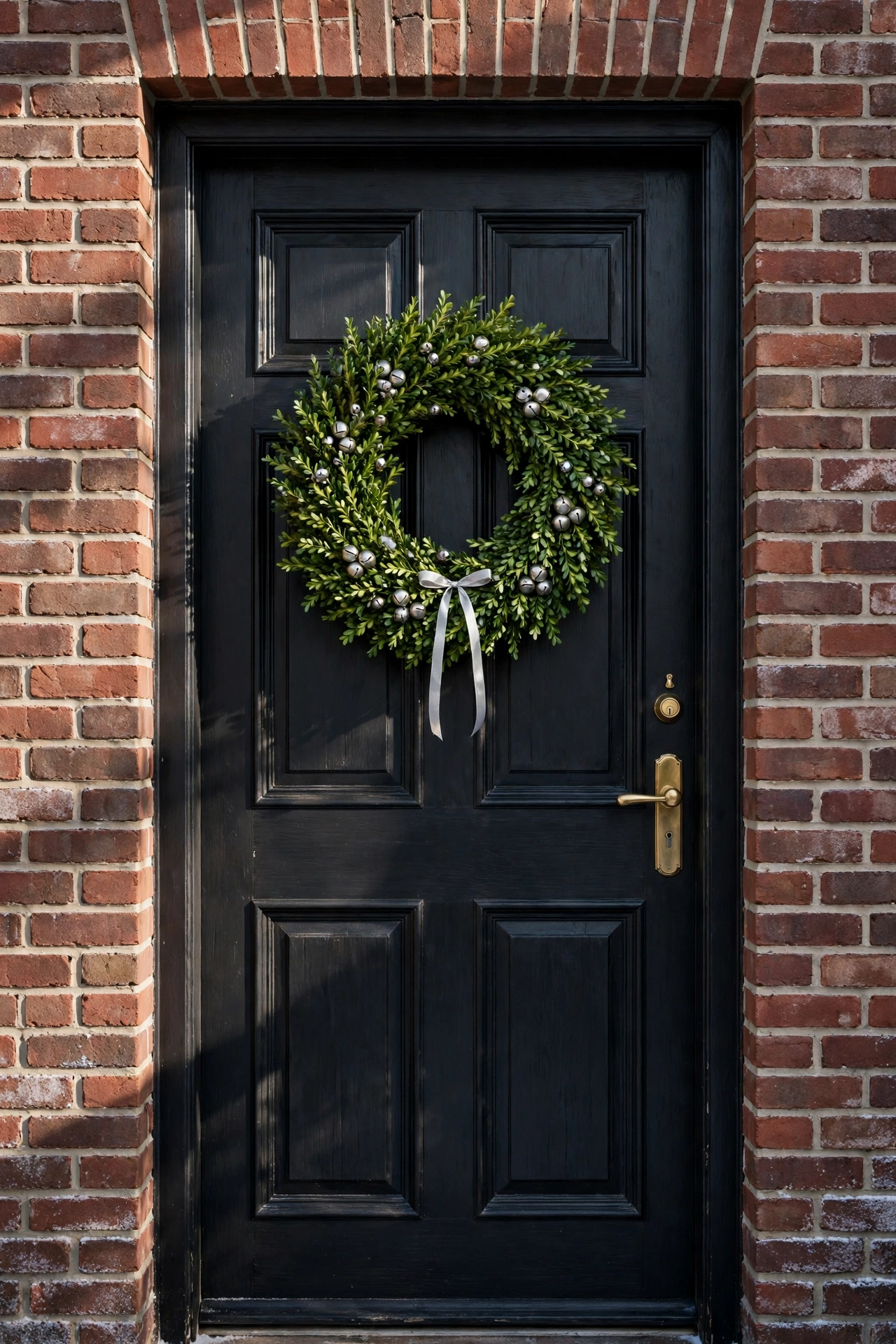
Boxwood & Silver Bell Wreath
A dense, tightly trimmed boxwood base gives this wreath a manicured, formal look right out of the box, and a scattering of small silver jingle bells tucked between the leaves adds subtle shine without tipping into full holiday territory. Because boxwood reads as a year-round plant rather than a seasonal one, this wreath can realistically stay up from November through March. A slim silver ribbon at the top finishes the look without adding bulk. This is a strong pick for traditional homes, especially ones with brick or stone exteriors.
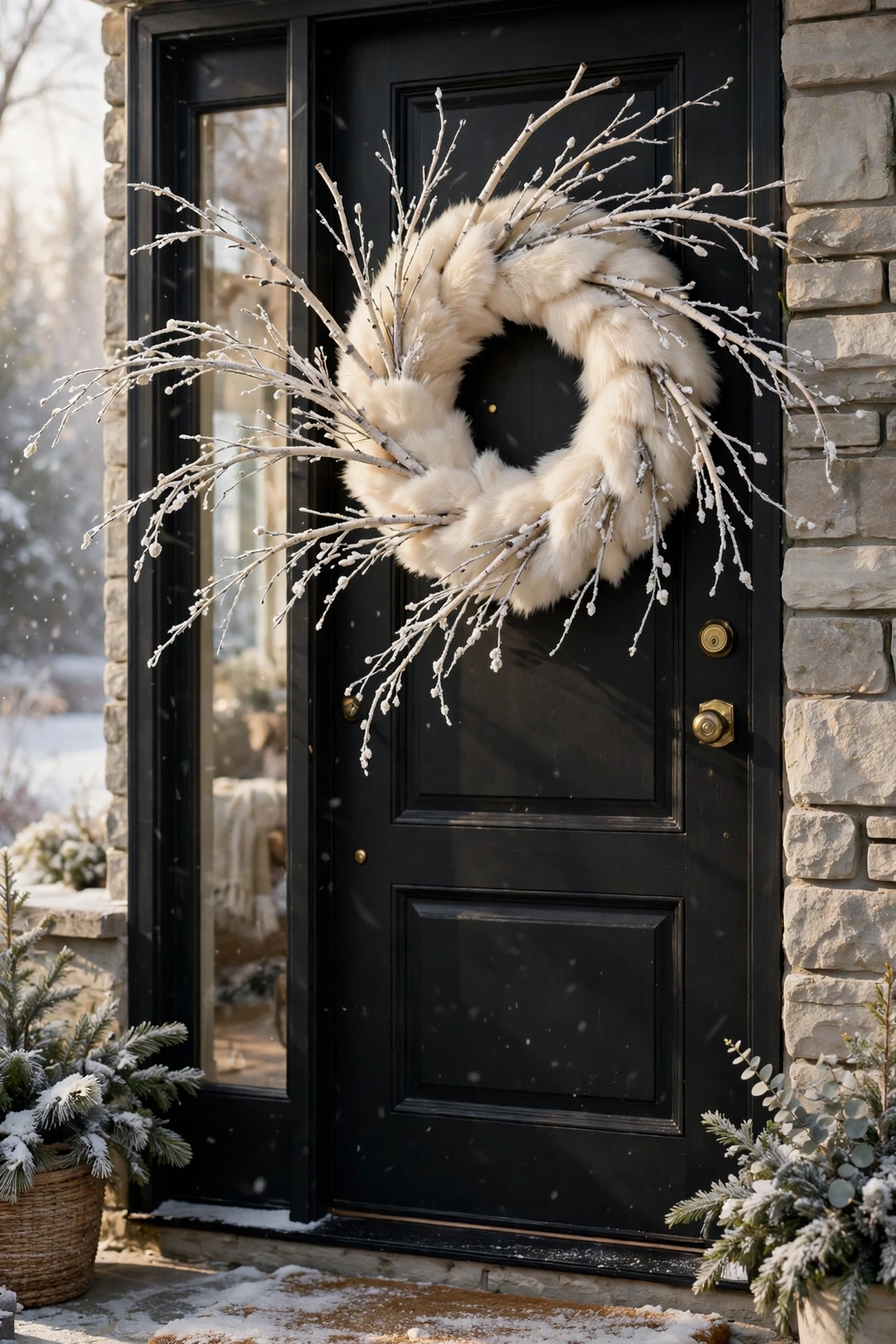
Faux Fur & Frosted Branch Wreath
A ring of soft faux fur, either cream or pale gray, forms the base of this wreath, with a handful of frosted birch or dogwood branches arching outward for movement and height. The fur brings a tactile, cozy quality that’s rare in wreath design, making this one of the more unique entries on the list. Because the color palette stays entirely neutral, it suits nearly any exterior color and any architectural style. This design tends to photograph beautifully with a light dusting of real or faux snow on the porch below it.
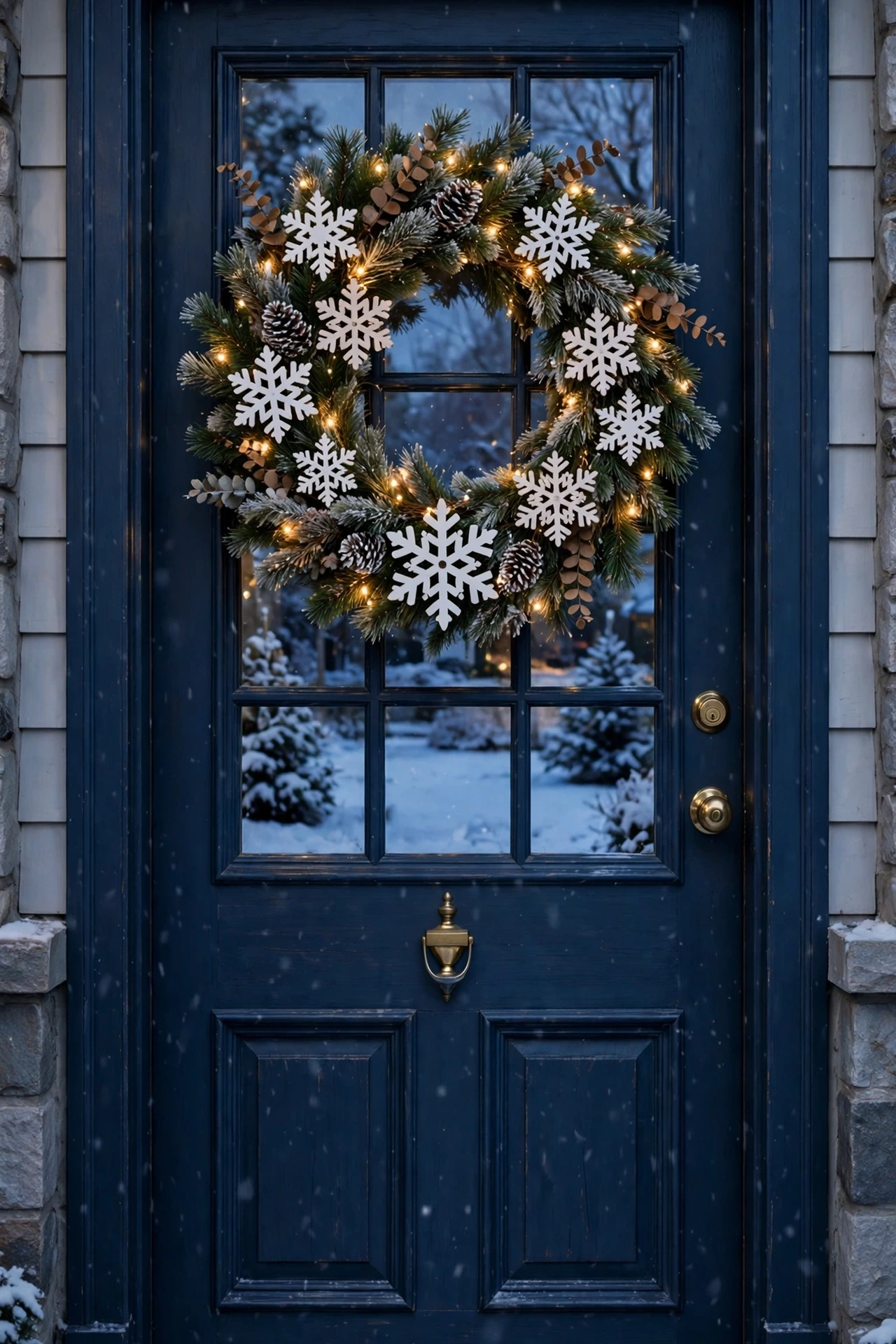
Snowflake Cutout Wreath
Laser-cut wood or acrylic snowflakes, painted white or left natural, get wired directly onto a simple pine or grapevine base for a wreath that feels playful without being childish. Vary the snowflake sizes so the largest ones sit near the bottom for visual weight, then let smaller ones scatter toward the top. This design works particularly well in regions that actually get snow, since it echoes what’s already happening outside the door. A thin string of fairy lights woven through the base extends the effect after dark.
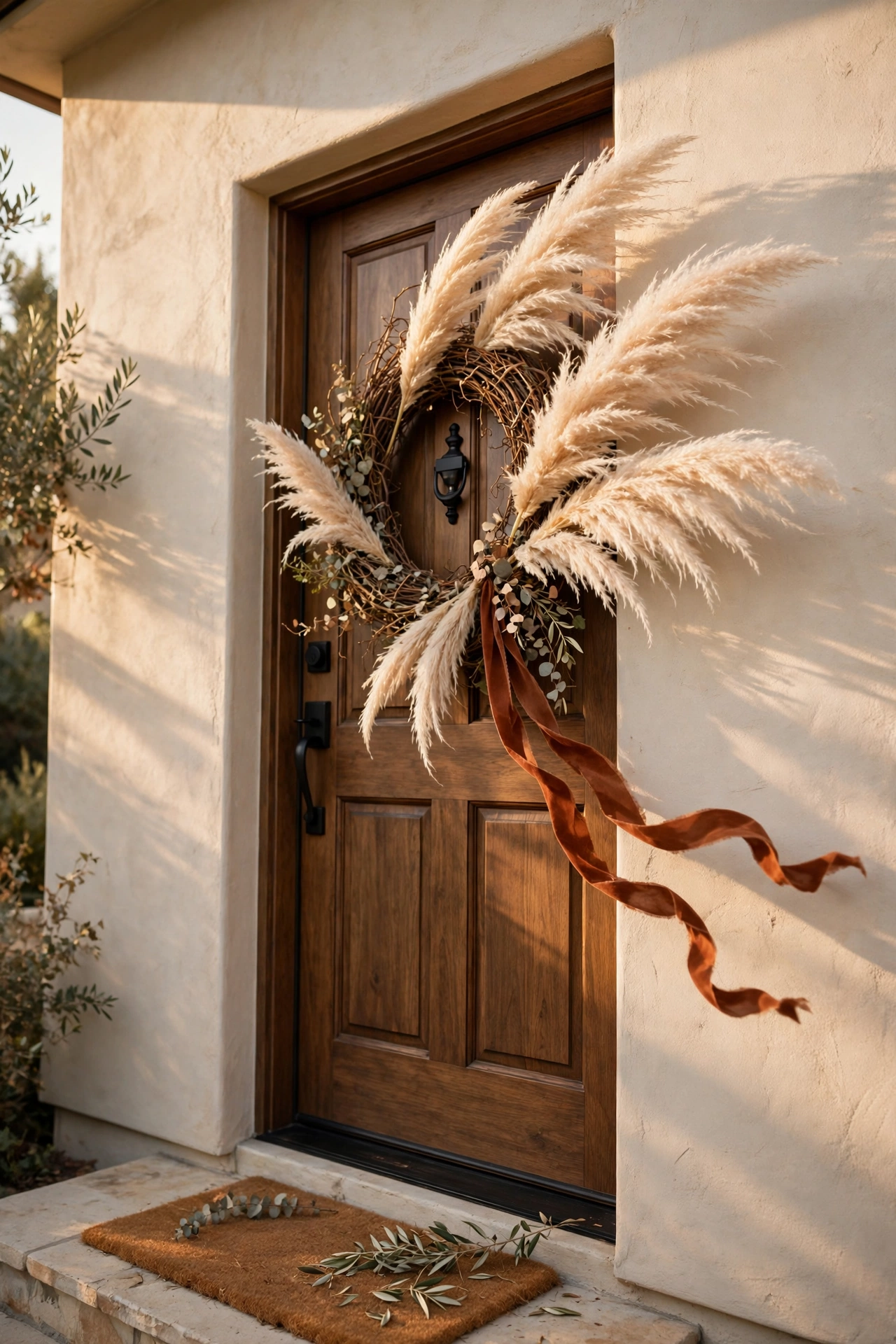
Grapevine & Pampas Wreath
Feathery pampas grass plumes arch outward from a loosely woven grapevine base, creating movement and softness that most winter wreaths don’t have. The neutral tan and cream palette keeps this design firmly in “wintry” rather than “holiday” territory, which means it can realistically stay up through the end of winter without feeling out of season. A single trailing ribbon in rust or terracotta adds warmth without disrupting the neutral tones. This wreath suits boho, modern farmhouse, and transitional home styles equally well.
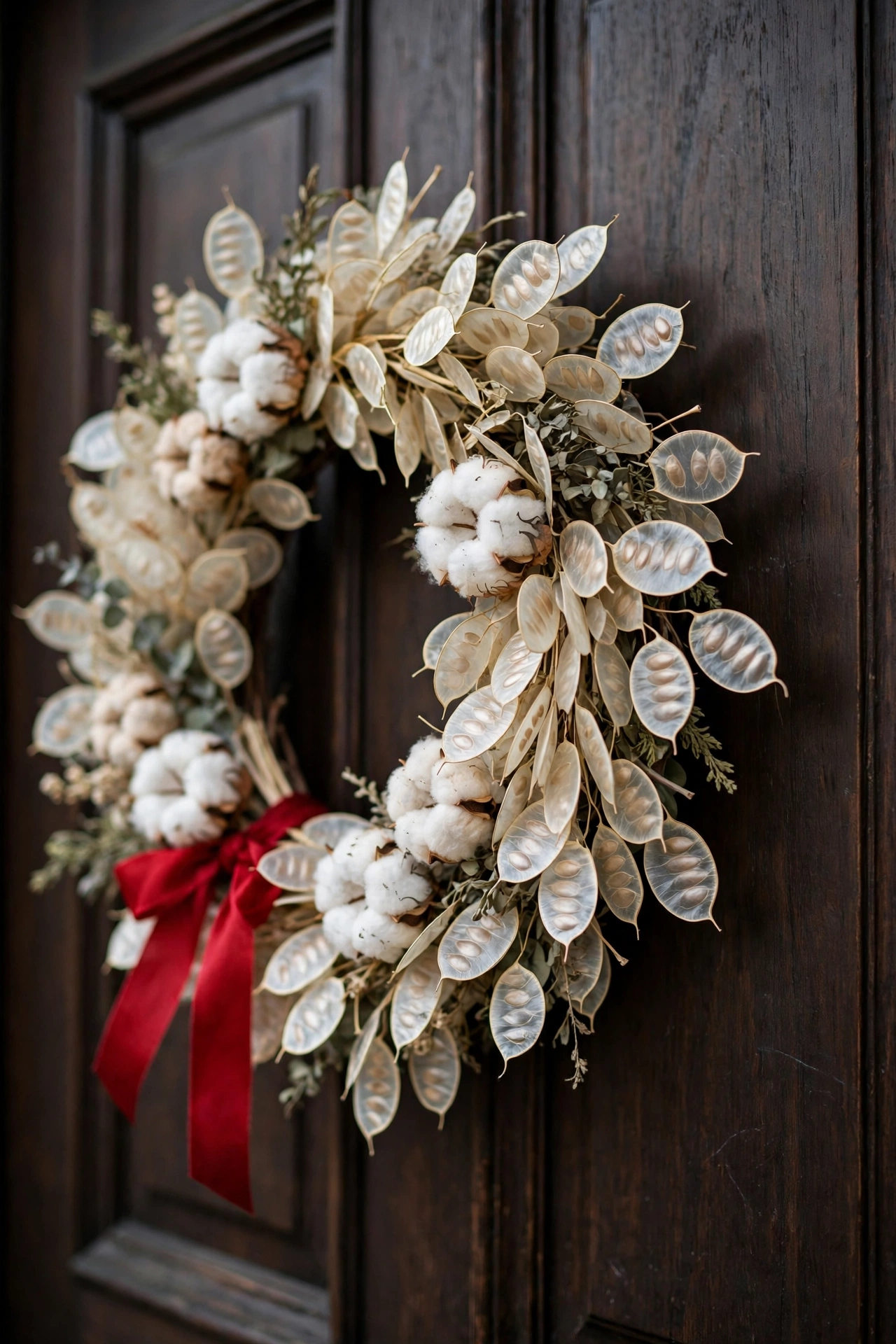
Lunaria & Cotton Bloom Wreath
Papery moon-white lunaria pods and soft cotton blooms combine on this wreath for a texture-forward design that reads as almost ethereal in the right light. Because neither material has any real color saturation, the whole piece leans into a soft, faded palette that photographs beautifully against darker doors. Add a single bold ribbon color, like deep red or forest green, as the only saturated element for contrast. This is one of the more editorial, design-forward options on the list, best suited to anyone comfortable with a less traditional look.
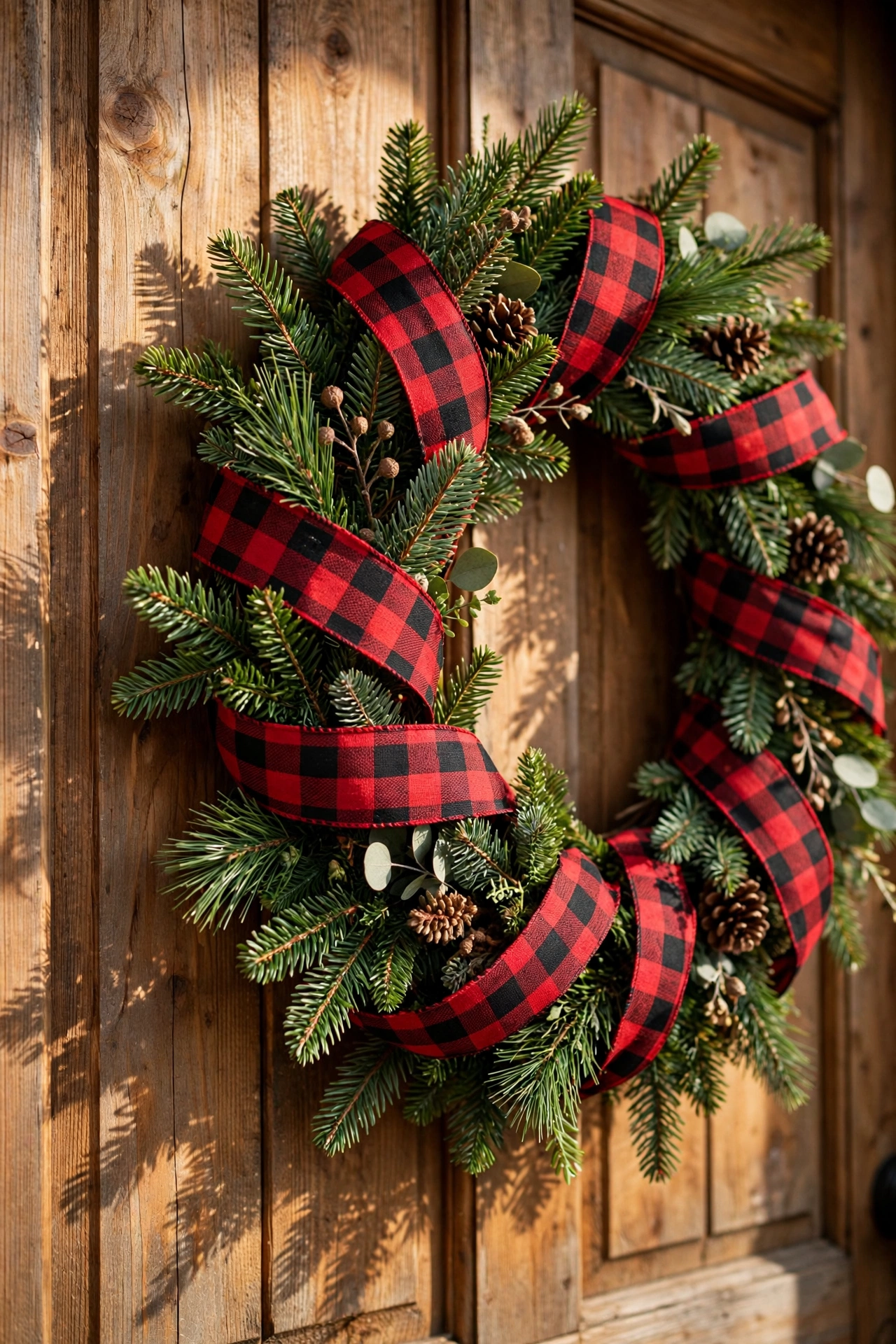
Plaid Ribbon Wreath
A full evergreen or pine base gets wrapped with a generous length of buffalo check or tartan plaid ribbon, woven in and out of the branches rather than just tied at the top. The ribbon becomes the real focal point here, so keep the greenery simple and let the pattern do the work. Red and black buffalo check leans more cabin-cozy, while a muted green plaid feels closer to traditional farmhouse. This wreath tends to hold its visual interest well after the holidays, since plaid reads as a winter pattern rather than a Christmas one specifically.
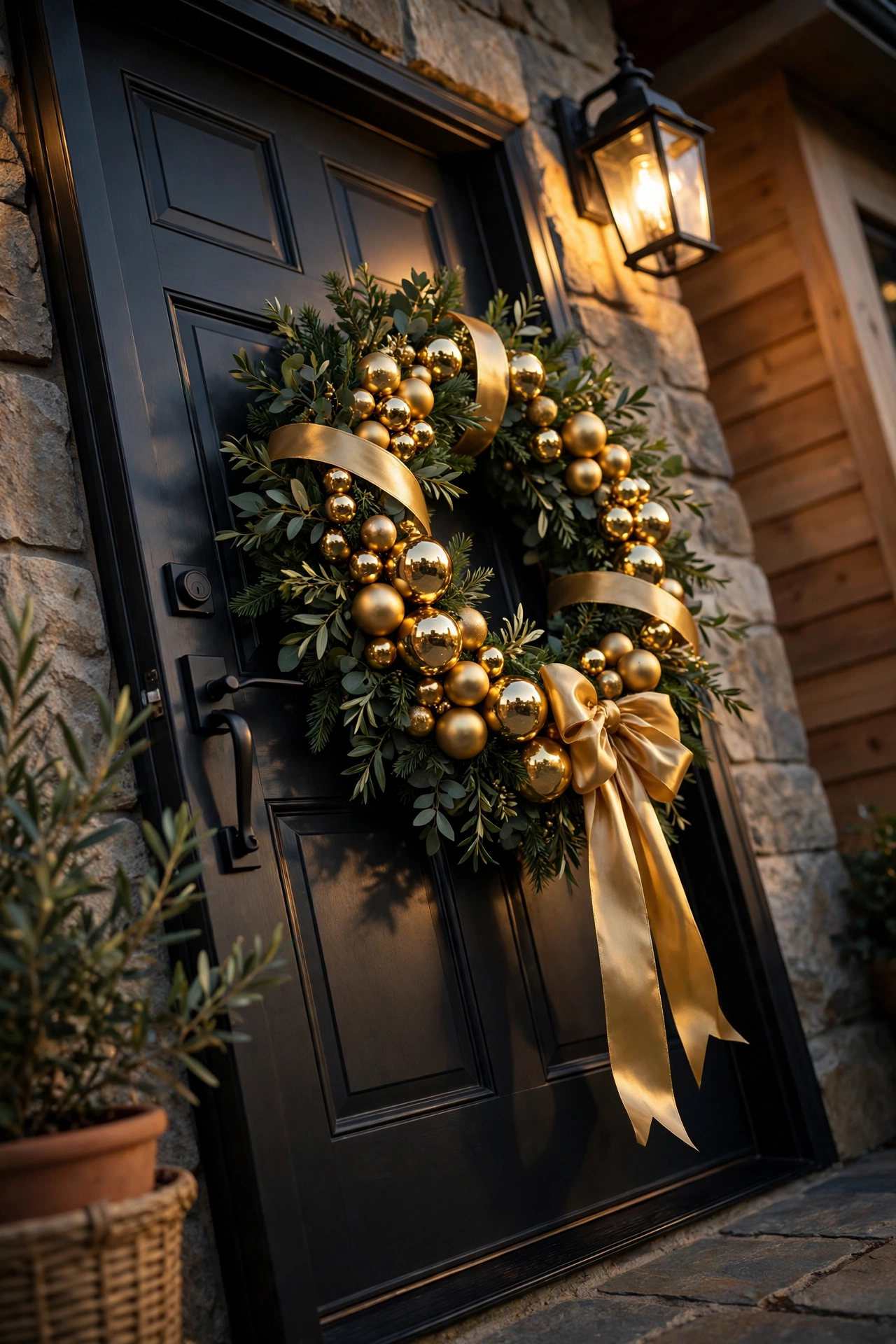
Gold and Green Ornament Wreath
Glossy gold ball ornaments in mixed sizes cluster among deep green foliage for a wreath that leans glamorous rather than rustic. Group the ornaments toward one side of the wreath instead of spacing them evenly, which creates a more sophisticated, asymmetrical focal point. A wide gold ribbon at the top ties the metallic tones together without overwhelming the greenery underneath. This design suits homes with black, deep green, or navy front doors, where the gold has enough contrast to really shine.
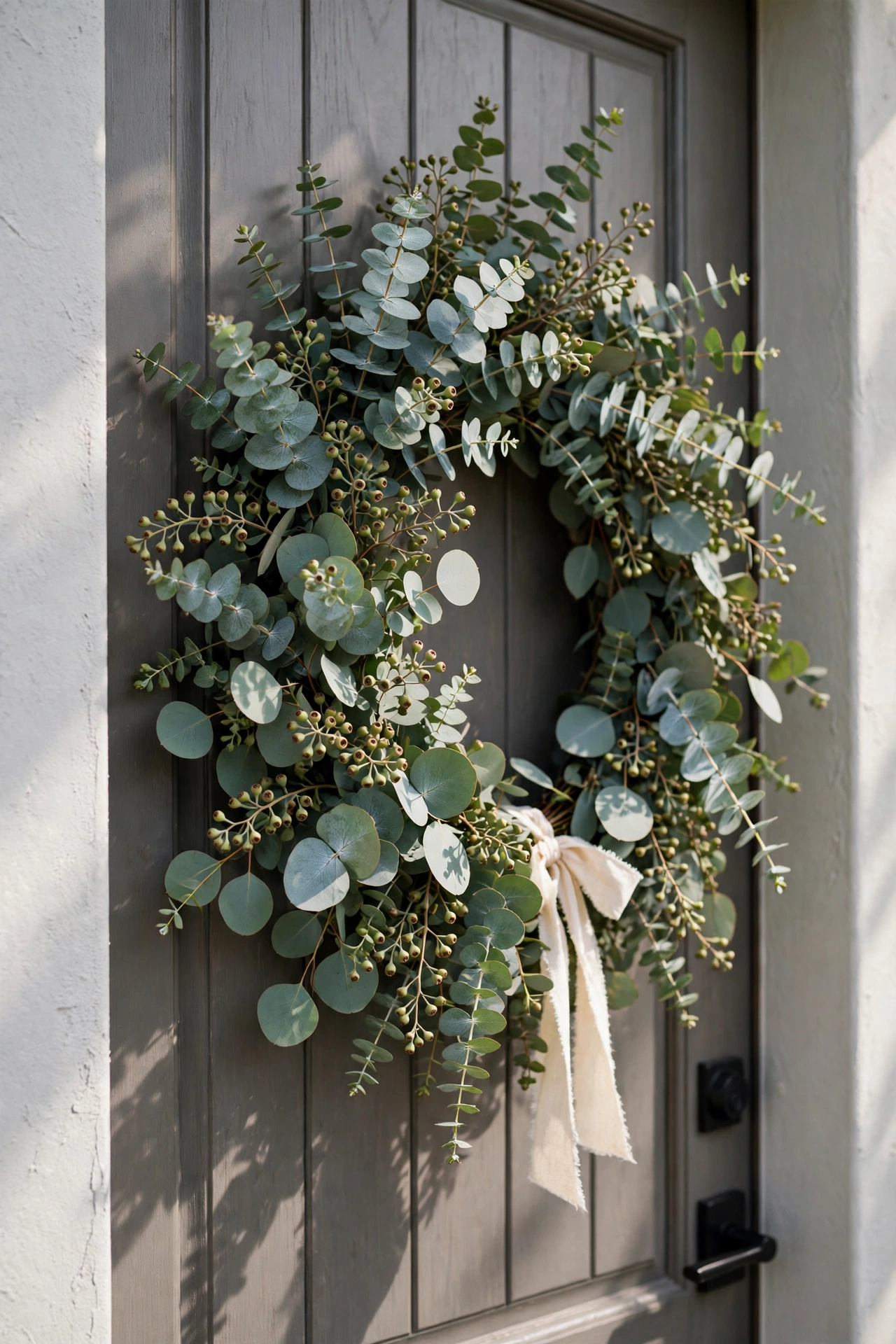
Eucalyptus & Silver Dollar Wreath
Silvery-green eucalyptus leaves, both the round silver dollar variety and the longer seeded stems, combine on a simple wire base for a wreath with a cool, almost minty undertone. Because eucalyptus naturally dries beautifully and holds its shape, this design works equally well as a fresh or faux option. The muted, blue-green palette feels sophisticated and distinctly non-holiday, which makes it one of the easiest wreaths on this list to leave up well into spring. A thin cream ribbon is the only accent this design really needs.
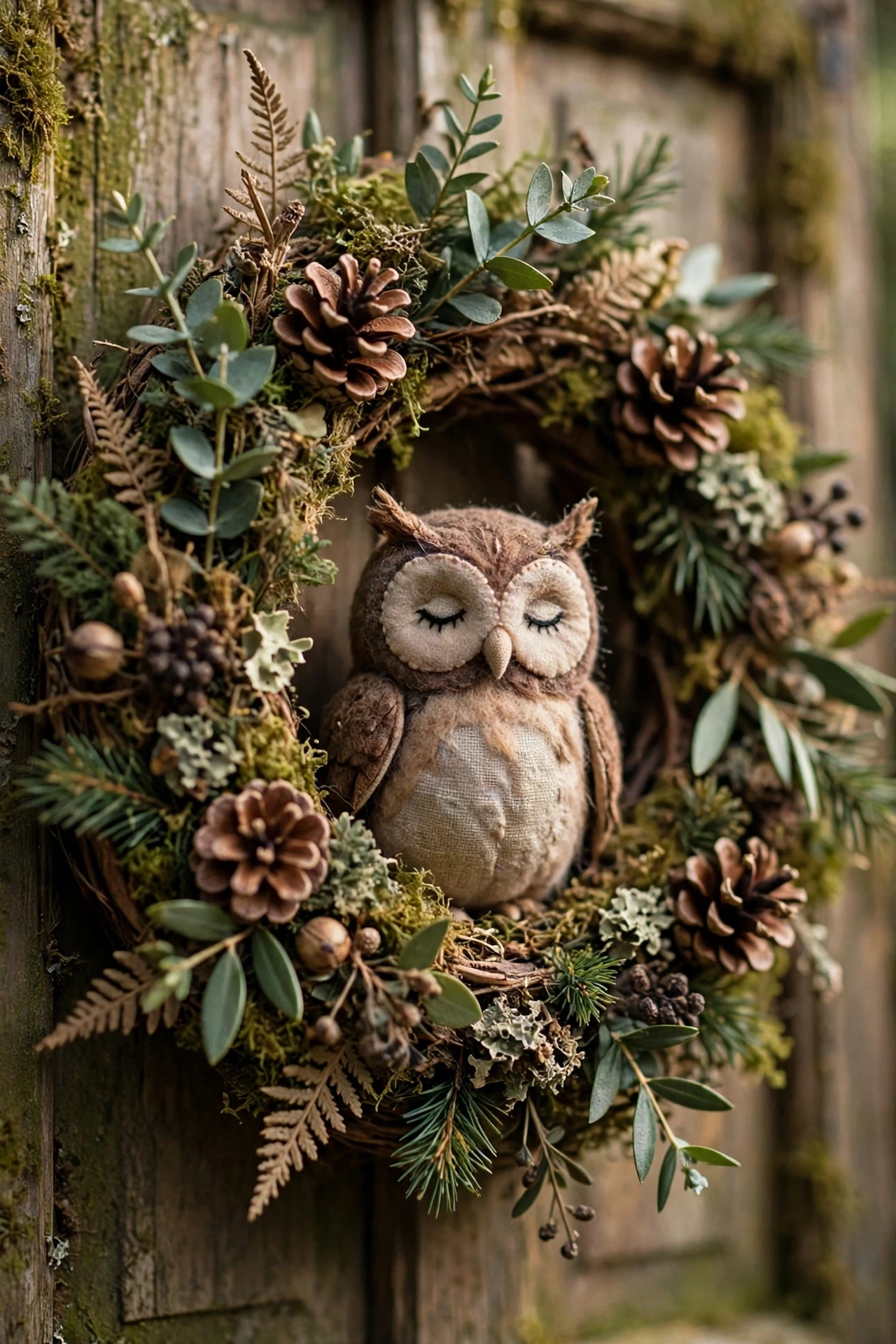
Woodland Pinecone & Fabric Owl Wreath
A rustic pinecone and greenery base gets one whimsical addition: a small fabric or wooden owl figure tucked into the branches as a focal point. This design leans playful and is especially popular for homes with kids or anyone who wants their front door to feel a little more personal and less catalog-perfect. Keep the rest of the palette neutral — natural pinecones, muted greens, a touch of moss — so the owl reads as a charming detail rather than a costume-y centerpiece. It’s a great conversation starter for neighbors and trick-or-treaters turned holiday visitors alike.
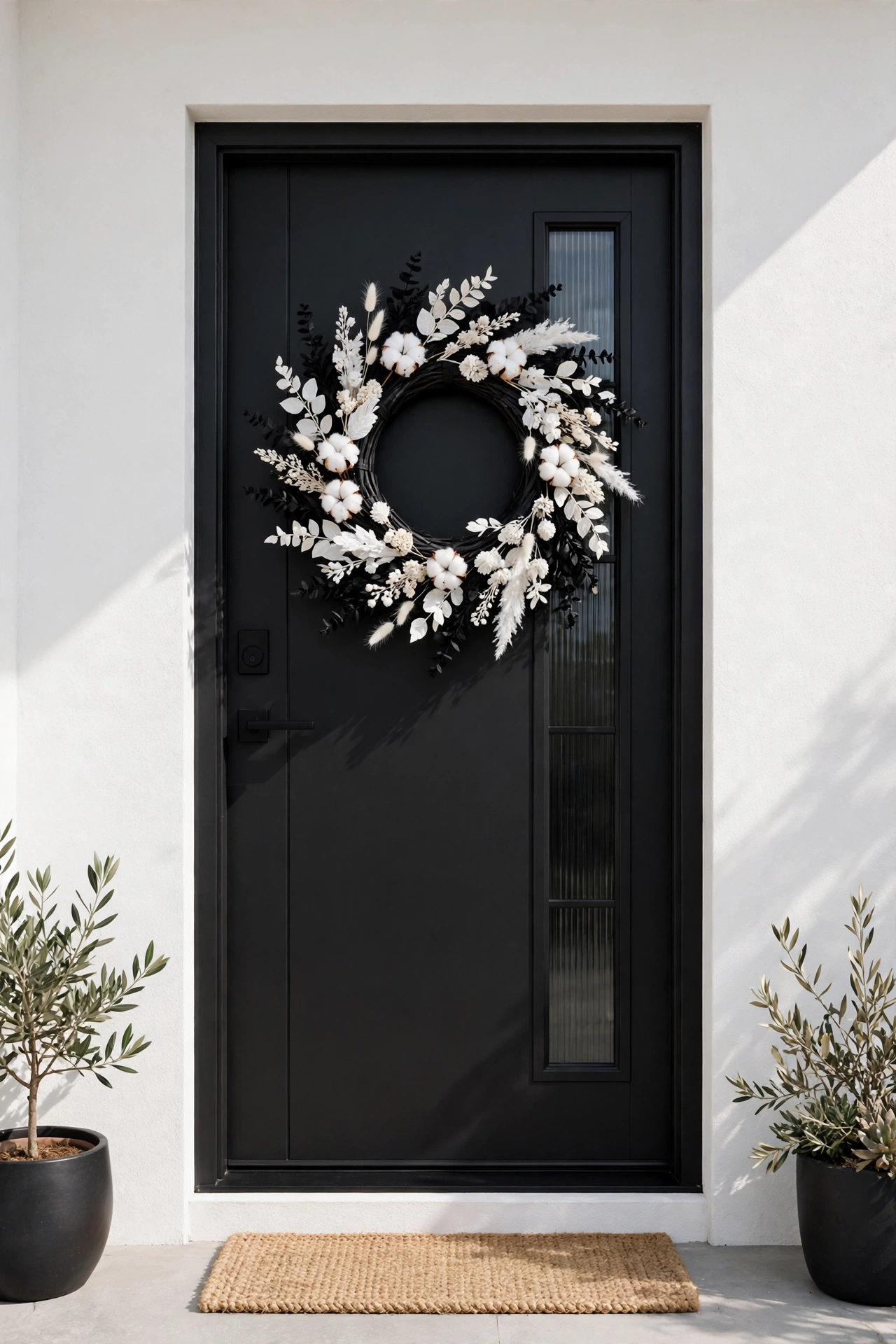
Black & White Winter Wreath
For a graphic, modern statement, this wreath pairs stark white faux florals or snowflake accents against a base wrapped entirely in black ribbon or blackened greenery. The high contrast makes it one of the most photograph-ready designs on the list, since it reads clearly even in low light or from a distance down the street. It suits contemporary homes with clean architectural lines far more than it does a traditional farmhouse porch. Keep the shapes simple and geometric rather than fussy to maintain the modern feel.
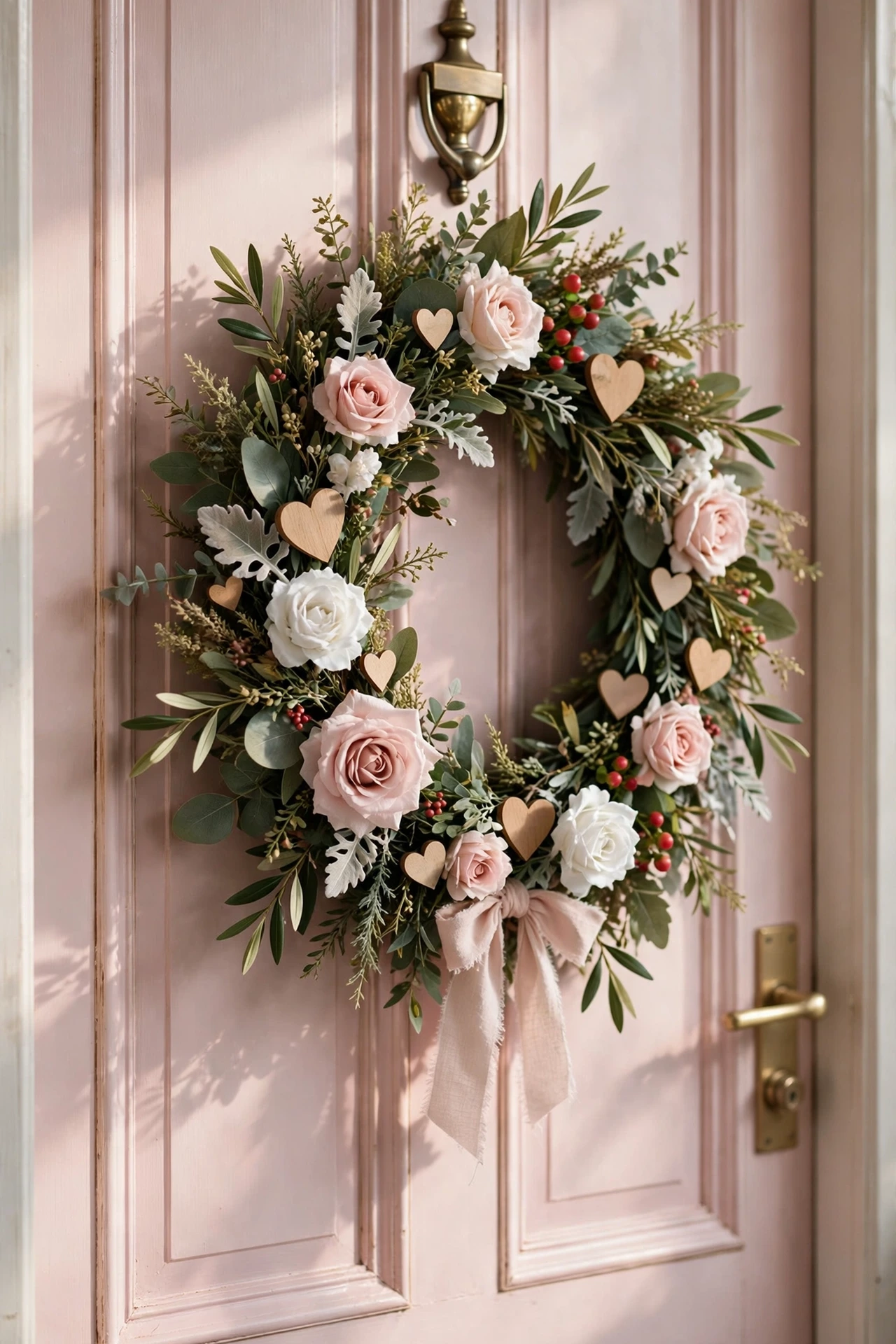
Valentine-Ready Transitional Wreath
Designed specifically to bridge the gap between winter and early spring, this wreath keeps a base of soft greenery but swaps in blush and white faux roses along with a handful of small heart accents. It reads as wintry enough for January but shifts naturally into February without needing a full wreath swap for Valentine’s Day. Red berries scattered throughout tie it back to the earlier winter months for a cohesive seasonal thread. This is a smart, budget-friendly pick for anyone who wants fewer wreath changes across the colder months.
Styling Tips for a Standout Wreath
Hang your wreath at eye level rather than dead center on the door, since most people view it while standing on the porch, not from the street. Vary the texture of your materials — pair something glossy with something matte, or something smooth with something rough — because texture contrast reads as more expensive than color alone. Keep any focal element, like a bow or bloom cluster, slightly off-center for a more natural, less mass-produced look. And always step back ten feet after hanging it; details that look great up close can disappear entirely from the sidewalk.
Practical Implementation Ideas
A simple over-the-door wreath hanger avoids drilling into your door frame and works on almost any door thickness. For heavier wreaths, like ones with fur, fresh greenery, or lights, a small adhesive hook rated for outdoor use holds weight better than a hanger alone. If your door gets direct afternoon sun, choose faux materials over dried florals, since UV exposure fades color fast. Rotating your wreath 90 degrees every few weeks also helps it fade and weather more evenly if it lives outdoors all season.
Common Mistakes to Avoid
The most common mistake is leaving a purely Christmas-themed wreath up well into February, which reads as forgotten rather than intentional. Overcrowding the base with too many accent pieces is a close second — a wreath with five focal points has no focal point at all. Sizing is another frequent miss: a wreath under 20 inches on a standard door tends to look undersized and lost. Finally, skipping weather-resistant materials on an exposed, uncovered porch means your wreath may not survive more than a few weeks of real winter weather.
Small-Space Alternatives
Narrow doors, storm doors, or apartment entries do best with a slimmer 14 to 16 inch wreath rather than a full 24-inch design, so it doesn’t overwhelm the frame. A flat-backed wreath, one designed to sit closer to the door surface, also works better for doors with limited clearance from a storm door. Consider hanging a smaller wreath slightly higher than usual, closer to the top third of the door, which visually elongates a narrow entry. For shared or apartment entrances, a simple boxwood or eucalyptus design tends to read as tasteful without drawing complaints from neighbors or building management.
Budget-Friendly Alternatives
A plain grapevine wreath form, available cheaply at most craft stores, is the most budget-friendly base for nearly every style on this list. Foraged materials — pinecones, bare branches, dried leaves — cost nothing and hold up surprisingly well once dried. Ribbon is the single highest-impact, lowest-cost upgrade available; swapping a plain wreath’s ribbon for a new color or pattern can transform the entire look for a few dollars. End-of-season clearance in January is also the best time to stock up on faux greenery and berries at a steep discount for next year’s wreath.
Pro Styling Recommendations
Choose one dominant color family and let everything else support it, rather than trying to include every trend at once. Match your wreath’s formality to your home’s architecture — a manicured boxwood wreath looks out of place on a rustic cabin, just as a foraged twig wreath can look messy on a formal brick colonial. If your porch light casts warm yellow tones at night, avoid cool blue or icy white wreaths, since the lighting will distort the intended color palette after dark. And when in doubt, a wreath with varied but limited textures will almost always outperform one with more colors than materials.
FAQs
Final Thoughts
A front door wreath is such a small piece of your home, and yet it carries an outsized amount of first impression. The right one doesn’t just mark a holiday — it sets a mood that lasts through the coldest, grayest months of the year. Whichever of these 22 ideas feels most like your home, the real goal is the same: a front door that still looks cared for in February, not just in December.