17 Fall Kitchen Countertop Decor Ideas That Feel Cozy, Not Cluttered
Fall kitchen decor has a clutter problem. Scroll long enough and every countertop is buried under pumpkins, plaid runners, and a sign that says something about pumpkin spice, until the whole counter looks more like a seasonal display case than a kitchen anyone actually cooks in.
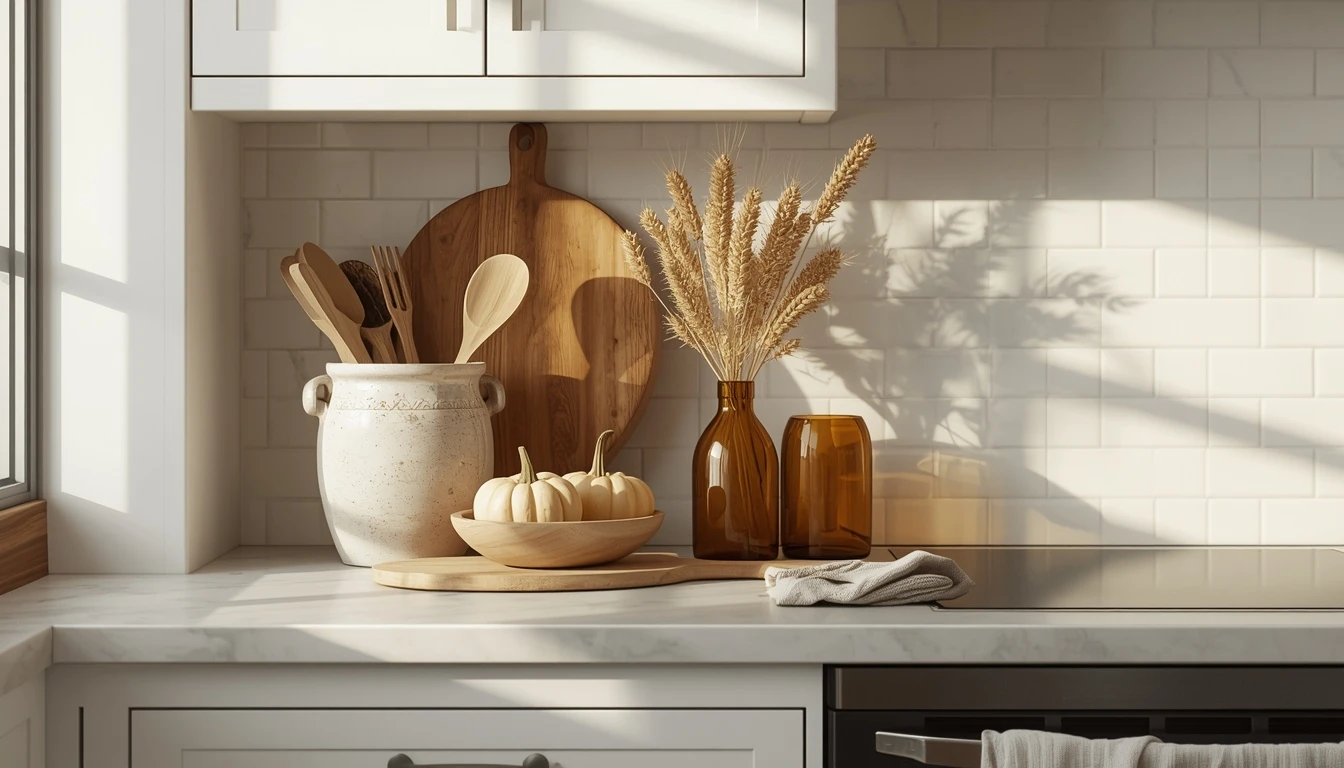
There’s a better way to do this, and it doesn’t require a trip to the craft store. The coziest fall kitchens lean on what’s already sitting in your cabinets, a wood cutting board, a stoneware crock, an amber glass or two, styled with a little intention instead of piled on for volume. The goal isn’t more decor. It’s the right decor, in the right spot, with enough open counter left over that you can still roll out pie dough without moving six things first.
This guide walks through 17 specific ways to bring warmth and season into your kitchen counters using texture, color, and a few small styling habits that keep everything feeling calm instead of crowded. Save the ones that fit your kitchen.
Table of Contents
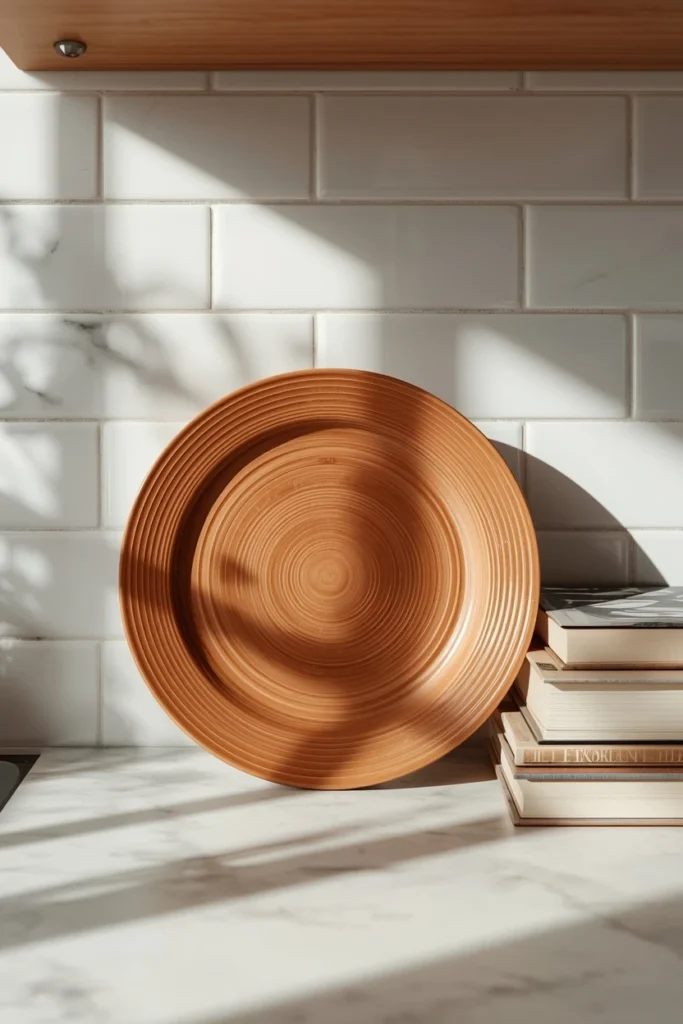
1. Lean a Wood Cutting Board Against the Backsplash
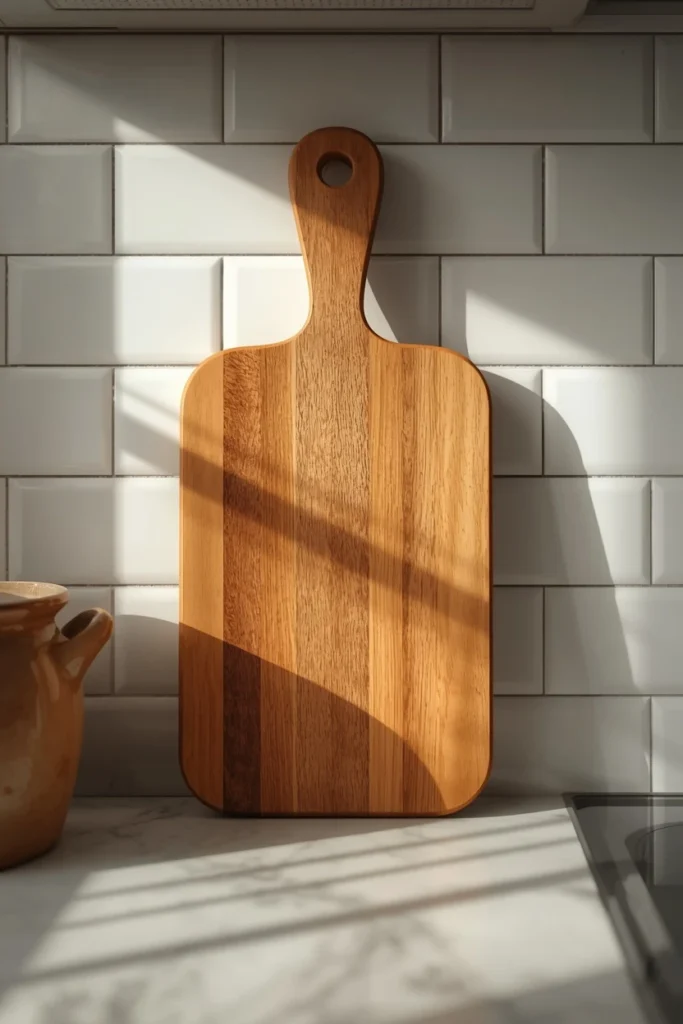
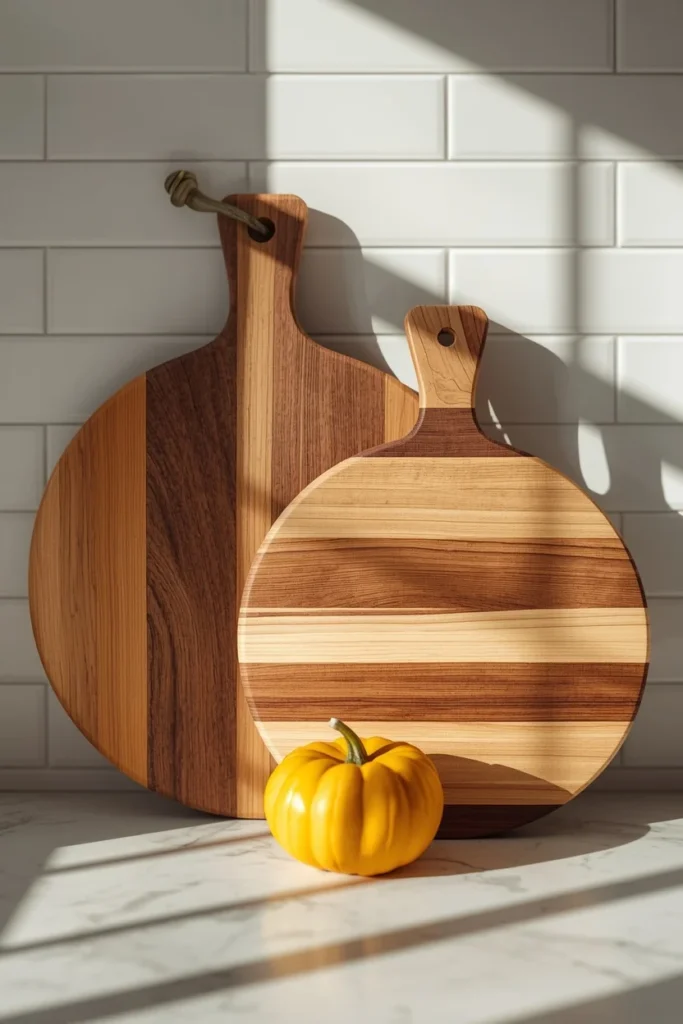
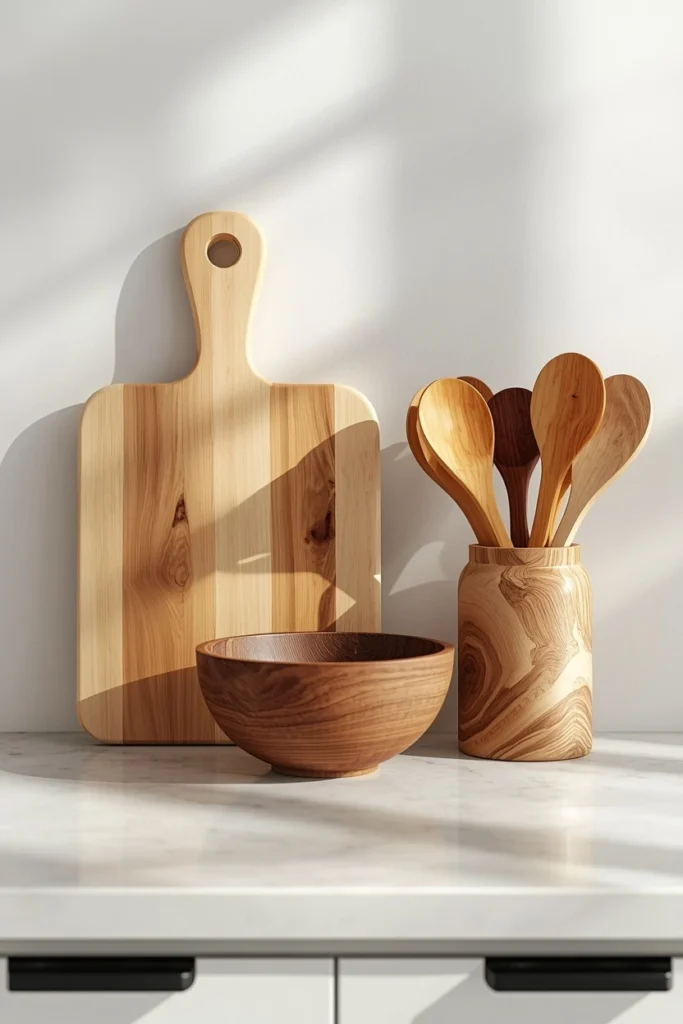
Propping a wood cutting board upright against the backsplash, rather than storing it flat in a drawer, turns a purely functional tool into a piece of seasonal texture without adding a single new object to your kitchen. Choose a board with visible grain and a warm, honey-toned wood, since this is what reads as cozy and organic against most countertop materials, whether that’s white quartz or butcher block. This idea works especially well behind a stove or sink, where the board also stays genuinely within reach for actual use rather than becoming purely decorative. Because it’s something you already own, this is one of the fastest and most authentic ways to bring fall warmth into the kitchen, with zero cost and about ten seconds of effort. It’s also endlessly flexible, since swapping the board’s angle or size lets you refresh the look throughout the season without buying anything new.
2. Layer Two or Three Cutting Boards Together
Rather than displaying one cutting board alone, layering two or three boards of varying sizes and wood tones adds depth and visual interest while still using purely functional kitchen tools rather than seasonal knickknacks. Stack the largest board on the bottom and lean the smaller ones slightly in front or to the side, creating a loose, organic arrangement rather than a perfectly even stack. Mixing wood tones intentionally, a lighter maple board next to a darker walnut one, adds richness without requiring any matching or coordinated shopping. This layered approach works particularly well as a backdrop for a small styling moment, like a stoneware crock or a single pie pumpkin placed just in front of the boards. It’s a favorite trick among stylists specifically because it photographs beautifully while remaining entirely functional and genuinely useful during actual cooking.
3. Swap Your Utensil Crock’s Contents for Wood Tools
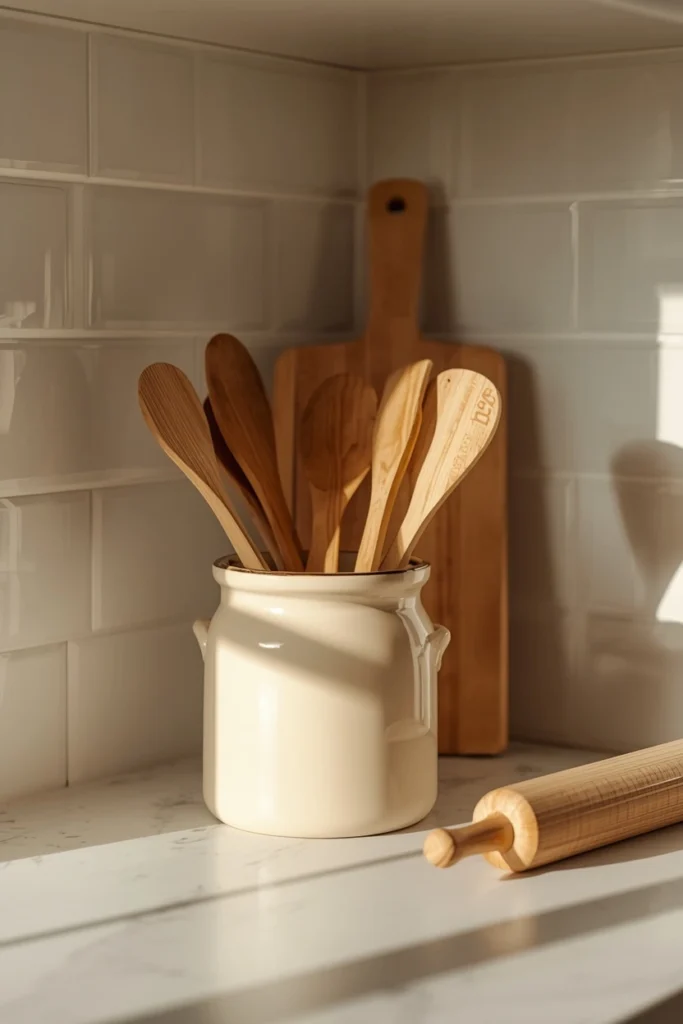
If a utensil crock already sits on your counter year-round, the simplest fall update is swapping brightly colored or plastic utensils for wooden spoons, bamboo spatulas, and a natural wood rolling pin. This small substitution instantly warms up a piece of decor you already have in daily rotation, without adding any new object to the counter or disrupting its actual function. Choose a stoneware or ceramic crock in a warm neutral tone, like cream, beige, or soft gray, since this color palette blends into nearly any kitchen style while still reading as intentionally seasonal once paired with wood-handled tools. This idea requires essentially no cost if you already own a mix of wood and plastic utensils, just a five-minute reshuffle of what’s currently on display versus tucked in a drawer. It’s a perfect example of decorating through substitution rather than addition, which is the core principle behind keeping a fall kitchen cozy instead of cluttered.
4. Style a Wood Dough Bowl With Seasonal Fruit
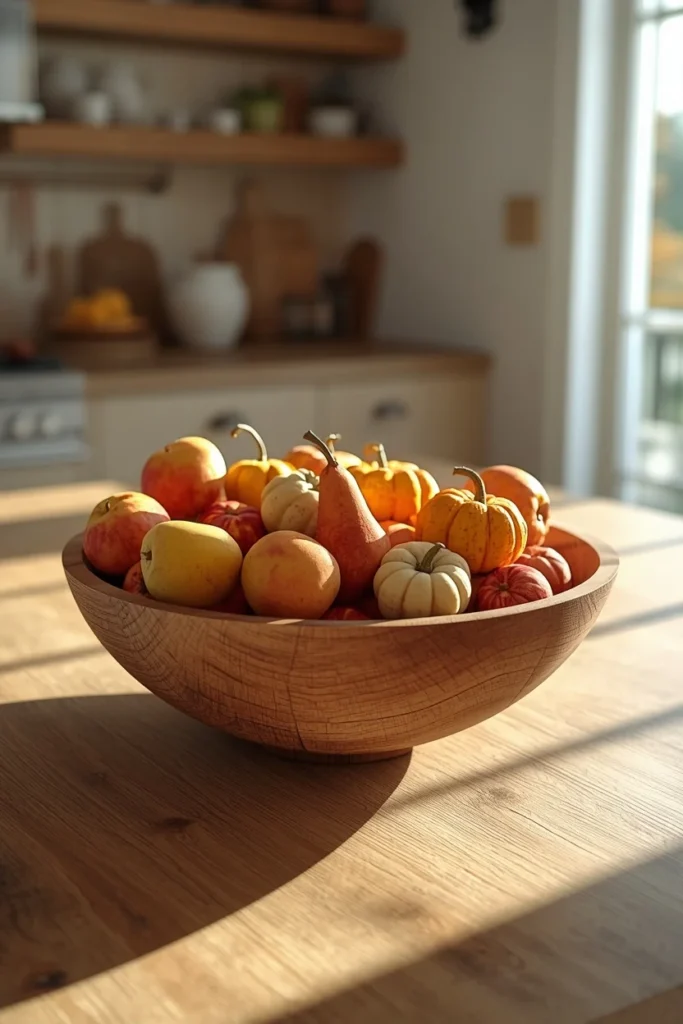
A wood dough bowl is one of the most naturally suited pieces for fall countertop styling, since its shape and texture already carry warmth before you add a single seasonal item to it. Fill it with a mix of real or faux apples, pears, small gourds, and one or two mini pumpkins, choosing a color palette that stays close to the wood’s natural tone rather than clashing bright orange against it. Keep the dough bowl itself visible around the edges rather than burying it completely under filler, since the bowl’s own texture and shape are meant to do real visual work, not just serve as a hidden container. Position it as the clear centerpiece of a kitchen island or a long stretch of open counter, letting it stand alone rather than crowding it with other decor nearby. A well-styled dough bowl consistently ranks as one of the most popular and photographed pieces of fall kitchen decor for exactly this reason, it delivers major seasonal impact from a single, genuinely beautiful object.
5. Fill a Stoneware Crock With Dried Wheat or Grasses
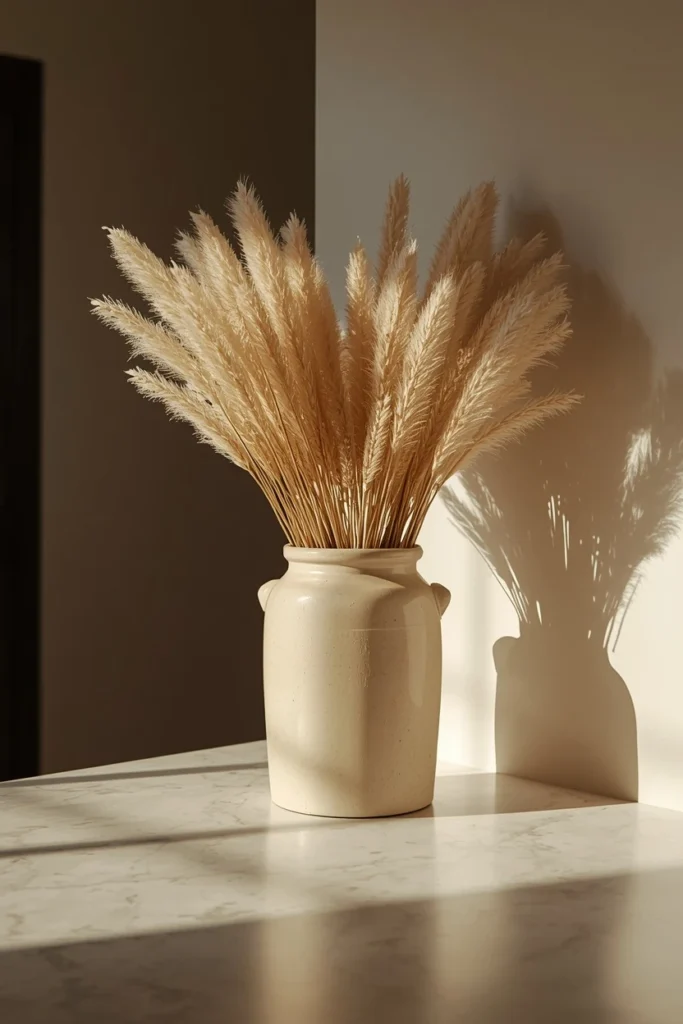
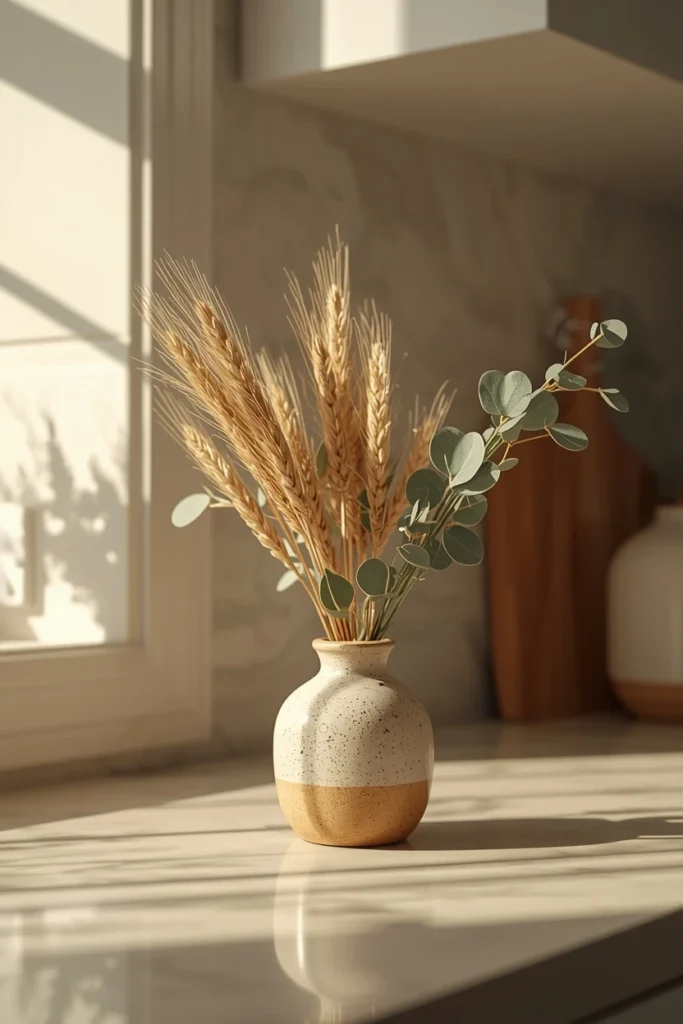
A tall stoneware crock or pitcher filled with dried wheat stems, pampas grass, or dried eucalyptus brings height and texture to a countertop without requiring any water changes or ongoing maintenance throughout the season. Choose stems in muted, natural tones, wheat gold, soft taupe, warm cream, rather than dyed or artificially bright colors, since the understated palette is what keeps this arrangement feeling elevated rather than craft-store obvious. Position the crock toward the back or side of a counter run, where its height won’t interfere with actual workspace, letting it function almost like a piece of art rather than a centerpiece that needs to be moved constantly. This idea also has genuine longevity, since dried botanicals last the entire fall season without wilting or needing replacement, unlike fresh flowers. It’s a low-maintenance way to add real dimension to a kitchen counter that might otherwise stay completely flat and two-dimensional in its styling.
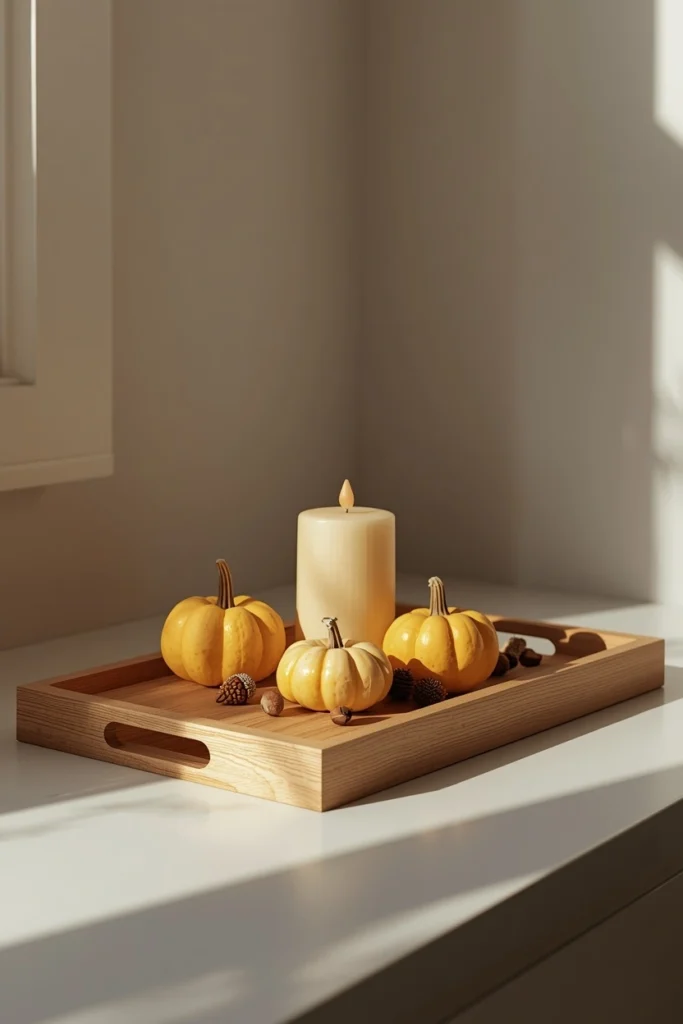
6. Create a Grouped Tray Vignette Instead of Scattering Pumpkins
Rather than placing individual pumpkins and gourds across multiple counters throughout the kitchen, corral everything onto a single tray, creating one contained, grouped moment instead of scattered seasonal clutter. Choose a simple wood or rattan tray, arranging a small mix of mini pumpkins, a candle, and one or two natural elements like acorns or a small dried branch. This approach solves the most common fall kitchen decor problem directly, the tendency to keep adding one more seasonal item here and there until the counters feel overwhelmed, since a tray creates a natural boundary that limits how much decor lives in any one spot. The tray also makes seasonal cleanup dramatically easier at the end of fall, since everything lifts away in one motion rather than needing to be individually located and packed up. This single styling trick, contained grouping instead of scattered placement, is the difference most people are actually looking for when they say they want cozy instead of cluttered.
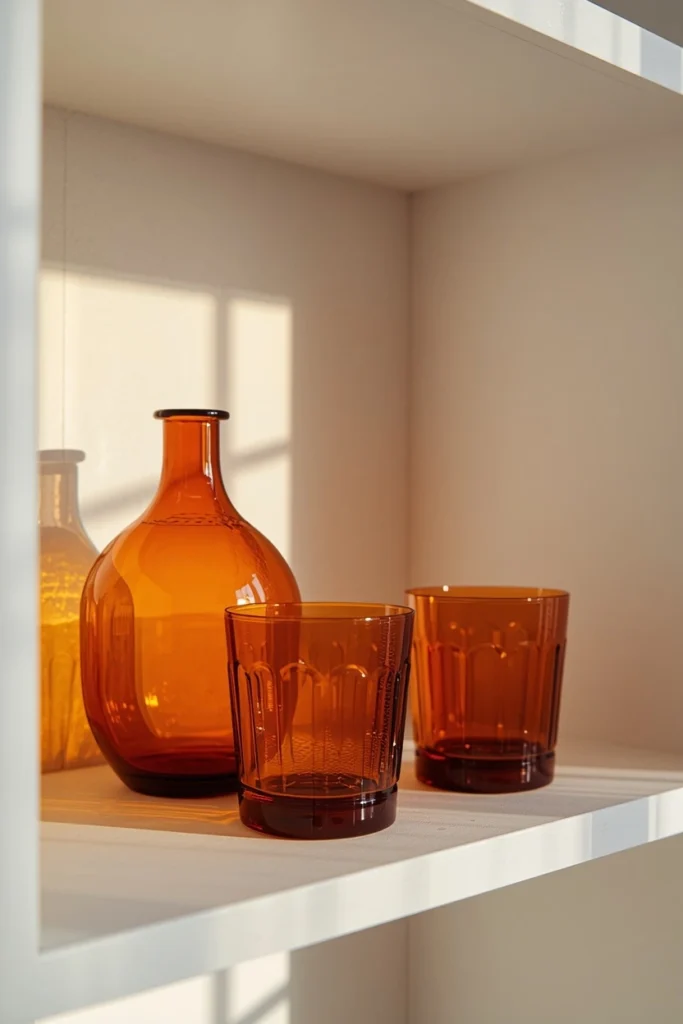
7. Display Amber Glassware for Warm Color Without Clutter
A small collection of amber glass, whether that’s a set of drinking glasses, a vase, or a vintage glass canister, introduces fall’s signature warm color palette through pieces that already have a permanent, functional home in most kitchens. Choose two or three pieces rather than a large collection, displaying them together on open shelving or a corner of the counter where they catch natural light and show off their warm, glowing color. This idea works particularly well for anyone who wants seasonal color without adding literal pumpkins or overtly autumnal imagery, since amber glass communicates warmth through color and material alone. Position the glass where afternoon light hits it directly, since amber glass depends on light passing through it to create its signature warm glow, and it reads as flat and unremarkable in shadow. This is a favorite trick among more minimal or vintage-leaning decorators specifically because it delivers real seasonal color without a single traditionally “Halloween” or “fall” themed object anywhere in sight.
8. Lean a Vintage or Fall-Themed Plate Against the Backsplash
A single decorative plate, propped against the backsplash rather than displayed flat on a stand, adds pattern and color to a kitchen counter using minimal footprint and zero additional counter clutter. Choose a plate in warm transferware brown, a simple botanical print, or a subtle fall-toned pattern, avoiding anything overtly cartoonish or literal, since a more understated pattern tends to read as more sophisticated once it becomes a permanent fixture of the counter for several weeks. Position it behind a cutting board or a small stack of cookbooks so it has some visual support and doesn’t look like it’s simply floating alone against the tile. This idea borrows directly from a technique long used in more formal dining room styling, adapted here for a kitchen counter that still needs to stay functional day to day. A single well-chosen plate does a surprising amount of visual work for how little space and cost it requires.
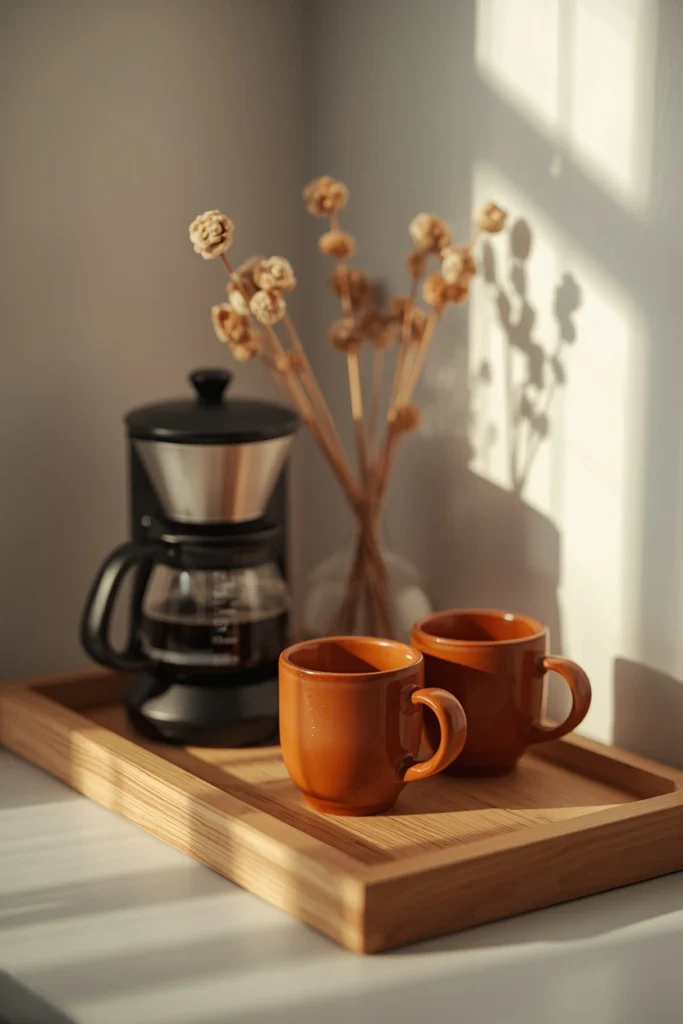
9. Add a Small Coffee Bar Corner for Fall
Dedicating one small corner of the counter specifically to coffee or tea, complete with a few fall-appropriate mugs, a small vase, and a warm-toned tray, creates a defined, purposeful zone rather than decor scattered without any clear function. Choose two or three mugs in warm, earthy glazes, displaying them on a small mug tree or simply stacked beside a coffee maker that likely already lives in this spot. Add one small seasonal touch, like a tiny vase of dried stems or a small pumpkin no larger than a fist, keeping the overall footprint contained to what the coffee station actually needs. This idea works because it doubles as genuinely useful daily infrastructure, since a coffee corner gets used every single morning regardless of the season, making the seasonal styling feel earned rather than purely decorative. A well-organized coffee bar corner consistently photographs as one of the coziest, most inviting spots in the entire kitchen, precisely because it’s rooted in real daily ritual.
10. Hang Seasonal Linens Near the Stove
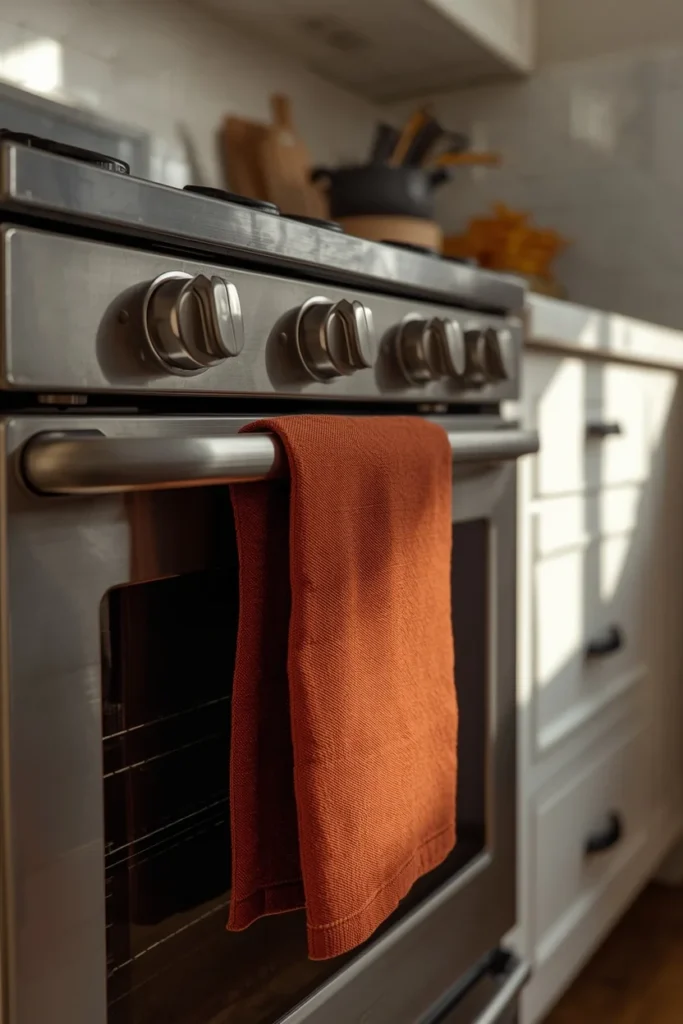
A fall-toned kitchen towel or potholder, hung from an oven handle or a small hook near the stove, adds color and softness to a kitchen that might otherwise feel dominated by hard surfaces like tile, stone, and stainless steel. Choose linens in warm, muted tones, rust, ochre, deep olive, rather than bright orange or overtly themed prints, since a more subtle palette tends to blend more naturally into the kitchen’s everyday use rather than reading as temporary decoration. If you have more towels than practical hanging space, a small wall-mounted ladder or hook rack on the counter solves the storage problem while adding another layer of texture at the same time. This idea is genuinely functional, since kitchen towels get used constantly regardless of the season, making this one of the lowest-effort, highest-return ideas on the entire list. Fabric also does something wood and stone can’t, it softens a kitchen that can otherwise feel a little cold or industrial, especially in an all-white or stainless steel space.
11. Add a Salt Cellar and Butter Dish Duo
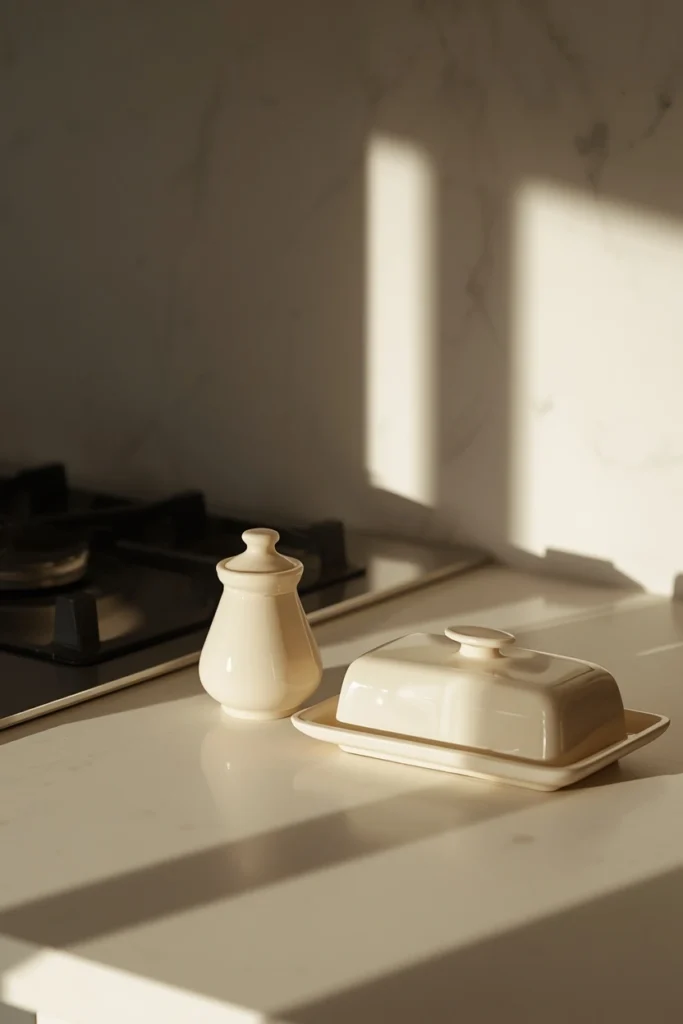
A small ceramic salt cellar beside the stove and a covered butter dish on the counter both bring old-world, apothecary-style charm to a kitchen while remaining entirely functional pieces used during actual daily cooking. Choose pieces in a warm stoneware or cream ceramic finish, since this material and color palette reads as timeless and cozy without needing any additional seasonal styling layered on top. These two small objects work particularly well together as a pair, creating a sense of a considered, well-equipped kitchen rather than one styled purely for photographs. Because both pieces serve genuine daily purposes, seasoning food and storing butter, they earn their spot on the counter year-round, with fall simply being an especially fitting season to lean into their old-fashioned, homestead-inspired character. This is one of the most quietly effective ideas on this list precisely because it doesn’t read as decor at all, just as a well-appointed, lived-in kitchen.
12. Place a Candle on a Vintage Saucer
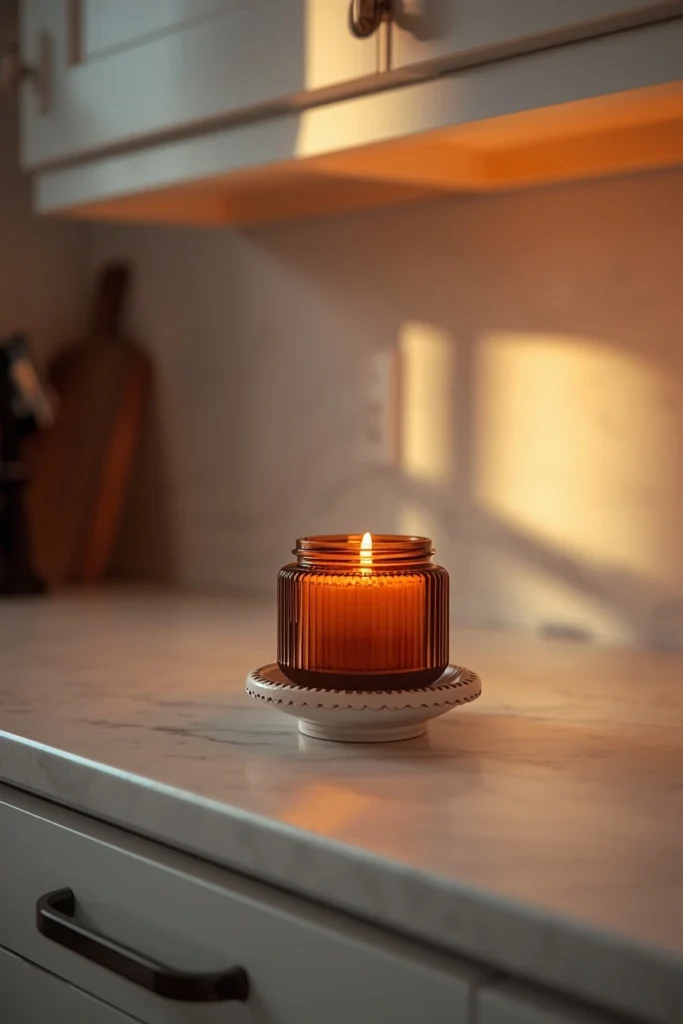
A single candle, set on a small vintage saucer or plate rather than left directly on the counter, adds warmth, scent, and a touch of old-world charm to any open counter space without requiring more than one object. Choose a candle in a warm, cozy scent like cinnamon, amber, or fig, and a saucer with some age or character to it, like a chipped or mismatched vintage find, since this small imperfection actually adds to the charm rather than detracting from it. Position the candle somewhere it gets lit regularly, like near where you sit for morning coffee or where guests naturally gather during meal prep, so it earns its place through actual use rather than sitting purely as decoration. This is one of the simplest possible countertop styling moves, using an item most kitchens already have, and it delivers both a visual and sensory seasonal cue at the same time. A lit candle at dusk also does more to make a kitchen feel genuinely cozy than almost any purely visual decor choice on this entire list.
13. Add a Rattan or Woven Basket for Everyday Catch-All
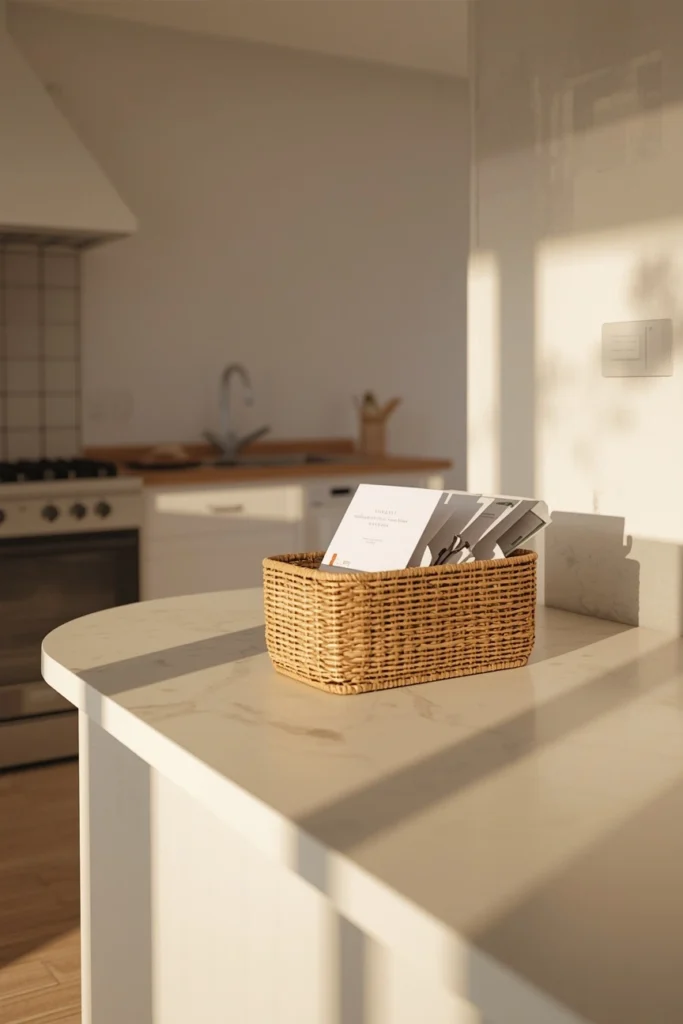
A small rattan or woven basket placed at one end of the counter gives mail, keys, or loose kitchen items a defined home, which paradoxically makes the rest of the counter look more intentionally styled by keeping genuine daily clutter contained to one spot. Choose a basket with natural, undyed material, since its neutral tan tone pairs easily with virtually any other fall styling choice elsewhere on the counter. This idea directly addresses one of the biggest reasons kitchen counters feel cluttered in the first place, not seasonal decor itself, but everyday items with no assigned storage spot. Position the basket somewhere convenient and consistent, like near the entry point from the garage or front door, so it actually gets used as intended rather than becoming yet another decorative object competing for attention. This is less about adding fall decor directly and more about creating the organizational foundation that makes every other styling idea on this list actually look good in practice.
14. Mix Wood Tones Intentionally Across Pieces
Rather than trying to match every wood item on the counter to a single uniform tone, intentionally mixing light oak, warm walnut, and honey-toned maple across different pieces, like a cutting board, a dough bowl, and a set of spoons, creates a layered, collected look that feels far more natural than a perfectly matched set. This approach works because wood tones within the same warm family generally coordinate well together even when they’re not identical, echoing the way a genuinely lived-in kitchen accumulates pieces over time rather than buying everything from one matching collection. Balance the mixed wood tones against a neutral countertop and simple stoneware or ceramic pieces, since too many competing textures alongside varied wood tones can tip the look from collected into busy. This principle applies across nearly every idea on this list, since wood is the single most common material thread running through cozy, uncluttered fall kitchen styling. Once you start noticing which wood tones already exist in your kitchen, styling around them becomes significantly easier and far less expensive than buying new matching pieces.
15. Style One Cookbook Open or Stacked for Fall Baking
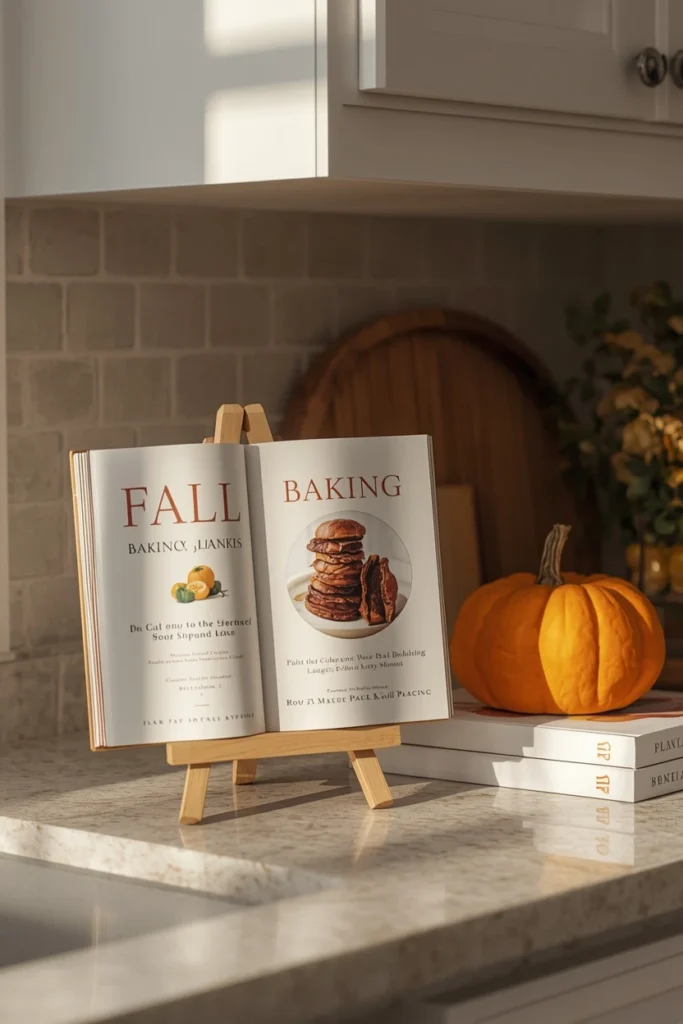
A favorite fall baking cookbook, either propped open on a stand or simply stacked with one or two others, brings a lived-in, purposeful quality to the counter while subtly signaling the season through its subject matter rather than through literal pumpkin imagery. Choose a stand or simply lean the open book against the backsplash near your primary baking zone, positioning it somewhere it might genuinely get referenced while you’re actually cooking. Stack two or three additional cookbooks beside it if you want more visual height and texture, choosing books with warm-toned covers or spines that complement the kitchen’s broader color palette. This idea works particularly well for anyone who already loves to bake in the fall, since the cookbook display doubles as genuine inspiration and reference material rather than purely decorative styling. It’s a detail that consistently reads as authentic and personal, since it reflects an actual hobby or ritual rather than a purchased seasonal prop.
16. Add a Small Vase of Seasonal Stems
A small vase holding a few stems, whether that’s dried wheat, faux eucalyptus, or a small bunch of real seasonal flowers like mums or dahlias, brings a touch of organic color and life to a counter that might otherwise be styled entirely with static objects. Choose a vase in a simple, warm-toned material, ceramic, stoneware, or amber glass, keeping the arrangement itself loose and slightly asymmetrical rather than tightly clustered, since a more relaxed arrangement tends to read as more natural and less formally arranged. Position it near a coffee station or on a small stretch of open counter, using it as a punctuation mark rather than the main event of the entire kitchen’s fall styling. This idea introduces genuine seasonal color, warm rust, deep burgundy, soft gold, without requiring any pumpkin or gourd imagery at all, making it a strong option for anyone who wants their kitchen to feel like fall without leaning into overtly literal seasonal decor. Refreshing the stems every week or two also gives you an easy, low-cost way to keep the styling feeling current throughout the entire season.
17. Choose One Zone and Edit Ruthlessly
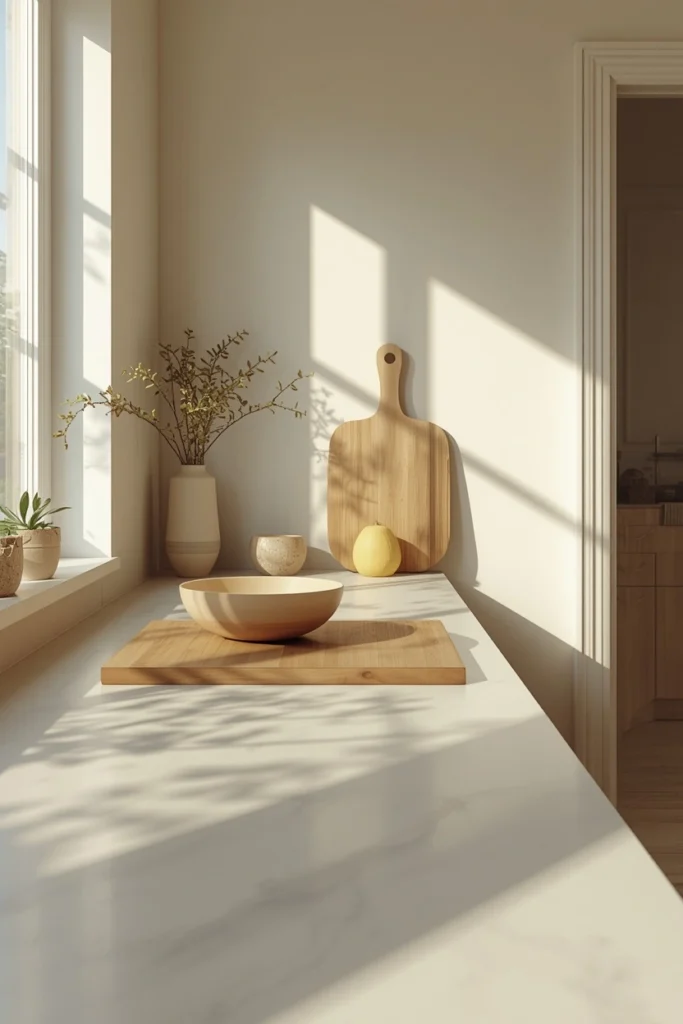
The single most important principle behind a cozy, uncluttered fall kitchen isn’t any specific object at all, it’s choosing one or two dedicated zones to style, like an island centerpiece or a coffee bar corner, and deliberately leaving the rest of the counters open and functional. Walk through your kitchen and identify the one or two spots that naturally draw the eye or already function as a gathering point, then concentrate your fall styling efforts there instead of spreading a little decor across every available surface. Once a zone is styled, step back and edit, if a grouping feels crowded or busy, remove one item and reassess, since subtraction is almost always more effective than addition once a space starts feeling overwhelmed. This approach also makes seasonal decorating dramatically faster and less expensive, since you’re solving for one or two focused vignettes rather than trying to cover an entire kitchen’s worth of surfaces. Every professional stylist and interior decorator relies on this same principle, restraint and intentional grouping consistently outperform volume, and it’s the detail that separates a kitchen that feels genuinely cozy from one that just feels full.
Styling Tips for Cozy, Uncluttered Fall Counters
Substitute before you add. Swapping utensils, linens, or a few small objects for warmer, seasonal versions delivers more cohesive styling than piling new decor on top of what’s already there.
Group instead of scatter. A tray or defined zone contains seasonal decor to one intentional spot rather than letting it spread across every available surface.
Lean on texture over literal imagery. Wood, stoneware, amber glass, and natural fiber communicate fall just as clearly as a pumpkin, often with more staying power and less visual clutter.
Edit after you style. Once a vignette is arranged, remove one item and see if the space still reads as complete. It almost always does.
Practical Implementation Ideas
Start by walking through your kitchen and identifying which counters actually see daily use versus which ones tend to collect clutter regardless of the season, since this tells you where styling will genuinely hold up and where it will just become one more thing to work around. Choose one primary zone, like an island or a coffee station, to style first, then live with it for several days before deciding whether to add a second zone elsewhere. Pull from your own cabinets and pantry before buying anything new, since most kitchens already contain the wood, stoneware, and glass pieces this style depends on. Reassess the styling every week or two throughout the season, removing anything that’s started to feel more like clutter than cozy charm.
Common Mistakes to Avoid
Decorating every available surface. Fall styling works best when it’s concentrated in one or two zones, not spread thin across the entire kitchen.
Choosing decor that blocks actual function. Anything placed where you regularly need counter space for cooking or prep will end up moved constantly, which undermines the whole point of styling in the first place.
Relying only on literal pumpkin and leaf imagery. Texture, wood tone, and warm color communicate the season just as effectively and tend to feel more sophisticated over time.
Skipping the edit step. It’s easy to keep adding one more small item to a vignette until it tips from cozy into cluttered. Step back and remove before adding more.
Small-Space Alternatives
In a small kitchen with limited counter space, choose just one small zone, like a single tray near the coffee maker, rather than attempting a full island centerpiece or multiple styled areas. A leaning cutting board or a single small vase both deliver real seasonal warmth using minimal footprint. Wall-mounted elements, like a small hanging towel or a floating shelf displaying two or three pieces, keep counter surfaces clearer while still adding seasonal texture. Prioritize dual-purpose items, like a stoneware crock that holds daily utensils, over purely decorative objects that take up space without earning their spot through actual use.
Budget-Friendly Alternatives
Nearly every idea on this list can be achieved using items already in your kitchen, cutting boards, cookbooks, mugs, and towels you already own, simply rearranged and styled with more intention. Thrifted stoneware crocks, vintage plates, and secondhand amber glass are widely available and inexpensive, often costing less than new seasonal decor from a big box store. Dried wheat and grasses can frequently be foraged or purchased for very little at a local farm stand or craft store, lasting the entire season without any ongoing cost. Real fruit like apples and pears, used in a dough bowl display, does double duty as both decor and something you can actually eat once the season winds down.
Pro Styling Recommendations
Choose a consistent, limited color palette across your entire kitchen, warm neutrals, wood tones, and one or two accent colors like amber or rust, rather than mixing every fall color and texture available. Group items in odd numbers, typically three, when styling a tray or vignette, since this reads as more natural and intentional than pairs or symmetrical arrangements. Prioritize pieces that serve a genuine daily function, a crock of wooden spoons, a butter dish, a coffee station, since these earn their place on the counter regardless of season and won’t feel like clutter once fall ends. Finally, resist the urge to style every surface at once. The coziest, most functional fall kitchens are almost always the ones where restraint did more work than volume.
FAQs
Conclusion
The coziest fall kitchens were never actually about how much decor made it onto the counter. They’re about restraint, texture, and a handful of pieces that already belonged there in the first place, just arranged with a little more intention once the weather turns. Pick one zone, pull from what you already own, and let the rest of your counters stay exactly what they’re meant to be, open, functional, and ready for whatever you’re actually cooking this season.