22 Moody Living Room Ideas That Are Rich, Dark & Incredibly Inviting
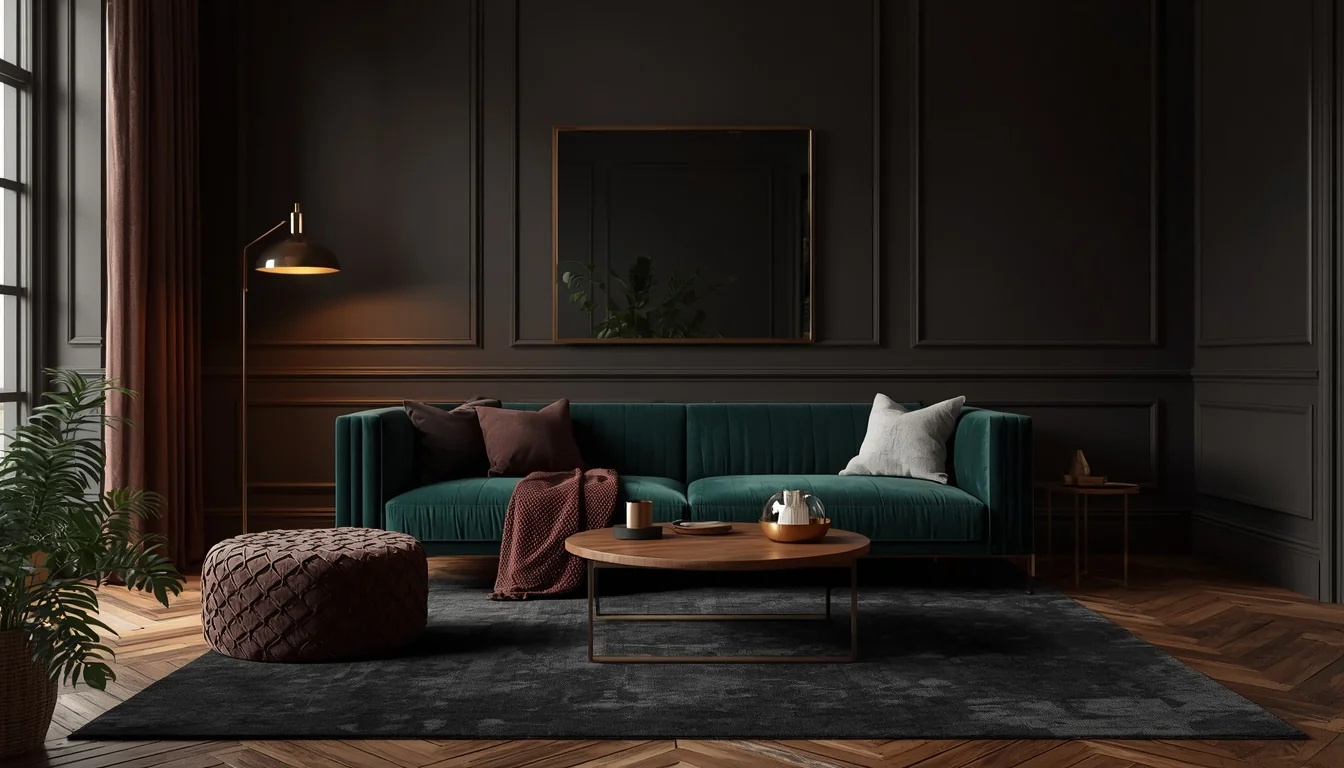
There’s a specific kind of room that makes people stop talking mid-sentence when they walk in.
Not because it’s bright. Because it isn’t.
Moody living rooms work on a feeling most bright, white rooms never quite reach — the sense of being wrapped up in something. Deep charcoal walls. A lamp glowing low instead of a ceiling light glaring down. A sofa you actually sink into instead of perch on.
The tricky part is getting there without the room turning into a cave. That line between rich and gloomy usually comes down to a handful of specific choices — undertone, texture, light temperature — not just picking a dark paint chip and hoping for the best.
These 22 ideas walk through exactly where that line sits, room by room, detail by detail.
Table of Contents
Why Some Dark Rooms Feel Cozy and Others Feel Cold?
A moody room fails for one of two reasons: the color has the wrong undertone for the light it gets, or the lighting plan never got upgraded to match the walls. Blue and green undertones tend to read as calm and grounded. Red and purple undertones lean warmer and more dramatic. Get the undertone wrong for your room’s natural light, and the same “charcoal” paint chip that looked rich on the sample card can read flat or muddy on the actual wall.
1. Color-Drench the Whole Room in One Deep Tone
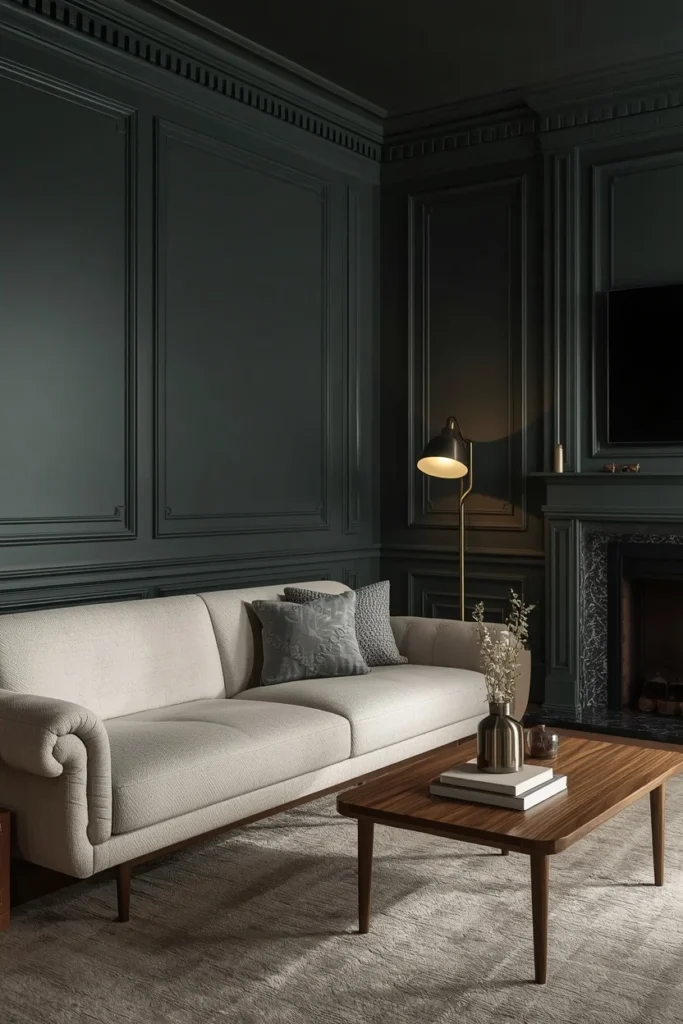
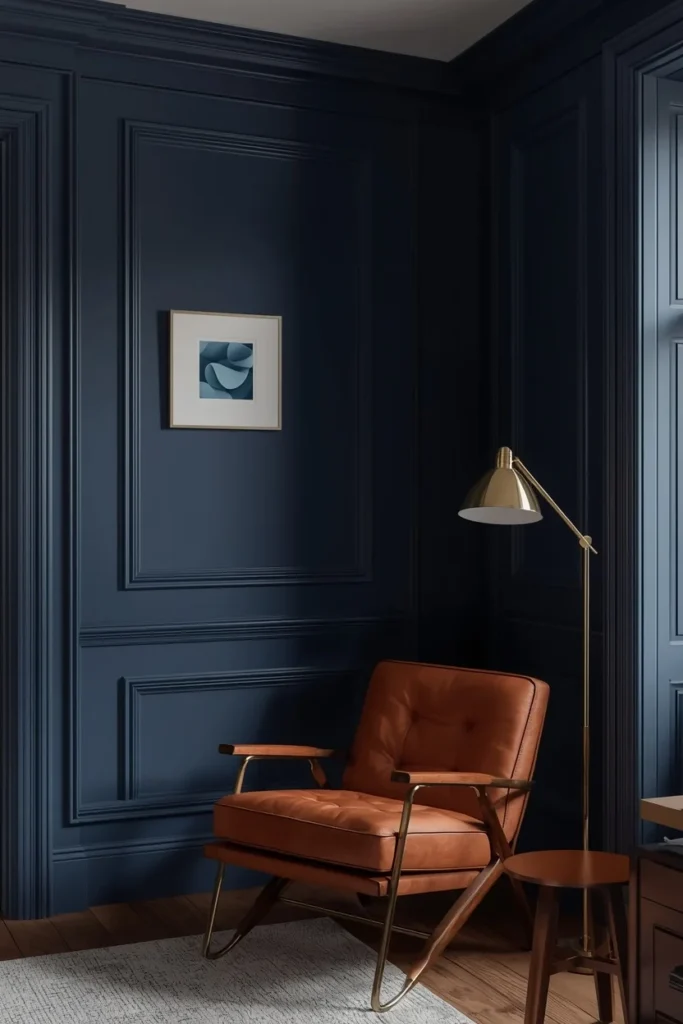
Painting the walls, trim, and ceiling all in the same deep charcoal-green or ink tone wraps the room like a cocoon instead of chopping it up with contrast lines. This technique, often called color drenching, removes the visual break between wall and trim that usually makes a room feel busier and smaller than it is. It works especially well in living rooms with decent natural light, since the single tone reads as intentional rather than dim. Add in warm wood furniture and cream textiles so the drenched color has something to play against. The overall effect feels less like a dark room and more like a fully considered, single-mood space.
2. Paint the Trim to Match the Walls
Skip the classic white trim against a dark wall and paint both the same color instead. Matching trim to wall removes the “frame” effect that can make a room feel boxed and choppy, and it makes ceilings read taller since the eye isn’t stopped by a bright horizontal line partway up. This works in older homes with detailed molding especially well, since the molding still catches shadow and texture even without the contrast paint. It’s one of the cheapest changes on this entire list, since it only needs one extra can of paint. The payoff shows up the moment you walk into the room and the whole thing feels like one continuous, intentional space.
3. Try Color Capping Instead of Full Drenching
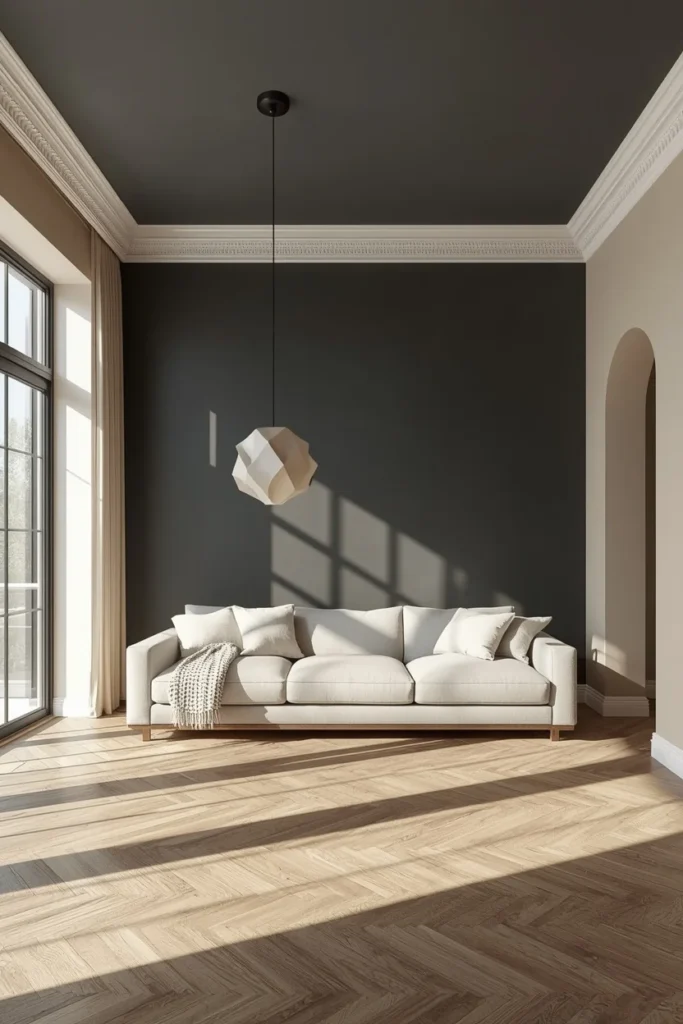
Color capping paints just the ceiling and the upper portion of the wall in a deep tone while keeping the lower walls lighter, which gives you the enveloped feeling of a moody room without the full commitment of dark walls floor to ceiling. It works particularly well in rooms with lower ceilings, since the cap draws the eye up rather than compressing the whole box. Pair it with a light-colored sofa and pale flooring so the bottom half of the room stays airy. This is a strong entry point if you’re moody-curious but not ready to paint an entire room dark. It also reads as more current than a single accent wall, since the color treatment follows the architecture instead of just picking one flat surface.
4. Go Deep Navy With Brass Accents
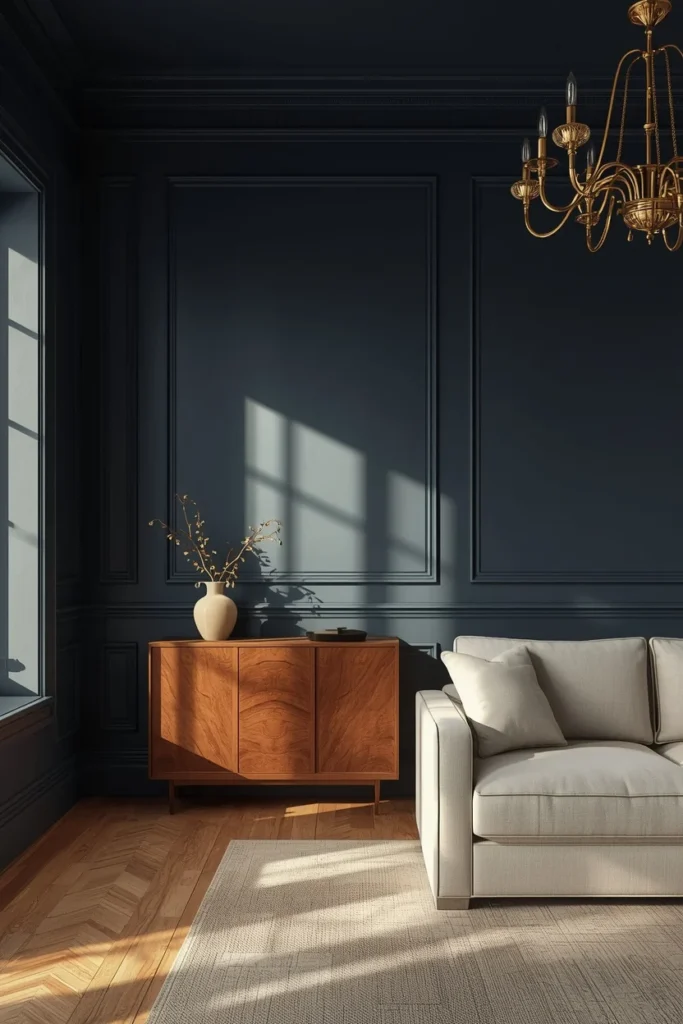
Navy walls ground a room instantly and pair beautifully with warm brass fixtures, since the cool base tone lets the metal read as genuinely warm by contrast. A brass chandelier or a cluster of brass sconces against navy walls looks like it’s floating in the room rather than mounted to it. Keep the sofa in a soft neutral — cream, oatmeal, or warm gray — so the navy has a place to rest visually instead of competing with more saturated color. Walnut furniture pieces deepen the look further without adding another competing hue. The overall effect reads polished and a little bit formal, in the best way.
5. Build a Matte Black Gallery Wall
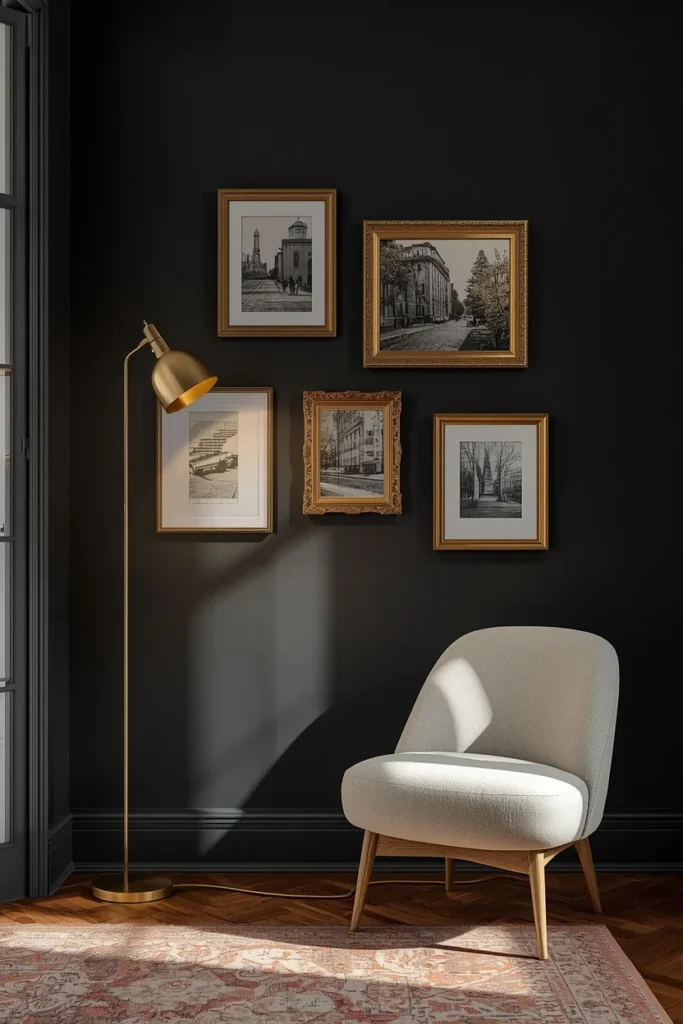
A matte black wall does something bright walls never can: it makes everything hung on it look like it belongs in a gallery. Artwork, vintage frames, and even a plain mirror pop with far more contrast against black than they ever would against white. Keep the frames in mixed warm metals — brass, aged gold, worn bronze — so the wall doesn’t feel too cold or uniform. A single warm-toned picture light mounted above one piece adds a museum-like focal point. This idea works particularly well as a single accent wall if you’re not ready to commit the whole room to dark paint.
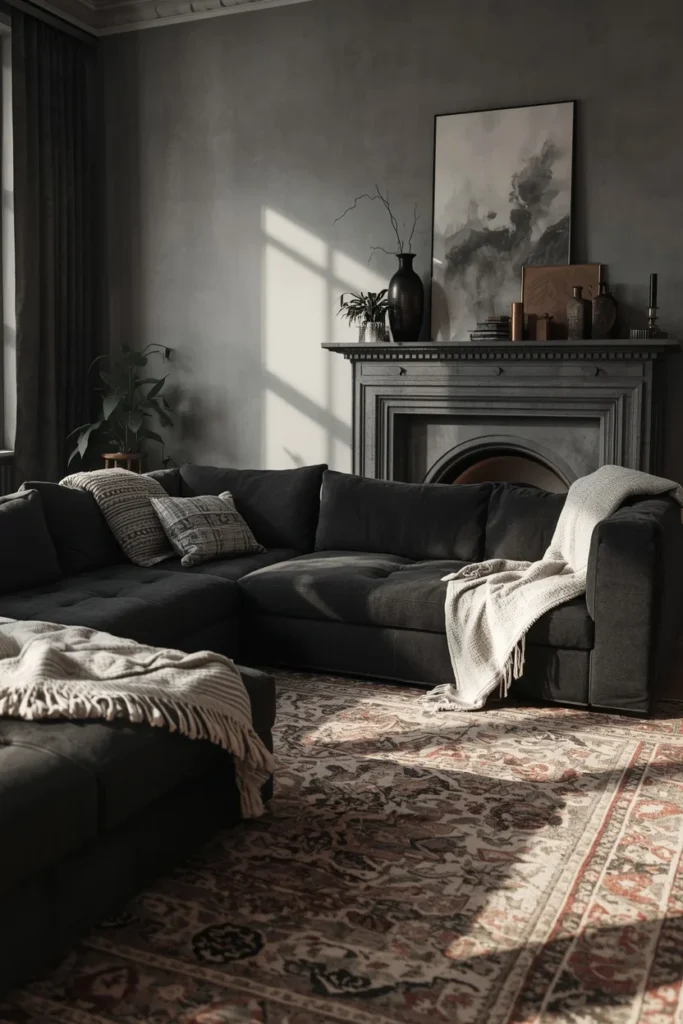
6. Pair a Charcoal Stone Fireplace With Boho Texture
A charcoal stone fireplace surround gives the room its architectural anchor, and layering it with bohemian textures keeps the whole space from feeling too formal or heavy. Fringed throw blankets, a vintage patterned rug, and black fabric seating all work together to create a lived-in, collected feeling rather than a showroom one. The stone texture itself adds visual interest even in low light, since the natural variation catches shadow differently than flat paint would. This combination proves that dark rooms don’t have to be sleek and minimal to feel intentional. It’s a strong direction for anyone who wants moody with a warmer, more relaxed edge.
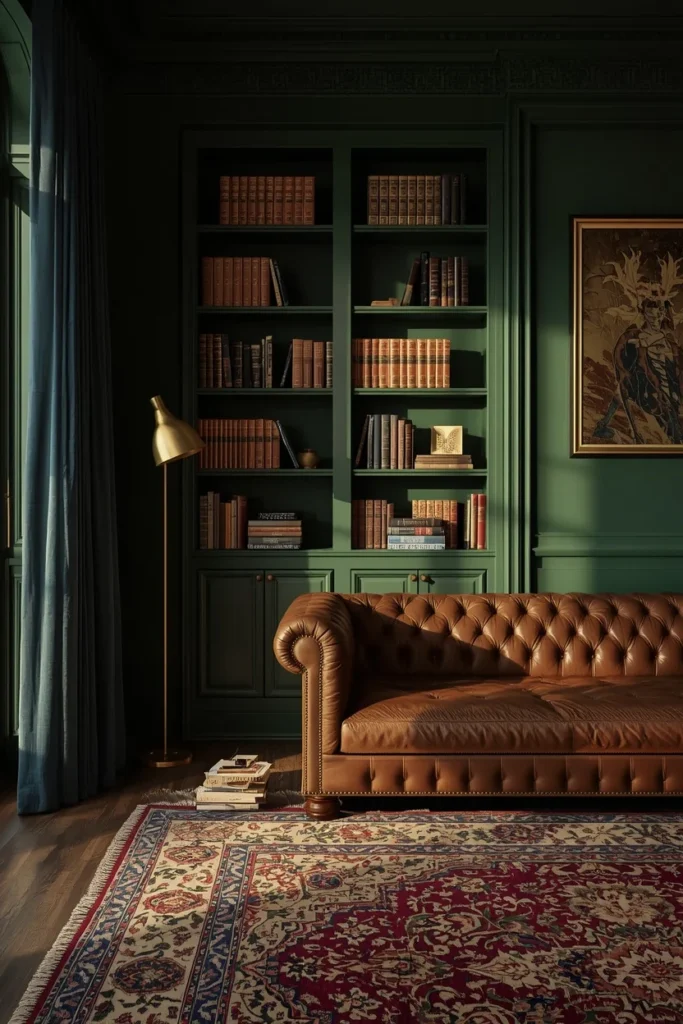
7. Choose Hunter Green for Old-World Warmth
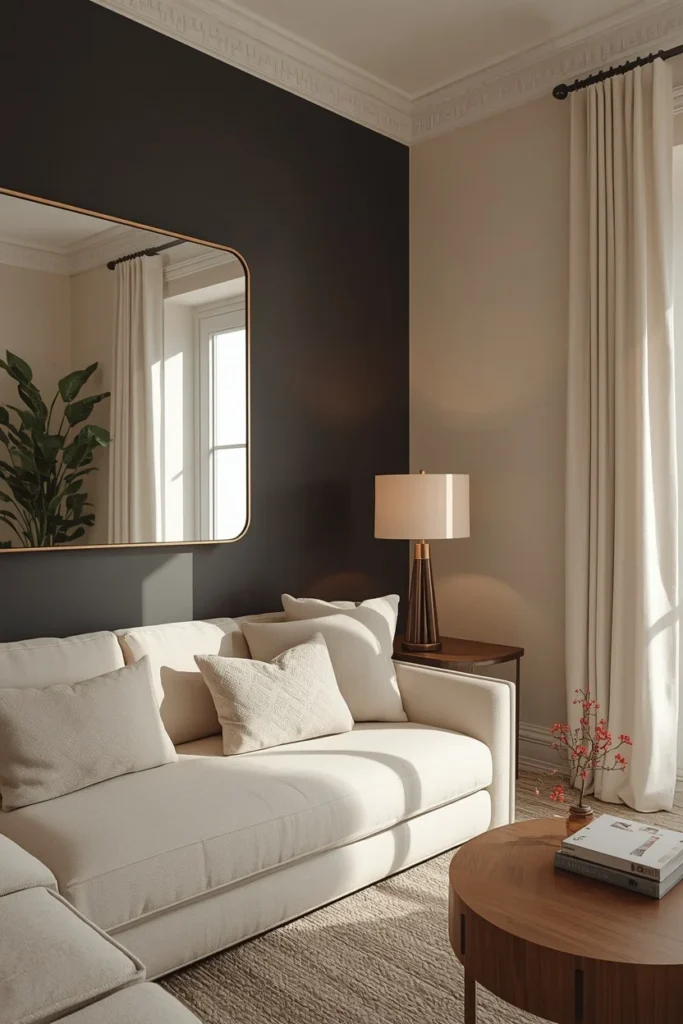
Deep hunter or forest green walls carry a library-at-dusk feeling that few other colors can match, especially paired with brass hardware and leather furniture. The green’s natural warmth keeps it from reading as cold the way a true black or navy sometimes can in rooms with less natural light. Built-in shelving painted the same green as the walls extends the effect and makes the whole wall feel architectural rather than decorated. Add a single warm lamp glow instead of overhead lighting to really lean into the old-world mood. This is one of the more forgiving moody colors for a first attempt, since it flatters almost every wood tone.
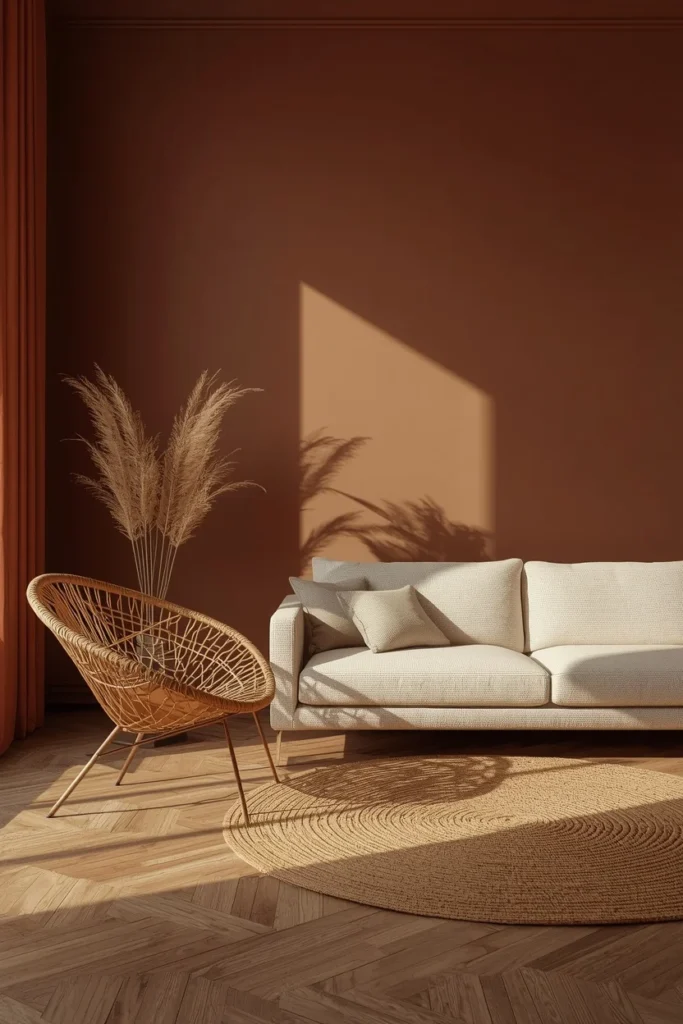
8. Go Softer With Cocoa and Terracotta Tones
Not every moody room needs to be black, navy, or forest green. Warm cocoa and terracotta walls carry the same enveloping, grounded feeling with a gentler, more approachable edge, especially paired with a creamy sofa and soft neutral textiles. This palette reads less dramatic and more like a slow Sunday morning, which makes it a good fit for households that want depth without full drama. Rattan and woven textures pair naturally with these warm earth tones and add another layer of organic texture. It’s an easy entry point for anyone nervous about committing to true black or navy walls.
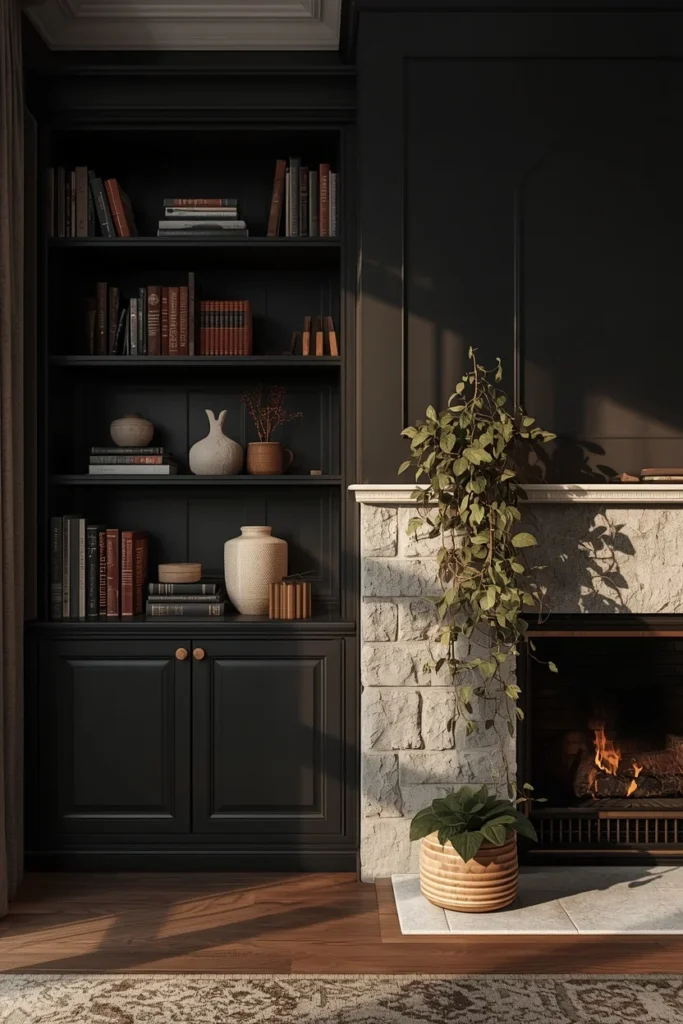
9. Anchor the Room With Black Built-Ins
Black built-in shelving flanking a fireplace turns a plain wall into the room’s clear focal point, and it gives you somewhere to actually display books, ceramics, and collected objects instead of hiding them in cabinets. The dark cabinetry recedes visually in a way white built-ins never do, which lets whatever you place on the shelves become the real star. Layer in a mix of heights and textures — stacked books, a single sculptural vase, a small plant — so the shelving doesn’t read as too uniform. This idea works in both large and modest living rooms, since built-ins use vertical space that’s often wasted otherwise.
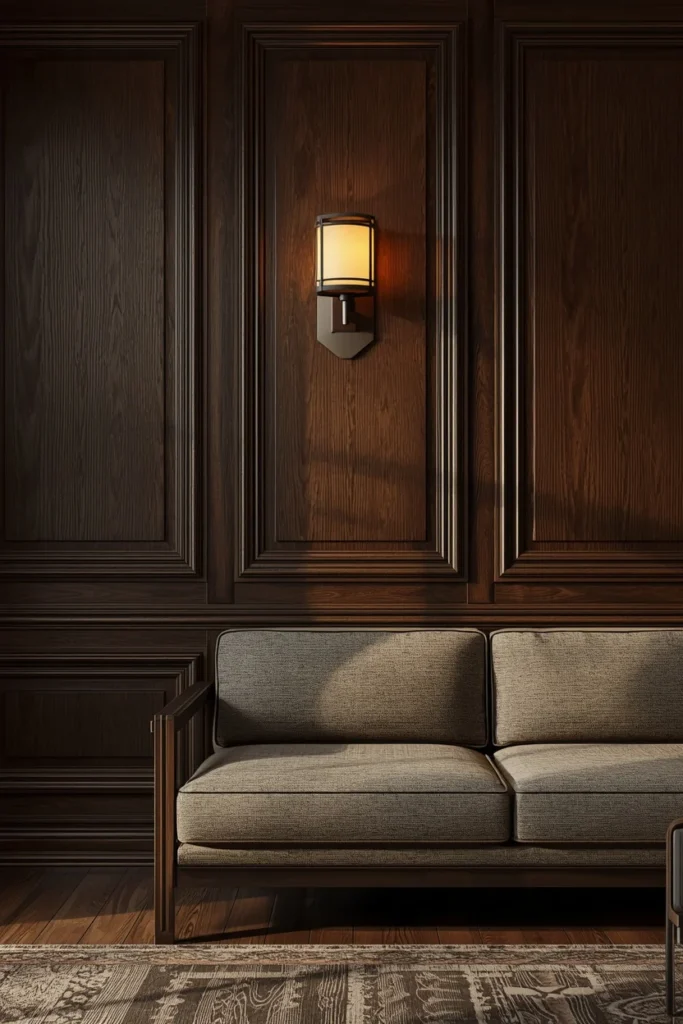
10. Layer Dark Wood Paneling on One Wall
Vertical wood paneling in a dark stain adds real texture that flat paint simply can’t replicate, since the grain and the shadow lines between boards do a lot of the visual work on their own. It pairs particularly well with a lighter ceiling, which keeps the room from feeling like it’s closing in from every direction. Reclaimed or rough-sawn wood adds even more character than a smooth, uniform panel would. This treatment works especially well as a single feature wall behind a sofa or television, since it gives the eye a clear place to land. The tactile quality of real wood also just photographs beautifully in low, warm light.
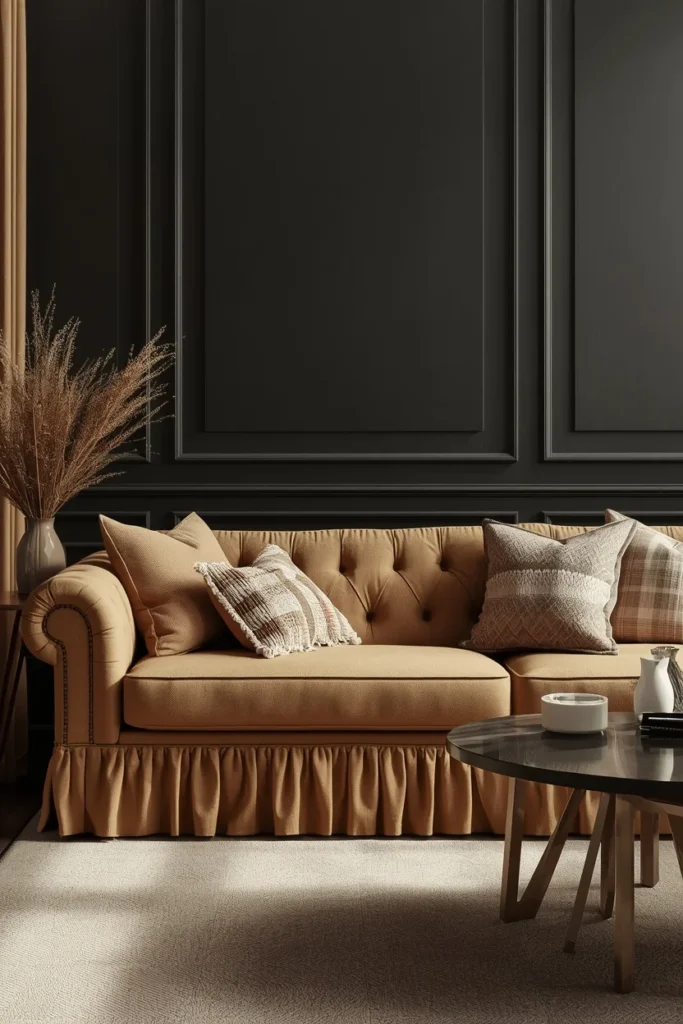
11. Choose a Skirted, Tufted Sofa Over a Sleek Modern Frame
A tufted sofa with a skirted base hides the legs and softens the line where furniture meets floor, which keeps a dark-walled room from feeling cold or showroom-stiff. Deep-seated, cream or oatmeal upholstery gives the eye somewhere restful to land against dramatic walls. This shape reads as inherently warmer and more traditional than the low, angular sofas that dominate brighter, more minimal rooms. It’s worth treating as the one furniture piece worth spending more on, since it does most of the work of making the room feel lived-in rather than staged. Pair it with plenty of throw pillows in mixed warm textures for even more softness.
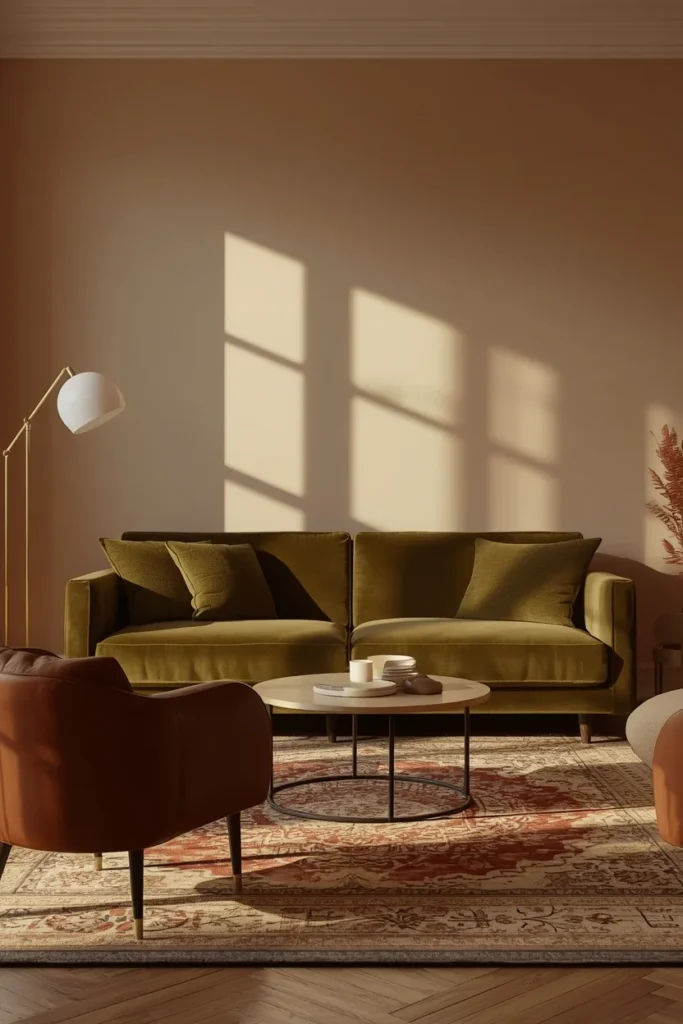
12. Anchor With a Deep Olive Velvet Sofa
If the walls stay lighter or neutral, a deep olive or emerald velvet sofa can carry the moody feeling entirely on its own. Velvet catches and holds light differently than flat fabric, which adds richness even in a room that isn’t fully color-drenched. Pair it with a patterned rug and curved leather accent chairs to soften the formality and keep the look from feeling too matched. This approach is a smart option for renters or anyone who can’t paint but still wants the moody aesthetic. The sofa becomes the room’s single statement piece, and everything else can stay quiet around it.
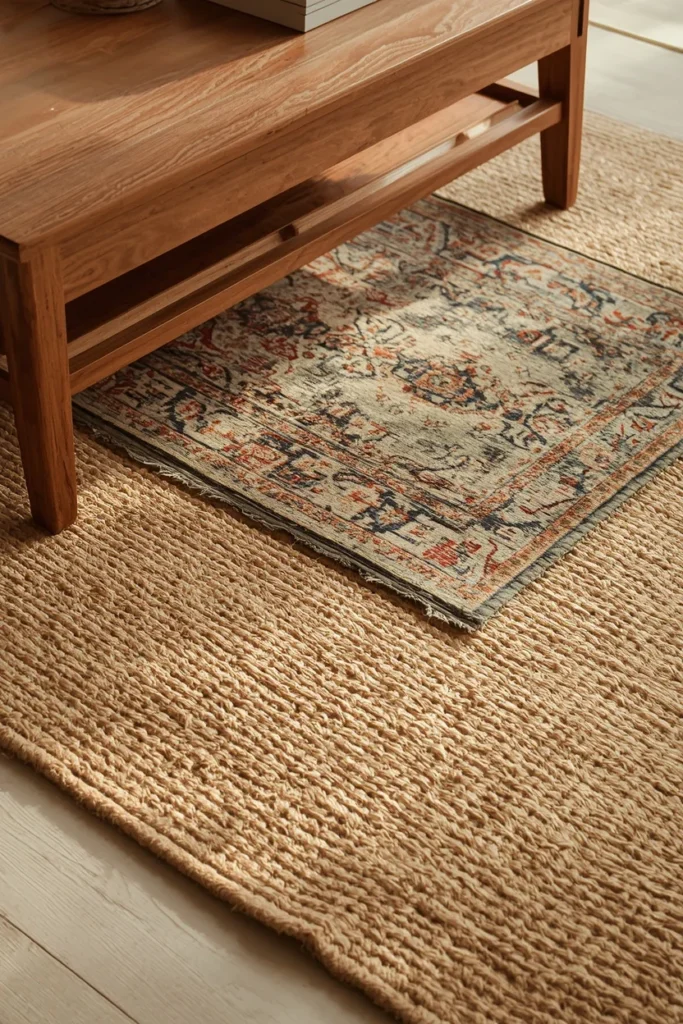
13. Layer Two Rugs Instead of One
Stacking a natural jute or sisal rug underneath a smaller patterned or vintage rug adds real depth to the floor, which matters even more in a moody room where the walls are already doing a lot of visual work. The jute base adds warmth and texture underfoot, while the top layer brings in pattern and color without overwhelming the room. This trick also helps define a seating area within an open-concept space, since the layered rug visually anchors the furniture grouping. It’s an easy, low-cost way to add richness to the room without touching the walls at all. Worn, vintage-style rugs tend to suit the moody aesthetic better than anything with a crisp, new look.
14. Make the Light Fixture a Sculptural Focal Point
In a moody room, the light fixture can do double duty as functional lighting and as art. A tiered brass or gold disc chandelier hanging over the seating area catches and scatters warm light across dark walls in a way a plain flush-mount fixture never could. Choose fixtures with an open, sculptural shape rather than fully enclosed shades, since the exposed bulbs or diffused glow add more visual interest against a dark backdrop. Position it above a coffee table or the center of the seating group so it becomes the room’s natural gathering point. This single fixture can carry as much visual weight as an entire accent wall.
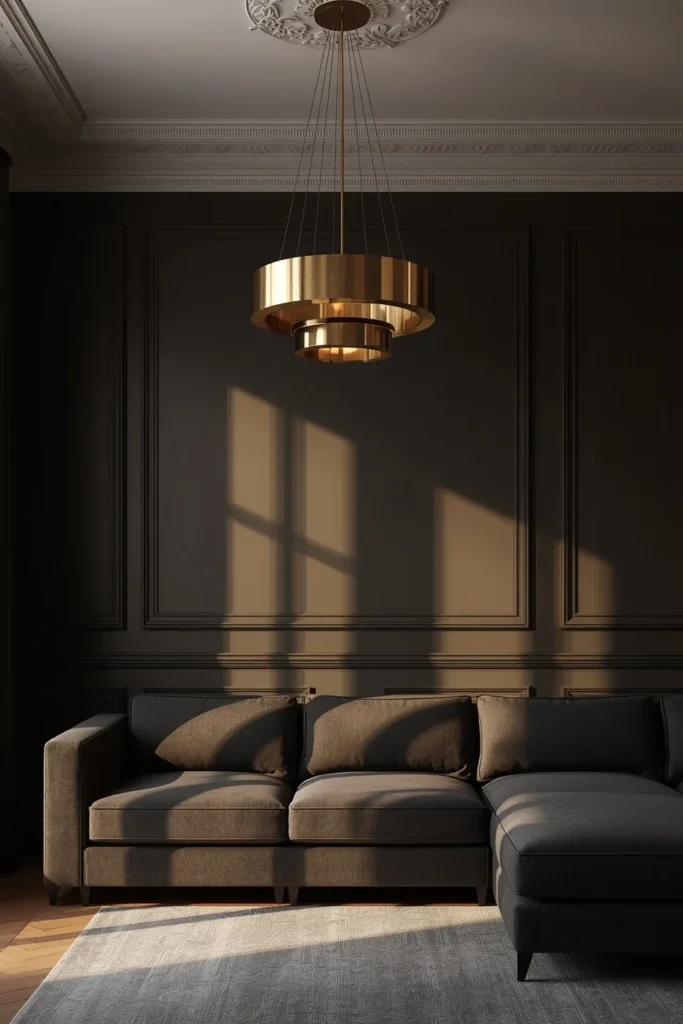
15. Swap Overhead Lighting for Warm, Low Lamps
A moody room fails the moment it relies on a single bright overhead fixture, since flat, even light flattens out all the texture and color depth the dark walls are supposed to create. Warm-temperature bulbs, generally in the 2400K to 2700K range, cast a soft, amber-toned glow instead of the cooler white light most ceiling fixtures use by default. Layer in table lamps, a floor lamp, and low-hanging pendants so light pools in specific spots rather than washing evenly across the whole room. This layered, directional approach is what actually creates the cozy, cinematic feeling people associate with moody interiors. Skipping this step is the single most common reason a dark room ends up feeling dim and depressing instead of rich and warm.
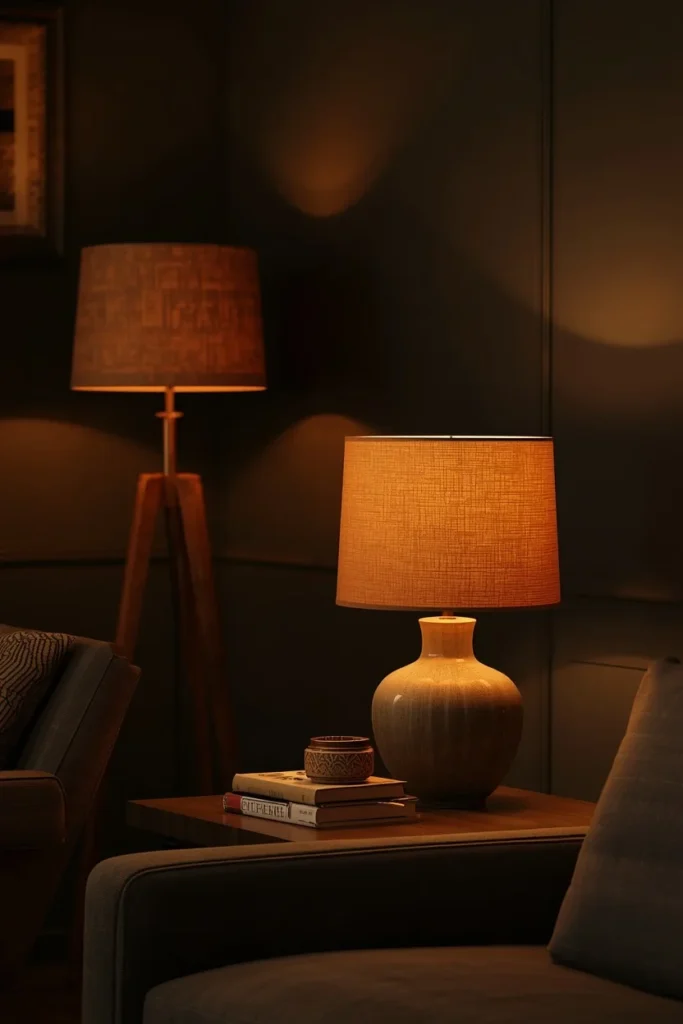
16. Add a Sheen Element to Prevent Flatness
A fully matte dark room can start to feel flat and lifeless without something reflective to bounce light around. Polished stone, a lacquered side table, or metallic picture frames all introduce a sheen that catches whatever light is in the room and keeps it moving. Even a single glossy black side table next to a matte sofa adds enough contrast to keep the eye interested. This detail matters more in rooms with limited natural light, since reflective surfaces do some of the work that sunlight would otherwise handle. Think of it as the difference between a photo and a moving scene — the sheen is what adds the sense of life.
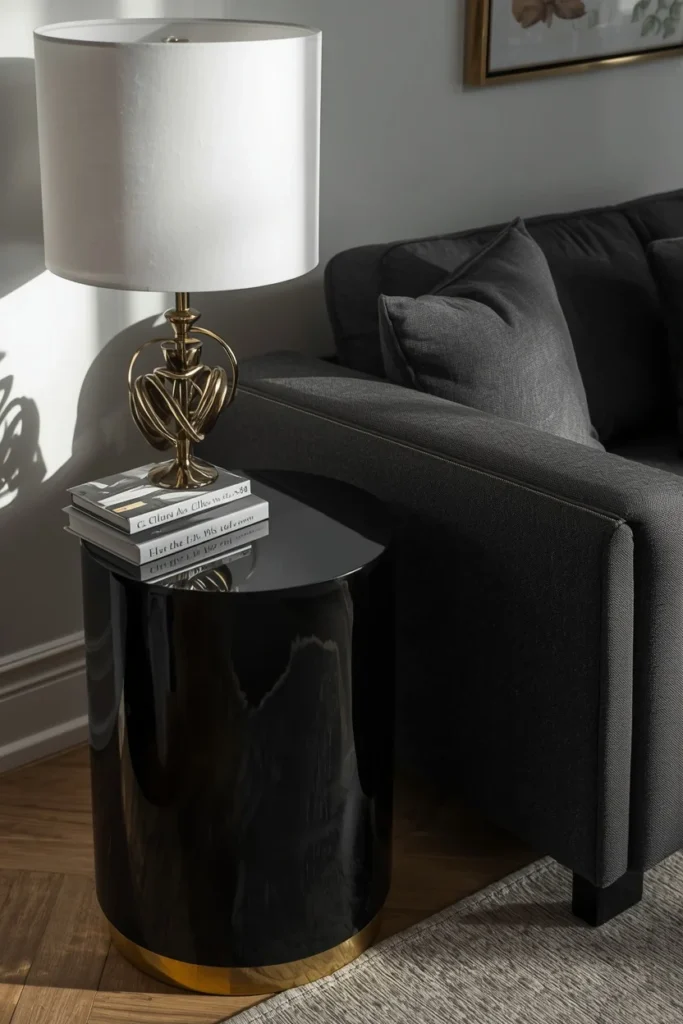
17. Hang an Oversized Piece of Art
One large piece of abstract or dramatic artwork against a dark wall does more for the room than five smaller framed pieces scattered around. The scale gives the eye a single, clear focal point, and the contrast between the artwork and the deep wall color makes the piece practically glow. This works whether the art itself is colorful or fairly muted, since the dark backdrop provides all the drama on its own. Position it at eye level from the main seating area so it reads as the room’s visual anchor. It’s a simple swap that can transform an otherwise plain dark wall into a genuine gallery moment.
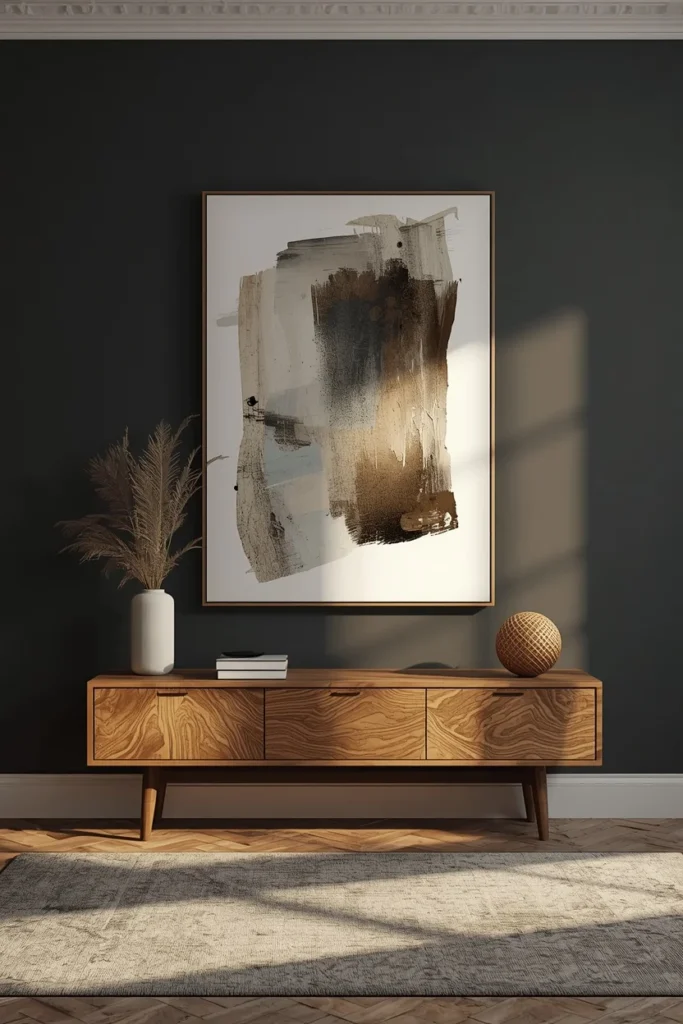
18. Add an Ornate Mirror to Bounce Candlelight
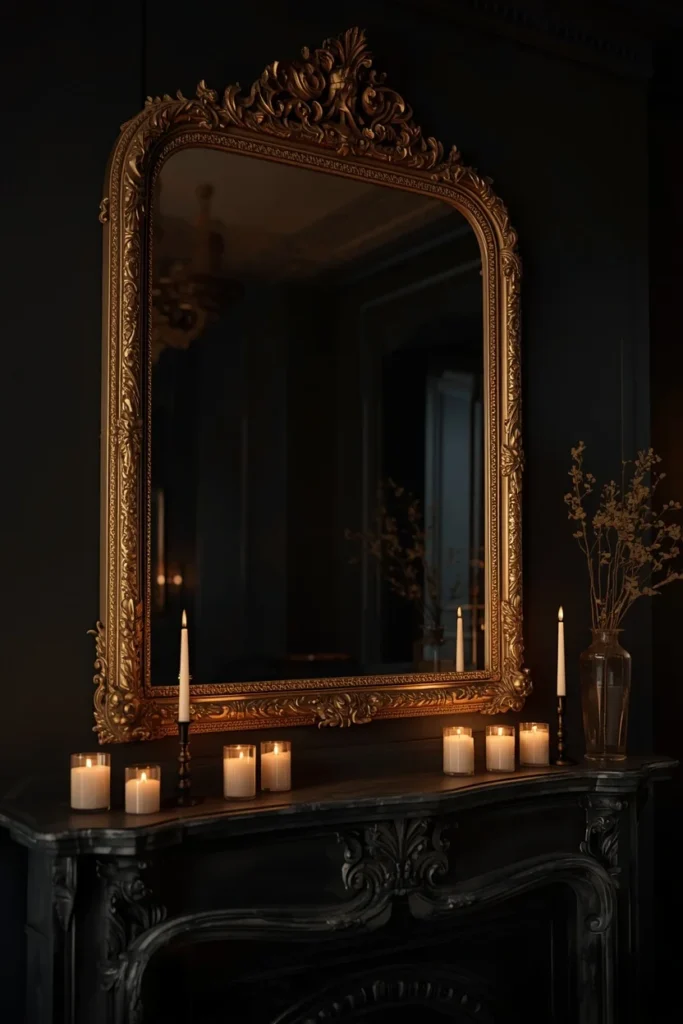
A large, ornate gold-framed mirror does two jobs in a moody room: it expands the visual space the way any mirror would, and it reflects the flicker of candlelight or lamp glow in a way that adds real movement to the room. Position it across from your main light source, whether that’s a window, a lamp, or a cluster of candles, so it actually has something to reflect. The ornate frame also adds a touch of old-world charm that fits naturally into a dark, layered color scheme. This is a particularly good trick for rooms without much natural light, since the mirror recycles whatever warm light is already there. It’s also one of the easiest additions on this list, since it requires no construction or paint at all.
19. Mix Leather and Velvet Textures Together
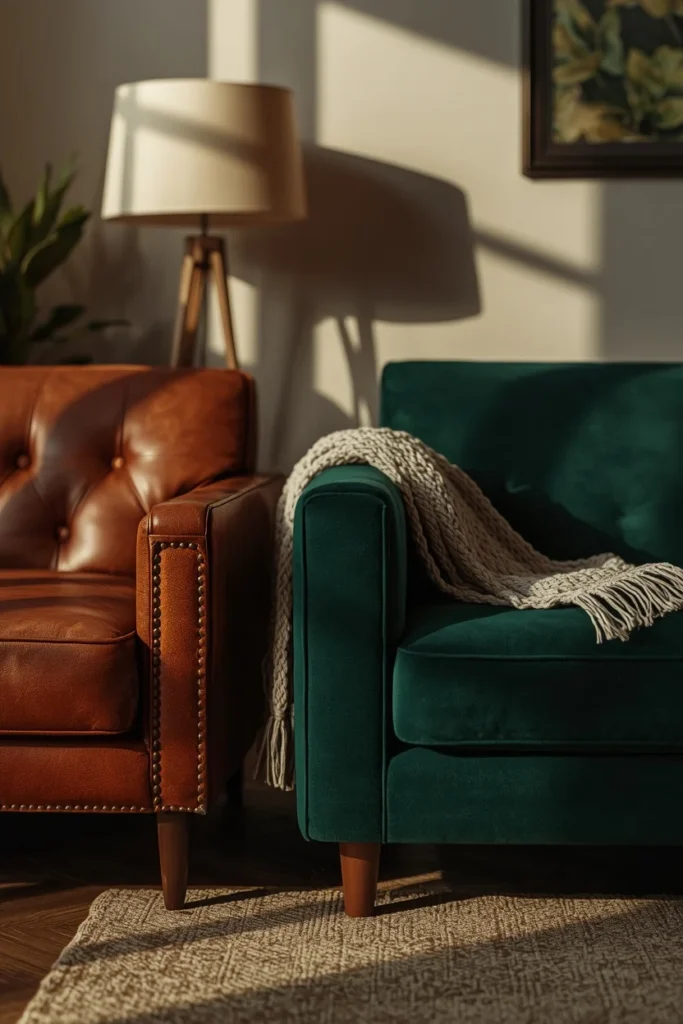
Combining a leather club chair with a velvet sofa in the same room creates the kind of textural contrast that photographs beautifully and feels genuinely rich in person. Leather ages and catches light differently than velvet, which absorbs it, and having both in the same space keeps the room from feeling one-note. A worn, vintage leather chair paired with a newer velvet sofa also adds a sense of collected-over-time character rather than a matched showroom set. Add a knit throw blanket over one of the pieces for a third texture layer. This mix is part of what separates a genuinely moody room from one that just happens to have dark walls.
20. Bring in Greenery for Contrast and Life
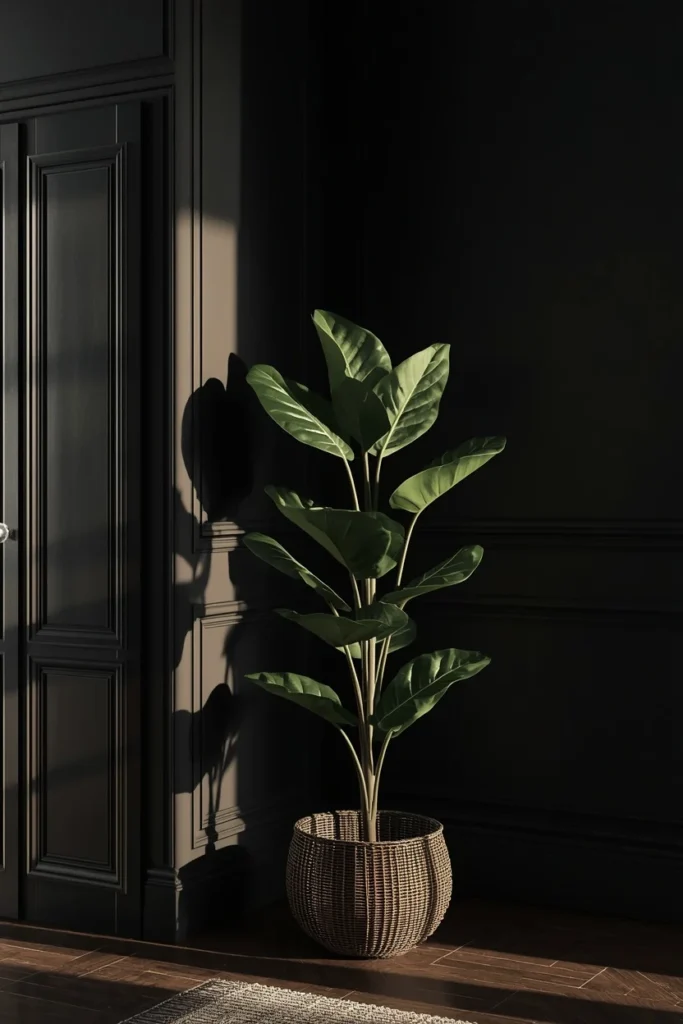
Plants do something in a moody room that almost nothing else can: they introduce a genuinely living, organic color against all that deep, still paint. A trailing pothos on a dark shelf or a large fiddle leaf fig in the corner breaks up the density of the color scheme without fighting it. The green reads as fresh rather than competing, since it’s a completely different kind of color from anything else on the walls or furniture. Larger plants also add height and shape to a room, which helps in spaces where furniture stays low and horizontal. This is one of the simplest, least expensive ways to keep a dark room from feeling static.
21. Pair Dark Walls With a Pale Fireplace Surround
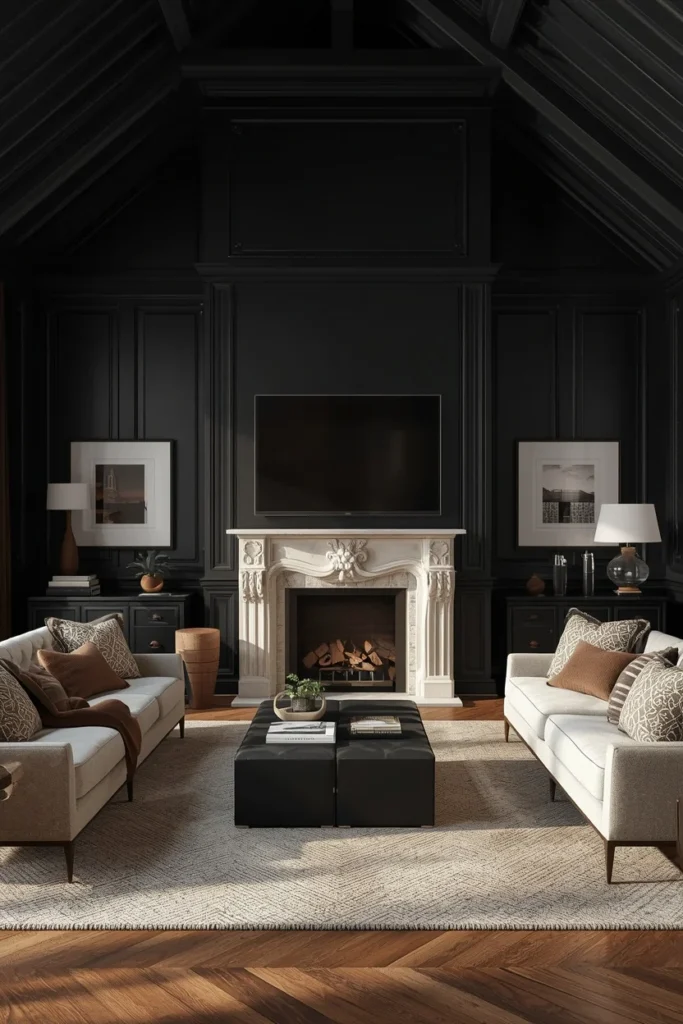
If your living room has a fireplace, keep the surround pale stone or plaster even if the surrounding walls go dark. That contrast gives the eye a clear resting point and keeps the room from reading as one heavy, undifferentiated block of color. A vaulted or higher ceiling helps this effect further, since the light stone paired with the airy ceiling height keeps the whole space feeling lifted rather than closed in. This combination proves dark walls don’t have to shrink a room when the contrast is placed deliberately. It’s a particularly good approach for households nervous about committing to a fully dark living room.
22. Use One Dark Wall and One Light Element in Small Rooms
Small living rooms can absolutely go moody, but the balance matters more here than anywhere else on this list. Paint just one wall in a deep, rich tone and keep the rest of the room lighter, then add one clearly lighter element — a cream sofa, a pale rug, a large mirror — to keep the space from feeling closed in. More artificial light than you’d think you need is essential here, since small rooms with limited natural light can tip into cave-like territory fast without enough compensating brightness. The goal isn’t to lighten the whole room back up; it’s to give the eye just enough relief that the dark wall reads as intentional rather than overwhelming. Done well, a small moody room can feel even more intimate and considered than a large one.
Styling Tips for Any Moody Room
- Test paint undertones in your actual room, at actual times of day, before committing. The same chip can look blue, green, or purple depending on your light.
- Keep at least one element in the room pale or reflective, even in a fully drenched space, so the eye has somewhere to rest.
- Warm bulbs only. Cool white lighting fights everything a moody room is trying to do.
- Mix at least three textures in every room — velvet, leather, wood, wool, or stone — so the space doesn’t read as flat.
Practical Implementation Ideas
Start with lighting before you touch paint. Swap your existing bulbs for warm-temperature ones and see how the room feels for a week — it changes more than people expect. If the room still feels right, move to a single accent wall or color-capped ceiling before committing to a fully drenched room. This lets you test the mood in stages instead of repainting an entire room you’re not sure about.
Common Mistakes to Avoid
- Relying on one overhead light. A moody room needs layered, warm lighting, not a single bright fixture doing all the work.
- Choosing a cool-toned dark paint for a room with little natural light. Cool undertones can tip a dim room into feeling flat instead of rich.
- Skipping texture. Flat paint with flat fabric reads cold no matter how good the color is.
- Going fully dark in a small room with no lighter contrast. Without at least one pale element, small dark rooms can feel closed in fast.
- Matching every metal finish. All-brass or all-black can look uniform in a flat way; mixing metals adds more visual interest.
Small-Space Alternatives
- Choose color capping over full color drenching to get the cozy effect without the full commitment.
- Paint just one wall instead of the whole room, and let furniture and accessories carry the rest of the mood.
- Use a large mirror instead of extra floor lamps if floor space is tight — it does double duty for light and visual space.
- Layer a single patterned rug instead of stacking two if the room is small enough that layering would look cluttered.
Budget-Friendly Alternatives
- A deep-colored velvet sofa can carry the moody look on its own in a rental, without touching a single wall.
- Secondhand brass lamps and vintage mirrors often suit a moody room better than new pieces, since a little wear reads as character rather than flaw.
- Swap bulbs before you swap furniture — warm-temperature bulbs are the cheapest change on this entire list with one of the biggest visual payoffs.
- Removable wallpaper in a deep tone is a renter-friendly way to test a full accent wall without committing to paint.
Pro Styling Recommendations
Treat color as the foundation and let everything else respond to it, rather than picking furniture and paint separately. A moody room succeeds when the wall color, the light temperature, and the texture mix all point in the same direction — warm, layered, and a little bit worn-in. The rooms that feel most convincingly moody are rarely the ones that match perfectly; they’re the ones that feel collected over time.
FAQs
Conclusion
A moody living room isn’t really about how dark the paint is. It’s about whether the light, the texture, and the color all agree with each other once the door closes and the lamps go on. Pick one or two ideas from this list — a single accent wall, a warmer bulb, a layered rug — before committing to the whole room, and let the space tell you how far to take it from there.