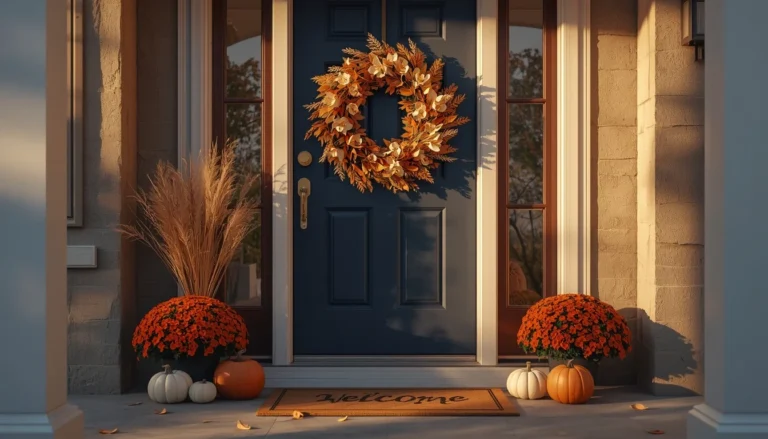
21 Fall Fireplace Decor Ideas That Make Your Home Feel Warm & Magical
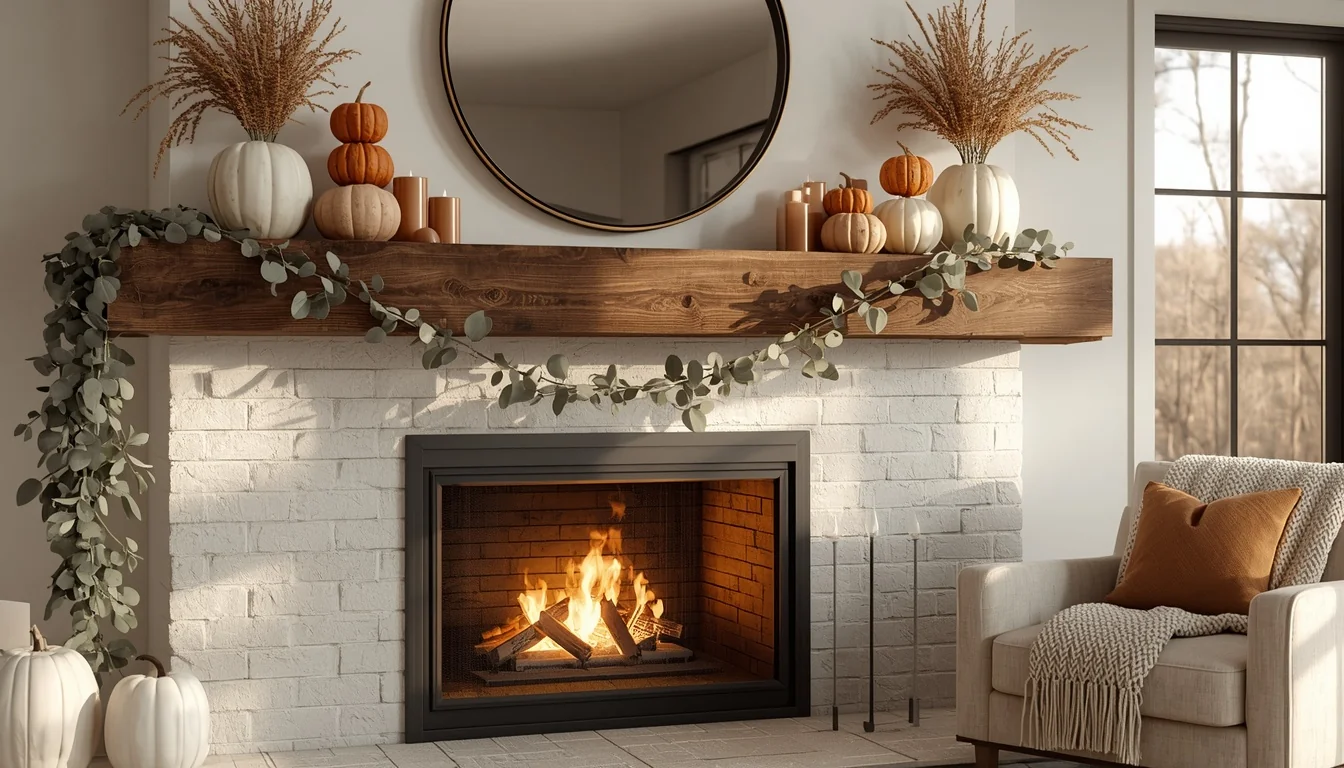
There’s a moment every autumn when the temperature drops just enough that the fireplace stops being furniture and starts being the reason people gather in that room. The mantel above it becomes the thing everyone’s eyes land on first, whether it’s dressed for the season or still holding whatever ended up there in July.
Twenty-one ideas here cover texture, color, lighting, and layout — the details that turn a fireplace from a background feature into the warmest, most magical spot in the house, whether you’re working with a soaring stone chimney breast or a simple painted mantel shelf.
Table of Contents
Why Your Fireplace Sets the Mood for the Whole Room?
A fireplace does something almost no other feature in a living room can: it gives people a reason to sit still and look at one spot. That makes the mantel above it one of the highest-impact styling surfaces in the entire house, since it’s rarely ignored the way a side table or a bookshelf sometimes is. Fall raises the stakes further, because the fireplace usually gets used again after months of sitting dark and decorative, which means it needs to hold up to both close inspection and the warm, flickering light of an actual fire. A well-styled mantel also anchors the room’s color story going into the darker months, setting a palette that dictates how everything else — pillows, throws, even the coffee table styling — gets chosen. None of this requires a renovation. It requires the right mix of texture, color, and light, applied with a little restraint.
21 Fall Fireplace Decor Ideas
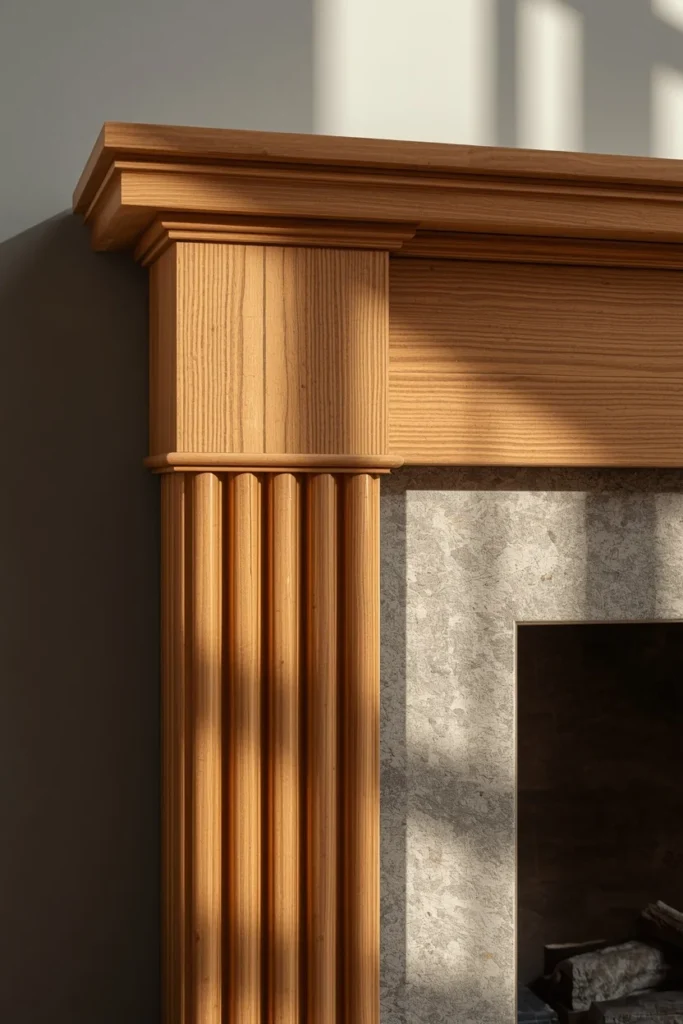
1. Add Fluted or Reeded Texture to the Surround
A fluted or reeded surface on the mantel legs, a nearby cabinet panel, or the surround itself introduces texture that catches light without adding a single extra object to the space. This detail has become one of the defining marks of current fireplace design because it adds depth and craftsmanship without competing with the rest of the room’s decor. Choose fluting on just one element — the mantel legs or a side panel — rather than the entire surround, since too much texture in one place can start to feel busy instead of elevated. Pair it with calmer, more solid-colored decor on top of the mantel so the texture stays the visual highlight. This works especially well in transitional rooms that want a touch of architectural interest without going fully ornate.
2. Try a Two-Tone Mantel and Surround
Pairing two contrasting materials or colors within one fireplace wall — a dark wood mantel against a light stone surround, or a bright white mantel against a bold charcoal facing — makes the fireplace the clear focal point of the room the moment someone walks in. The contrast does the visual work that a single flat material can’t, drawing the eye and creating a sense of depth even in a room with otherwise minimal decor. Choose materials that already exist elsewhere in the room in some form, like a wood tone that echoes the flooring or a stone shade that matches a nearby accent wall, so the pairing feels cohesive rather than random. This approach also gives a builder-grade fireplace an instant custom look without a full rebuild, since often only the surround or the mantel needs to change. Keep the styling on top simple when the contrast is this strong, letting the materials themselves carry most of the visual interest.
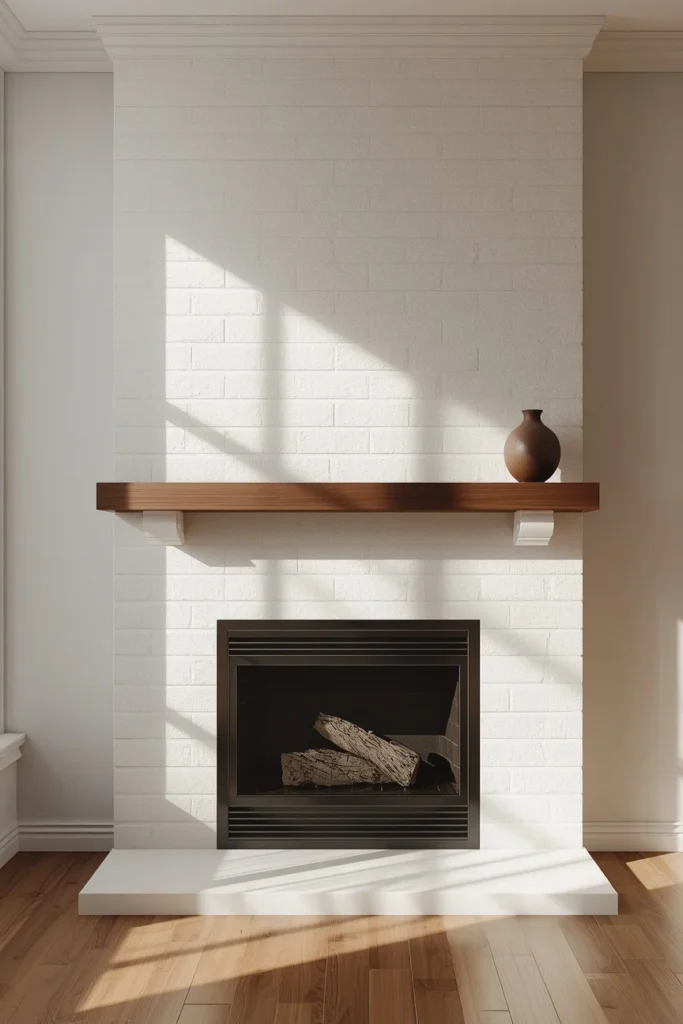
3. Go Bold with an Oversized Beam Mantel
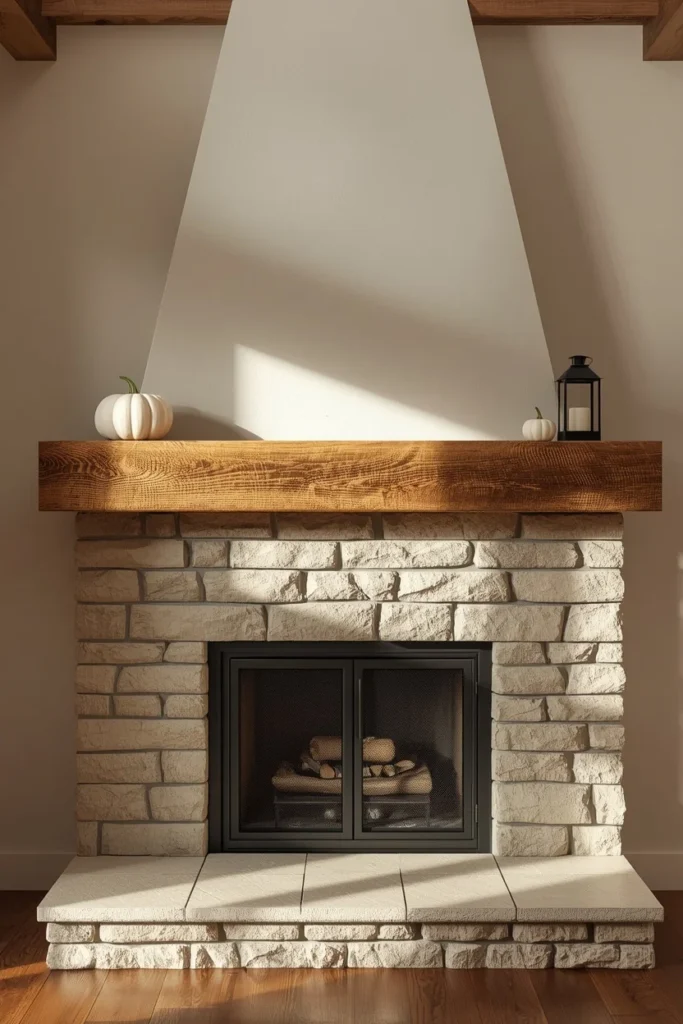
A thick, substantial mantel beam — often ten inches or more — makes a much stronger visual statement than a traditional slim shelf, and it works across nearly every architectural style, from clean modern rooms to rustic farmhouse living rooms. New wood milled to look aged or genuine reclaimed timber both deliver the same sense of weight and permanence, so the choice comes down to budget and how much authentic texture you want. In modern rooms, finish the beam clean and minimal so the size itself makes the statement rather than any surface detail. In more rustic spaces, let the natural character of the wood — knots, grain, saw marks — stay visible and untouched. Because a mantel this size draws attention on its own, it needs very little decor to still feel complete during the fall season.
4. Paint the Mantel a Deep, Moody Color
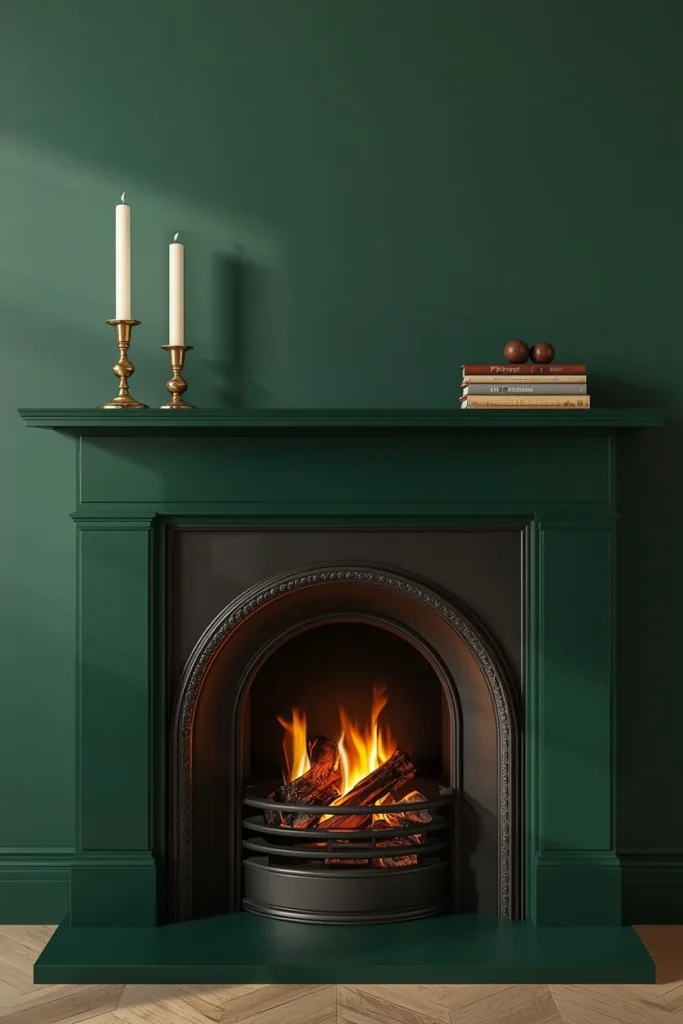
Trading a classic white mantel for a deep charcoal, forest green, or near-black finish shifts the whole feeling of the fireplace wall from bright and open to warm and enveloping, which suits the mood most people are chasing once fall arrives. Dark colors also make the mantel recede slightly into the wall rather than popping forward, which paradoxically makes the room feel calmer and more cohesive even though the color itself is more dramatic. Choose a durable satin or eggshell finish paint, since a mantel gets touched, dusted, and bumped more than almost any other painted surface in the house. Pick a shade that echoes another material already in the room, like a stone hearth or dark window trim, so the color reads as intentional rather than arbitrary. This update pairs especially well with warm metal accents like brass or copper, which stand out beautifully against a dark backdrop.
5. Simplify with a Floating Shelf Mantel
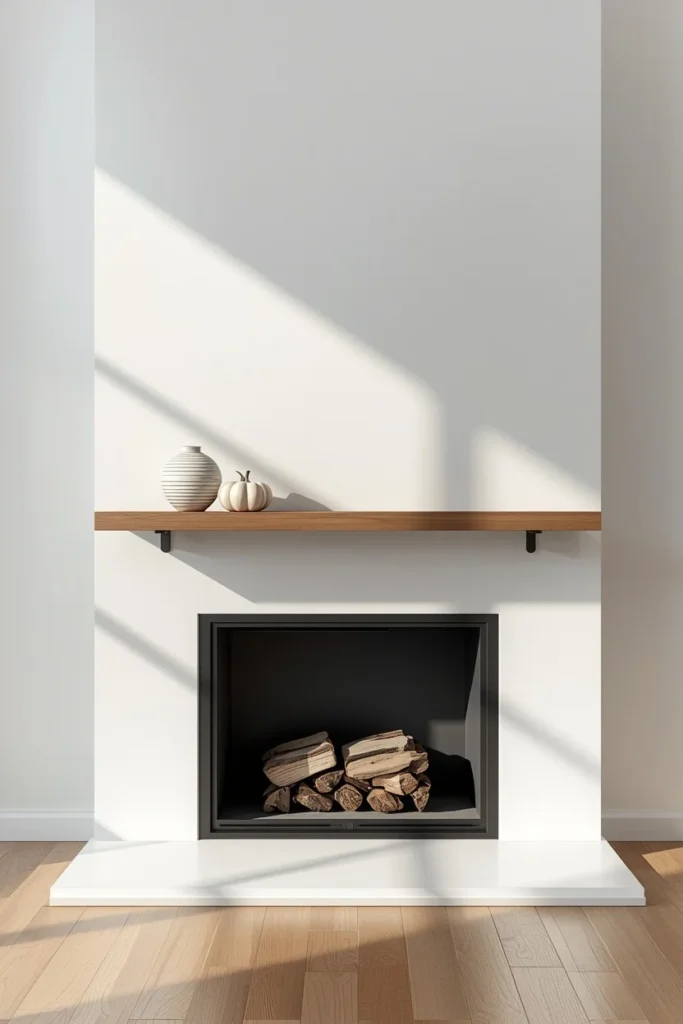
A thin floating shelf mantel, appearing to hover without visible brackets, delivers a clean, modern statement that works especially well in smaller rooms where a bulky traditional mantel would feel heavy. Because the shelf itself carries almost no visual weight, it lets the fireplace and the wall around it stay the focus rather than competing with an oversized piece of millwork. Choose a shelf in wood, concrete, or metal depending on the room’s existing material palette, keeping the thickness between two and four inches for the cleanest look. Style it sparingly — three or four objects at most — since a floating shelf reads best when there’s visible negative space around each piece. This option suits open-concept and minimalist living rooms particularly well, where the fireplace needs to feel integrated rather than commanding.
6. Choose an Honed, Matte Natural Stone Surround
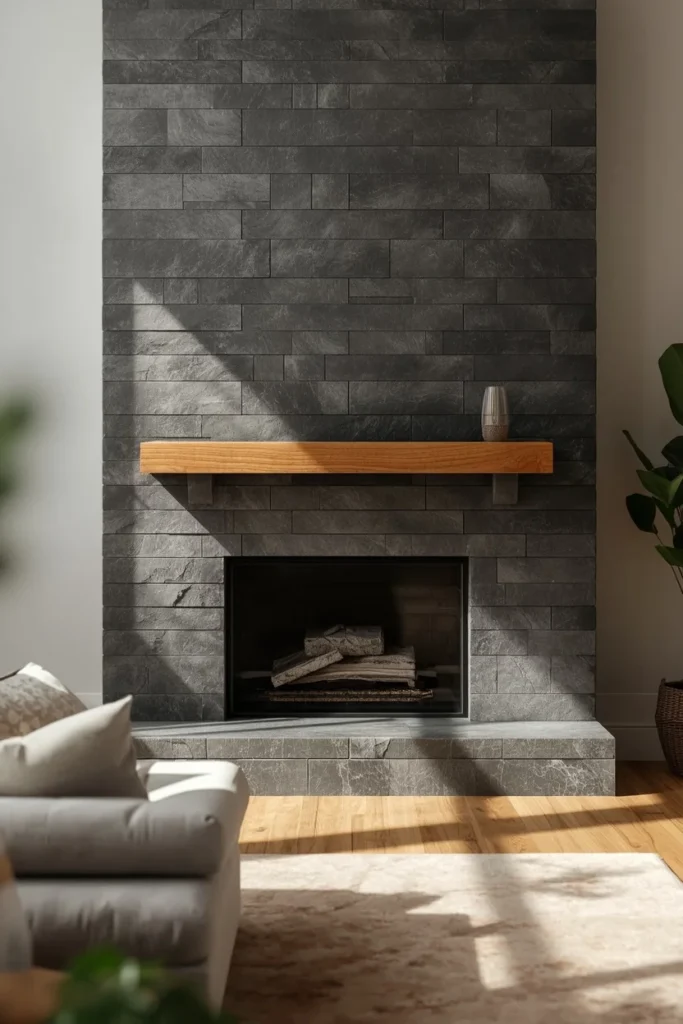
Natural stone in a honed, matte finish gives a fireplace an architectural, grounded presence without the high shine of polished marble, which tends to read as more formal than most living rooms actually want. Charcoal, warm gray, and even subtly green-veined stone are all showing up more than traditional white marble this season, offering the same sense of permanence with a moodier, more current feel. Choose a stone finish that stays quieter if the room already has a lot of pattern elsewhere, letting the fireplace itself carry the visual weight instead of competing with existing textiles or wallpaper. Pair the stone with warm wood tones nearby — a mantel shelf, a coffee table, exposed beams — so the coolness of the stone doesn’t leave the room feeling cold. This look works especially well in rooms with higher ceilings, where the stone can extend upward into a full chimney breast for maximum impact.
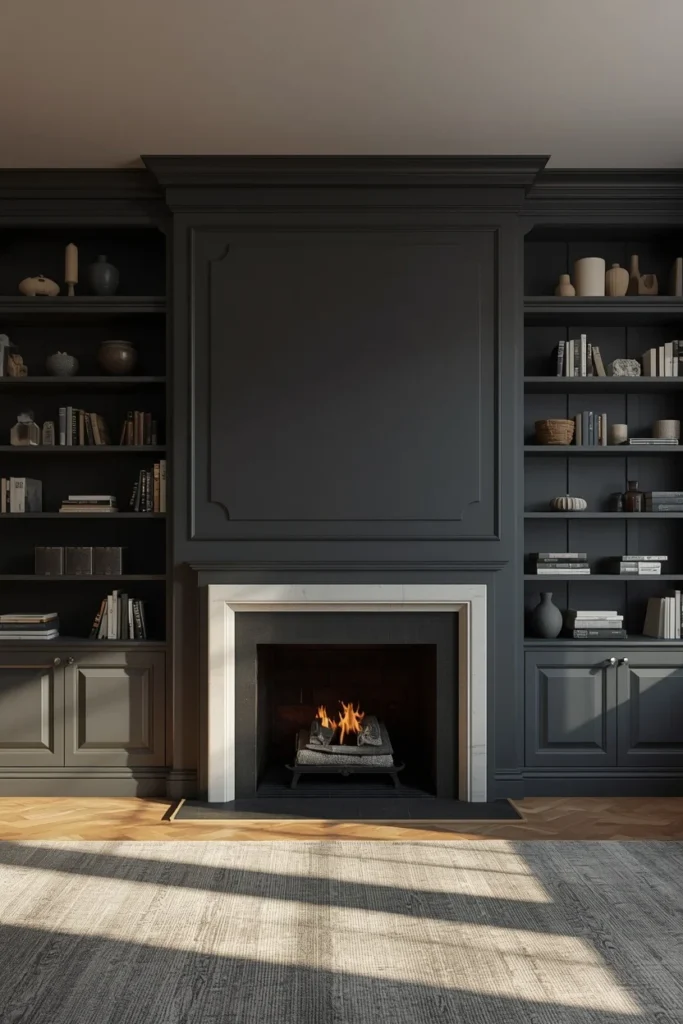
7. Build Out Floor-to-Ceiling Shelving on Either Side
Flanking the fireplace with built-in shelving and cabinetry turns a single feature into a full composed wall, giving you display space for books, objects, and seasonal decor without crowding the mantel itself. Open shelving up top holds curated objects and greenery, while closed cabinetry below hides media equipment, blankets, or clutter, keeping the whole wall looking intentional rather than accumulated. Paint the built-ins the same deep tone as the mantel — charcoal, navy, deep gray — in a satin or eggshell finish for a cohesive, sophisticated look that doesn’t compete with the fireplace itself. Style the shelves with a mix of heights and materials: a stack of books, a ceramic vessel, a small piece of art leaned rather than hung. This approach works especially well in living rooms that also need storage, since it solves a practical problem while making the fireplace feel like the anchor of a much larger design moment.
8. Bring In a Reclaimed Barn Wood Mantel
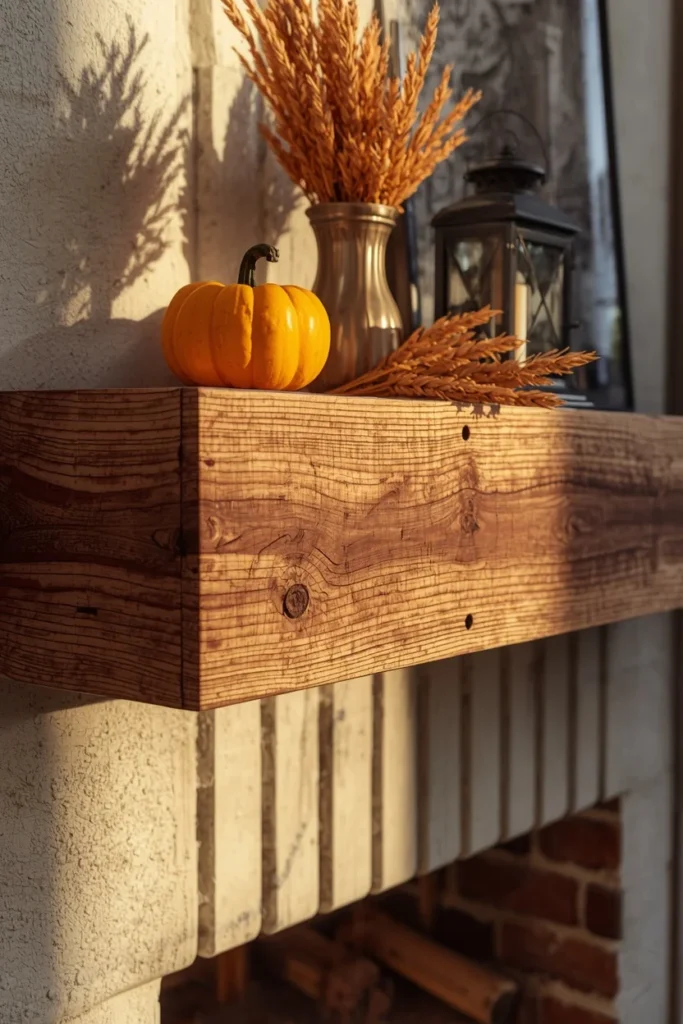
A reclaimed wood mantel carries a kind of character that new lumber simply can’t fake — visible grain, old nail holes, and a natural patina built up over decades that gives the fireplace an immediate sense of history. This works particularly well for farmhouse and cottage-style homes, though a cleanly finished piece of reclaimed wood can also work in more transitional spaces if the rest of the room stays simple. Choose a piece with consistent structural integrity even if the surface shows heavy wear, since the mantel needs to hold weight safely as well as look good. Keep the finish natural or lightly waxed rather than heavily varnished, which would erase the texture that makes reclaimed wood worth choosing in the first place. Pair it with simple, uncomplicated styling — a few candles, a small plant, a leaning piece of art — so the wood itself stays the star of the mantel.
9. Layer In Warm Copper and Brass Accents
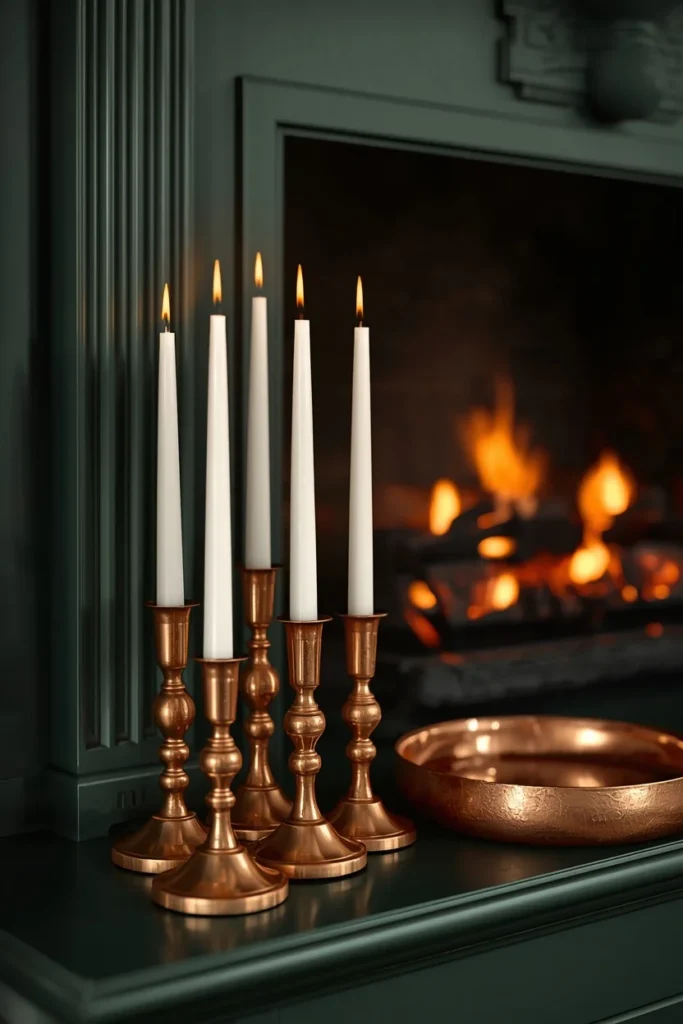
Copper and brass accents — candlesticks, a small tray, a mirror frame — bring a warm metallic glow to fall mantel styling that plays beautifully off both firelight and the deep, moody colors trending this season. These metals photograph and reflect light differently than silver or chrome, giving off a warmer cast that suits the amber tones of autumn leaves, pumpkins, and dried florals. Mix a few different brass or copper pieces rather than a single matched set, since slightly varied finishes read as collected over time instead of purchased all at once. Position taller metal pieces, like candlesticks, toward the back or sides of the mantel so they don’t block shorter decor items in front. This detail works on almost any mantel color, but it stands out most dramatically against a dark charcoal or forest green surface.
10. Layer Pumpkins and Gourds in Varying Sizes
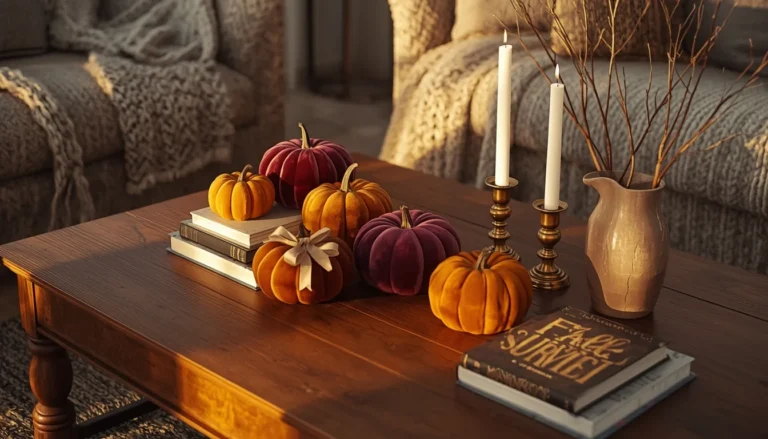
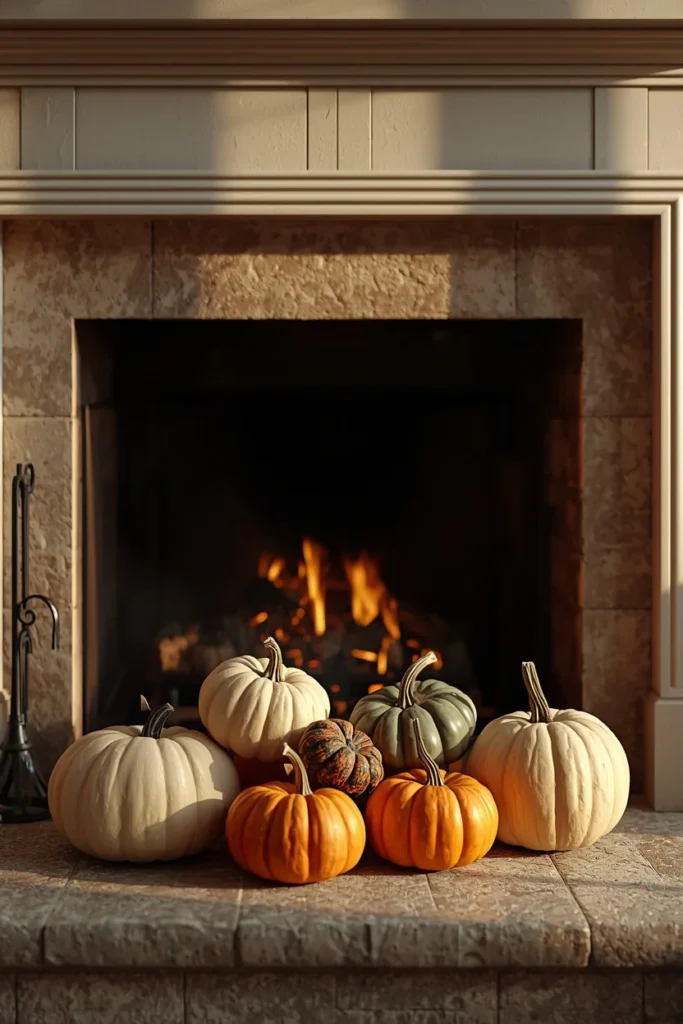
A cluster of pumpkins and gourds in varying sizes and complementary colors is one of the most immediately recognizable fall decor moves, and it works because the variation in scale creates visual rhythm rather than a flat, uniform row. Mix a few different textures — smooth, ribbed, warty — and colors within the same general palette, like cream, sage, and burnt orange, so the grouping feels curated instead of matched from a single multipack. Place the largest pumpkins toward the base of the arrangement, whether that’s the mantel itself or the hearth floor below it, and let smaller gourds nestle in around them. Real pumpkins work beautifully for a few weeks, but high-quality faux versions hold up for the entire season without any risk of rotting on a warm mantel near an active fire. This idea pairs naturally with almost every other item on this list, since it adds color and shape without requiring any structural change to the fireplace itself.
11. Style a Dried Flower and Wheat Arrangement
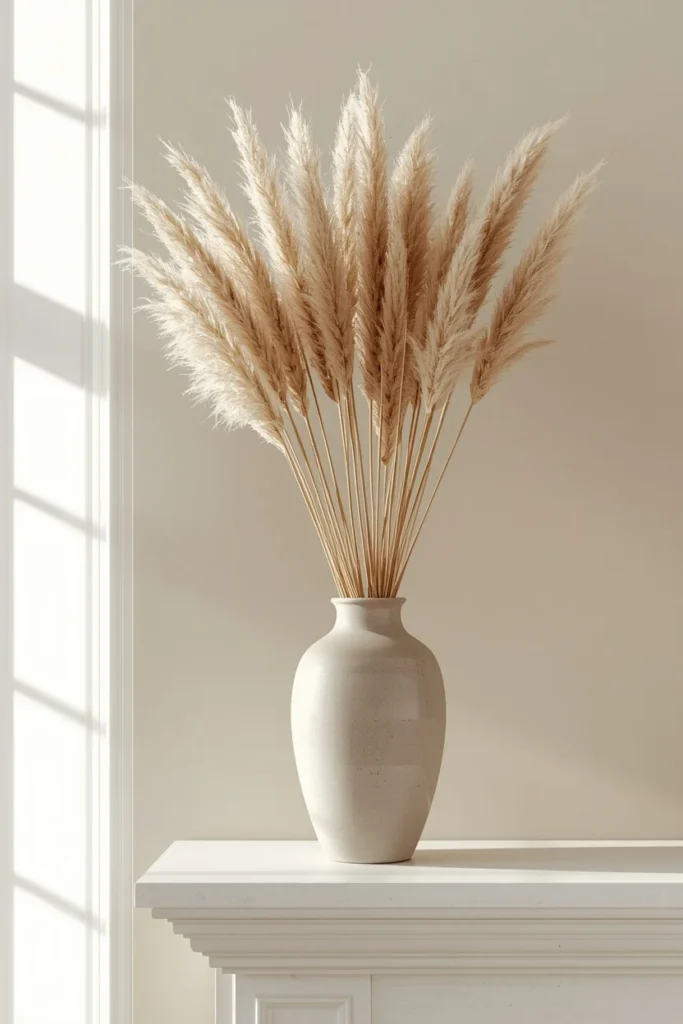
Dried flowers, wheat stems, and pampas grass bring softness and movement to a mantel in a way that solid decor objects can’t, and they hold their look for months without any watering or upkeep. Choose a single tall vase positioned slightly off-center rather than dead center, which creates a more natural, asymmetrical composition that echoes how flowers actually grow. Mix in a few different textures — feathery pampas, structured wheat, a handful of dried eucalyptus — so the arrangement has depth even in muted, neutral tones. This look works particularly well during early fall, when muted greens and warm whites still feel more appropriate than the deeper oranges and reds that take over later in the season. Keep the rest of the mantel simple when a dried arrangement is the centerpiece, since its organic shape already provides plenty of visual interest on its own.
12. Drape an Autumn Leaf Garland Along the Mantel Edge
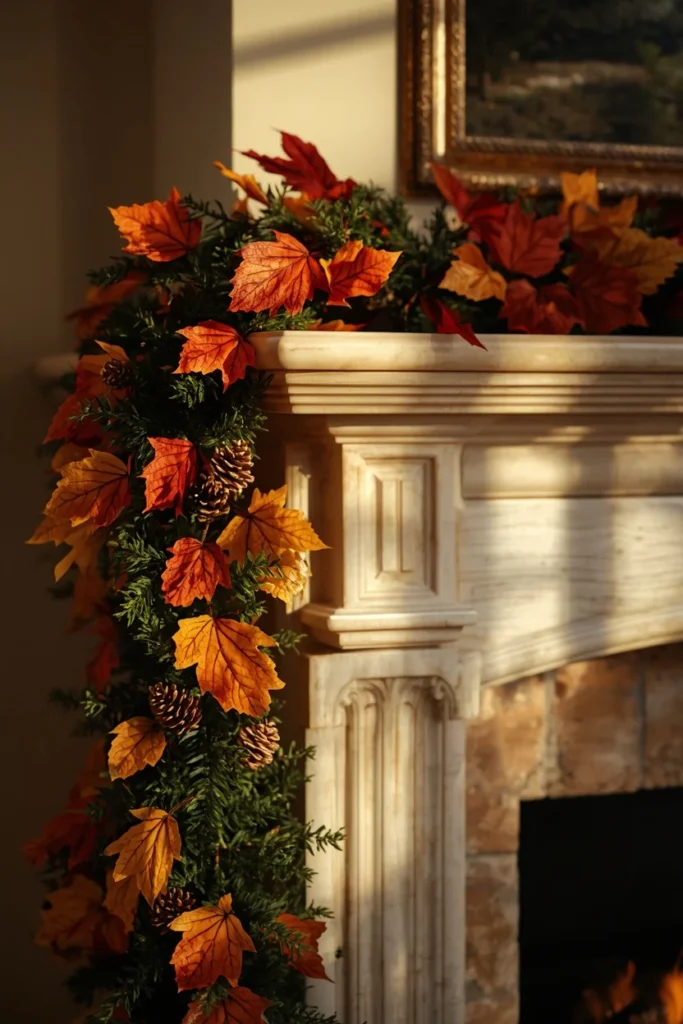
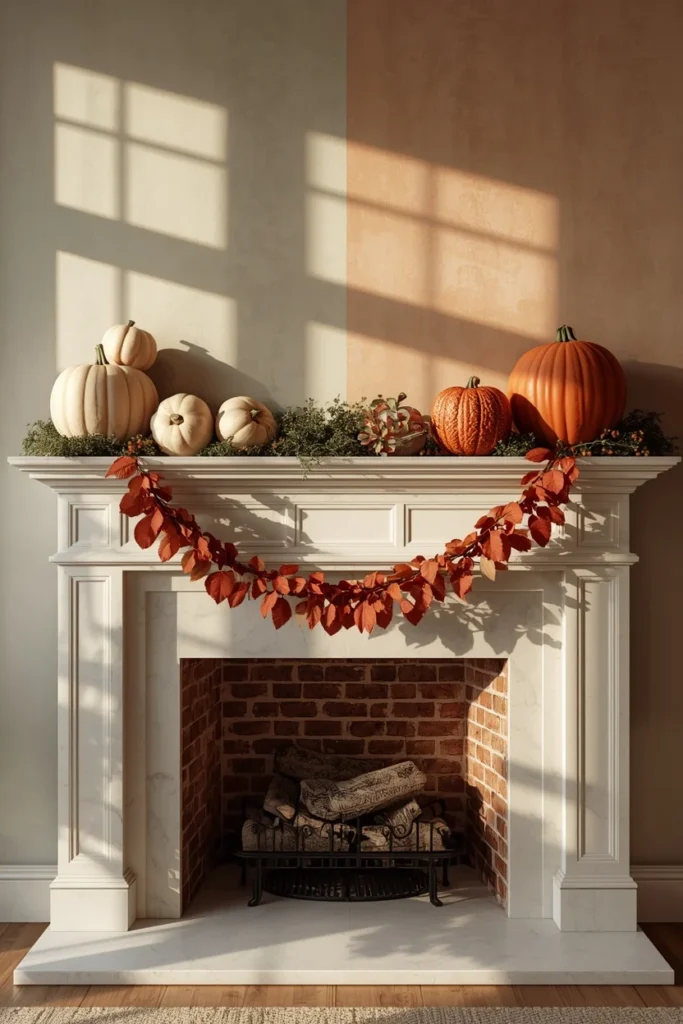
A garland of faux autumn leaves draped loosely along the front edge of the mantel adds color and movement without requiring any permanent change to the space. Let it dip gently between a few anchor points rather than pulling it taut, which gives the garland a more natural, gathered-from-outside look instead of a stiff, straight line. Choose a garland with a mix of leaf colors — deep red, burnt orange, golden yellow — so it reads as rich and layered rather than flat. Tuck in a few small faux acorns or pinecones along the length for extra texture where the eye lingers. This is one of the fastest and most affordable updates on this entire list, and it can be swapped out again in a single afternoon once the season changes.
13. Cluster Flameless Candles at Varying Heights
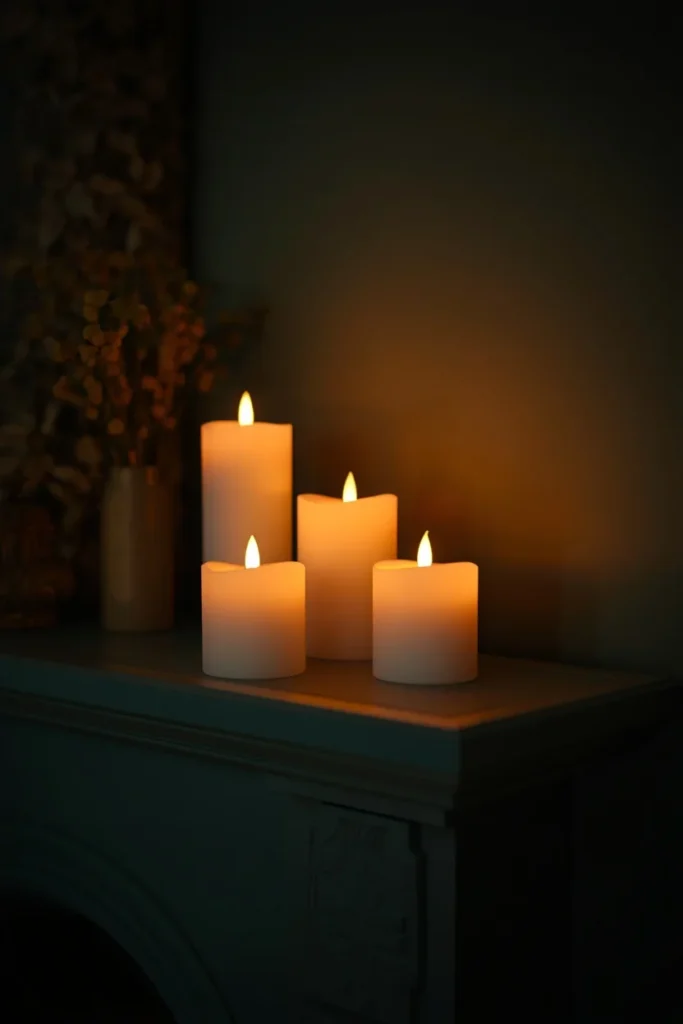
A grouping of flameless LED candles at varying heights creates the soft, flickering glow of real candlelight without the fire risk of leaving open flames unattended near a mantel full of dried florals and garland. Choose candles in a warm ivory or cream wax tone rather than bright white, since the warmer shade reads more naturally alongside firelight once the fireplace itself is lit. Group them in odd numbers — three or five — at slightly different heights using small risers or books underneath the shorter ones, which creates a more dynamic silhouette than a flat row. Position the cluster toward one side of the mantel rather than dead center, leaving room for a taller anchor piece like a vase or mirror elsewhere on the surface. This detail matters most in the evening, when the mantel’s daytime styling gives way to the softer, more magical mood a fireplace is really meant to create.
14. Drape a Chunky Knit Throw Nearby
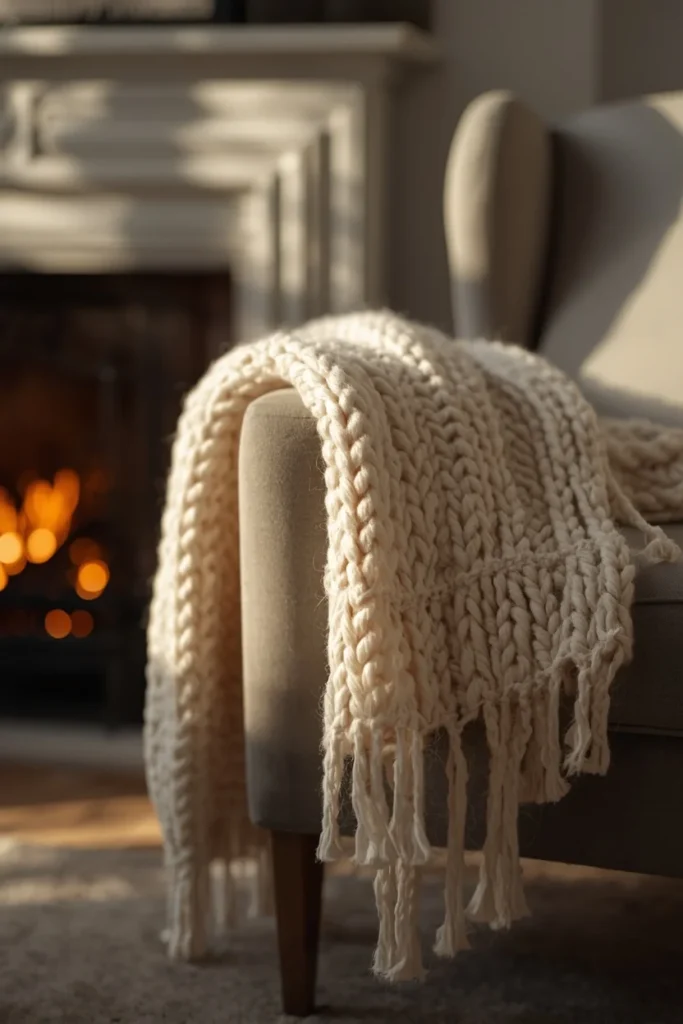
A chunky knit throw draped over the arm of a nearby chair or folded over the edge of the hearth extends the fireplace’s cozy mood beyond the mantel itself and into the seating area where people actually experience the warmth. Choose a natural fiber like wool or a wool blend in a color that echoes something already on the mantel — a cream candle, a rust-toned pumpkin, a deep green paint color — so the two areas feel connected rather than separately decorated. Drape it loosely rather than folding it into a tight, precise square, which keeps the styling feeling lived-in instead of staged for a photo. A textured chunky knit reads as more current than a flat, smooth throw, and it photographs beautifully in the low, warm light a fireplace naturally creates. This detail is also genuinely functional, since it’s exactly the kind of throw someone will actually reach for once the room cools down in the evening.
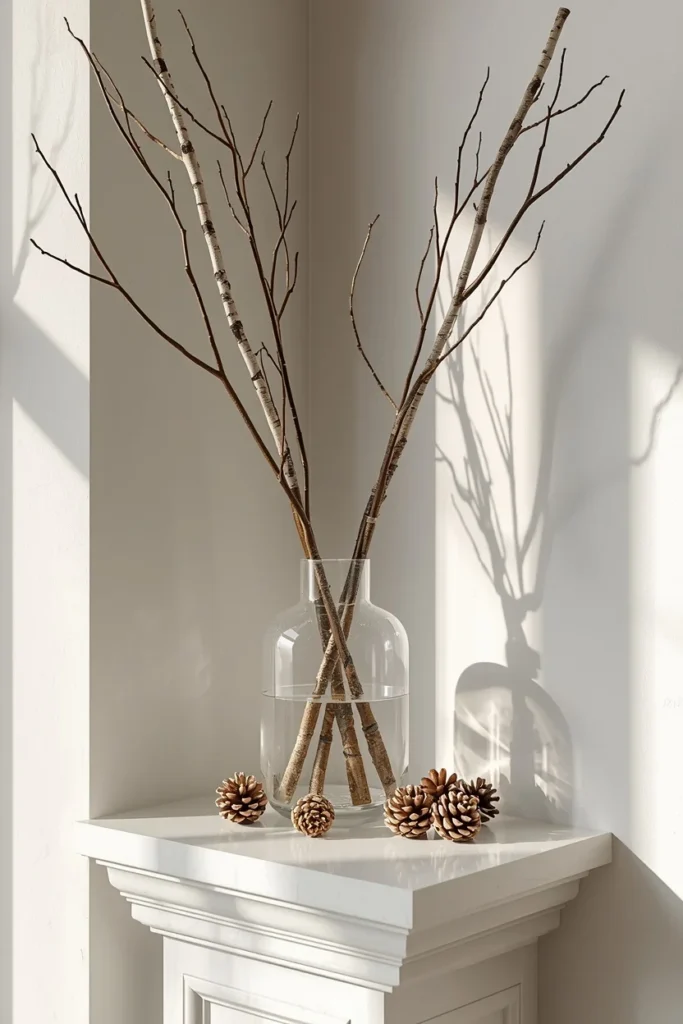
15. Style a Pinecone and Branch Vignette
A small grouping of pinecones and bare branches brings a quieter, more natural note to fall mantel styling, especially useful for anyone who wants the season represented without leaning fully into pumpkins and bright orange. Choose branches with some visible structure — birch, dogwood, or a few dried oak stems — and place them in a simple ceramic or glass vessel where their shape stays visible rather than getting lost in foliage. Scatter a handful of pinecones directly on the mantel surface around the base of the vessel rather than confining them to a bowl, which creates a more organic, gathered-from-the-woods feeling. This vignette works particularly well in modern or Scandinavian-leaning rooms, where the muted, textural palette fits more naturally than saturated autumn color. It also transitions easily into winter, since pinecones and bare branches read as seasonally appropriate well past the end of fall.
16. Hang One Oversized Art Piece Above the Mantel
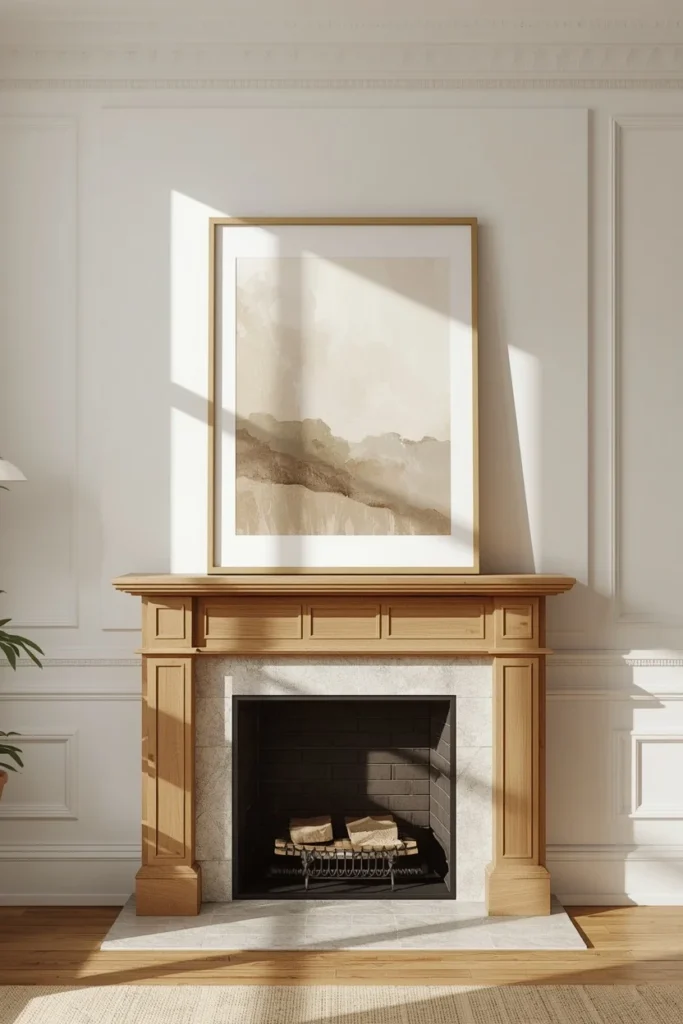
A single large-scale art piece above the mantel does more to make a fireplace feel intentional than a gallery wall of smaller frames ever could, since one dominant piece gives the eye a clear place to land. Choose artwork with a color palette that pulls from somewhere else in the room — the sofa, a rug, even the fireplace’s own stone or paint color — so it feels connected rather than randomly selected. Size matters more than people expect: the piece should span roughly two-thirds the width of the mantel below it to feel proportionate rather than undersized. Leaning the art against the wall instead of hanging it, propped on the mantel itself, adds a slightly more casual, collected feeling that also makes it easy to swap out seasonally. This single change is one of the fastest ways to make an entire fireplace wall feel finished, even if everything else on the mantel stays simple.
17. Center a Round Mirror as a Vertical Anchor
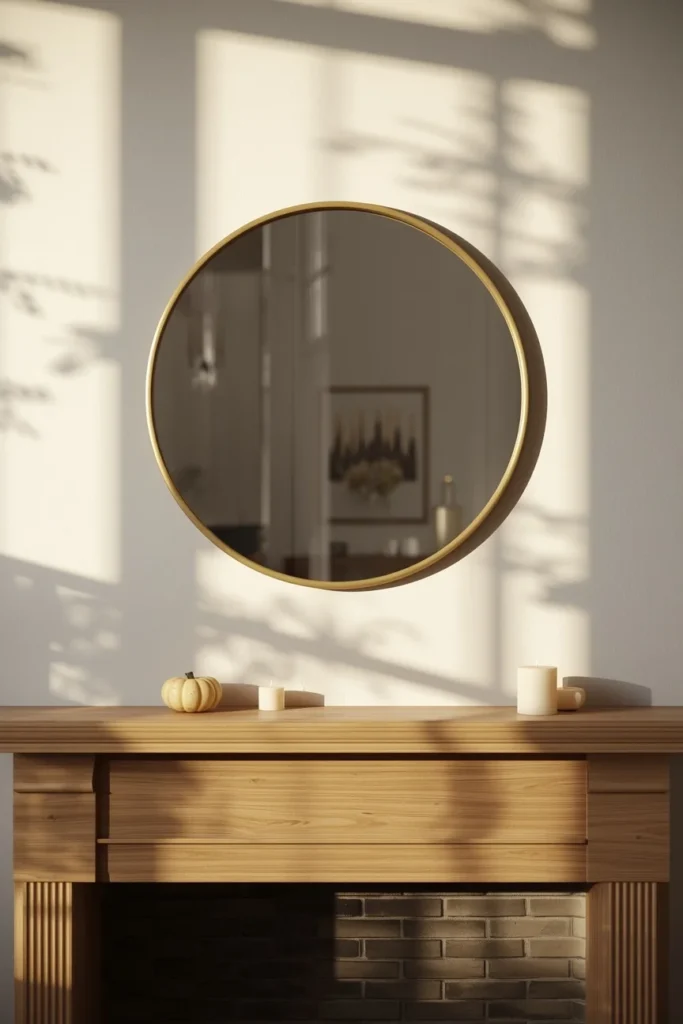
A round mirror above the mantel sets a strong vertical line while also bouncing extra light back into the room, which matters more in fall as natural daylight hours shrink. Choose a frame finish that complements the metal accents already on the mantel — brass with brass candlesticks, matte black with black hardware elsewhere in the room — so the whole styling story stays connected. Center the mirror directly above the fireplace’s midpoint rather than off to one side, since a round shape reads best with symmetrical placement. Keep everything else on the mantel lower and more restrained when a mirror is the main vertical element, letting it be the tallest thing in the composition rather than competing with a large vase or tall candlesticks. This combination — round mirror up top, low and layered objects below — is one of the most reliable formulas for a mantel that looks finished without looking overdone.
18. Add a Lantern with a Soft LED Candle Glow
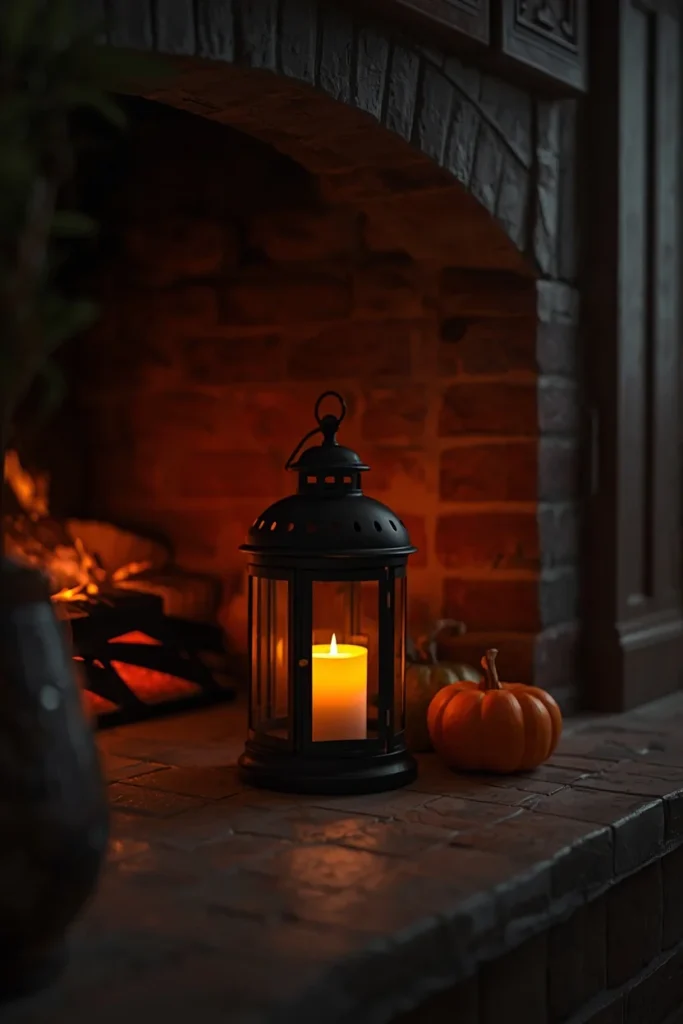
A lantern placed on the hearth or at one end of the mantel brings in a different quality of light than a cluster of small candles, since its enclosed shape softens and diffuses the glow rather than letting it shine directly outward. Choose a lantern in aged metal or dark-finished glass so it reads as an intentional design object during the day, not just a light source that only matters after dark. Fill it with a flameless LED candle for safety near dried florals and garland, or with a small cluster of faux autumn stems for daytime styling when it isn’t lit. Position it on the floor beside the hearth for an asymmetrical, layered look, or directly on the mantel surface if floor space is limited. This idea adds real functional warmth to the evening mood a fireplace is meant to create, beyond what static decor alone can provide.
19. Repeat One Autumn Color Through Ceramic Vessels
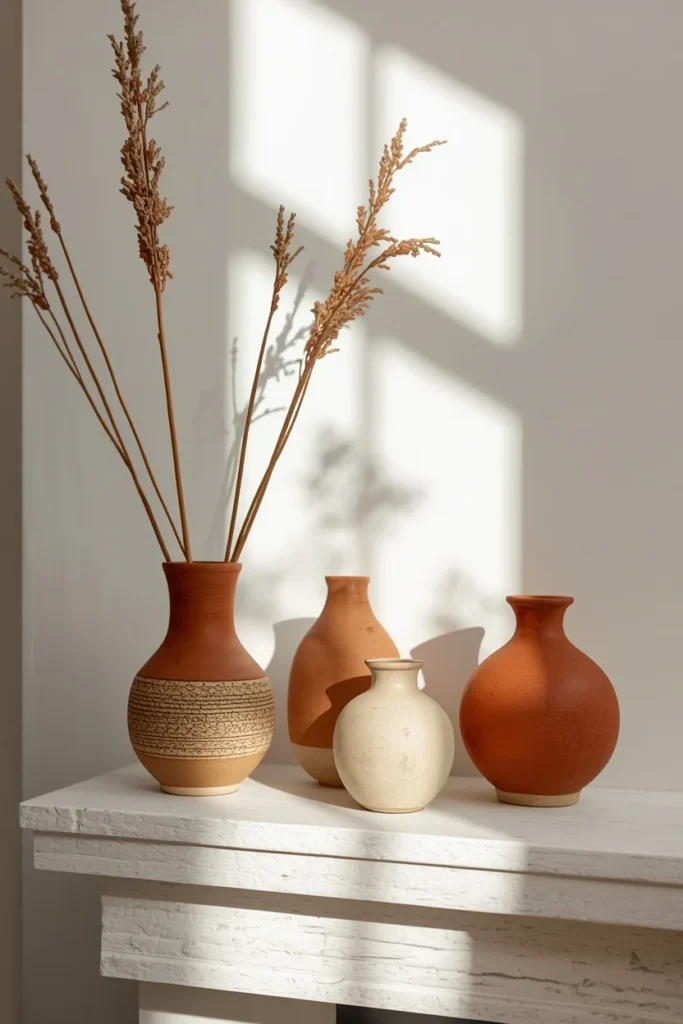
Rather than matching every piece on the mantel, choose a single fall-appropriate color — a warm terracotta, a deep sage, a muted mustard — and repeat it across a few different ceramic vessels, plates, or small bowls in slightly varying shades and finishes. This approach reads as far more sophisticated than a matched decor set, since the repetition ties the grouping together while the variation keeps it from feeling flat or purchased in one trip. Vary the shapes too: a low bowl, a taller vase, a small footed dish, all in roughly the same color family. Let the vessels hold different things — one filled with a few dried stems, one empty and purely sculptural, one holding a small candle — so the grouping feels functional rather than purely decorative. This trick works on almost any mantel color and adapts easily as the season shifts from early to late fall simply by changing the accompanying stems or florals.
20. Style Books and Sculptural Objects Asymmetrically
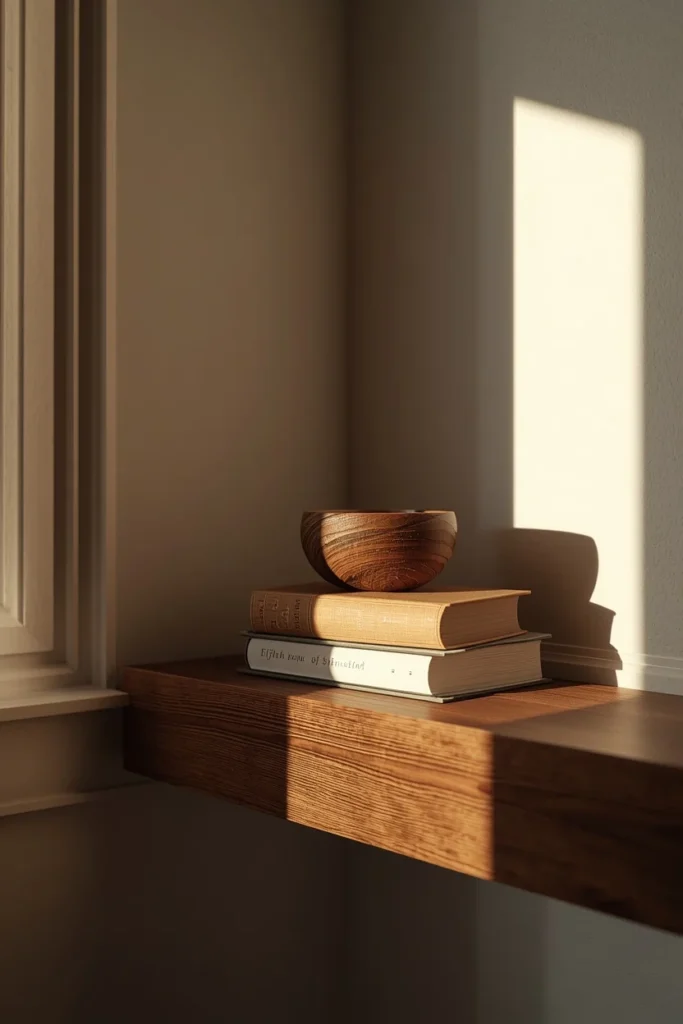
A stack of two or three books topped with a small sculptural object — a wood bowl, a stone orb, a small figural piece — adds height and personality to a mantel without leaning on seasonal decor at all, which keeps the styling feeling collected over time rather than temporary. Choose books with covers or spines in colors that complement the mantel’s palette, since the stack itself becomes a visible color block in the overall composition. Position this grouping off-center rather than in the middle, using it as one of two or three visual anchors spaced across the mantel’s width rather than a single centered display. Vary the height of each anchor point across the mantel — tall here, low there — so the eye moves naturally across the whole surface instead of stopping at one spot. This approach gives a mantel a sense of being genuinely lived-in and personal, which is often what separates a styled fireplace from one that simply has objects placed on it.
21. Shift the Palette as Fall Progresses
The mantel’s color story doesn’t need to stay fixed for the entire season — muted greens, warm whites, and soft neutrals suit early fall beautifully, while richer oranges, deep reds, and browns feel more appropriate as the weather cools further into November. Plan for this shift by choosing a base layer of decor, like a neutral garland or a set of ceramic vessels, that can stay in place all season, then swap in different accent pieces as the palette deepens. Early in the season, pair the neutral base with pale pumpkins, dried eucalyptus, and soft cream candles. Later, layer in deeper orange pumpkins, red and gold leaf garland, and warmer metal accents like copper or brass. This approach stretches the value of your fall decor across the full season instead of locking the mantel into a single look that starts to feel stale by the time the weather actually turns cold.
Styling Tips for Pulling It All Together
Pick one dominant color and one accent metal, then let both repeat across at least three surfaces — the mantel paint, a candle holder, a garland accent — so the fireplace reads as one cohesive story instead of separate purchases. Vary your heights on purpose: a mantel styled entirely at the same level reads flat, while a mix of tall, medium, and low objects creates the kind of rhythm that photographs well and looks intentional in person. Odd numbers of grouped objects — three candles, three pumpkins, three books — tend to look more natural than even pairs when you’re not going for strict symmetry. Step back to the doorway of the room and look at the mantel from a distance before finalizing anything, since that’s the actual vantage point most people will experience it from. Leave visible negative space between groupings; an overstyled mantel can feel just as unfinished as a bare one.
Practical Implementation Ideas
Start with the mantel color or material, since that decision anchors every other choice and makes picking accent pieces far easier once it’s settled. Style in layers rather than all at once — a base layer of neutral, longer-lasting pieces first, then seasonal accents on top — so the mantel can transition through the season without a full redo each time. Buy candles, garland, and pumpkins in the quantity the actual mantel length calls for rather than guessing, since running short mid-styling often leads to a mismatched last-minute purchase. Keep a small box of extra fall decor nearby so swapping the palette from early to late fall takes minutes rather than a full shopping trip. Photograph the finished mantel in the evening with the fire lit, since that’s the lighting condition it’s actually designed to be seen in most often.
Common Mistakes to Avoid
Overcrowding the mantel with too many small objects is the most common misstep, since a cluttered surface reads as busier from across the room than a more restrained one. Placing everything at the same height is another frequent issue — a mantel styled in a single flat row loses the visual rhythm that makes a composition feel intentional. Choosing decor that isn’t safe near an active fireplace, like open-flame candles too close to dried florals or garland, creates a real hazard rather than just a styling flaw; flameless LED options solve this without sacrificing the look. Skipping the color connection between the mantel and the surrounding room leaves the fireplace feeling like an isolated seasonal display rather than part of the space. Finally, styling only for daytime photos and forgetting how the mantel looks with the fire actually lit means missing the exact moment the whole effort was for.
Small-Space Alternatives
A smaller mantel or a compact living room benefits most from restraint — one anchor piece, like a mirror or art, paired with a single low grouping of candles or pumpkins, rather than trying to fit every idea from this list onto one shelf. Skip the floor-level hearth styling in favor of putting everything on the mantel itself if hearth space doubles as a walking path. A floating shelf mantel or a slim two-tone surround both help a small fireplace feel proportionate rather than overwhelming the room. Choose one seasonal color rather than a full autumn palette, since a tighter color story reads as more polished in a compact space. A single well-chosen garland and one cluster of candles often makes more impact on a small mantel than trying to layer in pumpkins, branches, and vessels all at once.
Budget-Friendly Alternatives
A garland and a few flameless candles can transform a bare mantel for well under fifty dollars, making this one of the highest-return updates on the entire list. High-quality faux pumpkins and dried florals now look convincingly real and can be reused every fall for years, which quickly offsets their upfront cost compared to buying fresh ones annually. Secondhand candlesticks and vessels, found at estate sales or thrift stores, deliver the collected-over-time look at a fraction of retail prices, especially in brass or copper finishes. Repainting just the mantel, rather than the whole fireplace surround, remains one of the best cost-to-impact ratios in seasonal styling. Leaning a piece of existing art against the wall above the mantel costs nothing at all if you already own something with the right color palette.
Pro Styling Recommendations
Professional stylers treat the mantel as an extension of the room’s existing color and material palette rather than a separate seasonal category, which is why a fireplace styled well in fall still looks intentional in a photo of the whole room, not just a close-up. They favor a small number of larger, higher-quality pieces over many small trinkets, since fewer objects with more presence photograph and read better than a crowded surface. Layering different light sources — firelight, candlelight, and ambient room lighting — is a habit that shows up in nearly every well-styled mantel, since a fireplace is ultimately about atmosphere as much as objects. Repetition of a single accent color or metal finish in small doses reads as more sophisticated than introducing several new colors at once. Most of all, professionals resist styling a mantel completely from scratch each season, instead building a flexible base that only needs a few new accent pieces to feel fresh year after year.
FAQs
Final Thoughts
A fireplace this warm and magical doesn’t come from buying every fall item in the store at once — it comes from choosing the handful of ideas here that actually fit your mantel’s material, your room’s existing palette, and how the space really gets used once the weather turns. Start with the mantel color or material and one strong vertical anchor, then layer in texture, seasonal color, and light in that order. By the time the fire is lit most evenings, you’ll have a mantel that does exactly what it’s supposed to do: make the whole room feel like the best place in the house to be.