18 Fall Wreath Ideas That Make Your Front Door the Prettiest on the Block
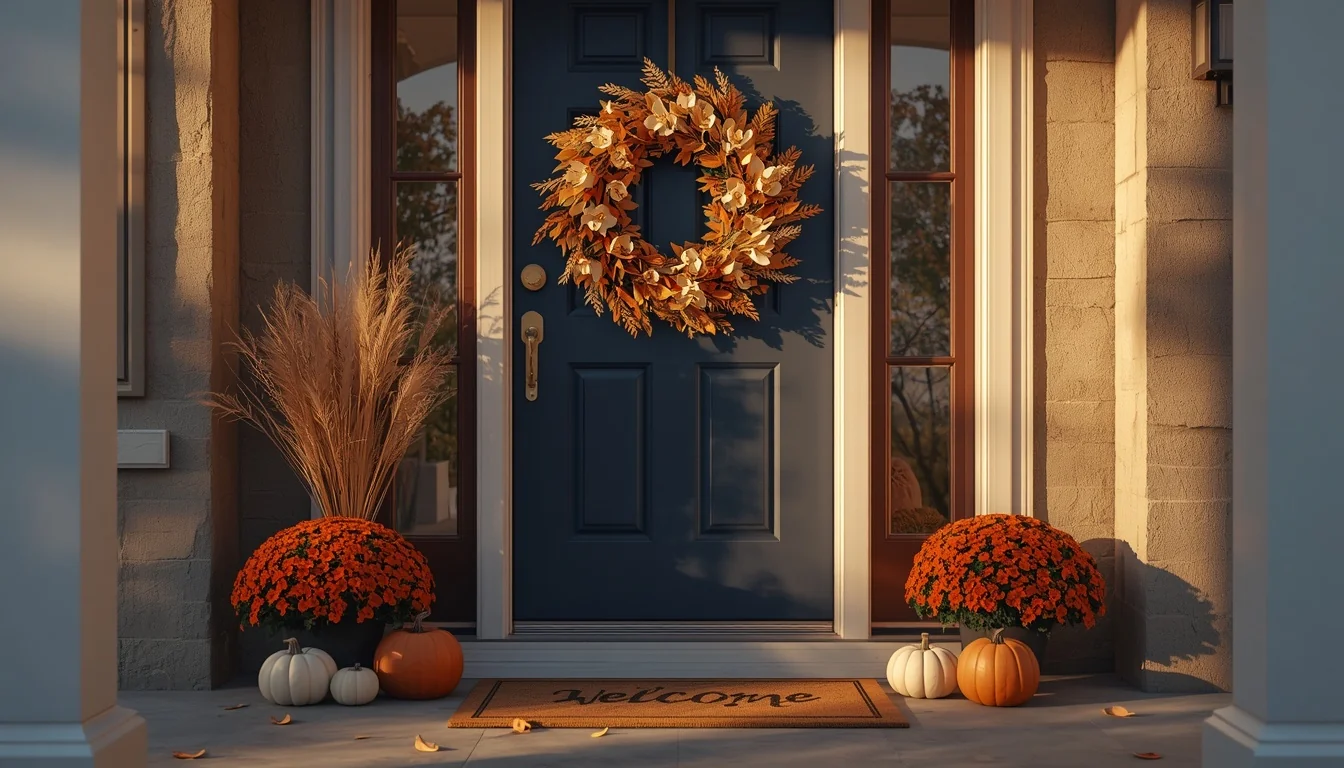
There’s a specific kind of pride that comes from pulling into your driveway and actually liking the way your front door looks. It’s rarely the pumpkins on the steps that do the heavy lifting. It’s the wreath — the thing hanging right at eye level, the first piece of your home anyone actually looks at before they even ring the bell.
Fall is the one season where a wreath practically decorates itself, thanks to everything already turning gold, rust, and deep green outside. But it’s also easy to grab the same orange-and-burlap version everyone else has and call it done. This list has 18 fall wreath ideas that range from five-minute store swaps to full weekend DIY projects, so whatever your front door needs, there’s a version here that fits it.
Table of Contents
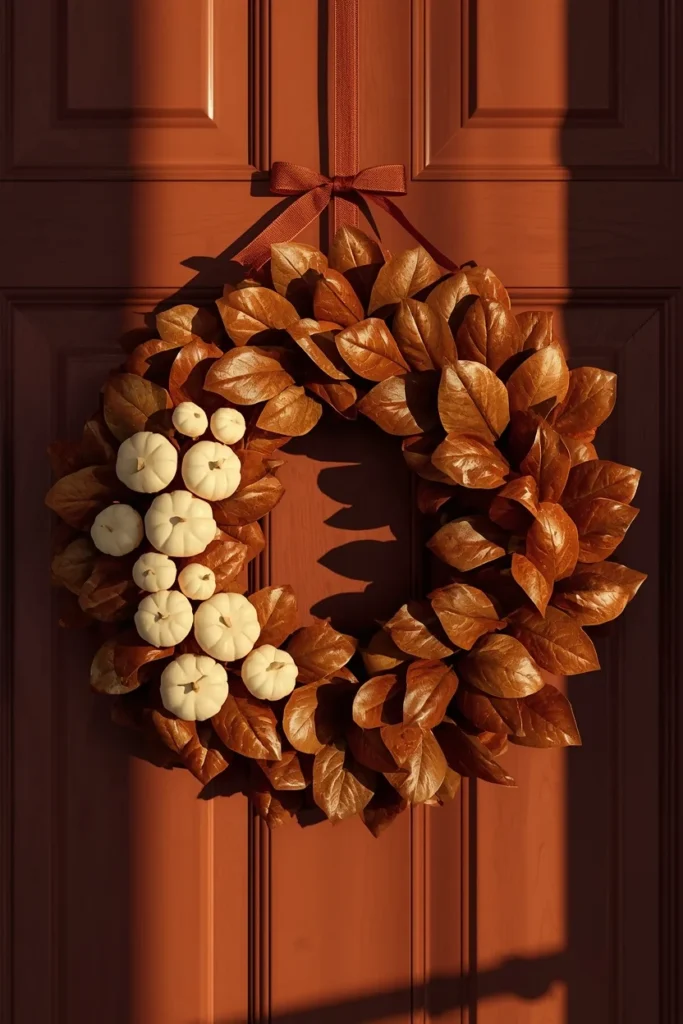
1. Magnolia Leaf & White Pumpkin Wreath
Magnolia leaves are one of the most reliably elegant bases for a fall wreath because each leaf shows two completely different faces, glossy deep green on one side and soft autumnal brown on the other, so the wreath already has built-in texture and color variation before you add a single accent. Layer a handful of small white or cream faux pumpkins into the base at varying angles, clustering two or three together instead of spacing them evenly, which reads as more natural and less assembled. This combination photographs beautifully because it skips traditional orange entirely, giving the wreath a softer, more sophisticated feel that suits both modern and traditional front doors. A thin ribbon in a muted rust or cream ties the whole look together without competing with the magnolia’s natural shine. This wreath also holds up well through the full season since dried magnolia leaves and faux pumpkins don’t fade the way fresh florals do.
2. Golden Yarrow & Wheat Sunburst Wreath
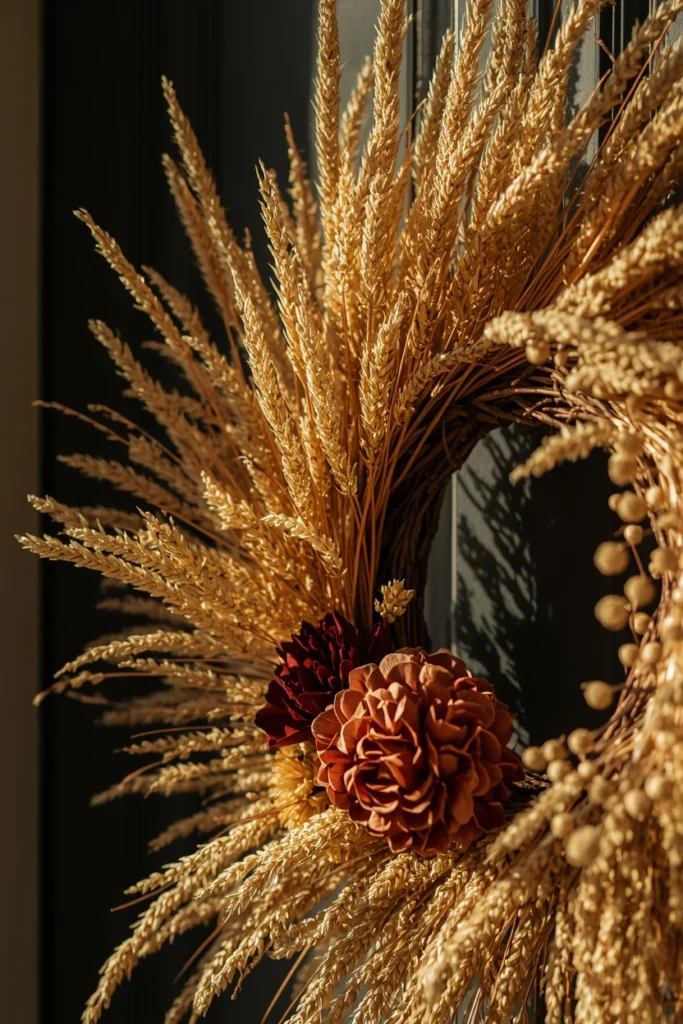
Built on a twig or willow base, this style arranges golden yarrow, dried wheat, and millet stems radiating outward like a sunburst rather than following the wreath’s circular shape evenly, giving it a looser, more dynamic silhouette than a traditional round wreath. The golden yellow of the yarrow catches light beautifully at both midday and golden hour, making the whole wreath look like it’s glowing softly even from the street. Tuck in a few crisp hydrangea blooms in a muted merlot or wine tone to add depth and a slightly darker anchor color against all the gold. Because every material here is dried rather than fresh, the wreath transitions easily from late summer through Thanksgiving without losing its shape or color. This idea works especially well on lighter-colored front doors, where the warm gold tones have the most contrast to stand out against.
3. Modern Asymmetrical Cluster Wreath
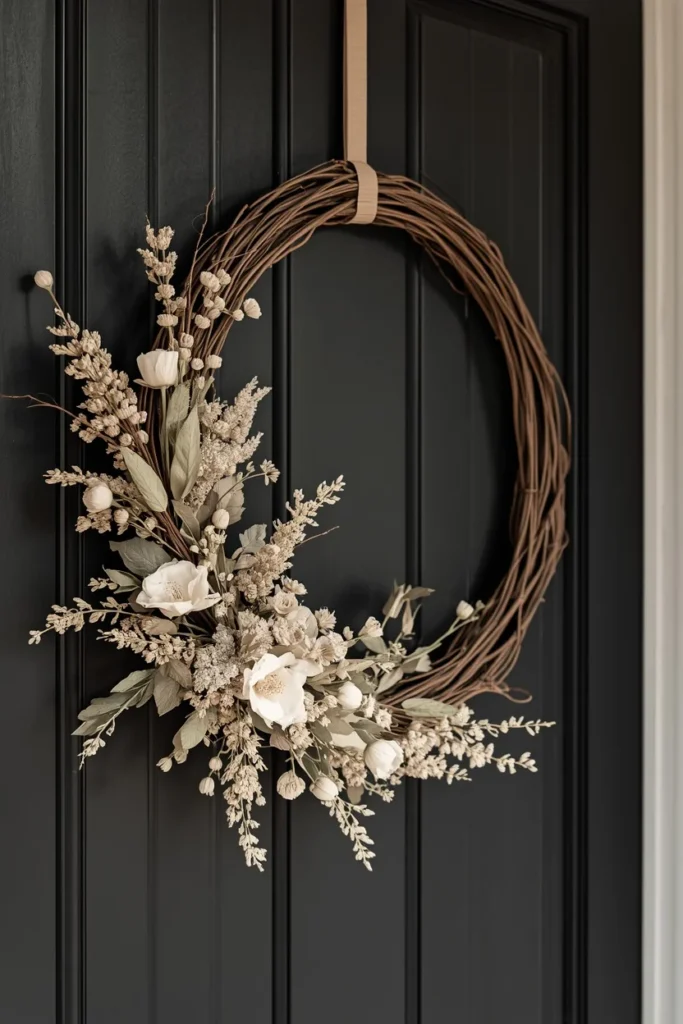
Rather than distributing florals evenly around the entire ring, the modern approach to fall wreaths clusters most of the blooms and greenery onto one side or one bottom corner, leaving the rest of the base bare or lightly dressed. This asymmetry gives the wreath a cleaner, more contemporary silhouette that reads as intentional rather than sparse, and it’s one of the clearest signals of shift away from fuller, evenly-covered traditional styles. Use a simple grapevine or wire base and concentrate three or four statement elements, a cluster of dried florals, a few stems of foliage, one faux pumpkin, into a single dense grouping. Leave visible negative space around the rest of the ring so the eye has somewhere to rest instead of scanning a fully packed wreath. This style pairs especially well with modern or minimalist front doors where a fuller traditional wreath might feel visually heavy against clean architectural lines.
4. Fall-to-Winter Transitional Wreath
Built to stay up well past Thanksgiving, this wreath pairs classic fall elements, dried leaves, small pumpkins, warm foliage, with pinecones and clusters of faux cranberries that read as equally at home in a winter display. The trick is choosing a base palette of deep reds, browns, and greens that doesn’t lean too heavily into orange, so the wreath doesn’t look out of place once the calendar flips toward December. Cluster the cranberries in small groupings rather than scattering them individually, which gives the wreath pops of bright red against the more muted pinecones and foliage. This is one of the most practical ideas on the list for anyone who wants real value out of a single wreath purchase, since it genuinely spans two full seasons without needing to be swapped. A simple plaid or velvet ribbon reinforces the transitional feel without pushing the wreath fully into holiday territory too early.

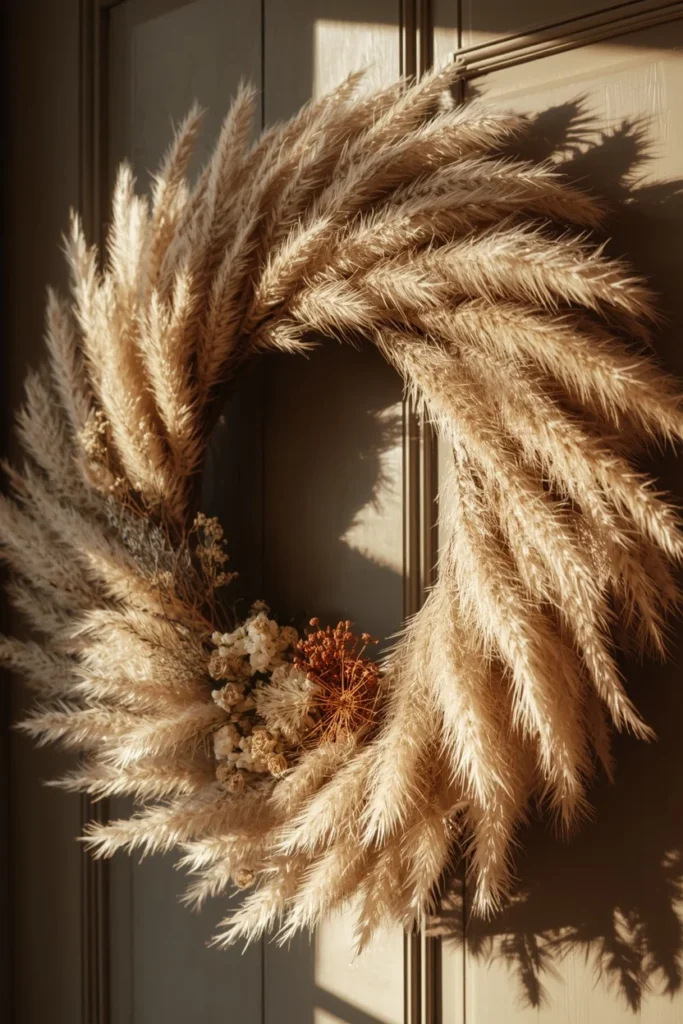
5. Non-Orange Neutral Dried Wreath
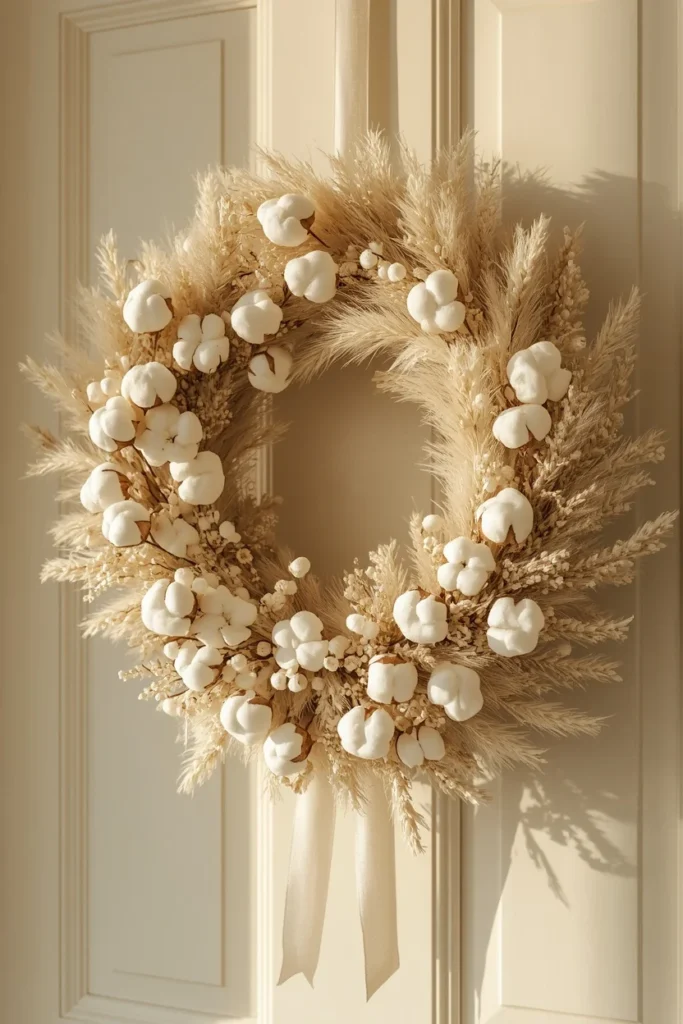
For anyone whose home exterior doesn’t pair well with traditional orange and burgundy, this wreath builds an entirely neutral fall palette out of dried grasses, bleached pampas, cream-toned dried flowers, and pale cotton stems. The result still reads as unmistakably autumn thanks to the texture and dried, slightly rustling quality of the materials, but the color story stays soft enough to work with nearly any front door color. Layer two or three different textures, wispy pampas against fuller dried florals against smoother cotton bolls, so the wreath has visual interest even without a strong color contrast. This style has become one of the fastest-growing fall wreath trends precisely because it sidesteps the seasonal cliché while still feeling completely appropriate for the time of year. It also tends to photograph exceptionally well in natural light, since the neutral tones let texture and shadow do most of the visual work.
6. Year-Round Eucalyptus Base with Fall Sash
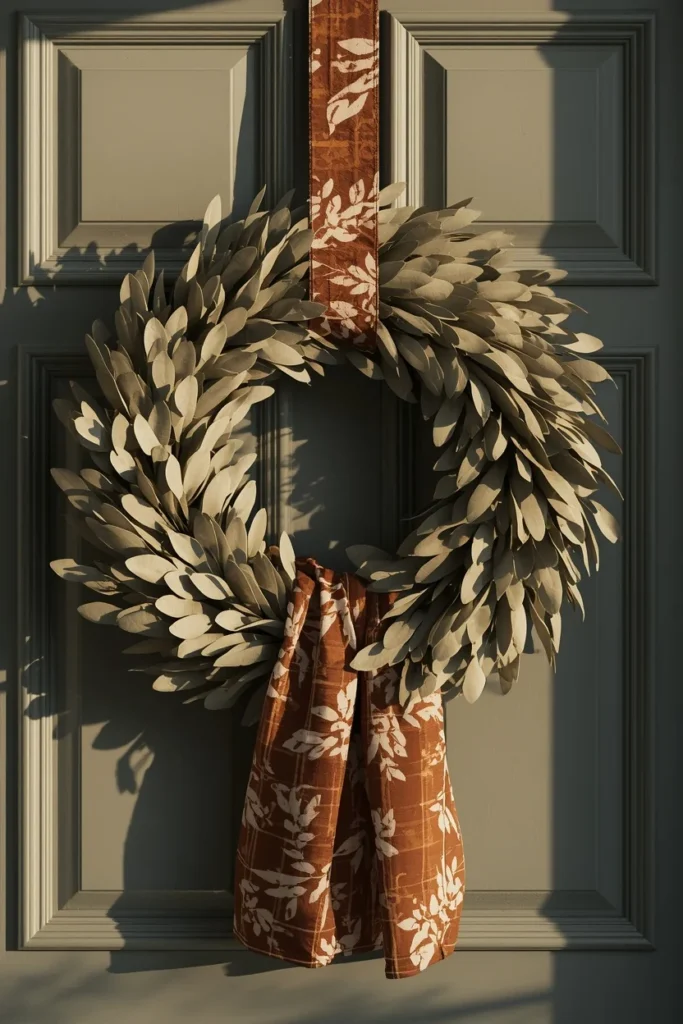
A soft, airy eucalyptus wreath works as a permanent front door fixture, meaning the actual wreath never comes down, only the ribbon or sash draped across it changes with the season. For fall, add a wide fabric sash in a warm plaid, rust, or block-print pattern draped diagonally across the greenery, which instantly signals the season without requiring a whole new wreath purchase. This approach is especially practical for households that want their entry to feel seasonally updated without the cost or storage hassle of multiple full wreaths throughout the year. The eucalyptus base stays soft and slightly silvery-green even as it dries naturally over time, which pairs well with nearly any sash color you choose. It’s one of the more budget-conscious long-term strategies on this list since the sash is the only piece that needs replacing each season.
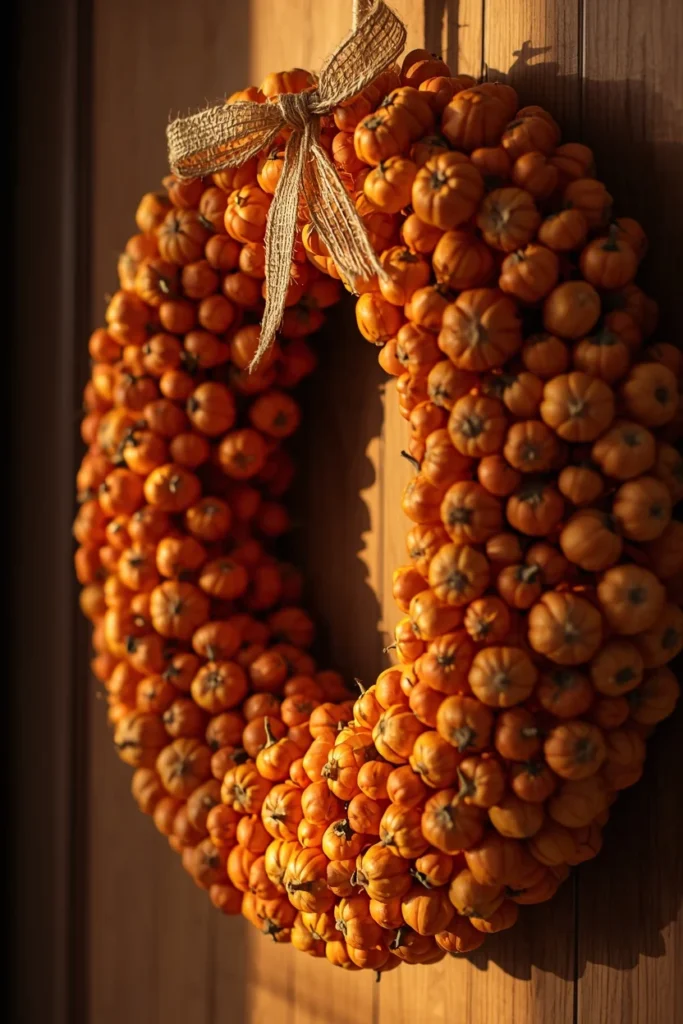
7. Putka Pod “Mini Pumpkin” Wreath
Putka pods are small, naturally orange, gourd-shaped dried seed pods that look remarkably similar to miniature pumpkins without any of the fading or deterioration that comes with faux or real pumpkin embellishments over a full season. Covering an entire wreath base in these pods creates a dense, textural, distinctly autumn look that reads as more organic and unique than a standard faux pumpkin wreath. Because the pods are naturally dried, the wreath can be stored and reused year after year without losing its shape or color, making it a genuinely long-term investment piece. Pair the pods with a simple burlap or jute ribbon to keep the overall look natural and unfussy rather than overly polished. This idea is especially good for anyone who wants a wreath with real conversation-starter appeal, since most guests won’t immediately recognize what the texture actually is.
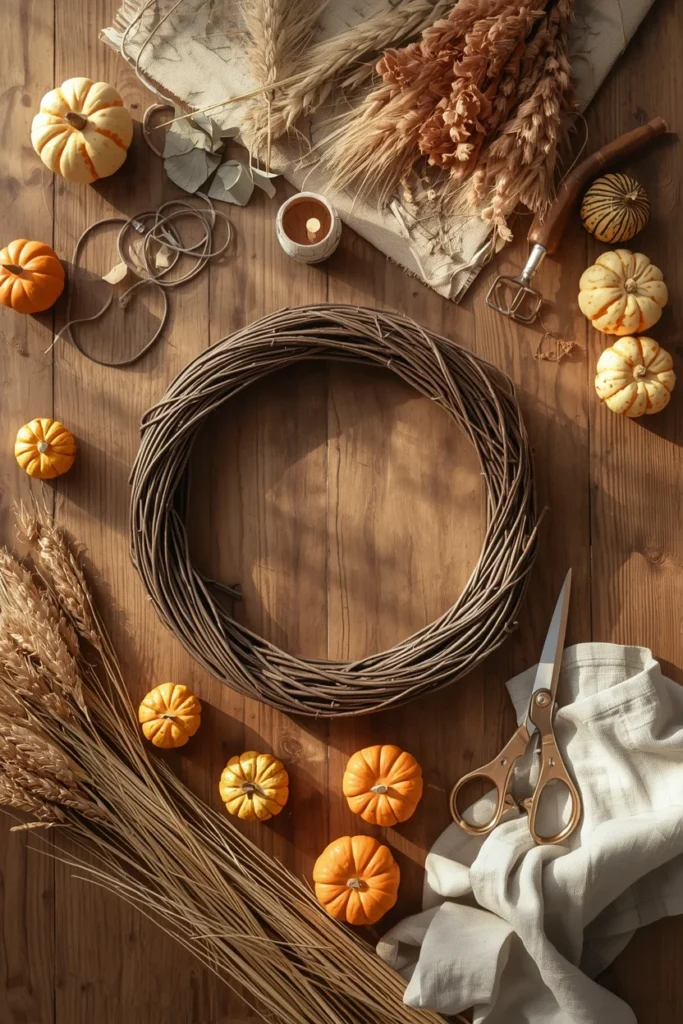
8. DIY Grapevine & Dried Stem Wreath
Starting with a bare grapevine wreath base is the most flexible and budget-friendly way to build a completely custom fall wreath from scratch, using paddle wire to attach dried stems, grasses, and a few faux accents exactly where you want them. The grapevine itself provides natural texture and warm brown tone even before anything else is added, so the wreath already looks intentional with minimal decoration. Work in small clusters rather than single stems, wiring three or four pieces together before attaching them to the base, which builds visual weight more efficiently than adding one stem at a time. This project is genuinely approachable for a first-time wreath maker since mistakes are easy to unwire and reposition, and the finished result feels far more personal than anything purchased ready-made. It’s also one of the most affordable options on this entire list, since a grapevine base and a handful of dried stems cost a fraction of a florist-made wreath.
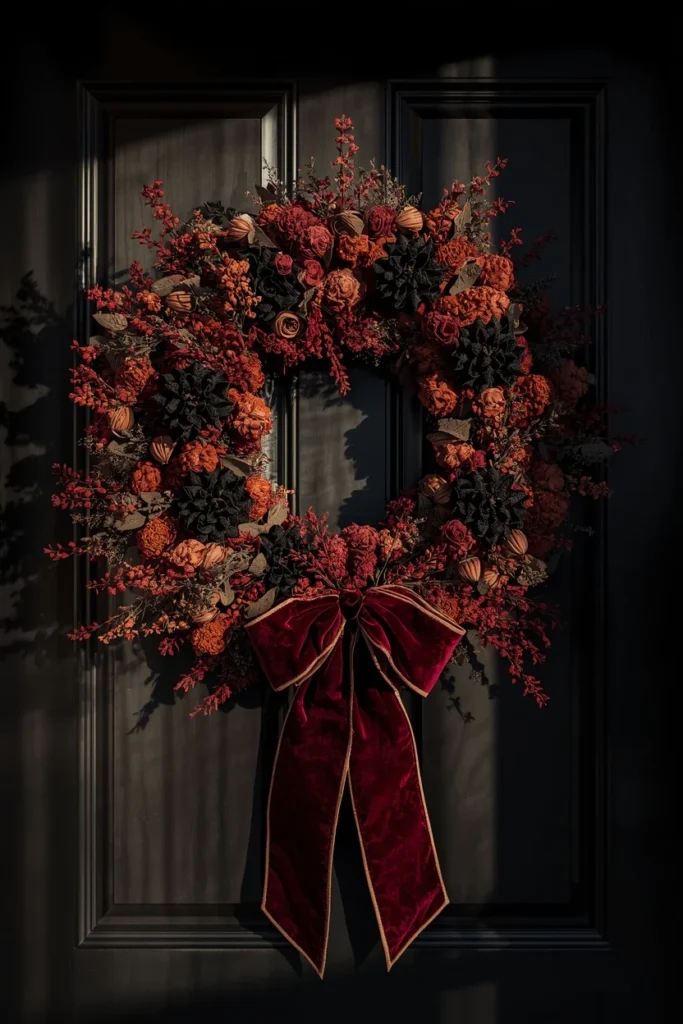
9. Moody Rust & Burgundy Wreath
For a front door that wants real drama, this wreath leans into deep, saturated tones, rust orange, burgundy, near-black florals, rather than the softer, lighter palette trending elsewhere this year. Layer velvet-textured florals with dark foliage and a few sprigs of black-toned dried grasses to build depth, keeping the overall shape full and traditional rather than airy or asymmetrical. This style works particularly well on darker front doors, where the moody tones create a striking, almost monochrome effect rather than competing with the door color. It also transitions naturally toward Halloween styling without requiring an entirely separate seasonal wreath, since the deep color palette already leans slightly gothic. A wide velvet ribbon in matching burgundy finishes the look and adds one more layer of rich texture against the florals.
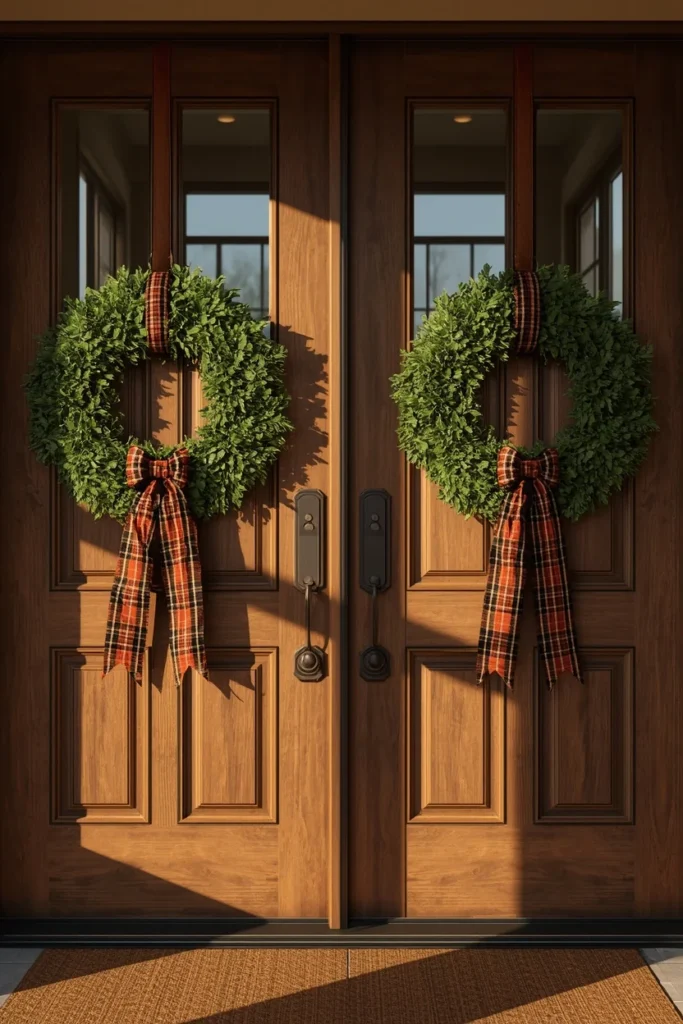
10. Boxwood Base with Swappable Sash
A full, structured boxwood wreath offers a classic, symmetrical shape that works especially well on double front doors, where matching precision matters more than an organic, asymmetrical look. Keep the boxwood itself as a permanent, year-round base, then update the styling seasonally with a wreath sash tied diagonally or draped straight down the center for fall. Choose a sash in a rich plaid, chinoiserie print, or solid rust linen depending on your home’s overall style, since the boxwood’s neutral green works as a backdrop for nearly any pattern. This approach gives a home the polish of a fully structured wreath while keeping seasonal costs and effort low, since only the sash changes throughout the year. It’s a particularly strong choice for traditional or colonial-style homes where a looser, more organic wreath might look slightly out of place.
11. Dried Lotus Pod & Craspedia Wreath
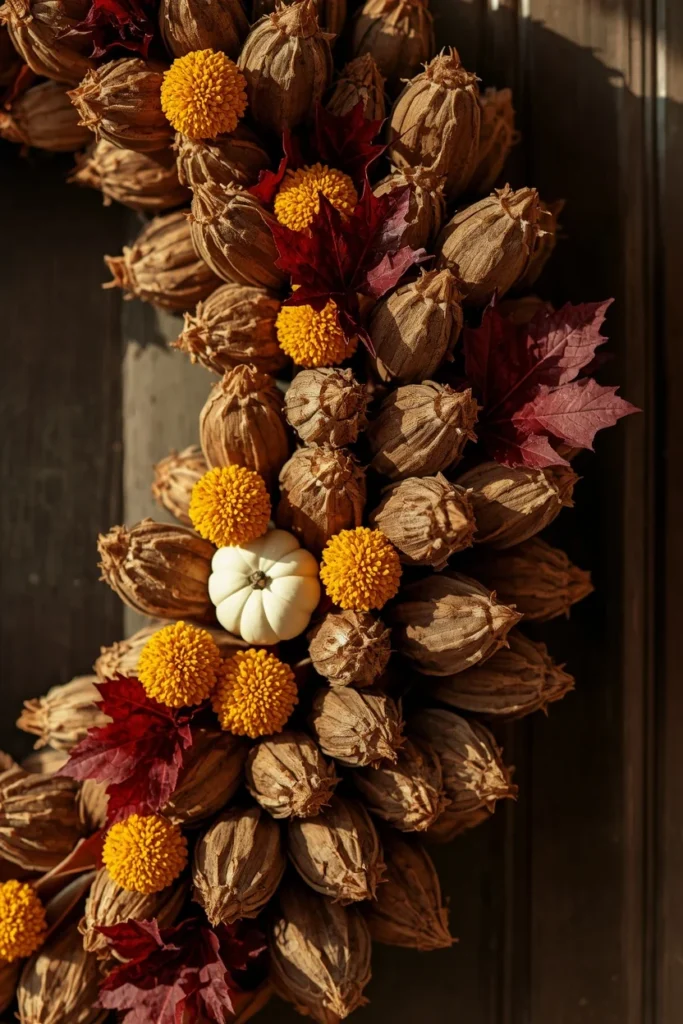
This wreath builds its base entirely from preserved lotus seed pods lining the inner ring, creating a deep brown, almost architectural backdrop for brighter accents layered on top. Cluster small clusters of creamy craspedia billy buttons, round and yellow, against the dark pods for a striking contrast that feels more sculptural than a typical florist wreath. Add a few burgundy maple leaves and one or two crisp white pumpkins tucked into the design for additional color variation without overwhelming the lotus pod texture. Because every material here is naturally dried or preserved, this wreath holds its shape and color for years, making it a strong choice for anyone who reuses the same base wreath every fall. The overall effect is textural and slightly unexpected, standing apart from more conventional floral-heavy wreath designs.
12. Sunflower Statement Wreath
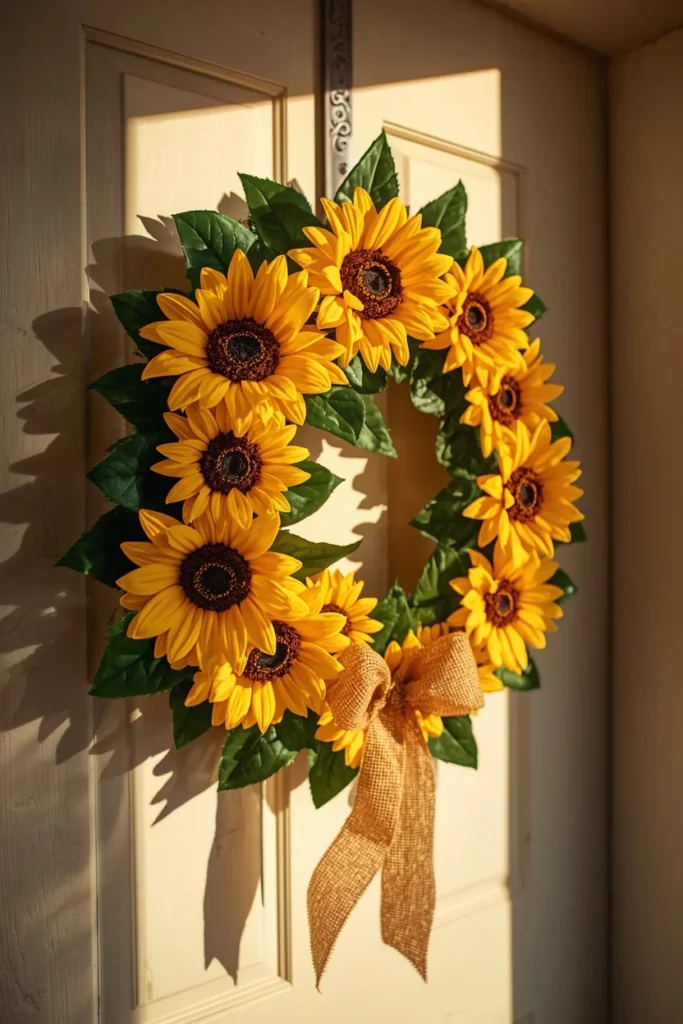
For anyone who wants a wreath with immediate, cheerful impact, a base built almost entirely around faux sunflowers delivers bold color and personality without needing much else added to the design. Choose sunflowers in a range of sizes, a few large statement blooms mixed with several smaller ones, so the wreath has natural visual rhythm rather than uniform repetition. Ground the bright yellow with a handful of deep green leaves and a simple burlap or raffia ribbon, keeping the rest of the palette minimal so the sunflowers stay the clear focal point. This wreath tends to work exceptionally well on lighter-colored doors and porches where the yellow can really pop against a neutral backdrop. It’s also one of the most universally recognizable fall symbols on this list, making it a reliable, crowd-pleasing choice for anyone who wants their front door to read as “fall” instantly from the street.
13. Olive Branch Wreath with Subtle Fall Touches
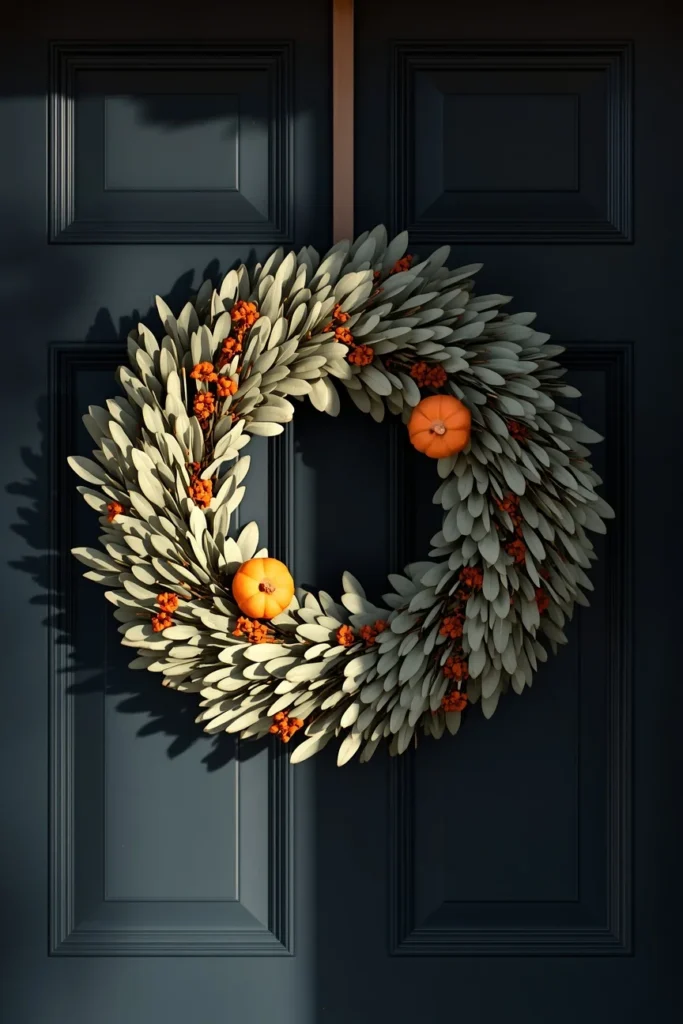
An olive branch wreath offers a soft, dusty green base that works year-round, making it an easy foundation to lightly dress for fall rather than replace entirely each season. Tuck in just a few small dried fall accents, a handful of tiny pumpkins, a couple of rust-toned floral picks, spaced sparingly around the ring rather than layered heavily throughout. The restraint here is the whole point: olive’s muted, slightly silvery tone already reads as elegant and calm, so the wreath only needs the smallest seasonal nod to feel appropriately autumnal. This style suits homes with darker or more saturated front door colors especially well, since the soft green provides gentle contrast without competing for attention. It’s also one of the more sustainable choices on this list, since the same base wreath can carry through spring and summer with entirely different, equally minimal seasonal touches.
14. Maple Leaf Foliage Wreath
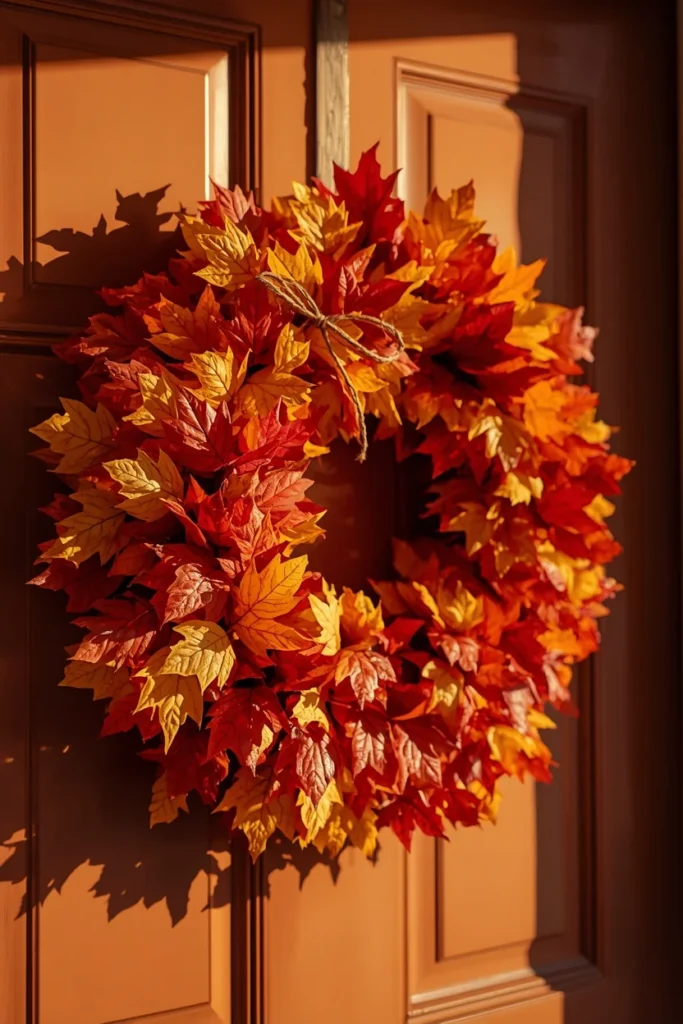
Built almost entirely from faux maple leaves in a gradient of red, orange, and golden tones, this wreath captures the classic look of autumn foliage without relying on flowers or pumpkins at all. Layer the leaves densely and at varying angles so the wreath has real dimension rather than lying flat against the door, mimicking the way leaves naturally pile and overlap outdoors. Because the color gradient does most of the visual work, this style needs very little additional embellishment, maybe a simple twine or burlap bow, to feel complete. This wreath is a strong choice for anyone who wants an unmistakably traditional fall look without venturing into pumpkins, gourds, or florals. It also tends to be one of the more affordable ready-made options available, since faux leaf wreaths are widely produced and easy to find each season.
15. Pampas Grass & Dried Floral Wreath
Pampas grass brings soft, feathery movement to a fall wreath, and pairing it with a handful of small dried florals keeps the overall look organic and slightly wild rather than tightly arranged. Let the pampas plumes extend beyond the wreath’s circular edge in a few places instead of trimming everything flush, which gives the piece a looser, more foraged feel that photographs beautifully with any breeze. Tuck in small clusters of dried statice or strawflower in muted rust and cream tones for a touch of color without disrupting the airy texture. This style has become especially popular for boho or Scandinavian-inspired homes where a fuller, more traditional wreath might feel visually too heavy. Because pampas grass is fully dried, the wreath holds its shape well through wind and changing weather, making it a genuinely practical choice for exposed front porches.
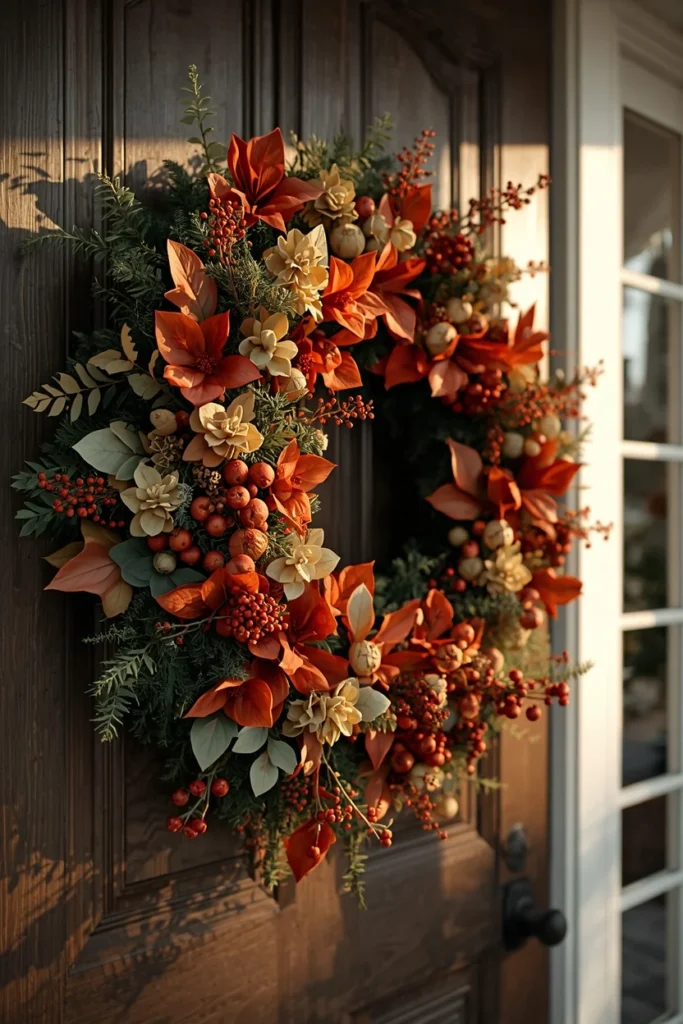
16. Berry-Laden Abundant Foliage Wreath
This style takes an “everything but the kitchen sink” approach, combining fall foliage, small florals, faux berries, and a bit of dried greenery into one full, layered wreath that feels generous and lush rather than sparse. Build the base with foliage first, then layer in berry clusters and florals in small groupings across the ring so no single element gets lost among the others. Rich shades of rust orange, olive green, plum purple, and deep red work especially well together here, since the variety of colors is part of what makes the abundant look feel intentional rather than cluttered. This wreath tends to suit larger front doors and covered porches well, where a fuller, more substantial wreath has enough visual weight to balance the space. It’s also a strong pick for anyone who wants a single wreath that reads as a complete seasonal statement without needing additional porch decor to fill it out.
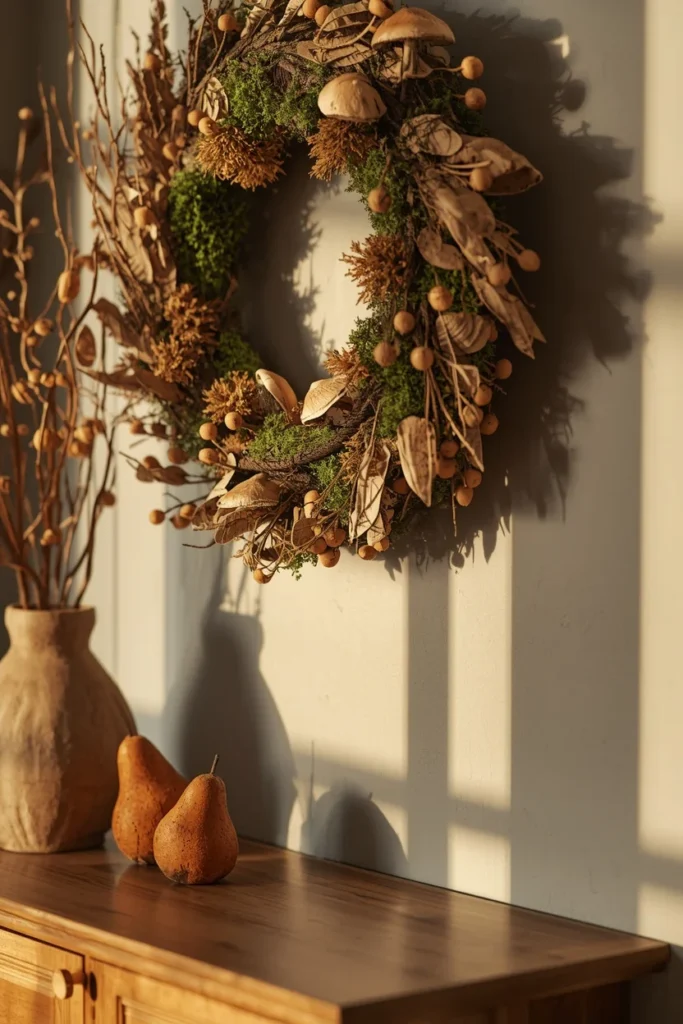
17. Mushroom, Moss & Seed Pod Wreath
Leaning into an earthy, woodland-inspired look, this wreath swaps traditional florals for dried mushrooms, patches of preserved moss, and a mix of natural seed pods and grasses, creating a texture-forward design that feels more foraged than florist-arranged. Layer the mushrooms in small clusters rather than spacing them evenly, tucking moss into the gaps between other elements to soften transitions and add a rich, grounded green throughout. Russet-toned faux or fresh pears can be added for a small pop of color and roundness against all the natural browns and greens. This idea works particularly well displayed indoors, above a mantel or on an entryway wall, where its subtler, more textural palette can be appreciated up close rather than viewed from the street. It’s also a genuinely distinctive option for anyone who wants their fall decor to stand apart from the typical pumpkin-and-leaf formula entirely.
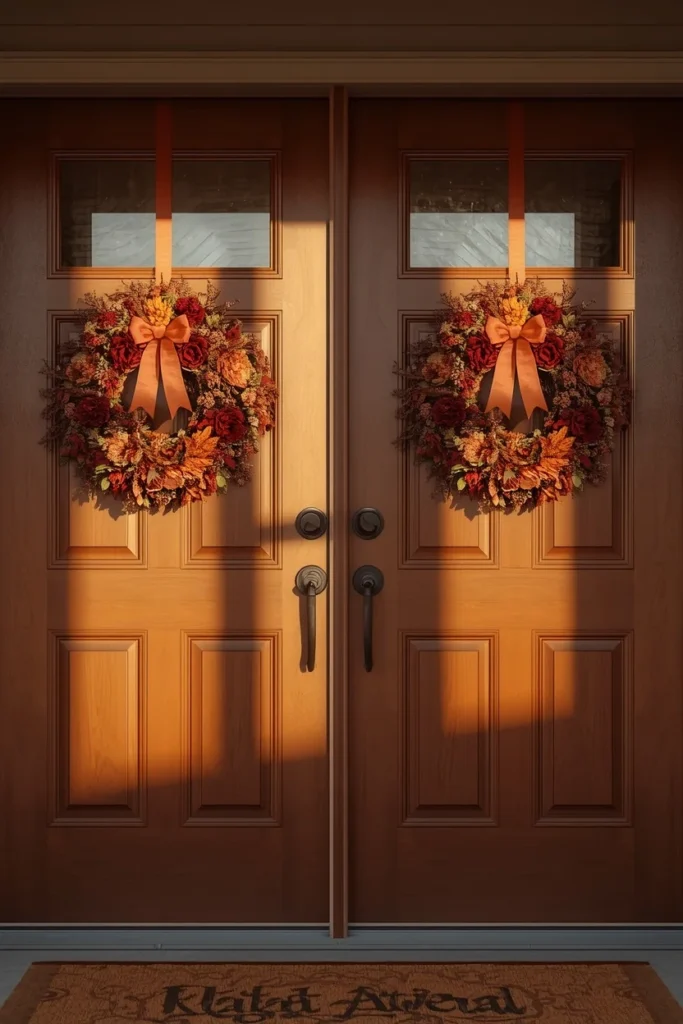
18. Matching Statement Wreaths for Double Doors
For homes with double front doors, two identical, fuller wreaths hung symmetrically create a far more polished, high-impact look than a single wreath centered awkwardly between two doors. Choose a fuller, more traditional style, floral-heavy or foliage-dense, since symmetry reads as more intentional with wreaths that have real visual weight rather than delicate, sparse designs. Hang both wreaths at identical heights using adjustable hangers so they sit evenly even if the doors themselves aren’t perfectly matched in size. A matching ribbon or sash on both wreaths reinforces the symmetry and pulls the whole entry together as one cohesive statement rather than two separate decorations. This approach requires a slightly larger investment since it means purchasing or building two wreaths instead of one, but the visual payoff on a double-door entry is significant.
Styling Tips
Hang your wreath so its center sits roughly at eye level, around 57 to 60 inches from the ground, rather than centering it on the door itself, which often places it too high to appreciate up close. For doors taller than eight feet or finished in a dark color, size up to at least a 24-inch wreath so it doesn’t get visually lost against the scale of the door. Layer at least two textures into any wreath design, something smooth like magnolia leaves against something wispy like dried grasses, for a look that feels finished rather than flat. Let a few elements extend slightly beyond the wreath’s circular edge instead of trimming everything perfectly flush, which gives even a store-bought wreath a more natural, gathered appearance.
Practical Implementation Ideas
Start with a neutral, year-round base like eucalyptus, olive, or boxwood if you want to minimize how often you need to buy a full new wreath each season, then update with a seasonal ribbon or sash instead. Store dried and faux wreaths in a large plastic bag or bin between seasons to keep dust and pests away and protect the shape from getting crushed. If building a DIY wreath, work in small pre-wired clusters of three or four stems rather than attaching single stems one at a time, which builds fullness far more efficiently. Test your wreath’s visibility from the street or sidewalk before finalizing placement, since a design that looks great up close can sometimes disappear from a distance if the colors are too muted against the door.
Common Mistakes to Avoid
Choosing a wreath that’s too small for the door is one of the most common styling misses, leaving it looking like an afterthought rather than an intentional design choice. Overcrowding every inch of the wreath’s surface can flatten its visual interest, since a little negative space usually makes the fuller elements stand out more, not less. Mixing too many competing colors without a clear anchor tone can make even a well-made wreath look chaotic rather than curated. Forgetting to account for weather exposure, direct sun fading faux materials or rain damaging fresh ones, often shortens a wreath’s season more than expected.
Small-Space Alternatives
For a narrow entryway or a door with limited hanging space, choose a slimmer, more vertically-oriented wreath or a half-wreath swag instead of a full round design, which takes up less visual width without losing seasonal impact. A single ribbon or sash draped over an existing minimal greenery base can substitute for a full wreath entirely on very small doors. Skip oversized statement pieces like large sunflowers or wide pampas plumes in favor of smaller, denser florals that read as detailed up close rather than needing distance to appreciate.
Budget-Friendly Alternatives
A bare grapevine base combined with a handful of dried stems from a craft store costs a fraction of a florist-made wreath and can be fully customized to match your door color. Putka pods and other naturally dried materials are reusable for years, making them a stronger long-term value than faux pumpkins that eventually fade. A single wreath sash swapped seasonally over a permanent neutral base, like eucalyptus or boxwood, spreads the cost of “new” seasonal decor across multiple years instead of buying a full wreath annually.
Pro Styling Recommendations
Choose one dominant color and let two or three supporting tones fill in around it, rather than trying to balance four or five colors equally across the wreath. Vary the depth of your materials, some elements sitting flush against the base, others extending outward, so the wreath reads as dimensional in photos and in person. If your front door has hardware, a knocker or a window, position the wreath so it doesn’t block or crowd those existing details. Always step back and view the wreath from the street or sidewalk distance before finalizing placement, since scale and color impact read very differently up close versus from a distance.
FAQs
Conclusion
A wreath is one of the few home updates that genuinely changes how a whole house feels from the outside, and it doesn’t require touching anything structural to do it. Pick whichever version here matches how your front door actually looks and how much time you want to spend making it, a five-minute sash swap or a full weekend DIY project, and let that one detail carry the season. The prettiest wreaths on any block usually aren’t the most expensive ones; they’re the ones that actually feel like they belong on that specific door.