15 Pumpkin Floral Arrangement Ideas for Fall Tables That Feel Effortlessly Elegant
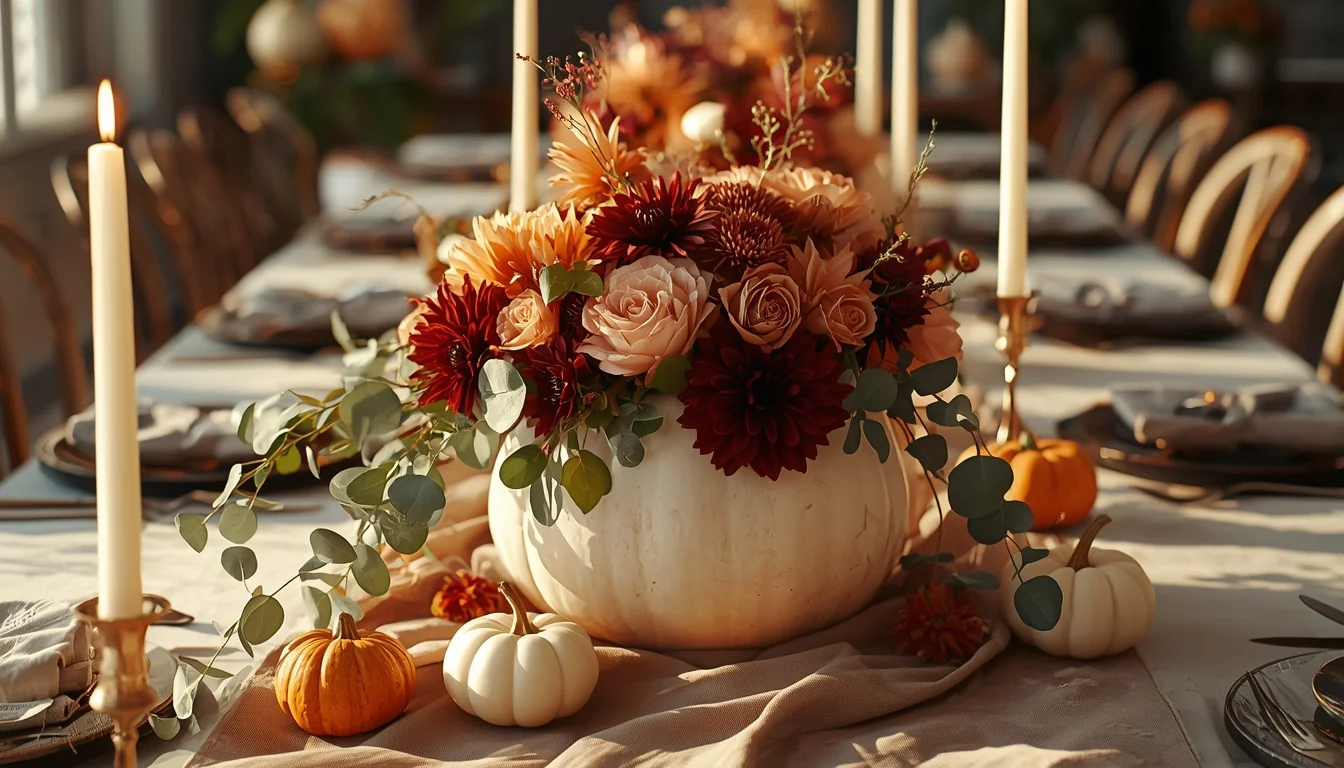
There’s a moment every fall when the pumpkin patch haul comes home and just… sits there. A few on the porch, a few by the door, and one that’s too pretty to carve but not sure what job it has yet.
That last pumpkin is the one this post is for.
Hollow it out, drop in a soaked block of floral foam, and suddenly you have one of the easiest, most impressive centerpieces a fall table can hold — no vase required, no florist markup, and a look that reads as “I clearly know what I’m doing” even if this is your first time holding floral shears.
This list covers 15 pumpkin floral arrangement ideas for fall tables, sorted by color palette, occasion, and skill level, so whether you’re setting a casual Tuesday dinner or the whole Thanksgiving spread, there’s a version here that fits.
Table of Contents
Why Pumpkins Make Great Flower Vases?
A pumpkin works as a vase because its shape naturally holds soaked floral foam or a small dish of water while its wide top gives flowers room to spread outward instead of standing straight up like they would in a narrow vase. Unlike a glass vase, a pumpkin also adds its own texture and color to the arrangement before a single stem goes in, which means the whole centerpiece can look finished with fewer flowers than a traditional bouquet needs. Both real and faux pumpkins work for this technique, though real pumpkins need a liner or floral foam dish to protect the inside from rot, while faux pumpkins can be hollowed once and reused every season.
1. Classic White Pumpkin with Blush and Burgundy Dahlias
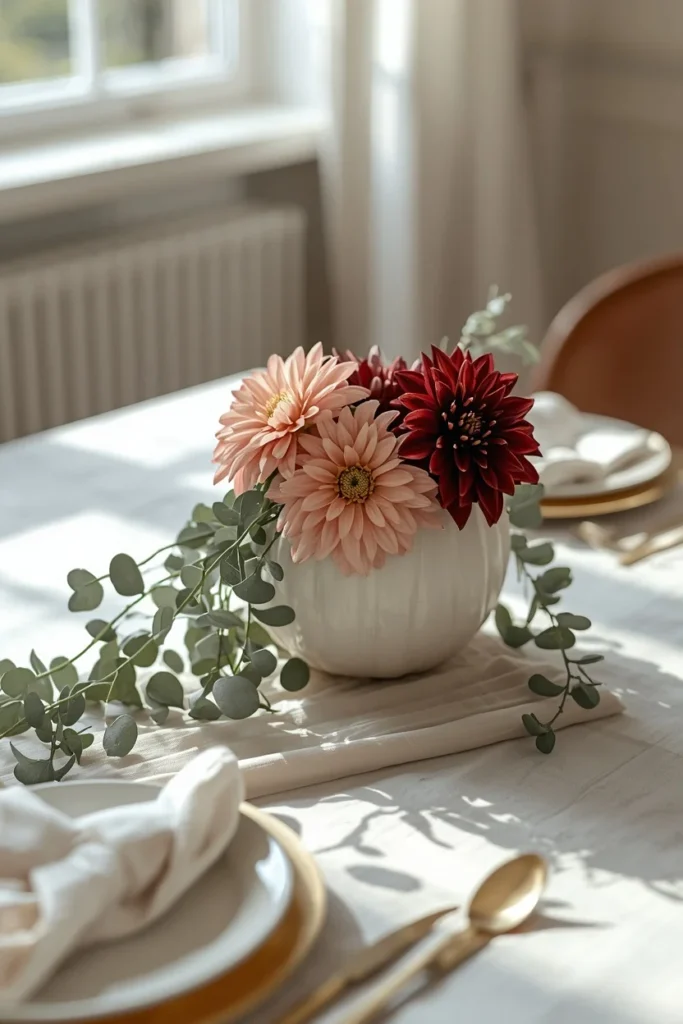
A white pumpkin gives dahlias in blush and burgundy room to be the star, since the pale pumpkin skin acts almost like a neutral vase rather than competing for attention. Dahlias hold their shape well once cut, making them a reliable choice for a centerpiece that needs to look full and fresh through an entire dinner party. Tuck in a few stems of trailing eucalyptus around the base of the pumpkin to soften the line where the flowers meet the pumpkin’s rim. This combination works especially well for a more formal fall table, like a bridal shower or an elegant Thanksgiving spread, since the white-and-blush palette feels refined rather than rustic.
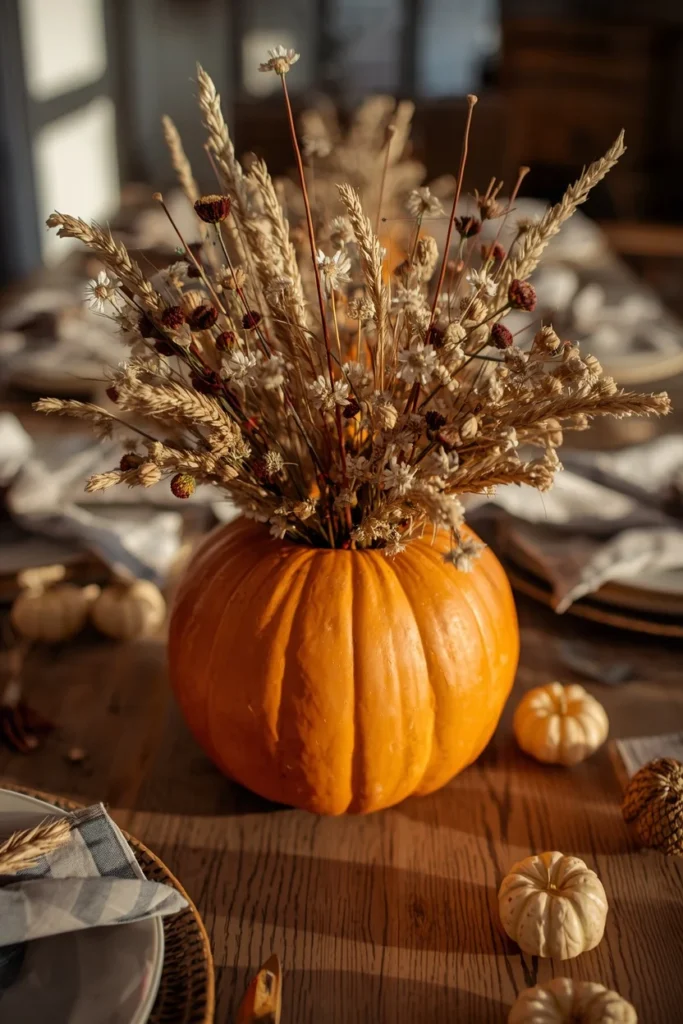
2. Rustic Orange Pumpkin with Wildflowers and Wheat
An orange pumpkin filled with loose, garden-style wildflowers and a few stalks of dried wheat leans fully into the harvest-table look without needing any special floral technique. Because wildflowers are meant to look a little undone, this arrangement is one of the most forgiving on the list for a first attempt at pumpkin floral design. Mixing in seed heads, dried grasses, or a few sprigs of foraged foliage from the yard keeps the cost low while adding natural texture. This style works best on a farmhouse table with wood tones, gingham linens, or galvanized metal accents, since the loose, undone shape matches that relaxed aesthetic.
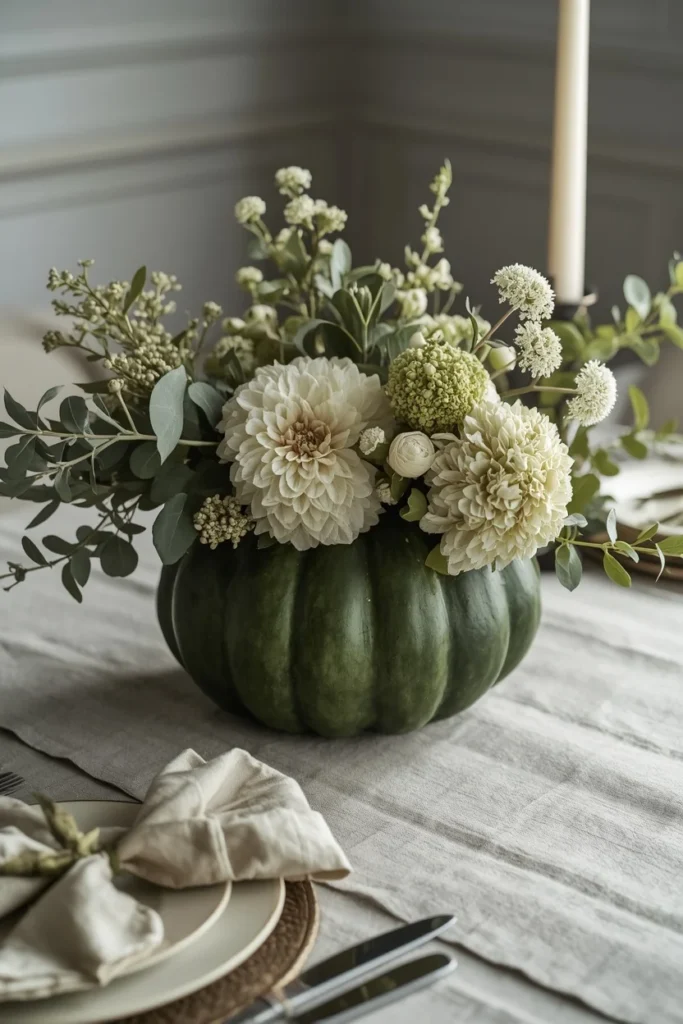
3. Heirloom Green Pumpkin with Sage and Eucalyptus
A heirloom green or “Jarrahdale” style pumpkin, filled with silvery sage, eucalyptus, and pale green hydrangea, creates a cooler, more muted take on the typical warm fall palette. This combination reads more modern than traditional orange-and-red fall arrangements, making it a good fit for anyone who wants a seasonal centerpiece without a lot of bright color. Adding a few stems of white ranunculus breaks up the green tones without pulling the palette into full-on pastel territory. Because green pumpkins are less common than orange ones, this arrangement also tends to stand out more in photos, which matters if the table is getting shared on Pinterest or Instagram.
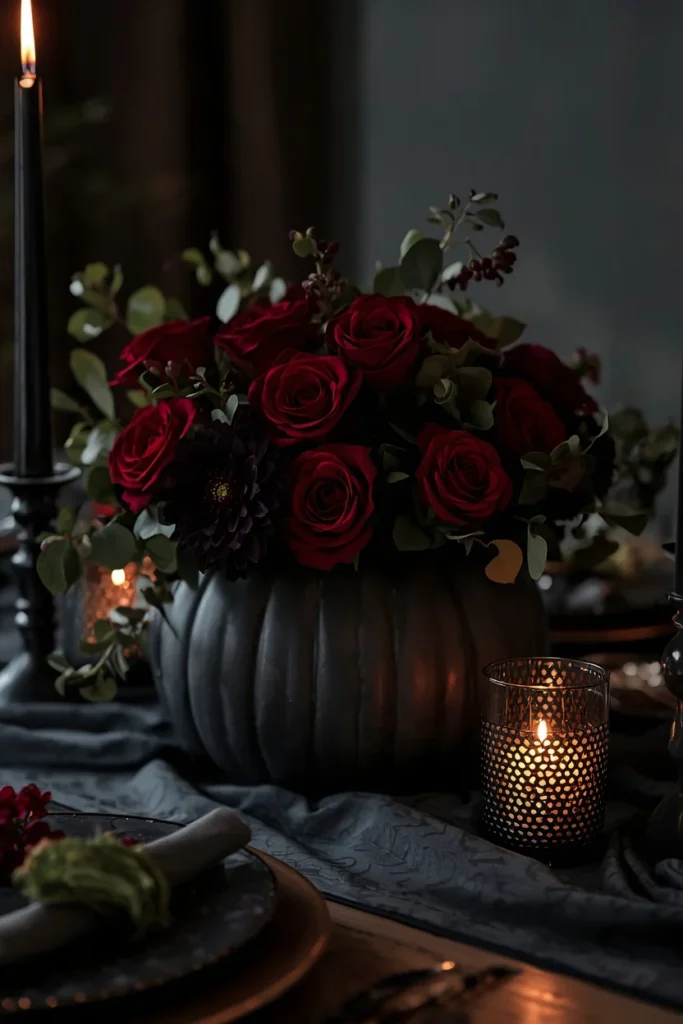
4. Moody Dark Pumpkin with Deep Red Roses and Black Dahlias
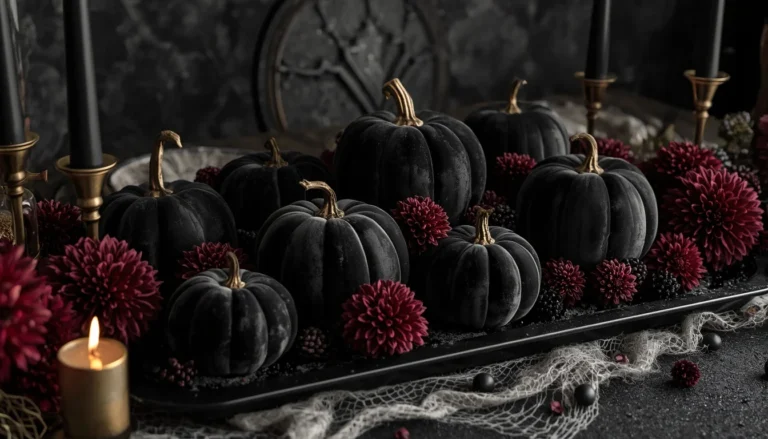
For an evening dinner party or a Halloween-adjacent Thanksgiving table, a very dark pumpkin — a deep charcoal or near-black variety — filled with deep red roses and near-black dahlias creates a dramatic, jewel-toned centerpiece. Adding a few sprigs of dark foliage, like eucalyptus with a purple tint or dried amaranth, deepens the moody effect without needing additional flowers. Because this palette is so saturated, keeping the rest of the table simpler, with plain white or black dinnerware, lets the centerpiece stay the clear focal point. This arrangement photographs especially well by candlelight, since the deep tones catch warm light in a way that a pale palette doesn’t.
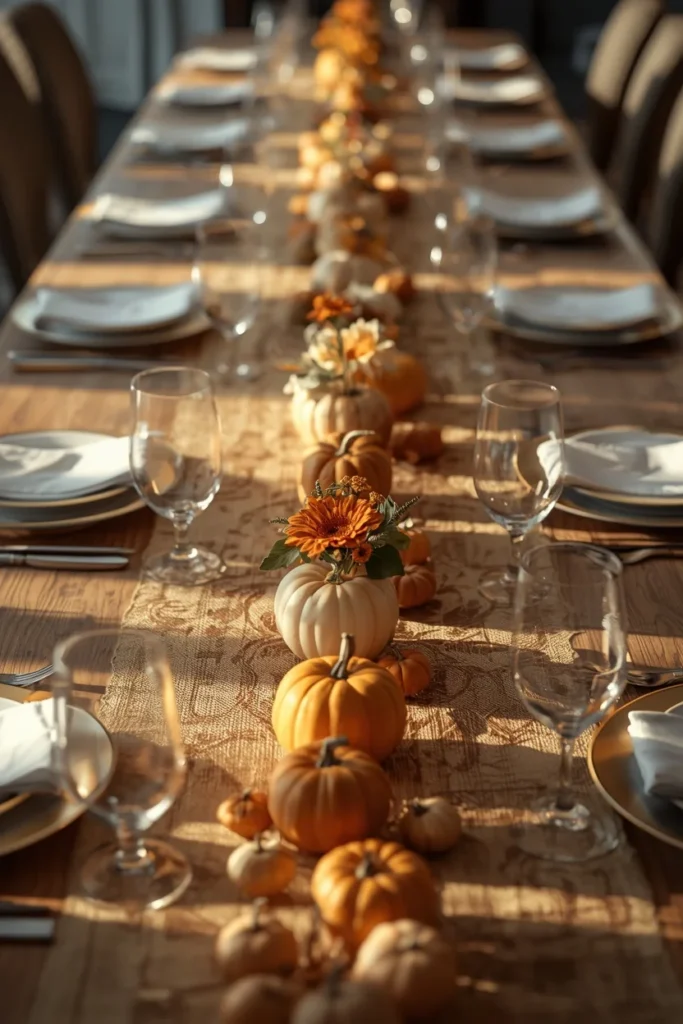
5. Mini Pumpkin Bud Vases Down the Table Runner
Instead of one large centerpiece, a row of small pumpkins, each hollowed just enough to hold a single stem or small bud vase insert, creates a garland-like effect running down the length of the table. This works particularly well for a long dinner table where a single centerpiece would block sightlines between guests. Mixing pumpkin sizes and a few different flower types — a rose here, a sprig of berries there — keeps the row from feeling too matchy while still reading as a cohesive set. This is also one of the more budget-friendly ideas on the list, since mini pumpkins and single stems cost far less than a large arrangement.
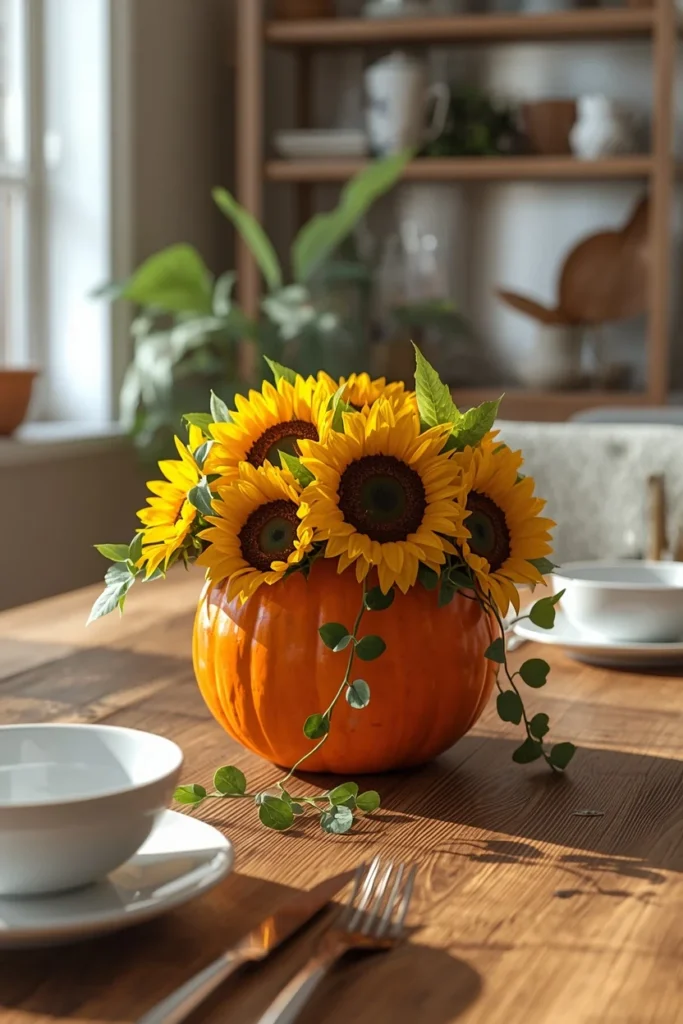
6. Sunflower-Stuffed Pumpkin for a Casual Gathering
Sunflowers pushed directly into a hollowed pumpkin, without much additional filler, make one of the fastest and most budget-friendly arrangements on this list, since a single grocery store bunch is often enough. The bright yellow against an orange pumpkin leans fully into a classic, cheerful fall palette that works well for a casual family dinner or a kids’ harvest party. Because sunflowers have thick, sturdy stems, they hold their position in floral foam better than more delicate blooms, making this a good starter project for anyone new to floral arranging. A few trailing ivy or ferns tucked around the base soften the transition between flower and pumpkin.
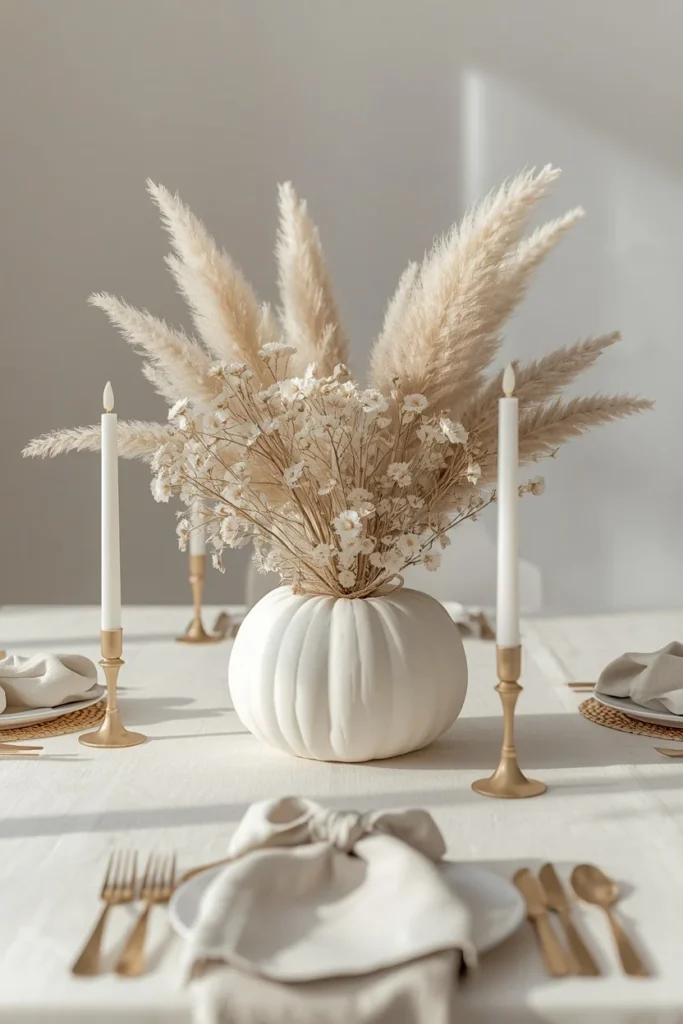
7. Neutral Pampas and White Pumpkin Arrangement
Pairing a white pumpkin with pampas grass, dried lunaria, and a few stems of white or cream everlasting flowers creates a soft, neutral centerpiece that fits a modern or minimalist table setting. Because pampas and dried florals don’t wilt, this arrangement lasts far longer than a fresh-flower version, making it a practical choice for anyone hosting multiple gatherings across the season. The airy, textural quality of dried grasses gives the arrangement visual height without adding much bulk or weight to the pumpkin. This palette pairs especially well with a table set in warm wood tones, linen napkins, and simple taper candles.
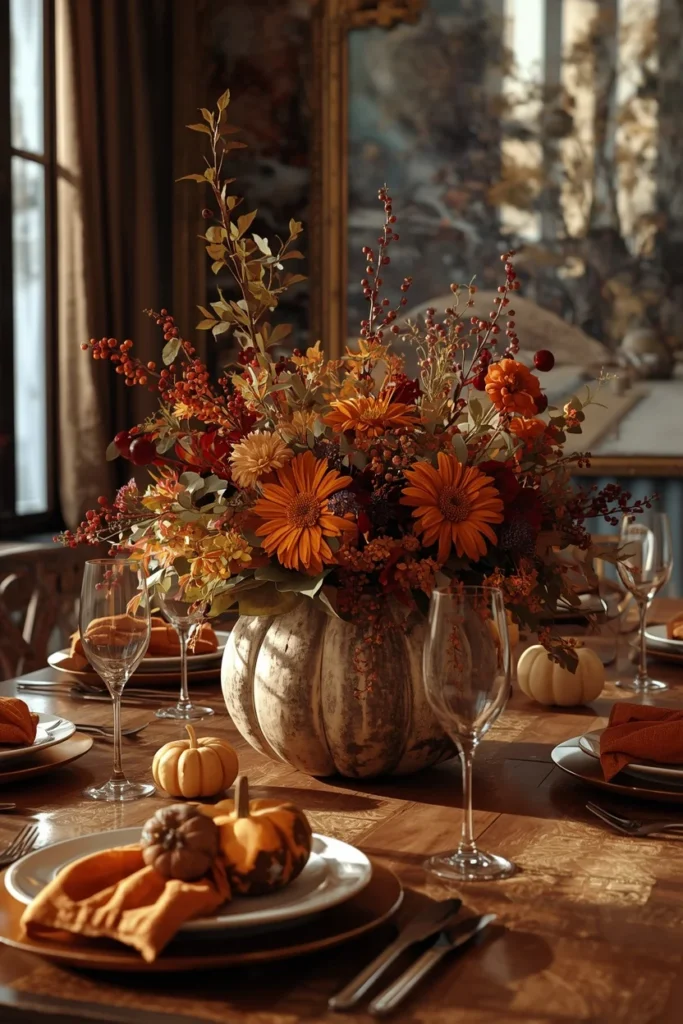
8. Thanksgiving Table Pumpkin with Mums, Berries, and Foliage
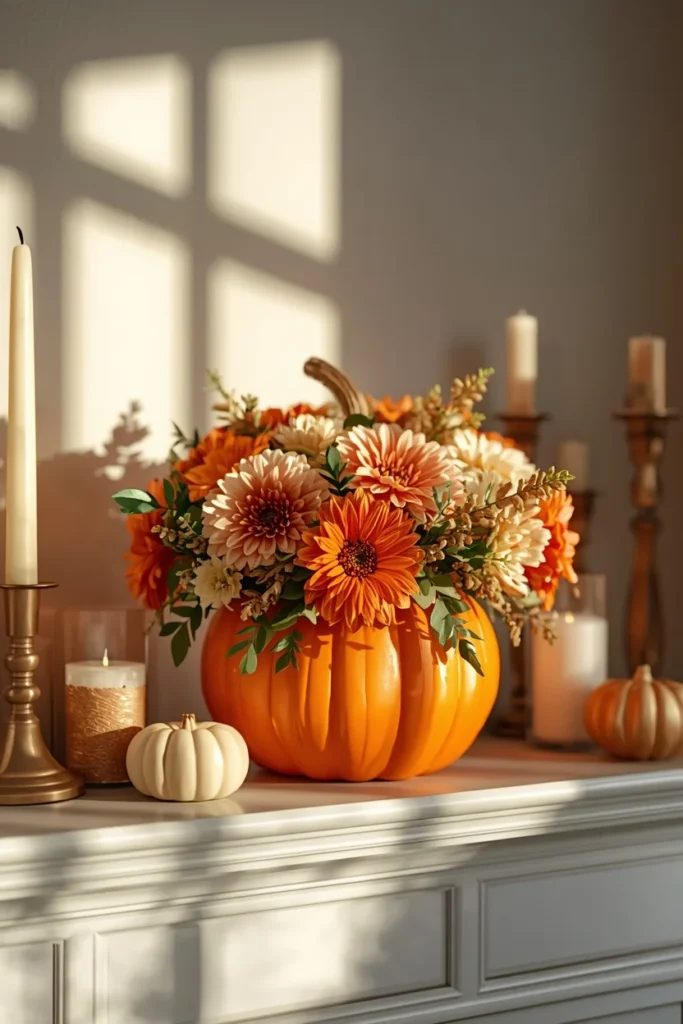
For a full Thanksgiving spread, a larger pumpkin filled with chrysanthemums in deep orange and burgundy, clusters of fall berries, and mixed foliage creates a centerpiece substantial enough to anchor a table full of dinnerware and side dishes. Chrysanthemums are a practical choice here since they’re widely available in the fall and hold up well over a multi-hour meal without wilting. Layering in berry stems at varying heights, rather than all at one level, gives the arrangement more visual depth when viewed from across the table. This is one of the fuller, more traditional arrangements on the list, best suited for a large gathering rather than an everyday table.
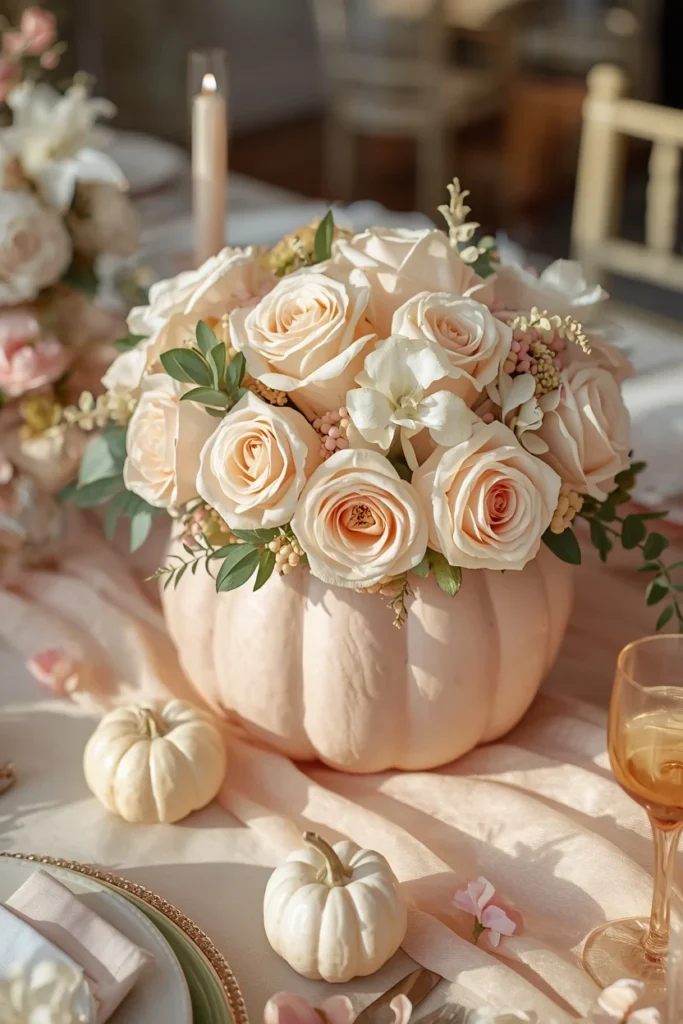
9. Pink and Peach Pumpkin Arrangement for a Fall Bridal Shower
A pale pink pumpkin filled with peach garden roses, blush ranunculus, and soft trailing greenery brings a fall palette into a bridal shower or baby shower setting without leaning into typical Halloween orange and black. This combination proves that pumpkin centerpieces aren’t limited to traditional harvest colors, which makes it a useful option for anyone hosting a fall event that isn’t specifically Thanksgiving-themed. Keeping the flower shapes soft and rounded, rather than spiky or angular, reinforces the romantic, feminine feel of the palette. A cluster of smaller pink or white mini pumpkins scattered around the base of the main arrangement extends the look across the table without needing more flowers.
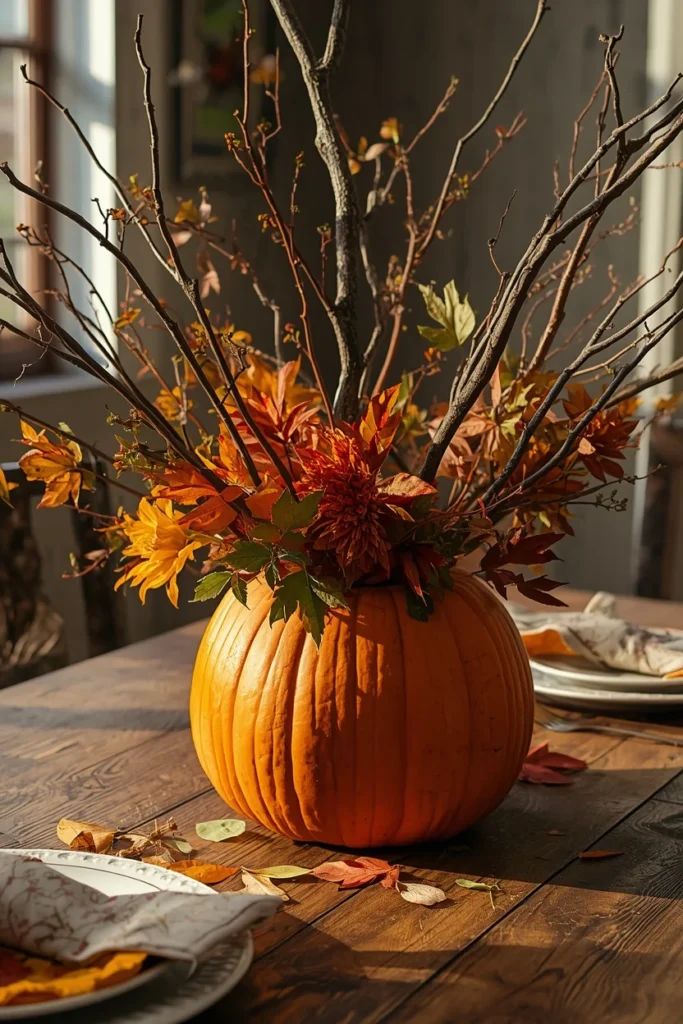
10. Foraged Foliage and Fall Leaves Pumpkin Arrangement
An arrangement built mostly from foraged branches, colorful fall leaves, and a few accent flowers costs very little and captures the actual season outside the window better than a florist-bought bouquet can. Look for branches with berries, changing leaves, or interesting seed pods, and combine them with just a few statement flowers, like garden dahlias or roses, so the foraged material doesn’t read as messy filler. This style tends to look best in a pumpkin left in its natural, unpainted state, since the raw materials already carry enough visual interest without added polish. Because foraged stems dry out faster than florist flowers, this arrangement works best for a one-day event rather than something meant to last a week.
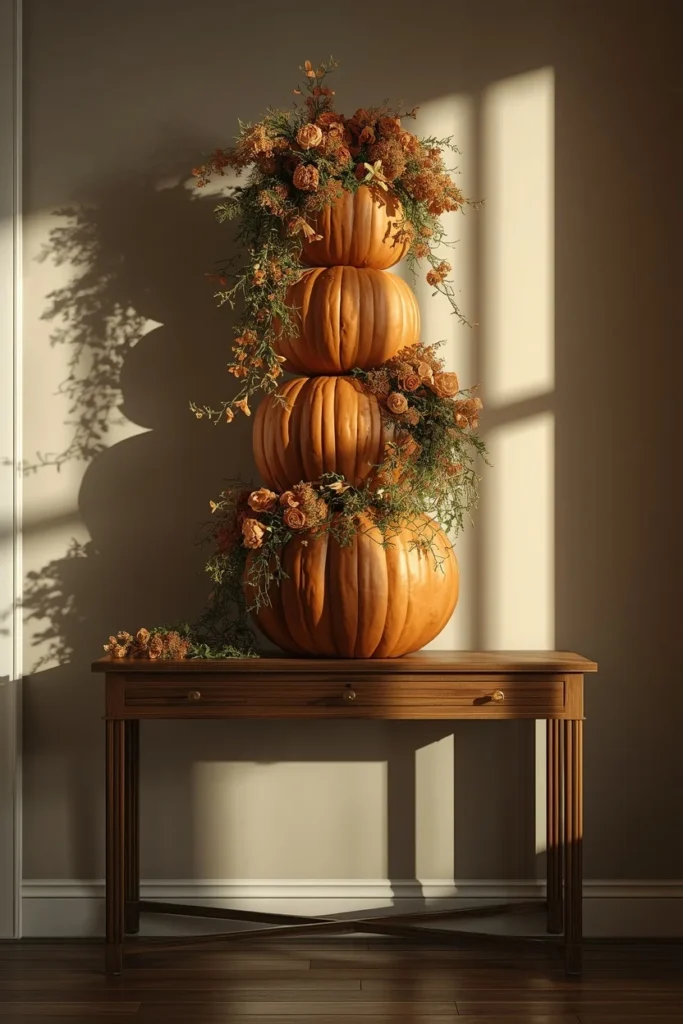
11. Stacked Pumpkin Tower with Cascading Florals
Rather than a single pumpkin vase, stacking two or three pumpkins of decreasing size, with the top pumpkin’s lid removed and filled with cascading flowers, creates height and drama that a single pumpkin can’t achieve on its own. Flowers or greenery trailing down from the top pumpkin over the stack below give the whole arrangement a waterfall-like movement that photographs well from multiple angles. This works particularly well as an entryway or buffet table piece, where the extra height helps the arrangement read clearly from across the room. Securing the pumpkins with skewers or floral picks before stacking keeps the tower stable enough to handle a busy party.
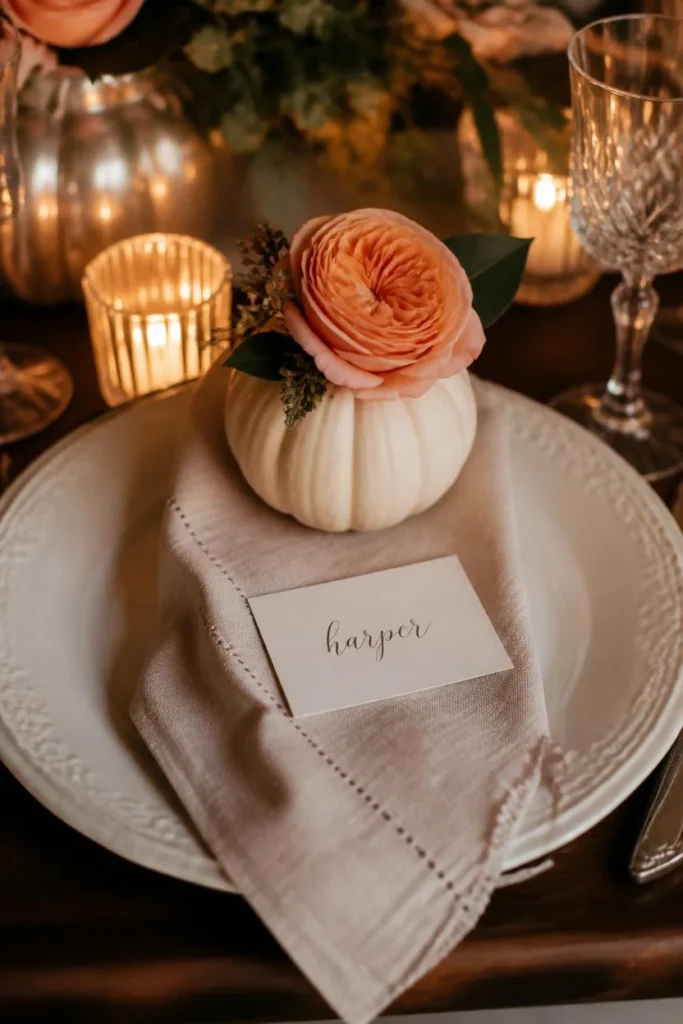
12. Single Statement Flower in a Petite Pumpkin
For a place-setting-level detail rather than a full centerpiece, a single flower — one garden rose, one dahlia, or one ranunculus — tucked into a small hollowed pumpkin at each guest’s seat adds a personal, elegant touch without much cost or effort. This idea works well alongside a larger centerpiece rather than replacing it, giving each place setting its own small moment of detail. Choosing a flower that coordinates with, but doesn’t exactly match, the main centerpiece keeps the table feeling layered rather than overly matched. This is an especially popular idea for a fall wedding or shower, where a per-guest detail adds a thoughtful touch guests tend to remember.
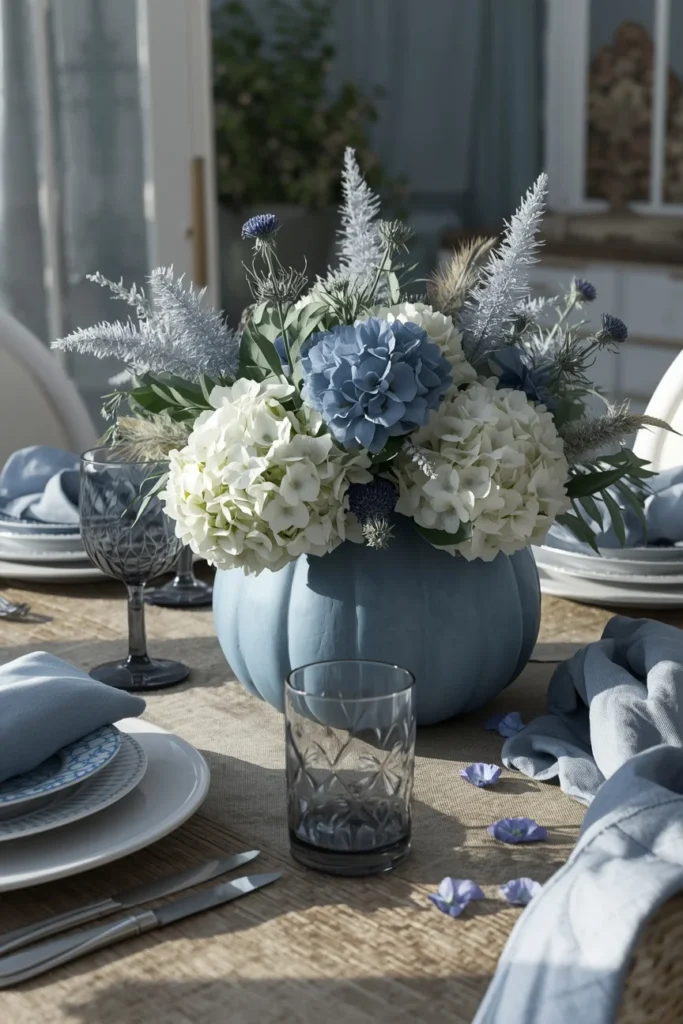
13. Blue and White Pumpkin with Cool-Toned Florals
Painting or choosing a naturally blue-gray pumpkin and filling it with cool-toned florals like white hydrangea, blue thistle, and silver dusty miller creates an unexpected fall palette that steers away from the typical orange-and-brown look entirely. This combination tends to suit a coastal or modern farmhouse dining room, where warm rust and burgundy tones might clash with the existing decor. Because blue is rare in most fall flower palettes, this arrangement benefits from including at least one or two true blue elements, like delphinium or thistle, rather than relying on the pumpkin alone to carry the color. Pair with white or blue-and-white dinnerware to keep the whole table feeling cohesive.
14. Faux Pumpkin and Silk Floral Arrangement for a Reusable Centerpiece
A faux pumpkin, hollowed once and fitted with a small block of dry floral foam, paired with high-quality silk dahlias, mums, and greenery, gives anyone who hosts often a centerpiece that can be reused every fall without buying fresh flowers each time. Choosing silk flowers with realistic texture and matte, rather than shiny, petals keeps the arrangement from reading as obviously artificial in photos. This option makes the most sense for anyone decorating for weeks at a time, like a mantel display or an entryway table, rather than a single dinner event. Because faux arrangements don’t need water, they also work in spots real flowers can’t, like near direct sunlight or a heat vent.
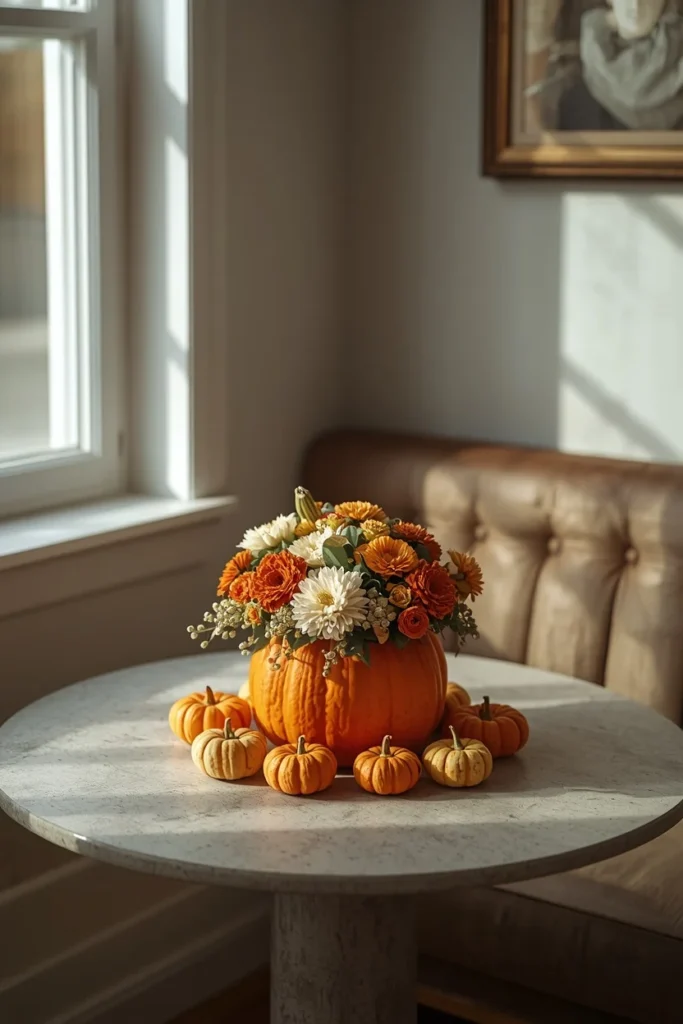
15. Low and Wide Pumpkin Arrangement for a Small Table
For a small breakfast nook or bistro table, a wide, shallow pumpkin filled with a low, compact arrangement of mums or ranunculus keeps the centerpiece from blocking sightlines between just one or two people seated across from each other. Choosing shorter stems and trimming flowers close to the rim of the pumpkin keeps the whole arrangement under table-conversation height. This idea proves that pumpkin floral arrangements aren’t only for large dinner parties, since a scaled-down version works just as well for a daily breakfast table or a small apartment dining nook. A few extra mini pumpkins tucked around the base fill out the look without adding height.
Styling Tips for Pumpkin Floral Arrangements
- Follow the “thriller, filler, spiller” method: one taller statement flower as the thriller, mid-size blooms as filler, and trailing greenery as the spiller draping over the pumpkin’s edge.
- Vary flower height and size so the arrangement reads as full from every angle, not just from directly above.
- Choose a pumpkin with a flat bottom so it sits level on the table without wobbling once it’s filled and heavier.
- Match the pumpkin’s color to the room, not just the flowers — a white pumpkin reads more formal, while orange or heirloom green feels more rustic.
Practical Implementation Ideas
- Cut the top off the pumpkin at a slight inward angle, rather than straight across, so the lid sits securely back in place if needed later.
- Scoop the inside clean and let it dry fully before adding a liner or floral foam, to slow down mold growth.
- Line the inside of a real pumpkin with a plastic liner or bowl before adding wet floral foam, to protect the pumpkin from soaking through too quickly.
- Soak floral foam in water for a full hour before cutting it to fit, so it absorbs evenly instead of leaving a dry core.
Common Mistakes to Avoid
- Skipping a liner in a real pumpkin, which speeds up rot and can cause the arrangement to collapse within a few days.
- Overcrowding the arrangement with too many flower types, which can look busy instead of intentional — three to four flower varieties is usually enough.
- Choosing flowers that are too delicate for the display’s length, like ranunculus for a week-long mantel display, when a hardier flower like mums would last longer.
- Using a pumpkin with an unstable, rounded bottom on a table where it needs to sit without a stand.
Small-Space Alternatives
A single mini pumpkin with one or two stems works as well on a small side table or bistro table as a large arrangement does on a full dining table, since the same hollowing technique scales down easily. For an apartment or small kitchen nook, a low, wide pumpkin kept under eye level, as described in idea fifteen above, keeps sightlines clear between just one or two people. A single stem in a petite pumpkin at each place setting, rather than one large centerpiece, is another space-conscious option that still brings the look to a small table.
Budget-Friendly Alternatives
A single grocery store bouquet, broken apart and redistributed into a hollowed pumpkin, often costs less than a dedicated florist arrangement and still delivers a full, layered look. Sunflowers, mums, and carnations tend to be some of the most affordable and longest-lasting fall flowers, making them a practical base for a first attempt at this technique. Foraged branches, leaves, and seed pods from the yard can fill out an arrangement for free, cutting down on how many purchased stems are needed. A faux pumpkin and a set of quality silk flowers, while a slightly higher upfront cost, pays off over multiple seasons of reuse.
Pro Styling Recommendations
Florists often recommend prepping the pumpkin base a day before adding flowers, so the floral foam has time to fully saturate and the pumpkin itself has a chance to be checked for any leaks before flowers go in. Choosing two to three flower varieties in a tight, related color palette, rather than a wide mix of unrelated colors, tends to photograph better and read as more intentional. Height variation matters more than flower quantity — three or four stems placed at clearly different heights often look fuller than a dozen stems placed at the same level.
FAQs
Final Thoughts
A pumpkin turns into one of the most useful tools in a fall hosting toolkit the moment it’s hollowed out and filled with a few good stems. It’s cheaper than a florist arrangement, more personal than something store-bought, and flexible enough to look rustic for a Tuesday dinner or formal enough for a holiday table, depending on which flowers go inside. Pick one idea from this list, grab whatever’s freshest at the market or growing in the yard, and let the pumpkin do most of the work.