15 Fall Tray Decor Ideas to Style Your Coffee Table Like a Pro
A coffee table without a tray on it tends to collect whatever lands there: remotes, mail, a stray mug. Add a tray, and suddenly that same surface has a job. It corrals the clutter and gives you one clearly defined space to actually decorate, which is exactly why a styled tray is one of the fastest ways to make a living room feel like fall without touching another surface in the house.
The trick is that a tray isn’t just a container you dump pumpkins into. The best ones are built in layers, a base, some height, a few textures, and one functional touch, the same way a stylist would build a shelf for a photoshoot. These 15 ideas walk through exactly how to do that, whether your coffee table is a display piece or the spot where your family actually gathers every night.
Table of Contents
1. A Minimalist Pumpkin Duo
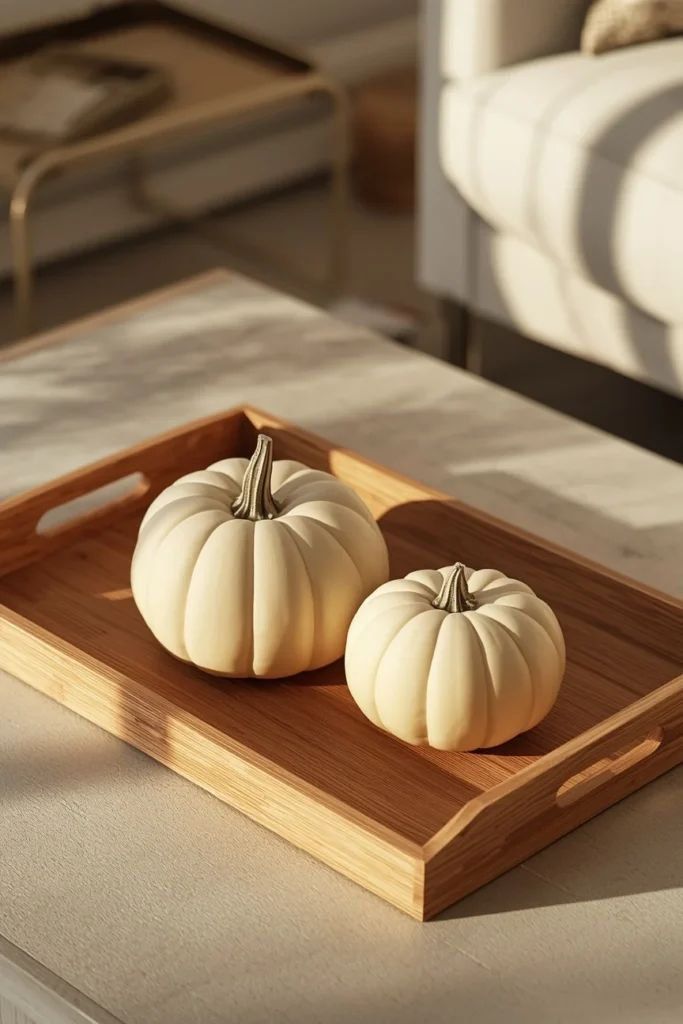
Two pumpkins, one slightly larger than the other, placed on a simple wood or ceramic tray is genuinely all it takes to signal fall without any additional styling. Choosing pumpkins in the same color family, like two cream ones or two matte terracotta ones, keeps the pairing feeling curated rather than random. This idea works because restraint photographs well: the empty space around the pumpkins on the tray does just as much visual work as the pumpkins themselves. It’s an especially good starting point for anyone new to seasonal tray styling, since there’s very little room to get the proportions wrong with only two objects. This setup also takes under a minute to swap out once the season changes.
2. A Layered Candle and Book Vignette
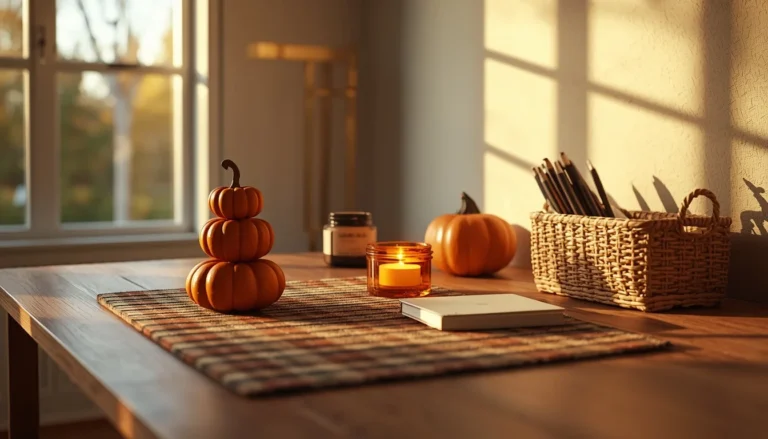
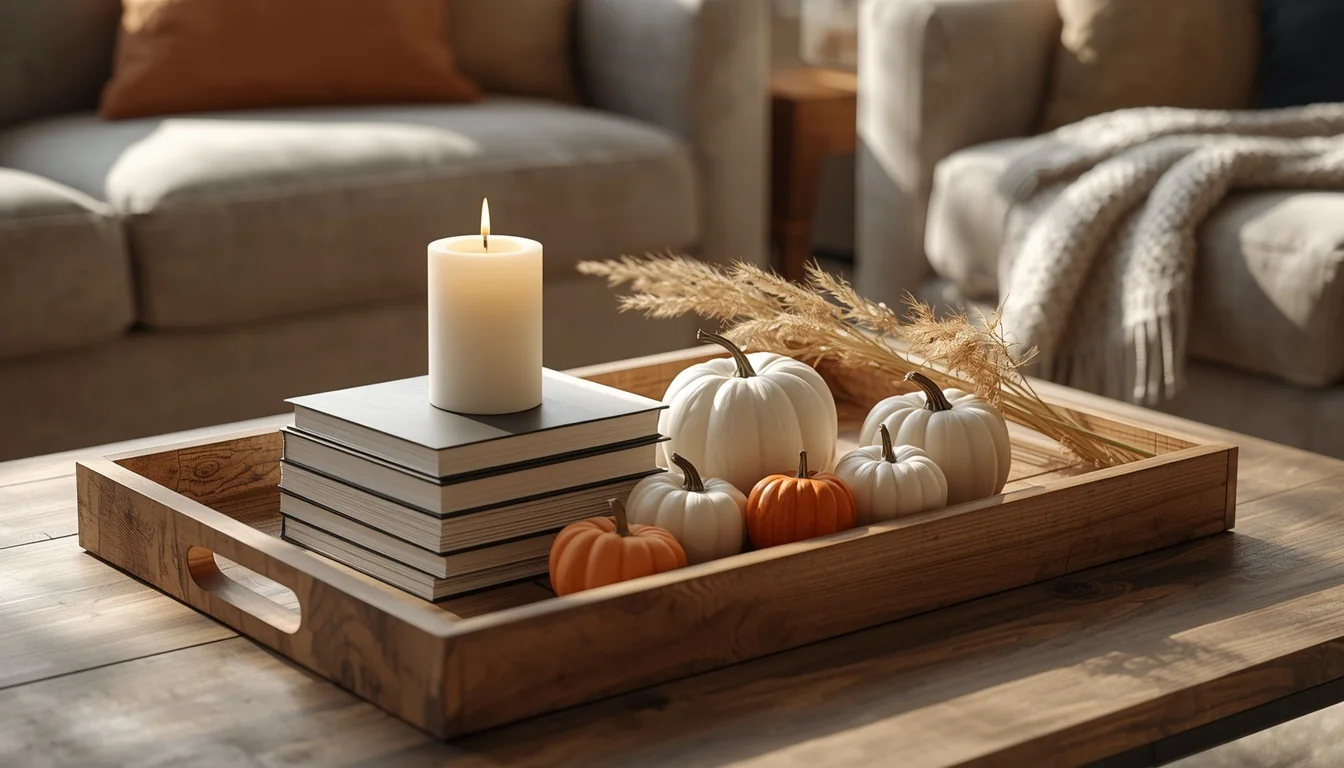
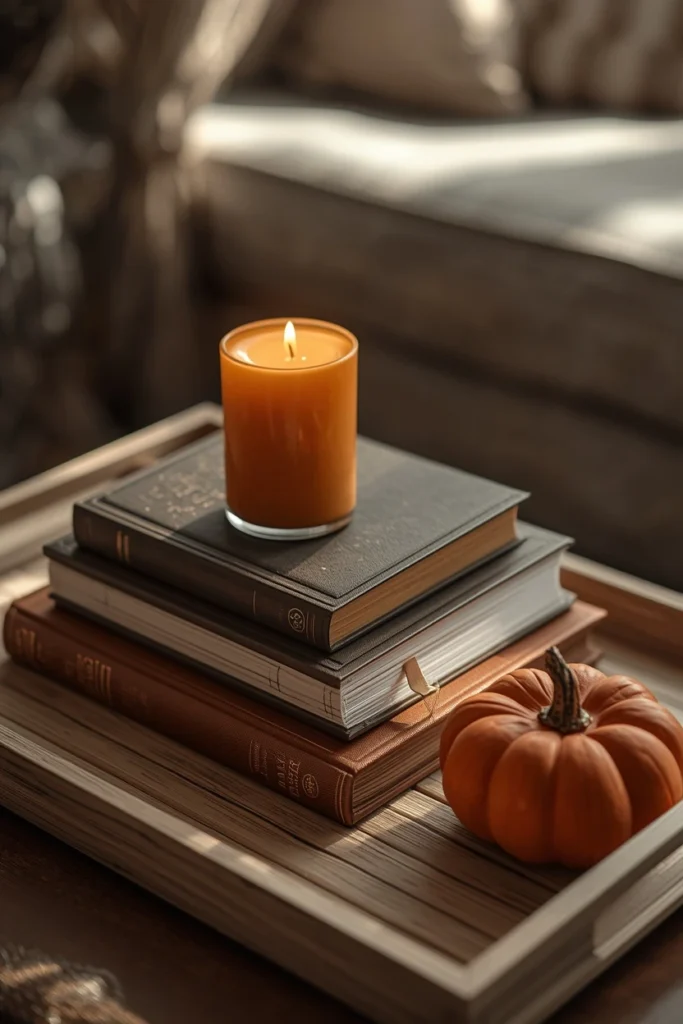
Stack two or three hardcover books on one side of the tray, then top the stack with a pillar candle in a warm amber or cream tone so the flame sits at a slightly elevated height compared to the rest of the display. Balancing the stack with a single small pumpkin or a short vase on the opposite side of the tray keeps the composition from feeling lopsided. This idea works particularly well because books add both height and a sense of the room being lived-in, which keeps the tray from reading as purely decorative or store-bought. Choosing books with neutral or coordinating spine colors, or turning the pages outward, prevents the stack from introducing competing colors into the display. Lighting the candle in the evening instantly shifts the whole vignette from daytime decor to genuine ambiance.
3. A Woven Tray with Natural Foraged Elements
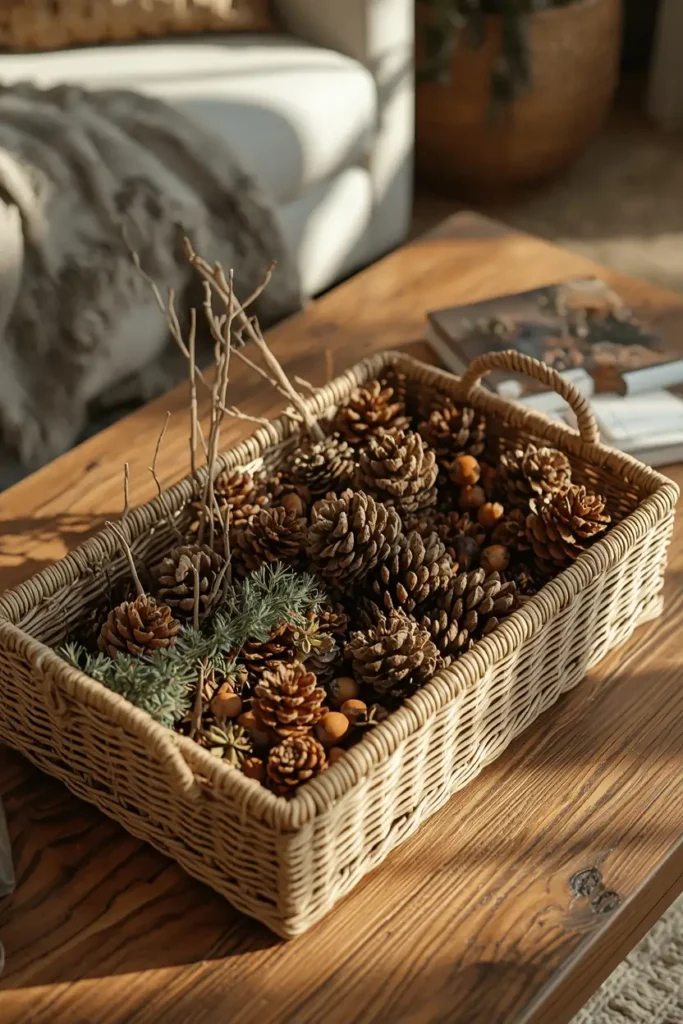
A wicker or rattan tray filled with foraged pinecones, small branches, and a scattering of acorns brings genuine outdoor texture to a coffee table without needing to buy any decor at all. The natural, irregular shapes of foraged materials give the tray a collected, gathered-from-a-walk feeling that manufactured decor can’t quite replicate. Grouping the pinecones toward one side and letting a branch or two extend slightly past the tray’s edge adds a sense of movement rather than a static, contained pile. This idea works especially well in farmhouse or rustic-style living rooms where natural materials already play a central role in the room’s overall decor. Because everything is either free or nearly free, this is one of the most budget-friendly ideas on the entire list.
4. A Textile-Layered Base
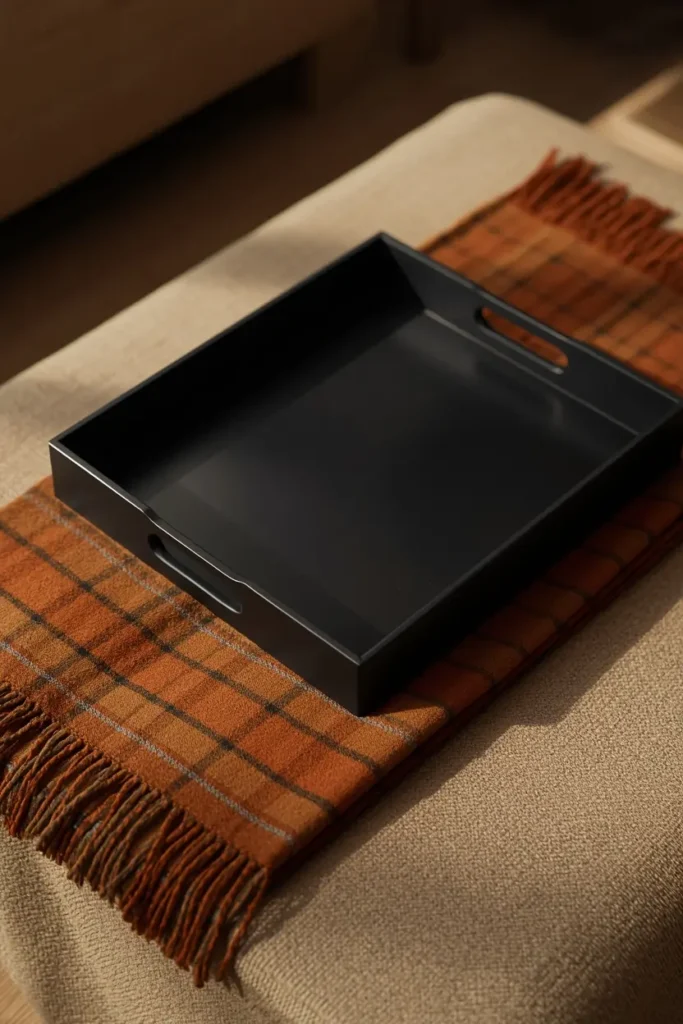
Before placing the tray itself, lay a folded plaid scarf, a strip of linen runner, or a woven textile down first, letting a few inches show on either side of the tray rather than tucking it completely underneath. This softens the hard materials that typically dominate a coffee table, glass, wood, metal, and adds a layer of texture beneath everything else in the display. Choosing a textile in a slightly different tone than the tray itself, like a rust-colored scarf under a black metal tray, creates subtle contrast without introducing a whole new color story. This idea is one of the easiest upgrades on the entire list, since it takes seconds to add and instantly makes the whole arrangement feel more considered. It’s also an easy way to tie the coffee table styling to a throw blanket or pillow elsewhere in the room for a more cohesive look.
5. A Dough Bowl Centered on the Tray
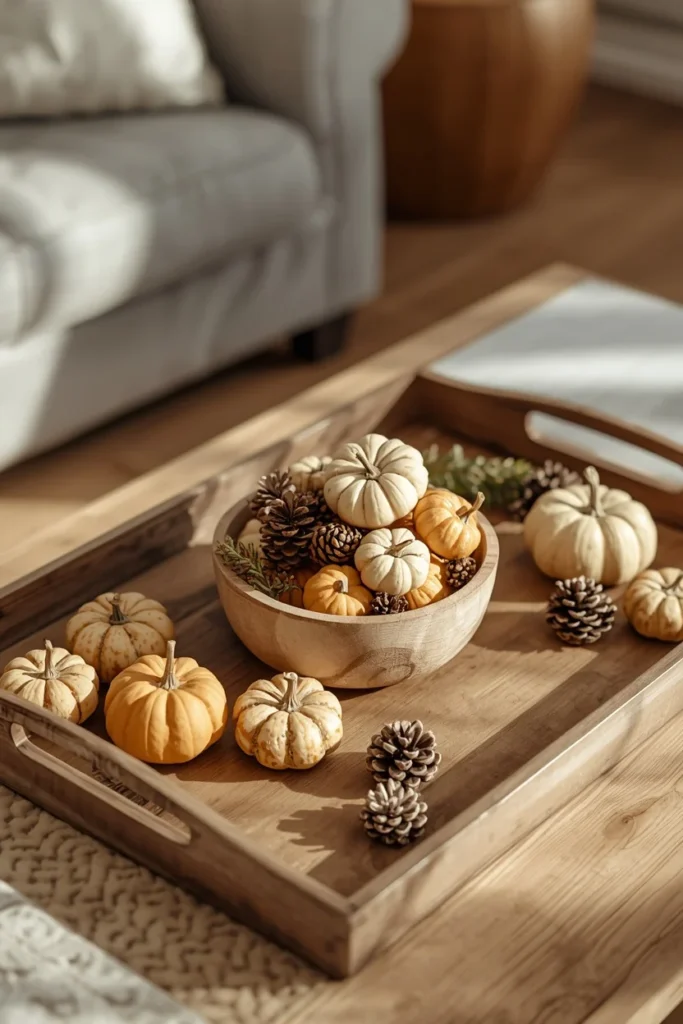
Instead of styling loose objects directly on the tray, nest a small wooden dough bowl in the center and fill it with mini pumpkins, a few pinecones, or dried florals, using the bowl itself as a secondary container that keeps everything from sliding around. This double-vessel approach, tray plus bowl, adds a layer of visual depth that a flat tray display alone doesn’t achieve. The dough bowl’s low, wide shape also keeps the overall height manageable, which matters on a coffee table that needs to remain functional for setting down drinks or plates. Surrounding the bowl with a few loose stems of wheat or a scattering of small gourds on the remaining tray space fills out the display without crowding the bowl itself. This idea is a favorite in farmhouse-style homes, where a dough bowl is often already part of the existing decor collection.
6. A Neutral White Pumpkin and Cream Candle Pairing
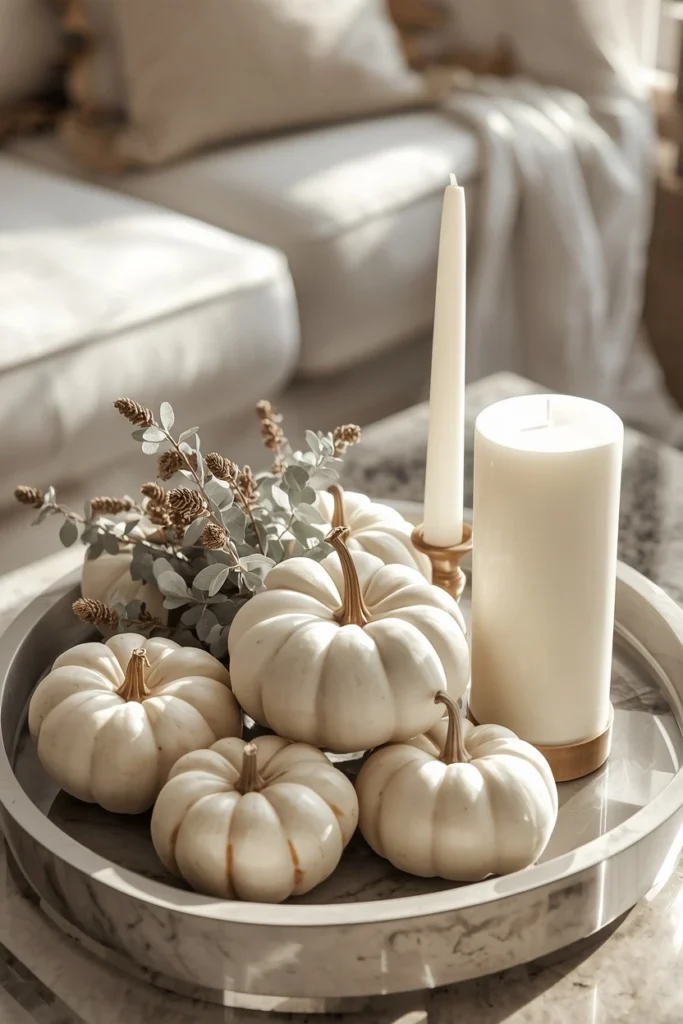
For a softer, more elevated look, skip orange entirely and style the tray with a cluster of white or cream pumpkins alongside one or two cream taper or pillar candles. This monochrome approach reads as sophisticated rather than themed, which makes it a strong fit for modern, coastal, or Scandinavian-style living rooms where bright orange might feel out of place. Adding a single piece of dried greenery, like a sprig of eucalyptus, introduces just enough contrast to keep the all-neutral palette from feeling flat. Because the color palette is so restrained, texture becomes the main visual interest, so mixing a matte pumpkin with a glossy ceramic one adds subtle variation. This is one of the more versatile ideas on the list, since a white and cream tray can transition easily into winter with only minor adjustments.
7. A Fall Floral Arrangement as the Centerpiece
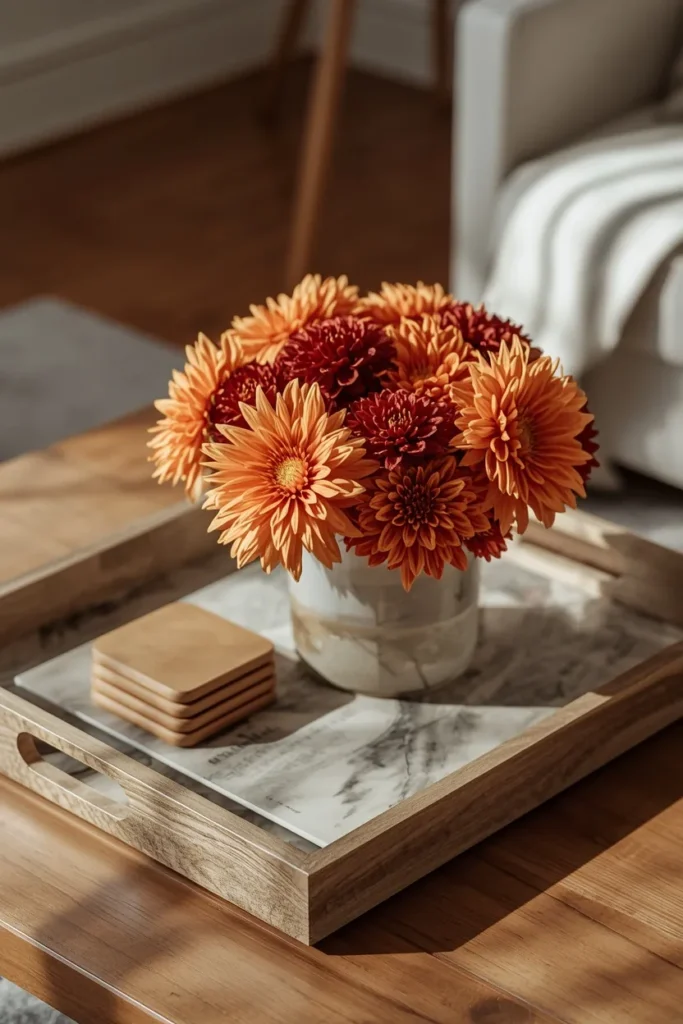
Place a low, compact vase of fall flowers, dahlias, mums, or dried pampas grass, at one end of the tray, then balance the composition with a candle or a small stack of coasters at the other end. Choosing a shorter vase rather than a tall one keeps the arrangement from blocking sightlines across the room or interfering with anyone reaching for something on the table. Because the florals introduce the boldest color and texture in the display, everything else on the tray should stay relatively simple so the flowers remain the clear focal point. This idea works well whether the flowers are fresh, dried, or faux, making it one of the more flexible options depending on how much upkeep you want to commit to. A floral centerpiece also does more to soften an otherwise hard-surfaced coffee table than almost any other single addition.
8. A Glass Cloche Statement Piece
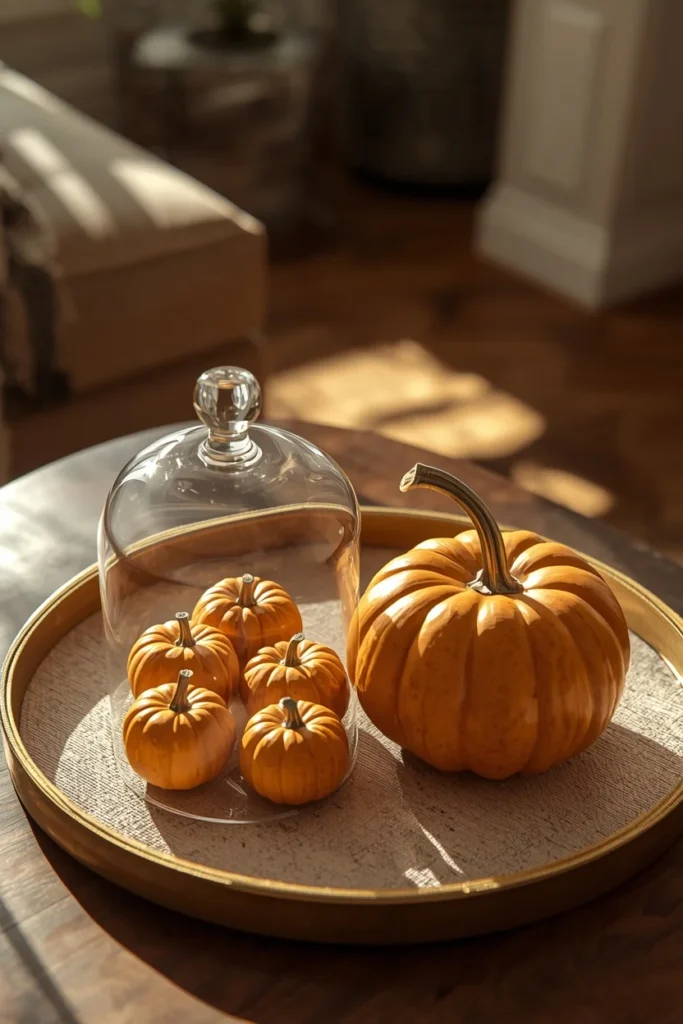
A glass cloche placed over a small cluster of mini pumpkins or a single decorative object instantly becomes the focal point of the tray, since the dome shape draws the eye and adds a sense of preciousness to whatever’s underneath it. Pairing the cloche with one larger pumpkin and a few loose stems outside the dome keeps the display from feeling like a single isolated object floating on the tray. This idea works particularly well for anyone who wants a slightly more elevated, curated look, since the cloche itself reads as a design object regardless of what’s placed inside it. Because the covered items are protected from dust, this is also one of the lower-maintenance styling choices on the list. Swapping what’s inside the cloche between seasons is an easy way to keep the same piece in year-round rotation.
9. A Wooden Crate Base for a Layered Look
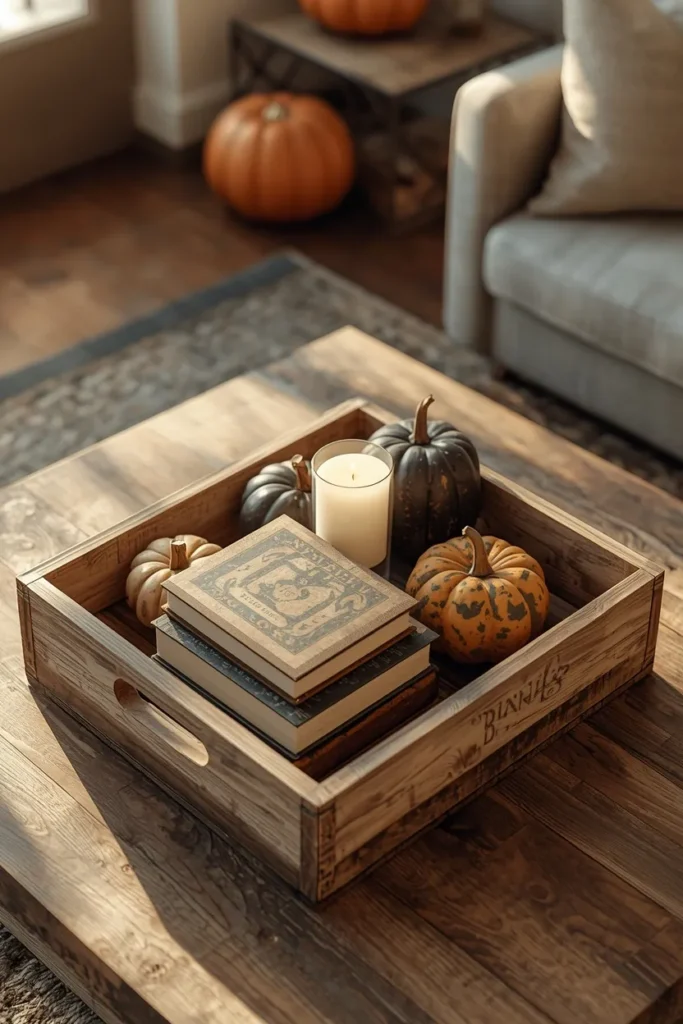
Swap a traditional flat tray for a shallow wooden crate, which adds built-in height and rustic texture before a single item is placed inside it. Layer in a stack of books, a candle, and a mix of small and medium pumpkins, letting the crate’s raised sides naturally contain everything without needing a separate bowl or riser. This idea is especially effective on larger coffee tables, where a flat tray alone might look visually thin relative to the size of the table. Choosing a crate with a slightly distressed or reclaimed wood finish adds warmth and character that a new, polished tray wouldn’t provide. Because crates are often inexpensive or repurposed from other uses, like a produce crate or a wine box, this is a budget-friendly way to add a completely different silhouette to your coffee table styling.
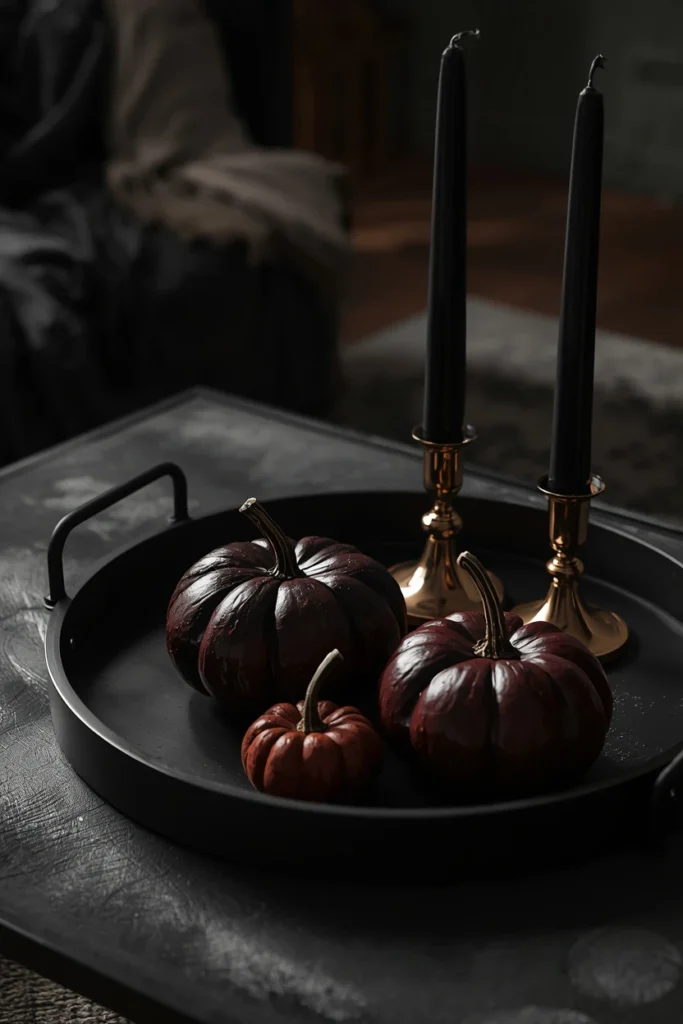
10. A Moody Dark Tray with Black and Burgundy Accents
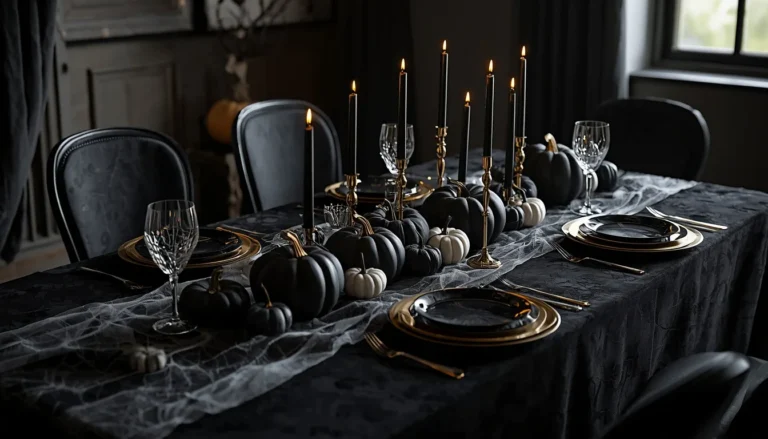
For a more dramatic take, choose a matte black tray and style it with deep burgundy or espresso-toned pumpkins, a black taper candle, and a small dried floral stem in muted plum. This darker palette works especially well in living rooms that already lean moody or feature deep wall colors, since the tray blends with the room’s existing aesthetic instead of contrasting sharply against it. Keeping the total number of items relatively low is more important with a dark palette than a light one, since deep tones can start to feel heavy or cluttered more quickly. A single brass or gold candlestick mixed in adds a warm glint that keeps the display from feeling flat or one-dimensional. This idea tends to photograph beautifully in the evening, when the depth of the dark tones comes through most clearly under lamp or candlelight.
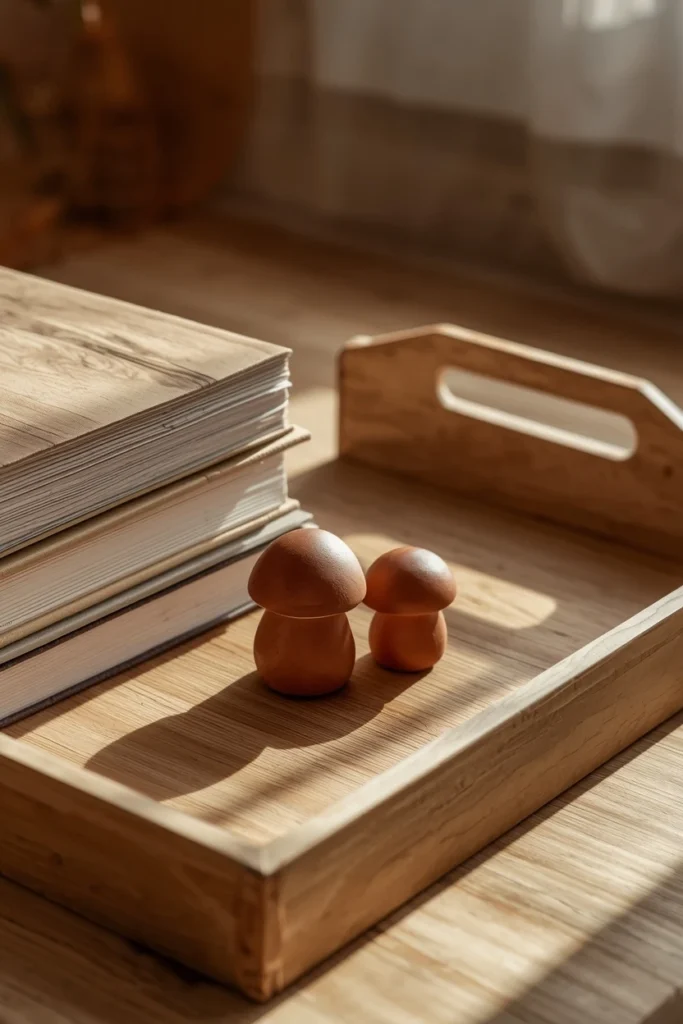
11. A Whimsical Mushroom Accent
Tuck one or two small ceramic or wood mushrooms beside a stack of books or a bowl on the tray for a playful, slightly unexpected seasonal touch that isn’t a pumpkin. Choosing mushrooms in matte brown, cream, or moss green tones, rather than bright red-capped ones, keeps the accent feeling grounded and easy to blend into an existing neutral or earthy tray. This idea works best in small doses, one or two mushrooms rather than an entire cluster, since too many can tip the display from charming into novelty territory. A handcrafted or slightly irregular pottery mushroom adds more visual interest than a mass-produced, uniform one. This is a great option for anyone who wants a seasonal nod without leaning on pumpkins for the tenth time on the same coffee table.
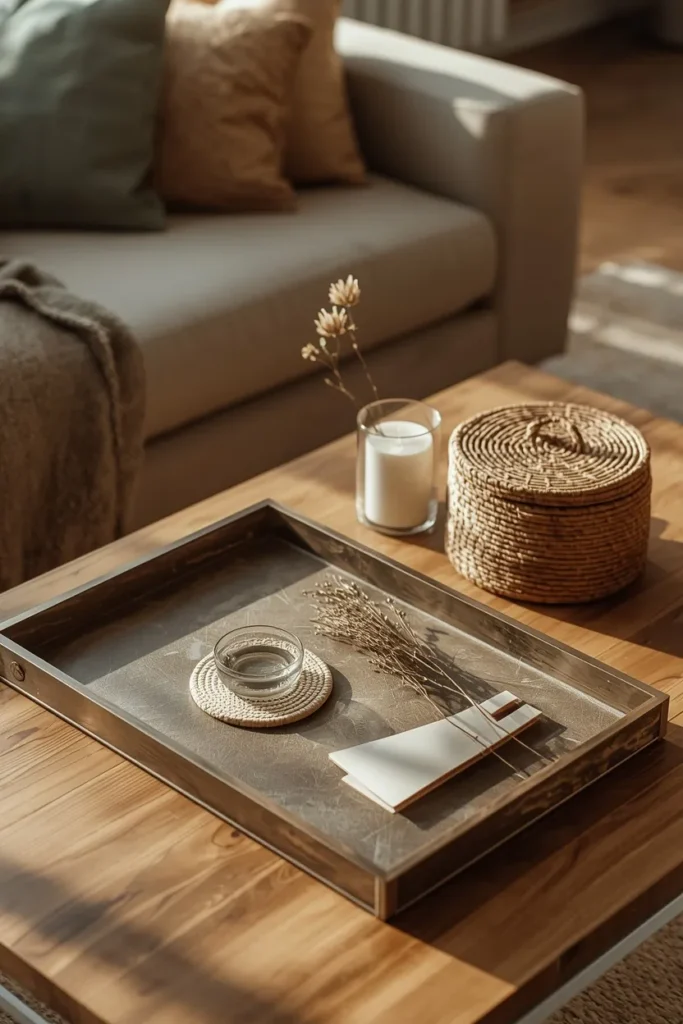
12. A Functional Tray for High-Traffic Family Rooms
If your coffee table gets used every day for remotes, coasters, and the occasional kids’ coloring session, style the tray with function in mind first: a small dish for coasters, a low candle that won’t tip easily, and enough open space left over for an actual mug or plate. This approach accepts that a coffee table in active daily use needs more breathing room than a purely display-only one, and it prevents the frustration of constantly rearranging a delicate display just to set something down. Choosing a slightly larger, sturdier tray than you might for a display-only table gives everyone more room to actually use the surface without disturbing the styling. A small woven box with a lid is a smart addition here, since it can hide crayons, remote controls, or other daily clutter while still contributing to the seasonal look. This idea proves that a coffee table can be both genuinely functional and seasonally styled at the same time.
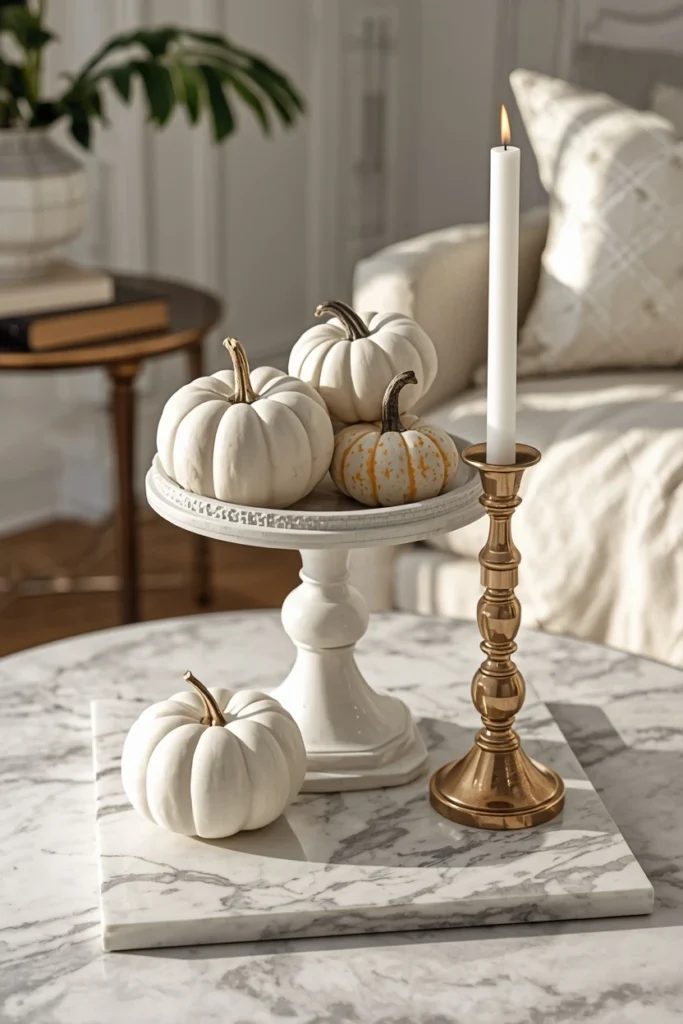
13. A Pedestal Bowl of Pumpkins with Candlesticks
Instead of a flat tray, use a raised pedestal bowl filled with white or cream pumpkins as the height-giving centerpiece, then flank it with one or two decorative pillar candlesticks of varying heights. This composition creates a naturally tiered look without needing multiple risers, since the pedestal itself does the height work. Choosing a wood or marble board underneath the whole grouping, rather than a traditional tray, ties the pieces together while letting each individual object still stand out on its own. This idea tends to look especially elegant on a larger coffee table or an ottoman used as a coffee table, where the additional height doesn’t feel out of proportion with the room. It also works beautifully as a shared idea between a coffee table and a kitchen island, since the same grouping translates well to either surface.
14. A Room-Coordinated Color Palette Tray
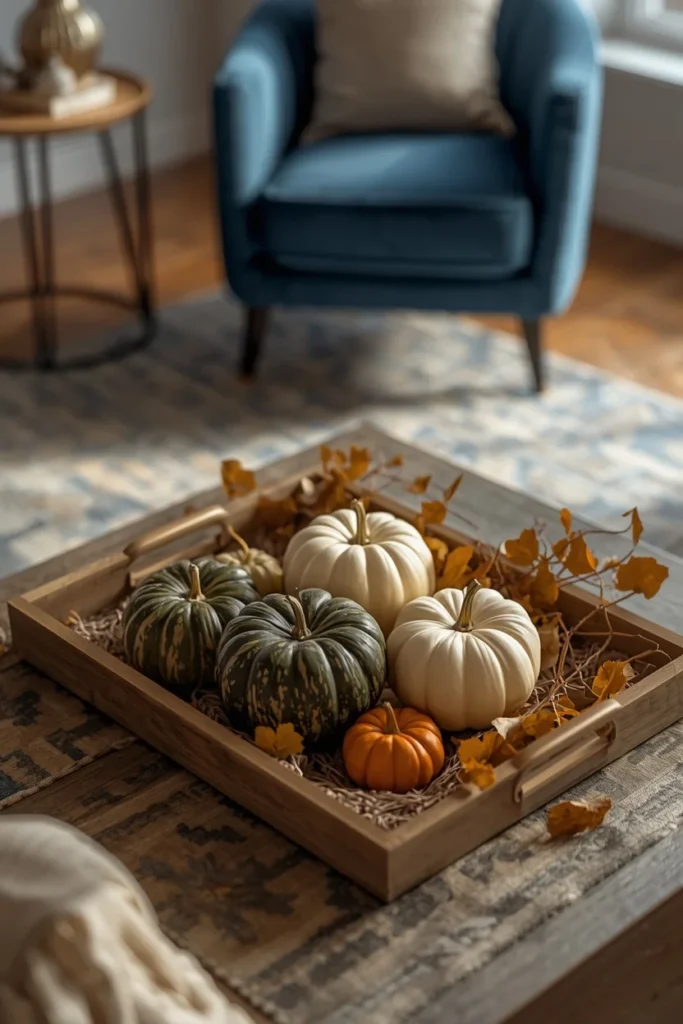
Rather than defaulting to classic orange and brown, choose tray colors that specifically complement your existing living room palette: rust and warm brown tones for a room with blue accents, or deep olive and cream for a room already full of warm wood. This approach ensures the seasonal styling enhances the room instead of visually fighting the furniture, rugs, or wall color already in place. Walking around the room and identifying one or two existing accent colors before shopping for tray decor makes this a quick, intentional exercise rather than a guessing game. A single fall element in an unexpected but complementary color, like a deep olive pumpkin in a predominantly blue room, often looks more sophisticated than an entire tray of expected orange and brown. This idea requires a little more planning than the others on this list, but it consistently produces the most cohesive-looking final result.
15. A Single Strong Grouping Surrounded by Empty Space
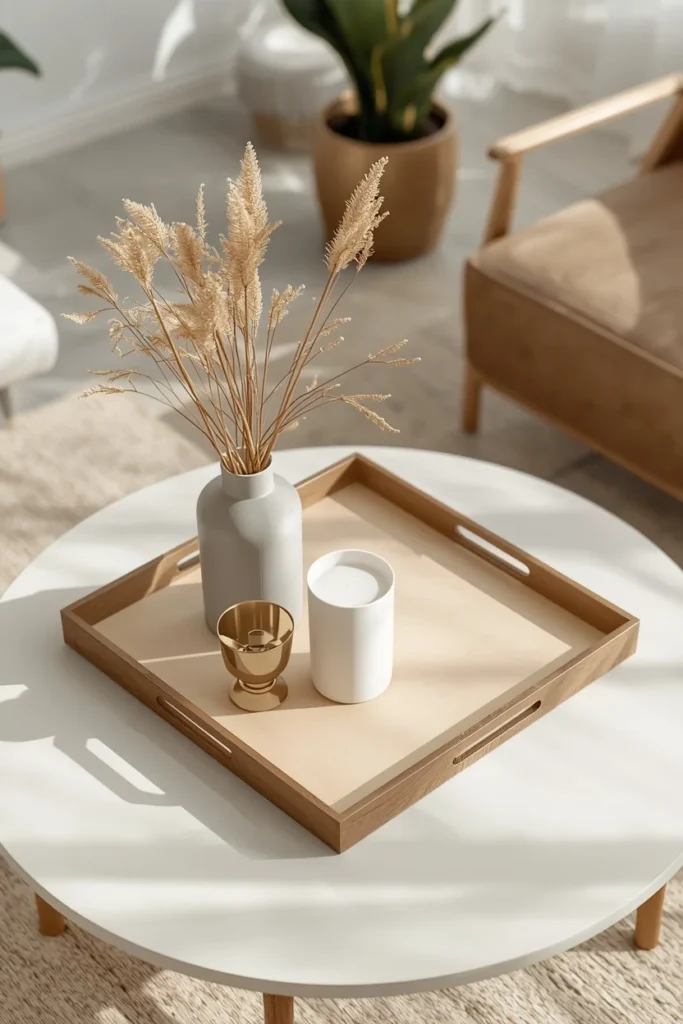
Rather than dividing the tray into multiple small decorative zones, choose one compact grouping, a vase, a candle, and a small bowl, positioned together in roughly a third of the tray, and leave the rest of the surface completely empty. This restraint is what makes even a small coffee table look larger and more intentional, since the negative space reads as deliberate rather than unfinished. Coordinating the colors and materials within that one grouping, rather than matching them exactly, gives the display a sense of ease instead of looking overly styled. This idea works especially well on small or narrow coffee tables, where multiple separate vignettes would otherwise compete for very limited surface area. It’s a strong closing principle for the whole list: one well-composed grouping will almost always outperform a tray crowded with several smaller, competing ones.
Styling Tips
- Choose your tray material first, wood, wicker, metal, or marble, since it sets the tone for every other decision that follows.
- Build in layers: a base or textile first, then a height element like a candle or vase, then smaller filler pieces last.
- Use odd numbers when grouping pumpkins, candles, or small objects for a more natural, curated look.
- Leave at least a third of the tray empty so the display reads as intentional rather than crowded.
- Coordinate the tray’s colors with the existing room, rather than defaulting to classic orange and brown, for a more cohesive overall look.
Practical Implementation Ideas
- Measure your coffee table before choosing a tray size, since a tray that’s too small or too large relative to the table will always look slightly off.
- Consider how the table is actually used, high-traffic family room or display-only, before committing to a delicate or crowded styling approach.
- Start with the tallest element first, like a candle or vase, then build the rest of the grouping around it.
- Test the display from your main seating area, not just standing over the table, since that’s the vantage point you’ll actually see it from most often.
- Keep a small bin of tray decor items so seasonal swaps take minutes rather than requiring a shopping trip each time.
Common Mistakes to Avoid
- Overcrowding the tray with too many small items instead of a few well-chosen, larger pieces.
- Choosing a tray that’s too small for the coffee table, which can make the whole display look like an afterthought.
- Ignoring how the table is actually used day to day, resulting in a styled display that gets knocked over or constantly rearranged.
- Sticking only to bright orange and black, when a more coordinated or muted palette often looks more elevated.
- Forgetting to leave any negative space, which makes even a well-chosen grouping of items look cluttered.
Small-Space Alternatives
Smaller coffee tables or apartment living rooms benefit most from a single compact tray with just two or three items, rather than attempting a larger layered display that a bigger table could support. A round tray often works better than a rectangular one in a tight space, since it has a smaller footprint while still clearly defining a decorative zone. Skipping risers and taller elements in favor of low, horizontal styling keeps a small table from feeling visually top-heavy. For coffee tables that double as an ottoman or storage piece, a smaller tray positioned to one side leaves the rest of the surface available for actual daily use.
Budget-Friendly Alternatives
Foraged pinecones, acorns, and branches cost nothing and add genuine natural texture to any tray. Repurposing a produce crate, an old cutting board, or a serving tray you already own avoids buying a dedicated seasonal tray altogether. Thrifted candlesticks and small vases often bring more character to a display than new ones at a fraction of the price. Faux pumpkins, while a slightly higher upfront cost than real ones, are reusable for years, which makes them one of the better long-term investments if you plan to style your coffee table for fall annually.
Pro Styling Recommendations
Treat the tray the way a stylist treats a shelf for a photoshoot: fewer, better pieces arranged with real intention will always outperform a tray crowded with small items. Build the display in layers, base, height, texture, function, so each addition has a clear purpose rather than just filling space. Choose colors that complement your existing room rather than defaulting to expected seasonal tones, since coordination reads as more considered than a purely themed display. And always view the finished tray from your main seating spot, not just from directly above it, since that’s the vantage point you’ll experience it from most often.
FAQs
Conclusion
A well-styled tray does more for a coffee table than almost any other single decorating decision, and it’s one of the fastest updates on this entire list of ideas to actually execute. Start with a tray that fits your table’s scale, build in a little height and texture, and leave enough empty space for the eye to rest. Whether your coffee table needs to survive daily family life or just needs to look good for company, there’s a version here that works for exactly how you live.