18 Scalloped Tile Ideas for a Soft, Statement-Making Bathroom
Most bathroom tile is a grid. Straight lines, sharp corners, right angles repeating in every direction until the room starts to feel a little clinical.
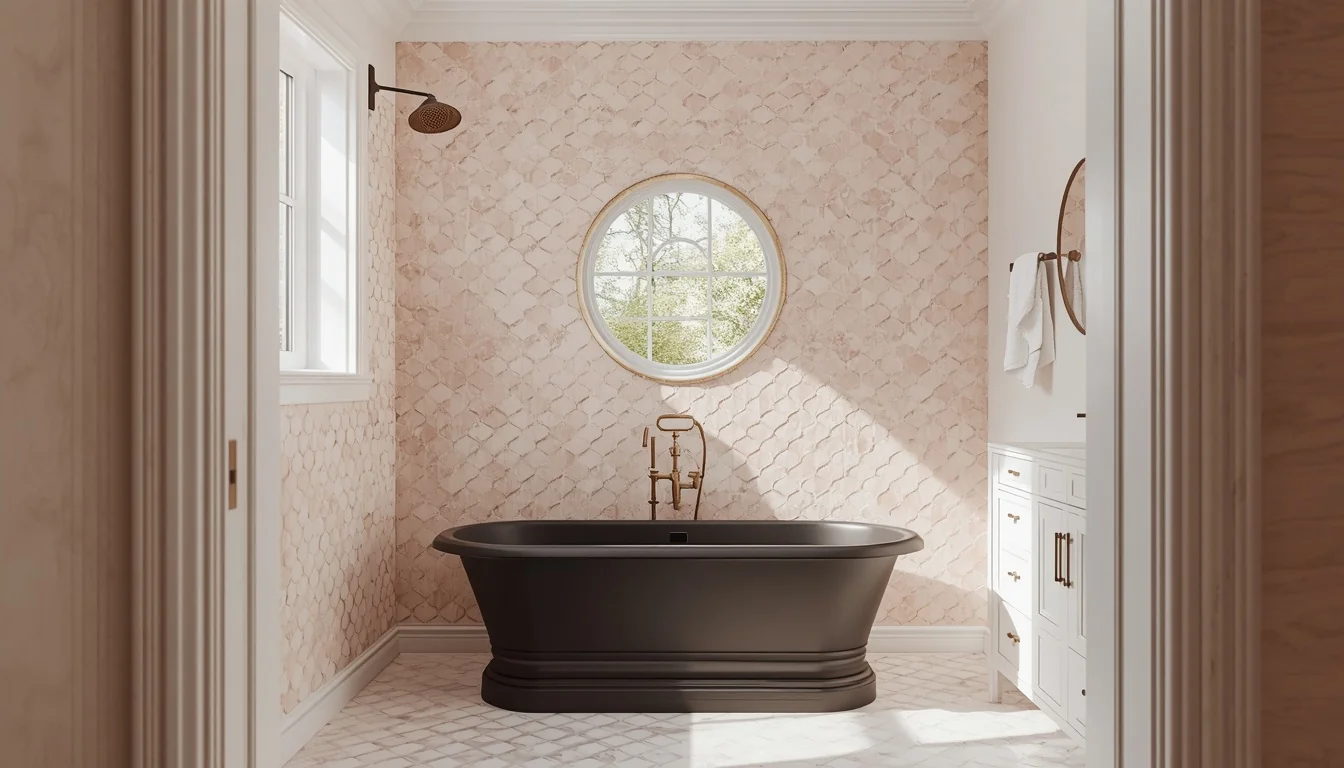
Scalloped tile breaks that pattern, literally. Each curved, teardrop-shaped piece overlaps the one below it, creating a rippling, almost aquatic texture that catches light differently than anything flat ever could. It’s sometimes called fish scale tile, fan tile, or mermaid tile depending on who you ask, but the effect is the same either way: soft, organic movement in a room that’s usually built entirely from hard edges.
The tricky part is that scalloped tile is bold enough to genuinely transform a bathroom, which means color, placement, and grout choice all matter more here than they would with a standard subway tile. Get it right and you have the kind of bathroom people ask about. Get the color or scale wrong and it can tip into busy or dated territory fast.
This guide walks through 18 specific ways to bring scalloped tile into a bathroom, covering color, placement, and the practical details that make the difference between a statement and a mistake. Save the ones that fit your space.
Table of Contents
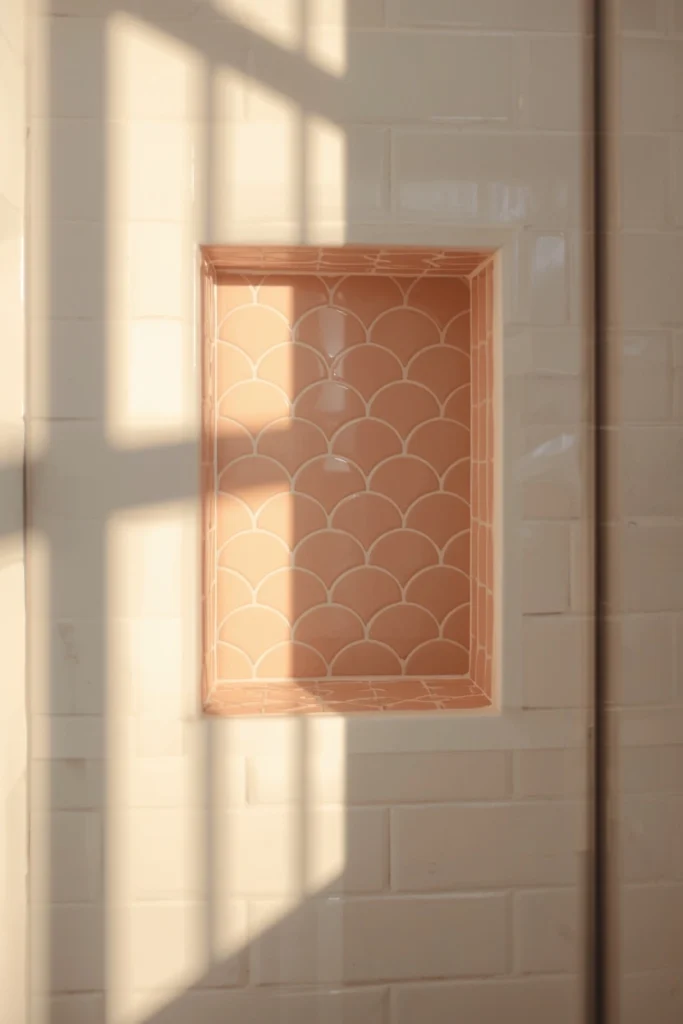
1. Wrap a Shower Niche in Contrasting Scalloped Tile
A shower niche, the small recessed shelf built into the wall for shampoo and soap, is one of the easiest places to introduce scalloped tile without committing to a full wall treatment. Choose a scalloped tile in a color that contrasts with the surrounding shower wall, like a soft blush inside a white subway tile shower, so the niche reads as an intentional design detail rather than an afterthought. This placement also means the curved texture gets seen up close every time the shower is used, adding a small daily moment of visual interest in a spot most bathrooms leave completely plain. Because the niche itself is small, this is a low-cost, low-commitment way to test whether you love scalloped tile before applying it to a larger surface. It’s consistently one of the most popular entry points for anyone remodeling a bathroom and wanting to try the trend without a major tile budget.
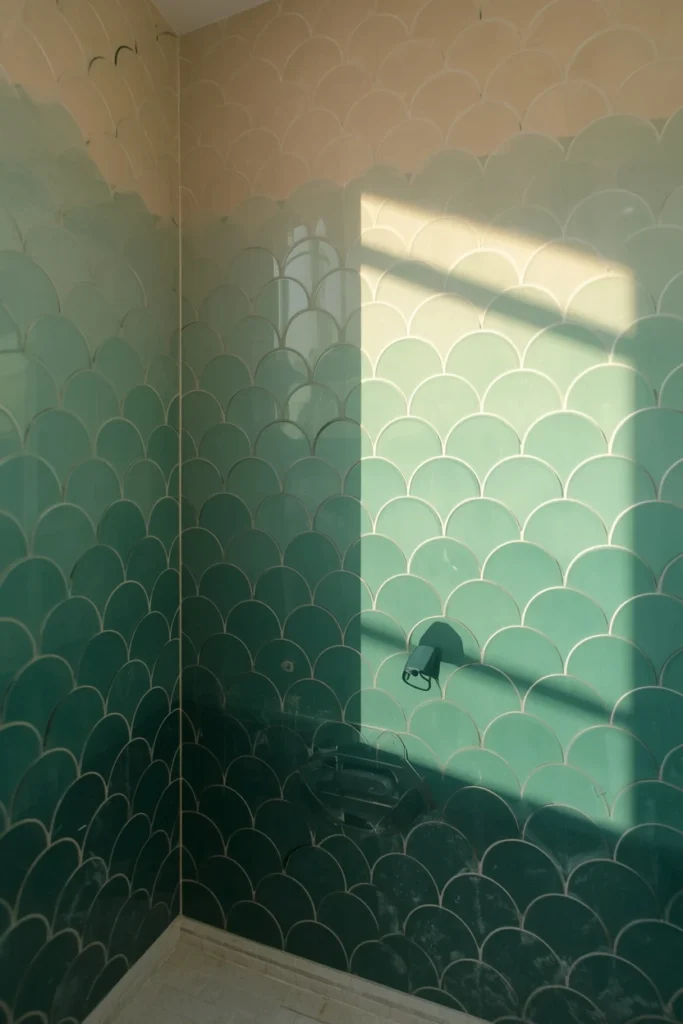
2. Create an Ombre Gradient Scalloped Wall
An ombre scalloped wall uses three or four shades of the same color, arranged from darkest at the bottom to lightest at the top, or the reverse, to create a gradient effect that echoes the natural way color shifts in the ocean or sky. Choose colors within a tight family, like moving from deep teal to soft seafoam to nearly white, so the transition between rows reads as smooth and intentional rather than blotchy or uneven. This technique works especially well as a full shower wall or a floor-to-ceiling feature wall behind a freestanding tub, since the gradient needs enough vertical space to build gradually and make its full visual impact. Plan the transition carefully with your tile installer before work begins, since ombre patterns require precise row-by-row planning that a standard single-color installation doesn’t. This is one of the most photographed and shared scalloped tile applications specifically because the gradient effect is nearly impossible to achieve with any other tile shape.
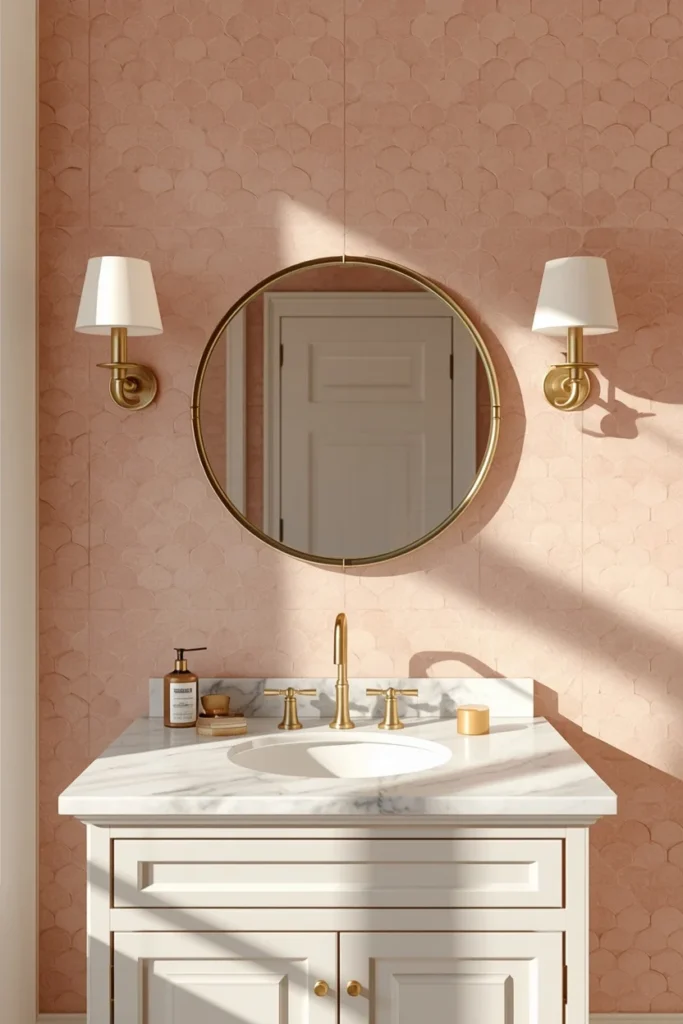
3. Use Blush Pink Scalloped Tile for a Soft Vanity Wall
Blush pink scalloped tile applied behind a vanity mirror creates a soft, feminine backdrop that pairs beautifully with warm metal fixtures and natural stone countertops. Choose a matte or slightly glossy blush glaze rather than a stark bubblegum pink, since the muted, dusty tone reads as more sophisticated and timeless once it’s a permanent fixture of the room. Pair this wall with brass or warm gold fixtures, since these metals bring out the pink’s warmer undertones far more effectively than chrome or matte black would. This application works particularly well in a powder room or guest bathroom, spaces where a bit of playful, memorable color makes a strong impression without needing to suit every family member’s daily use. A blush scalloped vanity wall consistently ranks among the most requested looks for anyone wanting a bathroom that feels both soft and genuinely distinctive.
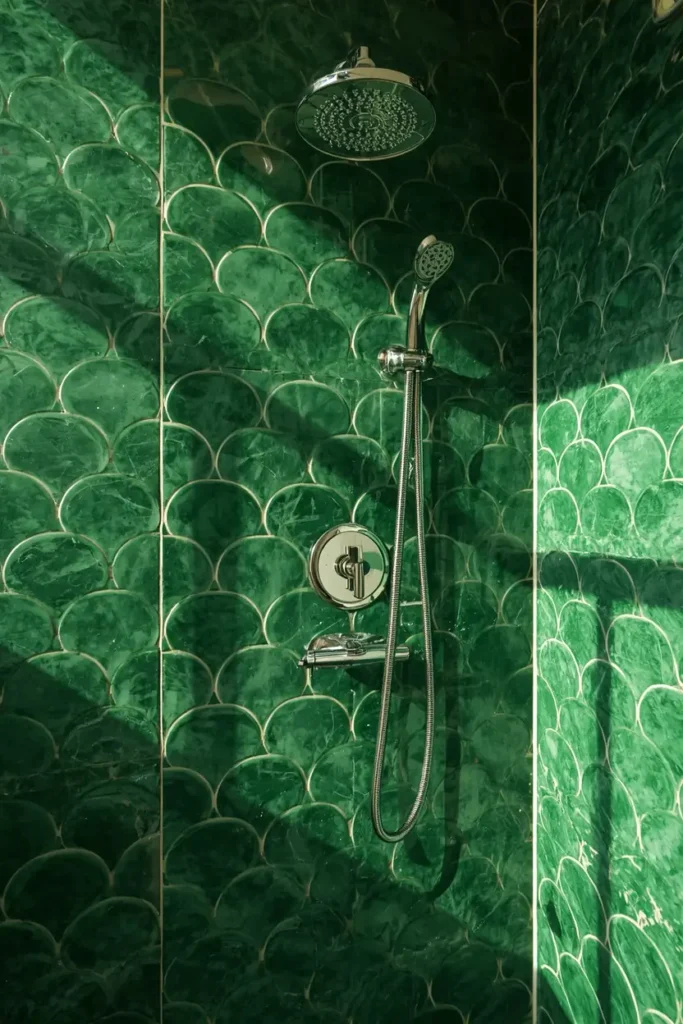
4. Go Bold With Emerald Green Scalloped Shower Walls
Emerald green scalloped tile turns a shower into an unmistakable focal point, its rich, saturated color reading as luxurious and confident rather than simply bold for its own sake. Choose a glossy ceramic finish for maximum depth and shine, since the glaze catches light across each curved tile edge in a way that adds real dimension to the color. Pair emerald tile with crisp white grout and chrome or polished nickel fixtures, letting the cooler metal tones keep the overall look feeling fresh and clean rather than heavy. This color works especially well in a larger bathroom, where the tile has enough surface area to fully register its impact without feeling cramped or overwhelming in a tight footprint. An emerald scalloped shower wall is one of the boldest choices on this list, but it consistently photographs as one of the most memorable and design-forward bathroom features available.
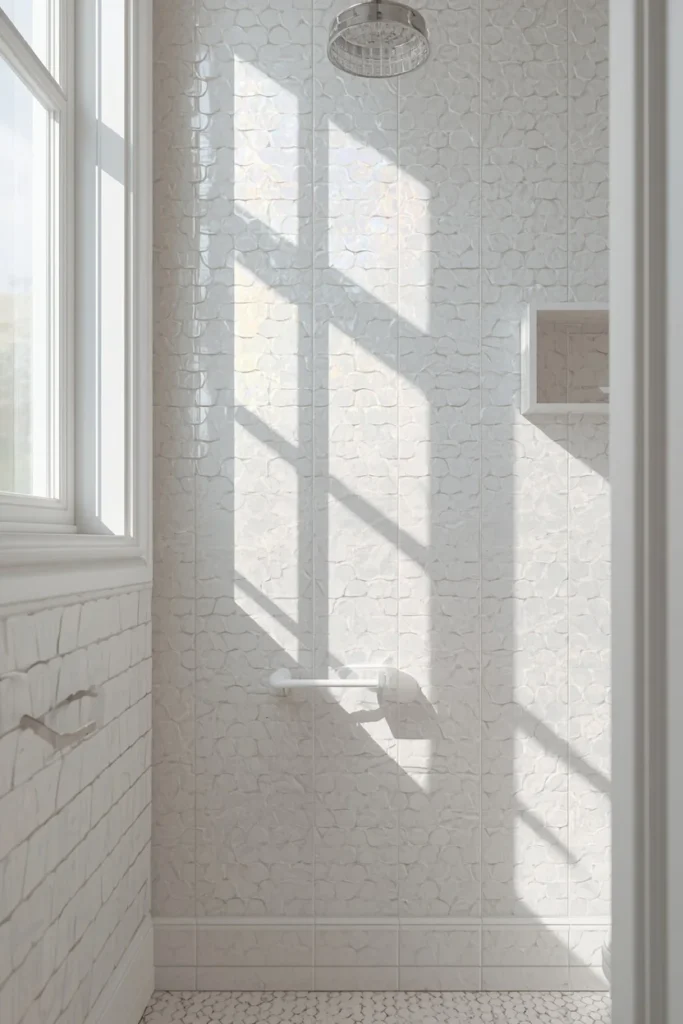
5. Choose Iridescent Scalloped Tile for Shimmer
Iridescent scalloped tile shifts color subtly depending on the angle of light hitting it, creating a shimmering, almost seashell-like effect that changes as you move through the room. Choose a tile with a genuine iridescent glaze, typically in a pale base color like white or soft blue, since the shimmer effect depends on light interacting with a semi-reflective surface rather than a flat matte finish. This tile works especially well in a bathroom with strong natural light, since sunlight moving across the wall throughout the day continuously changes how the tile reads, keeping the space feeling dynamic rather than static. Pair iridescent tile with simple white fixtures and minimal additional pattern, letting the tile’s shifting color carry the room’s visual interest without competing against busy countertops or patterned flooring. This is one of the more unusual and memorable scalloped tile options, ideal for anyone wanting their bathroom to feel genuinely magical rather than simply colorful.
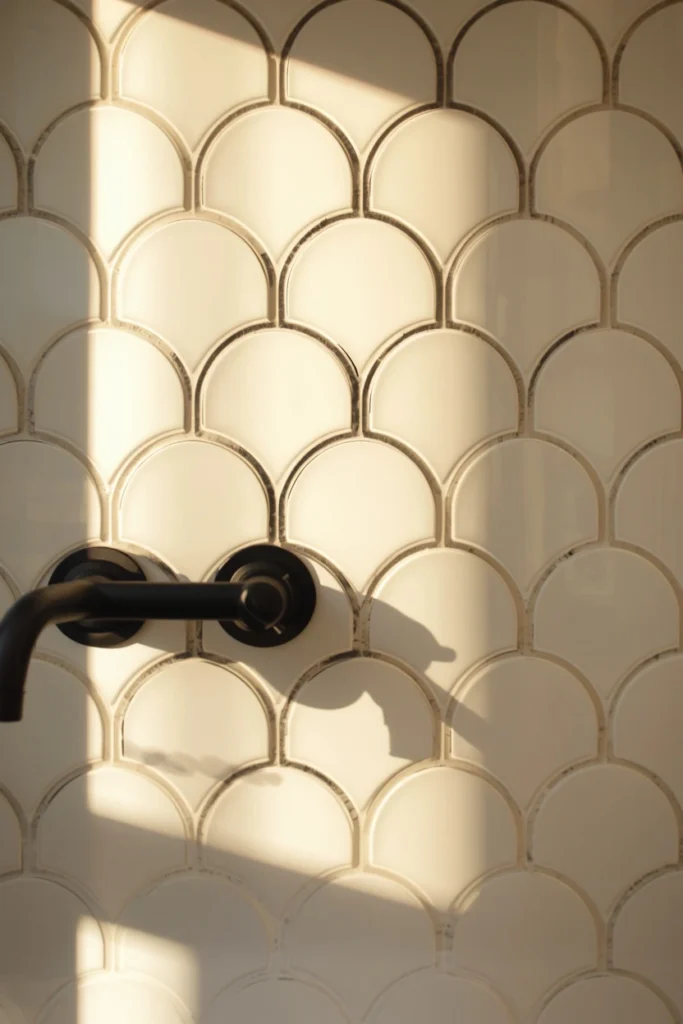
6. Pair White Scalloped Tile With Black Grout
White scalloped tile installed with black grout turns the tile’s natural curved pattern into a graphic, high-contrast design element, since the dark grout lines trace and emphasize every individual scale shape clearly. This combination works particularly well for anyone who wants the texture and movement of scalloped tile without introducing additional color into the bathroom, keeping the overall palette clean and monochrome. Choose a bright white glossy tile for maximum contrast against the black grout, since a warmer off-white can slightly soften the graphic effect this pairing is meant to achieve. This look reads as more modern and architectural than a scalloped tile paired with matching white grout, which tends to feel softer and less defined by comparison. Black grout with white scalloped tile is a favorite among designers specifically because it delivers the shape’s organic movement with a crisp, contemporary edge.
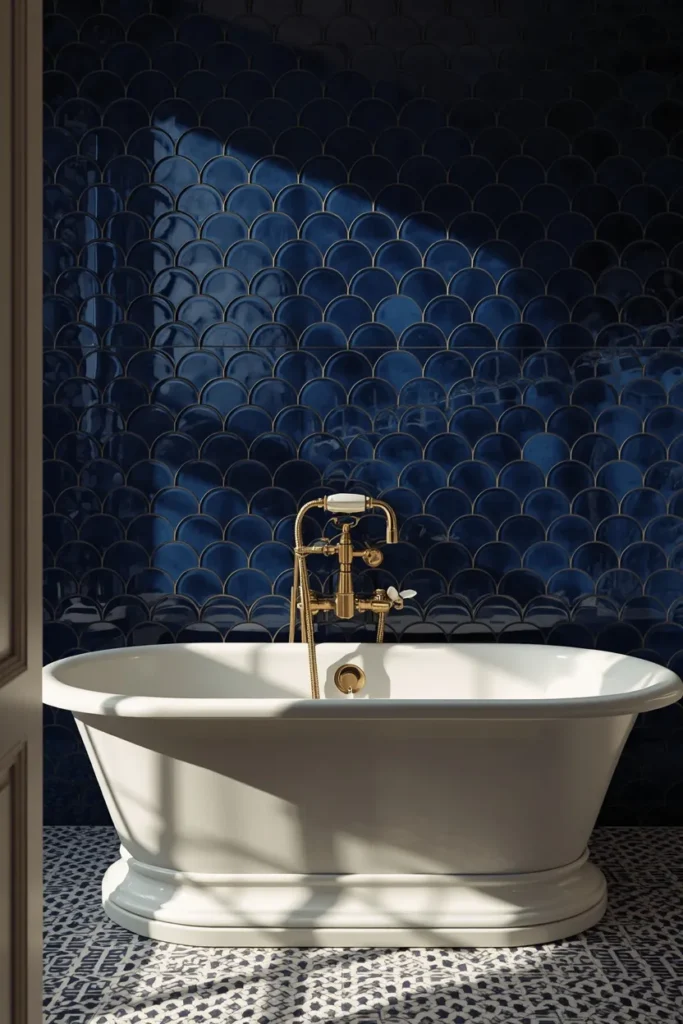
7. Use Navy Scalloped Tile With Brass Fixtures
Navy scalloped tile brings deep, rich color to a bathroom while still reading as timeless and broadly appealing, a shade unlikely to feel dated the way some trendier colors eventually do. Pair the navy tile with warm brass fixtures, since the metal’s golden warmth balances the tile’s cool depth and keeps the overall room from feeling too monochromatic or heavy. This combination works especially well in a bathroom with a freestanding tub, where the tile can wrap the wall behind the tub as a dramatic backdrop for soaking. Choose a glossy tile finish to help the navy color catch and reflect available light, since a matte finish on a color this deep can occasionally read as flat or overly dark in a room with limited natural light. Navy and brass together form one of the most consistently popular color and metal pairings in bathroom design, and scalloped tile gives that classic combination genuine textural interest on top of its established color appeal.
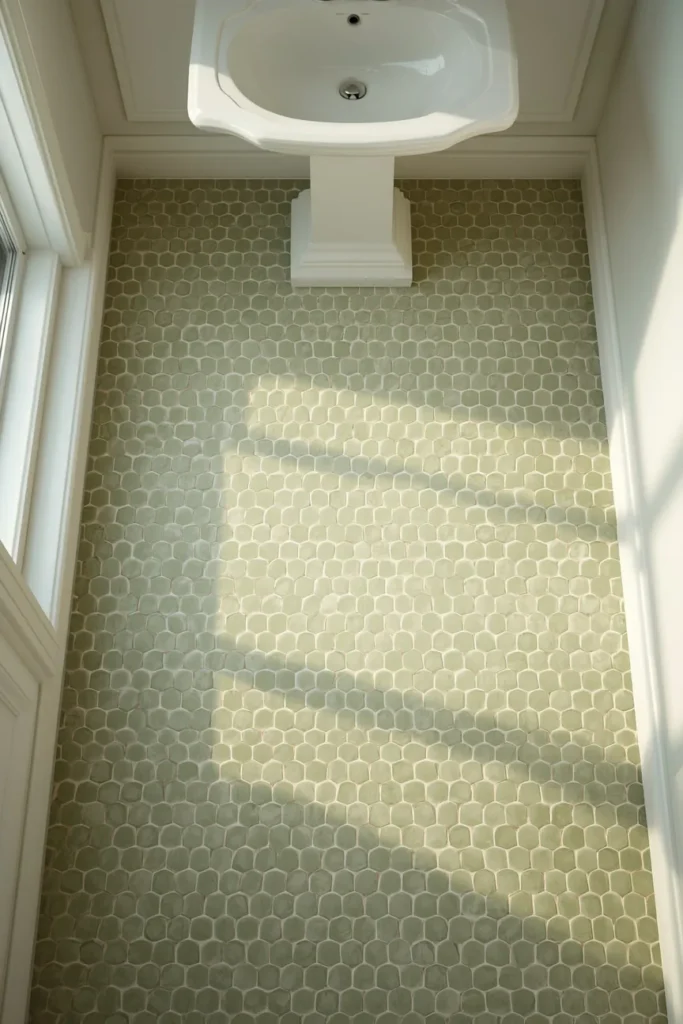
8. Apply Scalloped Tile to the Floor Instead of Walls
While scalloped tile is most commonly seen on walls, applying it to the floor instead creates an unexpected, textural surface underfoot that most bathrooms never explore. Choose a slightly smaller scale tile for floor application, since a large-format scallop can look disproportionate at floor level compared to how it reads vertically on a wall. This placement works particularly well in a bathroom that already has simple, unpatterned walls, letting the floor carry the room’s main visual interest instead. Consider a color that contrasts gently with the surrounding wall tile or paint, like a soft green floor beneath white walls, so the floor reads as a deliberate design choice rather than a continuation of the same surface. This is a less common application, but it consistently surprises and delights anyone who sees it, since flipping the tile’s usual placement from vertical to horizontal changes how the entire pattern reads.
9. Mix Scalloped Tile With Classic Subway Tile
Combining scalloped tile with traditional rectangular subway tile in the same bathroom lets you introduce the curved shape’s texture and movement without covering every surface in it, keeping the overall design balanced between organic and structured elements. Use subway tile for the bulk of the shower or wall surface, then reserve scalloped tile for a specific accent, like a niche, a half wall, or a border strip running along the top of the subway tile installation. Choose both tiles in the same or closely related color for a subtle, tonal version of this mix, or in contrasting colors for a bolder, more graphic combination. This approach also tends to be more budget-friendly than a full scalloped tile installation, since subway tile is generally less expensive per square foot than specialty curved shapes. Pairing these two tile shapes together is one of the most practical, widely applicable ideas on this list, suited to nearly any bathroom size or budget.
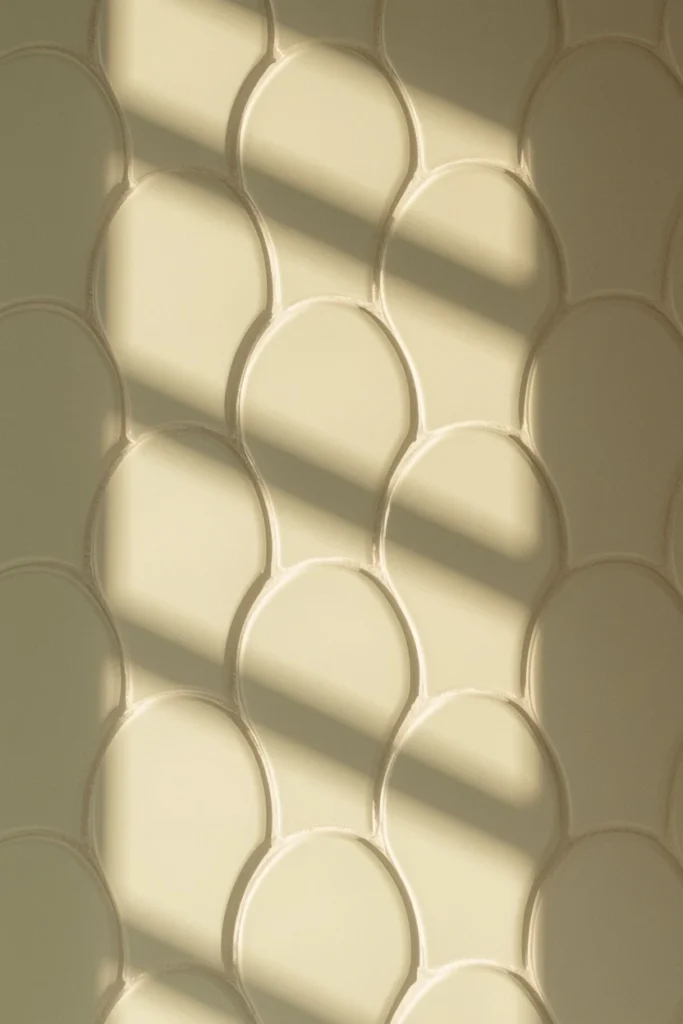
10. Create a Reverse-Direction Scalloped Accent
Most scalloped tile installations point the curved edge downward, mimicking the natural direction of actual fish scales or shingles, but flipping the orientation so the curve points upward creates a distinctly different, less expected visual rhythm. This reversed installation works especially well as a standalone accent strip or a small feature area, like above a vanity mirror or along a single accent wall, rather than across an entire large surface where the unconventional direction might feel disorienting. Discuss this installation direction clearly with your tile setter in advance, since reverse-direction scalloped tile requires deliberate planning and isn’t the default approach most installers assume. Pair the reversed pattern with a simple, solid color, letting the unusual orientation itself provide the visual interest rather than combining it with a bold color choice at the same time. This is a more advanced, design-forward application, best suited for anyone specifically looking for a scalloped tile detail that stands apart from the most commonly seen version of the trend.
11. Use Scalloped Tile on a Half-Wall Wainscot Height
Applying scalloped tile only to the lower half of the wall, in a wainscot-style installation topped with a simple painted upper wall, offers a more restrained way to bring in the curved texture without a full floor-to-ceiling commitment. Choose a clean cap or trim piece to finish the top edge of the tile cleanly, since this transition line needs to look intentional and finished rather than like the tile installation simply ran out partway up the wall. Paint the upper wall in a color that complements the tile, either a matching tone for a more tonal, quiet look or a contrasting color for more definition between the two zones. This application works particularly well in a powder room or a bathroom with existing architectural charm, like crown molding or wainscot paneling elsewhere in the home, since it echoes a similar half-wall treatment in a more contemporary material. Half-wall scalloped tile offers a strong middle ground between a subtle accent and a full statement wall, making it one of the more versatile applications on this entire list.
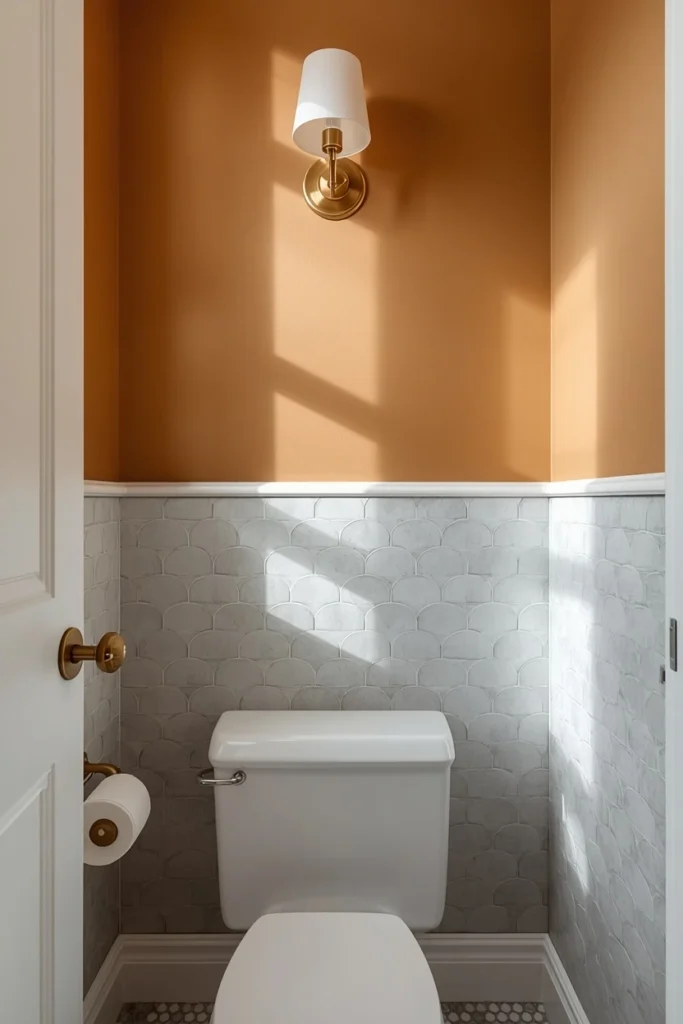
12. Choose Zellige-Style Scalloped Tile for Organic Texture
Zellige tile, a traditional handmade Moroccan ceramic known for its slightly irregular surface and subtle color variation, brings an additional layer of organic texture when combined with the scalloped shape, since no two tiles reflect light in exactly the same way. Choose a zellige-style scalloped tile in a single warm or cool tone, letting the natural variation within that color family do the visual work rather than mixing several different colors together. This tile type tends to cost more than standard machine-made ceramic due to its handcrafted production process, so it’s often reserved for a smaller accent area, like a niche or a vanity backsplash, rather than a full room application. Pair zellige scalloped tile with simple, unfussy fixtures and finishes, since the tile’s inherent texture and character already provide significant visual interest on its own. This combination appeals particularly to anyone drawn to a more artisanal, collected-over-time bathroom aesthetic rather than a crisp, uniform, mass-produced look.
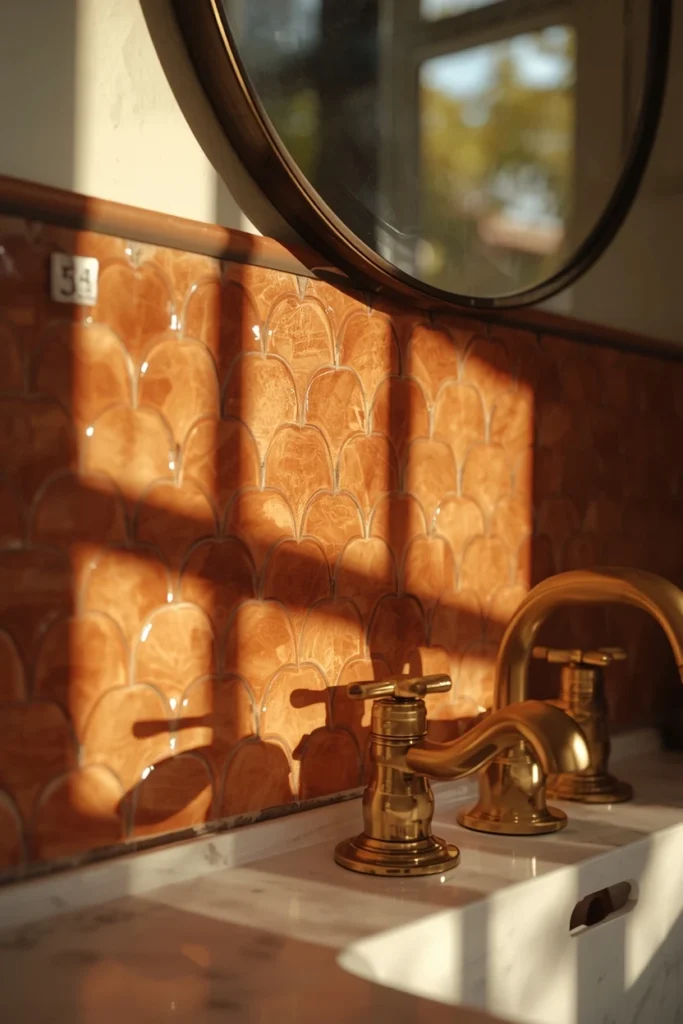
13. Pair Scalloped Tile With Penny Tile Flooring
Combining scalloped wall tile with small round penny tile on the floor brings together two different curved shapes that still read as cohesive, since both echo a similar soft, rounded geometry rather than clashing against straight-edged tile. Choose a matching or closely coordinated color palette between the two tile types, like white scalloped walls paired with white and gray penny tile flooring, so the combination feels intentional rather than like two unrelated design decisions. This pairing works particularly well in a smaller bathroom or powder room, where the consistent curved theme across both wall and floor creates a sense of cohesive, considered design despite the limited square footage. Penny tile’s small scale also provides useful visual contrast against the larger scalloped tile shape, keeping the combination interesting rather than repetitive. This is one of the more classic, timeless scalloped tile pairings, drawing on a long history of curved tile shapes appearing together in vintage and revival bathroom design.
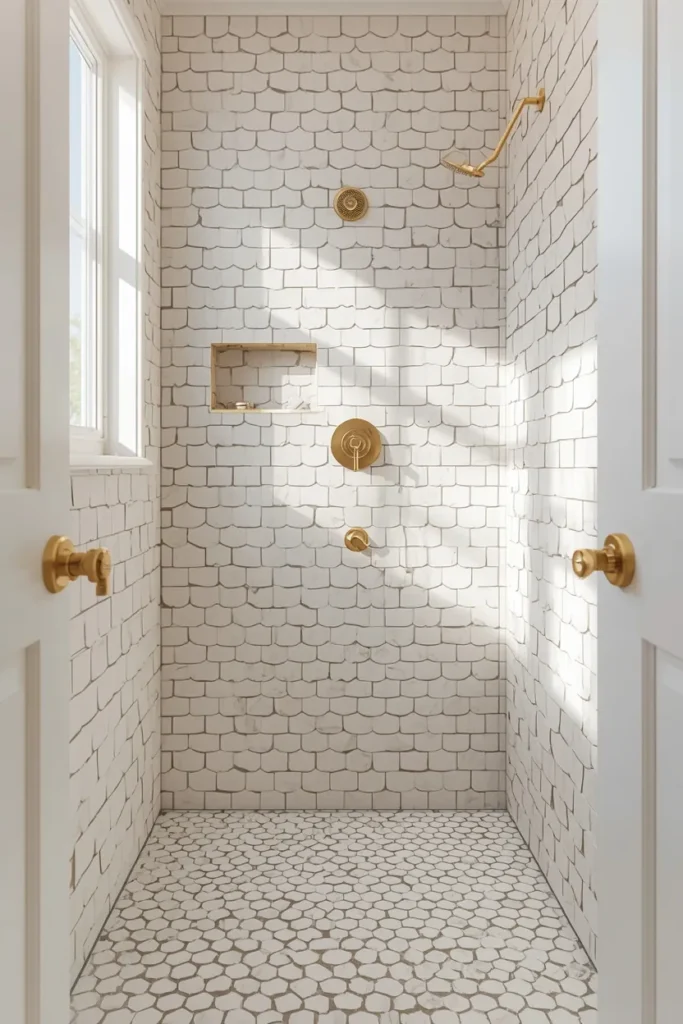
14. Use Black Scalloped Tile for Bold Drama
Black scalloped tile delivers maximum drama and a distinctly modern, high-design statement, its dark color grounding the room while the curved shape keeps the overall effect from feeling too heavy or severe. Choose a matte black finish for a more contemporary, moody look, or a glossy black for added shine and reflected light, particularly useful in a bathroom without abundant natural light. Pair black tile with light gray or white grout for definition, letting each individual scale read clearly rather than blending into one solid dark mass. This color works especially well as flooring or a lower half-wall application, grounding the room visually while lighter walls and fixtures above keep the space from feeling closed in. Black scalloped tile is a genuinely bold choice, best suited for anyone confident in a strong design statement, but it consistently produces some of the most striking, editorial-feeling bathrooms in any tile roundup.
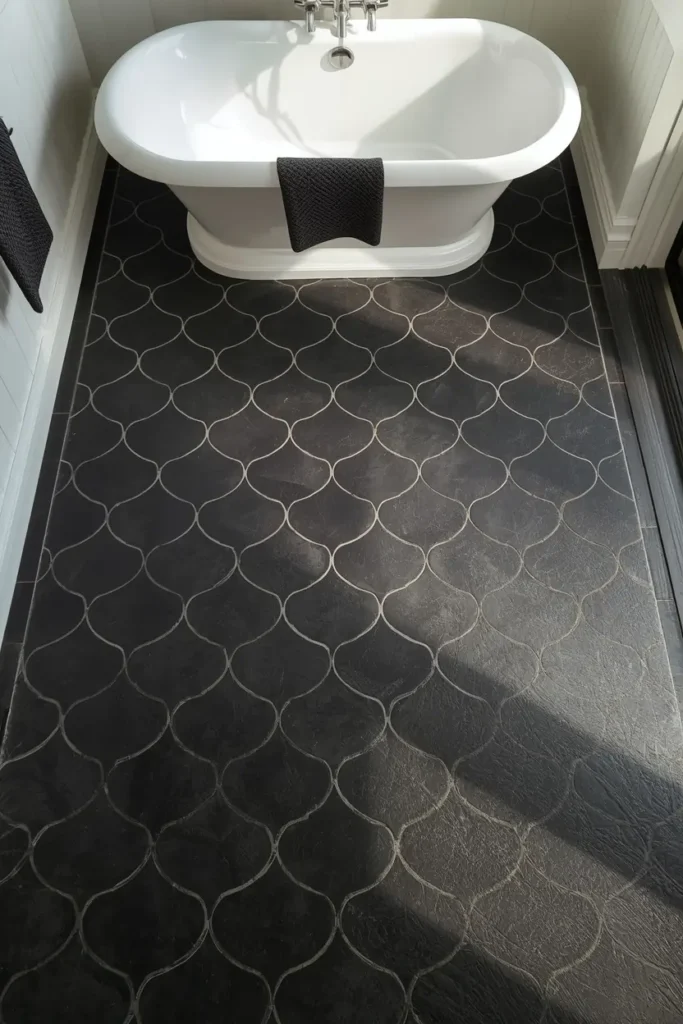
15. Extend Scalloped Tile Up the Ceiling
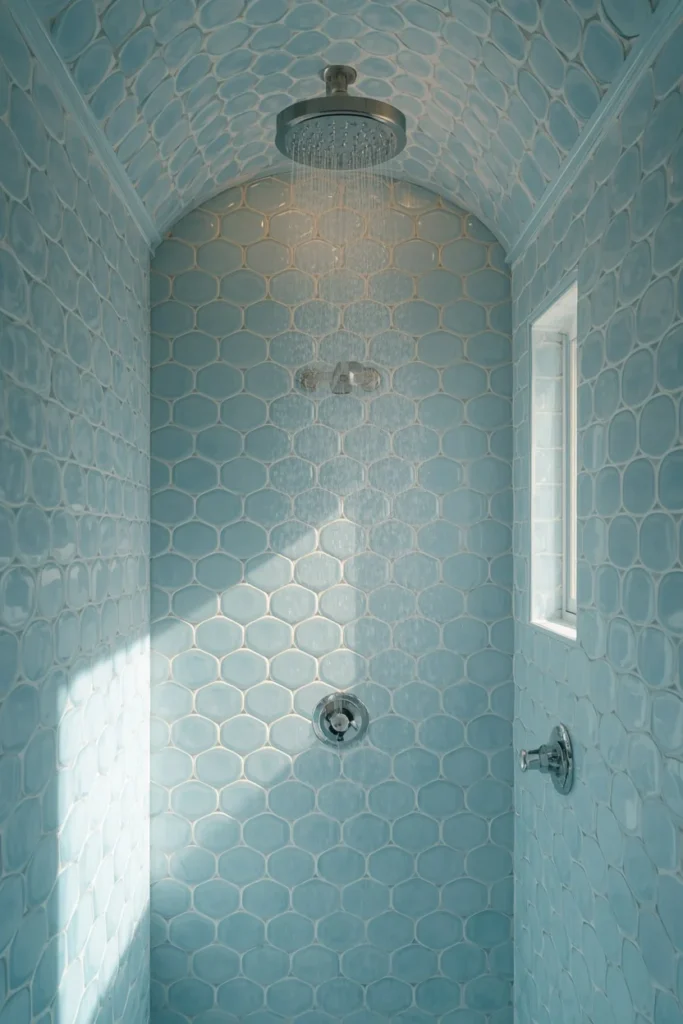
Continuing scalloped tile from the shower wall directly onto the ceiling creates a fully enveloping, cocoon-like effect, treating the ceiling as a genuine extension of the tiled surface rather than a separate, untouched plane. Choose the same tile and grout combination used on the walls to maintain visual continuity, since any change in color or pattern at the ceiling line would break the seamless, wraparound effect this application depends on. This technique works particularly well in a small shower stall or a walk-in shower with a lower ceiling, where the continuous tile treatment can make the space feel more expansive rather than cramped, similarly to how a colour-drenched ceiling functions in other rooms. Confirm with your installer that the chosen tile and adhesive are rated for ceiling application, since overhead tile installation requires different technical considerations than standard wall tiling. This is one of the more ambitious applications on this list, but it consistently produces a genuinely immersive, spa-like shower experience that few bathrooms achieve.
16. Choose Neutral Scalloped Tile for a Timeless Look
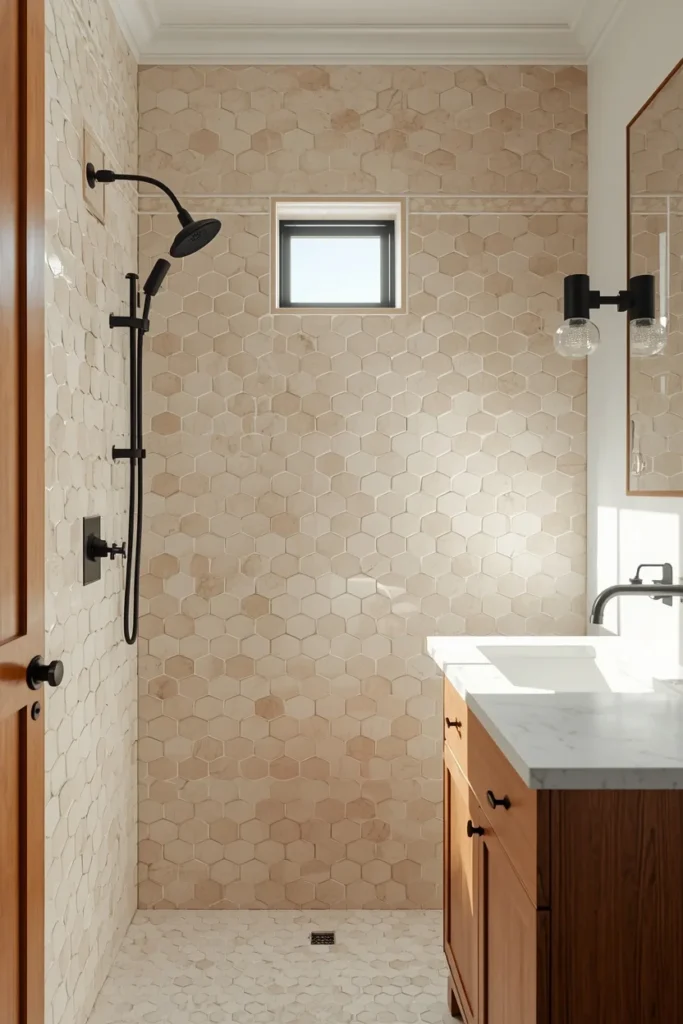
For anyone drawn to the texture of scalloped tile but hesitant about committing to a bold color, a neutral palette in warm white, soft cream, or light gray delivers the shape’s signature movement and softness while staying flexible enough to suit almost any future style change. Choose a subtly textured or slightly glossy finish rather than a completely flat matte, since some sheen helps neutral tile catch light and avoid reading as visually flat once it covers a large surface. This approach works especially well for anyone planning to sell their home eventually or simply preferring a more broadly appealing, resale-friendly bathroom design. Pair neutral scalloped tile with warm wood accents and either brass or matte black fixtures, both of which read as classic rather than trend-specific. This is consistently one of the most requested versions of scalloped tile precisely because it delivers genuine textural interest without the commitment or risk that comes with a bolder color choice.
17. Use Scalloped Tile Behind a Freestanding Tub
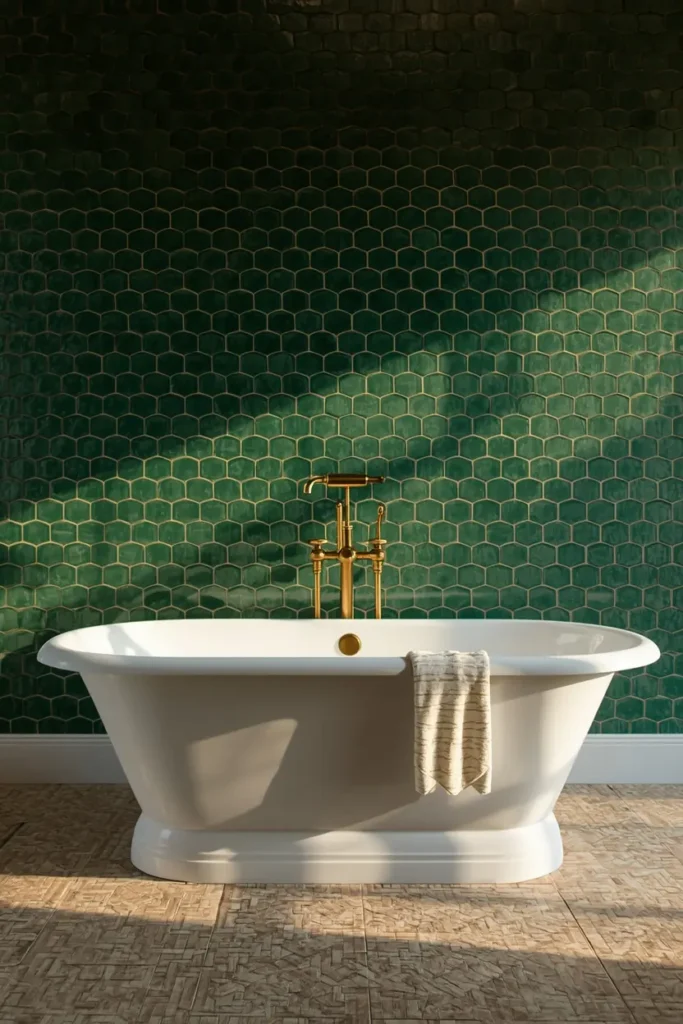
Positioning a bold scalloped tile wall directly behind a freestanding tub creates a clear, intentional focal point, framing the tub the way a headboard frames a bed and turning bath time into a genuinely elevated ritual. Choose a color and finish that contrasts with the tub itself, like a deep emerald or navy tile behind a crisp white tub, so the tub reads clearly against its backdrop rather than blending into a similarly toned wall. Extend the tile from floor to ceiling directly behind the tub, even if the surrounding walls stay simpler or painted, since this concentrated placement delivers strong visual impact without requiring a full room tile budget. Add a wall-mounted tub filler centered within the tiled area for a clean, symmetrical composition that further emphasizes the tub as the room’s clear centerpiece. This application consistently produces some of the most luxurious, magazine-worthy bathroom photographs, since the combination of a freestanding tub and a bold tiled backdrop reads as an instant, unmistakable design statement.
18. Create a Small Powder Room Full Scalloped Wrap
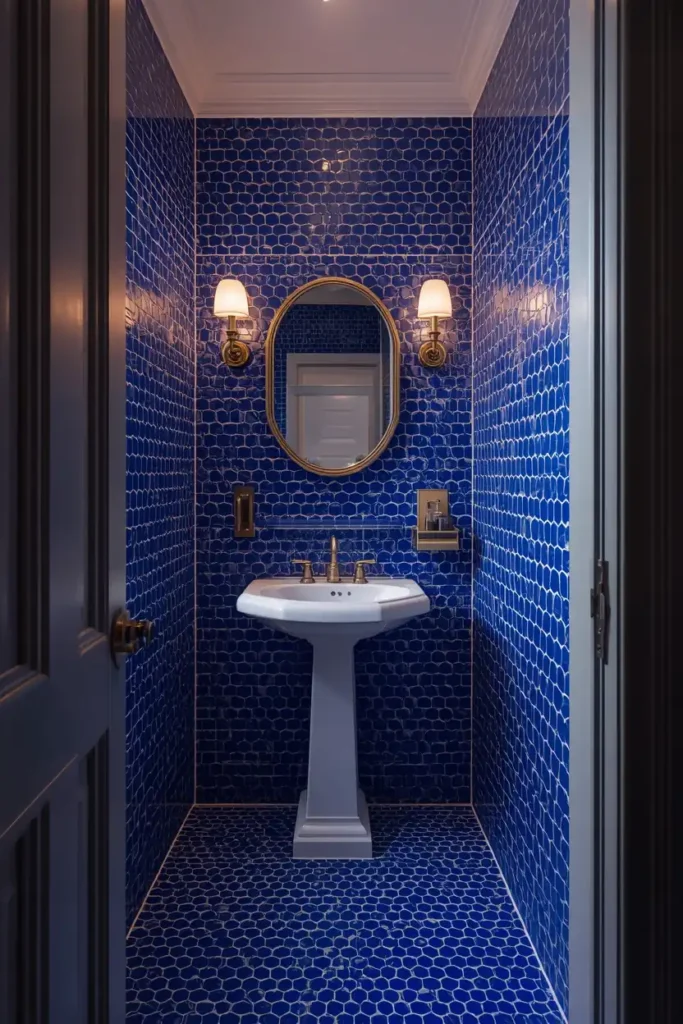
A powder room, typically the smallest and lowest-stakes bathroom in the house, is one of the best rooms for a full floor-to-ceiling scalloped tile wrap, since its limited square footage makes even a bold, saturated color feel manageable rather than overwhelming. Choose a confident color, since a powder room used mainly by guests is an ideal spot to take a genuine style risk that might feel like too much commitment in a primary bathroom used every single day. Wrapping every wall in the same tile removes any visual break, creating an immersive, jewel-box effect that consistently surprises and delights guests stepping into the space. Pair the tile with a simple pedestal sink and a single well-chosen light fixture, since the walls themselves are already delivering the room’s primary visual statement. Small powder rooms wrapped fully in scalloped tile are some of the most talked-about, memorable spaces in any home specifically because they commit fully to the idea rather than offering a partial, restrained version of it.
Styling Tips for Scalloped Tile Bathrooms
Let the shape carry the room, not just the color. Even a neutral scalloped tile delivers genuine texture and movement, so a bold color isn’t required to make the tile feel like a statement.
Choose grout color deliberately. Matching grout softens the tile’s outline, while contrasting grout, especially black on white, sharpens and graphically defines each individual scale.
Balance a bold tile wall with simple fixtures. One dramatic, saturated tile wall paired with straightforward hardware and a plain sink reads as intentional rather than busy.
Consider direction and scale before installation. Curve direction, up or down, and tile size both change how the finished pattern reads, so review a sample layout with your installer before committing.
Practical Implementation Ideas
Order tile samples and lay them out on the actual bathroom wall or floor before finalizing a color, since scalloped tile’s curved shape and glossy or matte finish can read very differently under your bathroom’s specific lighting than in a showroom. Confirm with your installer whether the tile is rated for wet areas and, if applicable, ceiling installation, since not every scalloped tile product is suited to every application. Plan the tile layout carefully around any niches, windows, or fixtures before installation begins, since the overlapping scallop pattern needs to be centered and balanced rather than awkwardly cut off at a visible edge. Budget for slightly higher installation labor costs compared to standard square tile, since the curved shape and overlapping layout typically take an experienced installer more time per square foot.
Common Mistakes to Avoid
Choosing a tile scale disproportionate to the room. An oversized scallop can overwhelm a small powder room, while a very small scale can get visually lost across a large shower wall. Match the tile size to the room’s actual proportions.
Skipping the sample layout step. Scalloped tile patterns look different at scale than they do in a single sample chip. Always view a larger mocked-up section before finalizing your choice.
Mixing too many bold colors within one small space. A saturated scalloped tile wall usually works best paired with simple, neutral surrounding elements rather than competing against other bold colors in the same room.
Ignoring grout maintenance from the start. Grout lines on curved tile can be more numerous and slightly more intricate to clean than standard square tile. Choose a stain-resistant grout and seal it properly during installation.
Small-Space Alternatives
In a smaller bathroom or powder room, concentrate scalloped tile on one focal wall or a niche rather than the entire room, letting the surrounding walls stay simply painted. A half-wall wainscot application delivers meaningful texture and visual interest while requiring less tile and lower material cost than a full floor-to-ceiling installation. Choosing a lighter, neutral tile color in a compact space also helps the room feel open rather than closed in, since darker saturated colors can read as heavier in a small footprint. A small tiled niche or vanity backsplash offers nearly all of the trend’s visual impact using a fraction of the material a full wall would require.
Budget-Friendly Alternatives
Reserve scalloped tile for a single accent area, like a niche, a backsplash, or a border strip, pairing it with more affordable standard subway tile for the bulk of the room’s surface area. Ceramic scalloped tile is generally significantly less expensive than handmade zellige-style versions, delivering similar shape and movement at a lower material cost. Peel-and-stick scalloped tile decals or wallpaper offer a temporary, renter-friendly alternative that mimics the visual effect for those not ready to commit to a permanent tile installation. Shopping tile clearance sections or discontinued color runs can also uncover meaningful savings for anyone willing to be flexible on the exact shade.
Pro Styling Recommendations
Request a physical sample board with your chosen tile, grout color, and any adjacent finishes like fixtures or countertop material before finalizing your design, since these combinations can look different together than they do individually. When choosing between matte and glossy finishes, consider your bathroom’s natural light levels, since a glossy finish helps bounce more light around a dimmer room while matte can feel more grounded in a bright, sunlit space. For a full statement wall, work with an experienced tile installer specifically familiar with scalloped or fish scale patterns, since achieving clean, even rows with this overlapping shape requires more precision than standard square tile. Finally, view your chosen tile at multiple times of day if possible before finalizing the order, since curved, reflective surfaces like scalloped tile can shift noticeably in appearance between morning and evening light.
FAQs
Conclusion
Scalloped tile does something most bathroom materials can’t. It brings real movement into a room built almost entirely from flat, hard surfaces, catching light differently depending on where you’re standing and how the day’s sun happens to hit it. Start with one focal wall or a single niche, choose a color you’re genuinely excited to live with, and let that curved, rippling texture do the rest of the work.