18 Fall Table Setting Ideas for Cozy Autumn Dinners
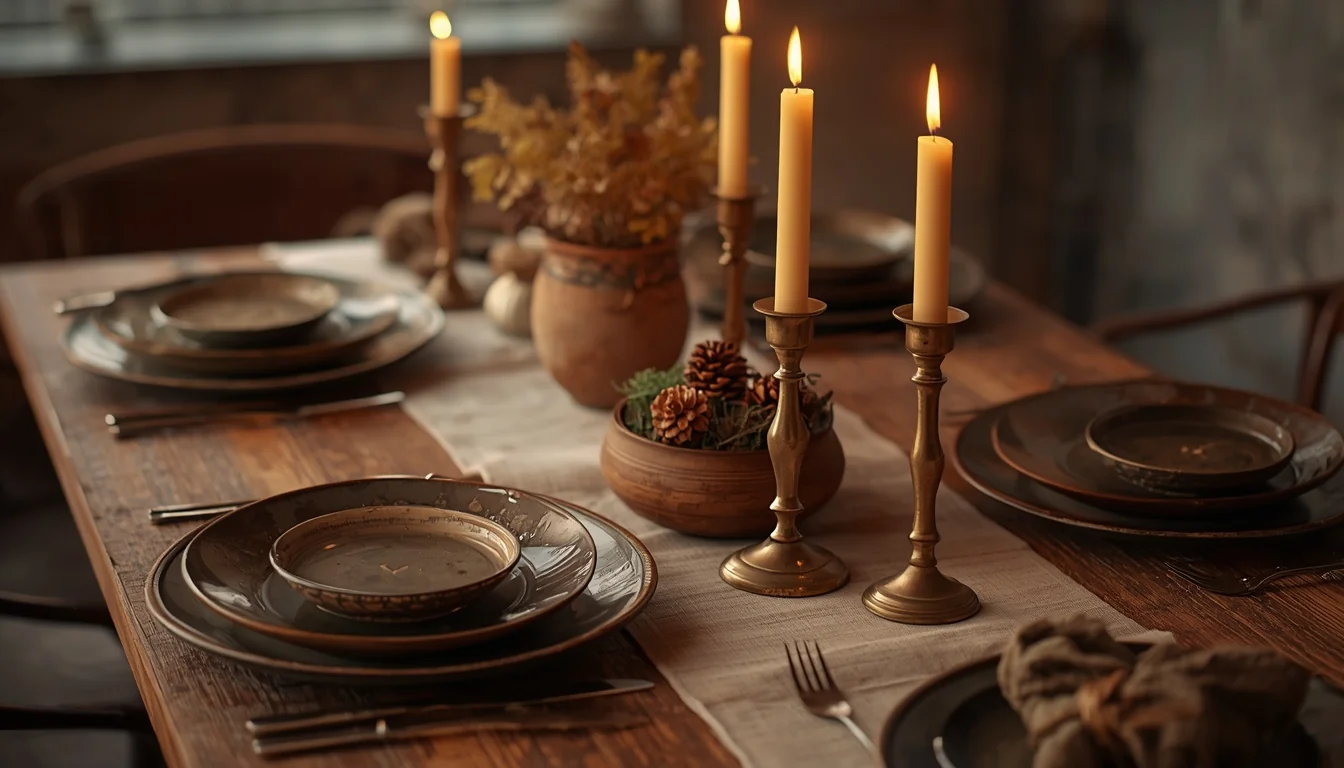
Most fall table setting guides assume you’re hosting twelve people for Thanksgiving. But the dinners that actually happen most often this season are smaller: a Tuesday night dinner for two, a casual gathering with a few friends, a quiet meal after the kids are in bed. Those tables deserve a little atmosphere too, and it takes far less than you’d think to get there.
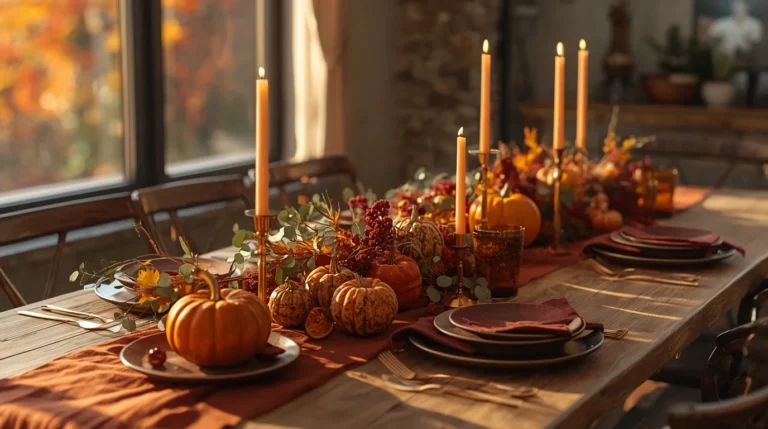
A genuinely cozy fall table comes down to three things: texture, warm light, and a little bit of intentional imperfection. A linen runner instead of a bare table, candlelight instead of the overhead fixture, a few branches instead of a full floral arrangement. These 18 ideas scale from a five-minute weeknight setup to a fuller dinner party table, so whatever kind of dinner you’re actually having this fall, there’s a version here that fits.
Table of Contents
1. Start With a Proper Place Setting Foundation
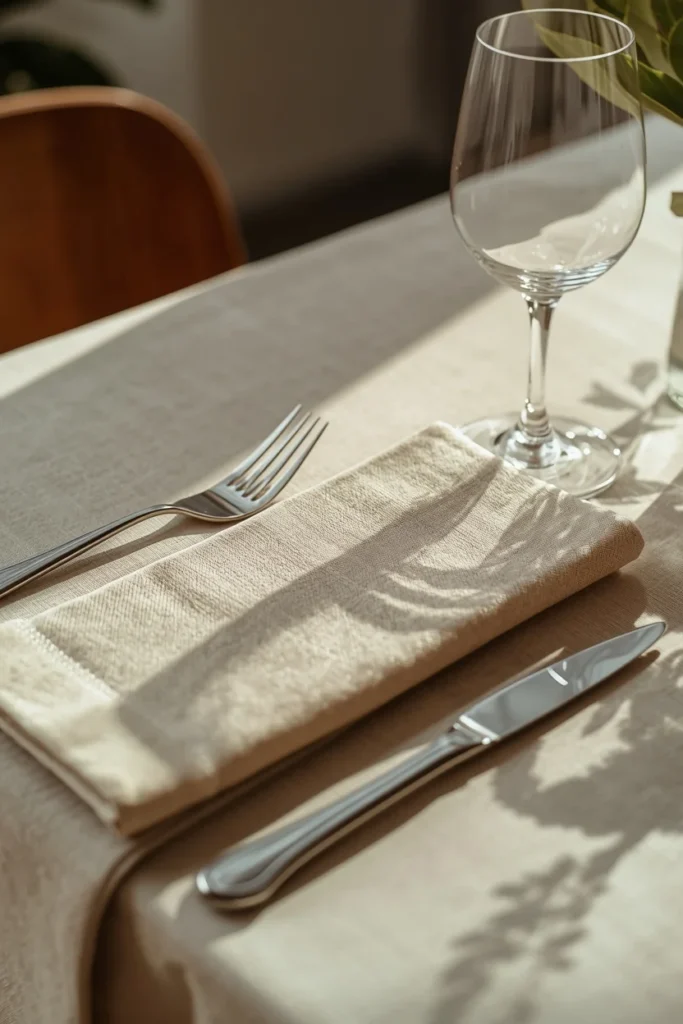
Before adding a single seasonal touch, get the basics right: dinner plate centered, fork to the left, knife and spoon to the right with the knife blade facing the plate, and a glass positioned just above the knife. A folded cloth napkin, rather than paper, immediately elevates even the most casual weeknight dinner, and it doesn’t need to be fancy, a simple rectangle fold under the fork does the job. This foundation matters because every seasonal decoration you add afterward is layered on top of a table that already looks put together, rather than trying to distract from a messy base. Charger plates are optional for everyday meals but add an easy layer of texture and color underneath the dinner plate for a slightly more elevated dinner. Getting this part right takes the same amount of time as setting the table normally, it just means doing it with a little more intention.
2. Layer a Linen Table Runner
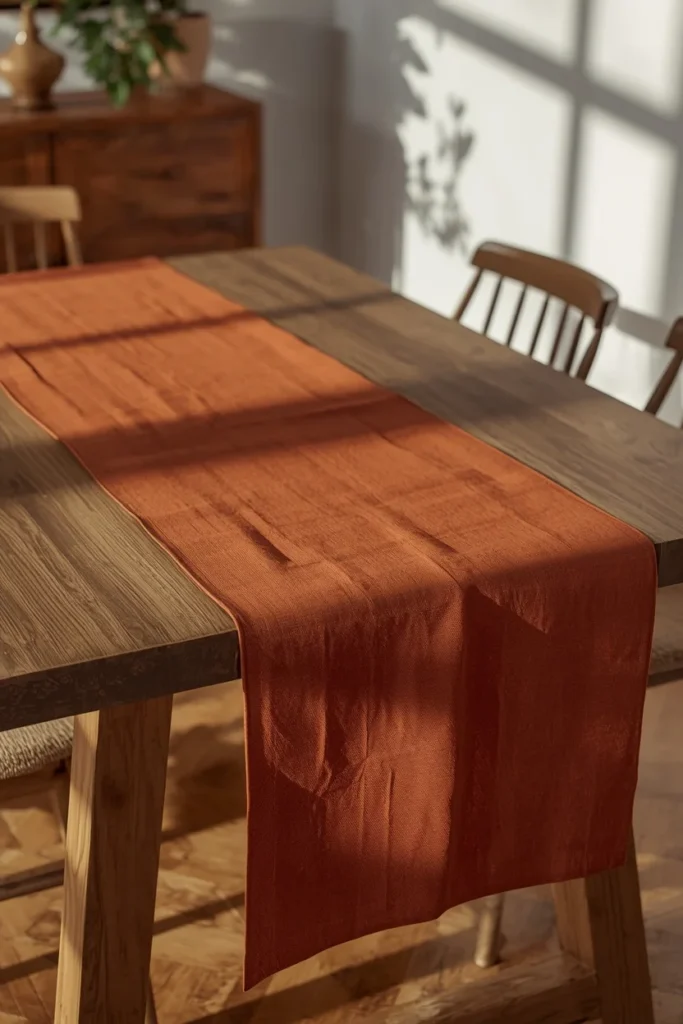
A soft linen runner down the center of the table instantly gives even the plainest dinner a seasonal foundation, and choosing a warm shade, rust, oatmeal, olive, or terracotta, keeps the look feeling timeless rather than tied to one specific year’s trend. Letting the runner drape slightly over each end of the table, rather than trimming it to fit exactly, adds a relaxed, gathered quality that a perfectly measured runner doesn’t achieve. This is one of the fastest upgrades on this entire list, since it takes only a few seconds to lay down and works underneath almost every other idea that follows. A linen runner also does a practical job of protecting the table from candle drips or spilled wine during a longer dinner. Because it’s a neutral textile rather than an explicitly seasonal item, it transitions easily from early fall through the winter months.
3. Build a Wooden Dough Bowl Centerpiece
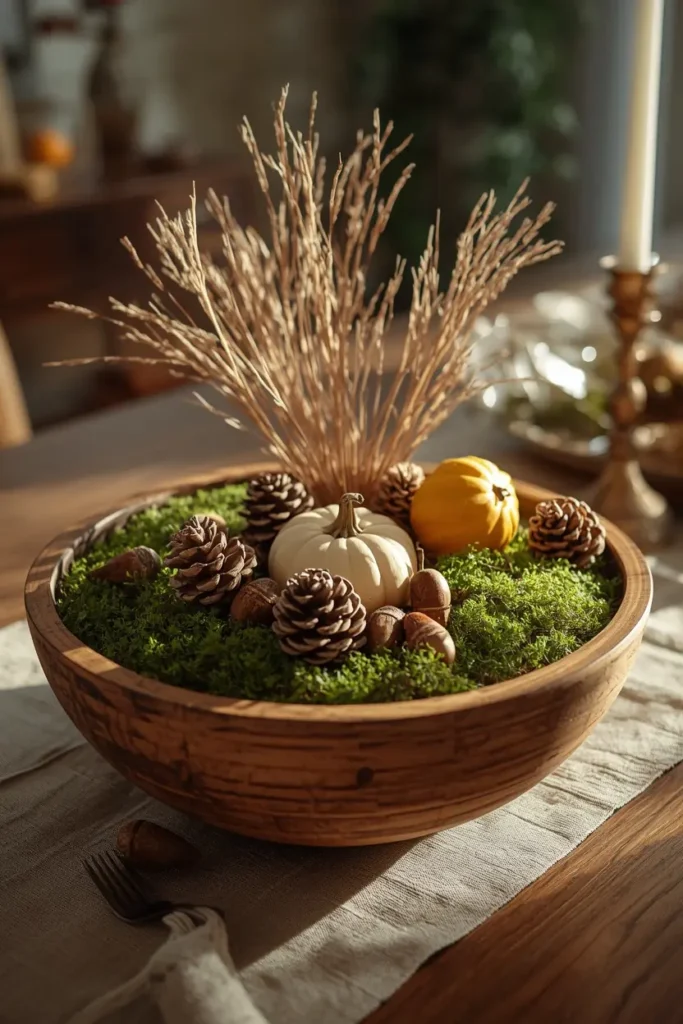
A rustic wooden dough bowl filled with dried moss, pinecones, small gourds, and a scattering of acorns creates an effortless, textural focal point that doesn’t require any floral arranging skill at all. Because the bowl sits low and horizontal, it never blocks sightlines across the table, which makes it one of the most practical centerpiece choices for a dinner where people are actually meant to talk to each other. Layering the materials by size, larger gourds toward the back, smaller pinecones and acorns filling the gaps in front, gives the display a sense of abundance without requiring precise technique. This idea works equally well for a casual weeknight dinner or a larger dinner party, since it scales up simply by filling a bigger bowl with more material. Once assembled, this centerpiece requires zero maintenance for the rest of the season.
4. Mix Candlestick Heights and Finishes
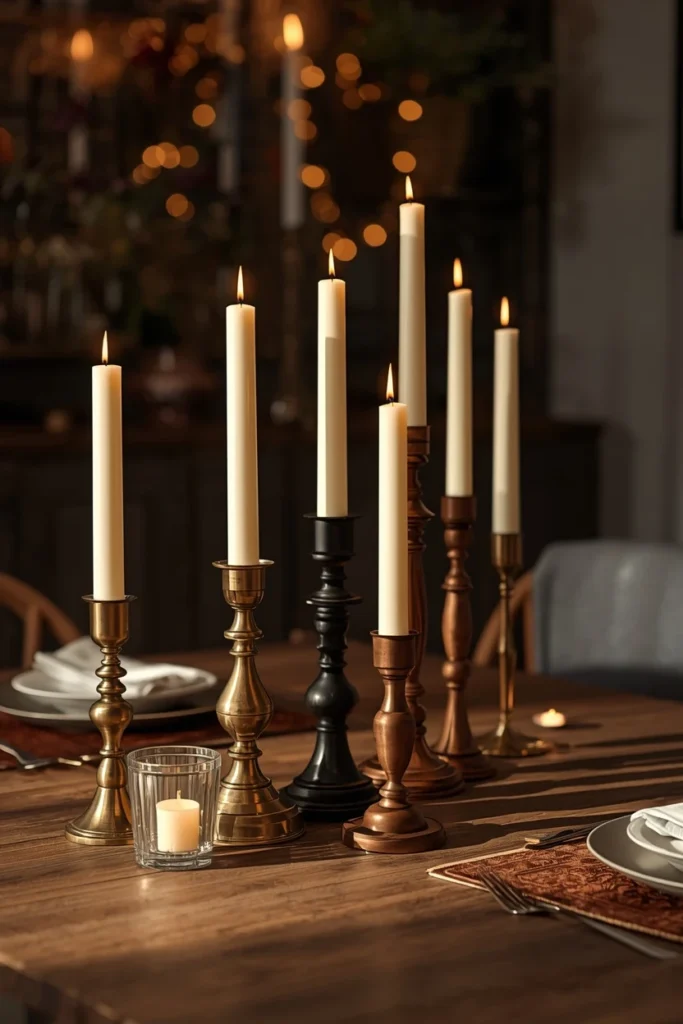
Grouping three or four candlesticks of varying heights and finishes, brass, black metal, and wood, down the length of the table adds both height and warm light without needing a single flower. The mismatched materials read as collected rather than store-bought, which suits the relaxed, lived-in quality most people actually want from a fall dinner table. Choosing candles in a warm cream or amber tone, rather than stark white, keeps the color palette cohesive with the rest of a typical autumn table setting. This idea works particularly well for evening dinners, since the height variation catches and reflects candlelight differently across each candlestick as the flames flicker. Letting the candles burn down and drip slightly over the course of the meal, rather than replacing them the moment wax appears, actually adds to the cozy, lived-in atmosphere by the time dessert arrives.
5. Add Amber Glass Bottles With Dried Stems
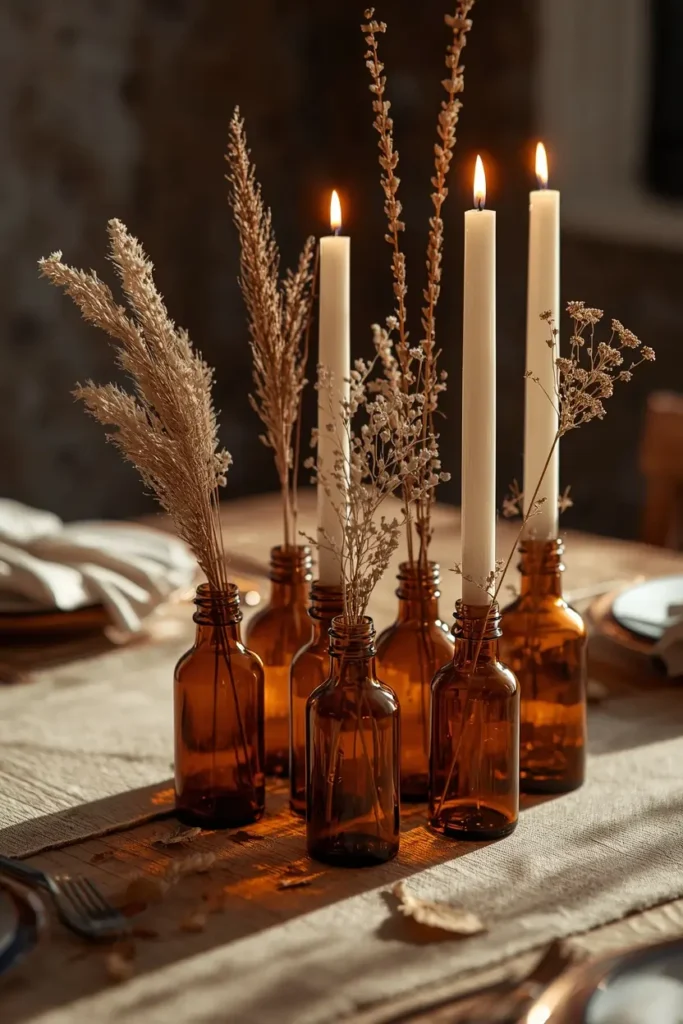
A cluster of small amber glass bottles, the kind that once held wine, olive oil, or vinegar, filled with single dried stems and grouped along the table’s centerline adds rich autumn color without a single flower needing to be purchased. The warm amber tone of the glass catches candlelight beautifully, giving the bottles a glow even when they’re not directly lit. Because each bottle holds just one or two stems, this is one of the more budget-friendly floral ideas on the entire list, since it doesn’t require a full bunch of flowers to fill out the display. Varying the bottle heights slightly, rather than lining up identical ones, adds visual interest without much additional effort. This idea works especially well as a low-commitment way to introduce a small amount of color to an otherwise neutral or wood-toned table.
6. Use a Vintage Pitcher Instead of a Traditional Vase
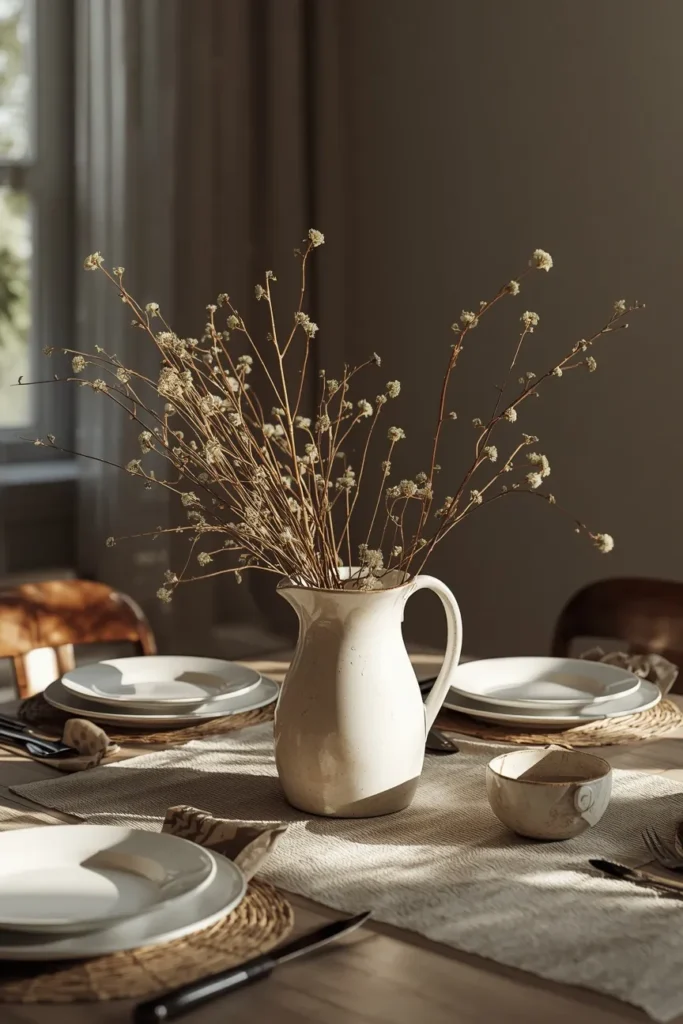
Swapping a standard vase for a vintage ceramic or stoneware pitcher to hold seasonal branches or a loose bunch of flowers adds unexpected character and makes the arrangement feel more collected rather than purchased specifically for the occasion. The slightly imperfect glaze or aged patina typical of a vintage piece pairs naturally with the organic, sometimes asymmetrical shapes of fall branches and foliage. This idea is a favorite among people who already collect vintage or thrifted tableware, since a pitcher serves double duty as both a serving piece and a floral vessel depending on the occasion. Letting a few stems trail slightly over the pitcher’s spout, rather than trimming everything to an even height, echoes the relaxed, gathered look that suits fall styling best. This is also one of the easier ideas to repurpose for other seasons, since only the contents need to change.
7. Make Handwritten Place Cards on Kraft Paper
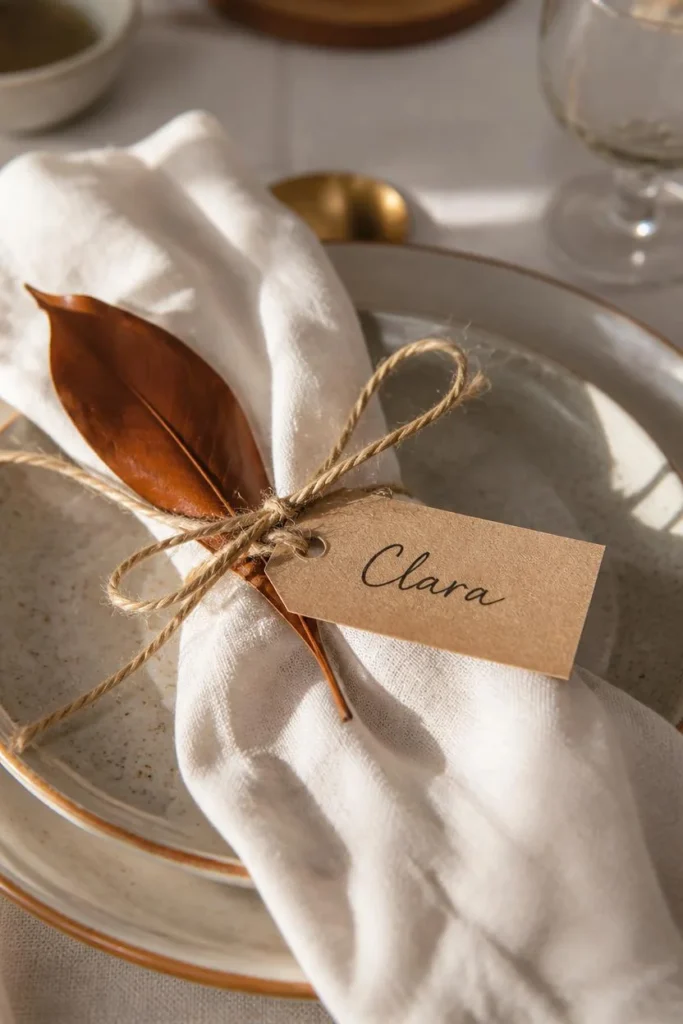
A small kraft paper or wood tag place card at each setting, with a guest’s name written in simple handwriting, adds a thoughtful, personal touch that costs almost nothing and takes only a few minutes to prepare. This detail works for both a larger dinner party, where it also helps with seating logistics, and a smaller family dinner, where it can simply feel like a sweet, unexpected gesture. Tying a small sprig of dried herb or a single leaf to the card with jute twine adds a bit of natural texture without much additional effort. Choosing a slightly imperfect, handwritten look over a printed or calligraphy font keeps the detail feeling warm and personal rather than formal. This is one of the lowest-cost ideas on the entire list, using materials most people already have on hand.
8. Corral Small Decor on a Single Wooden Tray
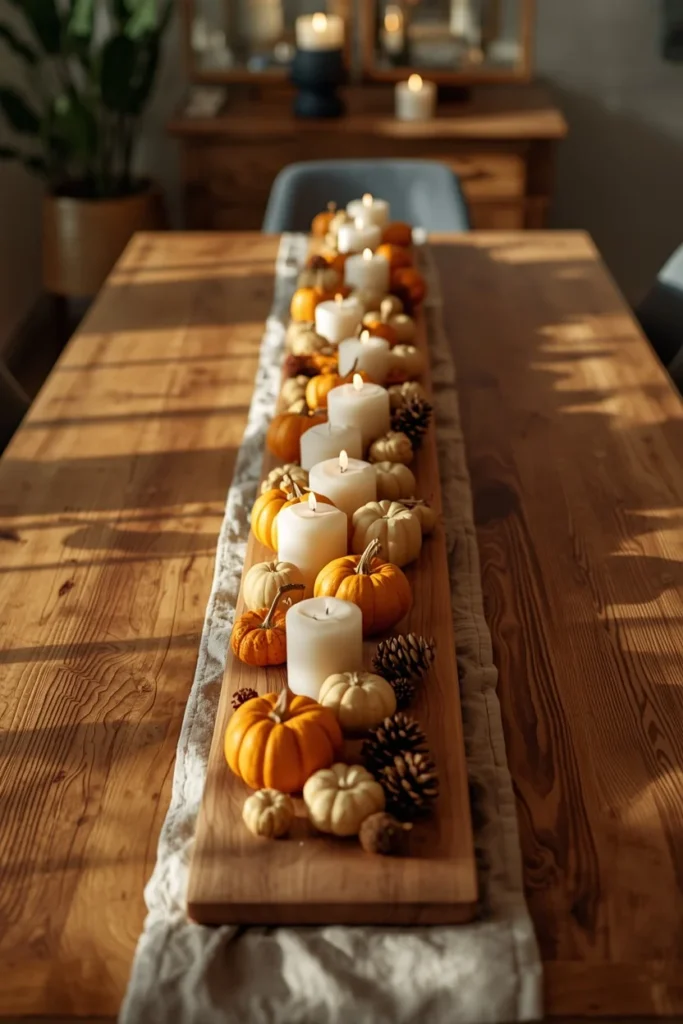
Arranging the main decorative elements, a few candles, small pumpkins, and a scattering of pinecones, onto a single long wooden board or tray running down the center of the table keeps a fall tablescape looking intentional rather than scattered across the whole surface. This trick also makes practical sense for everyday dinners, since the tray can be lifted and moved in one motion when the table needs to be cleared or reset for a meal. Choosing a tray or board with some visible wood grain or texture adds warmth underneath the objects placed on top of it. This approach works well for anyone who wants the visual impact of a fuller tablescape without committing to permanent placement of every individual piece. It’s a technique borrowed directly from coffee table and shelf styling, applied here to the dining table for the same organizing effect.
9. Lay a Eucalyptus and Fir Branch Runner for Scent
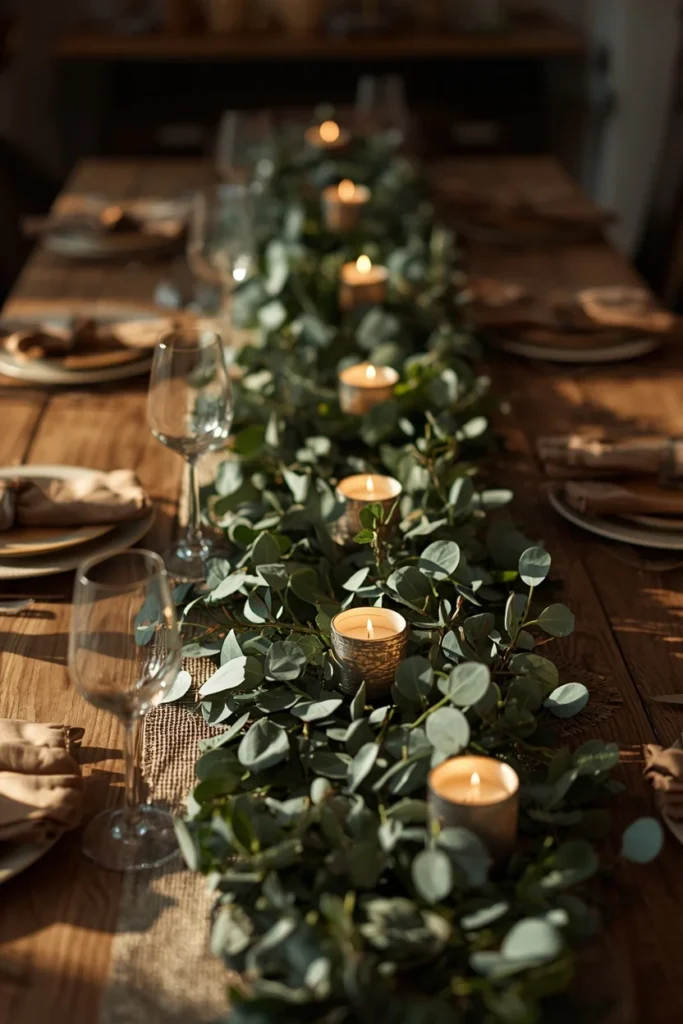
Instead of a fabric runner, lay fresh eucalyptus and fir branches directly down the center of the table for a natural, fragrant base that brings a genuinely woodsy, forest-like scent to the whole room as the branches warm slightly from nearby candles. This idea leans into an often-overlooked part of table styling: scent, which affects how cozy a dinner feels just as much as anything visual on the table. Tucking a few candles or small votives directly into the greenery adds warm light without needing a separate runner underneath. Because the branches are fresh, this is a shorter-lived setup best assembled the same day as the dinner rather than days in advance. This idea works beautifully paired with a rustic, foraged aesthetic and pairs particularly well with a soup or stew course, where the woodsy scent complements the meal itself.
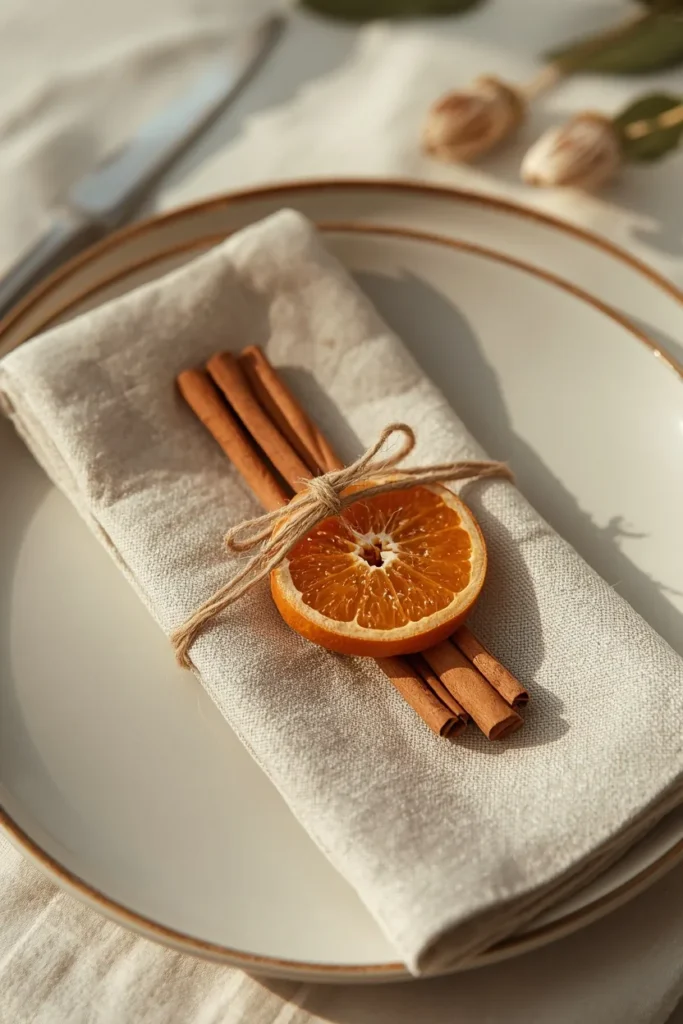
10. Tie a Dried Citrus and Cinnamon Bundle for Each Guest
For a dinner with guests, tie two or three cinnamon sticks and a dried orange slice together with jute twine and set one bundle on top of each folded napkin as a small, fragrant favor. This detail does double duty as both a decorative accent and a genuinely lovely-smelling touch once the bundles are handled or warmed slightly by nearby candles. Making the bundles is simple enough to do the same afternoon as the dinner, and the dried citrus can often be prepared a day or two ahead of time in a low oven. This idea is a small but memorable detail that guests tend to comment on, since it engages smell in a way that most table decor doesn’t. It’s also inexpensive enough to make for a larger dinner party without adding meaningfully to the overall cost of hosting.
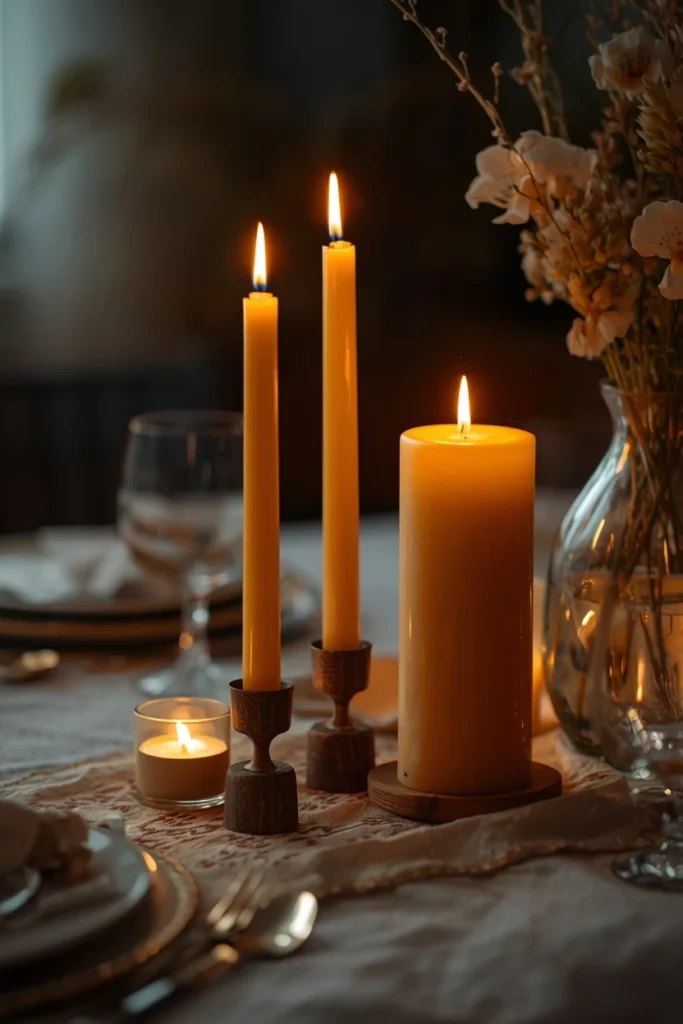
11. Switch to Pure Beeswax Candles
Swapping standard paraffin candles for pure beeswax ones adds a subtle, natural honey scent to the table that complements rather than competes with the smell of the meal itself, unlike heavily scented paraffin candles which can sometimes clash with food aromas. Beeswax also burns slightly warmer and with a more golden-toned flame, which reads beautifully in photos and in person once the sun starts to set. This is a simple, one-to-one swap for anyone who already uses candles as part of their table setting, requiring no additional styling effort beyond choosing a different candle. Because beeswax candles tend to be a bit more expensive than basic paraffin ones, this is a good detail to invest in for dinners that matter a little more, while saving basic candles for everyday use. The warmth and scent this small swap adds is disproportionate to how simple the change actually is.
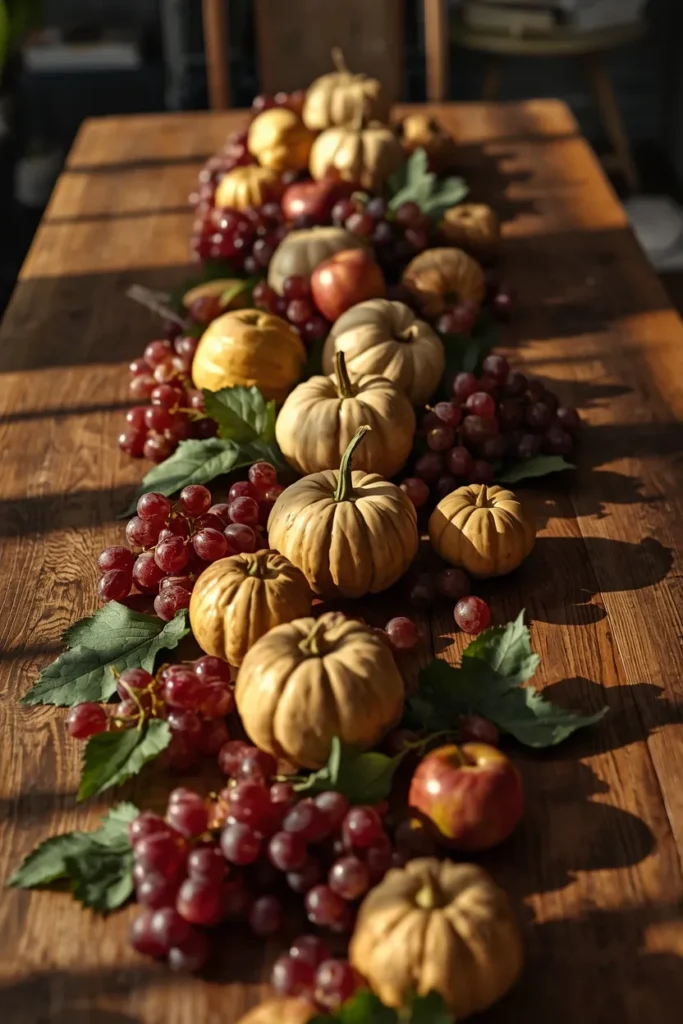
12. Scatter Foraged Garden Produce Asymmetrically
Rather than a single tidy centerpiece, scatter whatever the garden or farmers market has on offer, knobby squash, apples with a few leaves still attached, the last tomatoes of the season, loosely down the length of the table like punctuation marks rather than in a straight, even line. Embracing a bit of imperfection here, letting a cluster of grapes spill slightly to one side, or a branch rise higher than the rest, is what makes the table feel lived-in and generous rather than staged. This approach works because fall is fundamentally about abundance, and a perfectly symmetrical, evenly spaced display actually undercuts that feeling more than an intentionally imperfect one does. This is also one of the most budget-friendly ideas on the list, since garden produce or farmers market finds are often inexpensive and inherently seasonal. The asymmetry principle used here is worth applying to other ideas on this list as well, since it consistently reads as more natural than perfect symmetry.
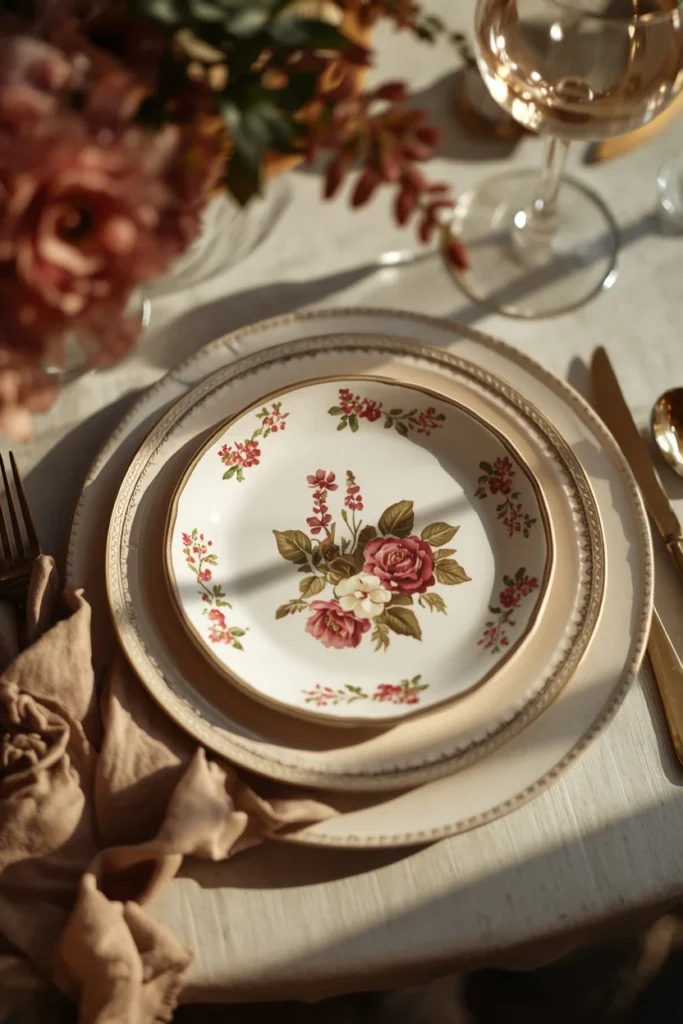
13. Layer Mismatched Vintage and Modern Plates
Mixing a set of thrifted or inherited vintage plates with a simpler, more modern everyday set creates an eclectic, collected table that feels more personal than an exactly matching dinnerware set. Layering a vintage floral or patterned salad plate on top of a plain modern dinner plate is an easy way to introduce this mix without needing a full vintage set for every course. This approach works particularly well for a dinner party where the goal is a warm, gathered feeling rather than a formal, uniform table. Choosing pieces that share a similar color palette, even if the patterns differ, keeps the mismatch feeling intentional rather than random. This is also a practical solution for anyone who’s slowly building a full vintage set over time and doesn’t yet have enough matching pieces for a larger group.
14. Tie Rustic Napkin Rings With Twine and a Sprig
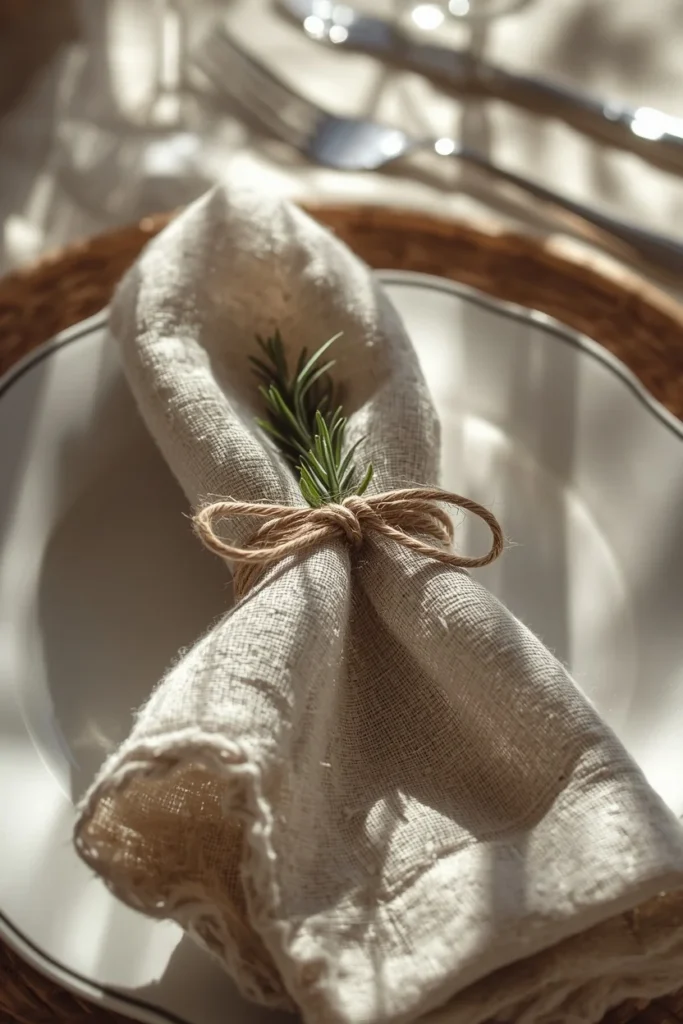
A simple loop of jute twine wrapped around a folded linen napkin, finished with a small sprig of dried herb or a single leaf tucked underneath, creates a rustic napkin ring without needing to buy a dedicated set. This detail adds texture and a small pop of natural green or brown against the softer linen, tying the place setting visually to the rest of a foraged or natural-material tablescape. Because the materials cost next to nothing, this is an easy way to add a finished, considered detail to every single place setting without a significant investment. Varying the herb sprig slightly at each setting, rosemary at one, a small eucalyptus stem at another, adds subtle individuality across the table. This idea pairs particularly well with the kraft paper place card idea for a cohesive, natural-materials theme running through every place setting.
15. Use a Hollowed Pumpkin as a Vase or Serving Bowl
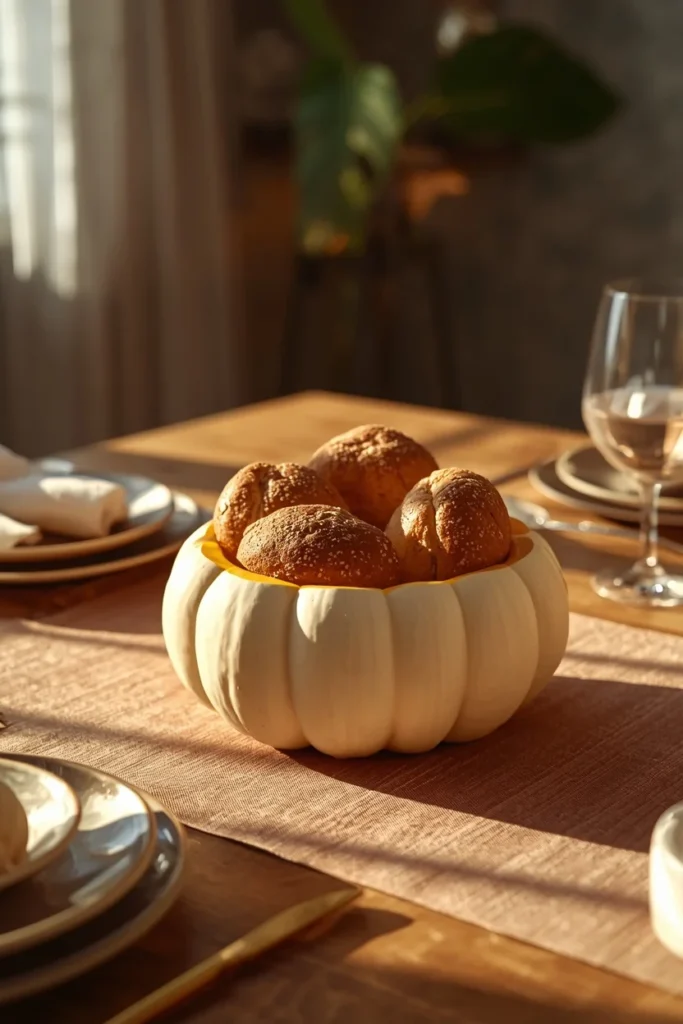
A small to medium pumpkin, hollowed out and lined with a water pick or a plastic liner, becomes a naturally themed vessel for a compact flower arrangement, or, left dry, can hold bread rolls, nuts, or other dry table snacks as a functional serving piece. This idea works particularly well as a centerpiece for a smaller, more casual dinner, since the pumpkin itself does most of the seasonal storytelling without needing any additional decor around it. Choosing a pumpkin in a muted color, like cream or sage, rather than bright orange keeps the piece feeling more like sophisticated tableware than costume decor. This dual-purpose idea, decorative and functional, is one of the more versatile options on this list, since the same hollowed pumpkin can serve different roles depending on the specific dinner. It also makes for a fun, memorable conversation piece when guests realize the serving bowl is the centerpiece itself.
16. Build a Moody, Dark-Toned Table for Evening Dinners
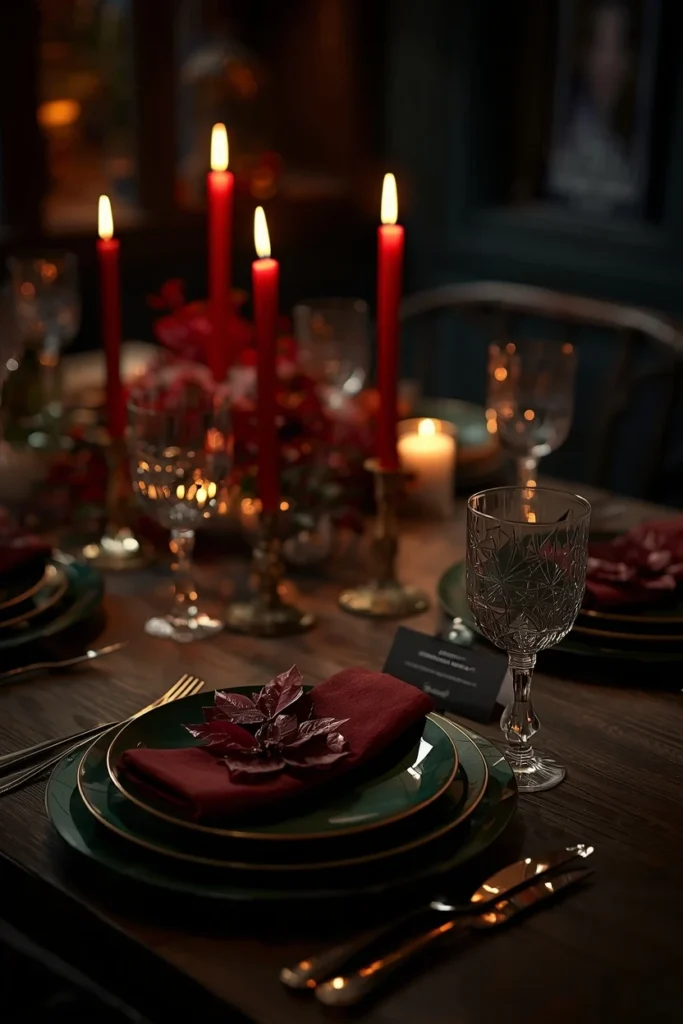
For dinners that happen after dark, lean into a deeper, more dramatic palette: inky green or deep charcoal plates, amaranth leaves used as place card accents for their rich burgundy color, and gold lettering or metallic details that catch candlelight beautifully in low light. This approach reads as sophisticated and intimate rather than traditionally “fall,” since it skips the expected orange and cream palette entirely in favor of something moodier. Amaranth in particular is a smart choice for anyone who wants deep red foliage without needing to time it around when leaves actually change color, since its color stays consistent throughout the season. Pairing this darker palette with plenty of candlelight is essential, since the deeper tones need warm light to read as cozy rather than simply dark. This idea suits a later, more adult dinner, especially one accompanied by wine and a slower-paced meal.
17. Set an Intimate Table for Two With Candlelight Only
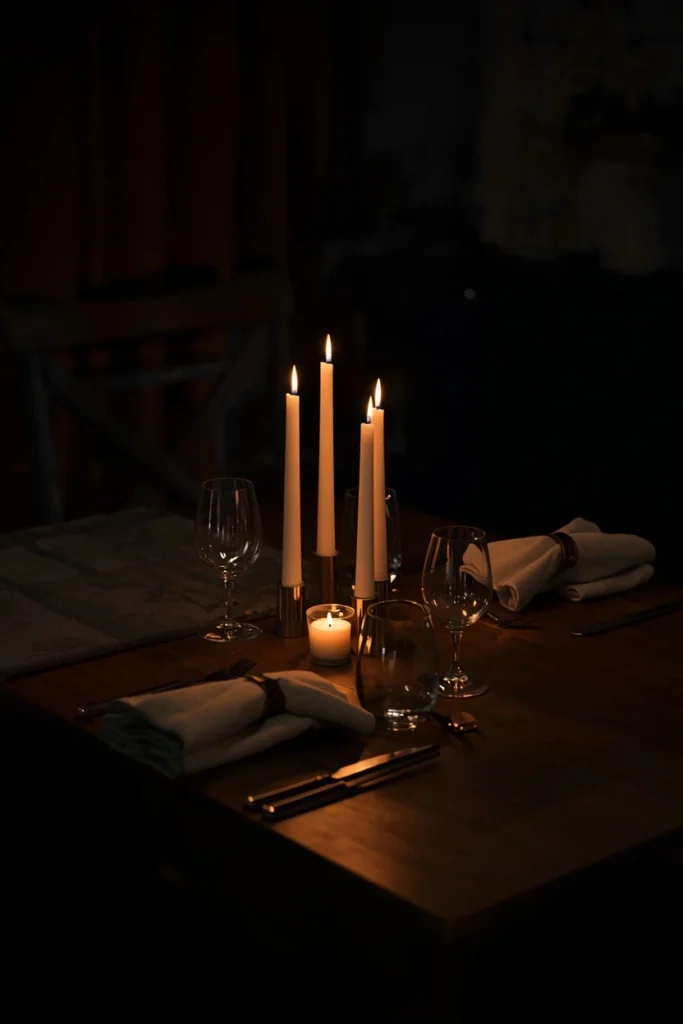
For a quiet dinner for two, turn off the overhead light entirely and rely solely on a cluster of candles at varying heights down the center of a small table, paired with just one or two simple elements, a small vase of dried stems, a folded napkin at each place. This kind of minimal, candlelight-only setup relies on restraint rather than abundance, proving that a cozy fall table doesn’t require multiple decorative elements to feel special. Choosing warm, dimmable ambient lighting elsewhere in the room, rather than any bright overhead fixture, extends the same mood beyond just the table itself. This idea is one of the fastest to set up on the entire list, since it requires almost no shopping or preparation beyond what most households already have on hand. It’s also one of the most genuinely romantic ideas here, precisely because of how little it relies on visual decoration to create atmosphere.
18. Use Rustic Stoneware for a Soup or Stew Course
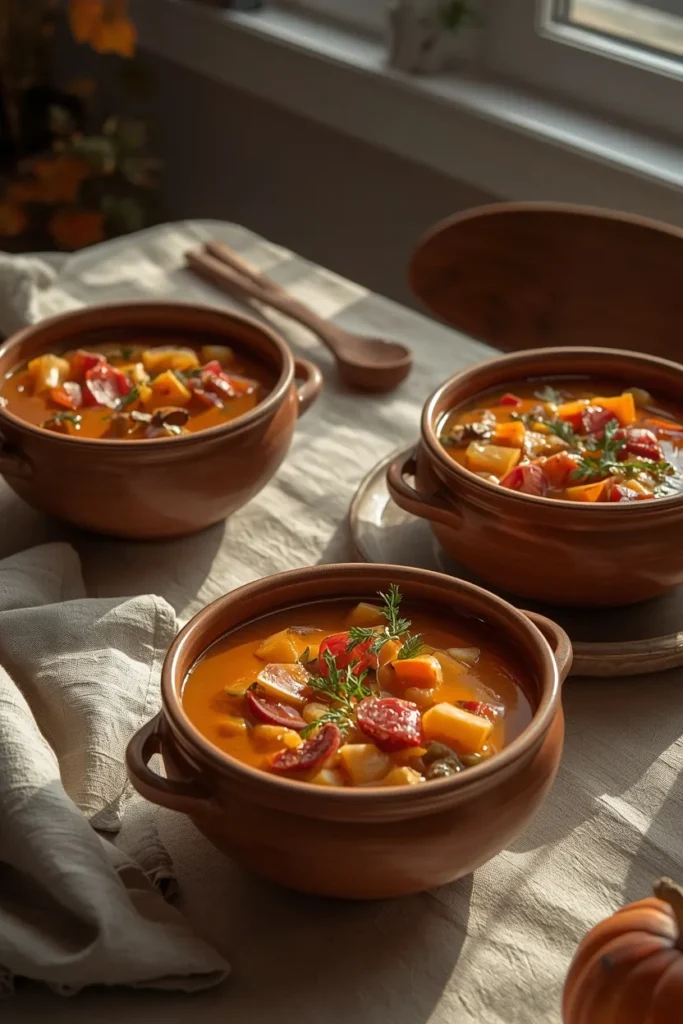
When the meal itself is a fall staple, a hearty soup, stew, or chili, serving it in wide, rustic stoneware bowls rather than standard dinnerware ties the table setting directly to the food being served. Choosing bowls in an earthy, slightly uneven glaze finish reinforces the same handmade, gathered aesthetic used elsewhere on a well-styled fall table. Pairing the stoneware with simple linen napkins and a wooden spoon or rustic ladle resting nearby completes the cohesive, cozy-kitchen feeling this kind of meal calls for. This idea is a reminder that table styling doesn’t stop at the decor, the dinnerware itself is part of the seasonal story, especially when the meal calls for something warm and substantial. This is also one of the more functional ideas on the list, since it’s built specifically around how the meal will actually be eaten rather than purely visual considerations.
Styling Tips
- Layer textures deliberately: rough next to smooth, matte next to glossy, so the table has visual depth even in a limited color palette.
- Embrace a little asymmetry rather than perfect symmetry, since a slightly imperfect scatter of produce or branches reads as more natural and abundant.
- Choose a single tray or board to corral small decorative elements so the table stays organized and easy to reset between courses.
- Layer scent alongside visuals, dried citrus, beeswax candles, fresh branches, since fragrance affects how cozy a table feels as much as anything visible does.
- Save your boldest, moodiest styling choices for evening dinners, since darker palettes need warm candlelight to read as cozy rather than simply dim.
Practical Implementation Ideas
- Start with the linens and place setting basics before adding any seasonal decor, since a properly set table looks intentional even before decoration is added.
- Keep fresh, fragrant elements like branches or citrus bundles as same-day additions, since they’re best used shortly after preparing them.
- Use a single wooden board or tray for the main decorative elements so the whole display can be moved at once when clearing the table.
- Test candle placement before guests arrive to make sure nothing sits too close to napkins, runners, or reaching hands.
- Keep a small box of reusable materials, twine, candlesticks, a favorite pitcher, so future table settings come together faster.
Common Mistakes to Avoid
- Overdecorating a table meant for a casual, everyday dinner, which can make a simple meal feel unnecessarily formal or fussy.
- Choosing a centerpiece too tall to see over, which blocks conversation across the table.
- Relying only on bright overhead lighting instead of candlelight, which undercuts the cozy atmosphere more than almost any other single choice.
- Forcing perfect symmetry in a produce or branch display, when a bit of natural imperfection usually looks more intentional.
- Skipping scent entirely and relying only on visual styling, missing one of the easiest ways to make a table feel genuinely cozy.
Small-Space Alternatives
Small tables or compact dining nooks benefit from choosing just two or three ideas rather than attempting a fully layered tablescape that a larger table could support. A single small centerpiece, like a cluster of amber glass bottles or one hollowed pumpkin, paired with a runner and candlelight, is often enough to create a genuinely cozy mood without overwhelming a tight surface. Skipping tall centerpieces in favor of low, horizontal styling matters even more in small spaces, where sightlines are already limited by the size of the table itself. For a table for two specifically, the candlelight-only approach is one of the most effective small-space ideas on this entire list, since it relies on almost no physical decor at all.
Budget-Friendly Alternatives
Garden produce, foraged branches, and fallen leaves cost nothing and add genuine seasonal texture to a table without any purchase required. Thrifted vintage plates, pitchers, and candlesticks typically cost less than new pieces while bringing more character to the table. Kraft paper place cards and twine napkin rings use materials most households already have on hand, avoiding the cost of dedicated table decor entirely. Dried citrus bundles and homemade centerpieces using pantry staples, like cinnamon sticks, are some of the most affordable ways to add both scent and visual interest to a fall table.
Pro Styling Recommendations
Build the table the way a stylist would build a shelf: foundation first, place settings and linens, then height, candlesticks or a taller centerpiece element, then texture and scent layered in last. Let a little imperfection remain in the final display, since a table that looks slightly gathered rather than perfectly arranged reads as more genuinely cozy and less staged. Match the formality and mood of the table to the actual occasion, keeping weeknight dinners simple and saving the moodier, more layered ideas for dinners that call for a bit more atmosphere. And always prioritize candlelight over any other light source once the sun goes down, since it does more to create a cozy mood than any single piece of decor on this list.
FAQs
Conclusion
A cozy fall table isn’t about how elaborate the tablescape looks in a photo. It’s a linen runner instead of a bare table, candlelight instead of an overhead fixture, a little bit of natural imperfection instead of anything too perfectly arranged. Whether you’re setting the table for a quiet dinner for two or a full gathering with friends, pick two or three ideas from this list that fit the actual occasion, and let scent and warm light do more of the work than you’d expect. The dinners that happen most often deserve a little atmosphere too.